
Part of the regional summaries: Tonga - Ha'apai and Tonga
More info
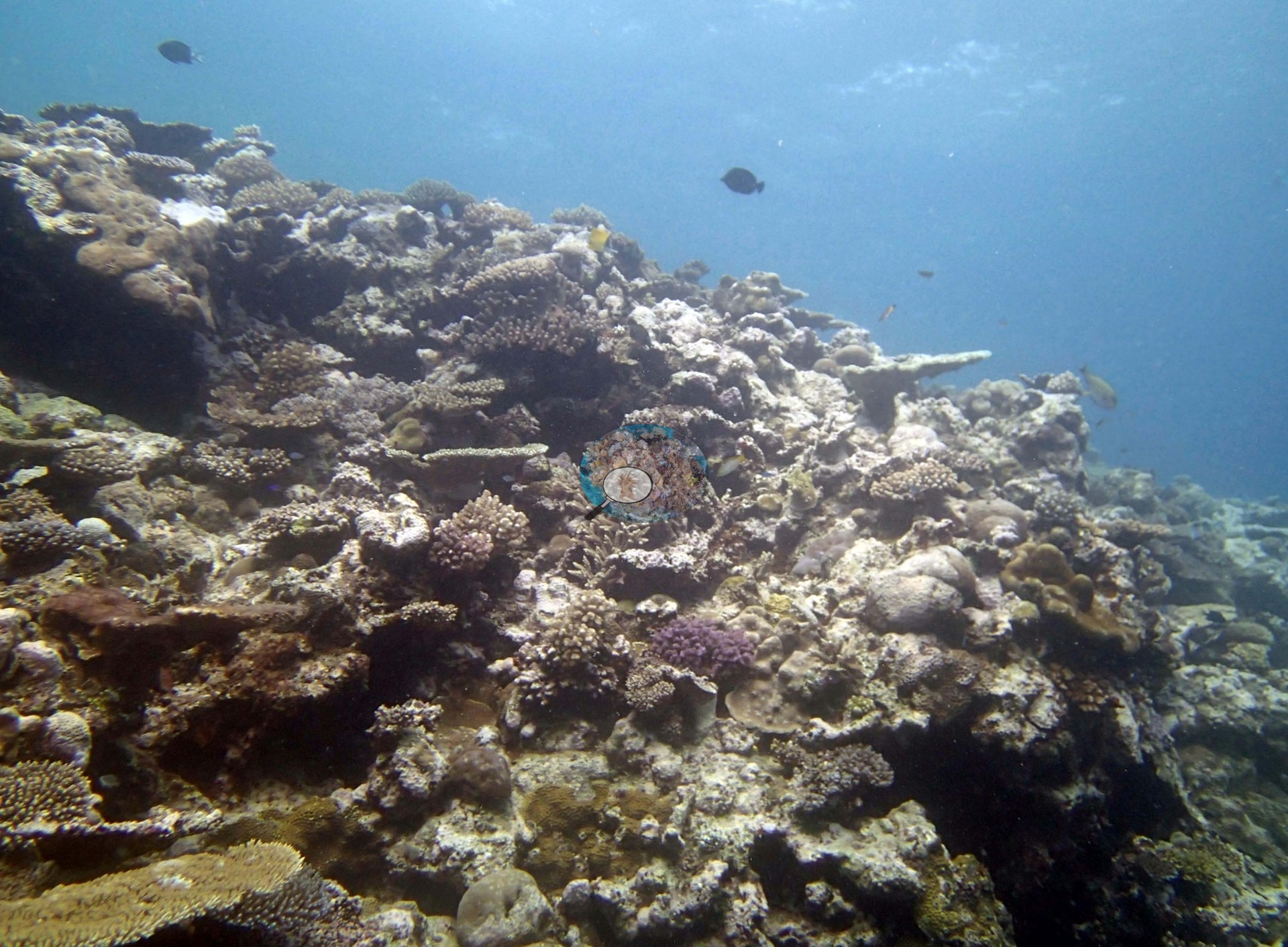
Southern Tonga (NOAA CRW virtual station)TOHA01, a lagoonal patch reef in Tonga's Ha'apai group, carried 30% coral cover on the survey transect; the survey notes put the shallows (5-10 m) at 20-30% and the mid-to-deep slope at 20-80%, where large table and bottlebrush Acropora, Porites rus, and huge mounding Porites lobata (2-3 m) dominate. Despite the respectable cover, the Coral Health Index here was a very low 1.13, and the reef showed low-level corallivory (Drupella snails, Culcita cushion stars with freshly eaten corals) and a few isolated disease cases, a reef with a fair amount of coral that scored poorly once condition was weighed. Surveyed on the Living Oceans Foundation's Global Reef Expedition.
Ko TOHA01, ko ha kiʻi hakau ʻi he namo (lagoonal patch reef) ʻi he ʻotu motu Haʻapai ʻo Tonga, naʻe 30% ʻa e ʻufiʻufi ʻe he feo (coral cover) ʻi he transect ʻo e savea; ʻoku fakahā ʻe he ngaahi nouti ʻo e savea ko e feituʻu mamaha (5-10 m) naʻe 20-30% pea ko e tafaʻaki loto mo loloto naʻe 20-80%, ʻa ia ʻoku puleʻi ai ʻe he Acropora fakatēpile (table) mo fakapulumu (bottlebrush) lalahi, Porites rus, mo e Porites lobata fakapuke lalahi ʻaupito (2-3 m). Neongo ʻa e ʻufiʻufi lelei ko ia, naʻe māʻulalo ʻaupito ʻa e Coral Health Index heni ʻi he 1.13, pea naʻe hā ʻi he hakau ha kai feo siʻisiʻi (corallivory) (ko e ʻelele Drupella, mo e Culcita (cushion stars) mo e ngaahi feo naʻe toki kai) mo ha ngaahi mahaki siʻi pē ʻi ha ngaahi feituʻu mavahevahe, ko ha hakau ʻoku feʻunga hono lahi ʻo e feo ka naʻe māʻulalo hono maaka ʻi he taimi naʻe fakakaukauʻi ai hono tuʻunga.
AI translation of this summary; the English is authoritative. (low confidence)
CTD-cast midpoint of 23.7–23.8°C
2 of the 8 photographs on this page are shown beside the text that discusses them under "Site description" below.
Site description
Setting
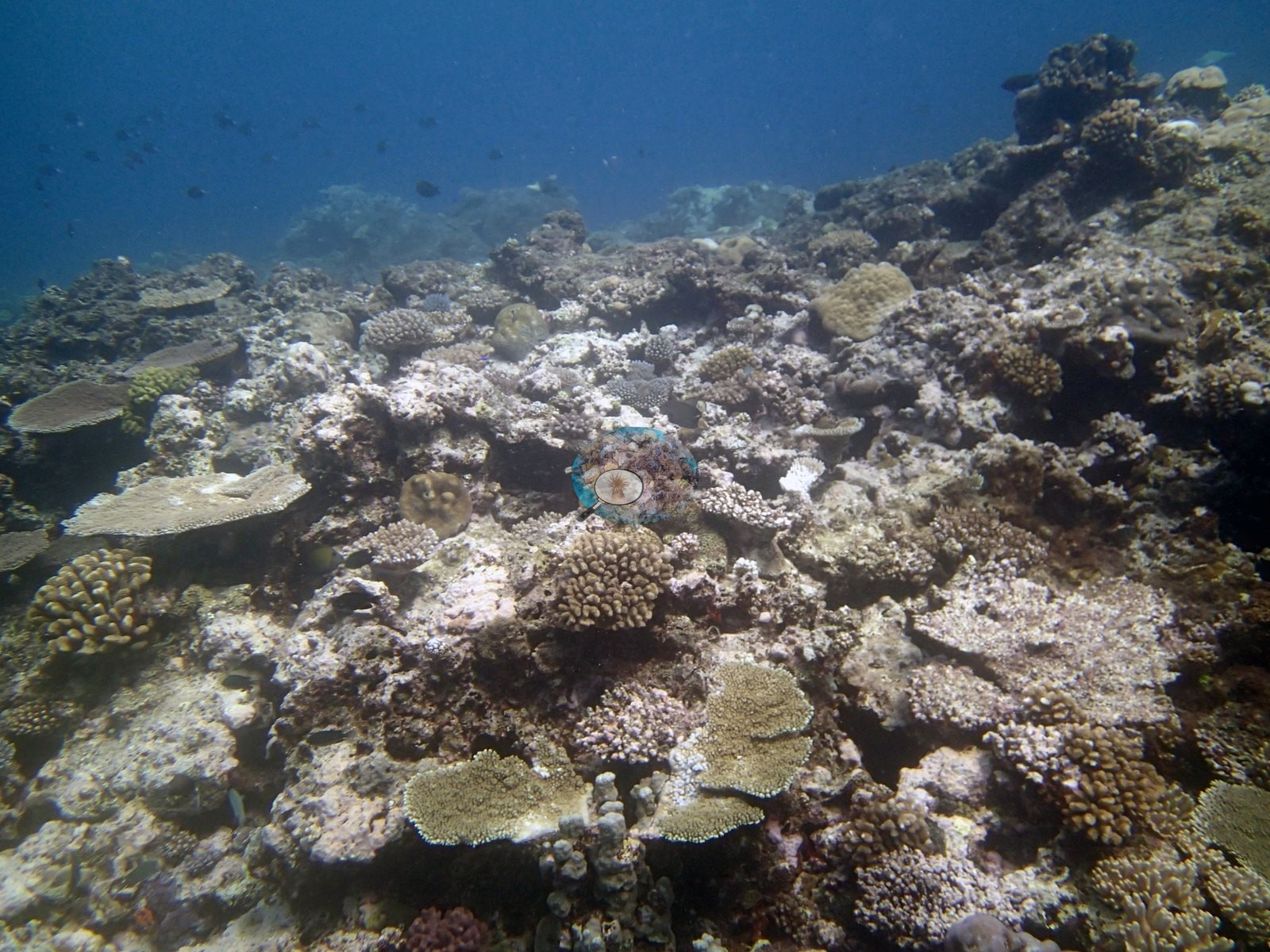
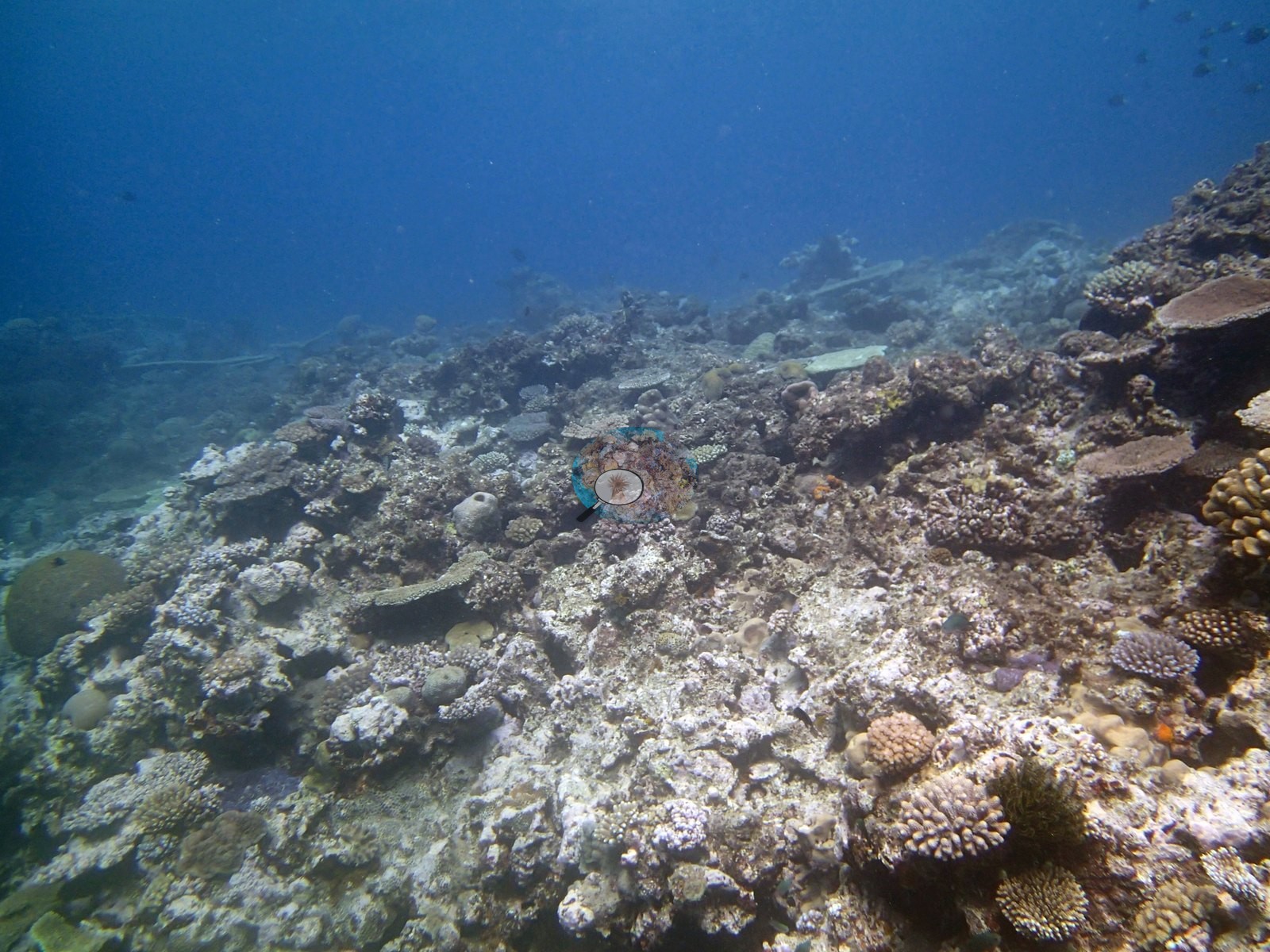
The site, from the expedition's own survey notes. A lagoonal patch reef: a submerged patch reef running from 2 m to 25 m, with a very steep drop to 25 m ending in sand. Relief is high (1-3 m) with outcrops and large boulders, and microrelief of 20-80 cm, greater in deeper water. Eight photographs are on this page, all from the reef top and upper slope, and several are repeat views of the same subject. The water is blue-green with moderate visibility and visible particulate; the station's CTD cast read 23.7-23.8°C.
These frames cannot establish this site's zonation, relief, or deep-slope community — none of them reaches the 20-30 m depths where the survey narrative places most of the coral, and the transect value of 30% sits between the shallow reef (20-30%) and the mid-to-deep slope (20-80%).
General benthic features
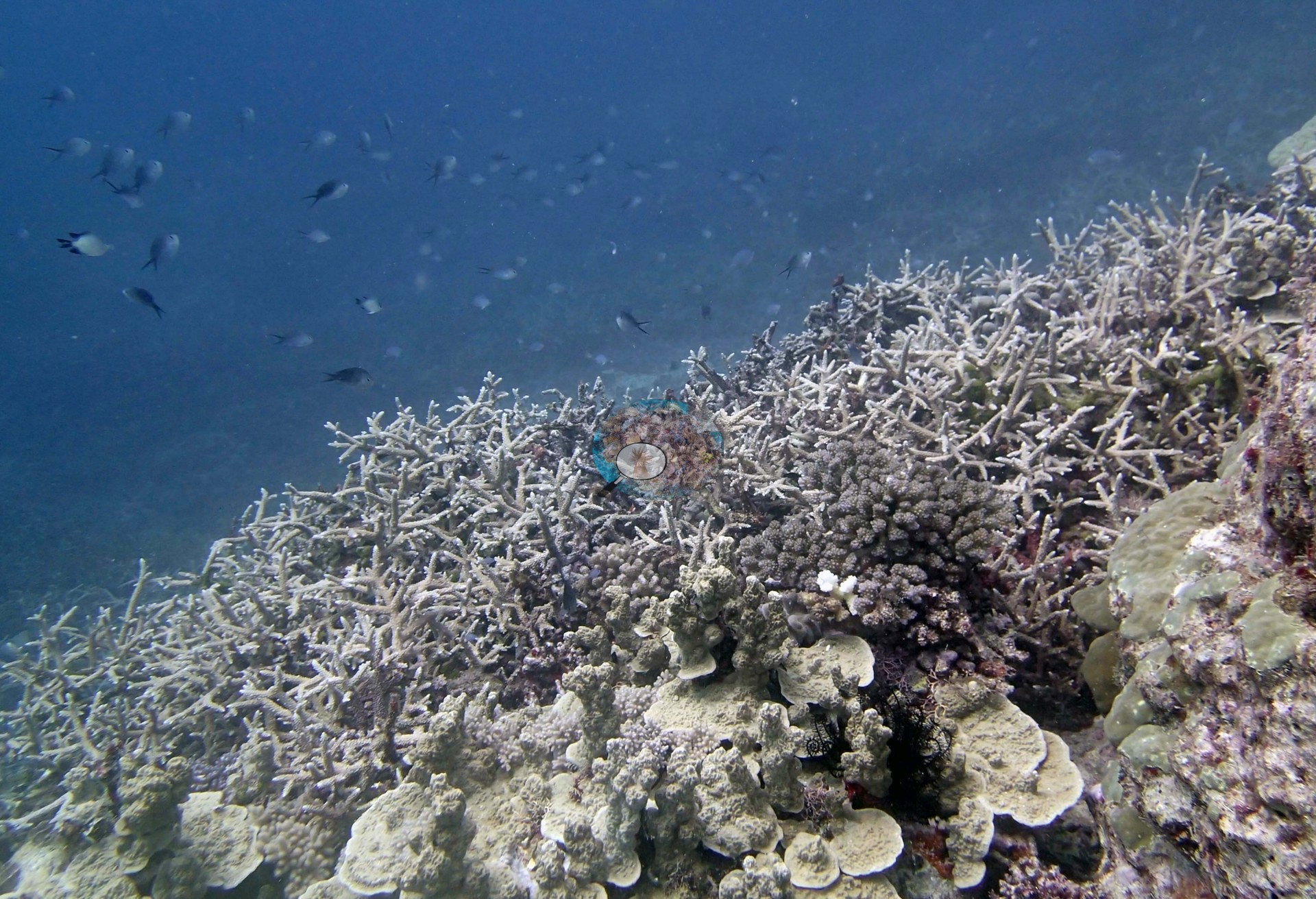
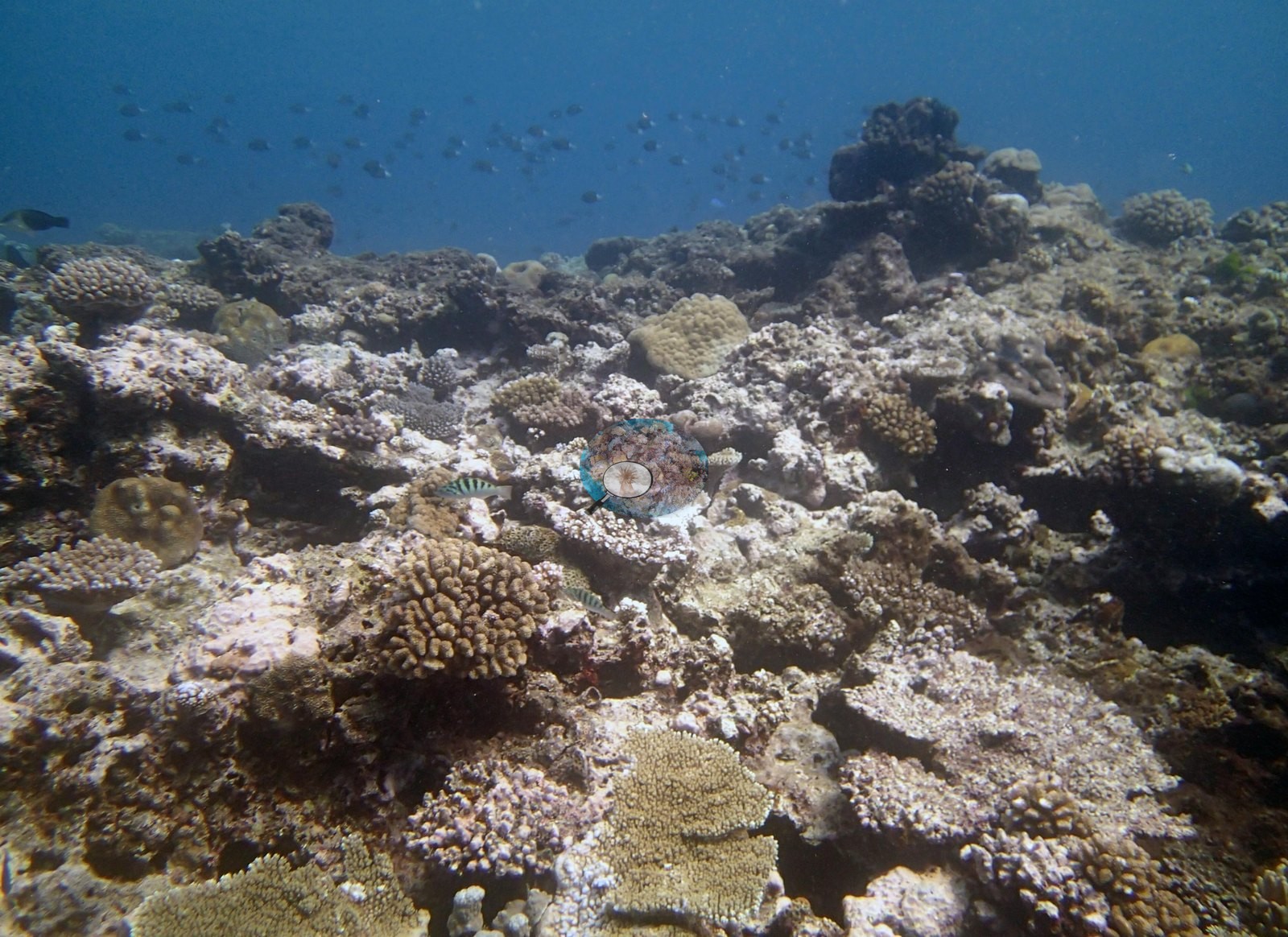
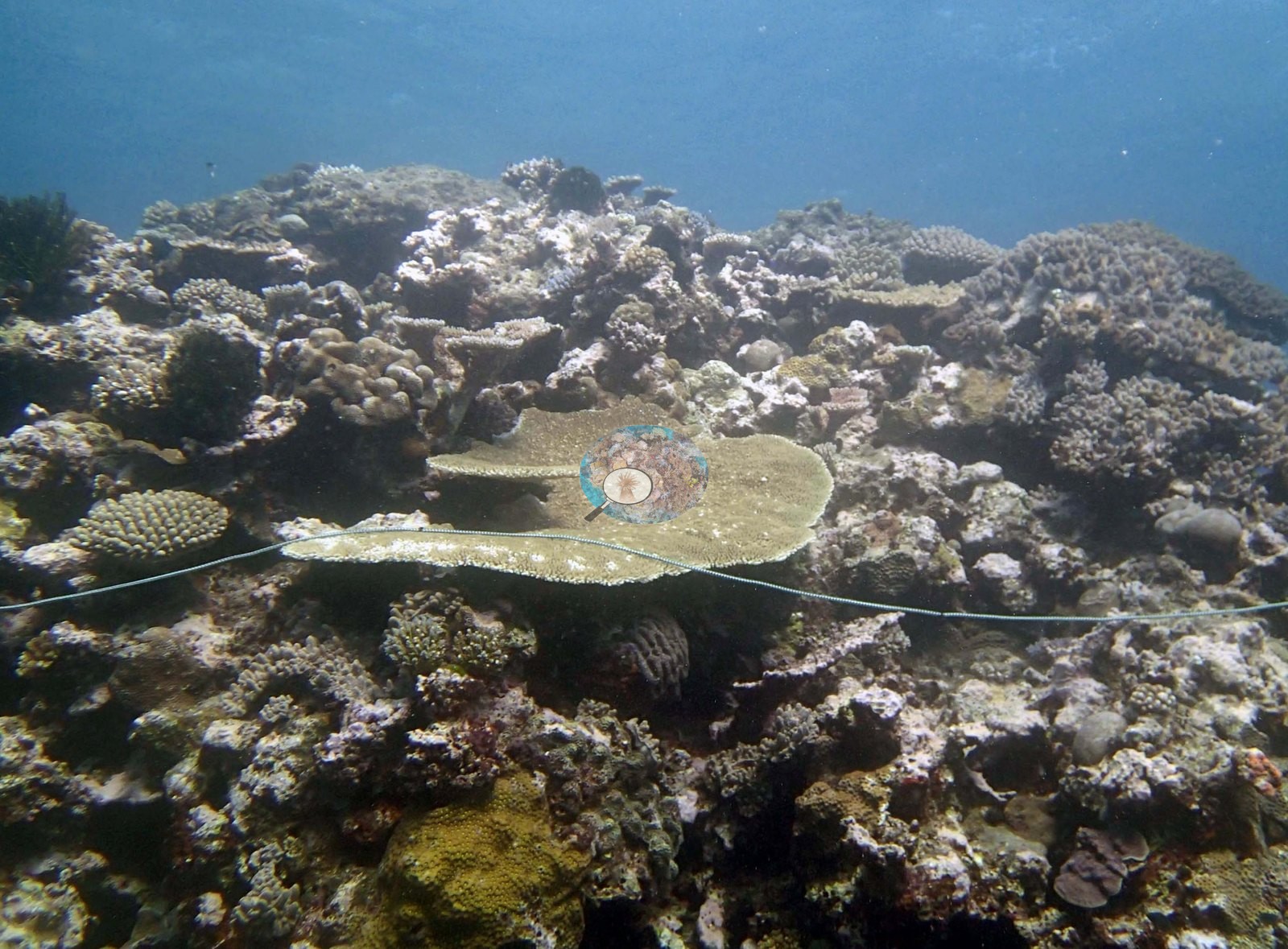
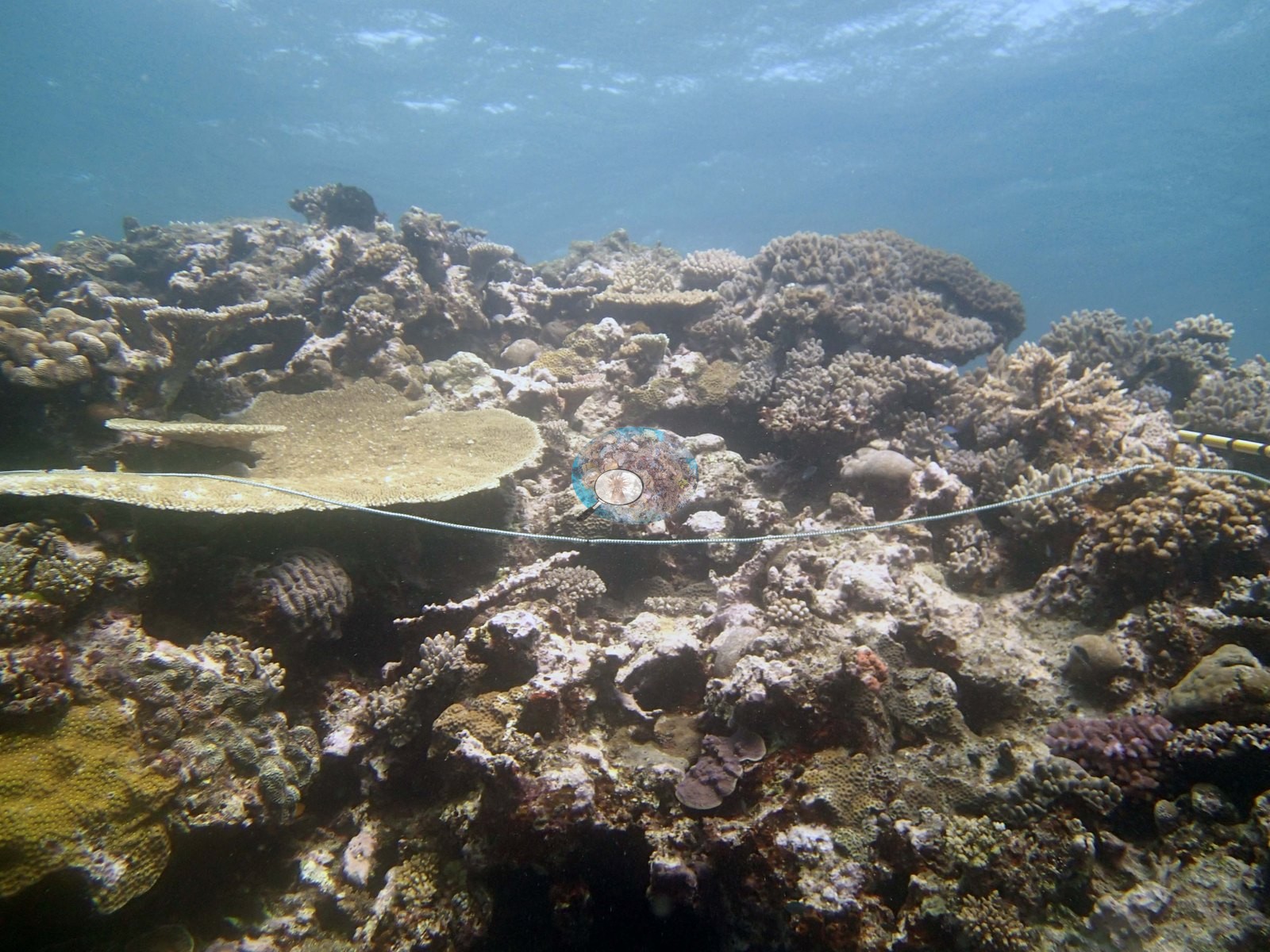
Shallow areas (5-10 m) hold 20-30% live cover, with abundant 30-70 cm table acroporids mixed with medium branching acroporids, Pocillopora, faviids, Porites rus, and Favia stelligera. The slope carries plating and columnar Porites rus and large stands of bottlebrush acroporids with Porites lobata, faviids, medium pocilloporids, and Coscinaraea; cover at mid and deep depths ranges from 20% to 80%, and in places there are very large plating colonies (50-200 cm) of Pachyseris, Mycedium, Porites rus, and Merulina. The reef ends at 25 m in sand with scattered mounding Porites lobata 2-3 m across. Macroalgae is very rare below 10 m; open hard substrate carries 30-60% turf and thin cyanobacterial mats in places, and the shallows hold numerous damselfish algal lawns. The photographs show a pavement of rock and rubble heavily crusted in pink coralline algae and pale turf, carrying a moderate, mixed and mostly small-colony coral community: flat tan and mustard tabular Acropora, corymbose and digitate Acropora, small Pocillopora heads including one distinctly mauve-purple colony, low massives with fine corallites, cream plate-and-column colonies of the growth form expected of Porites rus, and a large pale-yellow massive Porites. In three frames the survey transect line runs across the reef top beneath a single large tan table — the benthic survey itself, in progress (e.g., Image 5, Image 9).
Coral cover
- Reference: Khaled bin Sultan Living Oceans Foundation, Global Reef Expedition (in situ transect)
- The benthic transect returned 30% live coral cover, with algal cover at about 29%, and the site carries a Coral Health Index of 1.13 out of 5 (published as 1.0/5 in Mayfield et al. 2021, Platax).
- The transect data are authoritative for anything quantitative here; the photographs carry only the qualitative account.
- Cover and health are also not the same measurement, and this site is a clear example: 30% cover alongside a Coral Health Index of 1.13 out of 5.
- Transect mean 30 ± 10% SE (n = 4 transects; Living Oceans Foundation per-transect benthic data); the headline above is this all-transect mean.
Stressors
Disease was scarce — a few isolated white-syndrome cases and a few colonies with tumors. Two further frames look along the slope edge at an extensive branching Acropora (staghorn) thicket whose branches read pale gray-white against the blue water, with a dark, shaded, algal-fouled interior; Anderson reads that pallor as bleaching, and another frame also shows a small stark-white branching colony that was bleached. Recent thermal stress at the Southern Tonga virtual station runs at a mean annual maximum of 8.1°C-weeks (Degree Heating Weeks, 2021-2025, NOAA Coral Reef Watch), well above the 4°C-week bleaching threshold — and Anderson's sampling sheet for this 2013 dive records light bleaching on some sampled colonies: a Pocillopora acuta 10–20% bleached and possibly unhealthy, another 5–10% bleached, and a P. damicornis 5% bleached. The 2013 survey notes for this site record Drupella snails on a small number of Acropora (under 1%) and several Culcita cushion stars beside small, recently eaten corals (Khaled bin Sultan Living Oceans Foundation expedition site notes, 2013; regional summary in Bruckner 2014). The Living Oceans Foundation transects here recorded 6.3% cyanobacteria and no recently dead coral.
Fish and other fauna
Three giant clams and two species of sea cucumber (single animals) were recorded. Shoals of small planktivorous damselfish work the water over the reef edge and a surgeonfish passes through the upper frames.
Comparisons with other data
Apart from the Living Oceans Foundation survey shown here, we found no other surveys at this site as of 2026. If you would like to share yours, please email us.
Dive record
TOHA01 (Ha'apai) was surveyed on 11 September 2013, on a dive to 24.7 m, during the Khaled bin Sultan Living Oceans Foundation's Global Reef Expedition.
Other notes
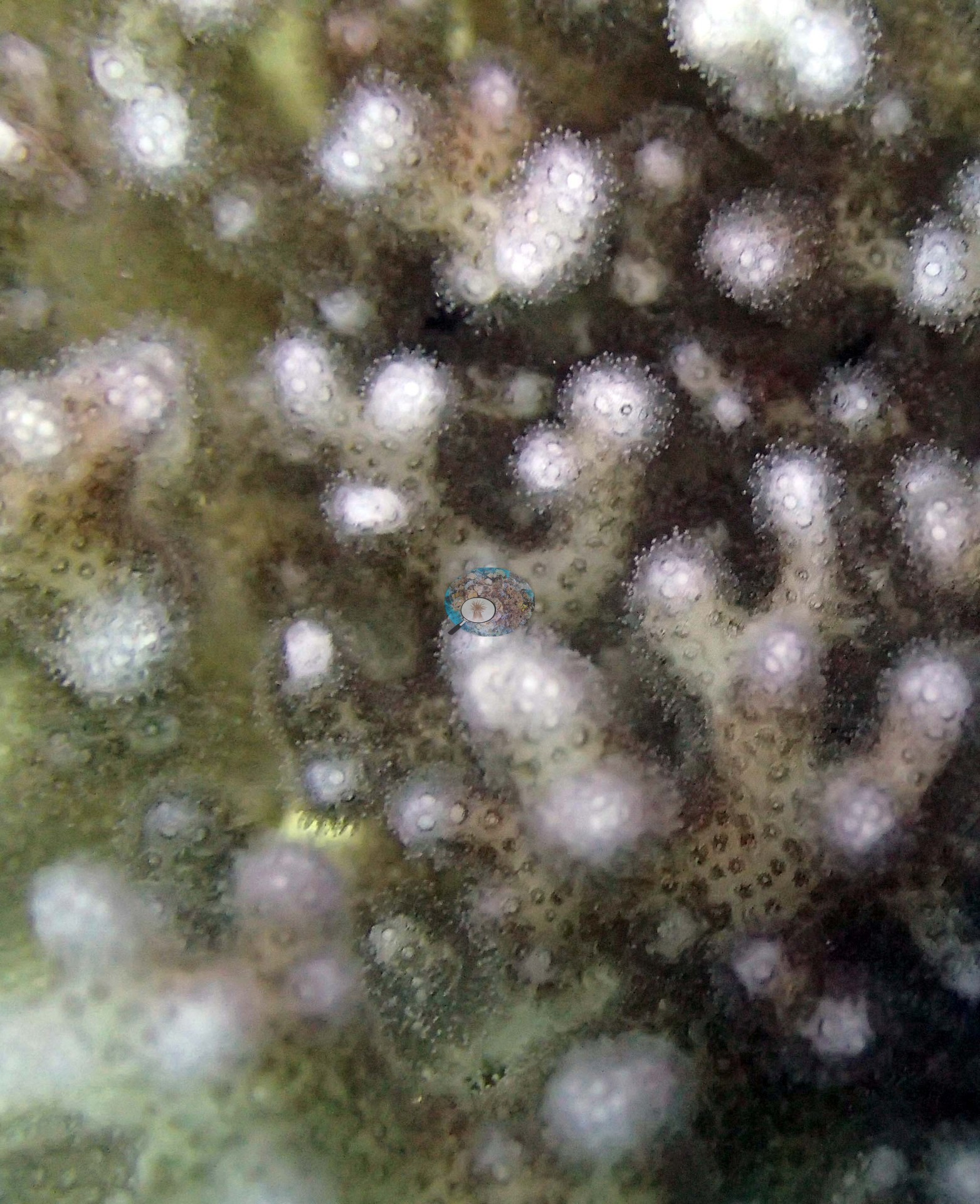
Six Pocillopora colonies were sampled at TOHA01 — five labeled P. acuta and one P. damicornis in Anderson's own field folders — each tagged with a numbered plastic tag on a zip-tie strap before collection. Nineteen archived close-ups cover five of those six colonies, with seven frames of colony 6 alone. They document the sampled colonies and the sampling method; they are not a record of the reef.
Data & links
- Download benthic survey data (CSV) ↗
- Download all LOF-GRE data (933 sites) ↗
- Photo portfolio ↗
- Coral Reef Diagnostics region page ↗
All images from Coral Reef Diagnostics. Data are from the Khaled bin Sultan Living Oceans Foundation Global Reef Expedition, Coral Reef Diagnostics, and NOAA Coral Reef Watch.
 © Coral Reef Diagnostics.
References
- Mayfield AB, Dempsey AC, Chen CS (2021). Assessing coral health in the Kingdom of Tonga with a coral health index. Platax 18:53-78. DOI
- Bruckner AW (2014). Global Reef Expedition: Kingdom of Tonga. Field Report. Khaled bin Sultan Living Oceans Foundation, Landover, MD. 28 pp. PDF