
Part of the regional summaries: Australia (GBR) - Far North: Pink stations (Preservation Zone reefs) and Australia (GBR)
More info
Far Northern GBR (NOAA CRW virtual station)AUYD109 is a near-vertical wall on Yule Detached Reef plunging past 50 m, with the best coral (30-40% by eye) on the 10 m transects, among bottlebrush Acropora, Stylophora, and finger Porites. His notes record dying Seriatopora hystrix on his 15.5 m transect. Surveyed on the Living Oceans Foundation's Global Reef Expedition.
Three other CRD dive sites within 5 km shown in orange — click a marker to open its page.
🗺 Detailed map of the Global Reef Expedition dive sites, Wood and Yule Detached Reefs, northern Great Barrier Reef (Khaled bin Sultan Living Oceans Foundation; opens in a new window)
This page shows 50 of the 55 photographs from this site, including every one the text cites.
44 of the 50 photographs on this page are shown beside the text that discusses them under "Site description" below.
Site description
Setting
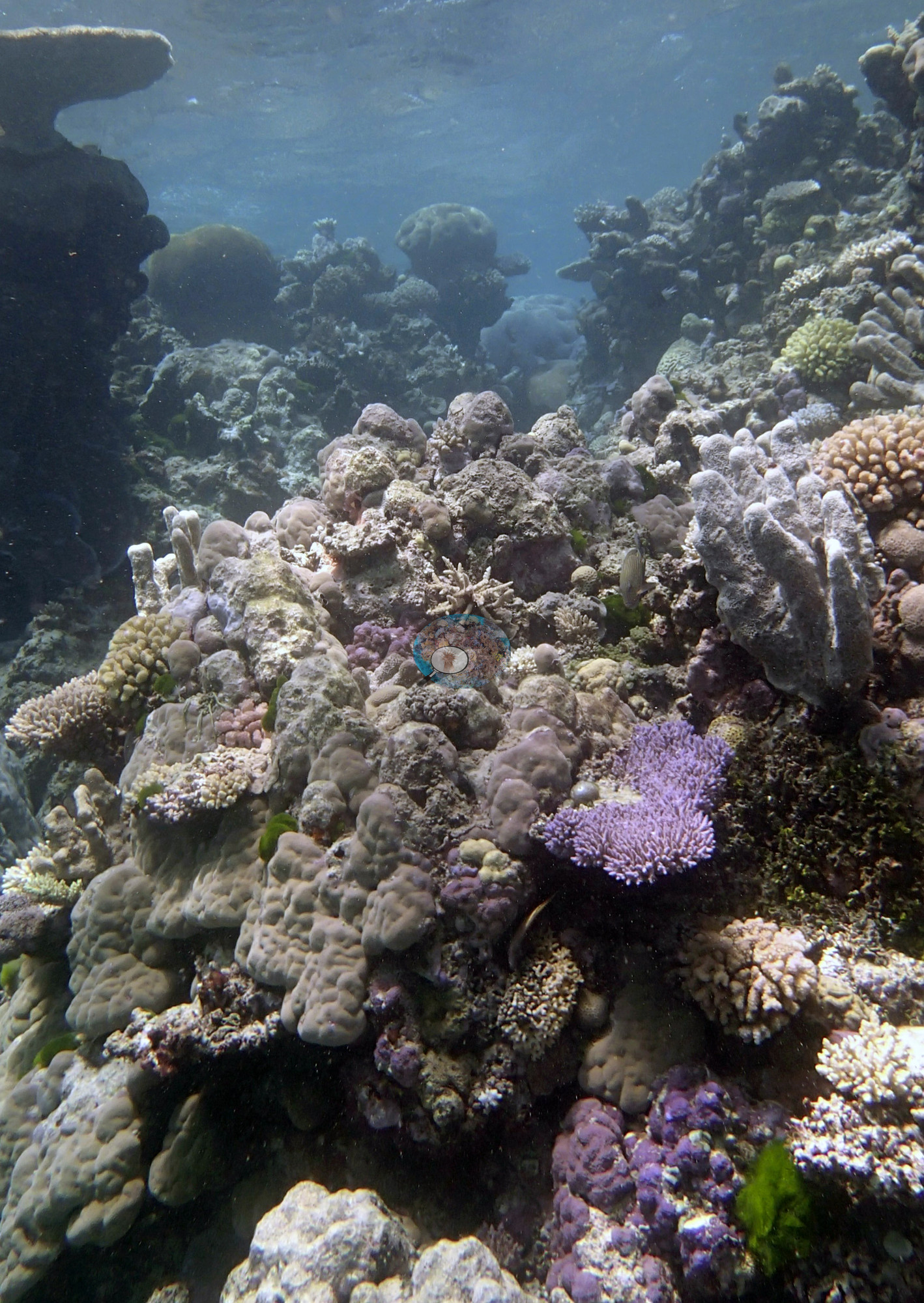
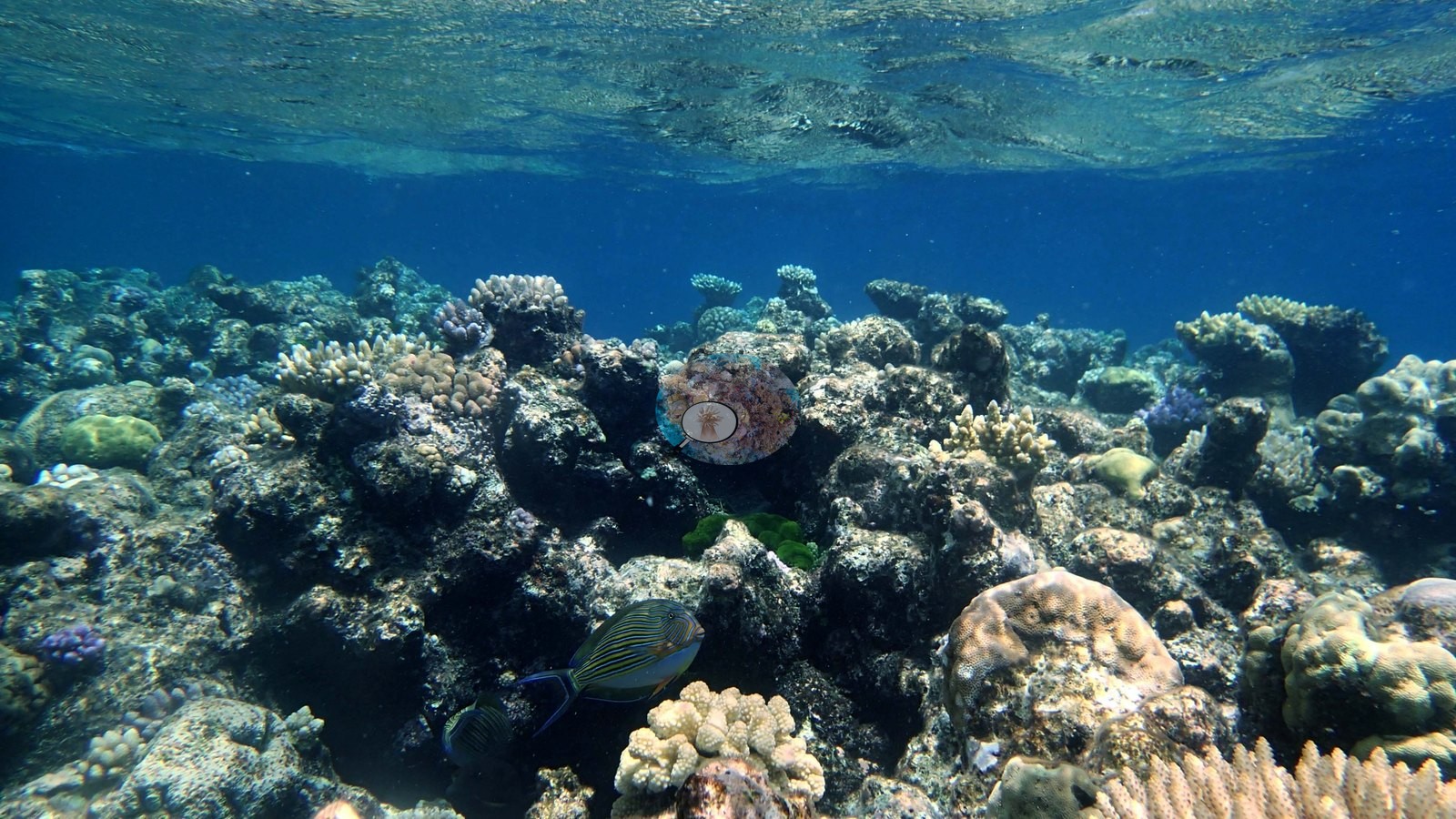
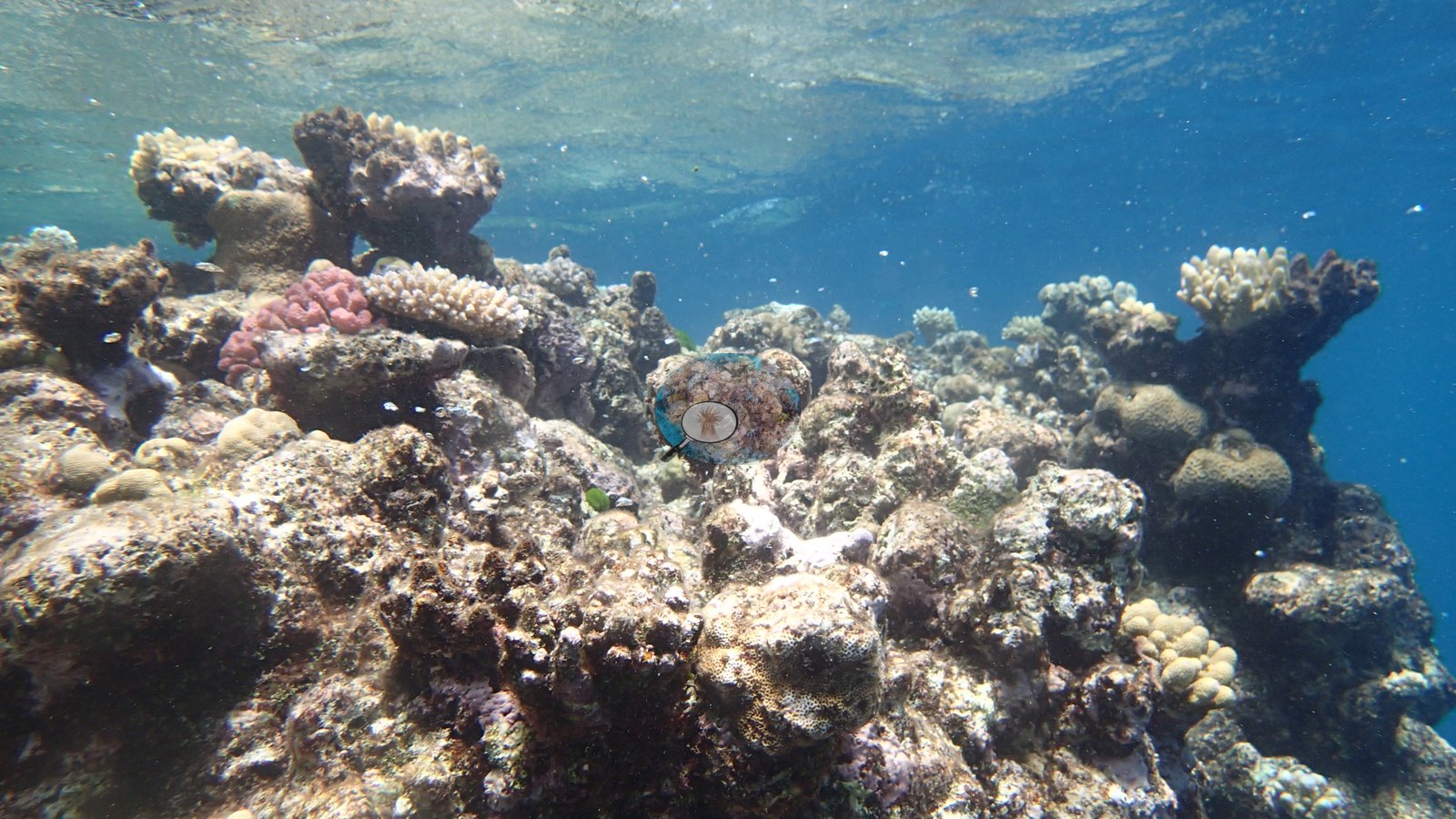
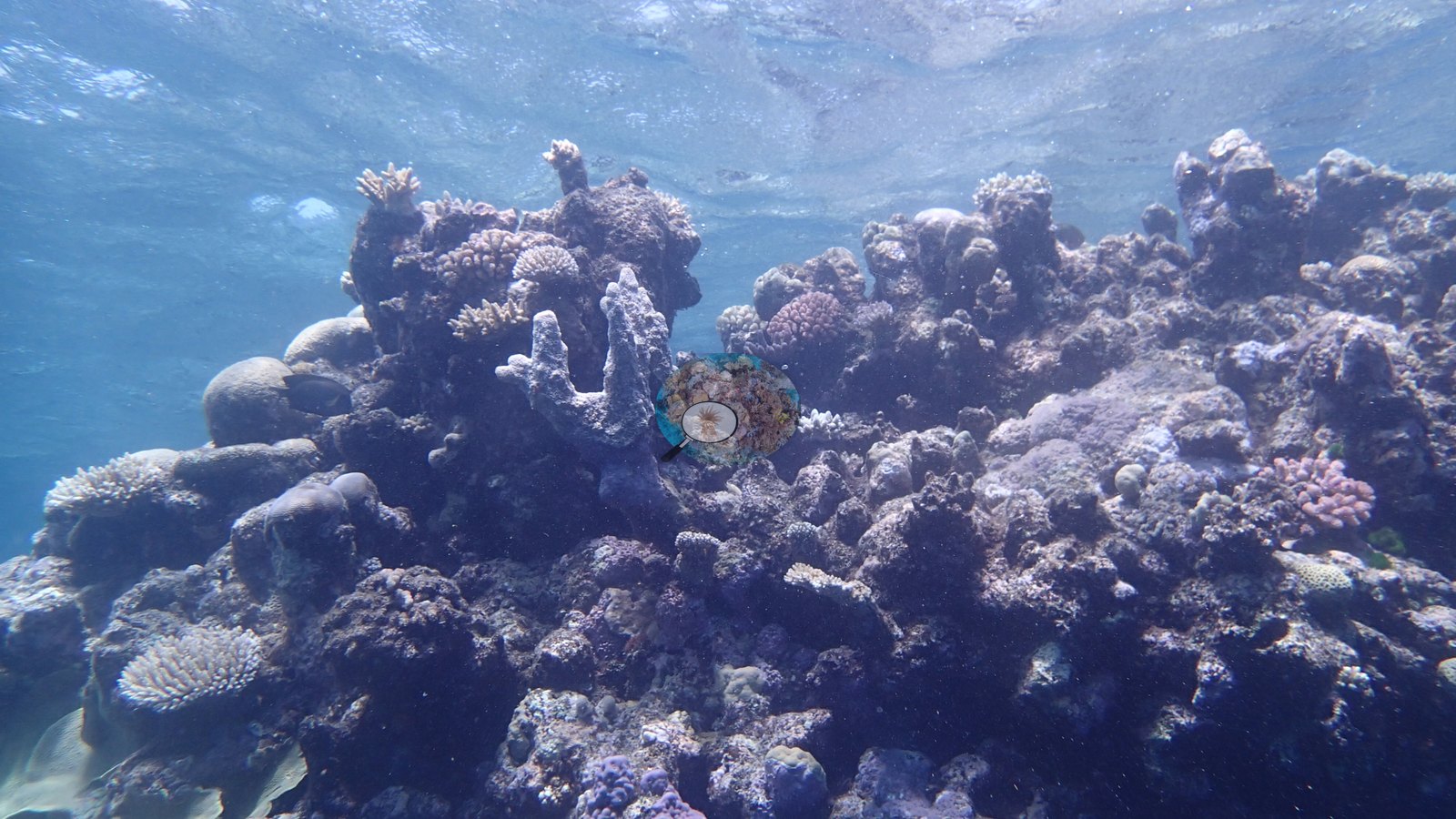
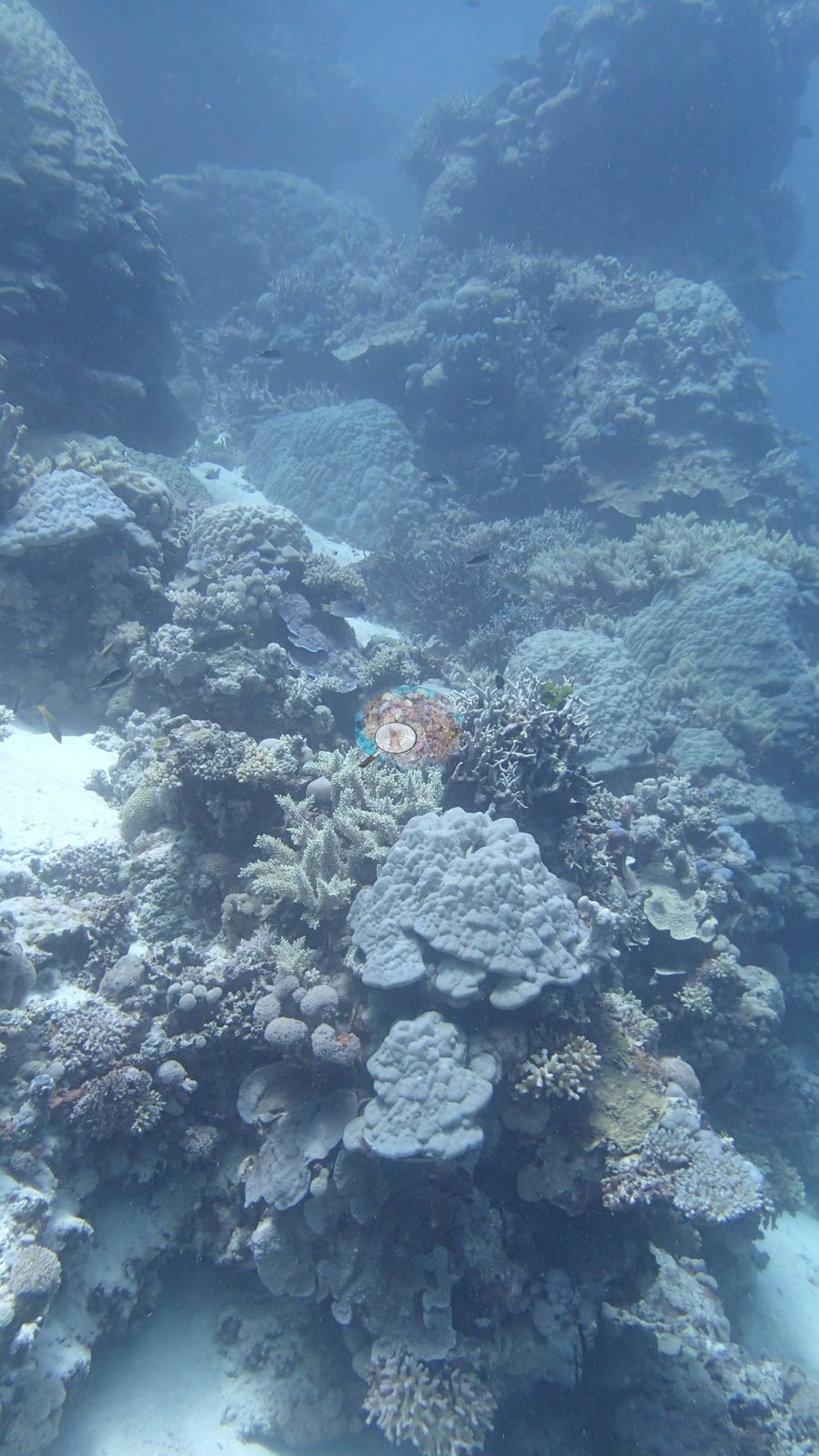
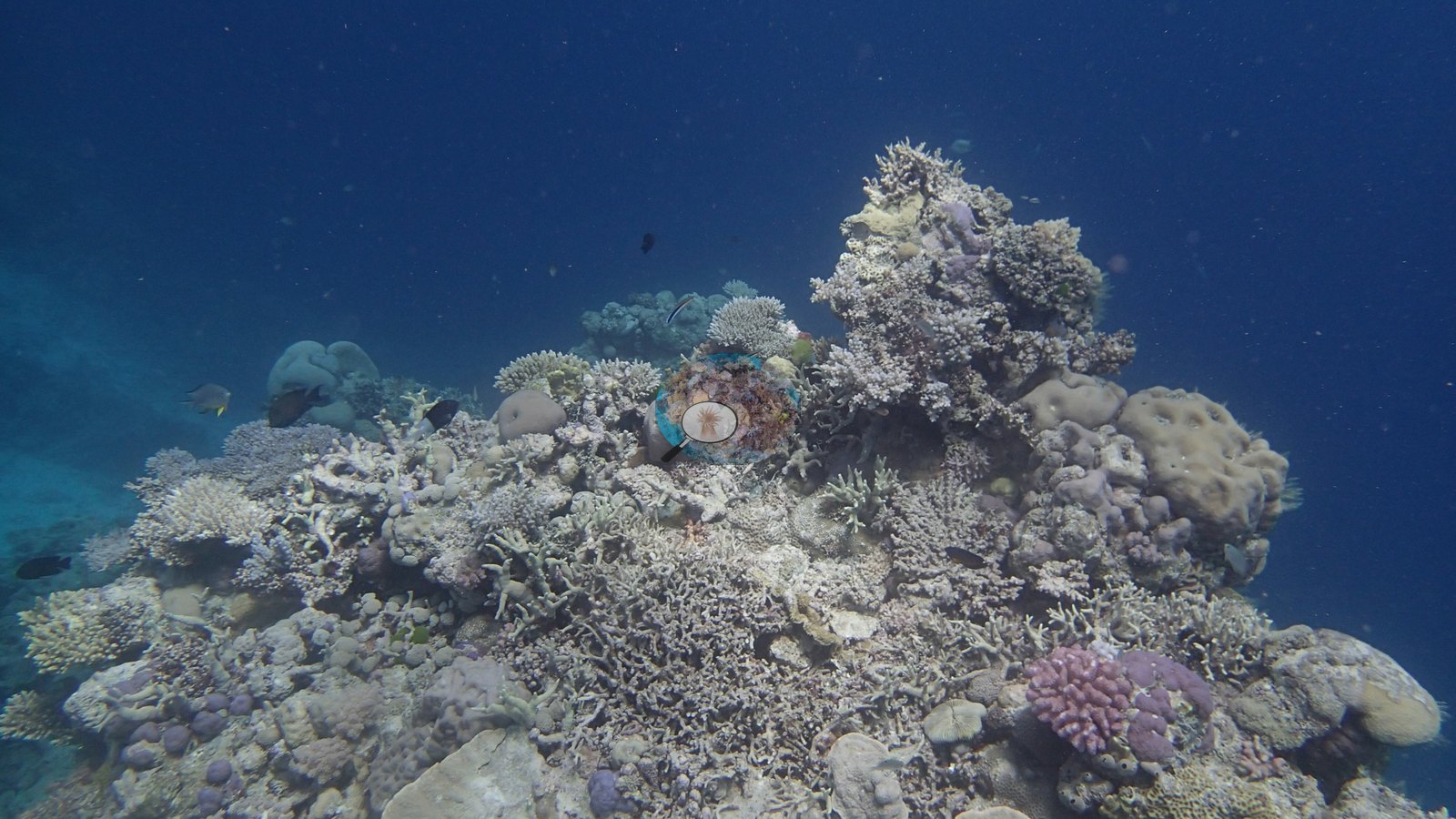
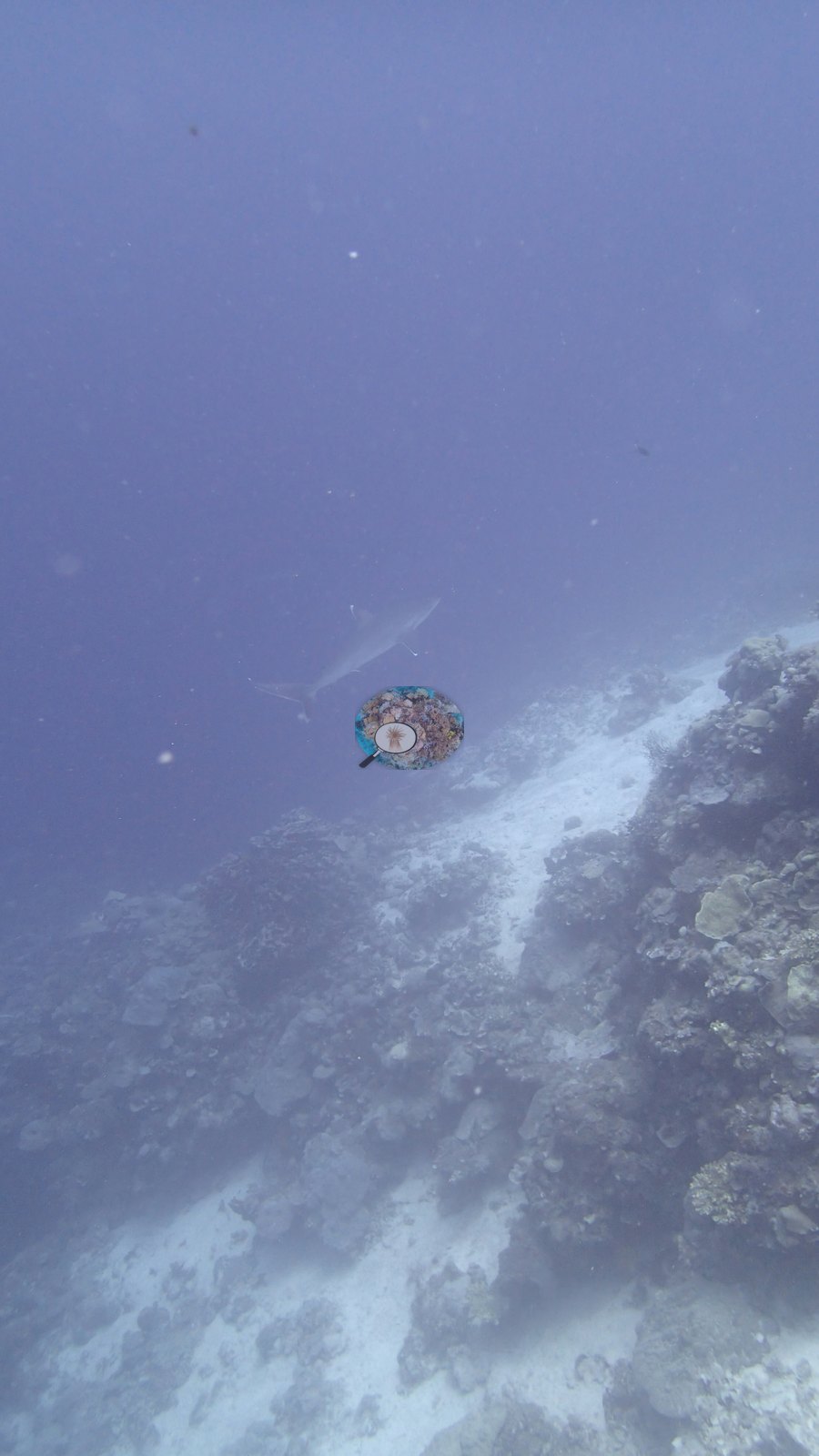
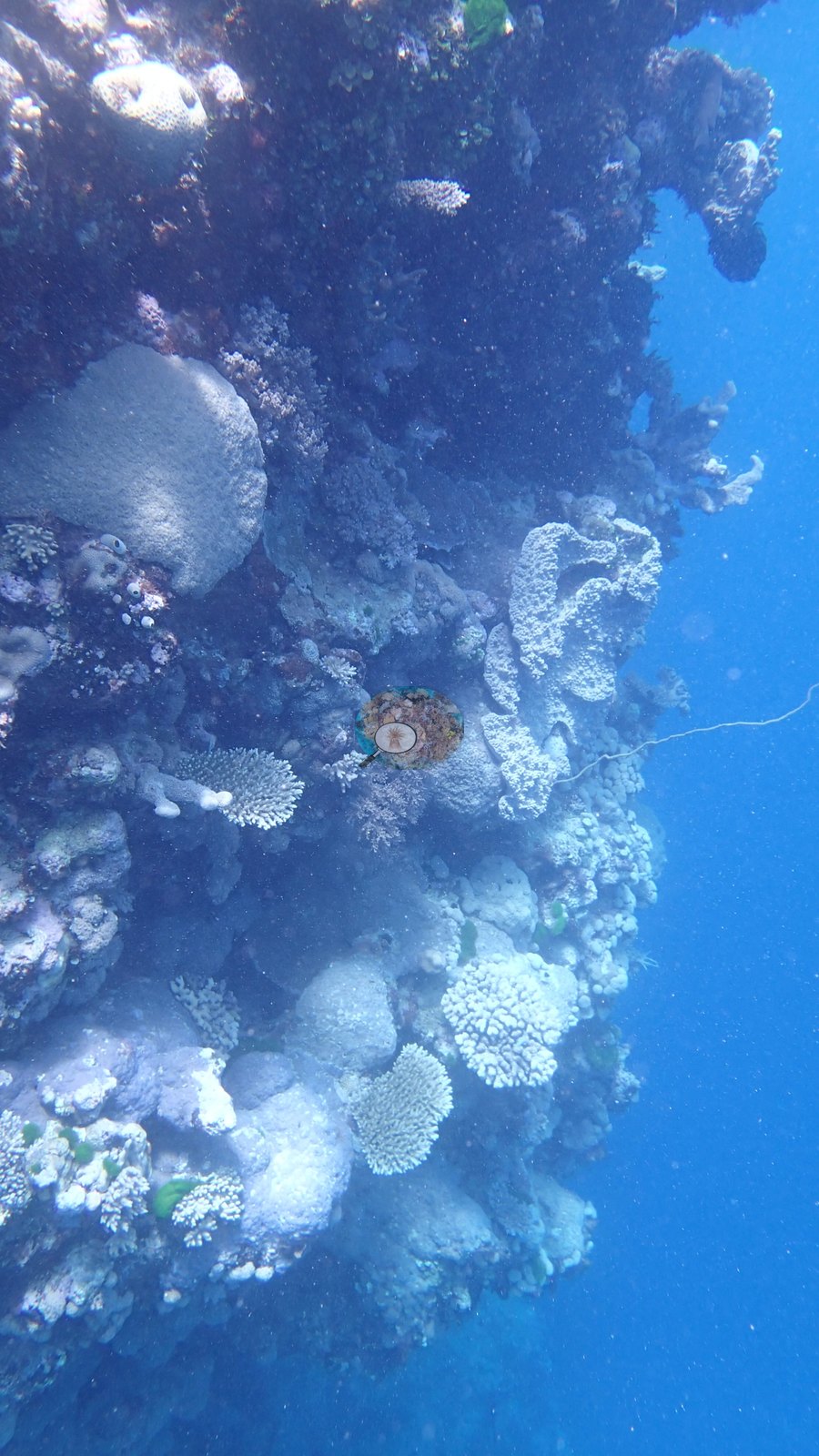
The wide frames show a steep reef with a defined crest and a drop into blue — Image 24, Image 43, Image 48, and Image 51 all look out or down into open water off the structure.
General benthic features
The set splits cleanly into survey work and reef structure. Twenty frames are downward photoquadrats shot through a black PVC frame with a chain diagonal and small tag (e.g., Image 2, Image 4, Image 5, Image 8, Image 9, Image 10, Image 13, Image 17, Image 18, Image 19, Image 28, Image 31, Image 32, Image 35, Image 39, Image 44, Image 45, Image 46, Image 49, Image 50), several with a gloved hand steadying the frame (e.g., Image 17, Image 18, Image 50).
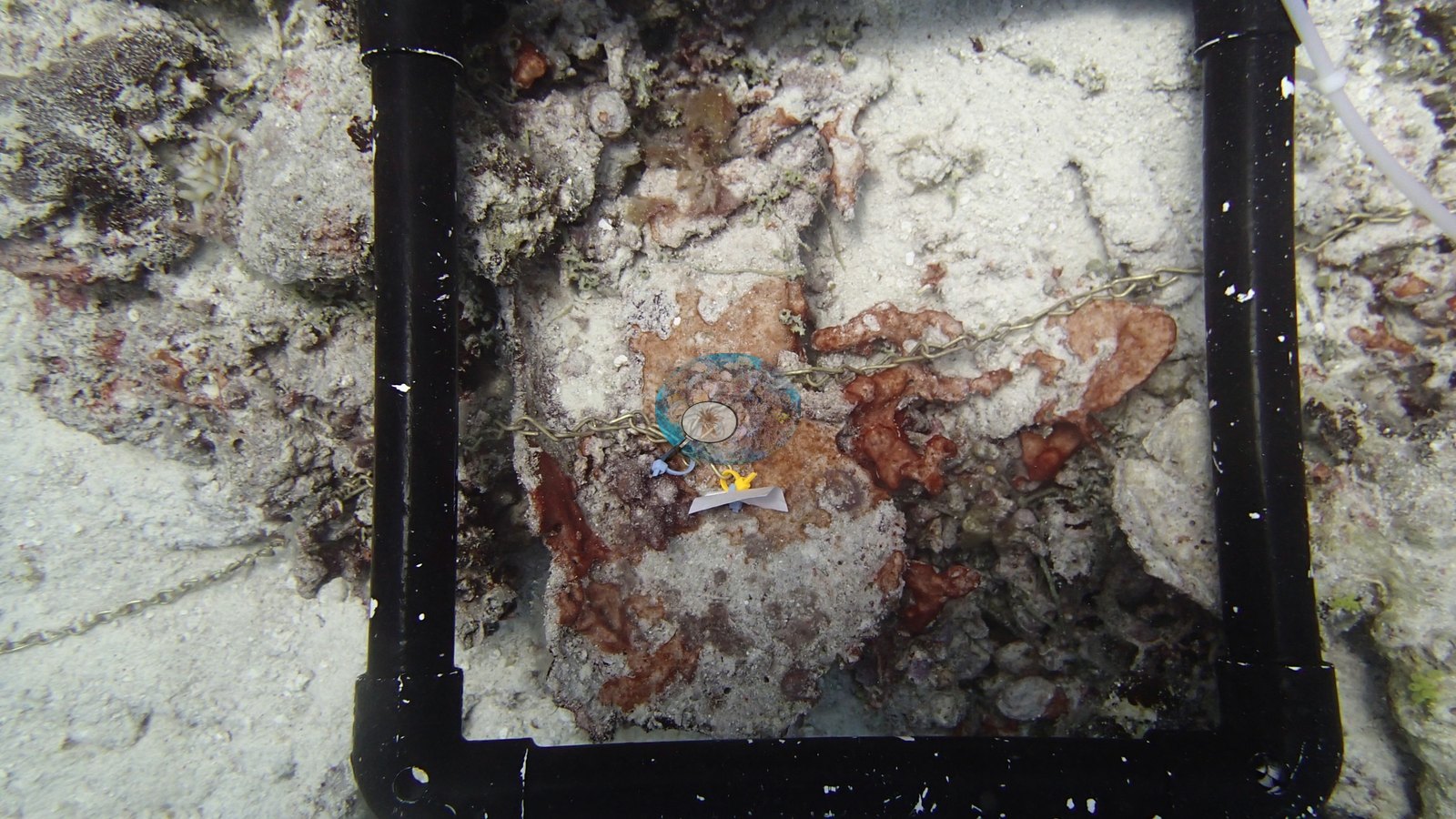
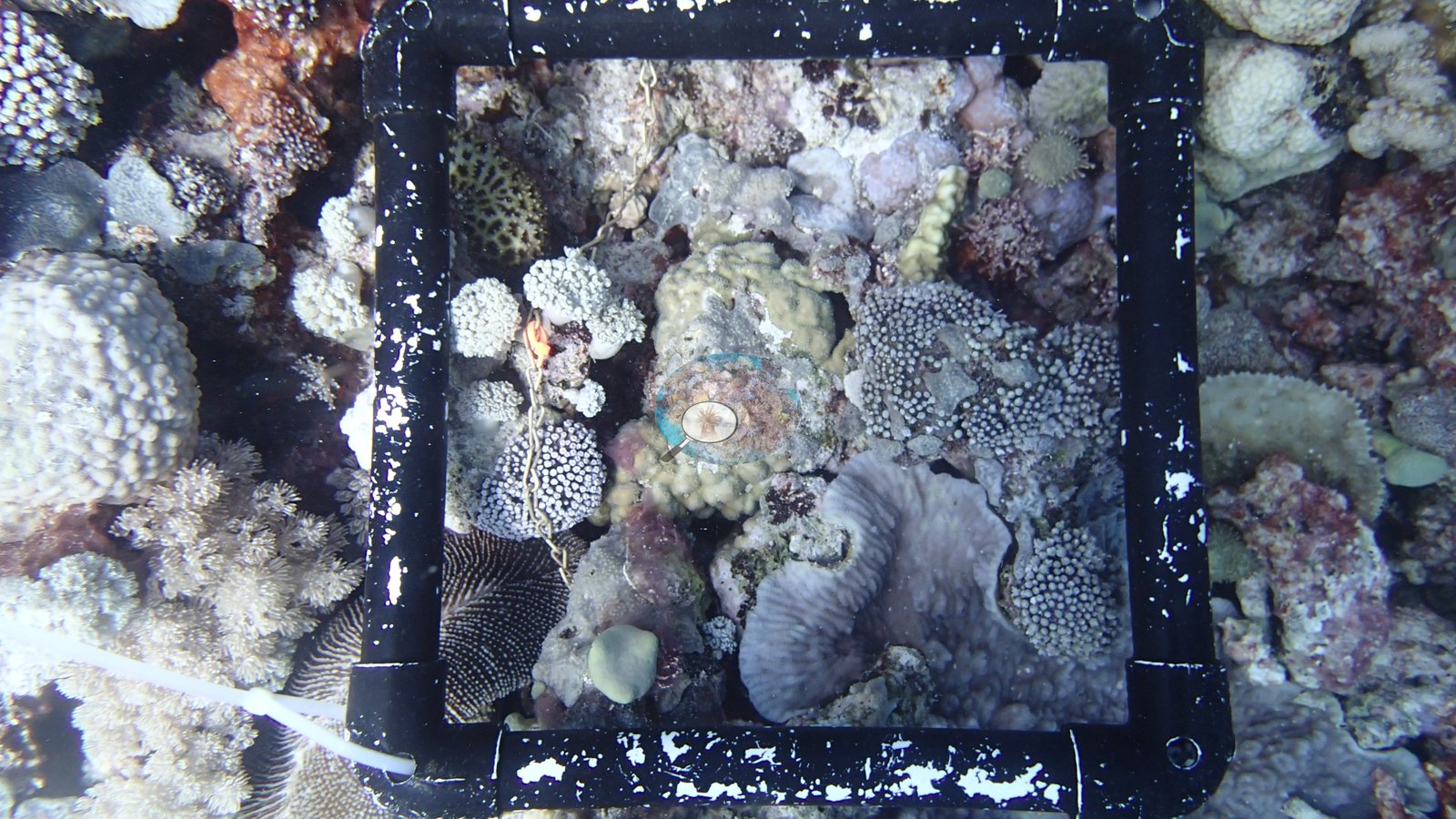
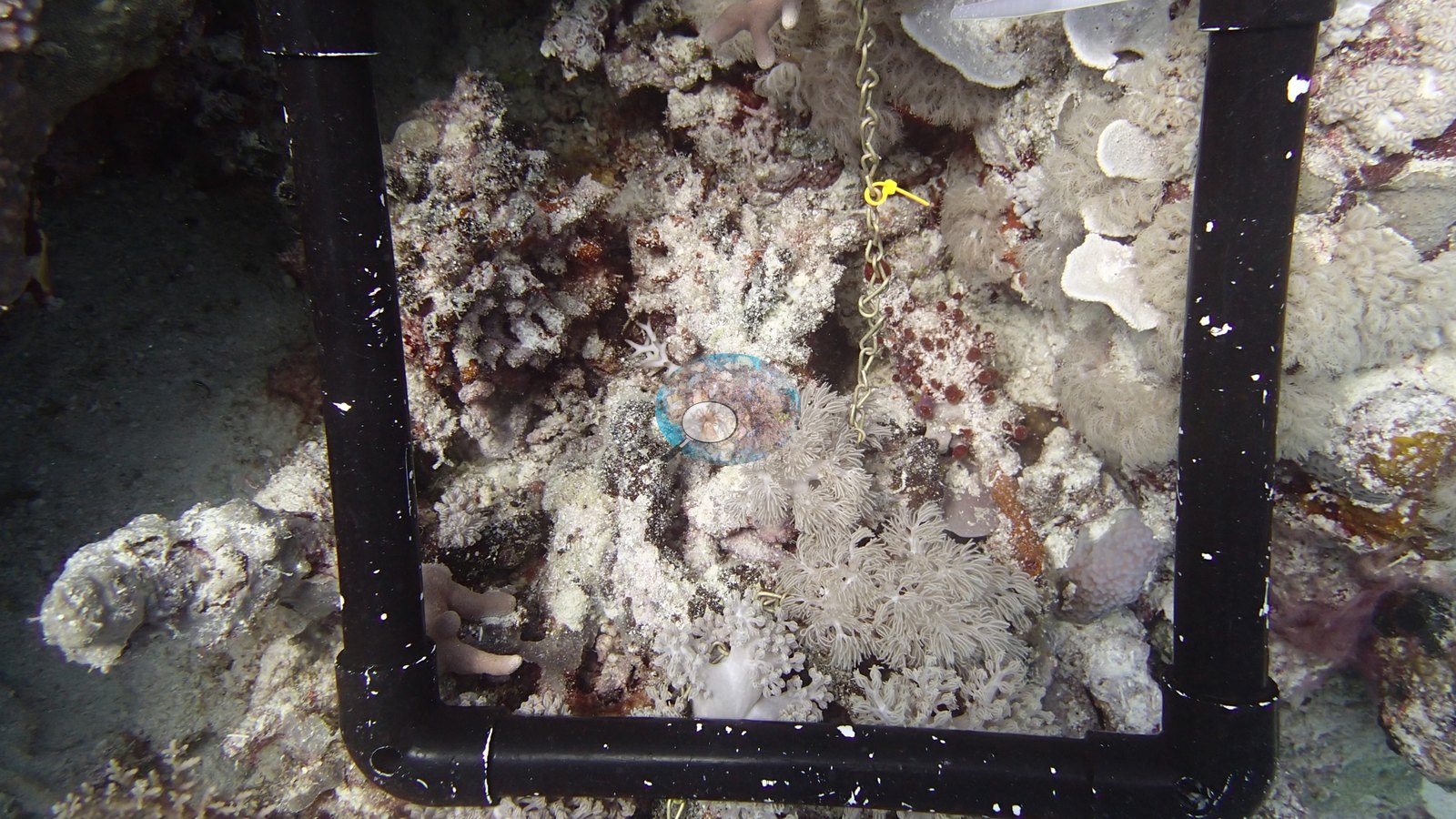
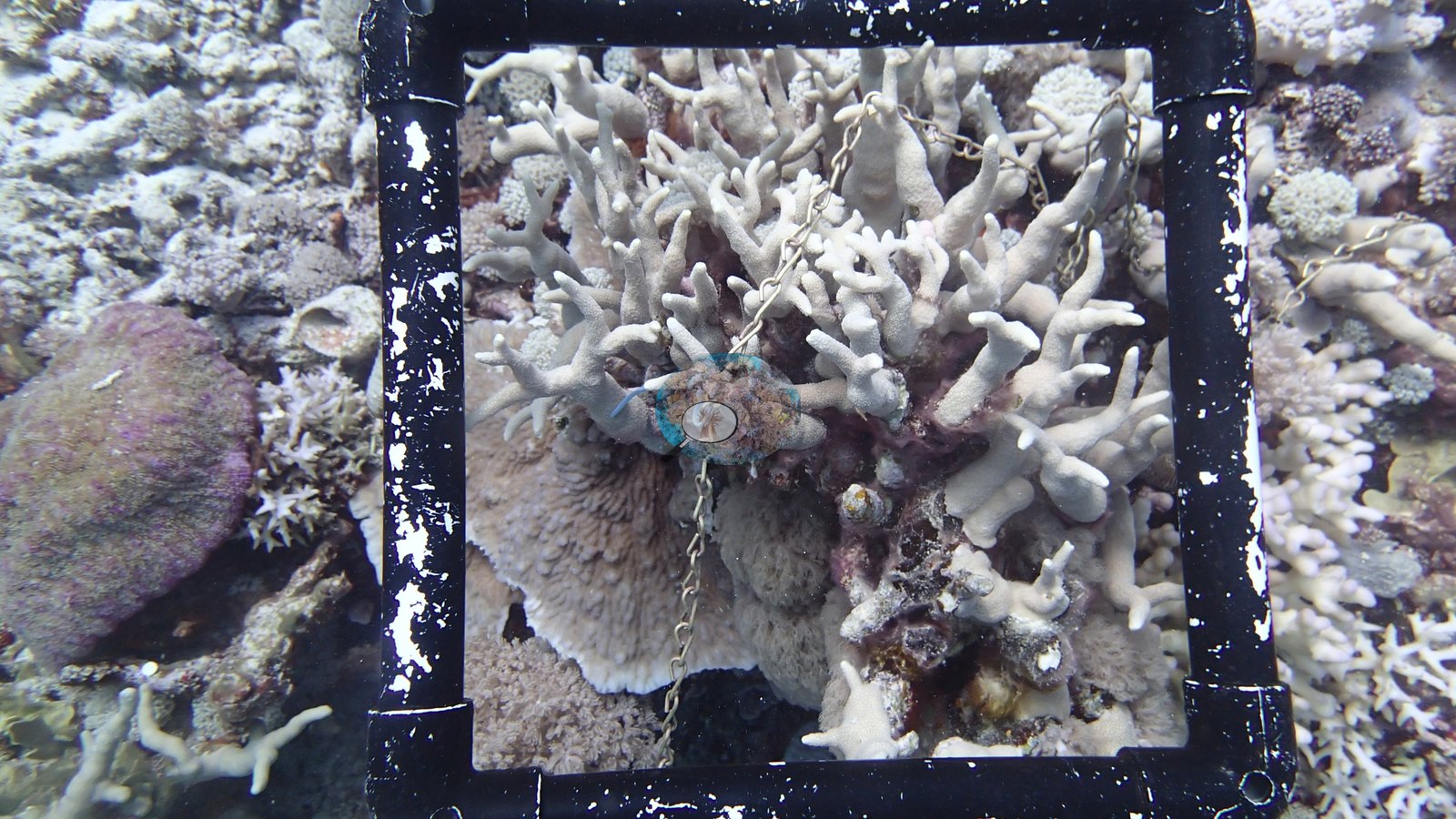
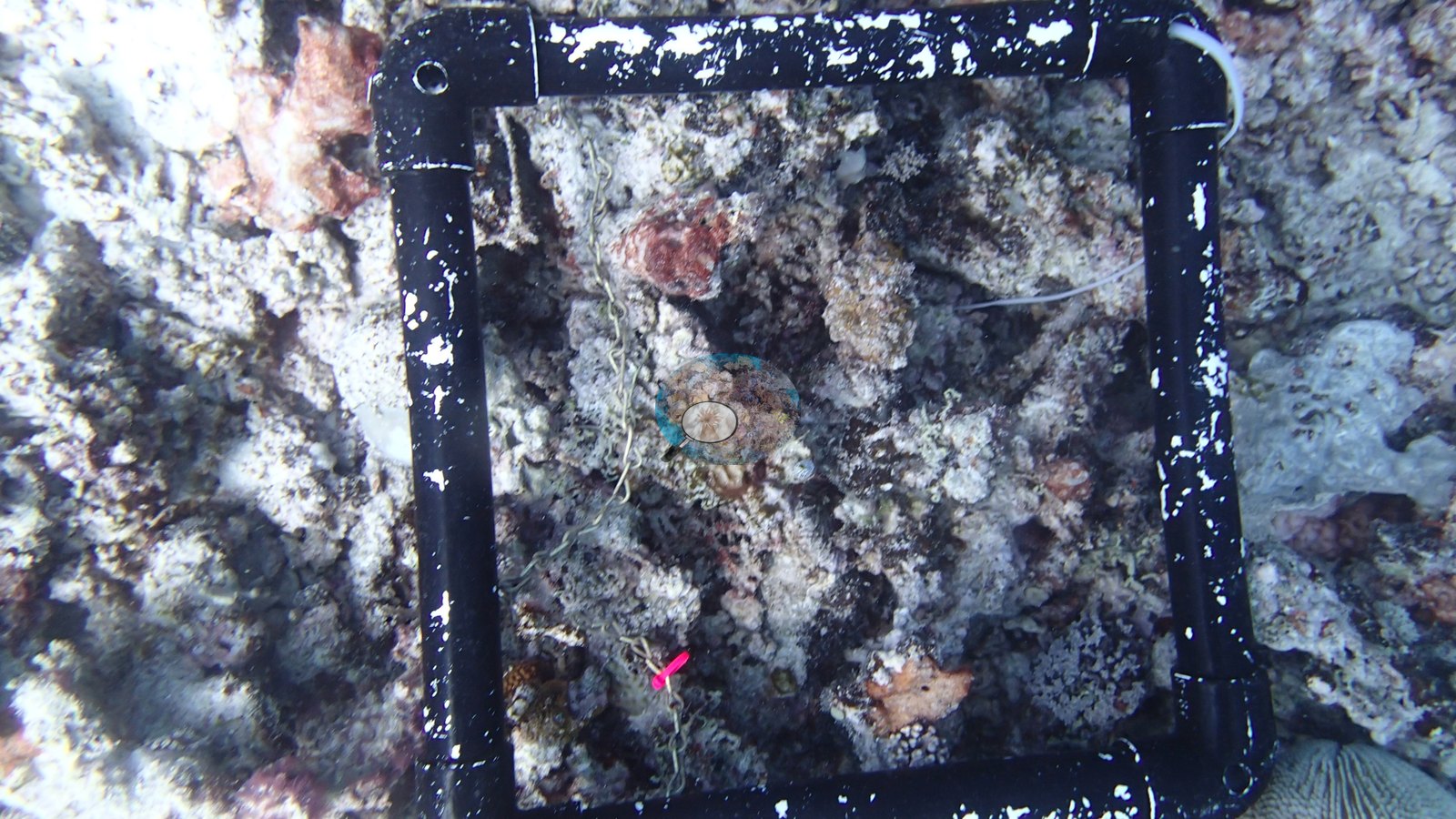
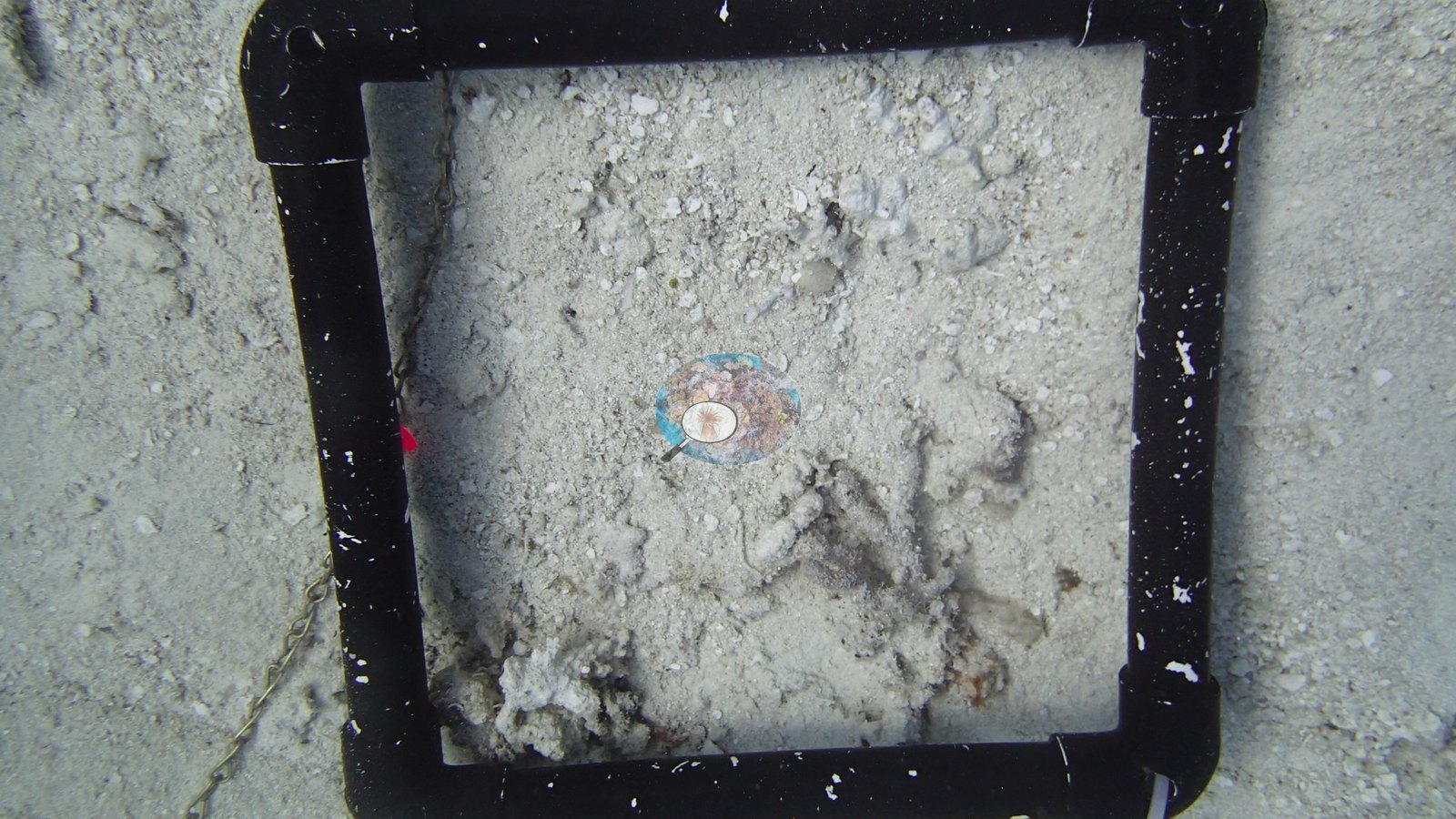
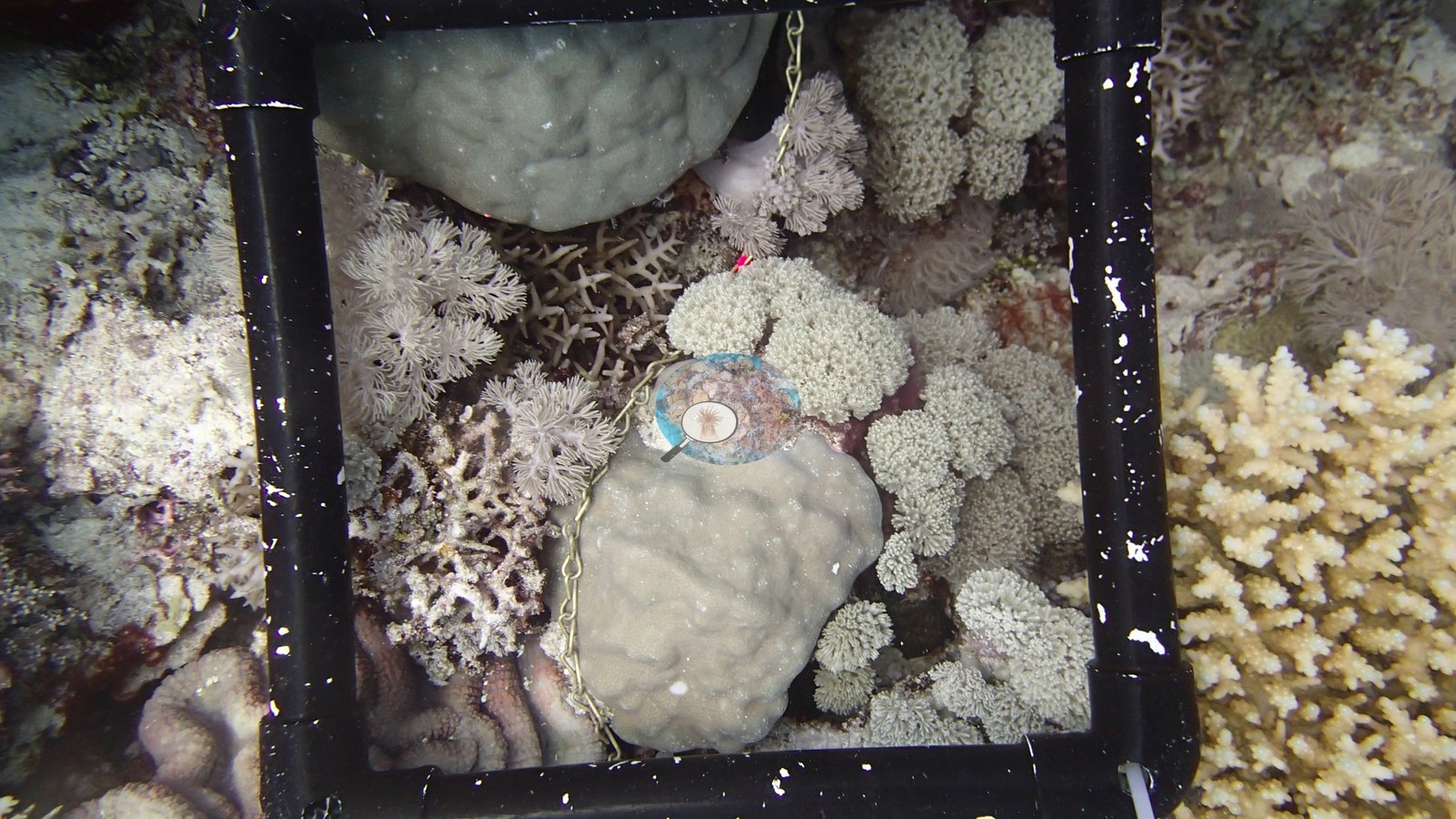
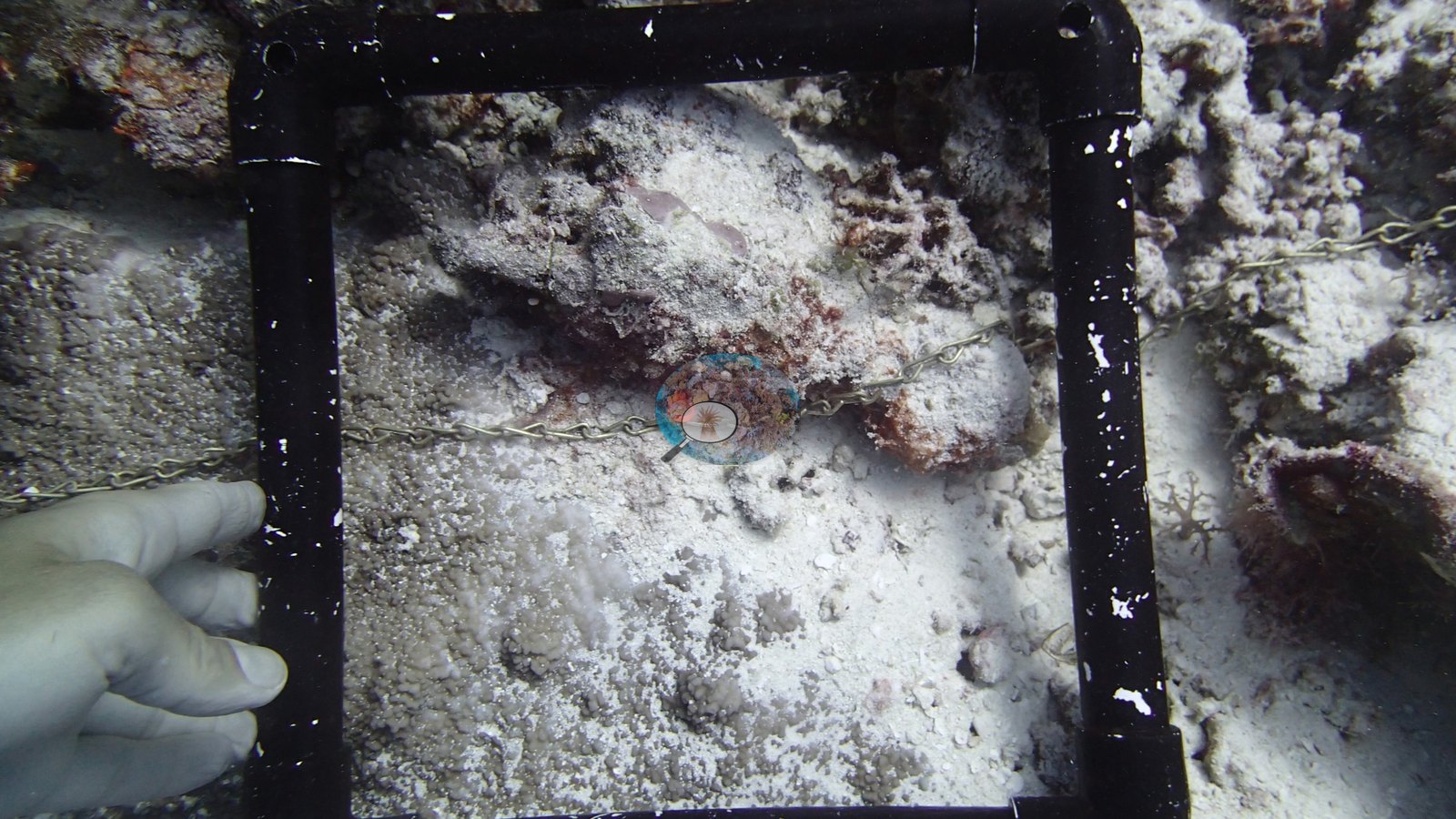
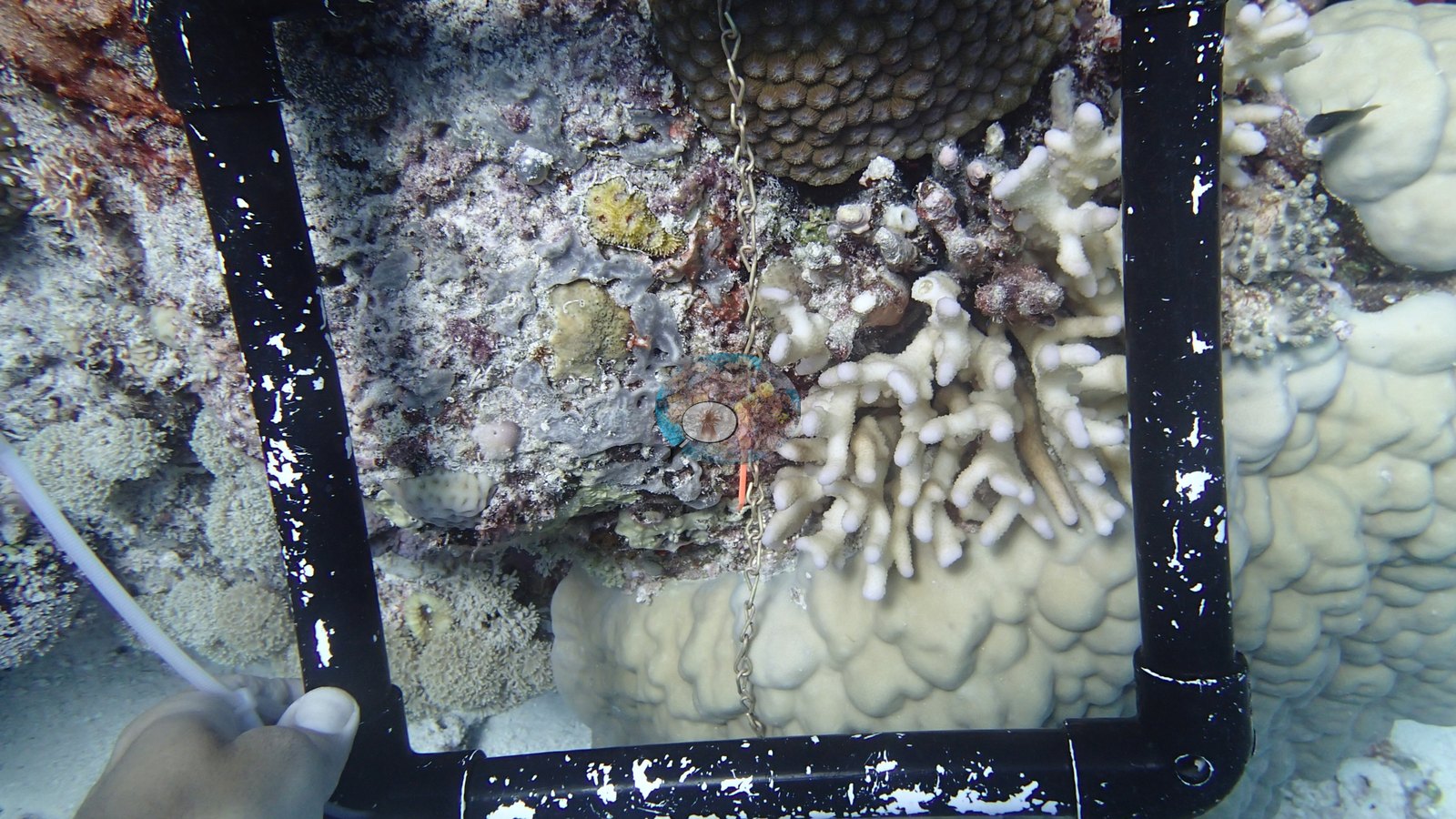
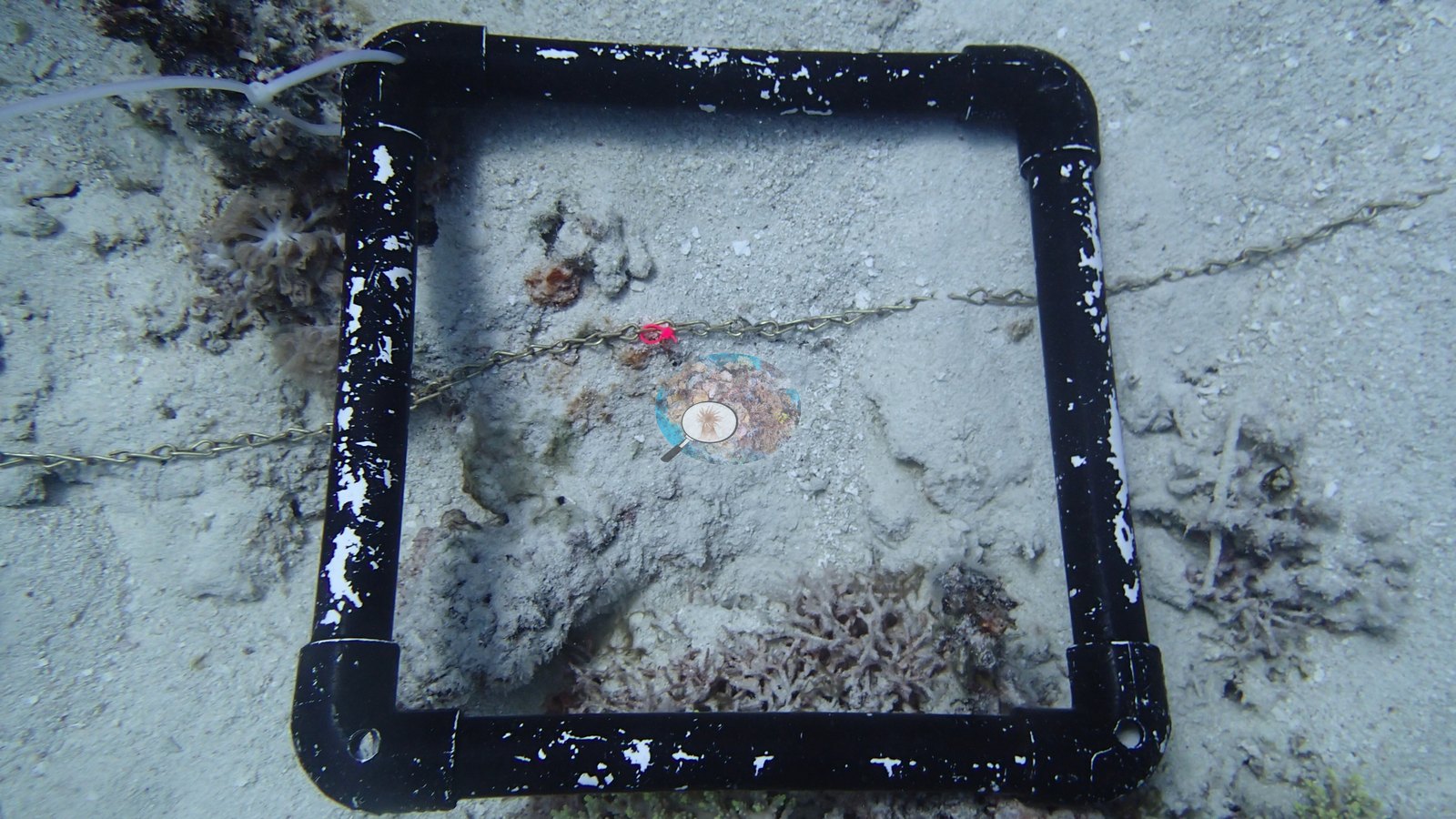
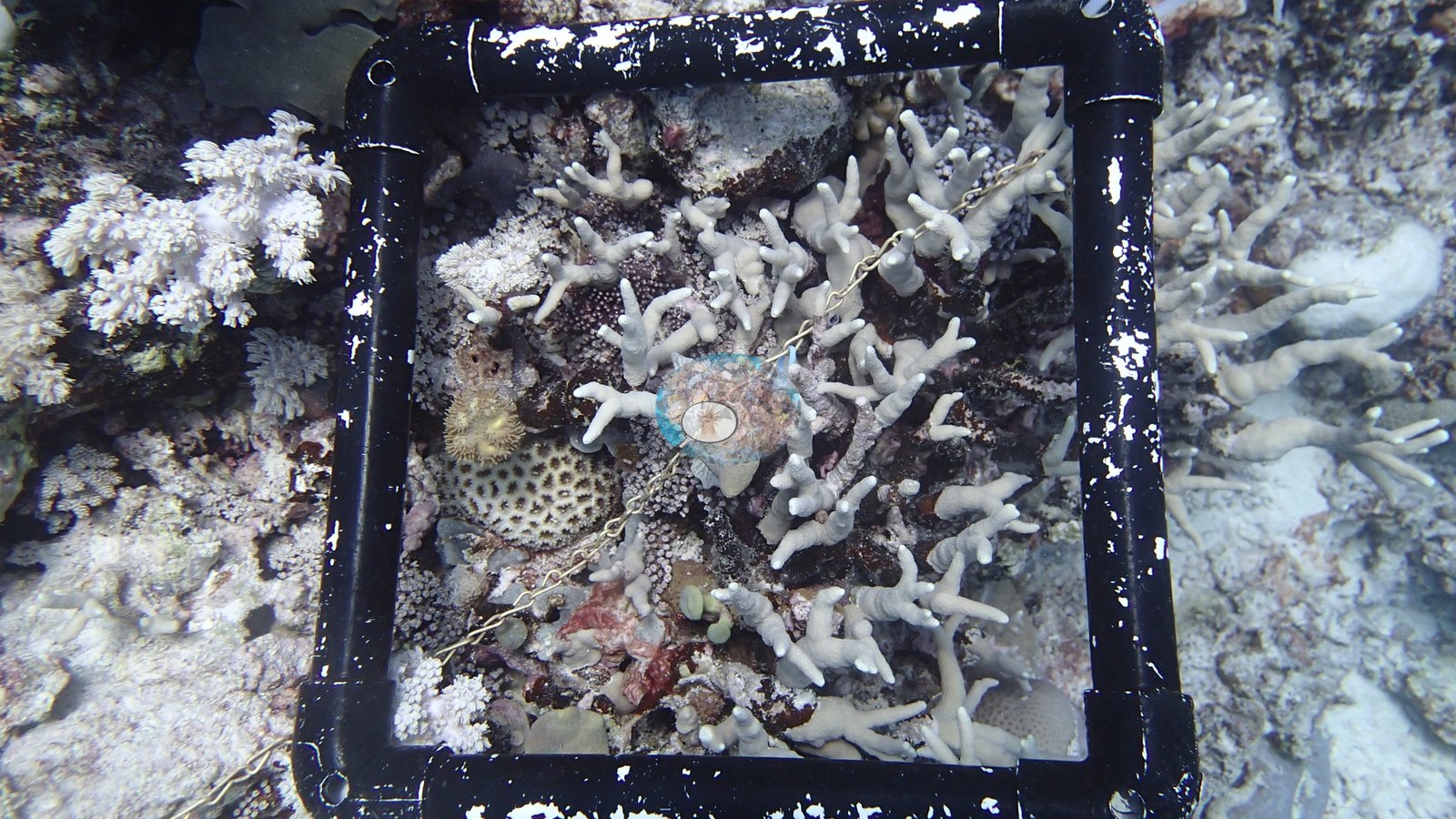
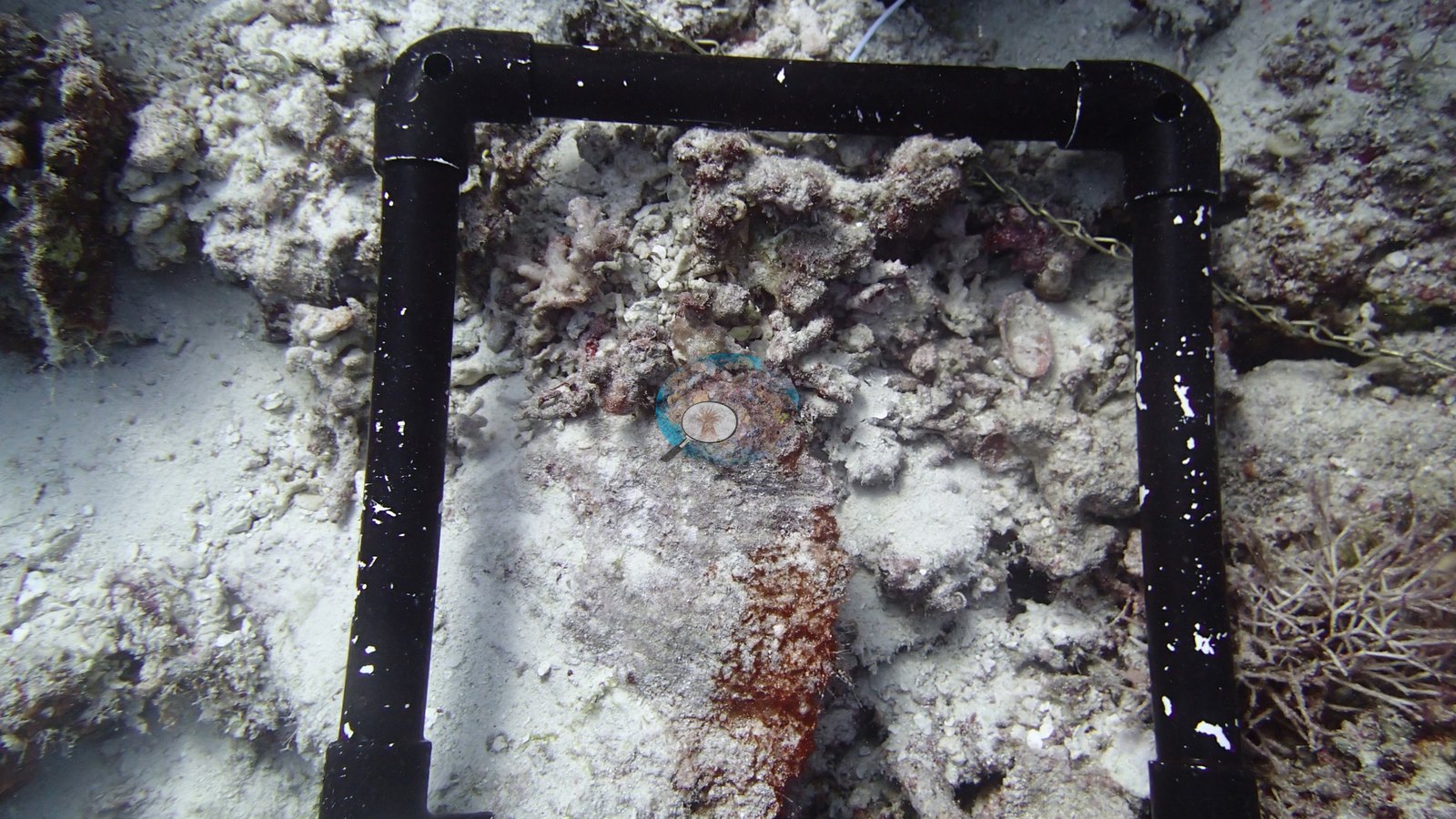
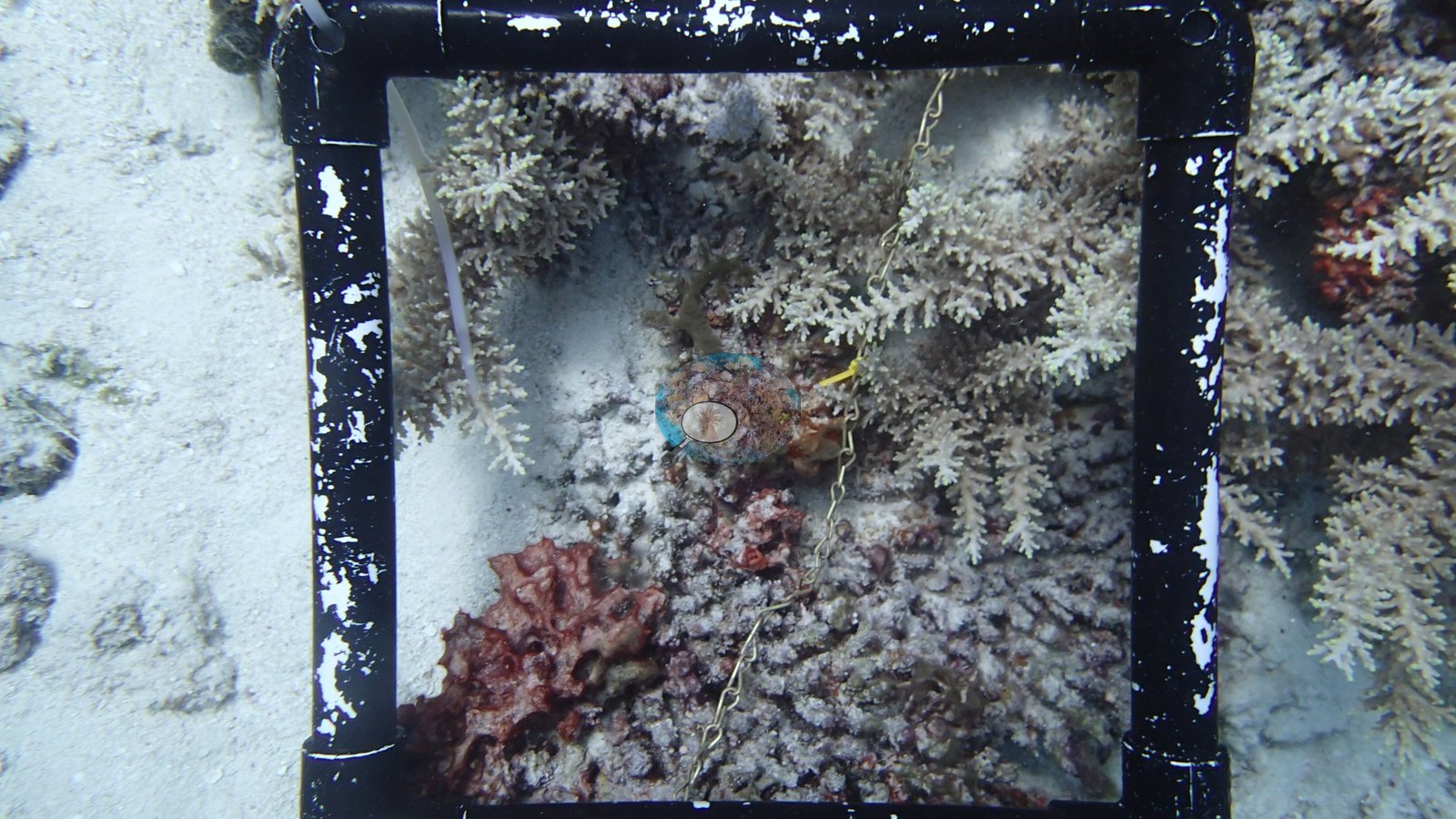
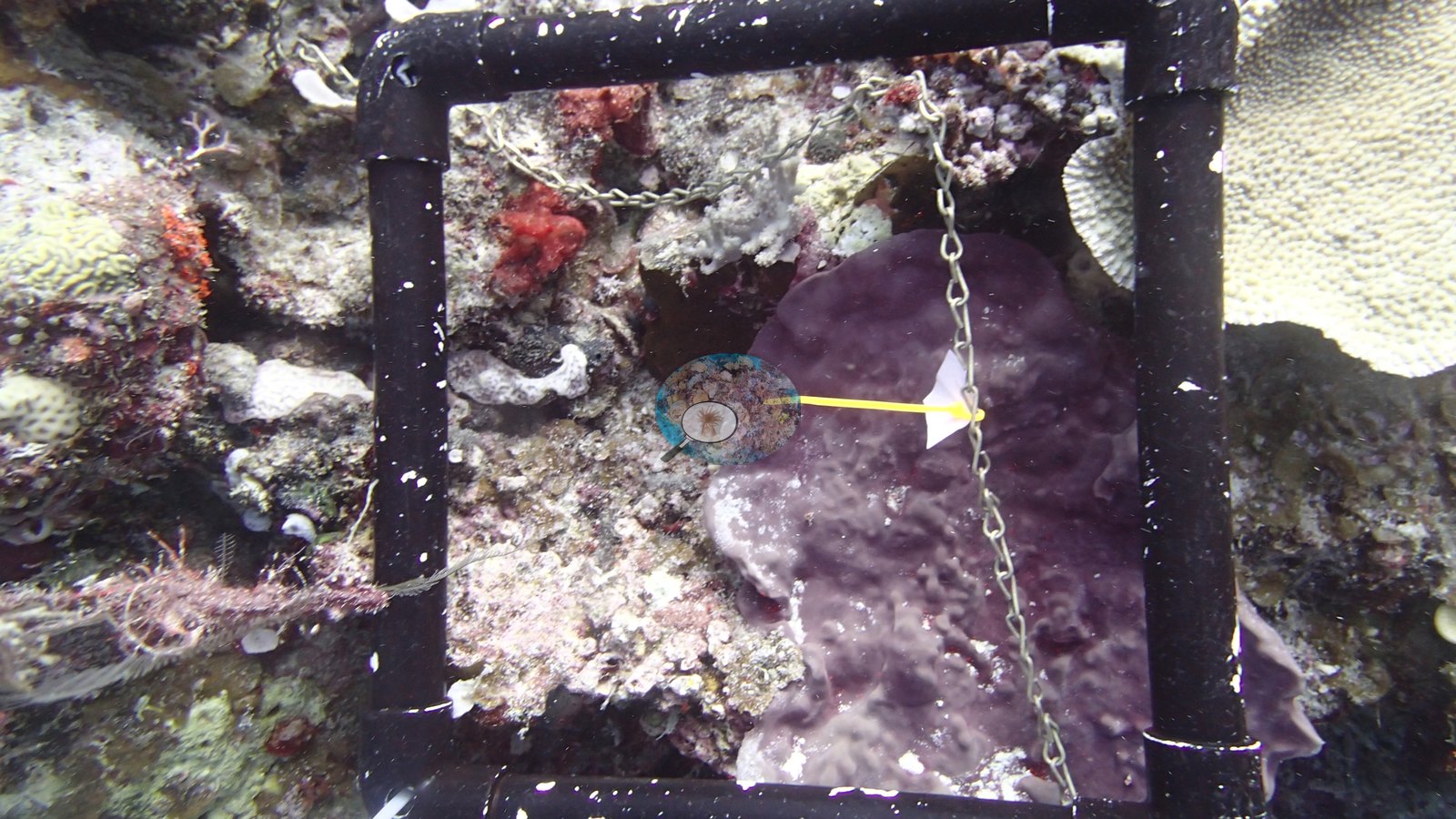
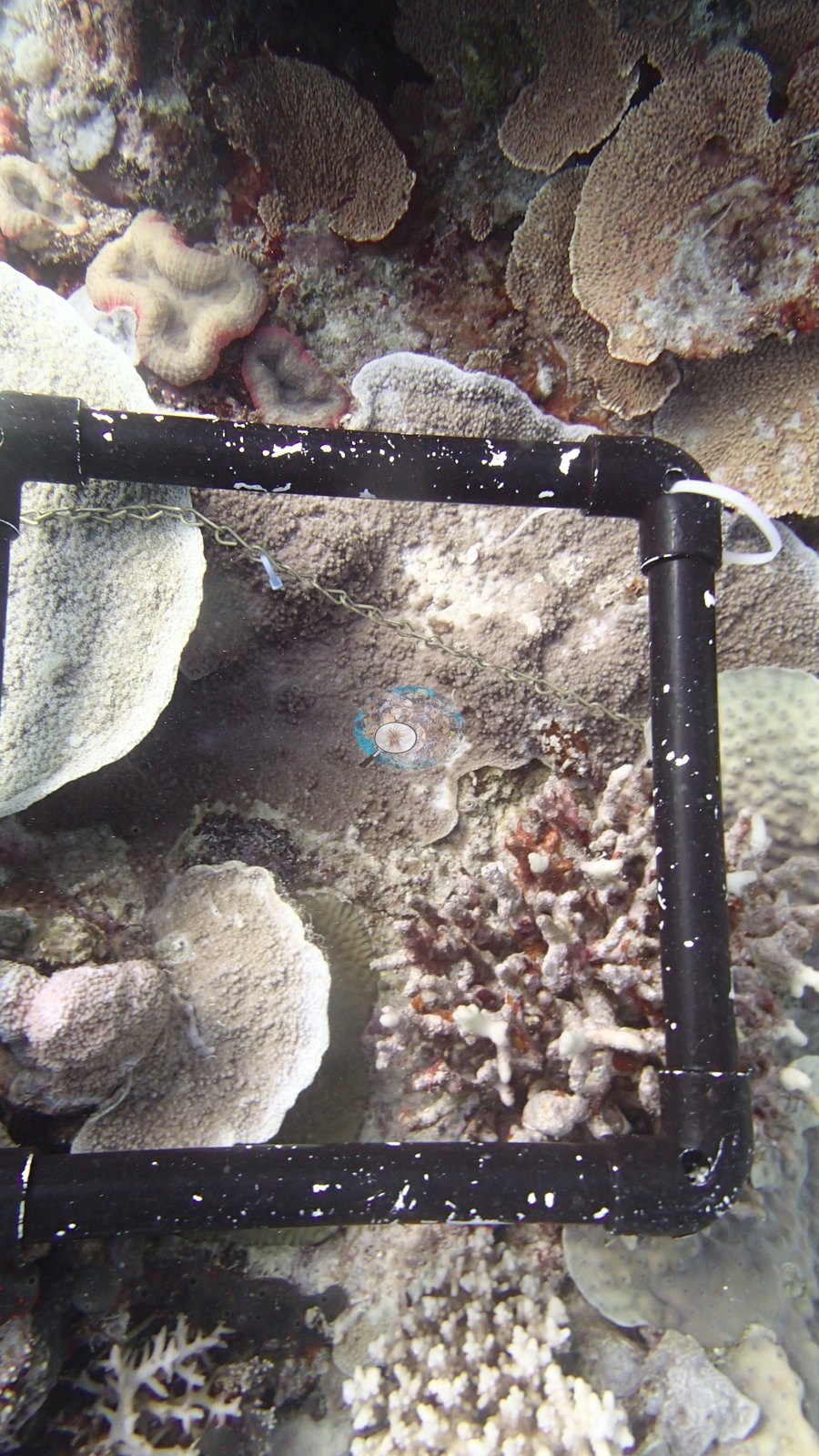
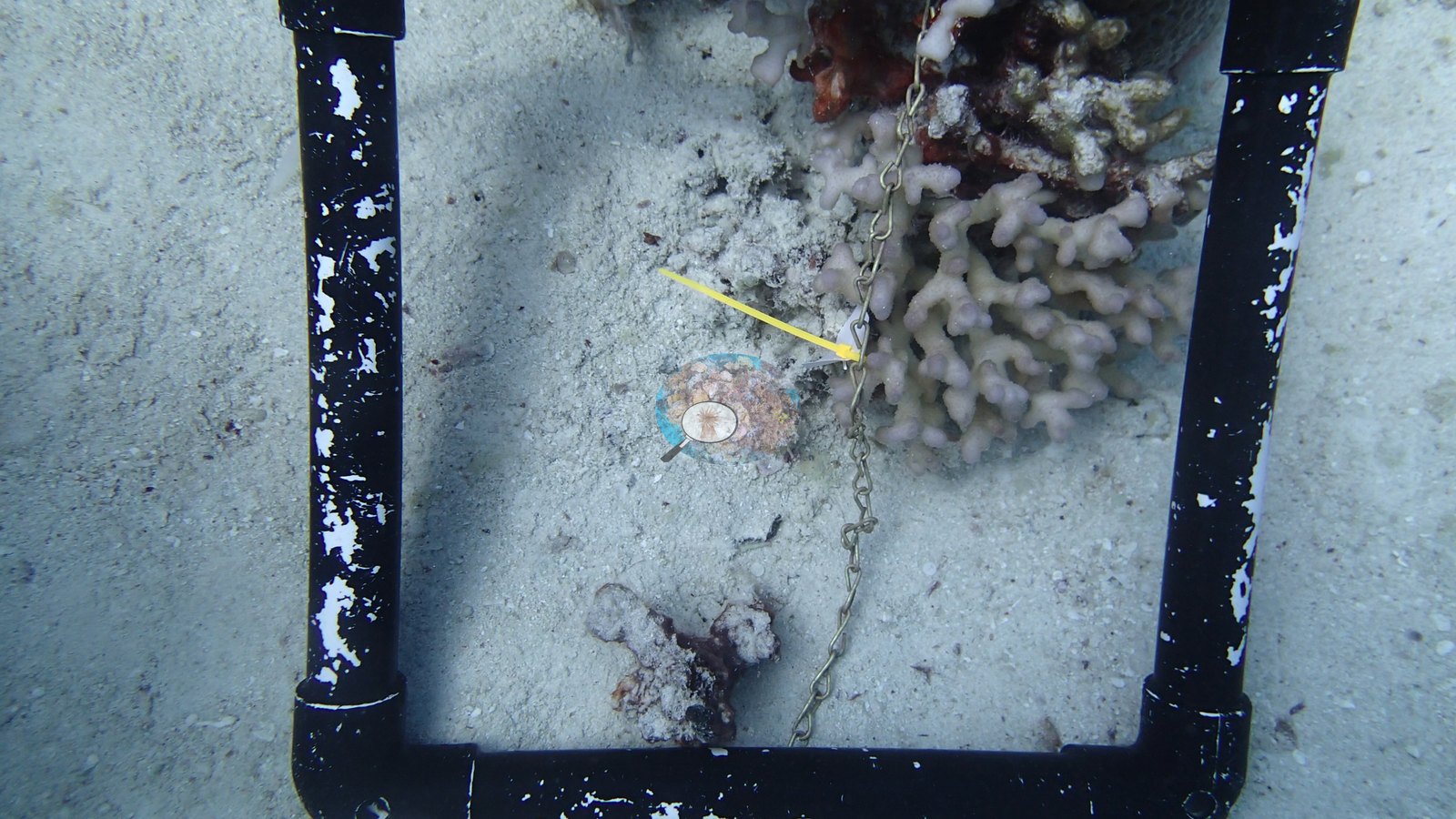
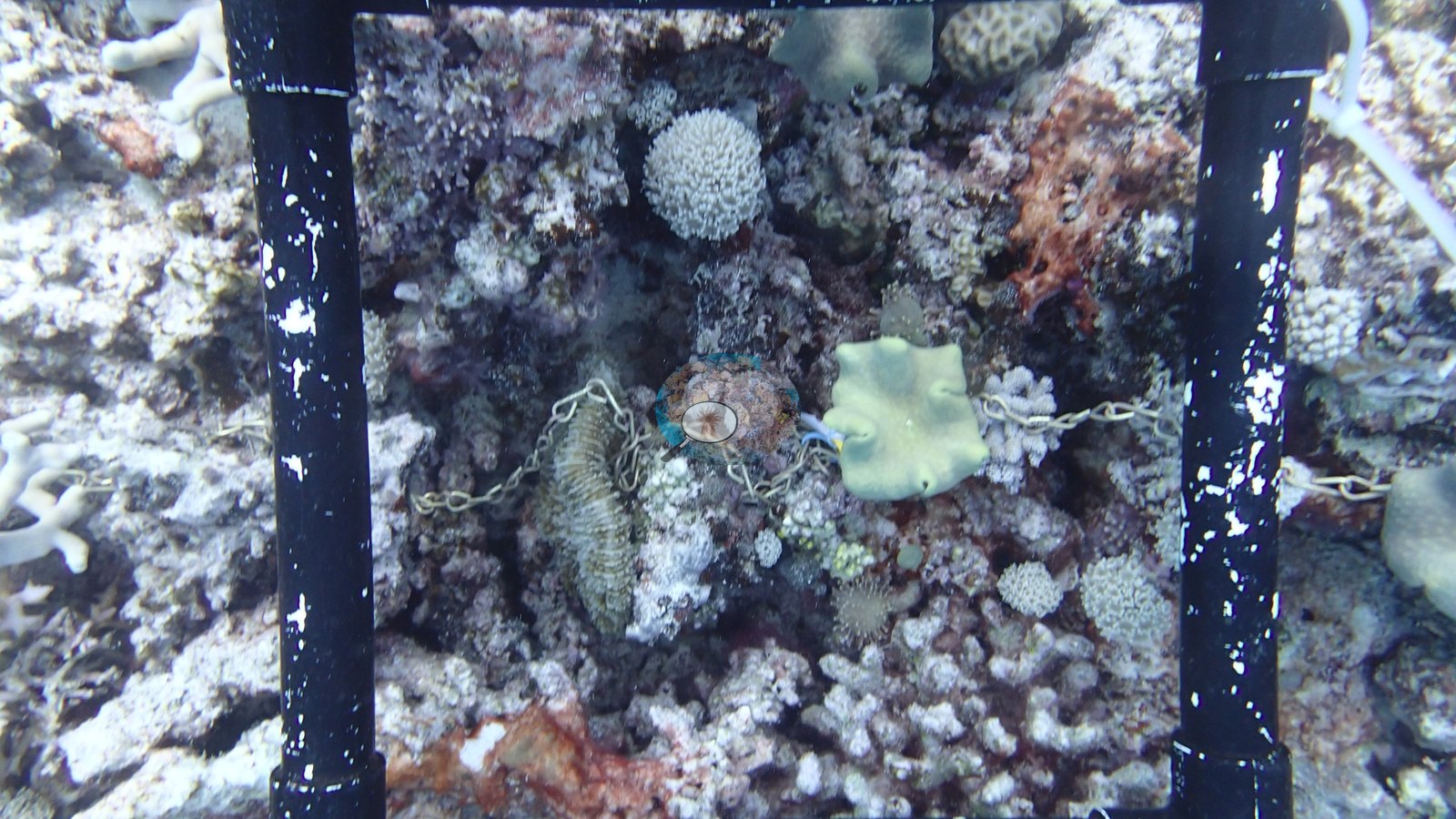
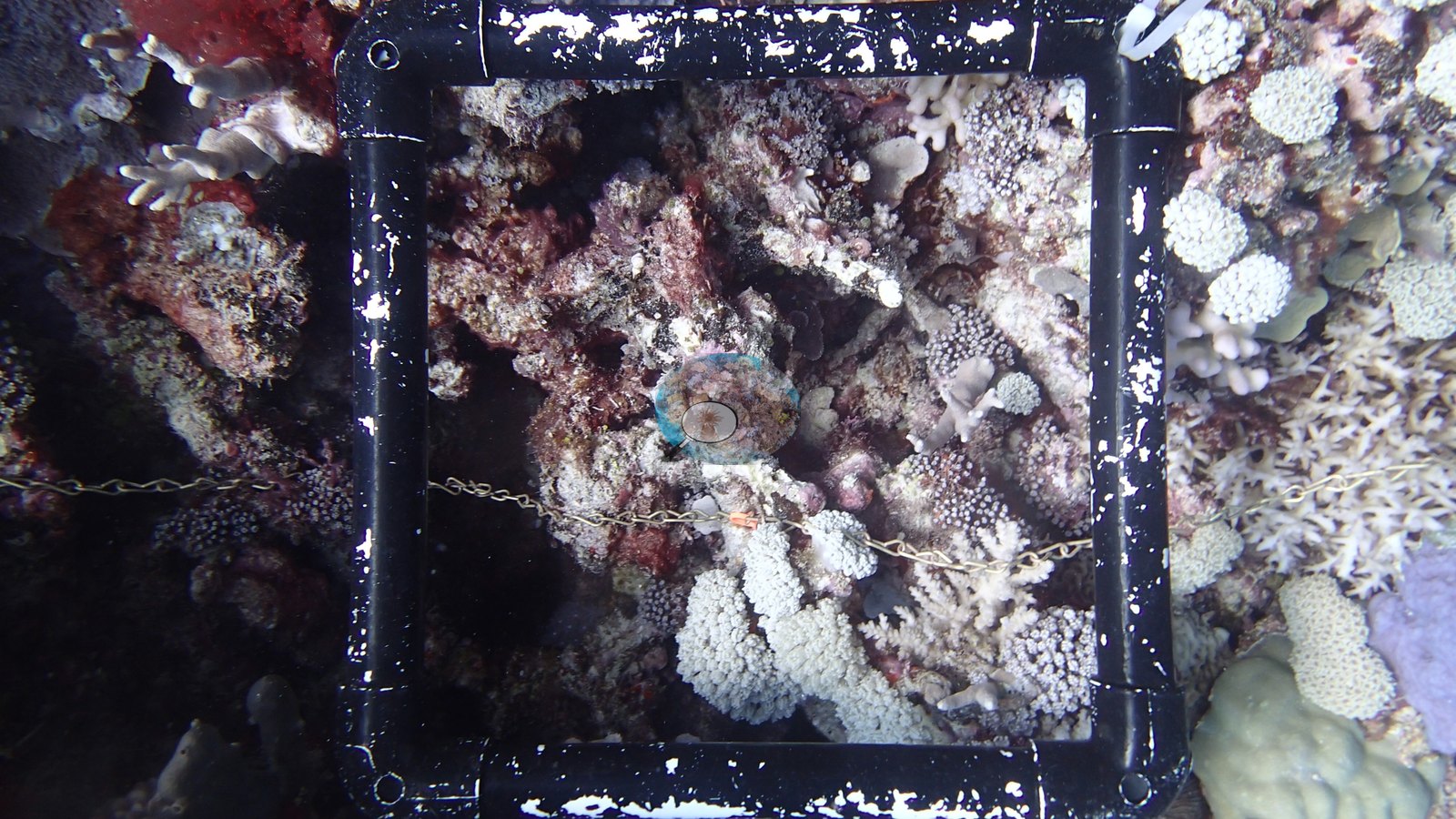
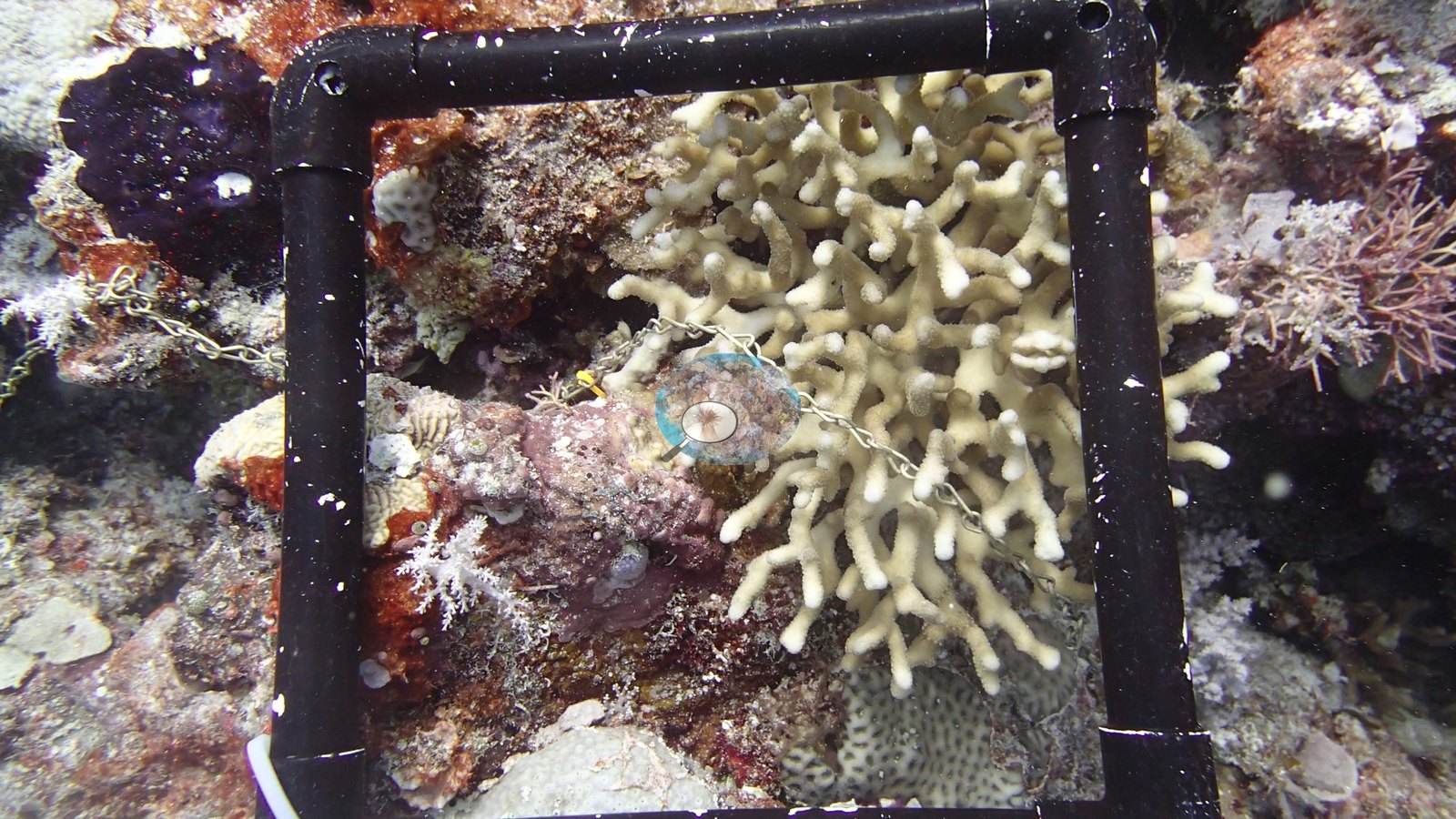
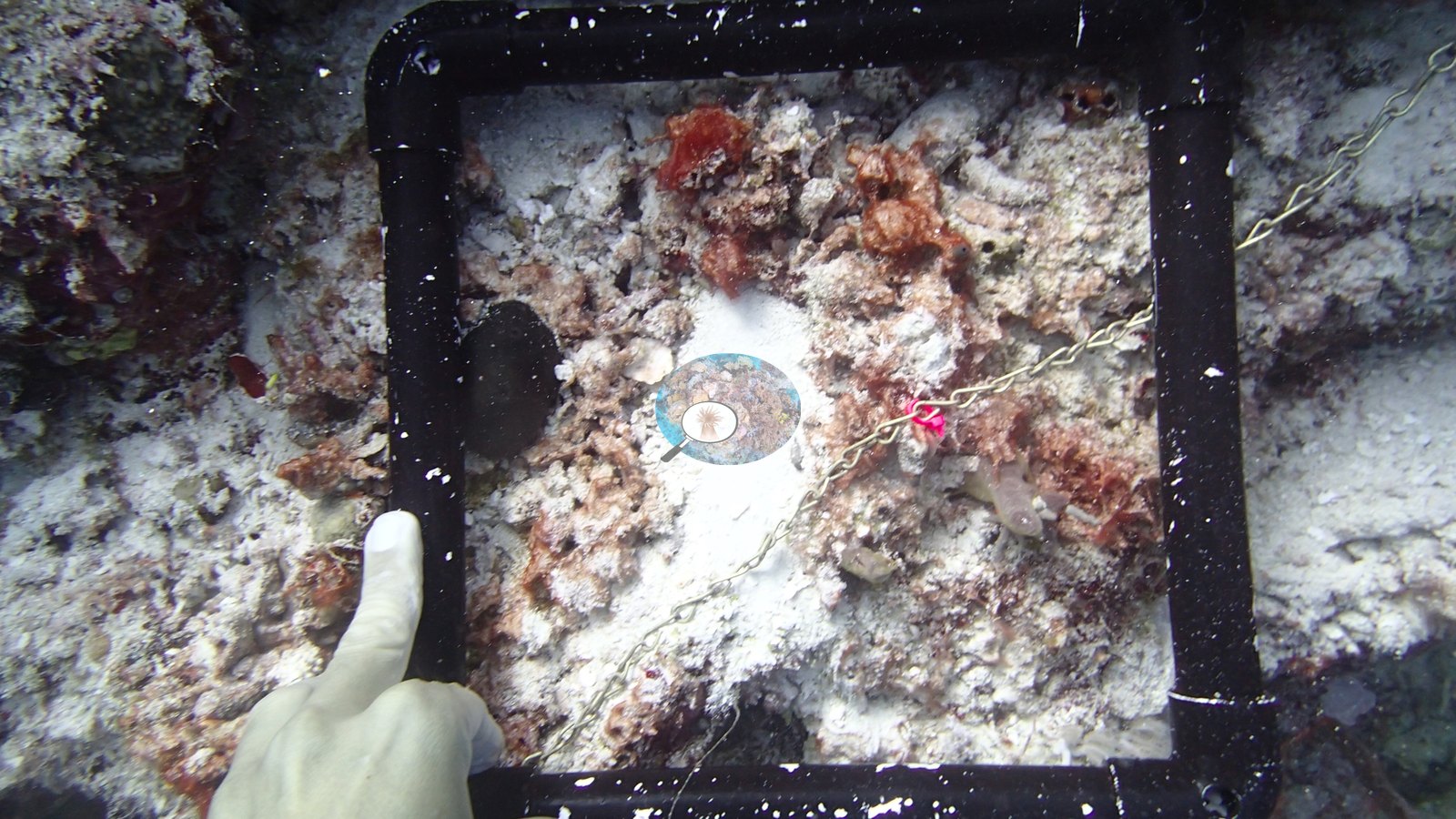
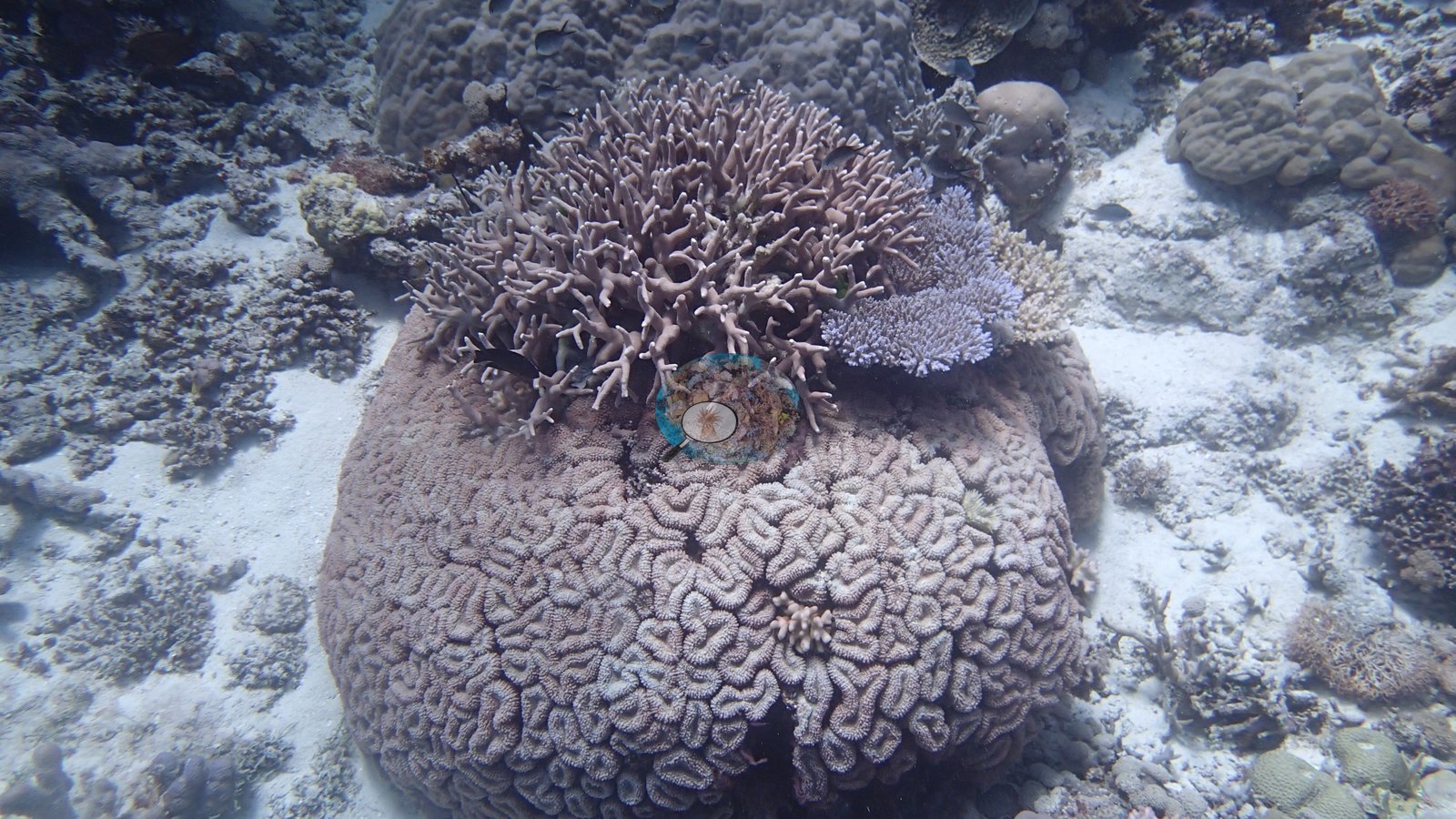
What sits inside them varies as much as the notes imply: Image 10, Image 19, and Image 44 are dominated by open sand and silt with almost nothing living in frame; Image 2, Image 17, Image 31, Image 45, and Image 46 are coralline-encrusted pavement and rubble carrying turf, sponge, and small encrusting patches; and others enclose real colonies — Image 8 a pale branching thicket, Image 13 tan lobed massive colonies packed against branching neighbors, Image 32 a red-brown branching colony over rubble, Image 35 a smooth purple-mauve massive surface with a yellow arrow marker on it, and Image 49 a yellow-tan digitate colony. Massive corals are the backbone: Image 7 is a meter-scale rounded colony with fine meandering wall-and-valley relief carrying a small bushy branching colony on its summit, Image 22 and Image 36 show further large smooth-to-mounded massives, and Image 34 a rounded colony with a pale honeycombed cerioid coral beside it.
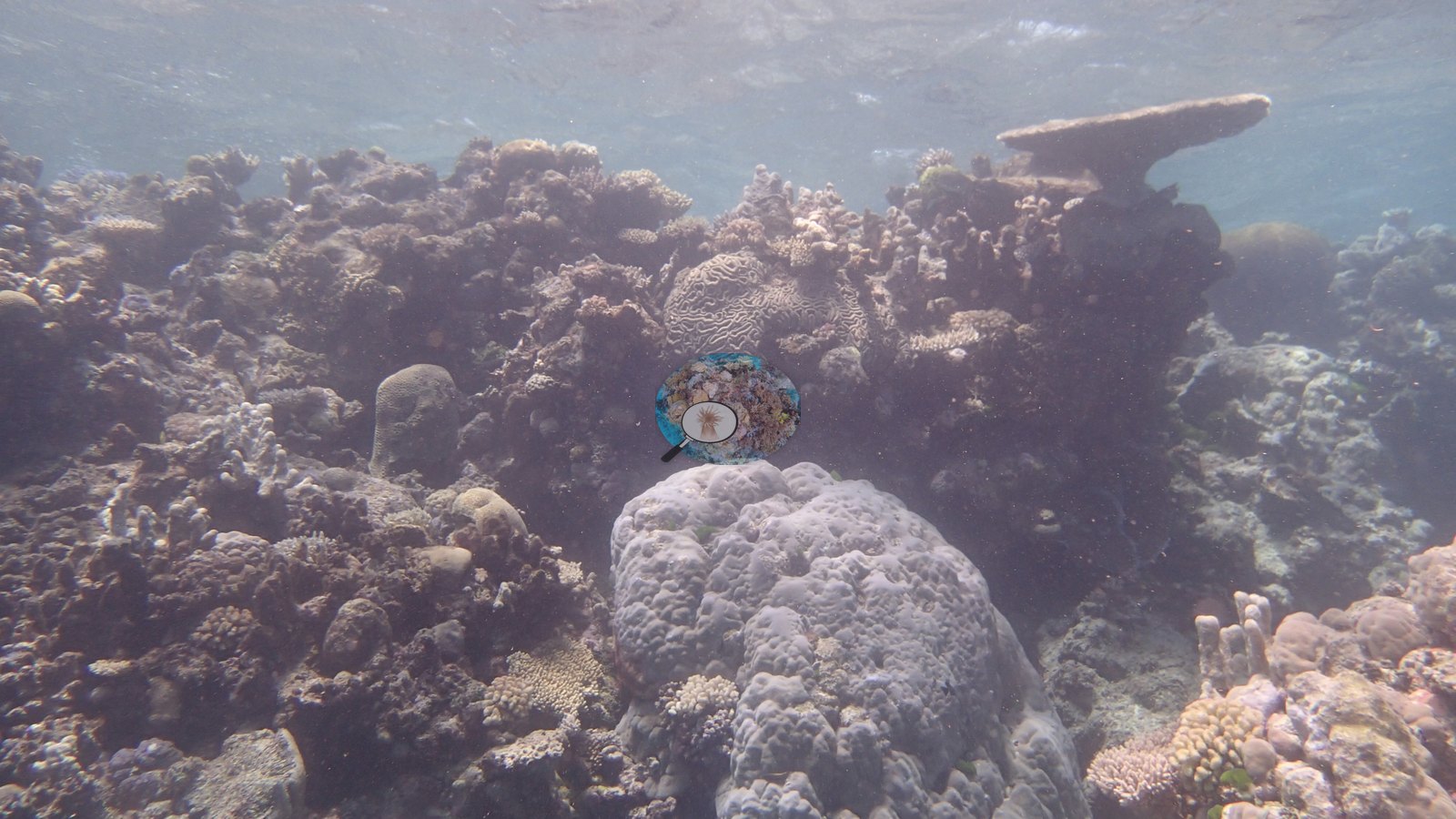
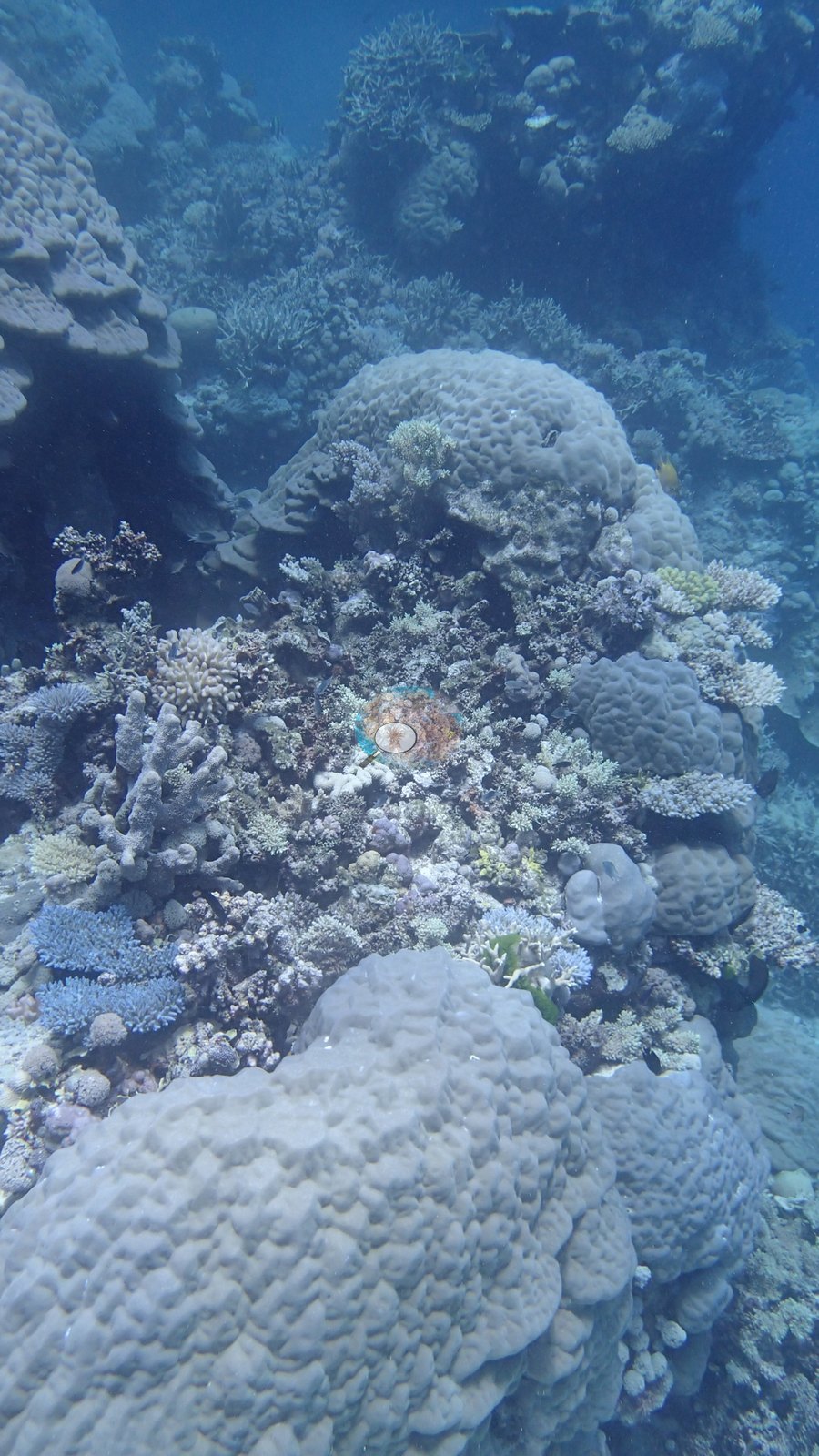
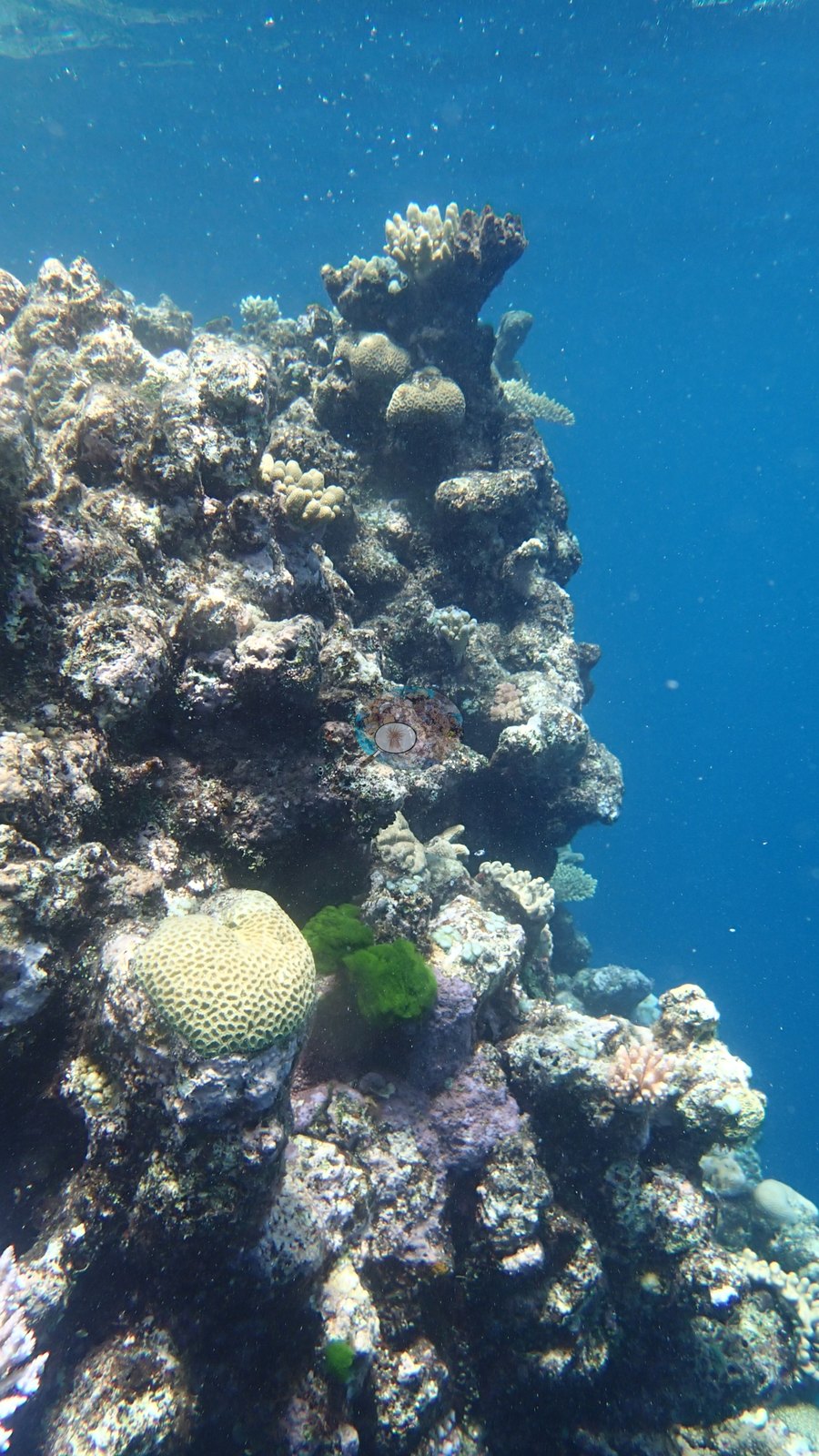
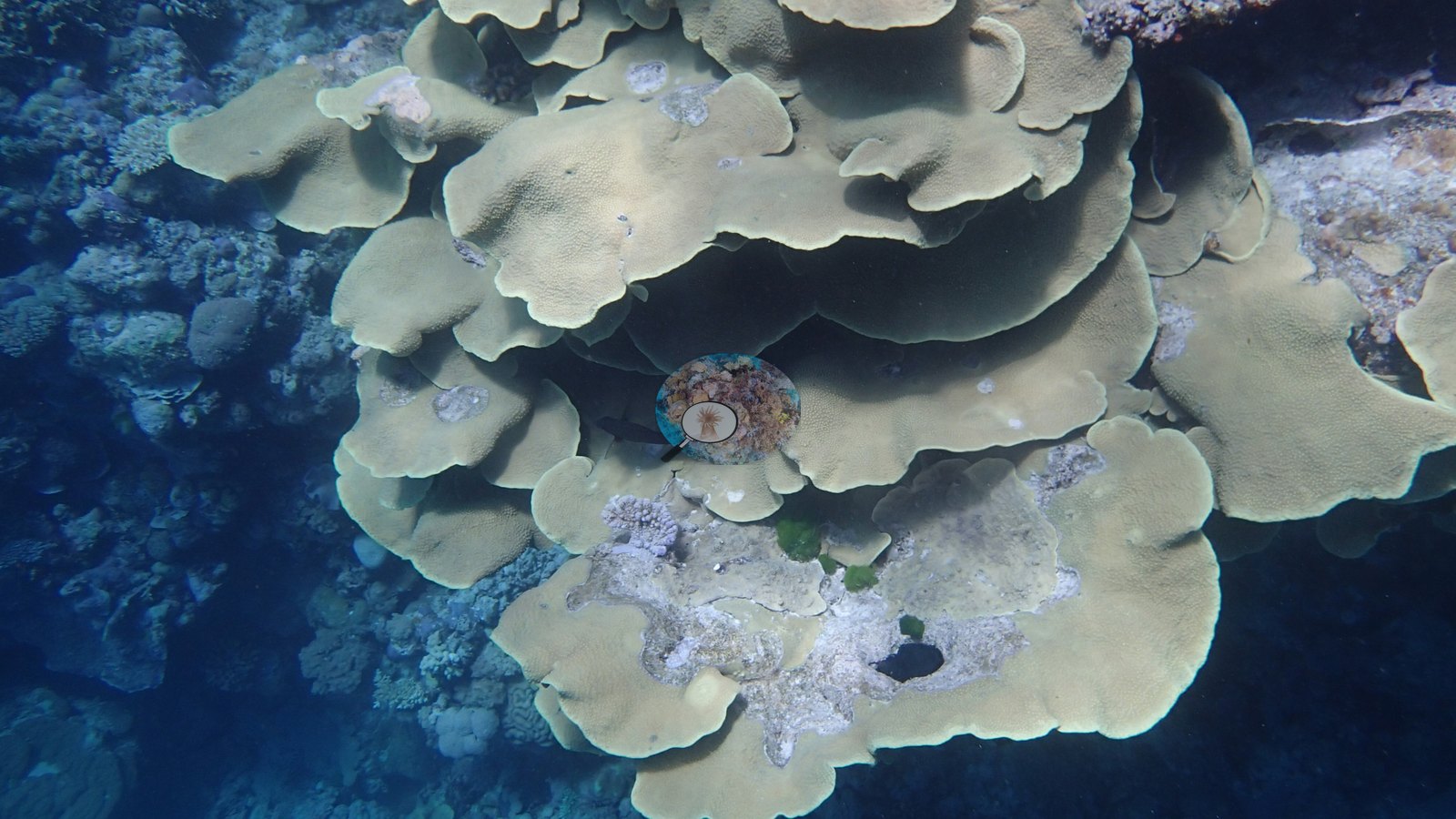
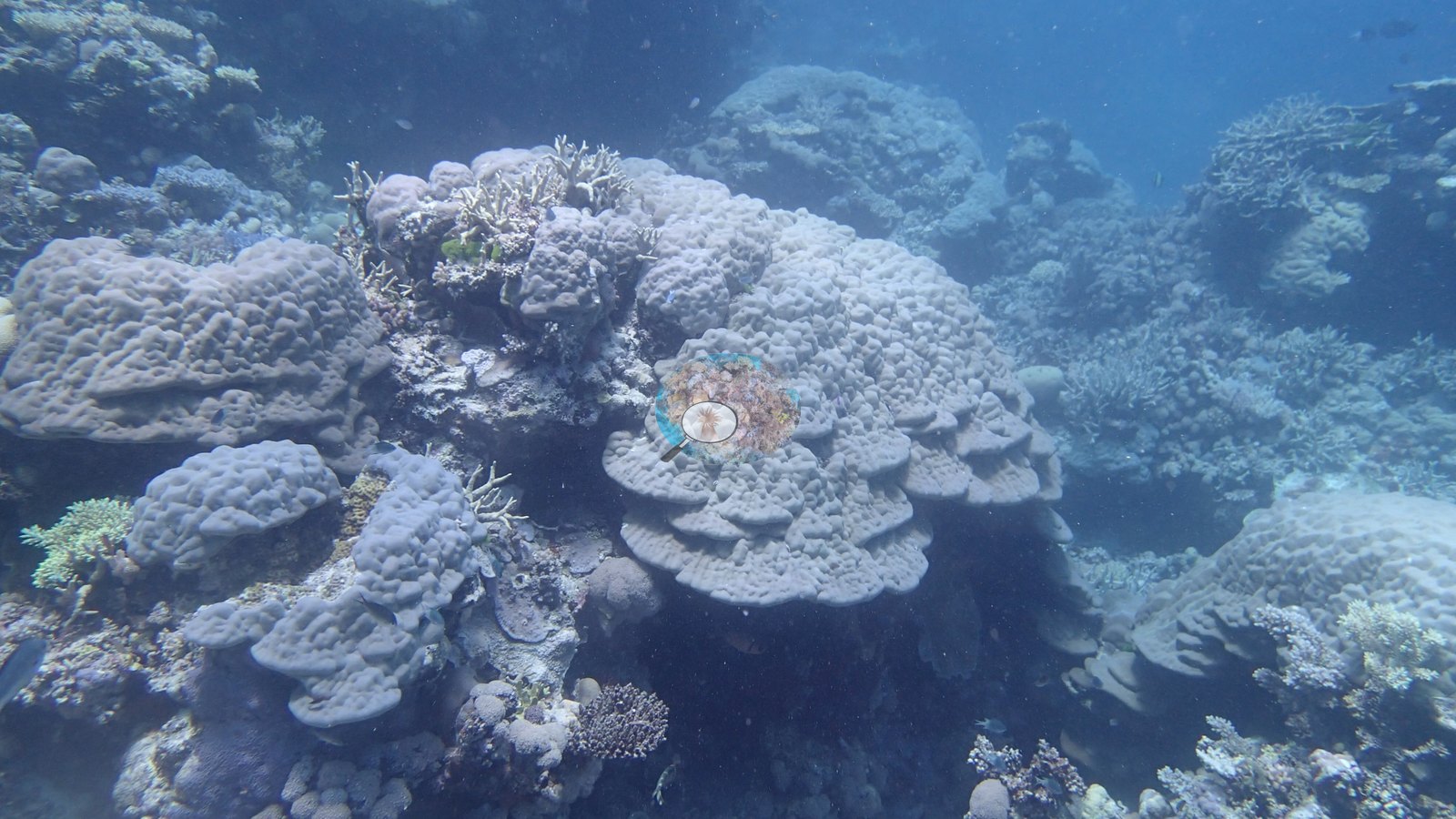
Plating and foliose growth is prominent and locally spectacular: Image 15 is a broad horizontal table, Image 43 a tiered stack of overlapping tan plates a meter or more across, with sharply bordered gray-white bare patches on several plates, Image 37 a large golden-orange whorled foliose colony filling the frame, and Image 16 a stand of upright tan blades rising off the crest into blue water.
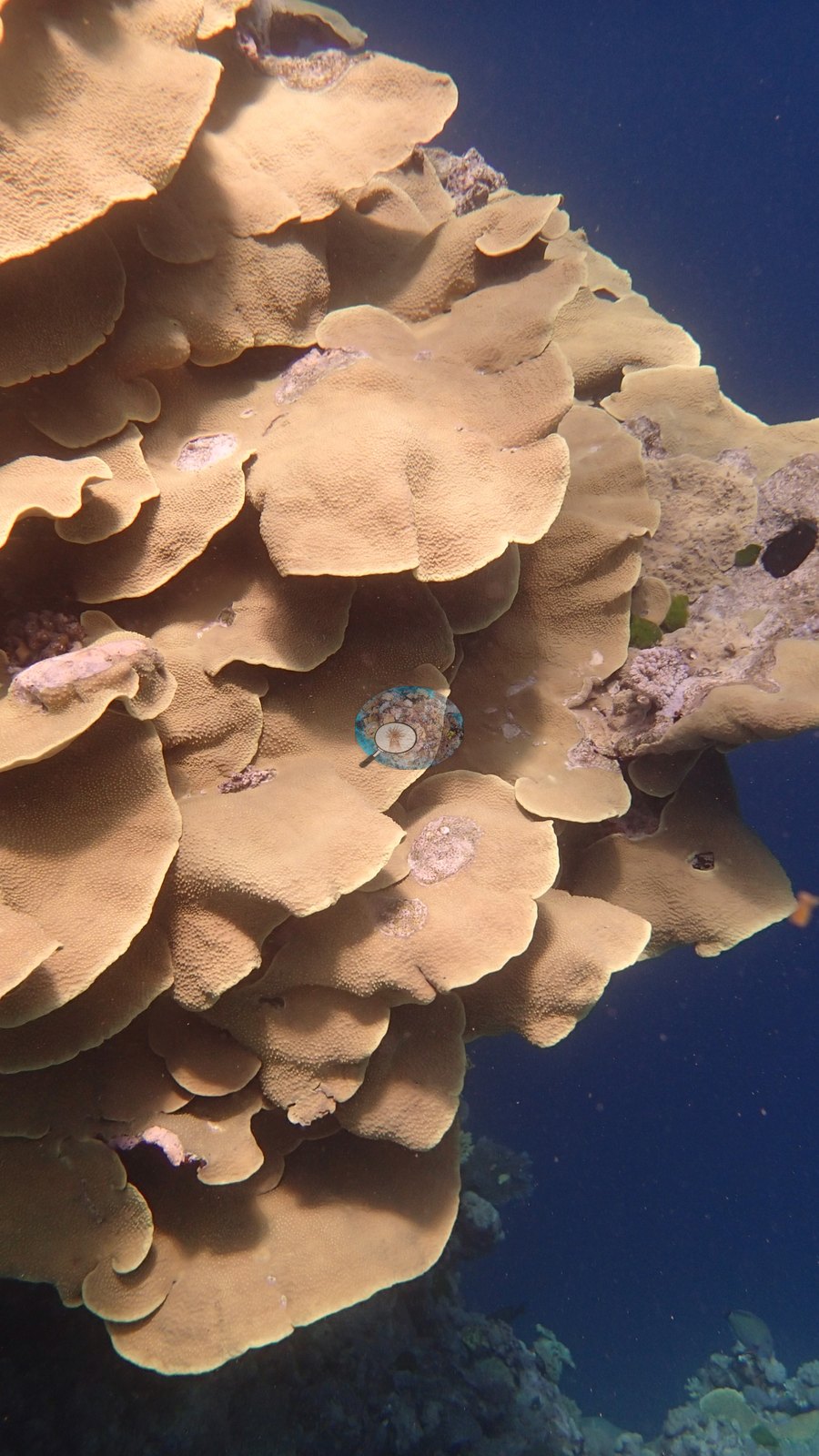
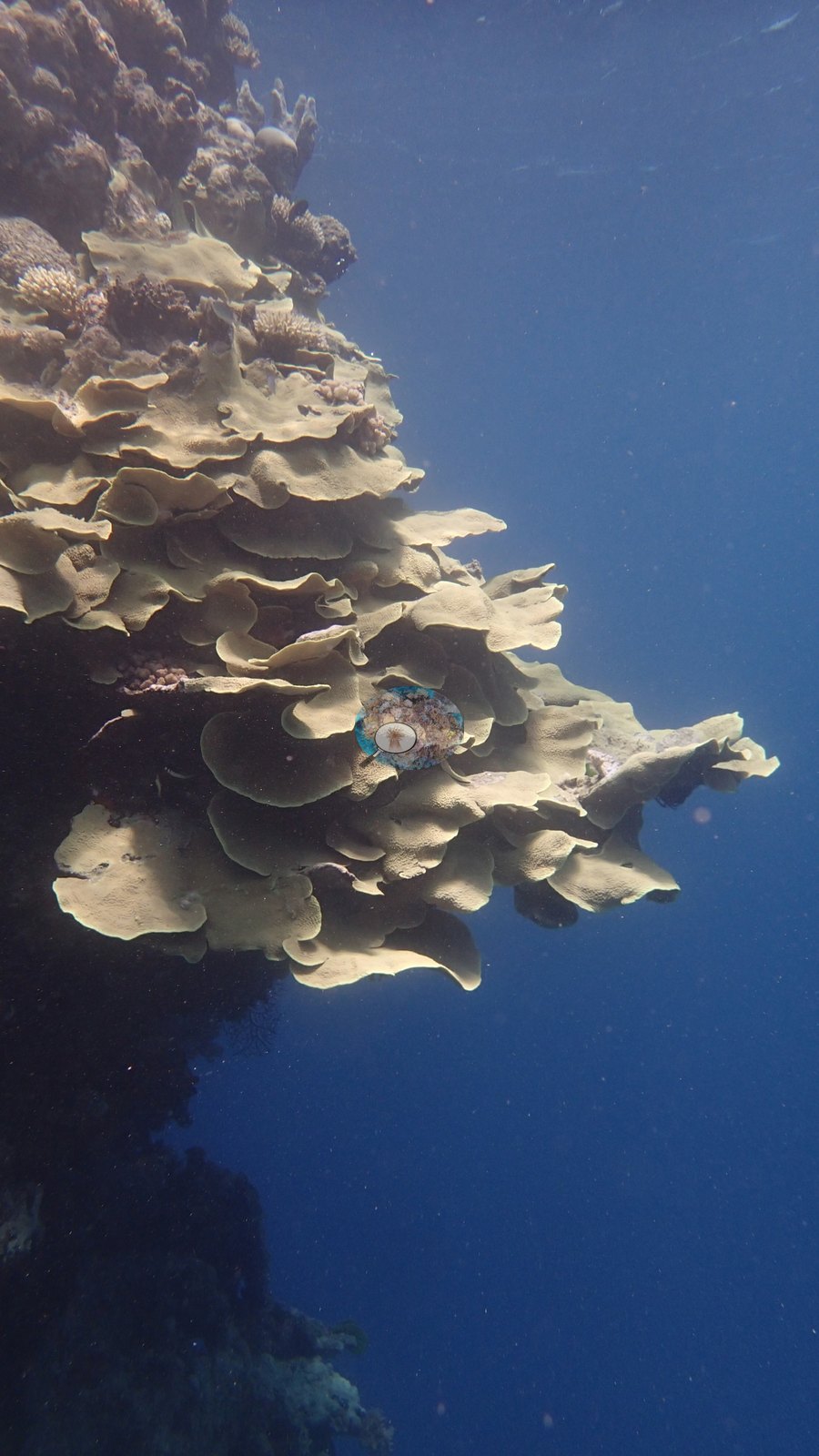
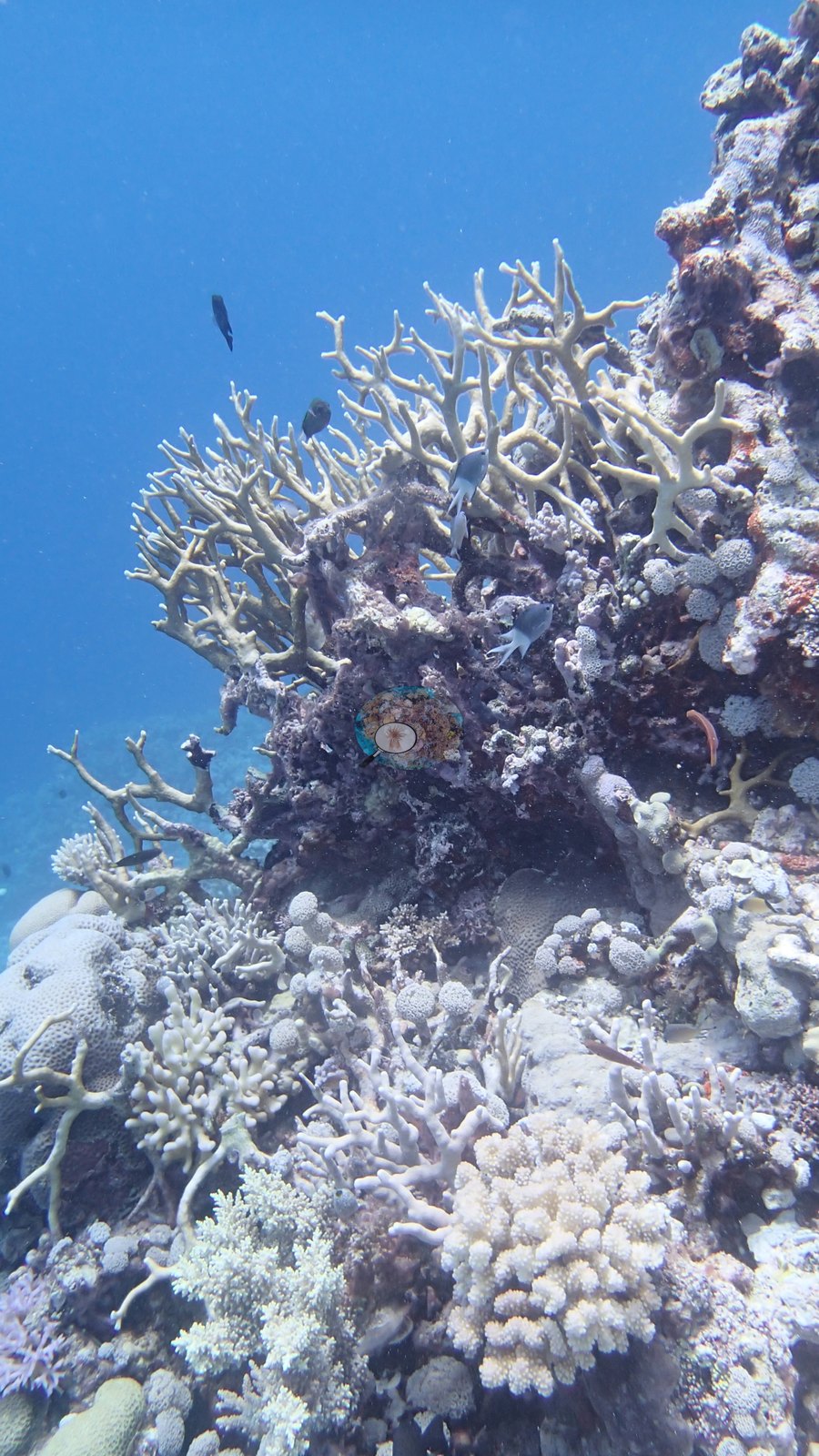
Branching corals occur as discrete bushes and small thickets rather than continuous stands (e.g., Image 3, Image 23, Image 25, Image 27, Image 33, Image 38, Image 42, Image 48), and several frames (e.g., Image 14, Image 27, Image 38) show mauve-to-pink pigmented branching and corymbose colonies mixed with encrusting pinks.
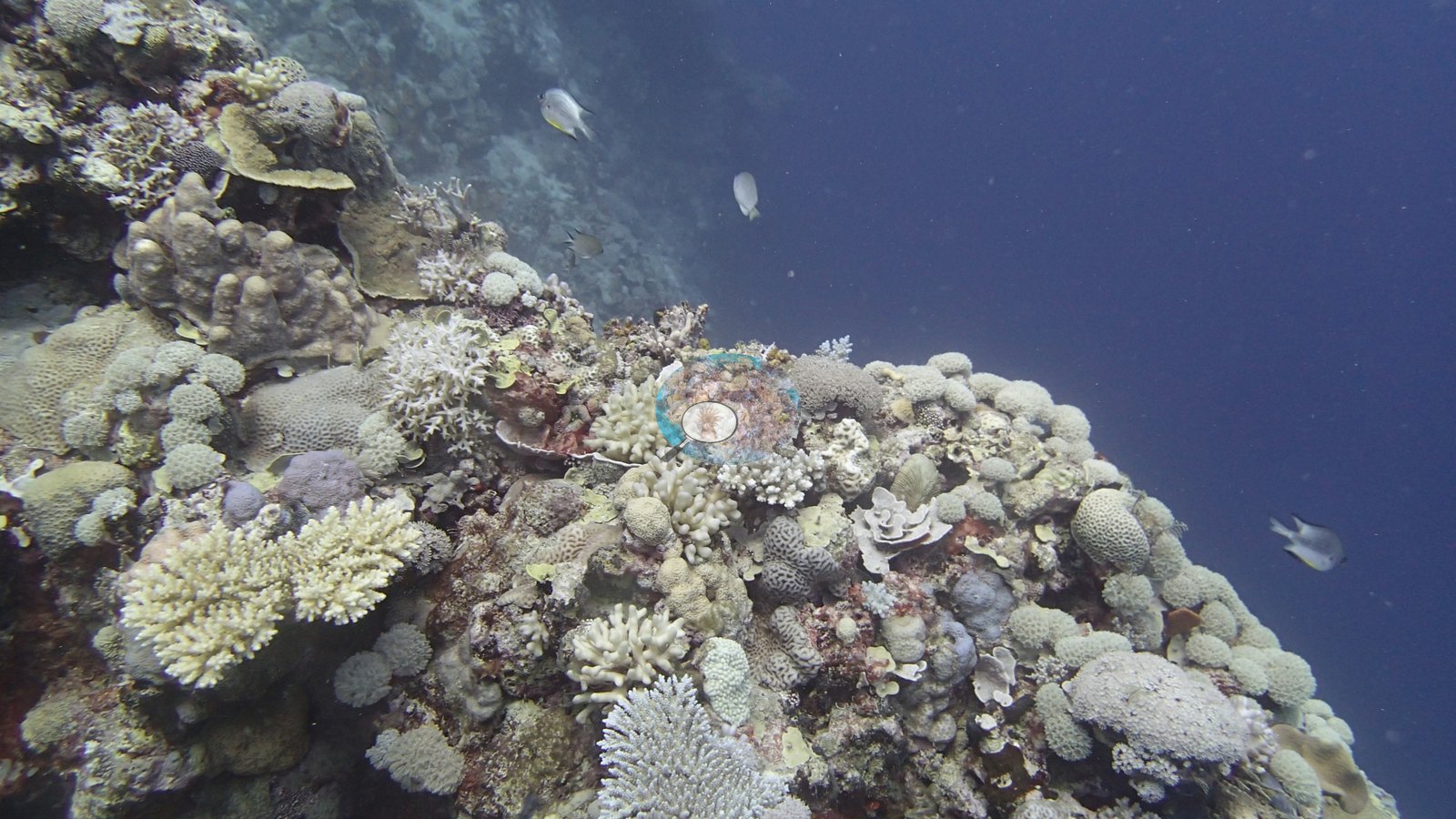
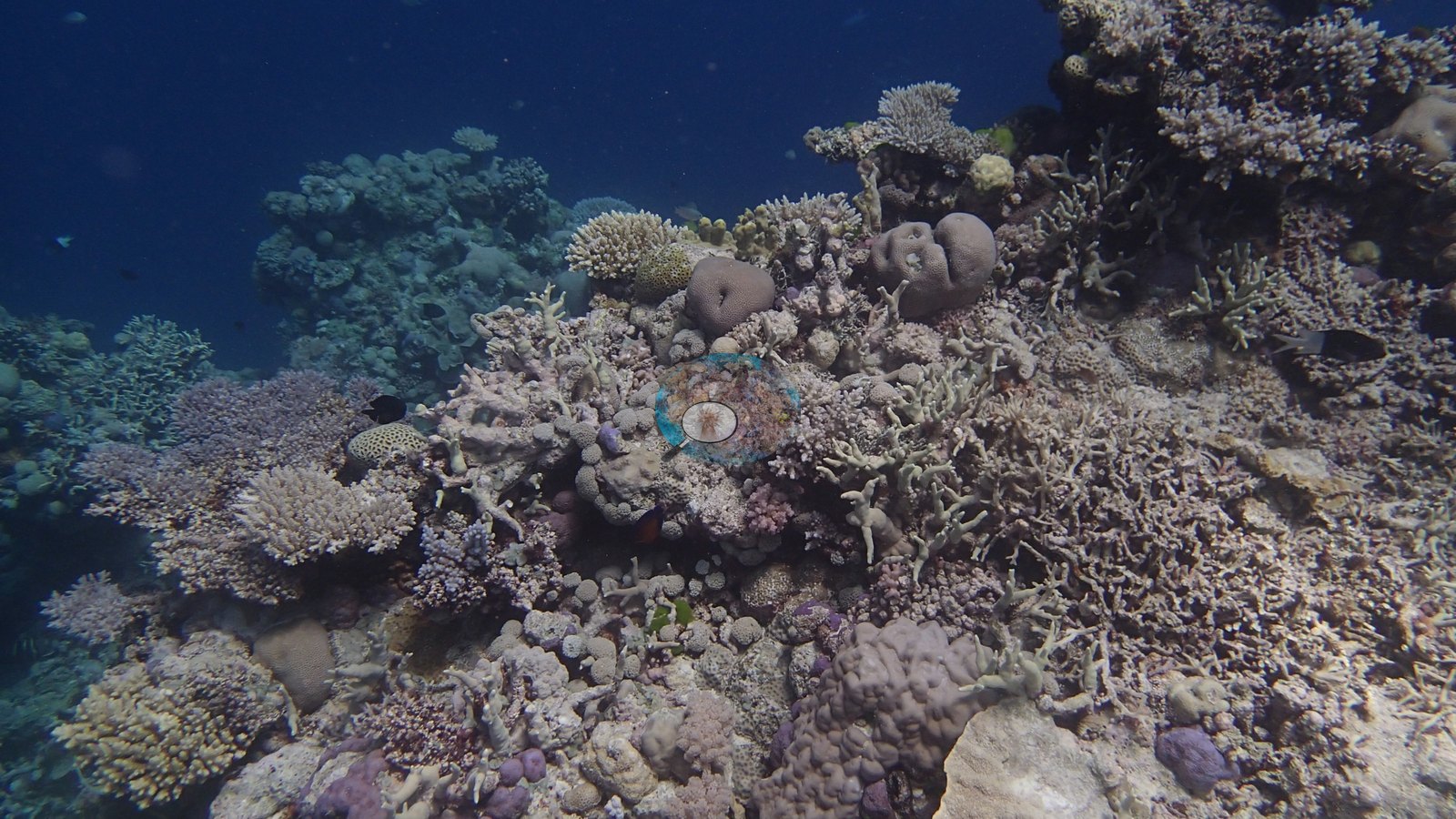
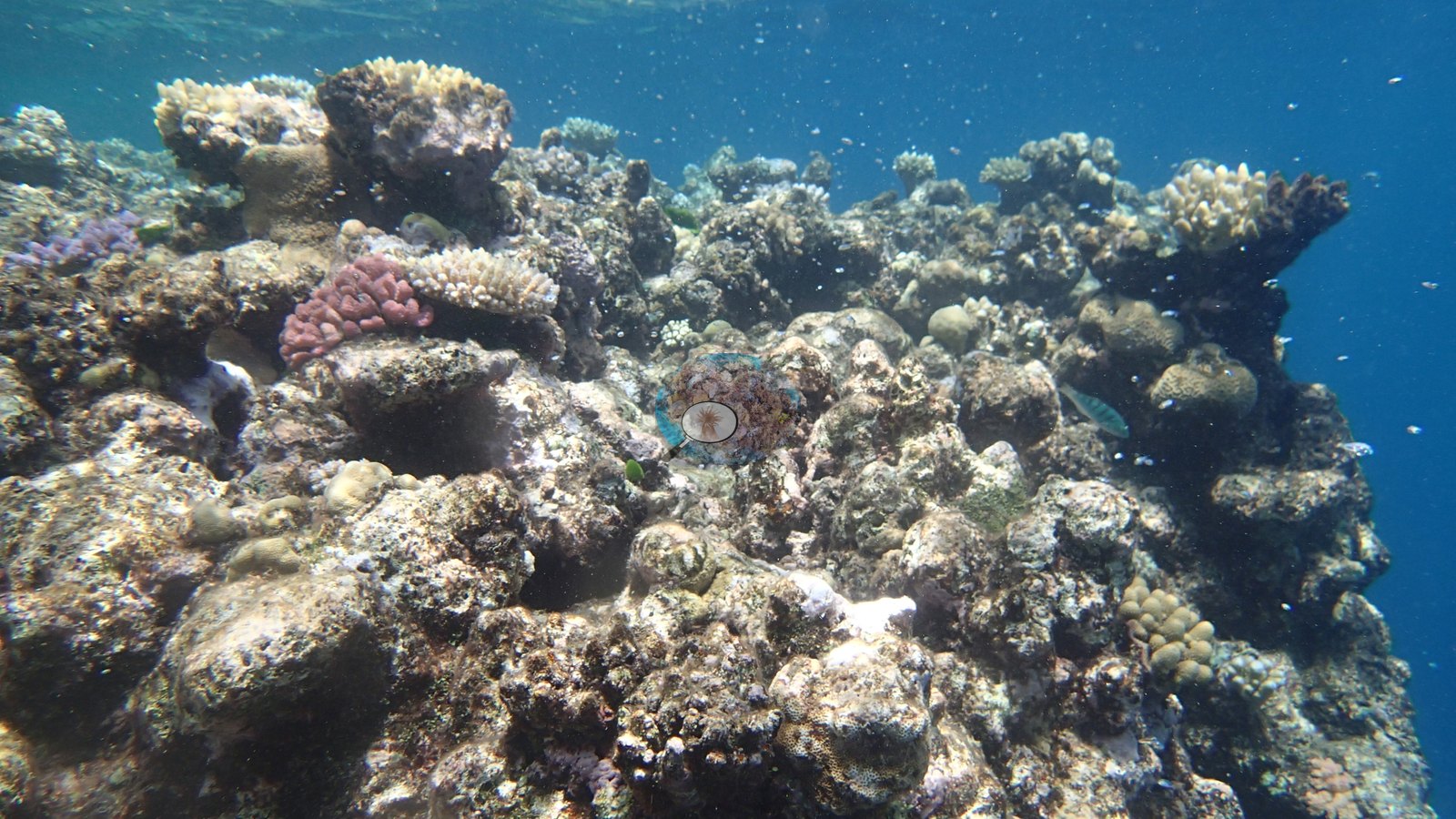
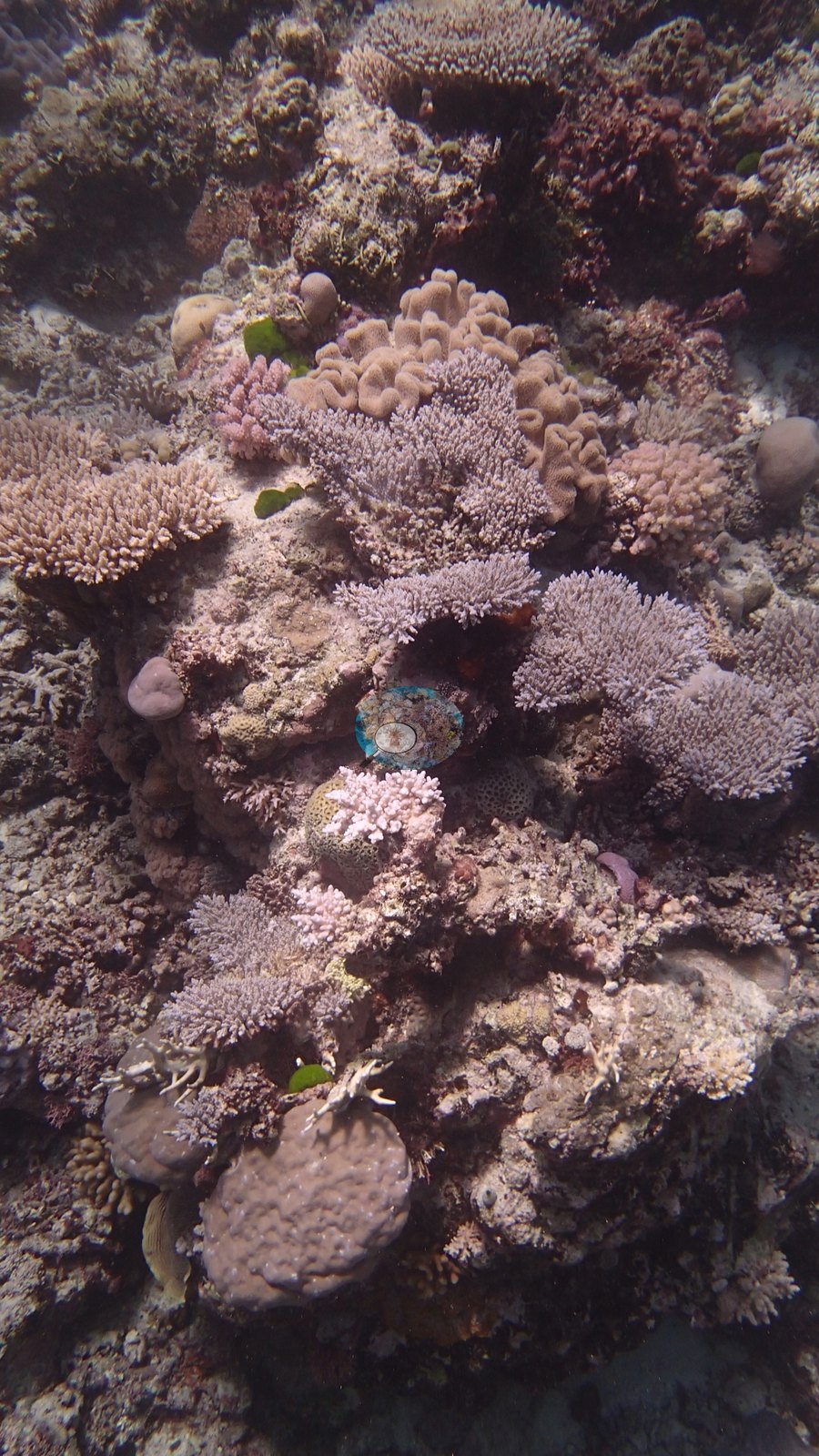
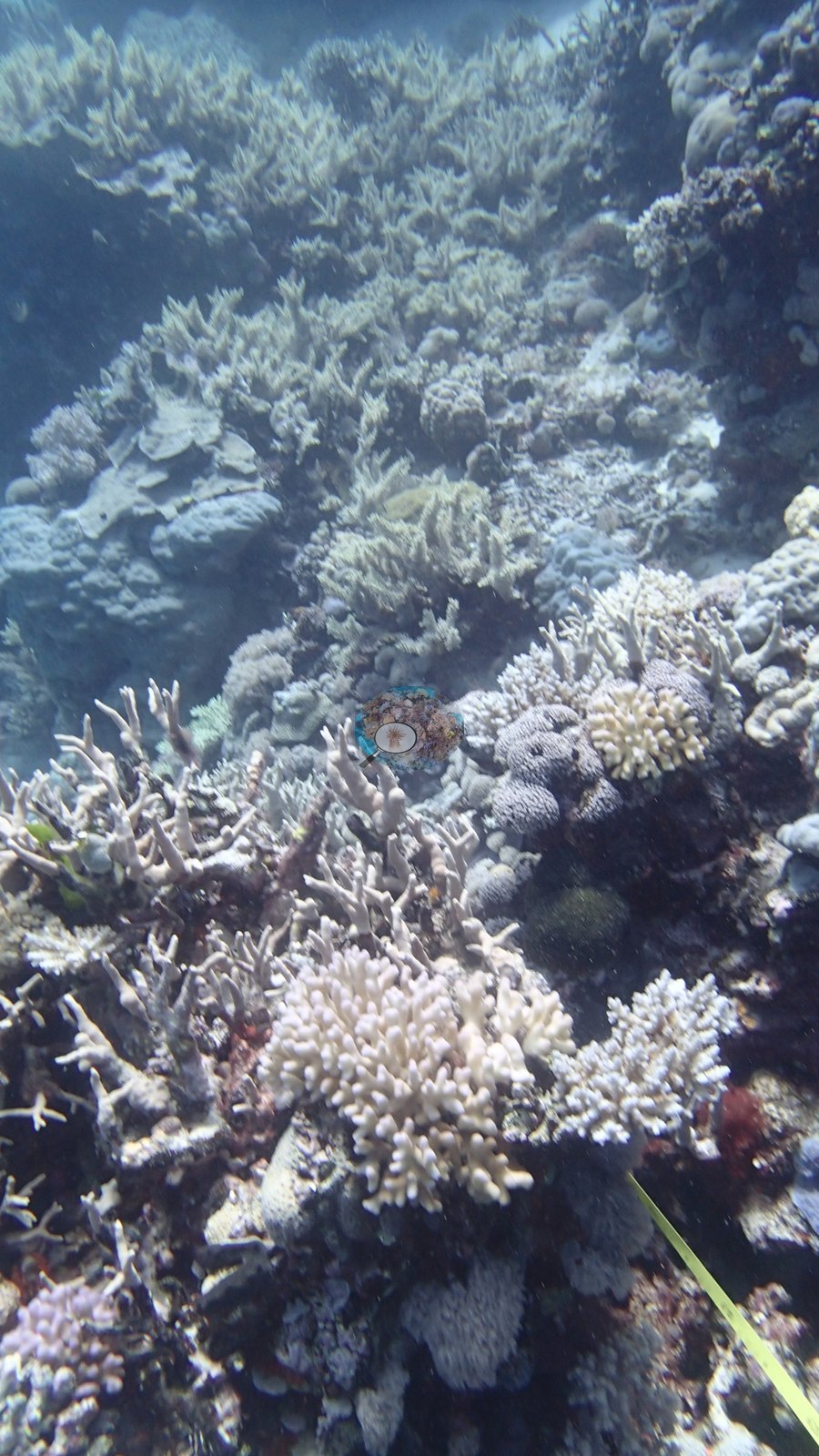
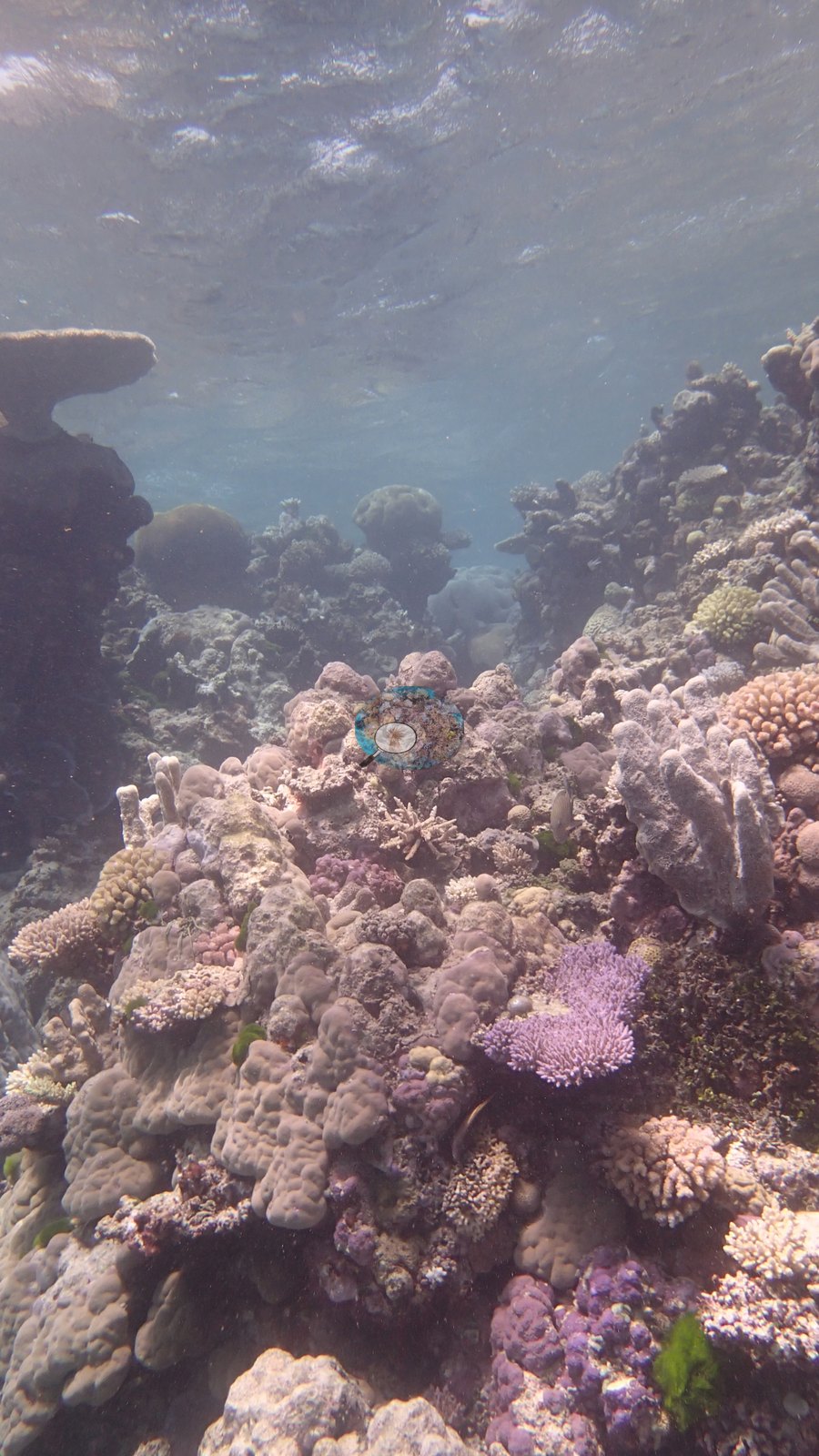
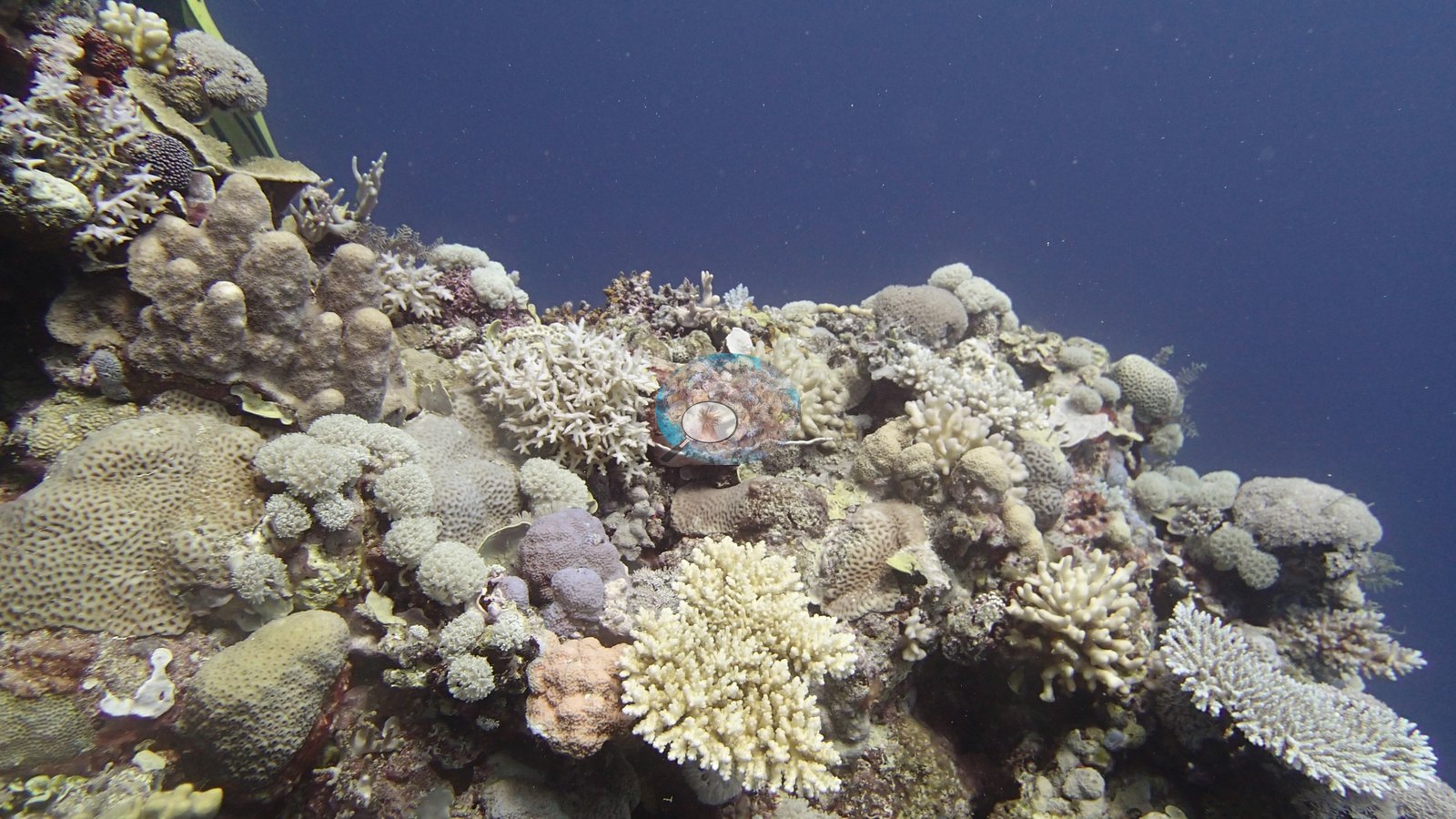
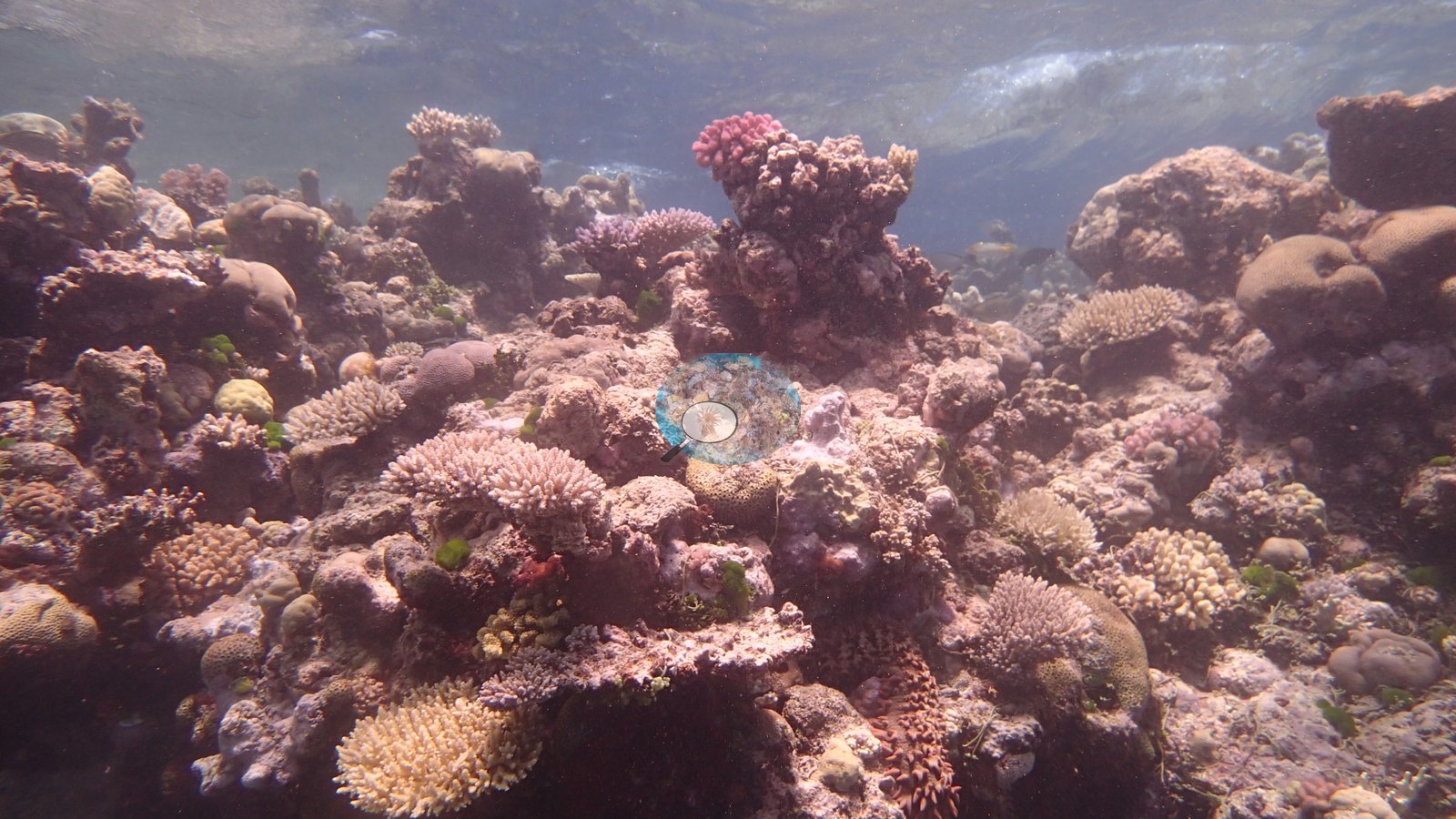
Image 20 and Image 29 are stretches of low pale corymbose and encrusting cover over pavement, and Image 21 a dark, silt- and algal-filmed pavement panel.
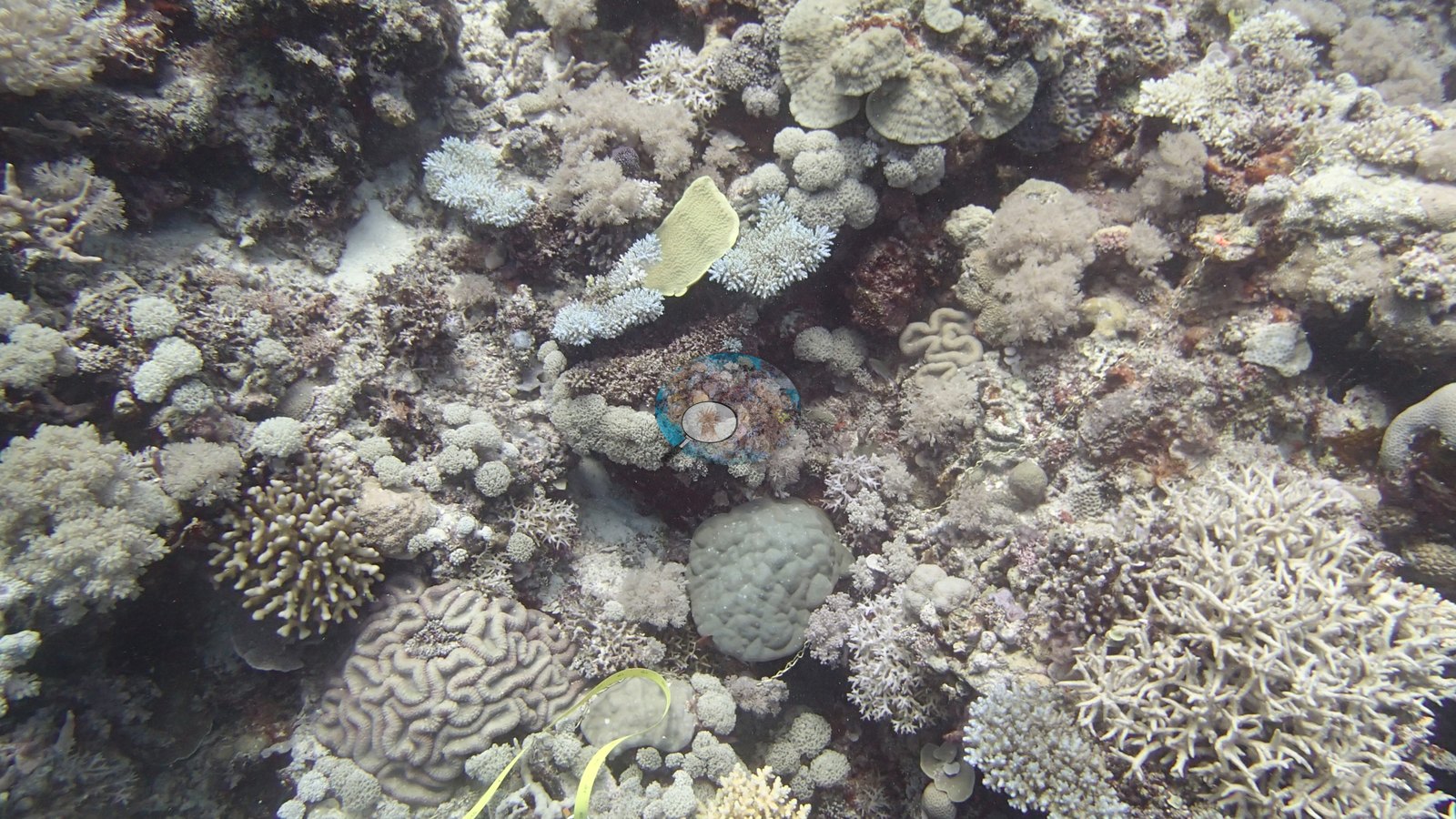
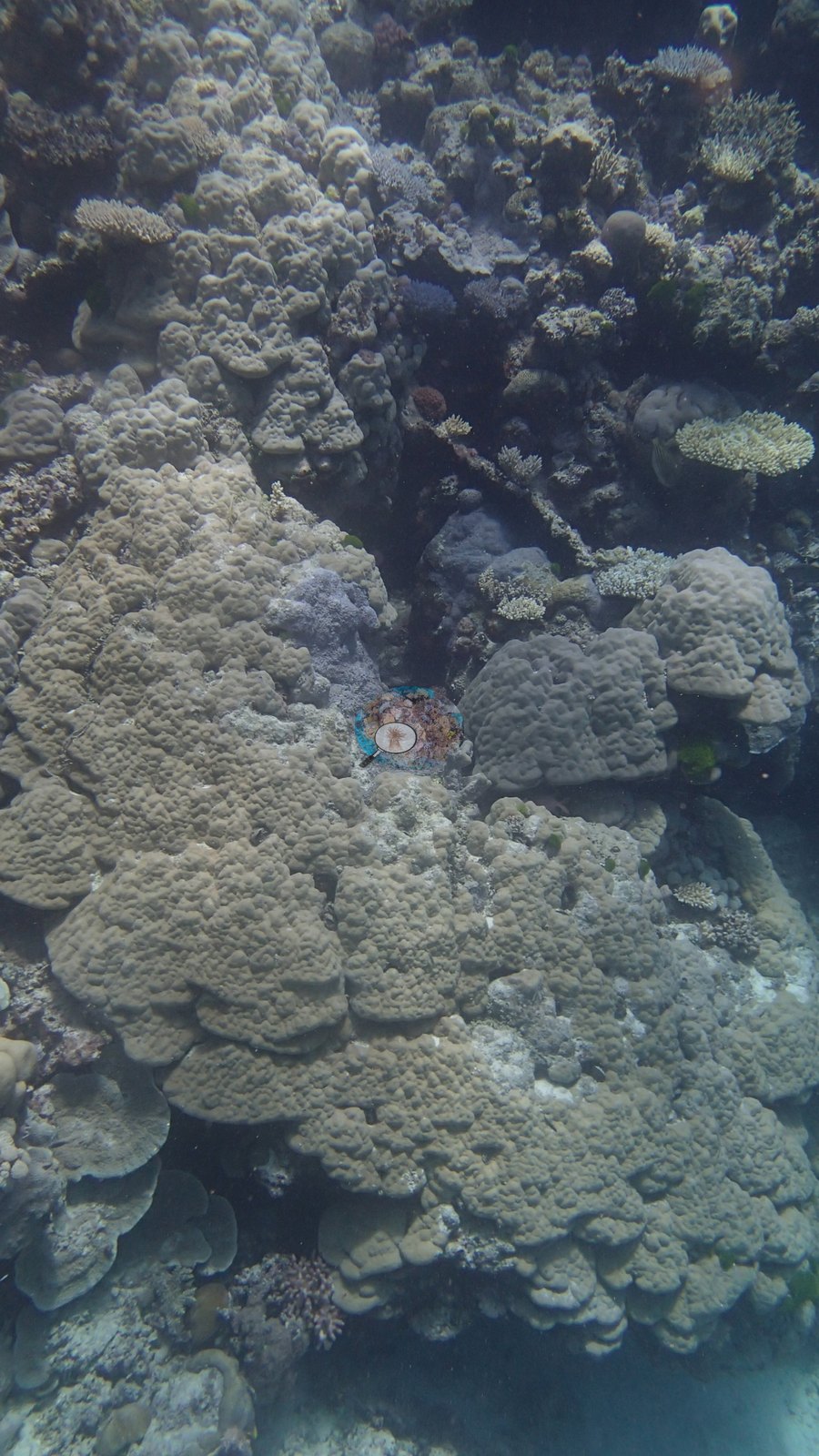
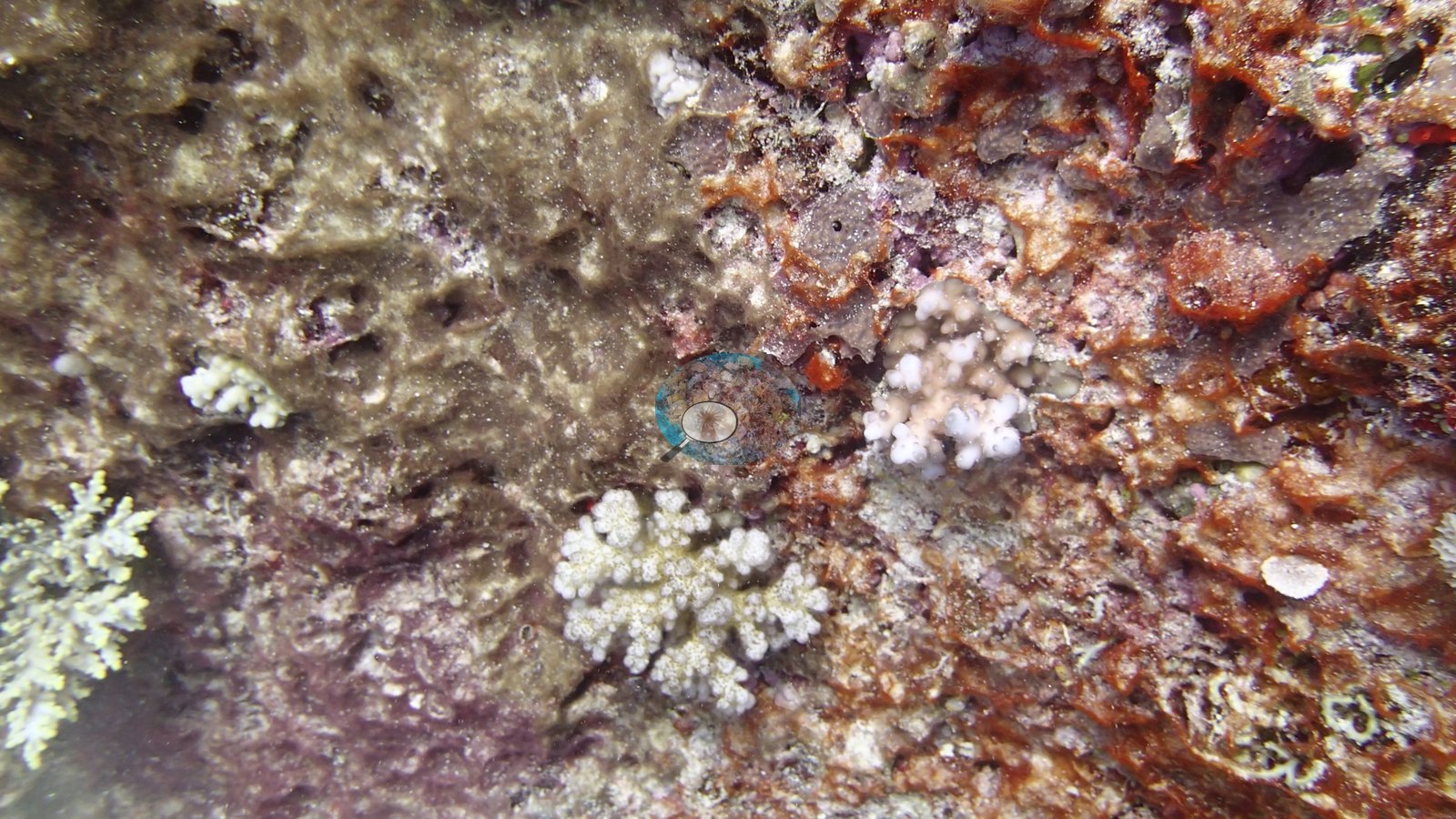
Image 41 is a critter frame: a red-pink feather star (crinoid) spread over rubble.
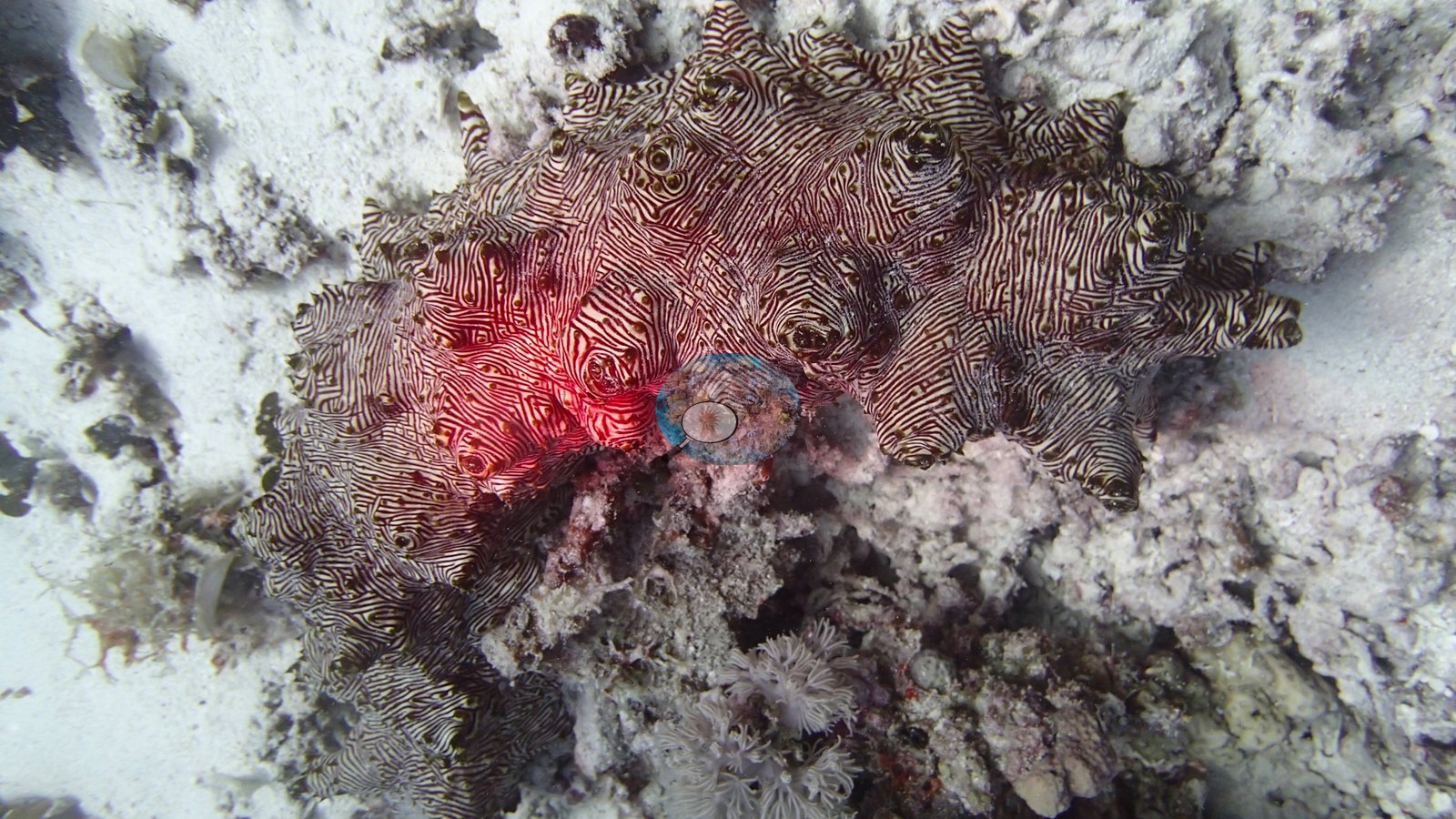
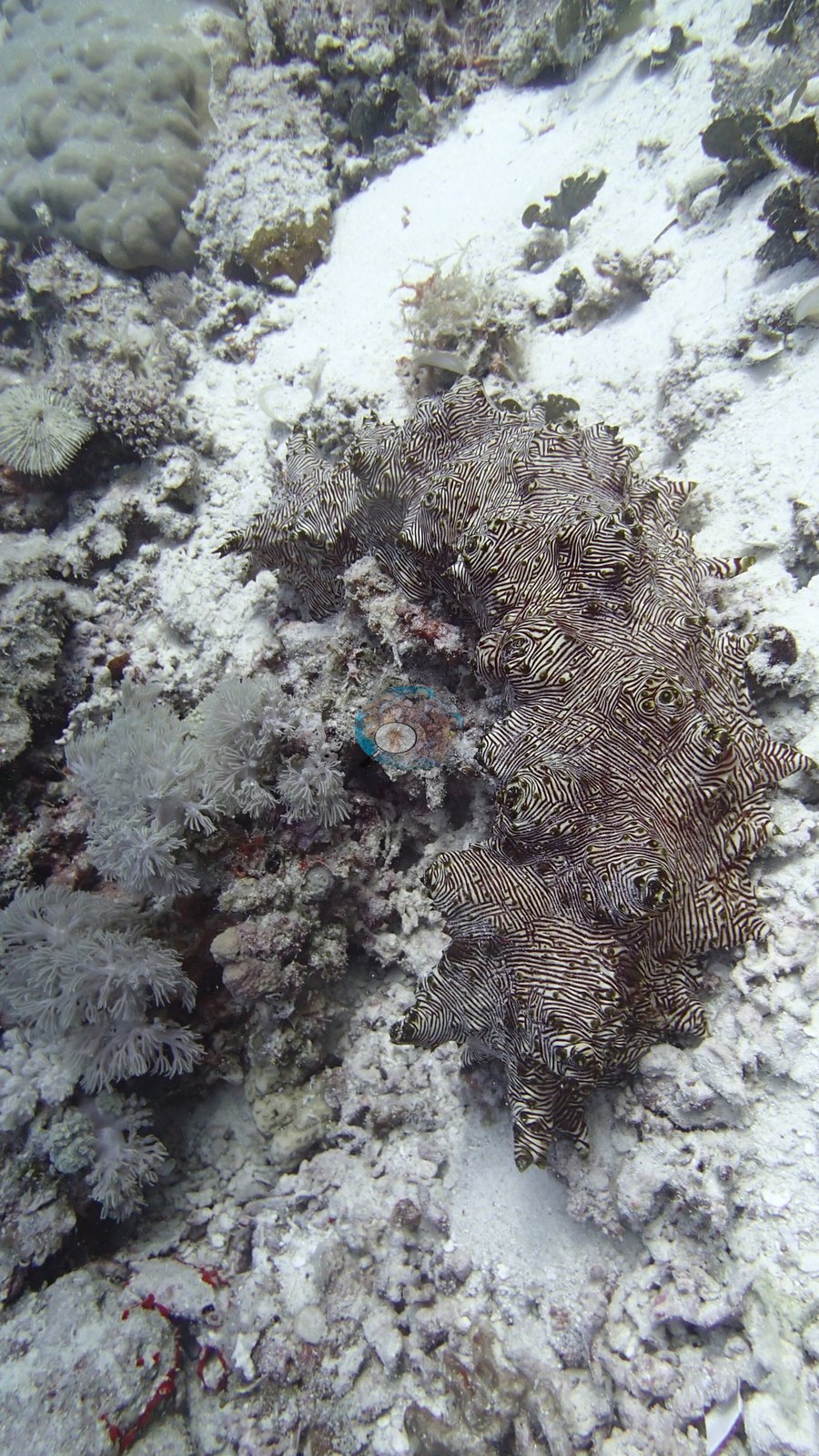
What the frames cannot settle: the notes' finger coral (Porites cylindrica), the Napoleon wrasse at 25 m and the zebra-striped sea cucumber are not identifiable in this set, and the depth of each frame is unknown, so the notes' depth-banded structure (the 5-7 m Porites-and-Acropora ground versus the better 10 m transects) cannot be tied to individual frames. No colony here is identified below growth-form level, and the quadrats are individually far too small to speak to areal cover. The most interesting ground lay between 5 and 7 m, where massive Porites boulders were threaded with Acropora, Stylophora, and Porites cylindrica, though large rubble patches kept eye-estimated cover there to 15-20%; the 10 m transects were the reef's best at 30-40%, taking in bottlebrush Acropora, octocorals and a Montastrea-like brain coral.
Coral cover
- Reference: Khaled bin Sultan Living Oceans Foundation, Global Reef Expedition (in situ transect)
- The in situ benthic transects recorded 37% live coral cover against a 33% algal fraction on a dive to 21.9 m.
- Transect mean 37 ± 9.5% SE (n = 2 transects; Living Oceans Foundation per-transect benthic data); the headline above is the expedition's station value.
Stressors
Two frames record coral condition. Image 26 is a close frame of a fine-branched colony that is cream-white over most of its extent, beside pigmented branching and massive neighbors: bleached, or very recently dead with no algae yet; Image 28 holds similar white branching fragments inside the quadrat.
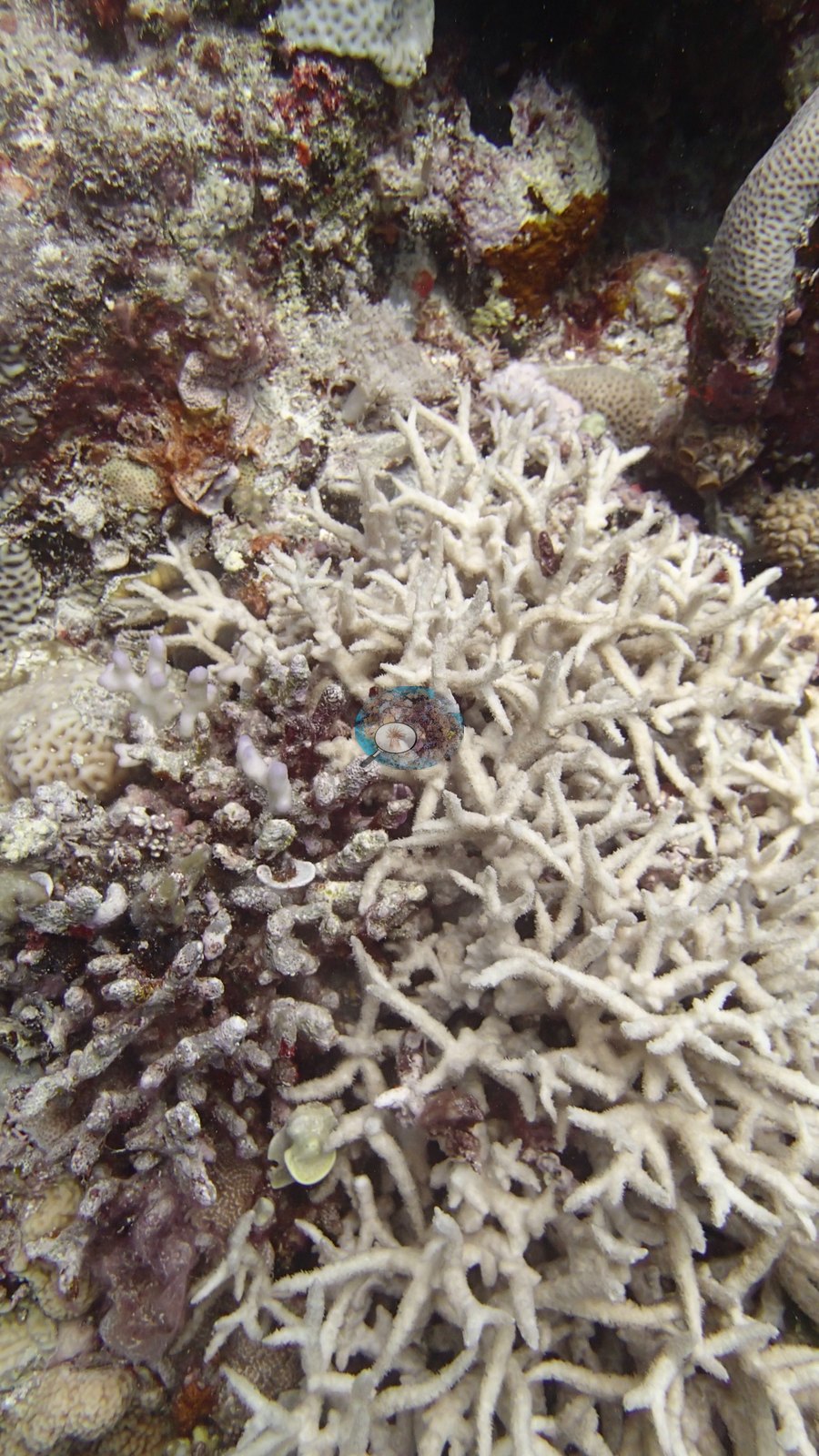
The white colony in Image 26 is the frame that most plausibly corresponds to the dying Seriatopora hystrix Anderson logged on his 15.5 m transect. Image 43 shows partial mortality on the tiered foliose plates: several sharply bordered gray-white bare patches, the largest on the bottom plate with green algal tufts; the cause is not stated. No crown-of-thorns starfish (COTS) or other corallivores evident.
Comparisons with other data
No prior survey data from this site. If you would like to share yours, please email us.
Dive record
Yule Detached Reef's second dive is well photographed, with 51 frames in the gallery.
CV model comparison
More info
The photo row below is a methods comparison only: it is never averaged with the transect and never used as the headline. It compares site means only: the photos come from the same survey dive as the transect but not from the same points.| Method | Hard-coral cover (%) | Photos (n) ± SE |
|---|---|---|
| Transect (published) | 36.5 | |
| CoralSCOP unedited | 28.6 | n = 25 · SE 2.8 |
| Claude | 31.0 | n = 25 · SE 4.2 |
The two computer-vision methods agree within 2.4 pp (29–31%) and read 5.5–7.9 pp below the in-water transect (37%); the headline is the in-water transect because a diver transect is independent of the photographs.
Data & links
- Download benthic survey data (CSV) ↗
- Download all LOF-GRE data (933 sites) ↗
- Photo portfolio ↗
- Coral Reef Diagnostics country page ↗
All images from Coral Reef Diagnostics. Data are from the Khaled bin Sultan Living Oceans Foundation Global Reef Expedition and Coral Reef Diagnostics.
 © Coral Reef Diagnostics.