
Part of the regional summaries: Australia (GBR) - Far North: Pink stations (Preservation Zone reefs) and Australia (GBR)
More info
Far Northern GBR (NOAA CRW virtual station)This Yule Detached Reef survey point (19% cover) is a dim, thinly settled slope reached by a swim through open blue water escorted by gray reef sharks and two silvertips, the first of the trip. Needle coral was hit hard: every Seriatopora hystrix and S. caliendrum colony at 15.5 m looked bleached, sick, or dying; his four transects counted 33 coral recruits. Surveyed on the Living Oceans Foundation's Global Reef Expedition.
Three other CRD dive sites within 5 km shown in orange — click a marker to open its page.
🗺 Detailed map of the Global Reef Expedition dive sites, Wood and Yule Detached Reefs, northern Great Barrier Reef (Khaled bin Sultan Living Oceans Foundation; opens in a new window)
Site description
Setting
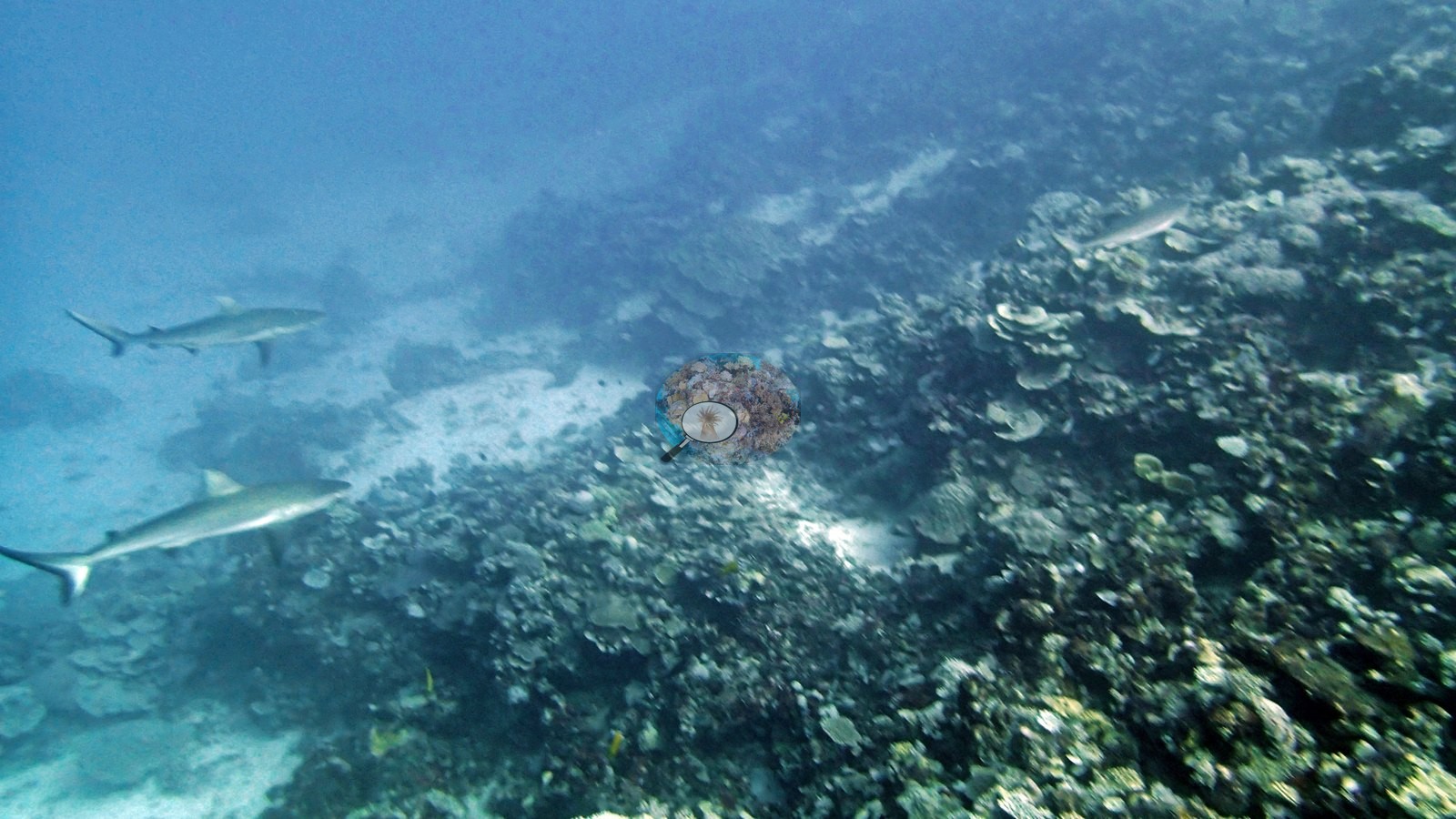
Yule Detached Reef starts with a swim: the team was dropped into 50-60 m of open blue and had to make its own way to the reef, joined en route by half a dozen gray reef sharks, a whitetip, and two large silvertips (his first of the trip). Visibility ran 30-40 m and live coral appeared to reach 40 m down.
General benthic features
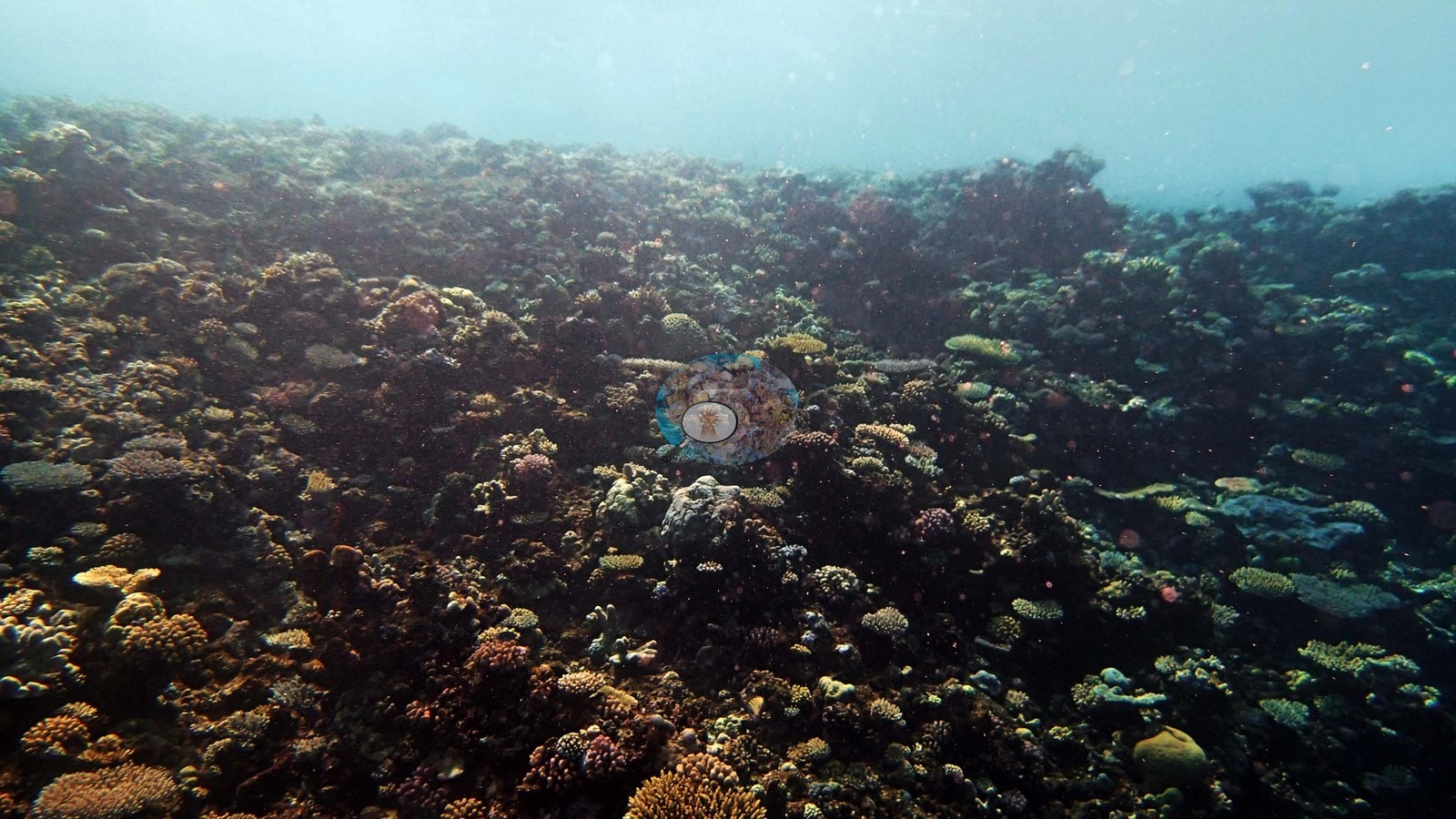
The photographs show wide, dim views of a slope carrying many small colonies but little continuous cover, tabulate Acropora plates spaced out along a face with pale yellow-green foliose colonies below and a bare sand chute cutting through (e.g., Image 2, Image 4, Image 5).
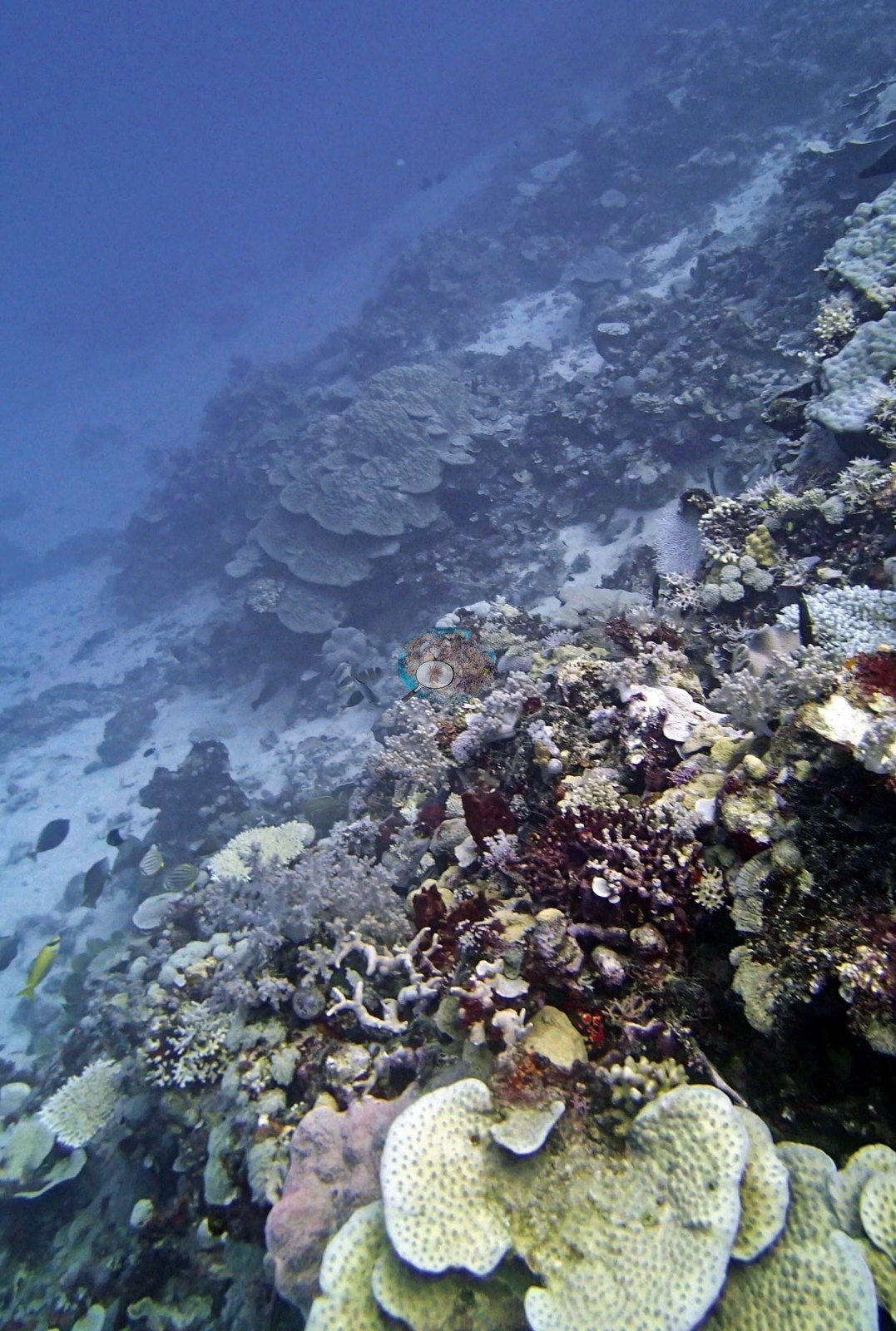
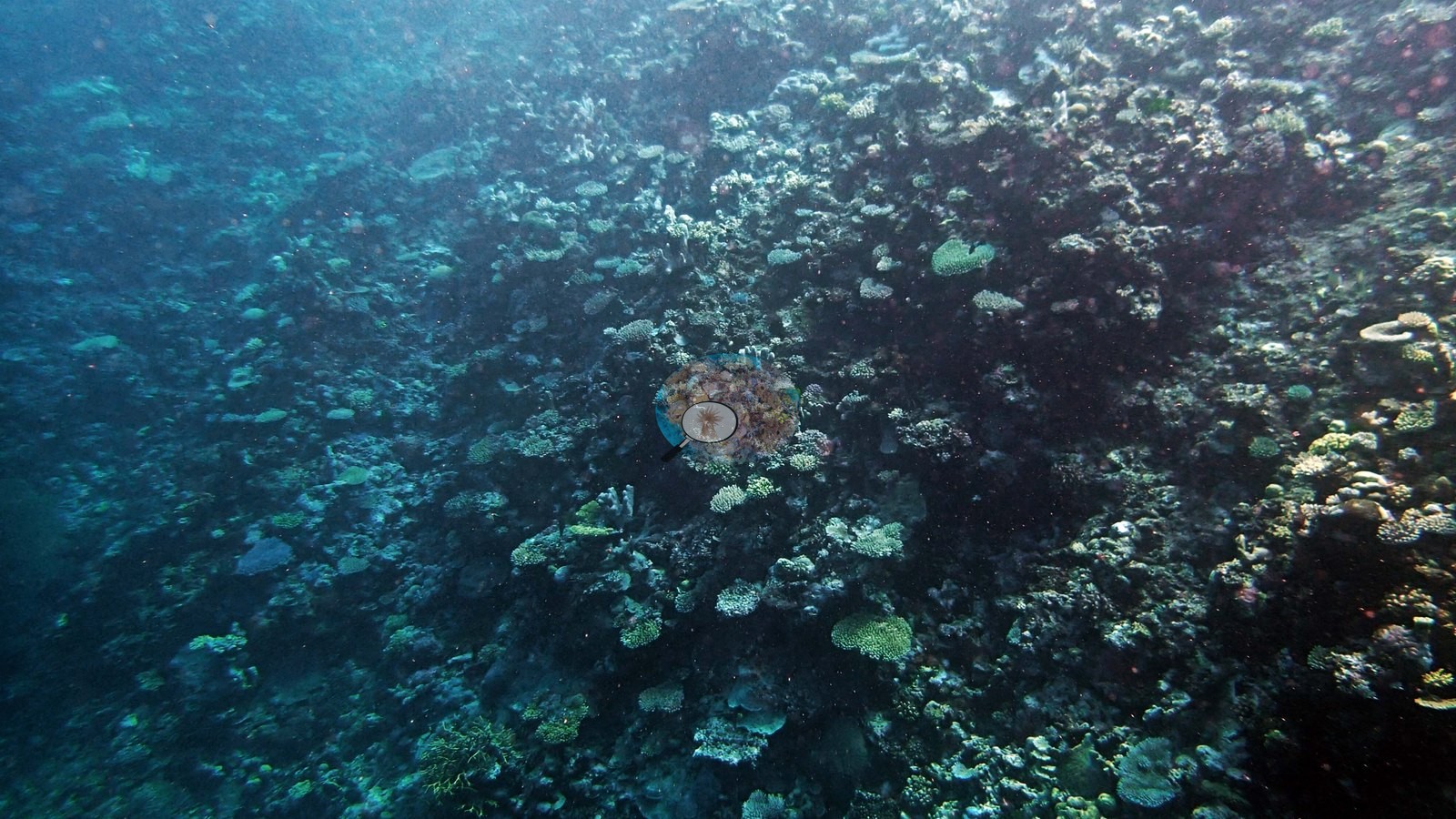
Cover was higher on the 10.5 m transect, with big Montipora plates, fire coral, and massive Porites. His four transects counted 33 coral recruits (8.3 ± 4.5 SD per transect).
Coral cover
- Reference: Khaled bin Sultan Living Oceans Foundation, Global Reef Expedition (in situ transect)
- The LOF point-count transect at this station recorded 19% live coral cover.
- Anderson's notes say that at 5-6 m, where the "usual suspects" (Pocillopora verrucosa, Stylophora pistillata, small branching acroporids, and Isopora) were common, coral cover never exceeded 30%, and only 10-15 species could be found above 5 m.
- One transect was scored at this station (19%; n = 1, so no SE; Living Oceans Foundation per-transect benthic data); it is the expedition's station value printed above.
Stressors
The needle corals told a bleaker story: sickly Seriatopora hystrix everywhere, and at 15.5 m every S. hystrix and S. caliendrum colony looked bleached, sick, or dying. No crown-of-thorns starfish (COTS) or other corallivores evident.
Fish and other fauna
One frame catches that escort, two gray reef sharks cruising a few meters off a rubble-strewn slope (e.g., Image 1).
Comparisons with other data
No prior survey data from this site. If you would like to share yours, please email us.
Other notes
Position: Anderson's sheet and the expedition's planning table repeat AUYD109's coordinates for this station; the expedition's station map and the 933-site table place it at the reef's northeast corner, where the pin sits.
Data & links
- Download benthic survey data (CSV) ↗
- Download all LOF-GRE data (933 sites) ↗
- Photo portfolio ↗
- Coral Reef Diagnostics country page ↗
All images from Coral Reef Diagnostics. Data are from the Khaled bin Sultan Living Oceans Foundation Global Reef Expedition and Coral Reef Diagnostics.
 © Coral Reef Diagnostics.