
Part of the regional summaries: Australia (GBR) - Far North: Pink stations (Preservation Zone reefs) and Australia (GBR)
More info
Northern GBR (NOAA CRW virtual station)A steep Williamson Reef wall from 2 to 20 m where a once-dense meadow of needle coral and branching Acropora had been ravaged by crown-of-thorns starfish, at least 22 counted on one dive, with freshly killed white skeleton still visible. Unlike on the previous day's dives, Anderson believed the high coral mortality here was due to the starfish. Surveyed on the Living Oceans Foundation's Global Reef Expedition.
Two other CRD dive sites within 5 km shown in orange — click a marker to open its page.
🗺 Detailed map of the Global Reef Expedition dive sites, Lark, Williamson, and unnamed reef 15-043, northern Great Barrier Reef (Khaled bin Sultan Living Oceans Foundation; opens in a new window)
9 of the 30 photographs on this page are shown beside the text that discusses them under "Site description" below.
Site description
Setting
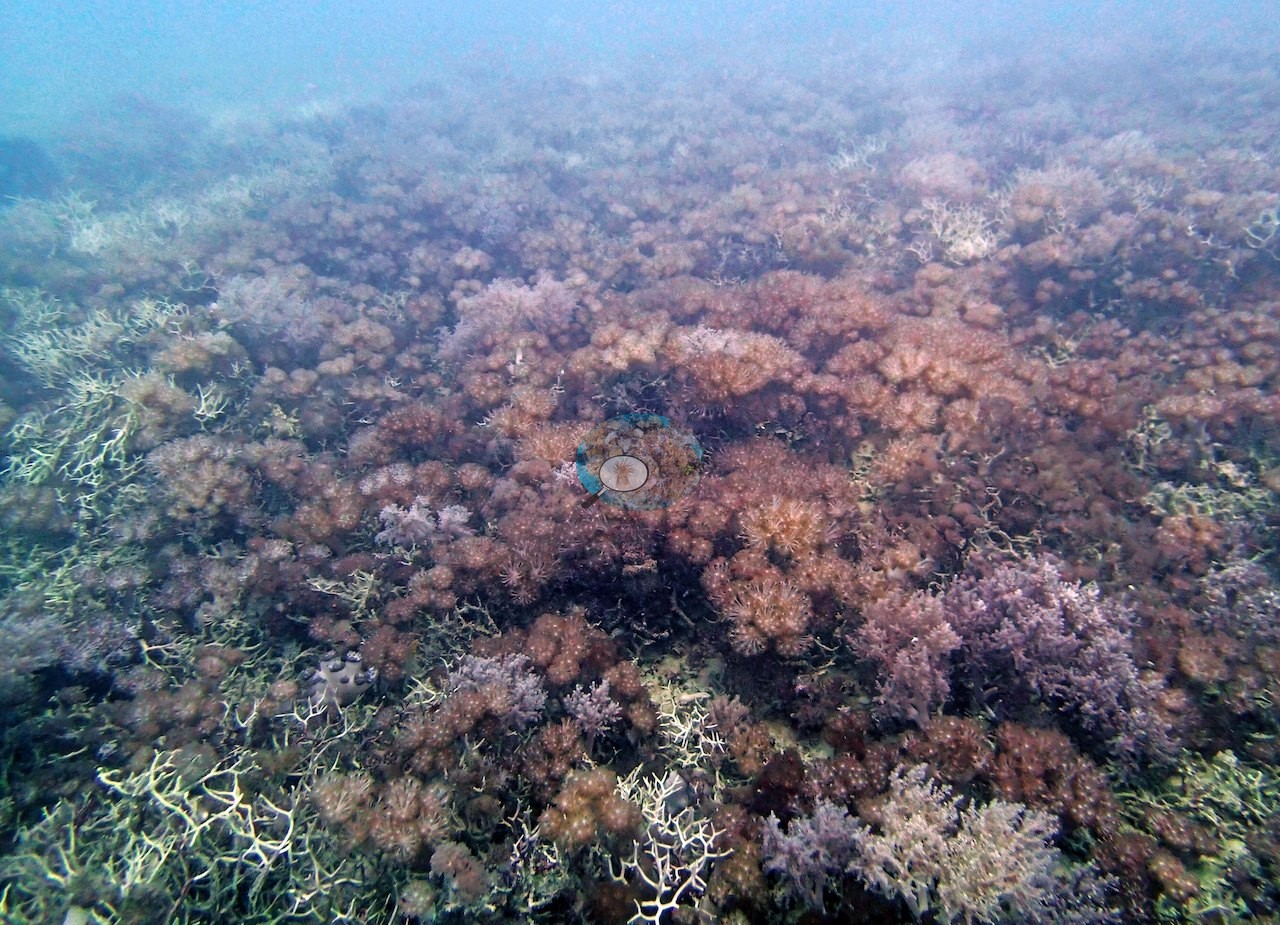
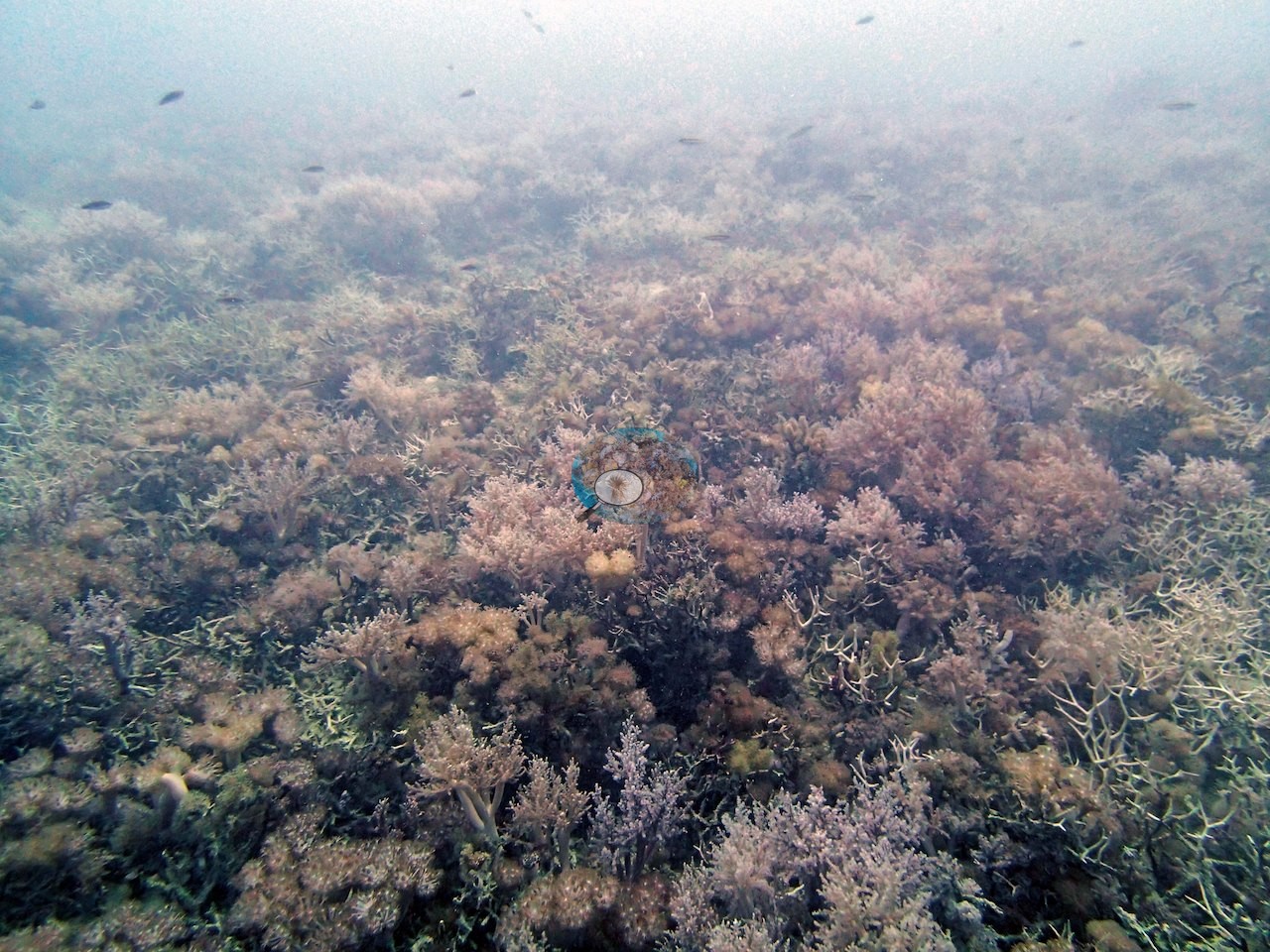
On 7 September 2014 a second Williamson Reef dive brought Anderson to a steep wall dropping from 2 to 20 m, where a once-dense meadow of needle coral (Seriatopora hystrix) and branching Acropora had been ravaged by crown-of-thorns starfish, at least 22 counted on this single dive. This site lies in a Preservation (Pink) Zone, the Marine Park's strictest protection tier, where entry is restricted.
General benthic features
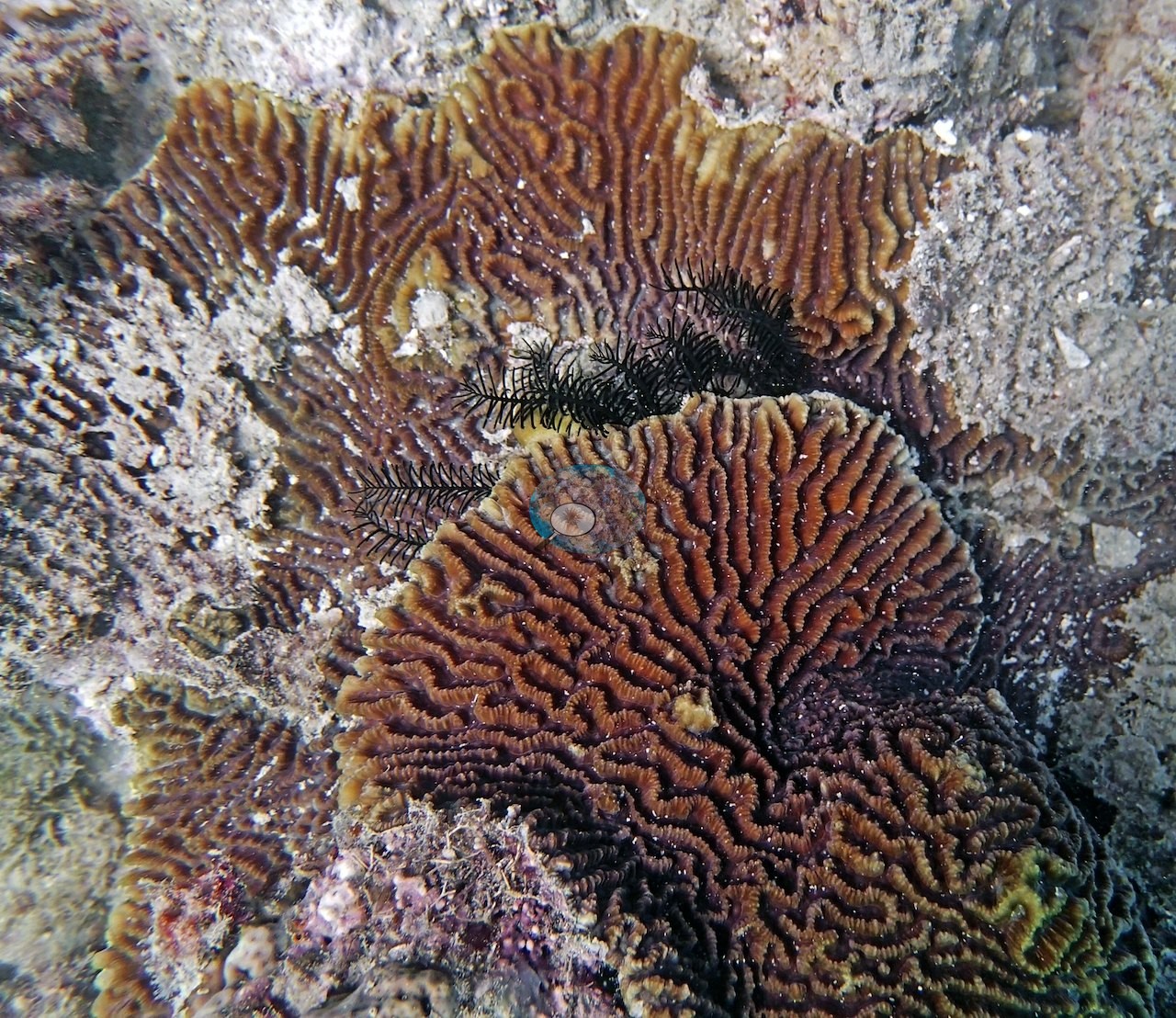
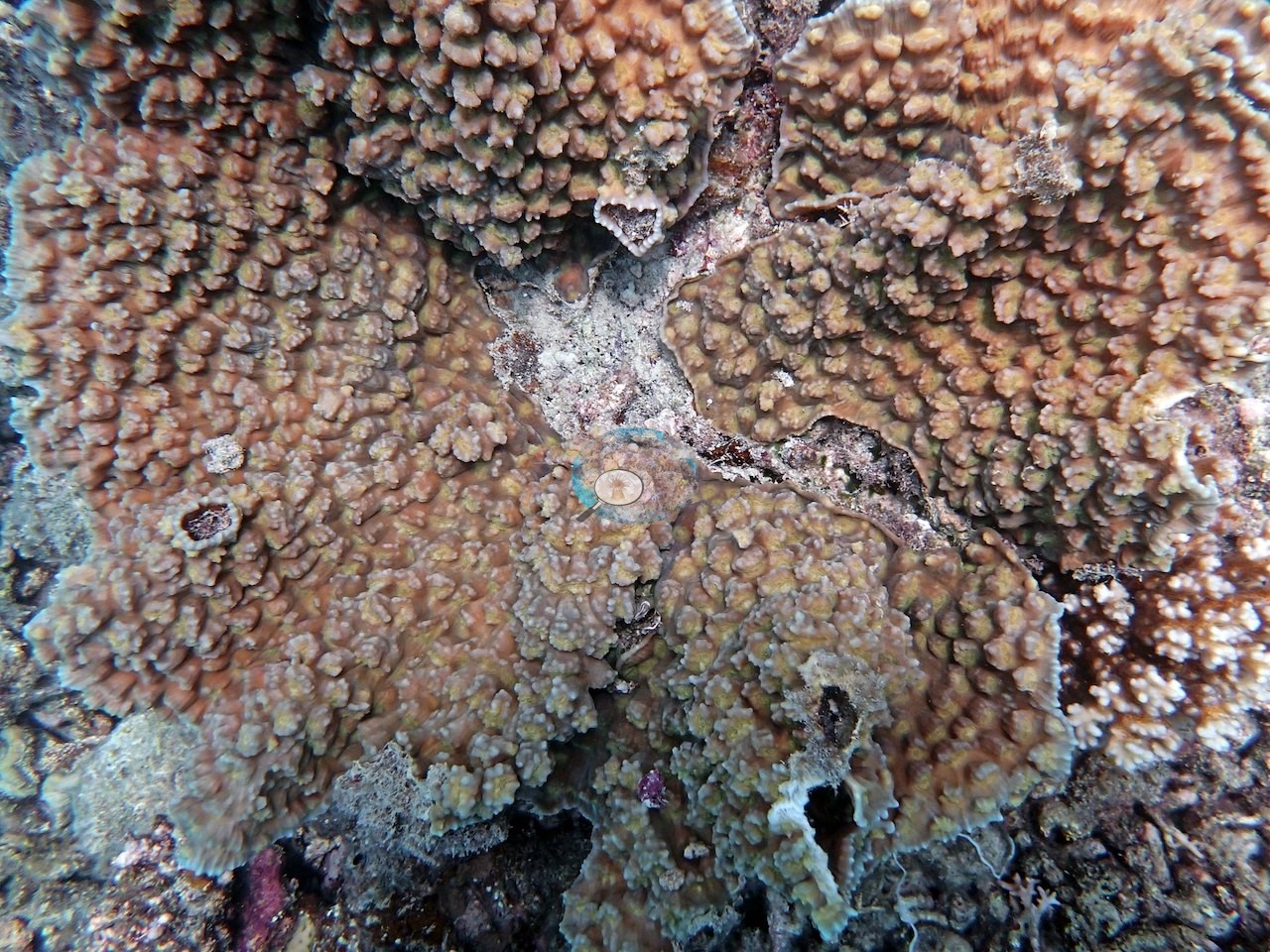
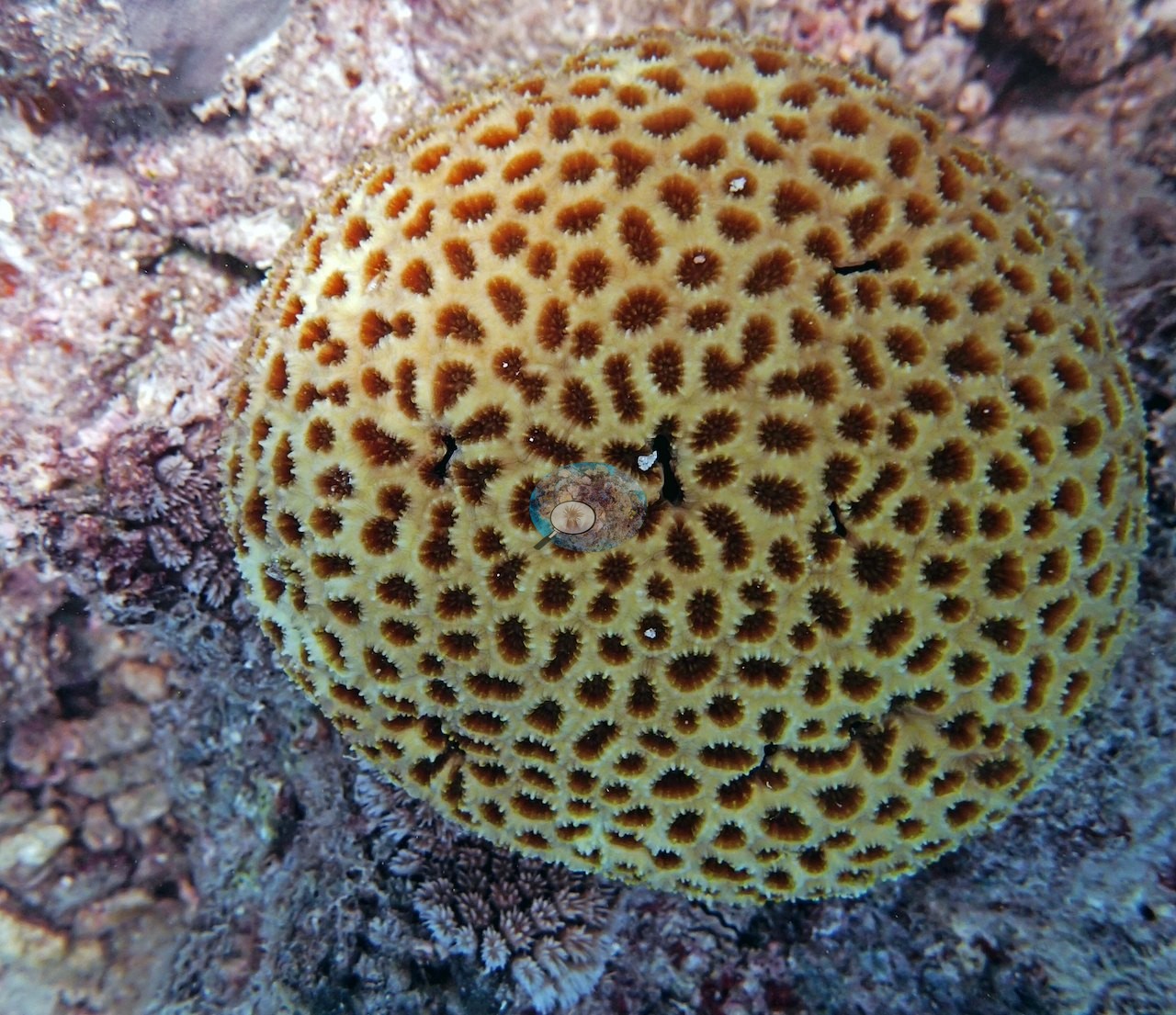
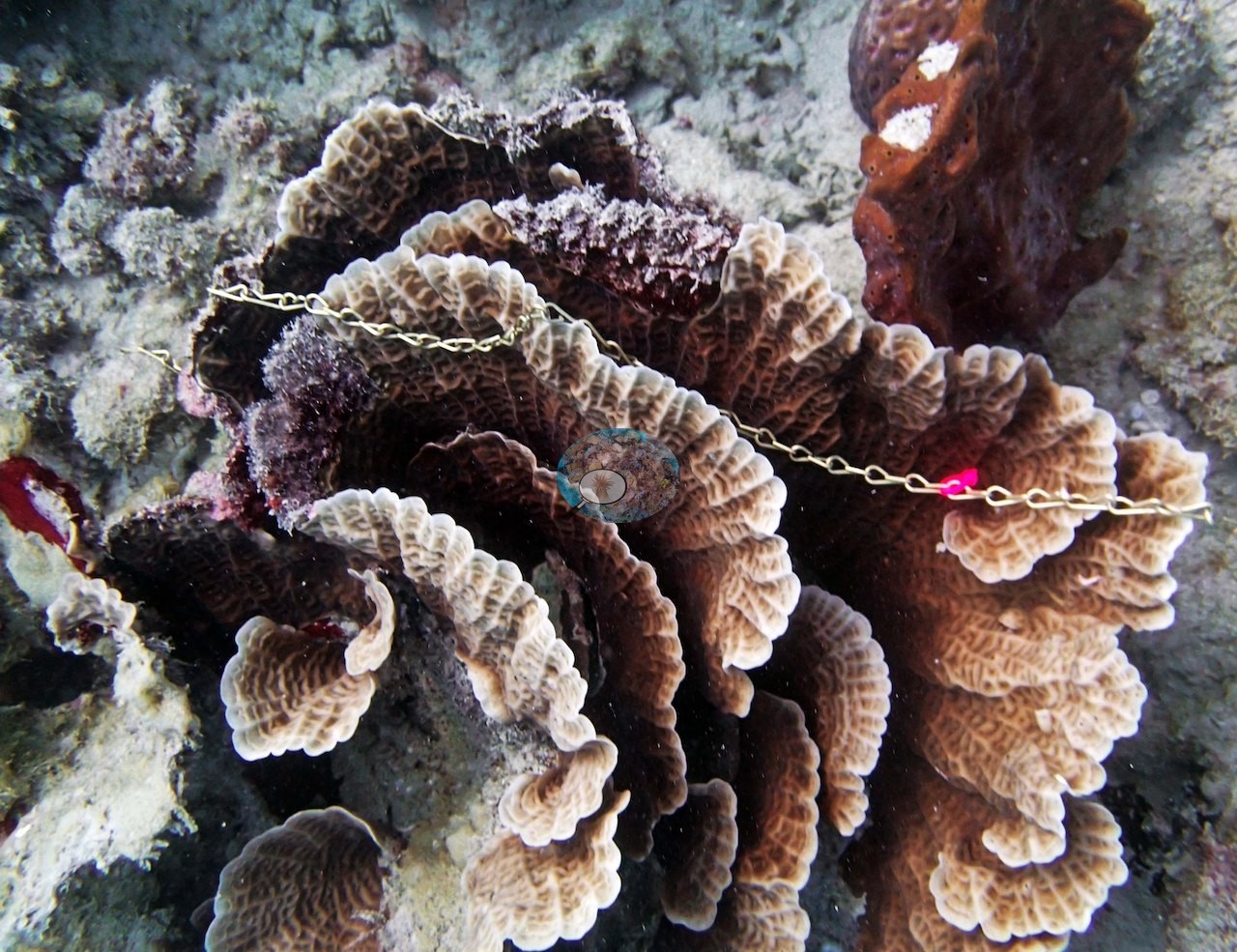
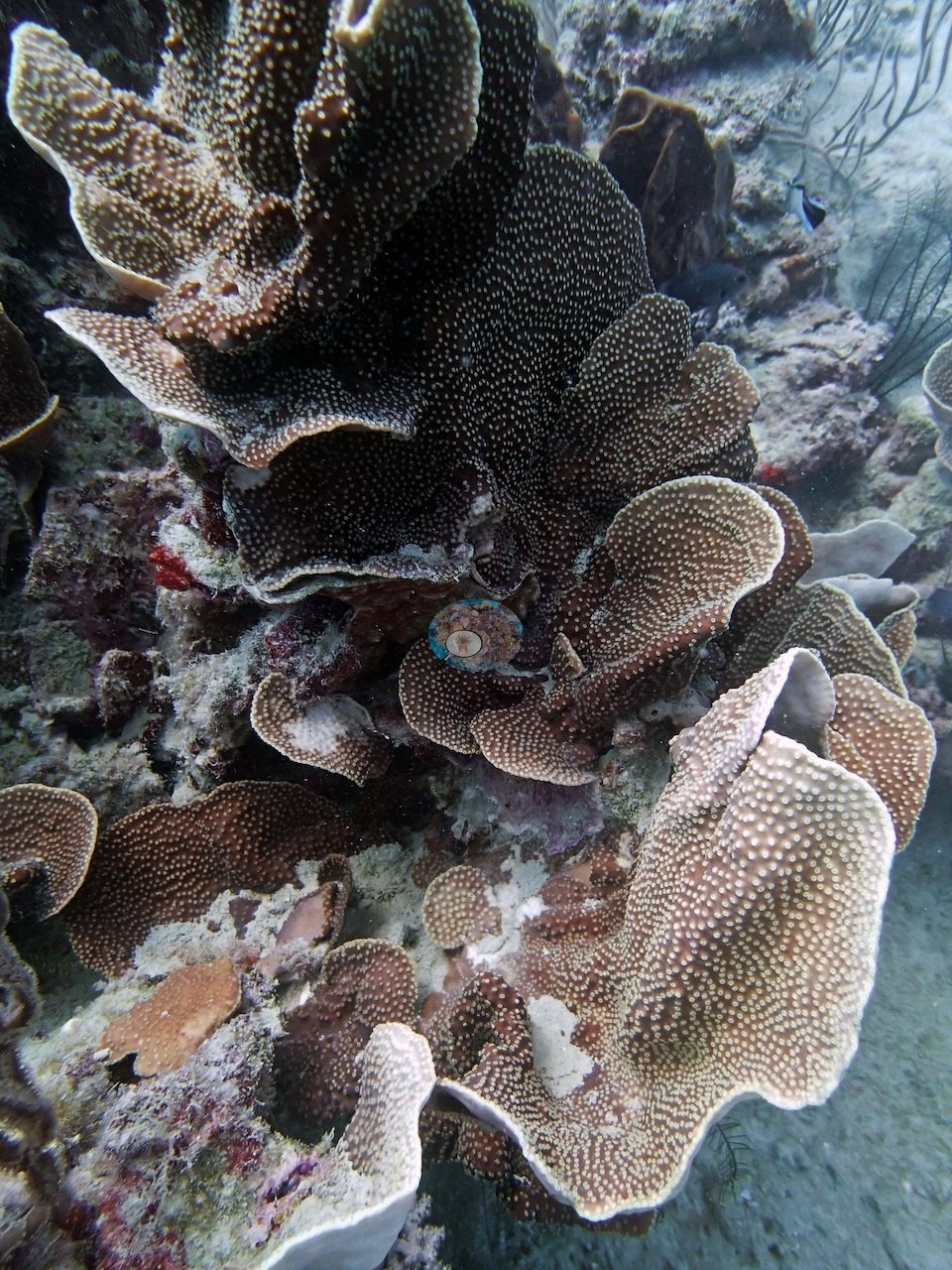
One frame shows ridged, radially grooved plates of the Leptoseris type, olive and maroon with bare patches between them and black feather stars perched on top, the same genus Anderson found dying near a large bommie (e.g., Image 3).
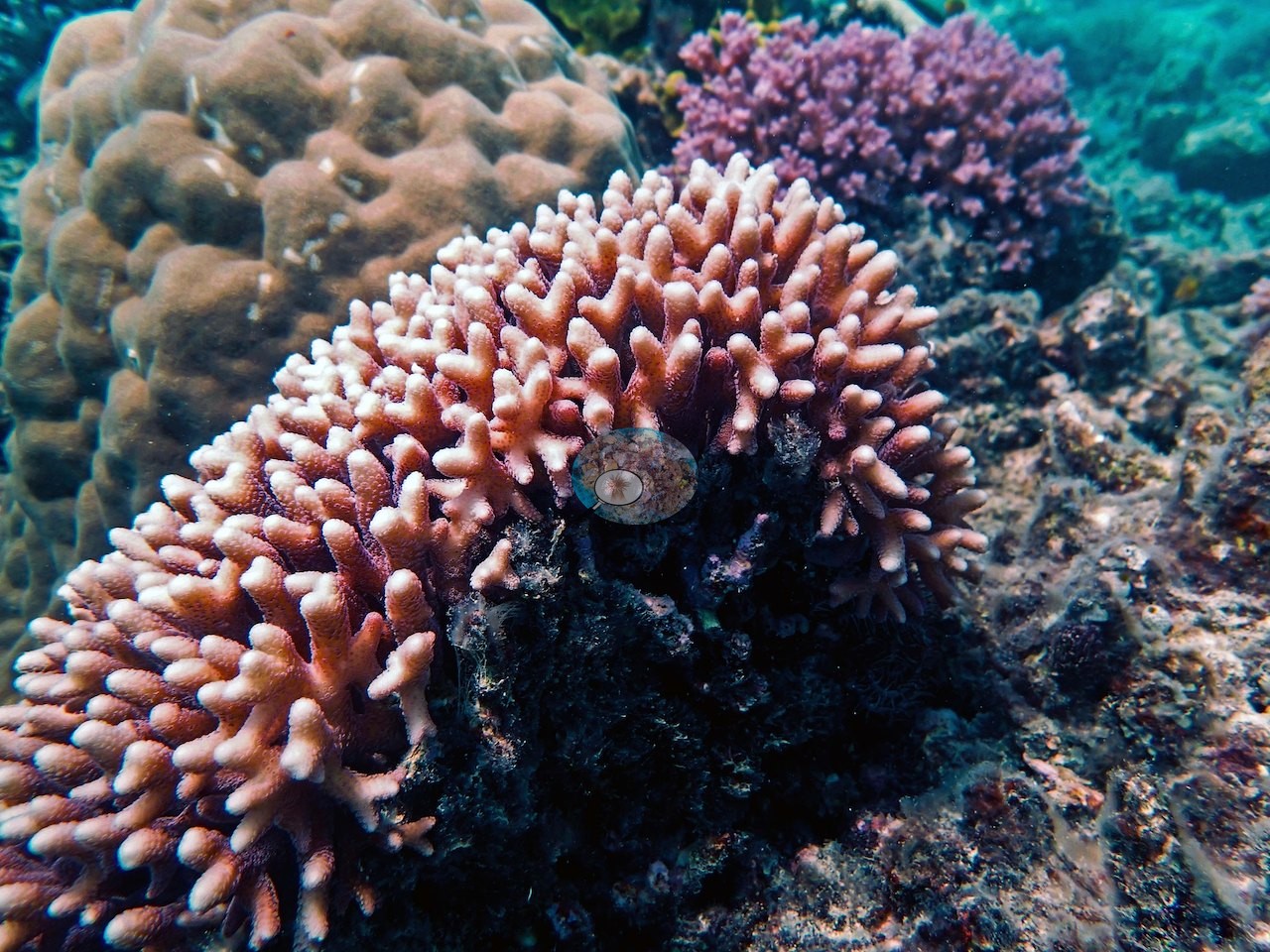
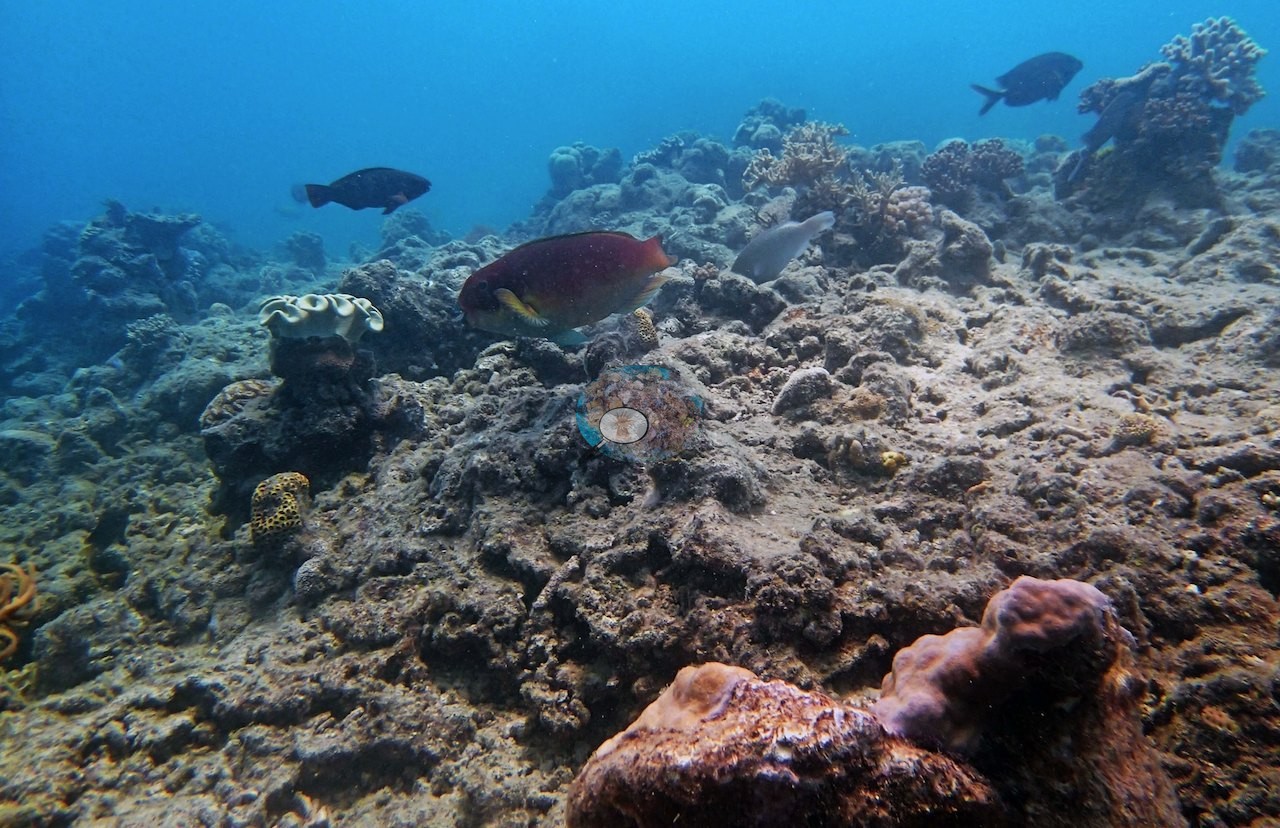
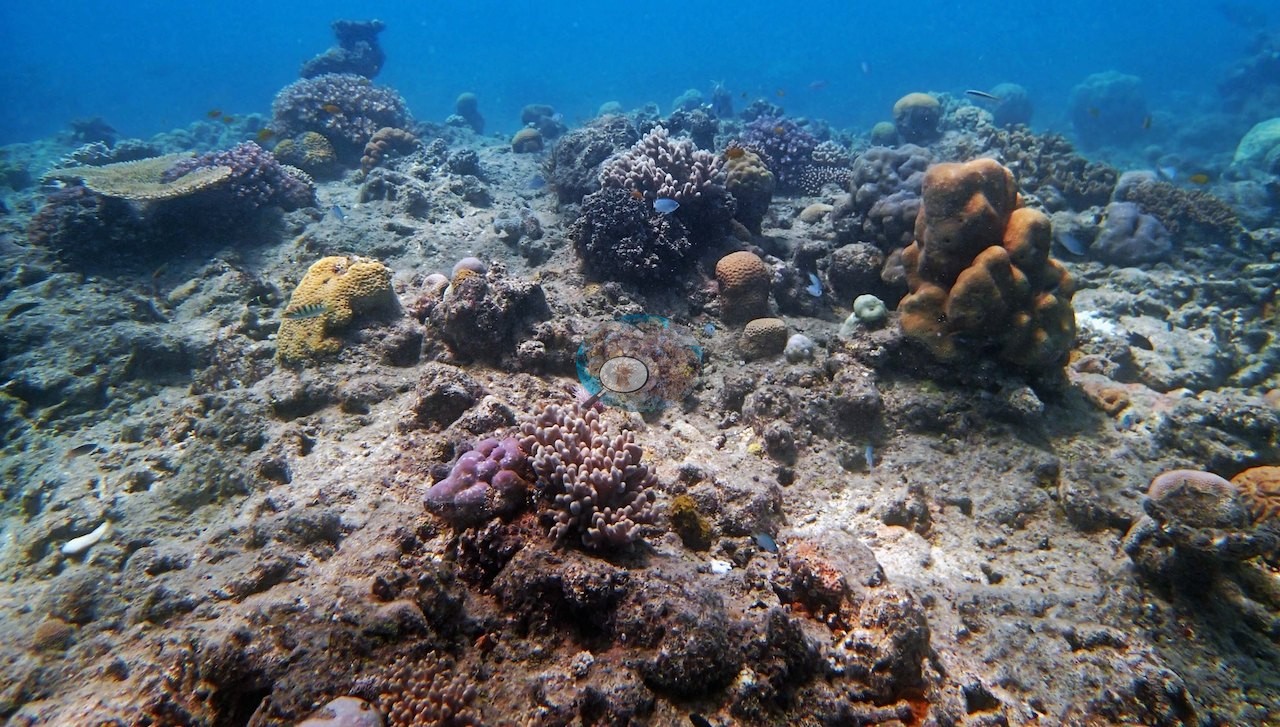
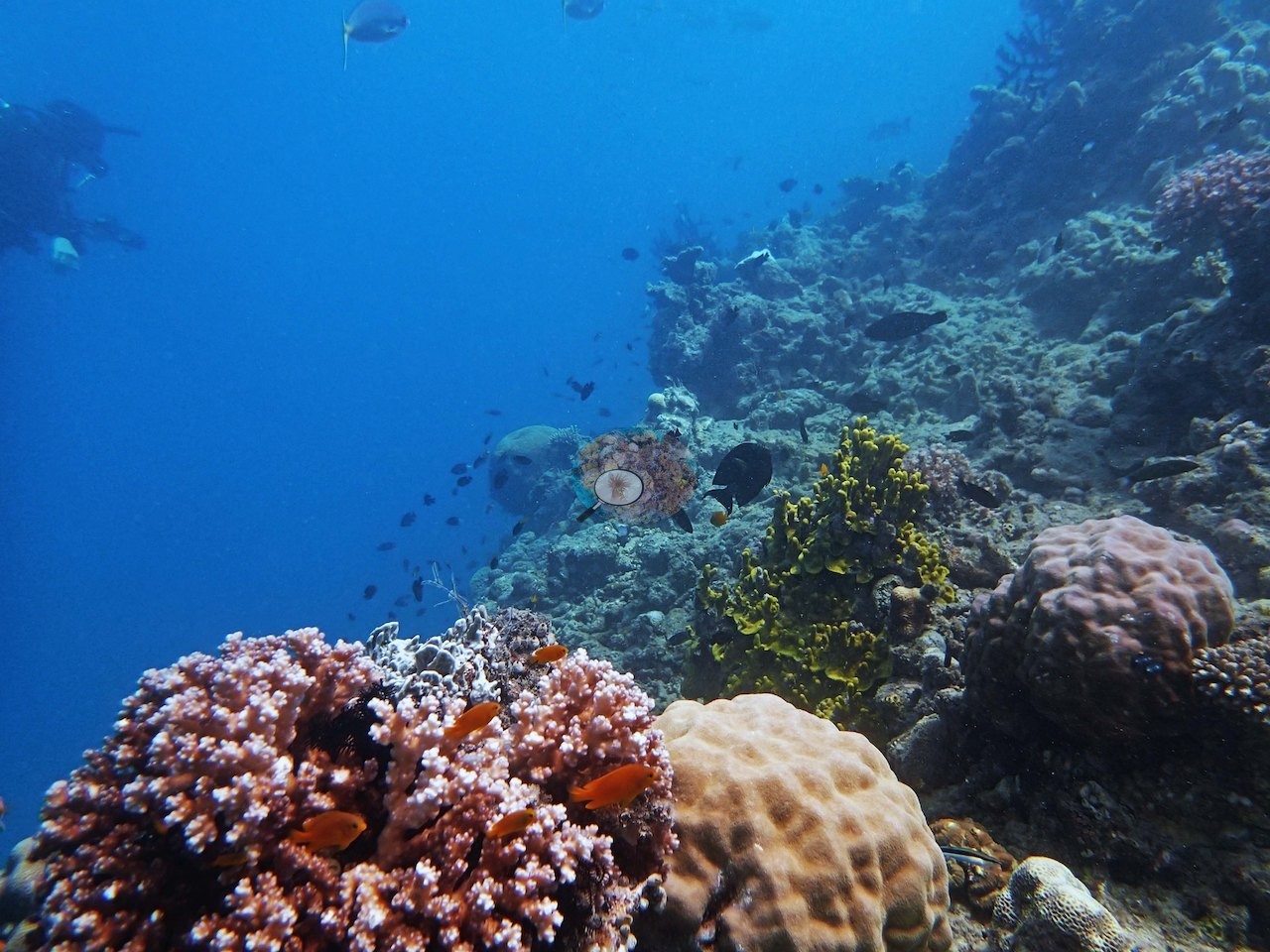
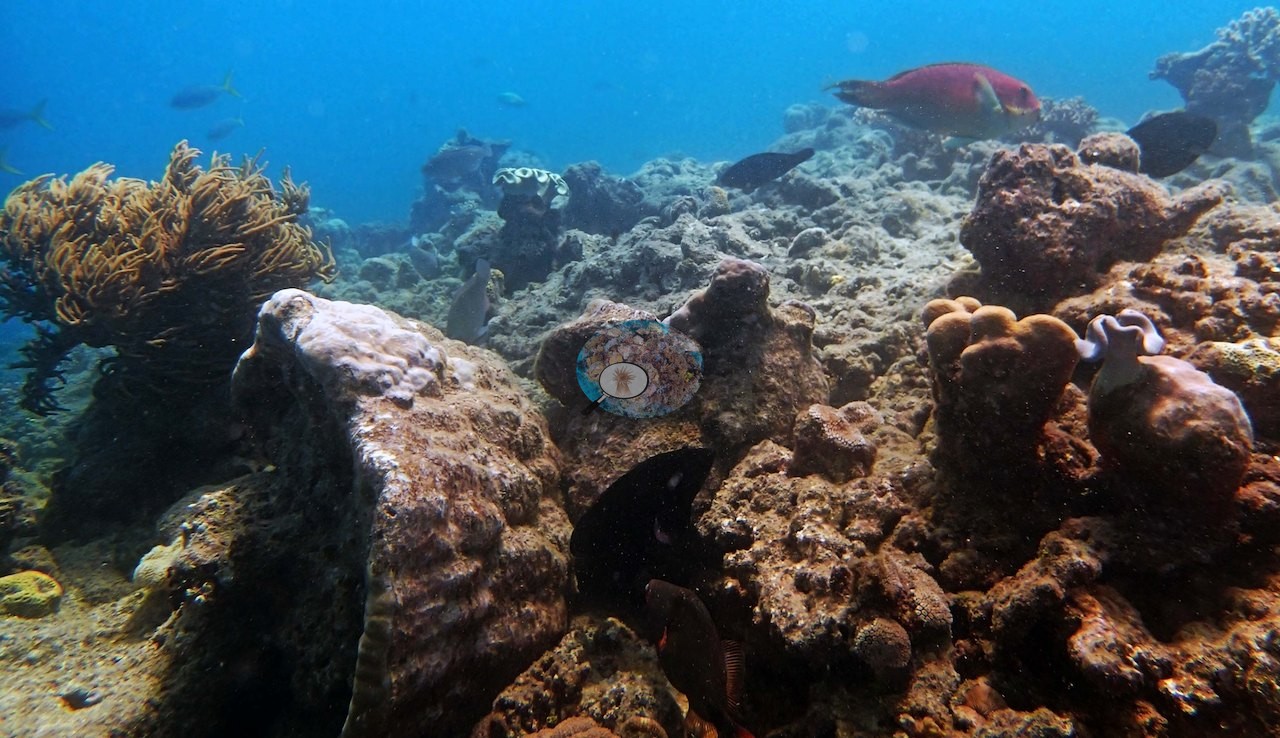
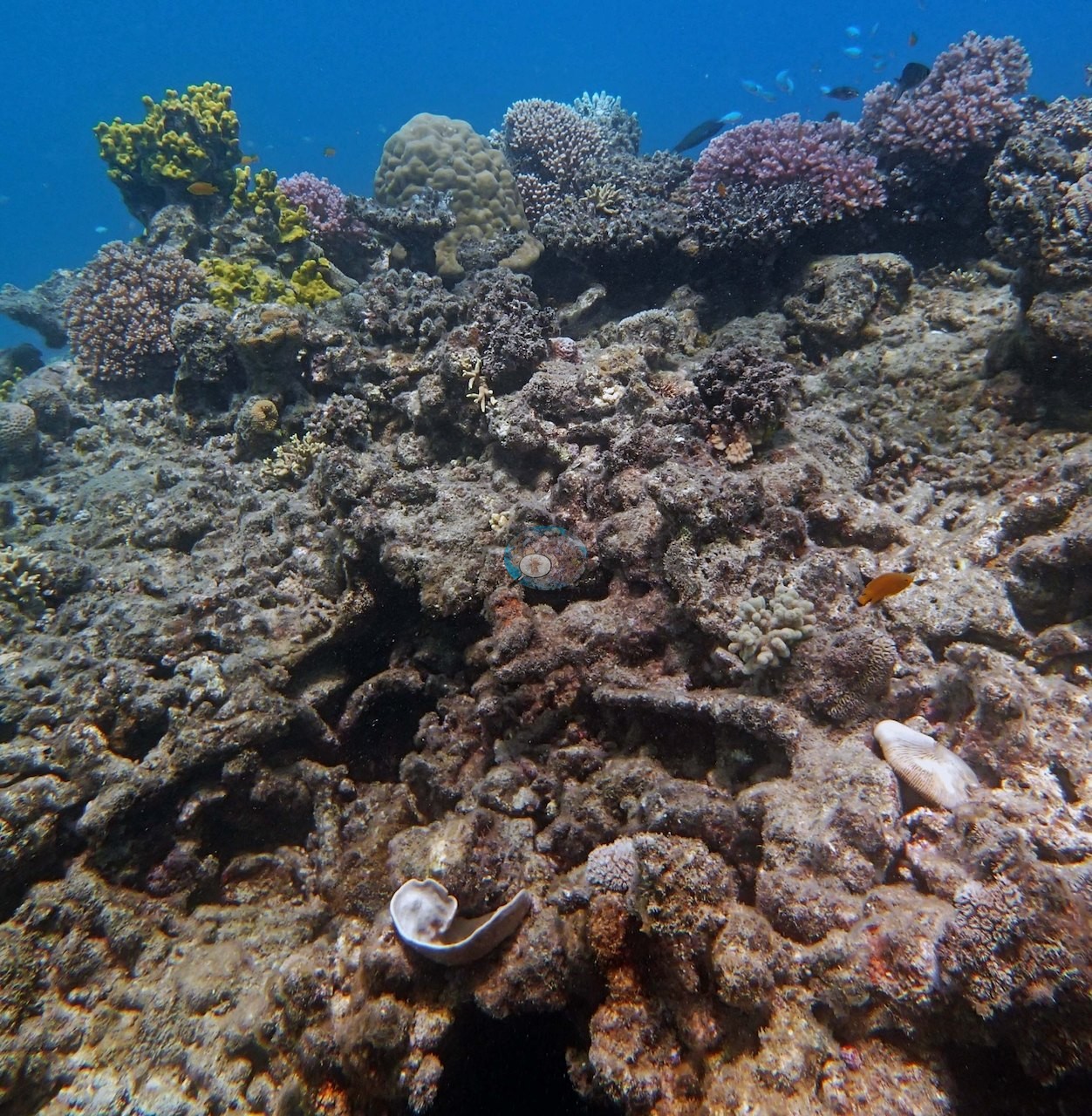
Another looks across a wall surface that is mostly dead pavement and turf, relieved by pockets of pink Pocillopora, yellow fire coral, and massive Porites (e.g., Image 2).
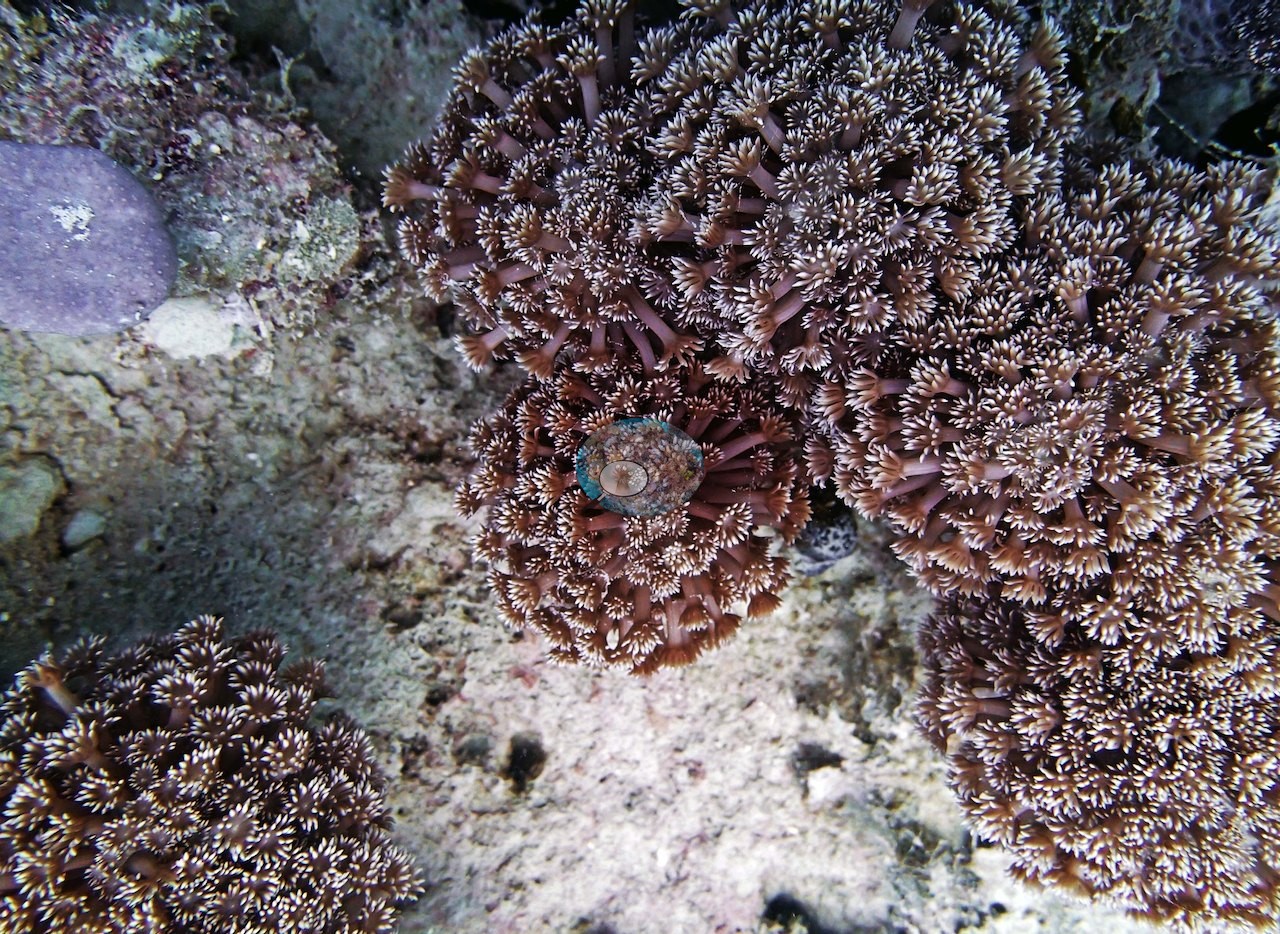
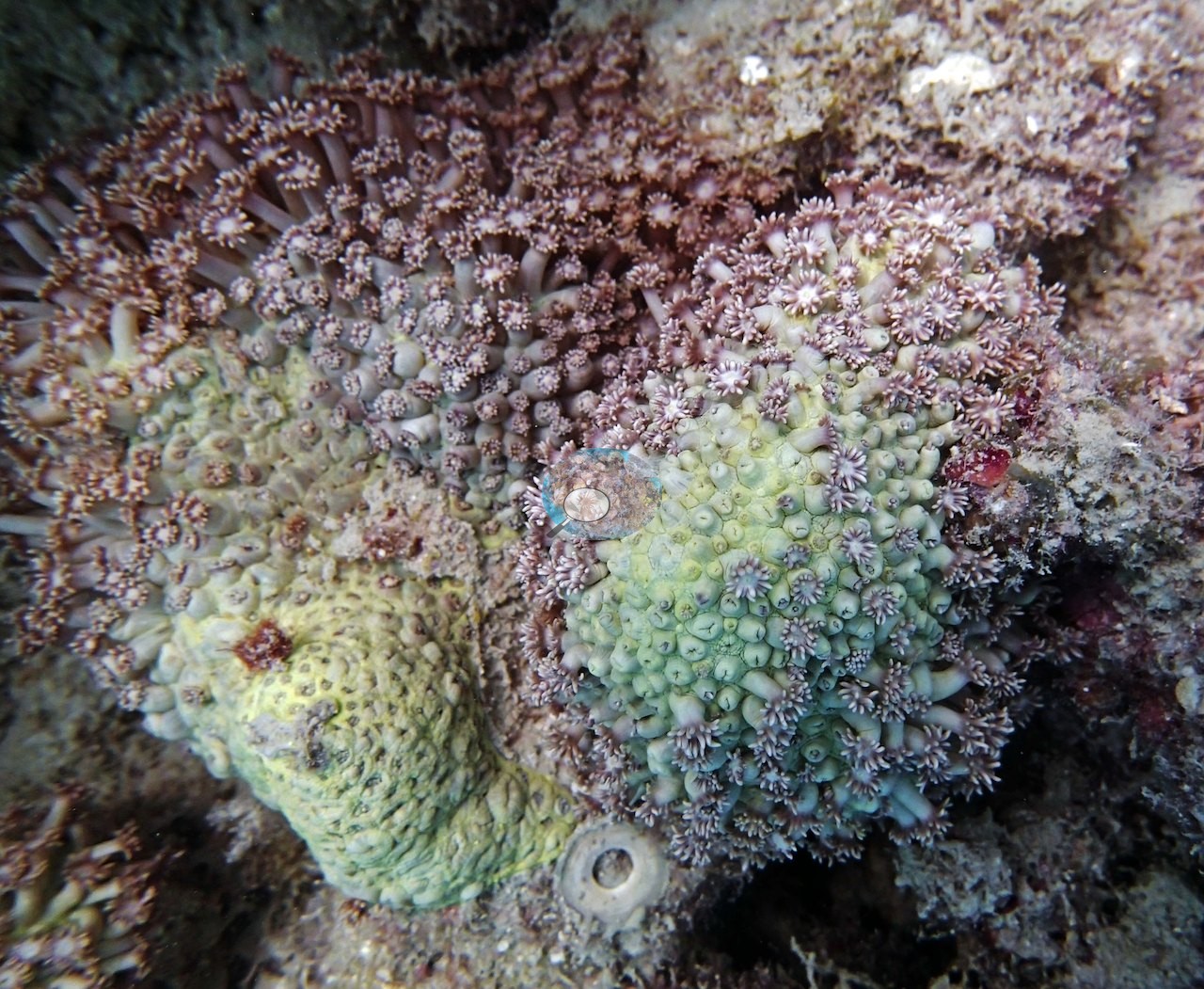
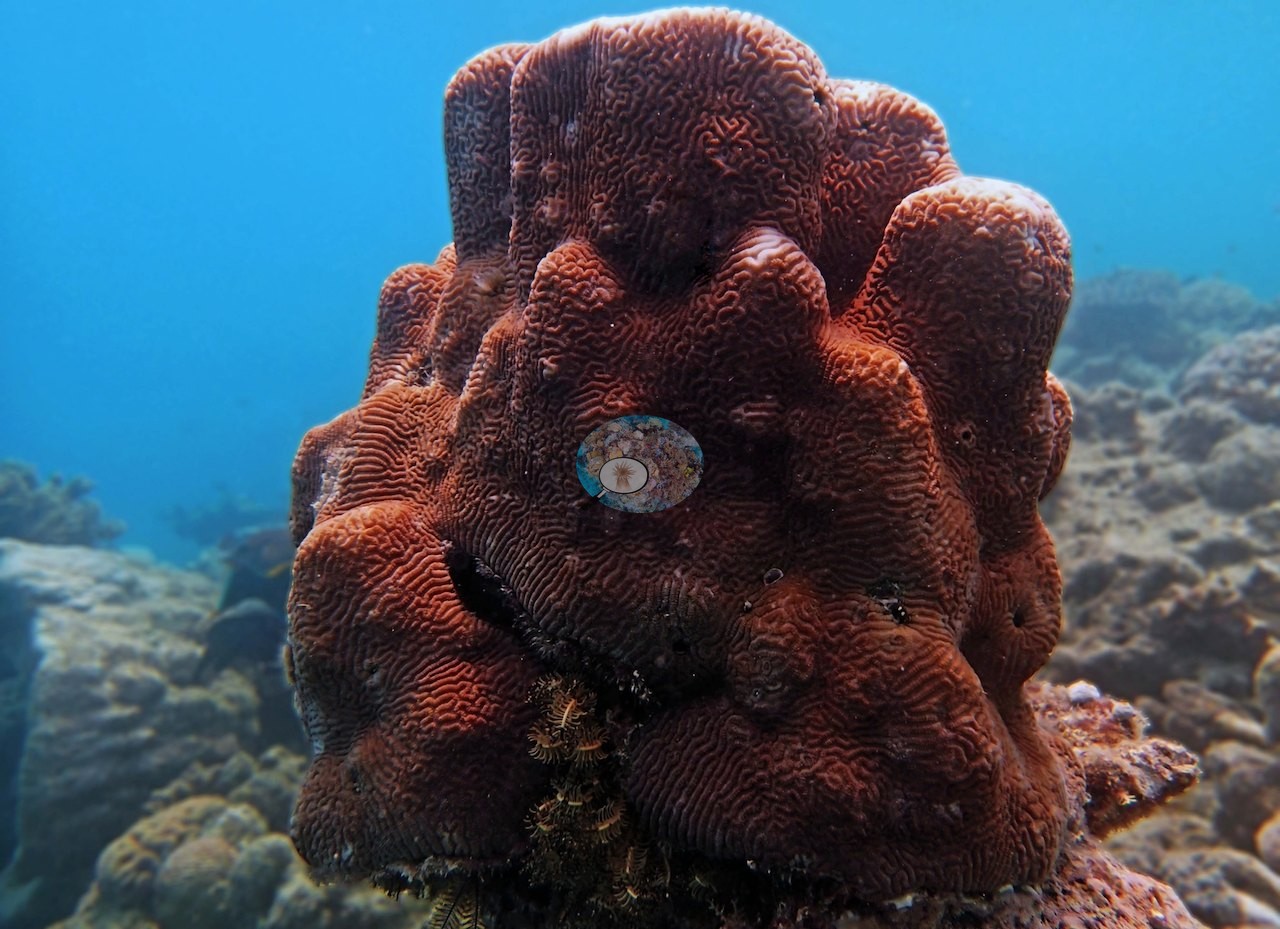
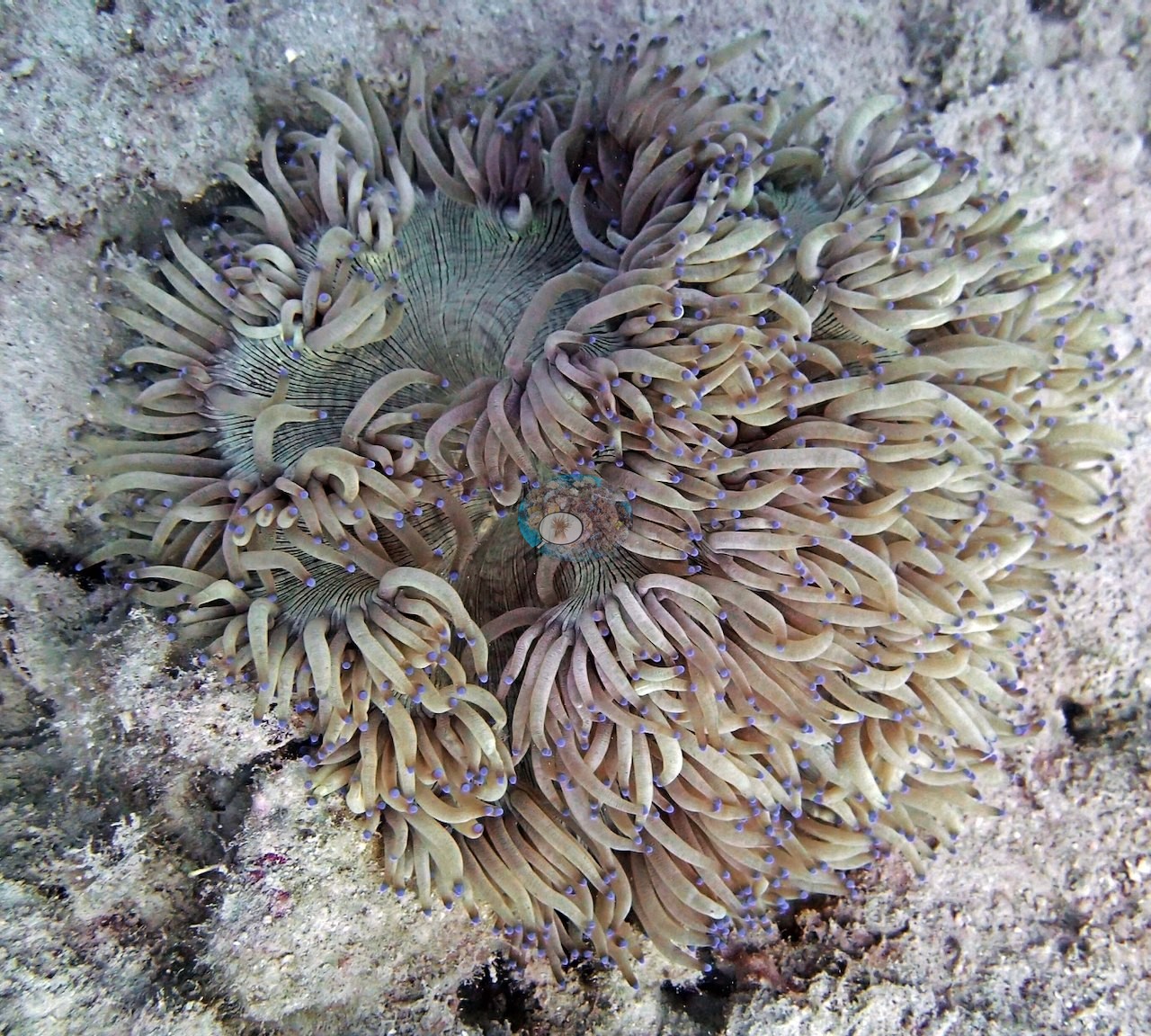
A large anemone with purple-tipped tentacles fills another frame (e.g., Image 4).
Coral cover
- Reference: Khaled bin Sultan Living Oceans Foundation, Global Reef Expedition (in situ transect)
- Point-count cover here was 15%, from transects at 10-20 m; Anderson noted higher coral cover and diversity at 5 m, above the transects.
- Transect mean 15 ± 1.9% SE (n = 4 transects; Living Oceans Foundation per-transect benthic data); the headline above is the expedition's station value.
Stressors
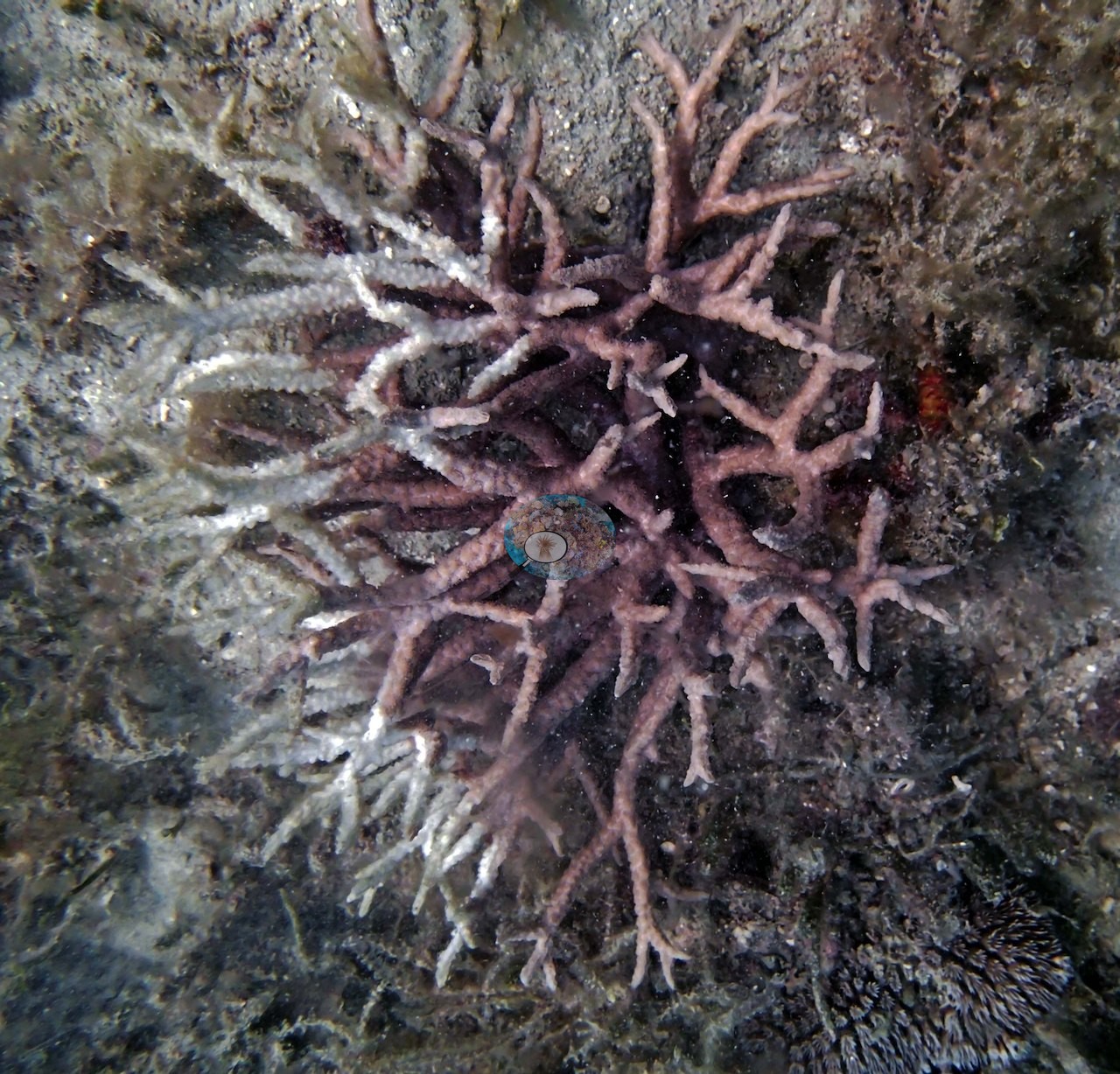
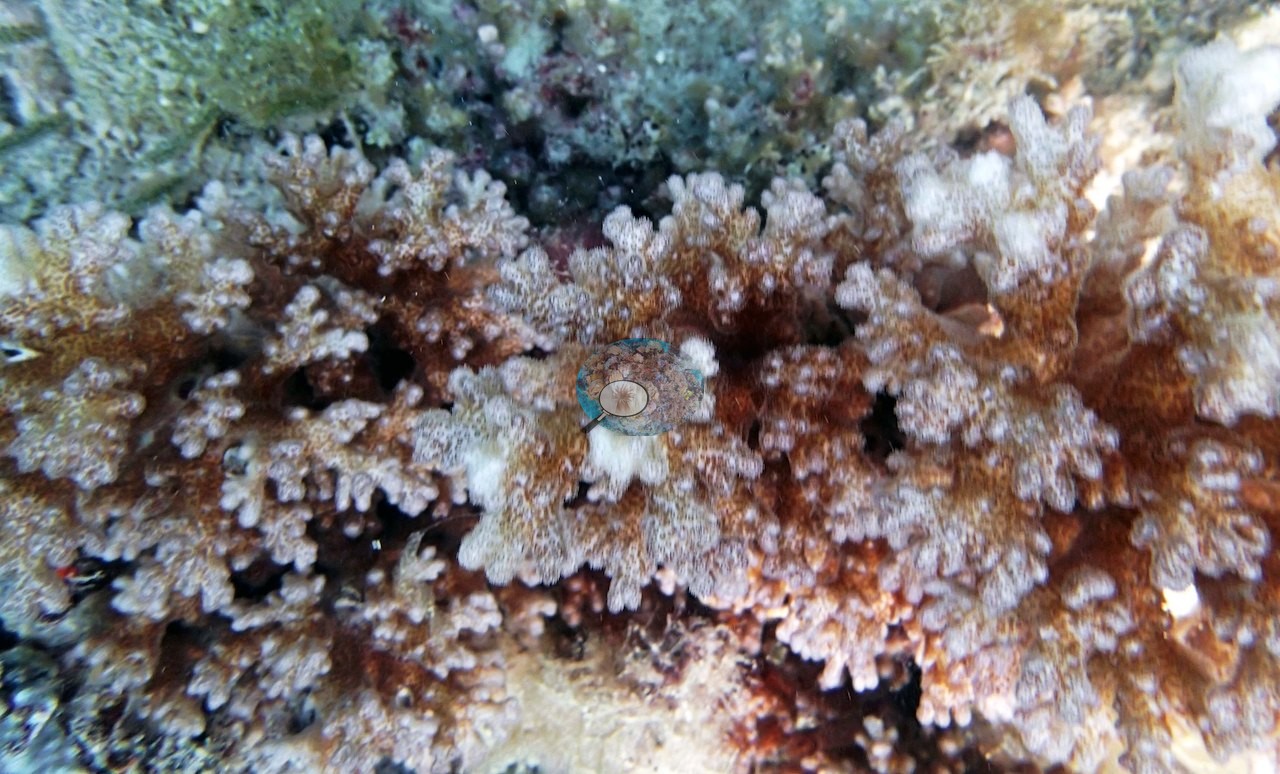
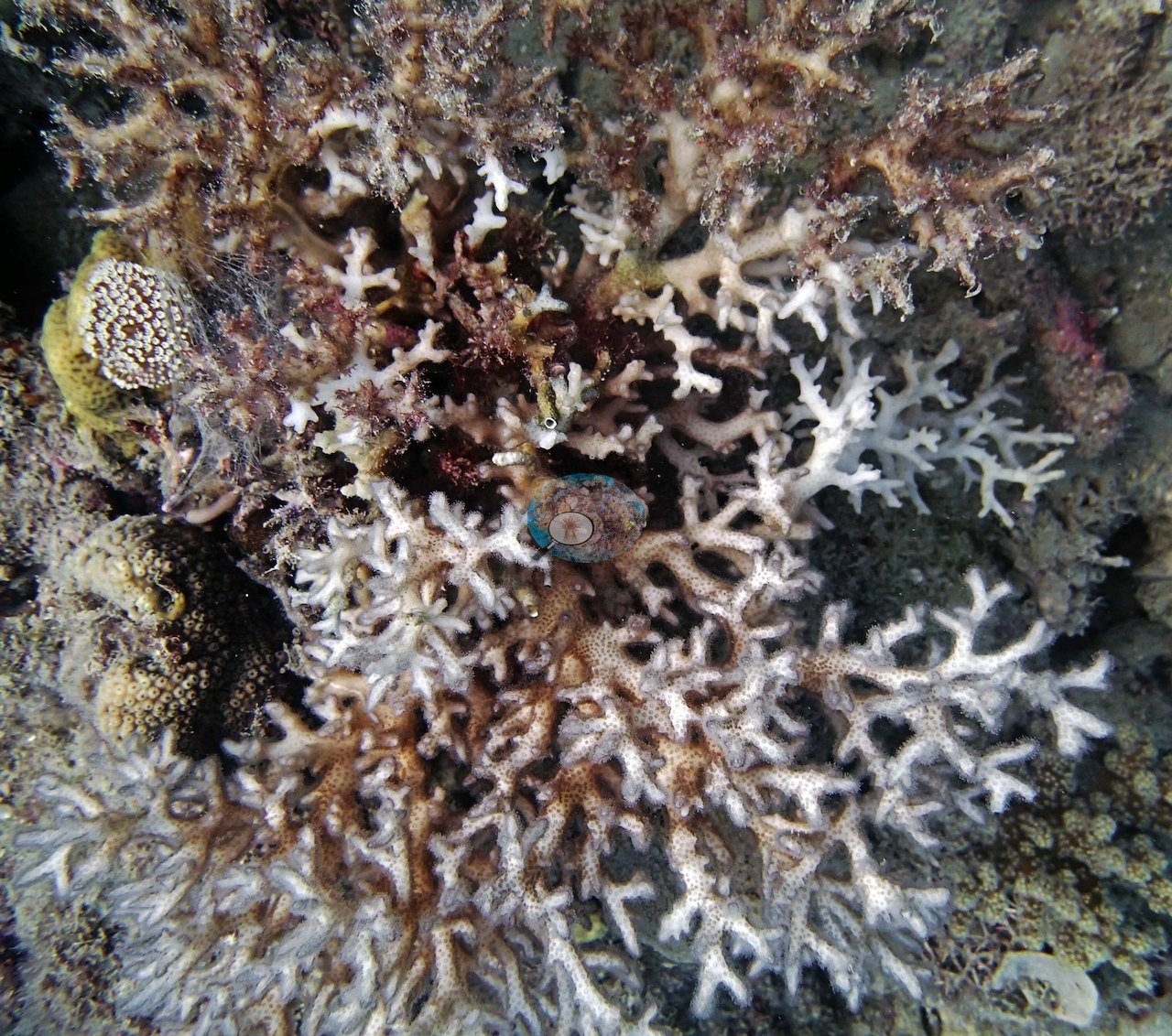
One photograph is the mortality itself in close-up: interlocking needle-coral branches, part stark white with the corallites still crisp, part already furred brown with algae, the sequence of a kill only days to weeks old (e.g., Image 5).
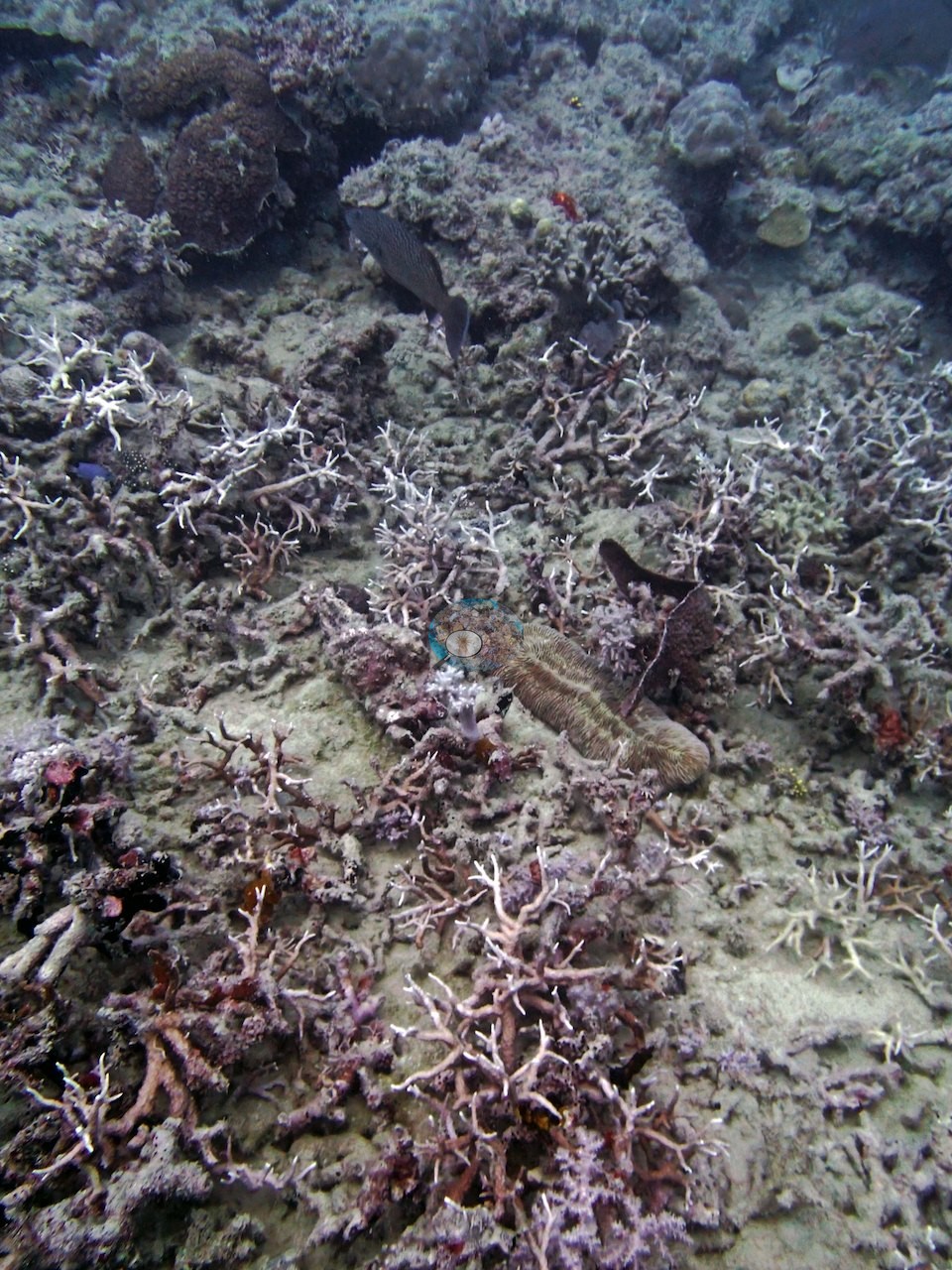
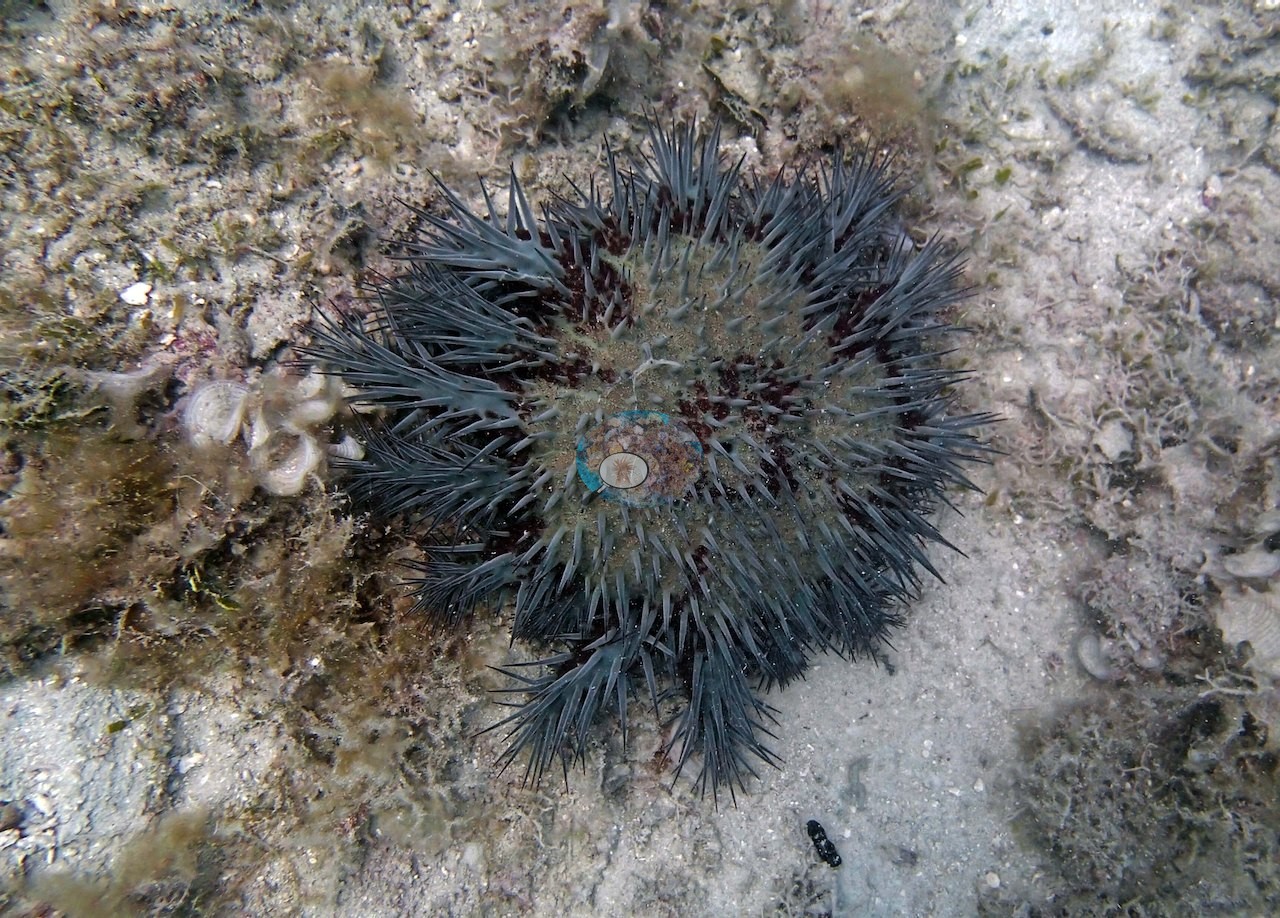
Crown-of-thorns starfish appear in four frames: on sand and rubble (e.g., Image 29), over stark-white, freshly bared fine-branching skeleton (e.g., Image 9, Image 27), and on a patch of soft coral (e.g., Image 10); more of that white skeleton lies scattered over the rubble in Image 8.
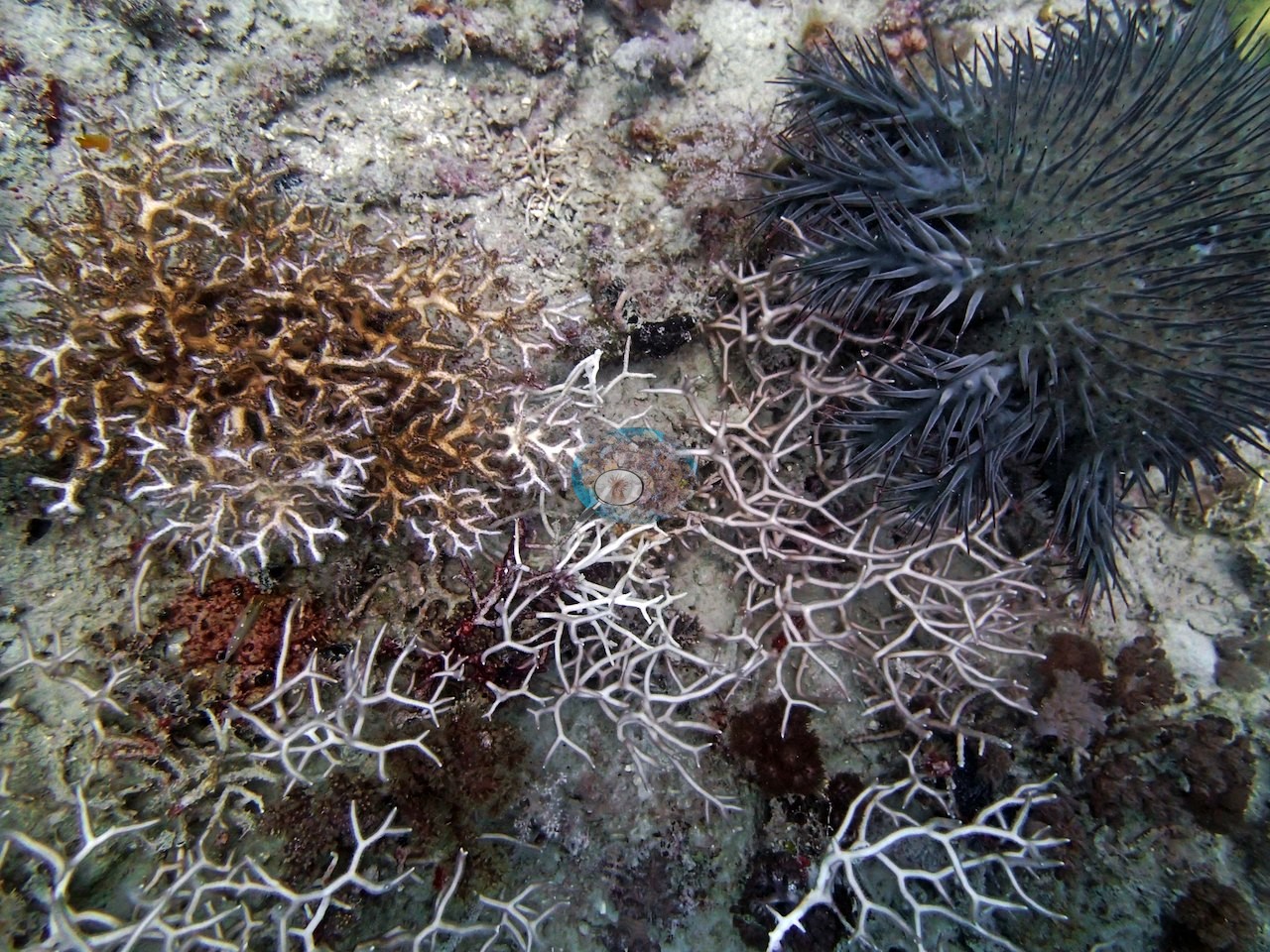
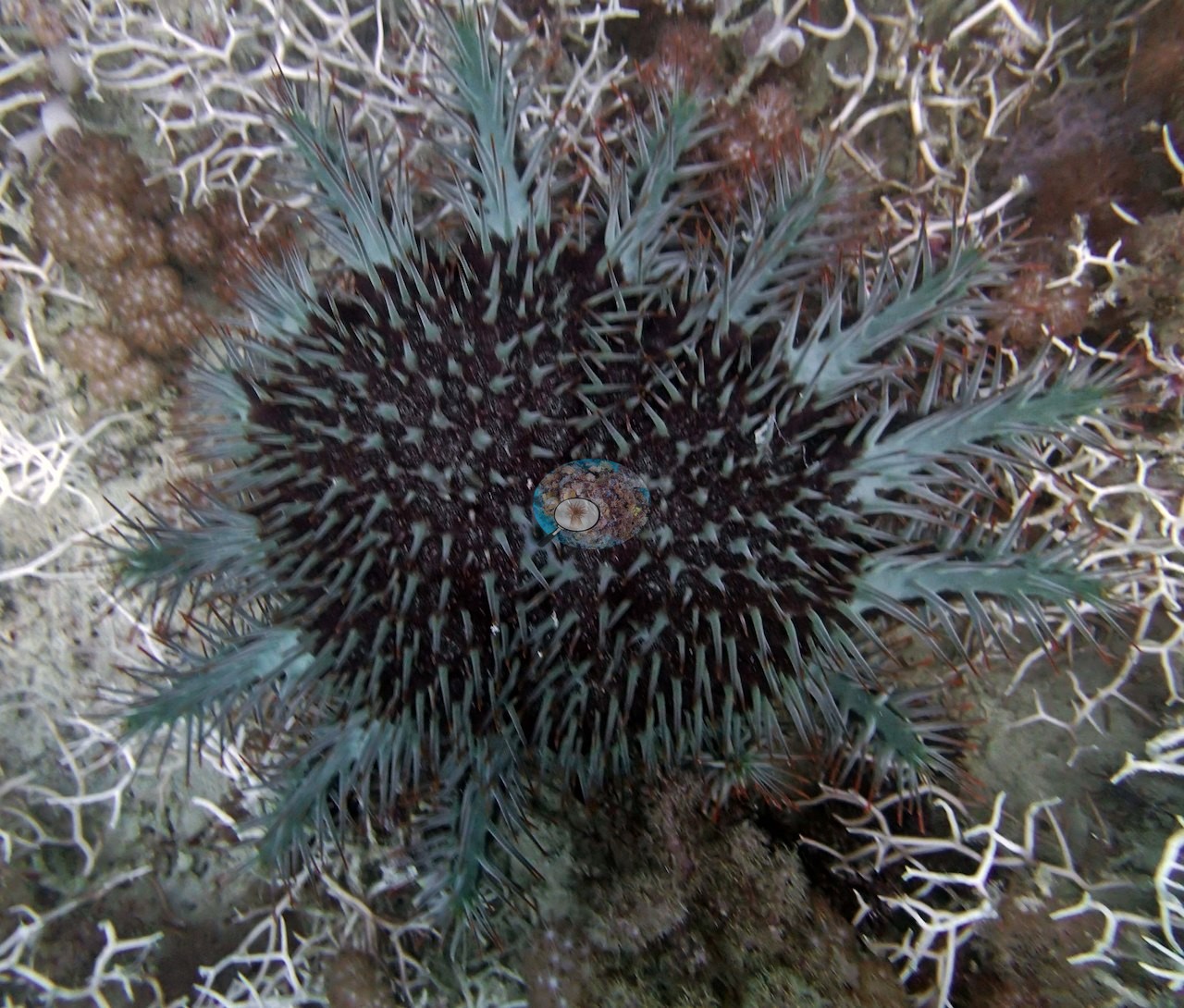
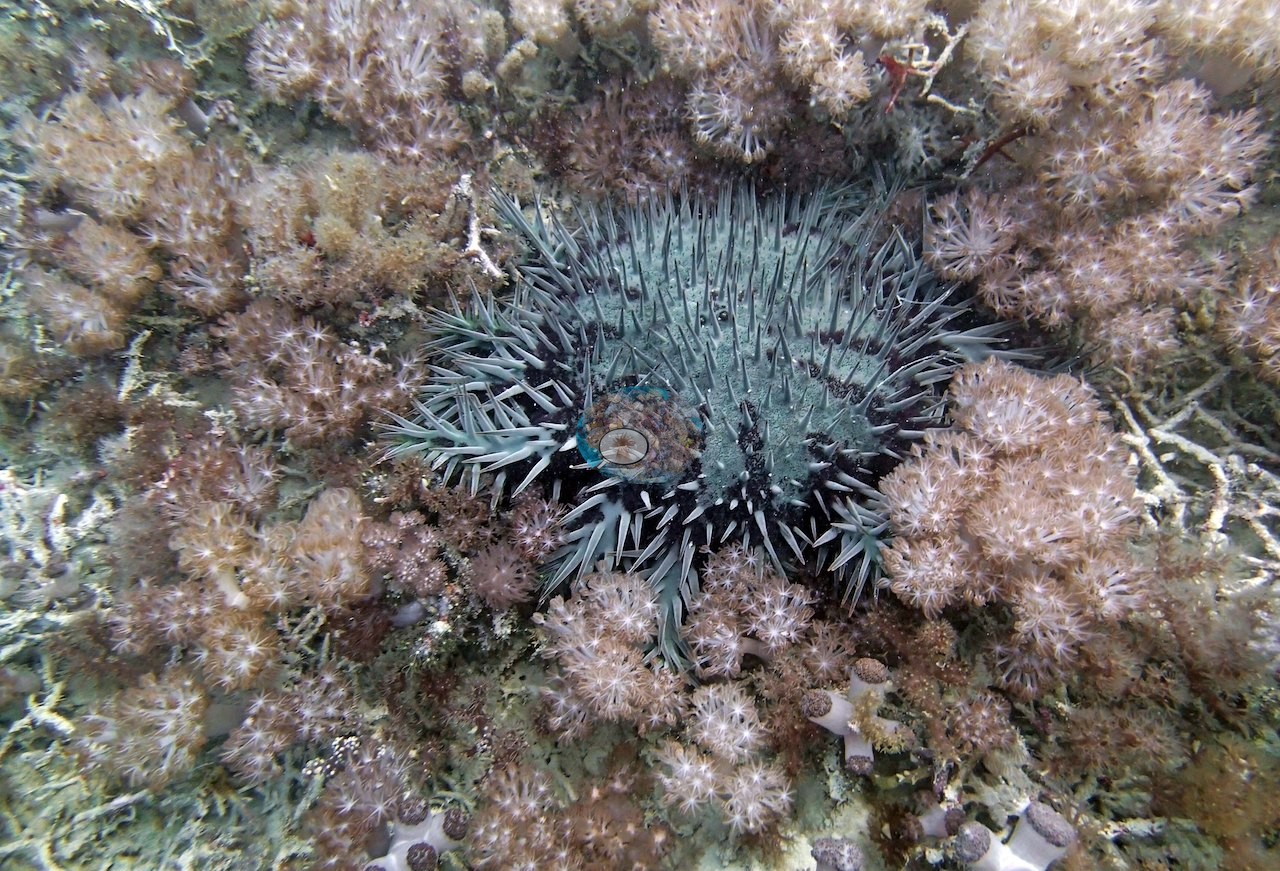
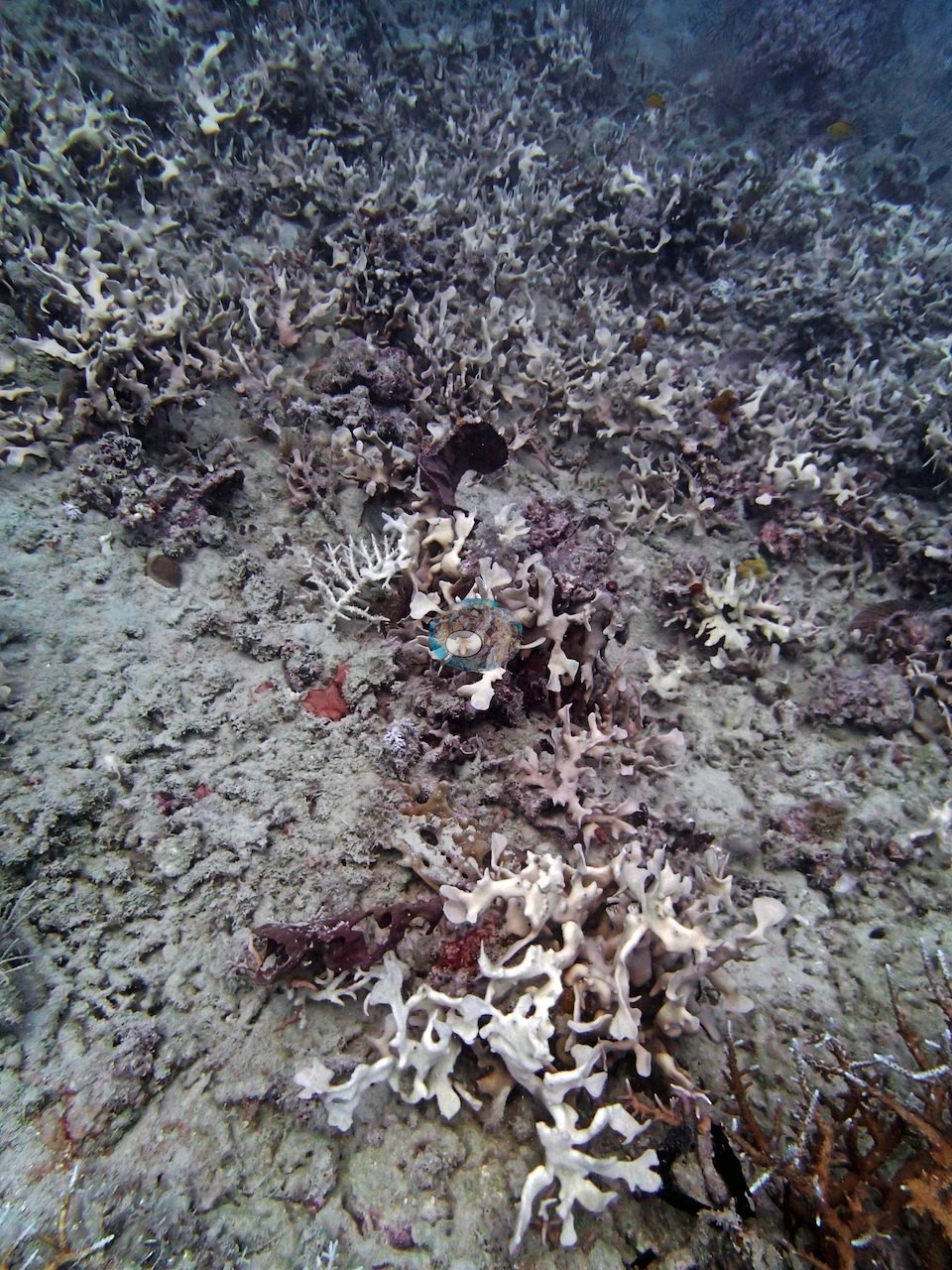
Anderson attributed the high coral mortality here to the starfish: "Unlike yesterday's dives, I believe that the high coral mortality at the site were due to COTS" (his notes).
Comparisons with other data
No prior survey data from this site. If you would like to share yours, please email us.
Data & links
- Download benthic survey data (CSV) ↗
- Download all LOF-GRE data (933 sites) ↗
- Photo portfolio ↗
- Coral Reef Diagnostics country page ↗
All images from Coral Reef Diagnostics. Data are from the Khaled bin Sultan Living Oceans Foundation Global Reef Expedition and Coral Reef Diagnostics.
 © Coral Reef Diagnostics.