
Part of the regional summaries: Australia (GBR) - Far North: Pink stations (Preservation Zone reefs) and Australia (GBR)
More info
Northern GBR (NOAA CRW virtual station)Anderson called this Williamson Reef dive "likely the worst looking reef we have seen": murky water, silt over nearly everything, and 90-95% of the staghorn framework dead, much of it covered in cyanobacteria. Two crown-of-thorns starfish were present; his notes do not say what killed the staghorn. Surveyed on the Living Oceans Foundation's Global Reef Expedition.
Four other CRD dive sites within 5 km shown in orange — click a marker to open its page.
🗺 Detailed map of the Global Reef Expedition dive sites, Lark, Williamson, and unnamed reef 15-043, northern Great Barrier Reef (Khaled bin Sultan Living Oceans Foundation; opens in a new window)
9 of the 14 photographs on this page are shown beside the text that discusses them under "Site description" below.
Site description
Setting
Anderson dived this station on Williamson Reef, a sheltered mid-shelf reef in the northern Great Barrier Reef, on 7 September 2014; all of his observations were made at 8-12 m, where his transects ran. This site sits in a Preservation (Pink) Zone, the Marine Park's strictest protection tier, where entry is restricted.
General benthic features
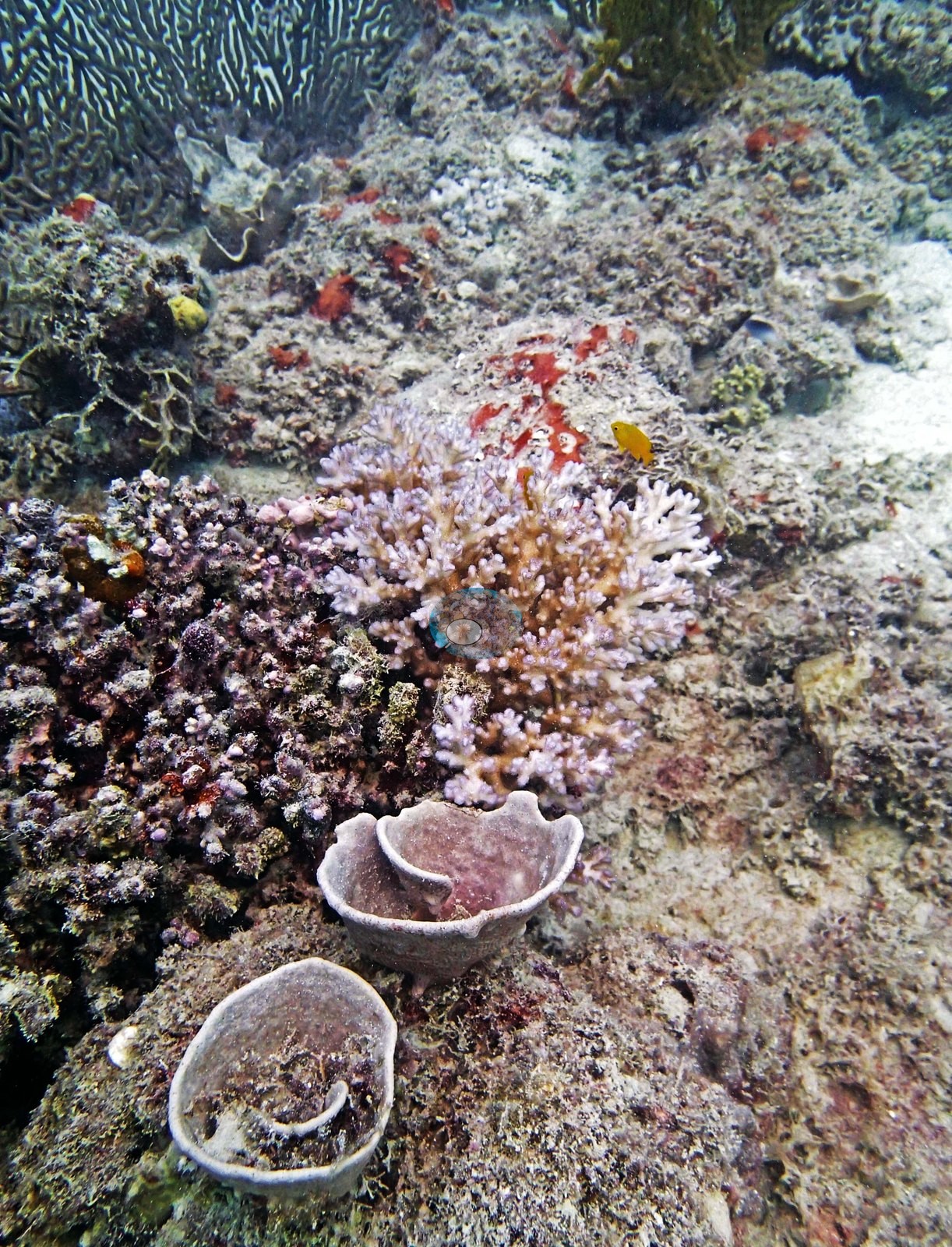
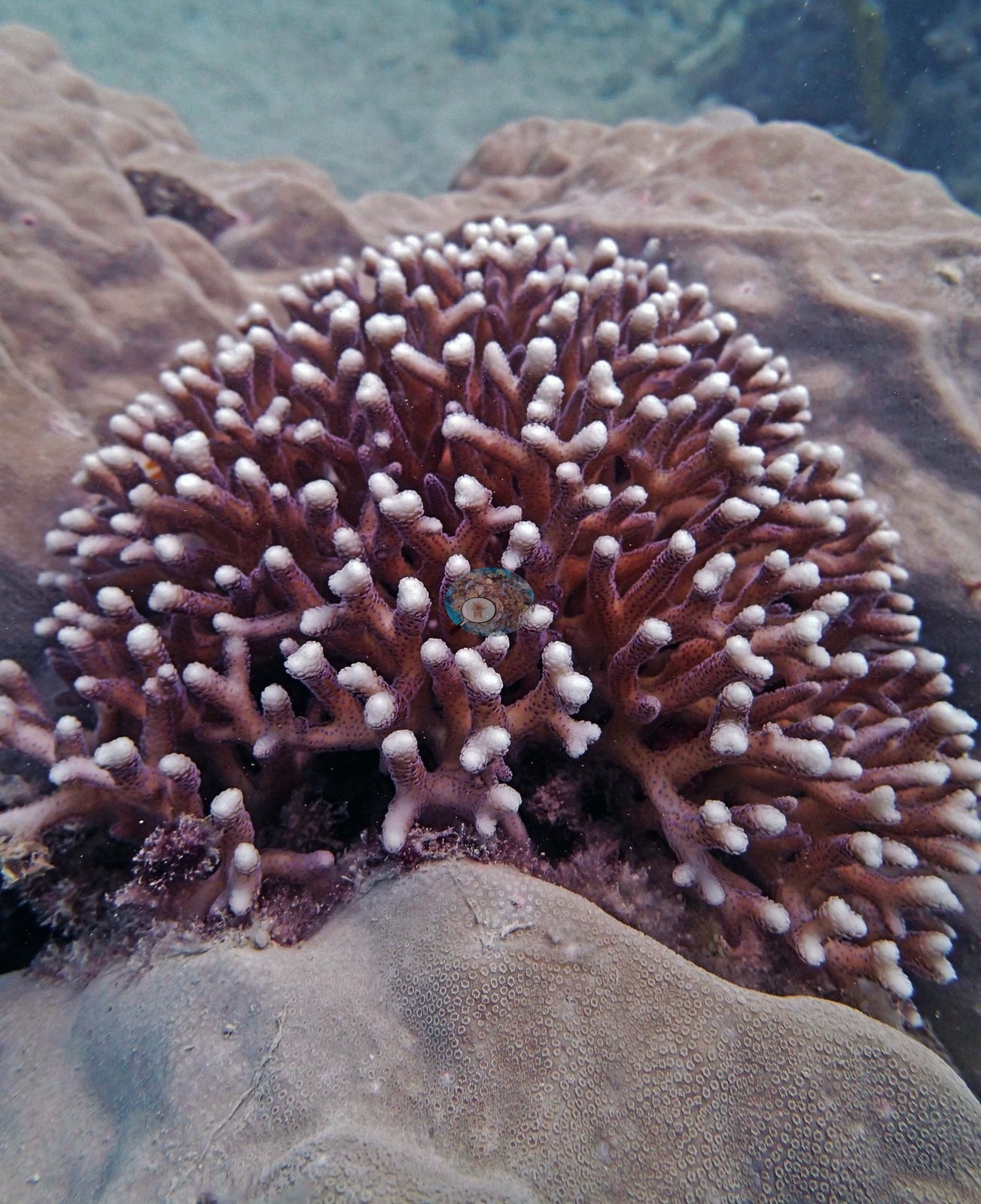
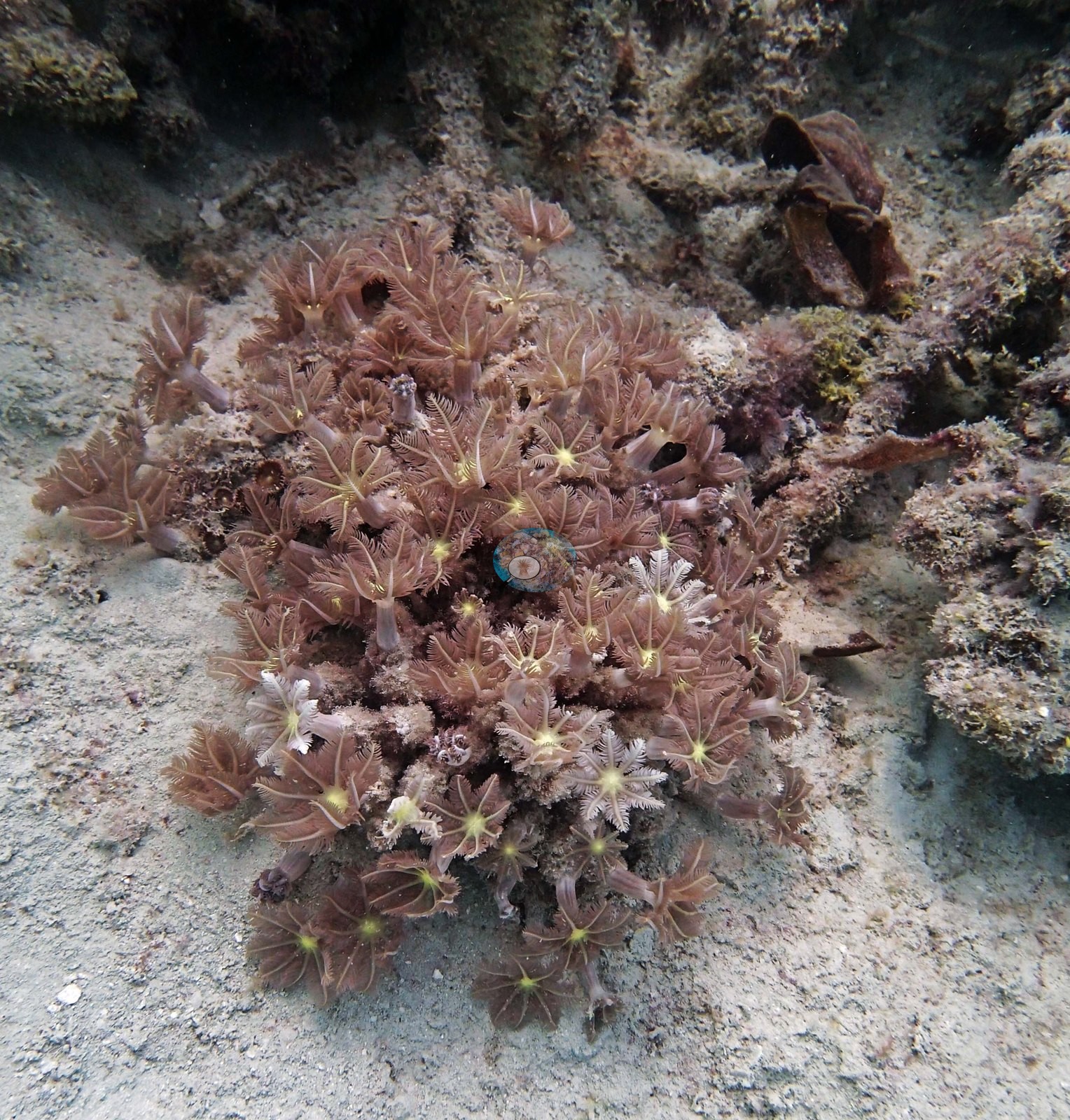
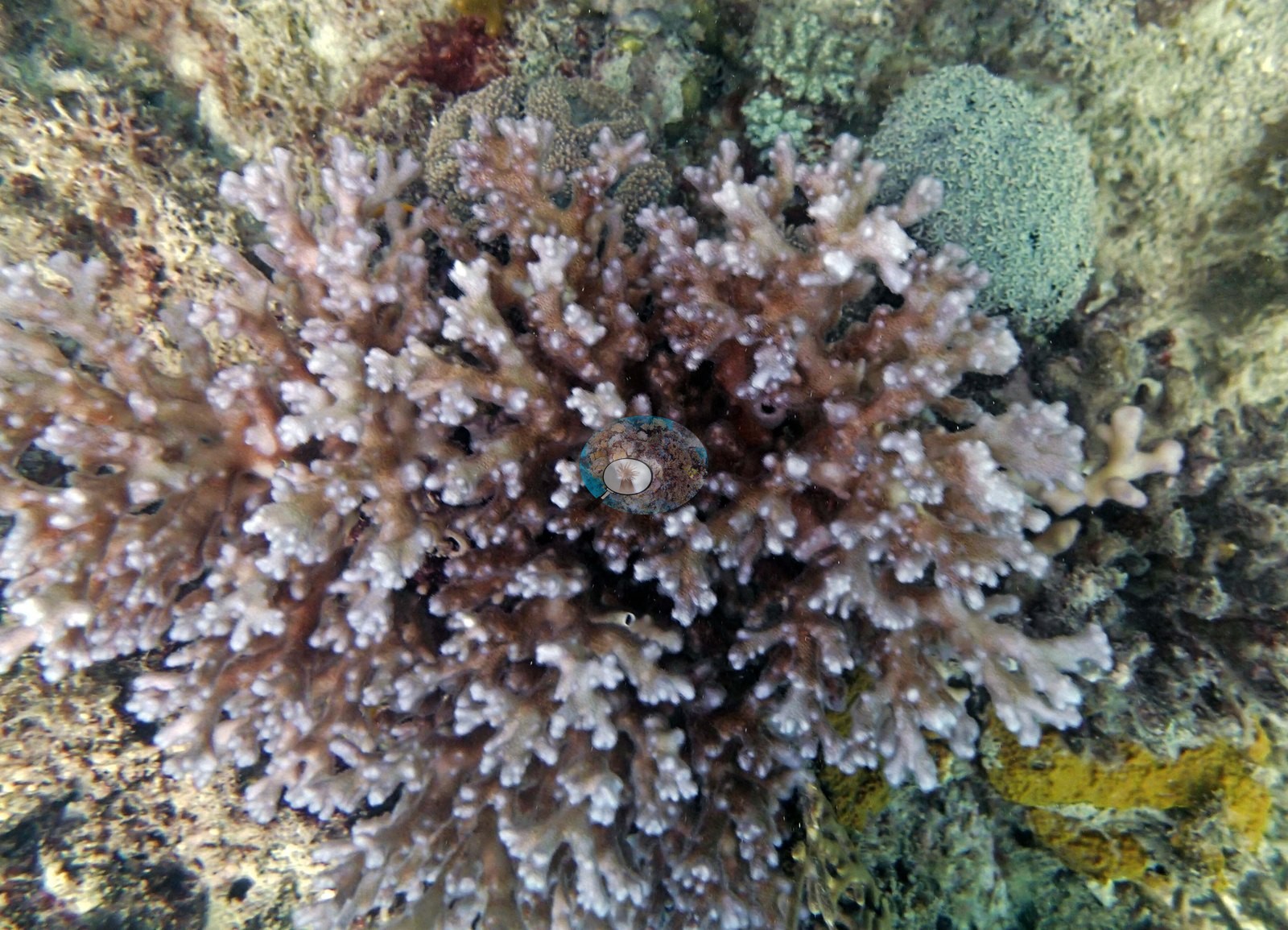
Porites was the most common coral genus on this station's transects (7.8% of the benthos), followed by Alveopora (6.0%), Galaxea (1.8%), Pocillopora (1.3%), and Astreopora and Echinopora (0.5% each); bare substrate covered 10%, behind turf (47%), the largest non-coral class. His transect notes record a prominent bommie about 5 m across, mostly covered in sea fans and Stylophora pistillata, on the first transect; mostly sea fans with some large Pocillopora damicornis colonies on the second; and, at the base of a huge bommie, only pocilloporids (S. pistillata and P. verrucosa) on the third, where most hard coral was dead or covered in silt and fleshy macroalgae abounded. Living colonies in the photographs include pink branching colonies beside gray cup and vase sponges (e.g., Image 1) and a pale-lilac, fine-branched colony with clean tips (e.g., Image 8).
Coral cover
- Reference: Khaled bin Sultan Living Oceans Foundation, Global Reef Expedition (in situ transect)
- The expedition's in situ point-count transects at this station recorded 18% live coral cover against 71% total algal cover.
- His notes add that most of his 10 m transects had fewer than two colonies of living hard coral.
- Transect mean 19 ± 3.7% SE (n = 4 transects; Living Oceans Foundation per-transect benthic data); the headline above is the expedition's station value (the headline weights each depth equally; two depths had a single transect).
Stressors
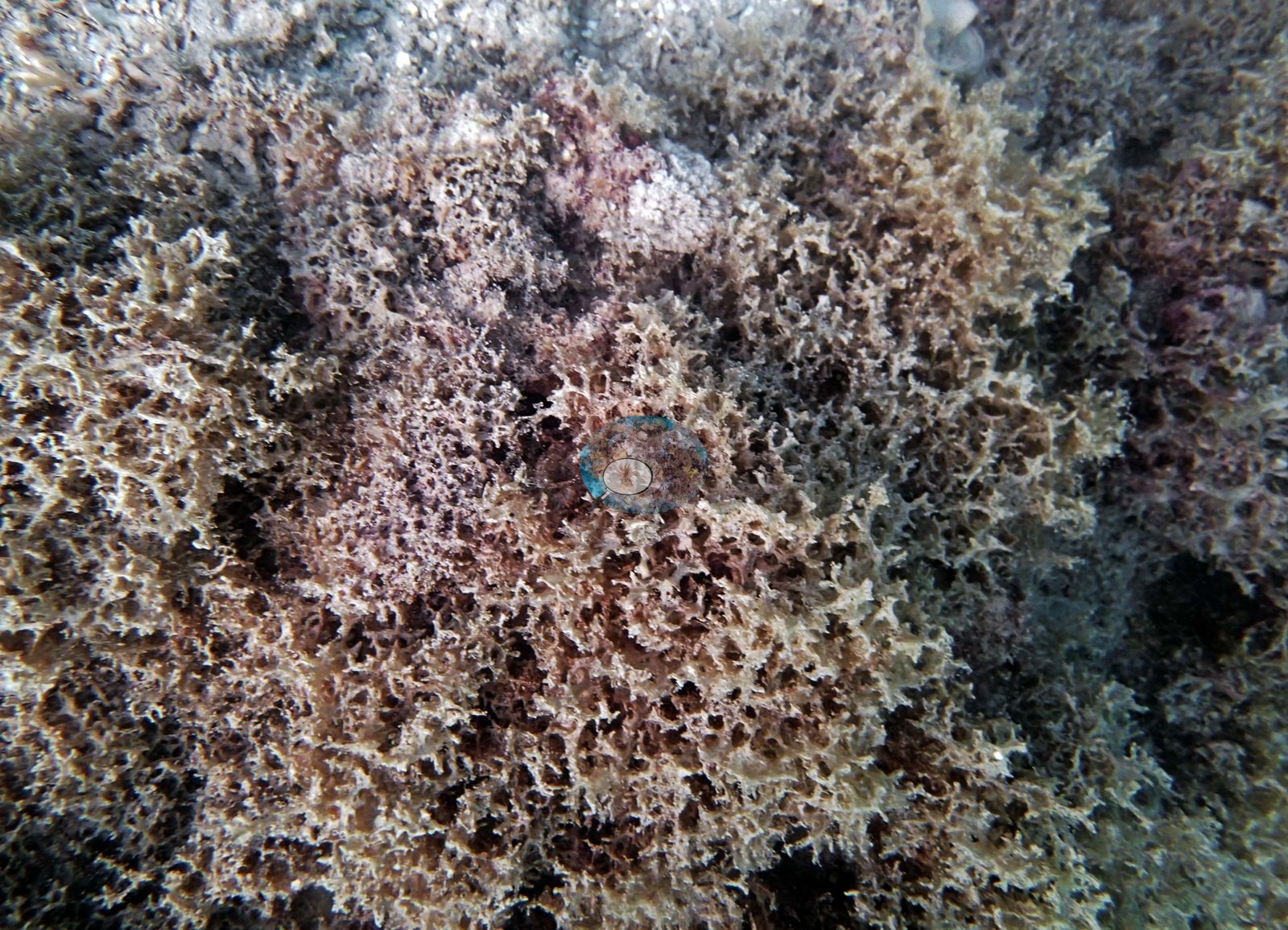
At the working depth (8-12 m), 90-95% of the staghorn Acropora was dead, and a significant amount was covered with cyanobacteria (his notes); one frame is a close view of that dense, fine-branched framework in tan and dull maroon (e.g., Image 2).
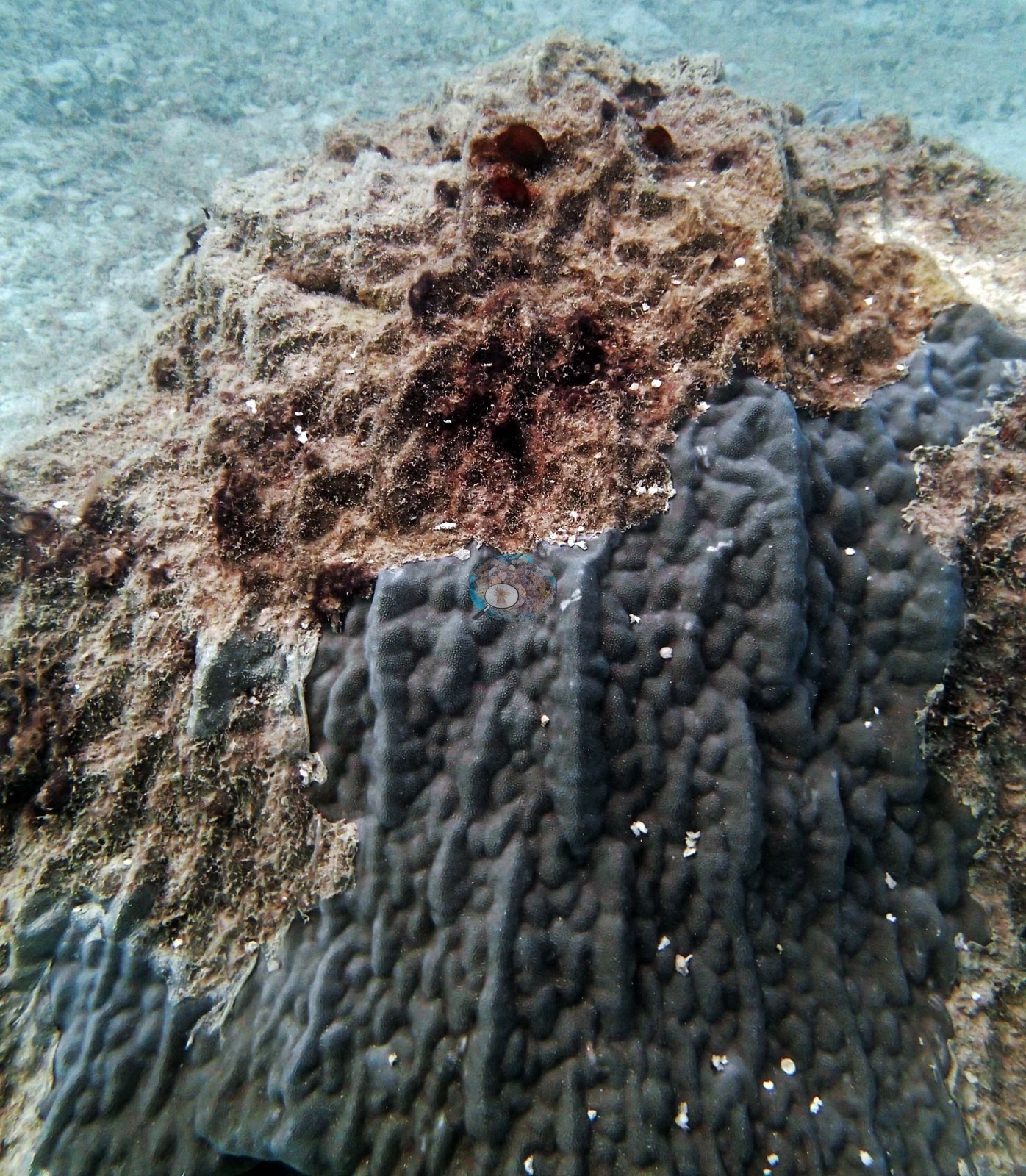
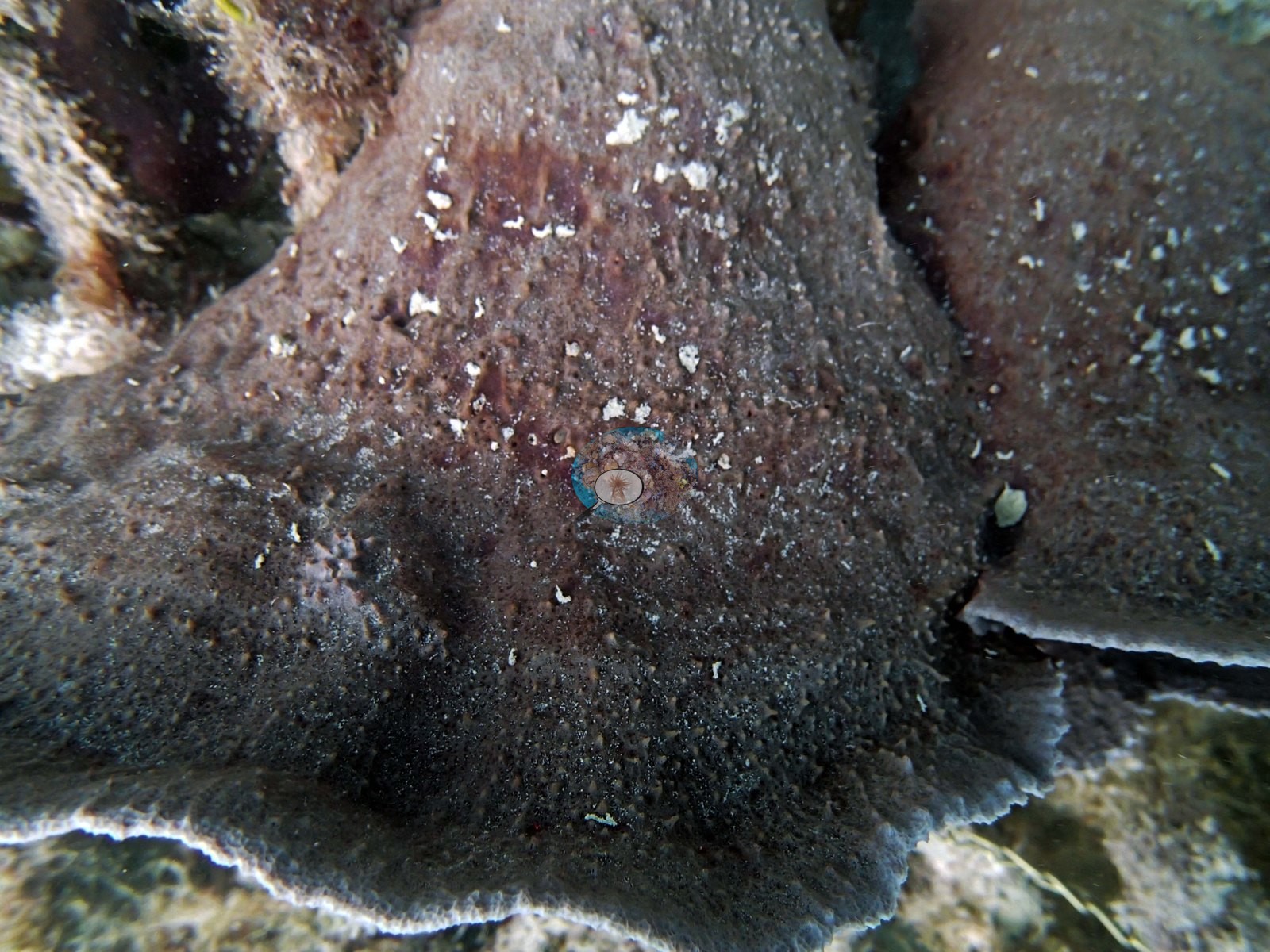
His fourth transect crossed a significant amount of structure built by dead acroporids, mostly smothered by algae (his notes: "algal-smothered/covered"). His fifth ran over mostly dead staghorn framework, much of it covered in cyanobacteria, with only soft corals near the transect. The sediment load was "incredibly high" (his words): almost everything, hard and soft corals and even algae, was covered with sand or sediment, and one massive colony's surface is filmed and speckled with silt (e.g., Image 14).
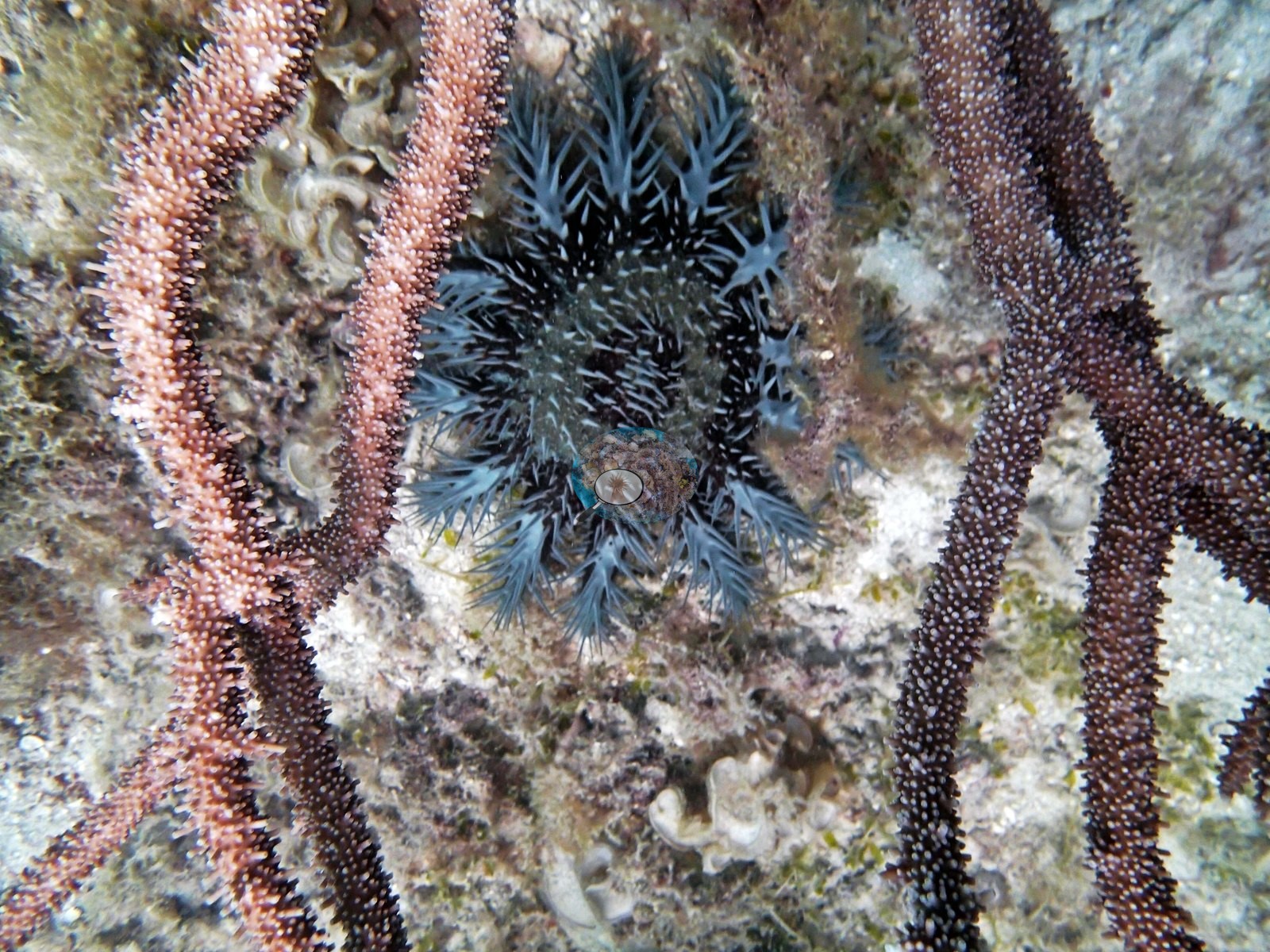
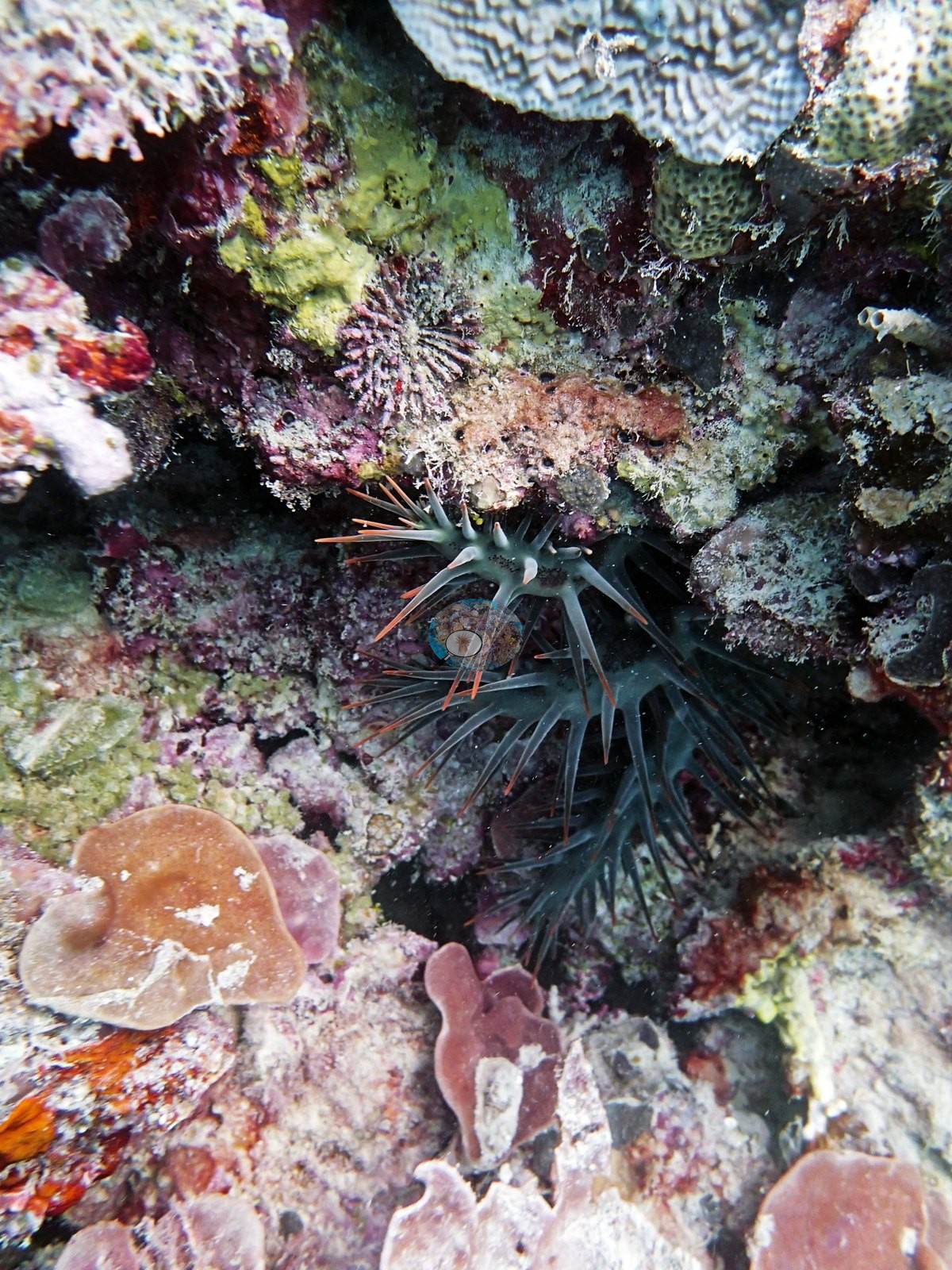
Two crown-of-thorns starfish were documented on the dive, and both are photographed: a blue-gray starfish on pavement between two banded sea-fan stems (e.g., Image 3) and a dark green-gray one with orange-tipped spines wedged in a crevice (e.g., Image 4).
Anderson's notes record the heavy sediment load and the cyanobacteria-covered dead staghorn but do not assign a cause.
Fish and other fauna
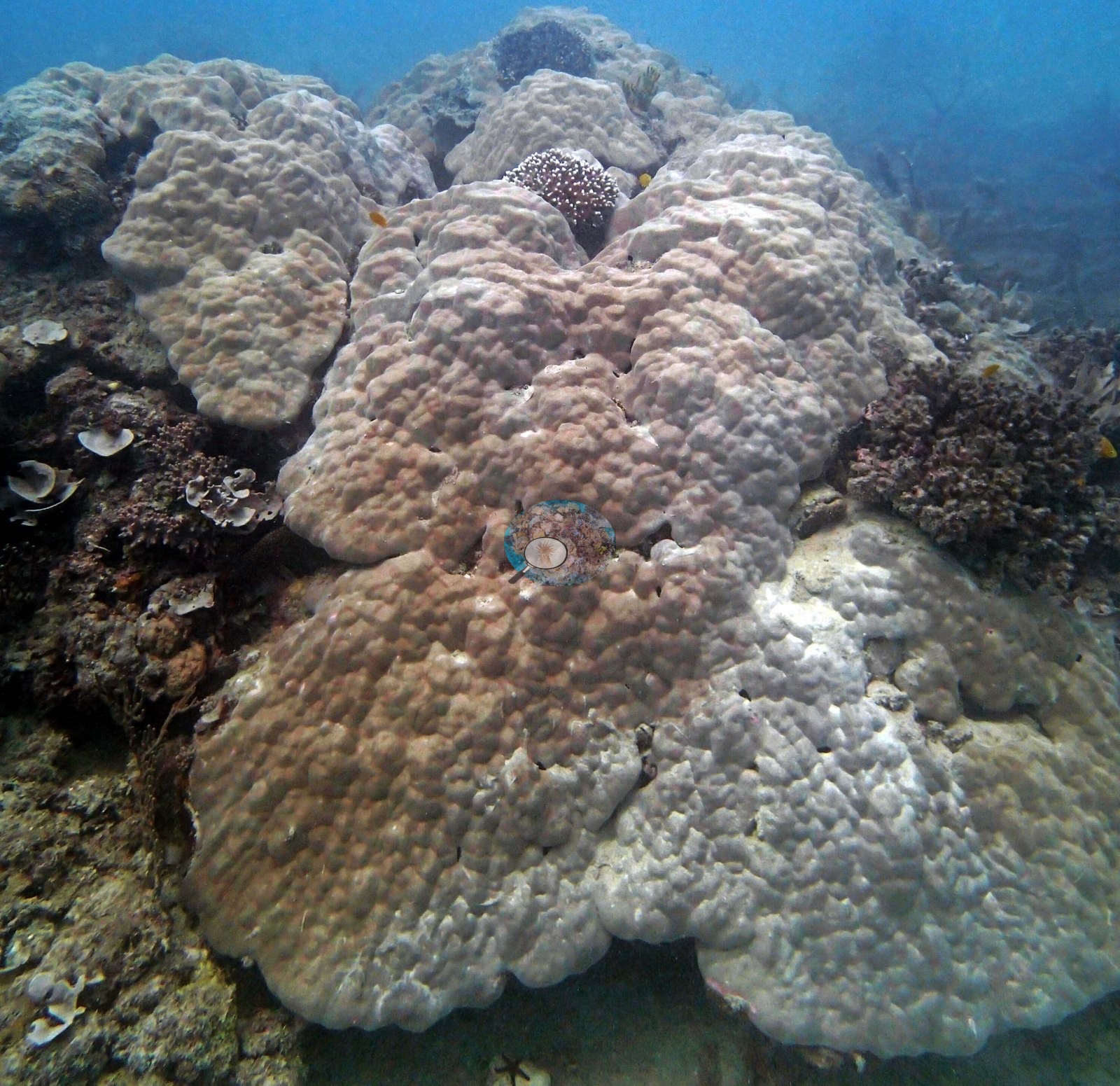
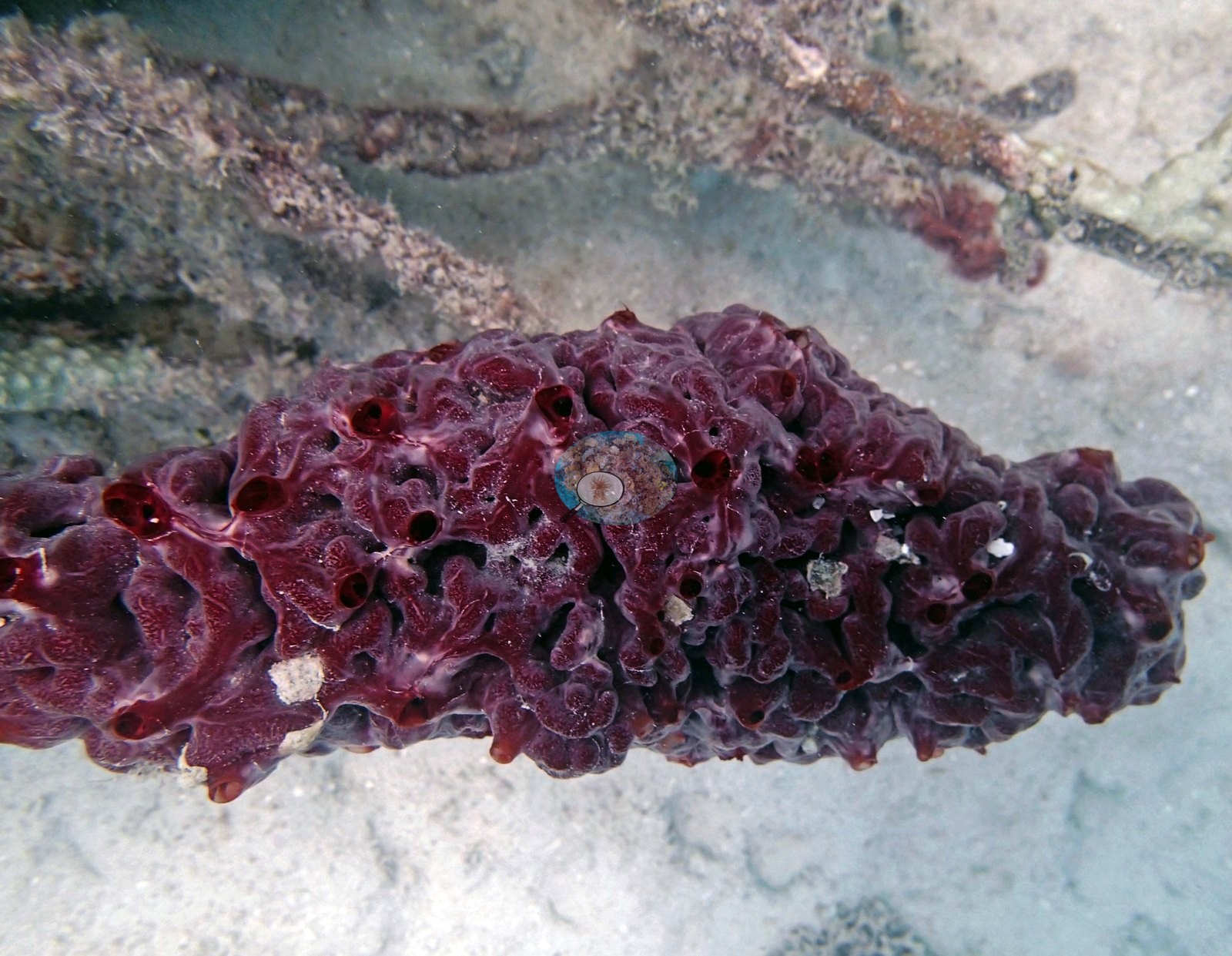
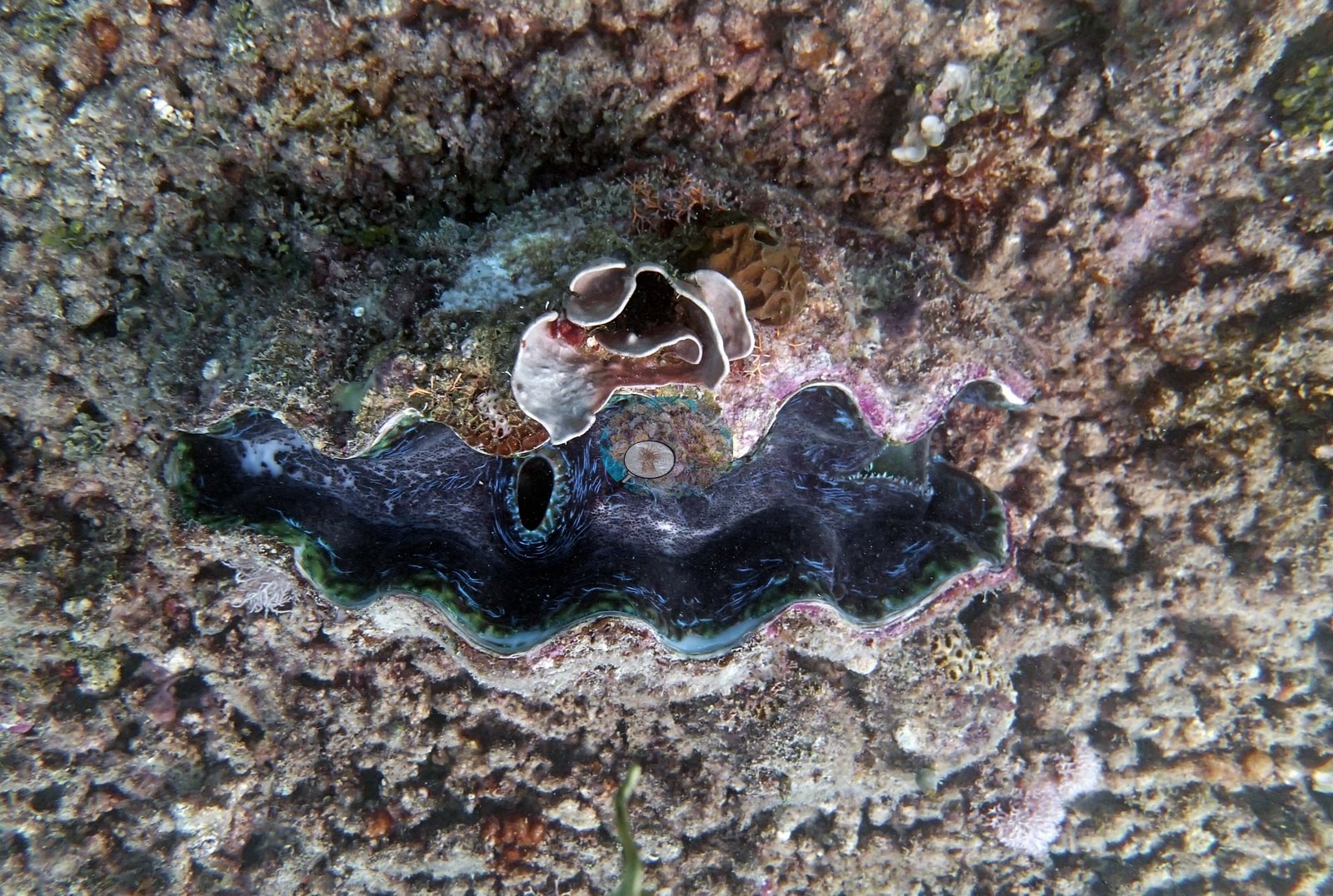
Marine life was otherwise thin (his notes: "not much"): a weird red sponge (e.g., Image 6), a giant clam set in the framework (e.g., Image 10), and two corals Anderson could not identify.
Comparisons with other data
No prior survey data from this site. If you would like to share yours, please email us.
Dive record
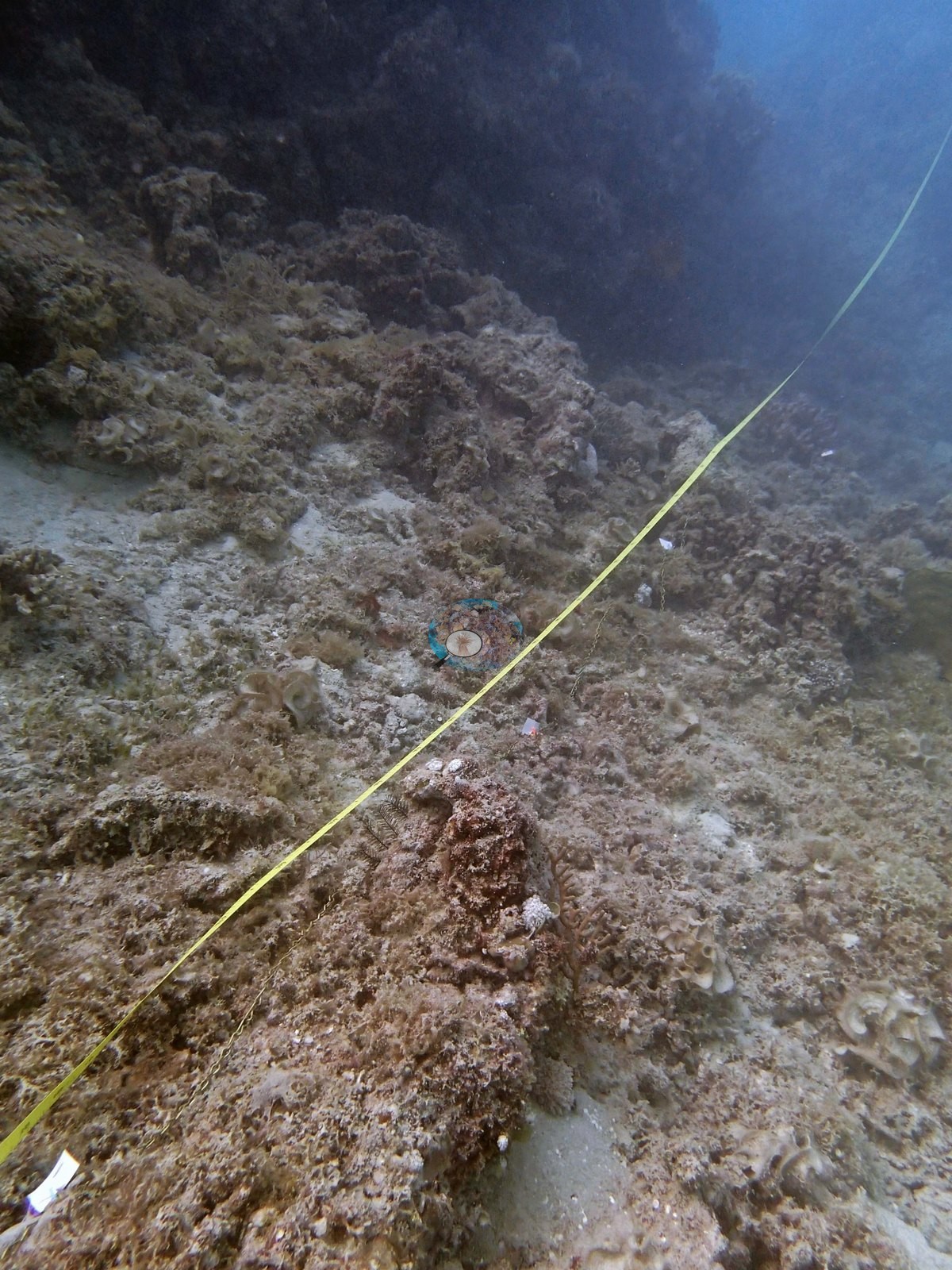
Anderson logged this 7 September 2014 dive at Williamson Reef as "likely the worst looking reef we have seen" — murky 5-m visibility, a heavy blanket of sand and silt over nearly everything, and a maze of small sand-set bommies alongside two or three larger structures rising to within 2 m of the surface (e.g., Image 5).
Data & links
- Download benthic survey data (CSV) ↗
- Download all LOF-GRE data (933 sites) ↗
- Photo portfolio ↗
- Coral Reef Diagnostics country page ↗
All images from Coral Reef Diagnostics. Data are from the Khaled bin Sultan Living Oceans Foundation Global Reef Expedition and Coral Reef Diagnostics.
 © Coral Reef Diagnostics.