
Part of the regional summaries: Australia (GBR) - Far North: Pink stations (Preservation Zone reefs) and Australia (GBR)
More info
Northern GBR (NOAA CRW virtual station)A shallow basin at Williamson Reef where algae covered two-thirds of the bottom and the thin coral cover was mostly Porites and Diploastrea. Anderson recorded three to four crown-of-thorns starfish feeding, very high mortality of pocilloporids in the shallows (70-80% dead within the past few weeks or longer, his estimate), and some bleached corals. Surveyed on the Living Oceans Foundation's Global Reef Expedition.
Five other CRD dive sites within 5 km shown in orange — click a marker to open its page.
🗺 Detailed map of the Global Reef Expedition dive sites, Lark, Williamson, and unnamed reef 15-043, northern Great Barrier Reef (Khaled bin Sultan Living Oceans Foundation; opens in a new window)
Site description
Setting
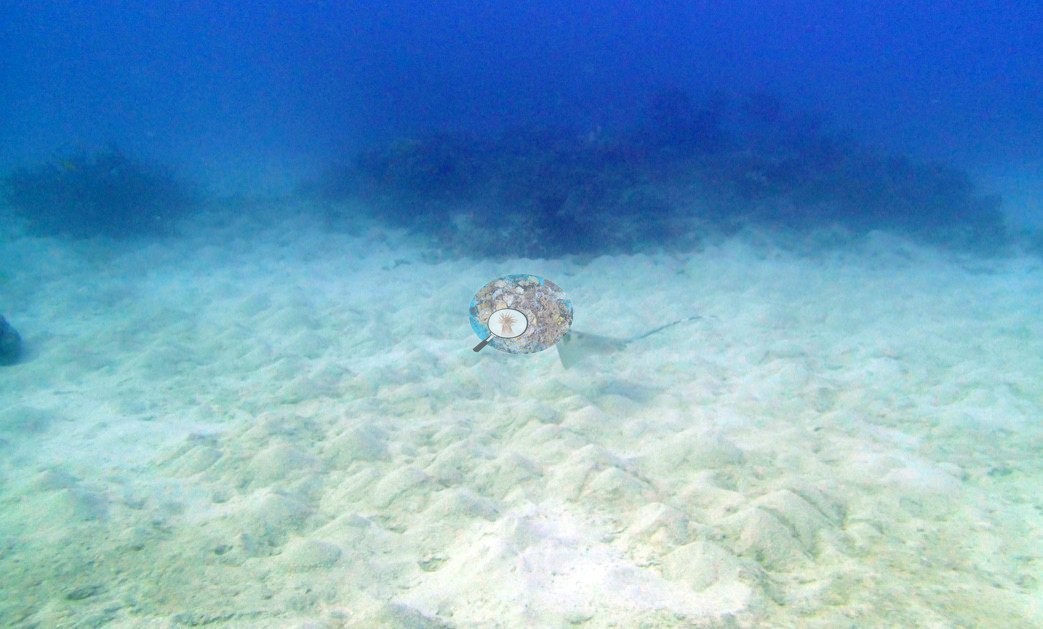
On 6 September 2014 Anderson surveyed a shallow basin at Williamson Reef, a sheltered mid-shelf fore reef in the Preservation (Pink) Zone. The basin floor is rippled white sand scattered with bommies and low reef patches, where a ray crossed the open sand (e.g., Image 24).
What the data say
The LOF-GRE point-intercept transect recorded 24% hard coral cover, dominated by Porites (8.7%) and Diploastrea (8.0%), with Alveopora (1.3%), Galaxea (0.7%), Acropora (0.5%), and Pocillopora (0.3%) each contributing little. Algae covered 66% of the transect points, a coral-to-algae ratio of 0.37, well below parity. Transect mean 24 ± 5.0% SE (n = 6 transects; Living Oceans Foundation per-transect benthic data); the headline above is the expedition's station value.
What Anderson saw
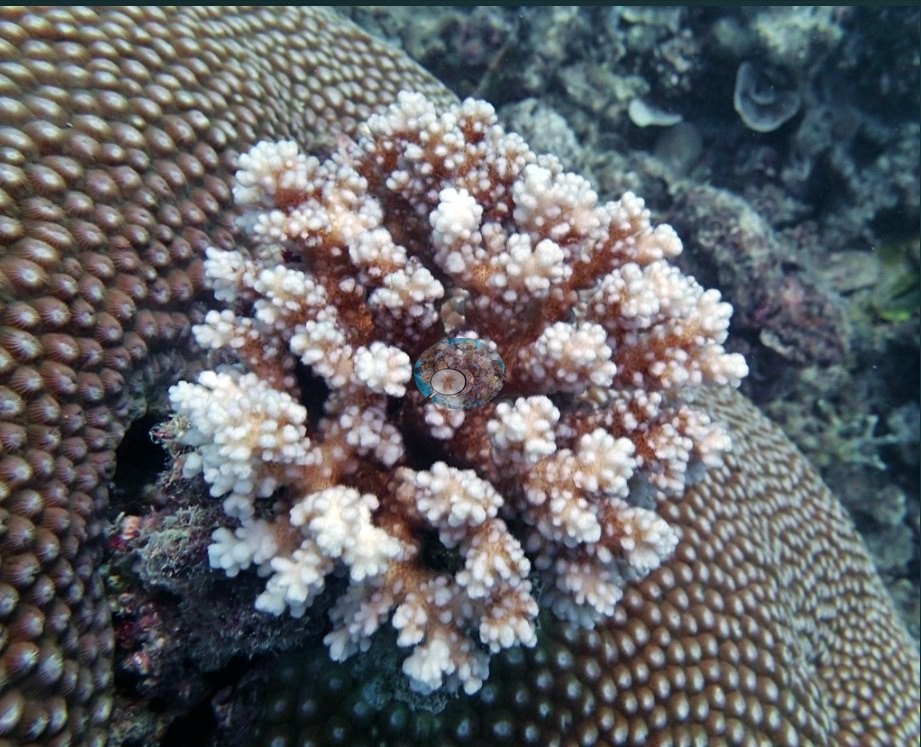
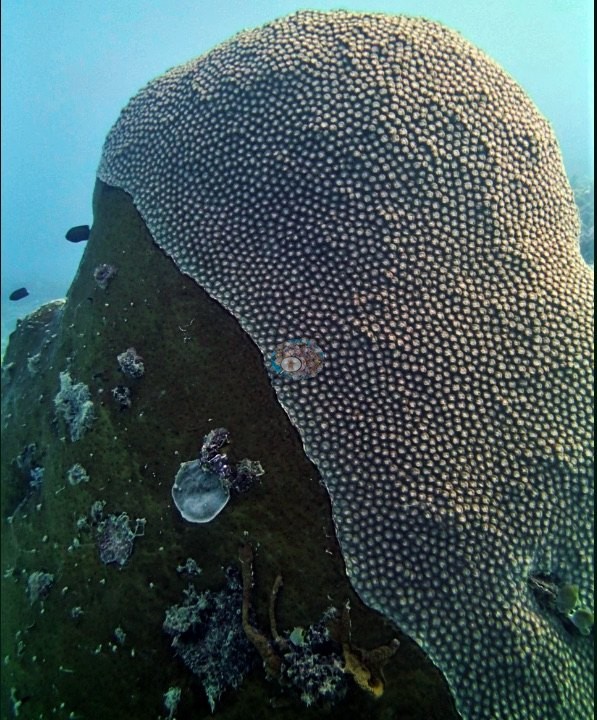
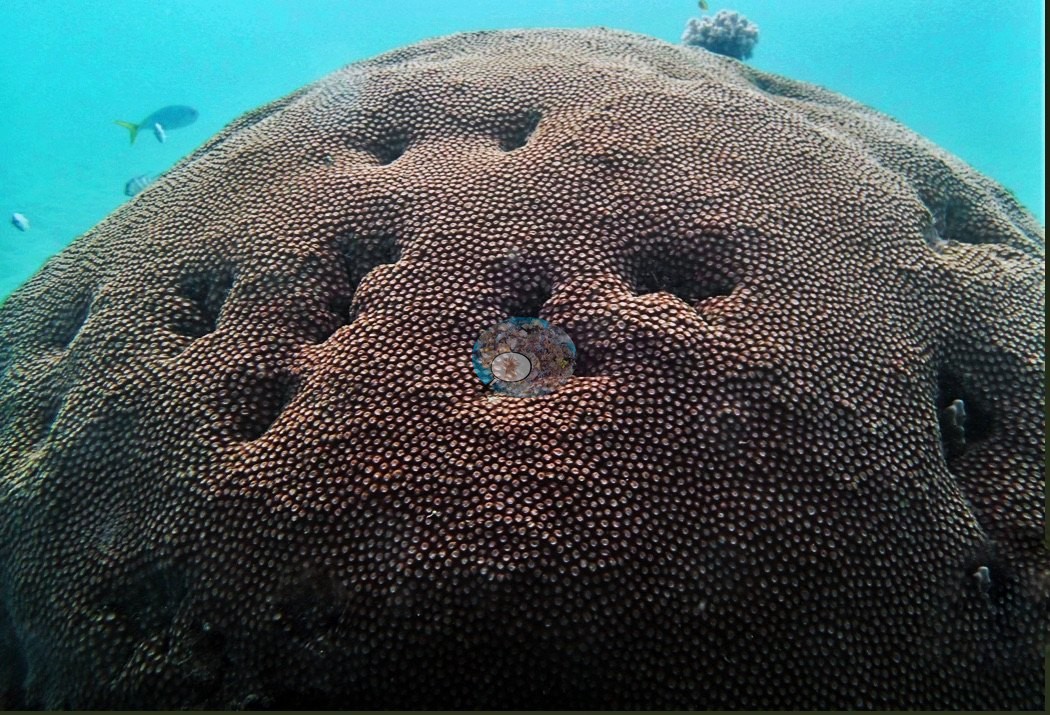
The two dominant genera are plain in the photographs: huge rounded domes of large, evenly spaced corallites, consistent with the Diploastrea on the transect, one with a whole flank dead and furred in dark algae (e.g., Image 5, Image 6), and a pale pocilloporid growing directly on one of them (e.g., Image 2).
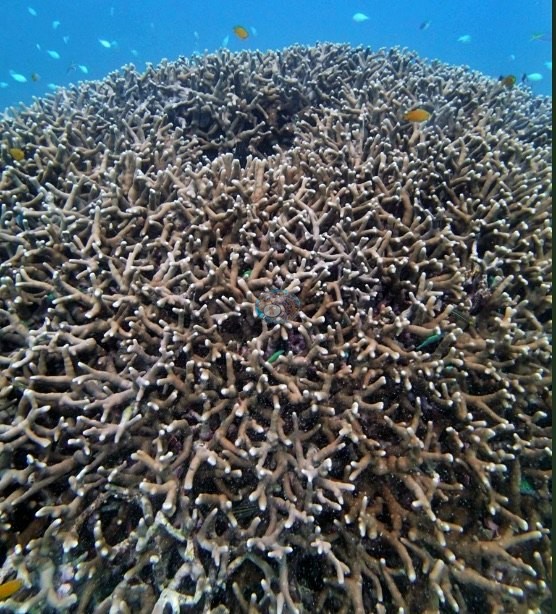
Bommies carried rounded massive Porites-type domes, tables, and blue-tipped branching Acropora (e.g., Image 11, Image 19, Image 21), a large brown staghorn-type colony and a mixed bommie stood on the sand (e.g., Image 17), and one frame is a dome-shaped thicket of fine brown branching coral (e.g., Image 7).
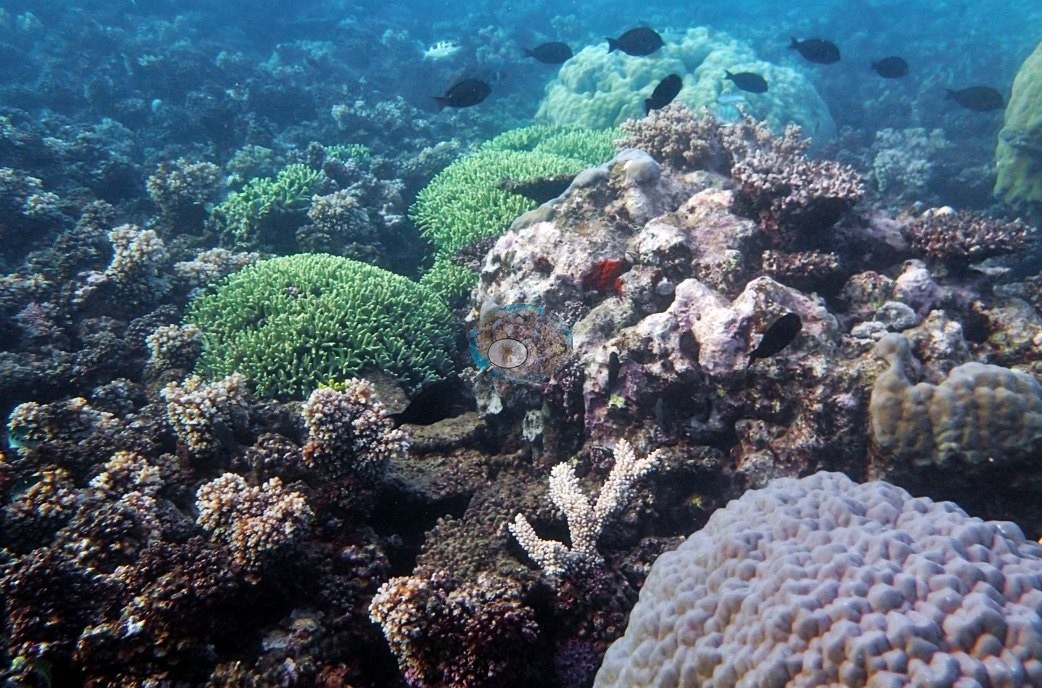
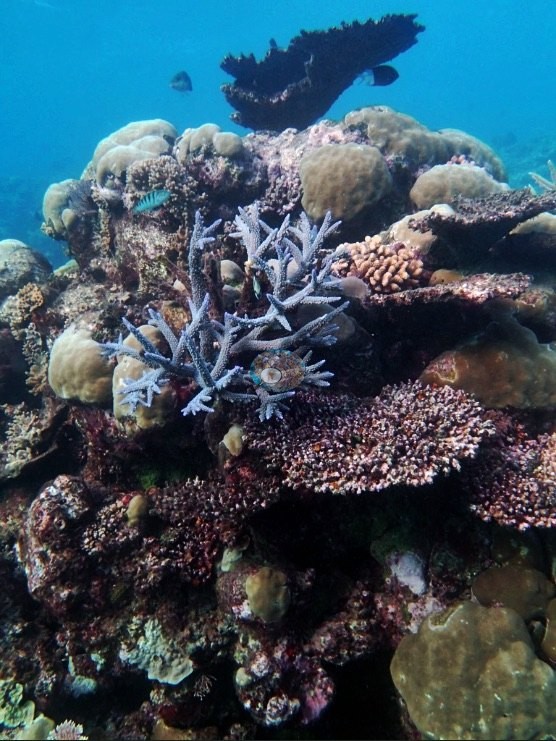
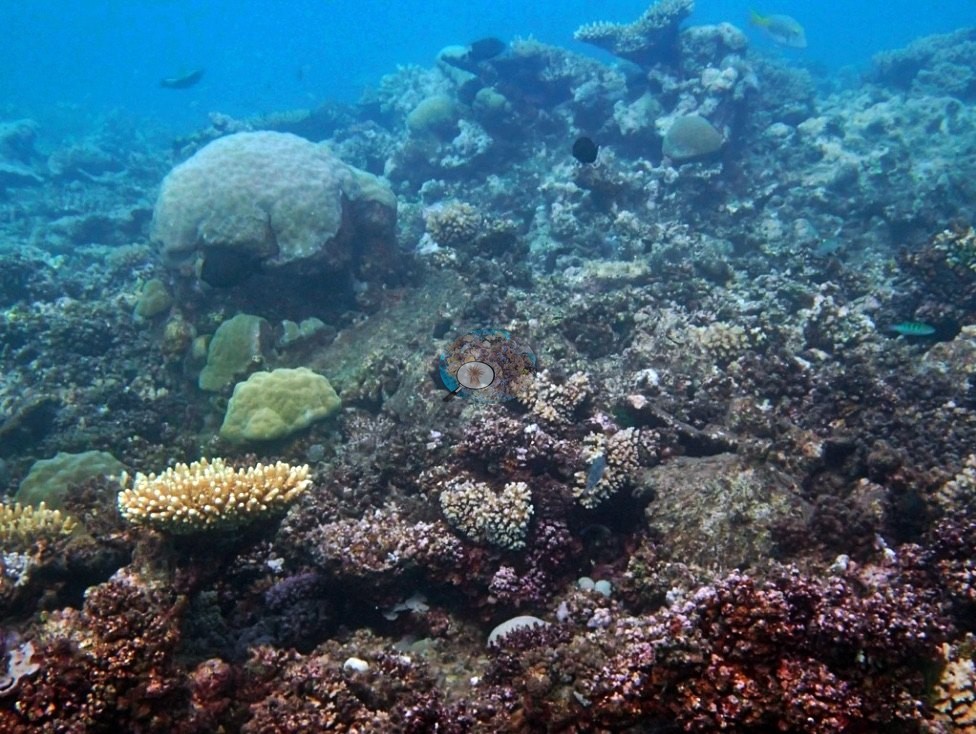
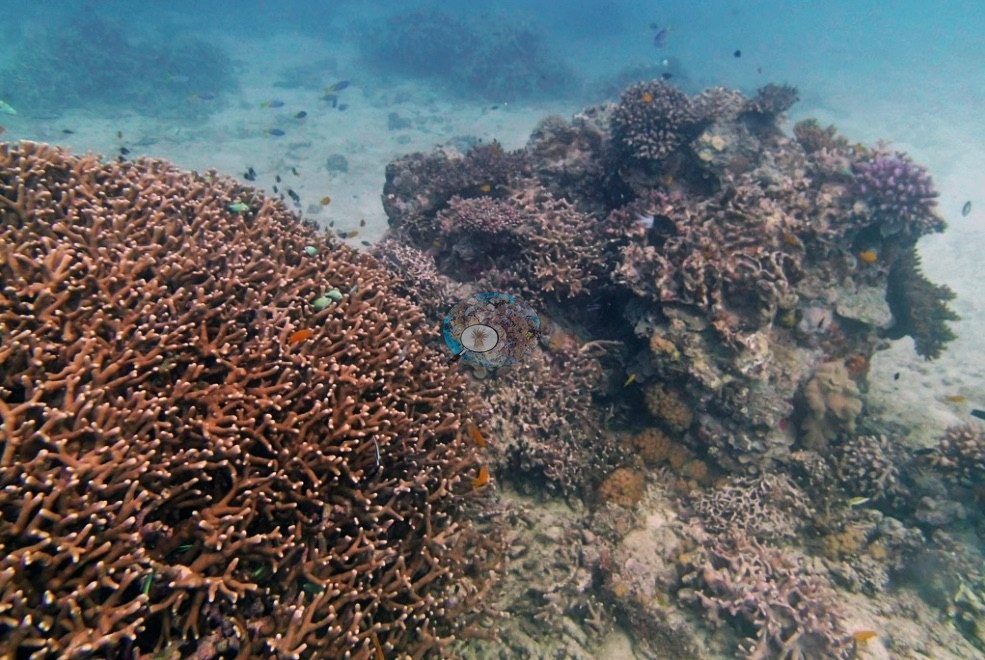
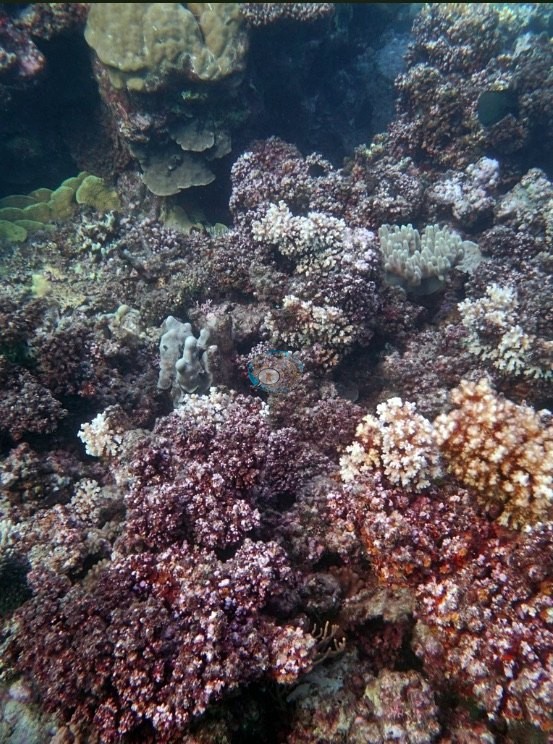
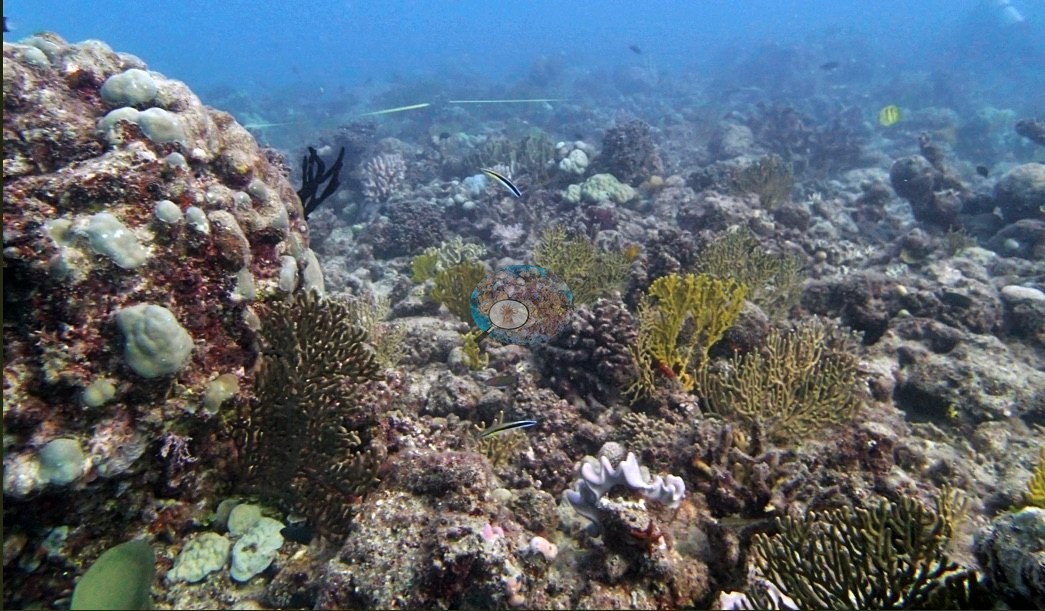
In places the pocilloporids were dense, mats of maroon-mauve, white-tipped fine-branched colonies covering the reef (e.g., Image 4), while elsewhere the tape ran over rubble with gorgonian sea fans and scattered small colonies (e.g., Image 14).
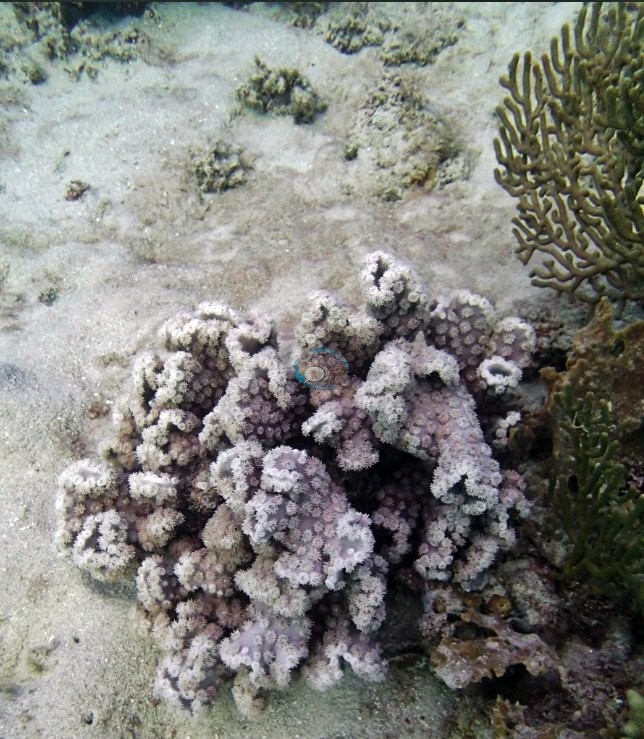
A lilac colony with extended polyps grew on sandy rubble beside a gorgonian in one frame (e.g., Image 26).
Coral cover
- Reference: Khaled bin Sultan Living Oceans Foundation, Global Reef Expedition (in situ transect)
- Transect mean 24 ± 5.0% SE (n = 6 transects; Living Oceans Foundation per-transect benthic data); the headline above is the expedition's station value.
Stressors
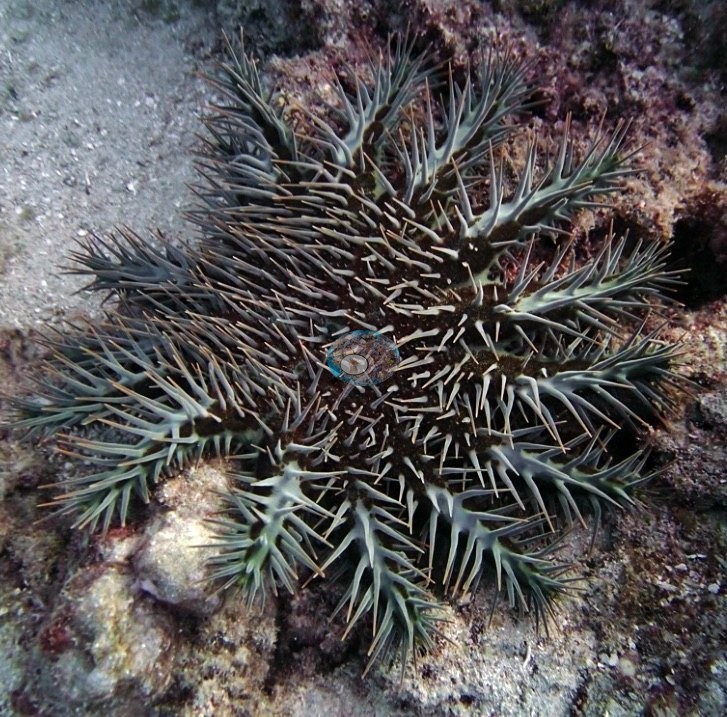
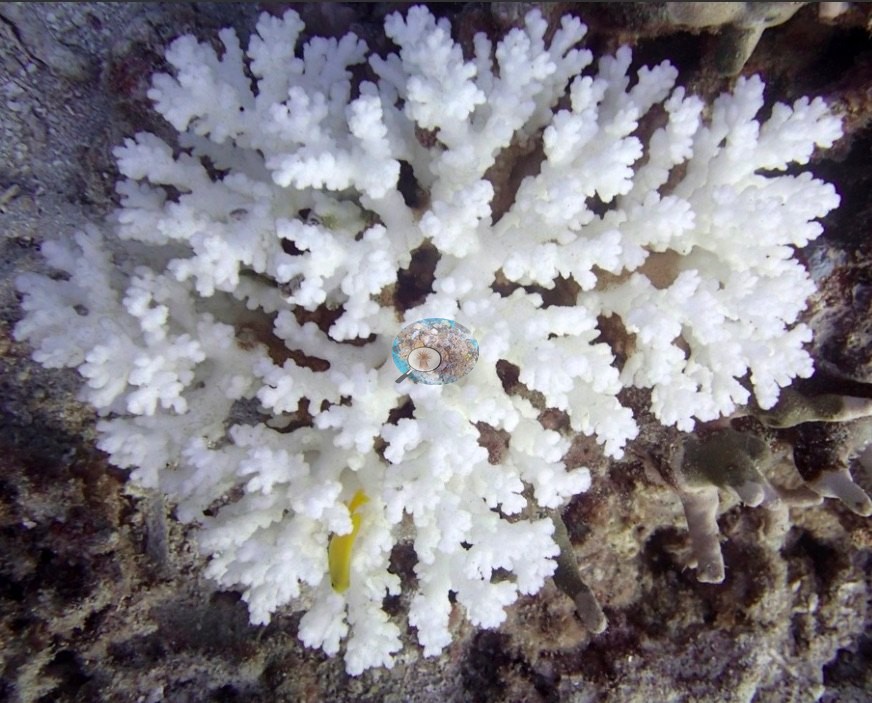
Anderson's field notes from the dive record three to four crown-of-thorns starfish, all in active feeding mode, and very high mortality of pocilloporids in the shallows: 70-80% "has died within the past few weeks or longer"; on his third transect (10 m) he also noted "some bleached corals". The photographs show starfish on the reef, some sitting over freshly bared white skeleton (e.g., Image 1, Image 8, Image 9, Image 23, Image 25); a stark-white pocilloporid colony, bleached or freshly dead with no algae yet, still shelters a yellow goby in its branches (e.g., Image 22).
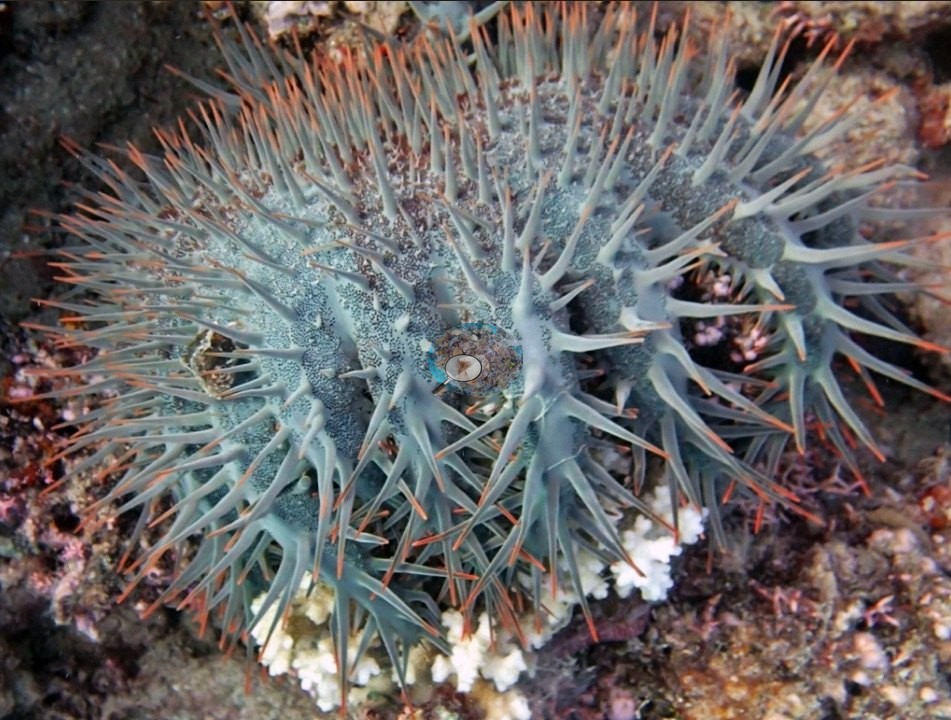
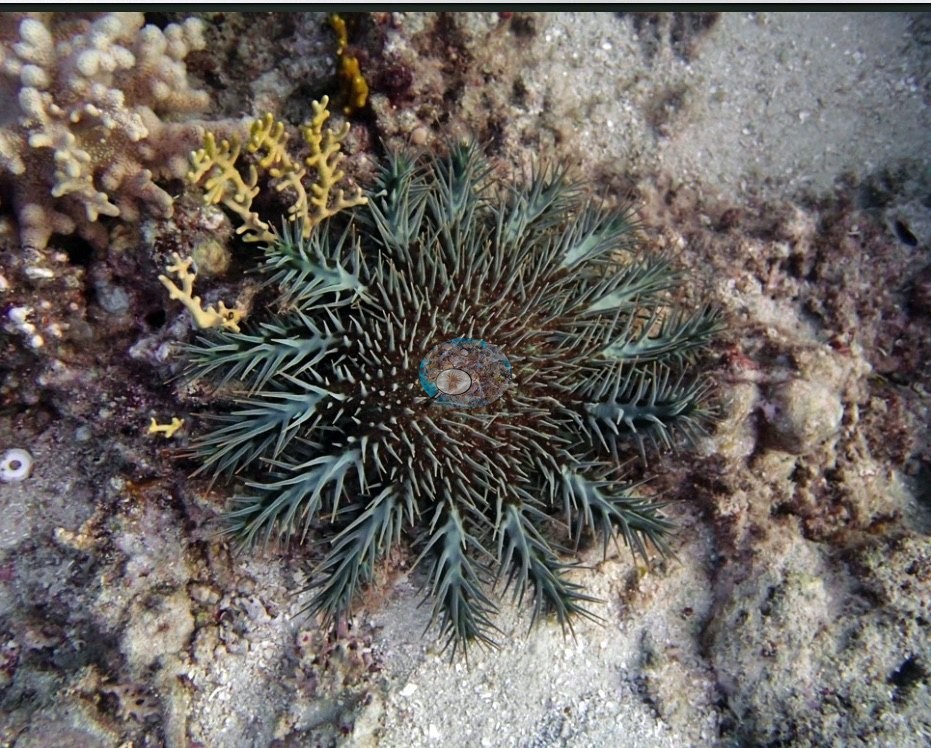
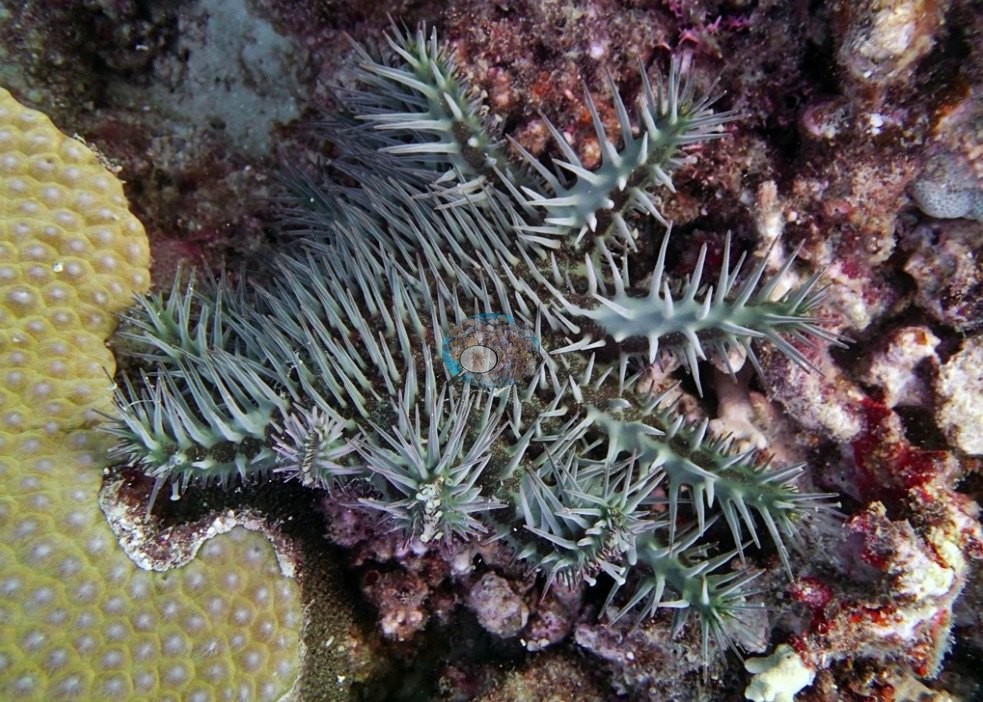
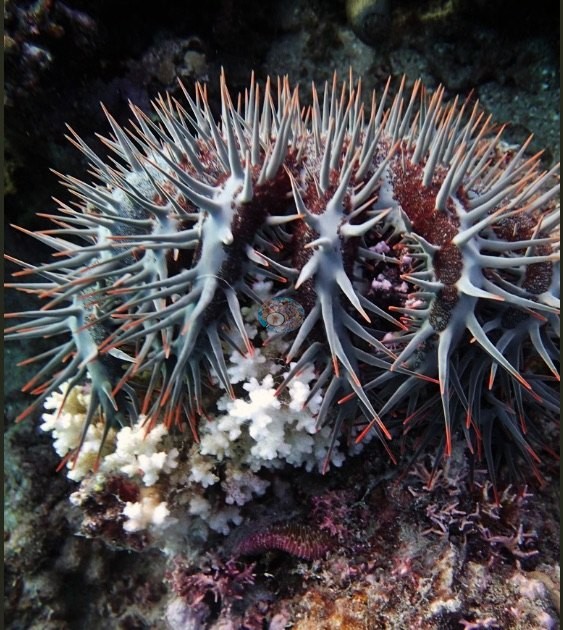
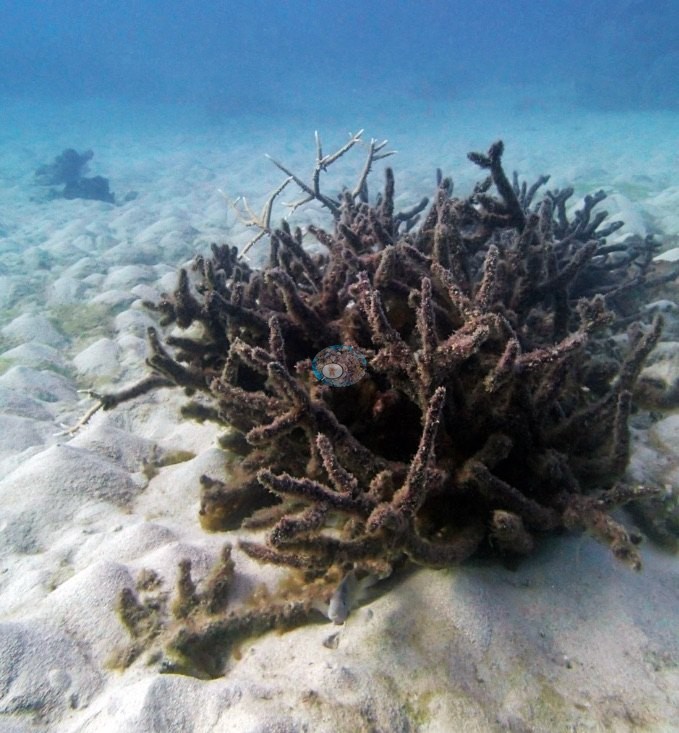
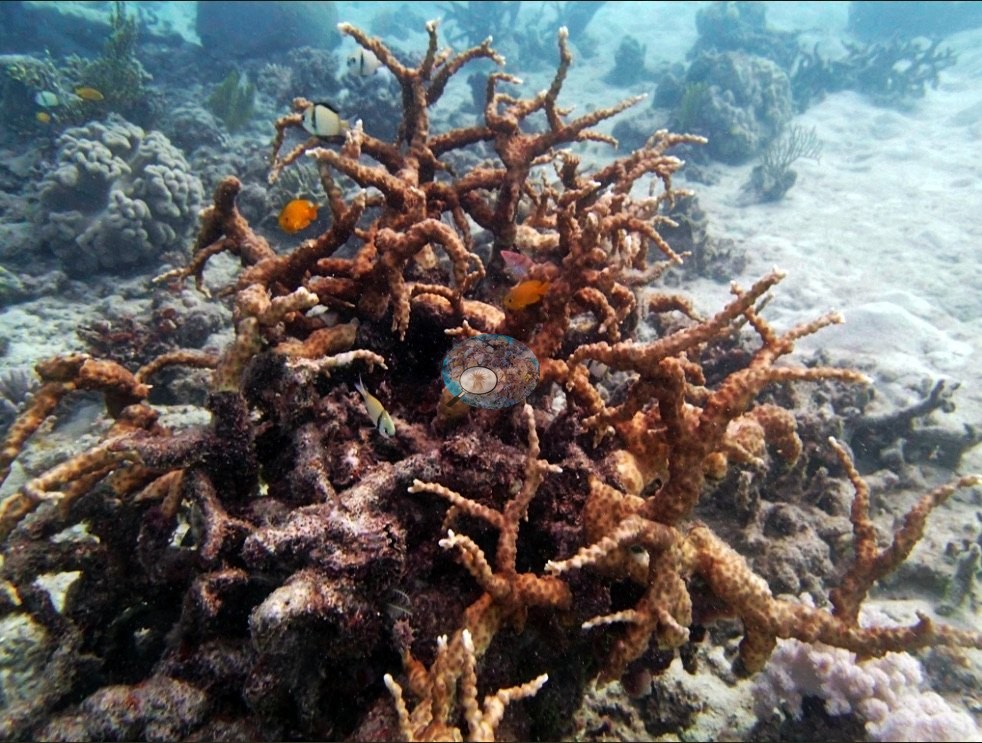
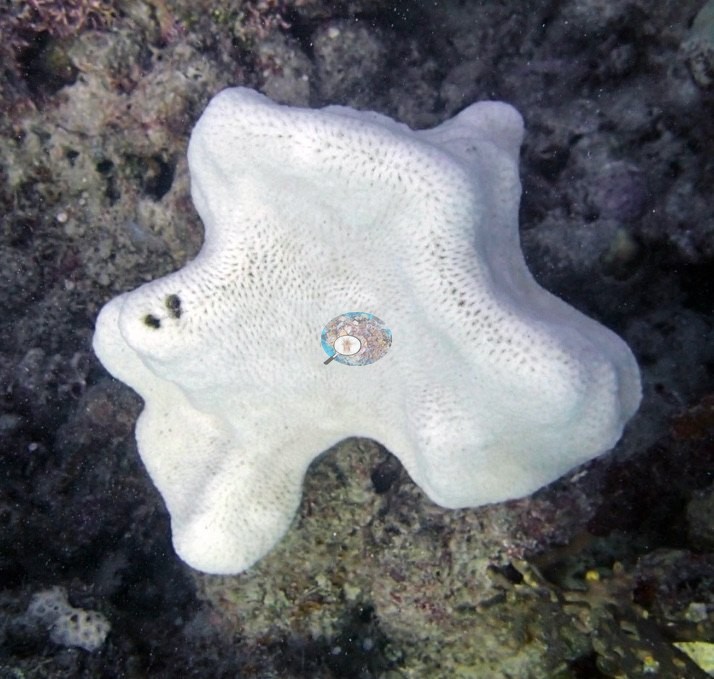
Dead branching colonies furred in brown turf stood on the sand and among live colonies (e.g., Image 15, Image 20), and one entirely white lobed colony with a fine honeycomb surface appears in a single frame; the photograph cannot say whether it is bleached coral or dead skeleton (e.g., Image 18).
Fish and other fauna
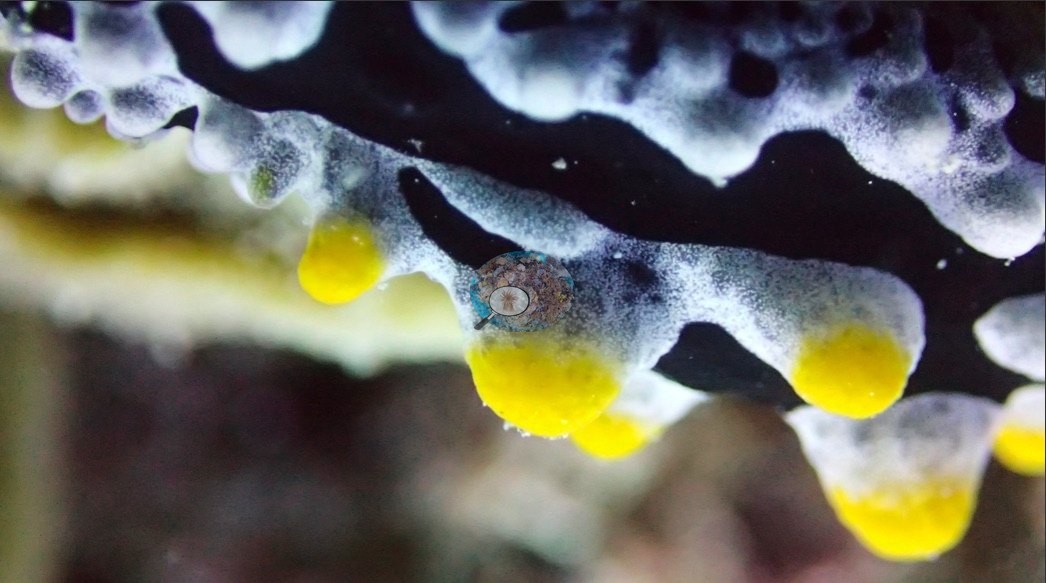
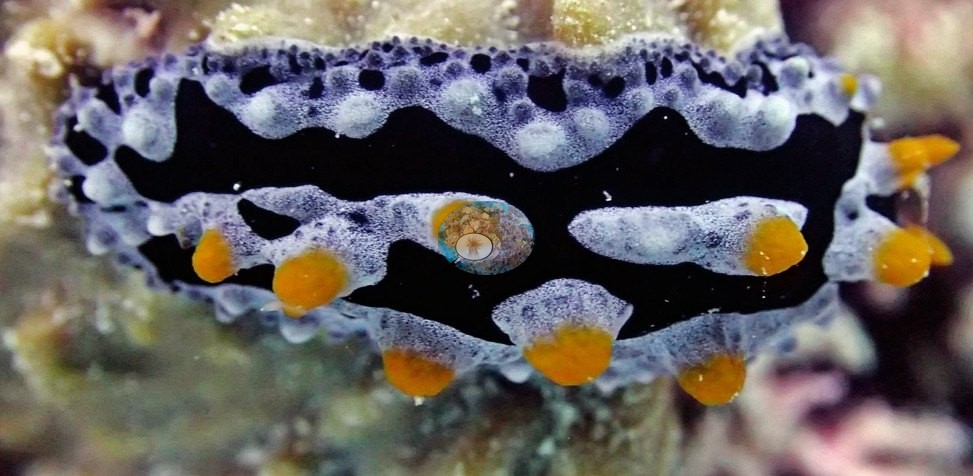
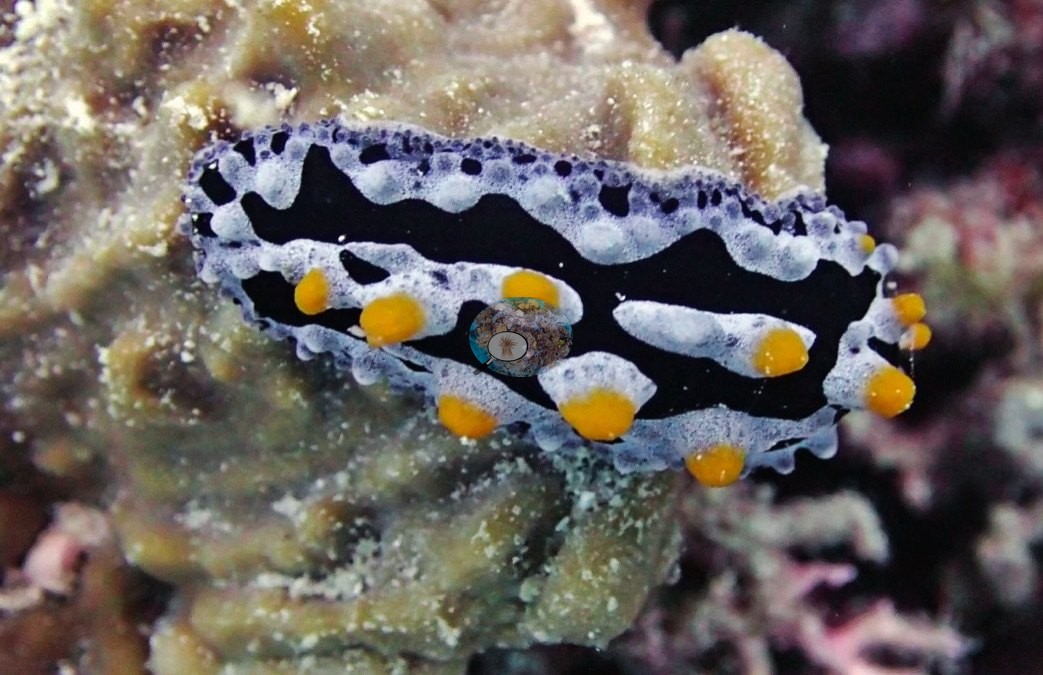
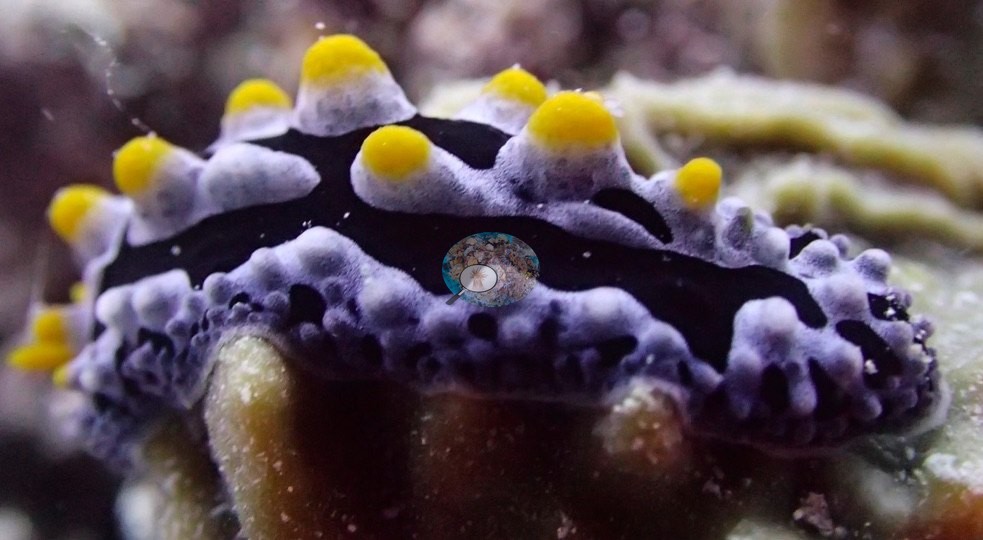
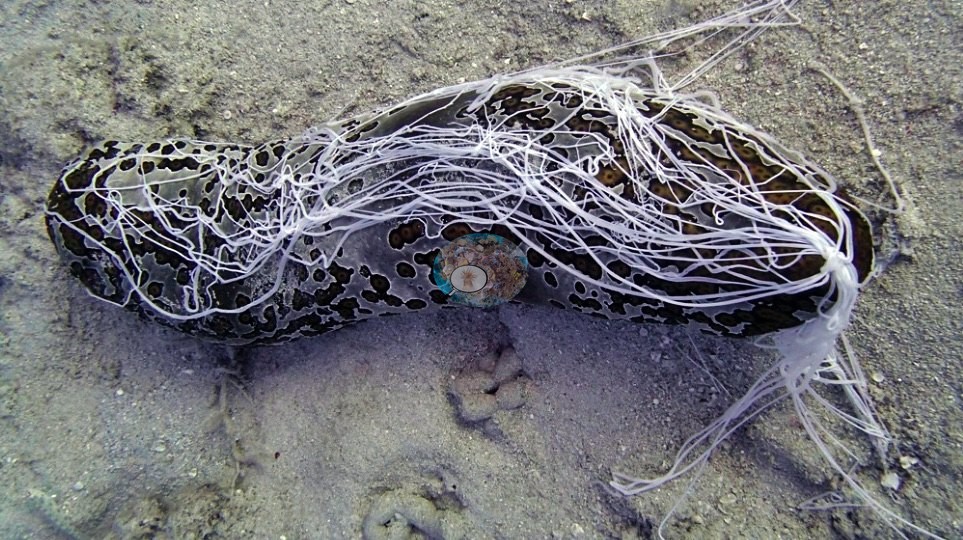
A black nudibranch with blue-white ridges and yellow tubercles, of the phyllidiid type, was photographed four times (e.g., Image 3, Image 10, Image 12, Image 13), and a sea cucumber on the sand had discharged a tangle of white sticky threads (e.g., Image 16).
Comparisons with other data
No prior survey data from this site. If you would like to share yours, please email us.
Data & links
- Download benthic survey data (CSV) ↗
- Download all LOF-GRE data (933 sites) ↗
- Photo portfolio ↗
- Coral Reef Diagnostics country page ↗
All images from Coral Reef Diagnostics. Data are from the Khaled bin Sultan Living Oceans Foundation Global Reef Expedition and Coral Reef Diagnostics.
 © Coral Reef Diagnostics.