
Part of the regional summaries: Australia (GBR) - Far North: Pink stations (Preservation Zone reefs) and Australia (GBR)
More info
Far Northern GBR (NOAA CRW virtual station)Despite 1-3 m visibility, this Parkinson Reef dive delivered unbroken gold staghorn meadows and a vast stand of Porites cylindrica fingers in just a couple of meters of water. Its oddest moment came when Anderson flipped a table coral and found beneath it a giant glob of semi-hard mucus he had never seen before. Surveyed on the Living Oceans Foundation's Global Reef Expedition.
Eleven other CRD dive sites within 5 km shown in orange — click a marker to open its page.
🗺 Detailed map of the Global Reef Expedition dive sites, Parkinson and Monkman Reefs, northern Great Barrier Reef (Khaled bin Sultan Living Oceans Foundation; opens in a new window)
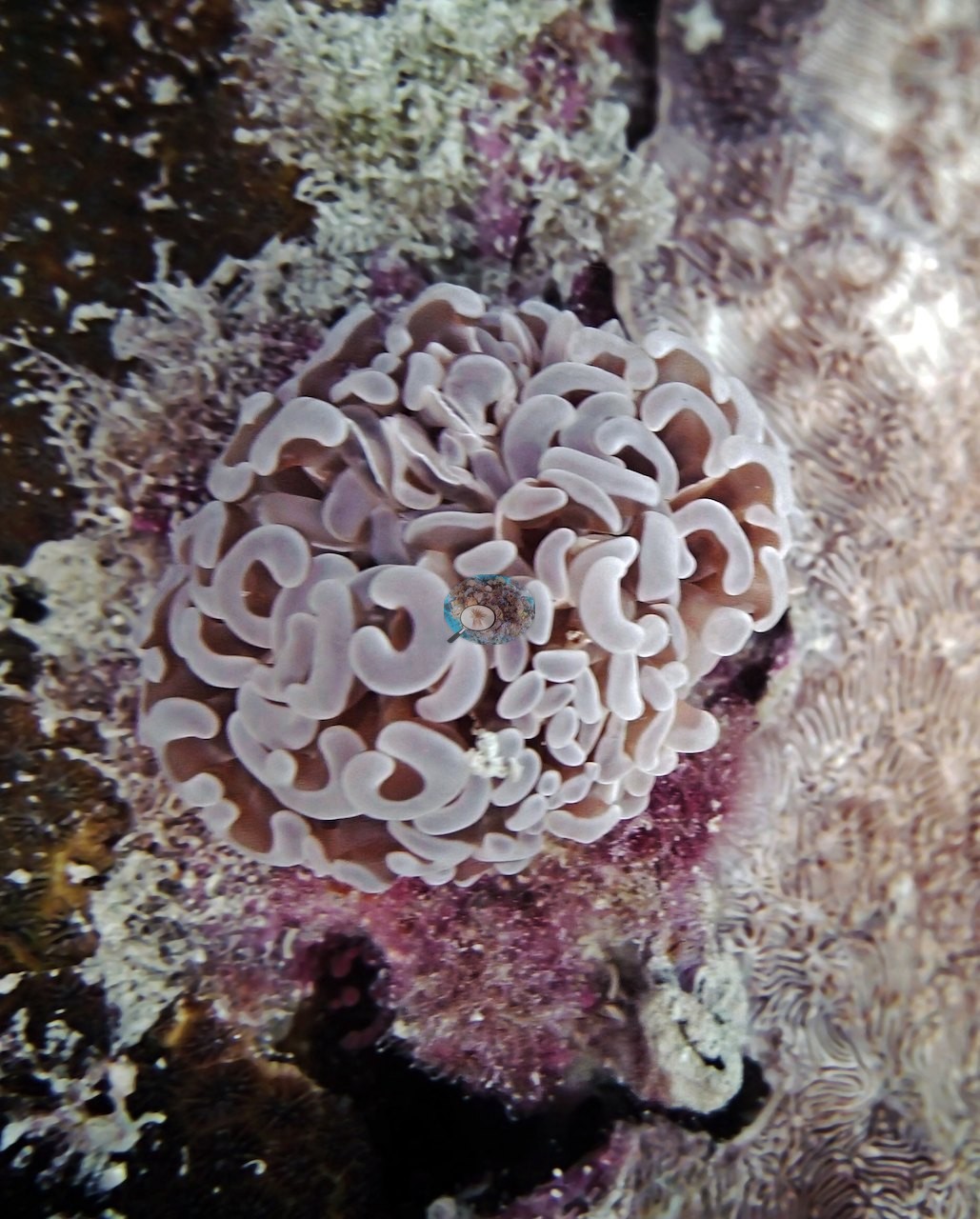
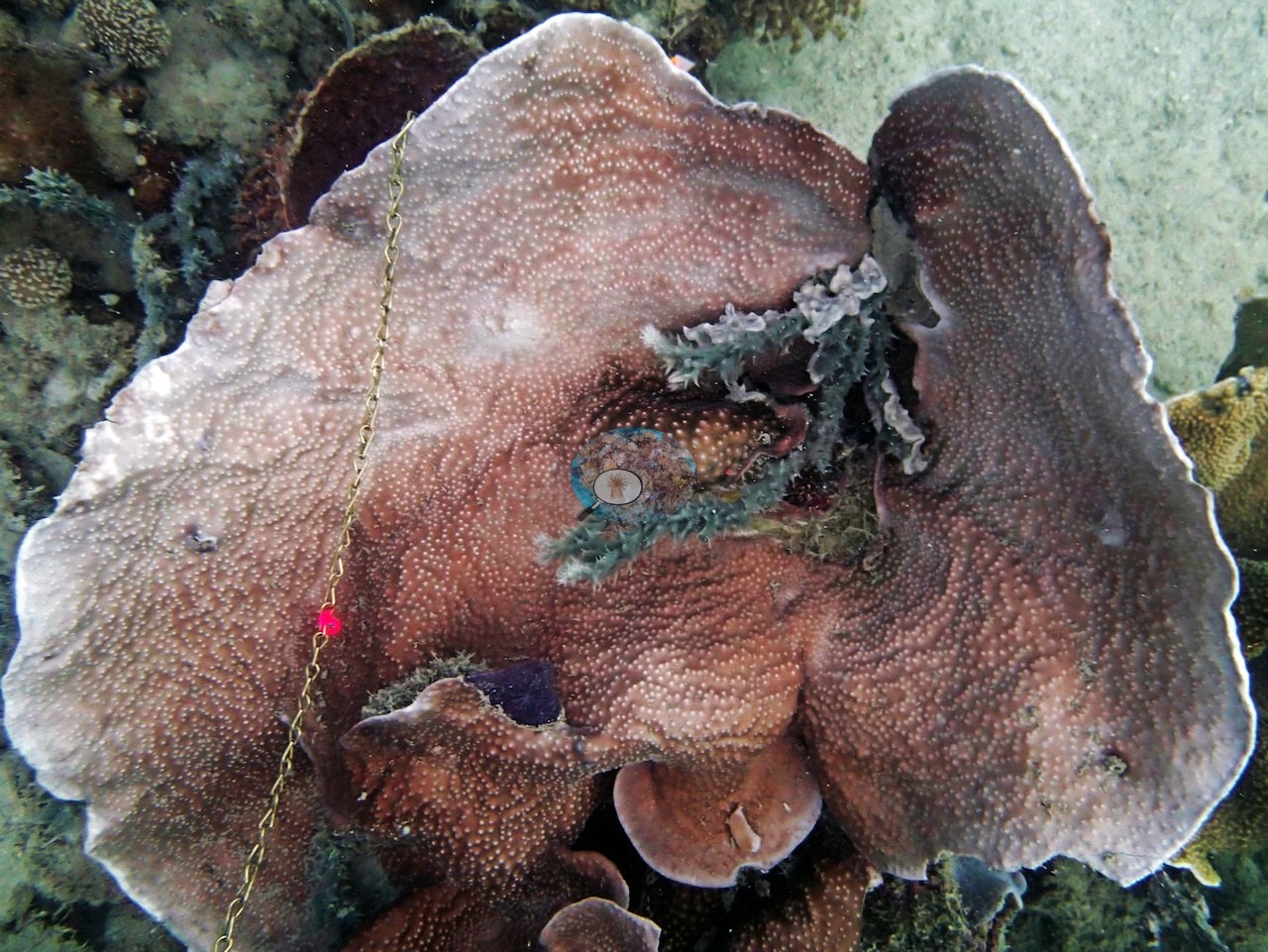
6 of the 29 photographs on this page are shown beside the text that discusses them under "Site description" below.
Site description
Setting
Visibility on this Parkinson Reef dive was about as bad as it gets, 1-3 m, and yet the shallows delivered striking Acropora scenery. This reef sits in a Preservation Zone.
General benthic features
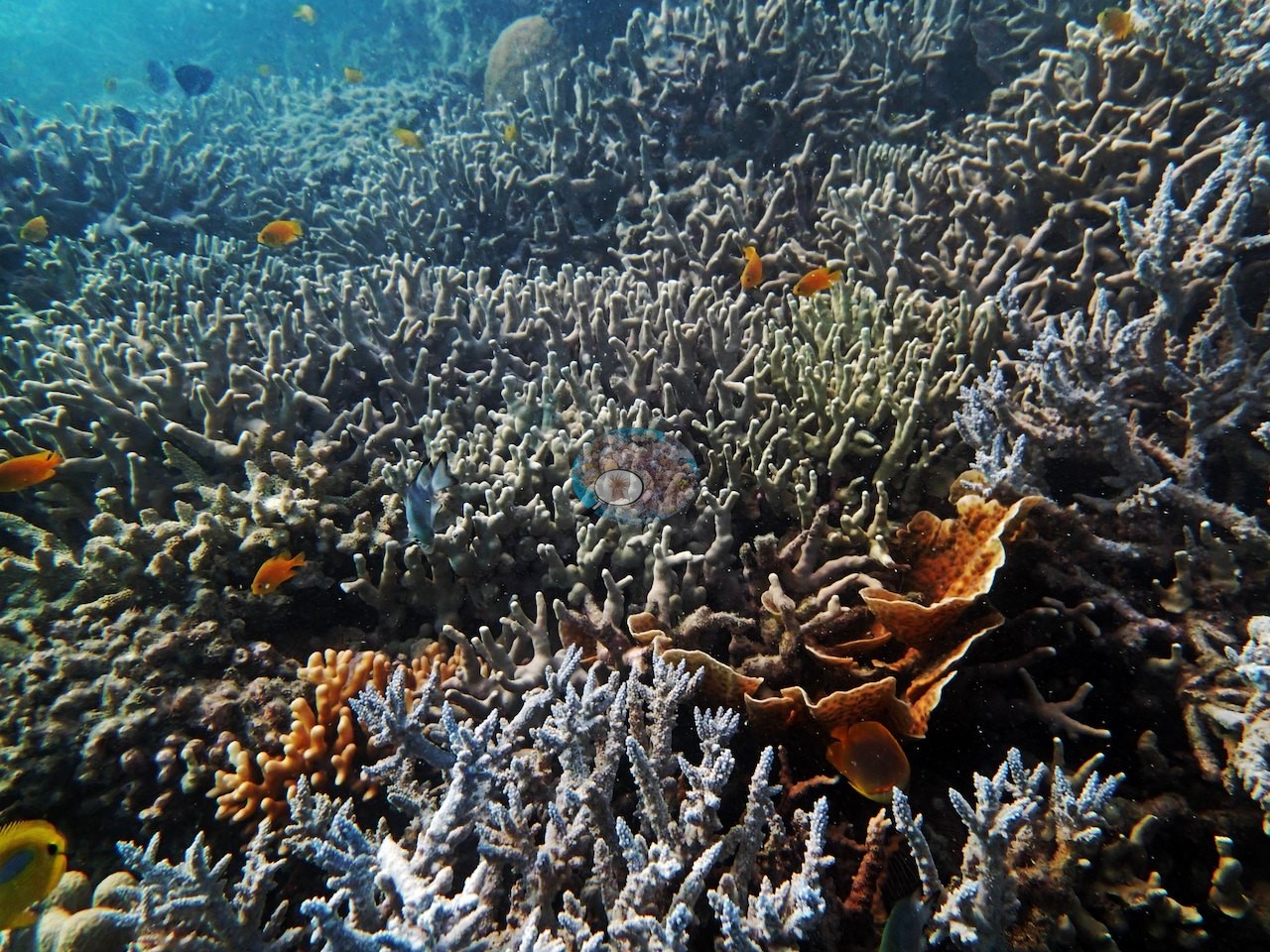
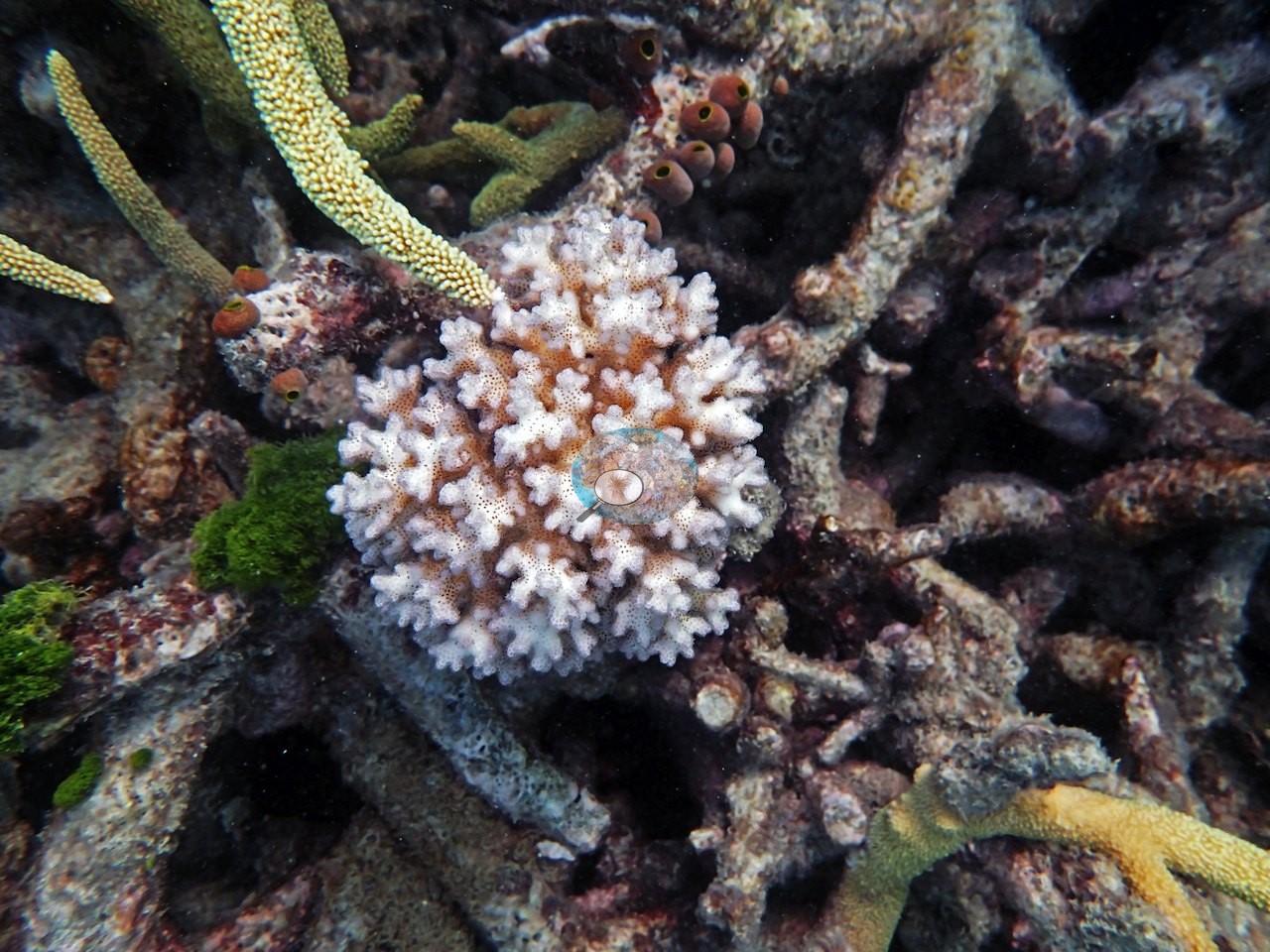
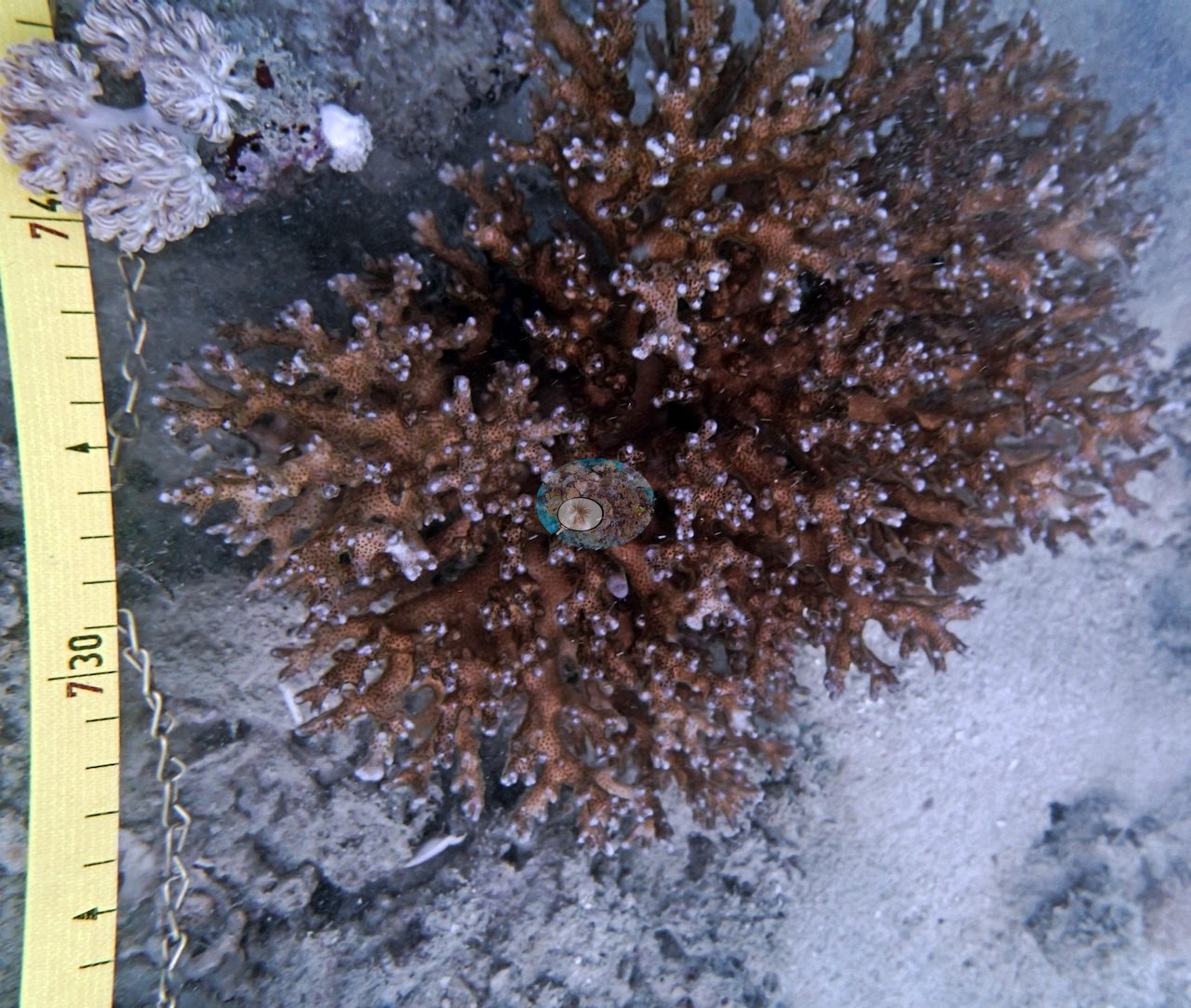
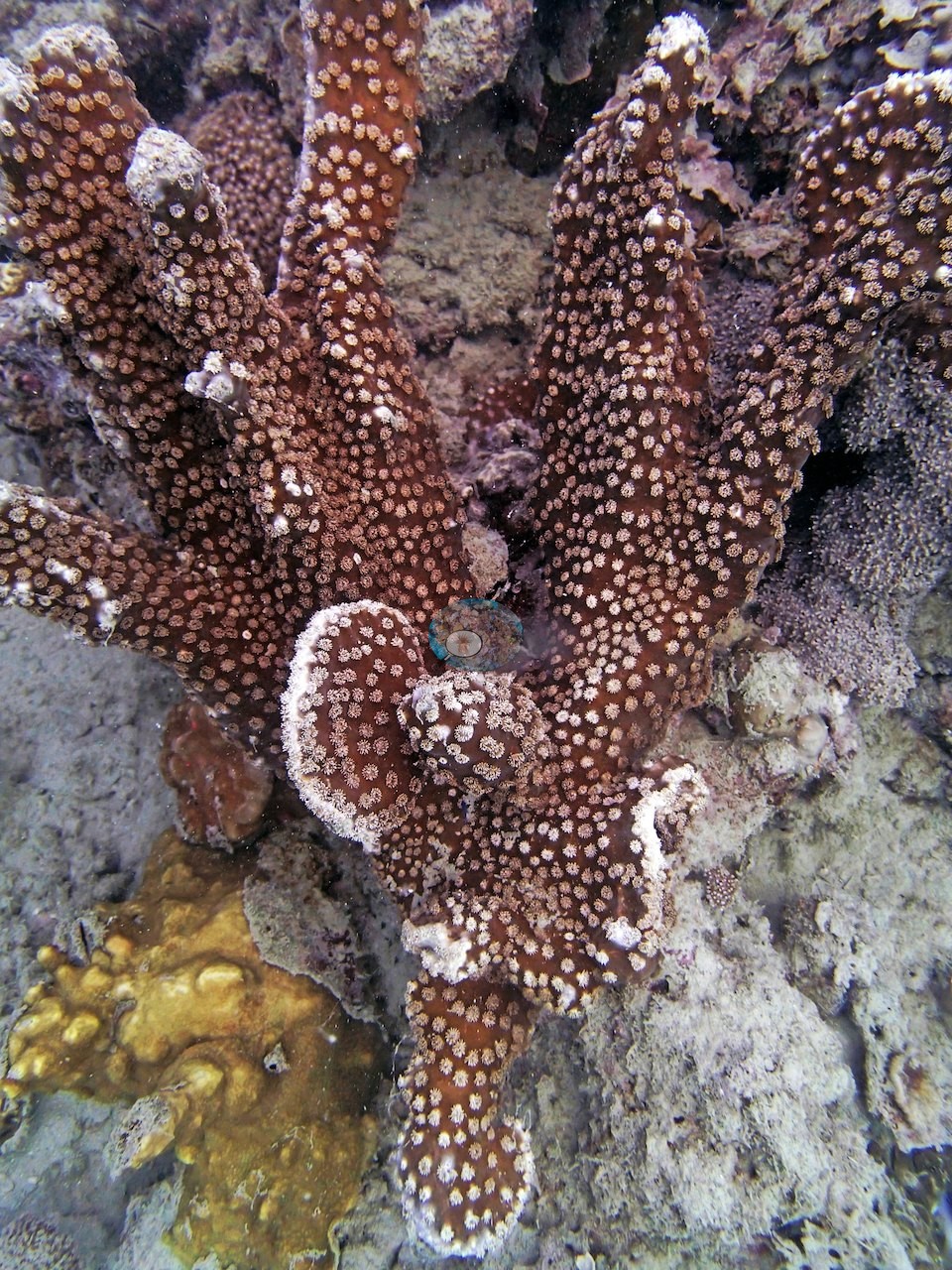
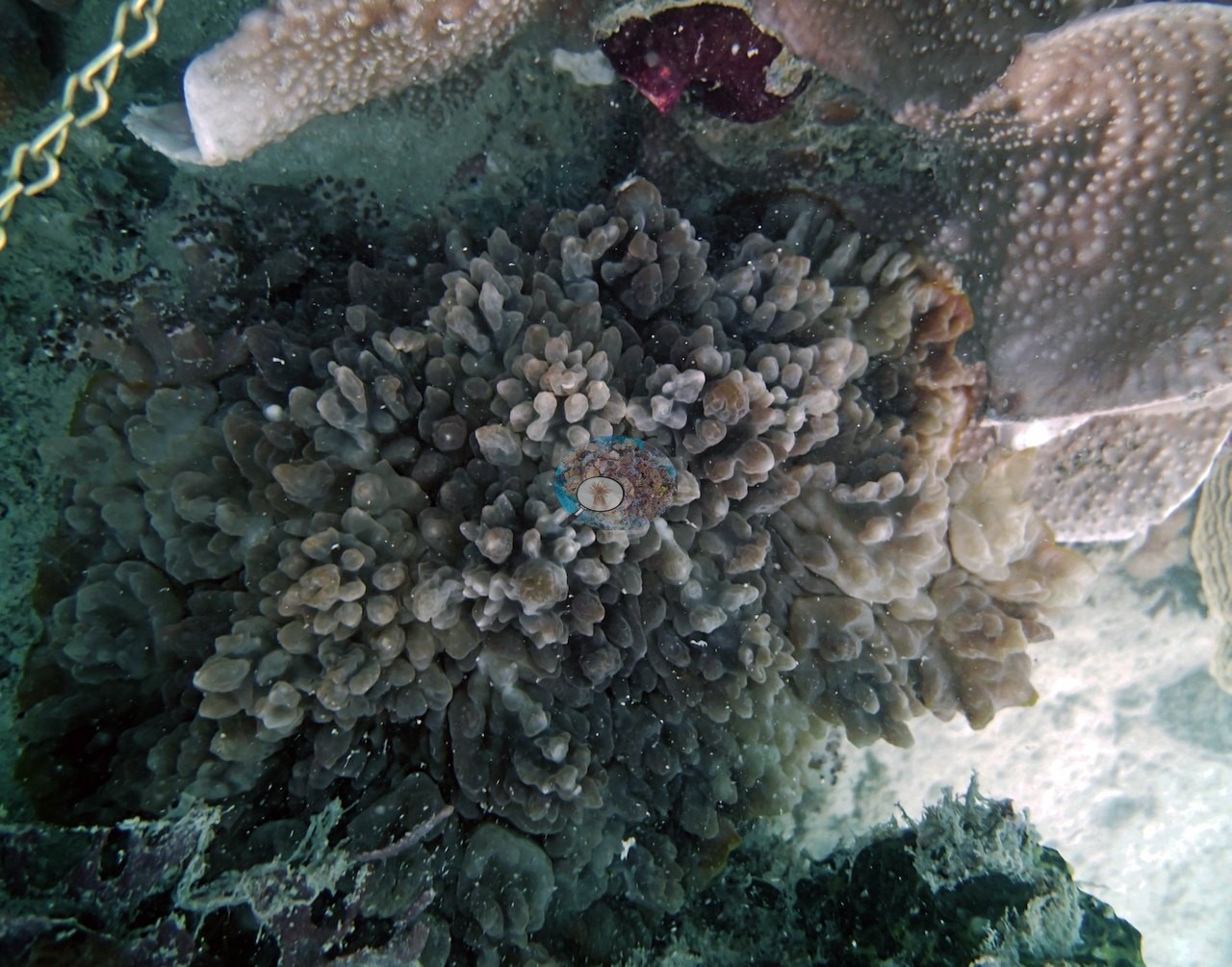
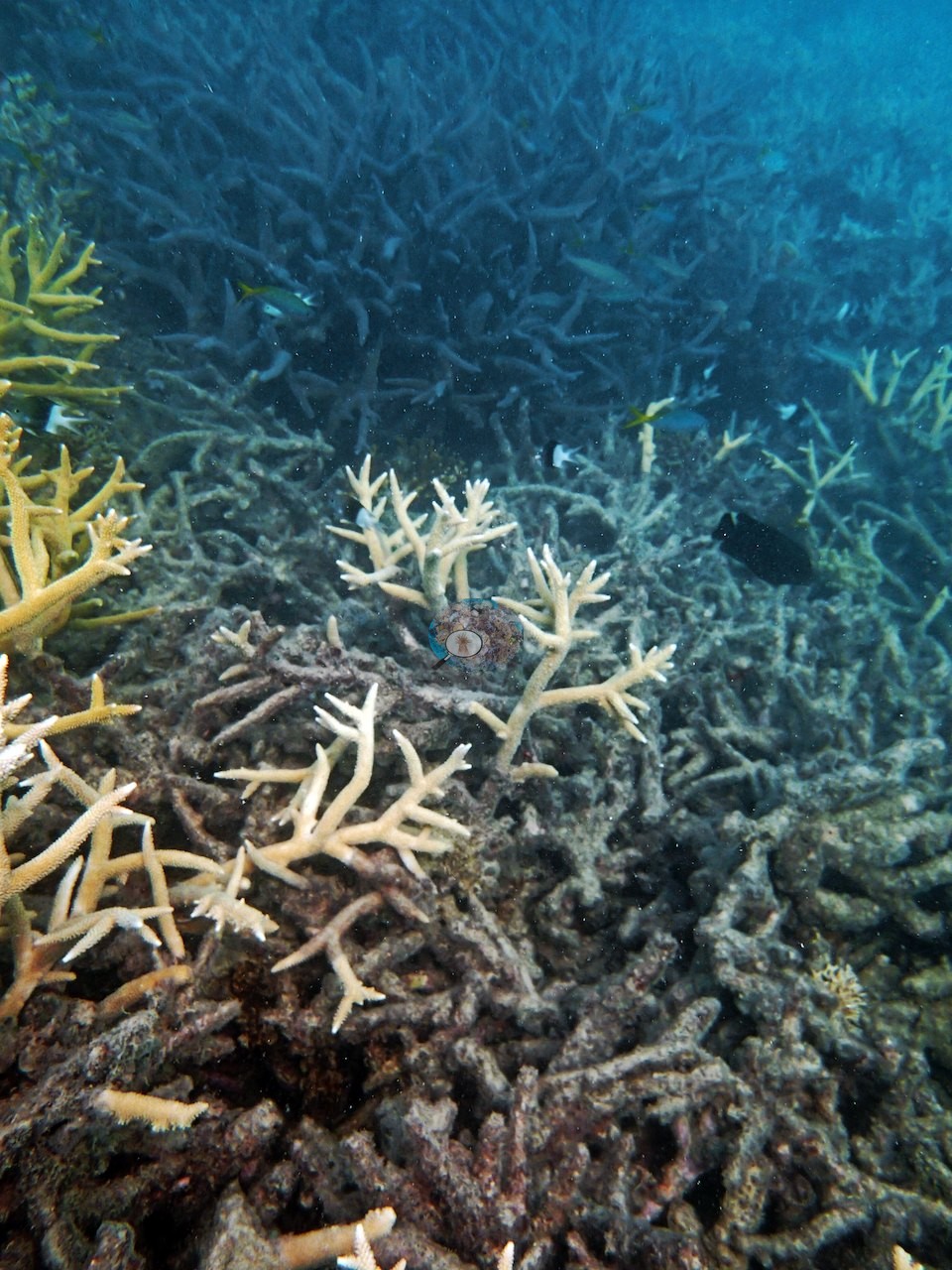
The other headline habitat is a vast stand of Porites cylindrica fingers running up the slope, thousands of white-tipped columns packed shoulder to shoulder with fusiliers and damselfish drifting above, in just a couple of meters of water (e.g., Image 3).
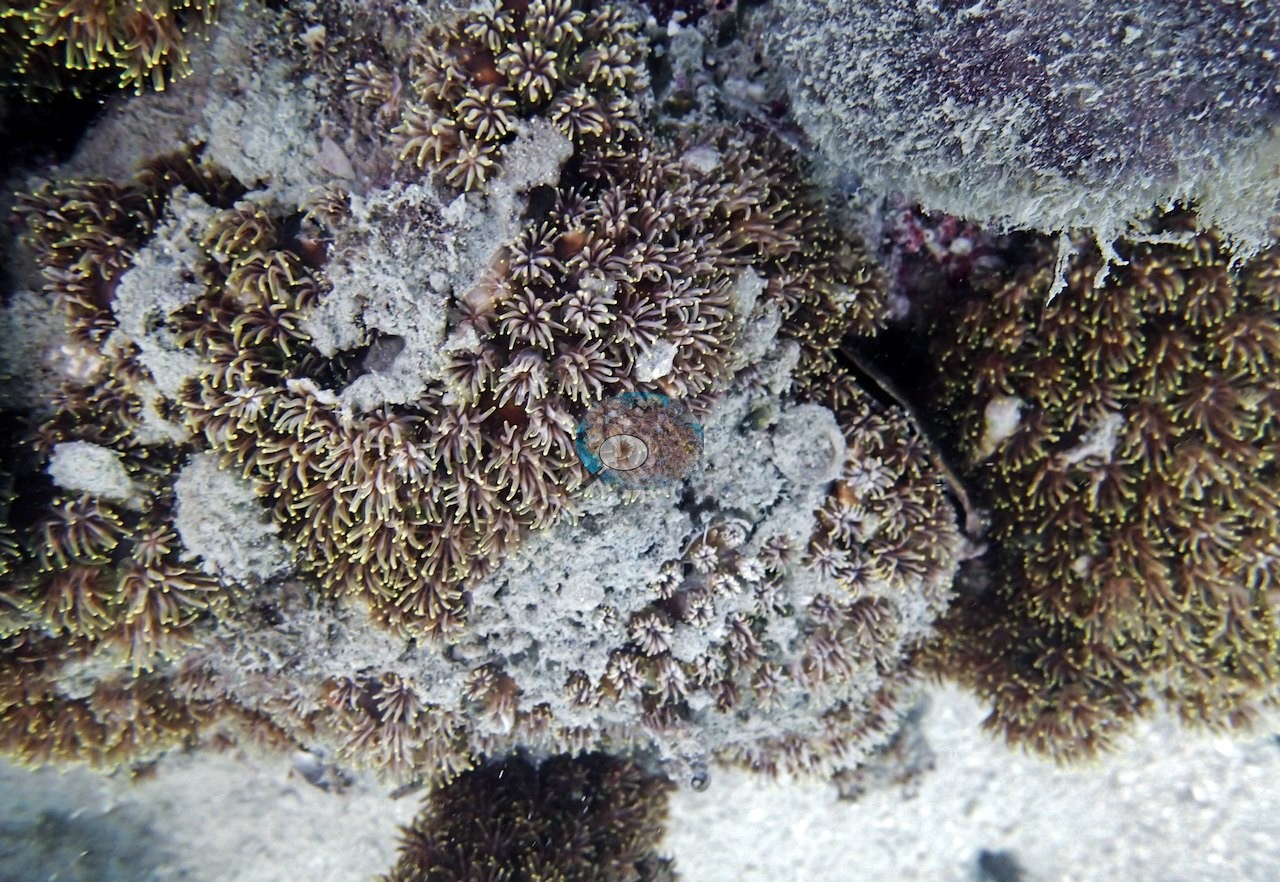
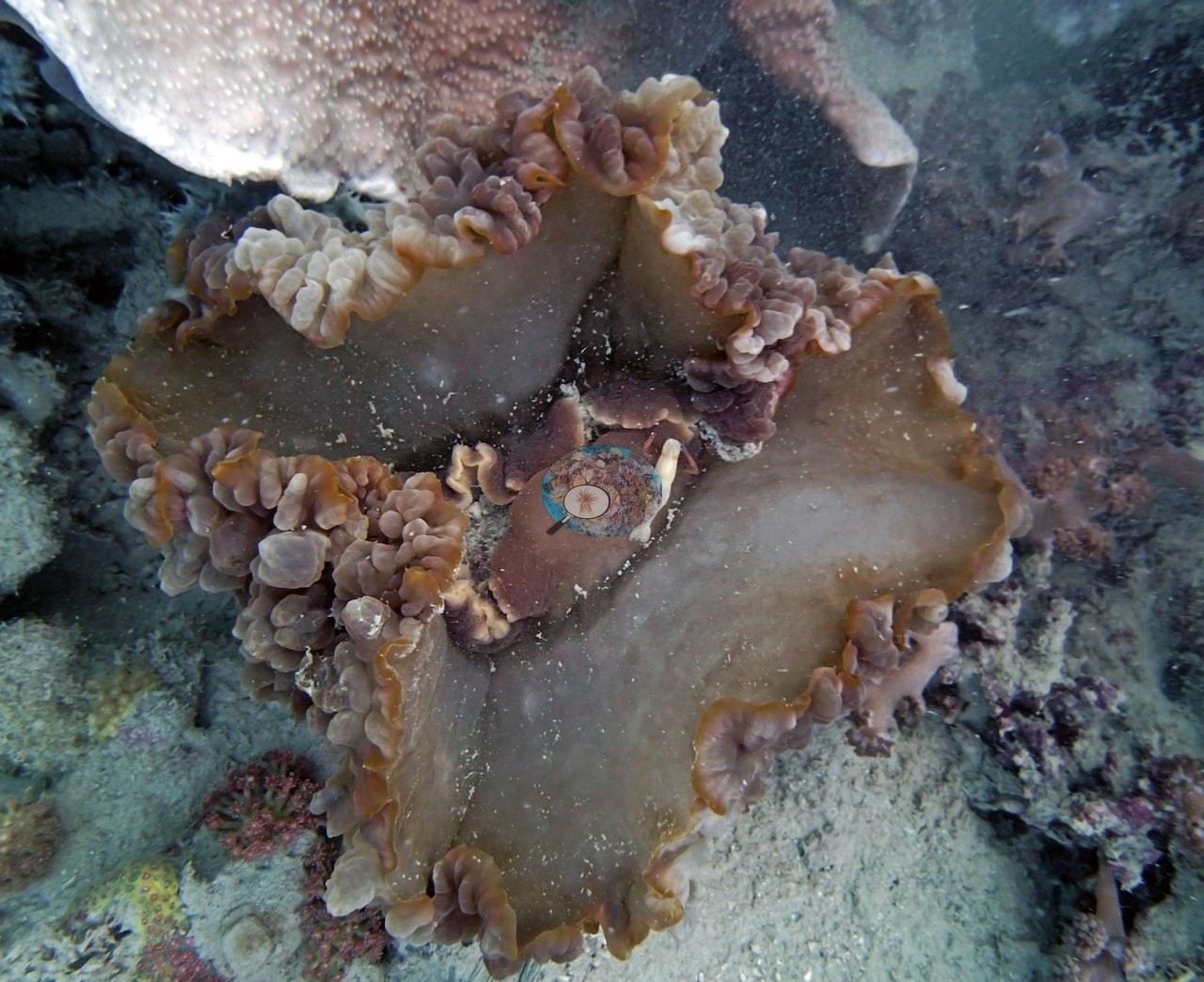
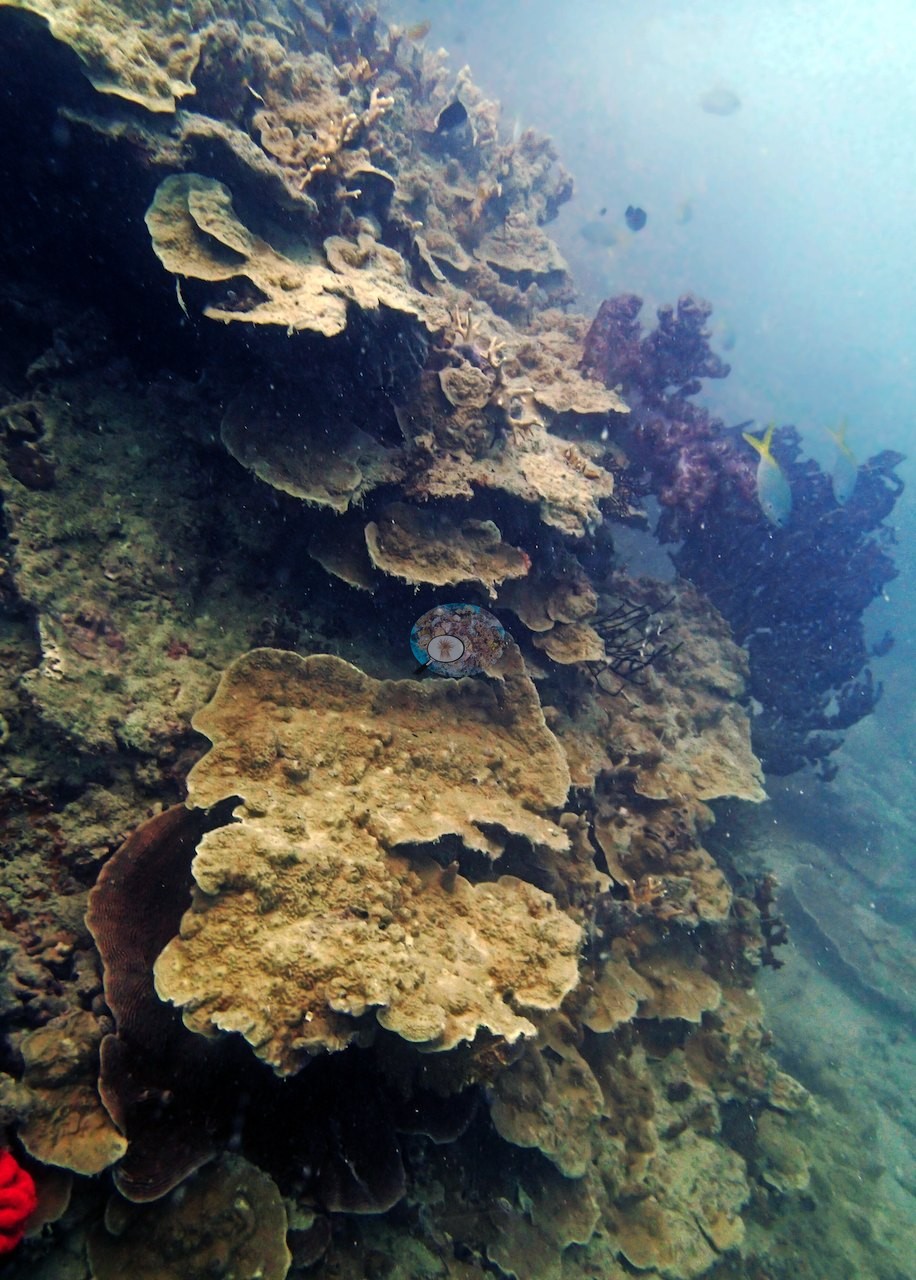
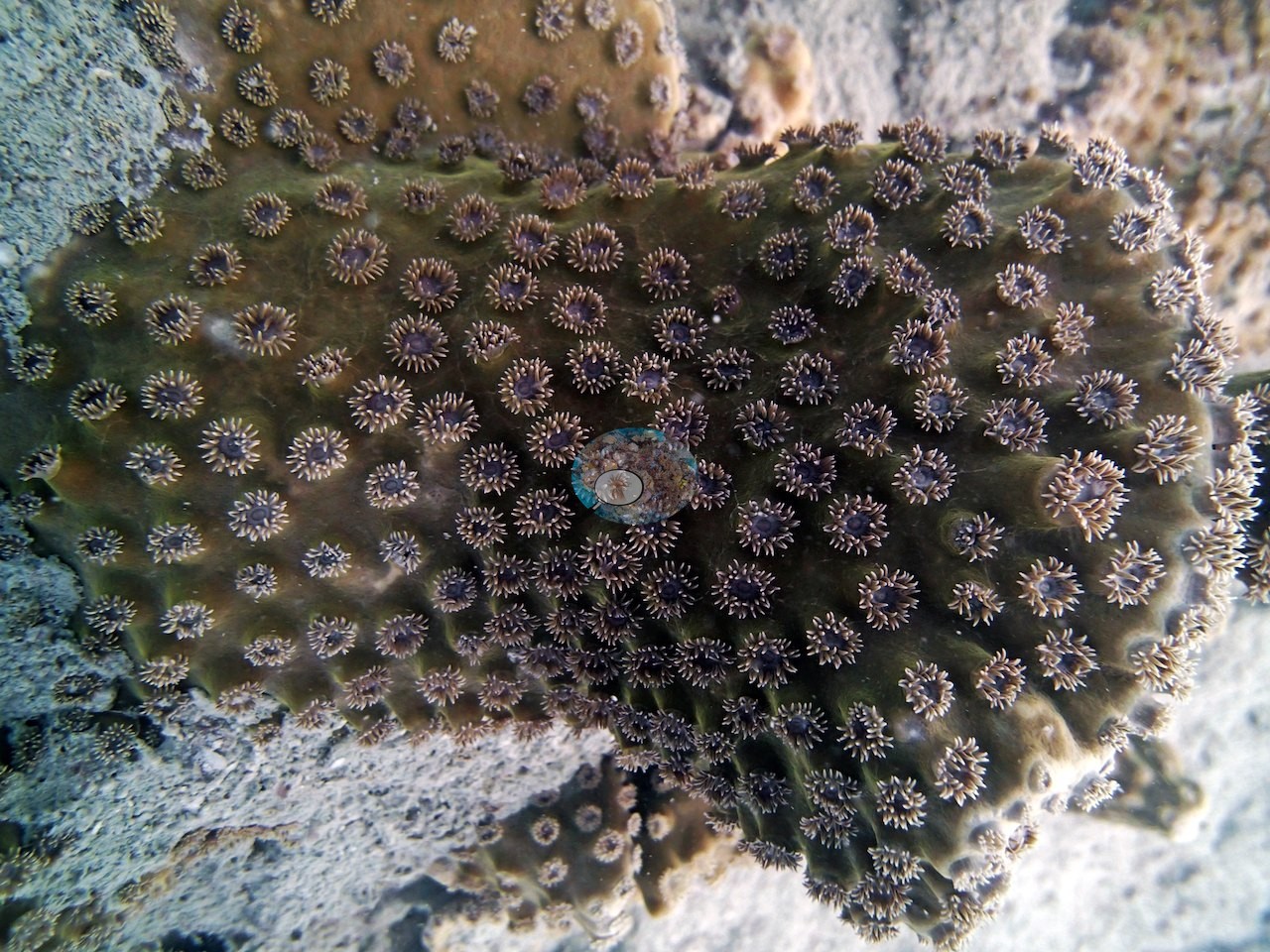
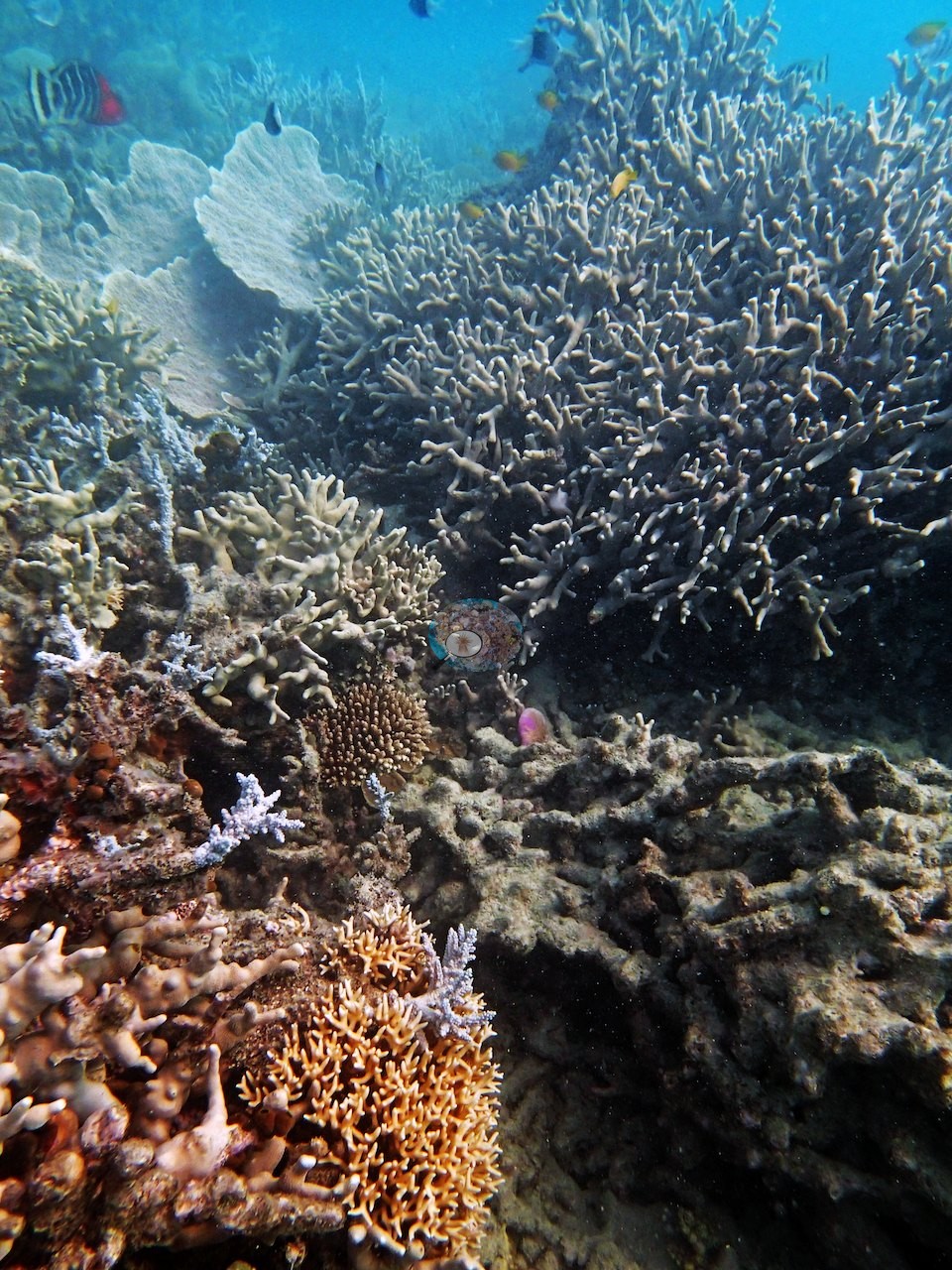
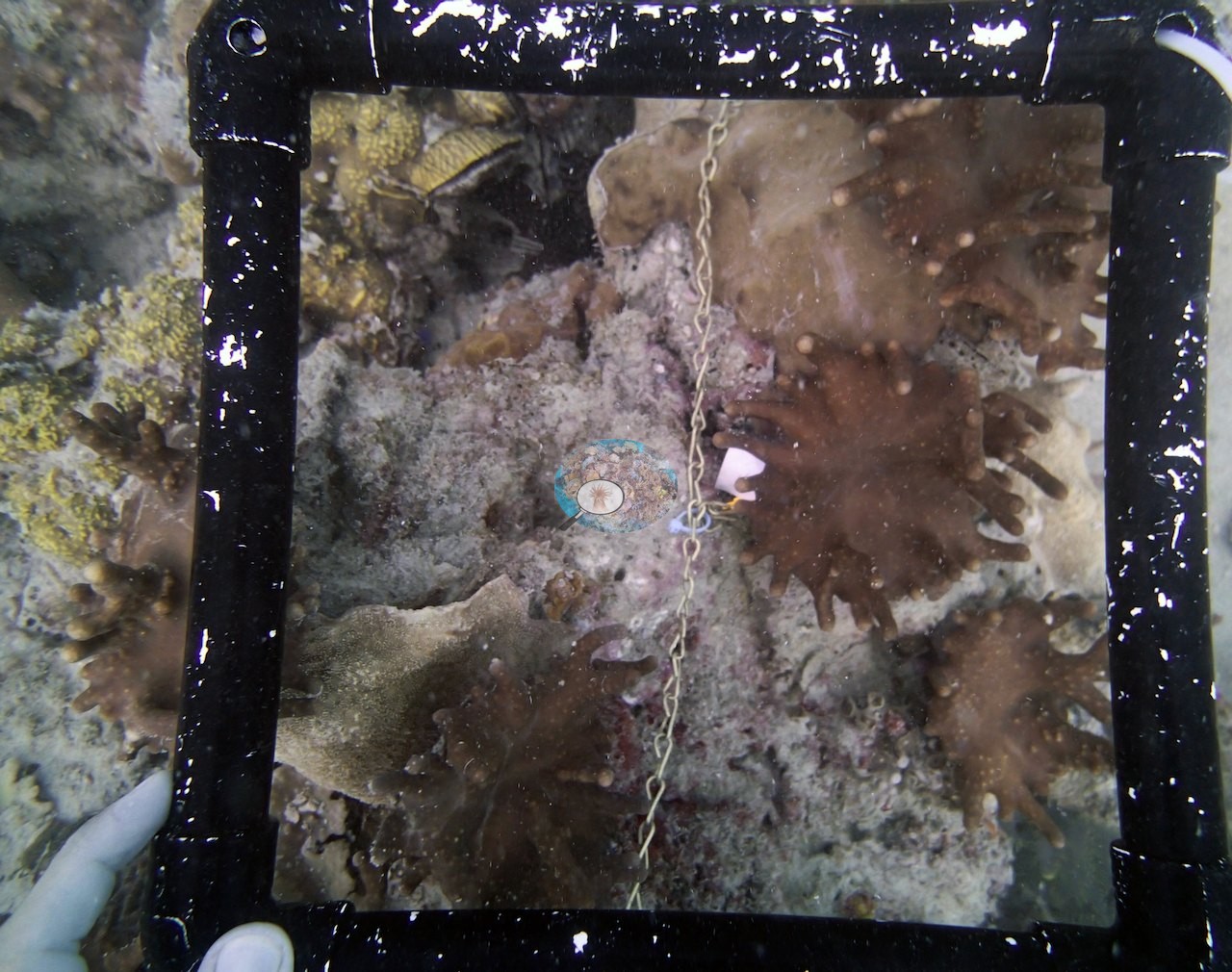
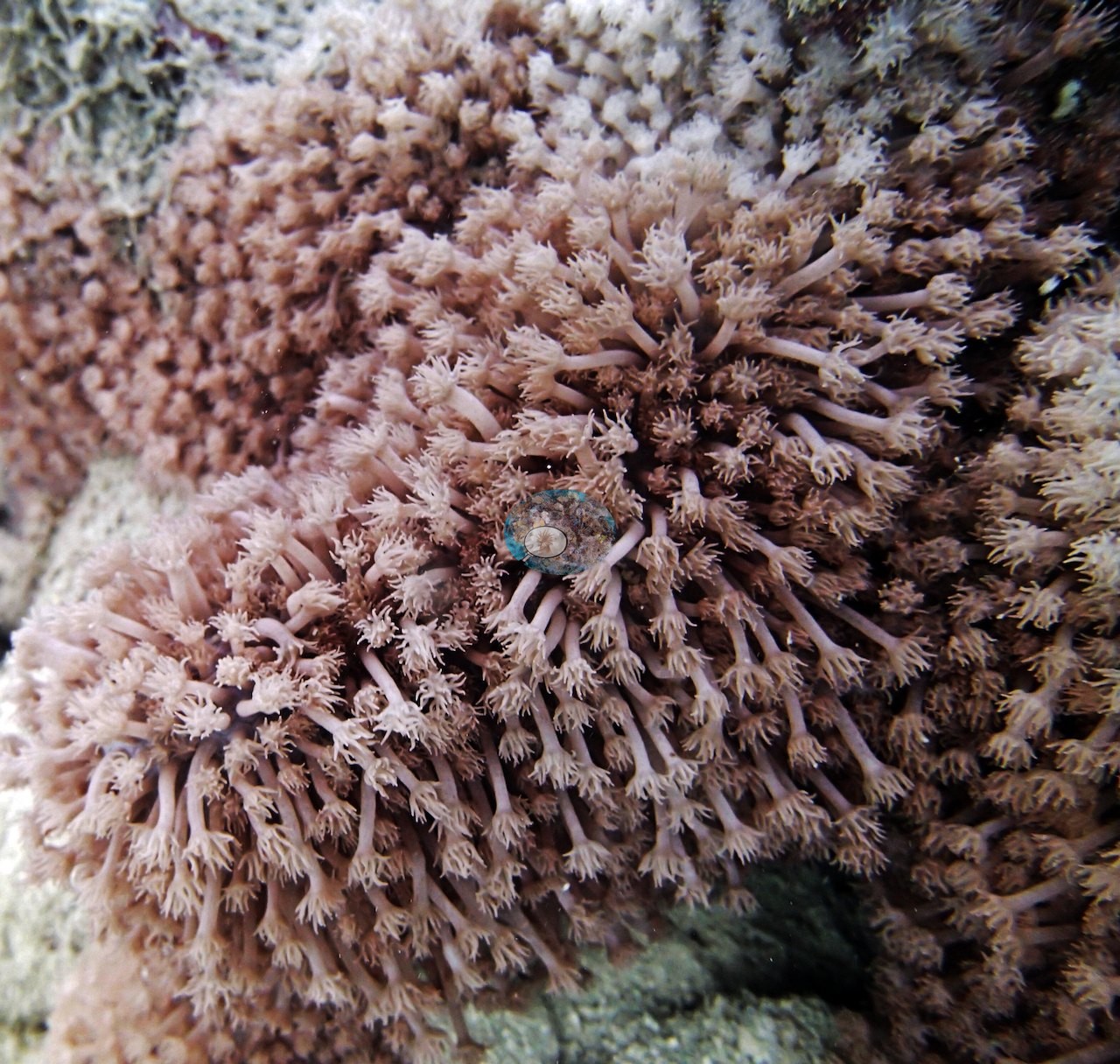
A close macro catches a Goniopora-type colony with its long stalked polyps fully extended, each tipped with a tuft of tentacles (e.g., Image 4).
Coral cover
- Reference: Khaled bin Sultan Living Oceans Foundation, Global Reef Expedition (in situ transect)
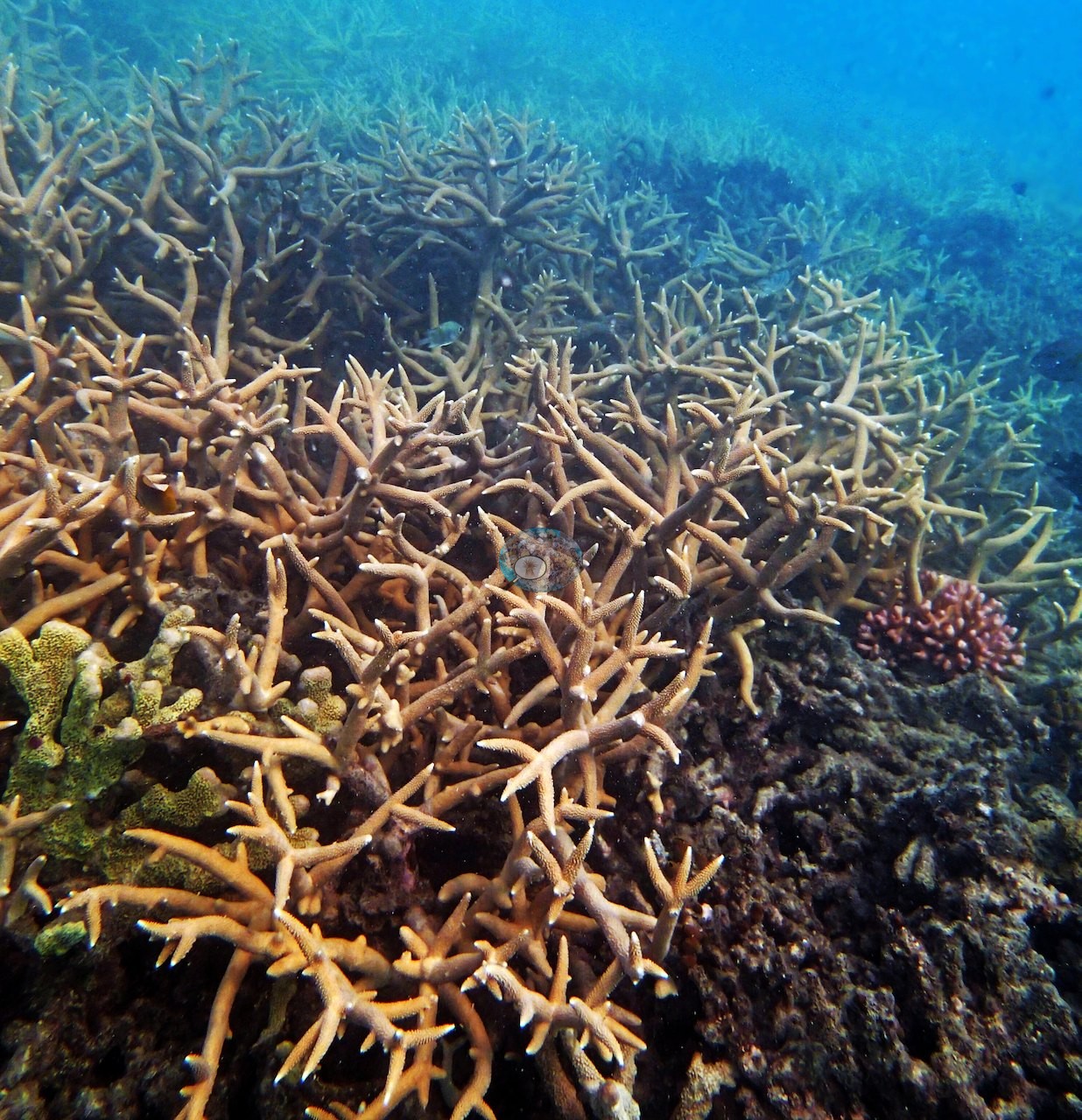
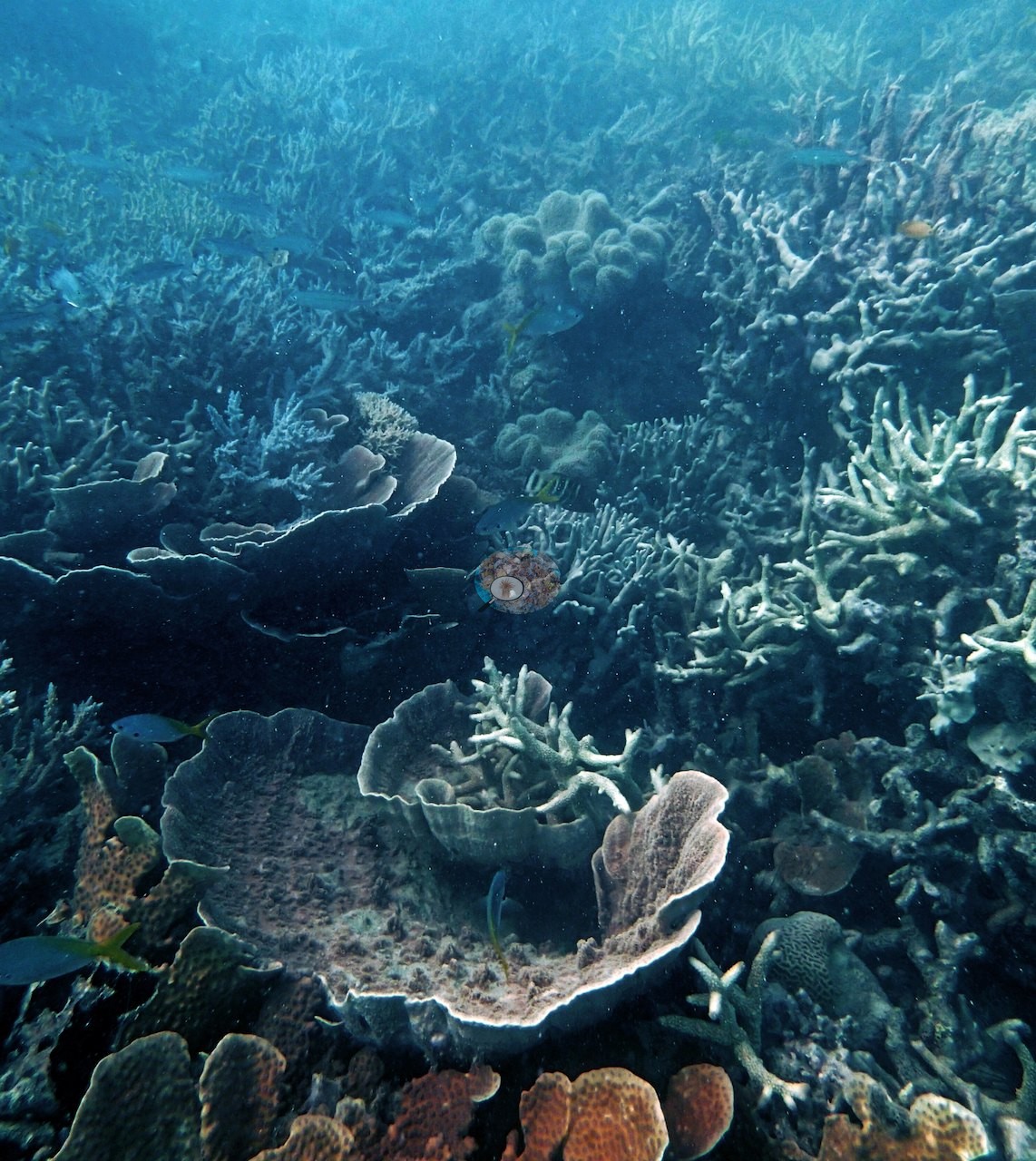
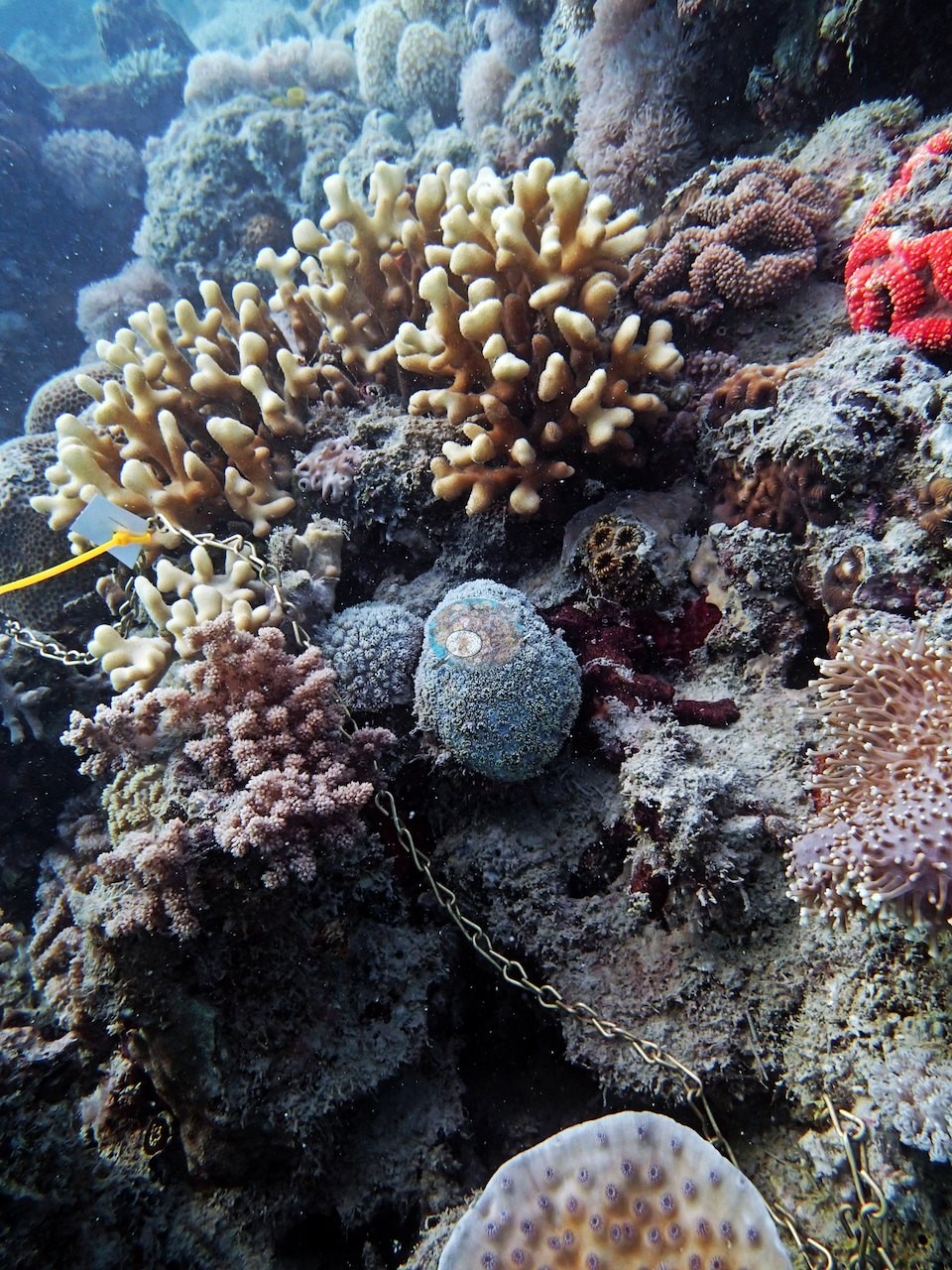
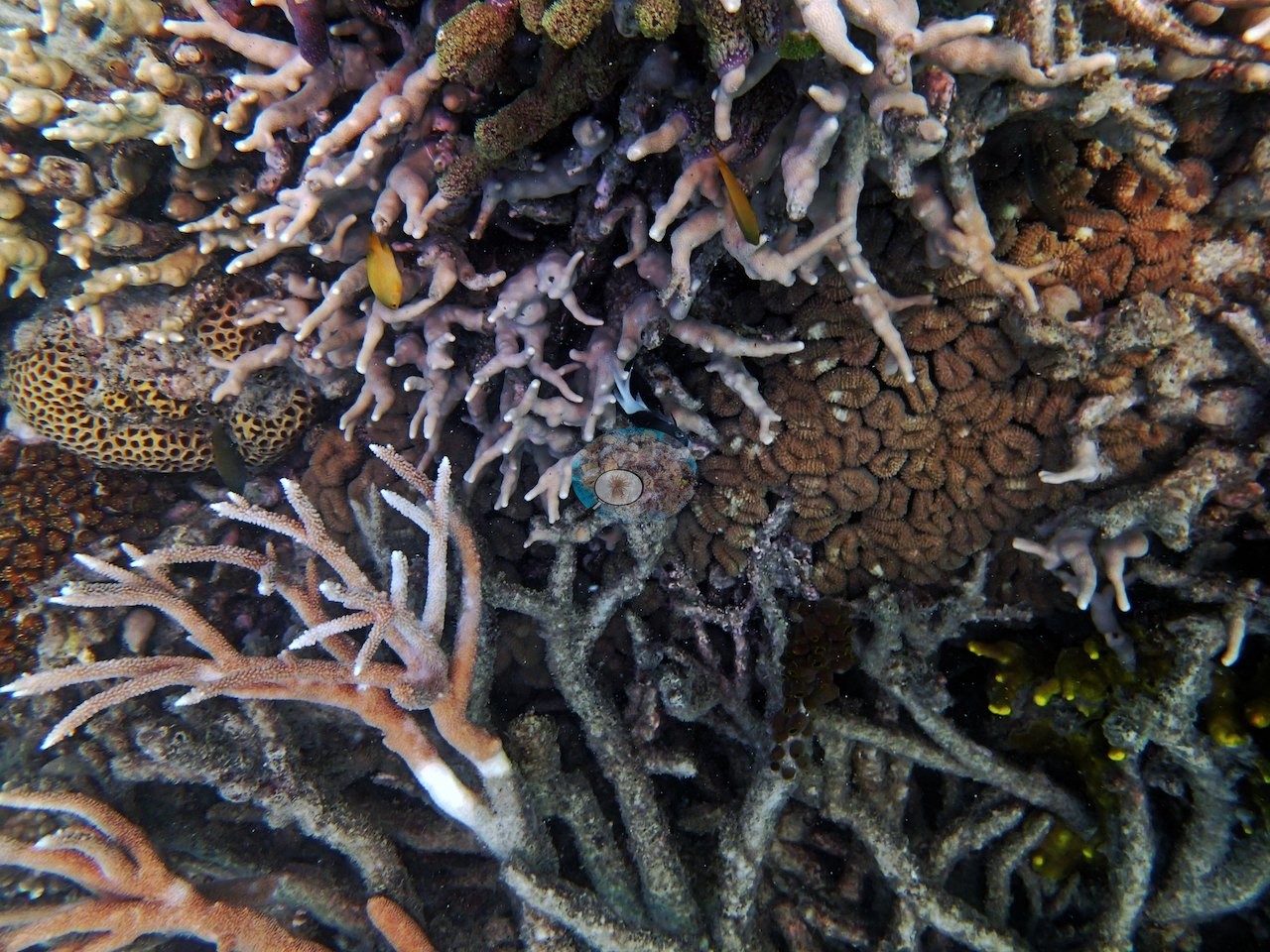
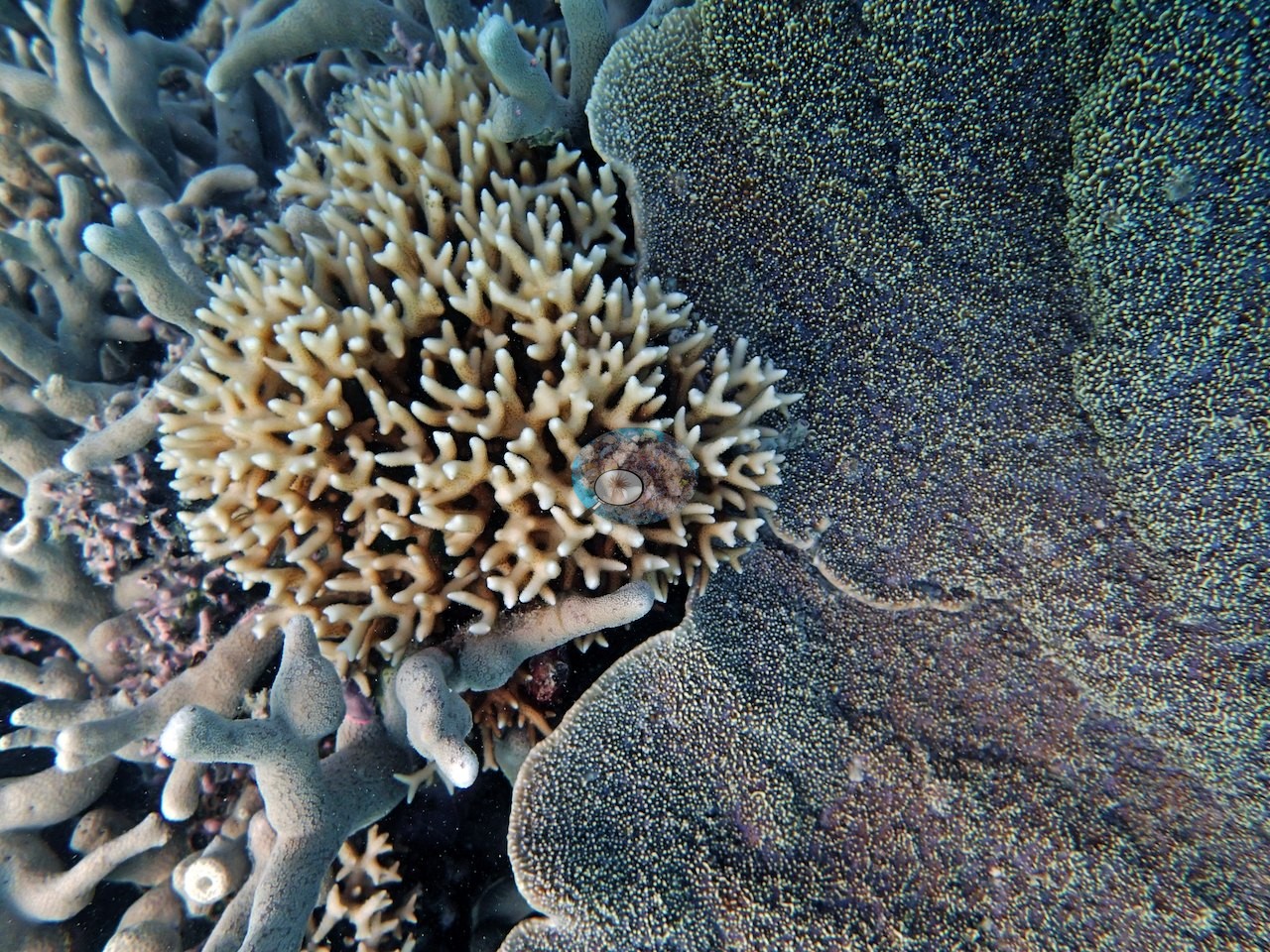
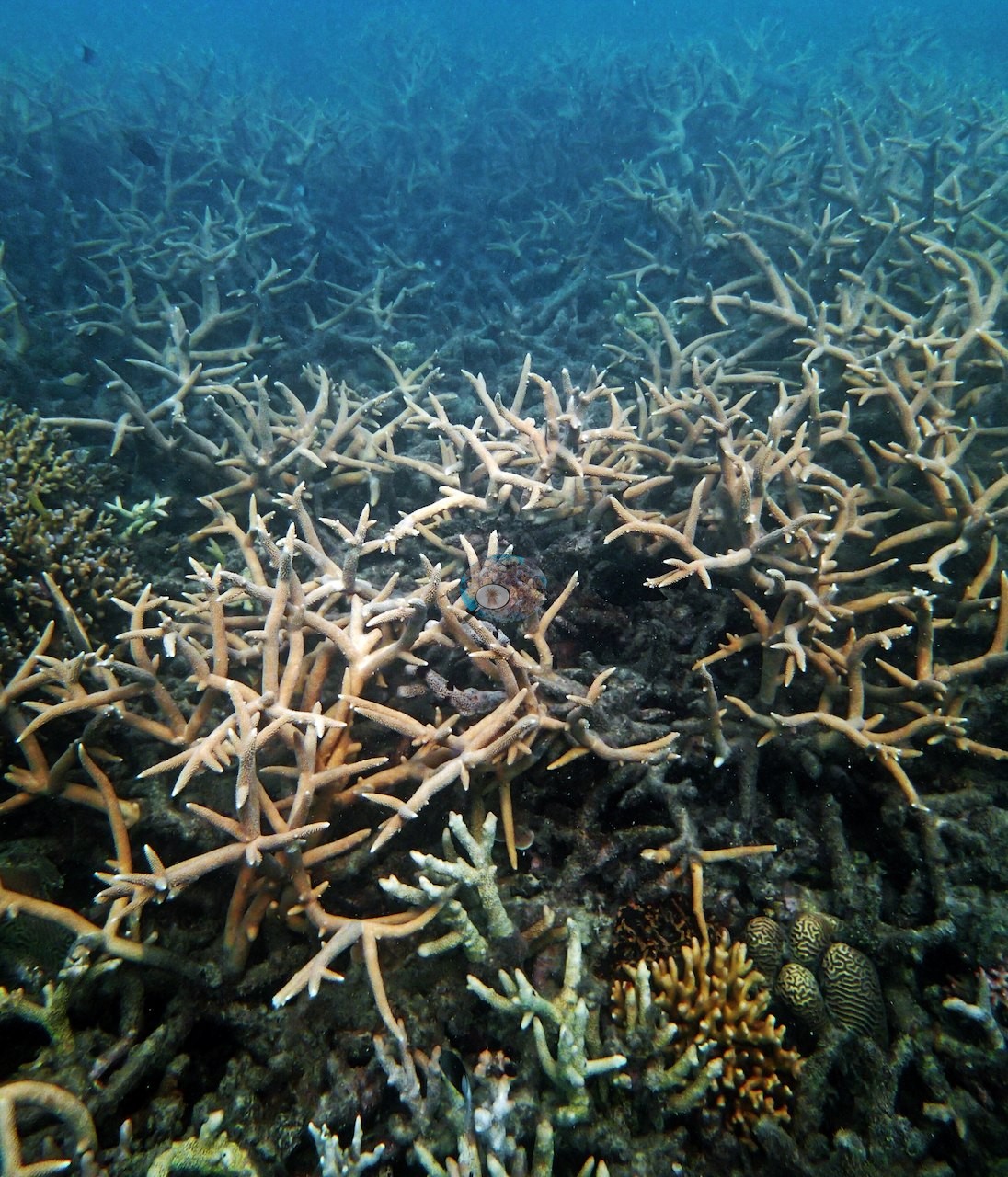
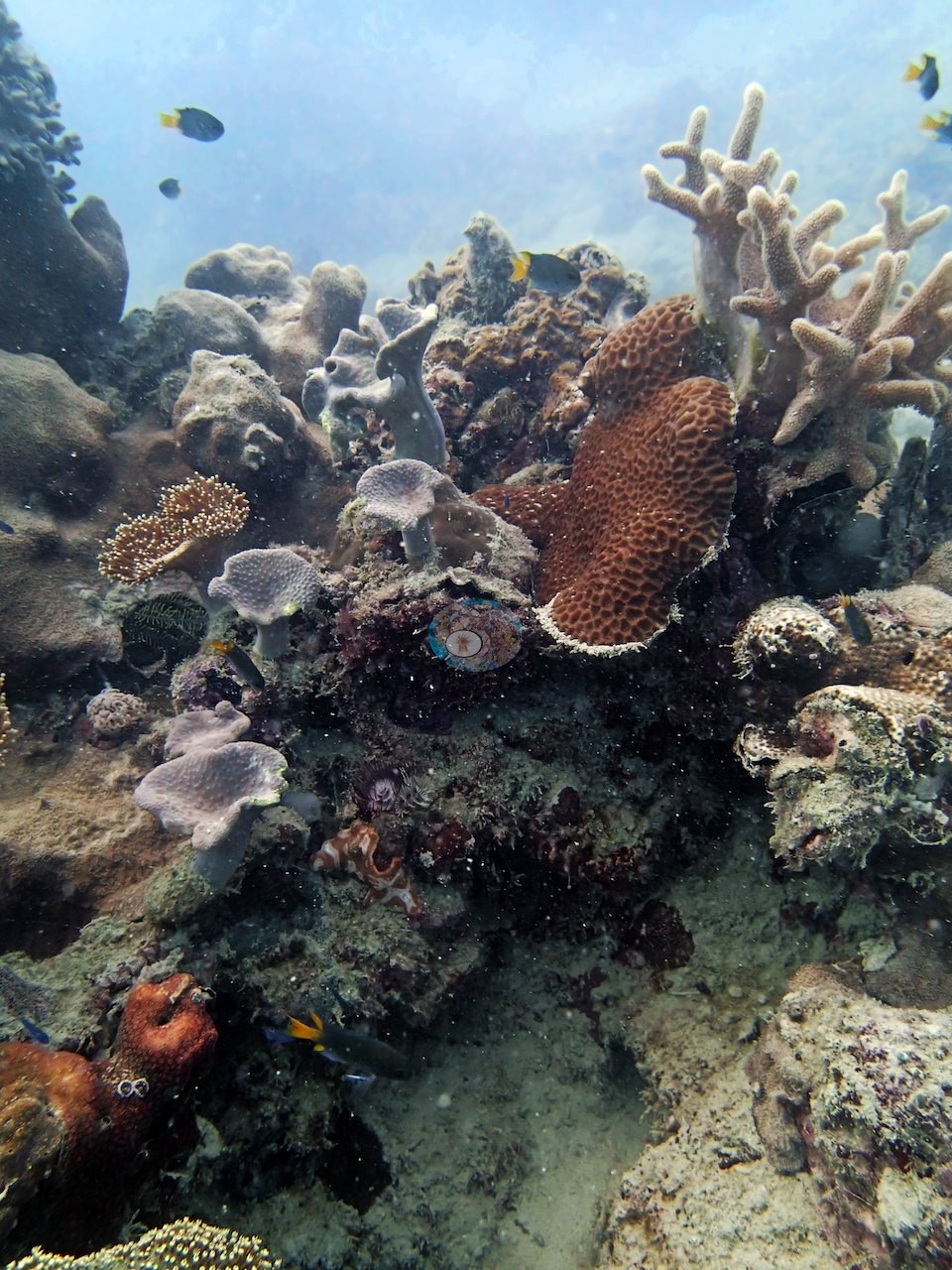
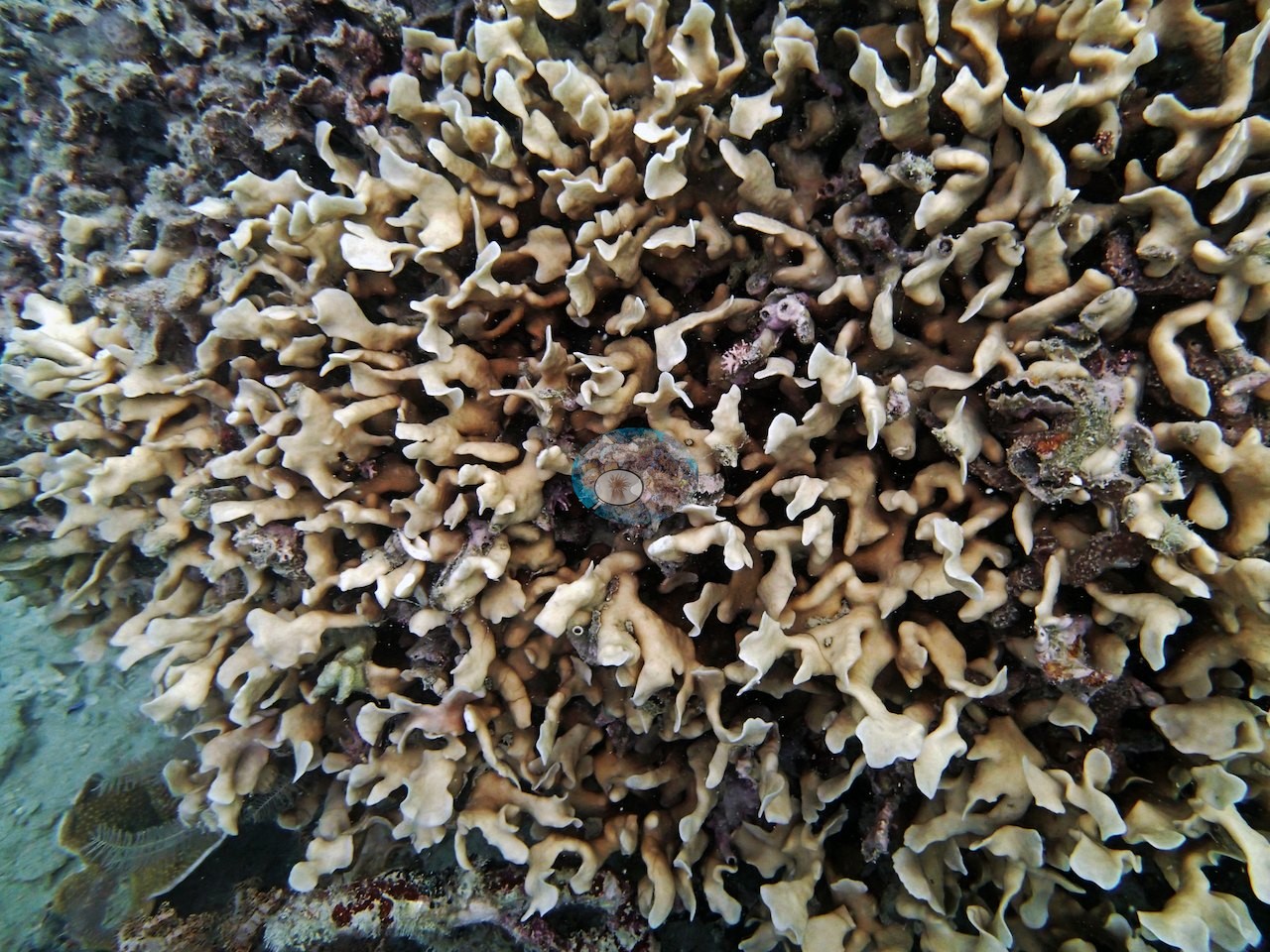
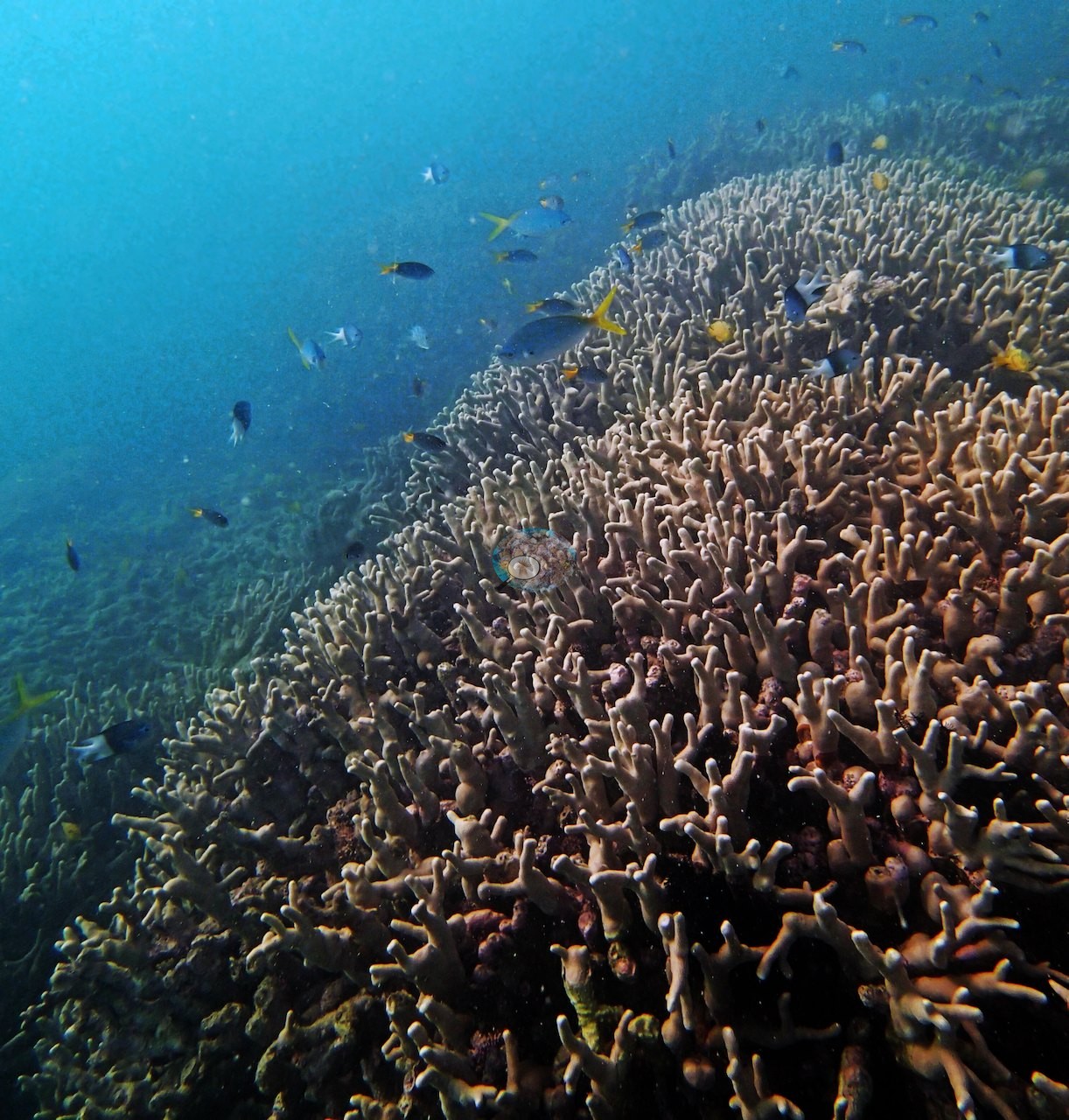
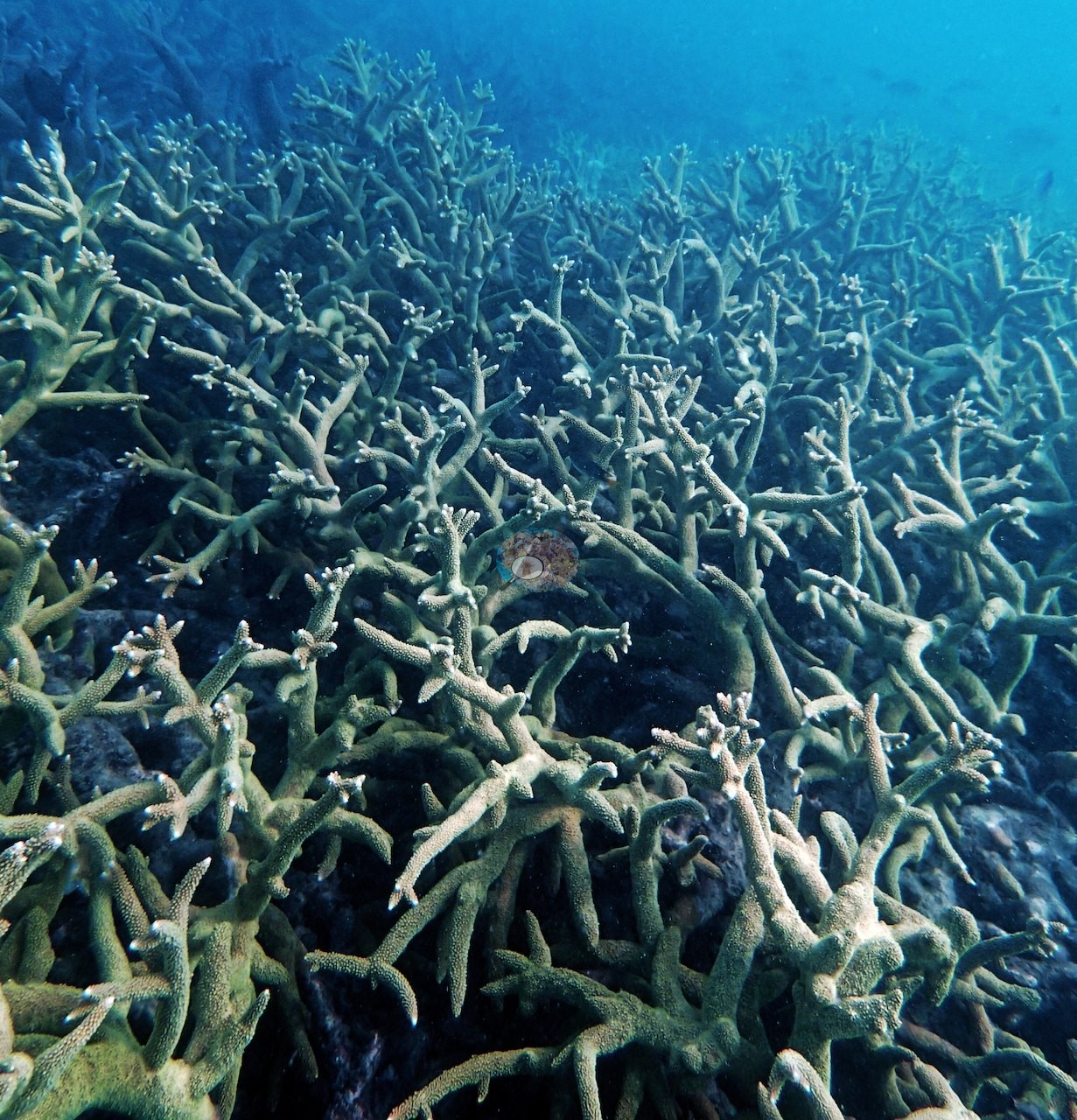
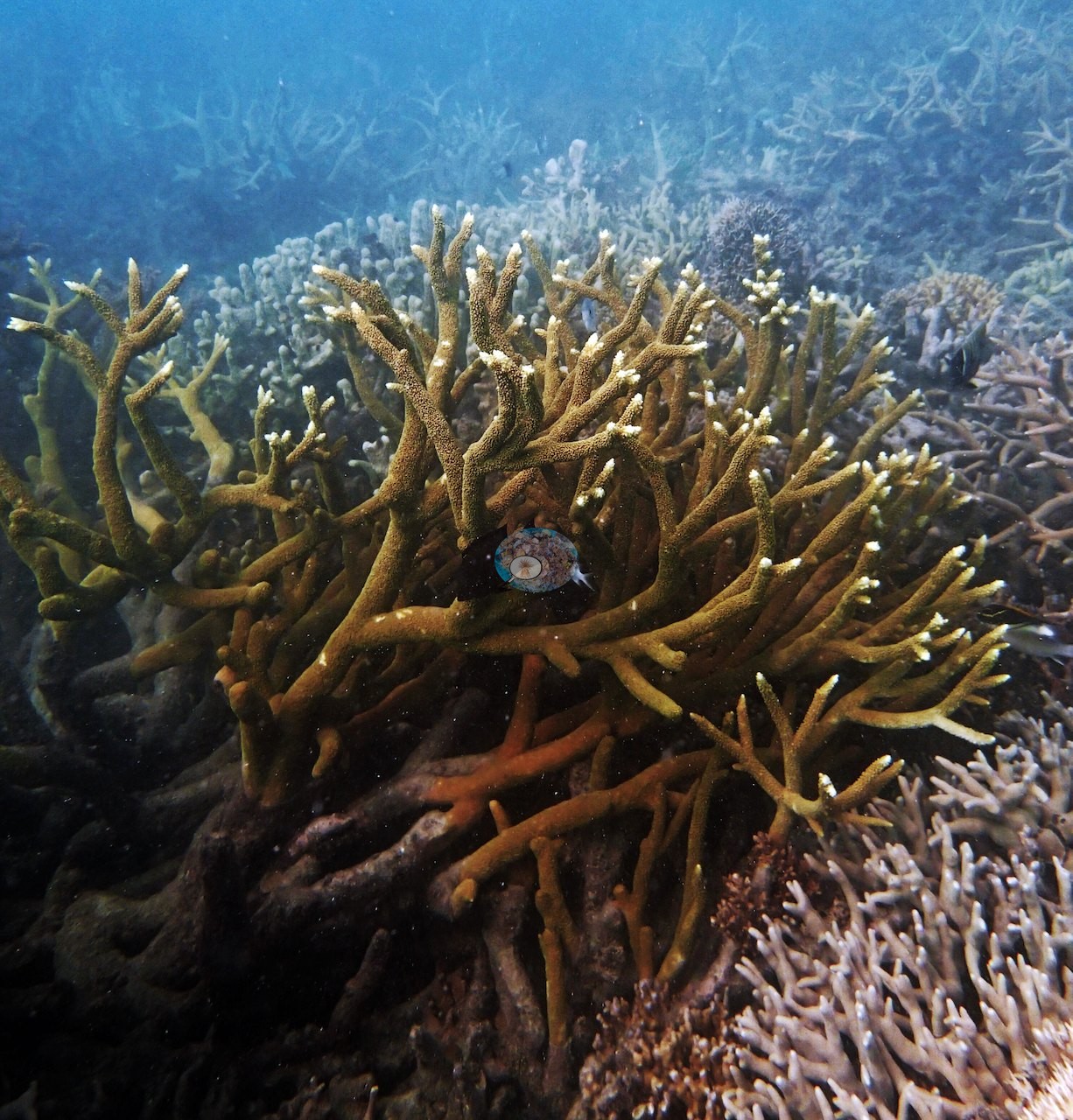
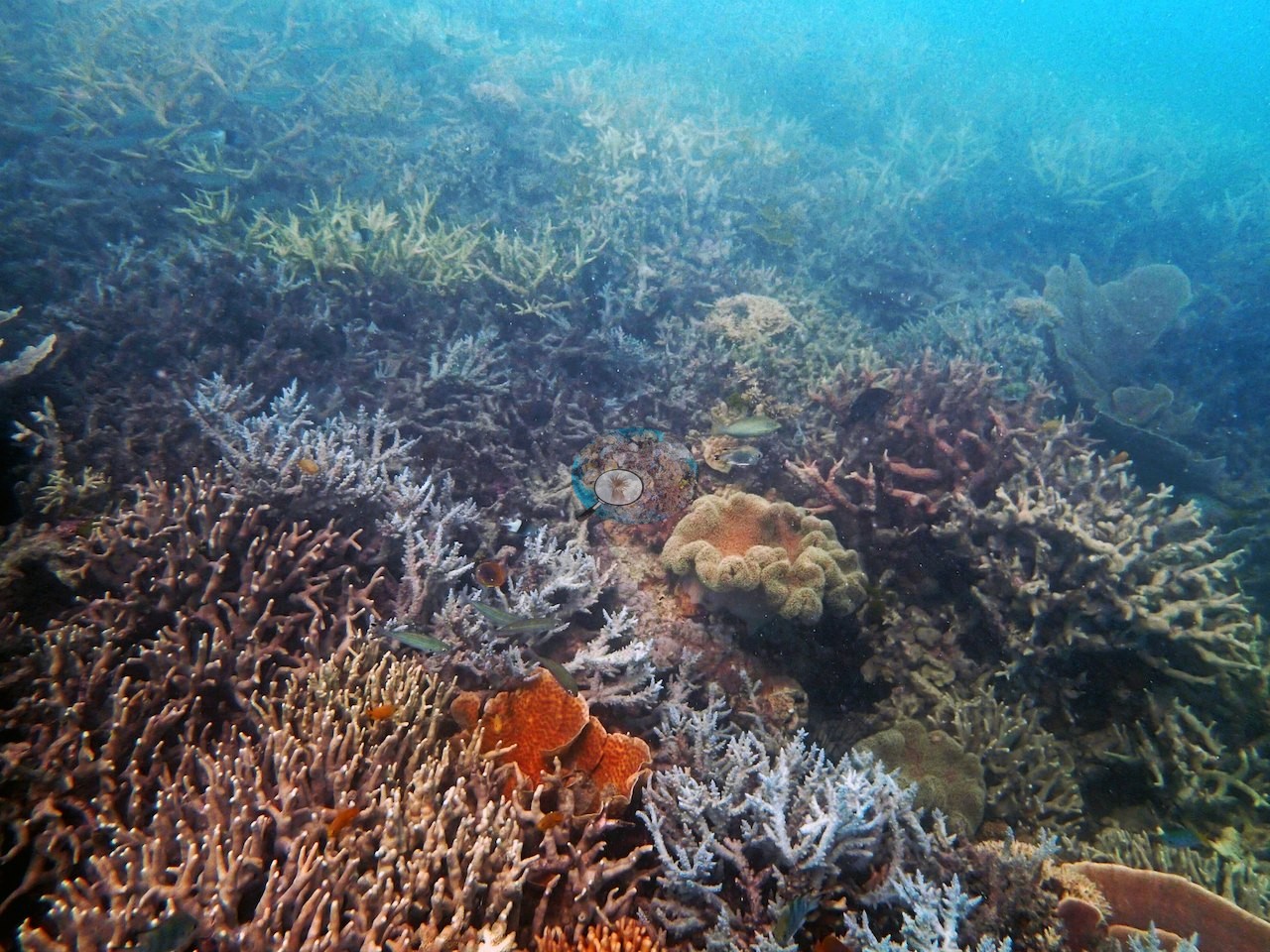
- Point-count cover measured 55%, and three frames show what that looks like from a meter away: unbroken staghorn Acropora meadows in gold and tan filling the frame and fading into green murk, branch tips still bright, with a golden colony sprawled over older brown framework in another (e.g., Image 1, Image 2, Image 5).
- Cover tapers with depth into clay sediment and rubble past 20 m, with Turbinaria gardens around 10 m and richer stretches at 9.5 m packing in 20-30 species, Stylophora pistillata, Echinopora, Leptastrea, Pavona, and Pachyseris among them.
- Transect mean 55 ± 2.5% SE (n = 2 transects; Living Oceans Foundation per-transect benthic data); the headline above is the expedition's station value.
Stressors
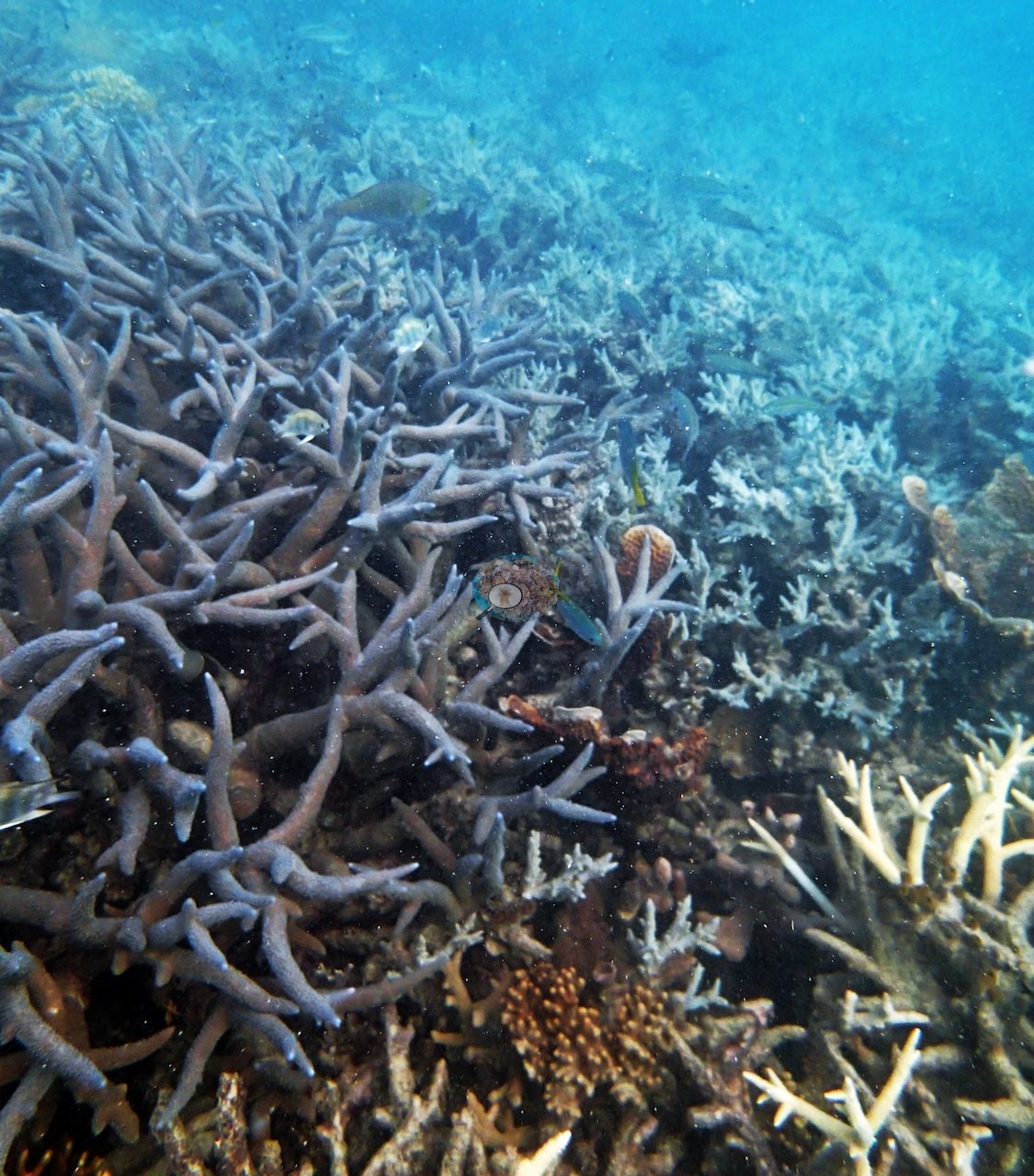
In one wide frame several staghorn colonies are bluish-white with their tissue intact, among tan and brown staghorn colonies of the same form: these colonies were bleached (e.g., Image 7).
No crown-of-thorns starfish (COTS) or other corallivores evident.
Comparisons with other data
No prior survey data from this site. If you would like to share yours, please email us.
Other notes
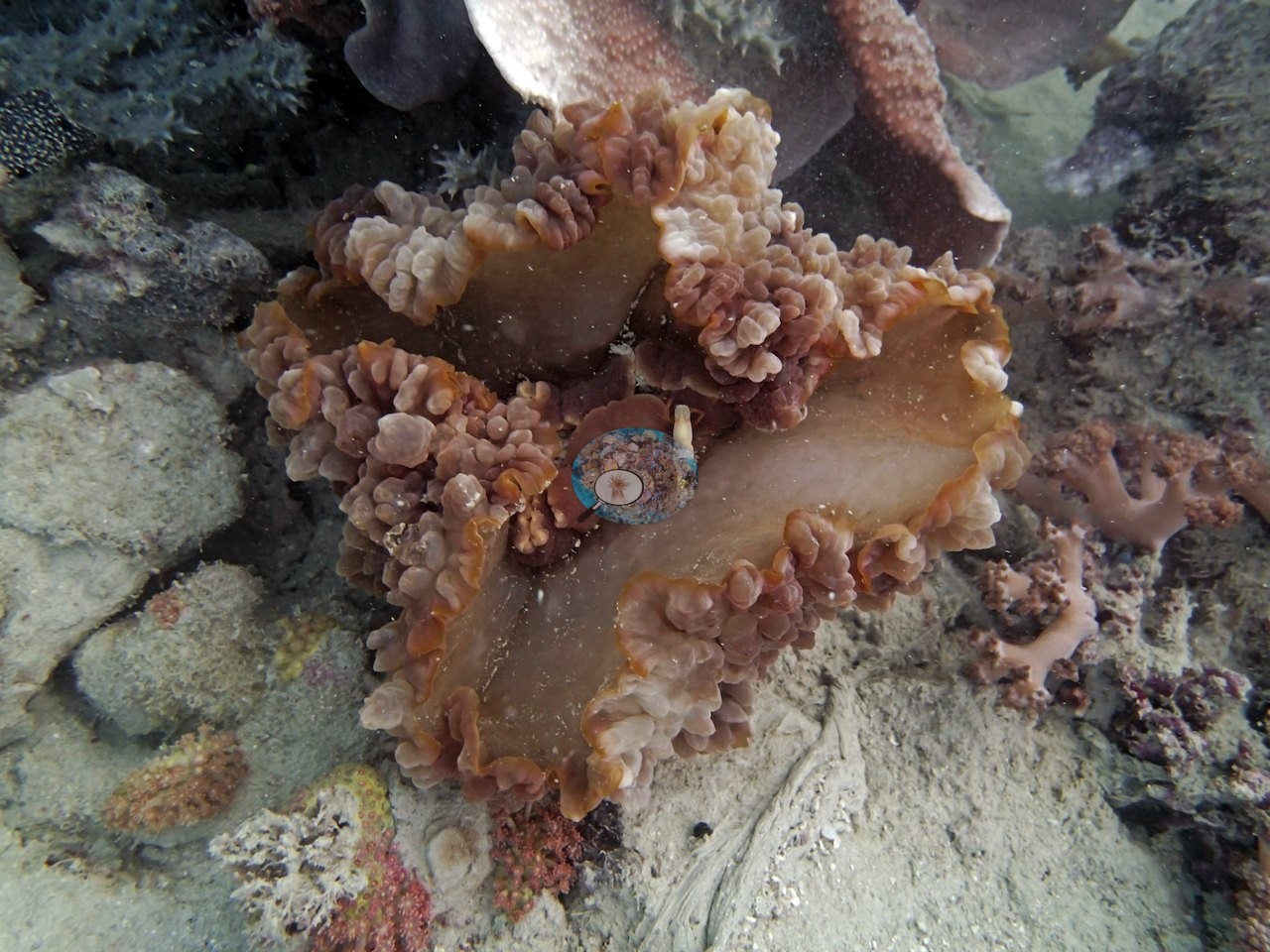
The dive's strangest moment came when Anderson flipped a table coral and found beneath it what he called a giant glob of semi-hard mucus.
Data & links
- Download benthic survey data (CSV) ↗
- Download all LOF-GRE data (933 sites) ↗
- Photo portfolio ↗
- Coral Reef Diagnostics country page ↗
All images from Coral Reef Diagnostics. Data are from the Khaled bin Sultan Living Oceans Foundation Global Reef Expedition and Coral Reef Diagnostics.
 © Coral Reef Diagnostics.