
Part of the regional summaries: Australia (GBR) - Far North: Pink stations (Preservation Zone reefs) and Australia (GBR)
More info
Far Northern GBR (NOAA CRW virtual station)A silty inshore flank of Parkinson Reef whose coral is concentrated in the 4-7 m band, over 50% live cover of Isopora, Diploastrea, and Pocillopora, above deeper Pachyseris plates and sand. The headline was a giant clam some 1.5 m across, while two photographs show white coral (bleached or freshly dead) that his notes do not mention. Surveyed on the Living Oceans Foundation's Global Reef Expedition.
Nine other CRD dive sites within 5 km shown in orange — click a marker to open its page.
🗺 Detailed map of the Global Reef Expedition dive sites, Parkinson and Monkman Reefs, northern Great Barrier Reef (Khaled bin Sultan Living Oceans Foundation; opens in a new window)
11 of the 30 photographs on this page are shown beside the text that discusses them under "Site description" below.
Site description
Setting
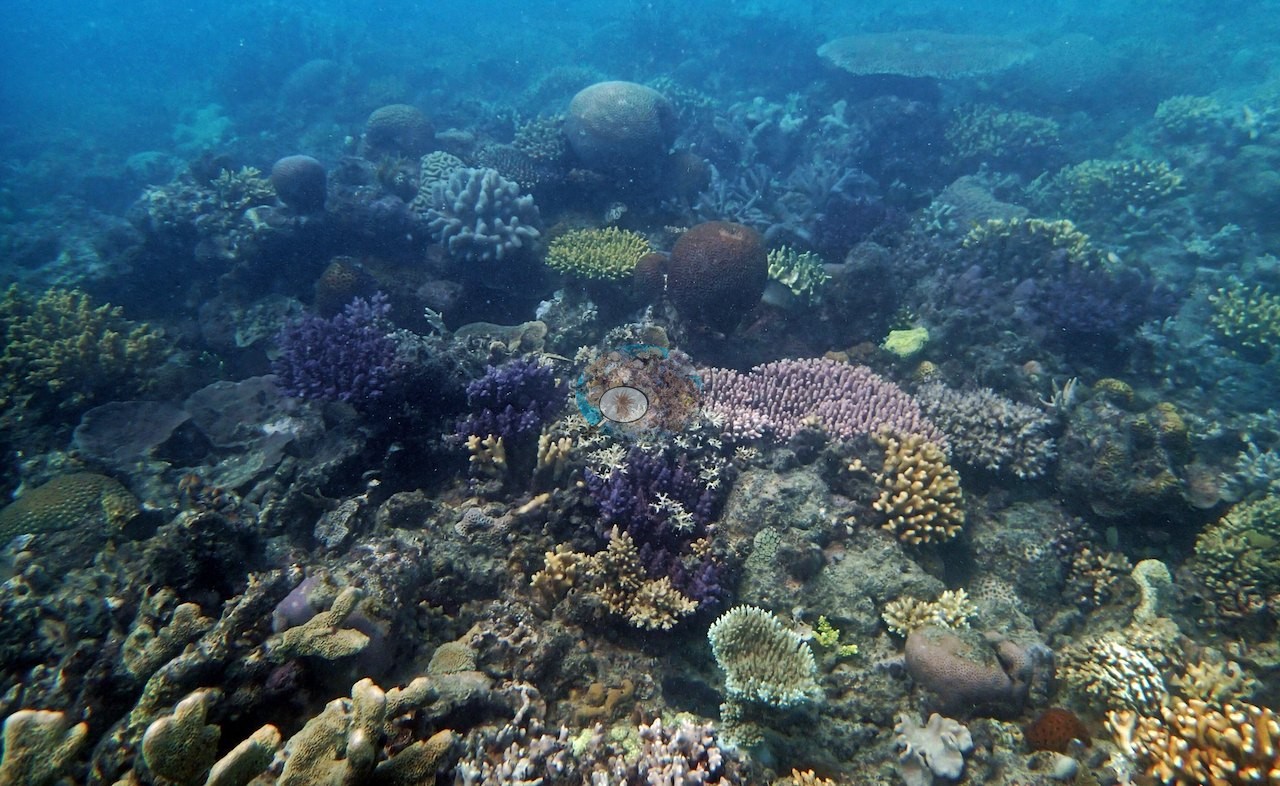
On this inshore, midshelf flank of Parkinson Reef, visibility was poor at 2-4 m and everything wore a fine coat of silt, yet the reef held real surprises. This is a Preservation Zone.
General benthic features
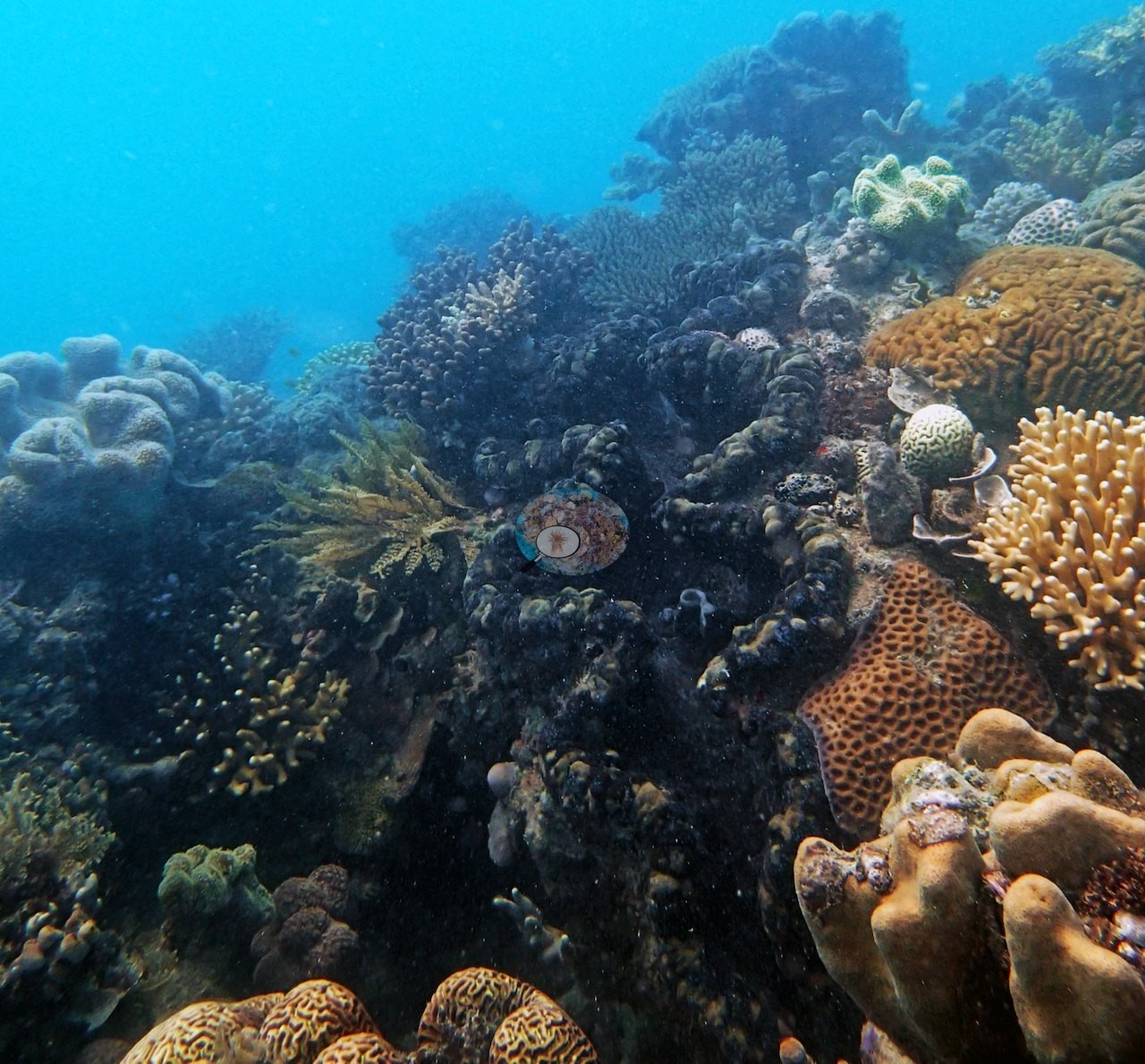
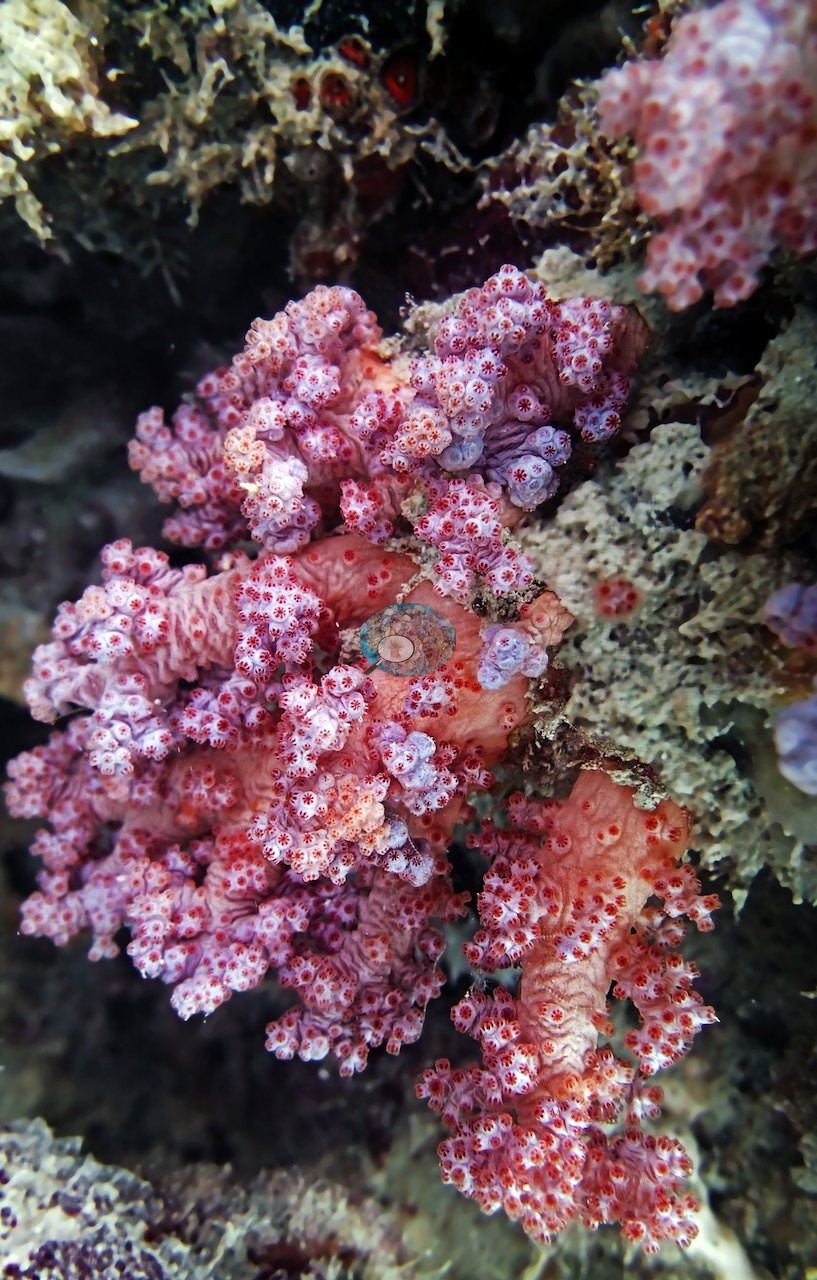
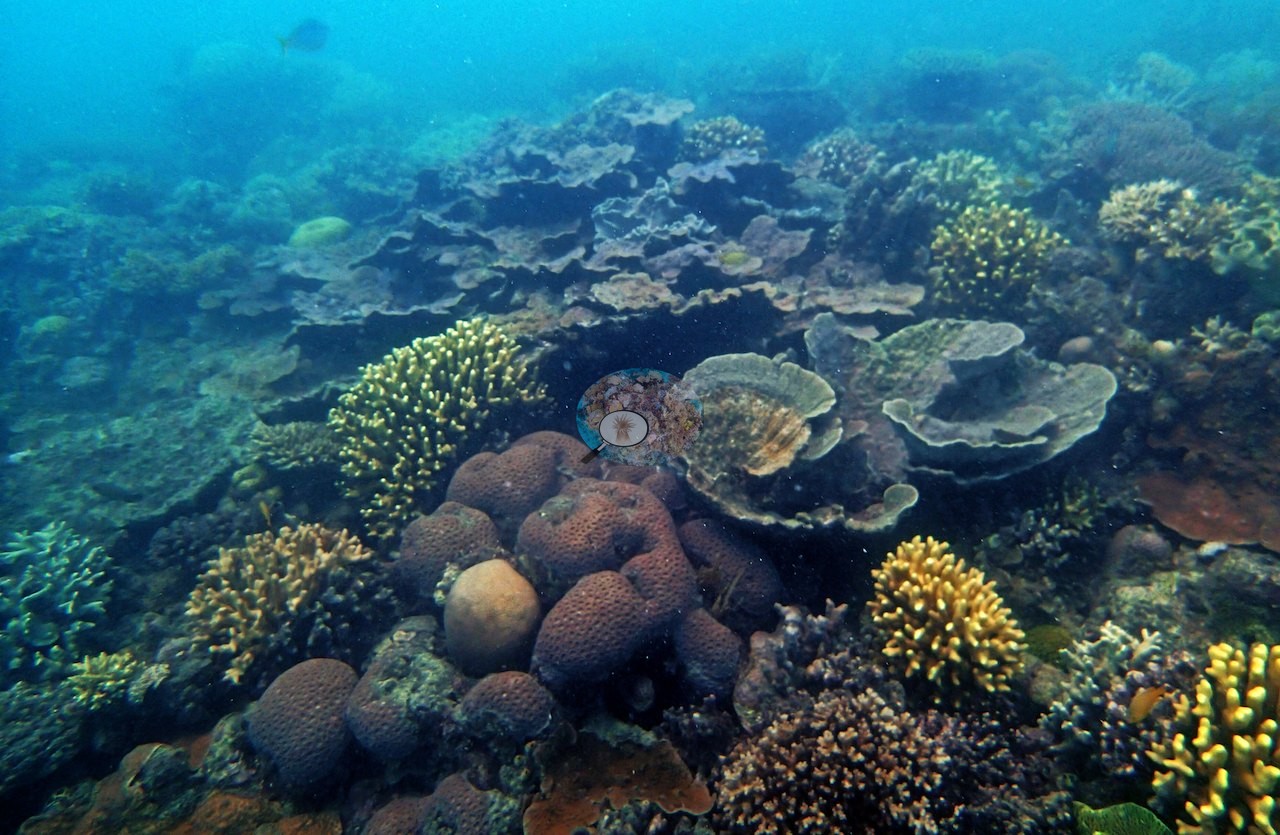
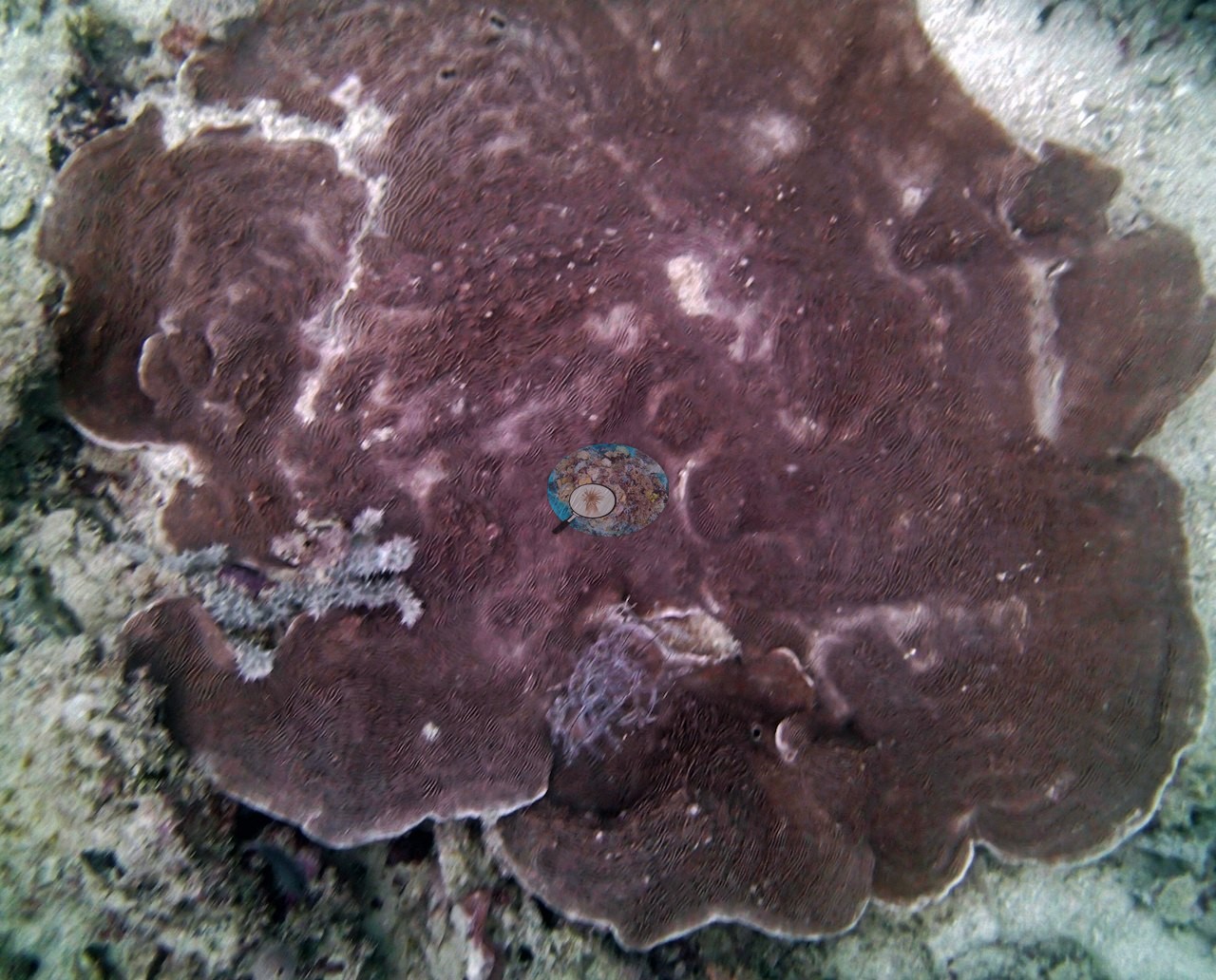
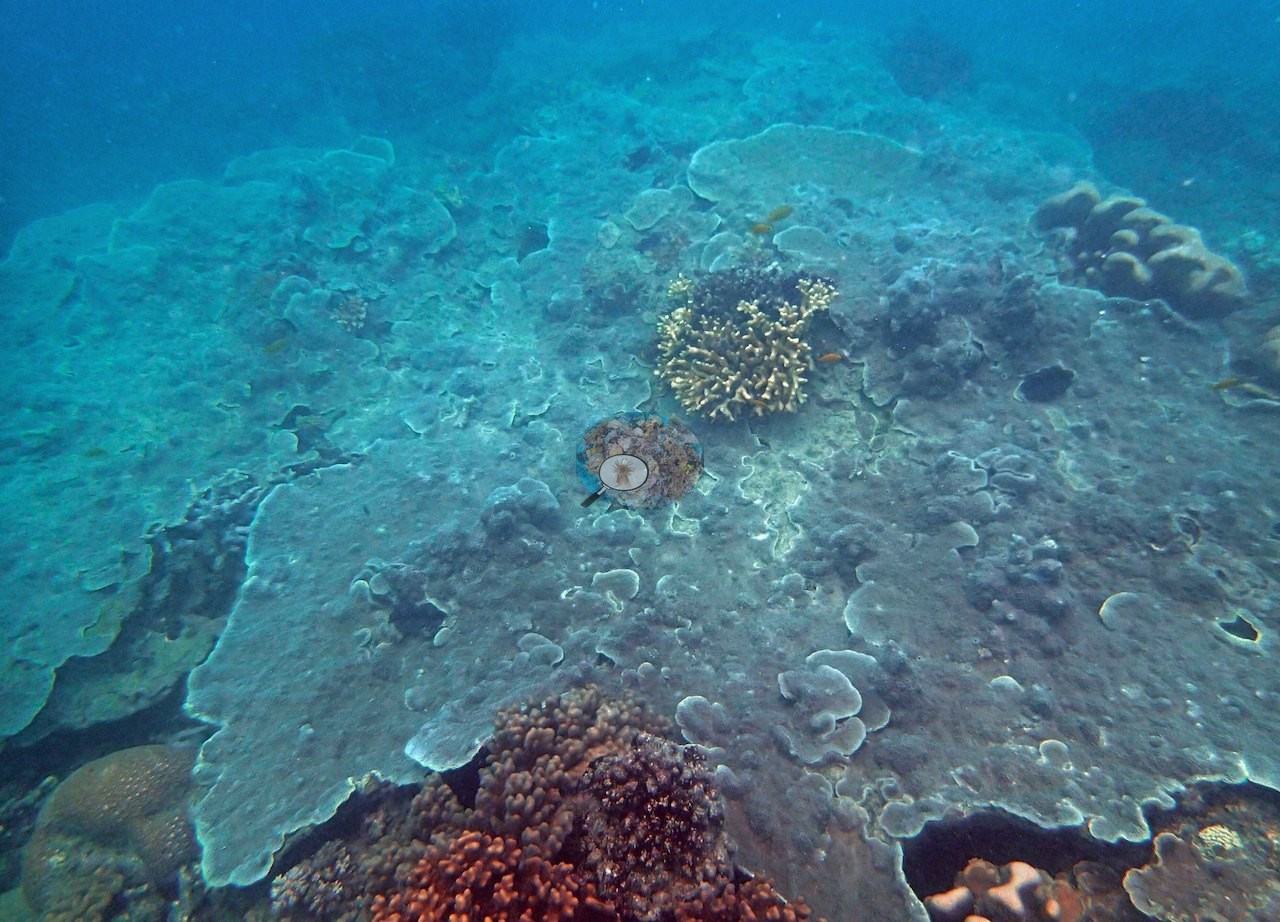
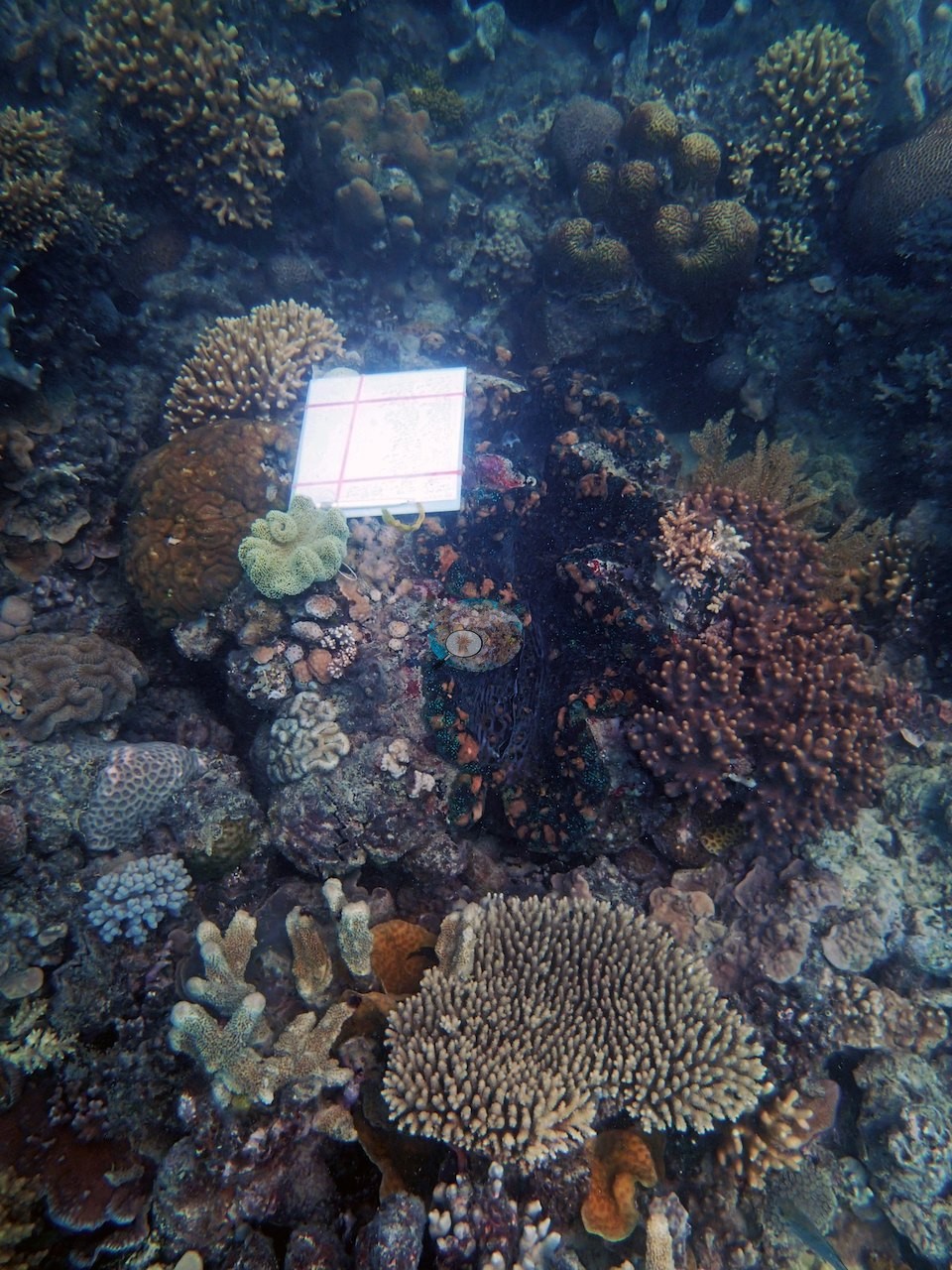
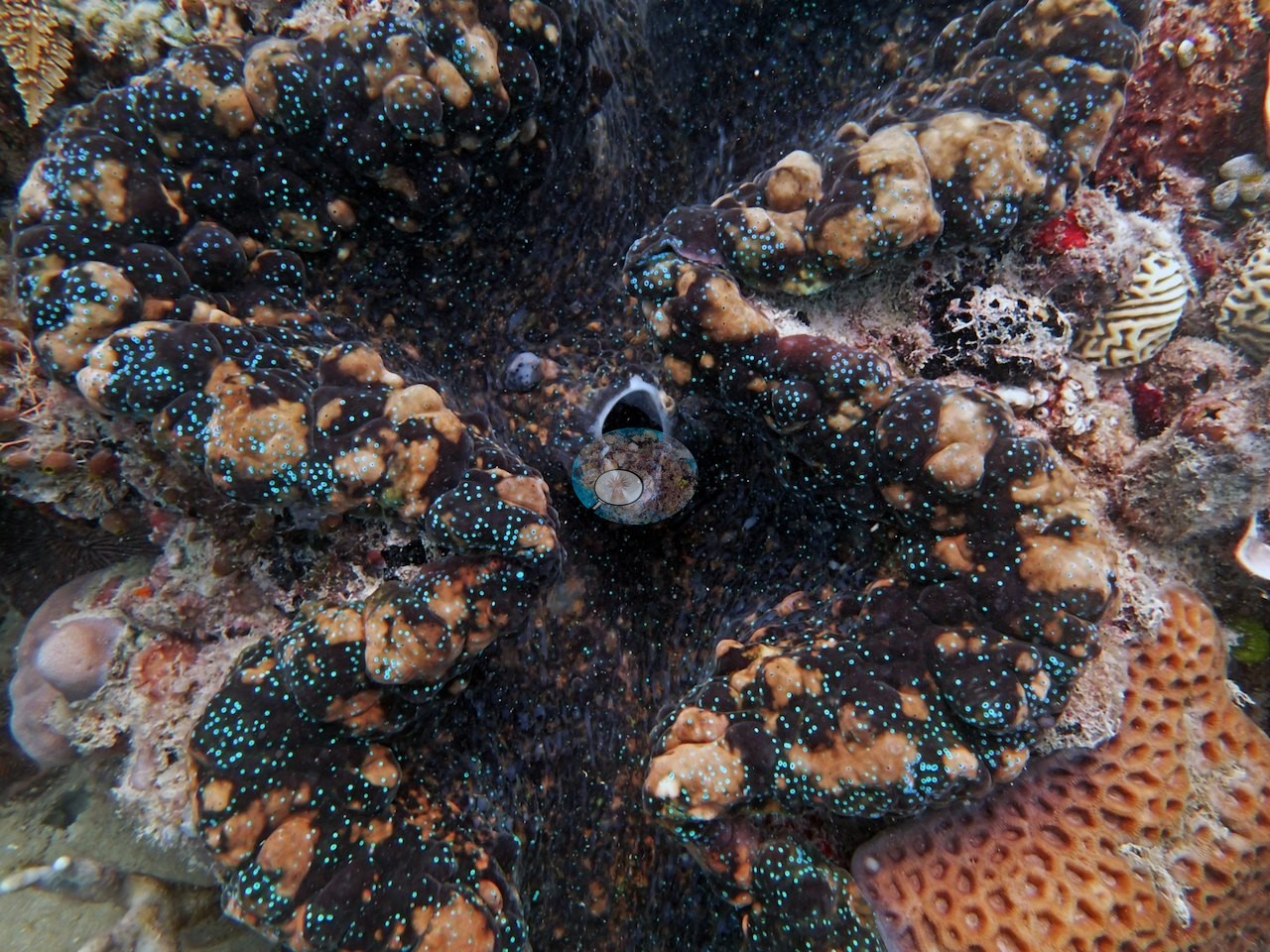
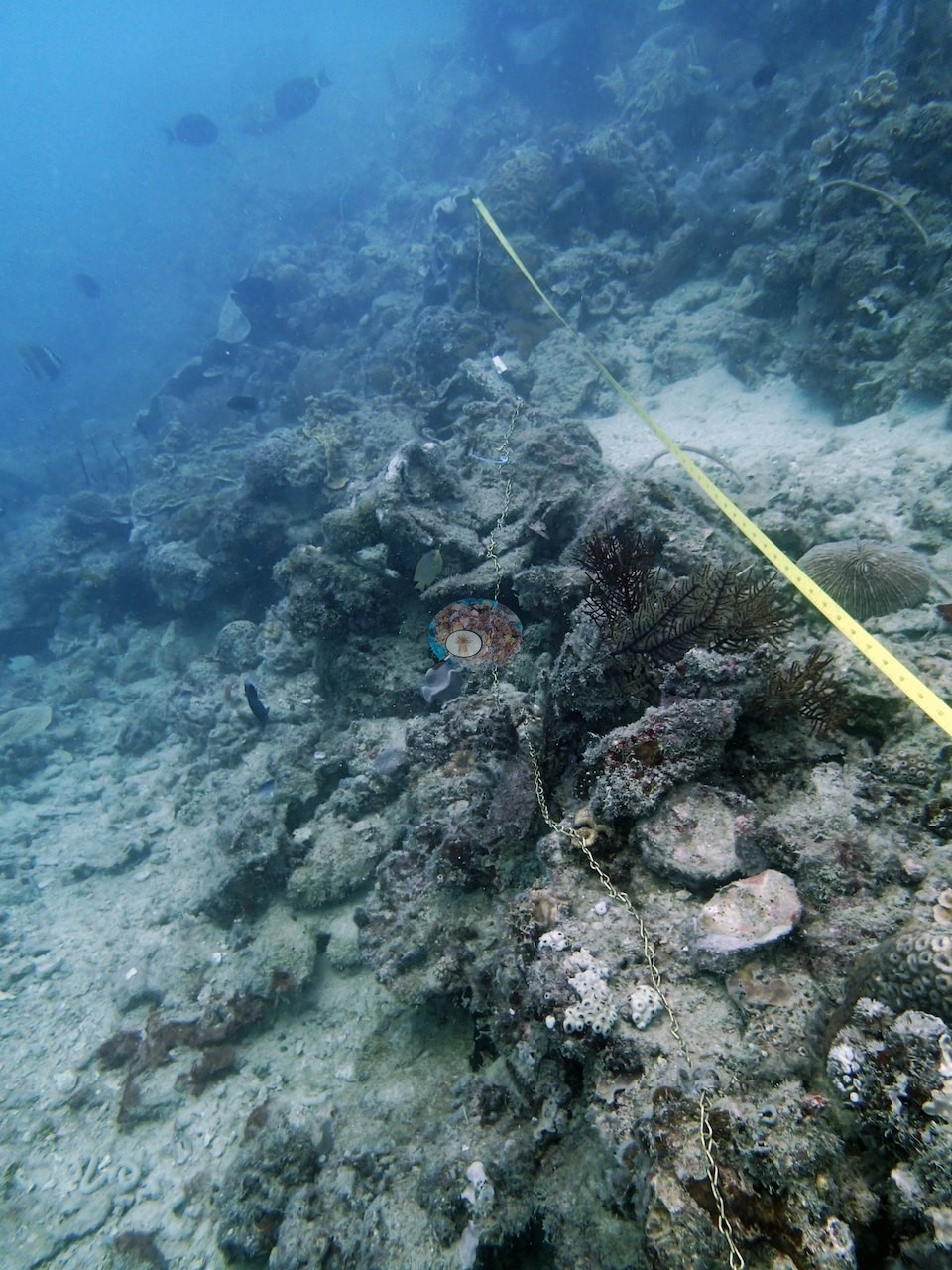
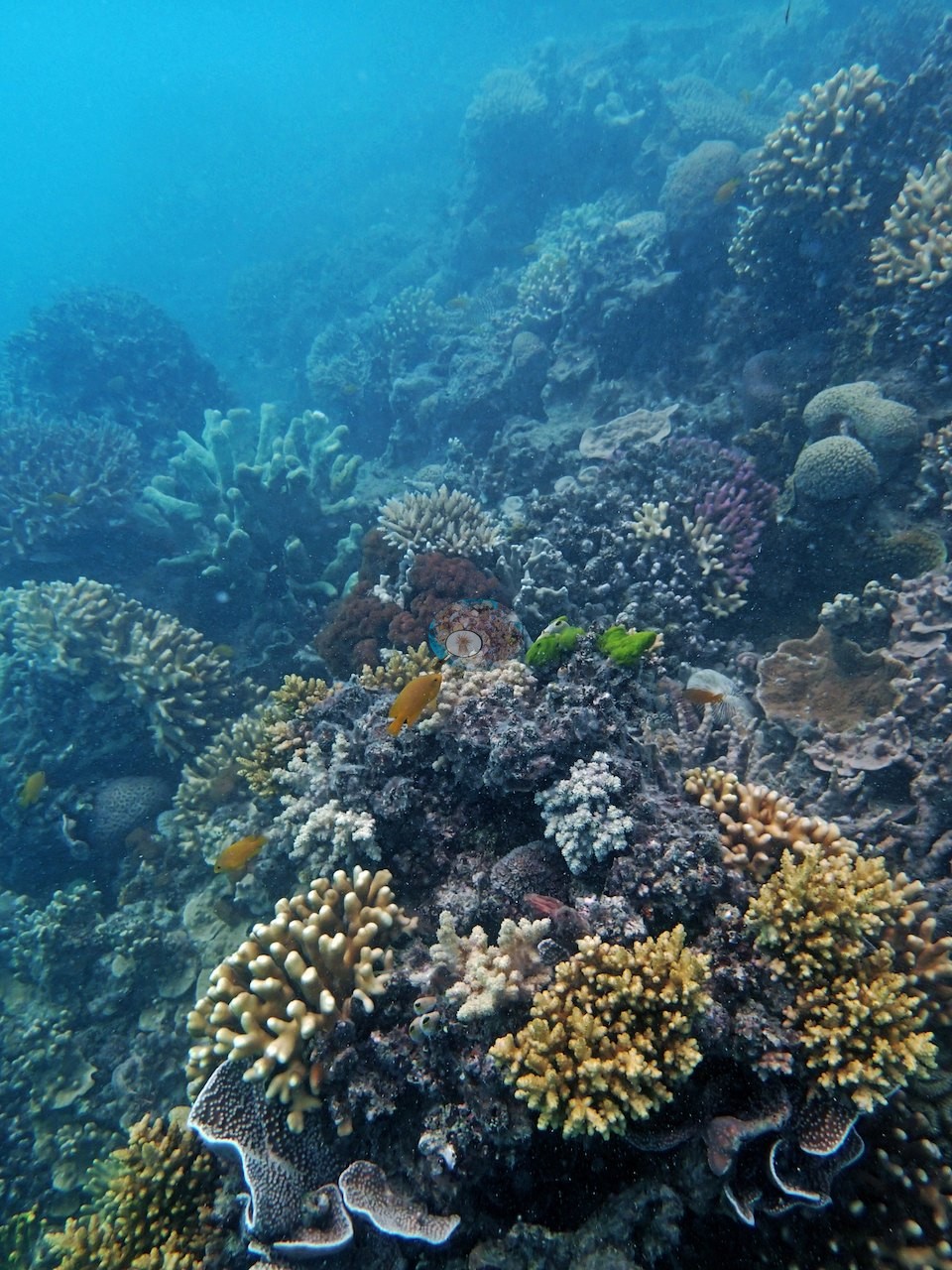
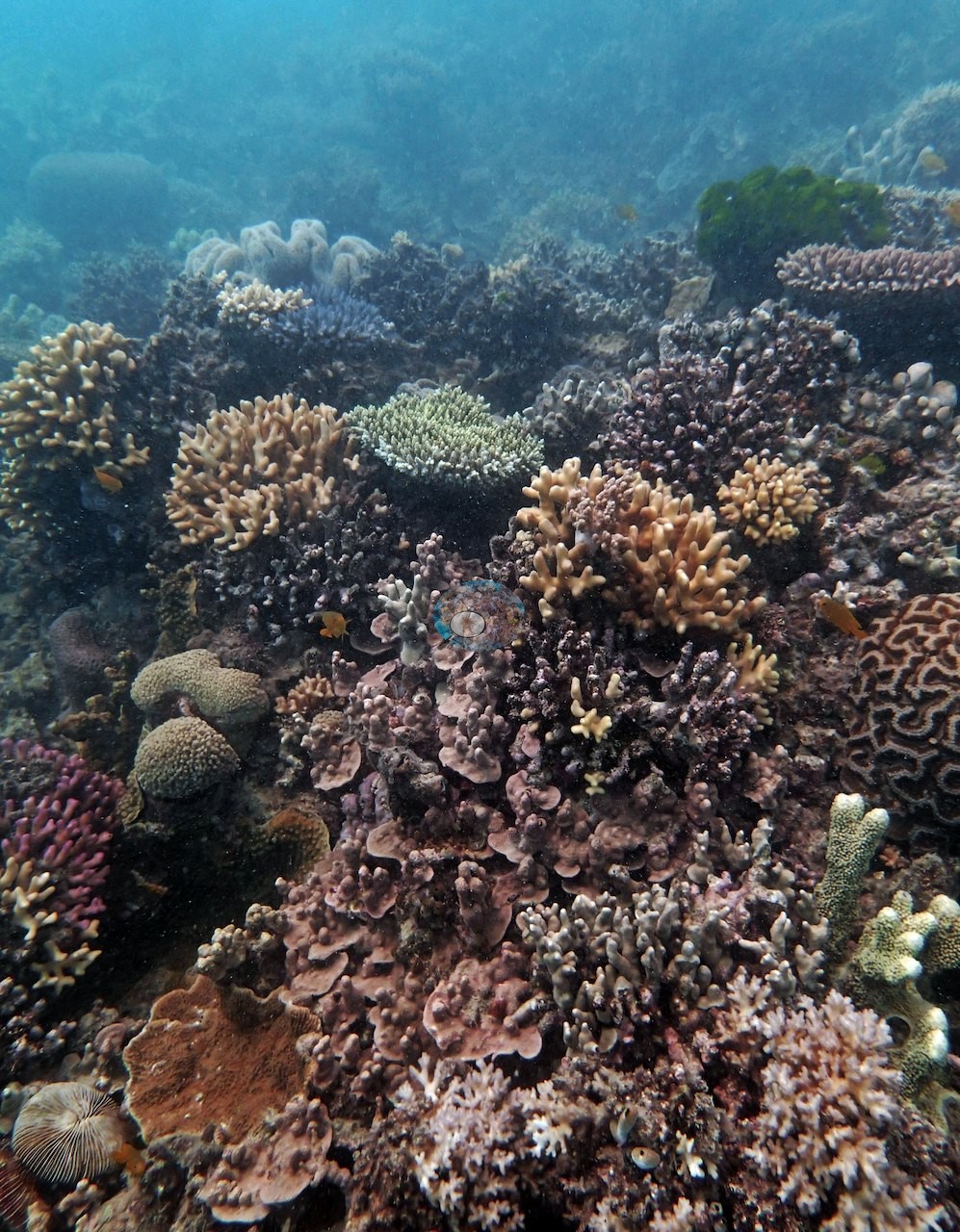
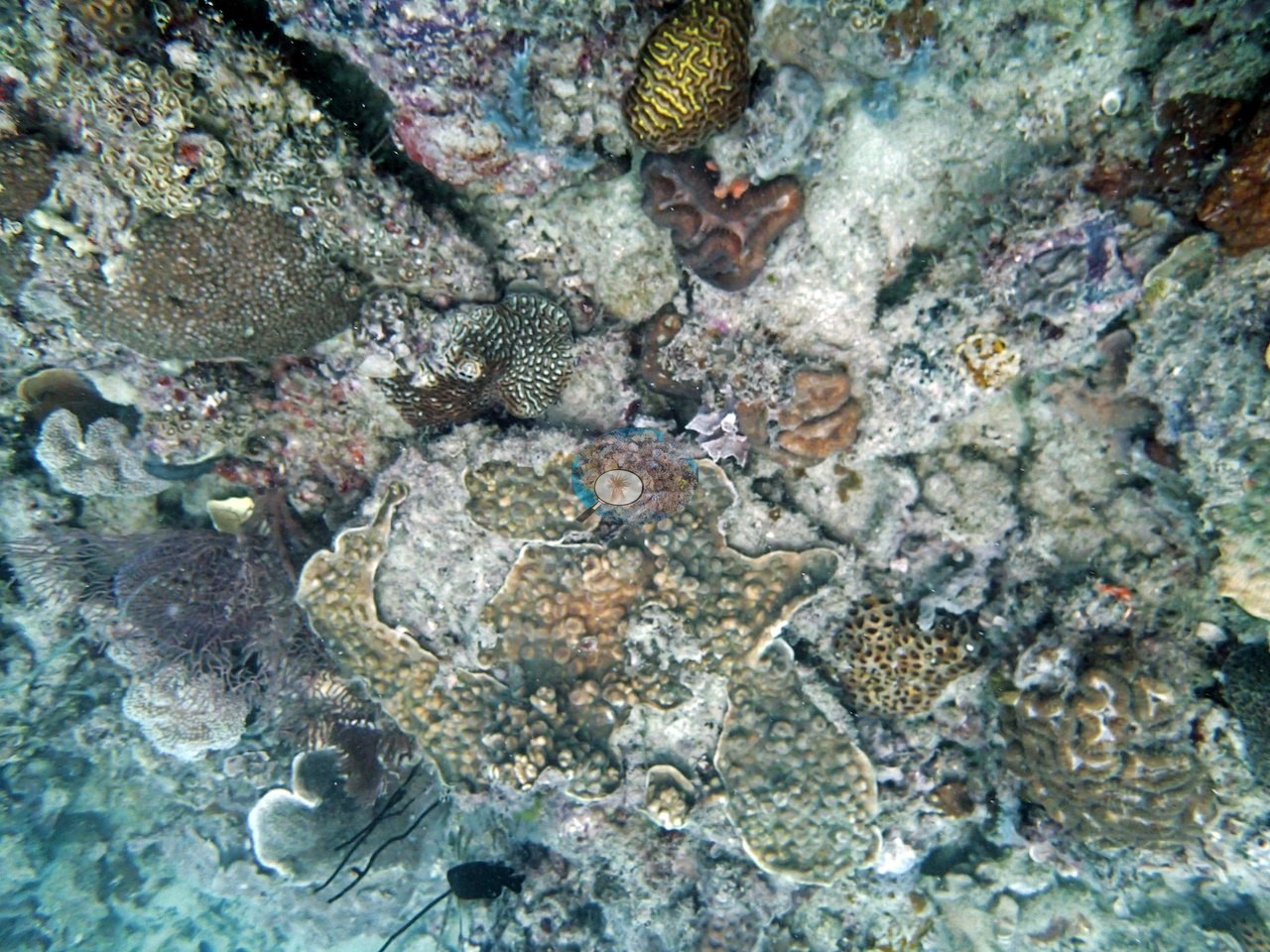
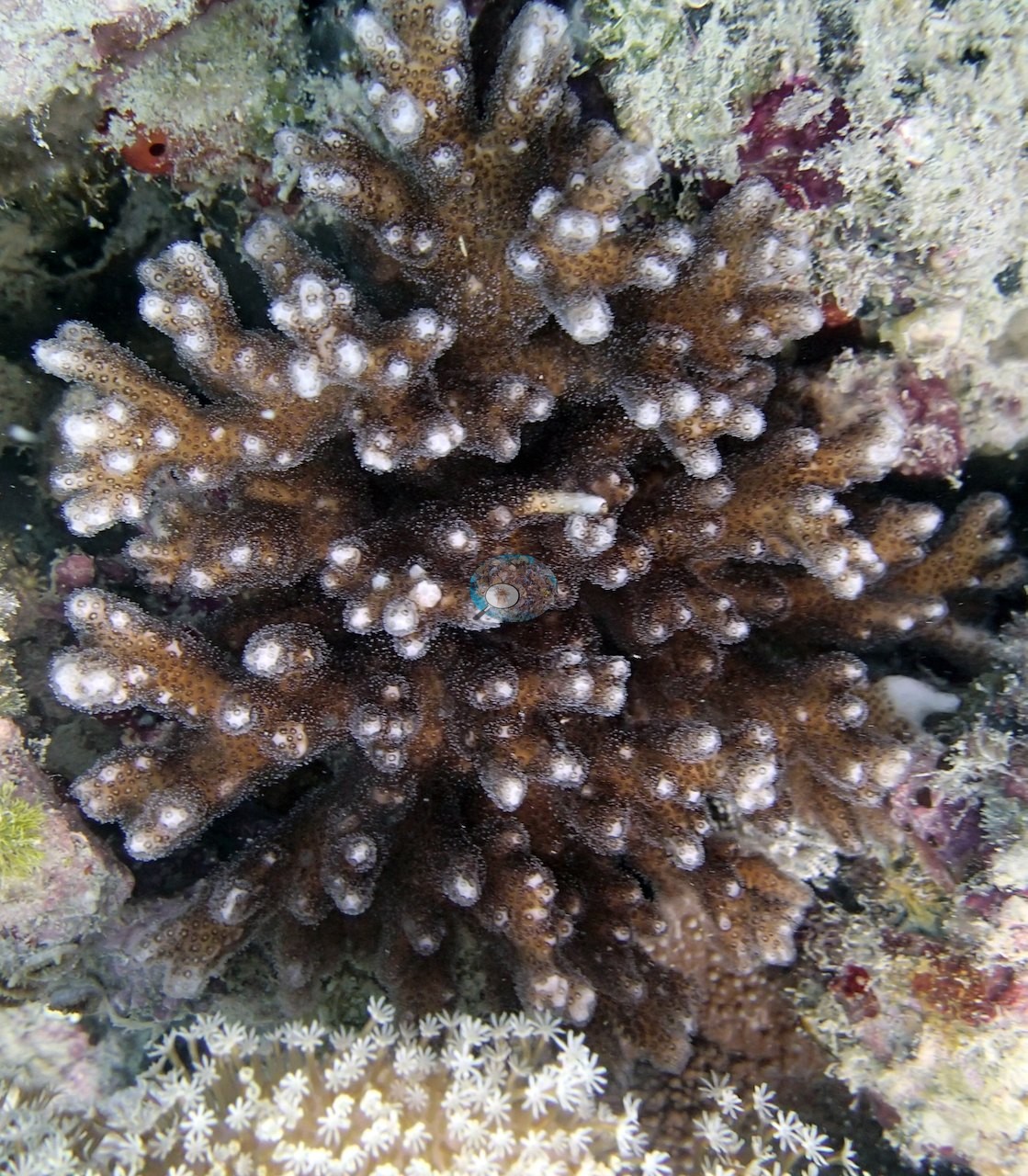
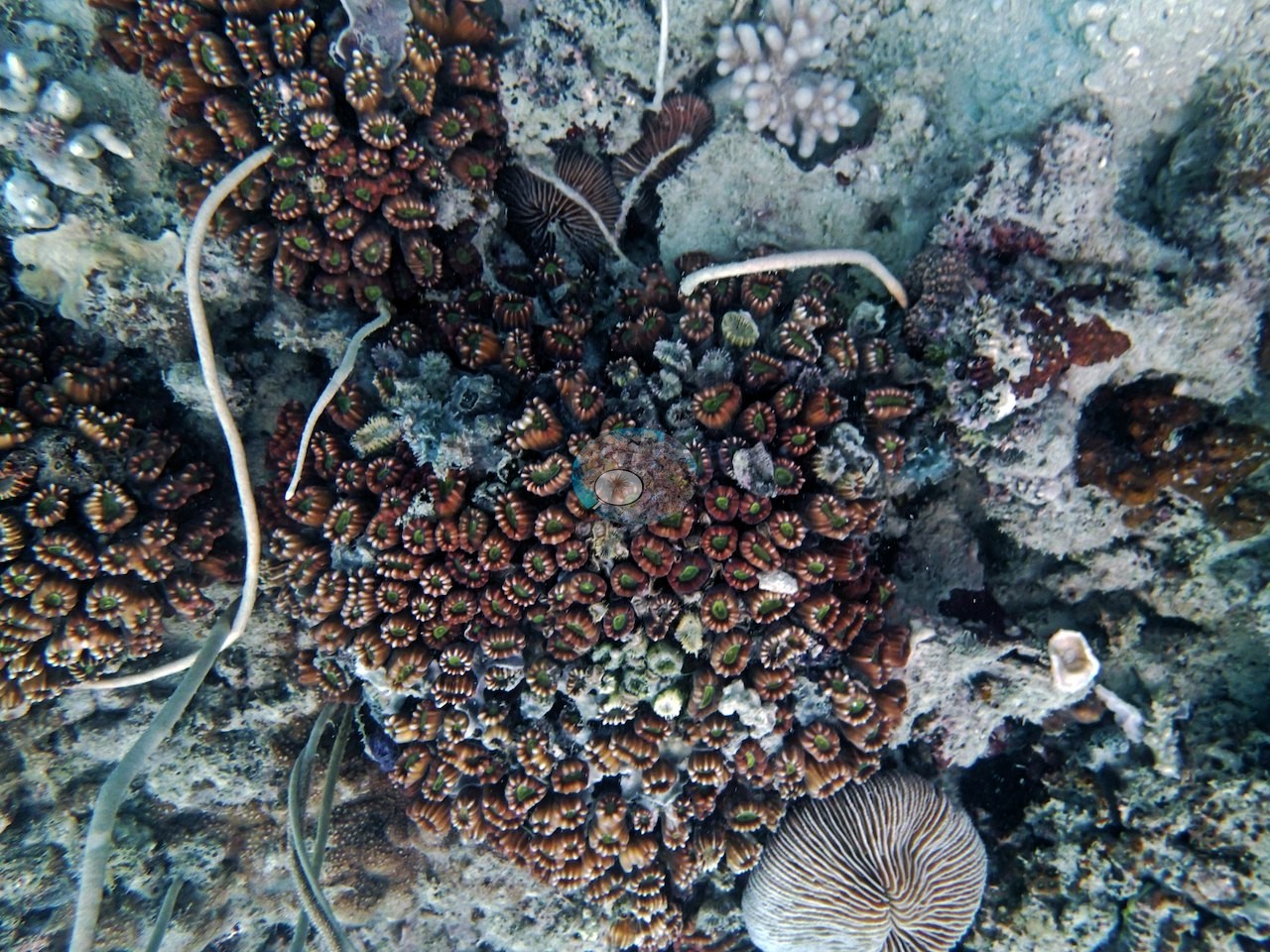
The photographs come from that shallow band: a murky panorama of mustard brain corals, mounding Porites, yellow branching fire coral, and honeycombed massive colonies crowded together, and close frames of a healthy white-tipped Acropora and a colony of separate cupped corallites with emerald centers, a mushroom coral beside it (e.g., Image 1, Image 2, Image 4).
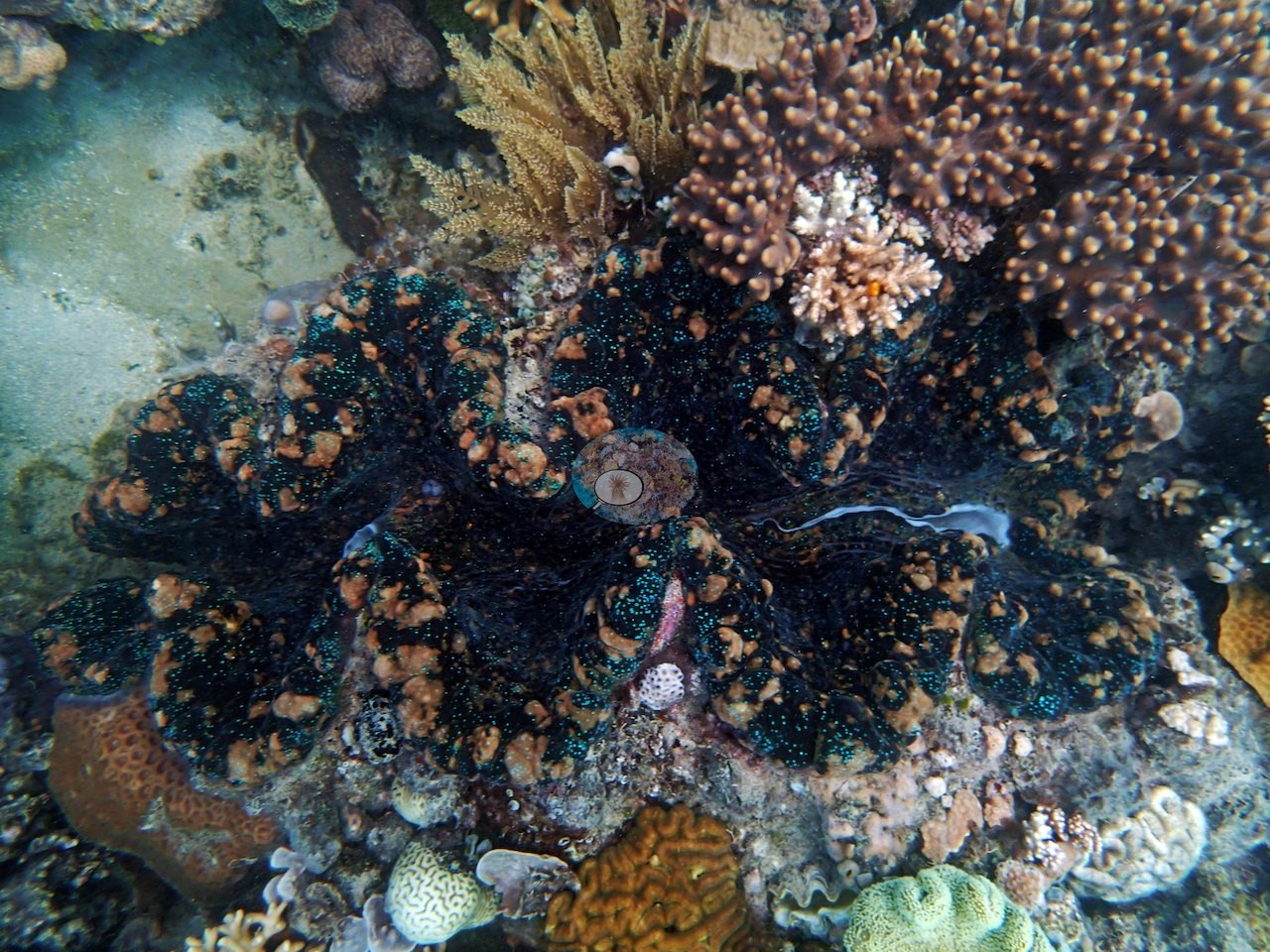
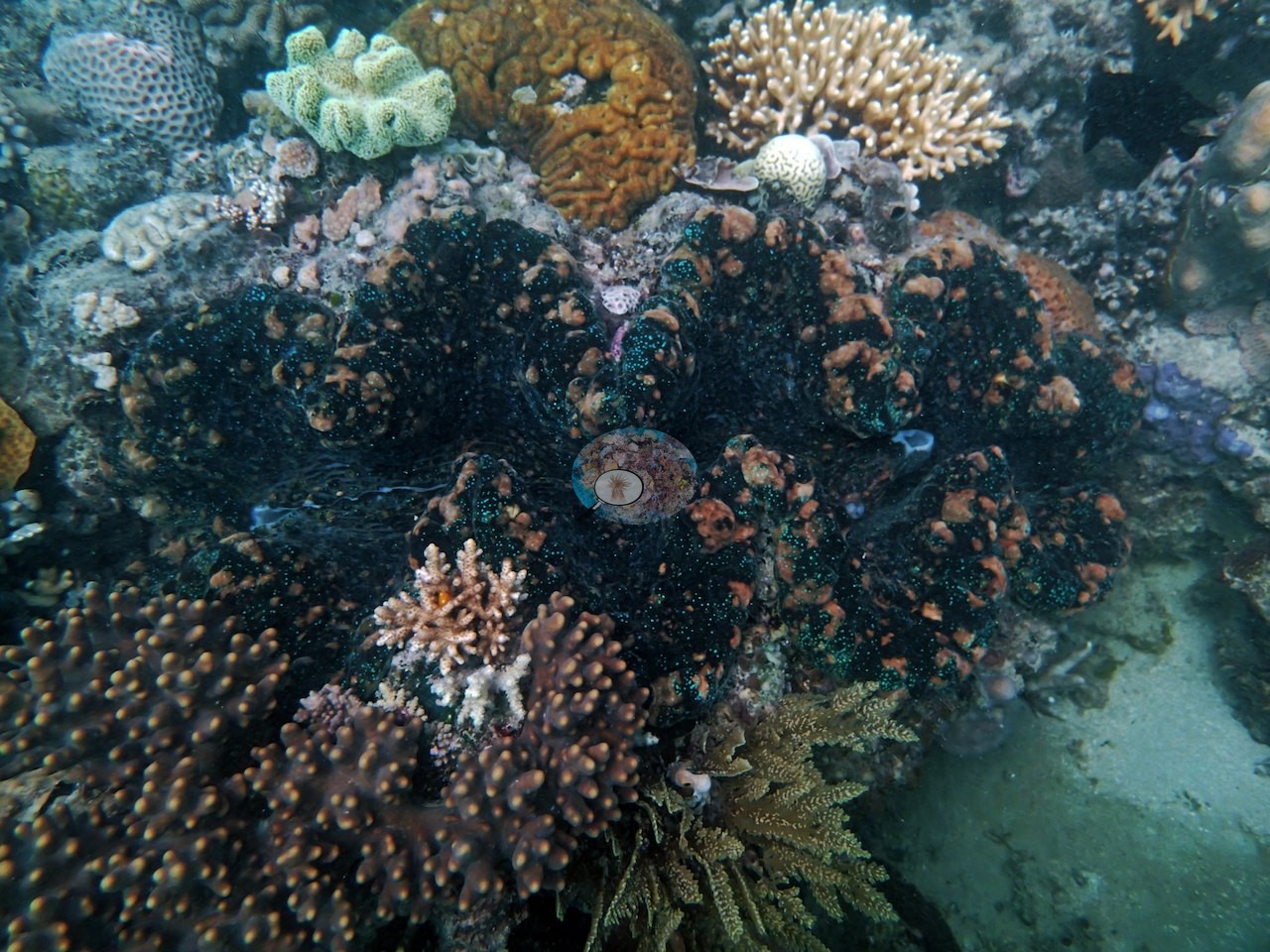
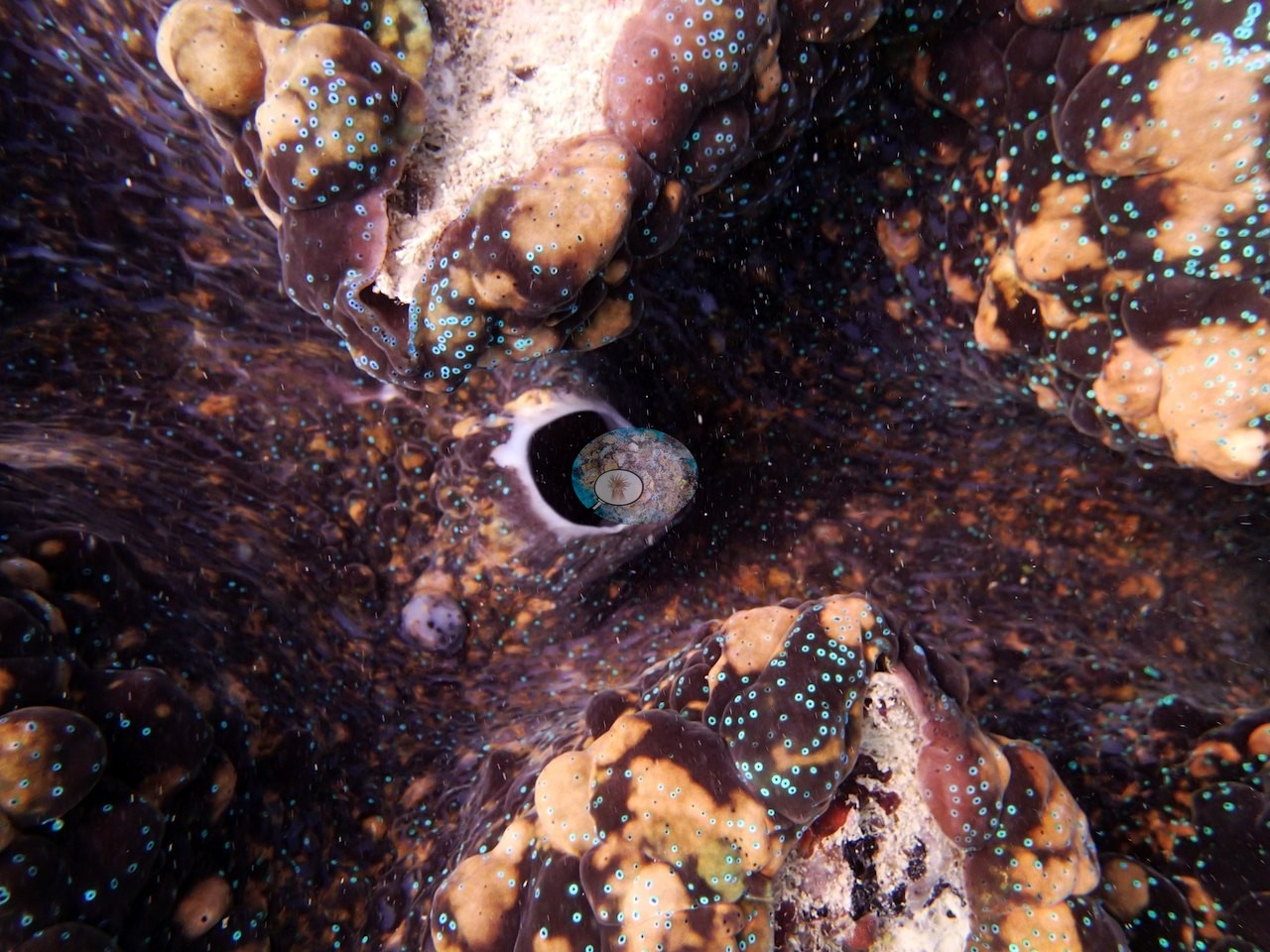
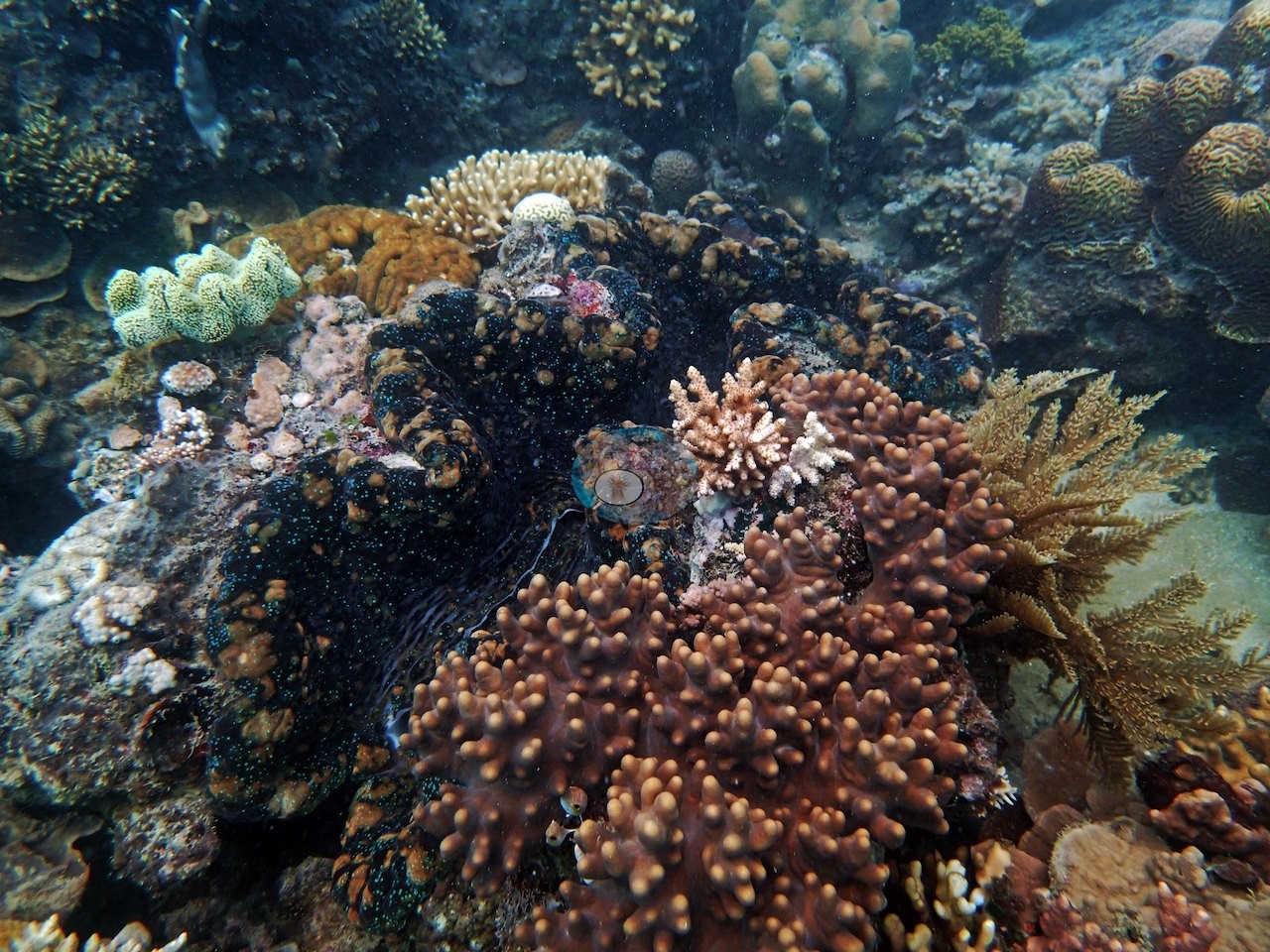
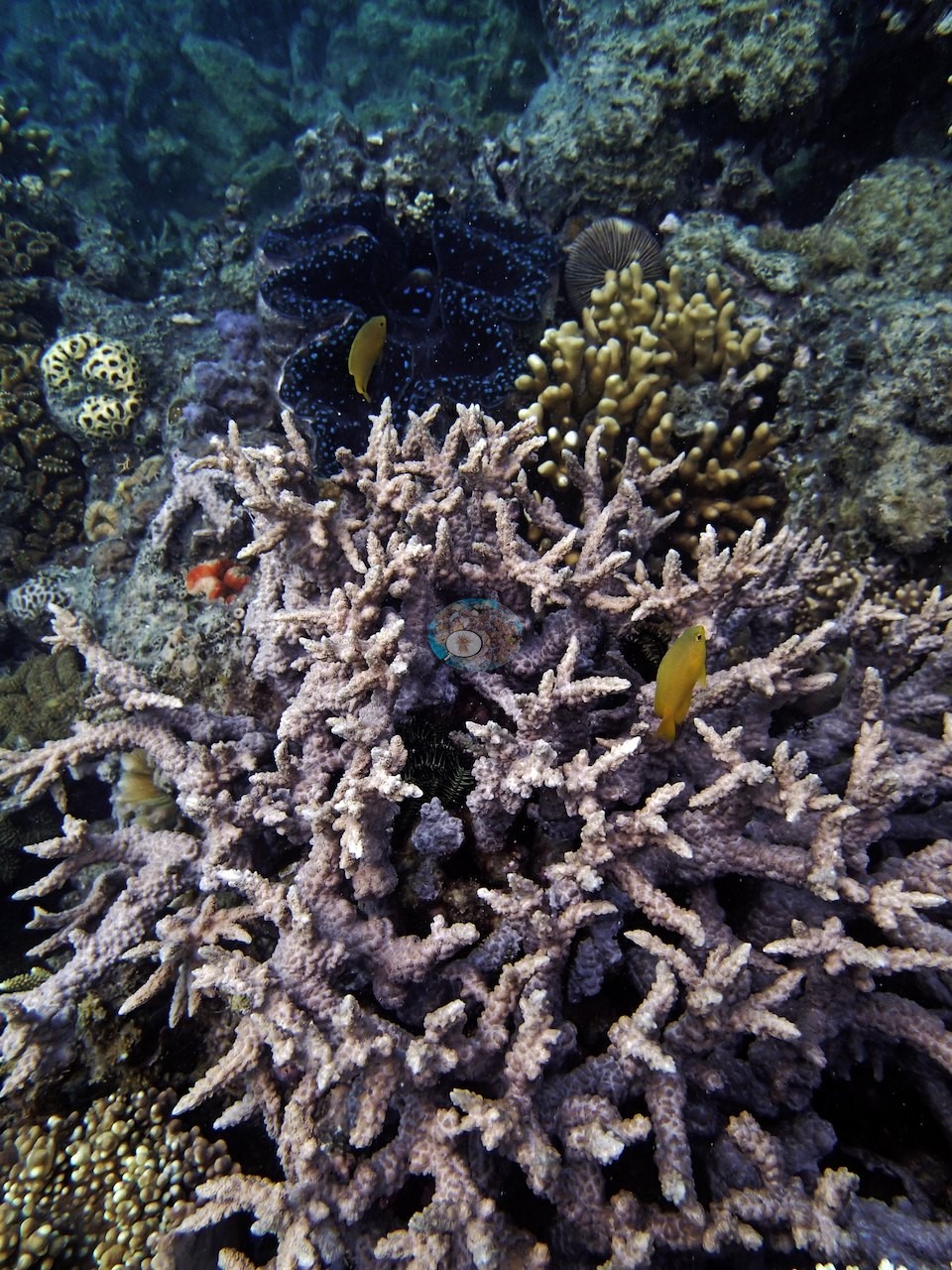
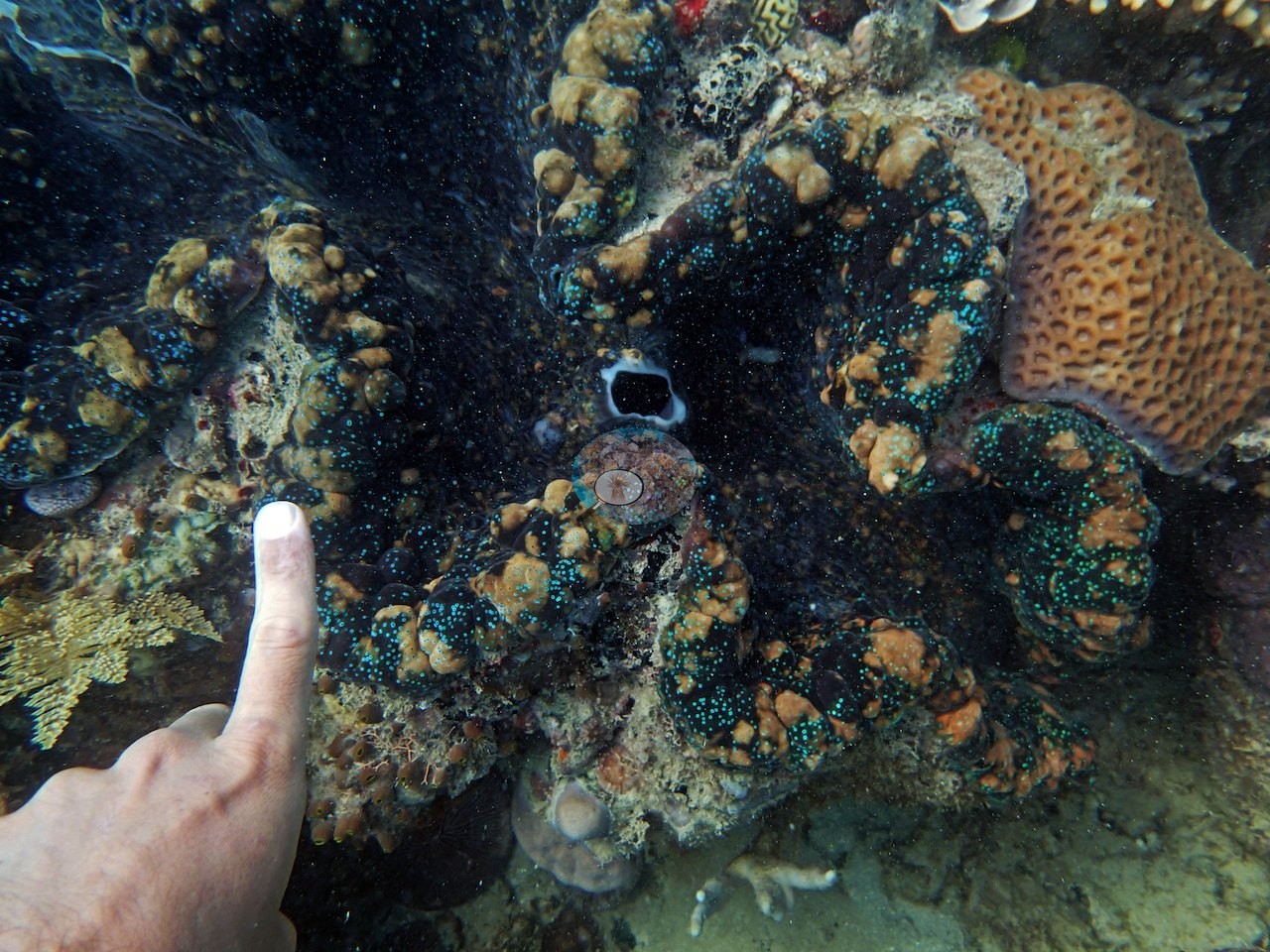
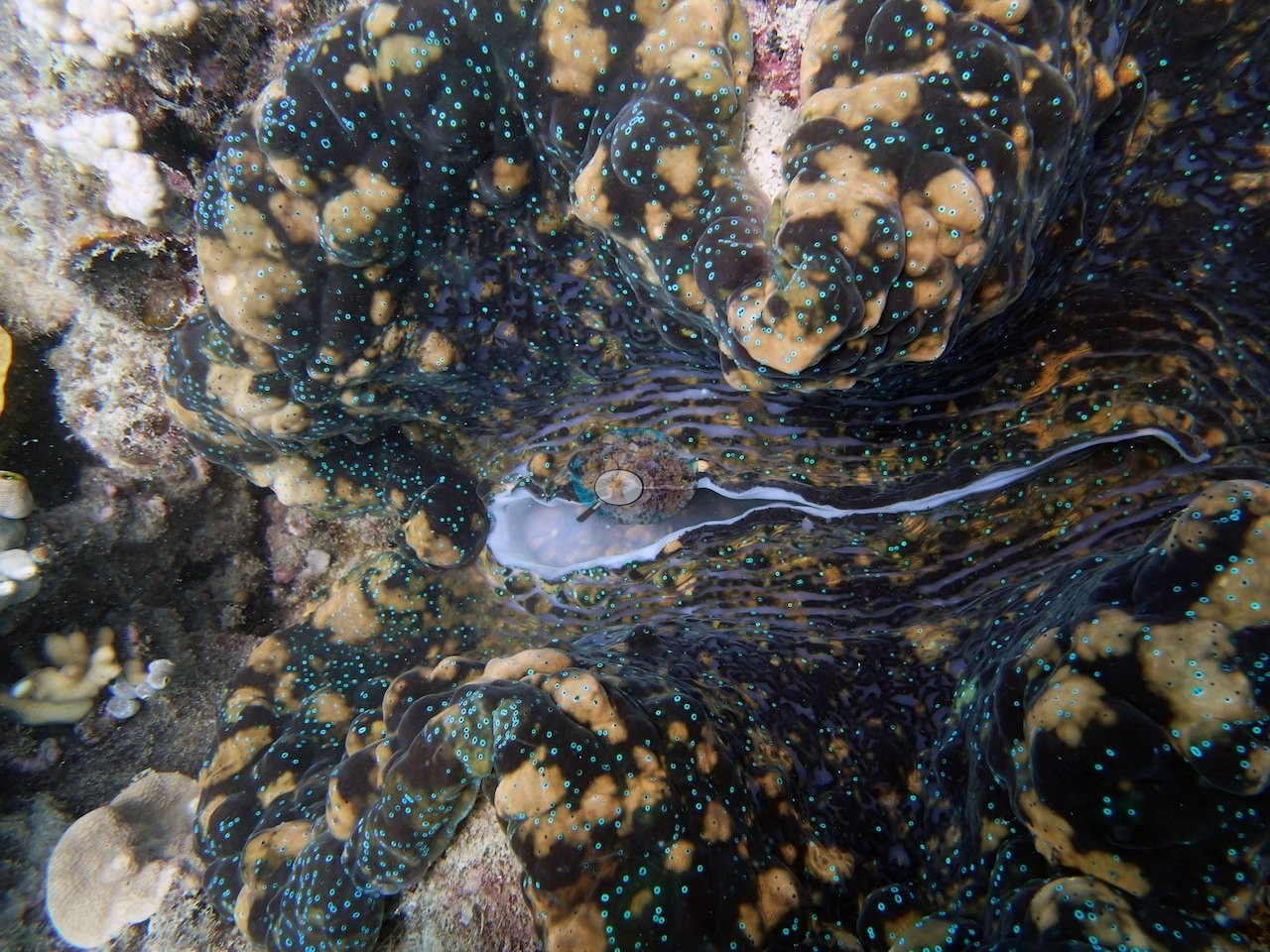
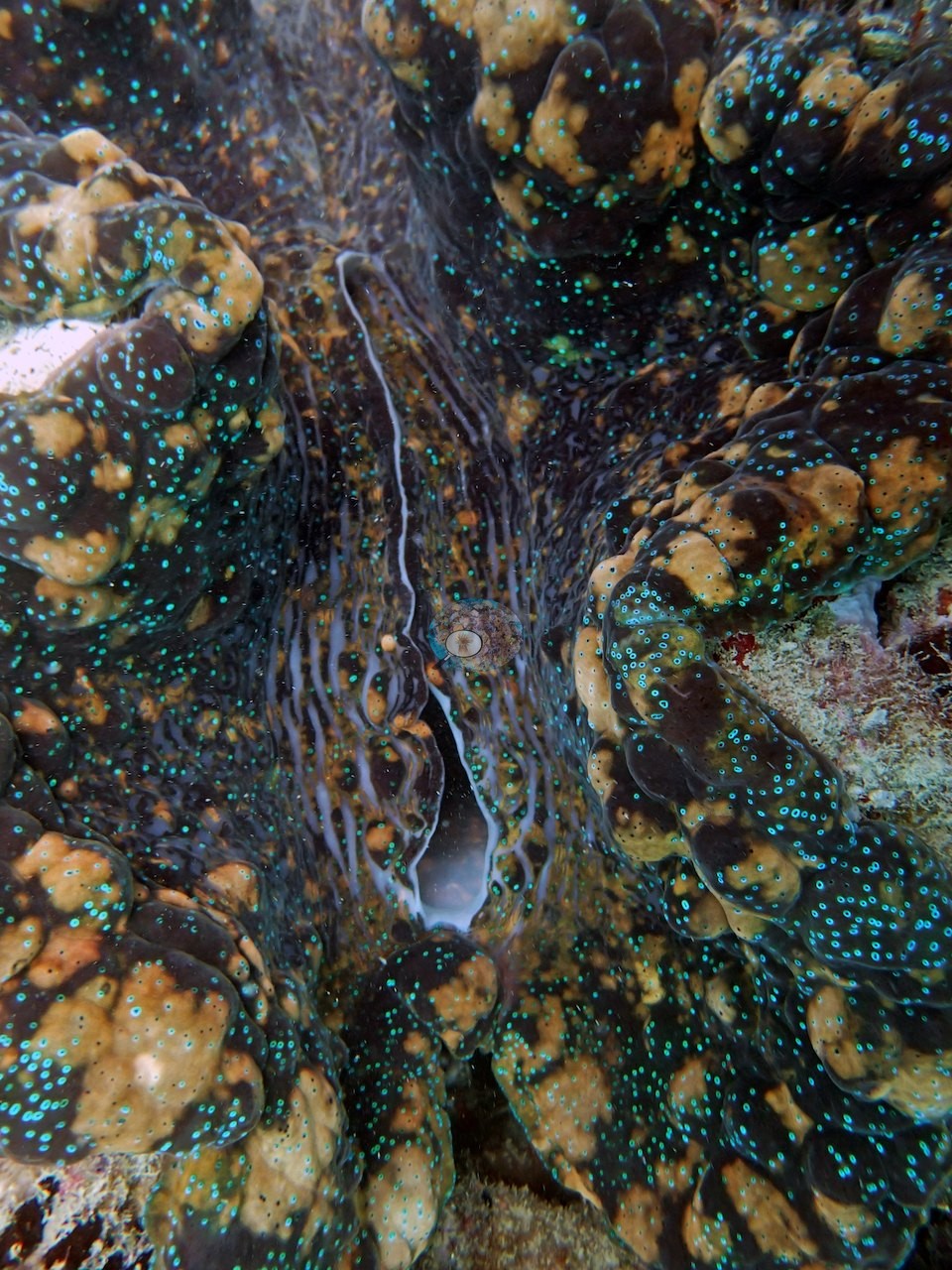
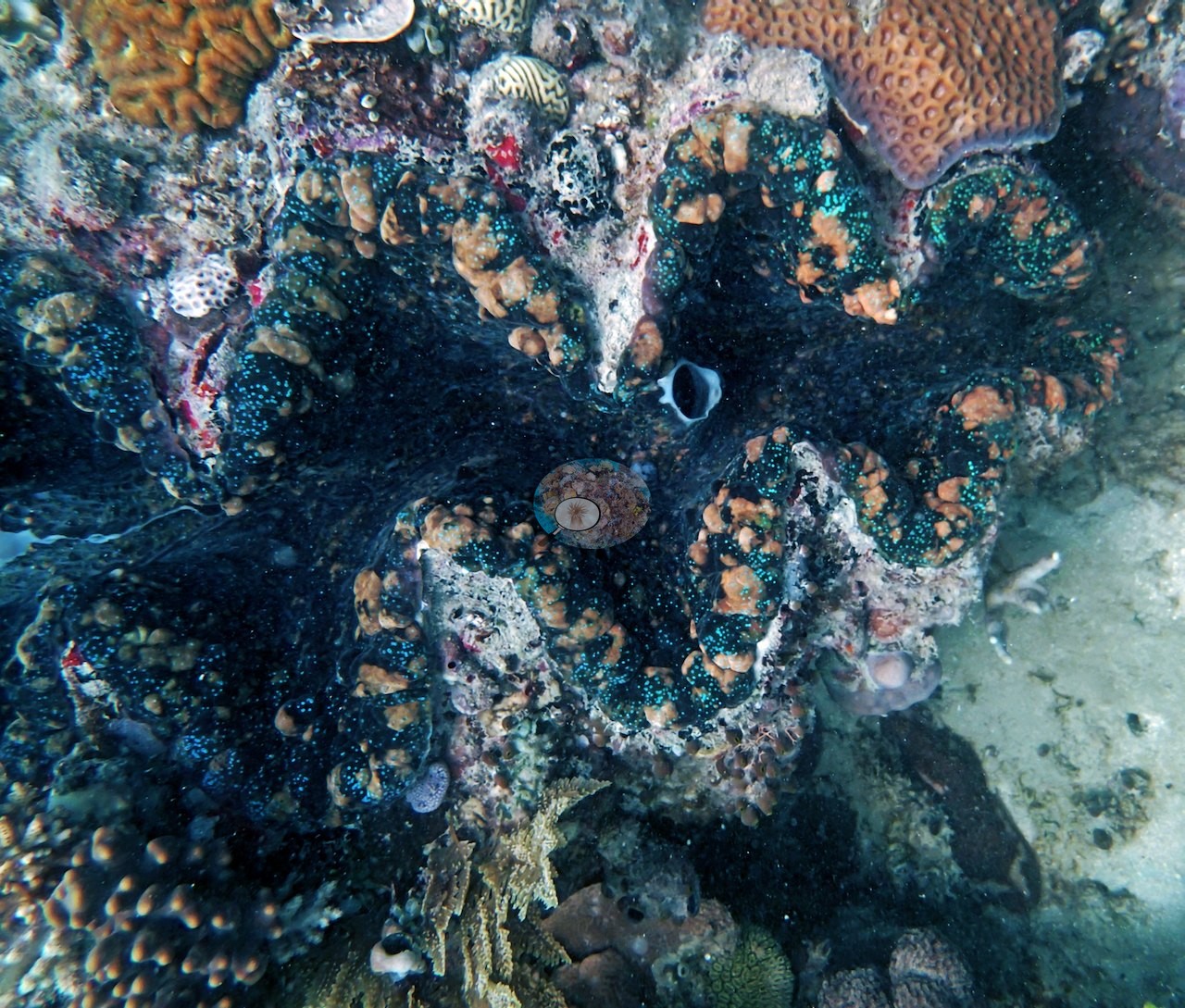
The dive's headline is here too: a giant clam some 1.5 m across, its mantle black and flecked with iridescent green and orange (e.g., Image 3).
Coral cover
- Reference: Khaled bin Sultan Living Oceans Foundation, Global Reef Expedition (in situ transect)
- Point-count cover on this transect set was modest, 19%, reflecting a site where deeper water, 15-25 m, is mostly Pachyseris plates, soft corals, sponges, and eventually sand, while the densest coral, over 50% live cover with Isopora, Diploastrea, and a suite of Pocillopora-type corals, sits up in the 4-7 m band.
- Transect mean 19 ± 6.4% SE (n = 3 transects; Living Oceans Foundation per-transect benthic data); the headline above is the expedition's station value.
Stressors
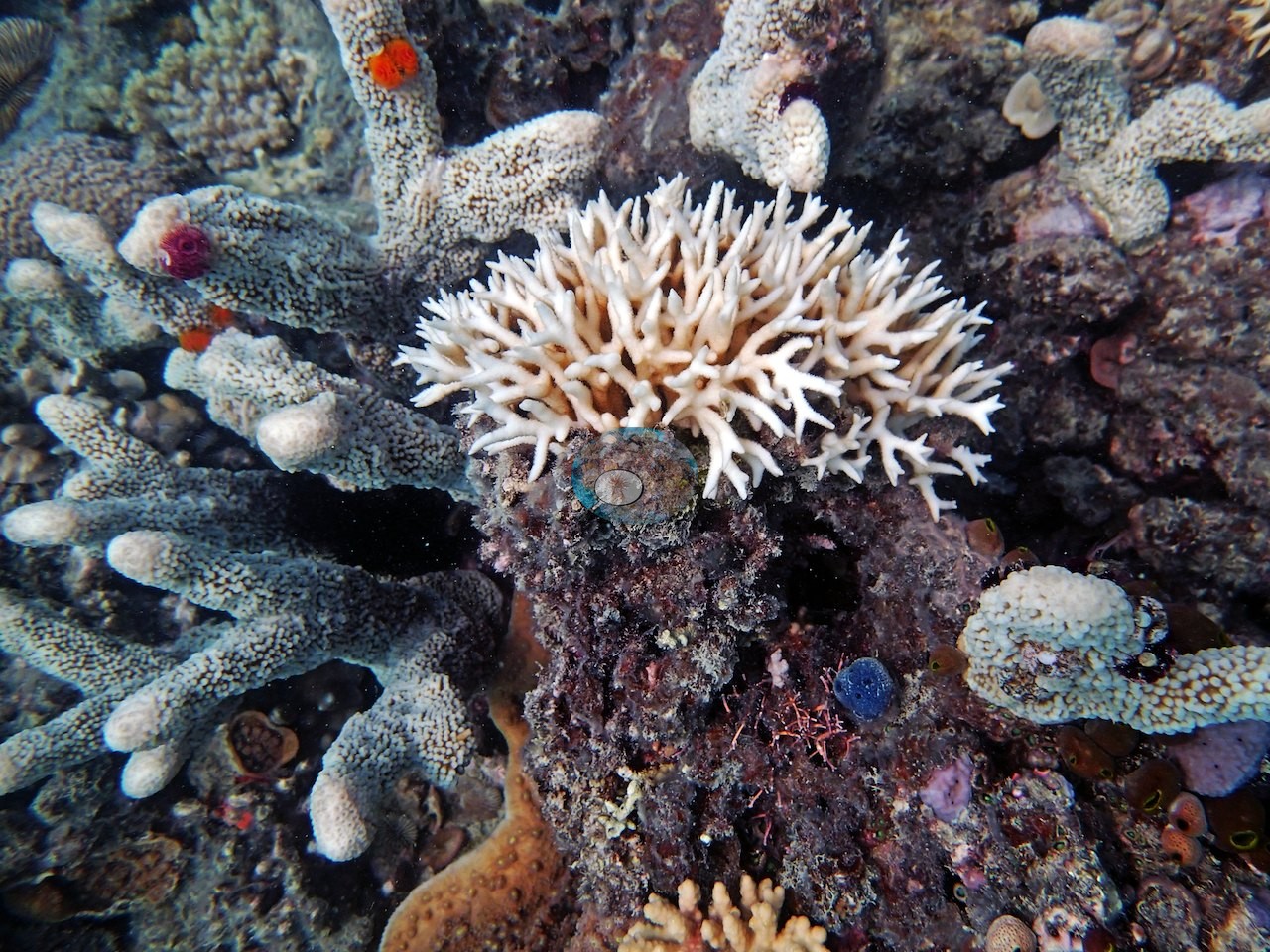
One frame shows a bone-white fine-branched colony perched among healthy gray Isopora branches, a bleached or freshly dead colony that Anderson's notes for this stop do not mention (e.g., Image 5).
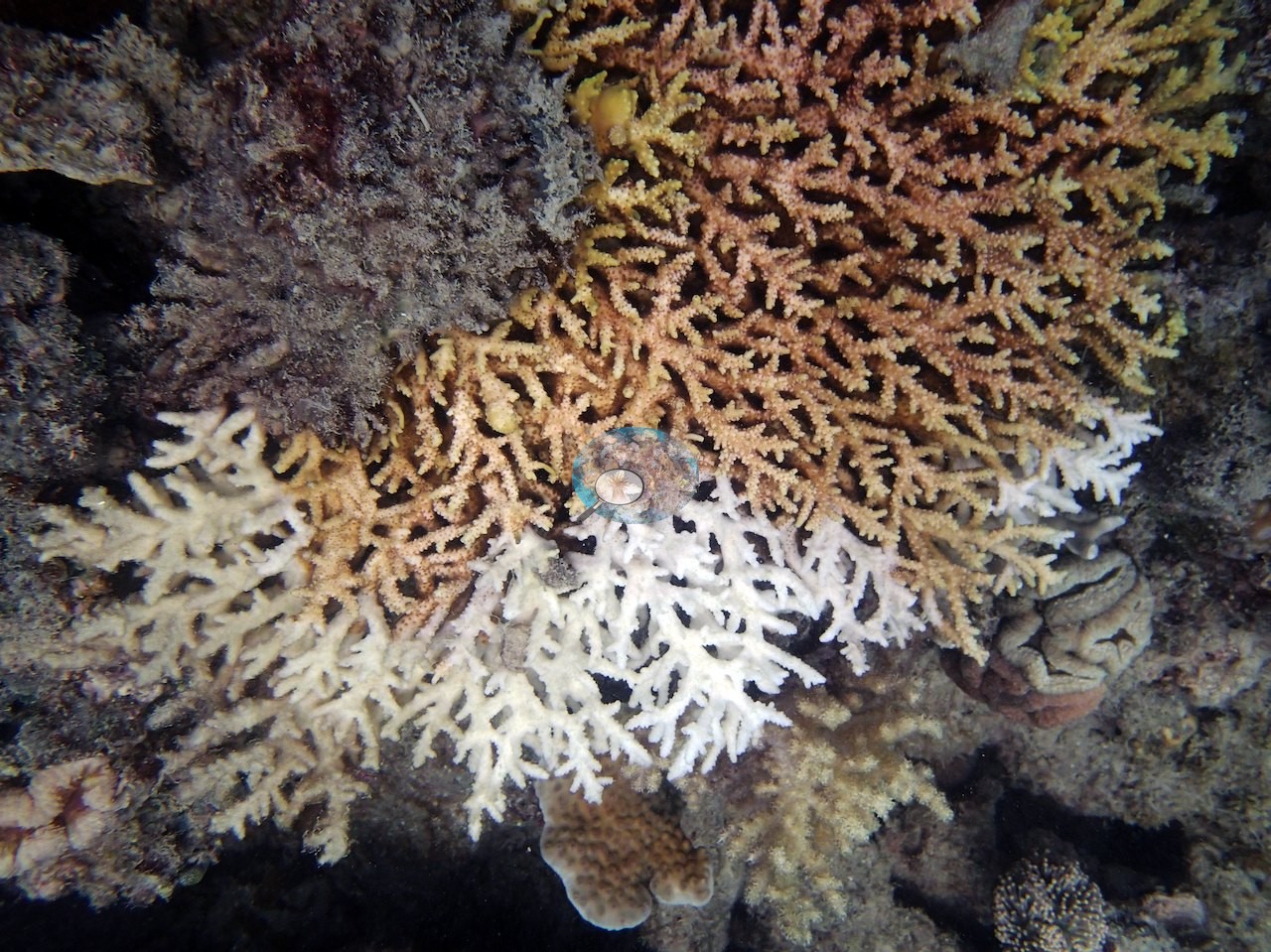
A second frame shows a tan branching colony whose lower band of branches is stark white, with crisp tips and no algae: partial bleaching or very recent tissue loss of one colony (e.g., Image 10).
No crown-of-thorns starfish (COTS) or other corallivores evident.
Fish and other fauna
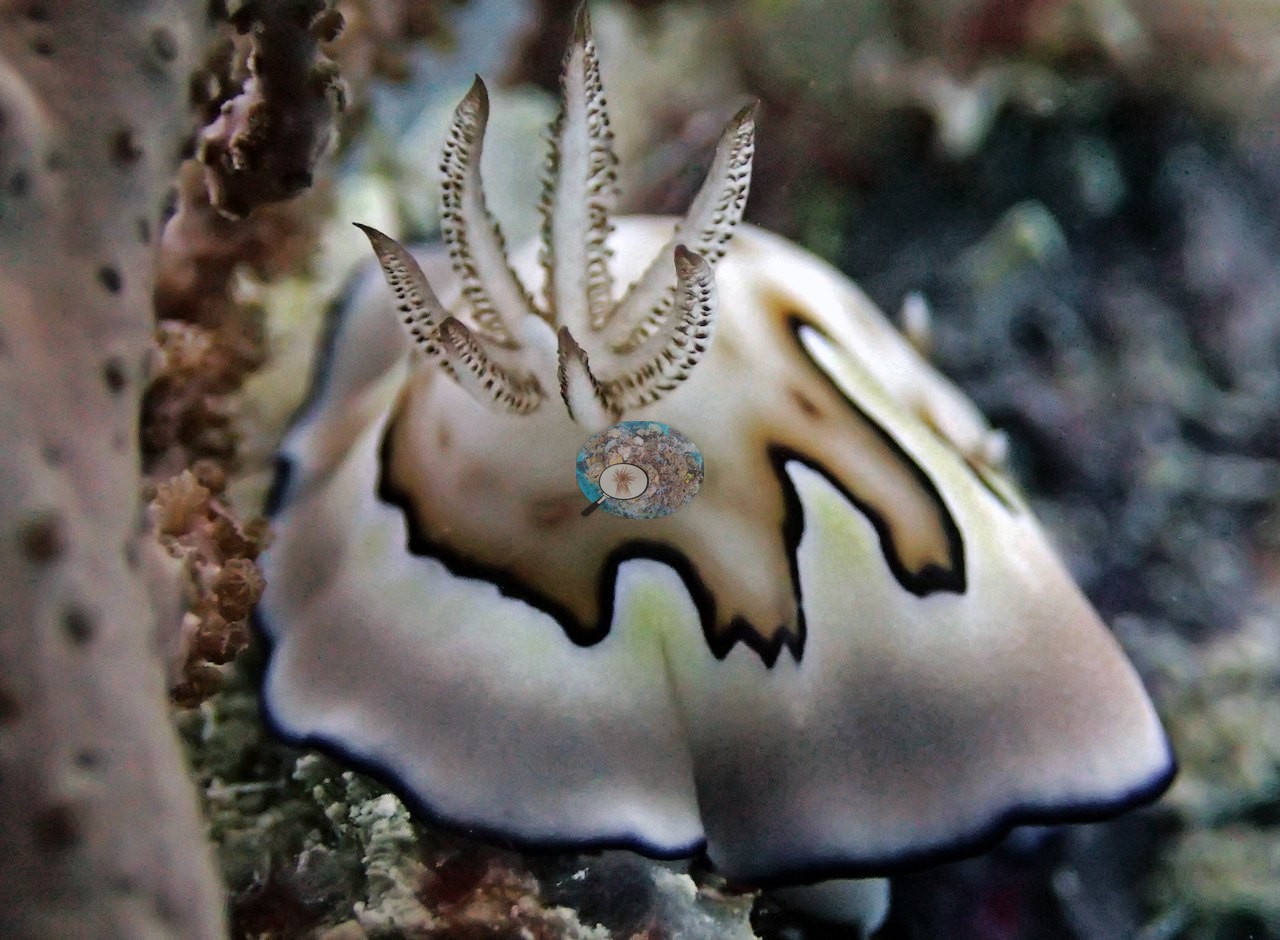
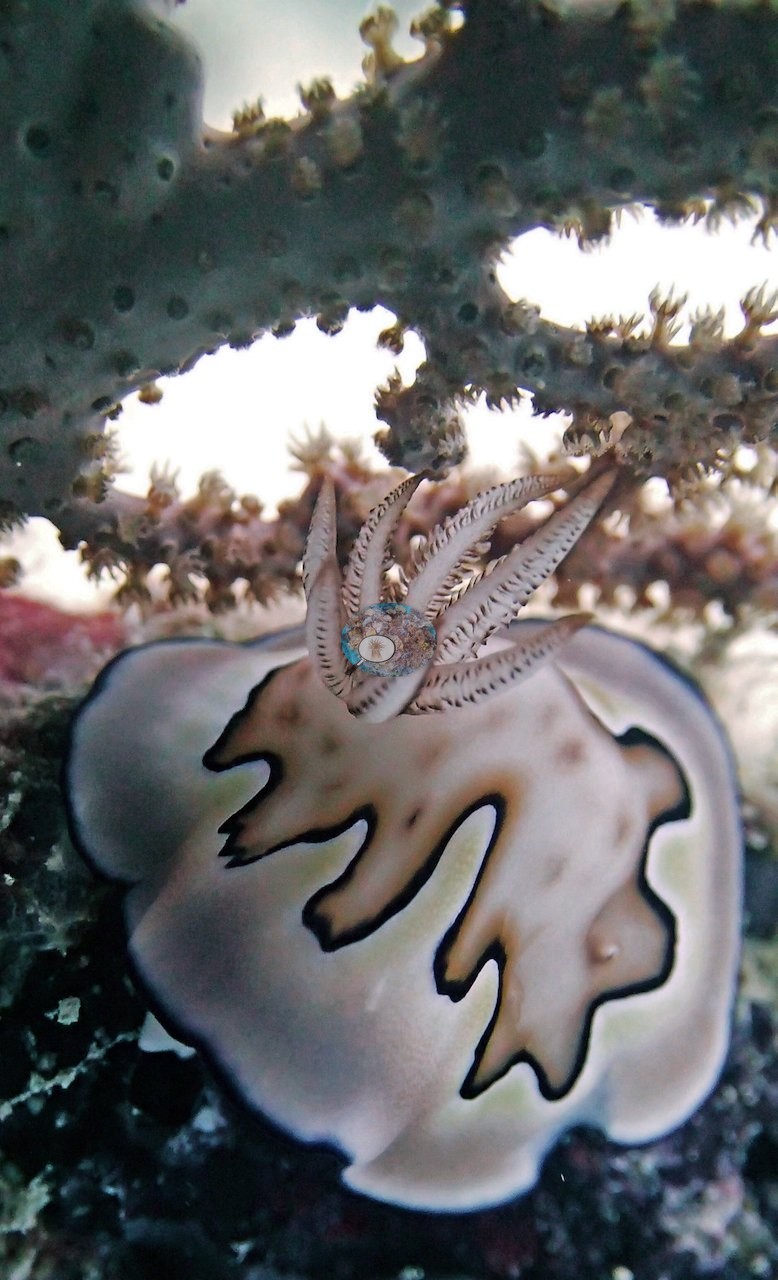
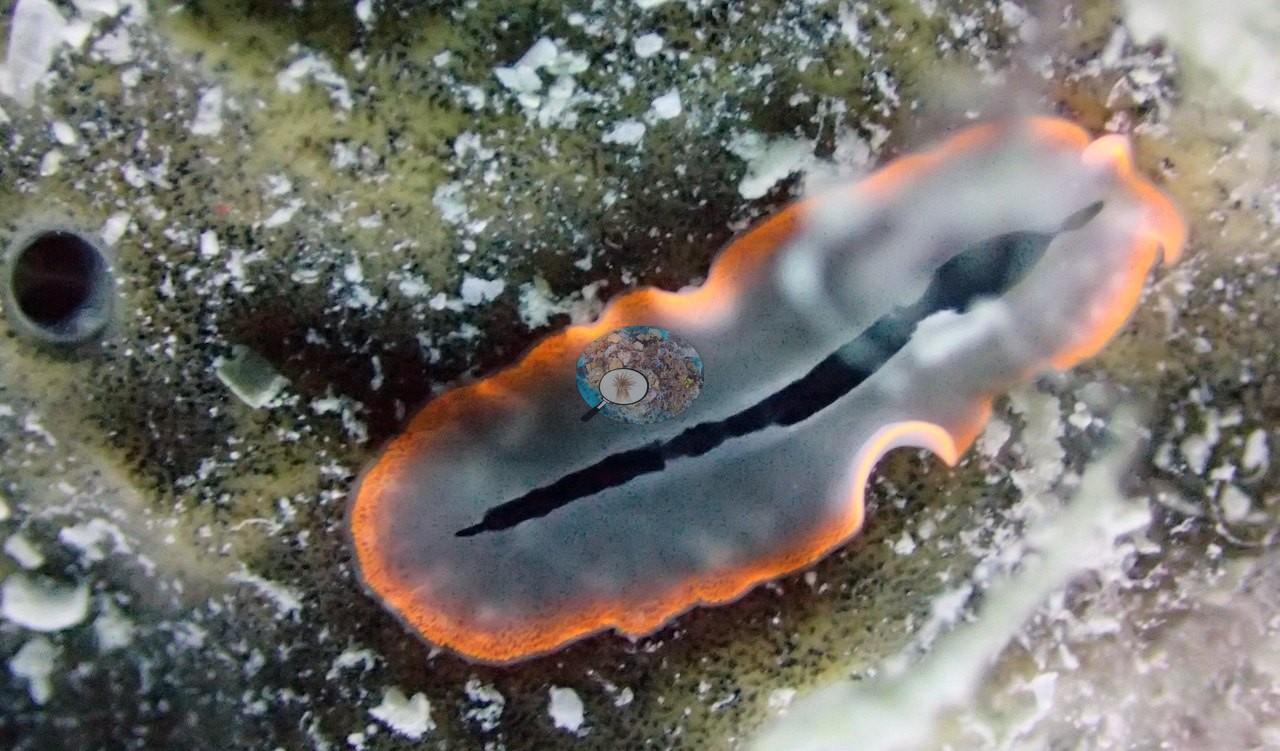
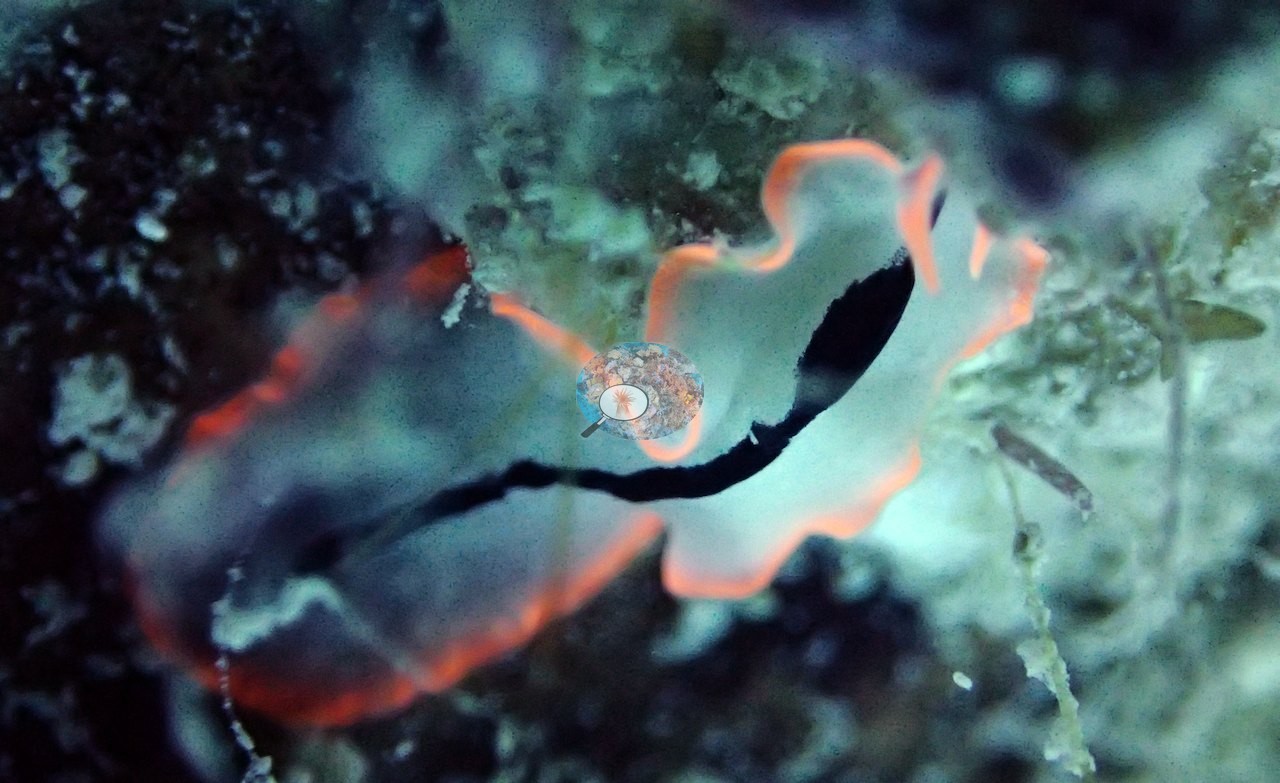
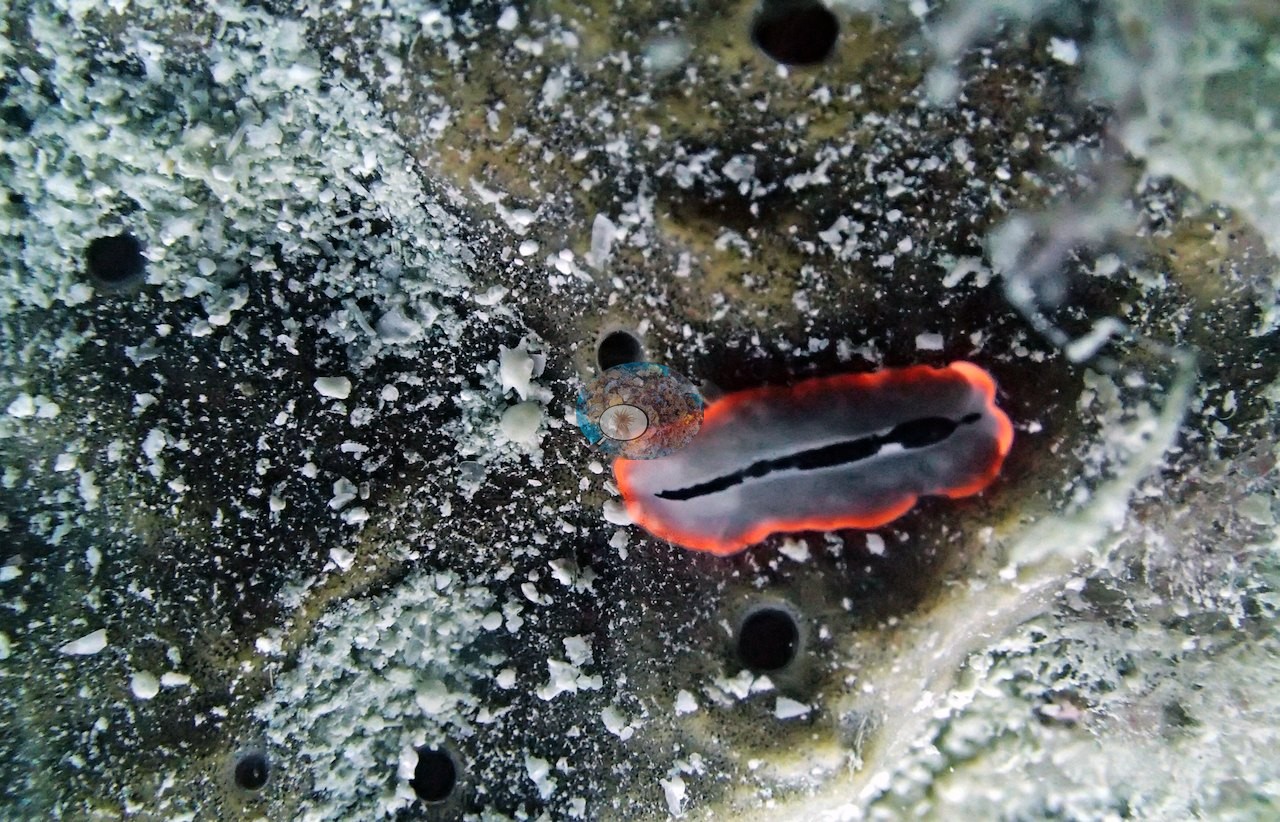
A gray reef shark and several small nudibranchs (his notes) rounded out the dive; the photographs show nudibranchs with feathery gill plumes (e.g., Image 11, Image 15) and gray, black-striped, orange-rimmed polyclad flatworms (e.g., Image 9, Image 25, Image 27).
Comparisons with other data
No prior survey data from this site. If you would like to share yours, please email us.
Data & links
- Download benthic survey data (CSV) ↗
- Download all LOF-GRE data (933 sites) ↗
- Photo portfolio ↗
- Coral Reef Diagnostics country page ↗
All images from Coral Reef Diagnostics. Data are from the Khaled bin Sultan Living Oceans Foundation Global Reef Expedition and Coral Reef Diagnostics.
 © Coral Reef Diagnostics.