
Part of the regional summaries: Australia (GBR) - Far North: Pink stations (Preservation Zone reefs) and Australia (GBR)
More info
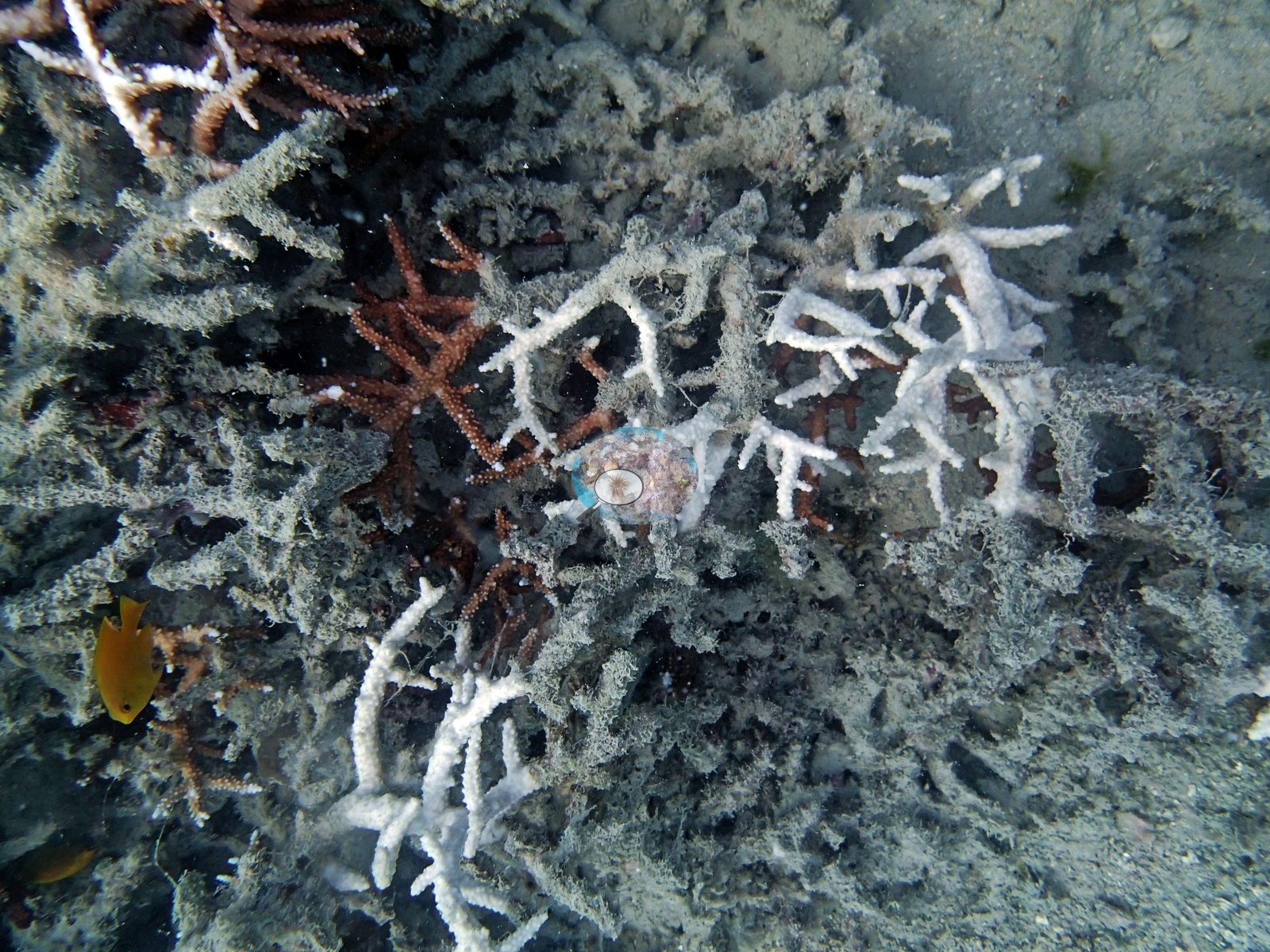
Far Northern GBR (NOAA CRW virtual station)Barely a meter of visibility on Milman Reef, where branching coral framework lay caked in gray silt, with some branches stark white, and corals barely persisted past 13-14 m. His notes record one crown-of-thorns starfish and corals smothered by the extreme sediment load, and the reef's showpieces are big fleshy-polyped corals, including a giant Euphyllia glabrescens head (the largest he had seen, in his notes). Surveyed on the Living Oceans Foundation's Global Reef Expedition.
Five other CRD dive sites within 5 km shown in orange — click a marker to open its page.
🗺 Detailed map of the Global Reef Expedition dive sites, Milman and Alpin Reefs, northern Great Barrier Reef (Khaled bin Sultan Living Oceans Foundation; opens in a new window)
Site description
Setting
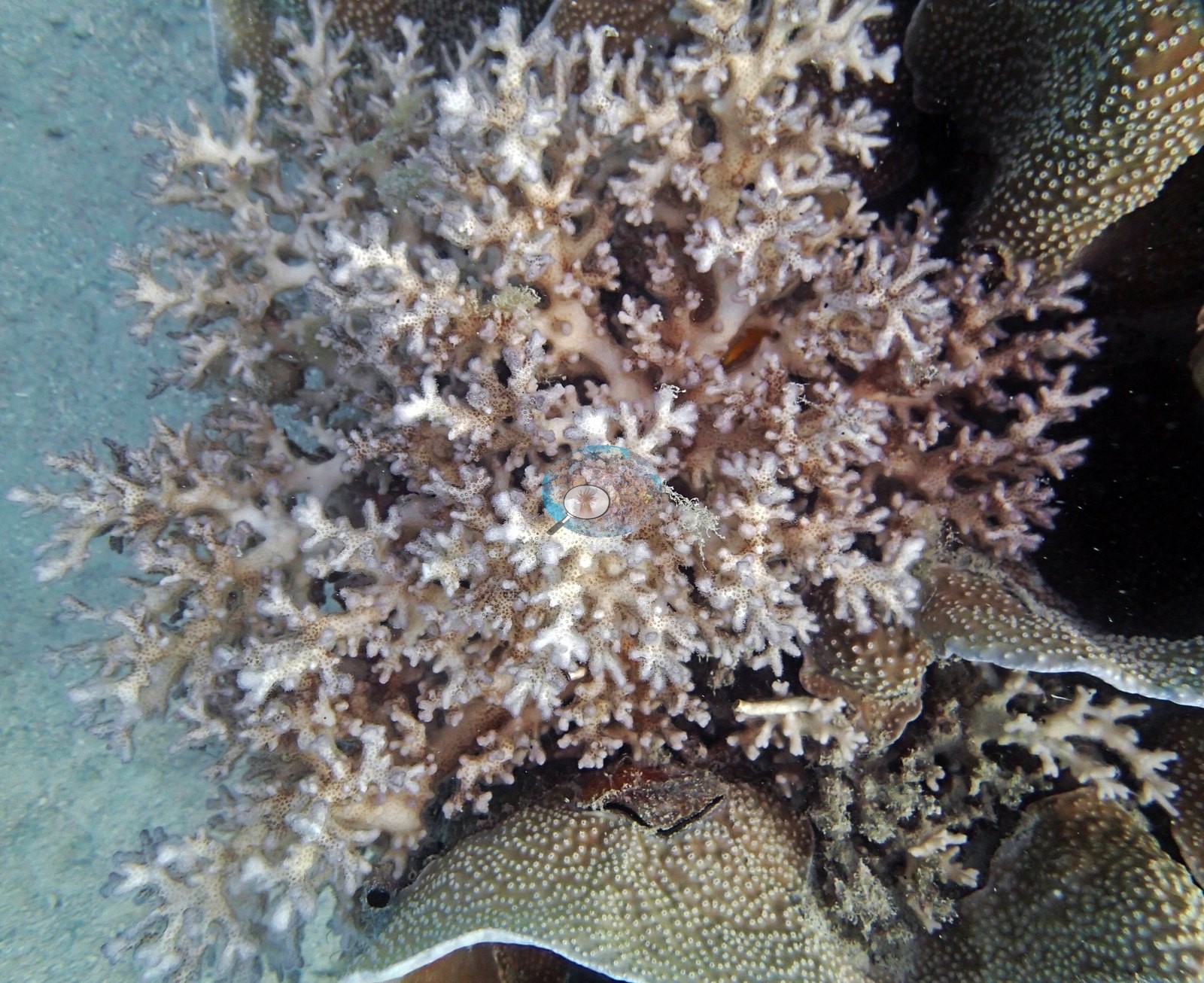
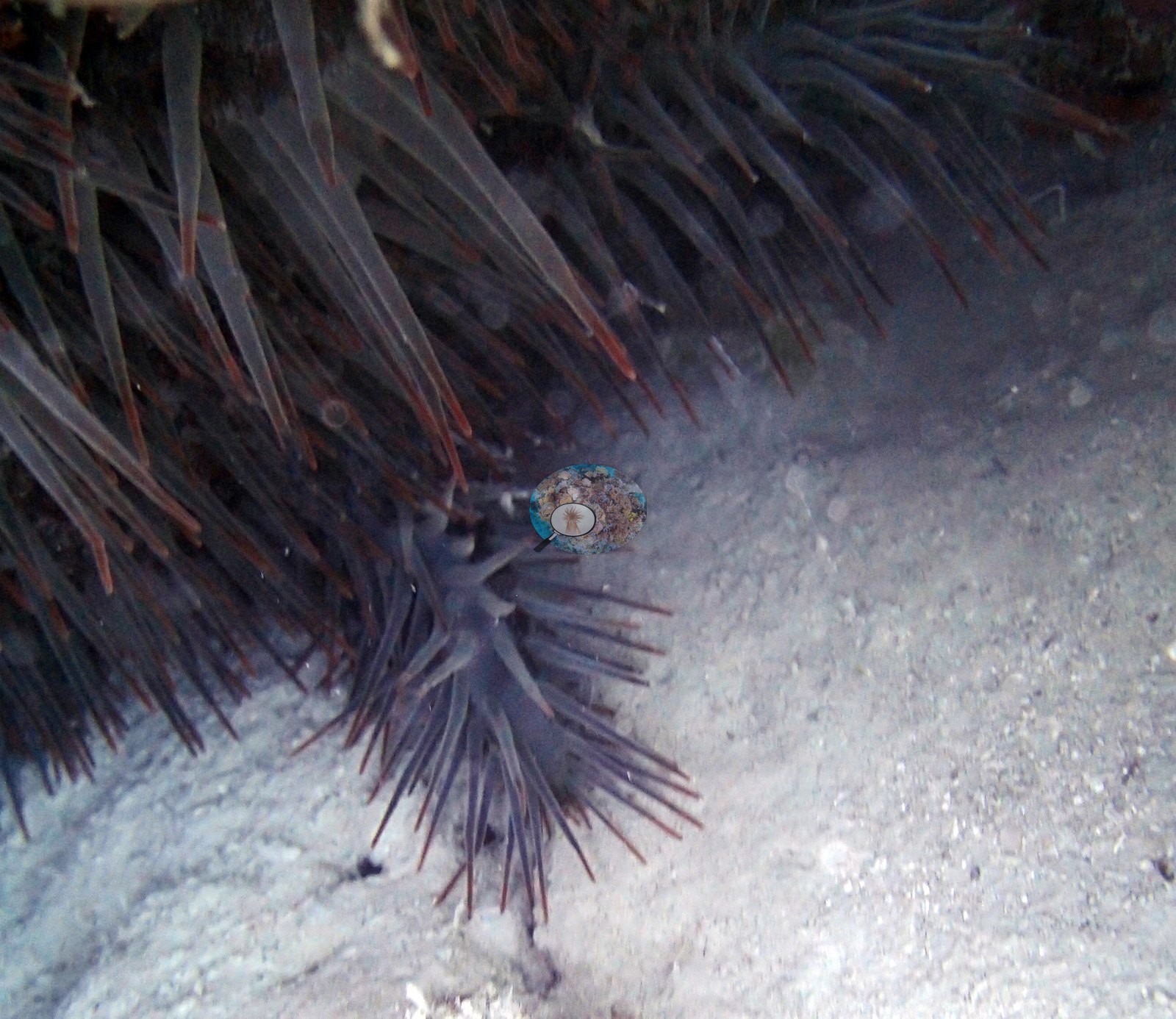
Milman Reef's third dive happened in murky water, barely a meter of visibility, thick with suspended sediment, and all three photographs here were shot at arm's length.
General benthic features
One frame shows a fine-branched thicket, pale and dusted gray, growing across a Galaxea-type colony whose tubular corallites are still visible beneath it (e.g., Image 3).
Big fleshy-polyped corals rule this reef: sprawling Goniopora and Alveopora, and a giant Euphyllia glabrescens head (the largest he had seen, in Anderson's notes), with Porites cylindrica, Leptoseris, Galaxea, Echinopora, Diploastrea, and Pavona in the shallower band. Corals barely persisted past 13-14 m in the silt.
Coral cover
- Reference: Khaled bin Sultan Living Oceans Foundation, Global Reef Expedition (in situ transect)
- Point-count cover at this survey point read 51%; Anderson's own transects at 9.5-11.5 m ran 20-35% by eye.
- Transect mean 51 ± 11% SE (n = 3 transects; Living Oceans Foundation per-transect benthic data); the headline above is the expedition's station value.
Stressors
Another frame is the clearest statement of the problem: a mat of branching coral framework caked in gray silt, some branches bare, chalk-white, and free of silt, one rust-red colony still hanging on among them (e.g., Image 1).
The third is a crown-of-thorns starfish at close range, its long maroon spines fanned over open sand (e.g., Image 2); a single COTS was logged here; his notes say only that some corals had been smothered in the extreme sediment load and do not link the starfish to the coral loss.
Comparisons with other data
No prior survey data from this site. If you would like to share yours, please email us.
Data & links
- Download benthic survey data (CSV) ↗
- Download all LOF-GRE data (933 sites) ↗
- Photo portfolio ↗
- Coral Reef Diagnostics country page ↗
All images from Coral Reef Diagnostics. Data are from the Khaled bin Sultan Living Oceans Foundation Global Reef Expedition and Coral Reef Diagnostics.
 © Coral Reef Diagnostics.