
Part of the regional summaries: Australia (GBR) - Far North: Pink stations (Preservation Zone reefs) and Australia (GBR)
More info
Far Northern GBR (NOAA CRW virtual station)A Milman Reef shelf in murky, sediment-thick water, defined by sprawling flower-polyped Goniopora/Alveopora colonies several meters across, with 3-5 m Porites boulders among the Goniopora meadows and shallow cover of roughly 90% at 3-6 m (his estimate). A vivid purple flatworm and a gray reef shark were seen, and several needle corals at depth were dying or sickly. Surveyed on the Living Oceans Foundation's Global Reef Expedition.
Five other CRD dive sites within 5 km shown in orange — click a marker to open its page.
🗺 Detailed map of the Global Reef Expedition dive sites, Milman and Alpin Reefs, northern Great Barrier Reef (Khaled bin Sultan Living Oceans Foundation; opens in a new window)
Site description
Setting
Global Reef Expedition station AUMM85 on Milman Reef, far northern Great Barrier Reef (-11.1758, 143.0355), the first of Anderson's three Milman Reef dives on 18 September 2014. His notes describe "a very beautiful site" in murky water (3-4 m visibility) with a high sediment load: the reef was well developed at 10 m directly beneath the boat, with few corals past 11-12 m (sand only).
General benthic features
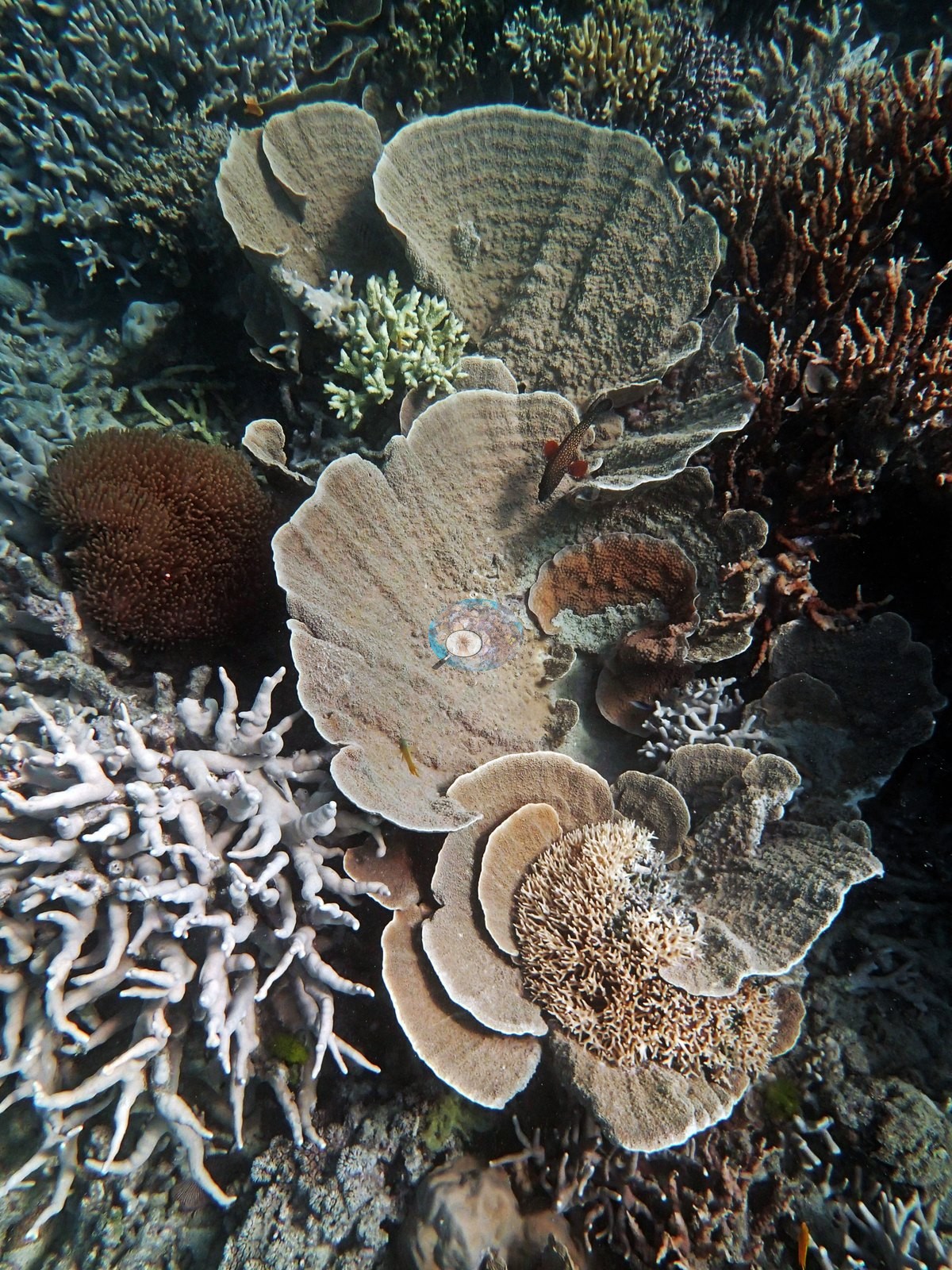
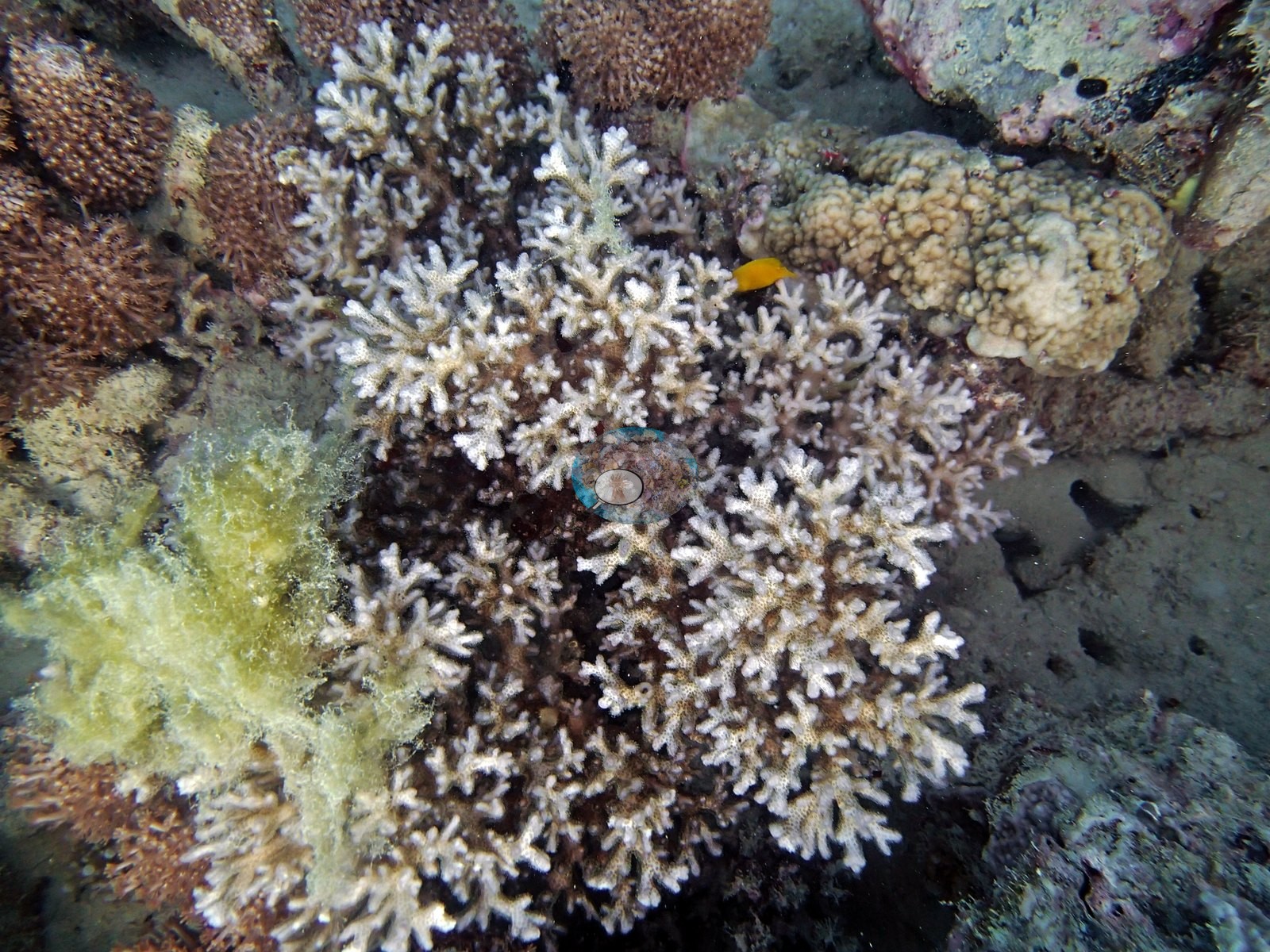
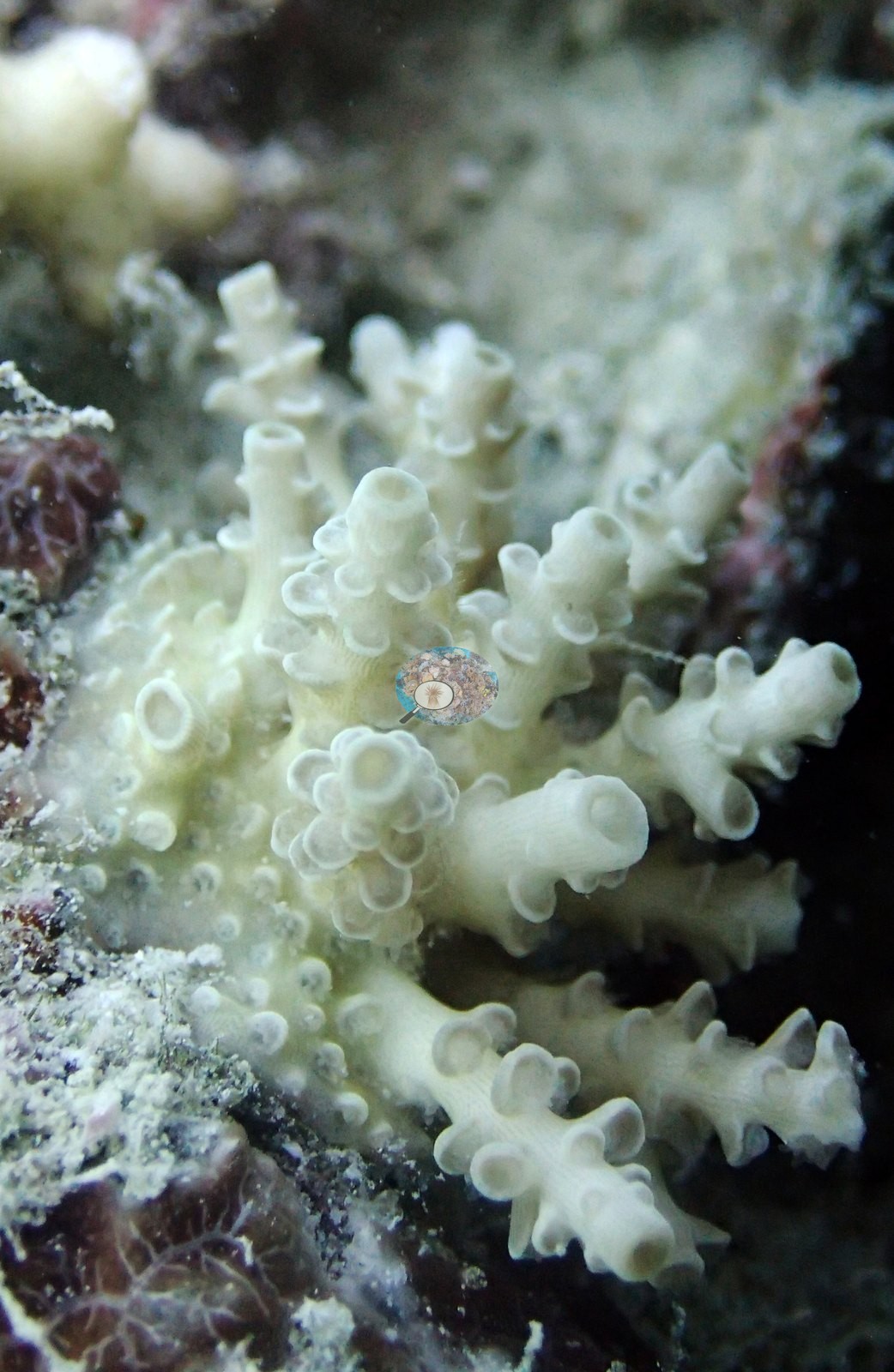
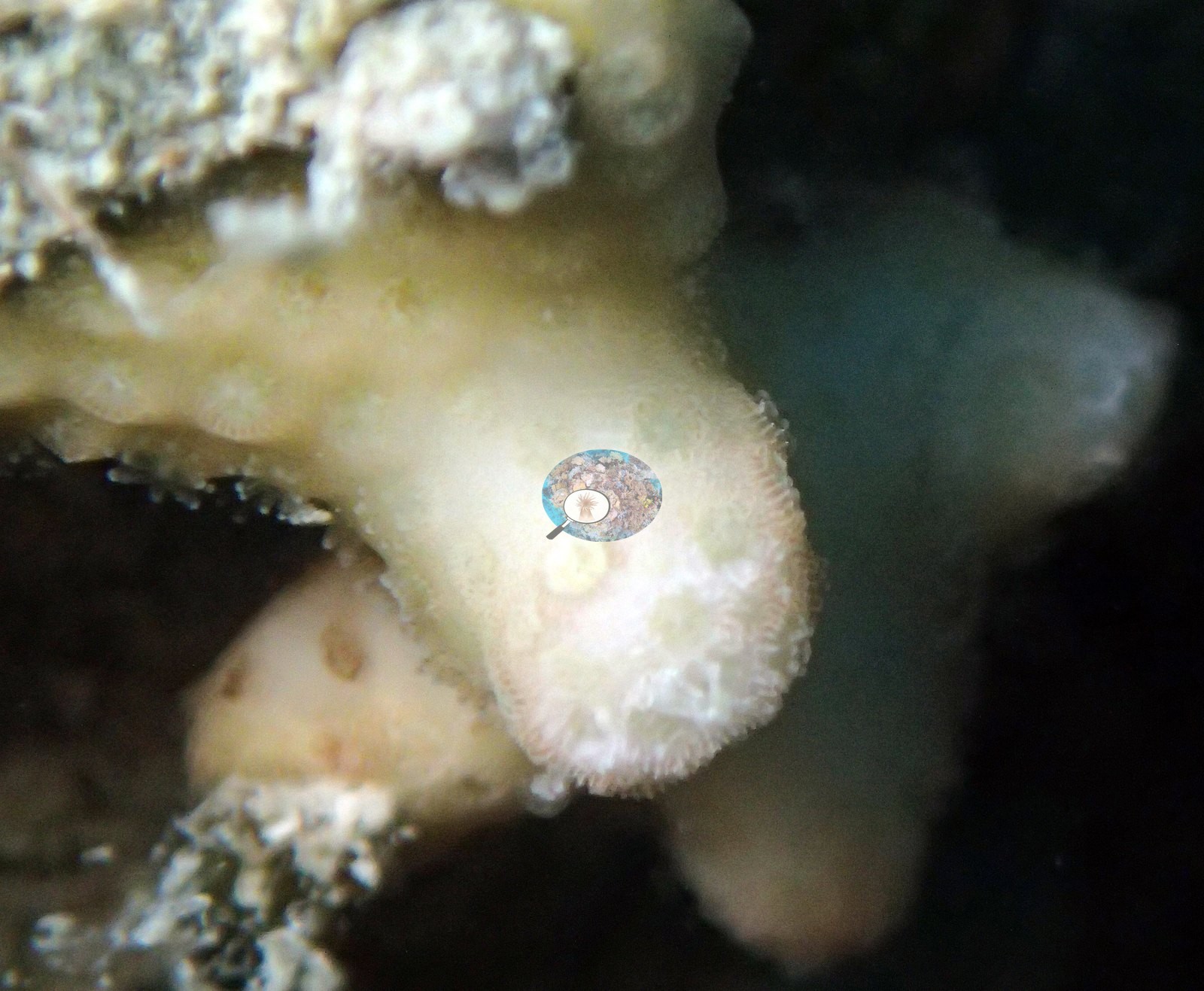
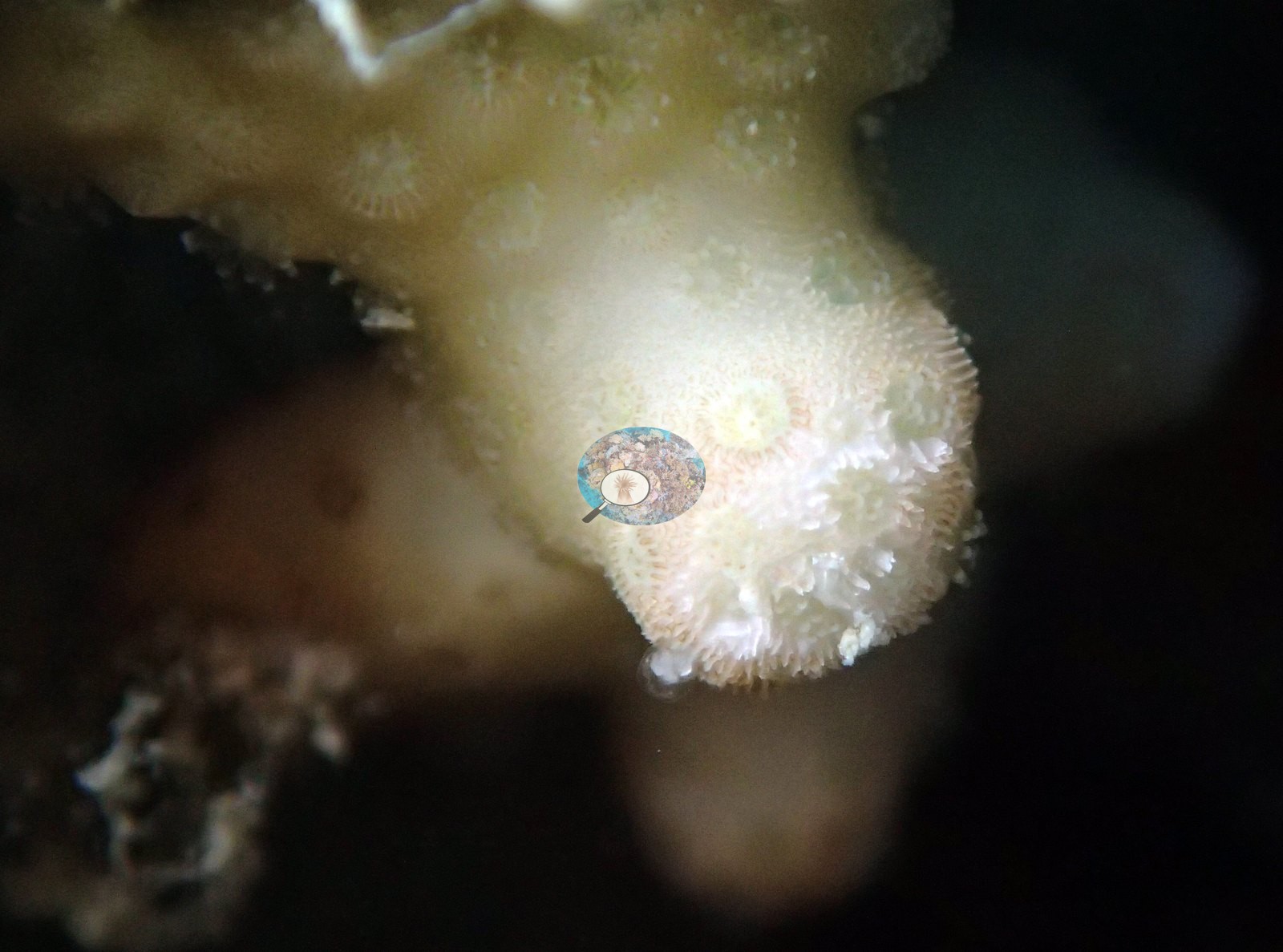
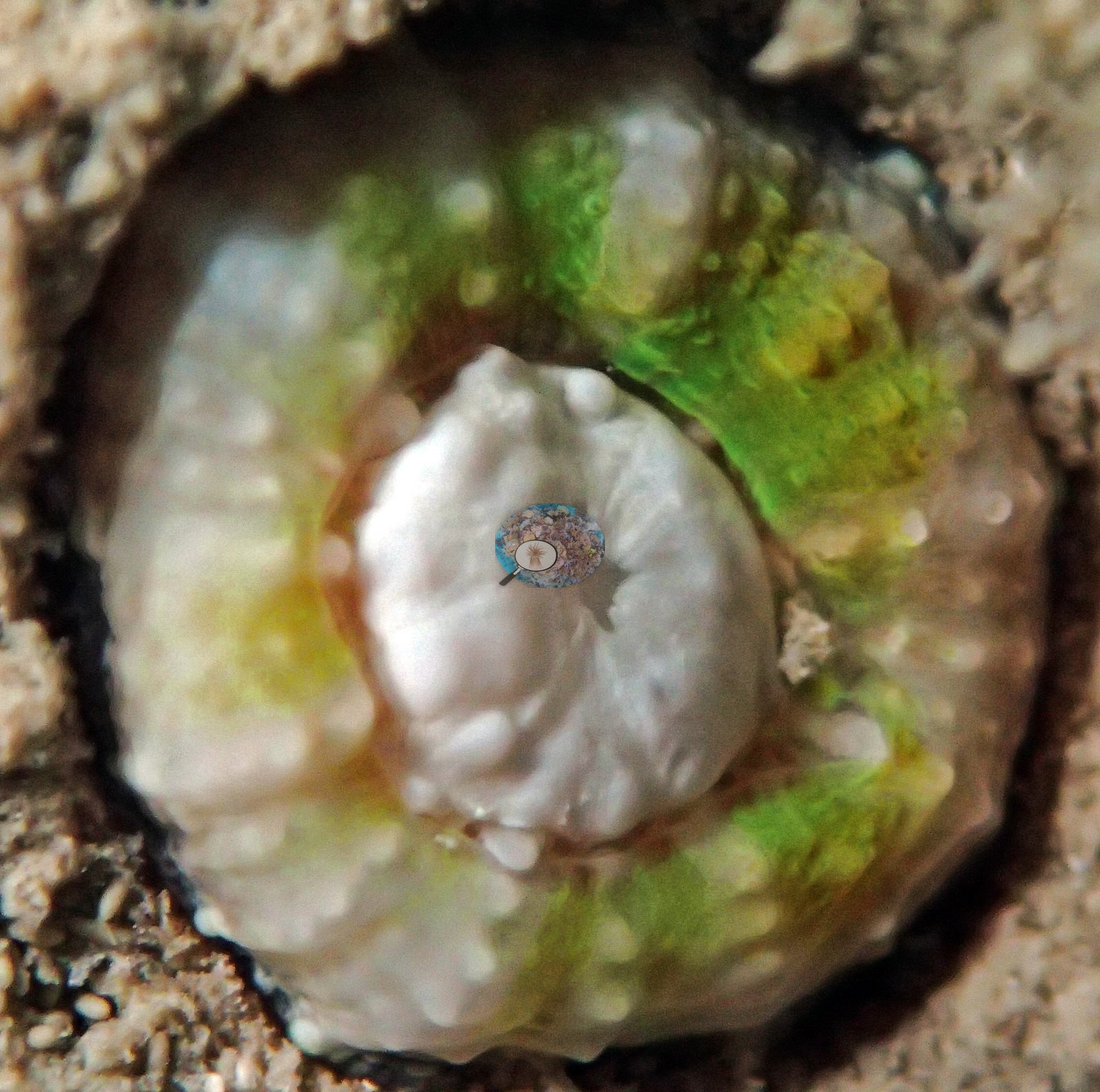
His notes describe a reef dominated by Goniopora and Alveopora, some colonies several meters across, with Galaxea unusually abundant; at 5-6 m, massive Porites 3-5 m in diameter were interspersed among the Goniopora meadows, and Porites cylindrica was also common. On his six transects at 9.5-10.9 m he also listed Lobophyllia, Caulastrea, Pachyseris, huge plating Turbinaria, Montipora, mushroom corals, fire coral, and soft corals including Sinularia, and his fourth transect passed through a huge patch of Alveopora. The nine posted frames from this dive are close work: brown plating colonies beside a lavender-white thick branching colony and a brown massive colony (e.g., Image 1); a fine-branching colony whose upper branches are white over a brown interior (e.g., Image 3); a cream-white branching colony with tubular corallites (e.g., Image 4) and macro views of pale branch tips with polyps extended (e.g., Image 5, Image 8); and a single large polyp with a green-and-yellow tissue ring (e.g., Image 9).
Coral cover
- Reference: Khaled bin Sultan Living Oceans Foundation, Global Reef Expedition (in situ transect)
- Anderson estimated live coral cover at about 90% across large swaths of the 3-6 m depth range, where the massive Porites sit among the Goniopora meadows; his by-eye estimates on the six transects ran 15-50%, reaching 40-50% where the fourth crossed the Alveopora garden.
- The expedition's in situ point-count transects at this station recorded 47% live coral cover against 25% total algal cover.
- Transect mean 47 ± 12% SE (n = 3 transects; Living Oceans Foundation per-transect benthic data); the headline above is the expedition's station value.
Stressors
His notes record dying Seriatopora hystrix colonies on his second transect and huge, sickly S. hystrix colonies on his third; one frame shows a fine-branching colony with white upper branches over a brown interior, partial paling of a living colony (e.g., Image 3). Anderson's notes for this dive record no crown-of-thorns starfish.
Fish and other fauna
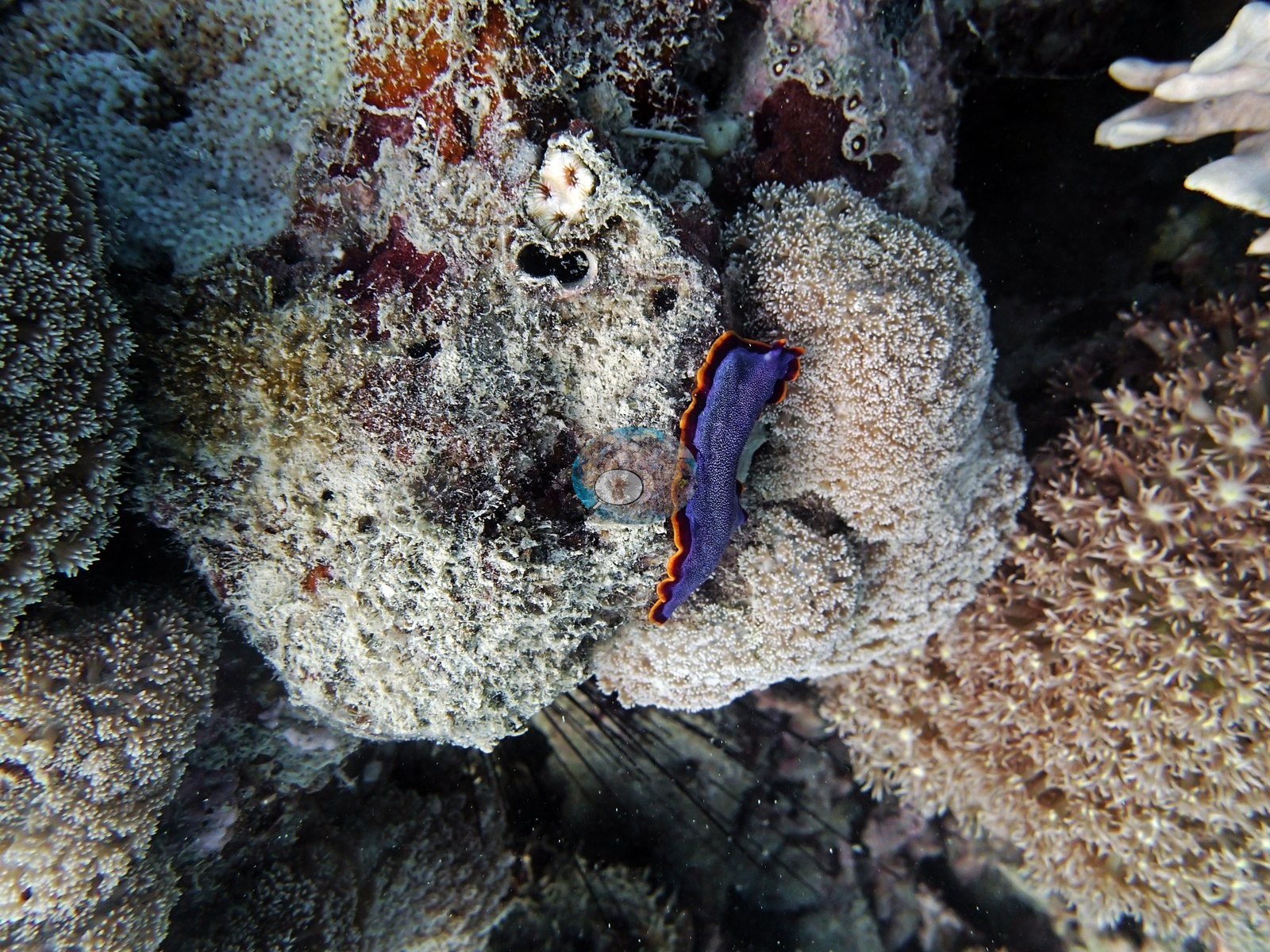
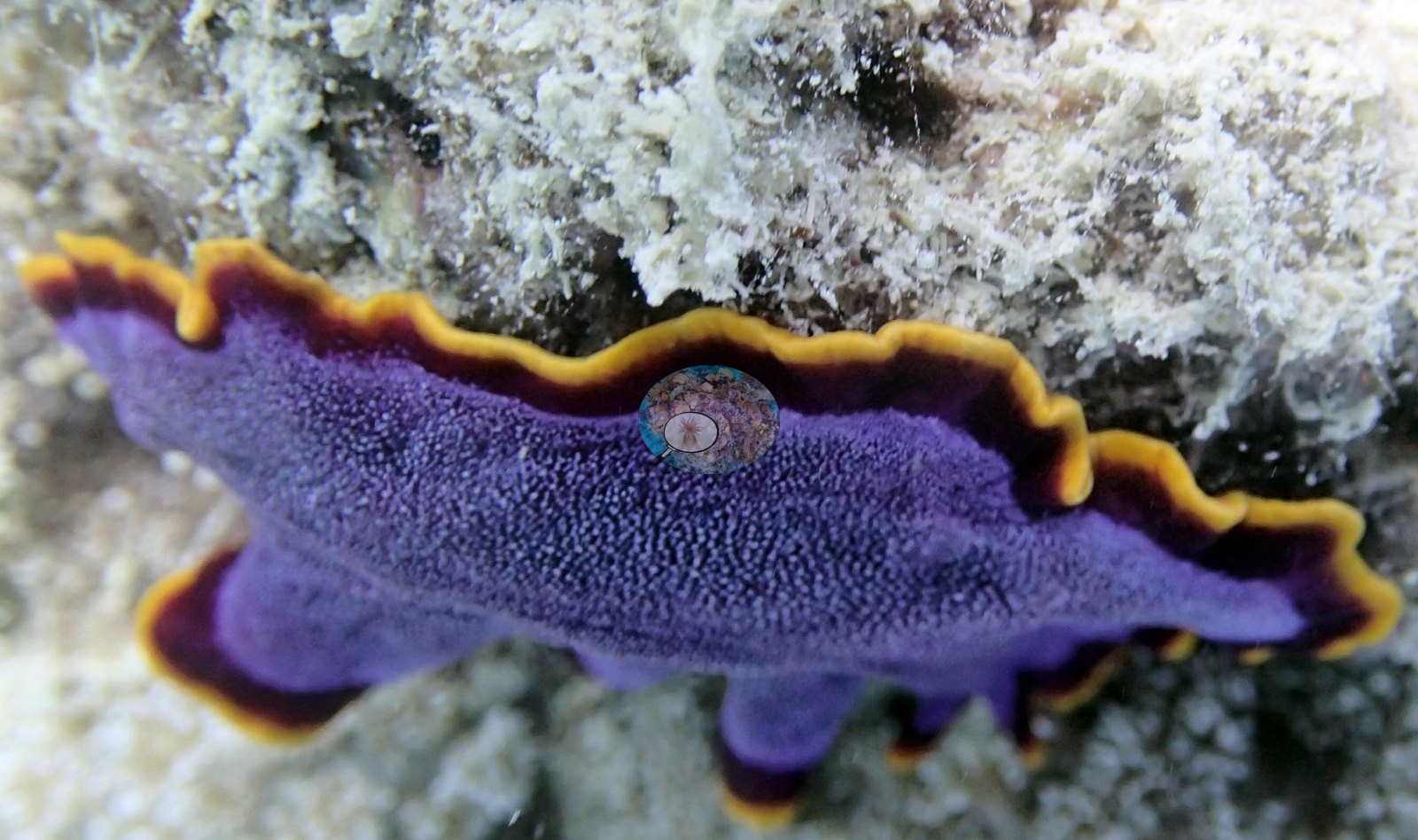
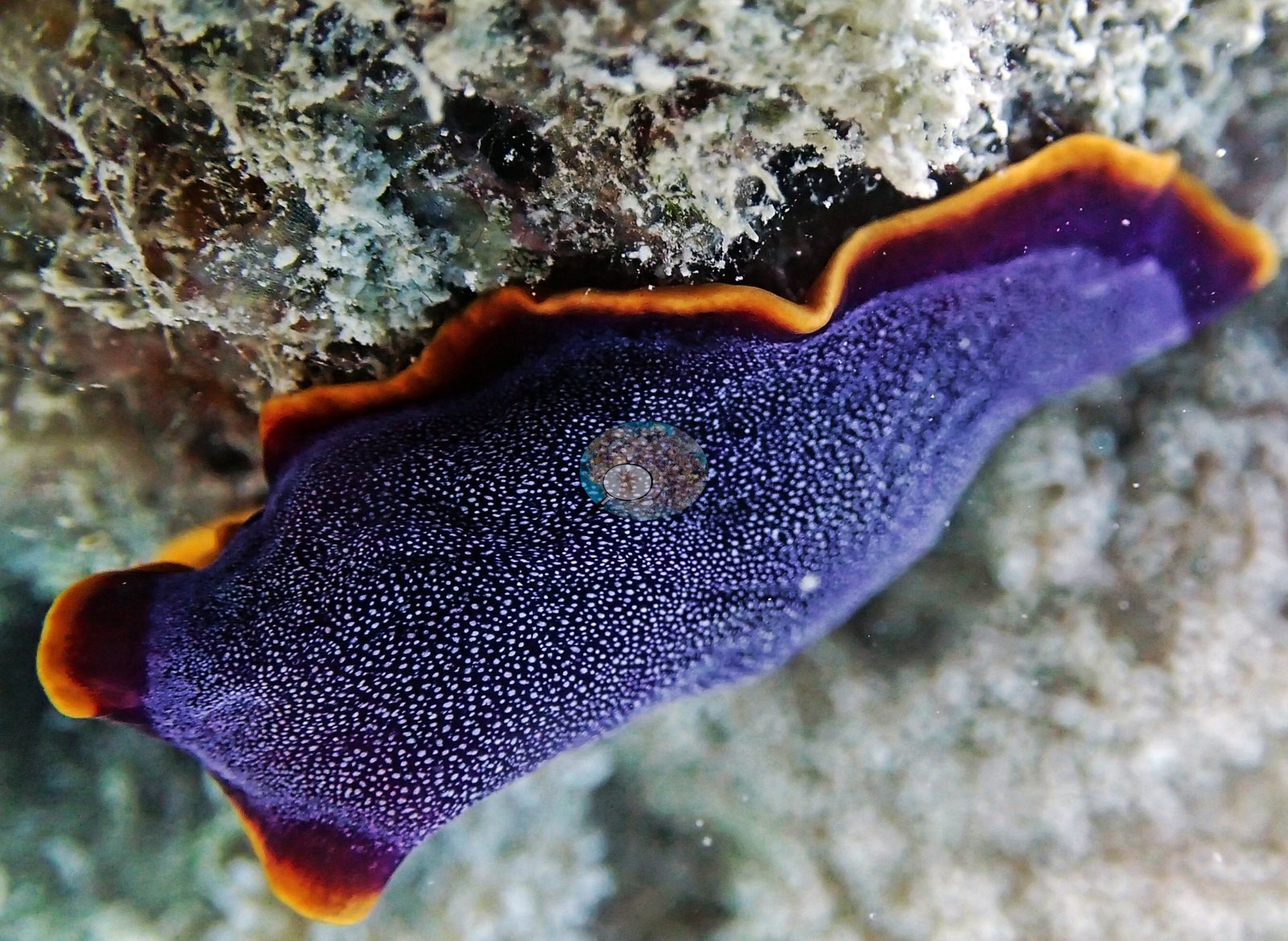
Anderson's notes list a gray reef shark, an eel-tailed catfish, and a "beautiful purple flatworm"; the flatworm, purple with an orange-and-black rim, is in three frames (e.g., Image 2, Image 6, Image 7).
Comparisons with other data
No prior survey data from this site. If you would like to share yours, please email us.
Other notes
By their capture times, the 63 frames matched to this reef by boat GPS position and date belong to the second Milman Reef dive (AUMM87), and that page describes them; boat-transit and AUMM87 frames are not shown here.
Data & links
- Download benthic survey data (CSV) ↗
- Download all LOF-GRE data (933 sites) ↗
- Photo portfolio ↗
- Coral Reef Diagnostics country page ↗
All images from Coral Reef Diagnostics. Data are from the Khaled bin Sultan Living Oceans Foundation Global Reef Expedition and Coral Reef Diagnostics.
 © Coral Reef Diagnostics.