
Part of the regional summaries: Australia (GBR) - Far North: Pink stations (Preservation Zone reefs) and Australia (GBR)

More info
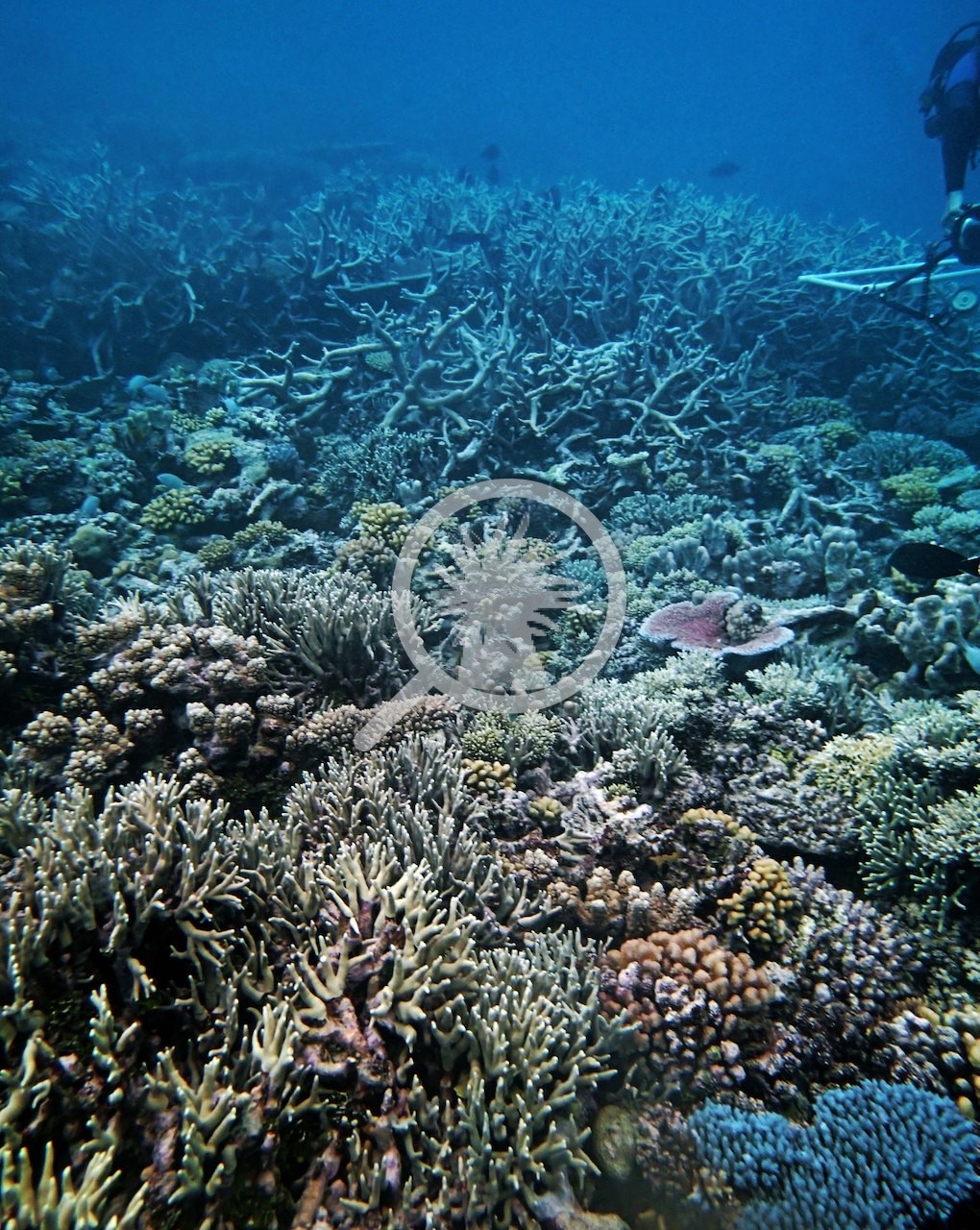
Far Northern GBR (NOAA CRW virtual station)A reef face on Unnamed Reef 11-091 that runs past 30 m, but the spectacle is up top, where staghorn, branching Porites, and Isopora thickets crowd toward 100% cover and grow to within centimeters of the surface (46% overall). Gray reef sharks and a Napoleon wrasse were seen, but needle corals looked sickly and one transect ran from a living staghorn thicket straight into a dead one. Surveyed on the Living Oceans Foundation's Global Reef Expedition.
Eleven other CRD dive sites within 5 km shown in orange — click a marker to open its page.
🗺 Detailed map of the Global Reef Expedition dive sites, unnamed reefs 11-122, 11-096, and 11-091, northern Great Barrier Reef (Khaled bin Sultan Living Oceans Foundation; opens in a new window)
4 of the 34 photographs on this page are shown beside the text that discusses them under "Site description" below.
Site description
Setting
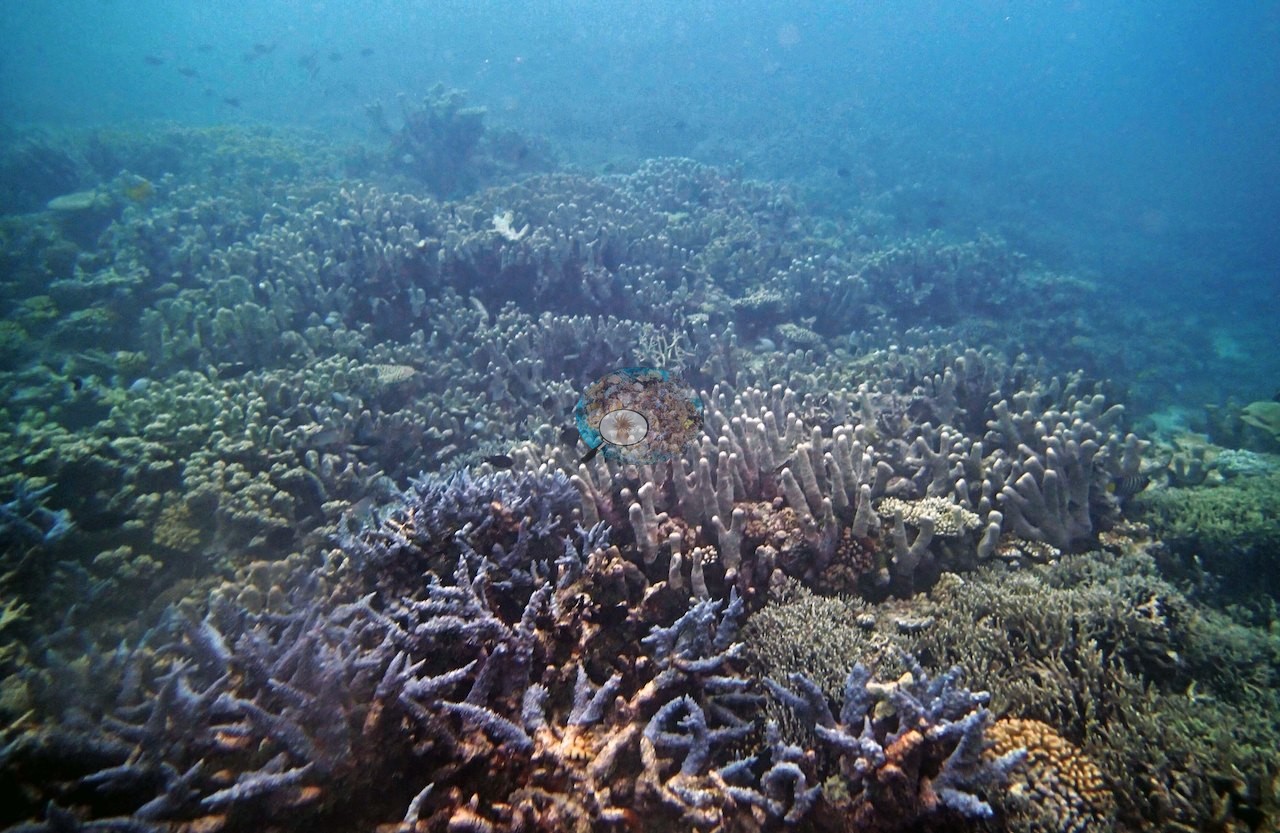
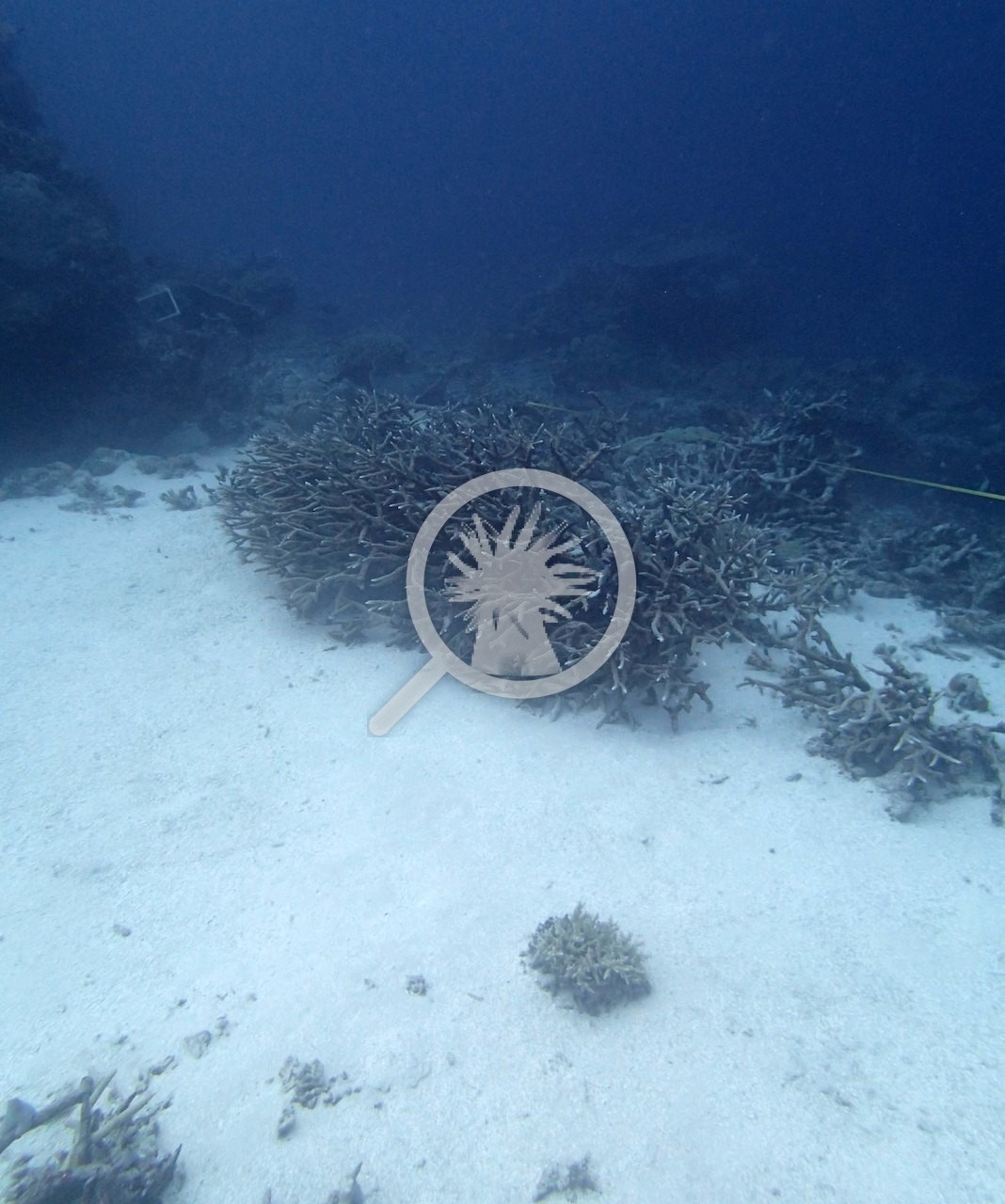
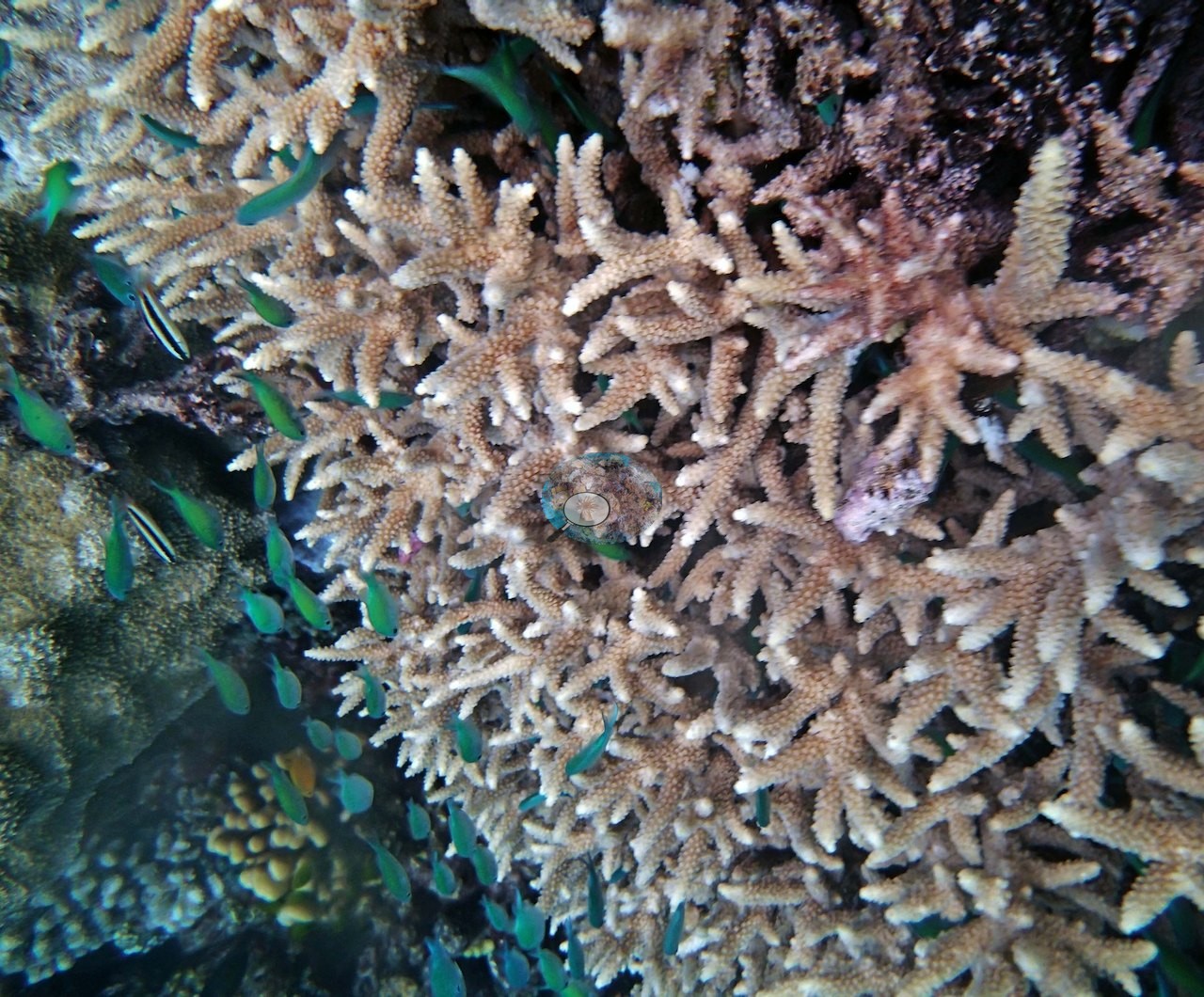
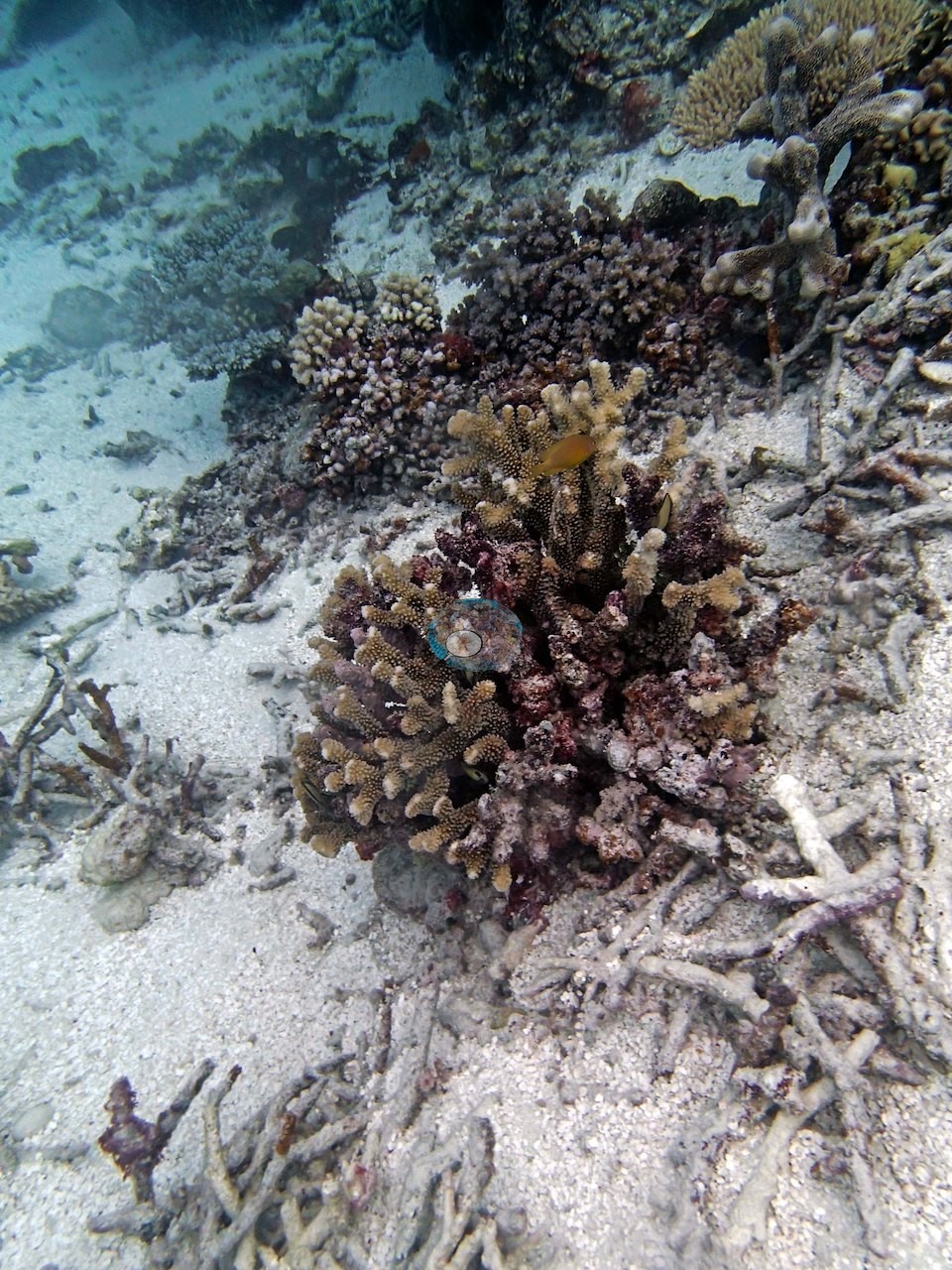
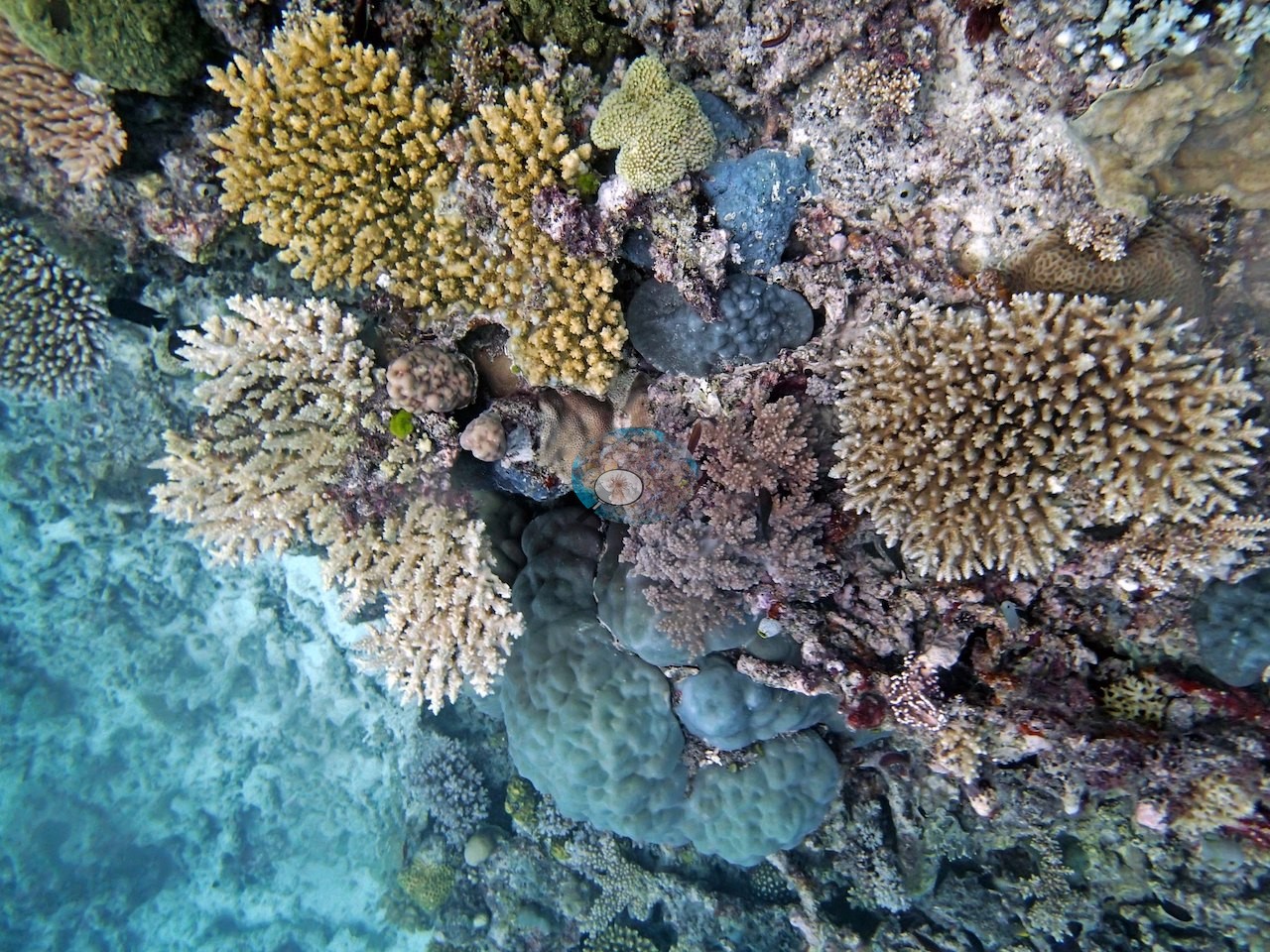
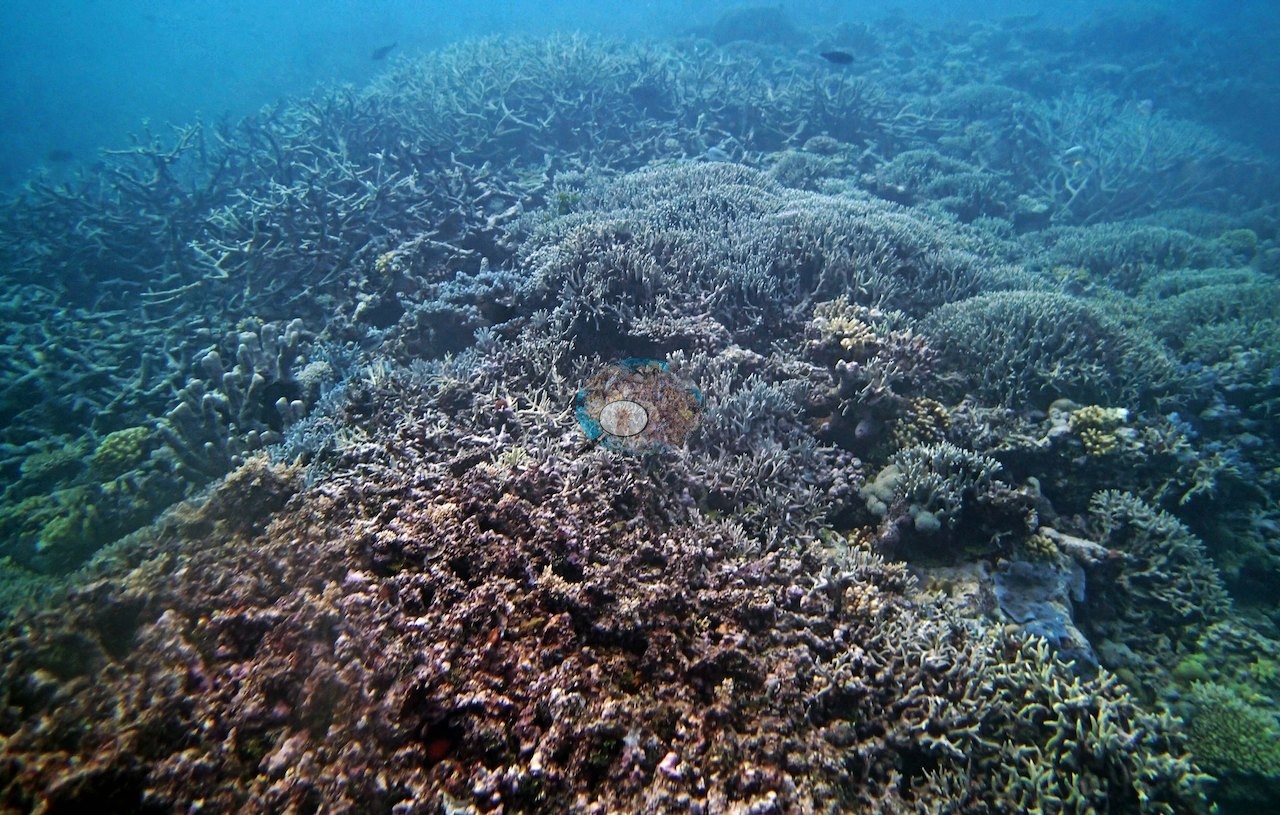
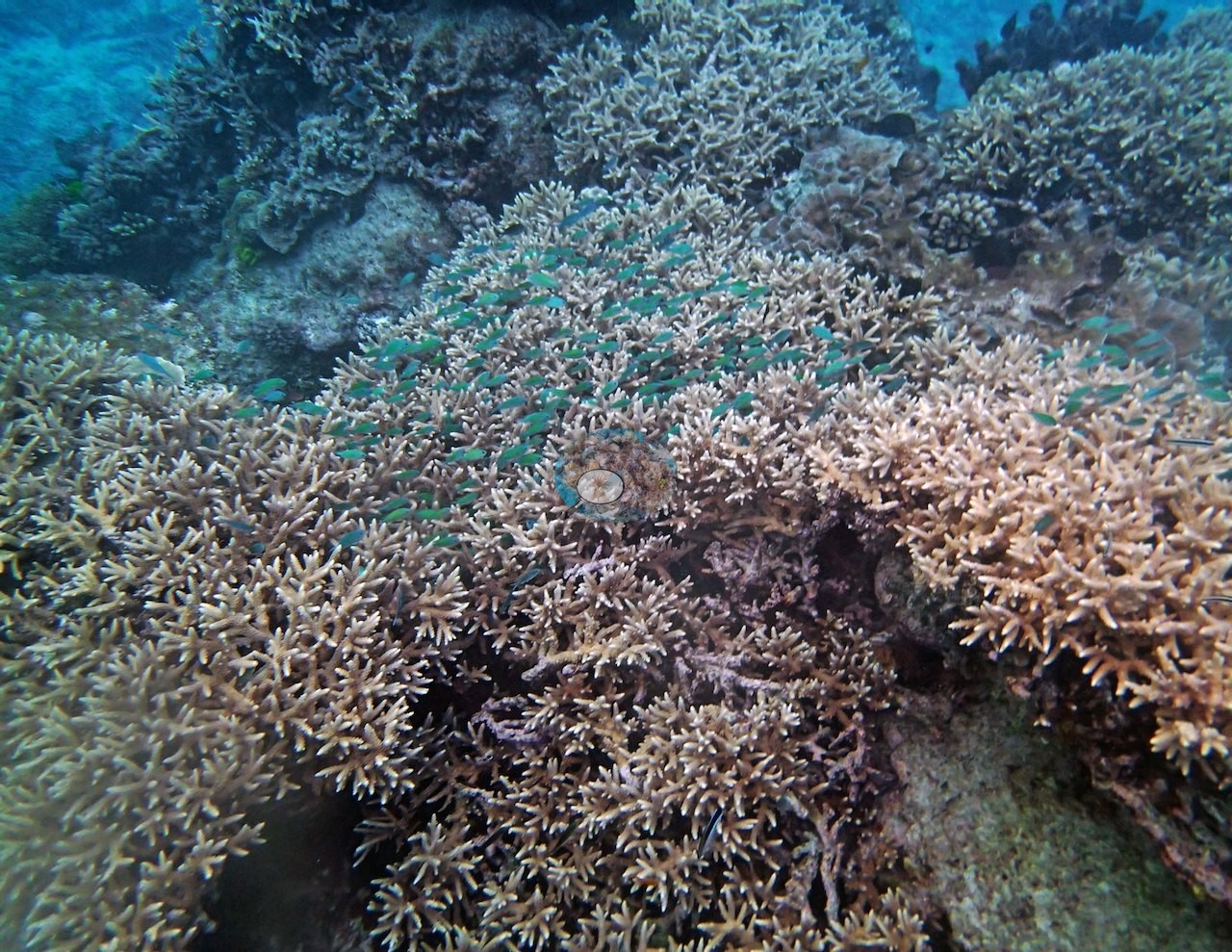
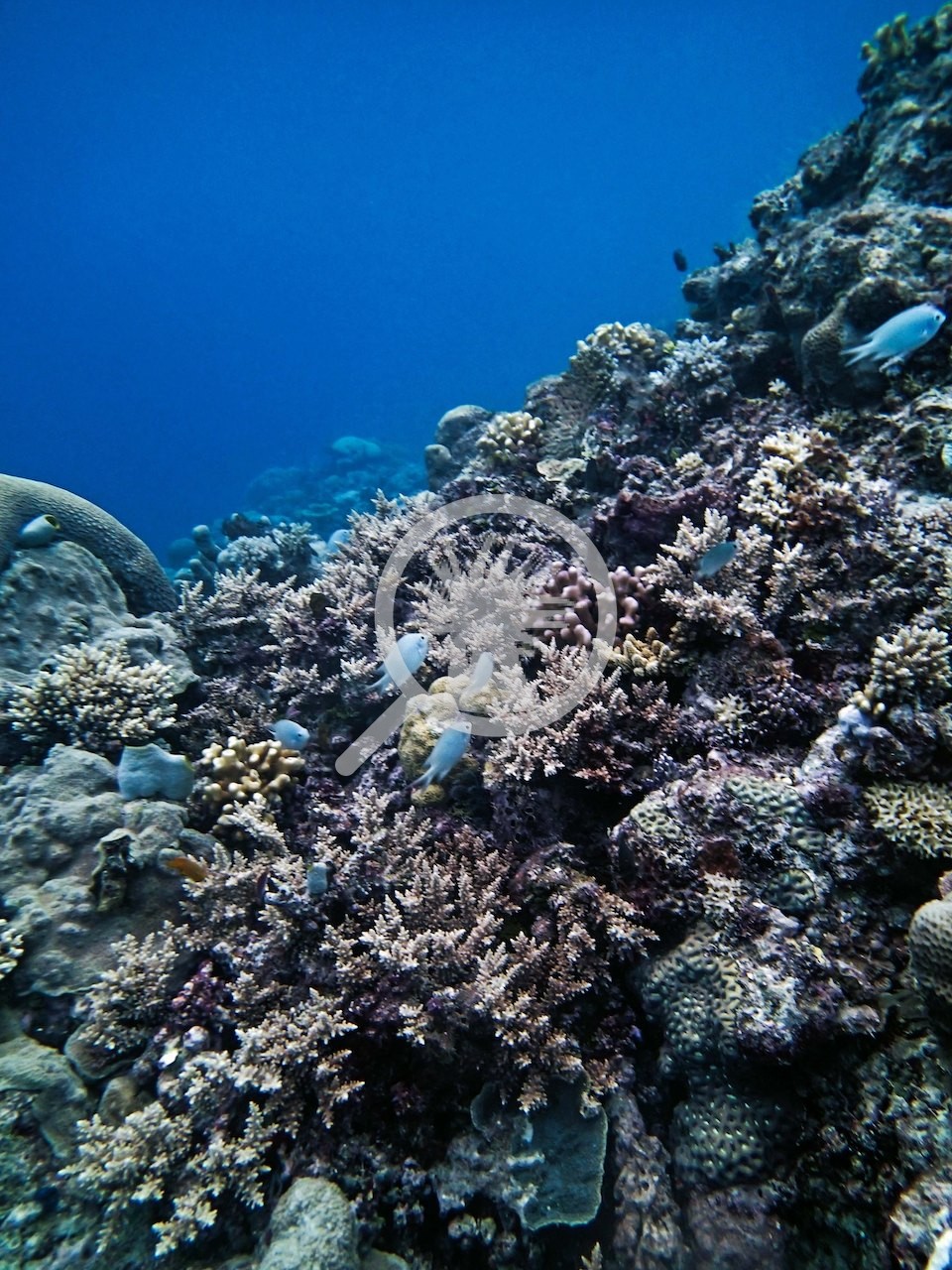
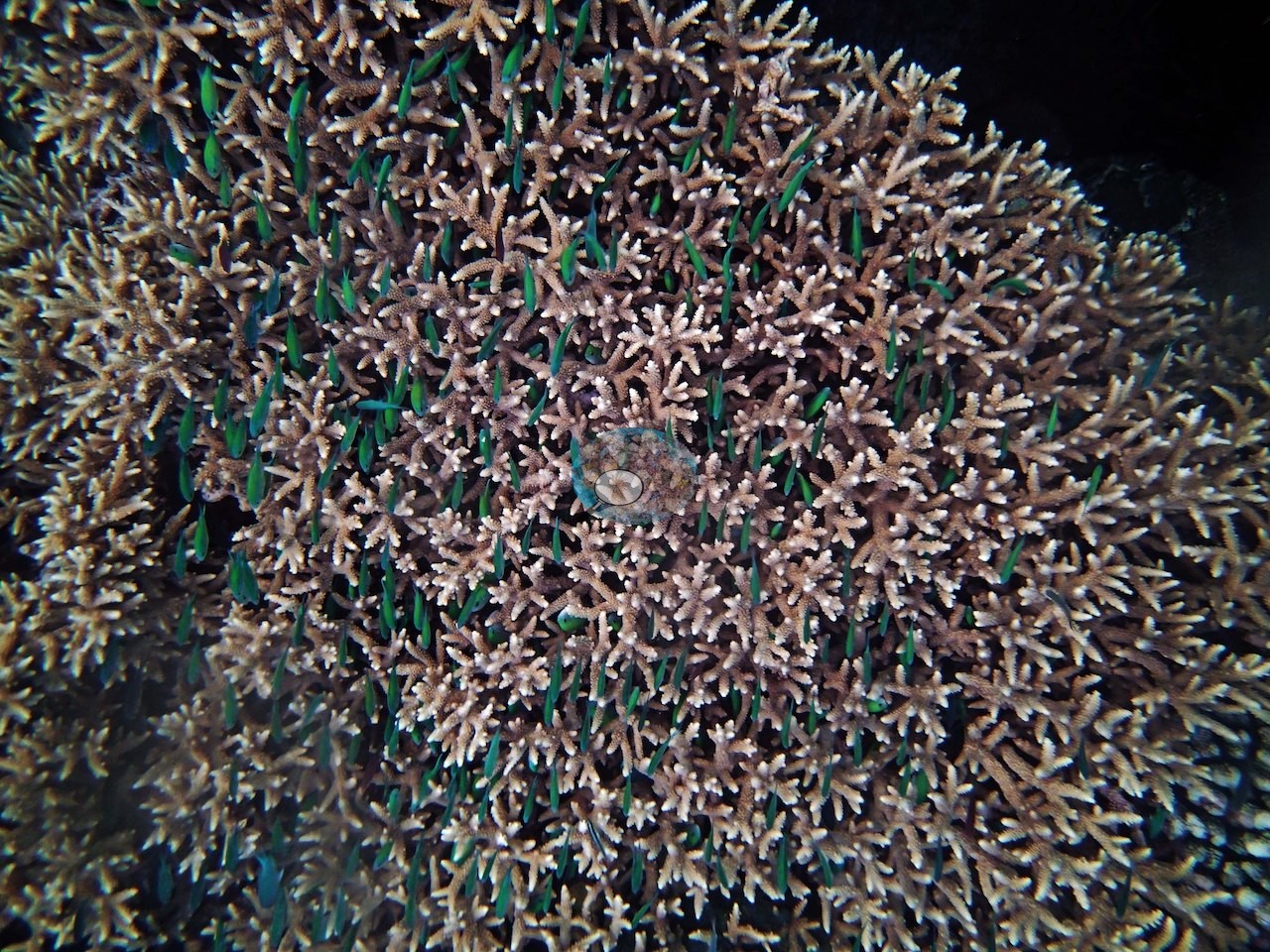
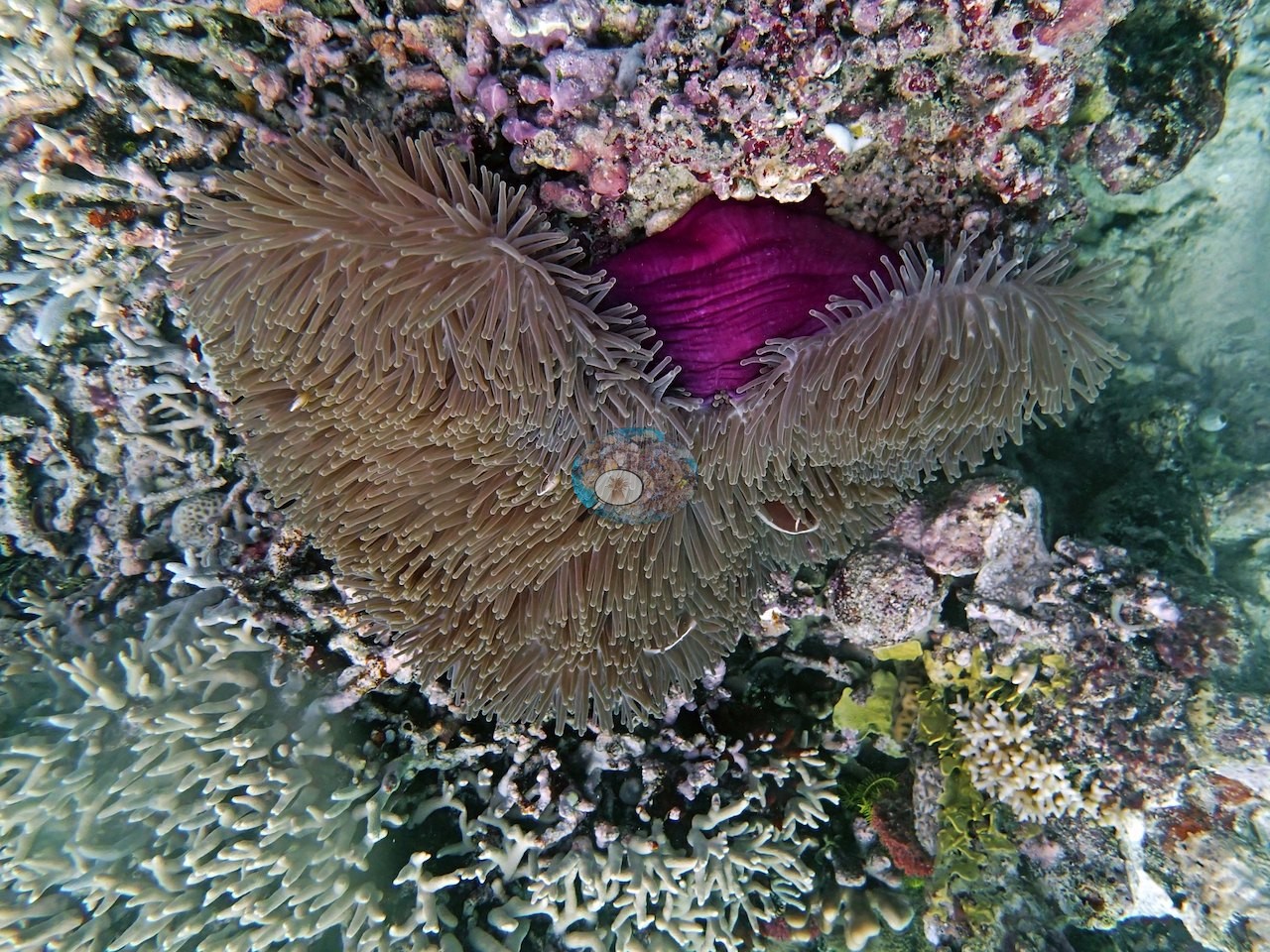
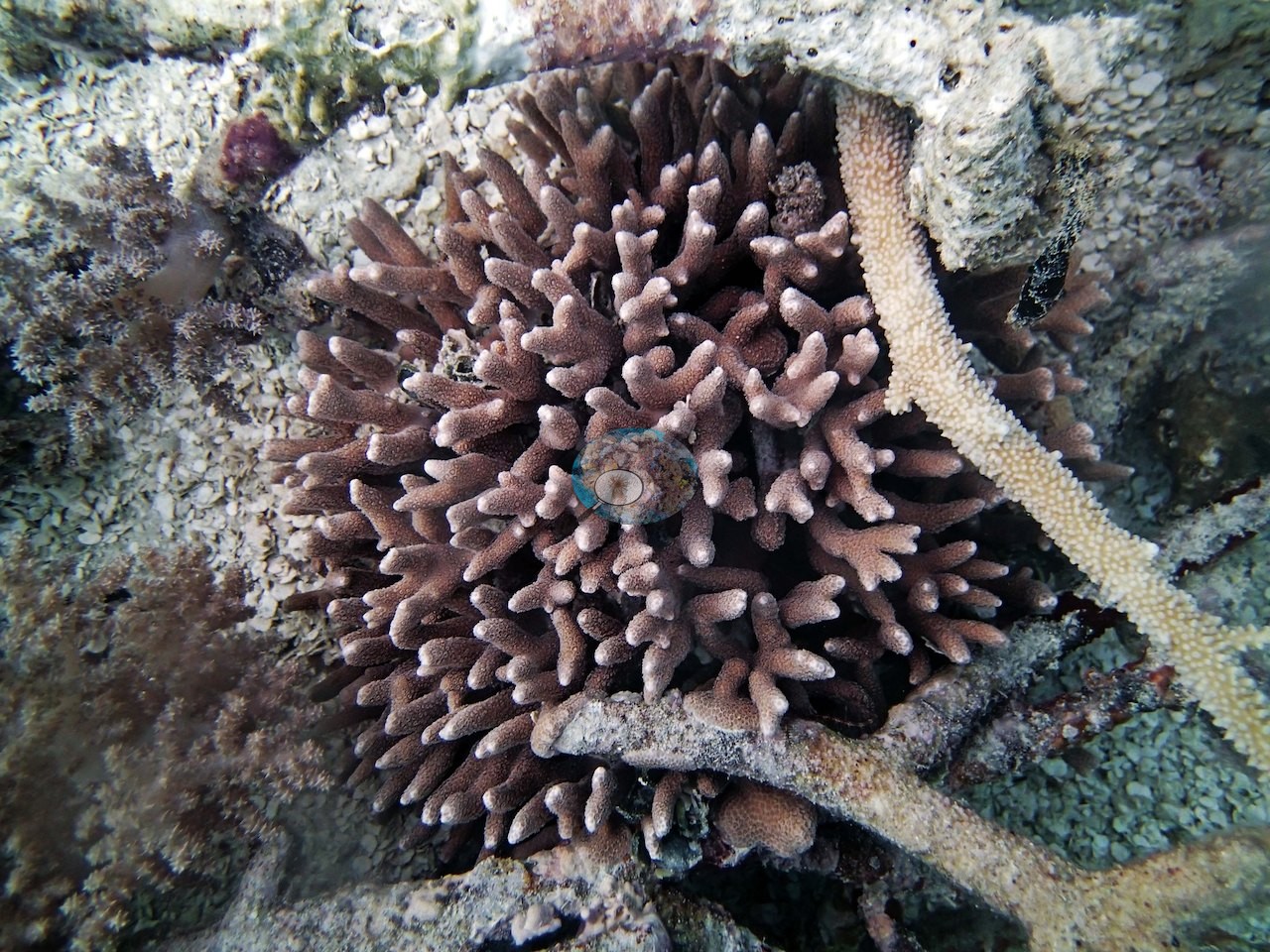
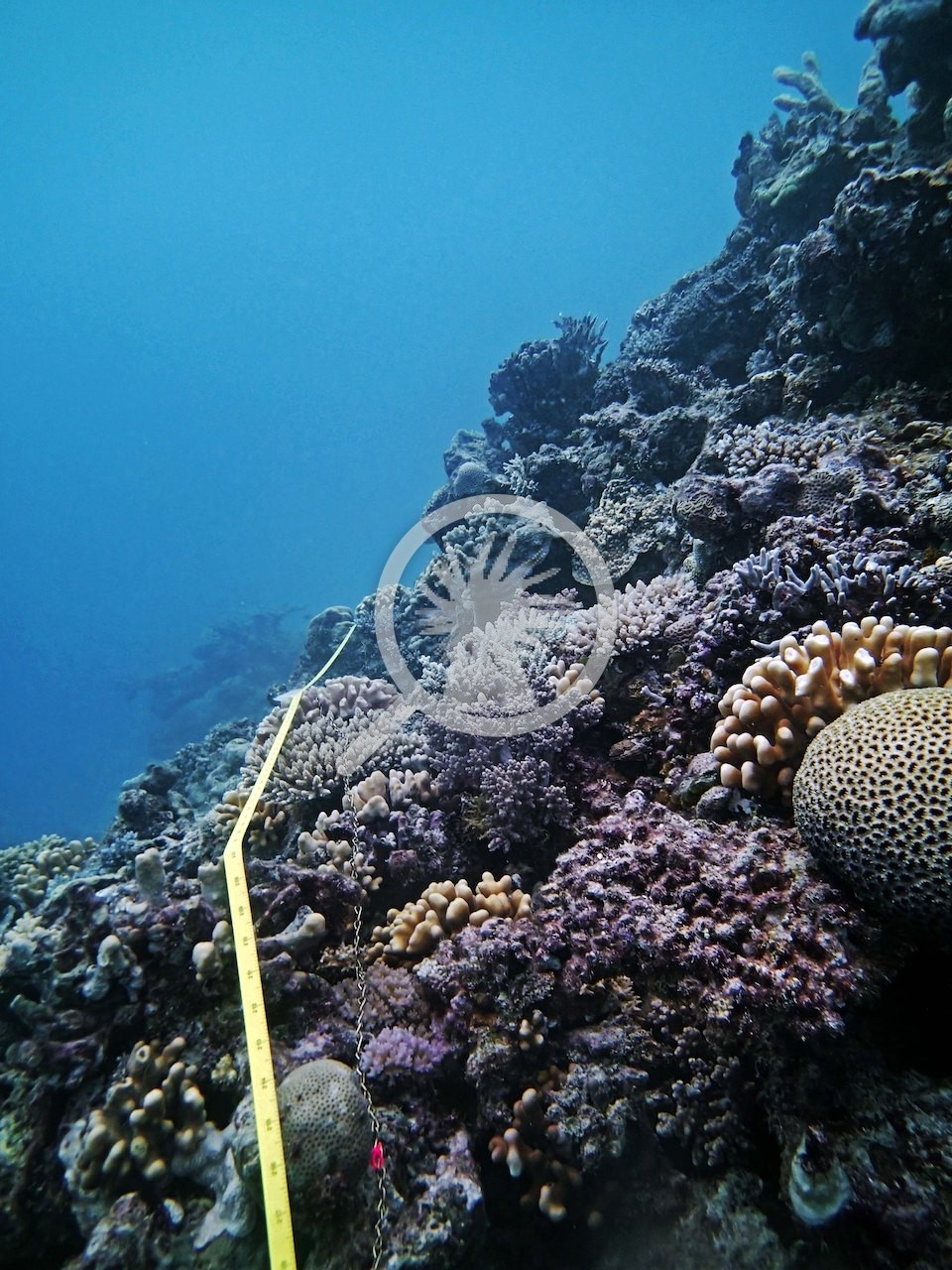
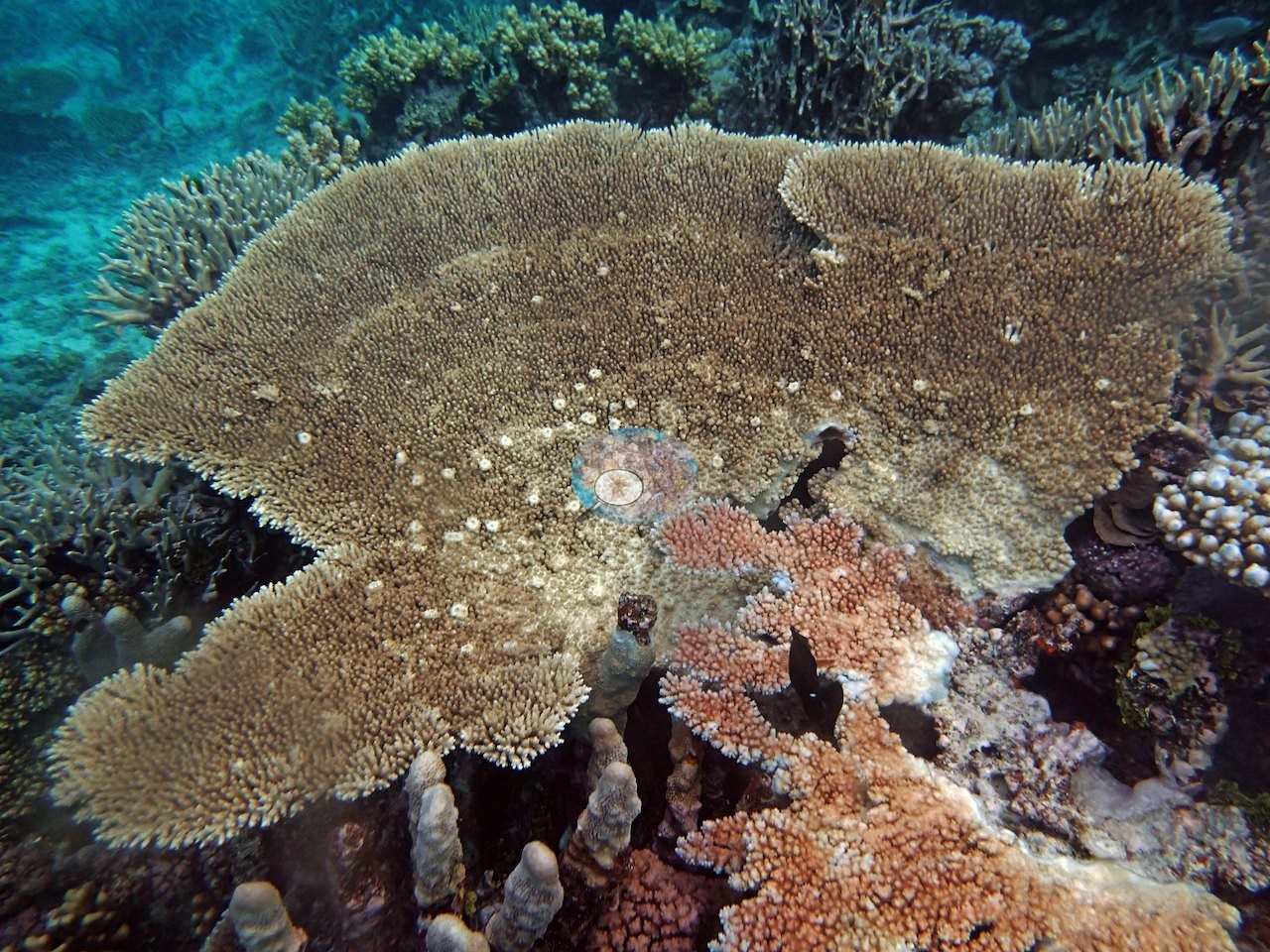
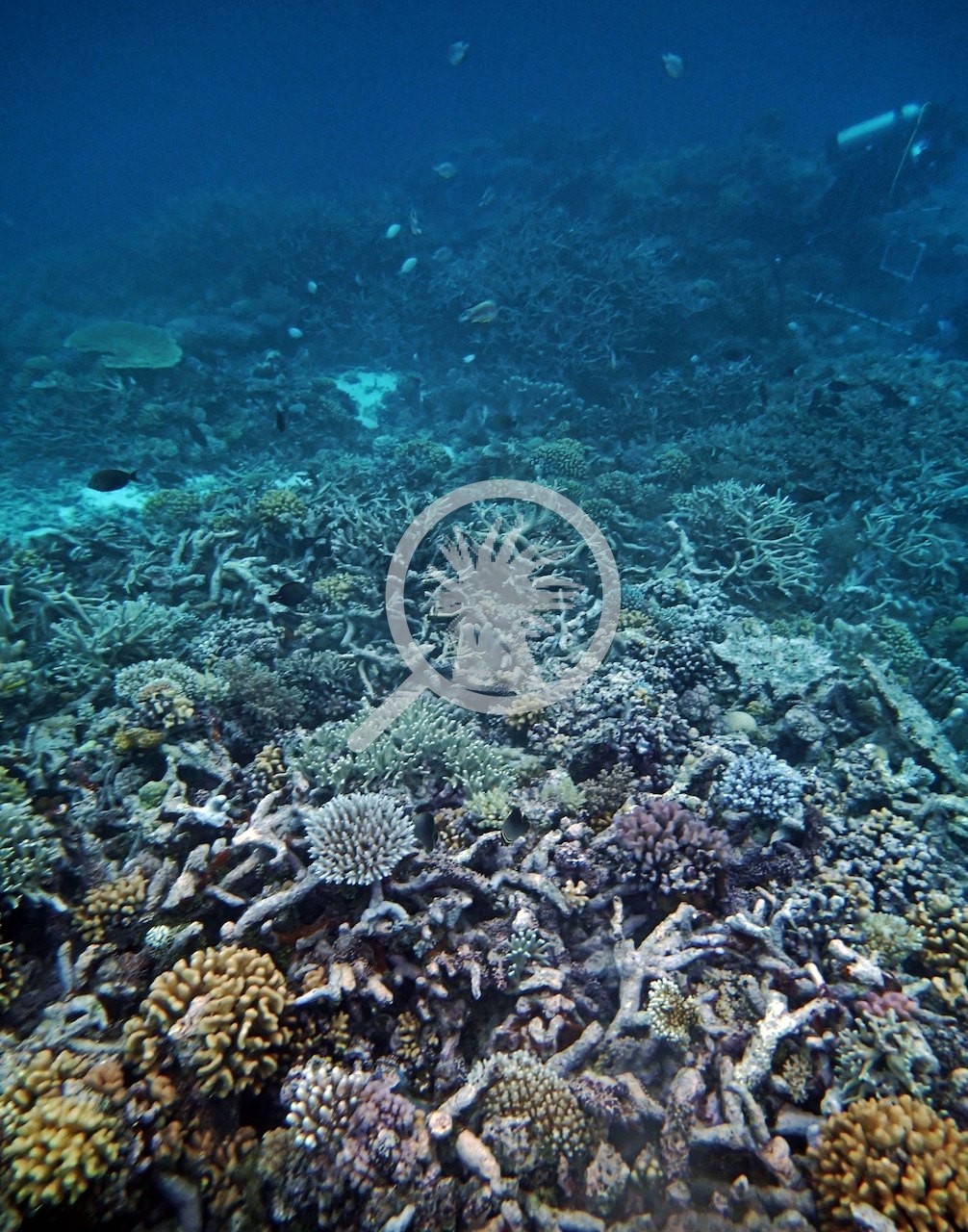
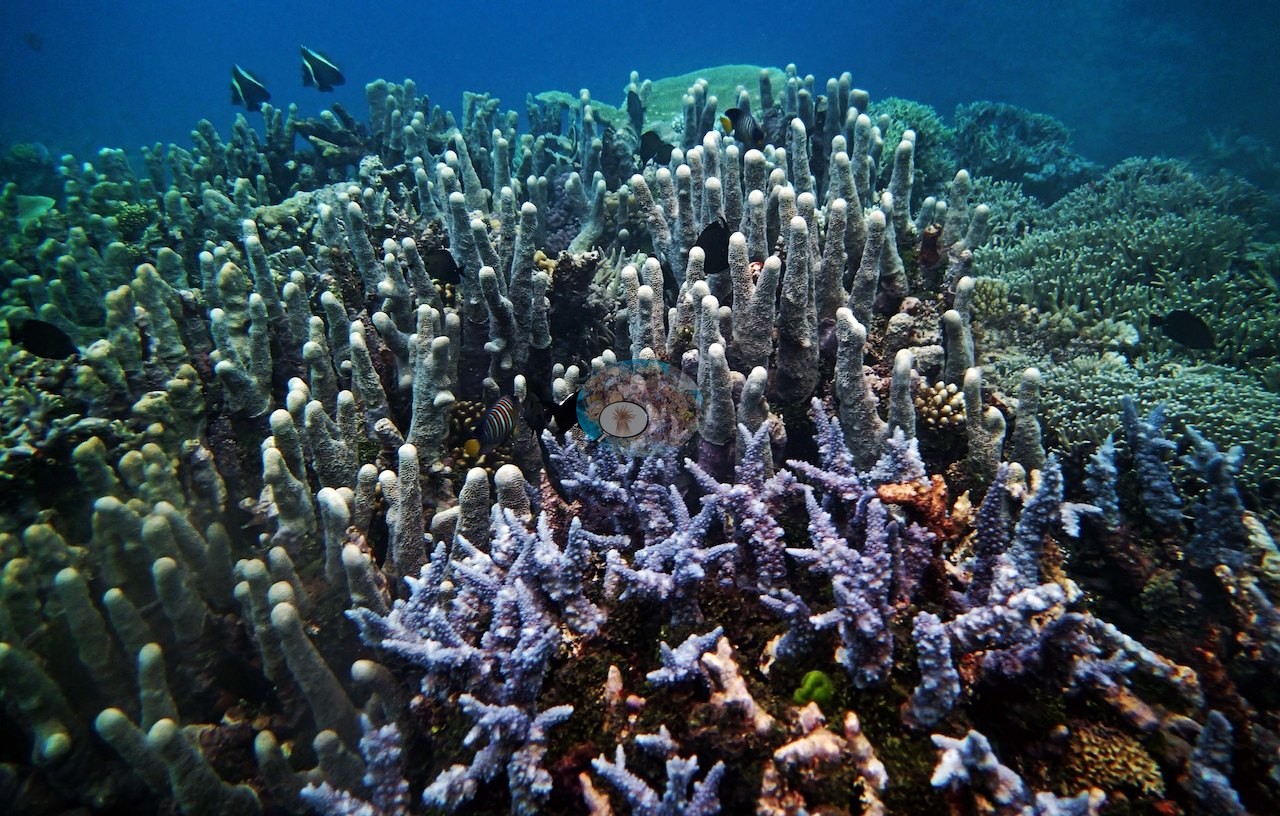
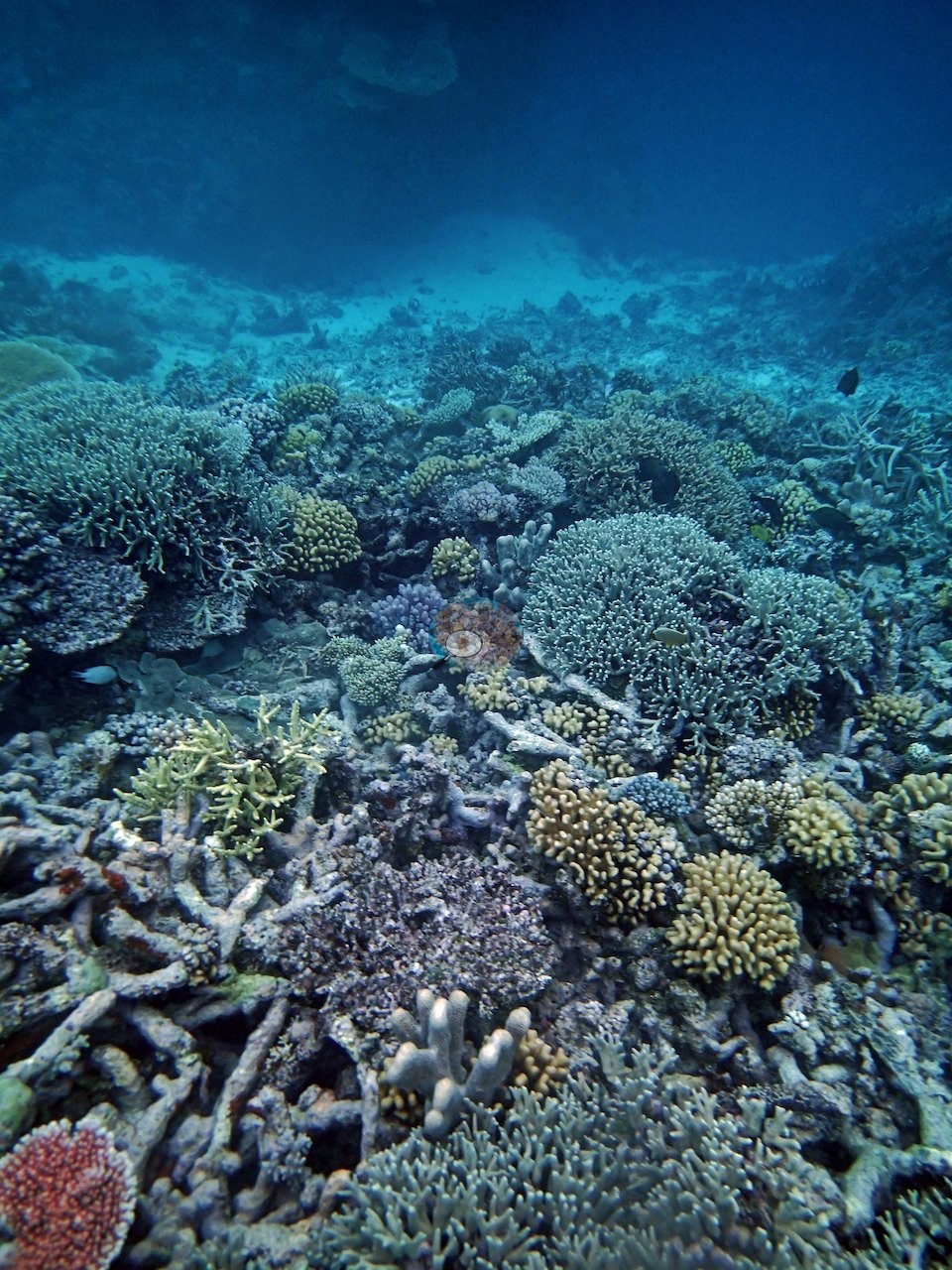
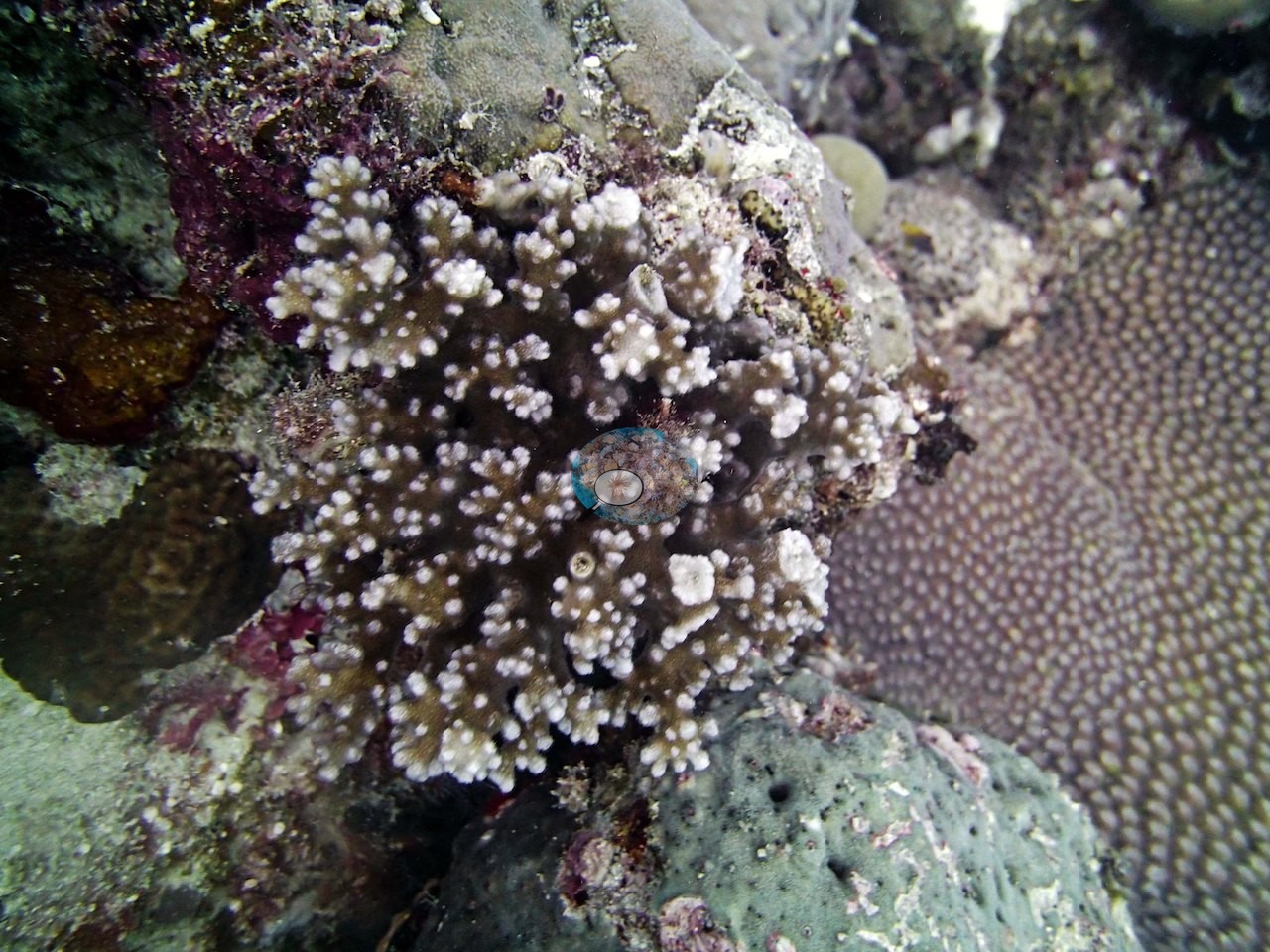
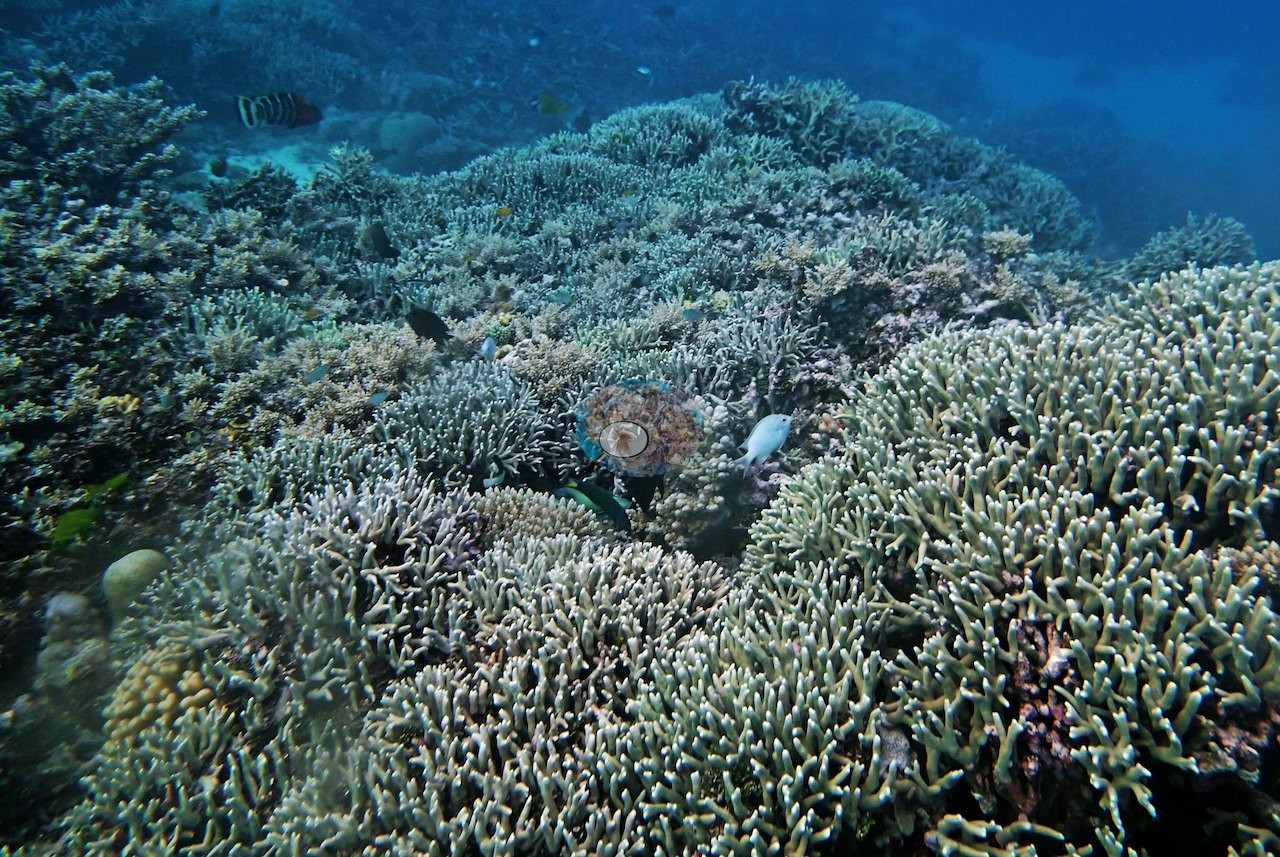
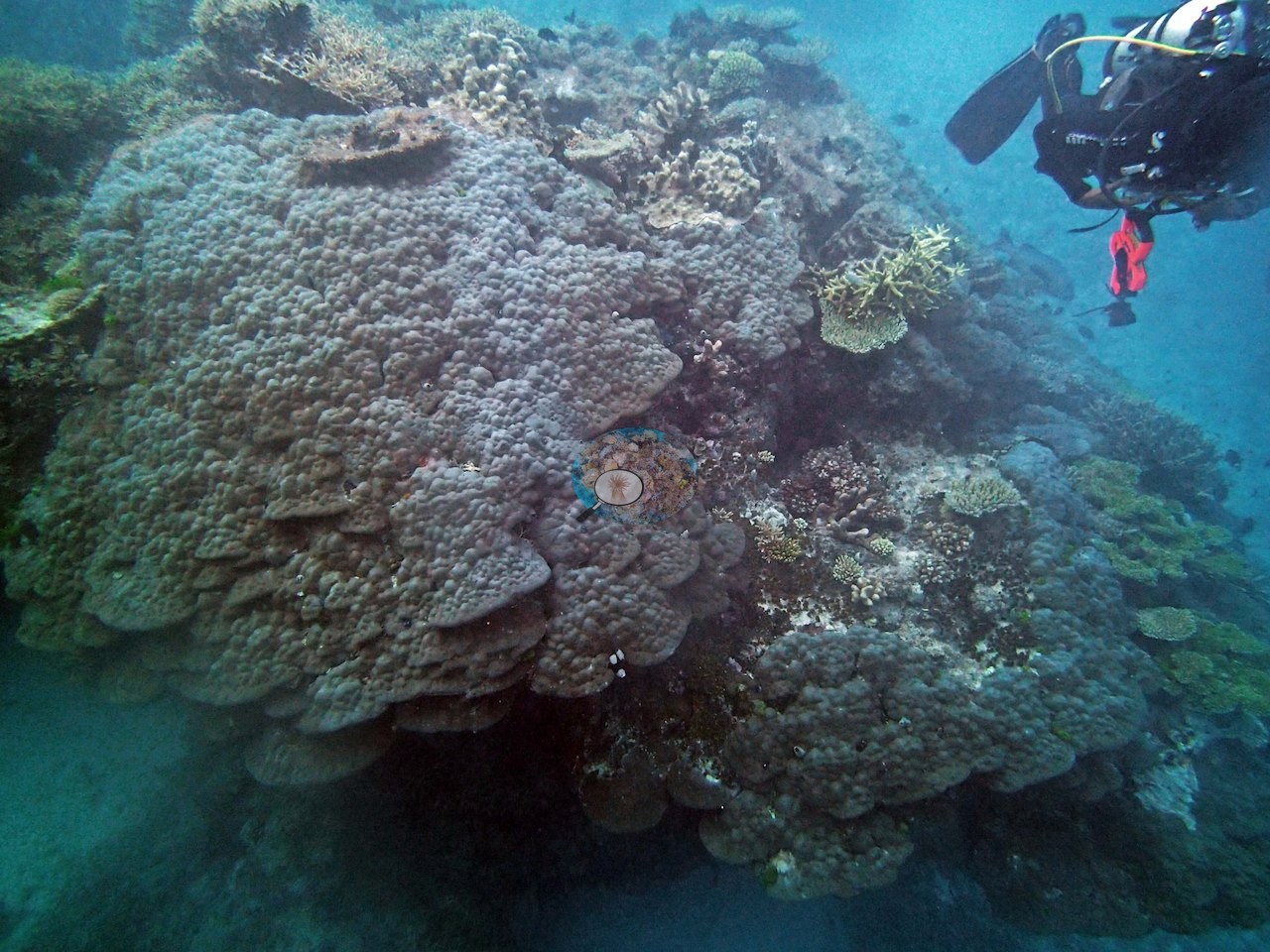
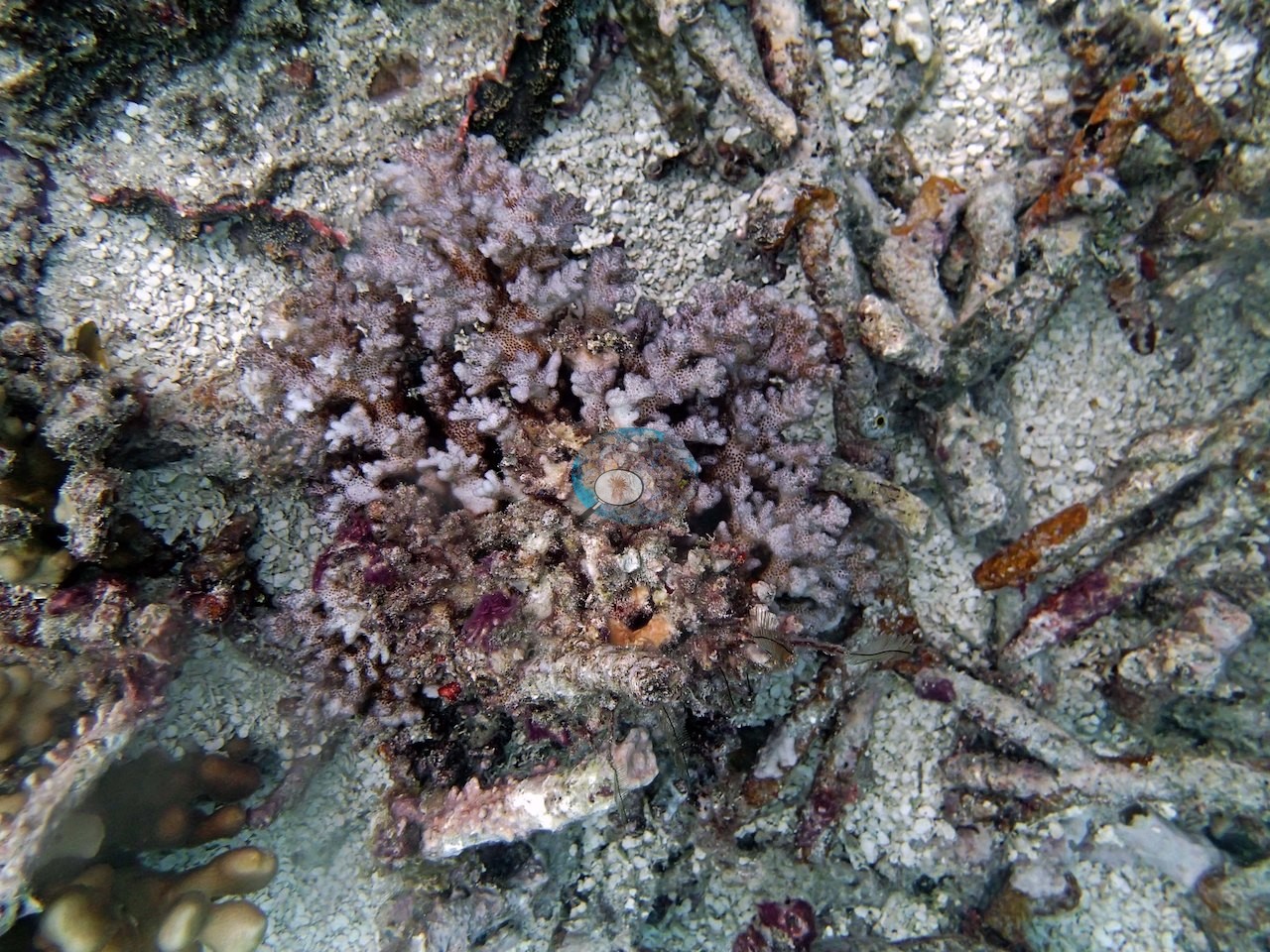
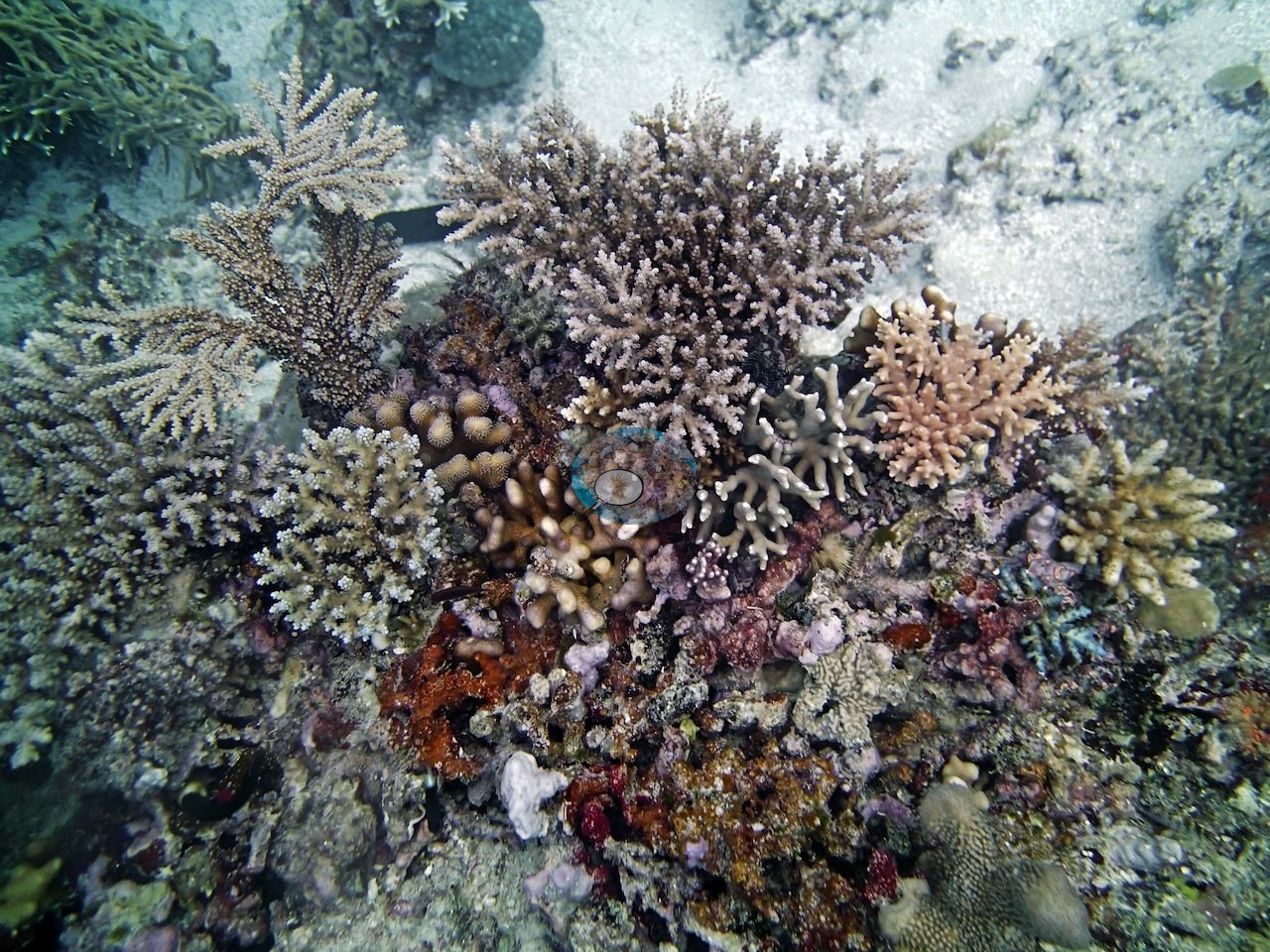
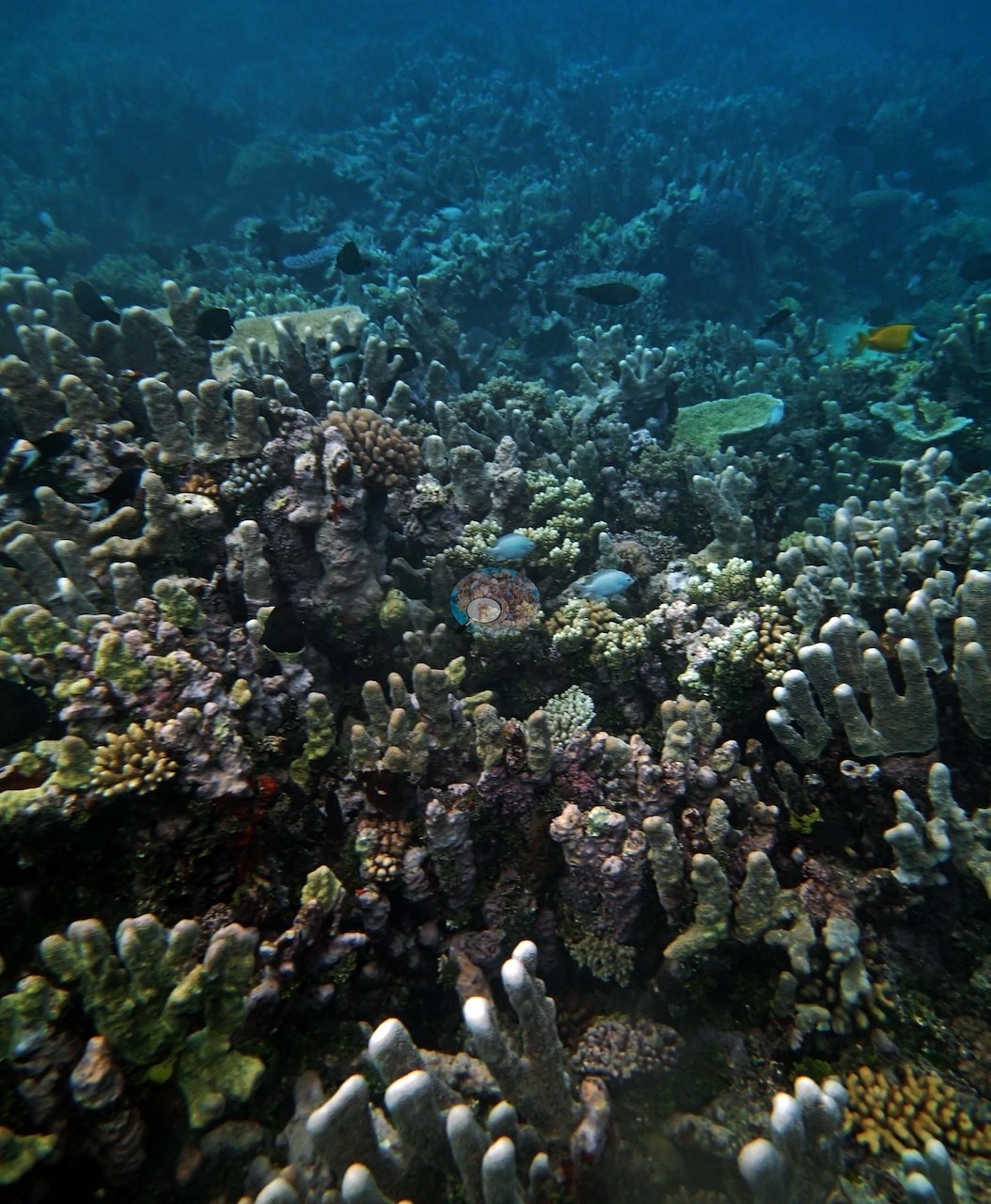
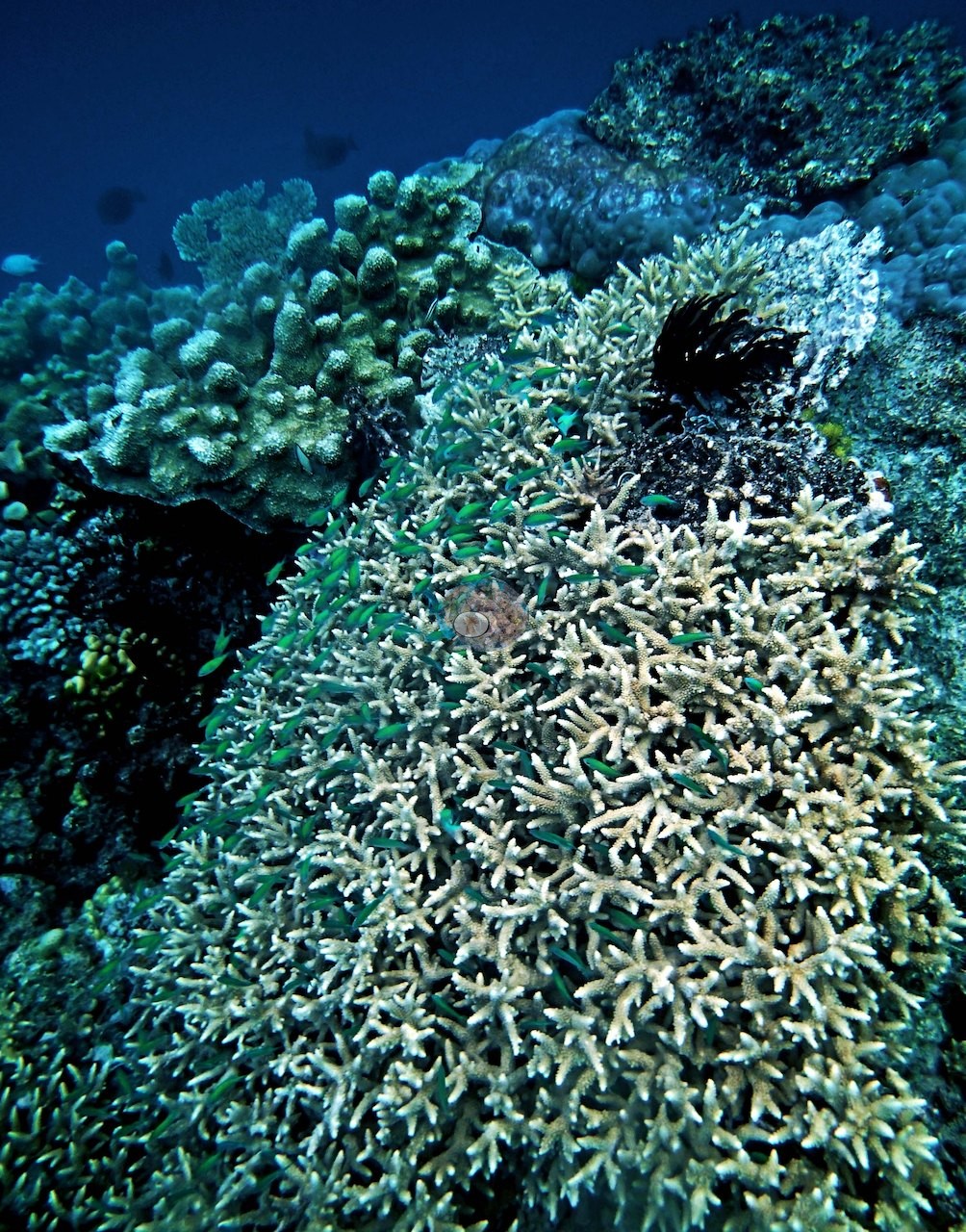
The third dive of the day at Unnamed Reef 11-091 dropped onto a reef that kept going past 30 m, though the real spectacle was up top: staghorn Acropora, branching Porites, and Isopora thickets crowding toward nearly 100% cover in the shallows, with coral growing to within centimeters of the surface (e.g., Image 1, Image 2, Image 4).
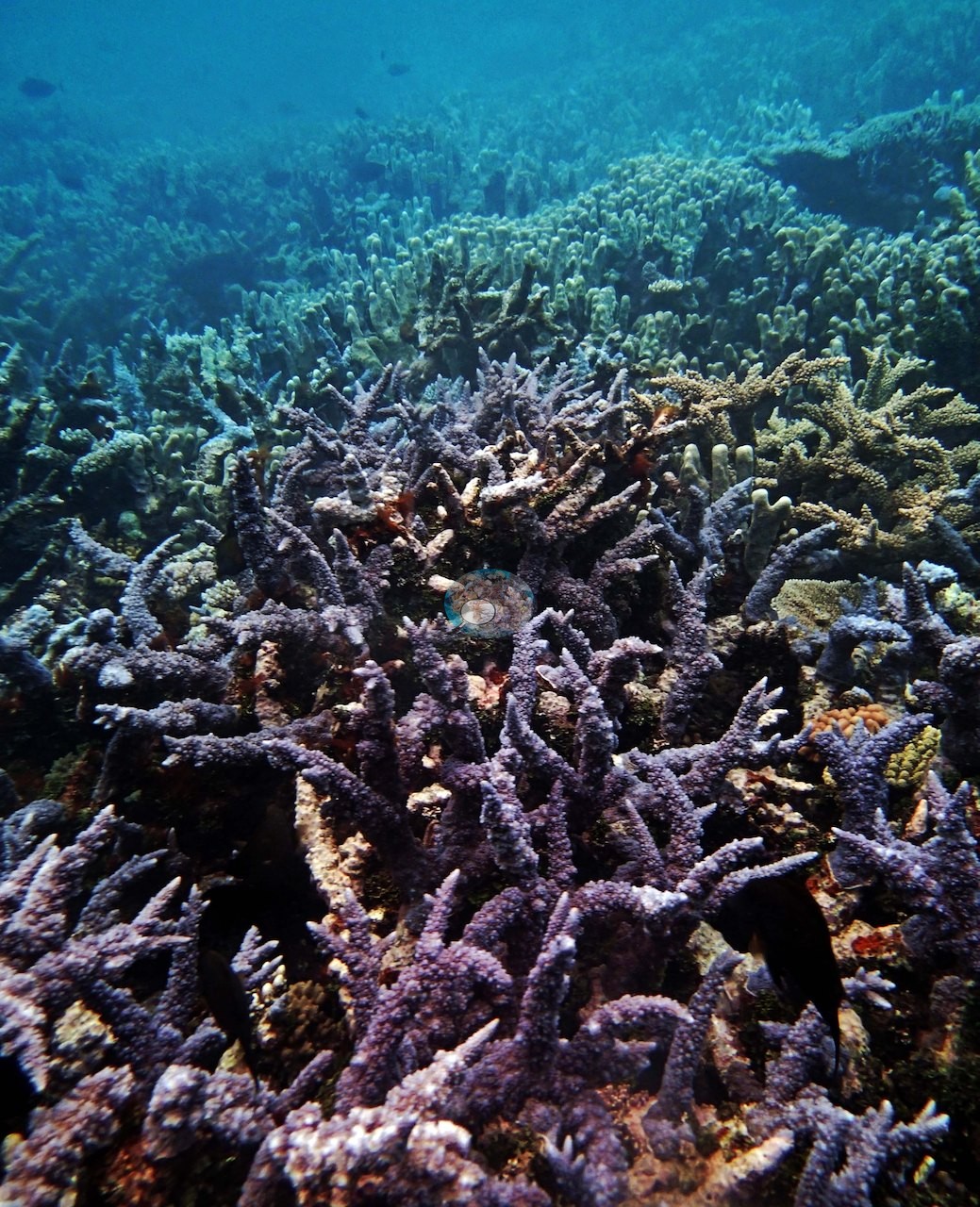
This reef sits inside the GBR's most tightly protected zoning tier — a Preservation Zone closed to entry without a permit and to any form of take.
Coral cover
- Reference: Khaled bin Sultan Living Oceans Foundation, Global Reef Expedition (in situ transect)
- Coral cover across the whole site averaged 46% in the point-count survey.
- Coral cover: 46%.
- Live hard coral measured on in situ benthic transects during the Khaled bin Sultan Living Oceans Foundation Global Reef Expedition, against total algal cover (all algal groups) of 31% of the benthos.
- Transect mean 44 ± 6.3% SE (n = 7 transects; Living Oceans Foundation per-transect benthic data); the headline above is the expedition's station value (the headline weights each depth equally).
Stressors
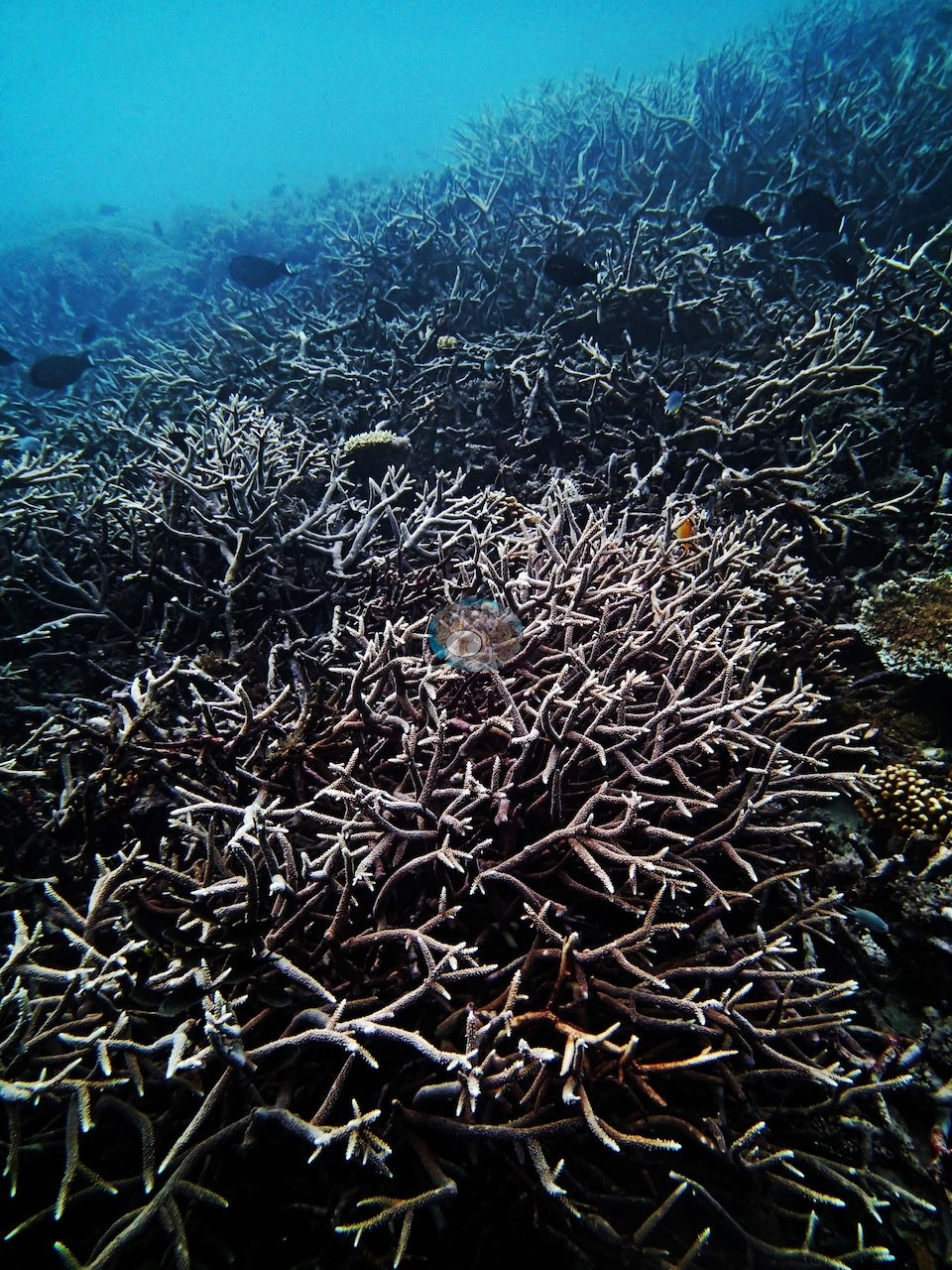
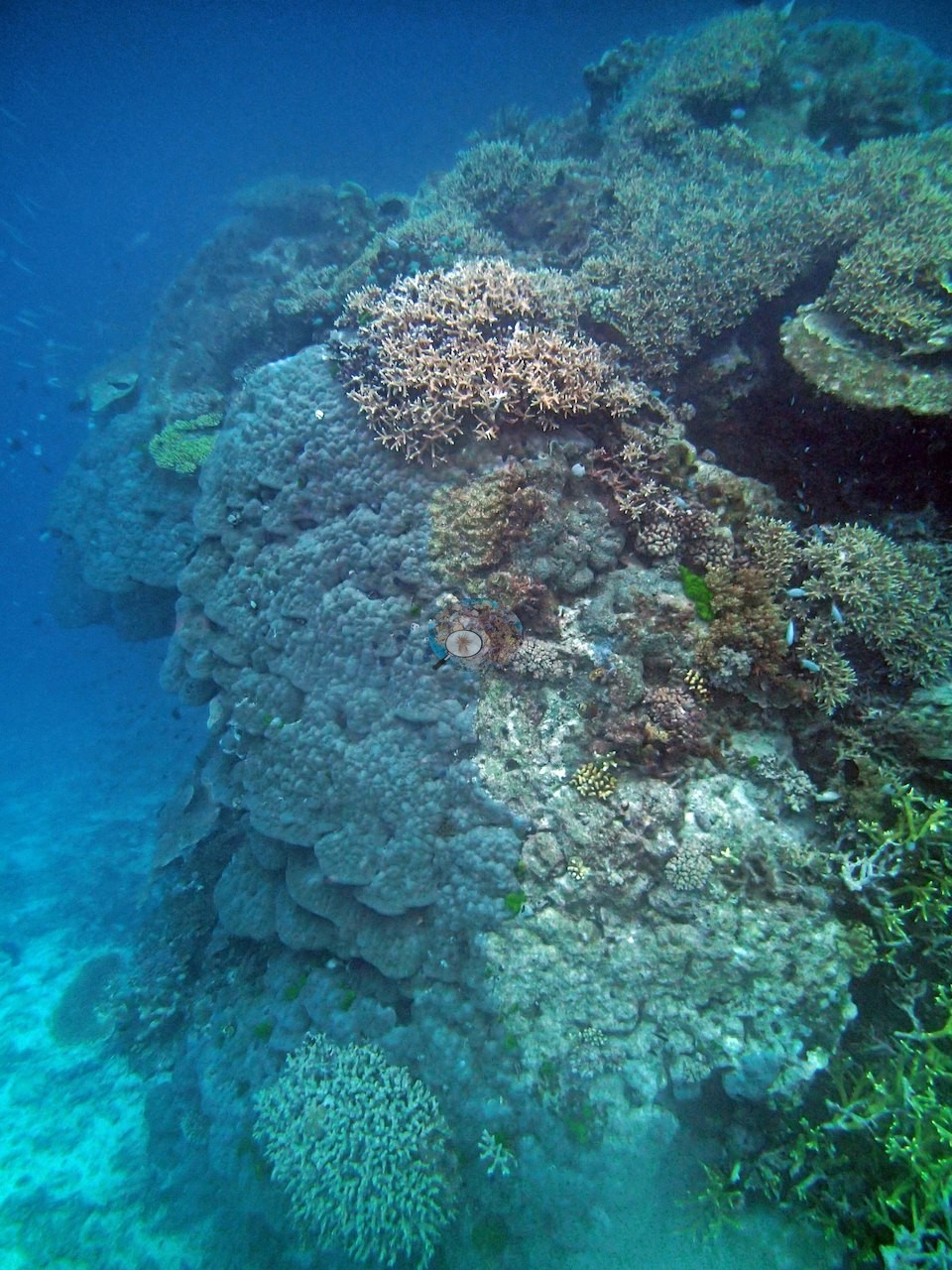
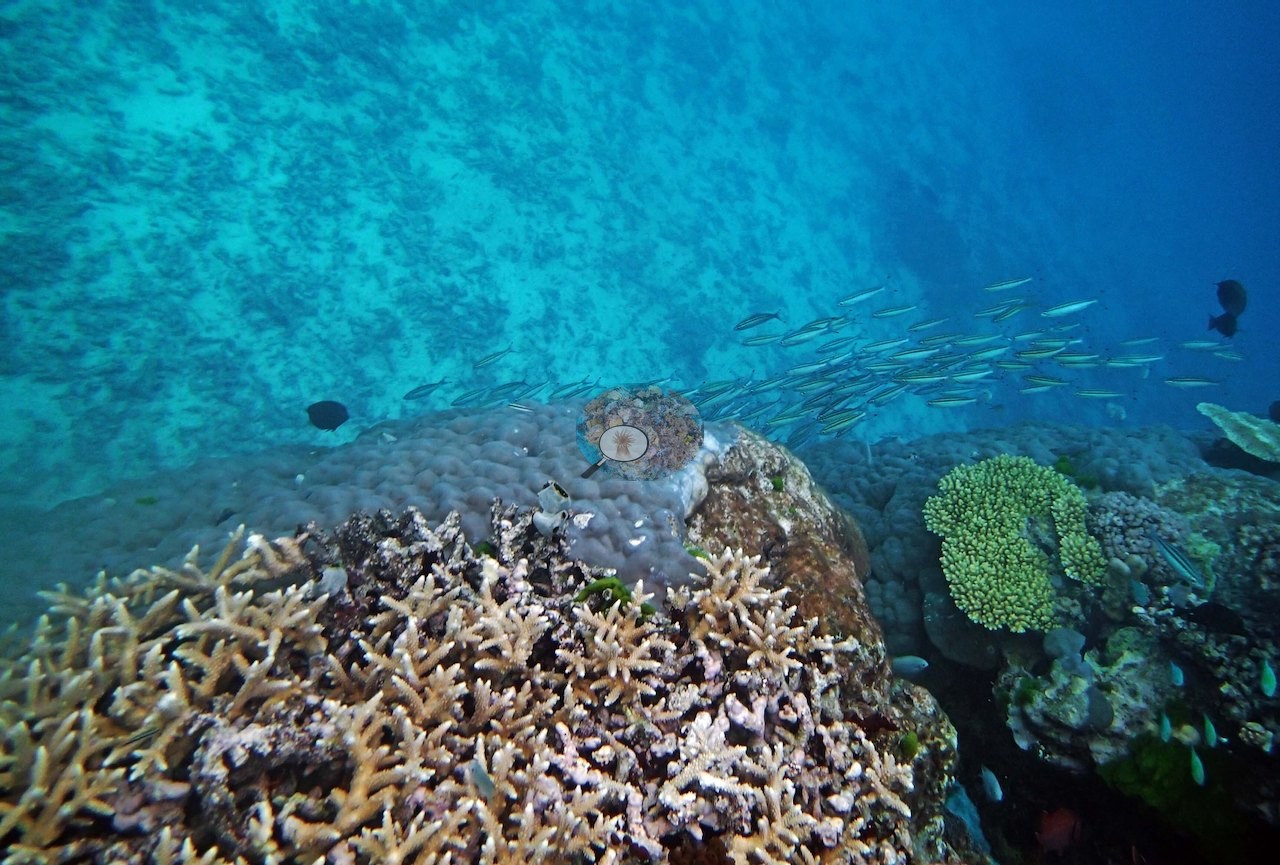
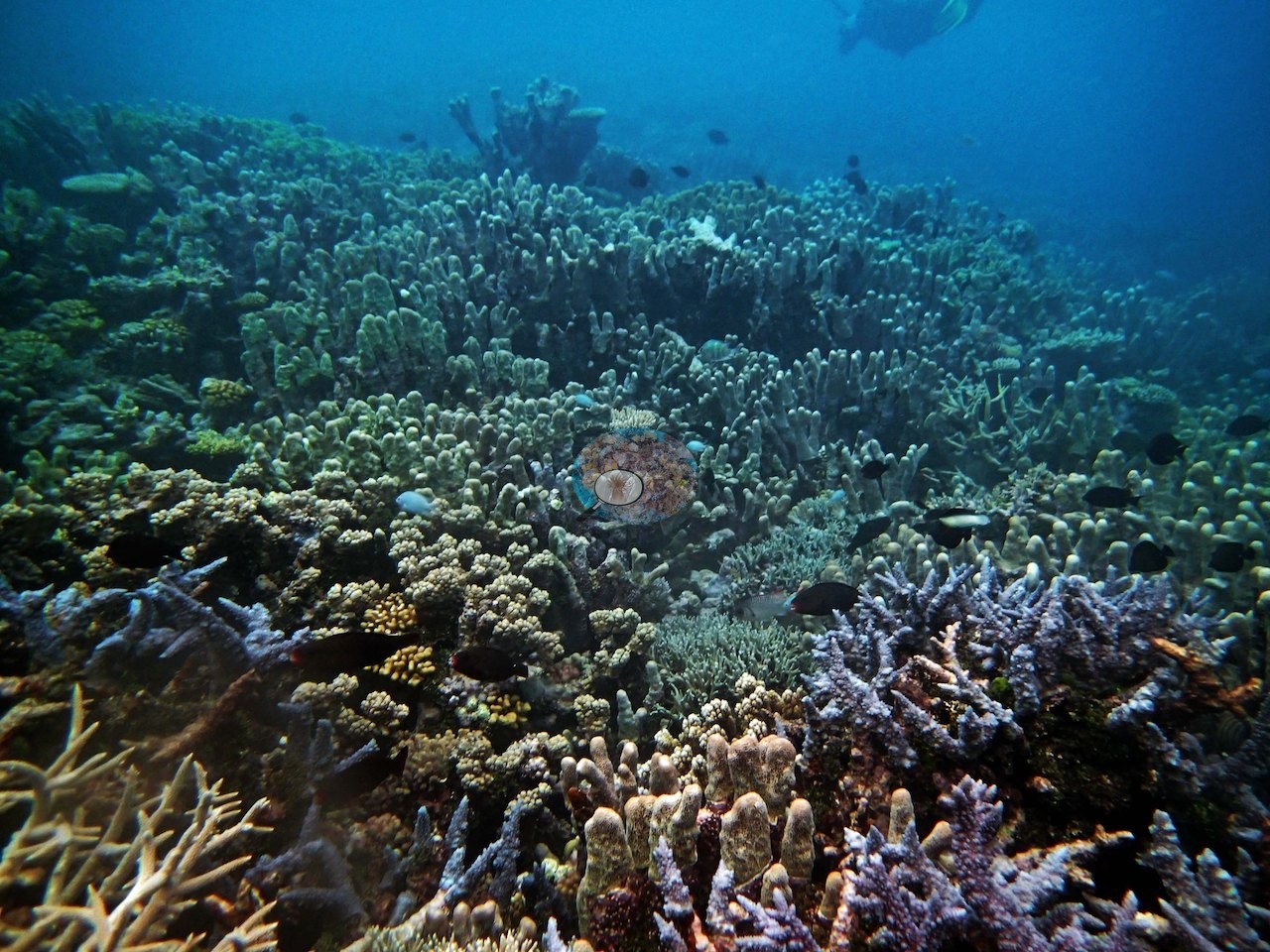
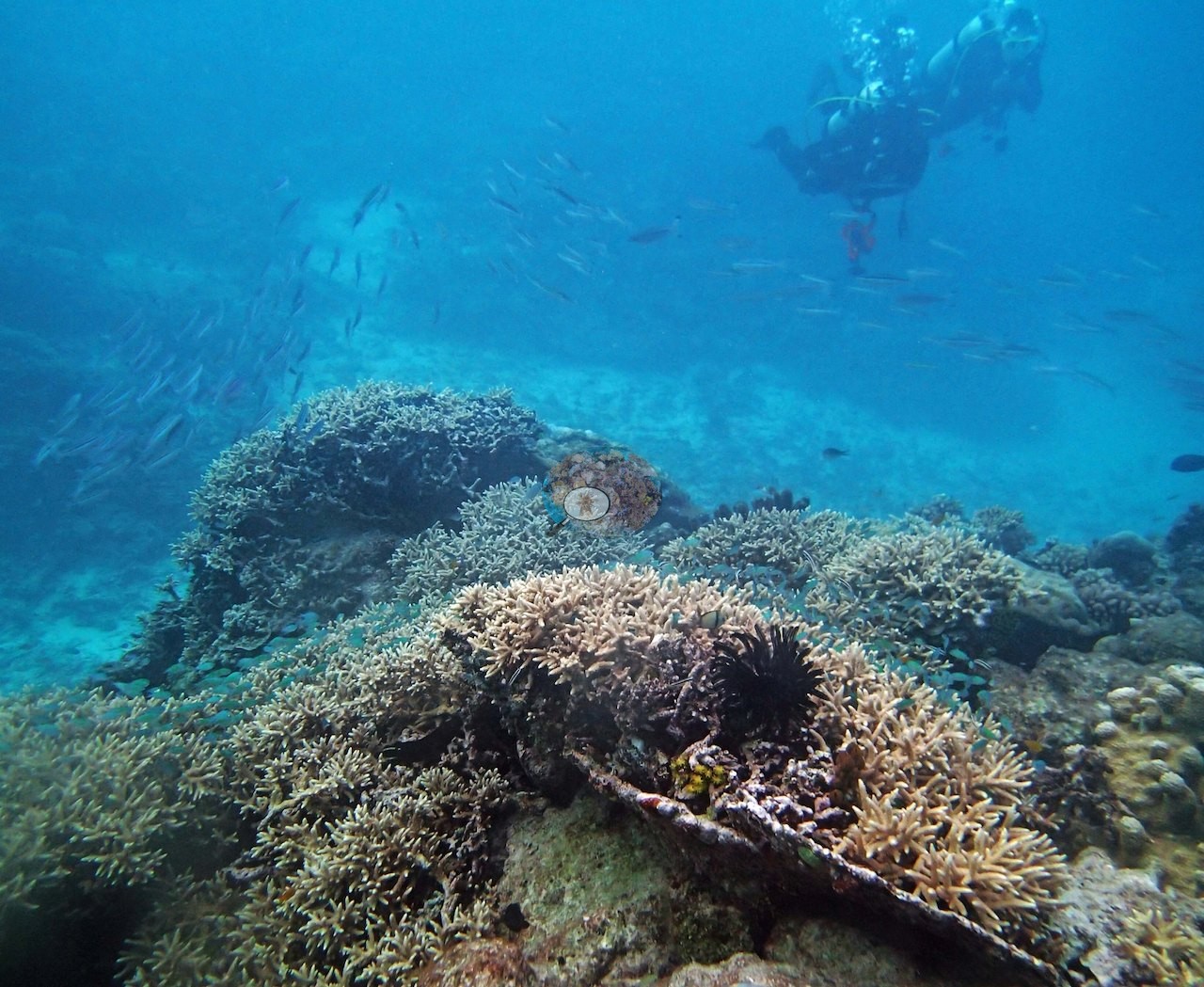
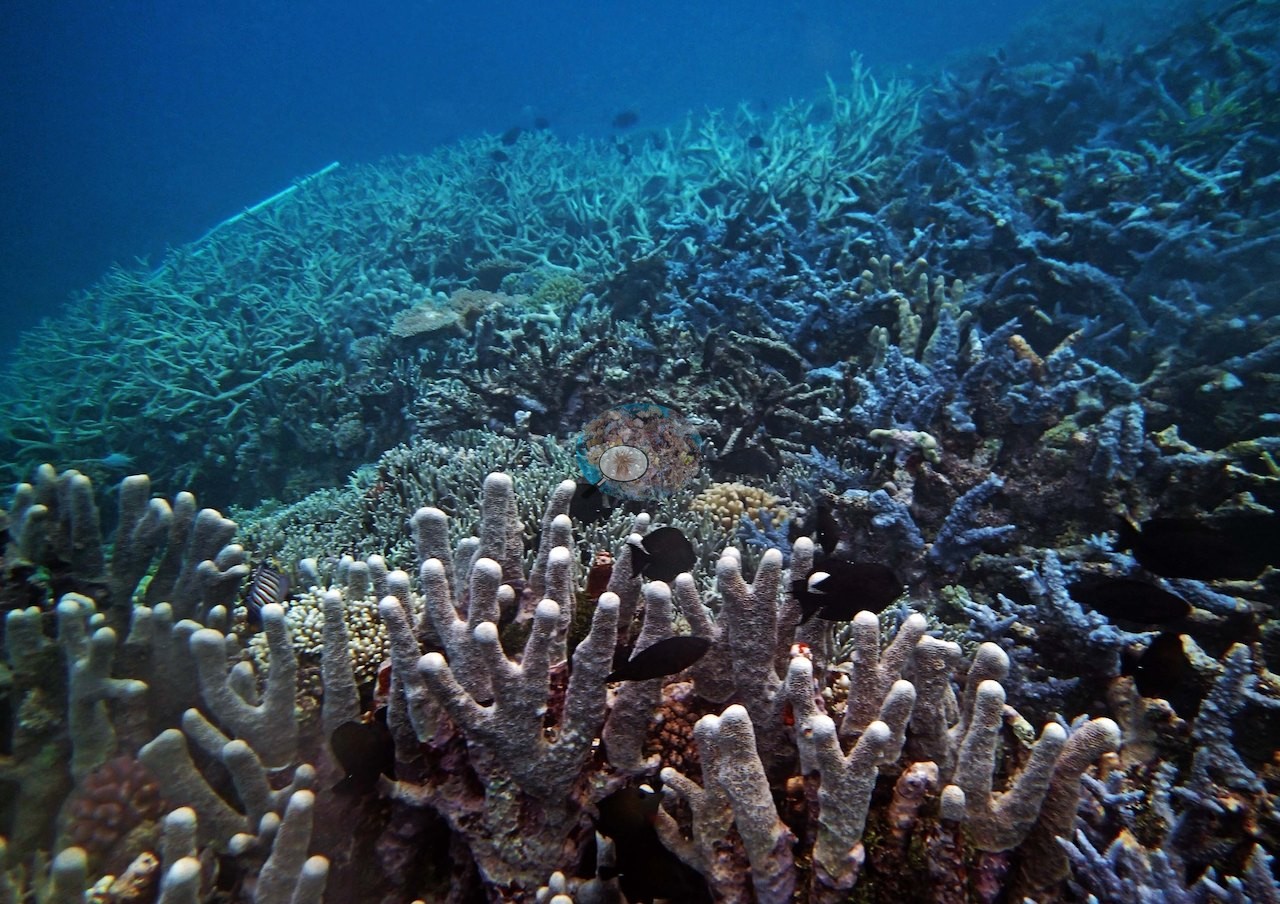
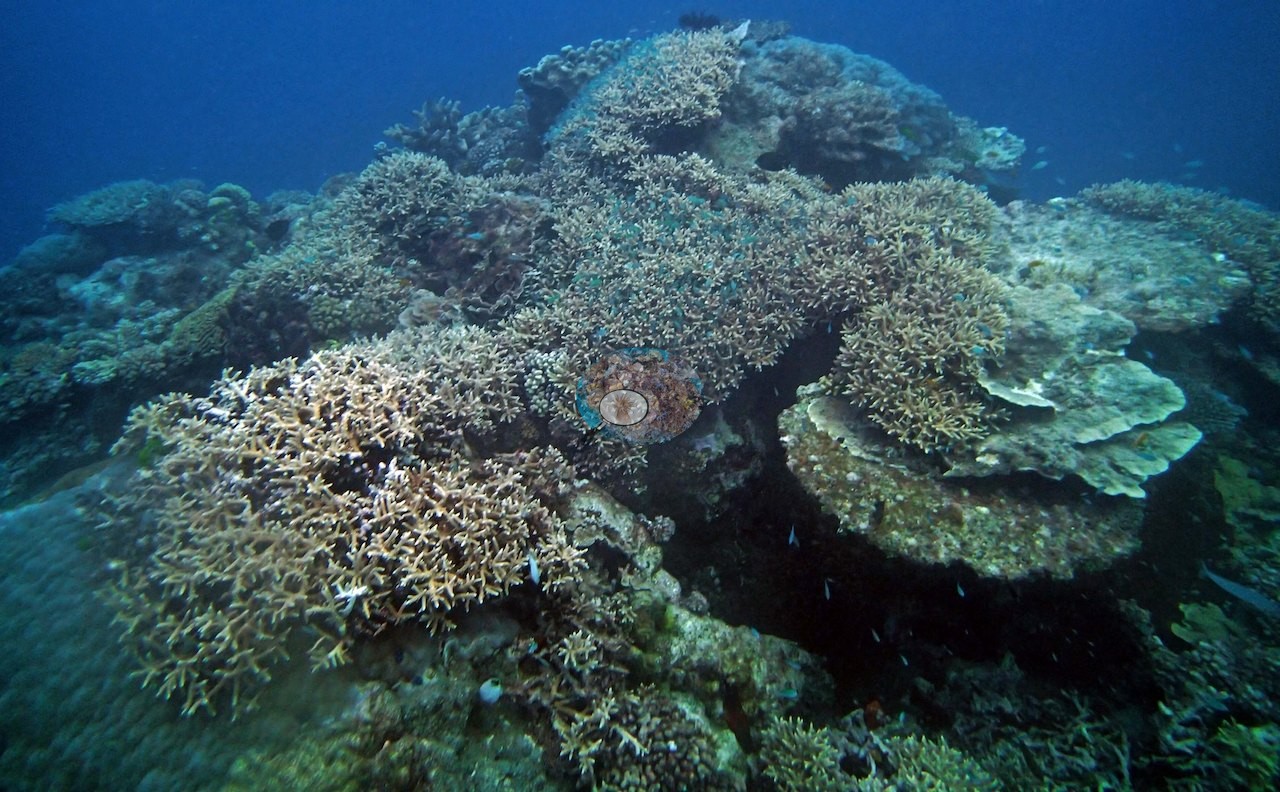
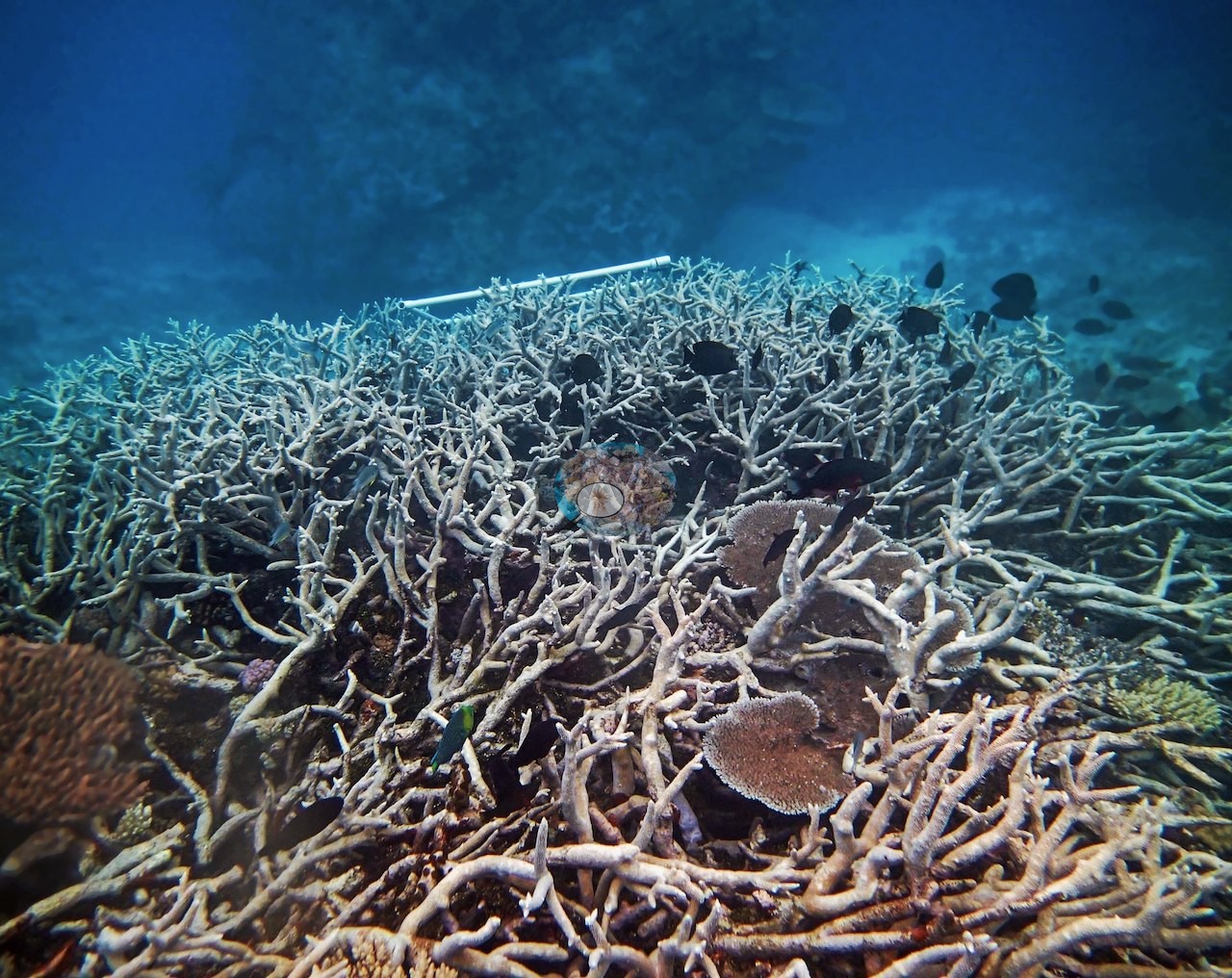
Amid the lushness, the notes flag a specific concern twice: needle coral (Seriatopora hystrix) colonies at two separate transects were singled out as "sickly" (his third and fifth transects), and one transect passed directly from a living staghorn thicket into a dead one (e.g., Image 3).
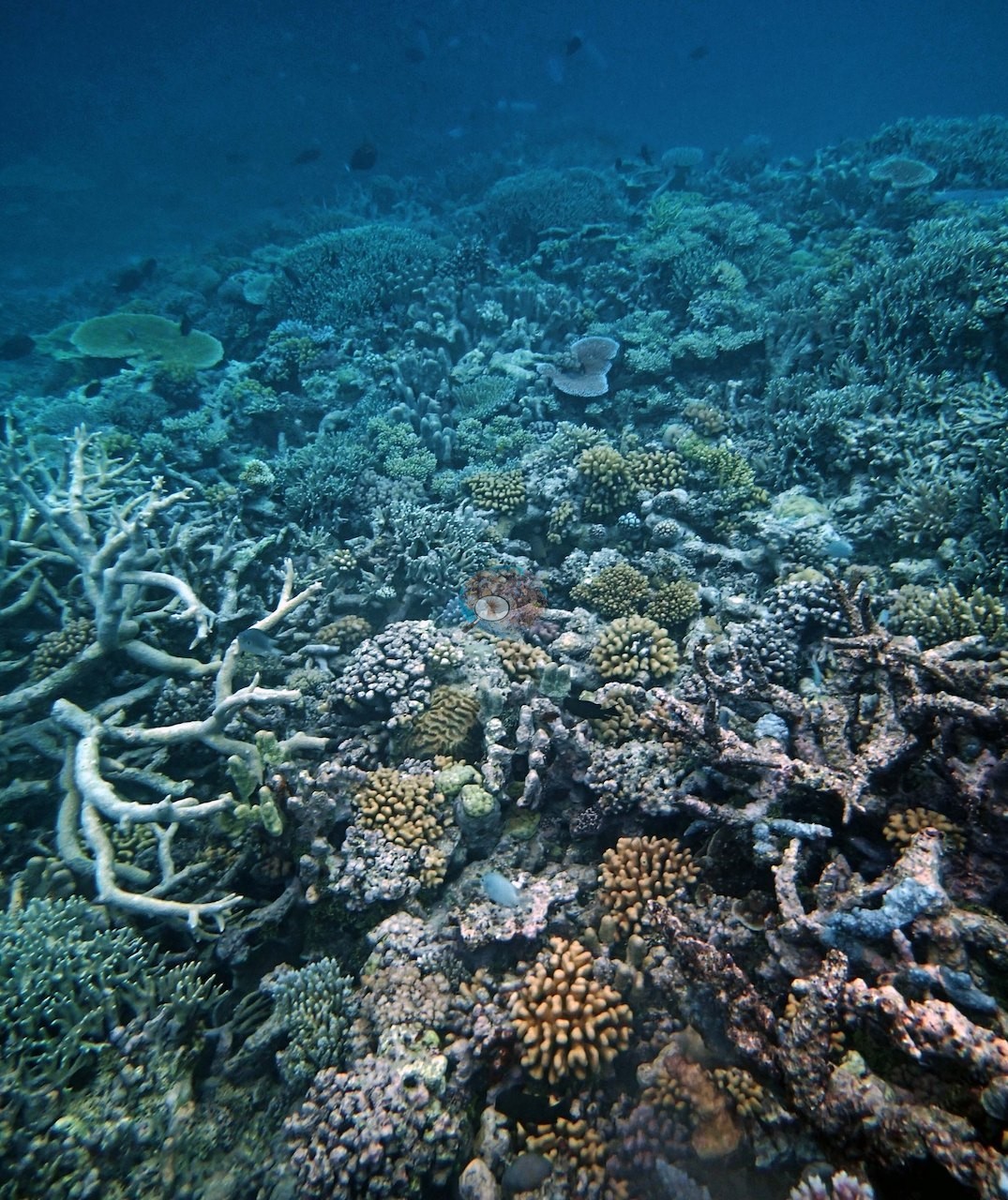
Fish and other fauna
Gray reef sharks patrolled the depths and a Napoleon wrasse made an appearance.
Comparisons with other data
No prior survey data from this site. If you would like to share yours, please email us.
CV model comparison
More info
The photo row below is a methods comparison only: it is never averaged with the transect and never used as the headline. It compares site means only: the photos come from the same survey dive as the transect but not from the same points.| Method | Hard-coral cover (%) | Photos (n) ± SE |
|---|---|---|
| Transect (published) | 46.2 | |
| CoralSCOP edited | 29.5 | n = 24 · SE 4.2 |
| Claude (edited photos) | 49.2 | n = 24 · SE 3.6 |
The two computer-vision methods disagree by 19.7 pp (29–49%) and read on both sides of the in-water transect (46%); the headline is the in-water transect because a diver transect is independent of the photographs.
Data & links
- Download benthic survey data (CSV) ↗
- Download all LOF-GRE data (933 sites) ↗
- Photo portfolio ↗
- Coral Reef Diagnostics country page ↗
All images from Coral Reef Diagnostics. Data are from the Khaled bin Sultan Living Oceans Foundation Global Reef Expedition and Coral Reef Diagnostics.
© Coral Reef Diagnostics.