
Part of the regional summaries: Australia (GBR) - Far North: Pink stations (Preservation Zone reefs) and Australia (GBR)
More info
Far Northern GBR (NOAA CRW virtual station)A dive nearly scuttled by a vicious current that ruled out his surveys and forced a 15-minute fight back to the boat. In the brief window at 5 m, the coral was "beautiful": a tight mosaic of finger Porites, pink Pocillopora, Isopora, and young Acropora (15-20% cover by his estimate; the GRE team's transects recorded 38%), with gray reef sharks cruising past. Surveyed on the Living Oceans Foundation's Global Reef Expedition.
Eleven other CRD dive sites within 5 km shown in orange — click a marker to open its page.
🗺 Detailed map of the Global Reef Expedition dive sites, unnamed reefs 11-122, 11-096, and 11-091, northern Great Barrier Reef (Khaled bin Sultan Living Oceans Foundation; opens in a new window)
5 of the 8 photographs on this page are shown beside the text that discusses them under "Site description" below.
Site description
Setting
Not every dive on the Global Reef Expedition went to plan. This stop at Unnamed Reef 11-091 was nearly scuttled by a vicious current that made formal surveying impossible, and Anderson described a genuinely hairy fifteen-minute fight back to the boat. This reef sits in a Preservation Zone, closed to entry without a permit and to any form of take.
General benthic features
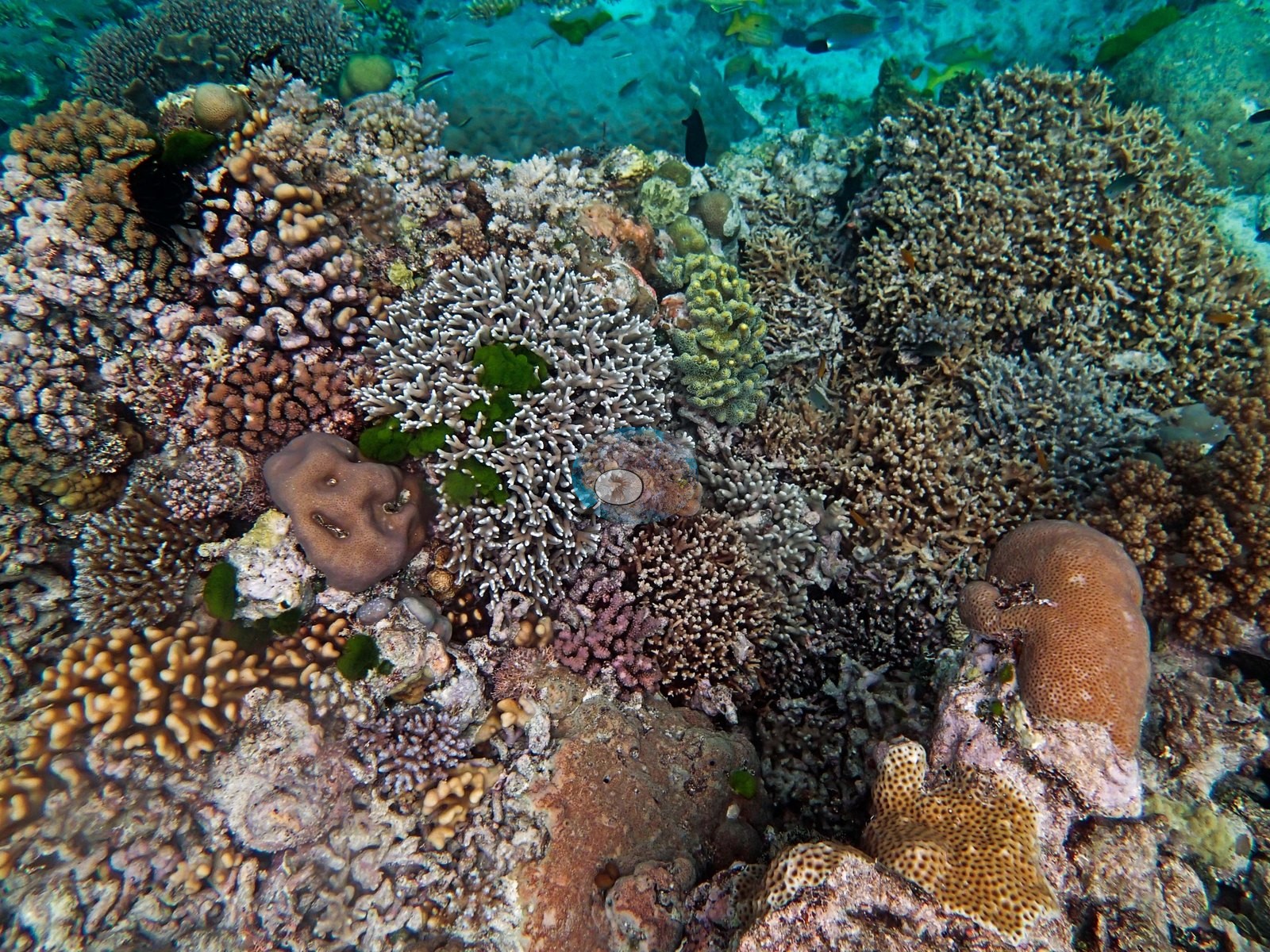
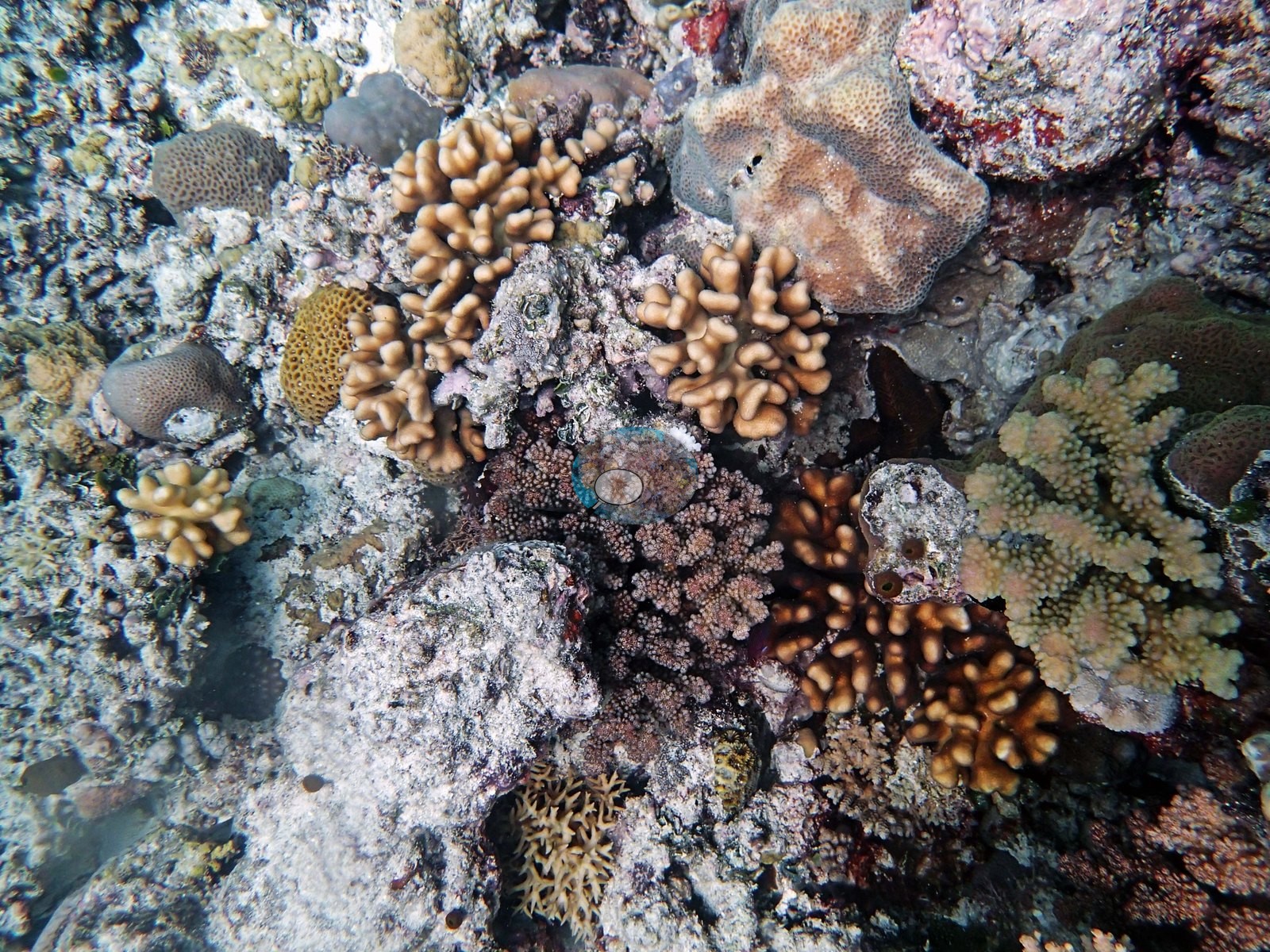
In the brief window he had at around 5 m Anderson called the coral "beautiful," and the photographs support it. One close frame is a tight mosaic of small colonies with almost no gaps: tan finger Porites, pink and mauve Pocillopora, encrusting Isopora, faviids, and blue-tipped Acropora juveniles wedged between them (e.g., Image 2).
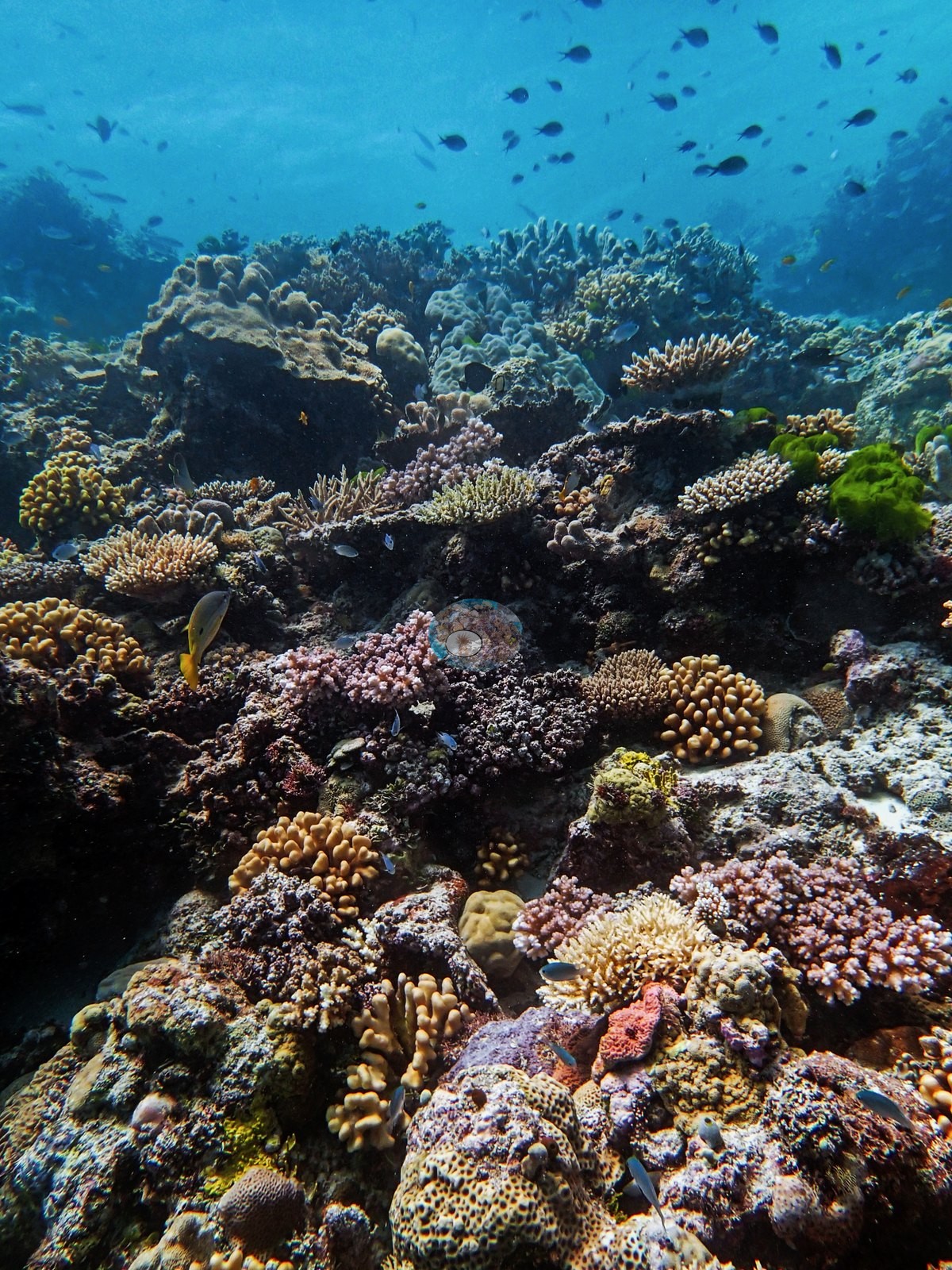
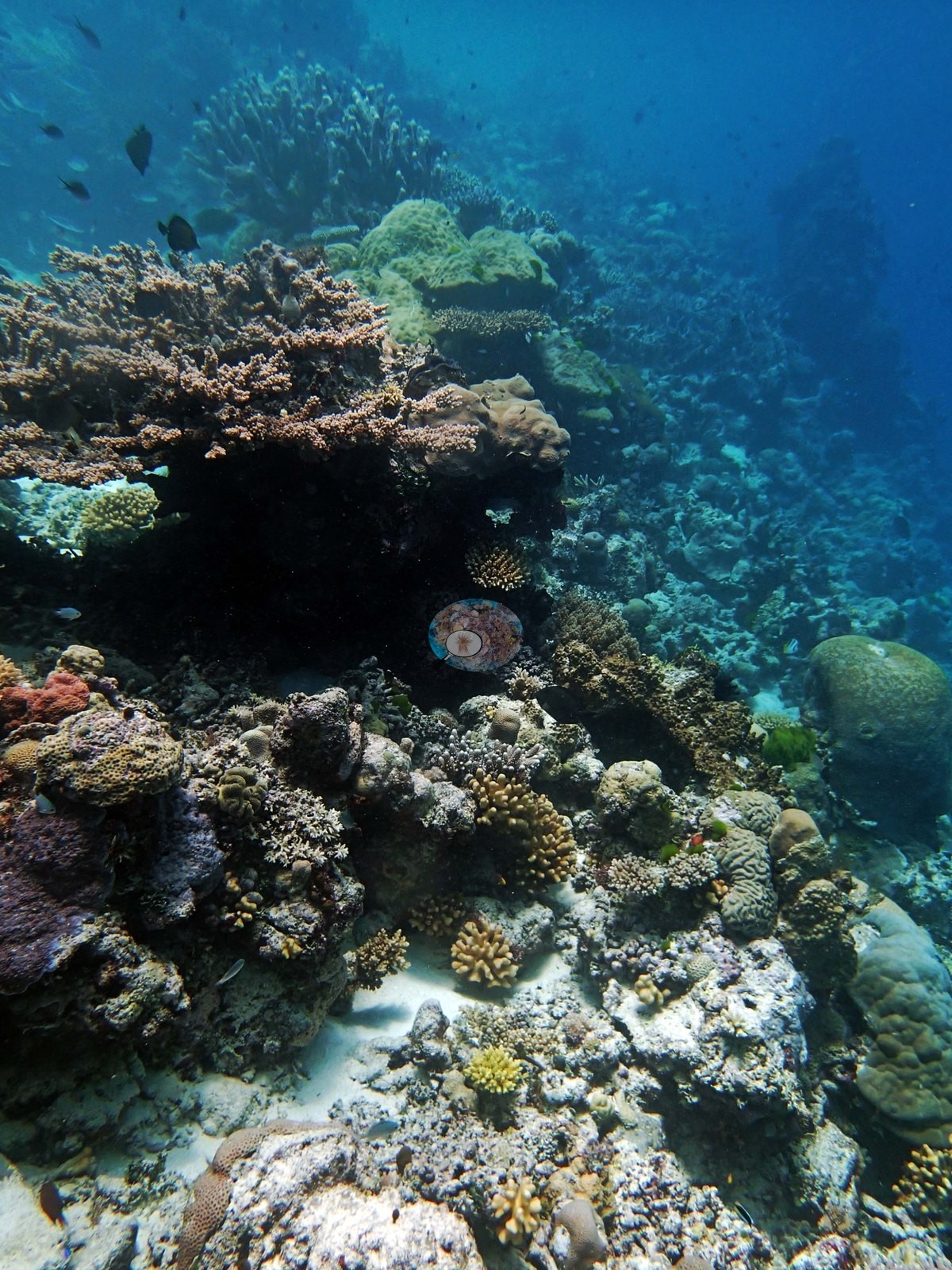
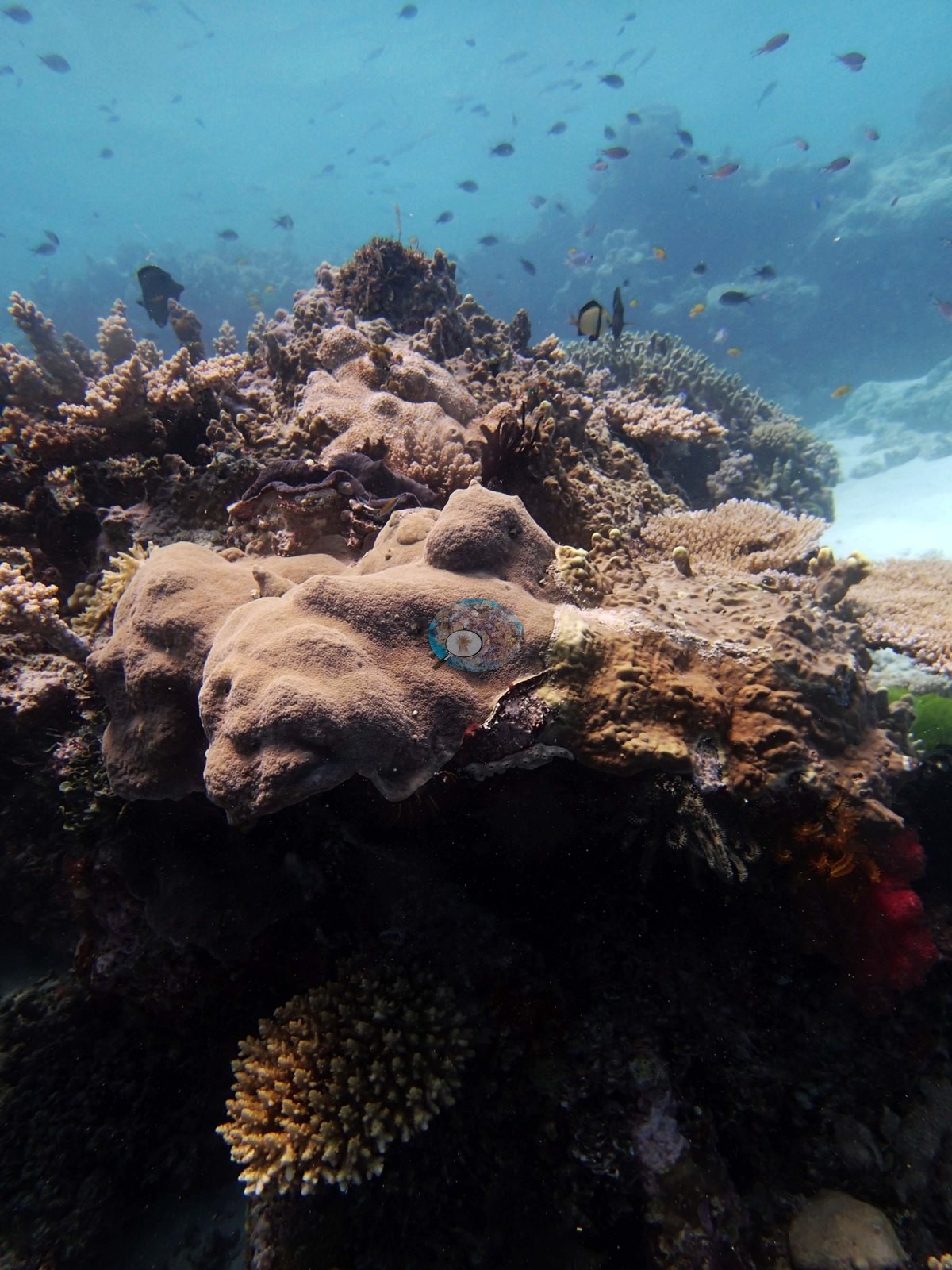
Two wider shots show the same assemblage spread over a low, sunlit reef with chromis and anthias above it (e.g., Image 1, Image 4).
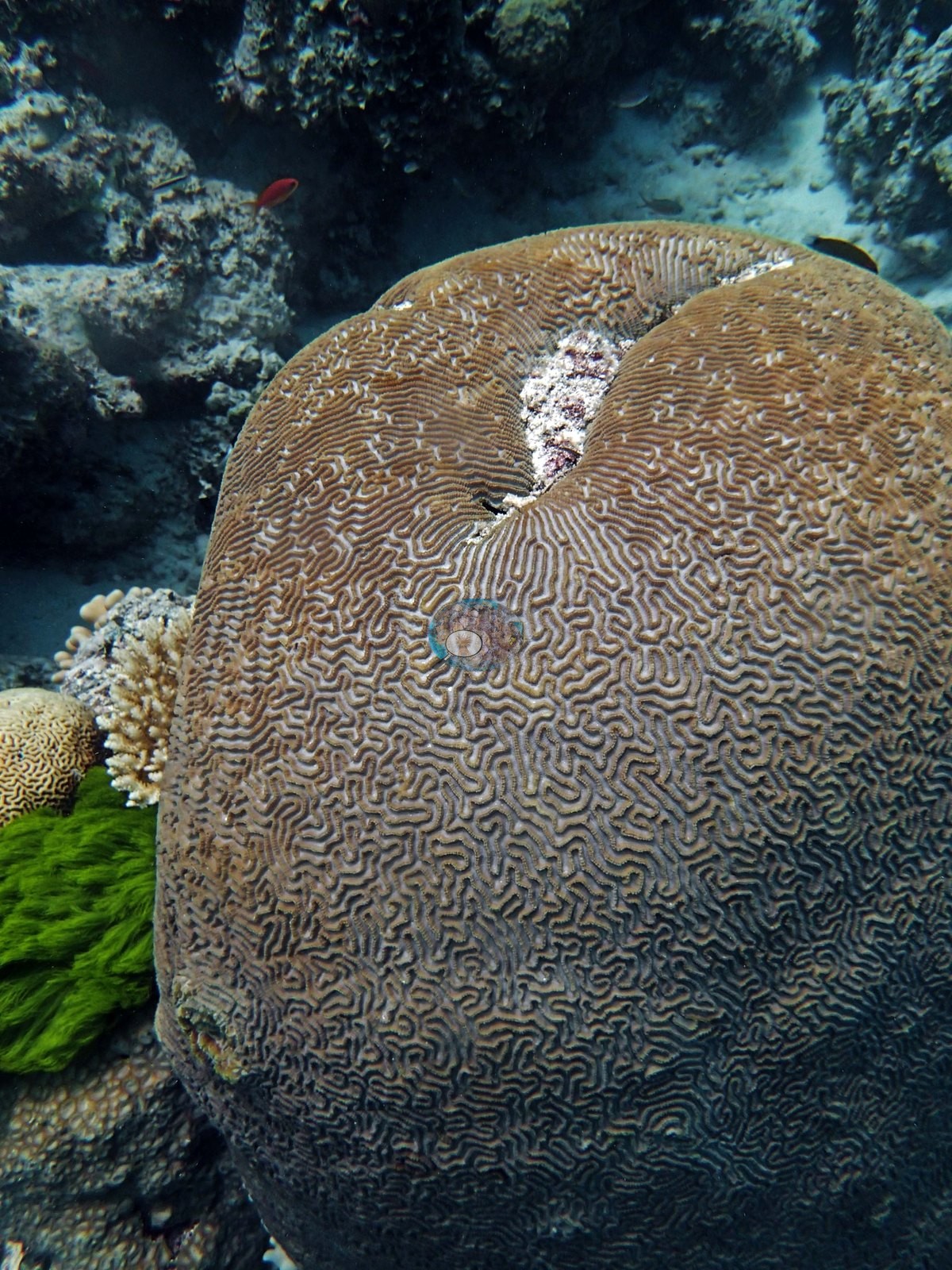
A fourth is one sprawling lumpy encrusting colony a couple of meters across (e.g., Image 3).
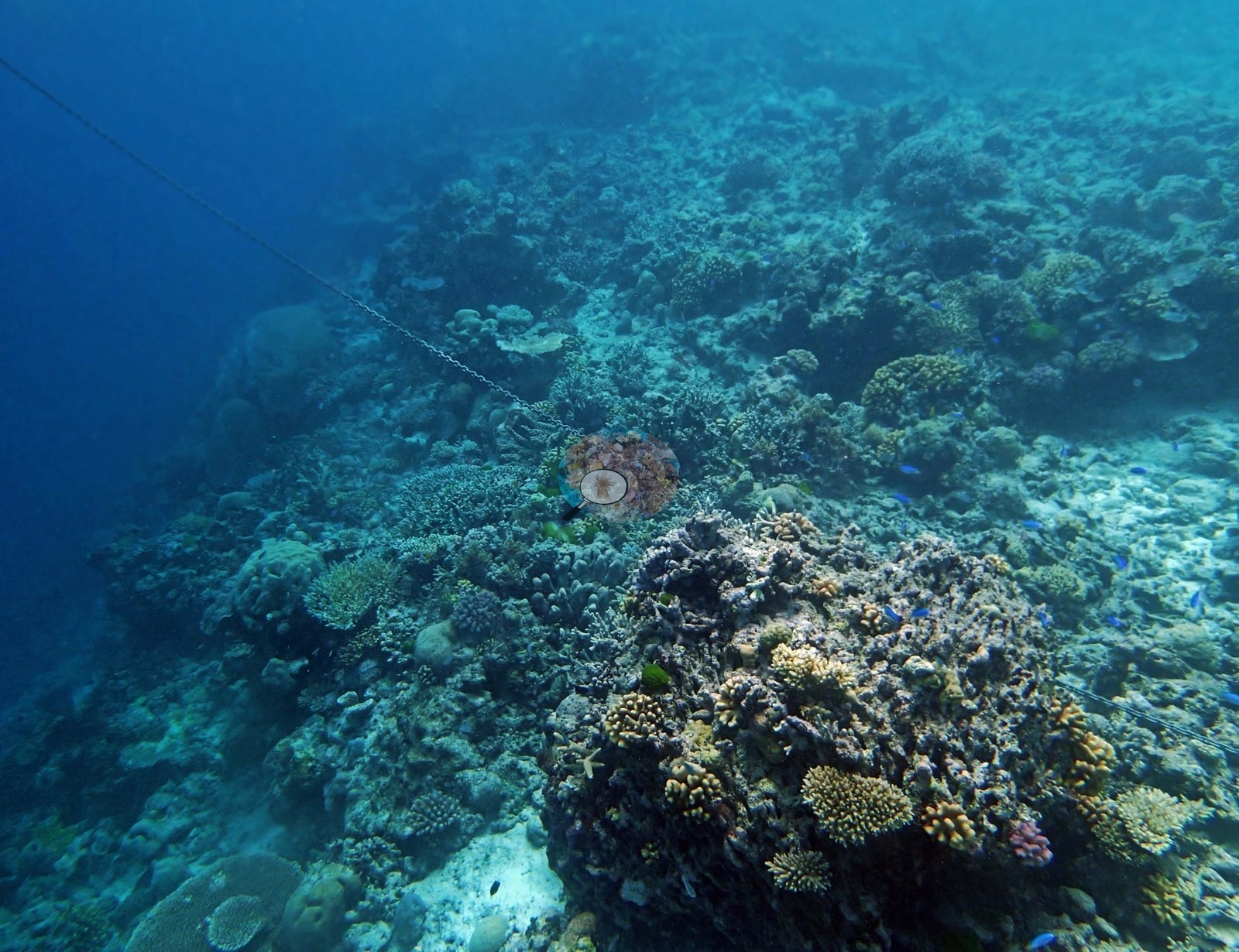
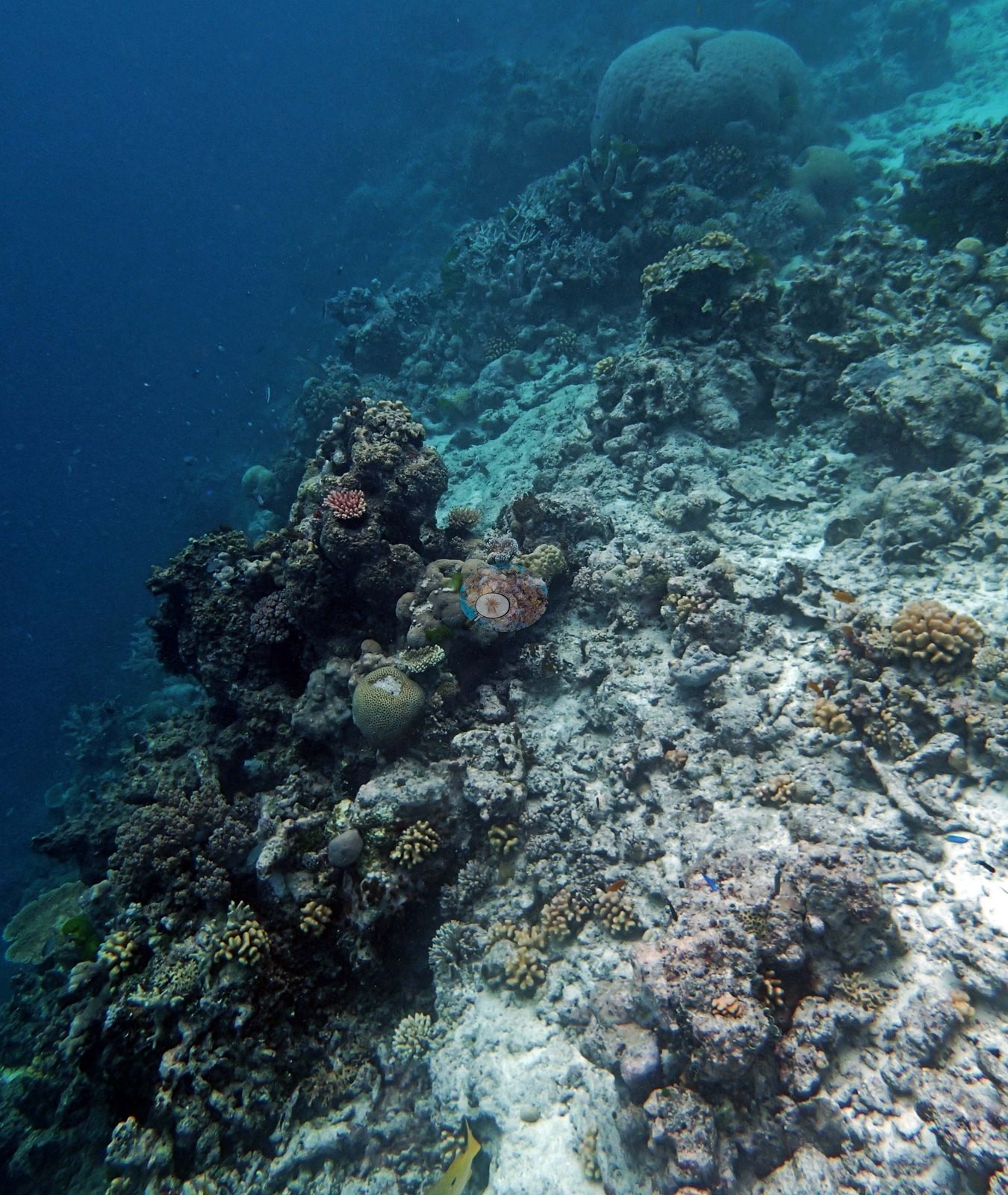
The fifth looks along the reef edge where cover thins onto pale pavement and rubble before the drop into blue, which is a fair picture of how patchy this reef is away from its best ground (e.g., Image 5).
Coral cover
- Reference: Khaled bin Sultan Living Oceans Foundation, Global Reef Expedition (in situ transect)
- The GRE team's transects, run by other divers, put live cover at 38%; Anderson's own estimate at 5 m was 15-20%.
- Transect mean 34 ± 5.0% SE (n = 6 transects; Living Oceans Foundation per-transect benthic data); the headline above is the expedition's station value (the headline weights each depth equally; one depth had a single transect).
Stressors
No crown-of-thorns starfish (COTS) or other corallivores evident.
Fish and other fauna
A few gray reef sharks cruised through as the team retreated.
Comparisons with other data
No prior survey data from this site. If you would like to share yours, please email us.
Data & links
- Download benthic survey data (CSV) ↗
- Download all LOF-GRE data (933 sites) ↗
- Photo portfolio ↗
- Coral Reef Diagnostics country page ↗
All images from Coral Reef Diagnostics. Data are from the Khaled bin Sultan Living Oceans Foundation Global Reef Expedition and Coral Reef Diagnostics.
 © Coral Reef Diagnostics.