
Part of the regional summaries: Australia (GBR) - Far North: Green stations (no-take reefs) and Australia (GBR)
More info
Northern GBR (NOAA CRW virtual station)A windward slope on Ribbon Reef 7 carrying 46% coral cover, where shallow ground alternates between recruit-studded bare rock and dense, bush-like thickets of acroporid and pocilloporid corals, visited by a shark, a giant clam, and a bumphead parrotfish. At 20-25 m the needle corals had almost uniformly bleached and many were dying, while every other coral type looked normal. Surveyed on the Living Oceans Foundation's Global Reef Expedition.
Six other CRD dive sites within 5 km shown in orange — click a marker to open its page.
🗺 Detailed map of the Global Reef Expedition dive sites, Ribbon Reefs, northern Great Barrier Reef (Khaled bin Sultan Living Oceans Foundation; opens in a new window)
16 of the 19 photographs on this page are shown beside the text that discusses them under "Site description" below.
Site description
Setting
The expedition surveyed Ribbon Reef 7 as one of its Green (Marine National Park Zone, no-take) reefs; on the GBRMPA zoning map the recorded position itself falls in the adjoining Buffer Zone, under 20 m outside the Marine National Park Zone boundary, a distance within the precision of a dive-site GPS fix on a reef edge.
General benthic features
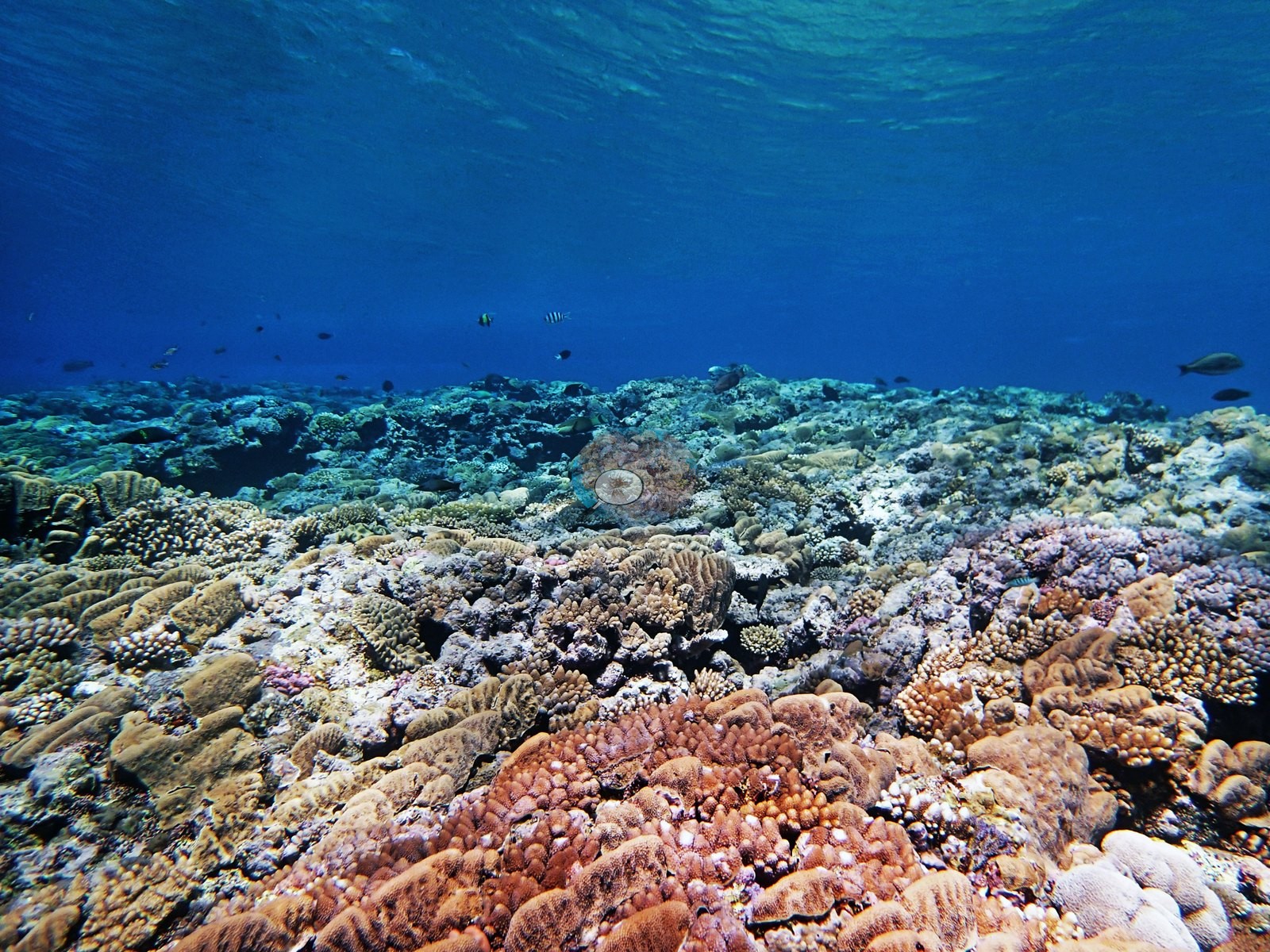
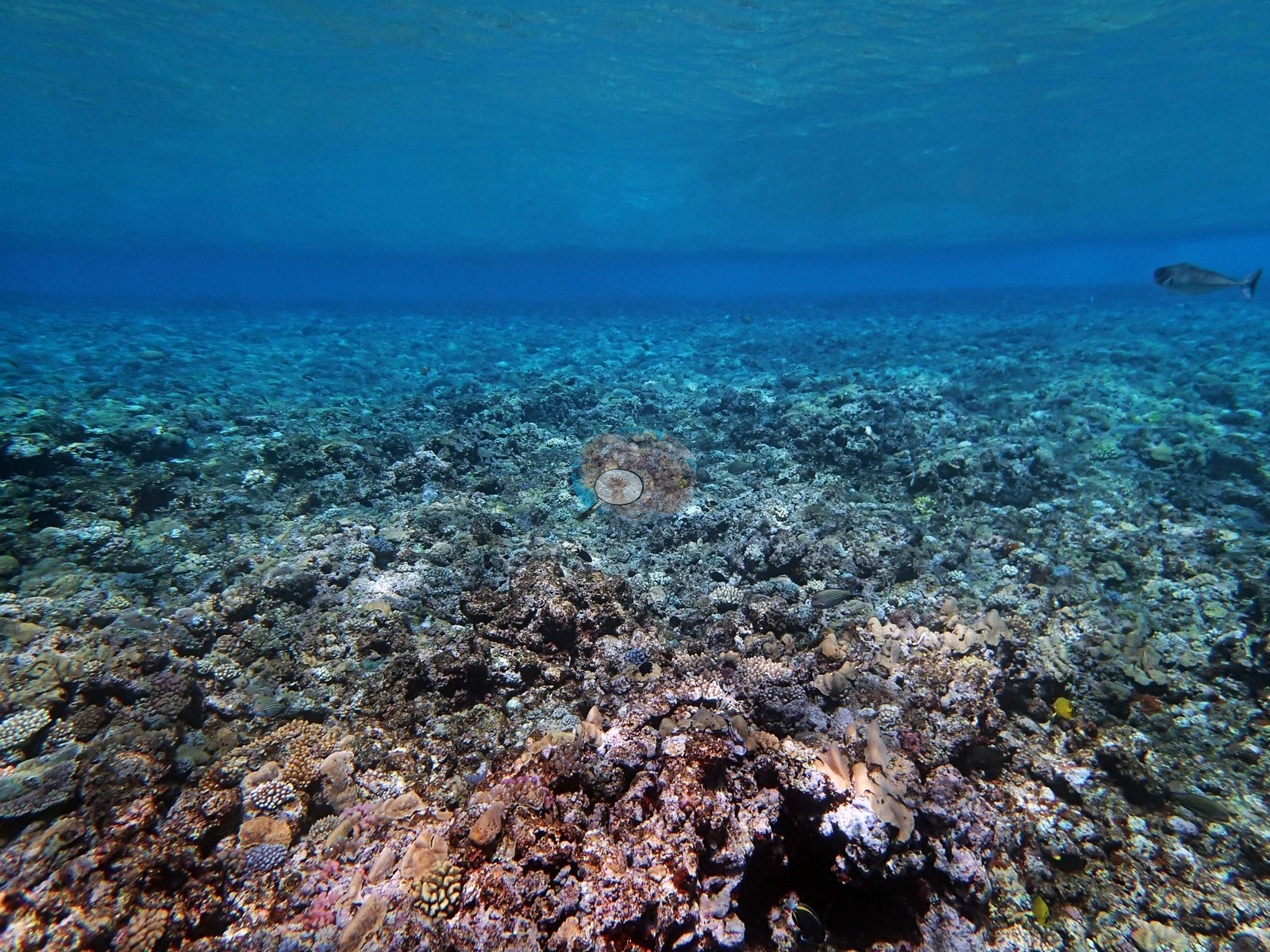
The shallow terrain here is patchy — bare, algae-crusted rock studded with new coral recruits in some spots, dense bushy thickets of branching coral in others — and a shark, a giant clam, and a hefty bumphead parrotfish all made appearances during the dive (e.g., Image 2, Image 3, Image 4, Image 5).
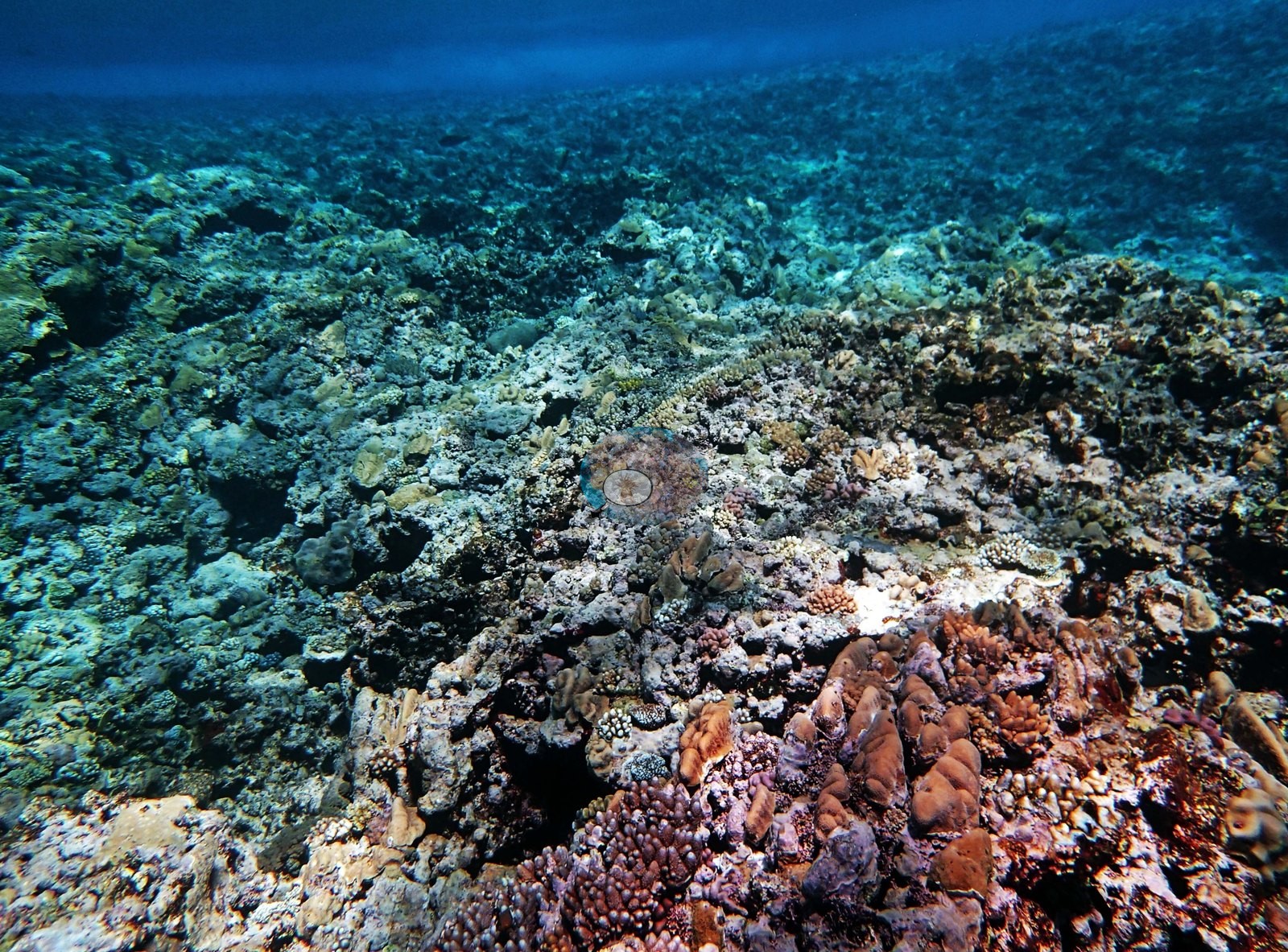
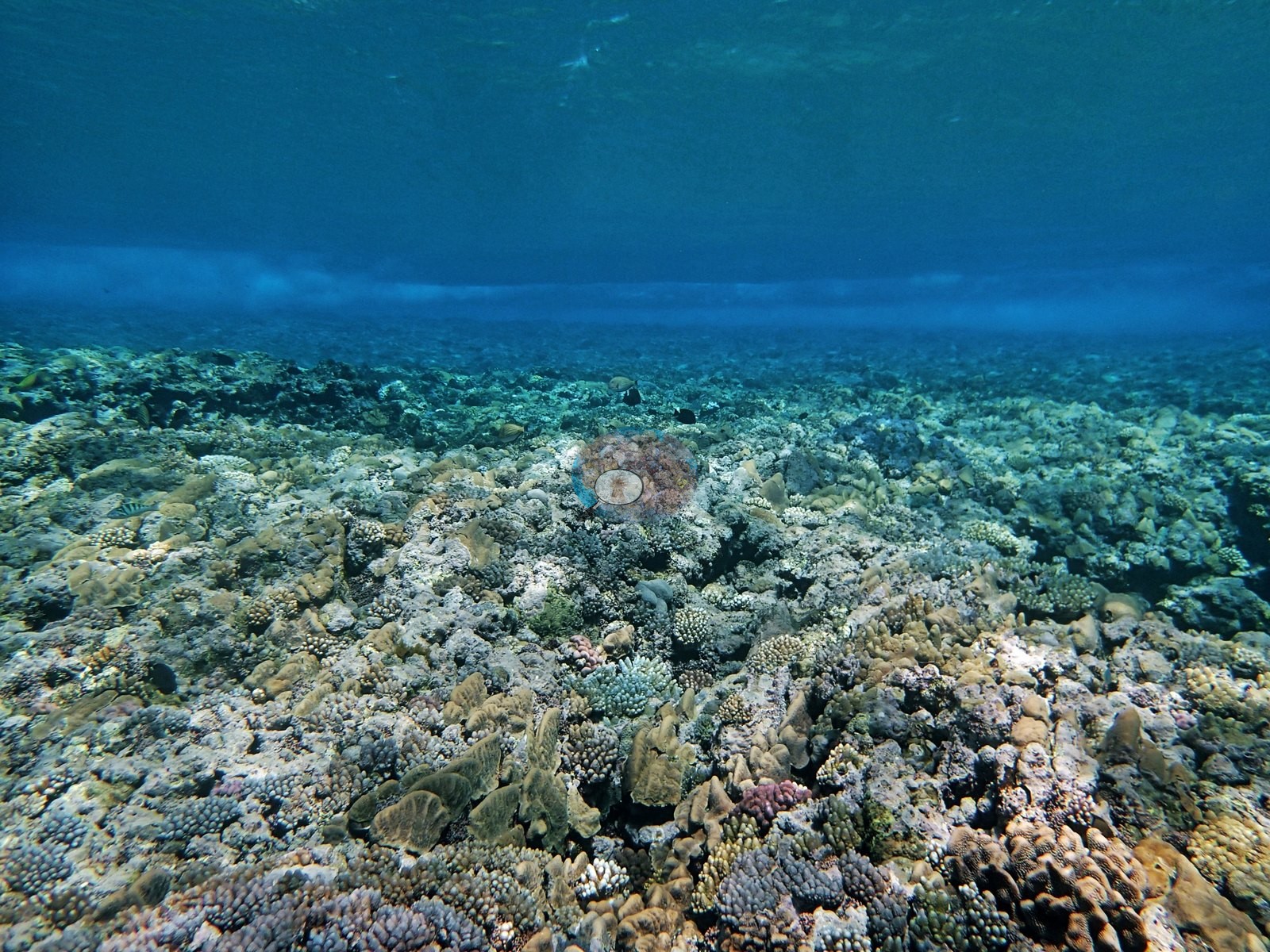
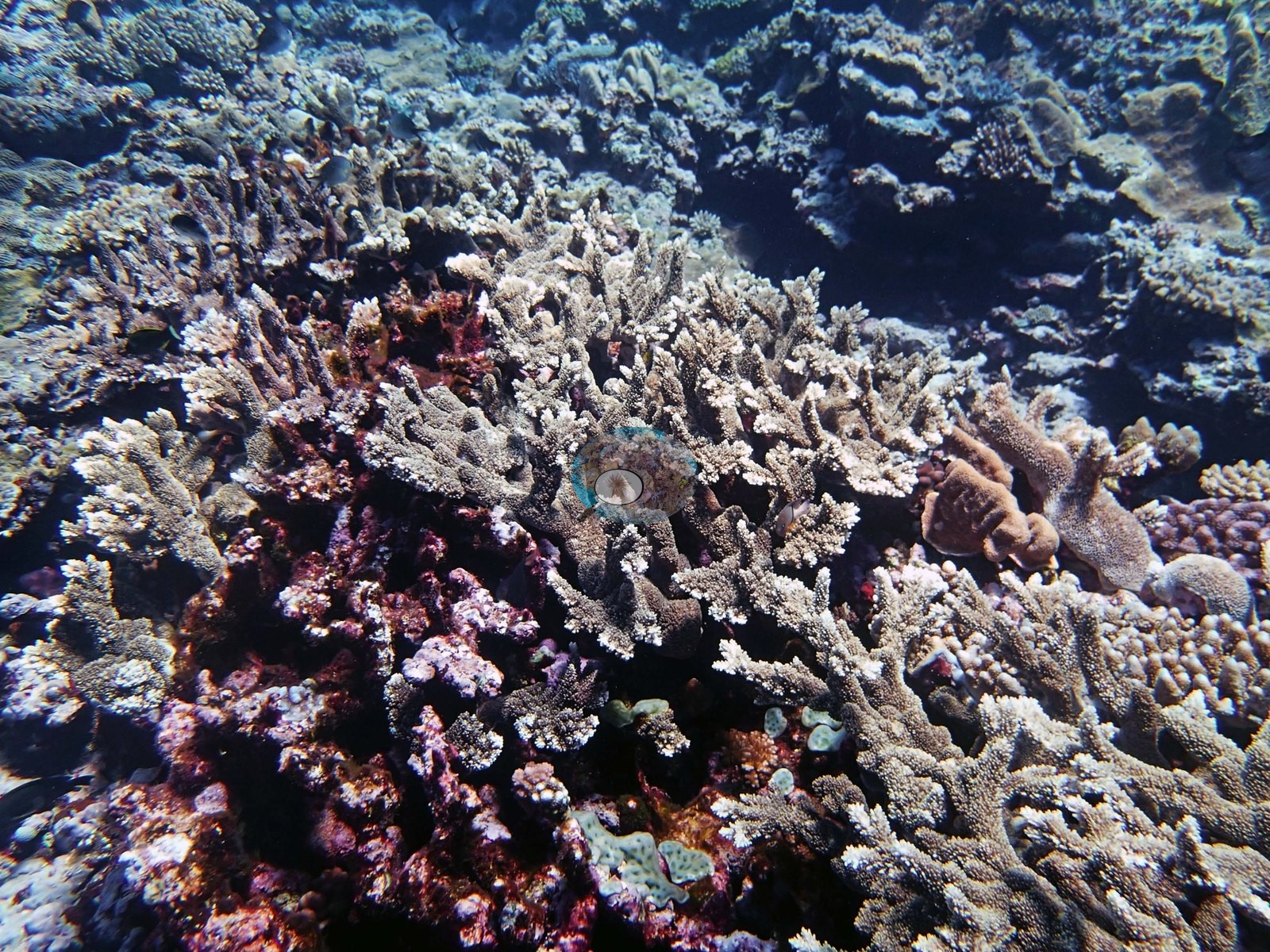
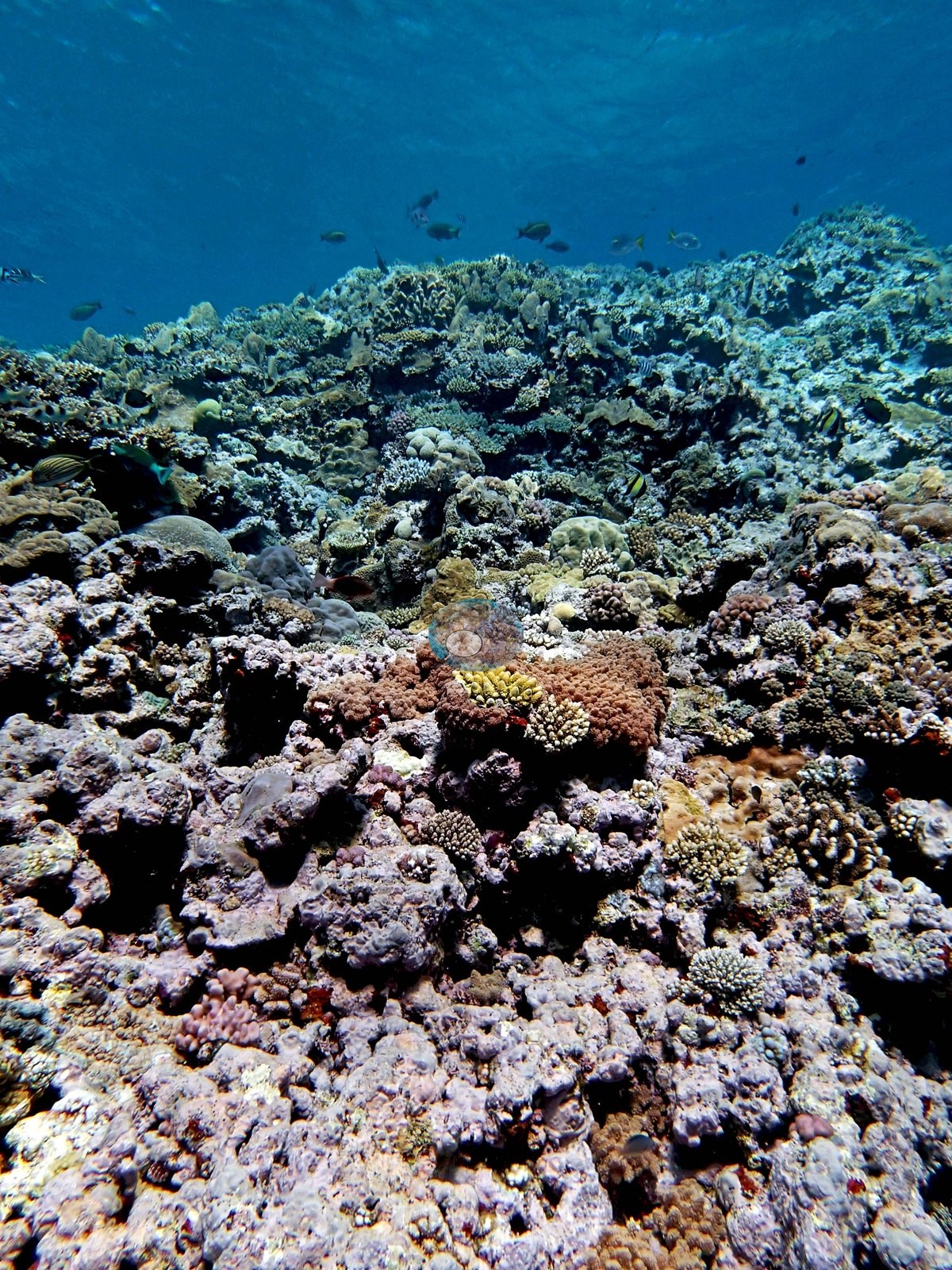
Much of the shallow terrace under the surface is low-relief pavement and rubble with small colonies scattered across it (e.g., Image 9), broken by bigger features such as a large tan massive dome among smaller knobby and corymbose colonies (e.g., Image 13).
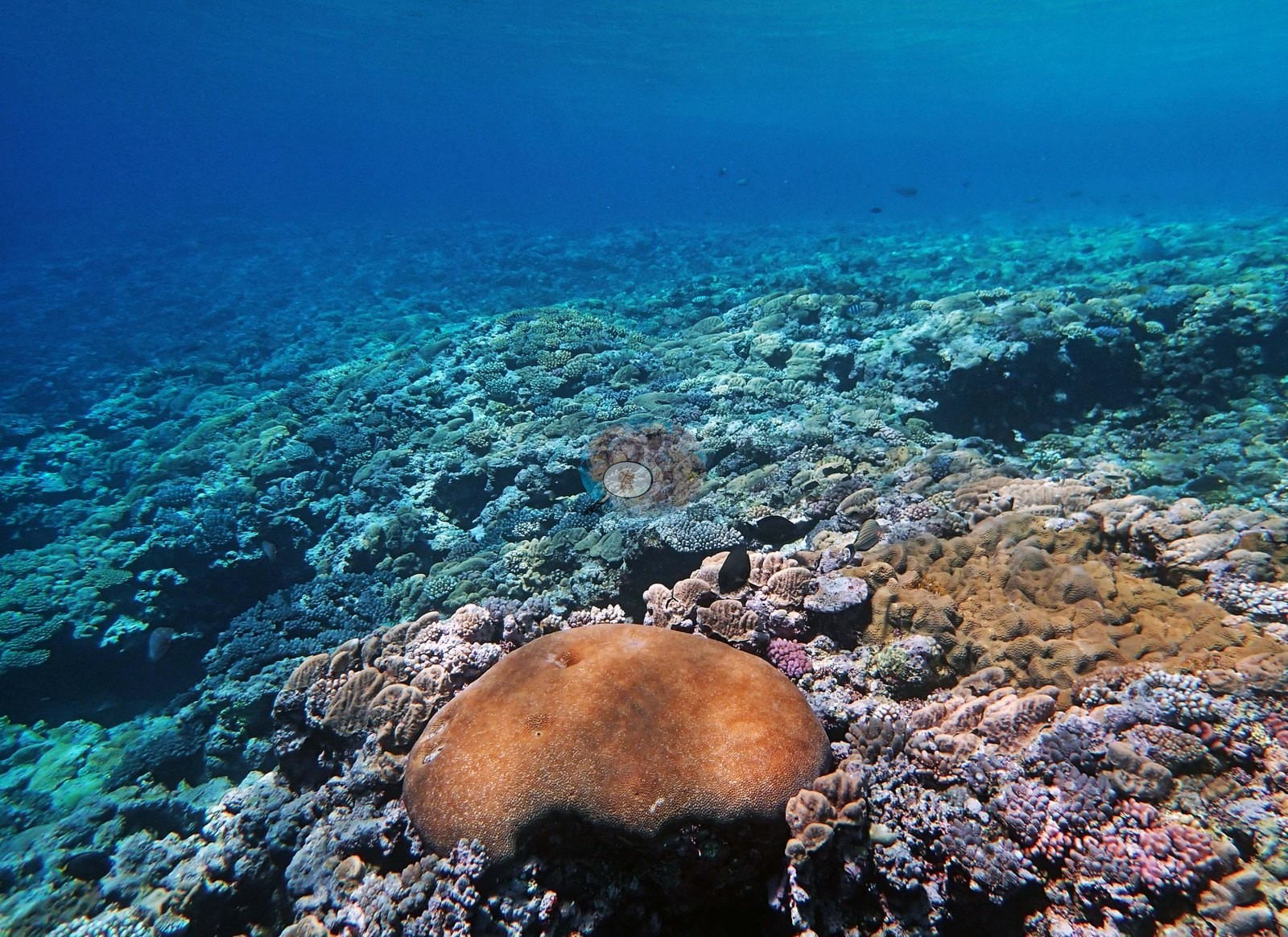
Where the coral is dense, small cream, brown, and purple knobby and corymbose colonies crowd together on the rock (e.g., Image 14, Image 16), and at the terrace edge purple and blue corymbose colonies and a pink massive colony front the drop-off (e.g., Image 11).
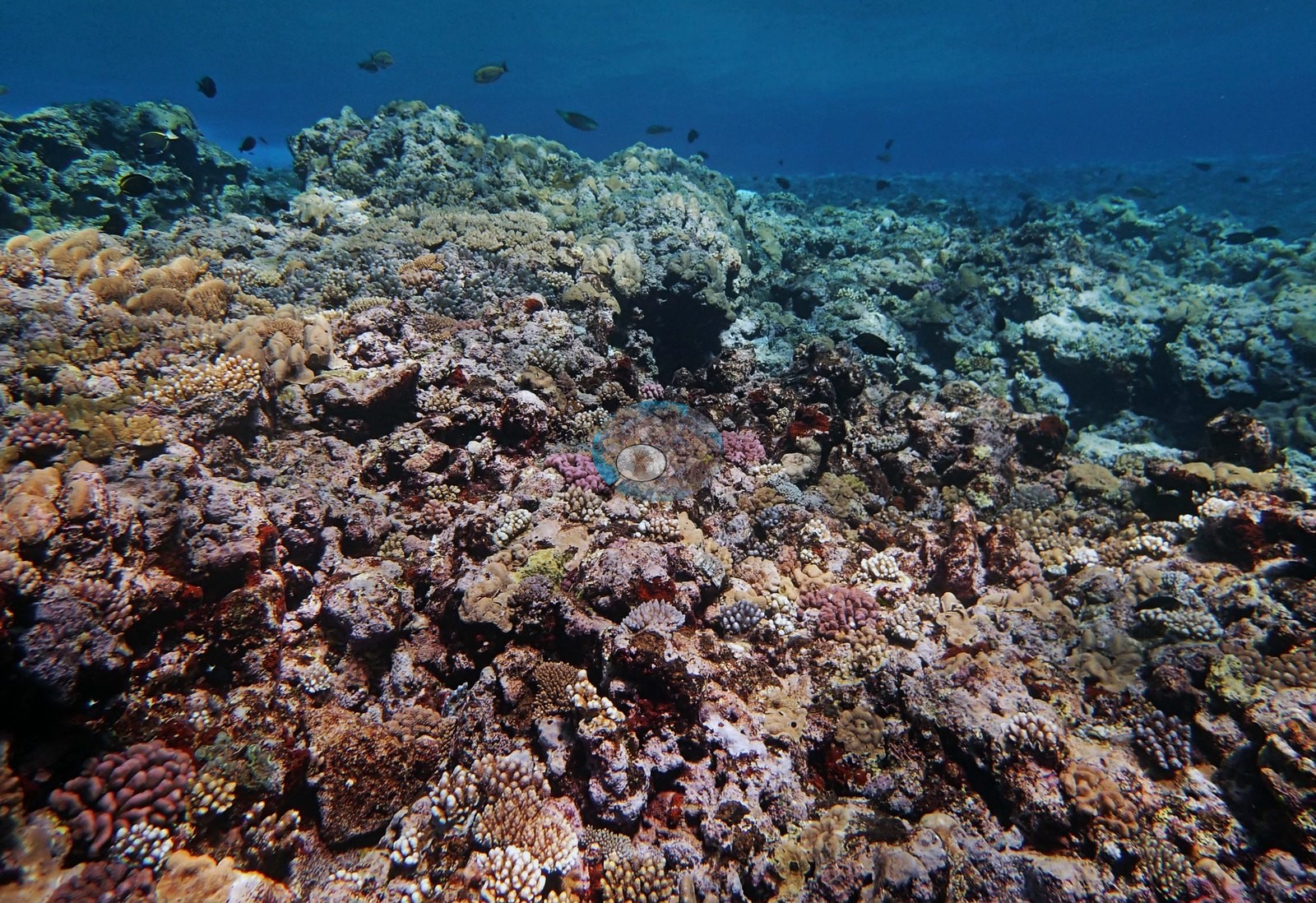
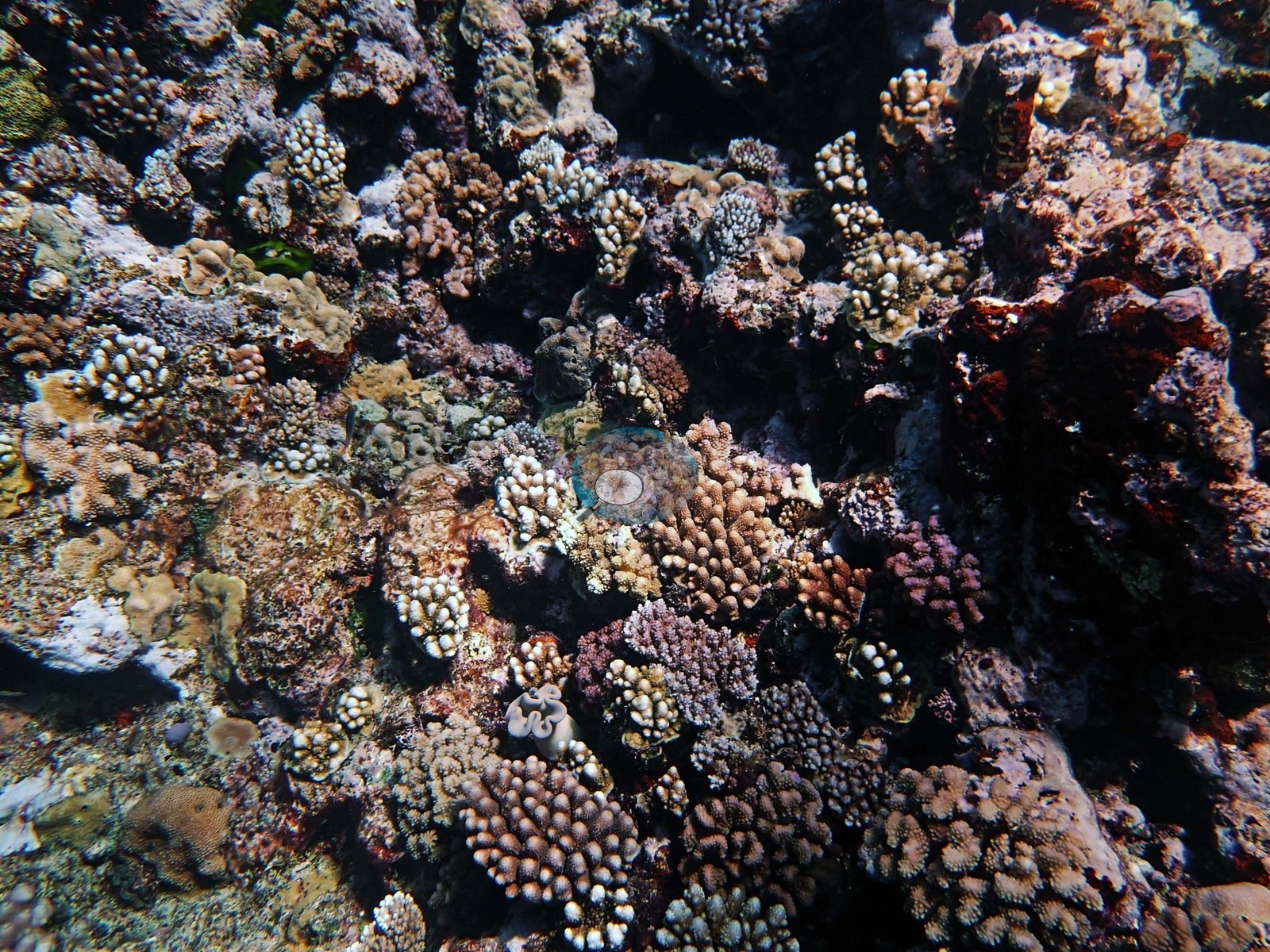
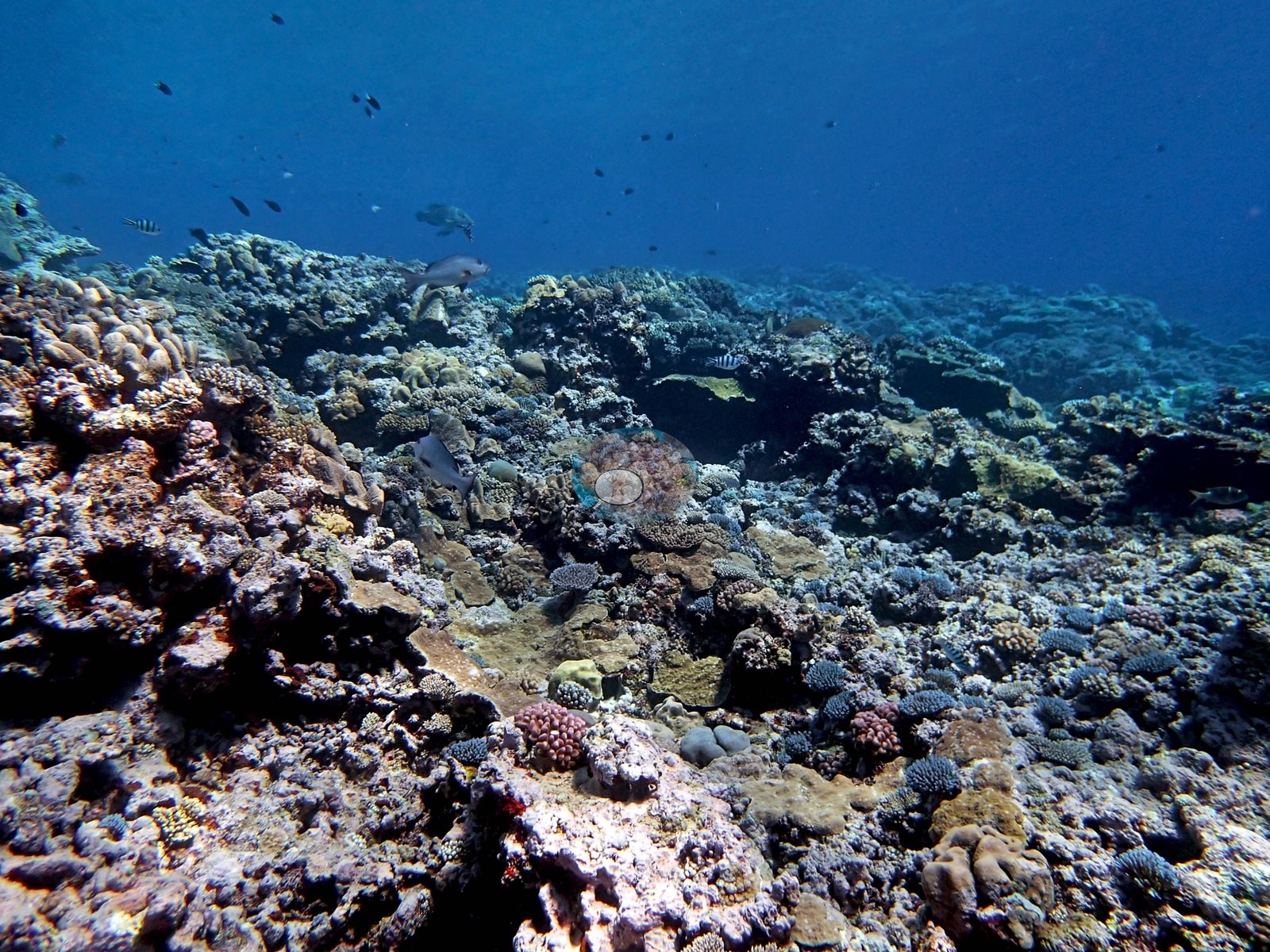
Beyond the edge, the slope falls away as rugged, coral-covered framework into deep blue water (e.g., Image 8).
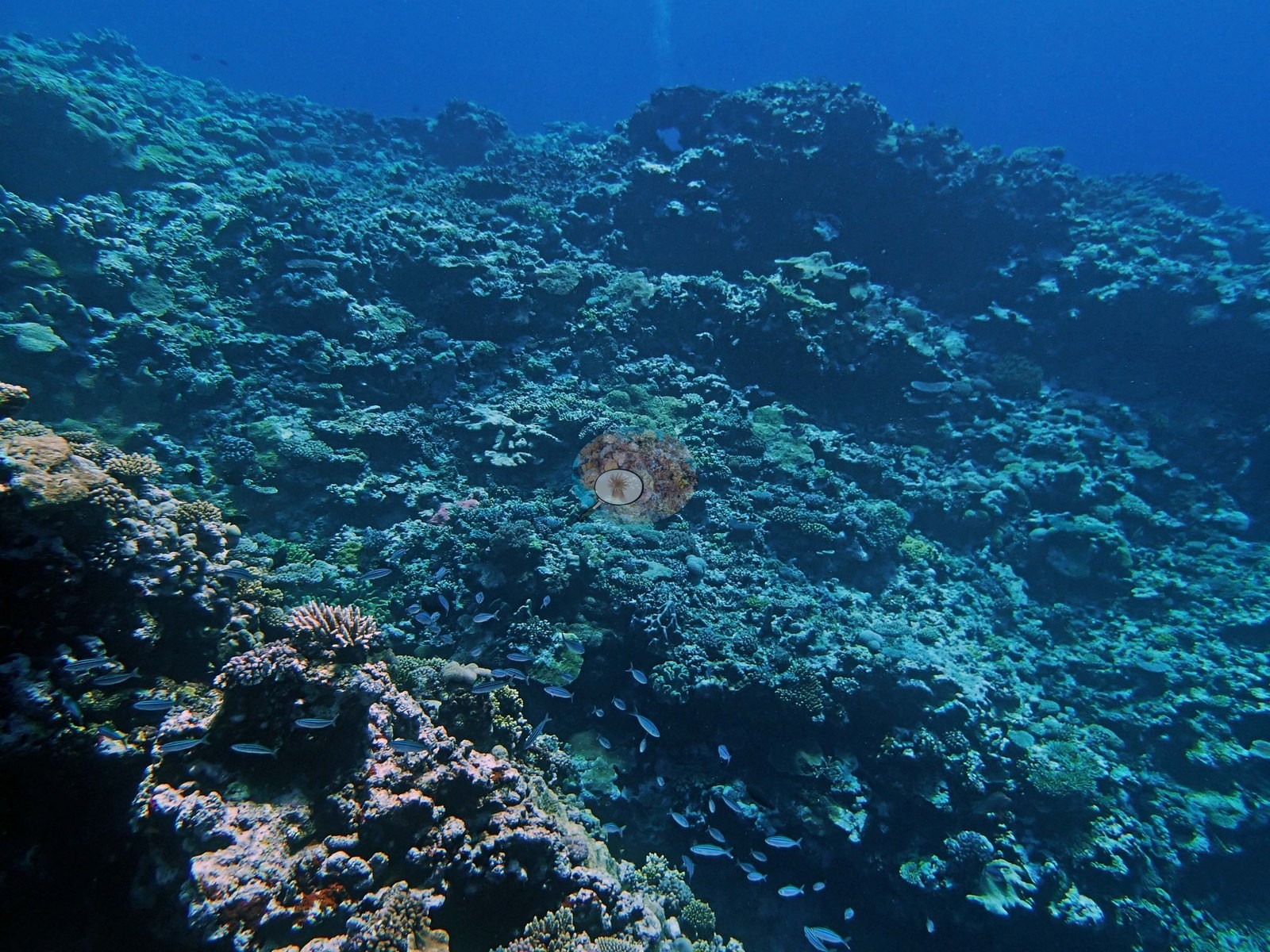
The bare end of the gradient is plain in two frames: a mound topped mostly by pale dead framework and rubble with only scattered small colonies (e.g., Image 15), and a stretch of dark, eroded reef rock with no live coral in view (e.g., Image 24).
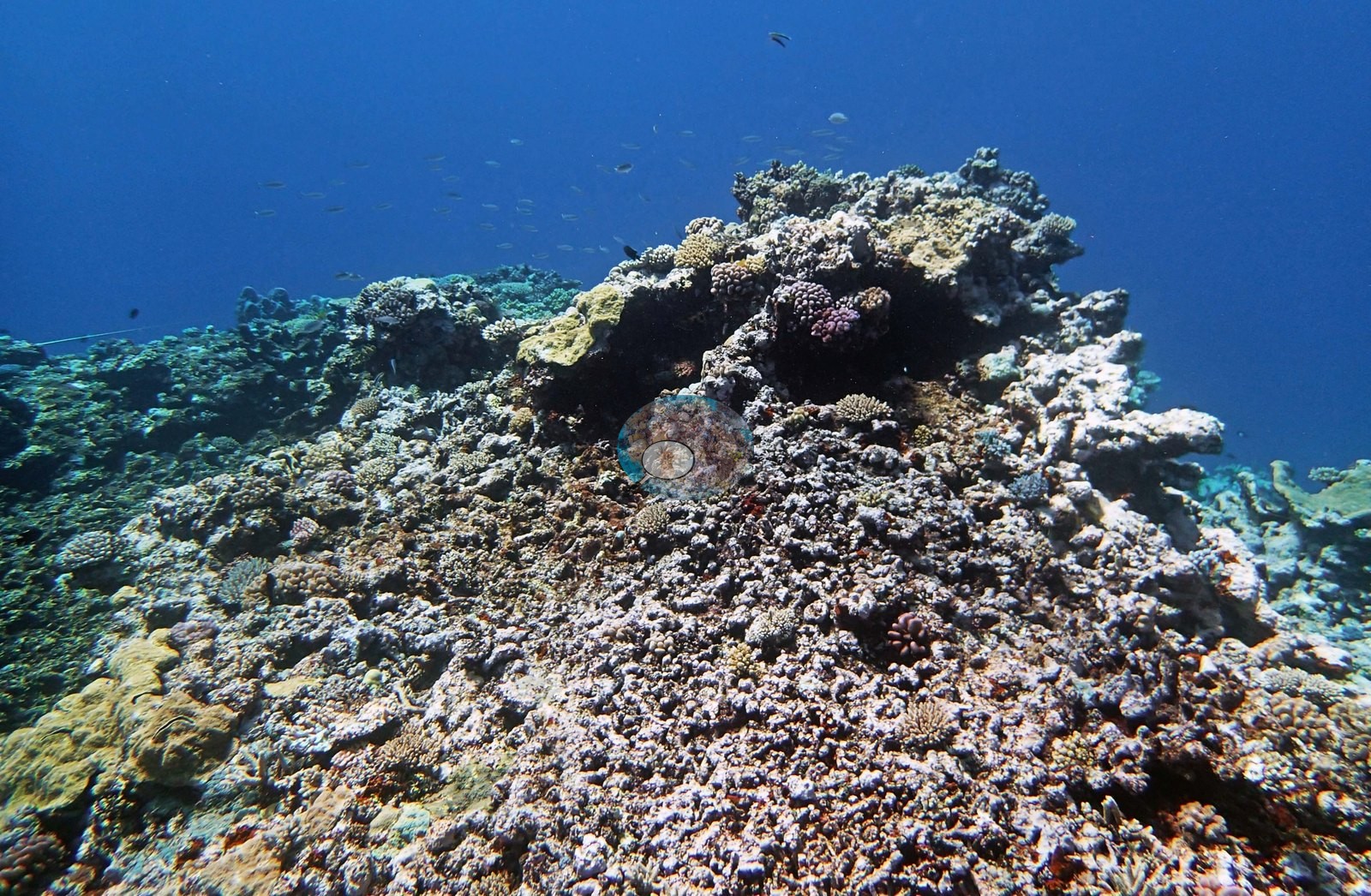
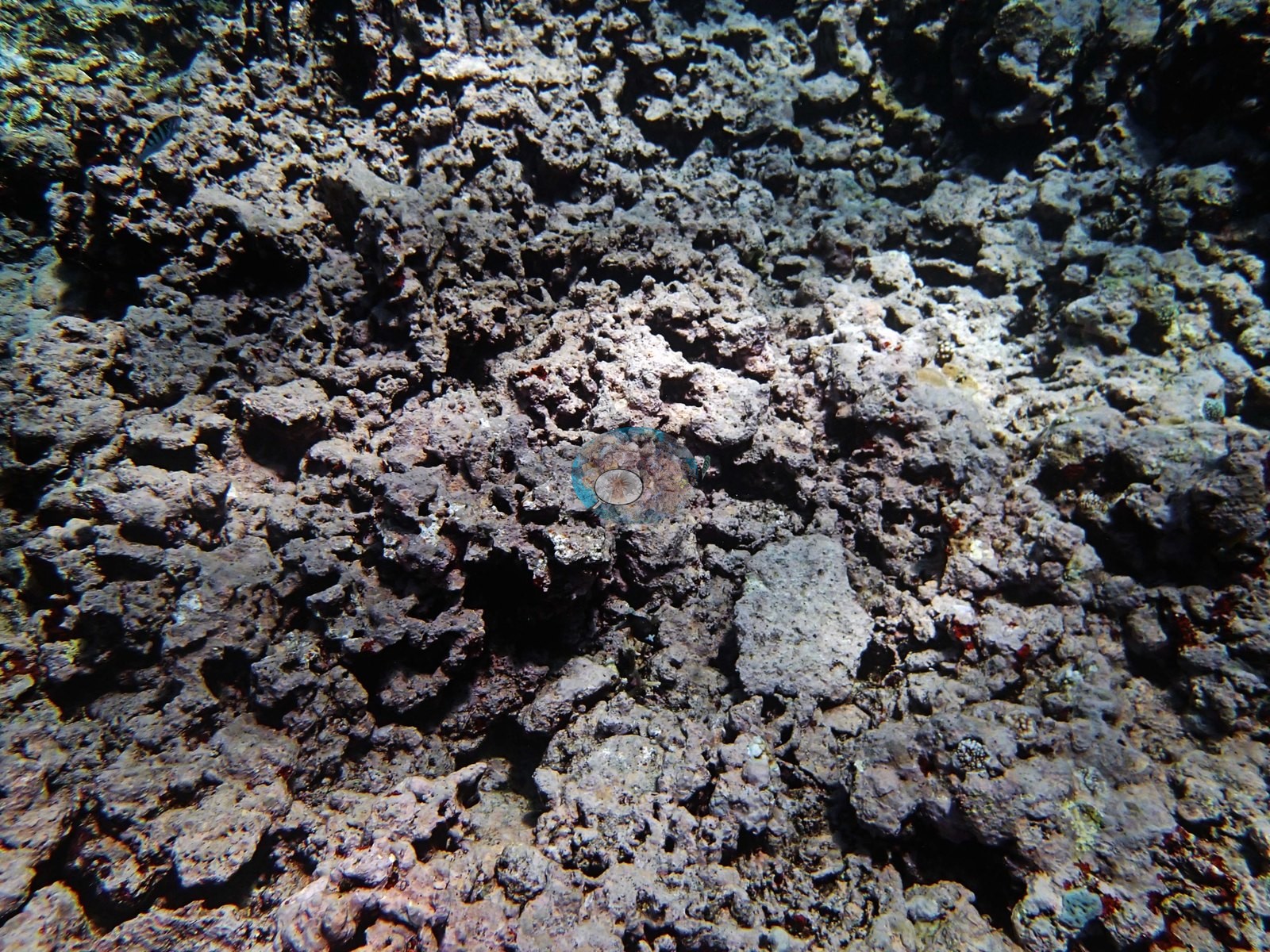
Coral cover
- Reference: Khaled bin Sultan Living Oceans Foundation, Global Reef Expedition (in situ transect)
- The LOF transects recorded 46% live coral cover on this windward slope, which reaches down past 25 m (e.g., Image 1).
- Transect mean 48 ± 6.4% SE (n = 3 transects; Living Oceans Foundation per-transect benthic data); the headline above is the expedition's station value (the headline weights each depth equally; one depth had a single transect).
Stressors
The most notable finding came from deeper water: between 20 and 25 m, the fine-branched needle corals (Seriatopora hystrix and S. caliendrum) had almost uniformly bleached, many already dead and being overgrown by algae, while every other coral type at that depth appeared normally pigmented. Two close frames show fine-branched colonies that are white throughout, sitting beside normally pigmented neighbors, one of them next to a mushroom coral; the photographs do not record their depth (e.g., Image 6, Image 22).
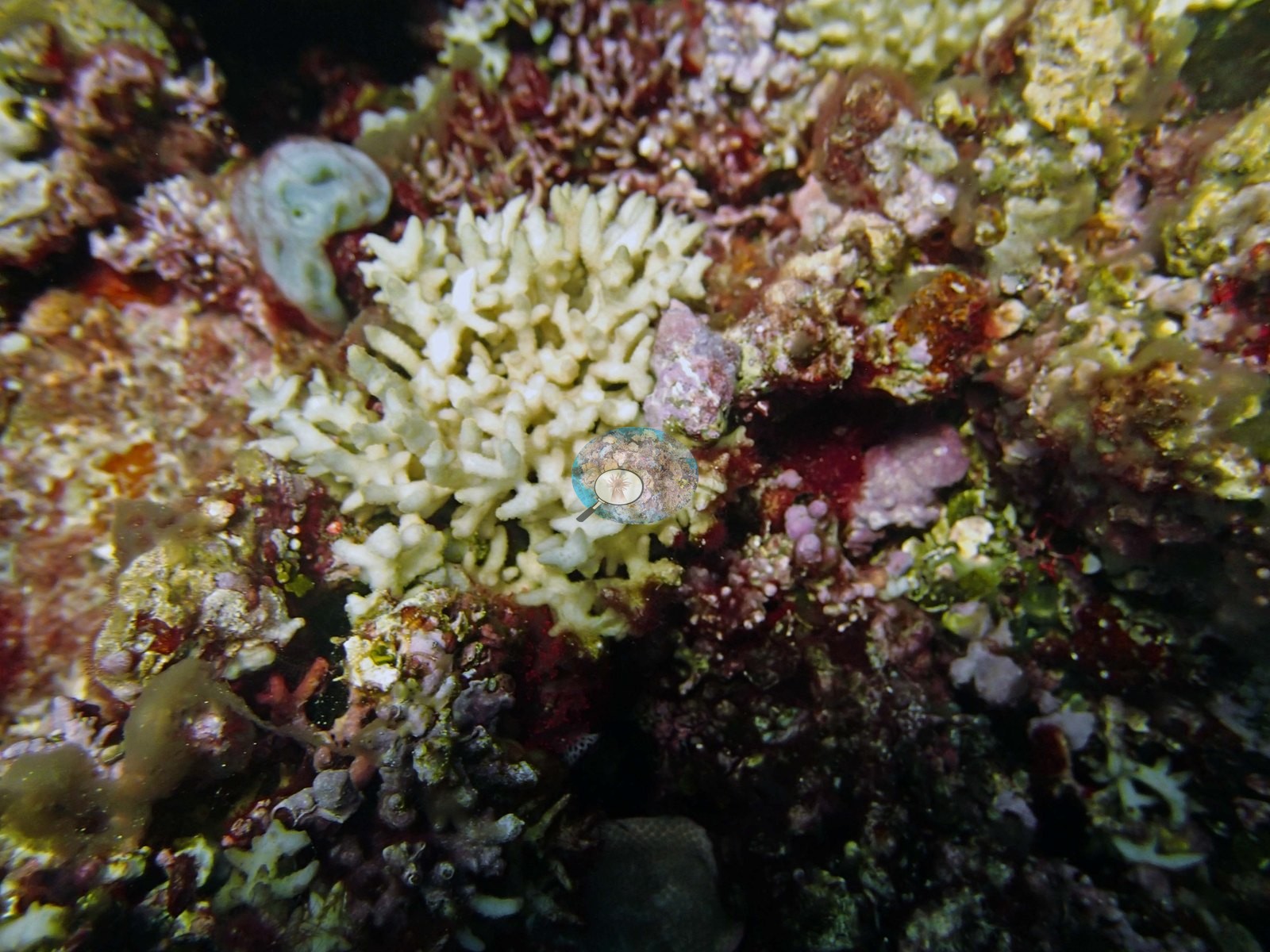
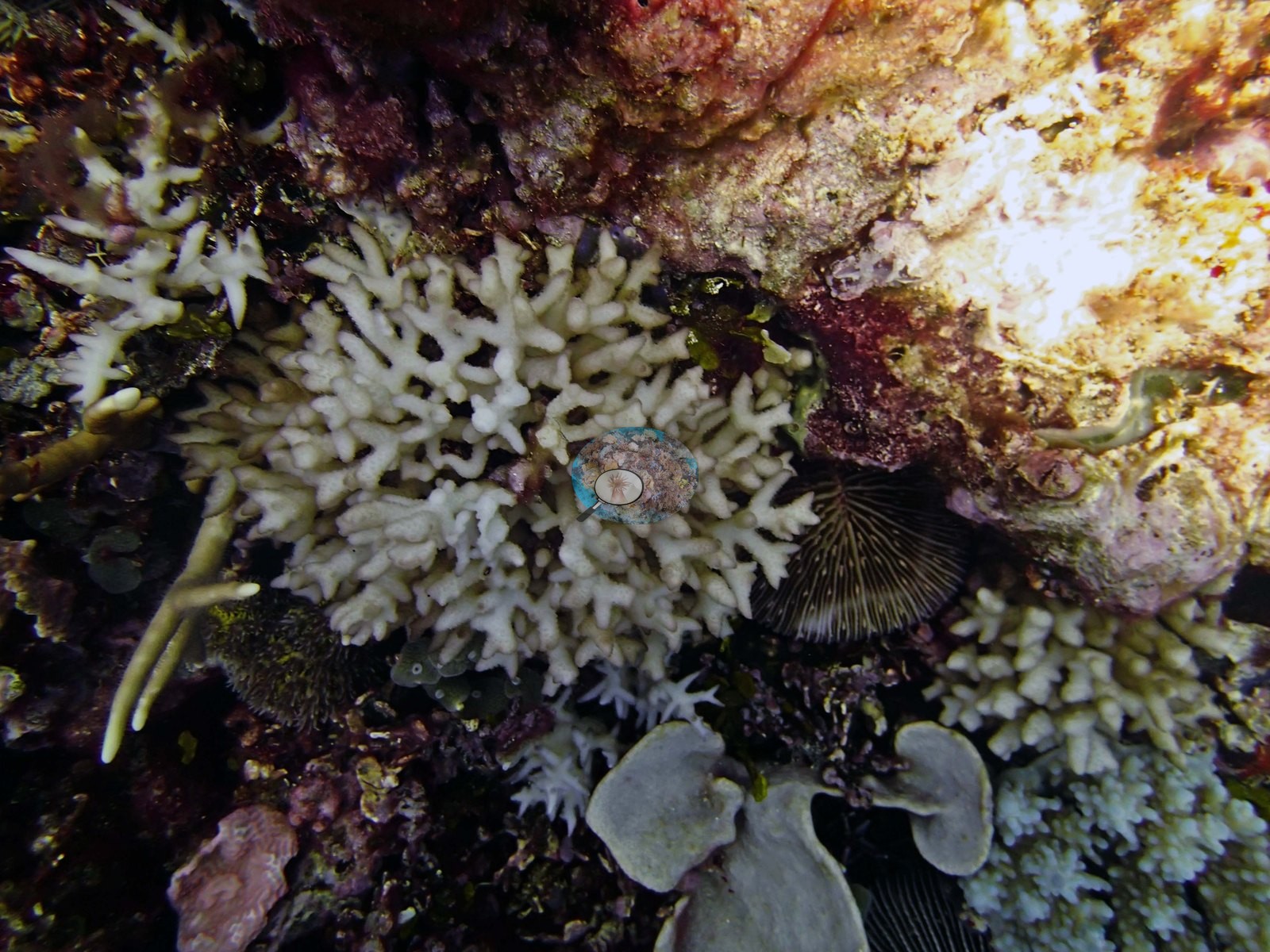
This pattern of Seriatopora-specific bleaching turned up again and again across the Ribbon Reefs this week. No crown-of-thorns starfish (COTS) or other corallivores evident.
Fish and other fauna
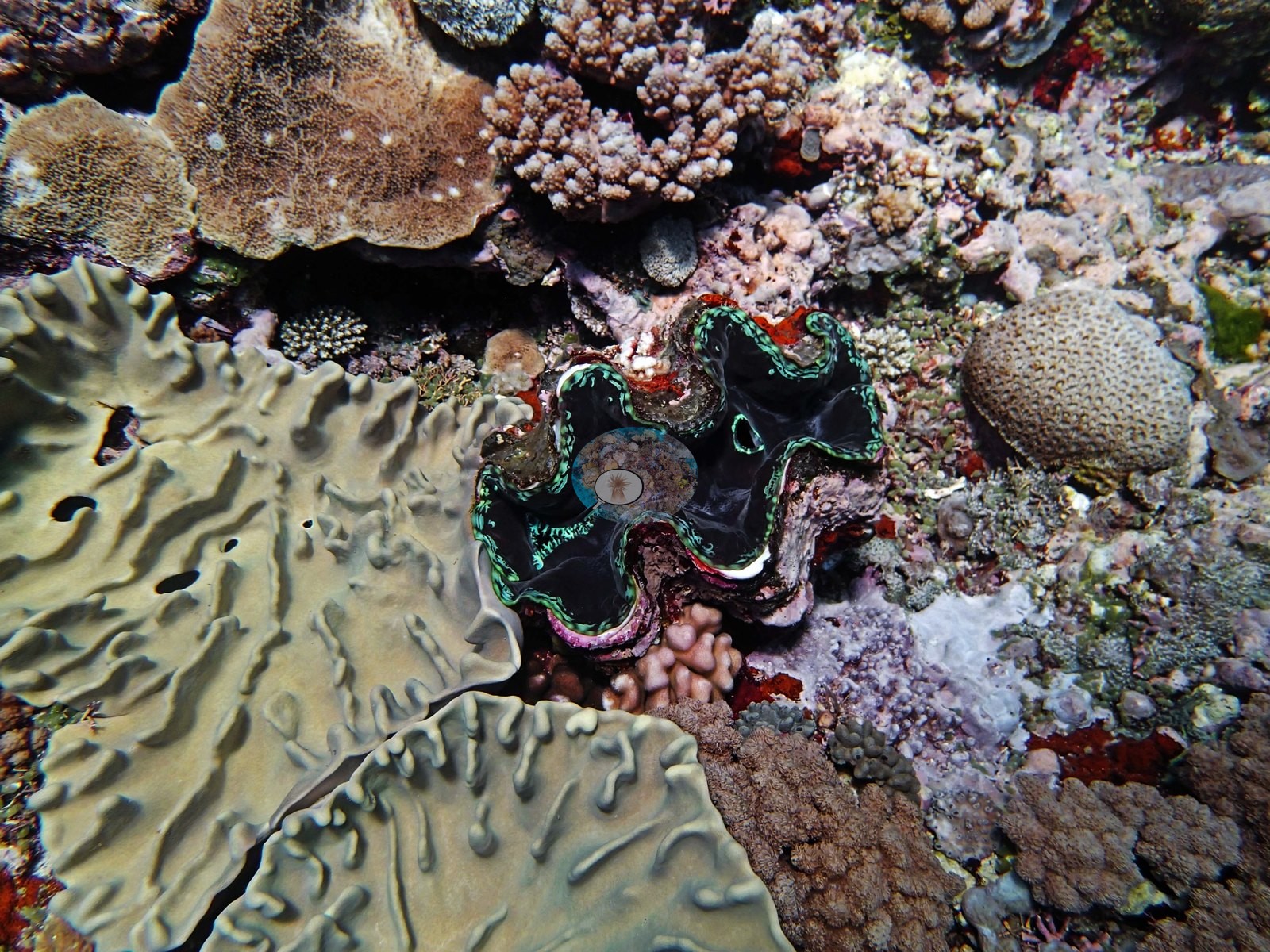
The giant clam appears in one close frame, its dark mantle edged in iridescent green, wedged between a broad ridged plate-like colony, a brain coral, and small branching colonies (e.g., Image 21).
Comparisons with other data
No prior survey data from this site. If you would like to share yours, please email us.
Data & links
- Download benthic survey data (CSV) ↗
- Download all LOF-GRE data (933 sites) ↗
- Photo portfolio ↗
- Coral Reef Diagnostics country page ↗
All images from Coral Reef Diagnostics. Data are from the Khaled bin Sultan Living Oceans Foundation Global Reef Expedition and Coral Reef Diagnostics.
 © Coral Reef Diagnostics.