
Part of the regional summaries: Australia (GBR) - Far North: Green stations (no-take reefs) and Australia (GBR)
More info
Far Northern GBR (NOAA CRW virtual station)Monkman Reef's 4-8 m band is carpeted with Pavona cactus and Porites cylindrica at close to full coral cover, and the Global Reef Expedition (GRE) point-count survey recorded 68% for the site. Five or six gray reef sharks, two huge groupers, and a resident stingray patrolled, with no bleaching, disease, or crown-of-thorns on any transect. Surveyed on the Living Oceans Foundation's Global Reef Expedition.
Eleven other CRD dive sites within 5 km shown in orange — click a marker to open its page.
🗺 Detailed map of the Global Reef Expedition dive sites, Parkinson and Monkman Reefs, northern Great Barrier Reef (Khaled bin Sultan Living Oceans Foundation; opens in a new window)
Site description
Setting
Sits in a no-take Marine National Park Zone, where entry is allowed but nothing may be taken.
General benthic features
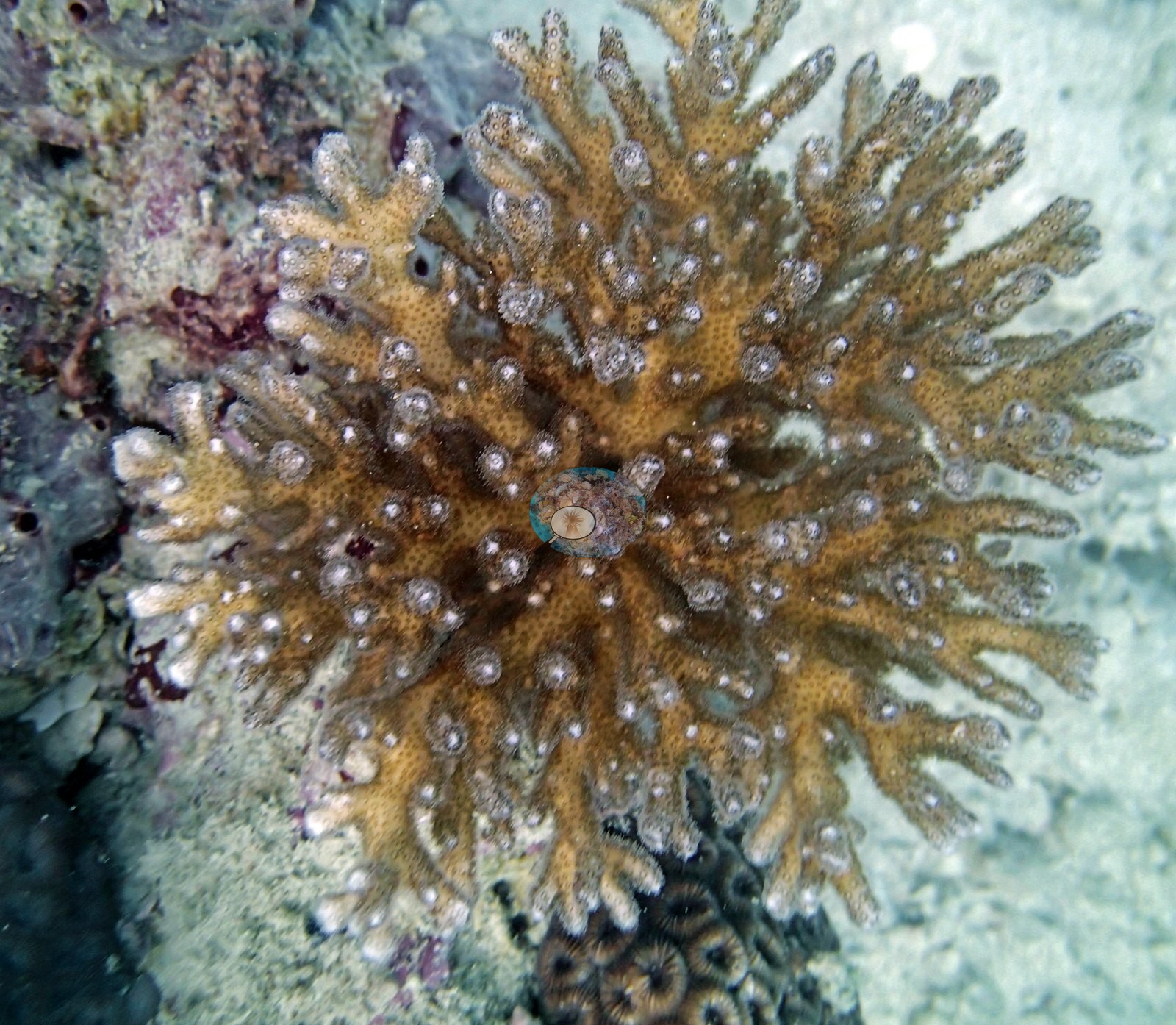
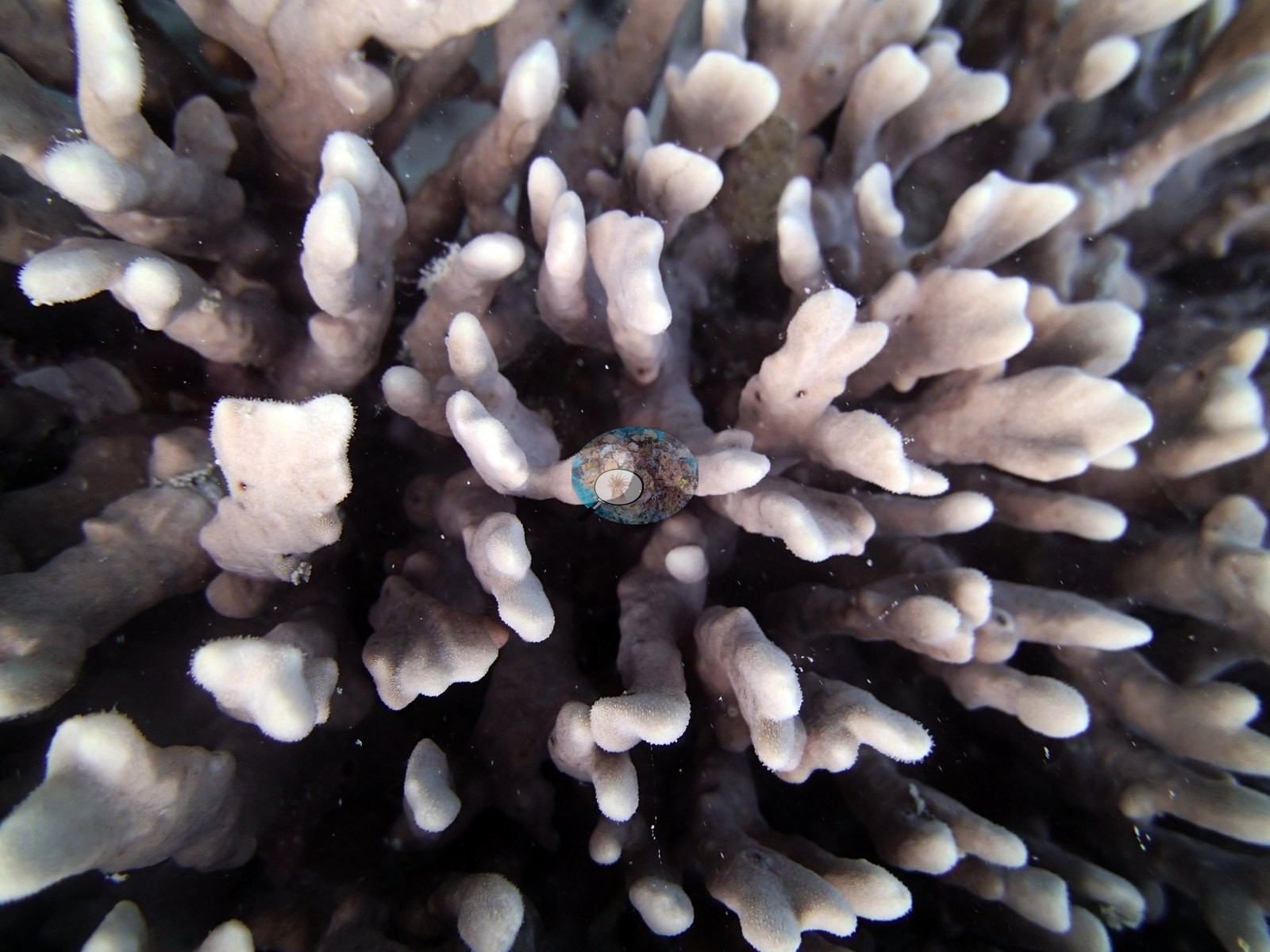
Monkman Reef's first dive is a showcase for two reef-building workhorses: Pavona cactus and Porites cylindrica, which carpet the 4-8 m band at close to full coral cover in many spots (e.g., Image 1, Image 3).
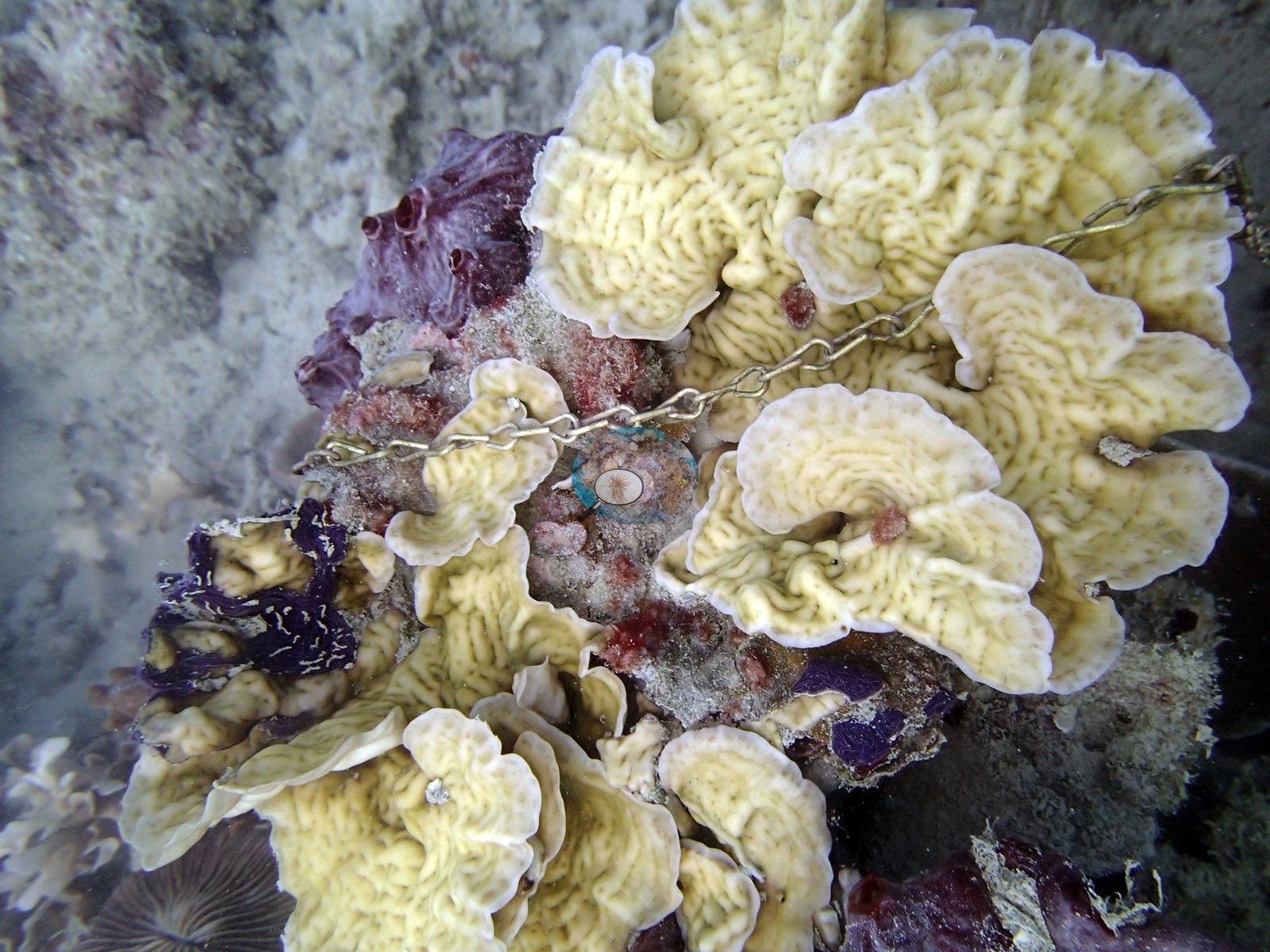
Deeper transects (10-16 m), which Anderson estimated by eye at 30-50% (one reached 70-80%), added Pachyseris, Goniopora, Leptoseris, branching Acropora, and massive Porites to the mix, with one particularly dense transect hitting 70-80% cover around a thicket of Acropora and Paraclavarina (e.g., Image 2).
Coral cover
- Reference: Khaled bin Sultan Living Oceans Foundation, Global Reef Expedition (in situ transect)
- The expedition's in situ point-count transects at this station recorded 68% live coral cover against 8.3% total algal cover.
- Transect mean 68 ± 13% SE (n = 3 transects; Living Oceans Foundation per-transect benthic data); the headline above is the expedition's station value.
Stressors
Nothing here flagged any coral stress: no bleaching, disease, or crown-of-thorns starfish turned up on any of the six transects.
Fish and other fauna
The fish life matched the coral for spectacle — five or six gray reef sharks cruised the site, along with two genuinely huge grouper and a resident stingray.
Comparisons with other data
No prior survey data from this site. If you would like to share yours, please email us.
Data & links
- Download benthic survey data (CSV) ↗
- Download all LOF-GRE data (933 sites) ↗
- Photo portfolio ↗
- Coral Reef Diagnostics country page ↗
All images from Coral Reef Diagnostics. Data are from the Khaled bin Sultan Living Oceans Foundation Global Reef Expedition and Coral Reef Diagnostics.
 © Coral Reef Diagnostics.