
Part of the regional summaries: Australia (GBR) - Far North: Green stations (no-take reefs) and Australia (GBR)
More info
Far Northern GBR (NOAA CRW virtual station)A Monkman Reef slope that begins around 13.5 m and thickens in the shallows with Pocillopora, Stylophora, Goniopora, and massive Porites, soft corals, and notably abundant fish, with 15-20 coral species per transect. Dead needle coral turned up on one line, but the same dive produced the trip's first needle-coral recruit. Surveyed on the Living Oceans Foundation's Global Reef Expedition.
Eleven other CRD dive sites within 5 km shown in orange — click a marker to open its page.
🗺 Detailed map of the Global Reef Expedition dive sites, Parkinson and Monkman Reefs, northern Great Barrier Reef (Khaled bin Sultan Living Oceans Foundation; opens in a new window)
1 of the 7 photographs on this page is shown beside the text that discusses them under "Site description" below.
Site description
Setting
Global Reef Expedition station AUMO101 on Monkman Reef, far northern Great Barrier Reef (-11.4565, 143.1428), surveyed on 20 September 2014 on that day's third dive.
General benthic features
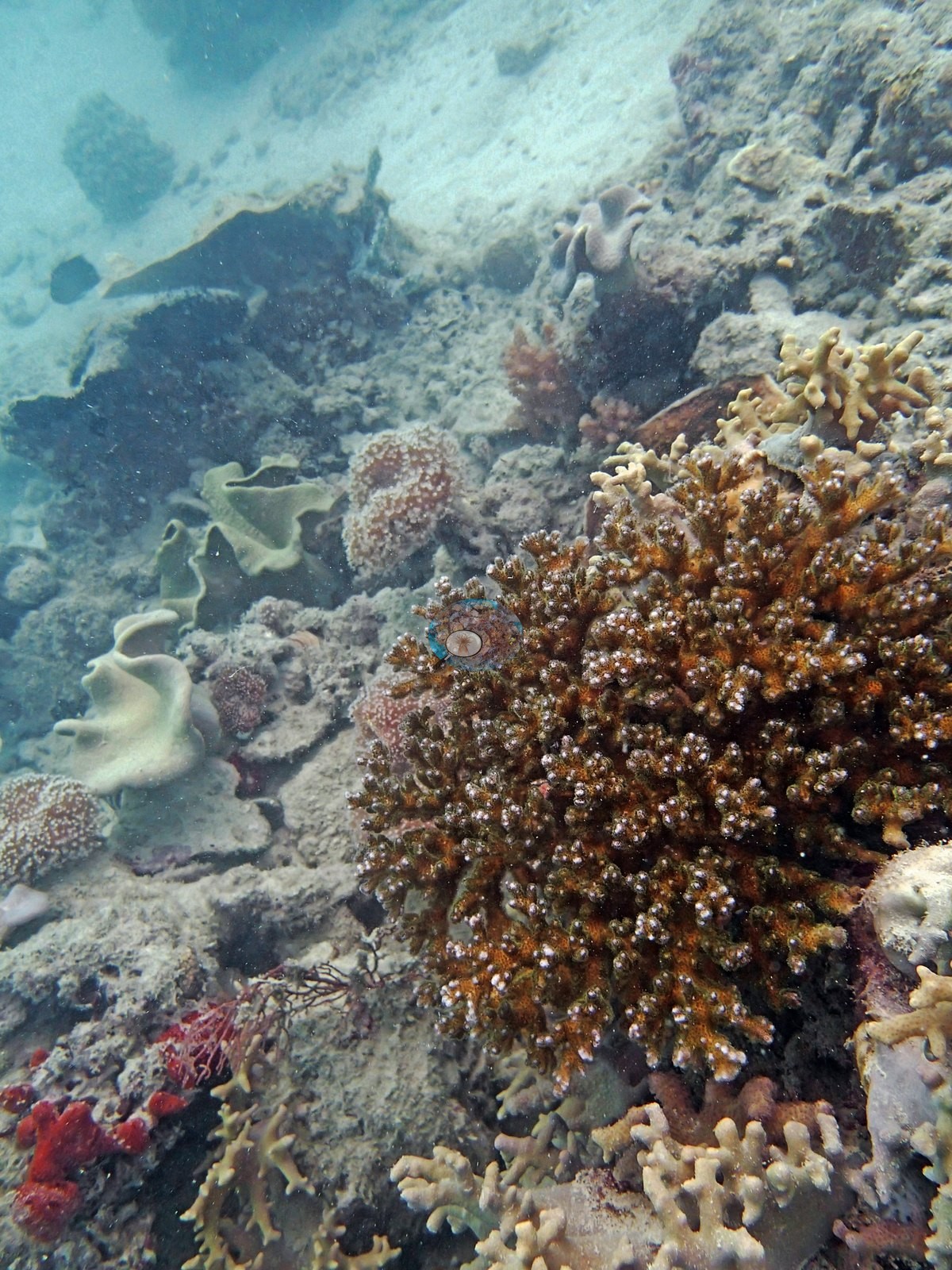
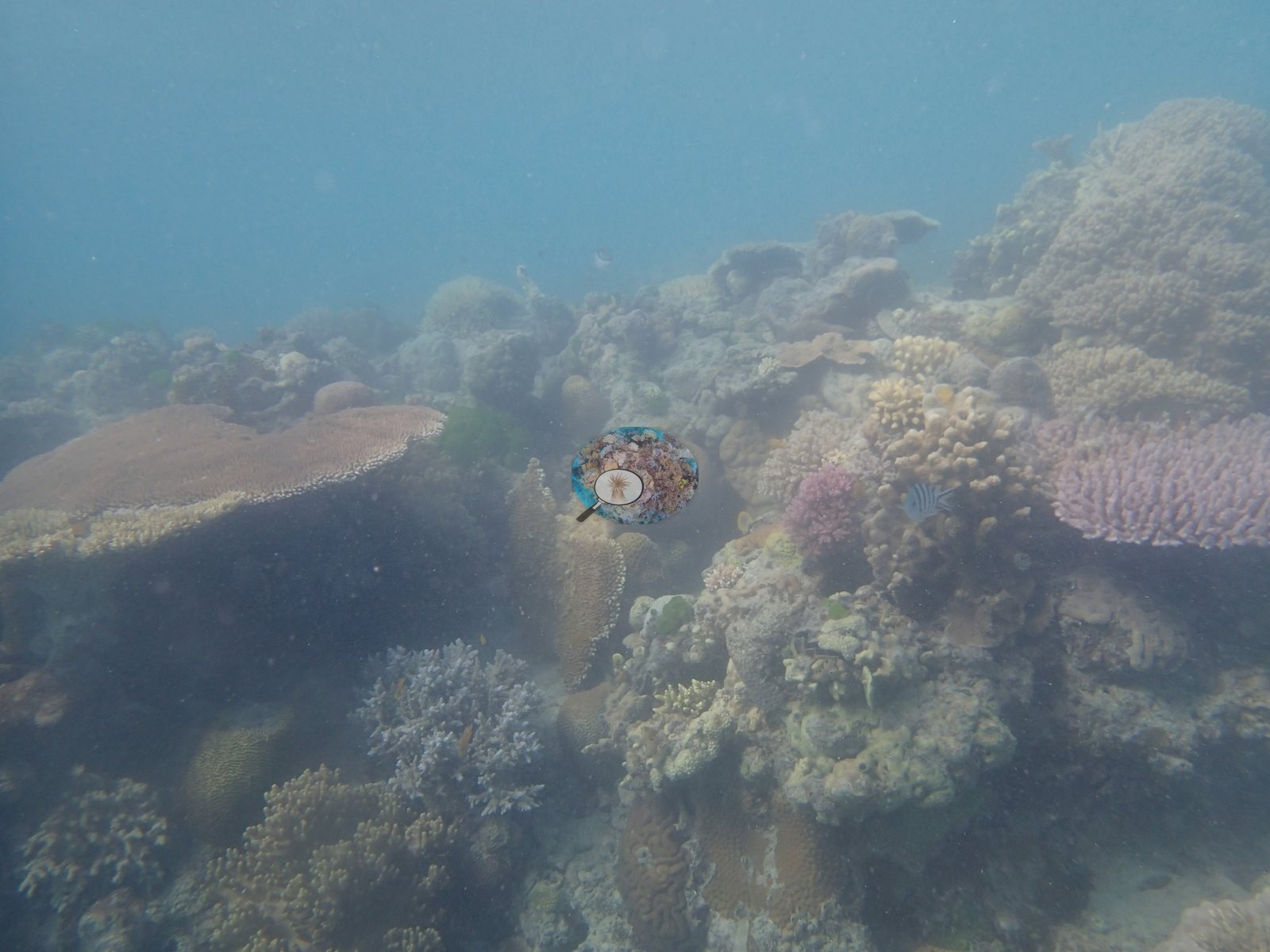
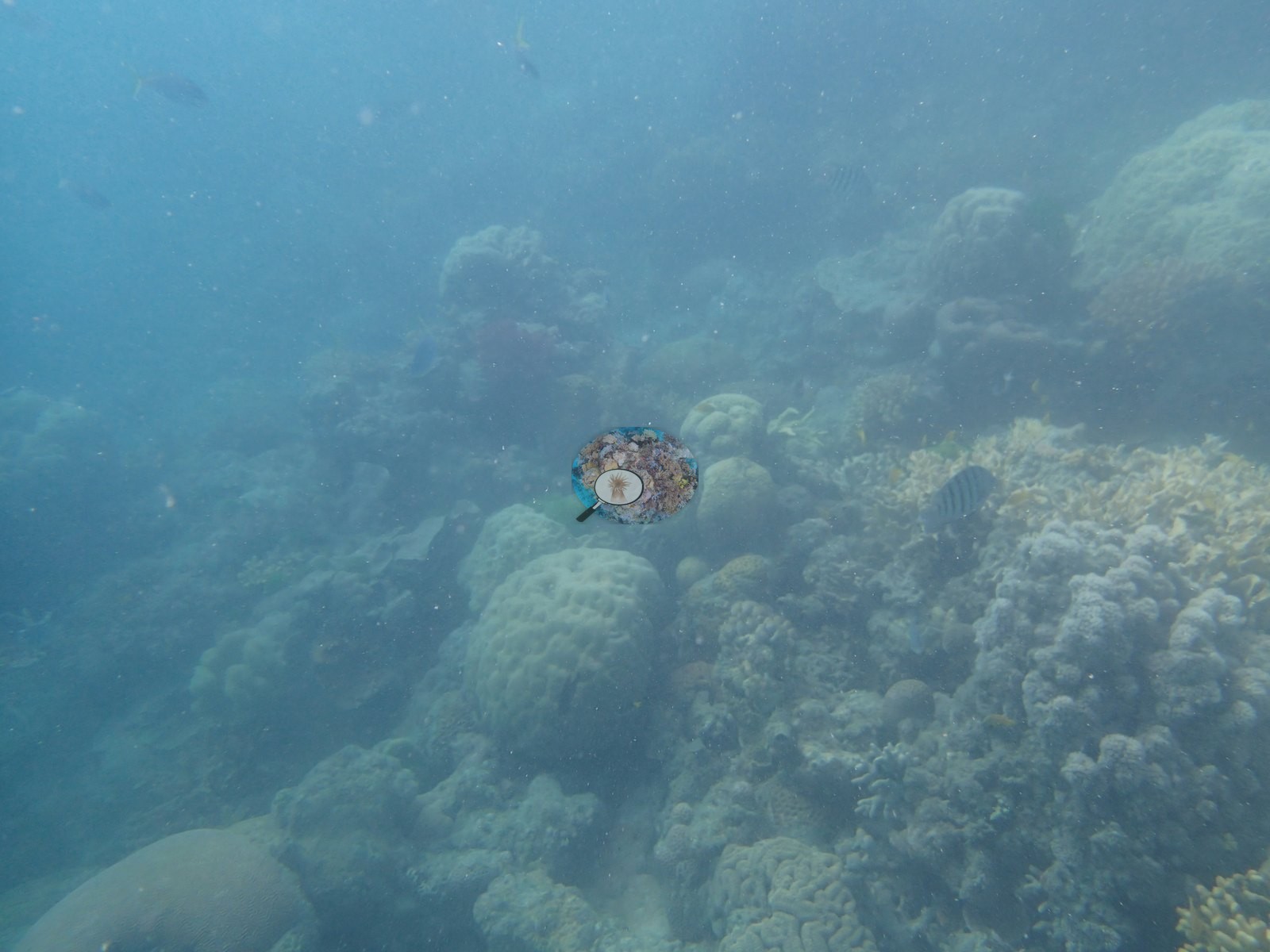
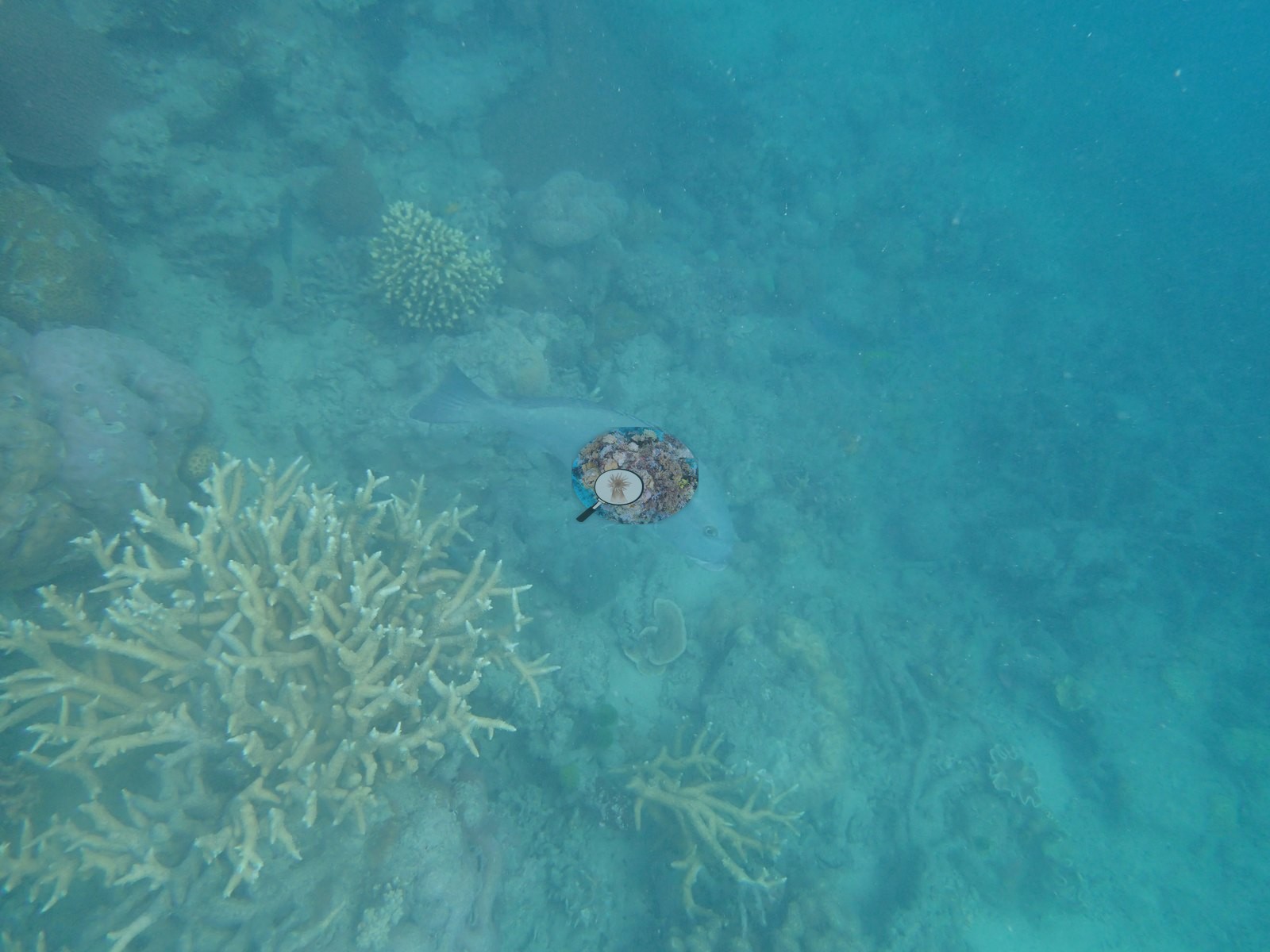
The notes record the reef starting around 13.5 m and improving shallower — by 5-8 m, Pocillopora damicornis, Stylophora pistillata, Goniopora, and massive Porites were thick on the slope, with soft corals throughout and notably abundant fish. One frame shows a bushy orange-brown branching colony beside pale branching colonies, cup-shaped leathery soft corals, and a patch of red encrusting growth on silty rock, with sand beyond (e.g., Image 1).
The survey transects, all between 9 and 10.5 m, carried more modest cover but real species richness, typically 15-20 coral species per 50 m line, with one line running directly over a large Diploastrea colony.
Coral cover
- Reference: Khaled bin Sultan Living Oceans Foundation, Global Reef Expedition (in situ transect)
- The in situ benthic transects recorded 44% live coral cover against a 20% algal fraction on a dive to 15.7 m, more than double the algal fraction.
- One transect was scored at this station (44%; n = 1, so no SE; Living Oceans Foundation per-transect benthic data); it is the expedition's station value printed above.
Stressors
The 9.4 m transect over a large Diploastrea colony also carried dead Seriatopora hystrix; the same dive produced the trip's first S. hystrix recruit. Regional context only: surveyed about eighteen months before the 2016 mass bleaching, an event that severely bleached hundreds of reefs on the northern Great Barrier Reef (Hughes et al. 2017); 5-year mean annual maximum thermal stress at the Far Northern GBR virtual station is 11.1 degree heating weeks. The 2014 dive notes for this site record one Culcita cushion star, a coral-eating sea star (Anderson's GBR field notes, 2014).
Comparisons with other data
No prior survey data from this site. If you would like to share yours, please email us.
Data & links
- Download benthic survey data (CSV) ↗
- Download all LOF-GRE data (933 sites) ↗
- Photo portfolio ↗
- Coral Reef Diagnostics country page ↗
All images from Coral Reef Diagnostics. Data are from the Khaled bin Sultan Living Oceans Foundation Global Reef Expedition and Coral Reef Diagnostics.
 © Coral Reef Diagnostics.