
Part of the regional summaries: Australia (GBR) - Far North: Green stations (no-take reefs) and Australia (GBR)
More info
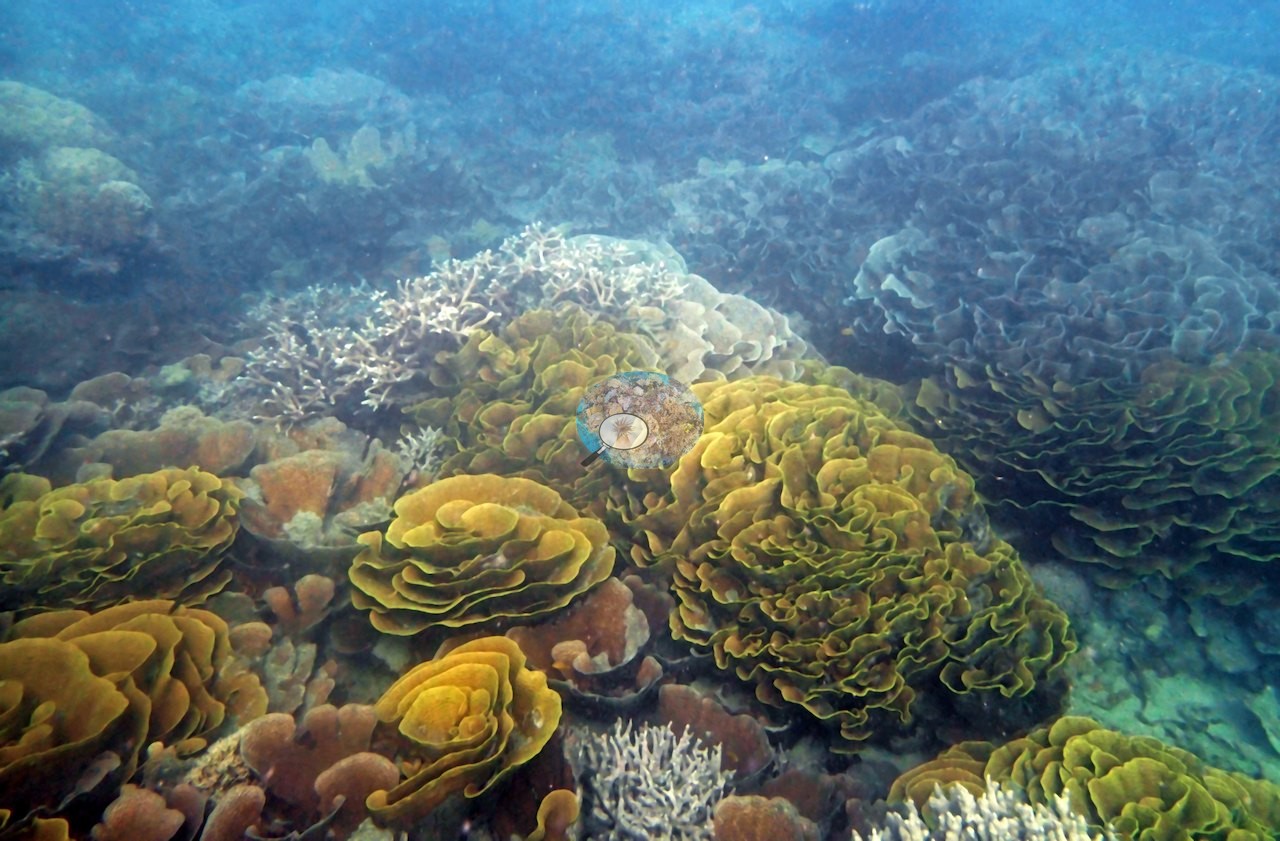
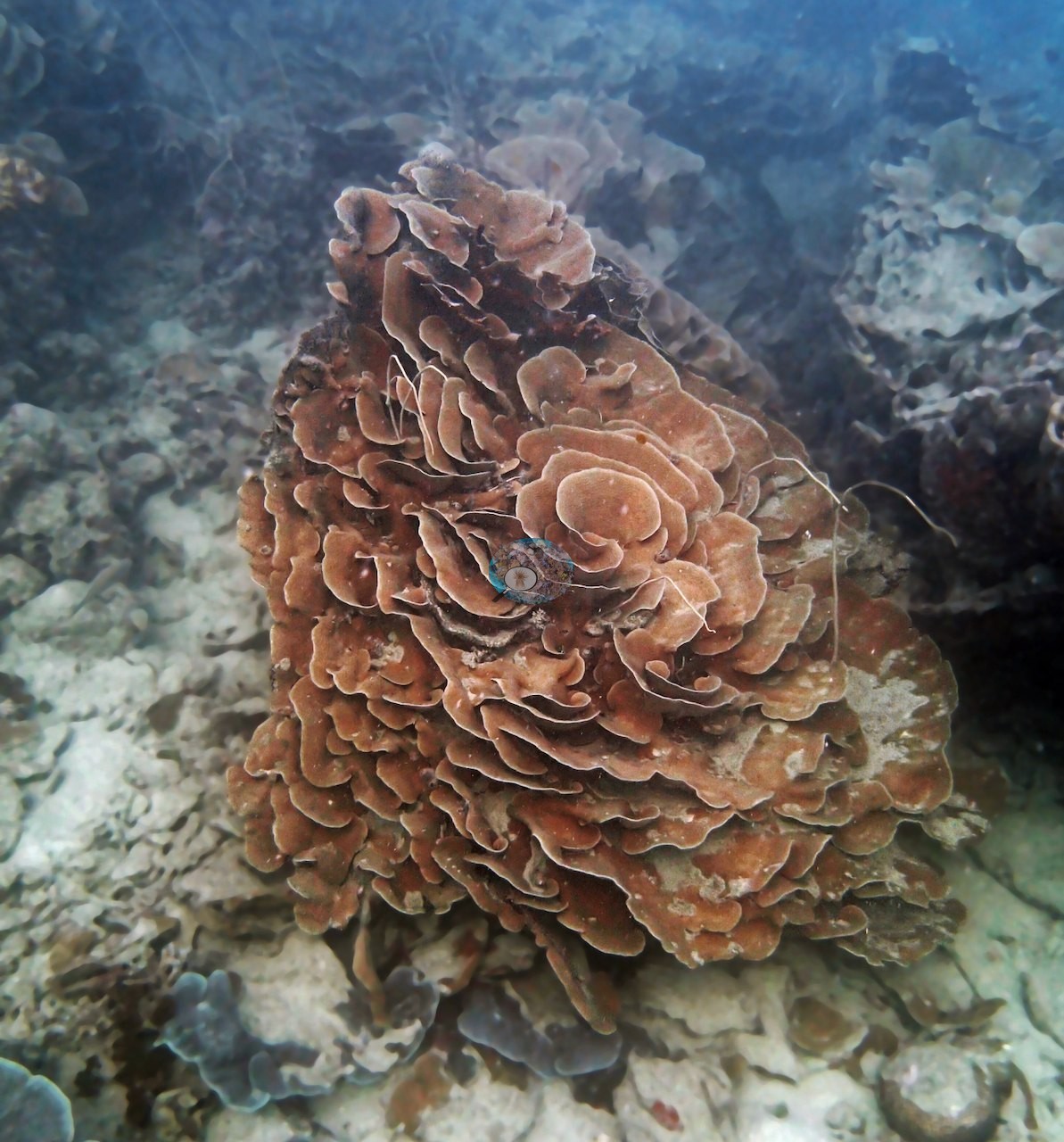
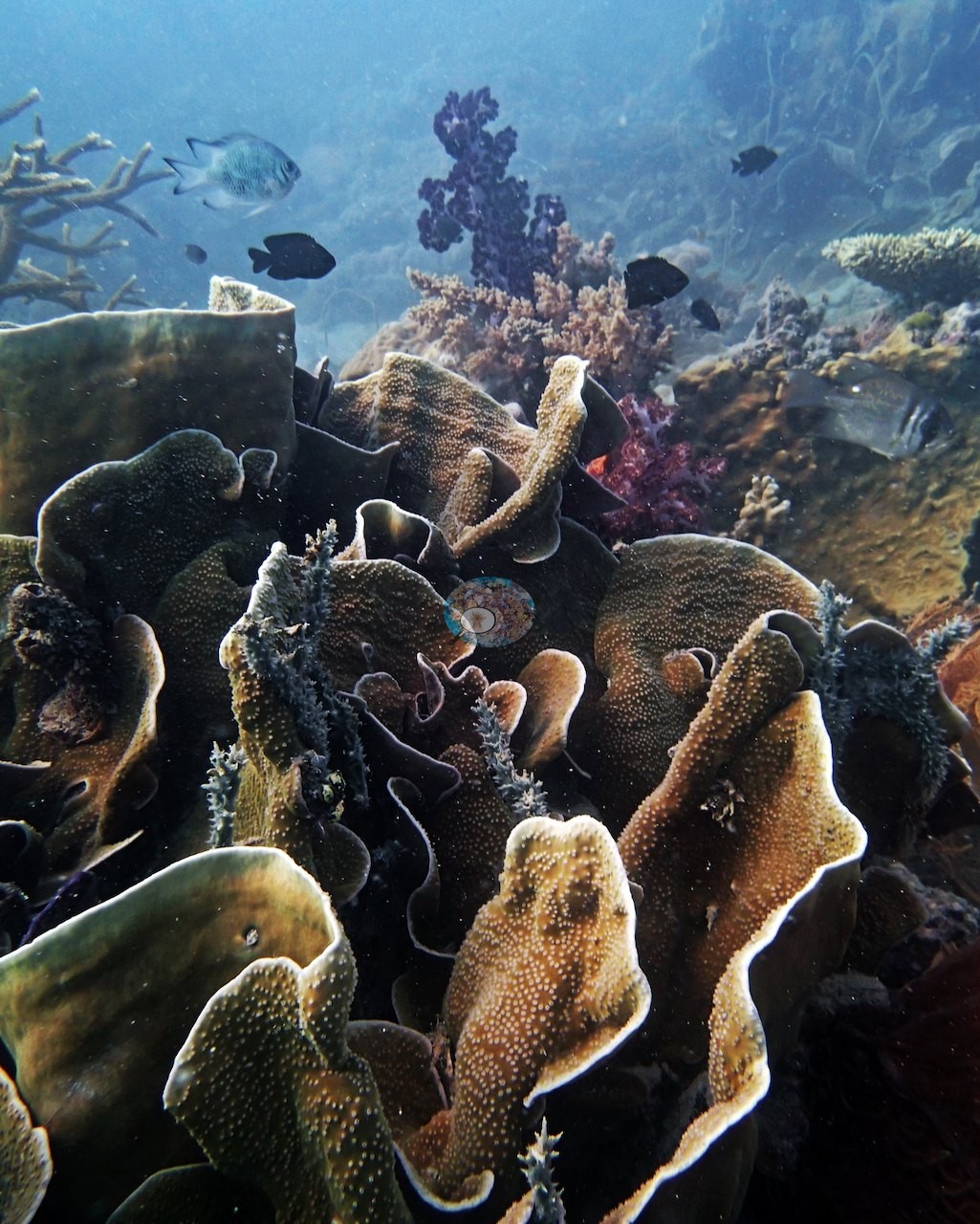
Far Northern GBR (NOAA CRW virtual station)A steep wall in a no-take Green Zone, dived in a 1.5-knot current, where Turbinaria, Porites, Diploastrea, and plating corals approach 100% cover by eye at 3-5 m before thinning deeper, at 50% on the transect. A gray reef shark, a cushion star, and a large nudibranch were logged, with no bleaching, disease, or crown-of-thorns. Surveyed on the Living Oceans Foundation's Global Reef Expedition.
Six other CRD dive sites within 5 km shown in orange — click a marker to open its page.
🗺 Detailed map of the Global Reef Expedition dive sites, Milman and Alpin Reefs, northern Great Barrier Reef (Khaled bin Sultan Living Oceans Foundation; opens in a new window)
5 of the 24 photographs on this page are shown beside the text that discusses them under "Site description" below.
Site description
Setting
Global Reef Expedition station AU3483 on Unnamed Reef 34, far northern Great Barrier Reef (-11.1720, 143.0830), surveyed on 17 September 2014 during that day's third dive, in a no-take Marine National Park (Green) Zone. The dive worked a 1.5-knot current in 3-4 m visibility along a steep wall dropping past 19-20 m.
General benthic features
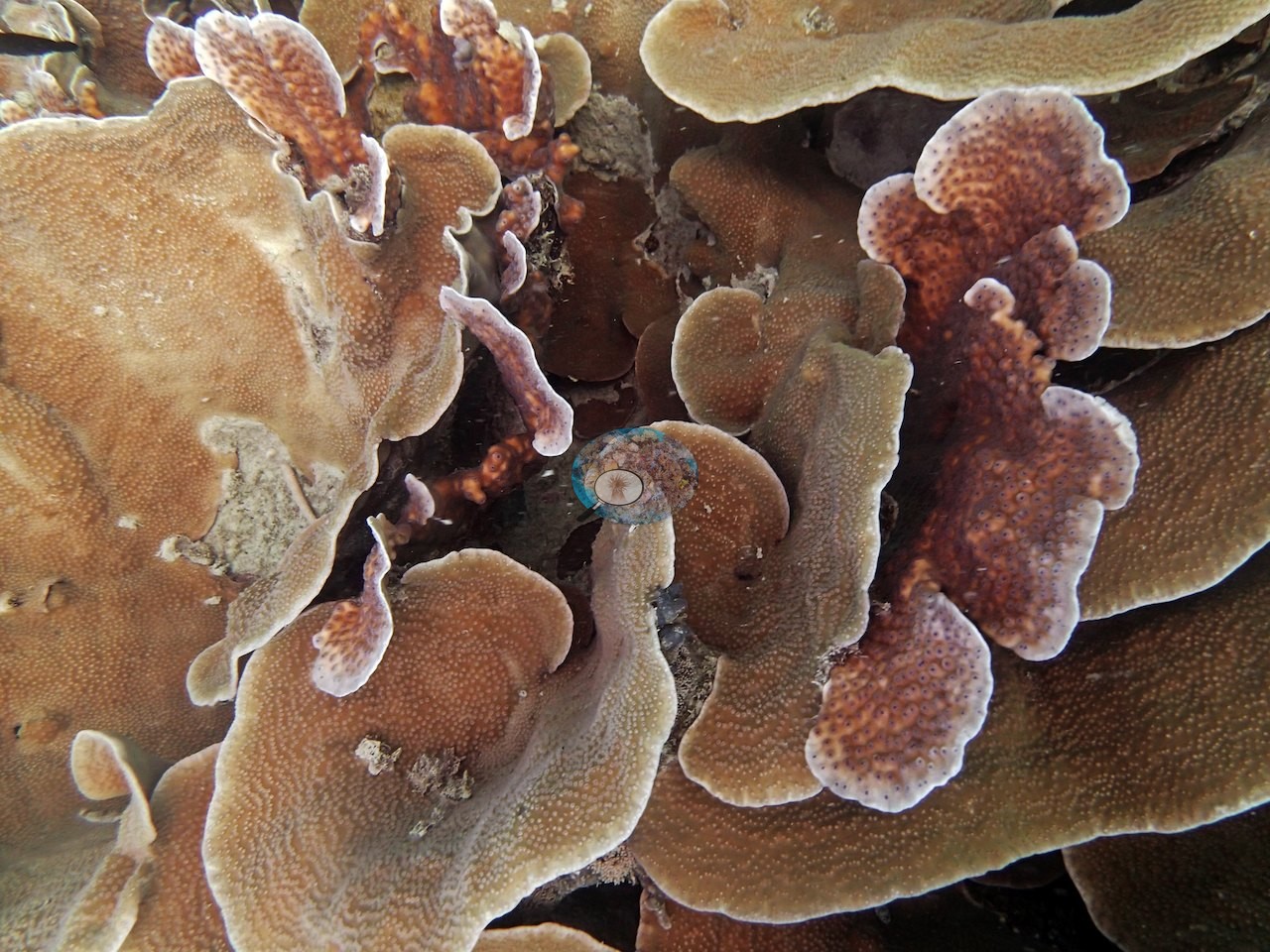
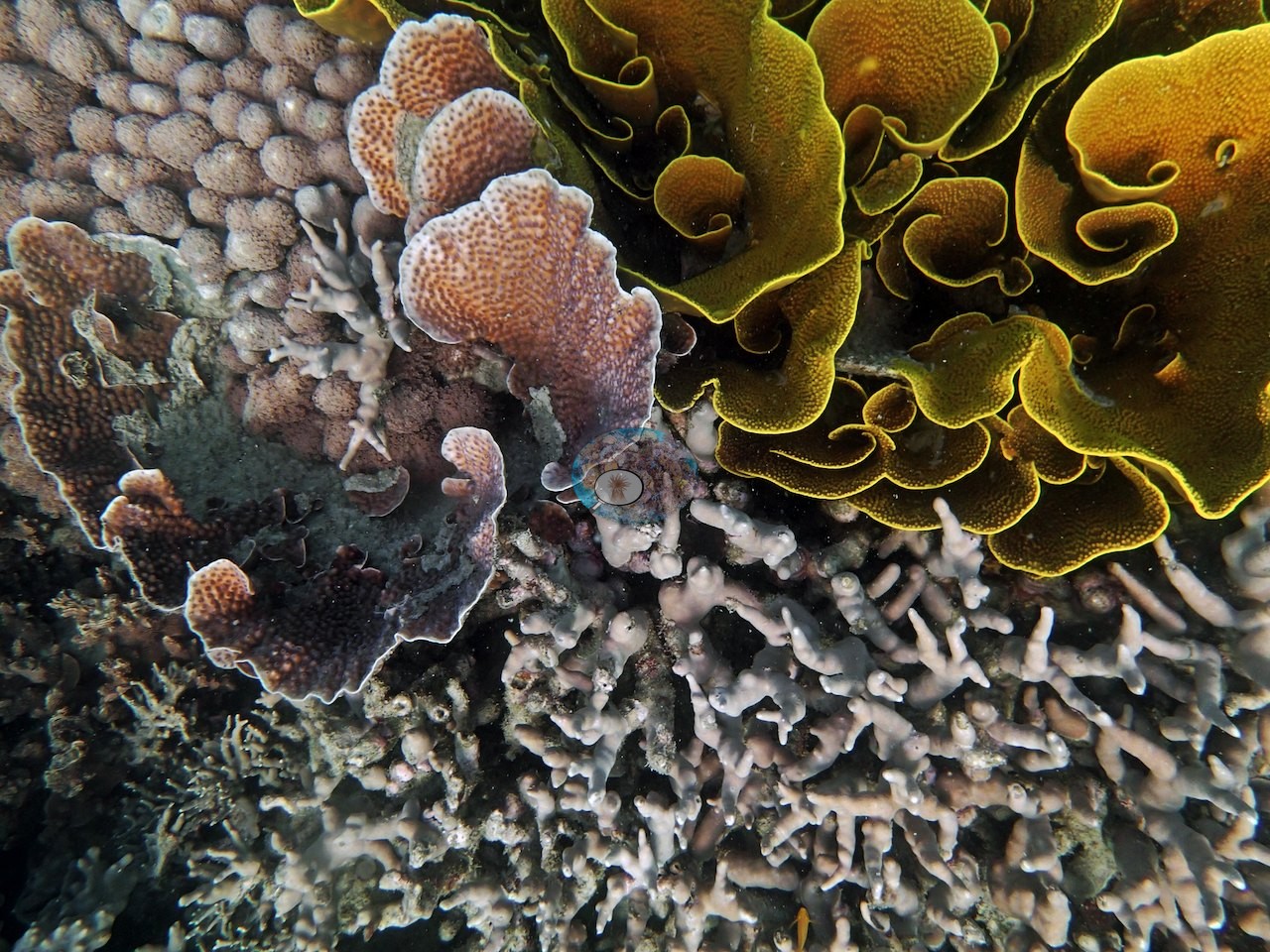
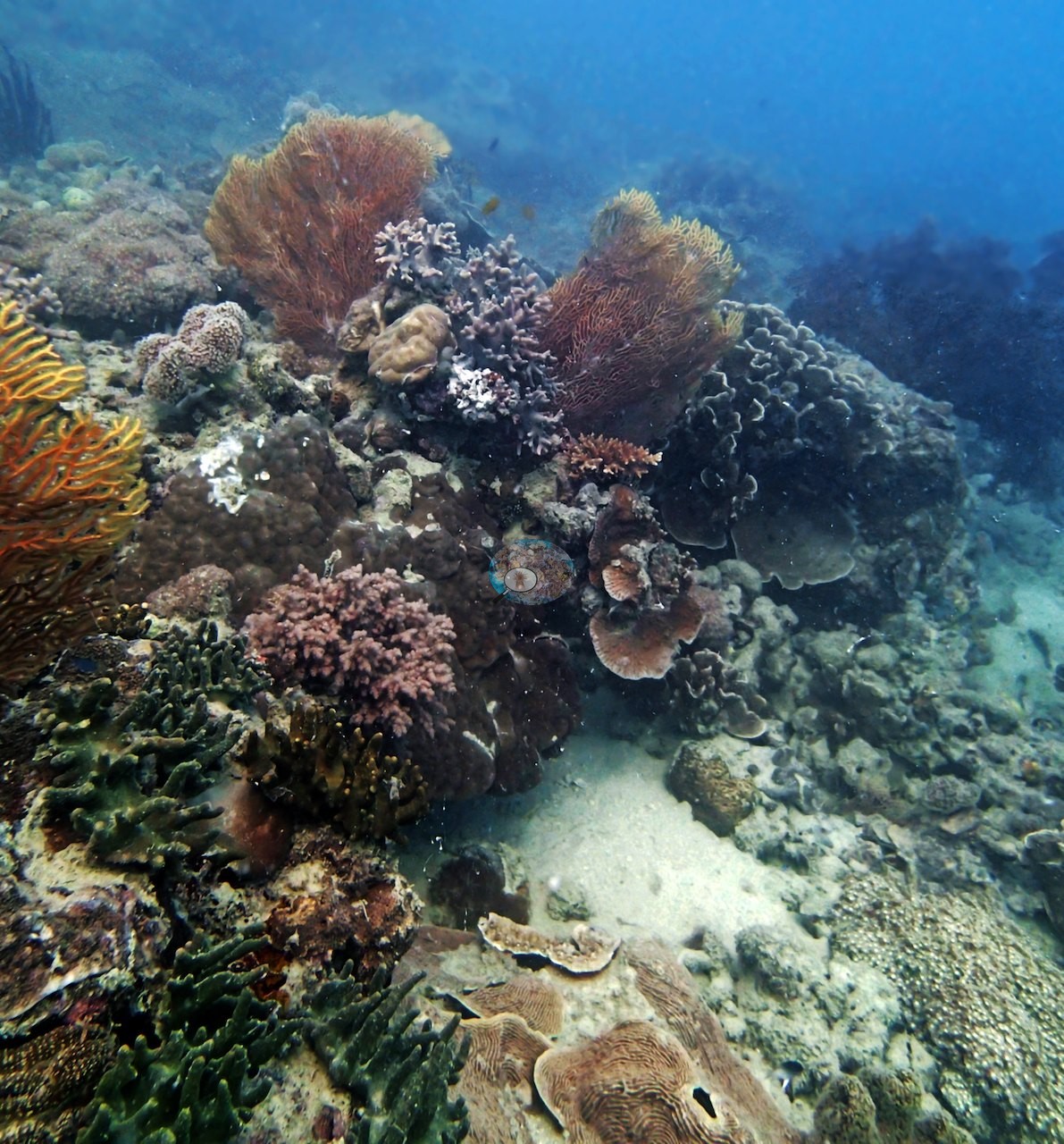
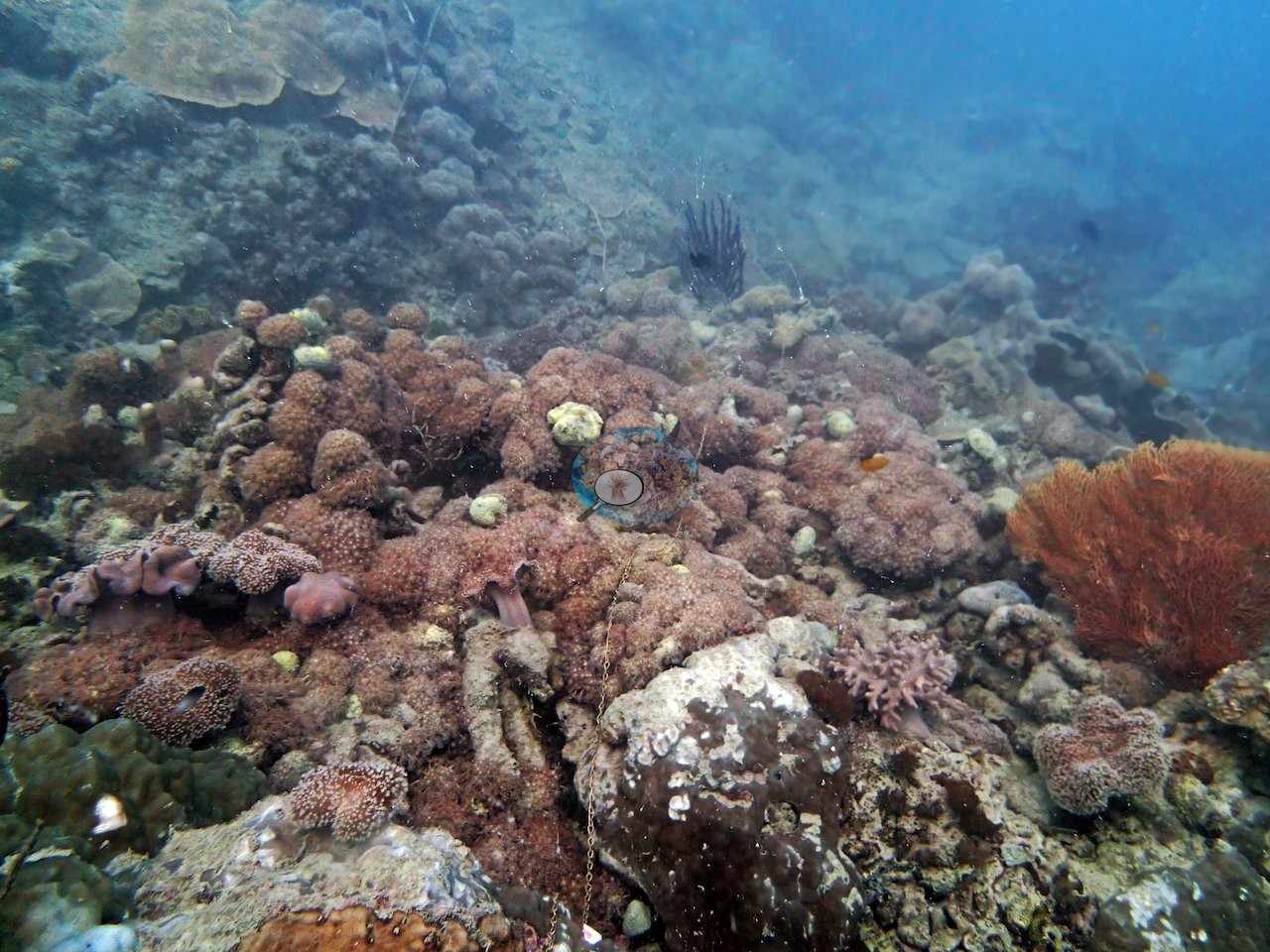
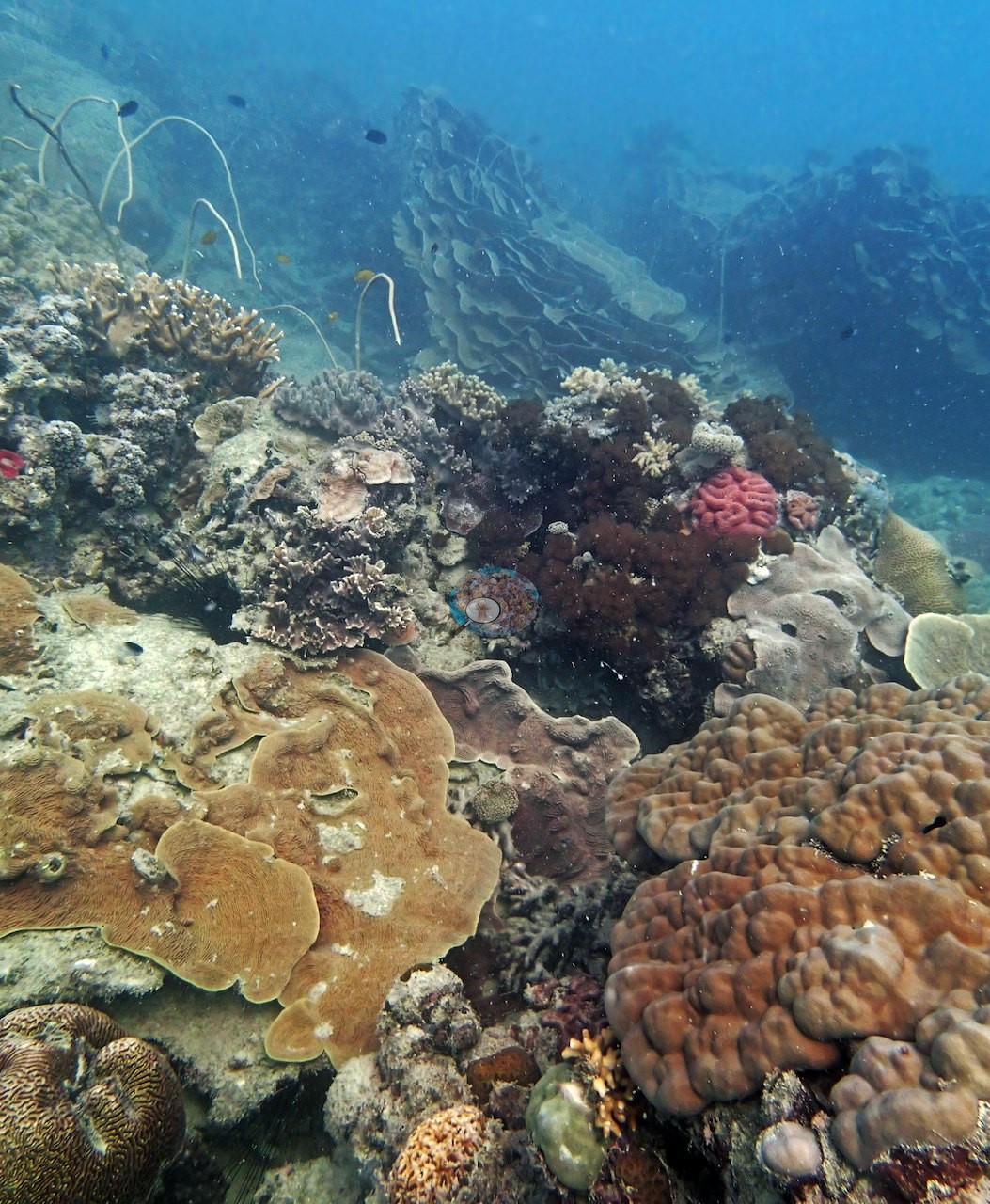
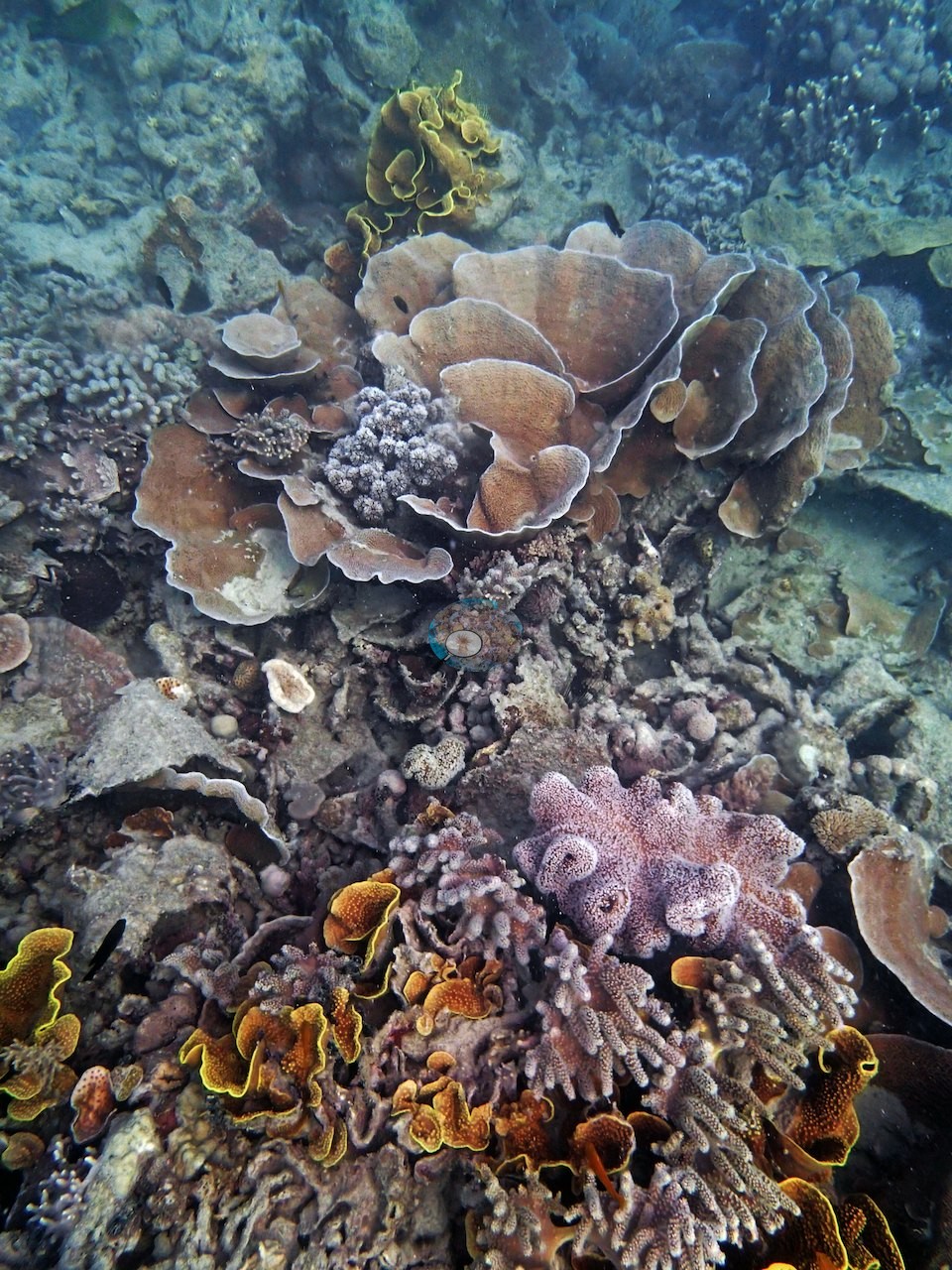
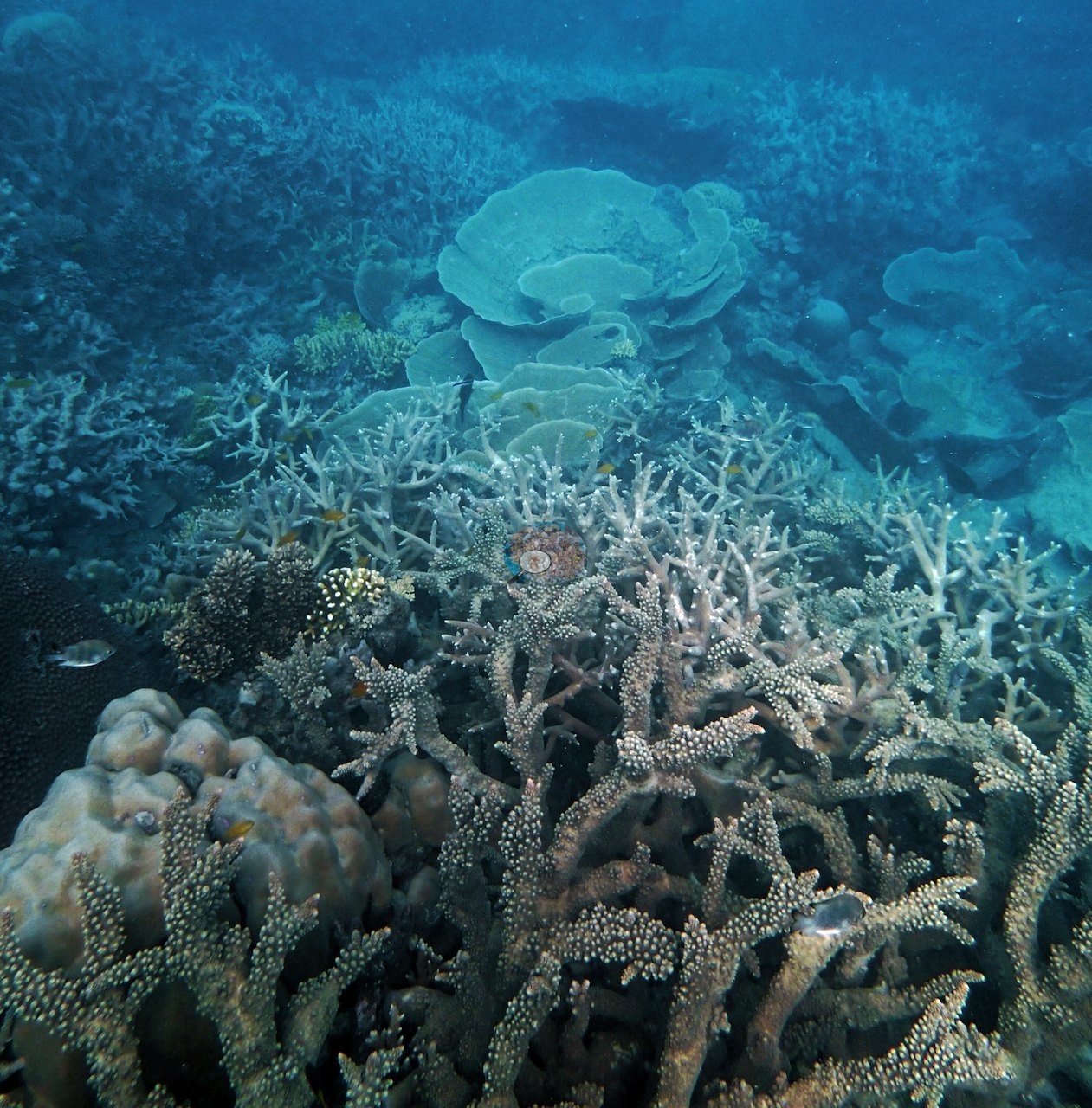
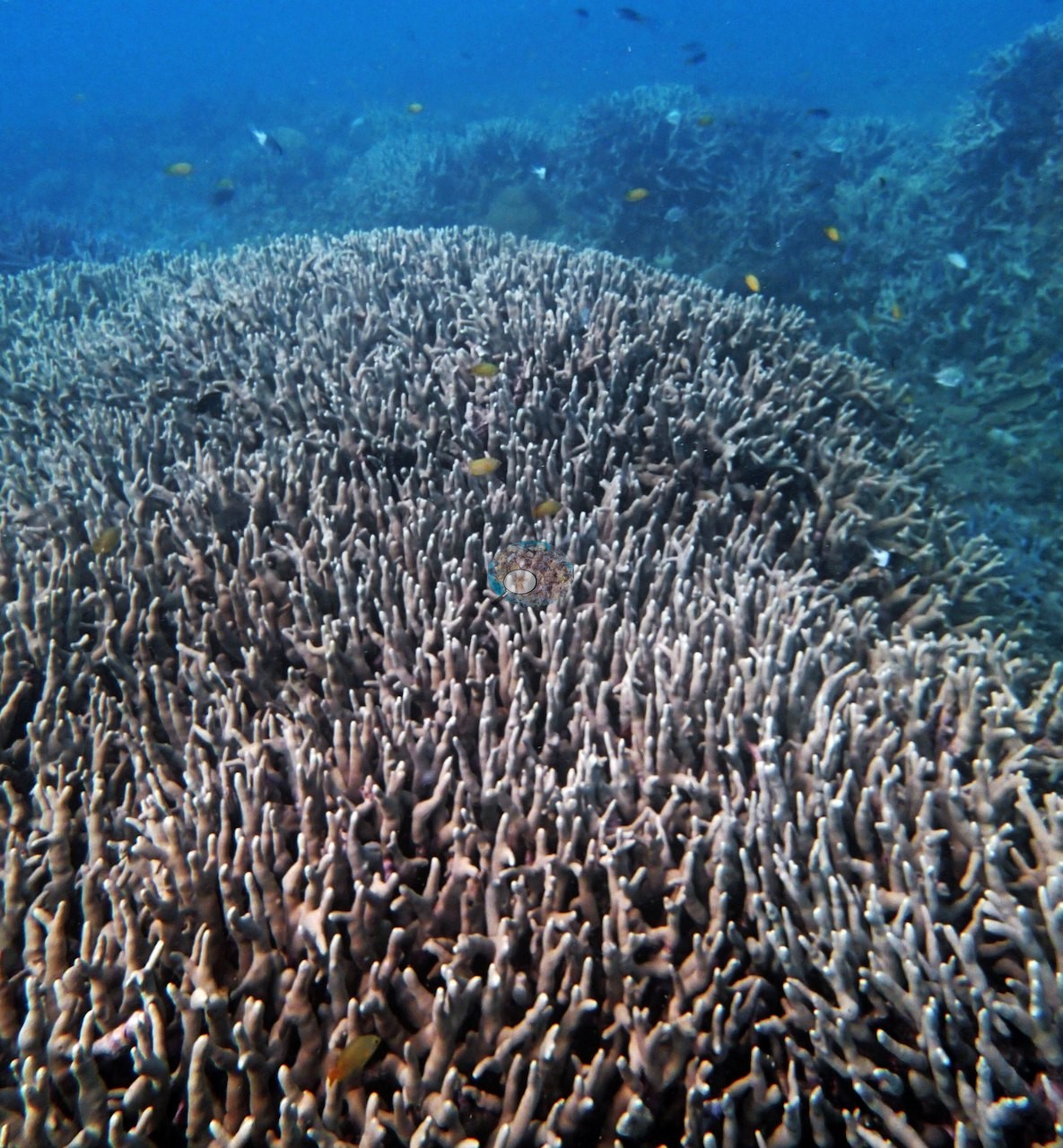
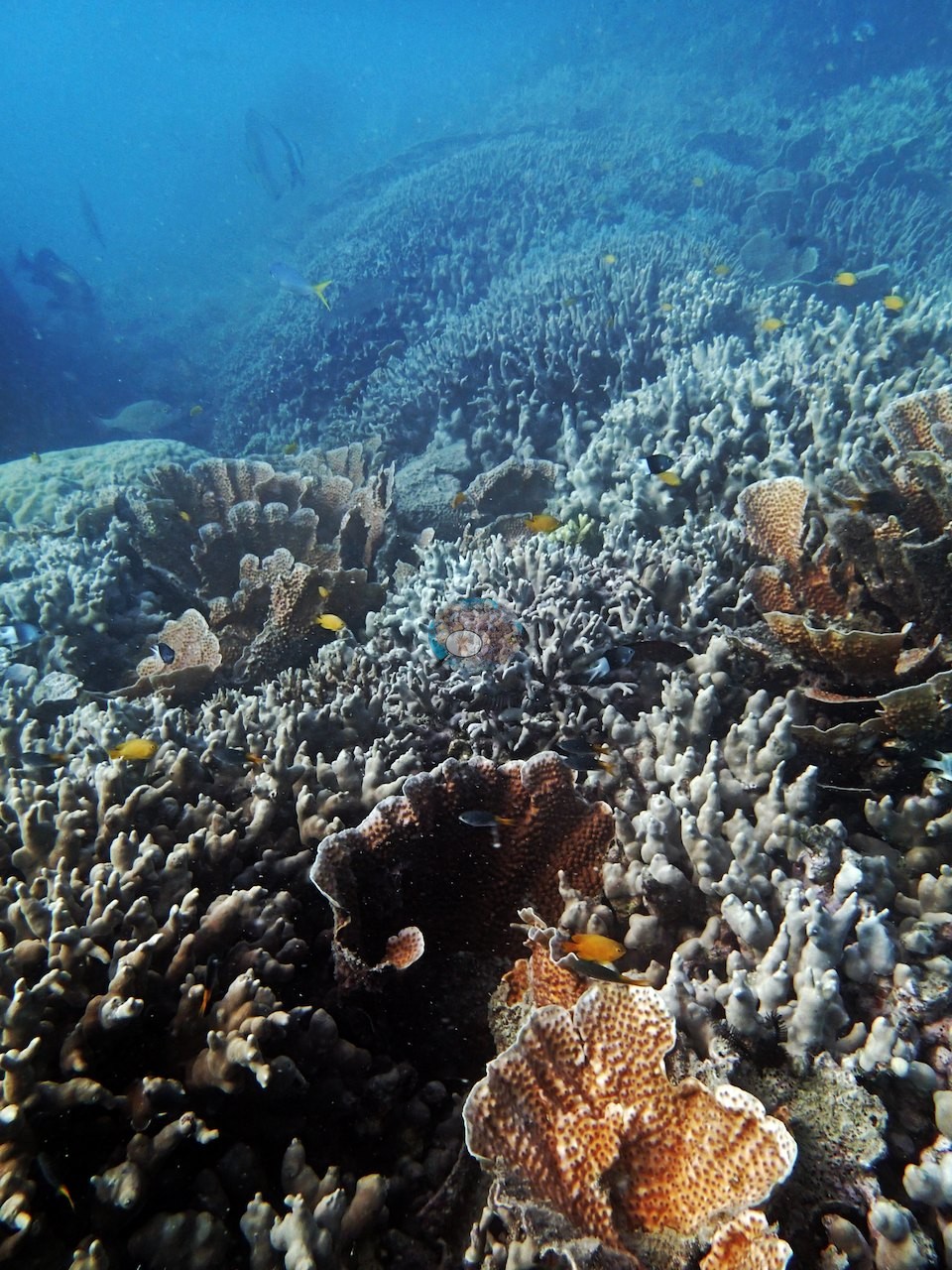
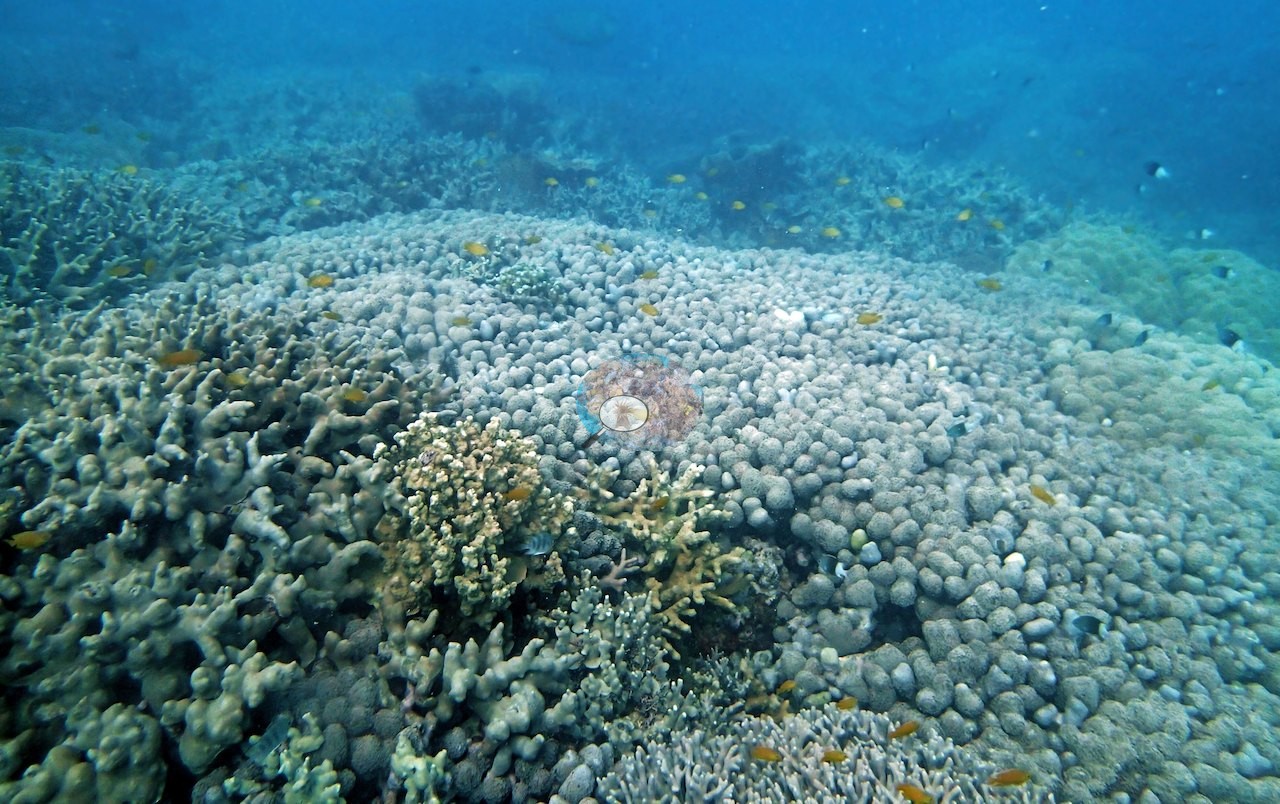
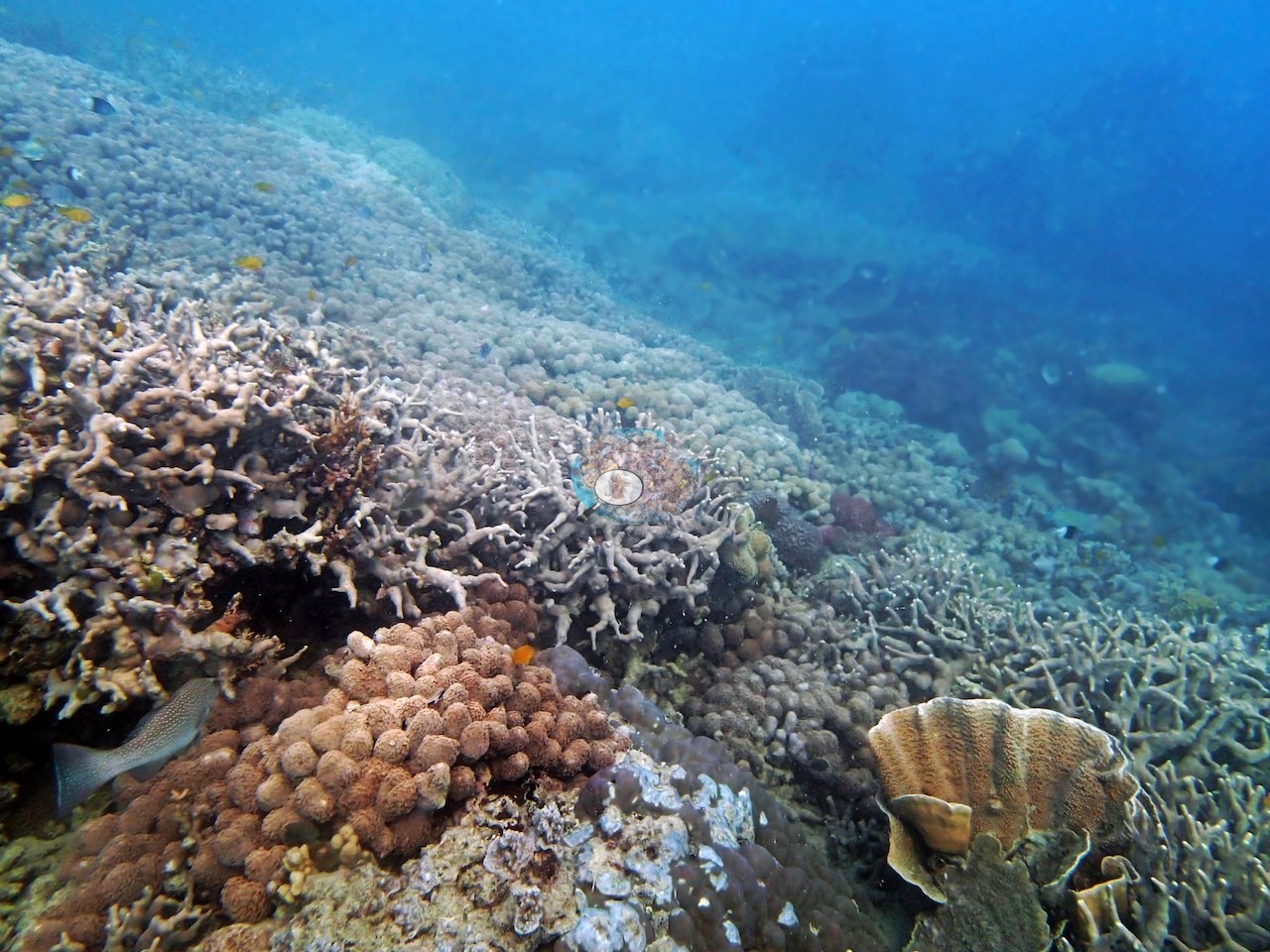
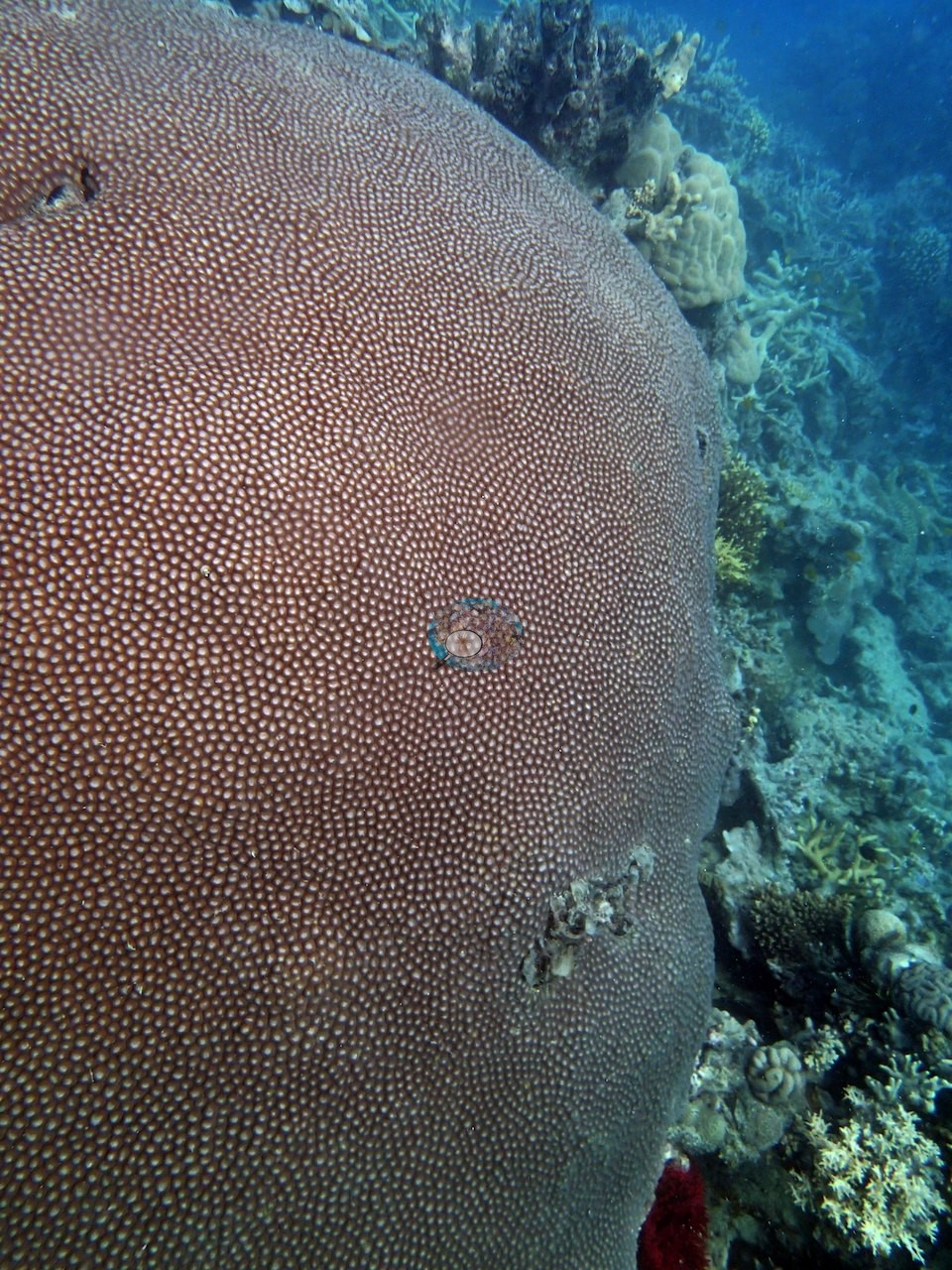
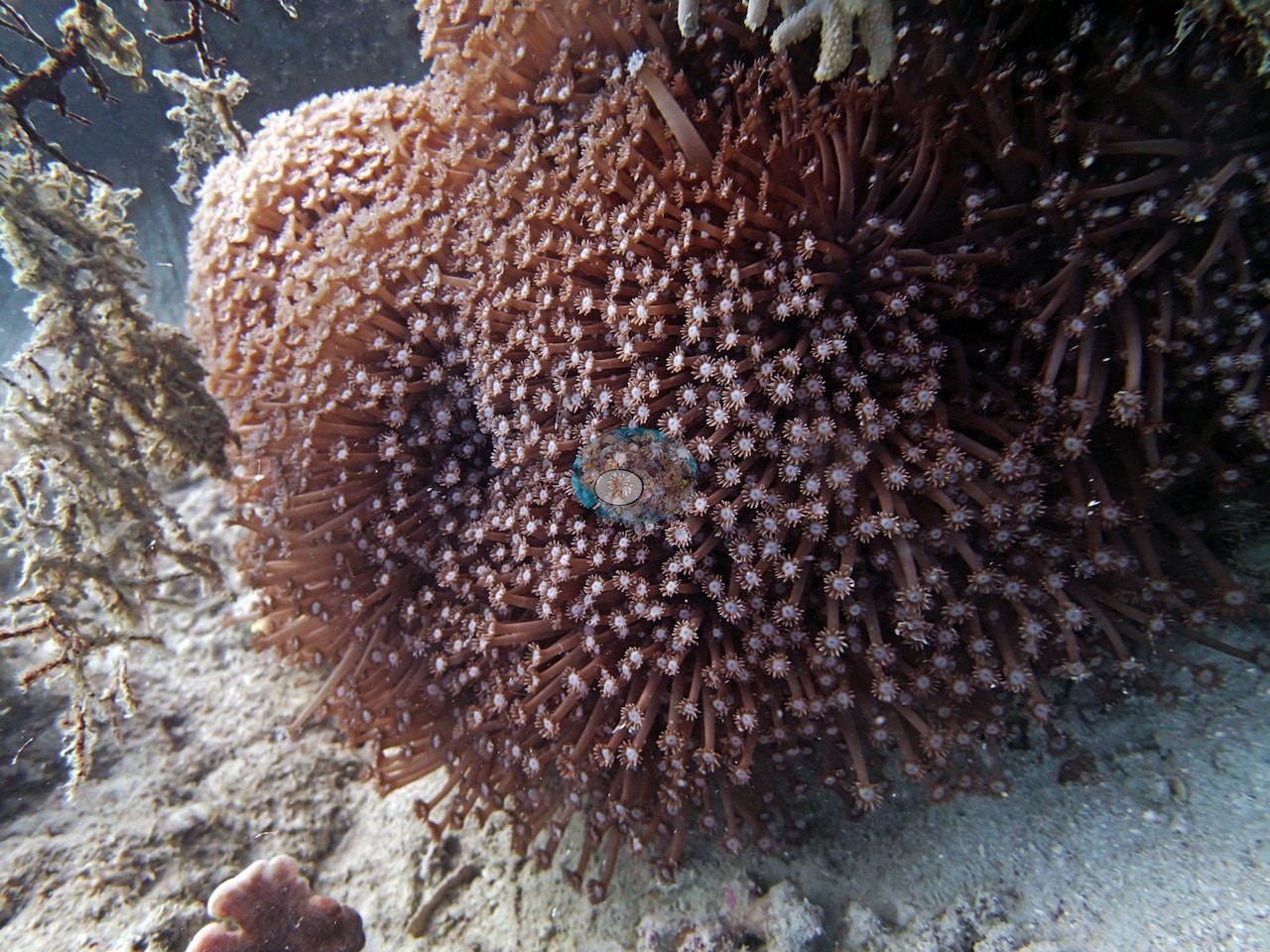
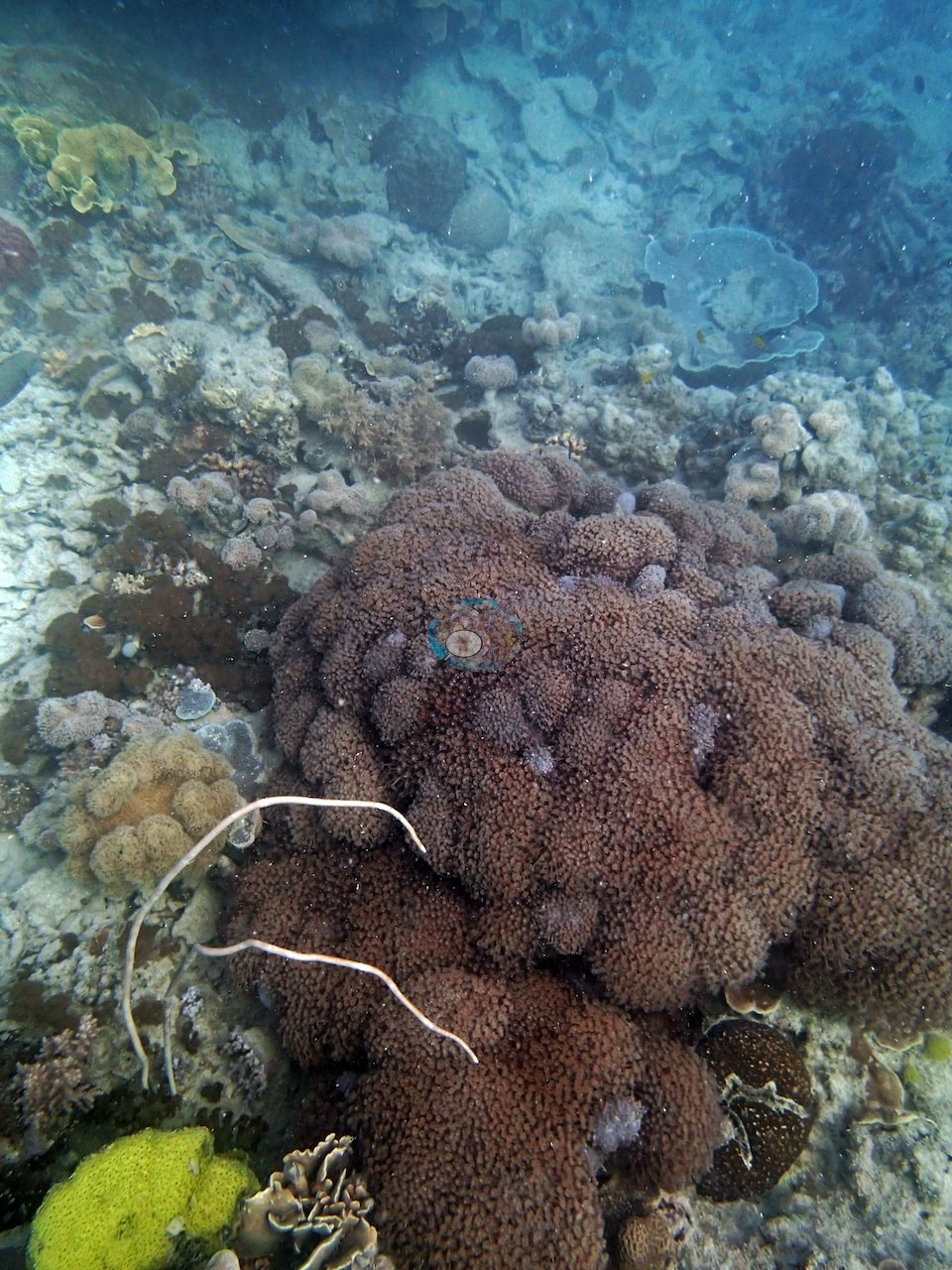
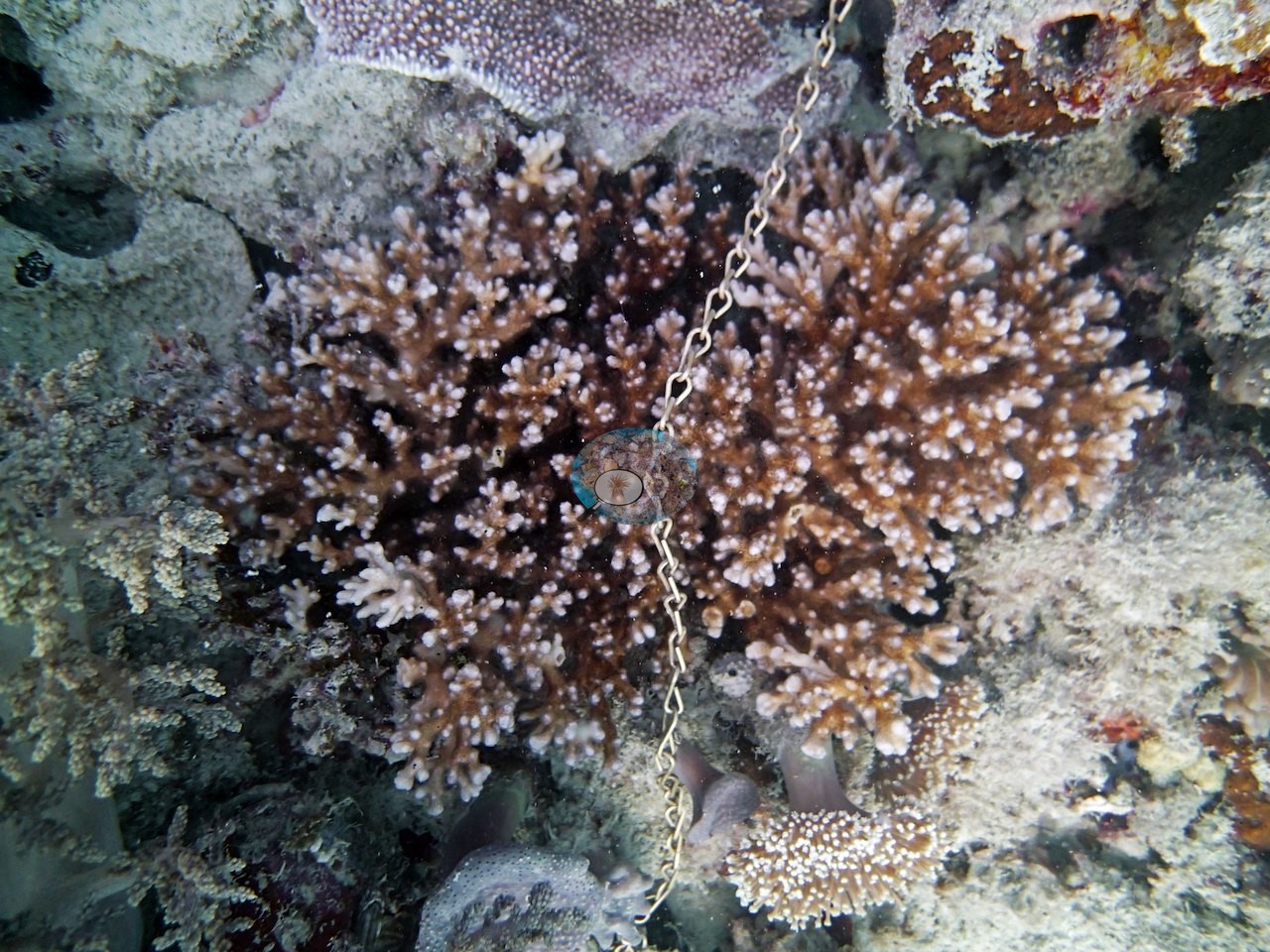
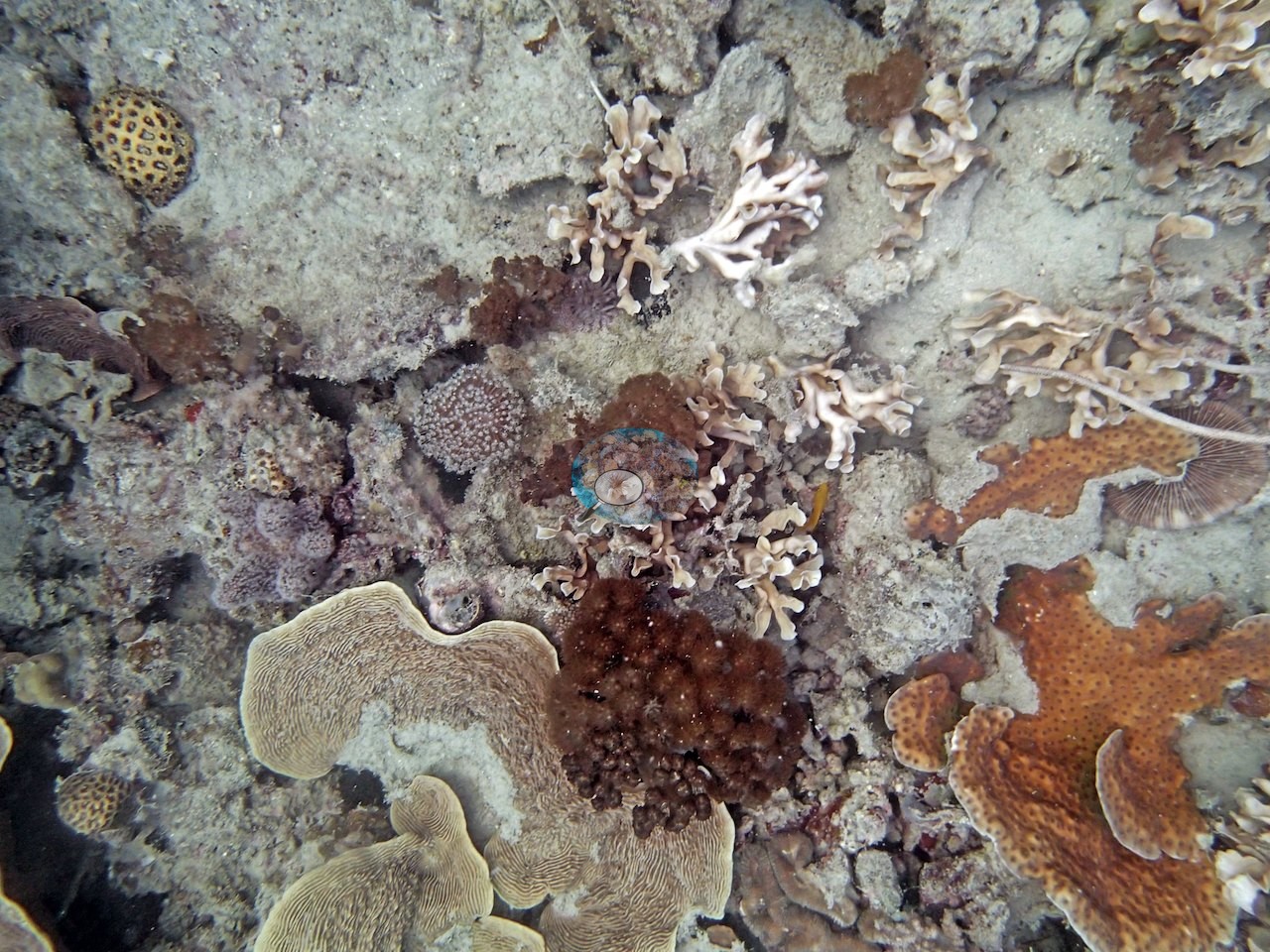
The notes put the reef's best coral above 10 m, where Turbinaria ran together with Porites cylindrica, P. lobata, Diploastrea, and plating Pachyseris and Echinopora, approaching 100% live cover by eye between 3 and 5 m (e.g., Image 1, Image 2, Image 5).
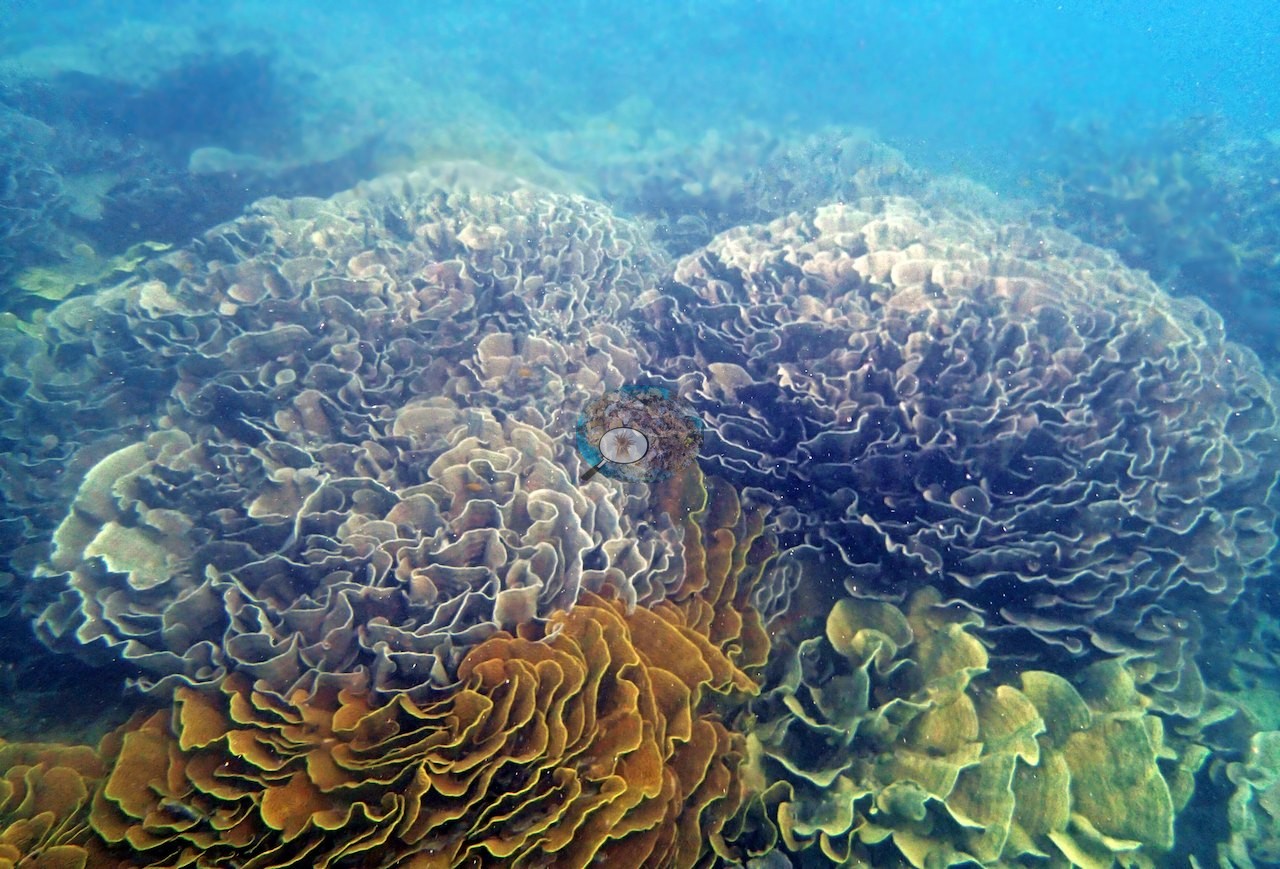
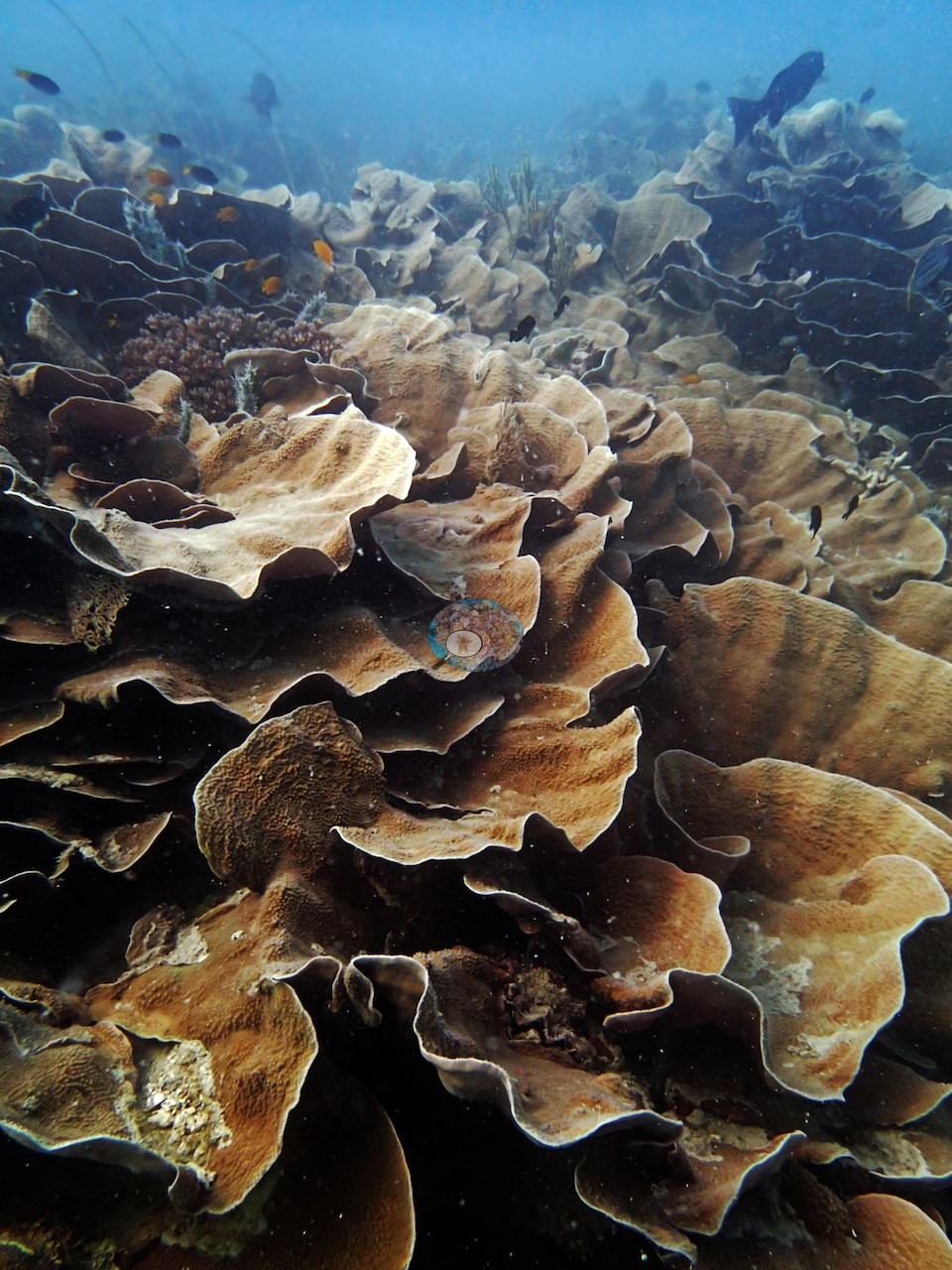
Transects near 10-11 m were thinner, estimated at 10-15% up to 30-40% cover, the richest carrying about 30 species.
Coral cover
- Reference: Khaled bin Sultan Living Oceans Foundation, Global Reef Expedition (in situ transect)
- The in situ benthic transects recorded 50% live coral cover against a 32% algal fraction.
- Transect mean 49 ± 2.0% SE (n = 4 transects; Living Oceans Foundation per-transect benthic data); the headline above is the expedition's station value (the headline weights each depth equally; one depth had a single transect).
Stressors
One large yellow foliose plate has irregular patches of recently dead, bare white surface through its center, partly dusted with fine sediment, while its margins keep living tissue; the cause is unclear (e.g., Image 8).
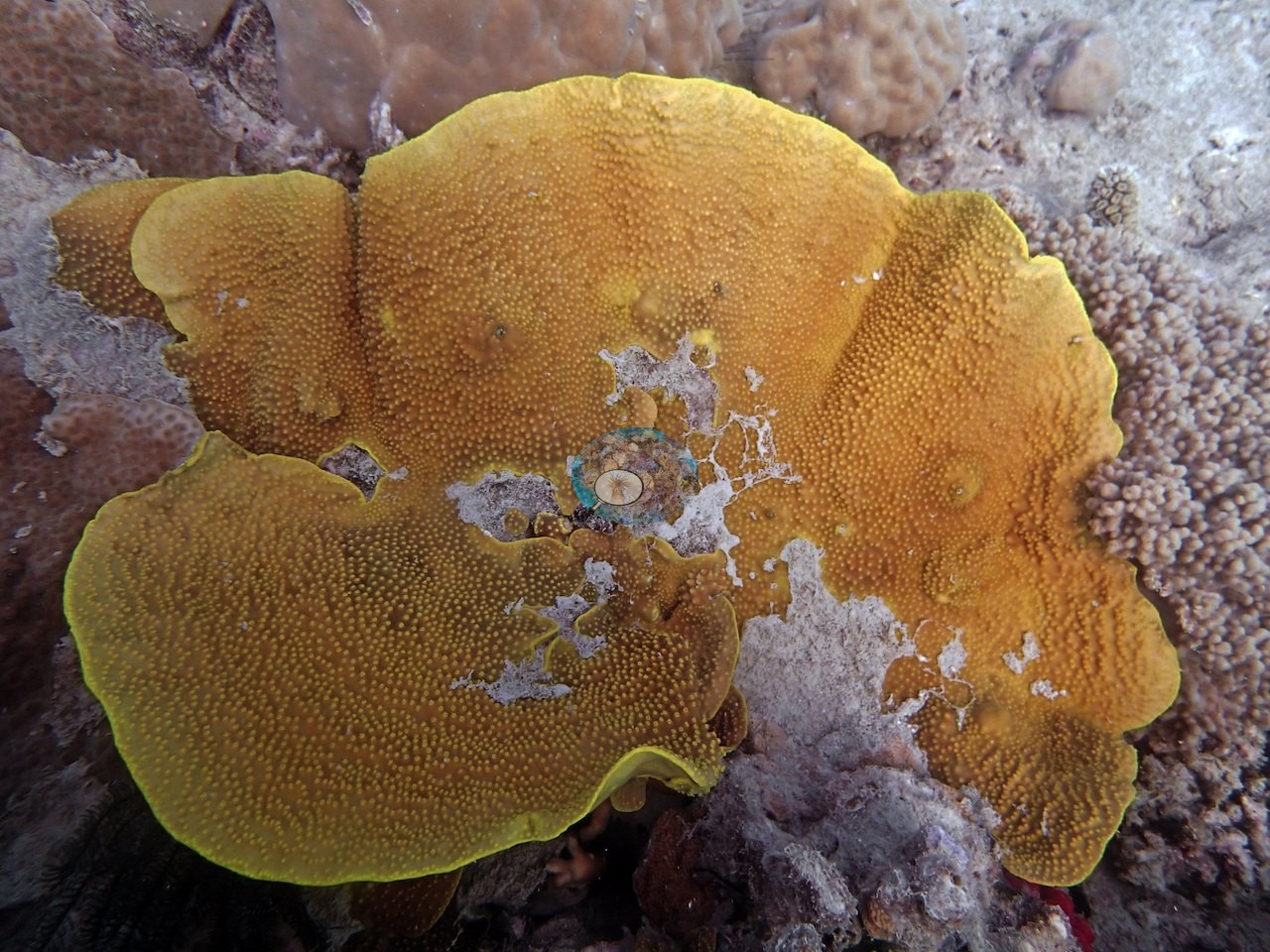
Regional context, not an observation here: surveyed about eighteen months before the 2016 mass bleaching, an event that severely bleached hundreds of reefs on the northern Great Barrier Reef (Hughes et al. 2017); 5-year mean annual maximum thermal stress at the Far Northern GBR virtual station is 11.1 degree heating weeks.
Fish and other fauna
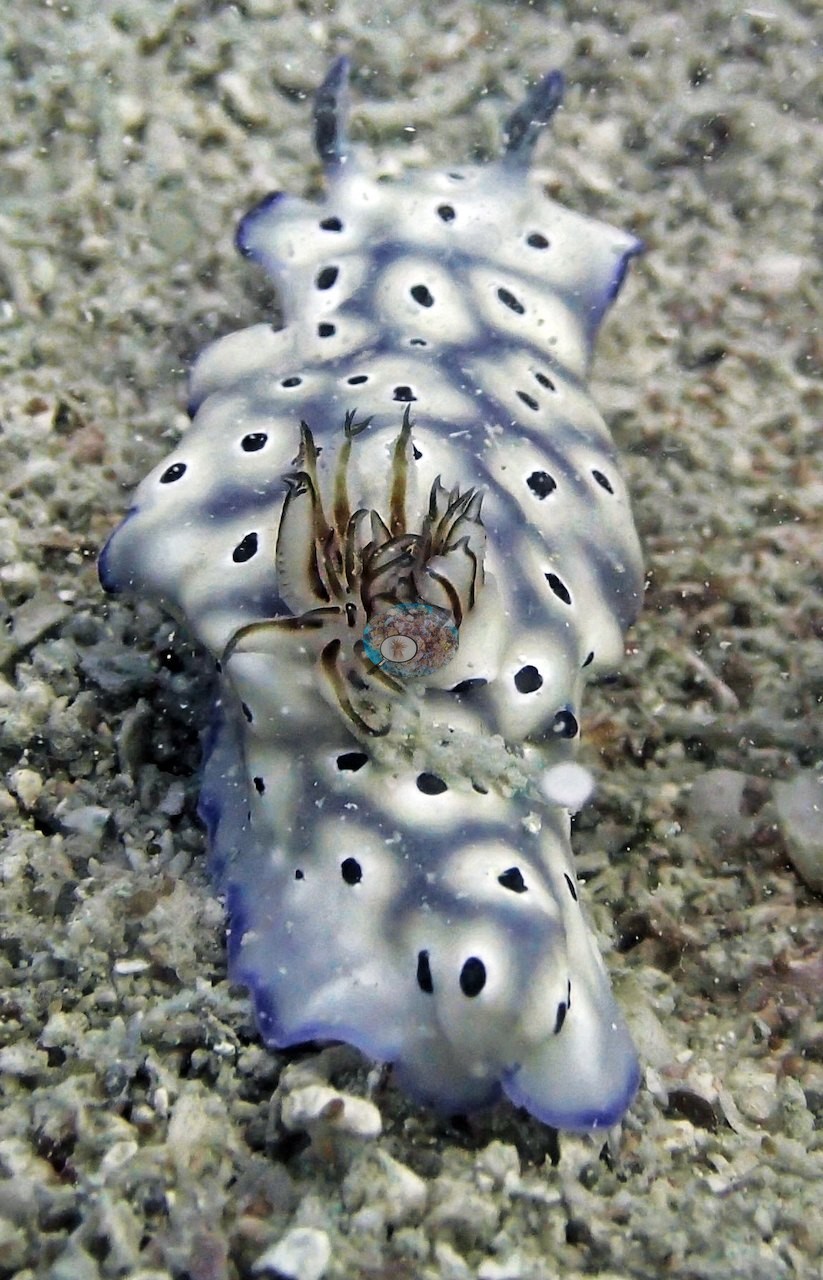
A gray reef shark, one Culcita cushion star (a corallivore, logged as a sighting; feeding scars were not recorded), and a large nudibranch in the sand were logged (e.g., Image 23), and no bleaching, disease, or crown-of-thorns starfish were recorded.
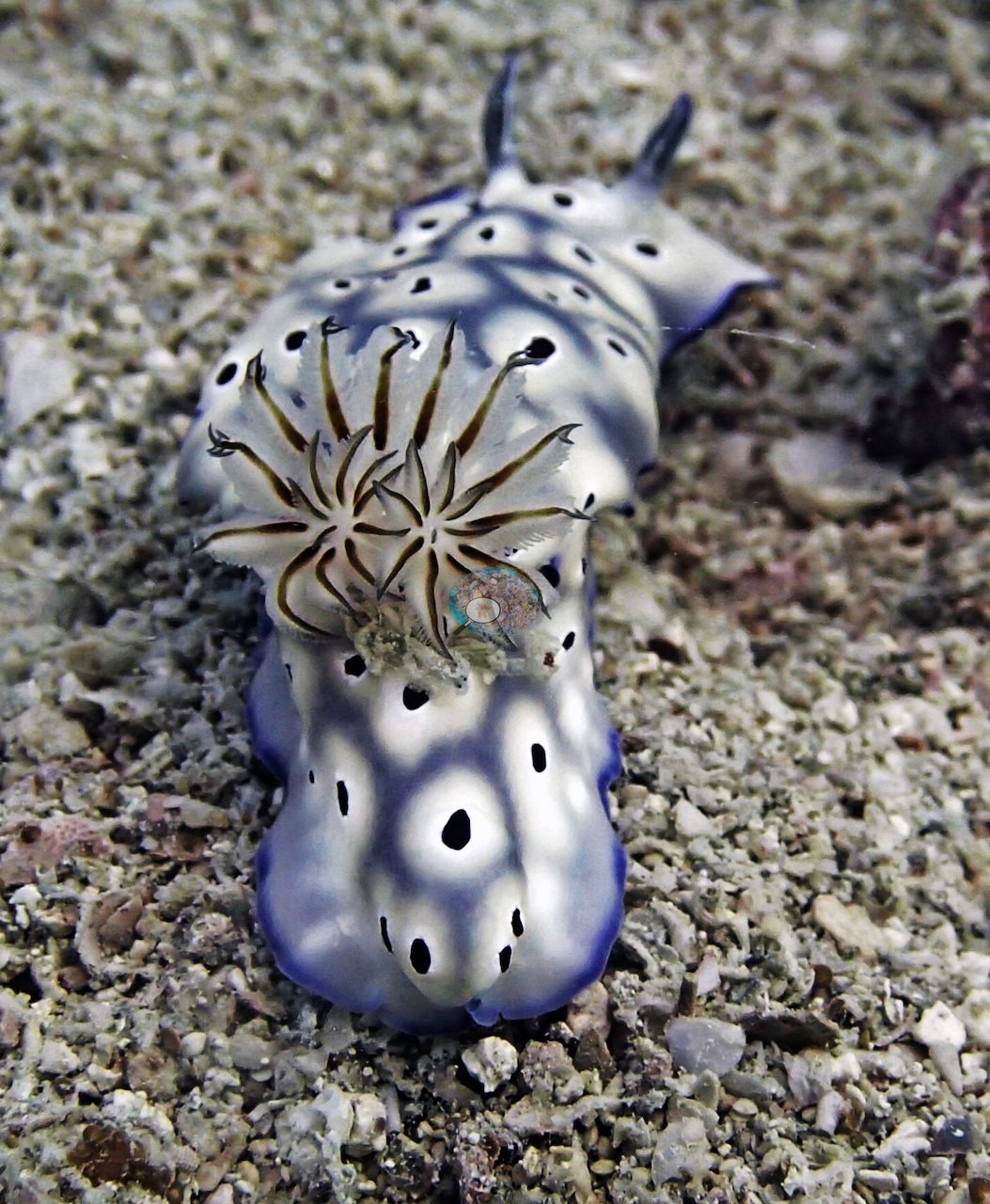
Comparisons with other data
No prior survey data from this site. If you would like to share yours, please email us.
Data & links
- Download benthic survey data (CSV) ↗
- Download all LOF-GRE data (933 sites) ↗
- Photo portfolio ↗
- Coral Reef Diagnostics country page ↗
All images from Coral Reef Diagnostics. Data are from the Khaled bin Sultan Living Oceans Foundation Global Reef Expedition and Coral Reef Diagnostics.
 © Coral Reef Diagnostics.