
Part of the regional summaries: Australia (GBR) - Far North: Green stations (no-take reefs) and Australia (GBR)
More info
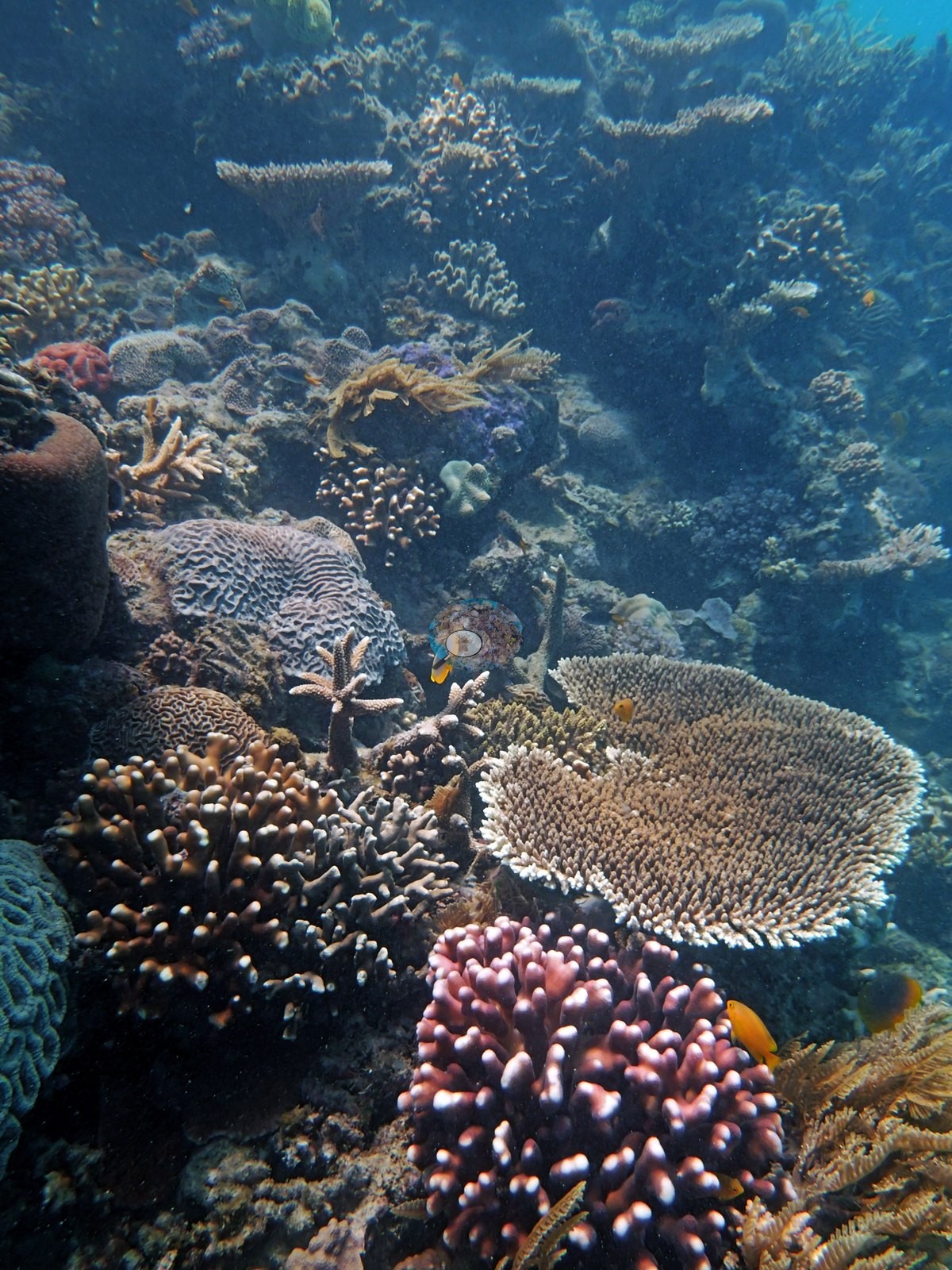
Far Northern GBR (NOAA CRW virtual station)A silt-laden reef in a no-take Green Zone with just 3-4 m visibility, sandy below 17 m apart from lone bommies, improving in the shallows where plating Acropora, Lobophyllia, Diploastrea, and fire coral crowd together at 44% cover. Sediment and low light were the limits here, with no bleaching, disease, or crown-of-thorns. Surveyed on the Living Oceans Foundation's Global Reef Expedition.
Five other CRD dive sites within 5 km shown in orange — click a marker to open its page.
🗺 Detailed map of the Global Reef Expedition dive sites, Milman and Alpin Reefs, northern Great Barrier Reef (Khaled bin Sultan Living Oceans Foundation; opens in a new window)
Site description
Setting
Global Reef Expedition station AU3481 on Unnamed Reef 34, far northern Great Barrier Reef (-11.1862, 143.0960), surveyed on the morning of 17 September 2014 in a no-take Marine National Park (Green) Zone. Visibility was 3-4 m in heavily sediment-laden water.
General benthic features
Below 17 m the notes record only sand, punctuated by occasional lone bommies carrying big Pachyseris plates; even at 15 m, coral-built structure covered about 43% of the seafloor in mounds averaging just over a meter tall. The reef improves shallower, and this station sits in a band where plating acroporids, Lobophyllia, Diploastrea, fire coral, and Stylophora crowd together (e.g., Image 1).
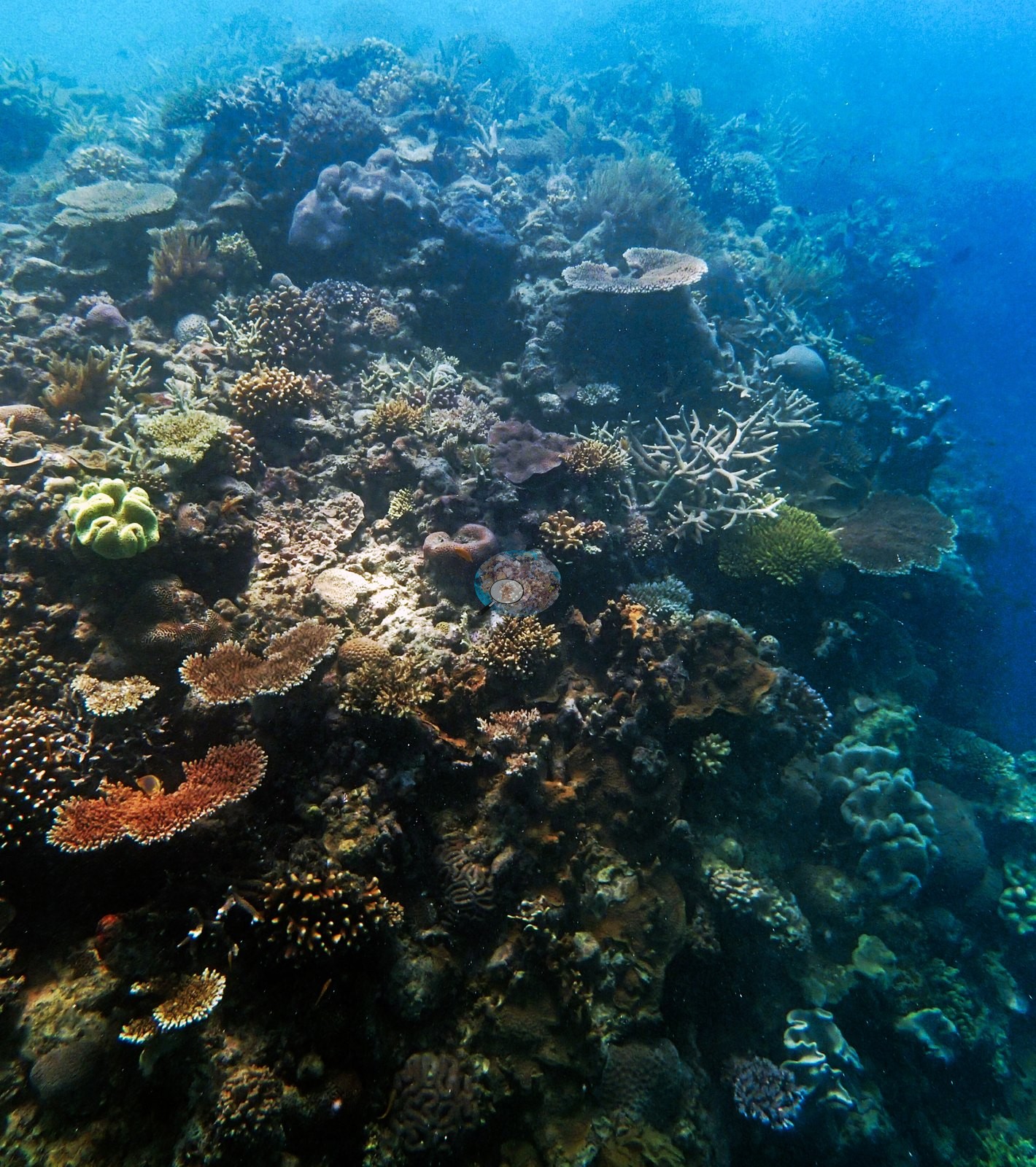
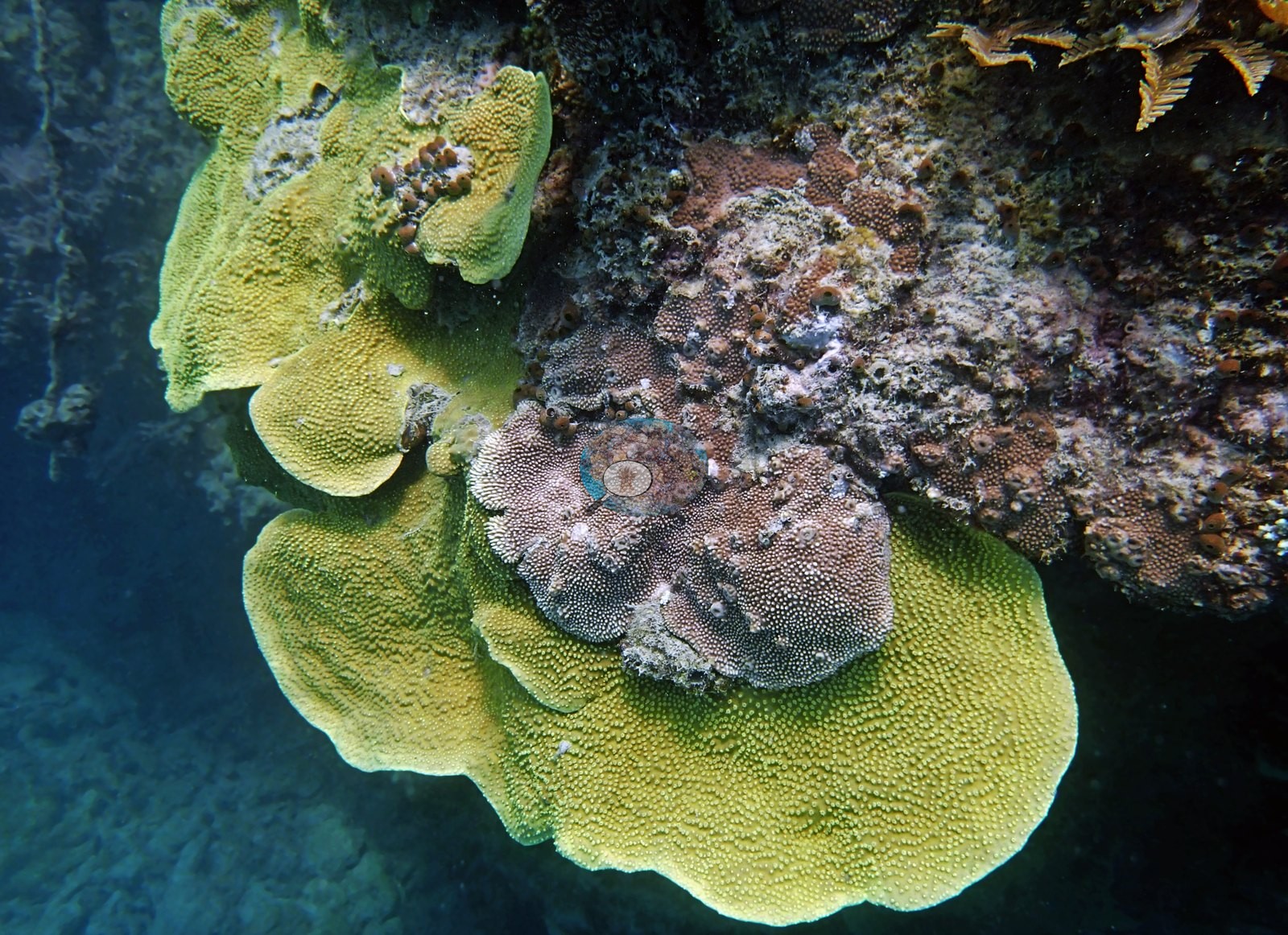
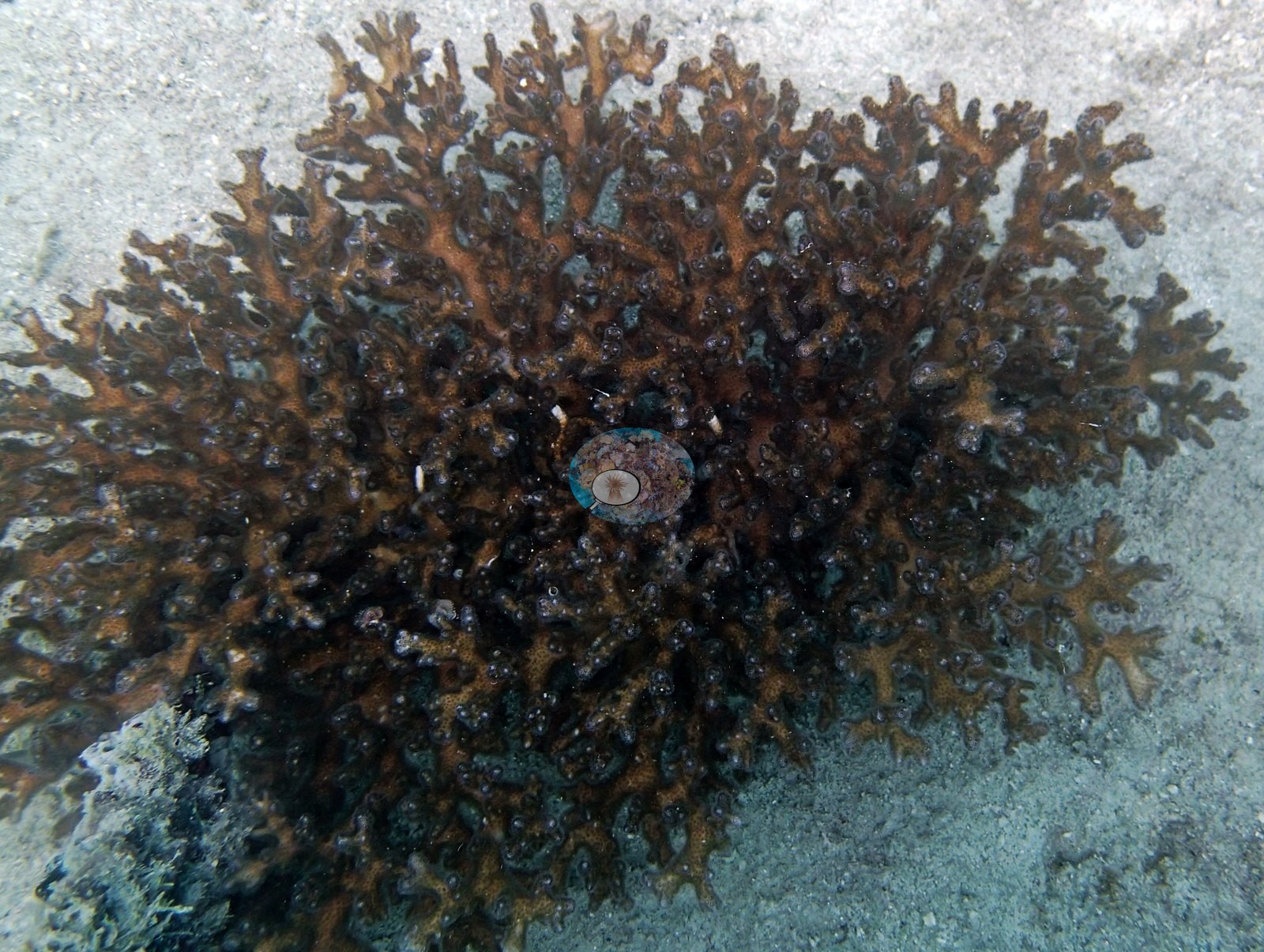
Three more wide and mid-range frames show the shallow reef: a mixed slope of plating and branching colonies (e.g., Image 2), a broad yellow-green plating colony with a massive colony on it (e.g., Image 3), and a brown branching bush on sand (e.g., Image 4).
The other twenty frames are the survey's downward photo-quadrats (e.g., Image 5, Image 6, Image 7, Image 8, Image 9, Image 10, Image 11, Image 12, Image 13, Image 14, Image 15, Image 16, Image 17, Image 18, Image 19, Image 20, Image 21, Image 22, Image 23, Image 24).
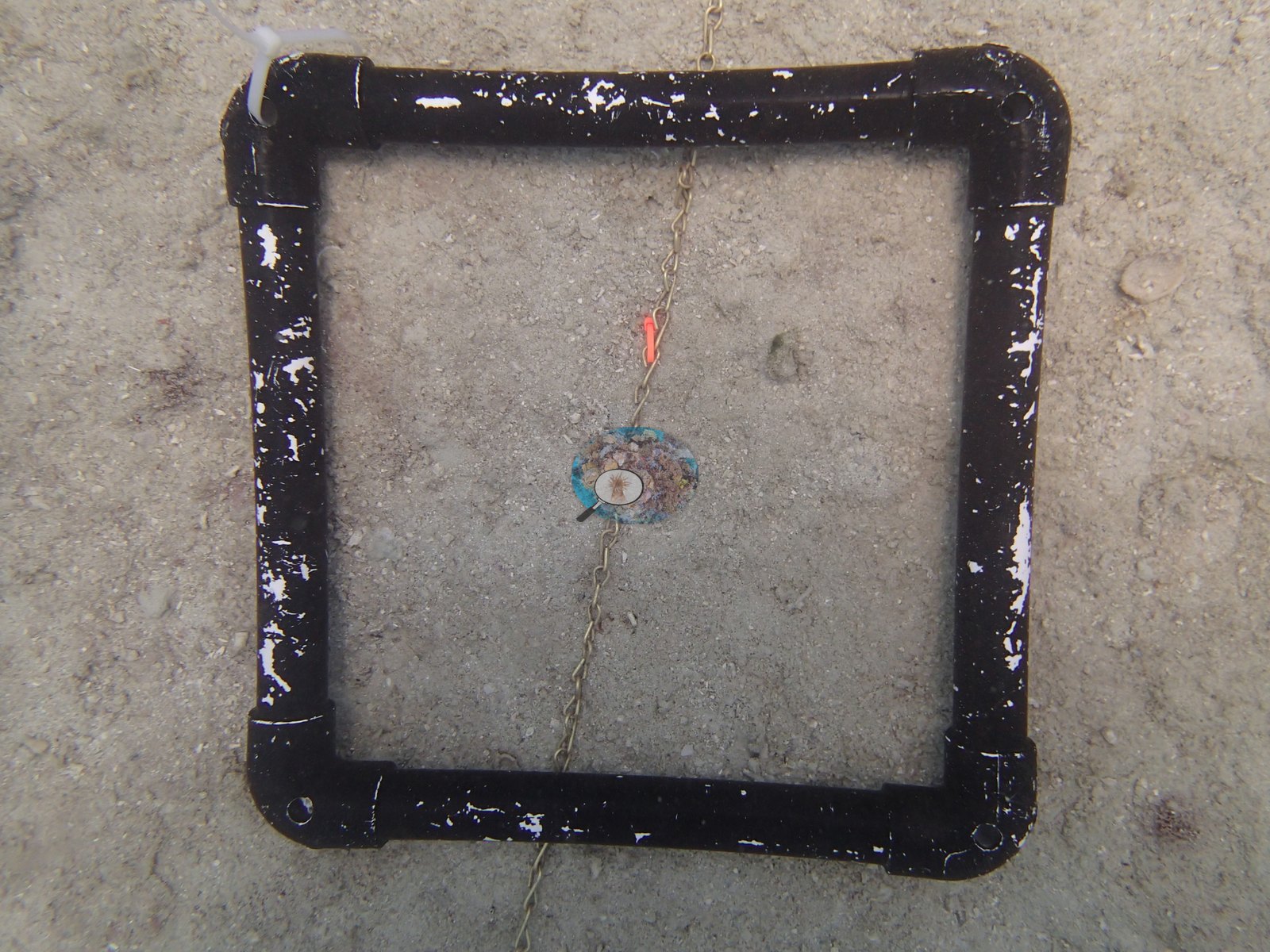
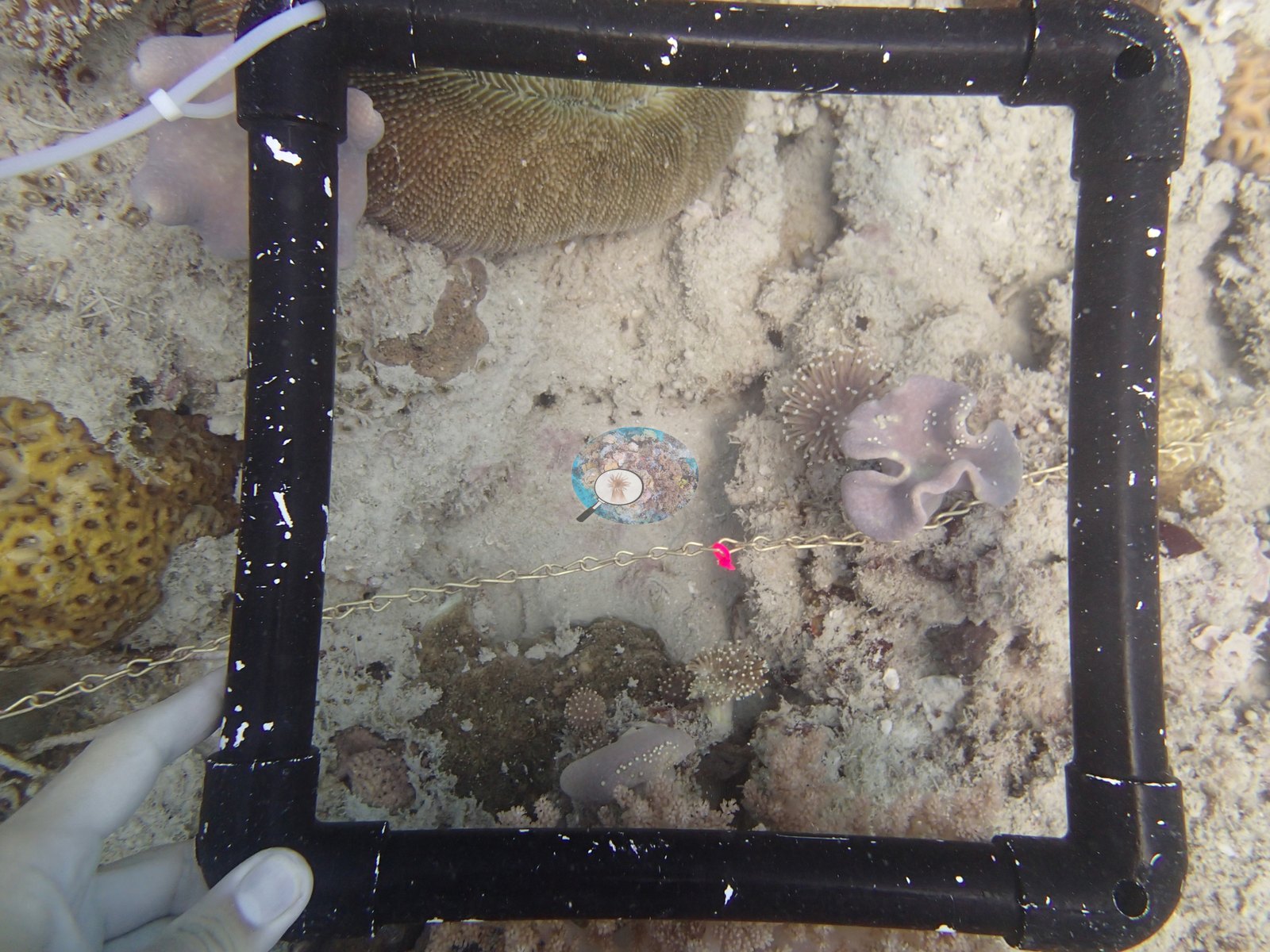
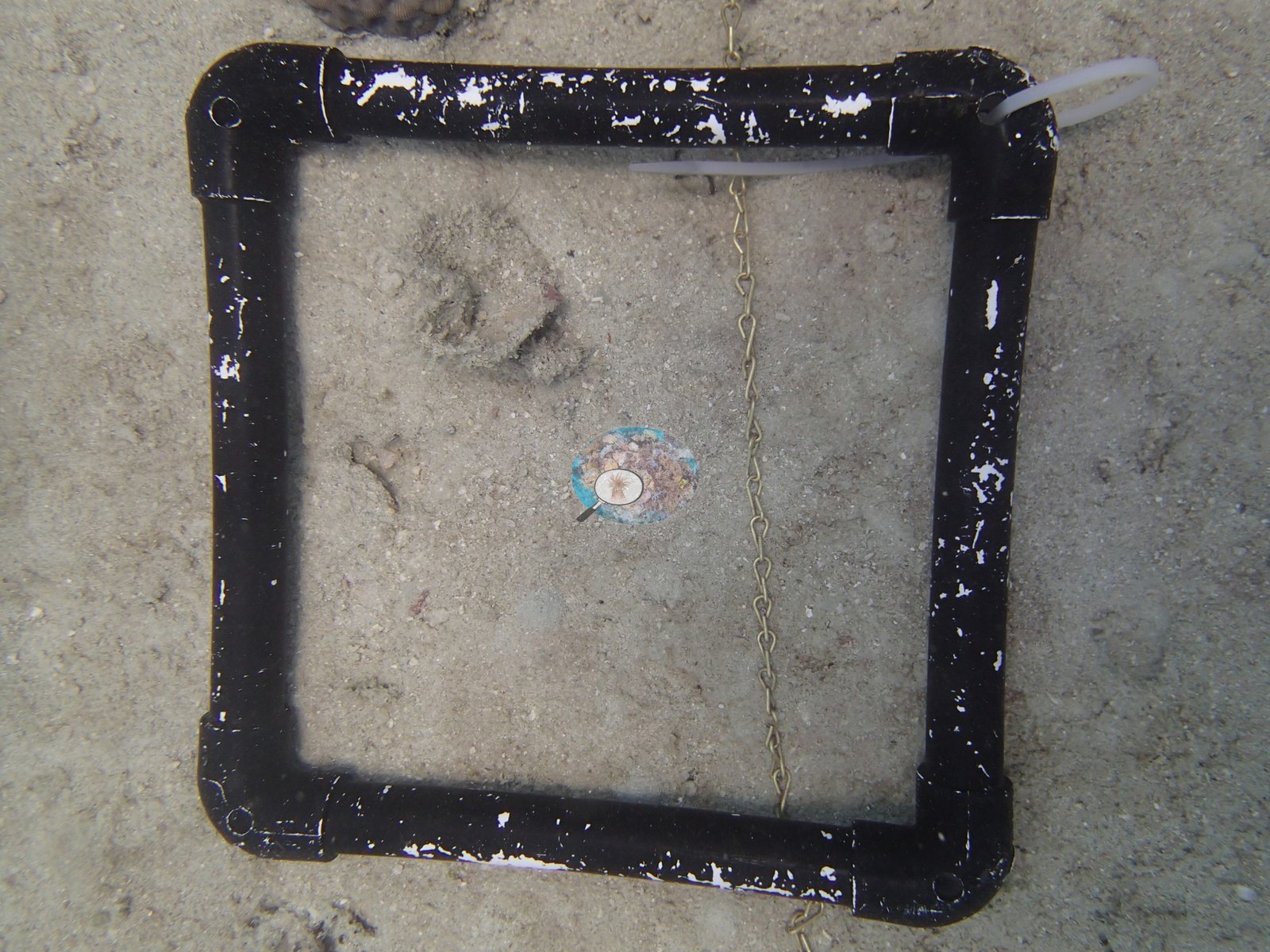
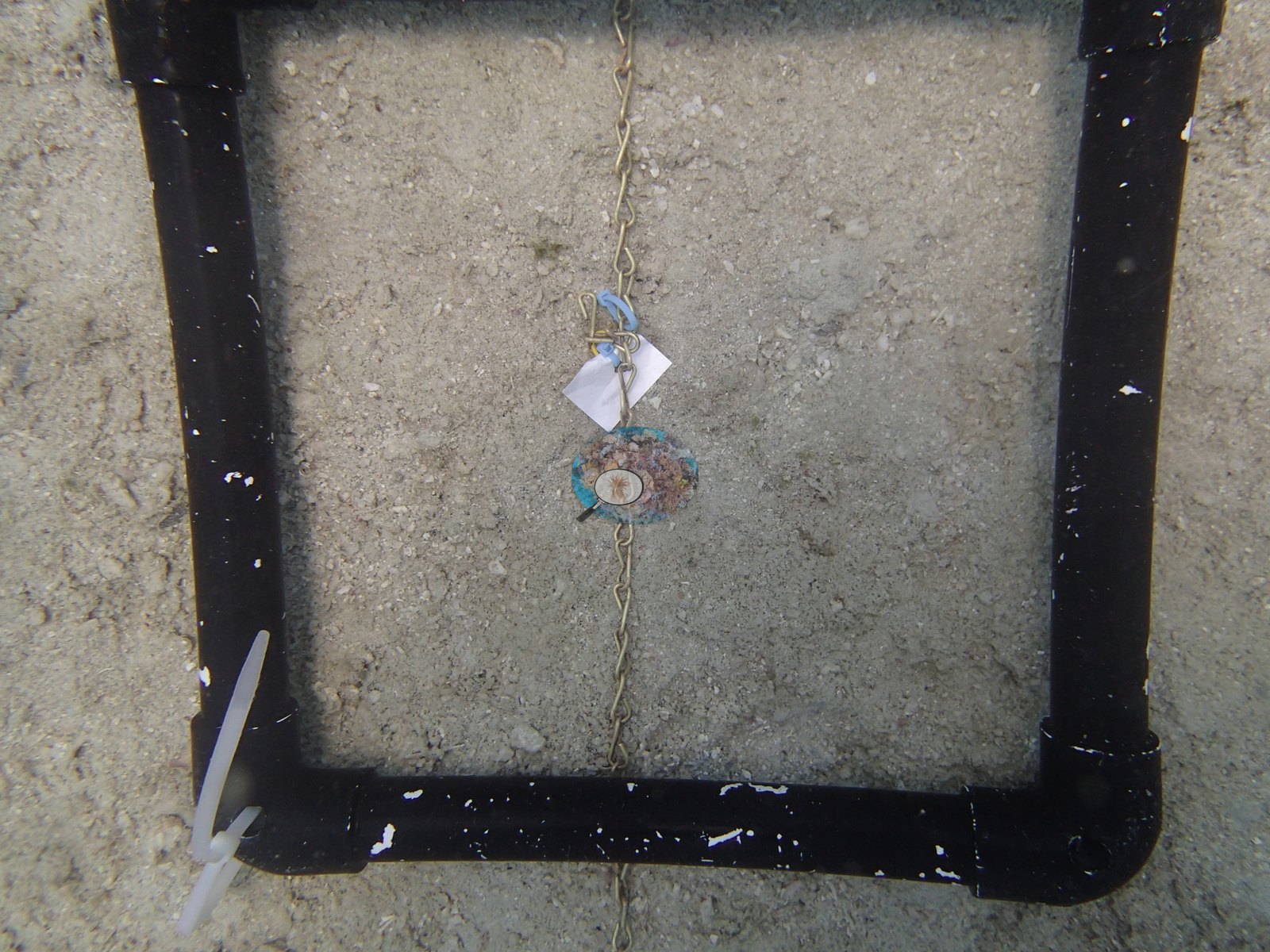
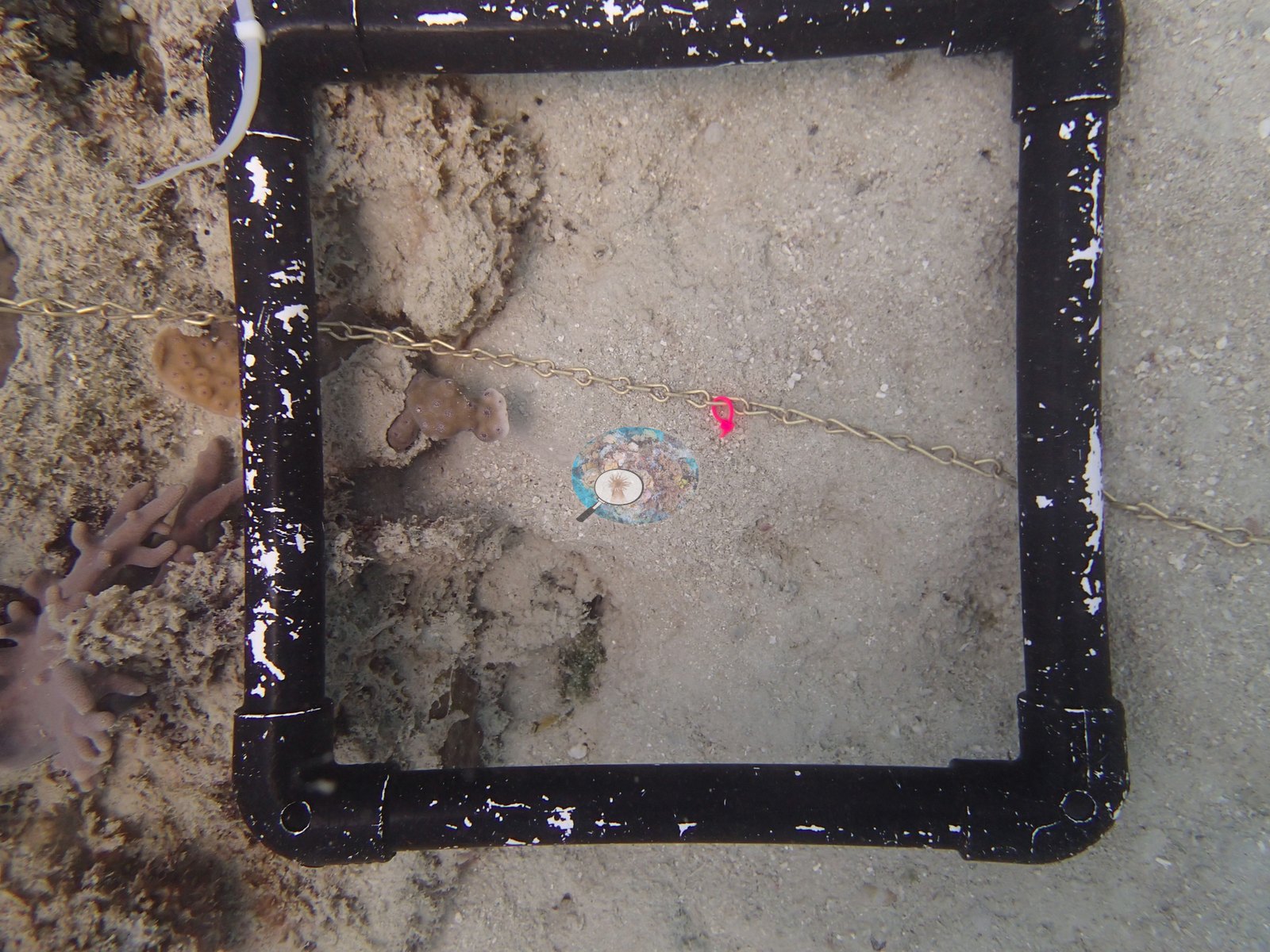
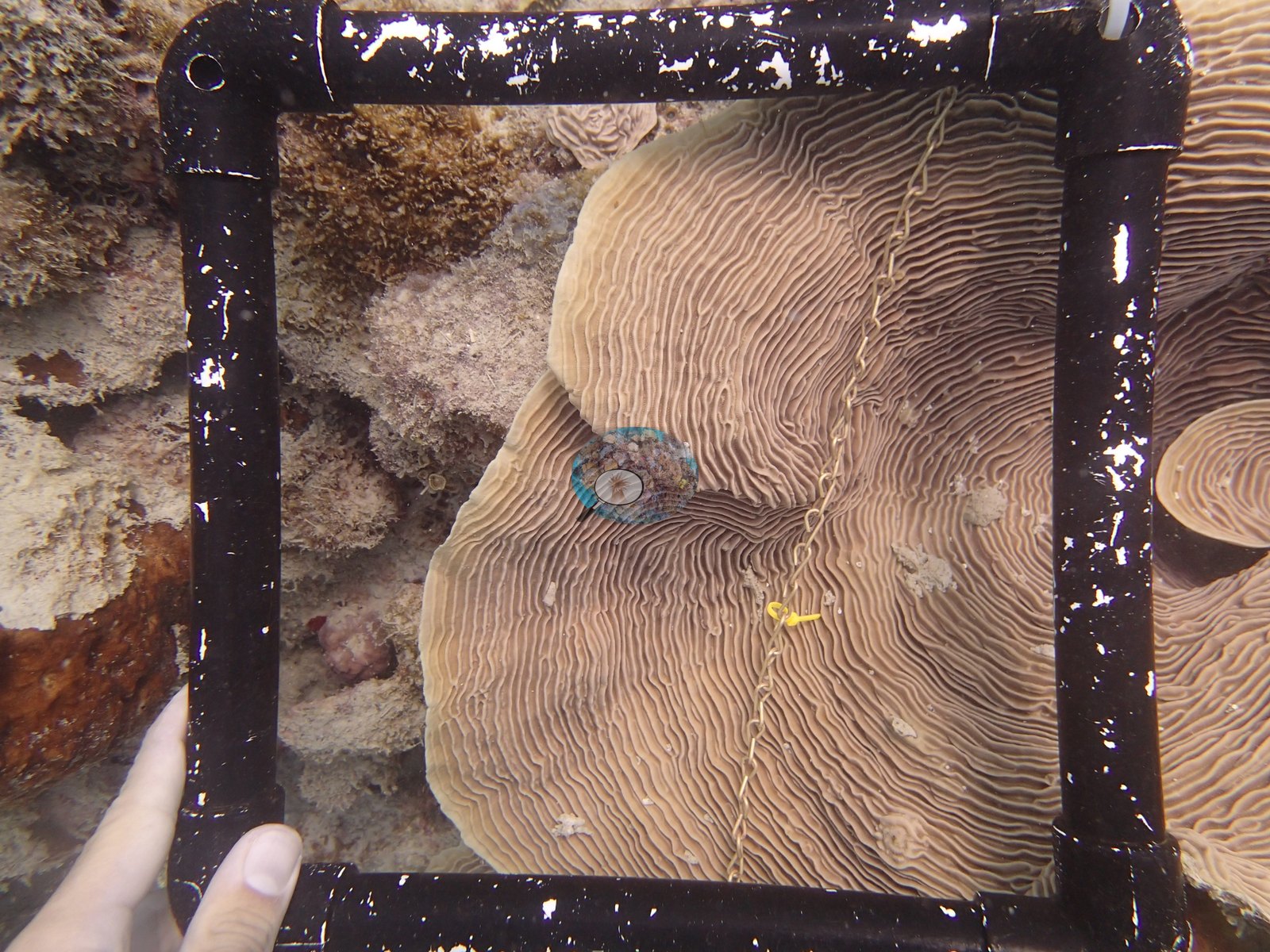
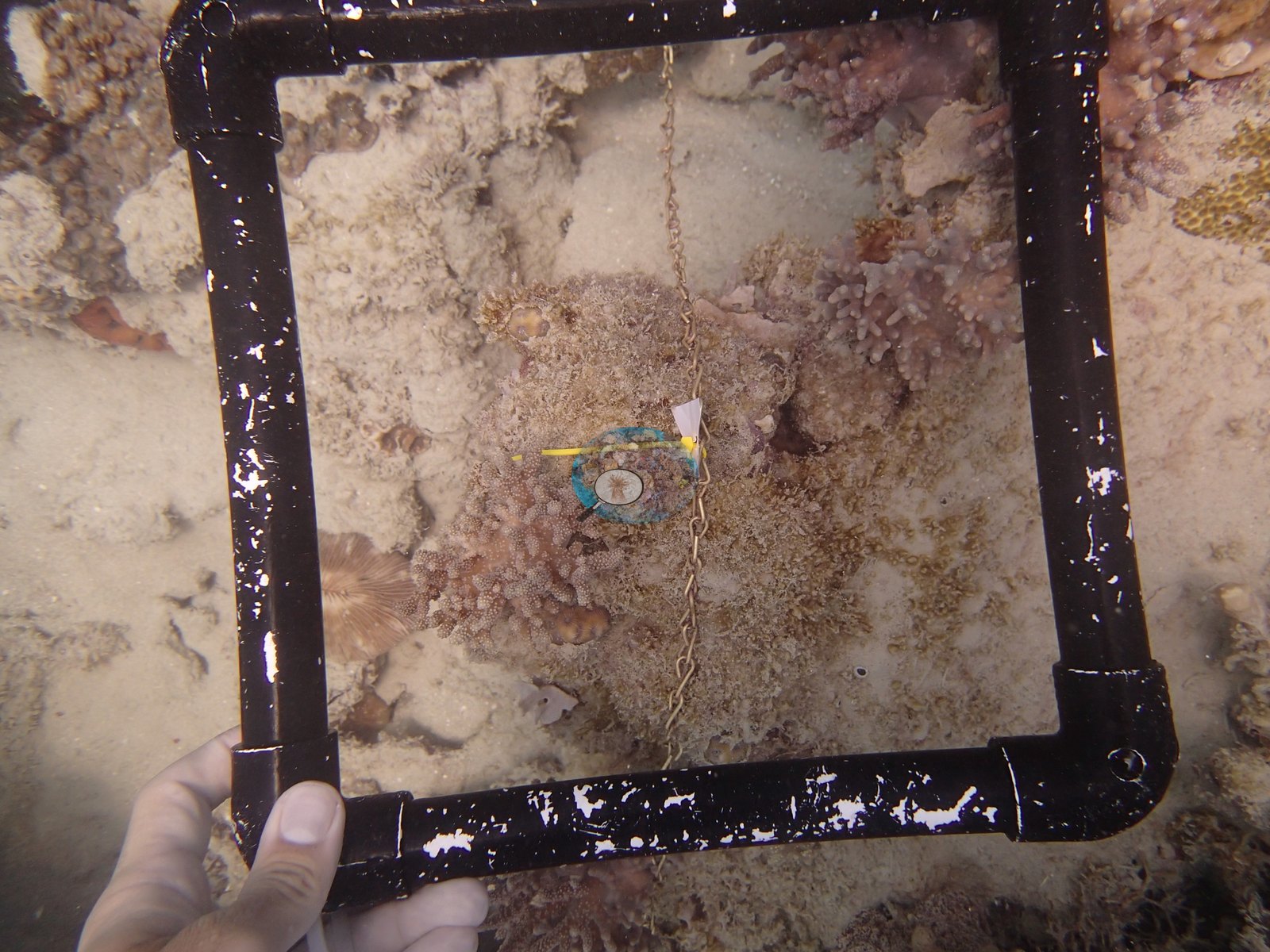
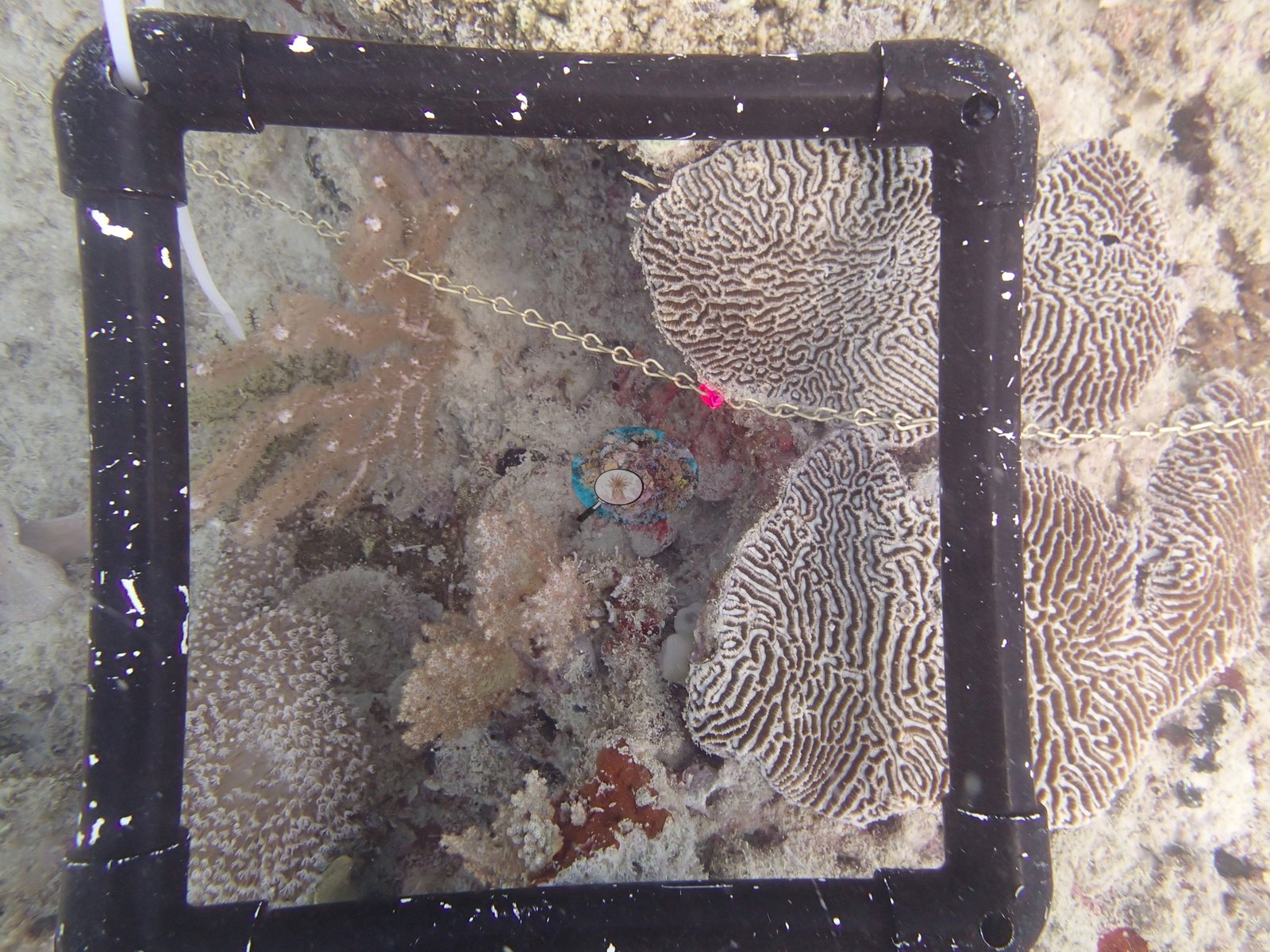
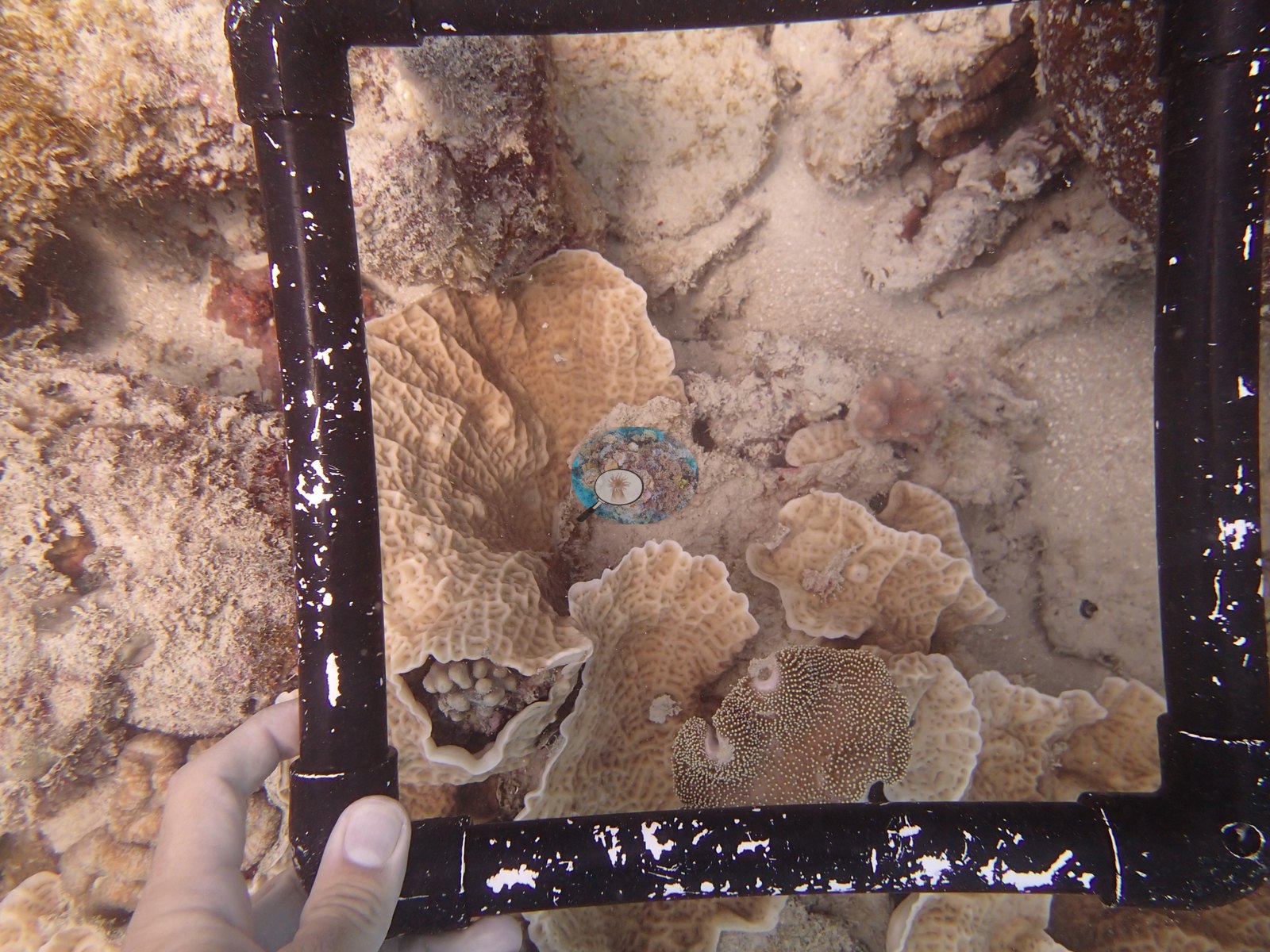
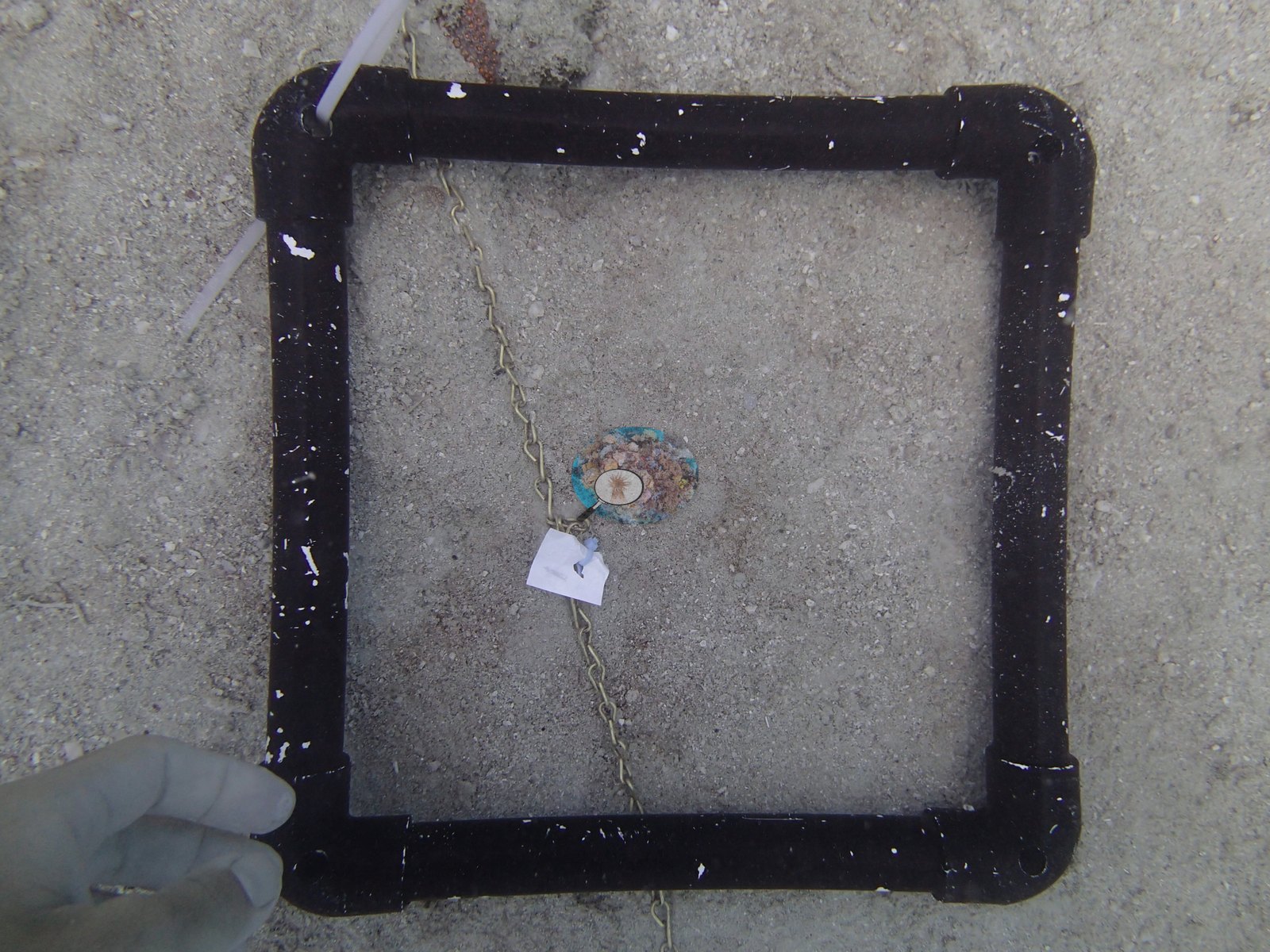
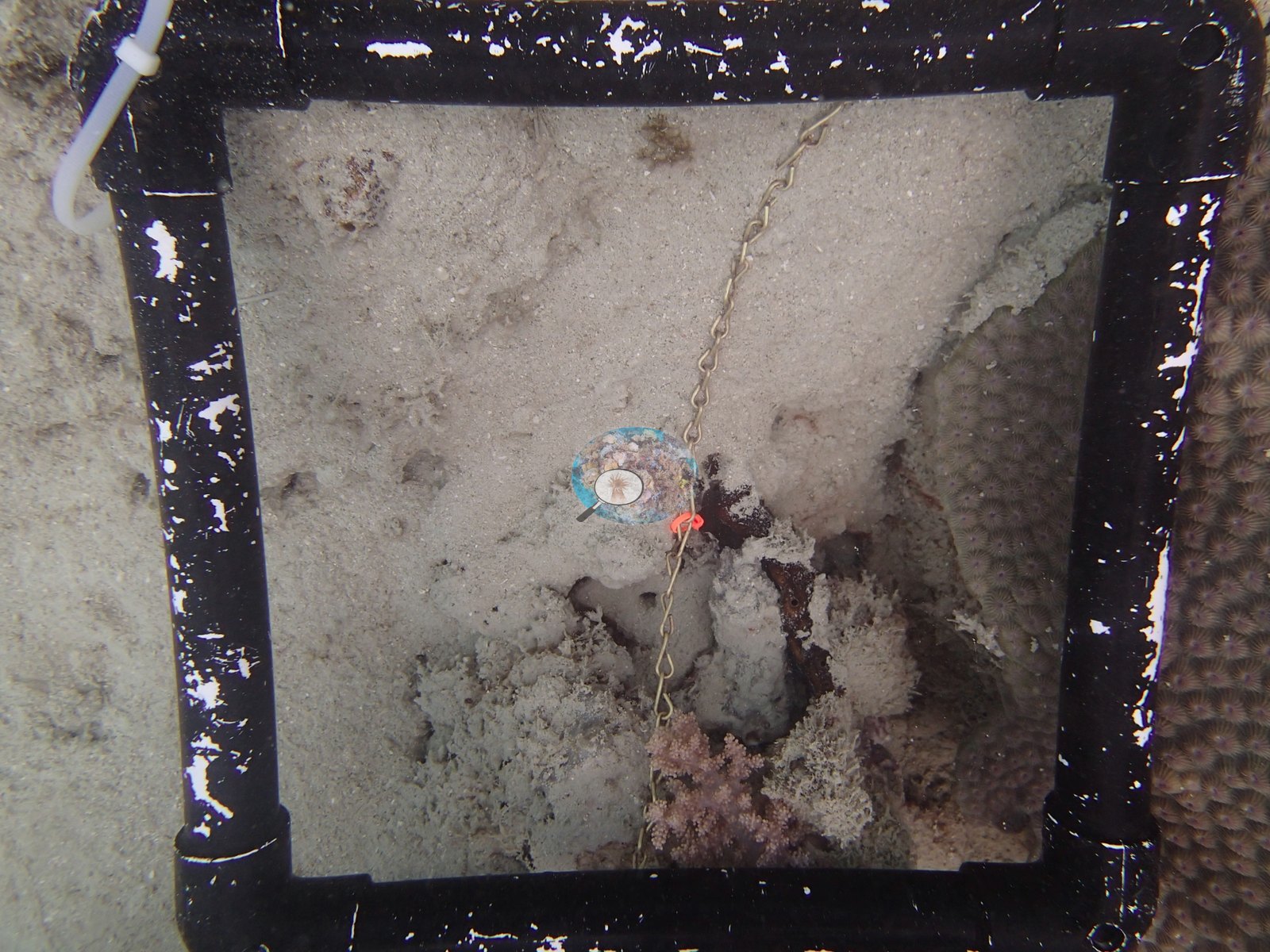
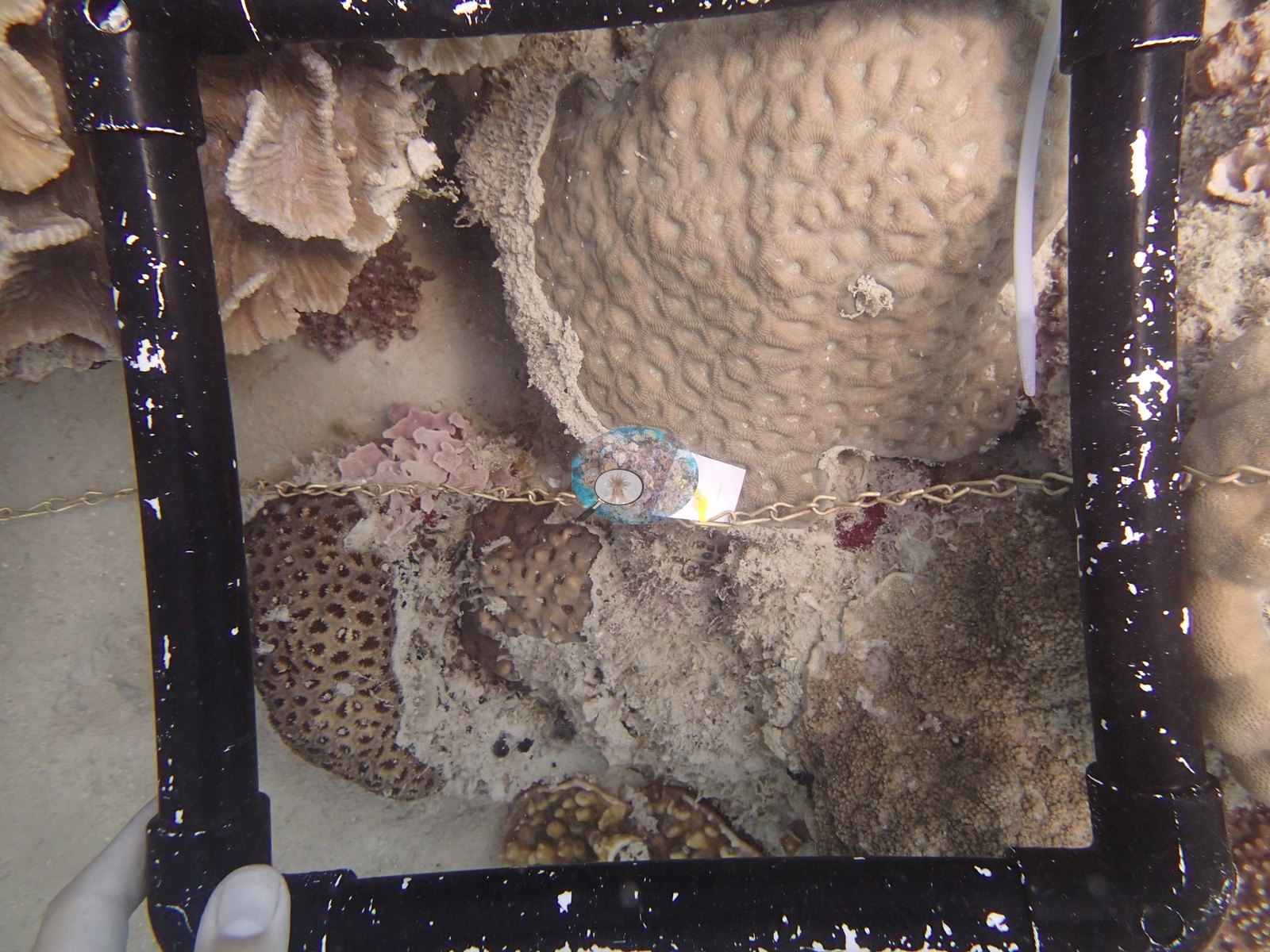
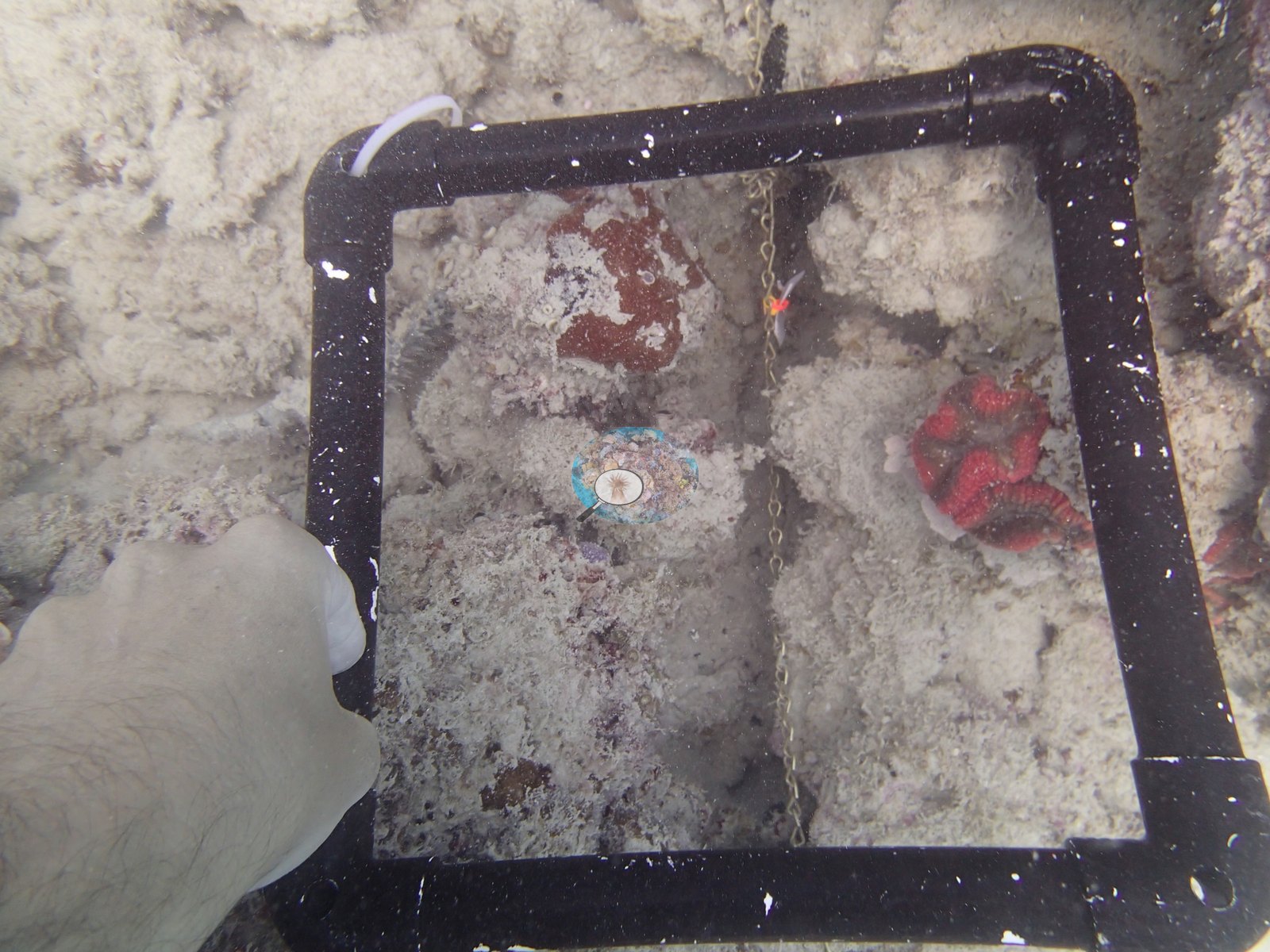
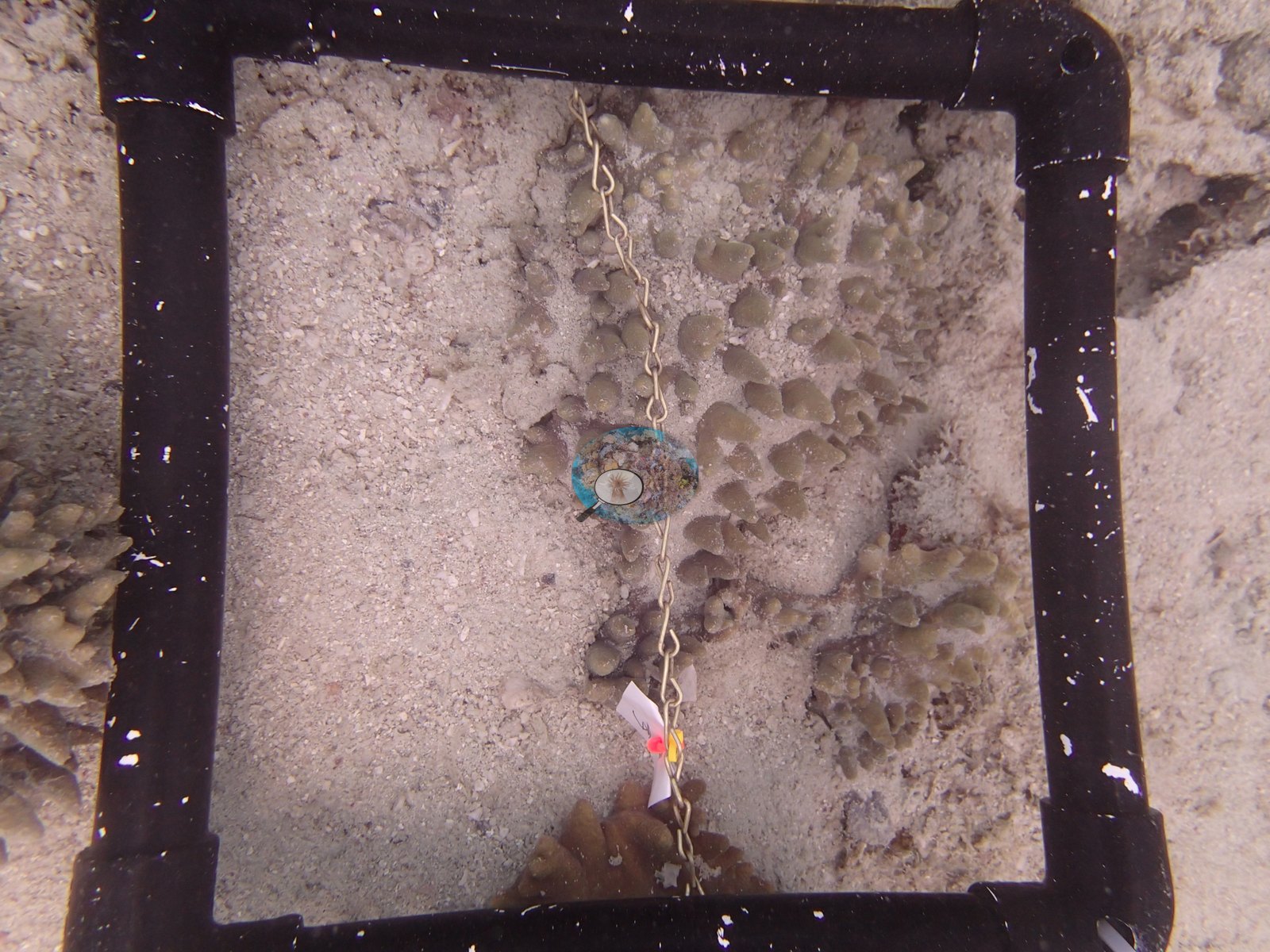
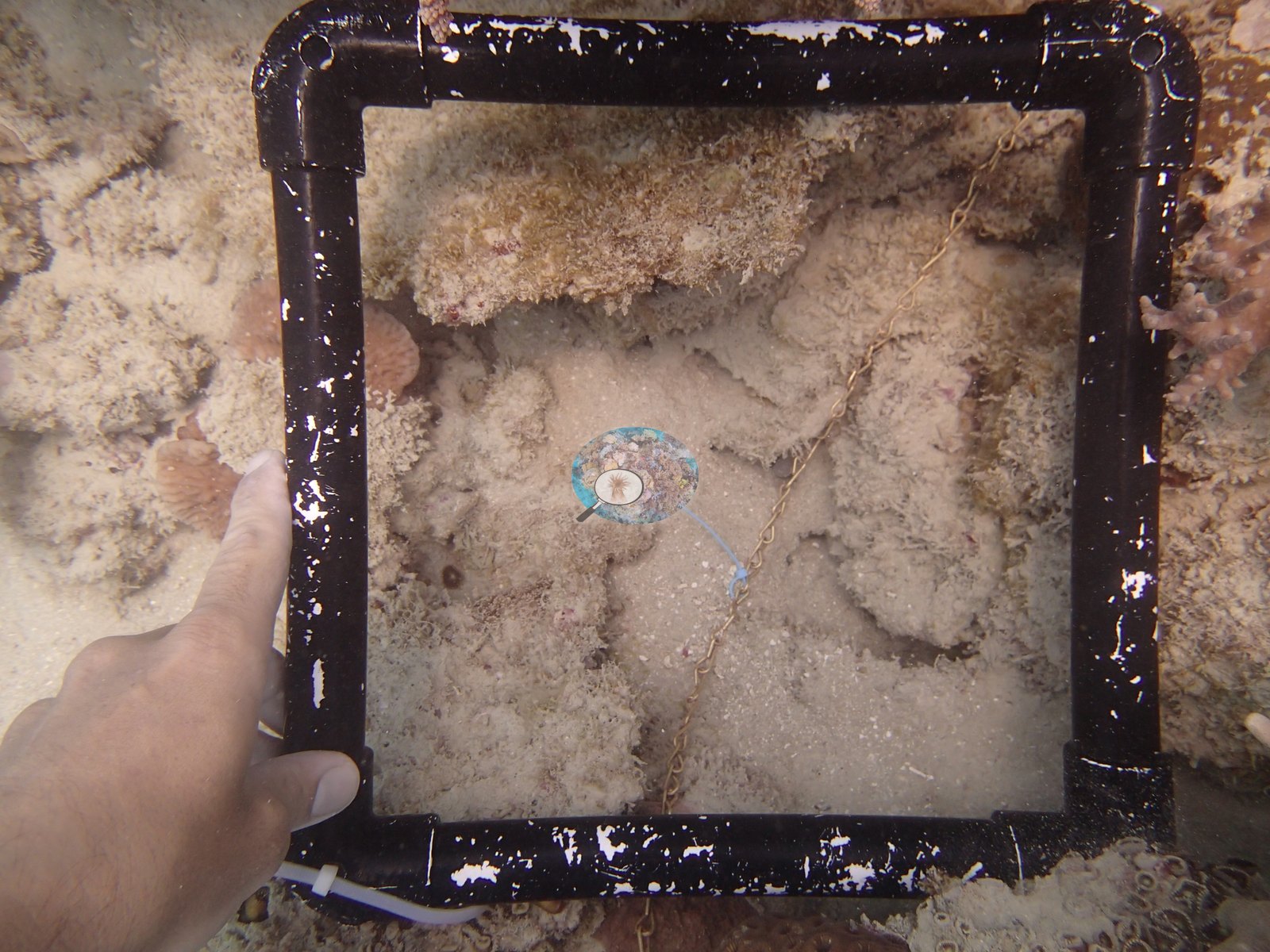
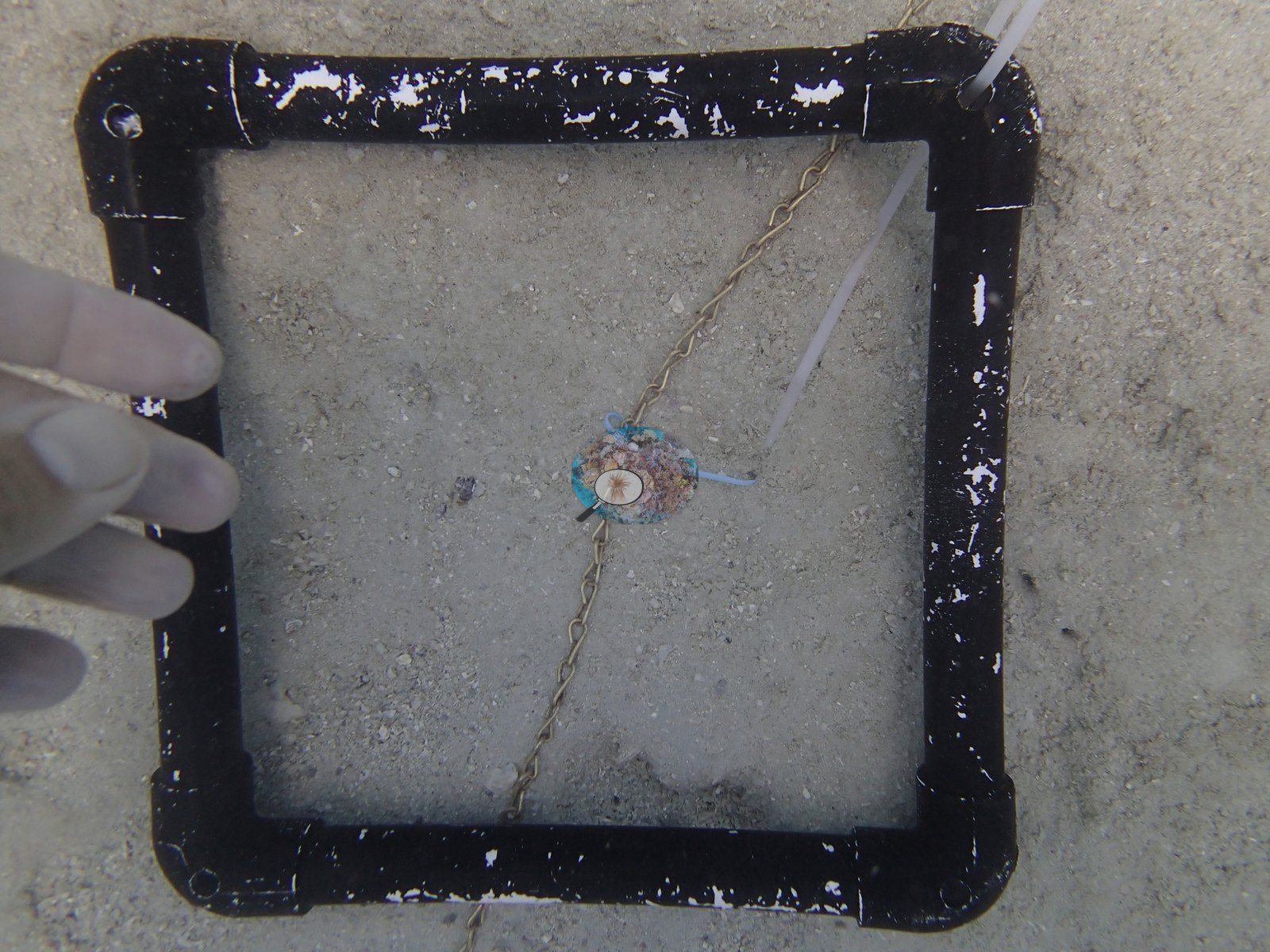
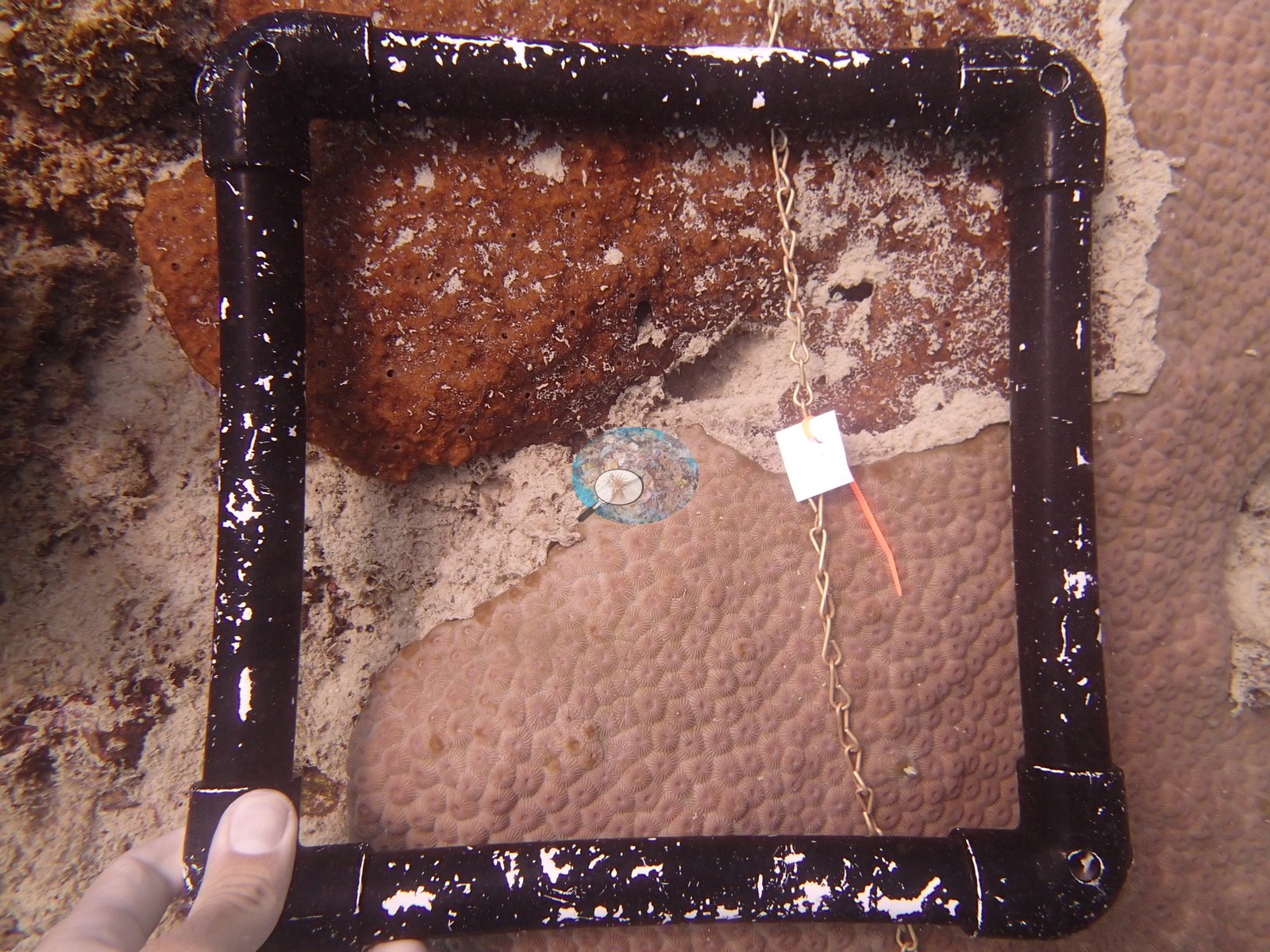
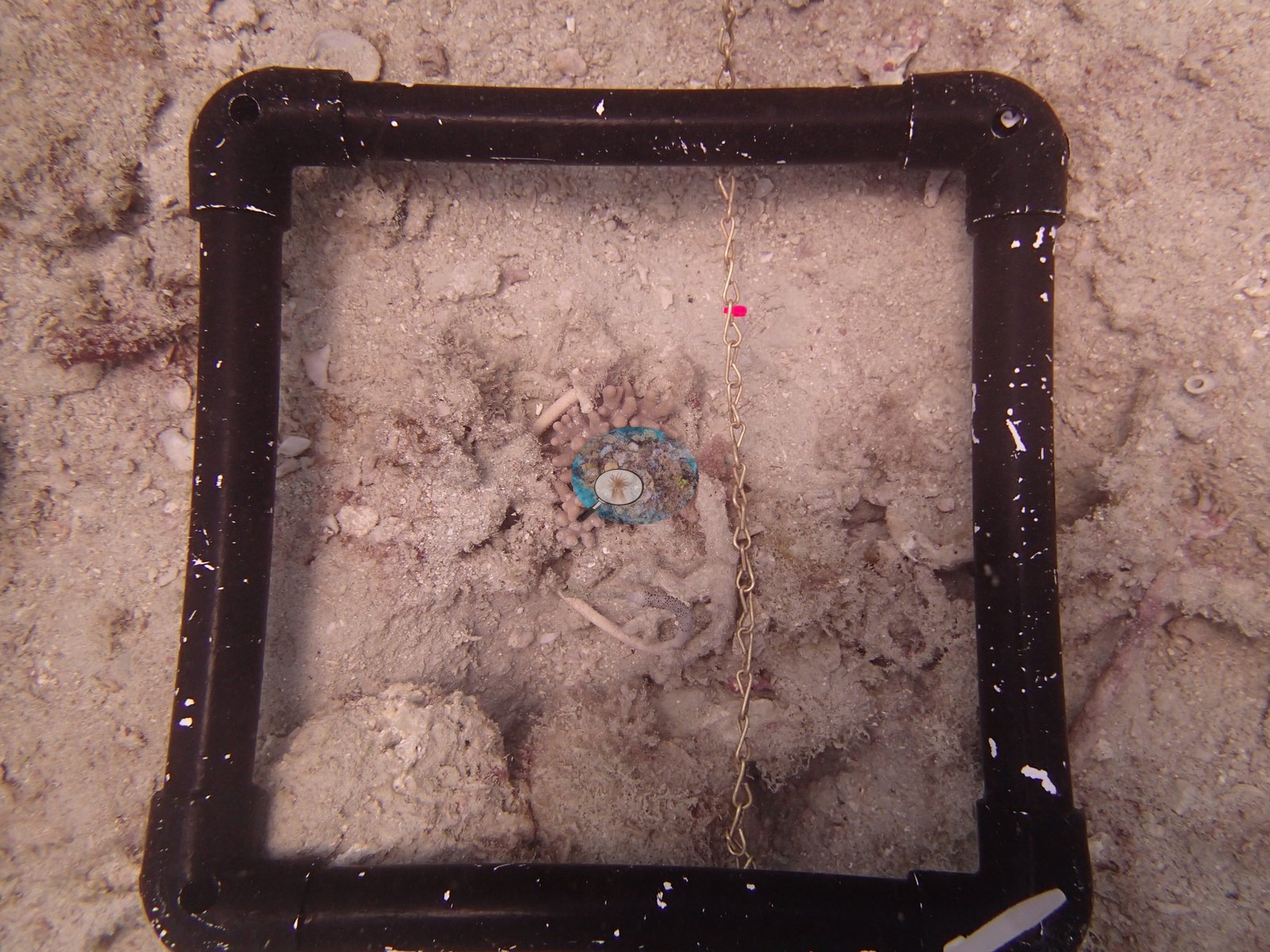
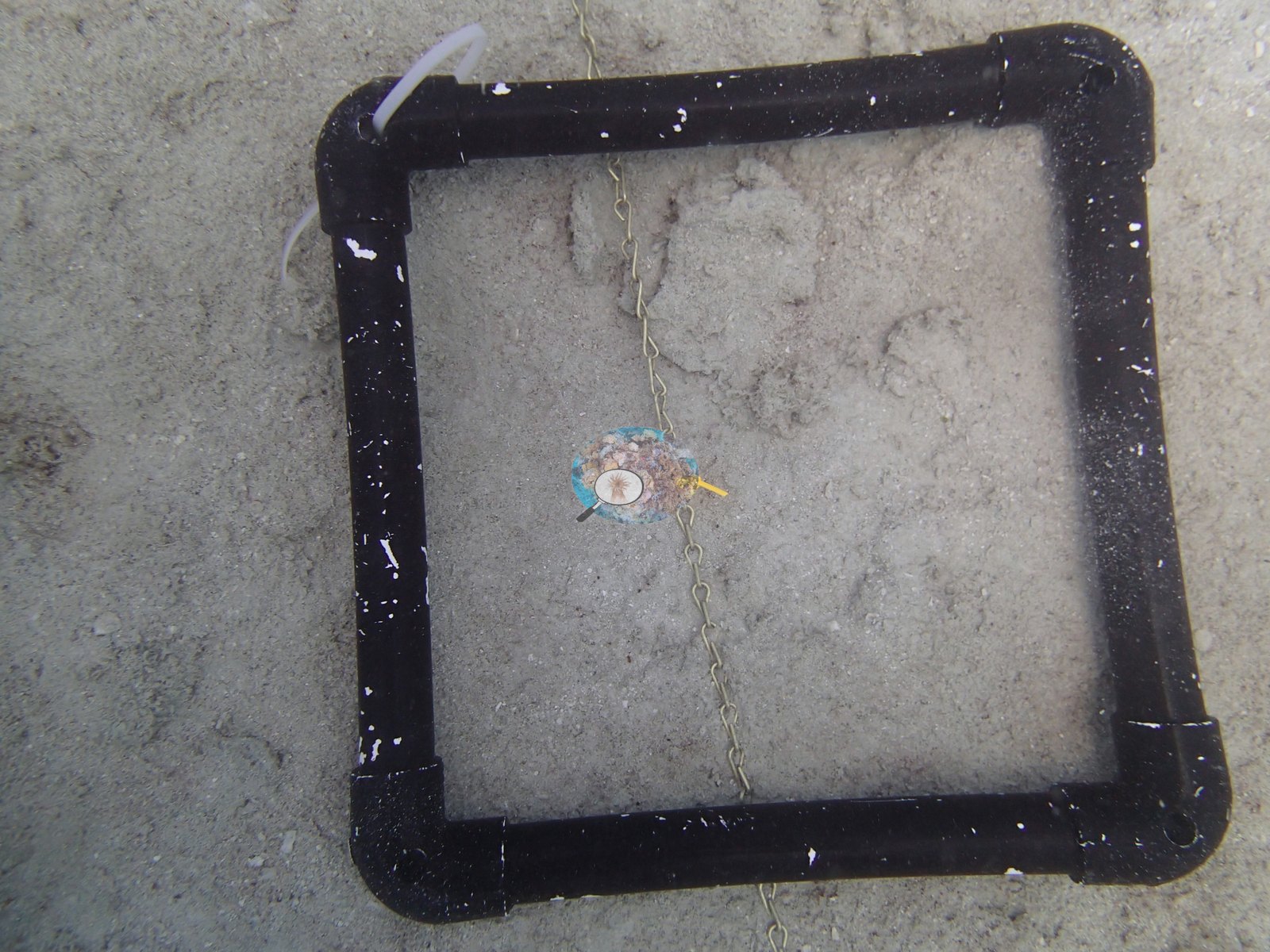
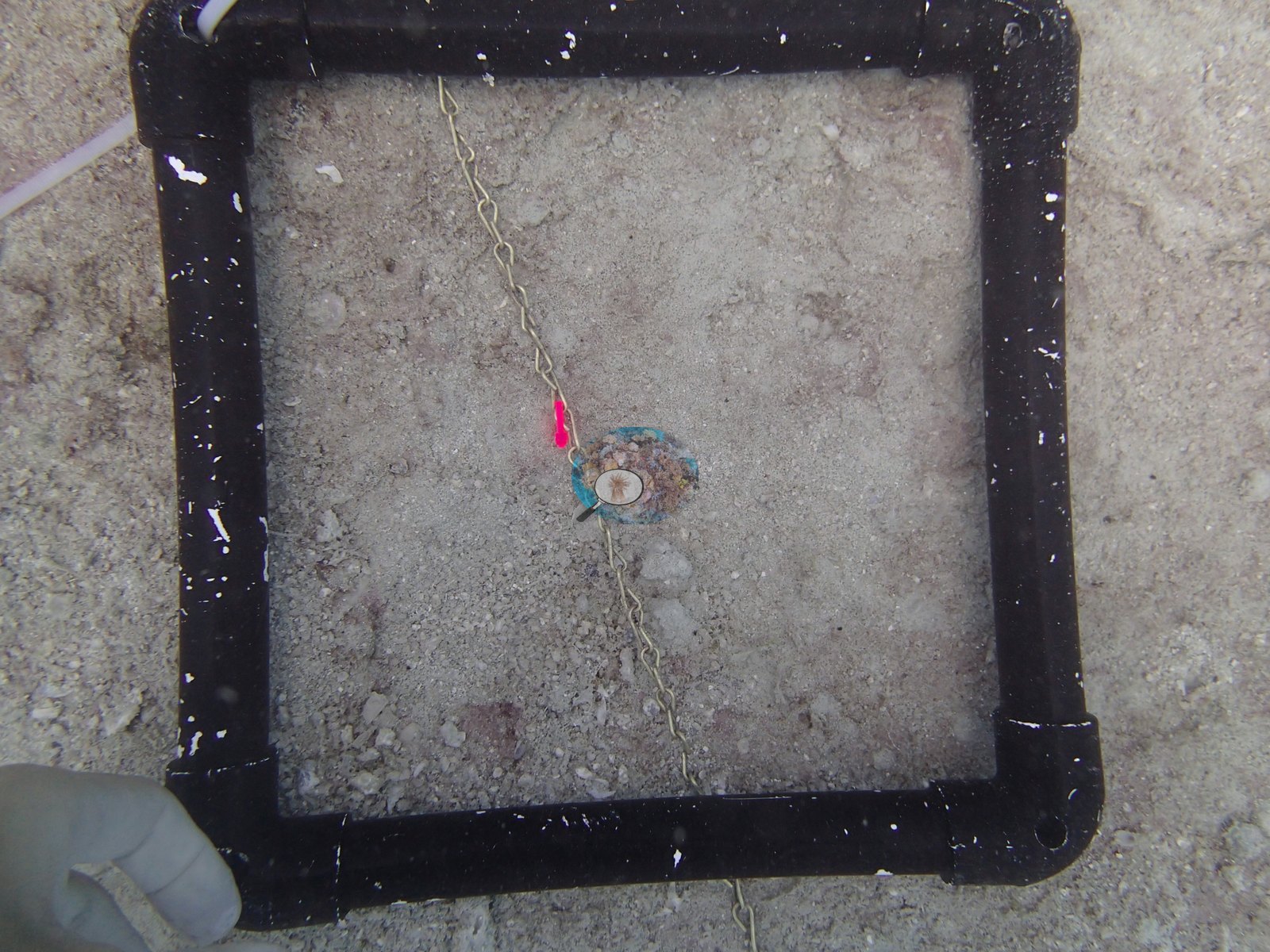
Most land on bare or silty sand and silt-dusted rubble (e.g., Image 5, Image 7, Image 8, Image 9, Image 14, Image 19, Image 20, Image 22, Image 23, Image 24); the rest frame small colonies: a large ridged disc or plate (e.g., Image 10), meandroid plates (e.g., Image 12), foliose plates (e.g., Image 13), encrusting and small massive colonies (e.g., Image 6, Image 11, Image 15, Image 16, Image 18), and a russet massive colony (e.g., Image 21). Porites was the most common coral genus on this station's transects (26% of the benthos), followed by Pachyseris (4.2%), Psammocora (2.0%), and Hydnophora, Merulina, and Stylophora (1.3% each); bare substrate covered 14%, behind macroalgae (19%), the largest non-coral class. Among the algal classes on this station's transects, macroalgae (19%) led, followed by sediment-laden turf (9.7%) and turf (9.0%).
Coral cover
- Reference: Khaled bin Sultan Living Oceans Foundation, Global Reef Expedition (in situ transect)
- The in situ benthic transects recorded 44% live coral cover against a 38% algal fraction on a dive to 18.4 m.
- Transect mean 43 ± 11% SE (n = 4 transects; Living Oceans Foundation per-transect benthic data); the headline above is the expedition's station value (the headline weights each depth equally; one depth had a single transect).
Stressors
Notably, Anderson recorded no bleaching, no disease, and no crown-of-thorns starfish here; sediment and light were the limits. Regional context only: surveyed about eighteen months before the 2016 mass bleaching, an event that severely bleached hundreds of reefs on the northern Great Barrier Reef (Hughes et al. 2017); 5-year mean annual maximum thermal stress at the Far Northern GBR virtual station is 11.1 degree heating weeks.
Fish and other fauna
A large black brotula and a small stingray were logged.
Comparisons with other data
No prior survey data from this site. If you would like to share yours, please email us.
Data & links
- Download benthic survey data (CSV) ↗
- Download all LOF-GRE data (933 sites) ↗
- Photo portfolio ↗
- Coral Reef Diagnostics country page ↗
All images from Coral Reef Diagnostics. Data are from the Khaled bin Sultan Living Oceans Foundation Global Reef Expedition and Coral Reef Diagnostics.
 © Coral Reef Diagnostics.