
Part of the regional summaries: Australia (GBR) - Far North: Blue stations (Habitat Protection Zone reefs) and Australia (GBR)
More info
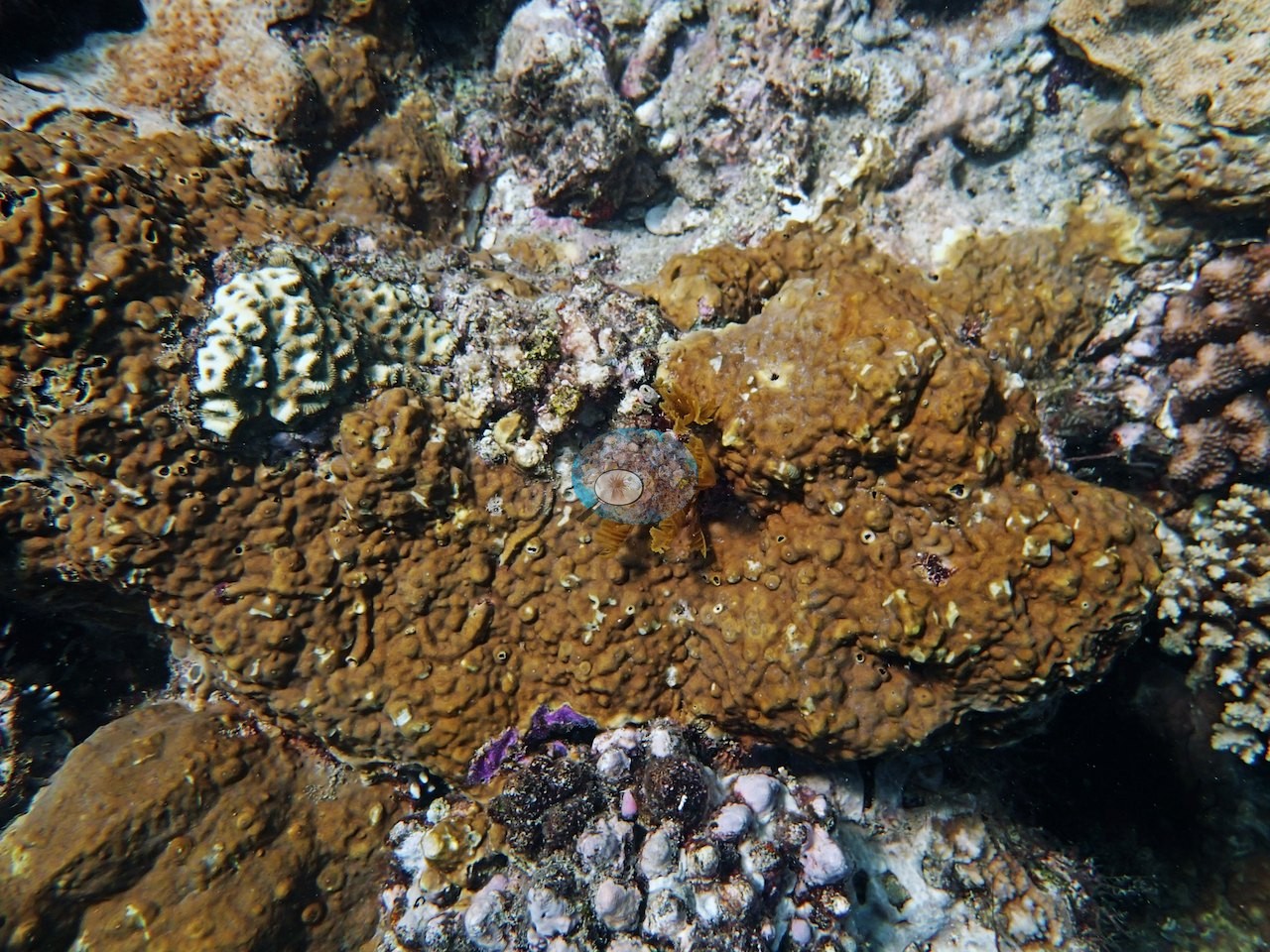
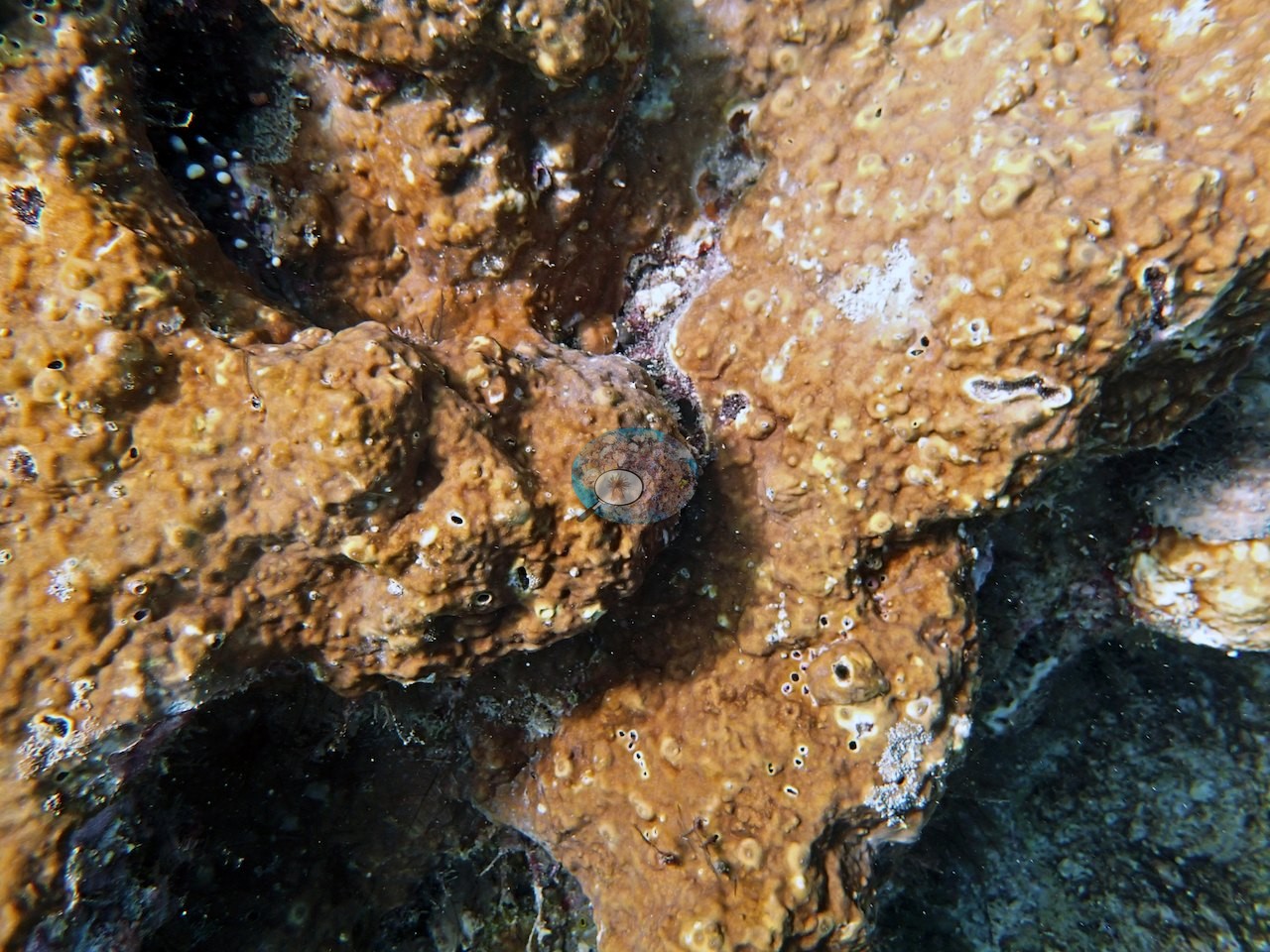
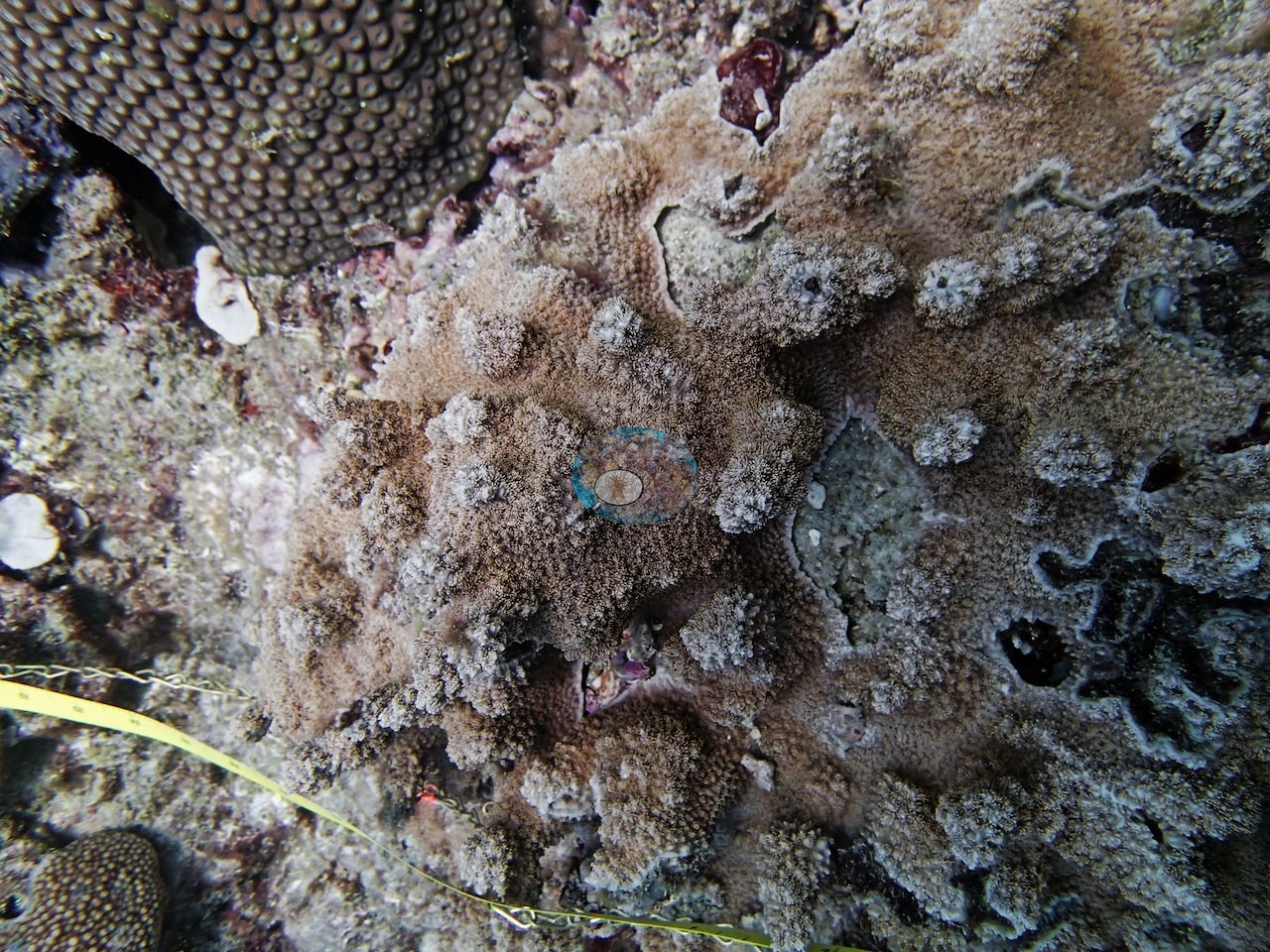
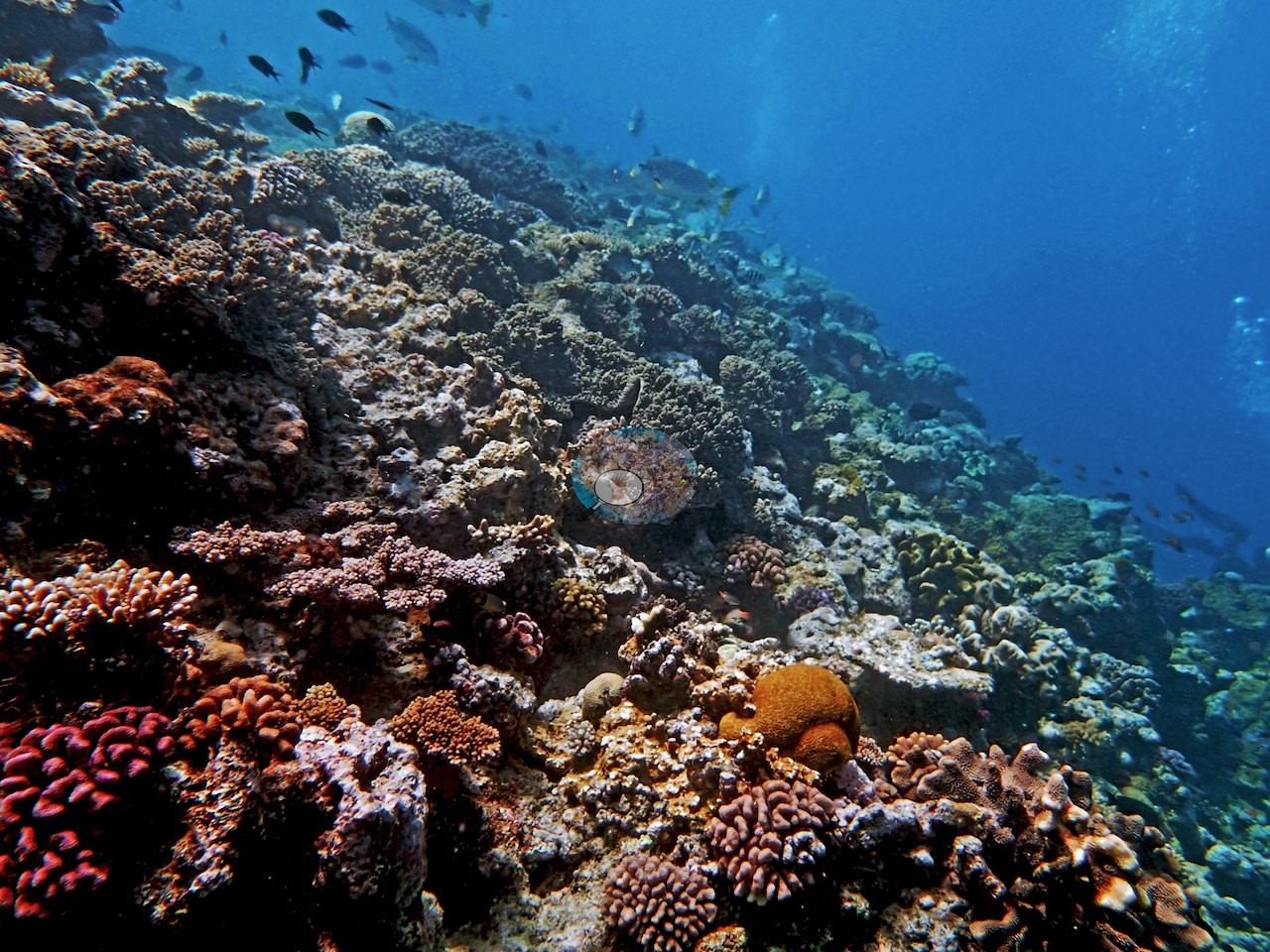
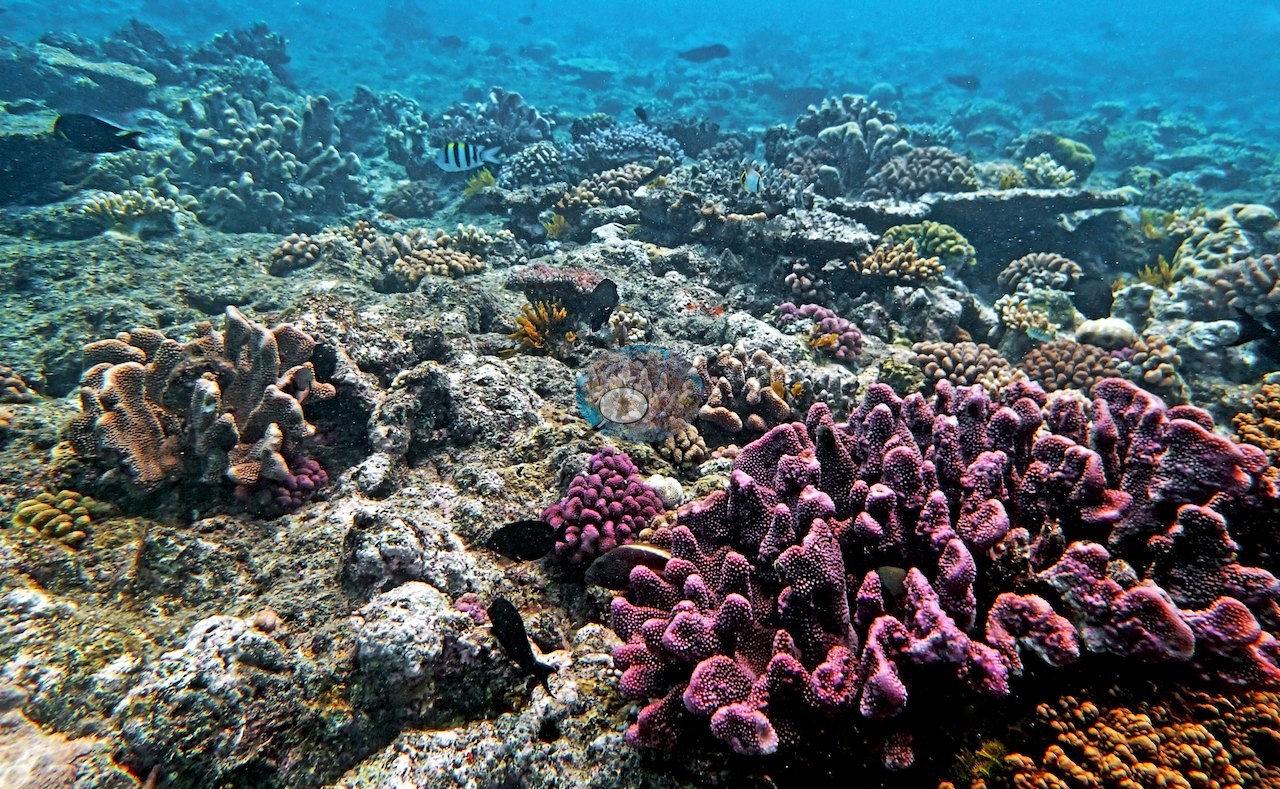
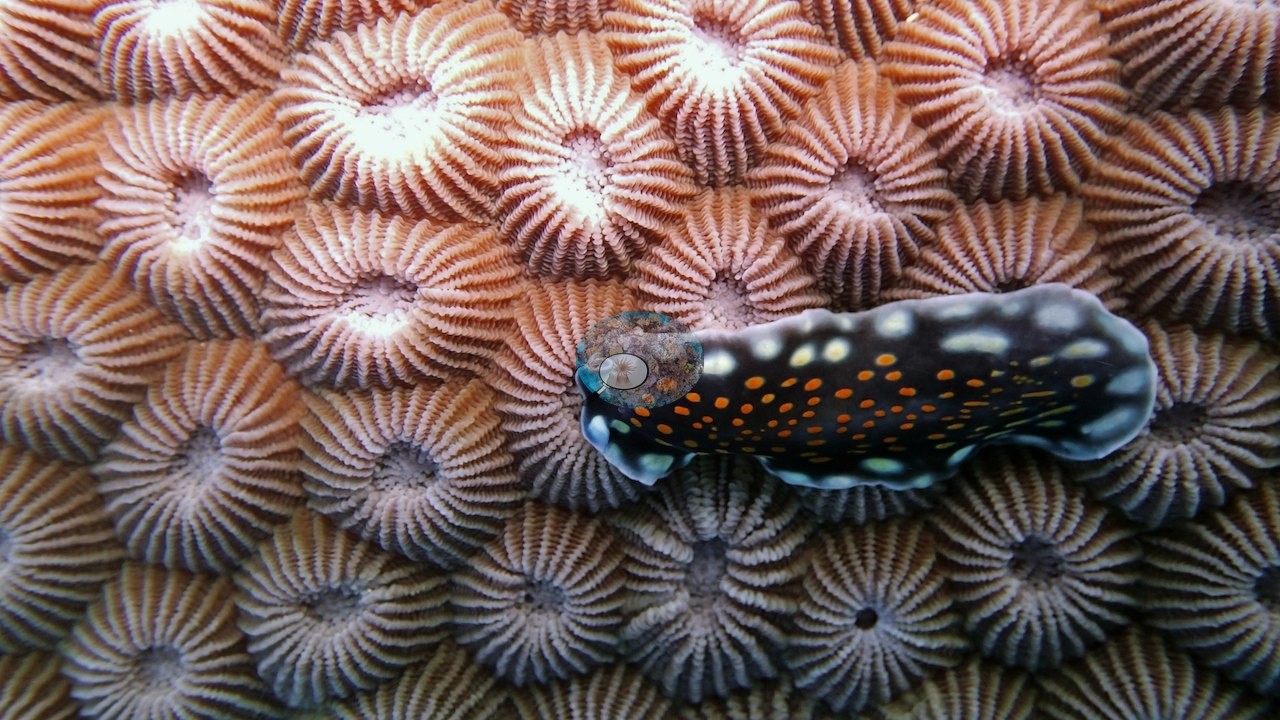
Far Northern GBR (NOAA CRW virtual station)On Jewell Reef's steep, surge-exposed forereef, what looks like a sponge crust dominates the 4-7 m shallows, and below it the slope turns into a patchwork of many small Pocillopora, Acropora, and Porites colonies with big leathery soft corals mixed in. Highlights were a passing gray reef shark about 1.5 m long and an eye-catching polyclad flatworm on a Diploastrea colony. Surveyed on the Living Oceans Foundation's Global Reef Expedition.
Five other CRD dive sites within 5 km shown in orange — click a marker to open its page.
🗺 Detailed map of the Global Reef Expedition dive sites, Jewell, Hilder, and Eyrie Reefs, northern Great Barrier Reef (Khaled bin Sultan Living Oceans Foundation; opens in a new window)
6 of the 16 photographs on this page are shown beside the text that discusses them under "Site description" below.
Site description
Setting
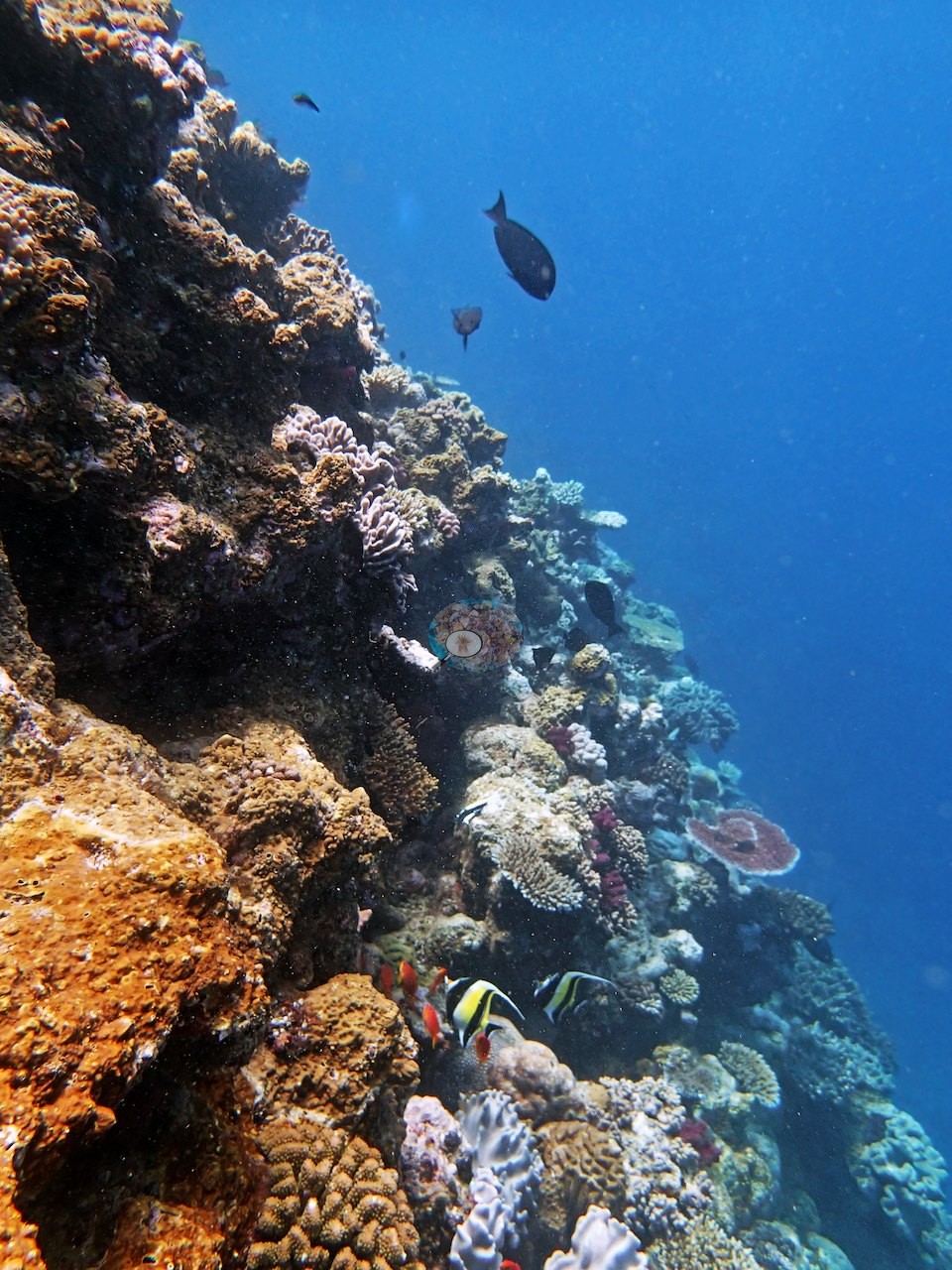
Jewell Reef's second dive on 12 September 2014 dropped Anderson onto a steep forereef slope running to 20 m, in reduced visibility of 10-15 m and a fair bit of wave energy. This is a Habitat Protection (Blue) Zone, where line fishing is permitted.
General benthic features
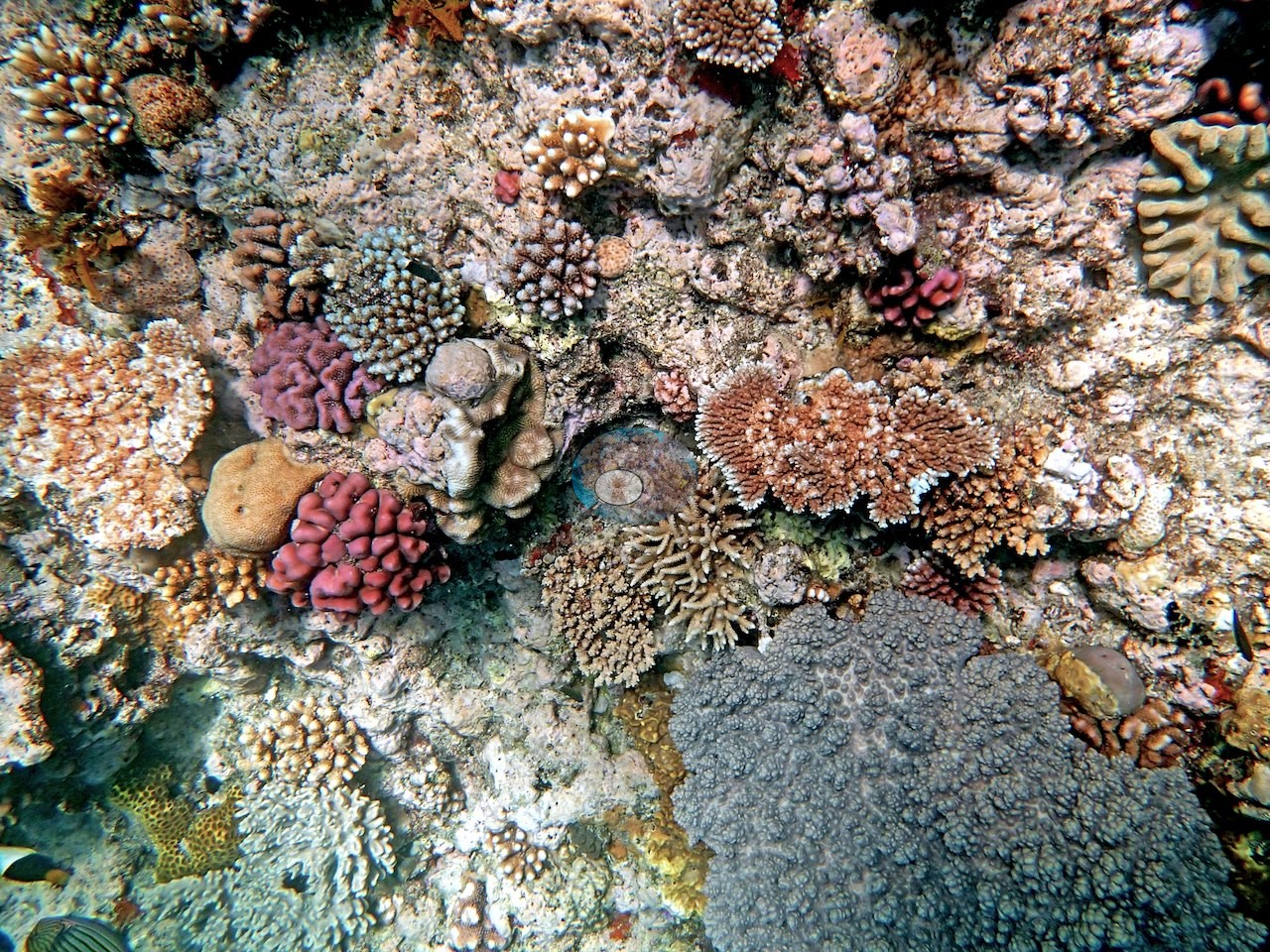
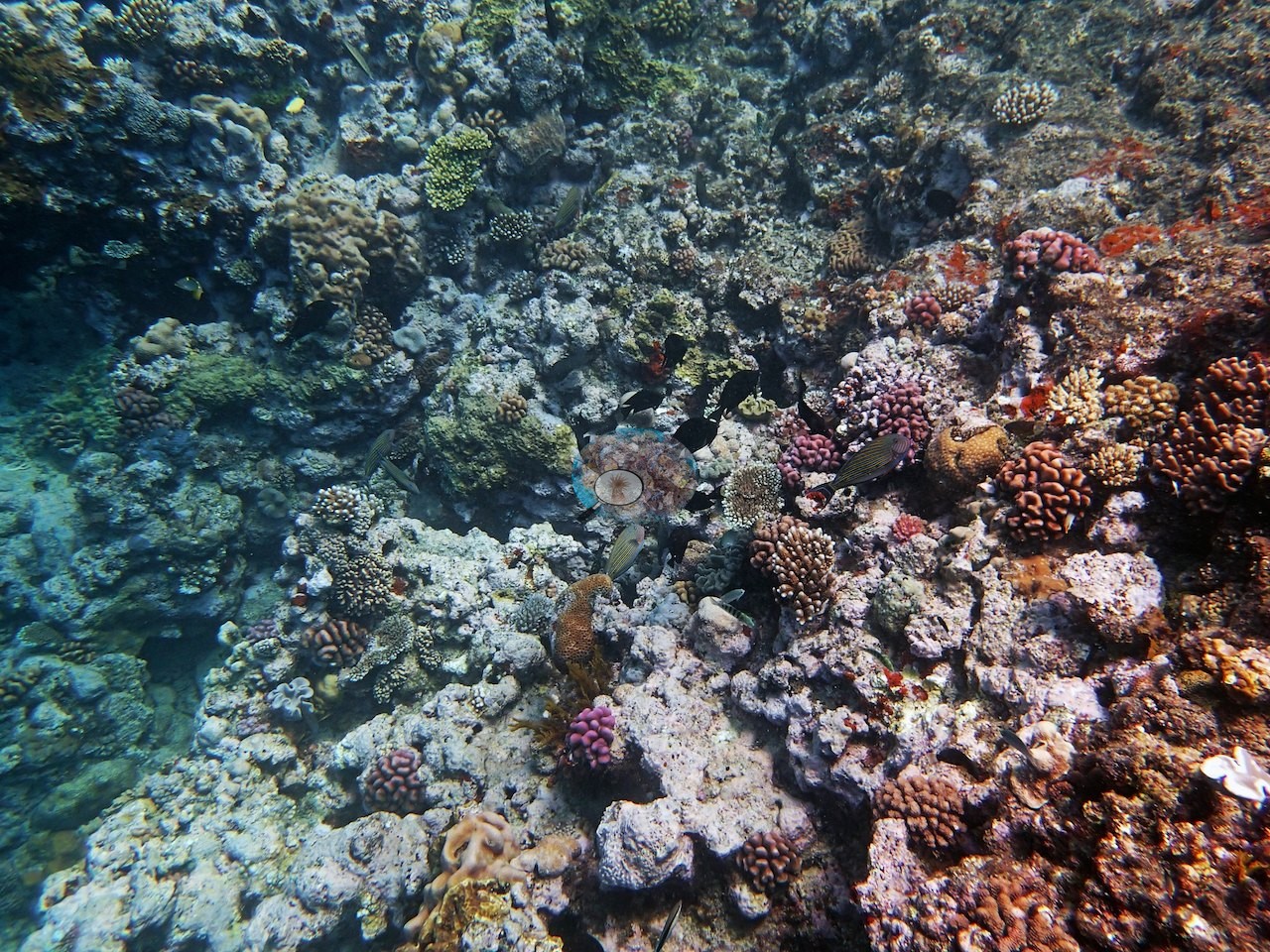
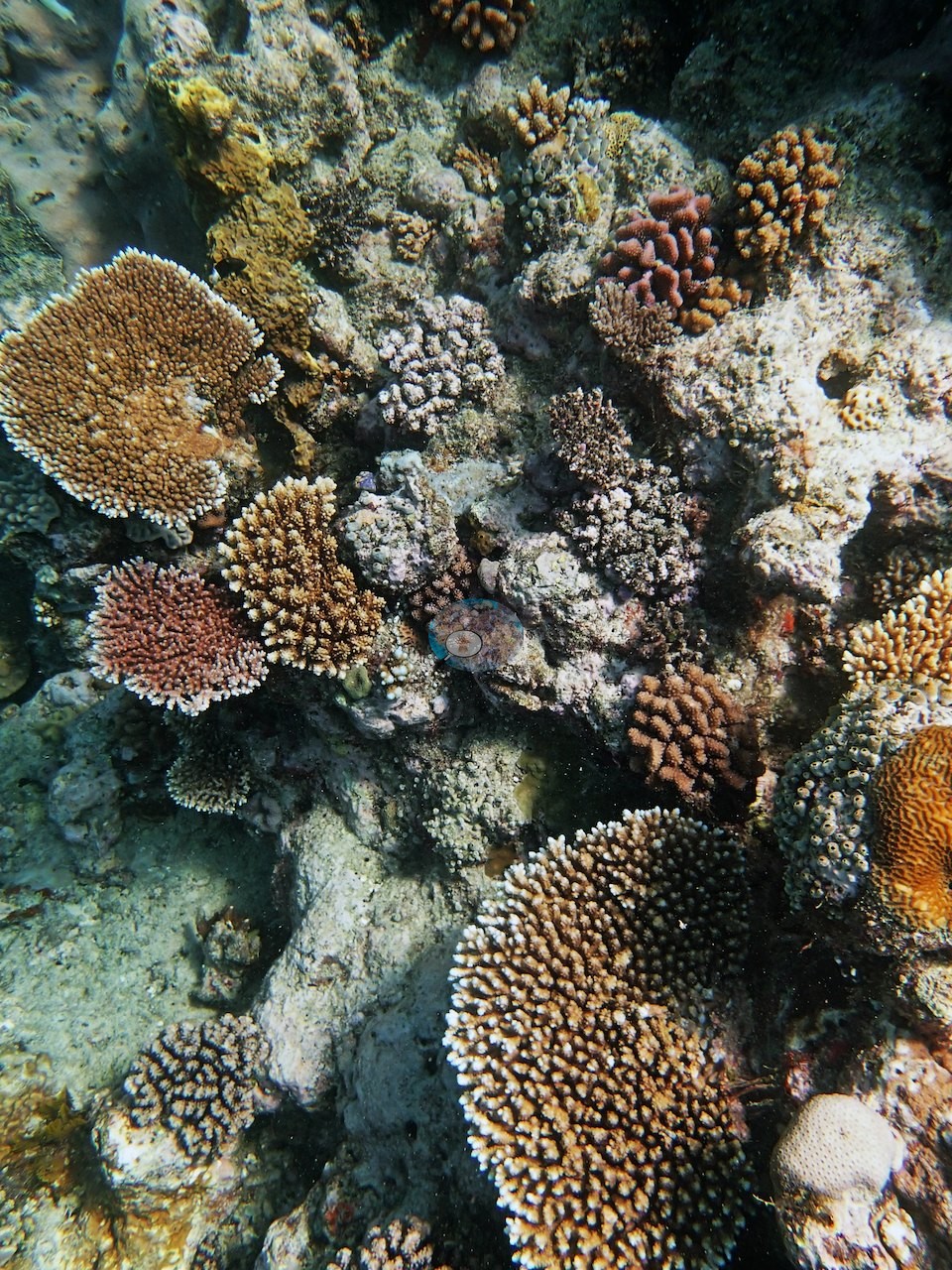
The 4-7 m shallows were dominated by a non-coral encrusting organism, likely a sponge; coral grew no shallower than 3-4 m, mostly the trip's usual suspects, pocilloporids like Stylophora and Seriatopora. The photographs are shot looking down onto that slope and show a reef of many small colonies rather than large ones: maroon and rose Pocillopora, cream and tan corymbose Acropora, small tabulate plates, mounding Porites, and a meandering fleshy colony, all set into pale, coralline-crusted rubble (e.g., Image 1, Image 3, Image 4).
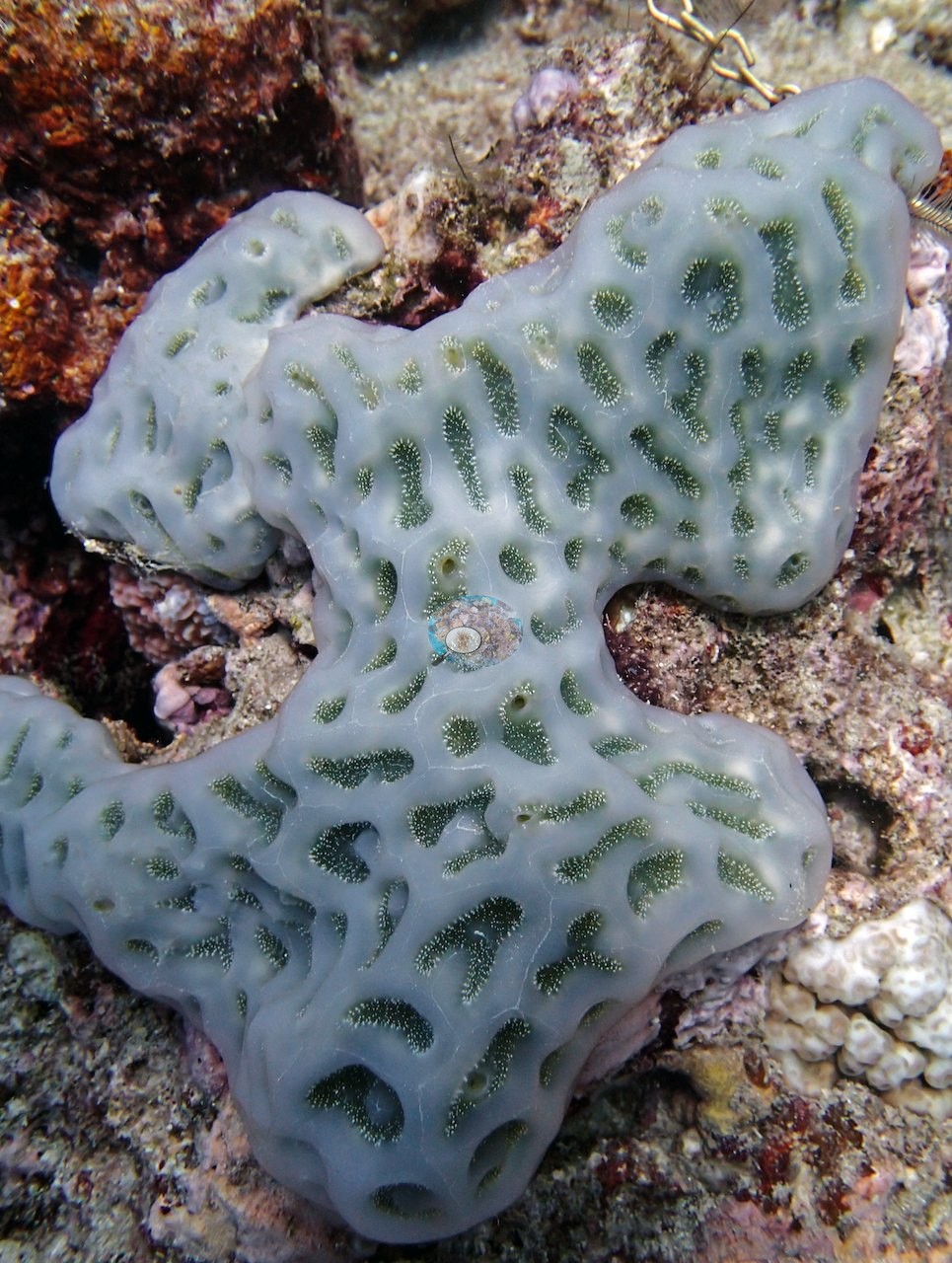
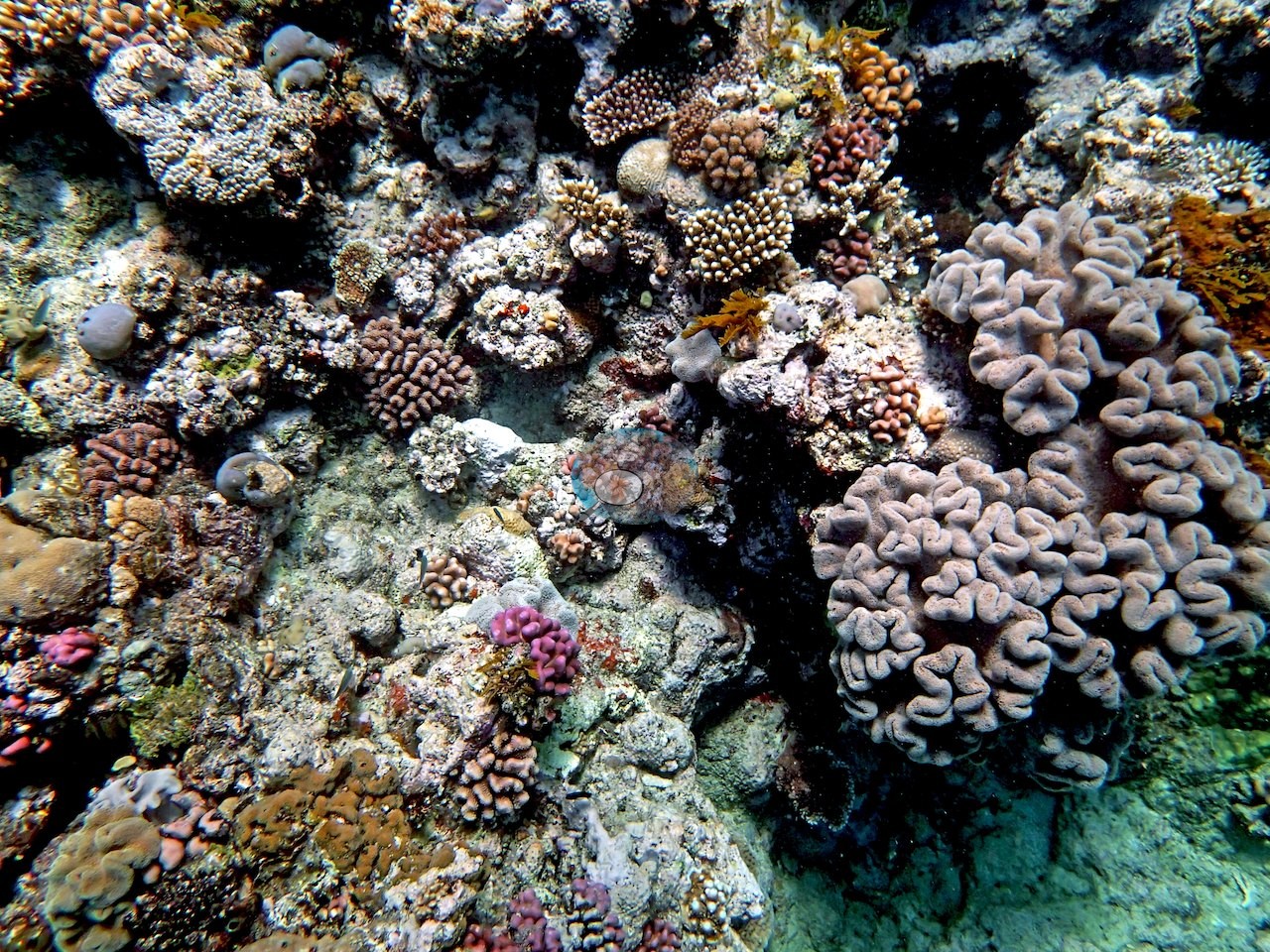
Abundant soft corals show up too, one big gray leathery colony filling a third of a frame with its convoluted lobes (e.g., Image 2).
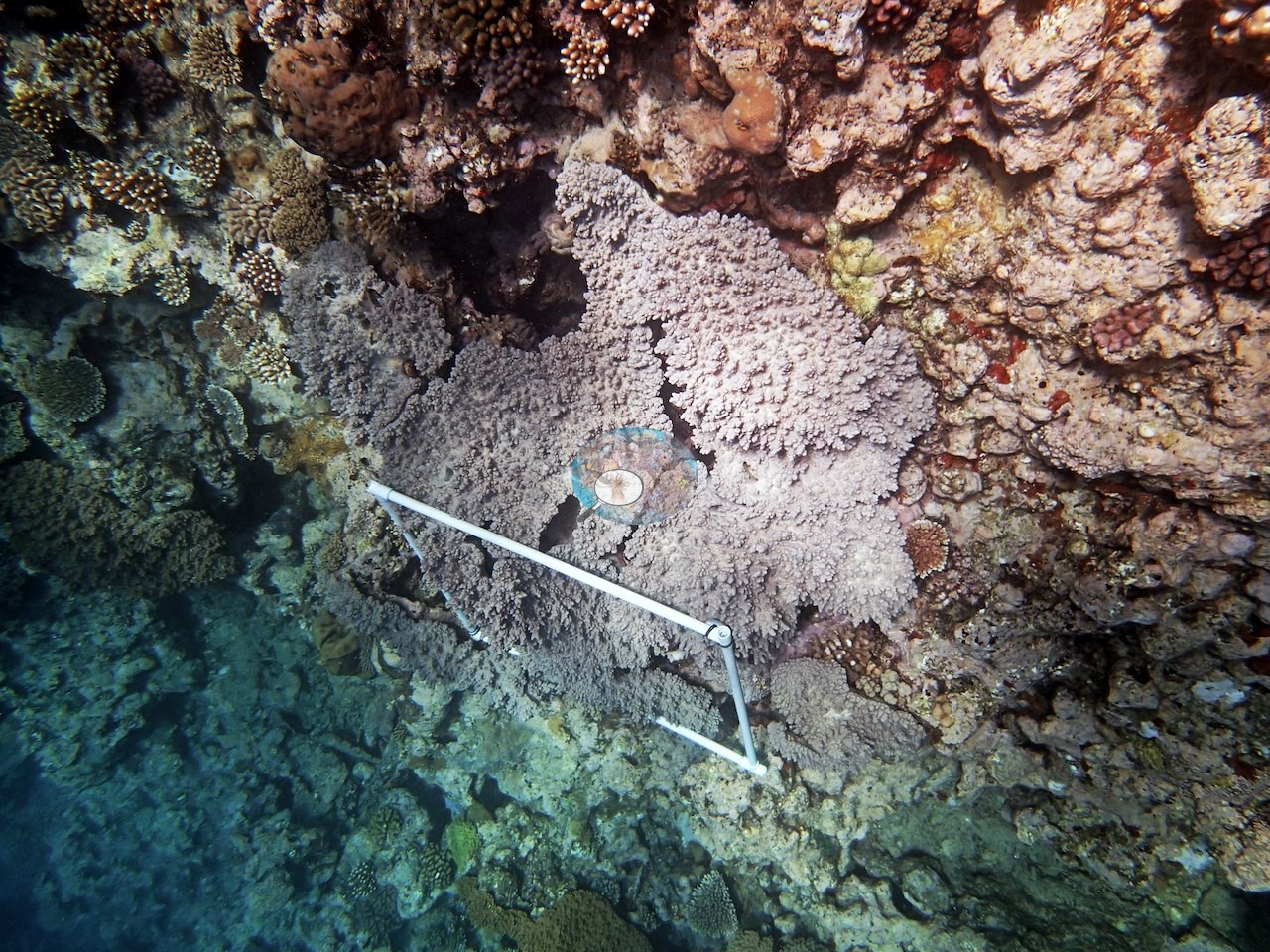
One frame has the PVC survey quadrat propped against a broad lavender encrusting colony on a steep face (e.g., Image 5).
Coral cover
- Reference: Khaled bin Sultan Living Oceans Foundation, Global Reef Expedition (in situ transect)
- This survey point recorded 23% cover, while the dive's best patch, an unusually rugose transect near 9.5 m, ran 35-45%.
- One transect was scored at this station (23%; n = 1, so no SE; Living Oceans Foundation per-transect benthic data); it is the expedition's station value printed above.
Stressors
No crown-of-thorns starfish (COTS) or other corallivores evident.
Fish and other fauna
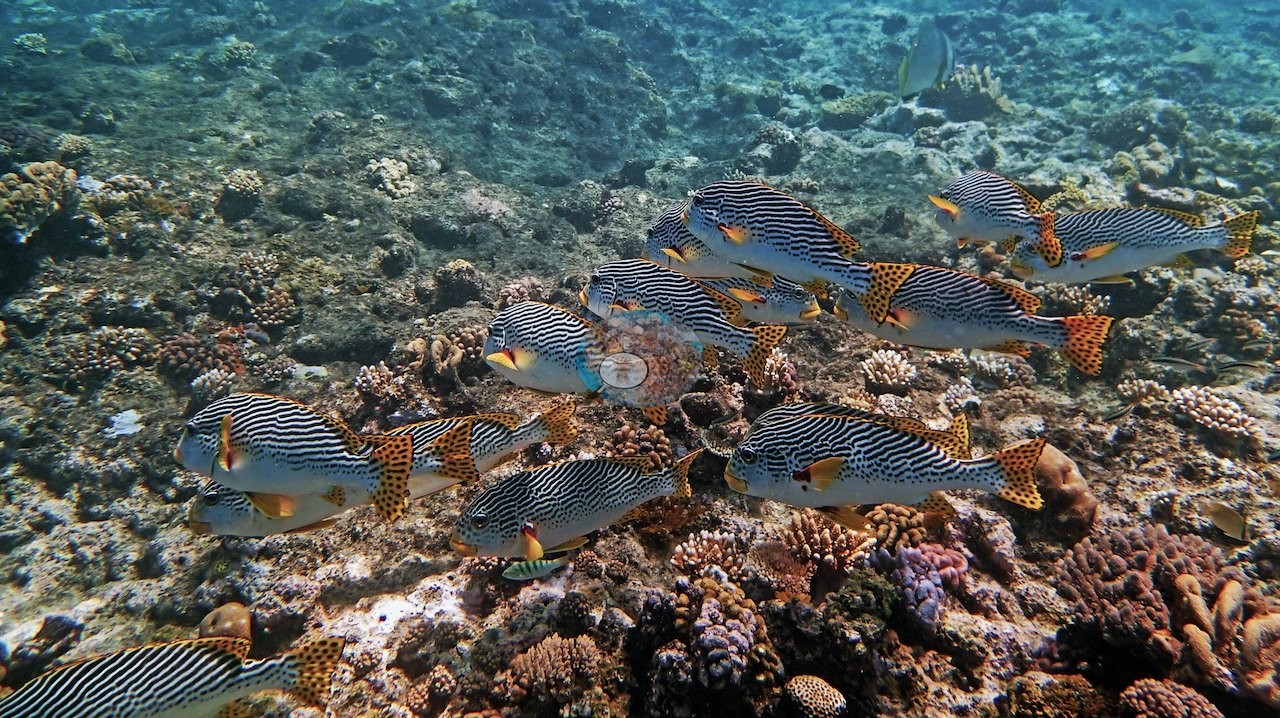
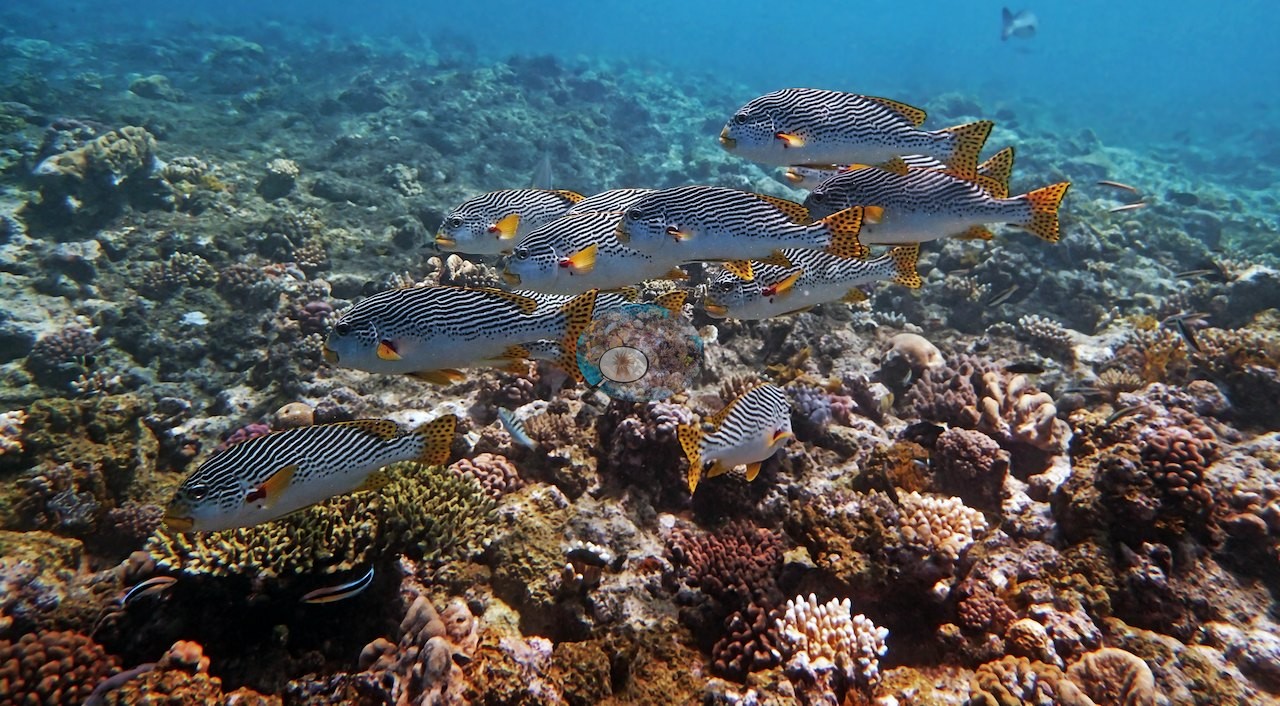
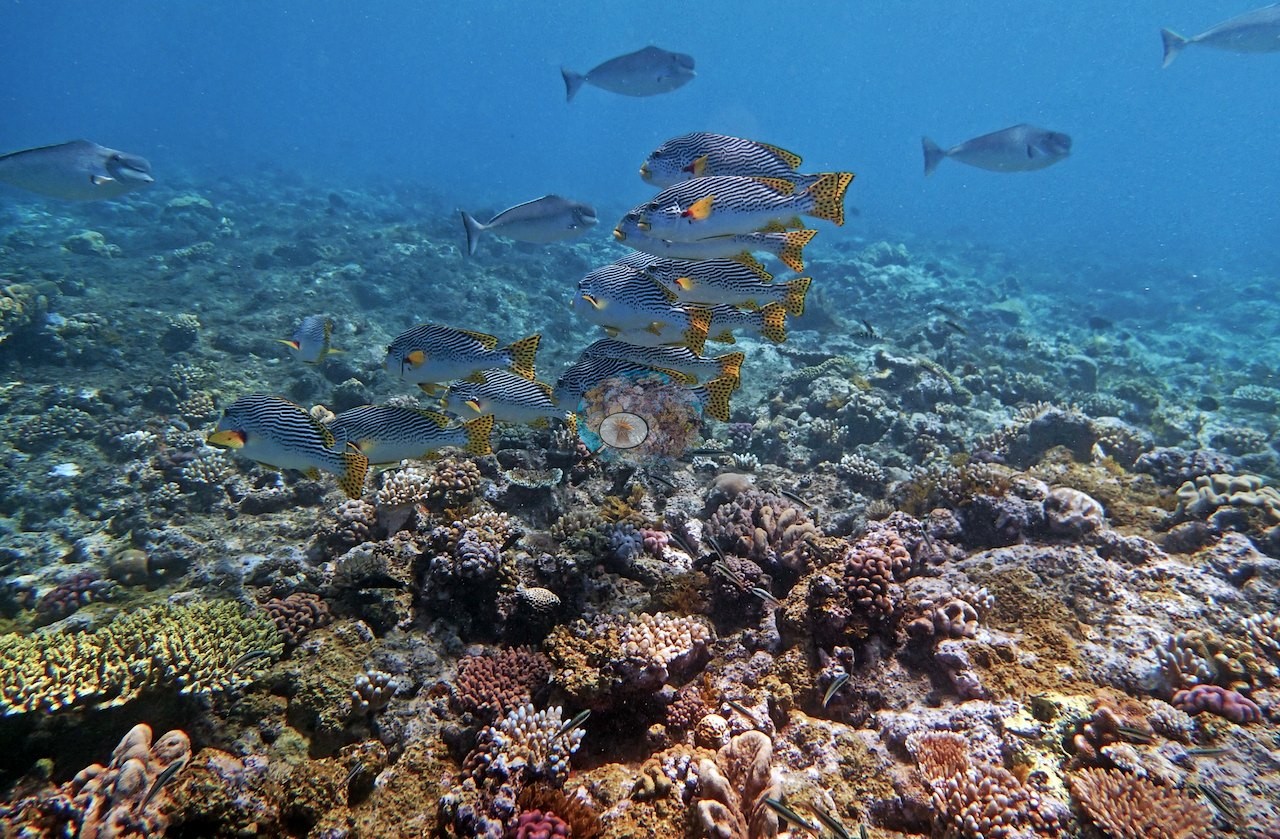
A 1.5 m gray reef shark cruised past and a striking polyclad flatworm was photographed on a Diploastrea (e.g., Image 7).
Comparisons with other data
No prior survey data from this site. If you would like to share yours, please email us.
Data & links
- Download benthic survey data (CSV) ↗
- Download all LOF-GRE data (933 sites) ↗
- Photo portfolio ↗
- Coral Reef Diagnostics country page ↗
All images from Coral Reef Diagnostics. Data are from the Khaled bin Sultan Living Oceans Foundation Global Reef Expedition and Coral Reef Diagnostics.
 © Coral Reef Diagnostics.