
Part of the regional summaries: Australia (GBR) - Far North: Blue stations (Habitat Protection Zone reefs) and Australia (GBR)
More info
Northern GBR (NOAA CRW virtual station)A gentler Hicks Reef slope with 40-50% cover in the shallows, where an unexpectedly high abundance of soft corals made Anderson wonder about past disturbance. Deeper, some needle corals looked unhealthy, but recruitment on one transect was high, and two whitetips, 70 jacks, and a meter-long Napoleon wrasse stole the show. Surveyed on the Living Oceans Foundation's Global Reef Expedition.
Six other CRD dive sites within 5 km shown in orange — click a marker to open its page.
🗺 Detailed map of the Global Reef Expedition dive sites, Yonge, Hicks, and Carter Reefs, northern Great Barrier Reef (Khaled bin Sultan Living Oceans Foundation; opens in a new window)
Site description
Setting
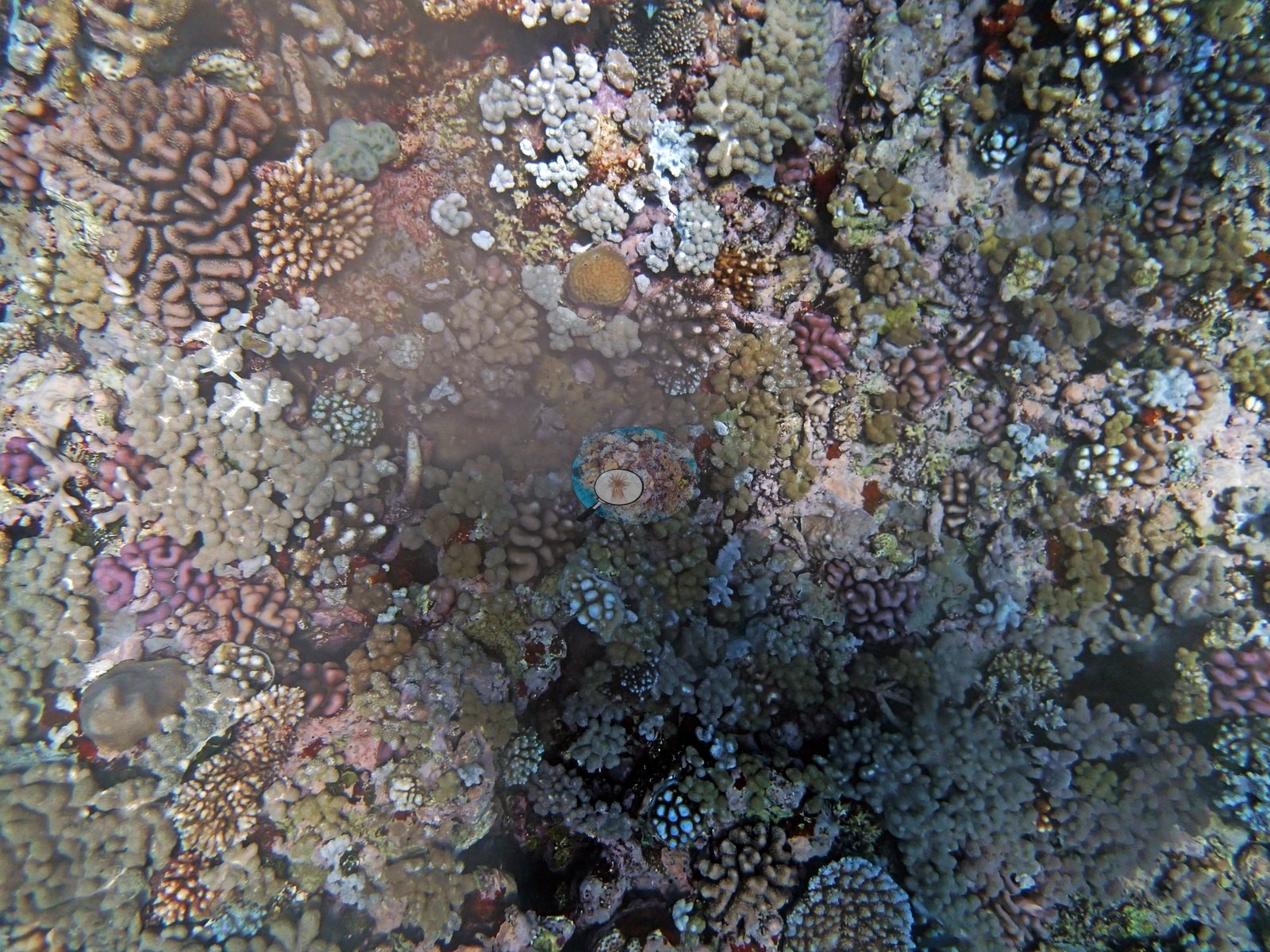
Anderson's second Hicks Reef dive, about two miles from the first, found a gentler-sloping reef with excellent shallow cover, 40-50% at 6-8 m, dominated by the reliable acroporid and pocilloporid duo, though he flagged unexpectedly high soft-coral abundance there as a possible sign of disturbance (e.g., Image 3).
This is a Habitat Protection (Blue) Zone, where line fishing is permitted.
General benthic features
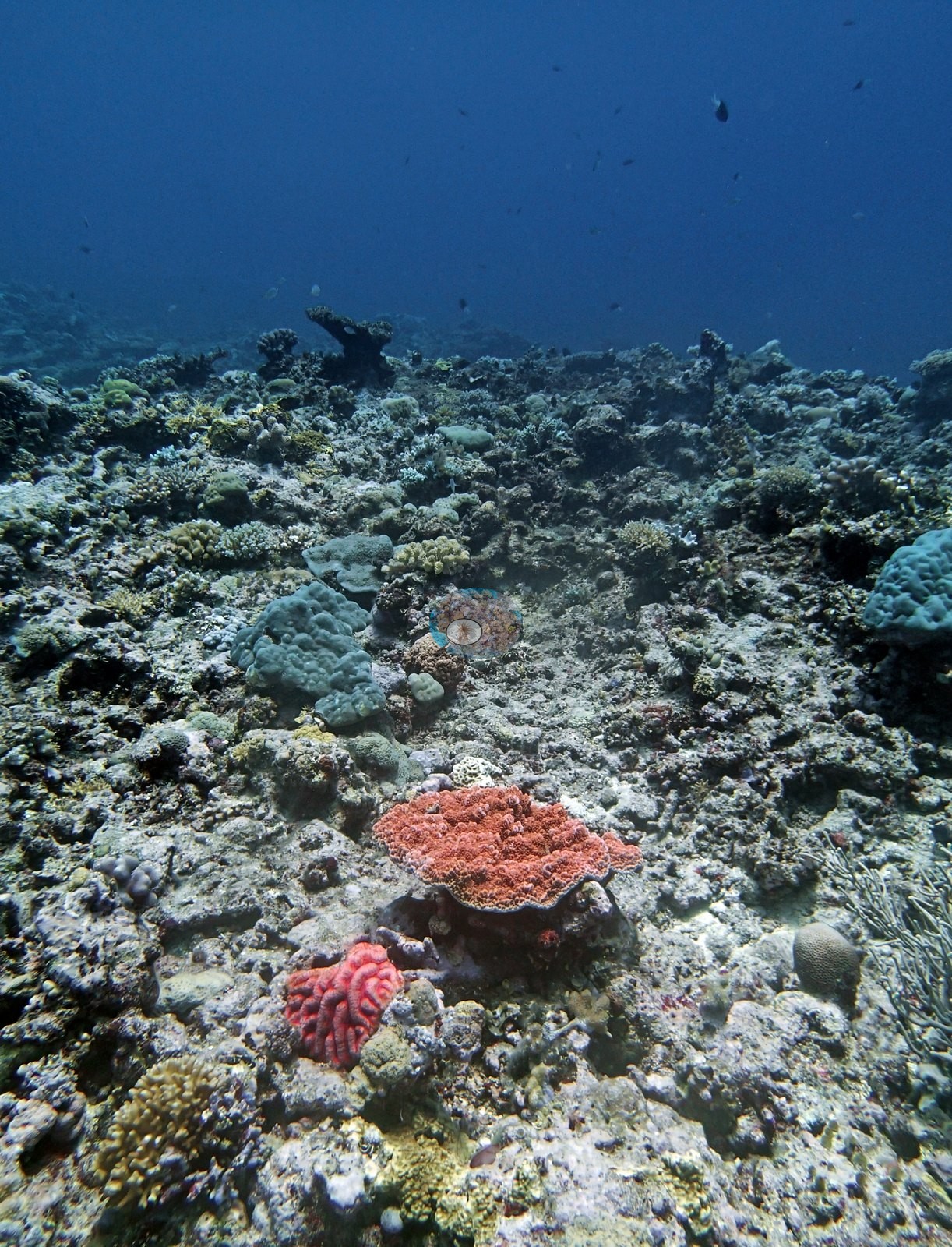
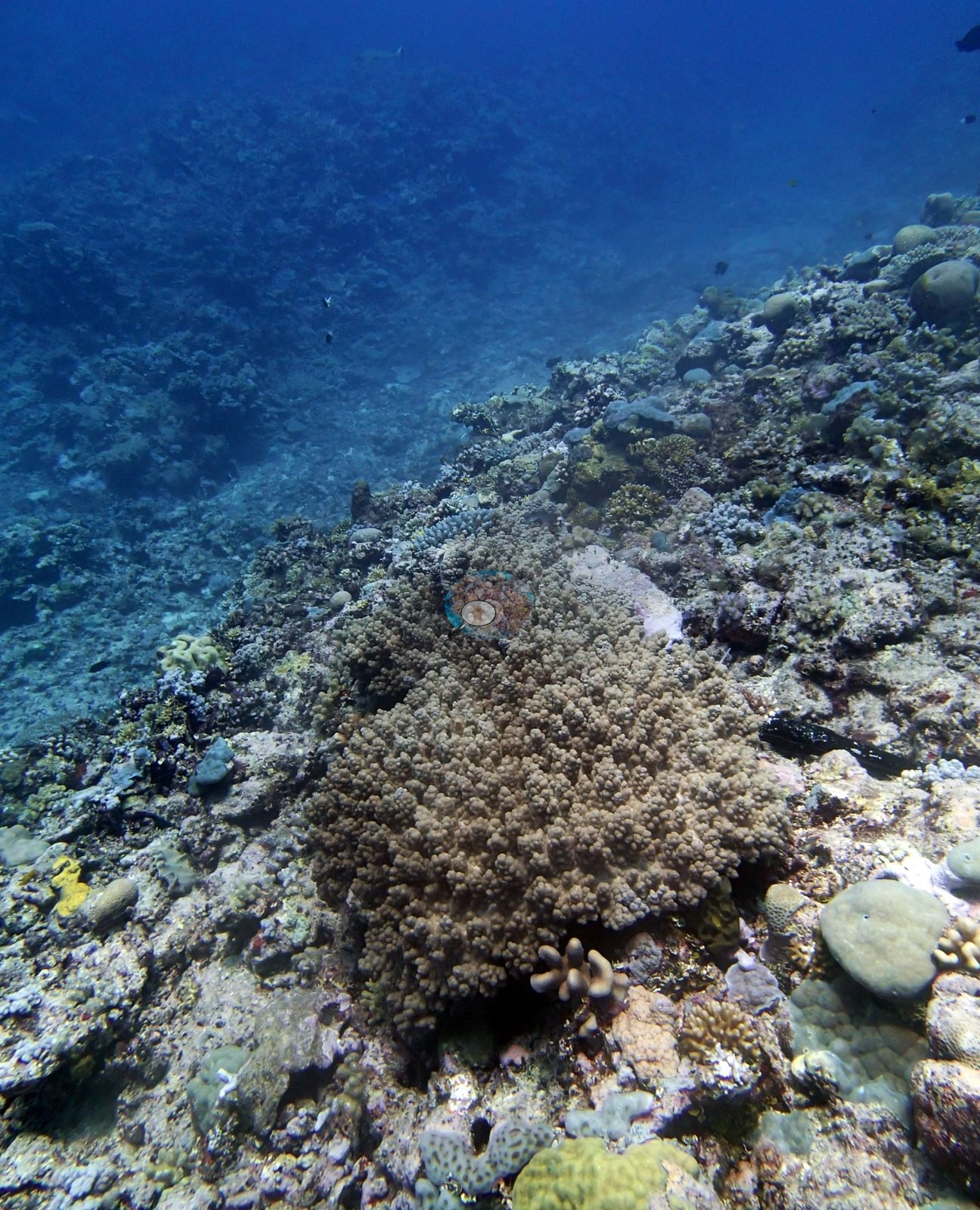
That flag is visible in one frame, dominated by a single tan soft-coral mass sprawled over a meter of reef (e.g., Image 4); another shows a red-orange encrusting hard coral on a thin, scoured deeper slope (e.g., Image 1).
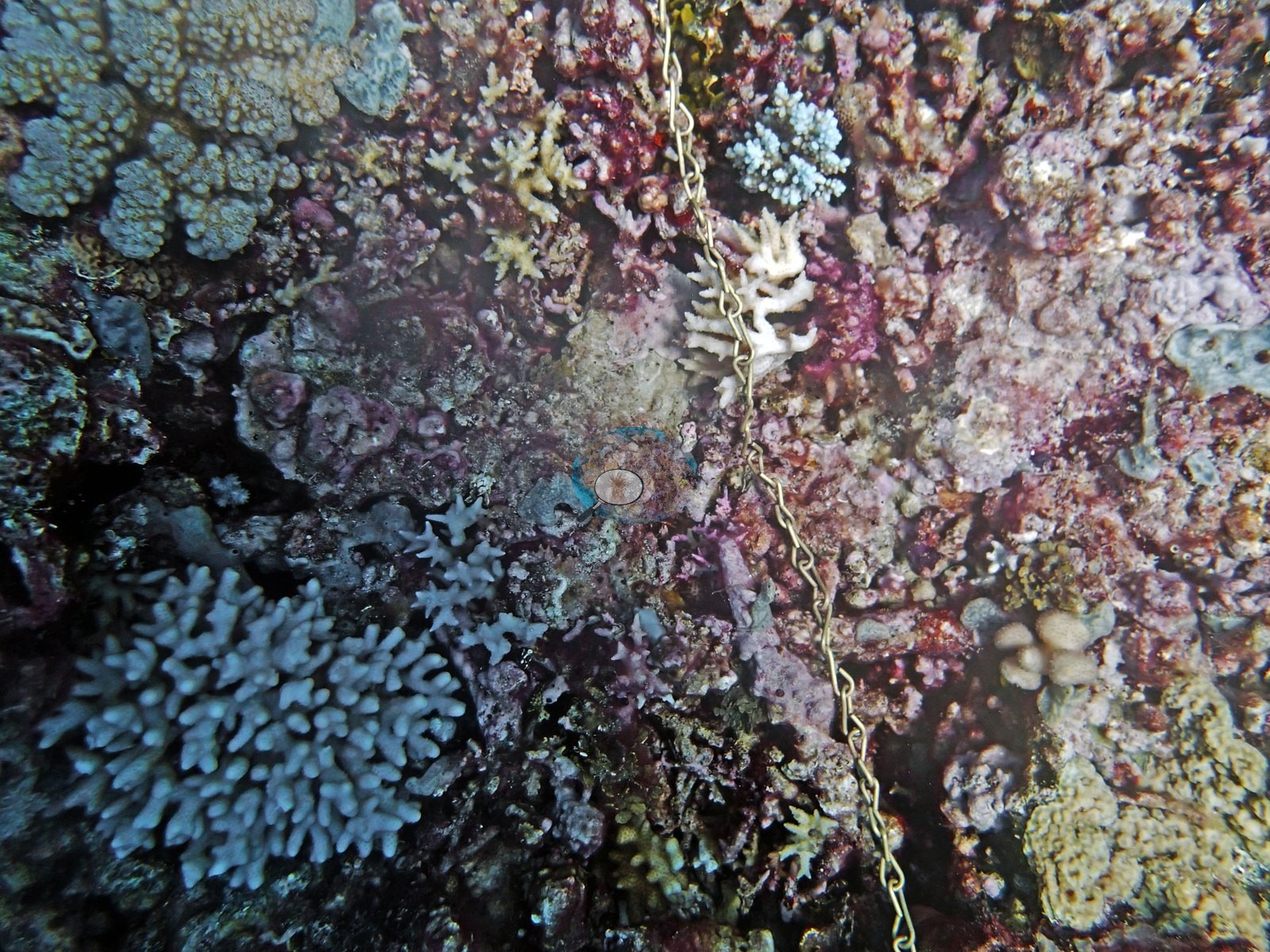
A frame with the numbered survey chain running down a coralline-crusted face captures both halves of the story: blue-gray Acropora colonies and a dense scatter of juveniles alongside one stark white fine-branched colony (e.g., Image 2).
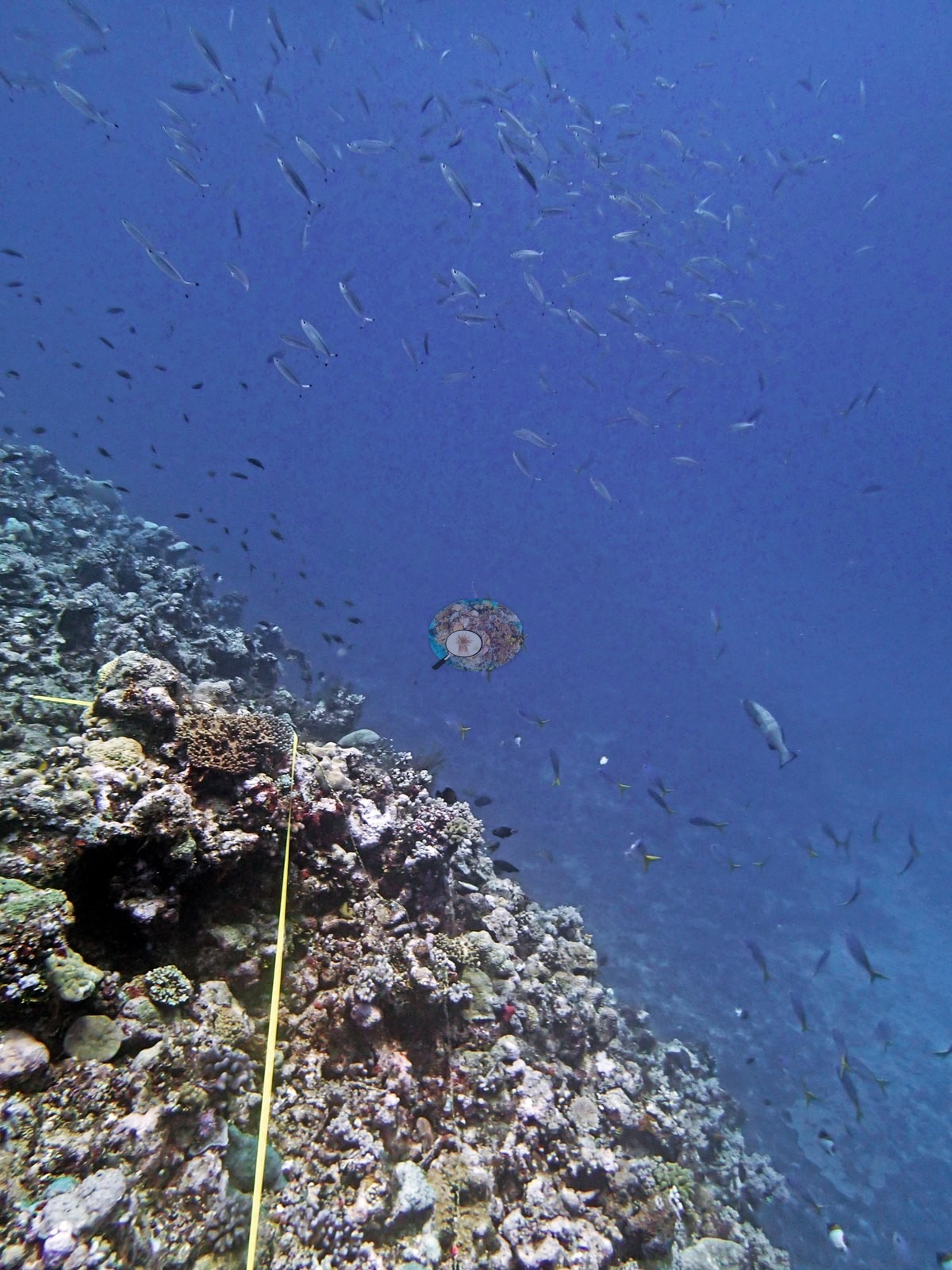
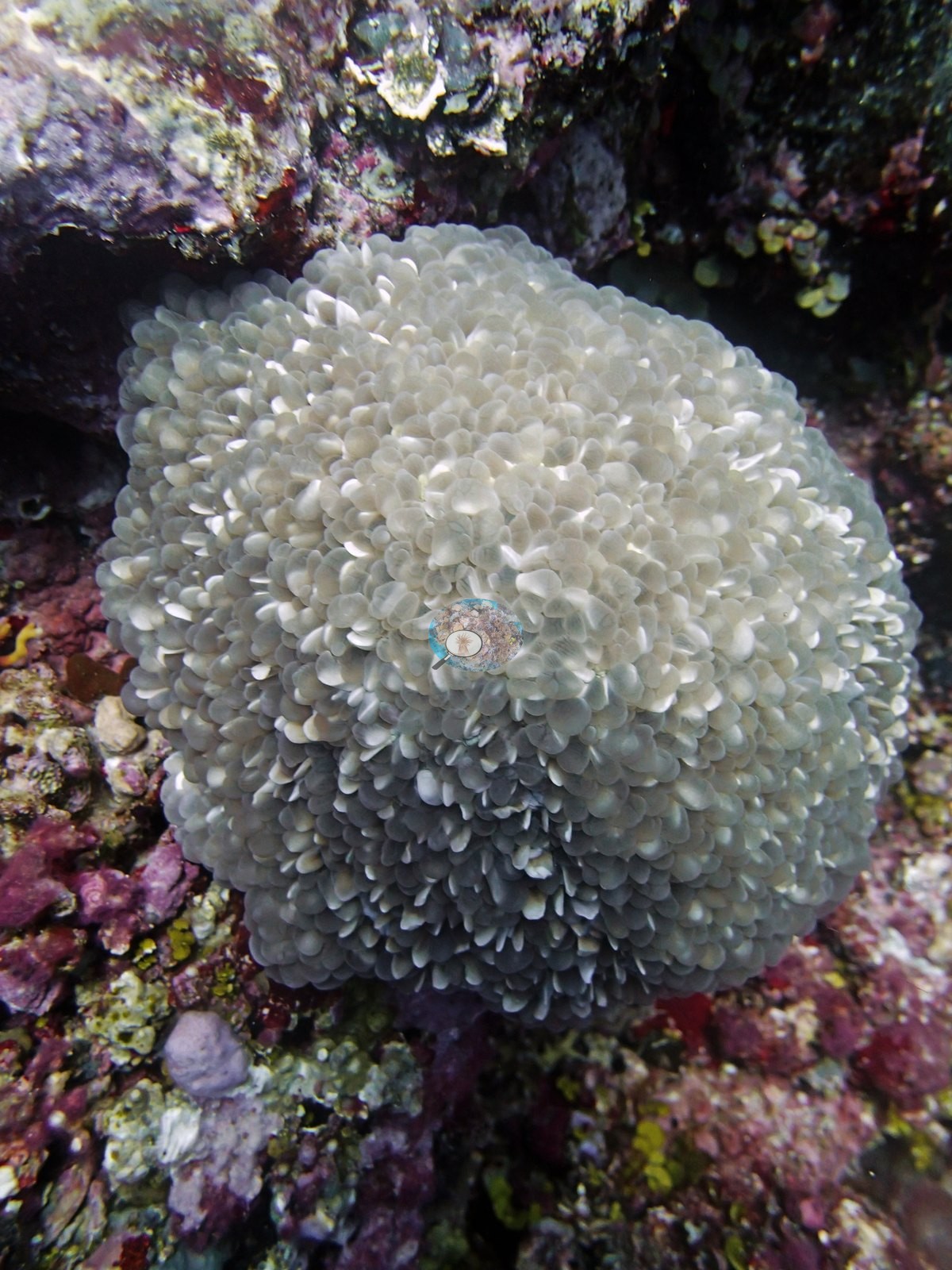
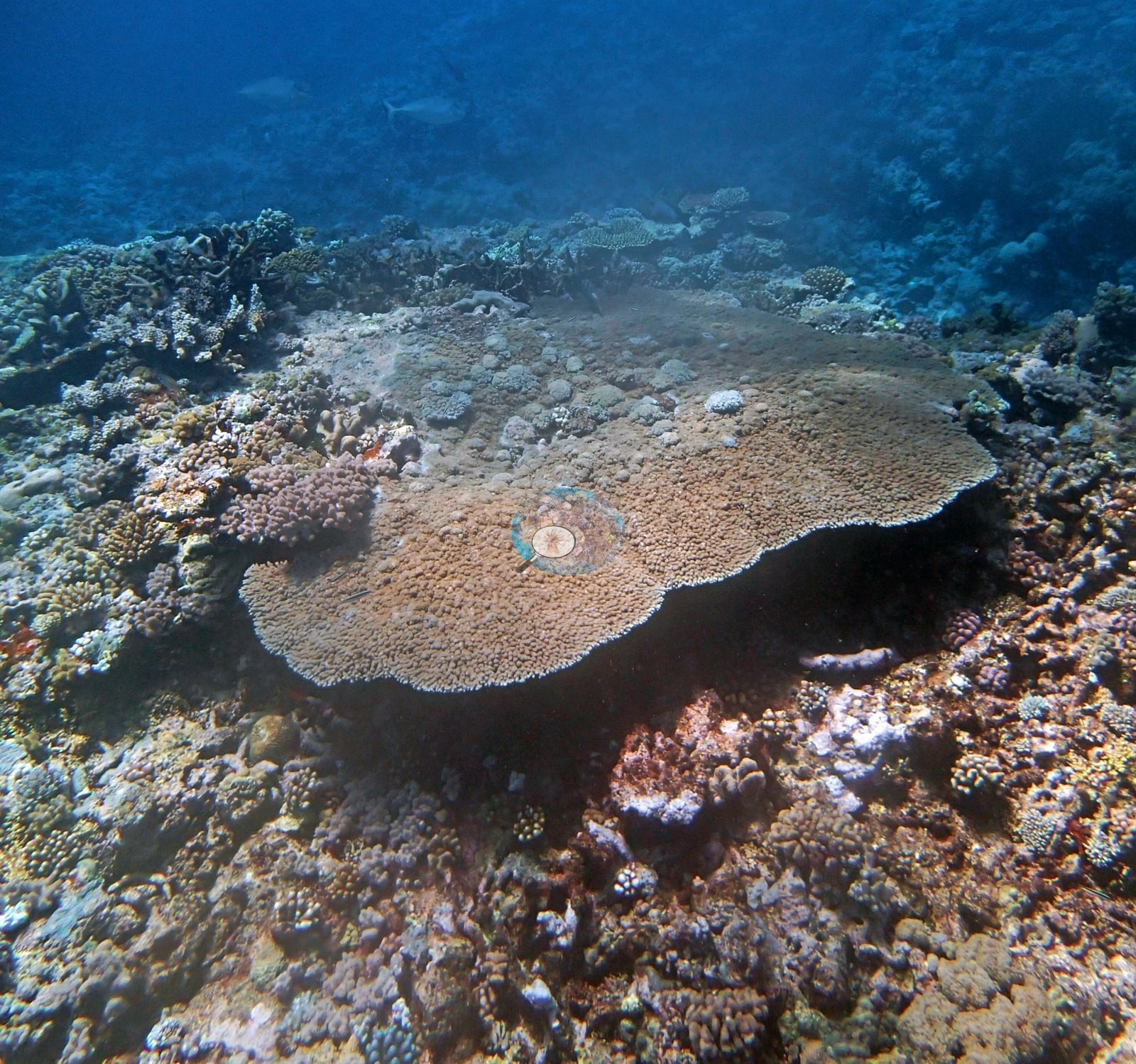
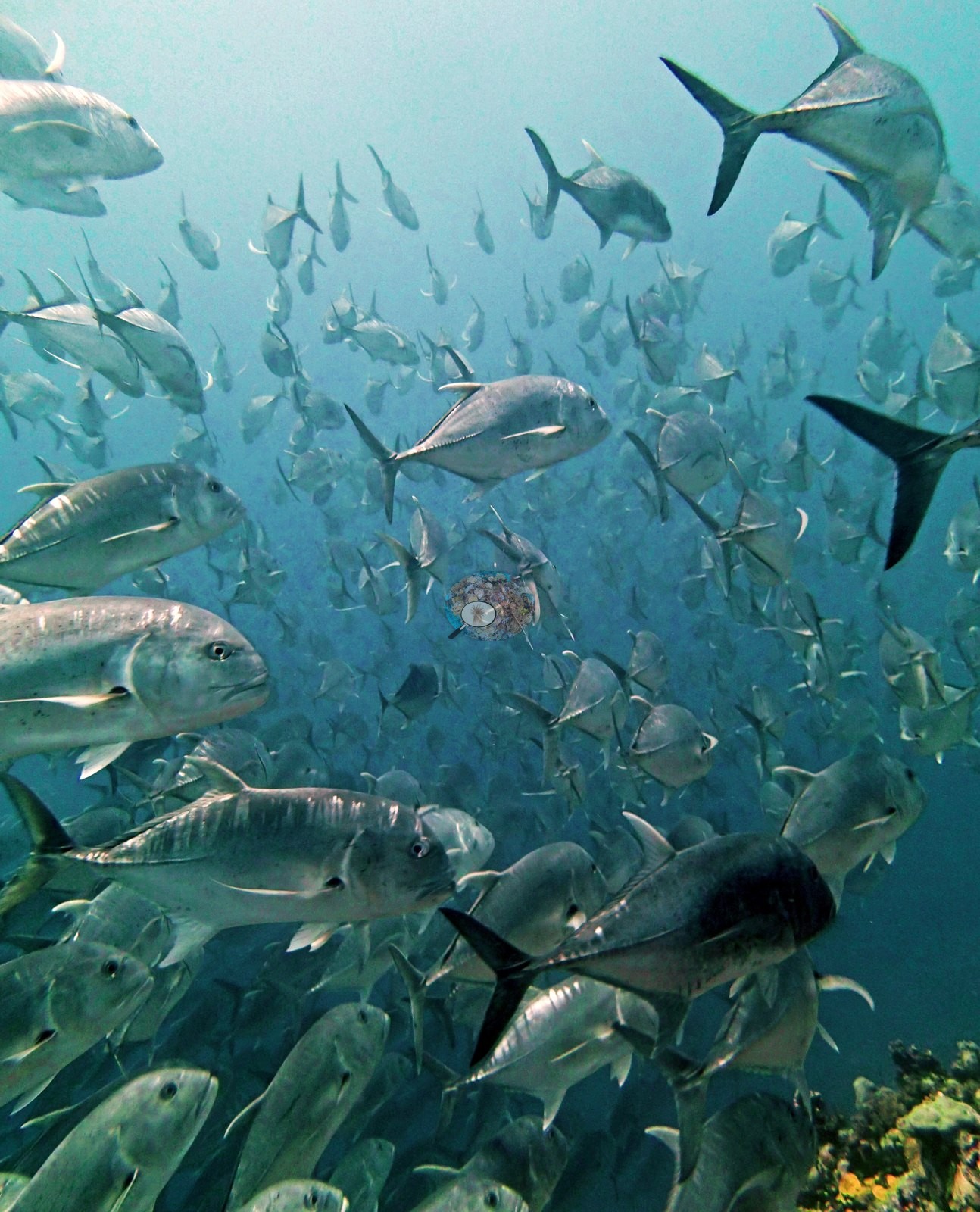
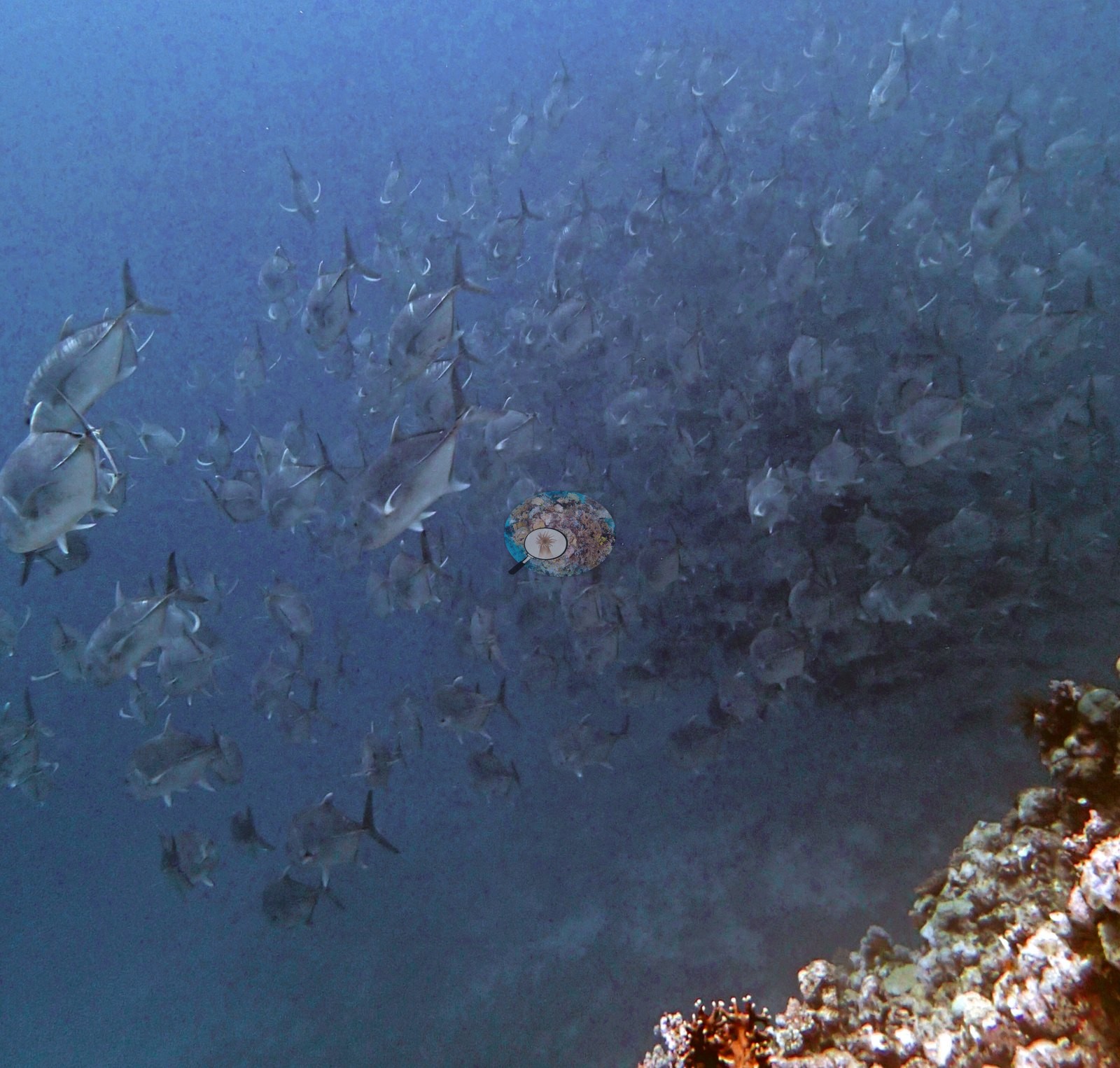
That fits the deeper transect at 15.8 m, where Seriatopora hystrix dominated but some colonies looked unhealthy, and his recruit count on that transect (at least 10) was, in his words, the "highest to date on this trip." Another frame has the yellow transect tape running down the reef edge under a wall of fusiliers (e.g., Image 5); the others show a massive colony covered in gray-white bubble-like vesicles (e.g., Image 6), a broad table colony on the slope (e.g., Image 8), and the school of jacks (e.g., Image 7, Image 9).
Coral cover
- Reference: Khaled bin Sultan Living Oceans Foundation, Global Reef Expedition (in situ transect)
- Point-count cover at this survey point measured 28%.
- One transect was scored at this station (28%; n = 1, so no SE; Living Oceans Foundation per-transect benthic data); it is the expedition's station value printed above.
Stressors
His notes say some of the needle corals (Seriatopora hystrix) that dominated his third transect, at 15.8 m, "looked unhealthy", and one small fine-branched colony beside the survey chain is cream-white throughout, a bleached colony among pigmented neighbors (e.g., Image 2). No crown-of-thorns starfish (COTS) or other corallivores evident.
Fish and other fauna
Big animals stole the show: two whitetips, a school of more than 70 jacks (e.g., Image 7, Image 9), and a meter-long Napoleon wrasse.
Comparisons with other data
No prior survey data from this site. If you would like to share yours, please email us.
Data & links
- Download benthic survey data (CSV) ↗
- Download all LOF-GRE data (933 sites) ↗
- Photo portfolio ↗
- Coral Reef Diagnostics country page ↗
All images from Coral Reef Diagnostics. Data are from the Khaled bin Sultan Living Oceans Foundation Global Reef Expedition and Coral Reef Diagnostics.
 © Coral Reef Diagnostics.