
Part of the regional summaries: Australia (GBR) - Far North: Blue stations (Habitat Protection Zone reefs) and Australia (GBR)
More info
Far Northern GBR (NOAA CRW virtual station)A current-swept station on Five Reefs (logged by Anderson as Unnamed Reef 128) where a diverse shallow community of Pocillopora, Stylophora, and Acropora reached 62% cover, with a nearby Acropora thicket at an estimated 70-80%. Sharks, barracuda, jacks, and a very large table coral were logged, as was bleached needle coral (Seriatopora hystrix) at 6-7 m. Surveyed on the Living Oceans Foundation's Global Reef Expedition.
Six other CRD dive sites within 5 km shown in orange — click a marker to open its page.
🗺 Detailed map of the Global Reef Expedition dive sites, Five Reefs and unnamed reef 11-238, northern Great Barrier Reef (Khaled bin Sultan Living Oceans Foundation; opens in a new window)
Site description
Setting
Strong current, poor air consumption, and low tank fill cut his survey to three transects; his notes open with a series of large table acroporids at 15 m.
General benthic features
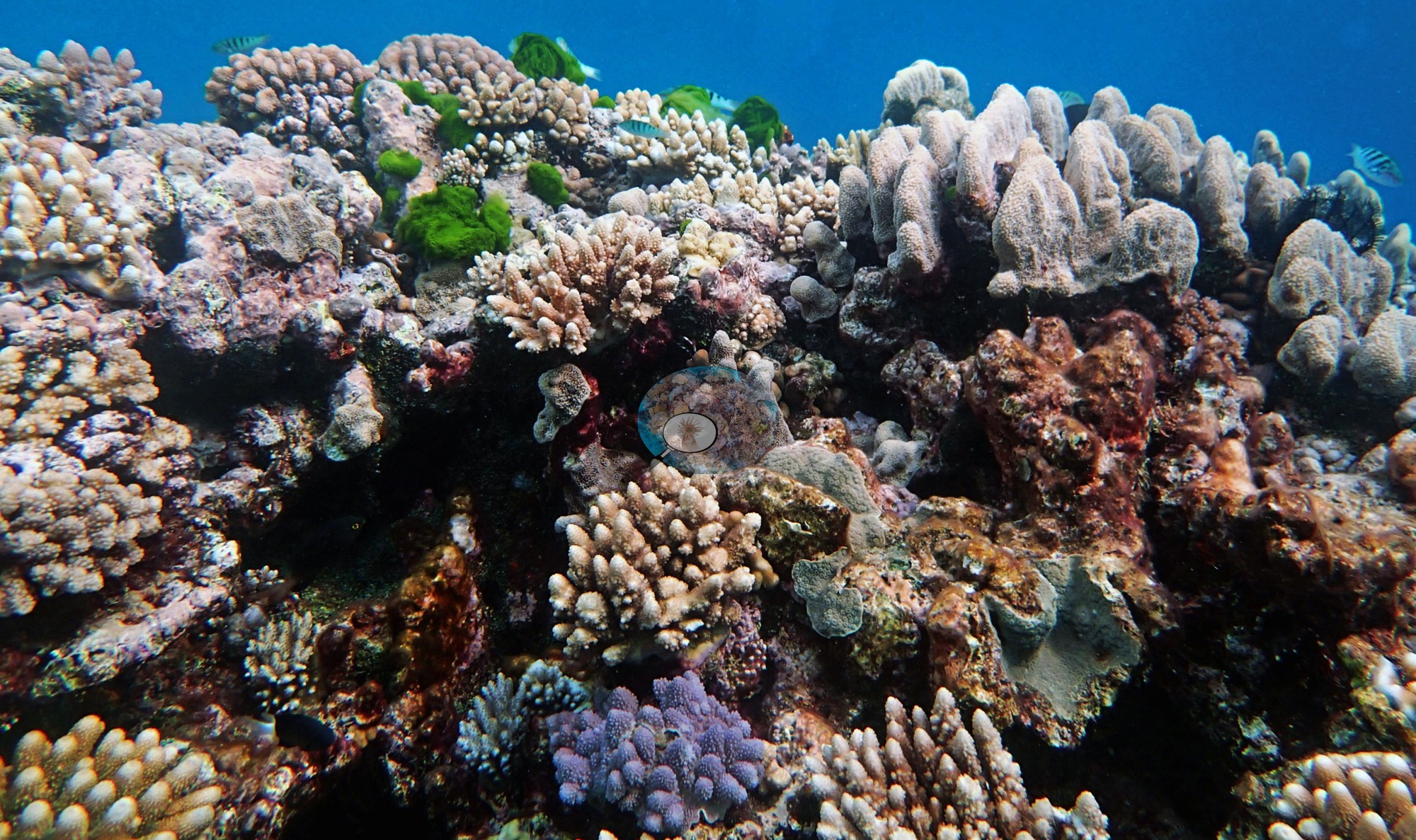
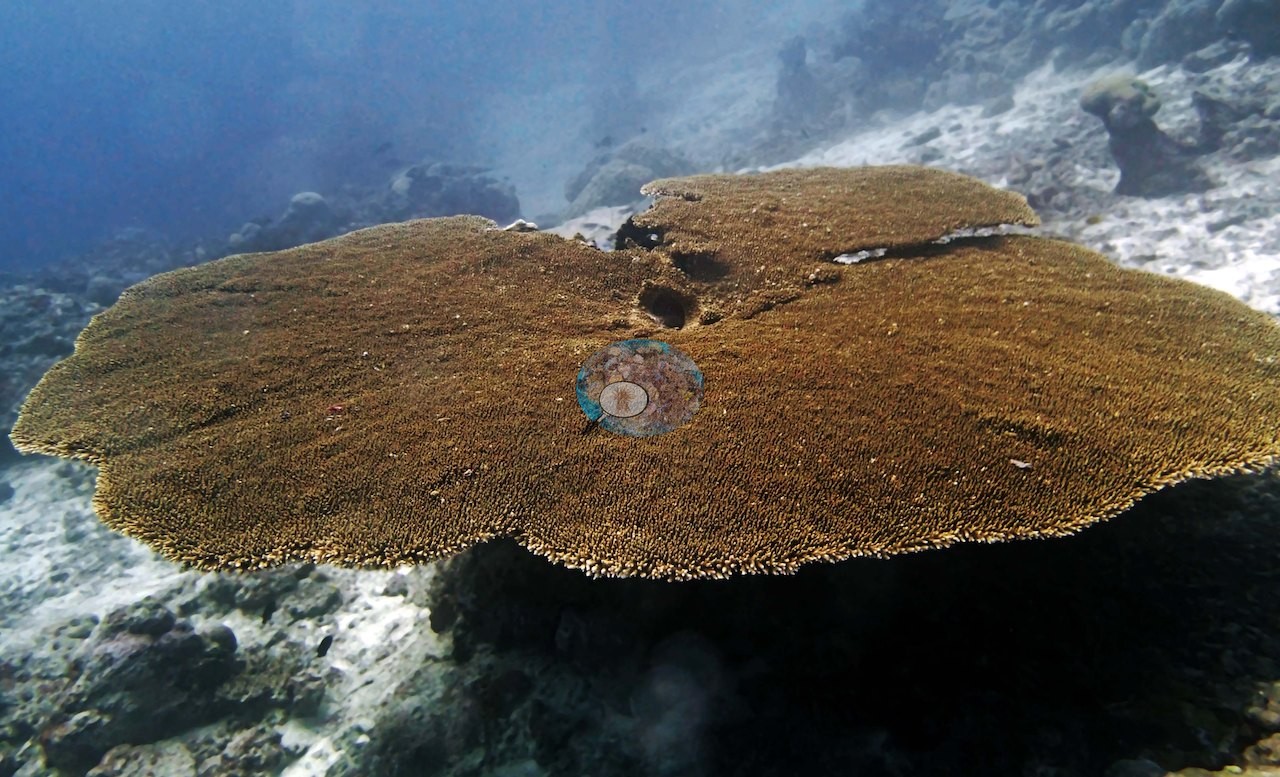
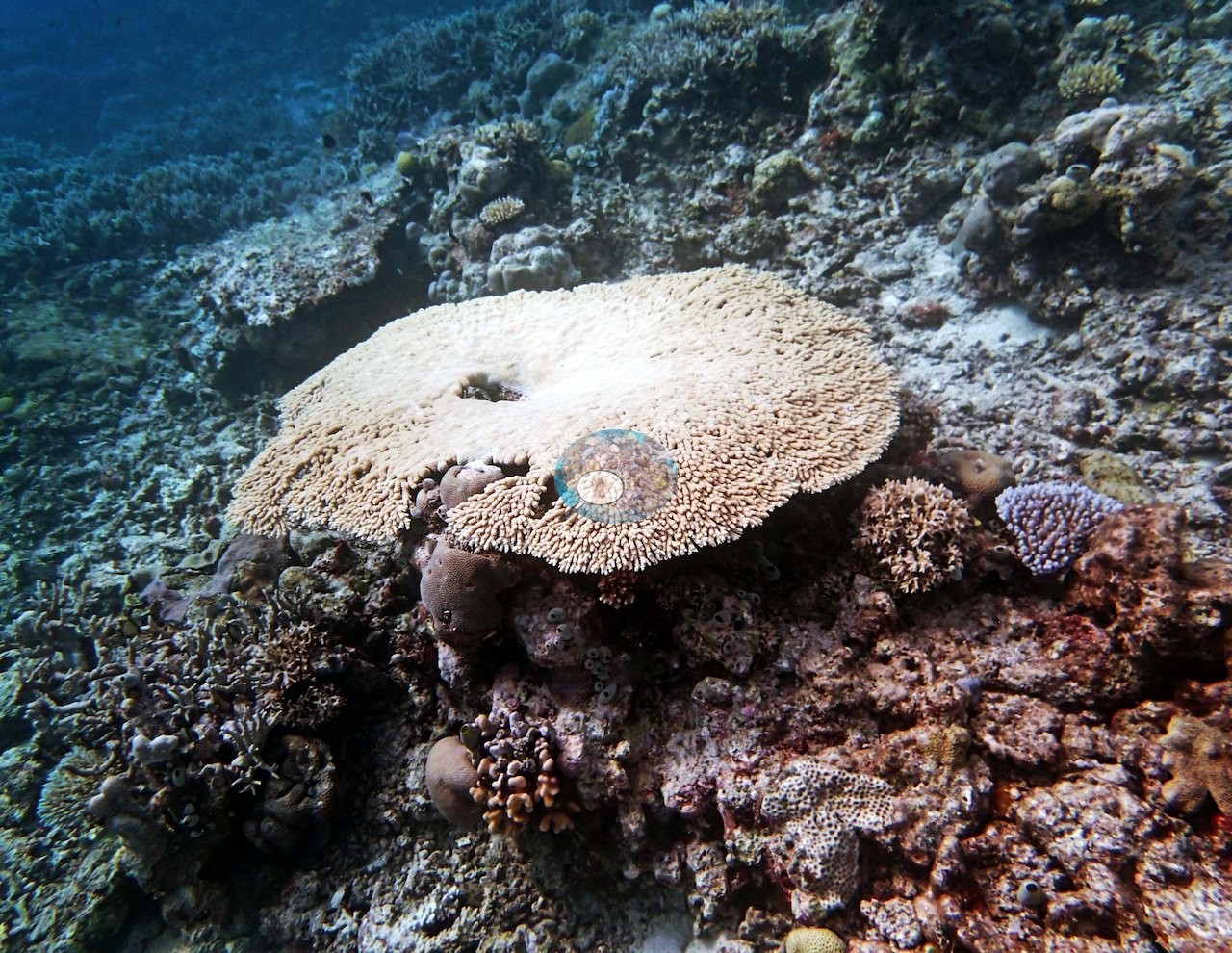
The notes record a diverse shallow assemblage of Pocillopora meandrina, P. verrucosa, Stylophora pistillata, and several Acropora species, with the dive's best patch — a dense Acropora thicket at 10.5 m — estimated by eye at 70-80% cover. The 32 posted frames range over the slope and crest. A single table colony well over two meters across, its golden surface unbroken, is cantilevered above bare sand (e.g., Image 1), and another broad table sits on rubble (e.g., Image 19).
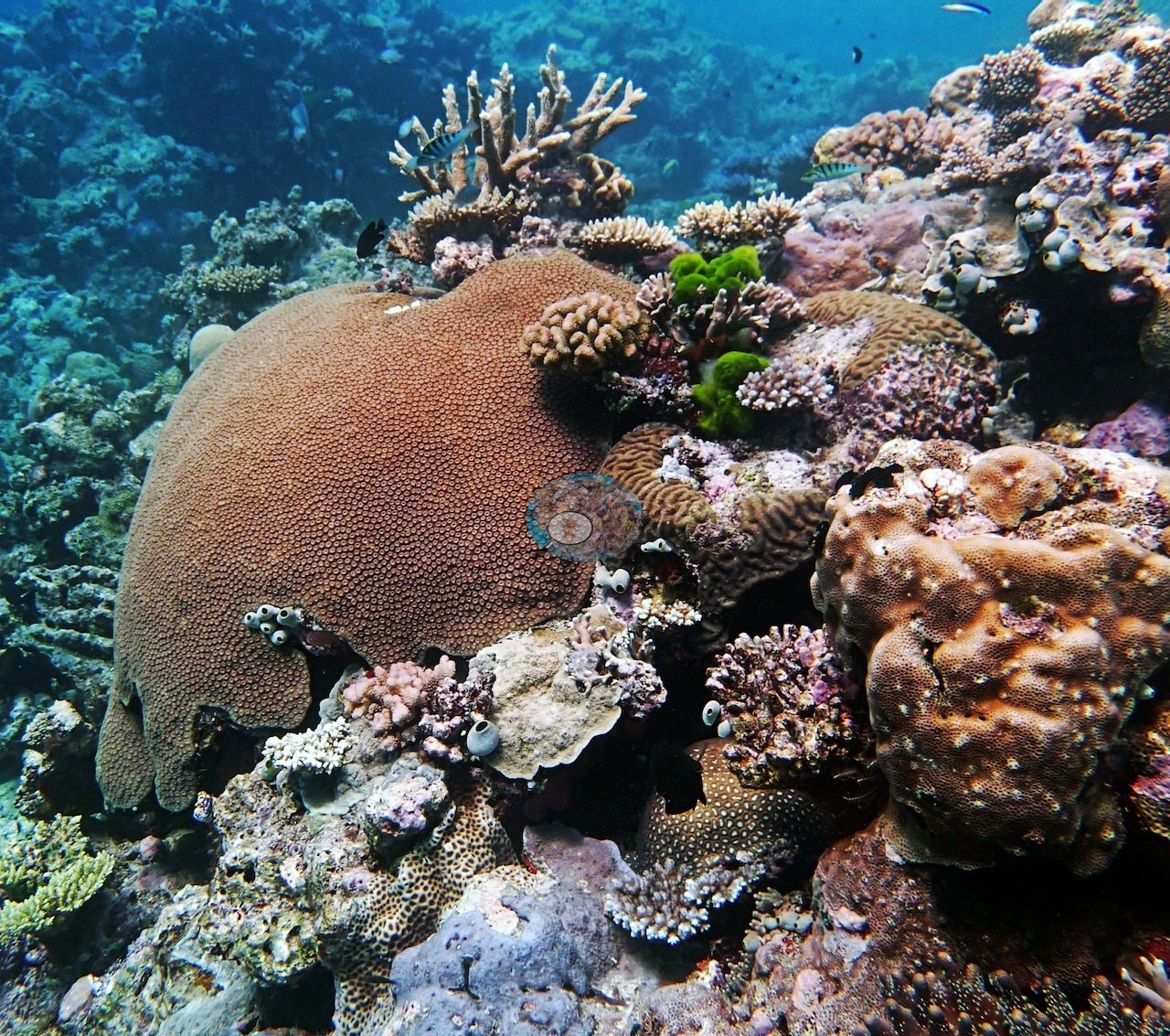
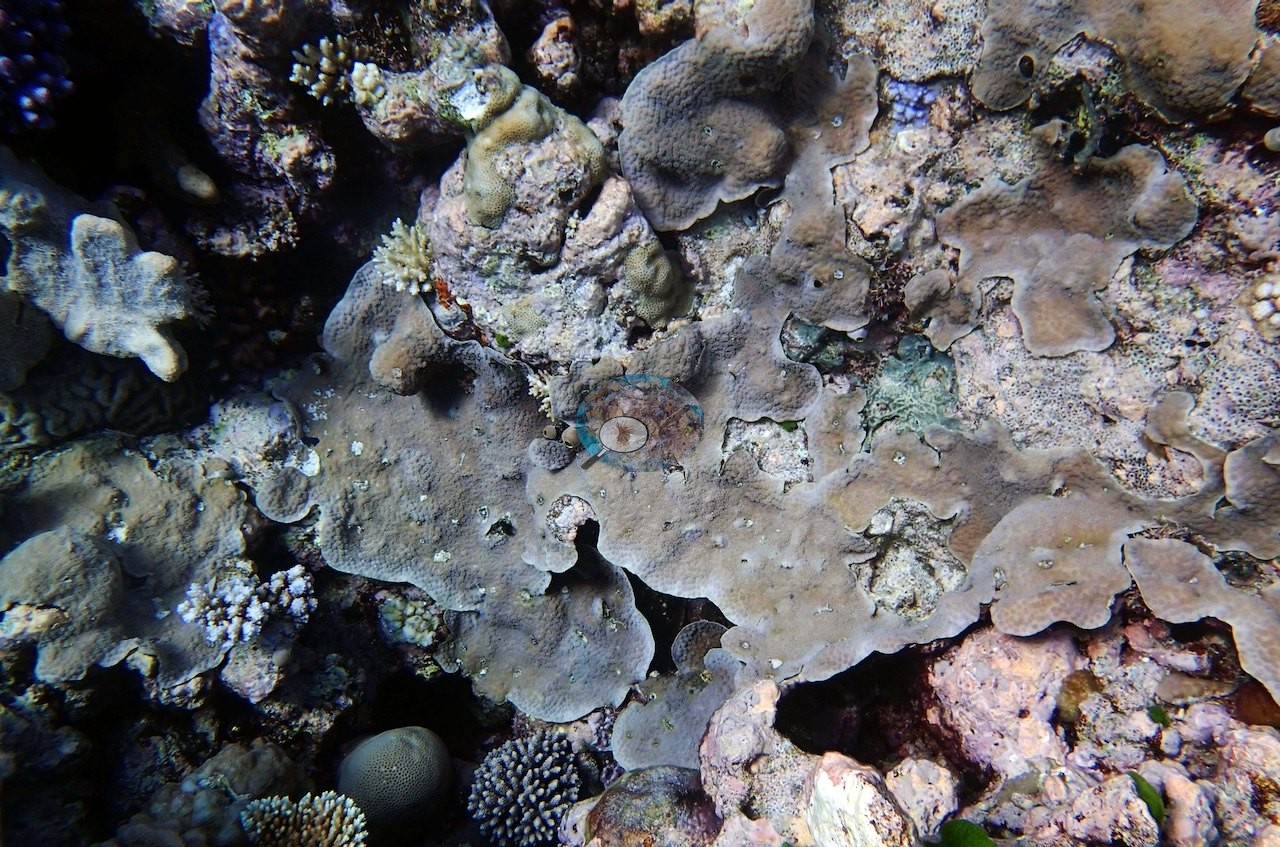
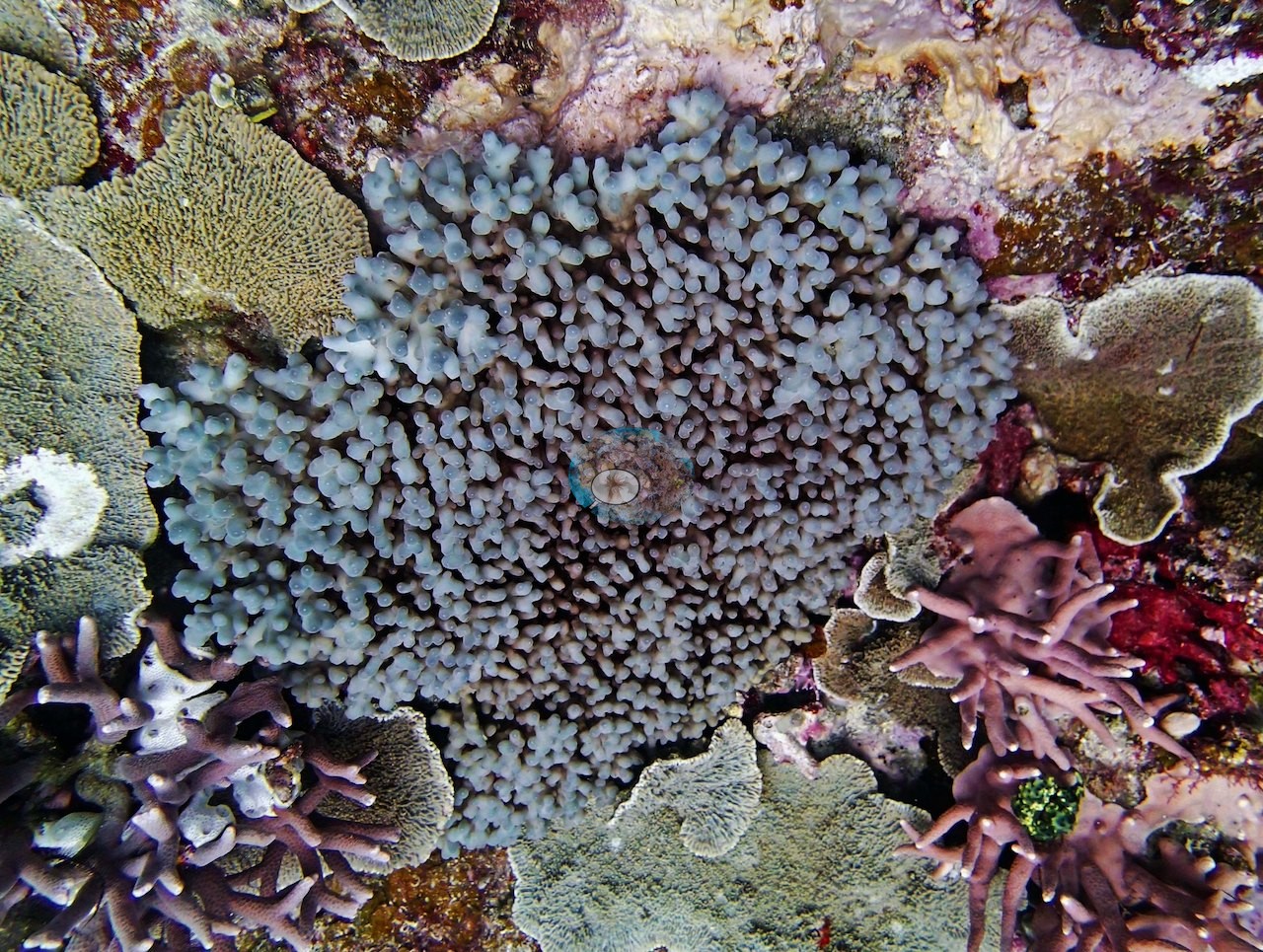
Wide frames show a crowded mix of mounding, columnar, corymbose, and branching colonies with bright green algal tufts in the gaps (e.g., Image 2, Image 3, Image 7, Image 12, Image 14, Image 17, Image 24, Image 29, Image 30, Image 32); others look down the slope past massive domes and plating colonies (e.g., Image 6, Image 10, Image 16, Image 18, Image 20, Image 23, Image 26, Image 31).
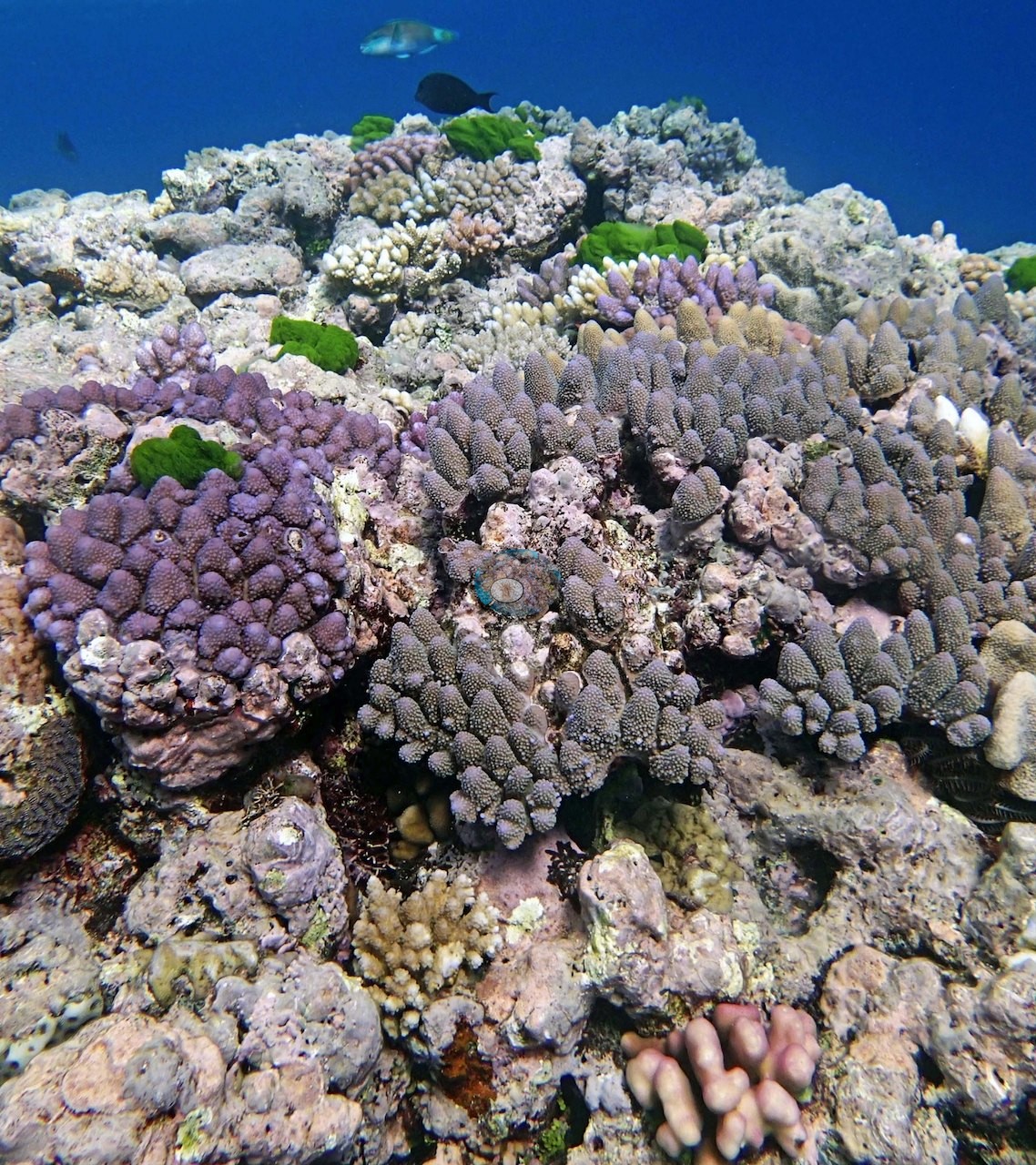
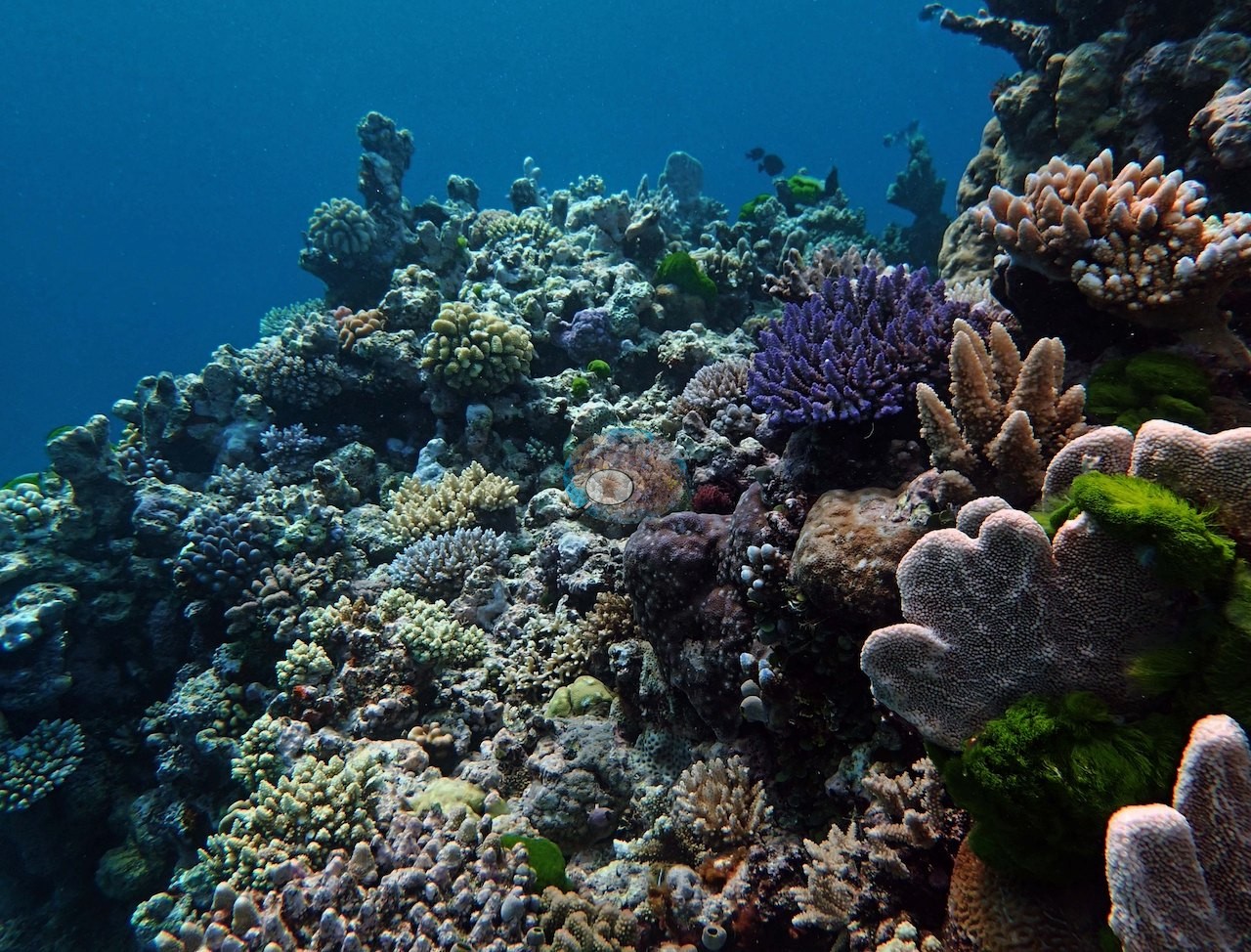
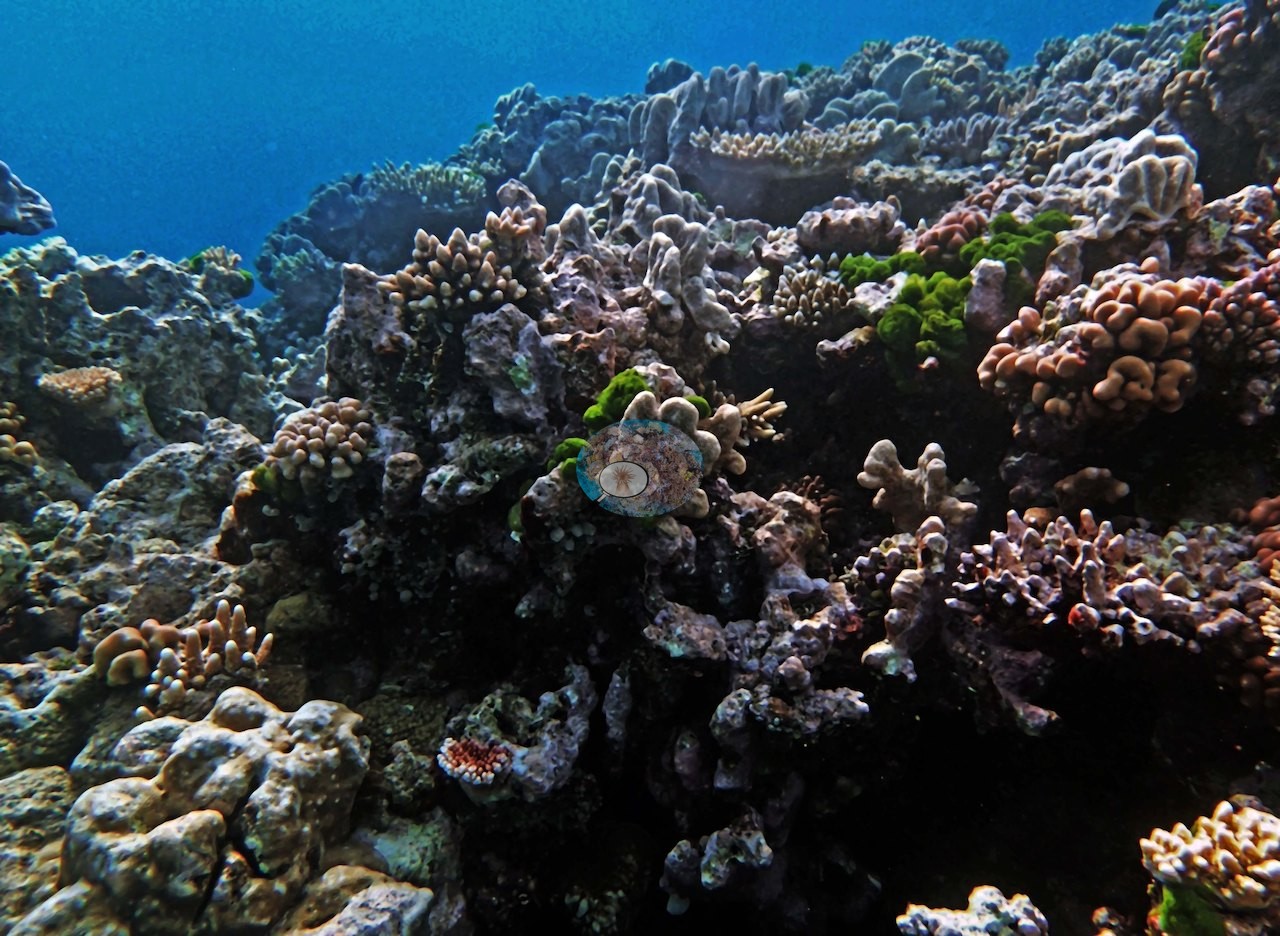
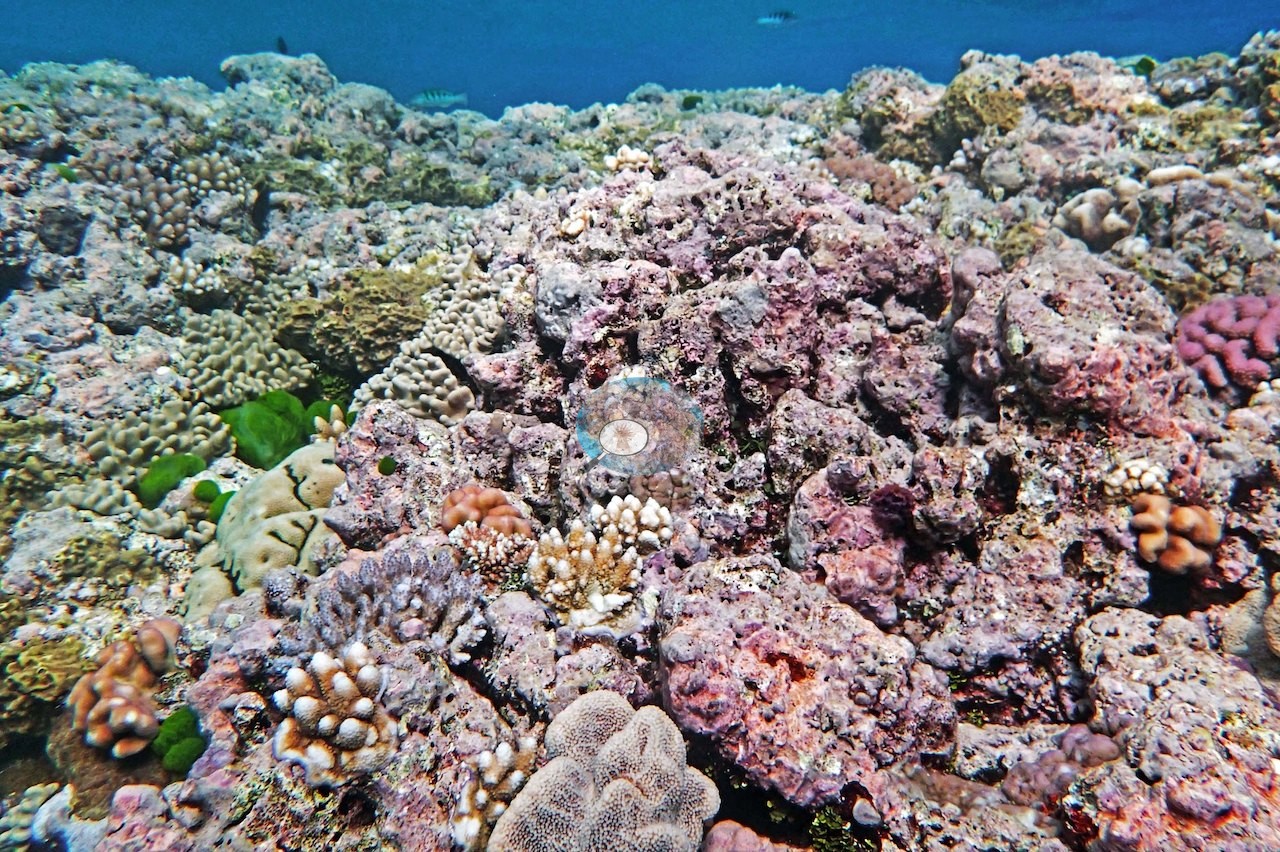
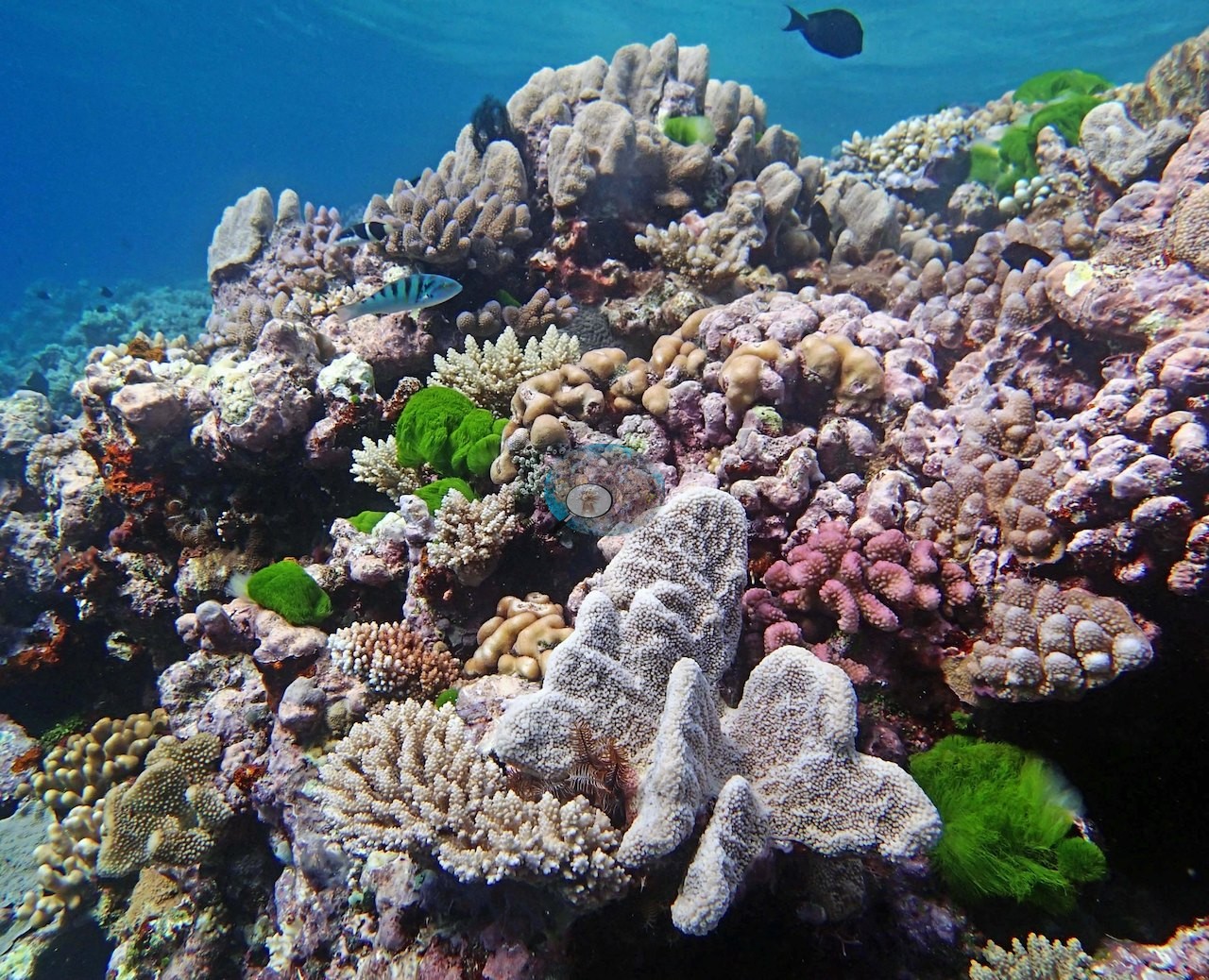
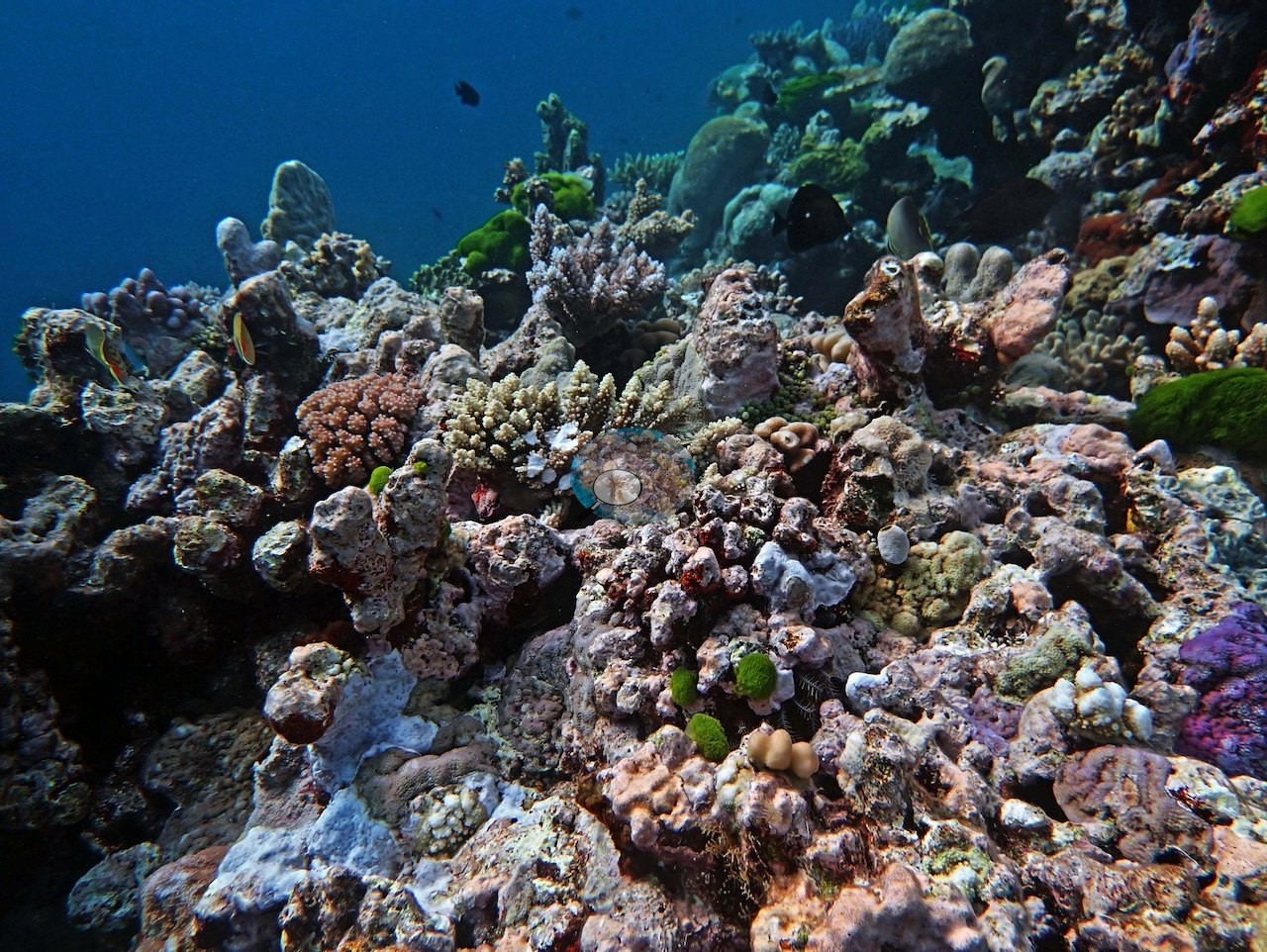
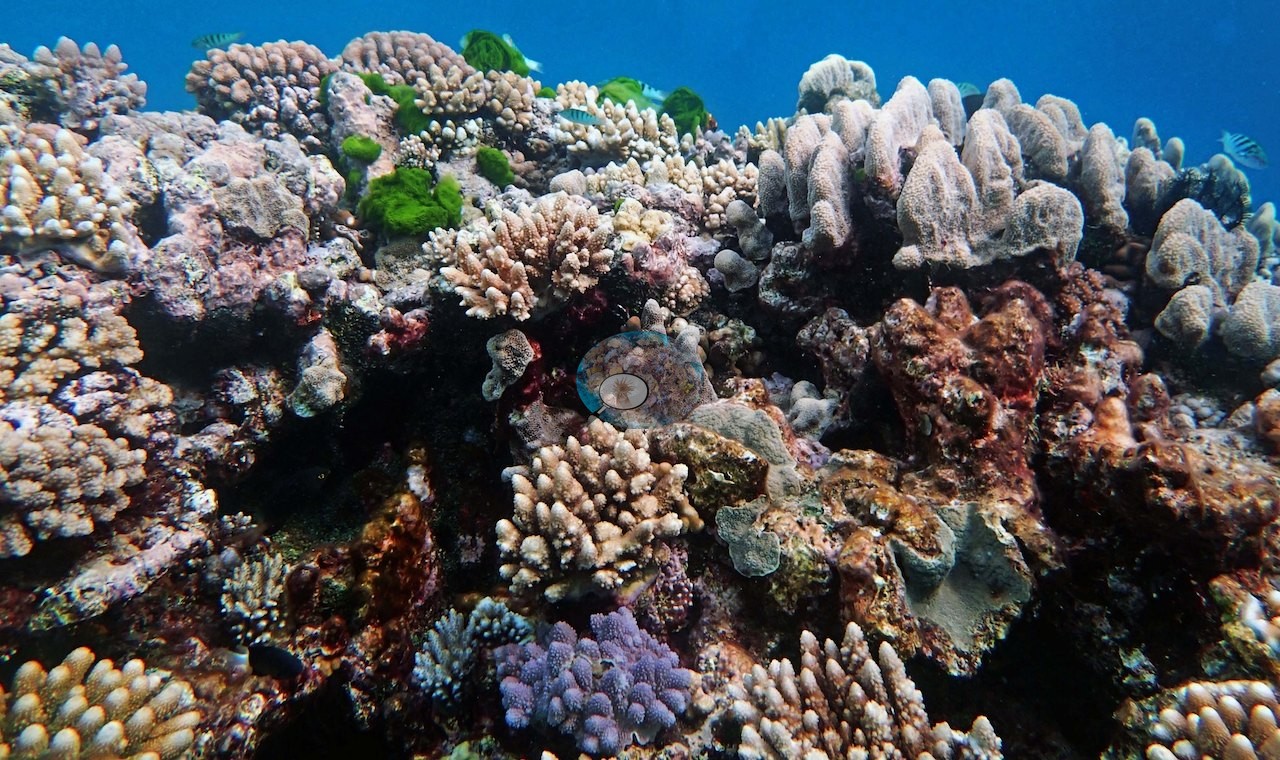
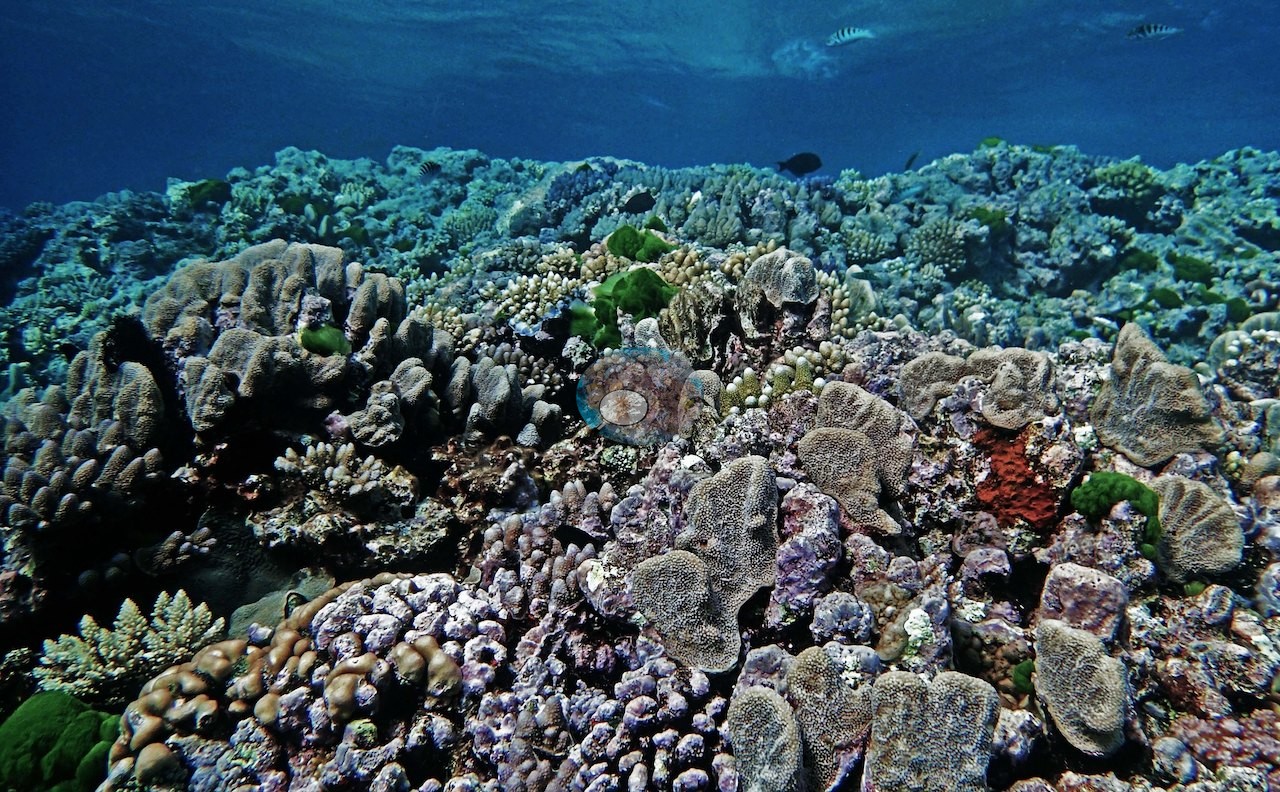
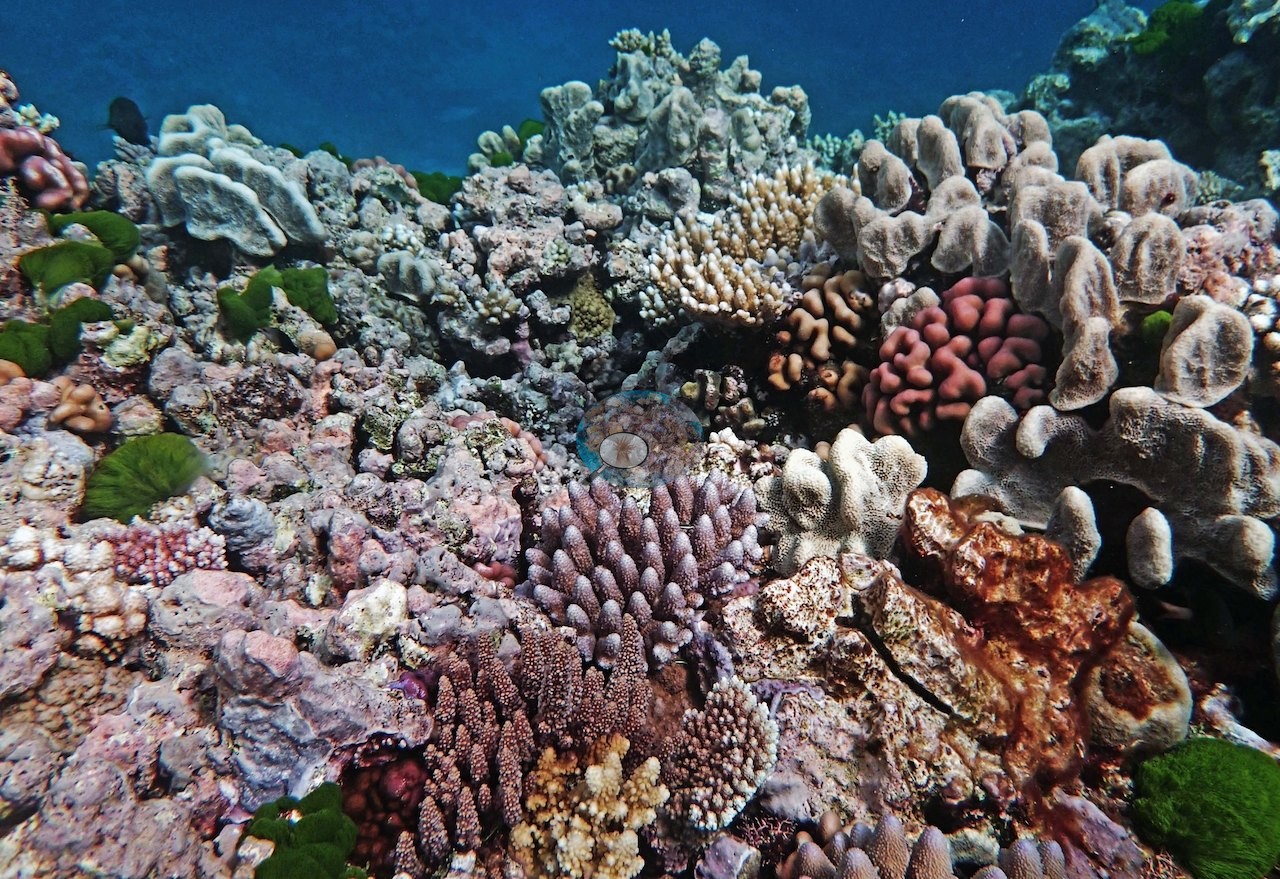
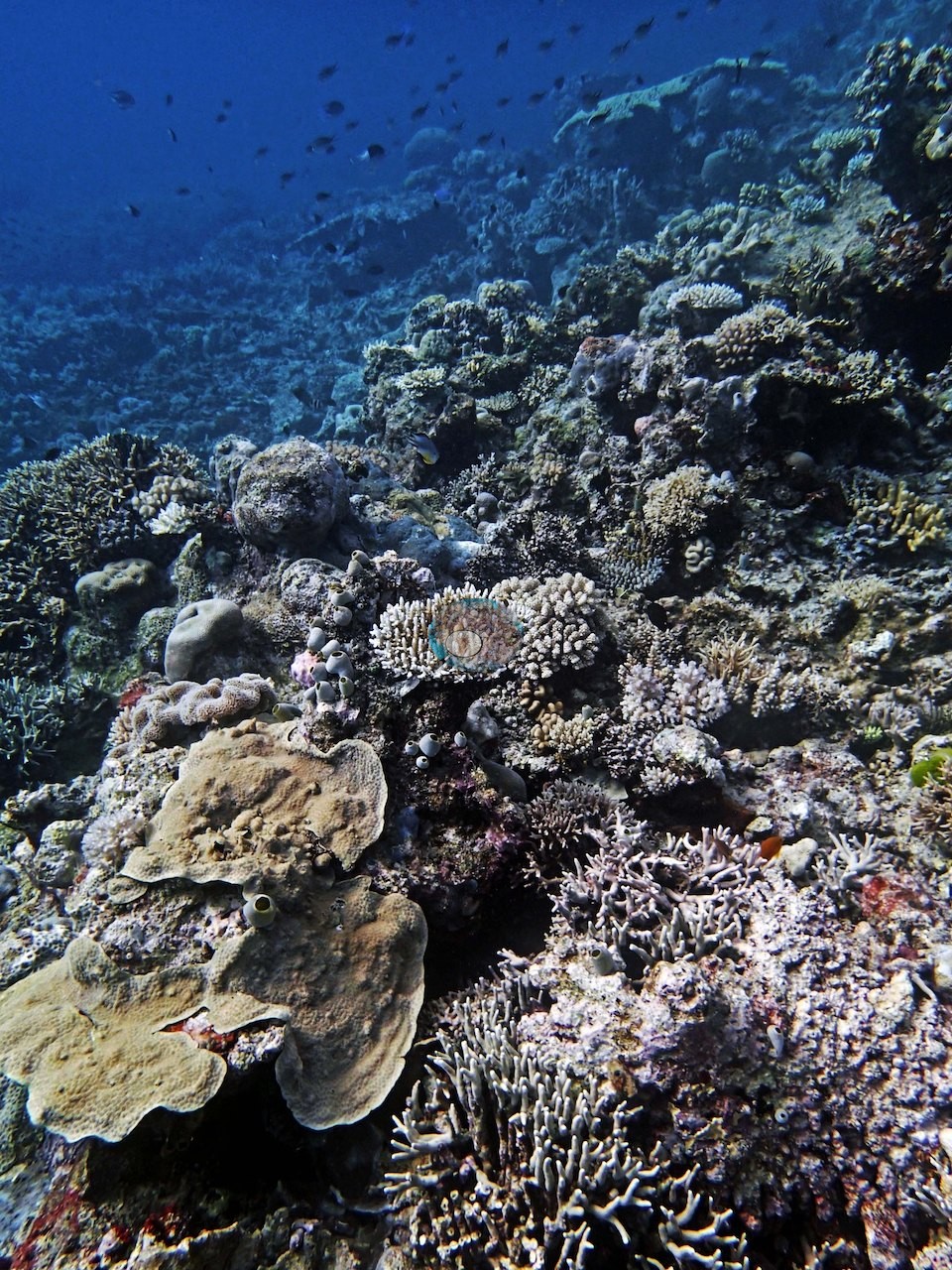
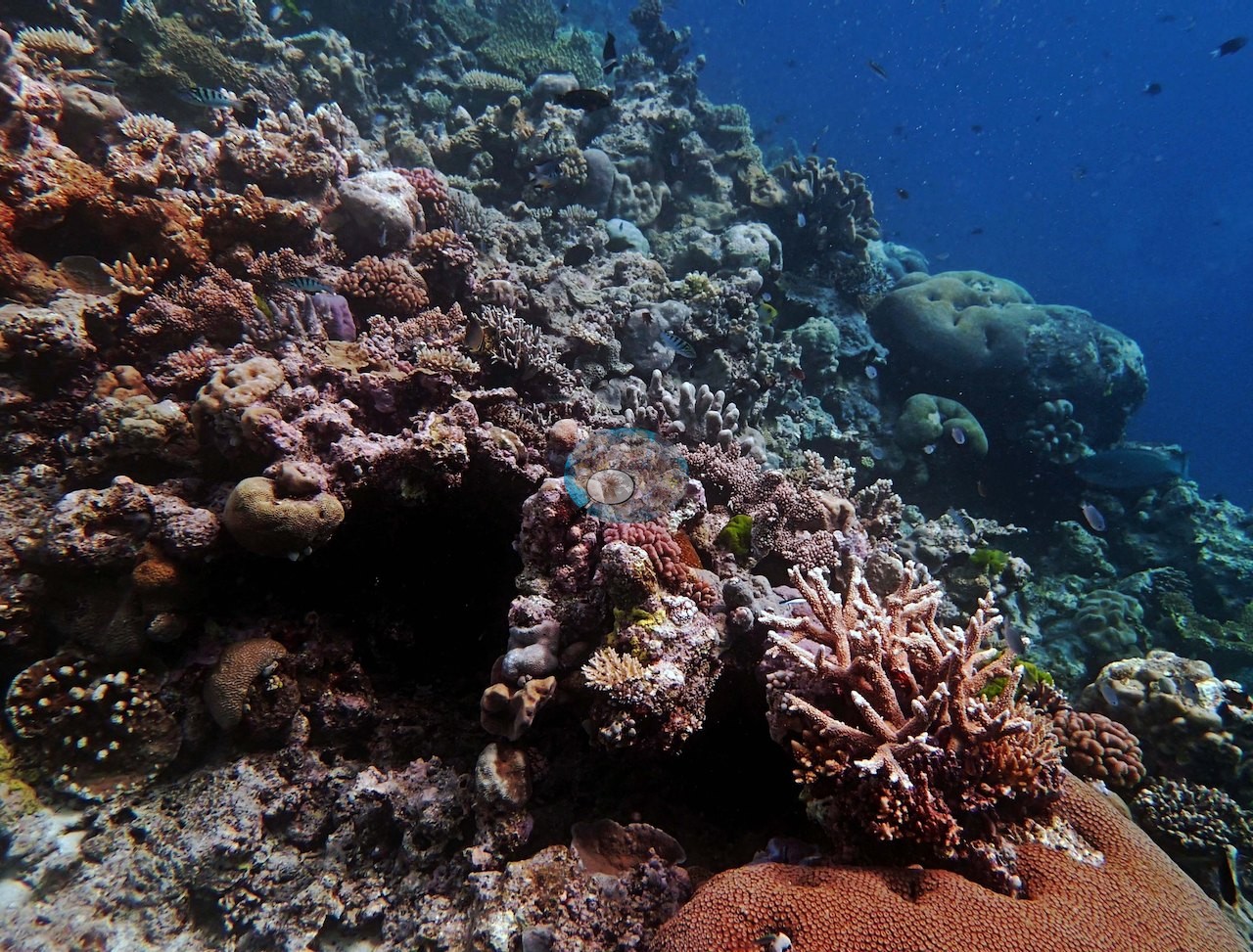
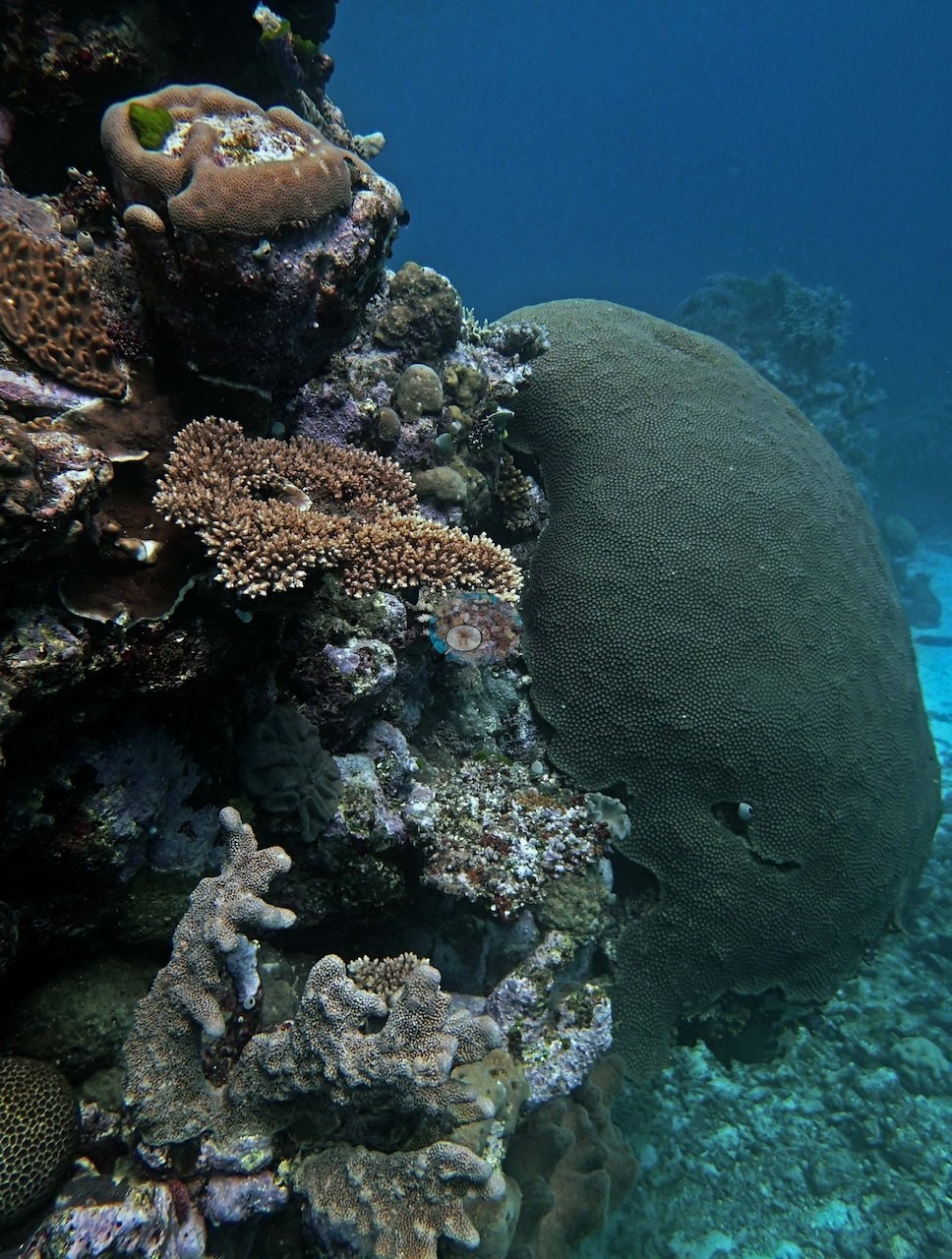
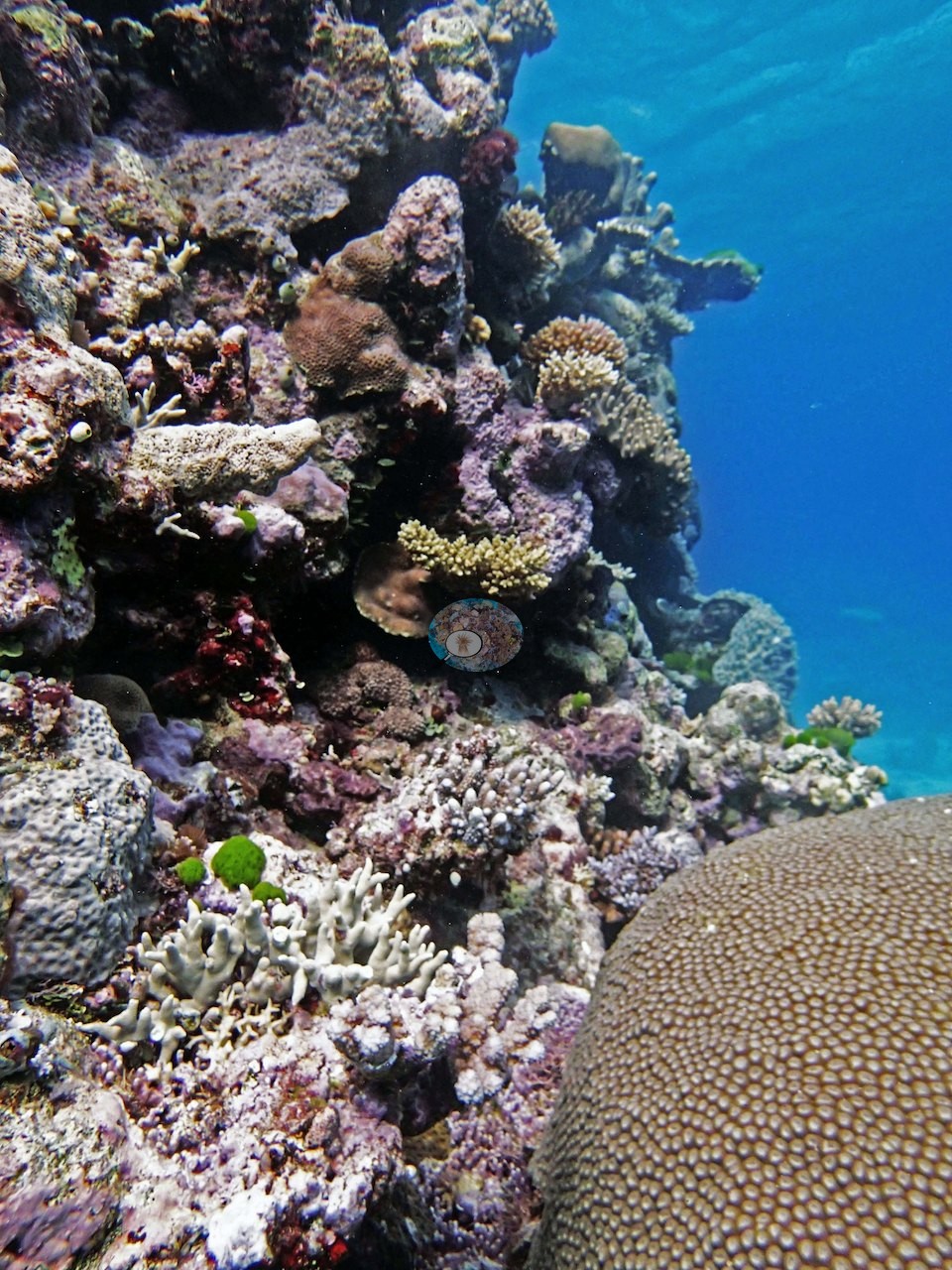
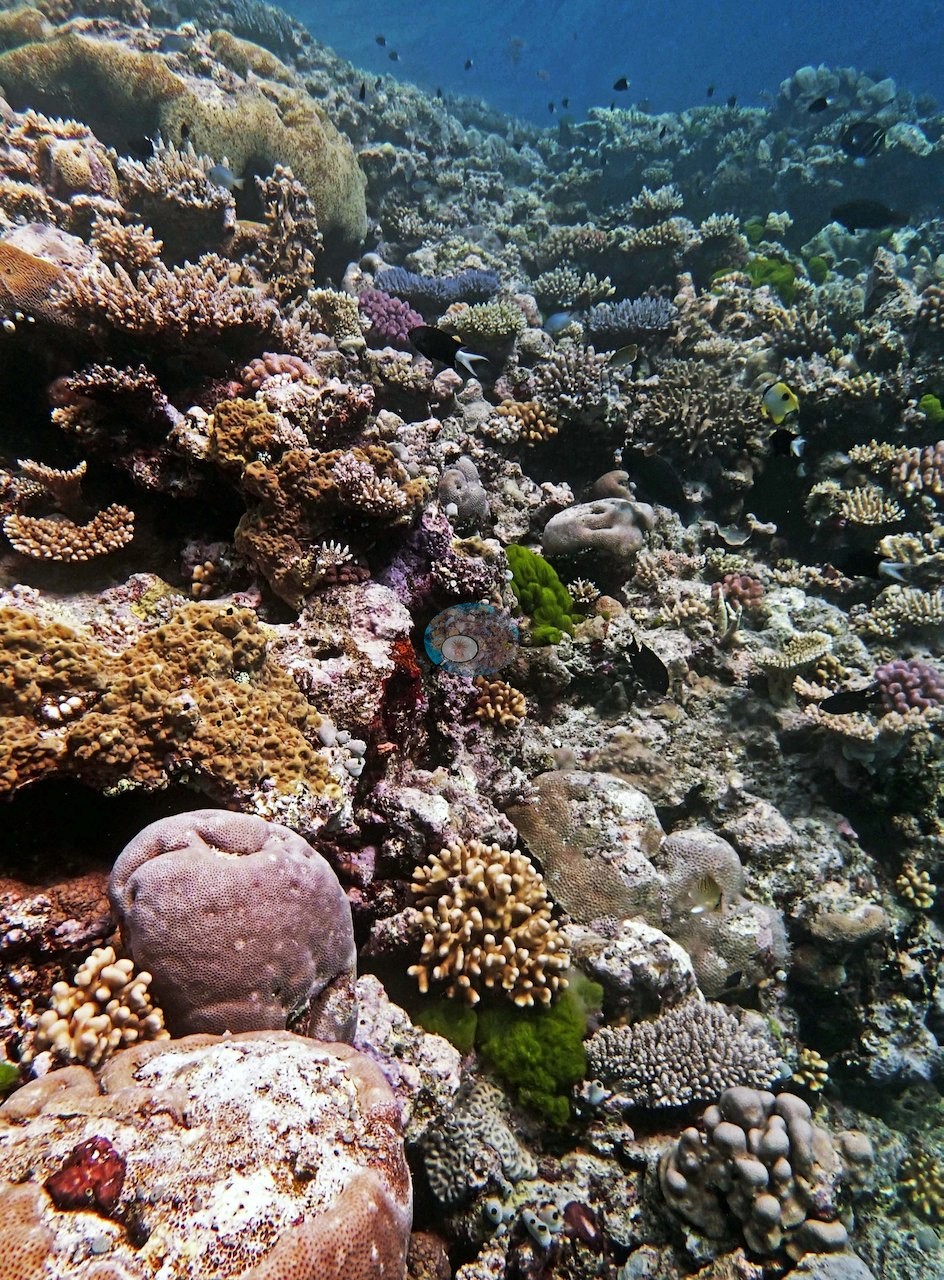
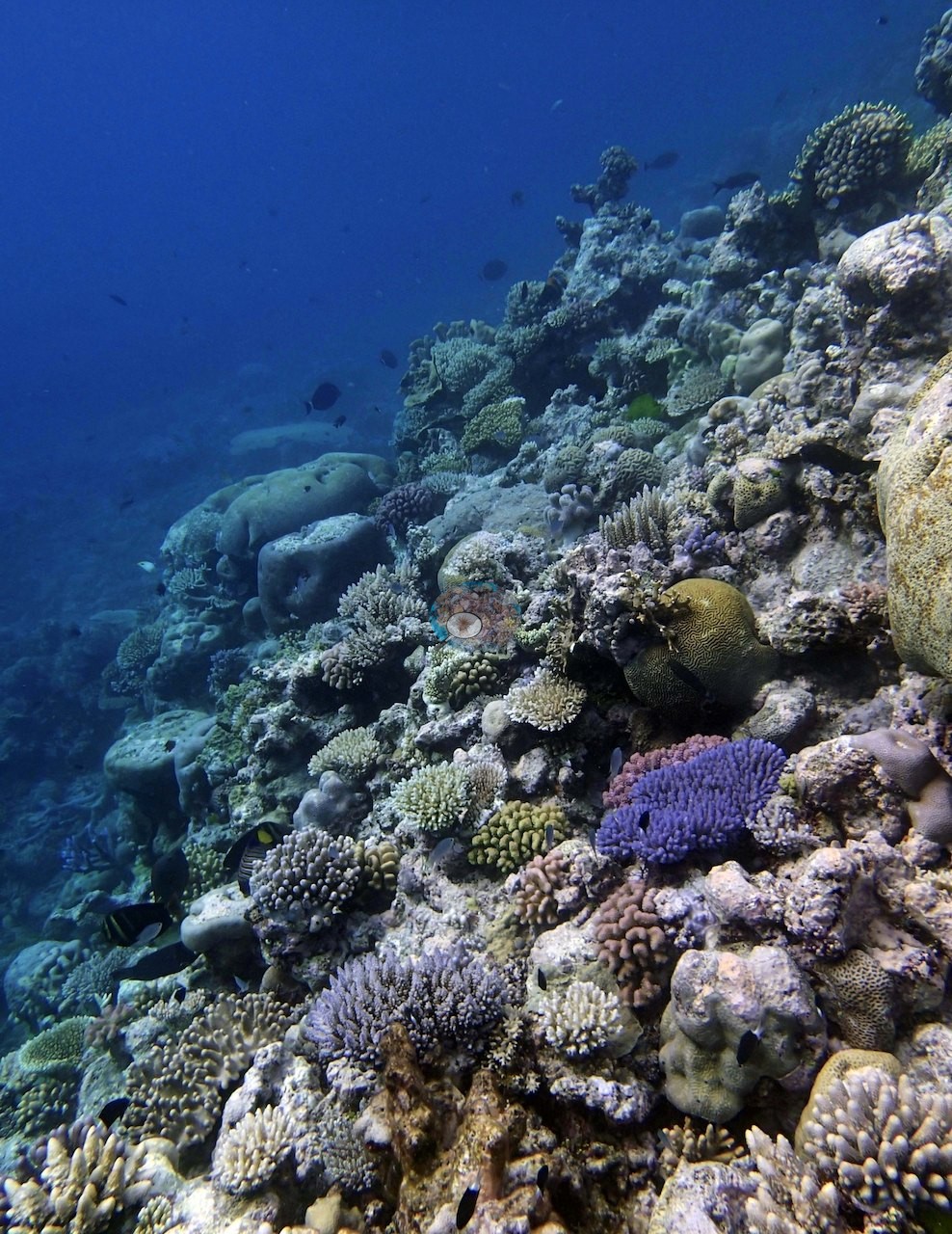
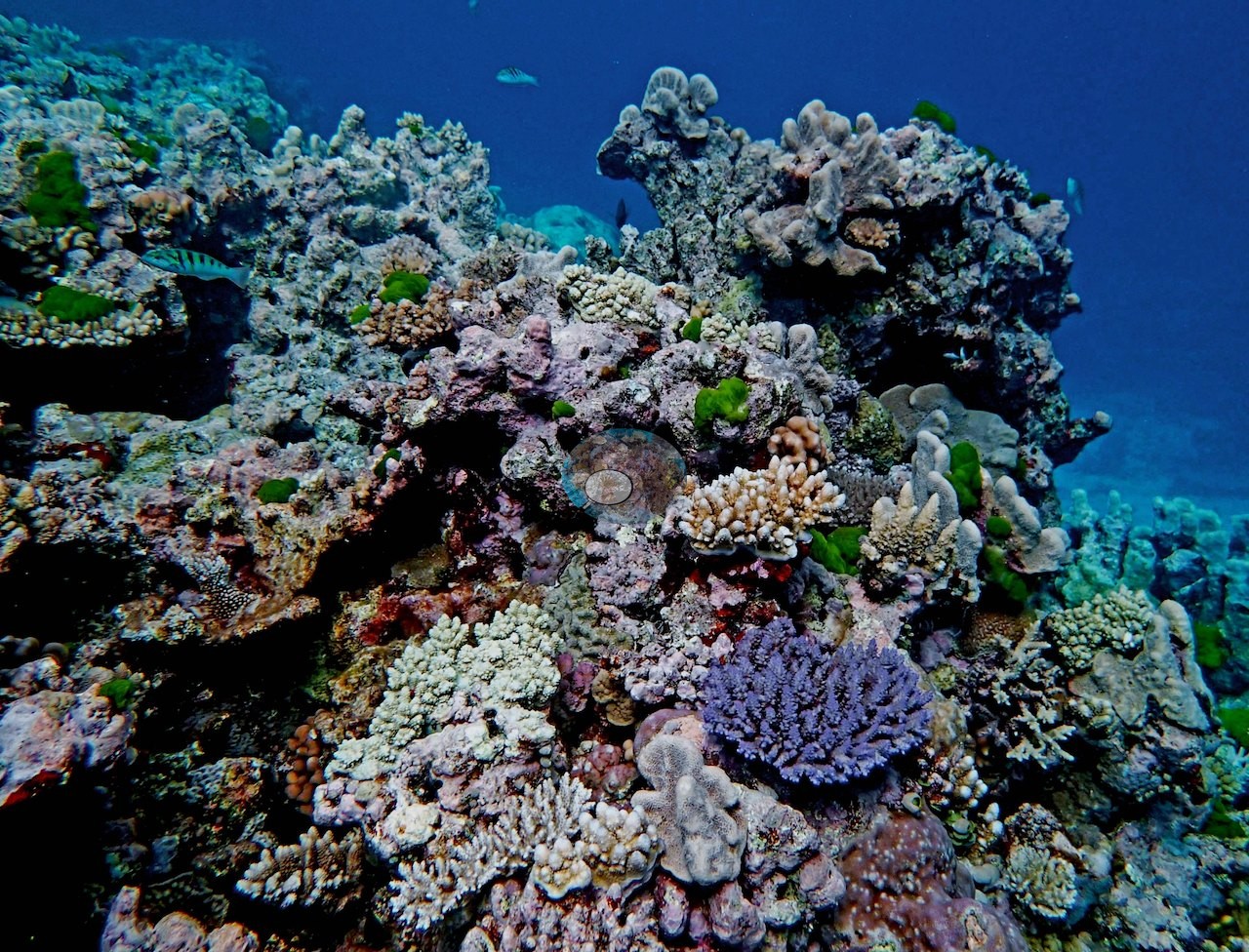
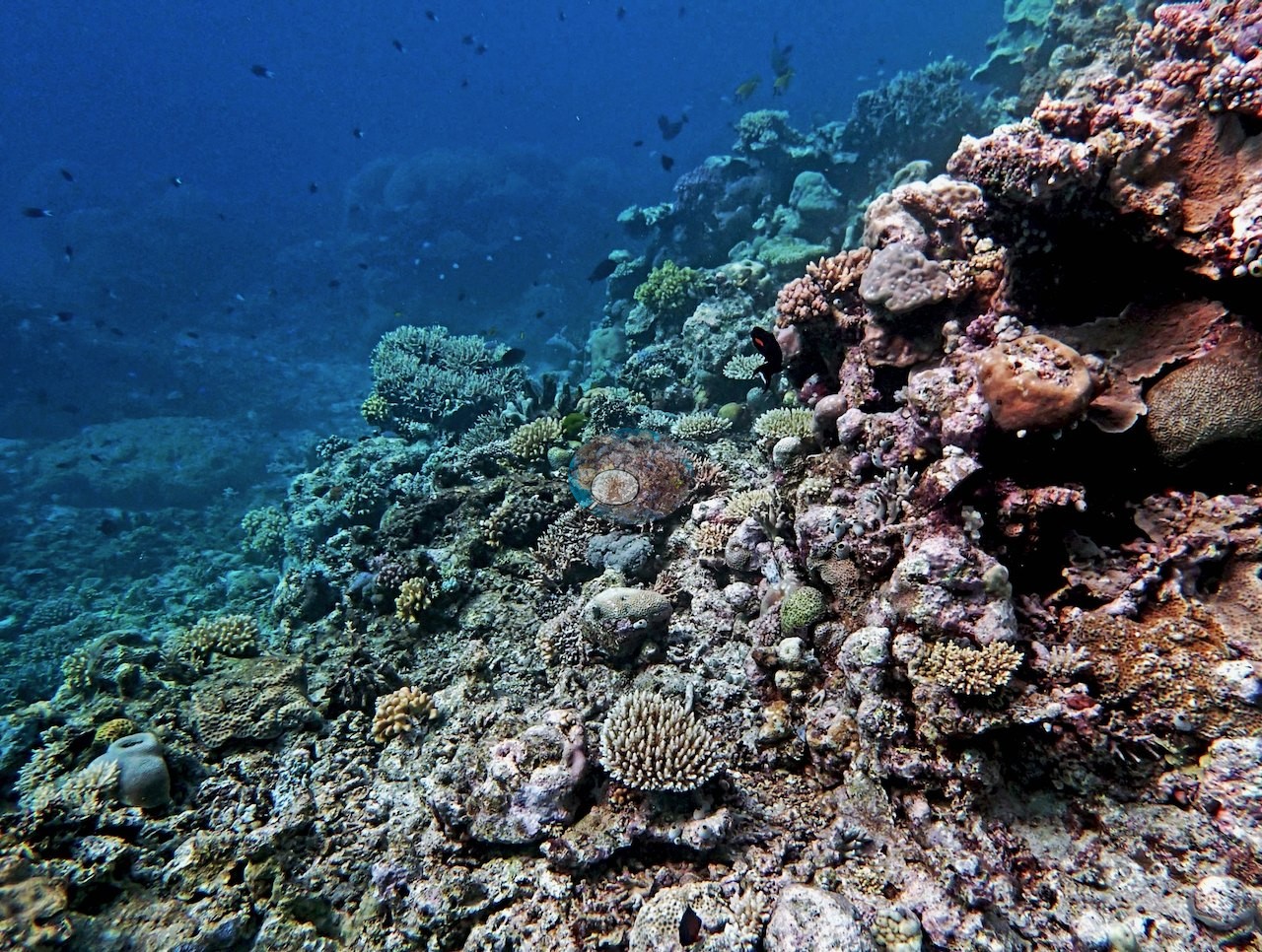
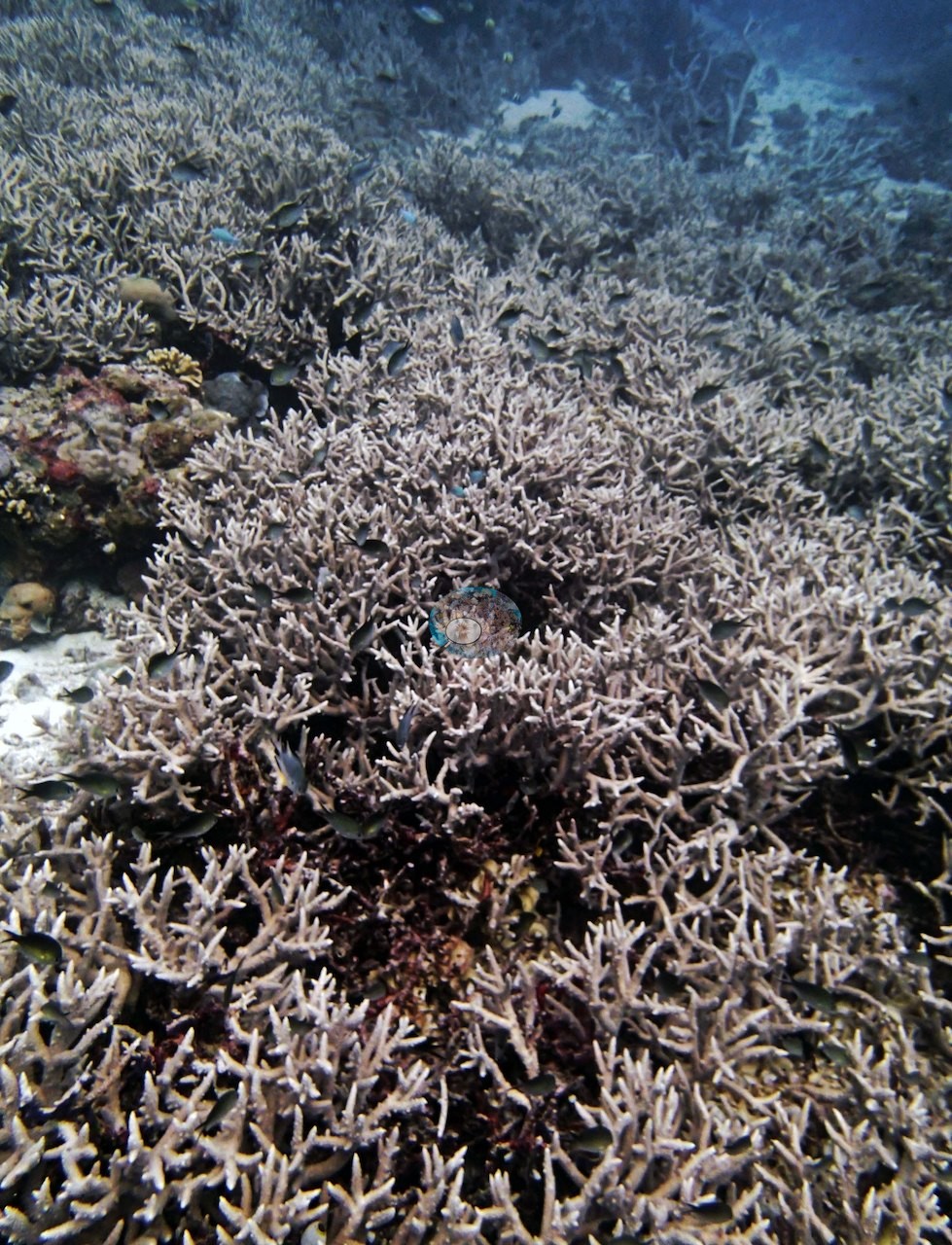
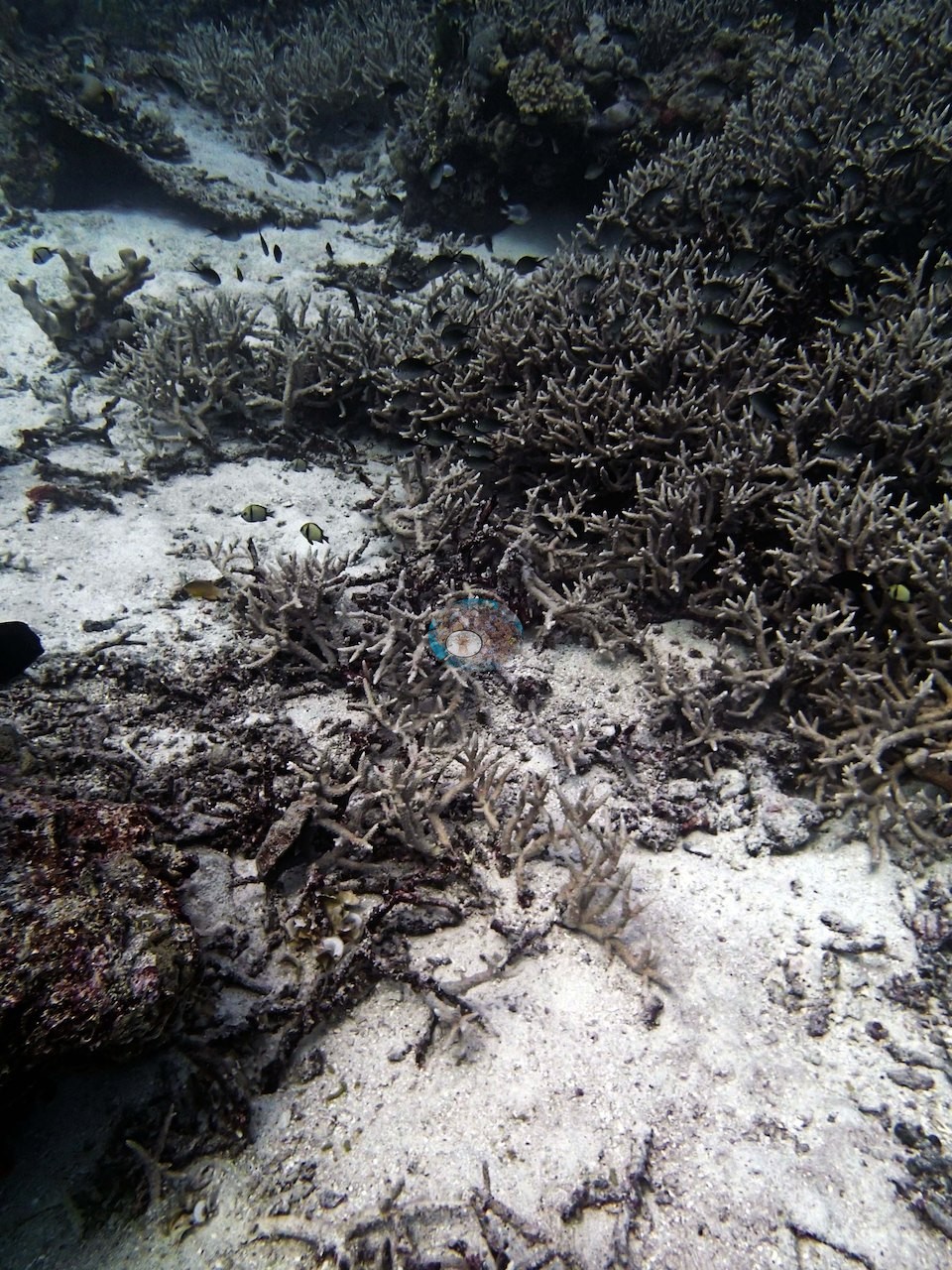
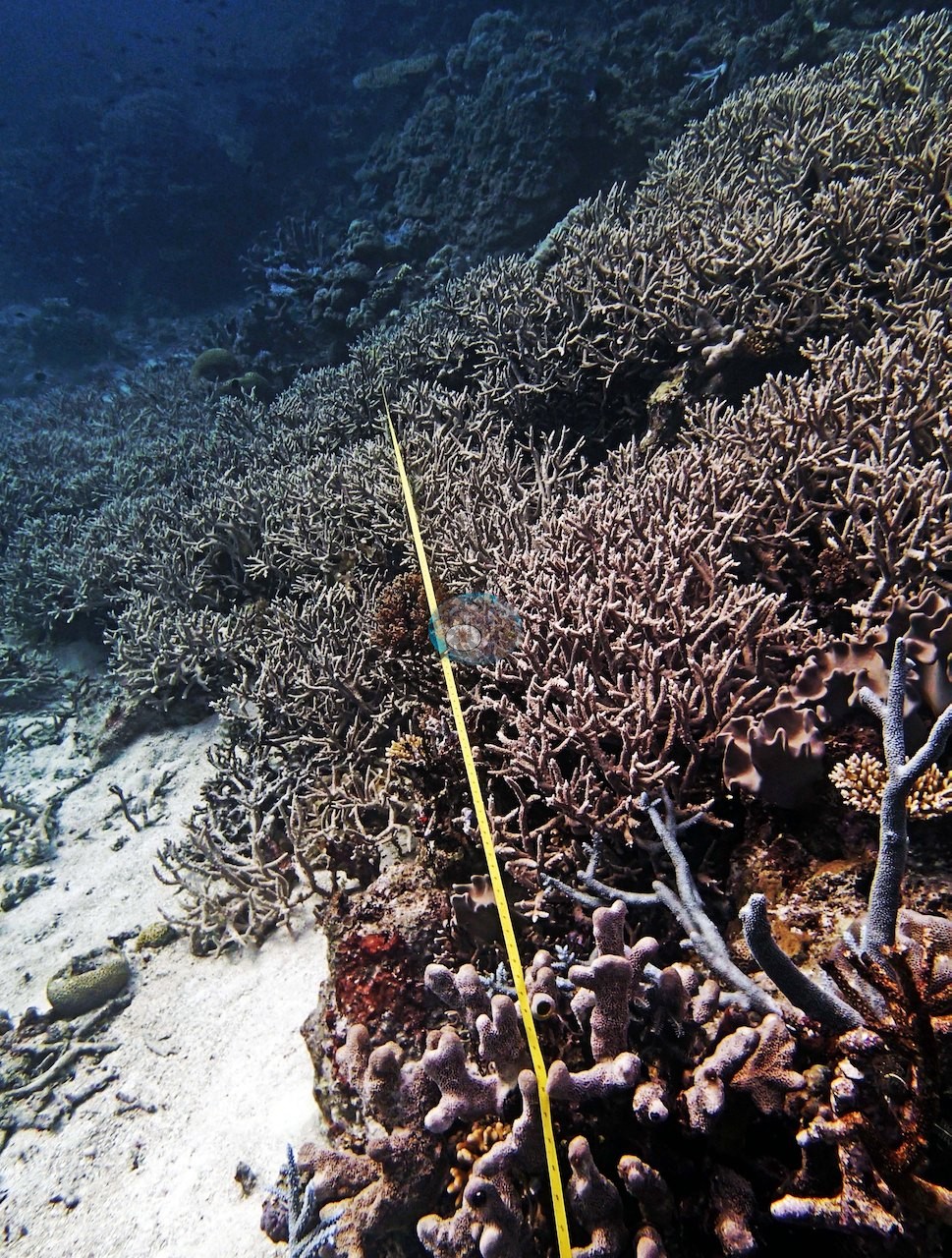
Dense gray bottlebrush and staghorn thickets run to the frame edge in two frames (e.g., Image 4, Image 11), and one thicket ends at a sand margin strewn with old, dark dead fragments (e.g., Image 15); the survey tape drops through branching thickets to a clean sand margin in Image 5.
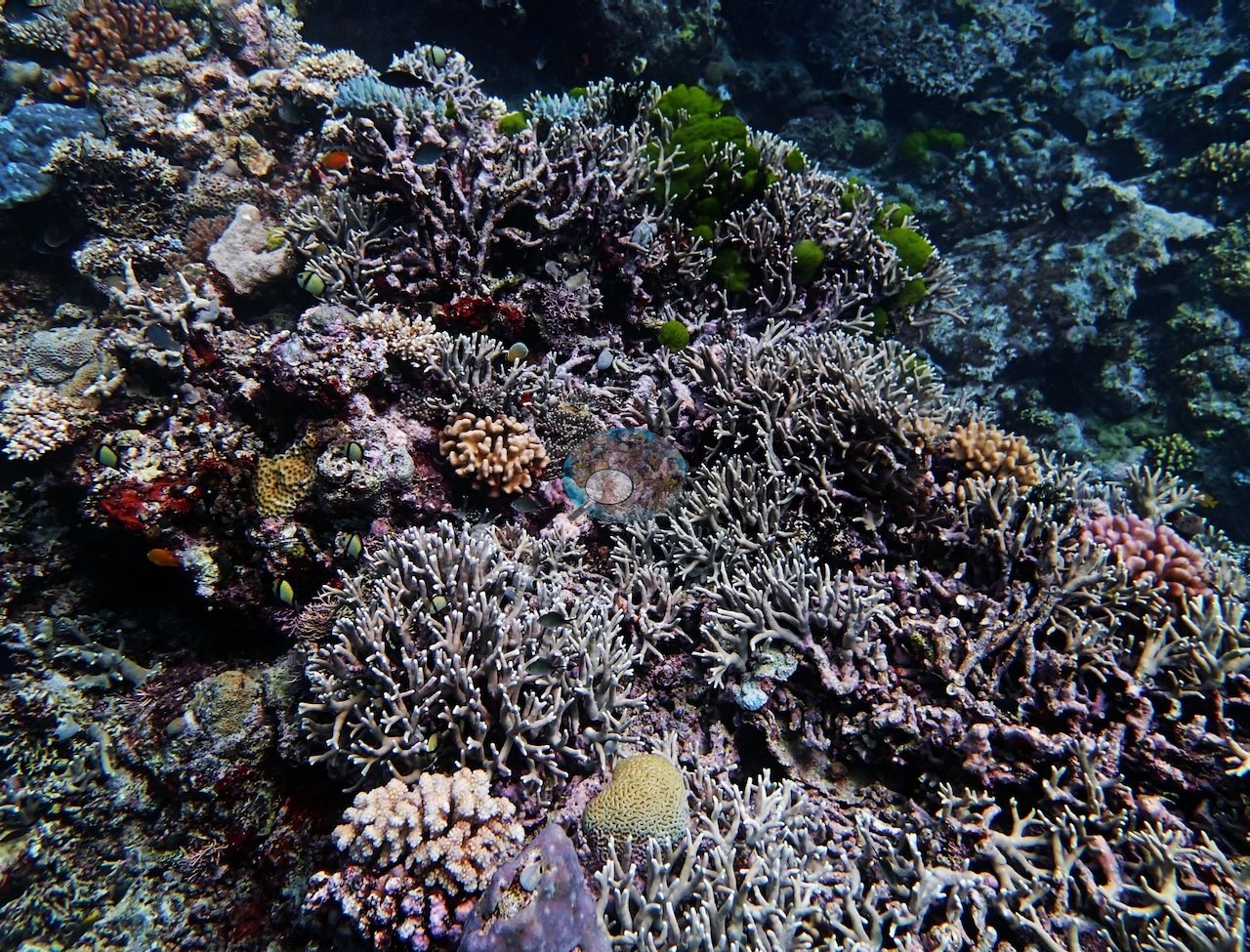
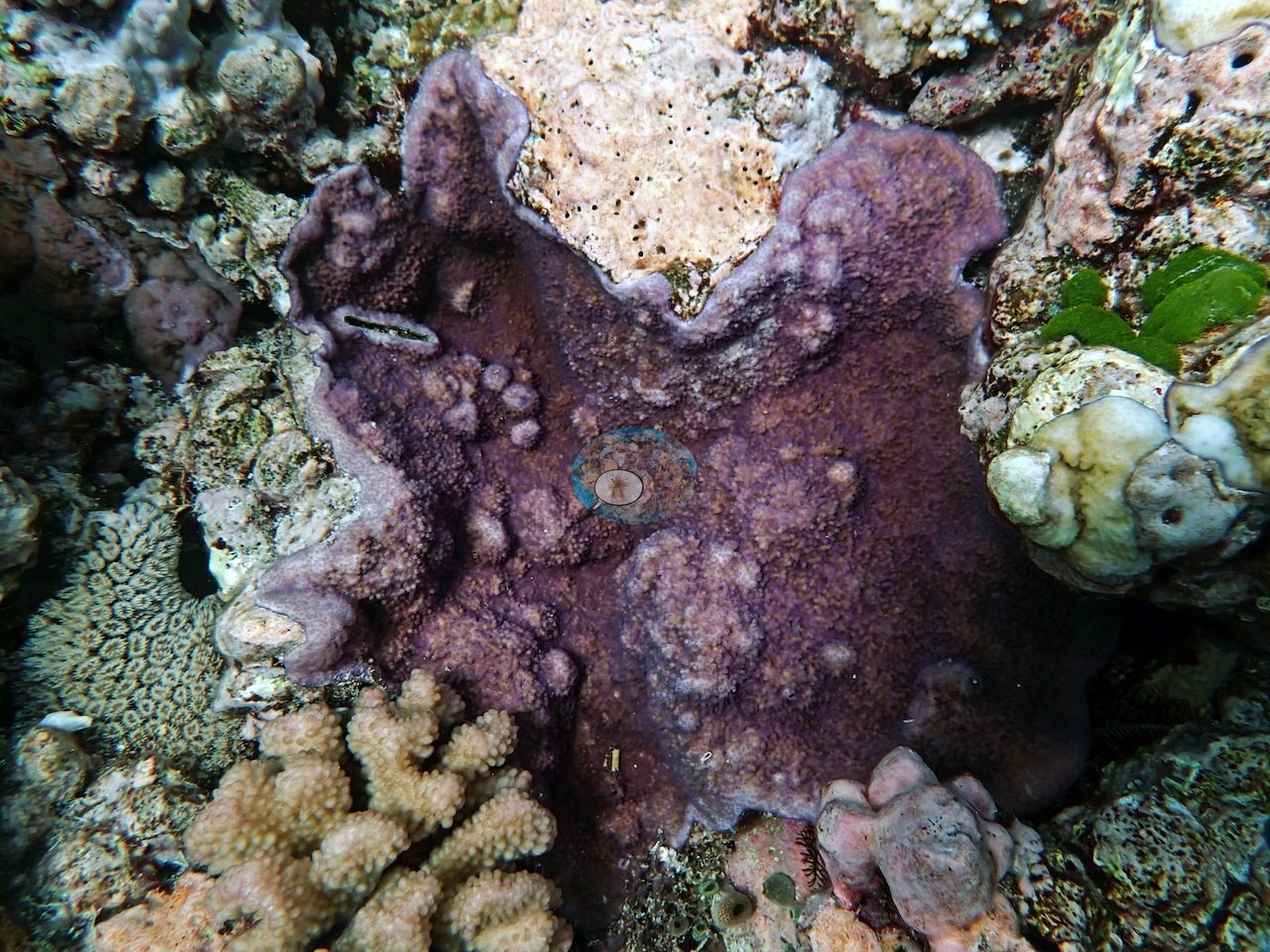
Closer frames show a purple encrusting colony beside coralline-crusted framework (e.g., Image 8), a broad plating colony (e.g., Image 22), and a gray fine-branching colony among pink and red growths (e.g., Image 27).
Coral cover
- Reference: Khaled bin Sultan Living Oceans Foundation, Global Reef Expedition (in situ transect)
- On the day's third dive (28 September 2014), which Anderson logged as Unnamed Reef 128, at this Five Reefs station the expedition's point-count transects read 62% live coral.
- Transect mean 62 ± 8.3% SE (n = 4 transects; Living Oceans Foundation per-transect benthic data); the headline above is the expedition's station value.
Stressors
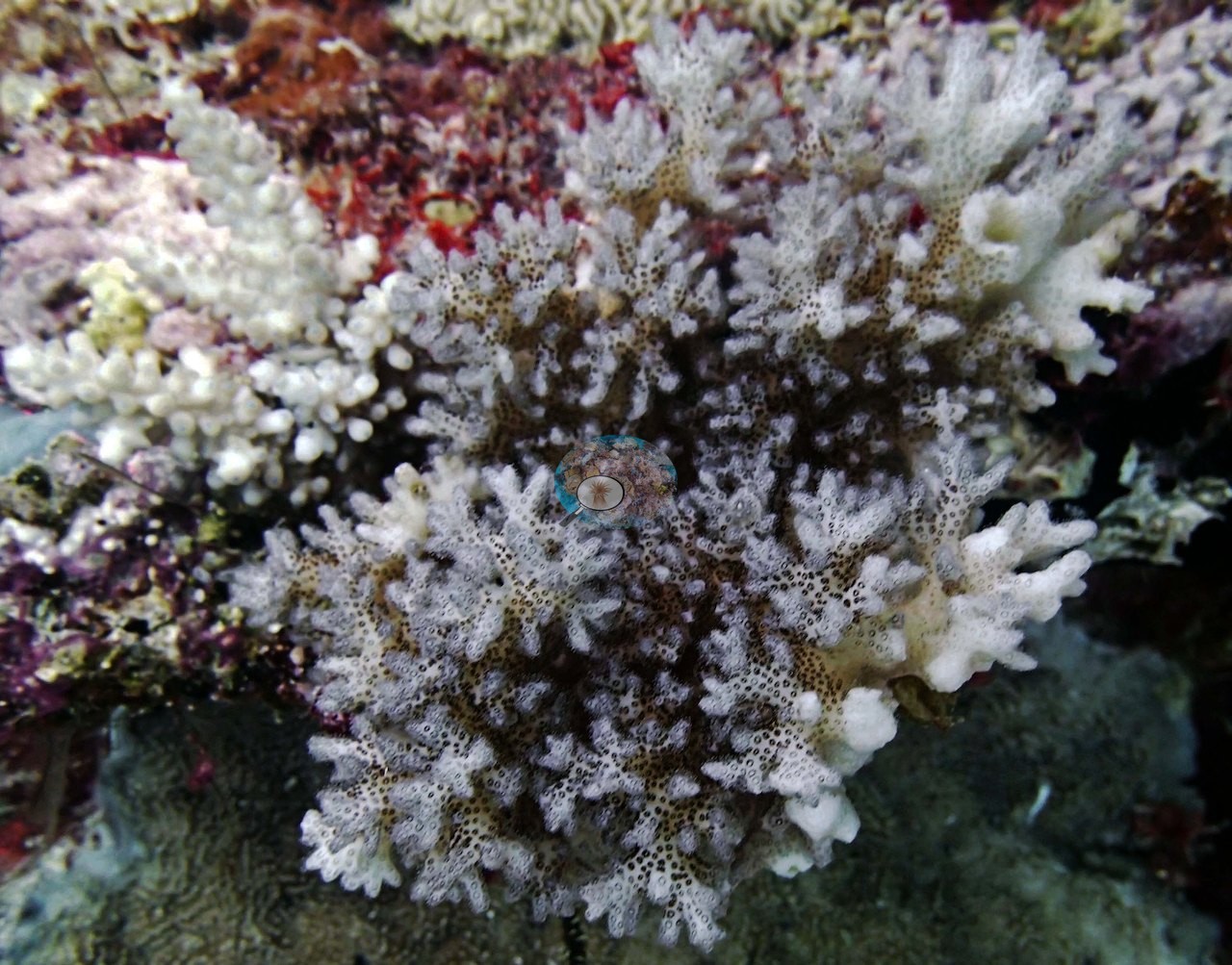
Recorded condition: bleached Seriatopora hystrix at 6-7 m and sickly S. hystrix deeper at 20 m. One frame shows two fine-branching colonies on red- and pink-crusted rock, the left one stark white and the right one pale with white branch ends, consistent with the bleached needle corals in his notes (e.g., Image 9).
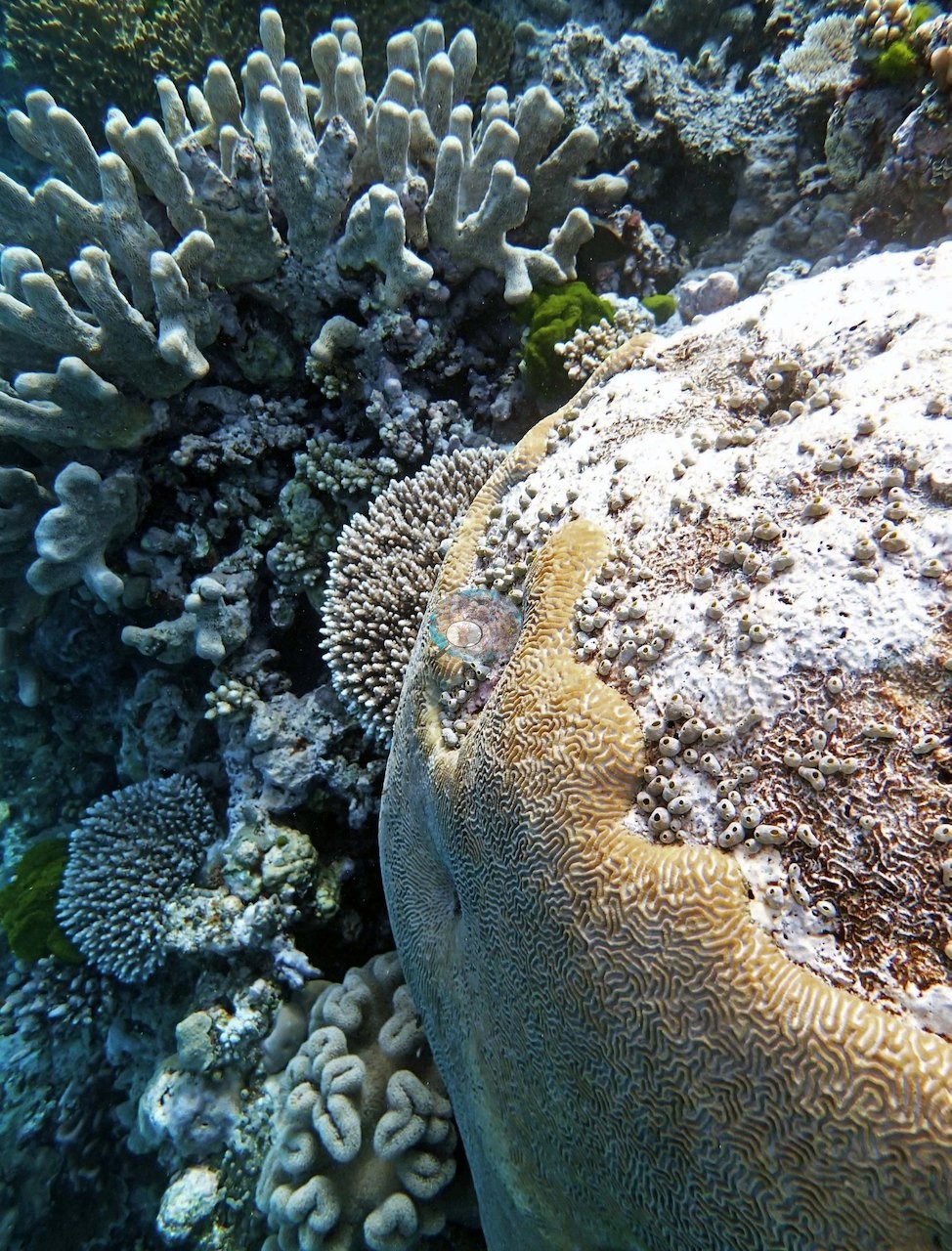
A large meandroid dome is recently dead over its upper half: the bare white surface there carries a thin brown film and small settled tube organisms, while the lower band keeps living tissue; the cause is unclear (e.g., Image 21).
Regional context, not an observation here: the survey pre-dates the 2016 mass bleaching by about eighteen months; that event severely bleached hundreds of reefs on the northern Great Barrier Reef (Hughes et al. 2017), and the 5-year mean annual maximum thermal stress at the Far Northern GBR virtual station is 11.1 degree heating weeks. No crown-of-thorns starfish (COTS) or other corallivores evident.
Fish and other fauna
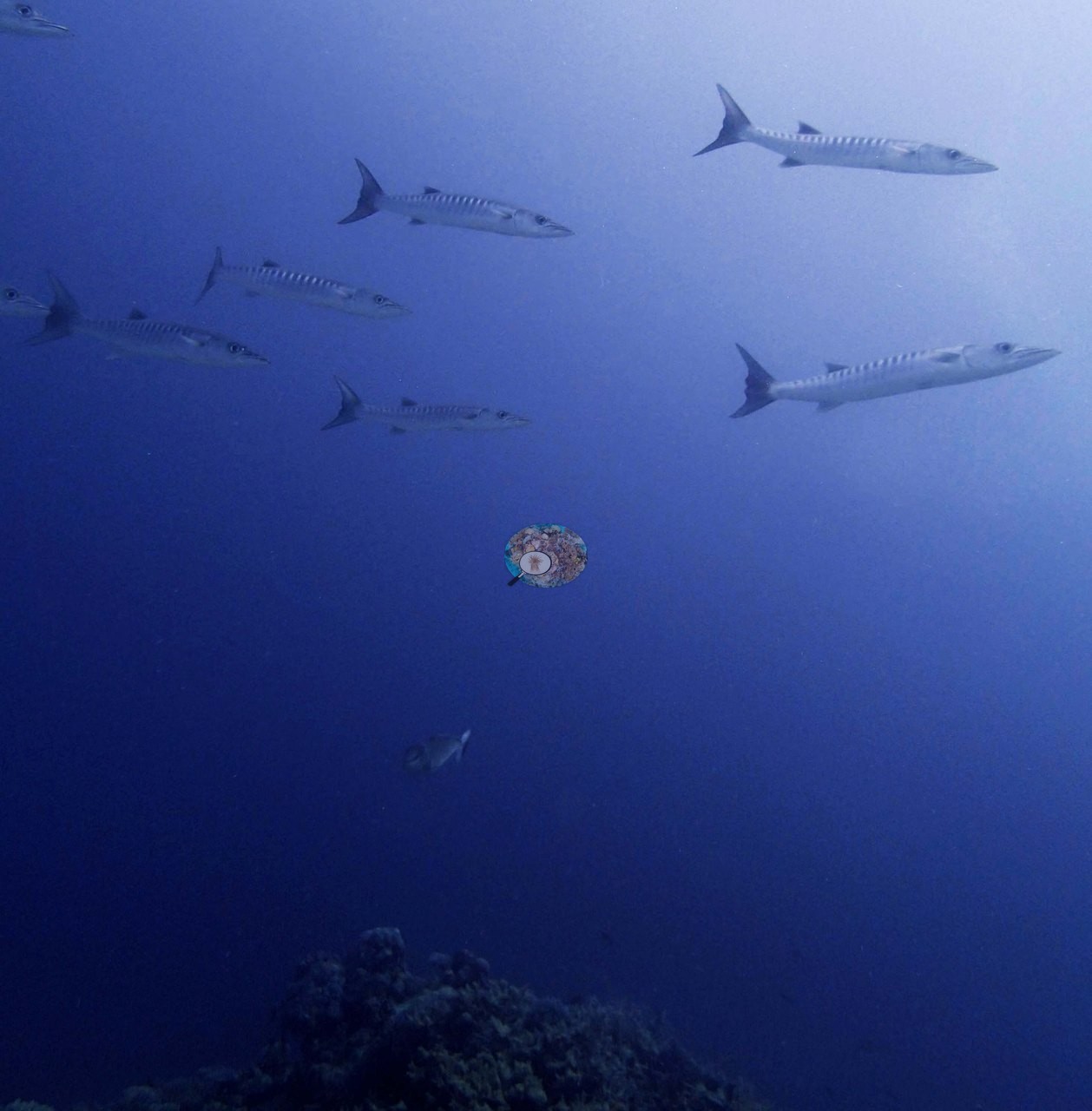
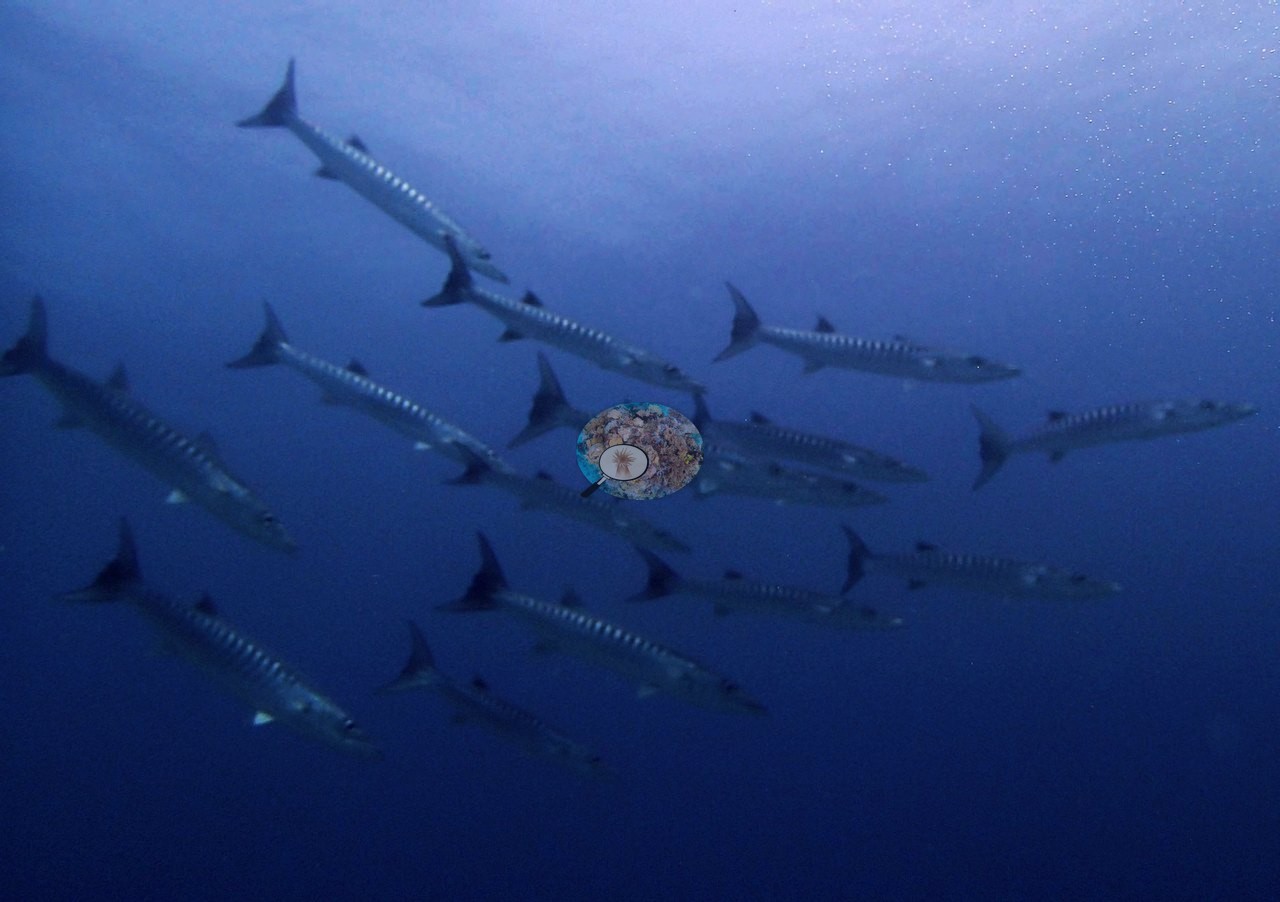
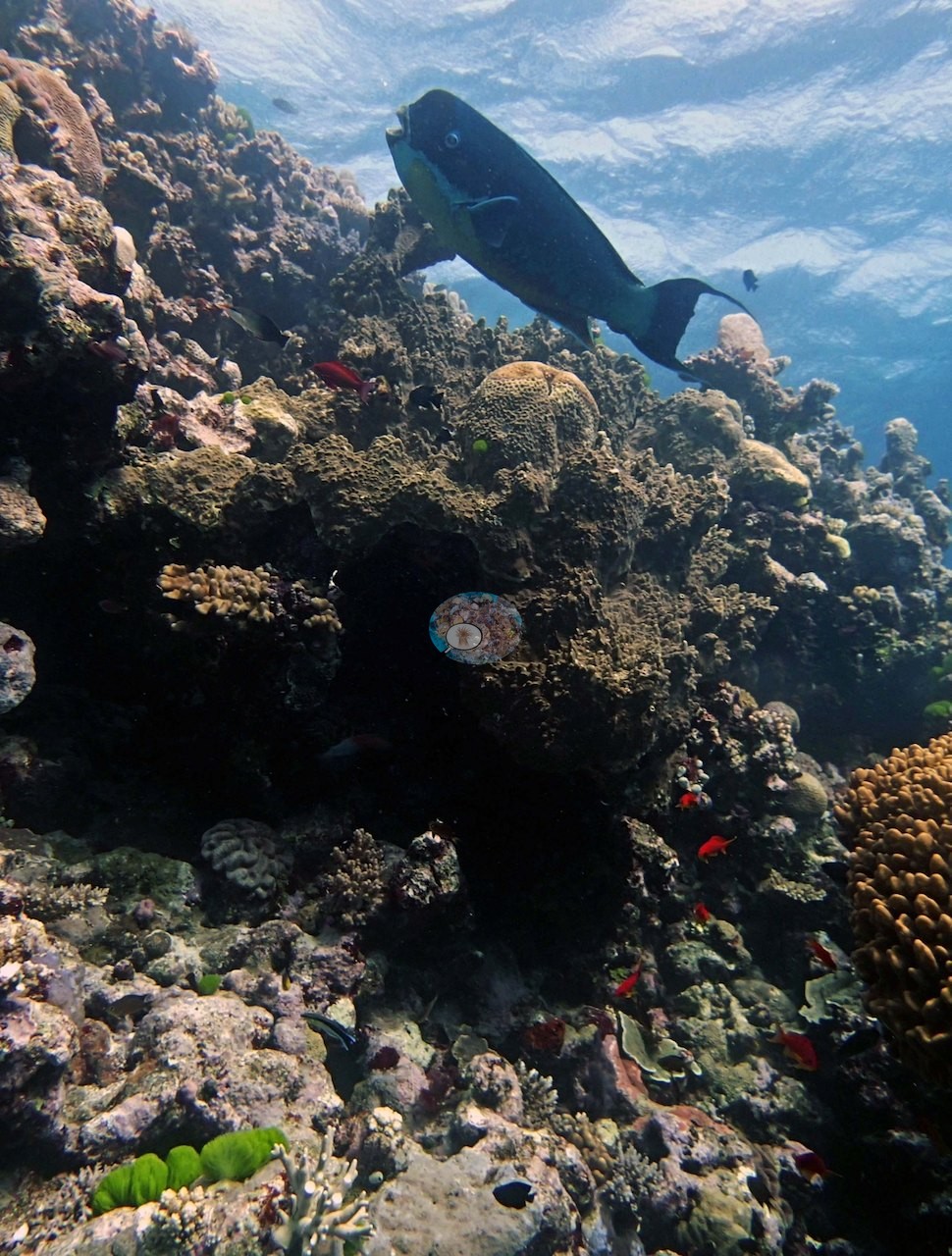
Jacks, barracuda, whitetip, and gray reef sharks, and one very large table Acropora were logged; the barracuda school is in two frames (e.g., Image 13, Image 25), and a large parrotfish crosses the slope in another (e.g., Image 28).
Comparisons with other data
No prior survey data from this site. If you would like to share yours, please email us.
Other notes
Reef name: Anderson logged this dive as 'Unnamed Reef 128', his field label for all three dives of 28 September 2014. The expedition's field report places station 145 on the Five Reefs complex, about 5 km north of UN Reef 11-238 (its station map), so the page names Five Reefs. Position approximate: the 933-site table's point for this station matches a mis-coded row of the field report's station table (listed there as AU5R152); it lies on Five Reefs.
CV model comparison
More info
The photo row below is a methods comparison only: it is never averaged with the transect and never used as the headline. It compares site means only: the photos come from the same survey dive as the transect but not from the same points.| Method | Hard-coral cover (%) | Photos (n) ± SE |
|---|---|---|
| Transect (published) | 61.8 | |
| CoralSCOP edited | 35.5 | n = 24 · SE 3.0 |
| Claude (edited photos) | 31.4 | n = 24 · SE 3.3 |
The two computer-vision methods agree within 4.1 pp (31–35%) and read 26.3–30.4 pp below the in-water transect (62%); the headline is the in-water transect because a diver transect is independent of the photographs.
Data & links
- Download benthic survey data (CSV) ↗
- Download all LOF-GRE data (933 sites) ↗
- Photo portfolio ↗
- Coral Reef Diagnostics country page ↗
All images from Coral Reef Diagnostics. Data are from the Khaled bin Sultan Living Oceans Foundation Global Reef Expedition and Coral Reef Diagnostics.
 © Coral Reef Diagnostics.