
Part of the regional summaries: Australia (GBR) - Far North: Blue stations (Habitat Protection Zone reefs) and Australia (GBR)
More info
Far Northern GBR (NOAA CRW virtual station)On this Unnamed Reef 128 (reef ID 11-238) wall, live cover measured 59%, and a transect nearby on the same dive hit 70-80%; the wall carries coral to at least 40 m, with a 3-4 knot current in the shallows. Sightings included a large barracuda and a gray reef shark, and his notes record sickly needle corals (Seriatopora hystrix) on the 16 m transect. Surveyed on the Living Oceans Foundation's Global Reef Expedition.
Six other CRD dive sites within 5 km shown in orange — click a marker to open its page.
🗺 Detailed map of the Global Reef Expedition dive sites, Five Reefs and unnamed reef 11-238, northern Great Barrier Reef (Khaled bin Sultan Living Oceans Foundation; opens in a new window)
Site description
Setting
Global Reef Expedition station AU5R143 on Unnamed Reef 128 (reef ID 11-238), far northern Great Barrier Reef (-11.9091, 143.8470).
General benthic features
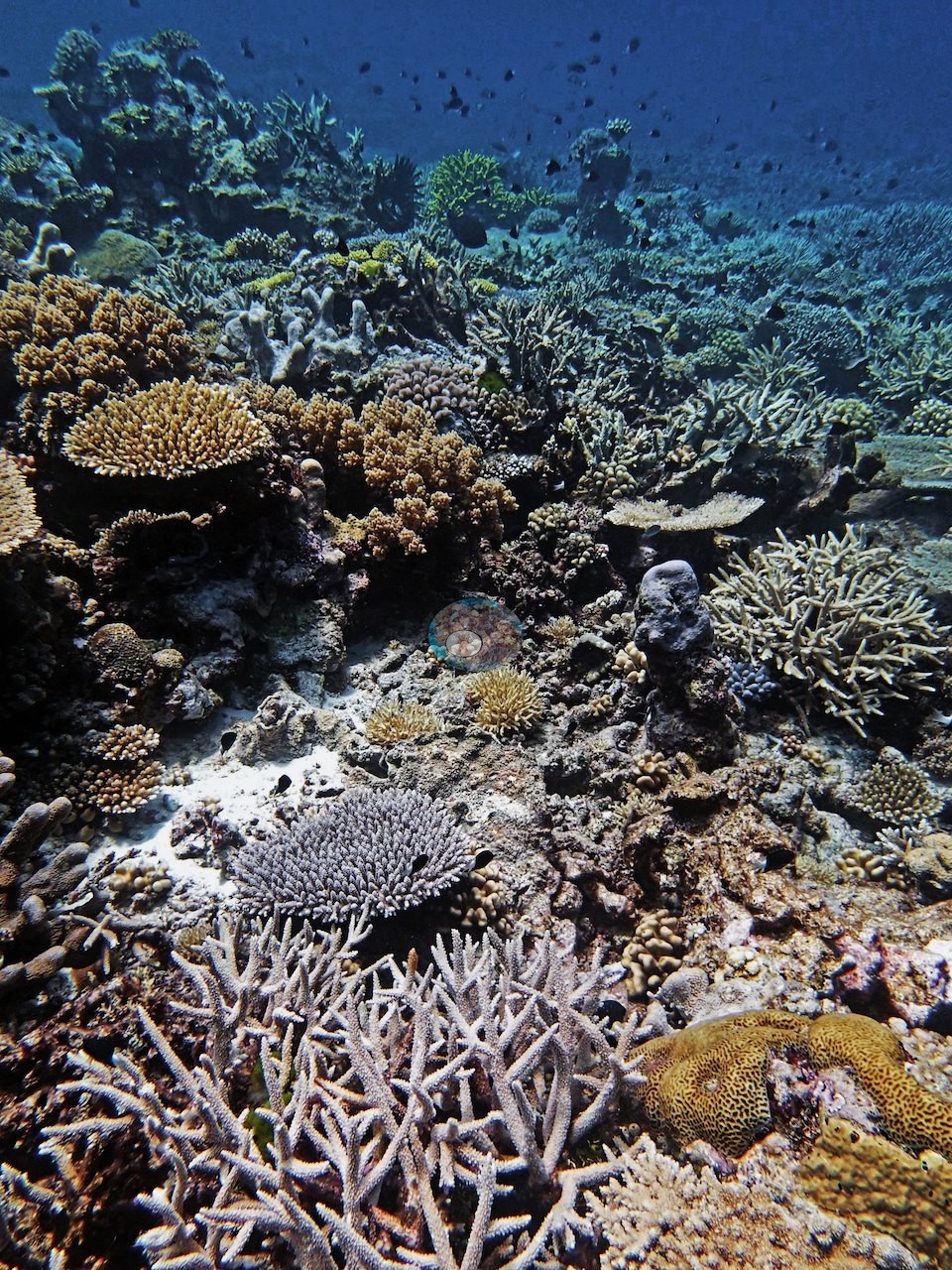
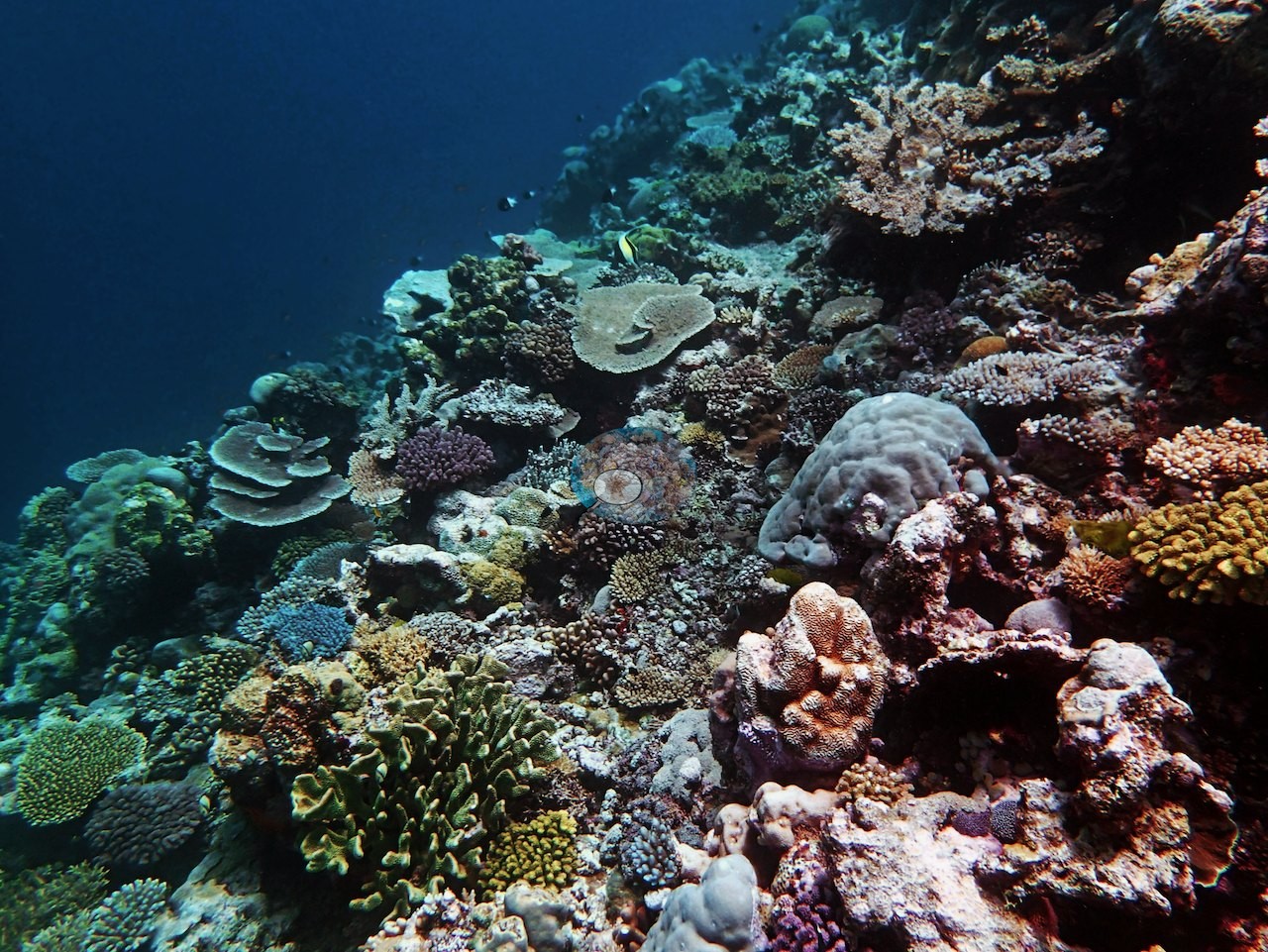
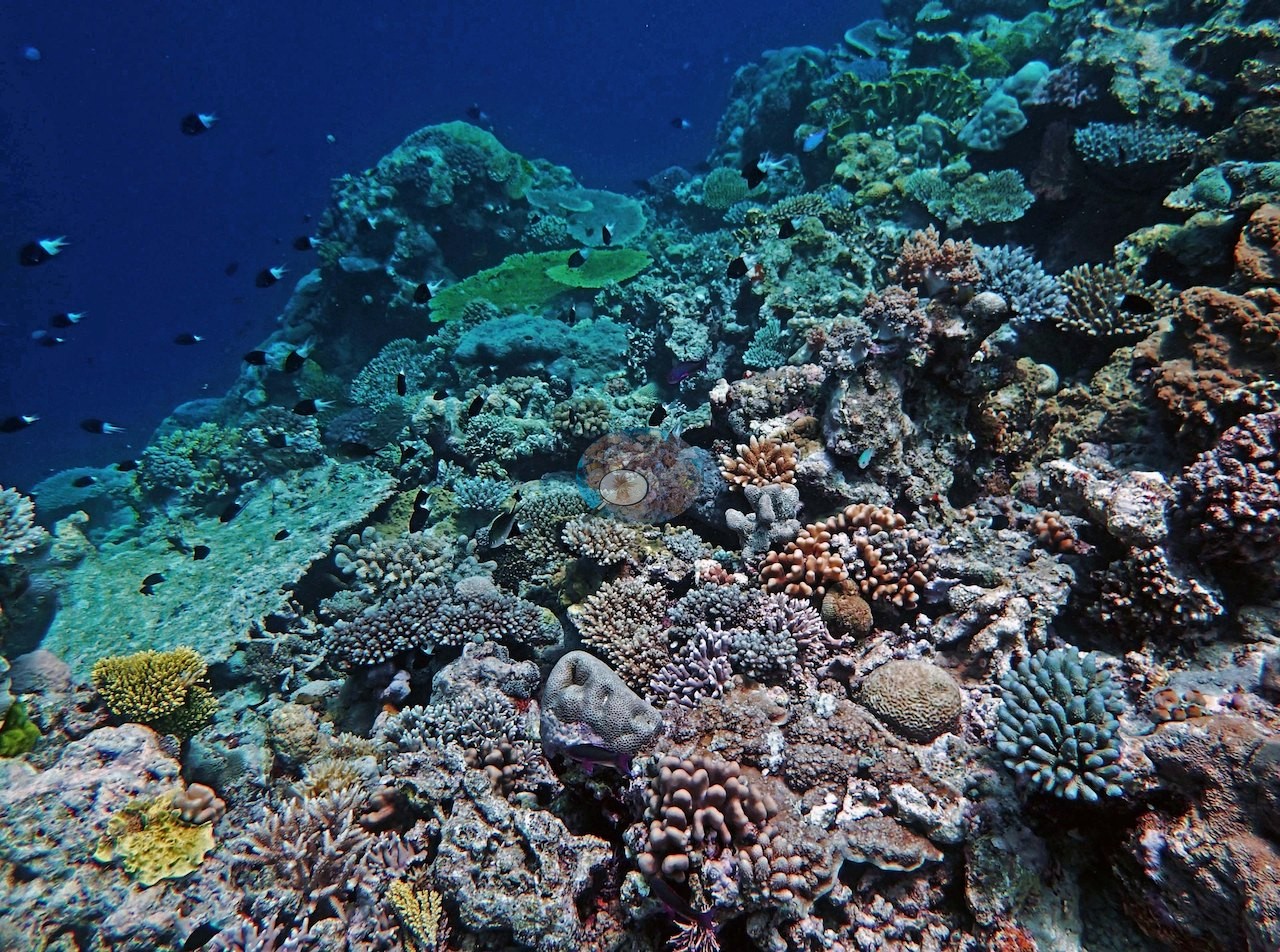
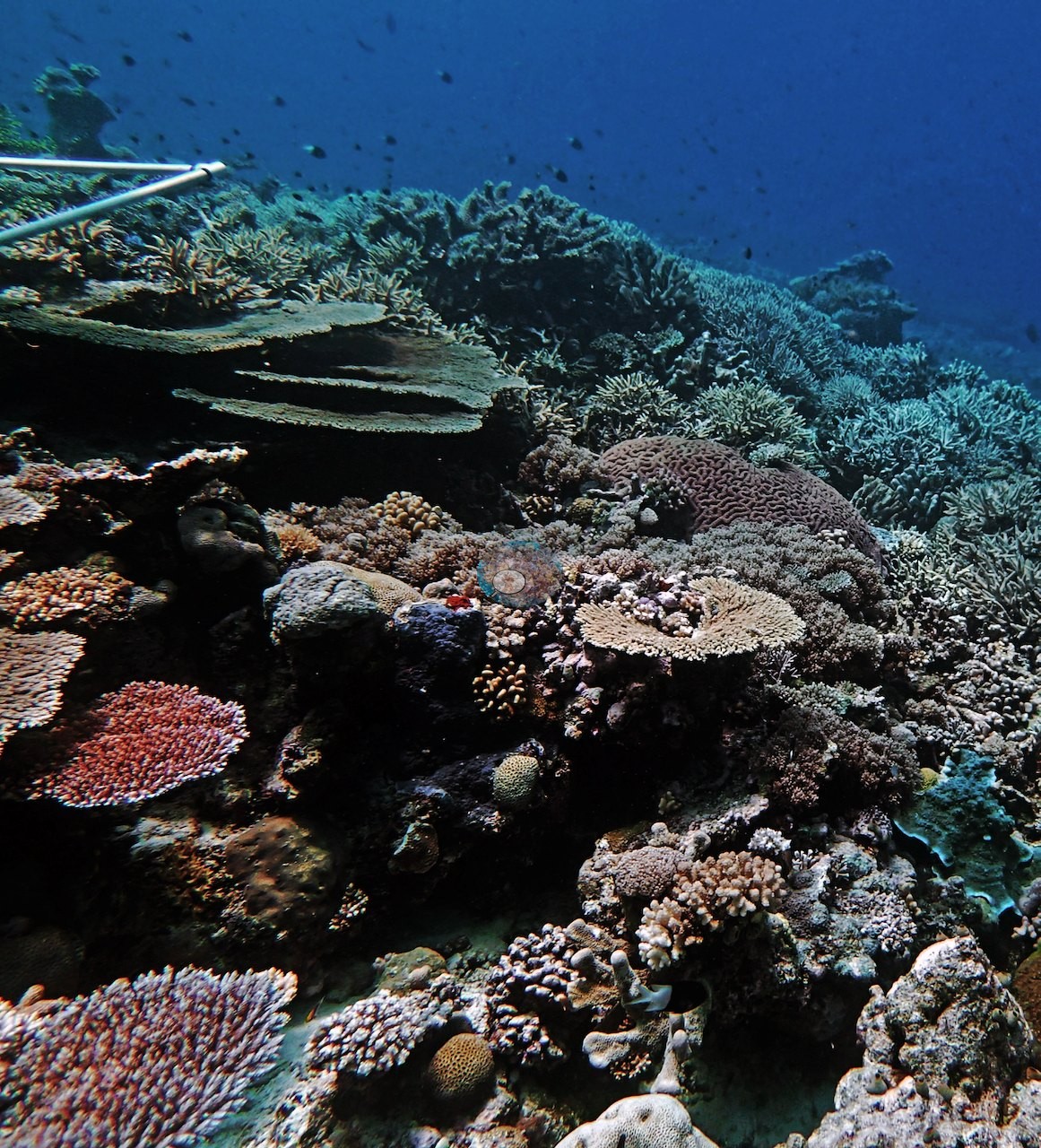
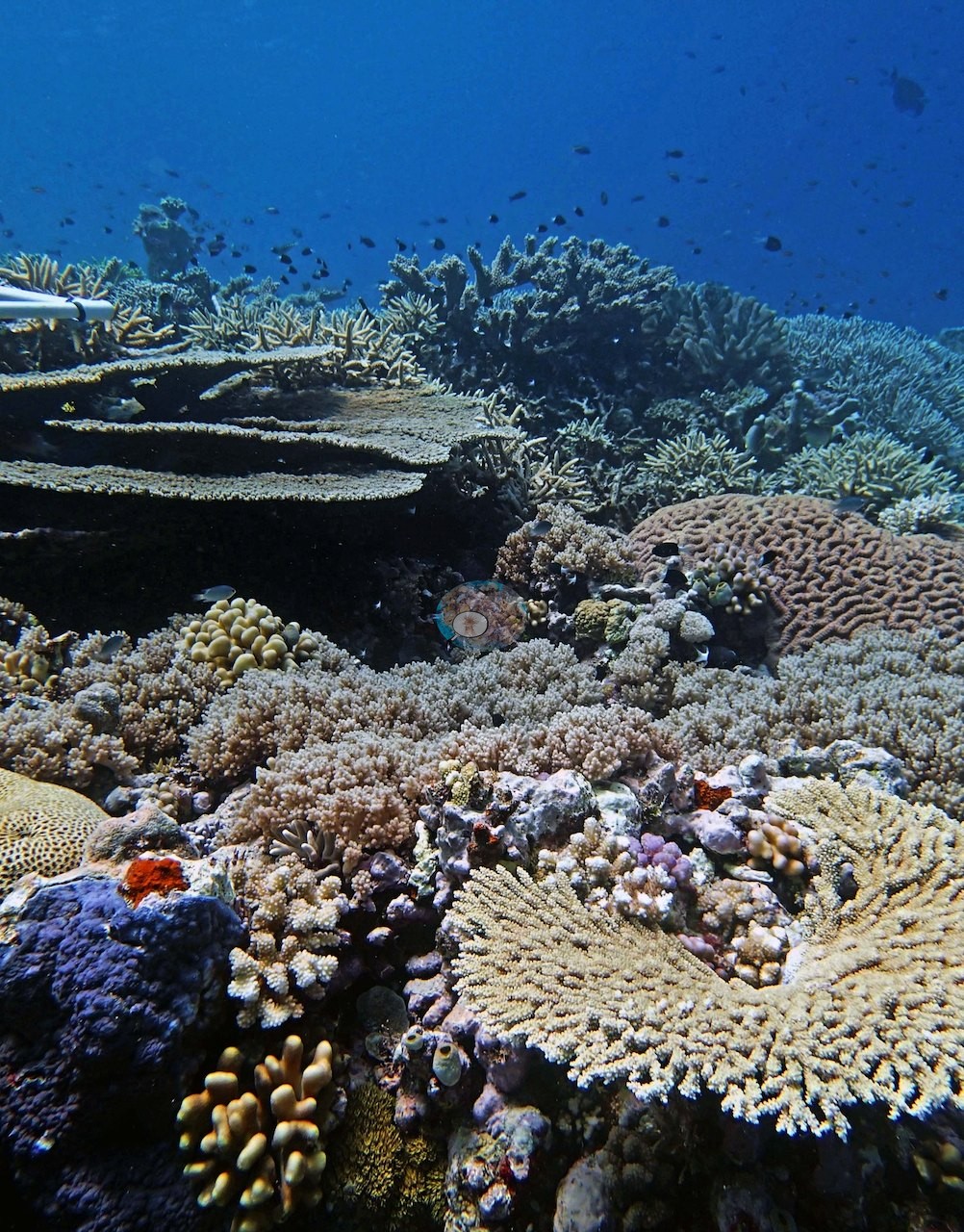
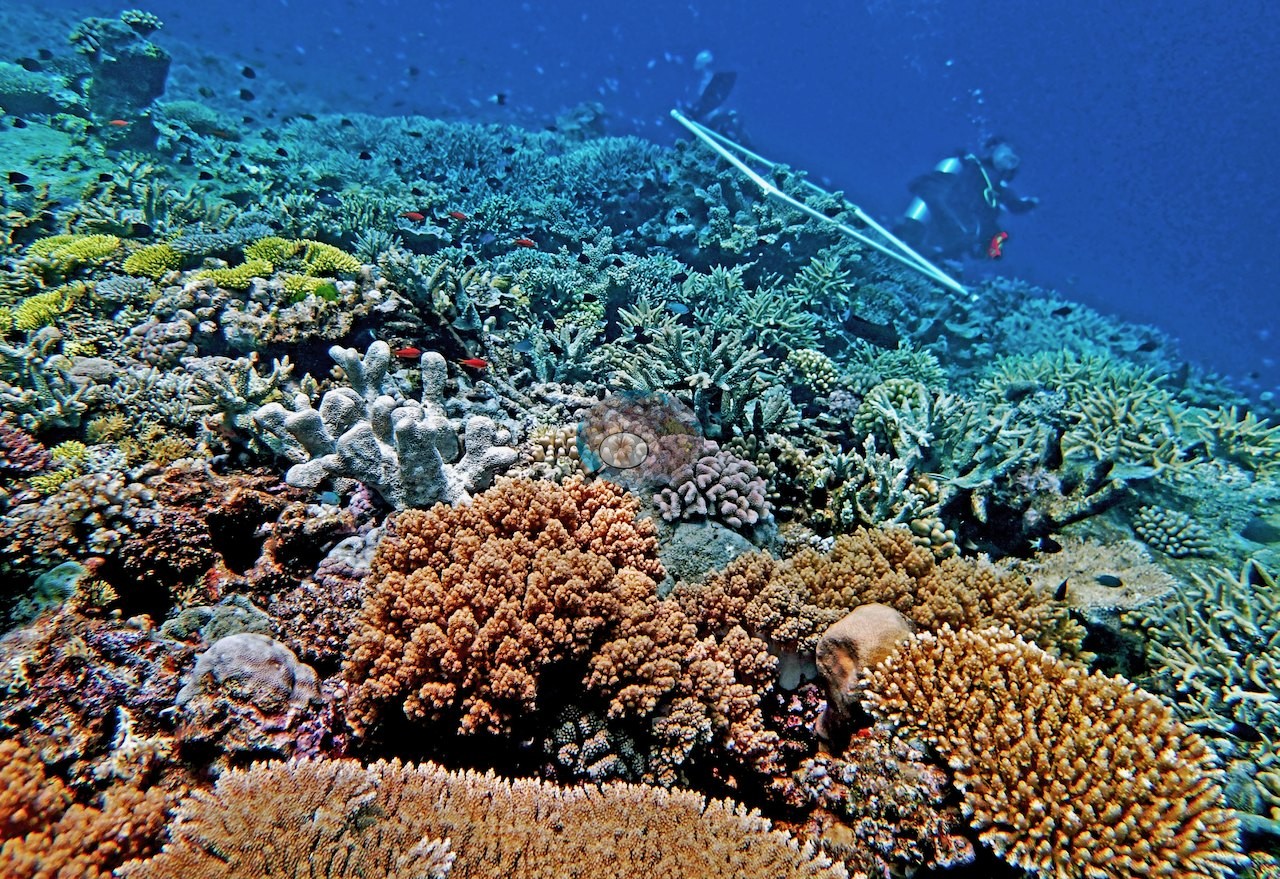
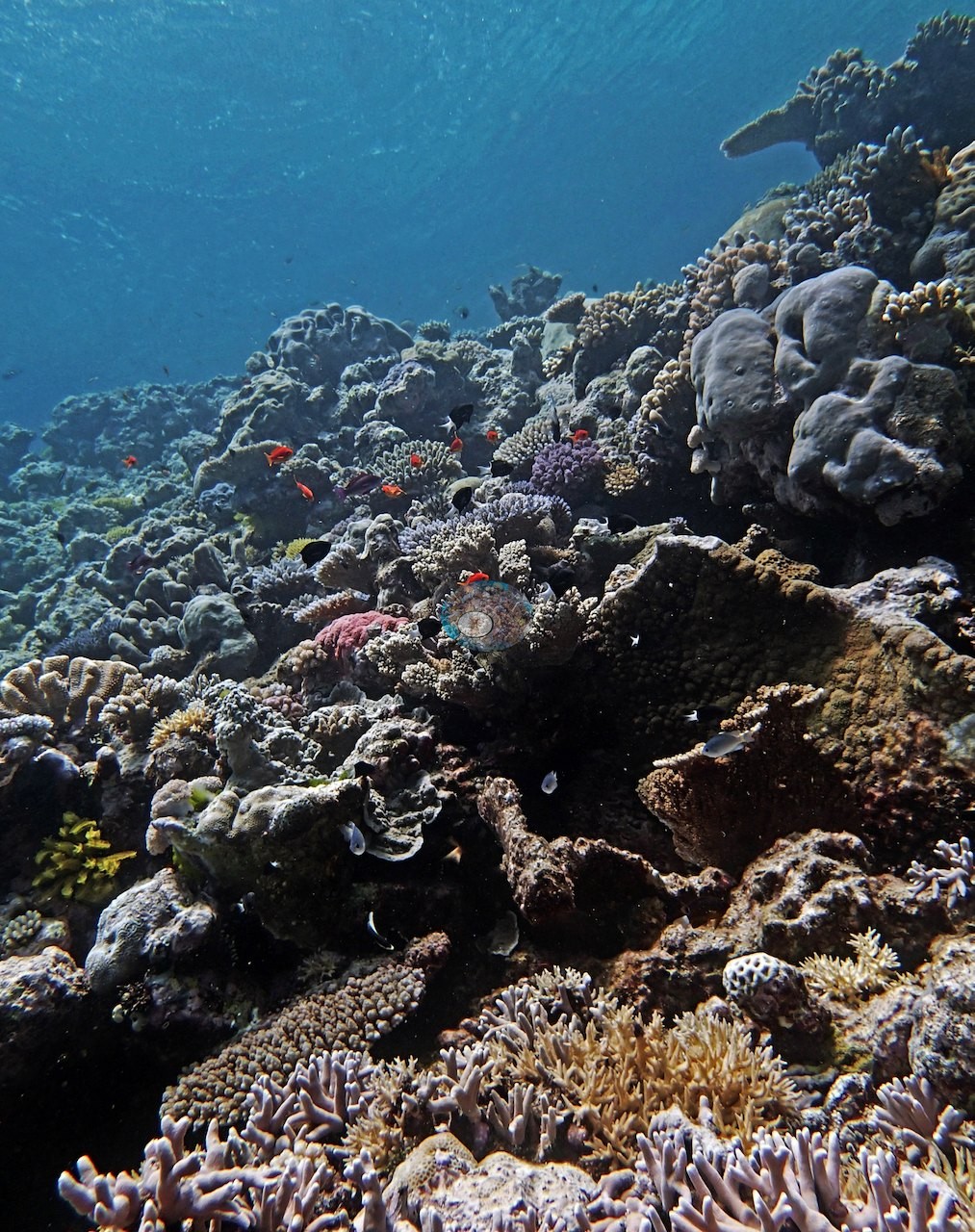
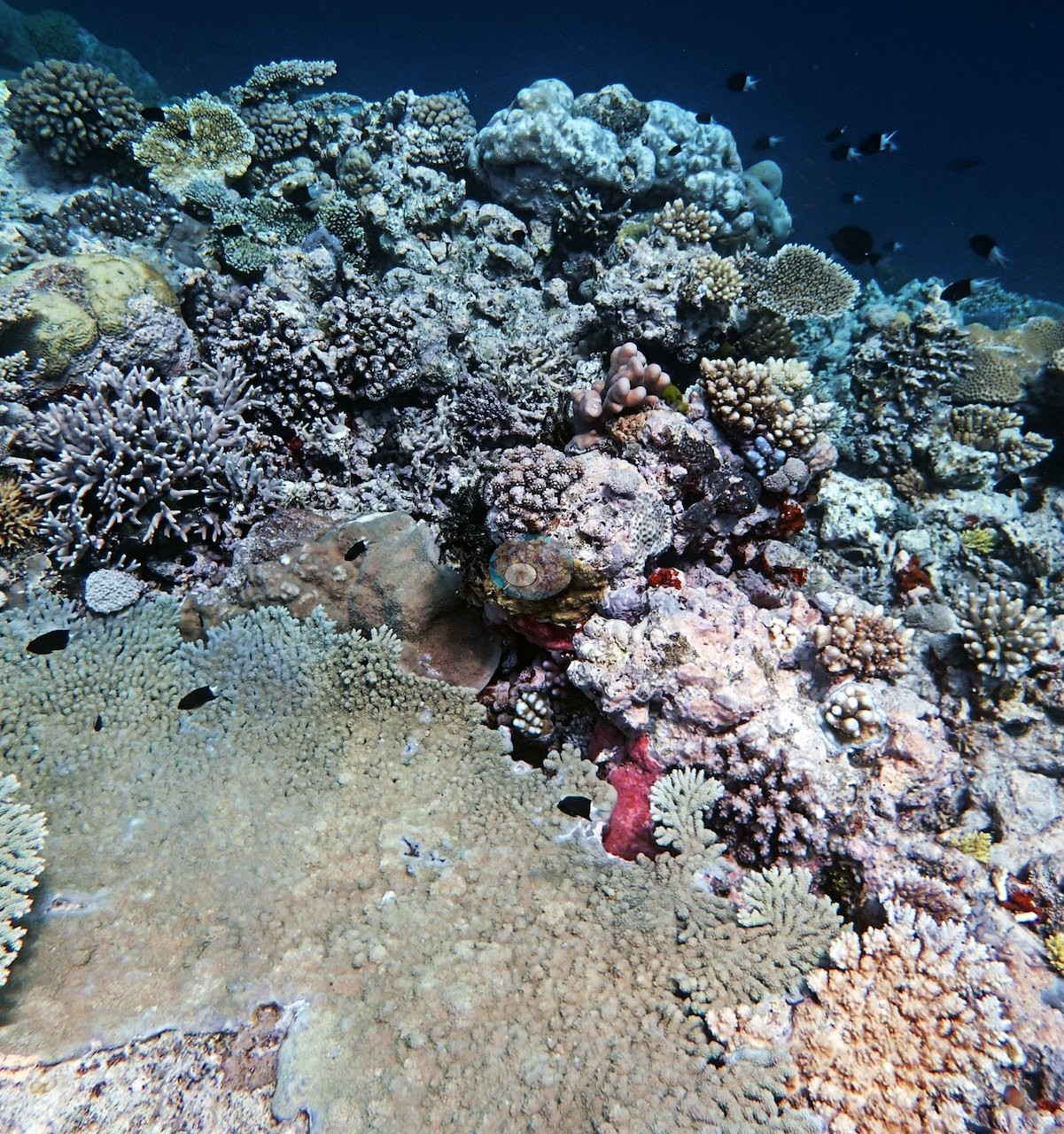
Species logged include table and branching Acropora, Pocillopora verrucosa, and Stylophora pistillata. A transect at 10.5 m on the same dive reached a striking 70-80% live cover, built on Pocillopora verrucosa, Stylophora pistillata, P. damicornis, and Acropora. Wide frames across the slope show that richness directly: corymbose, knobby, and brain-textured massive colonies, tables, and branching thickets packed together with little bare rock between them, running off into clear blue water (e.g., Image 2, Image 7, Image 8, Image 9, Image 12).
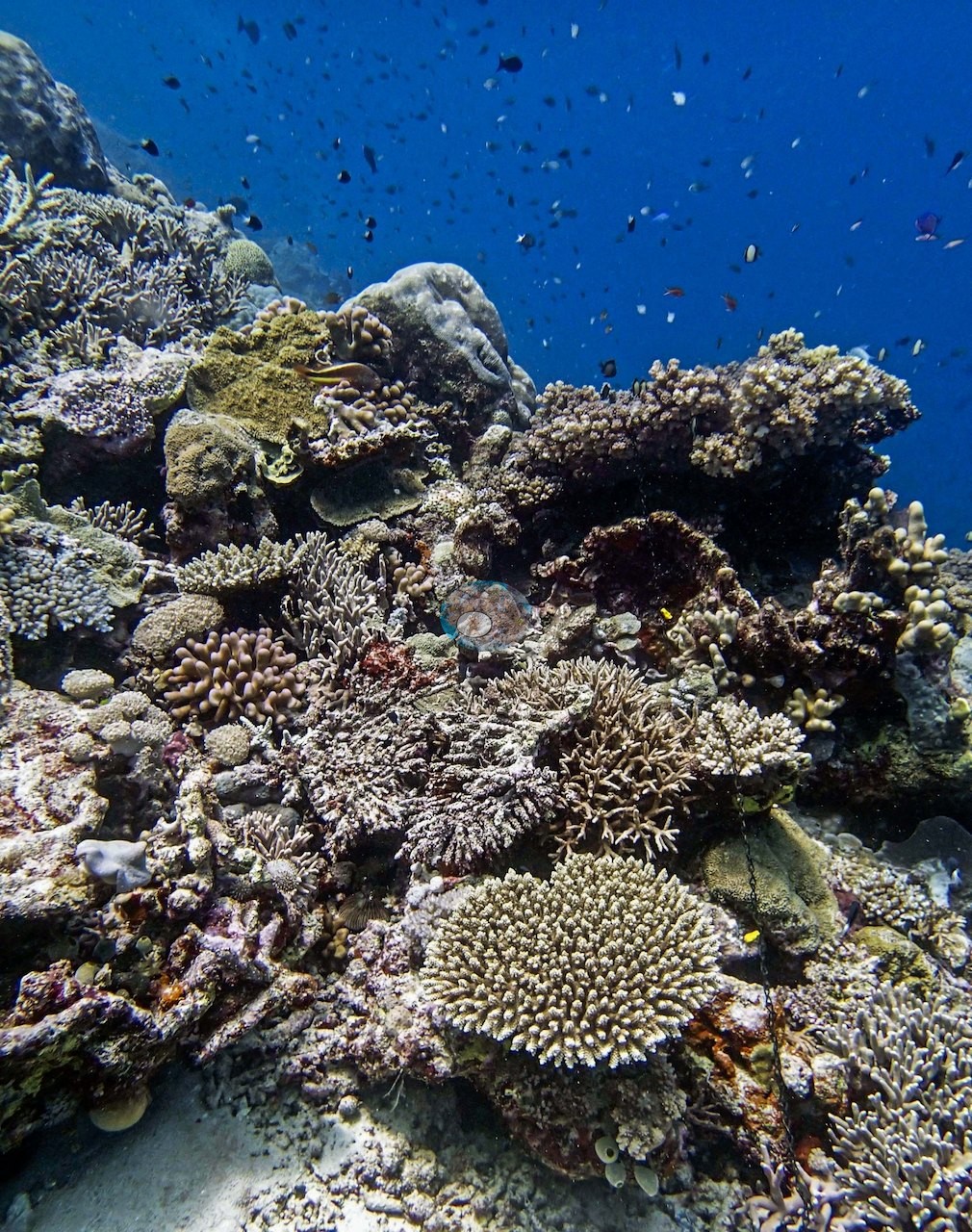
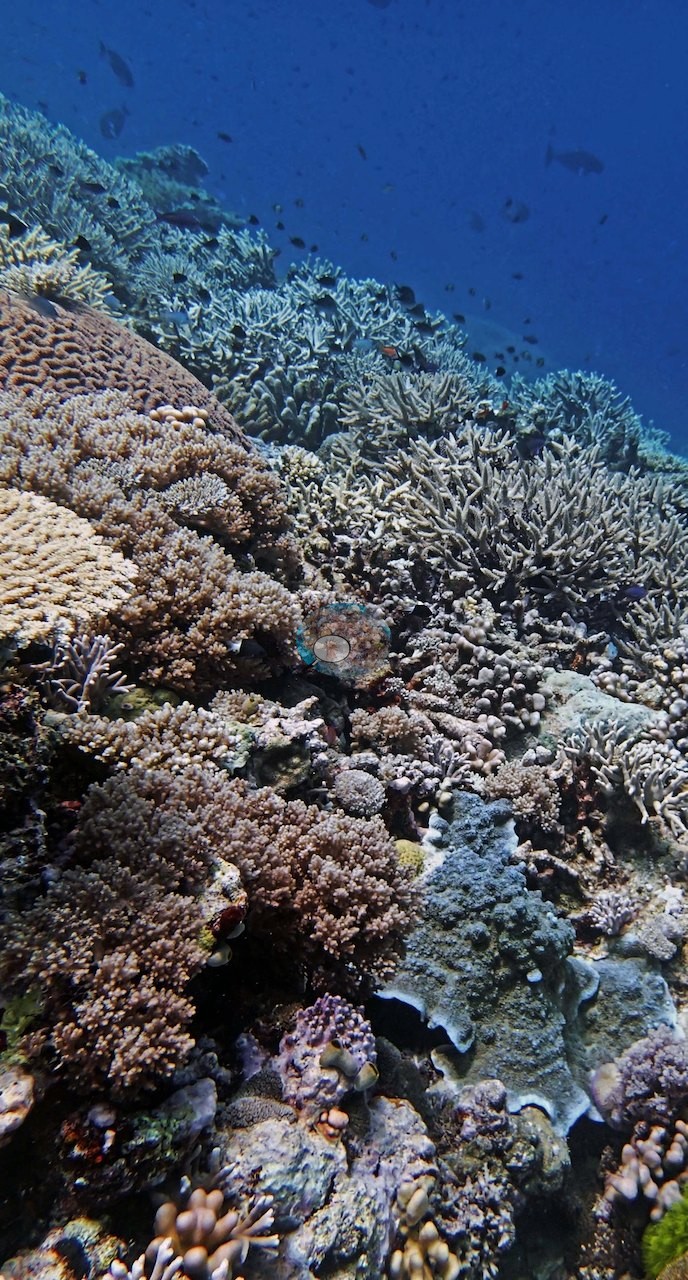
In other stretches, pale staghorn thickets dominate, threaded with tables, corymbose colonies, and small purple colonies (e.g., Image 22, Image 23, Image 24).
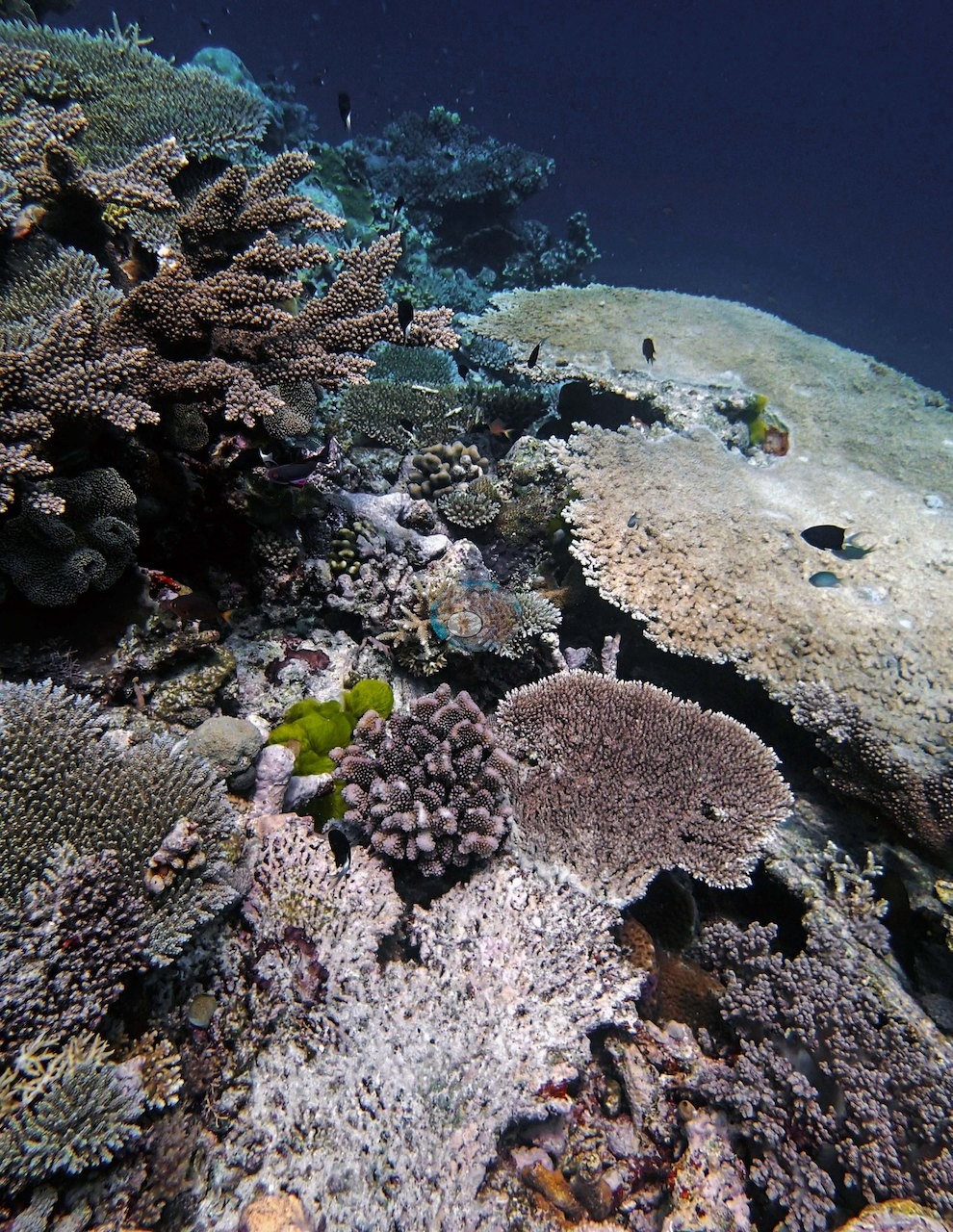
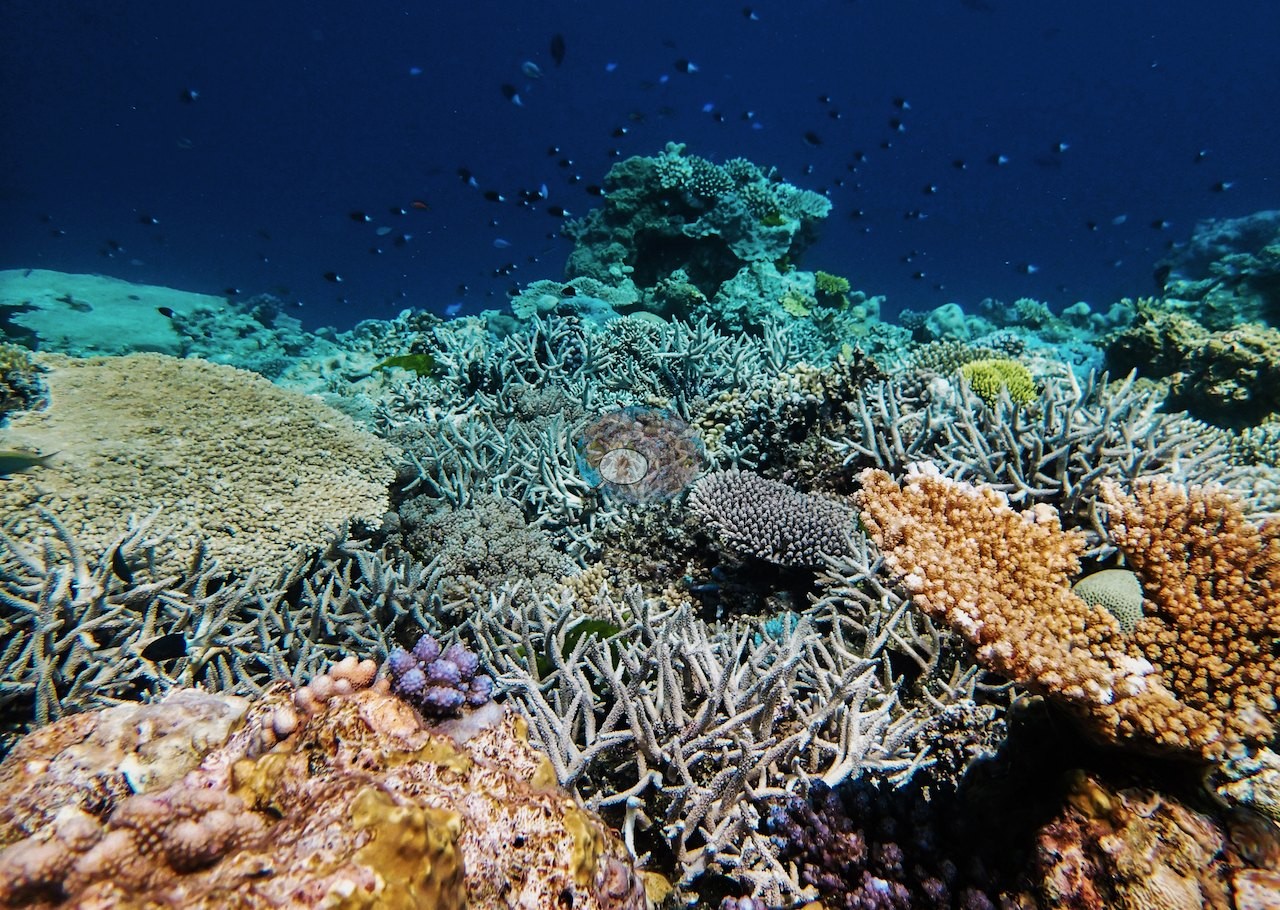
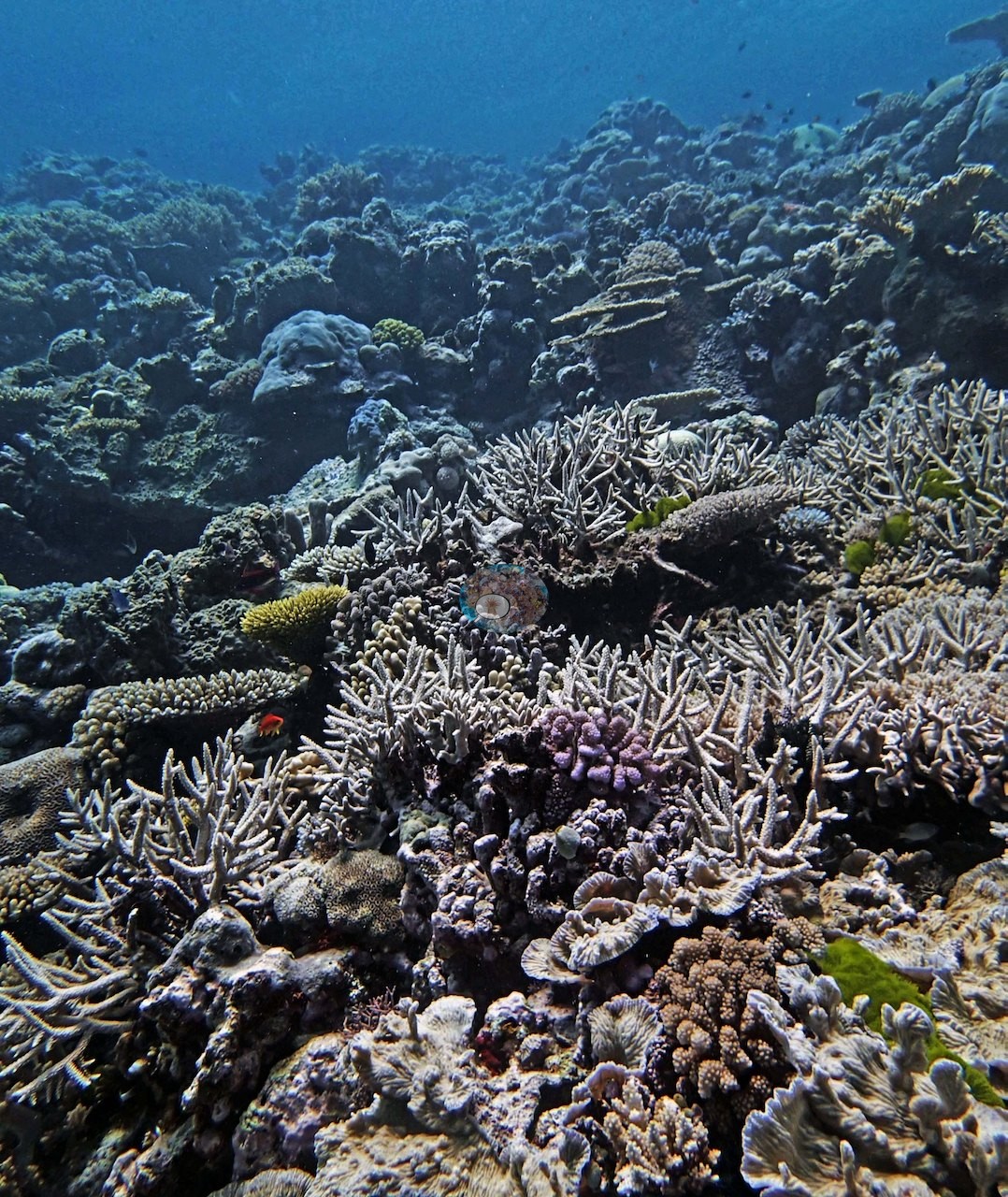
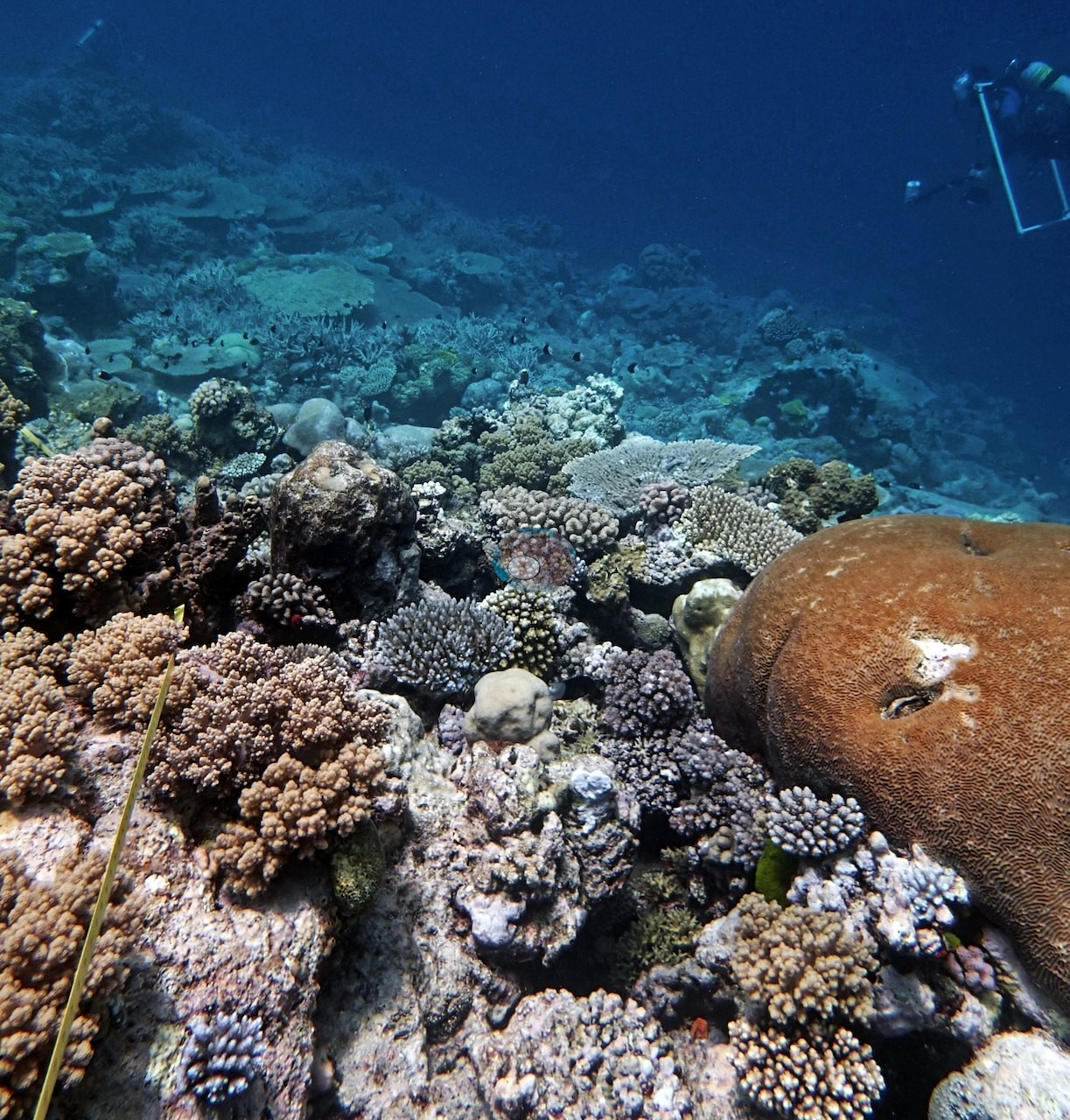
The survey quadrat appears among tiered tables, staghorn and bottlebrush thickets, and orange-brown corymbose colonies in six frames (e.g., Image 10, Image 11, Image 13, Image 14, Image 15, Image 20), and in one a diver carries it down the slope past a large brown meandroid dome (e.g., Image 16).
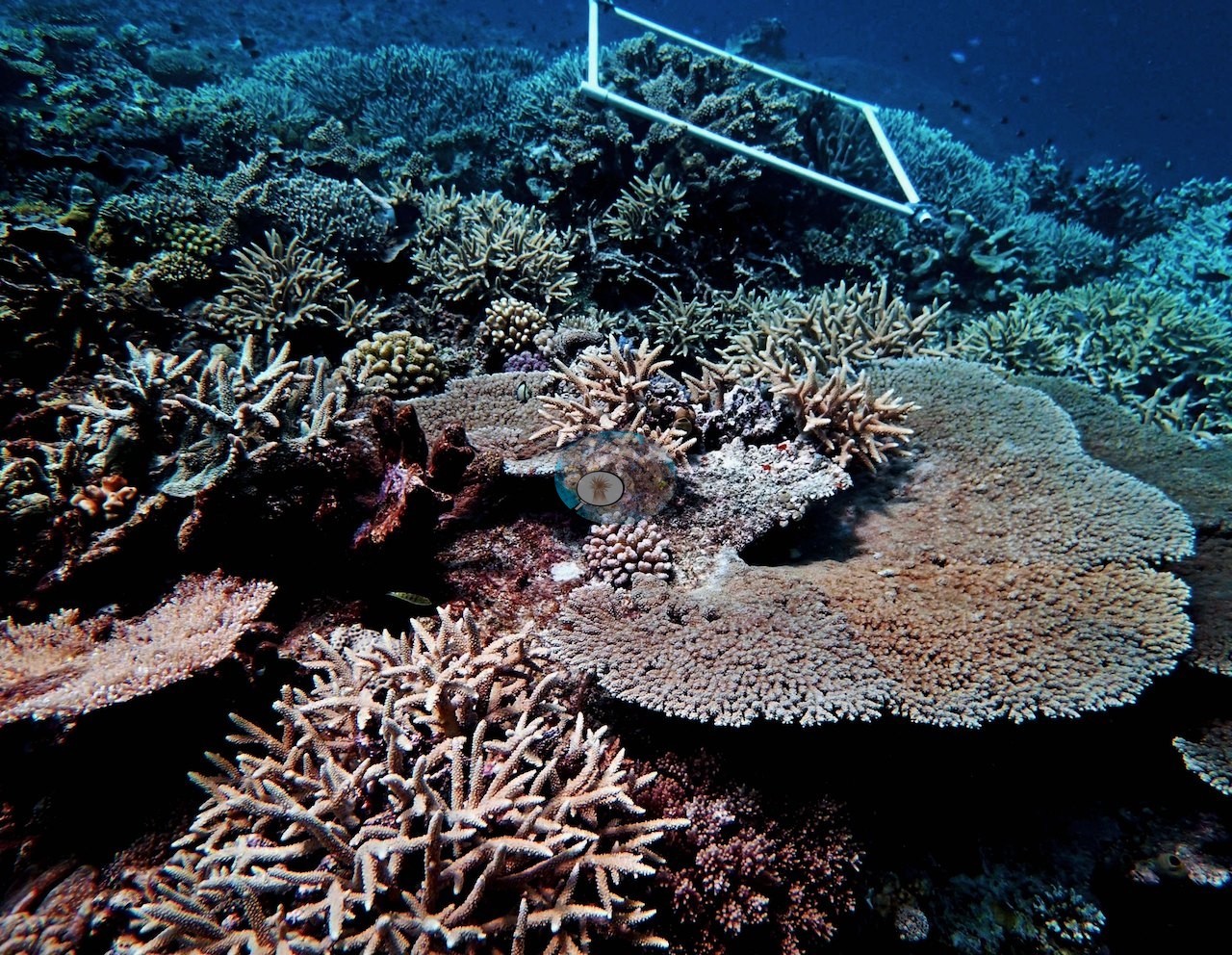
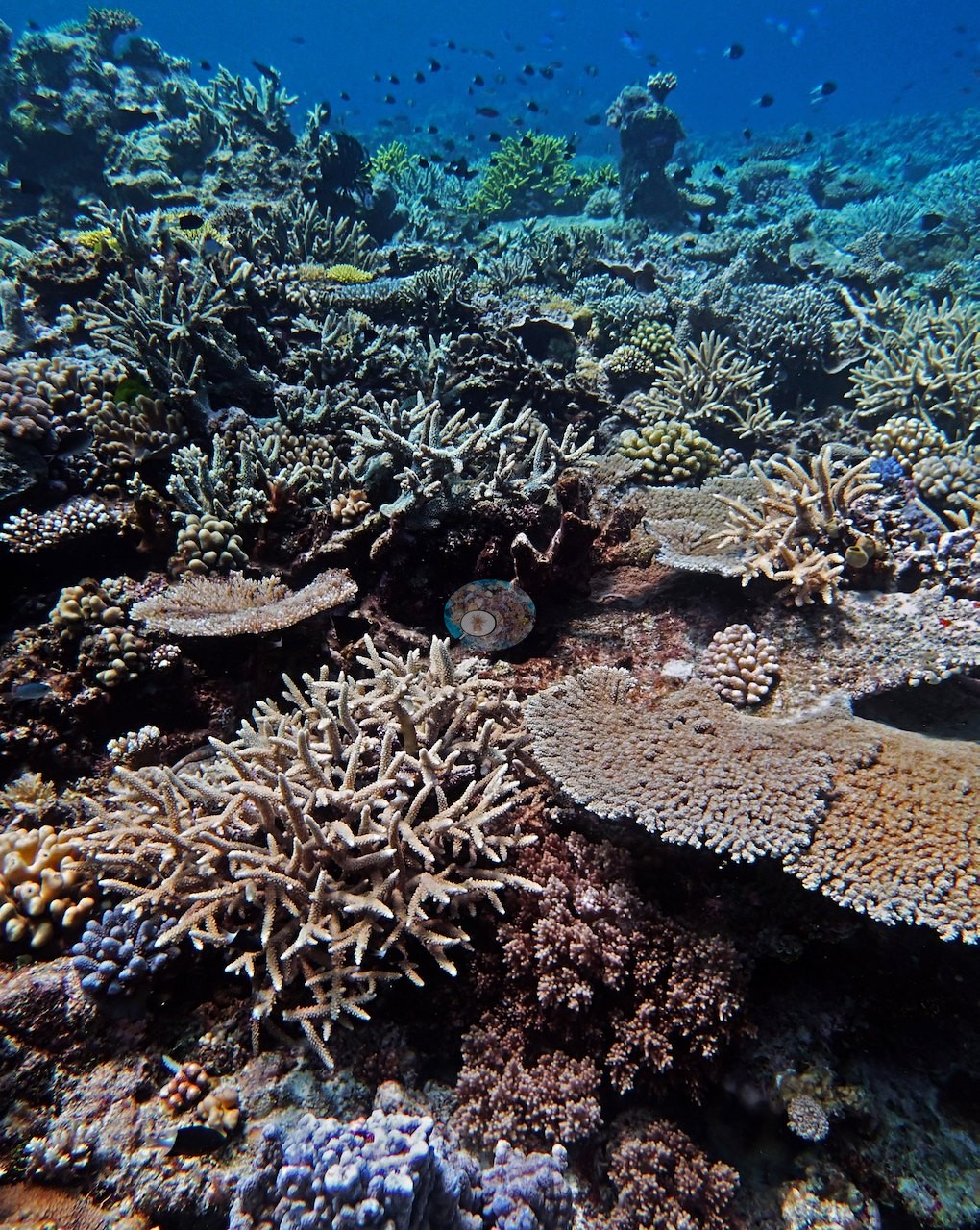
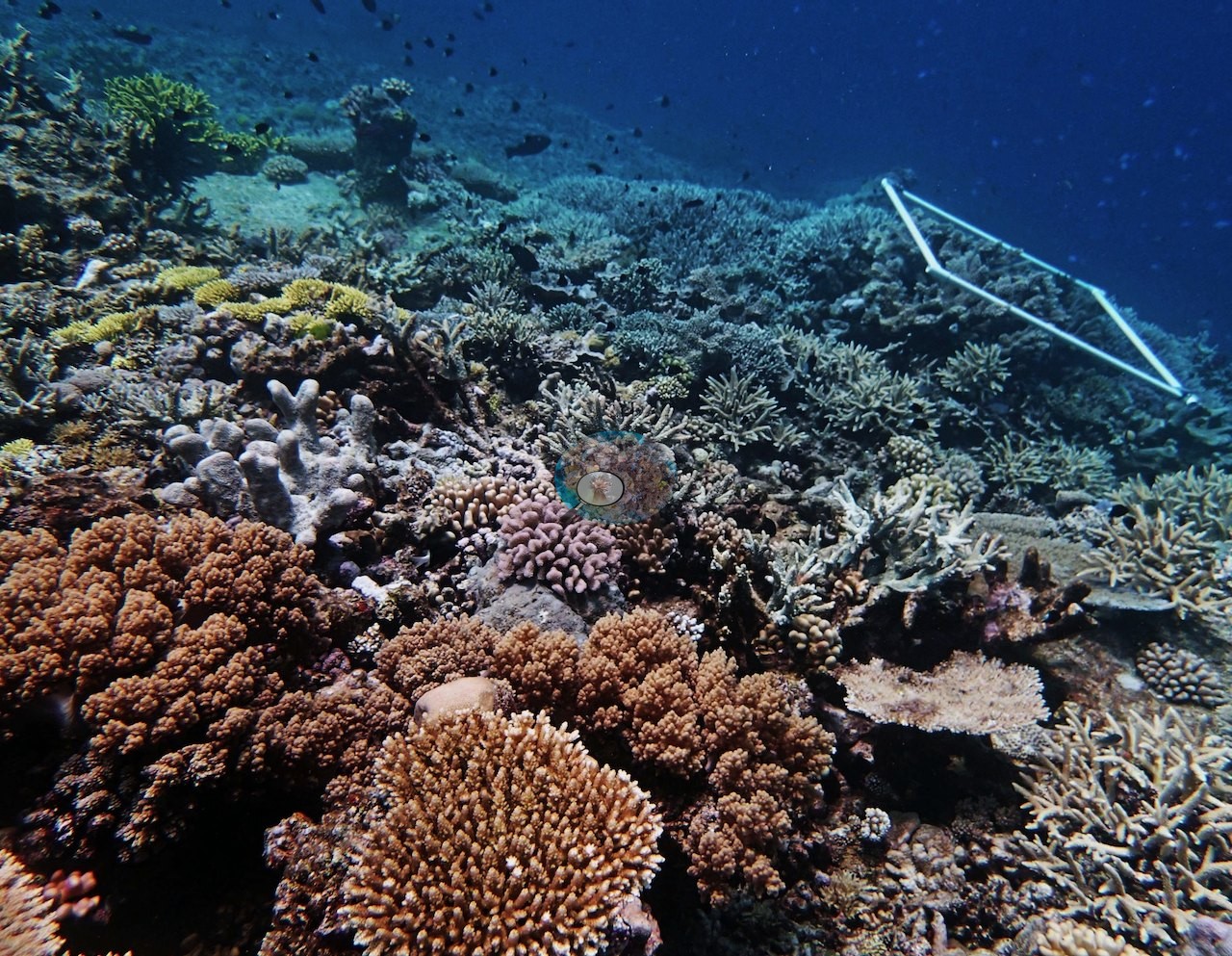
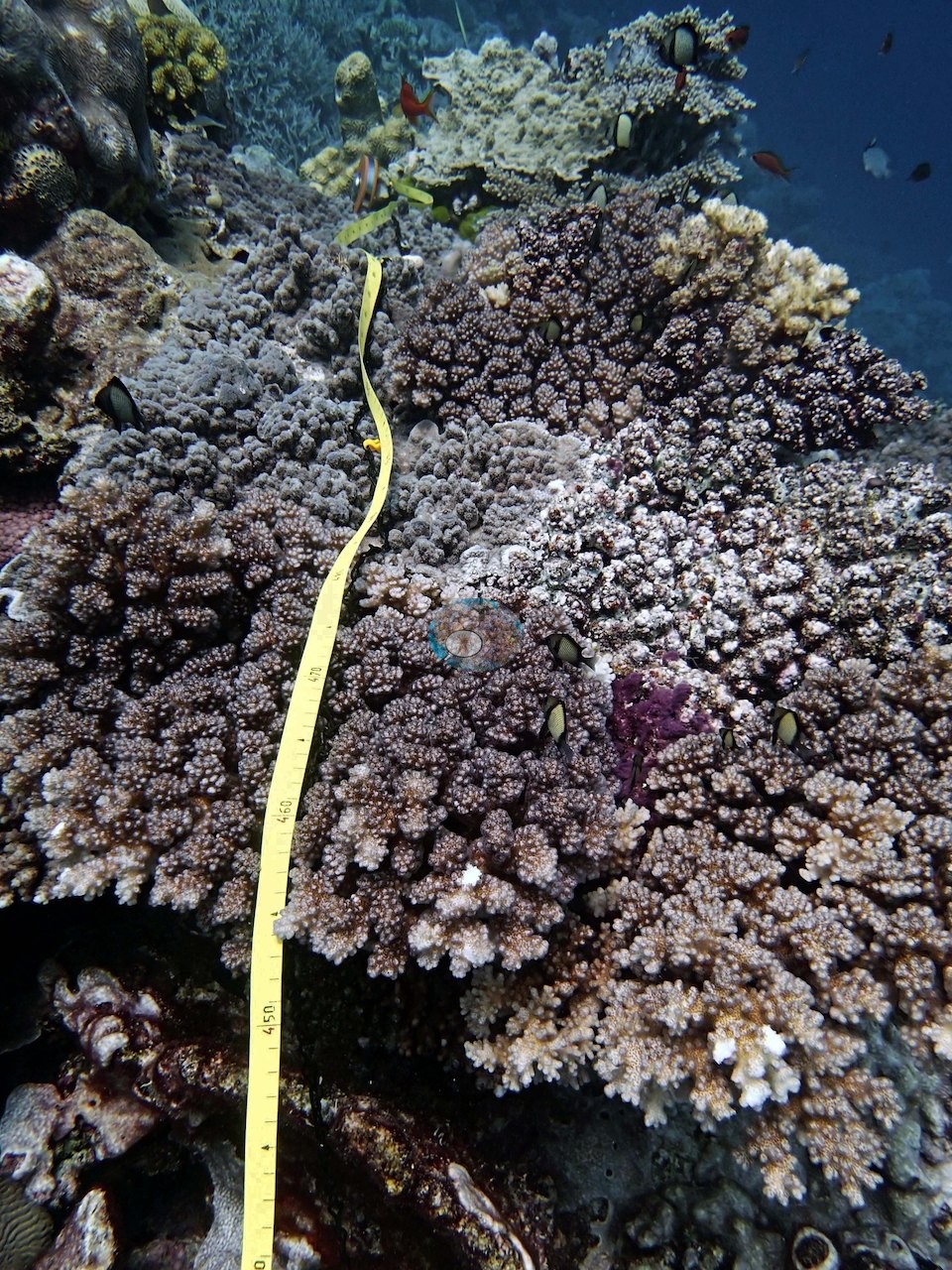
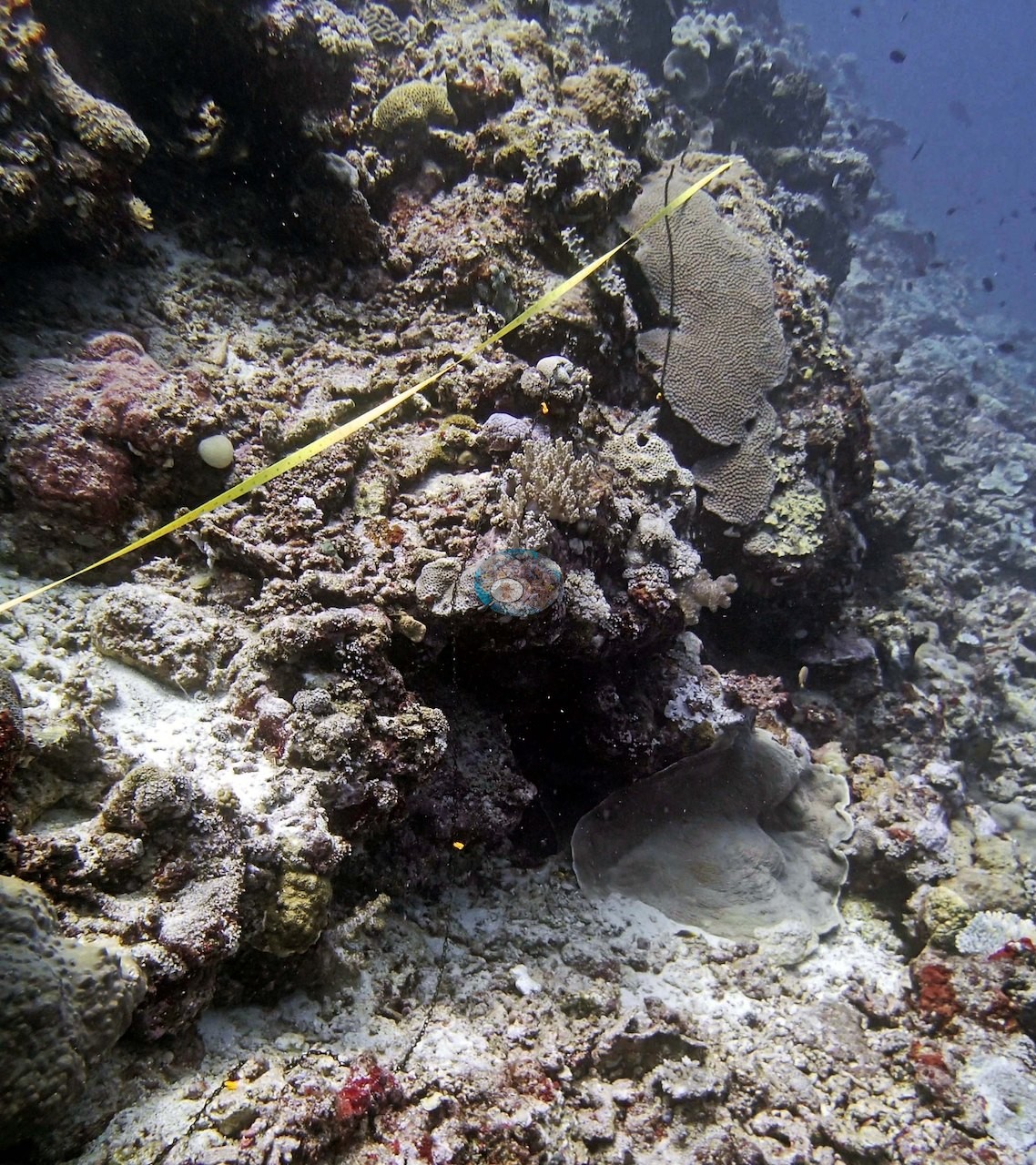
Where the tape crosses the densest ground, it runs over a continuous mat of purple, brown, and pink corymbose colonies (e.g., Image 1); elsewhere it crosses a staghorn thicket with plates and red encrusting growths beyond (e.g., Image 5).
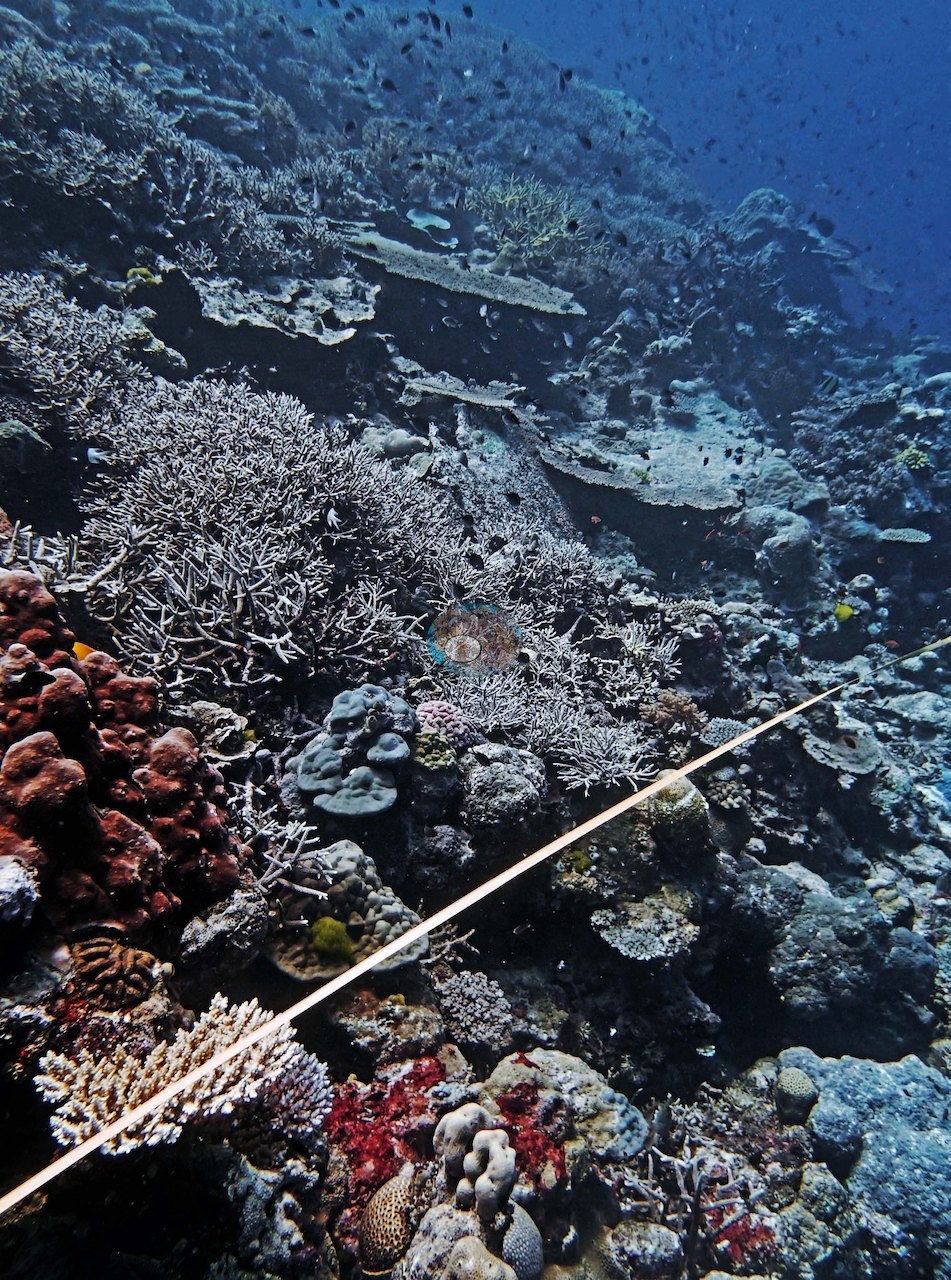
The slope is steep in places: one frame looks down a wall hung with a large dark plating colony, massive heads, and branching colonies (e.g., Image 4), and another shows broad gray plates stacked beside a knobby massive colony (e.g., Image 19).
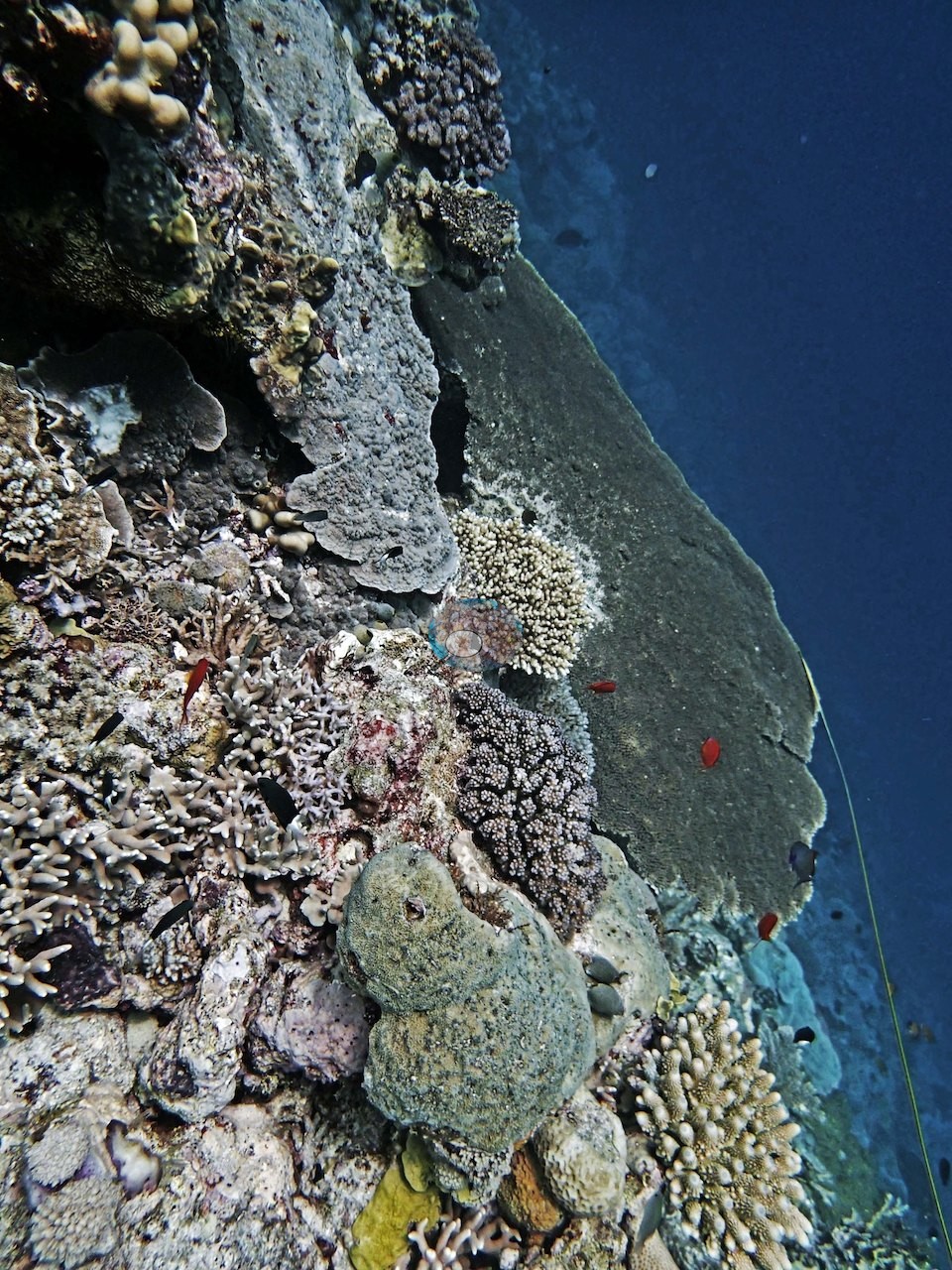
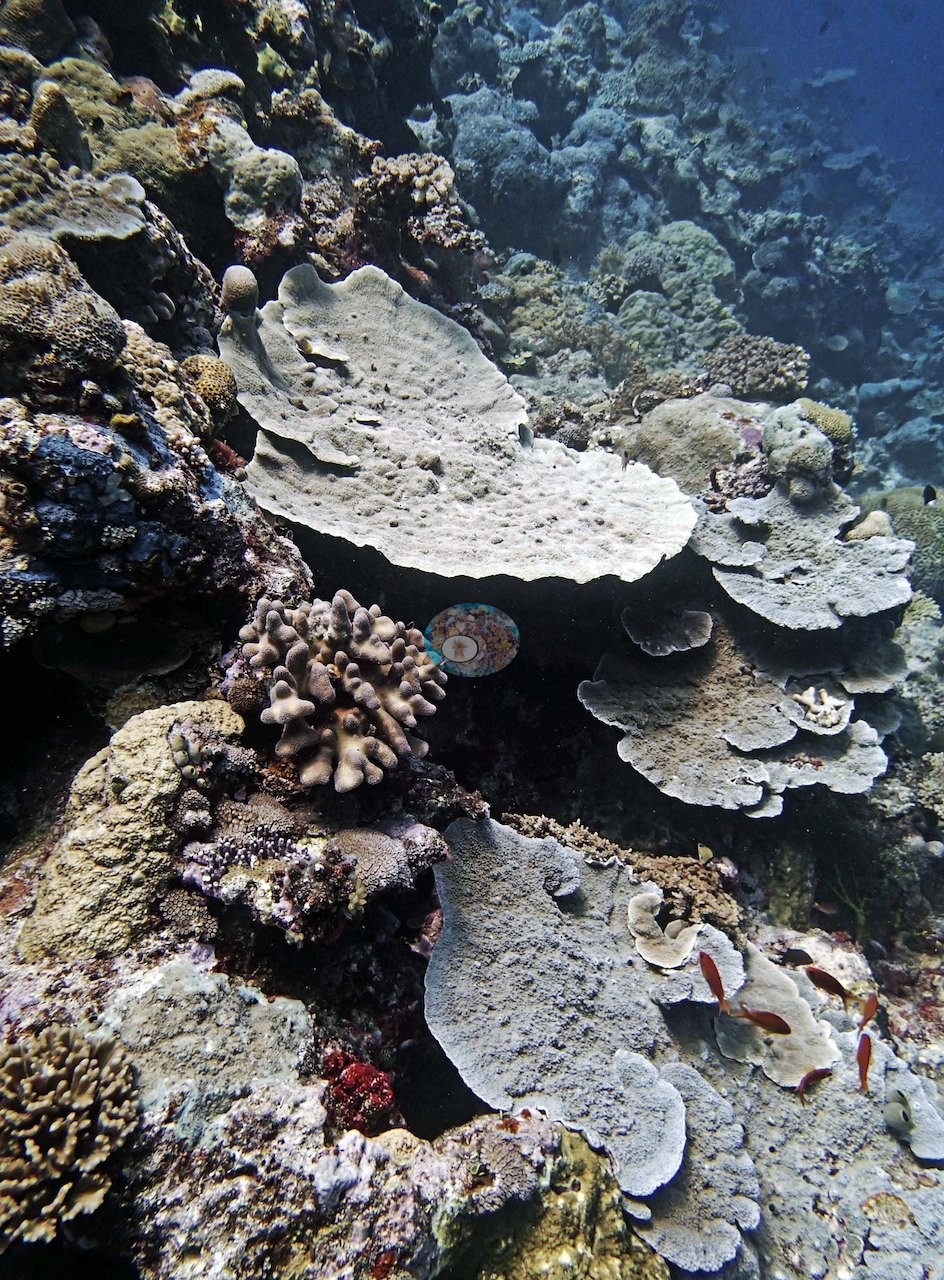
Near the crest, lobed massive colonies, meandroid brain colonies, corymbose colonies, and encrusting growths cover the reef top (e.g., Image 3, Image 18), and a broad tabular colony fronts a mound of mixed colonies with bright red encrusting patches (e.g., Image 17).
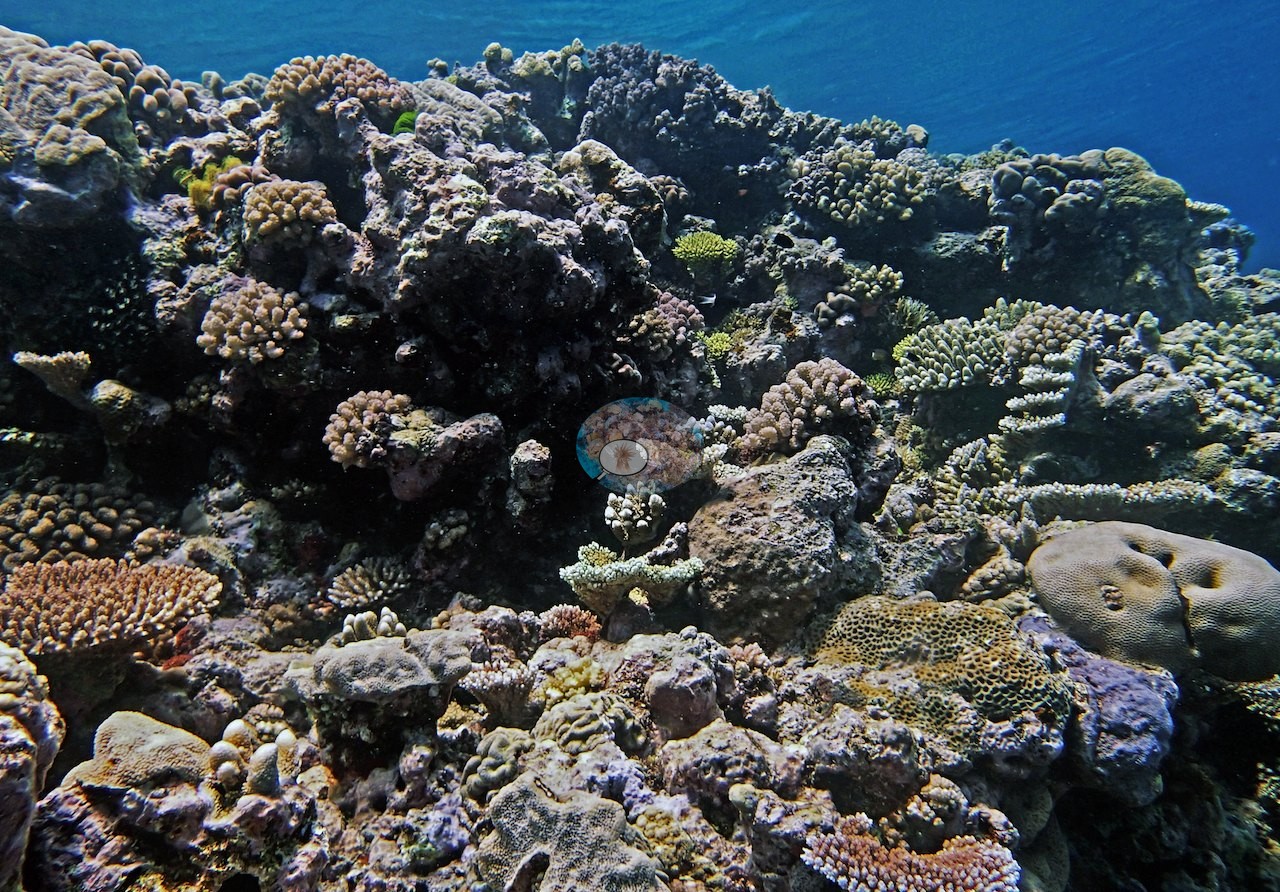
Not all of the ground is so dense: one frame along the tape shows a rubble-strewn, sparsely colonized stretch with a brain colony and a few plates (e.g., Image 21).
Coral cover
- Reference: Khaled bin Sultan Living Oceans Foundation, Global Reef Expedition (in situ transect)
- The in situ benthic transects recorded 59% live coral cover against a 16% algal fraction — nearly four times the algal fraction.
- Transect mean 61 ± 4.4% SE (n = 10 transects; Living Oceans Foundation per-transect benthic data); the headline above is the expedition's station value (the headline weights each depth equally).
Stressors
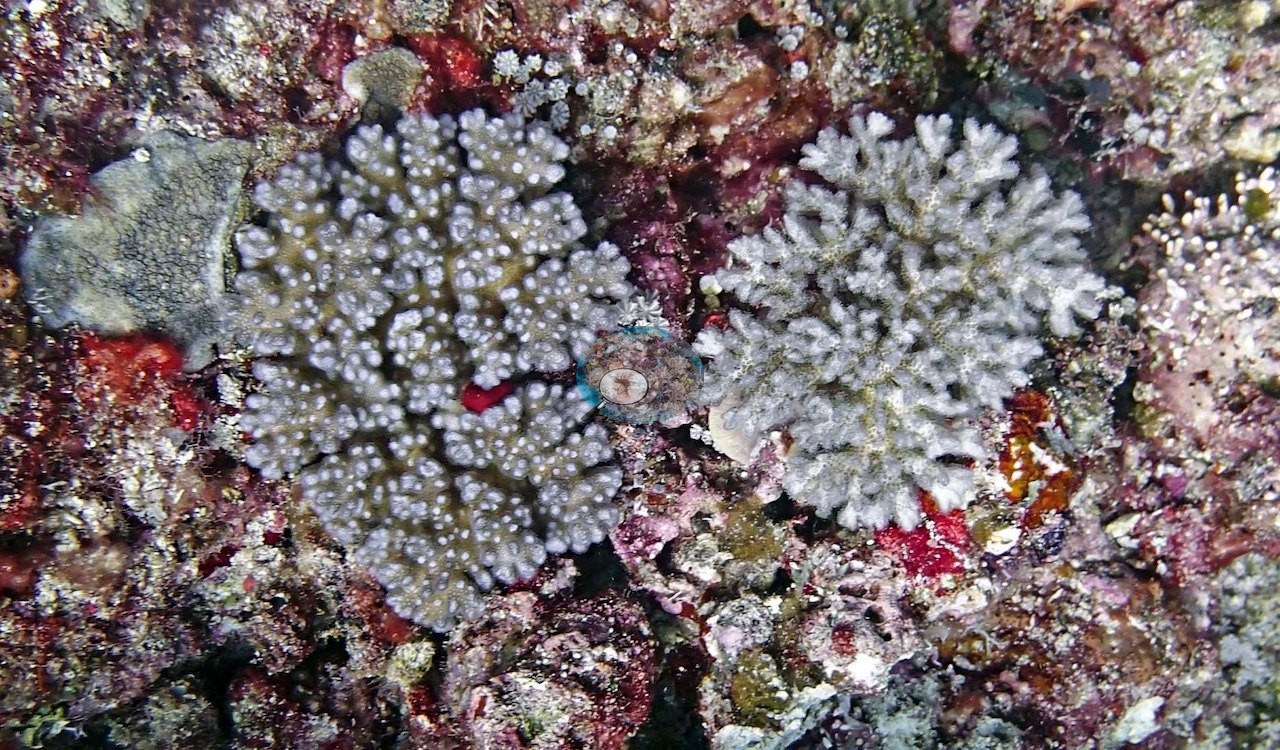
His notes record sickly needle corals (Seriatopora hystrix) on his third transect, at 16 m. One close frame shows two small fine-branched colonies, pale gray-lilac, on red- and pink-crusted rock; the photograph alone cannot say whether they are the pale needle corals of the notes (e.g., Image 6).
The large brown meandroid dome in Image 16 carries one small, sharp-edged white patch of bare surface beside a dark hole, with the rest of the colony fully pigmented; the cause is not visible (e.g., Image 16). Regional context only: about eighteen months before the 2016 mass bleaching, in a sector it hit severely; 5-year mean annual maximum thermal stress at the Far Northern GBR virtual station is 11.1 degree heating weeks. No crown-of-thorns starfish (COTS) or other corallivores evident.
Fish and other fauna
A big barracuda and a gray reef shark made an appearance.
Comparisons with other data
No prior survey data from this site. If you would like to share yours, please email us.
Dive record
It was dived on 28 September 2014.
Other notes
Reef name: Anderson logged this station as AU128143 on 'Unnamed Reef 128', his field label for all three dives of 28 September 2014; the expedition's field report codes it AU238143 on UN Reef 11-238 (its Table 3 and station map), and the 933-site table codes it AU5R143. The position is the 933-site table's, which matches his sheet.
CV model comparison
More info
The photo row below is a methods comparison only: it is never averaged with the transect and never used as the headline. It compares site means only: the photos come from the same survey dive as the transect but not from the same points.| Method | Hard-coral cover (%) | Photos (n) ± SE |
|---|---|---|
| Transect (published) | 59.1 | |
| CoralSCOP edited | 37.2 | n = 23 · SE 2.2 |
| Claude (edited photos) | 49.4 | n = 23 · SE 4.3 |
The two computer-vision methods disagree by 12.2 pp (37–49%) and read 9.7–21.9 pp below the in-water transect (59%); the headline is the in-water transect because a diver transect is independent of the photographs.
Data & links
- Download benthic survey data (CSV) ↗
- Download all LOF-GRE data (933 sites) ↗
- Photo portfolio ↗
- Coral Reef Diagnostics country page ↗
All images from Coral Reef Diagnostics. Data are from the Khaled bin Sultan Living Oceans Foundation Global Reef Expedition and Coral Reef Diagnostics.
 © Coral Reef Diagnostics.