
Part of the regional summaries: Australia (GBR) - Far North: Blue stations (Habitat Protection Zone reefs) and Australia (GBR)
More info
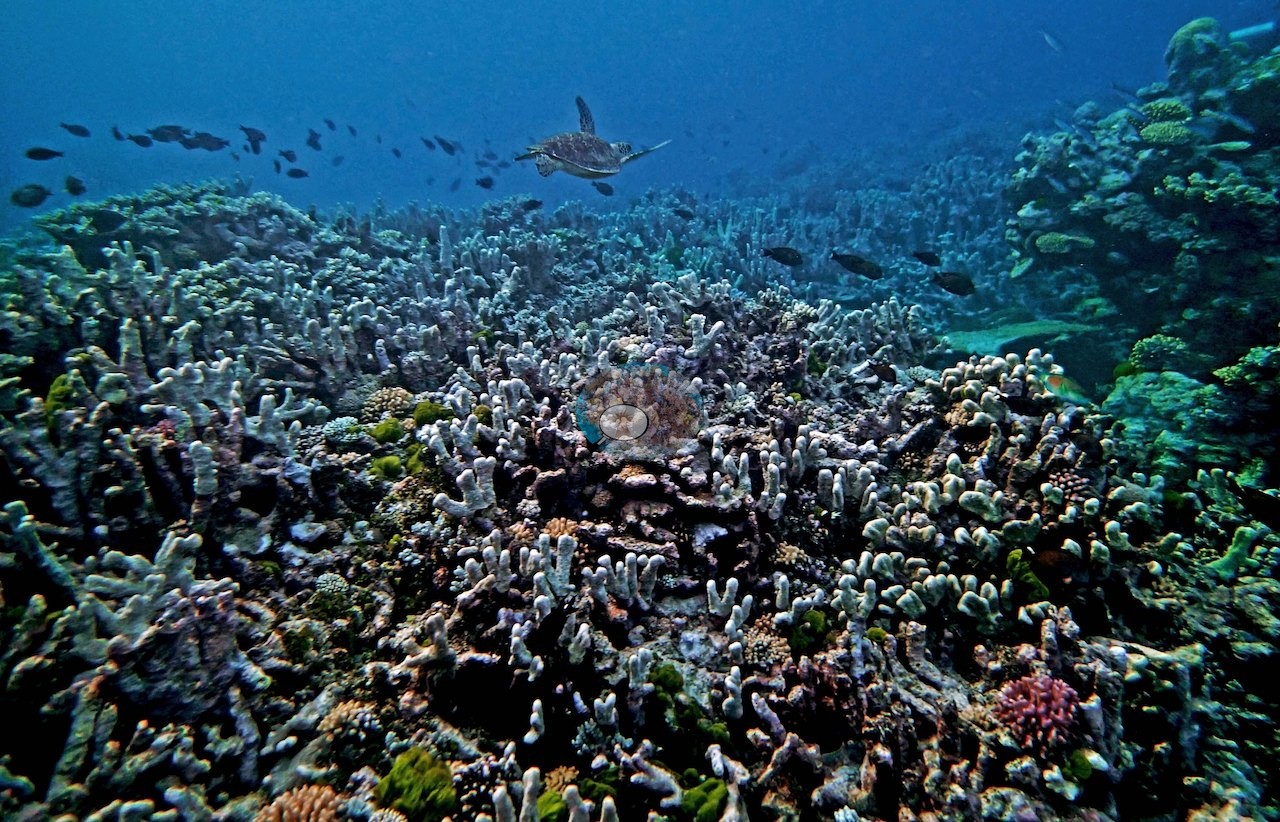
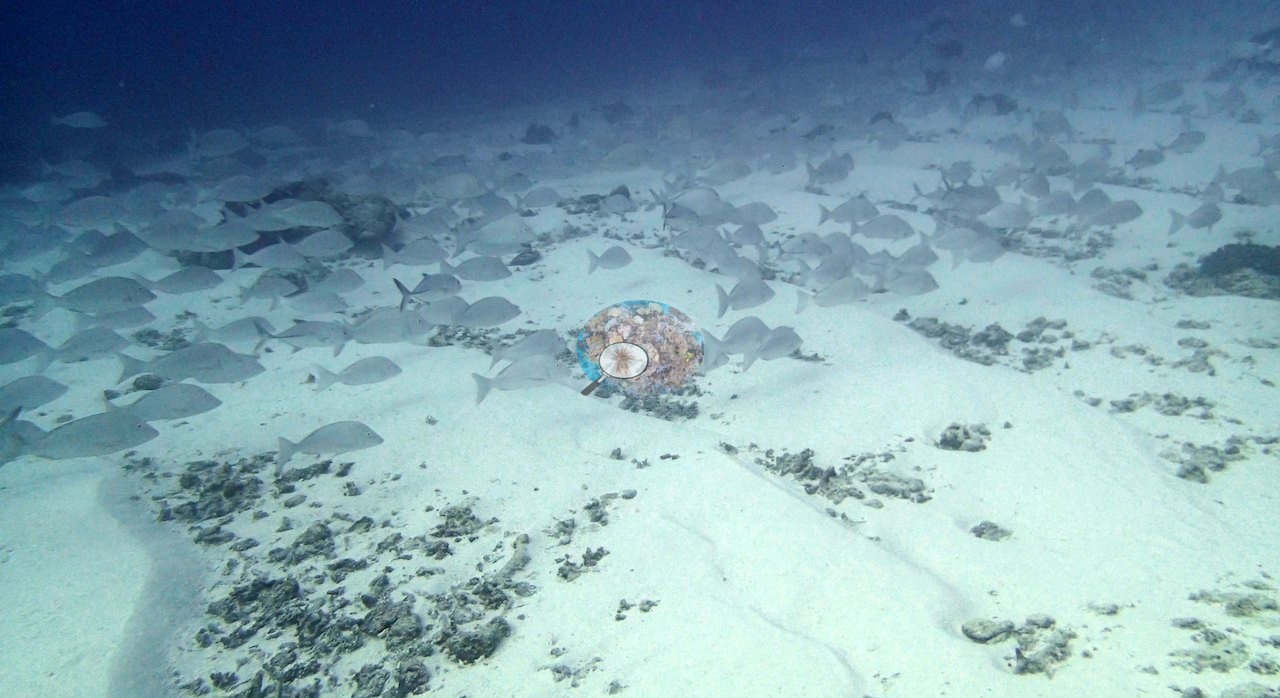
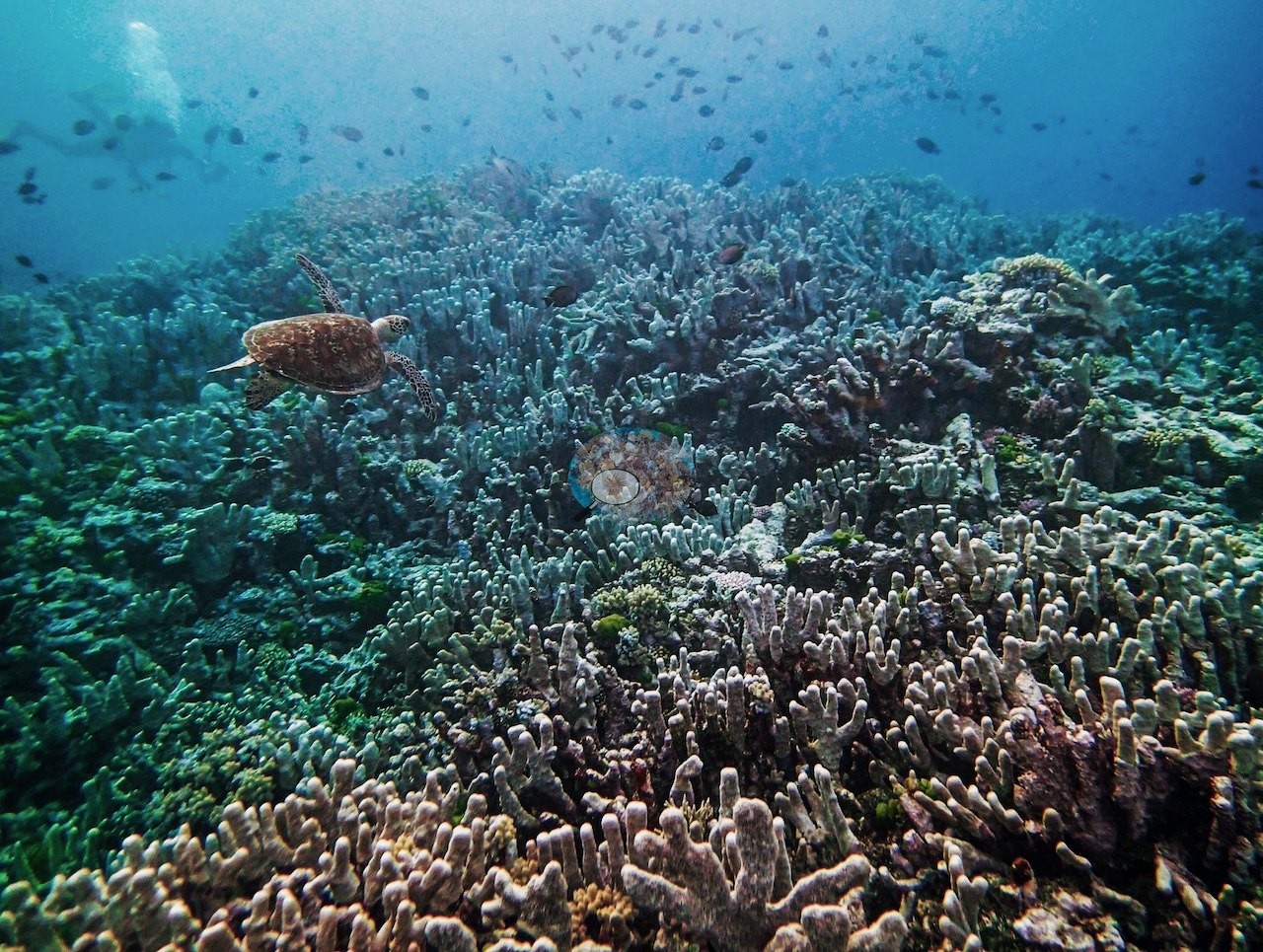
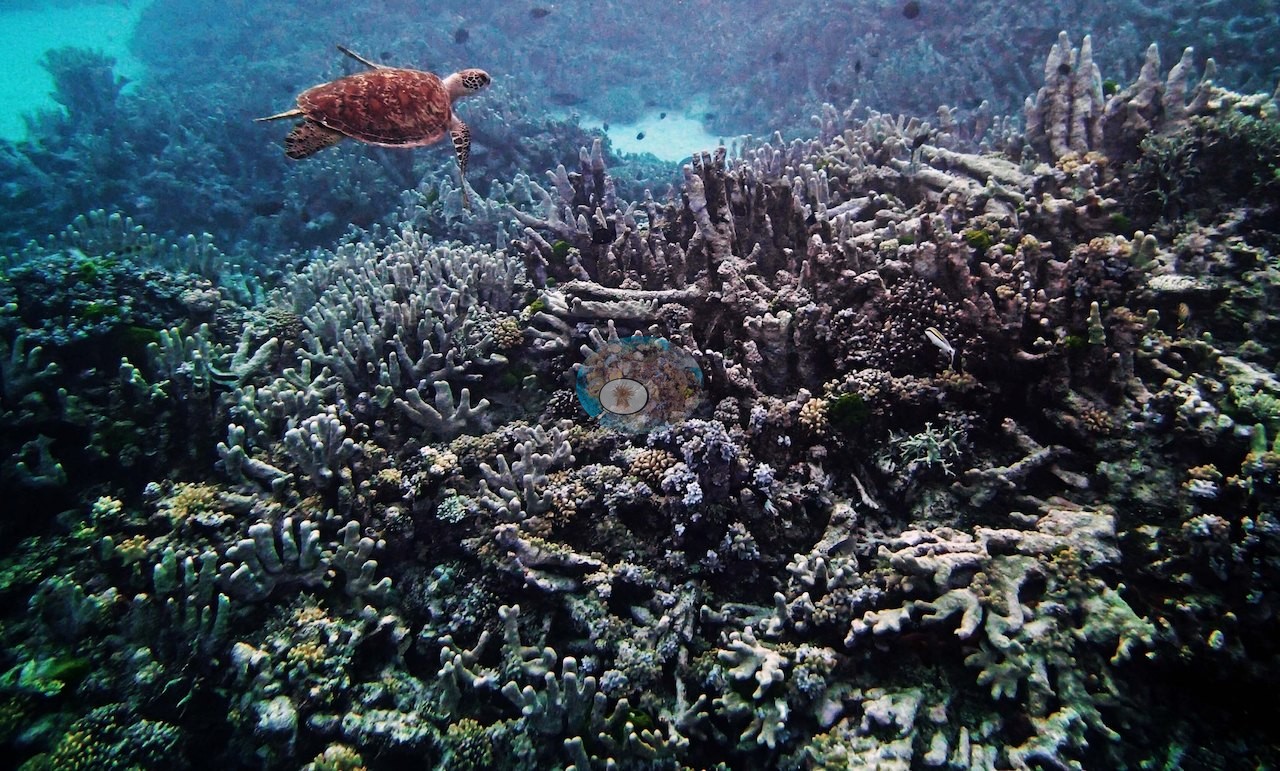
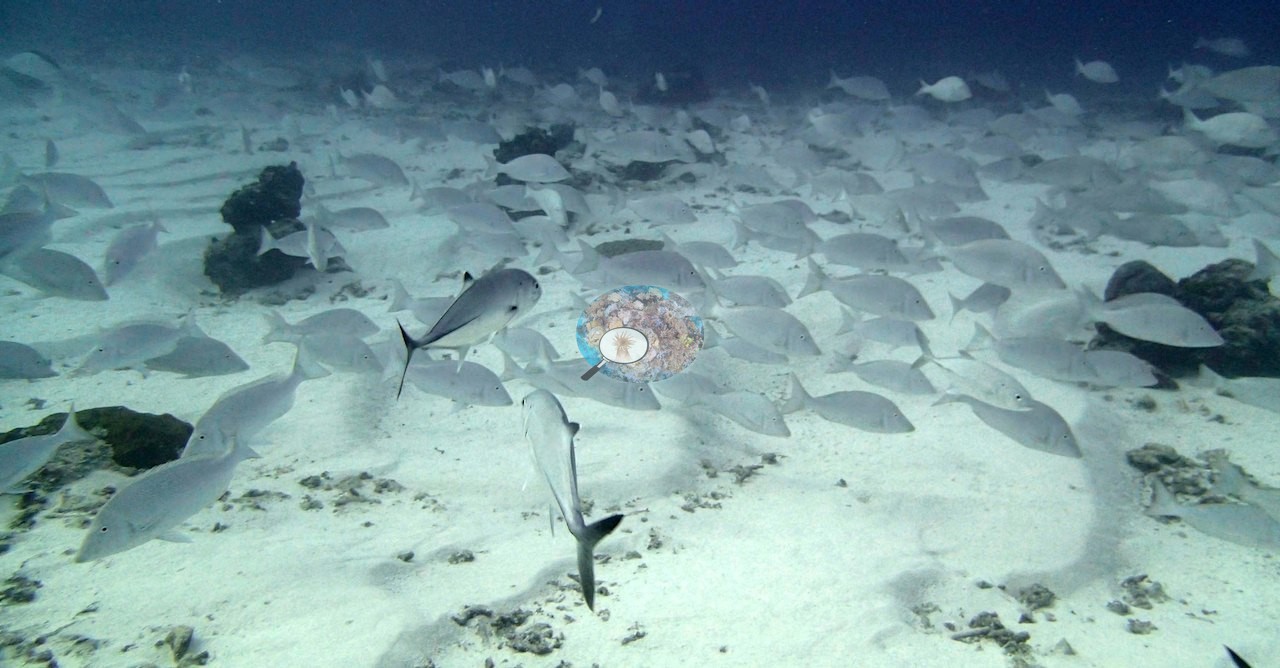
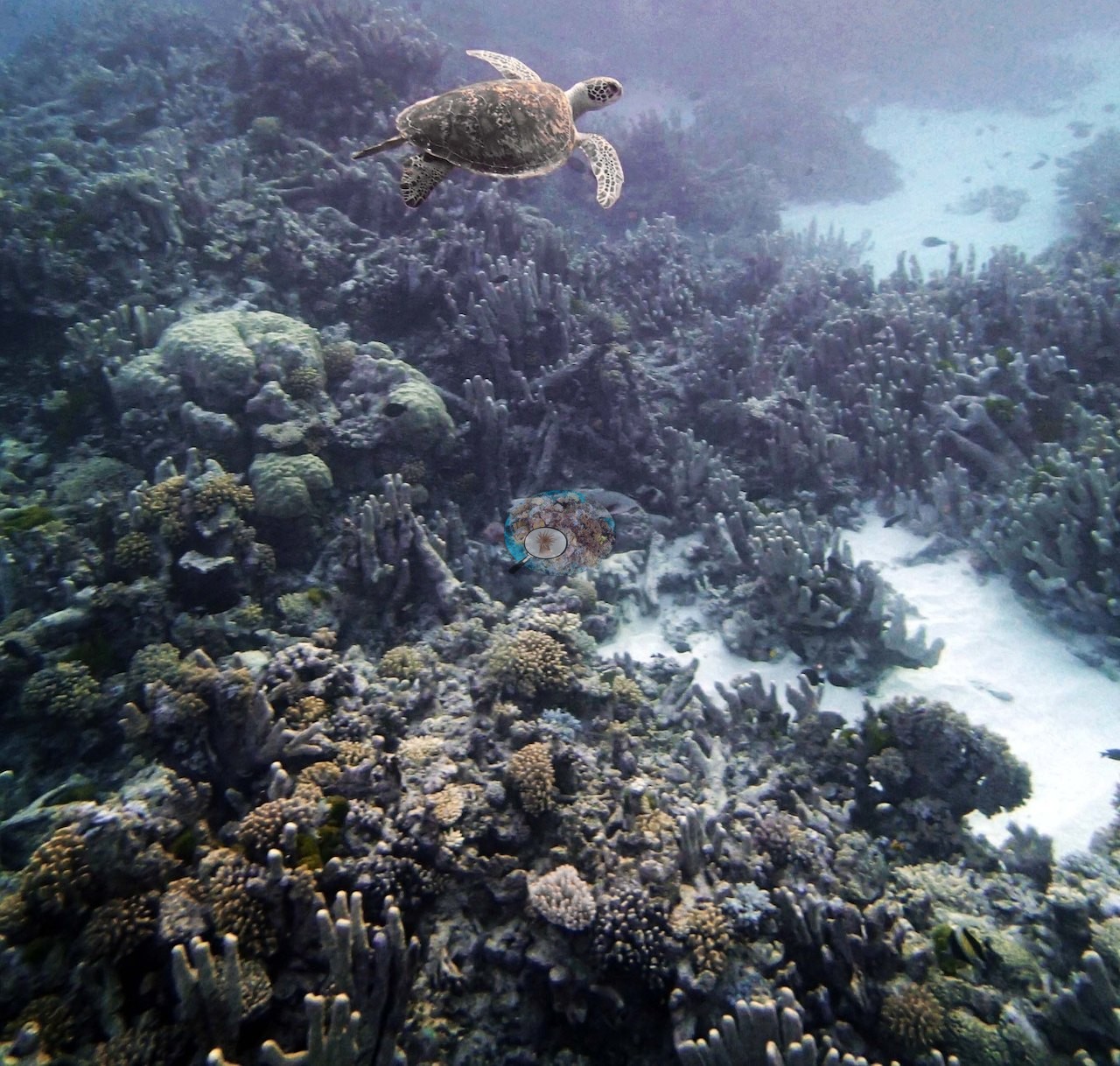
Far Northern GBR (NOAA CRW virtual station)A late-afternoon dive on Five Reefs (logged in his notes as "3 Reefs") where gray reef sharks worked the slope and a huge school of jacks and snappers massed at 25 m; live coral cover here was 51%. A turtle passed by, only the third of the expedition, but pale, sickly, or bleached needle coral (Seriatopora) turned up on every transect. Surveyed on the Living Oceans Foundation's Global Reef Expedition.
Two other CRD dive sites within 5 km shown in orange — click a marker to open its page.
🗺 Detailed map of the Global Reef Expedition dive sites, Five Reefs and unnamed reef 11-238, northern Great Barrier Reef (Khaled bin Sultan Living Oceans Foundation; opens in a new window)
Site description
General benthic features
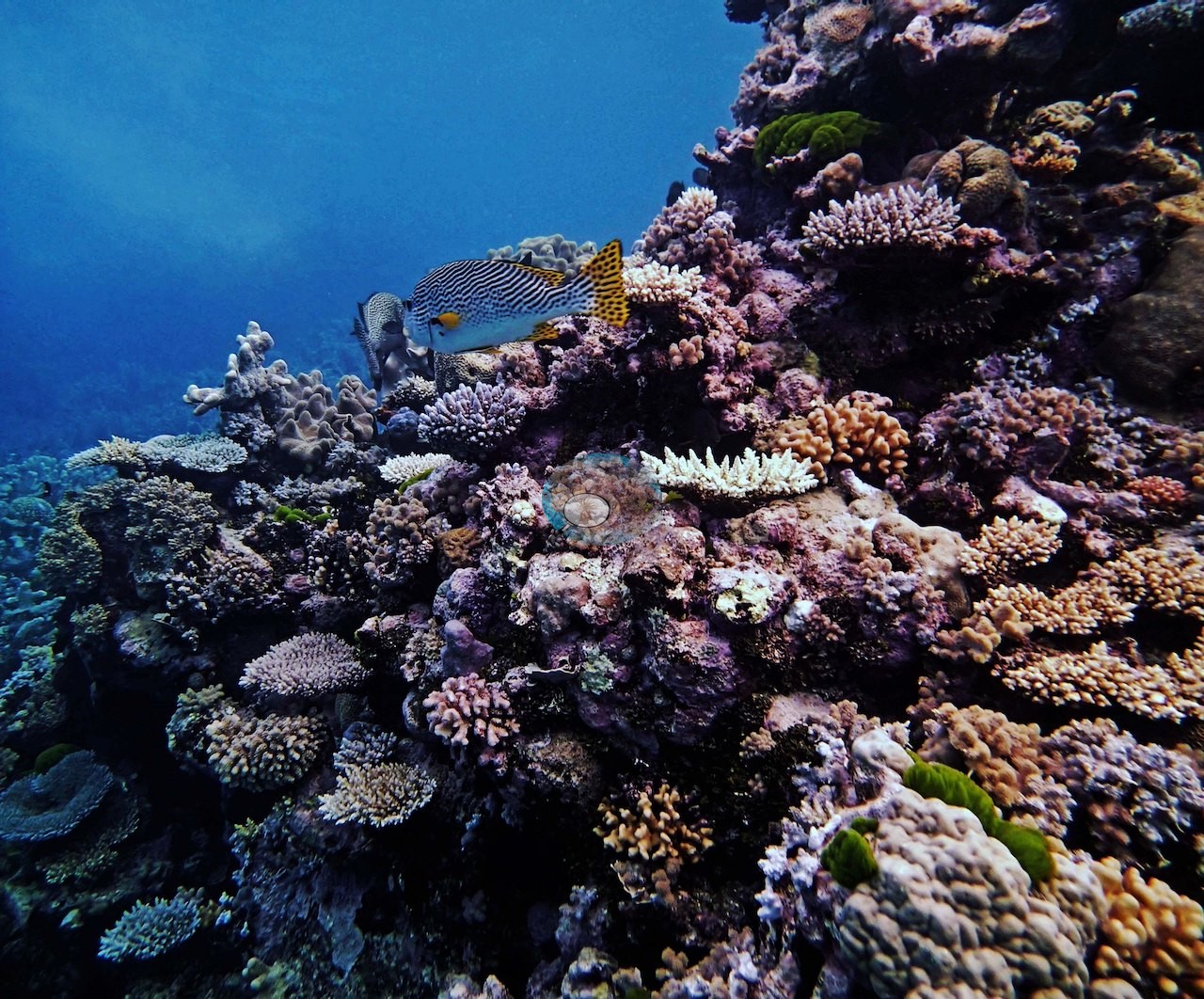
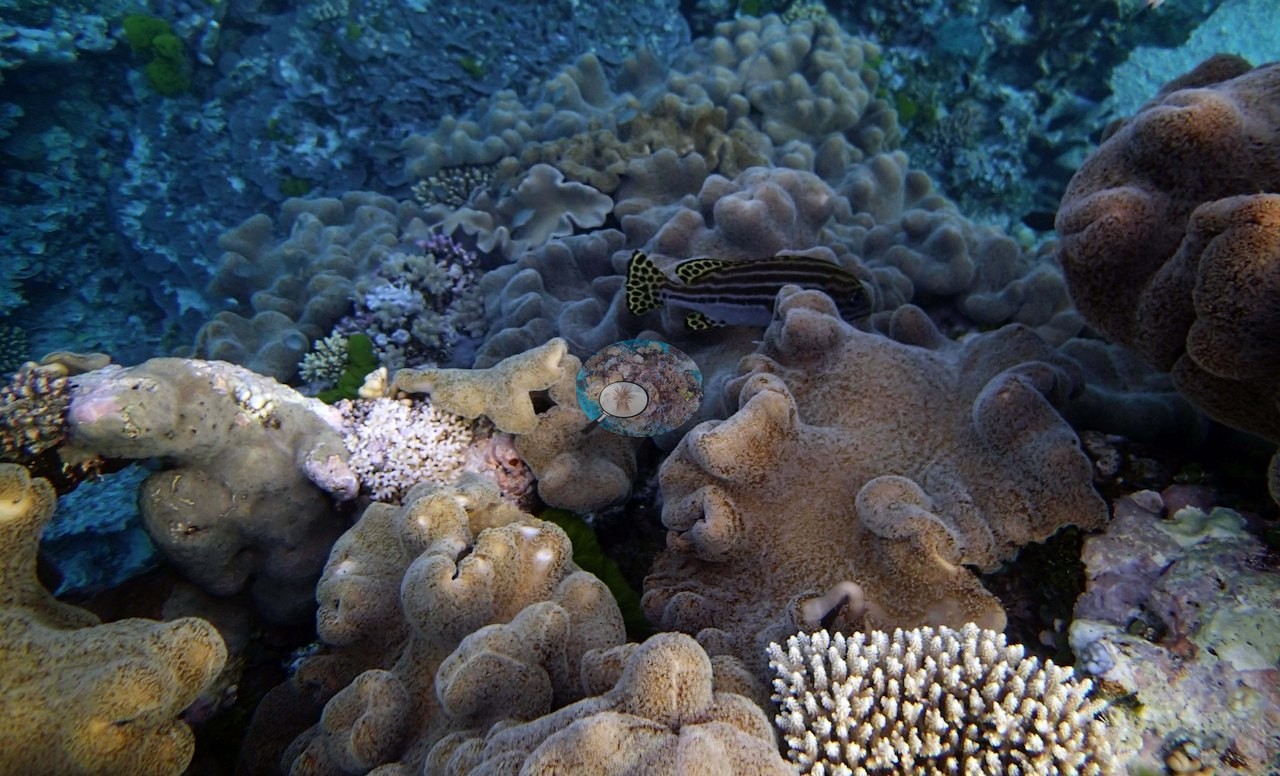
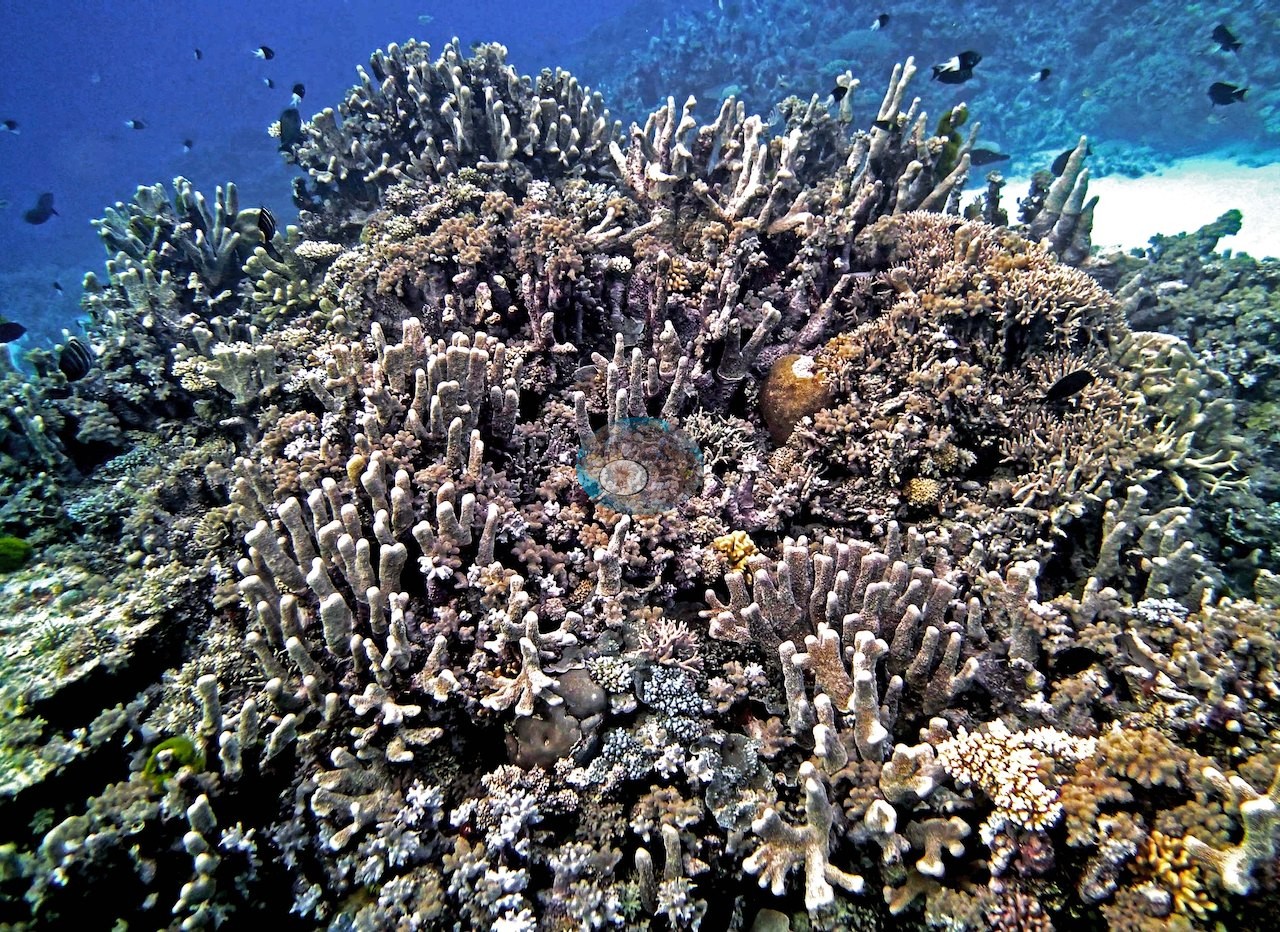
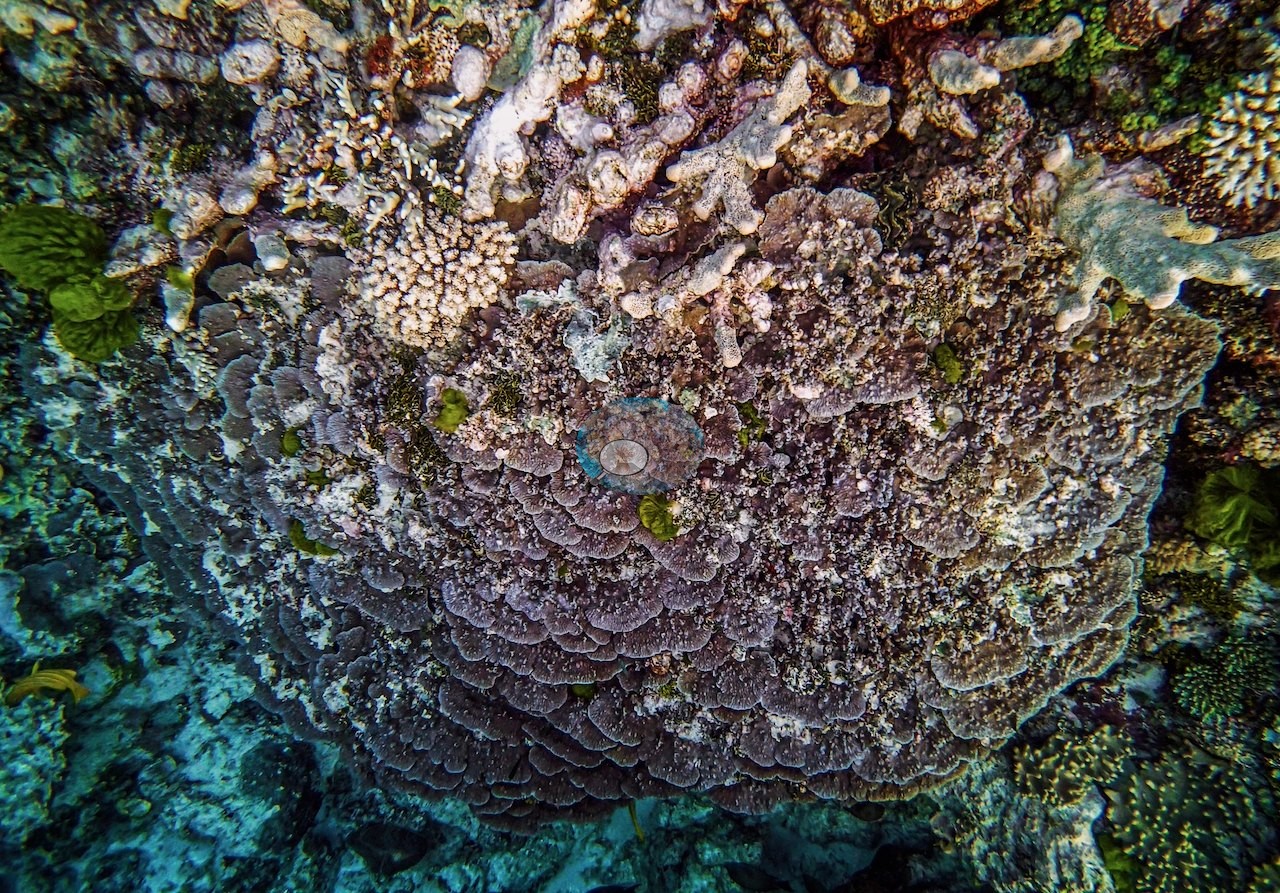
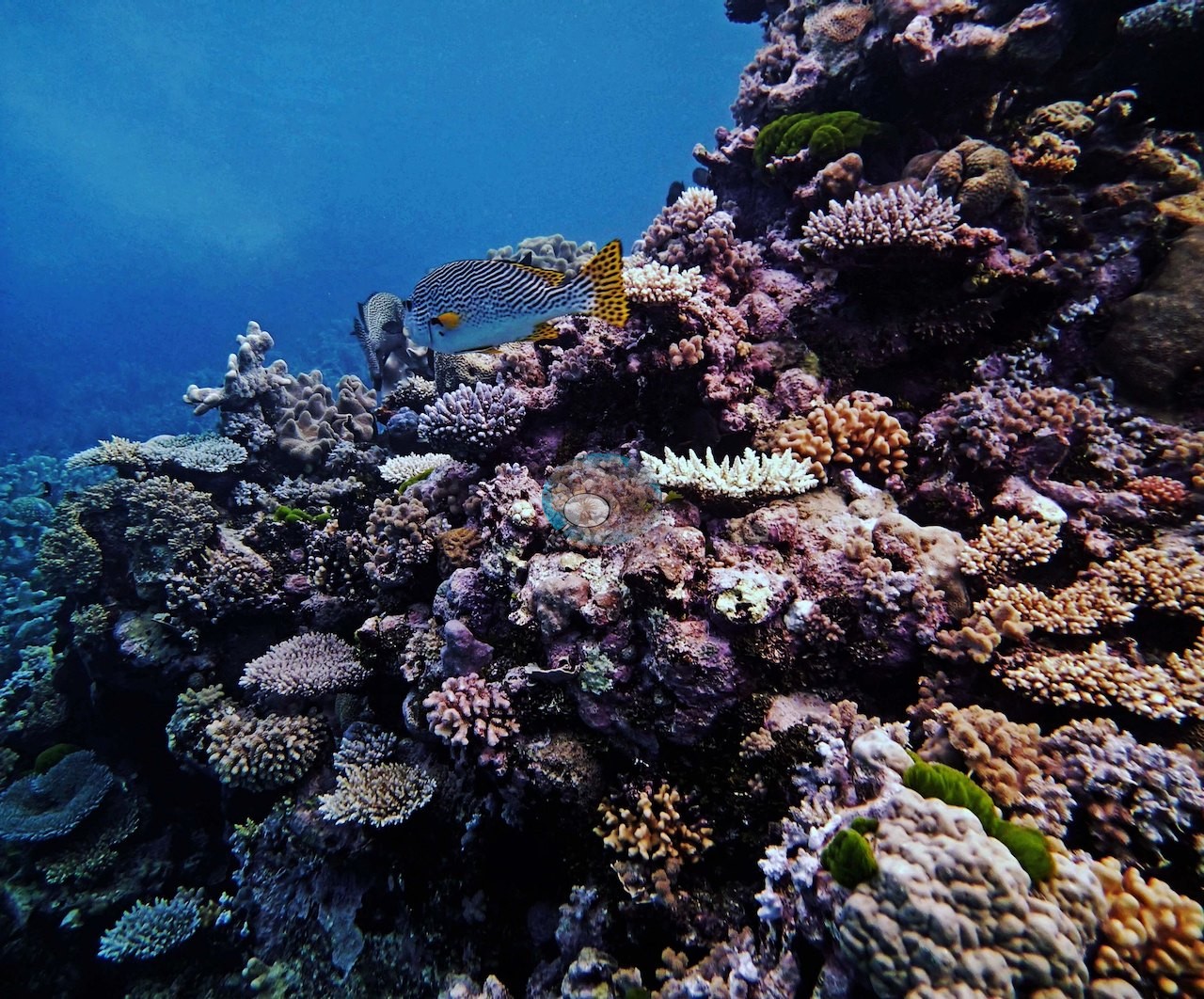
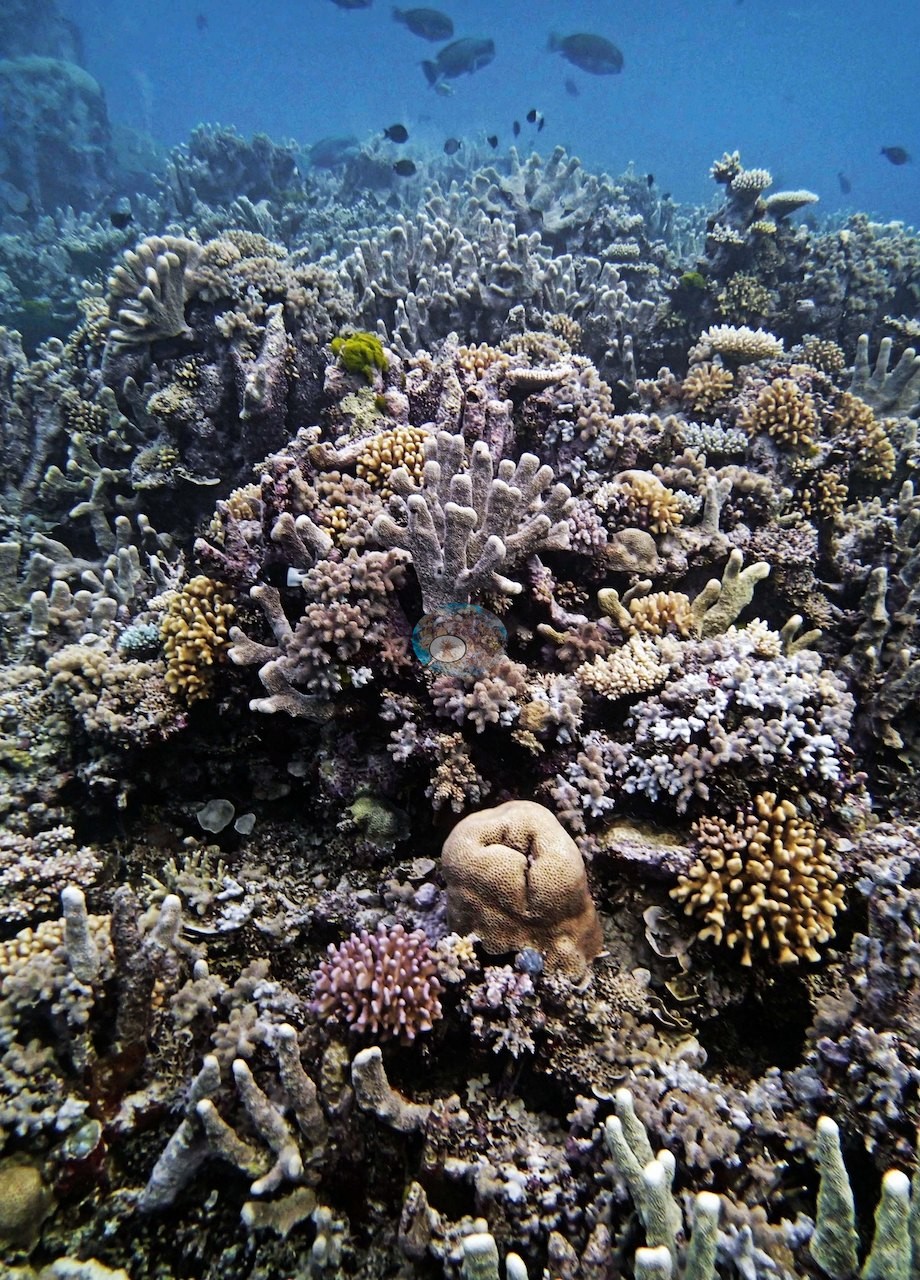
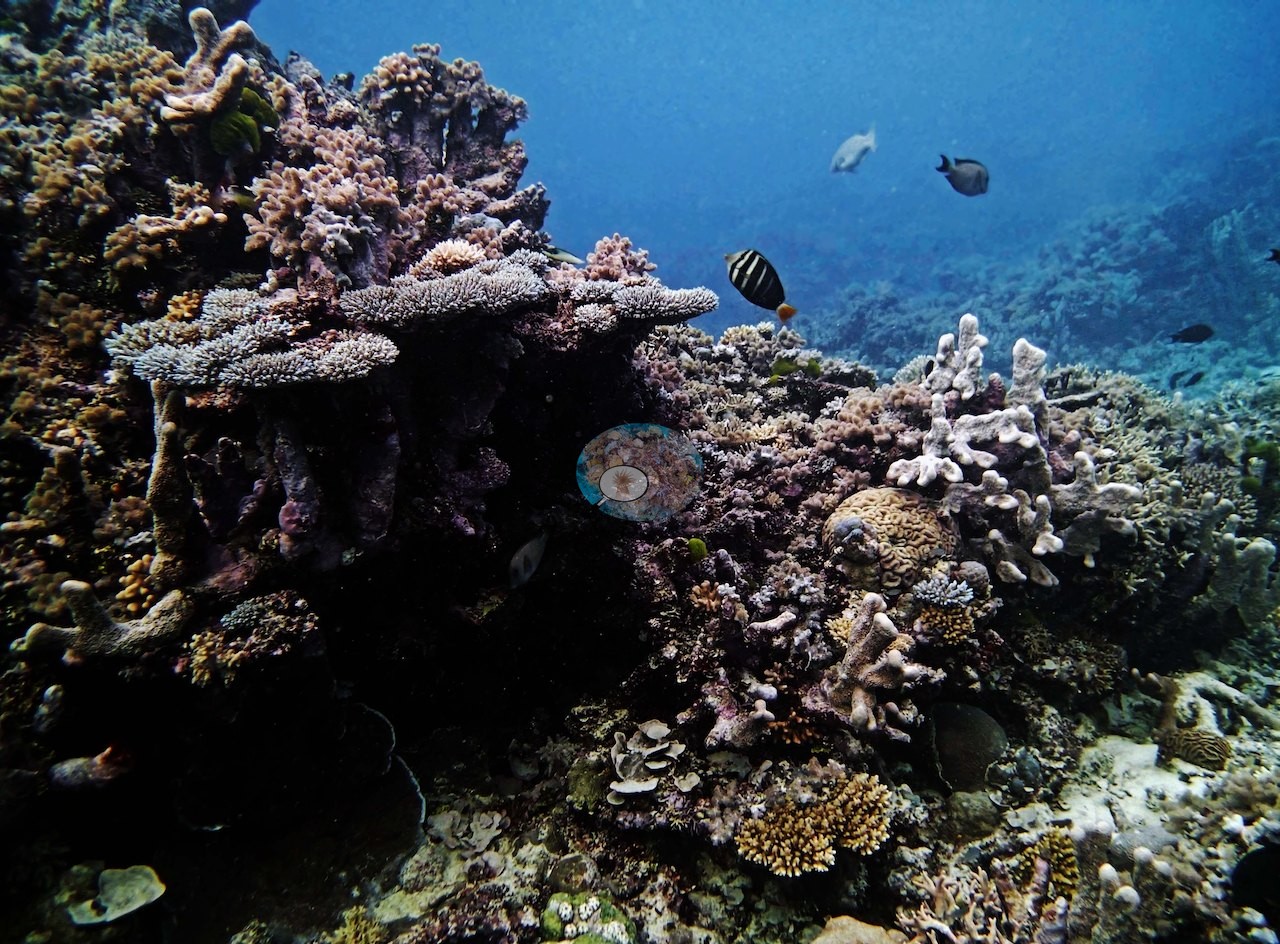
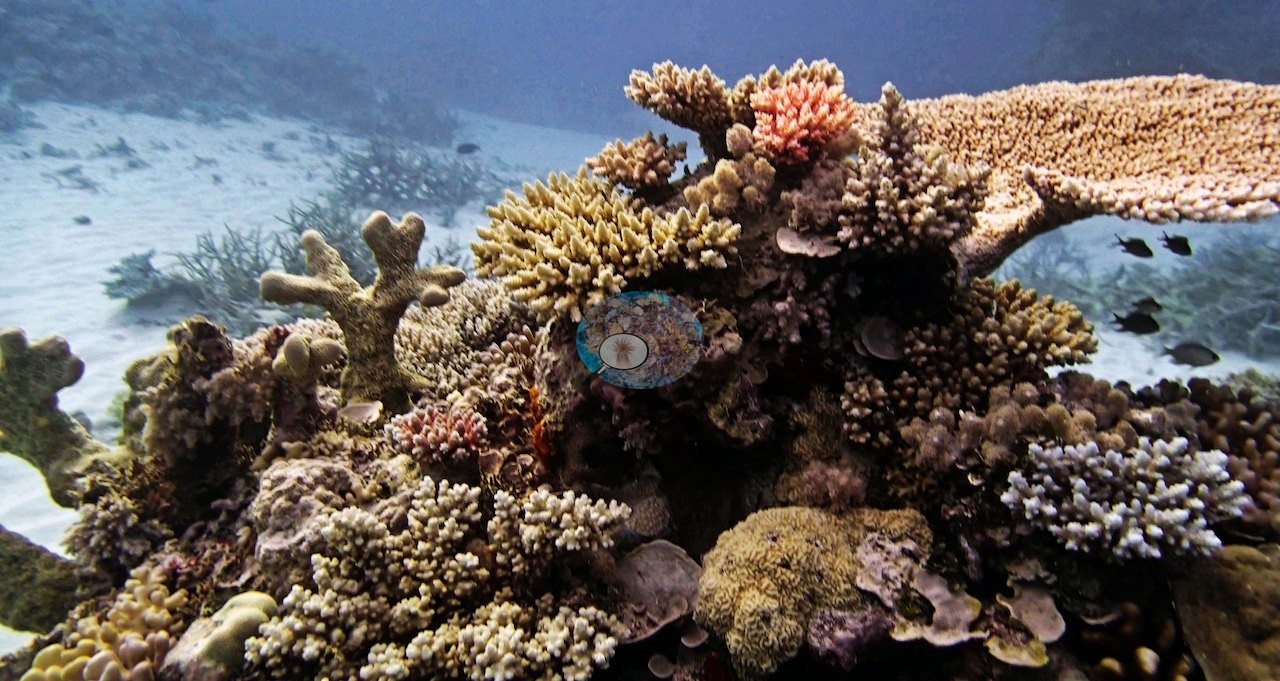
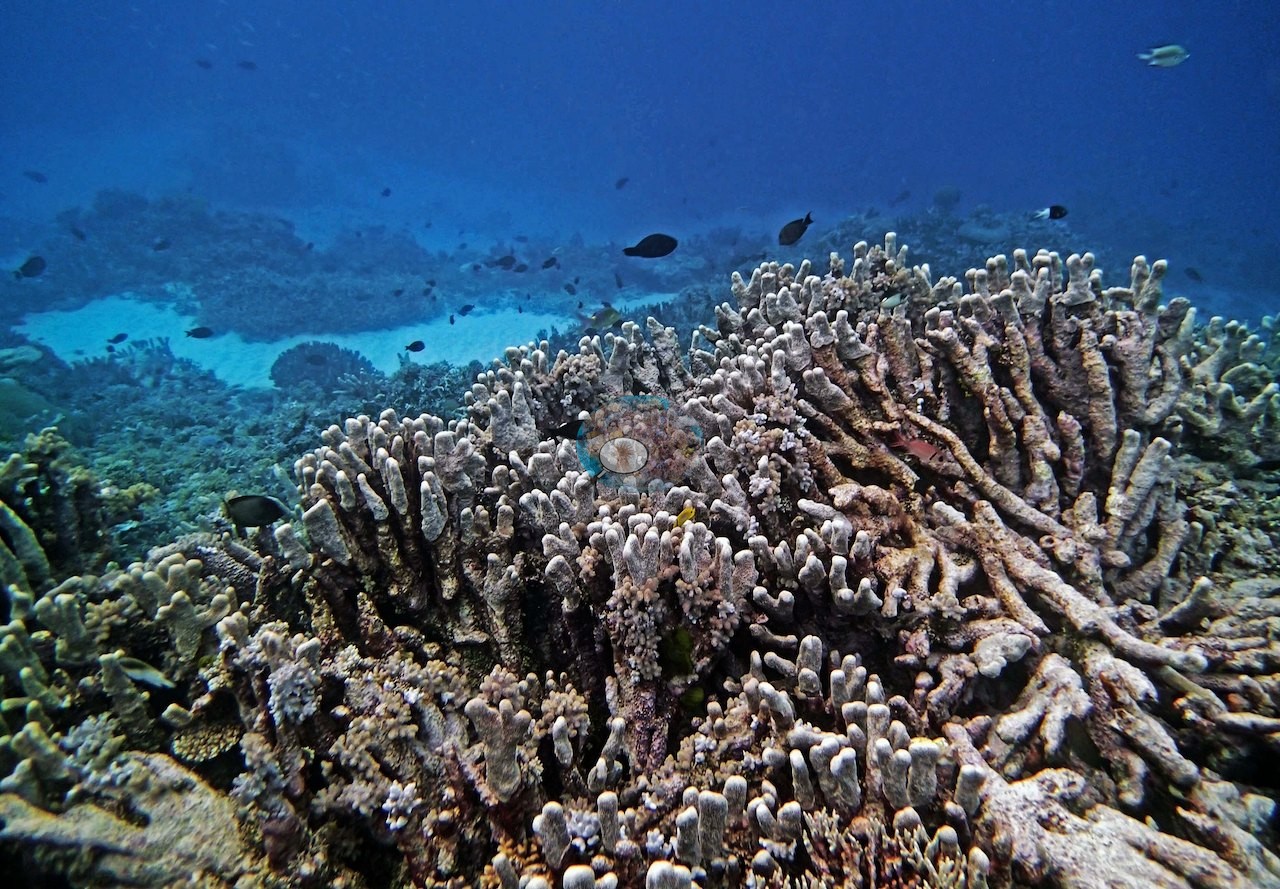
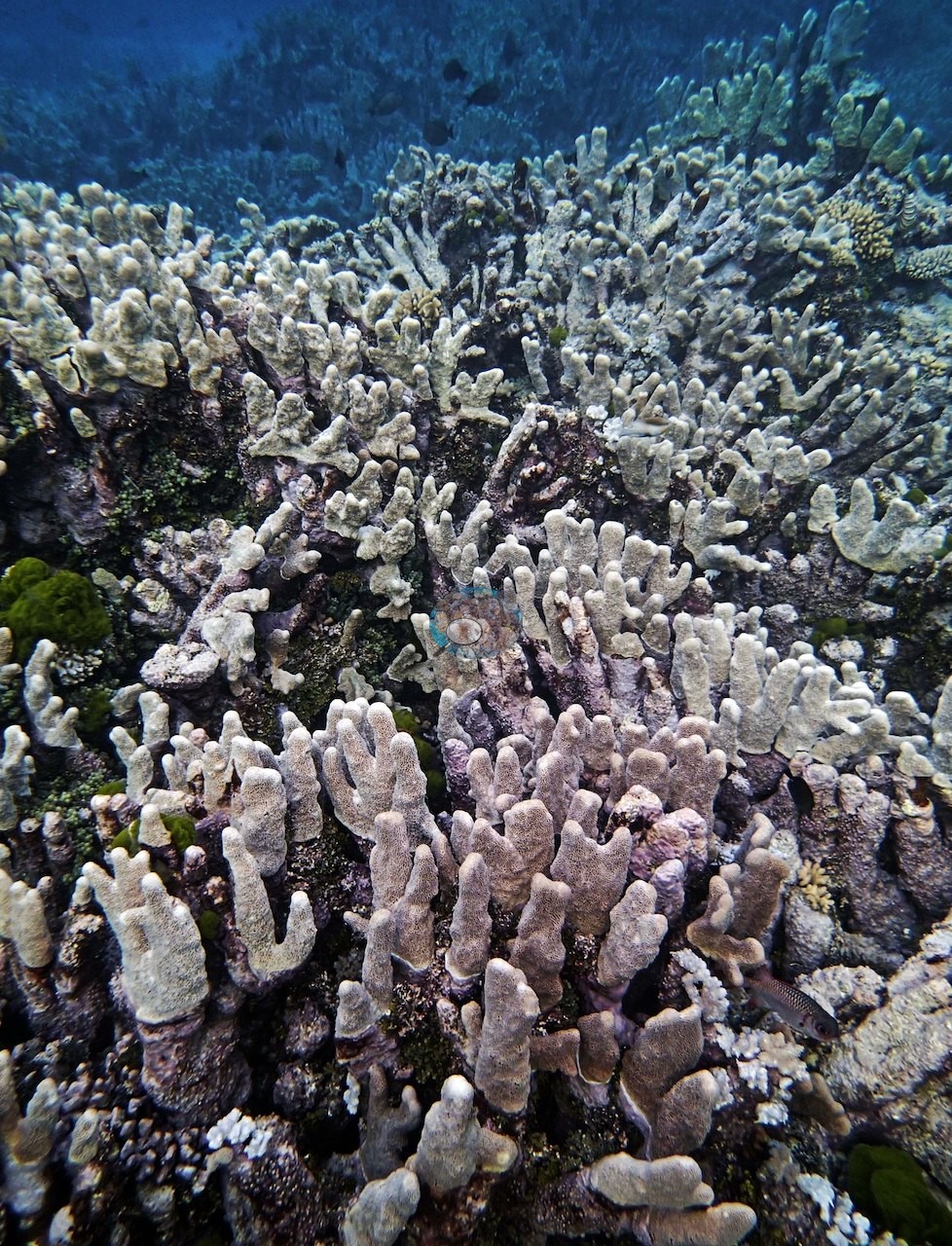
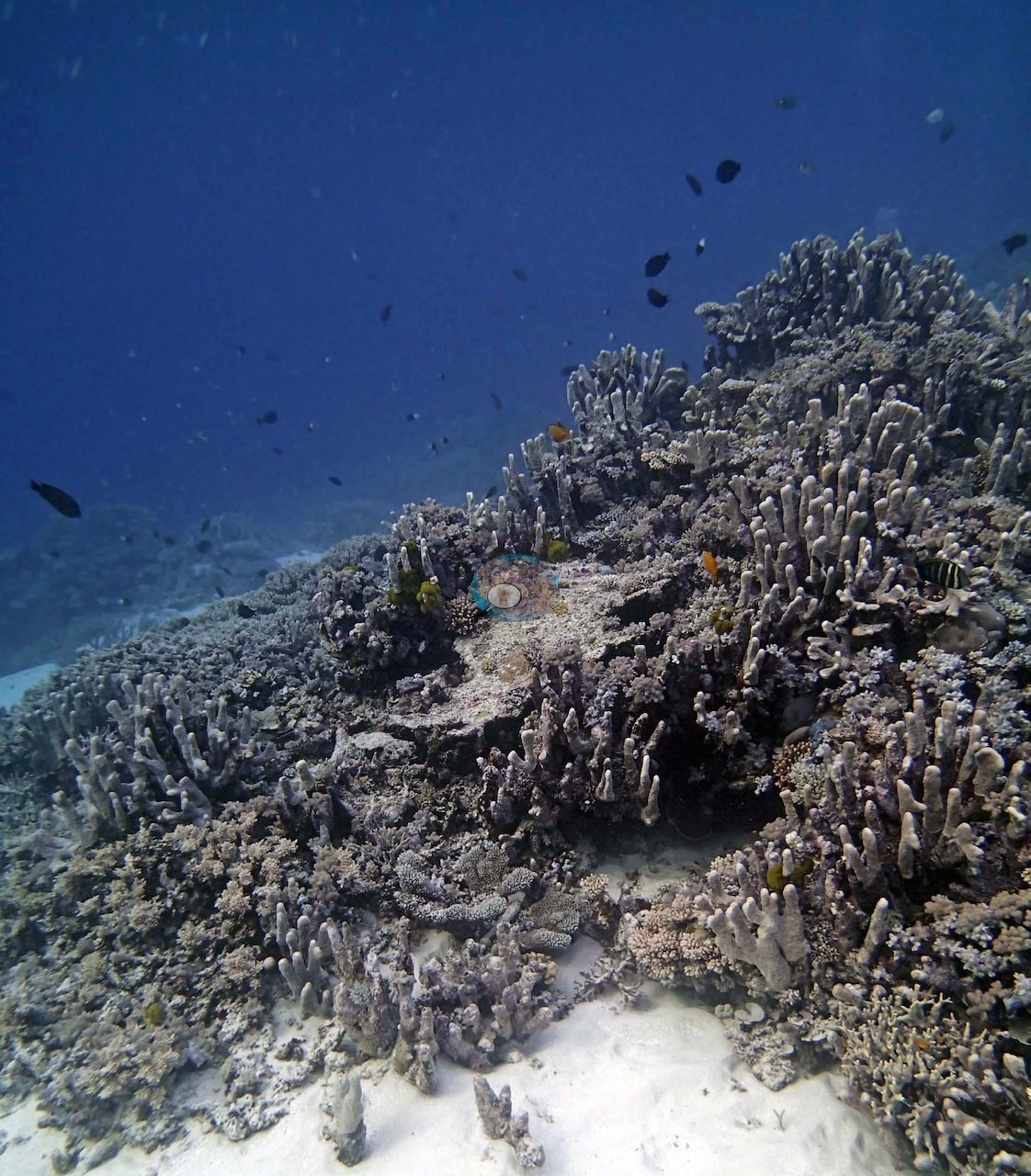
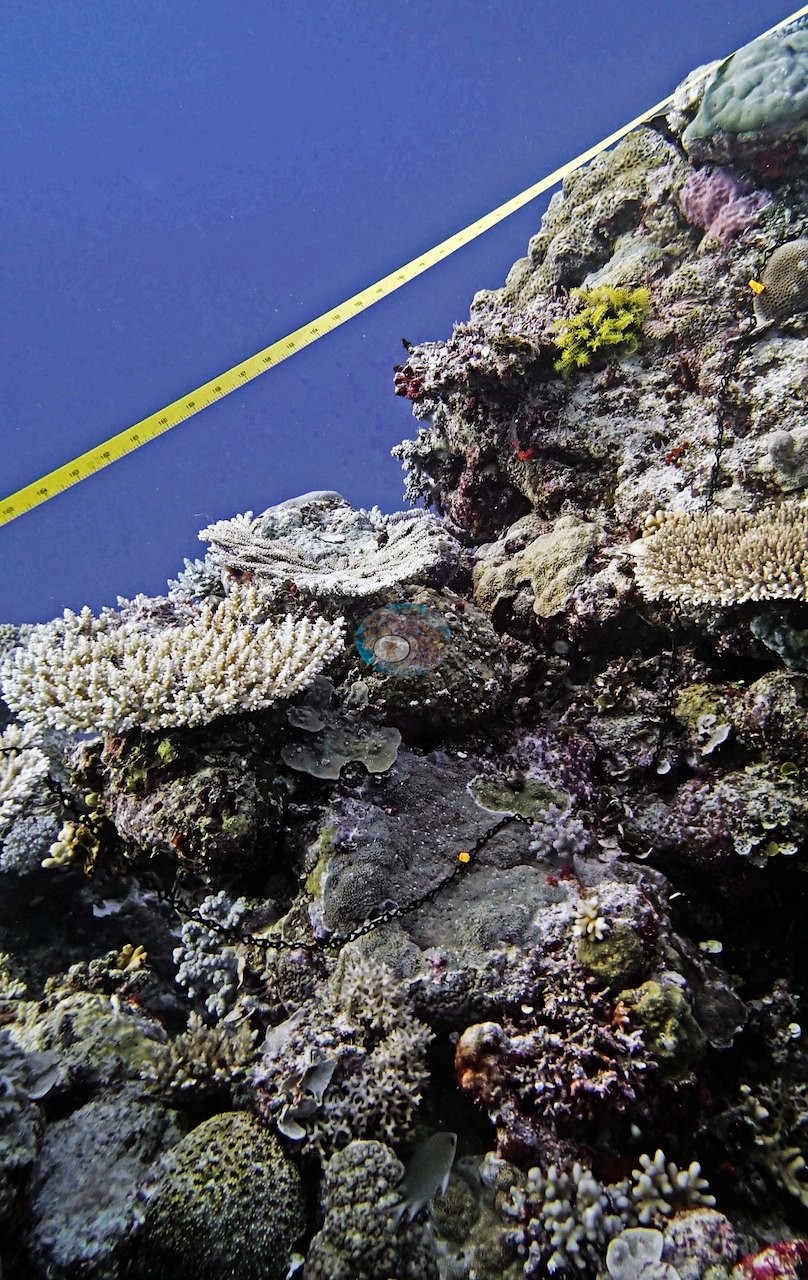
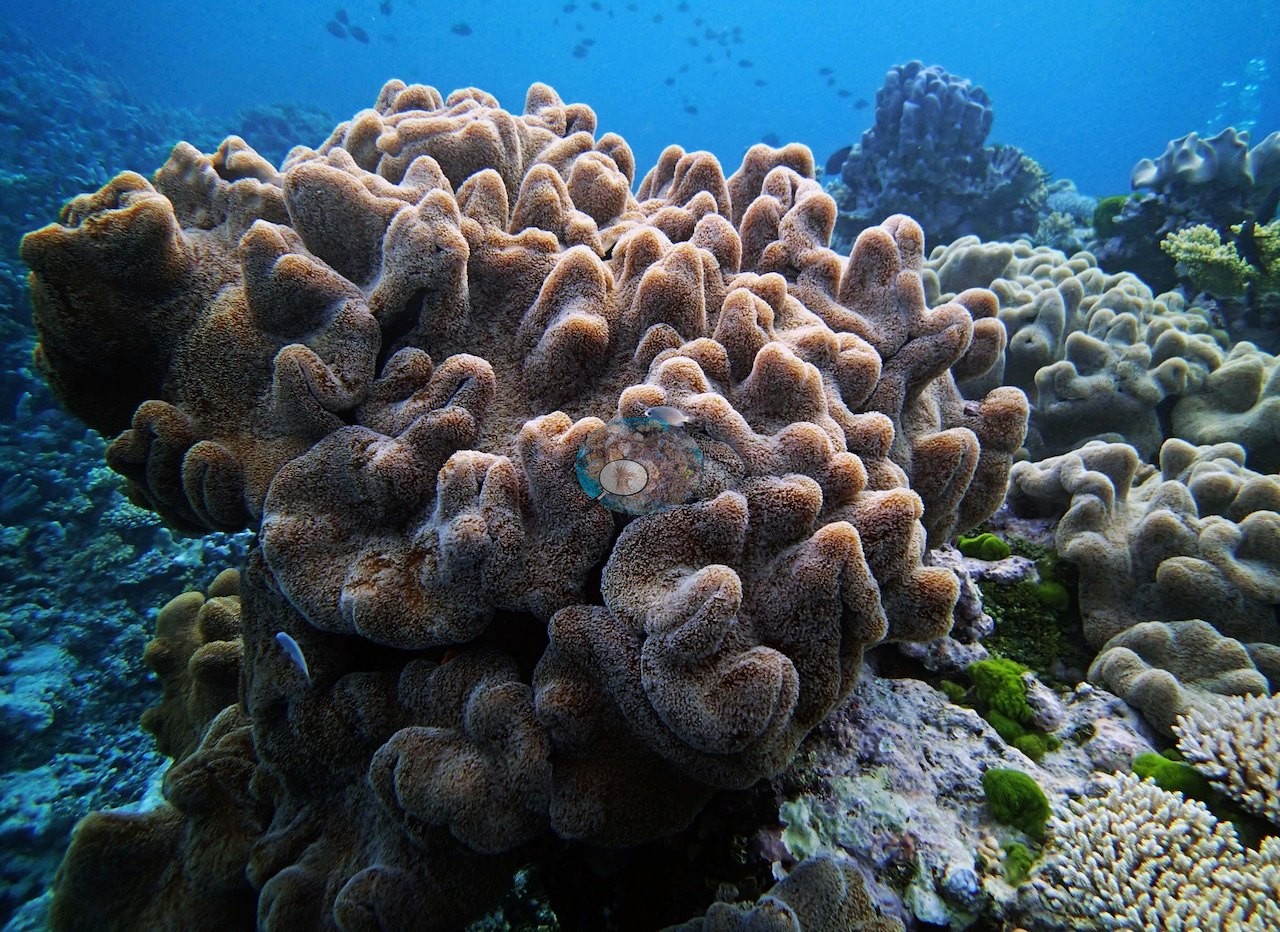
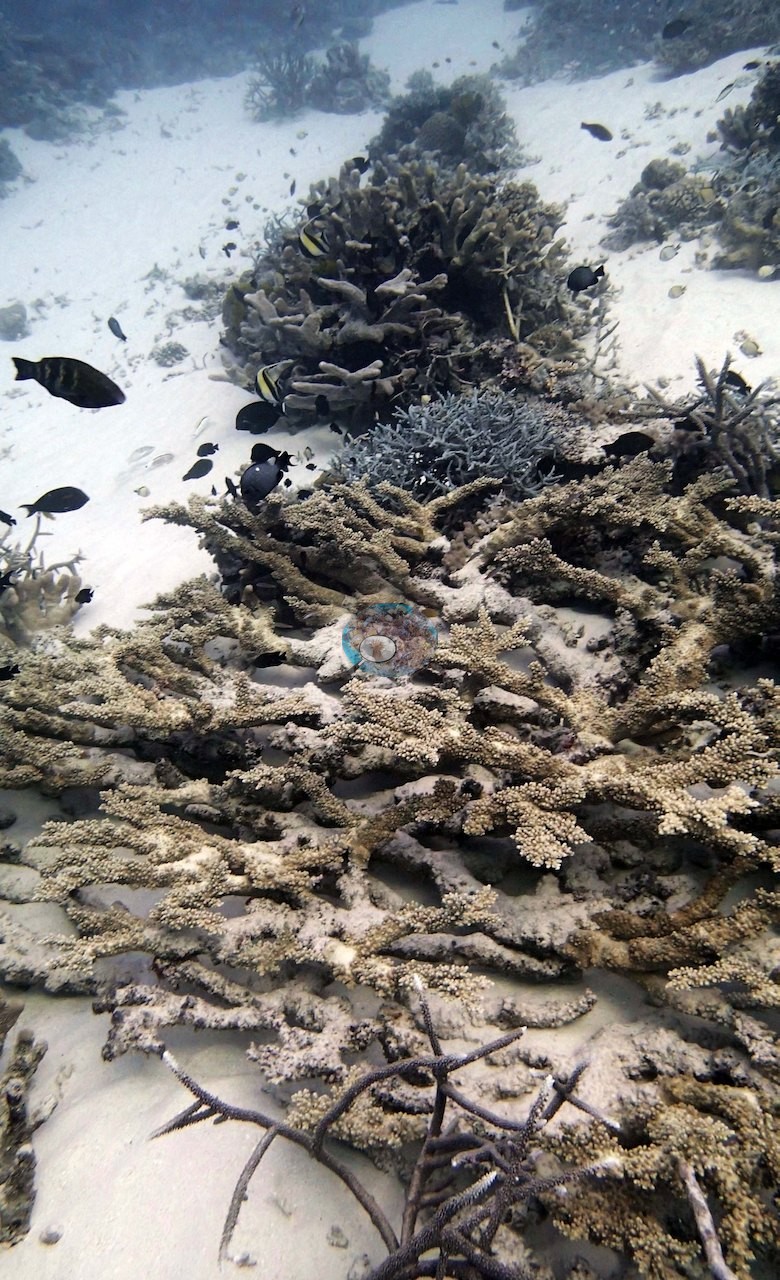
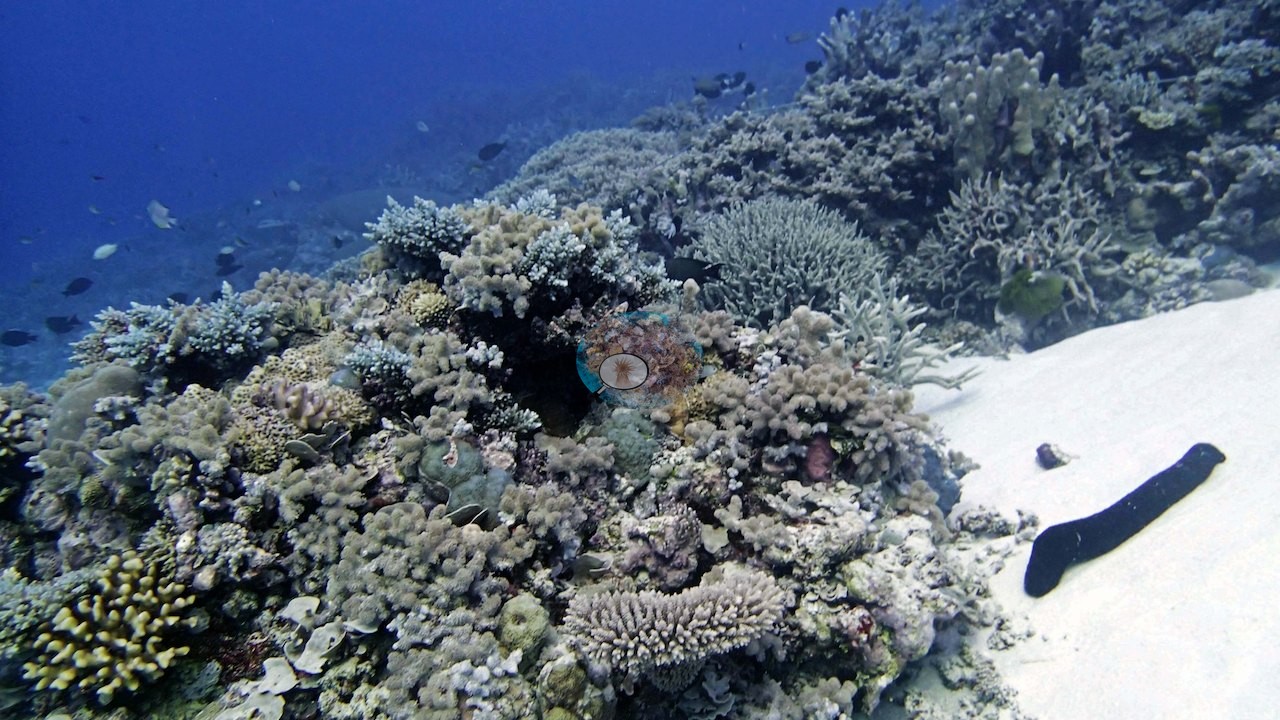
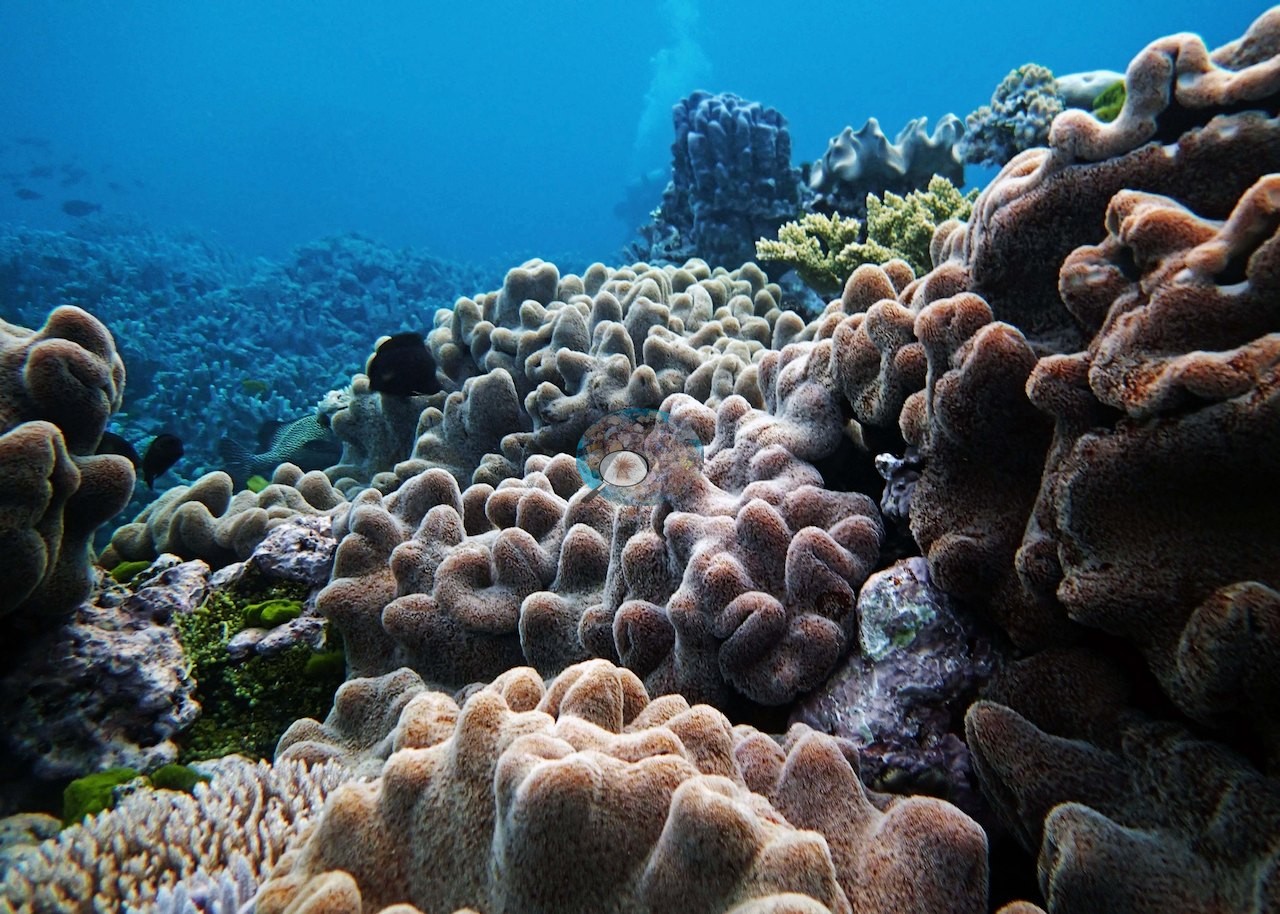
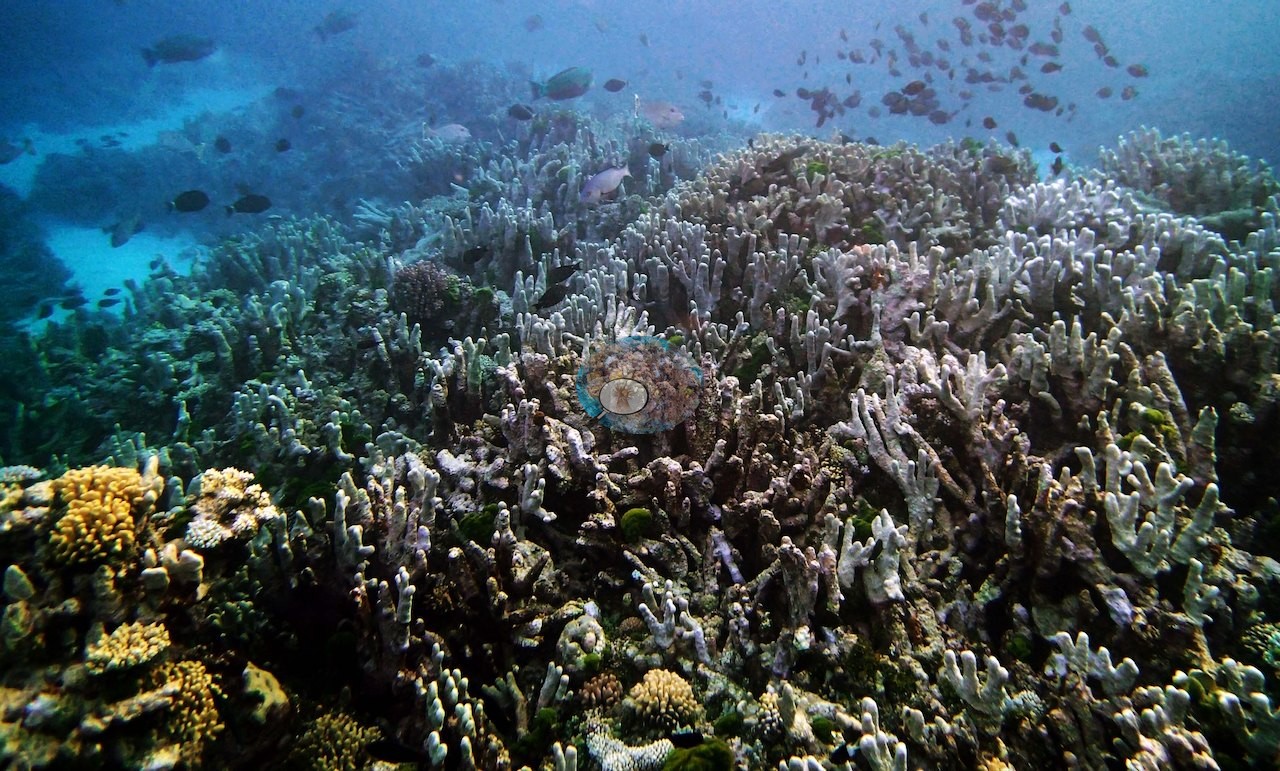
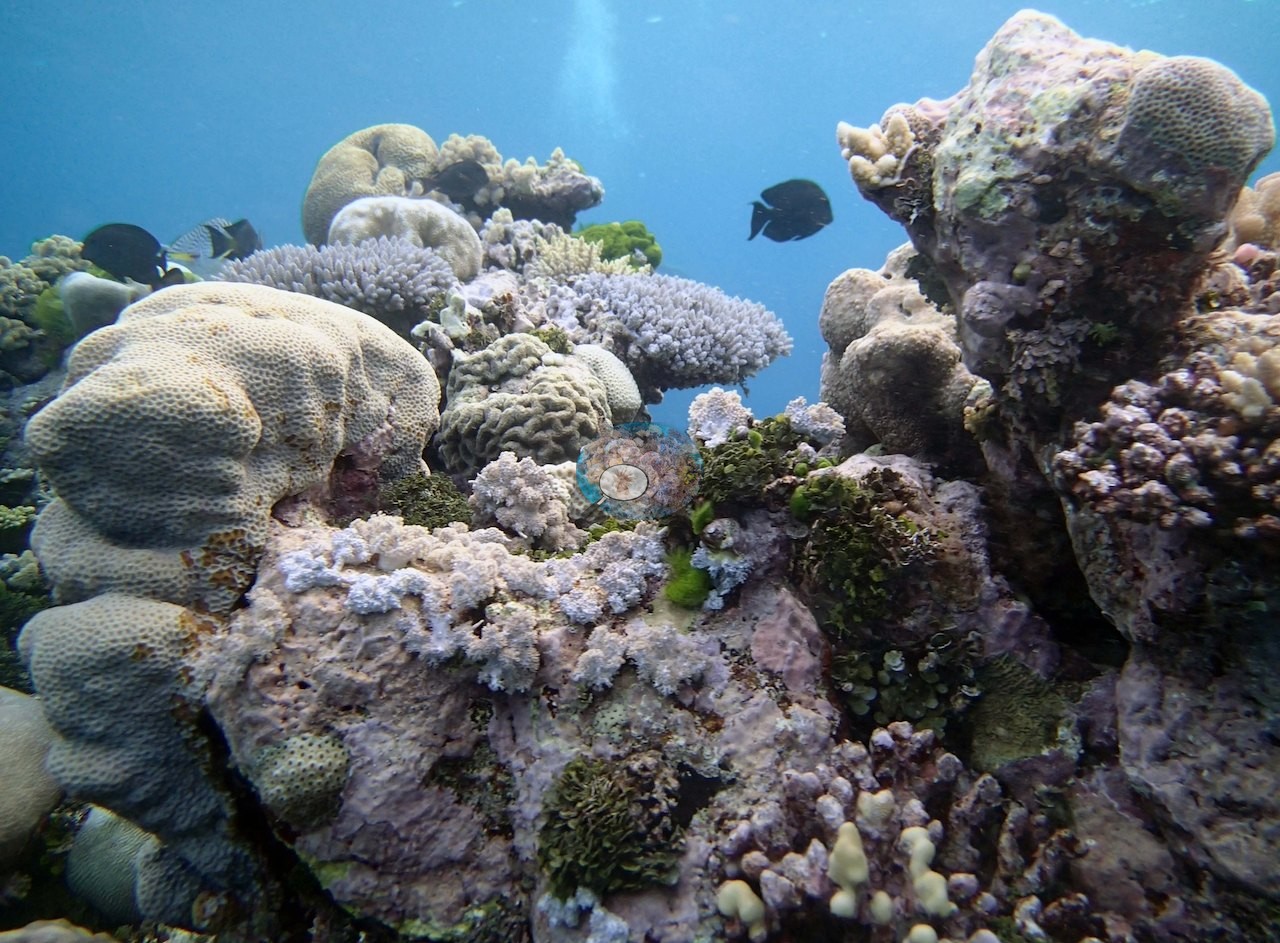
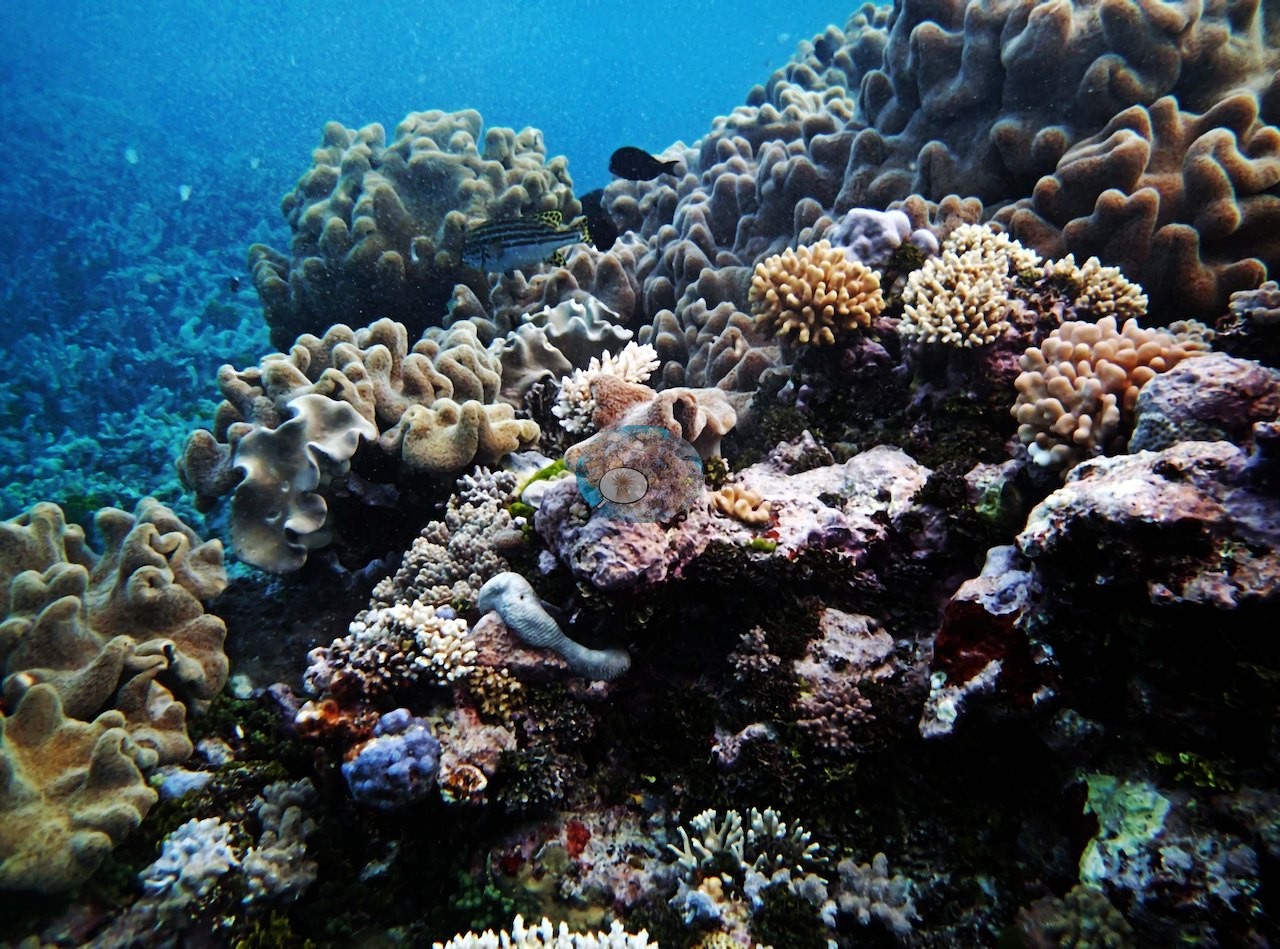
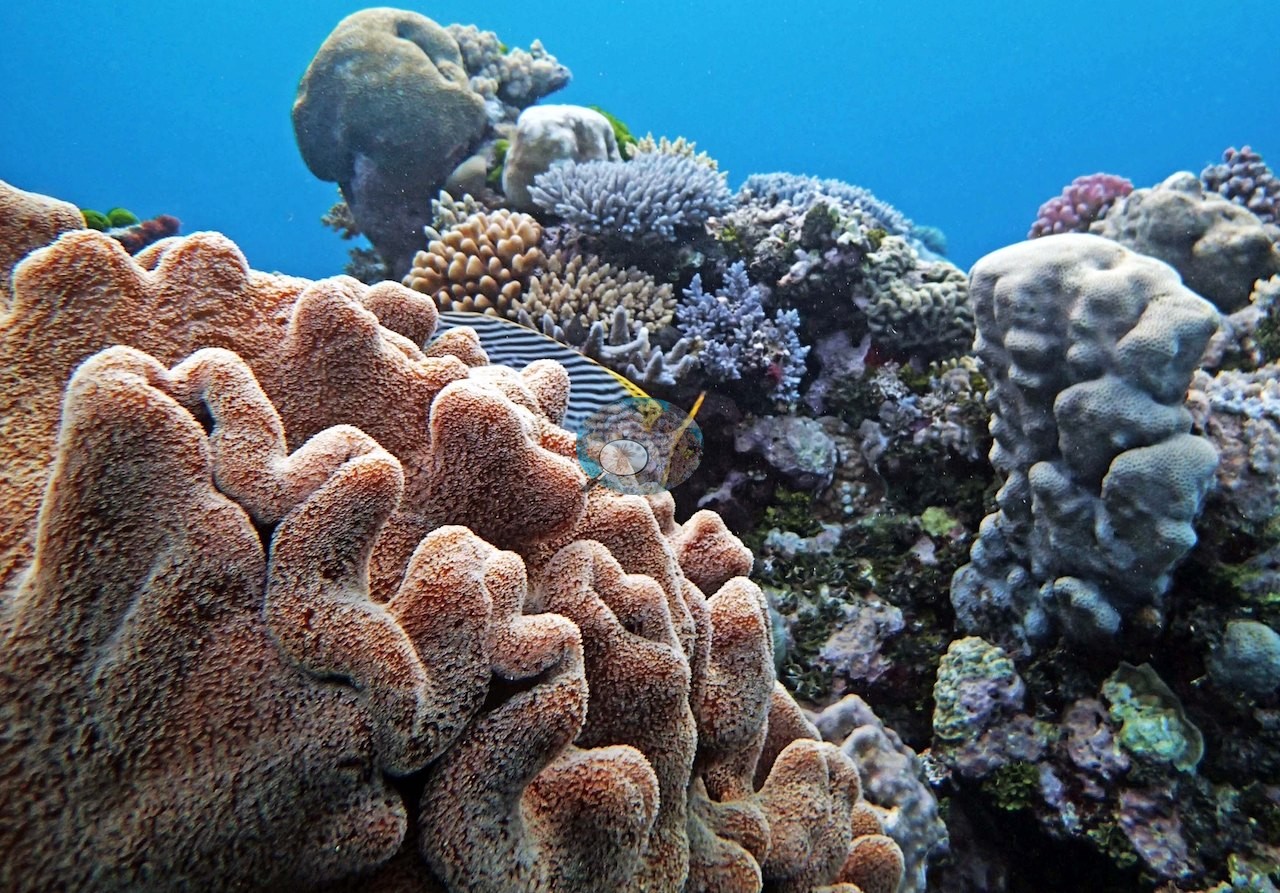
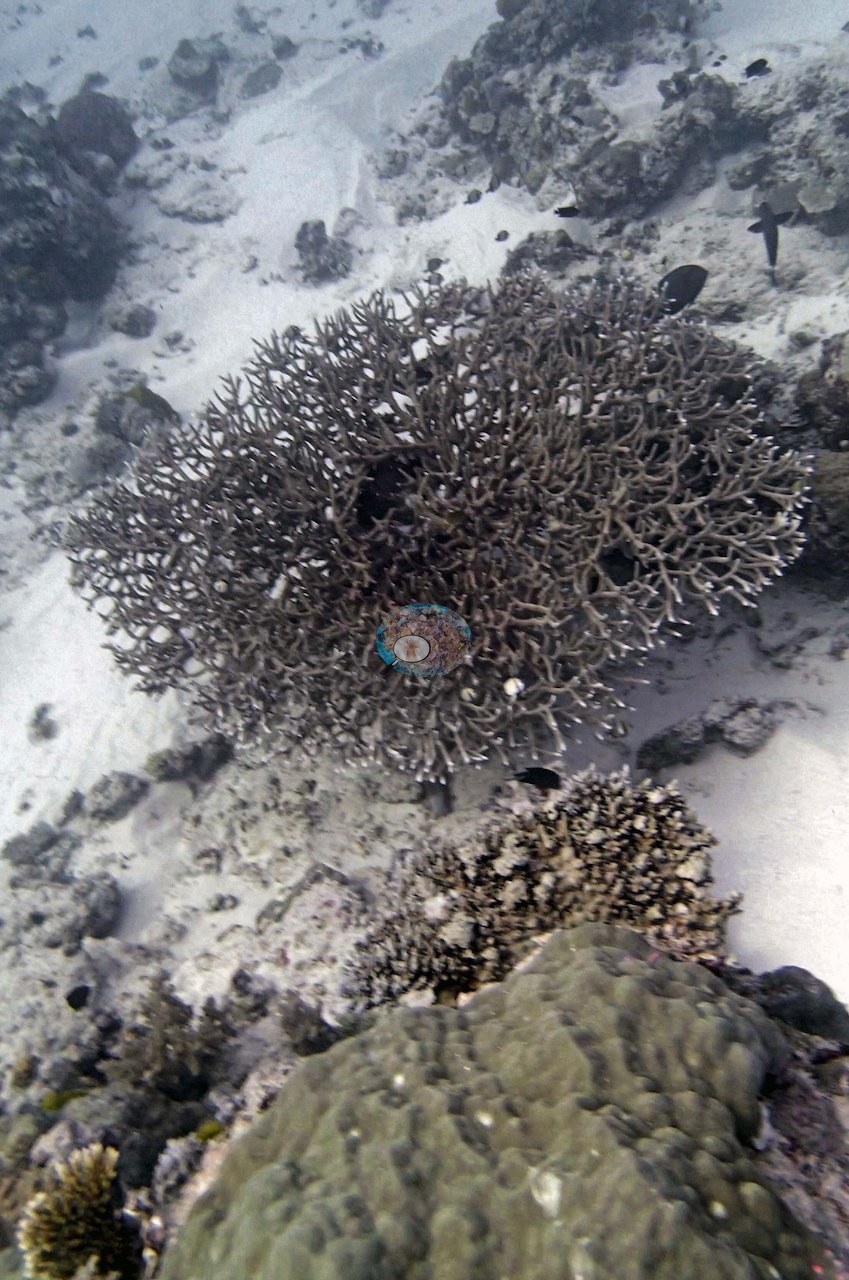
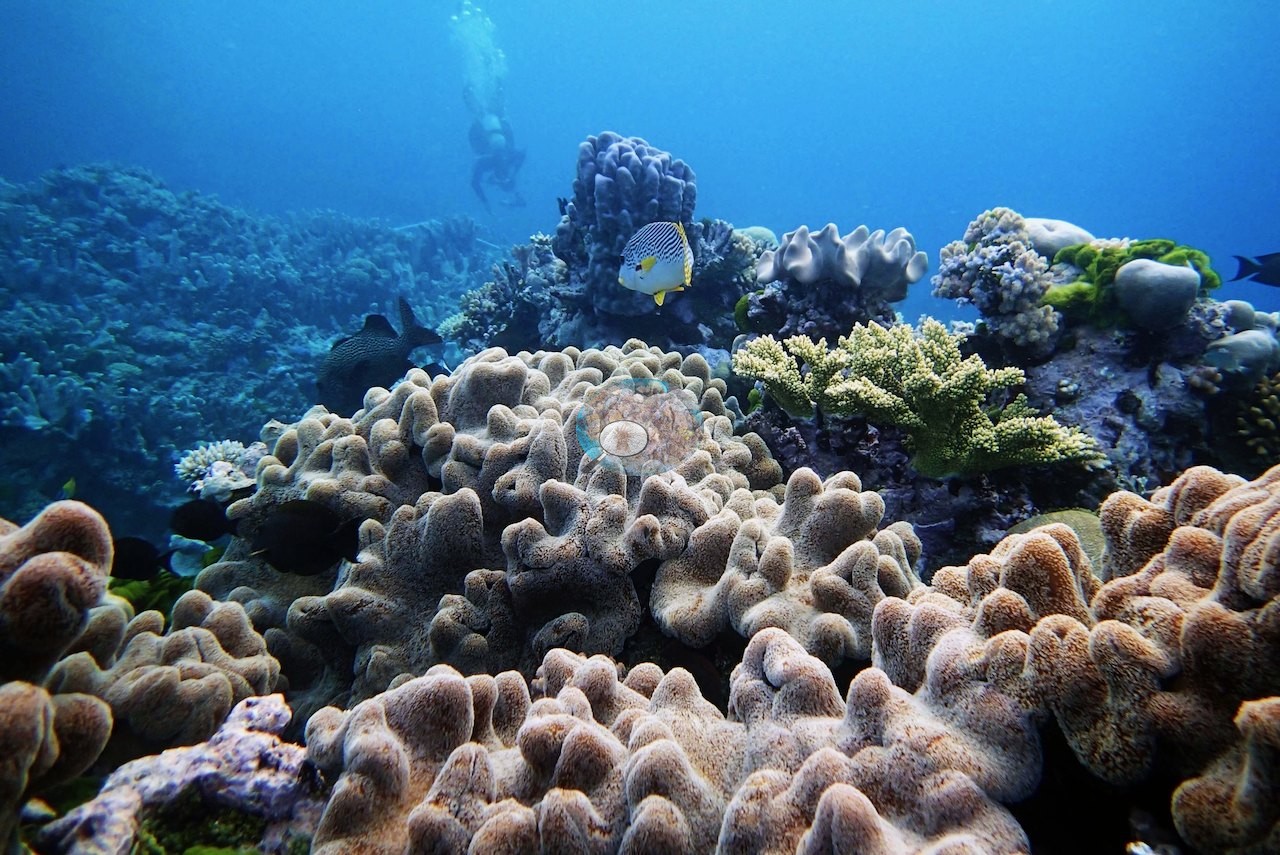
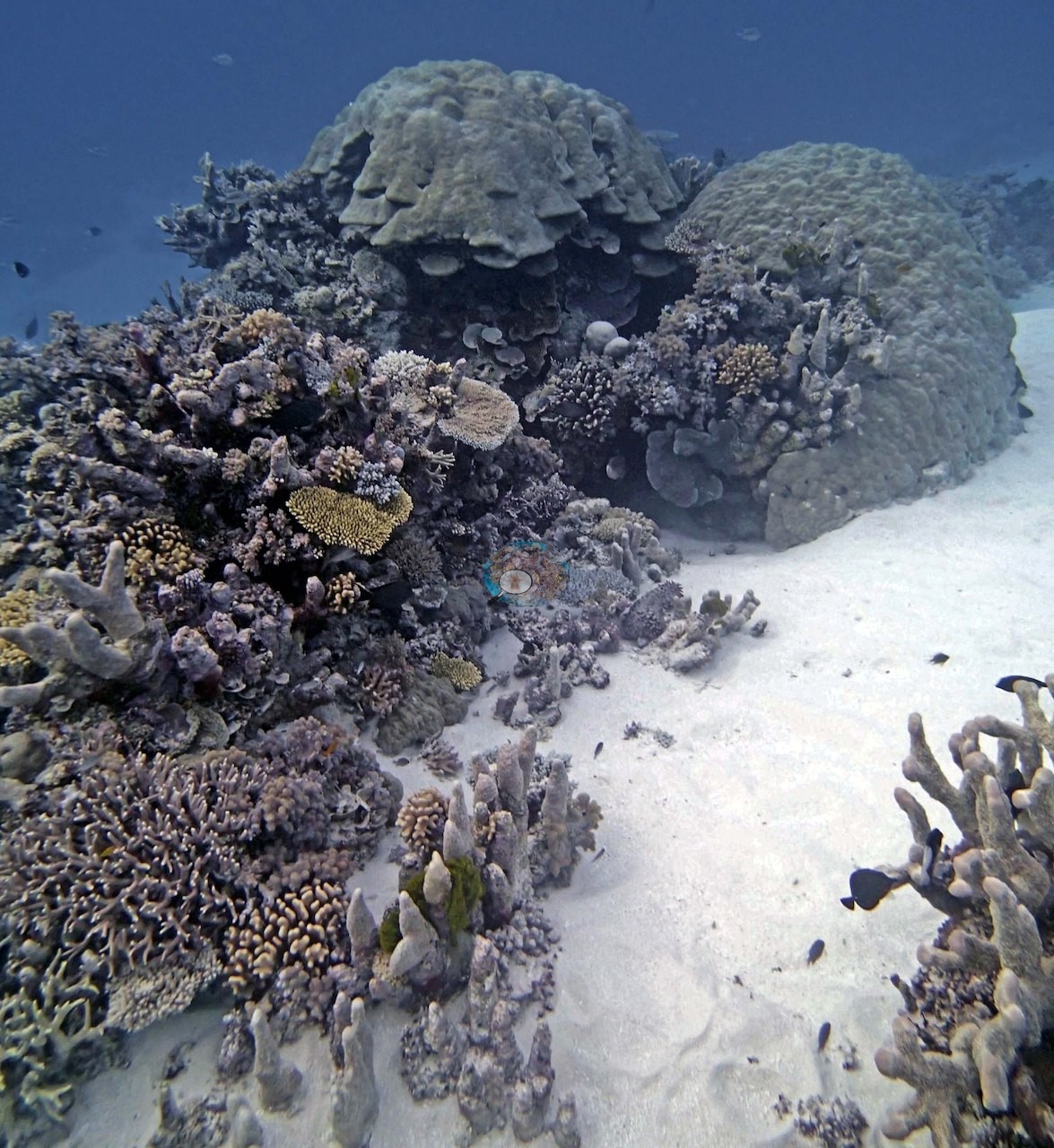
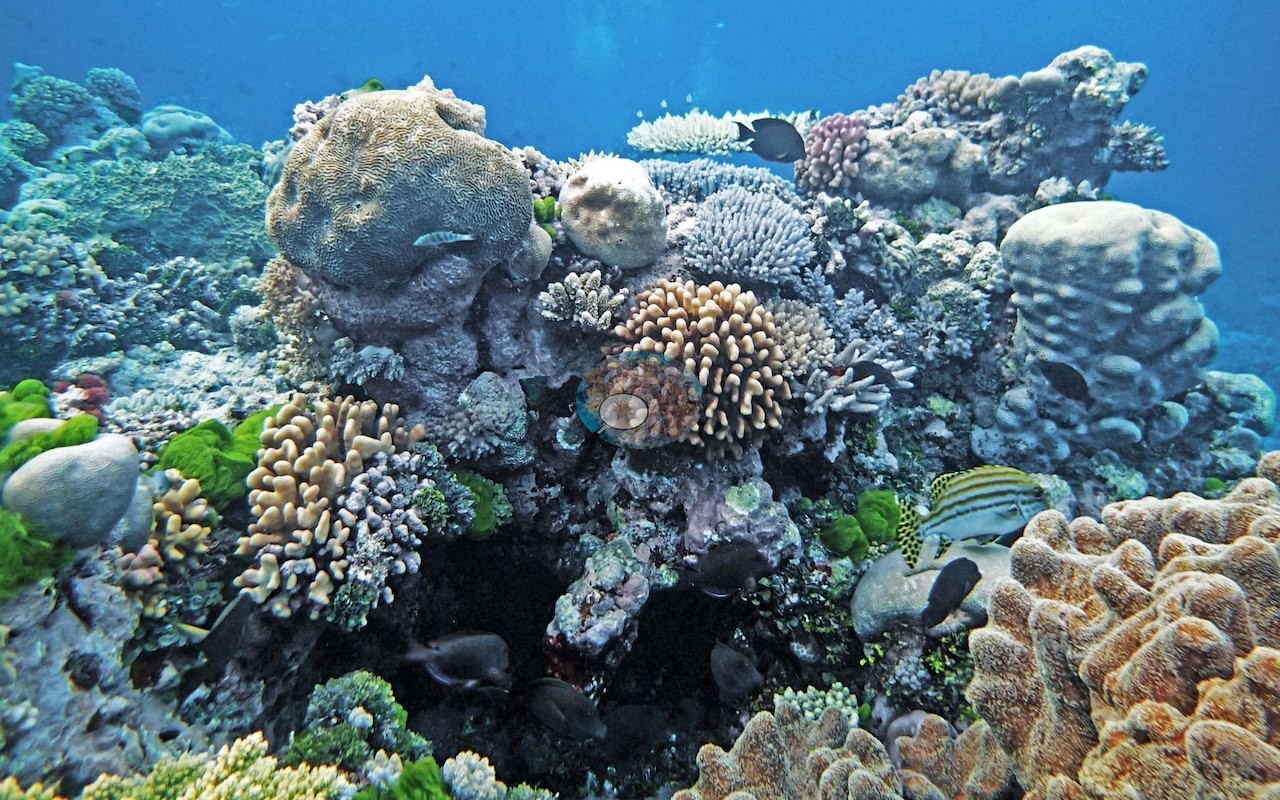
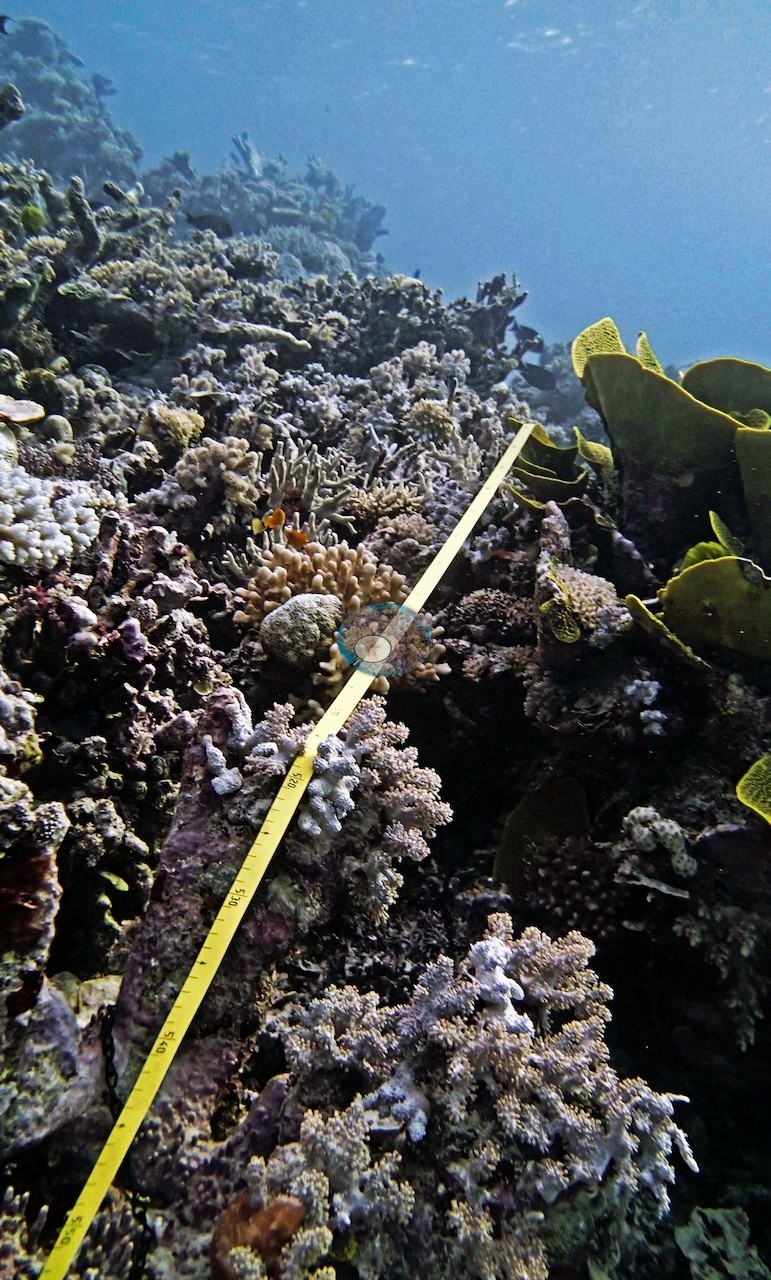
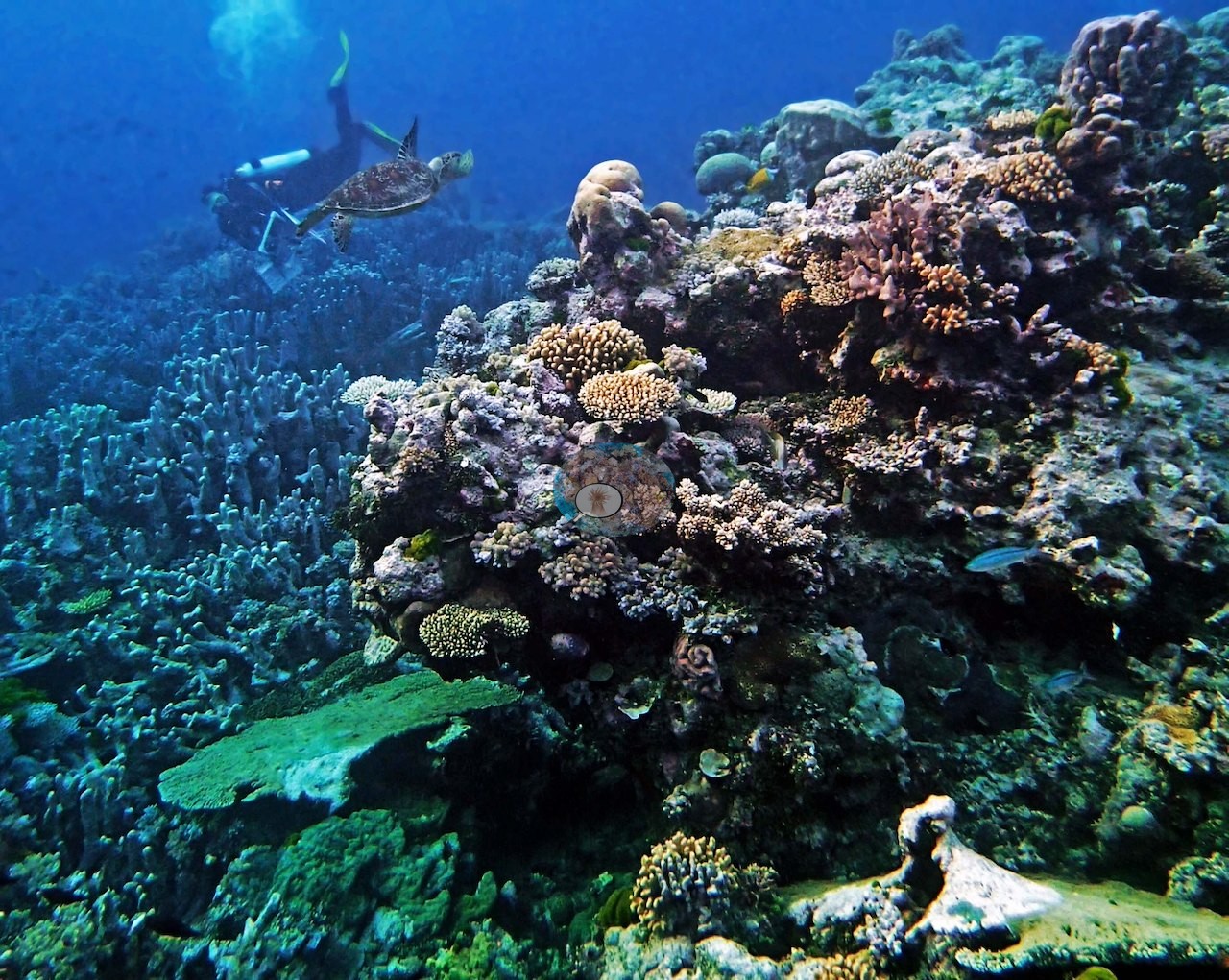
The reef itself begins deep and patchy — around half the seafloor at 20 m is plain sand — and the best patches came on the way up: a diverse bommie at 15.5 m carried 60-70% cover, and a structure at 10.5 m 50-60%. Between 5 and 9 m the reef is built mainly by Isopora and Stylophora. Acropora was the most common coral genus on this station's transects (29% of the benthos), followed by Porites (5.8%), Montipora (4.4%), Diploastrea (2.7%), Stylophora (2.5%), and Millepora (2.2%); bare substrate covered 9.7%, behind turf (23%), the largest non-coral class. Among the algal classes on this station's transects, turf (23%) led, followed by sediment-laden turf (1.6%) and macroalgae (1.0%).
Coral cover
- Reference: Khaled bin Sultan Living Oceans Foundation, Global Reef Expedition (in situ transect)
- The expedition's in situ point-count transects at this station recorded 51% live coral cover against 25% total algal cover.
- Transect mean 53 ± 8.9% SE (n = 6 transects; Living Oceans Foundation per-transect benthic data); the headline above is the expedition's station value (the headline weights each depth equally; one depth had a single transect).
Stressors
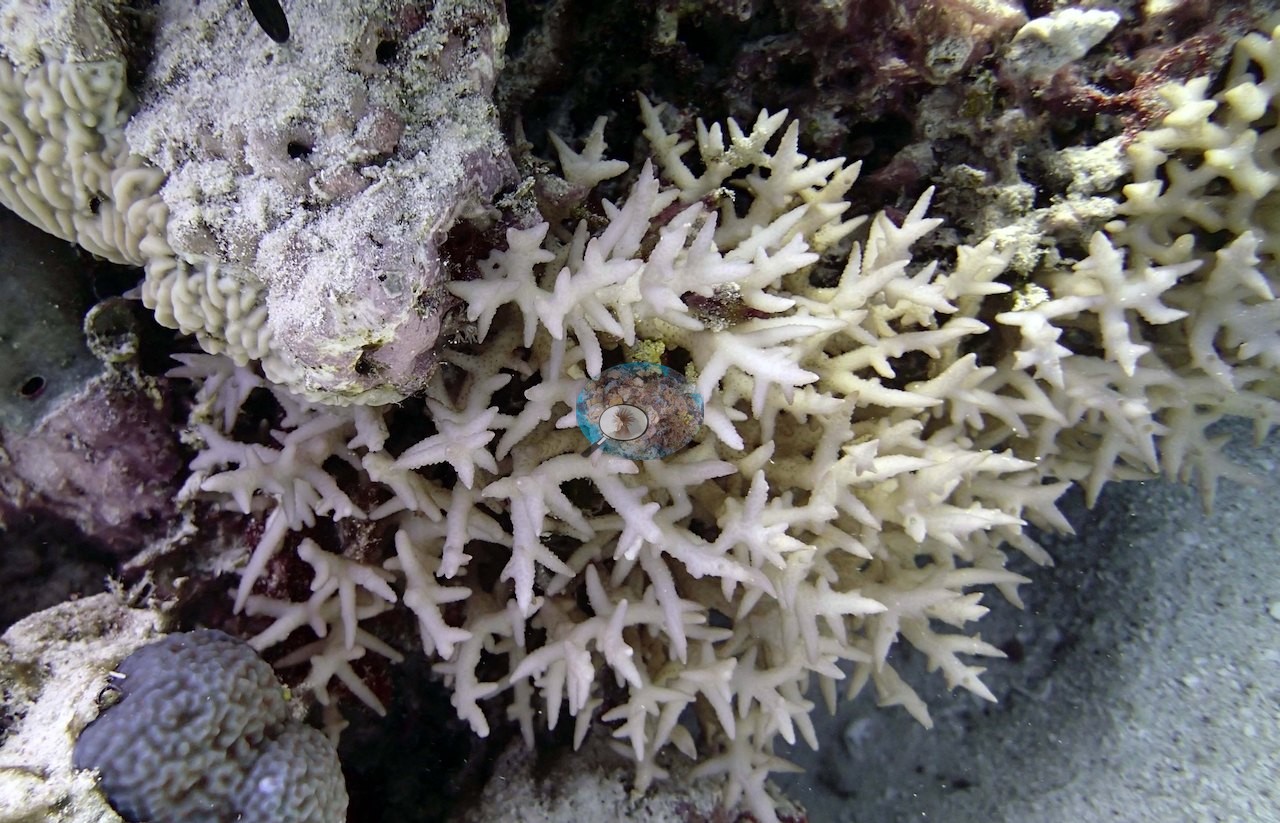
Less cheering were the needle corals: pale, sickly, or bleached Seriatopora turned up on every transect. No crown-of-thorns starfish (COTS) or other corallivores evident.
Fish and other fauna
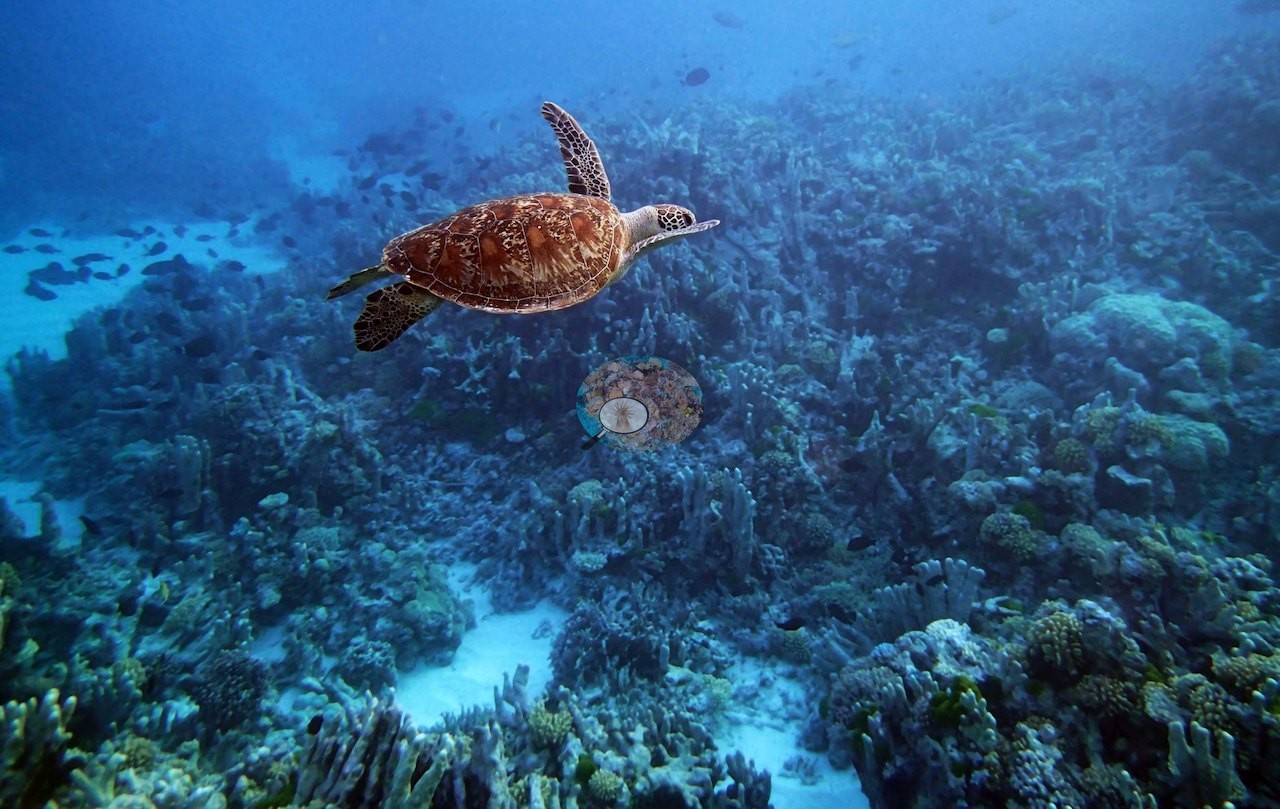
A turtle passed by, only the third of the entire expedition.
Comparisons with other data
No prior survey data from this site. If you would like to share yours, please email us.
Dive record
This dive on Five Reefs (logged in his notes as "3 Reefs") began at 16:54 (his sheet; 17:00 in his notes), in low, late-afternoon light, with gray reef sharks working the slope and a huge school of jacks and snappers massed at 25 m.
Other notes
Reef name: Anderson's field notes head this dive '3 Reefs' (AU3R139); his sheet and the expedition's field report name Five Reefs, which was substituted for a planned site (station code AU5R139).
CV model comparison
More info
The photo row below is a methods comparison only: it is never averaged with the transect and never used as the headline. It compares site means only: the photos come from the same survey dive as the transect but not from the same points.| Method | Hard-coral cover (%) | Photos (n) ± SE |
|---|---|---|
| Transect (published) | 50.8 | |
| CoralSCOP edited | 25.7 | n = 28 · SE 3.0 |
| Claude (edited photos) | 37.2 | n = 28 · SE 3.7 |
The two computer-vision methods disagree by 11.5 pp (26–37%) and read 13.6–25.1 pp below the in-water transect (51%); the headline is the in-water transect because a diver transect is independent of the photographs.
Data & links
- Download benthic survey data (CSV) ↗
- Download all LOF-GRE data (933 sites) ↗
- Photo portfolio ↗
- Coral Reef Diagnostics country page ↗
All images from Coral Reef Diagnostics. Data are from the Khaled bin Sultan Living Oceans Foundation Global Reef Expedition and Coral Reef Diagnostics.
 © Coral Reef Diagnostics.