
Part of the regional summaries: Australia (GBR) - Far North: Blue stations (Habitat Protection Zone reefs) and Australia (GBR)
More info
Northern GBR (NOAA CRW virtual station)A structurally complex mid-shelf reef that has flipped largely to soft corals, sponges, and a forest of red and pink sea fans, with just 9.8% live coral in cool (23.5°C), silty water. Eight crown-of-thorns starfish were logged, and one stark-white Pachyseris-type plate was either recently bleached or freshly dead. Surveyed on the Living Oceans Foundation's Global Reef Expedition.
Two other CRD dive sites within 5 km shown in orange — click a marker to open its page.
🗺 Detailed map of the Global Reef Expedition dive sites, Lark, Williamson, and unnamed reef 15-043, northern Great Barrier Reef (Khaled bin Sultan Living Oceans Foundation; opens in a new window)
5 of the 12 photographs on this page are shown beside the text that discusses them under "Site description" below.
Site description
Setting
The site sits in a Habitat Protection (Blue) Zone, where line fishing is permitted.
General benthic features
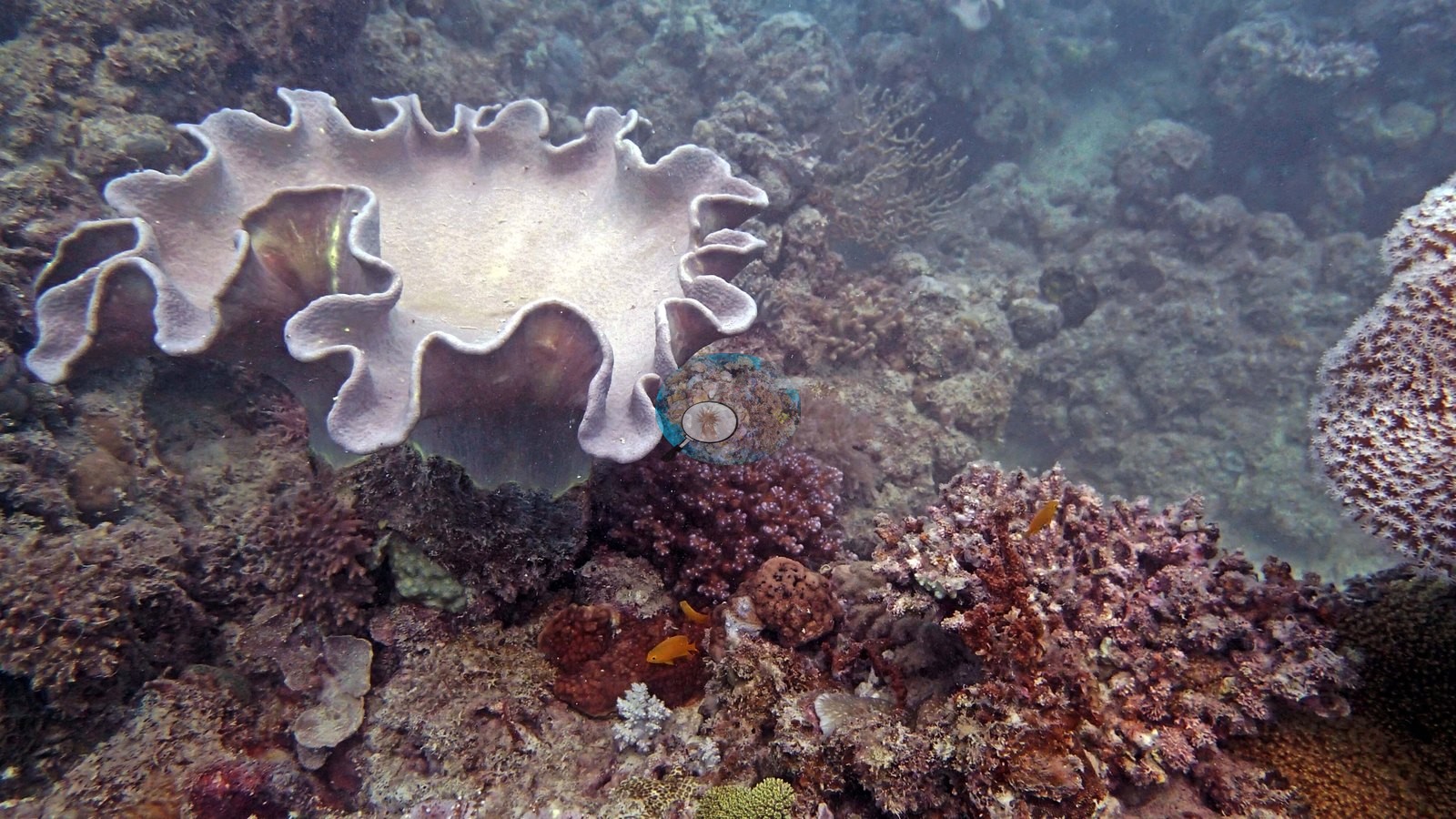
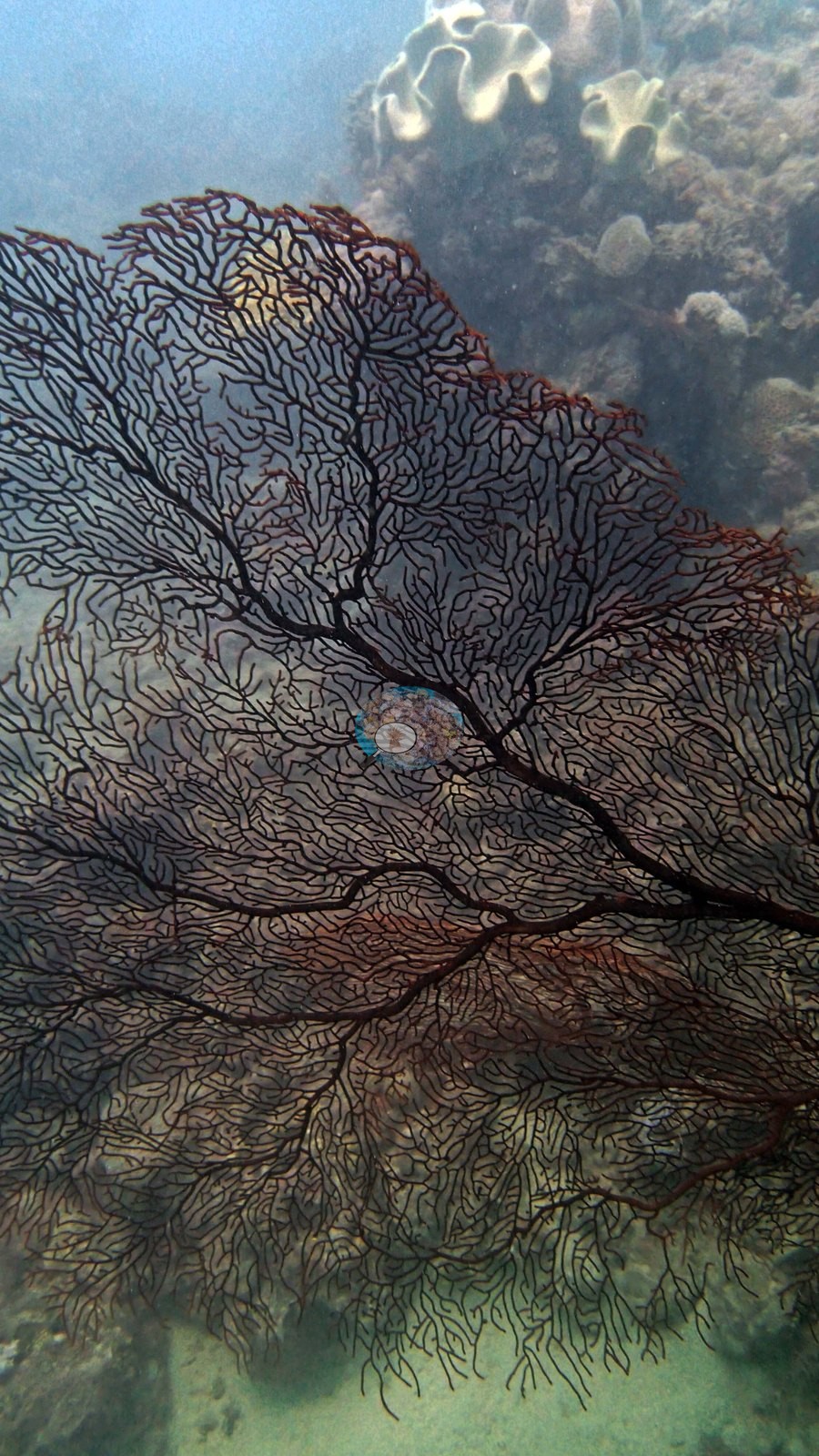
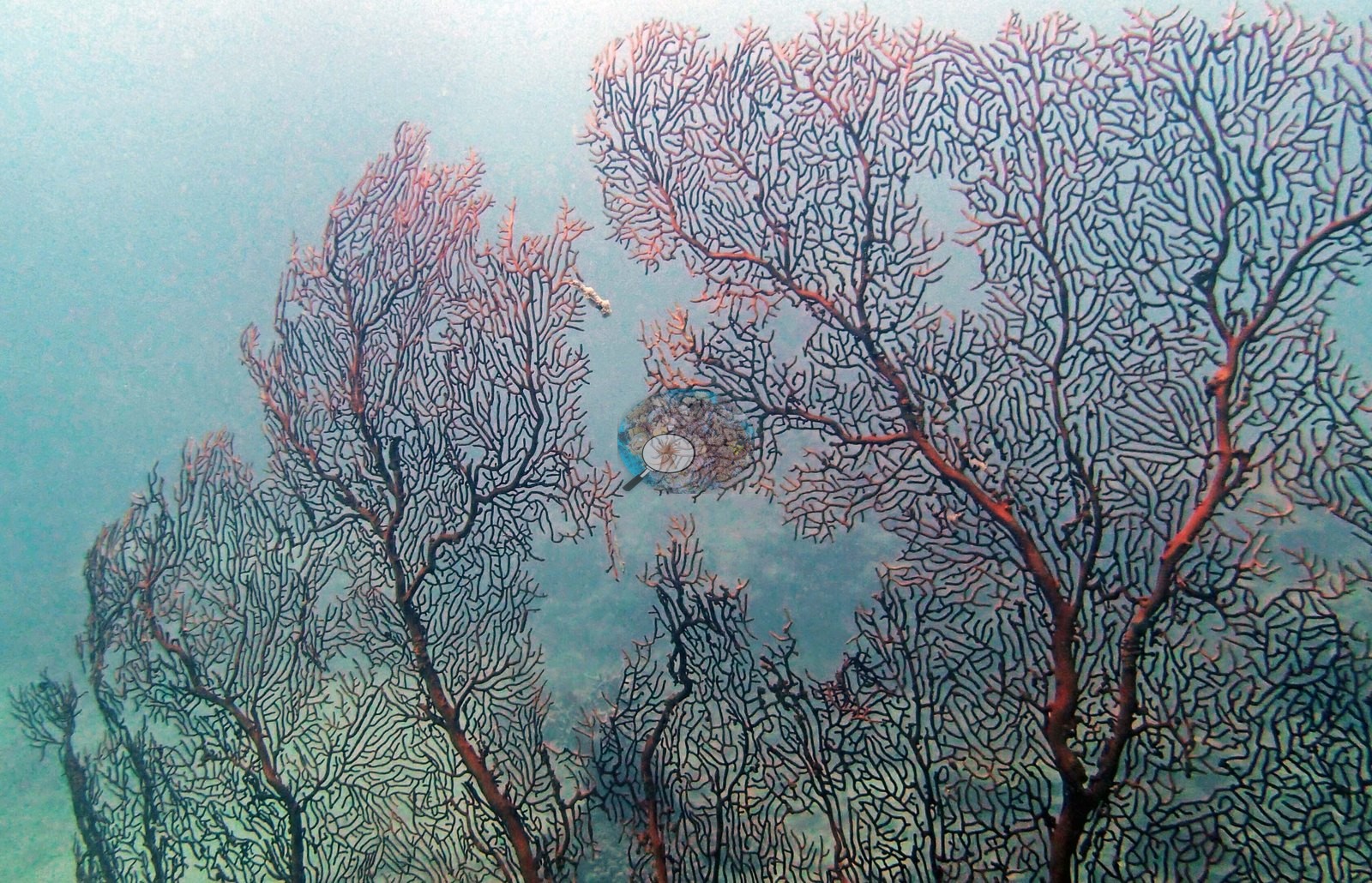
Two frames show gorgonians: a single large fan spread flat against the current beneath a cream lobed soft coral, and then a whole forest of red and pink sea fans standing in green, particle-laden water, silhouetted rather than lit (e.g., Image 3, Image 5).
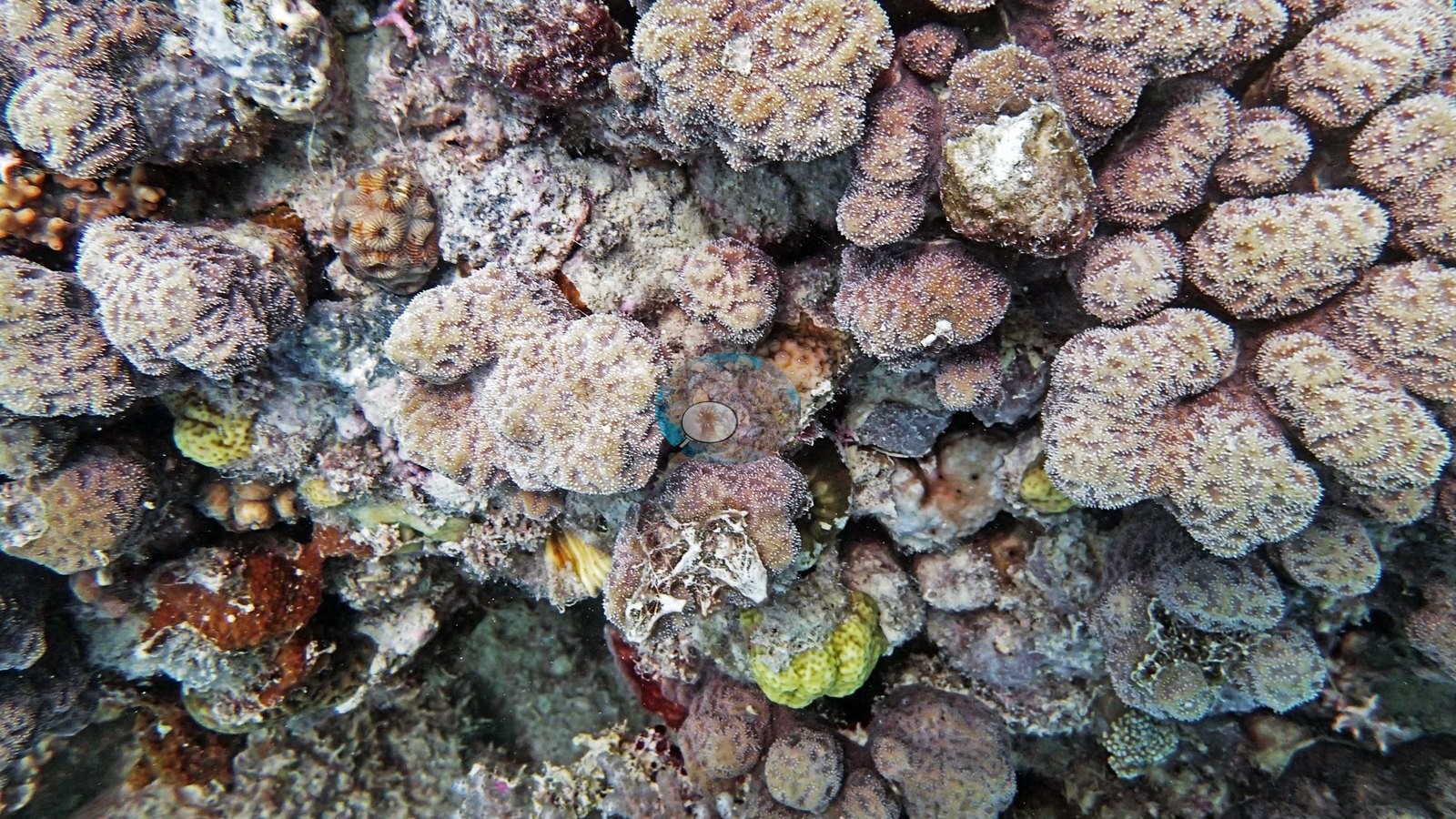
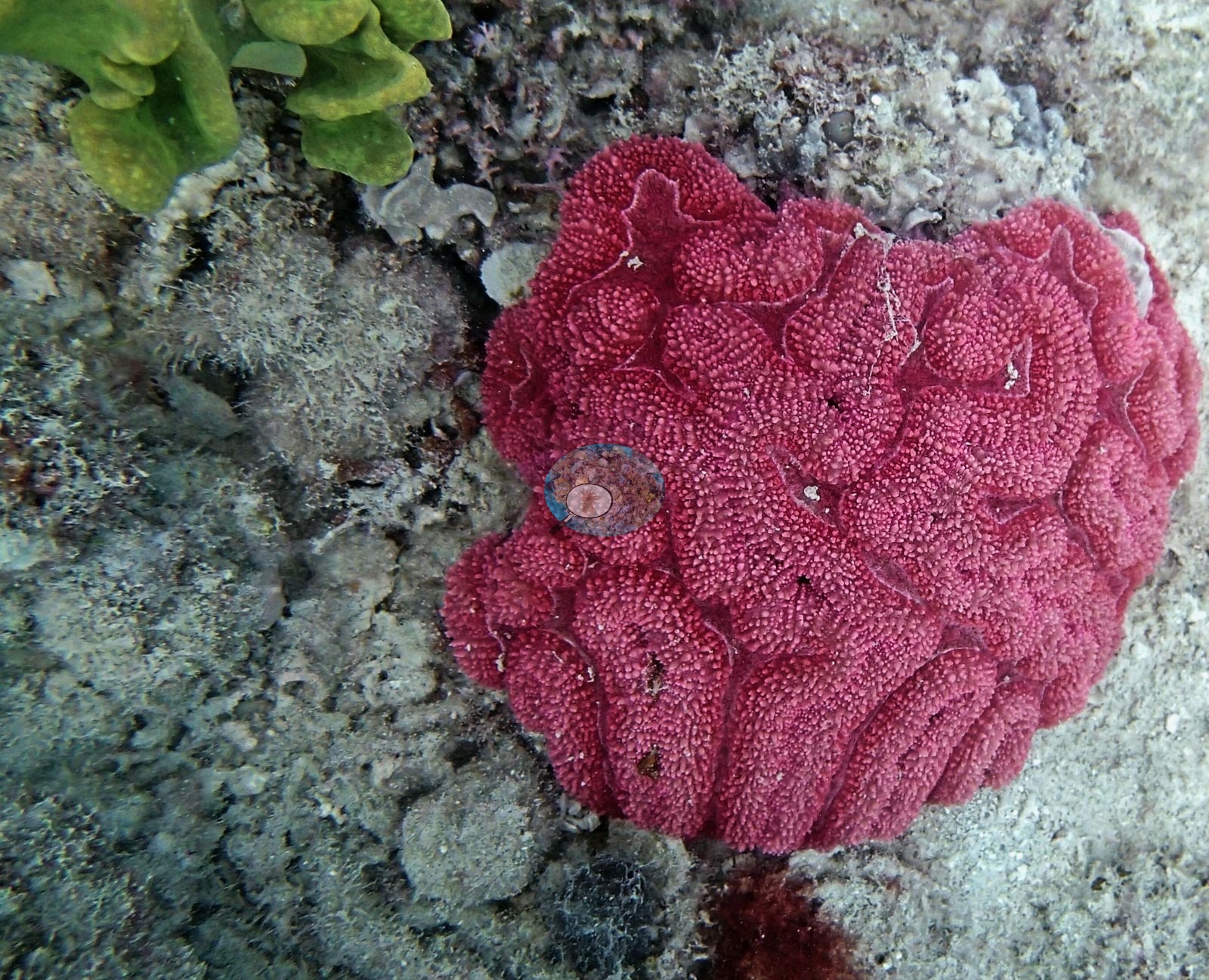
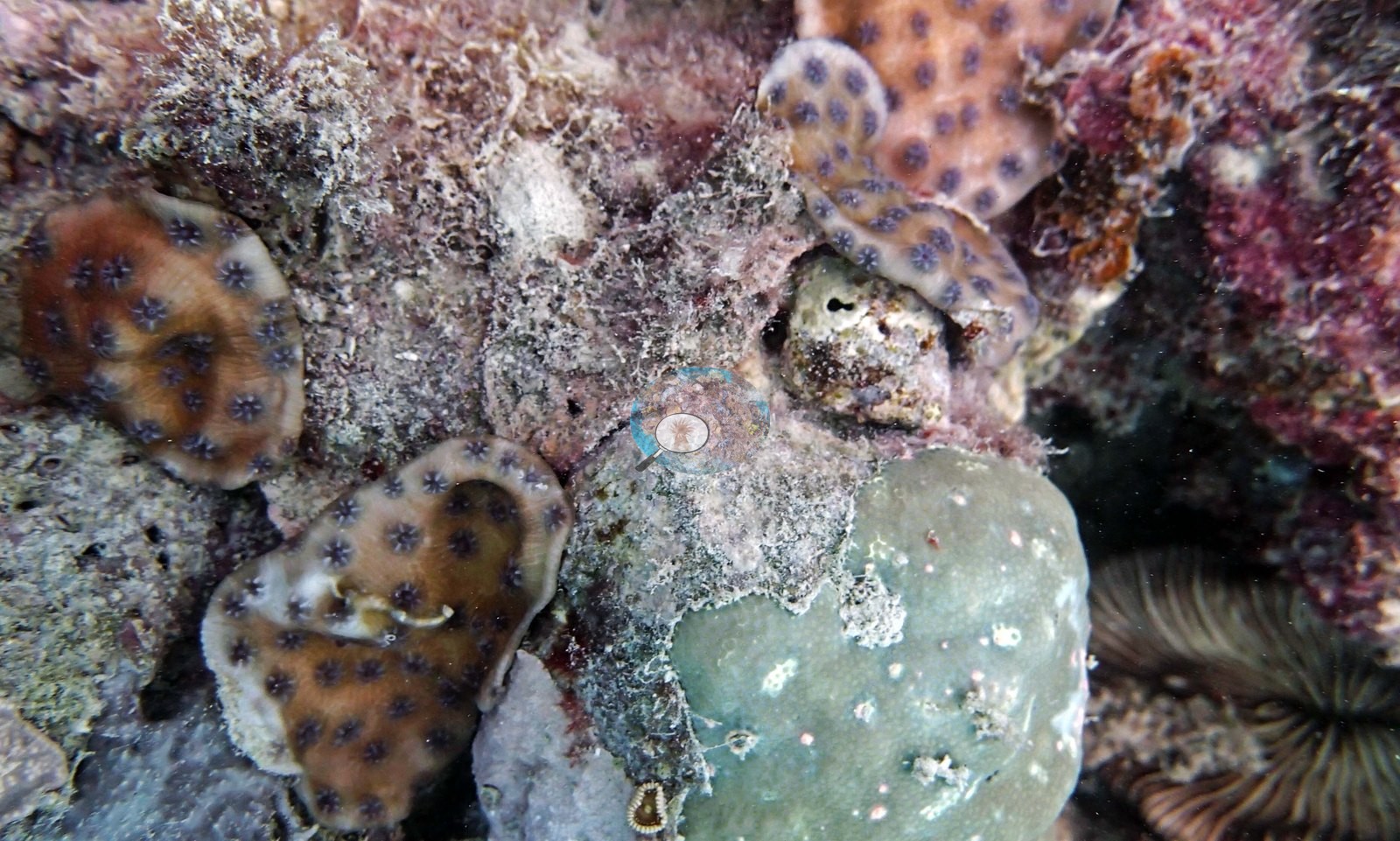
The two remaining frames are close over the substrate: crowded small mounding and knobby colonies, muted and silt-dusted, packed tight but low (e.g., Image 1, Image 2).
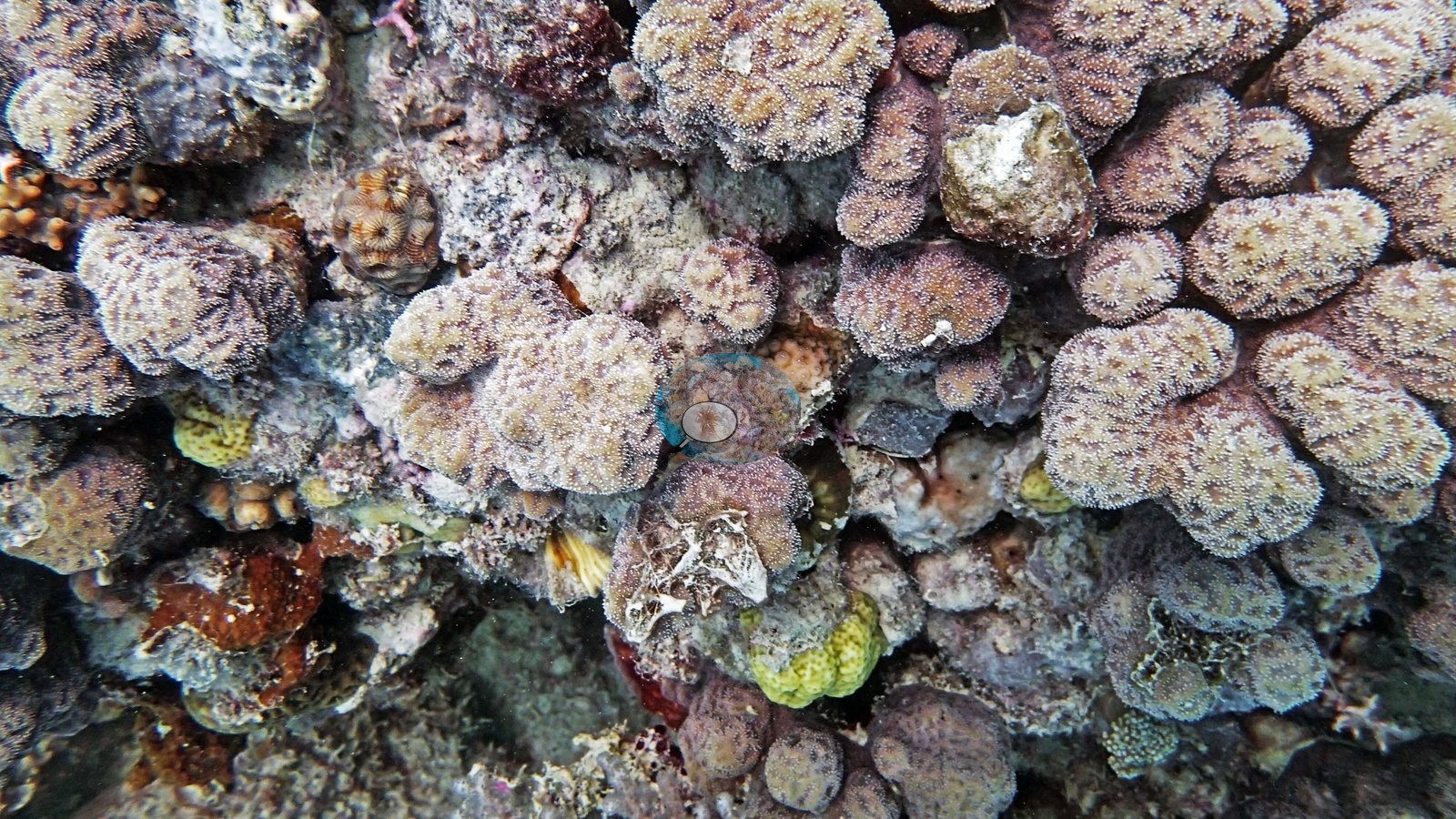
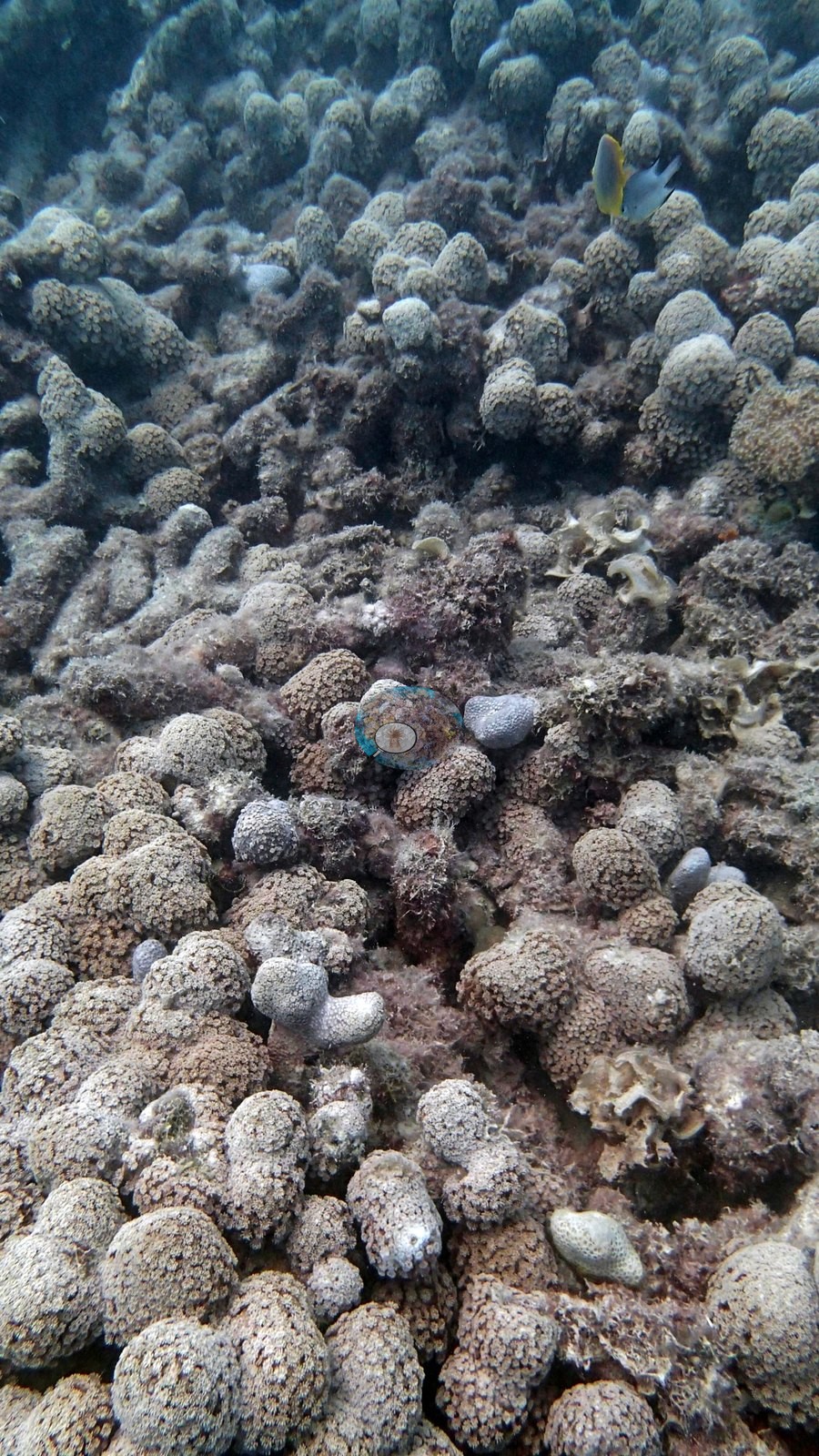
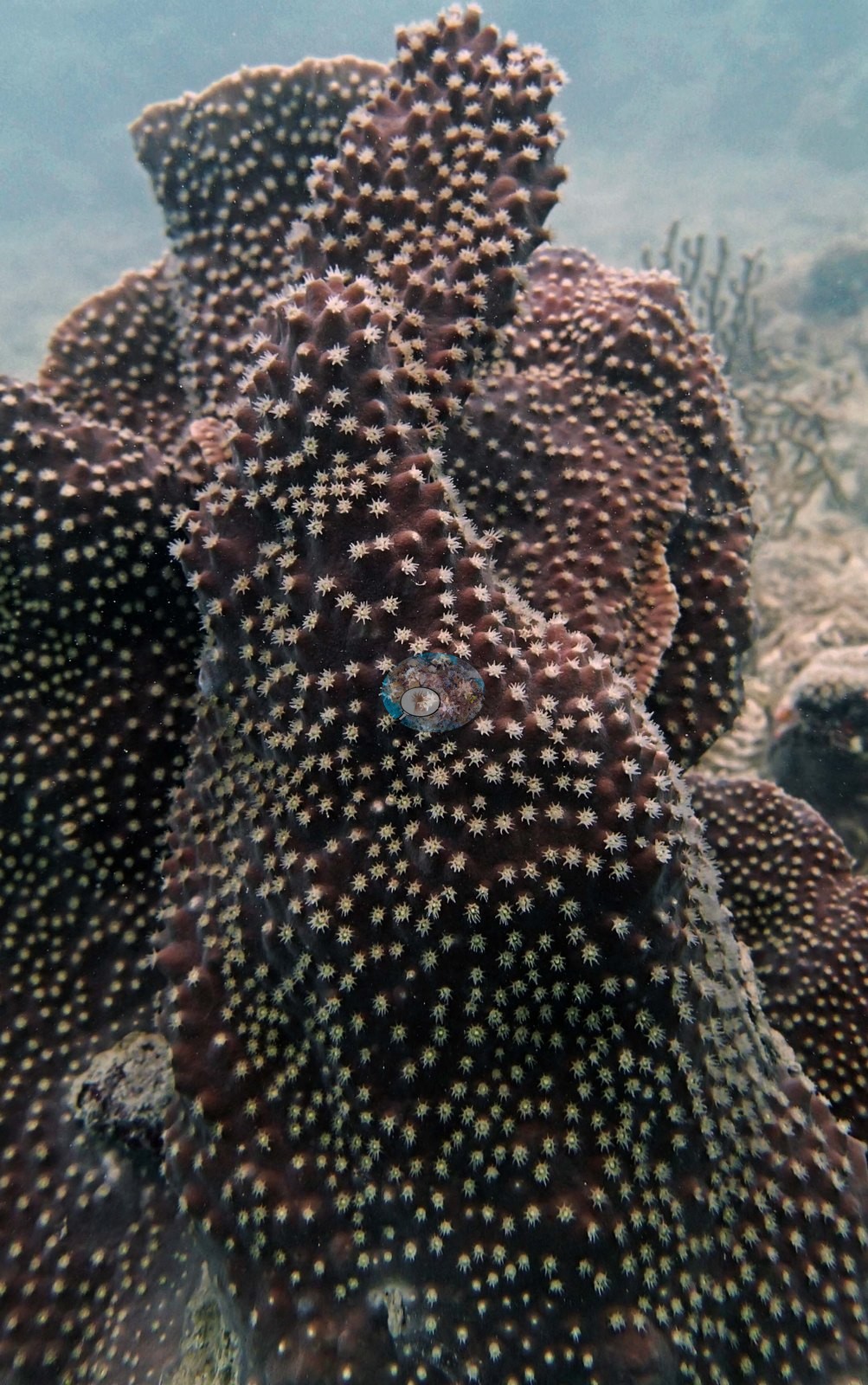
Anderson noted plenty of coral structure below, but most of the coral had been replaced by algae or soft corals; soft corals, sponges, and sea fans now occupy much of it. Pockets of Stylophora, poritids, and fungids still held on among the soft-coral carpet. Porites was the most common coral genus on this station's transects (3.0% of the benthos), followed by Leptastrea (1.2%), Diploastrea (0.8%), and Cyphastrea, Montipora, and Turbinaria (0.7% each); bare substrate covered 18%, behind sediment-laden turf (40%), the largest non-coral class. Among the algal classes on this station's transects, sediment-laden turf (40%) led, followed by turf (17%) and macroalgae (7.3%).
Coral cover
- Reference: Khaled bin Sultan Living Oceans Foundation, Global Reef Expedition (in situ transect)
- The point-count survey read just 9.8% live coral, in cool, silty water, 23.5°C with 3-4 m of visibility.
- Transect mean 9.8 ± 0.8% SE (n = 6 transects; Living Oceans Foundation per-transect benthic data); the headline above is the expedition's station value.
Stressors
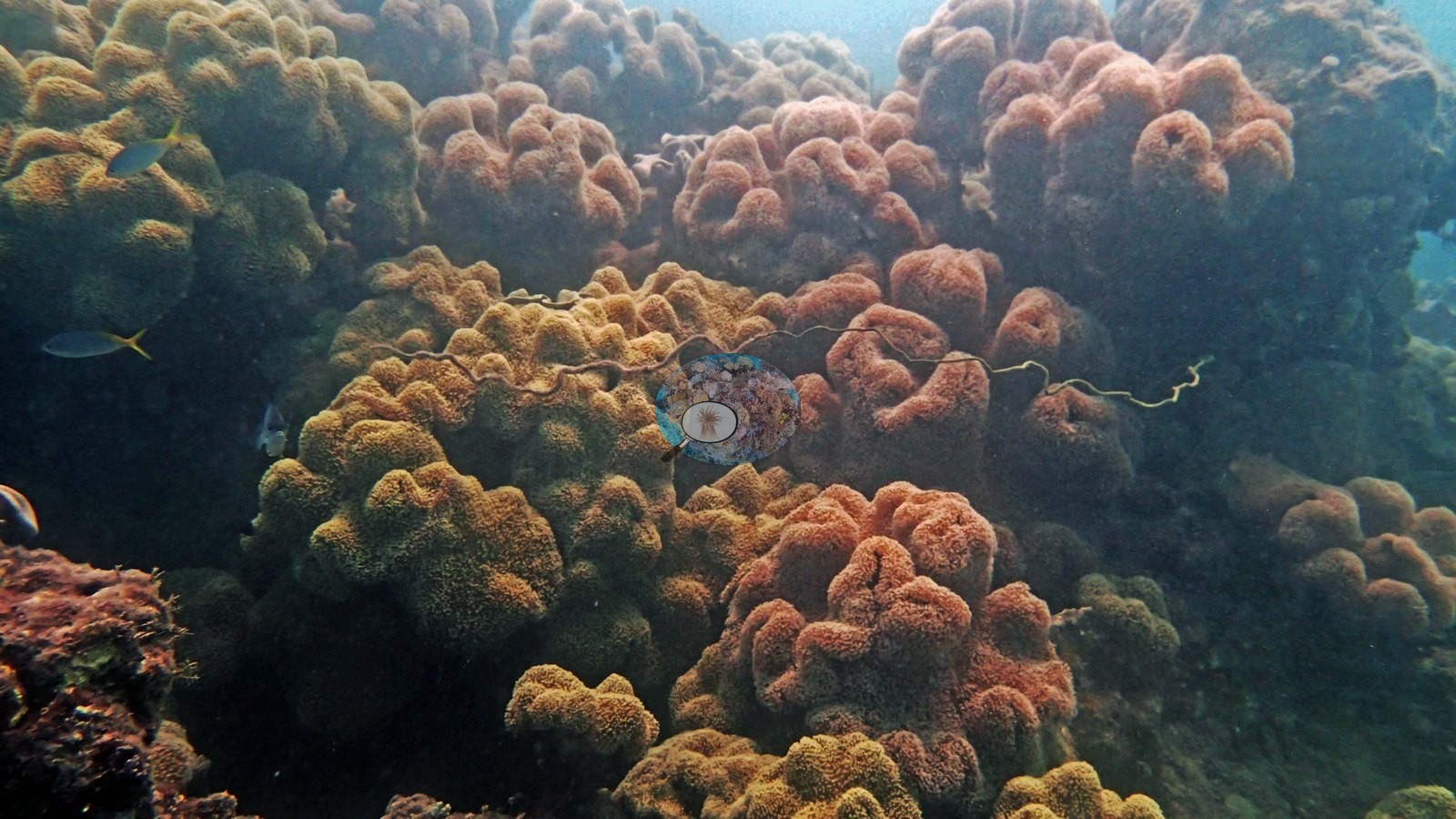
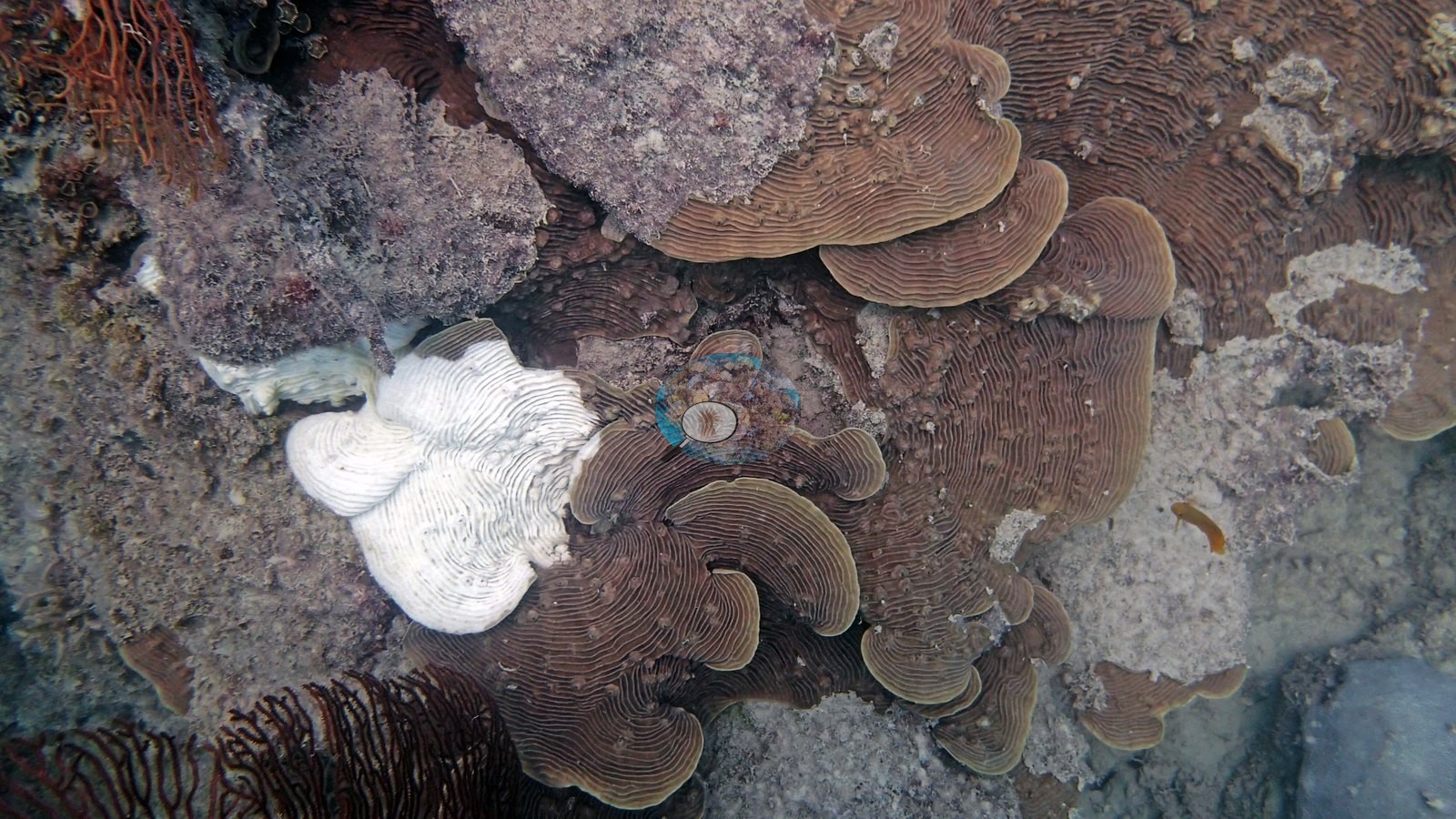
A fourth frame is tiered plating coral, concentric-ridged Pachyseris-type plates stacked down a ledge, with one plate stark white, either recently bleached or freshly dead with its ridges still crisp (e.g., Image 4).
Fish and other fauna
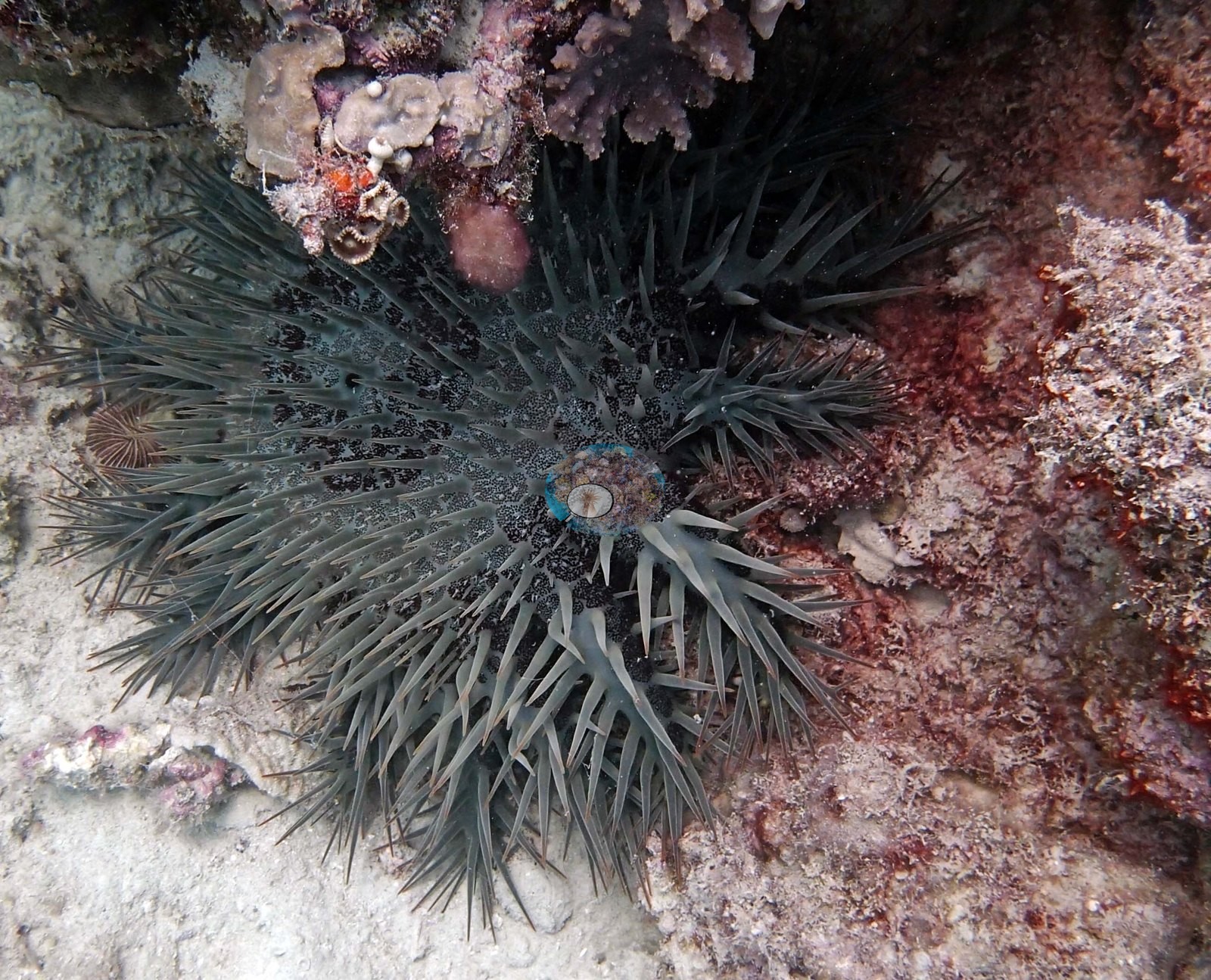
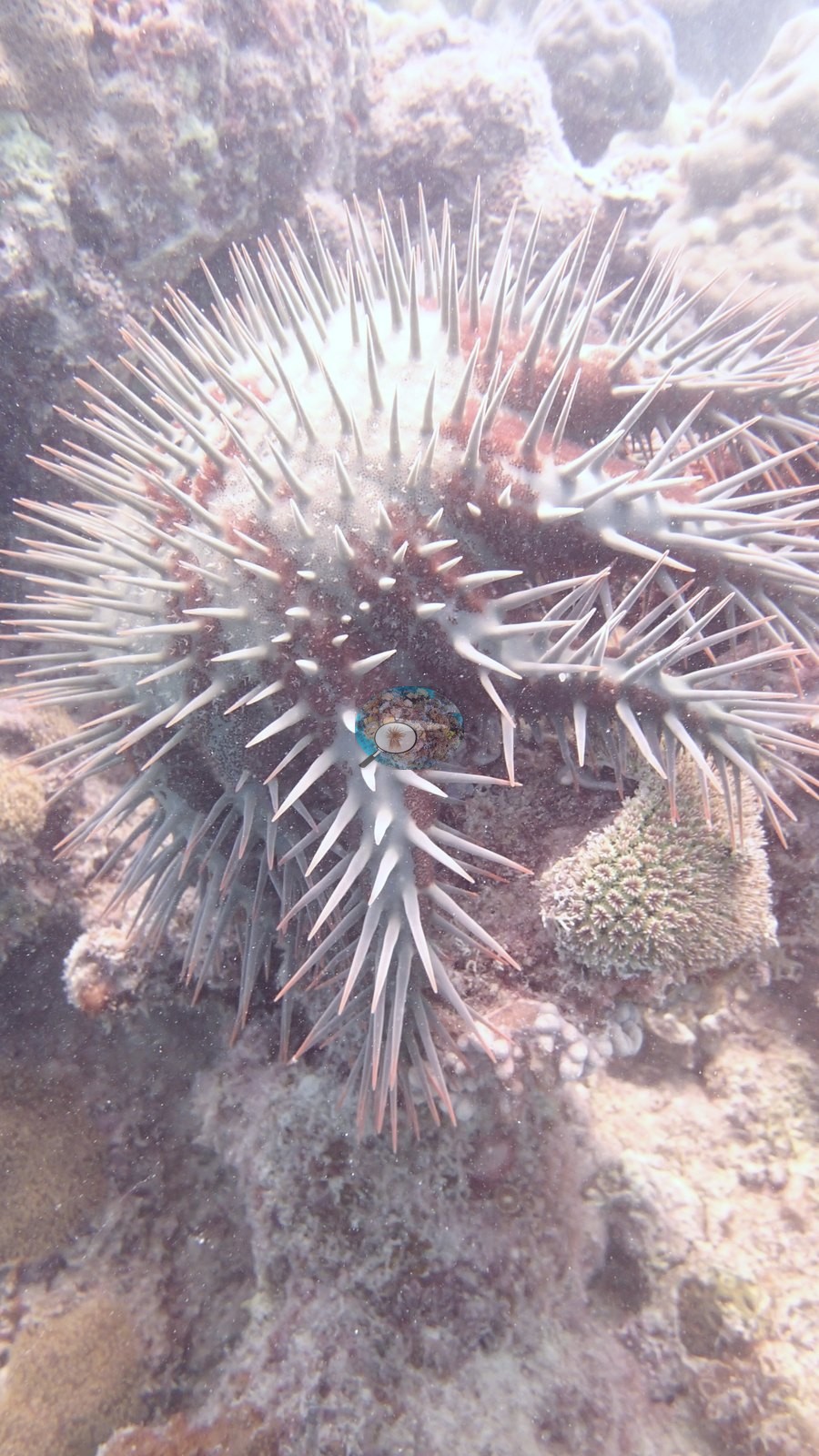
Eight crown-of-thorns starfish were logged on the dive, along with a lionfish and plenty of other fish.
Comparisons with other data
No prior survey data from this site. If you would like to share yours, please email us.
Dive record
Anderson's second dive of 8 September 2014 was on this unnamed mid-shelf reef, in 3-4 m visibility with a fine layer of silt over everything.
Data & links
- Download benthic survey data (CSV) ↗
- Download all LOF-GRE data (933 sites) ↗
- Photo portfolio ↗
- Coral Reef Diagnostics country page ↗
All images from Coral Reef Diagnostics. Data are from the Khaled bin Sultan Living Oceans Foundation Global Reef Expedition and Coral Reef Diagnostics.
 © Coral Reef Diagnostics.