
Part of the regional summaries: Australia (GBR) - Far North: Blue stations (Habitat Protection Zone reefs) and Australia (GBR)
More info
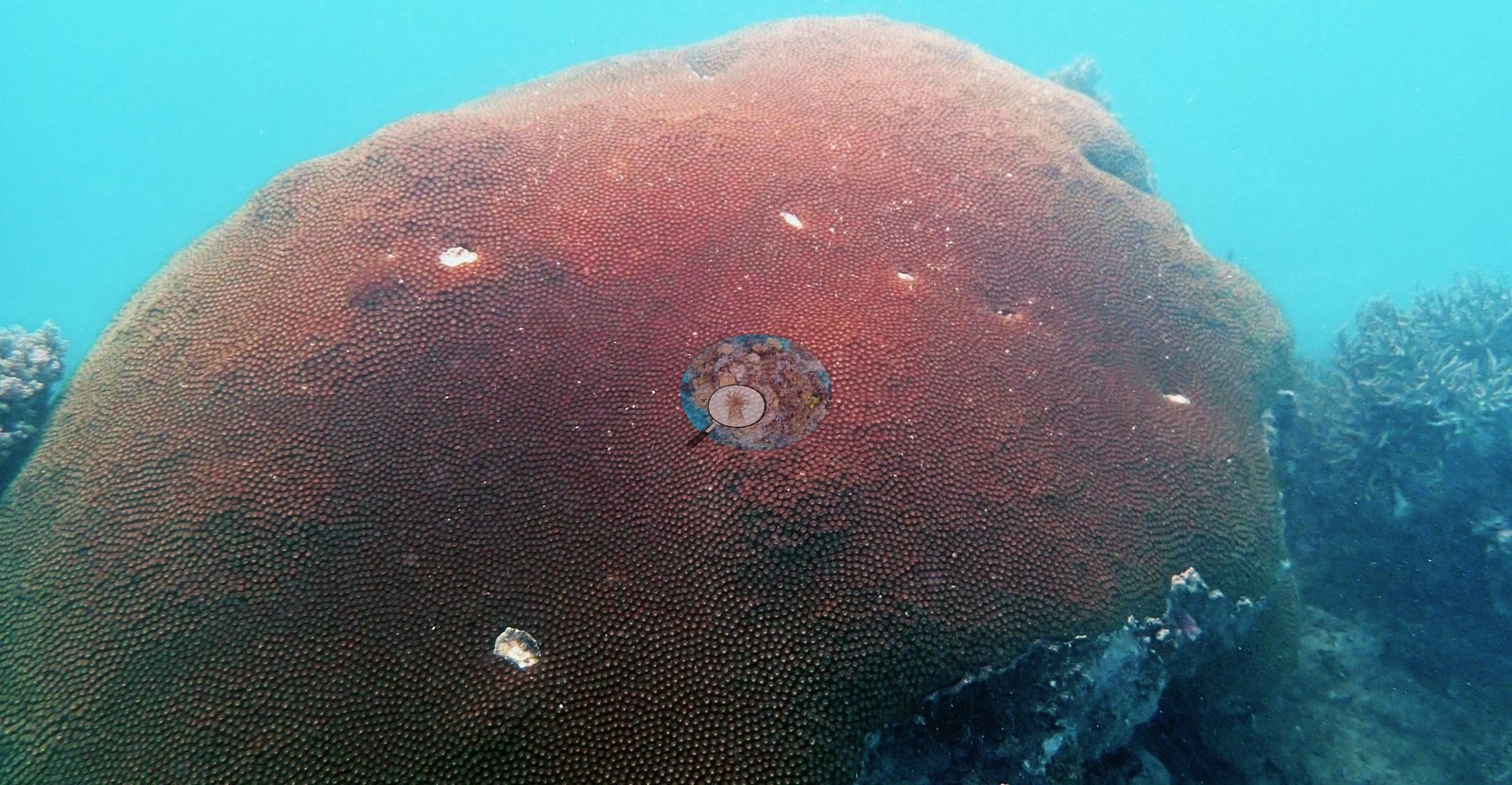
Northern GBR (NOAA CRW virtual station)A silty mid-shelf reef (3-4 m visibility) where small corals hold on in the gaps of sediment-filmed rubble and dead, turf-furred staghorn, at 20% cover; four crown-of-thorns starfish were logged. Highlights were a large, healthy brain coral, a big clam, and unusually high numbers of young coral recruits. Surveyed on the Living Oceans Foundation's Global Reef Expedition.
Three other CRD dive sites within 5 km shown in orange — click a marker to open its page.
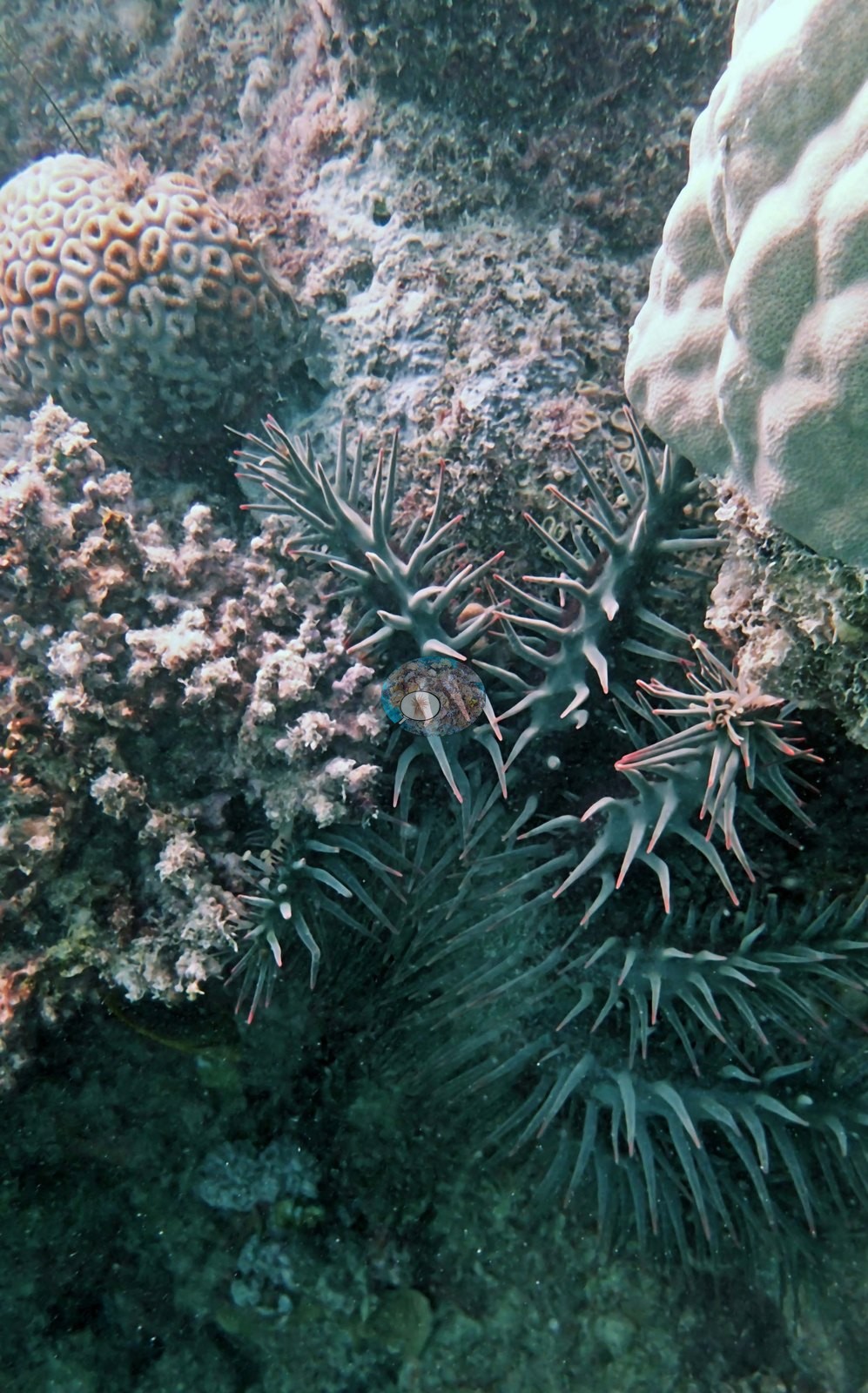
🗺 Detailed map of the Global Reef Expedition dive sites, Lark, Williamson, and unnamed reef 15-043, northern Great Barrier Reef (Khaled bin Sultan Living Oceans Foundation; opens in a new window)
6 of the 13 photographs on this page are shown beside the text that discusses them under "Site description" below.
Site description
Setting
The site sits in a Habitat Protection (Blue) Zone, where line fishing is permitted.
General benthic features
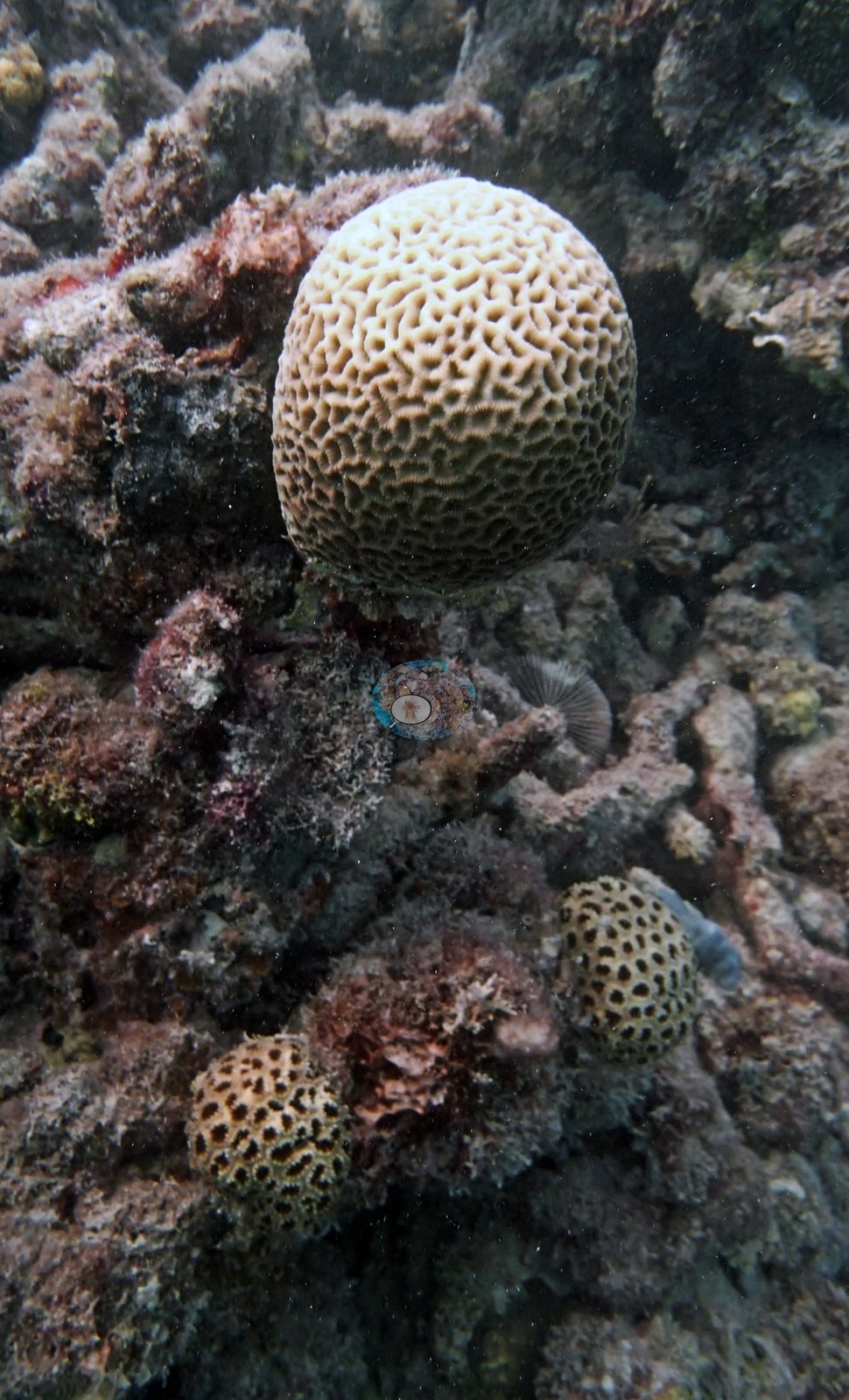
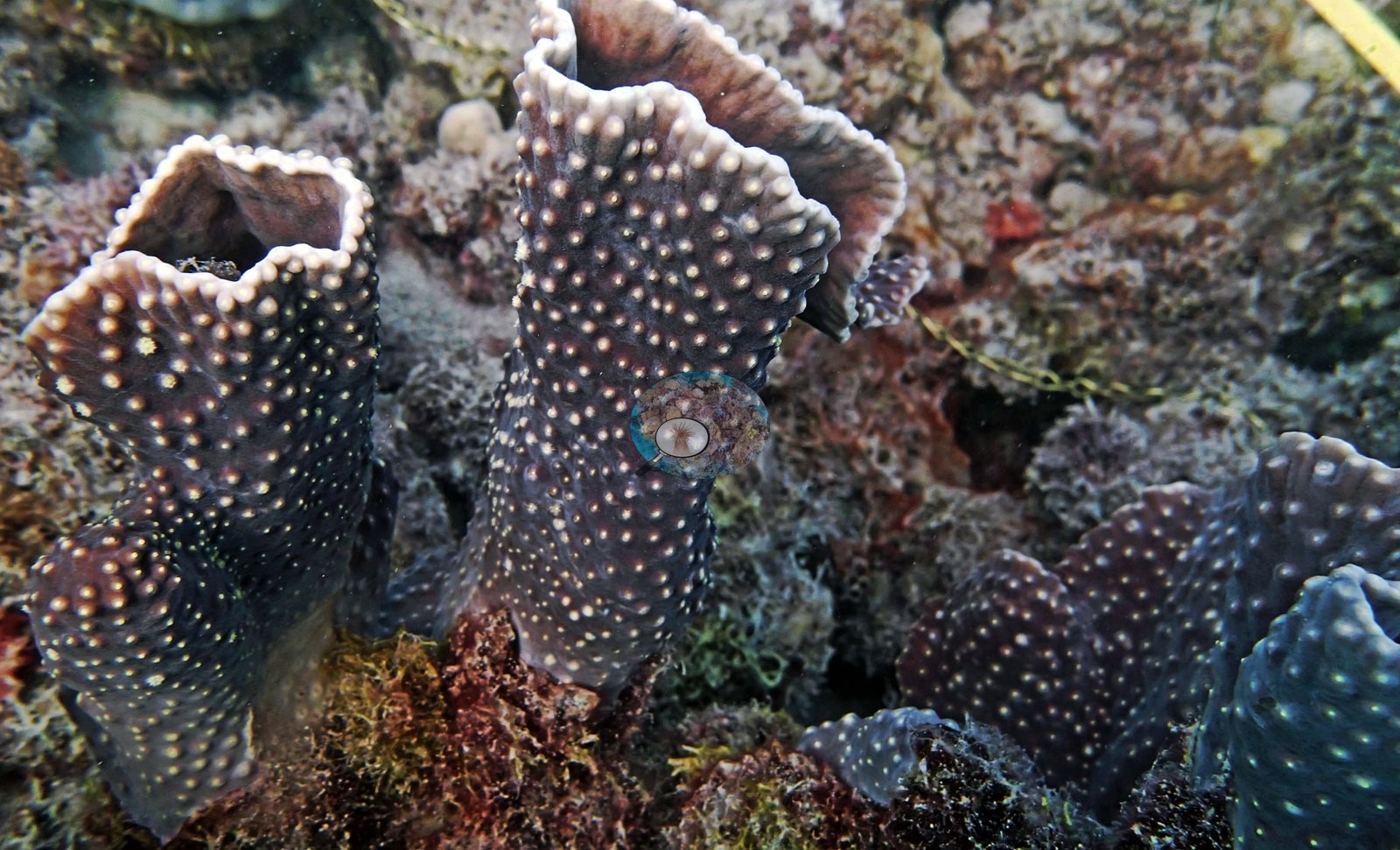
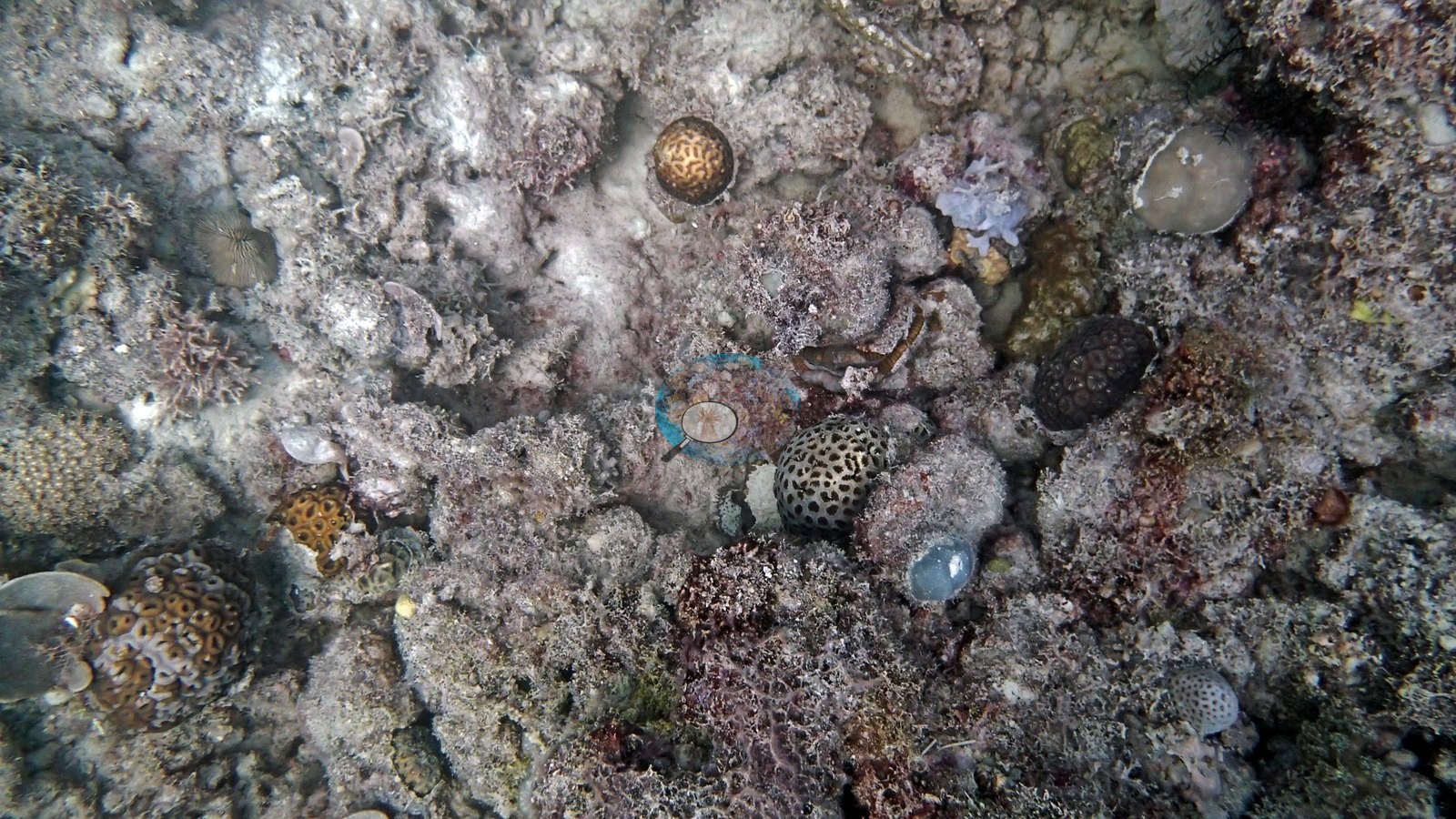
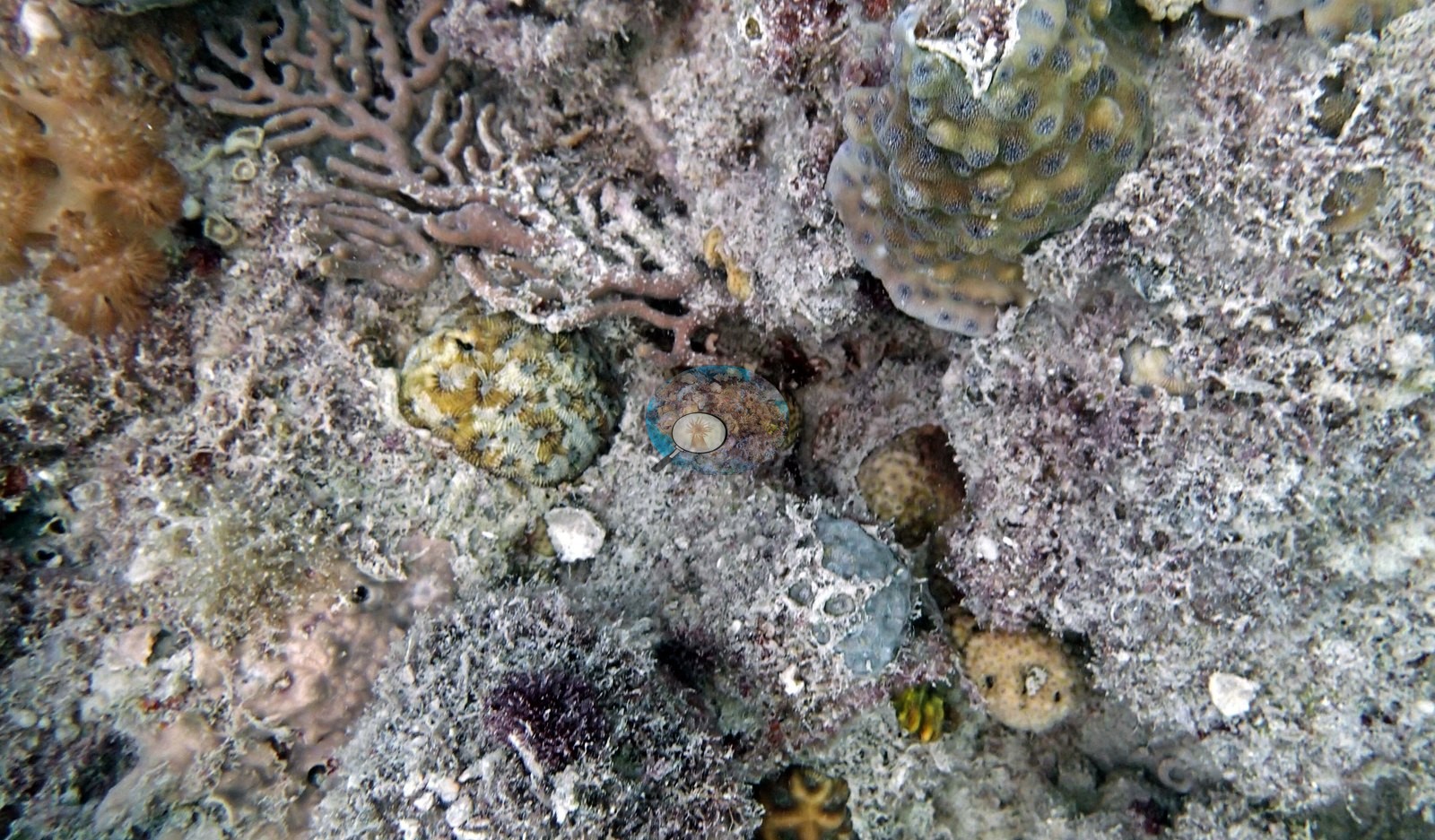
Two downward frames show the problem plainly: pavement and rubble under a gray film of sediment, with small encrusting and mounding colonies, favids, a ridged plate coral, scattered juveniles, holding on in the gaps rather than forming a continuous cover (e.g., Image 1, Image 3).
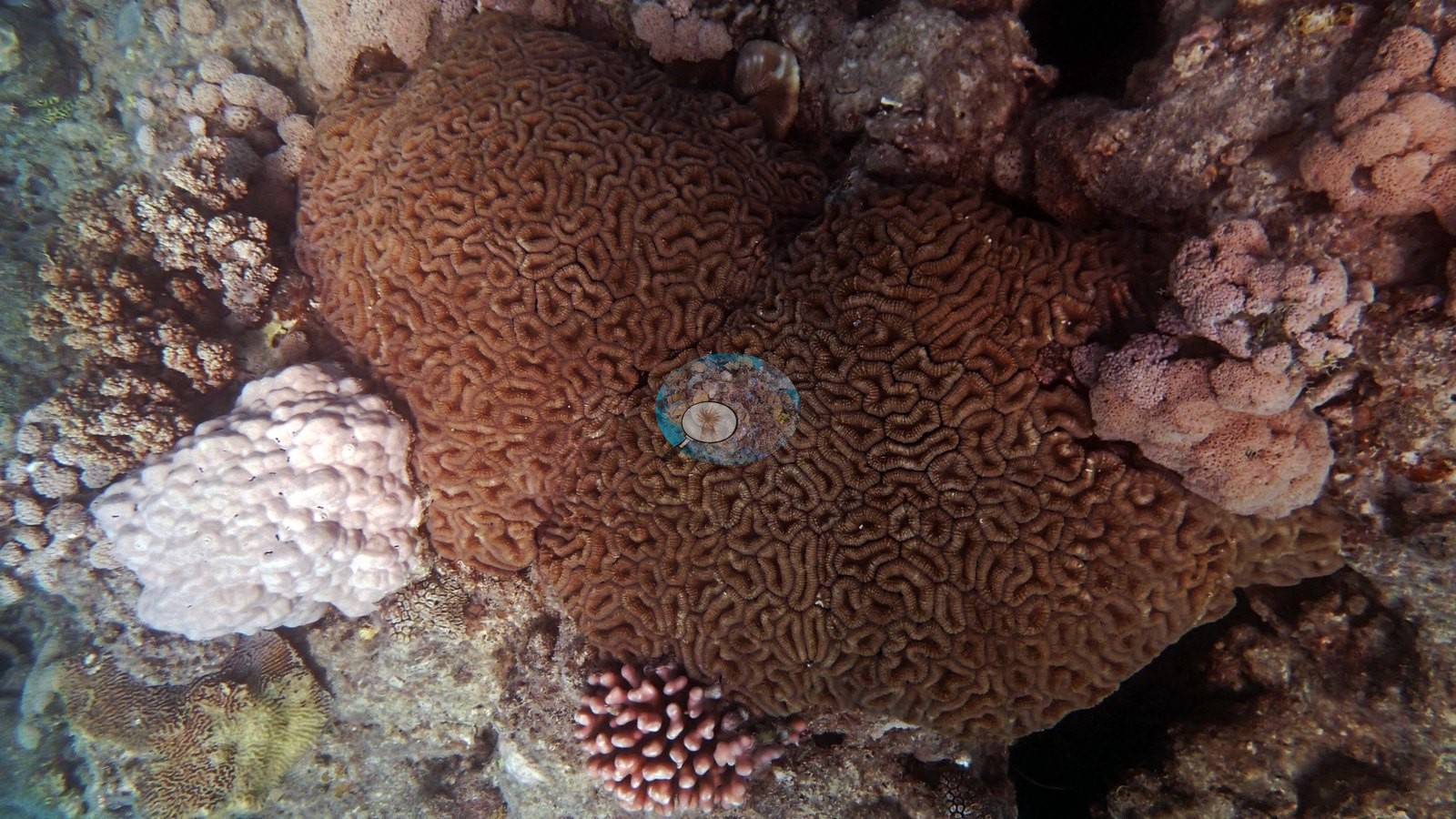
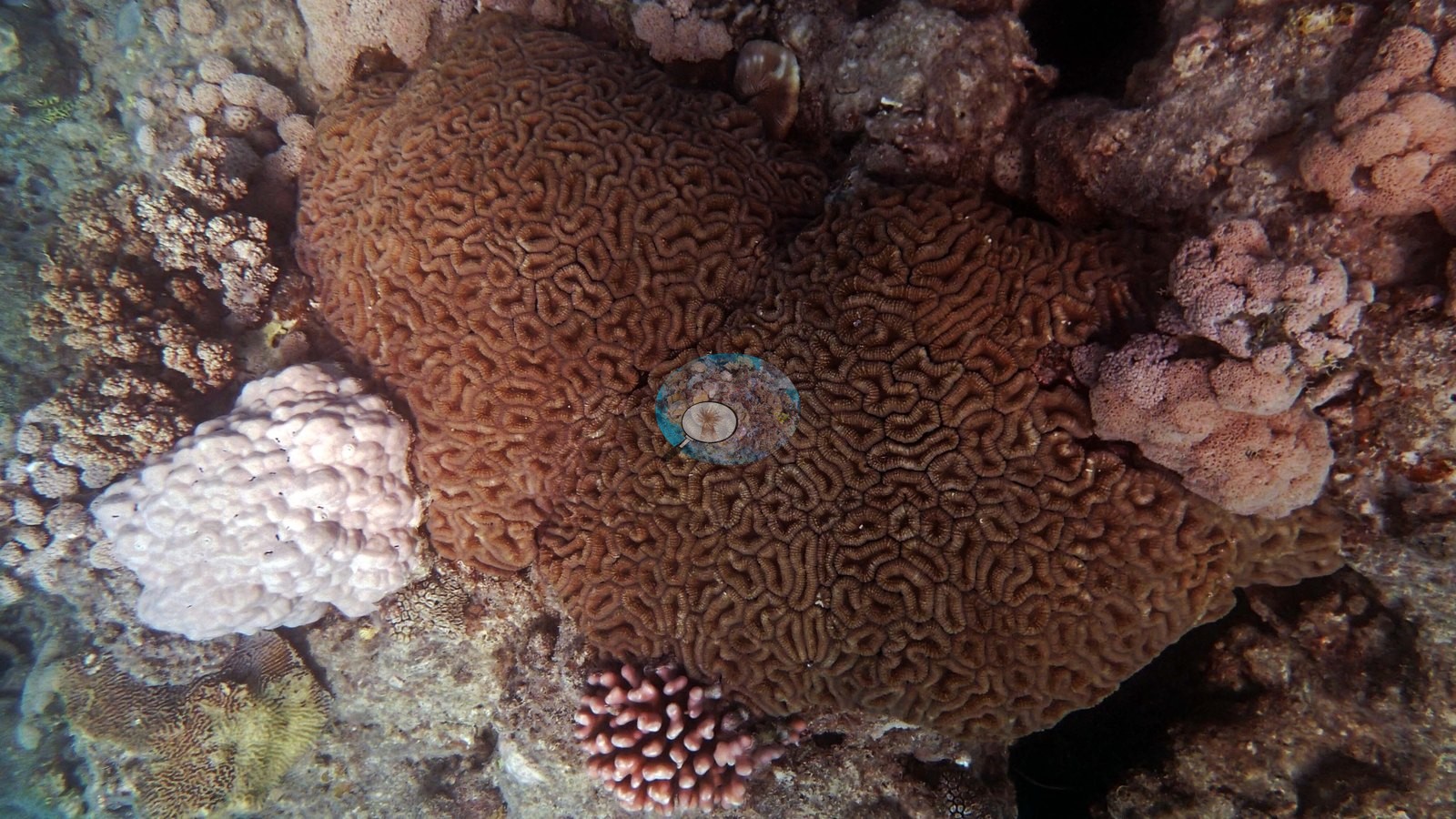
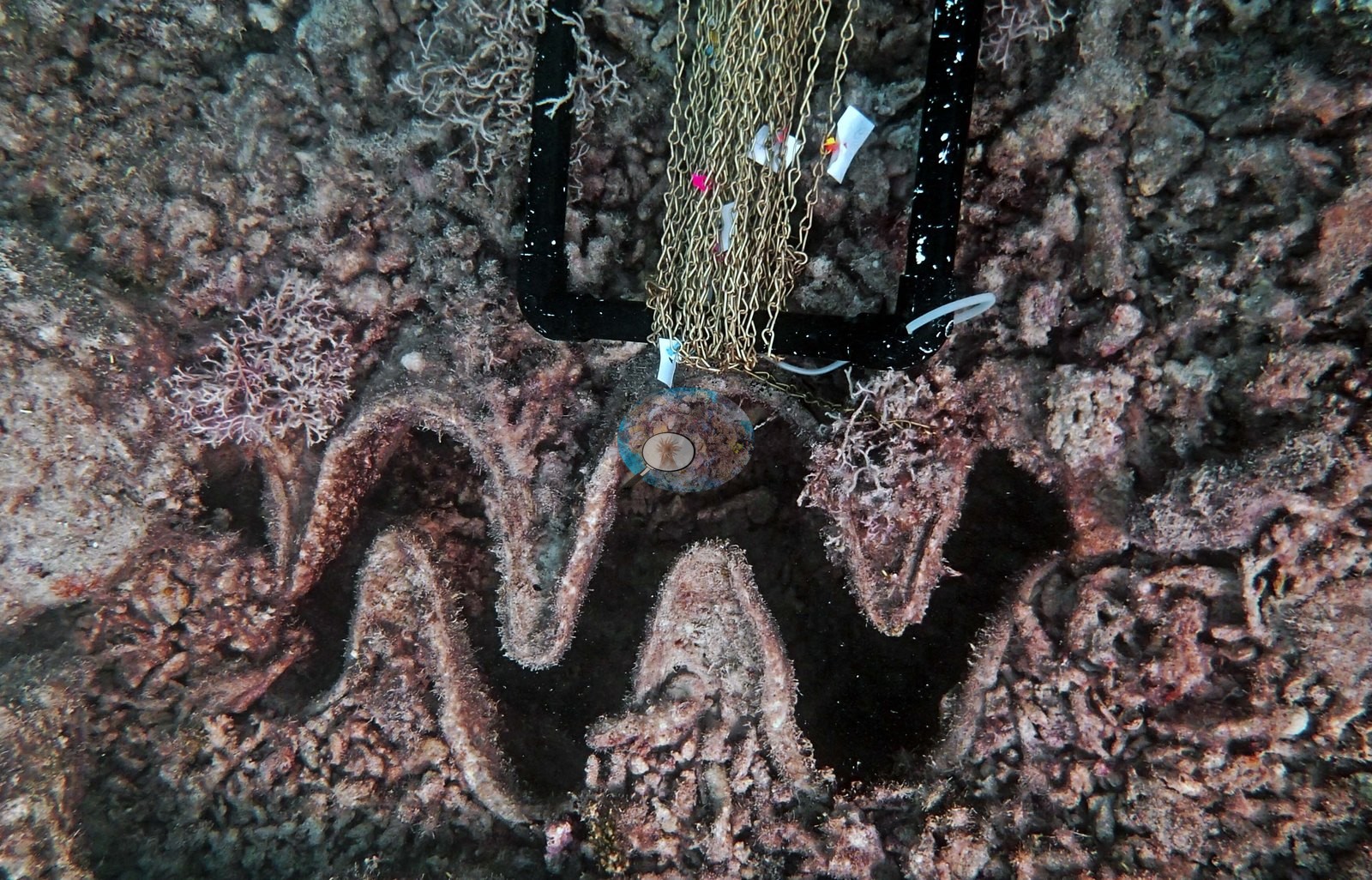
The exceptions are two showpieces: a large brain coral, its meandering valleys clean and healthy alongside a pale pink mounding neighbor, and a big clam wedged into the pavement with the GRE transect chain and its numbered tags laid across it (e.g., Image 4, Image 5).
The bright spot was recruitment, unusually high, with many small young colonies. Much of the hard structure was blanketed in soft corals and sea fans, with a stretch of dead staghorn framework and a patch dominated by fleshy macroalgae. Porites was the most common coral genus on this station's transects (6.2% of the benthos), followed by Acropora, Astreopora, Galaxea, and Heliofungia (1.3% each) and Cyphastrea, Favia, and Lobophyllia (1.0% each); bare substrate covered 13%, behind turf (30%), the largest non-coral class. Among the algal classes on this station's transects, turf (30%) led, followed by sediment-laden turf (23%) and macroalgae (6.2%).
Coral cover
- Reference: Khaled bin Sultan Living Oceans Foundation, Global Reef Expedition (in situ transect)
- The point-count survey put live cover here at 20%, on a low, ridge-like reef cresting within 3-4 m of the surface but holding most of its life at 5-10 m.
- Transect mean 20 ± 4.7% SE (n = 6 transects; Living Oceans Foundation per-transect benthic data); the headline above is the expedition's station value.
Stressors
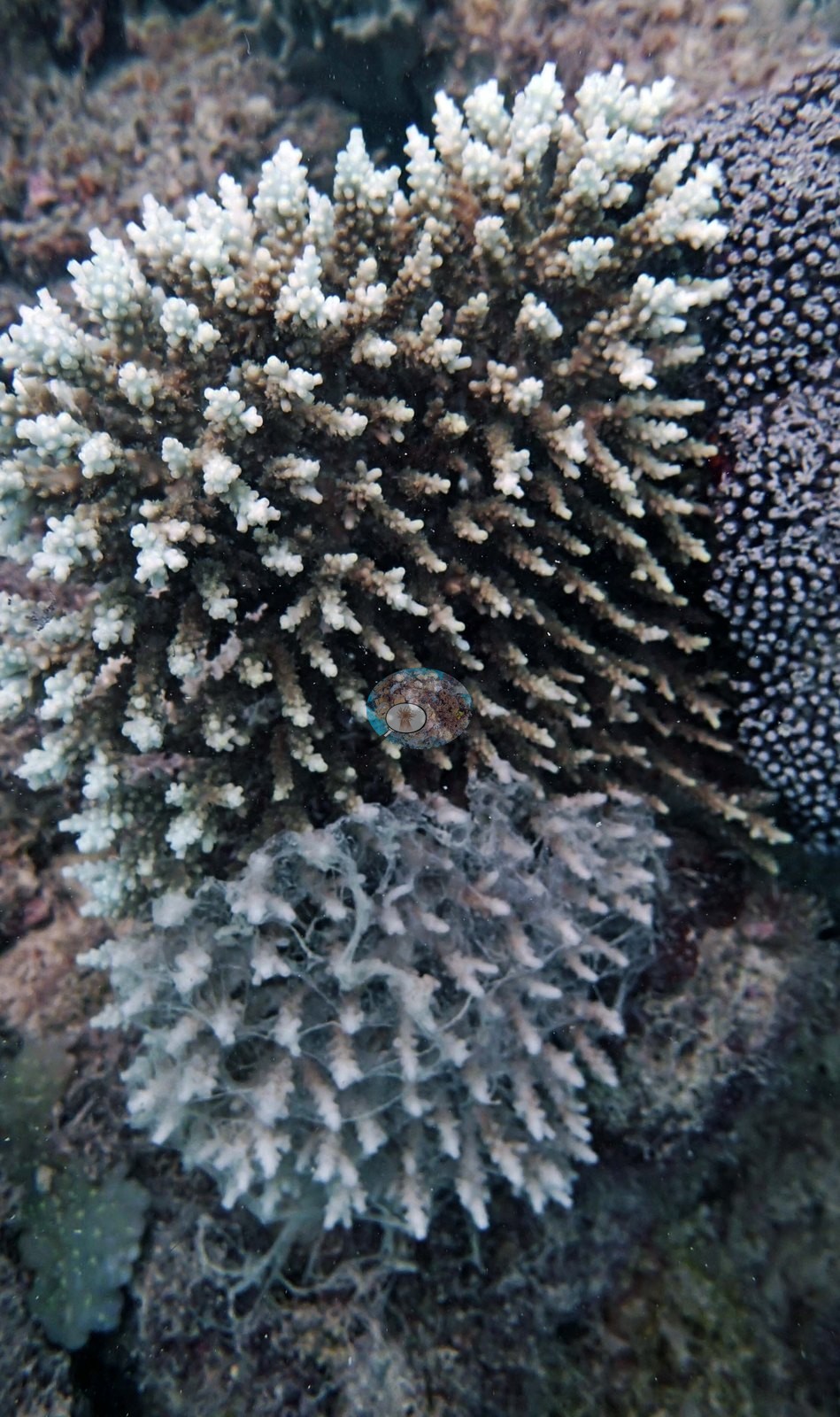
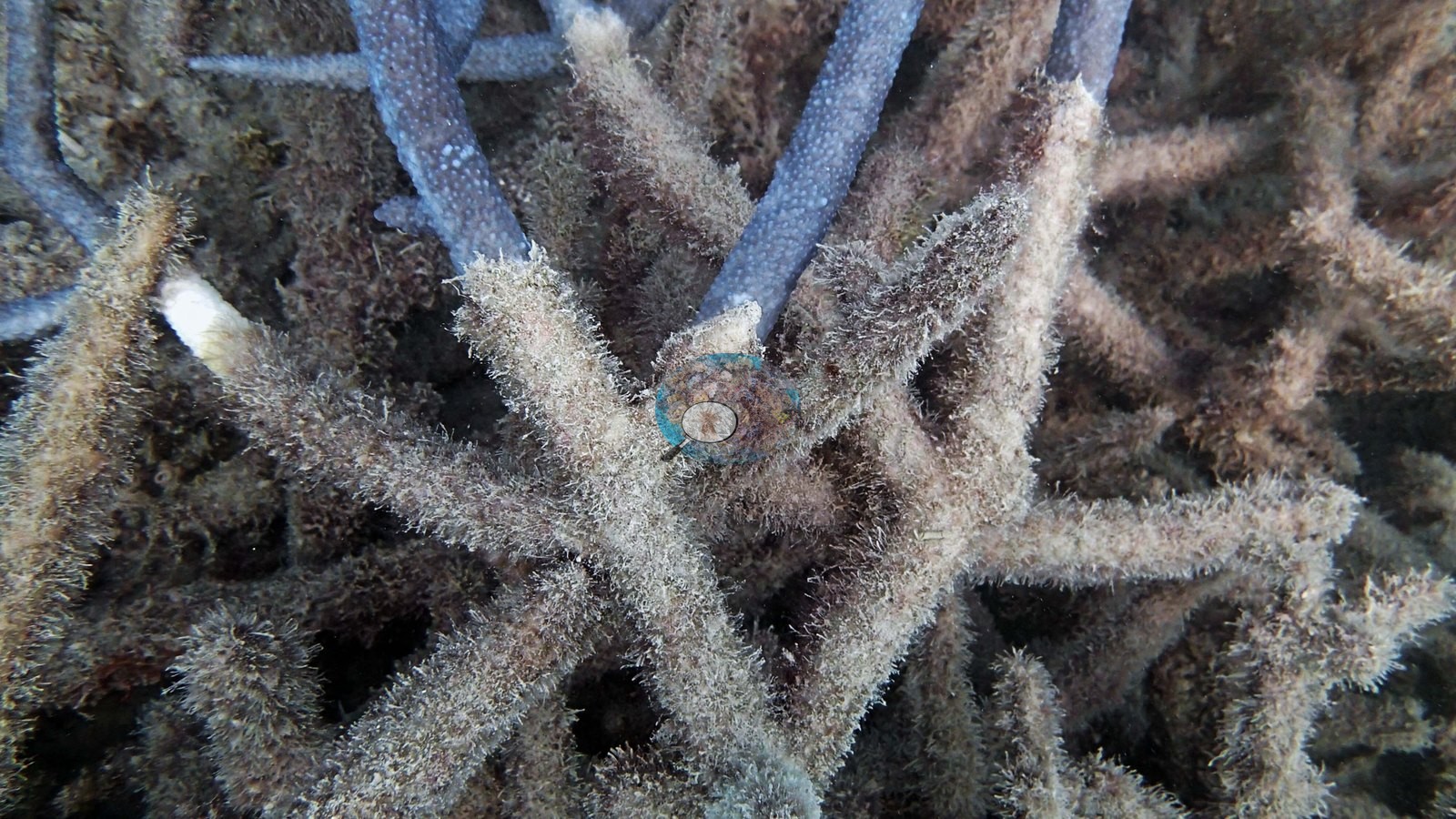
One close-up is pure dead staghorn Acropora, its branches furred over with filamentous turf (e.g., Image 2).
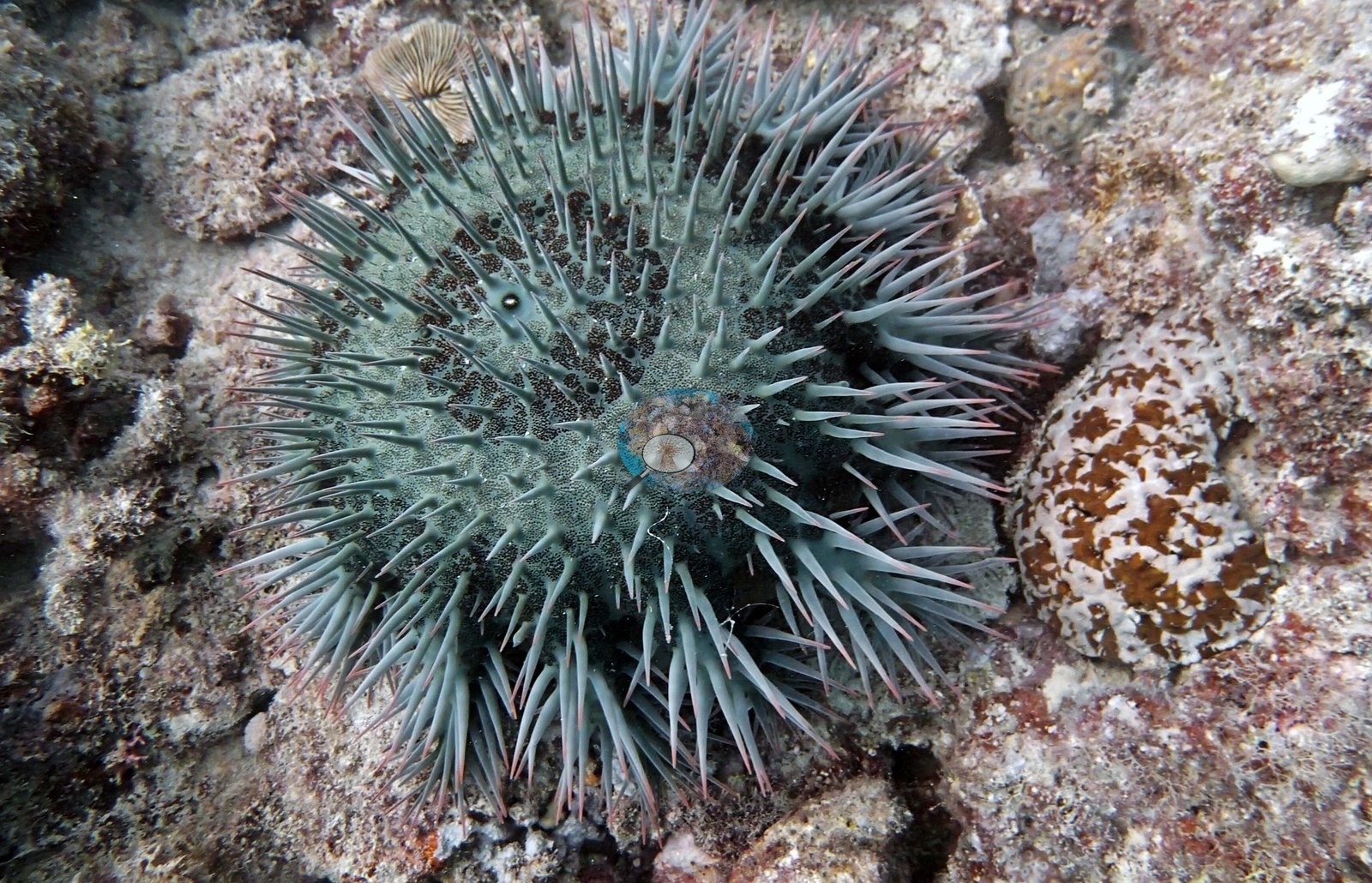
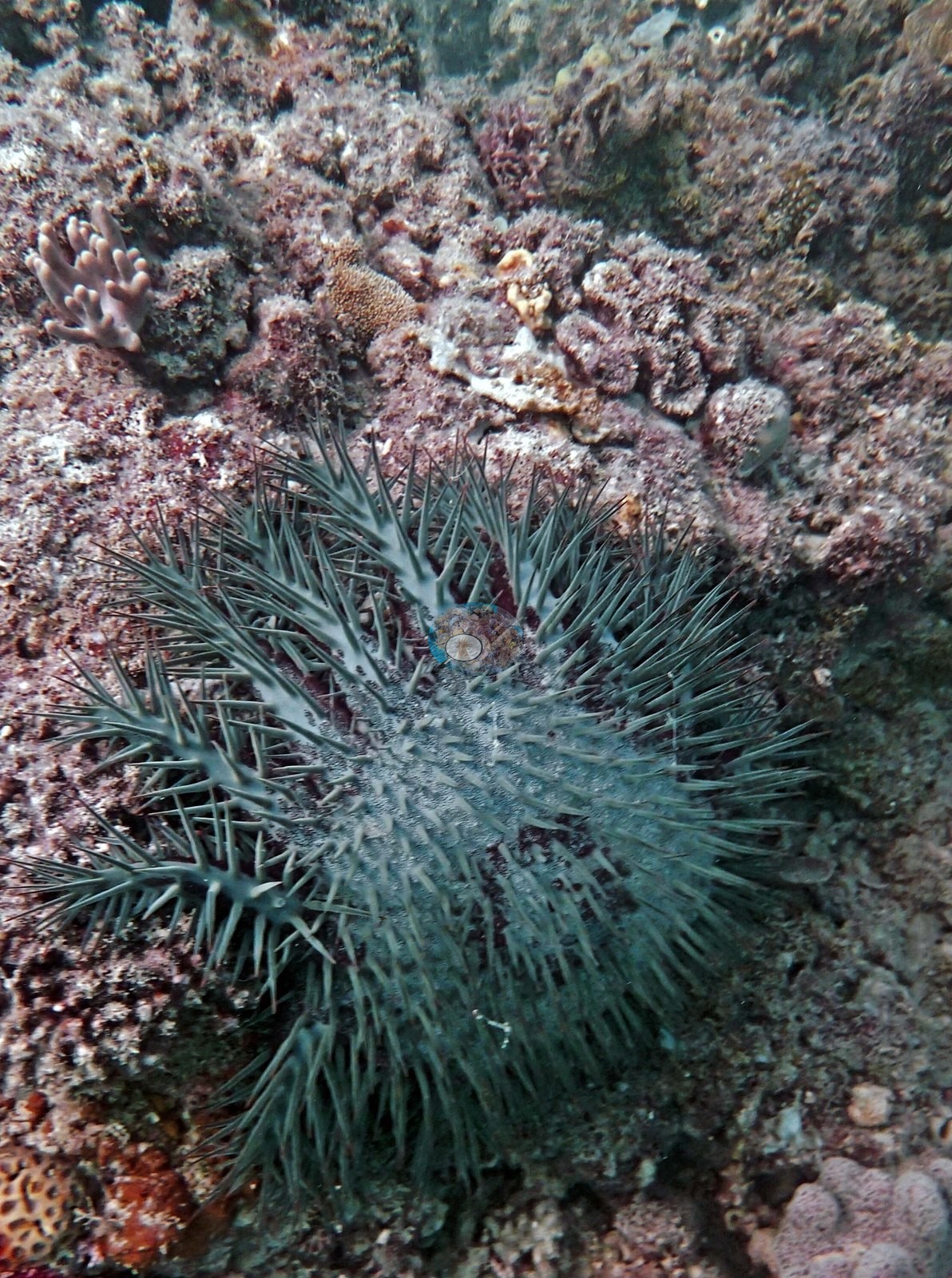
One stark-white branching colony with a crown-of-thorns starfish on its edge is recently dead, its bare skeleton still clean and white; the cause is not stated (e.g., Image 12).
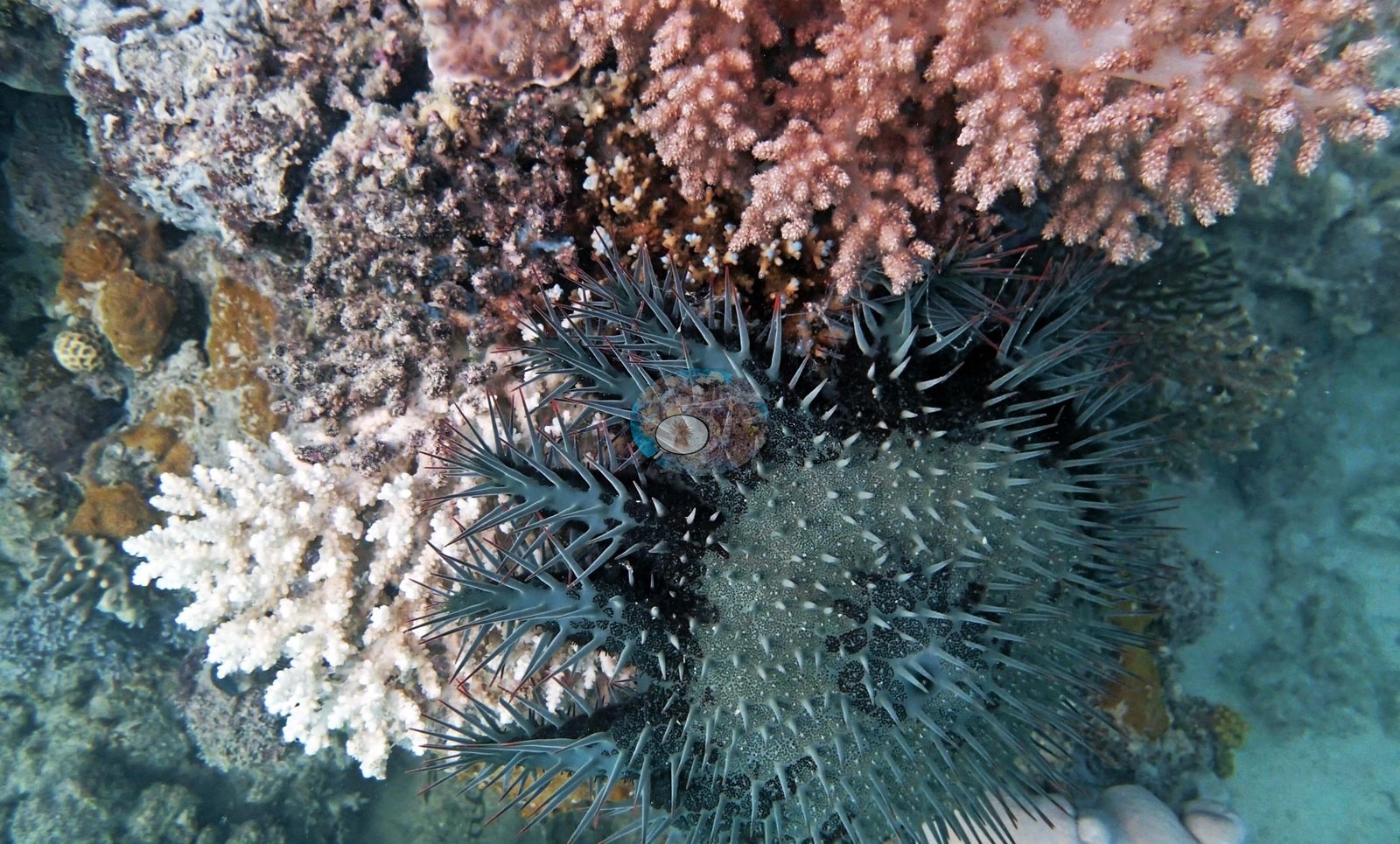
Four crown-of-thorns starfish were logged.
Comparisons with other data
No prior survey data from this site. If you would like to share yours, please email us.
Dive record
Anderson's first dive on this unnamed mid-shelf reef, on 8 September 2014, ran into thick, silty water, 3-4 m of visibility, and every photograph from it is shot close.
Data & links
- Download benthic survey data (CSV) ↗
- Download all LOF-GRE data (933 sites) ↗
- Photo portfolio ↗
- Coral Reef Diagnostics country page ↗
All images from Coral Reef Diagnostics. Data are from the Khaled bin Sultan Living Oceans Foundation Global Reef Expedition and Coral Reef Diagnostics.
 © Coral Reef Diagnostics.