
Part of the regional summaries: Australia (GBR) - Far North: Blue stations (Habitat Protection Zone reefs) and Australia (GBR)
More info
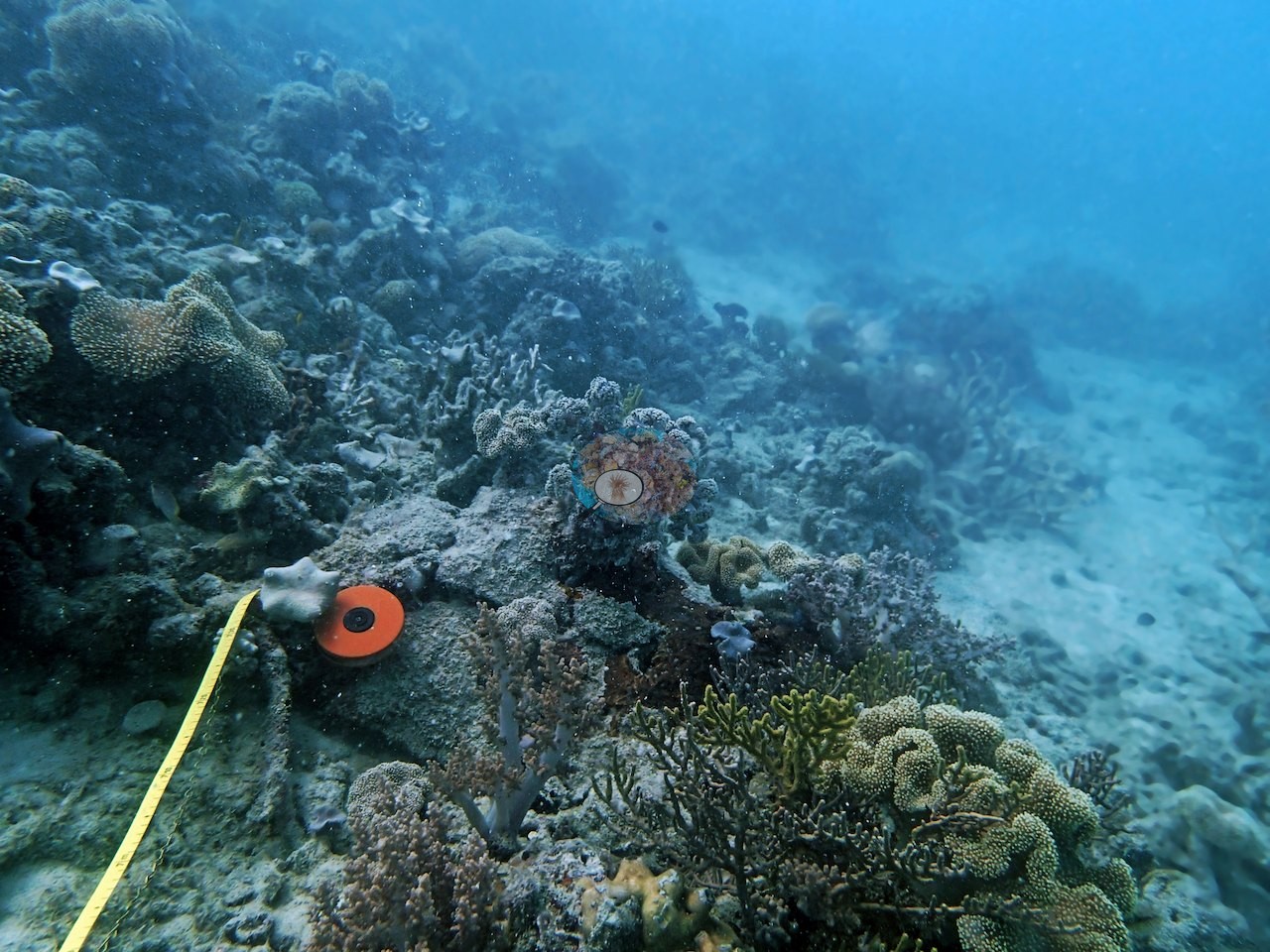
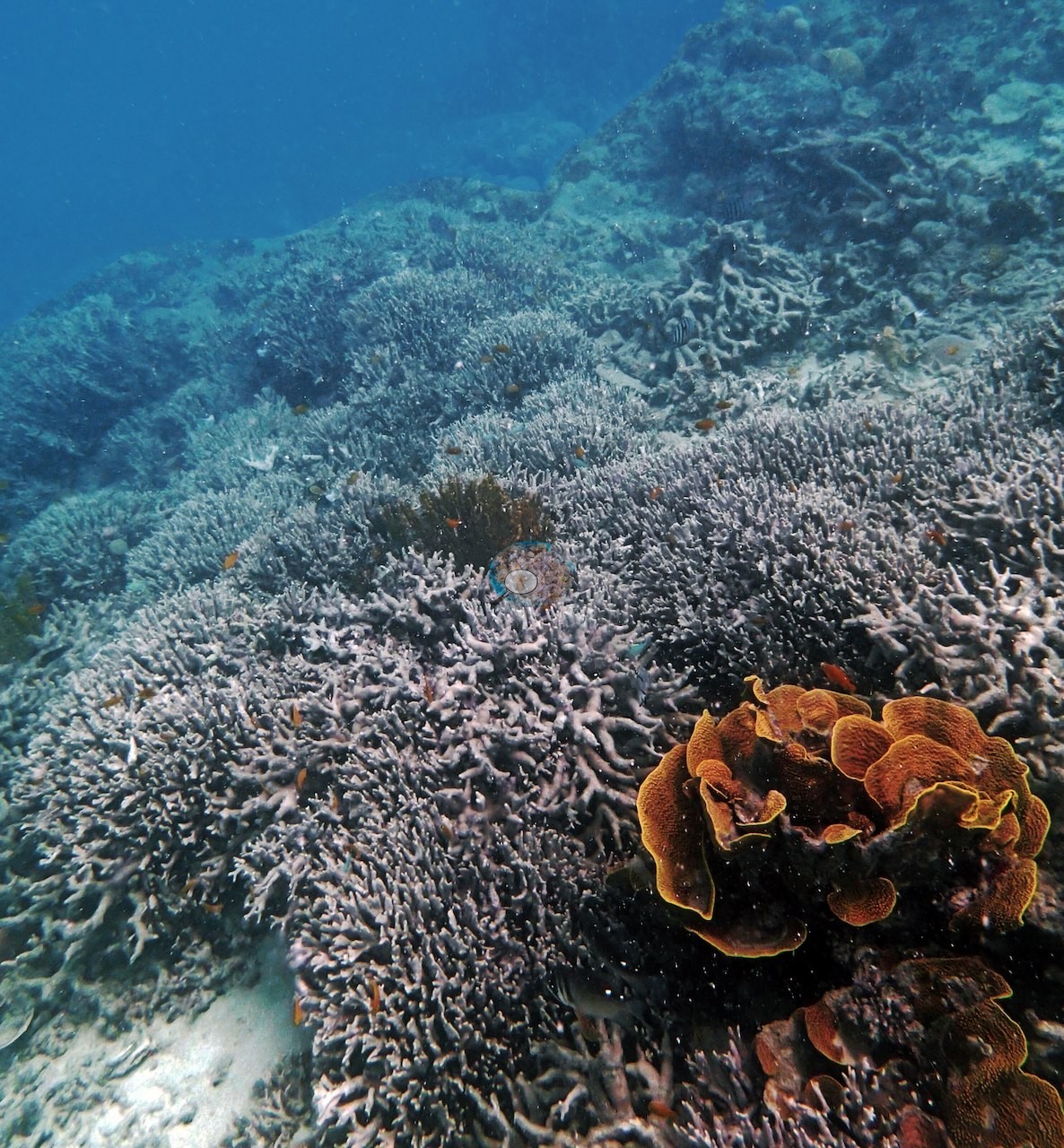
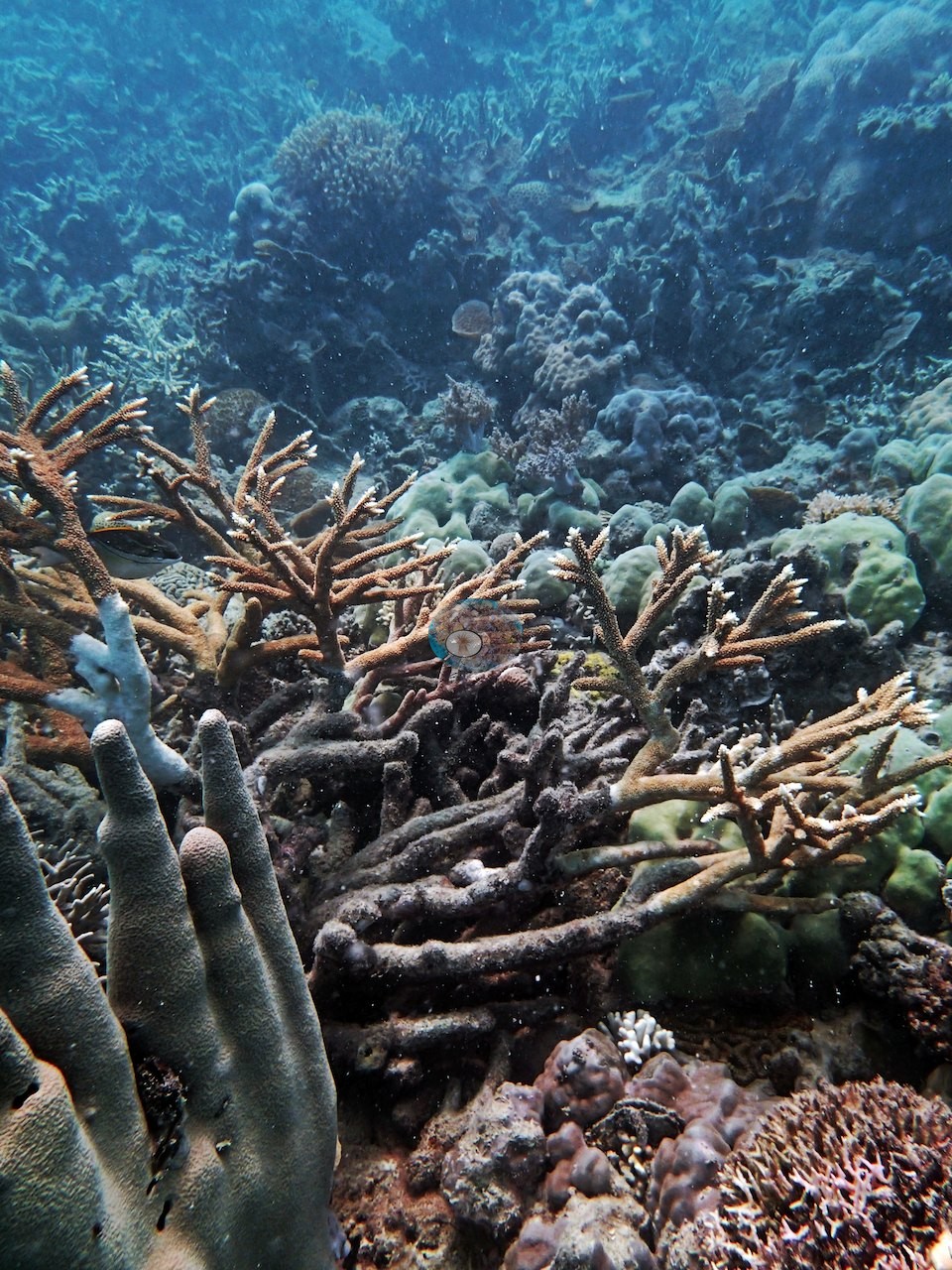
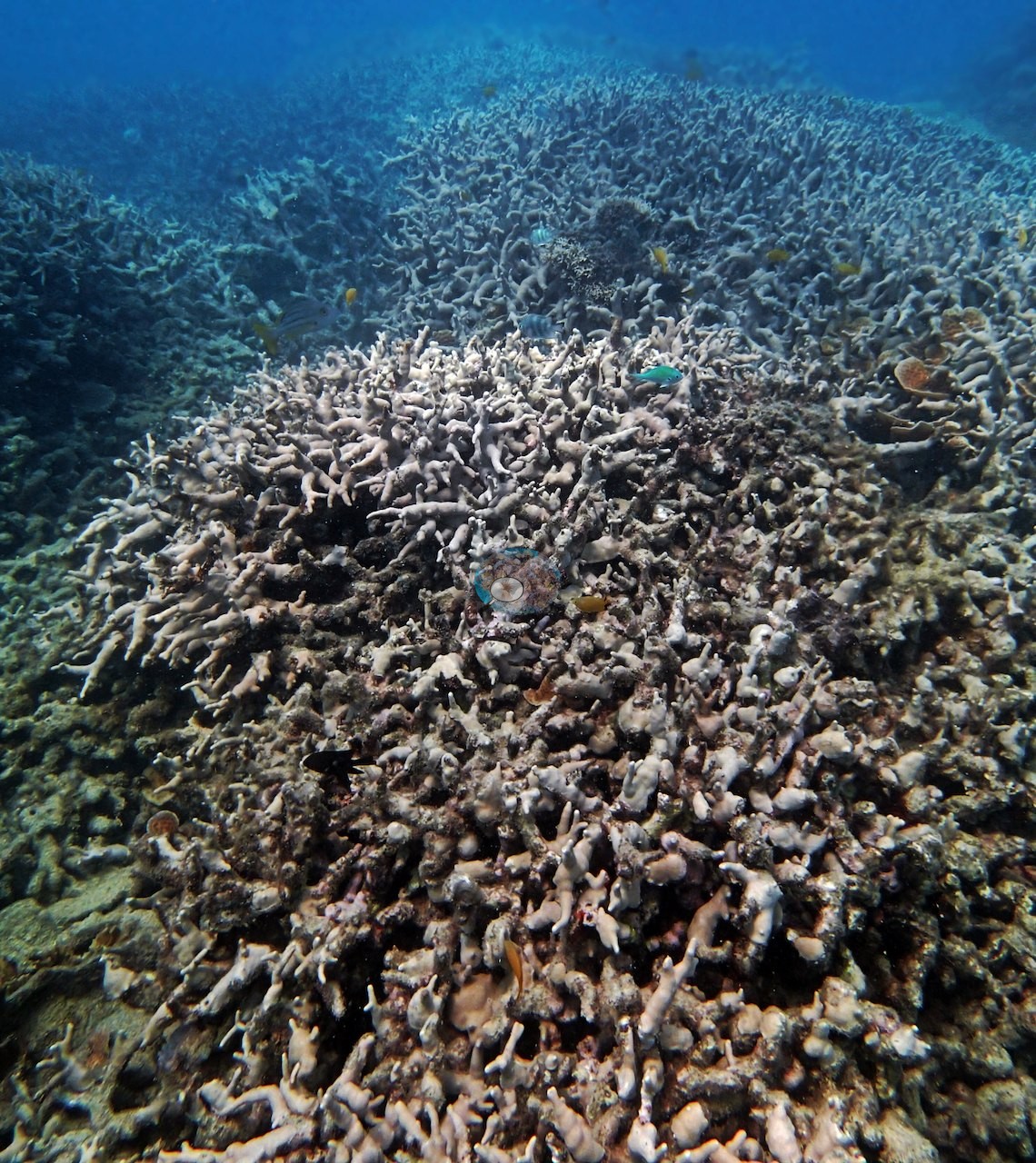
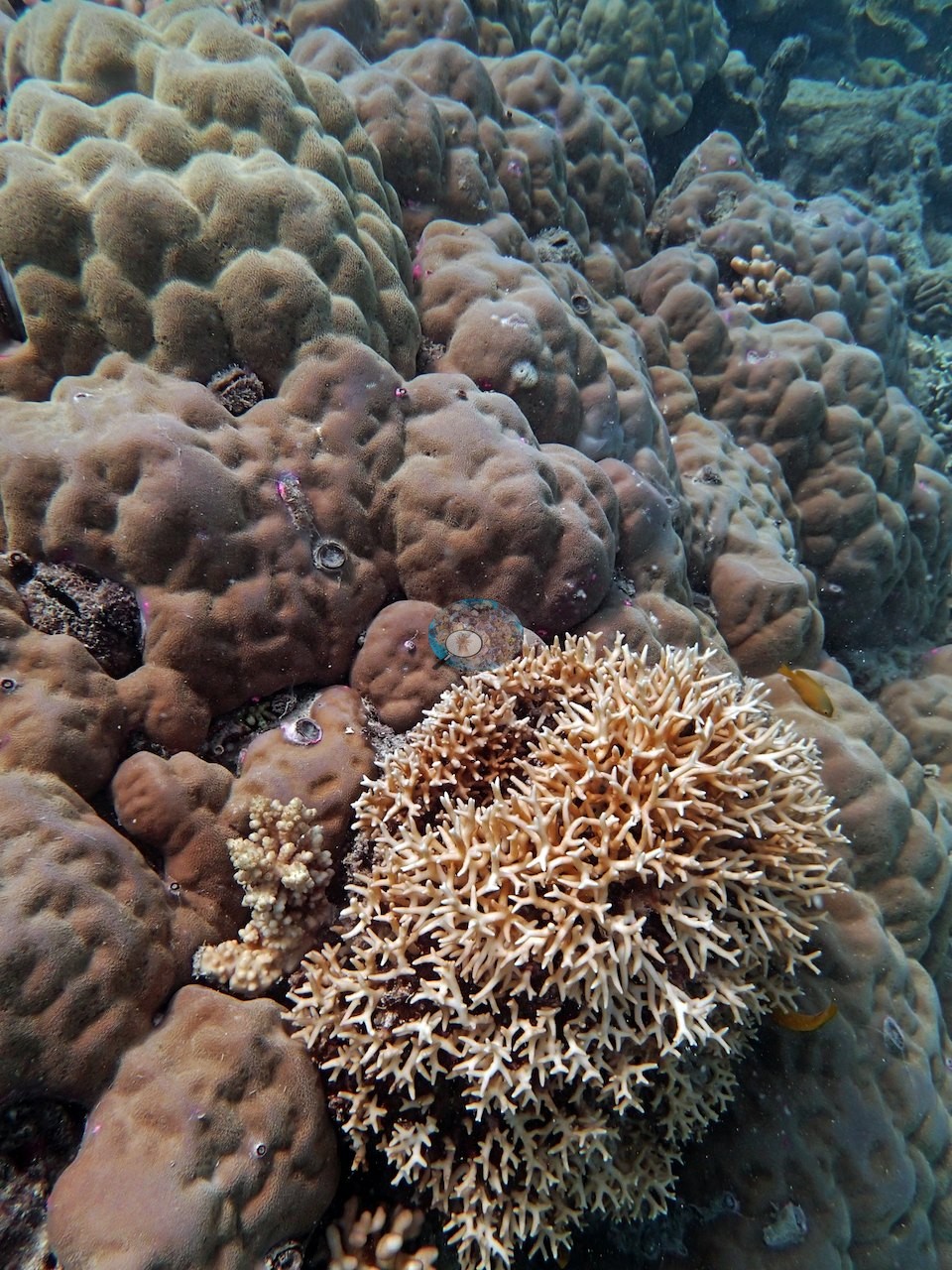
Far Northern GBR (NOAA CRW virtual station)A heavily silted reef that only begins around 10 m but builds to a dense shallow crest of staghorn, massive Porites, and large Diploastrea with more than 40 coral species. The surveyed transects sat at the sparser lower edge, with dead Acropora framework. Surveyed on the Living Oceans Foundation's Global Reef Expedition.
Five other CRD dive sites within 5 km shown in orange — click a marker to open its page.
🗺 Detailed map of the Global Reef Expedition dive sites, Milman, Monkman, Parkinson, and unnamed reefs, northern Great Barrier Reef (Khaled bin Sultan Living Oceans Foundation; opens in a new window)
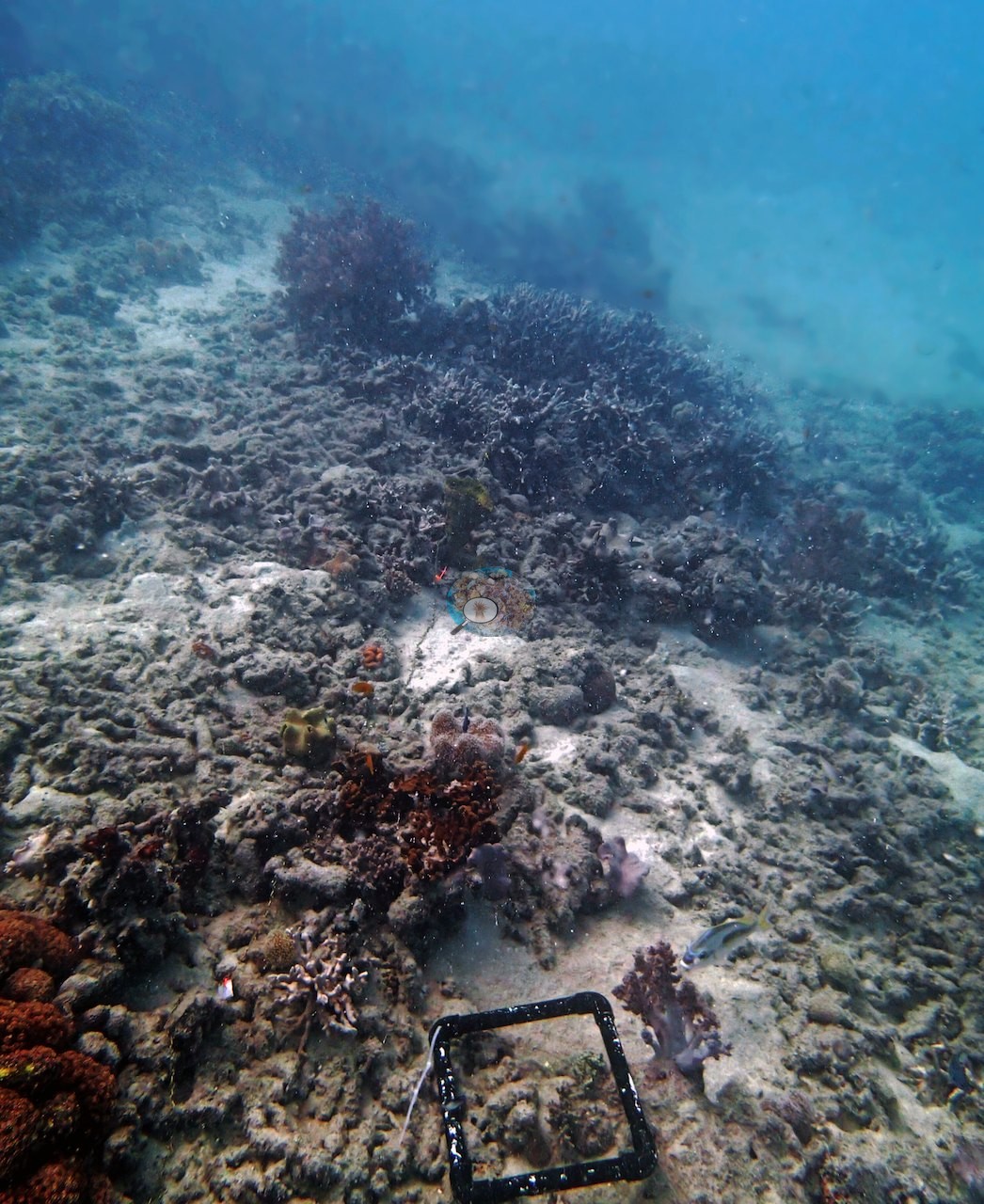
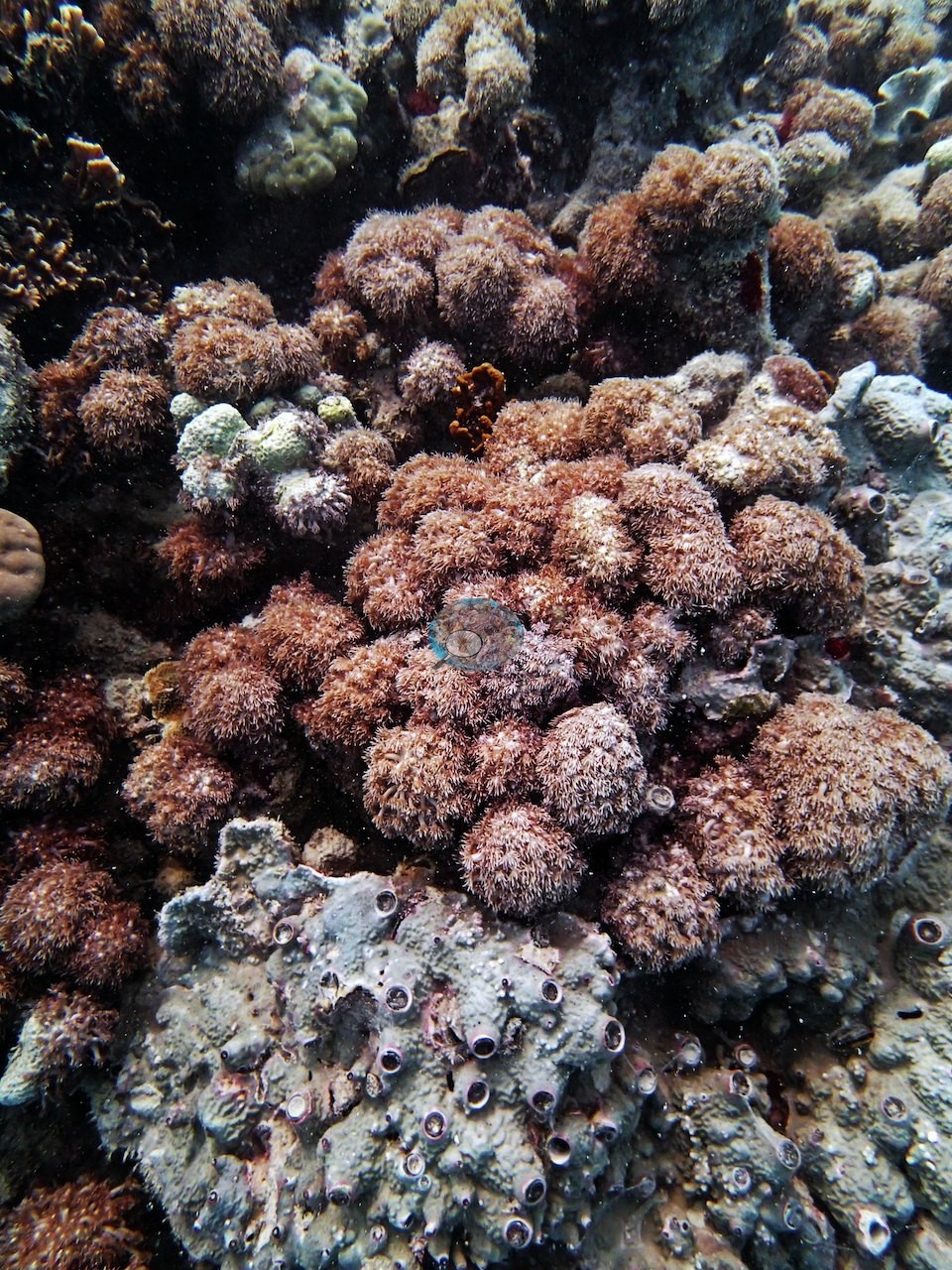
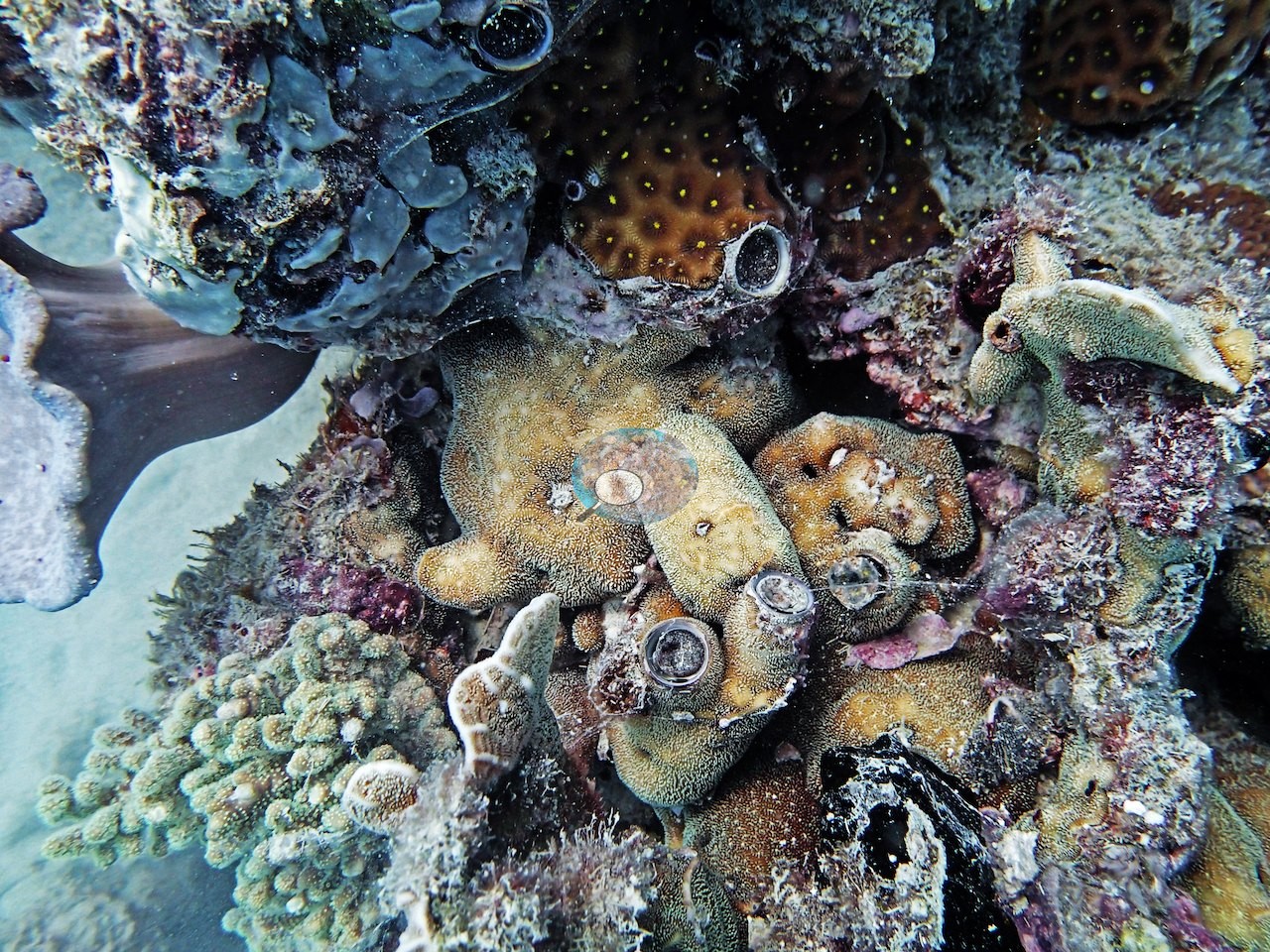
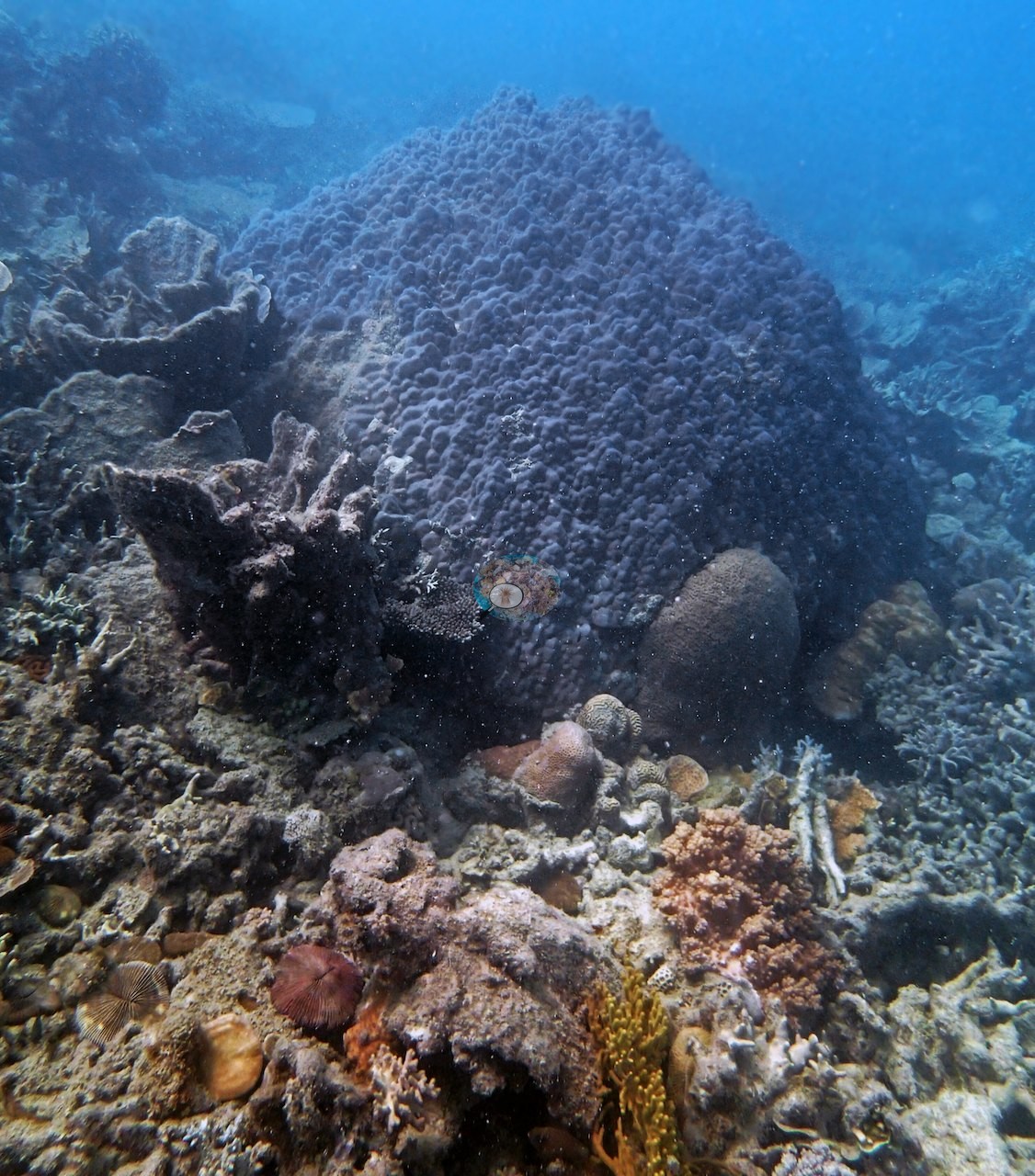
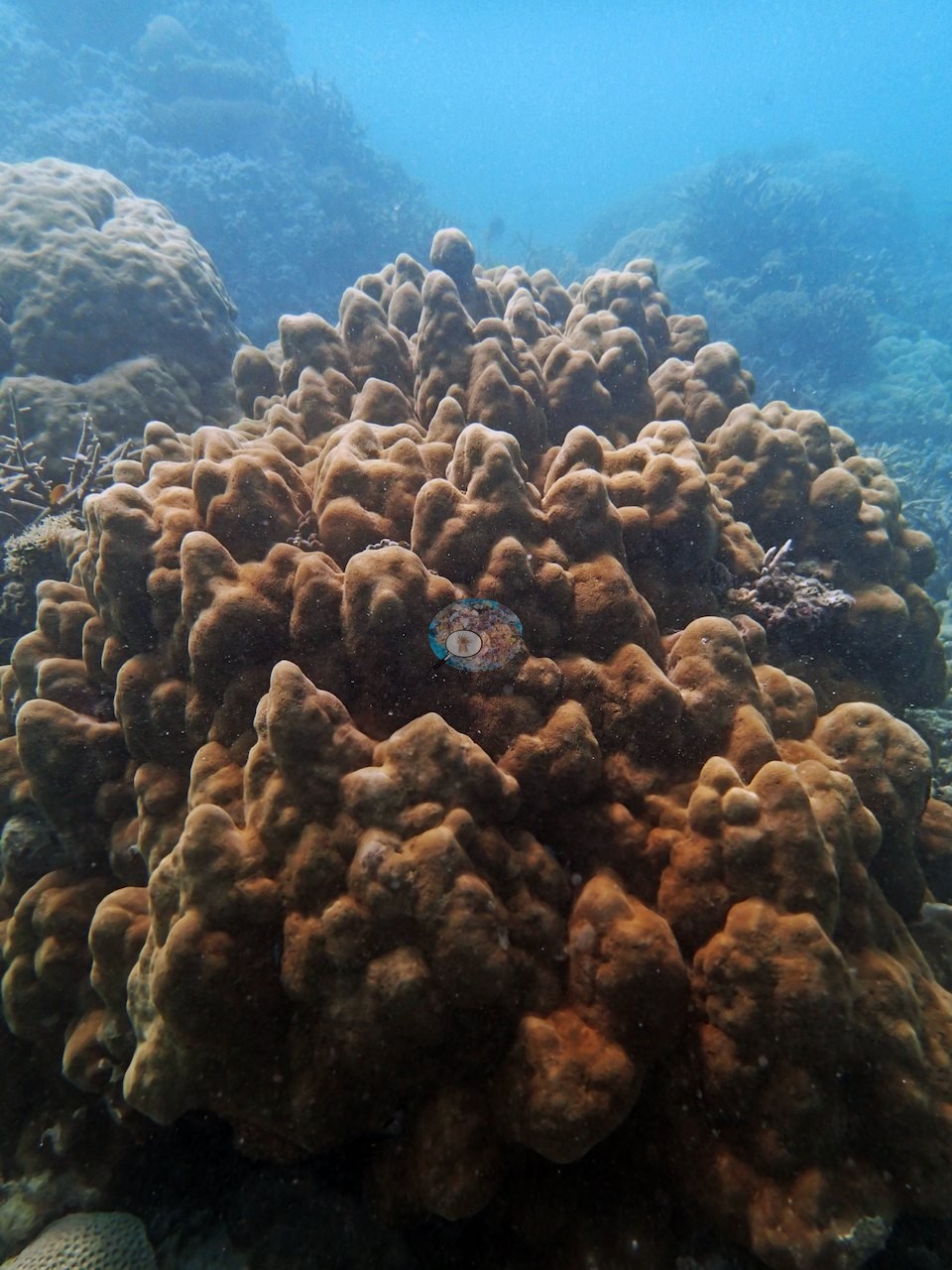
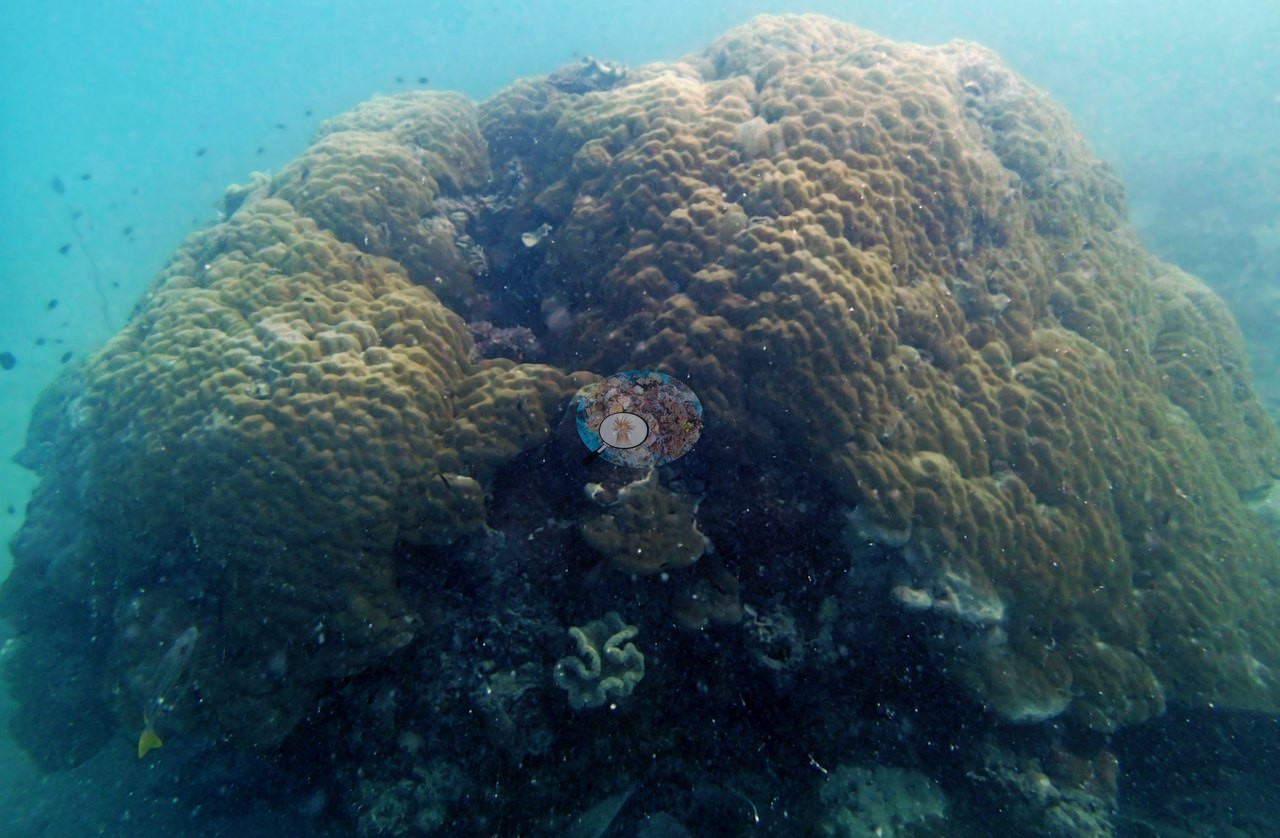
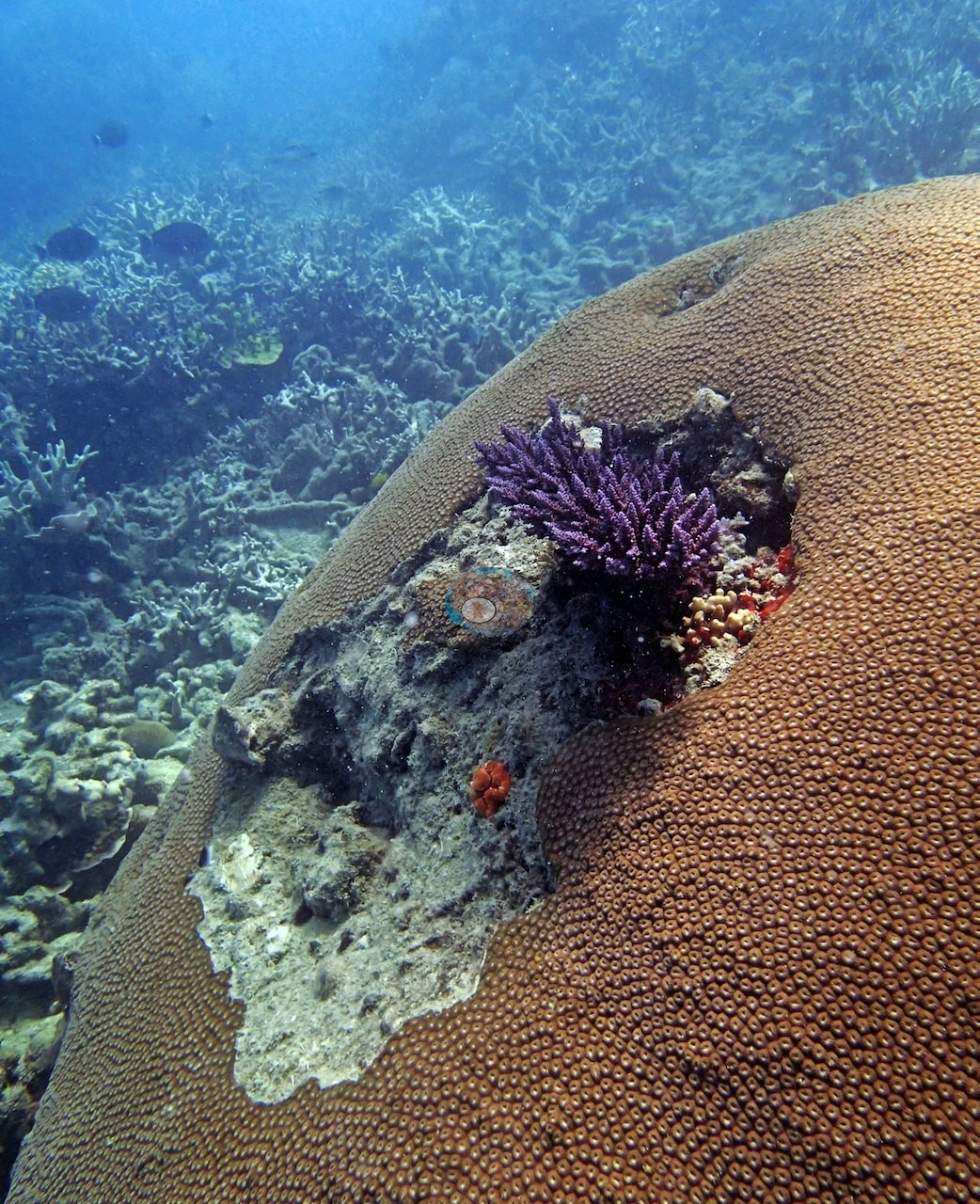
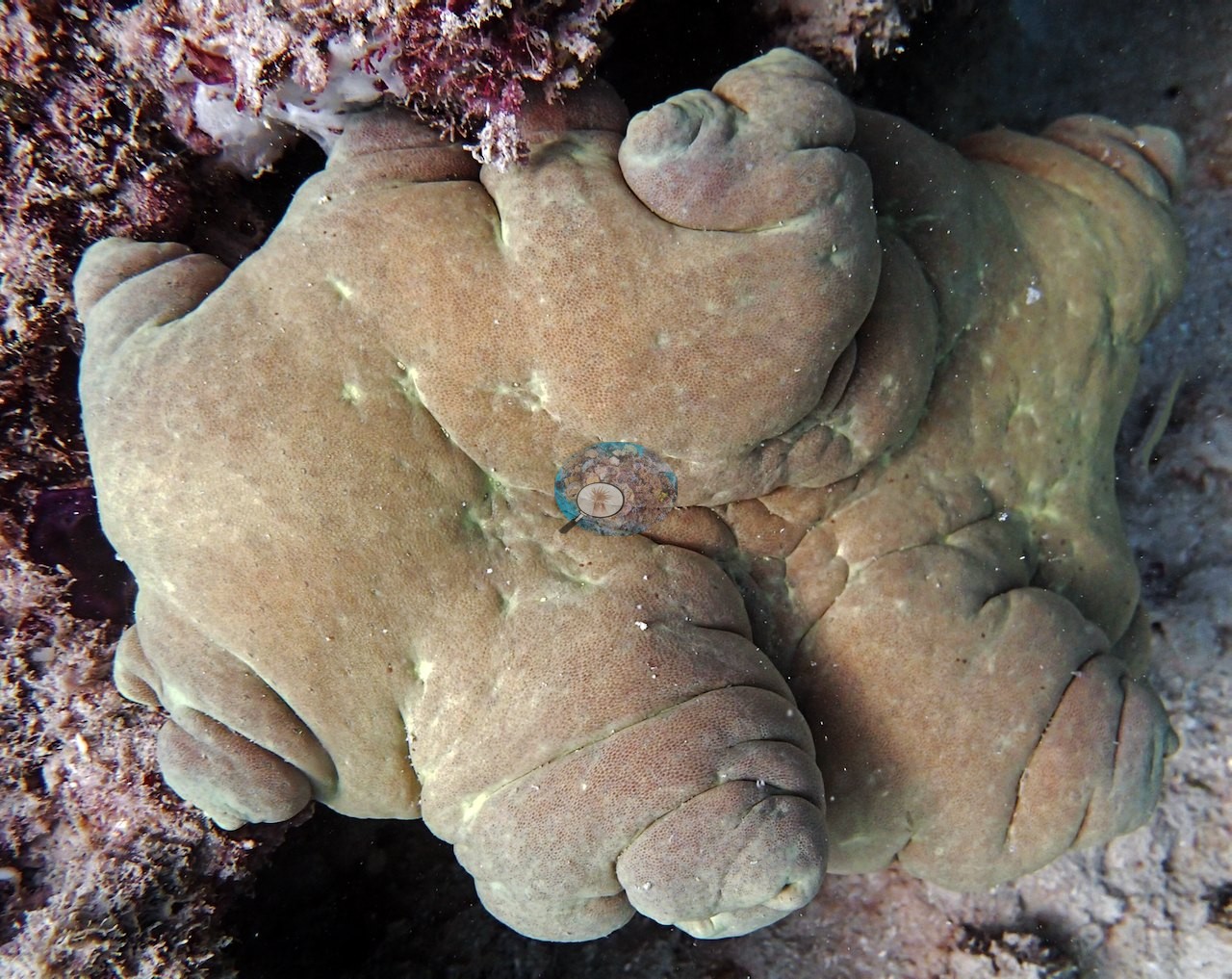
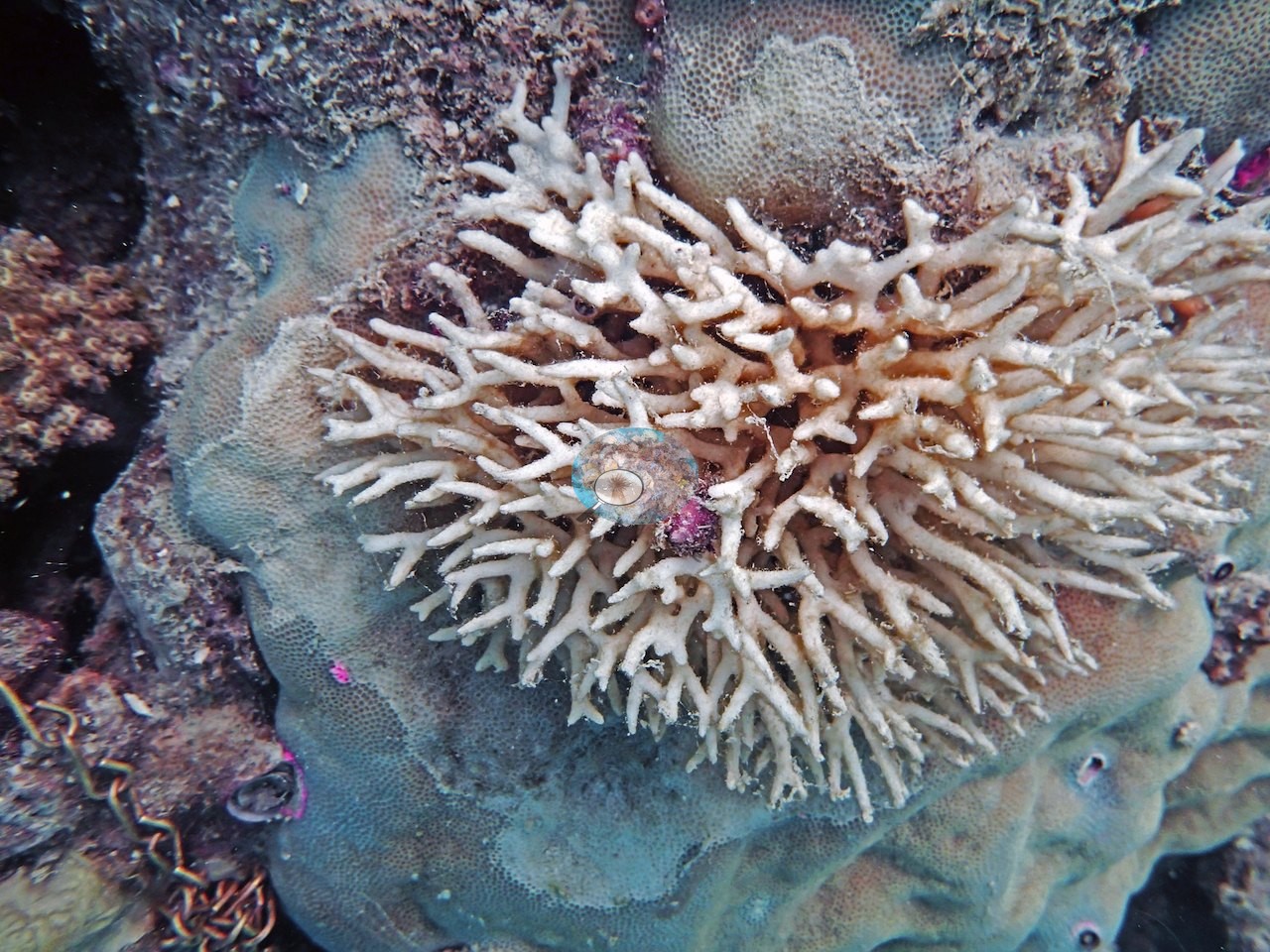
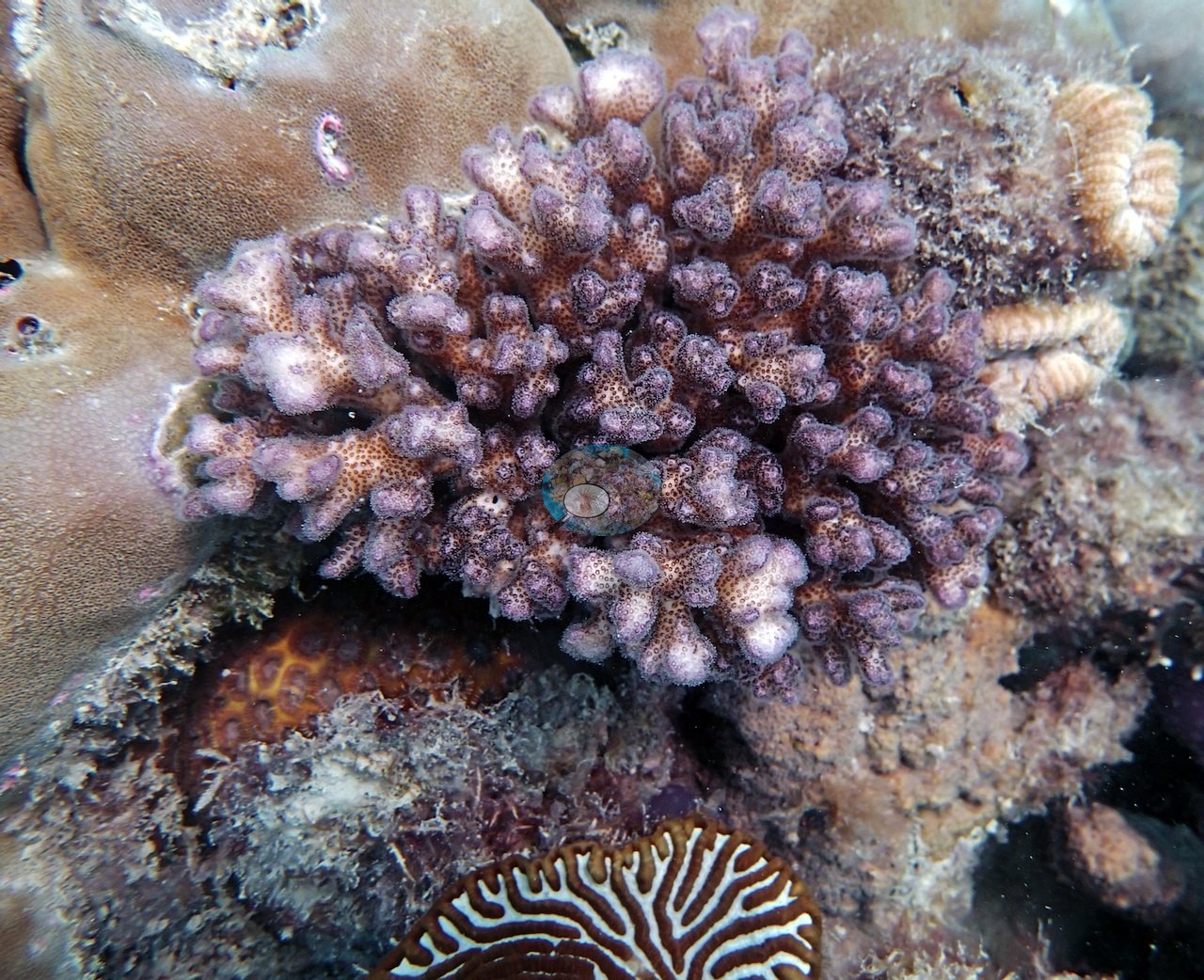
2 of the 23 photographs on this page are shown beside the text that discusses them under "Site description" below.
Site description
Setting
Global Reef Expedition station AU3973 on Unnamed Reef 11-039, far northern Great Barrier Reef (-11.2464, 143.2569), surveyed on 15 September 2014 in a Habitat Protection (Blue) Zone, where line fishing is permitted.
General benthic features
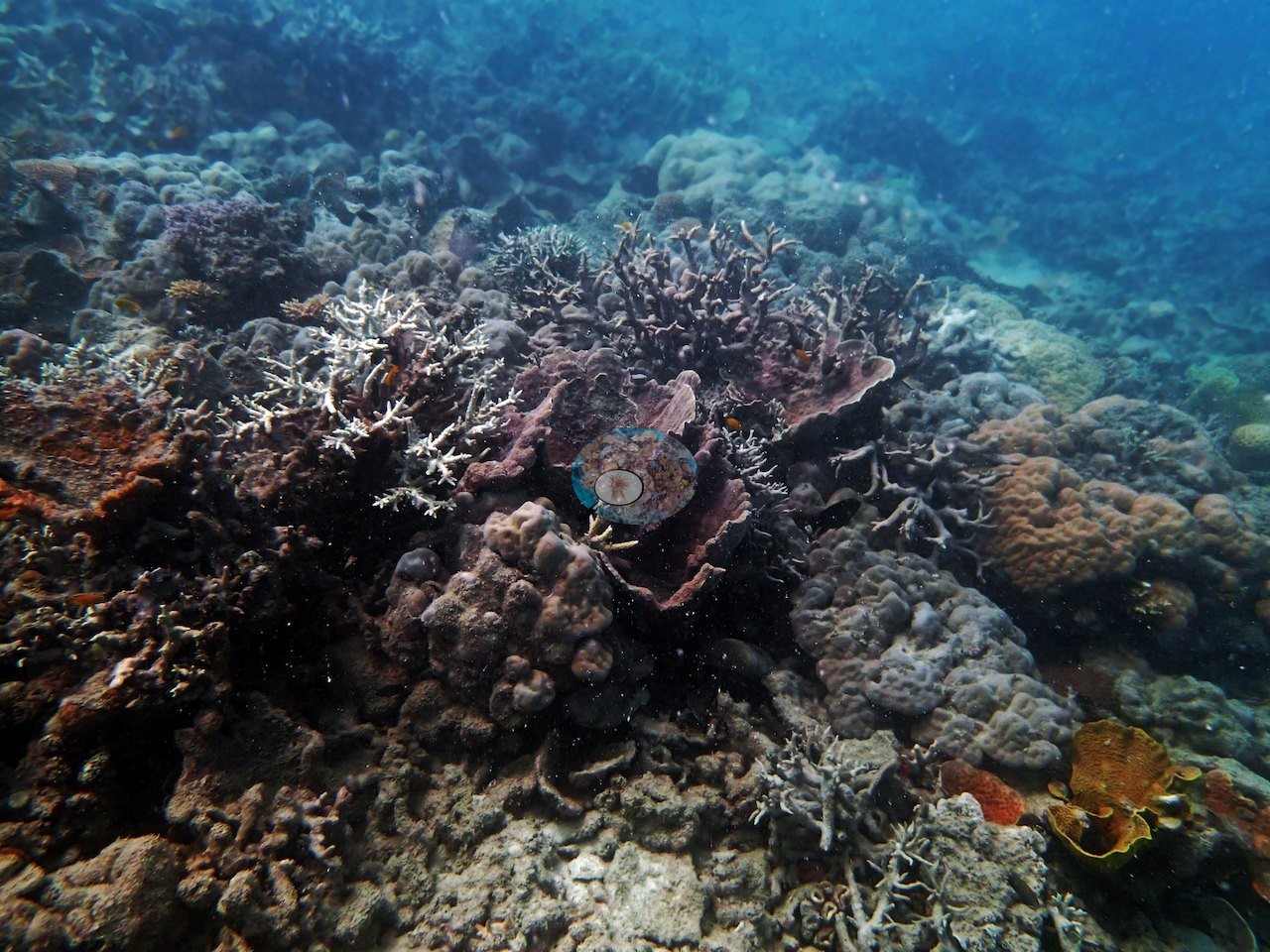
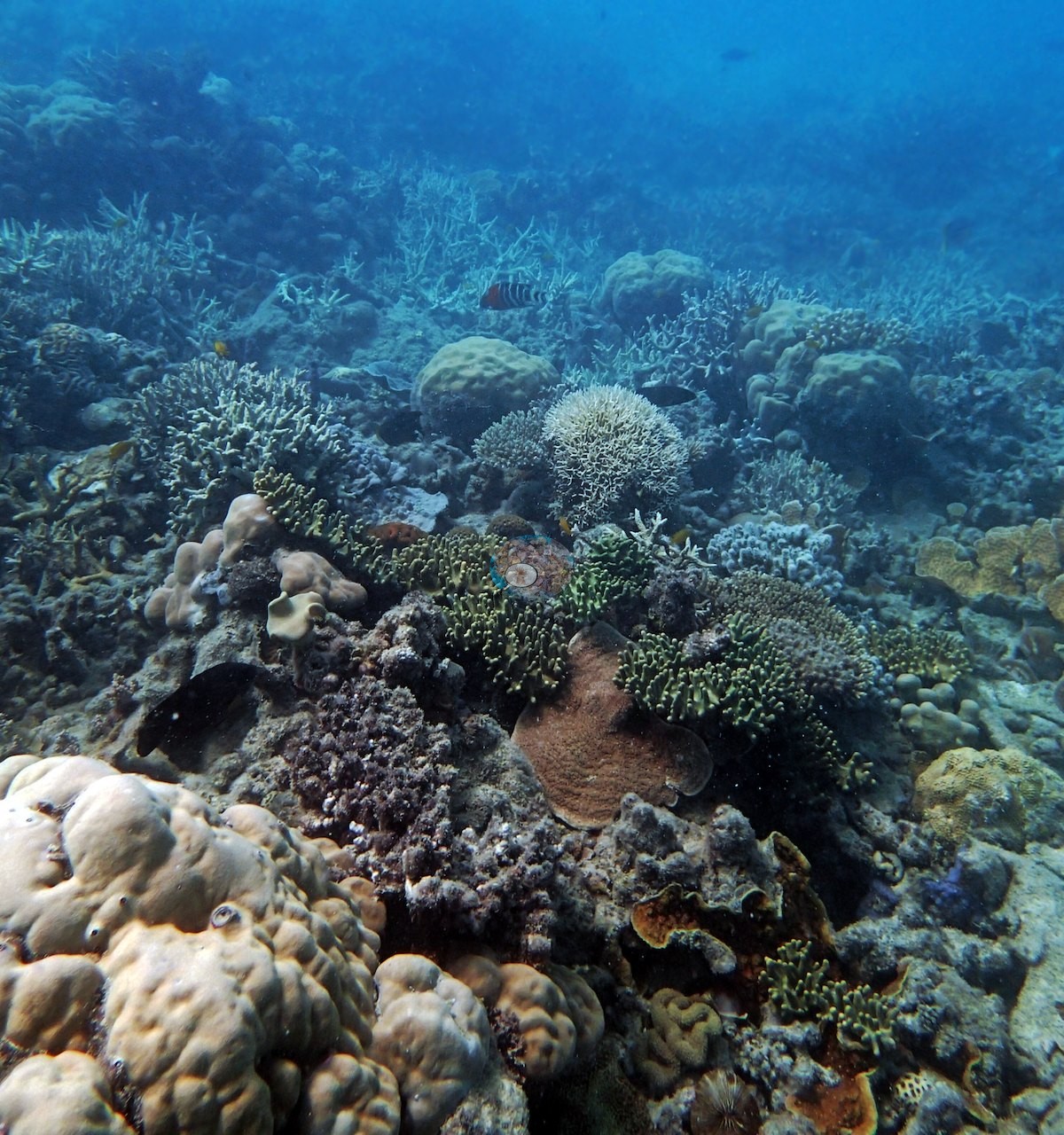
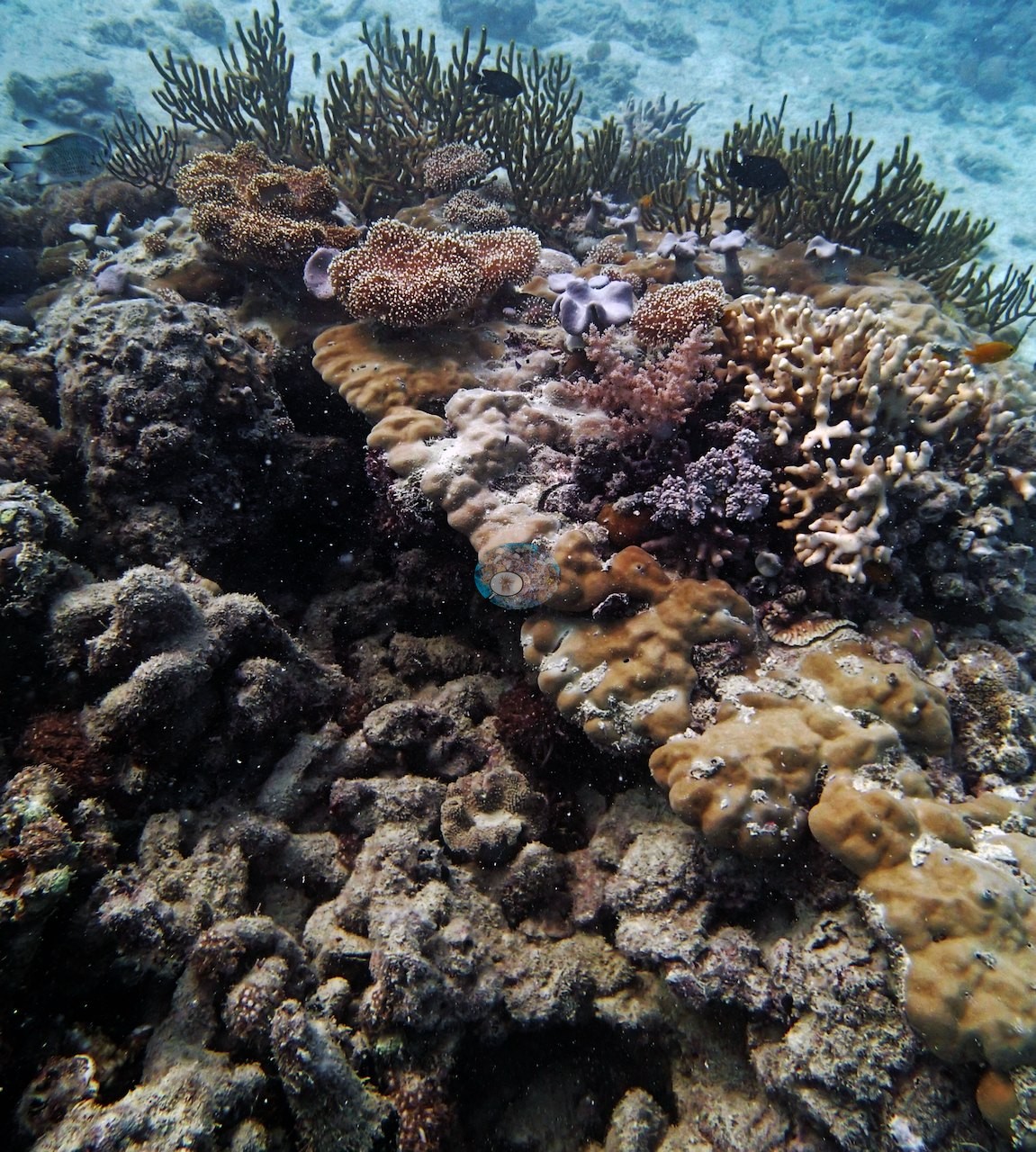
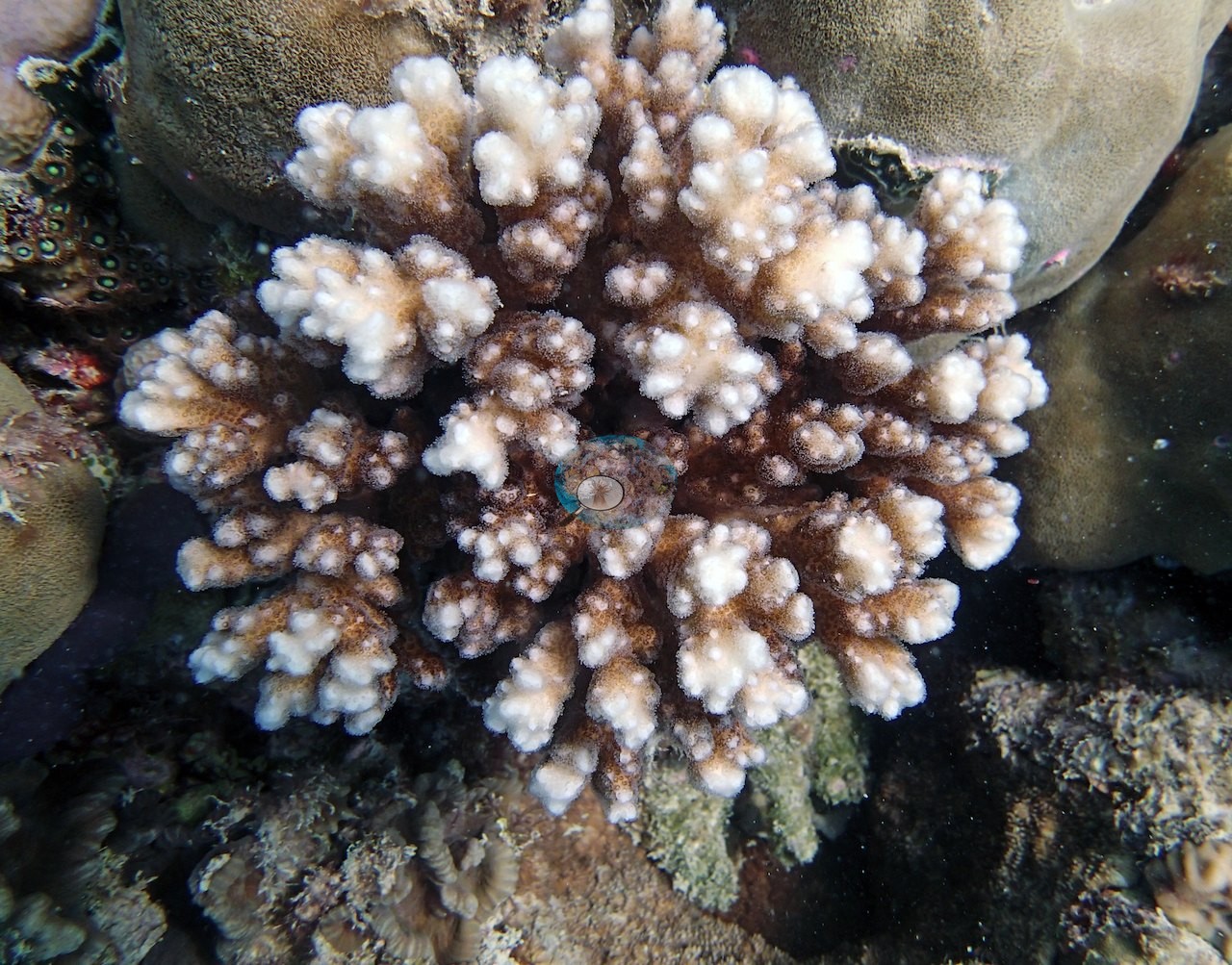
The notes describe a reef that only really begins around 10 m and gains coral and diversity going shallower, peaking at 2-3 m; staghorn Acropora, massive Porites, and large Diploastrea were common at 3-7 m, where he estimated 50-70% live coral cover with more than 40 species. The surveyed transects, all at 9.5-10.5 m, sat at the sparser lower edge, logging patches of dead Acropora framework and a few dying Echinopora plates among soft corals, favids, and small massive poritids, under a very high sediment load (8-10 m visibility). Porites was the most common coral genus on this station's transects (14% of the benthos), followed by Diploastrea (4.7%), Pectinia (4.0%), and Goniopora, Pachyseris, and Psammocora (3.3% each); bare substrate covered 31%, the largest non-coral class. Among the algal classes on this station's transects, sediment-laden turf (16%) led, followed by turf (1.7%) and cyanobacteria (0.3%).
Coral cover
- Reference: Khaled bin Sultan Living Oceans Foundation, Global Reef Expedition (in situ transect)
- The expedition's in situ point-count transects at this station recorded 49% live coral cover against 18% total algal cover.
- Transect mean 49 ± 12% SE (n = 3 transects; Living Oceans Foundation per-transect benthic data); the headline above is the expedition's station value.
Stressors
Regional context, not an observation here: surveyed about eighteen months before the 2016 mass bleaching, an event that severely bleached hundreds of reefs on the northern Great Barrier Reef (Hughes et al. 2017); 5-year mean annual maximum thermal stress at the Far Northern GBR virtual station is 11.1 degree heating weeks. No crown-of-thorns starfish (COTS) or other corallivores evident.
Fish and other fauna
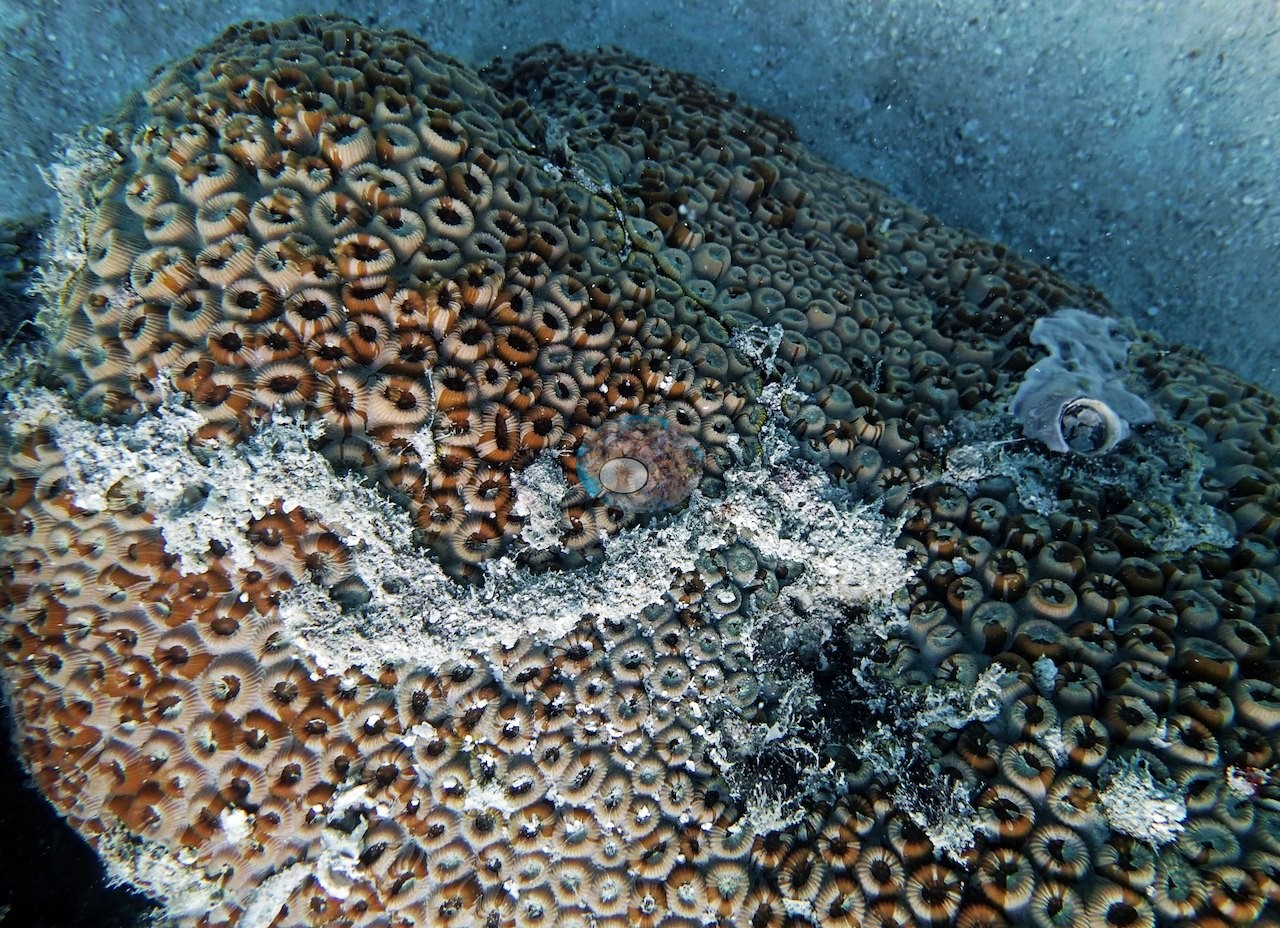
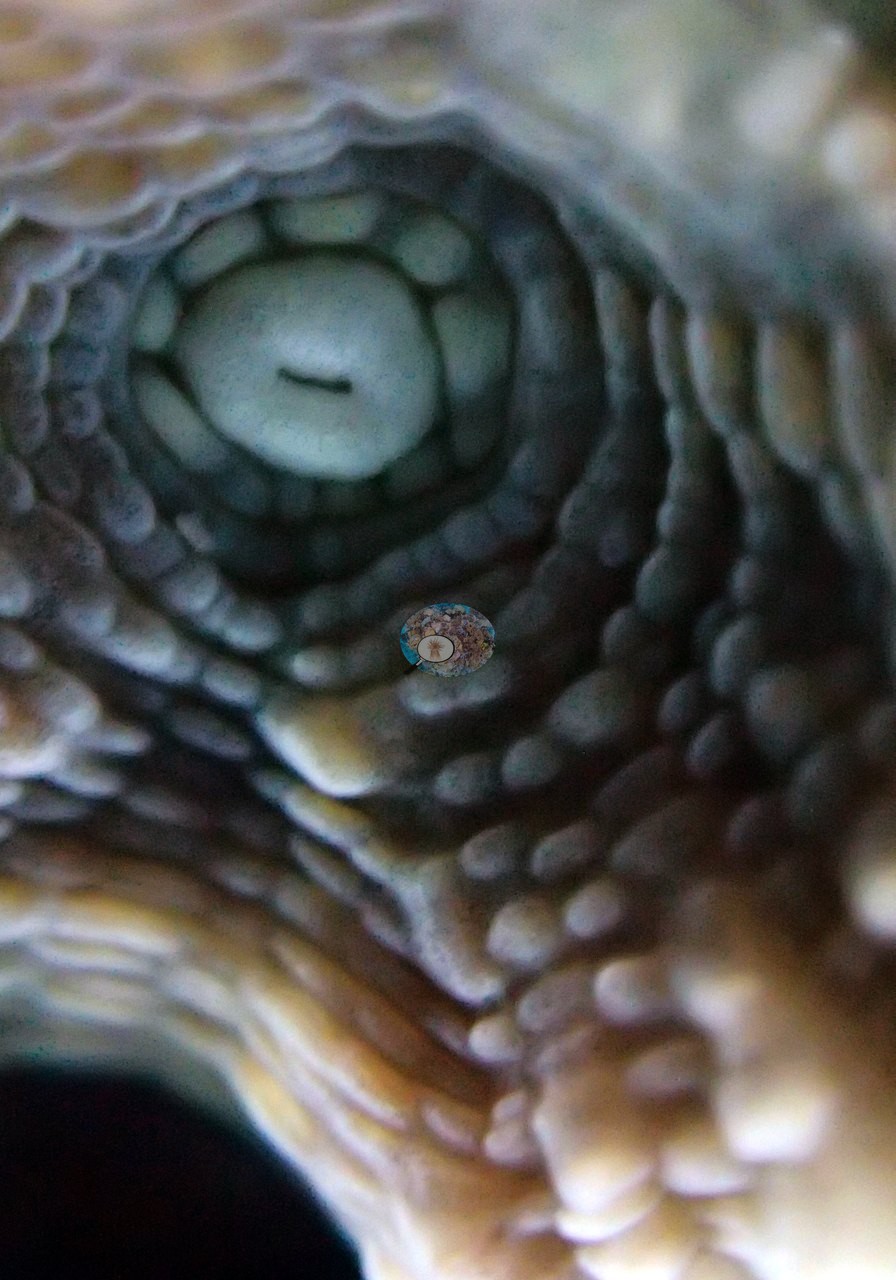
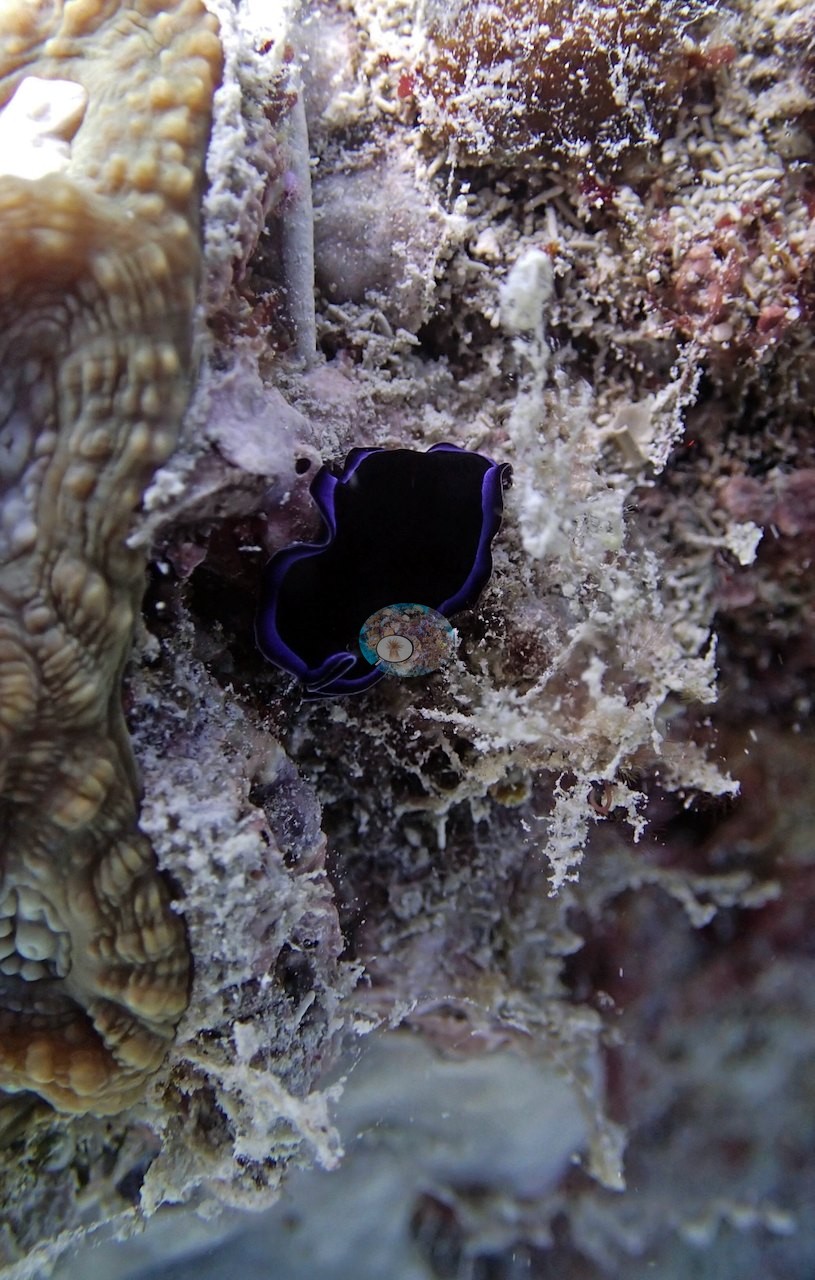
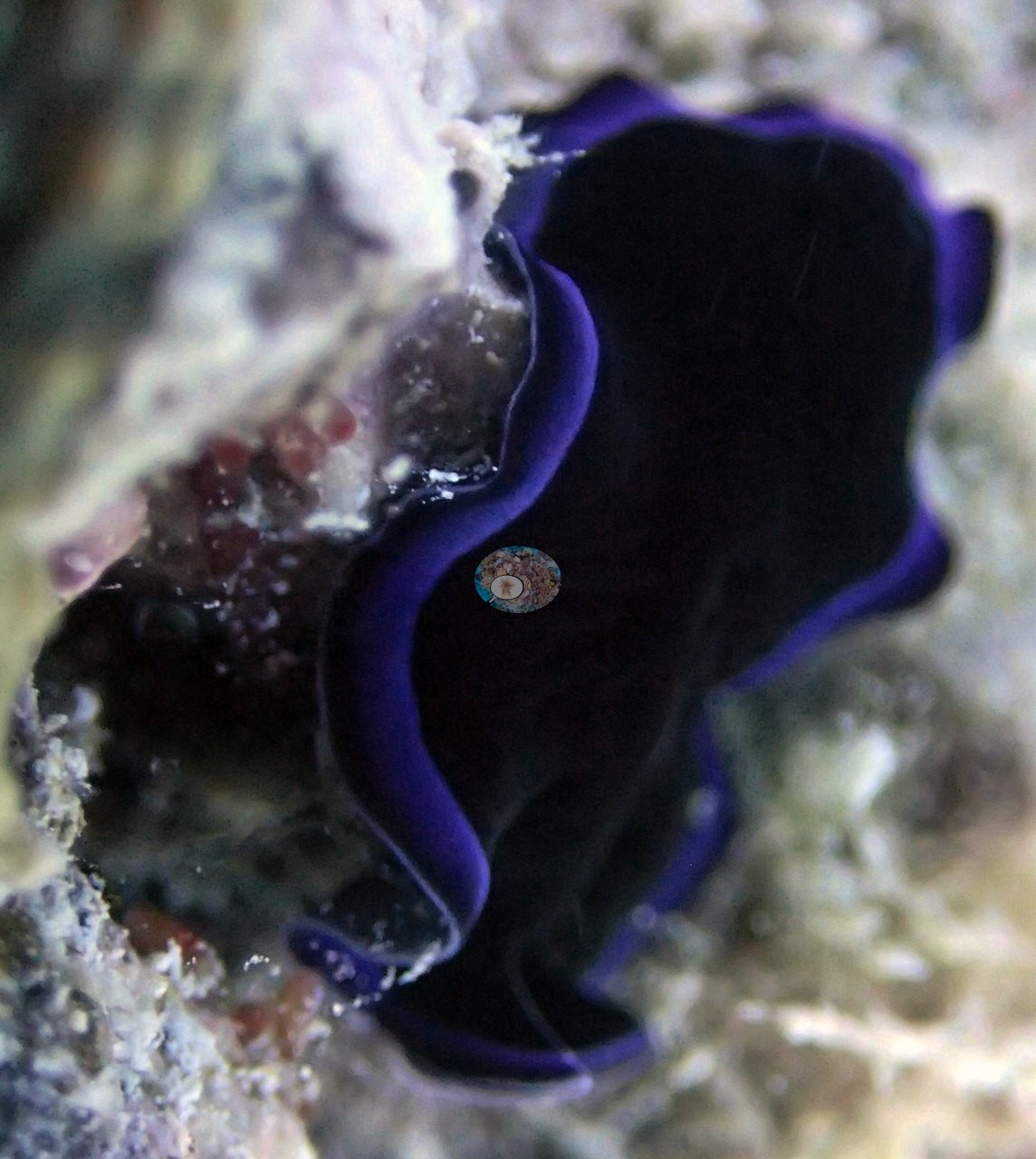
A striking flatworm was the notable non-coral record (e.g., Image 7, Image 8).
Comparisons with other data
No prior survey data from this site. If you would like to share yours, please email us.
Data & links
- Download benthic survey data (CSV) ↗
- Download all LOF-GRE data (933 sites) ↗
- Photo portfolio ↗
- Coral Reef Diagnostics country page ↗
All images from Coral Reef Diagnostics. Data are from the Khaled bin Sultan Living Oceans Foundation Global Reef Expedition and Coral Reef Diagnostics.
 © Coral Reef Diagnostics.