
Part of the regional summaries: Australia (GBR) - Far North: Blue stations (Habitat Protection Zone reefs) and Australia (GBR)
More info
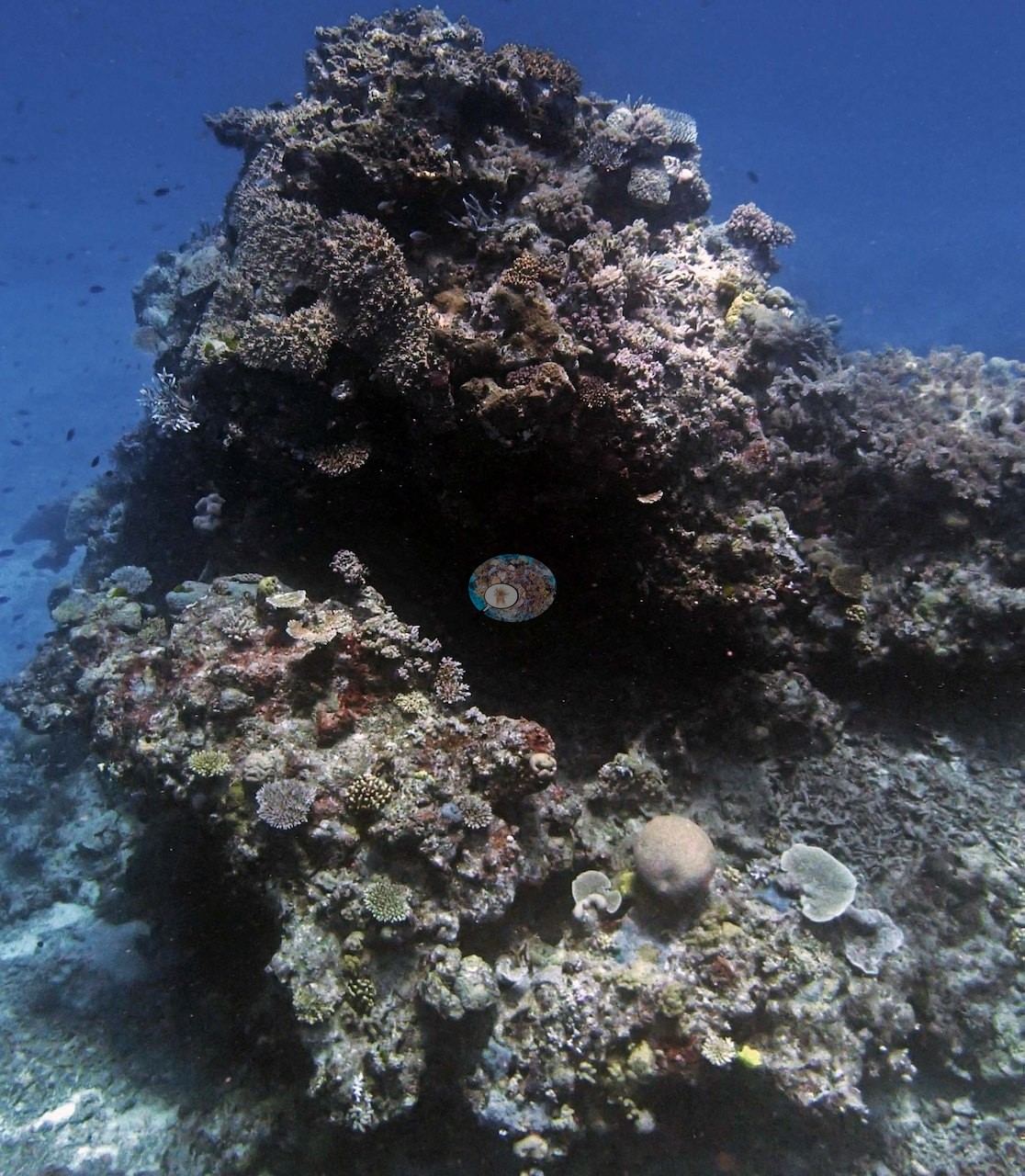
Far Northern GBR (NOAA CRW virtual station)In 30-40 m visibility, this reef drops to 25 m, crosses a broad valley, and climbs back to within 2 m of the surface. A whitetip shark and a Napoleon wrasse cruised past, while needle corals were sickly throughout and bleached at 10 m. Surveyed on the Living Oceans Foundation's Global Reef Expedition.
Three other CRD dive sites within 5 km shown in orange — click a marker to open its page.
🗺 Detailed map of the Global Reef Expedition dive sites, unnamed reefs 11-122, 11-096, and 11-091, northern Great Barrier Reef (Khaled bin Sultan Living Oceans Foundation; opens in a new window)
This page shows 50 of the 72 photographs from this site, including every one the text cites.
5 of the 50 photographs on this page are shown beside the text that discusses them under "Site description" below.
Site description
Setting
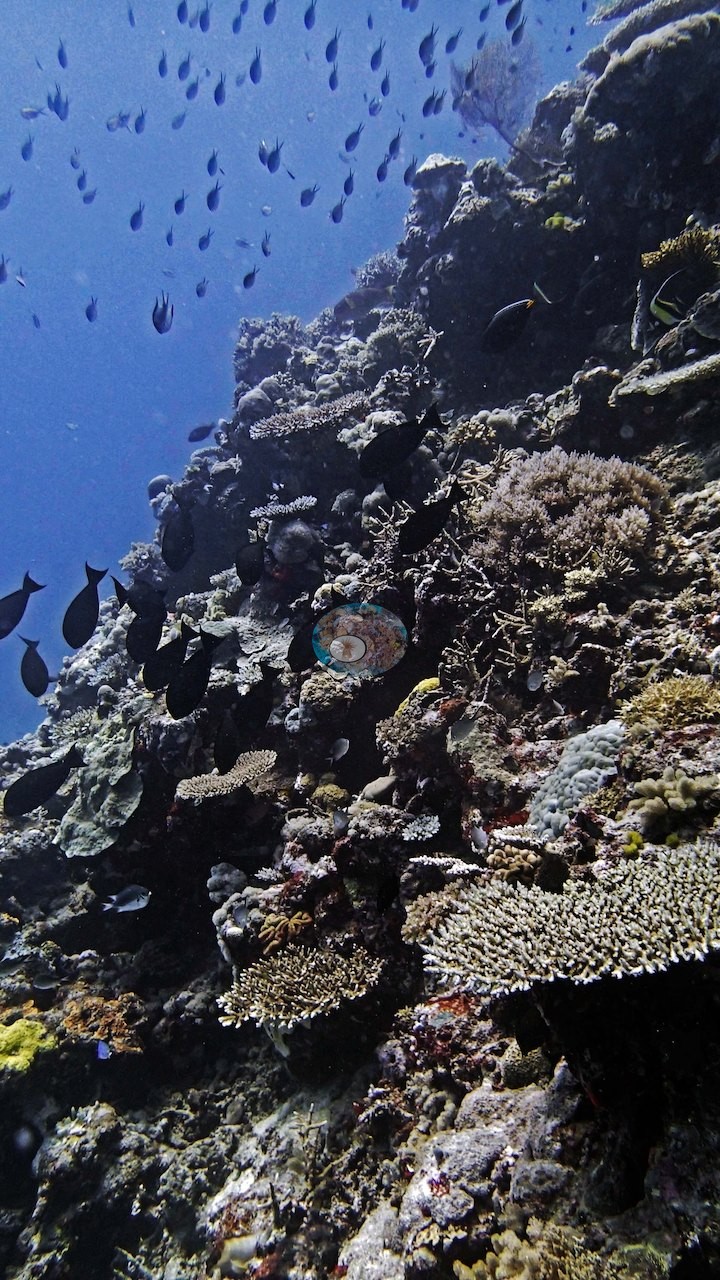
Anderson's second dive at Unnamed Reef 122 was in crystal-clear water, with 30-40 m visibility. The reef drops to 25 m, crosses a broad valley, and climbs again, with coral growing to within 2 m of the surface.
General benthic features
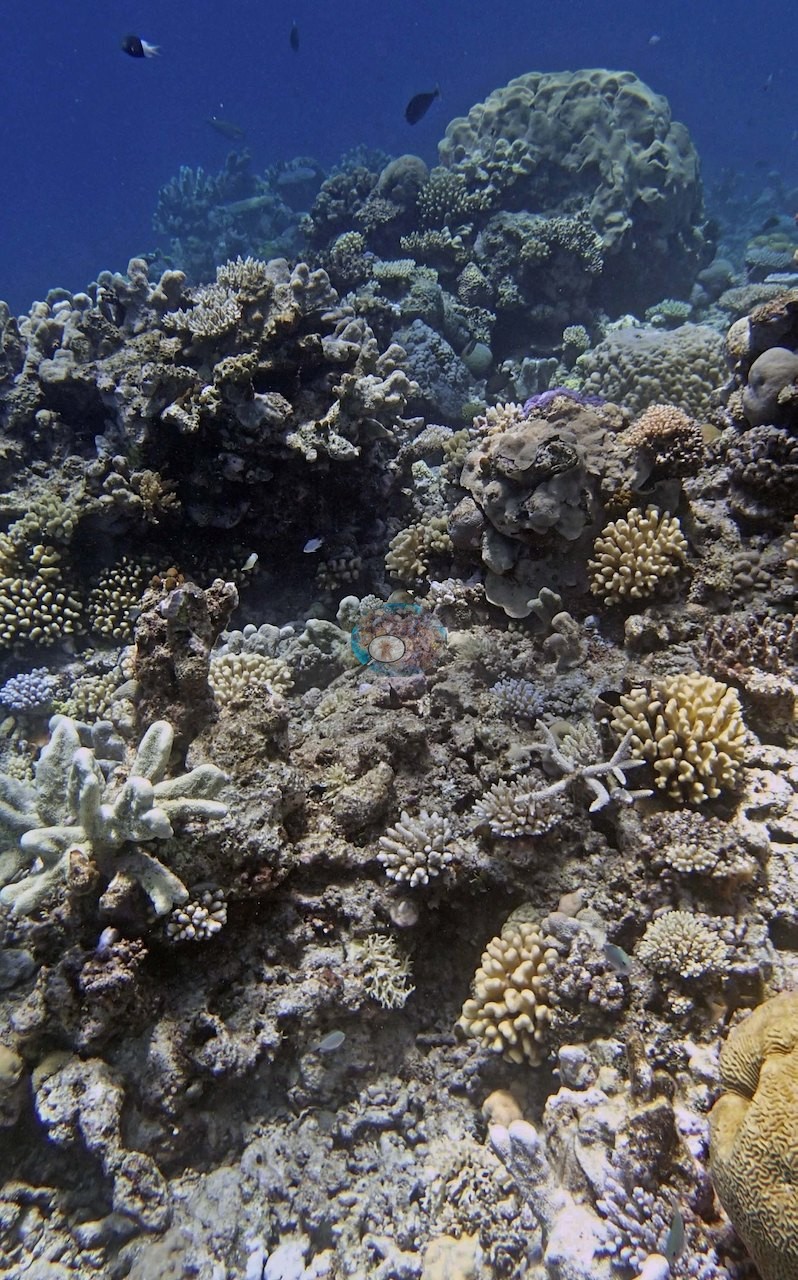
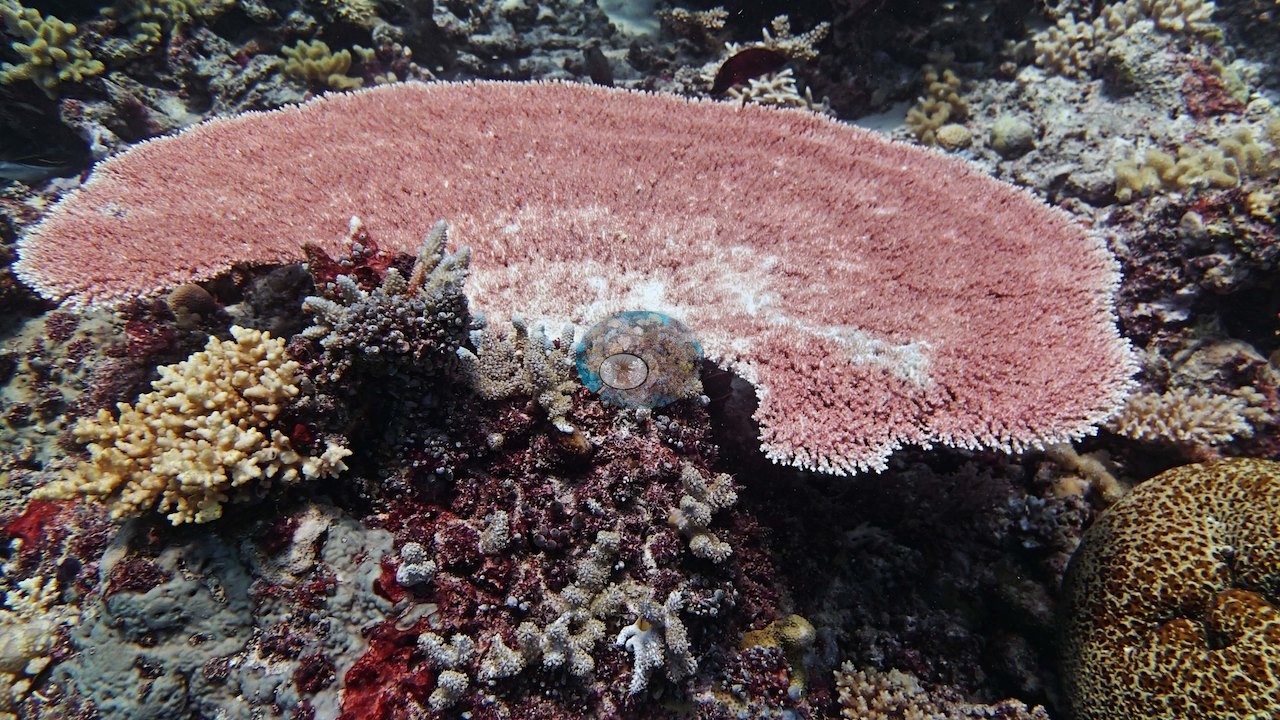
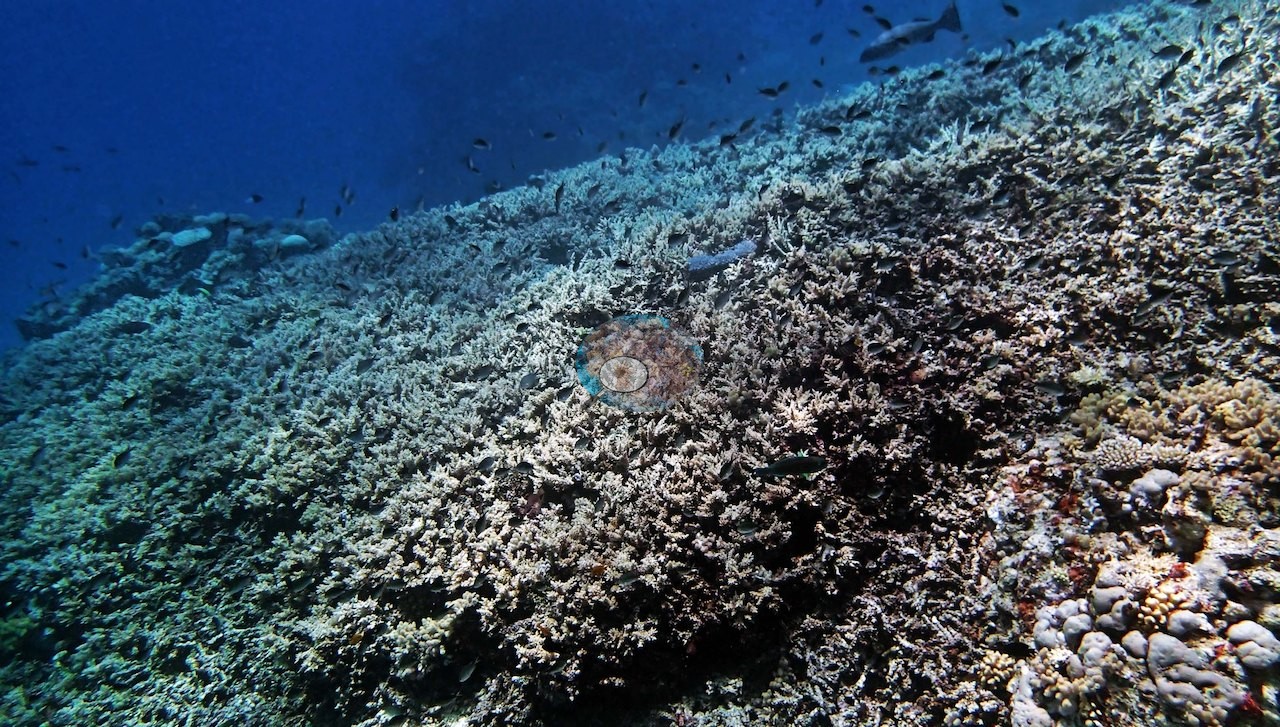
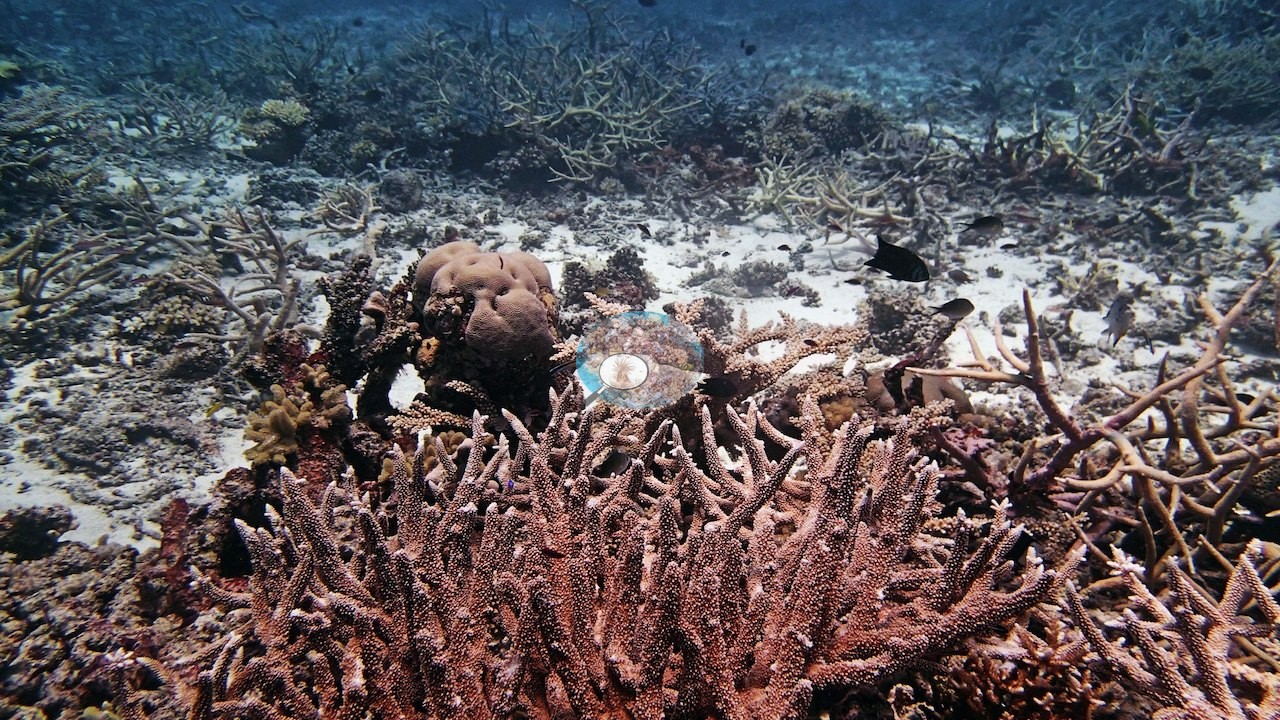
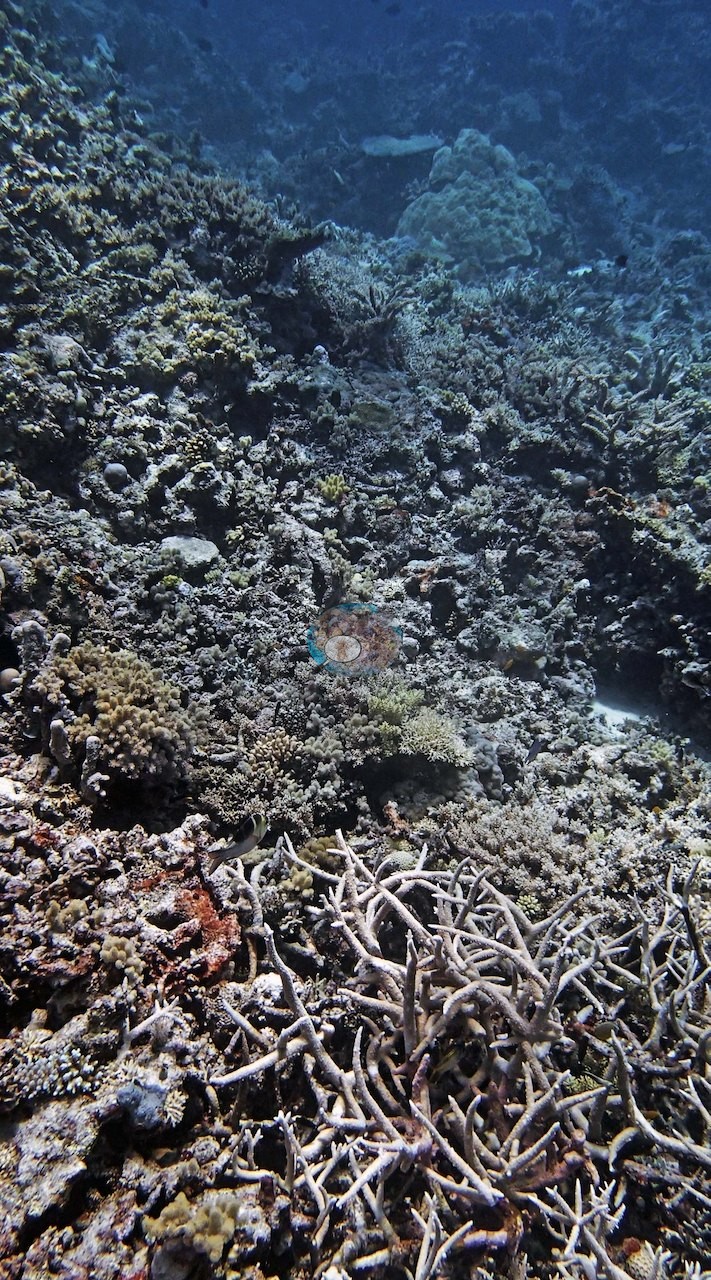
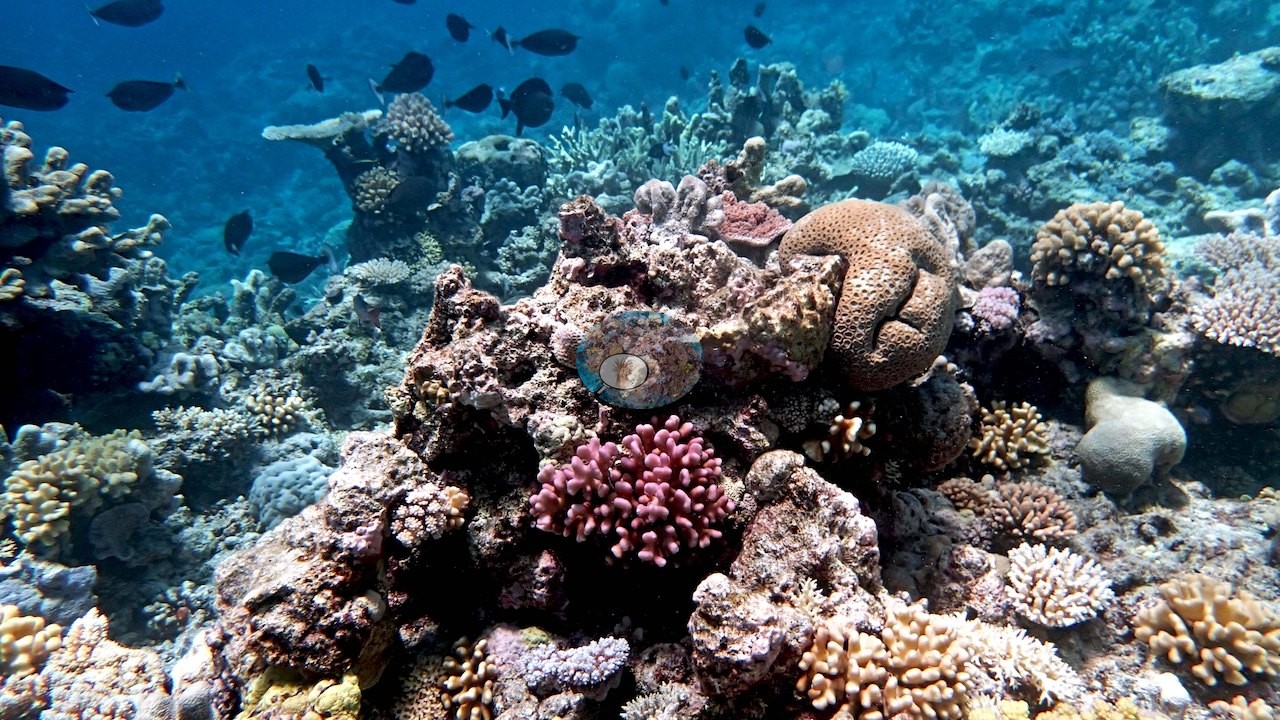
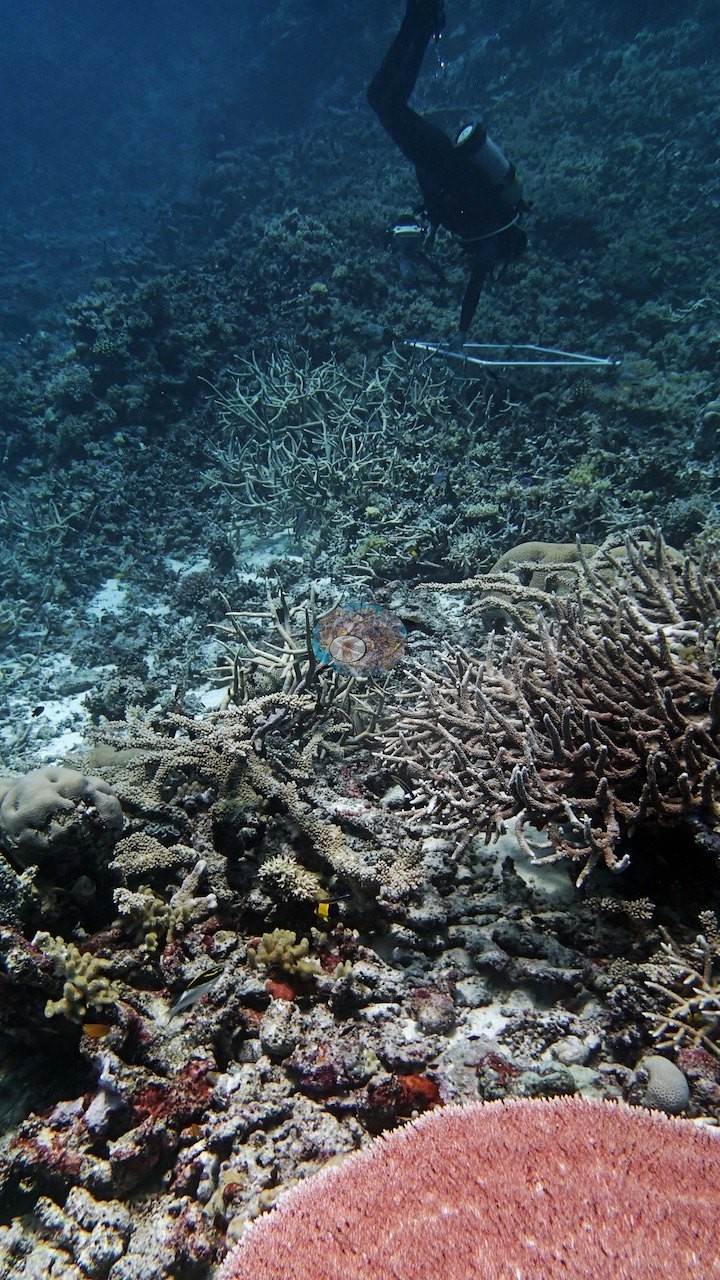
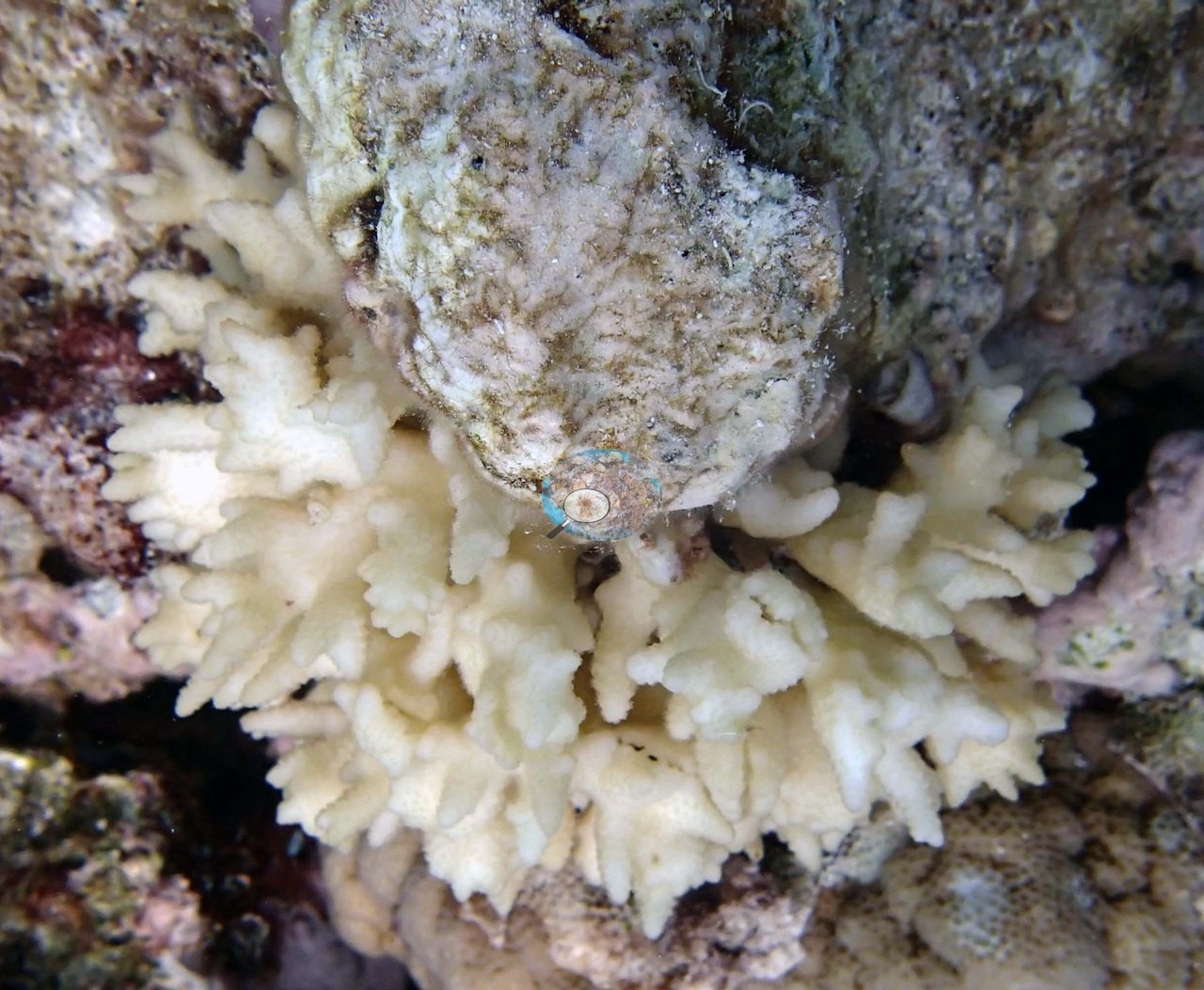
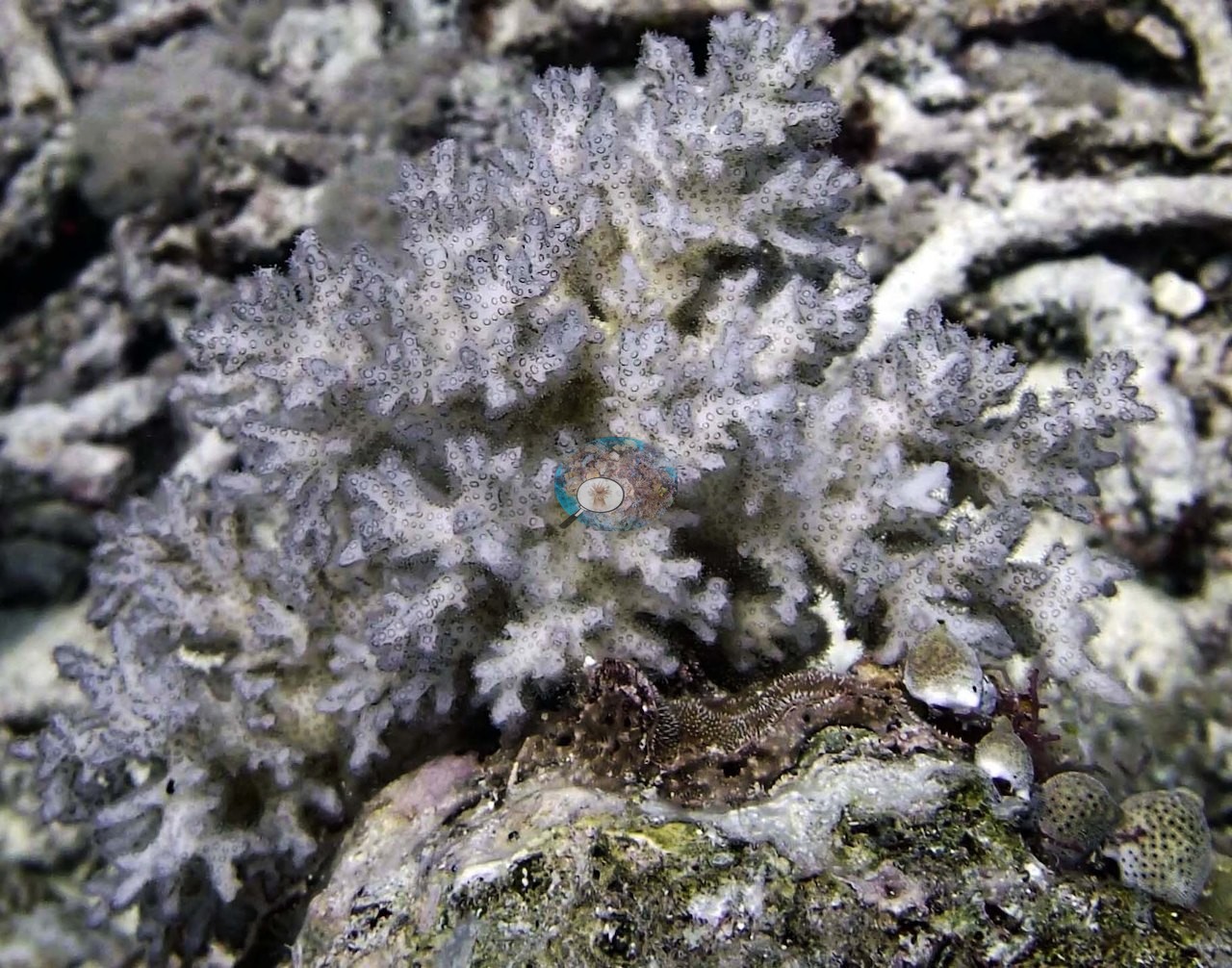
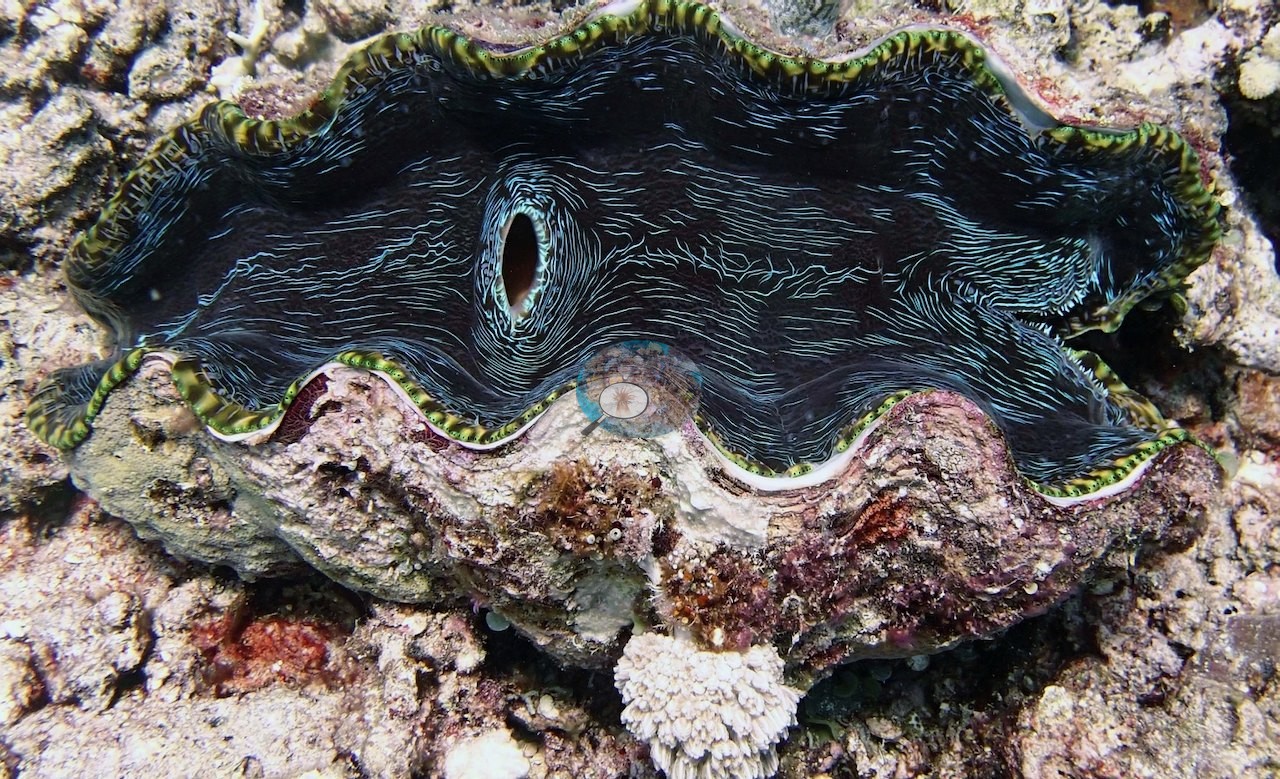
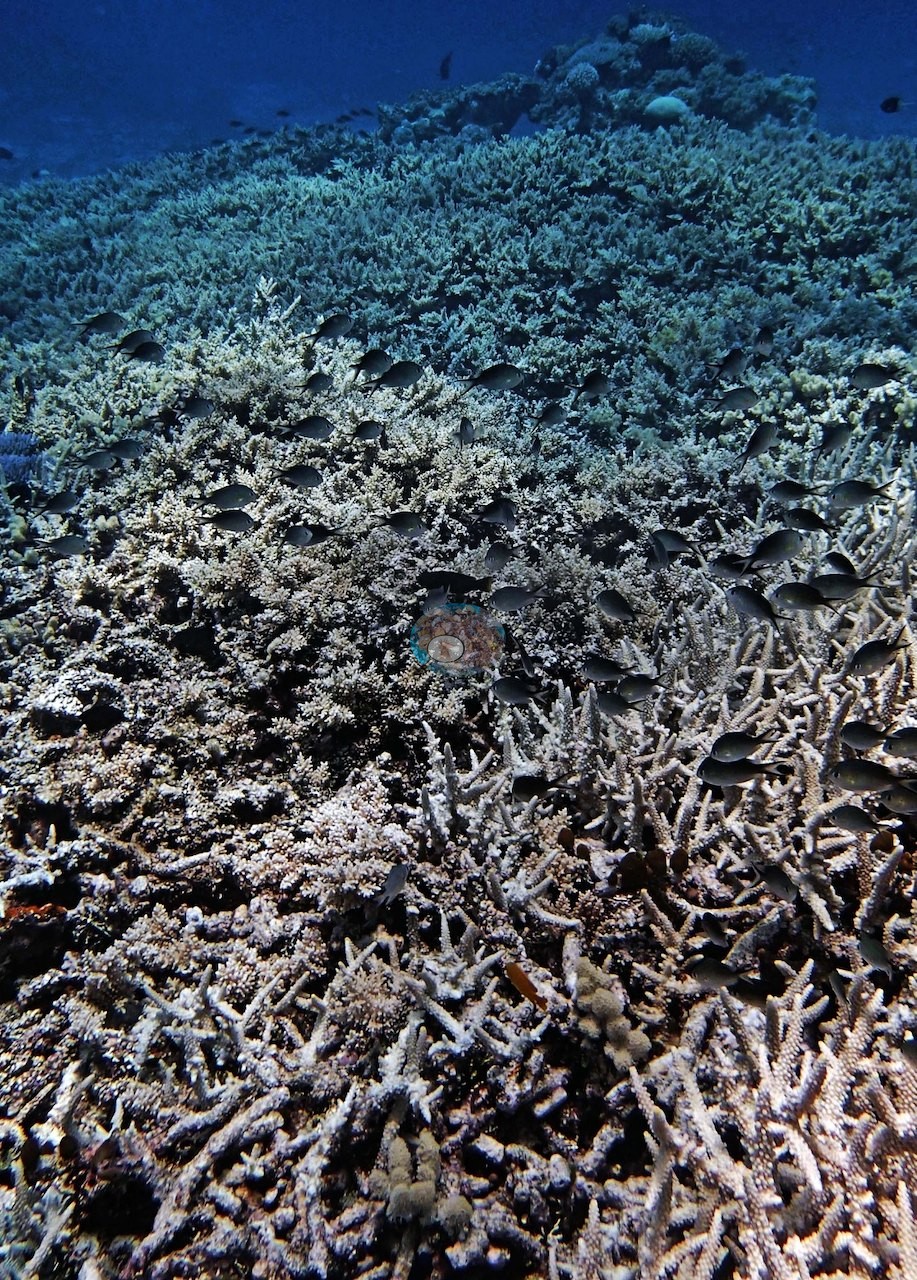
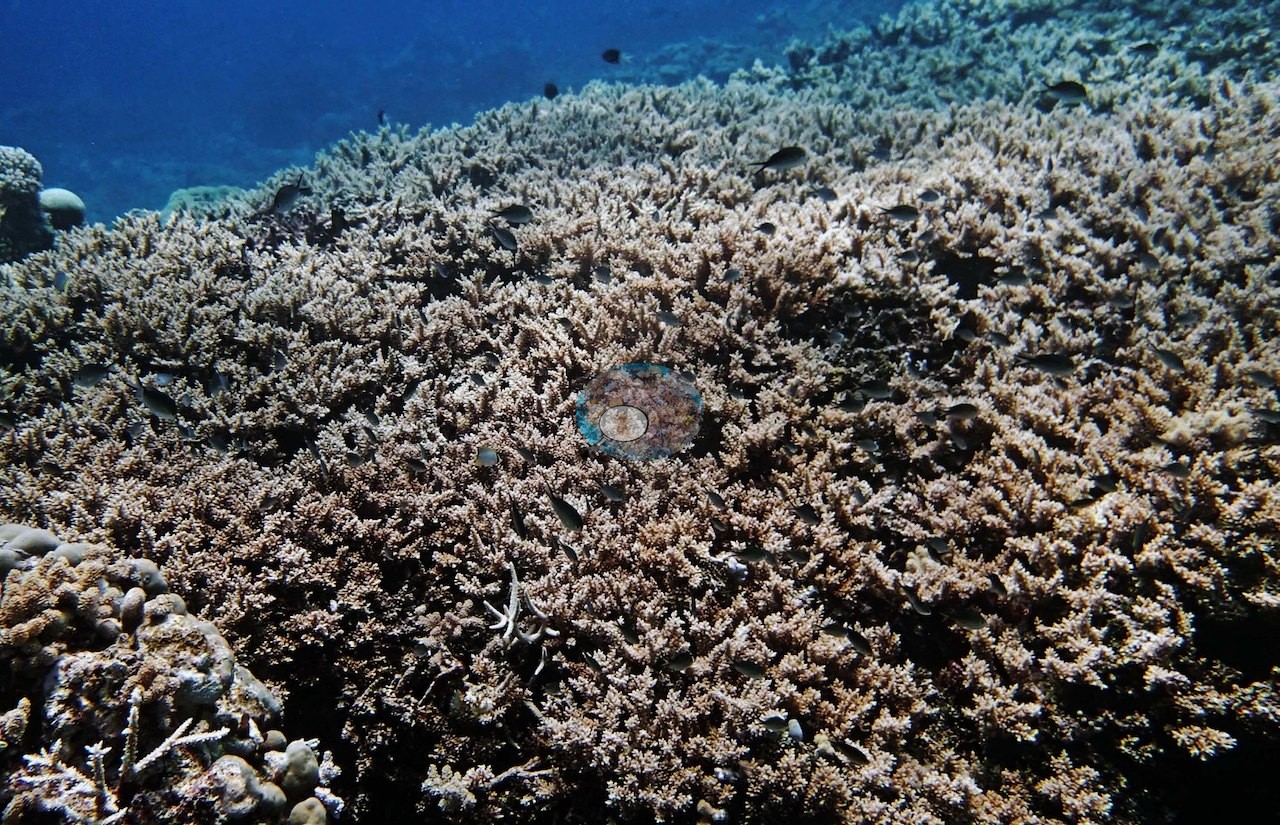
One frame is nothing but staghorn thicket from foreground to blue water (e.g., Image 1).
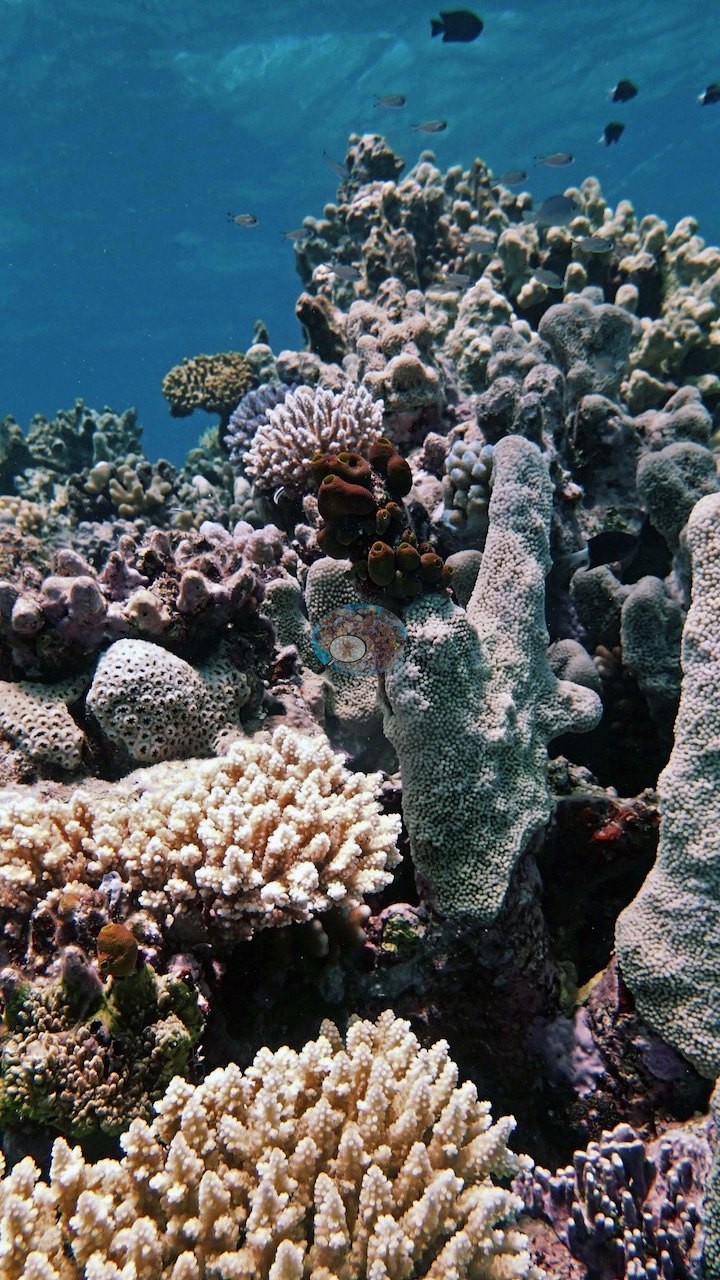
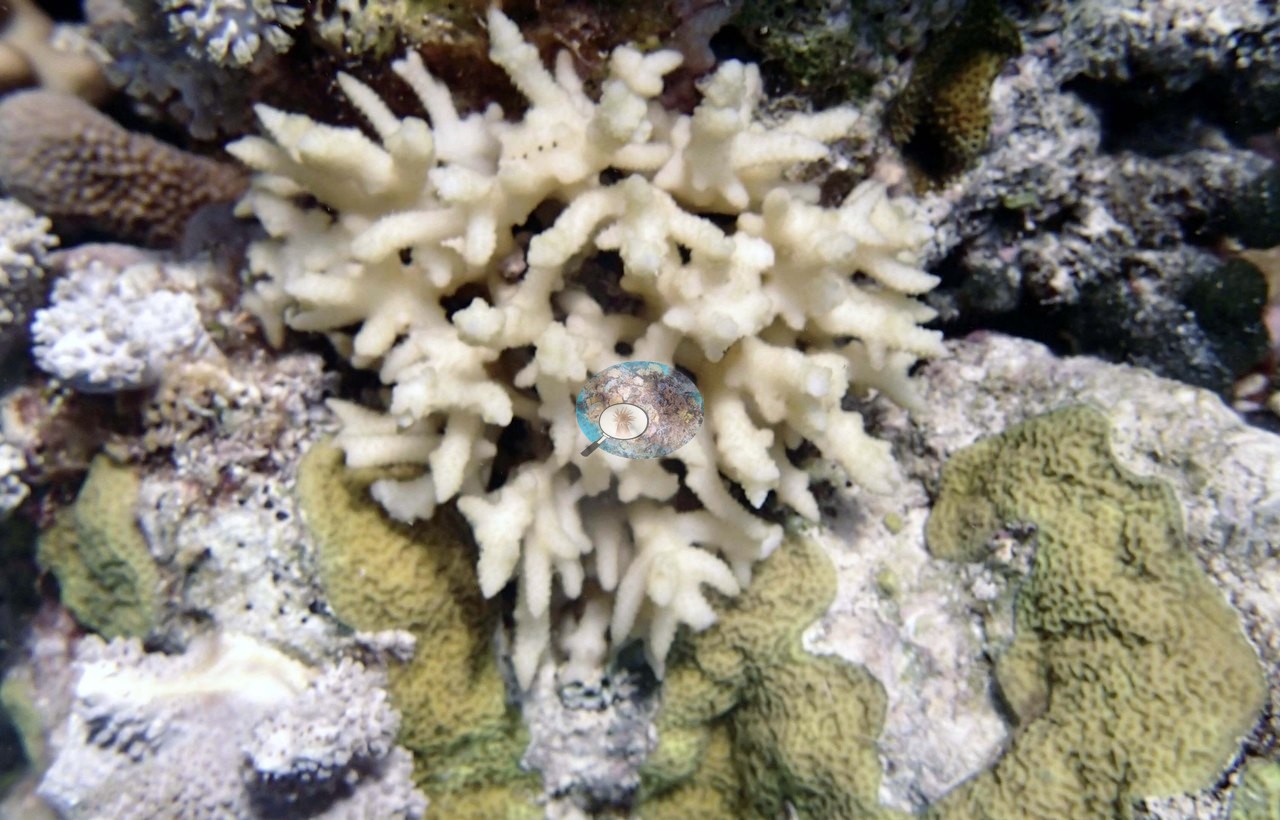
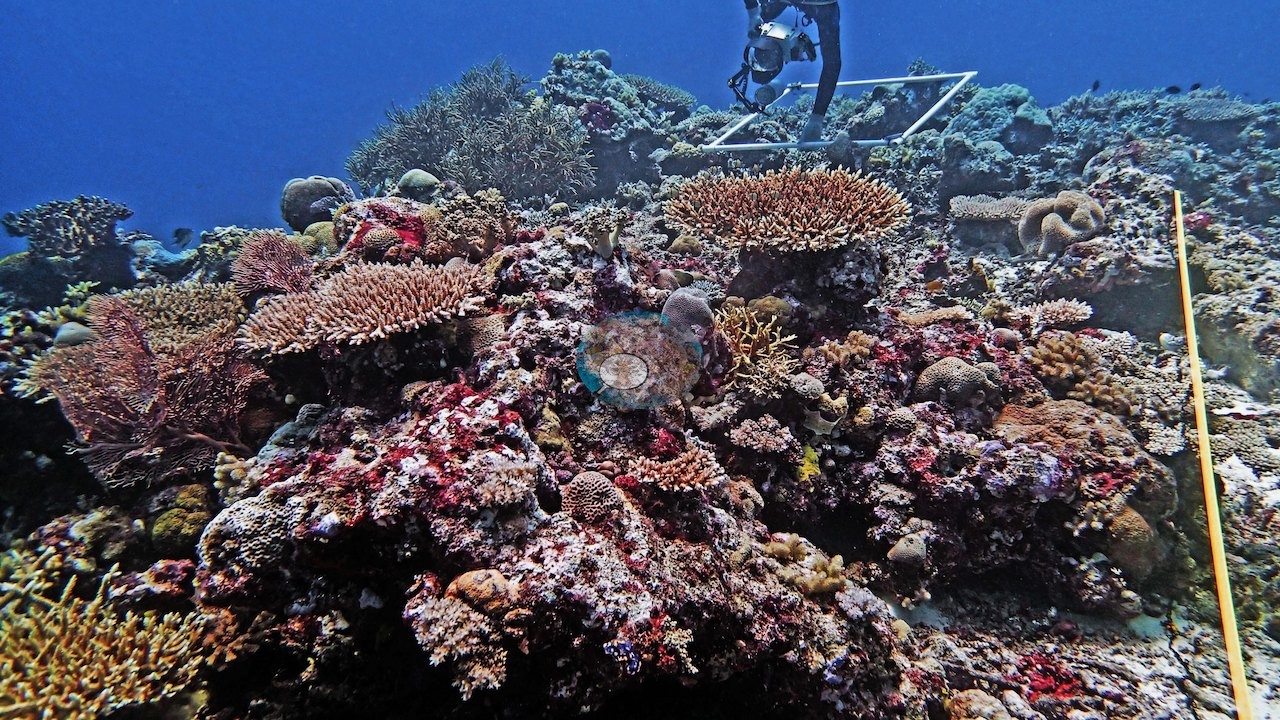
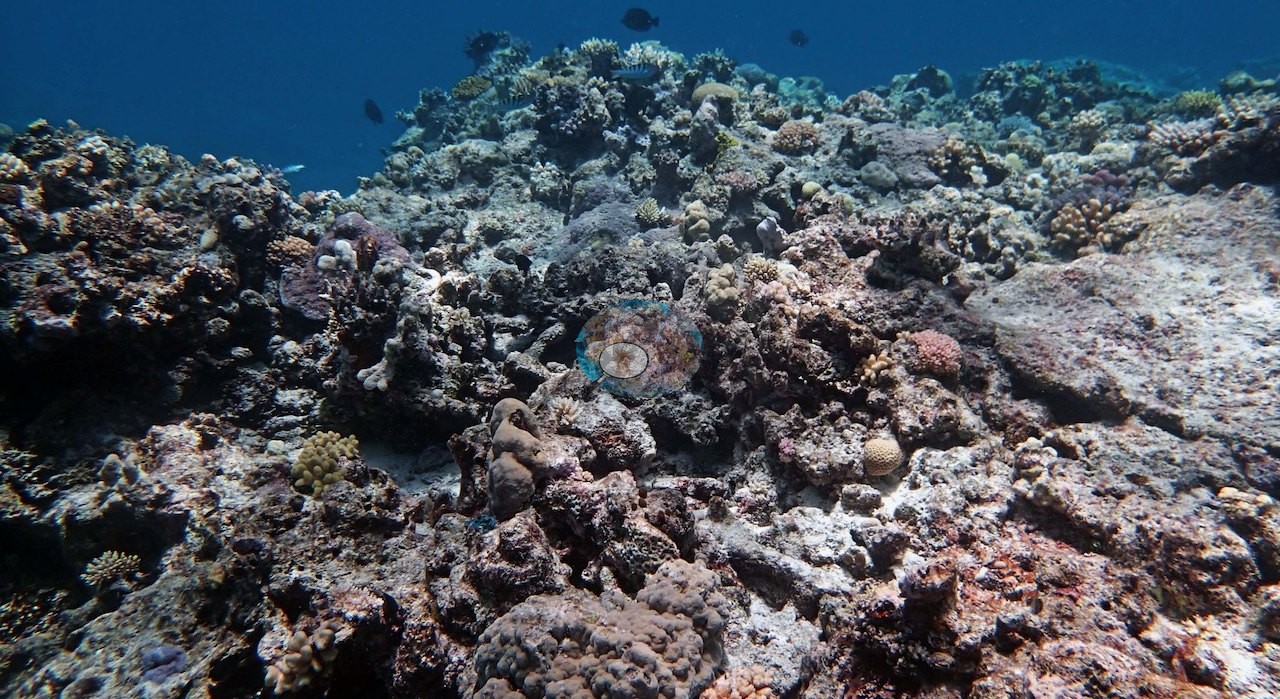
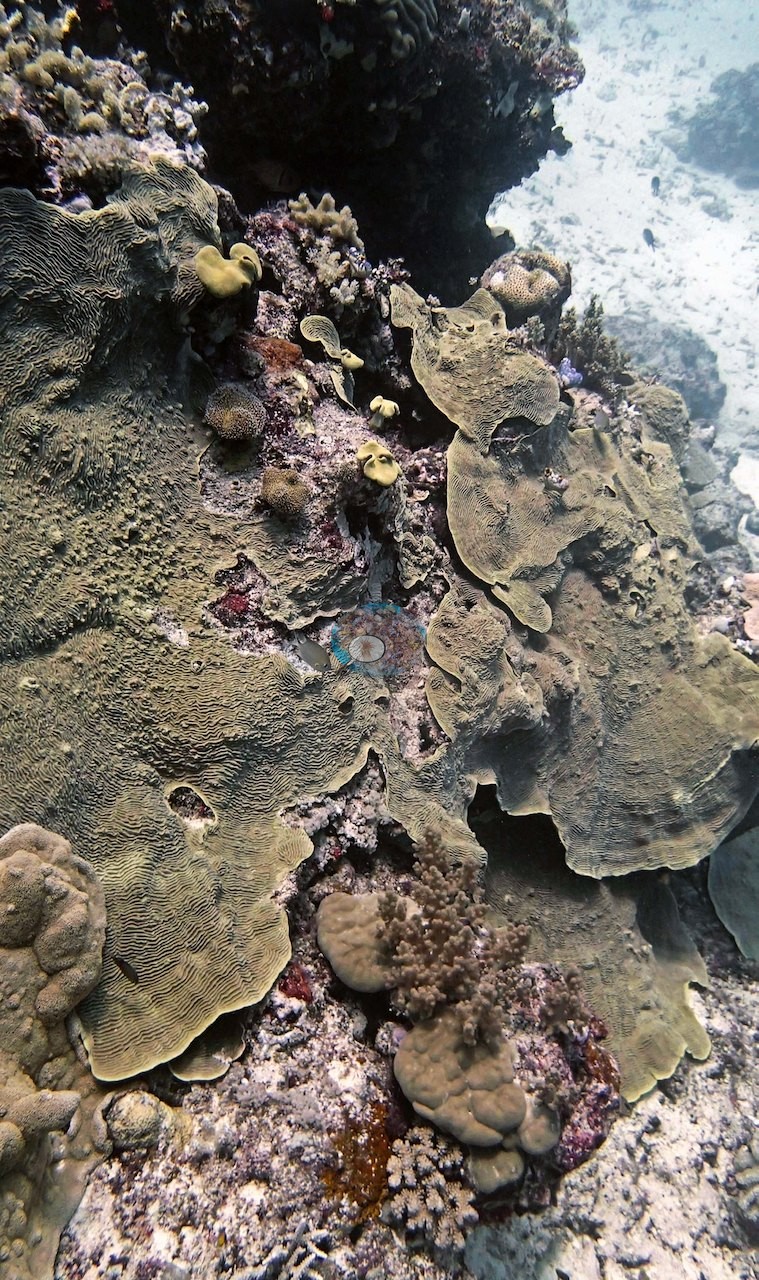
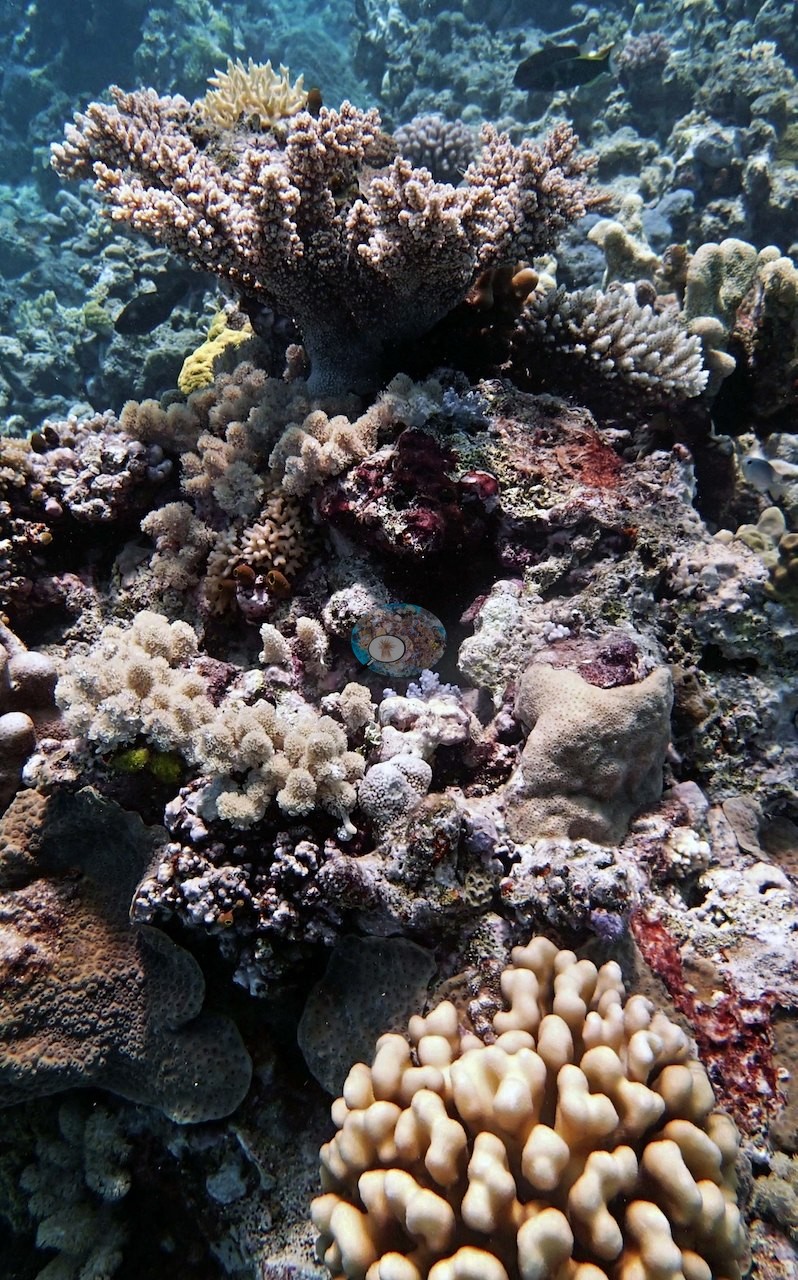
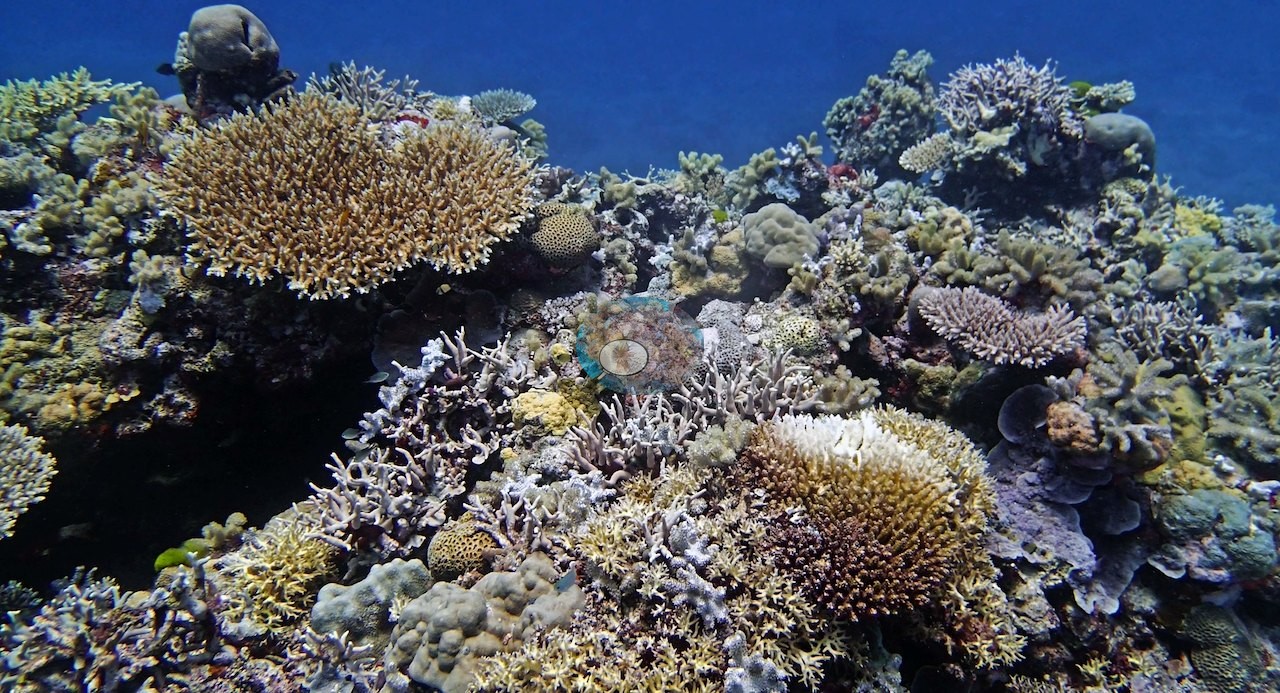
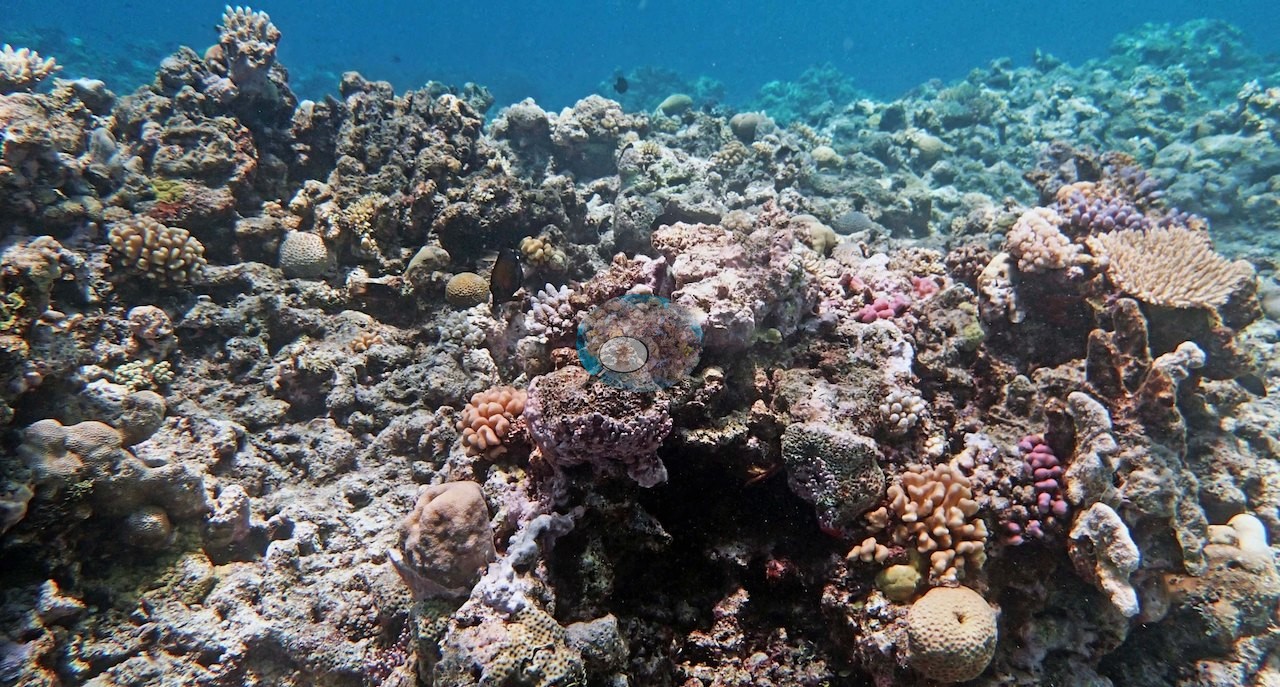
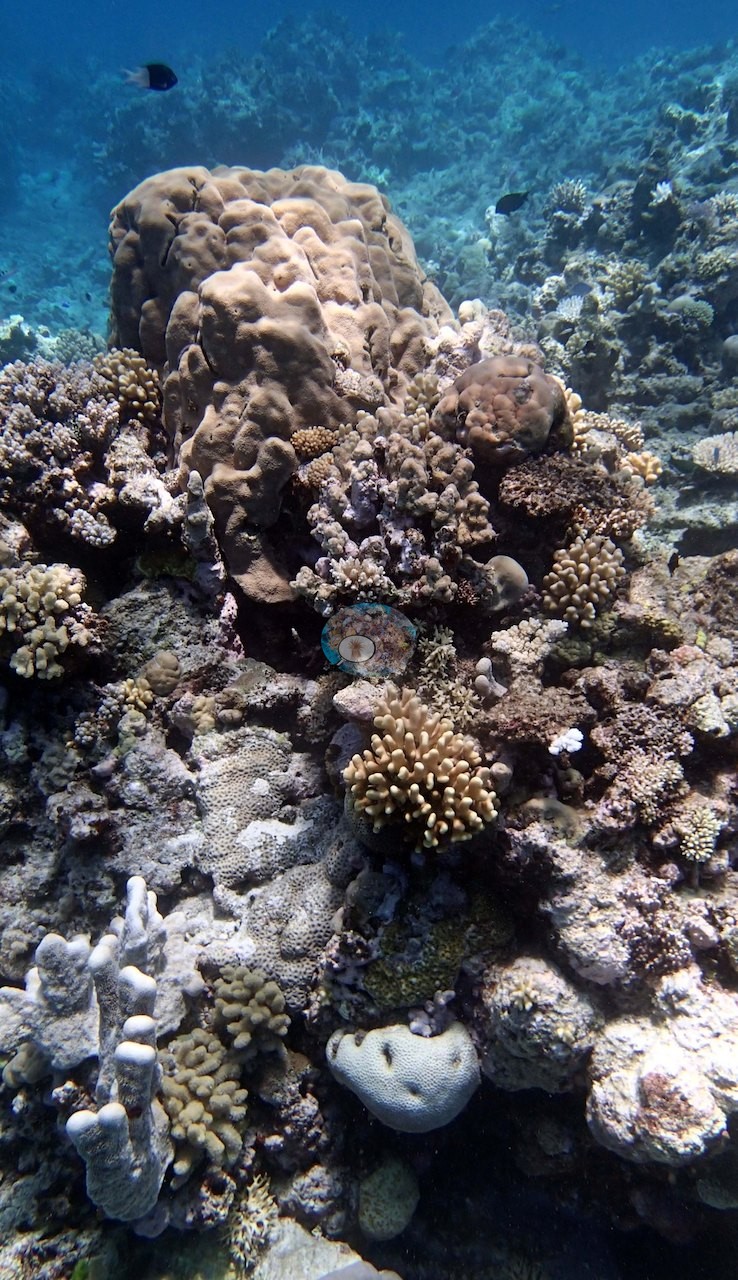
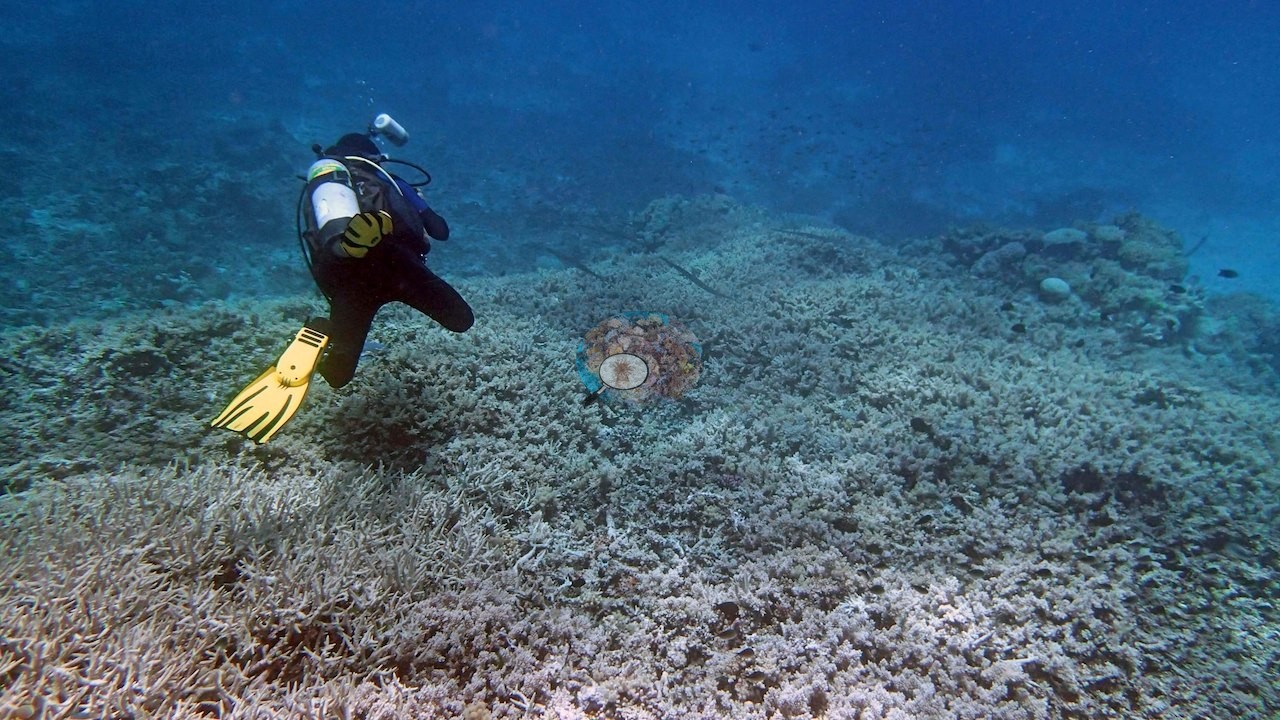
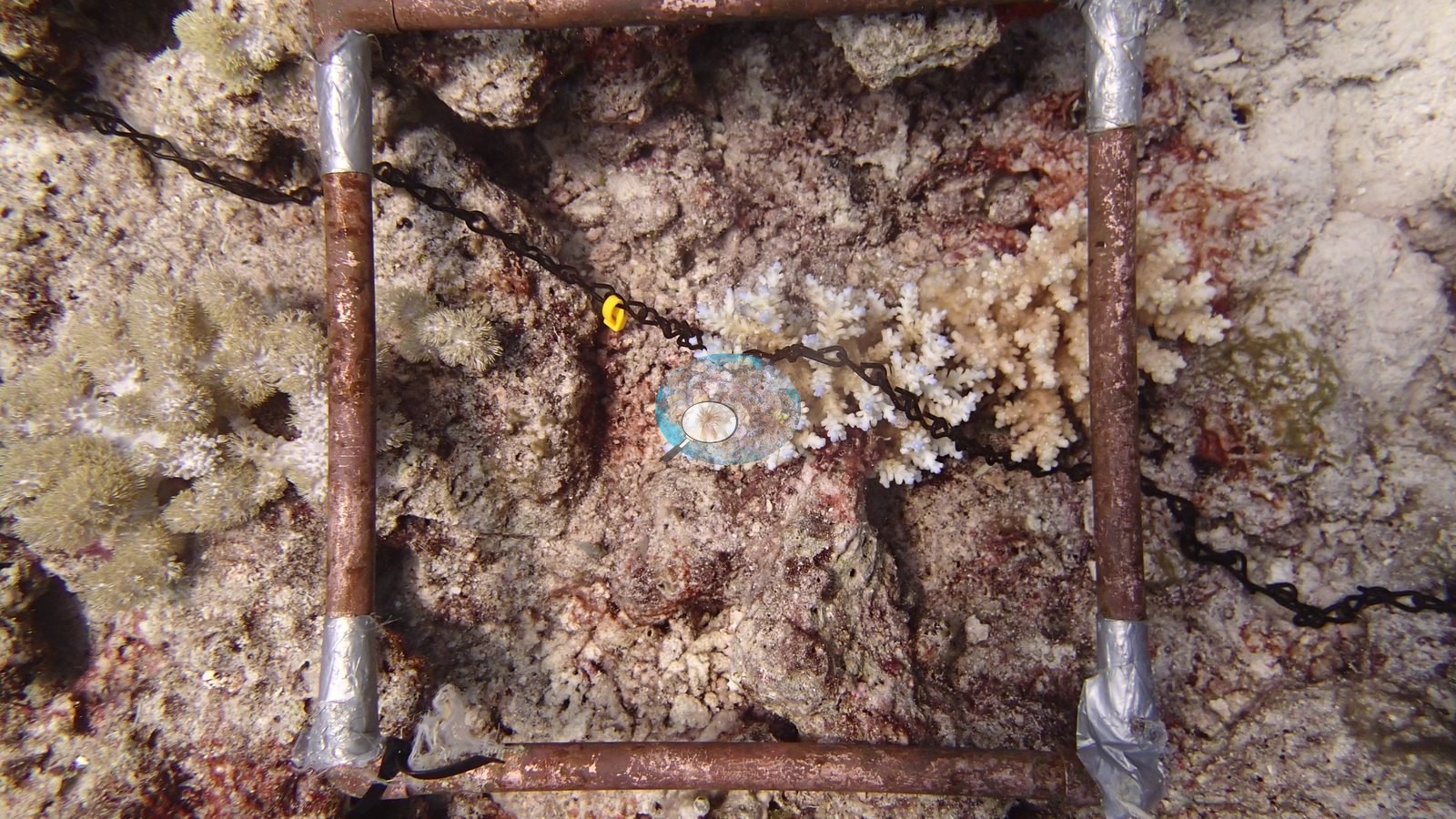
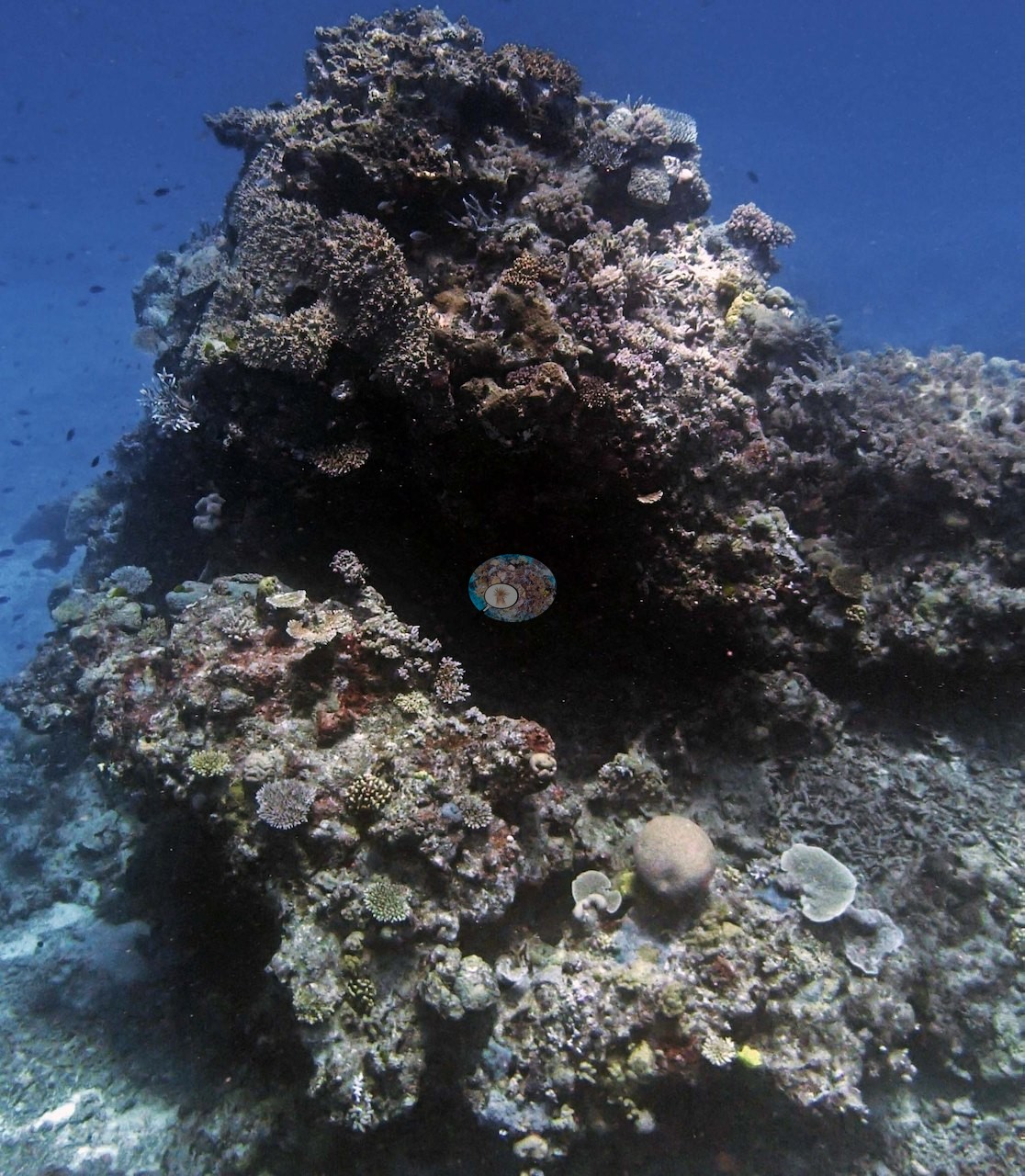
Another shows an isolated bommie, its top crowded with small mixed colonies and its flanks shaded and bare (e.g., Image 2).
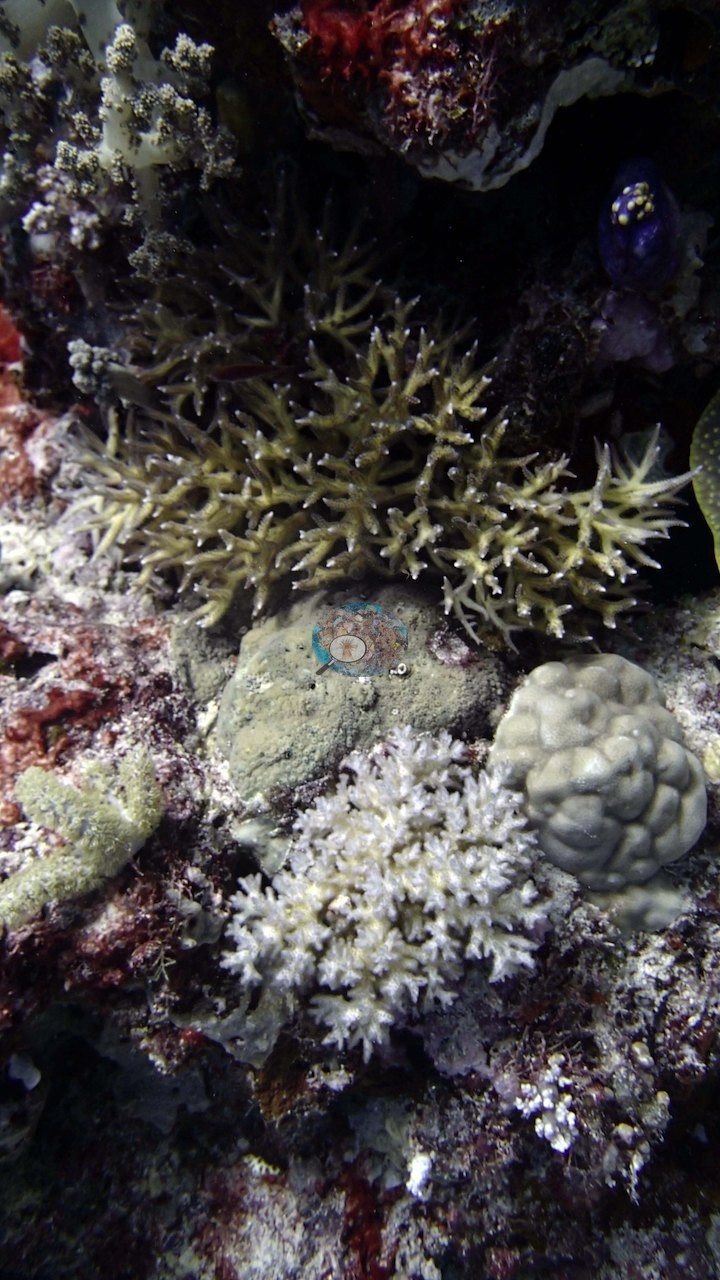
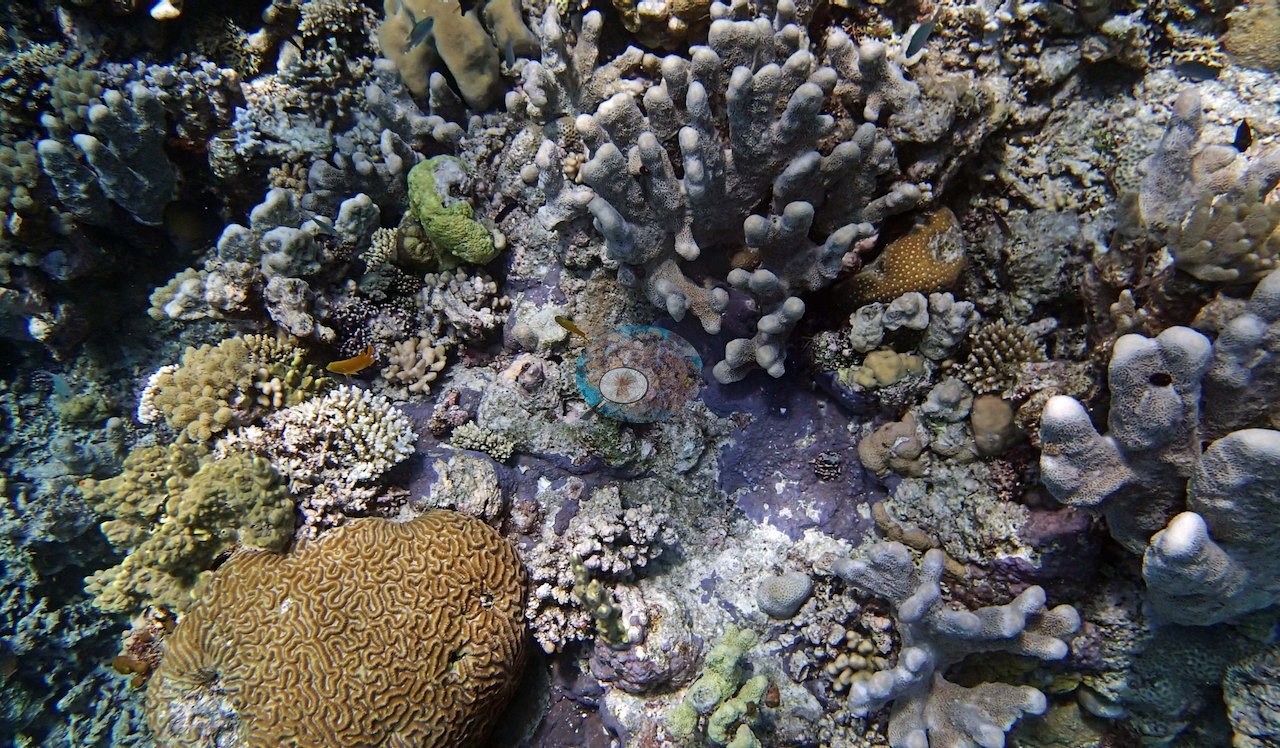
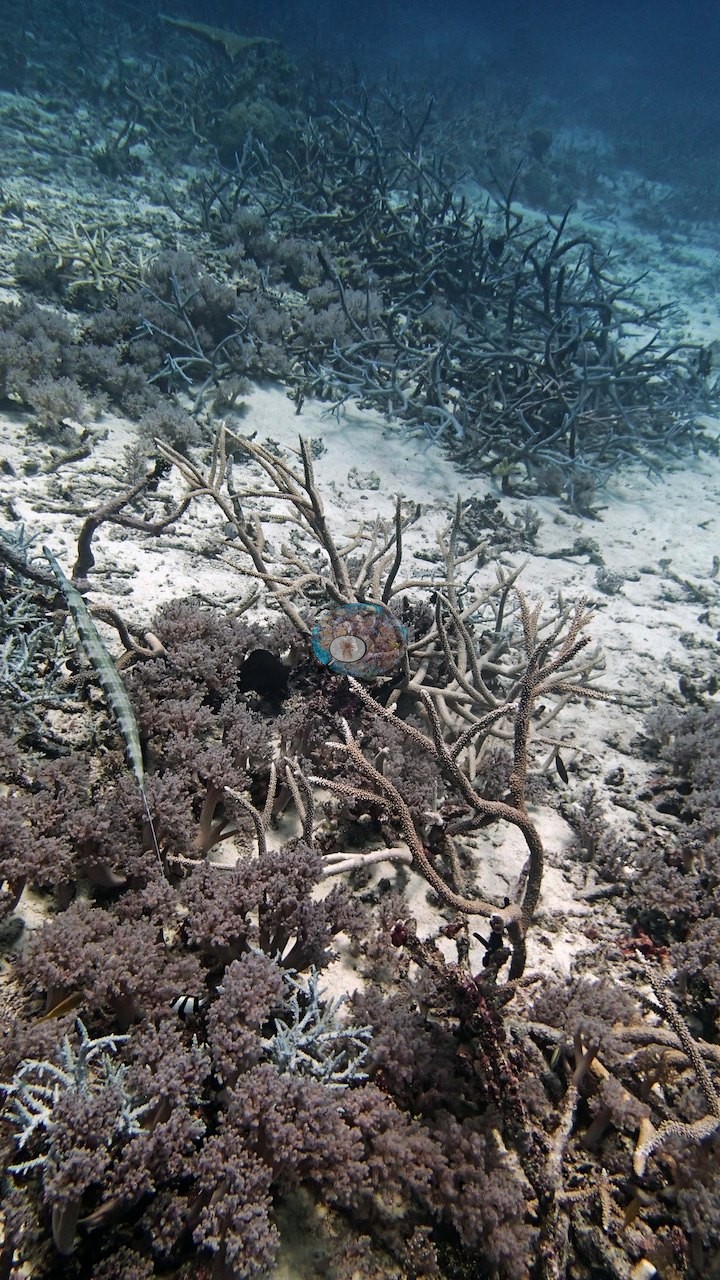
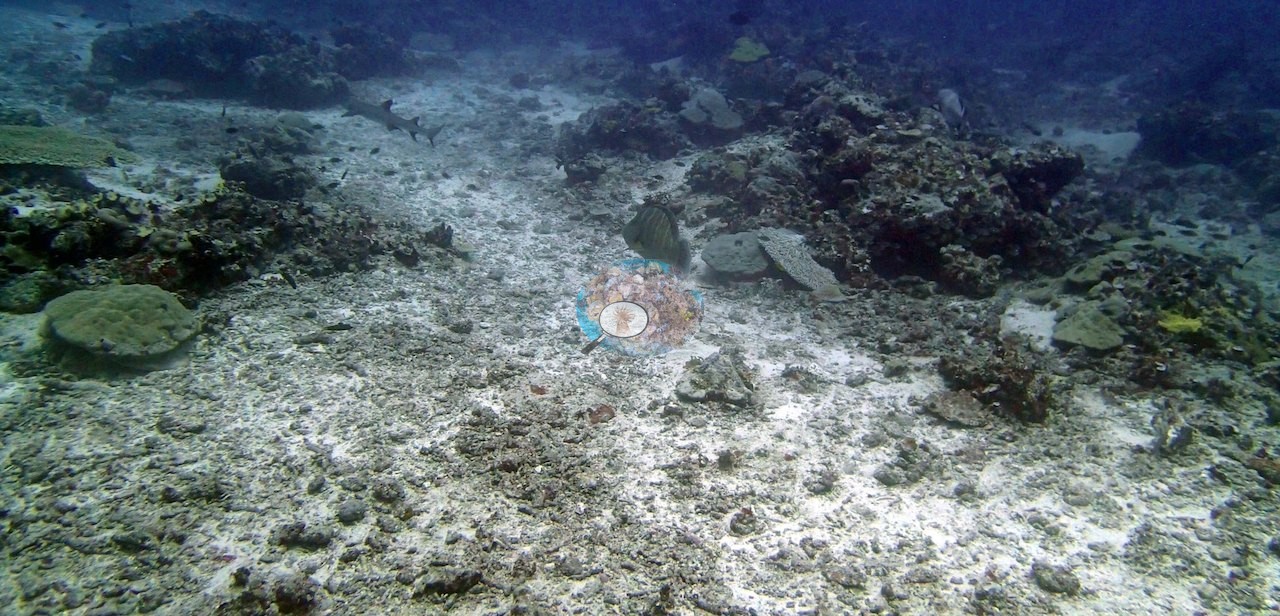
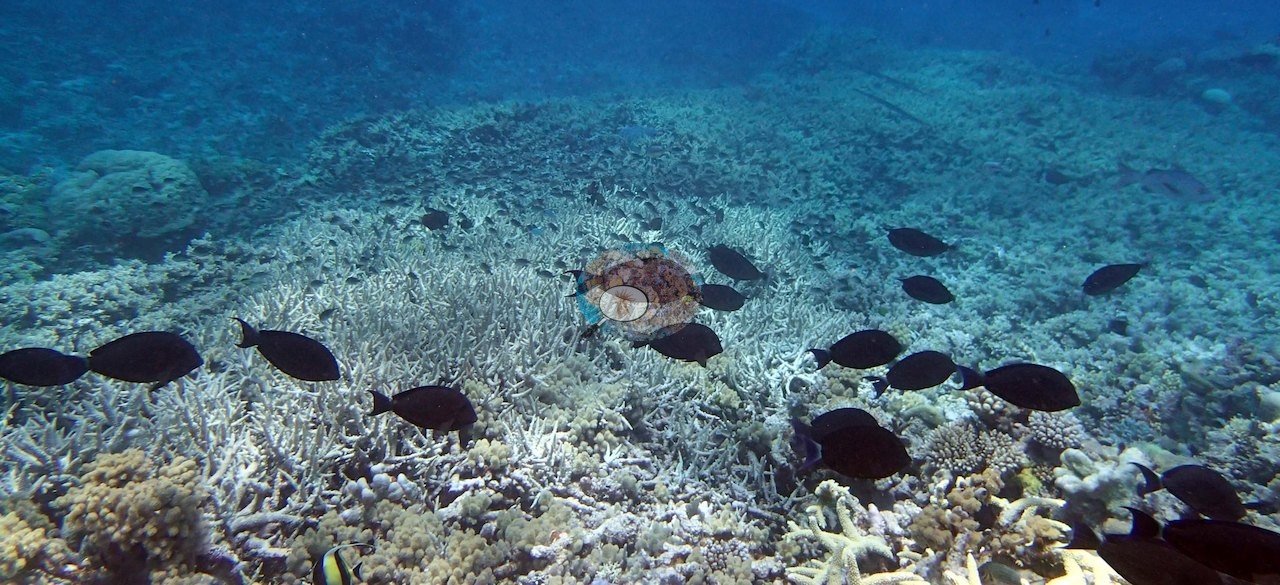
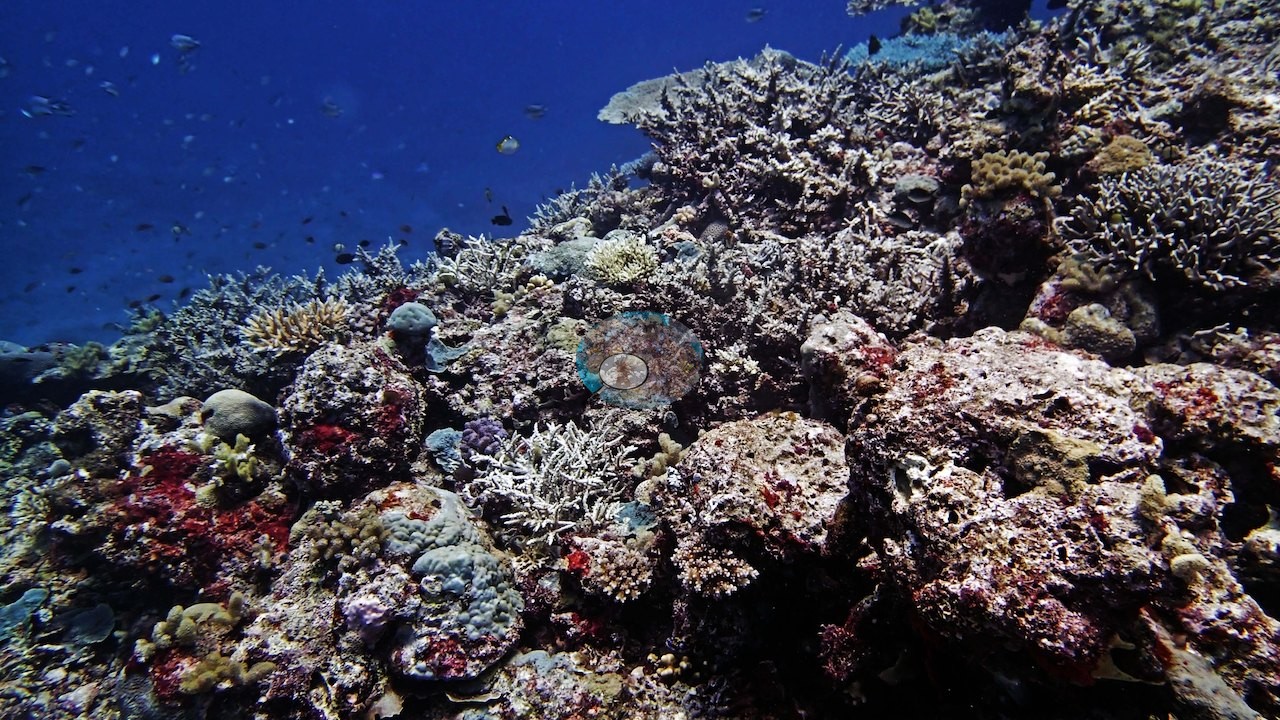
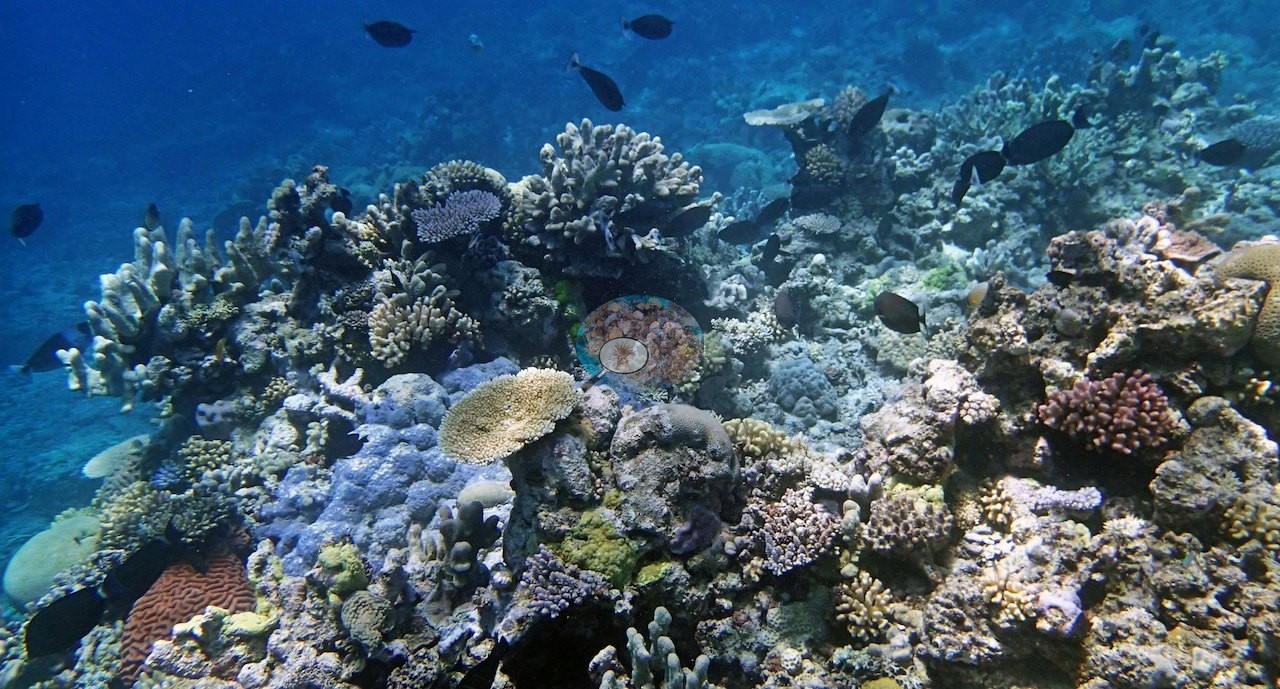
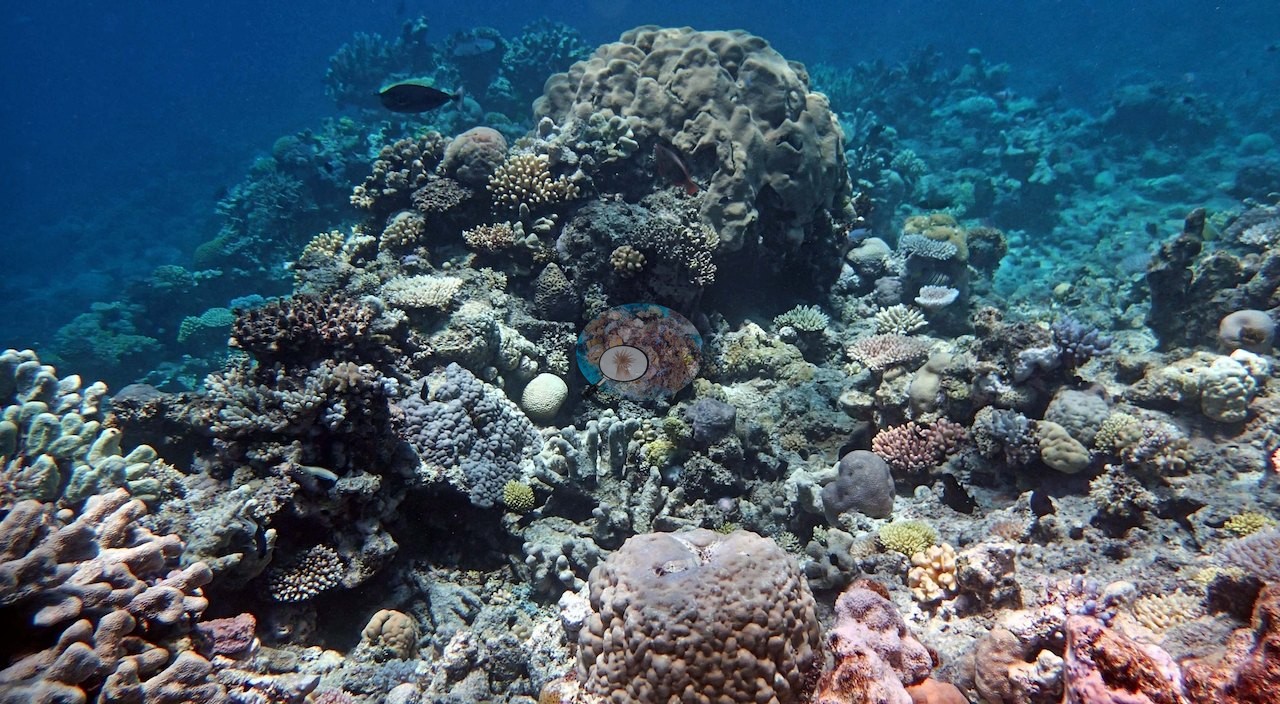
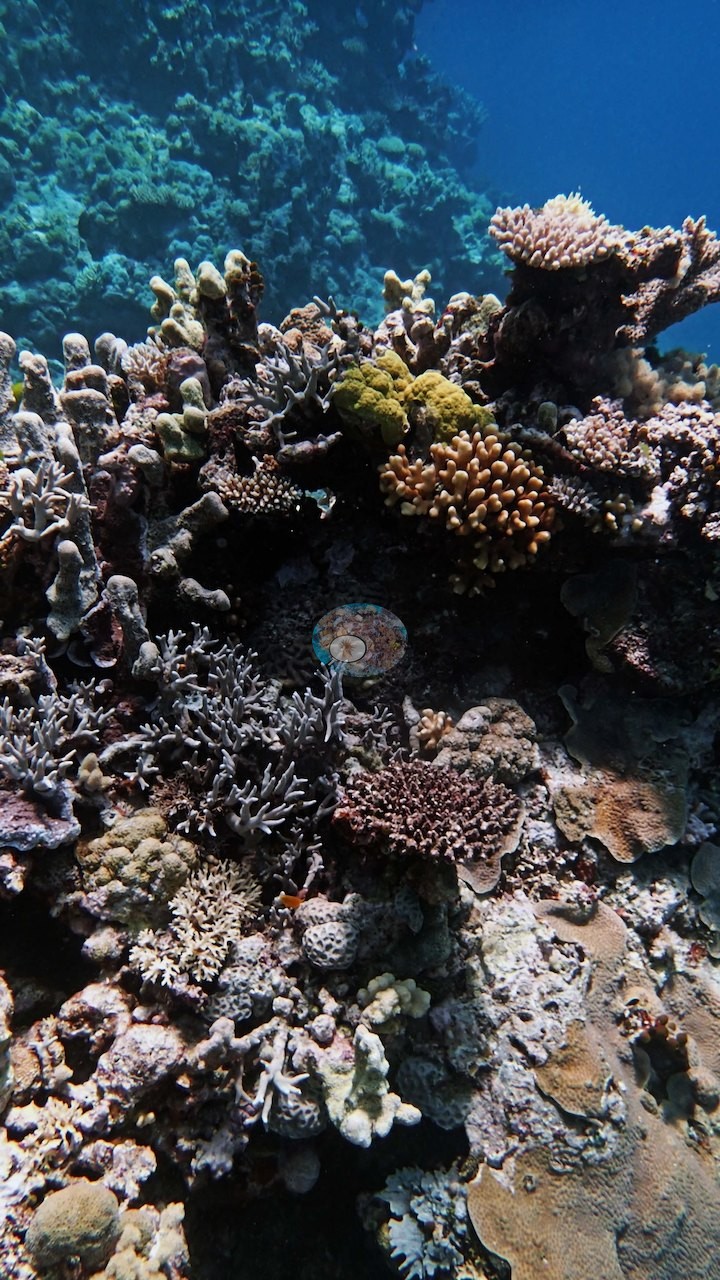
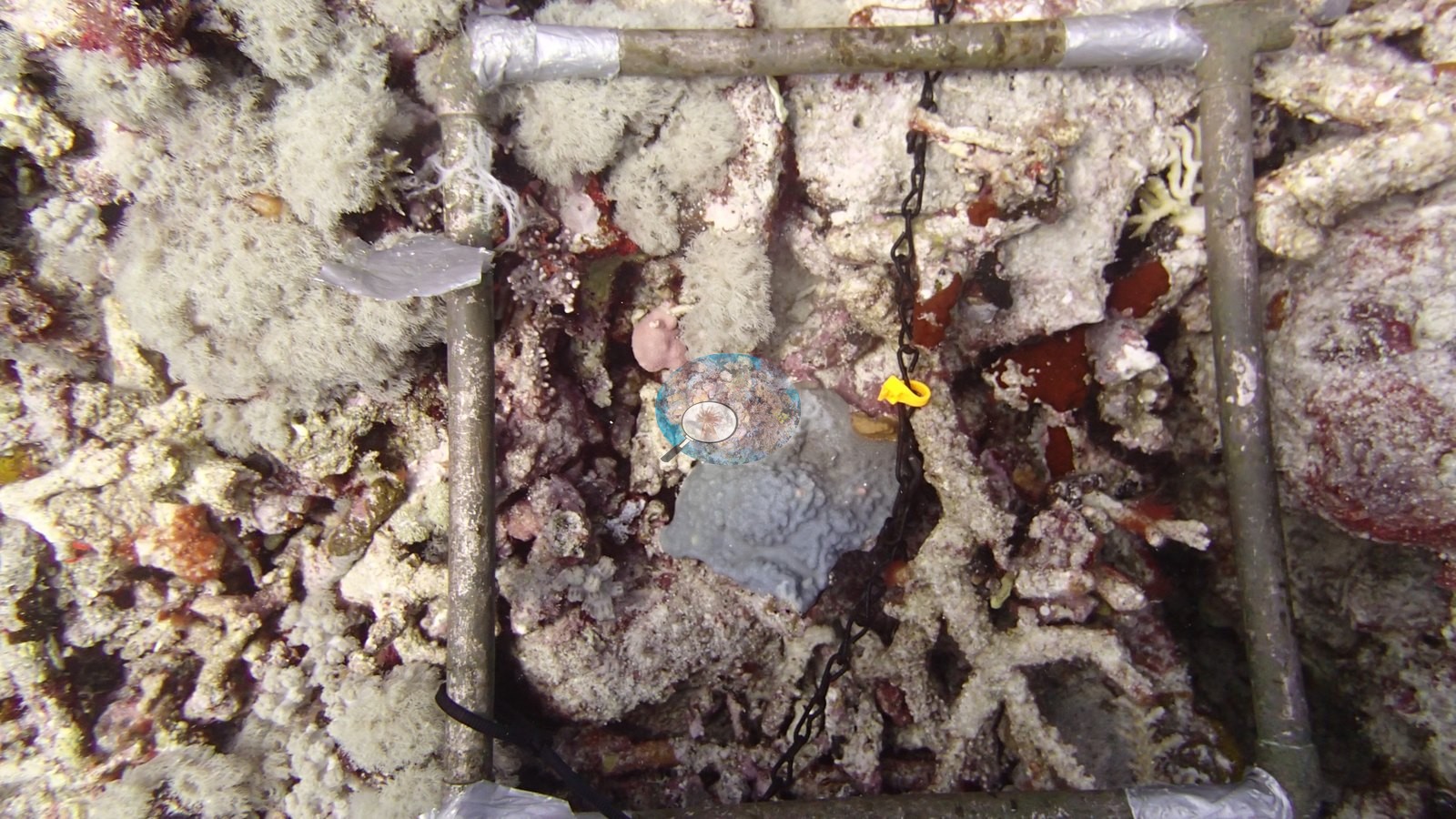
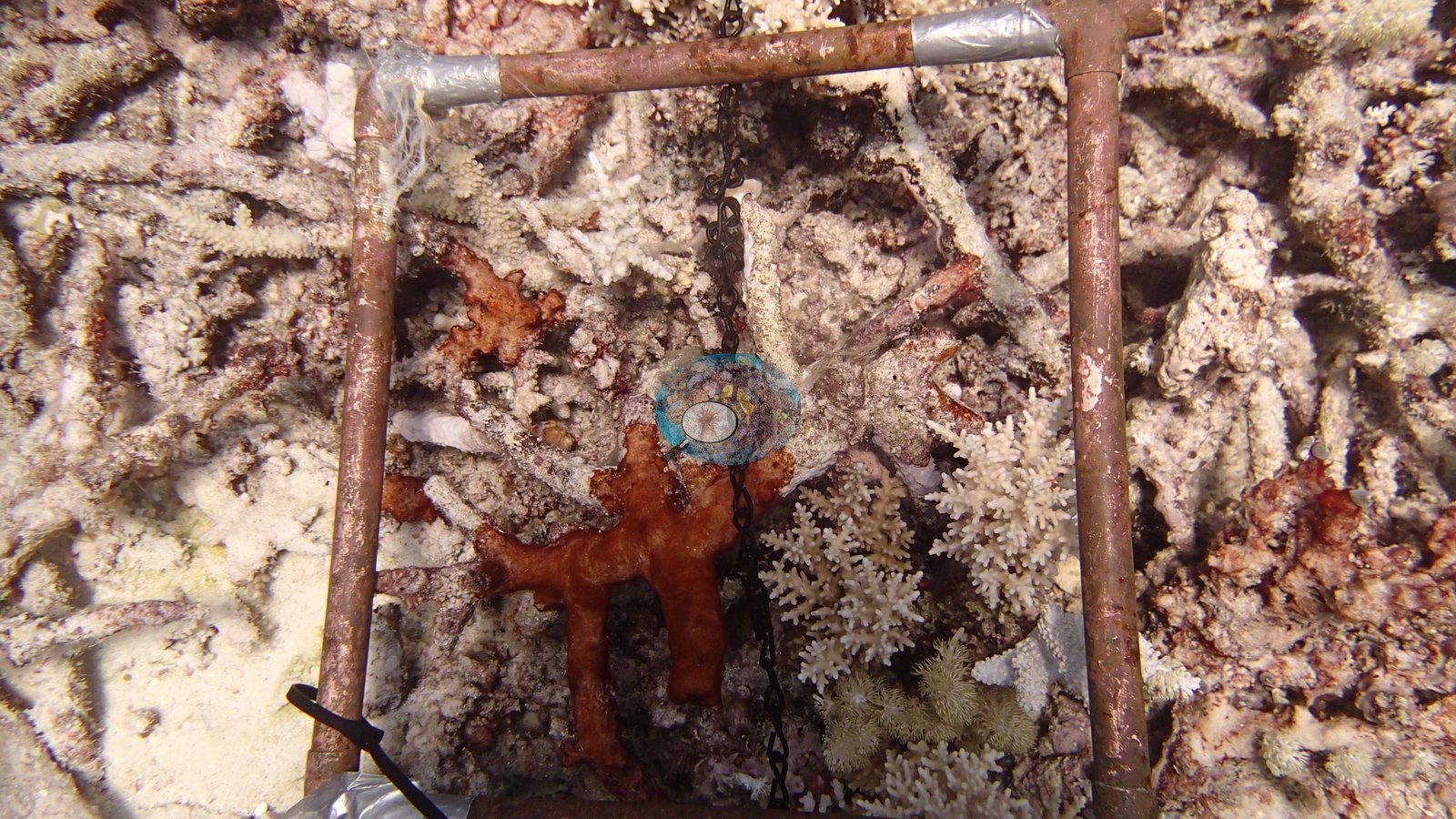
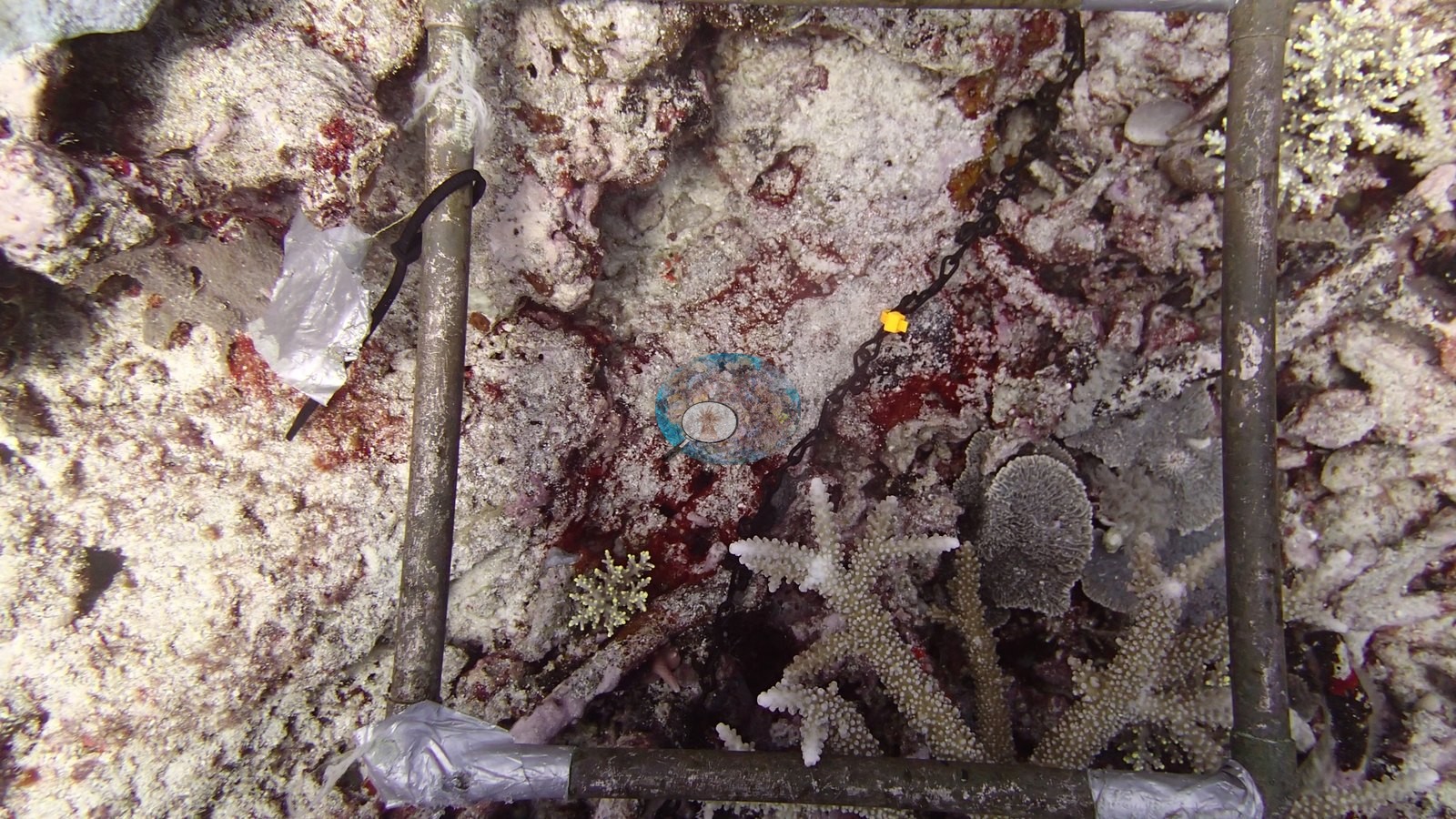
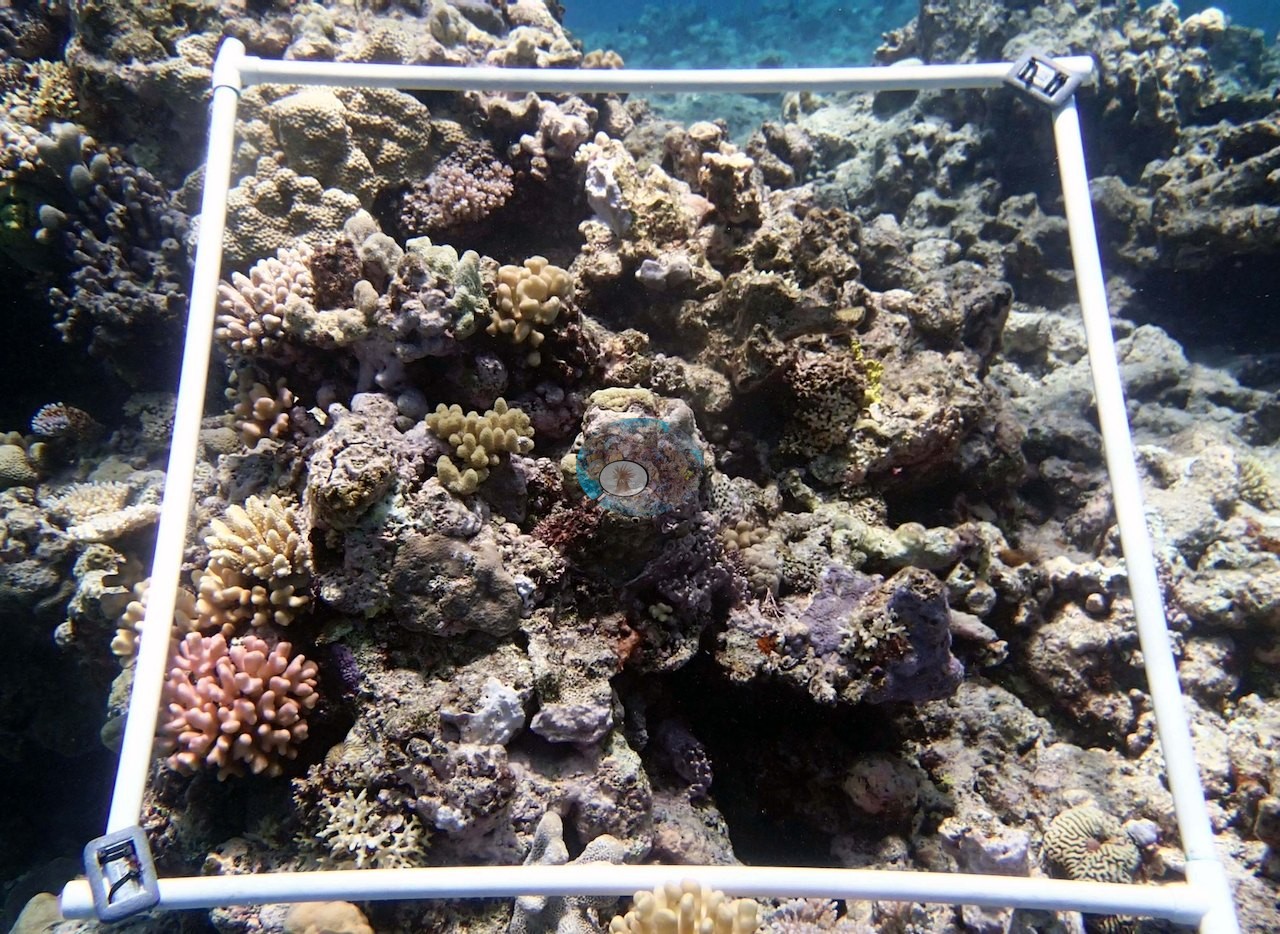
A fifth frame captures a GRE survey quadrat set down on lower-cover ground, a scatter of small pocilloporids and pink and cream soft-coral heads on rubble and pavement (e.g., Image 4).
Acropora was the most common coral genus on this station's transects (21% of the benthos), followed by Stylophora (5.9%), Porites (4.3%), Seriatopora (3.5%), Montipora (2.6%), and Pocillopora (2.0%); bare substrate covered 19%, behind other invertebrates (25%), the largest non-coral class. Among the algal classes on this station's transects, turf (9.6%) led, followed by crustose coralline algae (1.0%).
Coral cover
- Reference: Khaled bin Sultan Living Oceans Foundation, Global Reef Expedition (in situ transect)
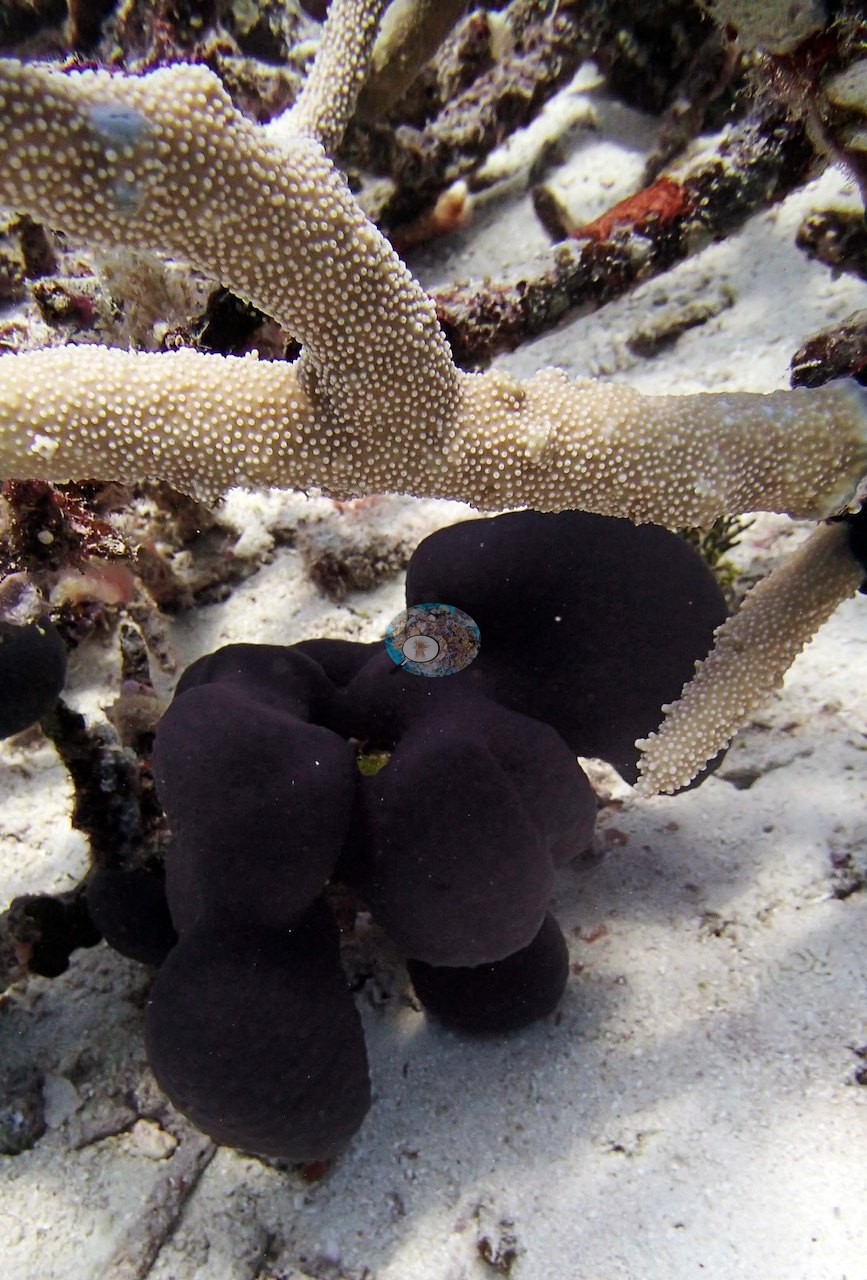
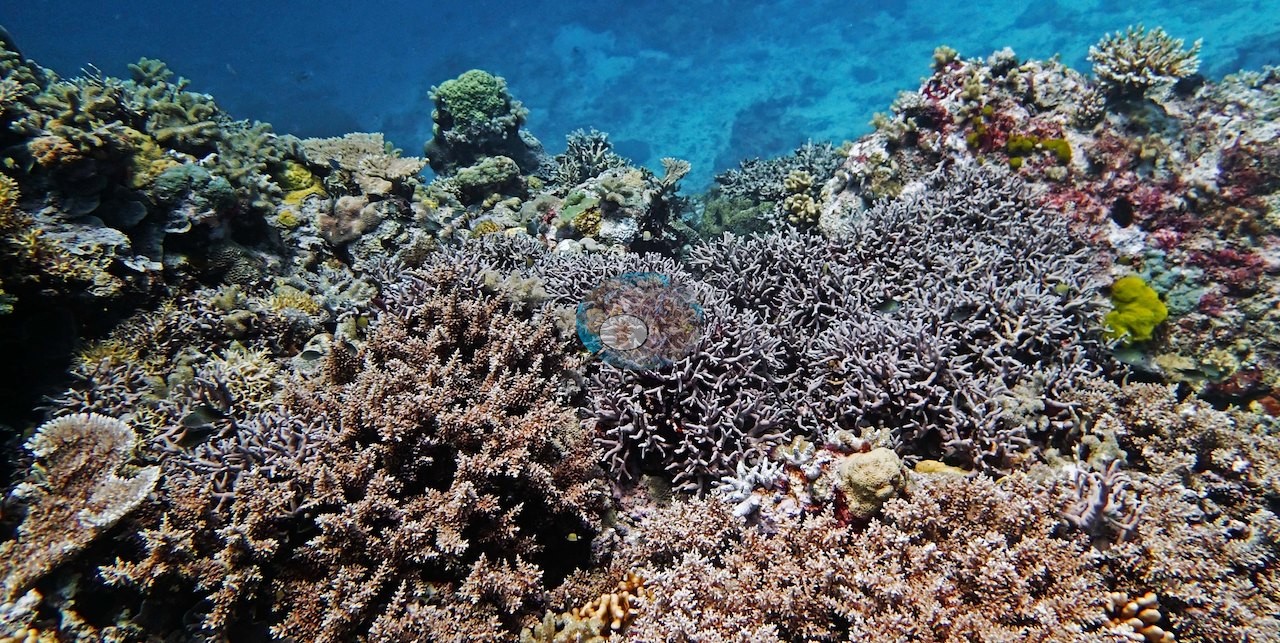
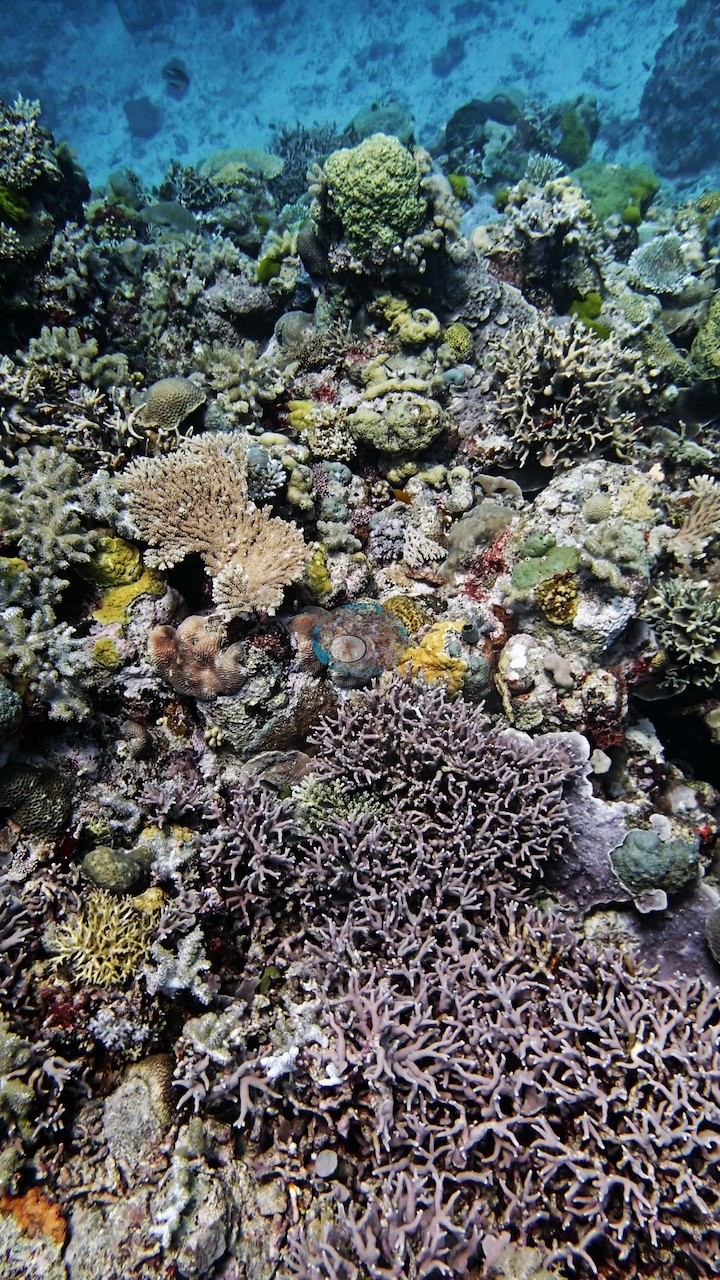
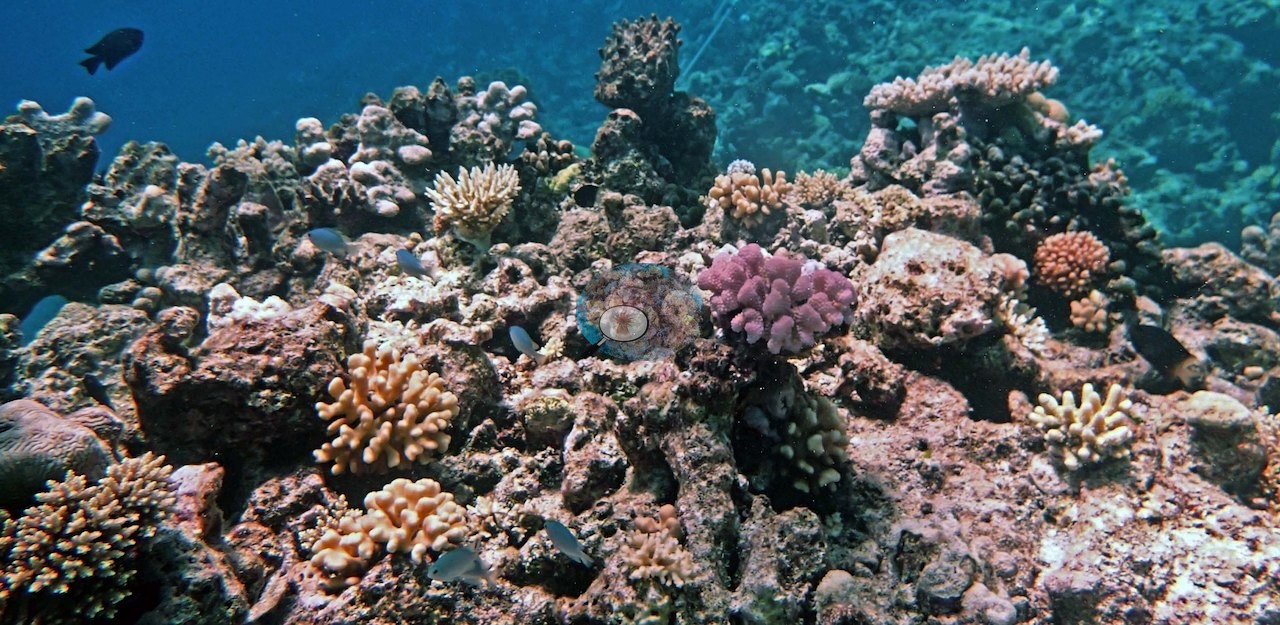
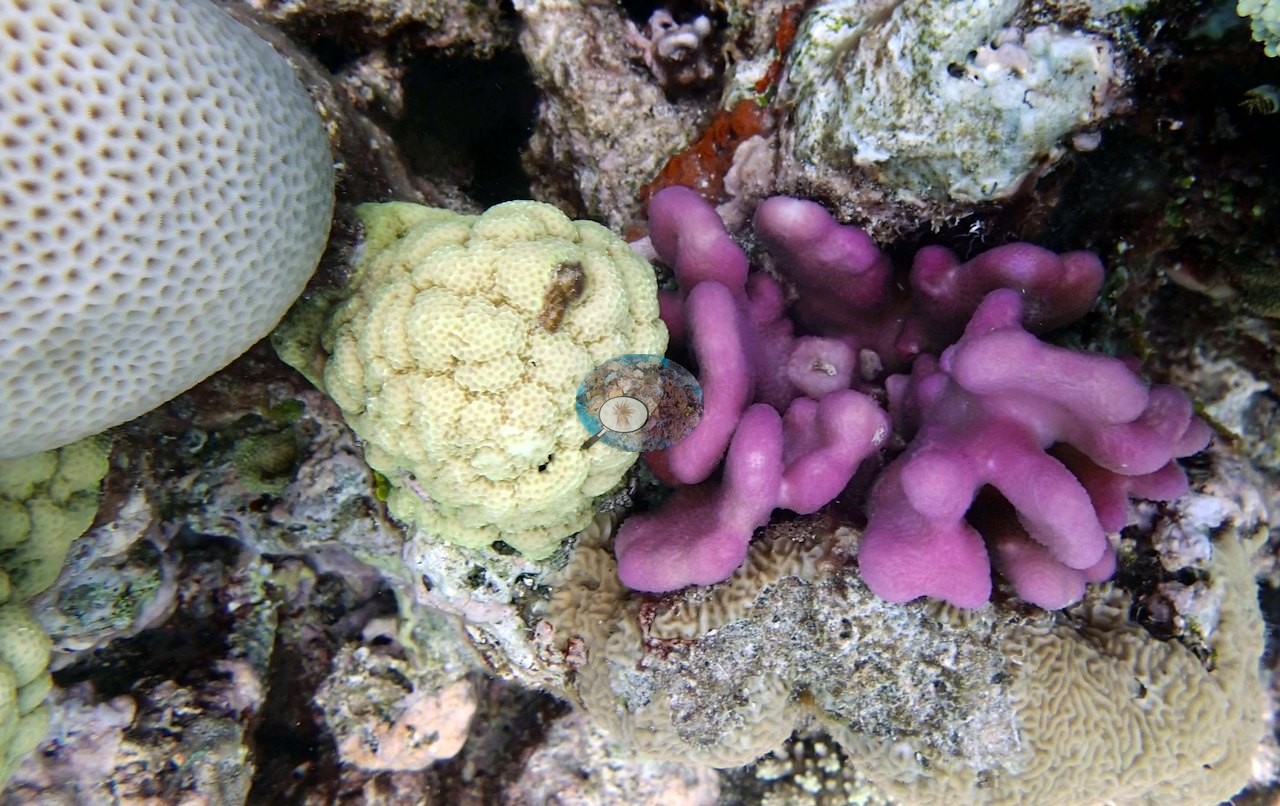
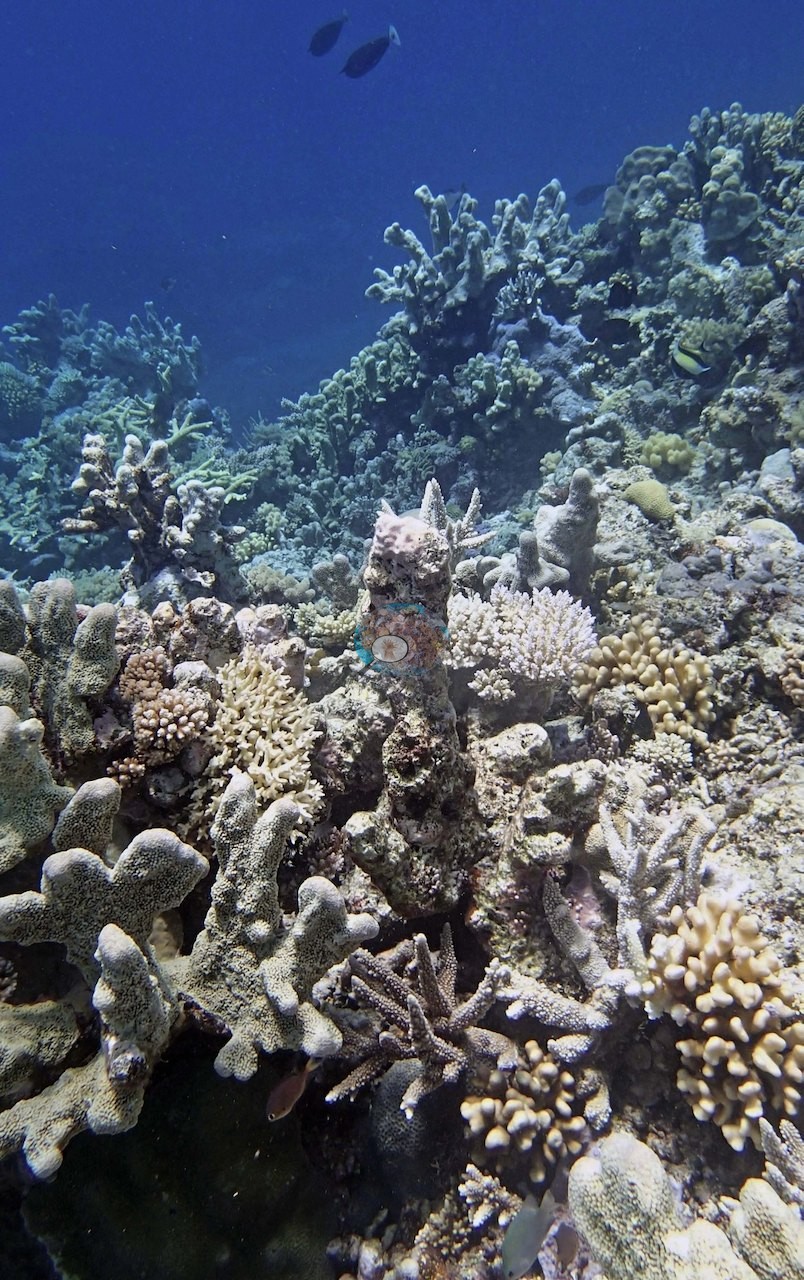
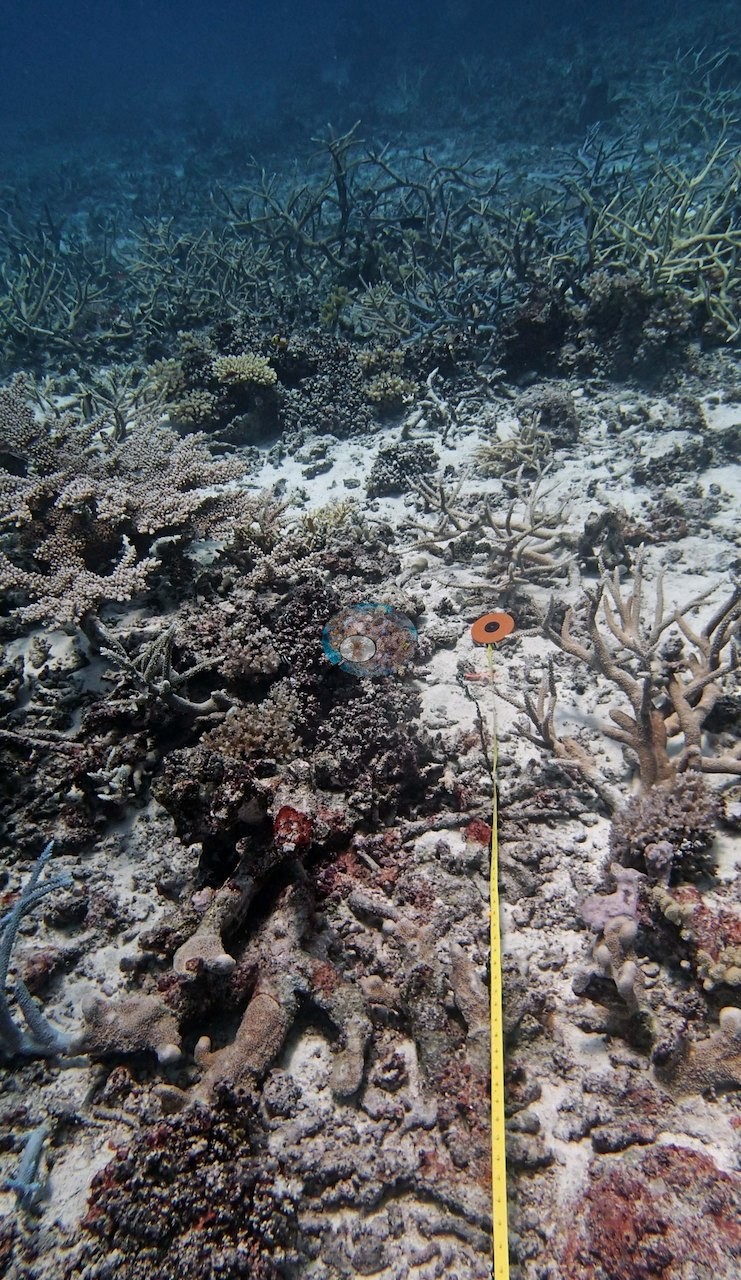
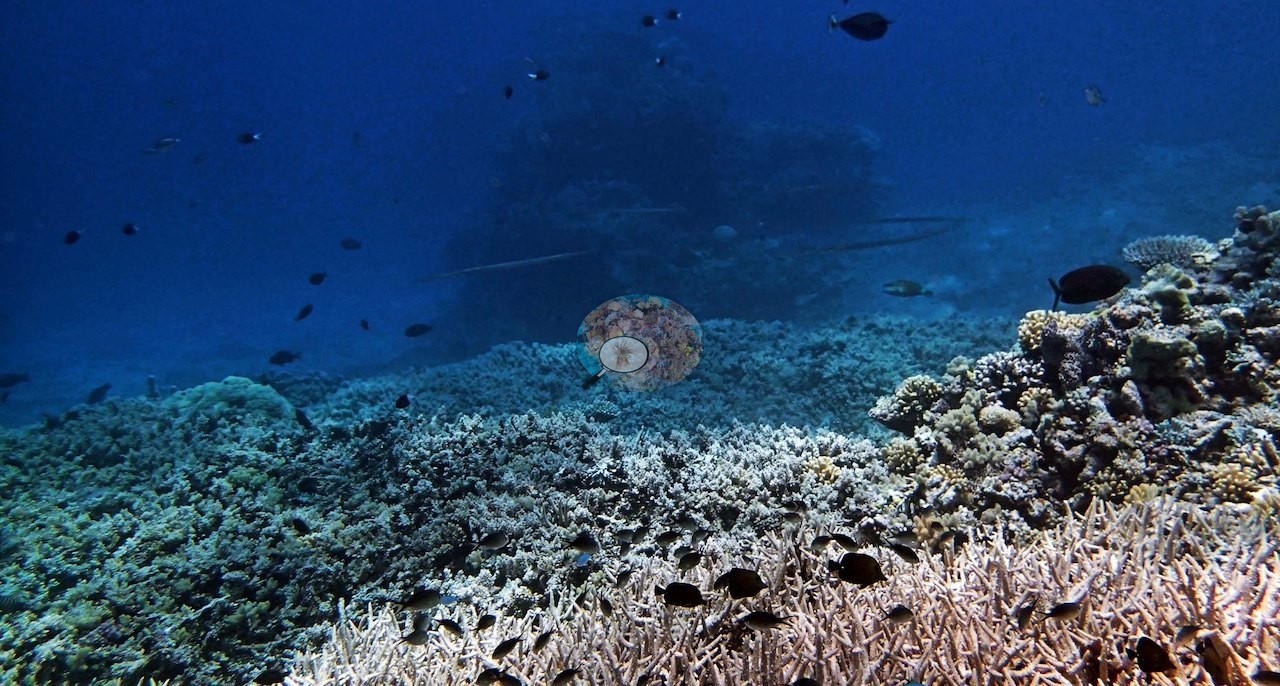
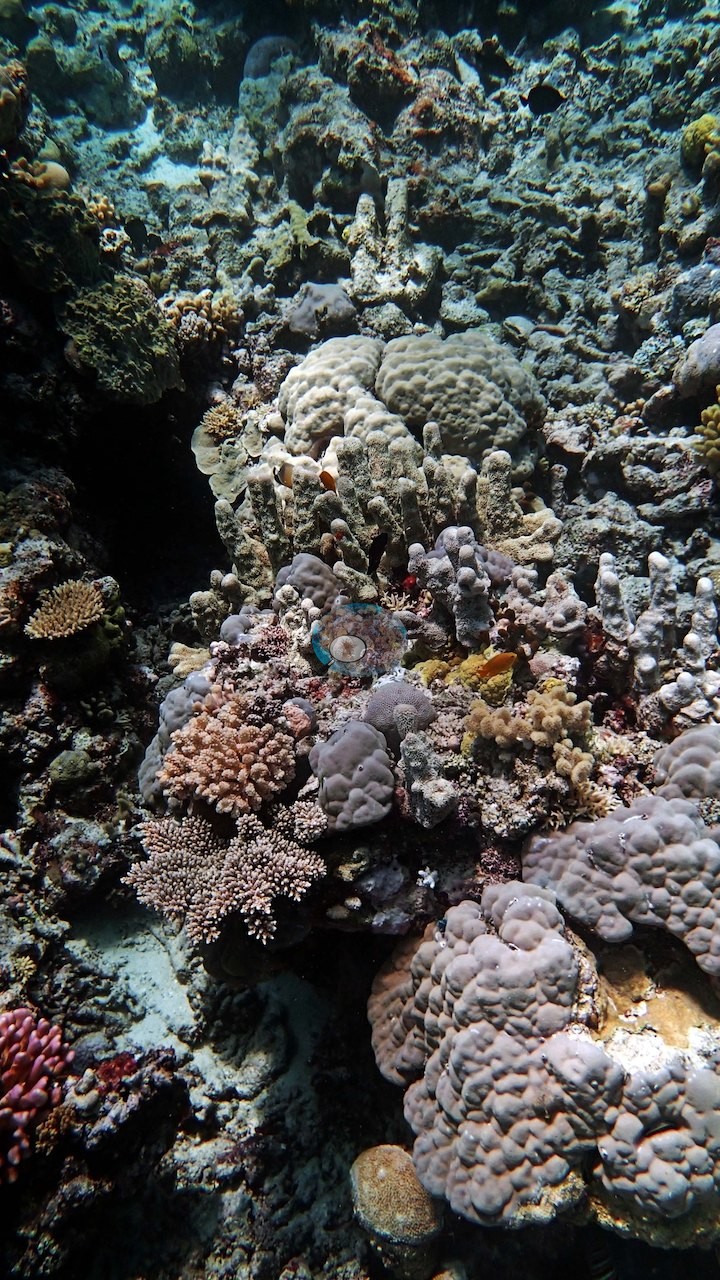
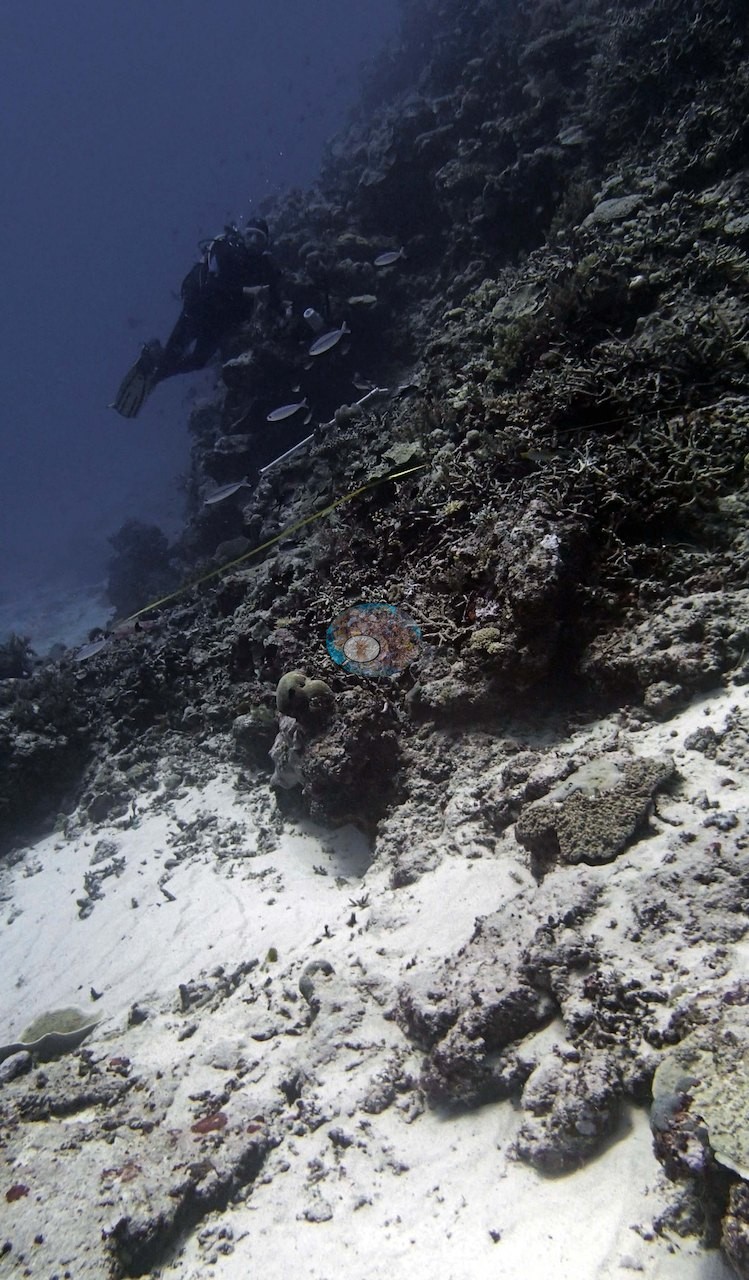
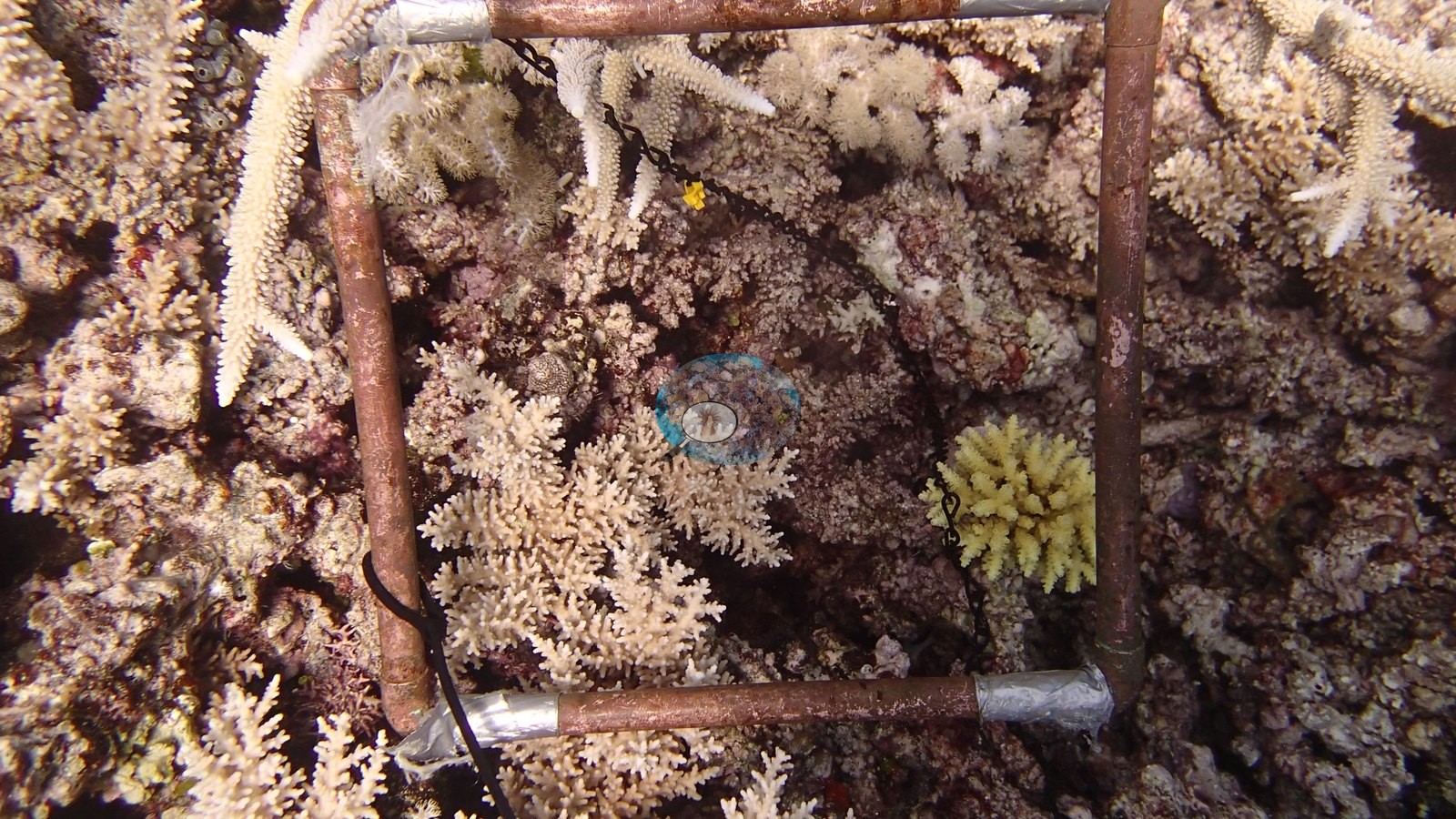
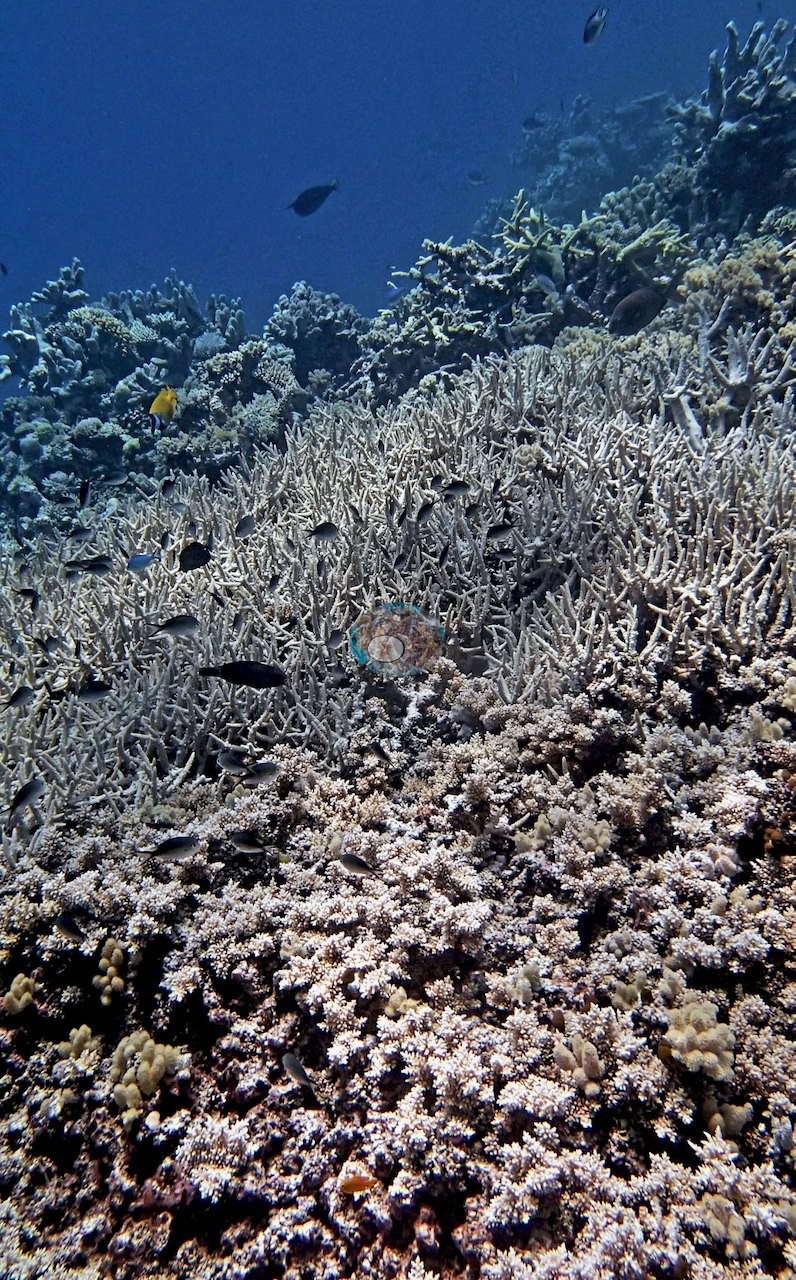
- The point-count survey recorded 46% live coral on a dive to 22.6 meters, and the photographs show where that cover sits: broad, almost continuous thickets of branching and corymbose Acropora running up the slope, healthy tan and pale-tipped, with clouds of damselfish and chromis hanging just above the branch tips (e.g., Image 3, Image 5).
- Transect mean 47 ± 2.4% SE (n = 8 transects; Living Oceans Foundation per-transect benthic data); the headline above is the expedition's station value (the headline weights each depth equally; one depth had a single transect).
Stressors
Anderson noted sickly Seriatopora through the site and bleached S. caliendrum at 10 m. No crown-of-thorns starfish (COTS) or other corallivores evident.
Fish and other fauna
Massive Porites, Isopora, Platygyra, and Diploastrea were also common, and a whitetip reef shark and a Napoleon wrasse cruised past.
Comparisons with other data
No prior survey data from this site. If you would like to share yours, please email us.
CV model comparison
More info
The photo row below is a methods comparison only: it is never averaged with the transect and never used as the headline. It compares site means only: the photos come from the same survey dive as the transect but not from the same points.| Method | Hard-coral cover (%) | Photos (n) ± SE |
|---|---|---|
| Transect (published) | 45.7 | |
| CoralSCOP edited | 25.3 | n = 37 · SE 2.3 |
| Claude (edited photos) | 36.0 | n = 37 · SE 3.7 |
The two computer-vision methods disagree by 10.7 pp (25–36%) and read 9.7–20.4 pp below the in-water transect (46%); the headline is the in-water transect because a diver transect is independent of the photographs.
Data & links
- Download benthic survey data (CSV) ↗
- Download all LOF-GRE data (933 sites) ↗
- Photo portfolio ↗
- Coral Reef Diagnostics country page ↗
All images from Coral Reef Diagnostics. Data are from the Khaled bin Sultan Living Oceans Foundation Global Reef Expedition and Coral Reef Diagnostics.
 © Coral Reef Diagnostics.