
Part of the regional summaries: Australia (GBR) - Far North: Blue stations (Habitat Protection Zone reefs) and Australia (GBR)
More info
Far Northern GBR (NOAA CRW virtual station)A crystal-clear dive on Unnamed Reef 122 past dozens of dense staghorn thickets running to 20 m and a huge bommie 15-20 m across with 60-70% live cover, at 18% cover overall. A turtle and a lobster were seen; Anderson recorded bleached needle corals, "extremely pale" Pocillopora, and crown-of-thorns damage at 5 m. Surveyed on the Living Oceans Foundation's Global Reef Expedition.
Three other CRD dive sites within 5 km shown in orange — click a marker to open its page.
🗺 Detailed map of the Global Reef Expedition dive sites, unnamed reefs 11-122, 11-096, and 11-091, northern Great Barrier Reef (Khaled bin Sultan Living Oceans Foundation; opens in a new window)
8 of the 41 photographs on this page are shown beside the text that discusses them under "Site description" below.
Site description
Setting
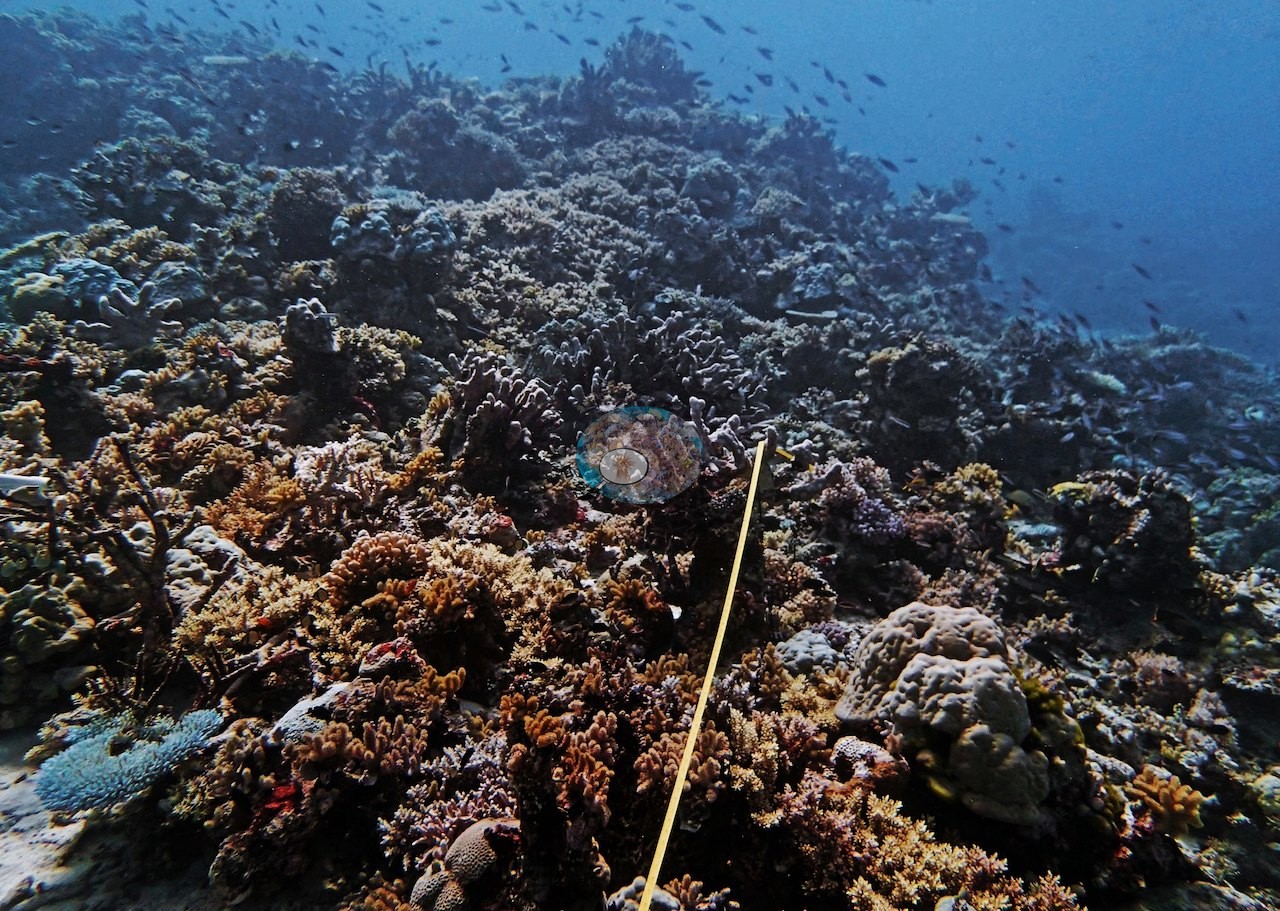
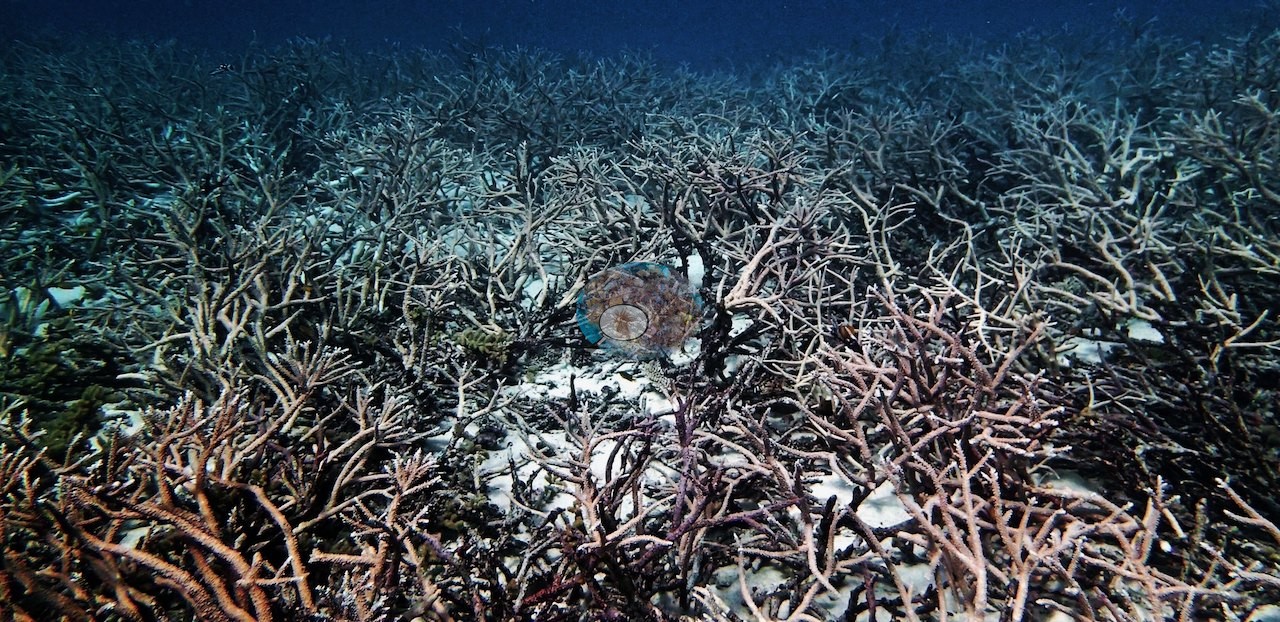
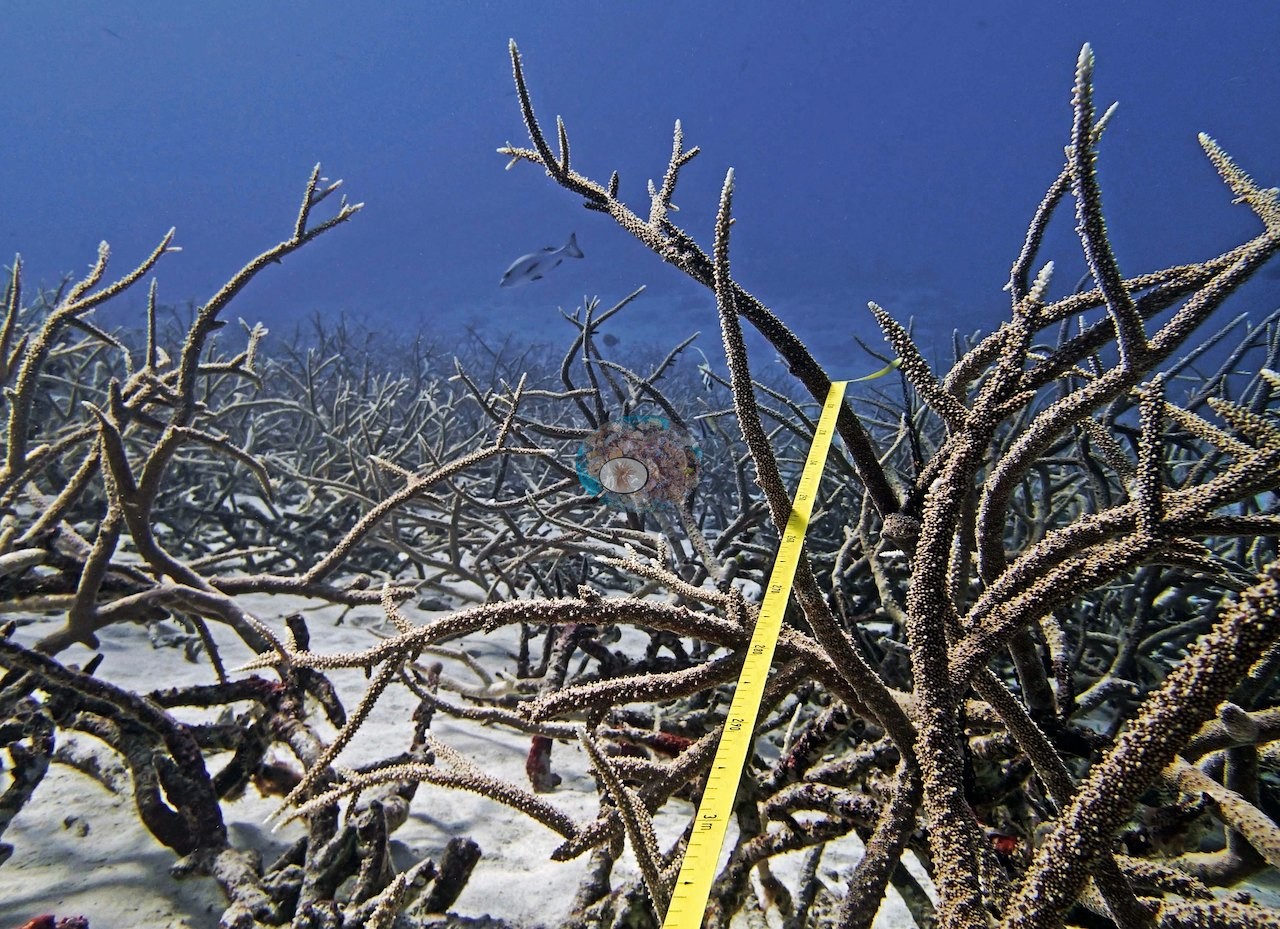
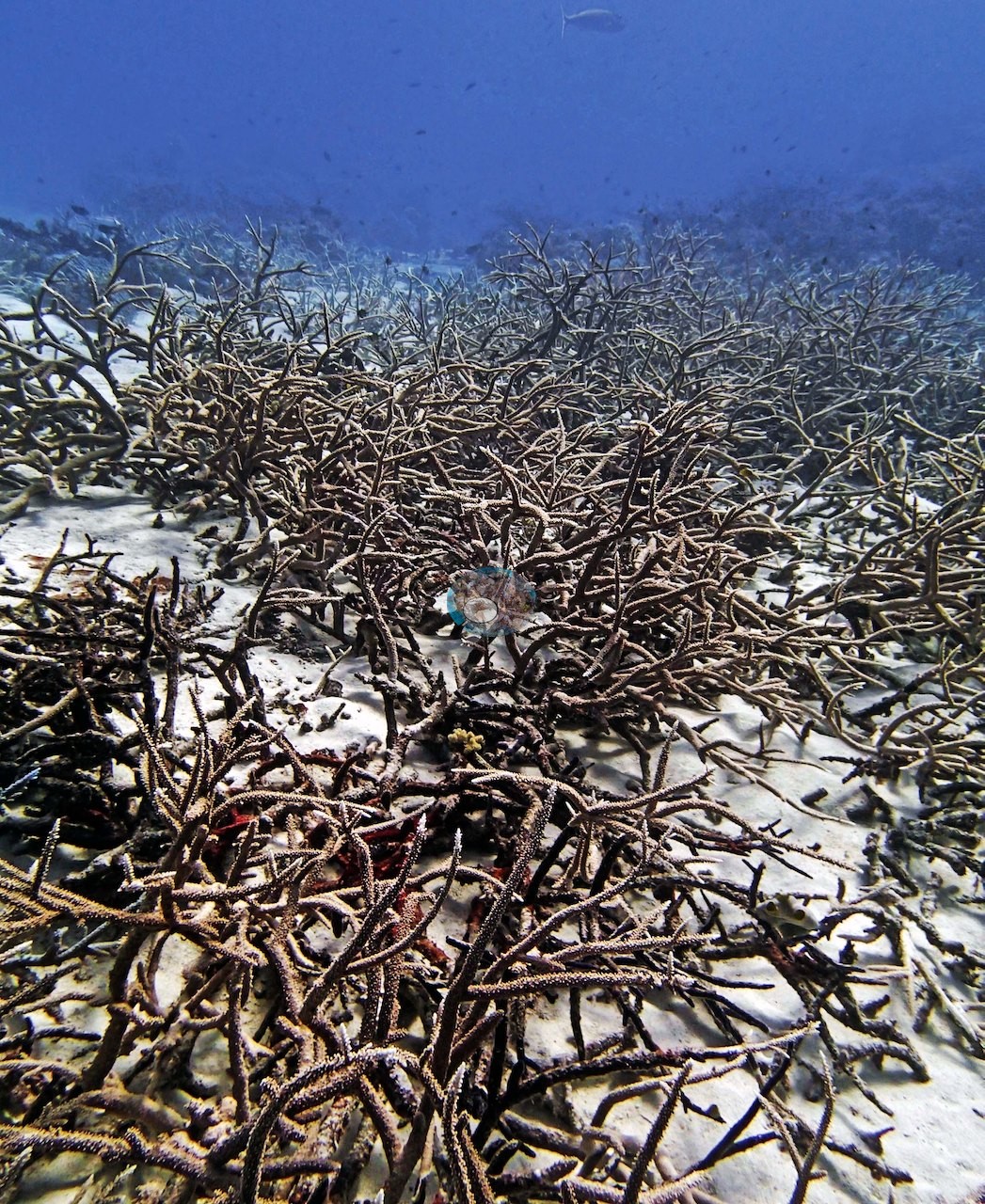
The day's first dive at Unnamed Reef 122 opens in crystal-clear water with a gentle 1-knot current, sweeping past dozens of dense staghorn Acropora thickets that run down to about 20 m.
General benthic features
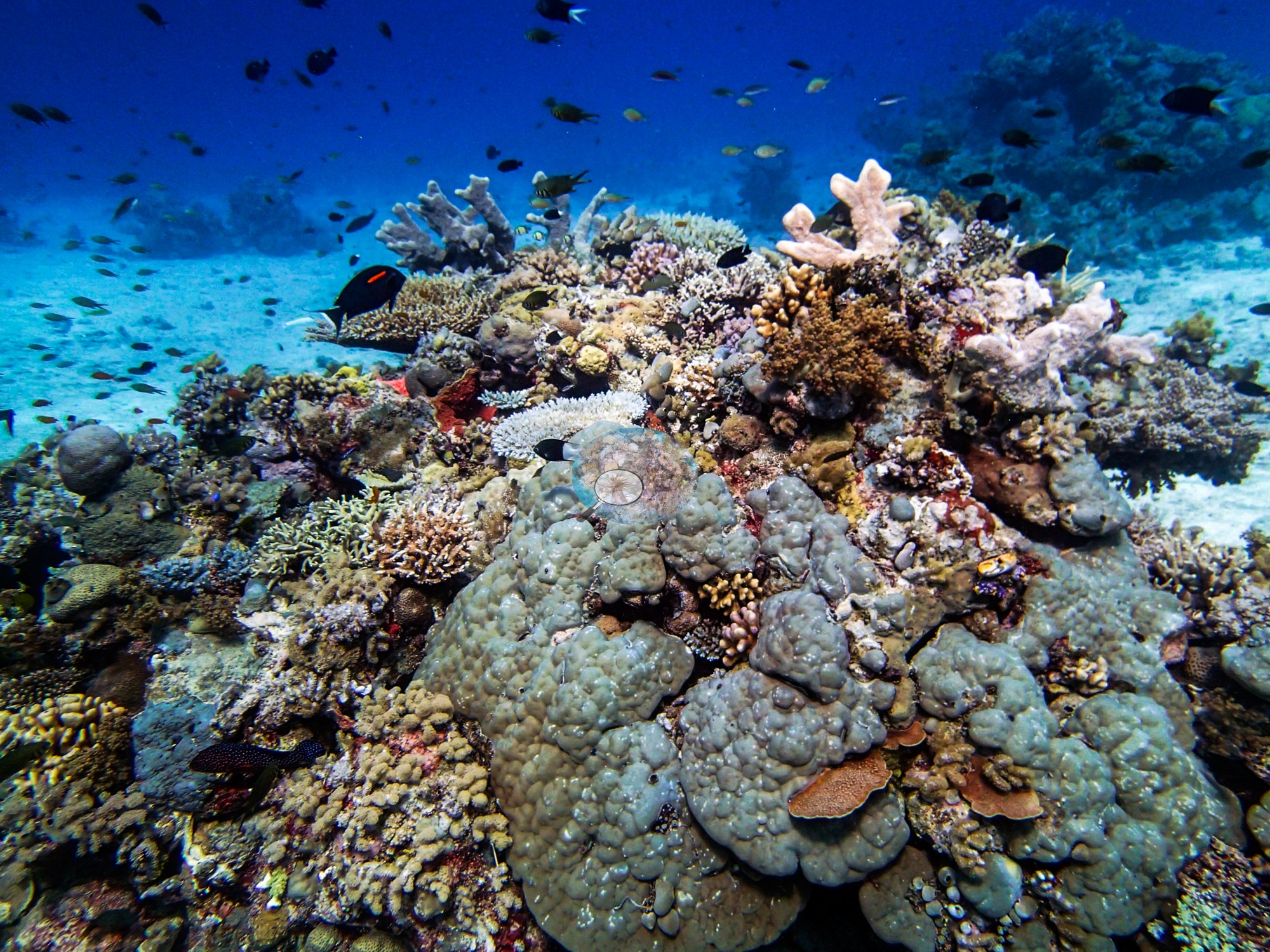
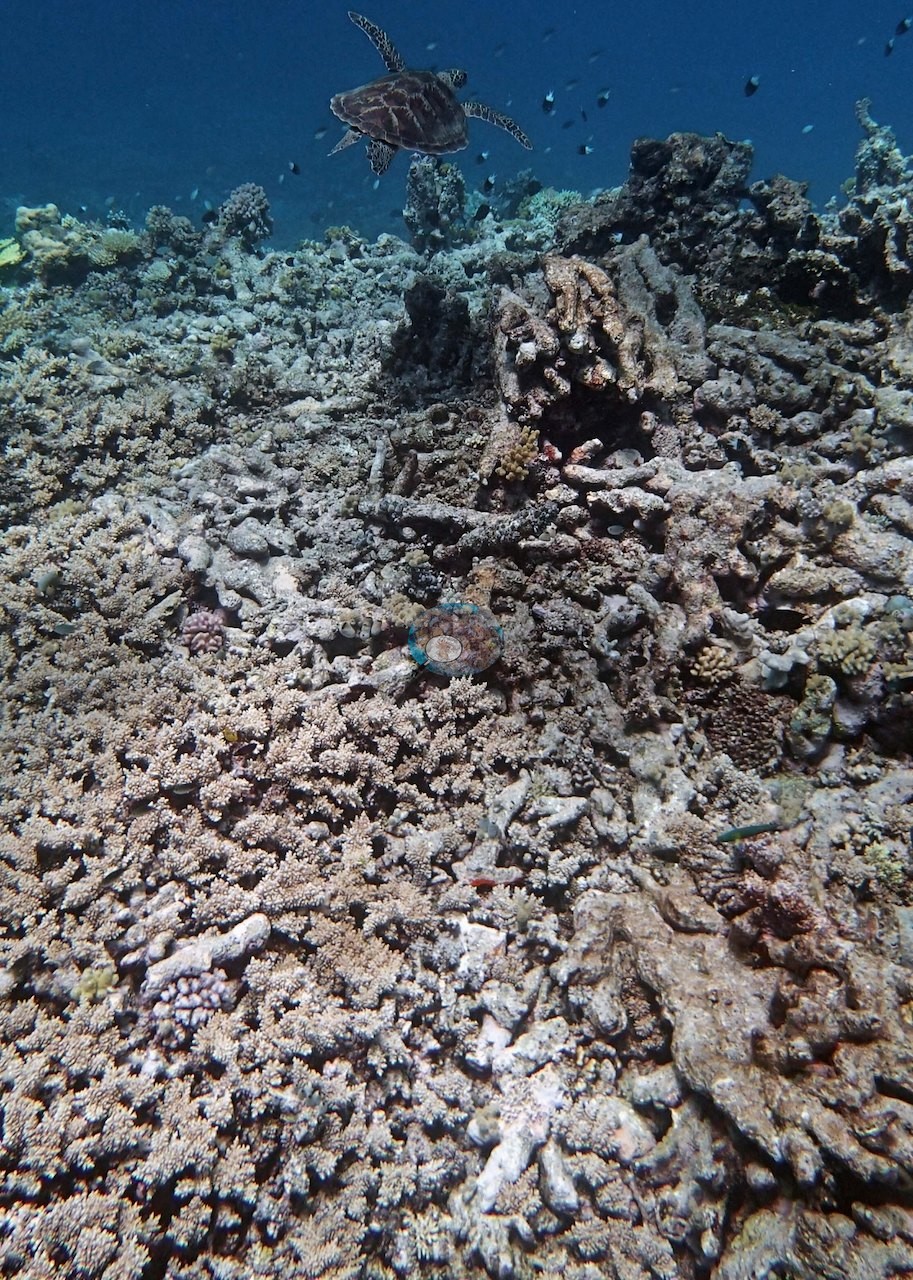
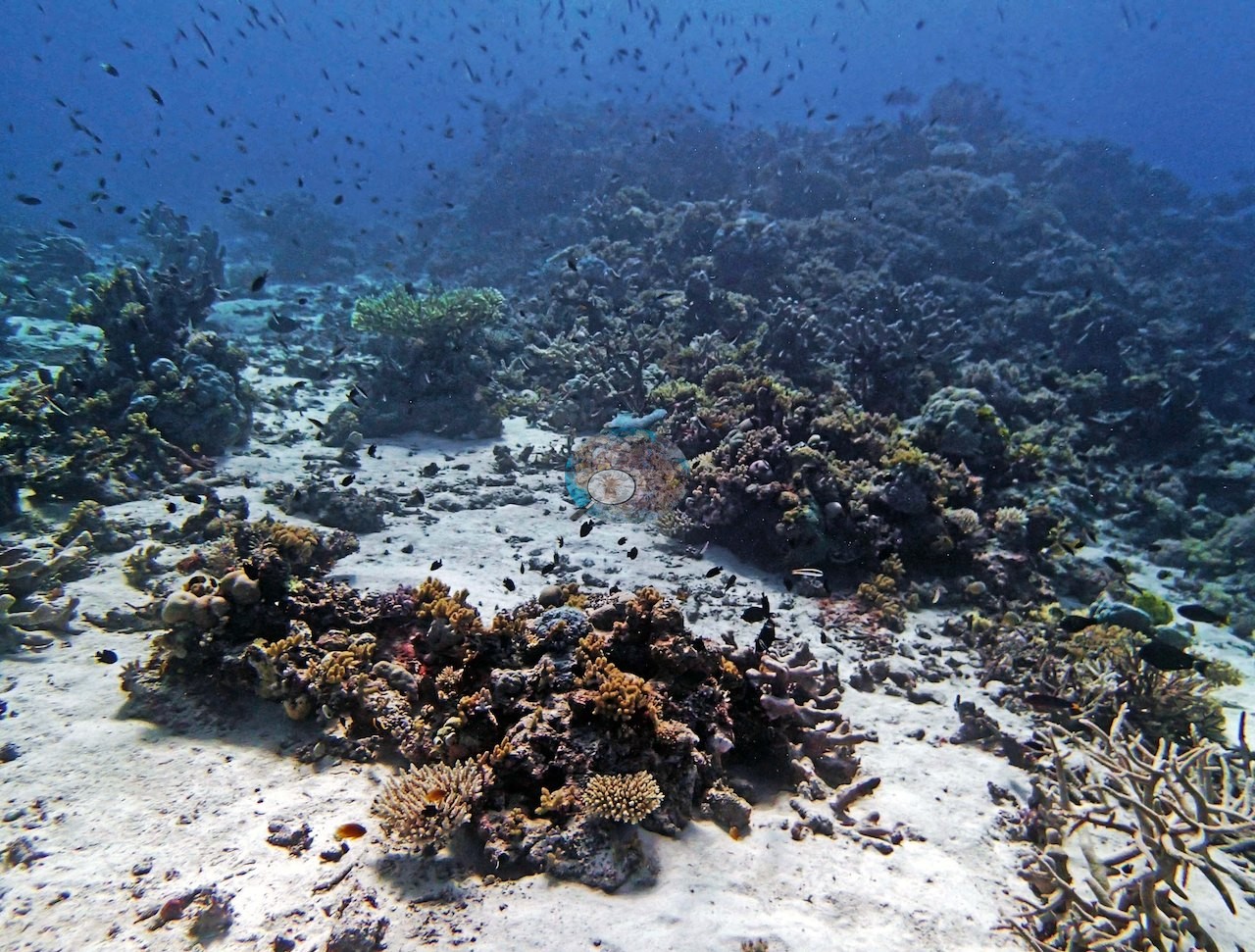
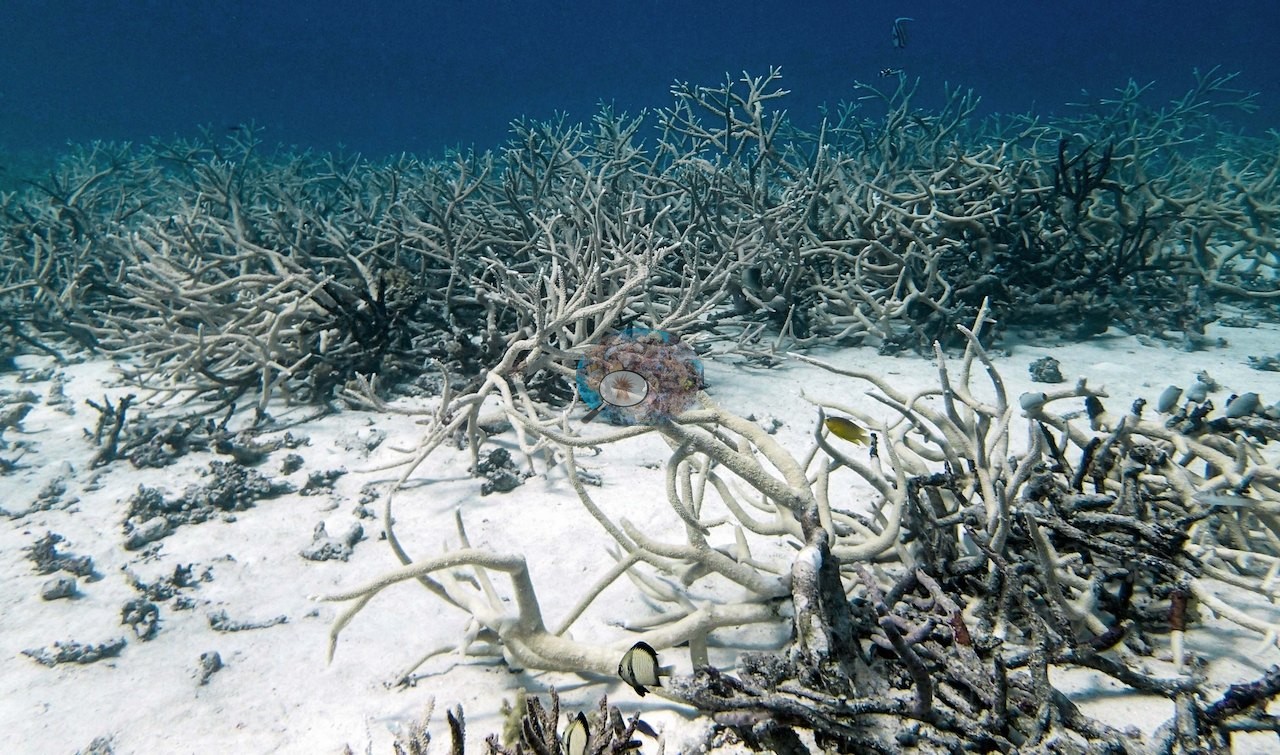
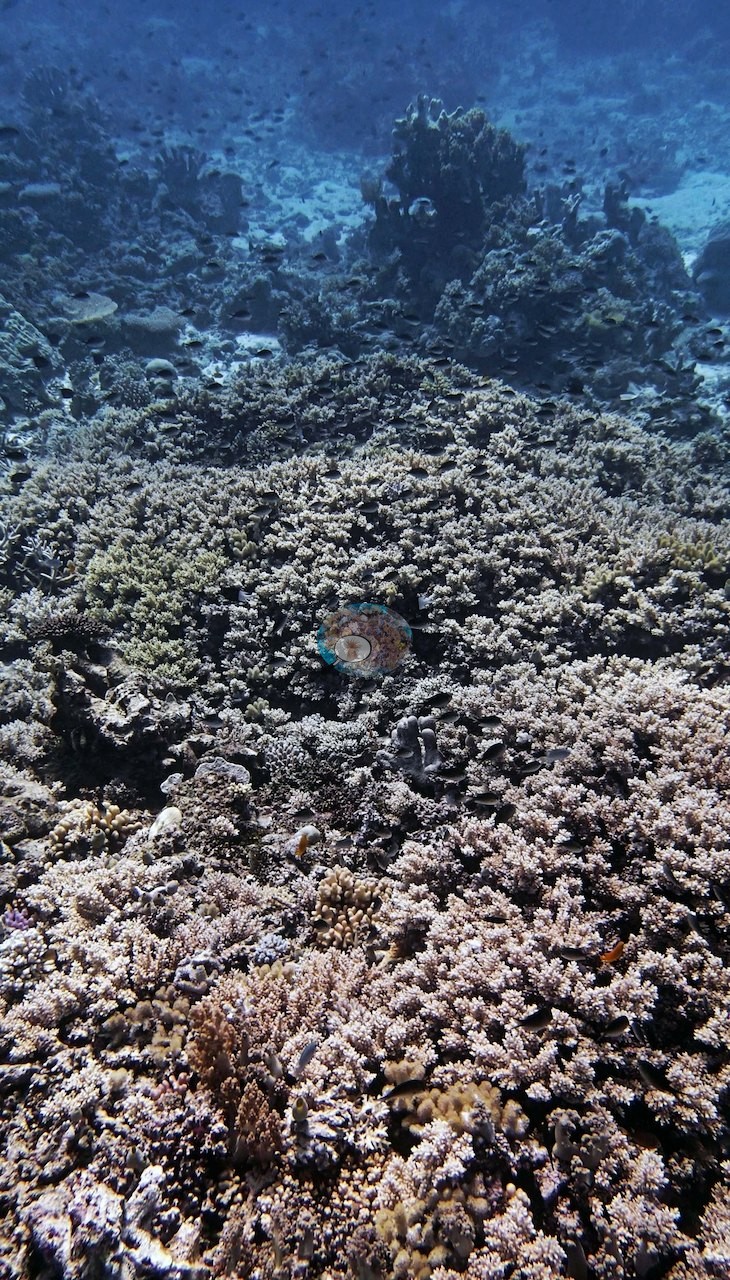
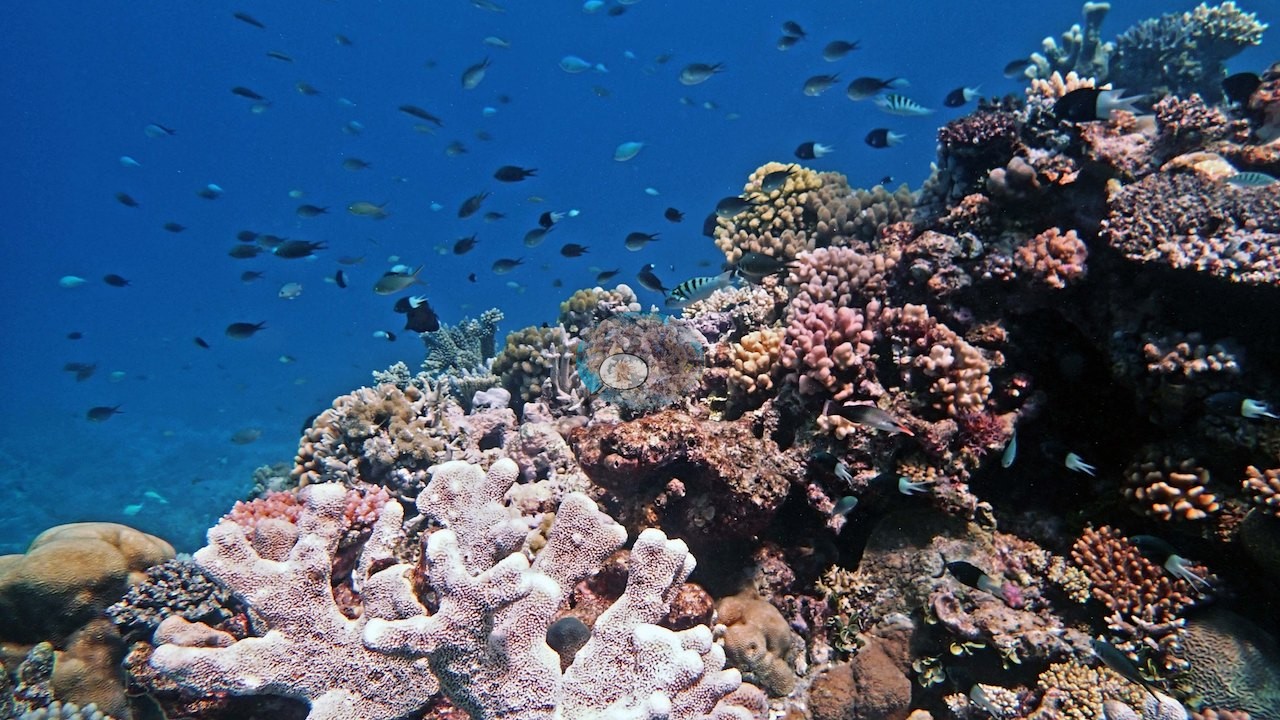
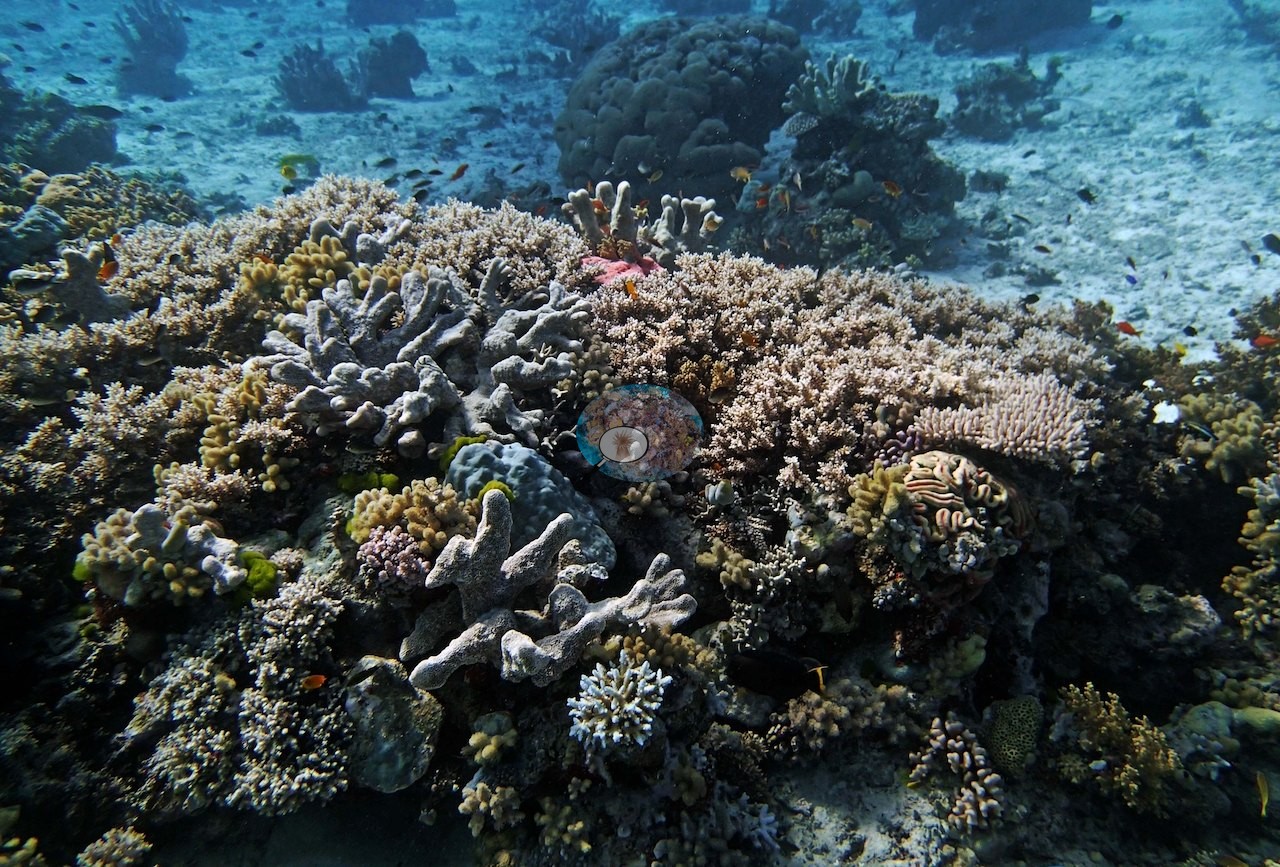
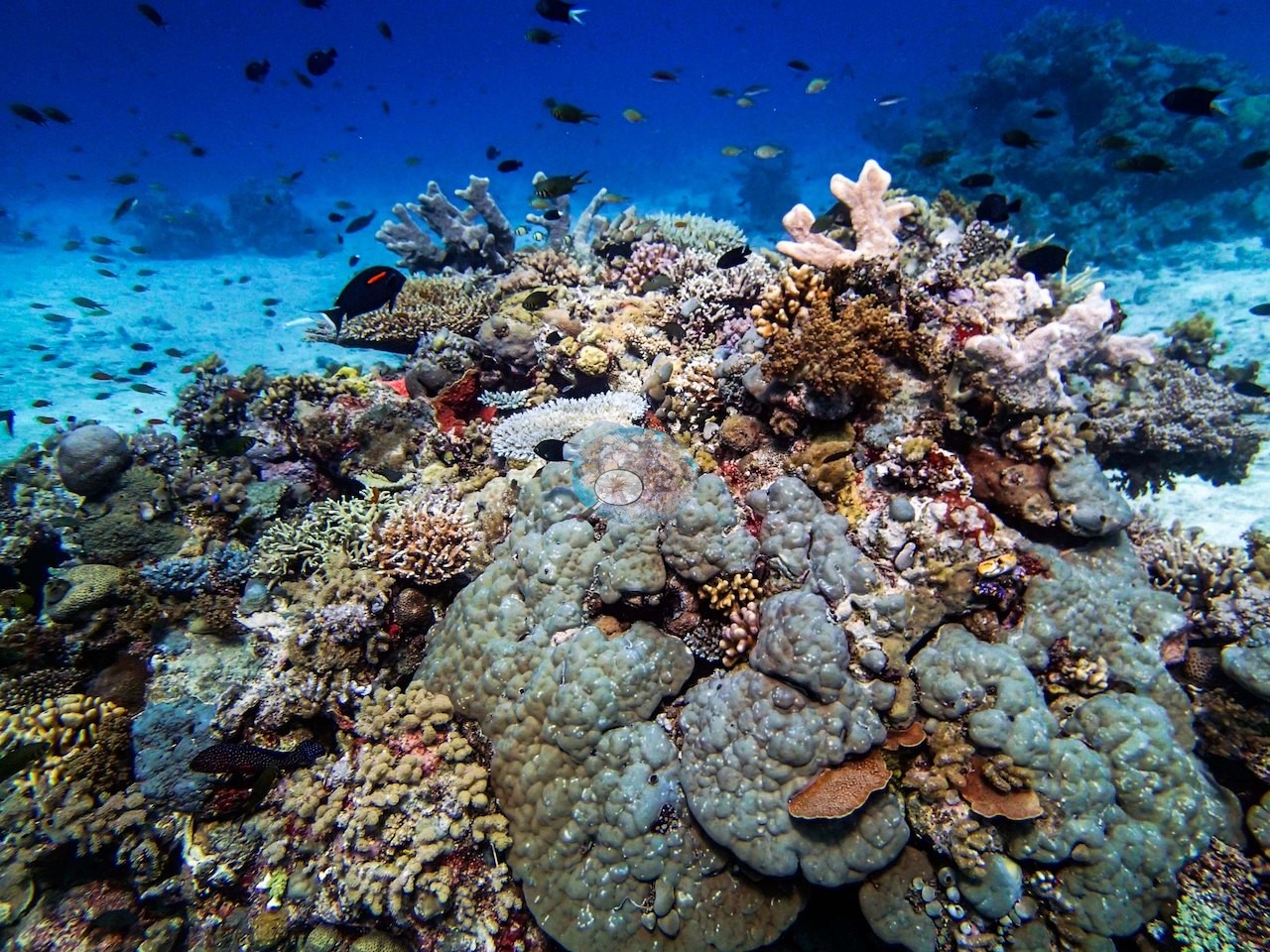
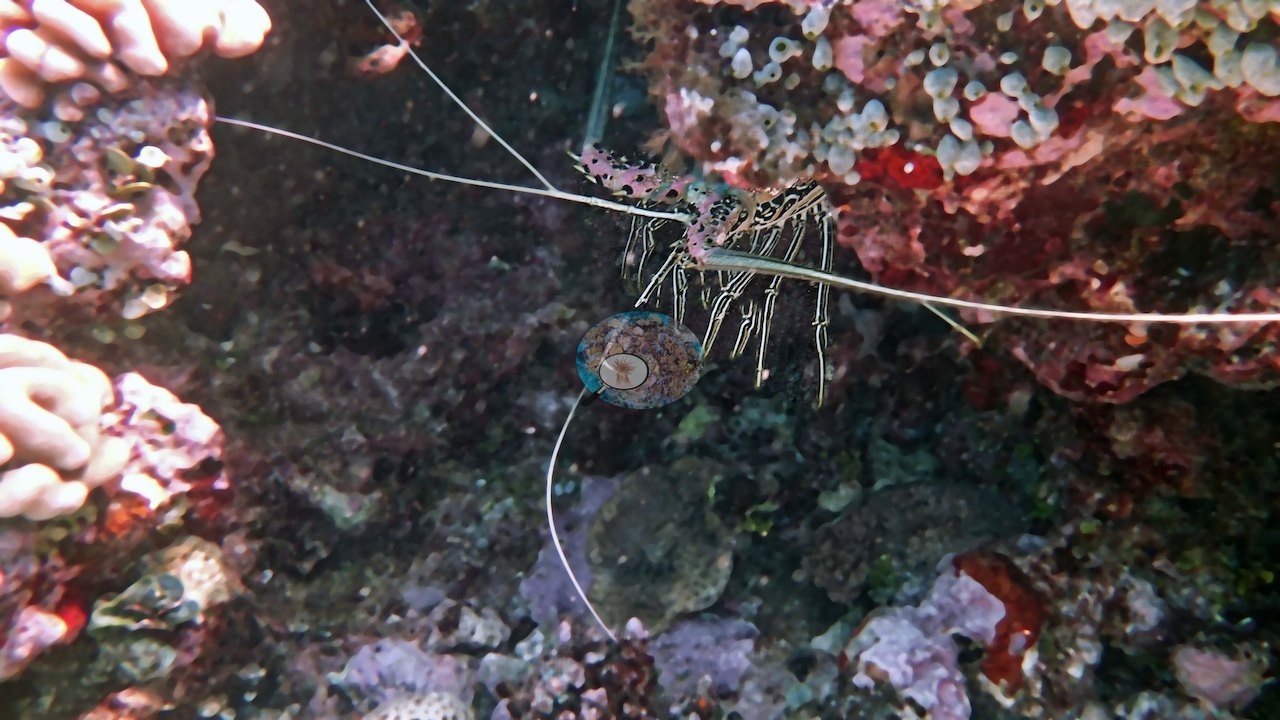
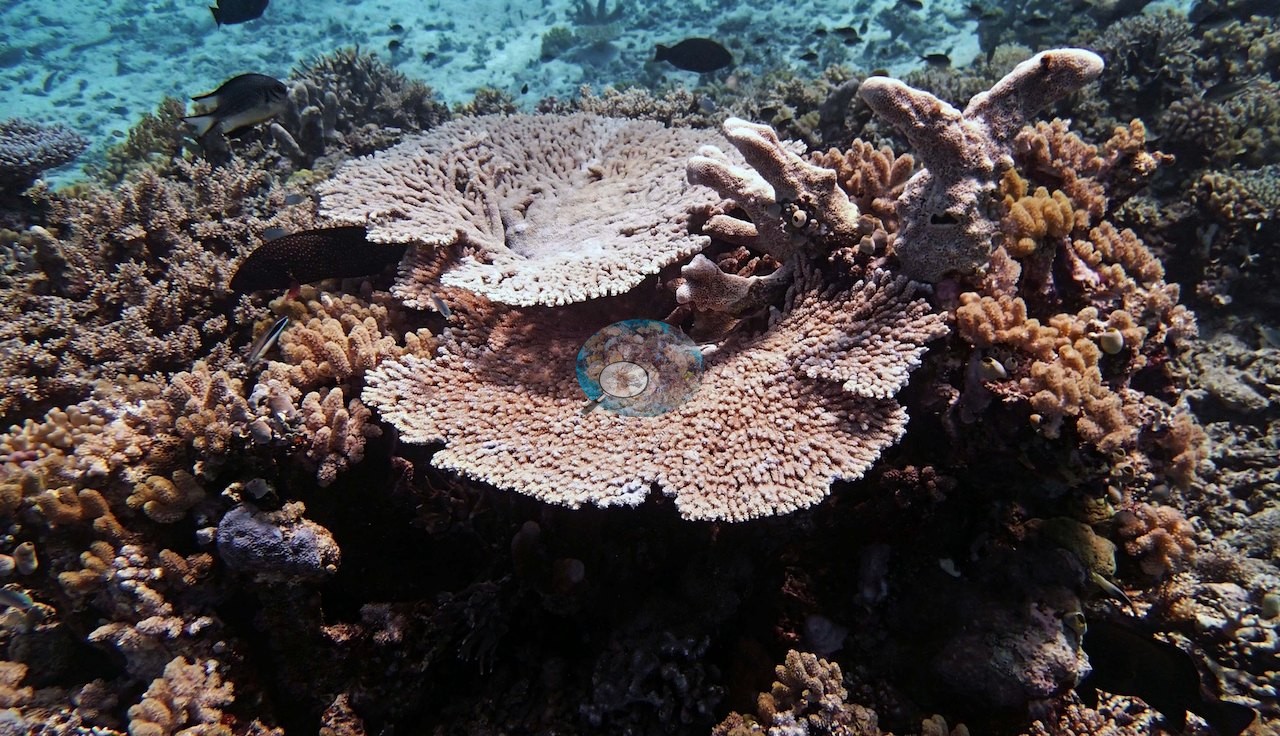
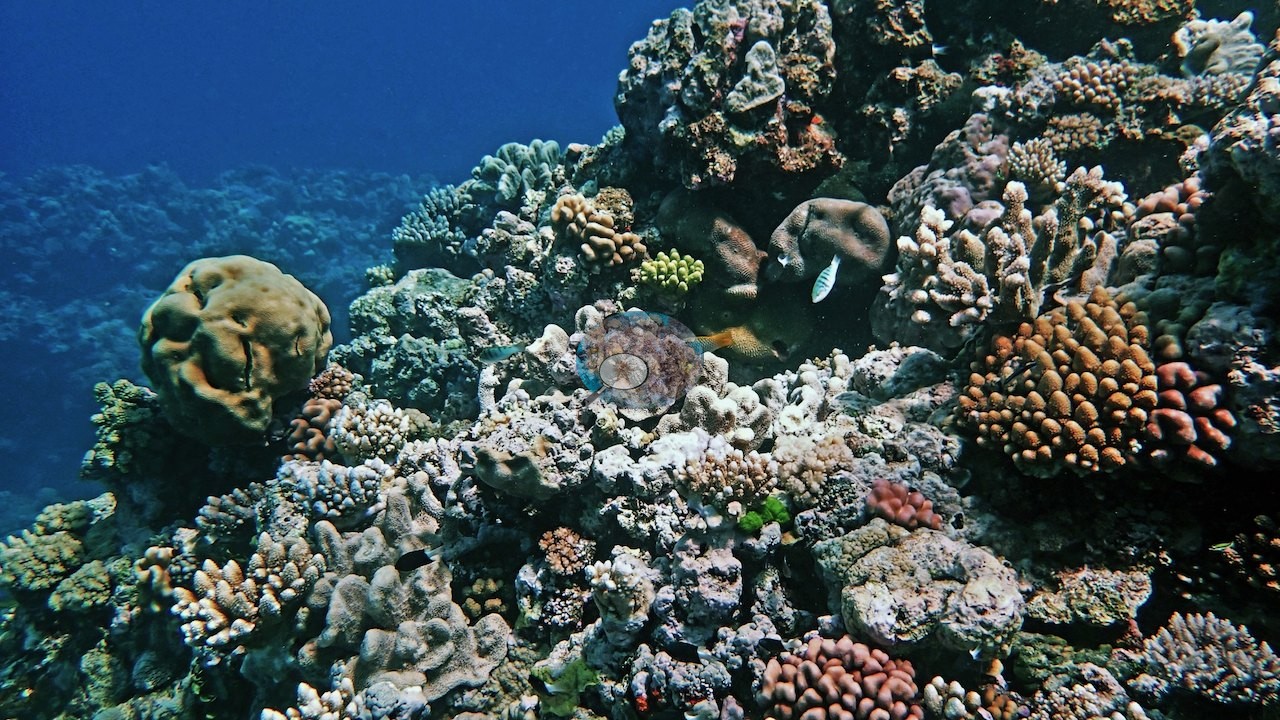
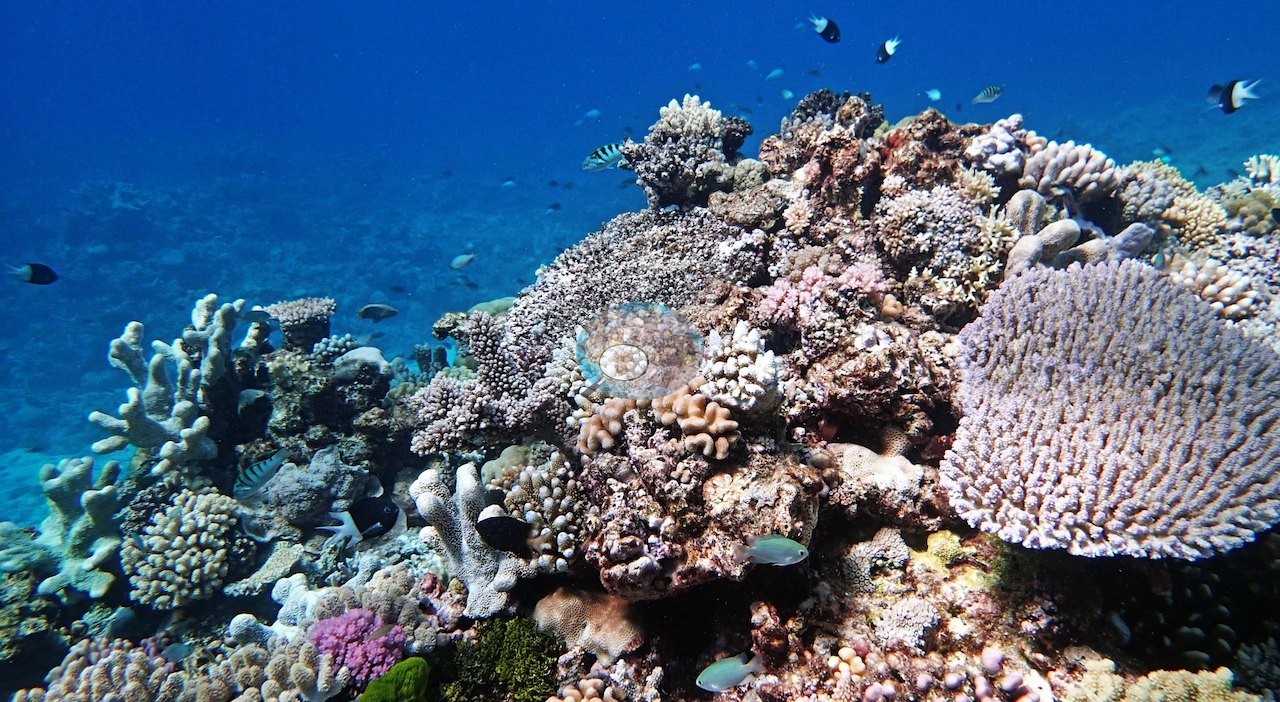
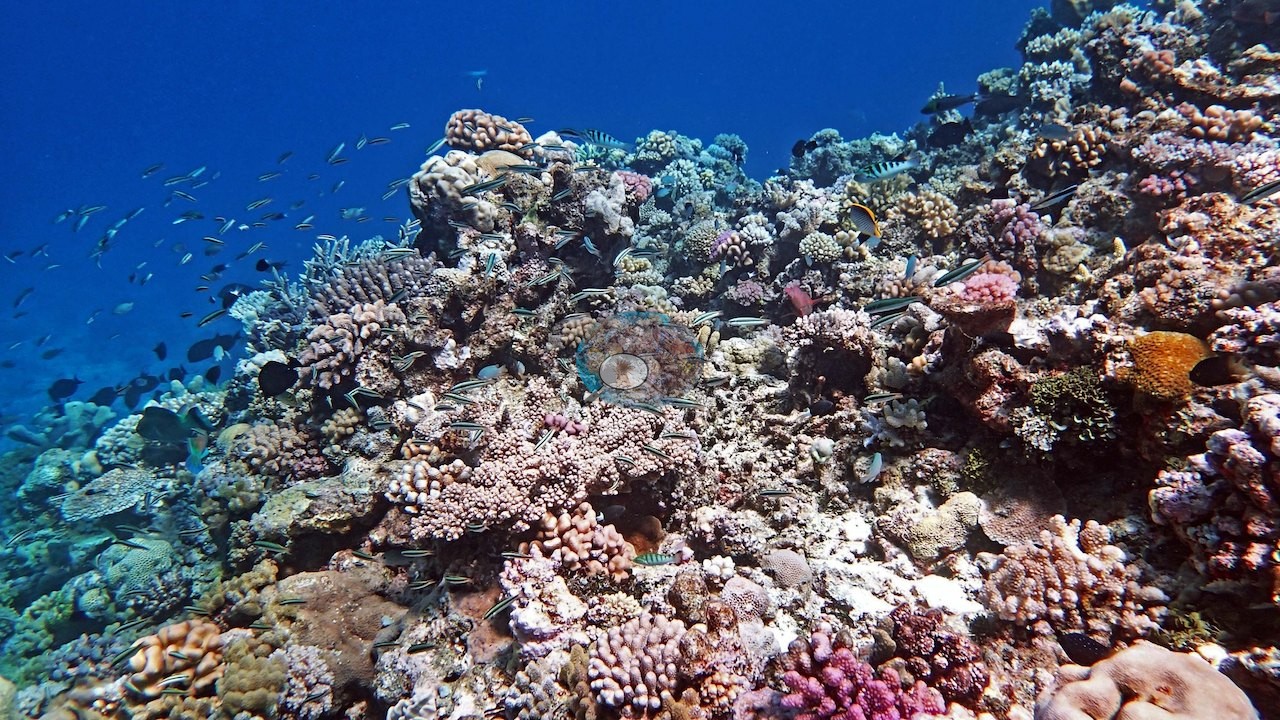
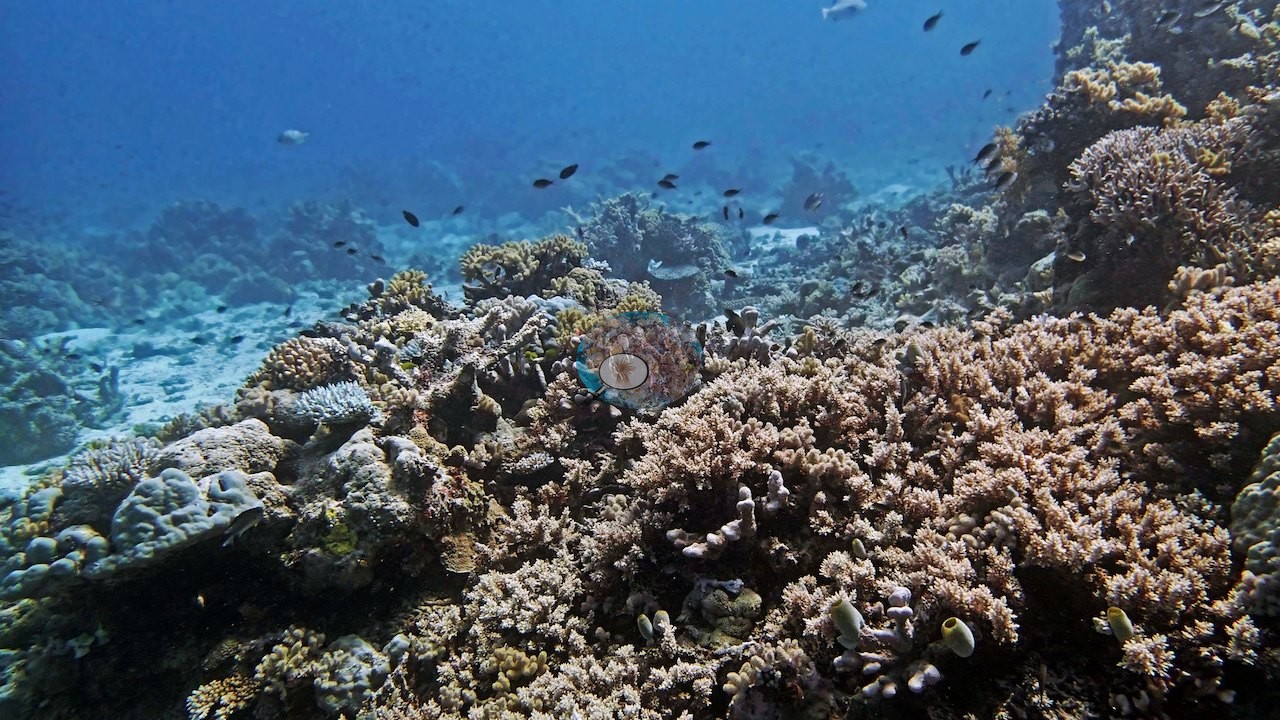
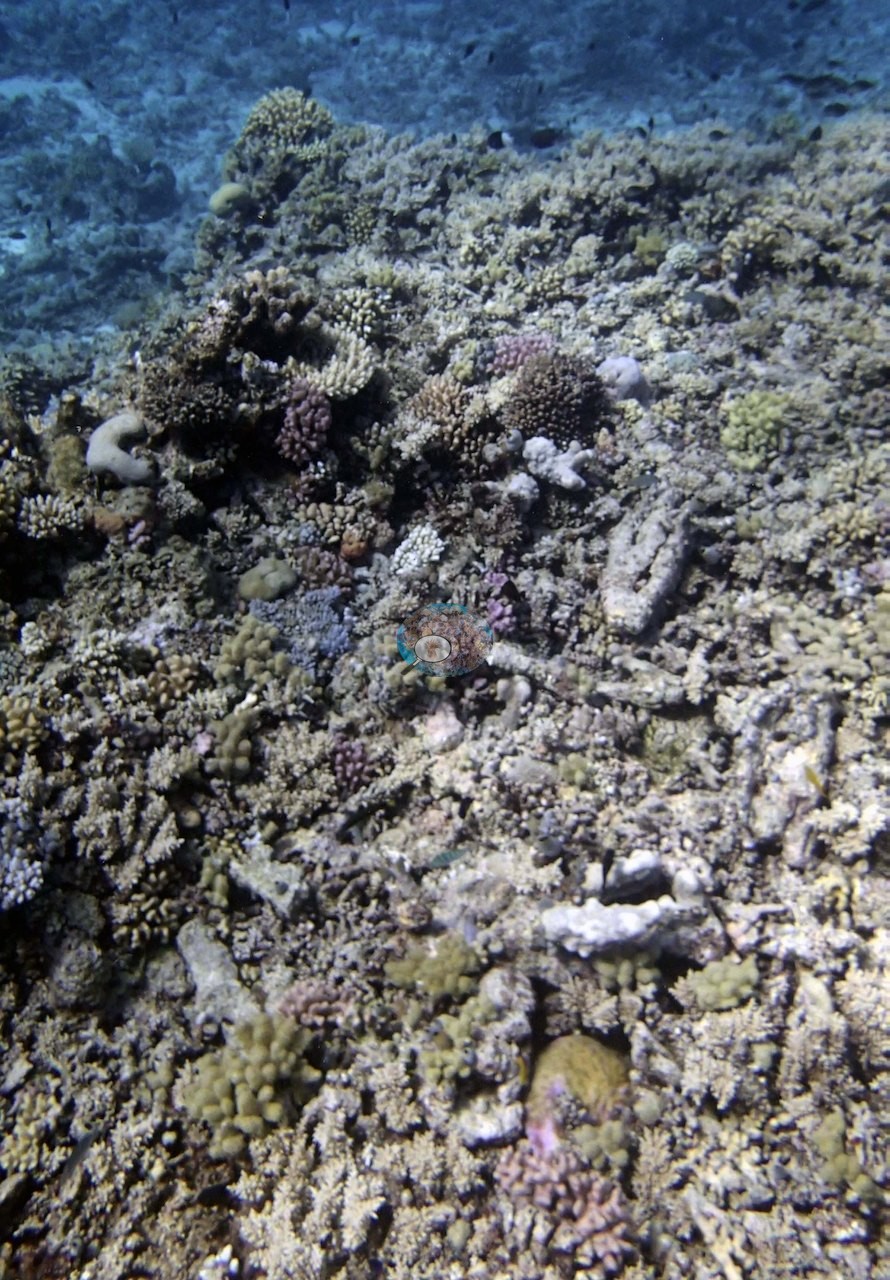
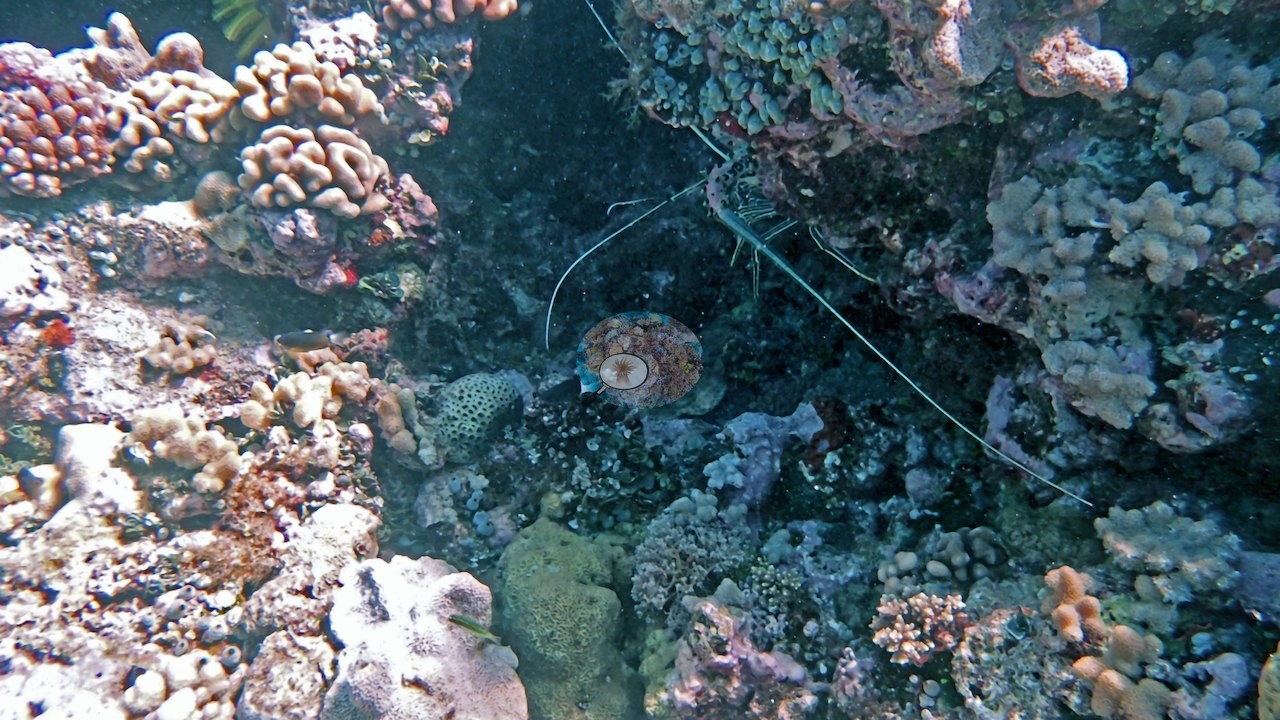
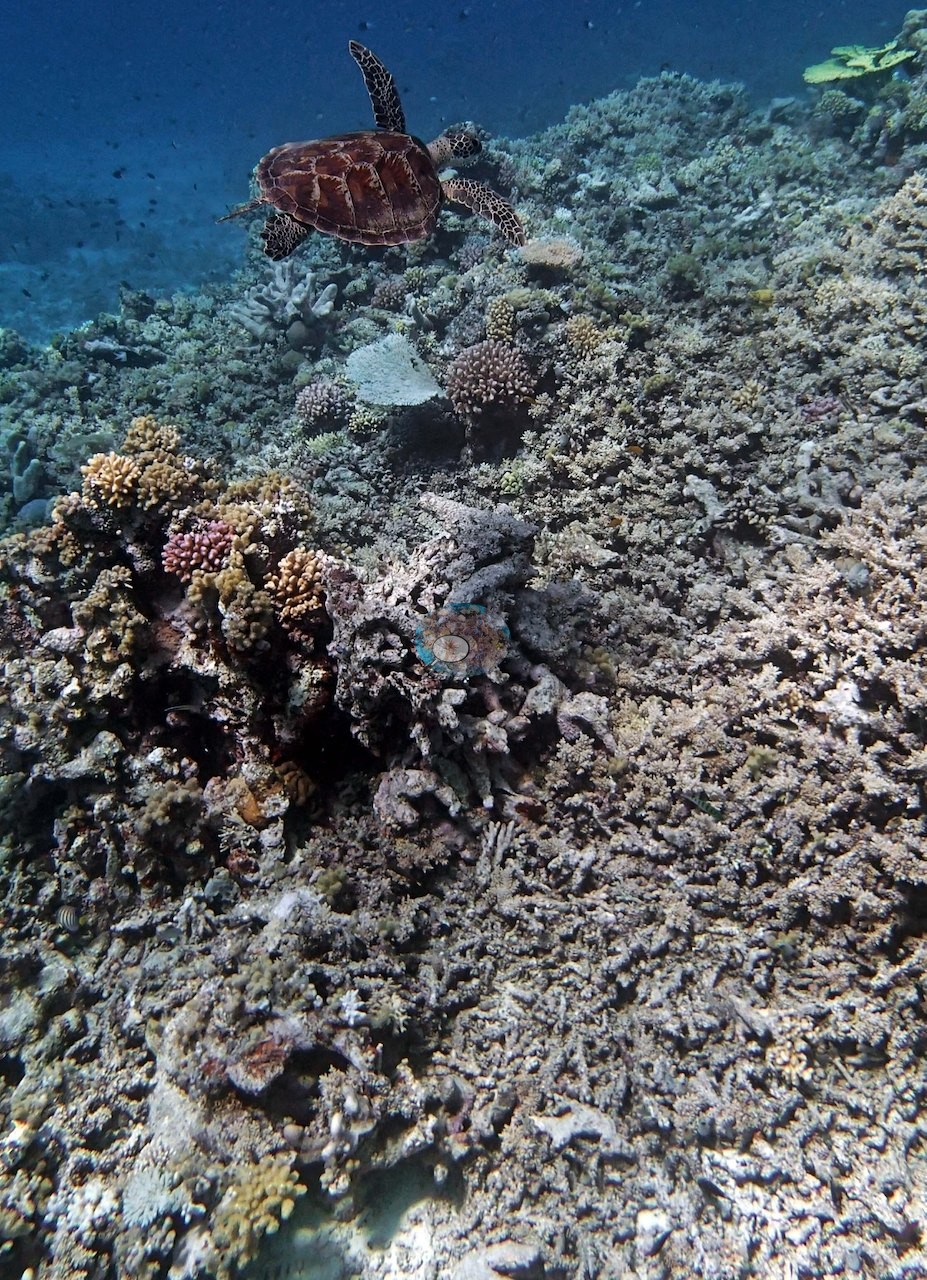
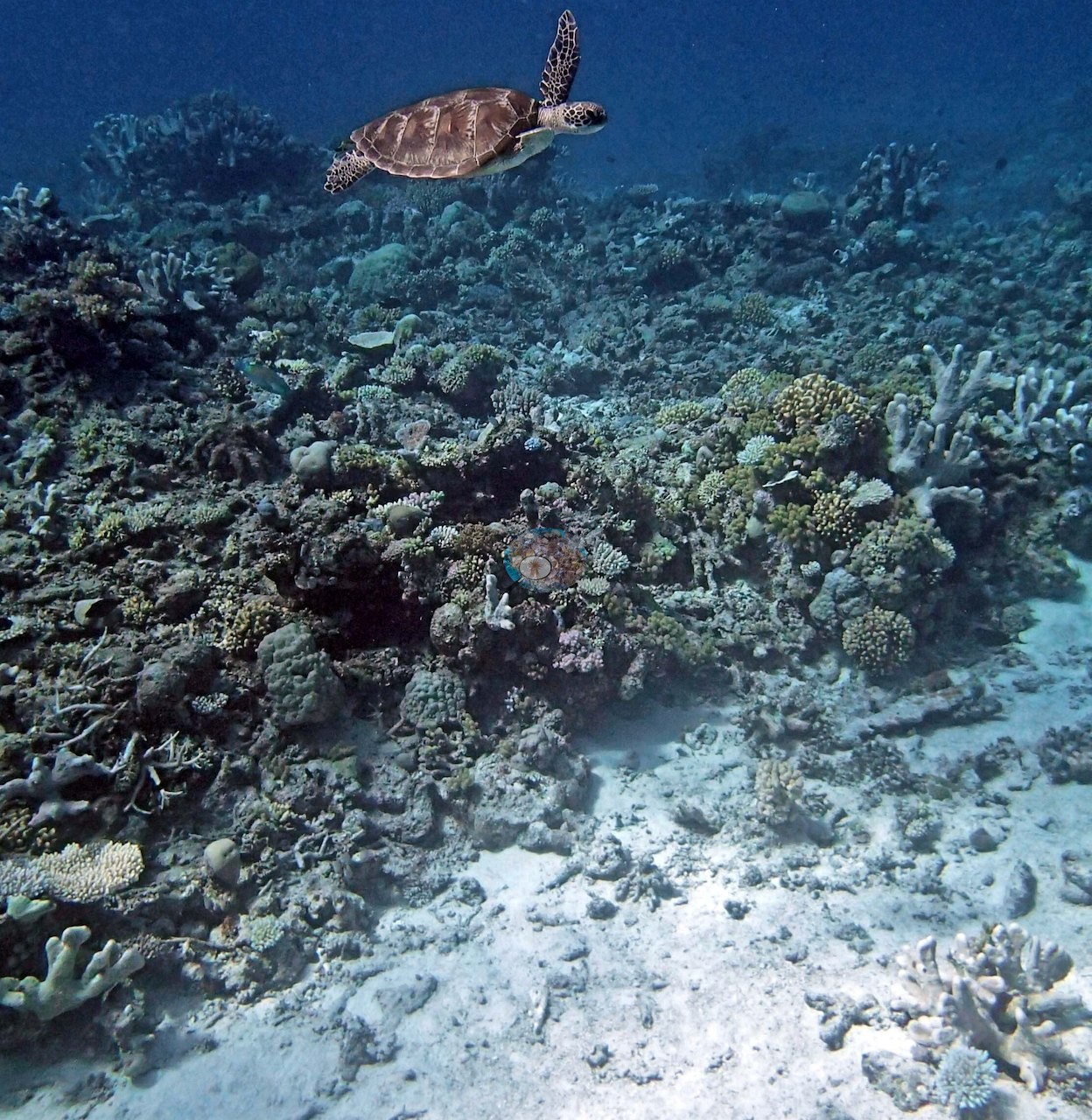
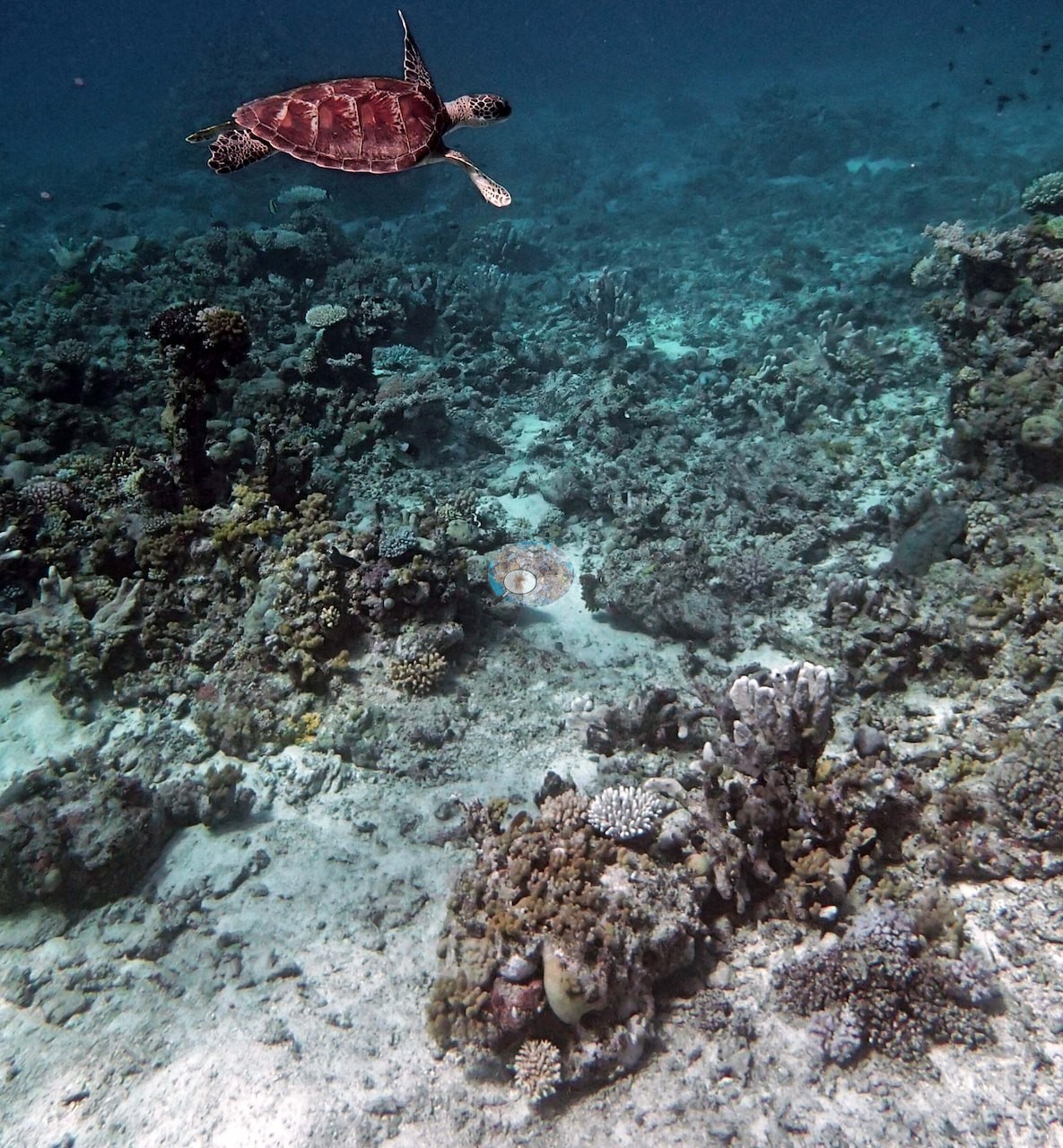
Of the frames described here, two are wide shots of thin, patchy pavement, scattered small colonies, and open sand corridors, with a turtle gliding over the top in each (e.g., Image 1, Image 3).
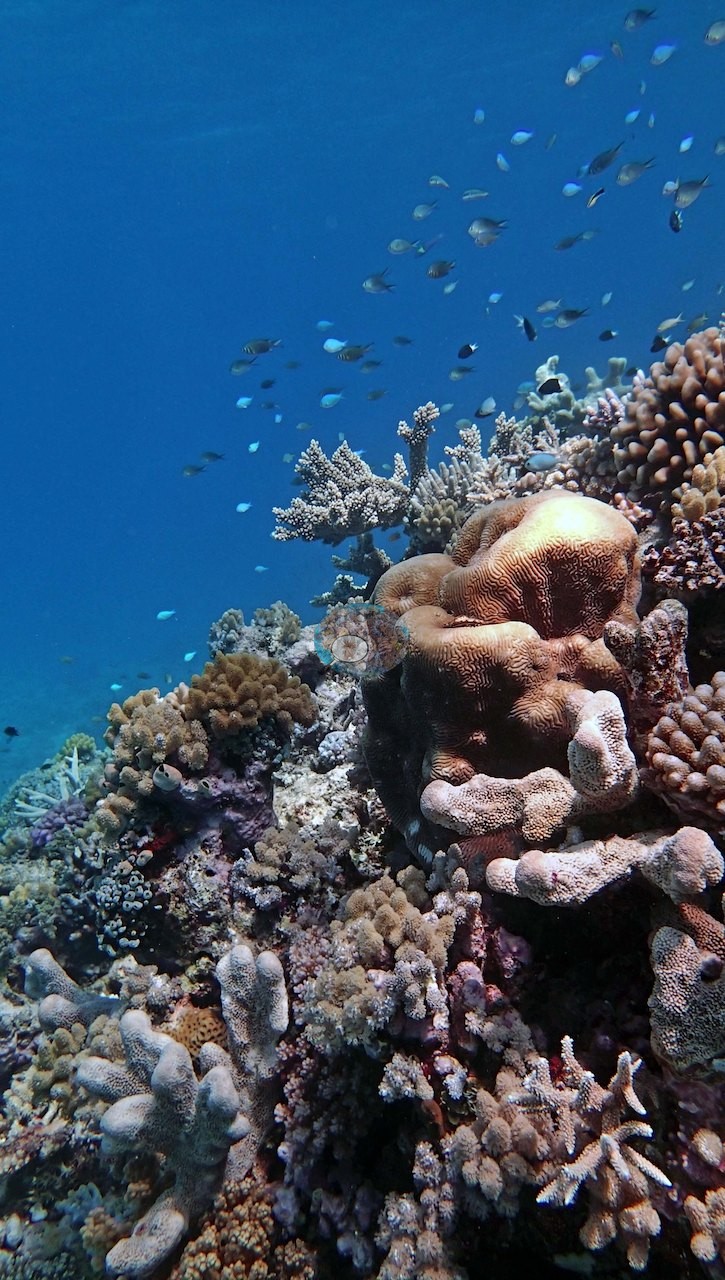
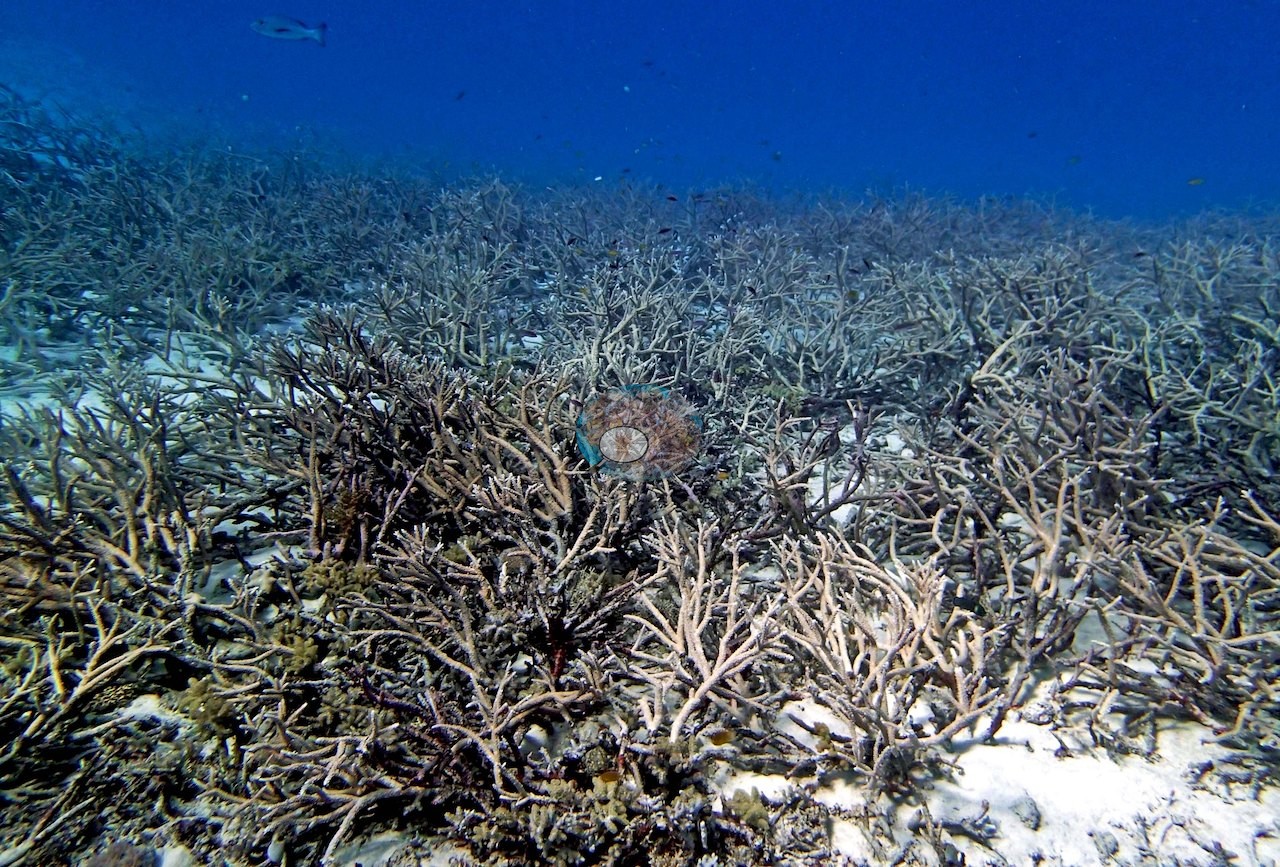
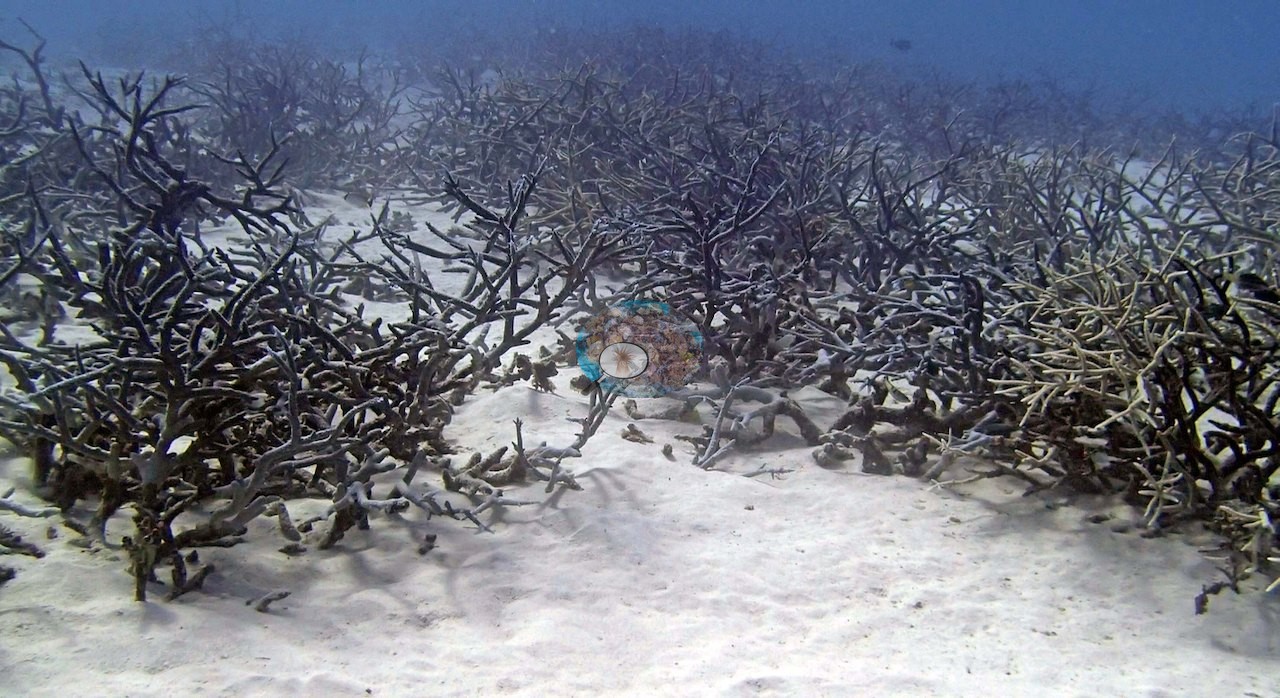
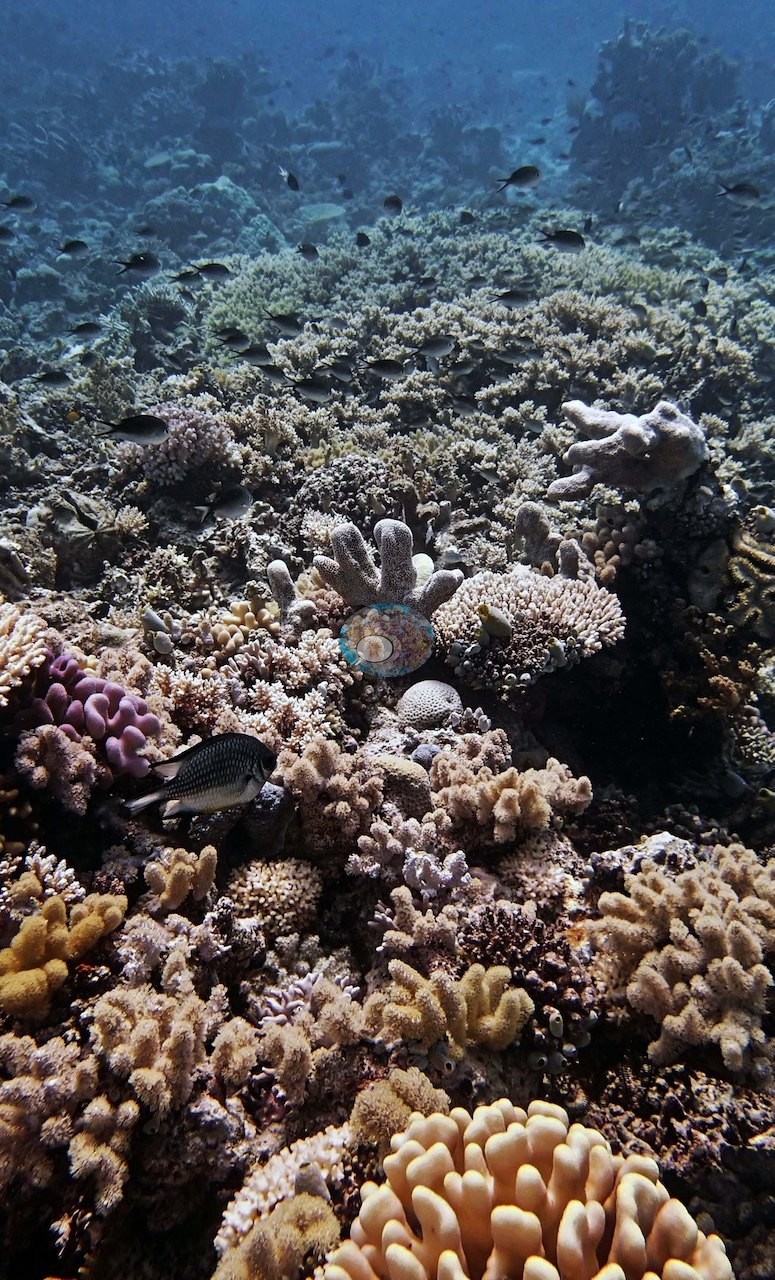
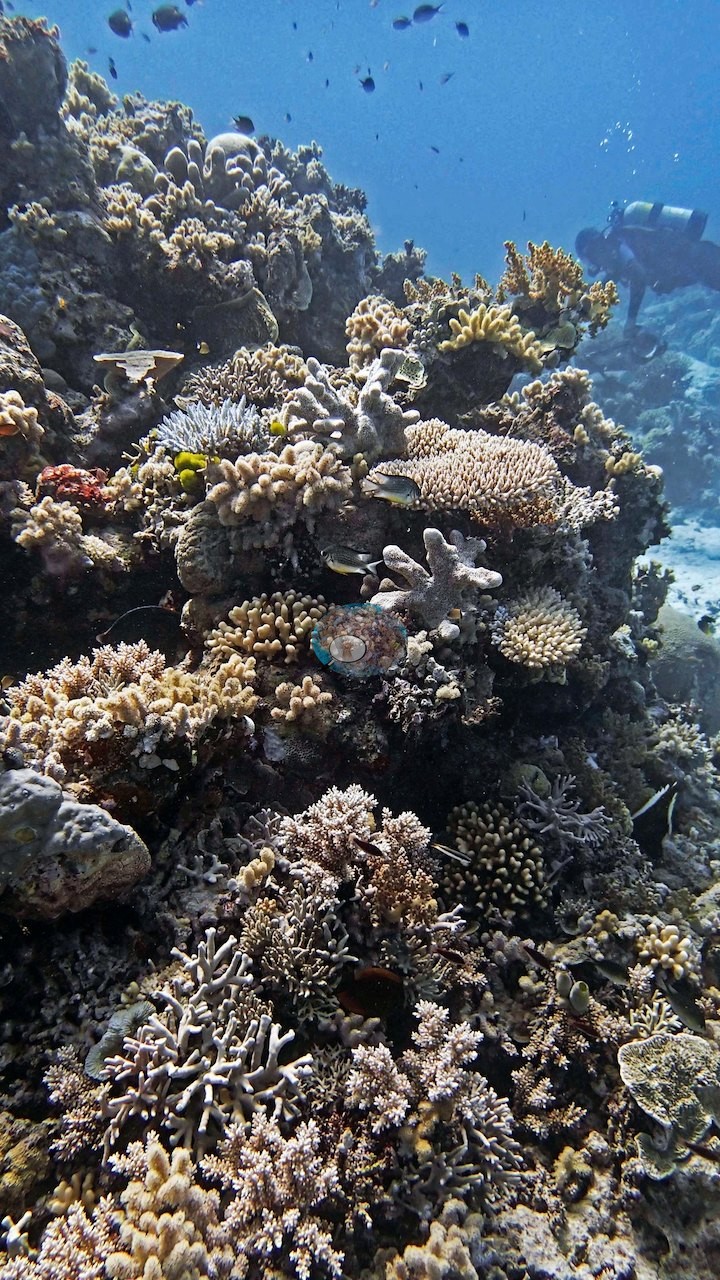
A third is a low, open thicket of brown, pigmented staghorn branches spread across clean white sand (e.g., Image 2), the kind of thicket Anderson logged as common at 15 m.
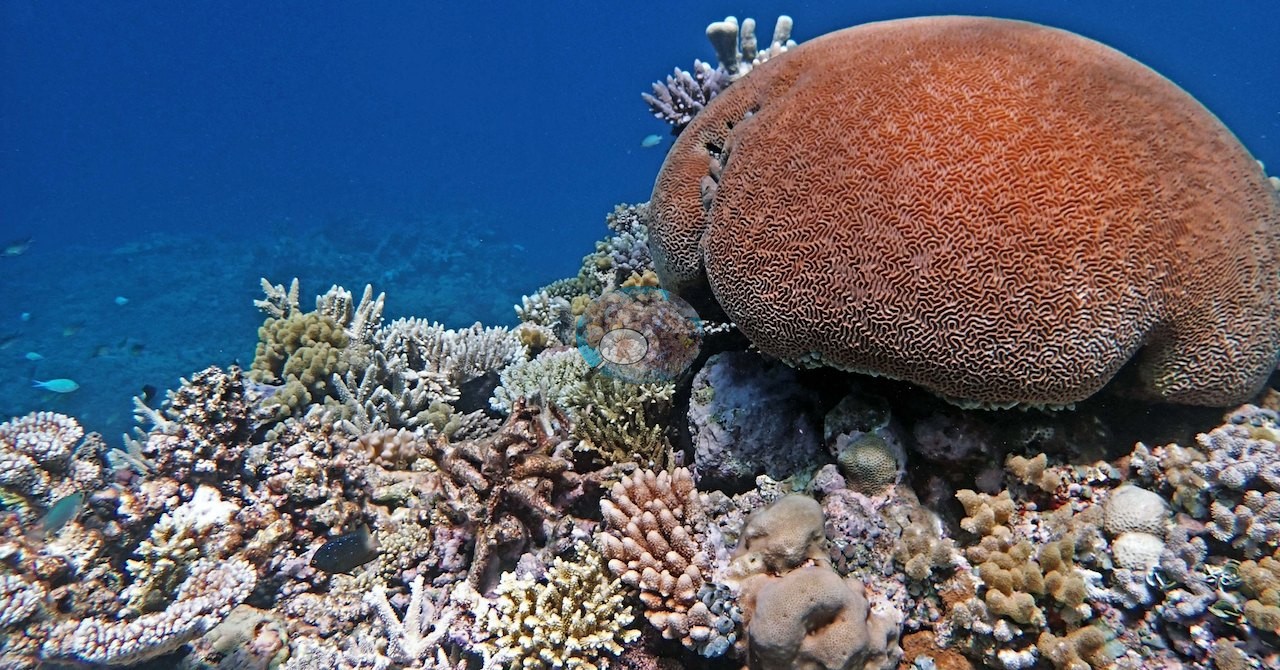
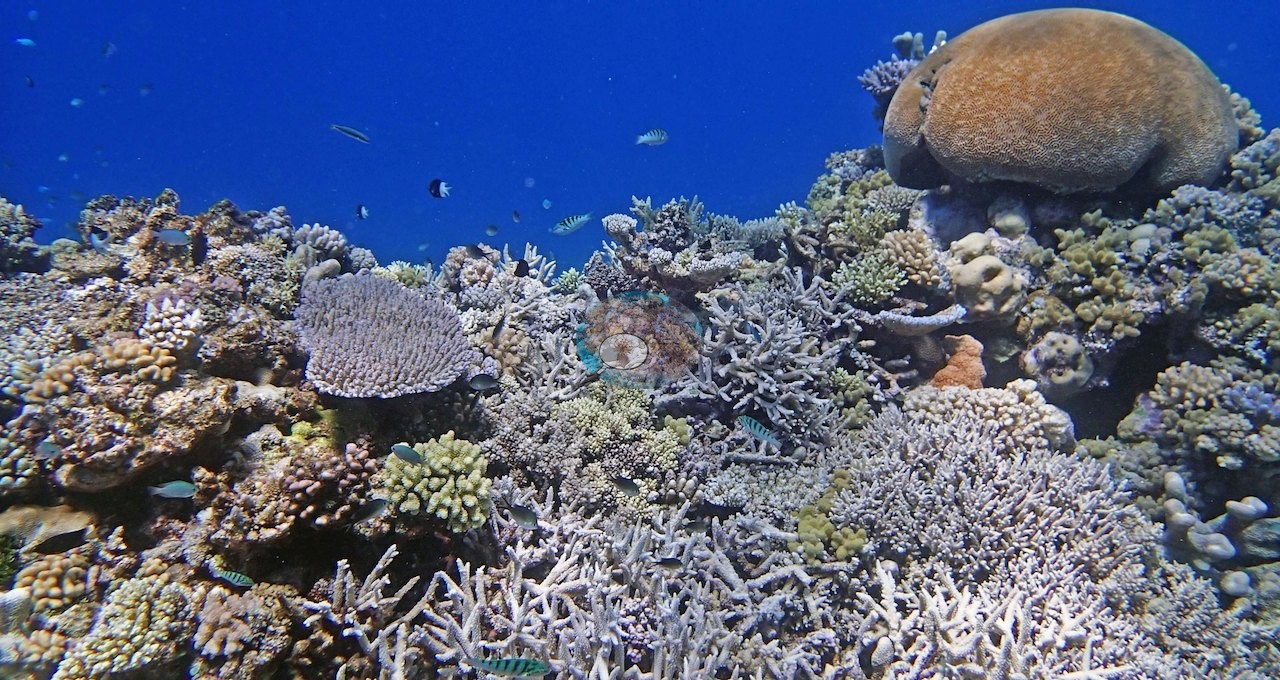
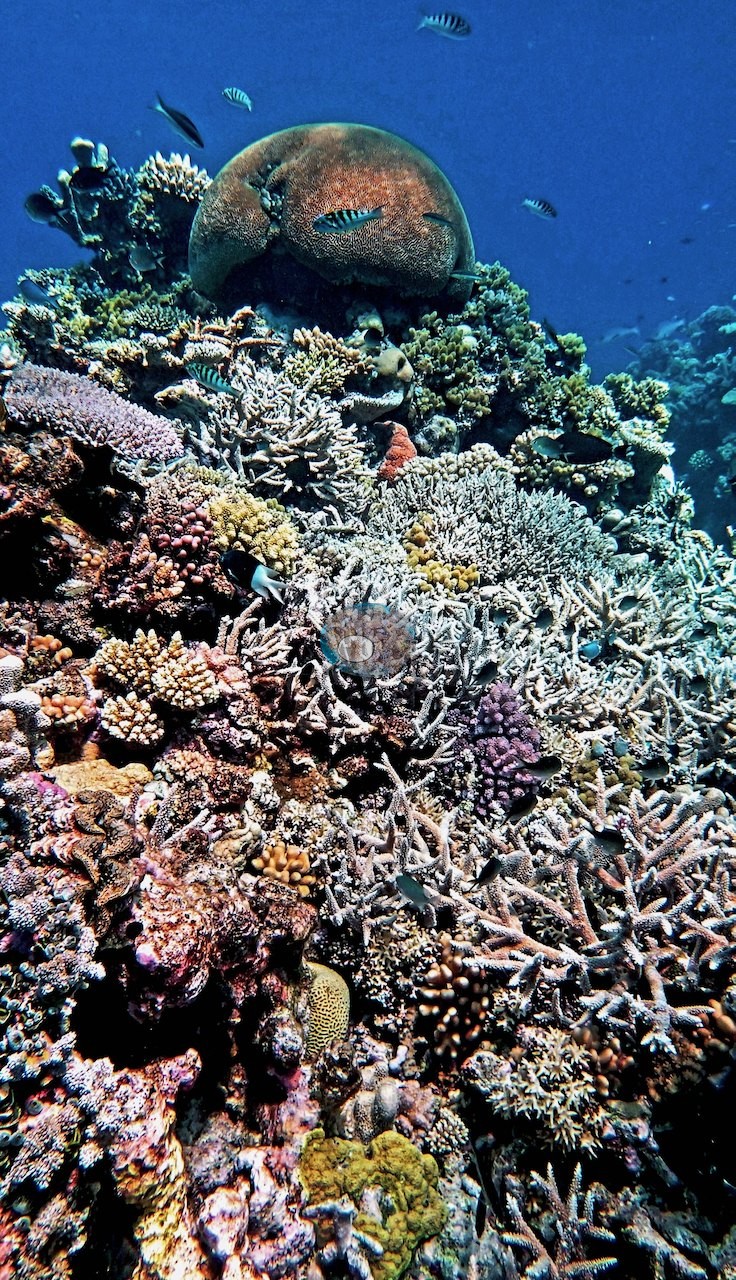
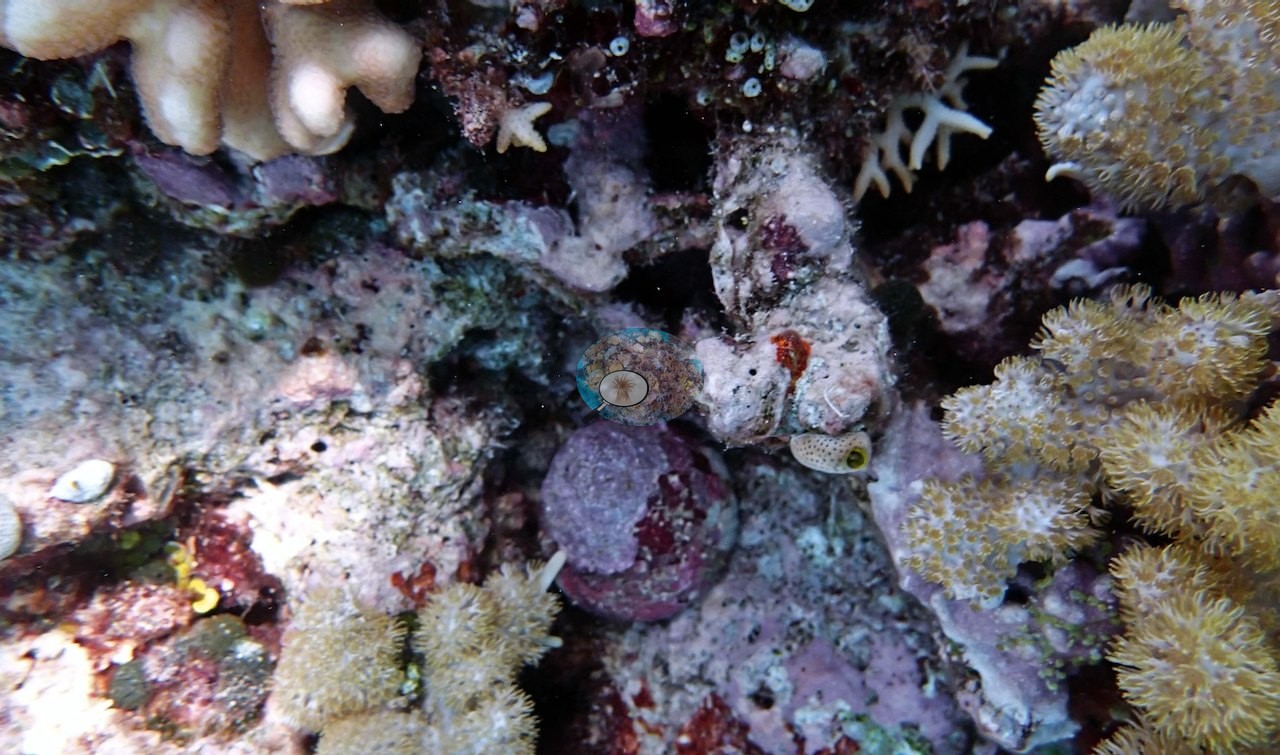
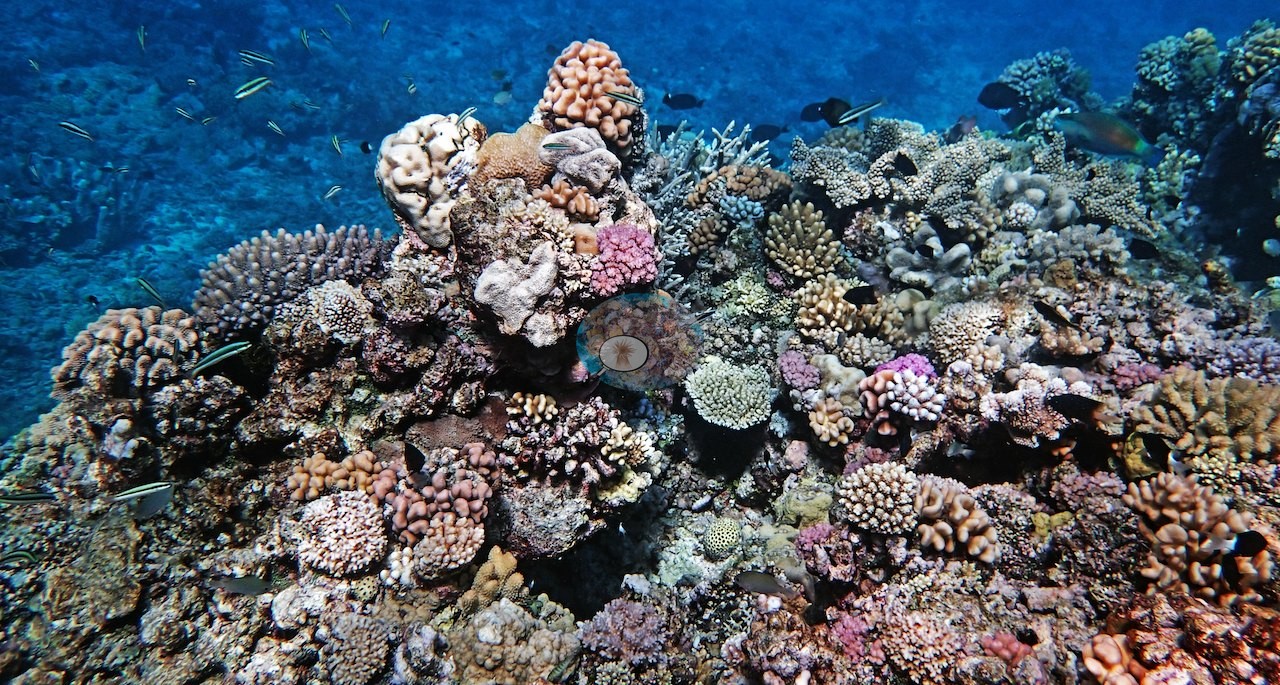
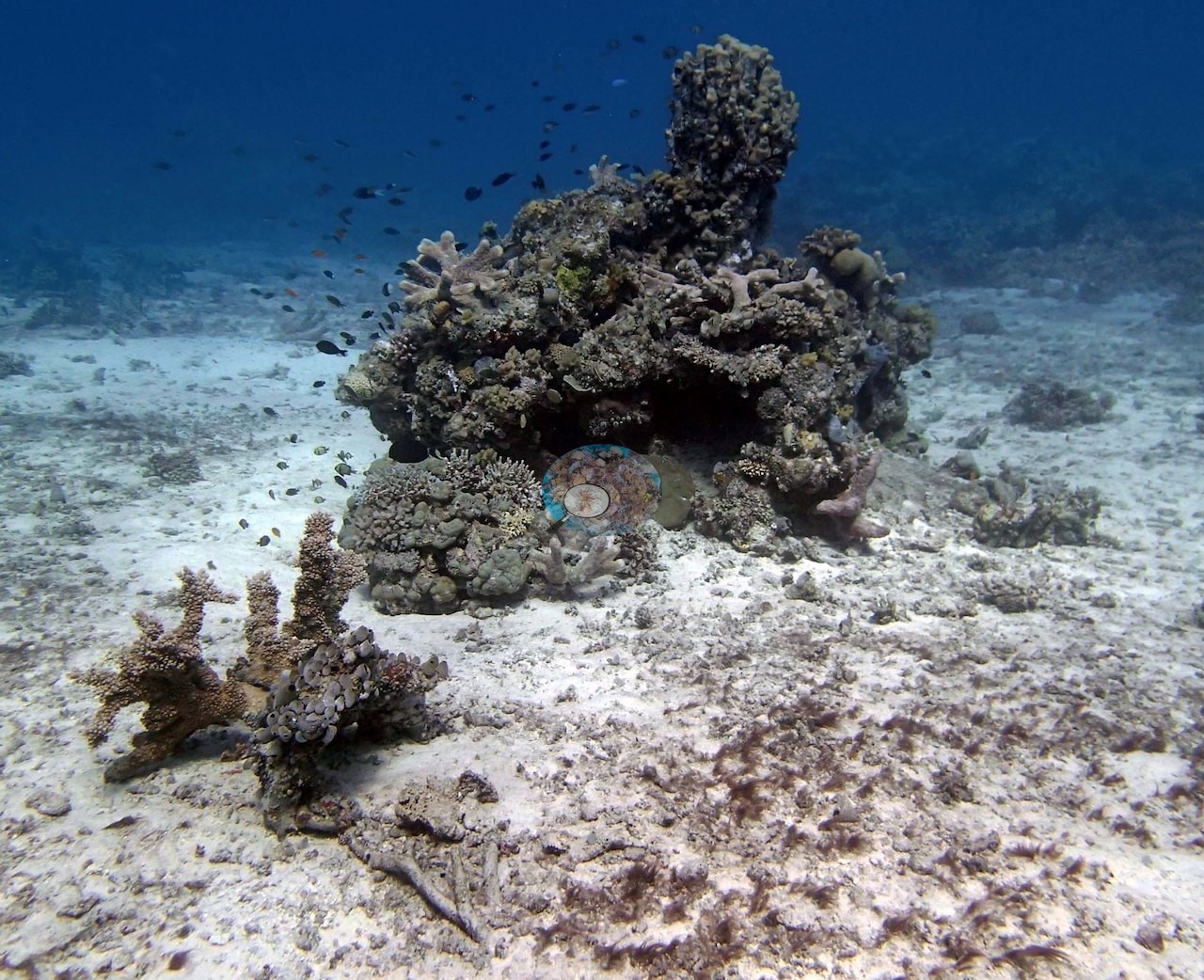
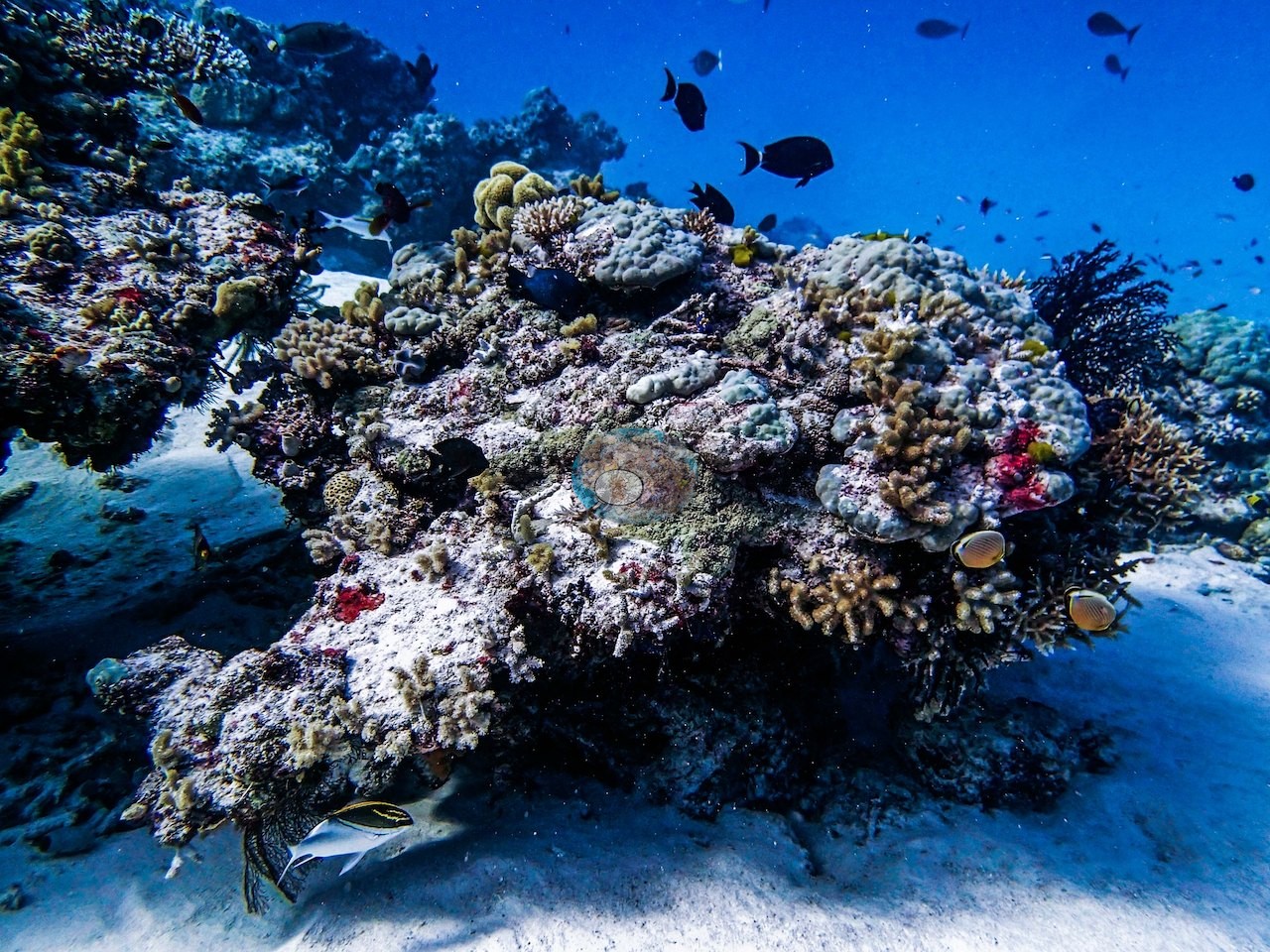
A fourth is a single isolated bommie carrying most of the coral in the frame, butterflyfish and surgeonfish working around it (e.g., Image 4).
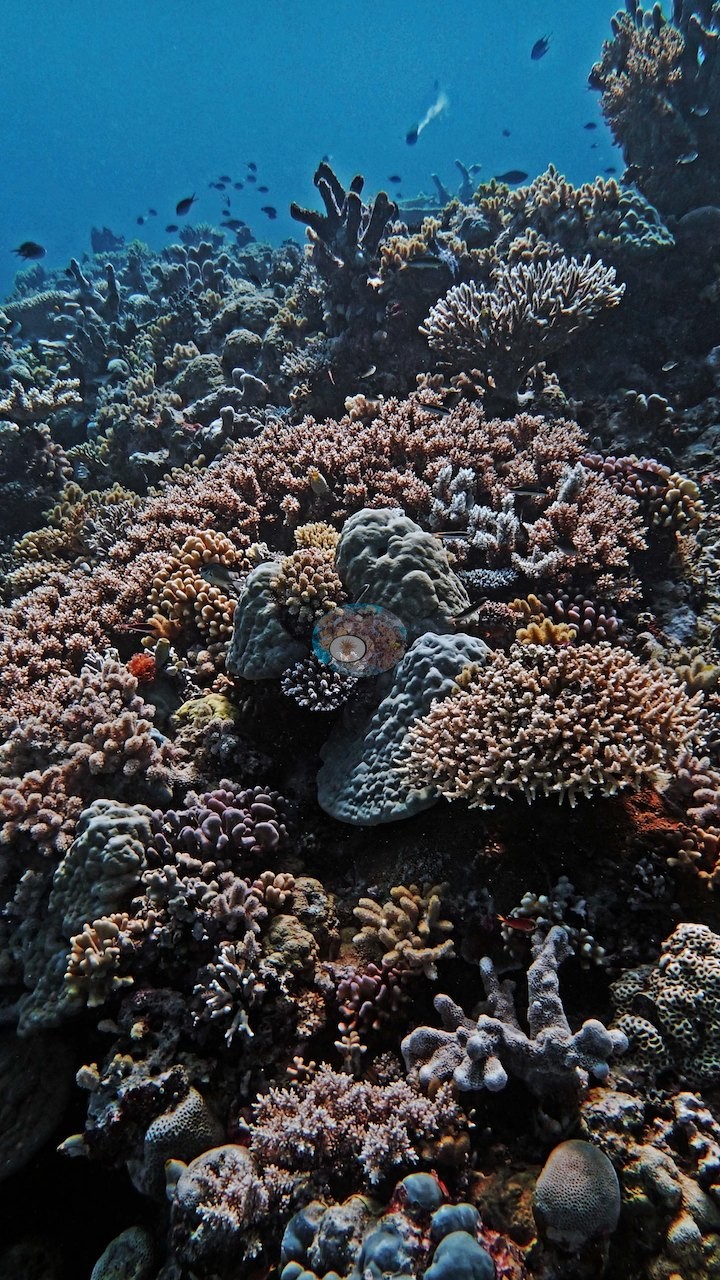
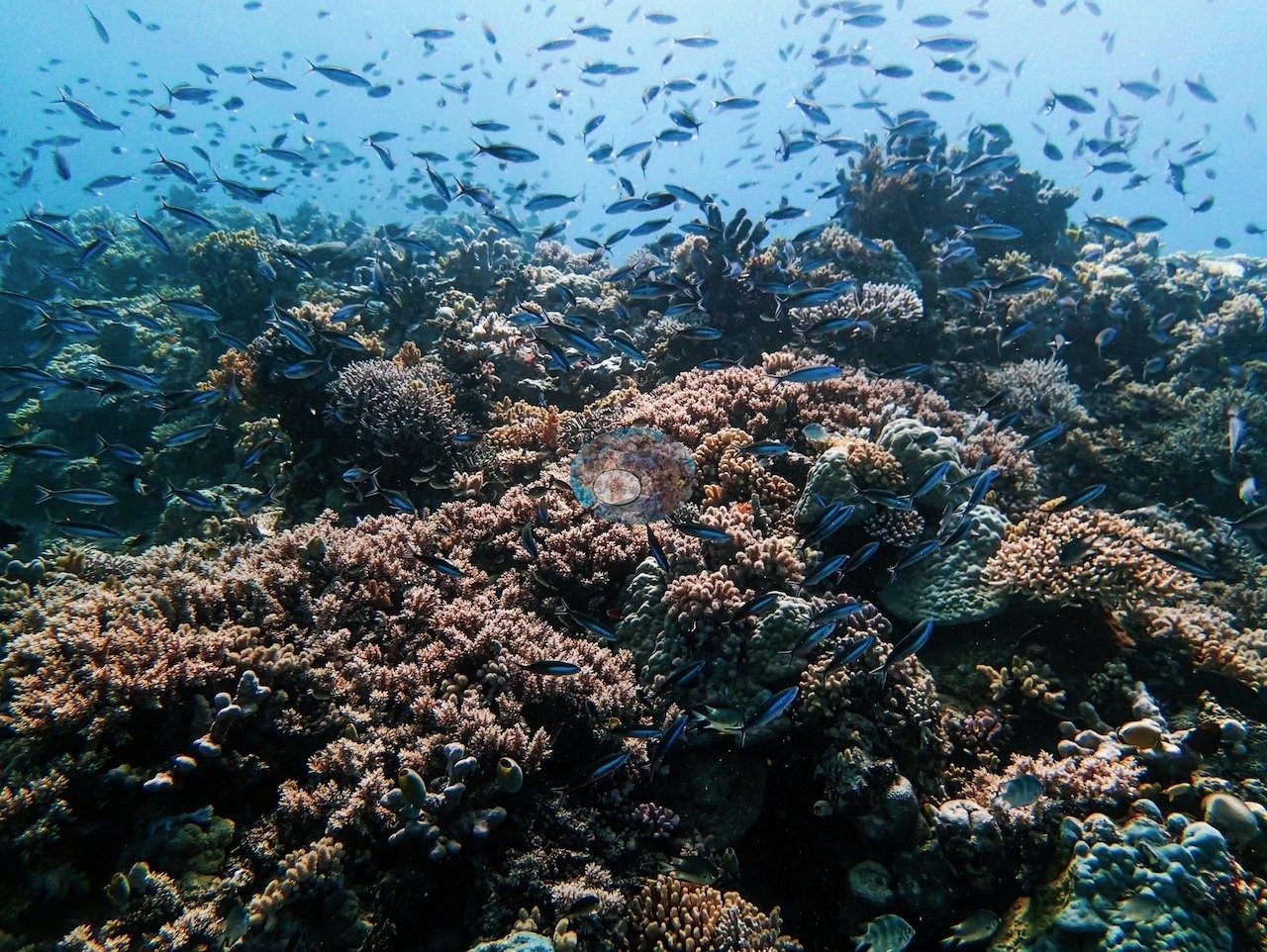
Then the fifth shows the other extreme: a dense sheet of pink and tan branching Acropora under a wall of fusiliers (e.g., Image 5).
A large bommie at 10.5 m, some 15-20 m across and thick with Platygyra, Sinularia, and Lobophyllia, carried an estimated 60-70% live cover. Acropora was the most common coral genus on this station's transects (9.0% of the benthos), followed by Millepora (7.0%) and Pocillopora (2.0%); bare substrate covered 44%, the largest non-coral class. Among the algal classes on this station's transects, turf (17%) led, followed by crustose coralline algae (12%) and erect coralline algae (5.0%).
Coral cover
- Reference: Khaled bin Sultan Living Oceans Foundation, Global Reef Expedition (in situ transect)
- The expedition's in situ point-count transects at this station recorded 18% live coral cover against 36% total algal cover.
- One transect was scored at this station (18%; n = 1, so no SE; Living Oceans Foundation per-transect benthic data); it is the expedition's station value printed above.
Stressors
Anderson's notes record bleached Seriatopora hystrix and S. caliendrum among the corals at 6-7 m and bleached S. caliendrum on the 10.5 m bommie transect, and many Pocillopora damicornis and P. acuta colonies he called "extremely pale" (much like the Seriatopora). Three gallery frames show bleached or very pale branching colonies beside pigmented neighbors (e.g., Image 7, Image 28, Image 36).
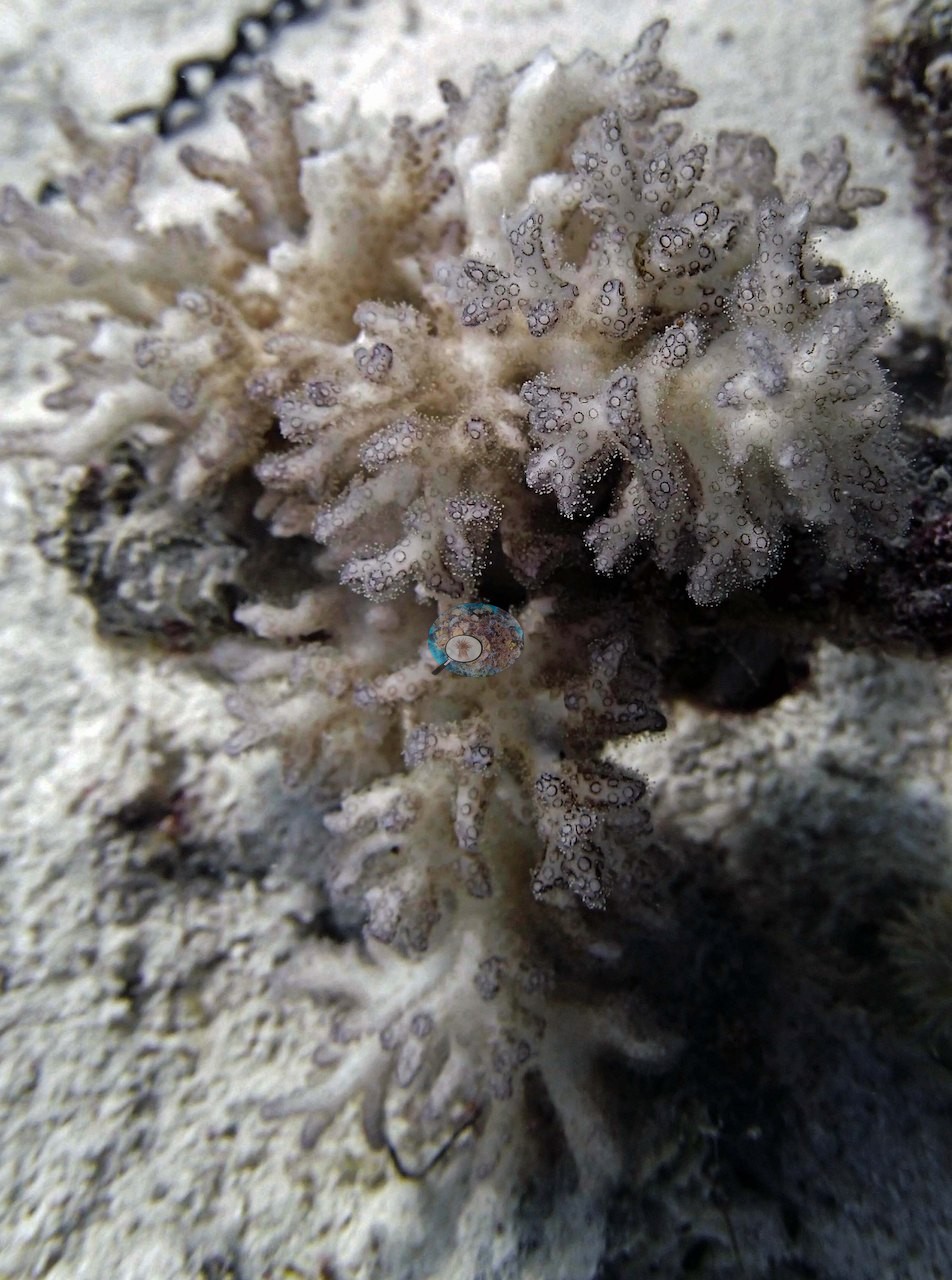
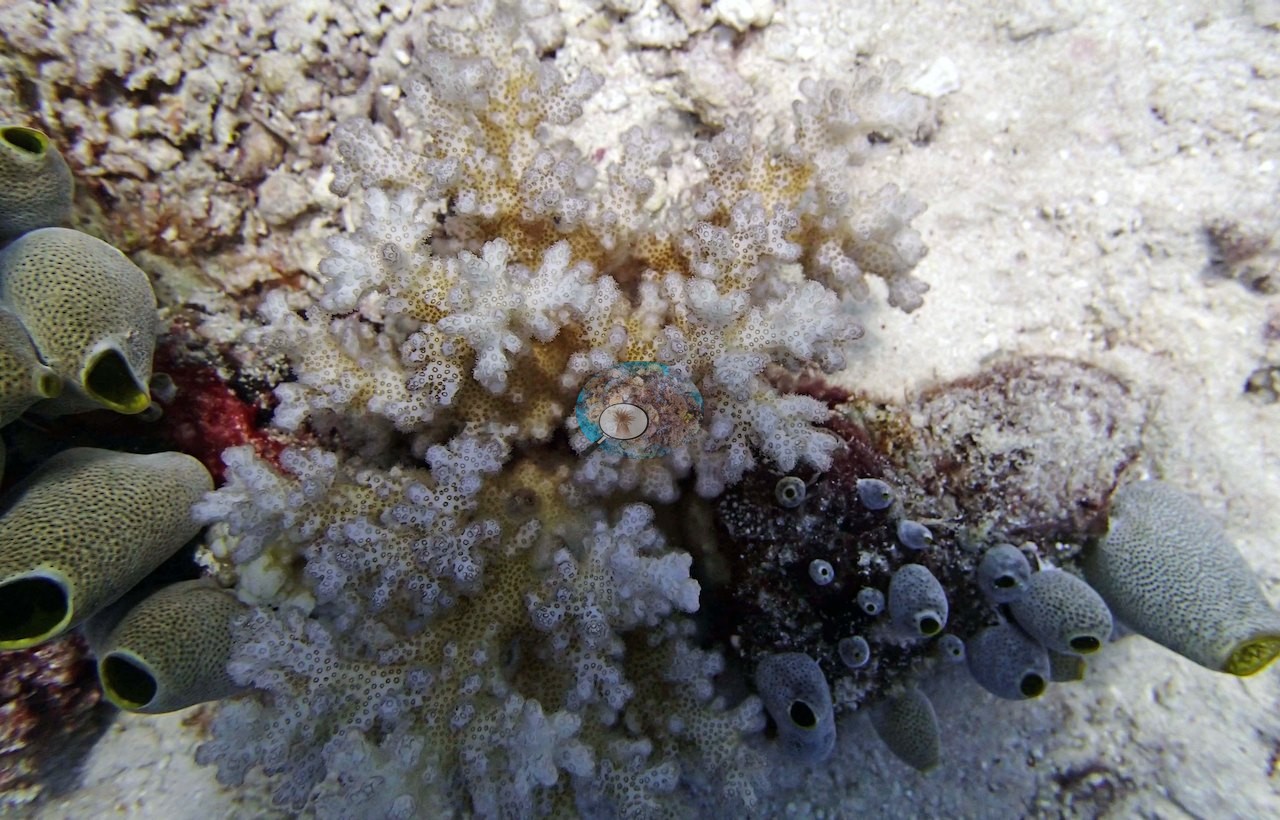
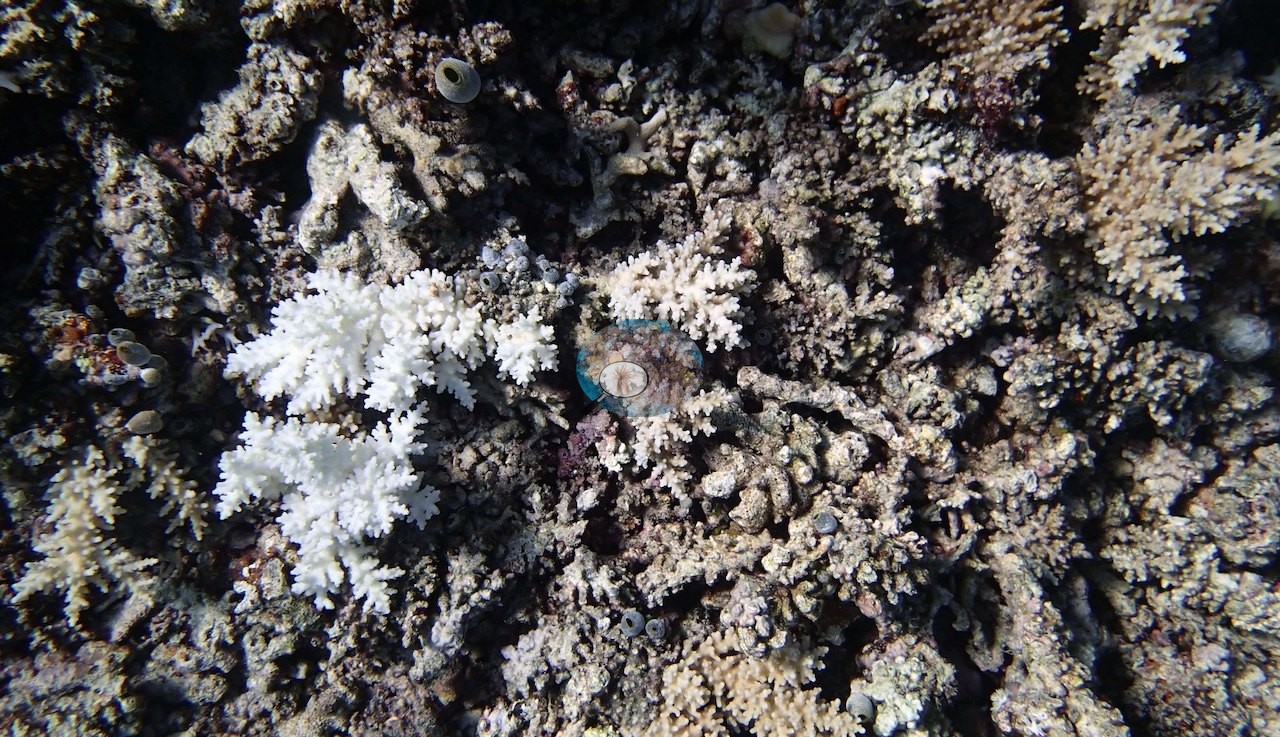
He also noted signs of crown-of-thorns starfish damage at 5 m. The reef lies in a Habitat Protection (Blue) Zone, where line fishing is permitted.
Fish and other fauna
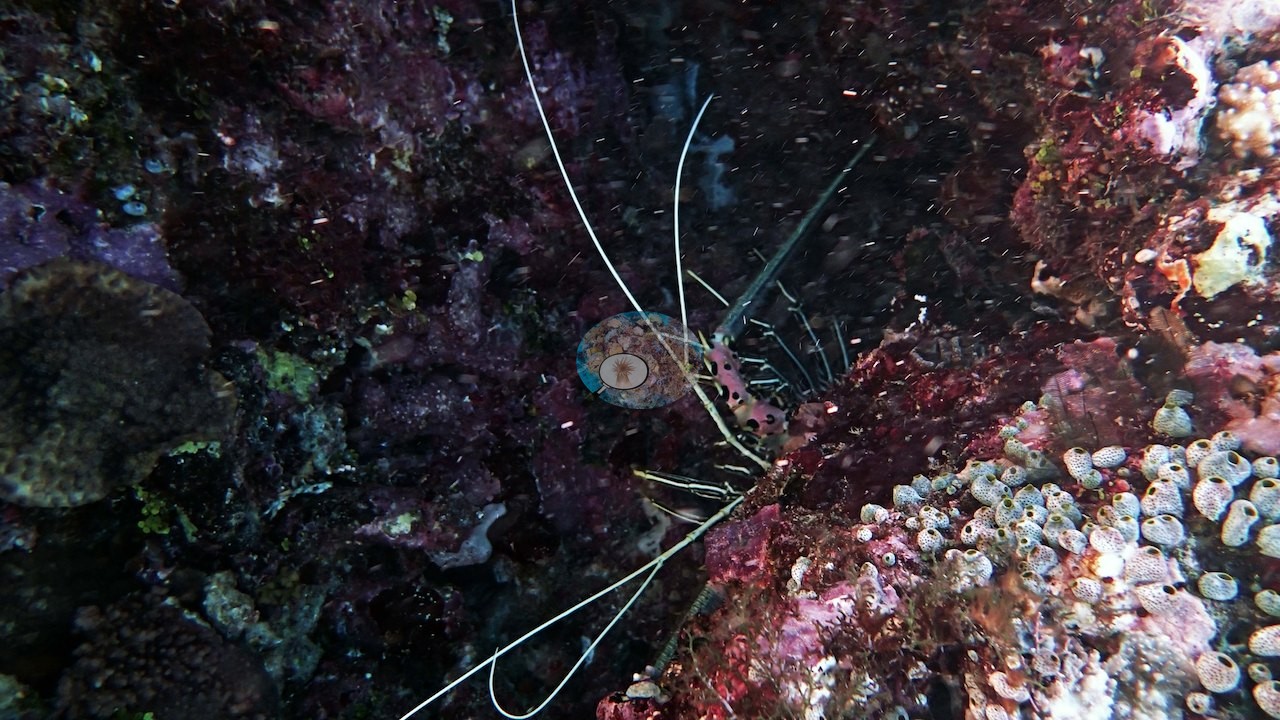
A turtle, only the second of the entire expedition, and a lobster rounded out the sightings.
Comparisons with other data
No prior survey data from this site. If you would like to share yours, please email us.
CV model comparison
More info
The photo row below is a methods comparison only: it is never averaged with the transect and never used as the headline. It compares site means only: the photos come from the same survey dive as the transect but not from the same points.| Method | Hard-coral cover (%) | Photos (n) ± SE |
|---|---|---|
| Transect (published) | 18.0 | |
| CoralSCOP edited | 25.0 | n = 41 · SE 2.8 |
| Claude (edited photos) | 44.0 | n = 41 · SE 4.5 |
The two computer-vision methods disagree by 19.0 pp (25–44%) and read 7.0–26.0 pp above the in-water transect (18%); the headline is the in-water transect because a diver transect is independent of the photographs.
Data & links
- Download benthic survey data (CSV) ↗
- Download all LOF-GRE data (933 sites) ↗
- Photo portfolio ↗
- Coral Reef Diagnostics country page ↗
All images from Coral Reef Diagnostics. Data are from the Khaled bin Sultan Living Oceans Foundation Global Reef Expedition and Coral Reef Diagnostics.
 © Coral Reef Diagnostics.