
Part of the regional summaries: Fiji - Vanua Balavu, Fiji - Northern Lau (Vanua Balavu / Cicia / Nayau), and Fiji - Lau
More info
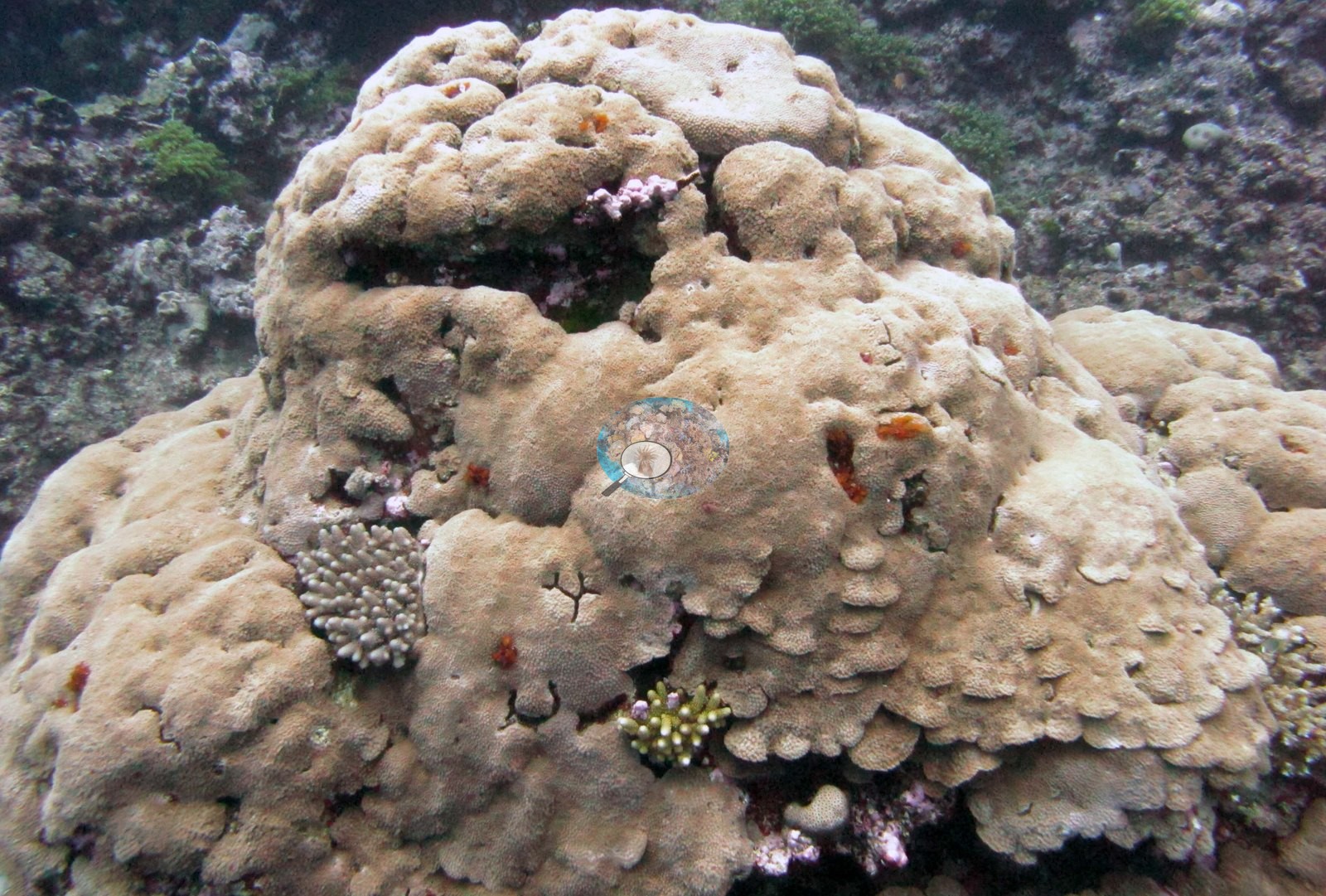
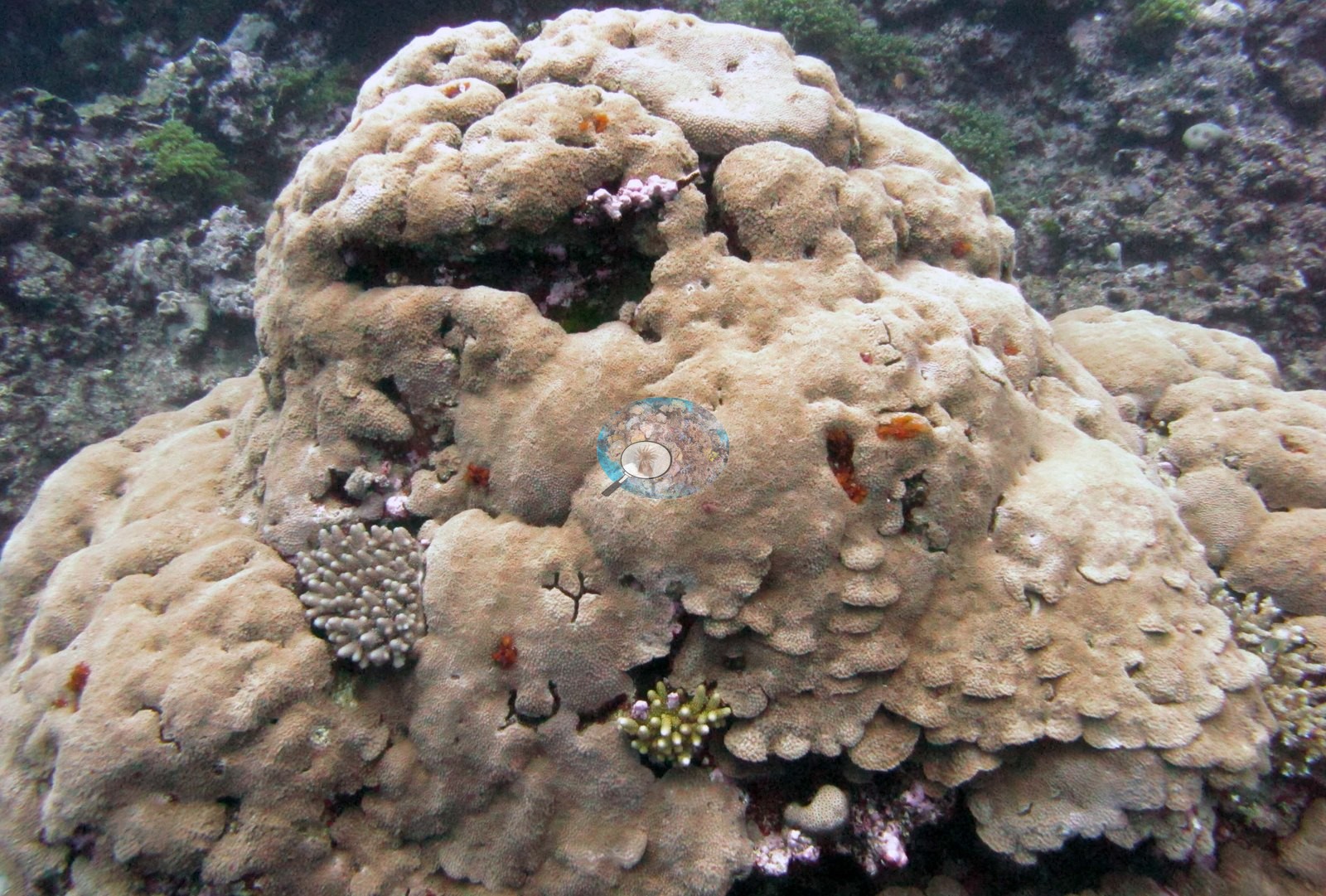
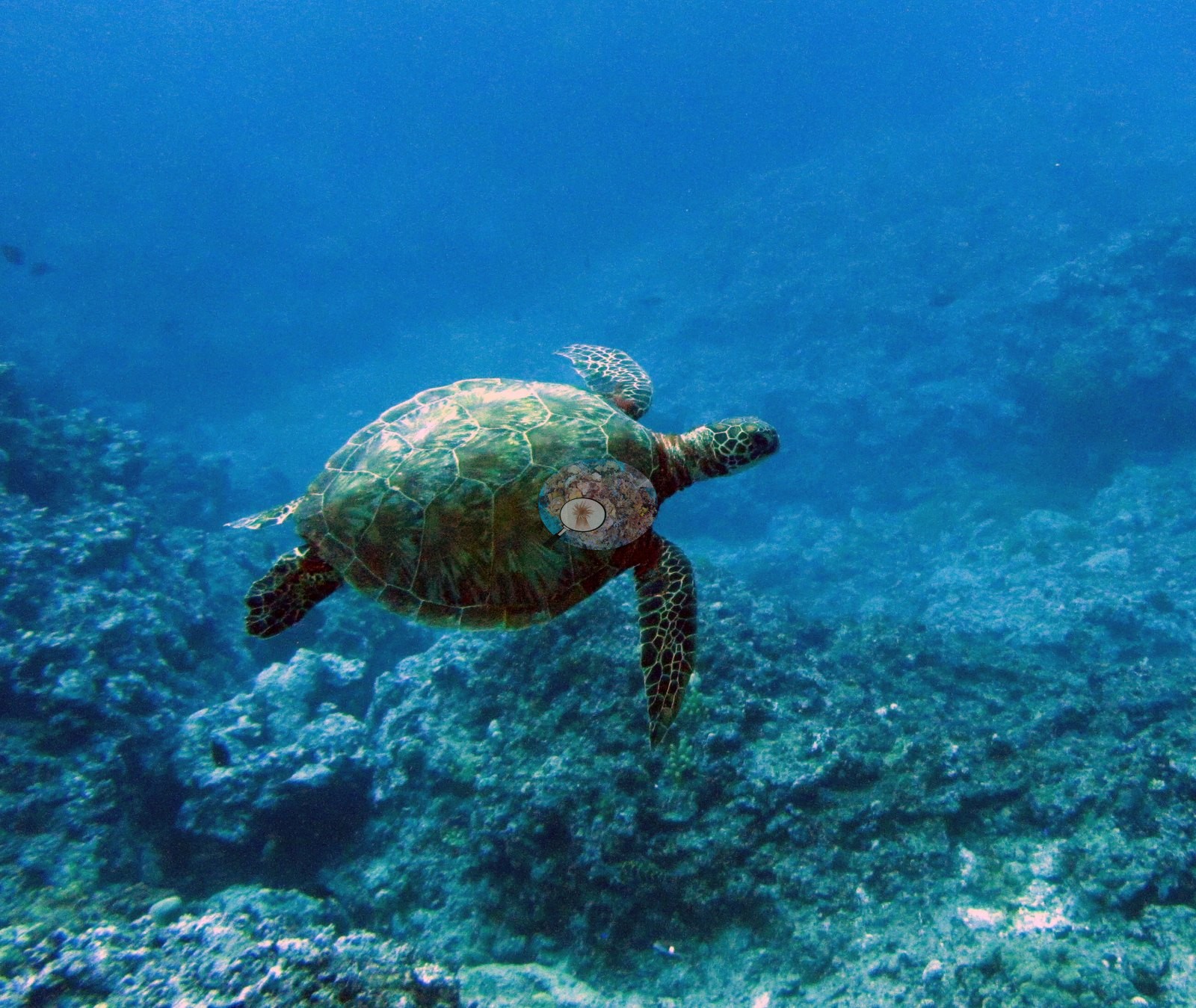
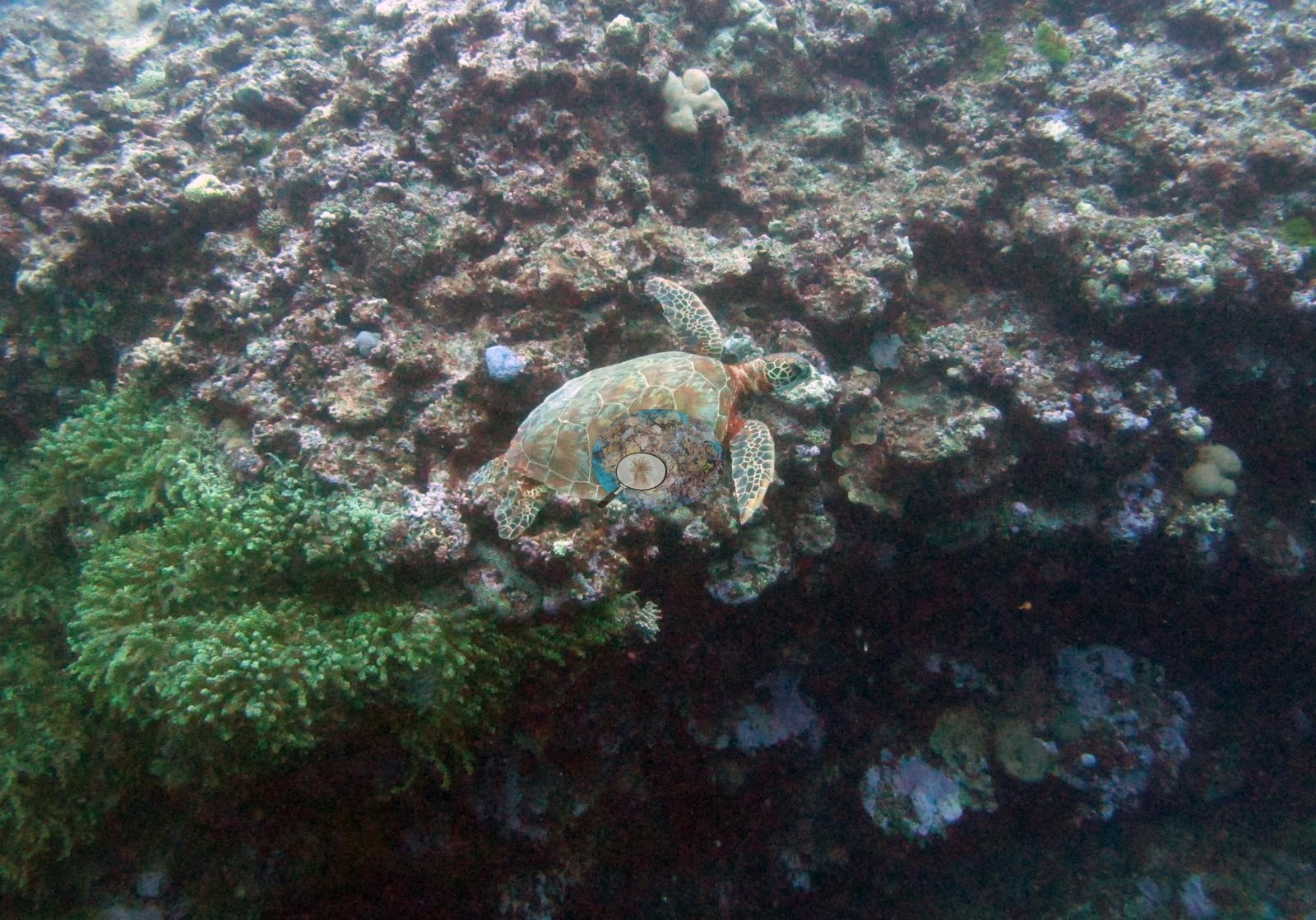
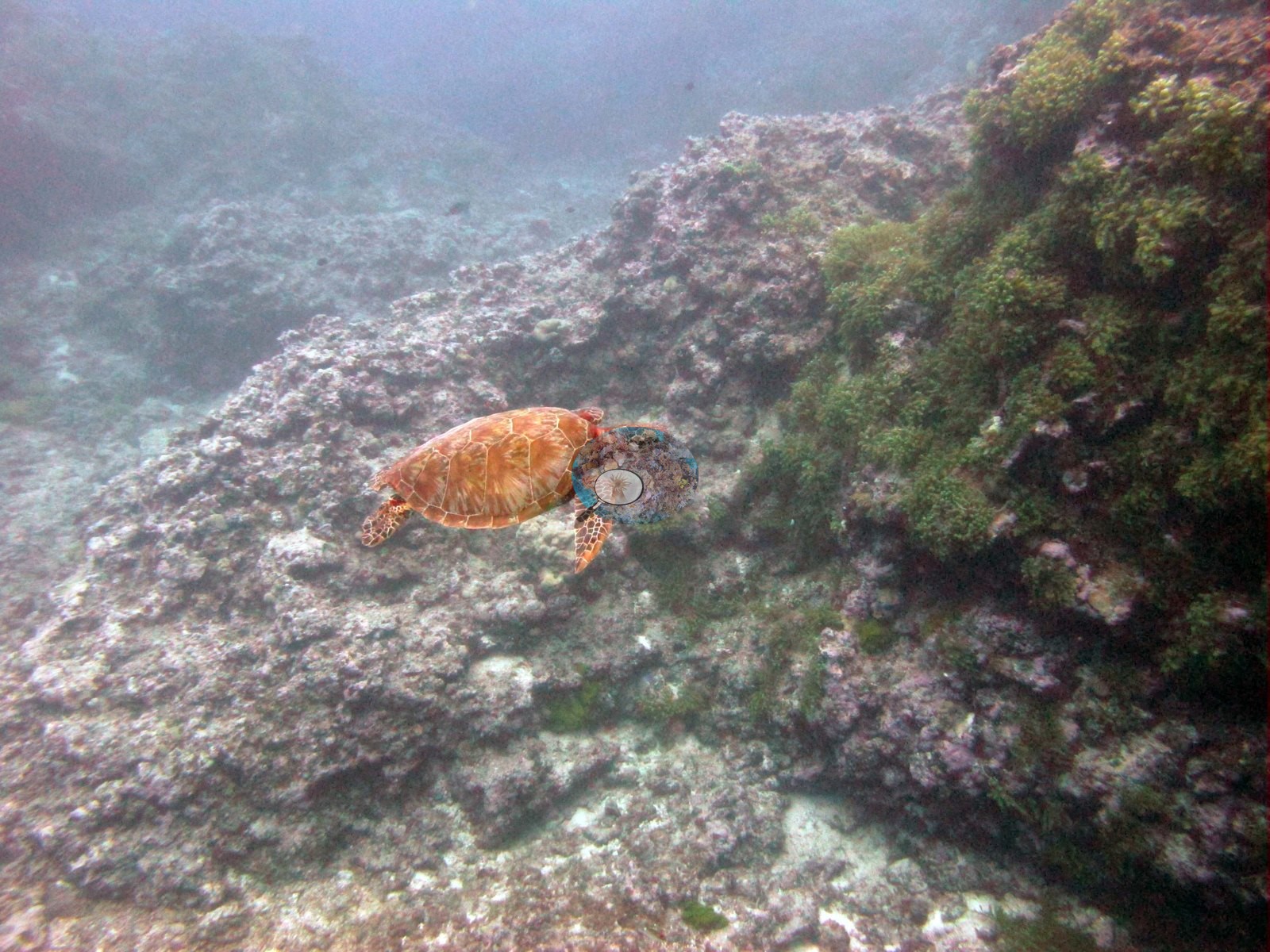
Fiji (NOAA CRW virtual station)A Vanua Balavu reef (dived to 30.8 m) where algae of all kinds cover nearly 90% of the benthos (turf and coralline crust about 60%) and live coral just 9.0%. A weathered Diploastrea boulder (Anderson's identification) carries three small colonies on its surface, and a green sea turtle drifted over the rocky terrain. Surveyed on the Living Oceans Foundation's Global Reef Expedition.
E dua na cakau e Vanua Balavu (a nunu kina ki na 30.8 m) ka ubia na veimataqali lumi kece e voleka ni 90% ni botoni ni waitui (benthos) (lumi lekaleka (turf) kei na lumi vakalase (coralline crust) e rauta ni 60%) ka 9.0% ga na lase bula. E dua na vatu levu ni Diploastrea sa makawa (e vakatakilai ko Anderson) e tu kina e tolu na lase lalai ena dakuna, ka dua na vonu (green sea turtle) e qalo sivita na vanua vatuvatu.
AI translation of this summary; the English is authoritative. (low confidence)
CTD-cast midpoint; the cast read 26.8°C throughout
🗺 Detailed map of the Global Reef Expedition dive sites, Vanua Balavu, Fiji (Khaled bin Sultan Living Oceans Foundation; opens in a new window)
Site description
Setting
Off Vanua Balavu (dived to 30.8 m), this Fijian reef wears algae like a green coat — algae of all kinds blanket almost 90 percent of the seafloor (turf and coralline crusts about 60%), leaving live coral thin at just 9.0%.
General benthic features
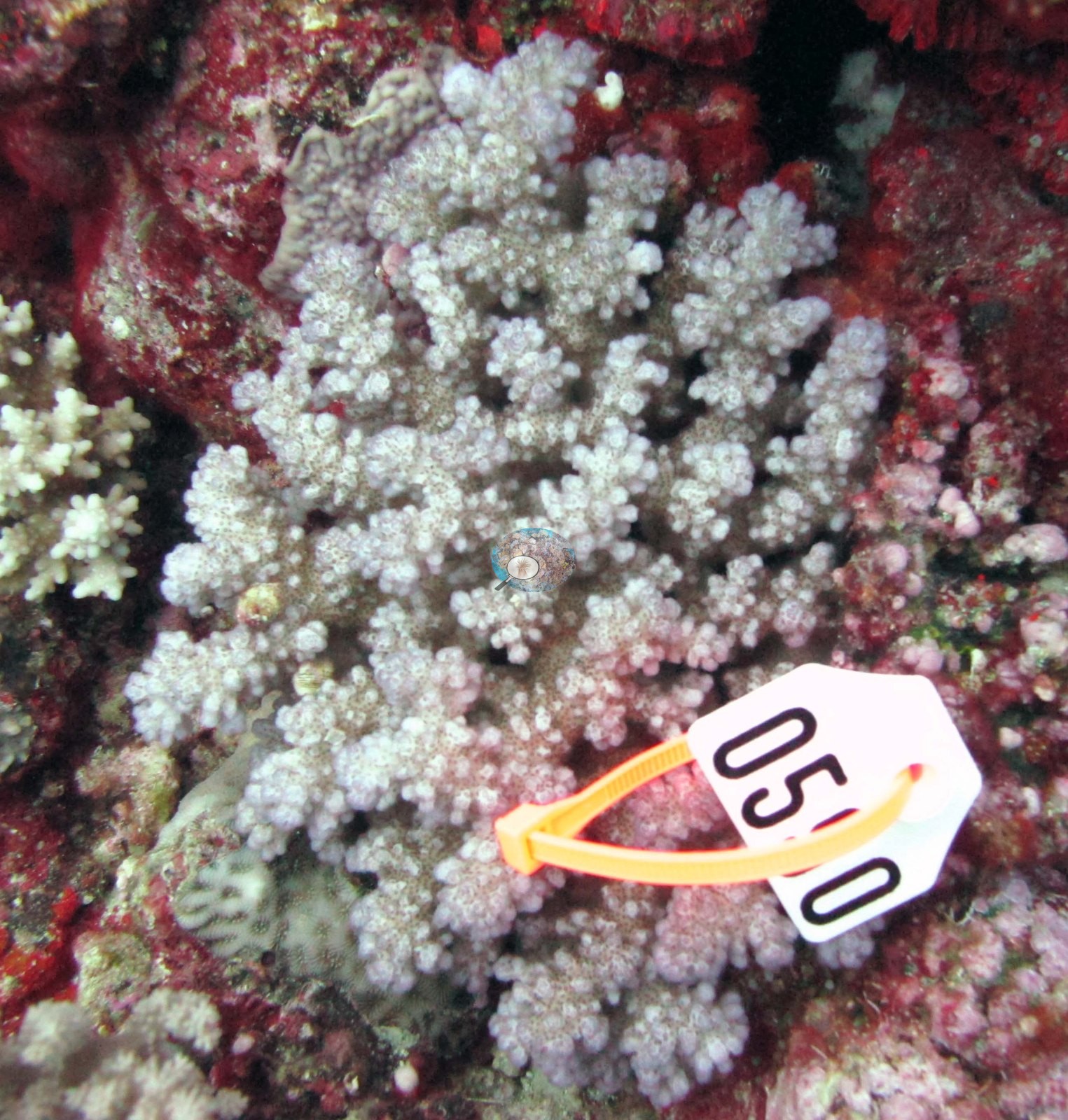
What coral remains still holds its ground: a weathered, cauliflower-textured Diploastrea boulder (Anderson's identification) rises from the rubble with three small colonies growing on its surface (e.g., Image 1), and a tagged colony (20 m, per the notes) sits amid crimson coralline algae (e.g., Image 2).
Anderson's own log for this dive notes "dead coral", which none of the five photographs here shows.
Coral cover
- Reference: Khaled bin Sultan Living Oceans Foundation, Global Reef Expedition (in situ transect)
- Coral cover: 9.0%.
- Live hard coral measured on in situ benthic transects during the Khaled bin Sultan Living Oceans Foundation Global Reef Expedition, against total algal cover (all algal groups) of 90% of the benthos.
- Transect data are this site's authoritative cover value; no computer vision or image-derived product overrides it.
- Transect mean 9.0 ± 1.7% SE (n = 4 transects; Living Oceans Foundation per-transect benthic data); the headline above is this all-transect mean.
Stressors
Anderson's dive log notes “dead coral” here without a cause, and the expedition's site notes for fore-reef stations FJVB57, FJVB60, FJVB61, and FJVB69 record large cyanobacterial mats and old dead coral. The Living Oceans Foundation transects here recorded 5.3% cyanobacteria and no recently dead coral; they have no bleaching, disease, or crown-of-thorns field.
Fish and other fauna
The real showstopper, though, glides rather than grows — a green sea turtle, shell burnished amber by the surge, drifts unhurried over the rocky terrain, pausing near algae-draped ledges before slipping back into the blue (e.g., Image 3, Image 4, Image 5).
Comparisons with other data
Apart from the Living Oceans Foundation survey shown here, we found no other surveys at this site as of 2026. If you would like to share yours, please email us.
Data & links
- Download benthic survey data (CSV) ↗
- Download all LOF-GRE data (933 sites) ↗
- Photo portfolio ↗
- Coral Reef Diagnostics page for this area ↗
All images from Coral Reef Diagnostics. Data are from the Khaled bin Sultan Living Oceans Foundation Global Reef Expedition and Coral Reef Diagnostics.
 © Coral Reef Diagnostics.