
Part of the regional summaries: Fiji - Vanua Balavu, Fiji - Northern Lau (Vanua Balavu / Cicia / Nayau), and Fiji - Lau
More info
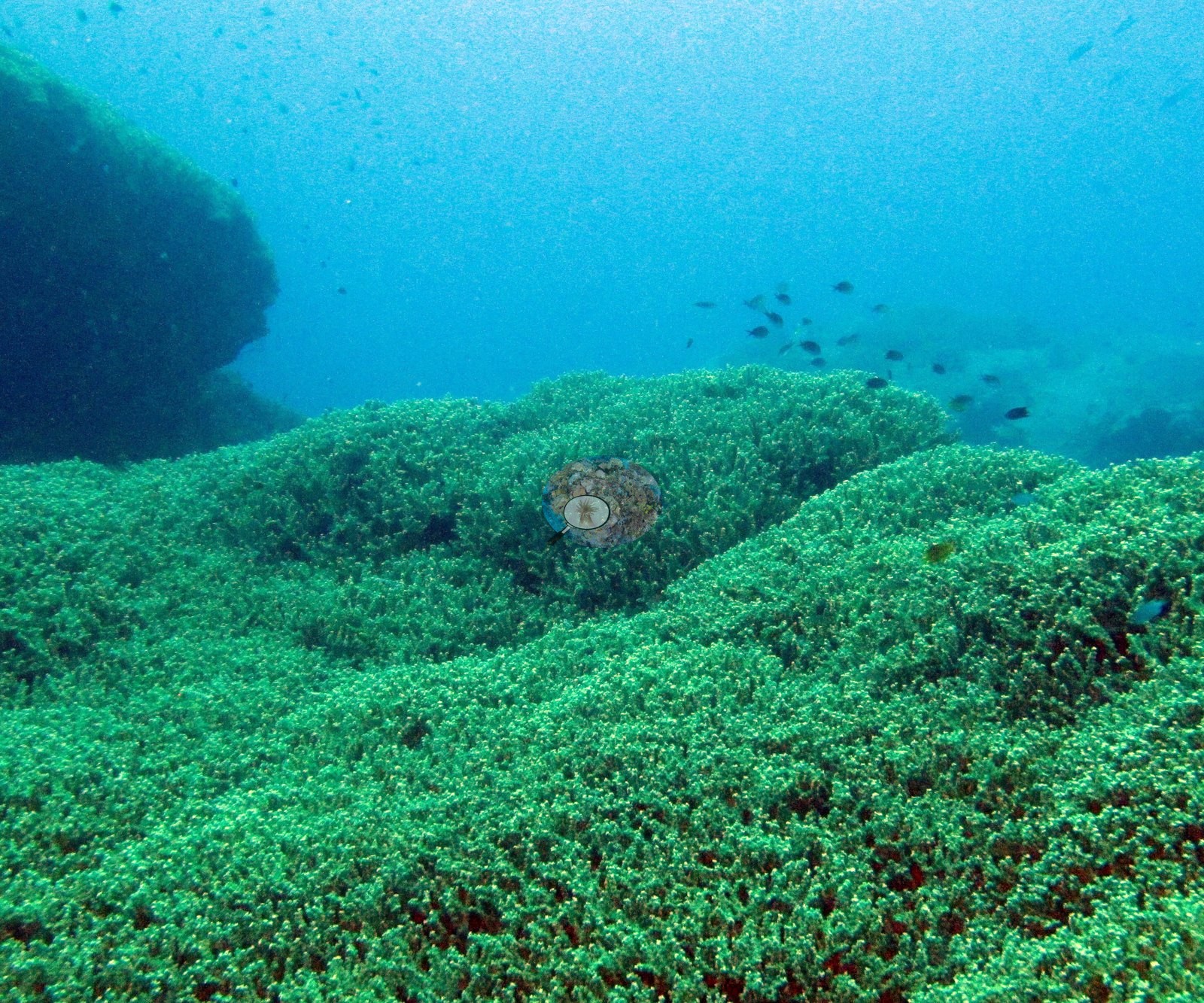
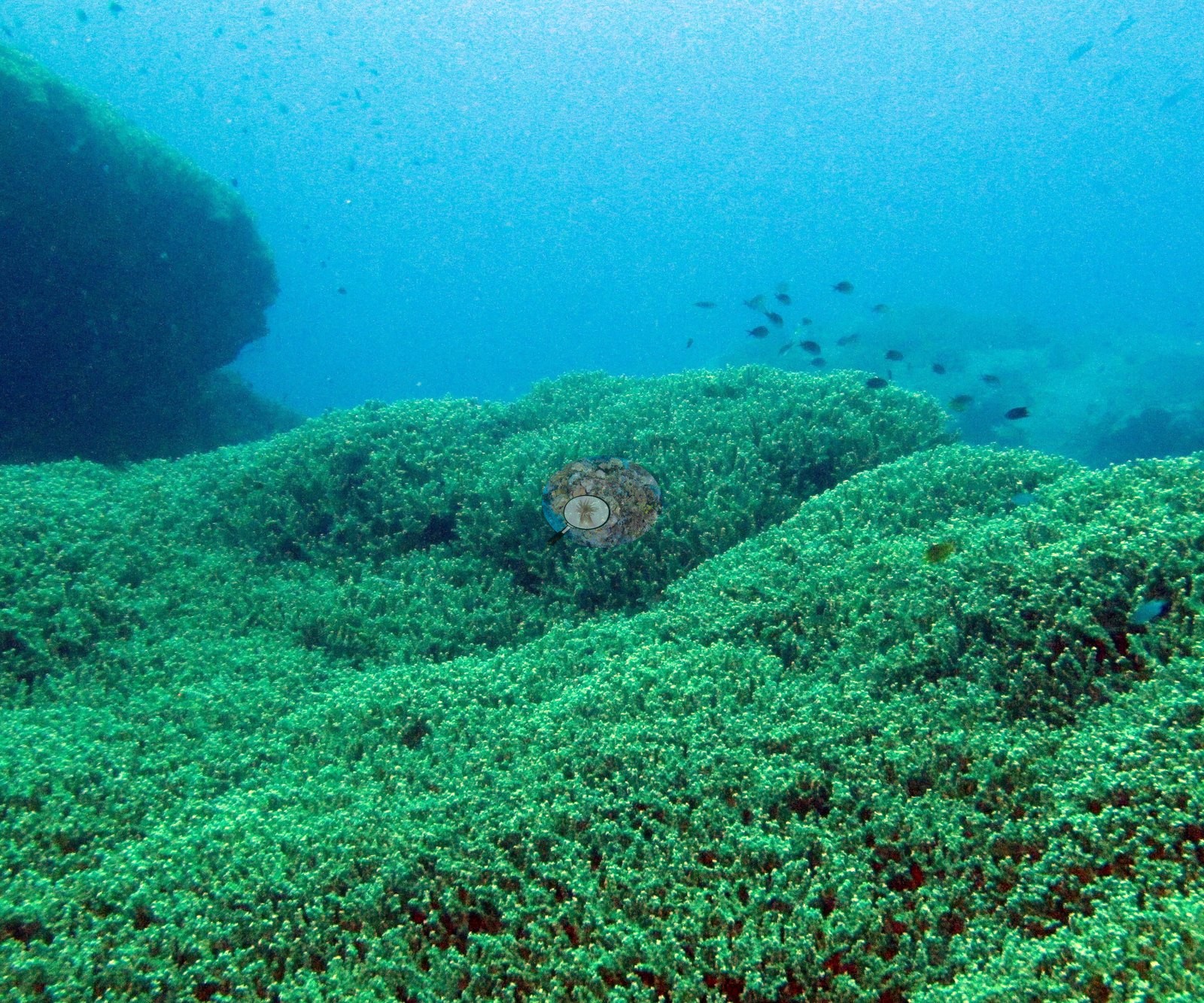
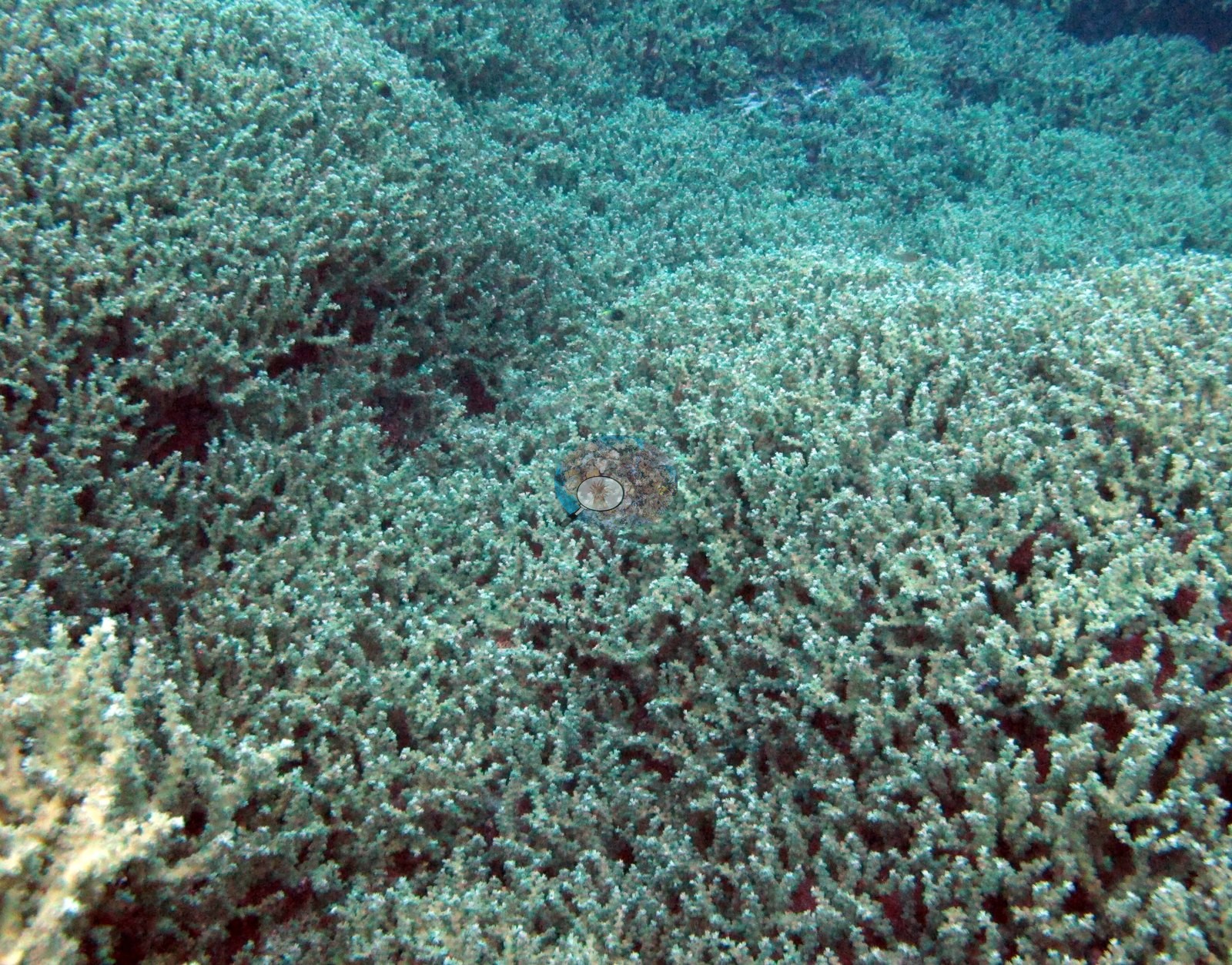
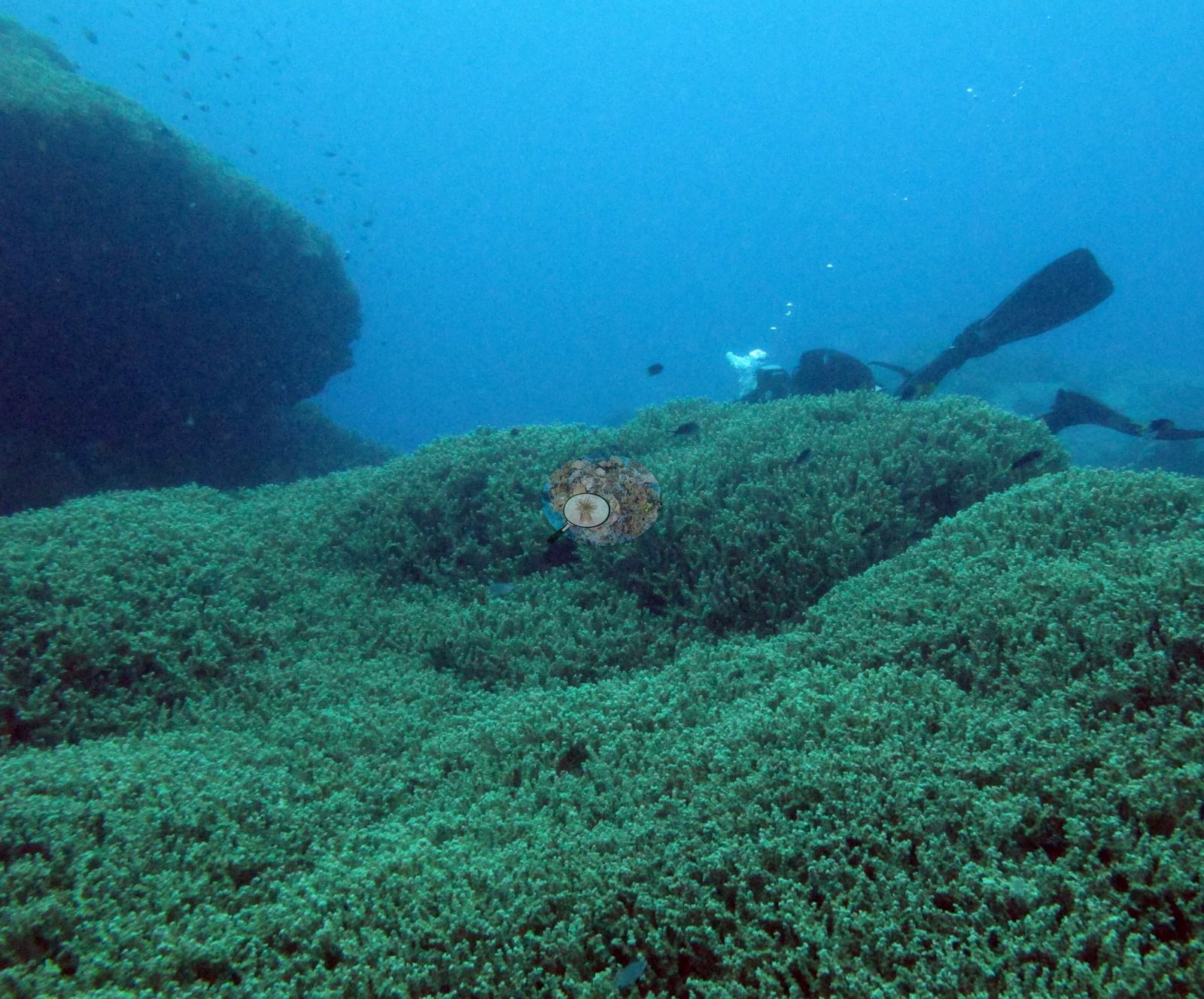
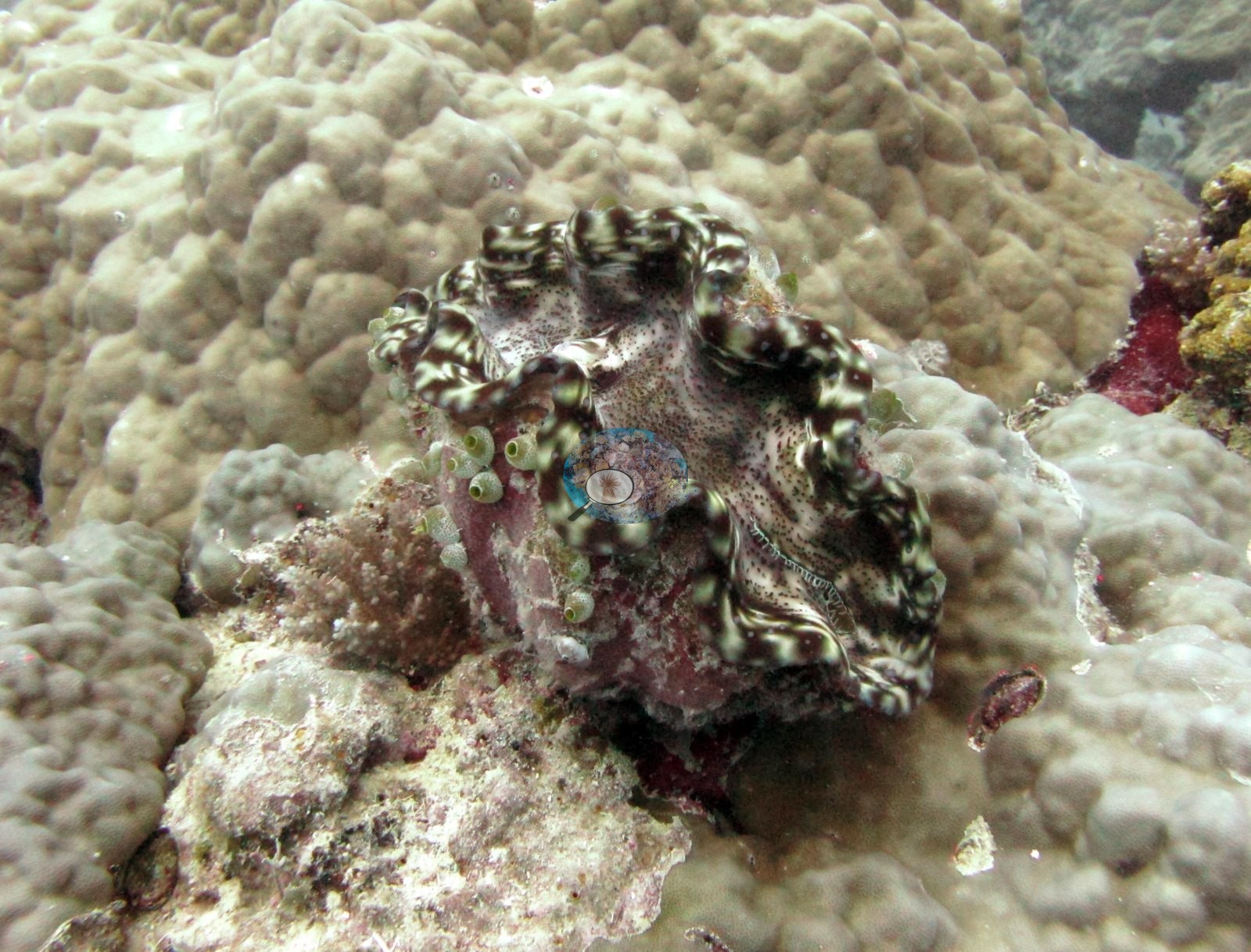
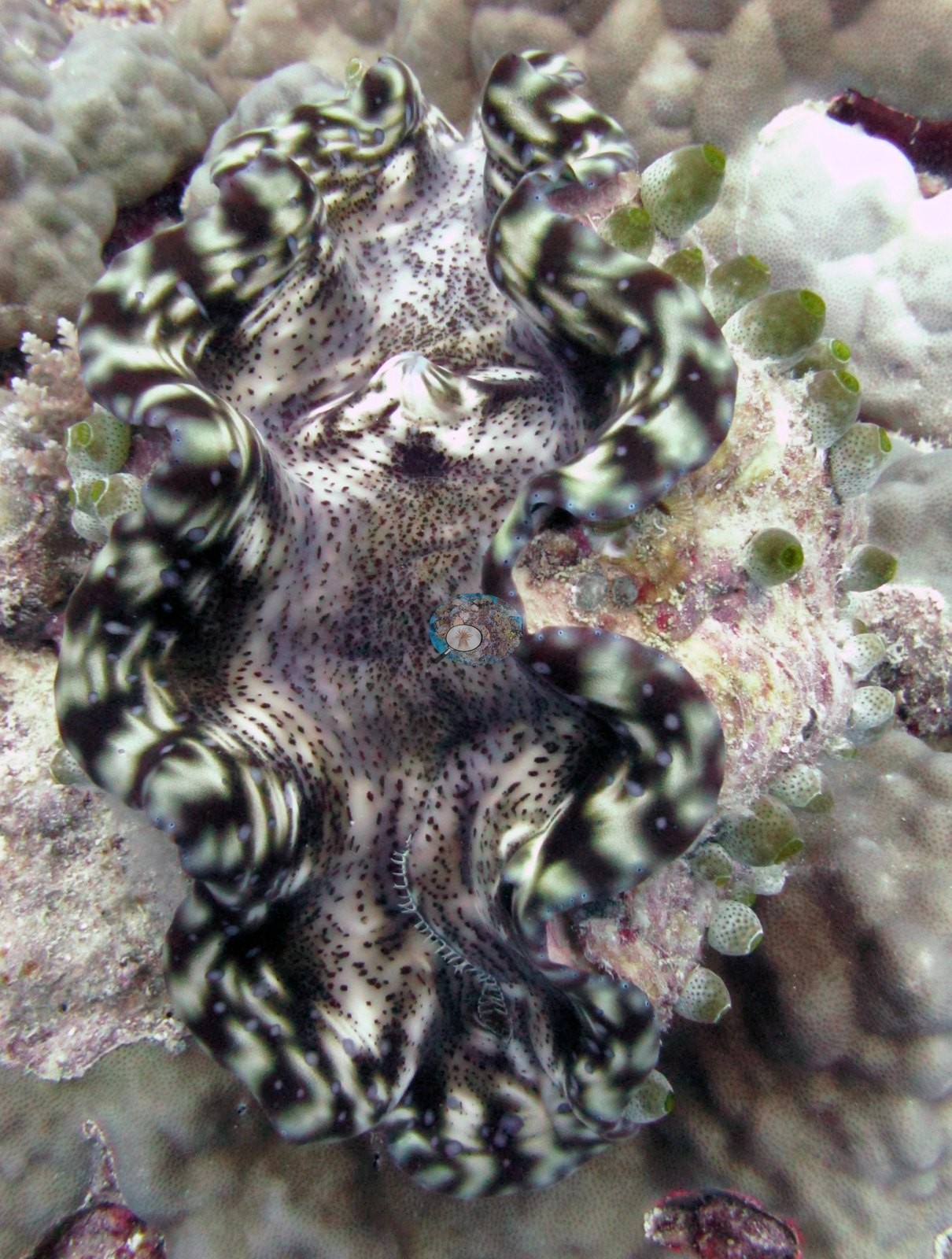
Fiji (NOAA CRW virtual station)On this dive (to 25.9 m), an unbroken field of fine-branched coral rolls over low mounds like clipped hedging, beside a large dark bommie. A giant clam with a marbled black, cream, and violet mantle sits wedged into a lobed massive colony, and cover is 30%. Surveyed on the Living Oceans Foundation's Global Reef Expedition.
Ena nunu oqo (ki na 25.9 m), e dua na vanua raraba e sega ni musu ni lase vakatabataba lalai e toso ena dela ni qele lalai me vaka na bai ni kau e koti vinaka, voleka ni dua na vatu ni lase (bommie) levu ka loaloa. E dua na vasua e roka loaloa, cream, kei na violet vakaveiwaki na kena mantle e curu tu ena dua na lase levu (massive) vakaibulubulu (lobed), ka 30% na ubi ni lase (coral cover).
AI translation of this summary; the English is authoritative. (low confidence)
CTD-cast midpoint of 26.6–26.7°C
🗺 Detailed map of the Global Reef Expedition dive sites, Vanua Balavu, Fiji (Khaled bin Sultan Living Oceans Foundation; opens in a new window)
6 of the 9 photographs on this page are shown beside the text that discusses them under "Site description" below.
Site description
Setting
On this dive (max. 25.9 m), FJVB68 showed striking terrain: an unbroken field of fine-branched coral rolling over low mounds like clipped hedging, running out of frame in every direction, and giving the whole reef a green cast in the ambient light (e.g., Image 1).
General benthic features
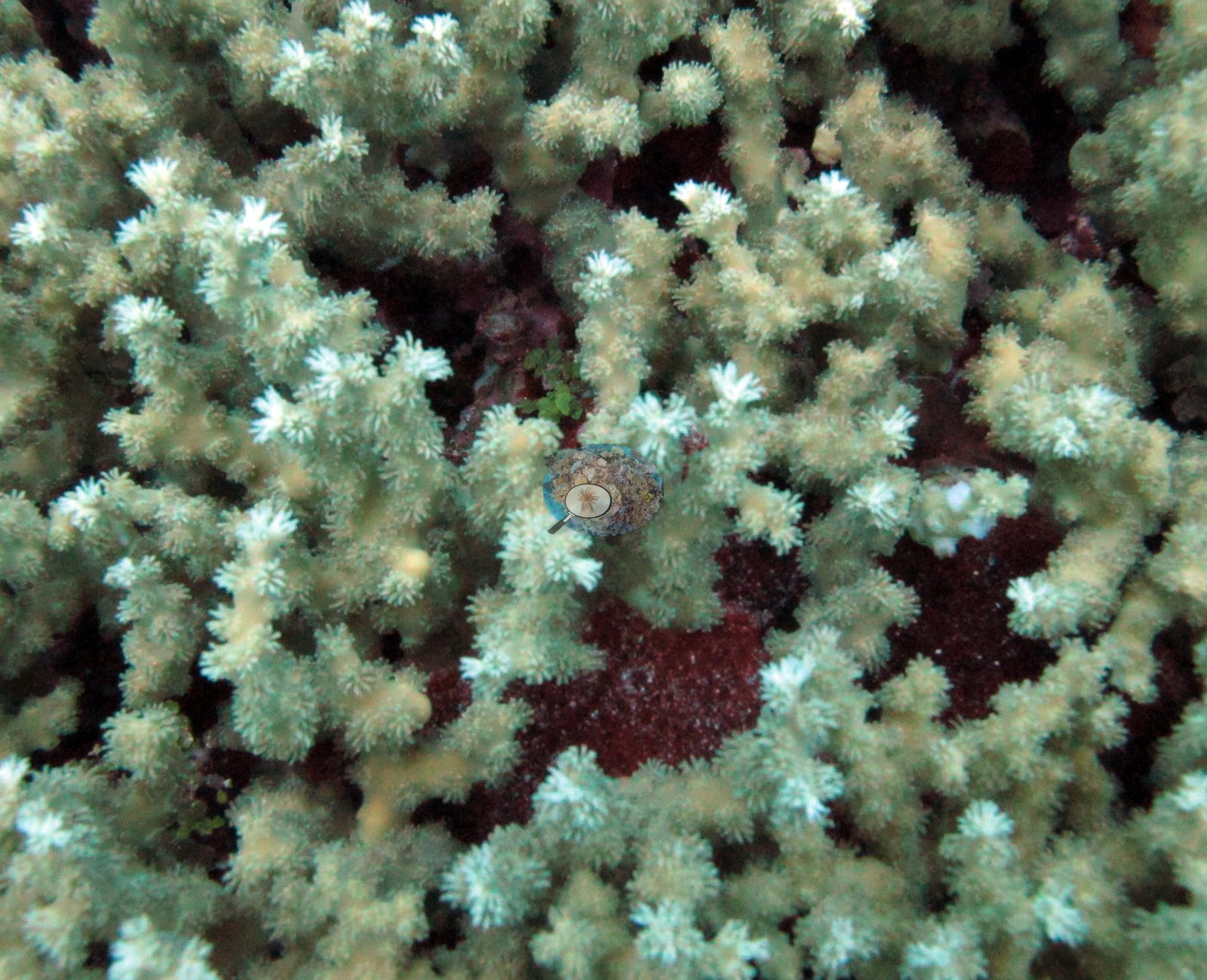
The branchlets are short, dense, and evenly sized — branching Galaxea by Anderson's own dive-log note for this dive (“branching Galaxea everywhere!”) — and they blanket the mounds so completely that only dark red-brown shadows show between them (e.g., Image 2).
A large dark bommie stands off to one side in two frames, its flank dropping away into blue haze, and a diver hovers over the far edge of the field trailing bubbles (e.g., Image 1, Image 5).
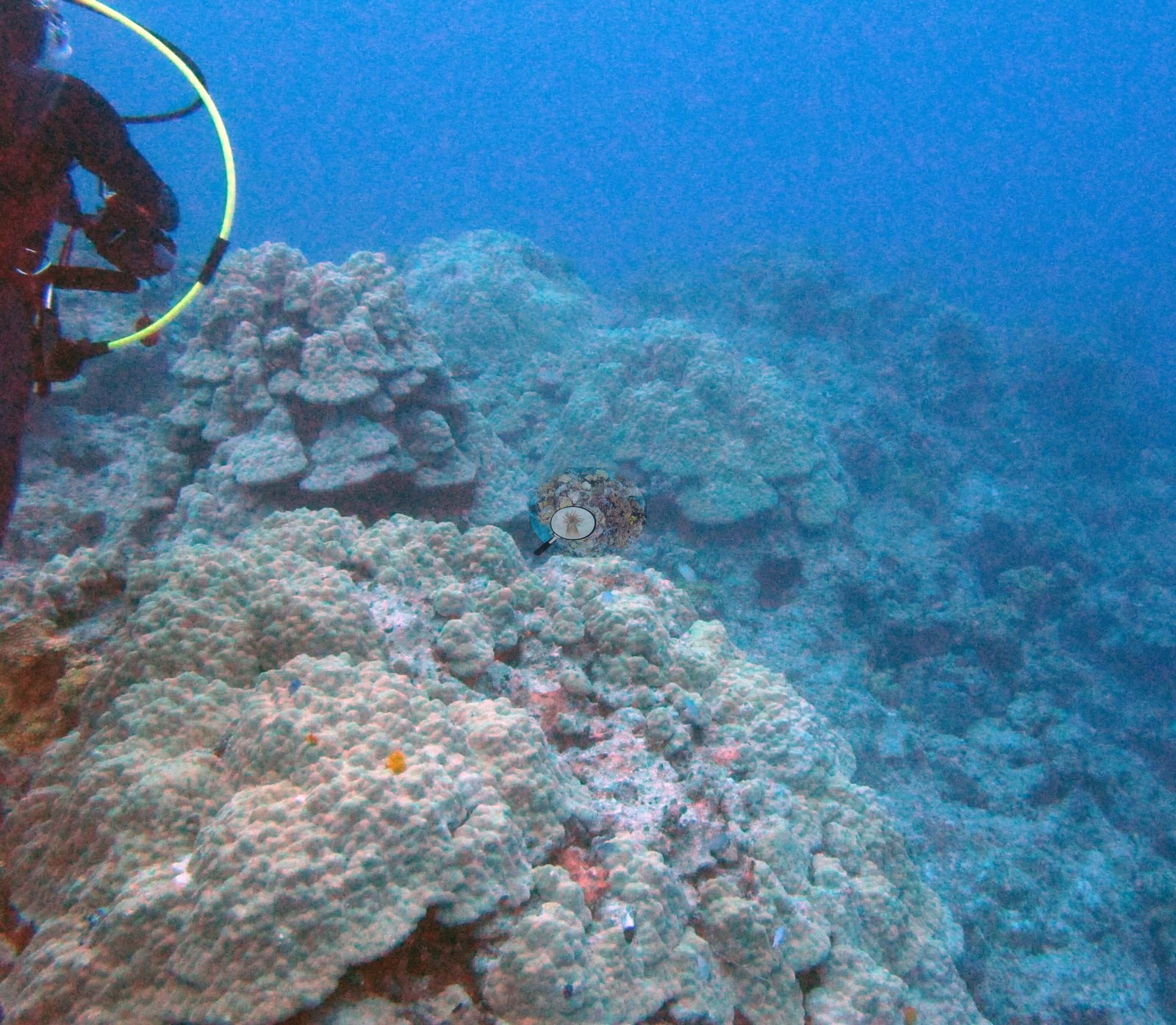
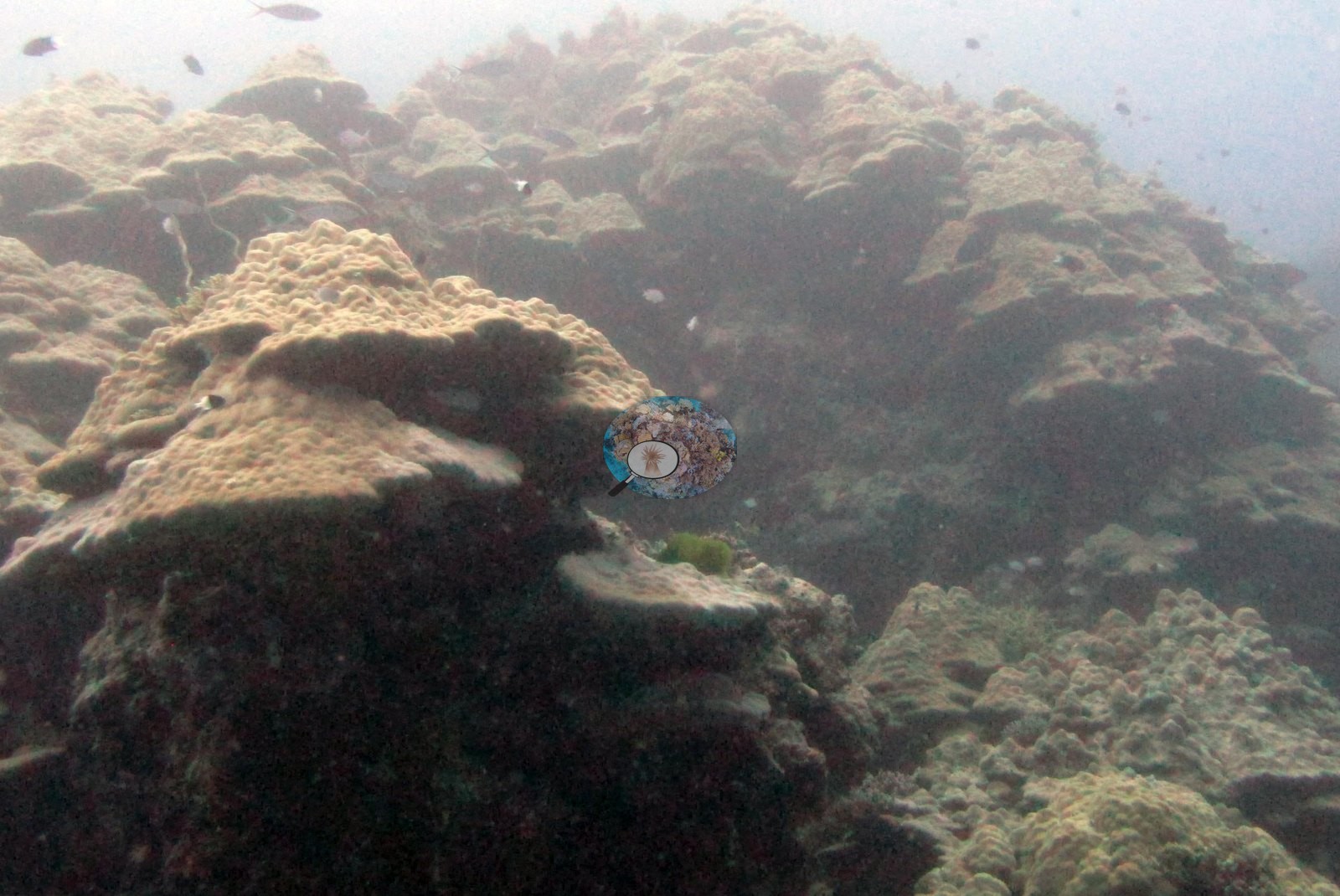
One frame shows what Anderson identified as a gigantic Porites (e.g., Image 6), a broad massive bommie, its surface sculpted into folds and plates, while dense mats of Galaxea blanket other mounds, their fleshy polyps studded across the colonies like frost.
Coral cover
- Reference: Khaled bin Sultan Living Oceans Foundation, Global Reef Expedition (in situ transect)
- Point-count survey scored coral cover at 30% here, patchy at the reef scale even where locally lush.
- Transect mean 30 ± 6.4% SE (n = 4 transects; Living Oceans Foundation per-transect benthic data); the headline above is this all-transect mean.
Stressors
No bleaching, disease, or crown-of-thorns damage visible; visibility was moderate with a green-blue cast at depth. The Living Oceans Foundation transects here recorded 3.0% cyanobacteria and no recently dead coral; they carry no bleaching, disease, or crown-of-thorns field.
Fish and other fauna
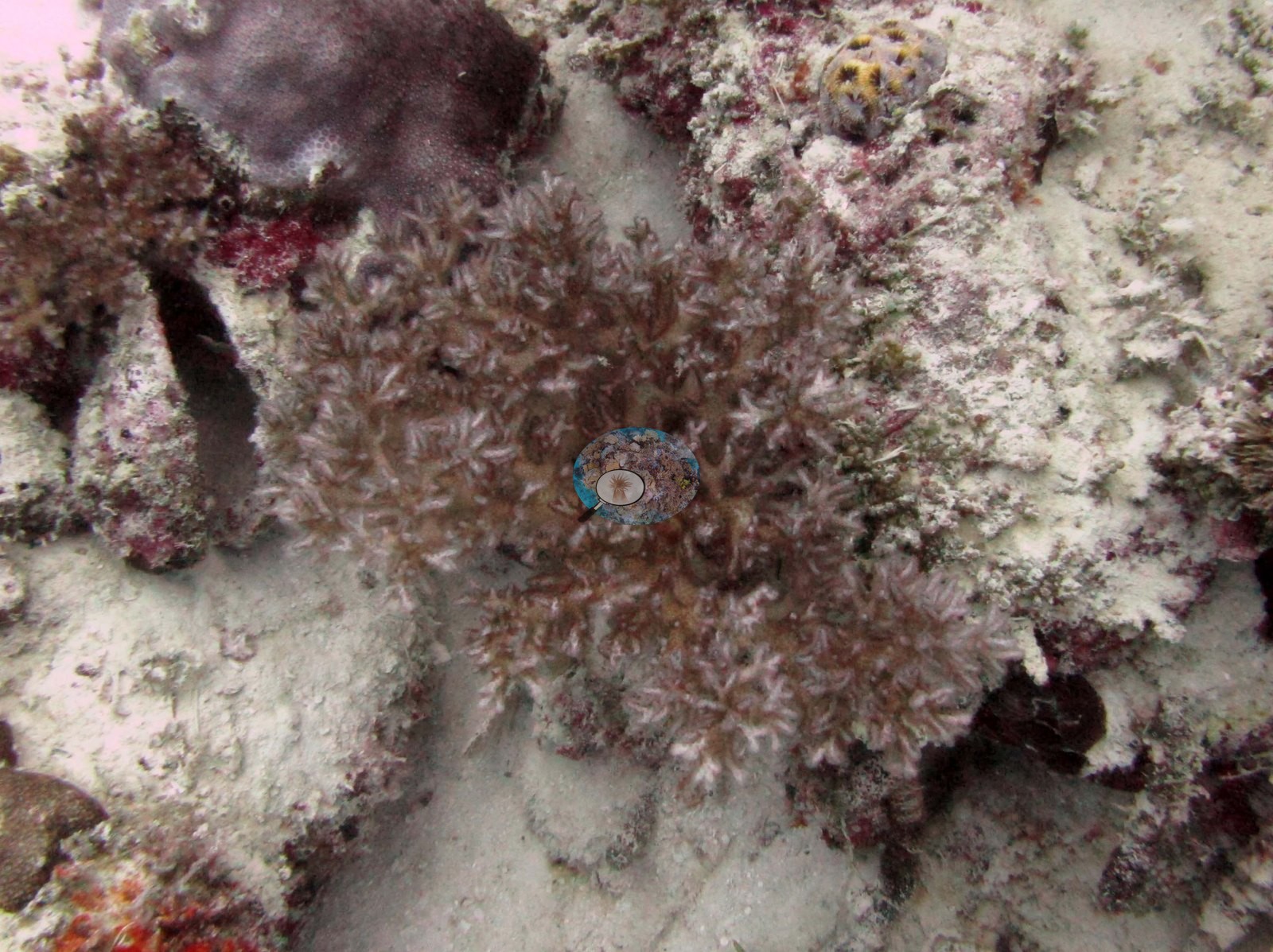
Clouds of small dark damselfishes hang above the branches. Two closer frames pick out a giant clam (Anderson's identification) wedged into the top of a lobed massive colony: its mantle a marbled swirl of black, cream, and violet-speckled tissue, with clusters of pale green colonial tunicates crowding the shell margin (e.g., Image 3, Image 4).
Comparisons with other data
Apart from the Living Oceans Foundation survey shown here, we found no other surveys at this site as of 2026. If you would like to share yours, please email us.
Data & links
- Download benthic survey data (CSV) ↗
- Download all LOF-GRE data (933 sites) ↗
- Photo portfolio ↗
- Coral Reef Diagnostics page for this area ↗
All images from Coral Reef Diagnostics. Data are from the Khaled bin Sultan Living Oceans Foundation Global Reef Expedition and Coral Reef Diagnostics.
 © Coral Reef Diagnostics.