
Part of the regional summaries: Fiji - Vanua Balavu, Fiji - Northern Lau (Vanua Balavu / Cicia / Nayau), and Fiji - Lau
More info
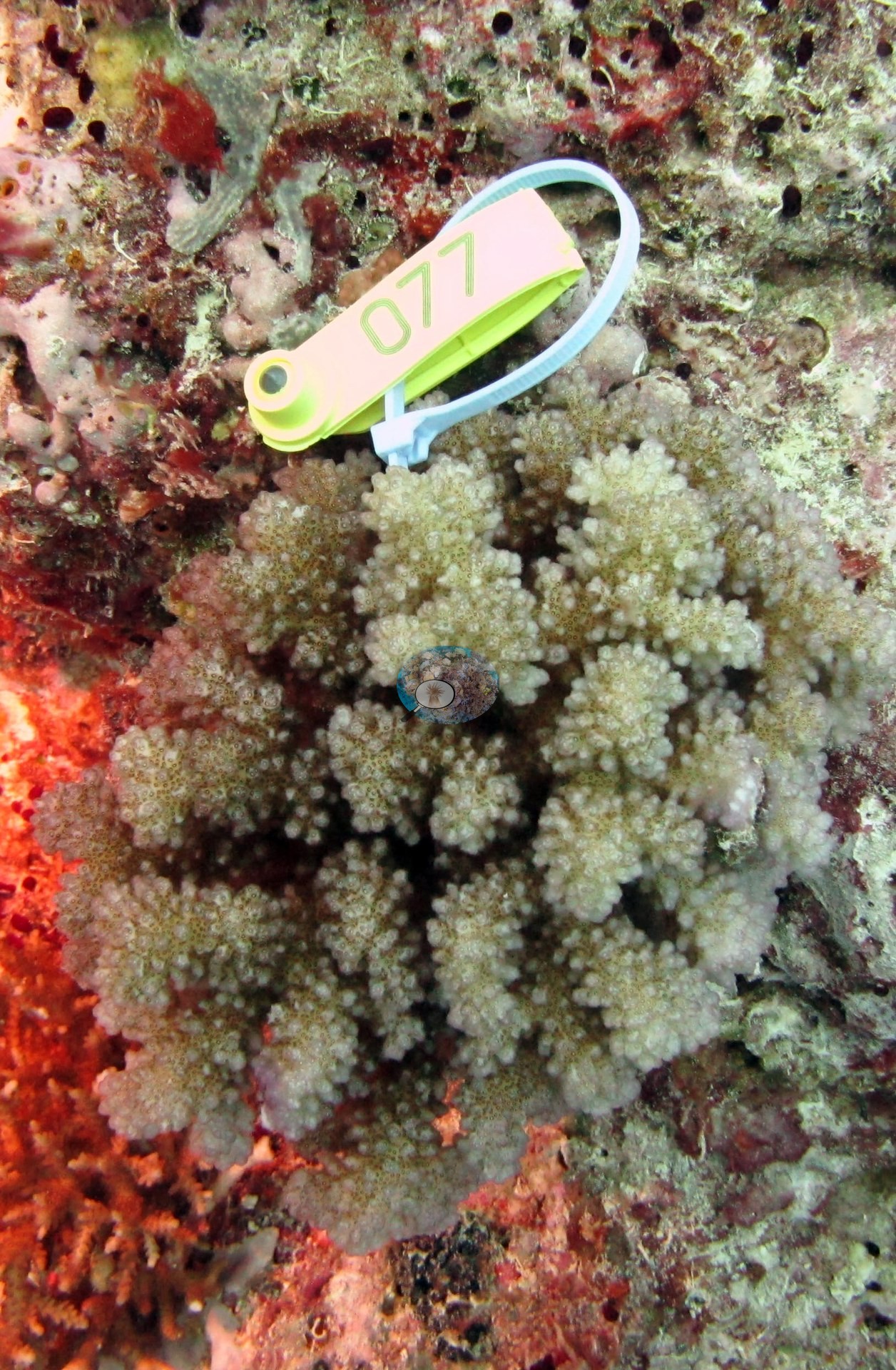
Fiji (NOAA CRW virtual station)A Vanua Balavu reef (dived to 30.8 m) with just 12% live coral against nearly 75% algae, where two of the three photographs shown here are close-ups of small tagged colonies that teammate Joao sampled, a pale lavender branching colony and a branching colony beside brilliant orange-red sponge. Both looked intact; Anderson also sampled two colonies here (F151, F152), and across Vanua Balavu 4 of the 18 sampled corals were flagged as physiological outliers. Surveyed on the Living Oceans Foundation's Global Reef Expedition.
E dua na cakau e Vanua Balavu (a nunu kina ki na 30.8 m) e 12% ga na lase bula ni vakatauvatani kei na voleka ni 75% na lumi, ka rua vei ira na tolu na itaba e vakaraitaki eke e itaba taba voleka ni rua na lase lalai e vakatakilakilataki (tagged) a taura kina na ivakaraitaki na nona itokani ni cakacaka ko Joao, e dua na lase vakatabataba e roka (pale lavender) kei na dua na lase vakatabataba e voleka ni sponge e roka damudamu-oranse vakaidina. E rairai bula vinaka ruarua; e rua tale ga na lase a taura kina na ivakaraitaki ko Anderson eke (F151, F152), ka ena Vanua Balavu taucoko e 4 vei ira na 18 na lase a taura kina na ivakaraitaki era a vakatakilakilataki me physiological outlier.
AI translation of this summary; the English is authoritative. (low confidence)
CTD-cast midpoint of 26.6–26.7°C
Two other CRD dive sites with their own pages within 5 km shown in orange — click a marker to open its page.
🗺 Detailed map of the Global Reef Expedition dive sites, Vanua Balavu, Fiji (Khaled bin Sultan Living Oceans Foundation; opens in a new window)
Site description
Setting
A Vanua Balavu station in the Lau Archipelago, surveyed on 25 June 2013 (dived to 30.8 m).
General benthic features
Two of the three photographs here are close-ups of small tagged colonies that Joao sampled (Anderson's photographs): a pale lavender branching colony and a branching colony beside a brilliant orange-red sponge (e.g., Image 1, Image 2).
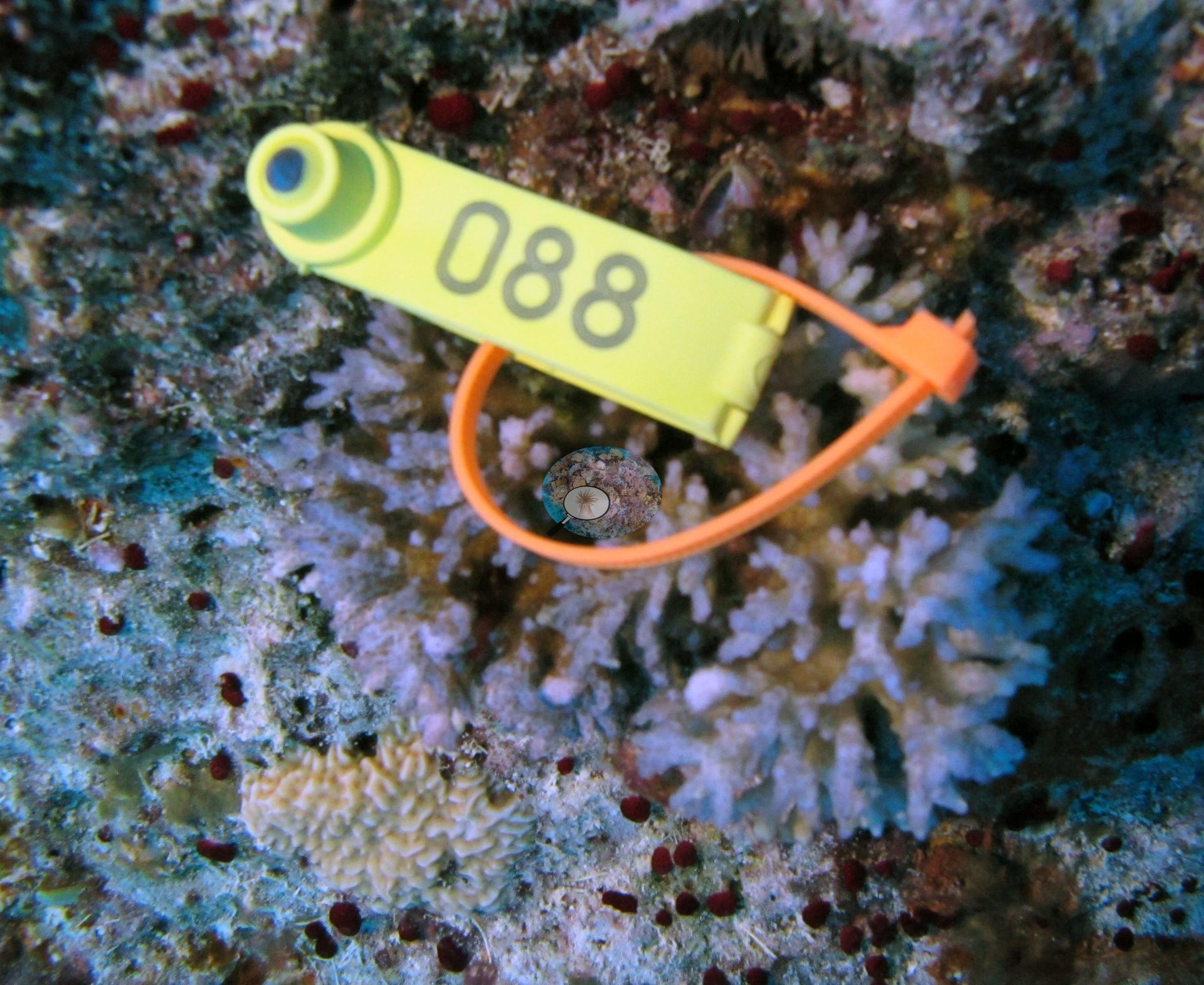
Both are small, densely branched colonies growing on hard bottom, and both show full, evenly pigmented tissue with no lesions or bleached patches.
Coral cover
- Reference: Khaled bin Sultan Living Oceans Foundation, Global Reef Expedition (in situ transect)
- Coral cover here is 12%, measured on in situ benthic transects during the Khaled bin Sultan Living Oceans Foundation Global Reef Expedition, against algal cover near 75% of the benthos; the transect data, not any photograph, carry this site's quantitative claims.
- Transect mean 12 ± 1.5% SE (n = 4 transects; Living Oceans Foundation per-transect benthic data); the headline above is this all-transect mean.
Stressors
Anderson's one habitat frame from the dive (Image 3) shows a long-dead, finely branched, tree-like acroporid skeleton darkened with turf, lying flat on pale, sediment-veneered pavement.
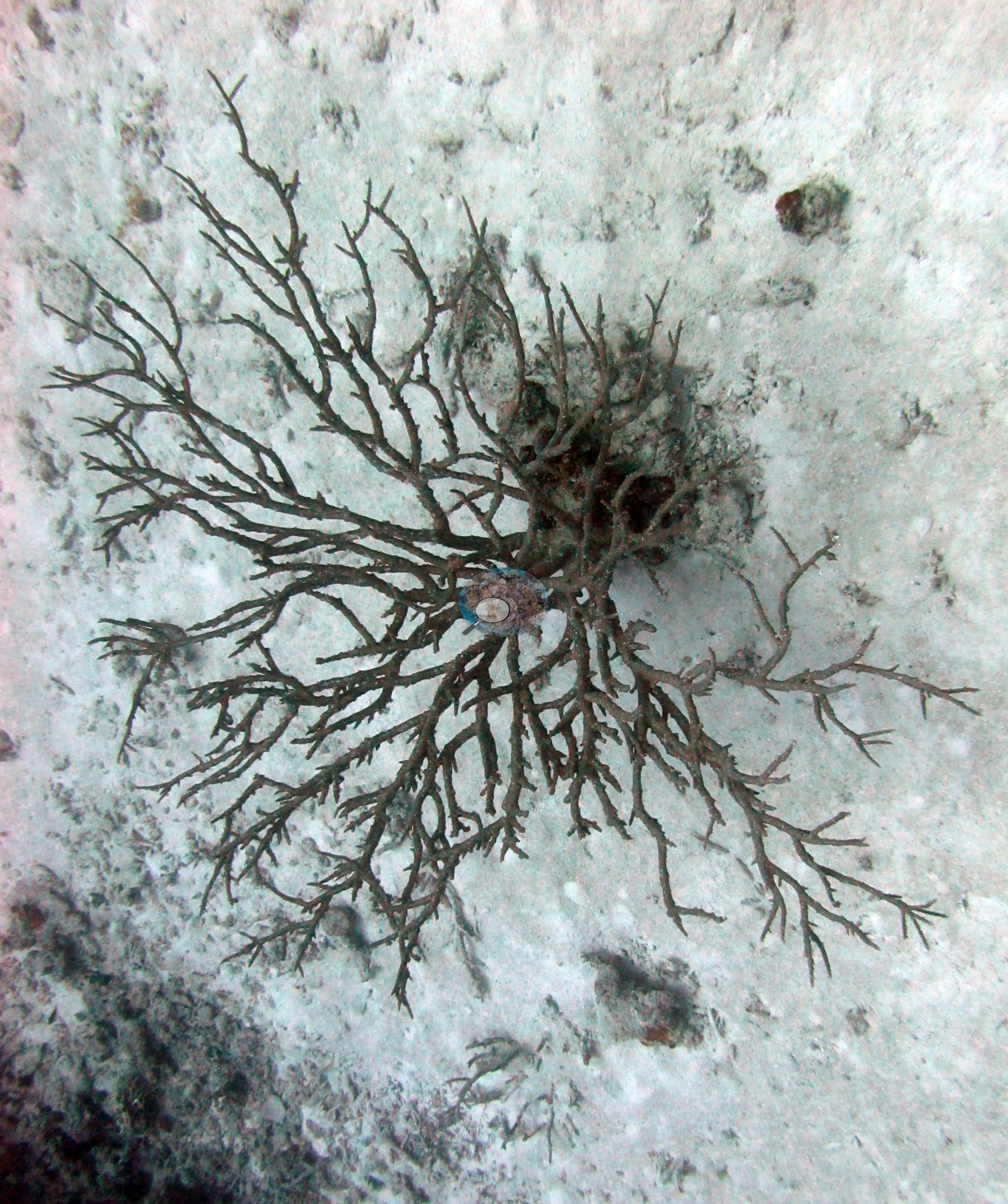
It is one frame of one dead colony and cannot establish that the site as a whole looks this way, nor when the acroporid died or why. The Living Oceans Foundation transects here recorded 12% cyanobacteria and no recently dead coral; they carry no bleaching, disease, or crown-of-thorns field.
Comparisons with other data
Across Vanua Balavu as a whole, 4 of the 18 corals with an outlier score were flagged as physiological outliers in the follow-up molecular study.
Other notes
Two Pocillopora-type colonies were sampled at this station for the expedition's molecular-physiology work — F151, which Anderson records as P. acuta, and F152, recorded as P. damicornis.
Data & links
- Download benthic survey data (CSV) ↗
- Download all LOF-GRE data (933 sites) ↗
- Photo portfolio ↗
- Coral Reef Diagnostics page for this area ↗
All images from Coral Reef Diagnostics. Data are from the Khaled bin Sultan Living Oceans Foundation Global Reef Expedition and Coral Reef Diagnostics.
 © Coral Reef Diagnostics.