
Part of the regional summaries: Fiji - Vanua Balavu, Fiji - Northern Lau (Vanua Balavu / Cicia / Nayau), and Fiji - Lau
More info
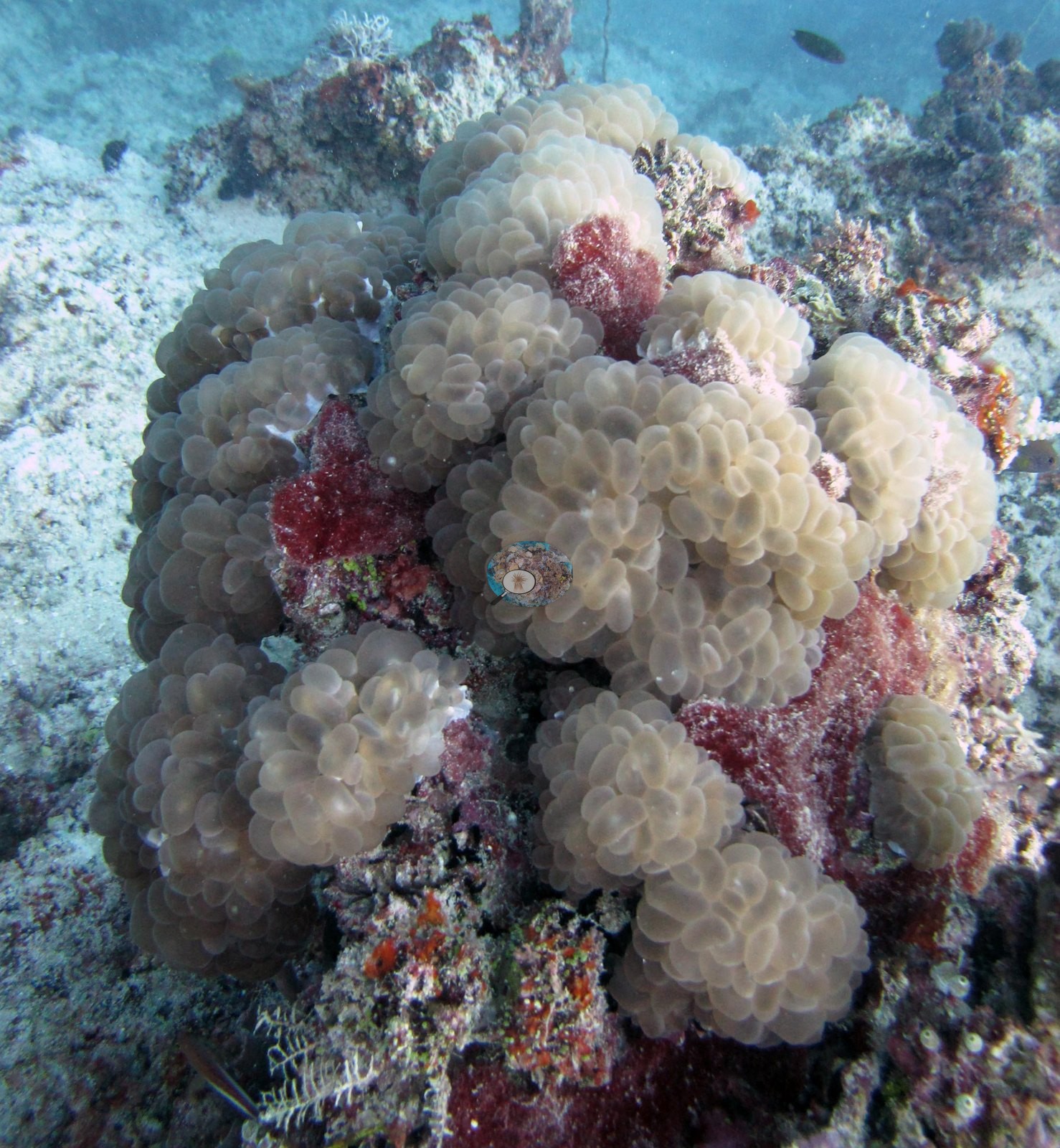
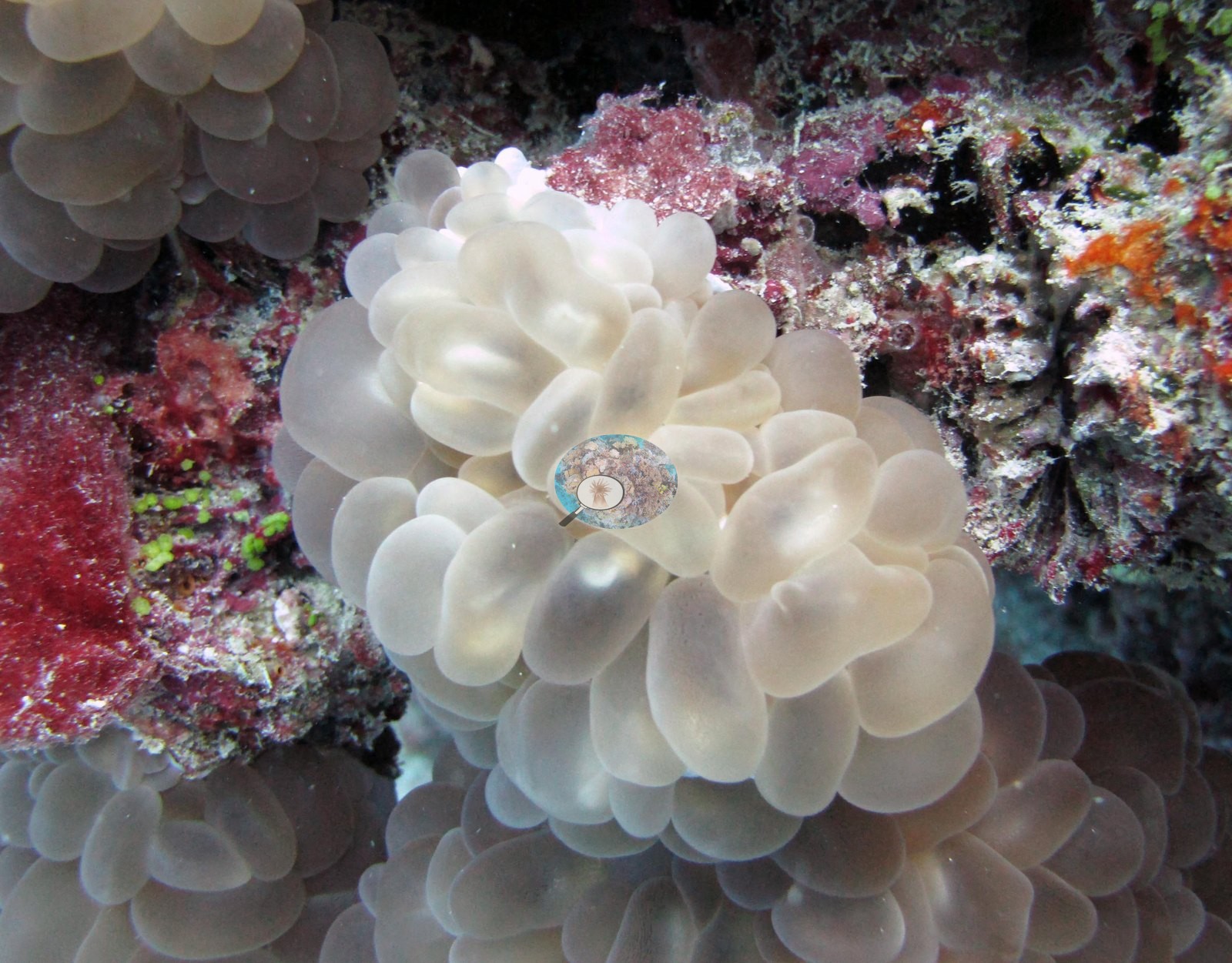
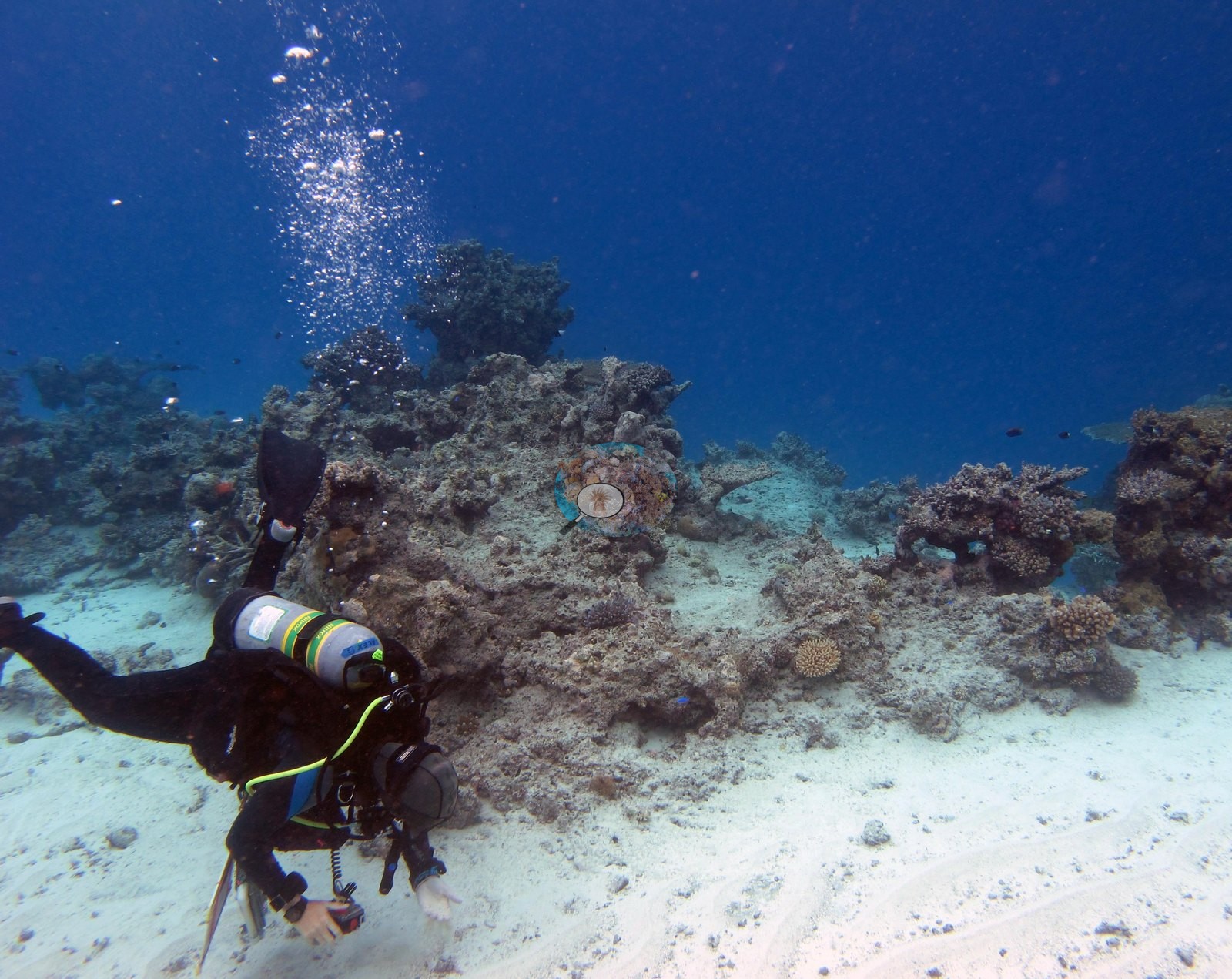
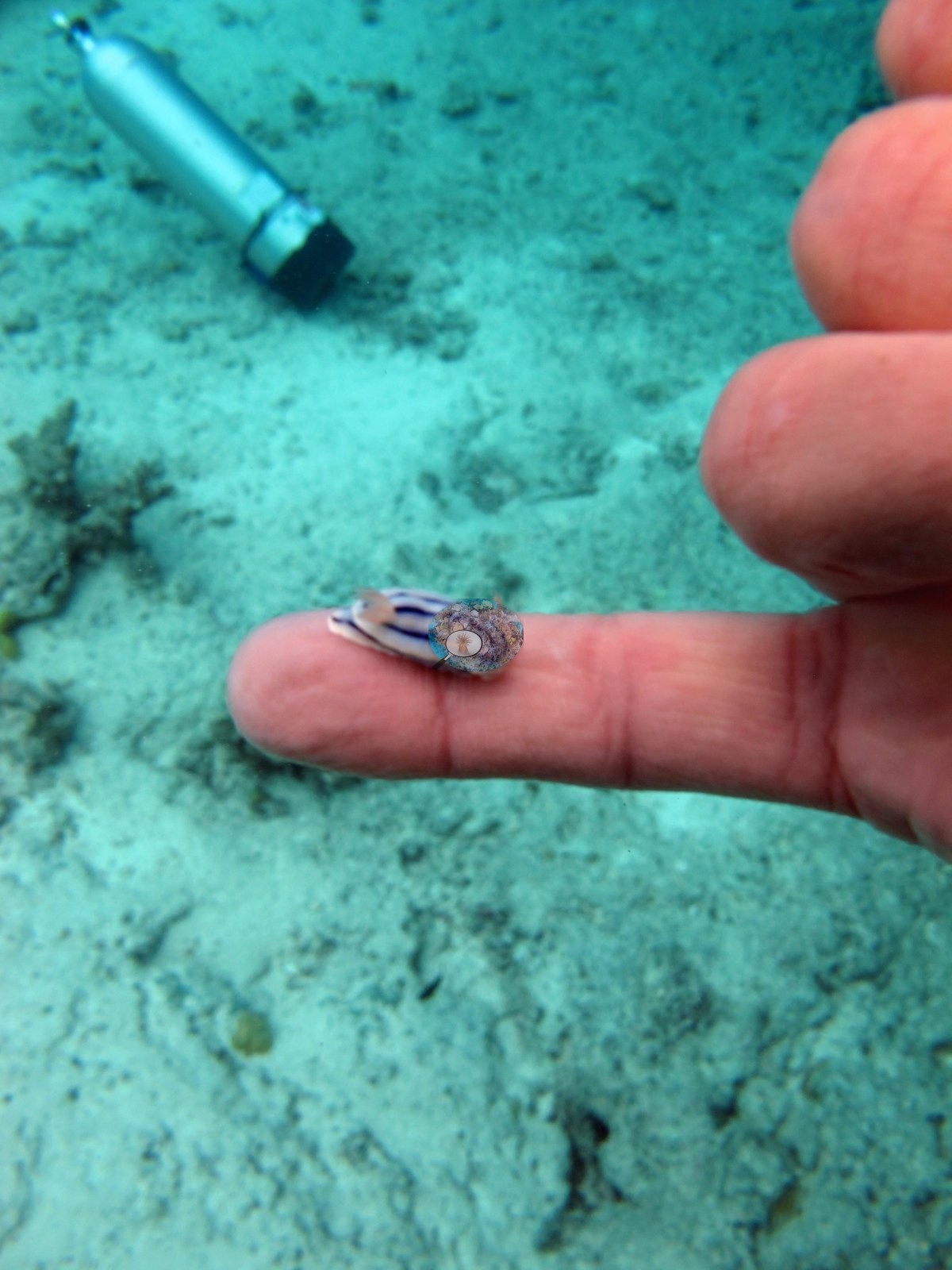
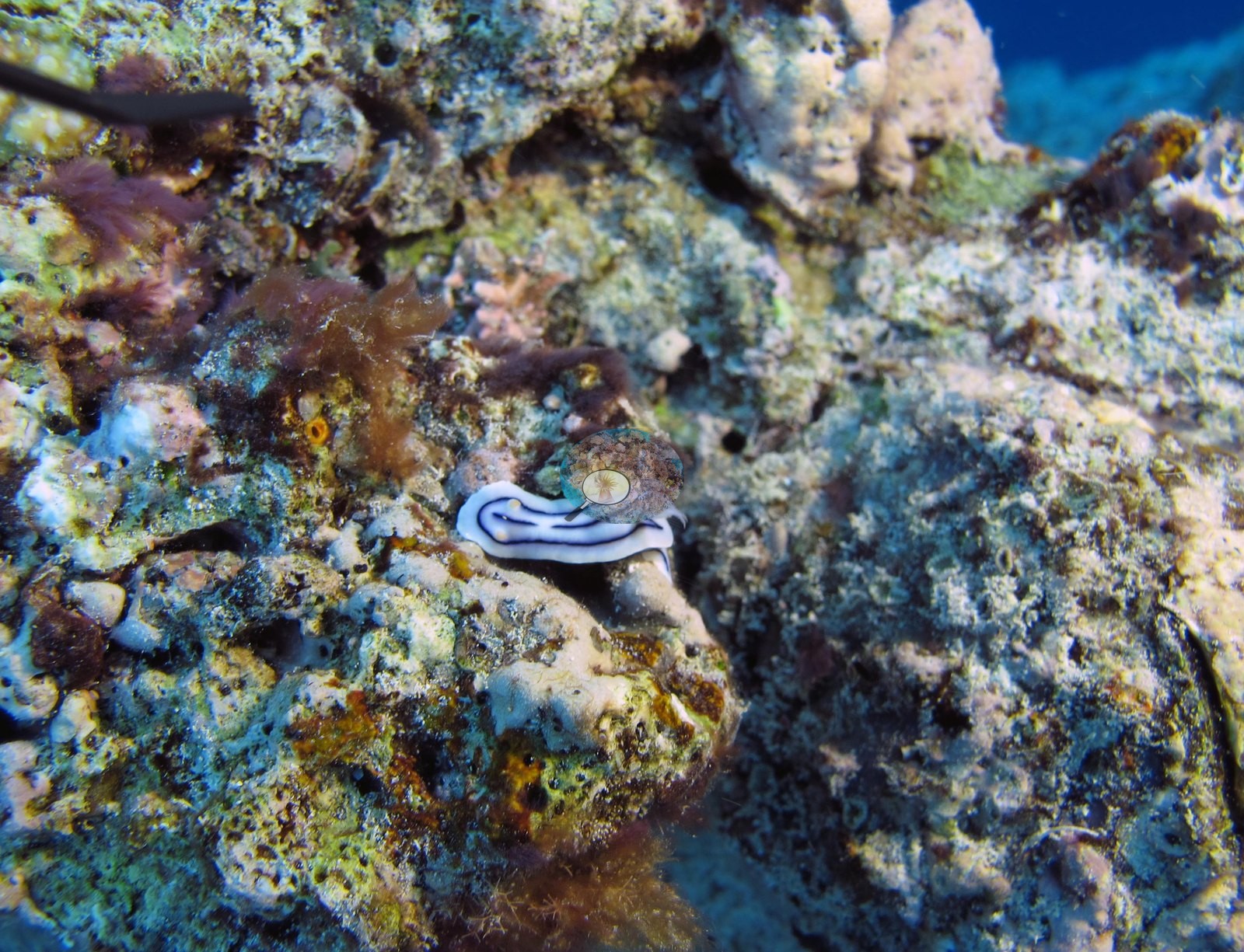
Fiji (NOAA CRW virtual station)White sand broken by low, algae-crusted rubble mounds with only a few small, widely spaced corals (3.3% cover) off Vanua Balavu. Close looks turned up a fine, unbleached bubble coral, a blue-lined white nudibranch, and, overhead, a manta ray gliding low over the sand. Surveyed on the Living Oceans Foundation's Global Reef Expedition.
Nuku vulavula e veitawasei ena qele vakaibulubulu ni tikitiki ni lase mate (rubble) e ubi ena lumi ka sega ni cecere, kei na vica ga na lase lalai e veiyawaki (3.3% na ubi ni lase) mai Vanua Balavu. Ena kena raici voleka, a kunei e dua na bubble coral vinaka ka sega ni vulavula, e dua na nudibranch vulavula e tu kina na ituvatuva karakarawa, ka, ena dela, e dua na vai (manta ray) e qalo voleka ena dela ni nuku.
AI translation of this summary; the English is authoritative. (low confidence)
CTD-cast midpoint of 26.6–26.8°C
Two other CRD dive sites with their own pages within 5 km shown in orange — click a marker to open its page.
🗺 Detailed map of the Global Reef Expedition dive sites, Vanua Balavu, Fiji (Khaled bin Sultan Living Oceans Foundation; opens in a new window)
10 of the 12 photographs on this page are shown beside the text that discusses them under "Site description" below.
Site description
Setting
Visibility was bright but slightly milky.
General benthic features
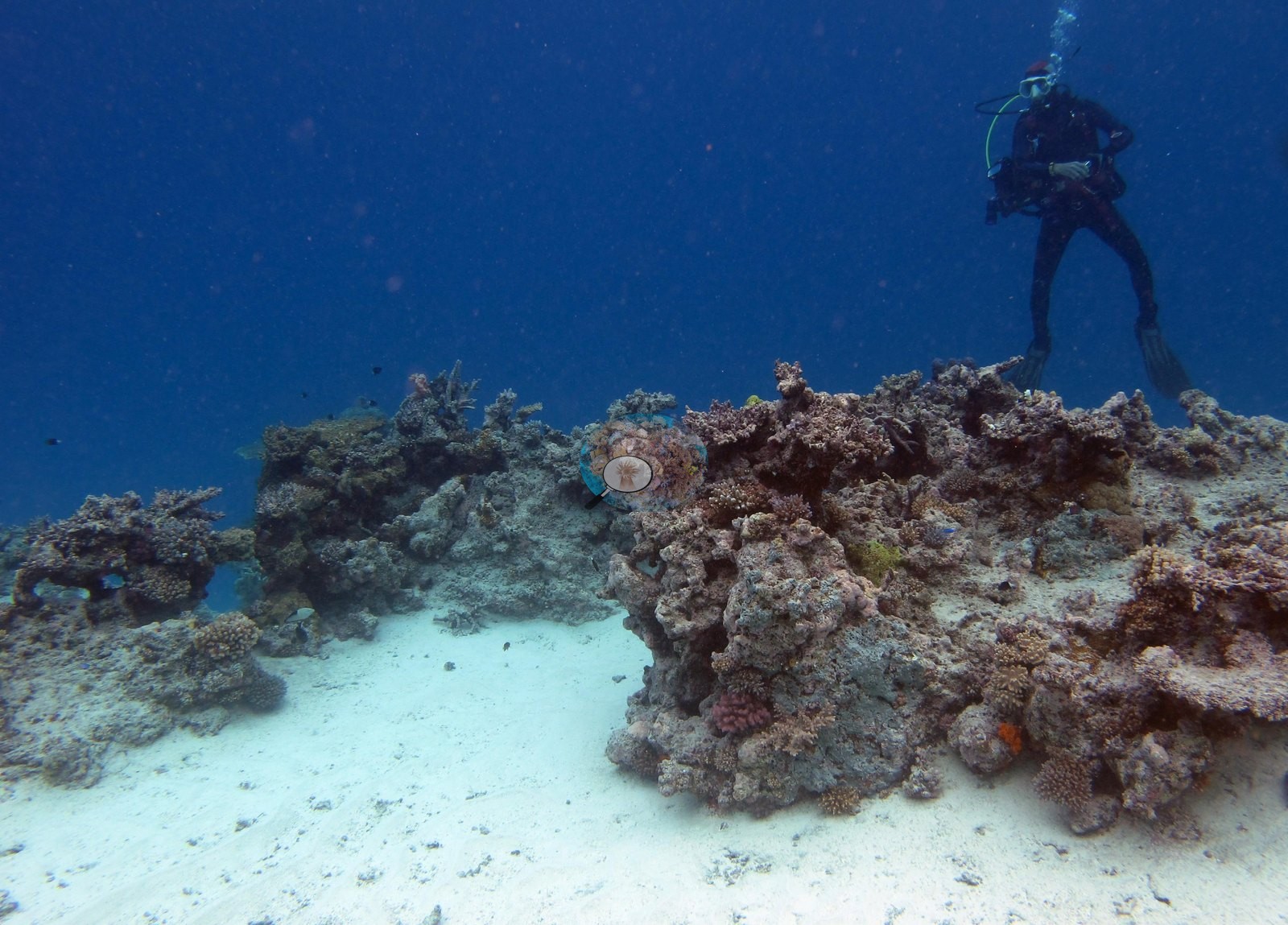
A diver in full kit hovers over an expanse of clean white sand broken by low, algae-crusted rubble mounds; the few living colonies on them are small — a scattering of pale corymbose Acropora and knobby heads, none more than a hand's span, spaced far apart on old pitted framework (e.g., Image 6).
What life there is rewards a close look. One mound carries a fine colony of bubble coral, Plerogyra sinuosa, its translucent grape-like vesicles inflated in soft tan and gray, wedged against a patch of vivid crimson encrusting sponge with tissue clean and unbleached (e.g., Image 1, Image 2).
The wider set does not change the account of the site, because only two of the frames are reef-scale: Image 7 and Image 6 both look across the same low, algae-crusted rubble mound sitting on clean white sand, its surface pitted old framework carrying only small, widely spaced colonies, with a diver in kit alongside for scale in each.
Coral cover
- Reference: Khaled bin Sultan Living Oceans Foundation, Global Reef Expedition (in situ transect)
- The Global Reef Expedition transects here recorded 3.3% live hard coral. Live hard coral measured on in situ benthic transects during the Khaled bin Sultan Living Oceans Foundation Global Reef Expedition. Transect data are this site's authoritative cover value; no computer vision or image-derived product overrides it.
- Transect mean 3.3 ± 1.3% SE (n = 4 transects; Living Oceans Foundation per-transect benthic data); the headline above is this all-transect mean.
Stressors
Nothing in the set bears on benthic composition beyond the two mound frames; there is no bleaching, disease, or crown-of-thorns damage in any frame, though at this frame count and in this light that is a weak negative. The Living Oceans Foundation transects here recorded 13% cyanobacteria and no recently dead coral; they carry no bleaching, disease, or crown-of-thorns field.
Fish and other fauna
Two frames are nudibranchs: a small white animal with dark blue-purple longitudinal lines held on a fingertip over sand, with a pointer or torch in frame (e.g., Image 5), and a second — white with fine dark stripes and pale orange margin — photographed in place on encrusting-algae-covered rubble (e.g., Image 4).
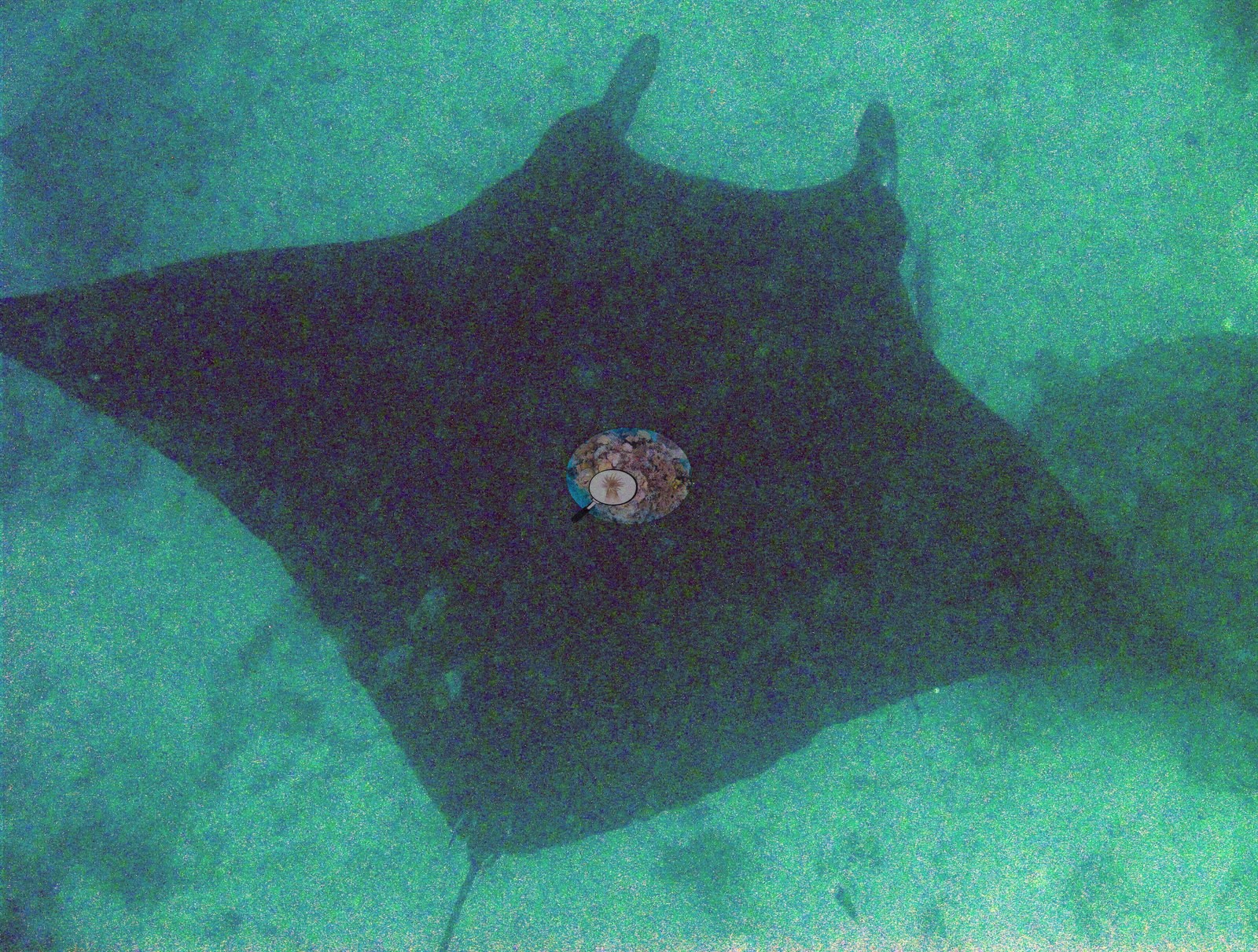
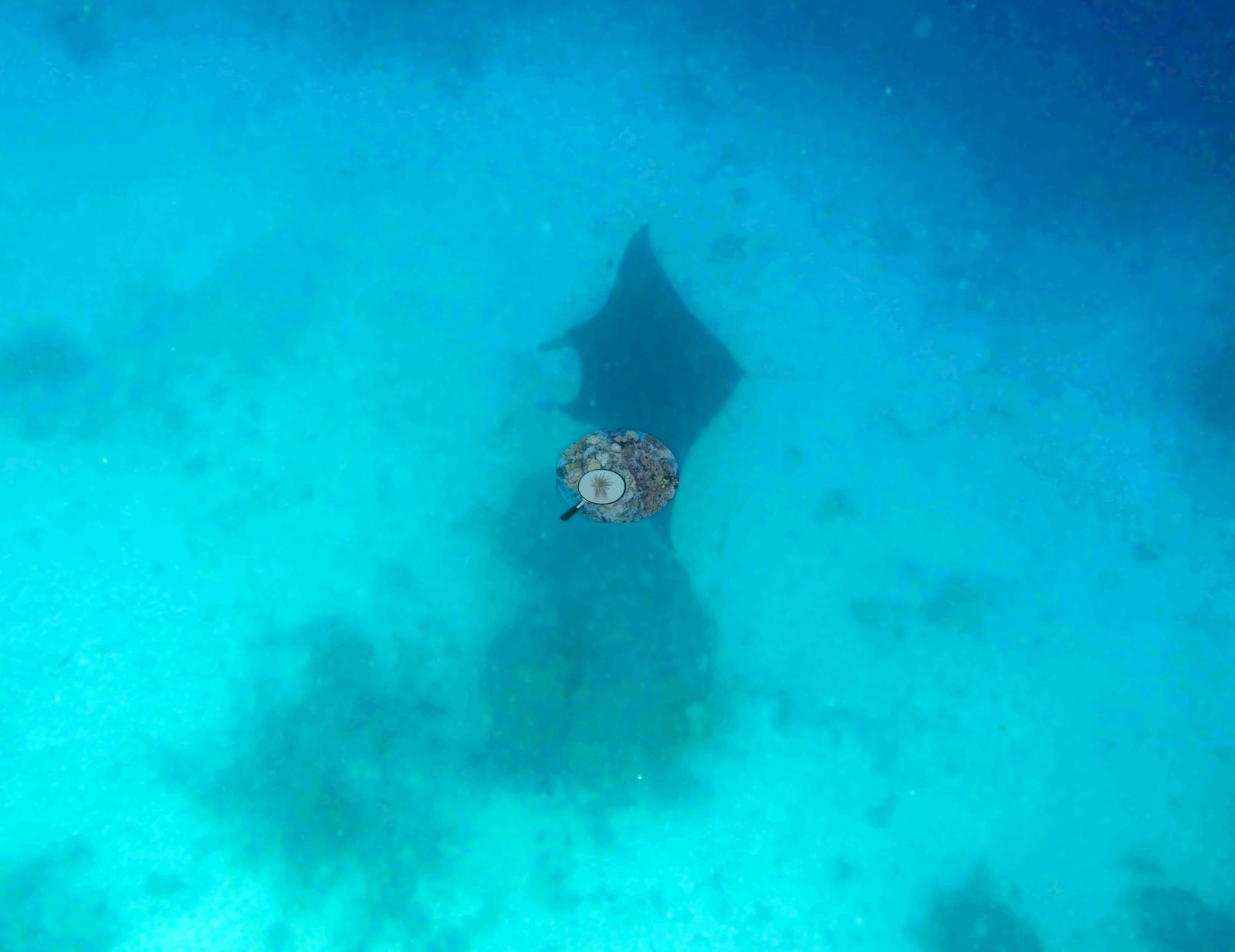
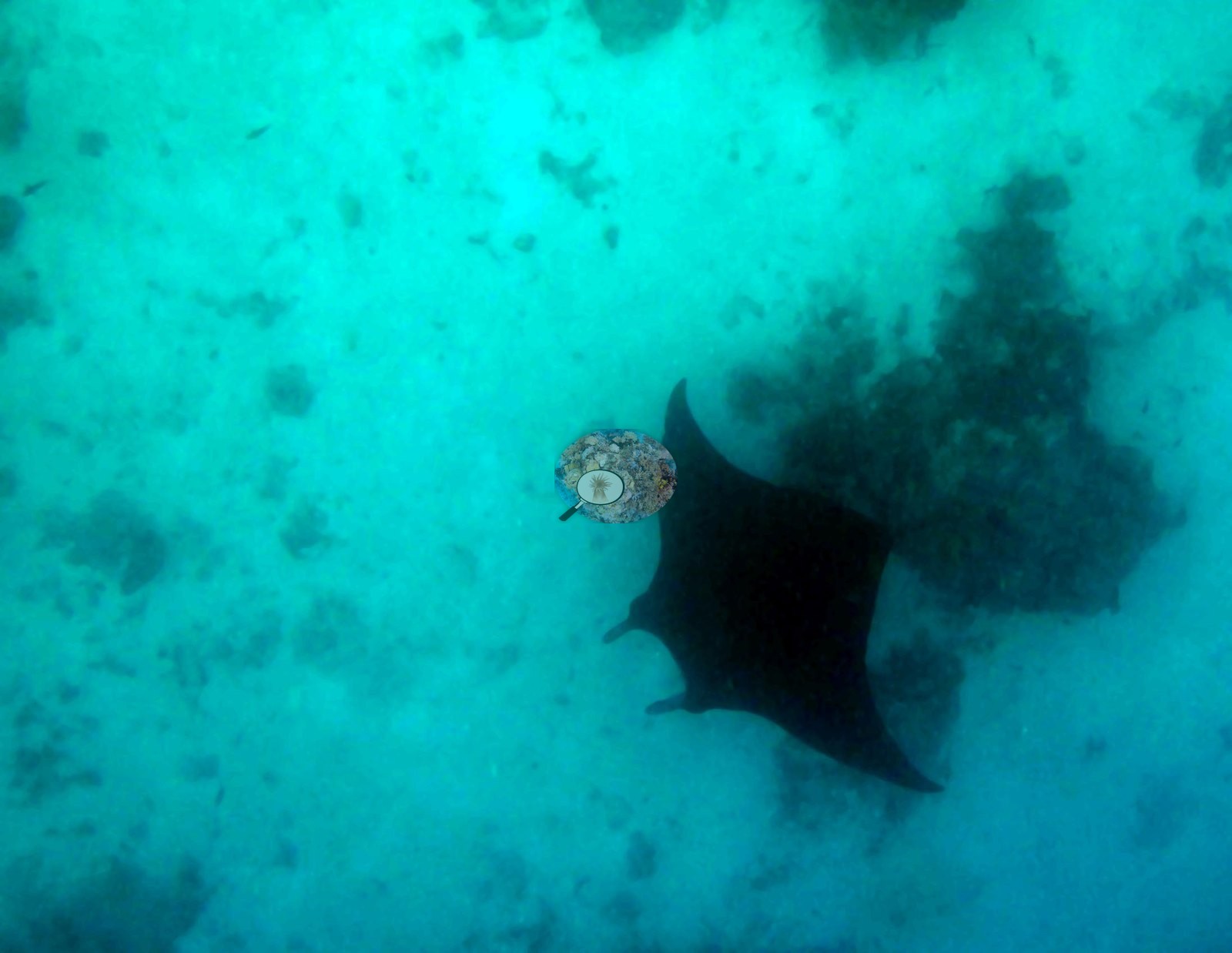
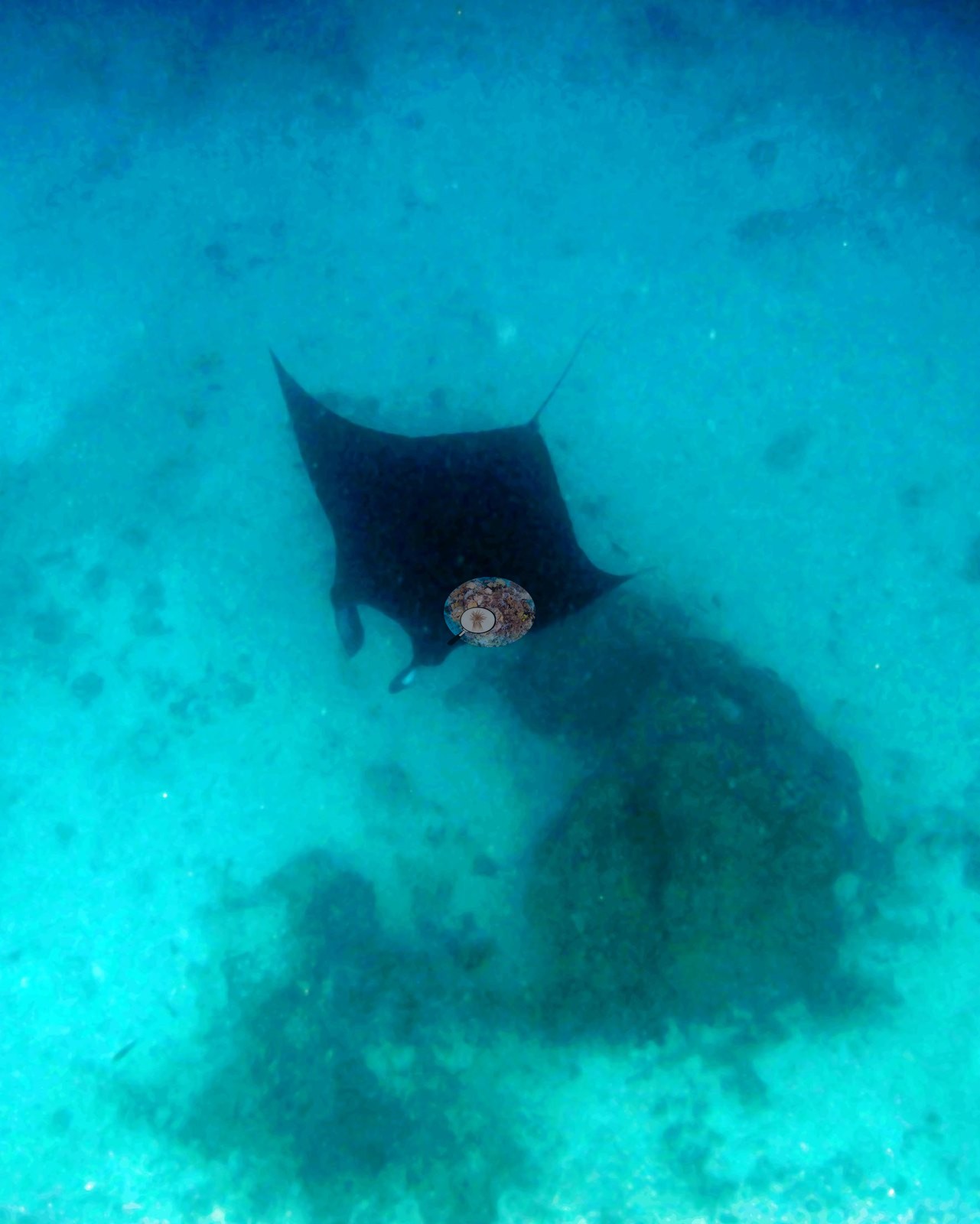
Four frames show a manta ray passing low over the sand and rubble, dark against the pale bottom, filling the frame in two of them and photographed from above as it banks in another (e.g., Image 9, Image 10, Image 11, Image 12).
Comparisons with other data
Apart from the Living Oceans Foundation survey shown here, we found no other surveys at this site as of 2026. If you would like to share yours, please email us.
Data & links
- Download benthic survey data (CSV) ↗
- Download all LOF-GRE data (933 sites) ↗
- Photo portfolio ↗
- Coral Reef Diagnostics page for this area ↗
All images from Coral Reef Diagnostics. Data are from the Khaled bin Sultan Living Oceans Foundation Global Reef Expedition and Coral Reef Diagnostics.
 © Coral Reef Diagnostics.