
Part of the regional summaries: Fiji - Vanua Balavu, Fiji - Northern Lau (Vanua Balavu / Cicia / Nayau), and Fiji - Lau
More info
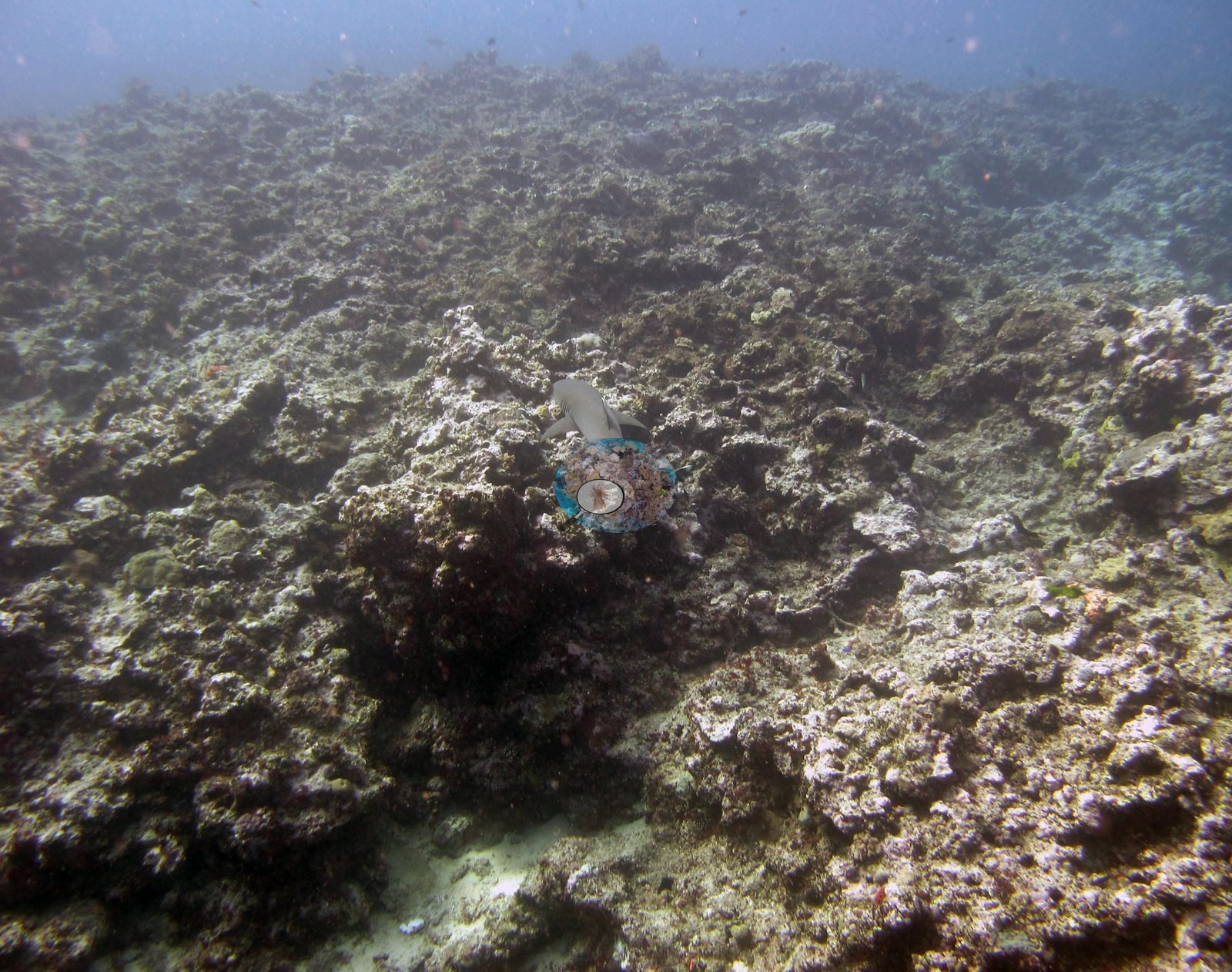
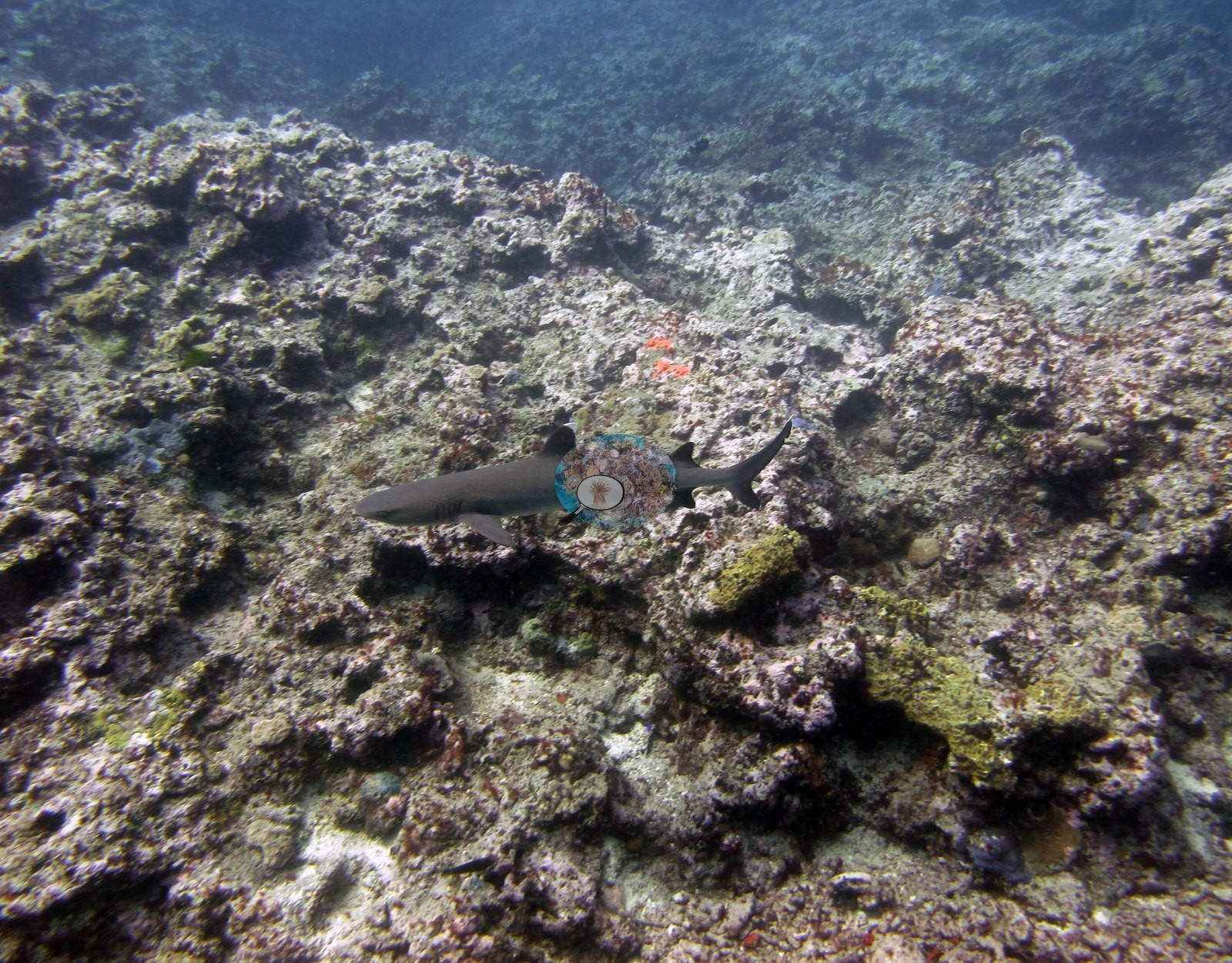
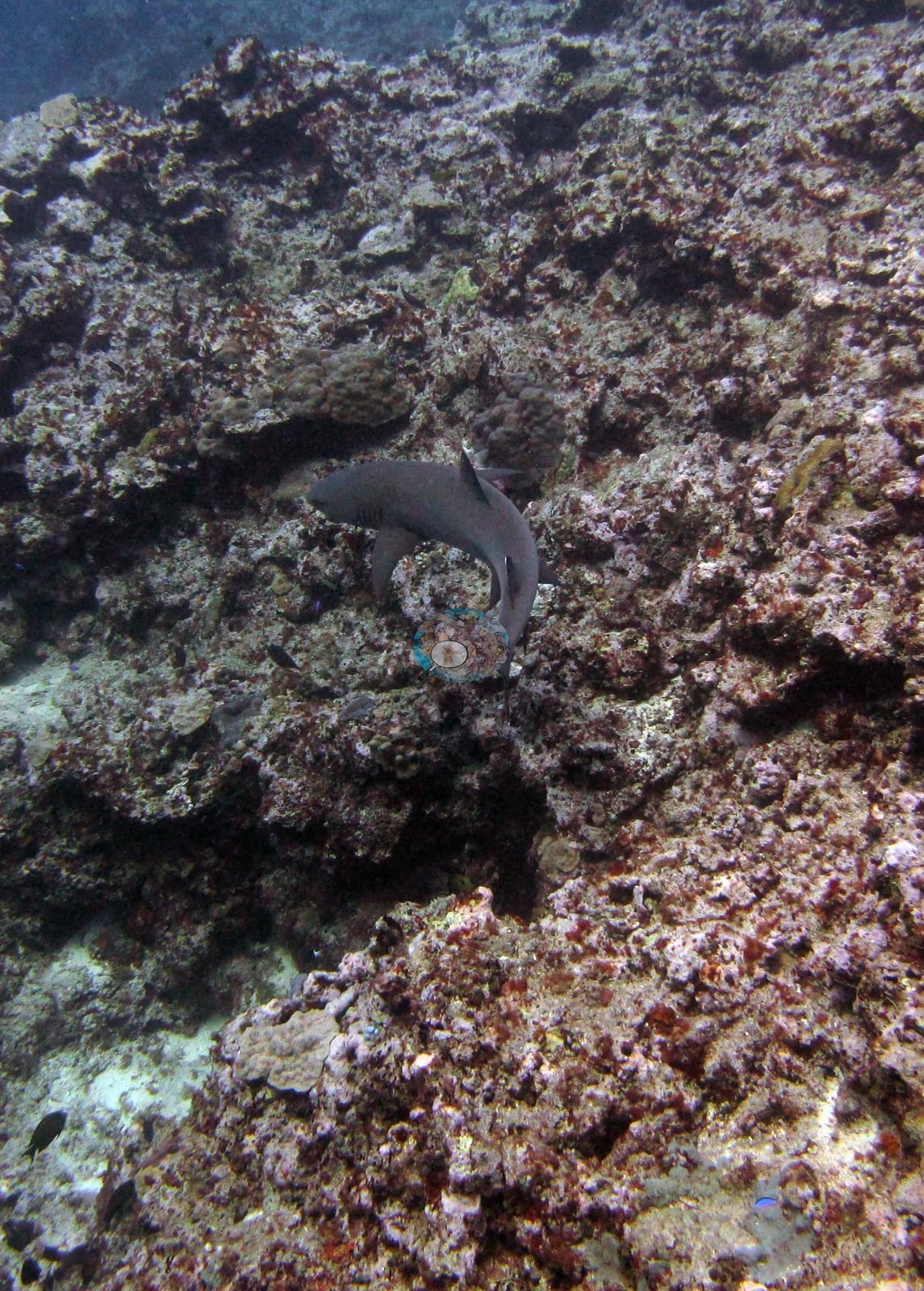
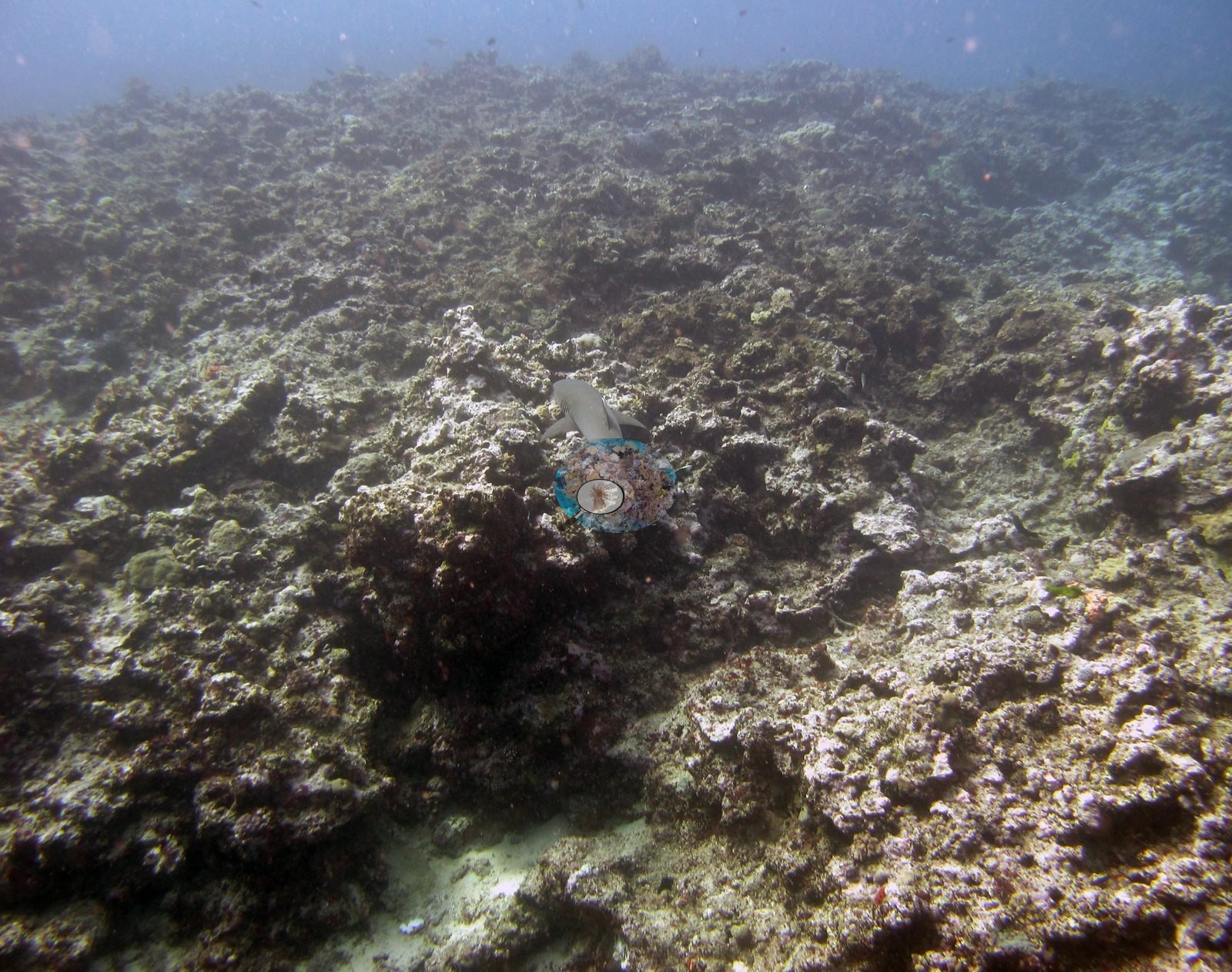
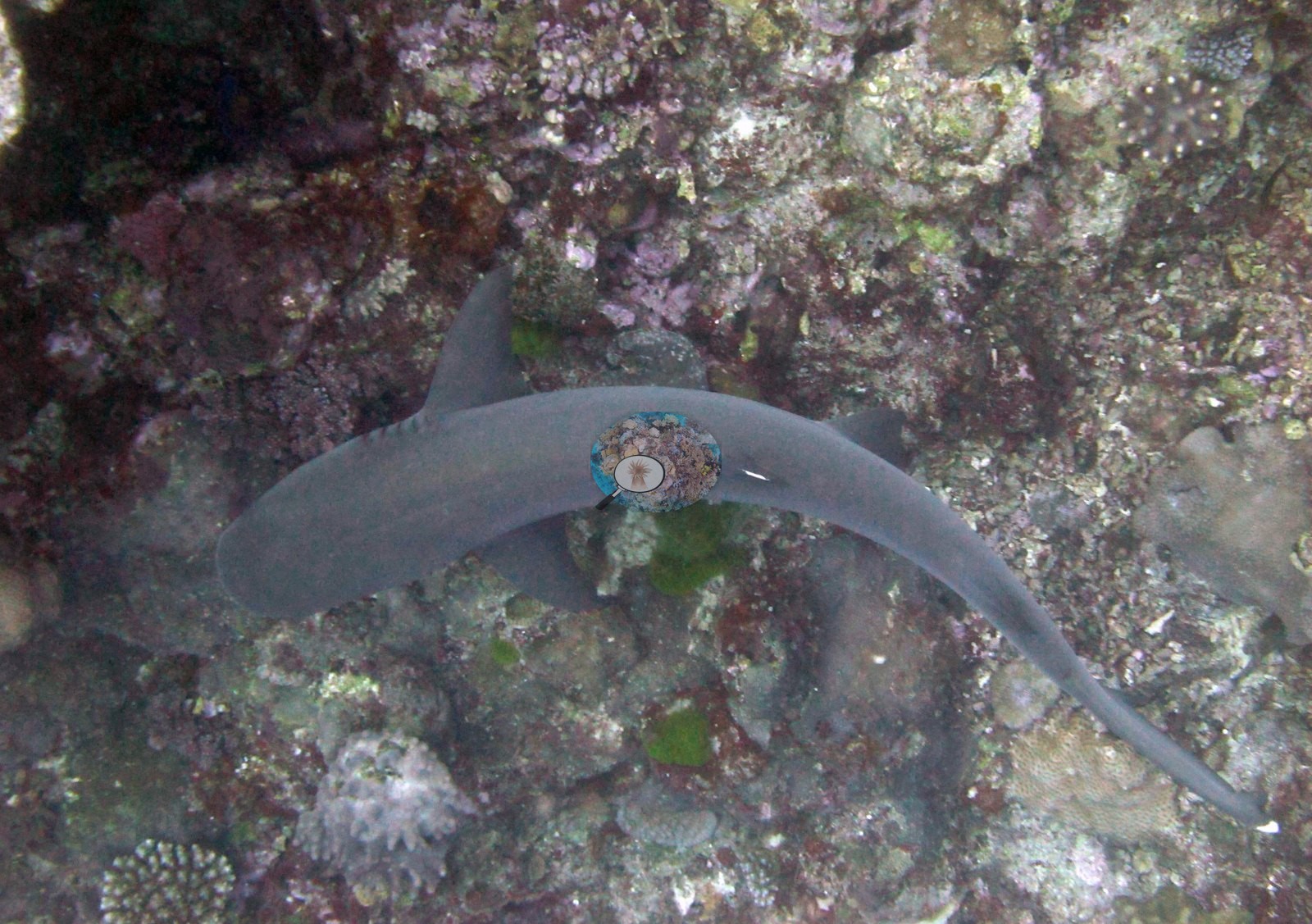
Fiji (NOAA CRW virtual station)A Vanua Balavu station (dived to 31.7 m) where the survey transect recorded little living coral (15%) against three-quarters algae. Anderson's four habitat photographs from the dive are all of a whitetip reef shark, with low coralline-crusted framework and a few small corals in the background. Surveyed on the Living Oceans Foundation's Global Reef Expedition.
E dua na vanua ni vakadidike e Vanua Balavu (a nunu kina ki na 31.7 m) ka vola na transect ni vakadidike e lailai na lase bula (15%) ni vakatauvatani kei na tolu na kena ikava na lumi. Na va na itaba ni vanua (habitat) nei Anderson mai na nunu oqo e taba kece e dua na qio (whitetip reef shark), kei na ivakatudei e sega ni cecere e ubi ena lumi vakalase (coralline) kei na vica na lase lalai ena daku.
AI translation of this summary; the English is authoritative. (low confidence)
CTD-cast midpoint of 27.1–27.2°C
Two other CRD dive sites with their own pages within 5 km shown in orange — click a marker to open its page.
🗺 Detailed map of the Global Reef Expedition dive sites, Vanua Balavu, Fiji (Khaled bin Sultan Living Oceans Foundation; opens in a new window)
4 of the 5 photographs on this page are shown beside the text that discusses them under "Site description" below.
Site description
Setting
Visibility was poor to moderate with a blue-gray cast at range.
General benthic features
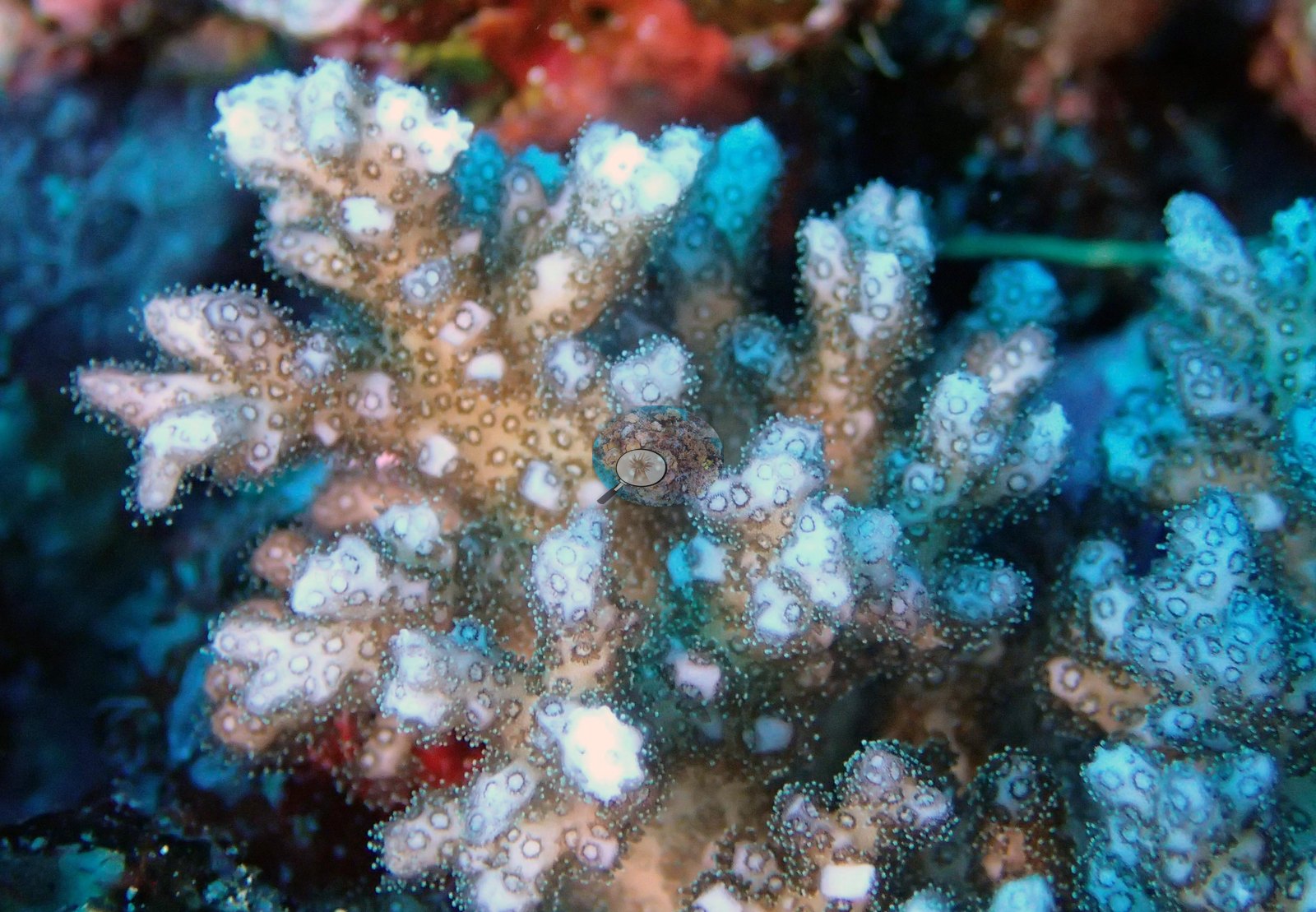
Anderson's frames from this station consistently show low-relief consolidated framework and rubble, sheeted in pink and mauve coralline crust and darkened by rust-red and olive turf, with pale sand and rubble collecting in the hollows and only small, scattered corals — a few low encrusting and mounding patches and some finely branched heads in the near-field frames.
Coral cover
- Reference: Khaled bin Sultan Living Oceans Foundation, Global Reef Expedition (in situ transect)
- The in situ point-count transect recorded 15% live coral cover against 75% algal cover — the quantitative account of this site comes from that transect, not from the photographs.
- Transect mean 15 ± 3.2% SE (n = 4 transects; Living Oceans Foundation per-transect benthic data); the headline above is this all-transect mean.
Stressors
The frames are not close enough or numerous enough to assess bleaching, disease, or crown-of-thorns damage across the site. The survey team's site notes for FJVB61 record a Diploastrea colony at 20 m with a gradient of mortality and what appeared to be a high abundance of trematodes, and note that diseased Porites were also common (Living Oceans Foundation, Fiji site descriptions, 2013). The Living Oceans Foundation transects here recorded 5.5% cyanobacteria and no recently dead coral; they carry no bleaching, disease, or crown-of-thorns field.
Fish and other fauna
Only four habitat frames exist, and all four were taken of a whitetip reef shark rather than of the reef, so the bottom appears in them only as background: two hazy wide frames at range and two closer, strobe-lit frames over a few square meters of rock (e.g., Image 1, Image 2, Image 3, Image 4).
Comparisons with other data
The one coral colony from this site with an outlier score was not flagged as a physiological outlier (Mayfield et al. 2017, PLoS ONE).
Dive record
FJVB61 was surveyed on 23 June 2013 during the Khaled bin Sultan Living Oceans Foundation Global Reef Expedition, on a dive to 31.7 m.
Other notes
No branching thicket, table or vertical structure appears in any frame, but with four opportunistic shark frames the photographs cannot settle the site's zonation, relief, or community composition, and no site-wide claim is made from them here. One Pocillopora colony was sampled here, colony F134, labeled P. acuta in Anderson's own records; its two close-up frames (not shown on this page) are pictures of that colony and describe nothing beyond it.
Data & links
- Download benthic survey data (CSV) ↗
- Download all LOF-GRE data (933 sites) ↗
- Photo portfolio ↗
- Coral Reef Diagnostics page for this area ↗
All images from Coral Reef Diagnostics. Data are from the Khaled bin Sultan Living Oceans Foundation Global Reef Expedition and Coral Reef Diagnostics.
 © Coral Reef Diagnostics.