
Part of the regional summaries: Fiji - Vanua Balavu, Fiji - Northern Lau (Vanua Balavu / Cicia / Nayau), and Fiji - Lau
More info
Fiji (NOAA CRW virtual station)A Vanua Balavu fore reef (dived to 30.5 m) where algae covered about three and a half times as much ground as coral (15%), and the transects also logged 13% dead coral. Neither colony with an outlier score was a physiological outlier, though Anderson's sample sheet records one sampled colony as 90% bleached on its exterior. Surveyed on the Living Oceans Foundation's Global Reef Expedition.
E dua na yasana i tuba ni cakau (fore reef) e Vanua Balavu (a nunu kina ki na 30.5 m) ka ubia na lumi e rauta ni vakatolu ka veimama na levu ni vanua ni vakatauvatani kei na lase (15%), ka vola tale ga na transect e 13% na lase mate. E sega ni duatani vakayago (physiological outlier) e dua vei rau na rua na lase e tiko na nodrau naba ni duidui (outlier score), ia na ivola ni ivakaraitaki nei Anderson e vola ni dua na lase a taura kina na ivakaraitaki e 90% na kena vulavula (bleached) ena kena yasana i tuba (exterior).
AI translation of this summary; the English is authoritative. (low confidence)
CTD-cast midpoint; the cast read 27.0°C throughout
One other CRD dive site with its own page within 5 km shown in orange — click a marker to open its page.
🗺 Detailed map of the Global Reef Expedition dive sites, Vanua Balavu, Fiji (Khaled bin Sultan Living Oceans Foundation; opens in a new window)
Site description
Coral cover
- Reference: Khaled bin Sultan Living Oceans Foundation, Global Reef Expedition (in situ transect)
- In situ point-count transects (dived to 30.5 m) recorded 15% live coral cover against 55% total algal cover — algae on roughly three and a half times the substrate coral held.
- Coral and algae together account for only about 70% of the transect, so a substantial remainder was sand, rubble, soft corals, or other benthos that neither figure describes.
- Transect mean 15 ± 2.1% SE (n = 4 transects; Living Oceans Foundation per-transect benthic data); the headline above is this all-transect mean.
Stressors
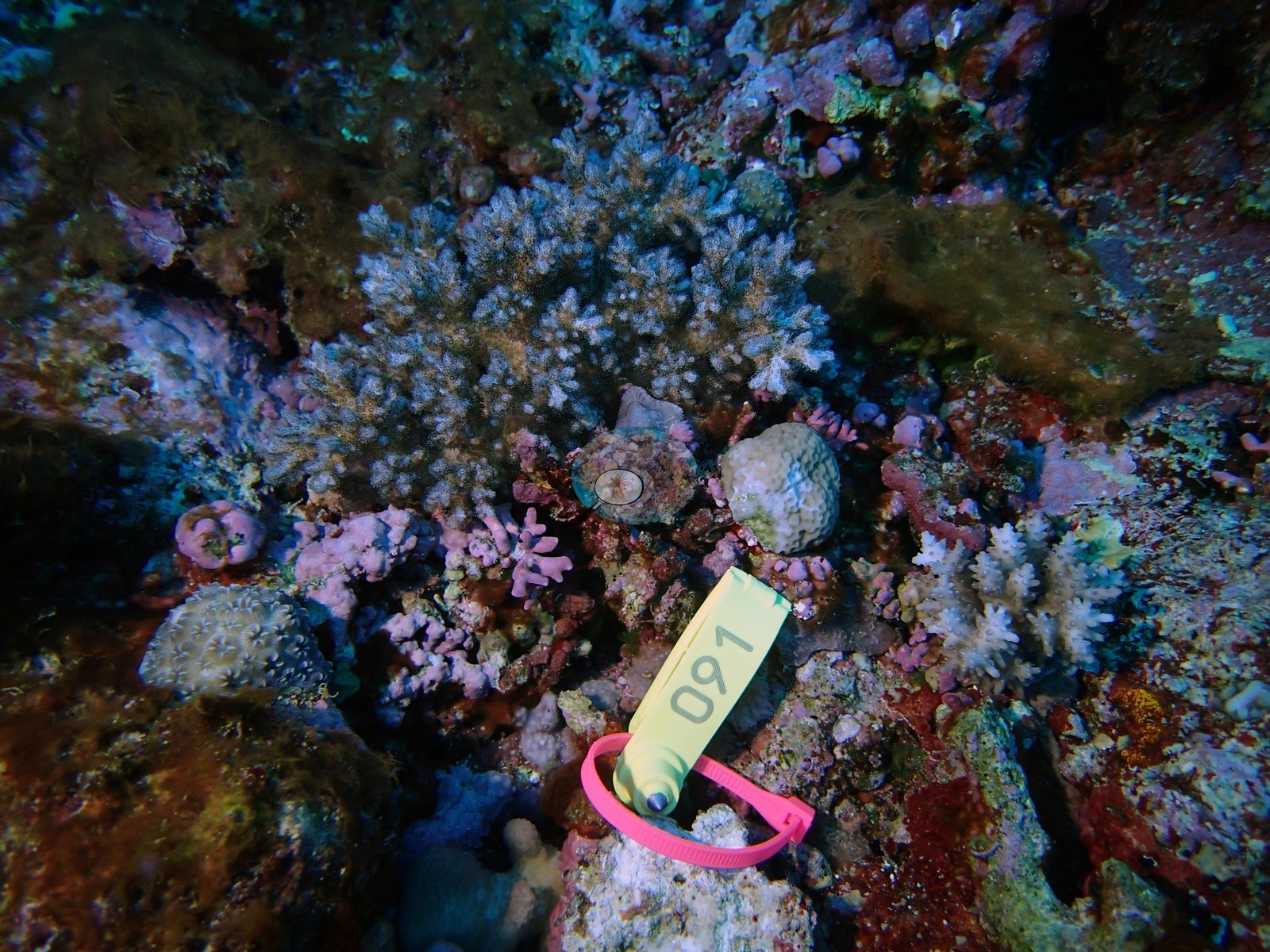
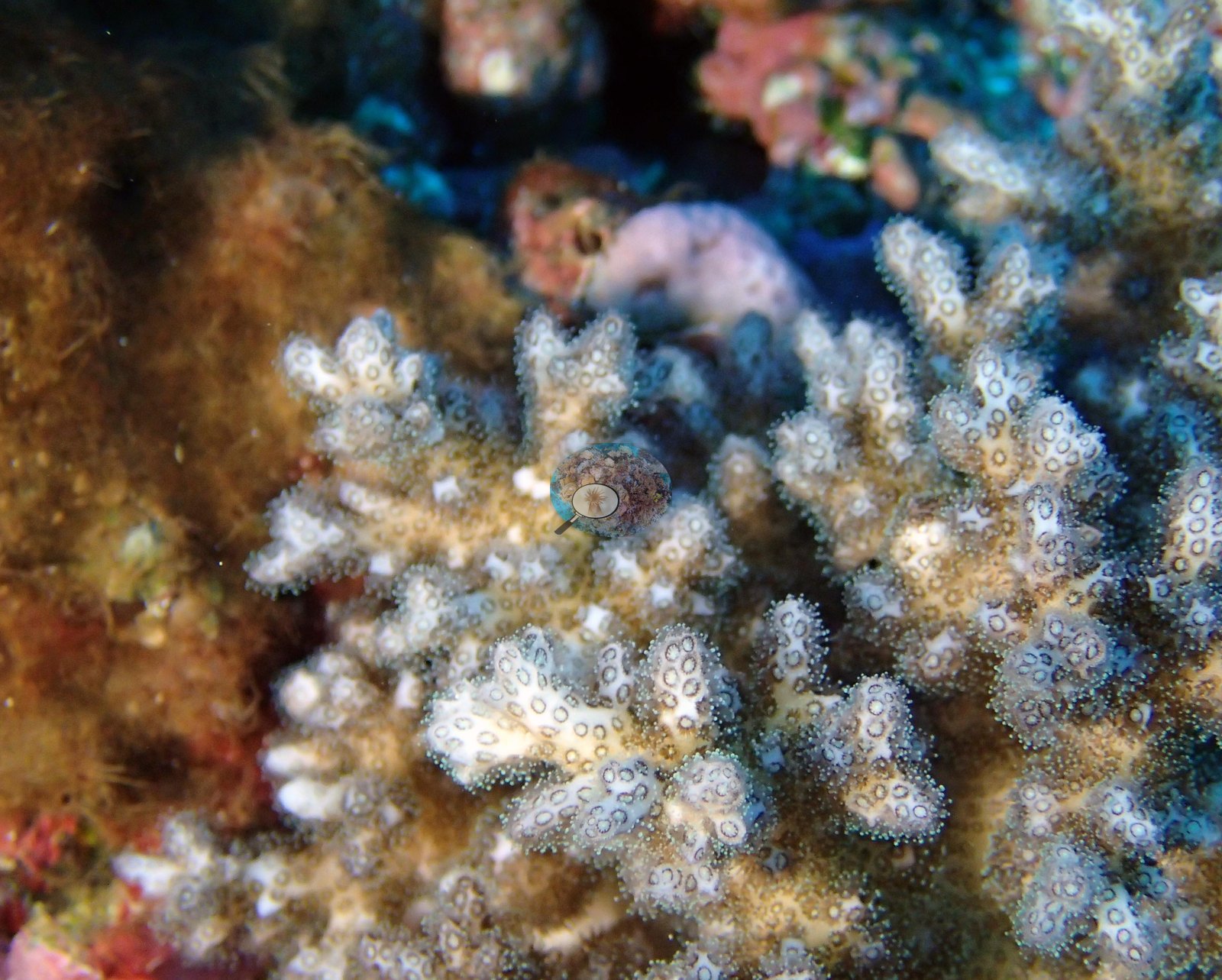
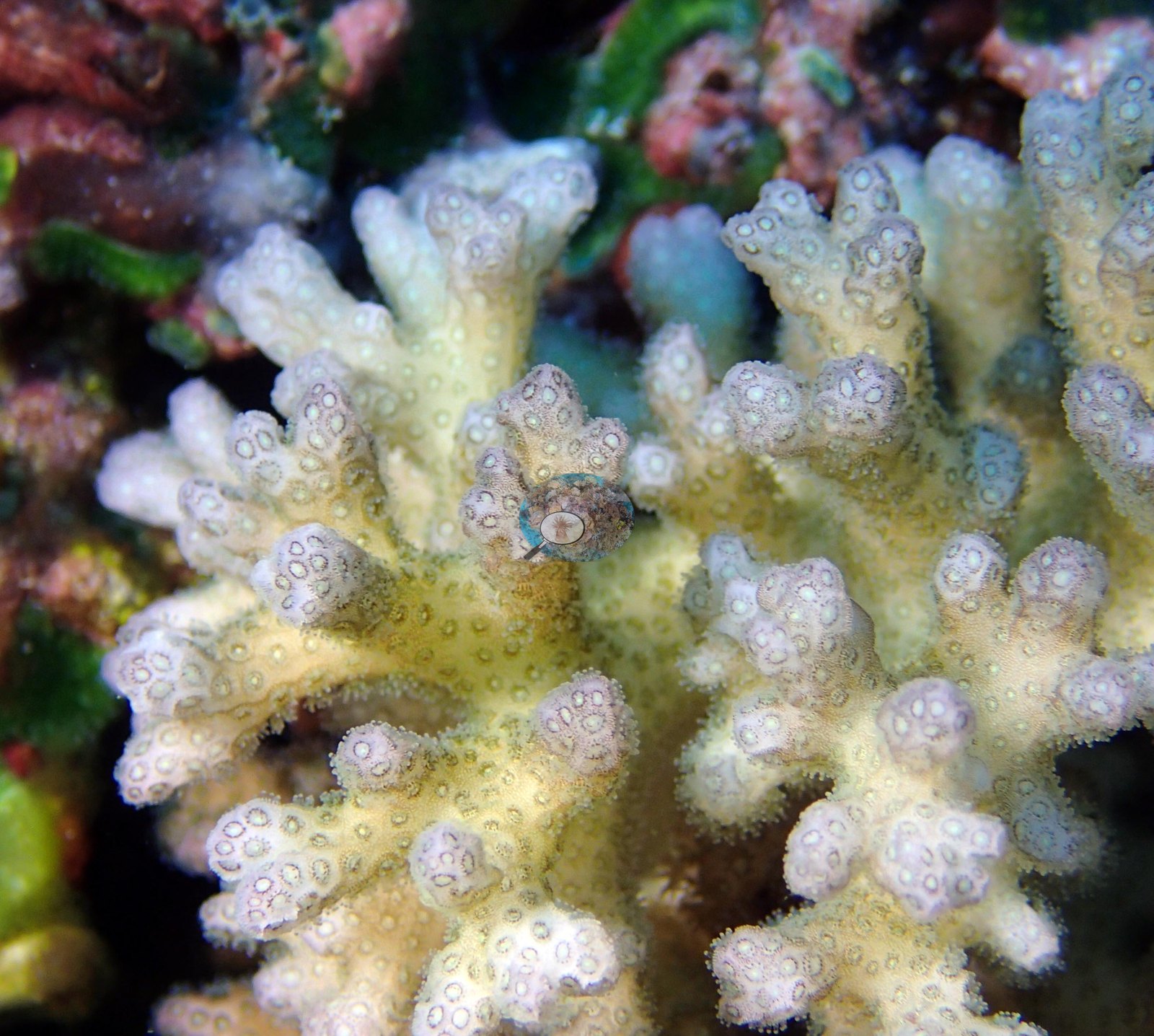
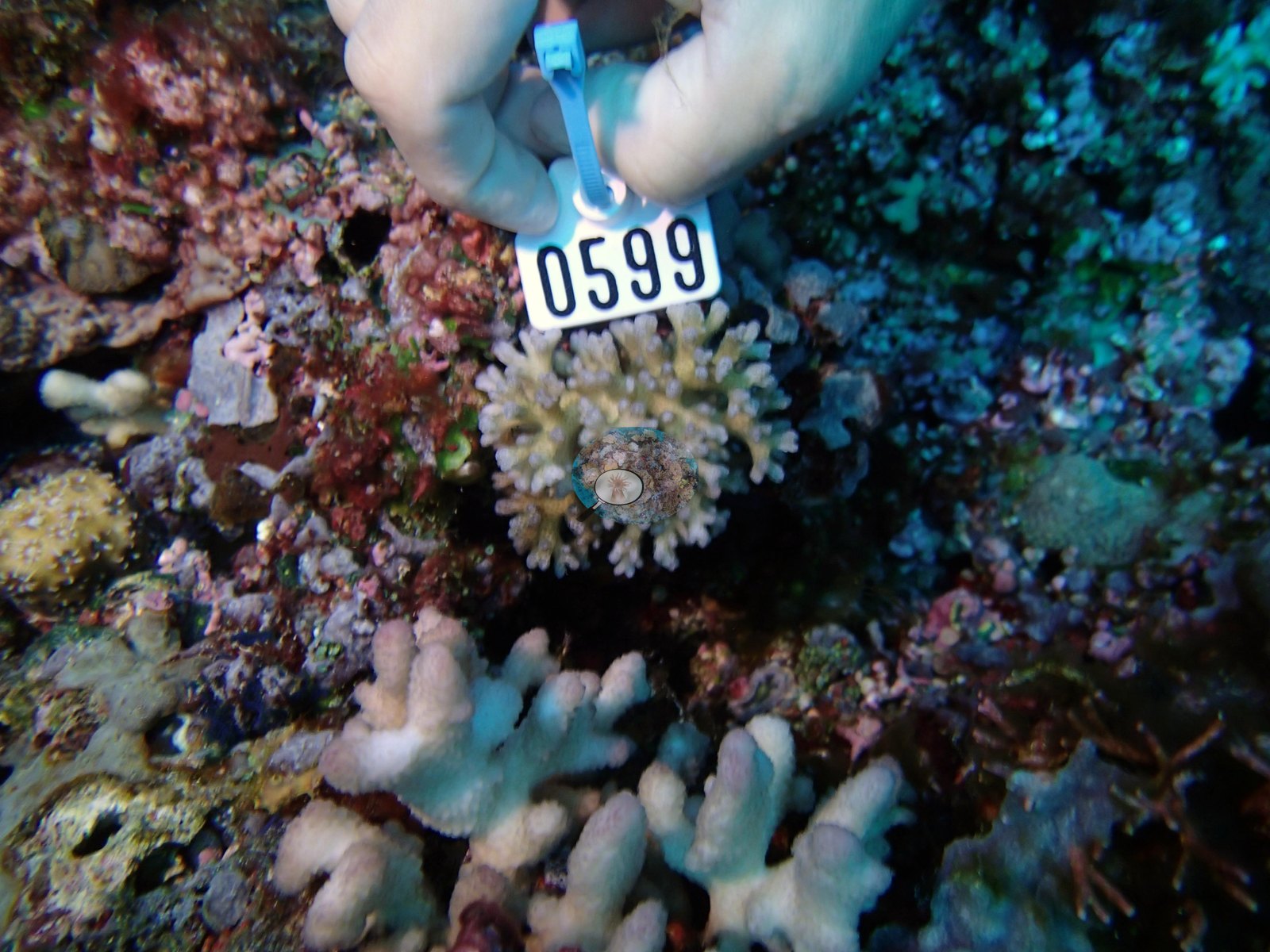
The Fiji virtual station has averaged an annual maximum of 8.9 degree-heating-weeks over 2021-2025 (NOAA Coral Reef Watch), above the 8 DHW severe-bleaching level; Cyclone Winston passed over Vanua Balavu in February 2016 (IBTrACS best track, NOAA NCEI). Anderson's photographs of colony F130 also show a thick-branched, unsampled colony below it that was bleached. The Living Oceans Foundation transects here recorded 7.0% cyanobacteria and no recently dead coral.
Comparisons with other data
Neither of the two coral colonies from this site with an outlier score was flagged as a physiological outlier (Mayfield et al. 2017, PLoS ONE), although Anderson's sample sheet records one of the five colonies sampled here (F130) as 90% bleached on its exterior. The expedition's own site table classifies FJVB60 as a barrier reef on an exposed aspect, surveyed on the fore reef, outside the lagoon. Alongside the hard coral already reported for this site, the same transects recorded 29% crustose coralline algae, 10% turf, 8.0% macroalgae, 1.0% erect algae, and 7.0% cyanobacteria (55% algae in all). Non-living substrate came to 71% pavement, 13% dead coral, 0.8% rubble, and 0.3% sand. Paired fish transects recorded about 31 fish species per transect and about 9.2 kg per 100 m2 of biomass. The benthic figures are means of all of this station's own transects in the expedition's per-transect benthic records, and the fish figures come from its paired fish transects; all are survey results, not photographic estimates.
Dive record
FJVB60 is a Vanua Balavu station in northern Lau, surveyed on 23 June 2013 during the Khaled bin Sultan Living Oceans Foundation's Global Reef Expedition. Bottom time was 64 minutes.
Data & links
- Download benthic survey data (CSV) ↗
- Download all LOF-GRE data (933 sites) ↗
- Photo portfolio ↗
- Coral Reef Diagnostics page for this area ↗
All images from Coral Reef Diagnostics. Data are from the Khaled bin Sultan Living Oceans Foundation Global Reef Expedition, Coral Reef Diagnostics, and NOAA Coral Reef Watch.
 © Coral Reef Diagnostics.