
Part of the regional summaries: Fiji - Vanua Balavu, Fiji - Northern Lau (Vanua Balavu / Cicia / Nayau), and Fiji - Lau
More info
Fiji (NOAA CRW virtual station)An algae-dominated Fiji station, with just 13% live coral against 83% algae. Anderson's sample sheet records two of the three colonies sampled here as partly bleached, and the survey predates Cyclone Winston, which passed over Vanua Balavu in 2016. Surveyed on the Living Oceans Foundation's Global Reef Expedition.
E dua na vanua ni vakadidike e Viti e liu kina na lumi, e 13% ga na lase bula ni vakatauvatani kei na 83% na lumi. Na ivola ni ivakaraitaki nei Anderson e vola ni rua vei ira na tolu na lase a taura kina na ivakaraitaki eke e vulavula vakalailai (partly bleached), ka a cakava na vakadidike ni bera na Cagilaba o Winston, ka sivita o Vanua Balavu ena 2016.
AI translation of this summary; the English is authoritative. (low confidence)
One other CRD dive site with its own page within 5 km shown in orange — click a marker to open its page.
🗺 Detailed map of the Global Reef Expedition dive sites, Vanua Balavu, Fiji (Khaled bin Sultan Living Oceans Foundation; opens in a new window)
Site description
Setting
FJVB58 is a Vanua Balavu station in northern Lau, surveyed on 22 June 2013 during the Khaled bin Sultan Living Oceans Foundation's Global Reef Expedition.
Coral cover
- Reference: Khaled bin Sultan Living Oceans Foundation, Global Reef Expedition (in situ transect)
- An in situ point-count transect recorded 13% live coral cover against 83% total algal cover, with algae on roughly seven times the substrate coral held.
- Transect mean 13 ± 3.2% SE (n = 4 transects; Living Oceans Foundation per-transect benthic data); the headline above is this all-transect mean.
Stressors
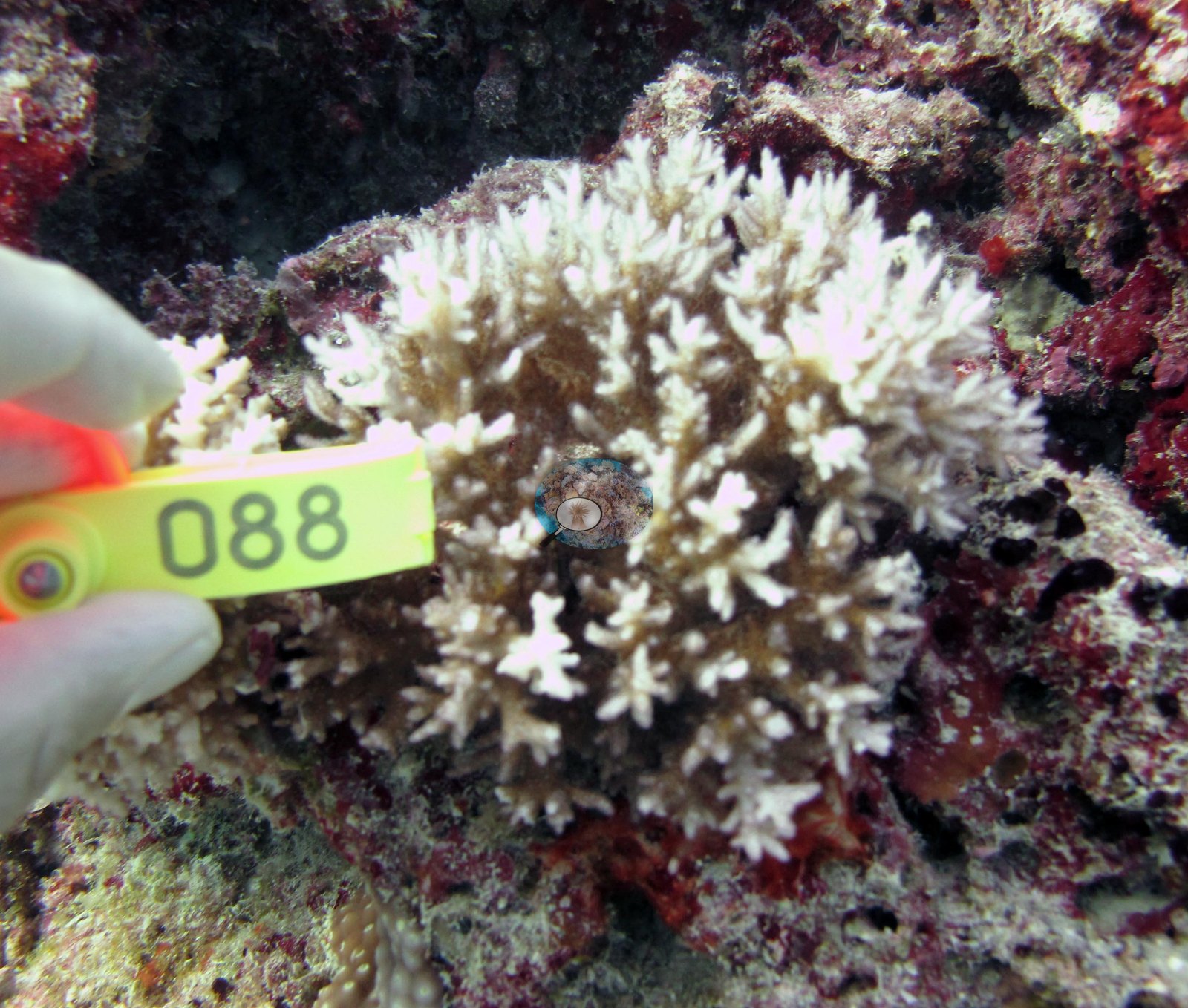
Context, stated as context: the Fiji virtual station has averaged an annual maximum of 8.9 degree-heating-weeks across 2021-2025 (NOAA Coral Reef Watch), above the 8 DHW level at which severe bleaching and mortality are expected, and Severe Tropical Cyclone Winston passed over Vanua Balavu in February 2016 (IBTrACS best track, NOAA NCEI), making these 2013 figures a pre-cyclone baseline. Anderson's sample sheet records two of the three colonies sampled here as partly bleached (F126 5-10%; F127 25%, 'outer sections of branches were bleached'), the third (F128) 'likely healthy'. The Living Oceans Foundation transects here recorded 2.5% cyanobacteria and no recently dead coral.
Comparisons with other data
Apart from the Living Oceans Foundation survey shown here, we found no other surveys at this site as of 2026. If you would like to share yours, please email us.
Dive record
Anderson's dive log records a maximum depth of 12.5 m for this lagoon dive. Bottom time was 47 minutes.
Other notes
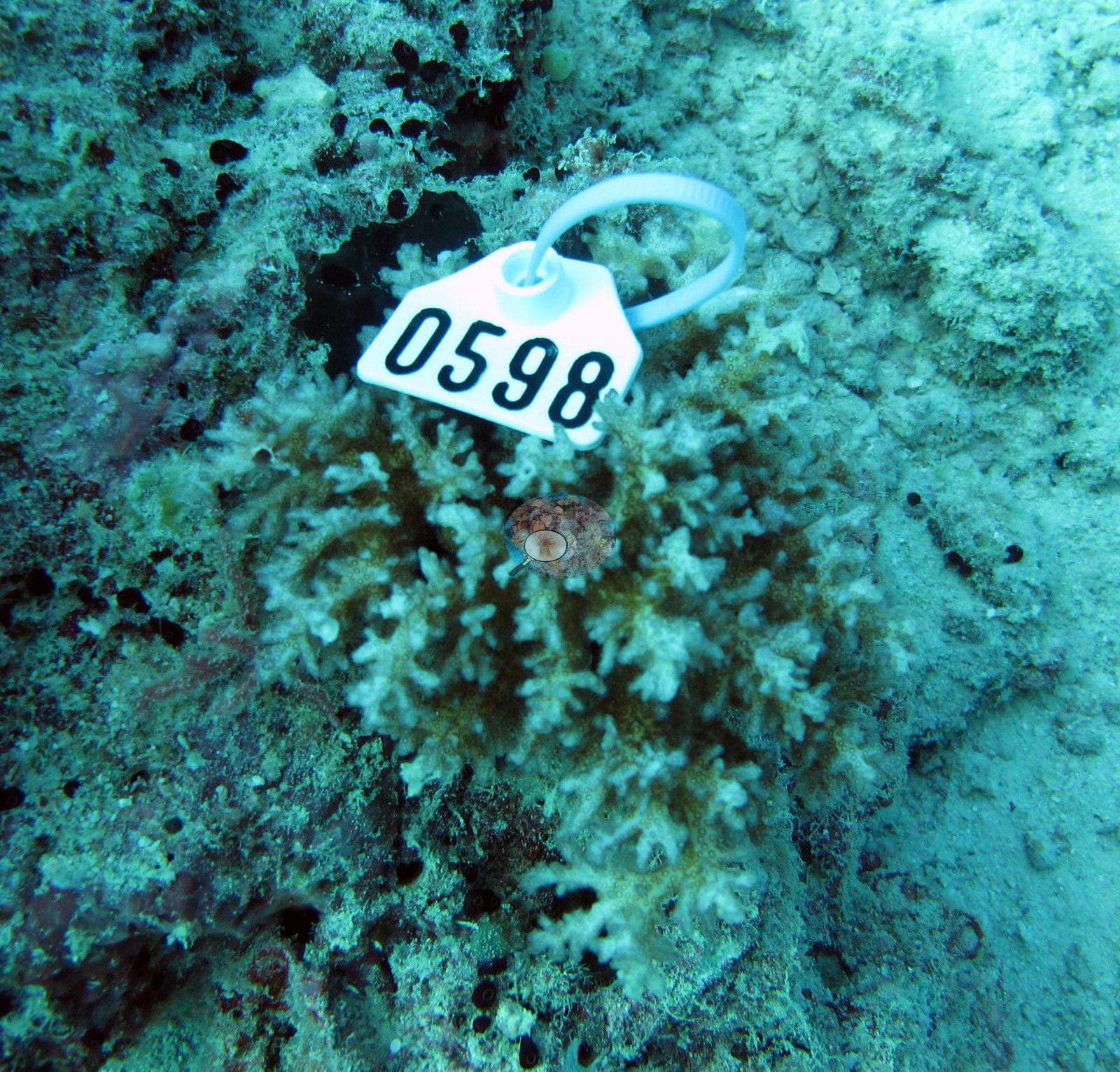
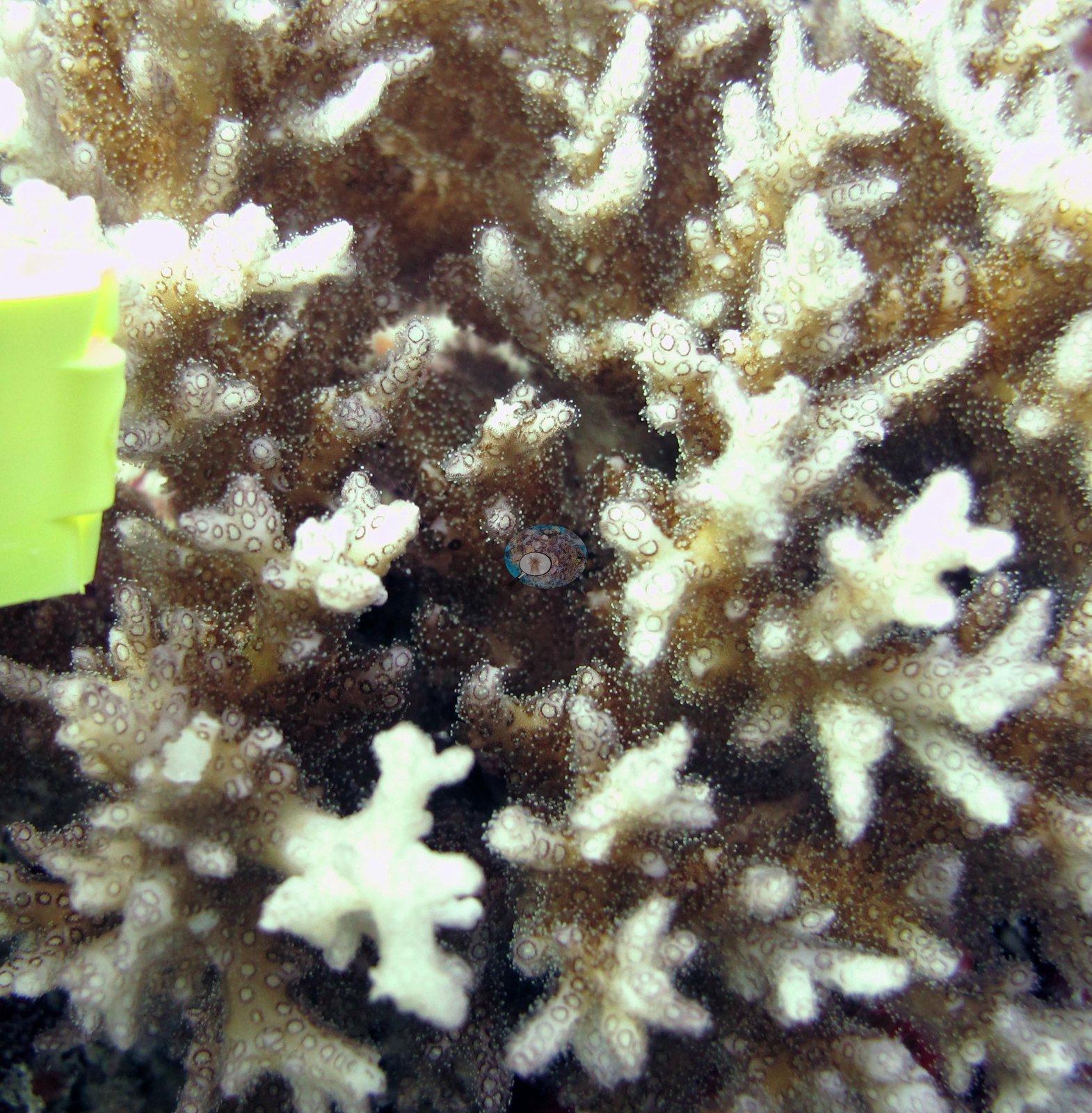
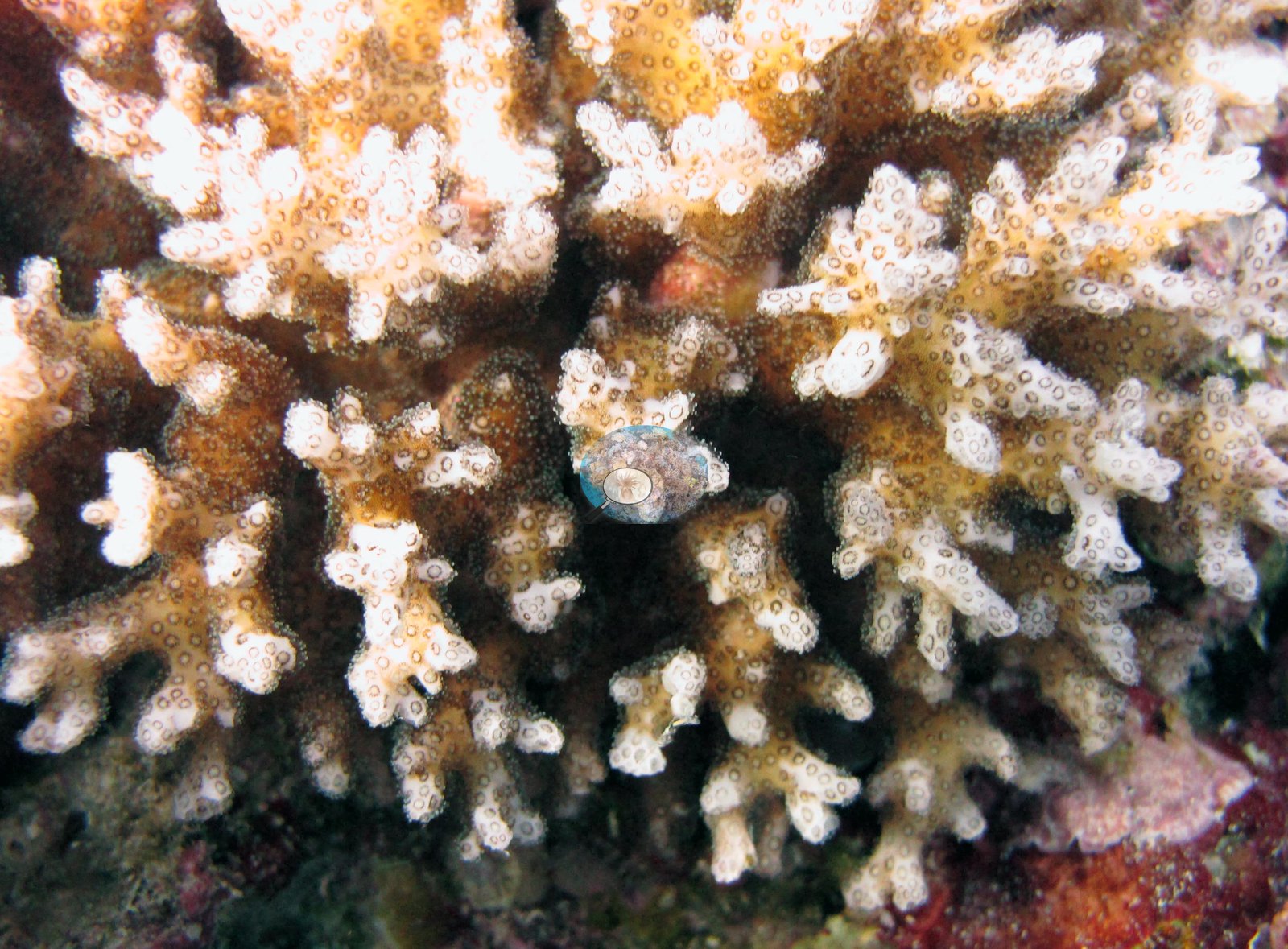
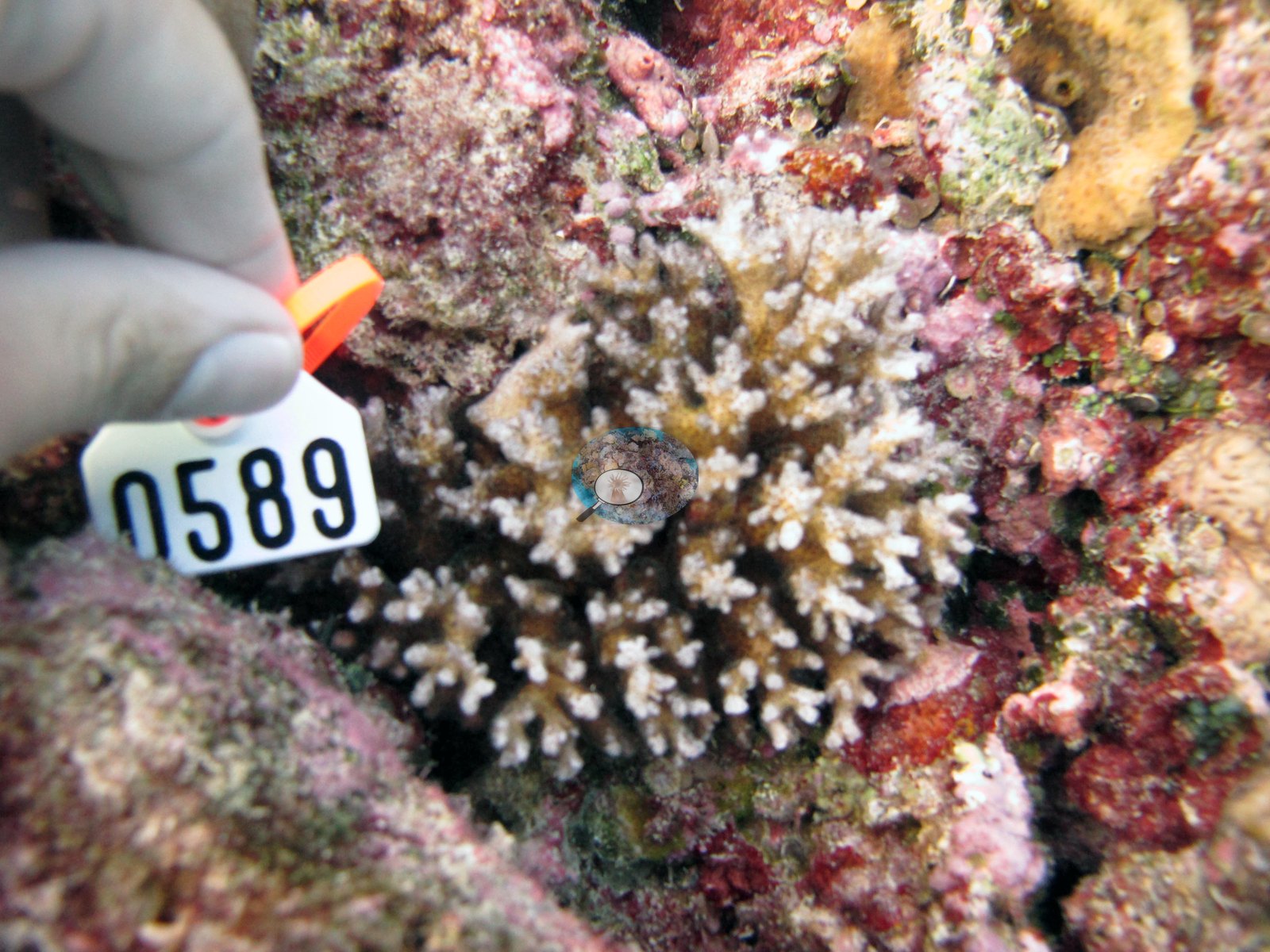
Anderson was busy sampling corals at this site, so the site description is derived from the Living Oceans Foundation's benthic transect data. Those transects recorded 13% hard coral cover. The photographs shown for this site are close-ups of the colonies Anderson sampled, so nothing here describes the reef's habitat, structure, or condition from imagery.
Data & links
- Download benthic survey data (CSV) ↗
- Download all LOF-GRE data (933 sites) ↗
- Photo portfolio ↗
- Coral Reef Diagnostics page for this area ↗
All images from Coral Reef Diagnostics. Data are from the Khaled bin Sultan Living Oceans Foundation Global Reef Expedition, Coral Reef Diagnostics, and NOAA Coral Reef Watch.
 © Coral Reef Diagnostics.