
Part of the regional summaries: Fiji - Vanua Balavu, Fiji - Northern Lau (Vanua Balavu / Cicia / Nayau), and Fiji - Lau
More info
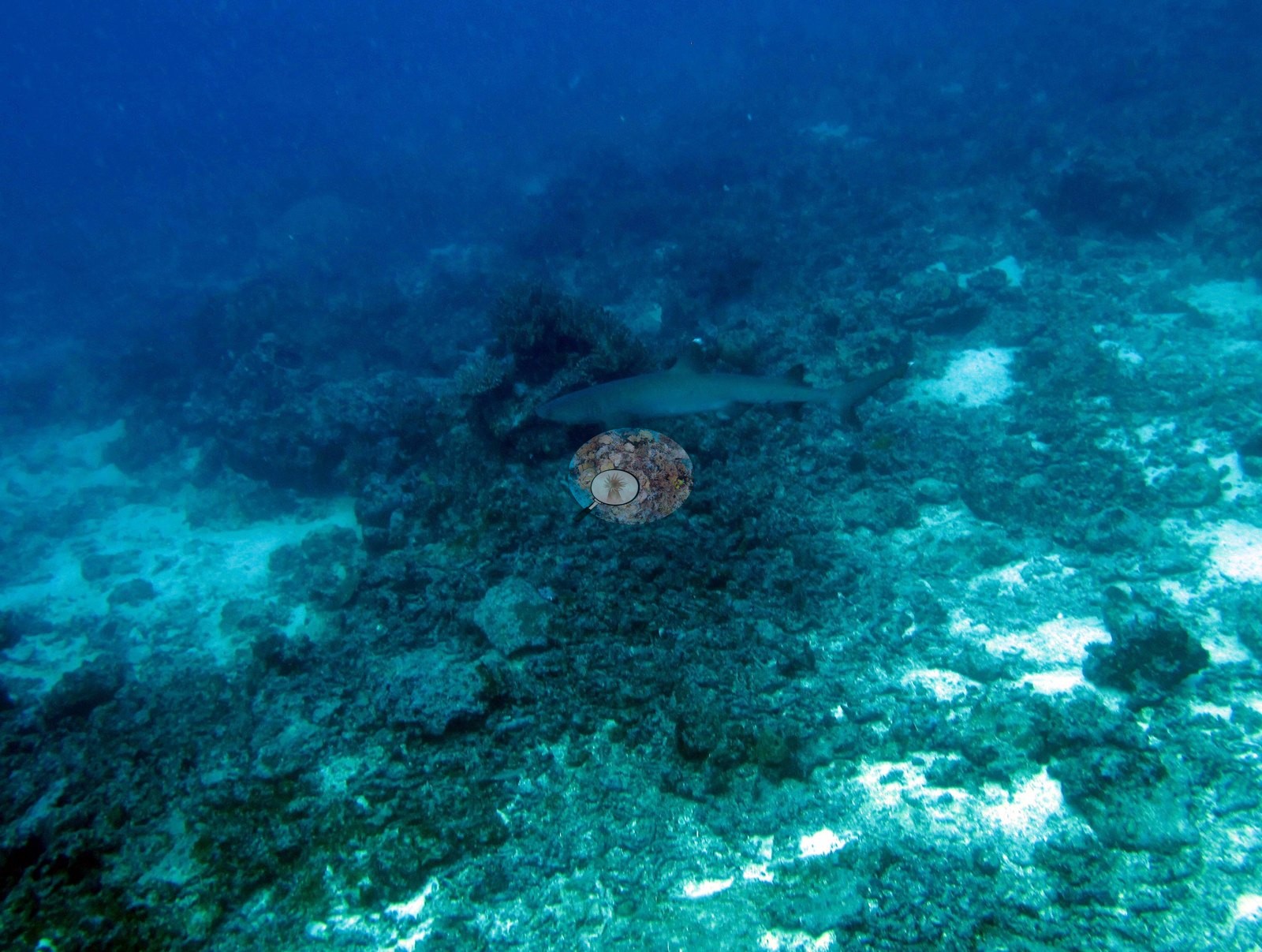
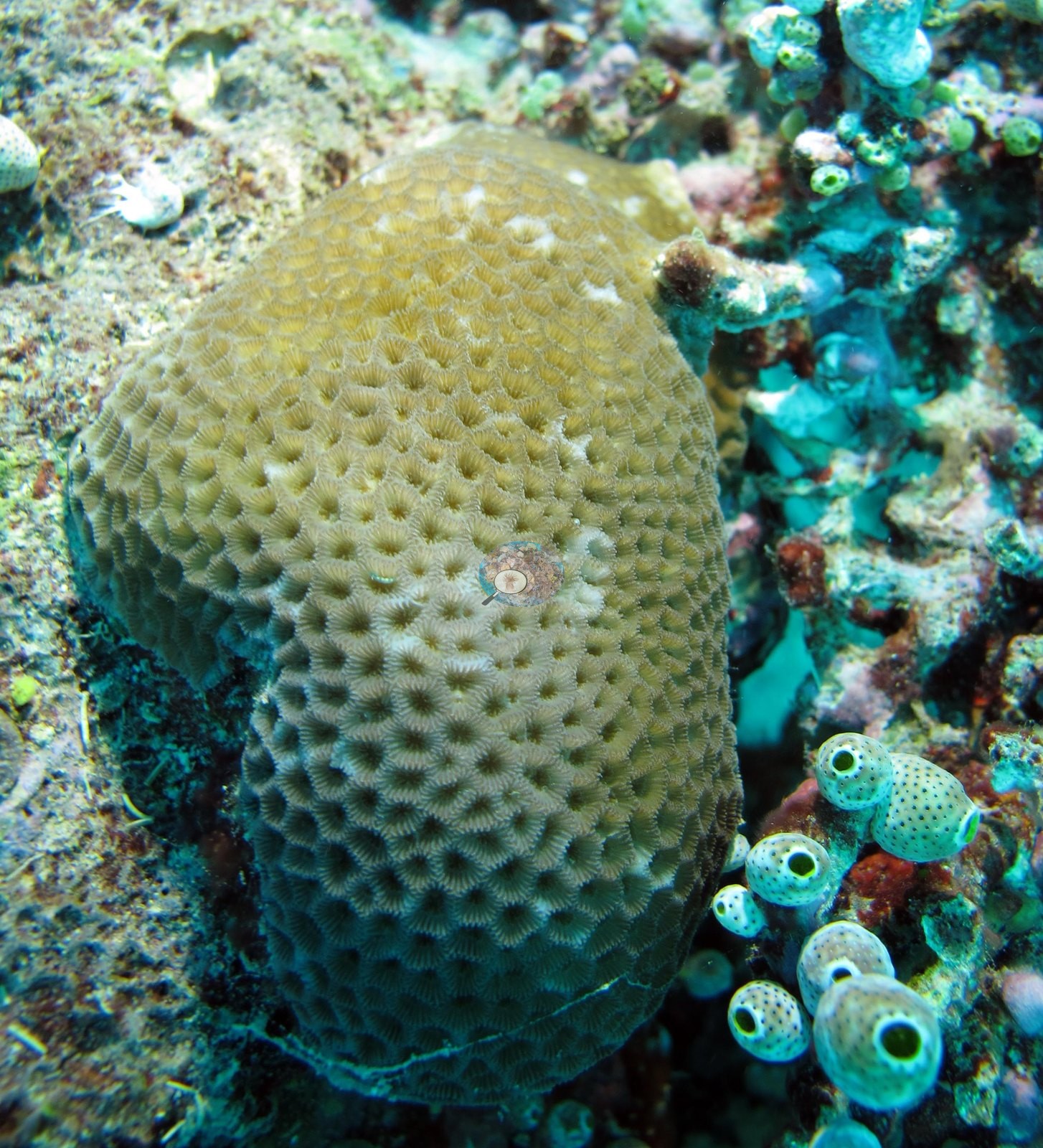
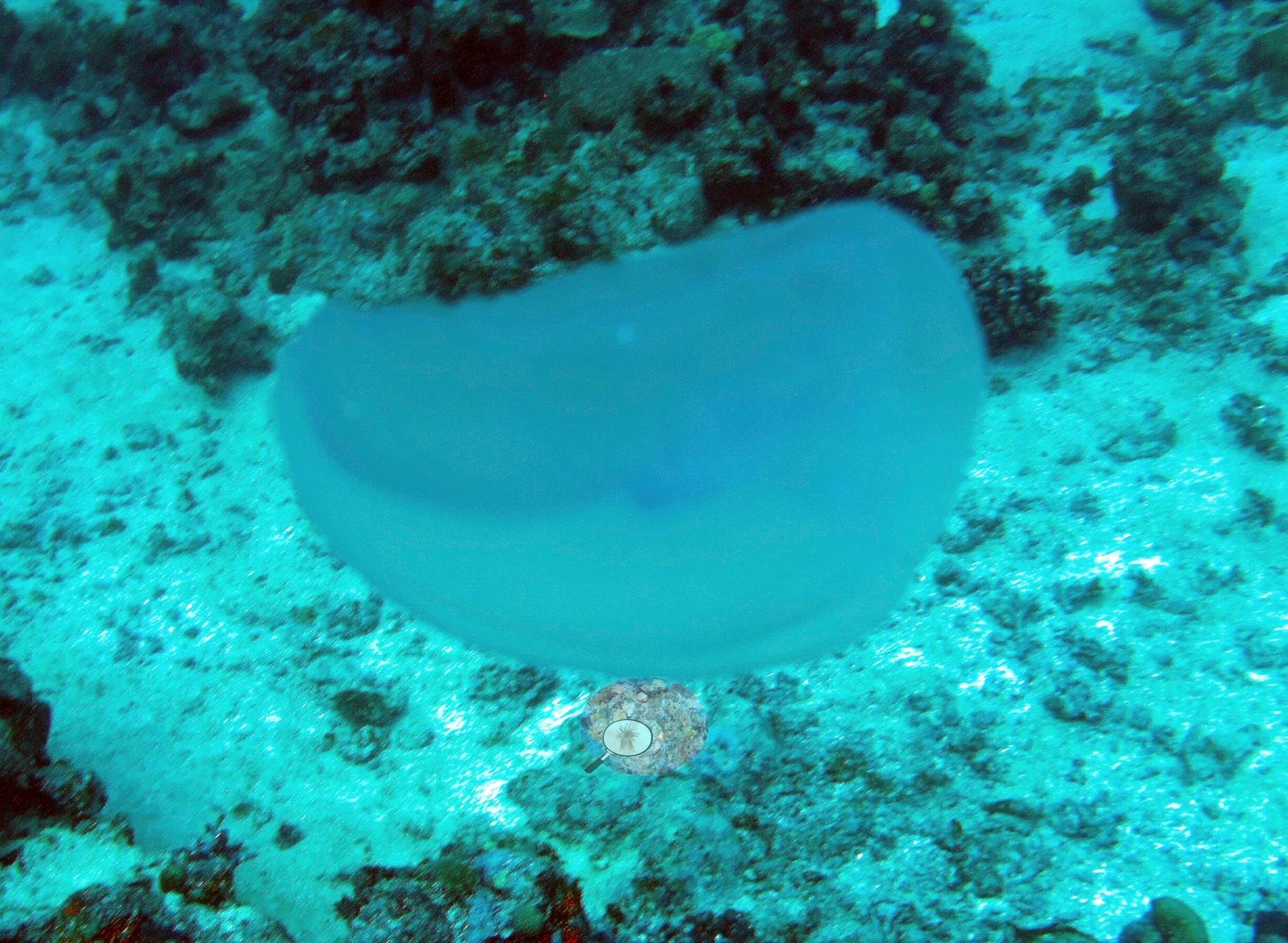
Fiji (NOAA CRW virtual station)A Vanua Balavu reef (dived to 31.4 m) of low pavement and pale rubble, where a whitetip reef shark cruised, at 29% cover. One photo shows a healthy massive dome, which Anderson left unidentified, crowded by blue-green sea squirts, and a large jellyfish drifted just off the bottom. Surveyed on the Living Oceans Foundation's Global Reef Expedition.
E dua na cakau e Vanua Balavu (a nunu kina ki na 31.4 m) ni vatu raraba (pavement) e sega ni cecere kei na tikitiki ni lase mate (rubble) e vulavula vakalailai, e qalo voli kina e dua na qio (whitetip reef shark), ka 29% na ubi ni lase (coral cover). E dua na itaba e vakaraitaka e dua na ulu ni lase levu (massive) e bula vinaka, ka sega ni vakatakilai ko Anderson na kena mataqali, e vakavolivoliti ena sea squirt e roka karakarawa-drokadroka, ka dua na jellyfish levu e ciri voli ena dela ni botoni.
AI translation of this summary; the English is authoritative. (low confidence)
CTD-cast midpoint; the cast read 27.1°C throughout
🗺 Detailed map of the Global Reef Expedition dive sites, Vanua Balavu, Fiji (Khaled bin Sultan Living Oceans Foundation; opens in a new window)
Site description
Setting
FJVB55 (dived to 31.4 m) sits on a reef that point-count survey scored at 29% coral cover, with algae claiming half the bottom.
General benthic features
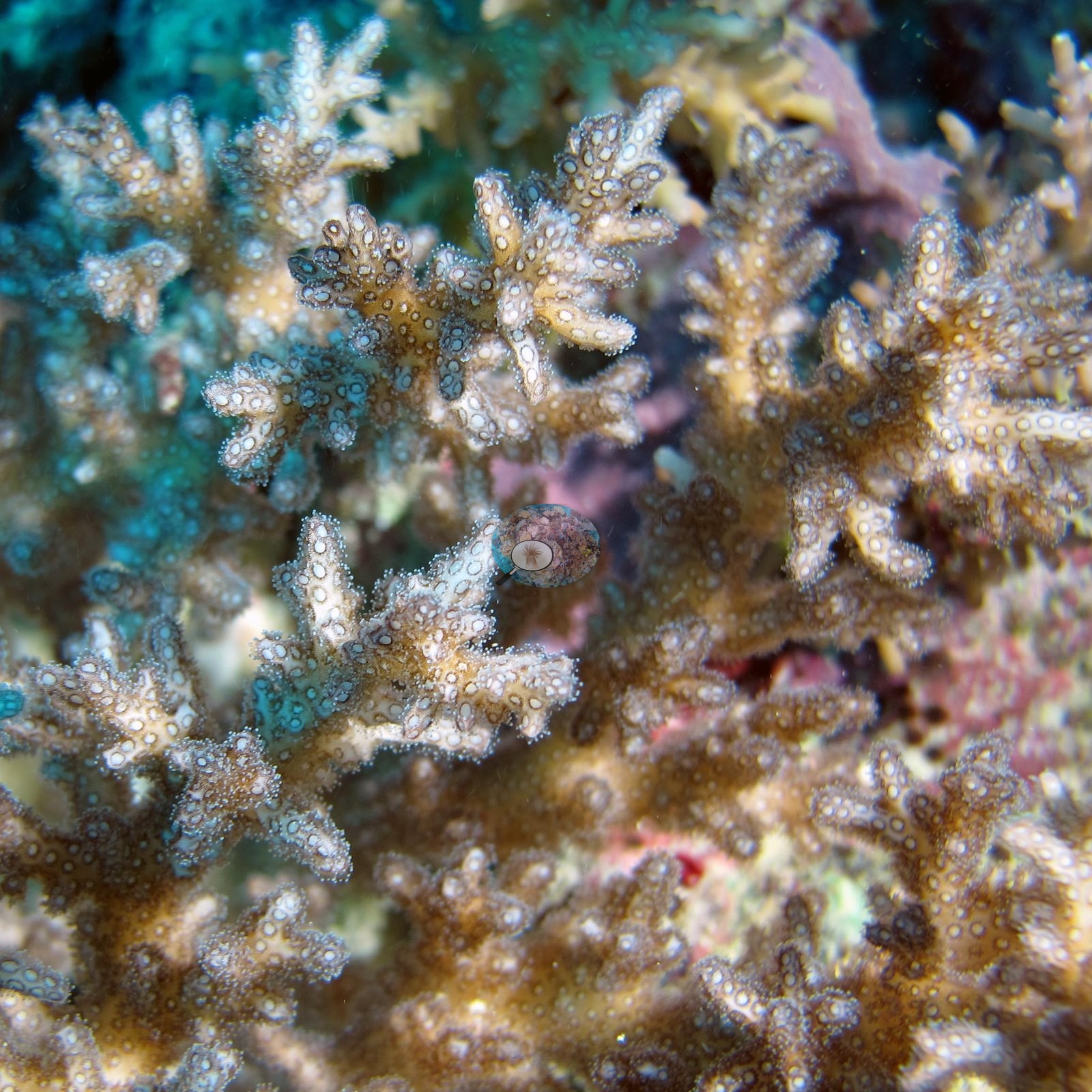
The full FJVB55 photo set is mostly a record of the physiological-sampling work rather than of the reef. Eighteen of the 21 frames are close-range colony portraits: eight taken during tagging (e.g., Image 7, Image 8, Image 9, Image 12, Image 13, Image 17, Image 18, Image 19), in which a gloved hand holds a numbered tag beside an individual knobby branching colony while the colony is documented, most of them cream, olive, or golden-brown with fine knobbed branches, one a squatter pink-brown colony with coarse verrucae (e.g., Image 19), each set into coralline-crusted pavement with green algal turf and other small colonies around it; and ten of the colonies Anderson sampled (F119-F124) (e.g., Image 1, Image 2, Image 3, Image 5, Image 6, Image 14, Image 15, Image 16, Image 20, Image 21).
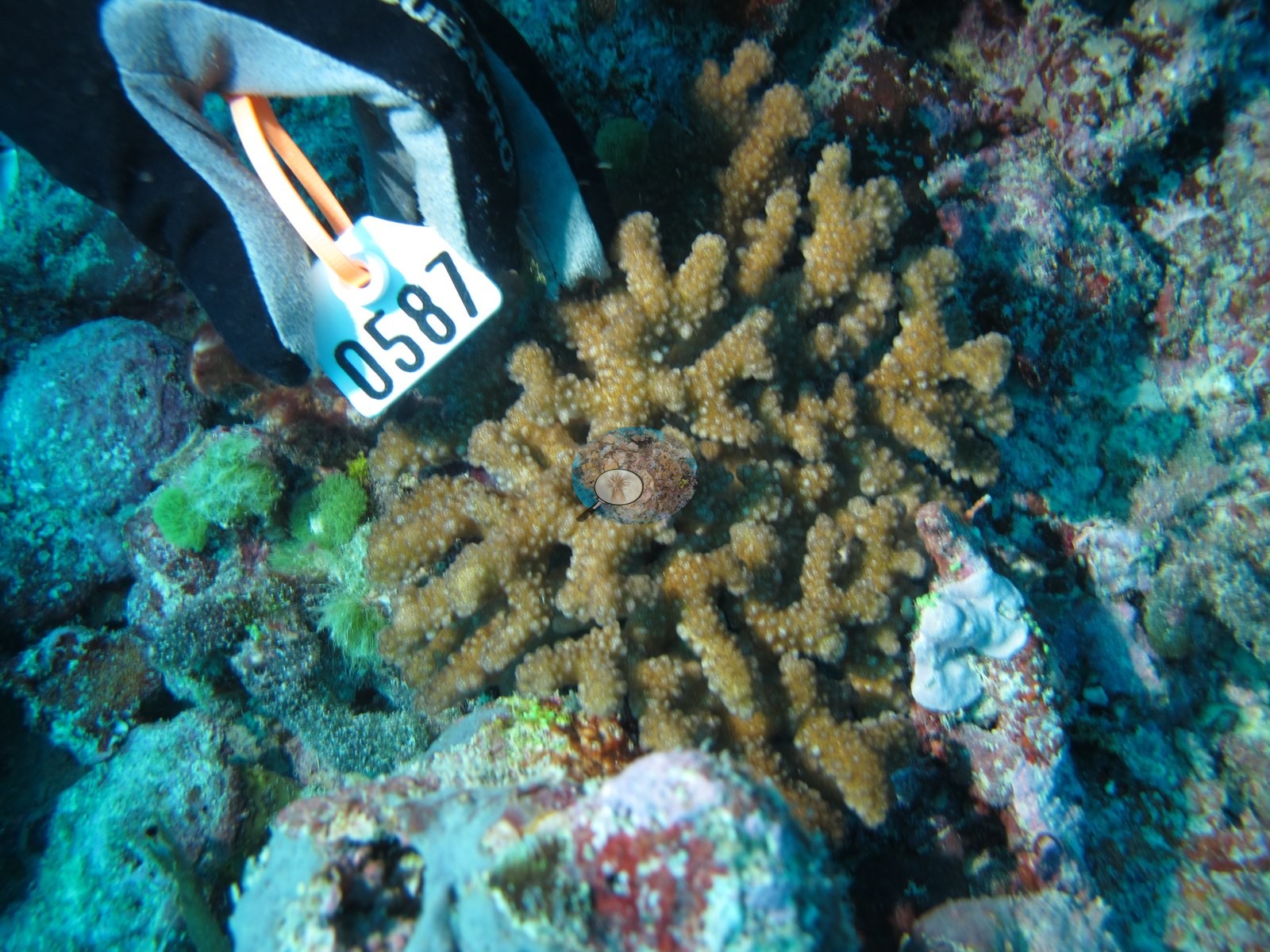
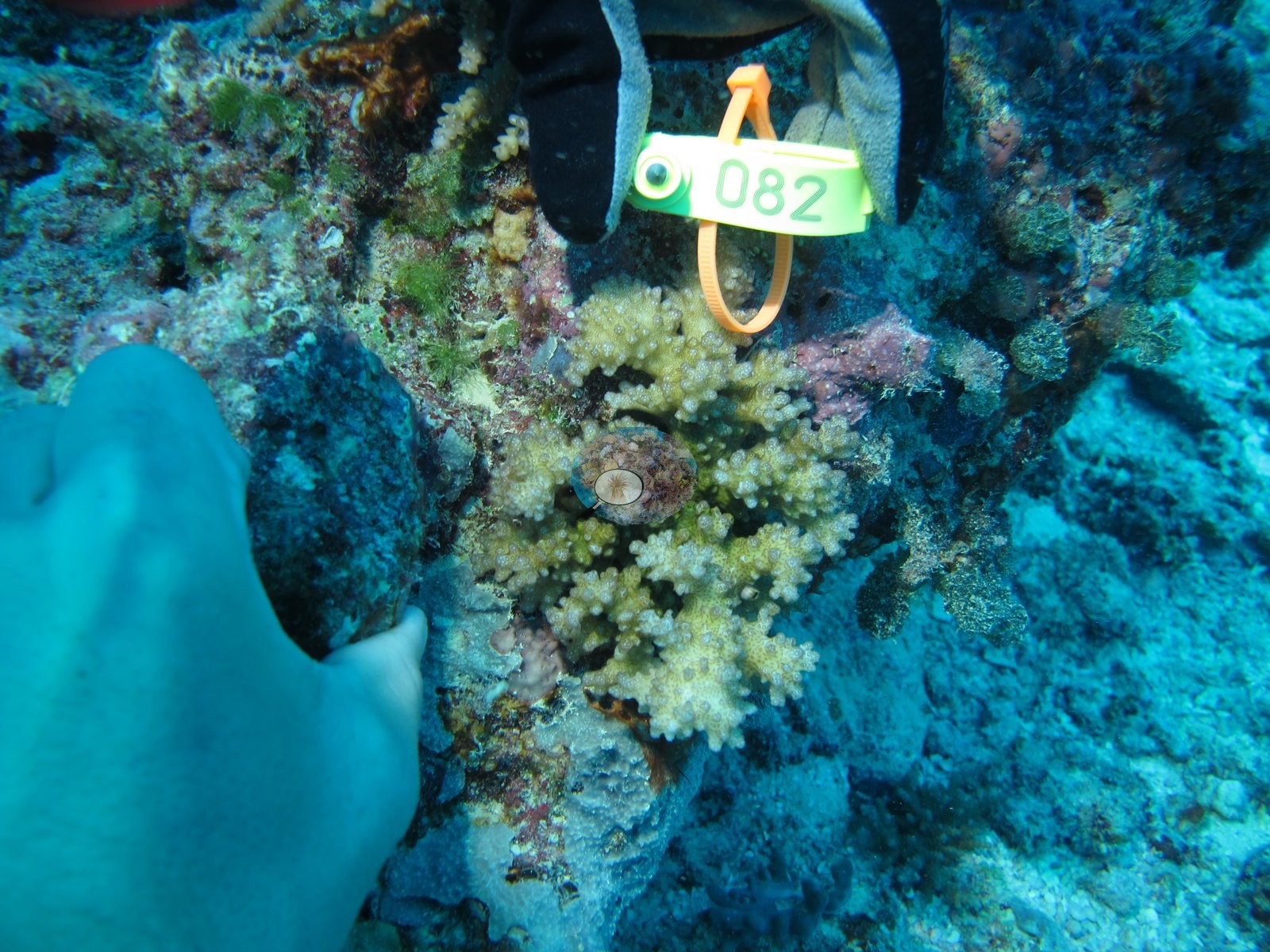
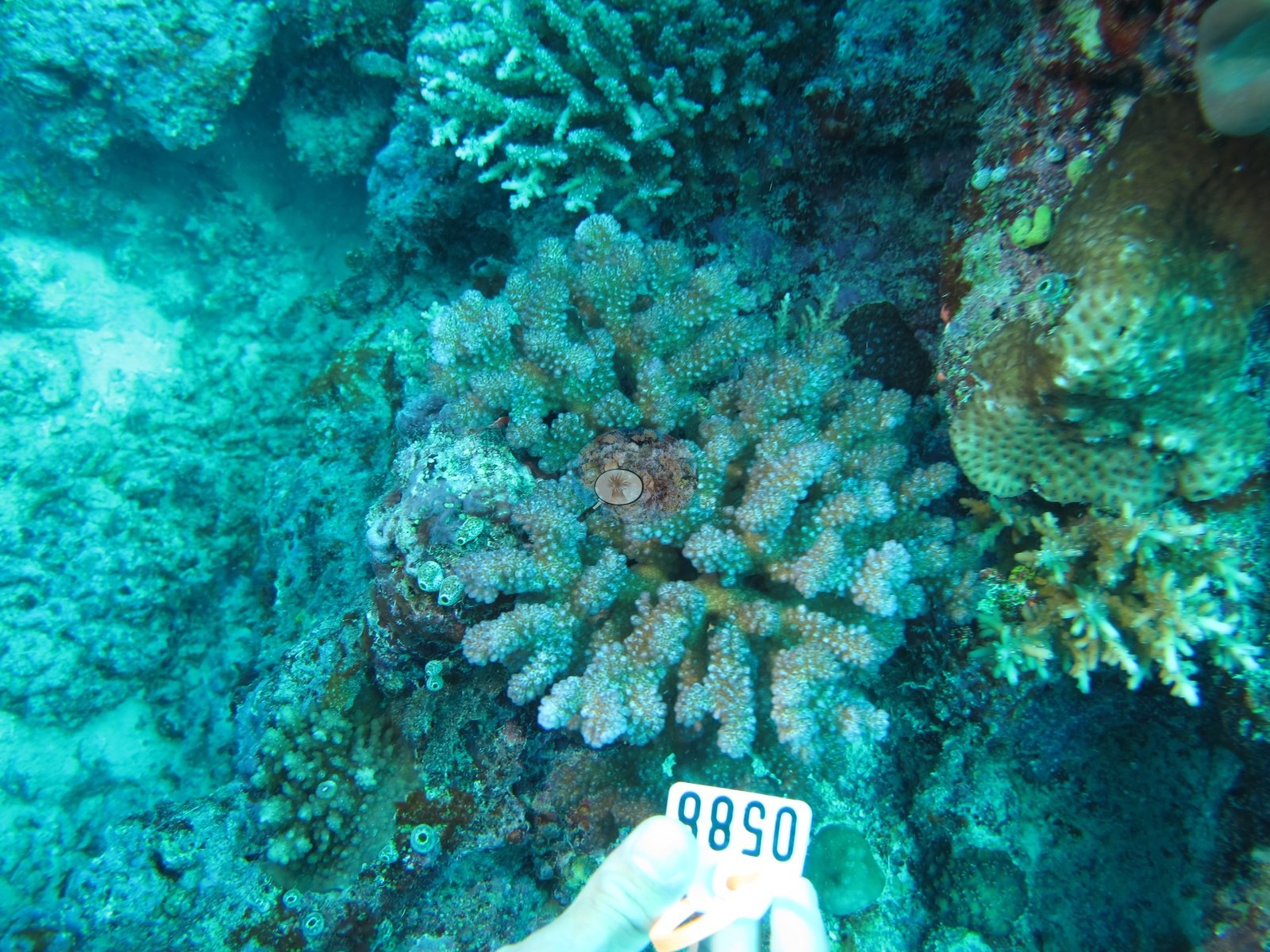
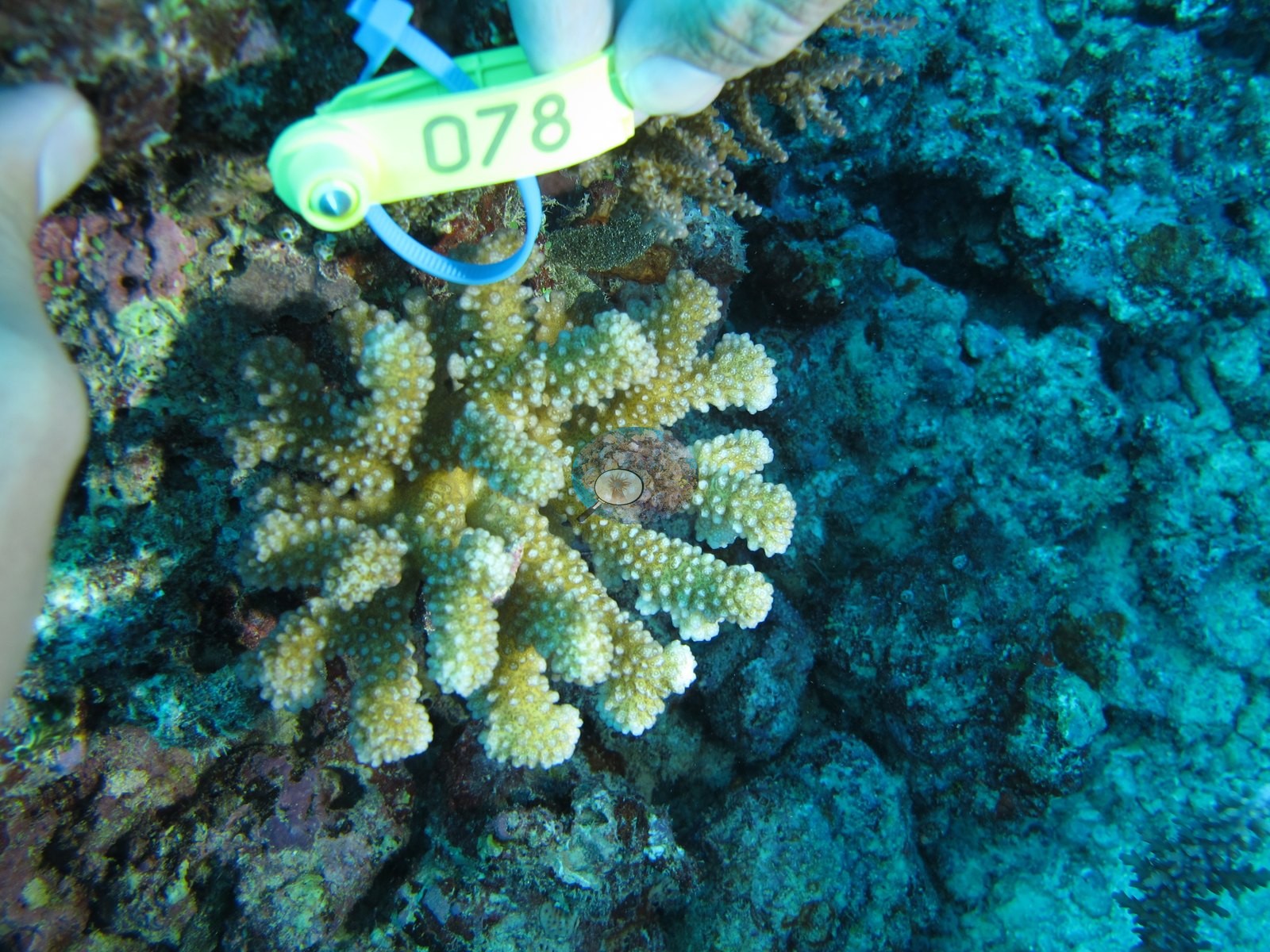
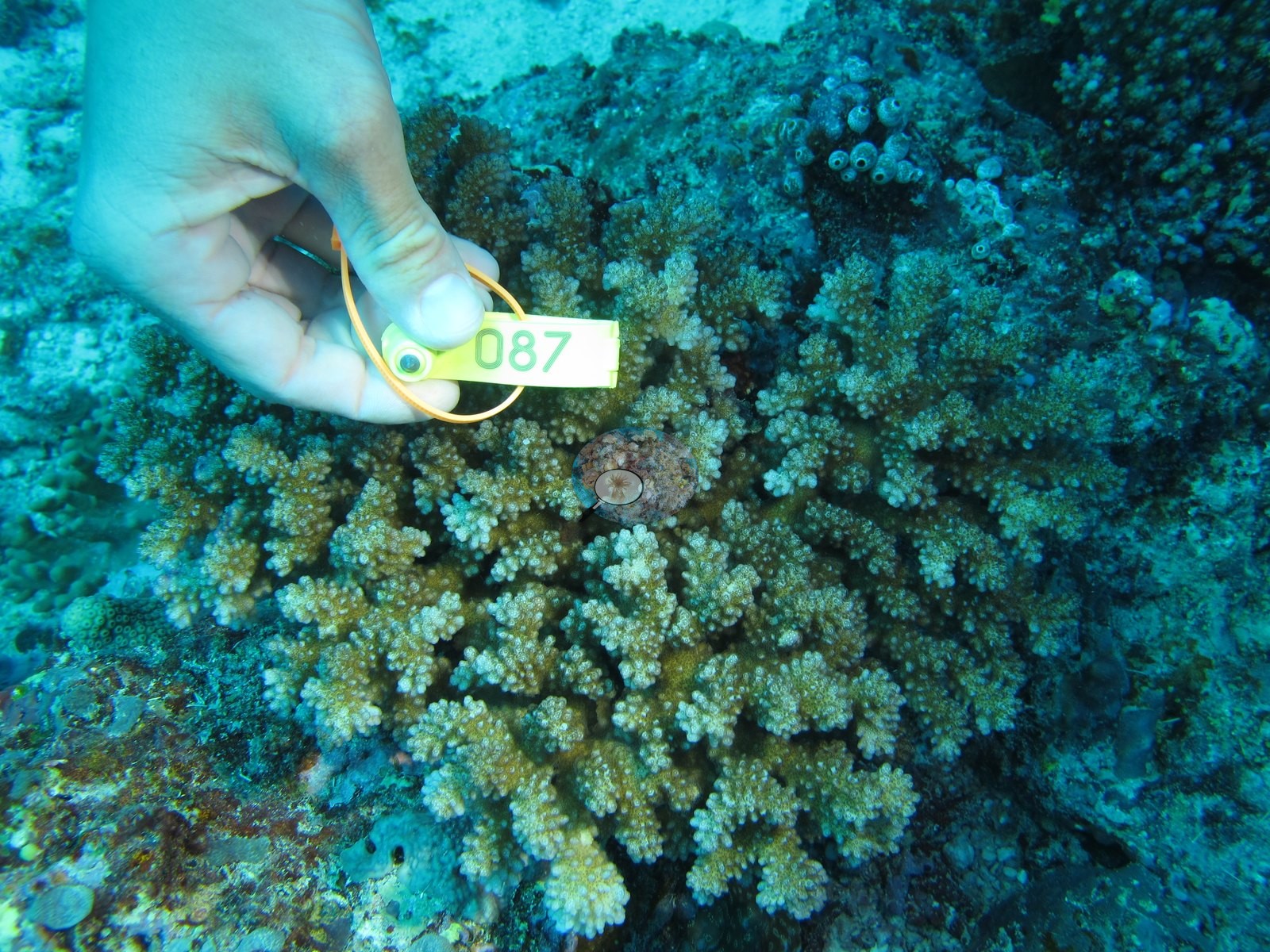
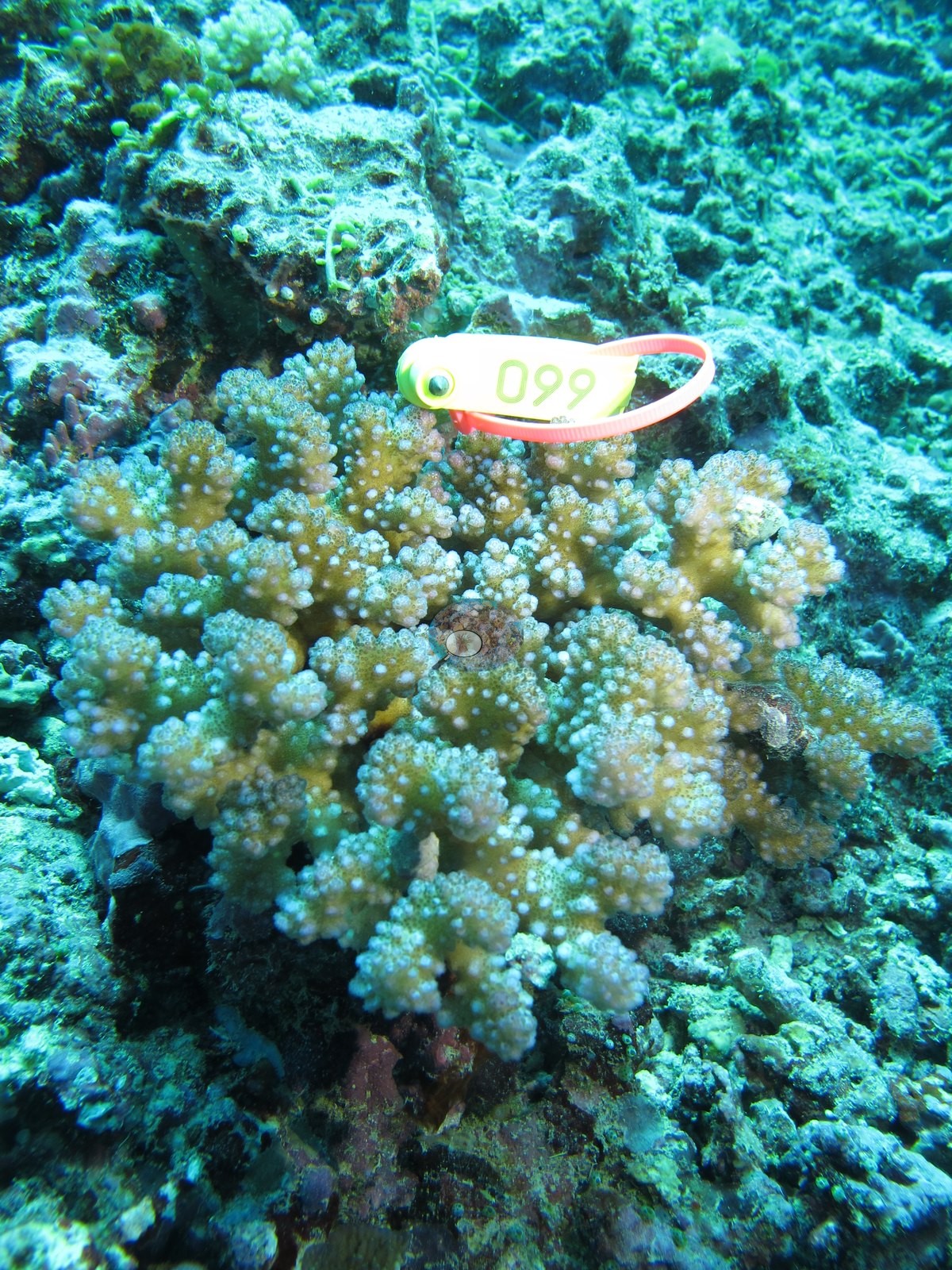
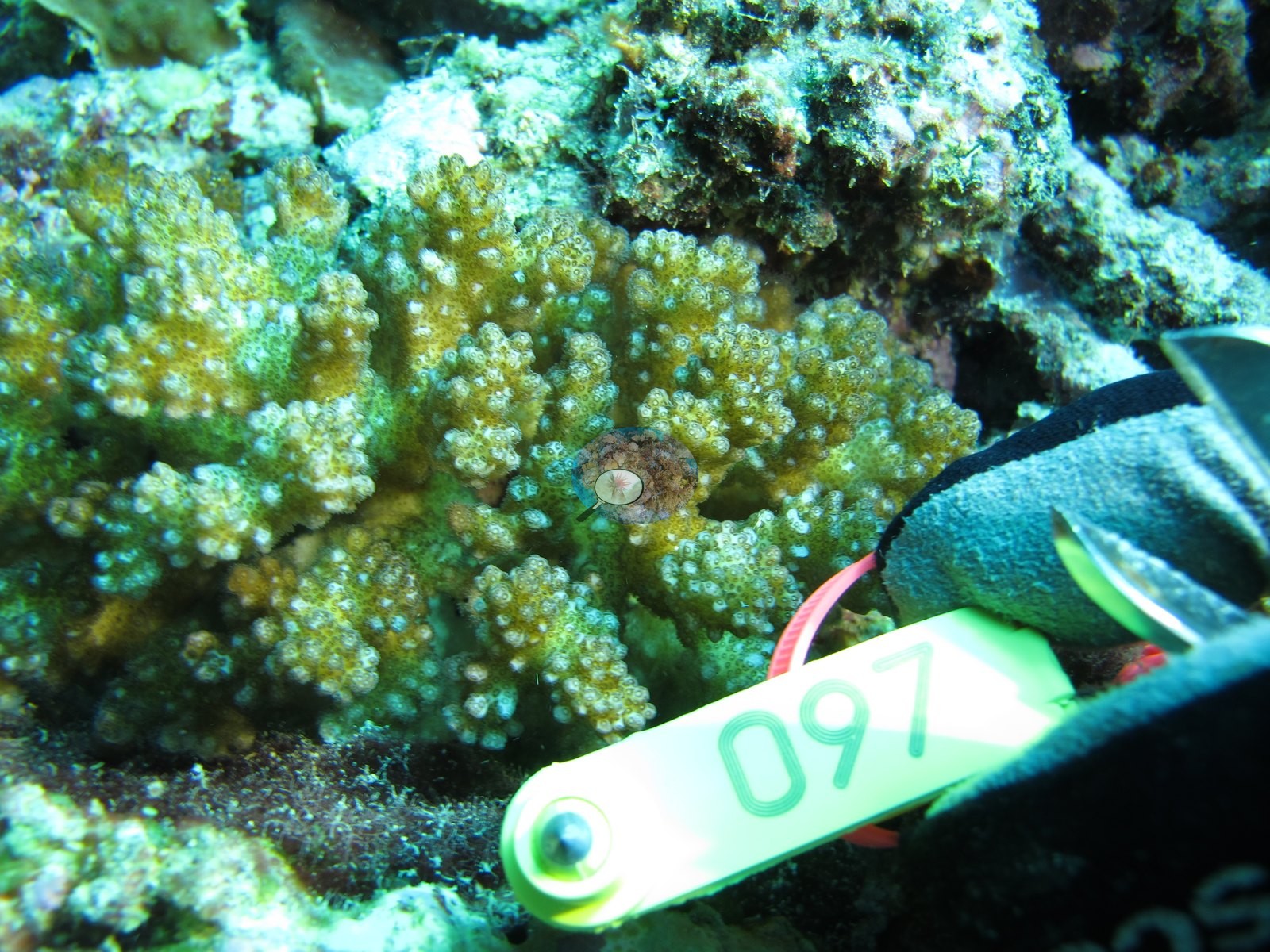
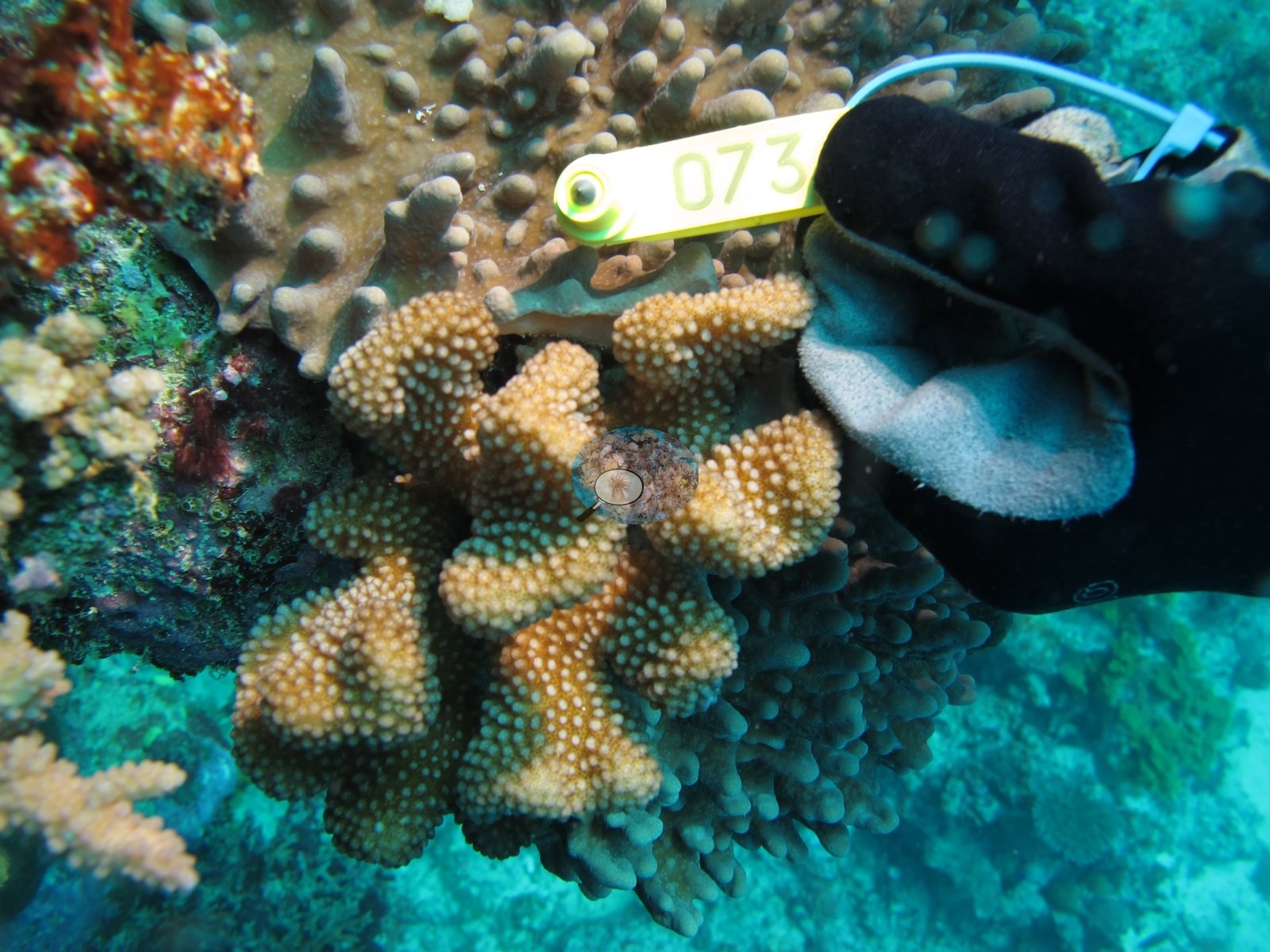
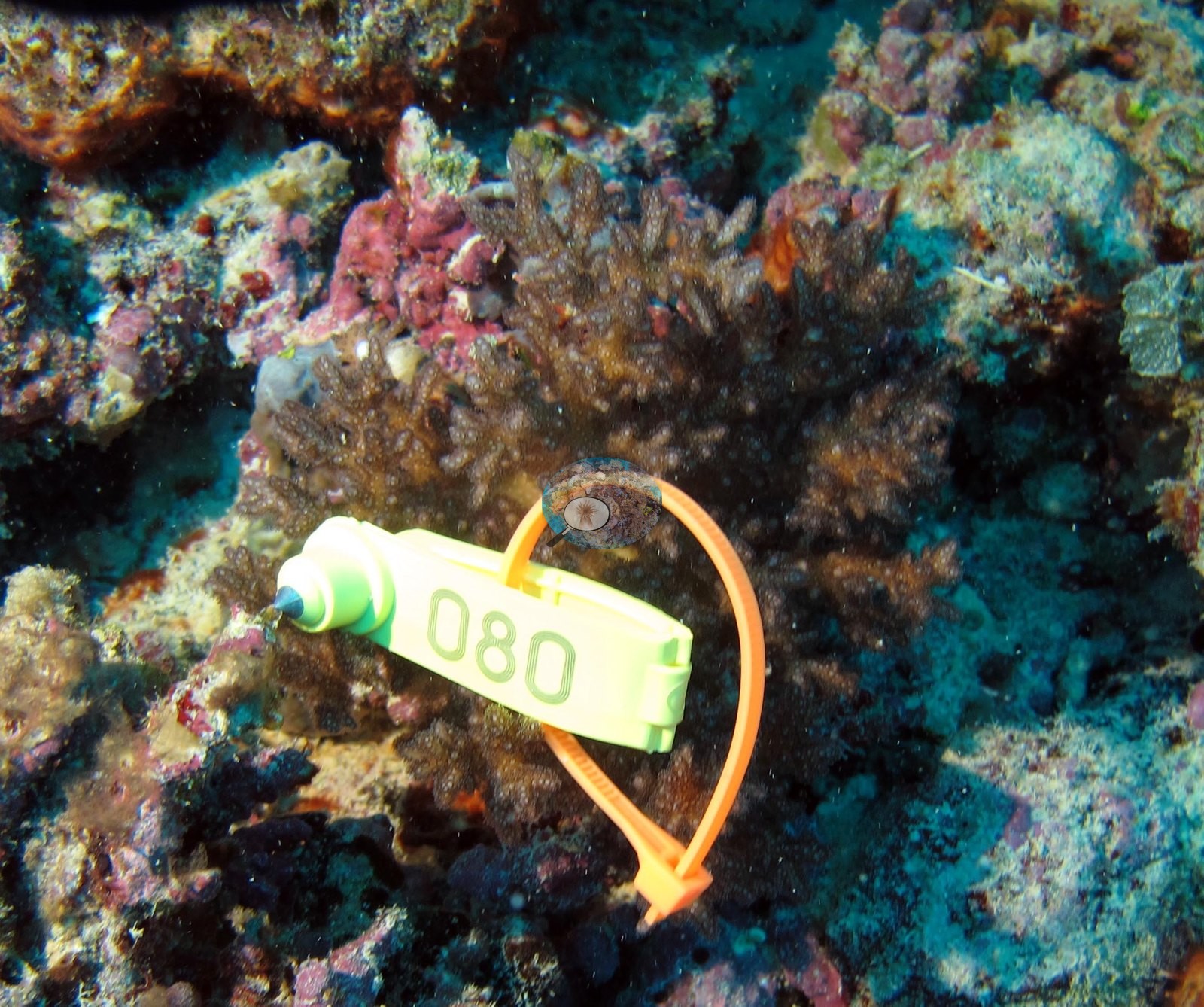
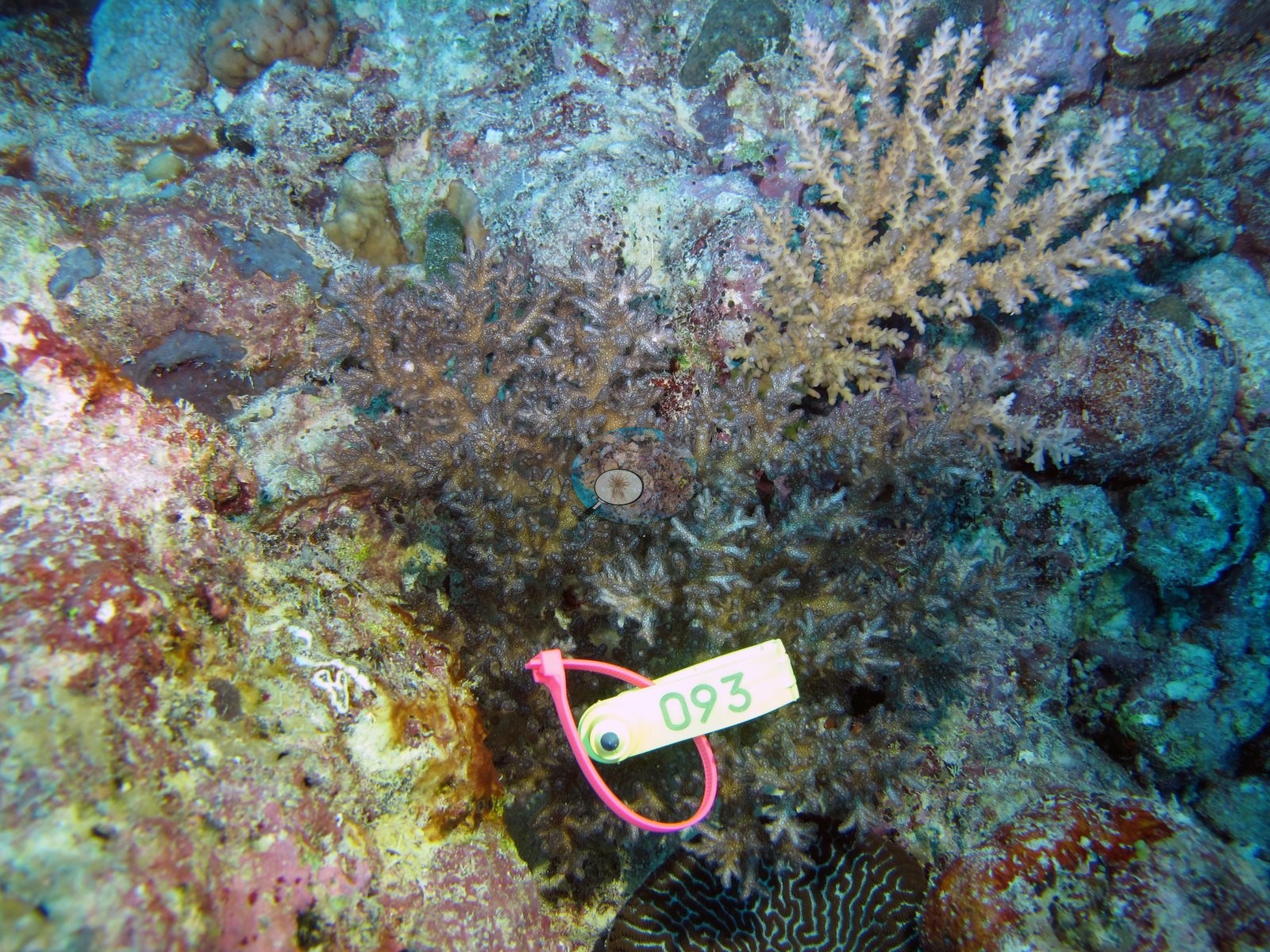
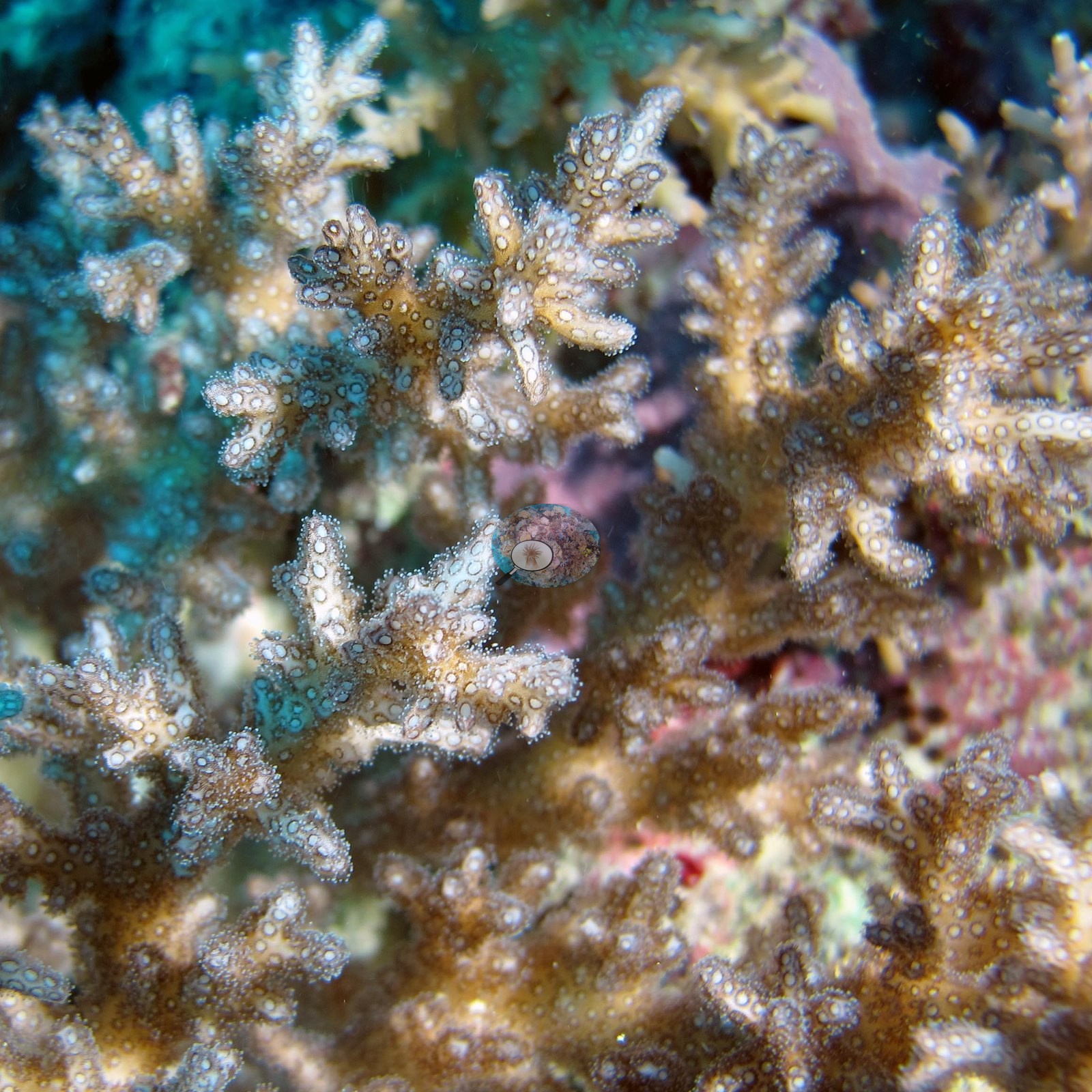
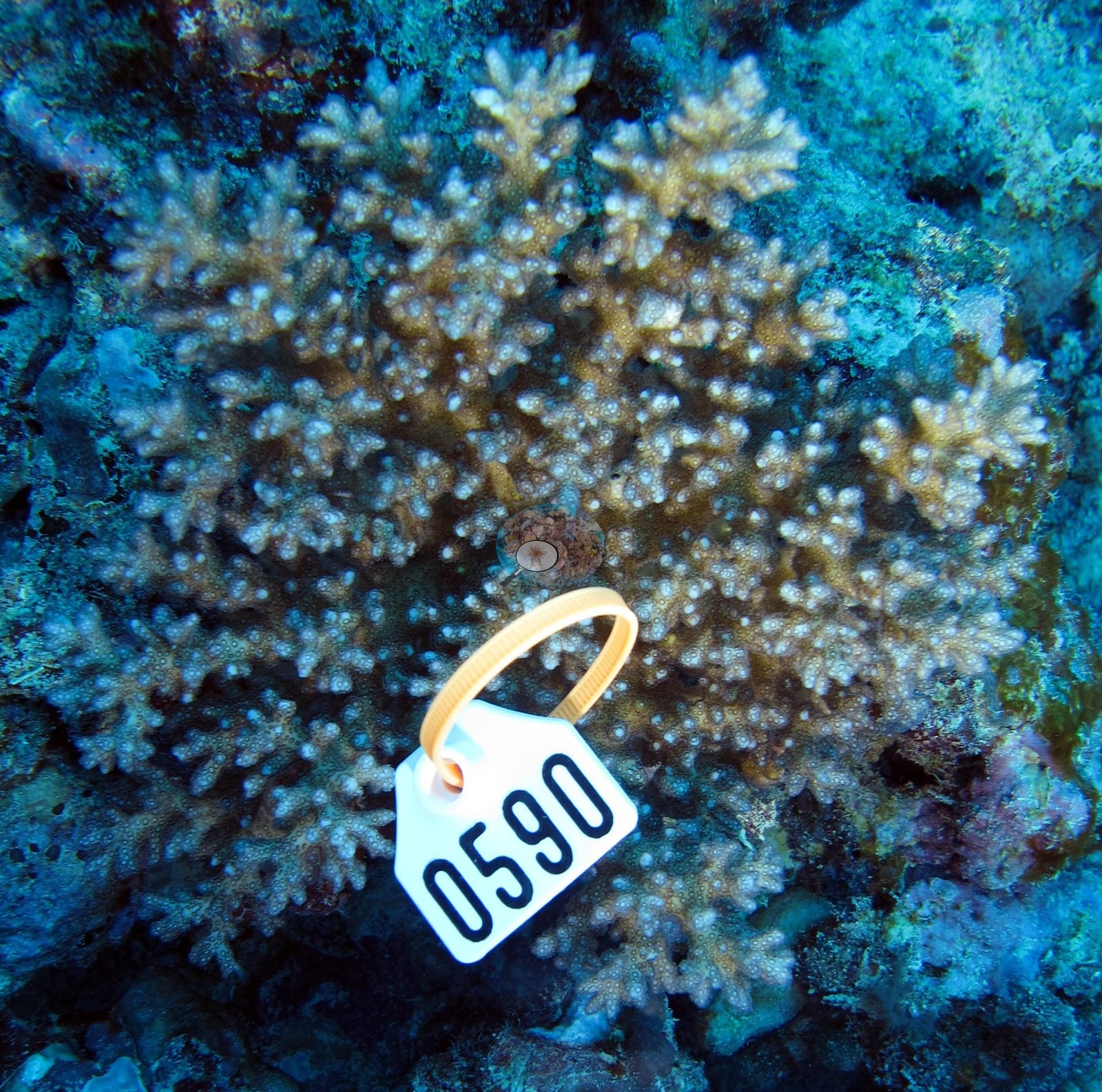
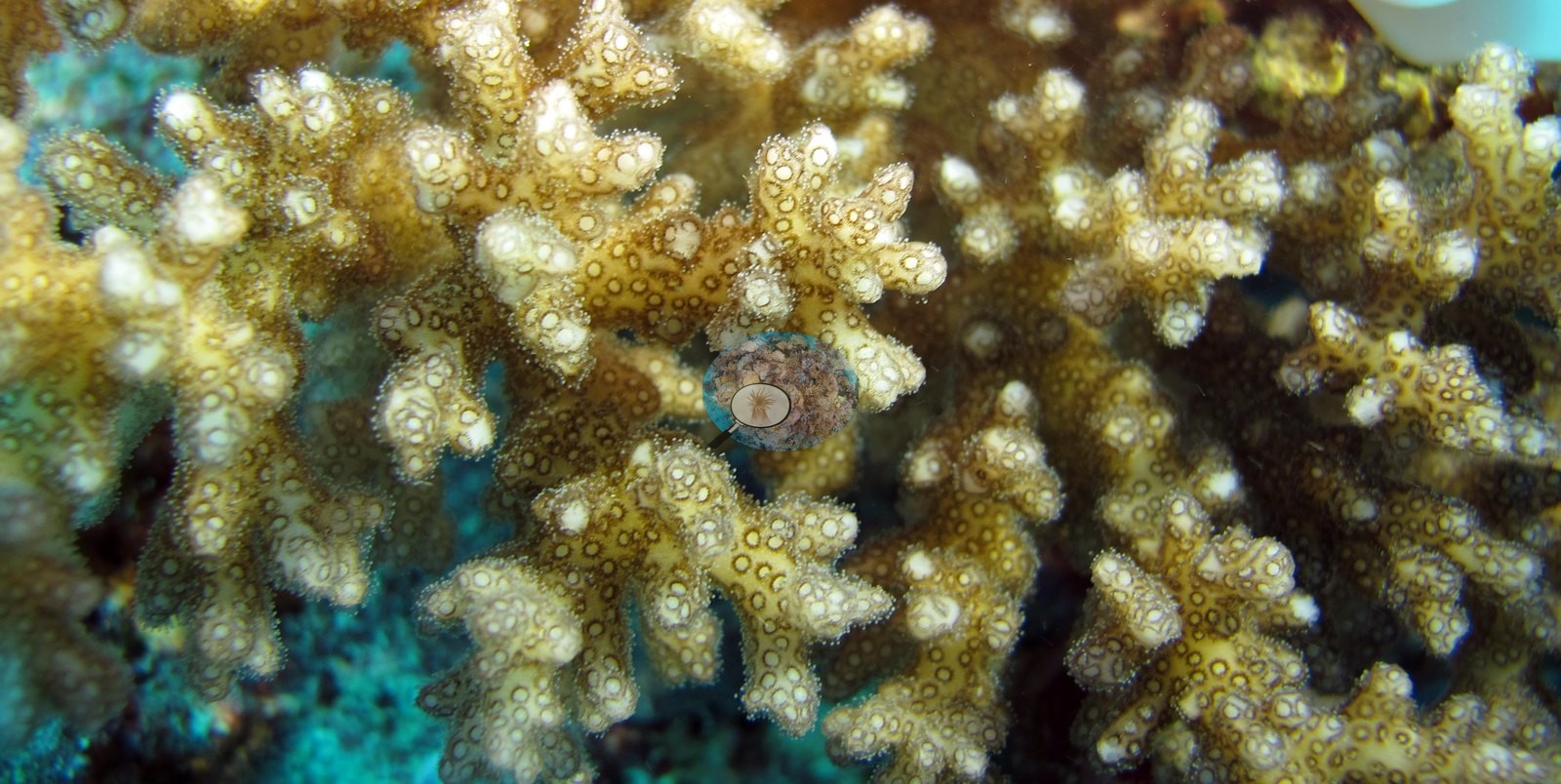
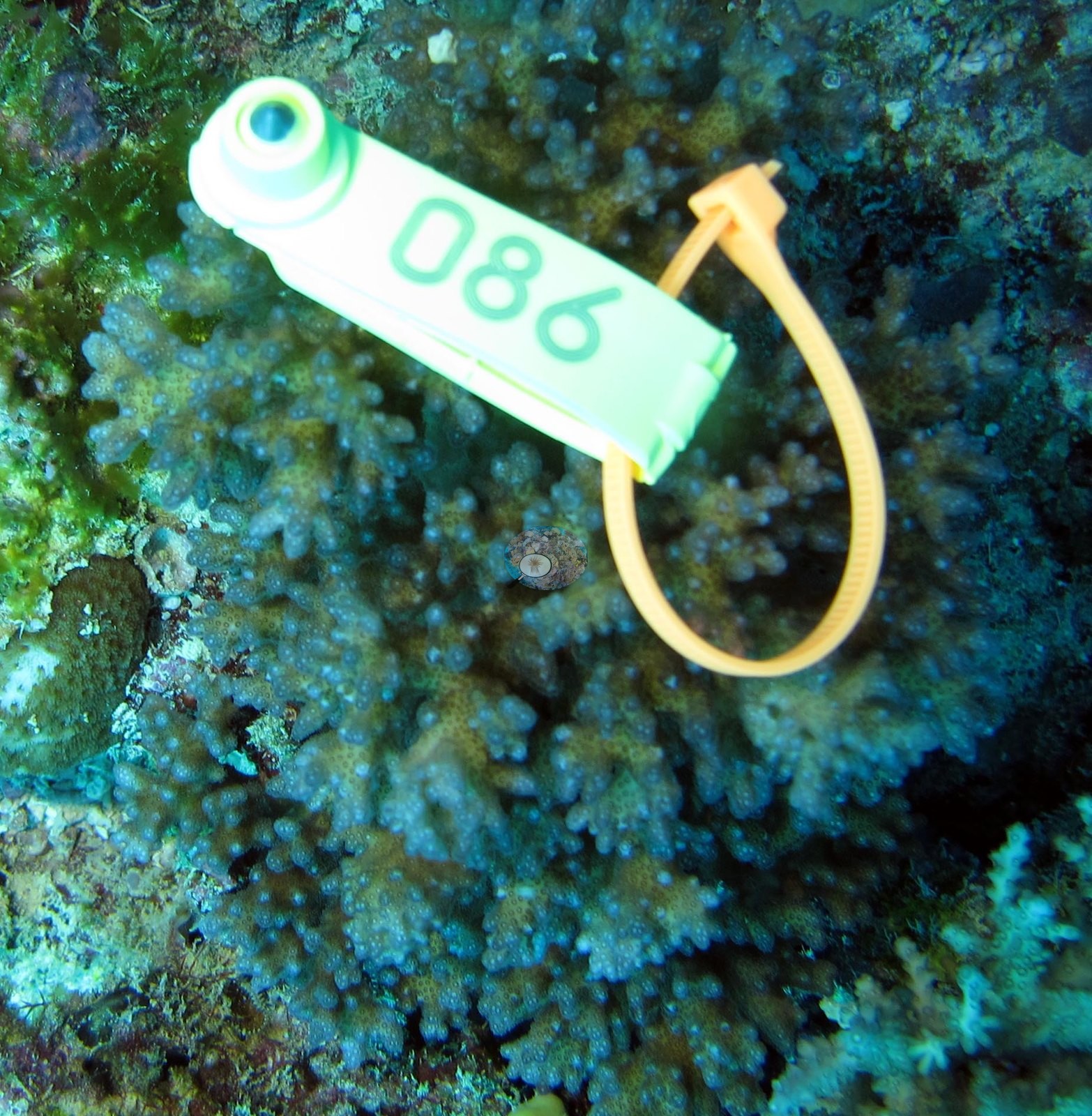
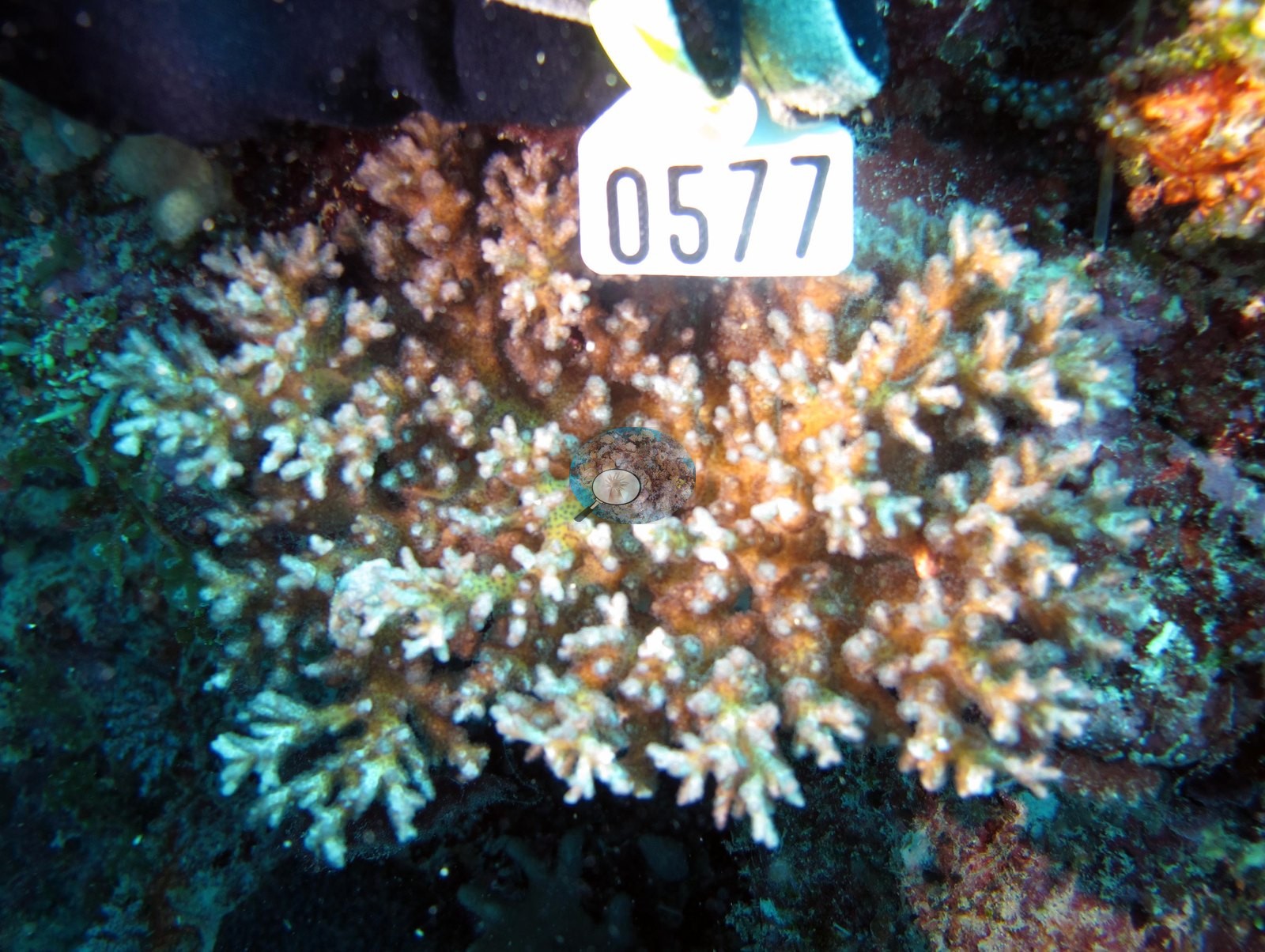
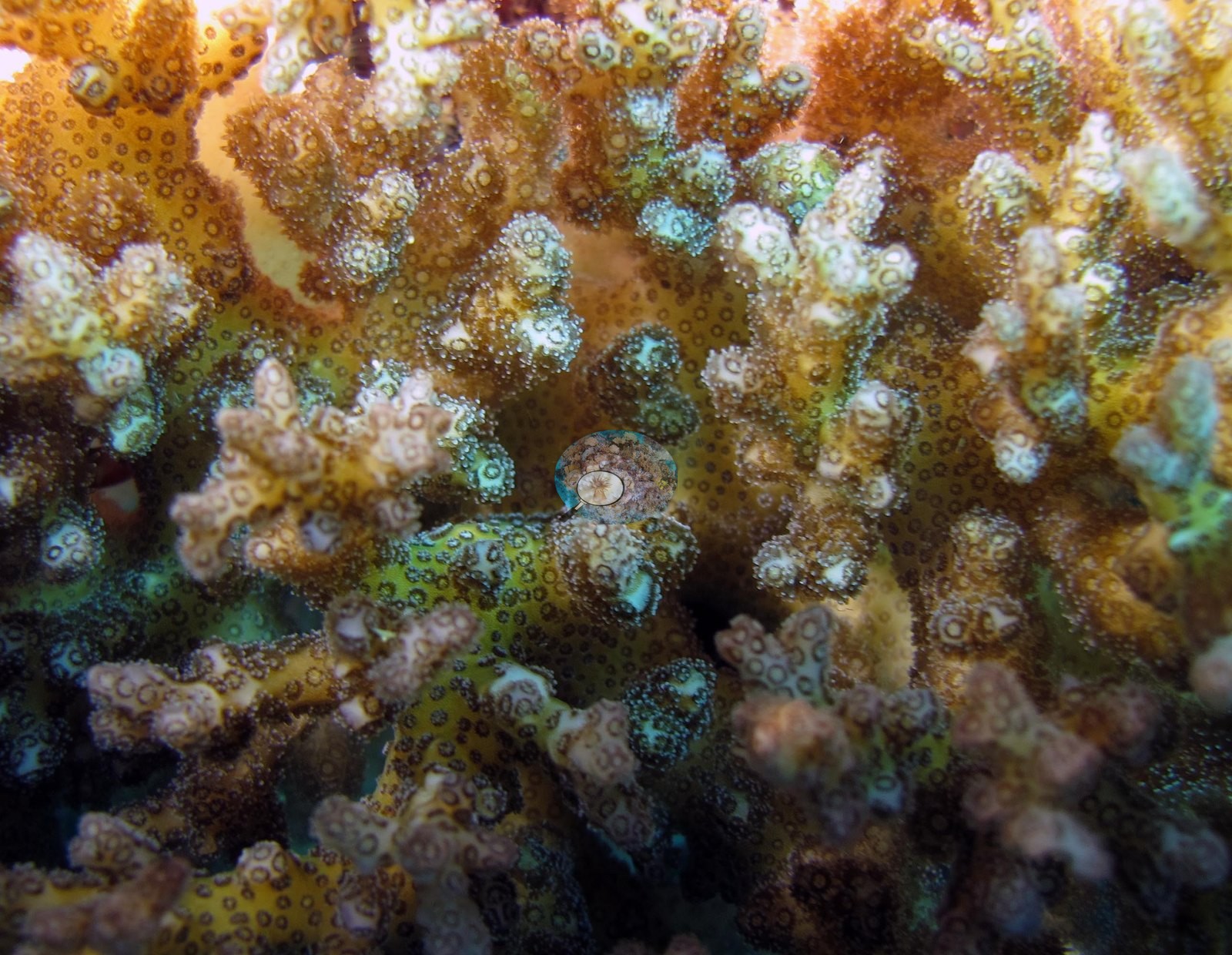
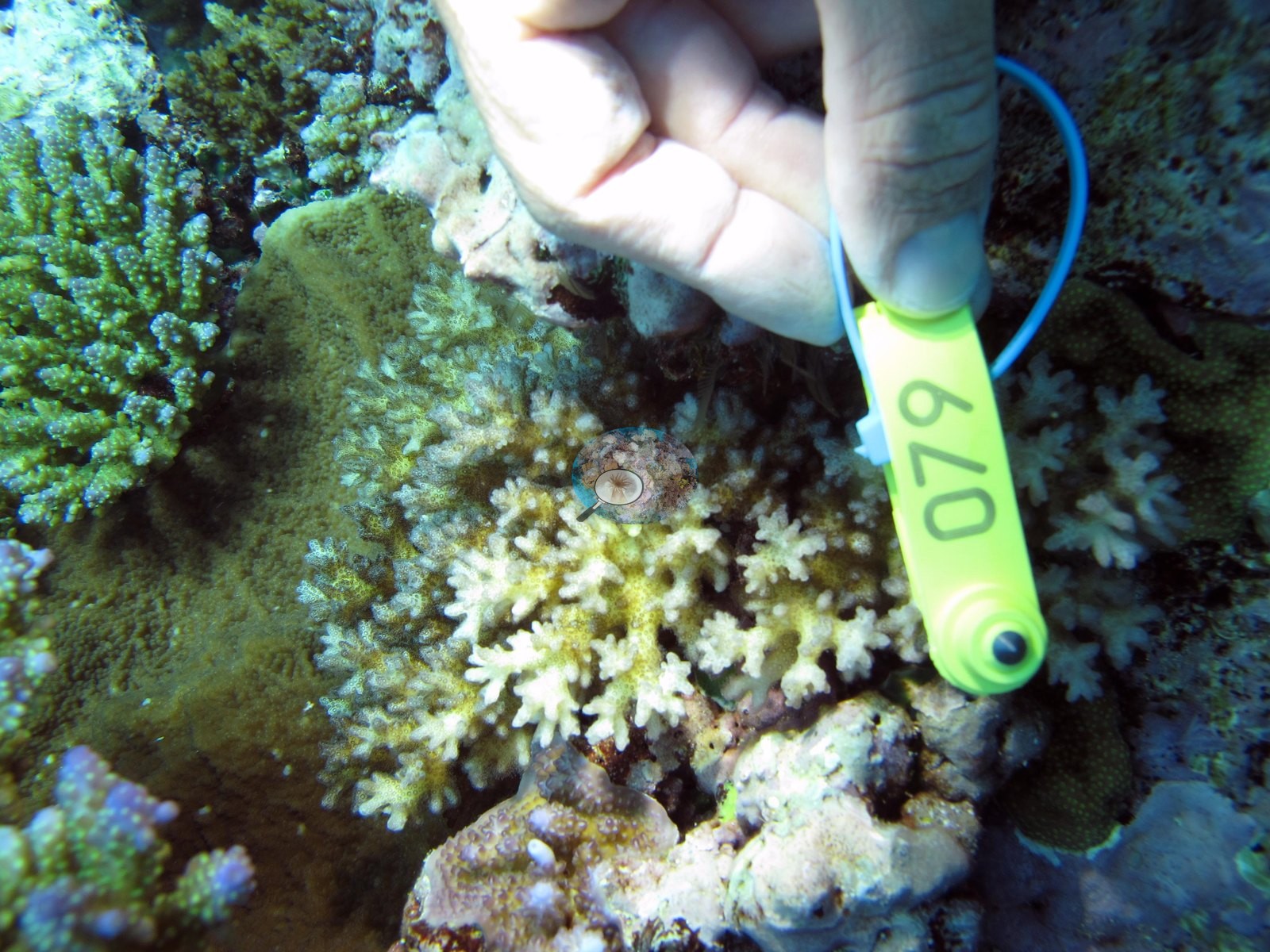
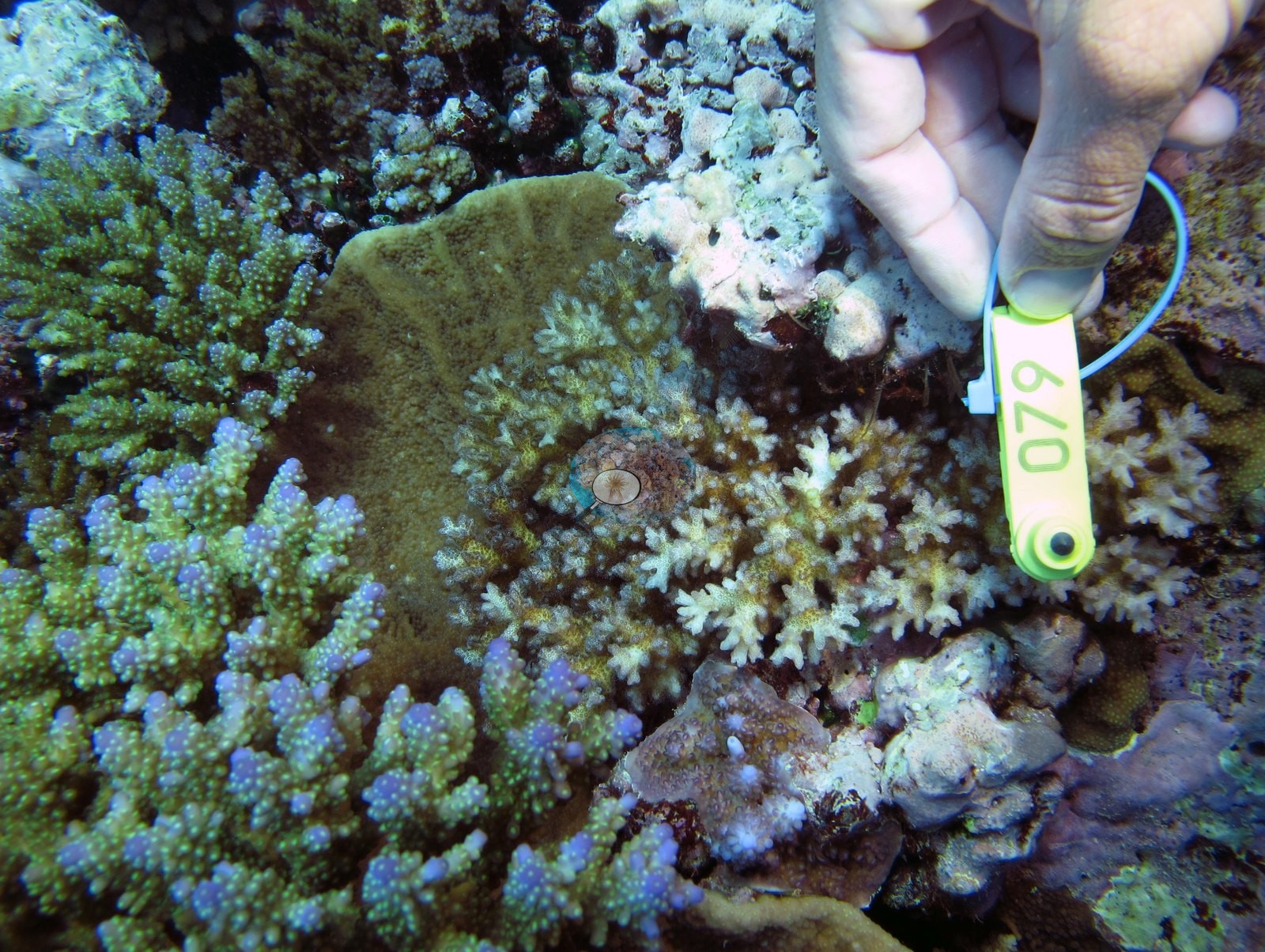
These are the tagged colonies behind this site's outlier sampling, and they are working frames: they show colony-level detail at arm's length and say nothing about cover or community structure. Of the three remaining frames, two look at the site itself and the third is the jellyfish described below. One (Image 10) is a dim wide view across low pavement and pale rubble with a whitetip reef shark crossing it.
One (Image 11), of a coral Anderson left unidentified, is a portrait of a yellow-olive massive dome packed with evenly spaced conical corallites, tissue continuous and apparently healthy, with clusters of pale blue-green colonial tunicates and encrusting sponge crowding the rock beside it.
Coral cover
- Reference: Khaled bin Sultan Living Oceans Foundation, Global Reef Expedition (in situ transect)
- Transect mean 29 ± 5.2% SE (n = 6 transects; Living Oceans Foundation per-transect benthic data); the headline above is this all-transect mean.
Stressors
No disease or crown-of-thorns damage is visible in any frame, but with only two reef-facing frames the set cannot characterize this reef and should not be read as doing so. The survey team's notes record some crown-of-thorns predation at FJVB55. Anderson's sample sheet notes one of the colonies sampled here (F124.1, pictured in Image 20 and Image 21) as 30% bleached; its healthy portion was sampled. Of the four coral colonies from this site with an outlier score, one (25%) was flagged as a physiological outlier (Mayfield et al. 2017, PLoS ONE). The Living Oceans Foundation transects here recorded 16% cyanobacteria and no recently dead coral.
Fish and other fauna
A large, pale, translucent jellyfish bell drifts just above the bottom (e.g., Image 4).
Comparisons with other data
Apart from the Living Oceans Foundation survey shown here, we found no other surveys at this site as of 2026. If you would like to share yours, please email us.
Data & links
- Download benthic survey data (CSV) ↗
- Download all LOF-GRE data (933 sites) ↗
- Photo portfolio ↗
- Coral Reef Diagnostics page for this area ↗
All images from Coral Reef Diagnostics. Data are from the Khaled bin Sultan Living Oceans Foundation Global Reef Expedition and Coral Reef Diagnostics.
 © Coral Reef Diagnostics.