
Part of the regional summaries: Fiji - Vanua Balavu, Fiji - Northern Lau (Vanua Balavu / Cicia / Nayau), and Fiji - Lau
More info
Fiji (NOAA CRW virtual station)A Vanua Balavu site known only from close-ups of coral sampling, with tagged branching colonies being clipped among coralline crusts, red turf, and green segmented algae. Cover is 25%, with algae covering about half the reef, and two of the three colonies Anderson sampled were partly bleached (30% and 50%). Surveyed on the Living Oceans Foundation's Global Reef Expedition.
E dua na vanua e Vanua Balavu e kilai ga mai na itaba taba voleka ni kena taura na ivakaraitaki ni lase, ka koti tiko na lase vakatabataba e vakatakilakilataki (tagged) ena maliwa ni lumi vakalase (coralline crusts), lumi lekaleka damudamu (red turf), kei na lumi drokadroka vakaikabakaba (green segmented algae). Na ubi ni lase (coral cover) e 25%, ka ubia na lumi e rauta ni veimama ni cakau, ka rua vei ira na tolu na lase a taura kina na ivakaraitaki ko Anderson e vulavula vakalailai (partly bleached) (30% kei na 50%).
AI translation of this summary; the English is authoritative. (low confidence)
CTD-cast midpoint; the cast read 27.3°C throughout
One other CRD dive site with its own page within 5 km shown in orange — click a marker to open its page.
🗺 Detailed map of the Global Reef Expedition dive sites, Vanua Balavu, Fiji (Khaled bin Sultan Living Oceans Foundation; opens in a new window)
5 of the 12 photographs on this page are shown beside the text that discusses them under "Site description" below.
Site description
General benthic features
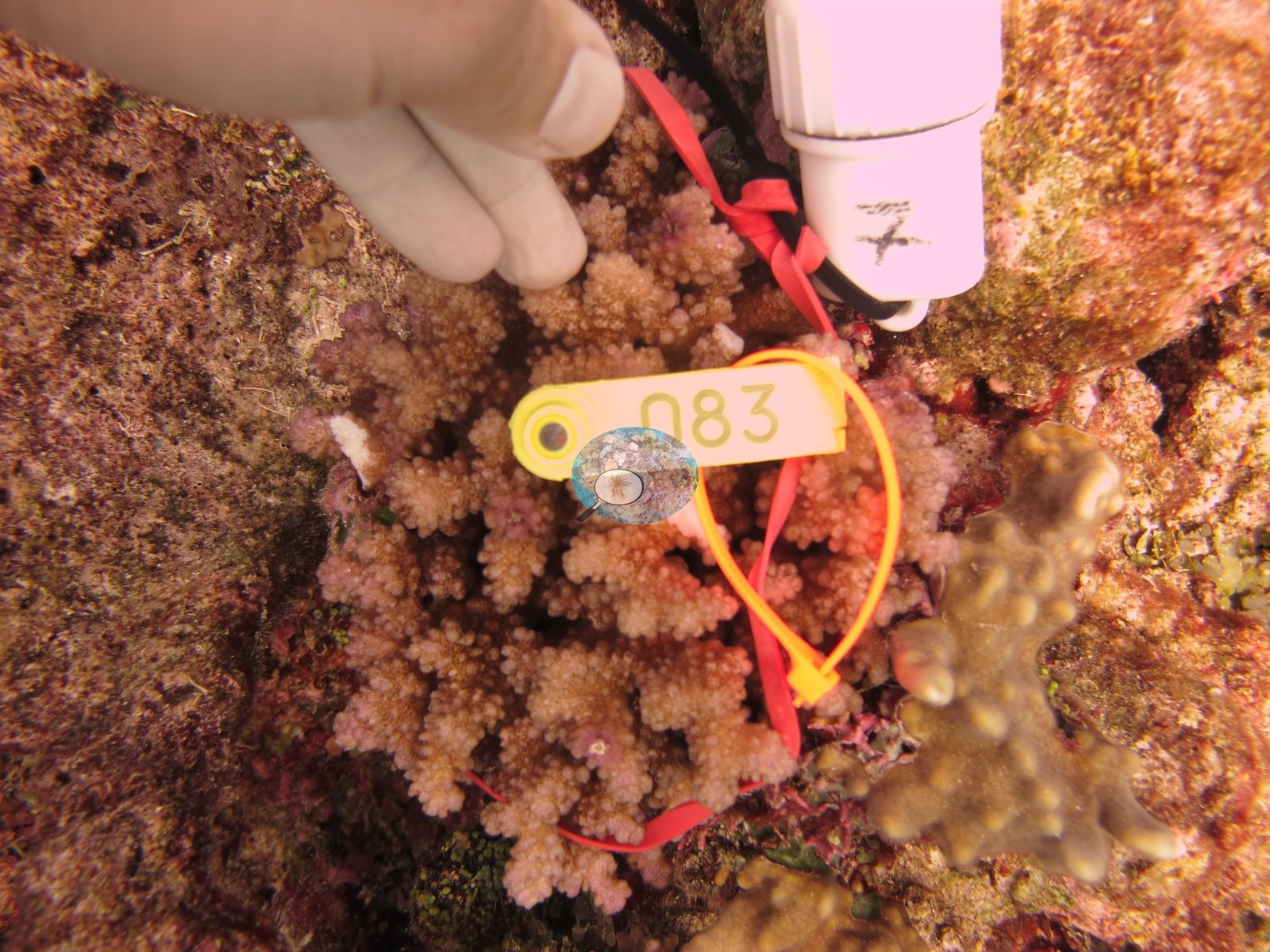
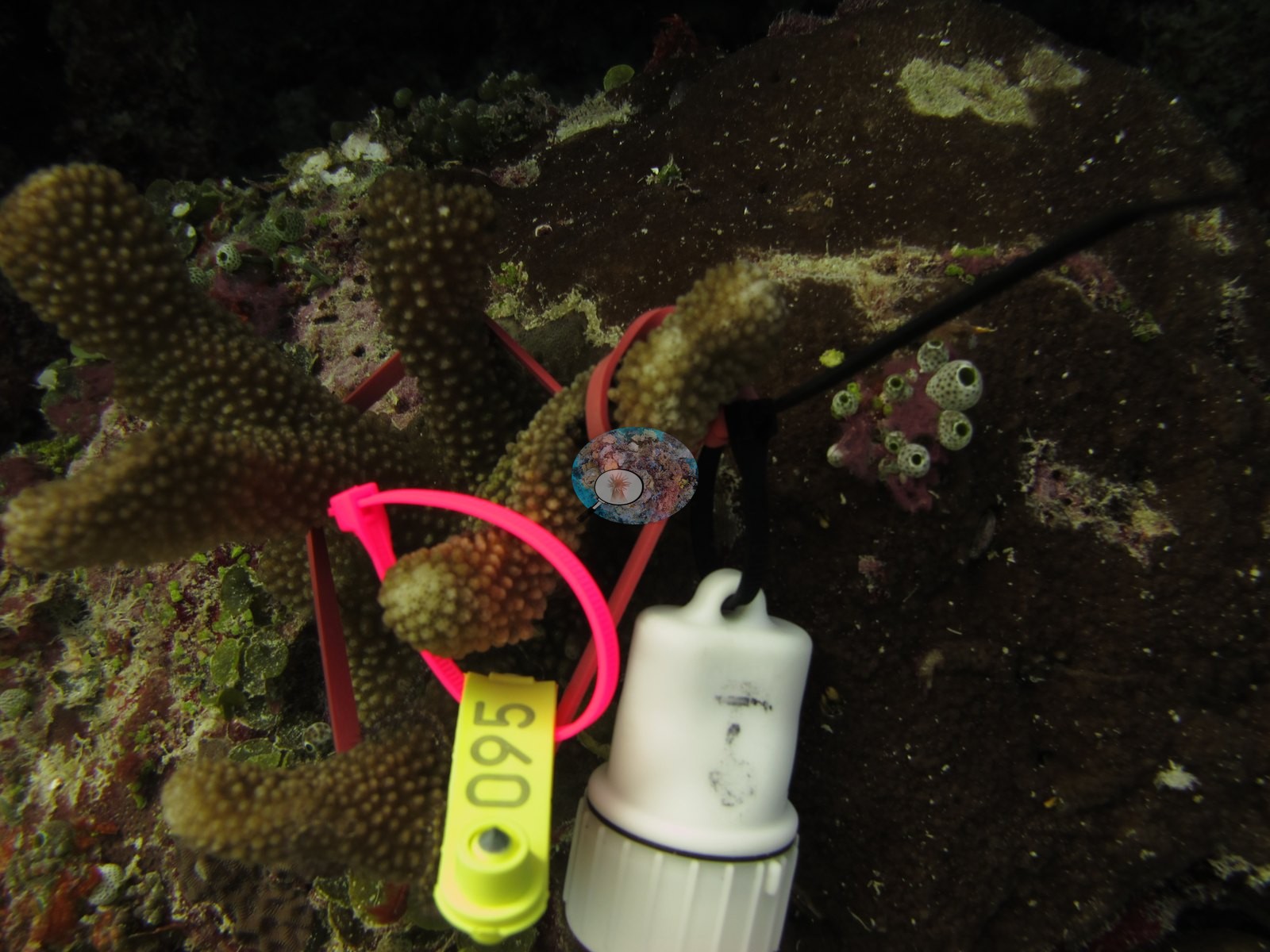
The sampling frames each center a numbered tag zip-tied beside its colony. One tag marks a pink-brown branching colony with stubby verrucose branches, a gloved hand steadying it and a white sample vial dipping into the frame (e.g., Image 1).
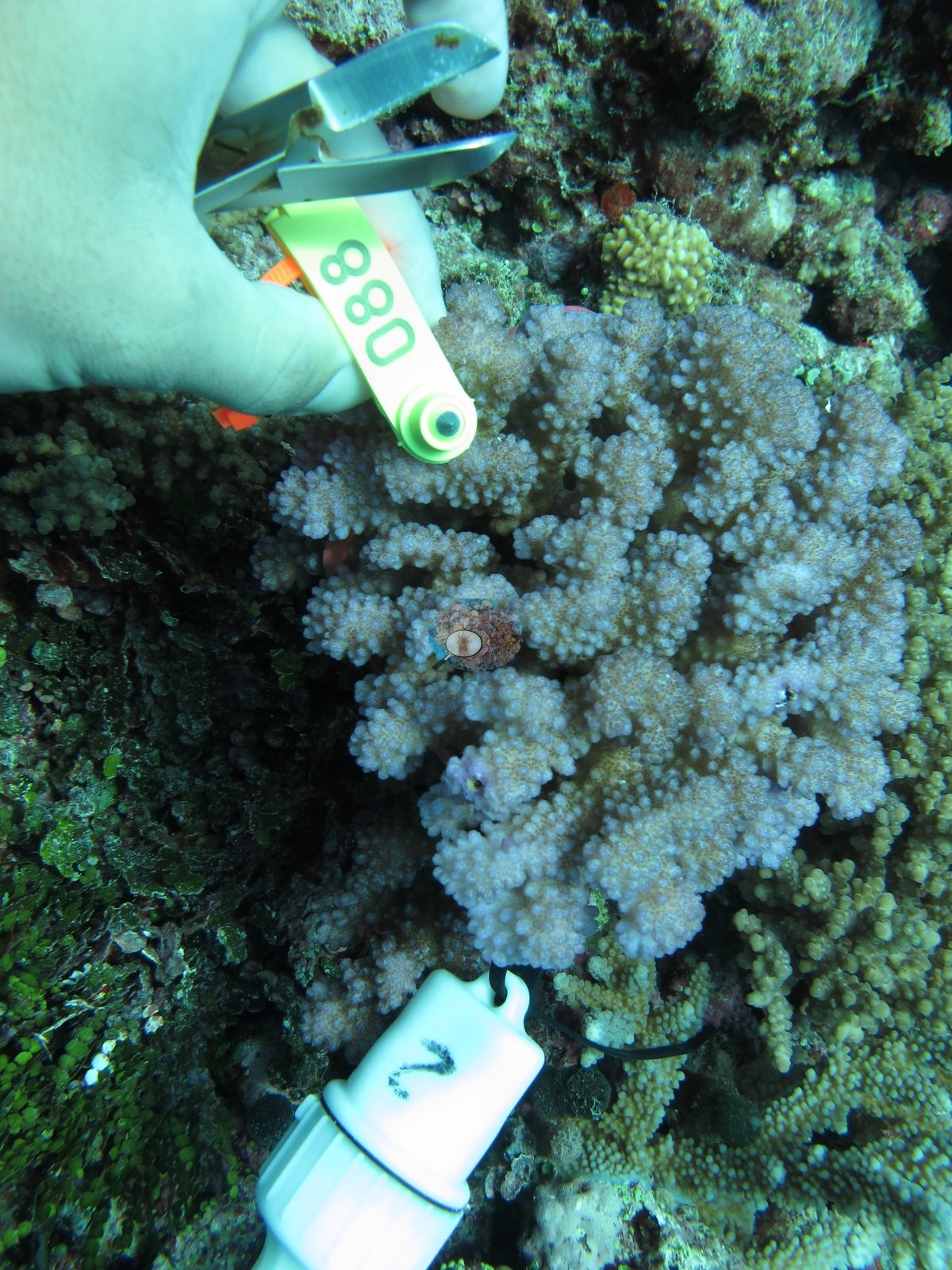
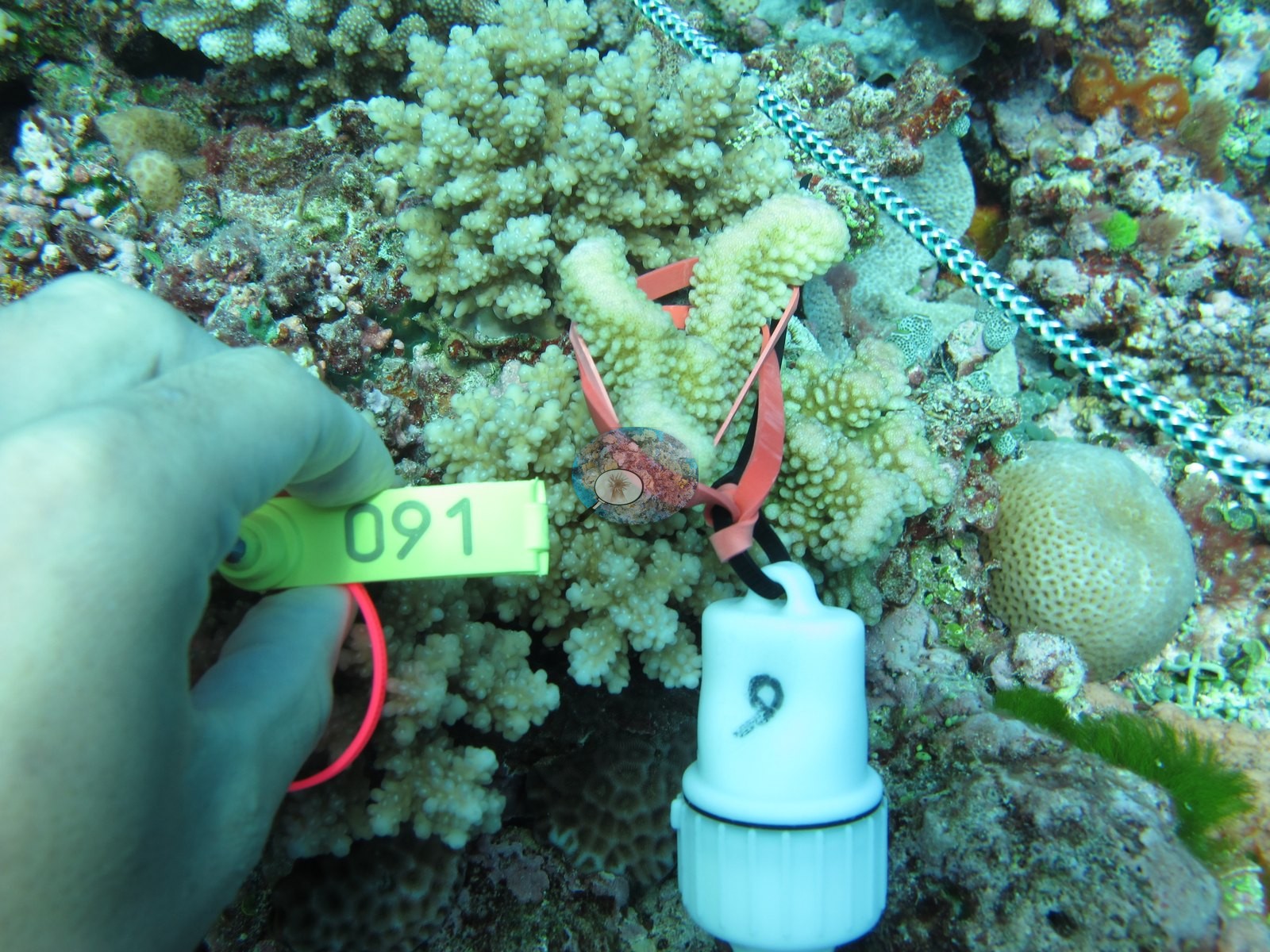
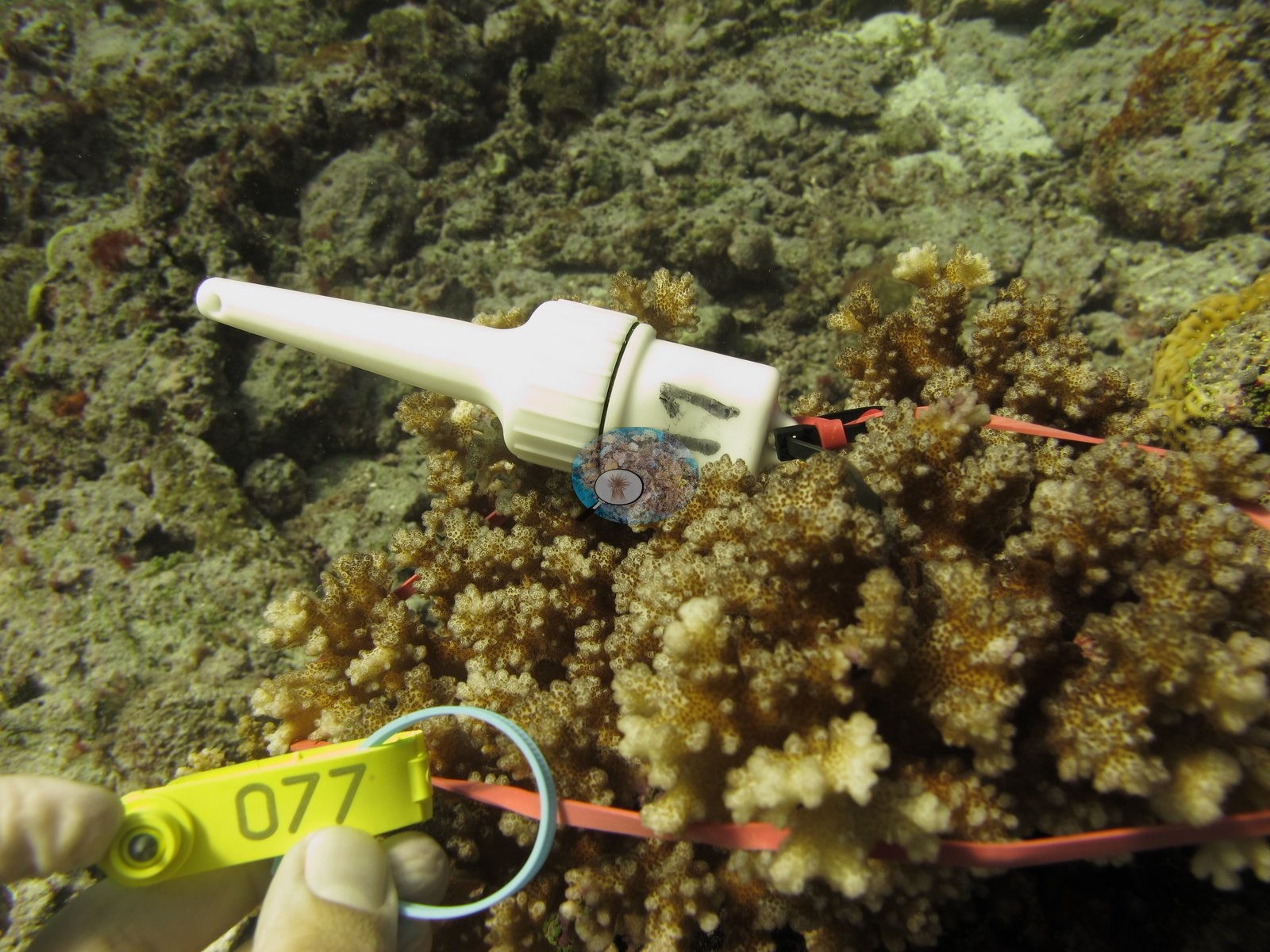
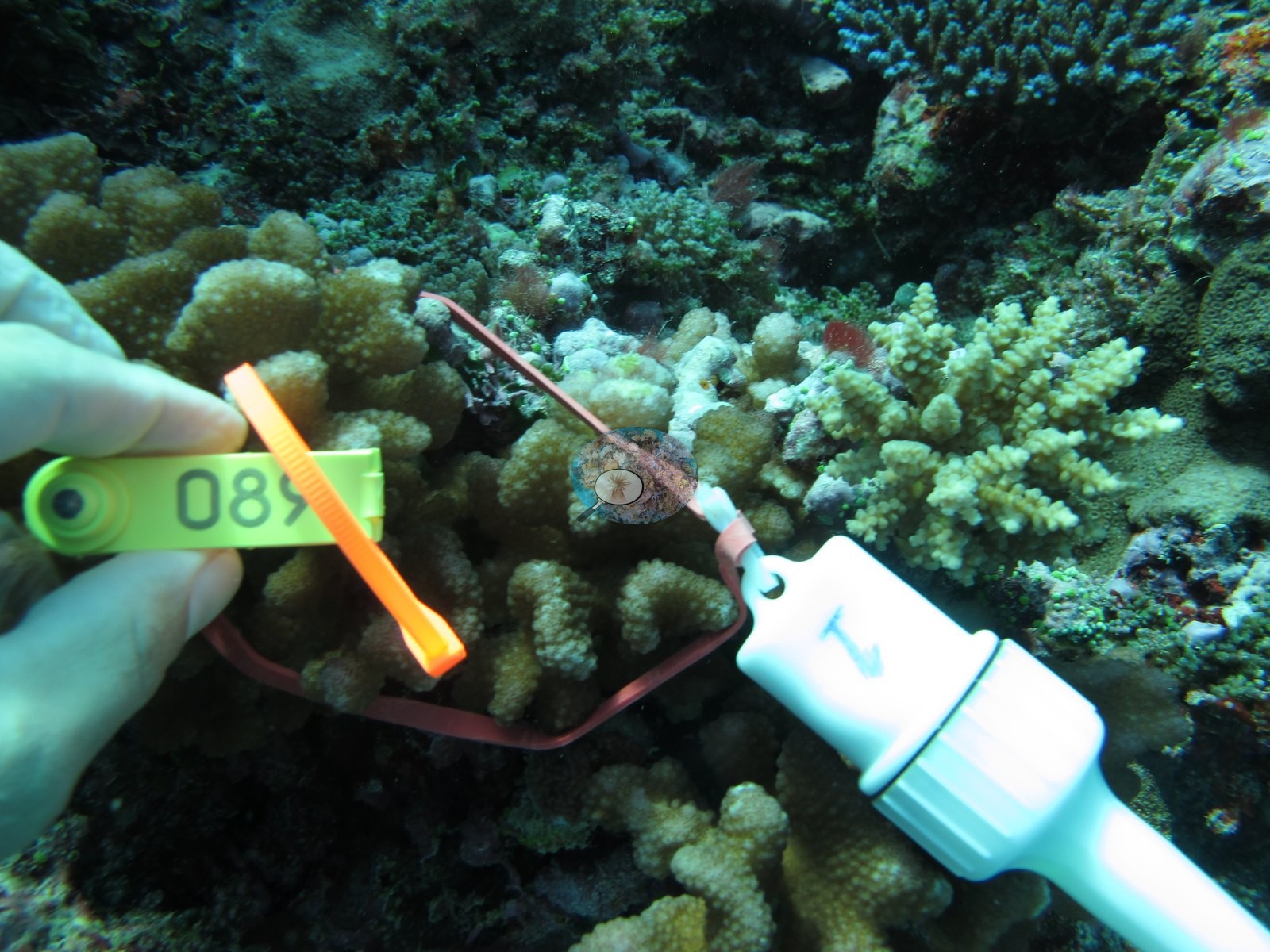
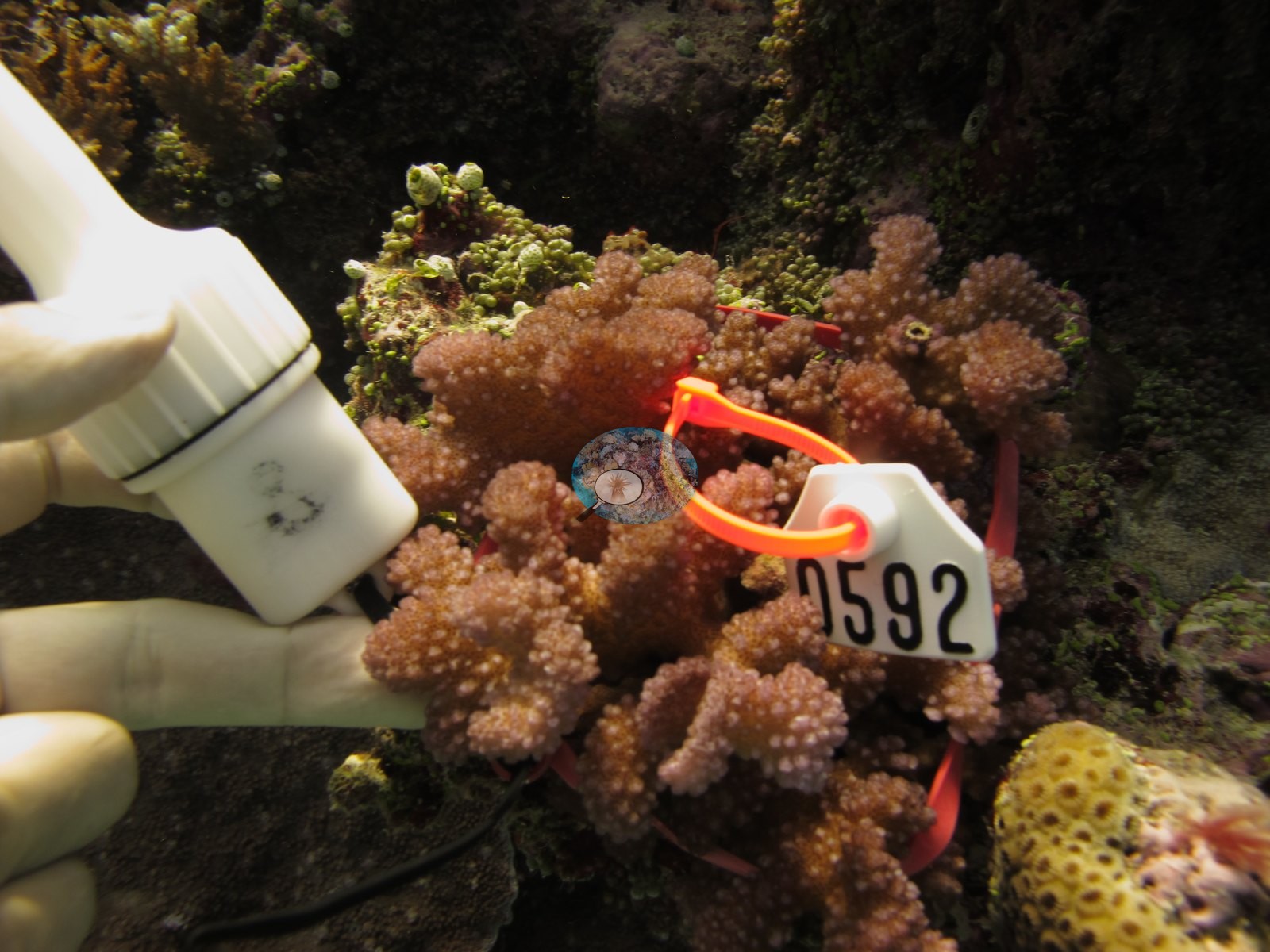
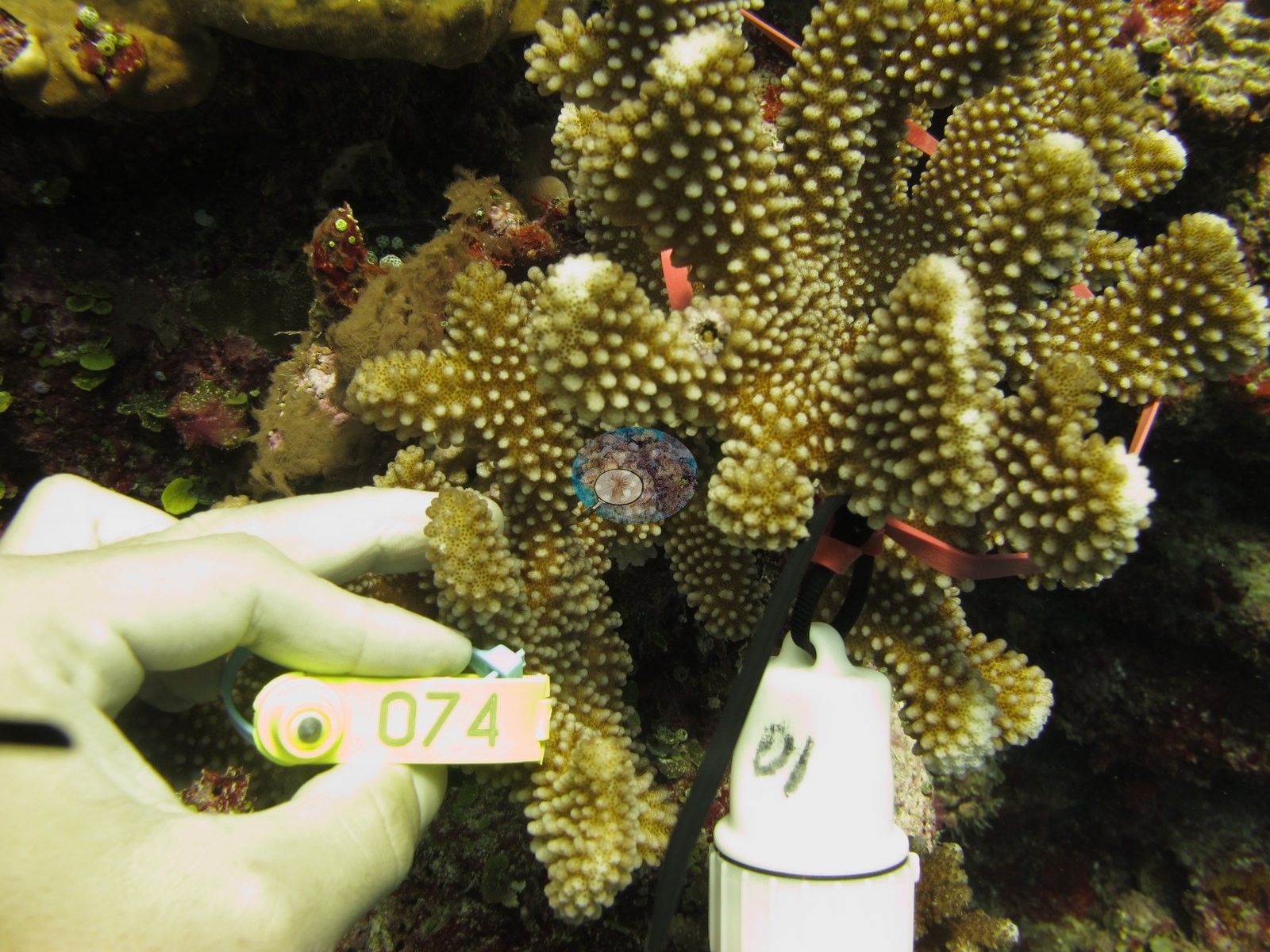
Another sits below a small pale branching colony, its branch tips ringed with visible corallites, cut into by a pair of stainless shears; a third does the same for a white-and-tan branching colony growing out of a mat of green fleshy algae and pale rubble (e.g., Image 2, Image 3, Image 4).
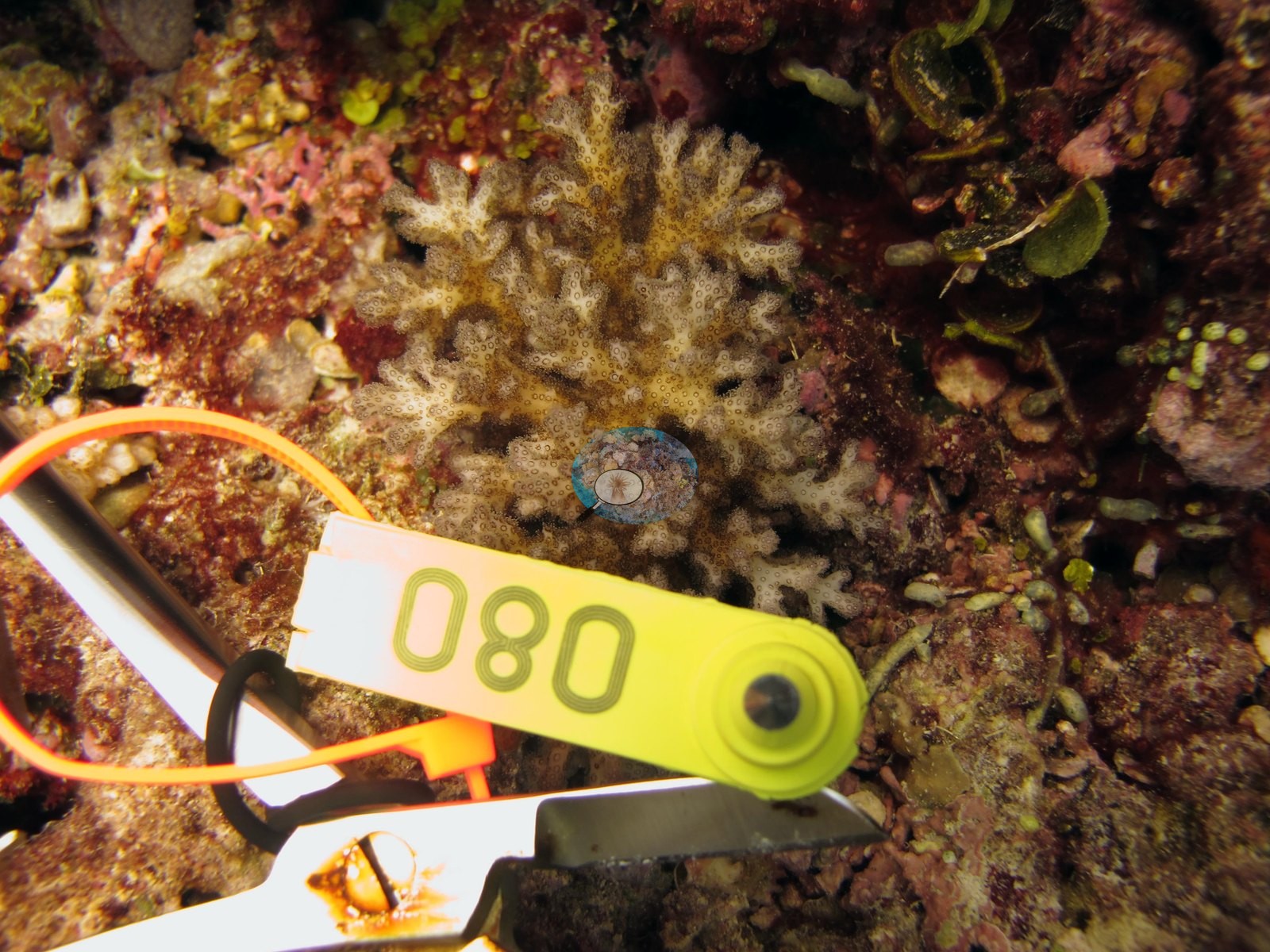
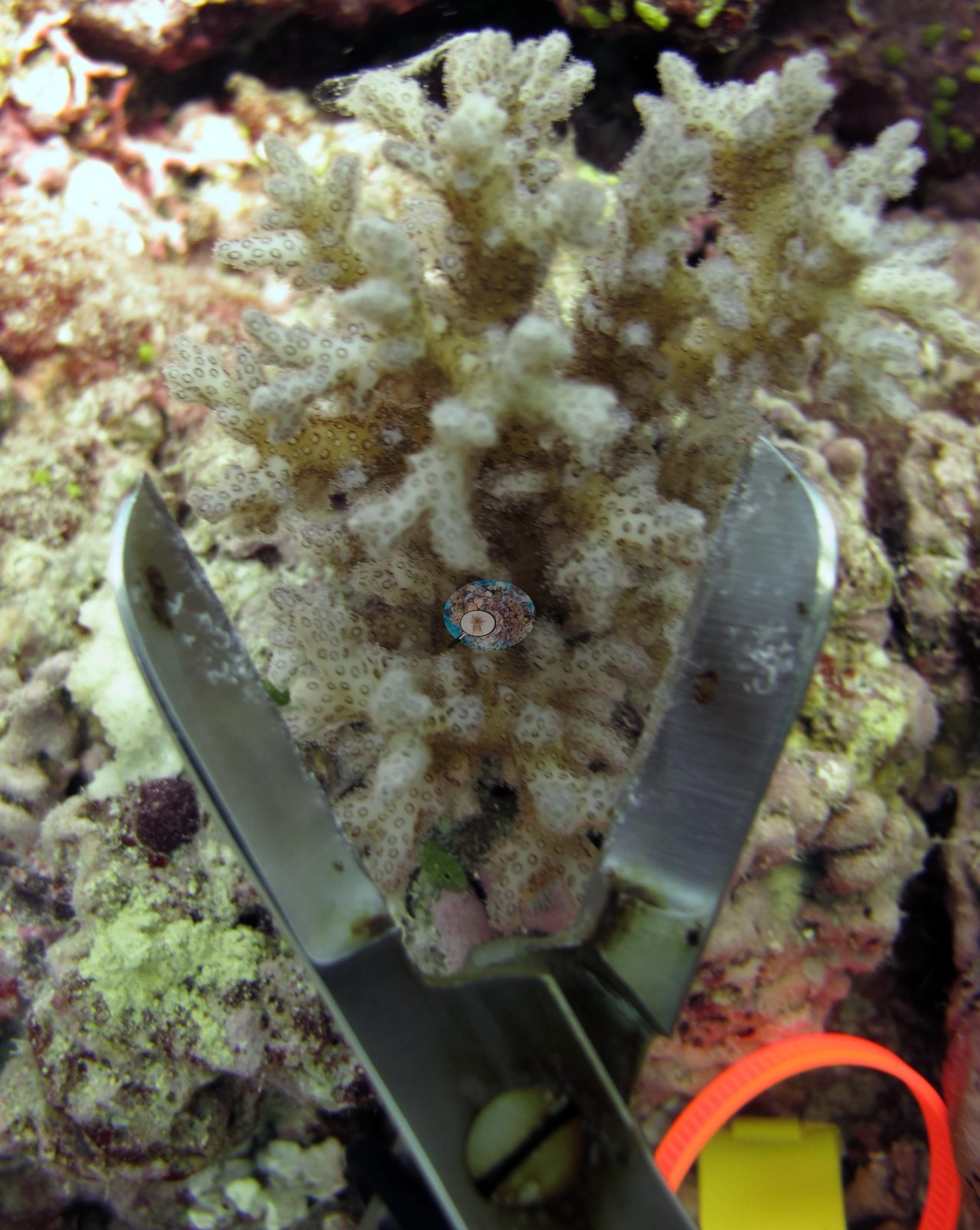
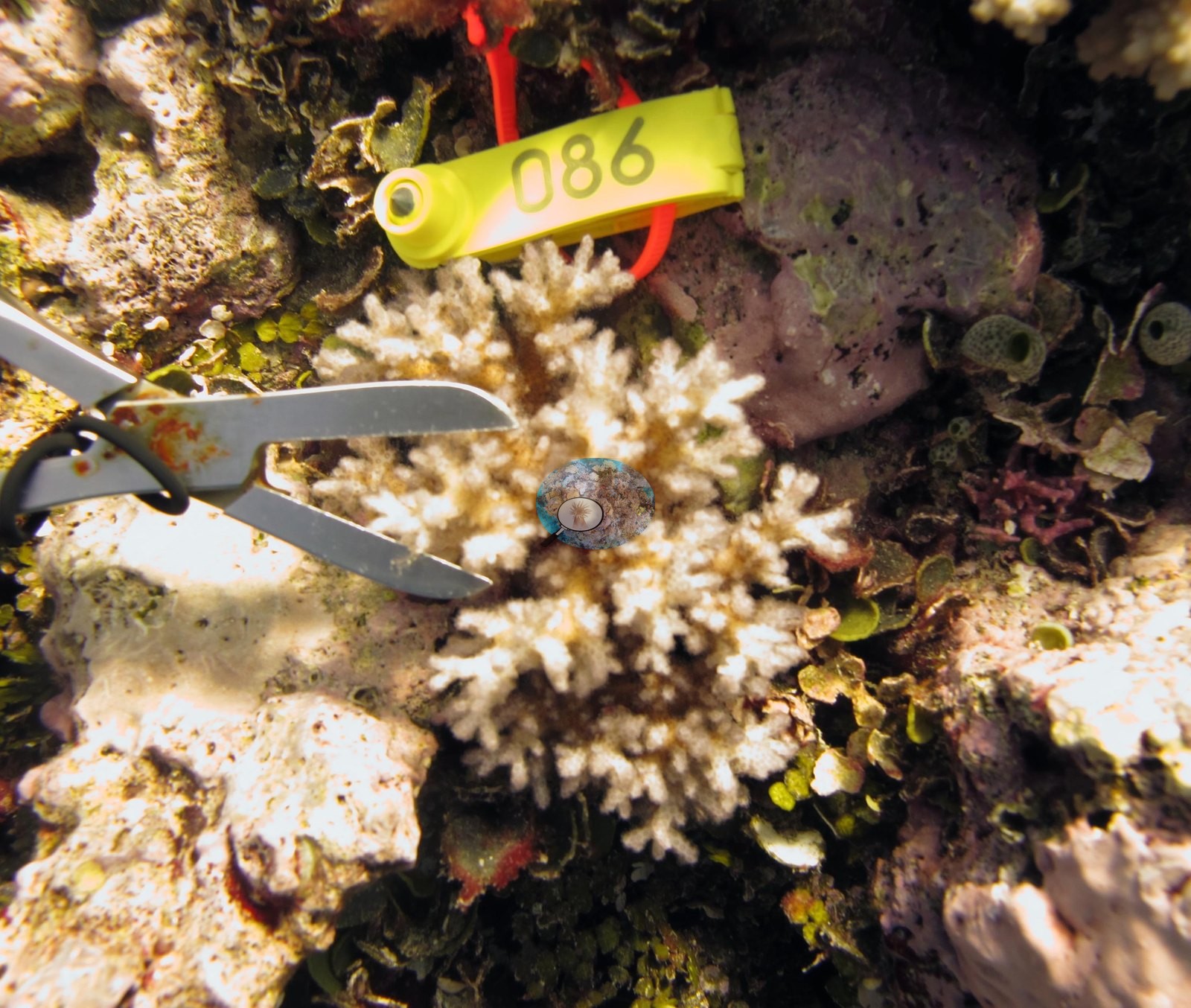
In another frame a marked transect line runs above a tag staked among a stand of cream-and-brown branching colonies, with a fine-pored massive head below and a meandering brain coral and a dark damselfish off to the left (e.g., Image 5).
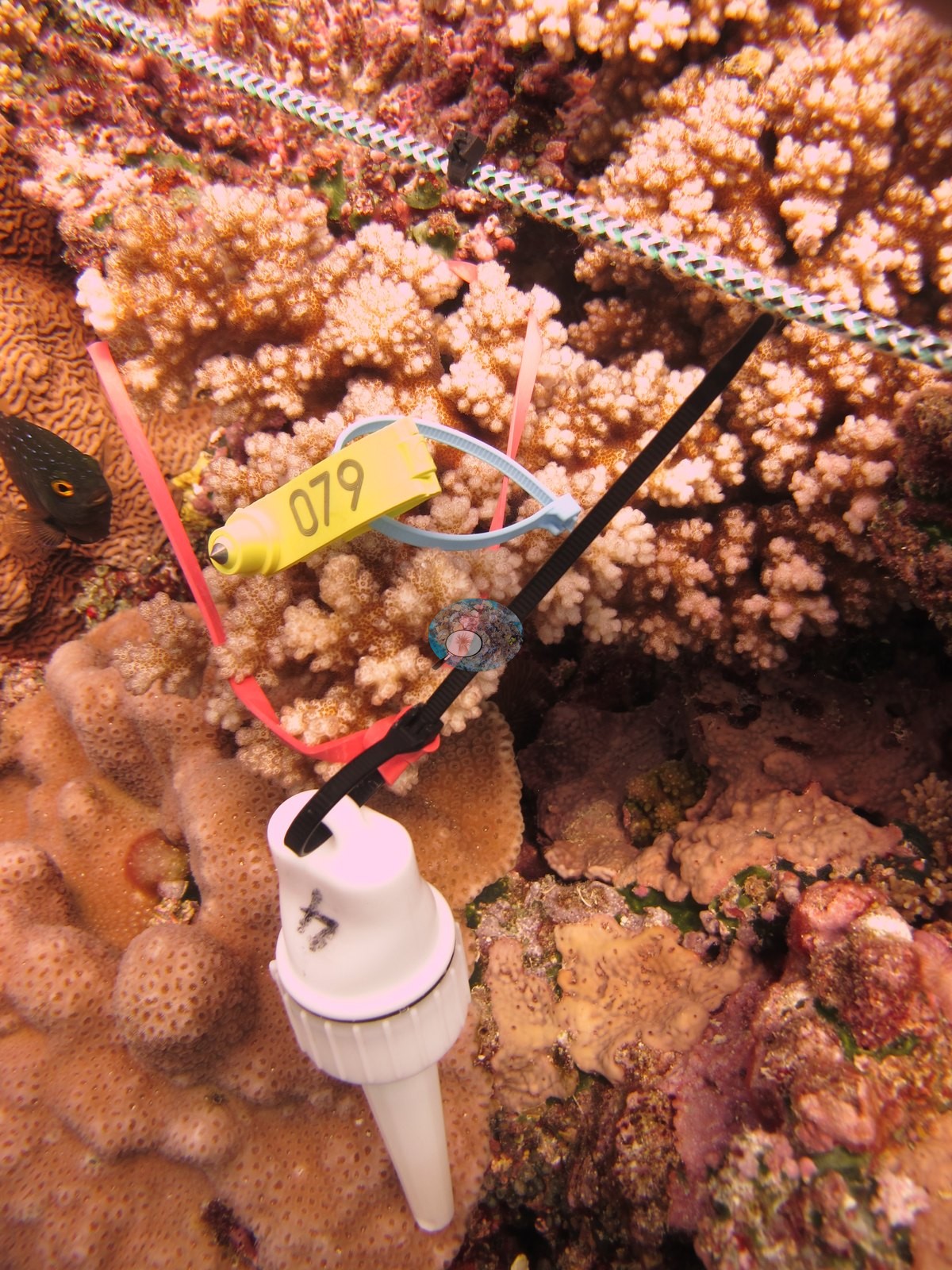
Substrate throughout is heavily colonized: mauve and pink coralline crusts, rust-red turf, green Halimeda-like segments, small sponges.
Coral cover
- Reference: Khaled bin Sultan Living Oceans Foundation, Global Reef Expedition (in situ transect)
- The FJVB53 photographs are all close work: colony-by-colony sampling on a reef that point-count survey scored at 25% living coral, with algae covering about half of the reef.
- Transect mean 25 ± 4.4% SE (n = 4 transects; Living Oceans Foundation per-transect benthic data); the headline above is this all-transect mean.
Stressors
Anderson's sample sheet records the three colonies sampled here (F116.1, F117, F118, all P. acuta) as 0%, 30%, and 50% bleached, the last 'possibly unhealthy'; no disease lesions or predation scars are visible in the frames. The Living Oceans Foundation transects here recorded 13% cyanobacteria and no recently dead coral.
Comparisons with other data
None of the three coral colonies from this site with an outlier score was flagged as a physiological outlier (Mayfield et al. 2017, PLoS ONE).
Dive record
FJVB53 (Vanua Balavu, Lau Archipelago): surveyed 21 Jun 2013 during the Khaled bin Sultan Living Oceans Foundation Global Reef Expedition.
Data & links
- Download benthic survey data (CSV) ↗
- Download all LOF-GRE data (933 sites) ↗
- Photo portfolio ↗
- Coral Reef Diagnostics page for this area ↗
All images from Coral Reef Diagnostics. Data are from the Khaled bin Sultan Living Oceans Foundation Global Reef Expedition and Coral Reef Diagnostics.
 © Coral Reef Diagnostics.