
Part of the regional summaries: Fiji - Nayau, Fiji - Northern Lau (Vanua Balavu / Cicia / Nayau), and Fiji - Lau
More info
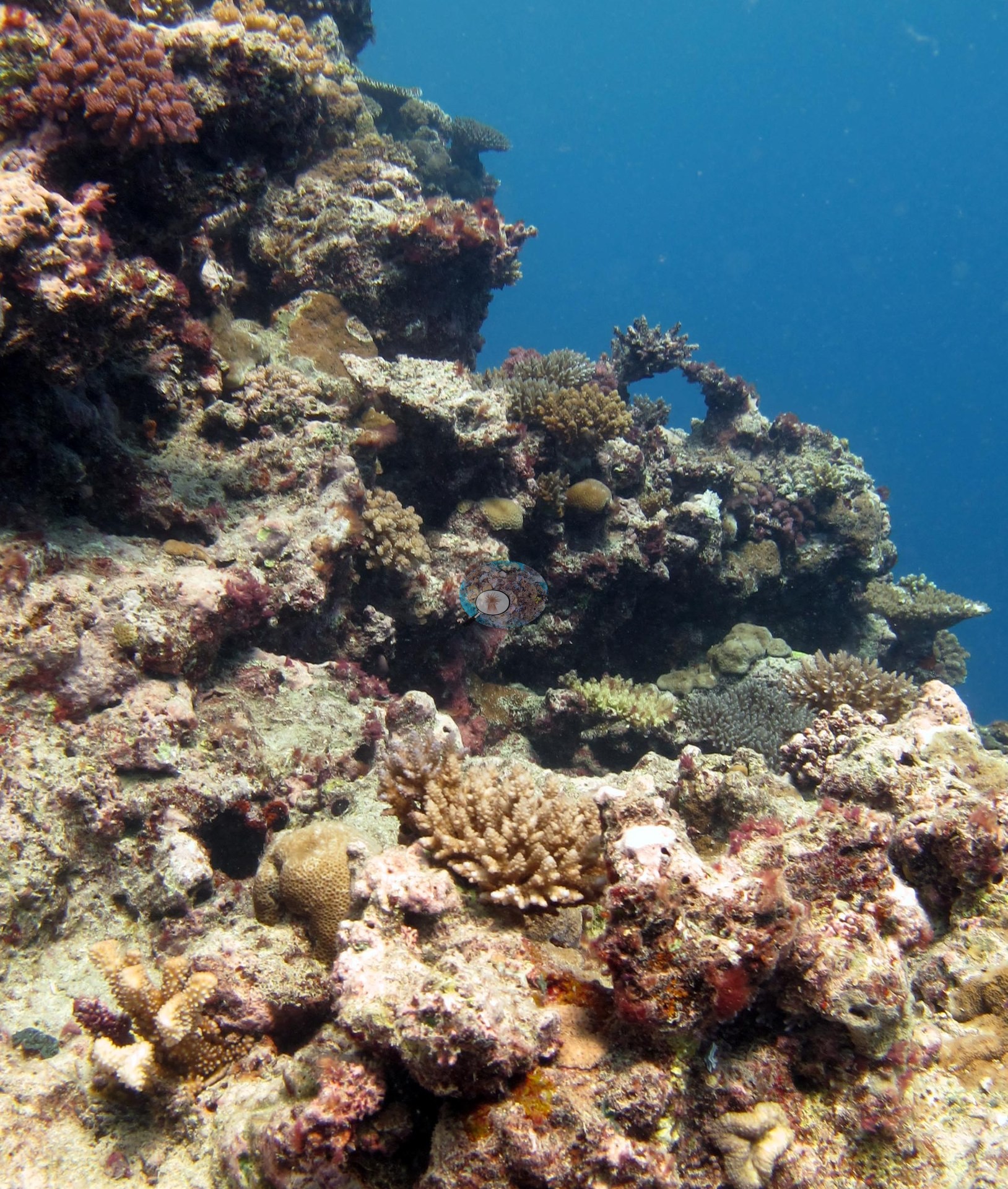
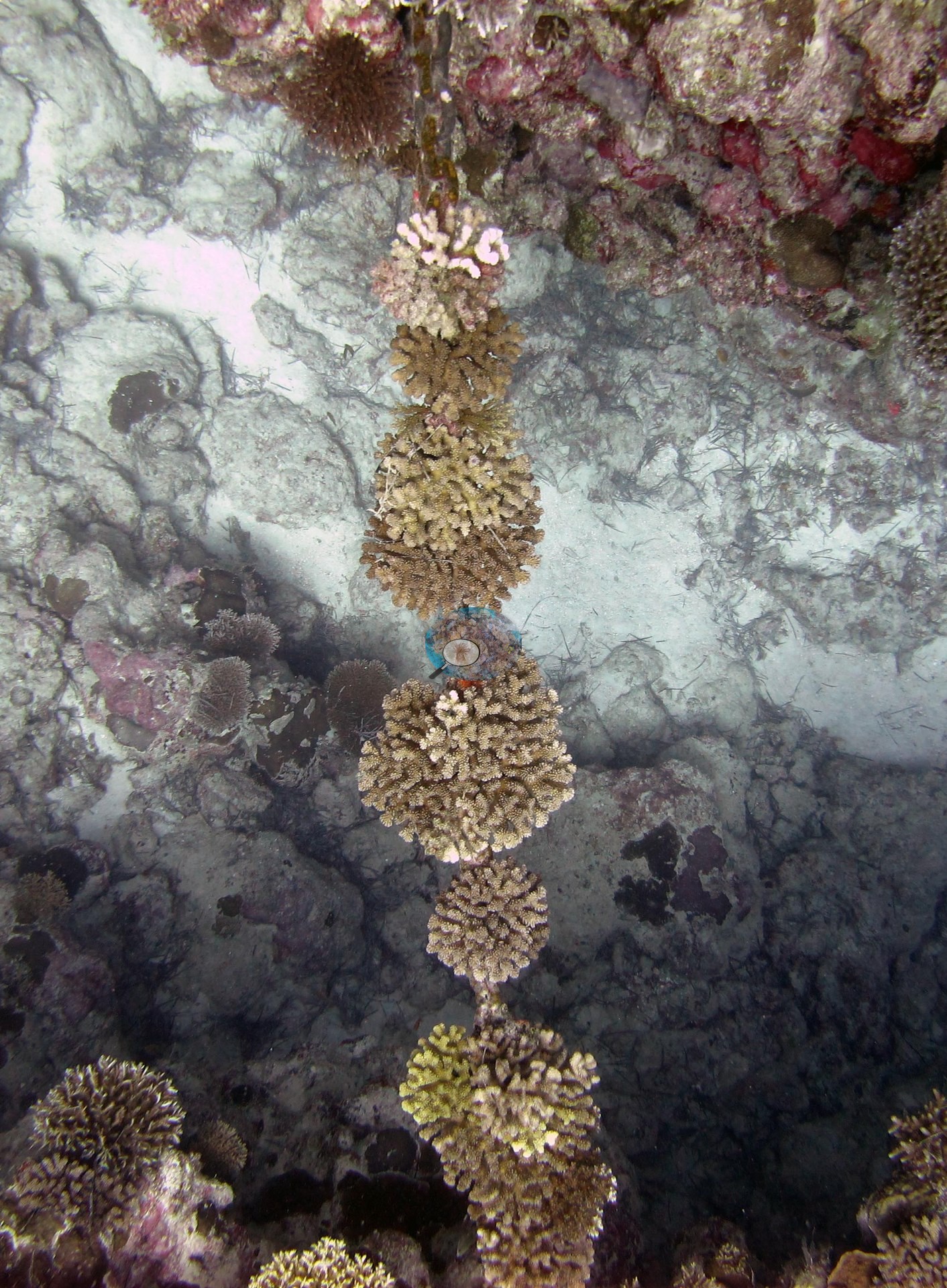
Fiji (NOAA CRW virtual station)A shallow fore-reef slope on Nayau's northwest side whose frames show consolidated framework sheeted in coralline algae and carrying many small colonies, at 48% cover. An old anchor chain on the pavement has been colonized by small Pocillopora. Surveyed on the Living Oceans Foundation's Global Reef Expedition.
E dua na baba ni yasana i tuba ni cakau (fore-reef slope) e sega ni titobu ena yasana i vualiku-i-ra i Nayau, ka na kena itaba e vakaraitaka na ivakatudei sa dei e ubi ena lumi vakalase (coralline algae) ka levu kina na lase lalai, ka 48% na ubi ni lase (coral cover). E dua na vesa makawa ni ikelekele (anchor chain) ena botoni sa tubu kina na Pocillopora lalai.
AI translation of this summary; the English is authoritative. (low confidence)
CTD-cast midpoint of 27.0–27.1°C
Three other CRD dive sites with their own pages within 5 km shown in orange — click a marker to open its page.
🗺 Detailed map of the Global Reef Expedition dive sites, Nayau, Fiji (Khaled bin Sultan Living Oceans Foundation; opens in a new window)
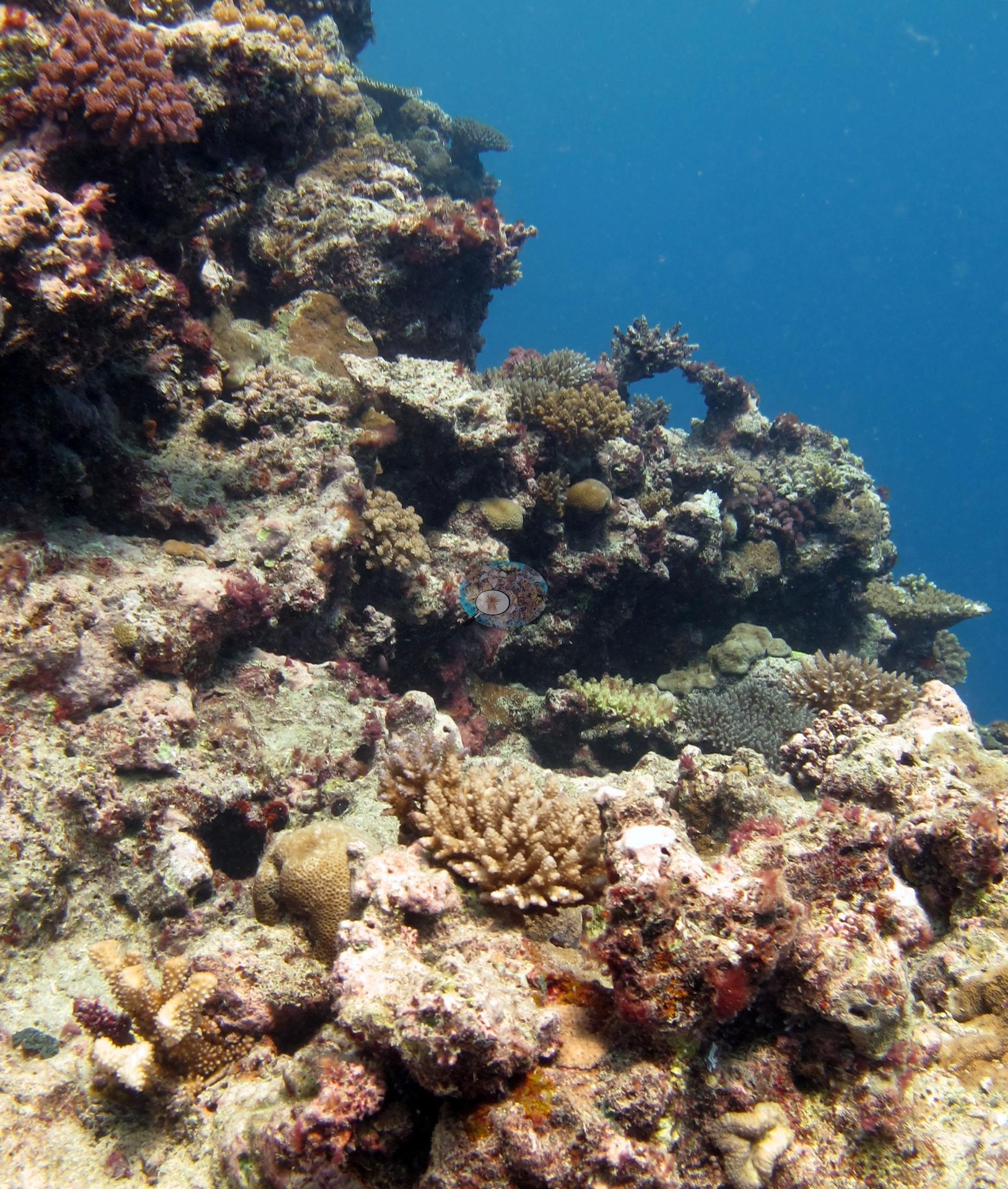
5 of the 7 photographs on this page are shown beside the text that discusses them under "Site description" below.
Site description
Setting
FJNA38 sits on the shallow fore-reef slope off the north-west side of Nayau, Lau Archipelago, surveyed 16 Jun 2013 during the Khaled bin Sultan Living Oceans Foundation Global Reef Expedition.
General benthic features
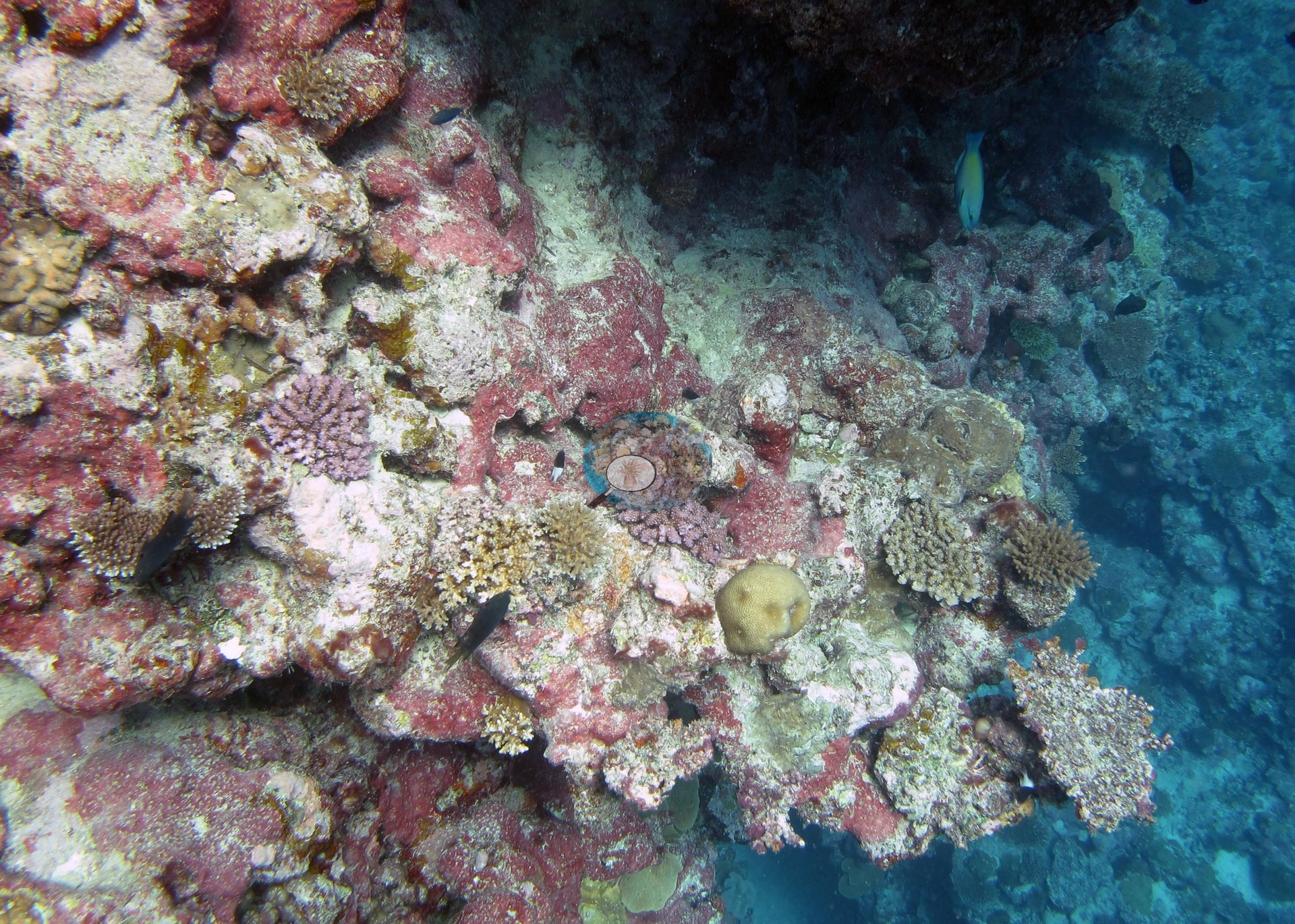
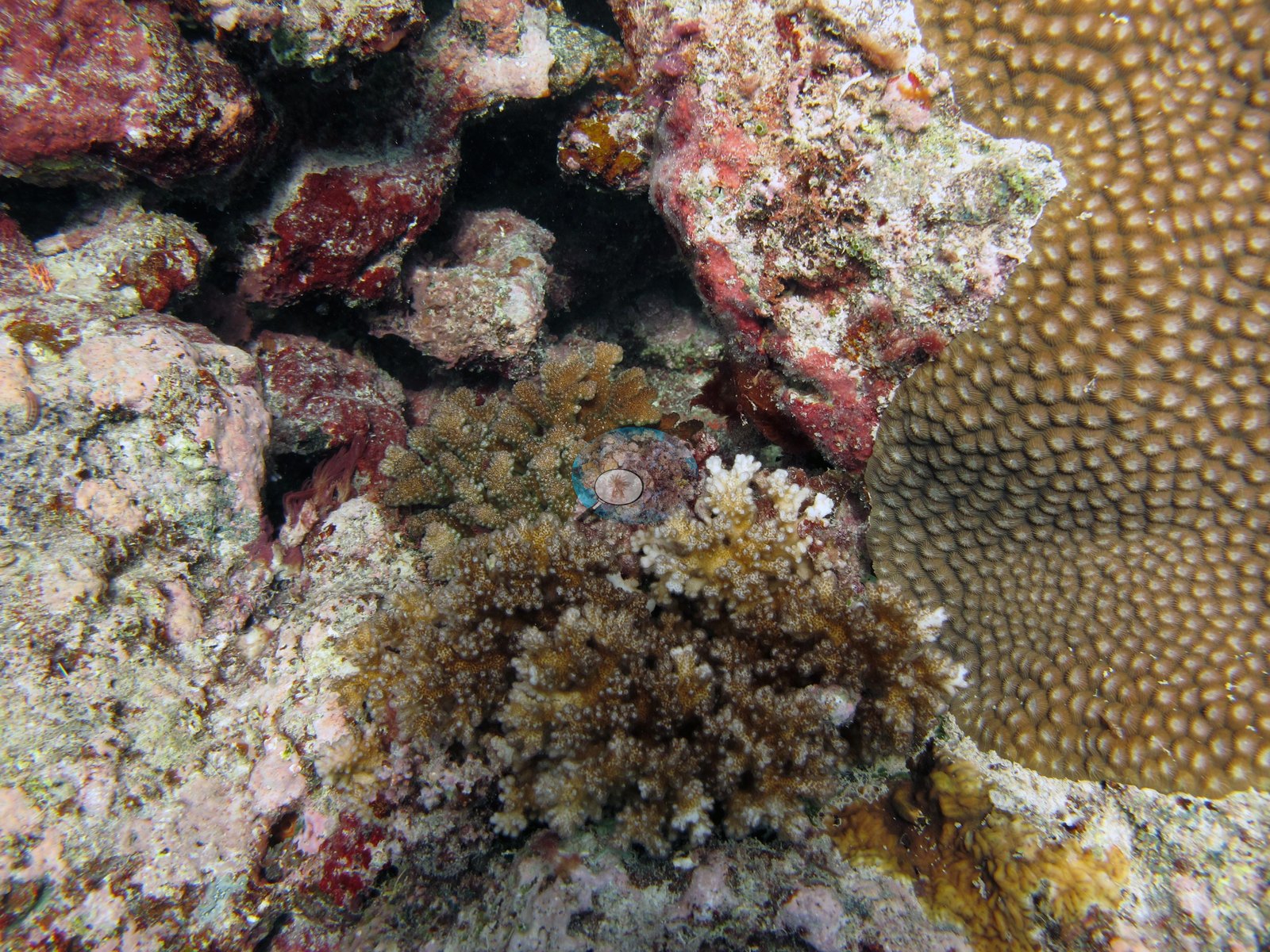
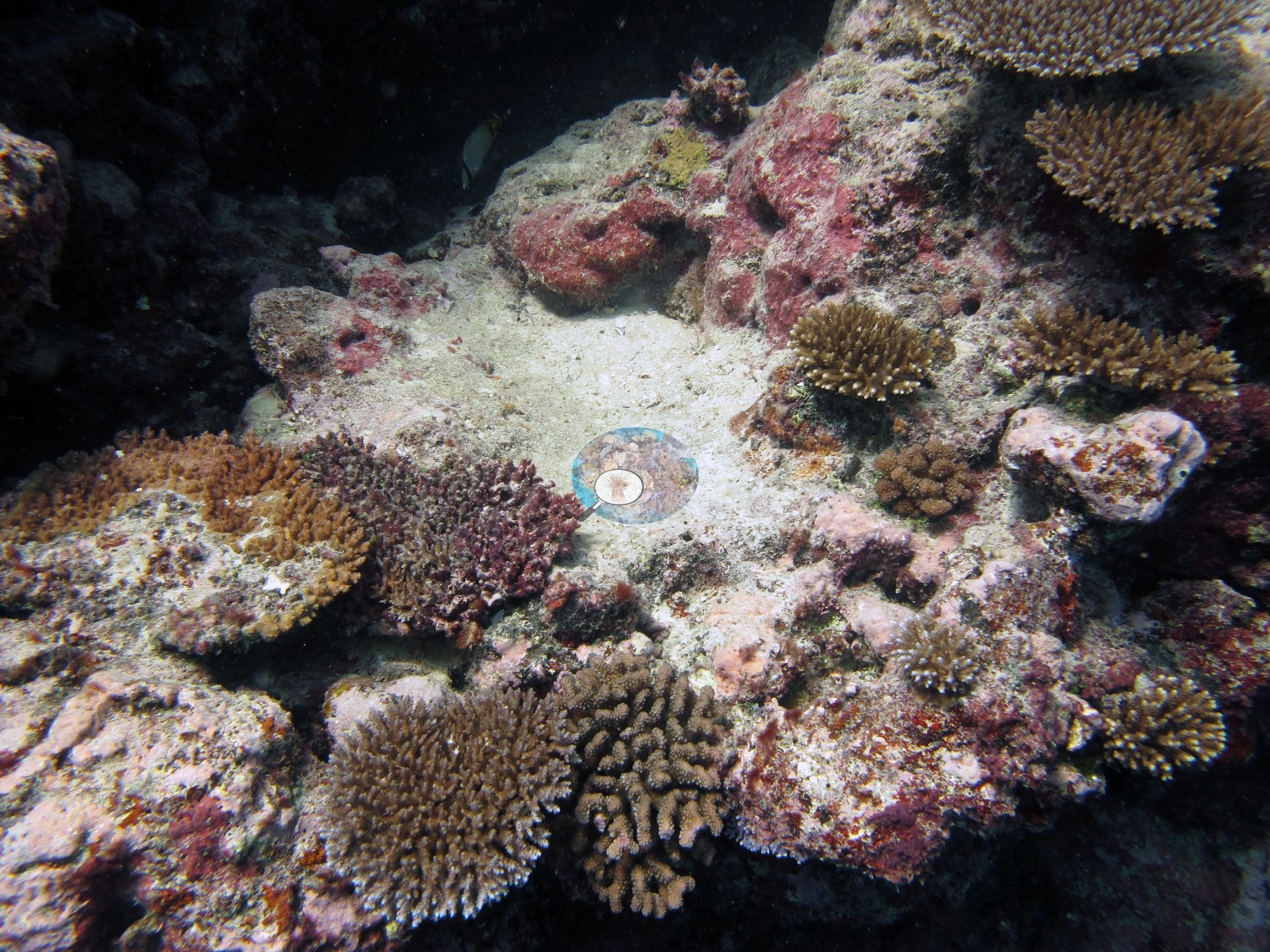
Anderson's frames from this station show hard, consolidated reef framework rather than open substrate: a build-up rising against blue water on one side, its surface sheeted in pink and mauve crustose coralline algae over older dead structure, with the living community carried by many small colonies rather than a few large ones. Recurring across the frames are stubby brown Pocillopora clumps, small yellow-green digitate and corymbose Acropora, low encrusting and small massive corals, a meandroid brain-type colony, and orange and yellow encrusting sponges tucked into the framework. One closer frame catches a brown Pocillopora growing hard against a large golden-brown massive colony with tightly packed rounded corallites (e.g., Image 5).
Sand and coarse rubble sit in pockets between the build-ups, and one frame looks along a low buttress with a bare sand patch at its center (e.g., Image 3).
Two frames document something more specific: an old anchor chain lying across pale, largely bare pavement, with a small Pocillopora colony established on link after link along its length — the reef colonizing discarded gear (e.g., Image 4).
Coral cover
- Reference: Khaled bin Sultan Living Oceans Foundation, Global Reef Expedition (in situ transect)
- Coral cover 48% (the expedition's in situ transects).
- Point-count transect scored living coral at 48%, against 36% algae; the survey data, not the photographs, carries that number.
- Transect mean 48 ± 6.0% SE (n = 4 transects; Living Oceans Foundation per-transect benthic data); the headline above is this all-transect mean.
Stressors
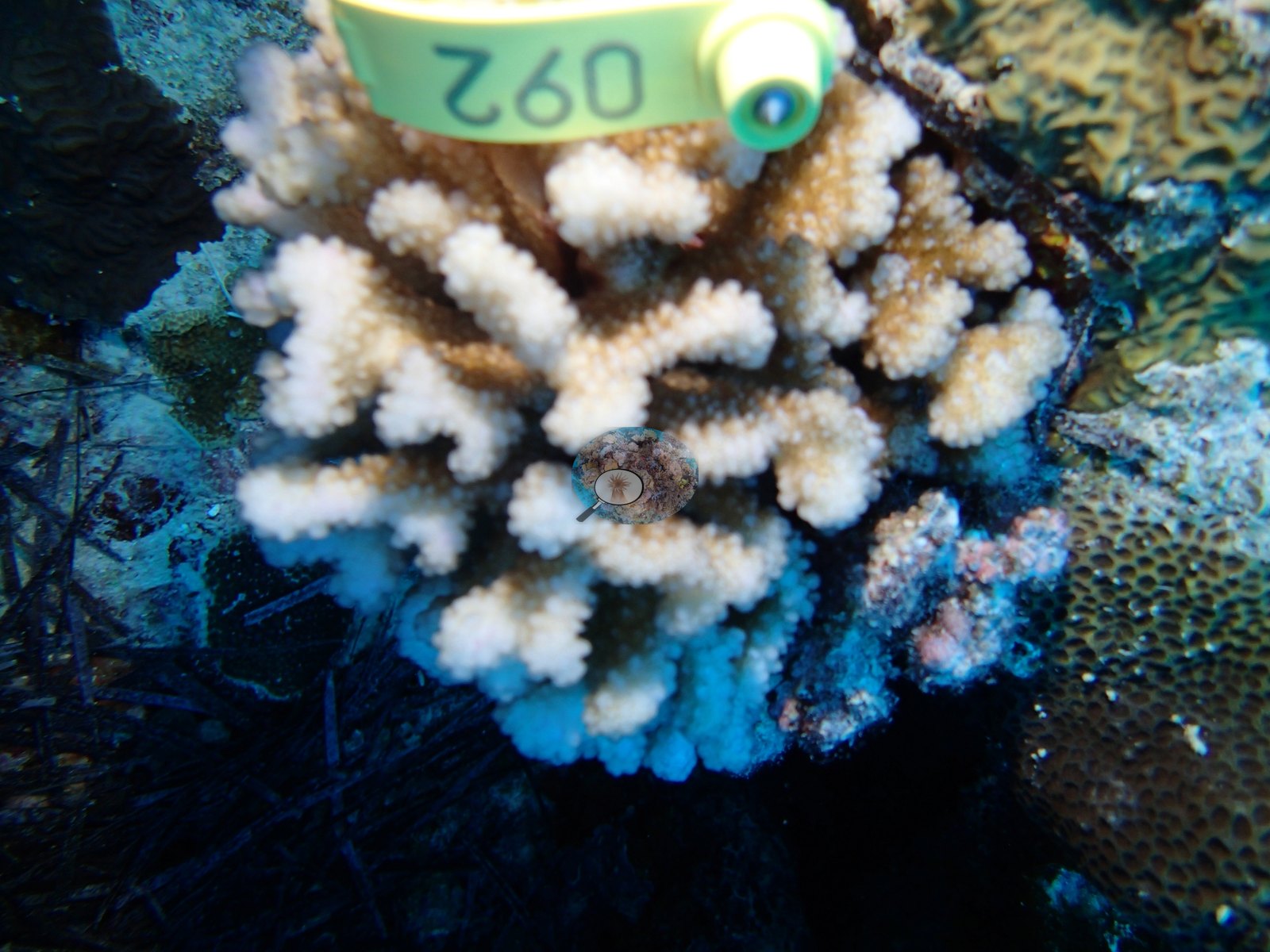
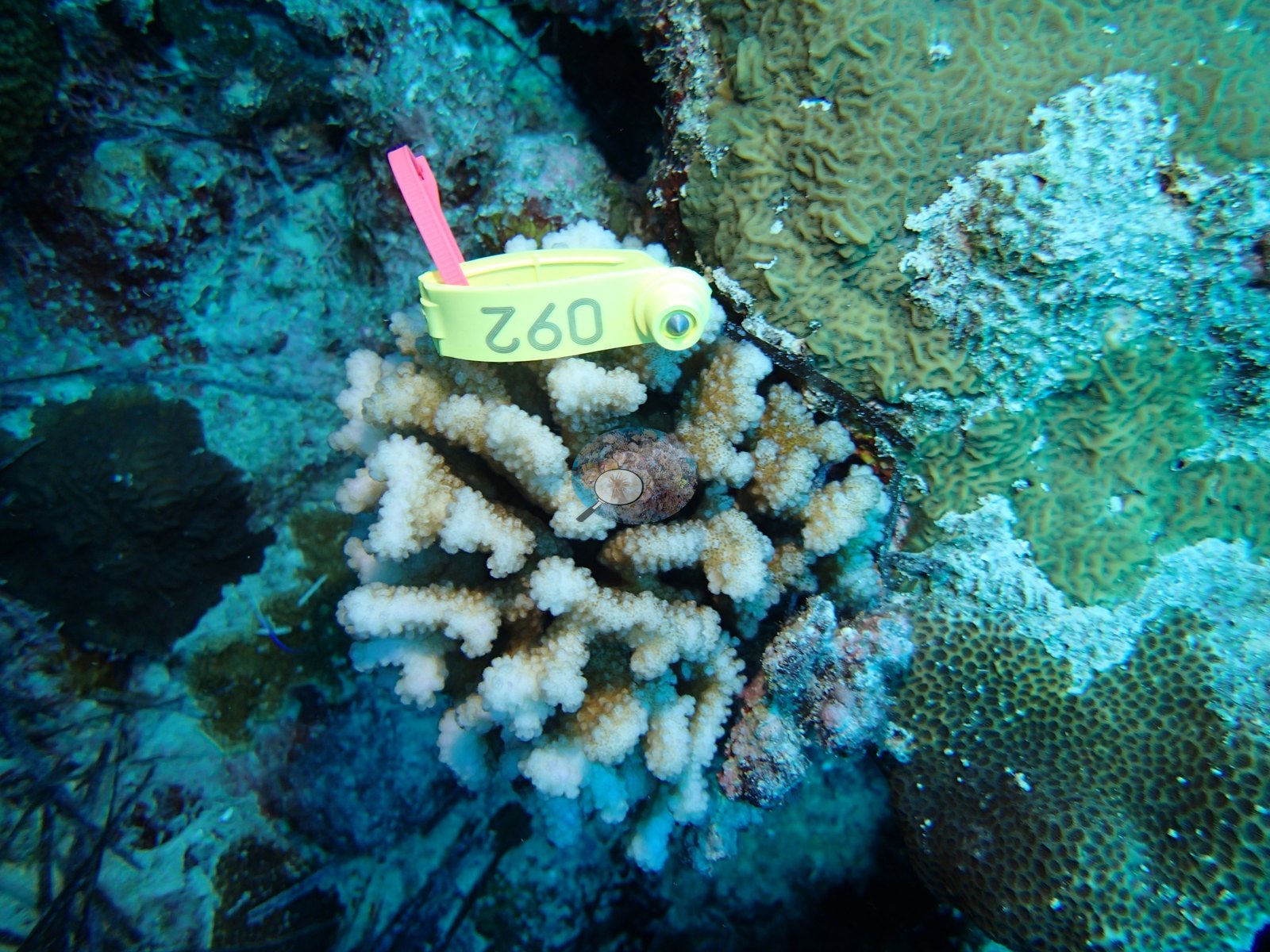
No bleaching, disease, predation scarring, or crown-of-thorns damage is visible in any habitat frame, but eight frames is far too few to call the site's condition either way; Anderson's sampling sheet records the seven colonies sampled here as healthy or largely so, four of them with 1–10% of the colony pale or bleached. Anderson's photographs of one tagged colony (e.g., Image 6, Image 7) show its upper branches partly bleached.
Typical recent thermal stress: mean annual maximum of 8.9°C-weeks (Degree Heating Weeks, 2021-2025, NOAA CRW; Fiji virtual station). The Living Oceans Foundation transects here recorded 4.5% cyanobacteria and no recently dead coral.
Fish and other fauna
Out in open blue water off the reef edge, rays were seen in the distance, one of them a spotted eagle ray.
Comparisons with other data
Apart from the Living Oceans Foundation survey shown here, we found no other surveys at this site as of 2026. If you would like to share yours, please email us.
Other notes
Only eight habitat frames exist for the site and two of those are blue water, so what follows is a description of six usable frames rather than a survey of the reef.
What the frames cannot settle: they are mid-range and close, never wide, so they show texture but not relief, zonation, or how the community changes with depth — the station CTD cast reached 35.7 m and no photograph goes near it.
Data & links
- Download benthic survey data (CSV) ↗
- Download all LOF-GRE data (933 sites) ↗
- Photo portfolio ↗
- Coral Reef Diagnostics page for this area ↗
All images from Coral Reef Diagnostics. Data are from the Khaled bin Sultan Living Oceans Foundation Global Reef Expedition and Coral Reef Diagnostics.
 © Coral Reef Diagnostics.