
Part of the regional summaries: Fiji - Moala, Fiji - Moala Group (Moala / Totoya / Matuku), and Fiji - Lau
More info
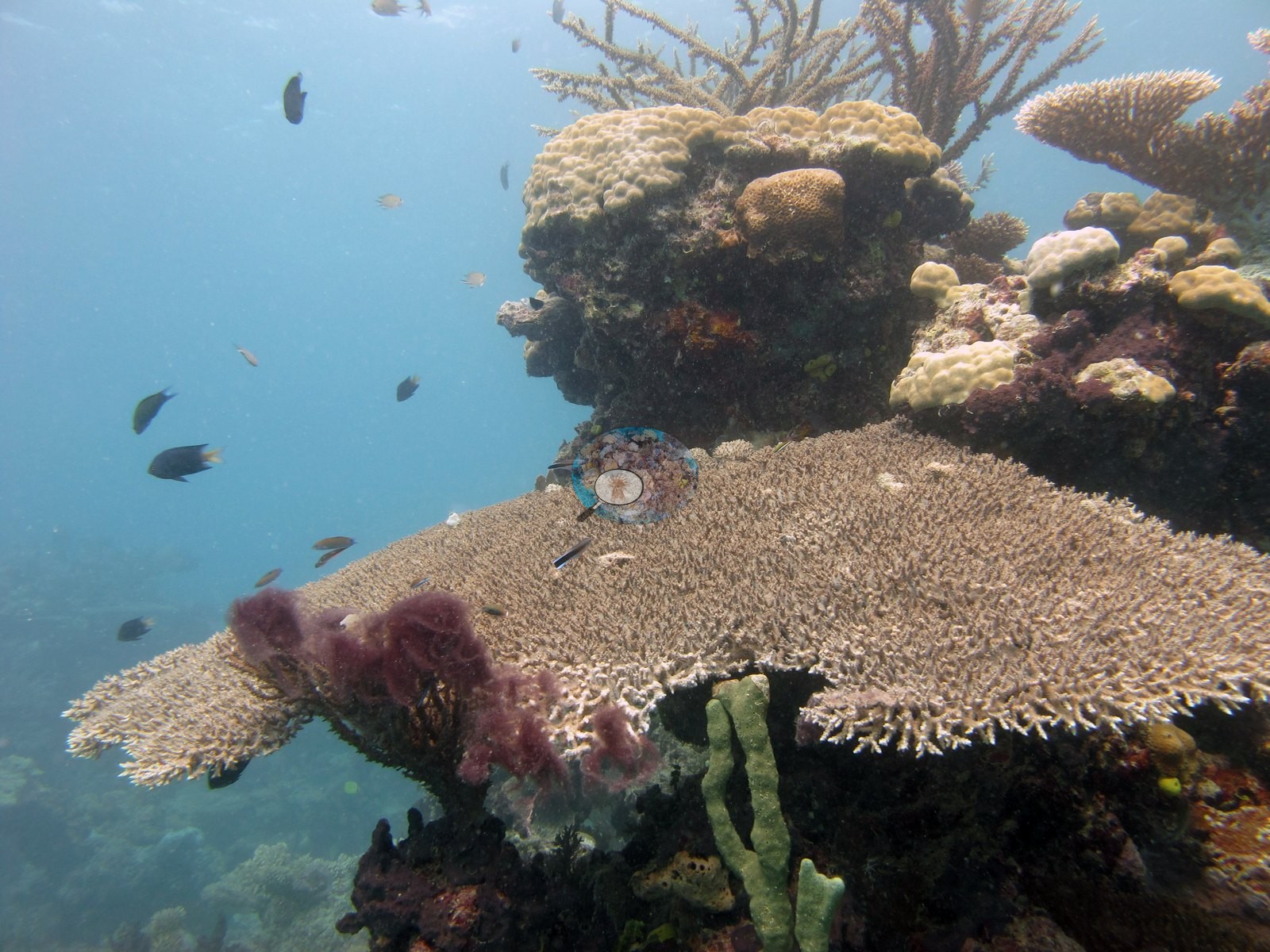
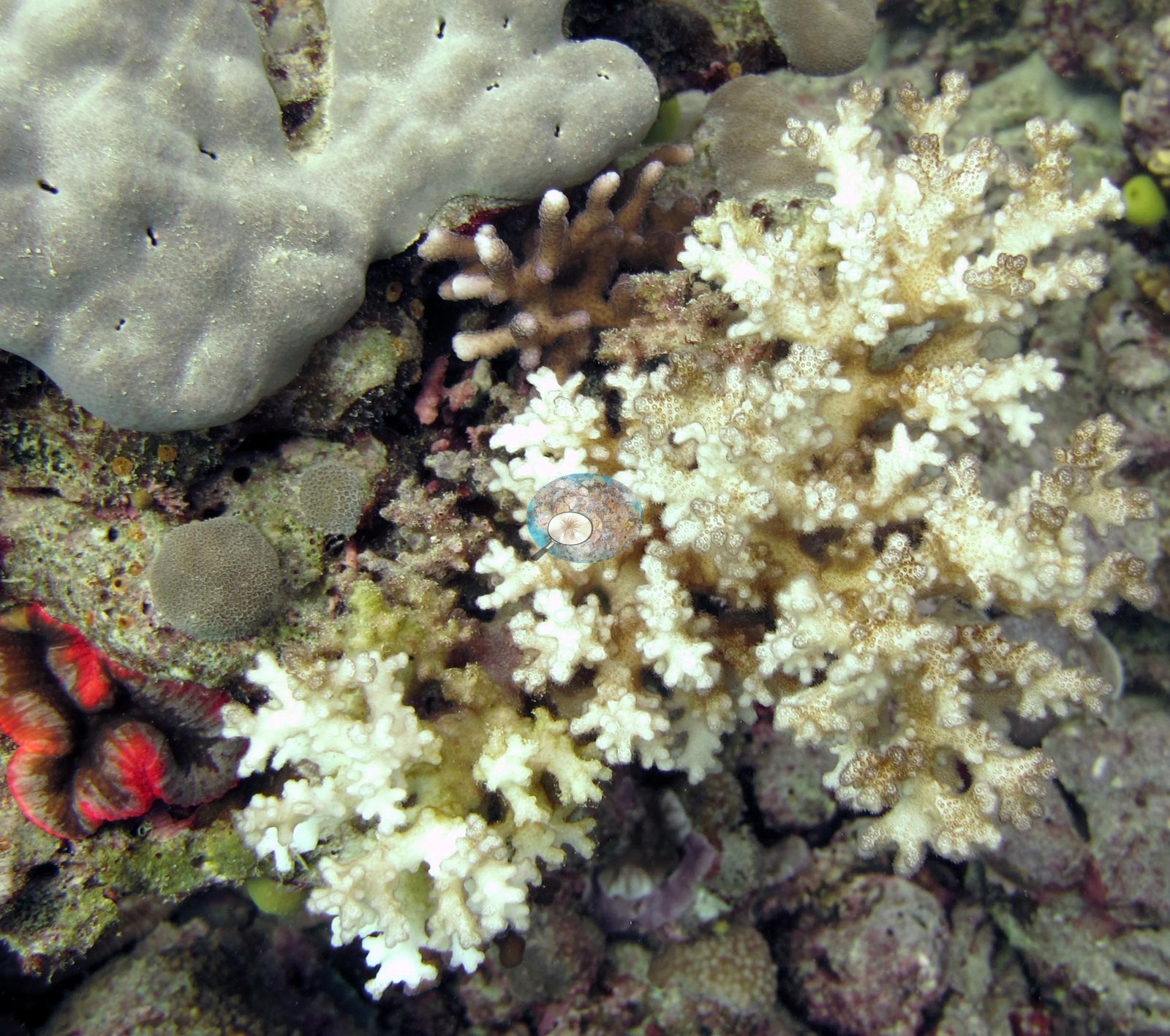
Fiji (NOAA CRW virtual station)A Moala lagoon pinnacle crowned by large Acropora tables and big massive coral heads, with shoals of electric-blue chromis sheltering in the branching corals. Encrusting sponges compete for space with the corals, and one Pocillopora damicornis Anderson recorded as bleaching stood stark white beside a pale massive colony. Cover is 22%. Surveyed on the Living Oceans Foundation's Global Reef Expedition.
E dua na vatu ni lase e tubu cake (pinnacle) ena loma ni cakau (lagoon) i Moala, e dakuna na lase tepeli levu ni Acropora kei na ulu levu ni lase (massive coral), kei na ilawalawa ni ika lalai karakarawa (electric-blue chromis) era vakaruru tiko ena lase vakatabataba. Na sponge e kabita na vatu e veisaqasaqa kei na lase me baleta na vanua, ka dua na Pocillopora damicornis e vola ko Anderson ni vulavula tiko (bleaching) e tu vulavula vakadua ena yasana ni dua na lase levu (massive) e vulavula vakalailai (pale). Na ubi ni lase (coral cover) e 22%.
AI translation of this summary; the English is authoritative. (low confidence)
CTD-cast midpoint of 26.9–27.0°C
Two other CRD dive sites with their own pages within 5 km shown in orange — click a marker to open its page.
🗺 Detailed map of the Global Reef Expedition dive sites, Moala, Fiji (Khaled bin Sultan Living Oceans Foundation; opens in a new window)
7 of the 31 photographs on this page are shown beside the text that discusses them under "Site description" below.
Site description
General benthic features
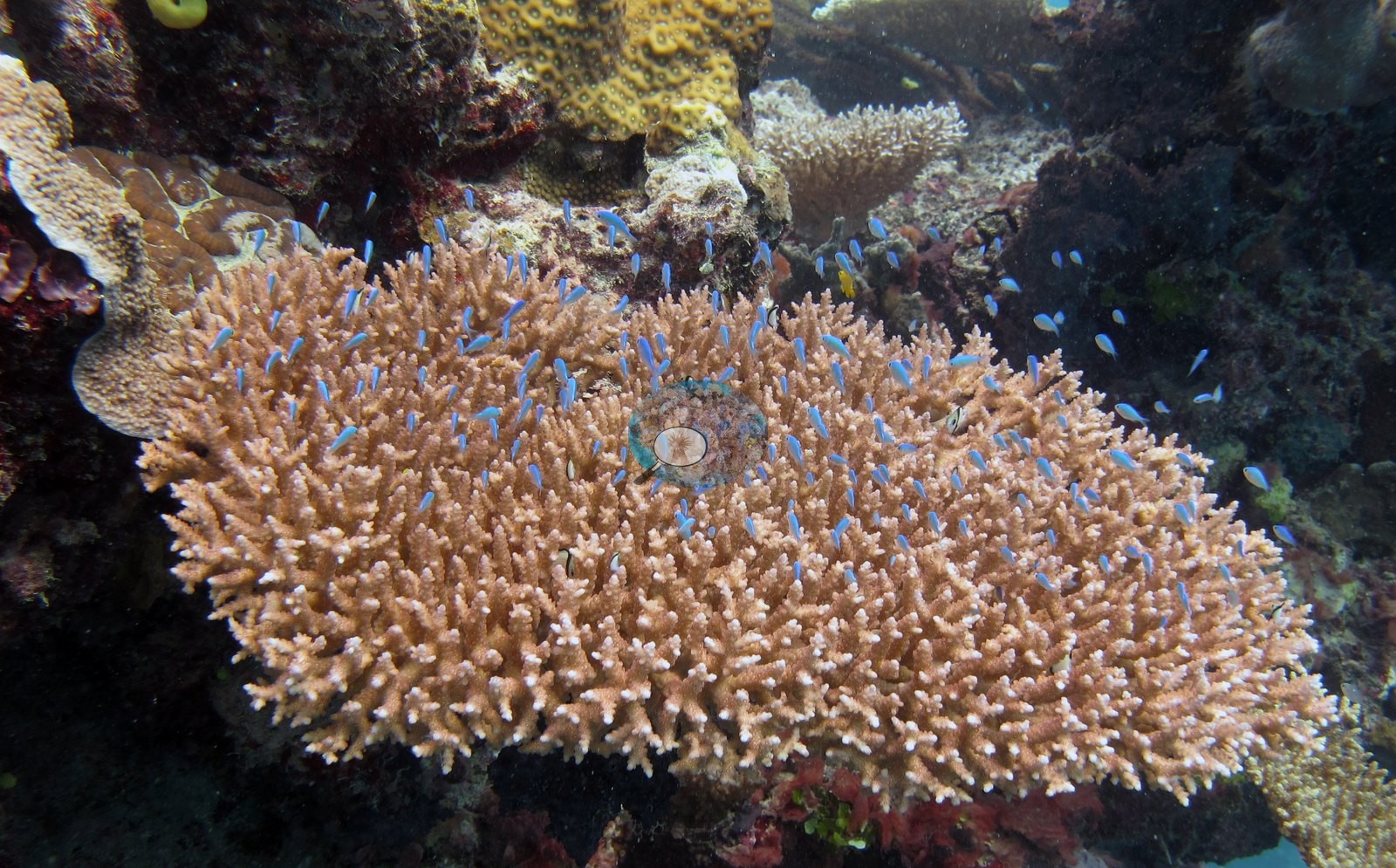
The pinnacle top is coral-dominated and built around large tabular Acropora: one broad table with a clean white growing margin standing clear of a dark base, another crowning the pinnacle with a maroon-pink encrusting growth on one underside edge and a yellow tube sponge beneath, and a third — the largest in the set — photographed with a diver alongside, its rim bright white against the greener water (e.g., Image 28, Image 32, Image 29).
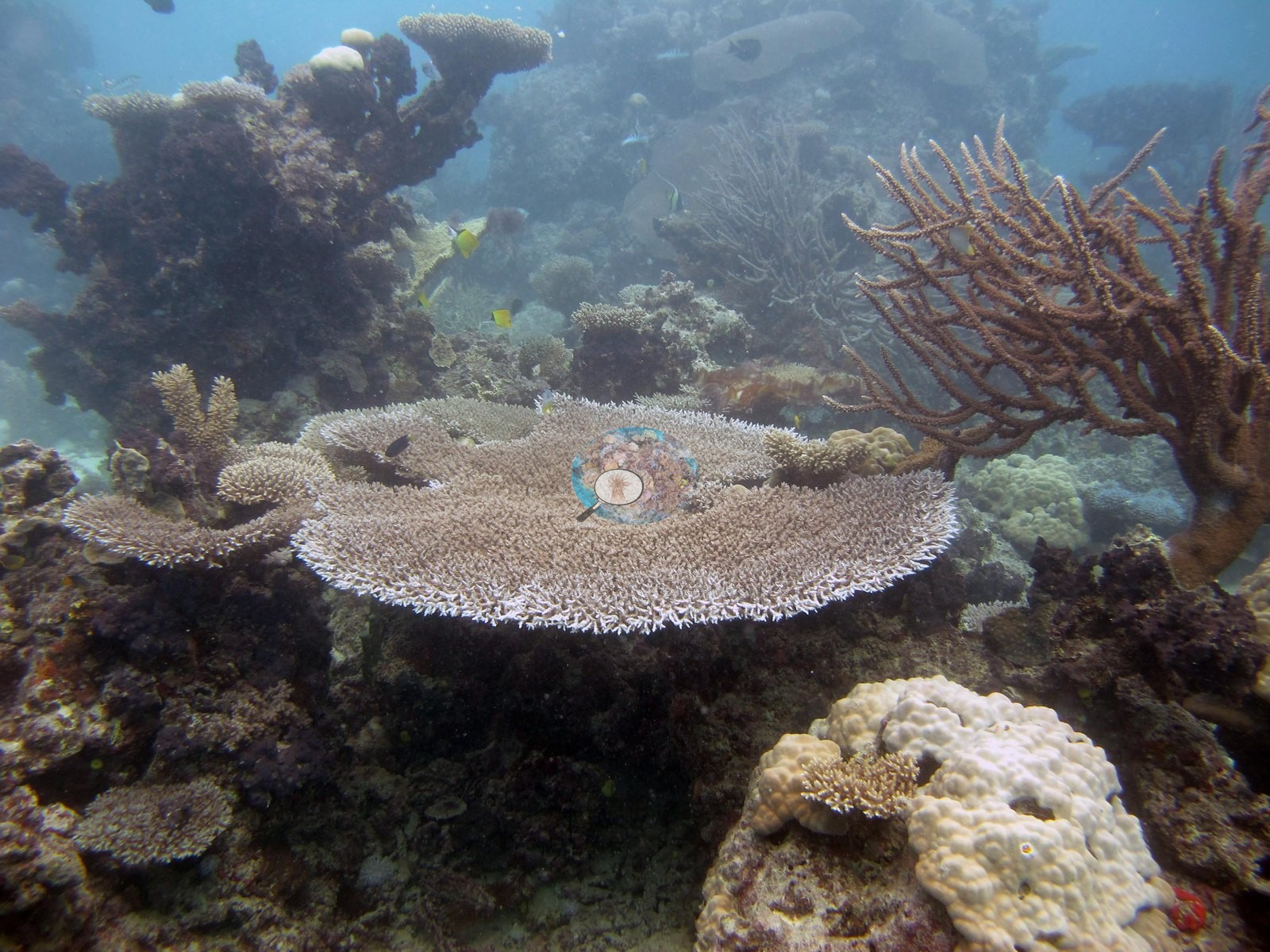
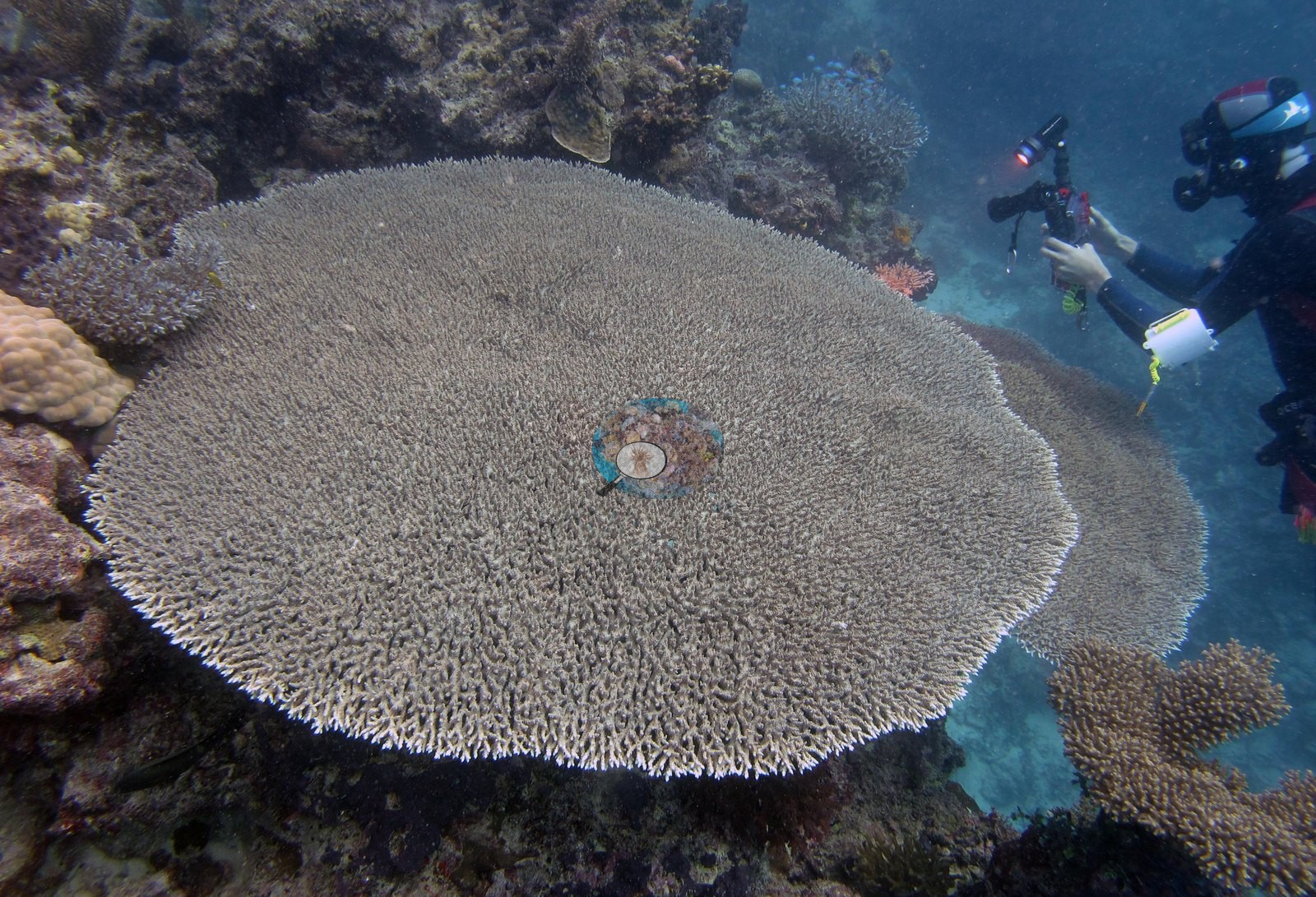
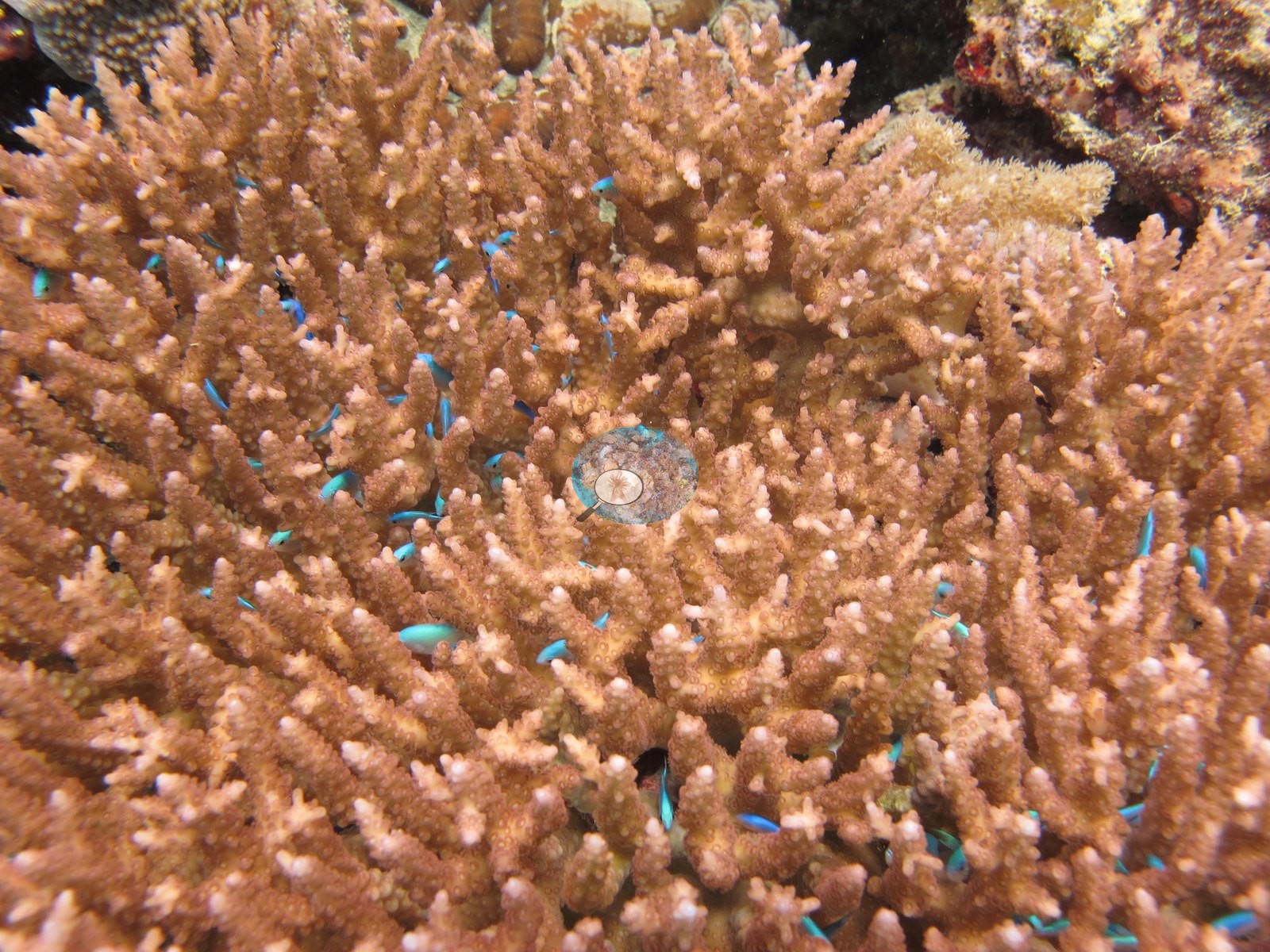
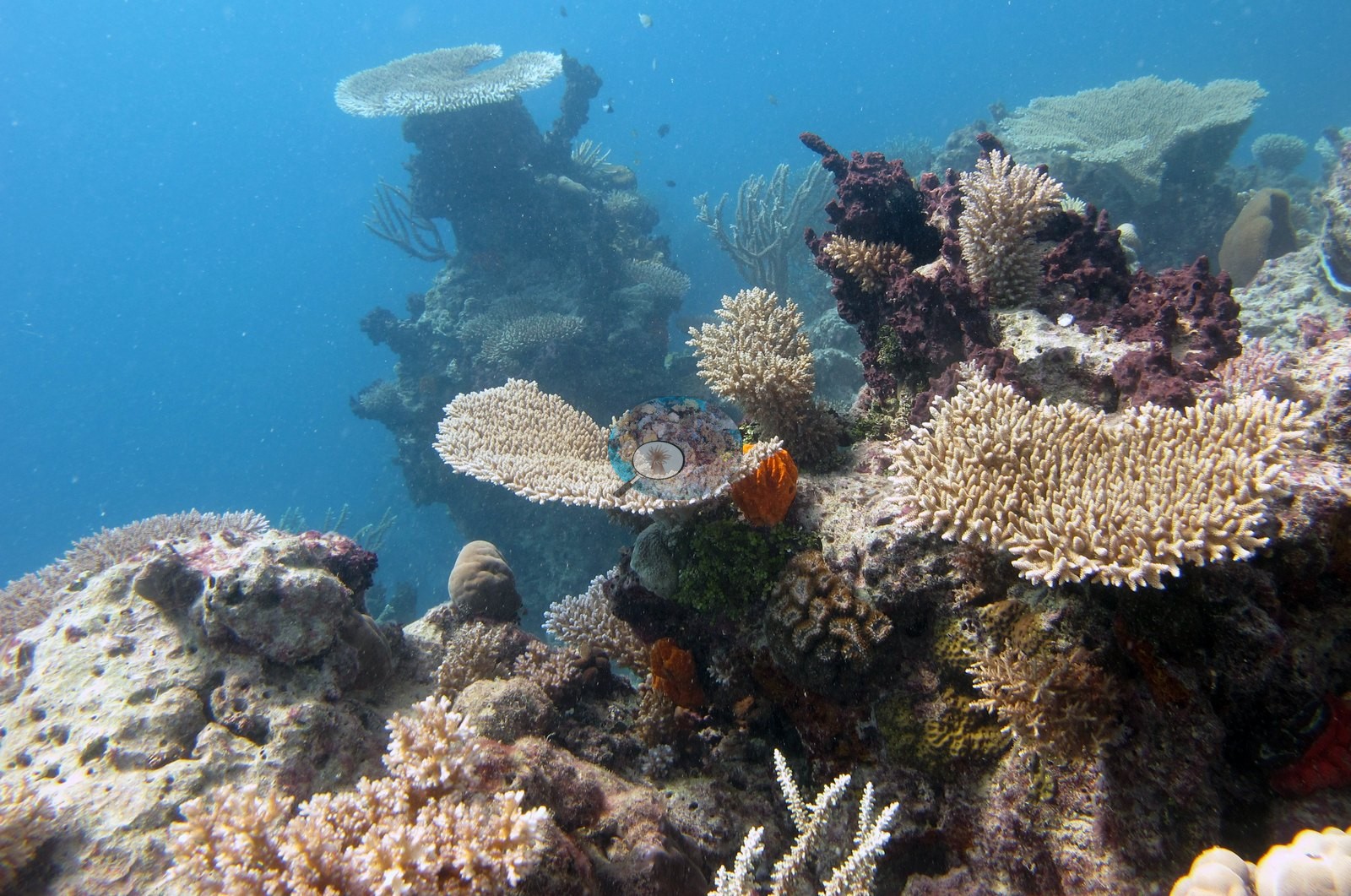
Around and beneath them are corymbose and staghorn Acropora, knobby cream and tan massive heads, pale digitate colonies, brown gorgonian whips standing off the structure, and dark maroon and orange encrusting sponges on the flanks. One wide frame looks across a stretch of pale, largely bare coralline pavement in the foreground toward tables at several levels, one silhouetted on a column top, with clear blue water behind (e.g., Image 42).
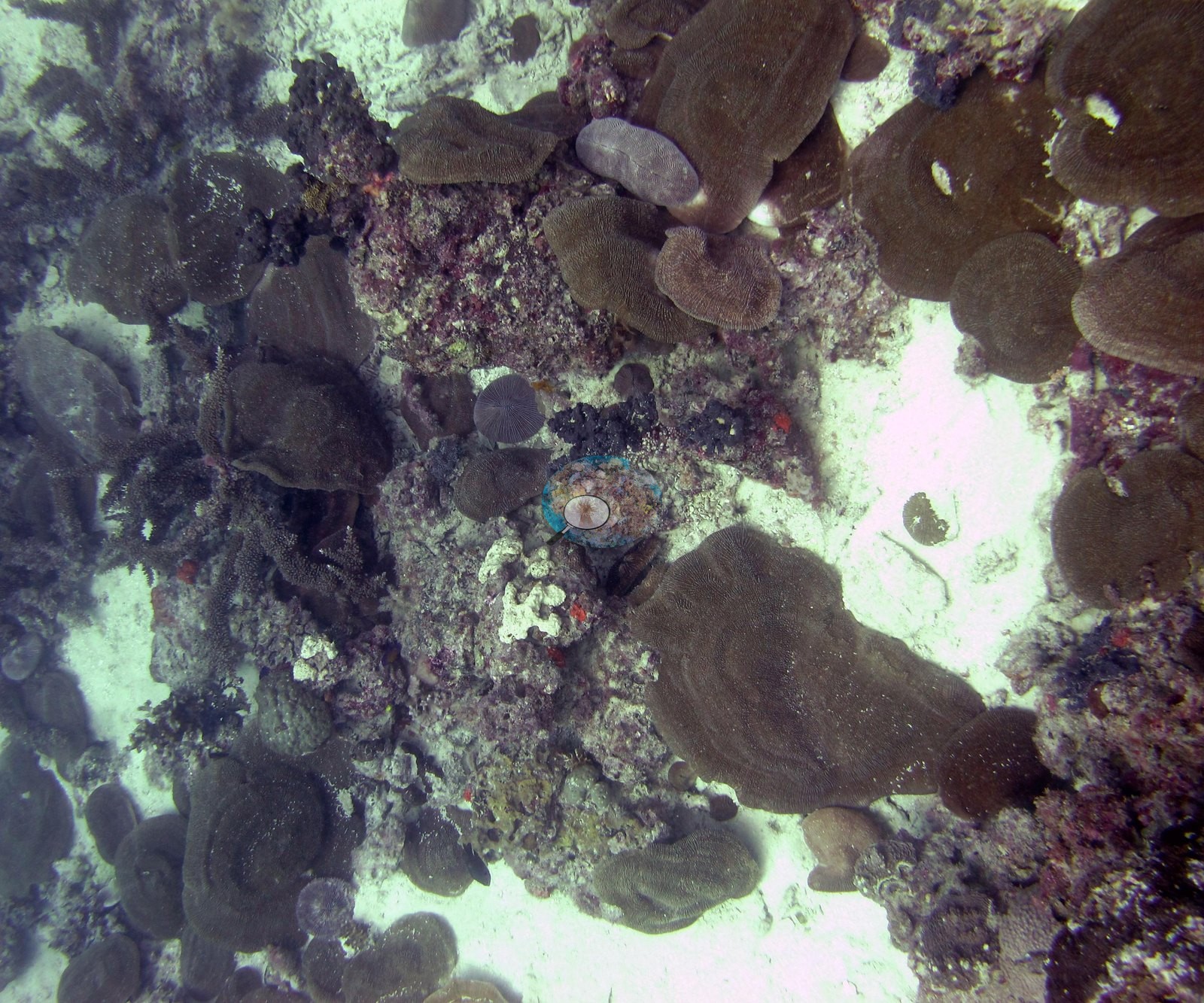
One mid-range frame looks down on a patch of substrate carrying a dense set of large brown and gray plating and free-living fungiid discs alongside pink coralline crusts and a bright sand patch — an assemblage the survey narrative for this site does not mention (e.g., Image 27).
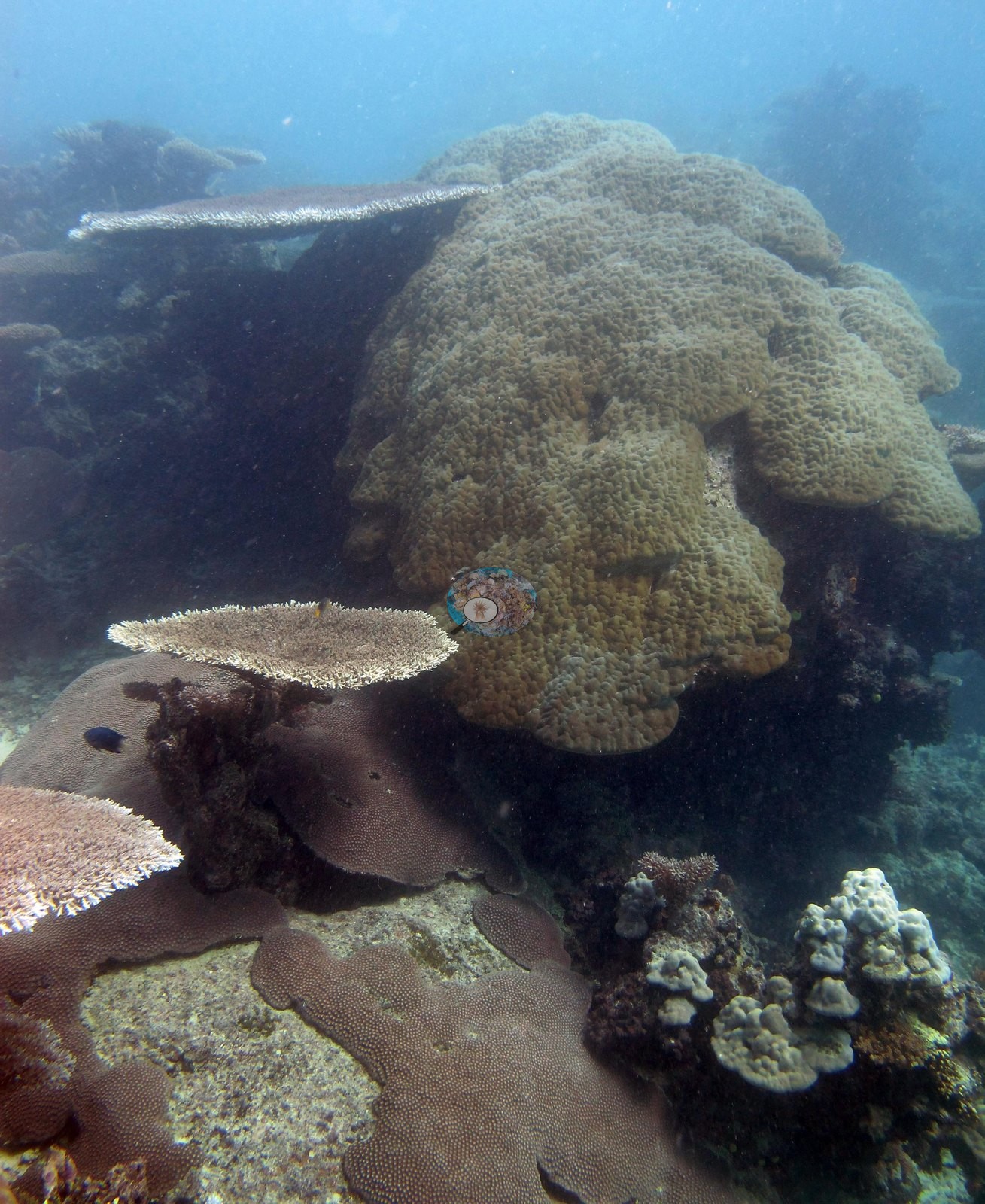
Water clarity varies markedly across the set and is a consistent theme: in one wide frame, which Anderson took to record the murky water, a very large massive head and a small table fade into green-gray water within a few meters, while another frame is clear blue — so visibility here is patchy rather than uniformly poor (e.g., Image 37, Image 42).
Coral cover
- Reference: Khaled bin Sultan Living Oceans Foundation, Global Reef Expedition (in situ transect)
- Coral cover 22%, from LOF-GRE in situ transects (the mean of all of this station's own transects in the expedition's per-transect benthic data) — a diver transect measurement, not a photographic or computer-vision estimate; the photographs here are qualitative only and the transect figure is the authoritative one.
- Transect mean 22 ± 3.3% SE (n = 5 transects; Living Oceans Foundation per-transect benthic data); the headline above is this all-transect mean.
Stressors
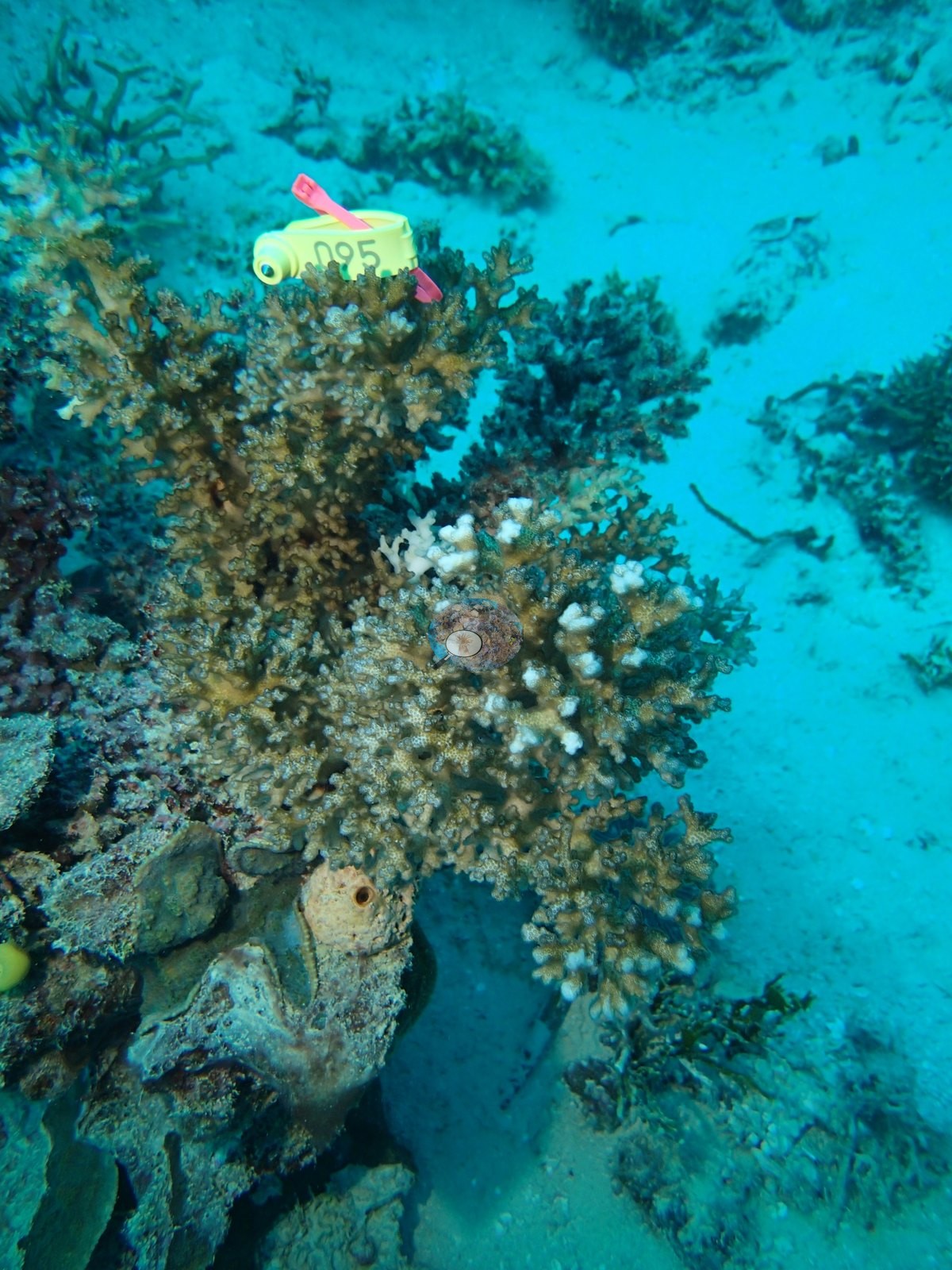
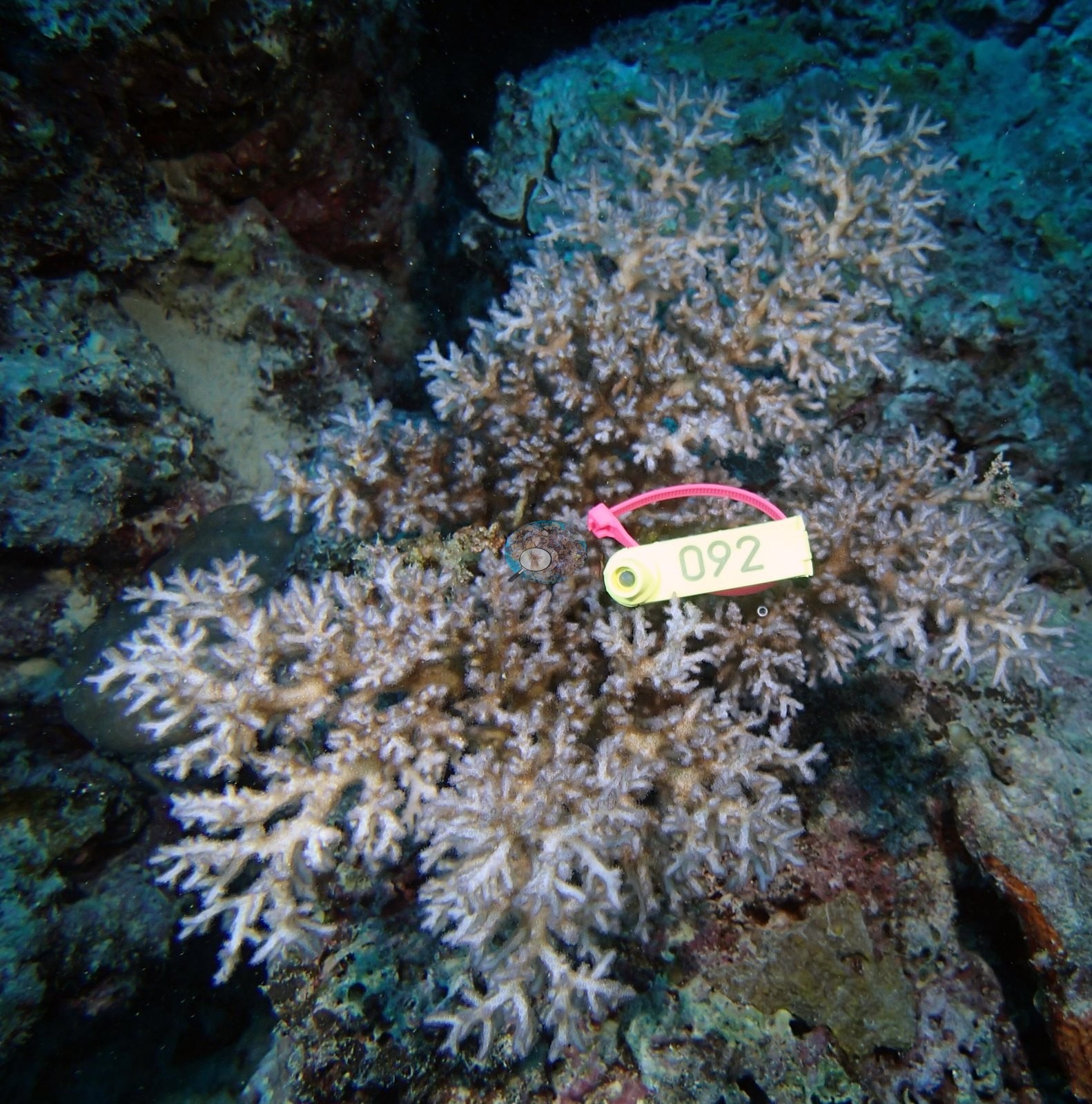
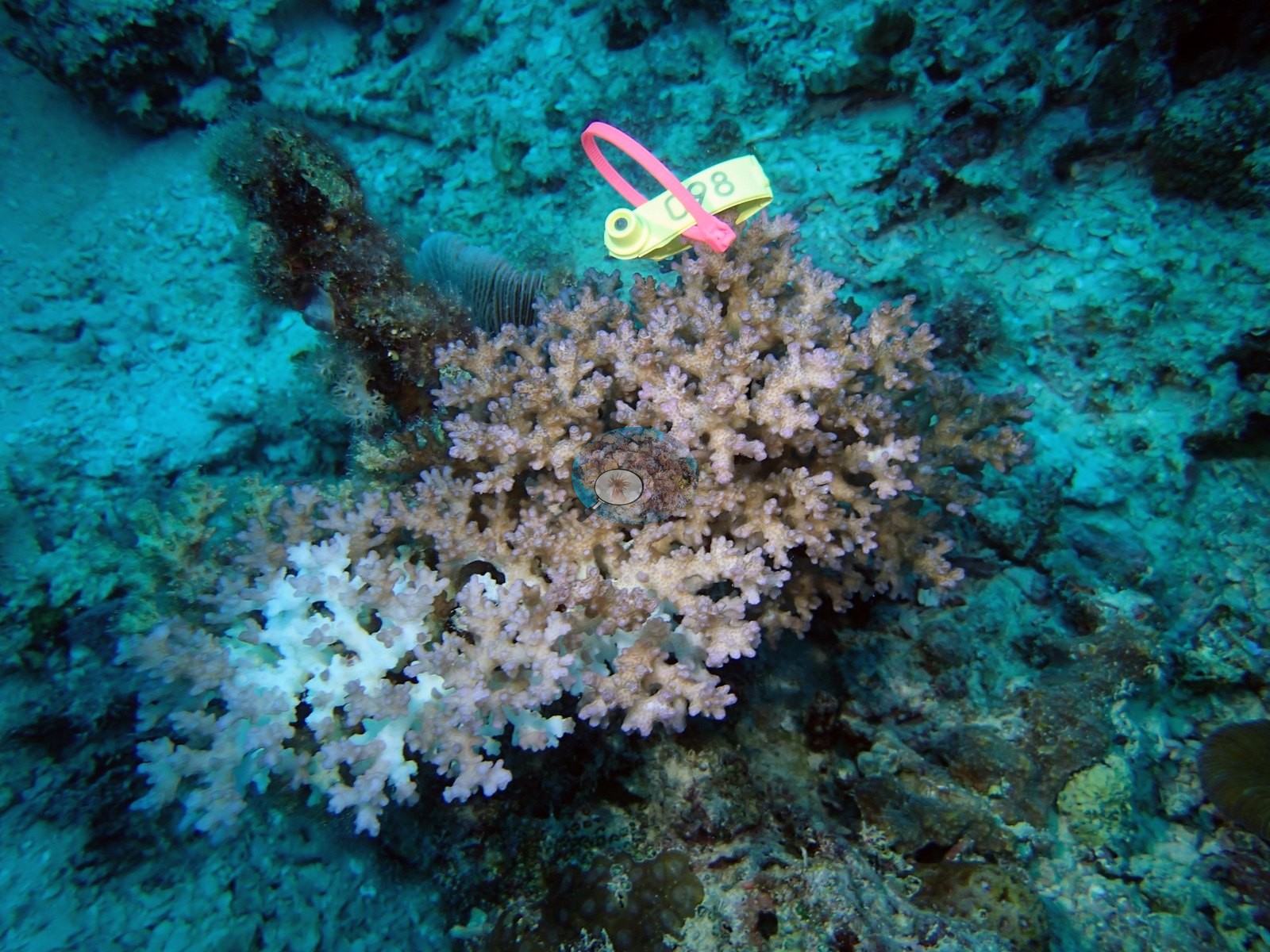
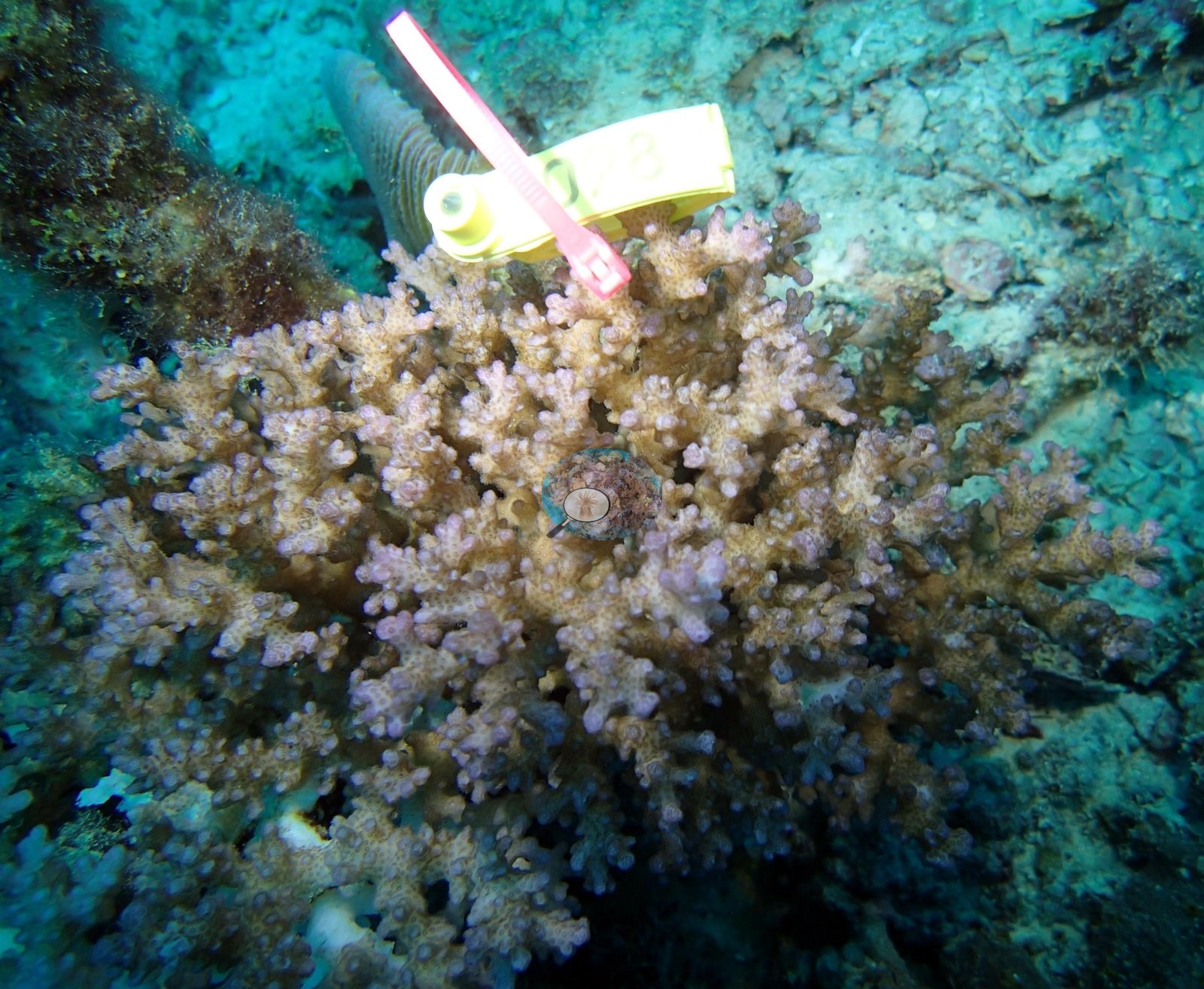
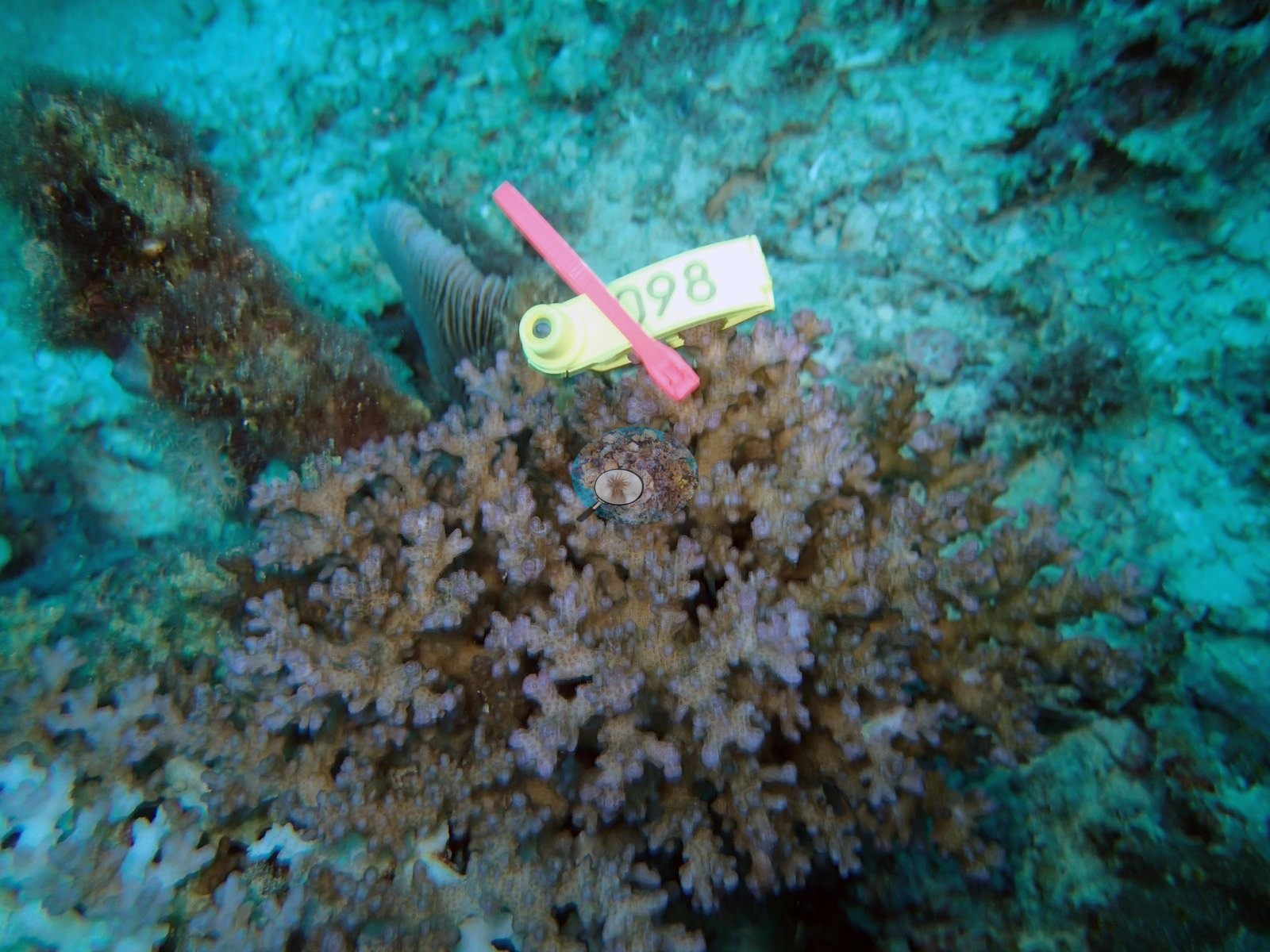
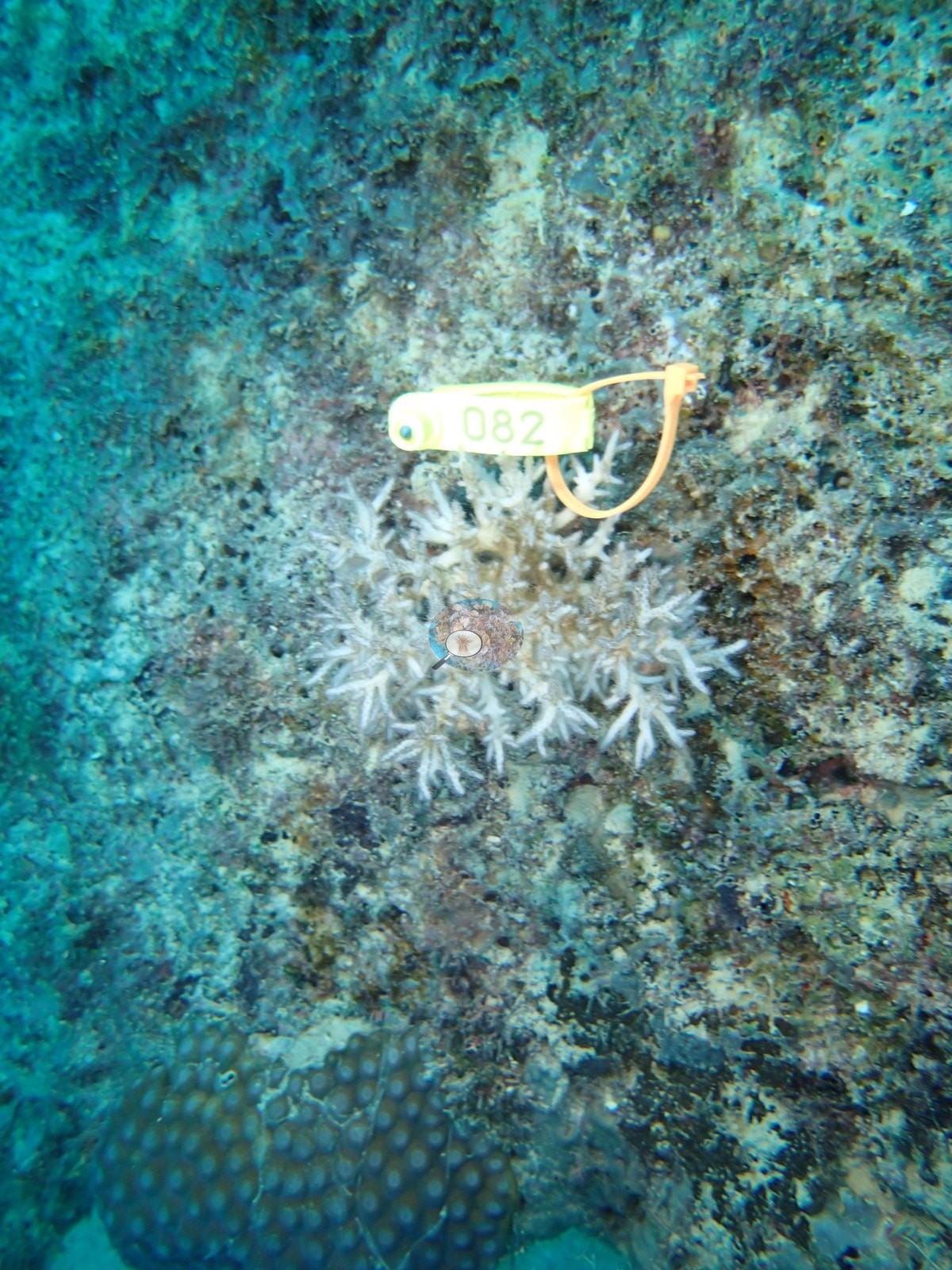
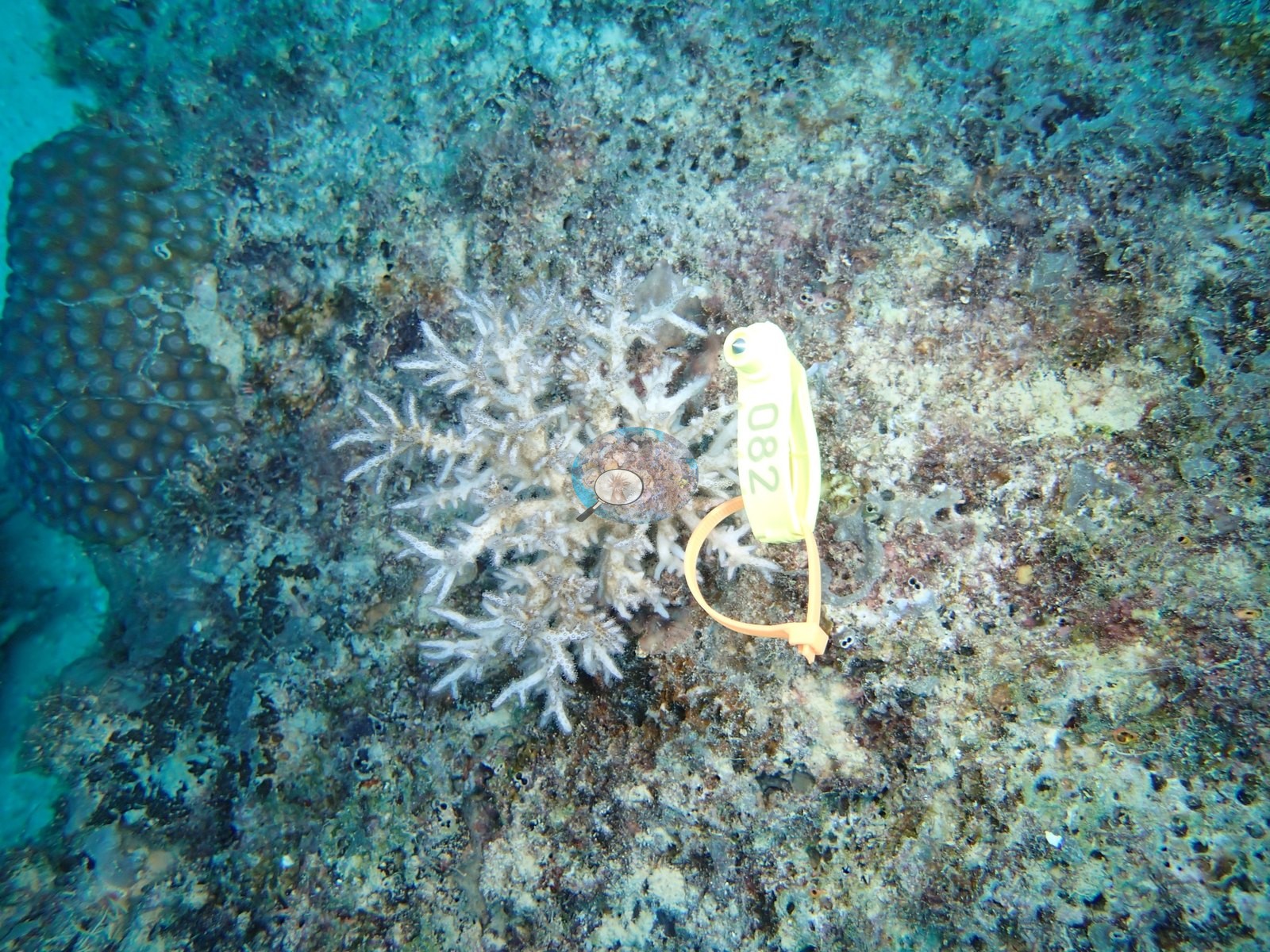
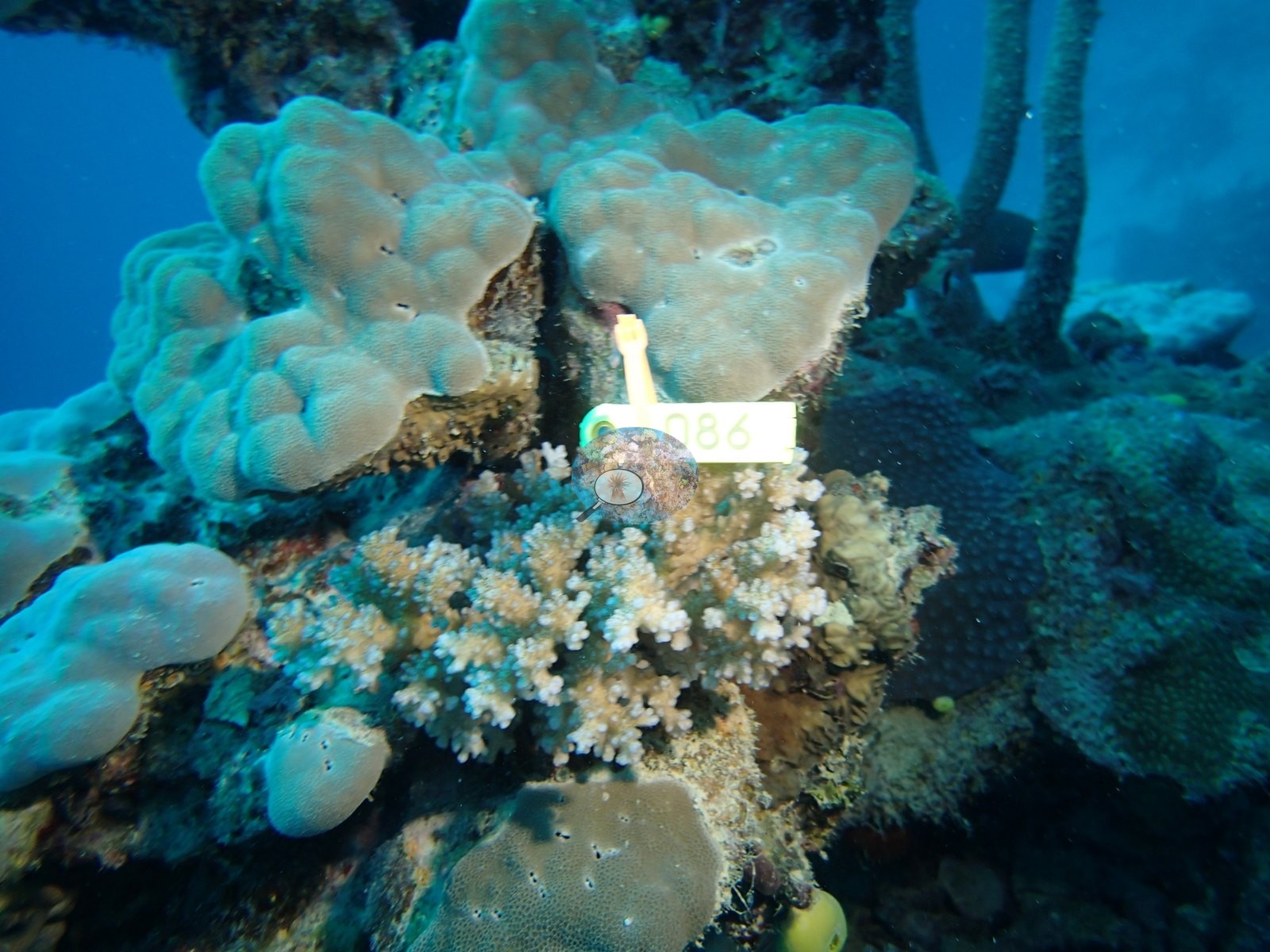
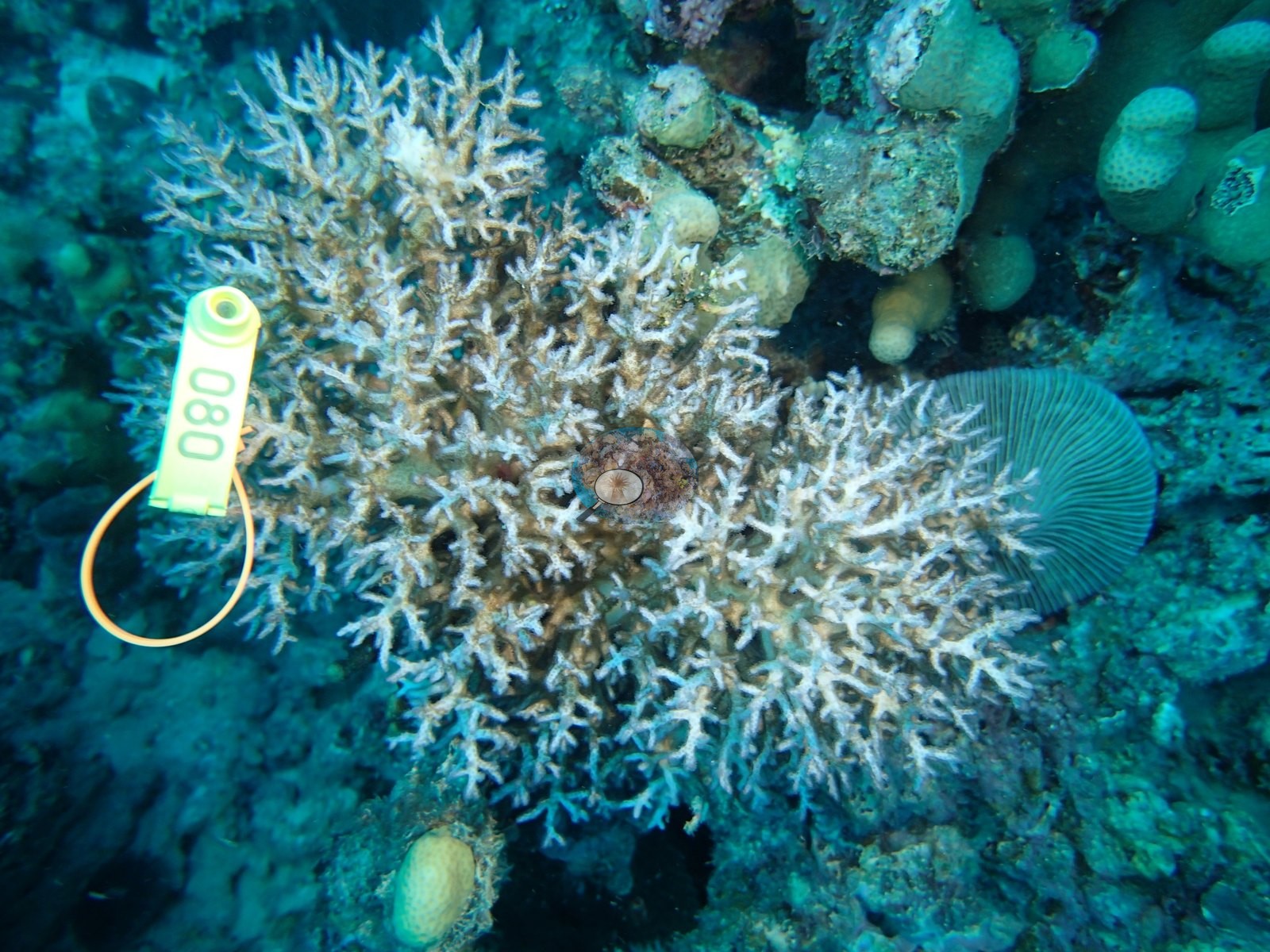
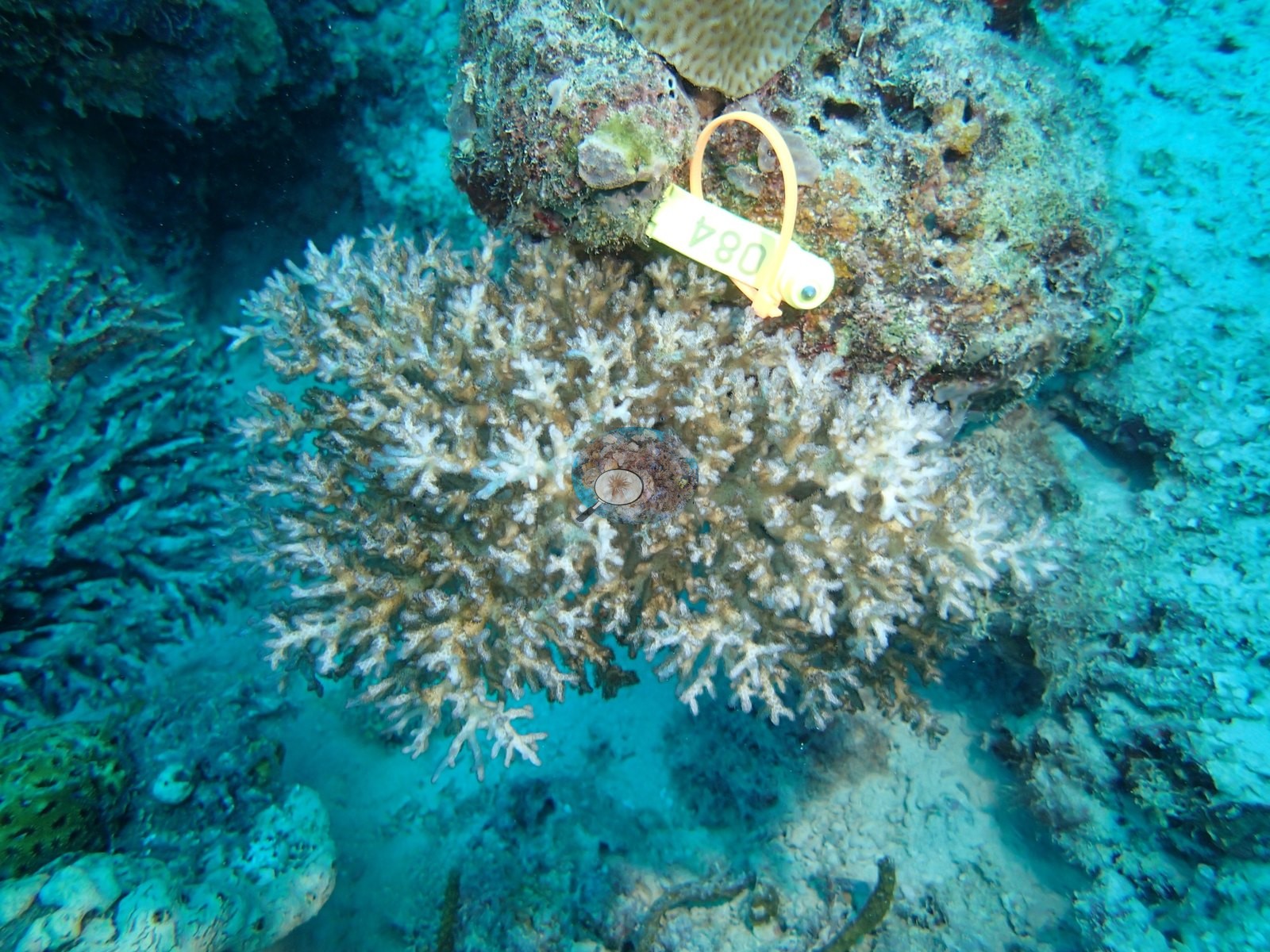
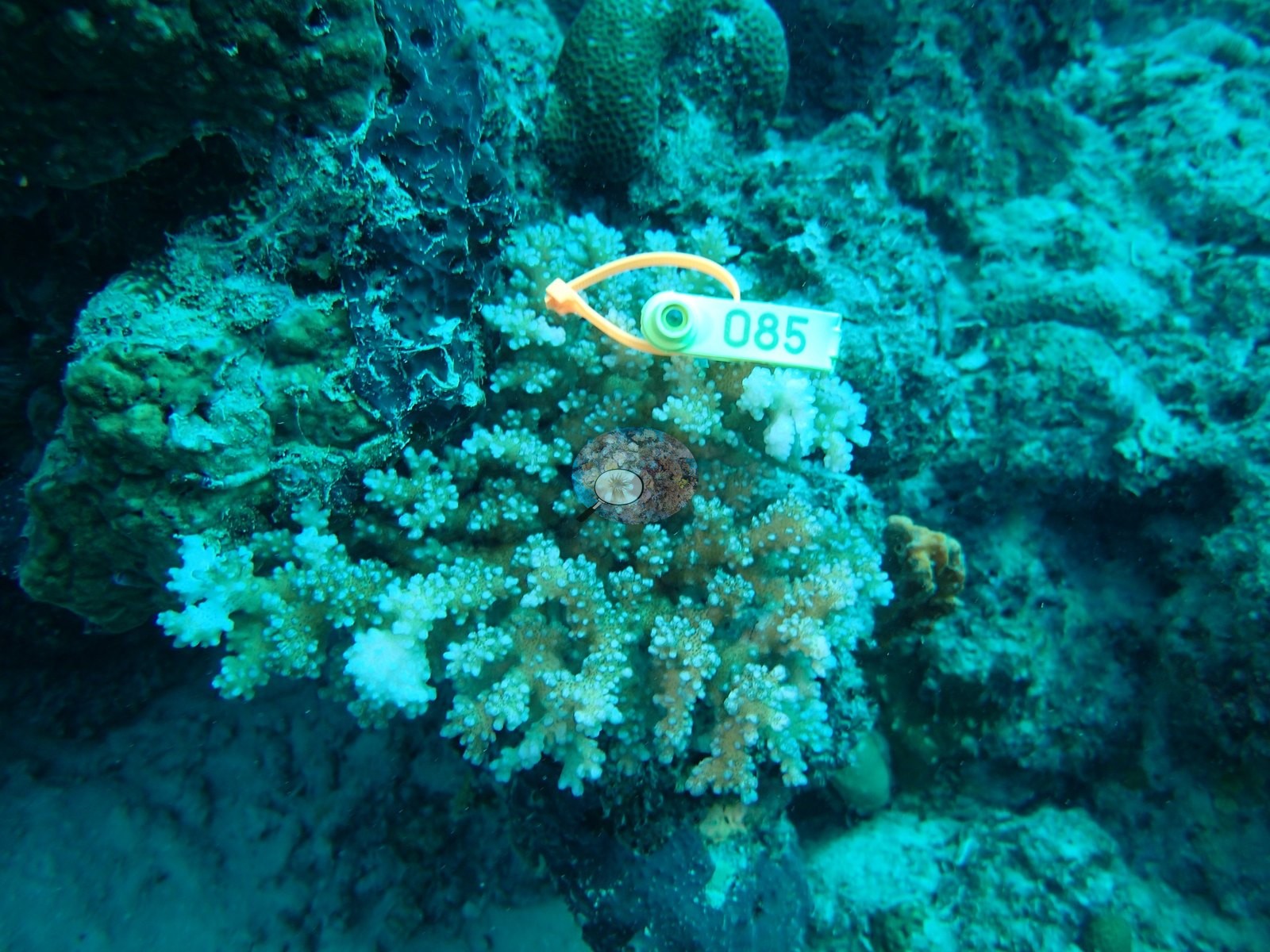
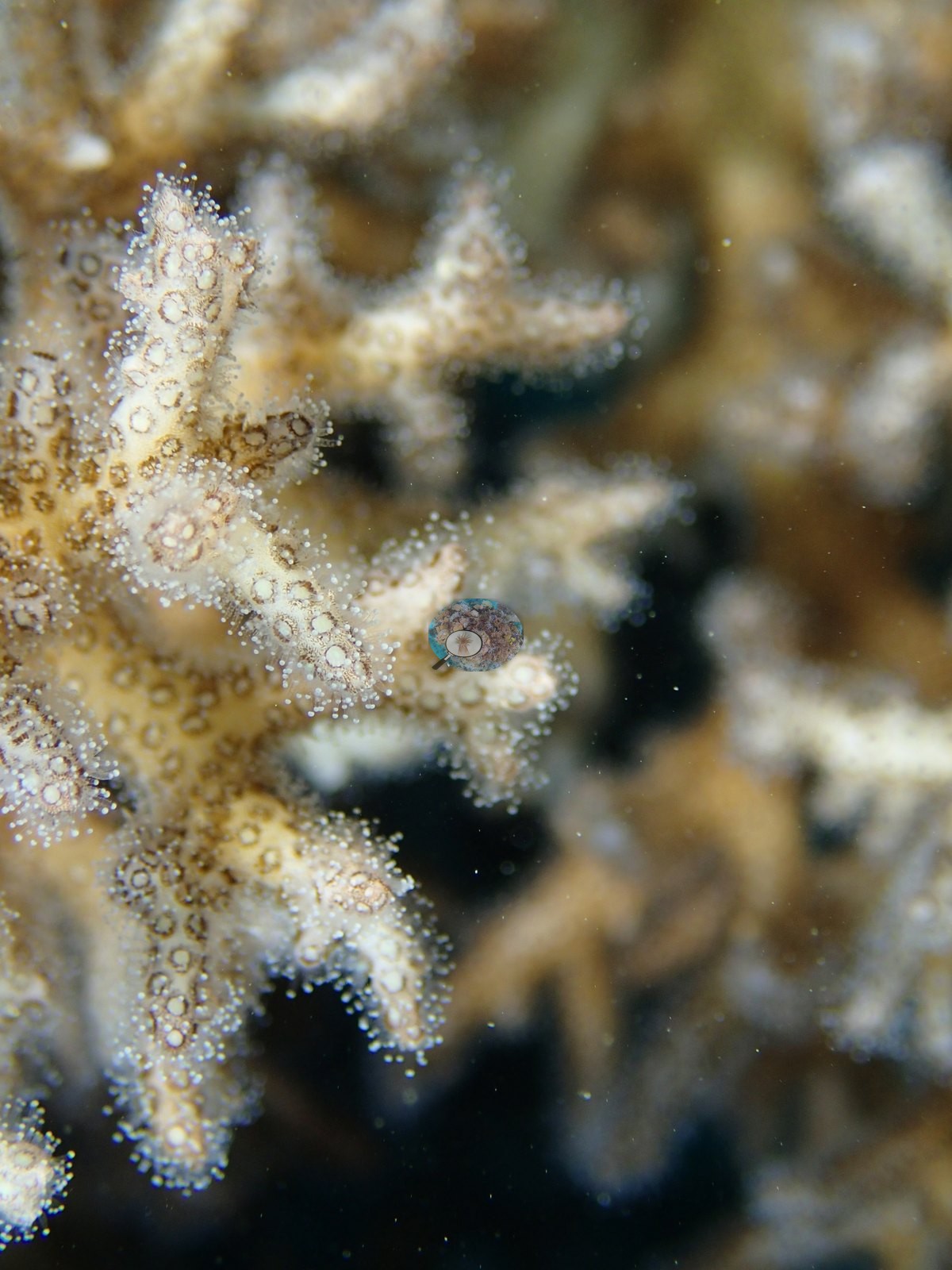
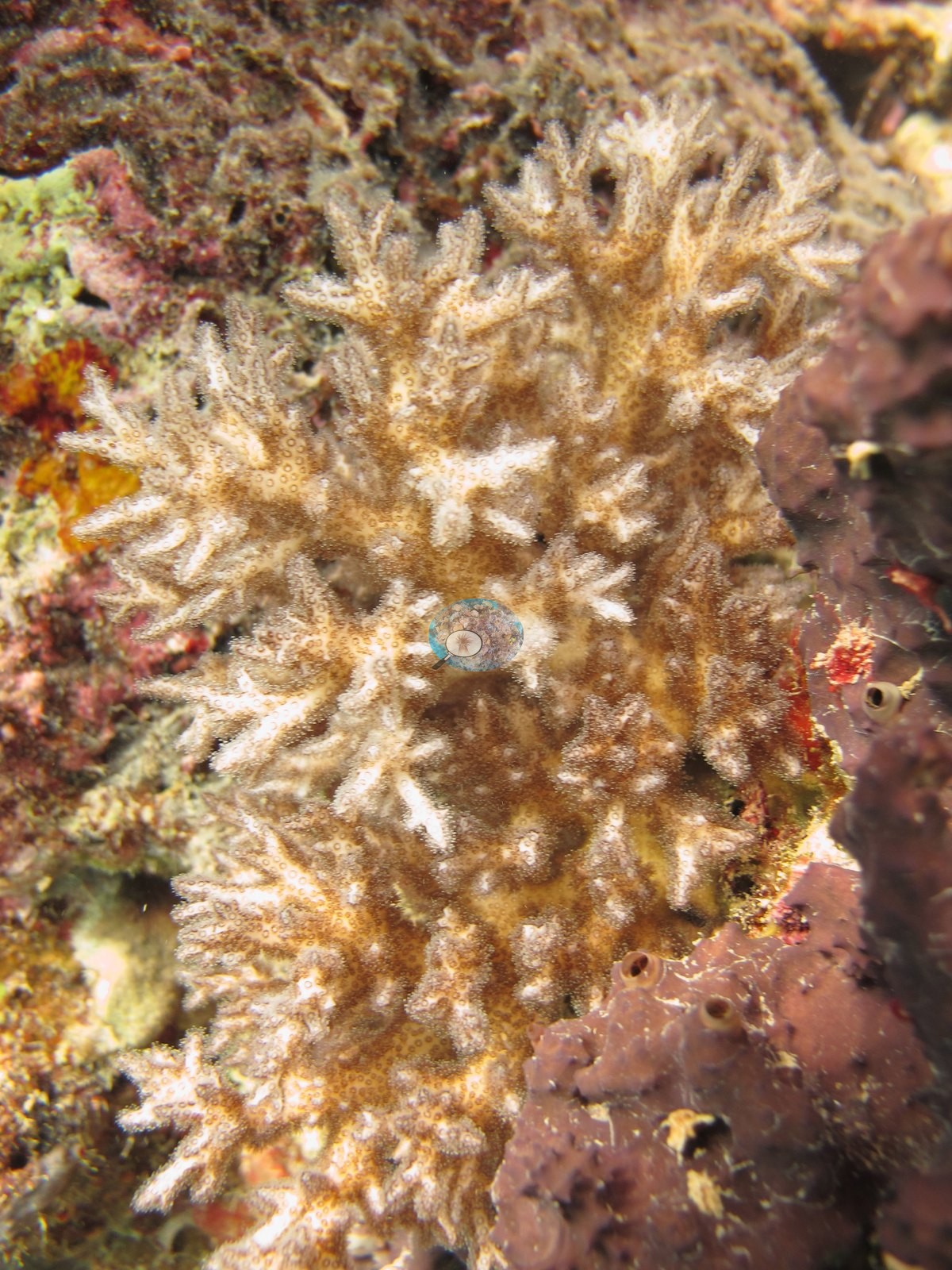
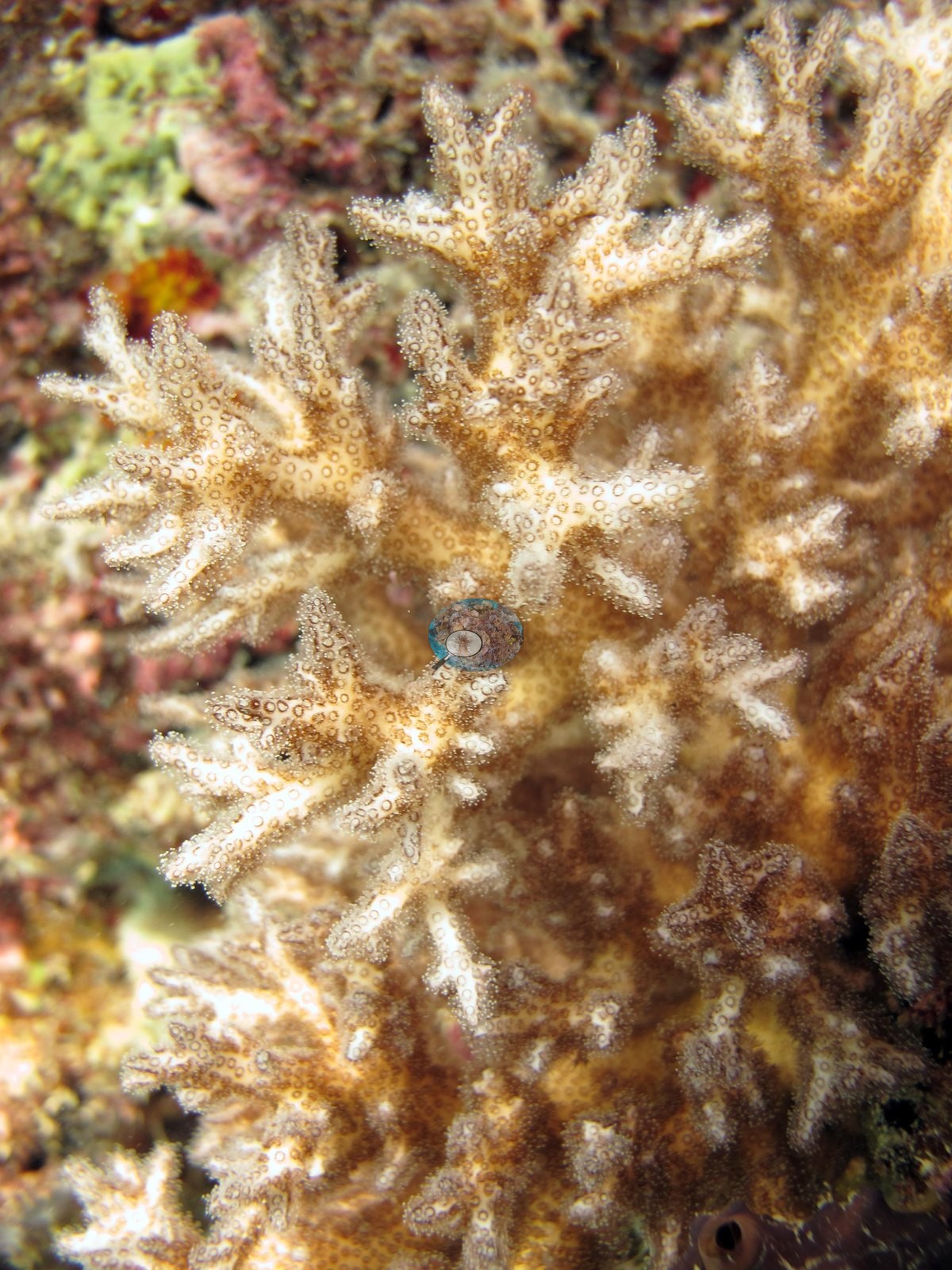
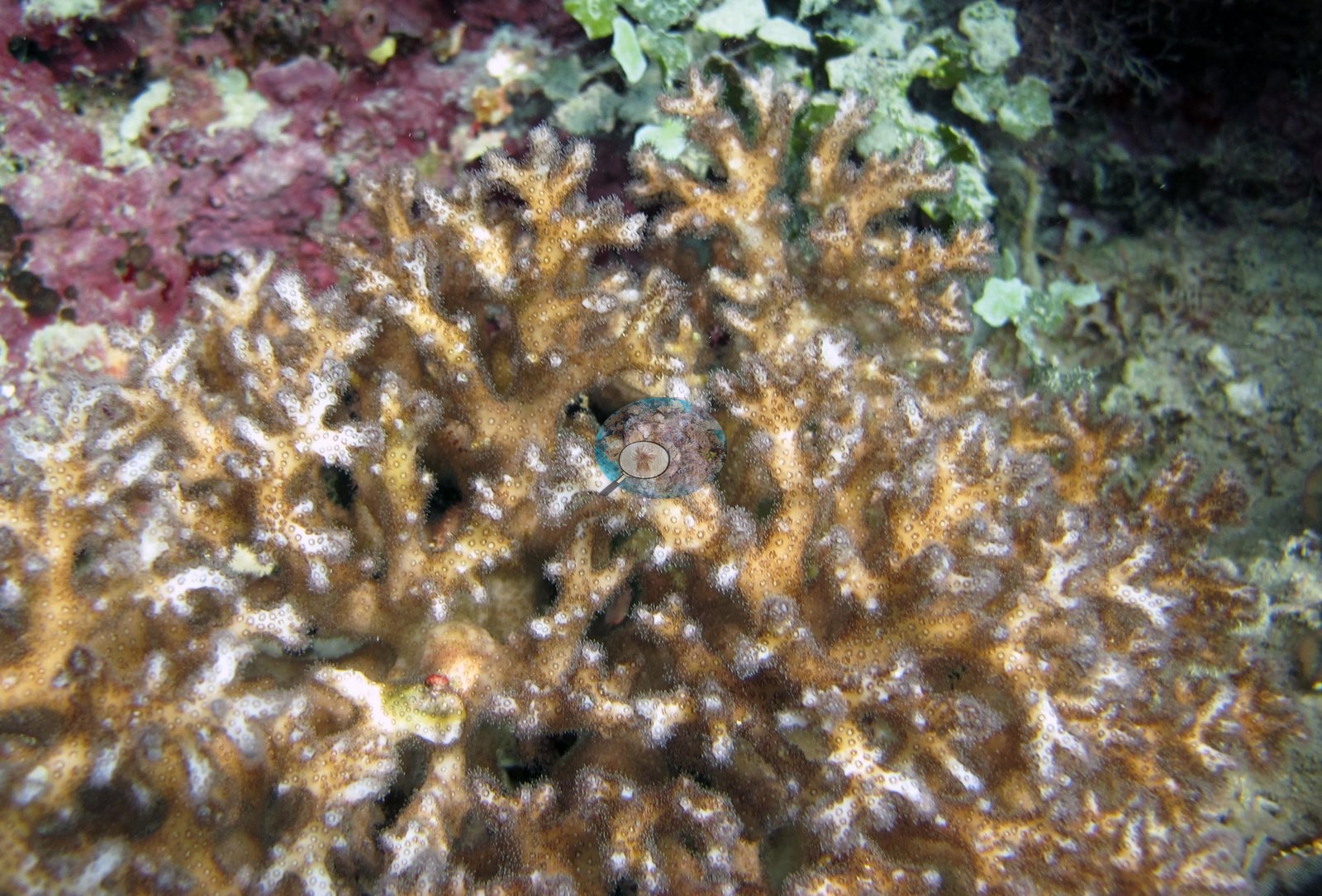
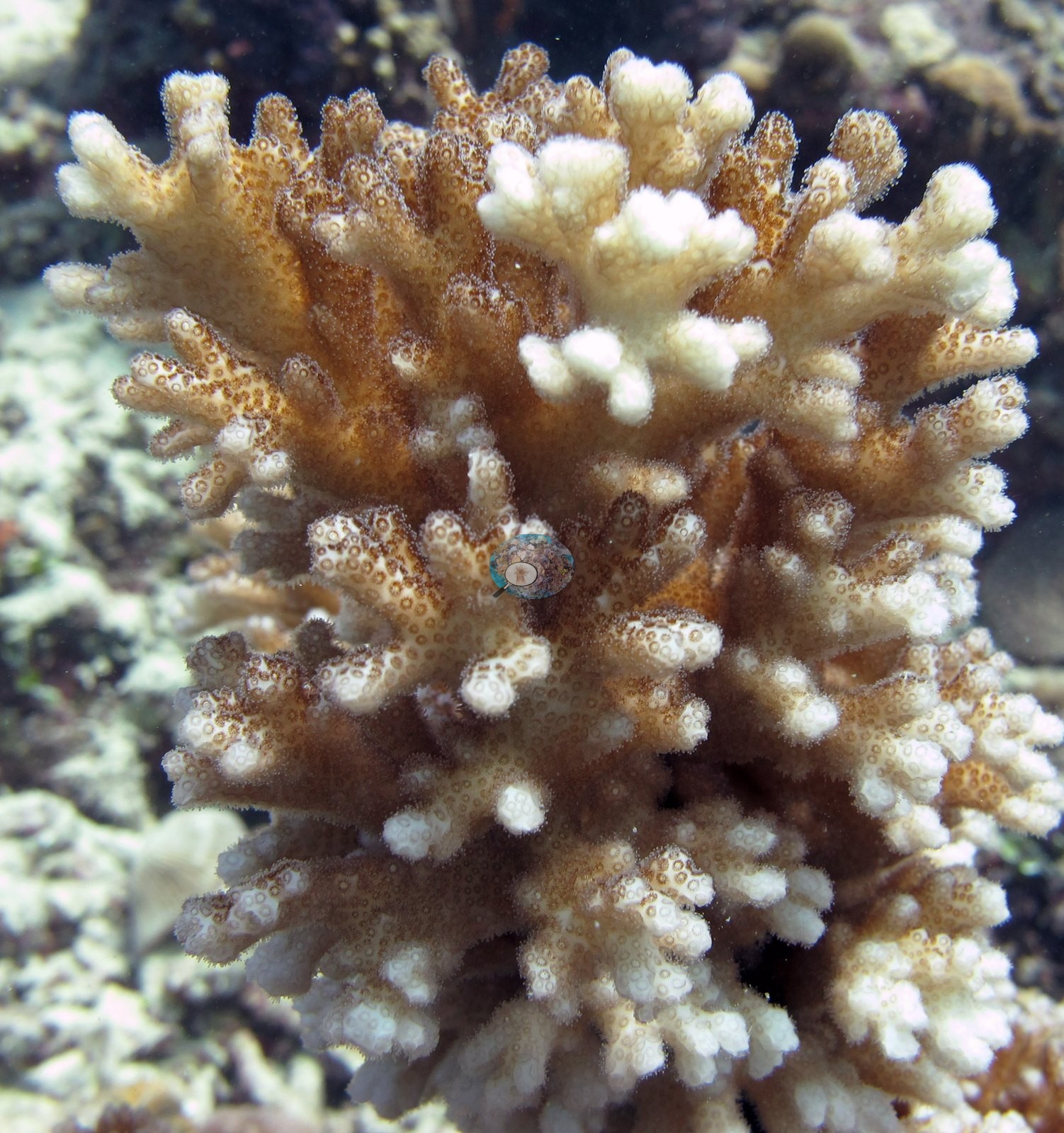
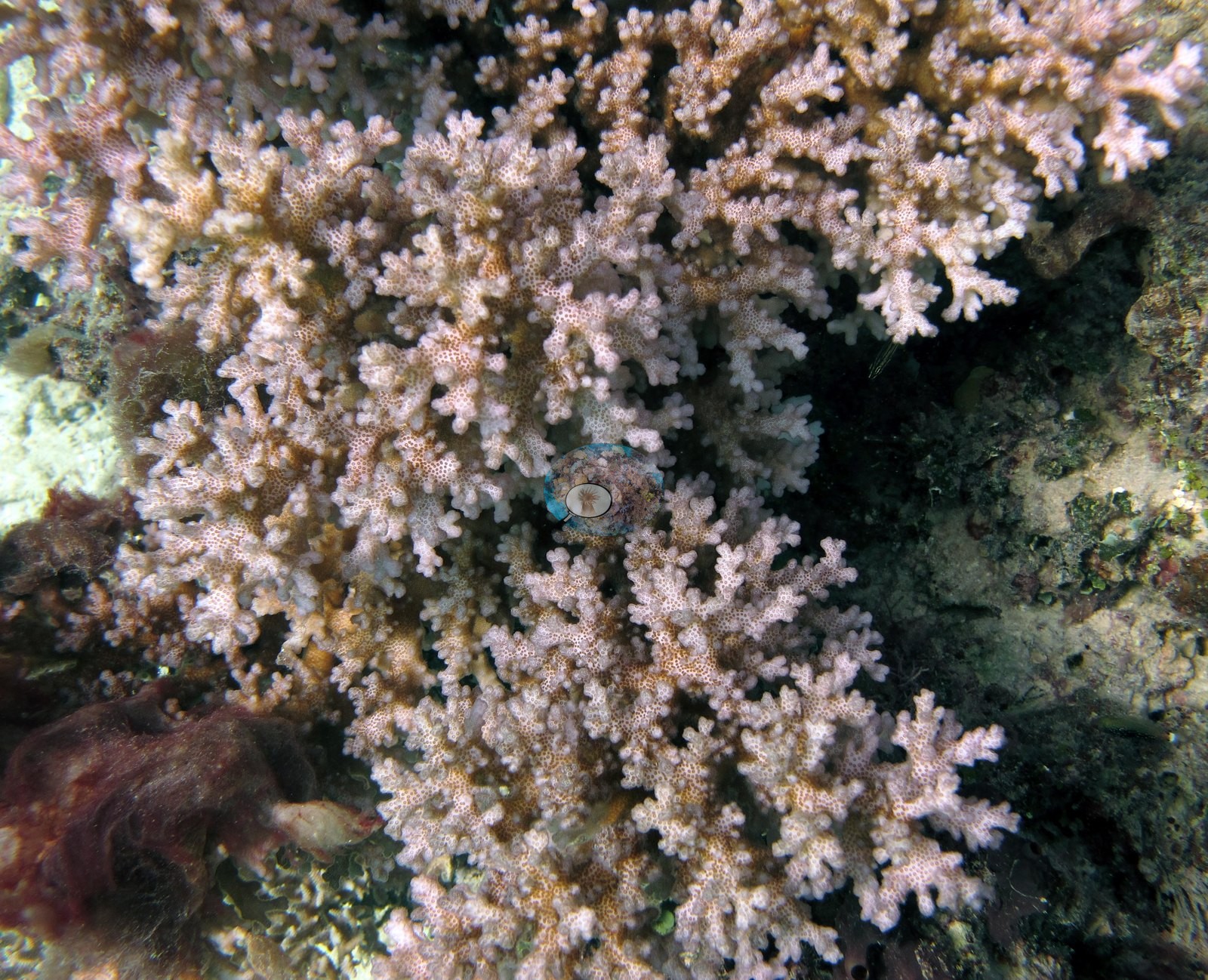
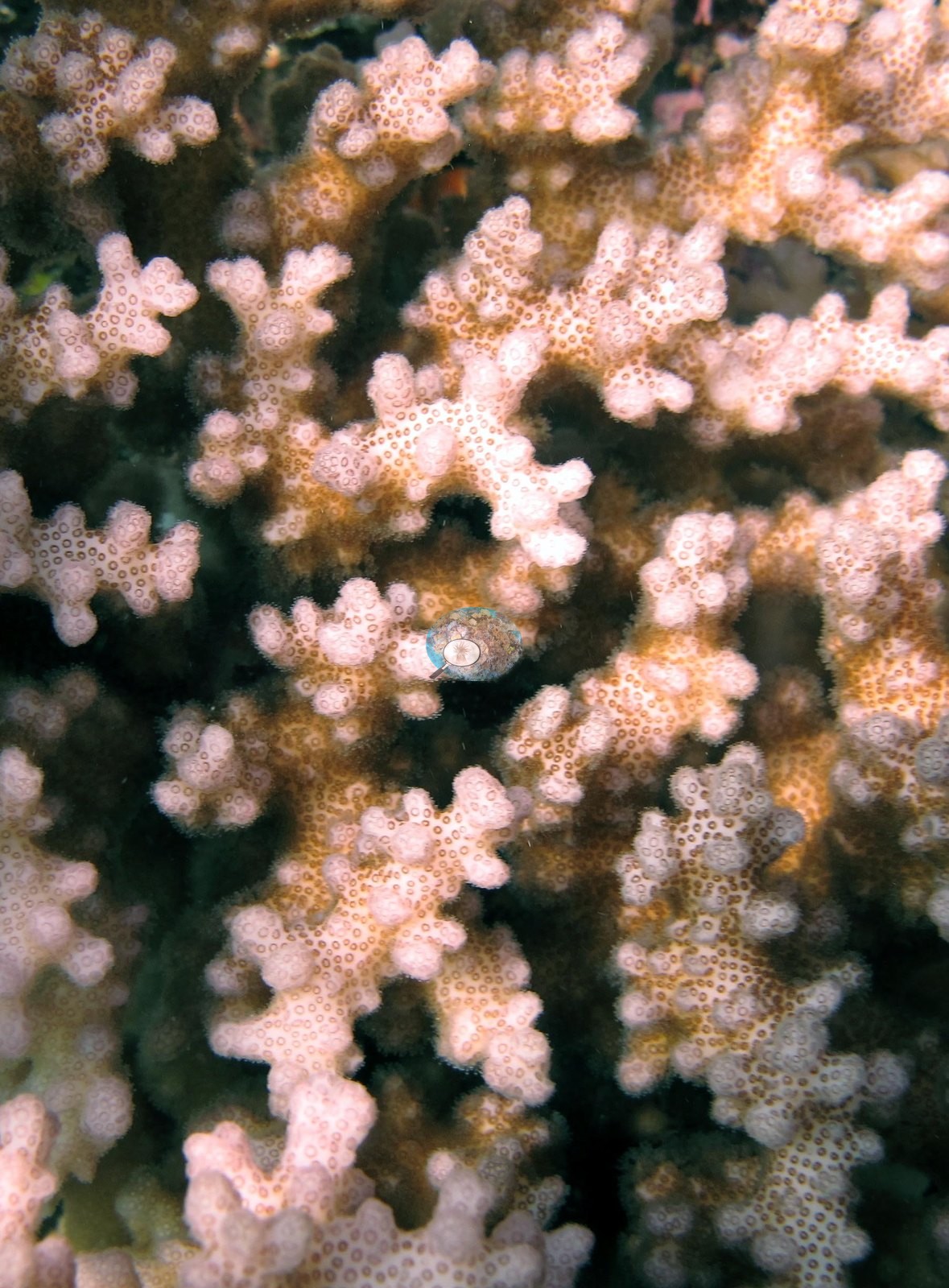
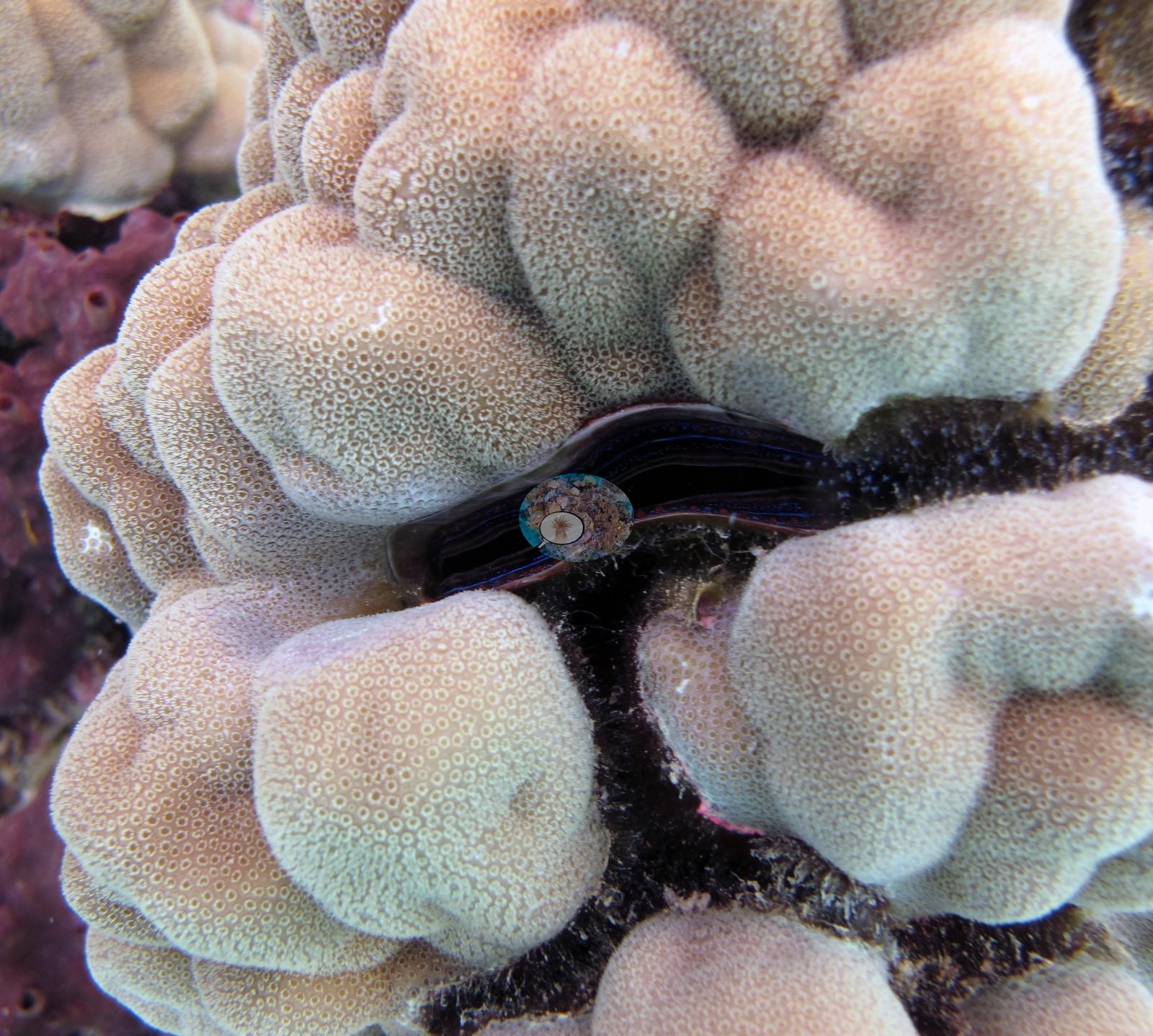
On condition, the frames are not silent: one of Anderson's own close frames, recorded as bleaching Pocillopora damicornis, shows a stark white Pocillopora colony in situ beside a smooth pale massive and a red-and-white striped mushroom coral, so bleaching was present at this site at the time of the dive — though a single close frame cannot say how widespread it was, and the wide frames are too distant and too green to settle site-level condition. Neither of the two coral colonies from this site with an outlier score was flagged as a physiological outlier (Mayfield et al. 2017, PLoS ONE). One tagged colony is fully bleached (e.g., Image 8).
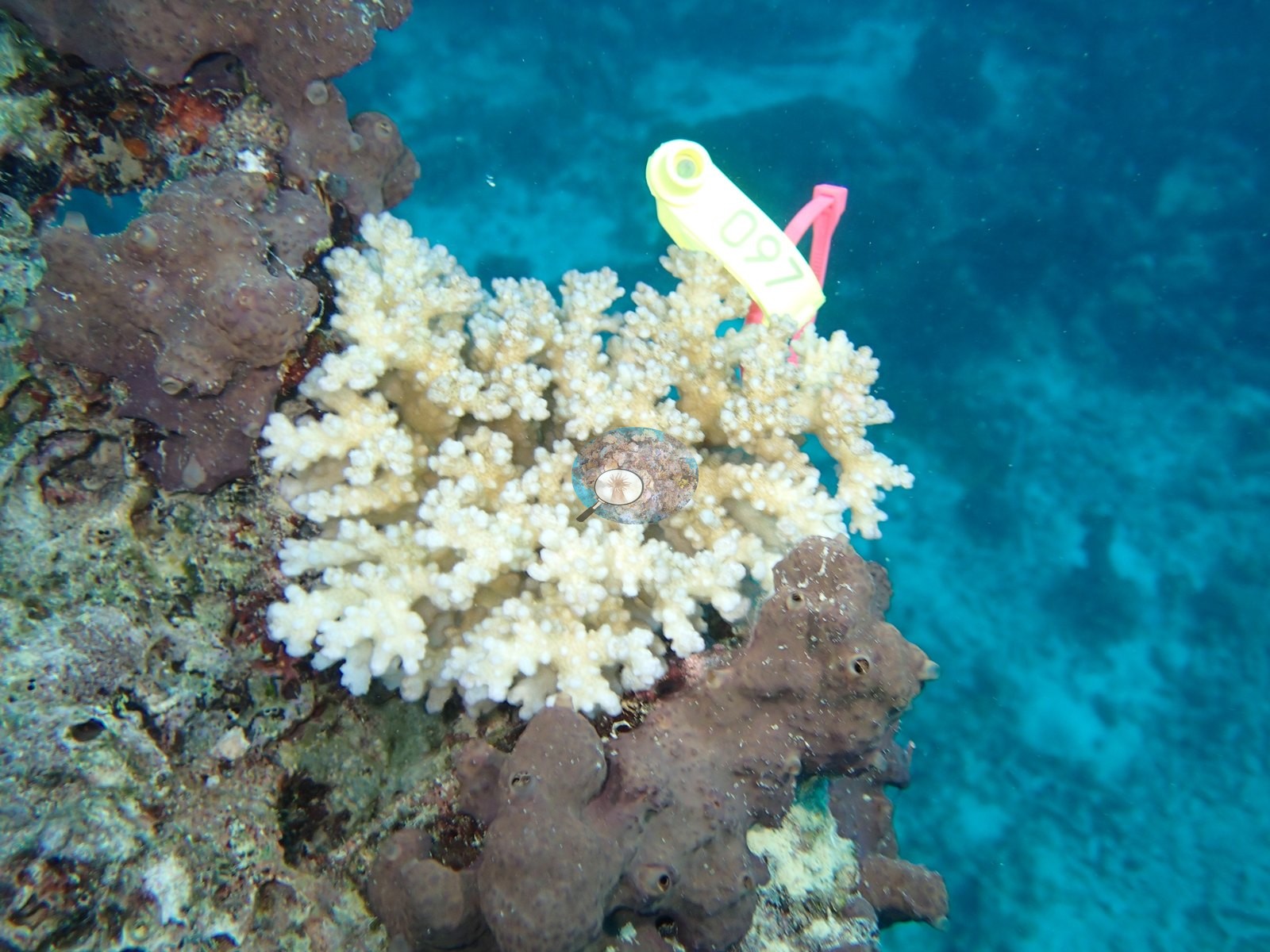
The Living Oceans Foundation transects here recorded 9.6% cyanobacteria and no recently dead coral.
Fish and other fauna
Fish are present but not abundant in frame: shoals of electric-blue and blue-green chromis sit inside and above the corymbose Acropora in two frames, with scattered damselfish over the pinnacle top.
Comparisons with other data
Apart from the Living Oceans Foundation survey shown here, we found no other surveys at this site as of 2026. If you would like to share yours, please email us.
Other notes
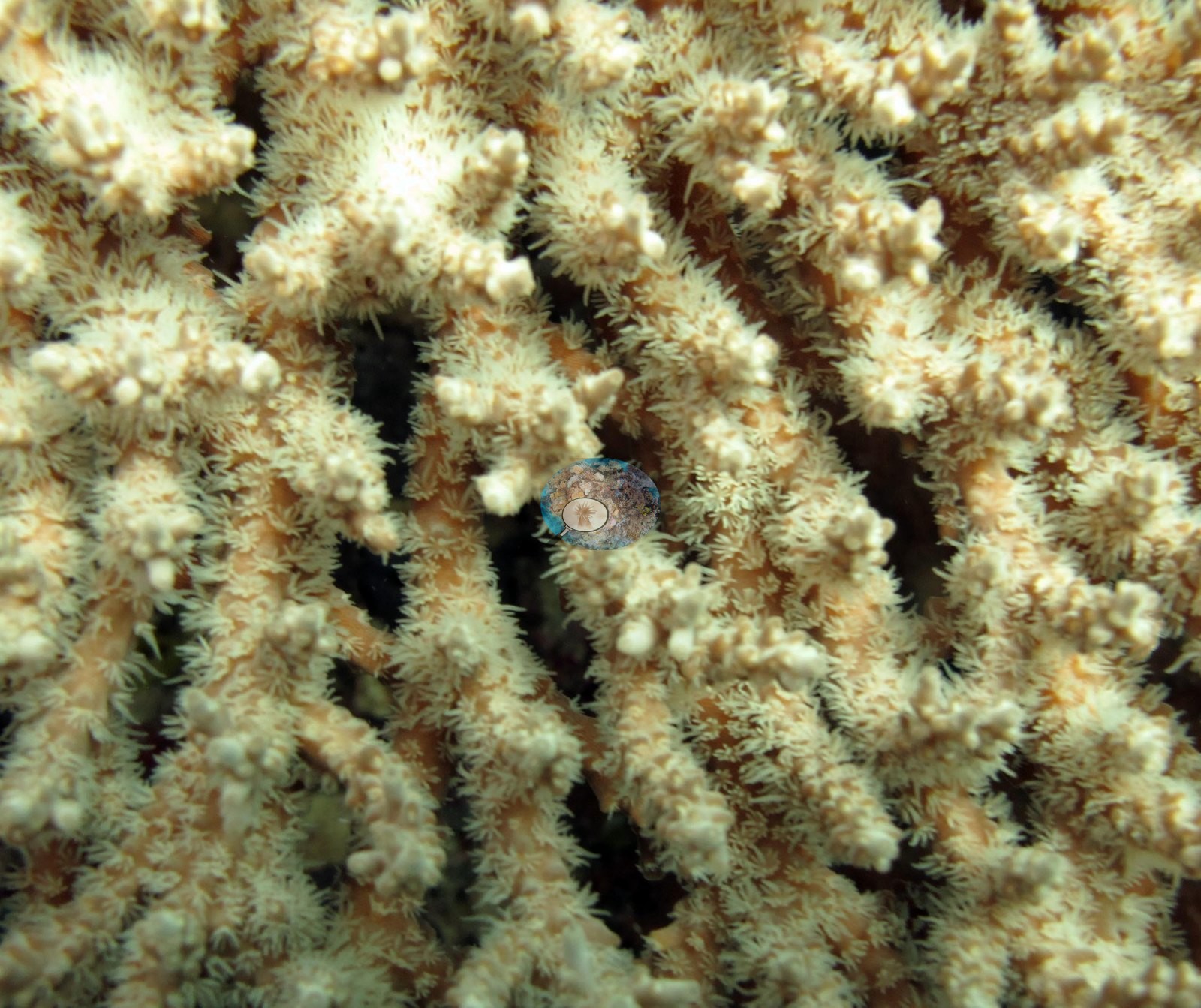
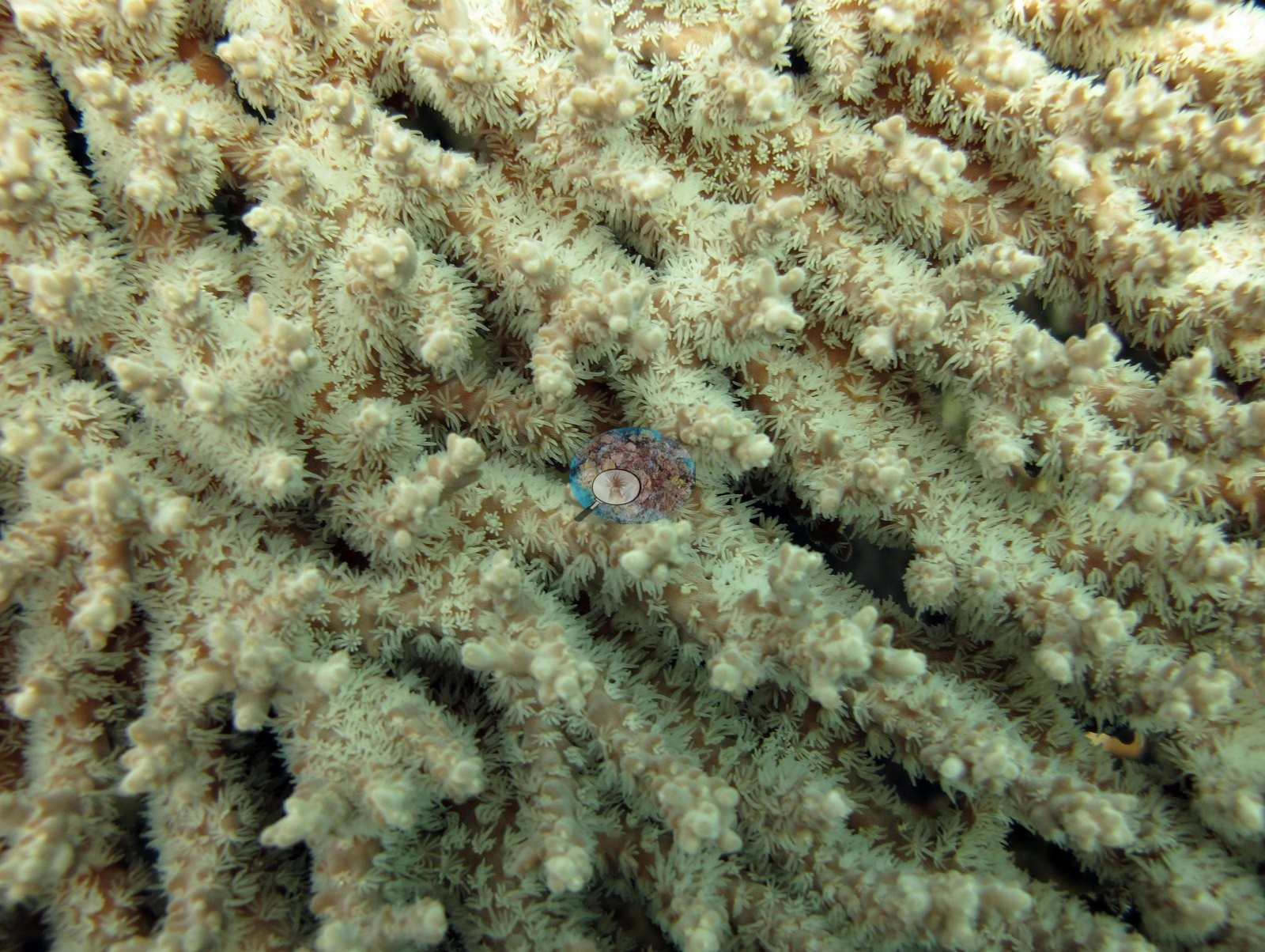
Photo review of 18 staged habitat frames plus 26 close-ups of tagged probe colonies (Moala, Lau Archipelago, 10 Jun 2013); one of the 44 is a repeat exposure, so 43 frames are on file. Only five of the staged habitat frames are genuinely wide reef views and two more are useful mid-range views; the other eleven are colony portraits and macros, and the account on this page is written from the seven that show habitat. Those frames do corroborate the site's account of a lagoonal pinnacle. Colony sizes cannot be measured from these frames: only one (the tabular Acropora with the diver) contains anything like a scale reference, and no quadrat or transect line appears anywhere in the set. Three Pocillopora colonies were sampled at this site (colonies 45, 46, and 47); Anderson's field records label 45 and 47 P. verrucosa and 46 P. damicornis.
Survey team's site notes: The tops of the pinnacles are coral-dominated and characterized by reef derived debris in the sand and rubble size fractions. Isolated coral pinnacles rise from the lagoon-floor. Pinnacles are usually circular in shape, but may elongate along hydrodynamic gradients. Relatively high coral cover in the shallows on top of the pinnacles. Tabular and branching acroporids were common. Along the sides of the pinnacles, Echinophyllia and Echinopora plates were common. Also along the sides of pinnacles the water visibility became poor with increased sedimentation. Also encrusting sponges and cyanobacteria were common at deeper depths.
Data & links
- Download benthic survey data (CSV) ↗
- Download all LOF-GRE data (933 sites) ↗
- Photo portfolio ↗
- Coral Reef Diagnostics page for this area ↗
All images from Coral Reef Diagnostics. Data are from the Khaled bin Sultan Living Oceans Foundation Global Reef Expedition and Coral Reef Diagnostics.
 © Coral Reef Diagnostics.