
Part of the regional summaries: Fiji - Moala, Fiji - Moala Group (Moala / Totoya / Matuku), and Fiji - Lau
More info
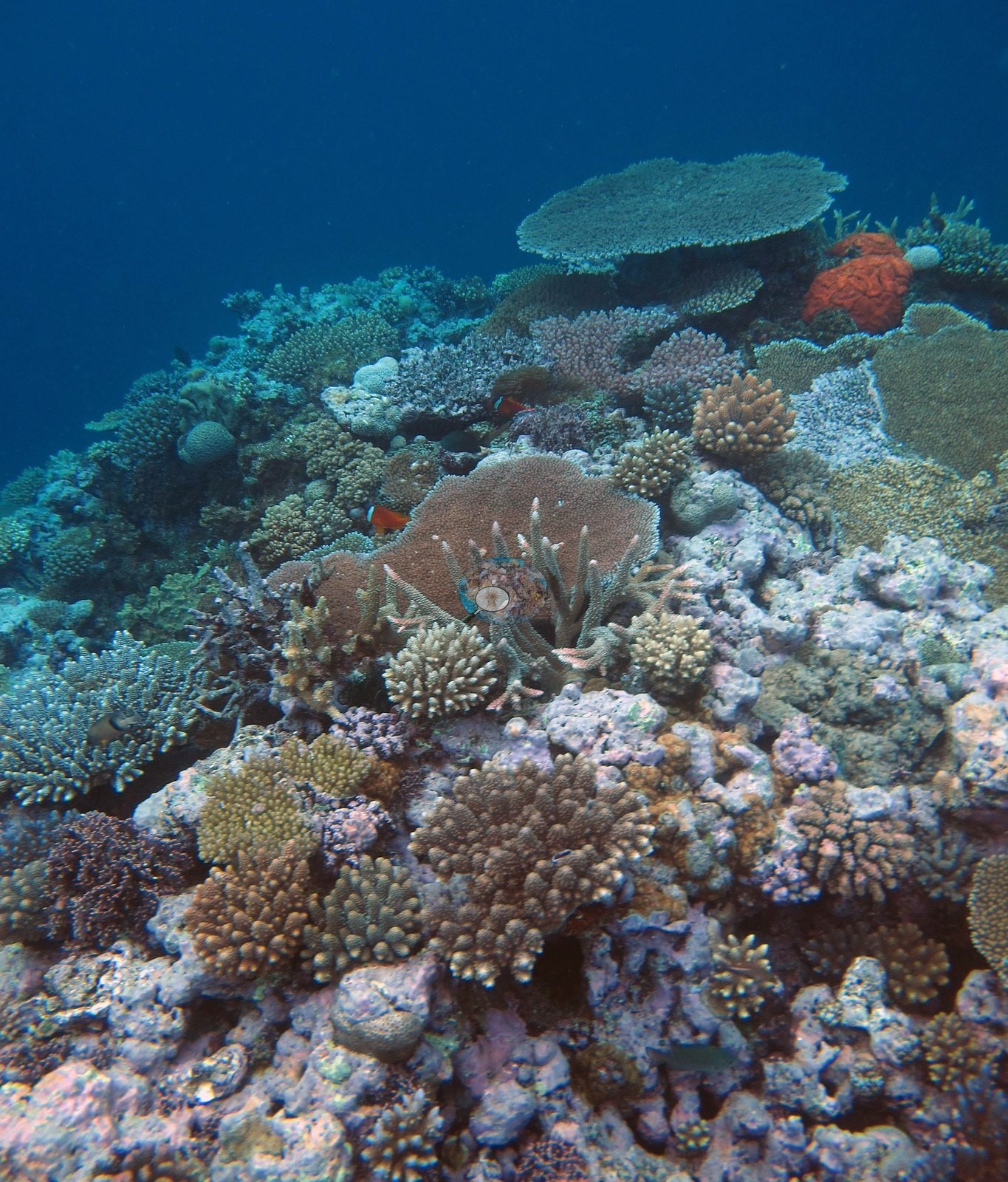
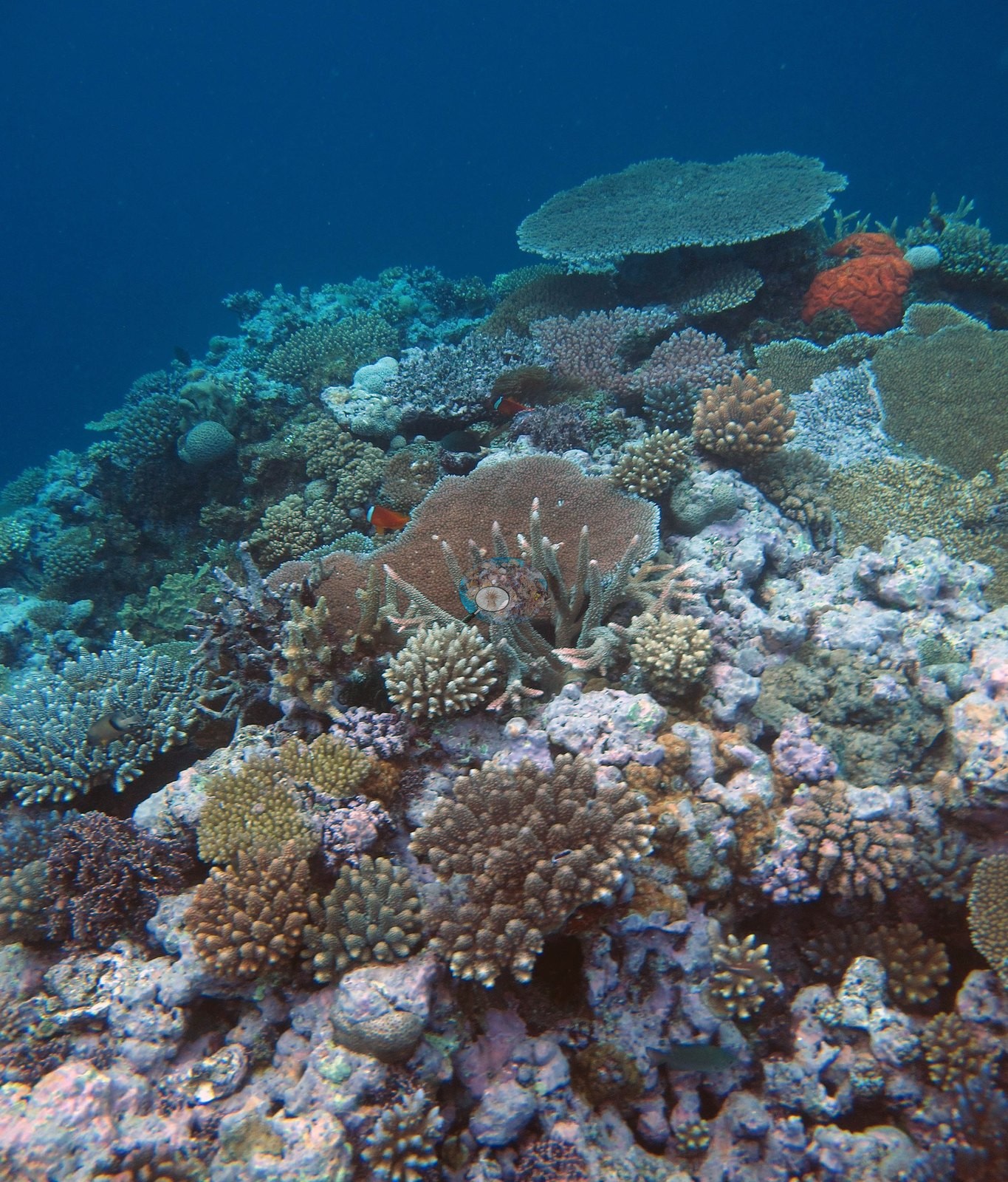
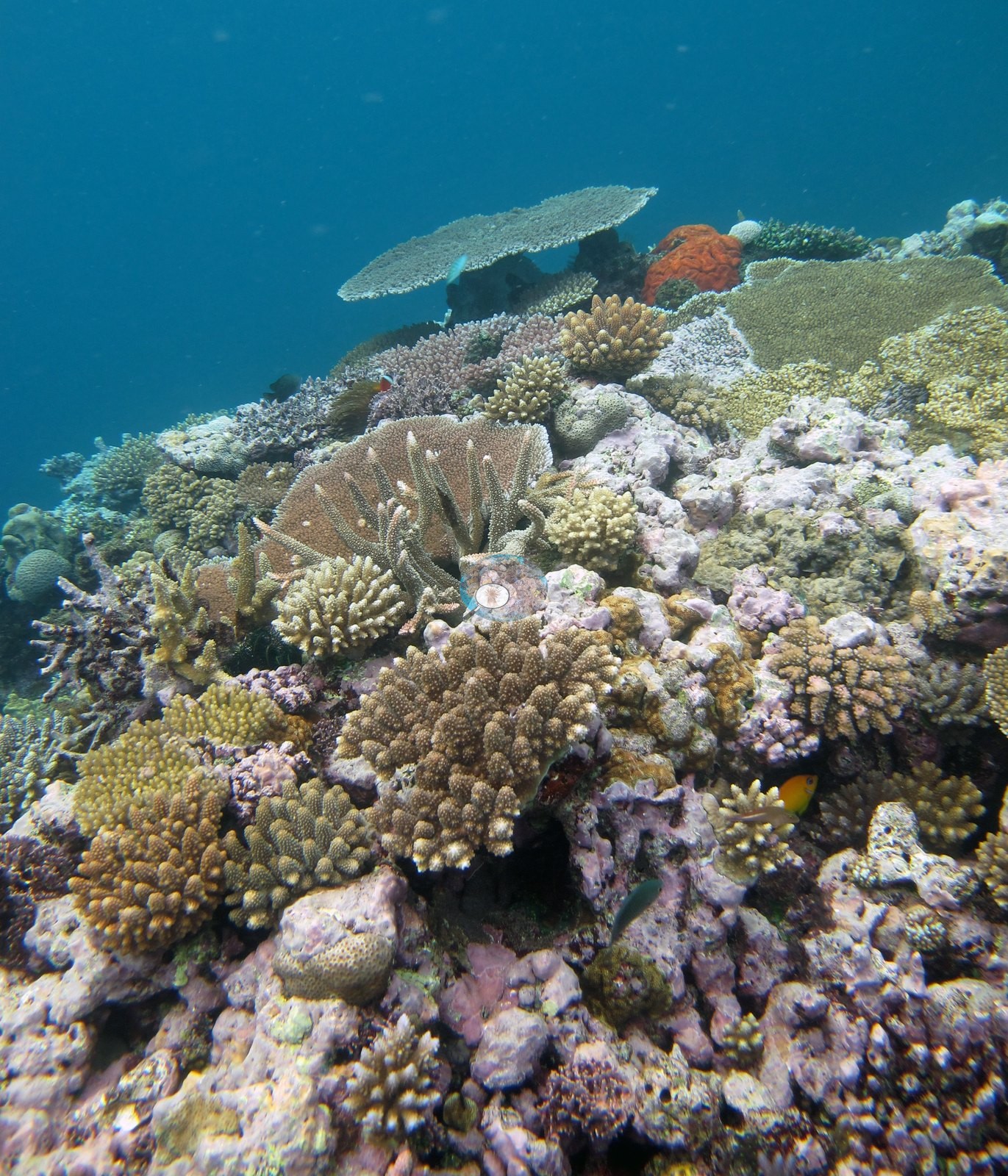
Fiji (NOAA CRW virtual station)A shallow fore-reef station on Moala's northwest side, where pale tables, plating acroporids, corymbose acroporids, and pocilloporid clusters stand over mauve-pink coralline pavement, at 33% cover. The 2017 molecular screen flagged neither of the two colonies here with an outlier score as physiologically atypical, though Anderson's sampling sheet records three of the five sampled as about 10% bleached. Surveyed on the Living Oceans Foundation's Global Reef Expedition.
E dua na vanua ni vakadidike ena yasana i tuba ni cakau (fore reef) e sega ni titobu ena yasana i vualiku-i-ra i Moala, e tu kina na lase tepeli vulavula vakalailai, na acroporid vakaiteba (plating), na acroporid vakaveitabaki (corymbose), kei na isoqosoqo ni pocilloporid ena dela ni vatu raraba ni lumi vakalase (coralline pavement) e roka (mauve-pink), ka 33% na ubi ni lase (coral cover). Na vakadidike vakamolecular ni 2017 e sega ni vakaraitaka e dua vei rau na rua na lase eke e tiko na nodrau naba ni duidui (outlier score) me duatani vakayago (physiologically atypical), ia na ivola ni ivakaraitaki nei Anderson e vola ni tolu vei ira na lima a taura kina na ivakaraitaki e rauta ni 10% na kena vulavula (bleached).
AI translation of this summary; the English is authoritative. (low confidence)
CTD-cast midpoint; the cast read 27.2°C throughout
Two other CRD dive sites with their own pages within 5 km shown in orange — click a marker to open its page.
🗺 Detailed map of the Global Reef Expedition dive sites, Moala, Fiji (Khaled bin Sultan Living Oceans Foundation; opens in a new window)
7 of the 9 photographs on this page are shown beside the text that discusses them under "Site description" below.
Site description
Setting
FJML17 sits on the north-western side of Moala, Lau Archipelago, and was surveyed on 8 June 2013 during the Khaled bin Sultan Living Oceans Foundation Global Reef Expedition.
Also on record for the Moala site set (expedition site notes covering neighboring stations, not observations from this station's imagery): FJML18 and FJML17 are on the north western side of the island, near fore reef sand flats and on top of shallow fore reef terraces.
General benthic features
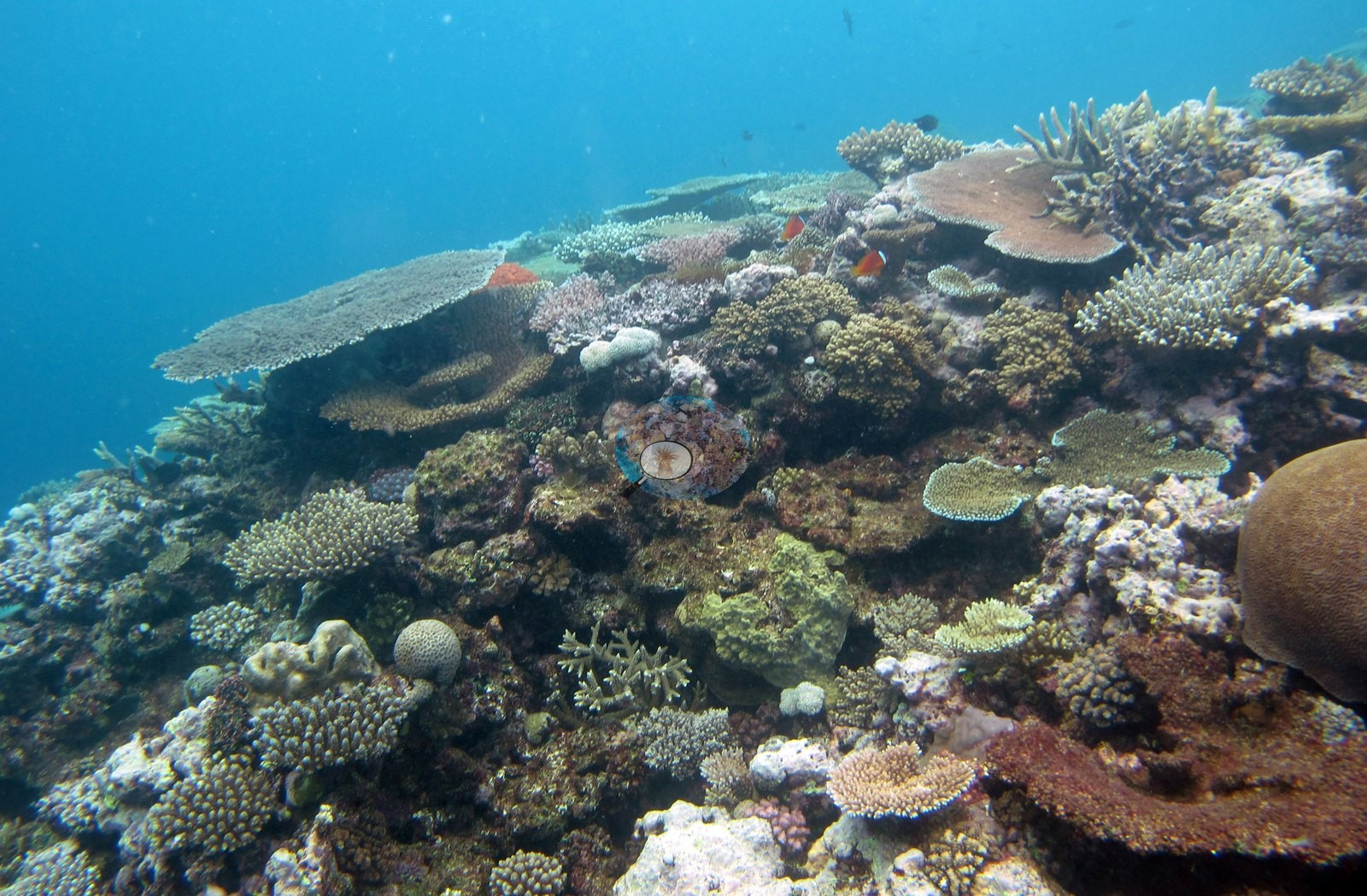
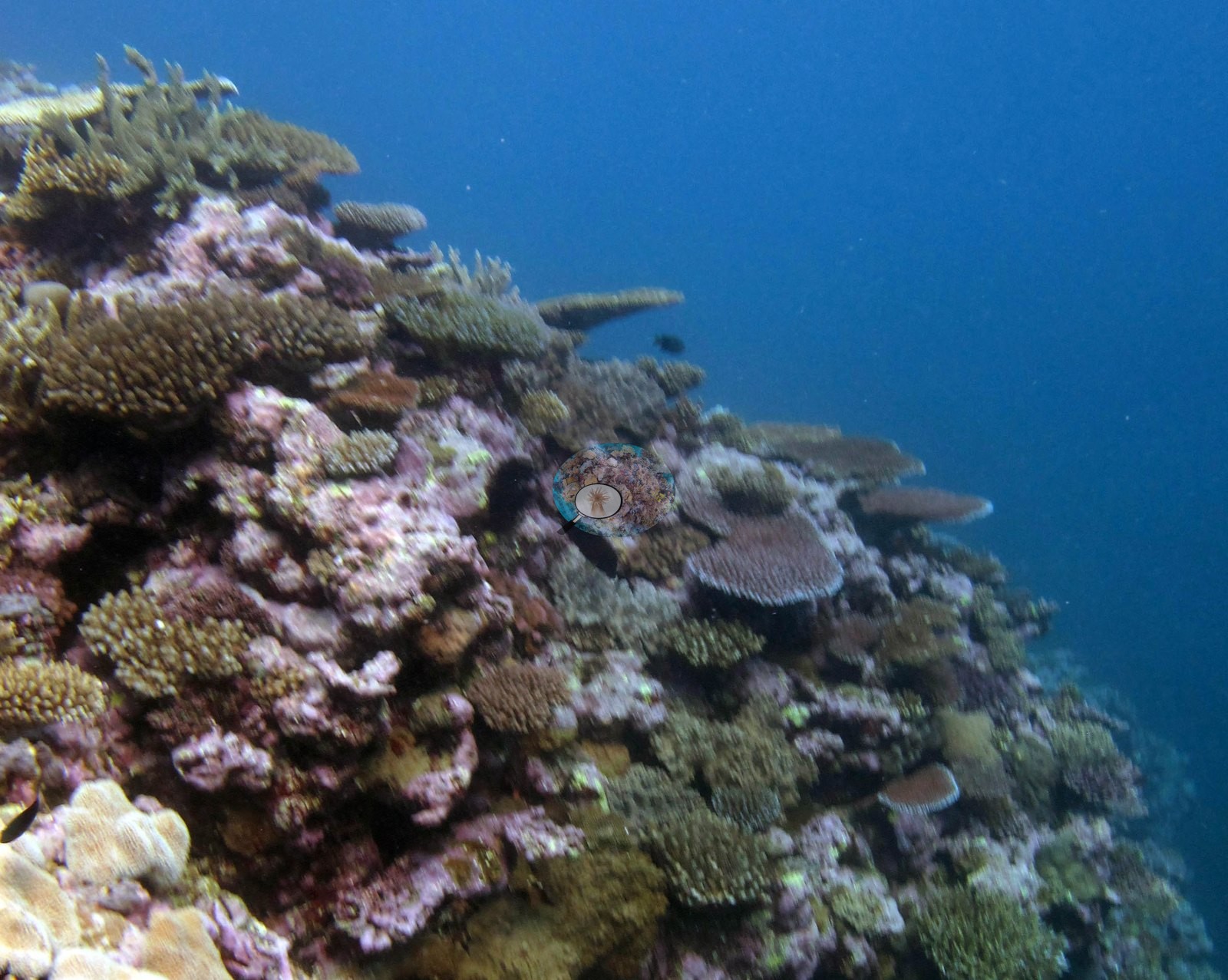
Six habitat photographs survive, and they show a structurally complex reef top rather than a flat pavement: pale tabulate Acropora tables standing clear of the substrate, blue-gray plating acroporids, corymbose and digitate Acropora, tan pocilloporid clusters, small massive Porites, and soft corals with pale finger-like lobes, with bright orange encrusting sponge among them. Between the colonies the substrate is mauve-pink crustose coralline pavement with dark green algal turf in the interstices, and one frame of the ridge falling away into blue water shows more coralline pavement between smaller, more scattered colonies and tables (e.g., Image 6) — a useful check against the two most photogenic frames, both of which are the same crowded patch shot from different angles (e.g., Image 1, Image 3).
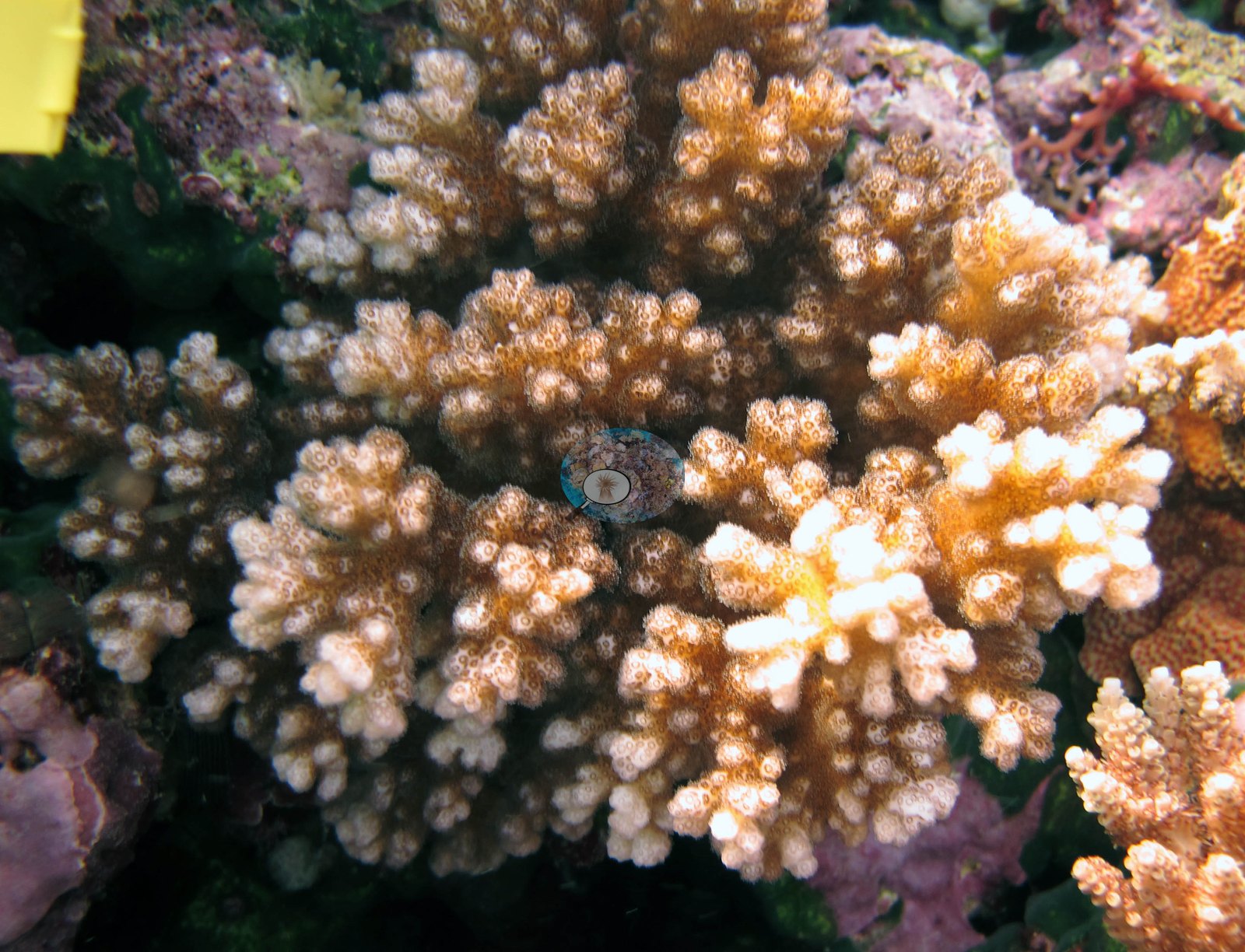
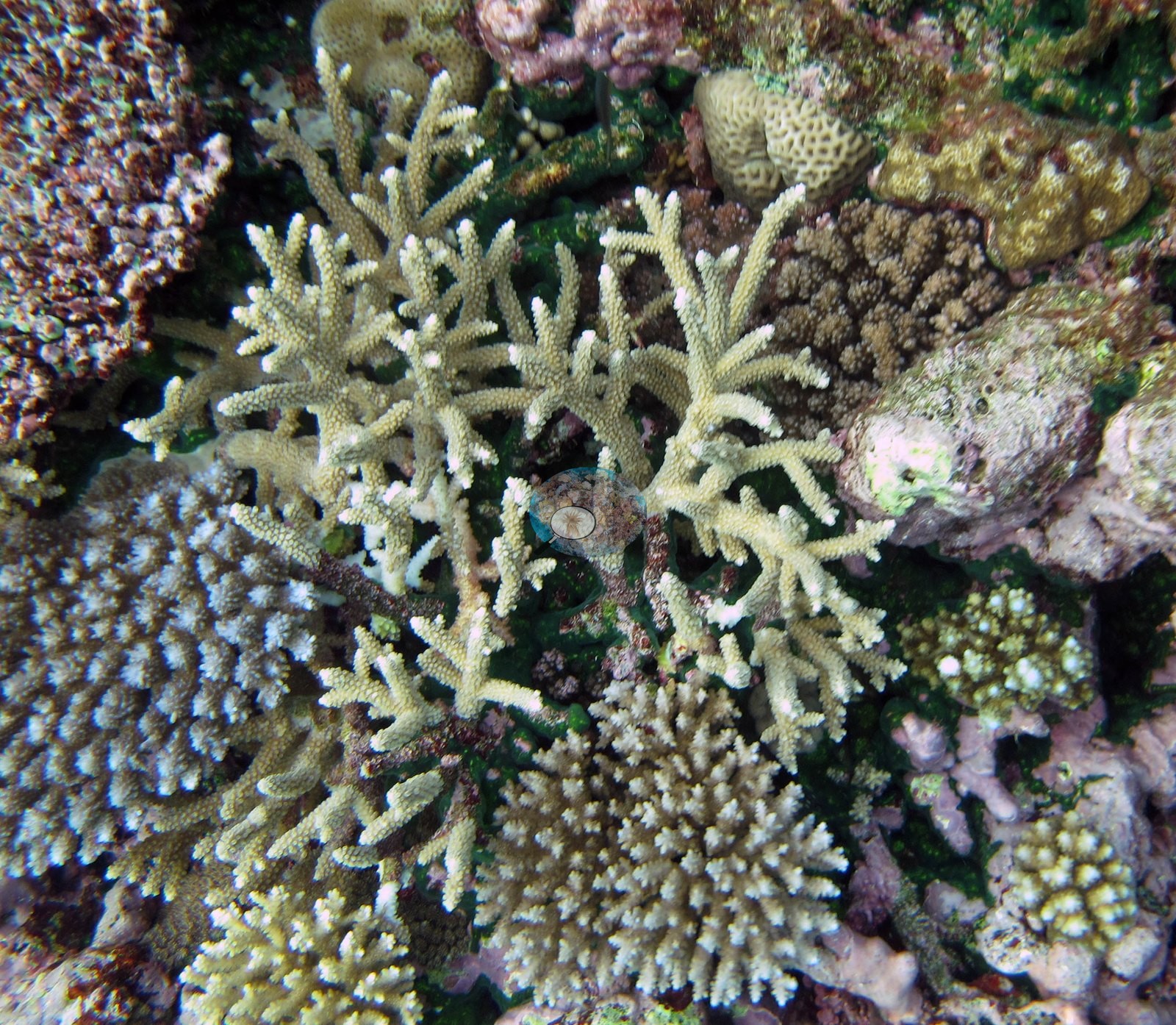
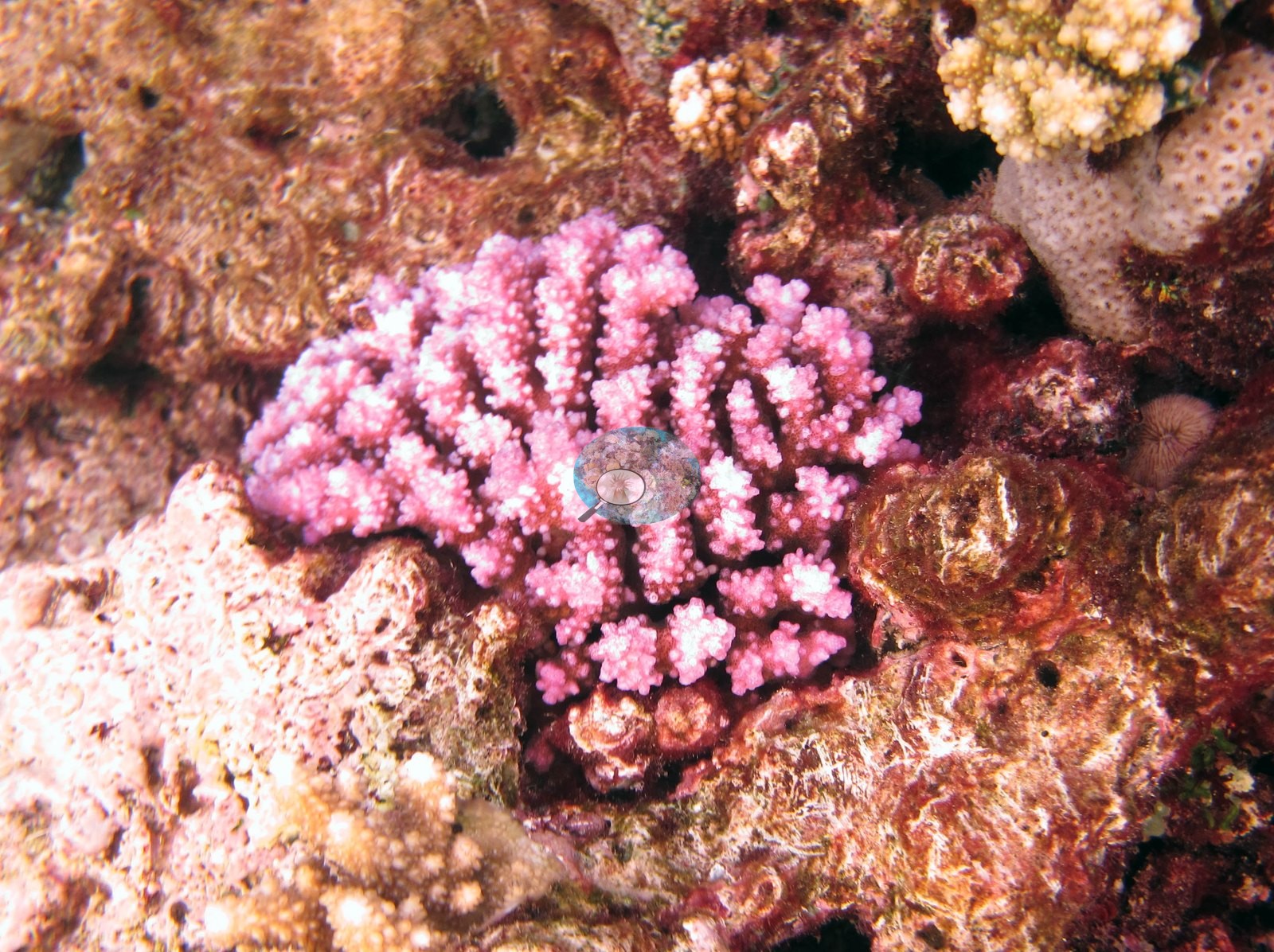
A branching Acropora thicket with white growing tips occupies one frame, and a small bright pink-magenta Pocillopora colony another (e.g., Image 2, Image 7).
Survey team's notes for FJML17 and FJML18. On the fore reef terraces, a prominent spur and groove morphology was populated by small branching coral colonies with old mortality colonized by CCA. Porites rus colonies populated the edges of the overhangs where large sand flats were located, often times with old coral rubble — could be evidence of a storm surge event. Most of the corals were smaller in size, around 45-60 cm in diameter.
Coral cover
- Reference: Khaled bin Sultan Living Oceans Foundation, Global Reef Expedition (in situ transect)
- An in situ transect (station CTD cast to 23.2 m) recorded 33% live coral cover (LOF-GRE in situ transect) — the authoritative figure for this station.
- The survey team's notes add that at the terrace level coral cover was lower and turf and CCA coverage higher.
- Transect mean 33 ± 4.0% SE (n = 4 transects; Living Oceans Foundation per-transect benthic data); the headline above is this all-transect mean.
Stressors
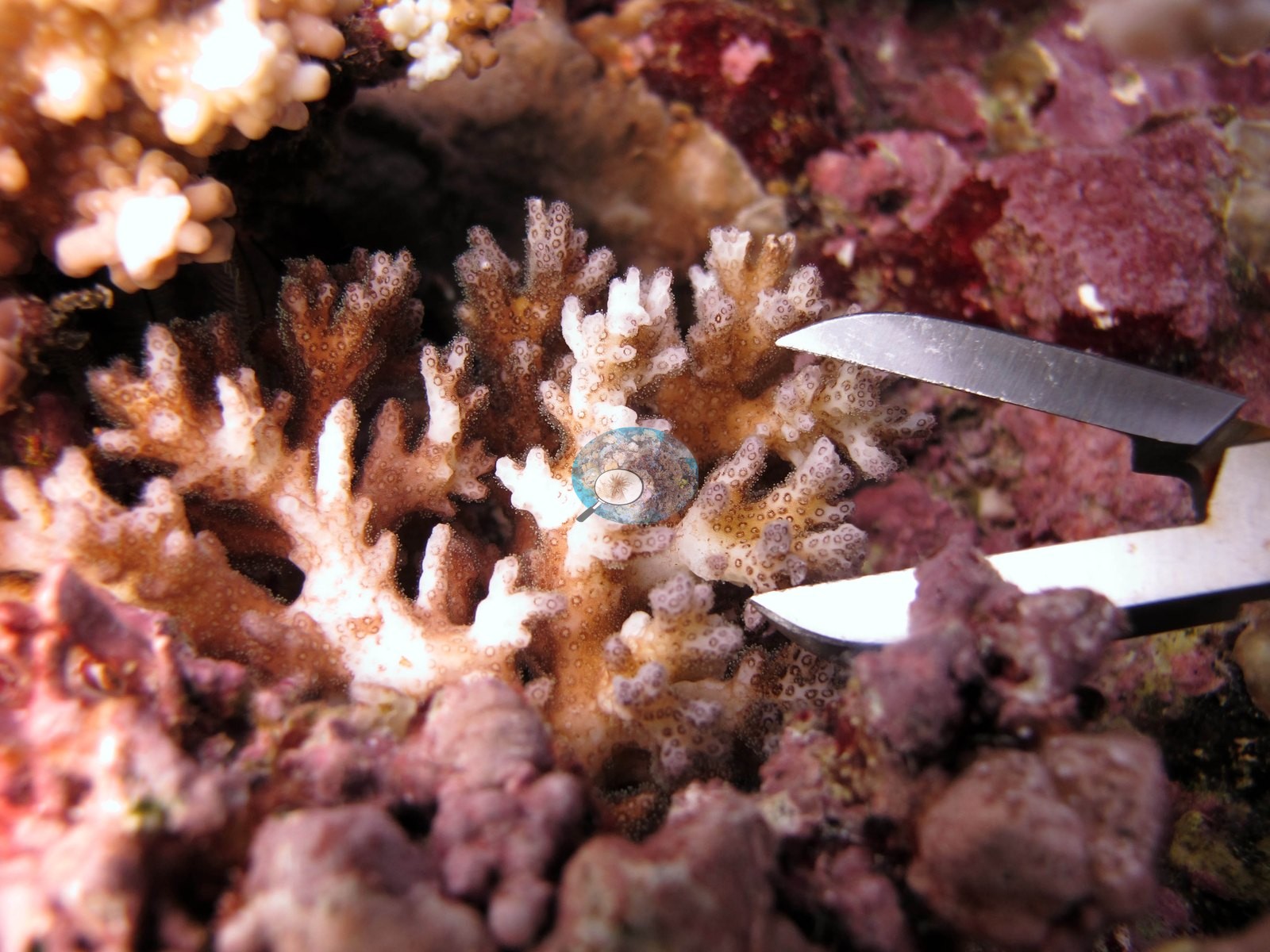
No disease lesions or crown-of-thorns scarring are visible in any frame, though the photographic sample is small and cannot settle site-wide condition; Anderson's sampling sheet records three of the five colonies sampled here (F33, F35, and F36) as about 10% bleached, and the frame of F35 shows its partly white branches (e.g., Image 4).
Typical recent thermal stress at the Fiji virtual station is a mean annual maximum of 8.9 degree-heating-weeks (NOAA Coral Reef Watch, 2021-2025), above the 8 DHW level at which severe bleaching and mortality are expected. The Living Oceans Foundation transects here recorded 0.5% cyanobacteria and no recently dead coral.
Comparisons with other data
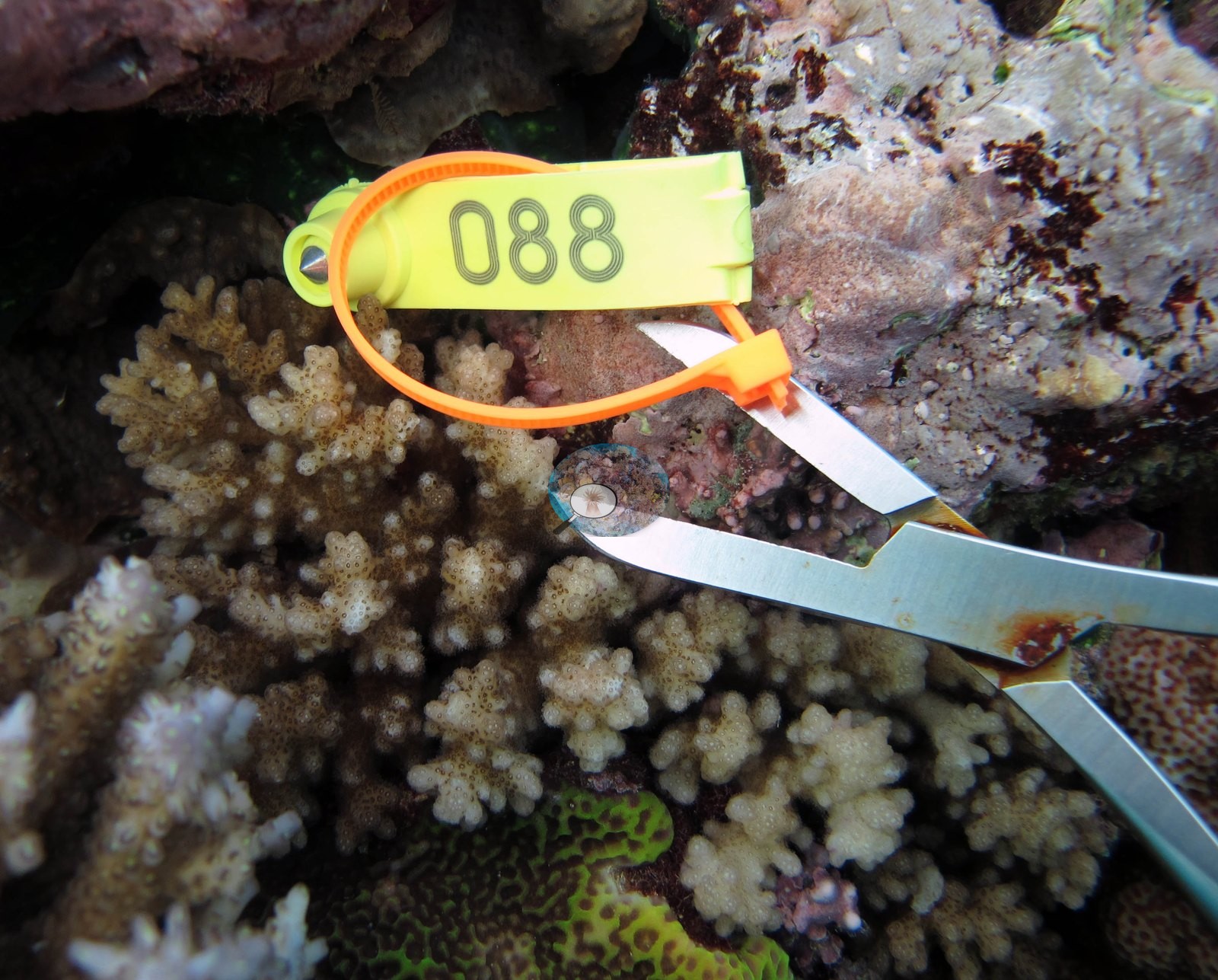
Anderson's records list five Pocillopora colonies sampled here (F32-F36); the gallery's sampling close-ups show colonies 35 (e.g., Image 4) and 36 (e.g., Image 8) and describe those individual colonies and nothing about the reef around them. 0% of the corals with an outlier score were flagged as physiological outliers (Mayfield et al. 2017, PLoS ONE).
FJML19 and FJML20 were located on the west side of the island, both on the fore reef slope, with slope and coral cover continuing beyond 40 m off the fore reef terrace; coral build ups on top of massive framework were common on the terrace, roughly 15-20 m apart, with acroporids and other branching corals on their tops, and P. rus plates and stands of staghorn acroporids down the slope, with some feeding scars on table and plating corals attributed to Culcita. On the east side of the island (FJML23, FJML15, FJML22, FJML16) sites were on the fore reef slope, with large Porites and Diploastrea colonies on the slope sides and small Platygyra, Lobophyllia, and Echinopora colonies coming up from 32 m.
Data & links
- Download benthic survey data (CSV) ↗
- Download all LOF-GRE data (933 sites) ↗
- Photo portfolio ↗
- Coral Reef Diagnostics page for this area ↗
All images from Coral Reef Diagnostics. Data are from the Khaled bin Sultan Living Oceans Foundation Global Reef Expedition, Coral Reef Diagnostics, and NOAA Coral Reef Watch.
 © Coral Reef Diagnostics.