
Part of the regional summaries: Chagos Archipelago - Salomon / Blenheim / Speakers Bank and Chagos Archipelago
More info
Chagos (NOAA CRW virtual station)The richest reef in the entire Chagos survey, with 86% live coral (92% on the deeper transect) and the lowest algal cover of all 109 sites; the field team labeled it "great site." Overlapping Acropora tables form a multi-layered canopy that is largely healthy and well pigmented. Surveyed on the Living Oceans Foundation's Global Reef Expedition.
🗺 Detailed map of the Global Reef Expedition dive sites, Speakers Bank, Chagos (Khaled bin Sultan Living Oceans Foundation; opens in a new window)
2 of these 18 photographs are shown beside the text that discusses them under "Site description" below.
Site description
General benthic features
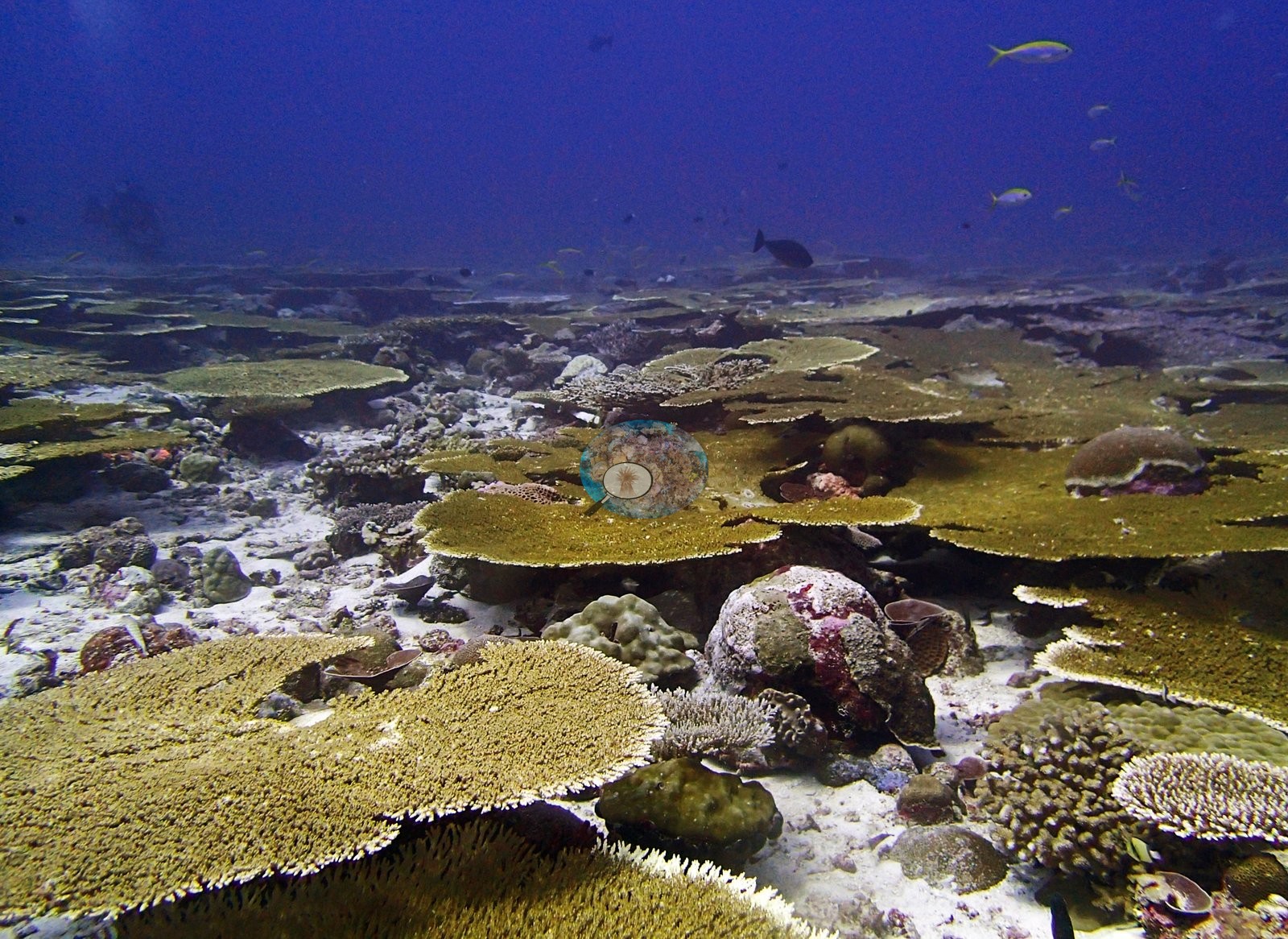
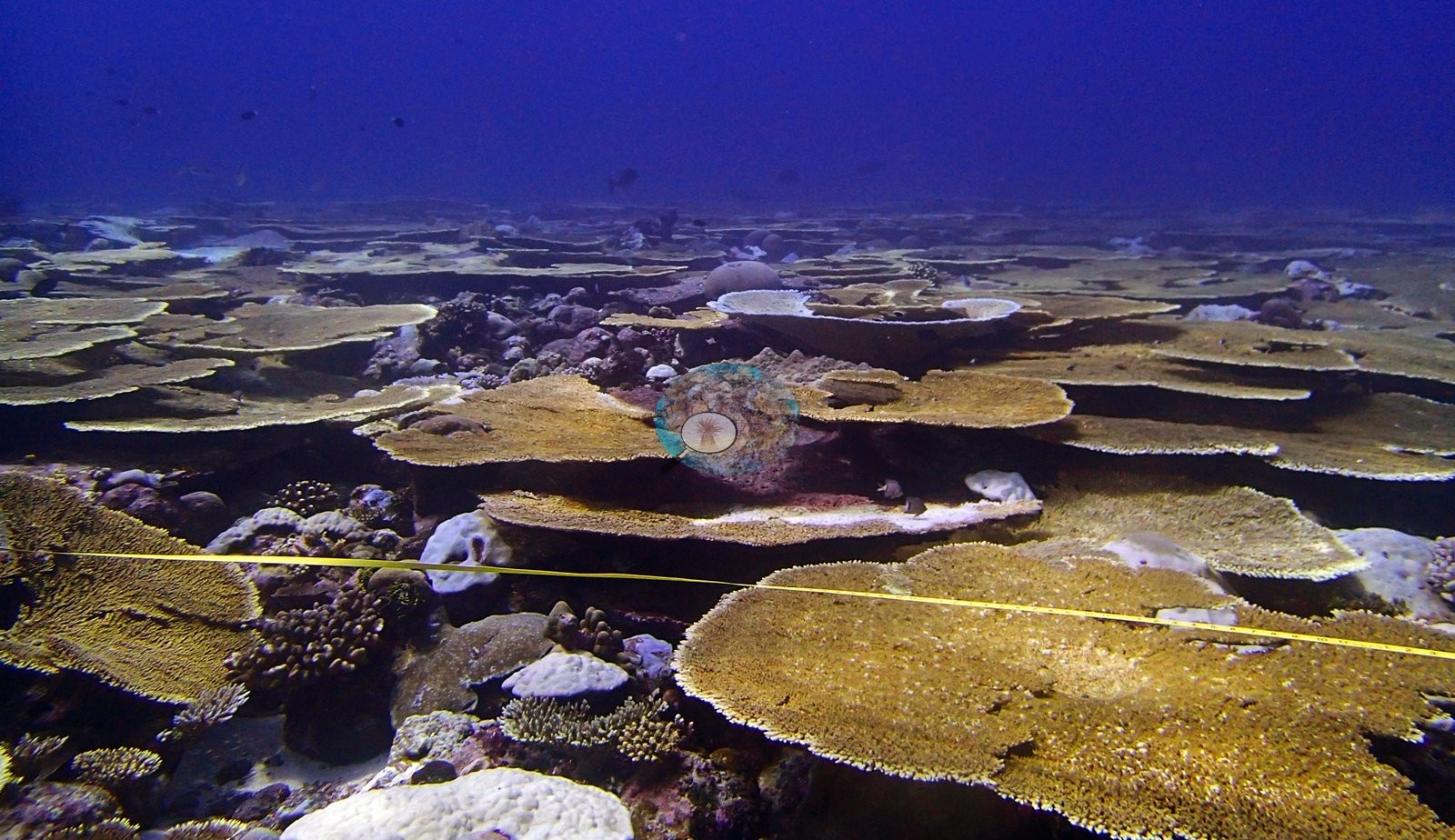
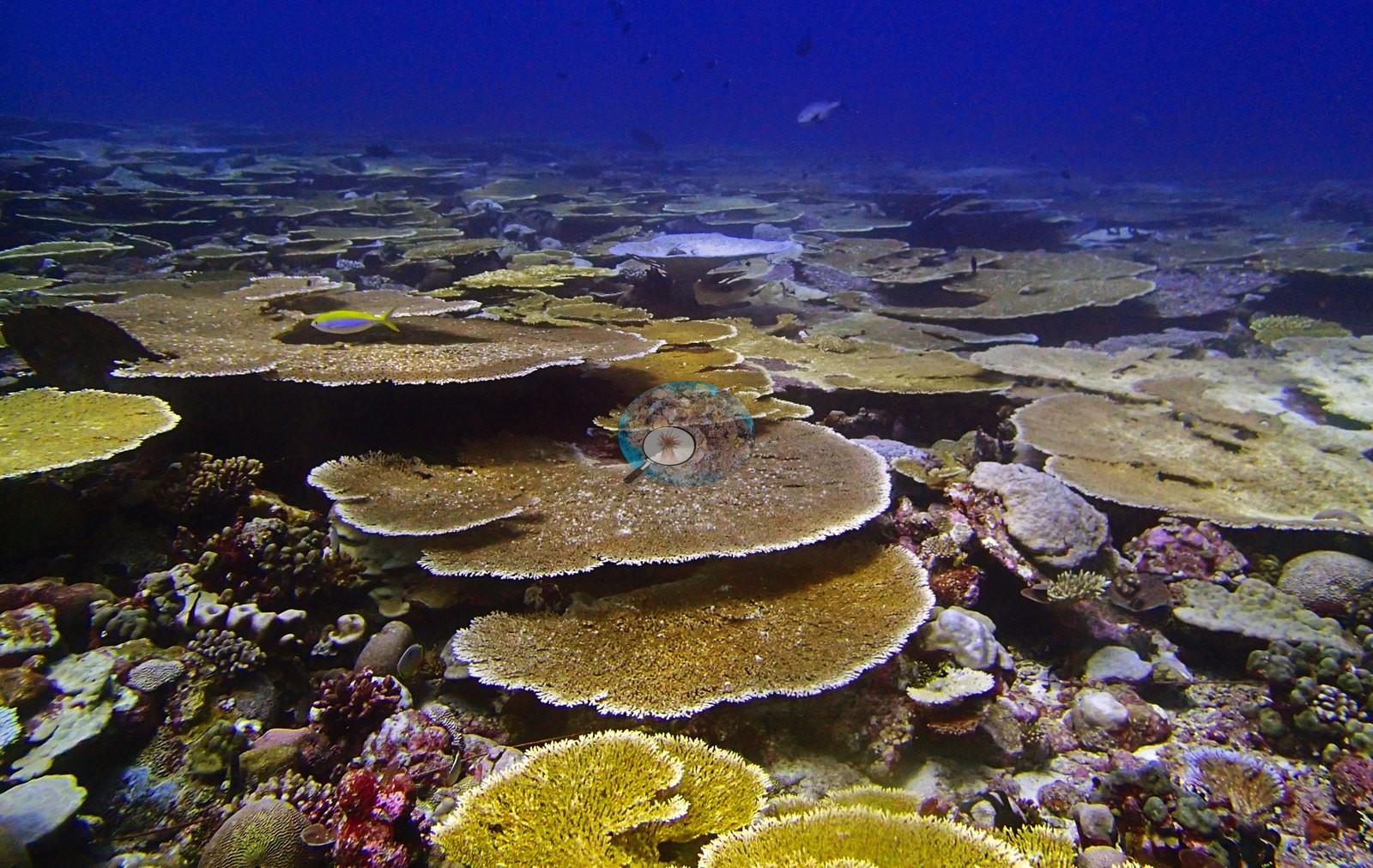
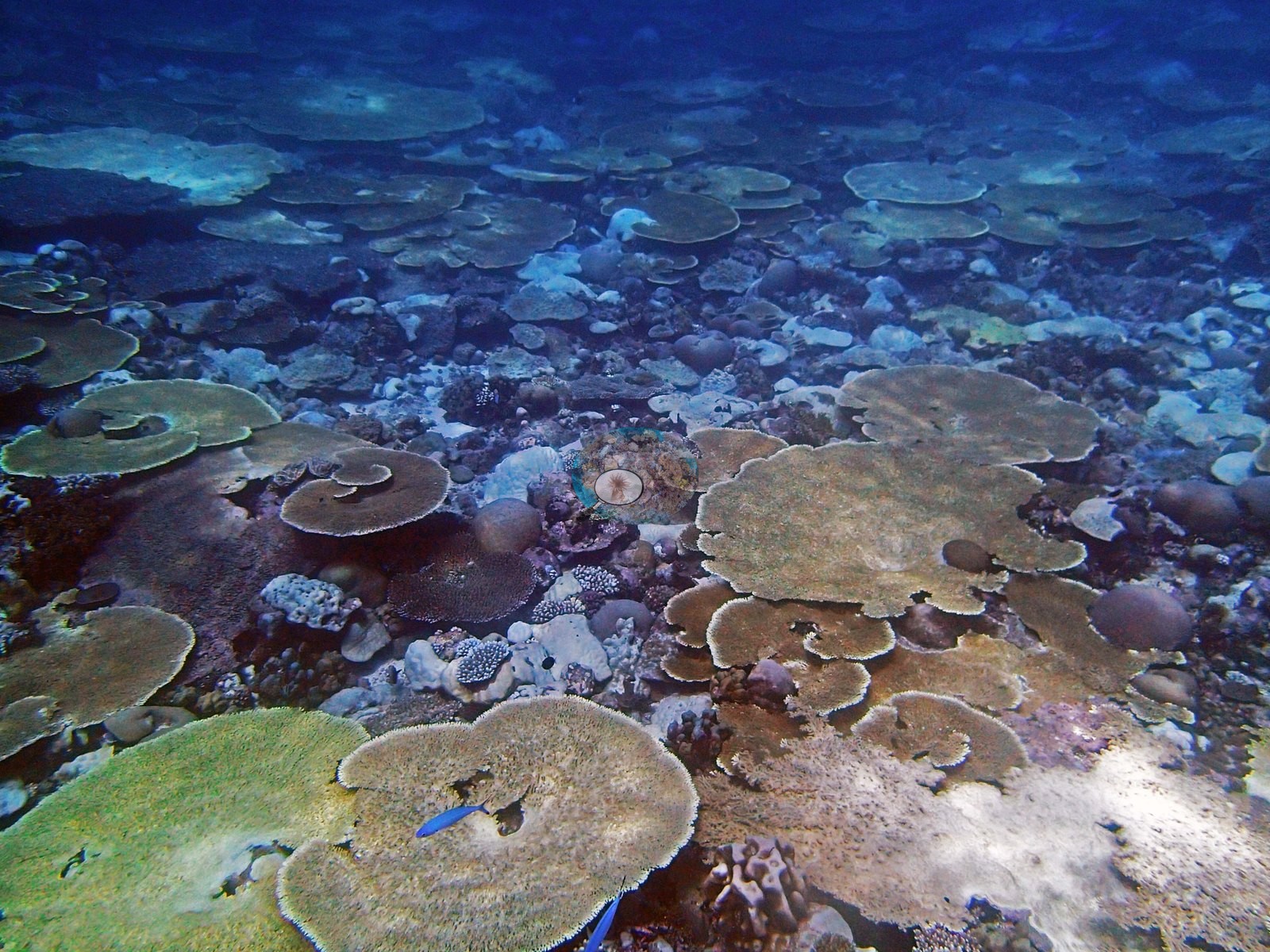
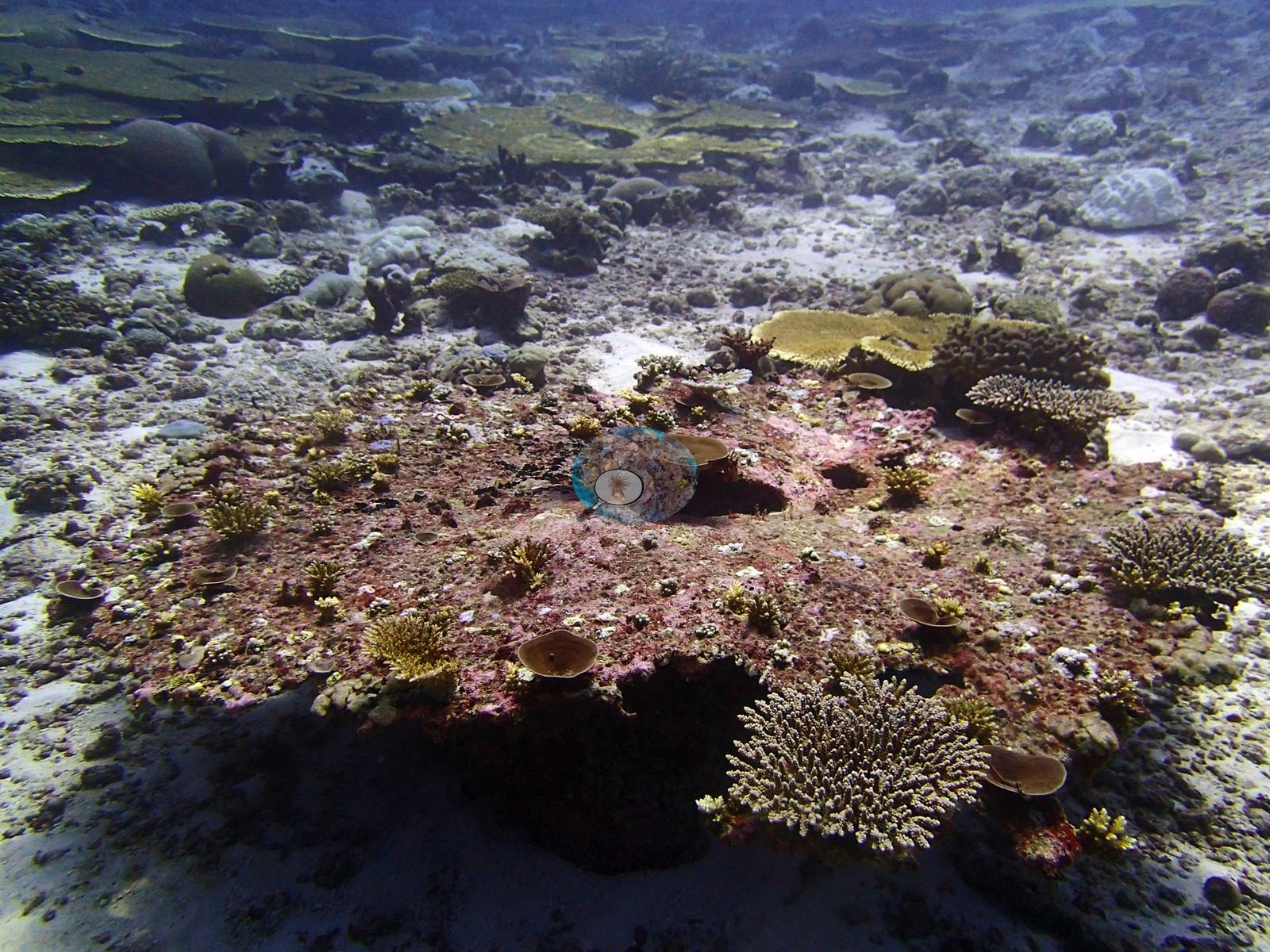
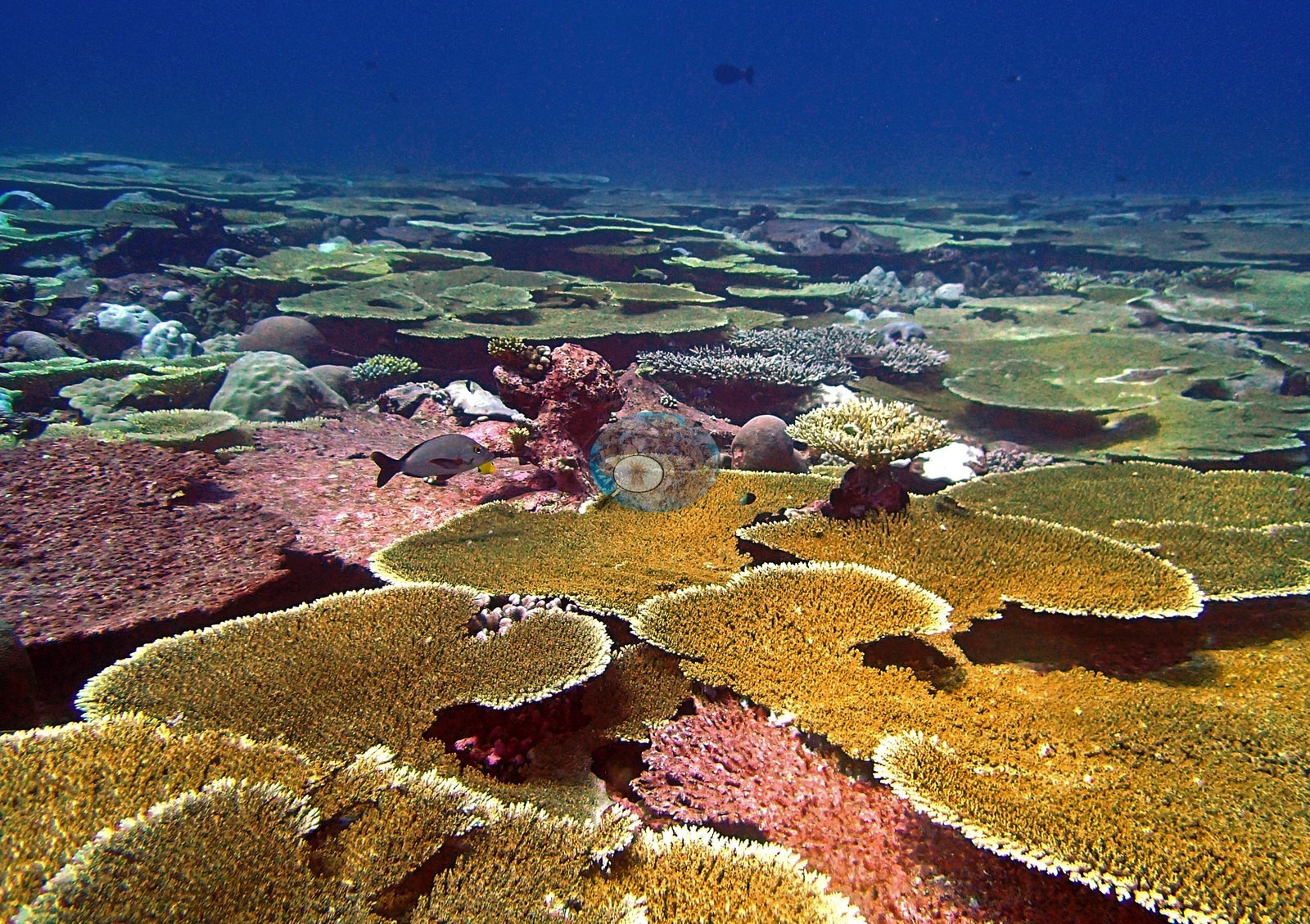
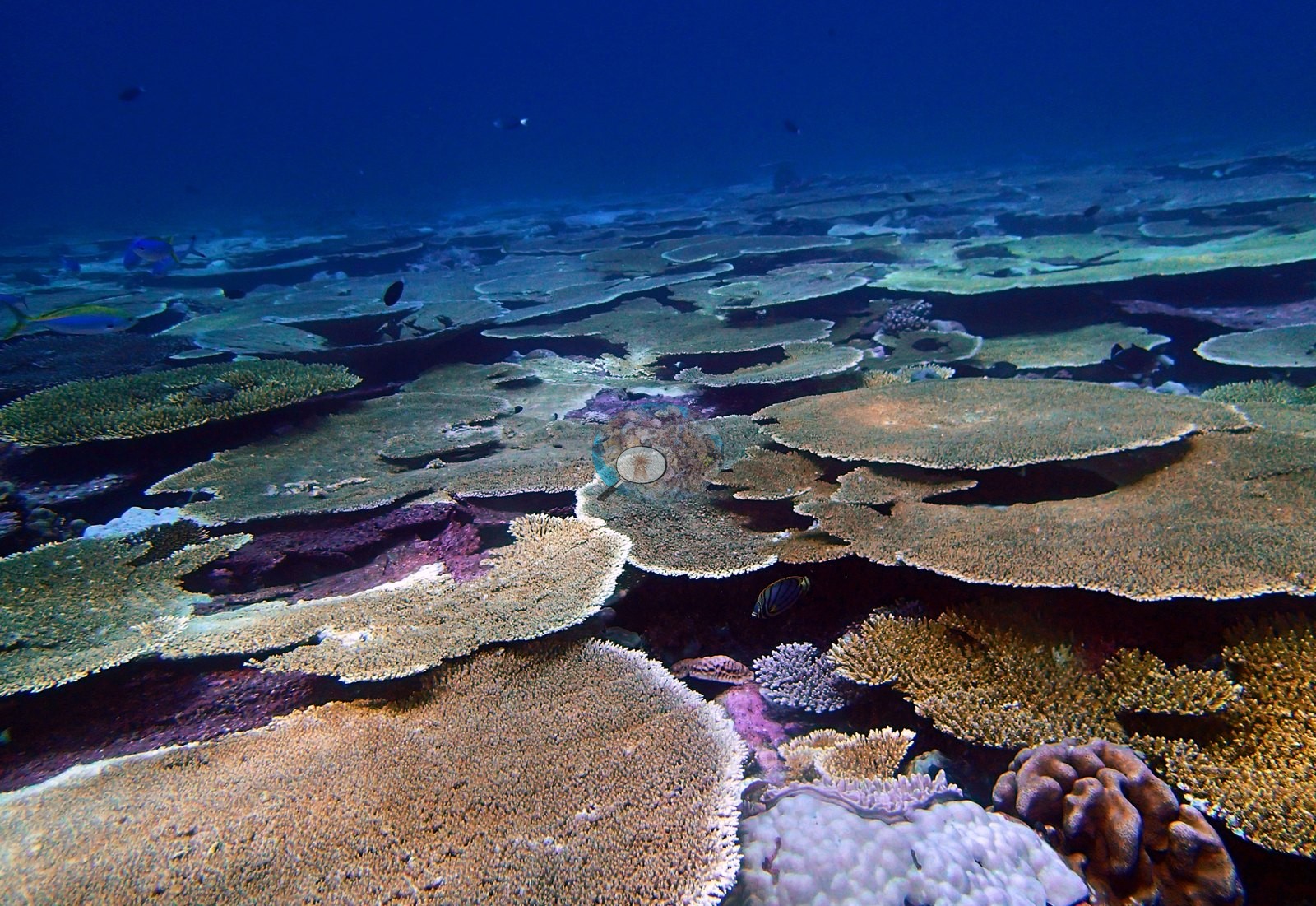
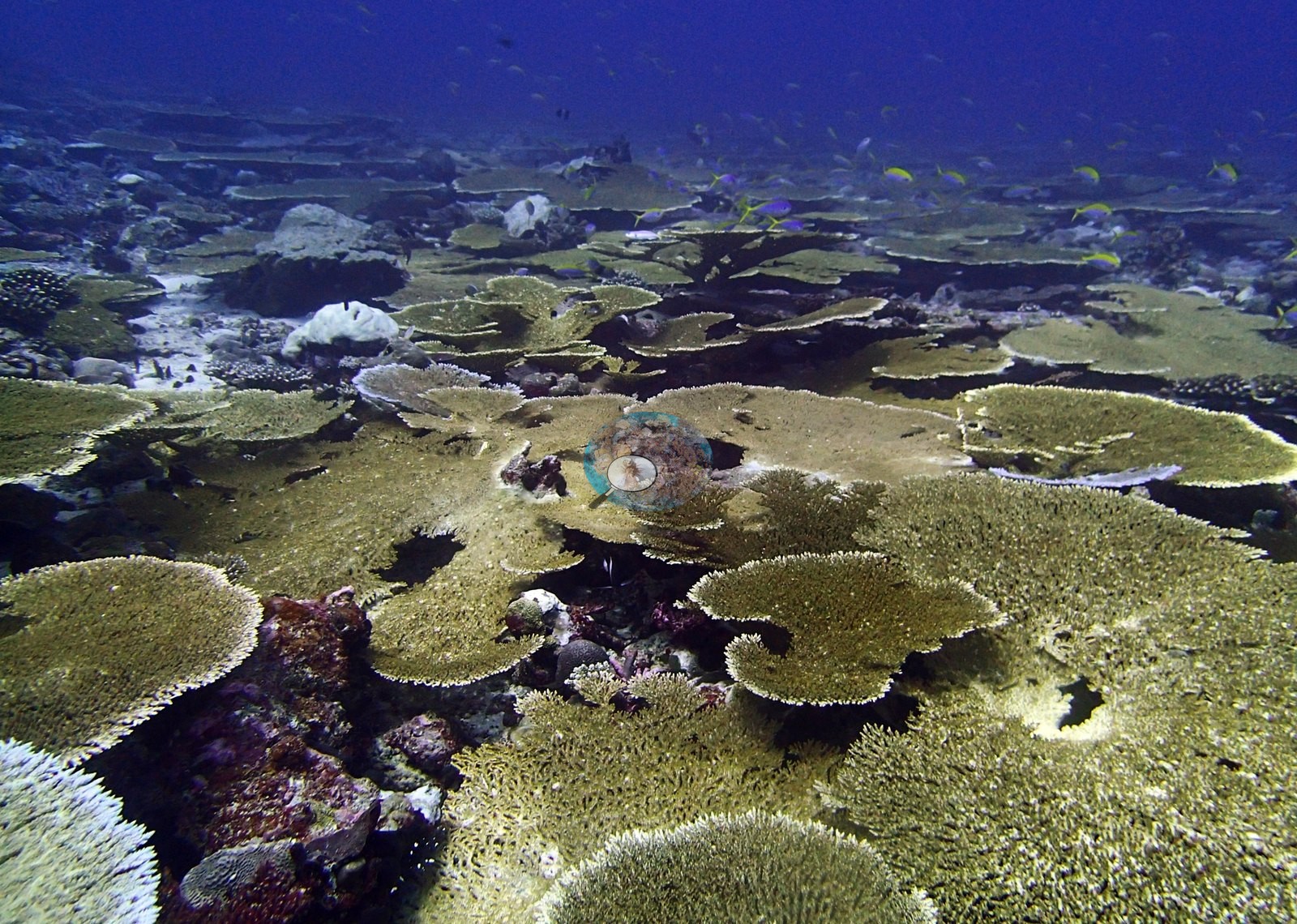
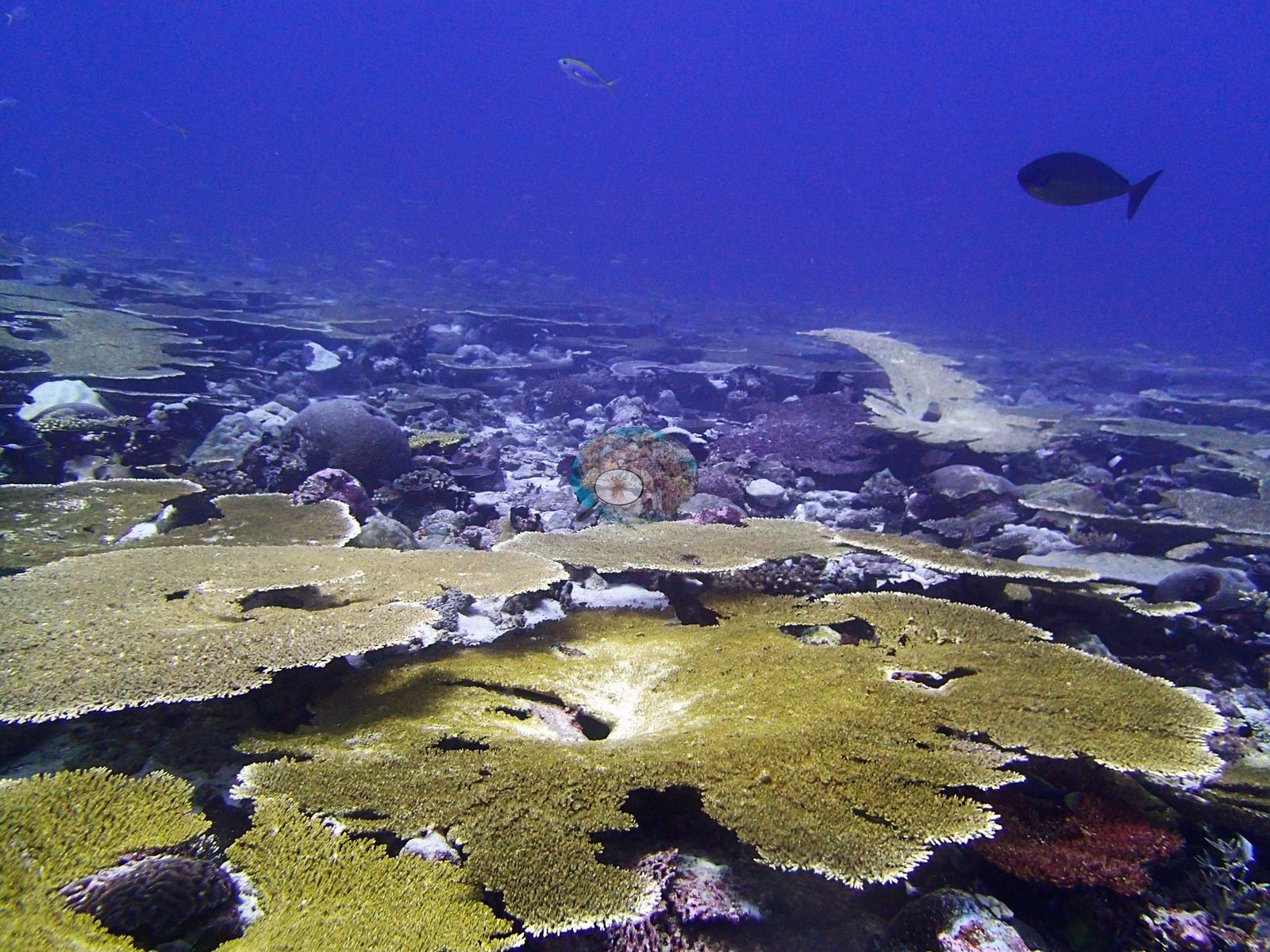
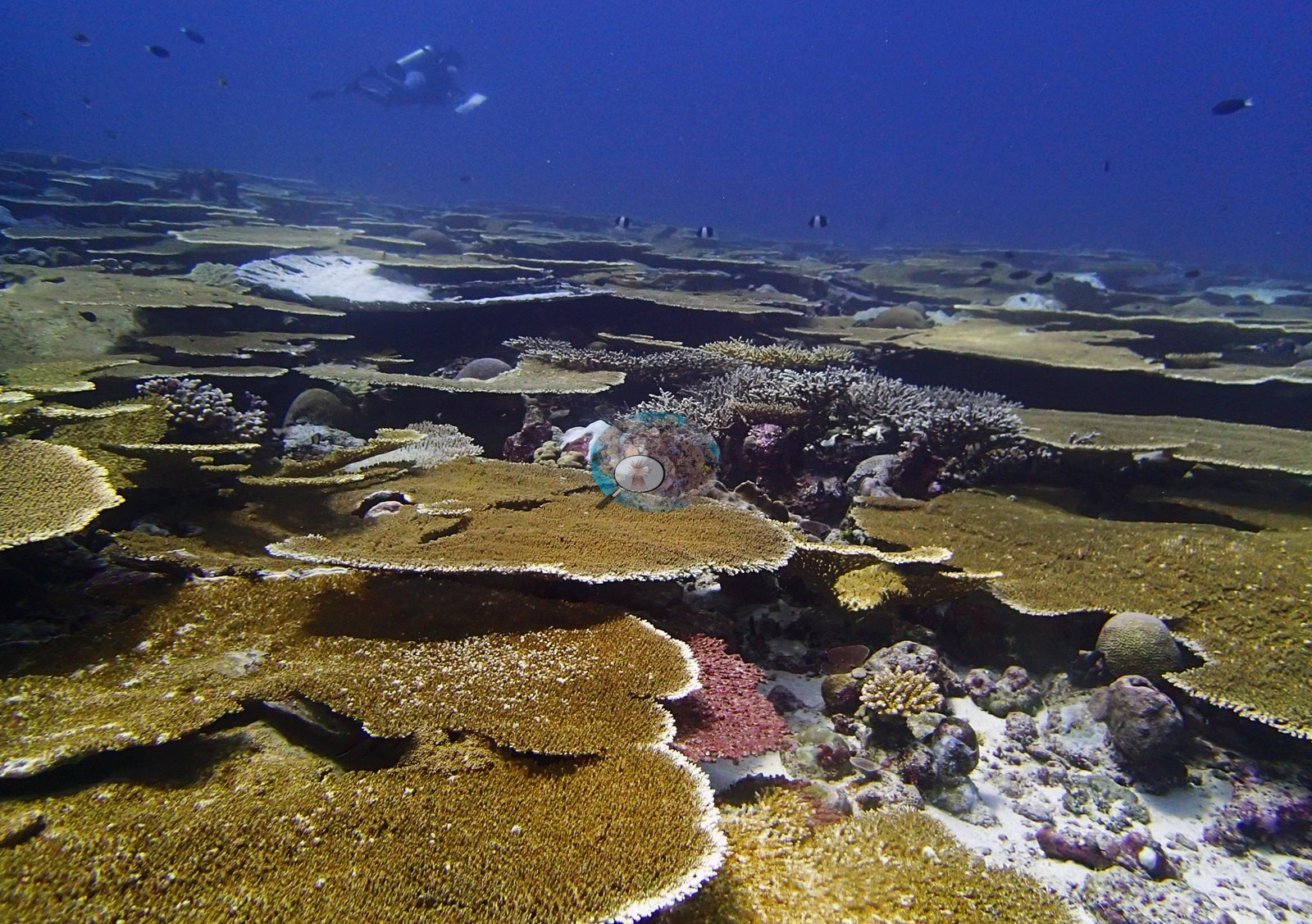
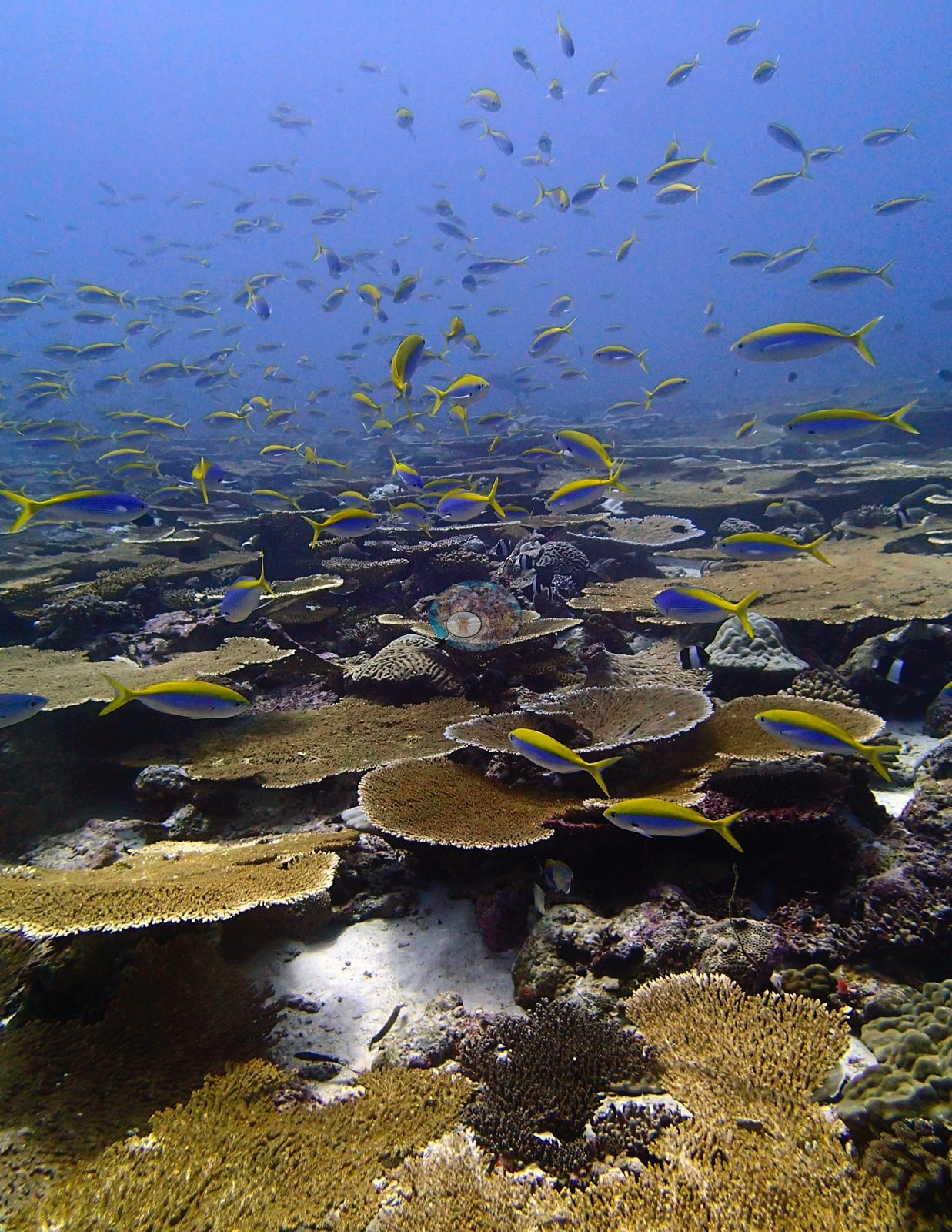
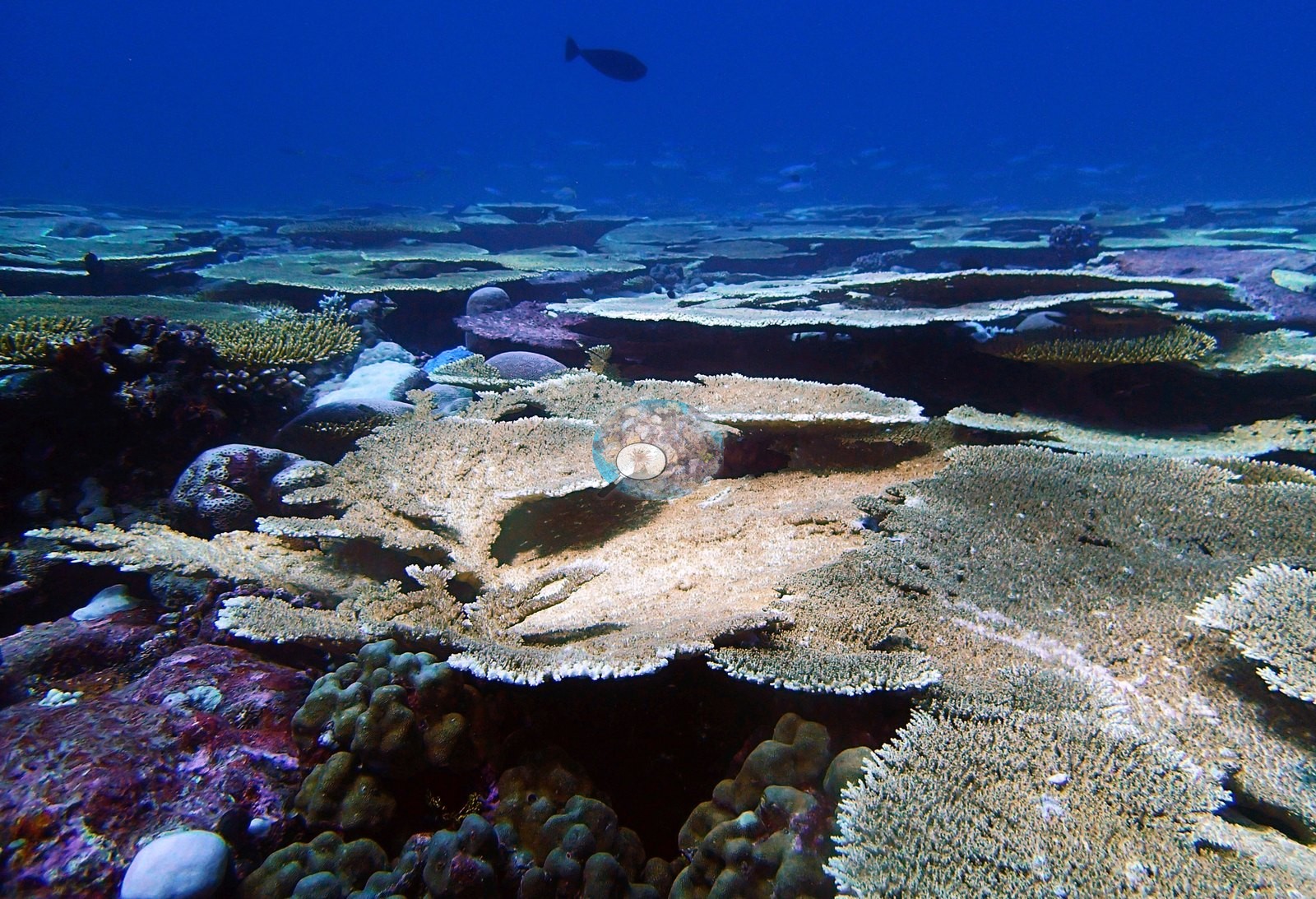
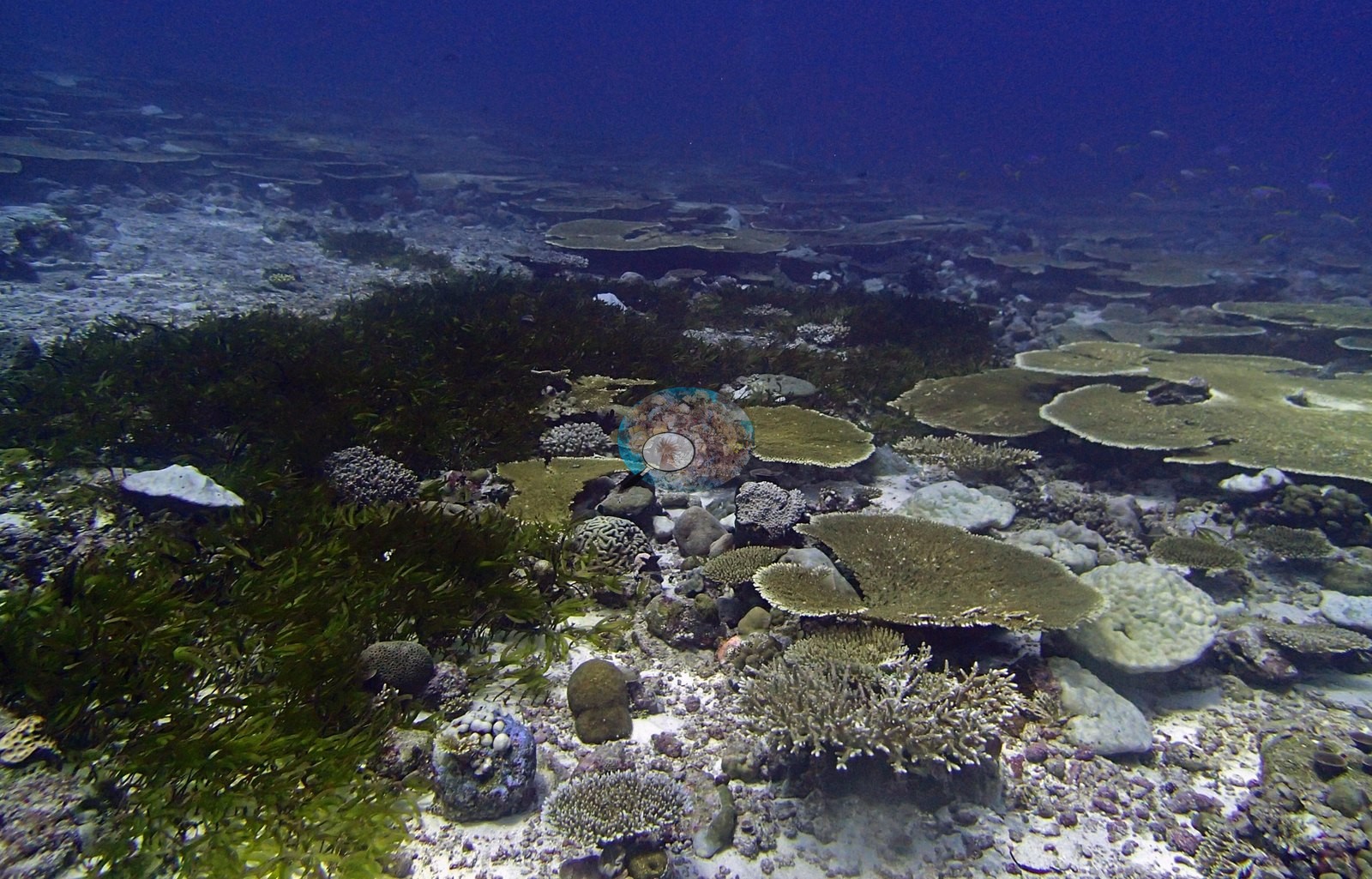
Almost nothing here is not coral: non-coral invertebrates hold 1.2% of the benthos, coralline algae 3.7%, turf 2.8%, bare substrate 2.5%, erect algae 2.2%, and macroalgae 1.3%. The assemblage is overwhelmingly one genus across 21 non-zero codes. Acropora holds 70.84% of the benthos — 82% of all coral recorded — with Porites a distant second at 5.66%, then Montipora 1.72%, Favia 1.62%, Leptastrea 1.25%, Pocillopora 1.08%, Platygyra 1.02%, Astreopora 0.82%, and Goniastrea 0.68%. Eleven further genera fall below 0.5%, among them Cynarina, Cantharellus, Echinopora, and Gardineroseris — so the reef is not literally monospecific, but it is close. Algal cover halves from 13.7% to 7.0%. Canopy structure is the defining habitat feature. Tables overlap at several levels, creating broad shaded refuges, narrow corridors, and a complex understory. One frame shows very large tables filling the foreground, the next run of frames shows how plate edges repeat across the field, and a later run shows contiguous tables broken only by small coral heads and encrusted substrate. Beneath it, red-purple encrusting material, massive colonies, smaller corymbose branches, and occasional sand or rubble pockets add the structural and taxonomic diversity that the smaller published categories record. Assemblage composition. Formal surveys give 86.0% coral, 10.4% algae, and 1.2% non-coral invertebrates, the coral 82% Acropora and rising to 86% of coral at D4. The photographs document an extensive multi-layered table canopy, encrusted understory framework, abundant schooling fishes, and two colonies with convincing pallor.
Coral cover
BISP96 is the highest coral cover in the Chagos survey at 86.0%, rank 1 of 109 — and 10.4% algal cover, the lowest of all 109 sites. Cover rises with depth and so does the dominance. D3 carries 80.0% coral across 21 genera with Acropora at 62.35%; D4 carries 91.9% — with Acropora alone at 79.33%, 86% of the coral on that transect — across only nine genera. Both bands would rank among the highest-cover sites in the archipelago on their own.
Stressors
Colony margins are often intact and pale-tipped and most surfaces remain gold-brown or olive, indicating retained pigmentation across the photographed canopy (e.g., Image 2).
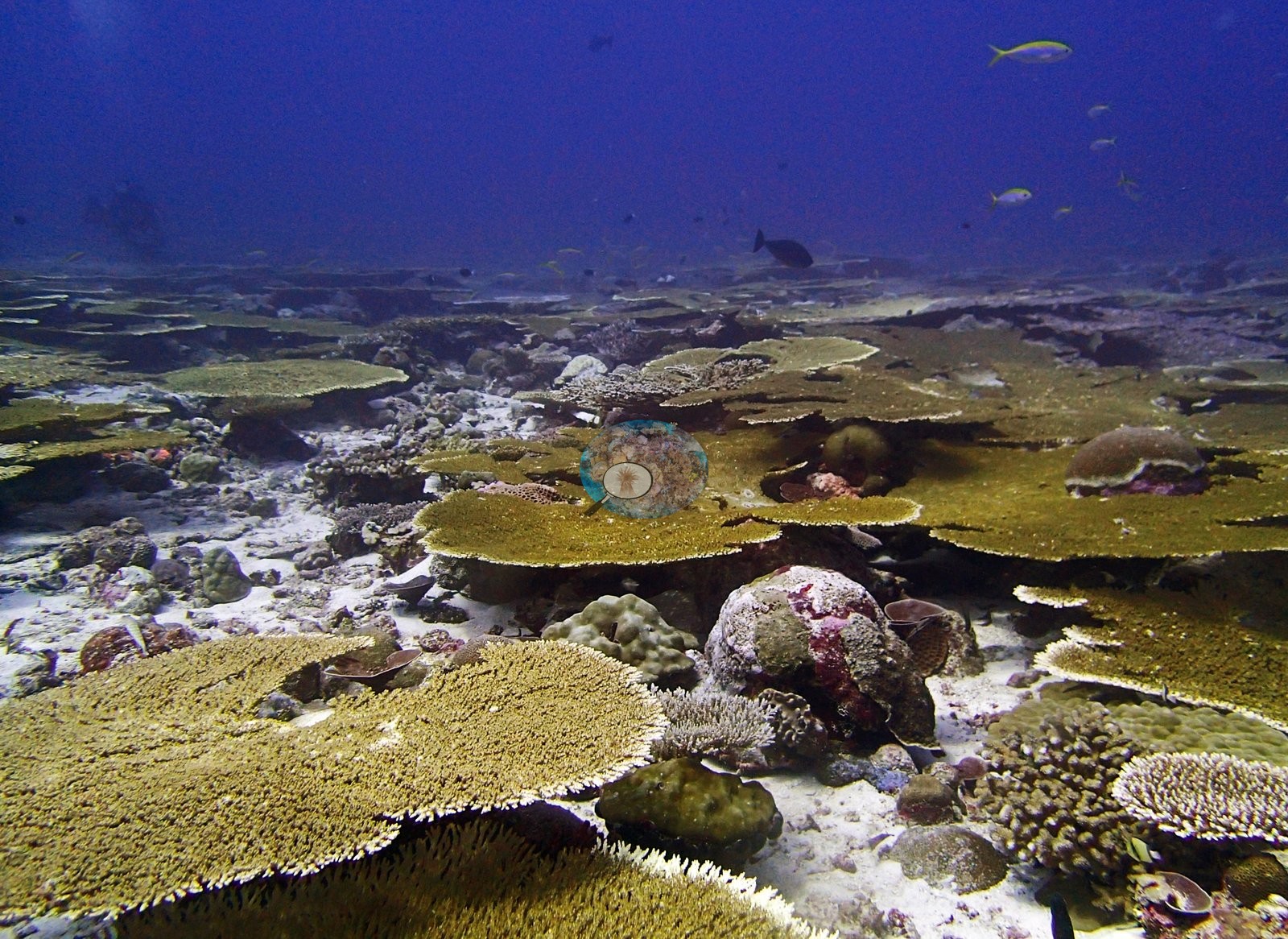
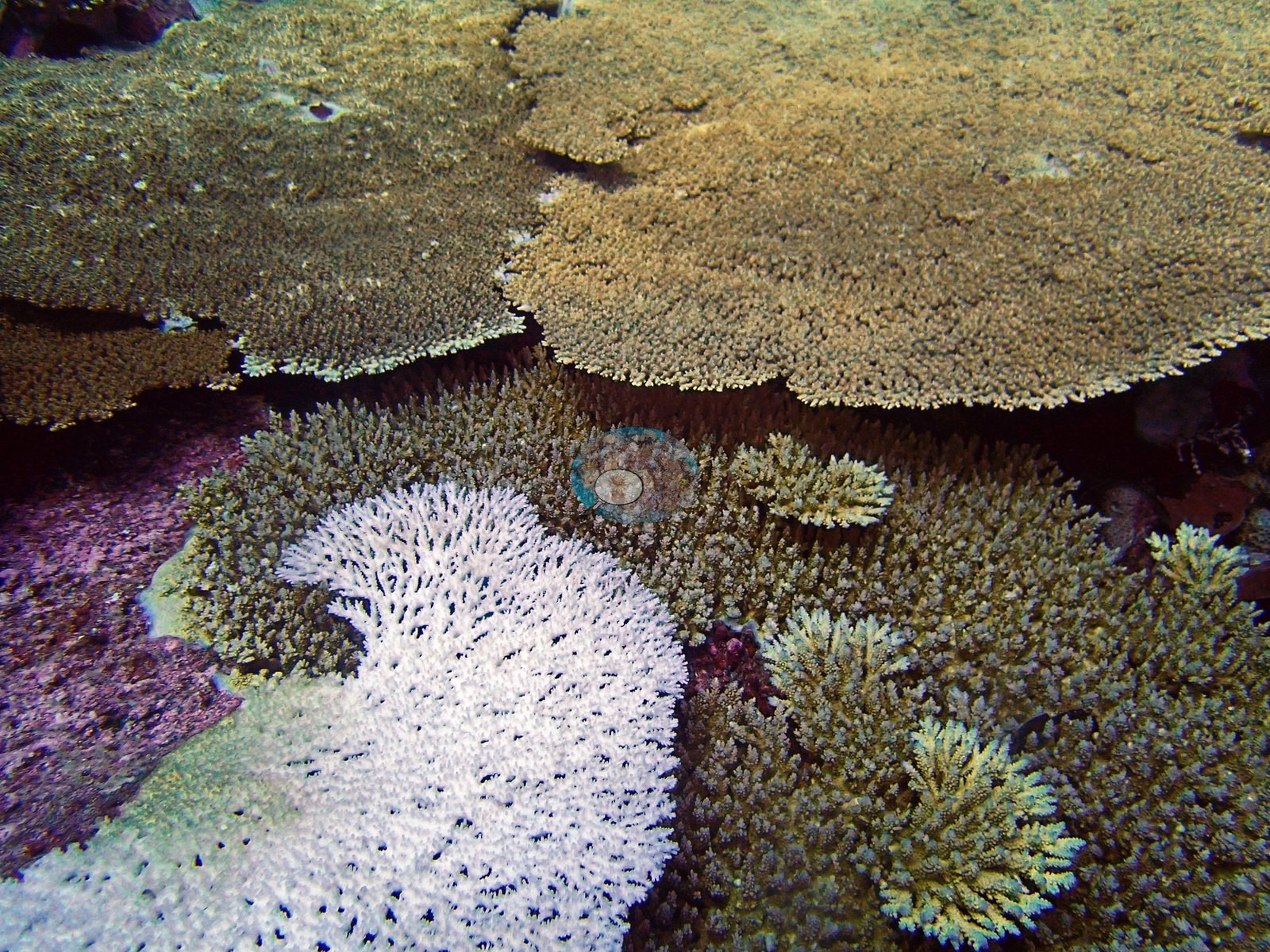
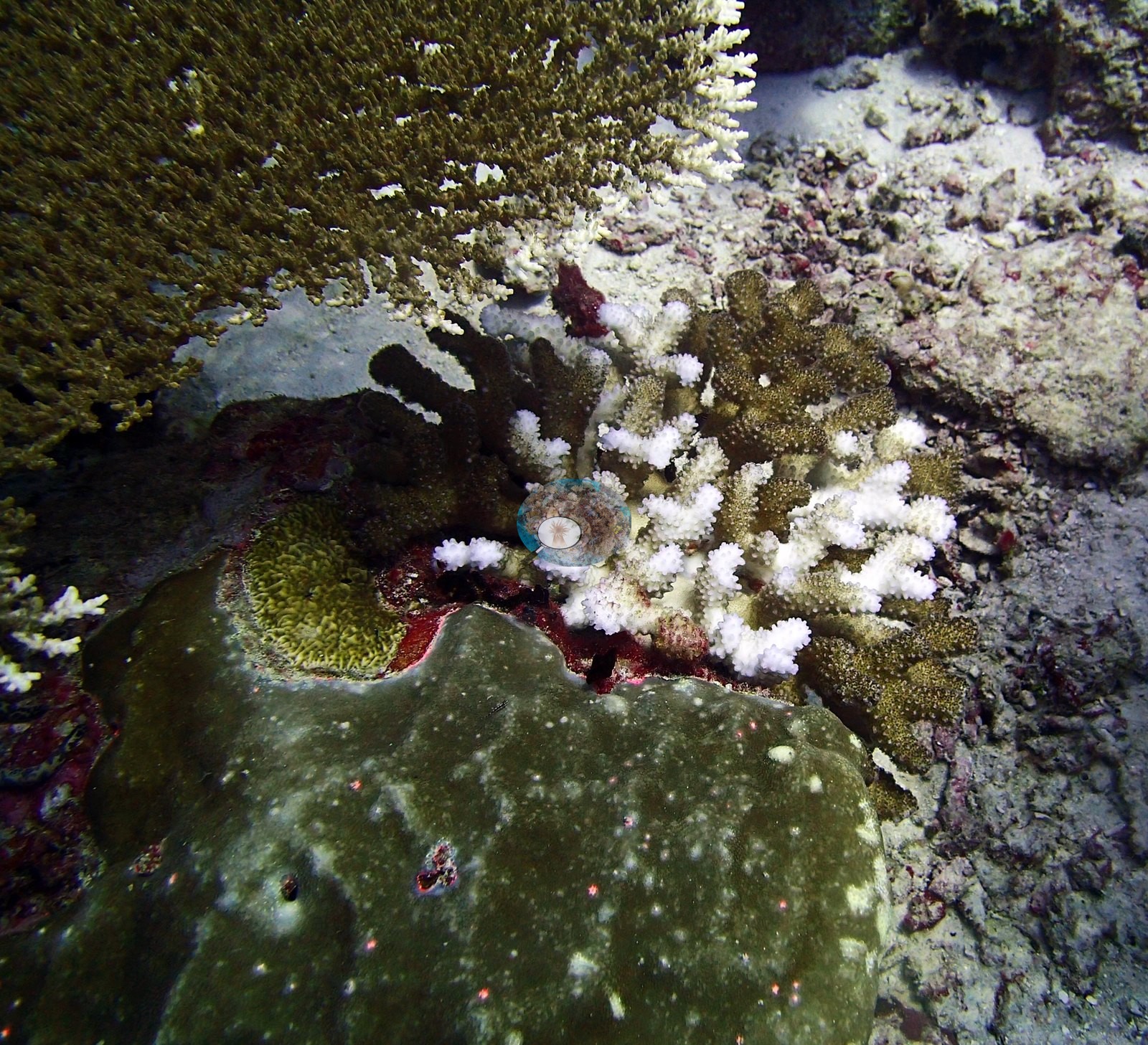
Bleaching is localized, consistent with the low published figure of 4.2% (77th of 98). One frame contains a compact branching colony uniformly white beneath pigmented tables and darker neighboring branches, its intact fine structure supporting a high-confidence call. Another frame holds a branching colony with dark tissue centrally and extensive coherent white branch tips and patches — partial bleaching is plausible, though active growth margins may contribute, so it is retained at medium confidence. Several pale table edges were deliberately excluded because their narrow, regular margins are compatible with normal growth, and bright strobe illumination exaggerates contrast on upward-facing plates. No crown-of-thorns starfish (COTS) or other corallivores evident.
Fish and other fauna
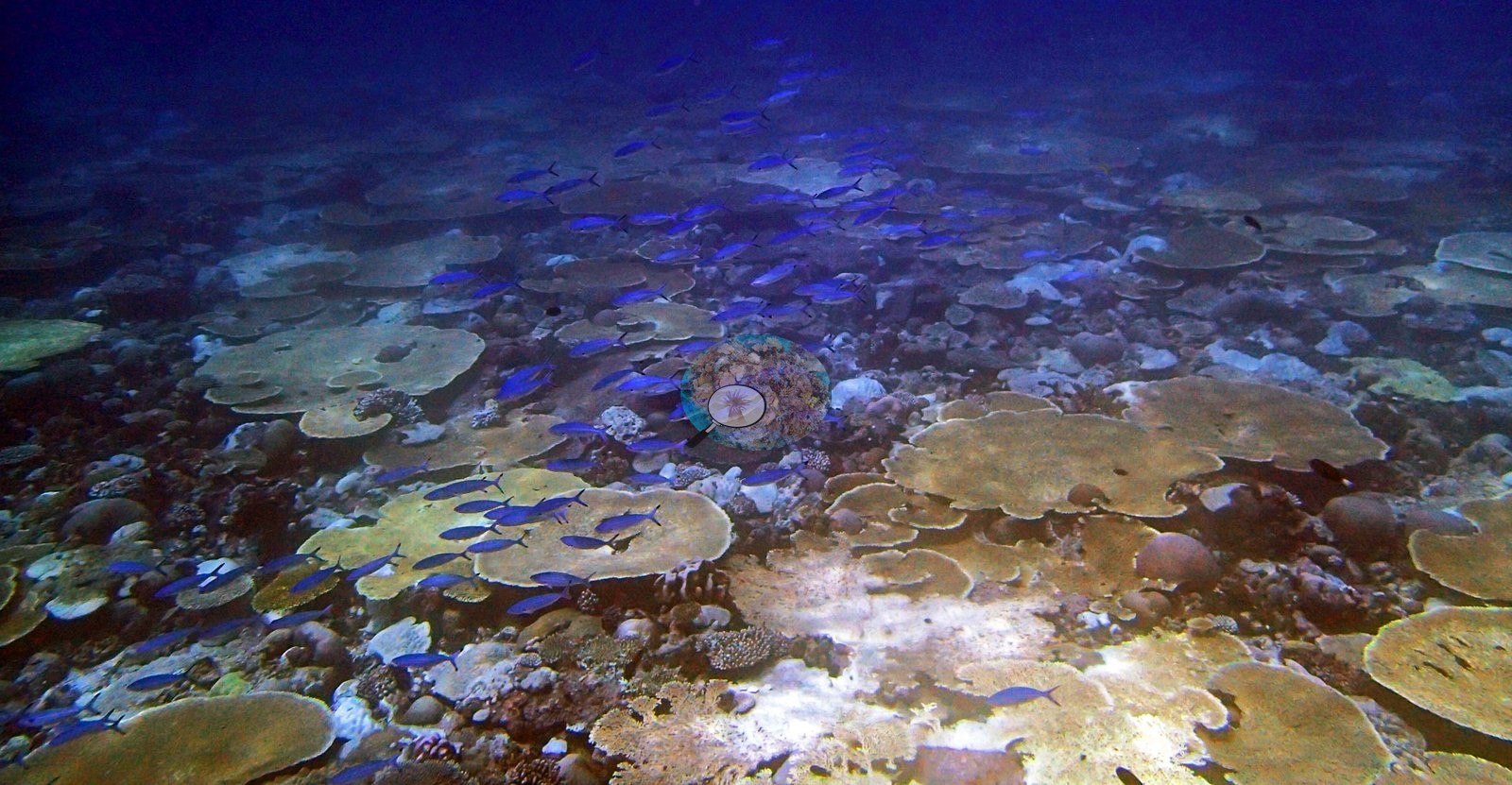
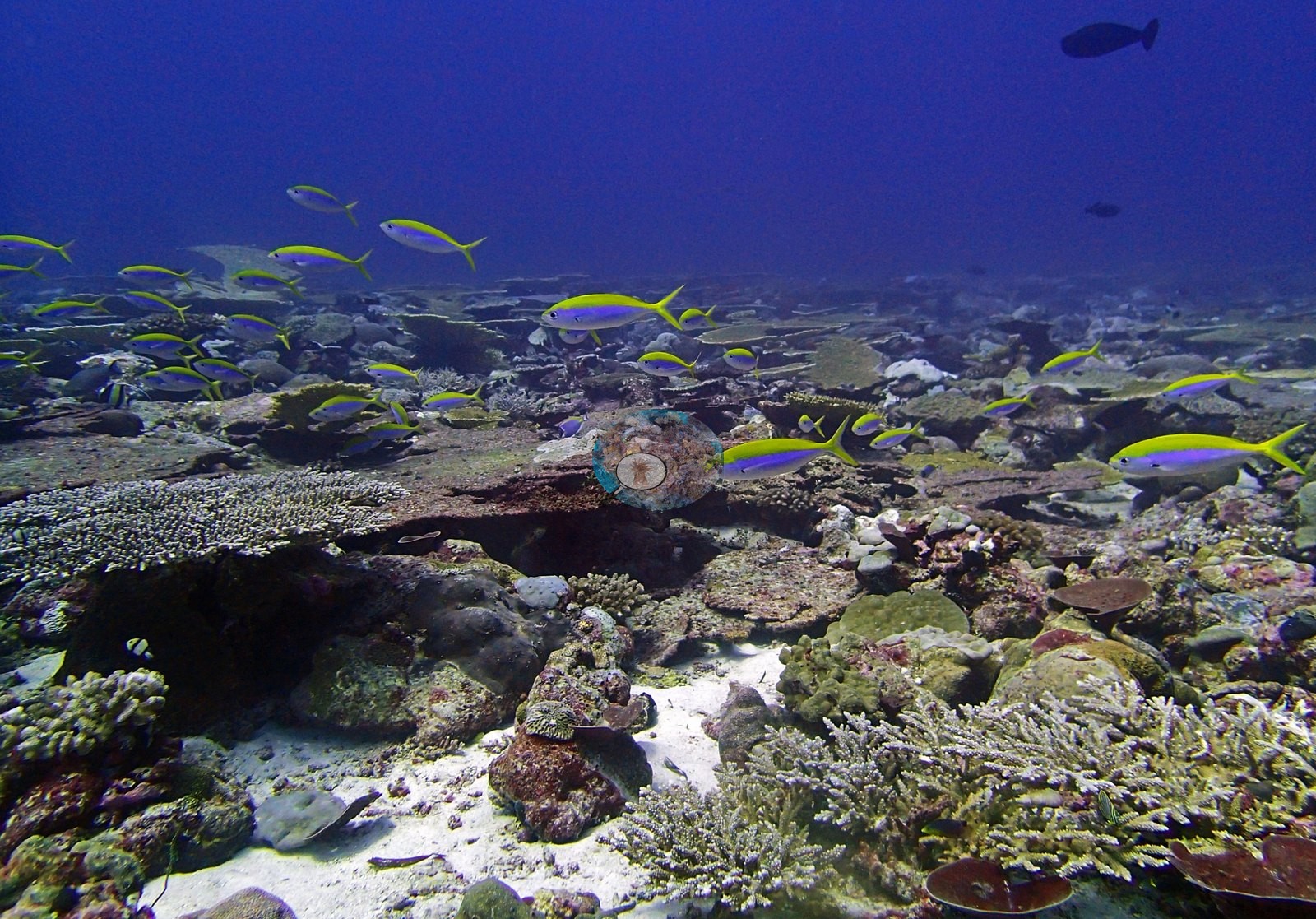
Fish abundance is visually notable. Two frames show streams of yellow-striped fusilier-like fishes above the tables and a third records another dense school over the canopy, with darker surgeonfish-like silhouettes and small reef fishes throughout (e.g., Image 1).
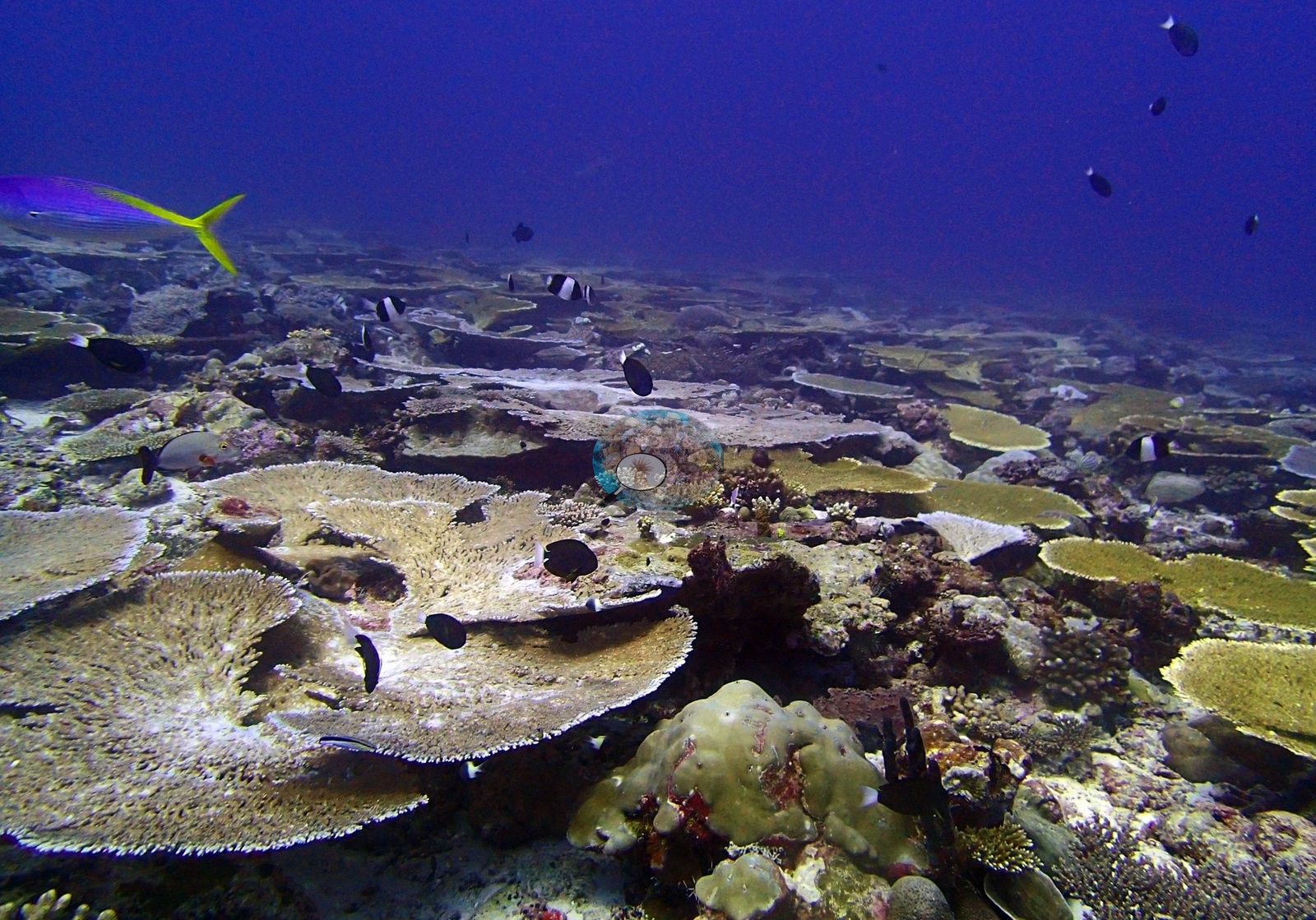
These are qualitative habitat-use observations, not standardized counts; repeated frames may contain the same individuals and the camera tracks especially scenic schools.
Comparisons with other data
No prior survey data from this site. If you would like to share yours, please email us.
Other notes
The folder is named `BiSp96-great site-finished`, and the field label is fully borne out by the numbers.
CV model comparison
More info
Those are point counts on the photographs; this is a diver swimming a transect. The models and the reference never saw the same thing. ⚠ SITE-LEVEL ONLY. The 2,500 frames were not associated with any transect taken within 200 m of them, so transect-vs-image comparisons are site means, never frames. The transect value is already in the pin `cover` field (109 of 112 pins, sourced to the paper's suppl. S1) and is read from there, never re-imported. The transect is THE coral-cover value for this site and stands alone. The rows below it are a methods comparison only: no computer-vision value is averaged with it, feeds the headline, or carries over to the site's cover figure (Anderson, 2026-09-22).| Method | Hard-coral cover (%) |
|---|---|
| Transect (published) | 86.0 |
| CoralNet | 55.6 |
| In-house DINOv3 | 49.3 |
| CoralSCOP edited | 48.2 |
| Claude | 51.5 |
Data & links
- Read the full site report ↗
- Download benthic survey data (CSV) ↗
- Download all LOF-GRE data (933 sites) ↗
- CoralNet image repository for this region ↗
- Photo portfolio ↗
- Coral Reef Diagnostics page for this area ↗
All images from Coral Reef Diagnostics. Data are from Coral Reef Diagnostics.
 © Coral Reef Diagnostics.