
Part of the regional summaries: Chagos Archipelago - Salomon / Blenheim / Speakers Bank and Chagos Archipelago
More info
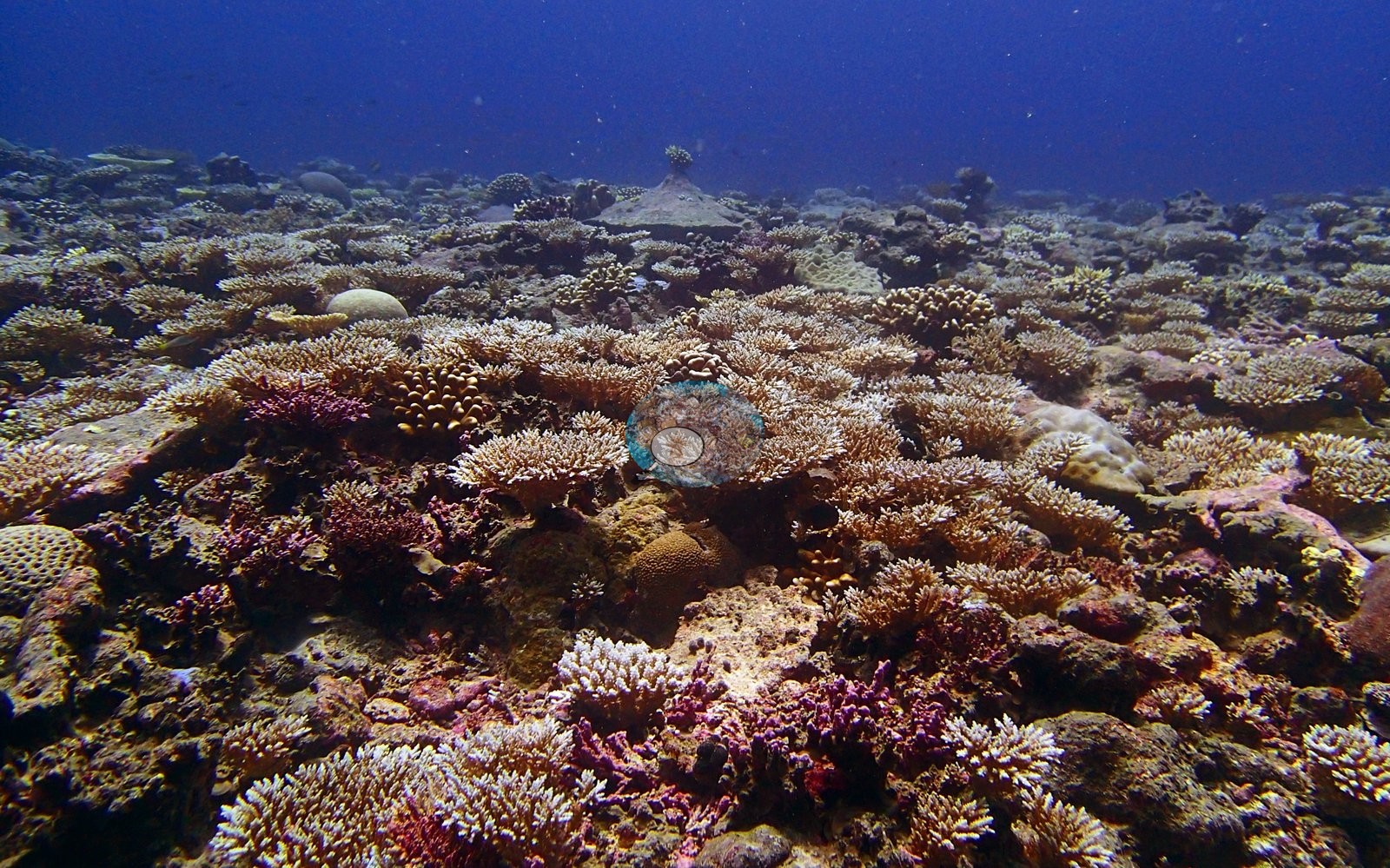
Chagos (NOAA CRW virtual station)A sheltered bank reef at about 25 m in Speakers Bank, the northernmost Chagos survey area, with 40% coral cover and 27 genera, including the Chagos-endemic brain coral Ctenella chagius. Acropora dominates the shallows, then gives way to Montipora and other corals deeper down, and bleaching was among the lowest recorded. Surveyed on the Living Oceans Foundation's Global Reef Expedition.
Two other CRD dive sites within 5 km shown in orange — click a marker to open its page.
🗺 Detailed map of the Global Reef Expedition dive sites, Speakers Bank, Chagos (Khaled bin Sultan Living Oceans Foundation; opens in a new window)
4 of these 8 photographs are shown beside the text that discusses them under "Site description" below.
Site description
Setting
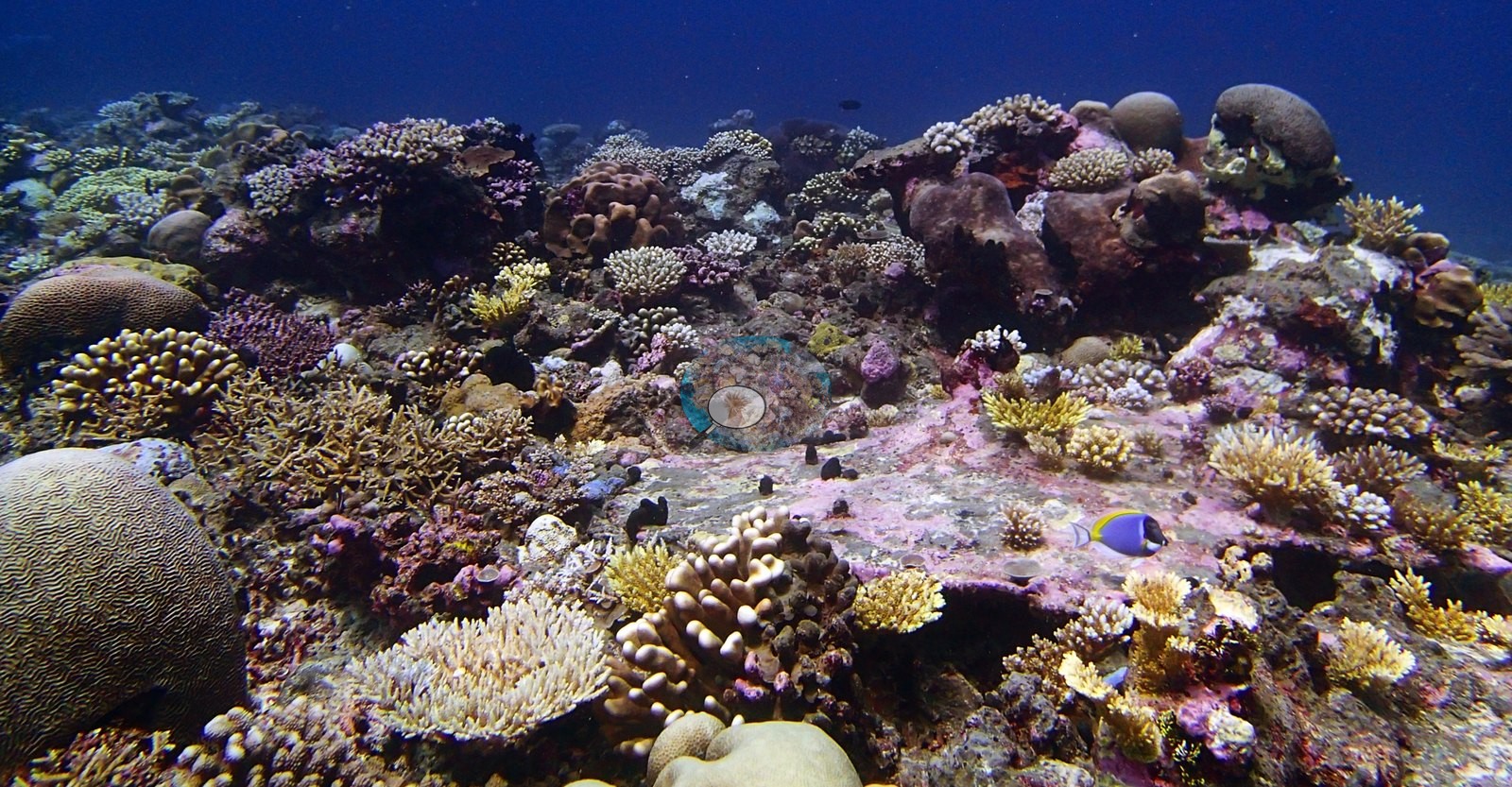
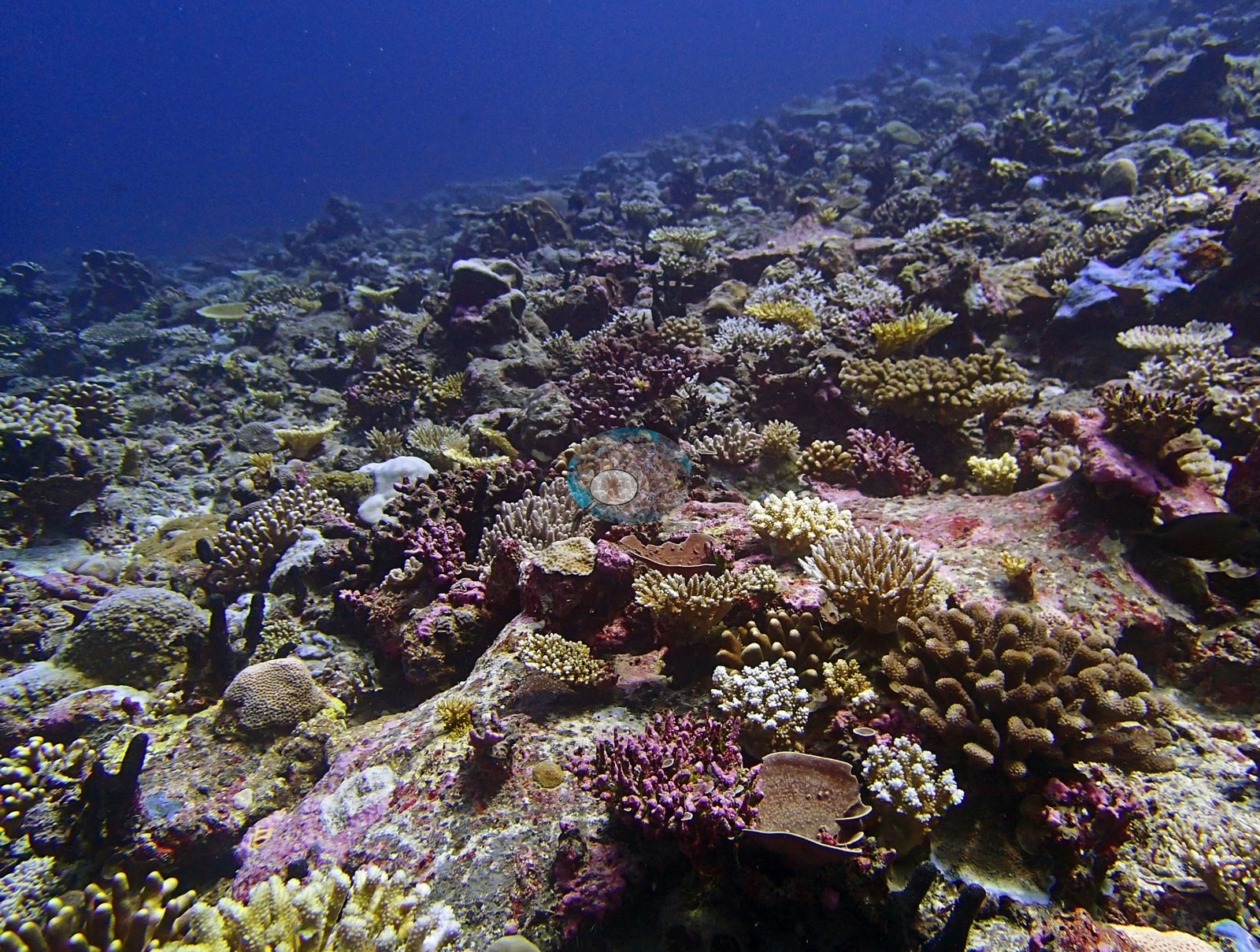
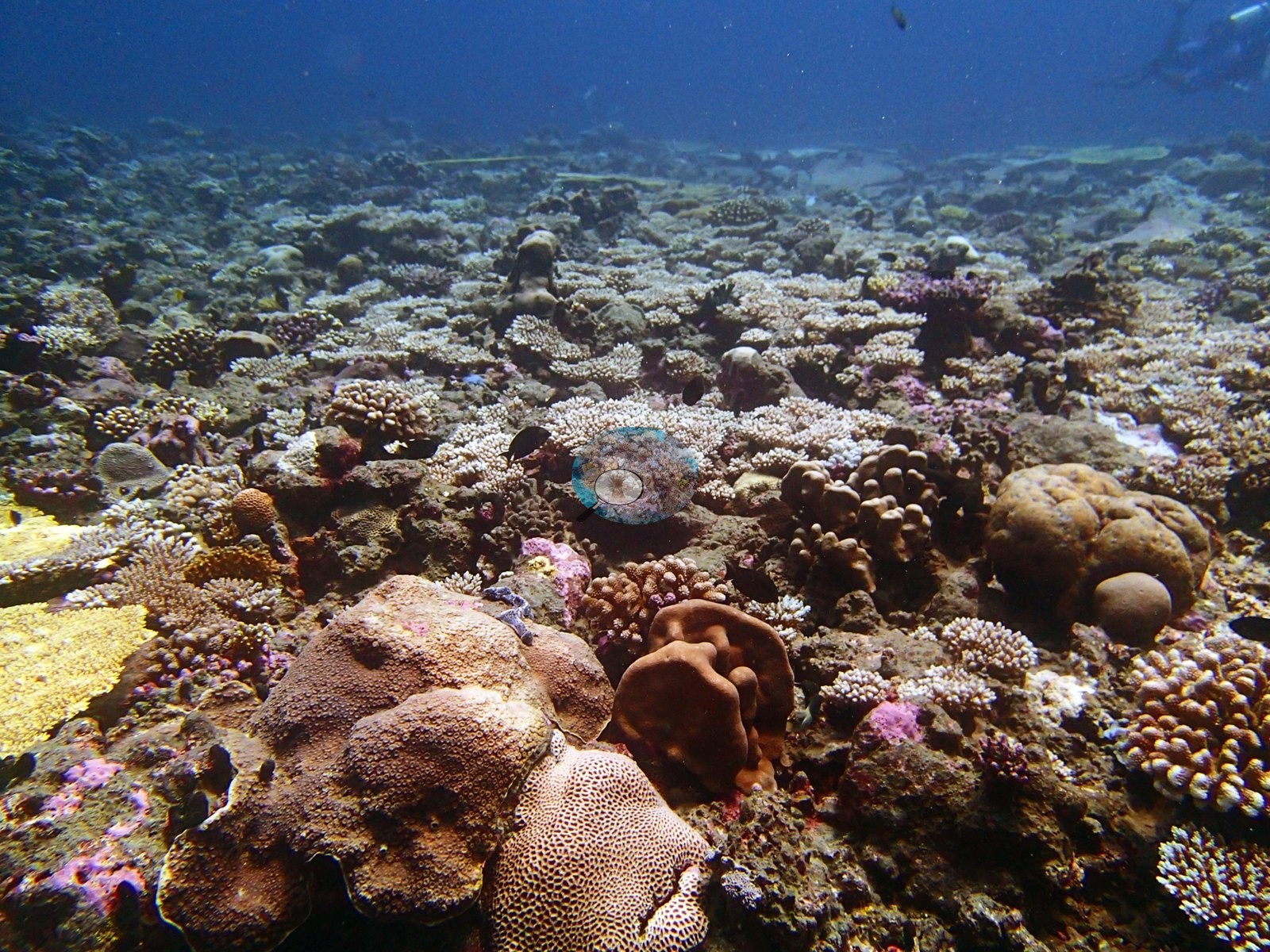
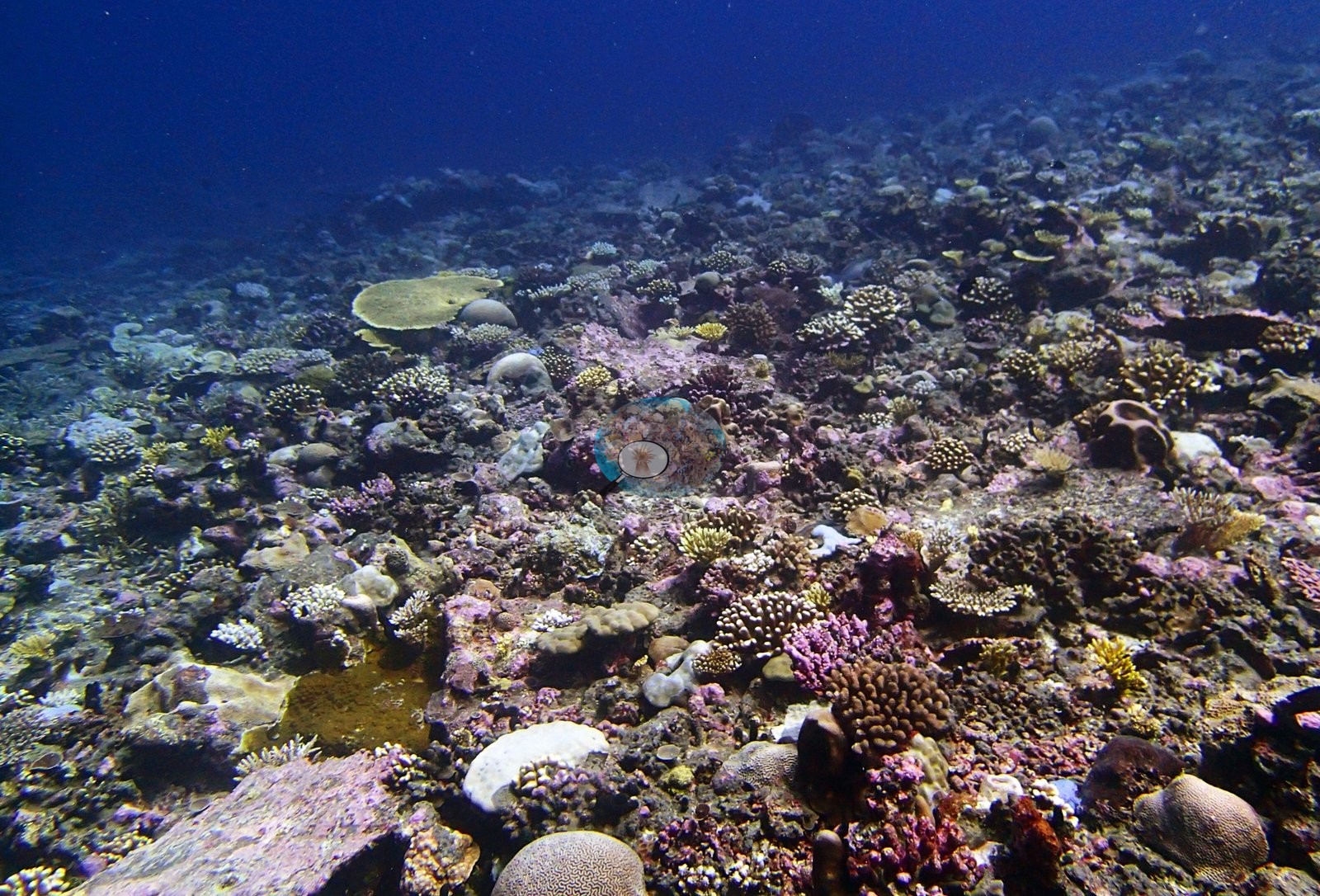
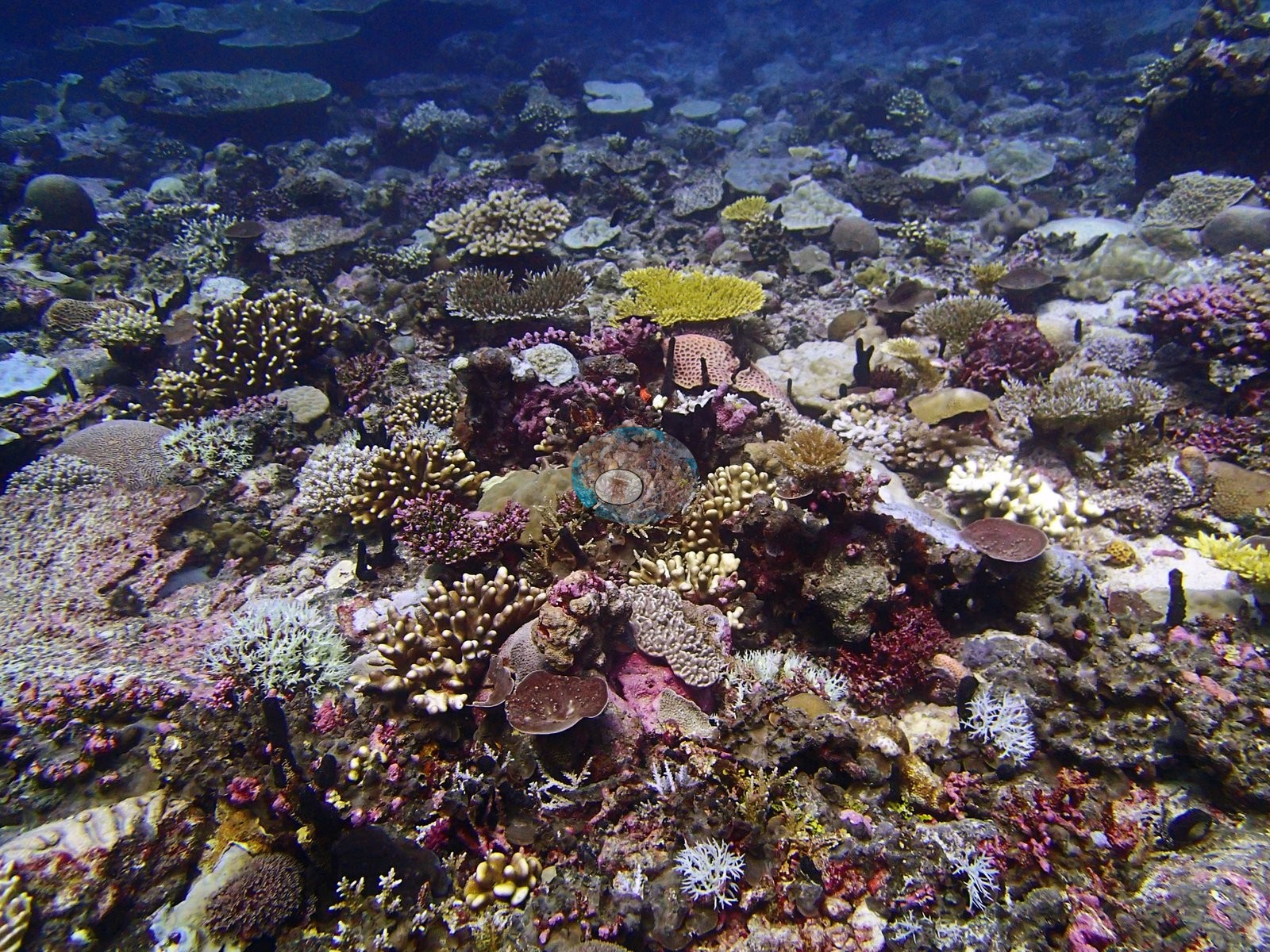
BISP90 is a protected submerged bank reef inside Speaker's Bank, the northernmost of the Chagos survey areas, surveyed 24 April 2015 at 24.9 m (e.g., Image 2, Image 4).
General benthic features
Across 27 genera, 40th of 109, Acropora leads at 11.64% of the benthos, 29% of all coral, ahead of Porites 5.77% and Montipora 4.61%, and the Chagos-endemic brain coral Ctenella chagius is present at 0.27%. The depth finding is a clean handover: the shallower stratum carries 47.1% coral and is emphatically Acropora ground at 18.14% of the benthos, 38% of its coral, while the deeper falls to 32.5% and the ordering inverts entirely — Montipora takes the lead, Acropora collapses to 5.13%, and Goniastrea and Echinopora rise roughly nine- and sixty-fold from near-absence, so the site's figures for those two genera describe no depth at this reef.
Coral cover
Formal transects recorded 39.8% coral against 43.4% algae — 53rd of 109 Chagos sites for cover, 40th for algae — with an unusually evenly split algal budget of macroalgae 12.6%, turf 11.4% and coralline algae 10.3% in near-equal thirds. That deeper stratum rests on three transects against thirteen shallow, yet is weighted equally; transect-weighting would give 44.38% rather than 39.79%. Image methods read 16 to 18 points below the transects (CoralNet 23.3%, Coralscapes 22.3%) and should not be averaged with them. Coral cover: 40%. Live hard coral measured on the in situ benthic transects of the LOF BIOT-1 expedition (Mayfield & Dempsey 2026, Oceans, supplemental S1), against algal cover of 43.4% of the benthos. The transect figure is this site's authoritative cover value; no image-derived product overrides it. Across methods the same reef reads: transects 39.8% · CoralNet points 23.3% · Coralscapes masks 22.3% (8 frames). These products have different sampling footprints and denominators and should not be averaged.
Stressors
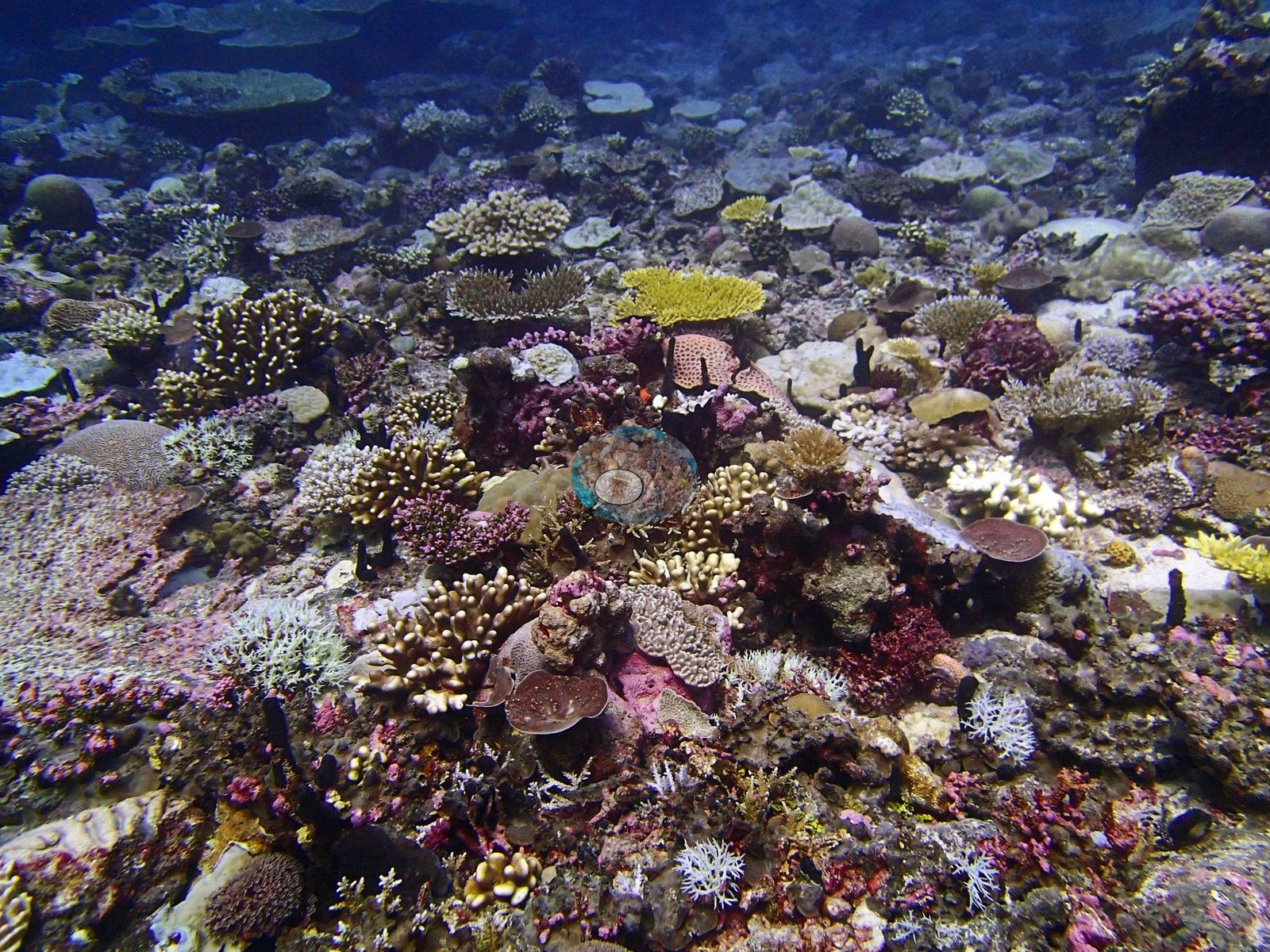
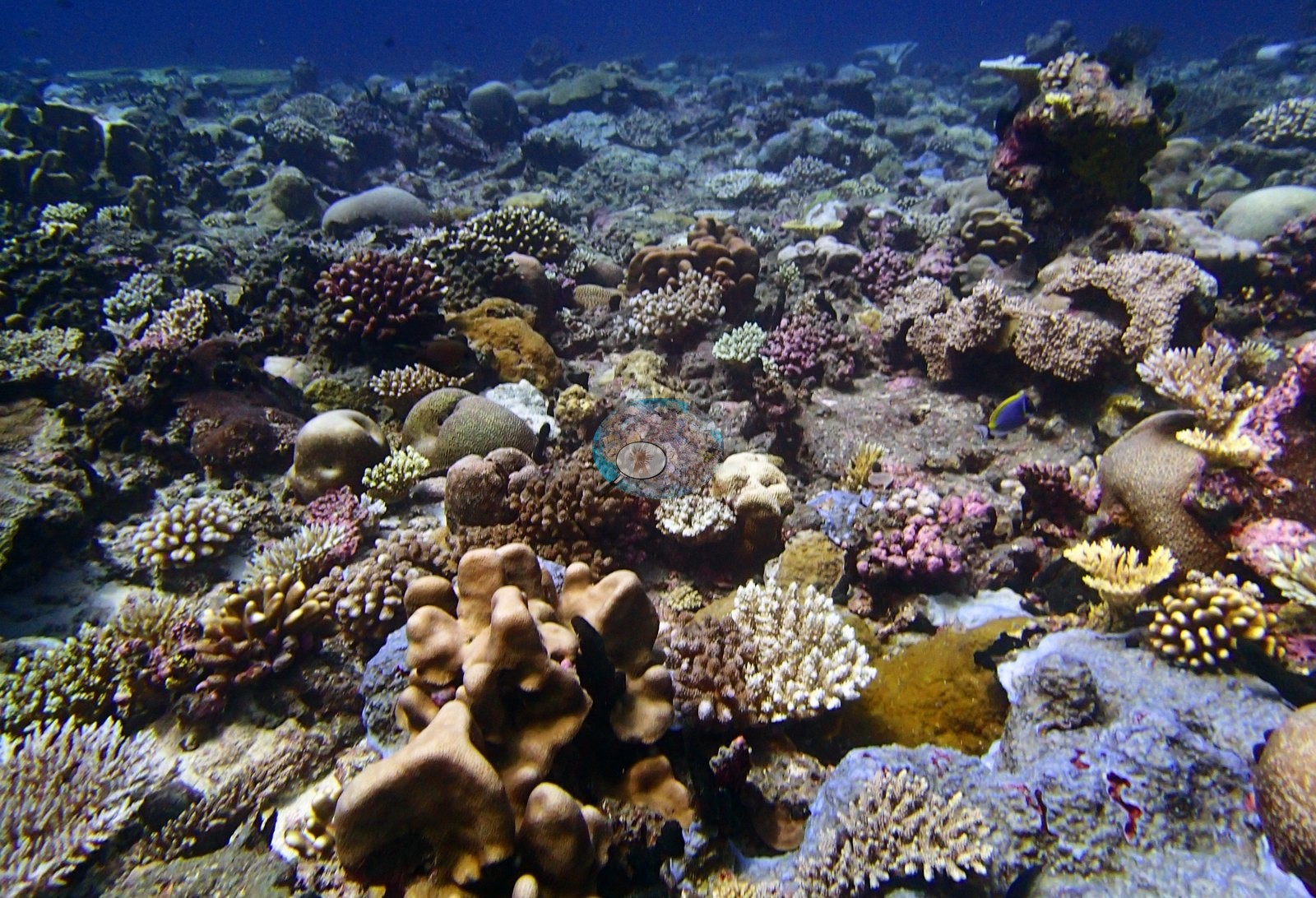
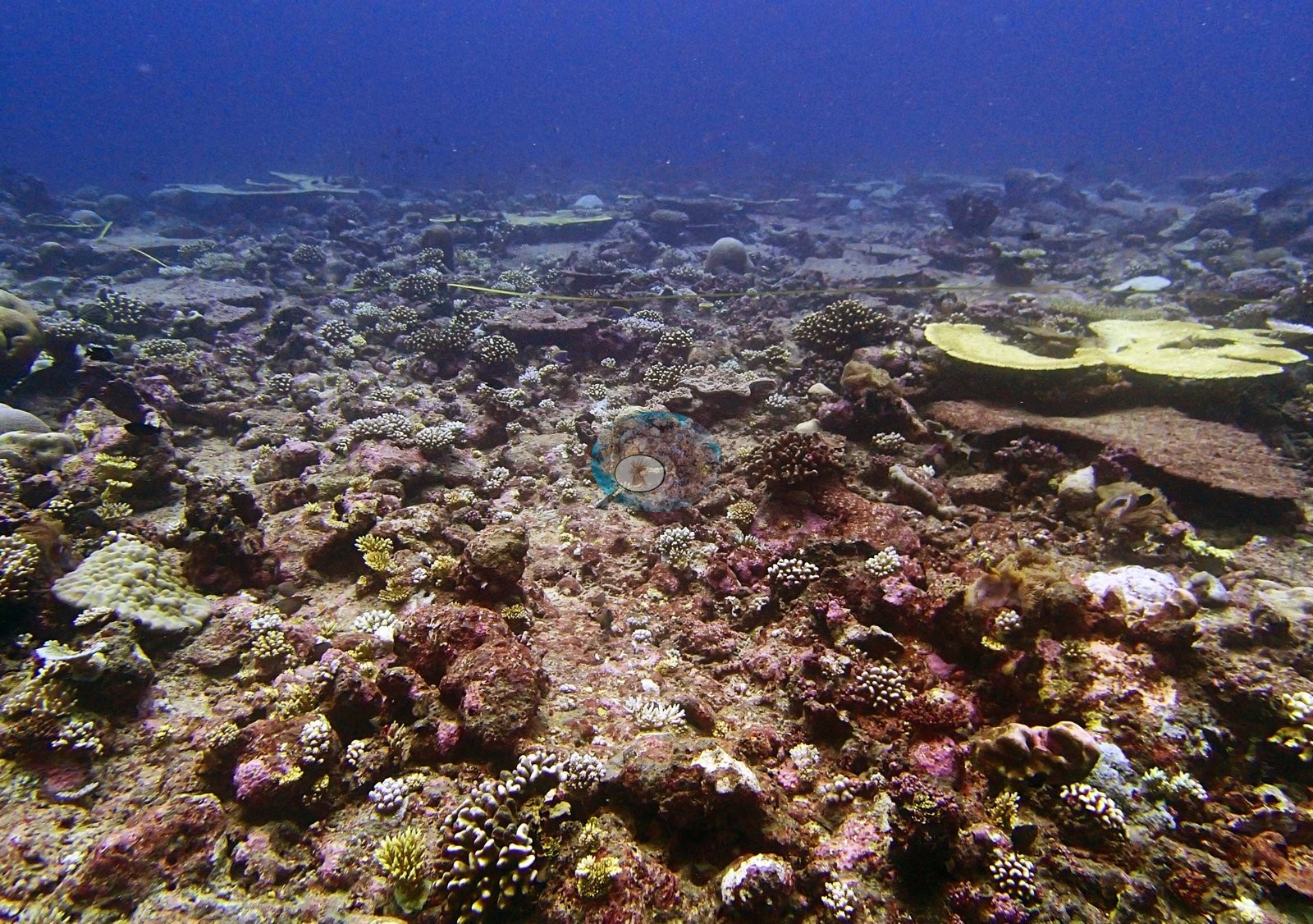
Bleaching on the canonical % bleaching (2nd training) column is 2.08%, 96th of 110 dives, the lowest quartile, with both runs agreeing. All eight retained frames were reviewed: a previous reviewer logged high-confidence bleaching in two of them, and those observations stand, but this rebuild rates them lower — much of the coral here is naturally cream-tipped corymbose Acropora, so pale branches are not by themselves diagnostic (e.g., Image 1, Image 3).
No crown-of-thorns, disease, or predation.
Comparisons with other data
No prior survey data from this site. If you would like to share yours, please email us.
CV model comparison
More info
Those are point counts on the photographs; this is a diver swimming a transect. The models and the reference never saw the same thing. ⚠ SITE-LEVEL ONLY. The 2,500 frames were not associated with any transect taken within 200 m of them, so transect-vs-image comparisons are site means, never frames. The transect value is already in the pin `cover` field (109 of 112 pins, sourced to the paper's suppl. S1) and is read from there, never re-imported. The transect is THE coral-cover value for this site and stands alone. The rows below it are a methods comparison only: no computer-vision value is averaged with it, feeds the headline, or carries over to the site's cover figure (Anderson, 2026-09-22).| Method | Hard-coral cover (%) |
|---|---|
| Transect (published) | 39.8 |
| CoralNet | 27.6 |
| In-house DINOv3 | 30.8 |
| CoralSCOP edited | 37.9 |
| Claude | 24.7 |
Data & links
- Read the full site report ↗
- Download benthic survey data (CSV) ↗
- Download all LOF-GRE data (933 sites) ↗
- CoralNet image repository for this region ↗
- Photo portfolio ↗
- Coral Reef Diagnostics page for this area ↗
All images from Coral Reef Diagnostics. Data are from Coral Reef Diagnostics.
 © Coral Reef Diagnostics.