
Part of the regional summaries: Chagos Archipelago - Salomon / Blenheim / Speakers Bank and Chagos Archipelago
More info
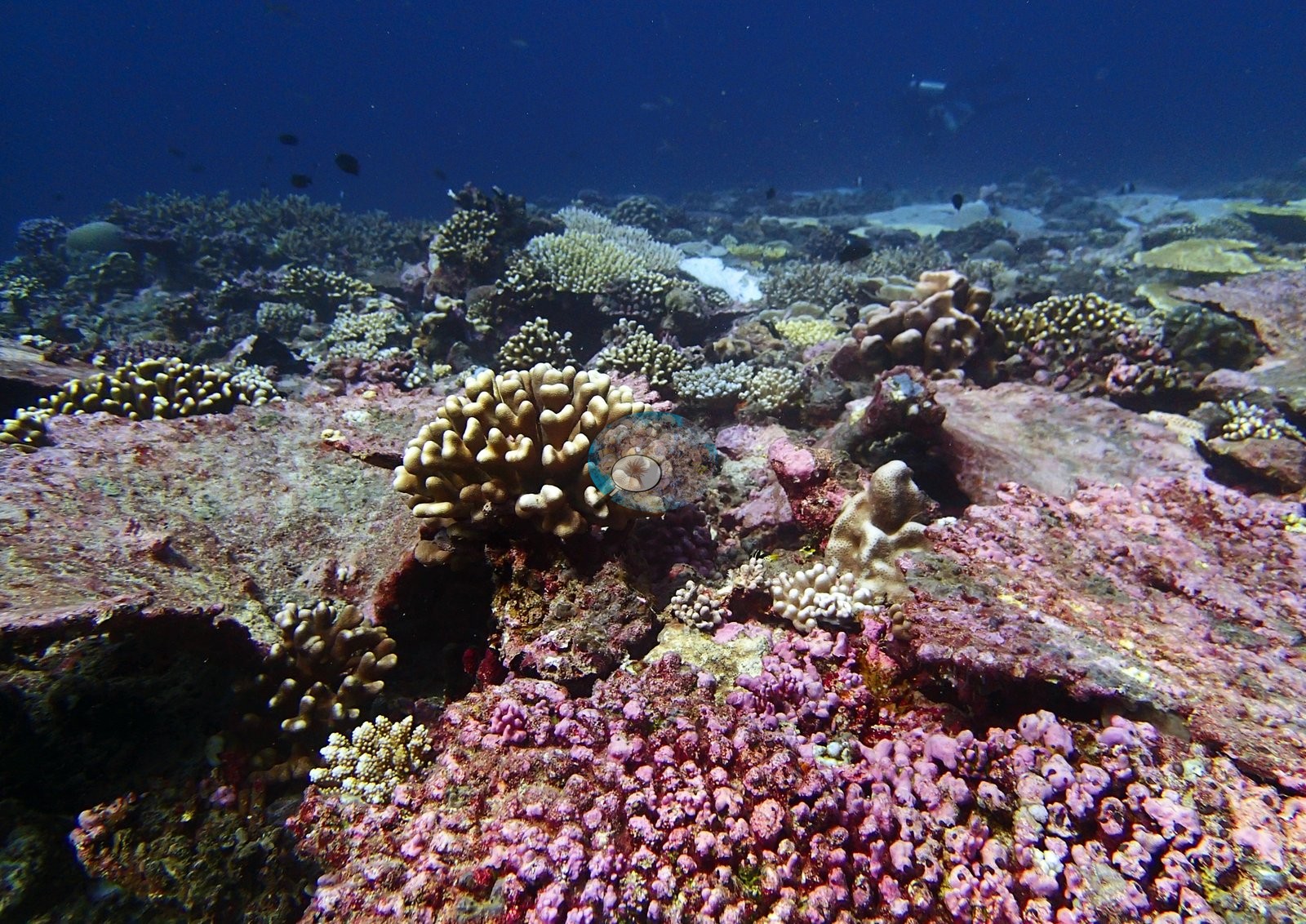
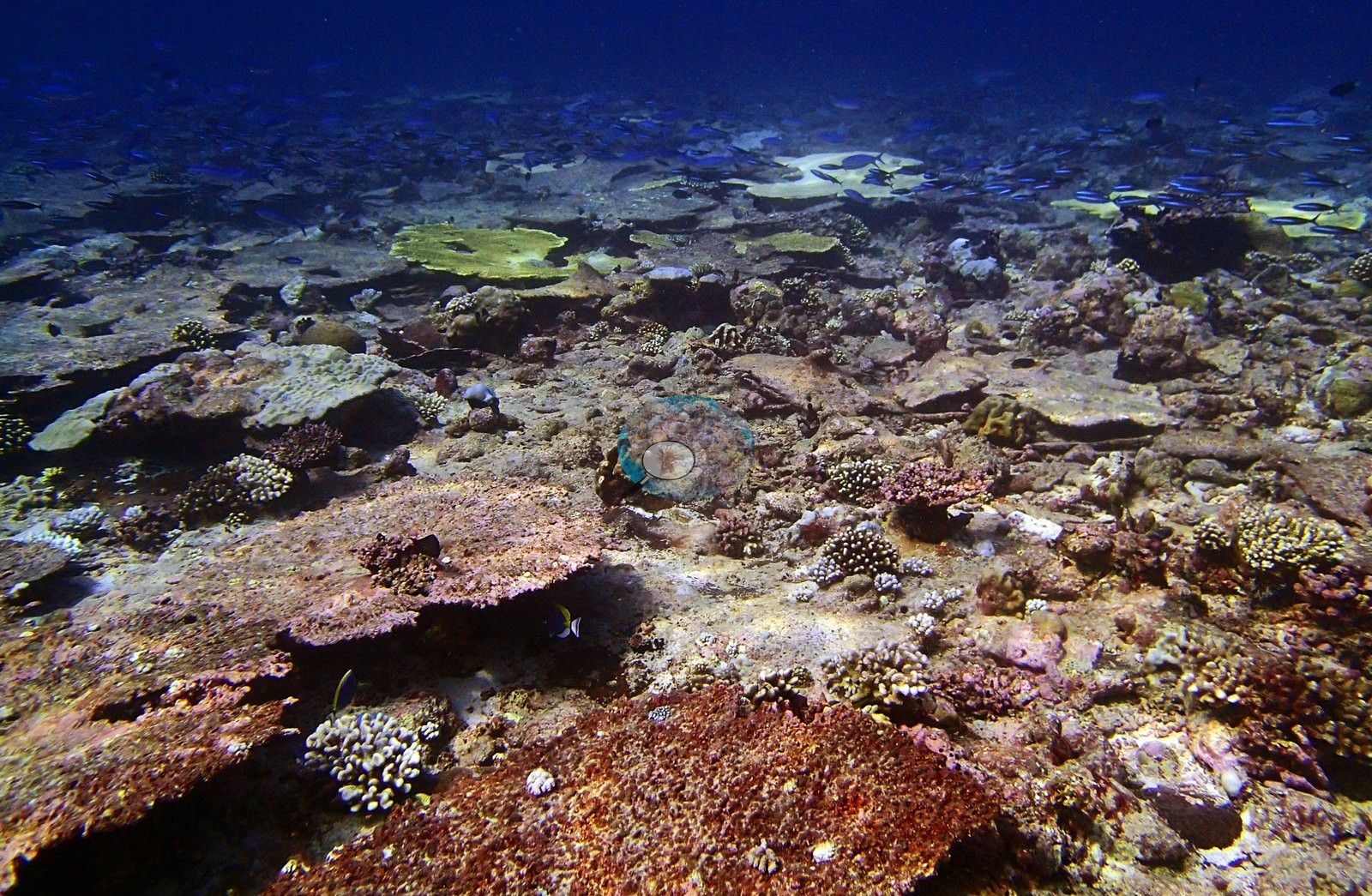
Chagos (NOAA CRW virtual station)A deep, sheltered lagoon patch reef at about 31 m inside Speakers Bank, with 29 coral genera but more algae than coral (33% coral against 55% algae, including heavy fleshy turf). Dense branching coral patches alternate with open plate-and-rubble pavement, where mixed fish schools gather. Surveyed on the Living Oceans Foundation's Global Reef Expedition.
One other CRD dive site within 5 km shown in orange — click a marker to open its page.
🗺 Detailed map of the Global Reef Expedition dive sites, Speakers Bank, Chagos (Khaled bin Sultan Living Oceans Foundation; opens in a new window)
3 of these 13 photographs are shown beside the text that discusses them under "Site description" below.
Site description
Setting
BISP89 is a deep, protected lagoonal patch reef inside Speaker's Bank, surveyed 24 April 2015 at 30.8 m.
General benthic features
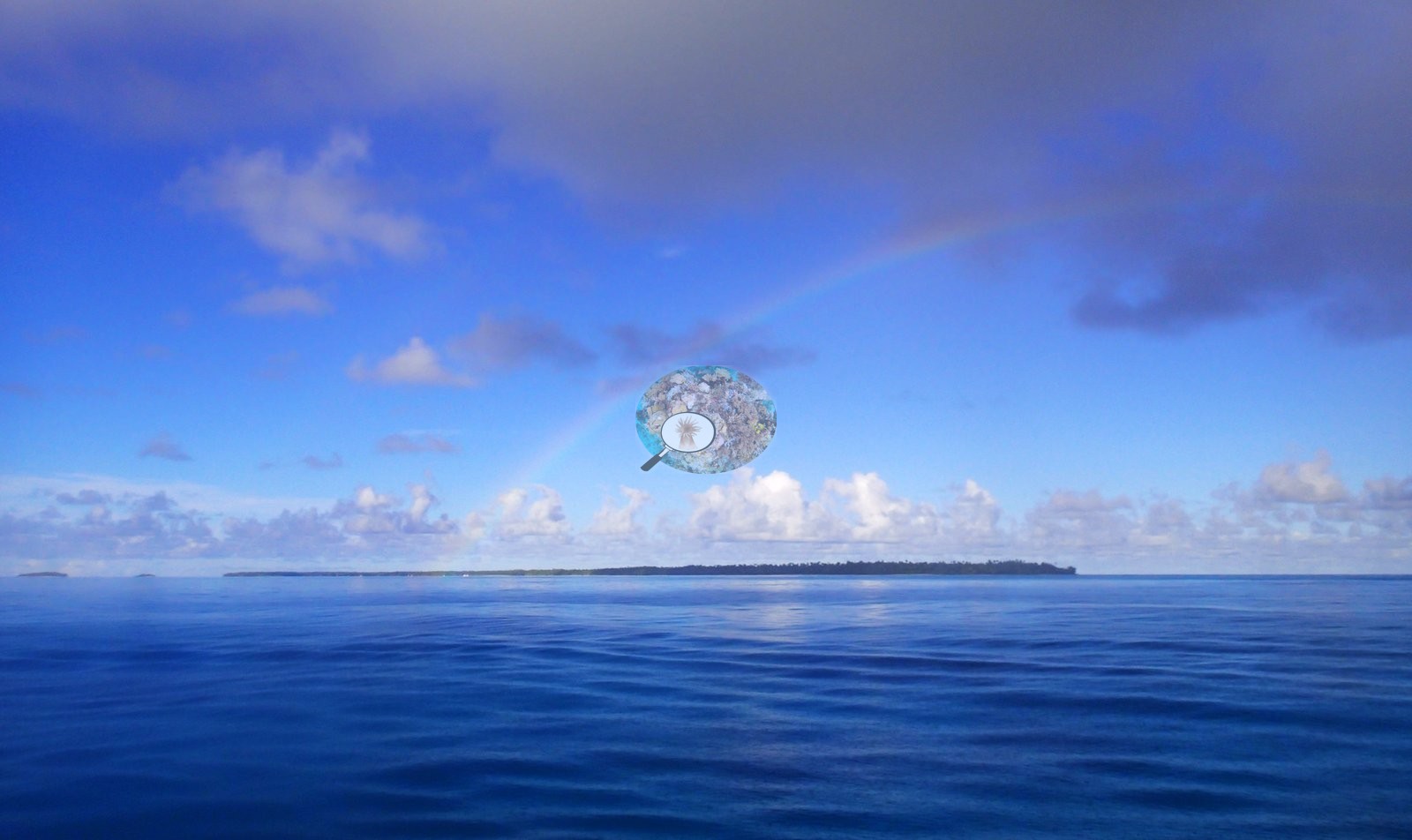
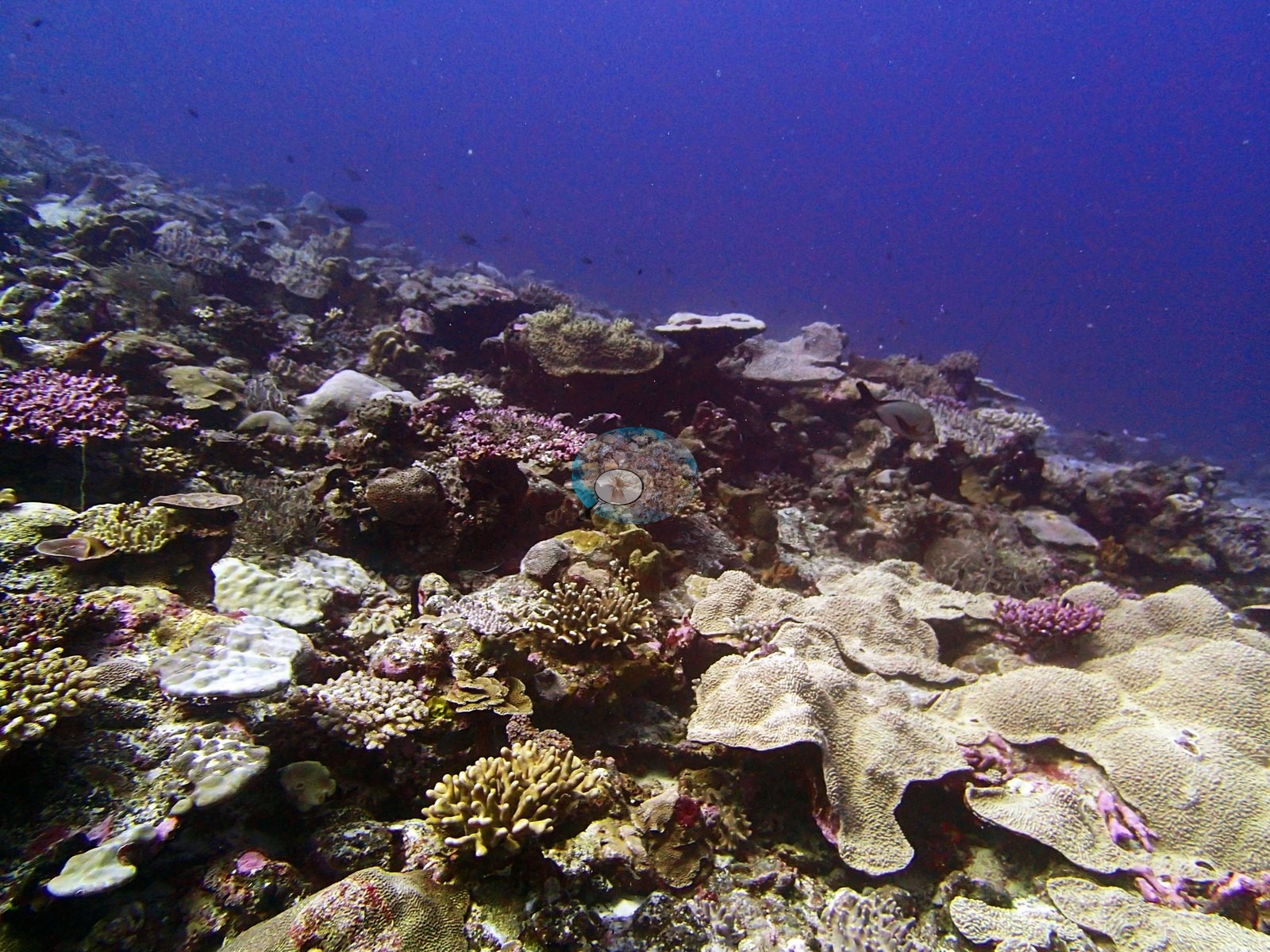
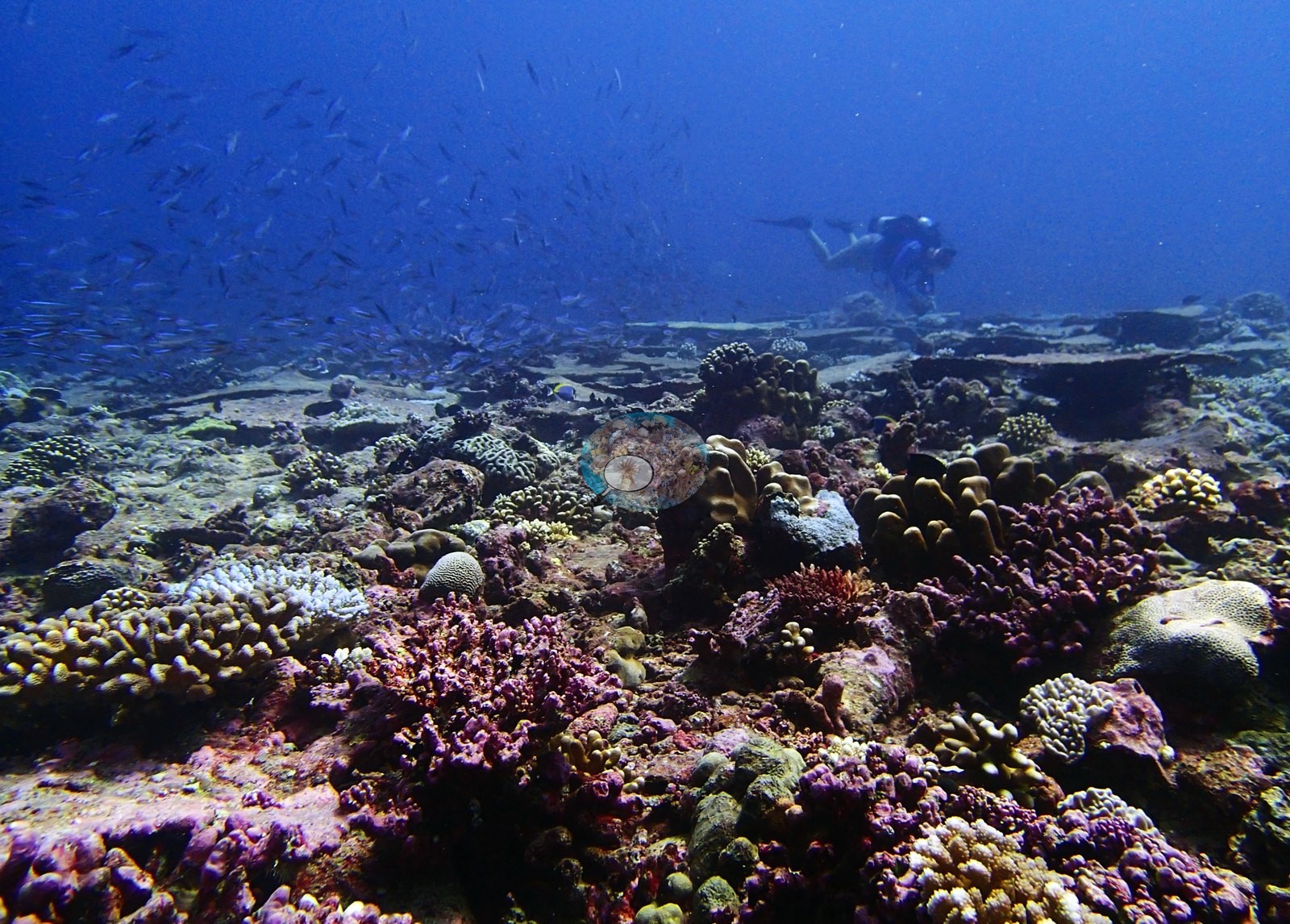
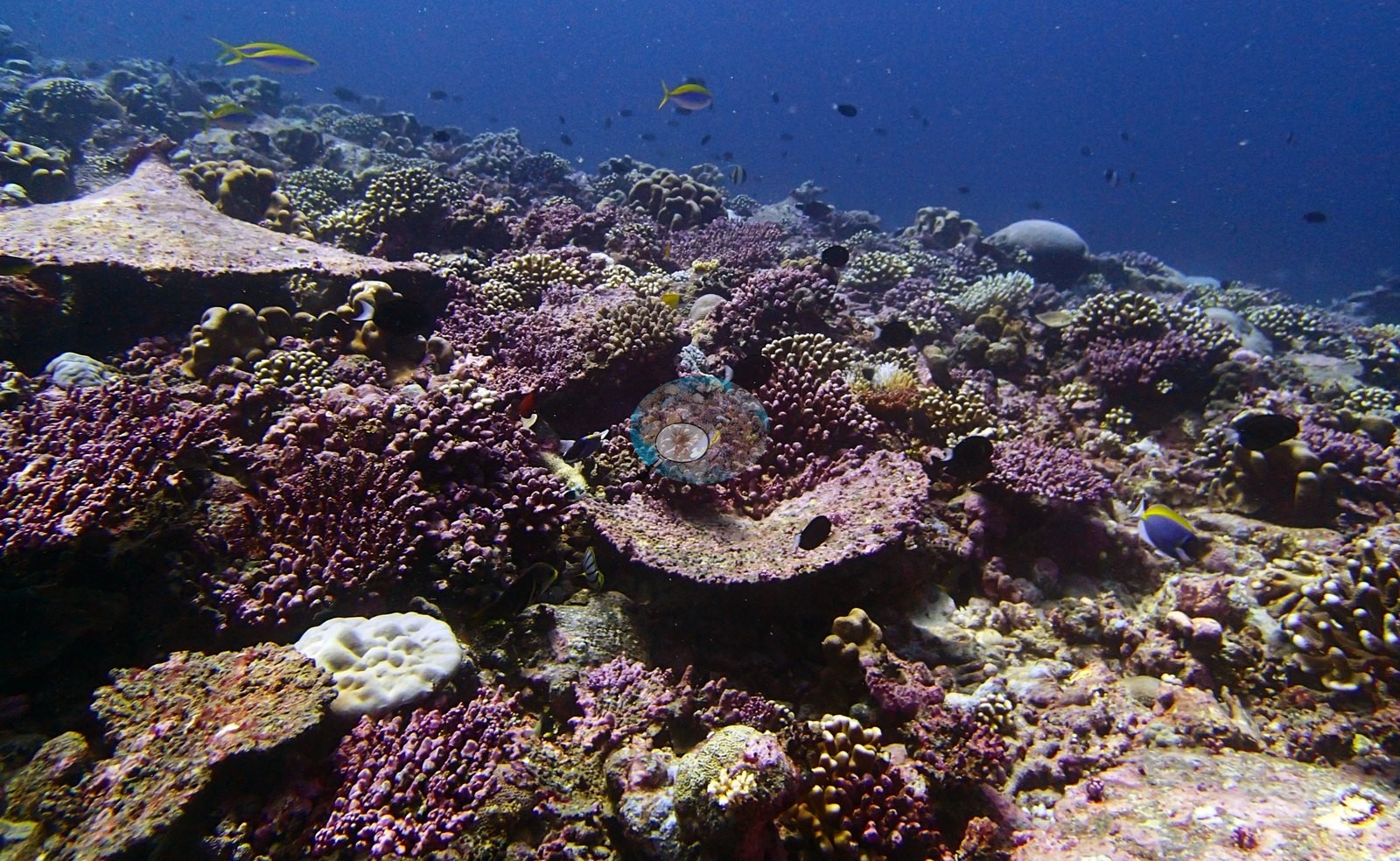
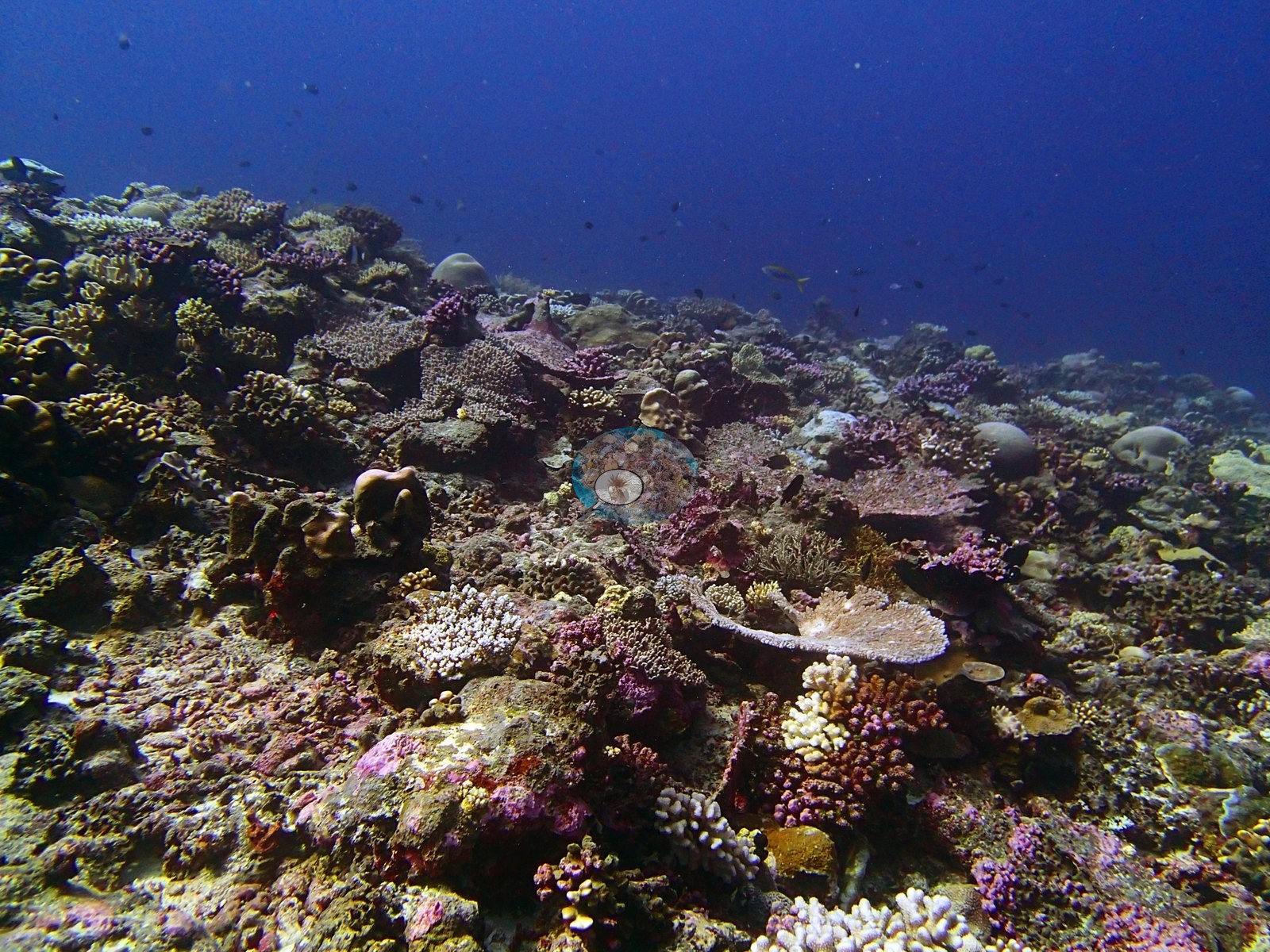
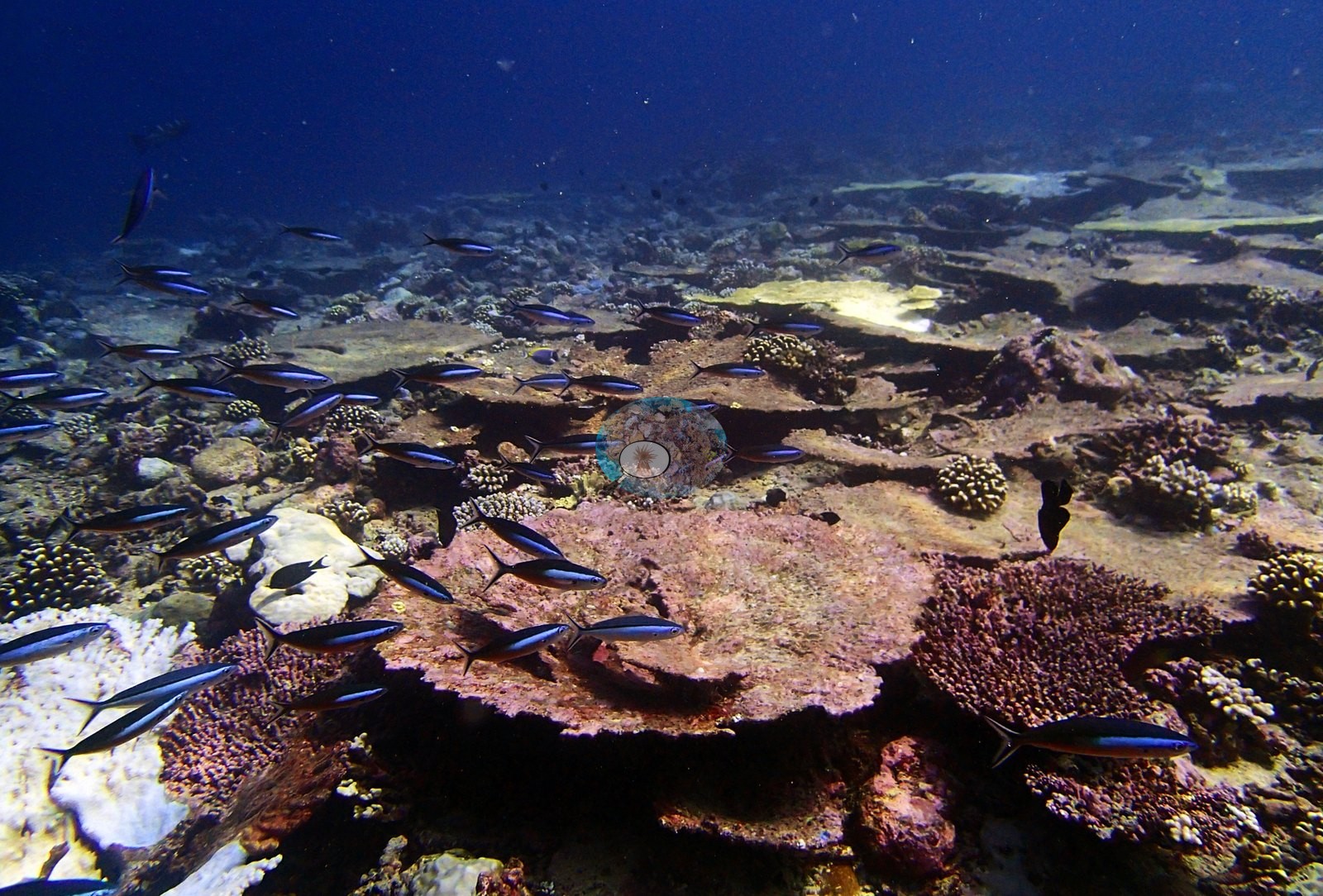
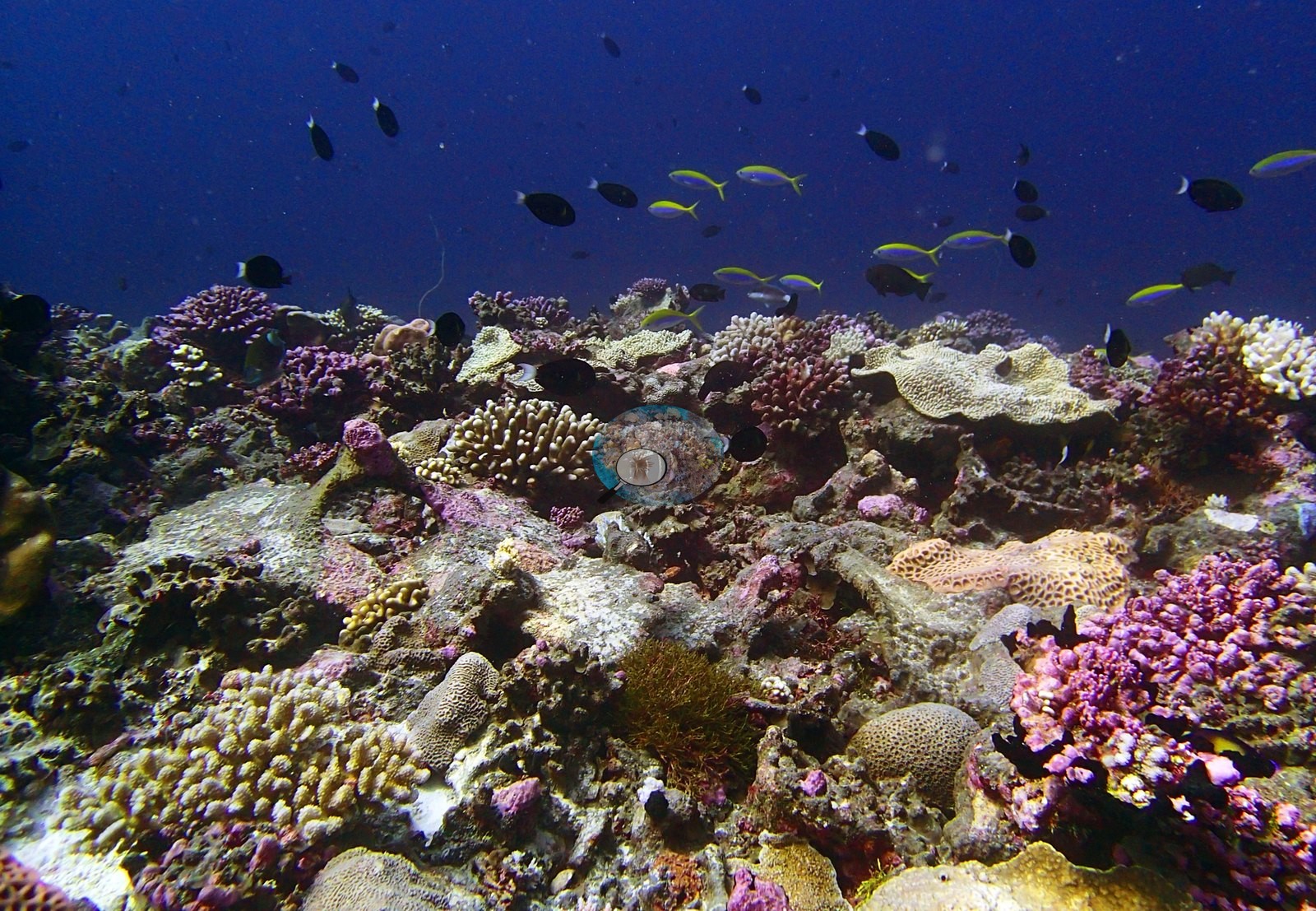
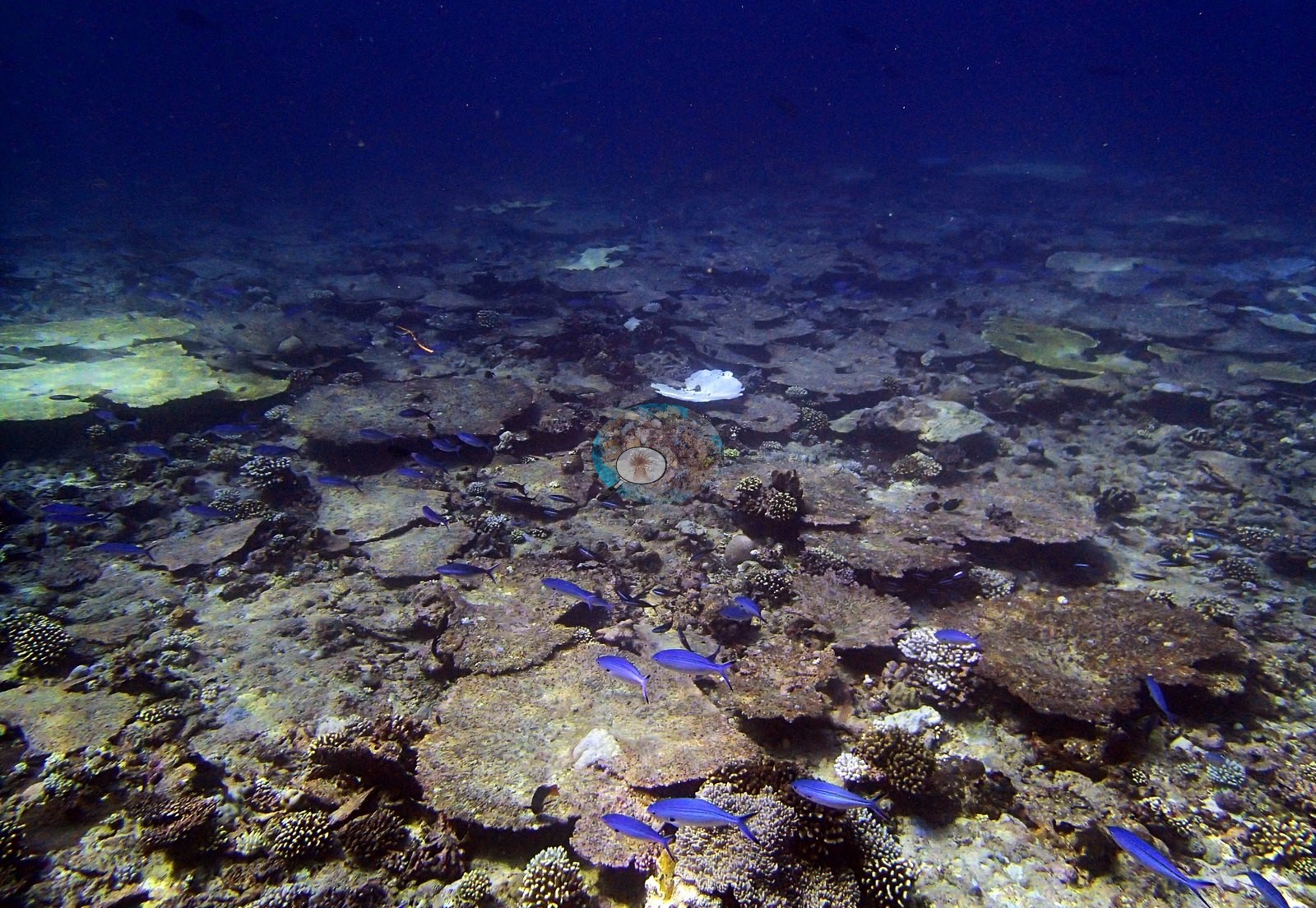
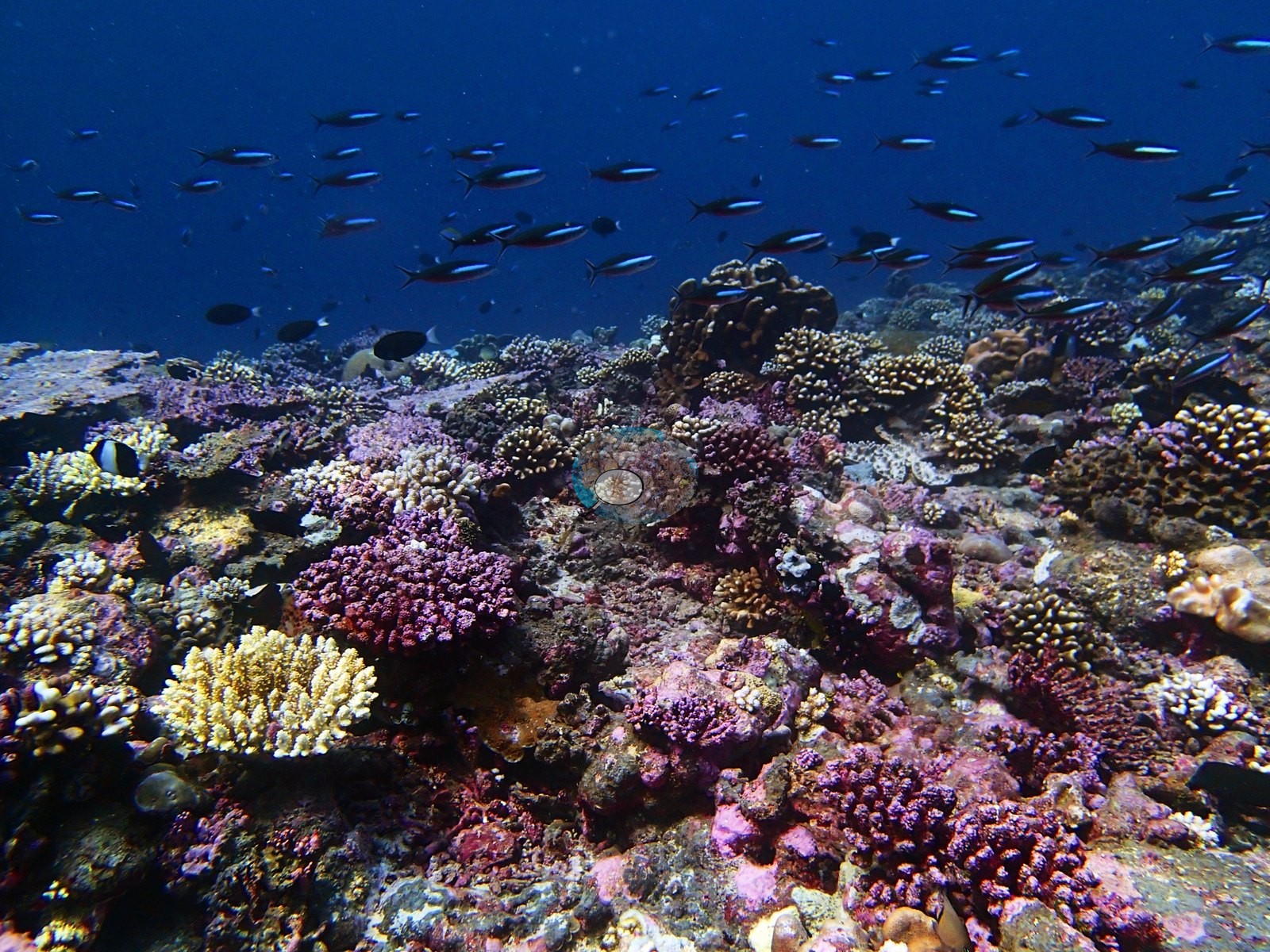
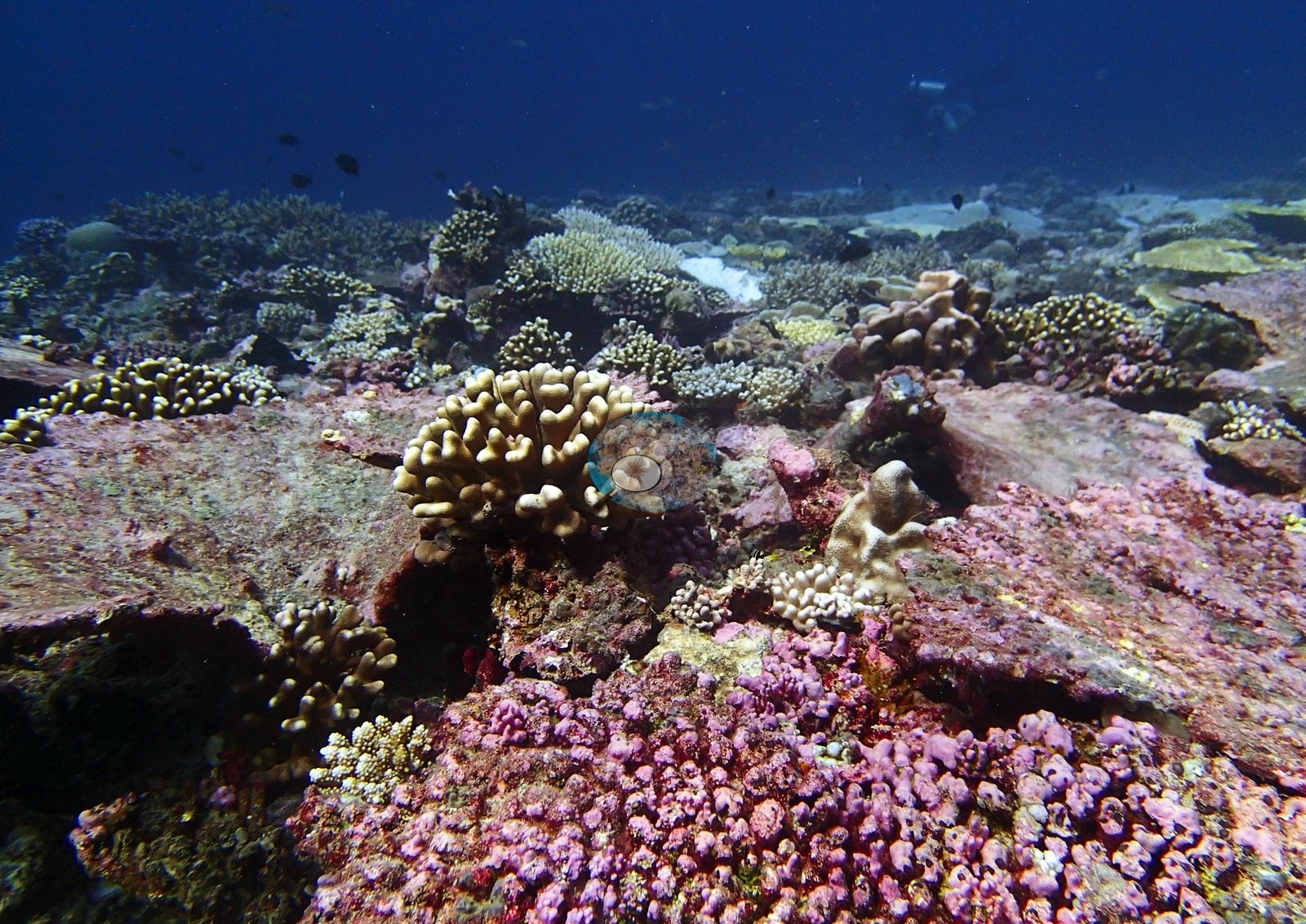
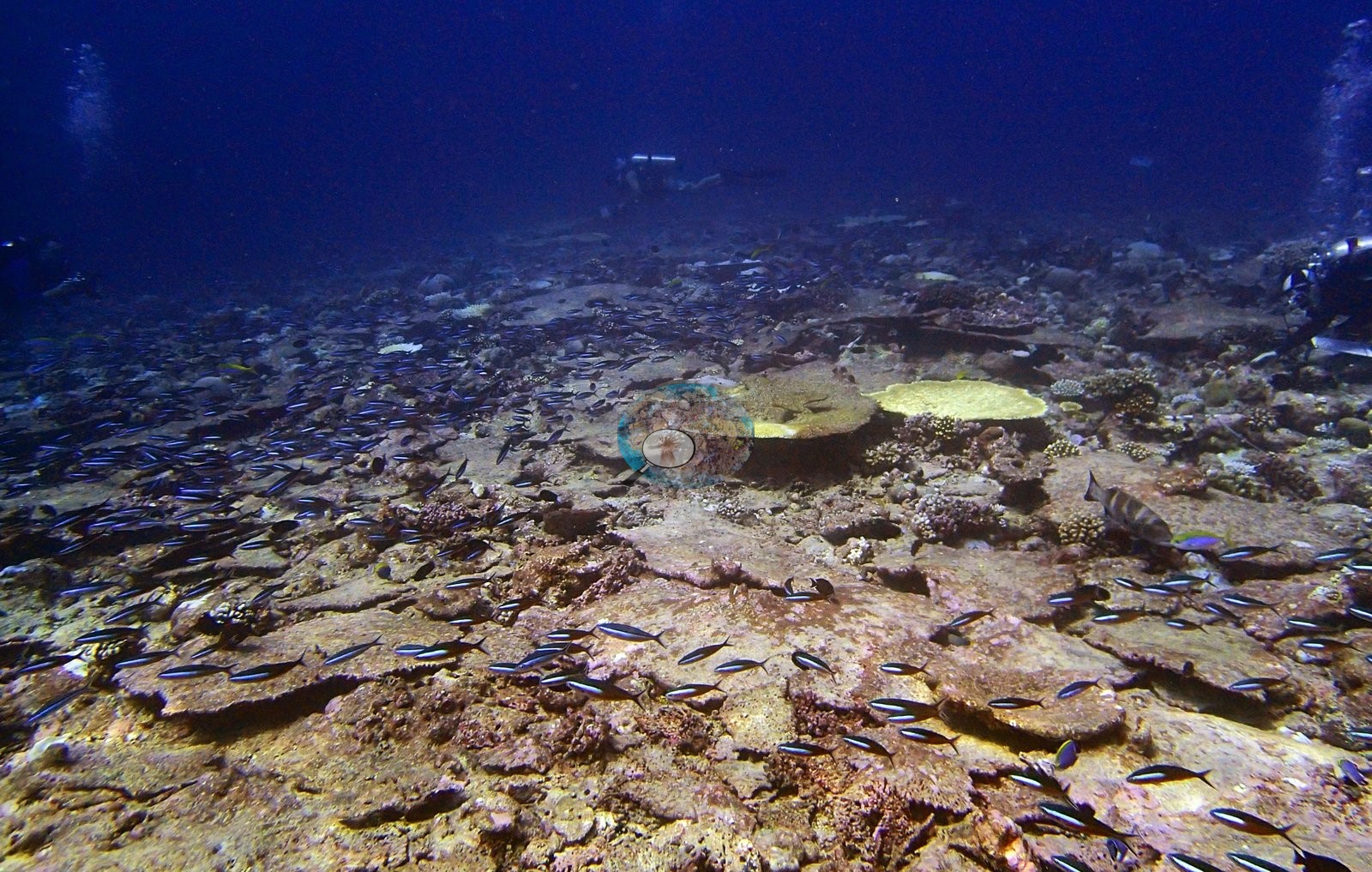
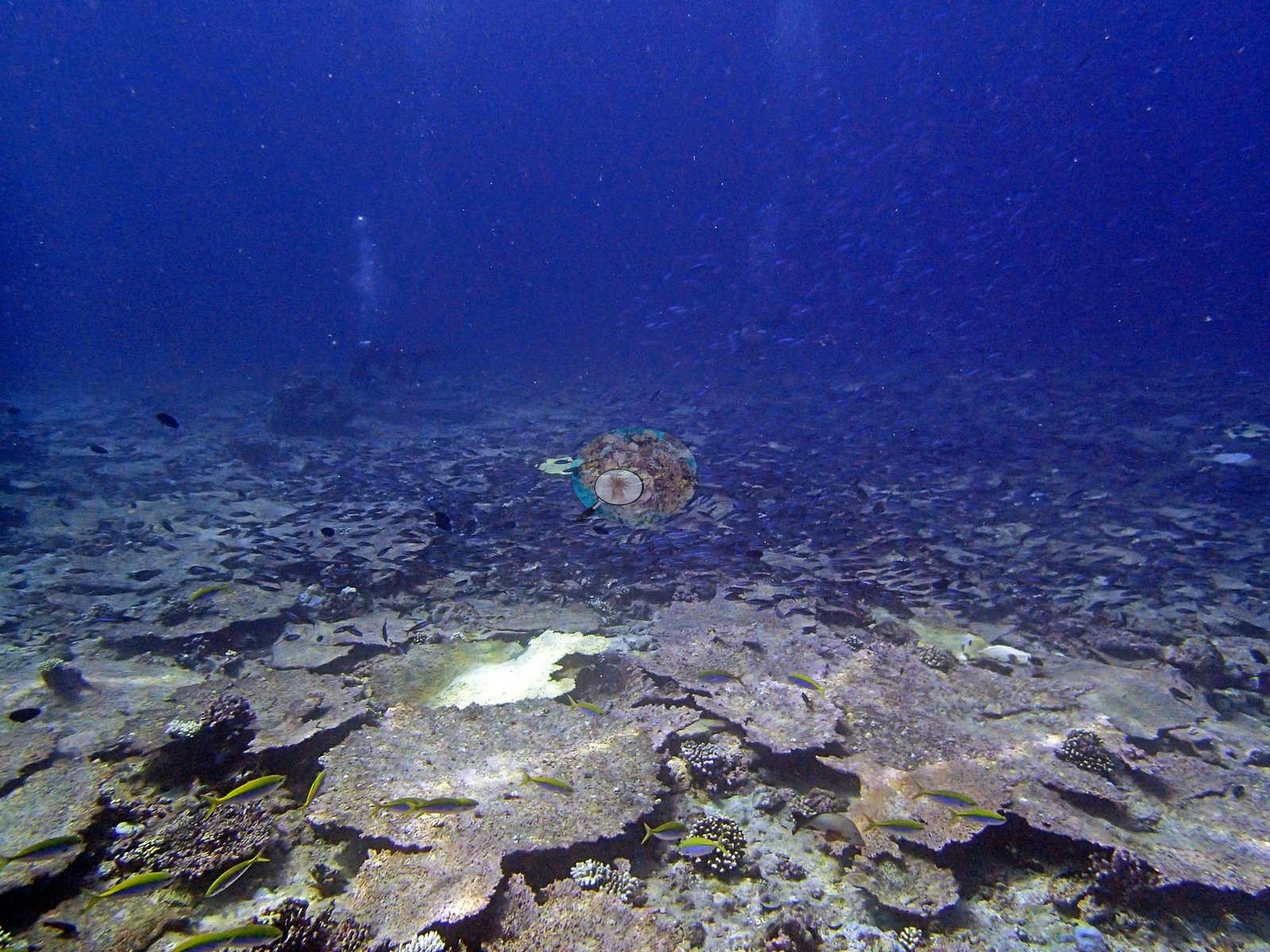
Twenty-nine coral genera were recorded, and the three depth transects hand the lead over twice: Acropora holds 54% of the coral at the shallowest station, Stylophora leads at mid-depth, and Porites leads at the deepest, where cover peaks and algal cover falls away. The photographs show coral-abundant branching patches (e.g., Image 2) alternating with open plate-and-rubble pavement (e.g., Image 3) and conspicuous mixed fish schools (e.g., Image 4); some colonies looked pale but no frame justified a site-specific bleaching record, and no crown-of-thorns or disease signs were seen in the 13 stills reviewed.
Coral cover
Formal transects recorded 33% coral cover against 54.6% algae — 68th of 109 Chagos sites for coral but 14th for algal cover, on ground carrying the 9th-highest fleshy turf value in the archipelago. The bleaching percentage is a computer vision figure — CoralNet annotation of the informal survey images, not a diver's field estimate — and human-vs-model agreement is weaker for bleaching (r = 0.40) than for coral cover (r = 0.72). Image-based methods read this reef 24–25 points lower than the transects (CoralNet 8.3%, Coralscapes 8.9%); the three are not interchangeable and should not be averaged (see the full report).
Stressors
The published image-based bleaching figure is 9.2%.
Comparisons with other data
No prior survey data from this site. If you would like to share yours, please email us.
CV model comparison
More info
Those are point counts on the photographs; this is a diver swimming a transect. The models and the reference never saw the same thing. ⚠ SITE-LEVEL ONLY. The 2,500 frames were not associated with any transect taken within 200 m of them, so transect-vs-image comparisons are site means, never frames. The transect value is already in the pin `cover` field (109 of 112 pins, sourced to the paper's suppl. S1) and is read from there, never re-imported. The transect is THE coral-cover value for this site and stands alone. The rows below it are a methods comparison only: no computer-vision value is averaged with it, feeds the headline, or carries over to the site's cover figure (Anderson, 2026-09-22).| Method | Hard-coral cover (%) |
|---|---|
| Transect (published) | 33.2 |
| CoralNet | 17.2 |
| In-house DINOv3 | 21.5 |
| CoralSCOP edited | 27.6 |
| Claude | 19.9 |
Data & links
- Read the full site report ↗
- Download benthic survey data (CSV) ↗
- Download all LOF-GRE data (933 sites) ↗
- CoralNet image repository for this region ↗
- Photo portfolio ↗
- Coral Reef Diagnostics page for this area ↗
All images from Coral Reef Diagnostics. Data are from Coral Reef Diagnostics.
 © Coral Reef Diagnostics.