
Part of the regional summaries: Chagos Archipelago - Peros Banhos and Chagos Archipelago
More info
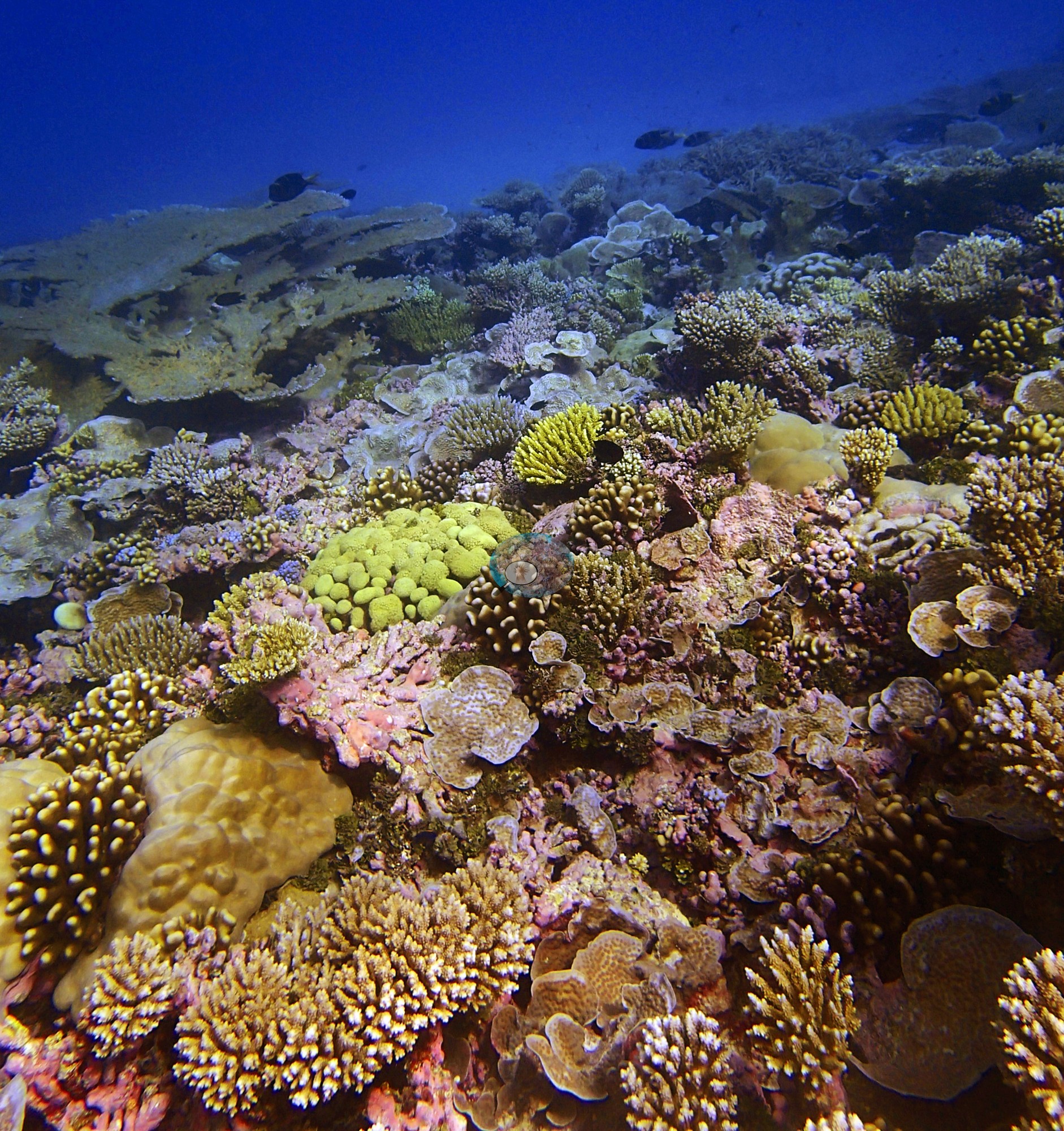
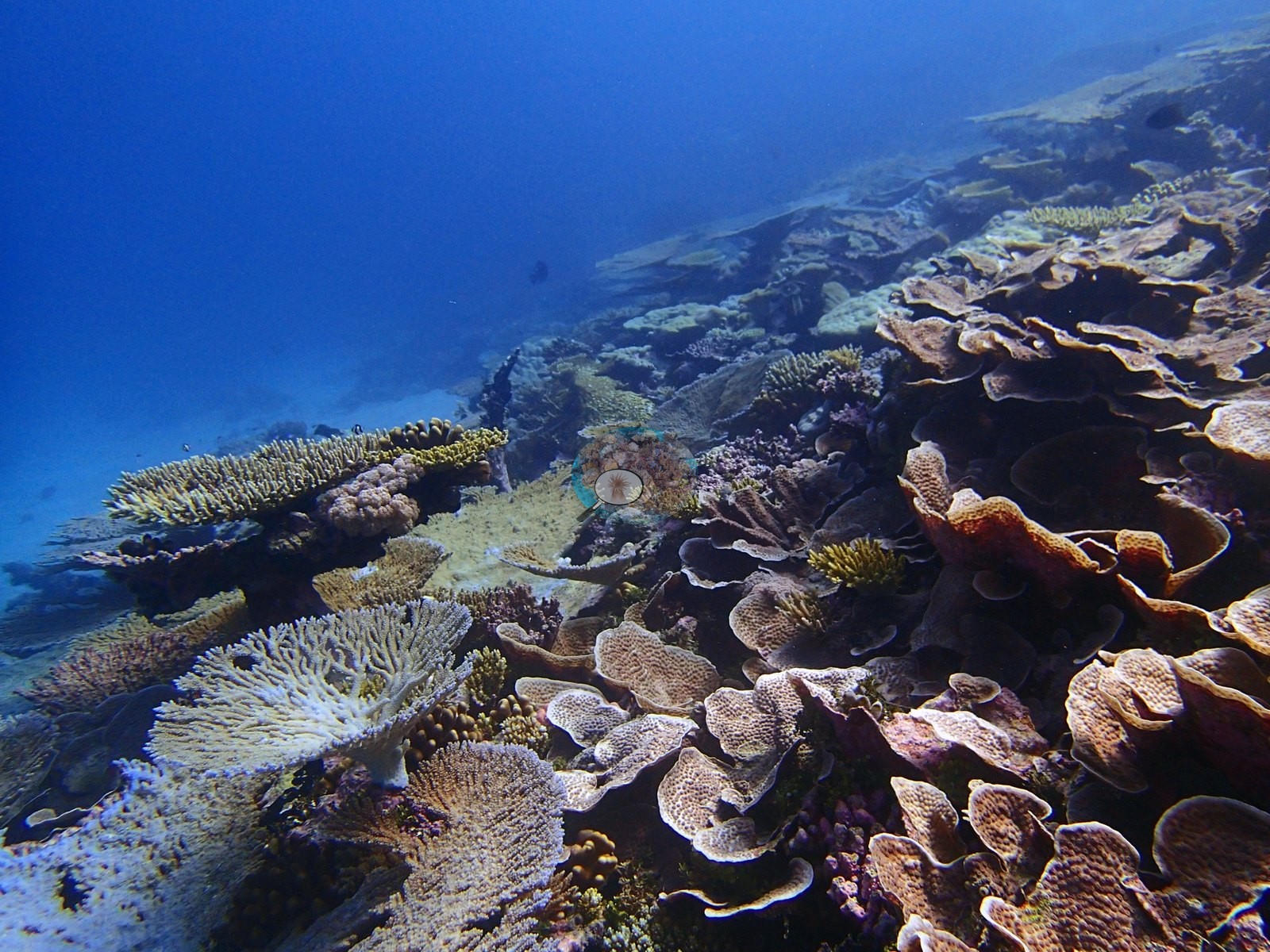
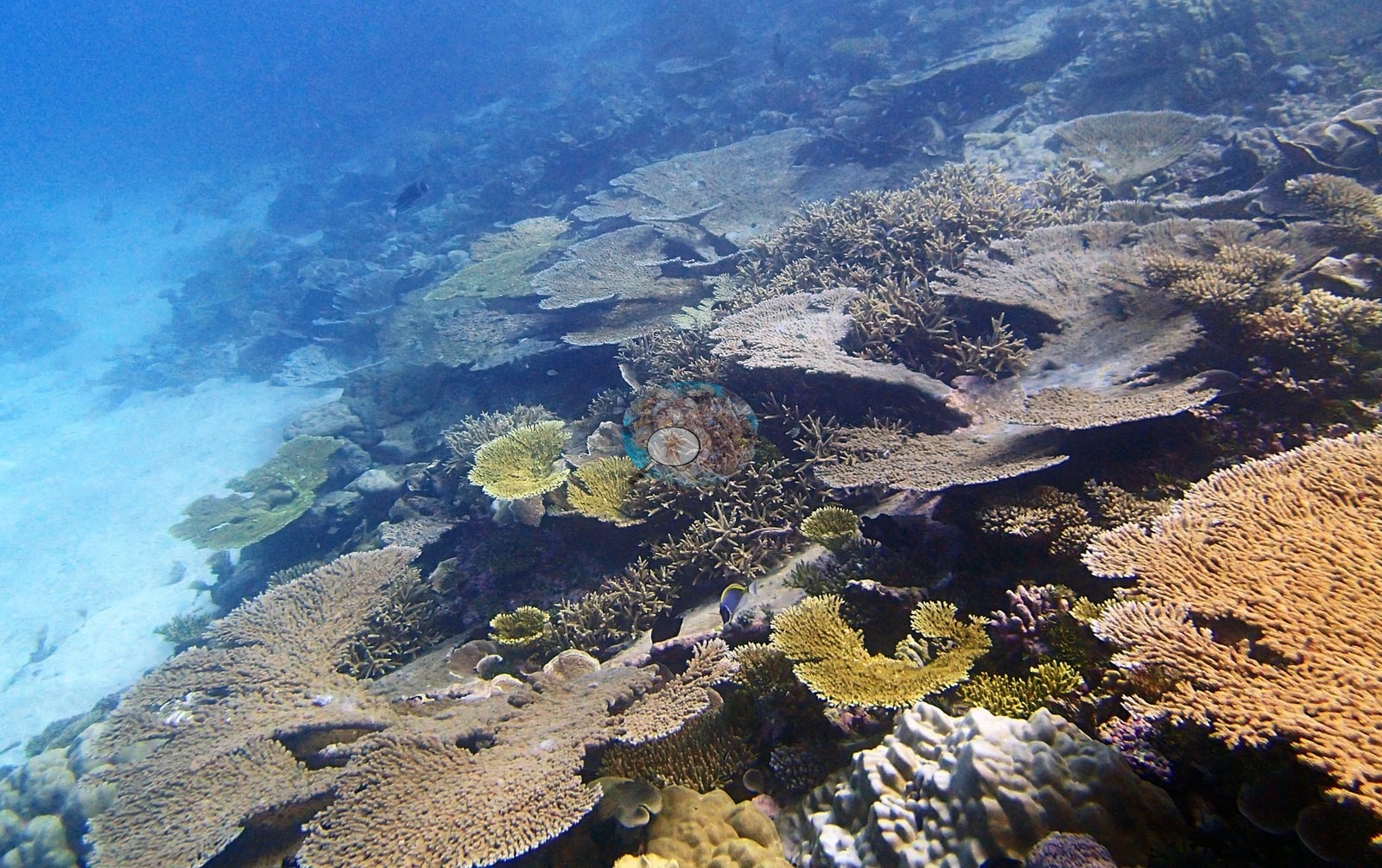
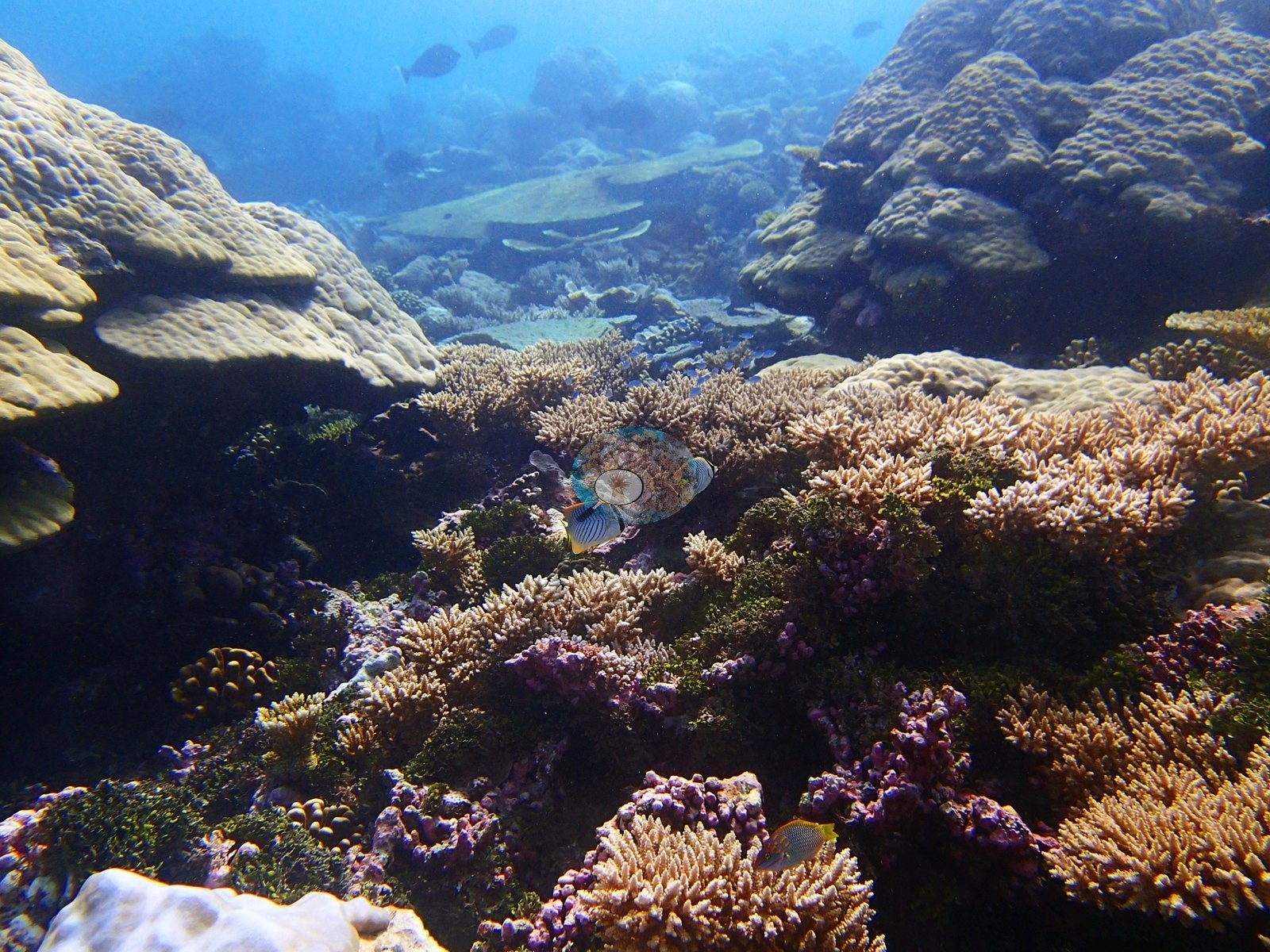
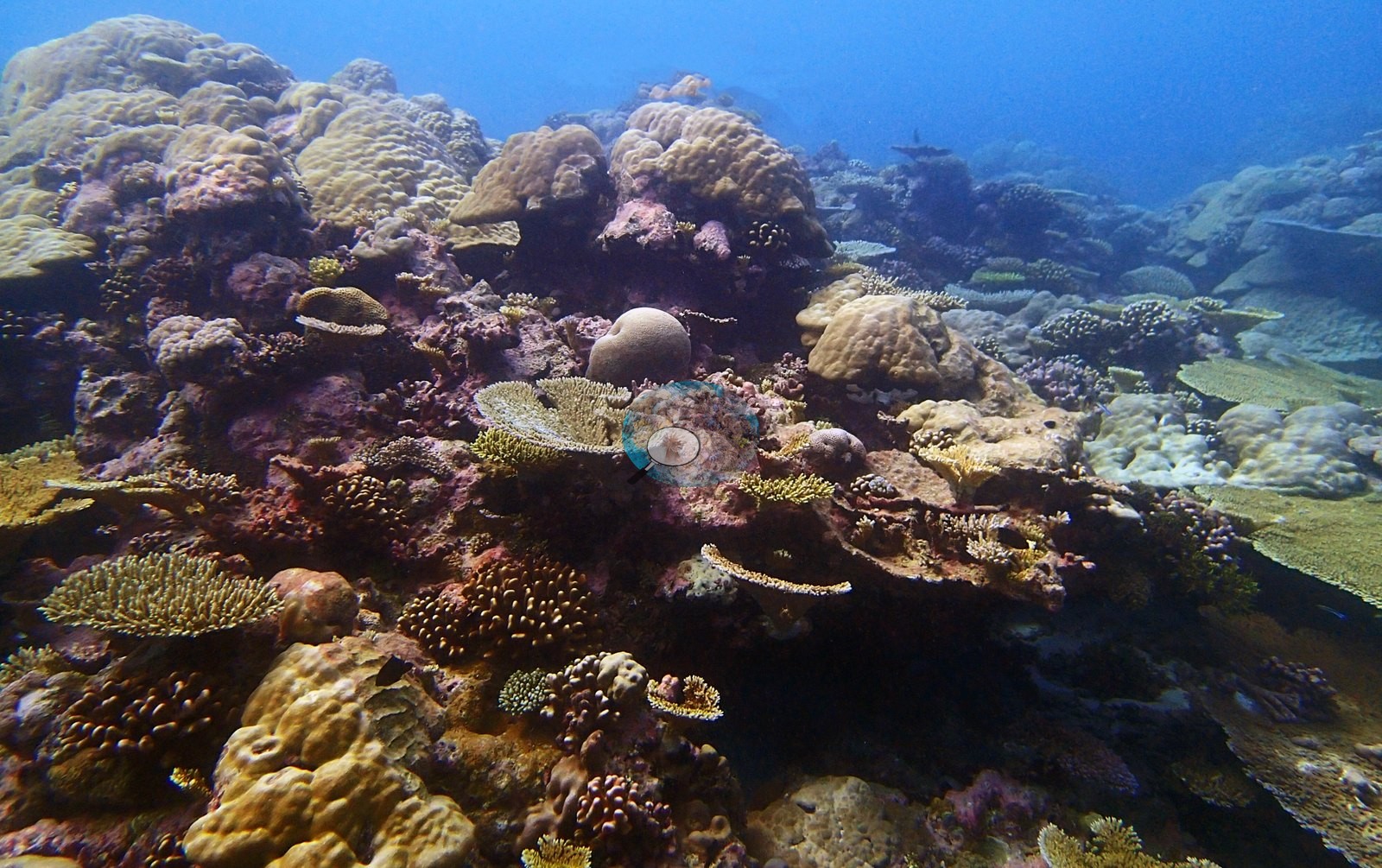
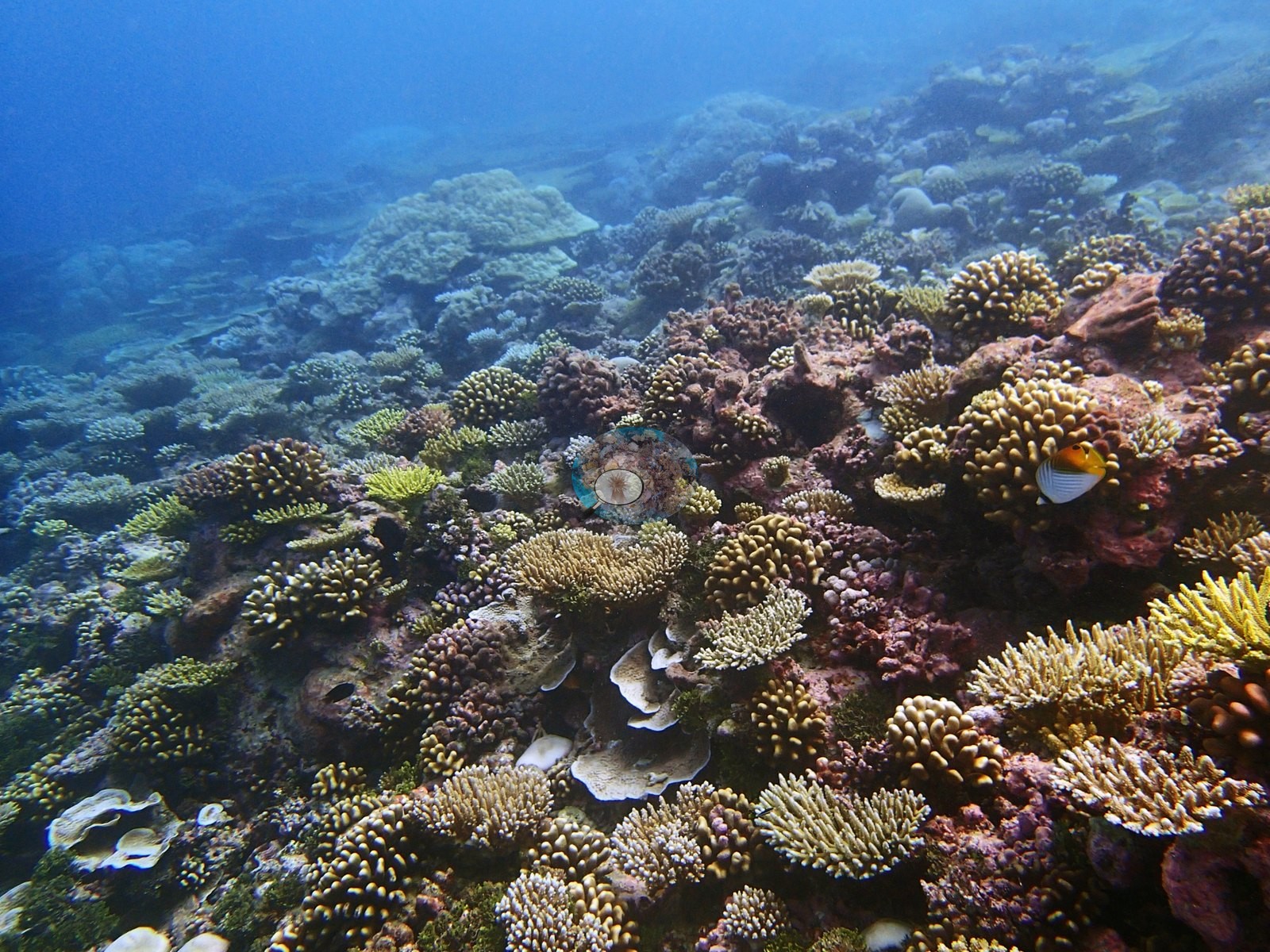
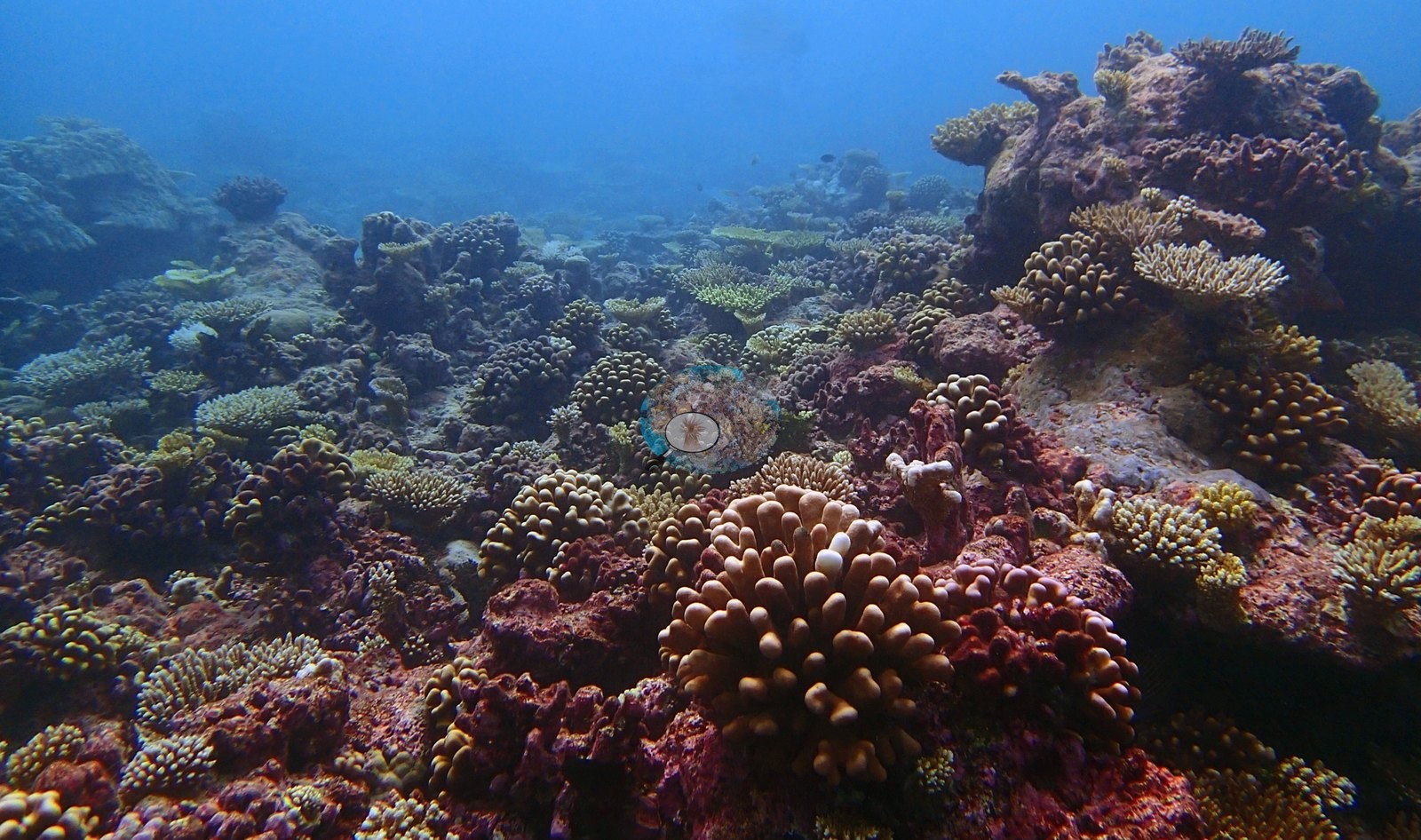
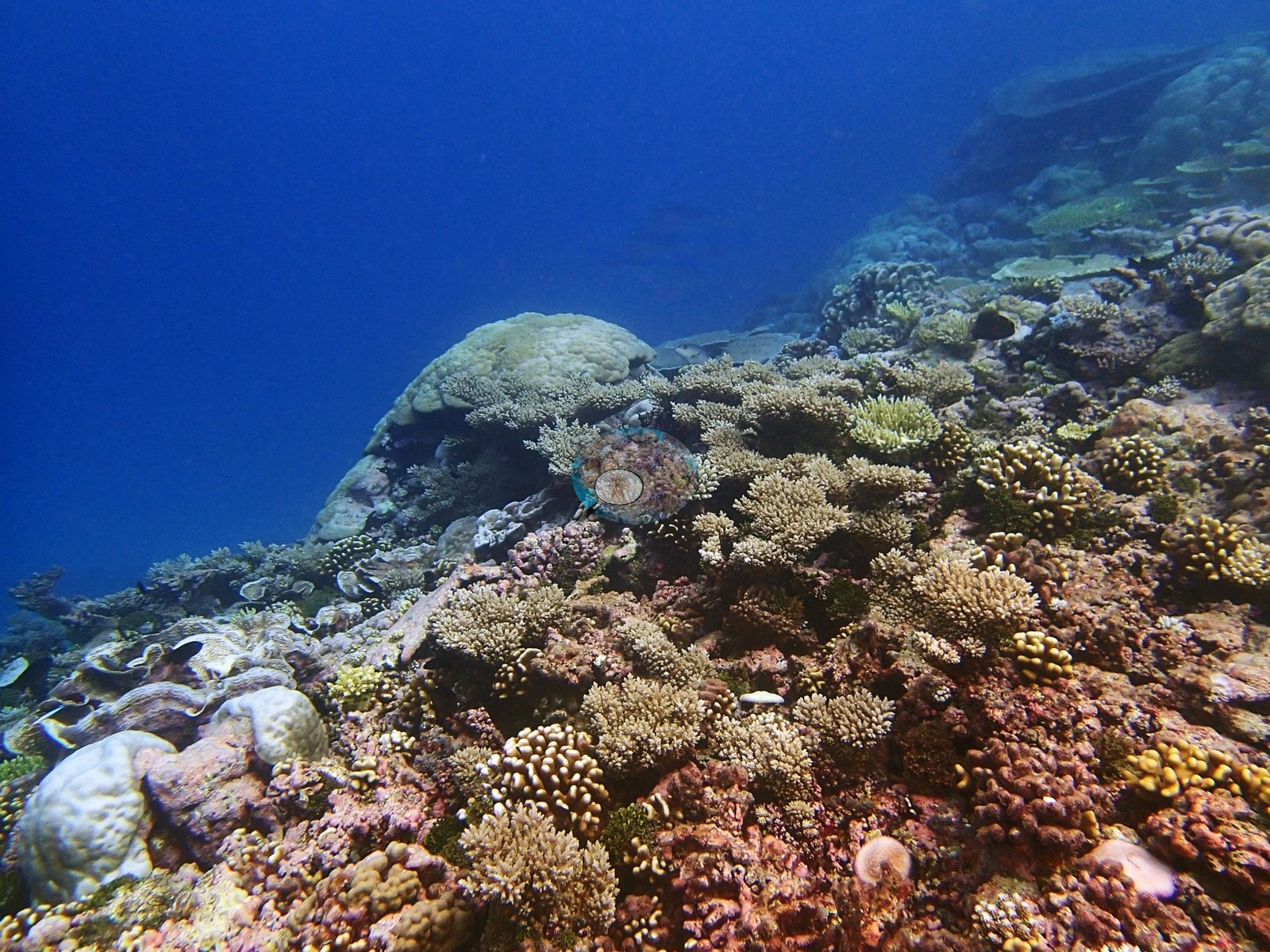
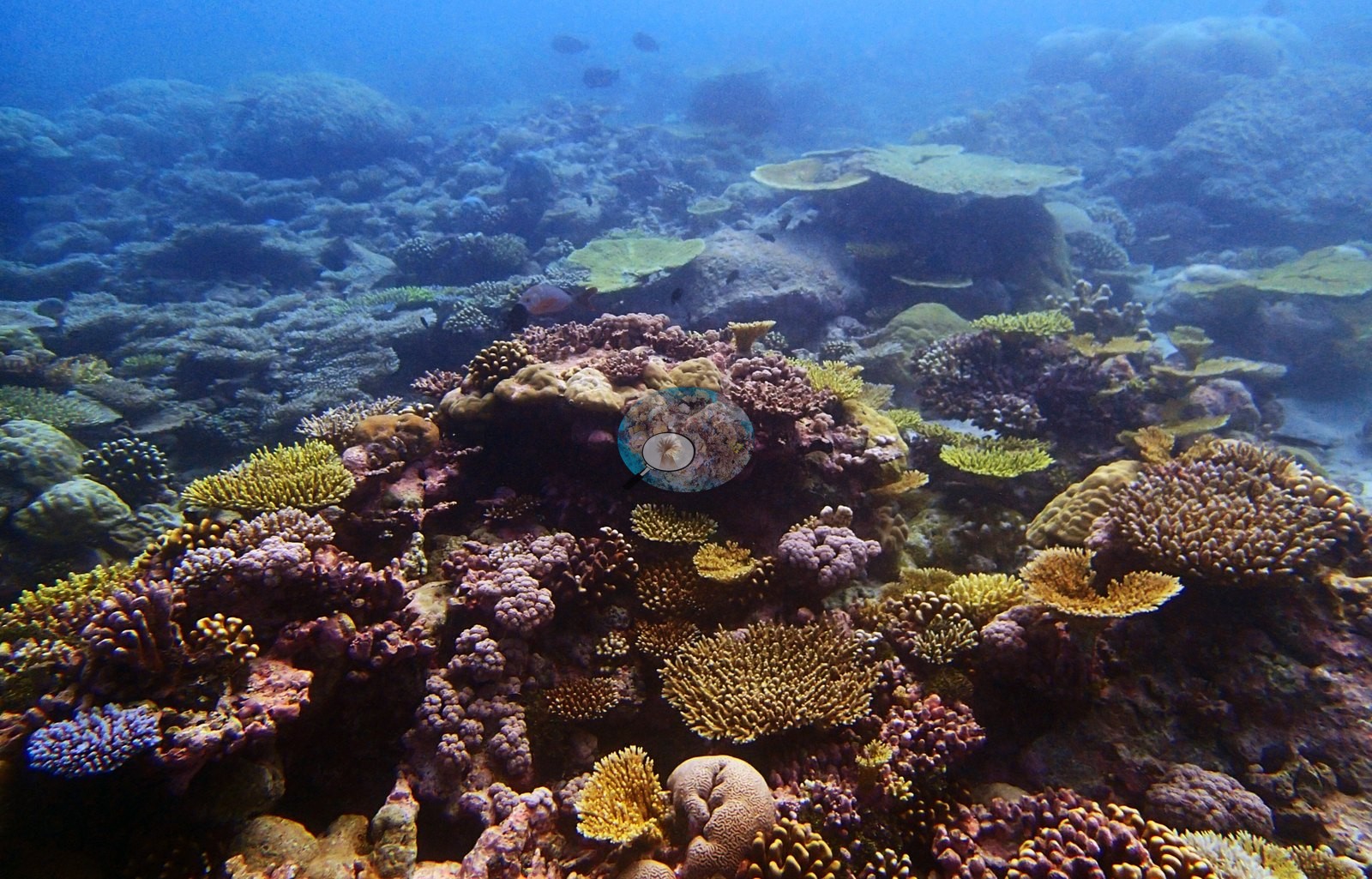
Chagos (NOAA CRW virtual station)A reef with two faces (55% cover): a gently descending slope of unbroken staghorn thickets stacked with meter-wide table corals, and shallower mounds packed shoulder to shoulder with salmon, chartreuse, lilac, and mustard corals, some of the busiest frames in the entire Chagos photo set. Surveyed on the Living Oceans Foundation's Global Reef Expedition.
Two other CRD dive sites within 5 km shown in orange — click a marker to open its page.
🗺 Detailed map of the Global Reef Expedition dive sites, Peros Banhos, Chagos (Khaled bin Sultan Living Oceans Foundation; opens in a new window)
25 of these 43 photographs are shown beside the text that discusses them under "Site description" below.
Site description
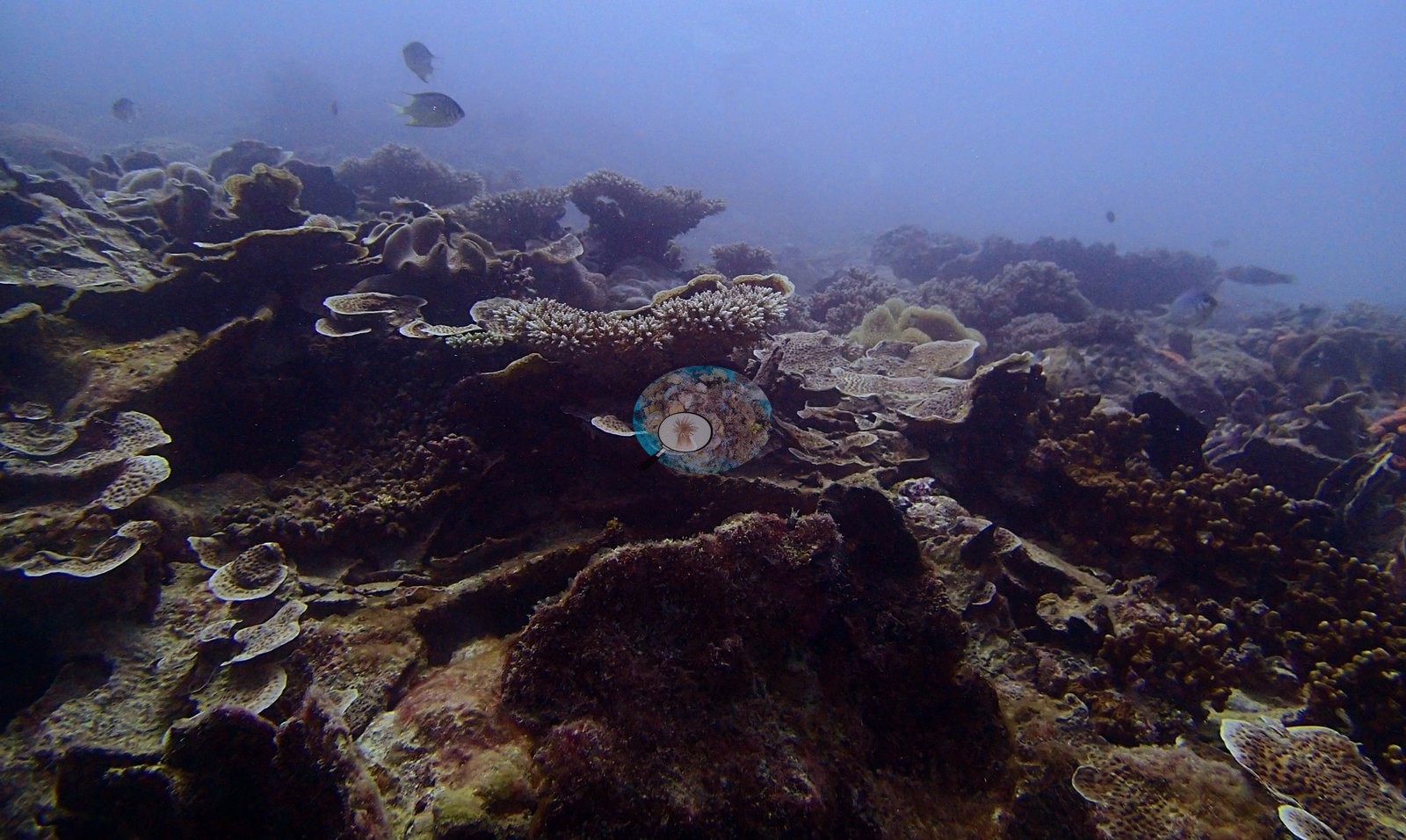
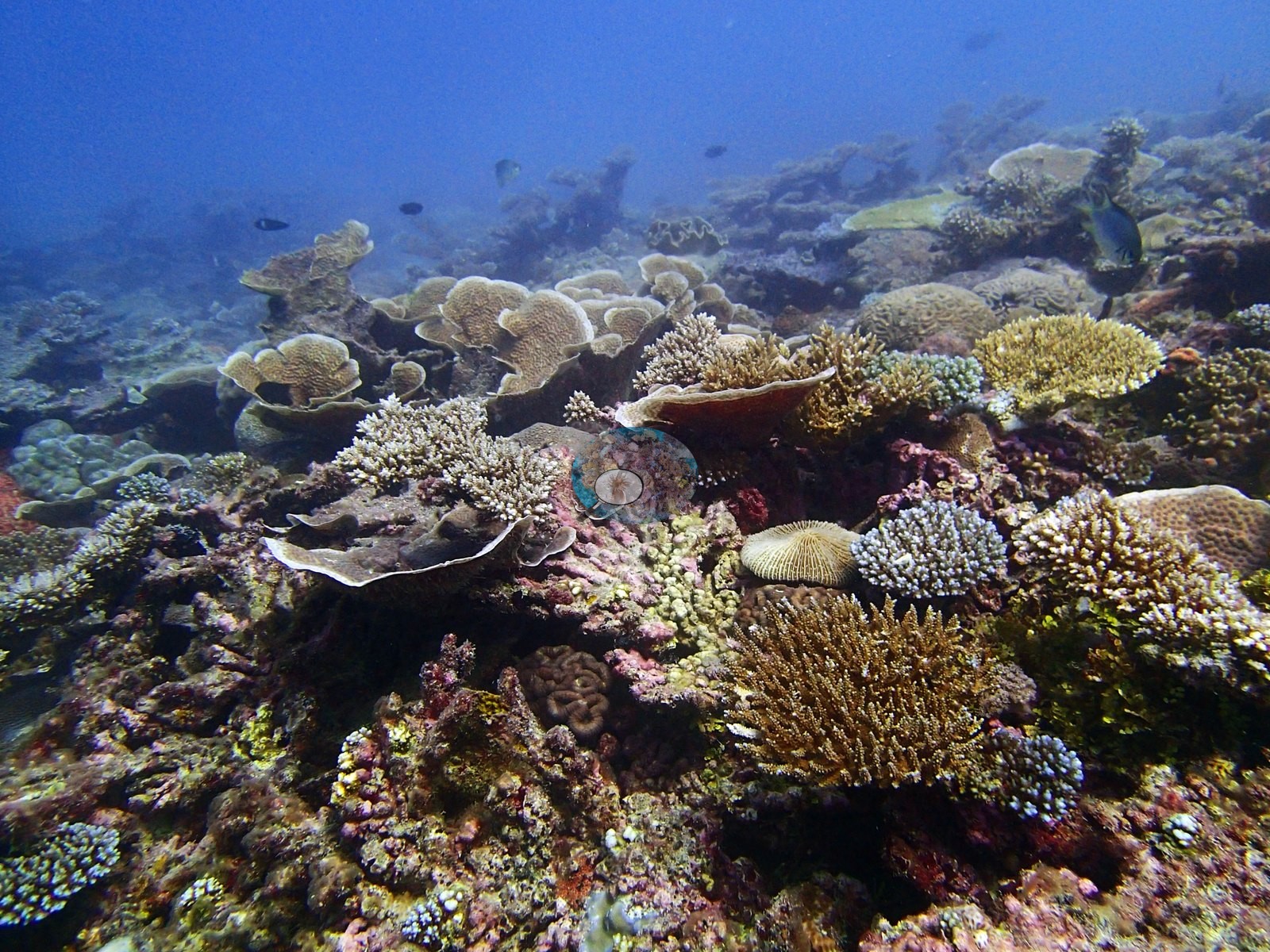
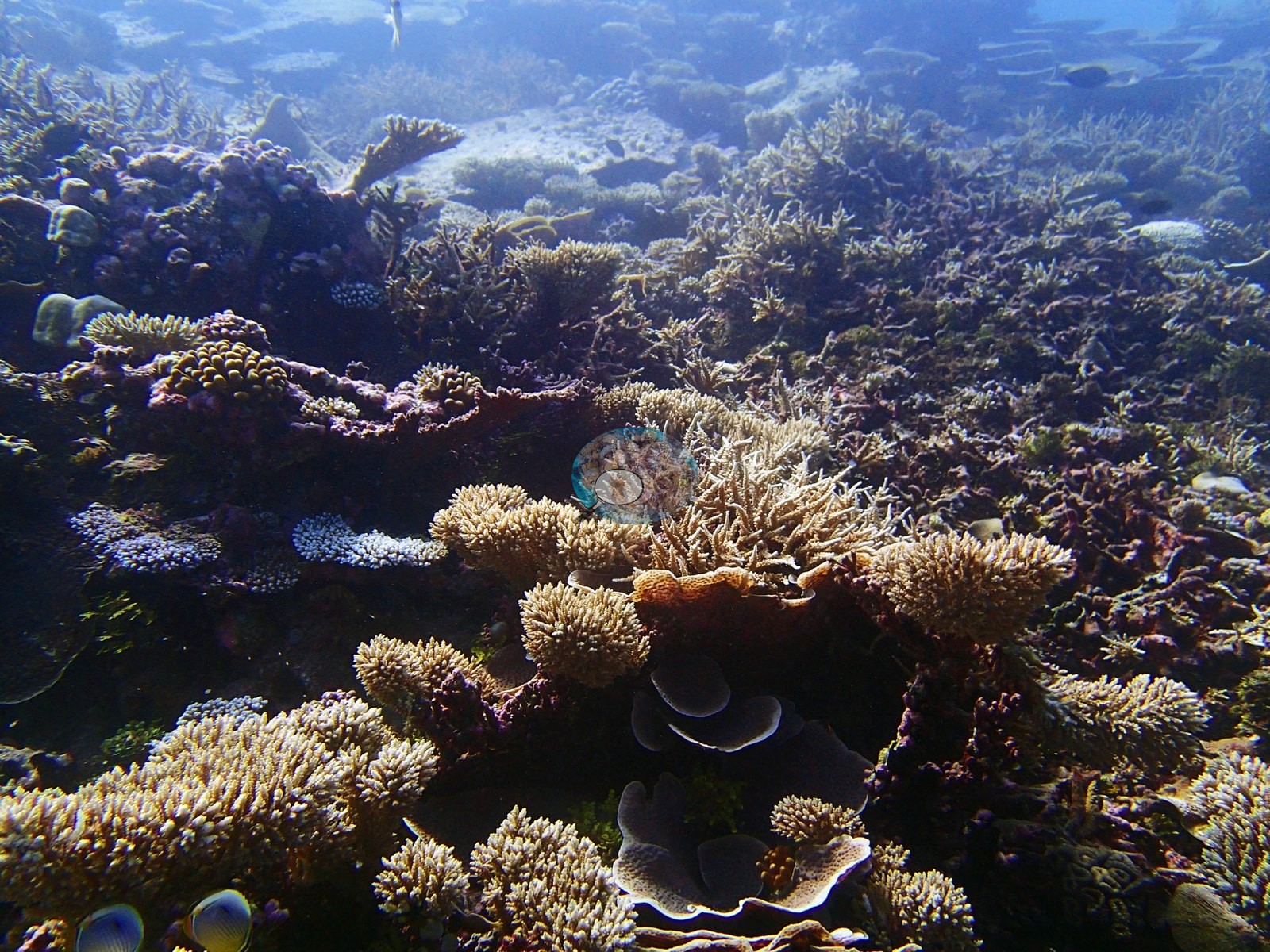
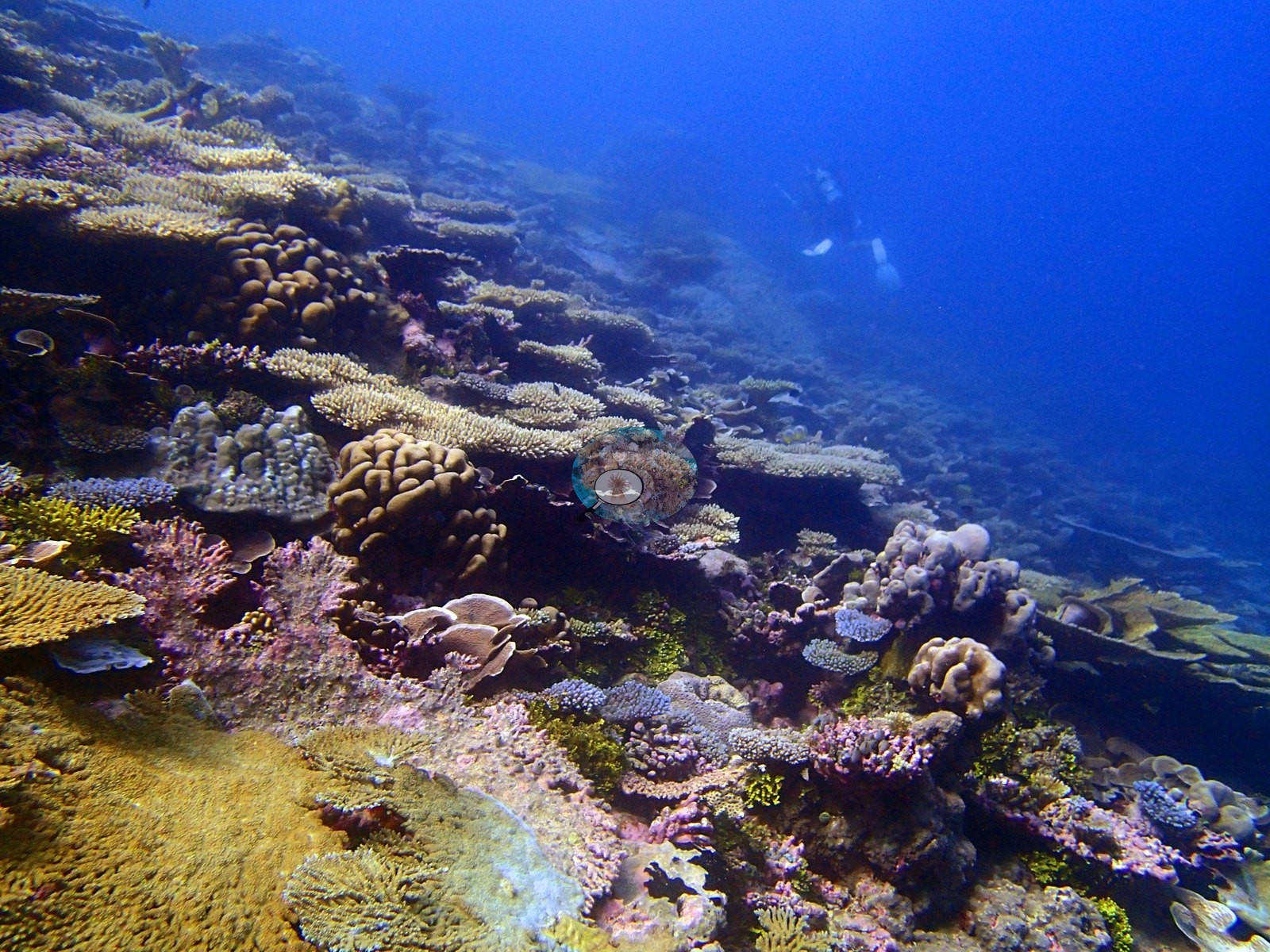
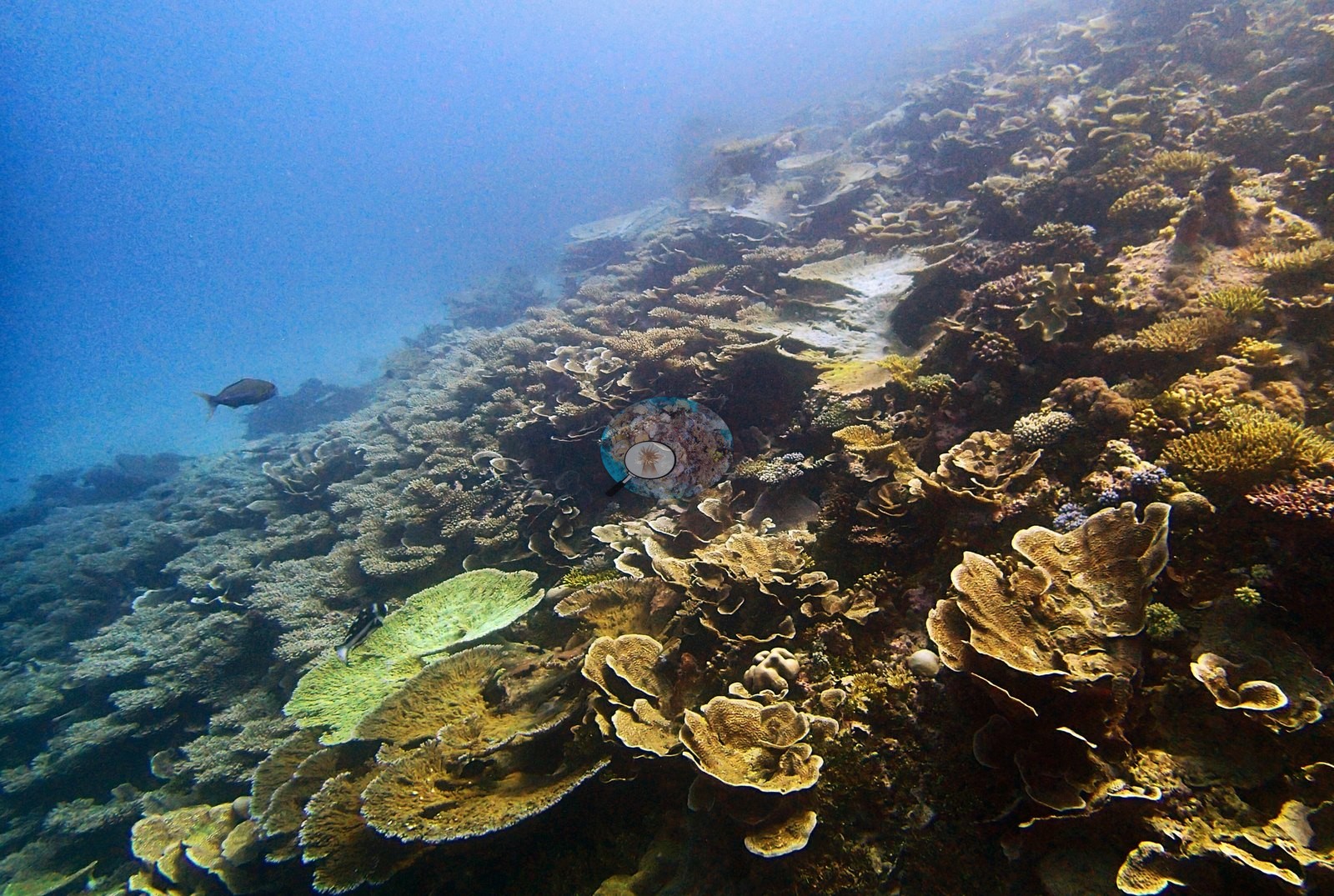
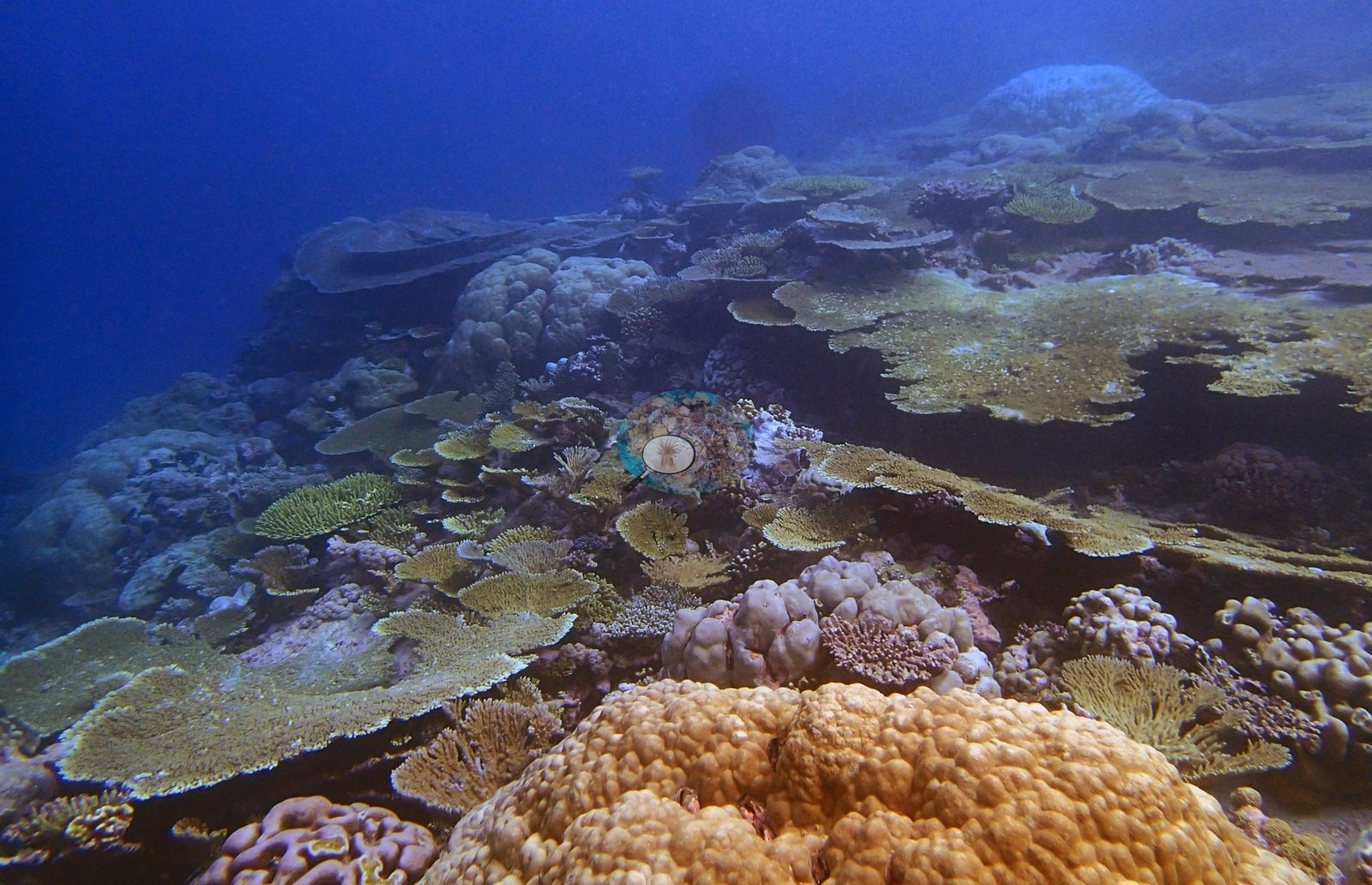
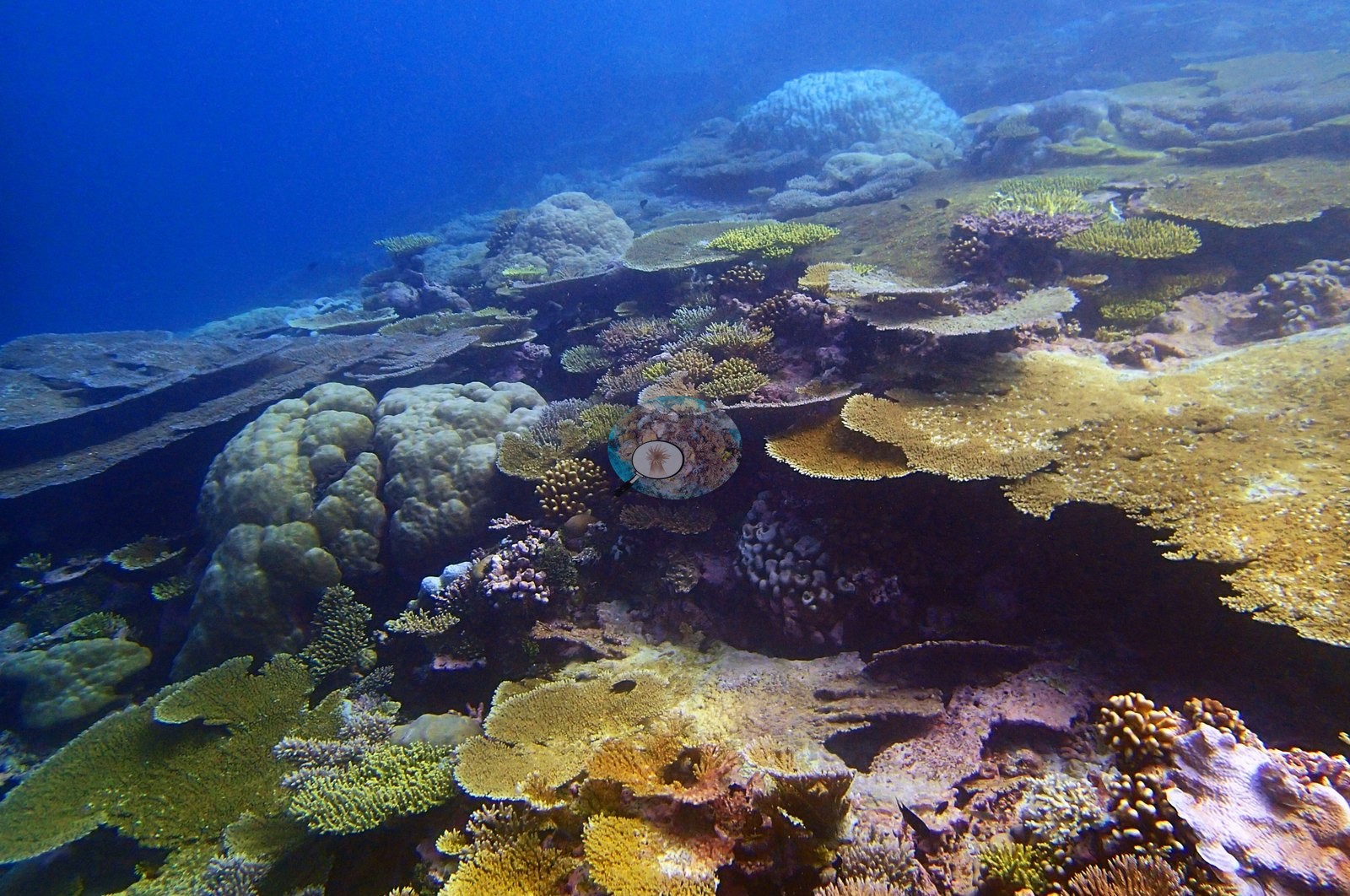
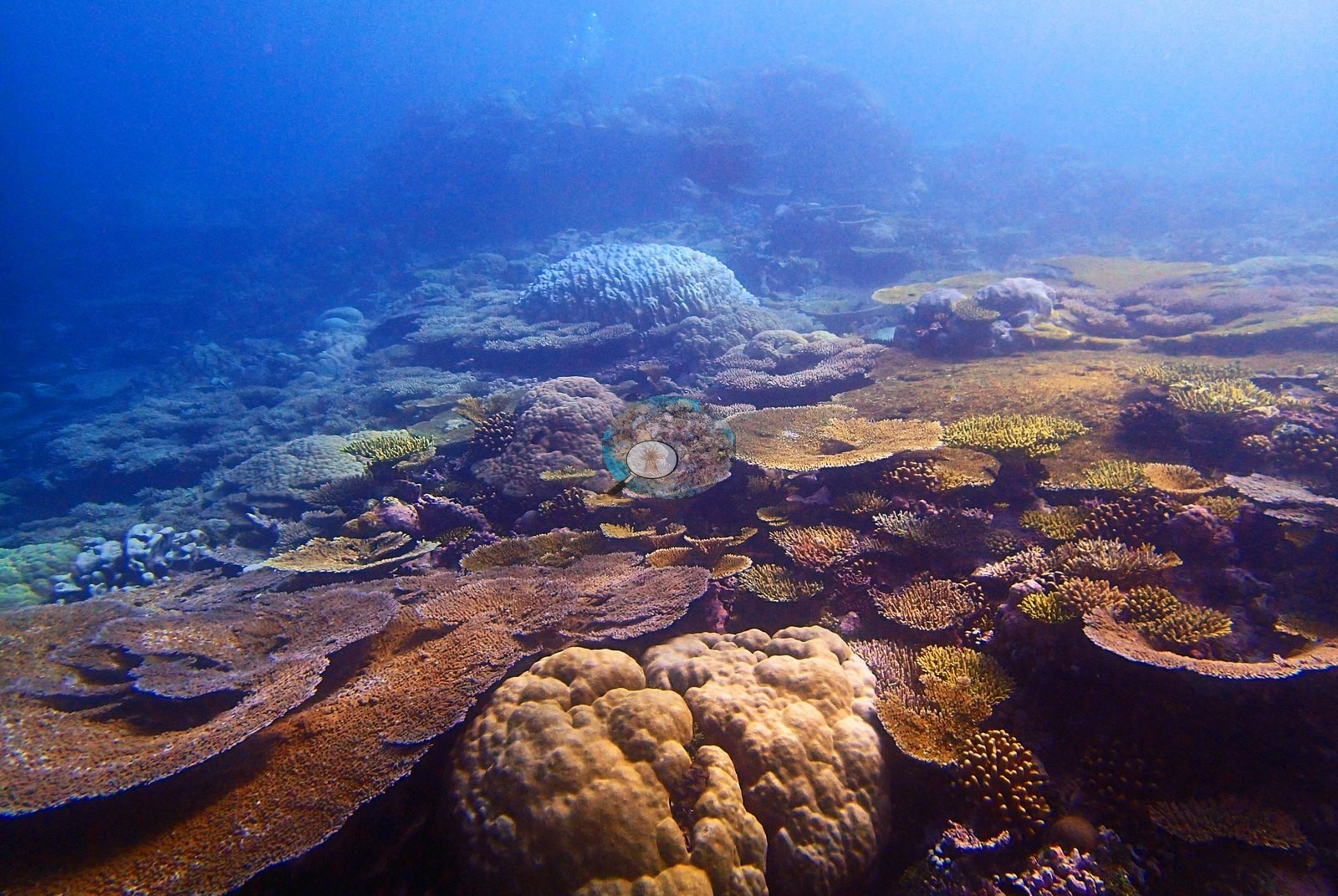
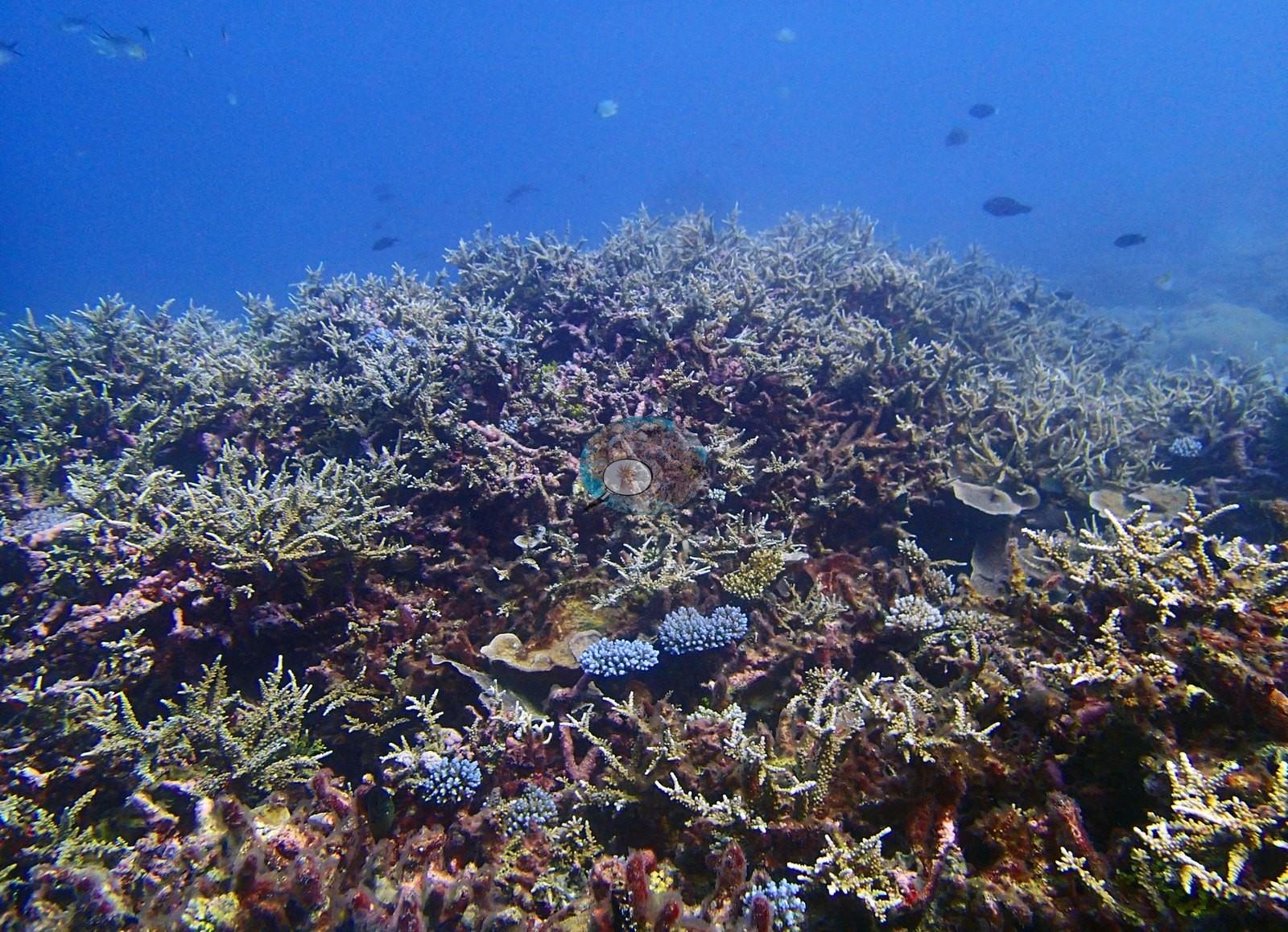
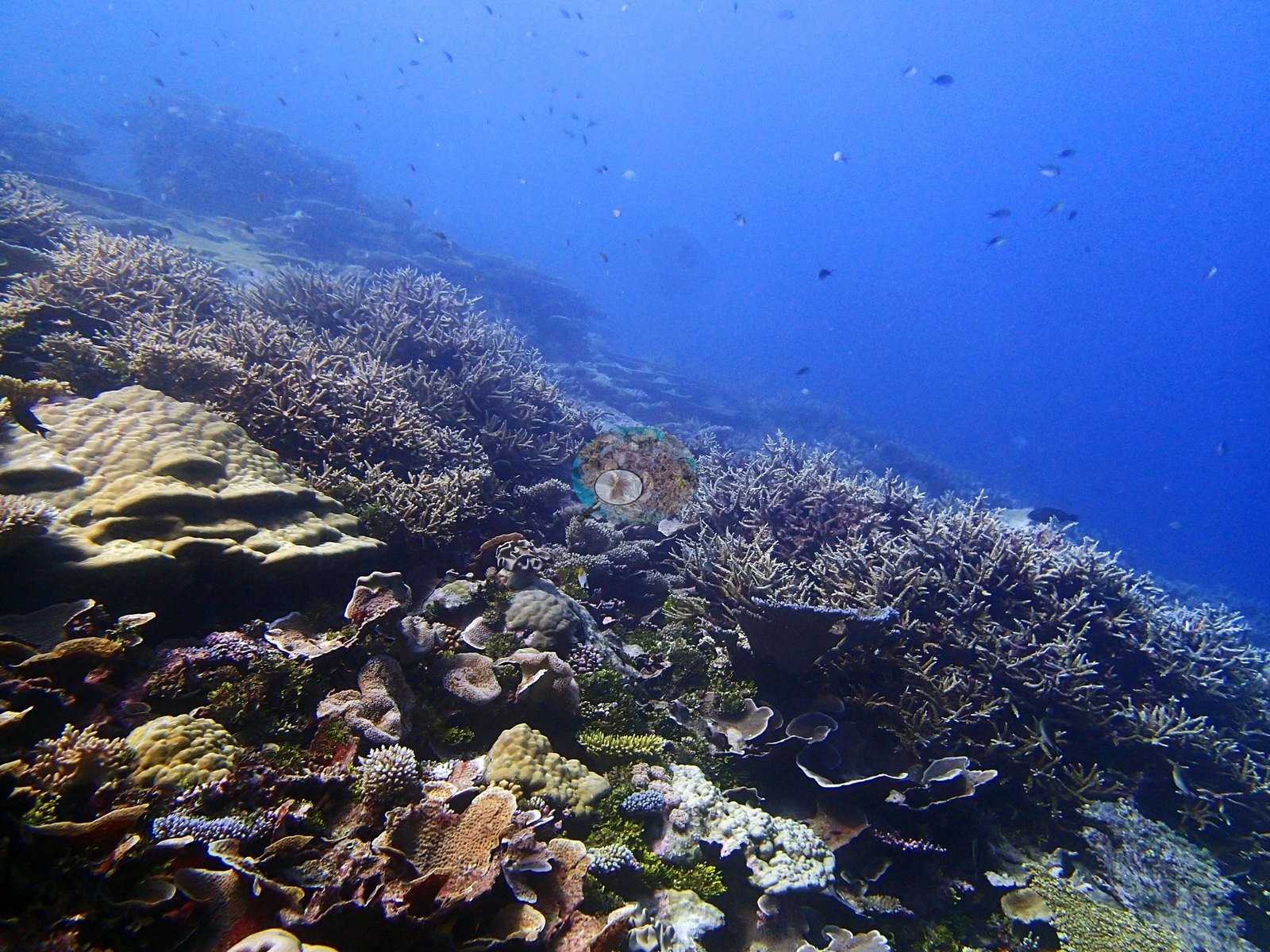
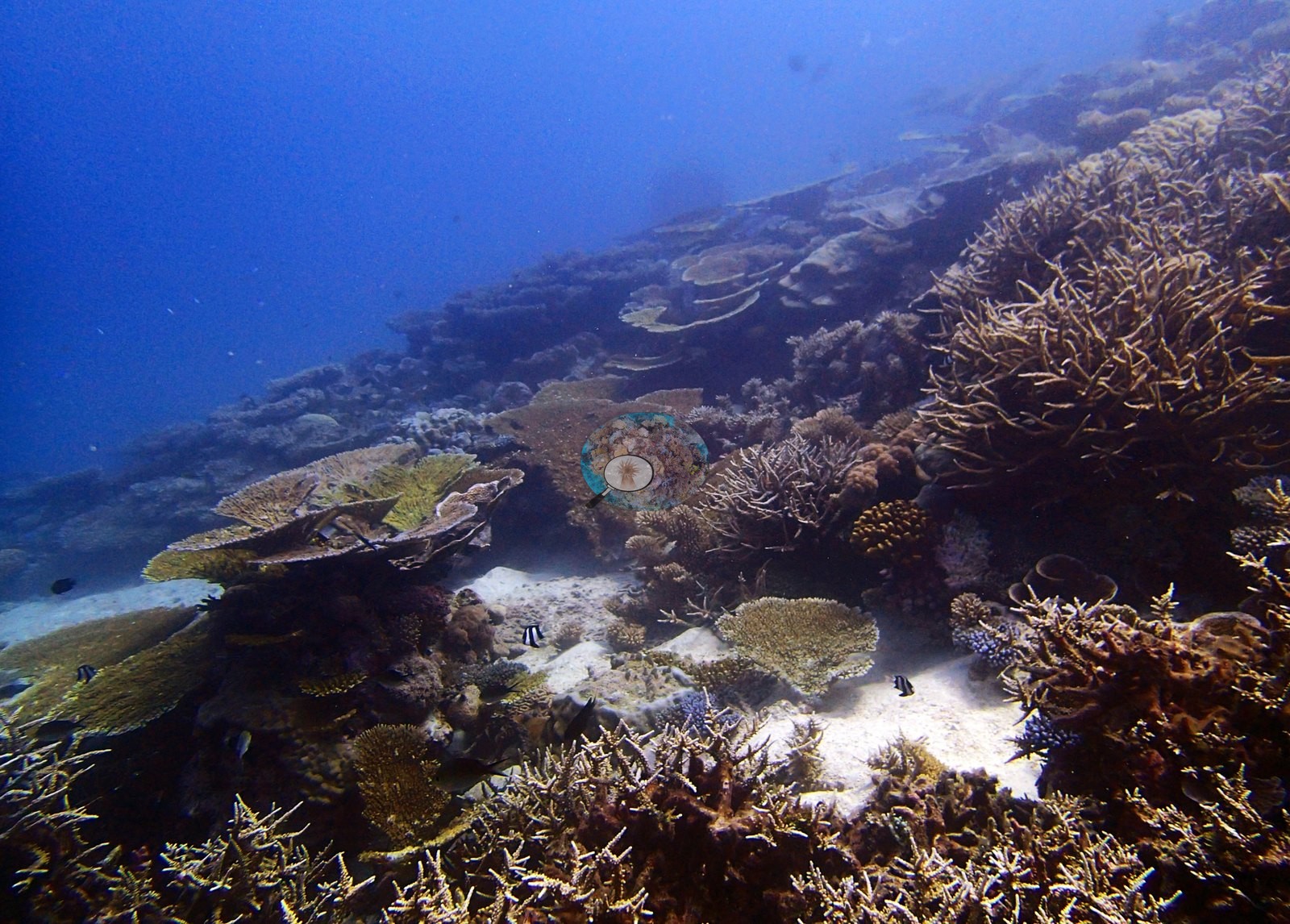
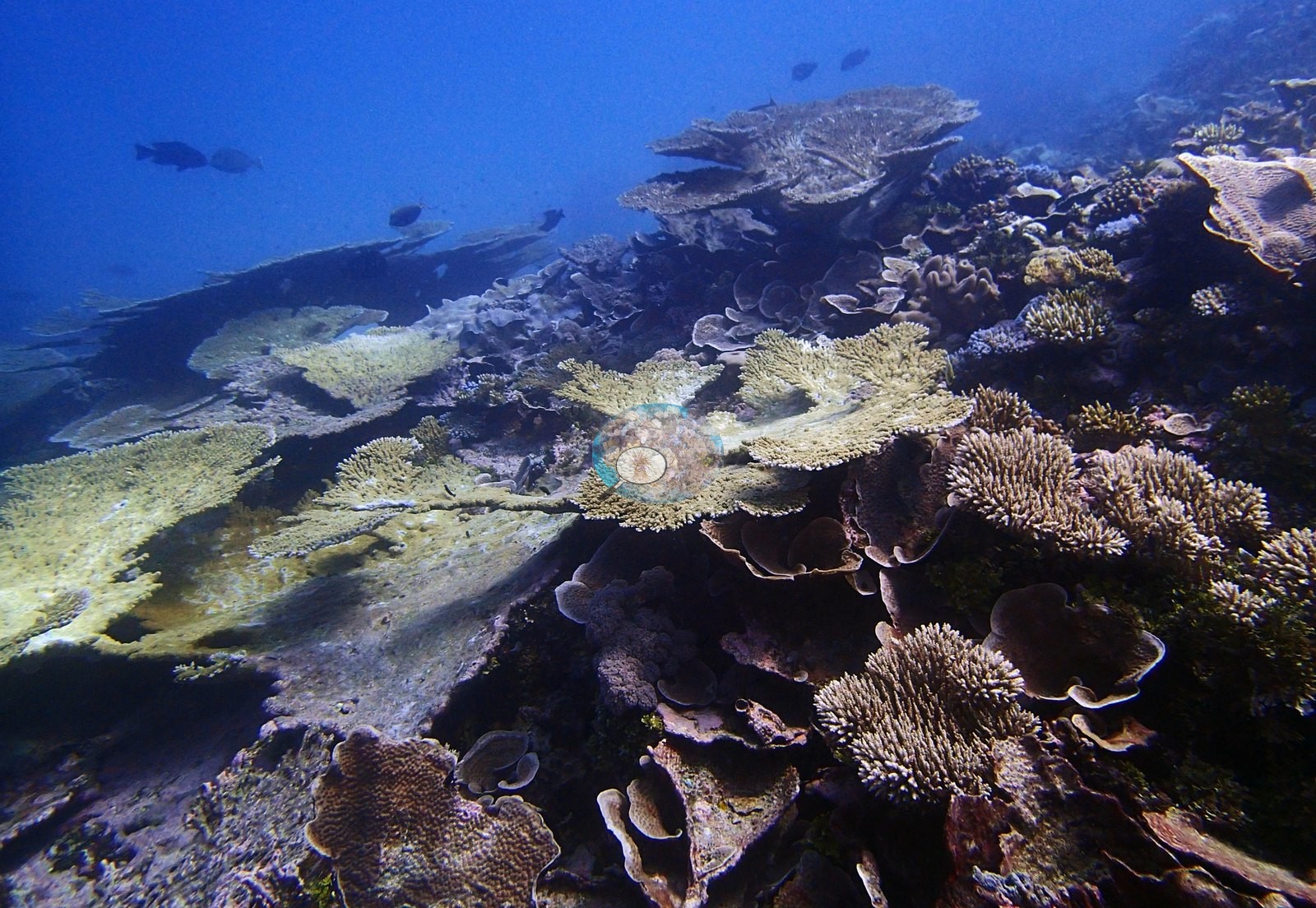
The set resolves into two reef faces. The first is a continuous, gently descending slope of branching and tabulate Acropora: Image 8 through Image 16 and Image 19 through Image 23 look along an unbroken thicket of thin-branched staghorn and corymbose colonies running out of sight into blue, with flat tabulate plates a meter and more across stacked in overlapping tiers through it (Image 17 is the clearest — three large tables shingled one above the next) (e.g., Image 8, Image 9, Image 10, Image 12, Image 14, Image 15, Image 17, Image 19, Image 20, Image 21, Image 22, Image 23).
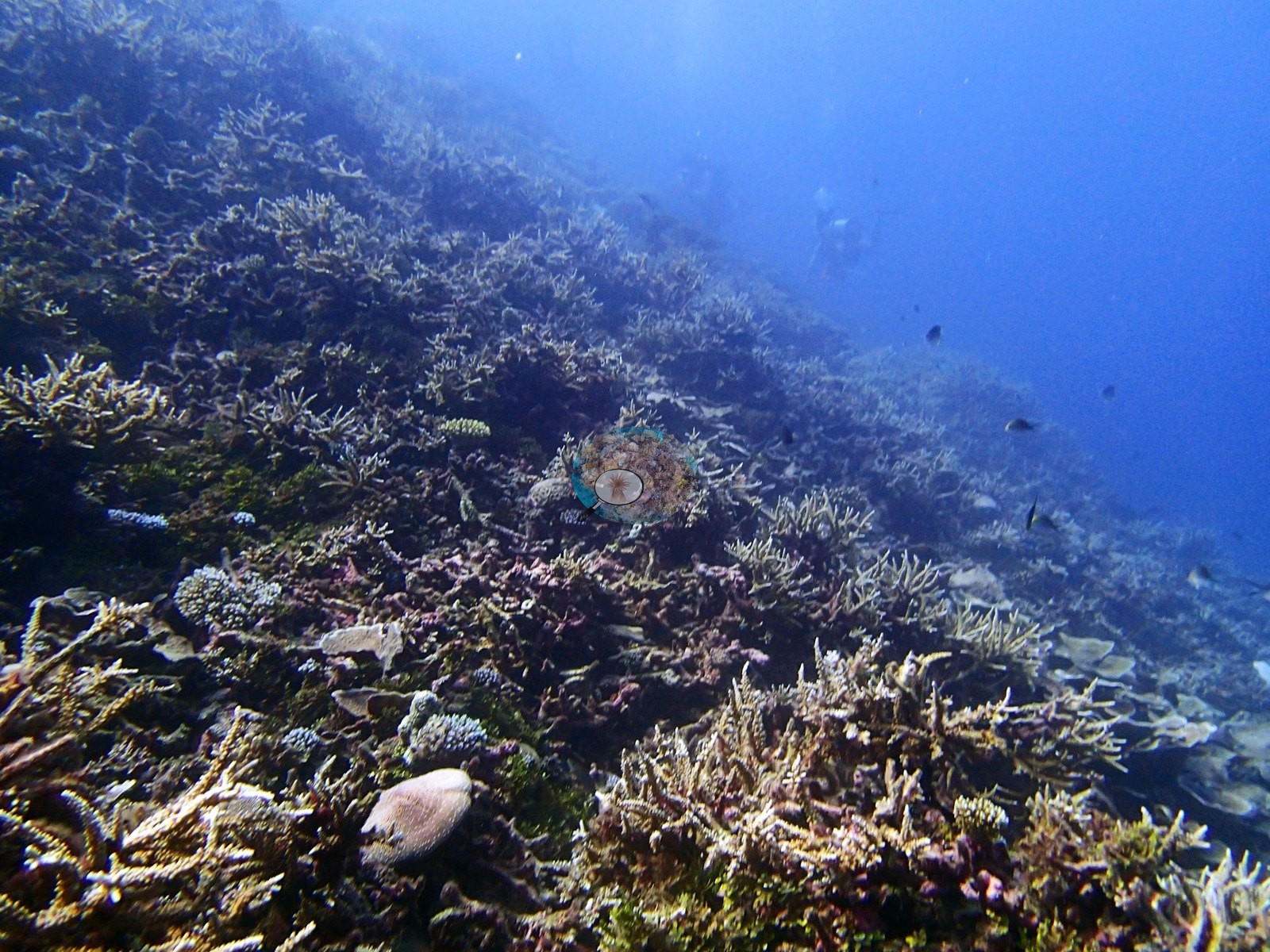
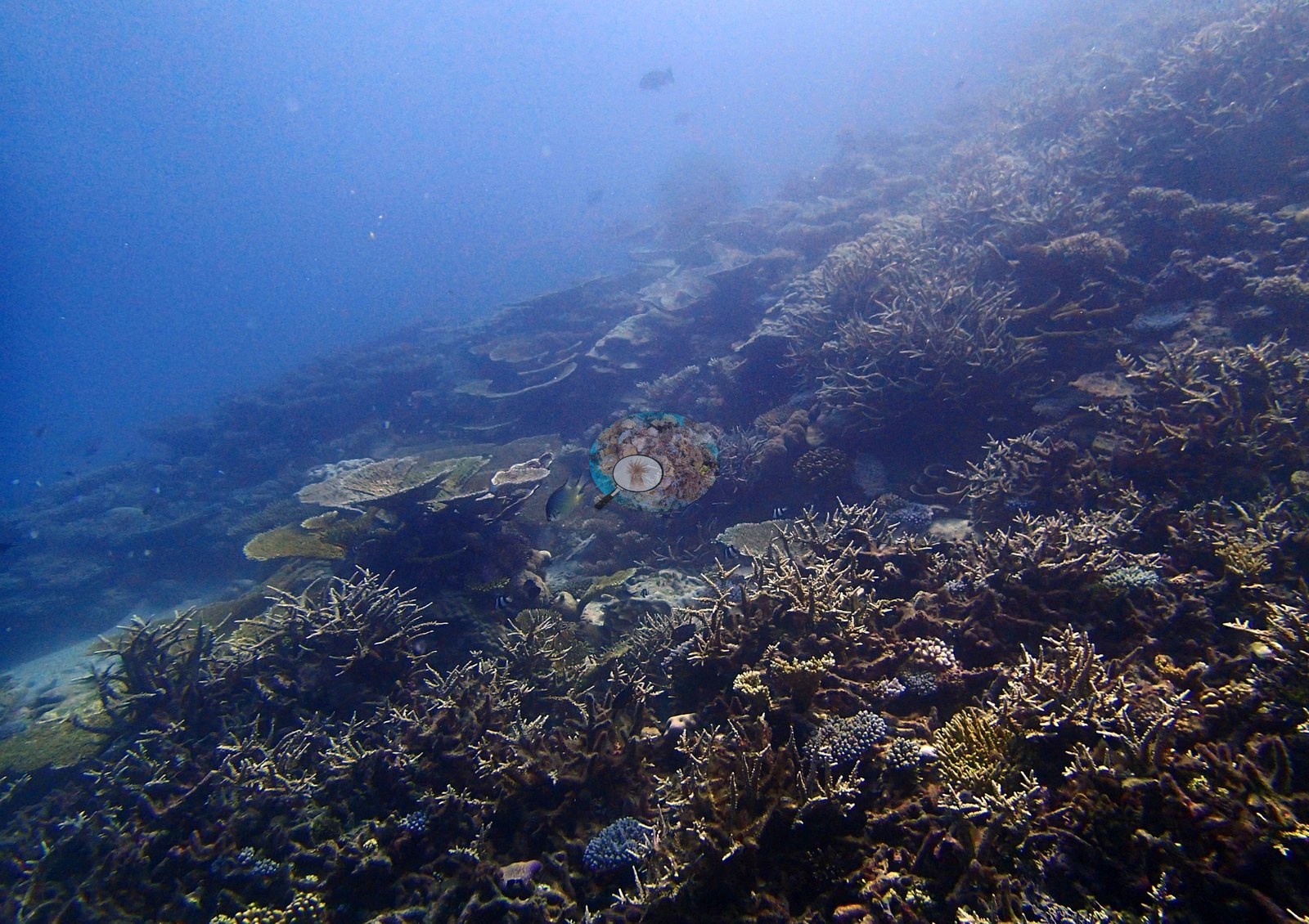
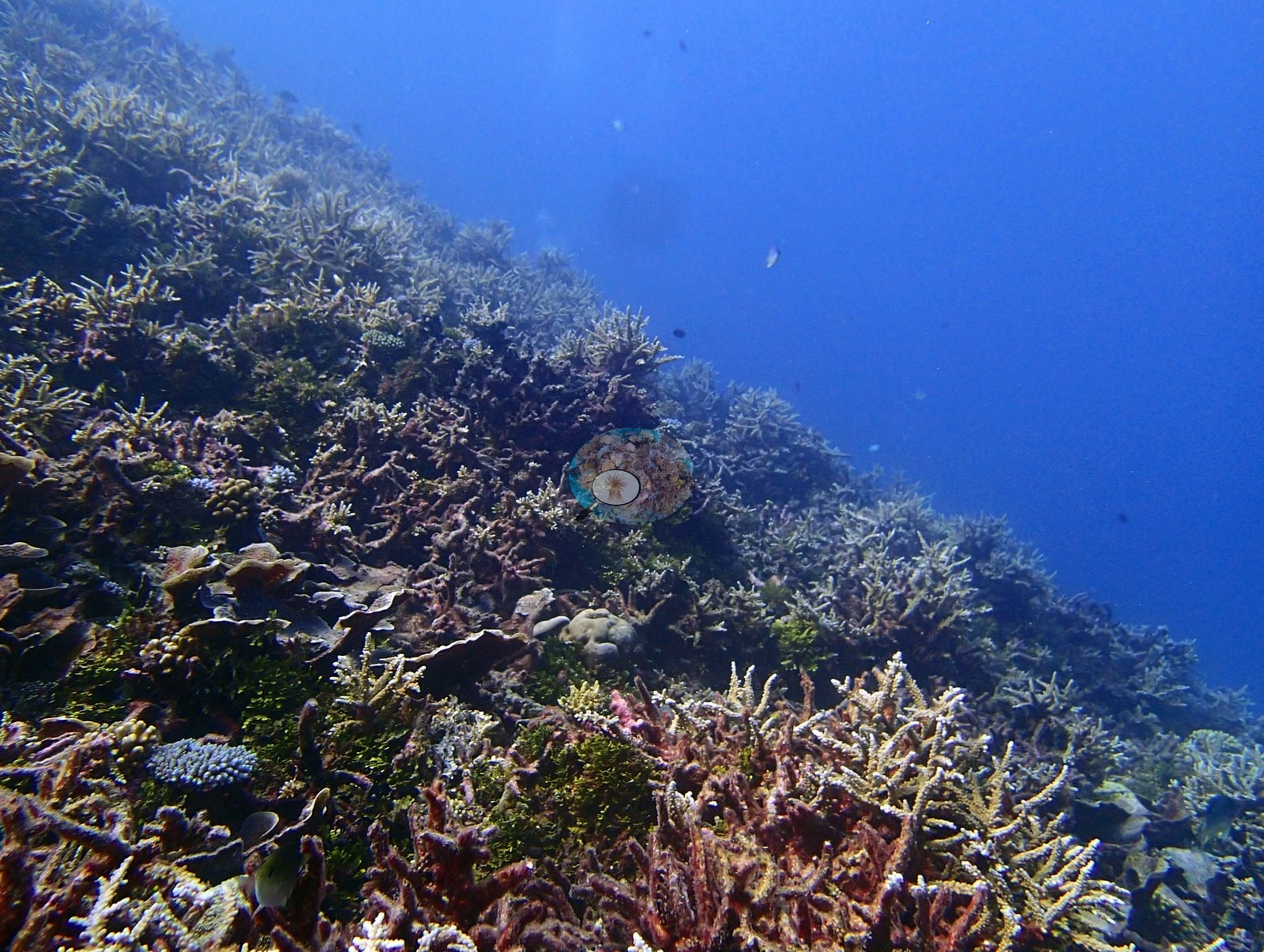
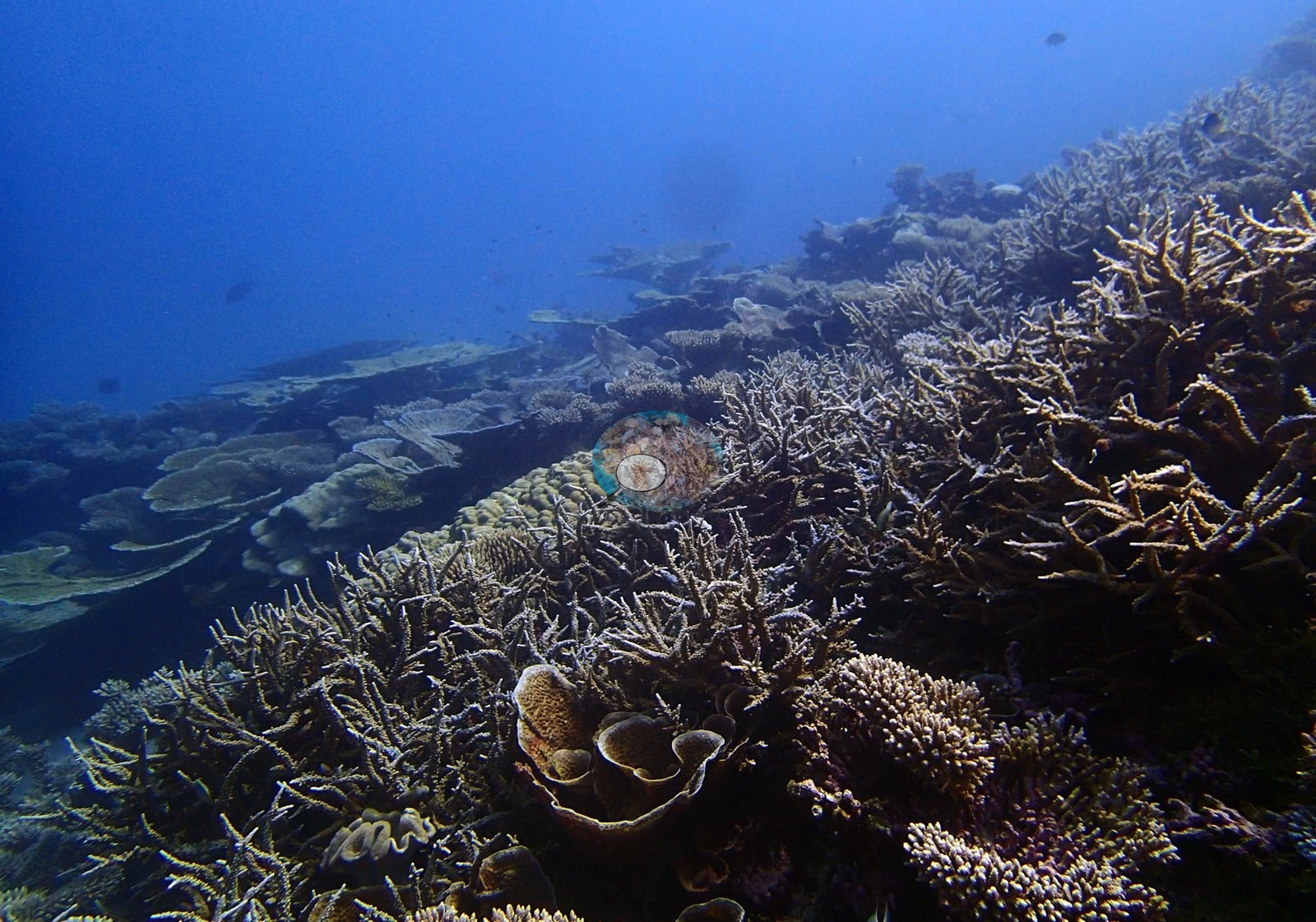
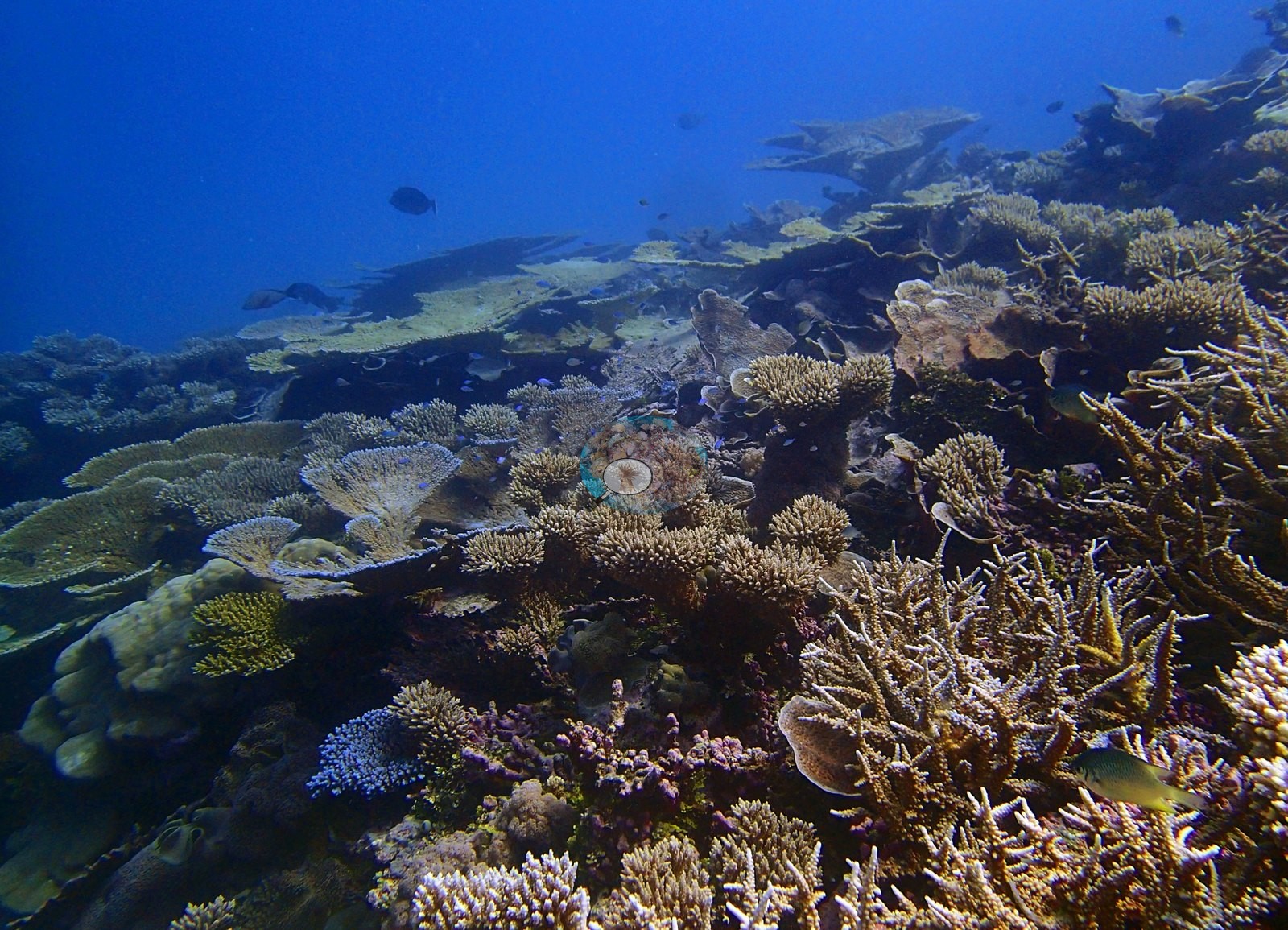
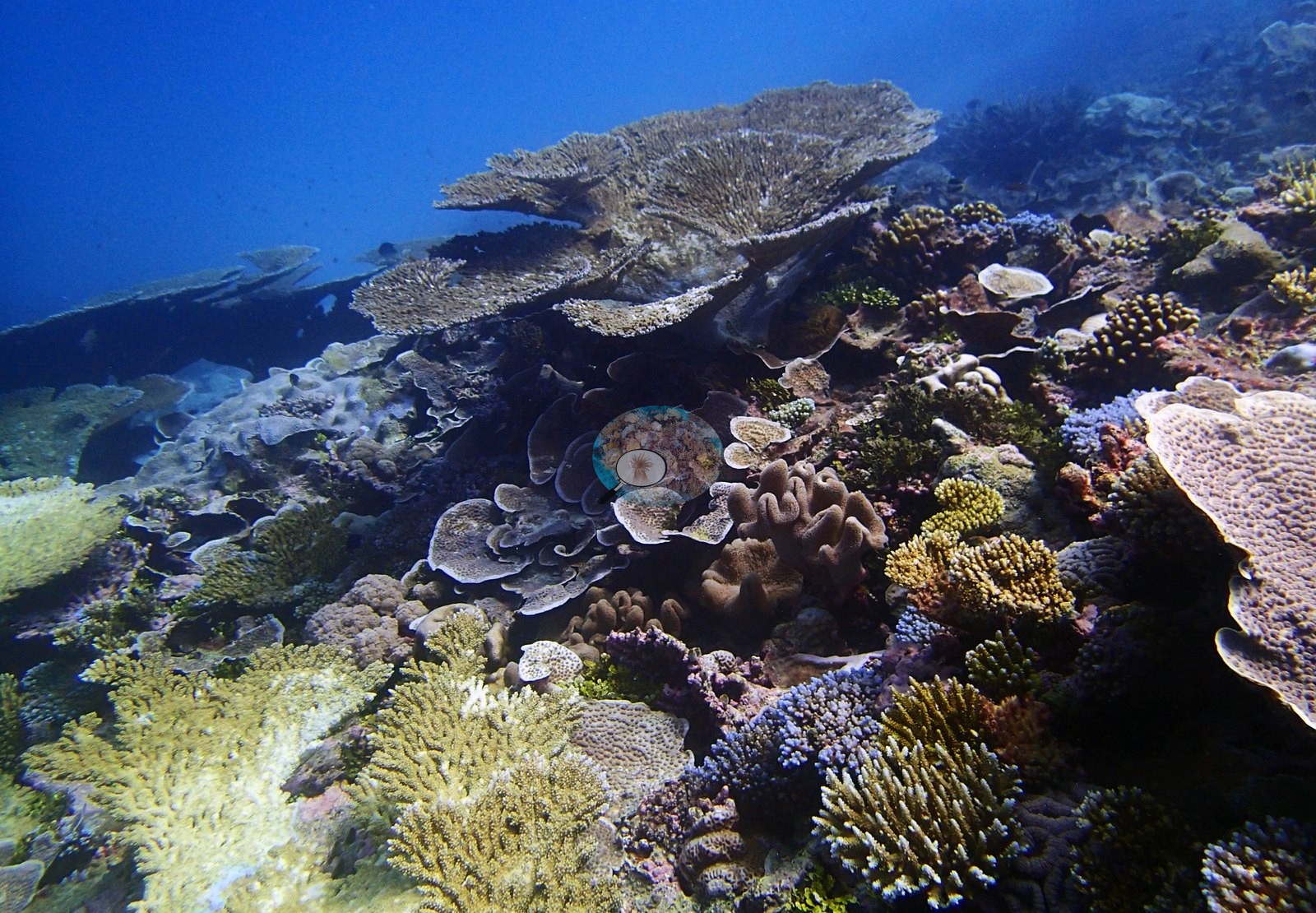
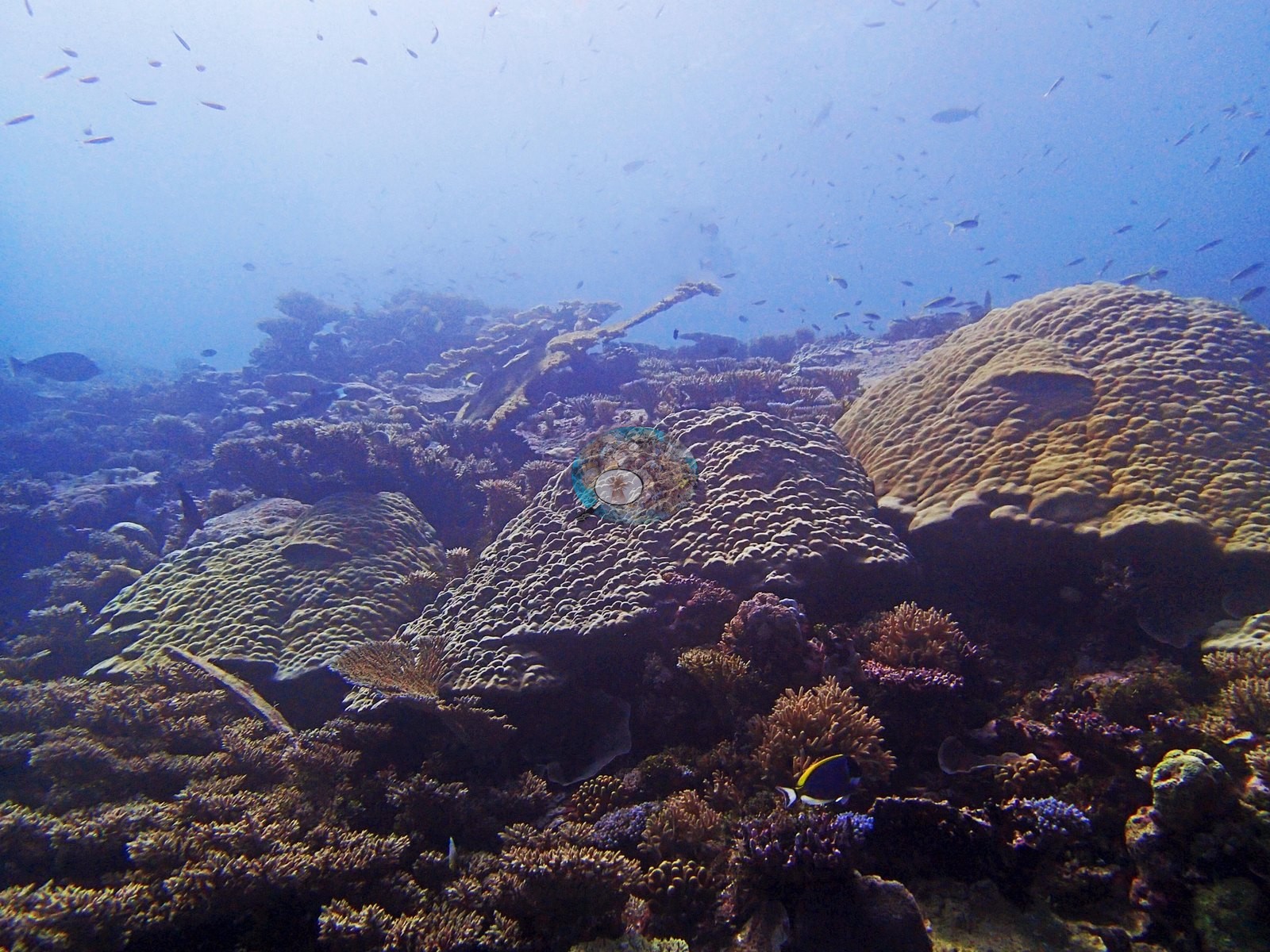
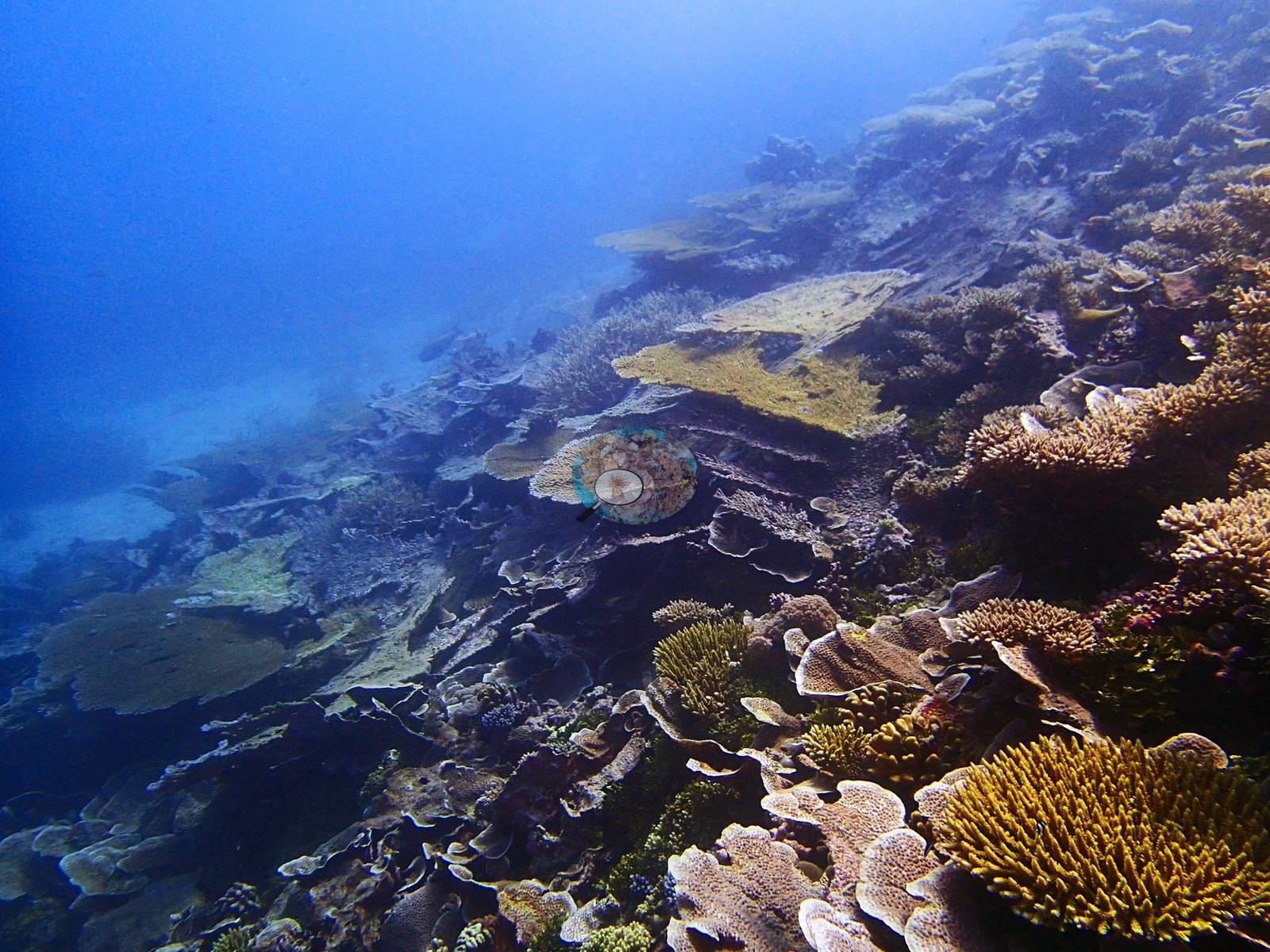
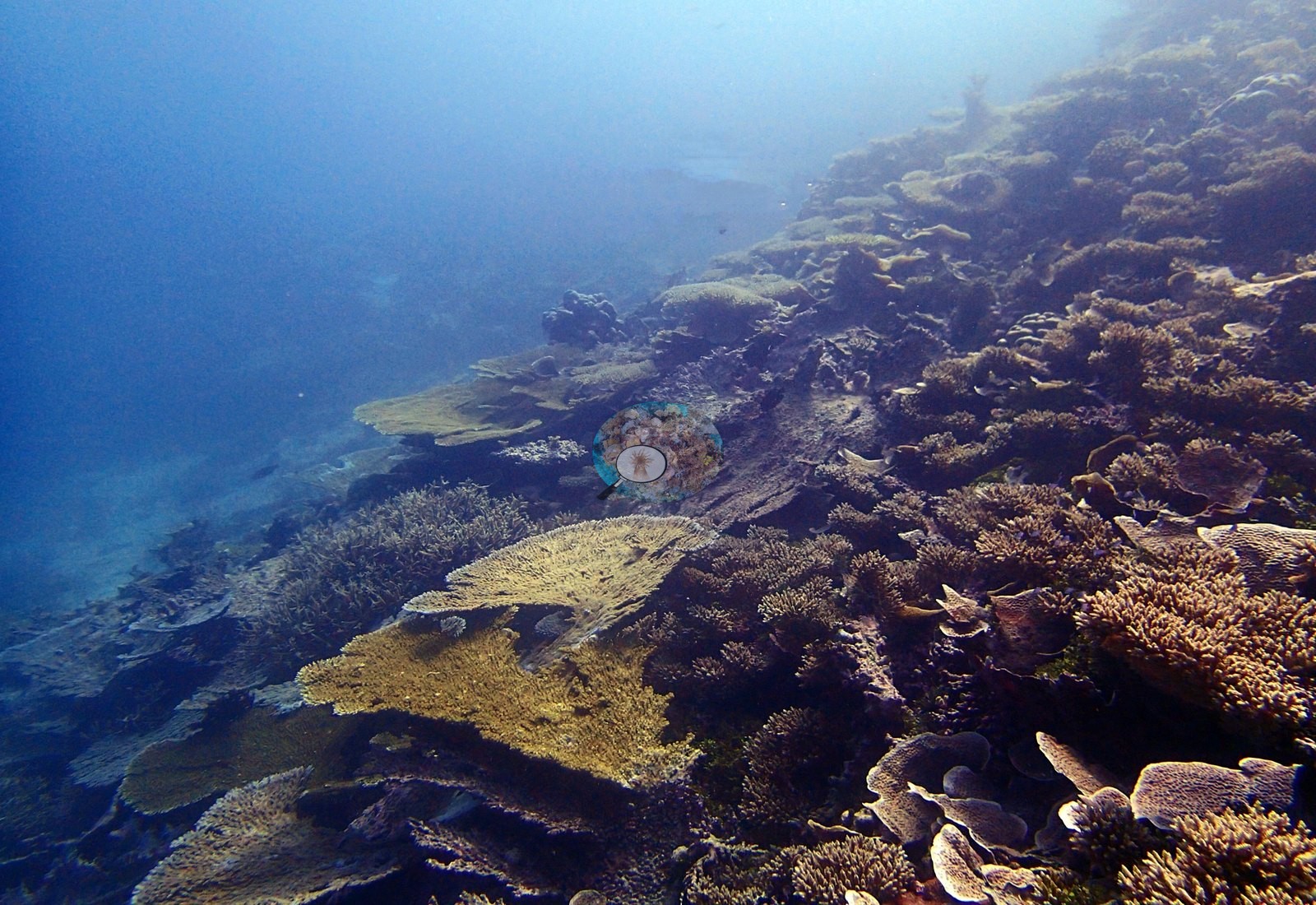
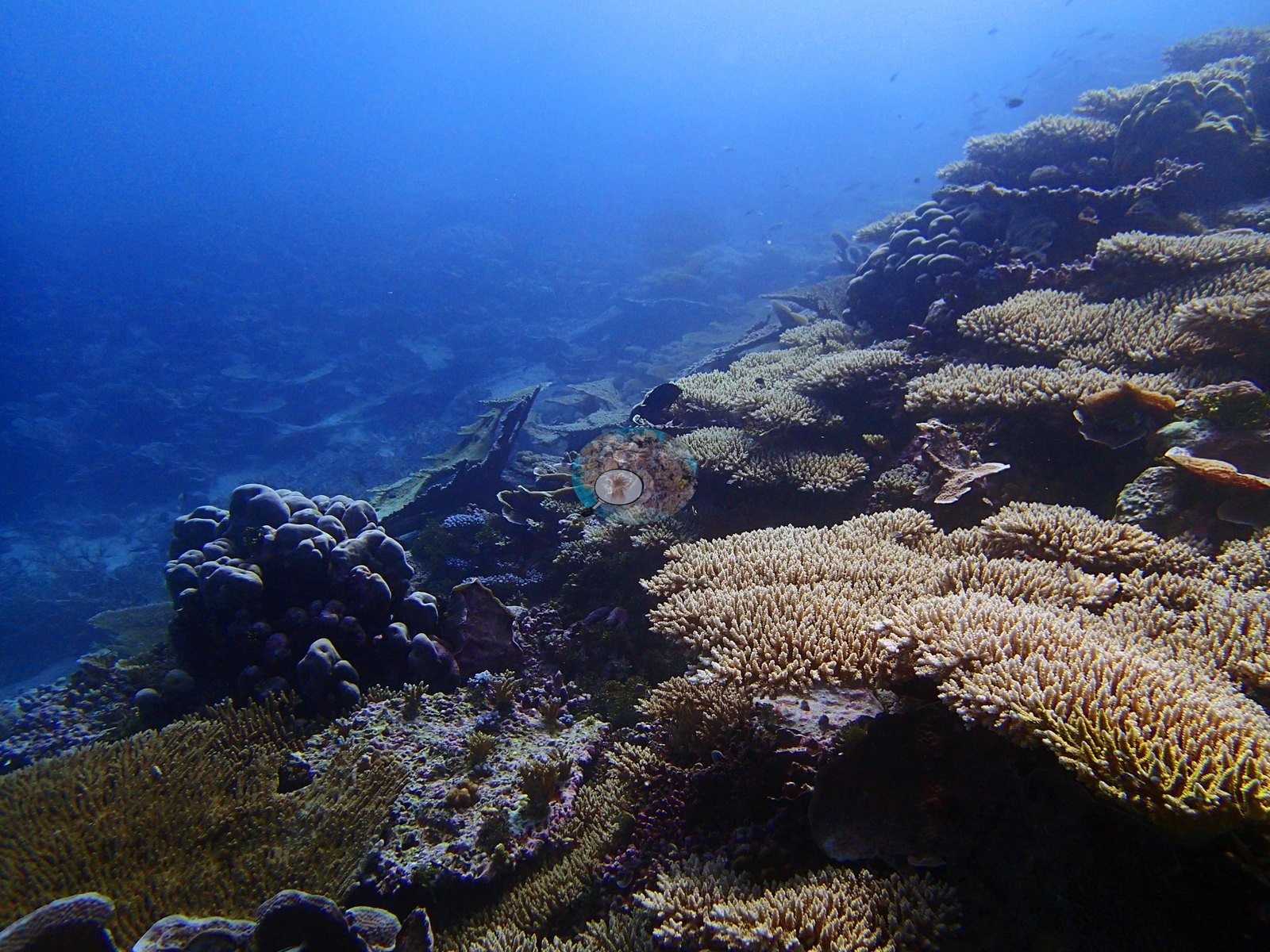
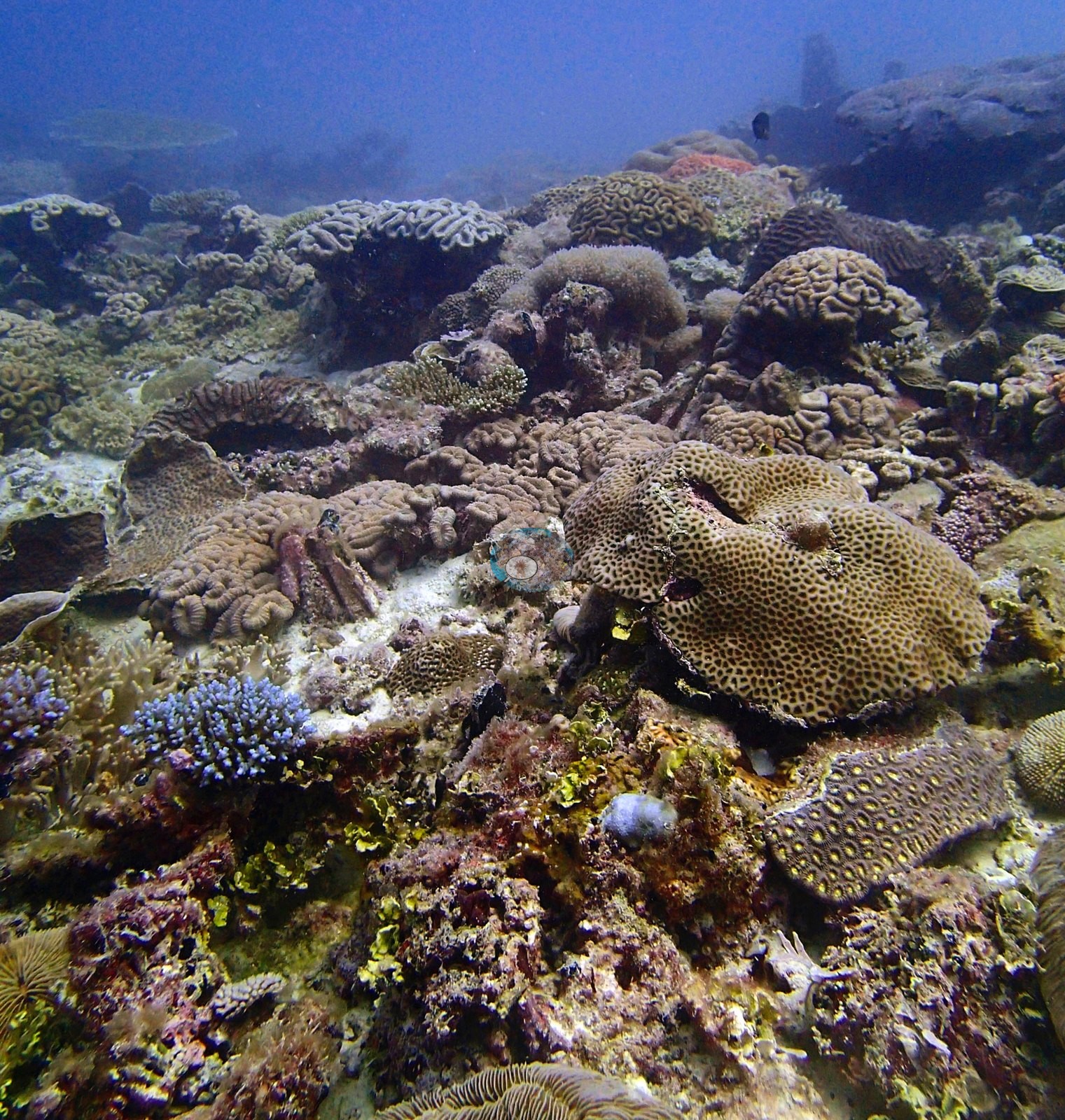
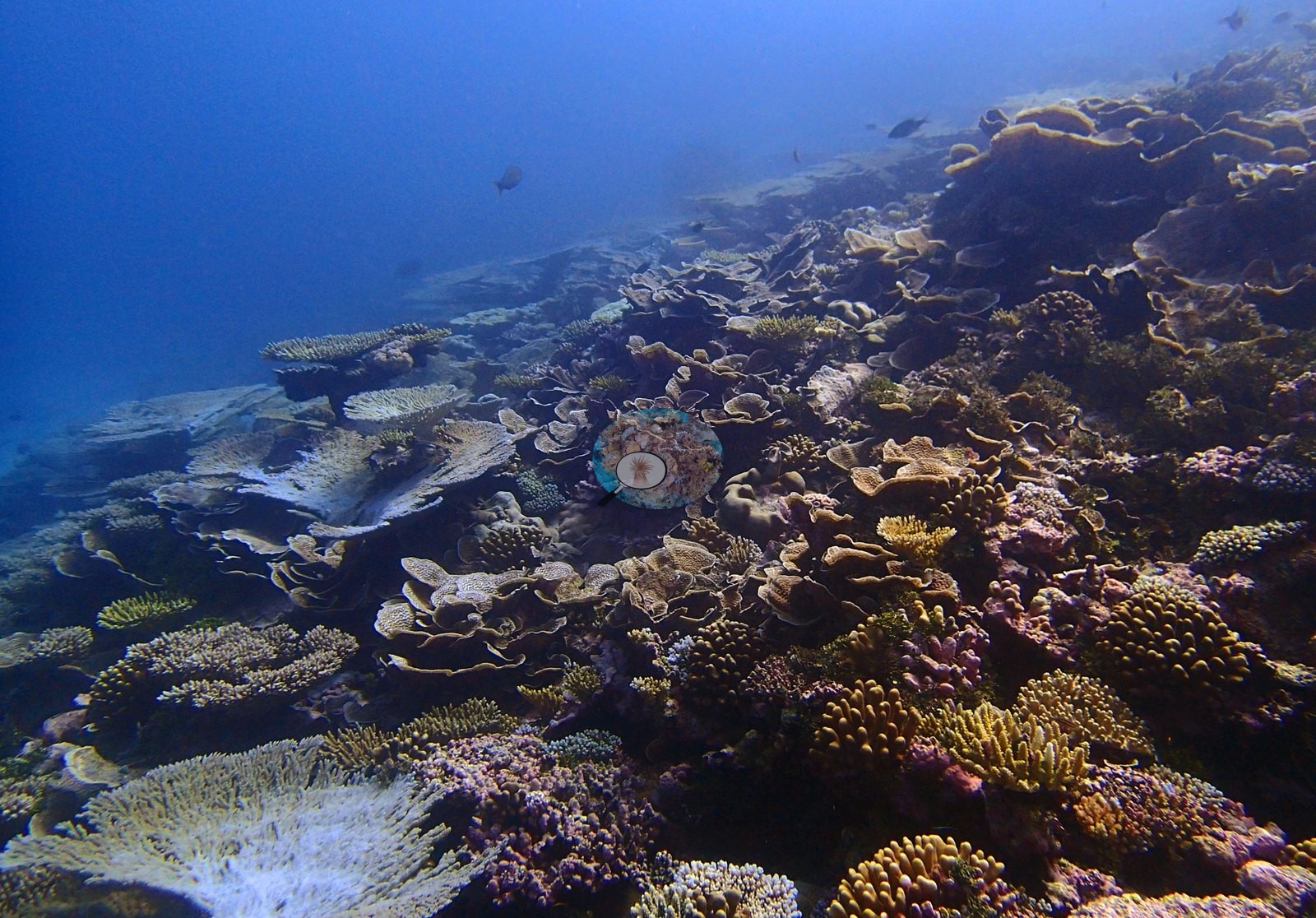
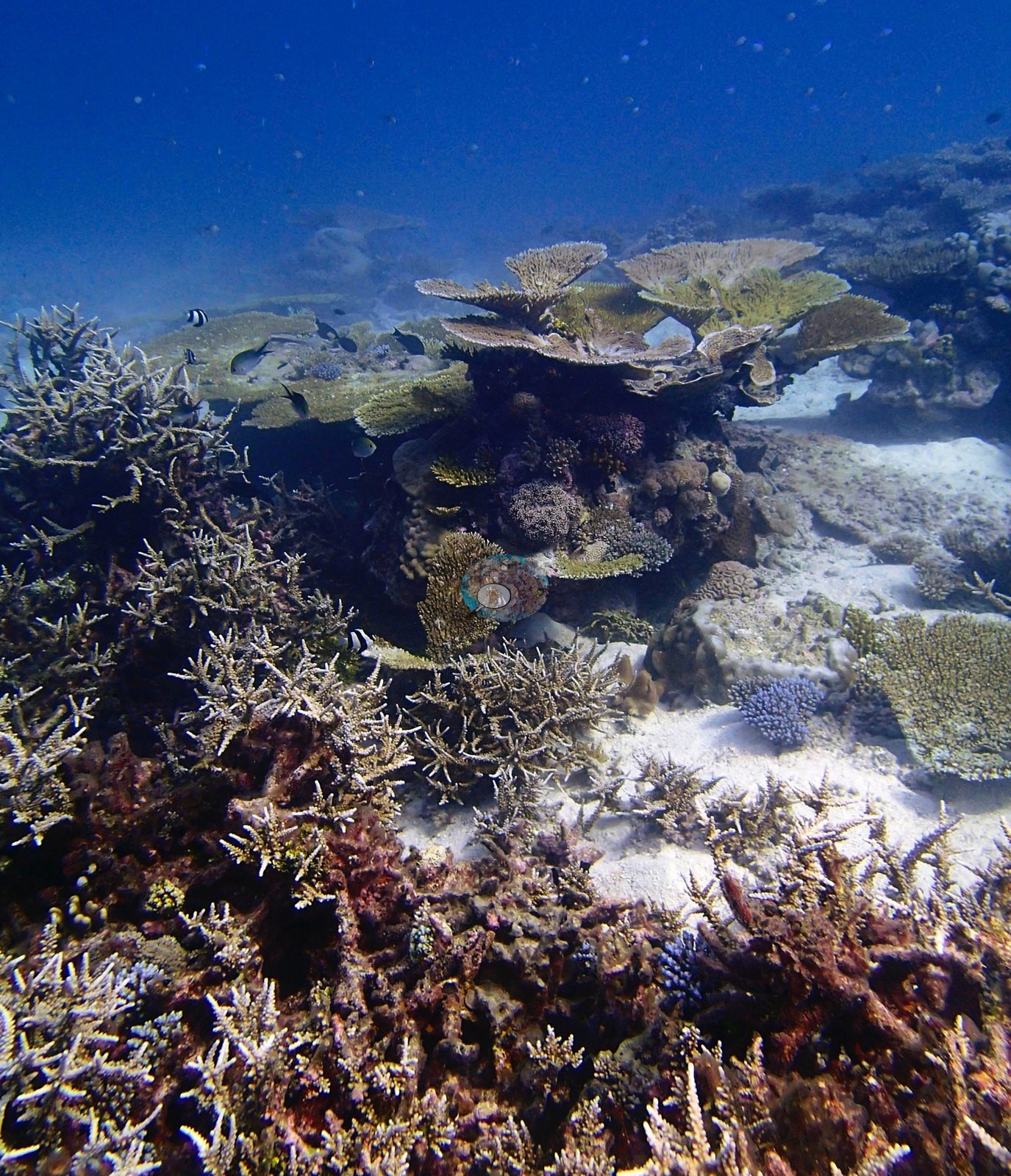
Between the tables the framework is not bare but crusted pink and mauve in coralline algae. The second face is a mounded, far more mixed assemblage on shallower, better-lit ground: Image 4, Image 26, Image 30, Image 32, and Image 43 are among the busiest frames in the whole GRE Chagos material, with salmon and pink corymbose Acropora, chartreuse-green and mustard corymbose and digitate colonies, lilac and blue-tipped branching colonies, tan and yellow tabulate plates, cream and ochre massive domes with the fine, even porosity of Porites, brown honeycombed and meandering-valley massives, ruffled foliose and bowl-forming plates, and orange-tan encrusting sheets, all packed shoulder to shoulder with almost no open substrate between them (e.g., Image 4, Image 26, Image 30, Image 32, Image 43).
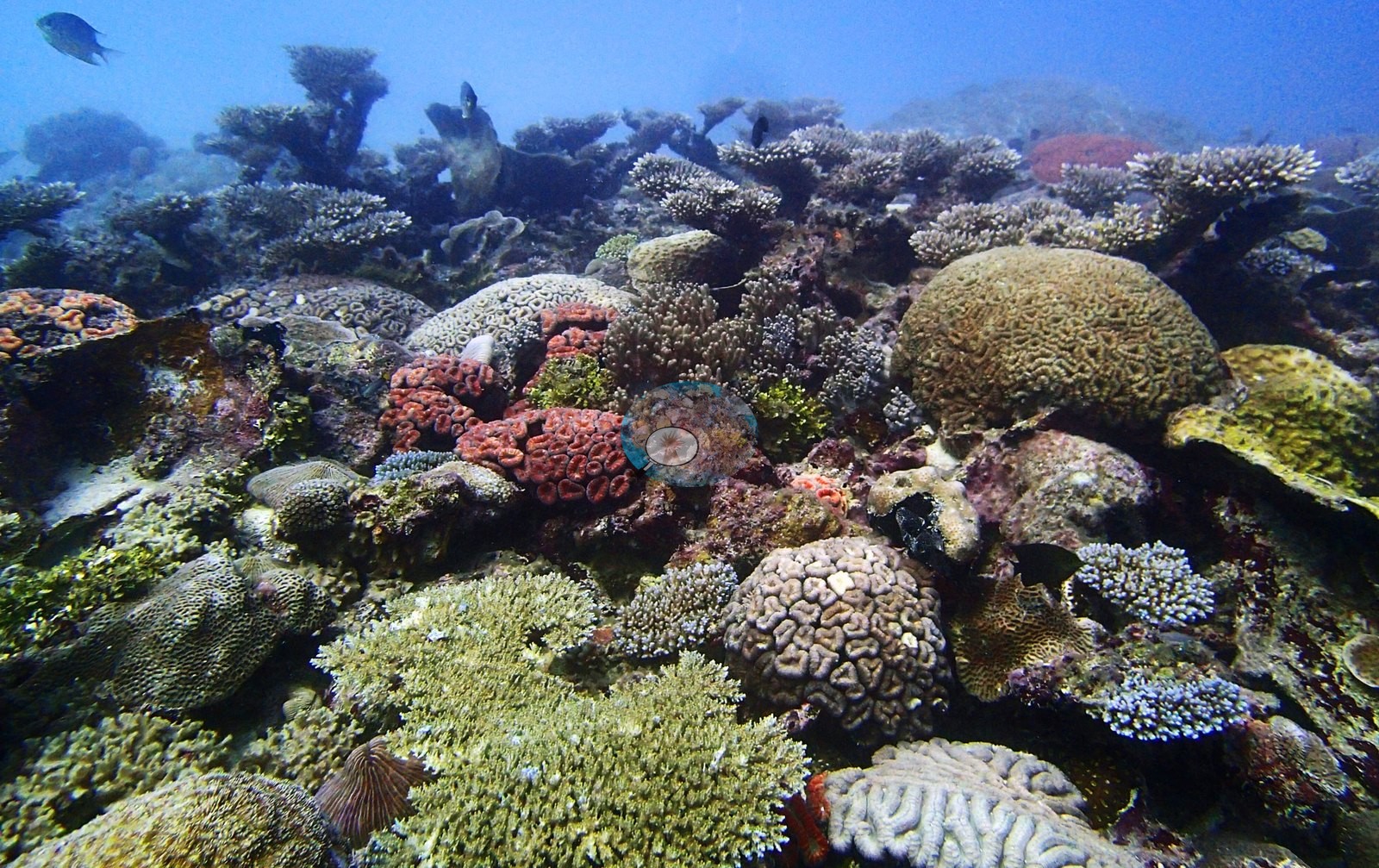
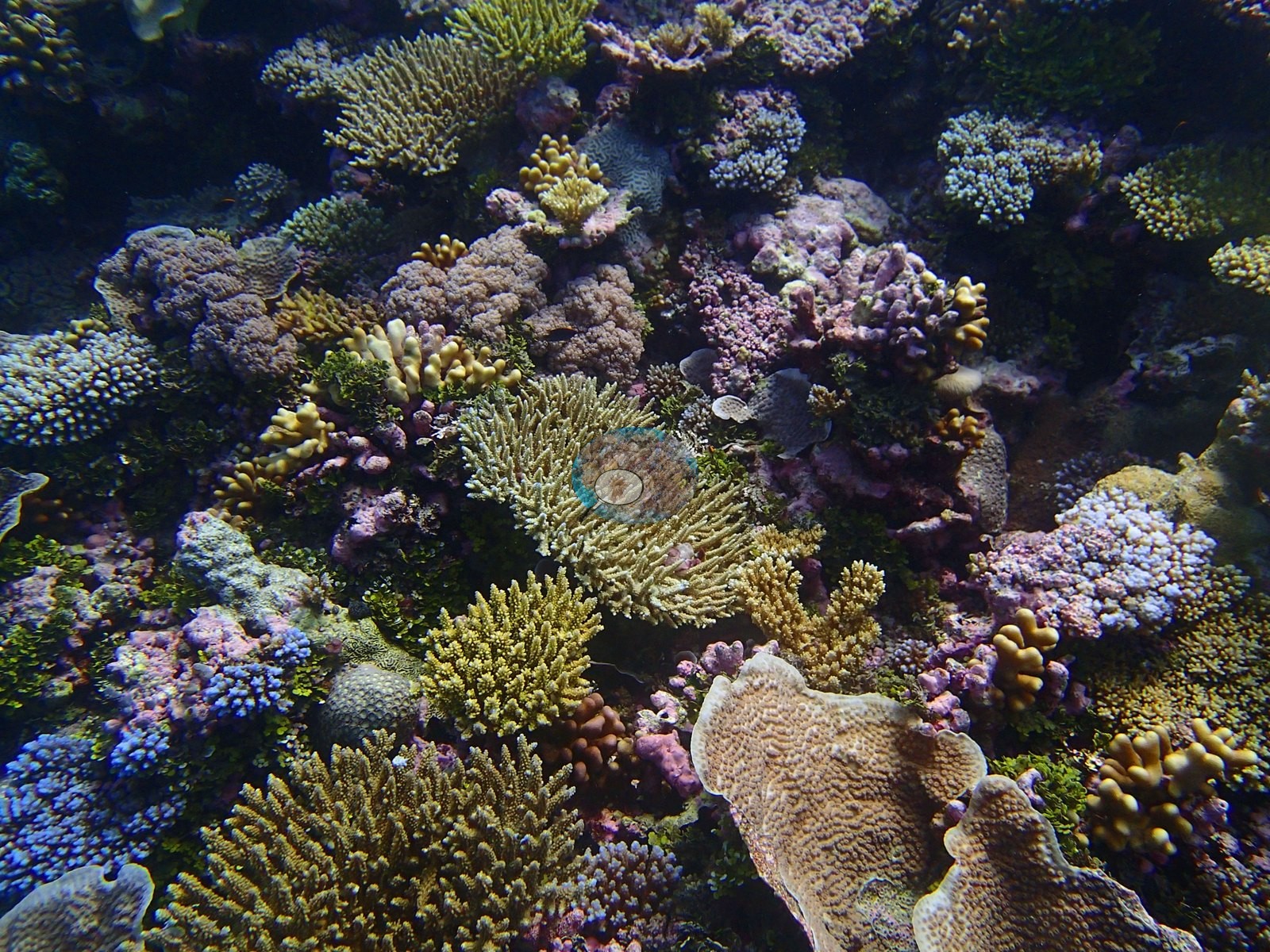
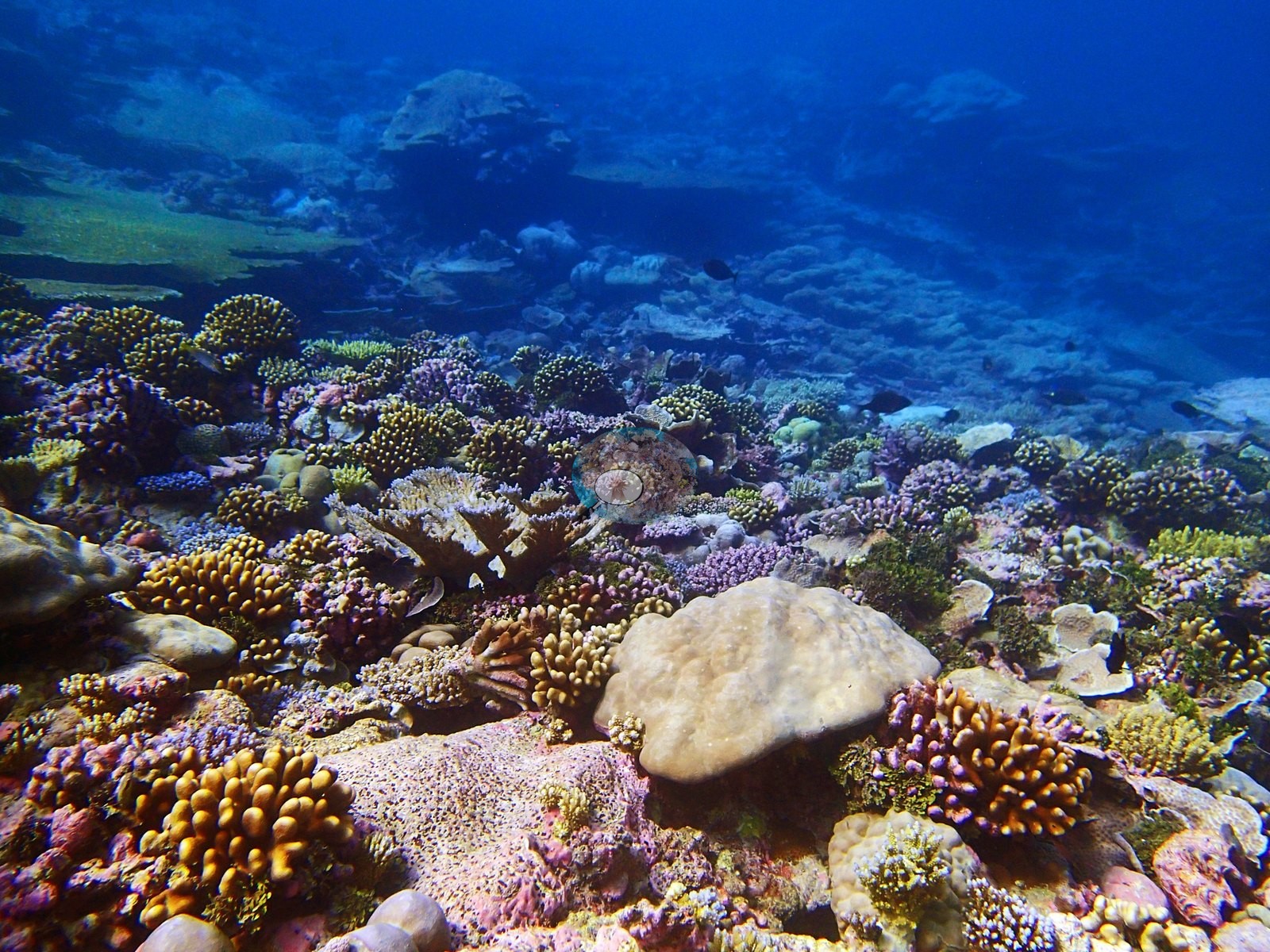
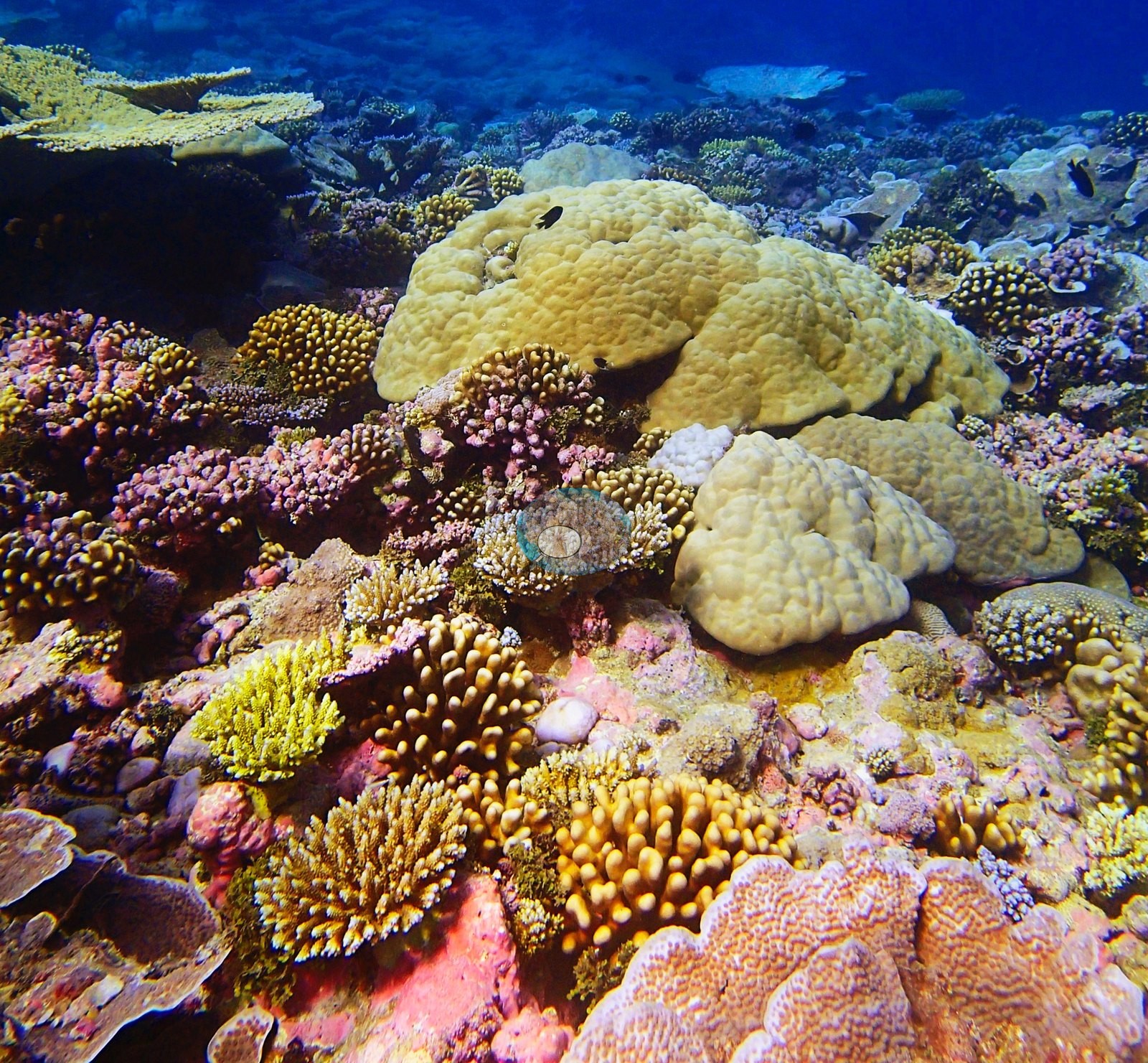
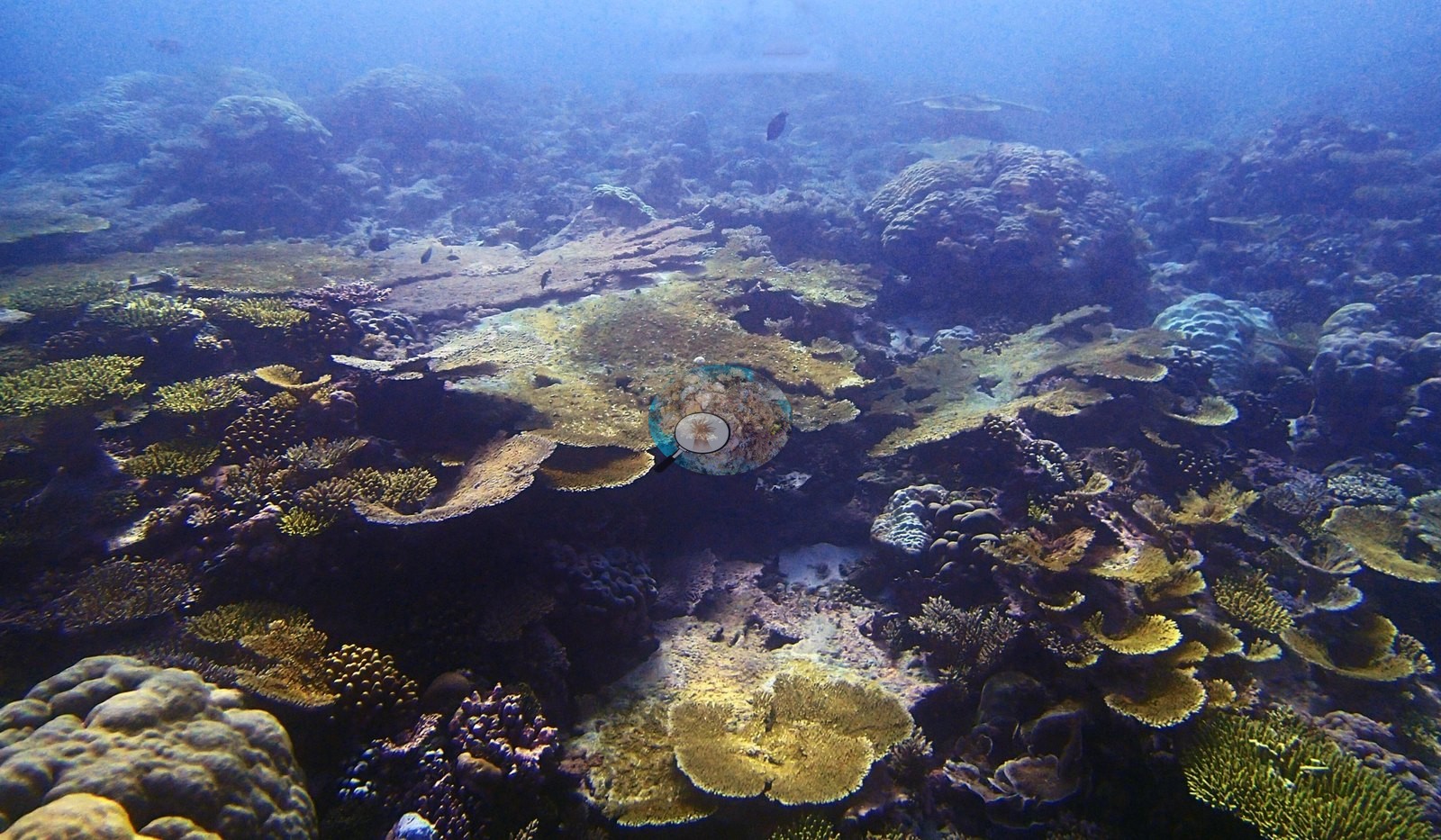
Image 2 is given over to one large ruffled foliose colony, its concentric fronds edged in pink coralline crust; Image 7 shows tan plating and vase-shaped colonies with an orange encrusting growth beside them; Image 33 and Image 42 are anchored by big pale cream boulder-massives (e.g., Image 2, Image 7, Image 33, Image 42).
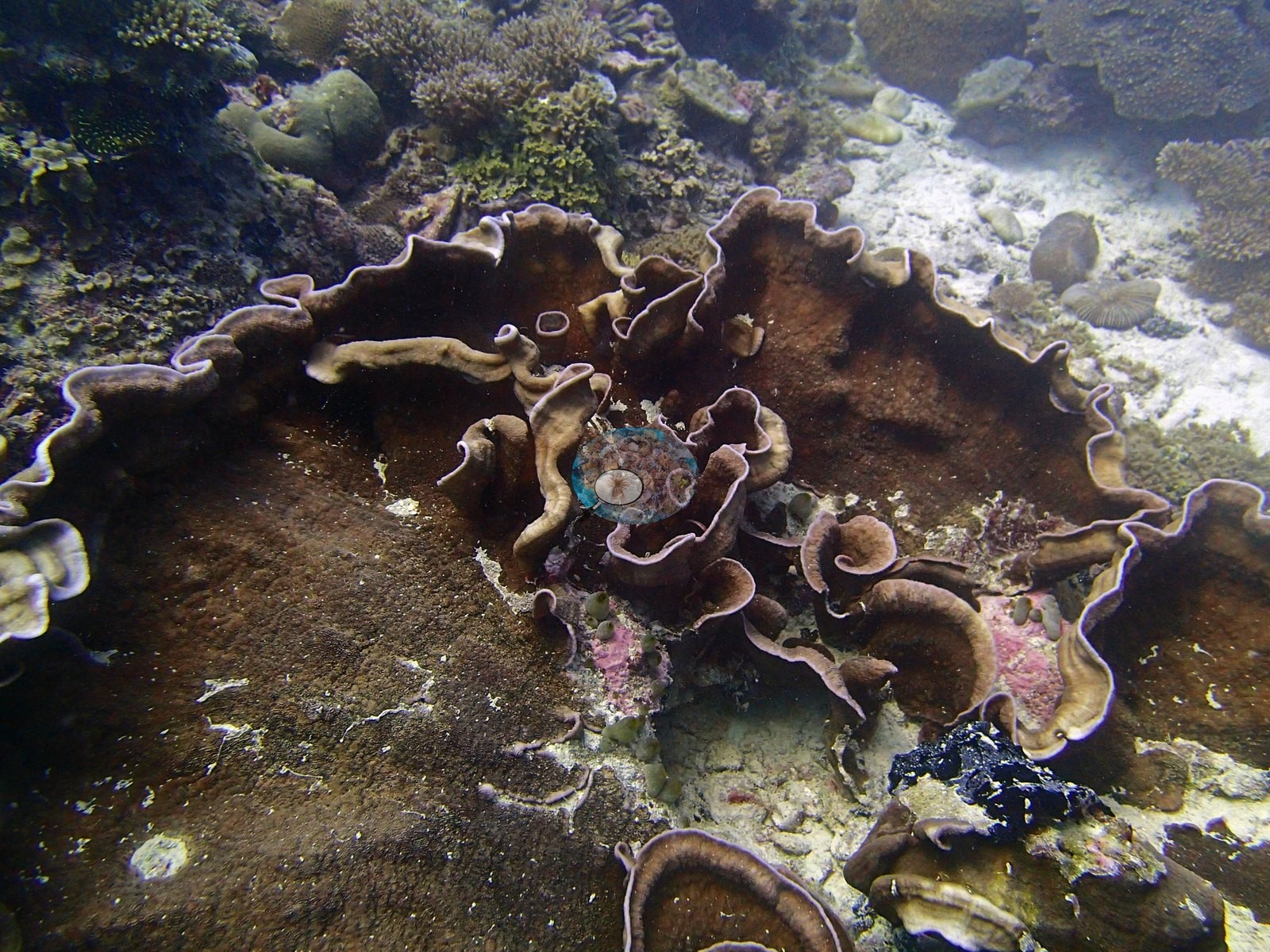
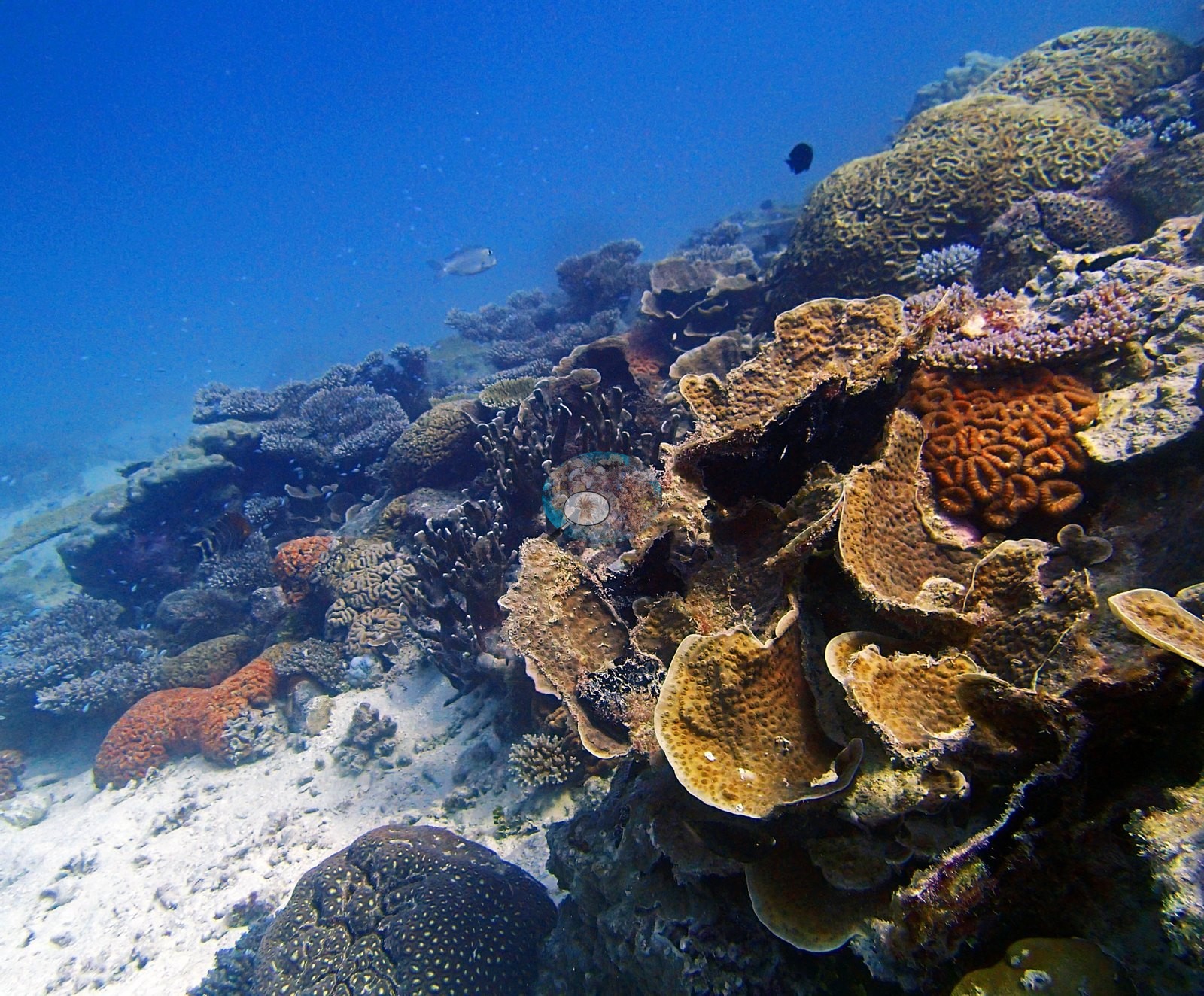
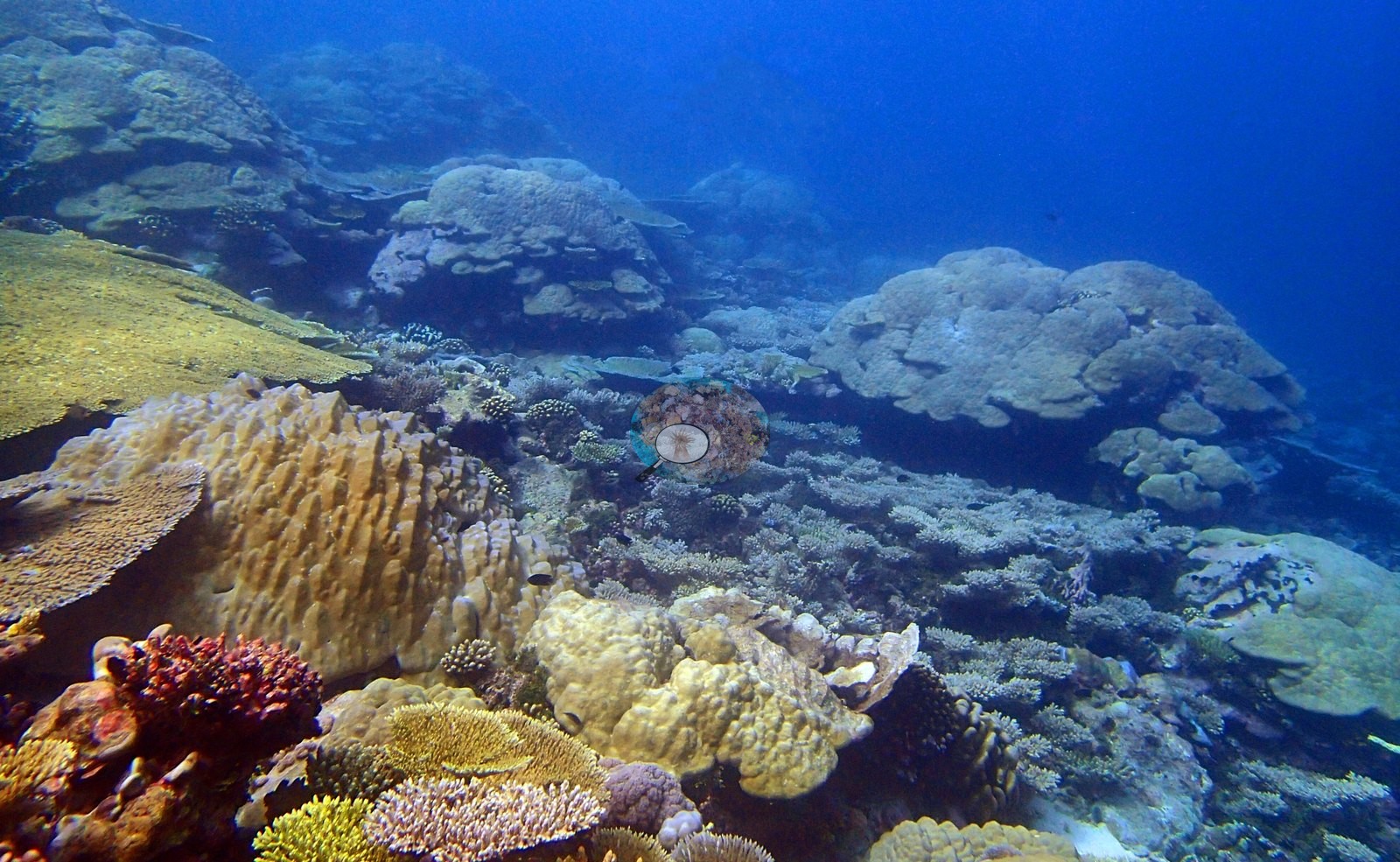
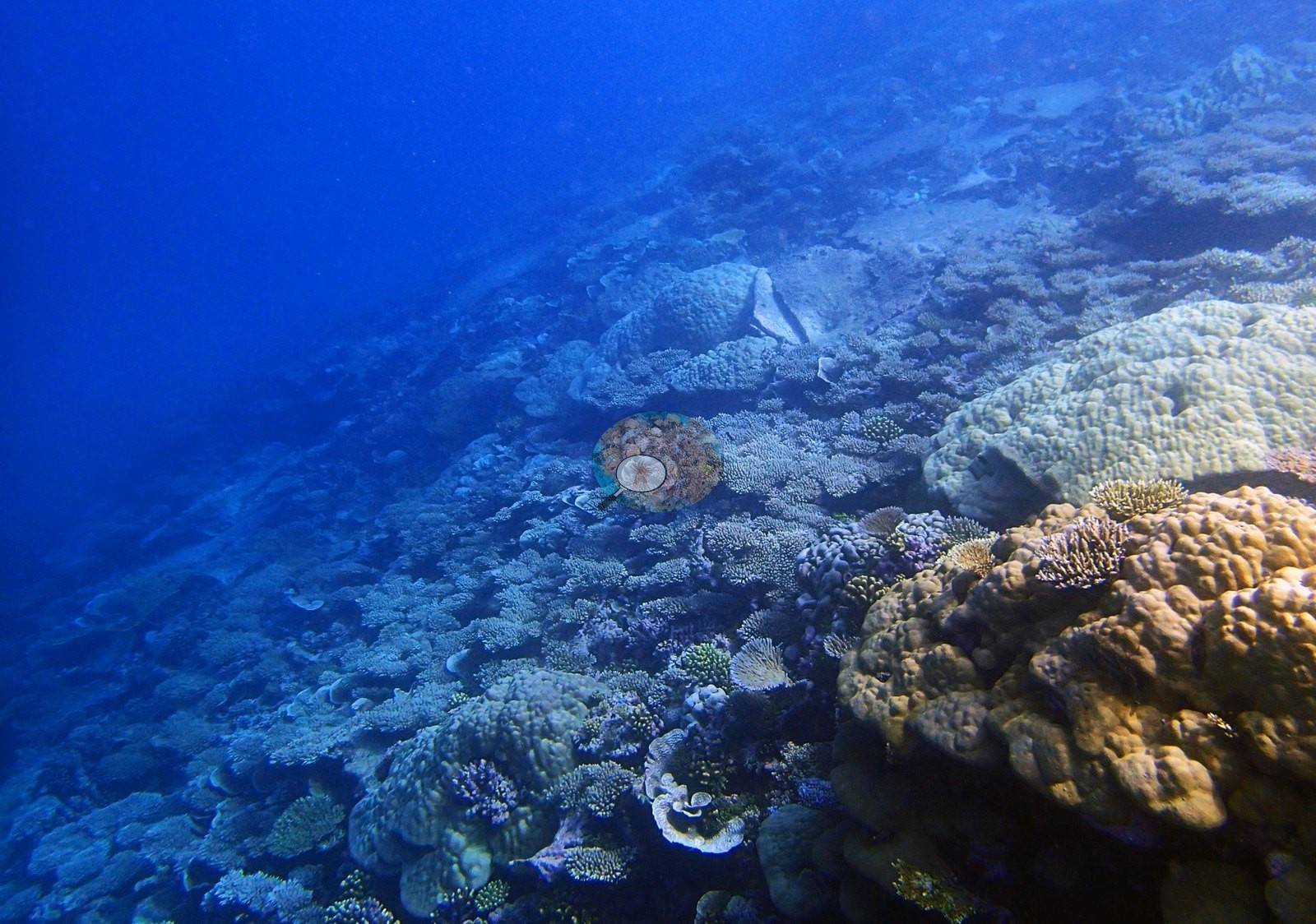
The wide slope frames repeatedly show scattered pale to bone-white patches within the branching stands (clearest in Image 11, Image 13, and Image 16) — at this range and in this water clarity these read as exposed skeleton and rubble rather than live bleached tissue, and the frames cannot separate the two; no frame shows a colony-scale bleaching front, an obvious disease lesion, or a crown-of-thorns seastar (e.g., Image 11, Image 13, Image 16).
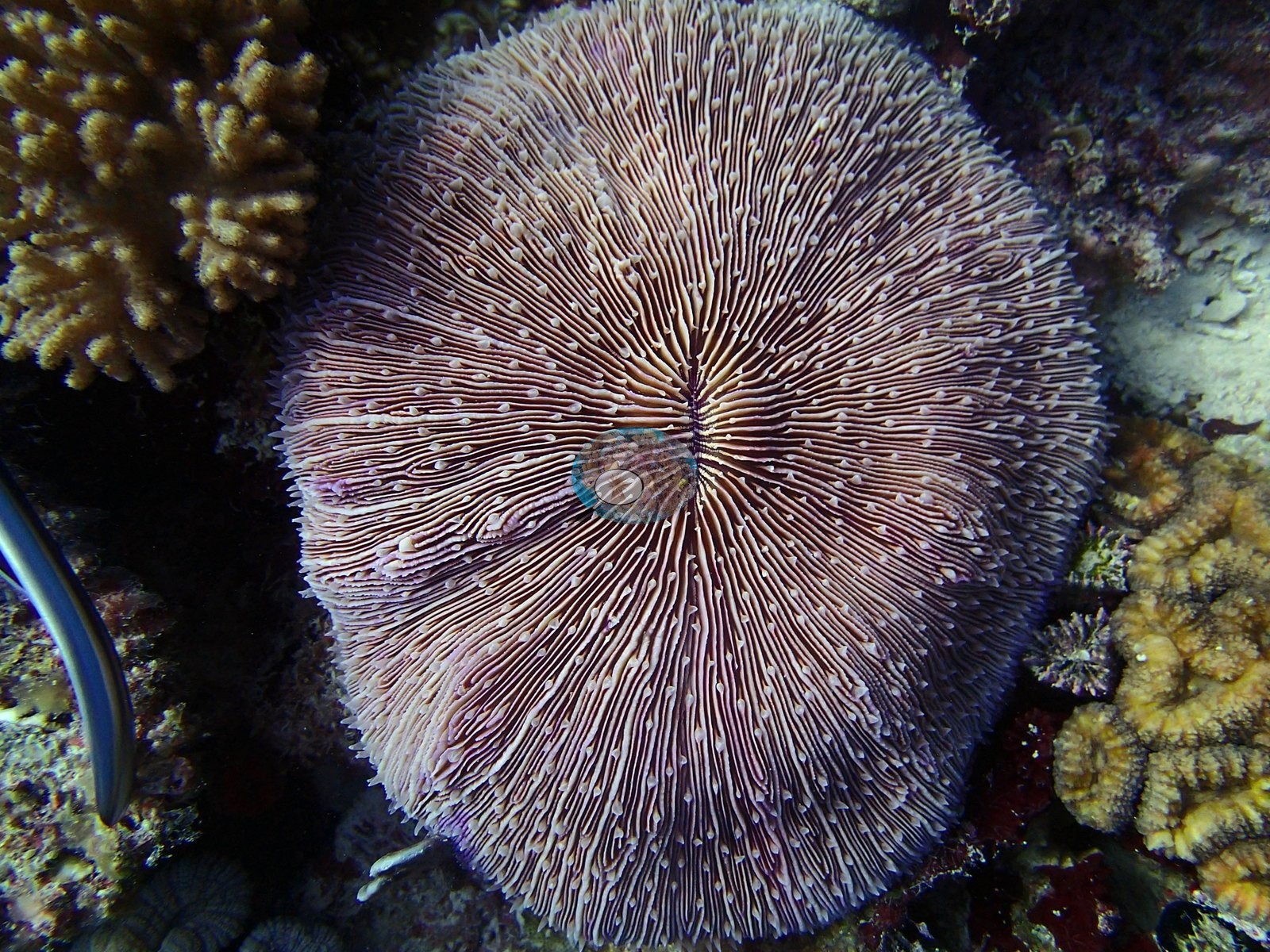
Fish are sparse and incidental: small planktivores over the slope, a single blue-and-yellow fish beside the mushroom coral in Image 6. Image 6 itself is a near-macro portrait of one large solitary free-living fungiid, radial septa in fine detail — a subject frame, not a habitat frame, and it should be excluded from any pixel-based cover pass (e.g., Image 6).
Nothing in the set is topside, and no transect tape or sampling gear appears in any frame.
BIPB68 is a protected, emergent fringing reef inside the Peros Banhos lagoon, surveyed at 23 m on 16 April 2015 at 30.9 C and 34.5 salinity. Four formal transects averaged 55.1% coral against 35.0% algae, with bare substrate squeezed to 4.6% - between coral, algae, and crustose coralline algae almost the entire reef surface is biologically occupied. Twenty-seven coral genera were recorded, one of the richer transect sets in the archipelago, yet Acropora still carries roughly half of all coral present. Composition swings hard with depth: the shallowest transect is close to a two-genus reef of Acropora and Porites at 58% cover, while the deepest drops to 35% cover with algae peaking at 47% and hands the reef over to Echinopora and Goniastrea. The published image-based bleaching figure is 0.87%, among the lowest in the Chagos dataset. Note that photo-based products (CoralNet 33.6%, Coralscapes 33.9%) sit well below the transect mean and must not be averaged with it.
CV model comparison
More info
Those are point counts on the photographs; this is a diver swimming a transect. The models and the reference never saw the same thing. ⚠ SITE-LEVEL ONLY. The 2,500 frames were not associated with any transect taken within 200 m of them, so transect-vs-image comparisons are site means, never frames. The transect value is already in the pin `cover` field (109 of 112 pins, sourced to the paper's suppl. S1) and is read from there, never re-imported. The transect is THE coral-cover value for this site and stands alone. The rows below it are a methods comparison only: no computer-vision value is averaged with it, feeds the headline, or carries over to the site's cover figure (Anderson, 2026-09-22).| Method | Hard-coral cover (%) |
|---|---|
| Transect (published) | 55.0 |
| In-house DINOv3 | 38.5 |
| CoralSCOP edited | 39.2 |
| Claude | 36.8 |
Data & links
- Read the full site report ↗
- Download benthic survey data (CSV) ↗
- Download all LOF-GRE data (933 sites) ↗
- CoralNet image repository for this region ↗
- Photo portfolio ↗
- Coral Reef Diagnostics page for this area ↗
All images from Coral Reef Diagnostics. Data are from Coral Reef Diagnostics.
 © Coral Reef Diagnostics.