
Part of the regional summaries: Chagos Archipelago - Peros Banhos and Chagos Archipelago
More info
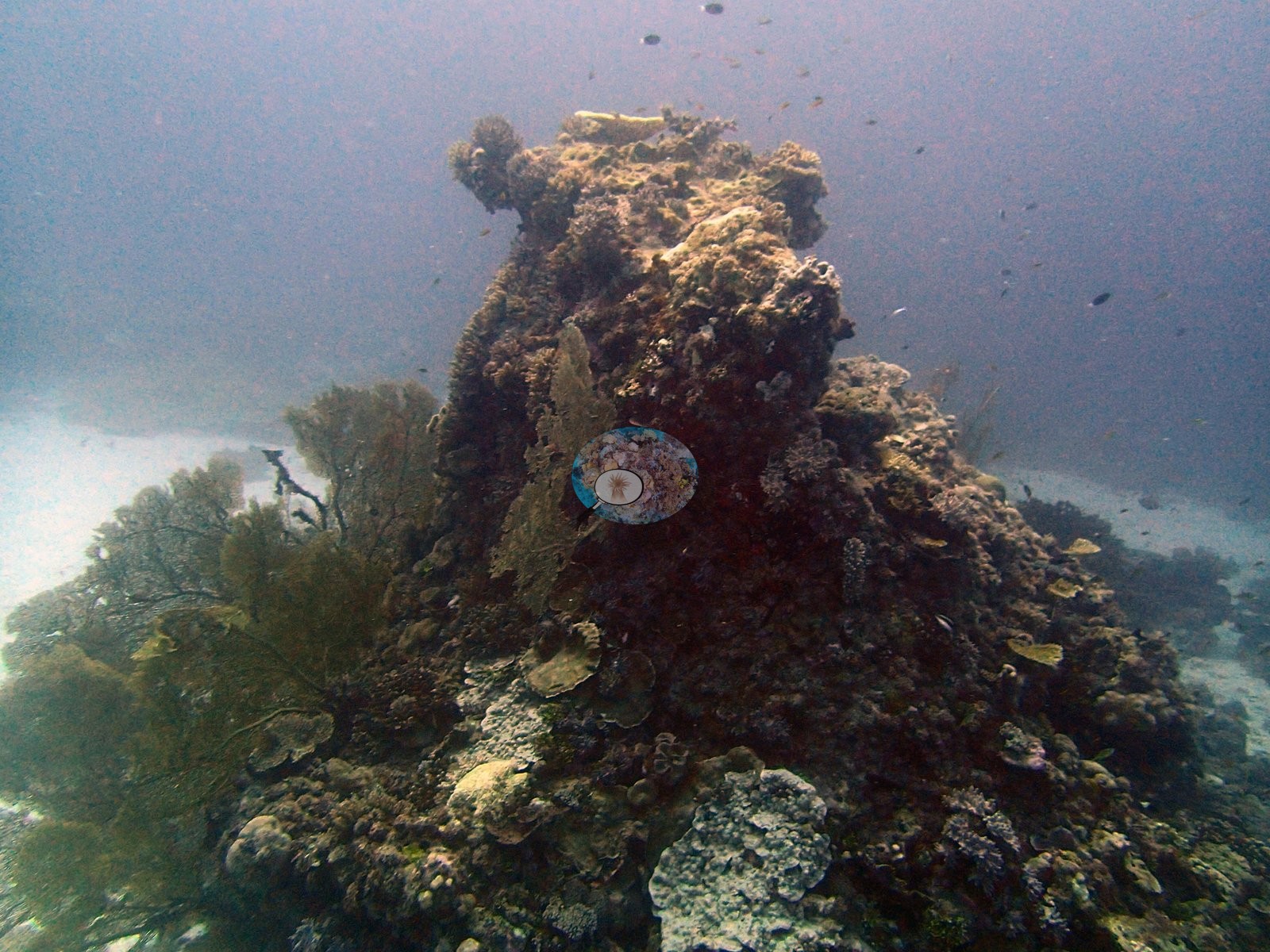
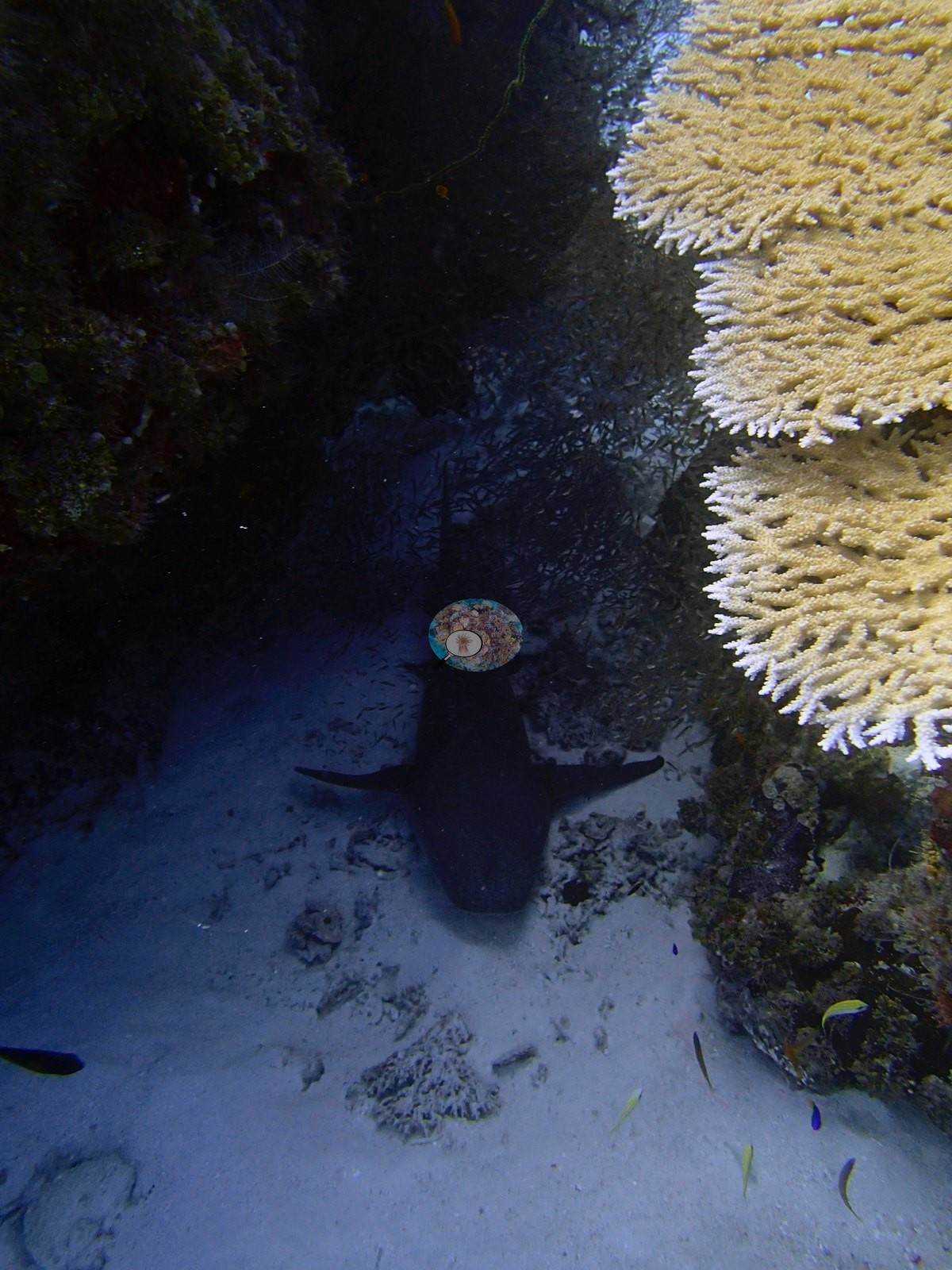
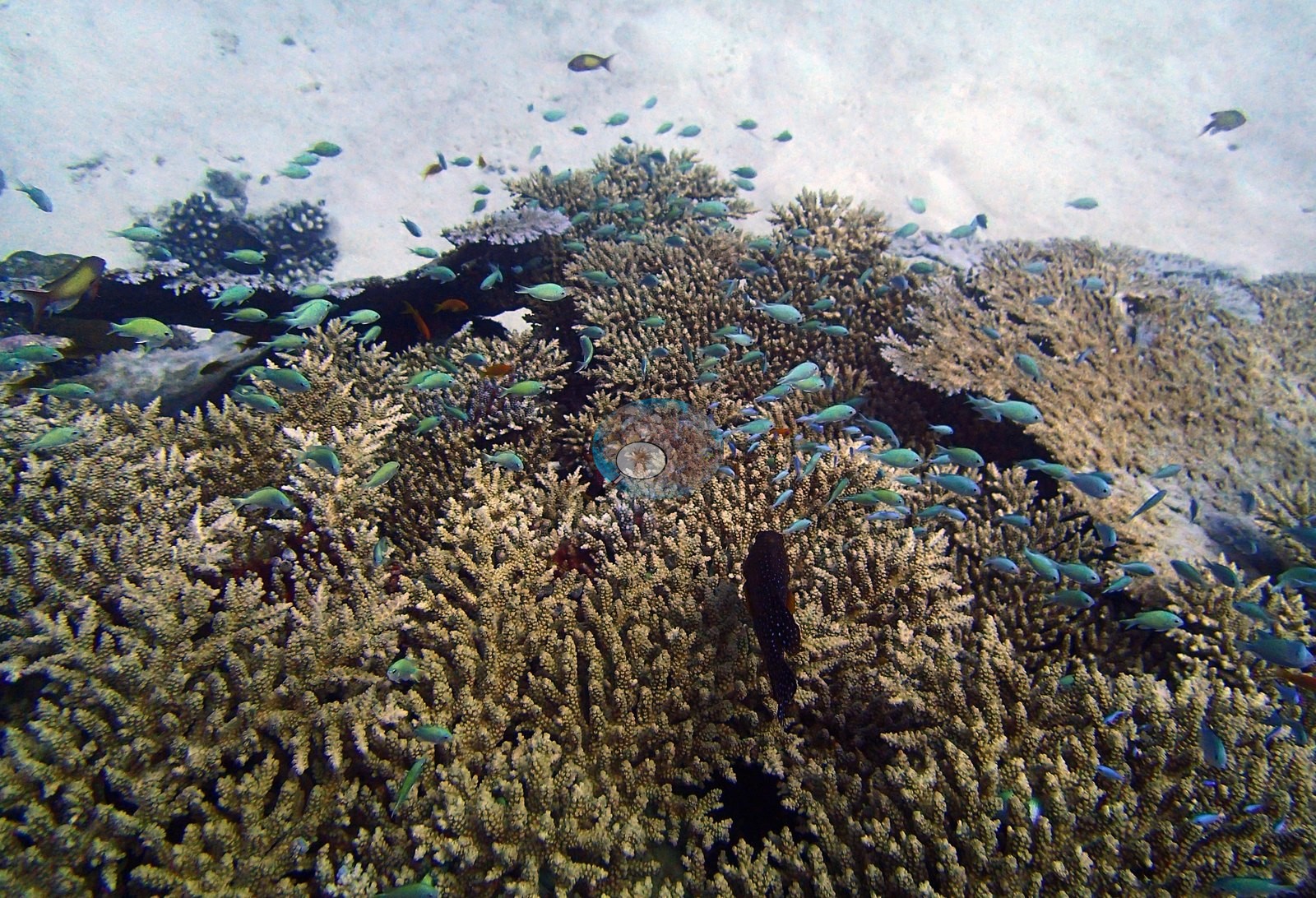
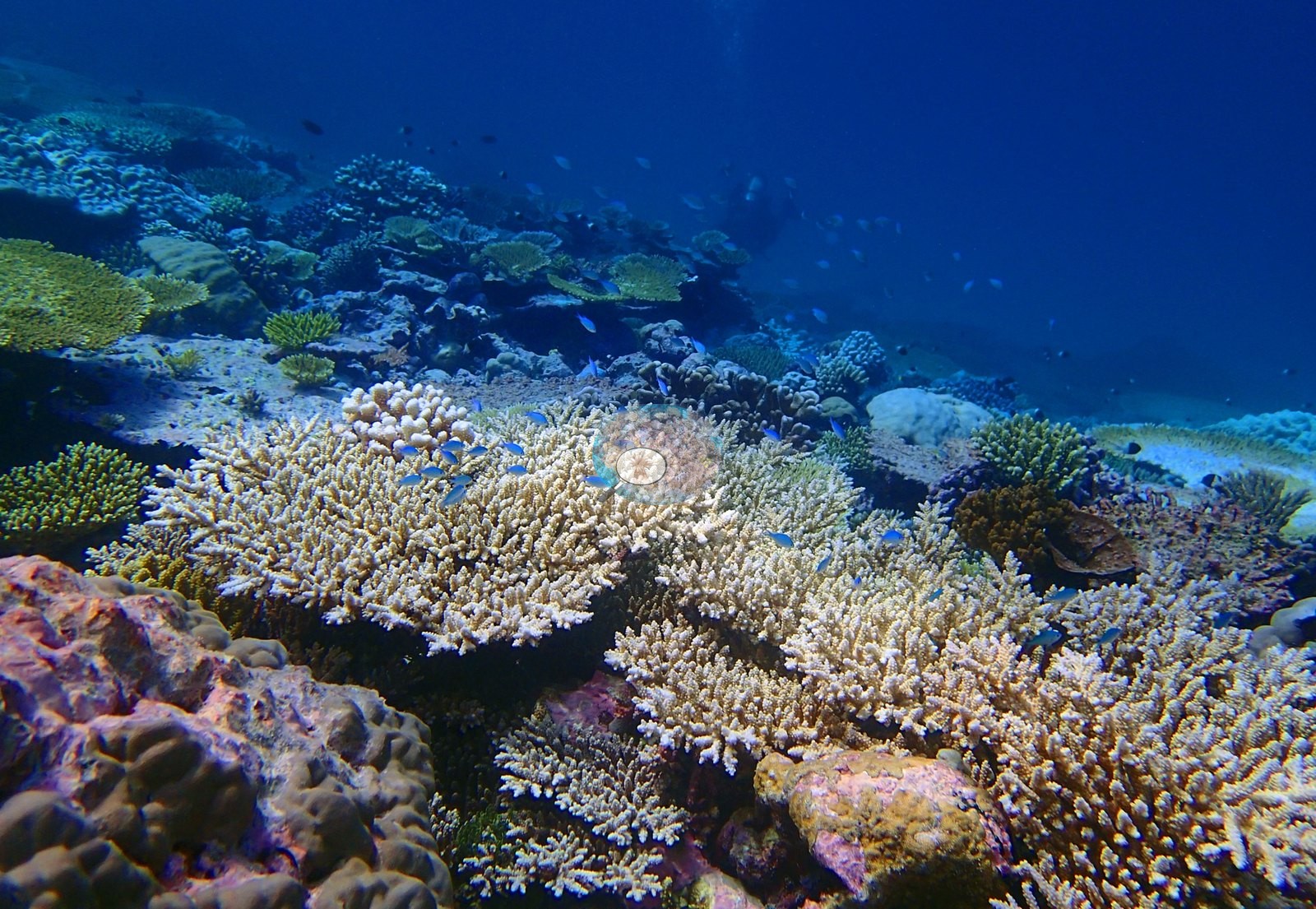
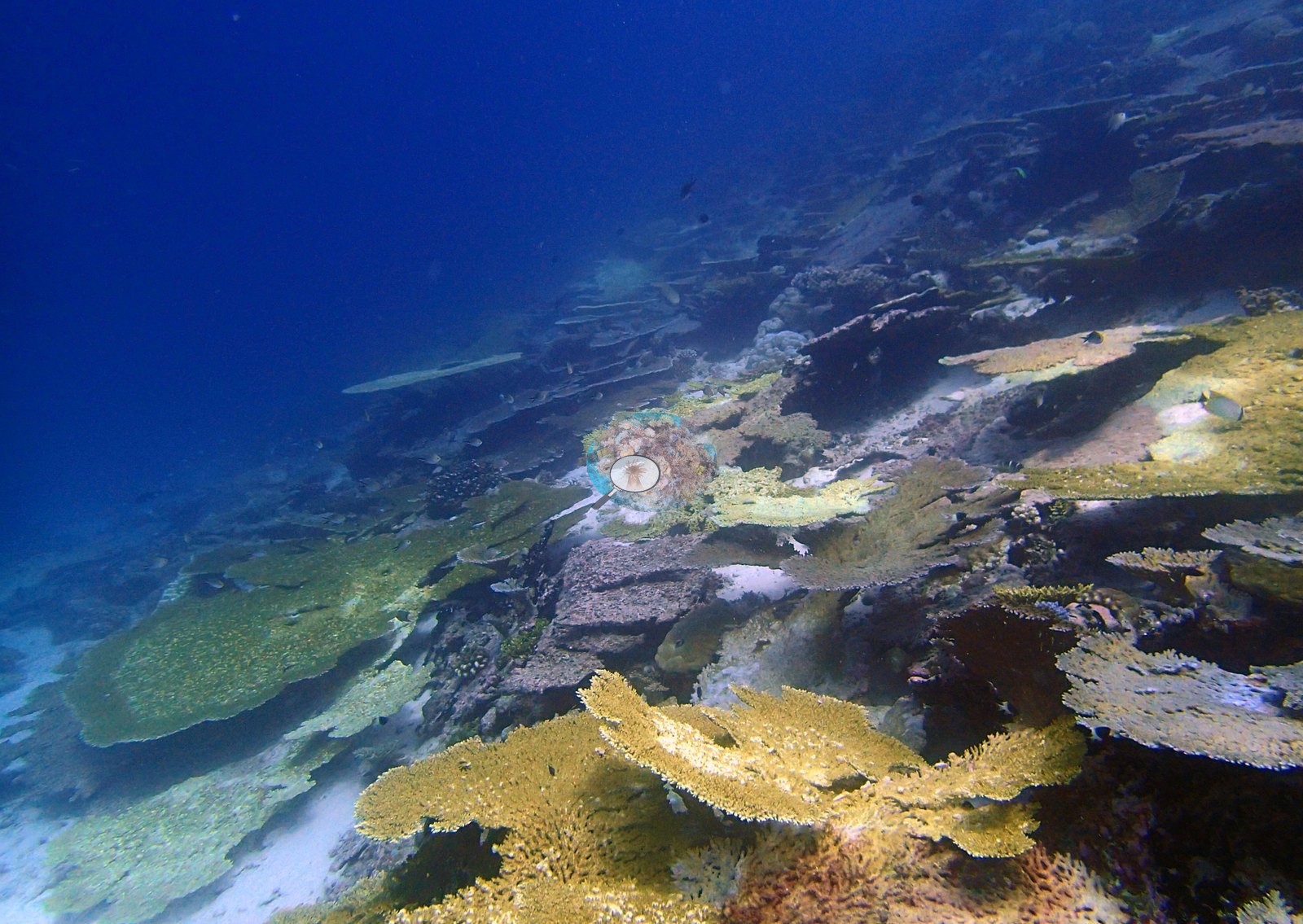
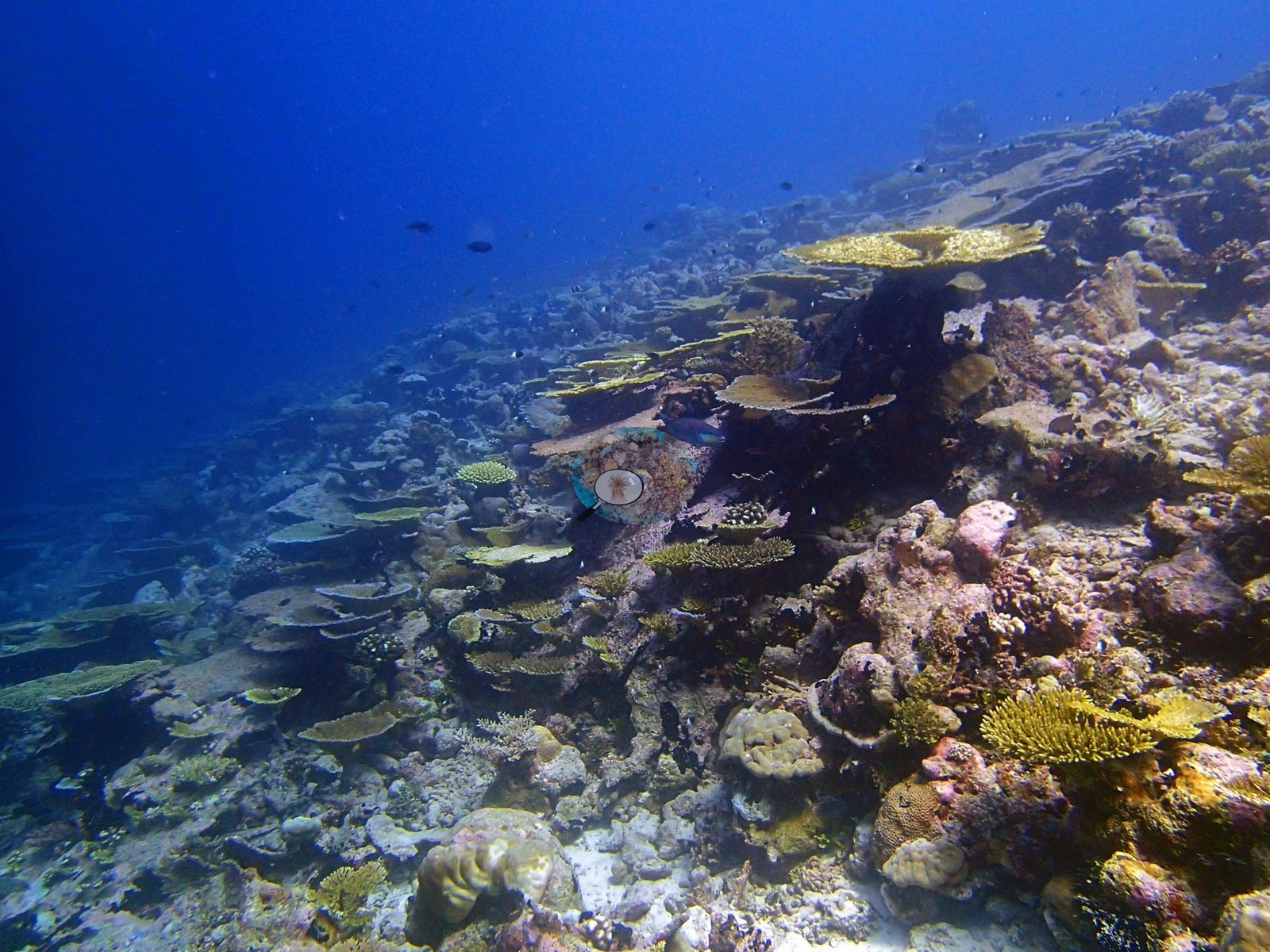
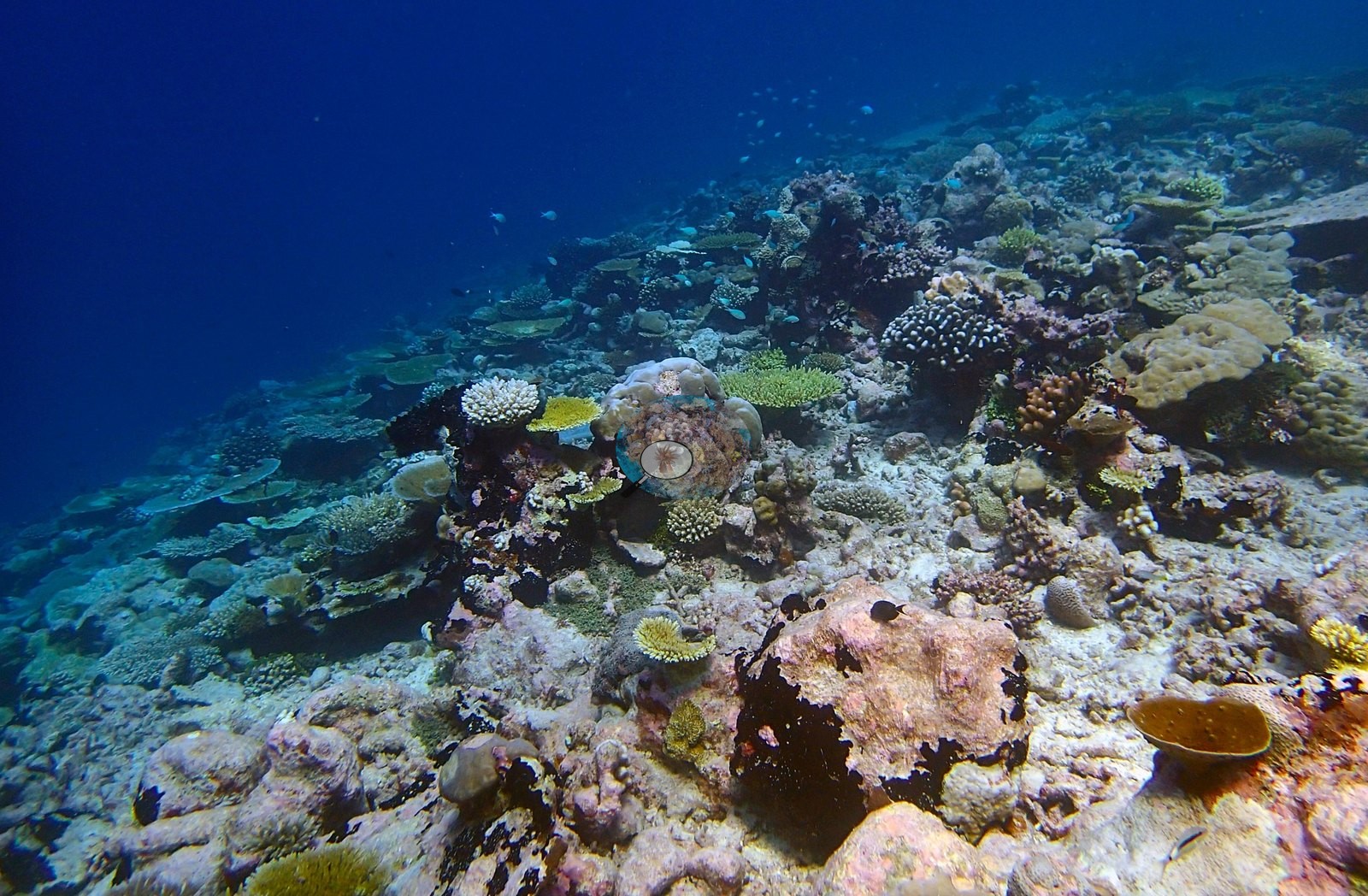
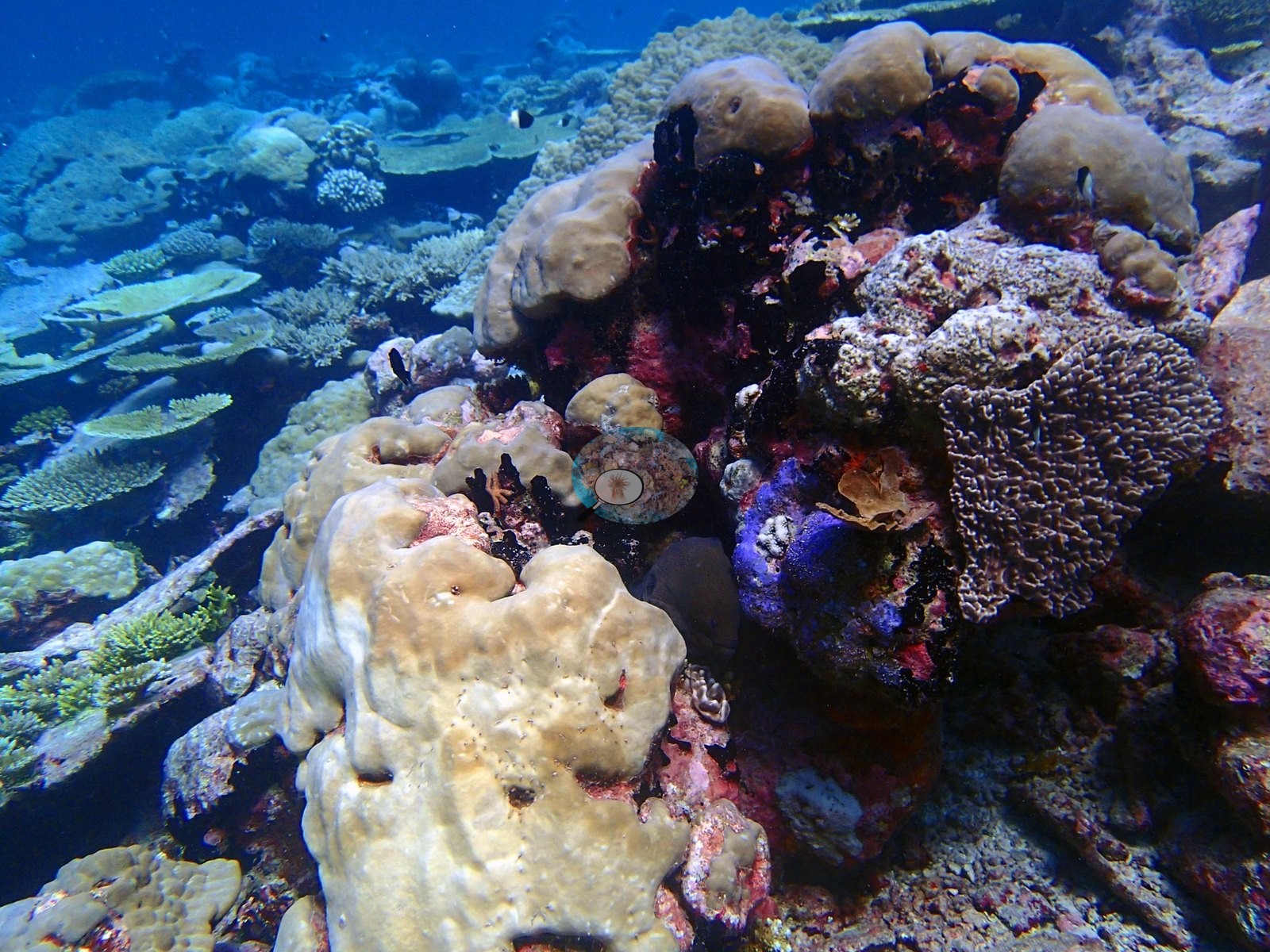
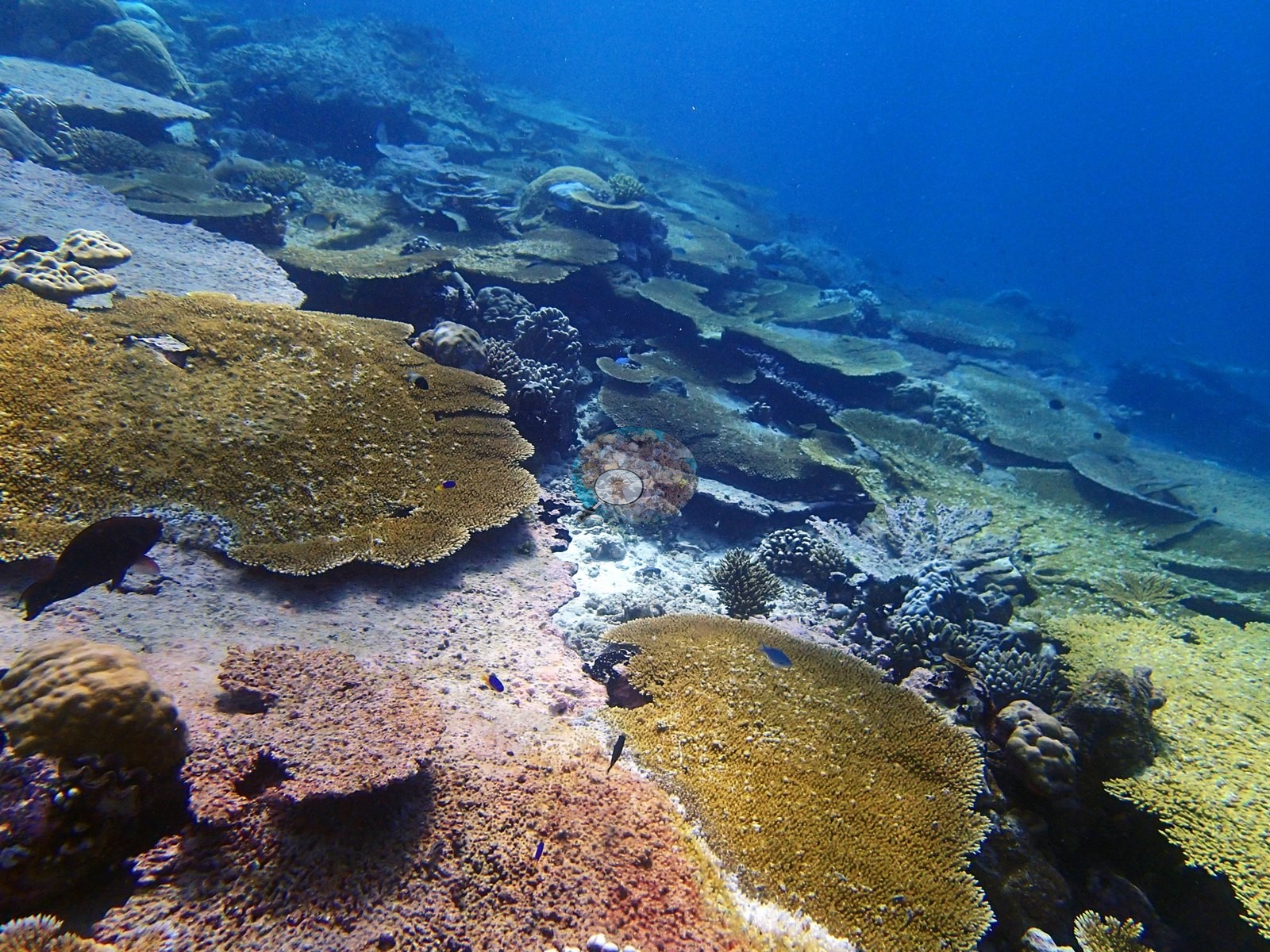
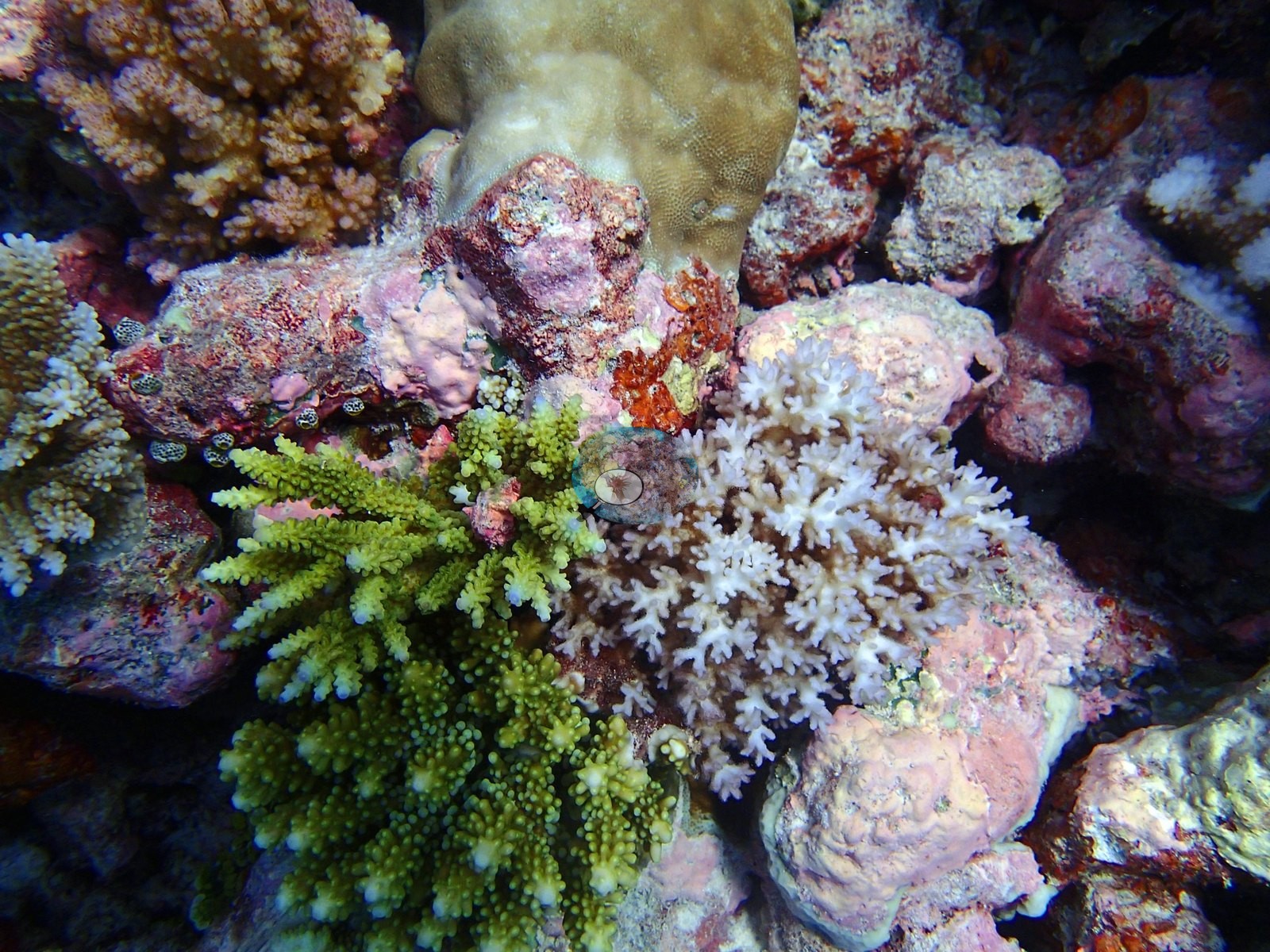
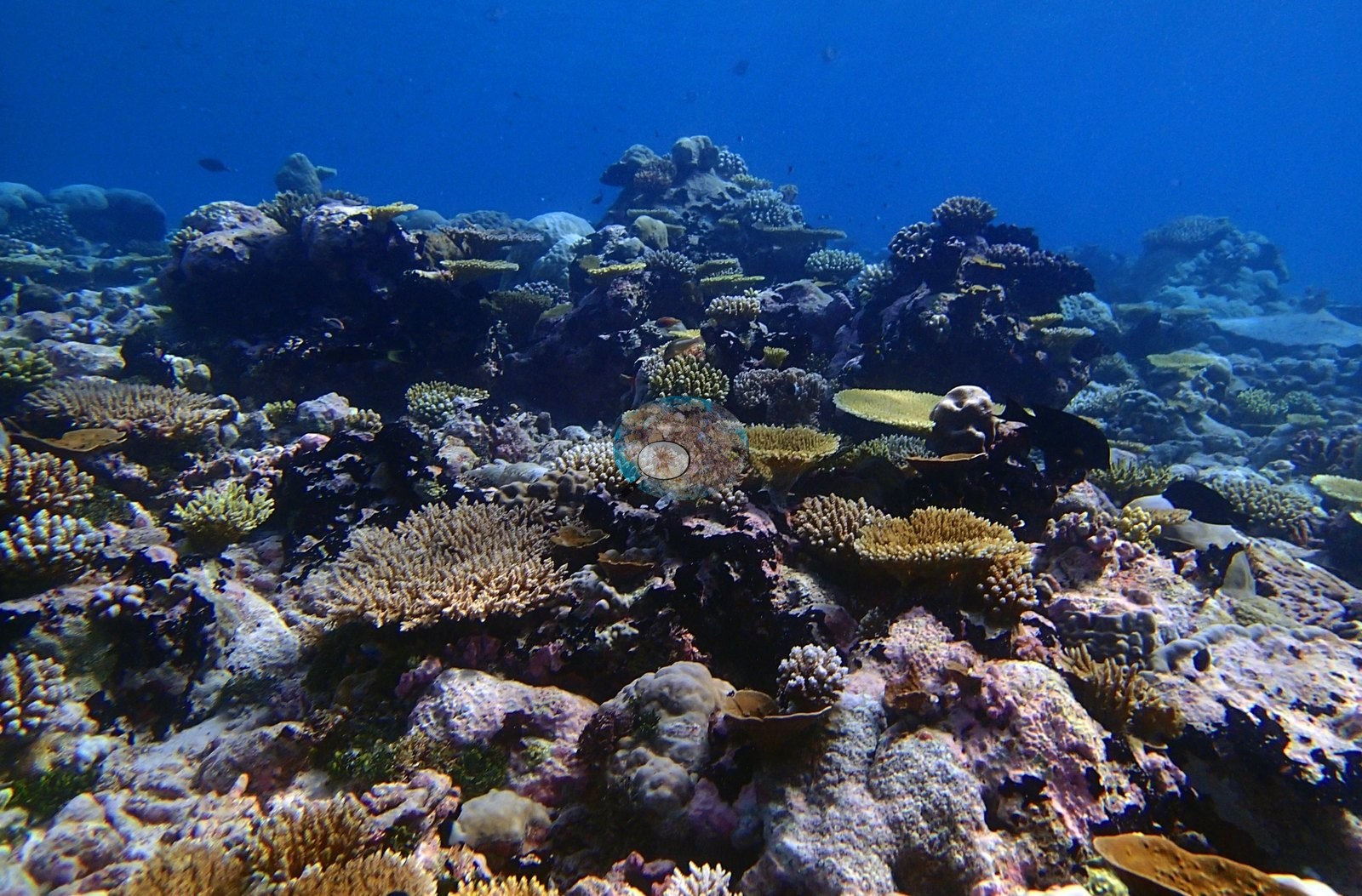
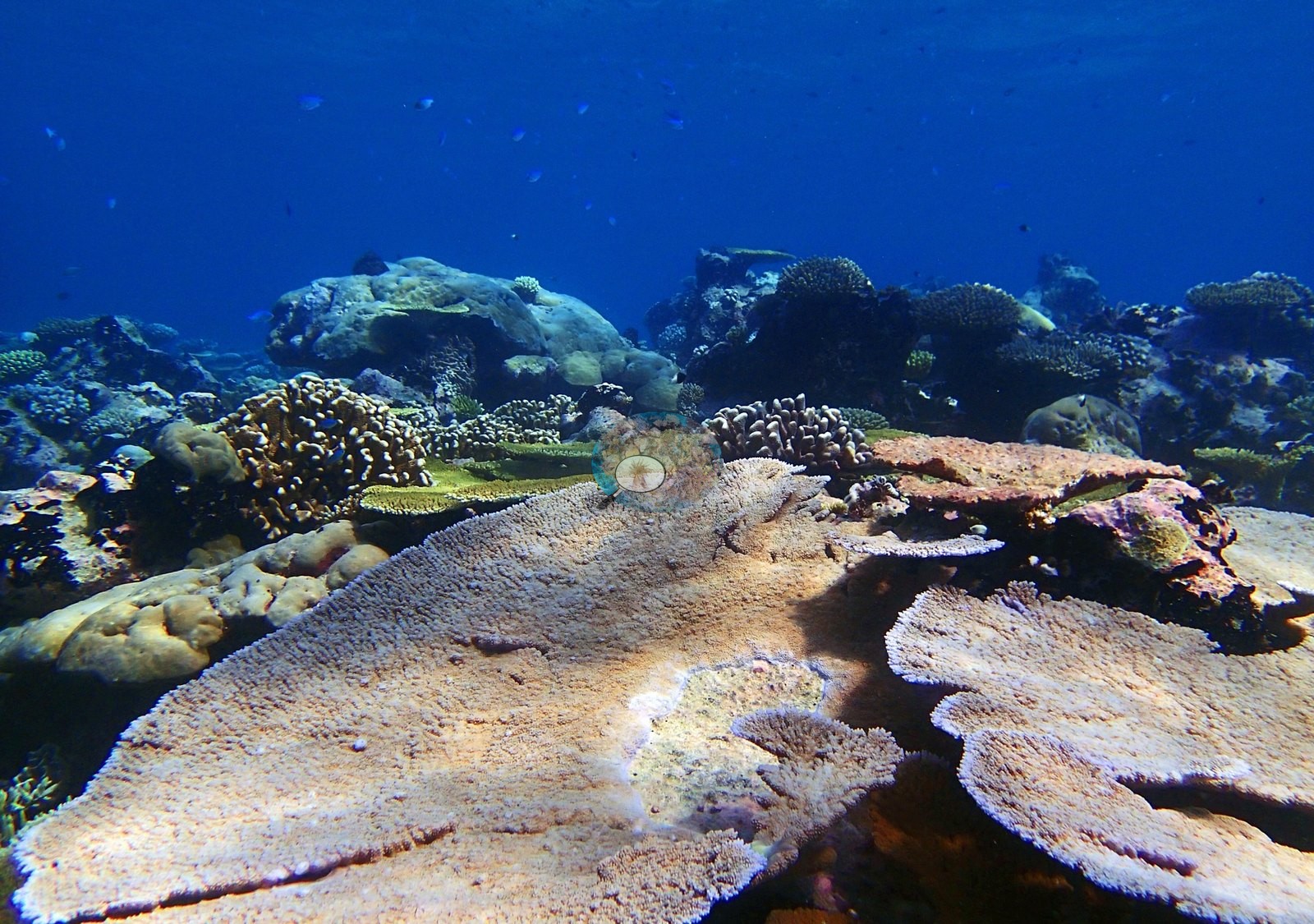
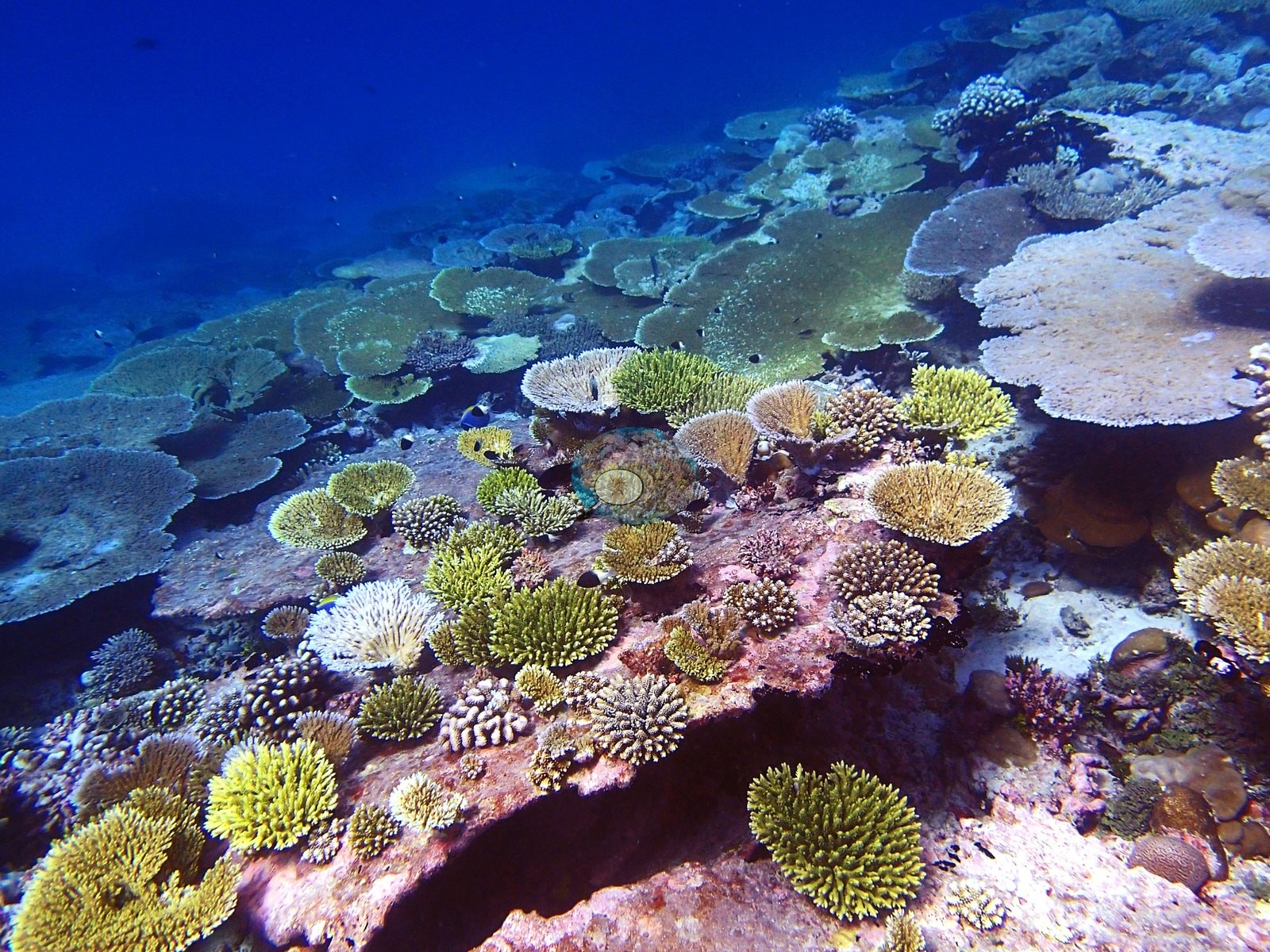
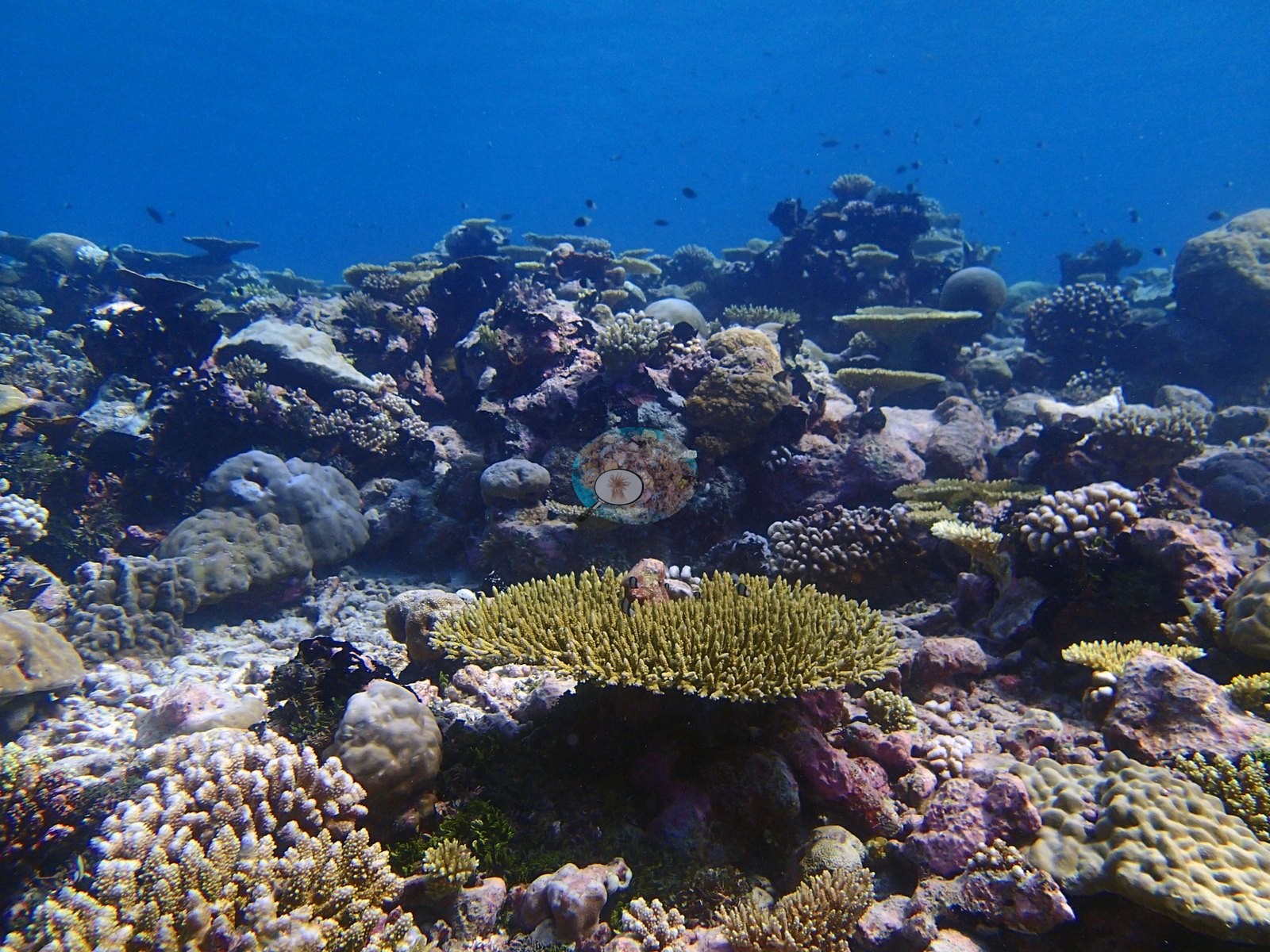
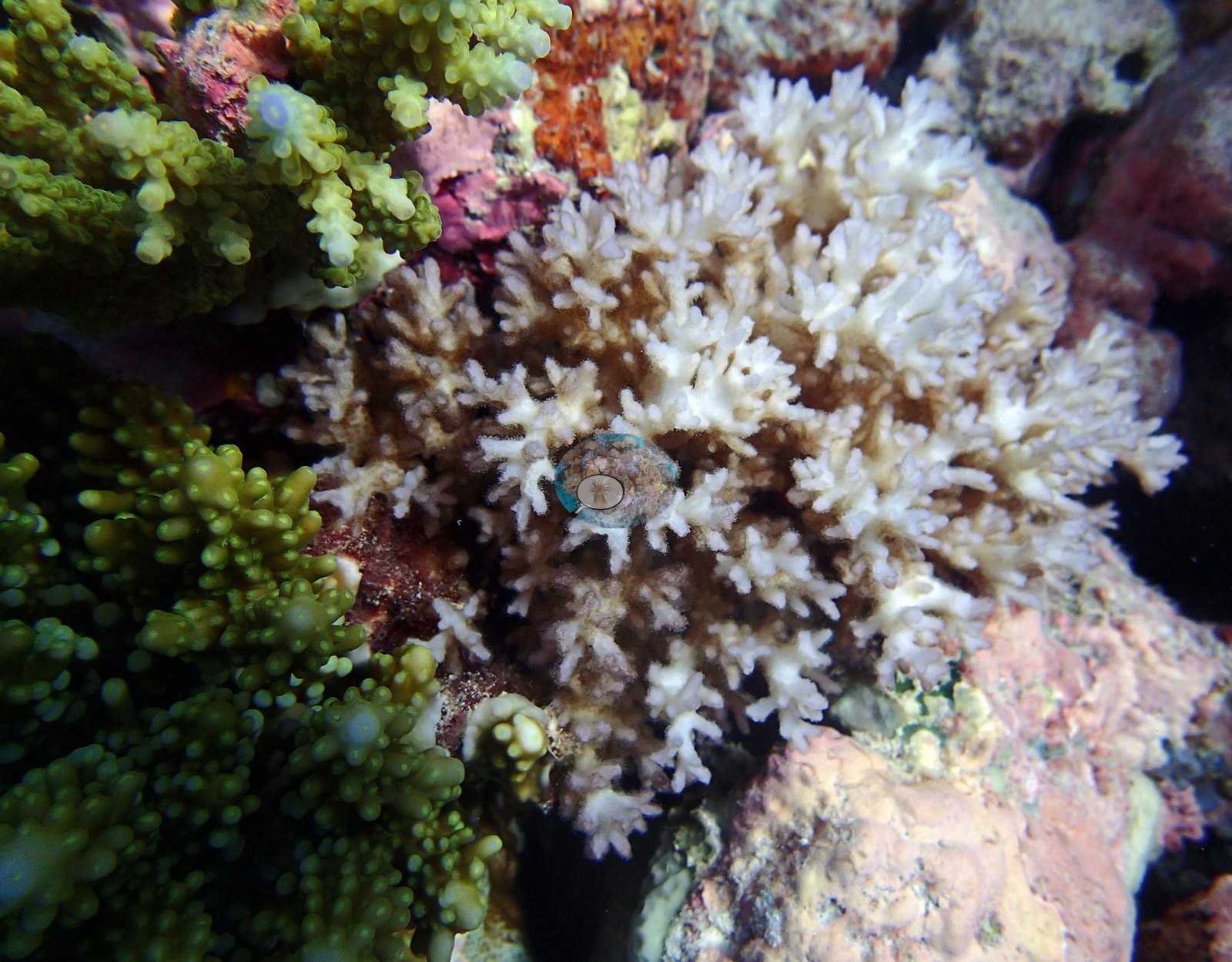
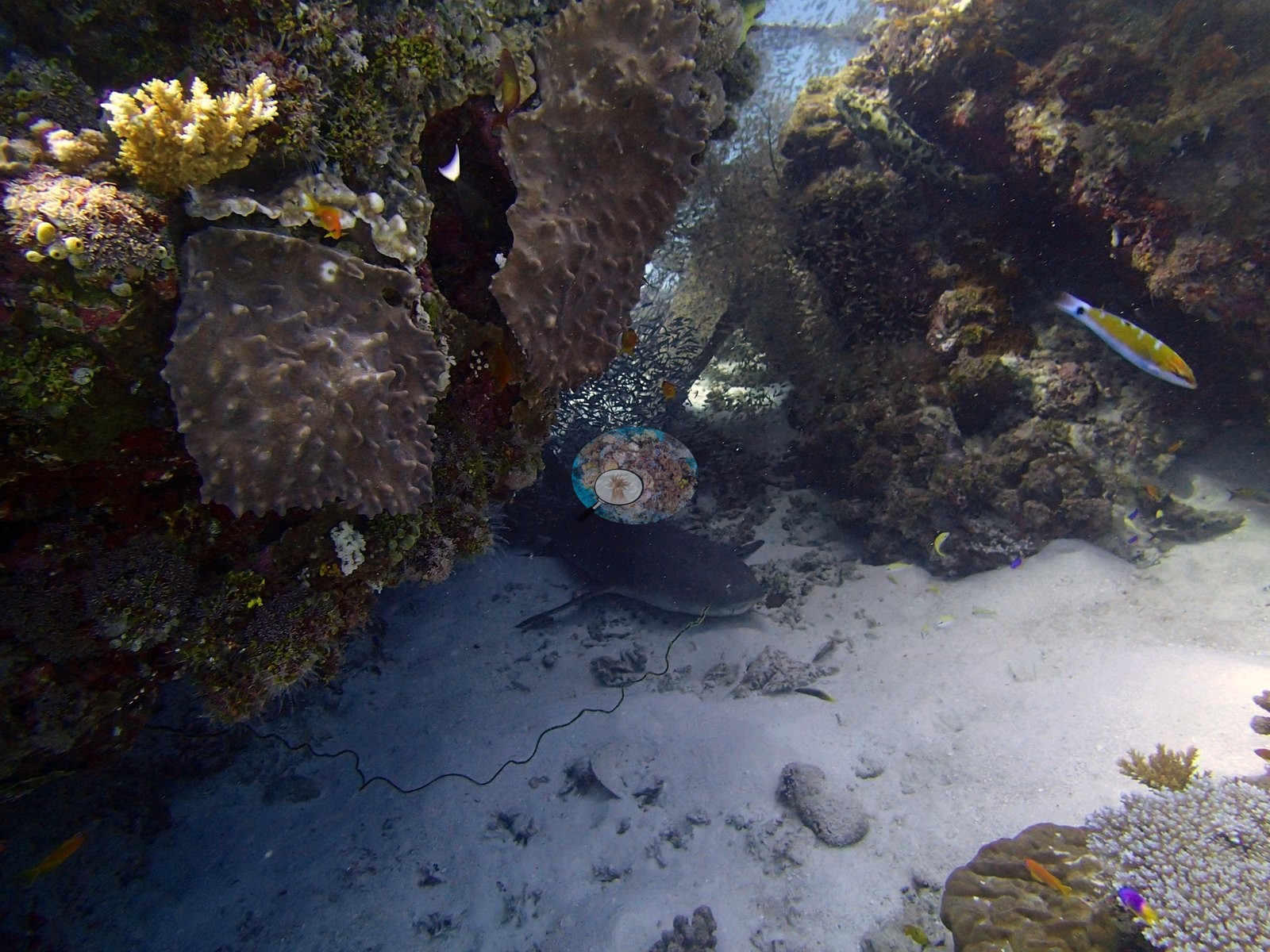
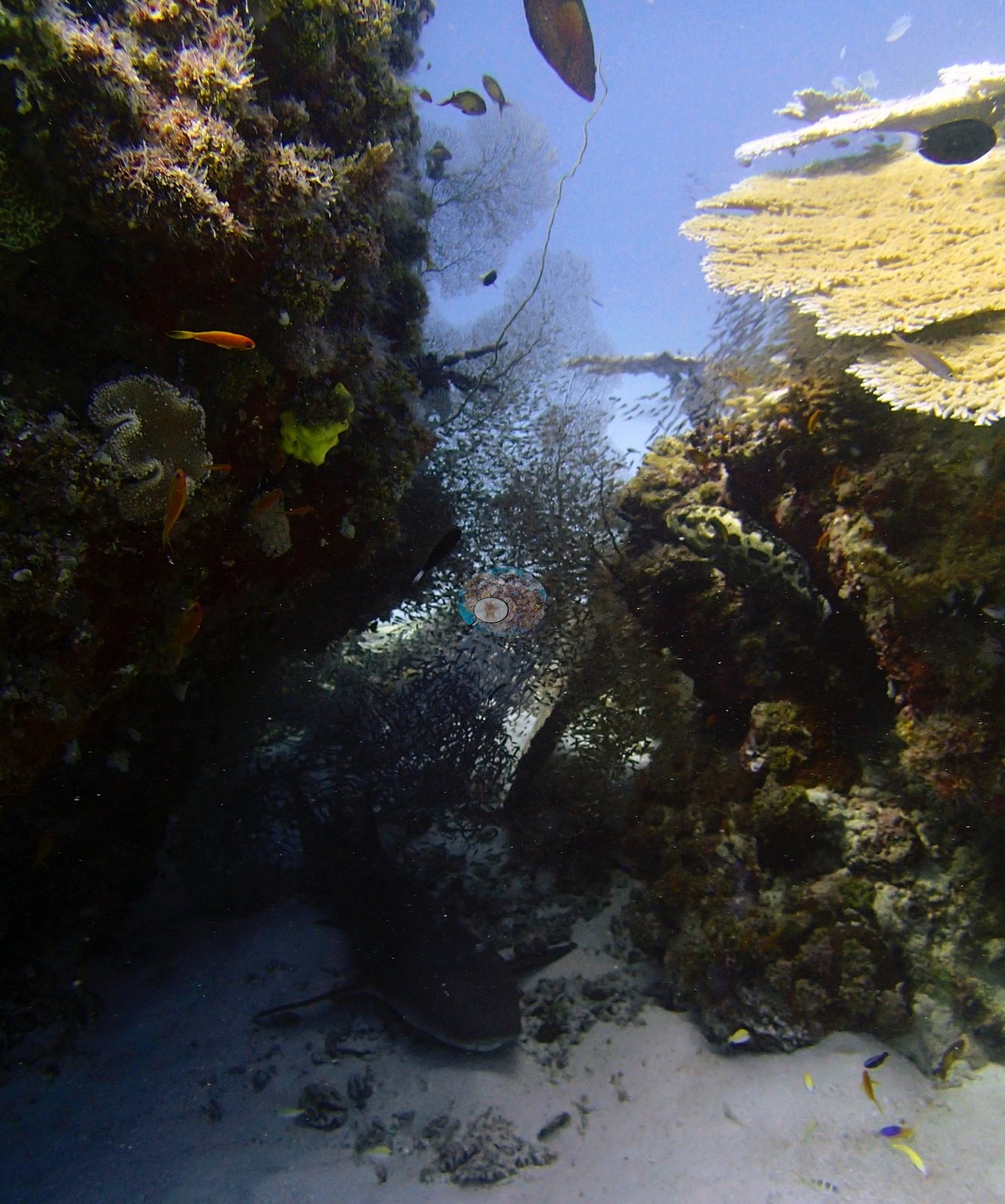
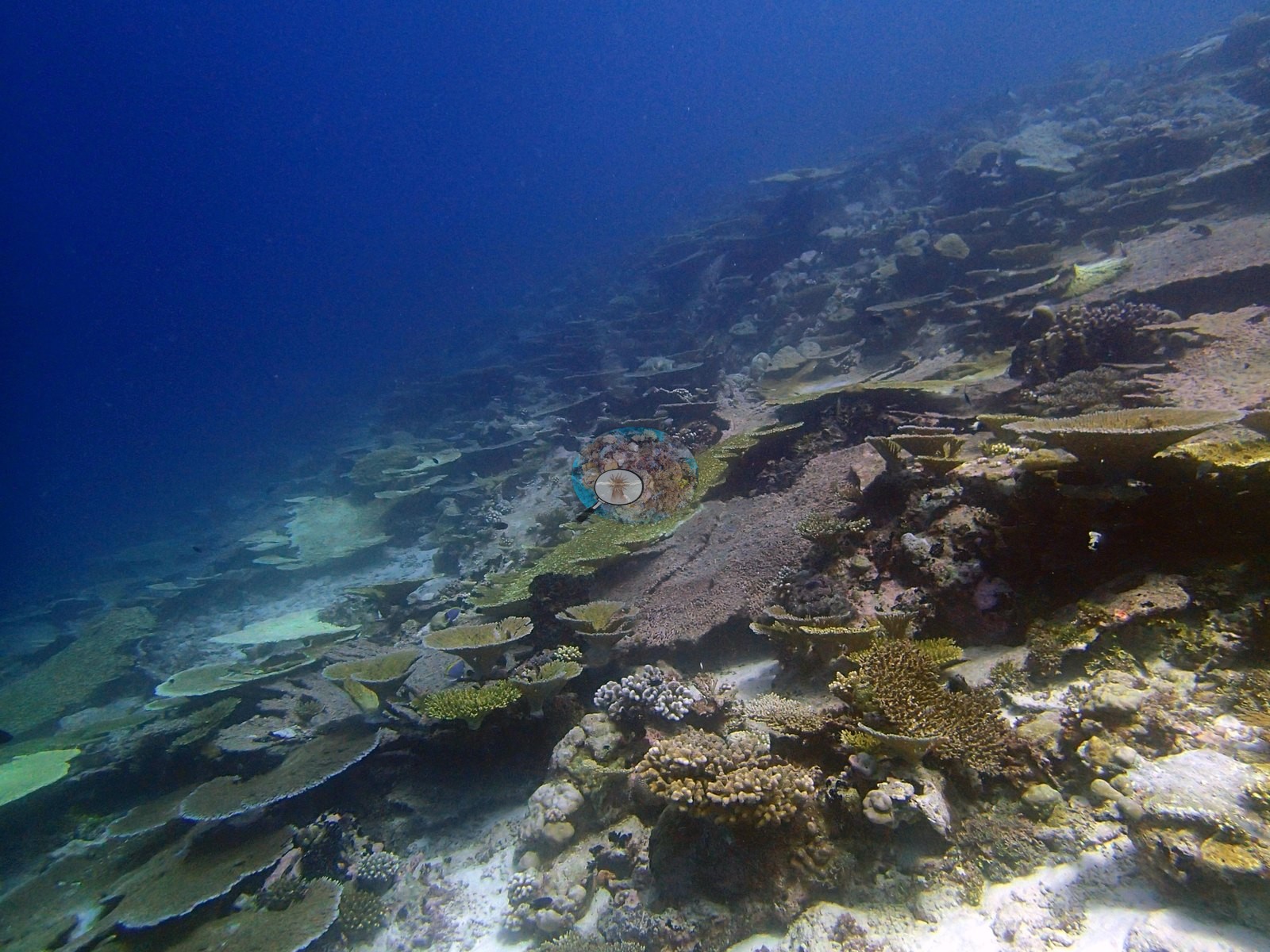
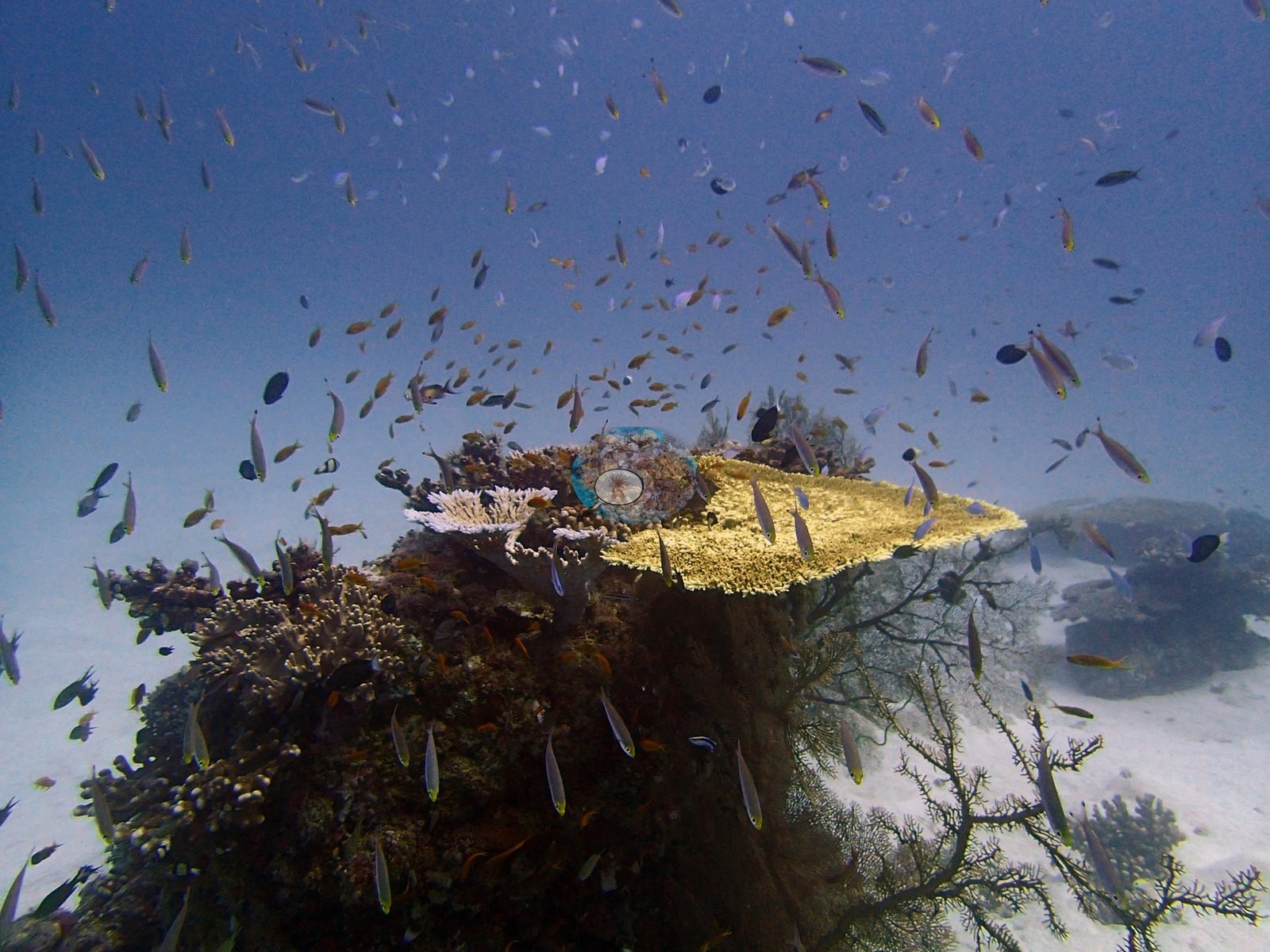
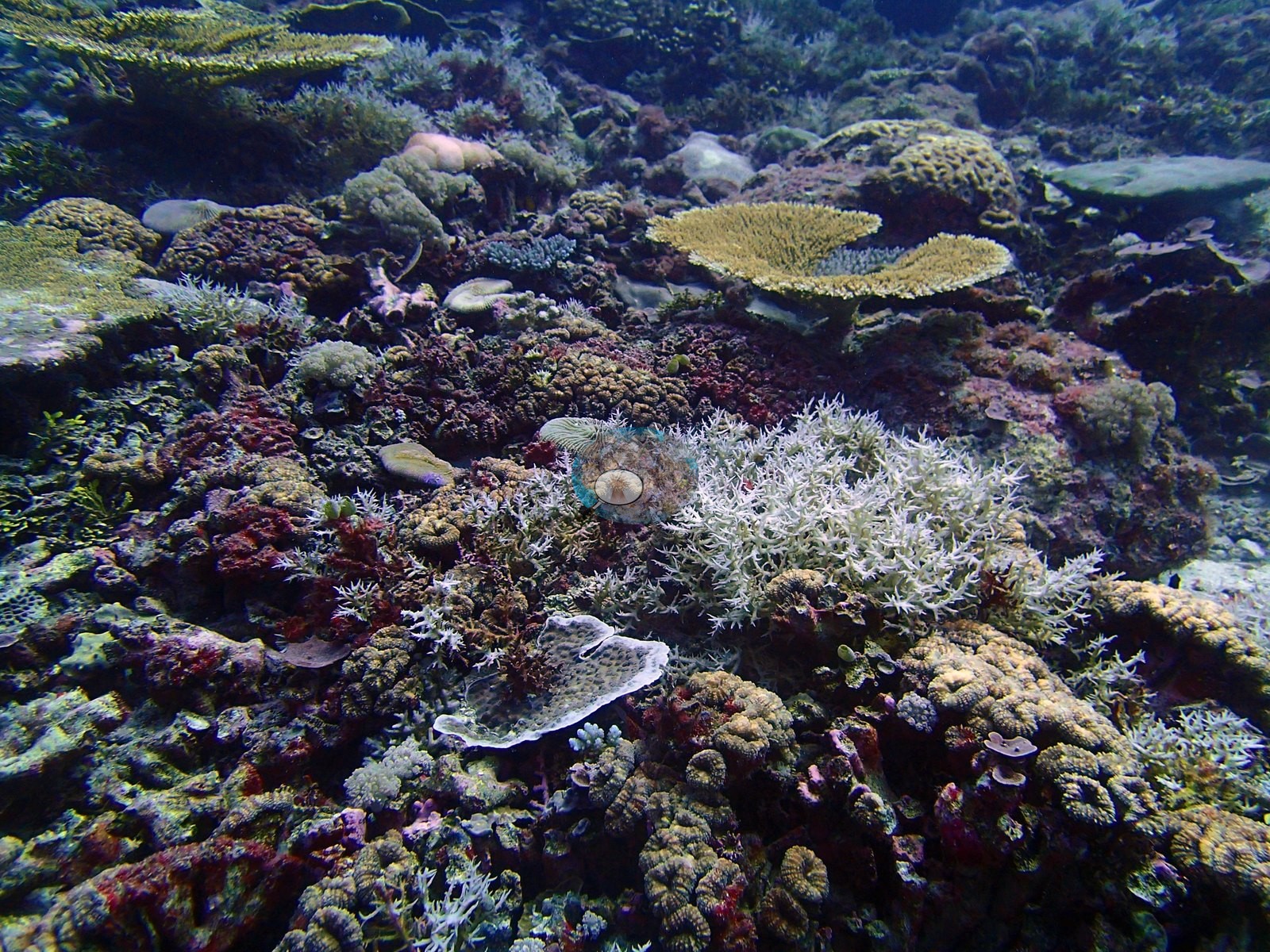
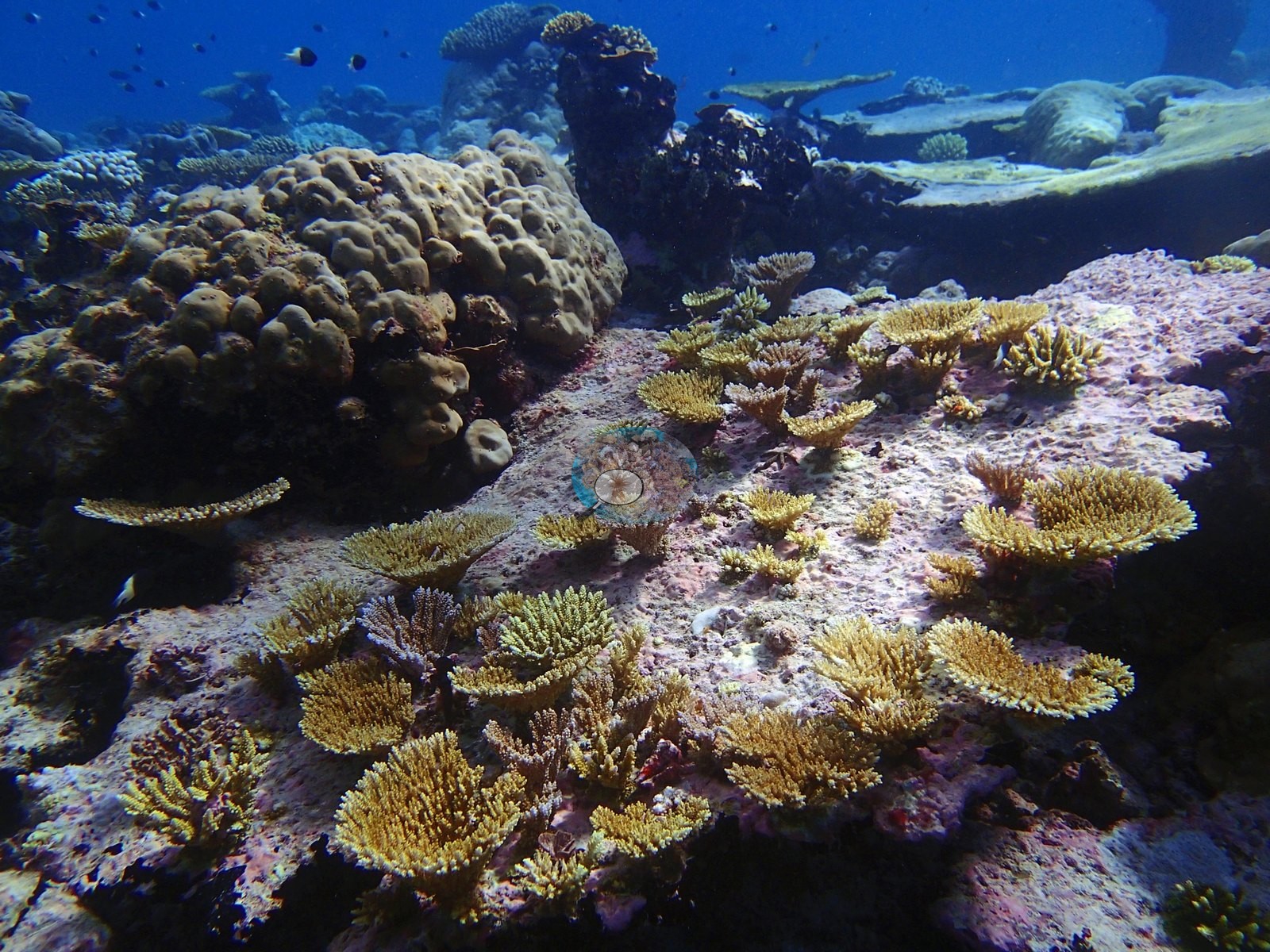
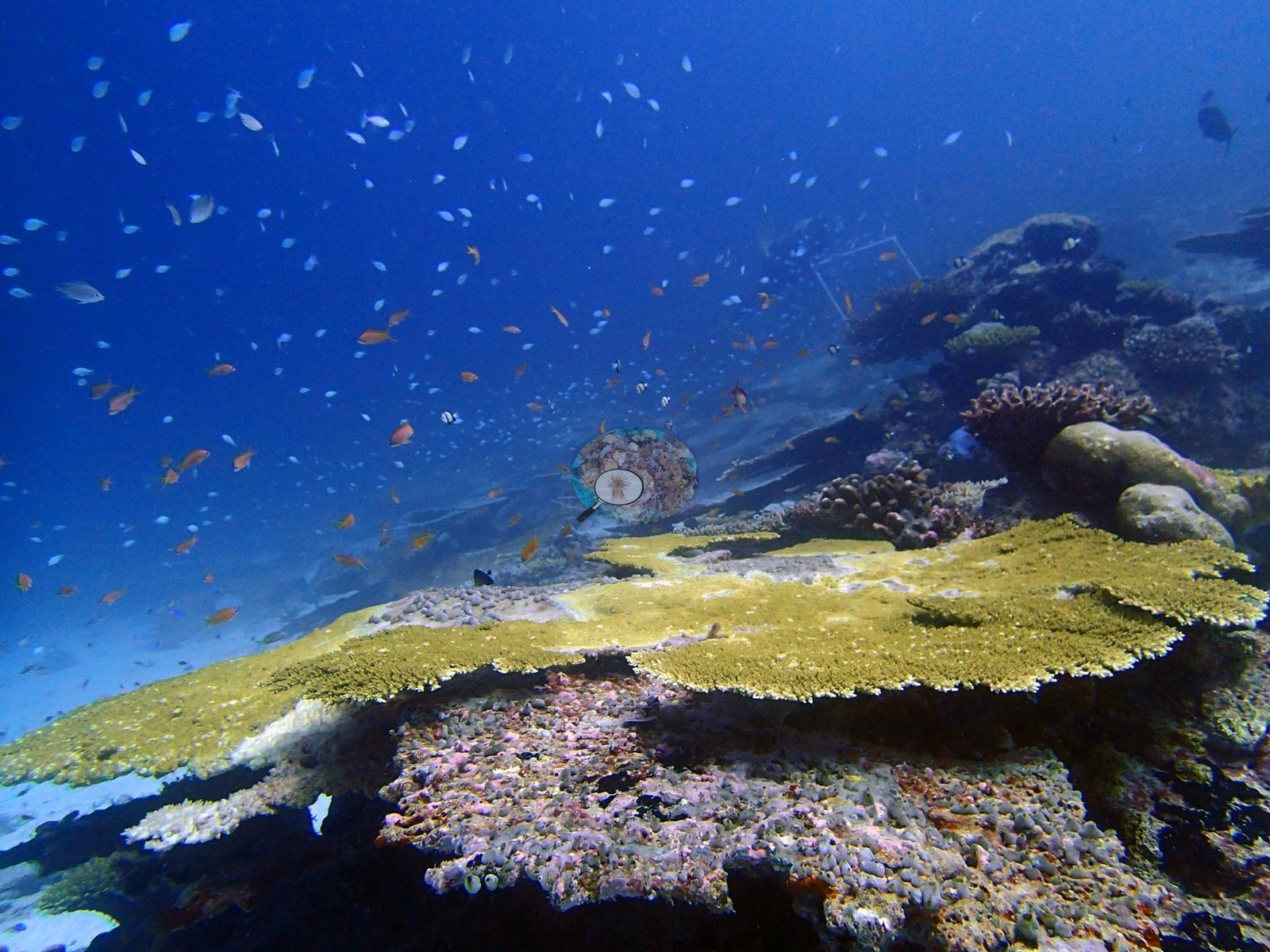
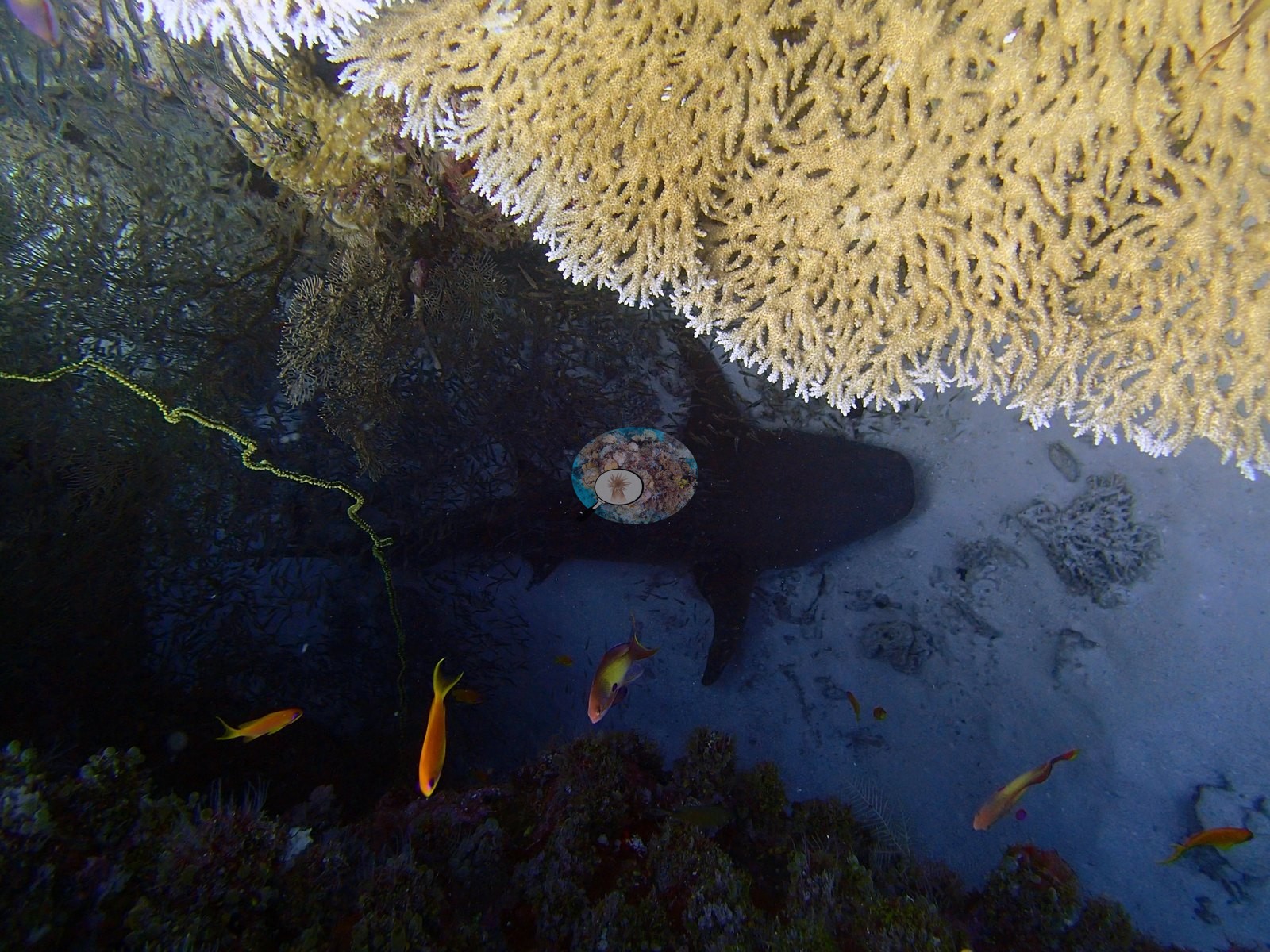
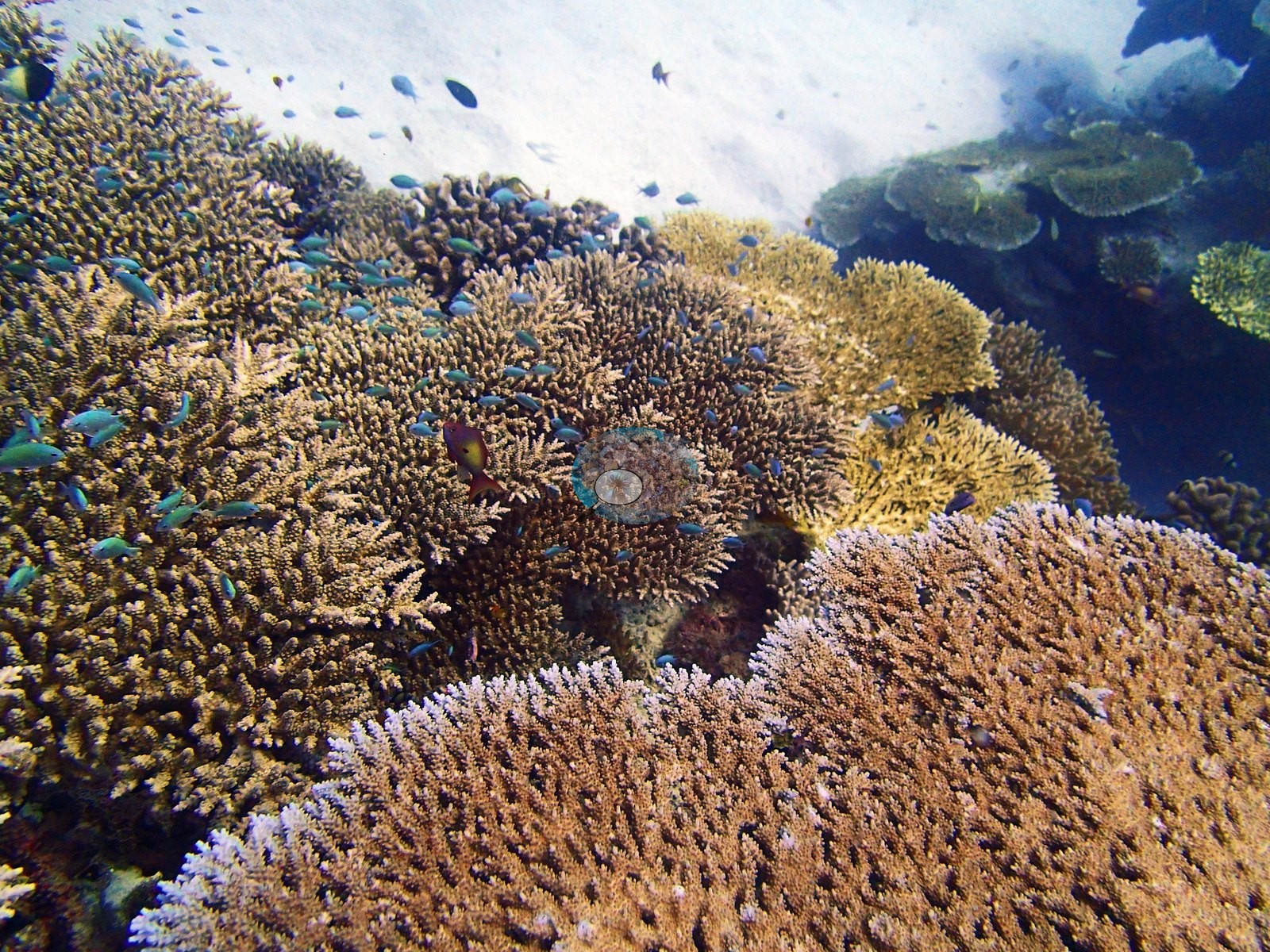
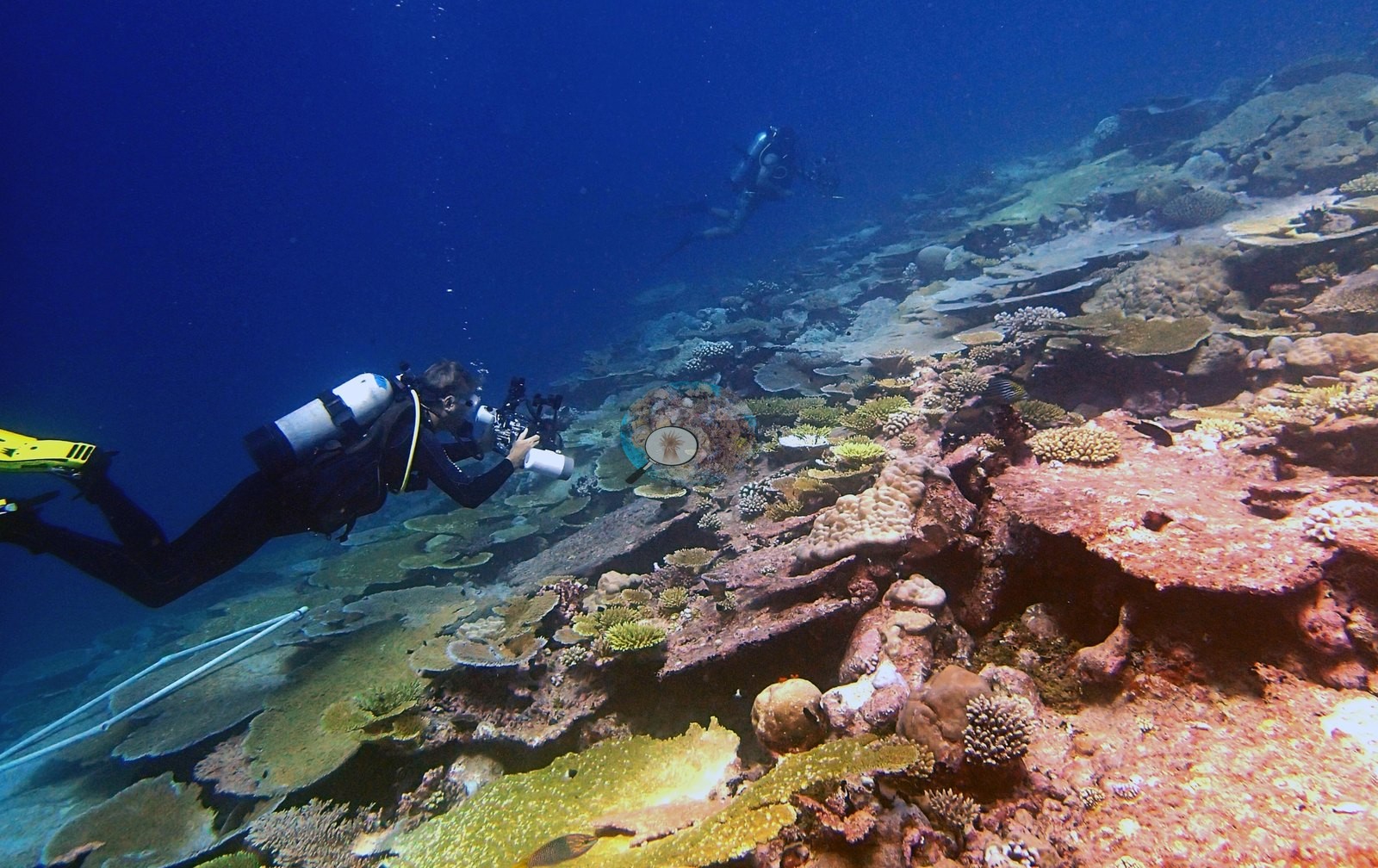
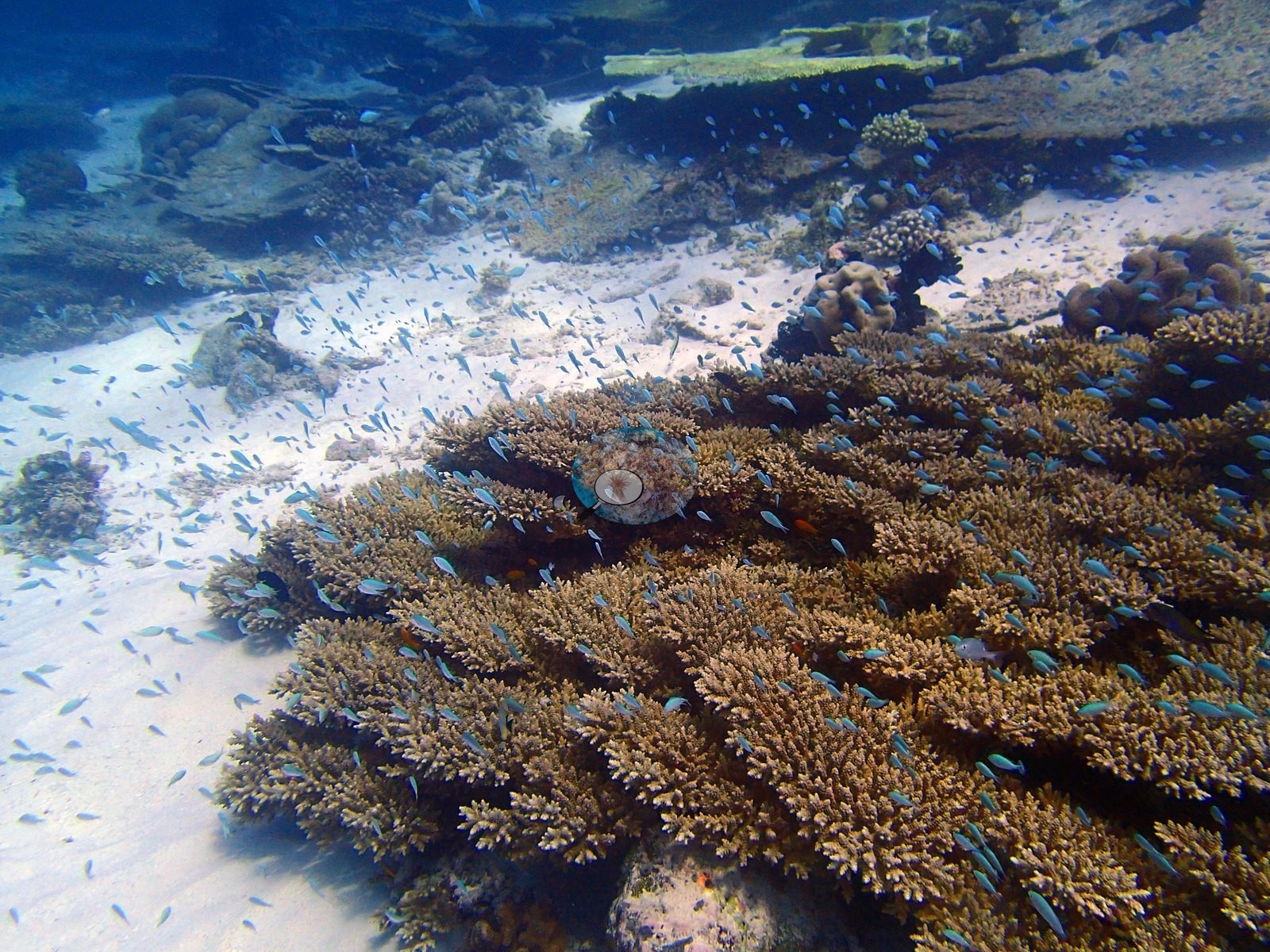
Chagos (NOAA CRW virtual station)A sheltered lagoon patch reef at 26 m, dominated by Acropora (about two-thirds of the coral) at 41% cover, with prominent coralline crust and bare rock. Most colonies looked healthy, but several branching corals were white beside pigmented neighbors, and a whitetip reef shark rested on the reef near a moray eel. Surveyed on the Living Oceans Foundation's Global Reef Expedition.
Three independent survey stations shown with the program’s logo — click one to see how far it is from this site.
Two other CRD dive sites within 5 km shown in orange — click a marker to open its page.
🗺 Detailed map of the Global Reef Expedition dive sites, Peros Banhos, Chagos (Khaled bin Sultan Living Oceans Foundation; opens in a new window)
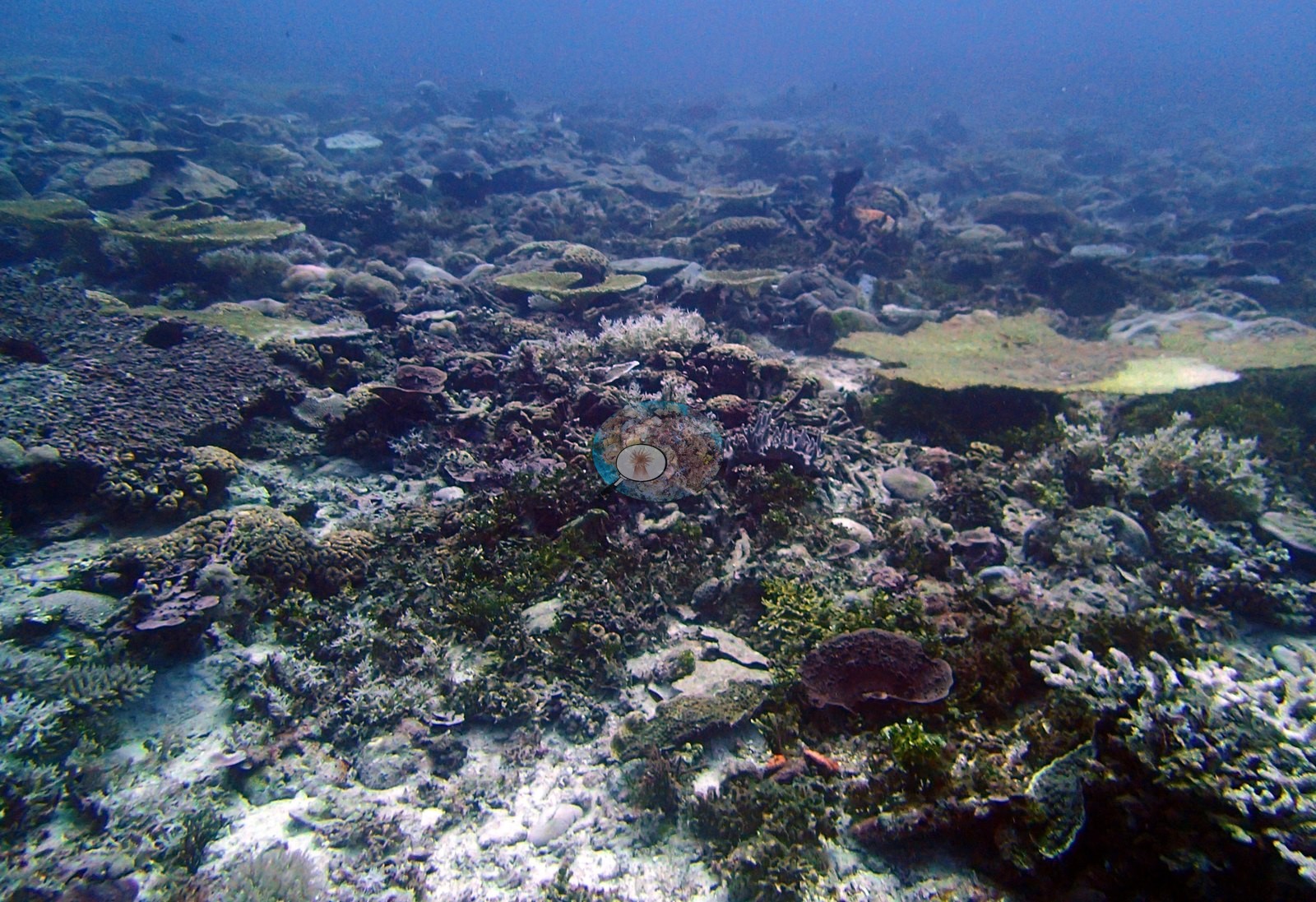
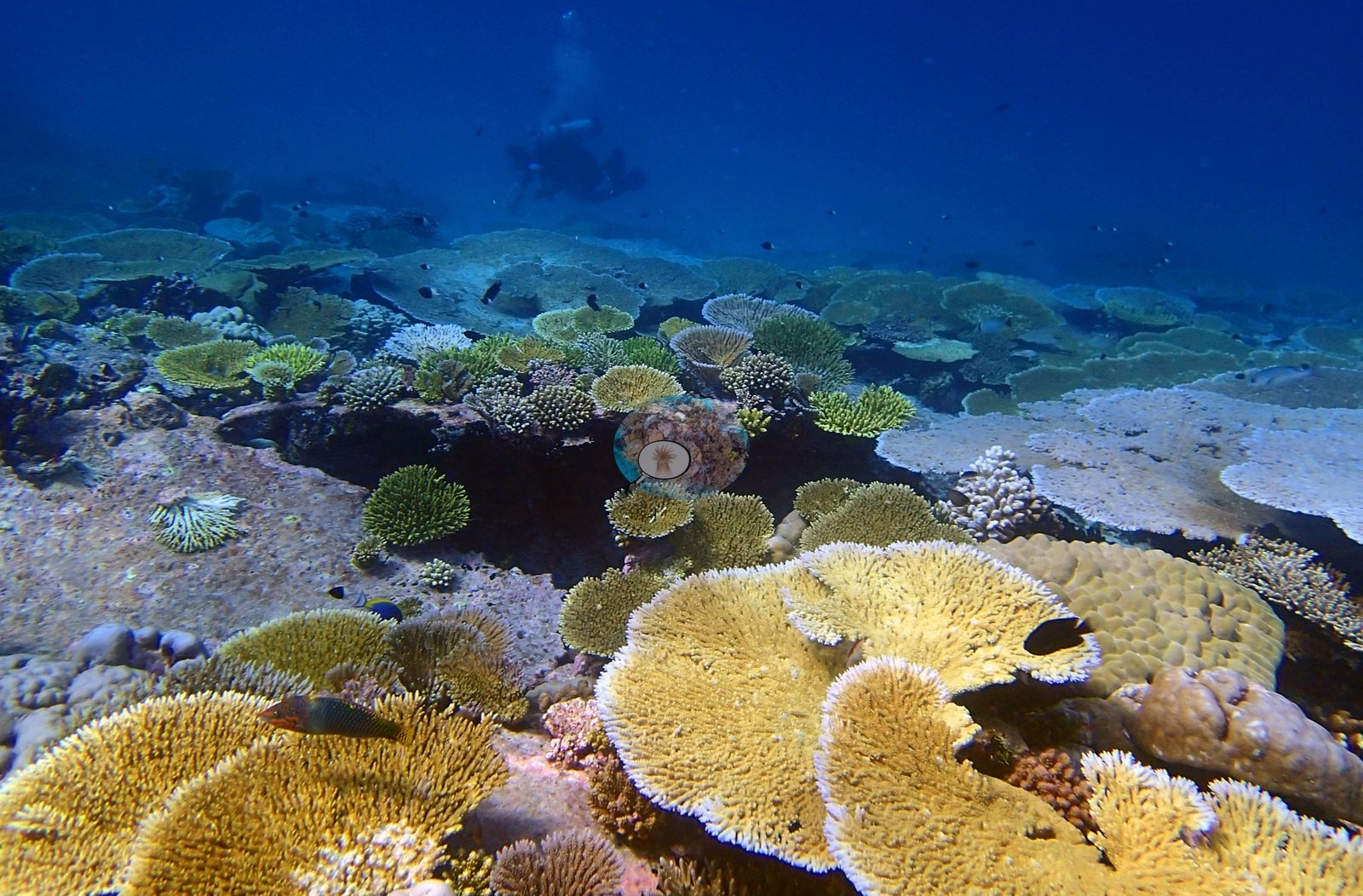
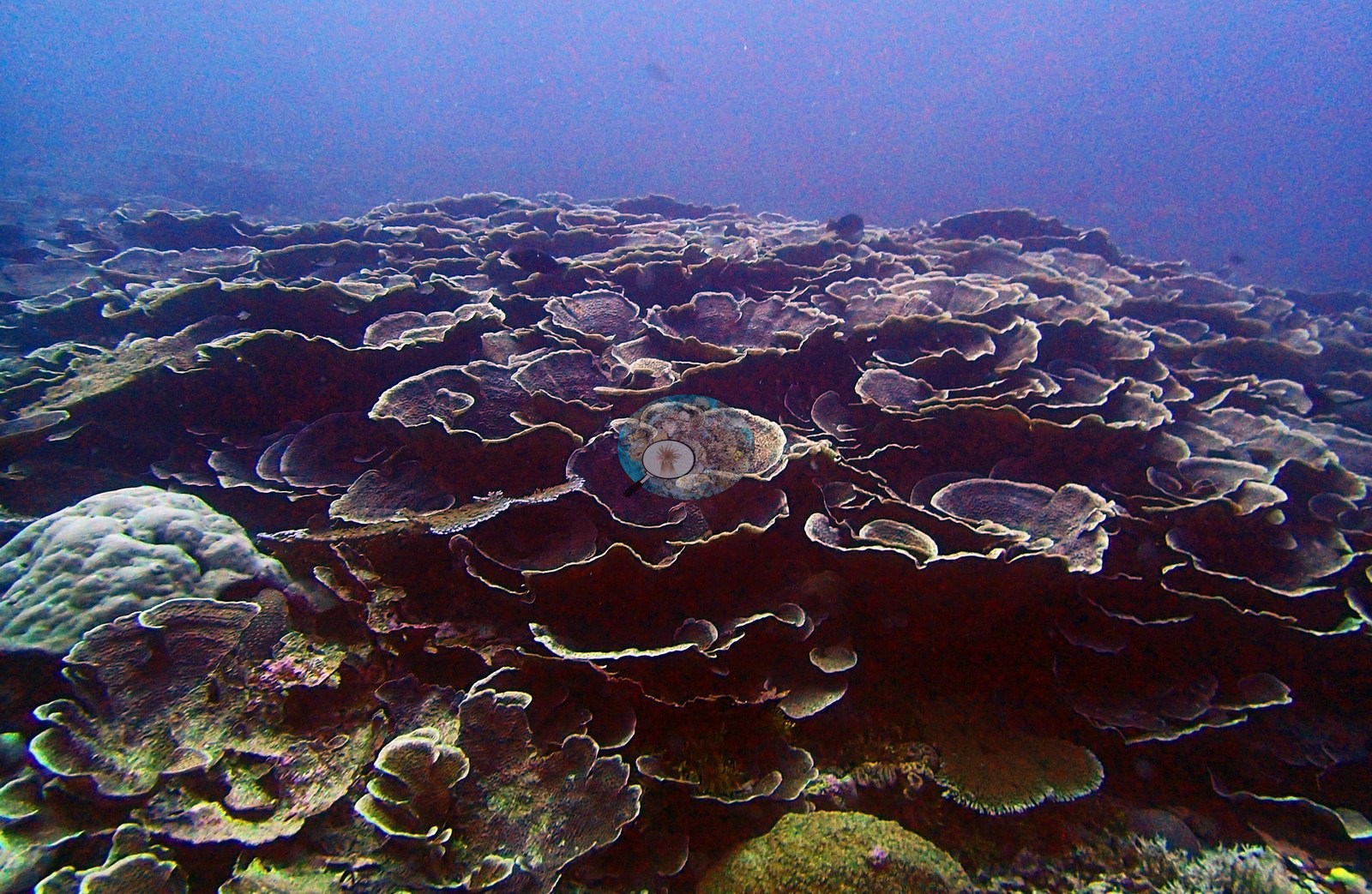
2 of these 35 photographs are shown beside the text that discusses them under "Site description" below.
Site description
Setting
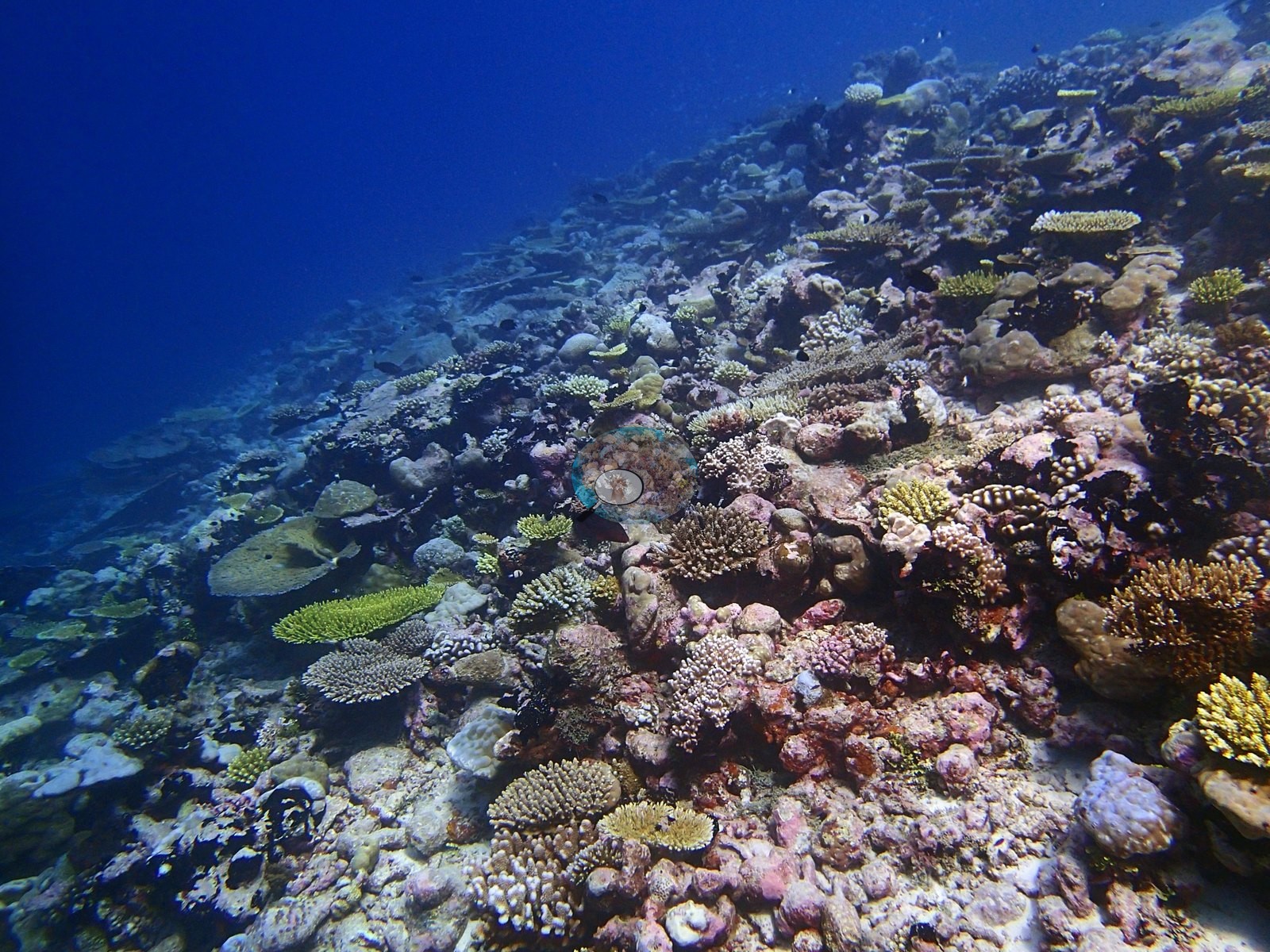
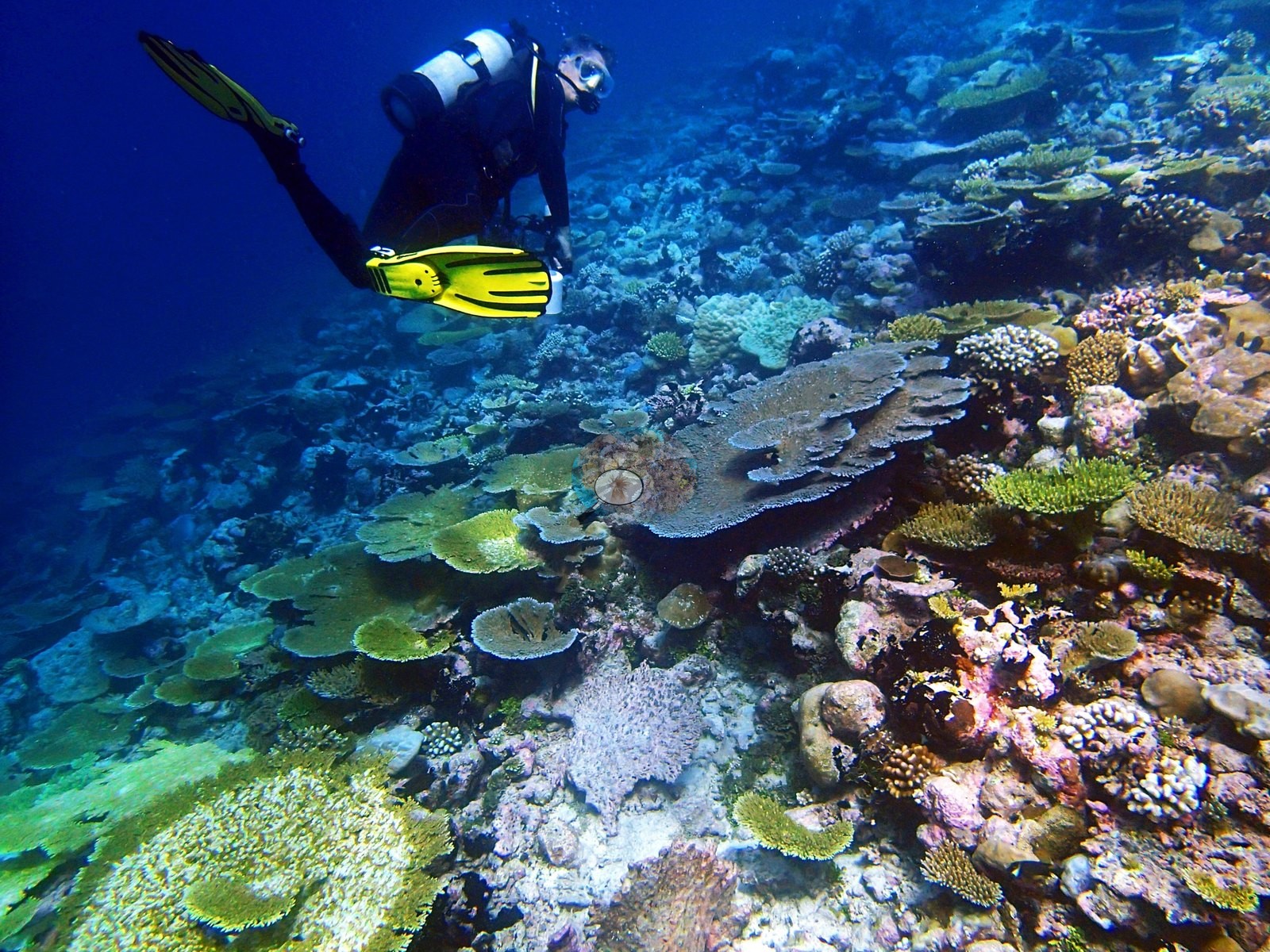
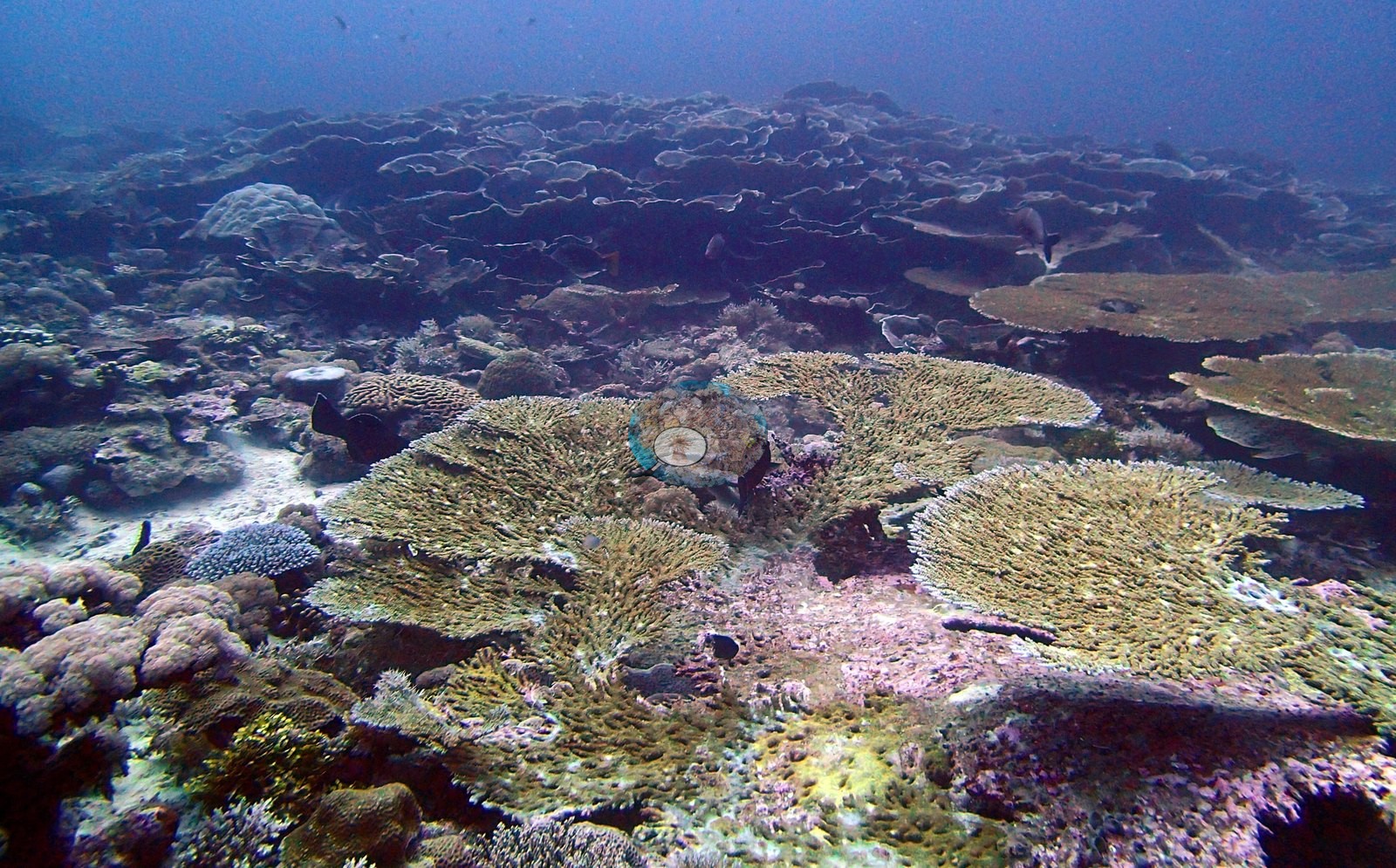
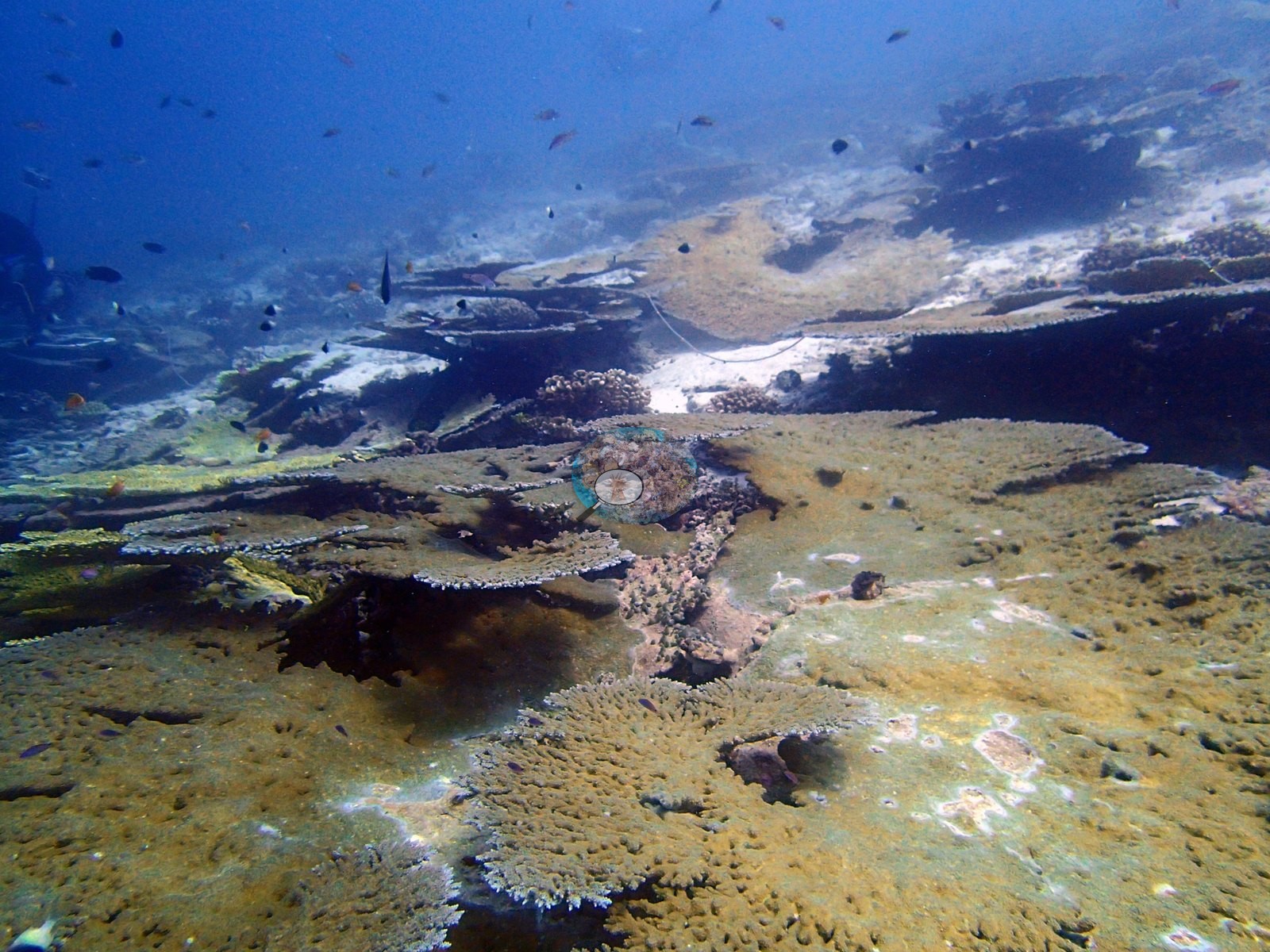
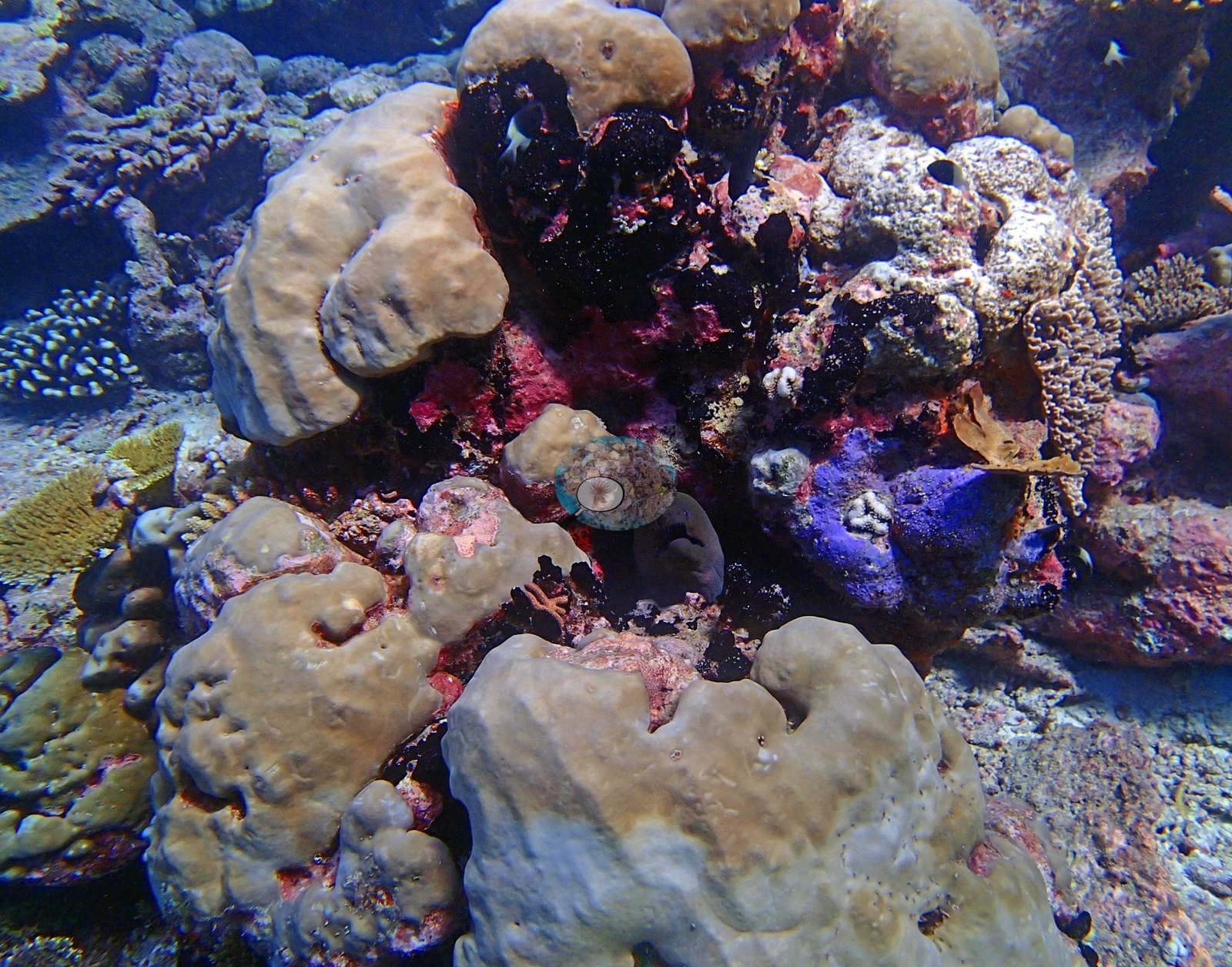
BIPB65 is a protected, submerged lagoonal patch reef in Peros Banhos at 26 m depth, surveyed 15 April 2015 (e.g., Image 1, Image 2).
General benthic features
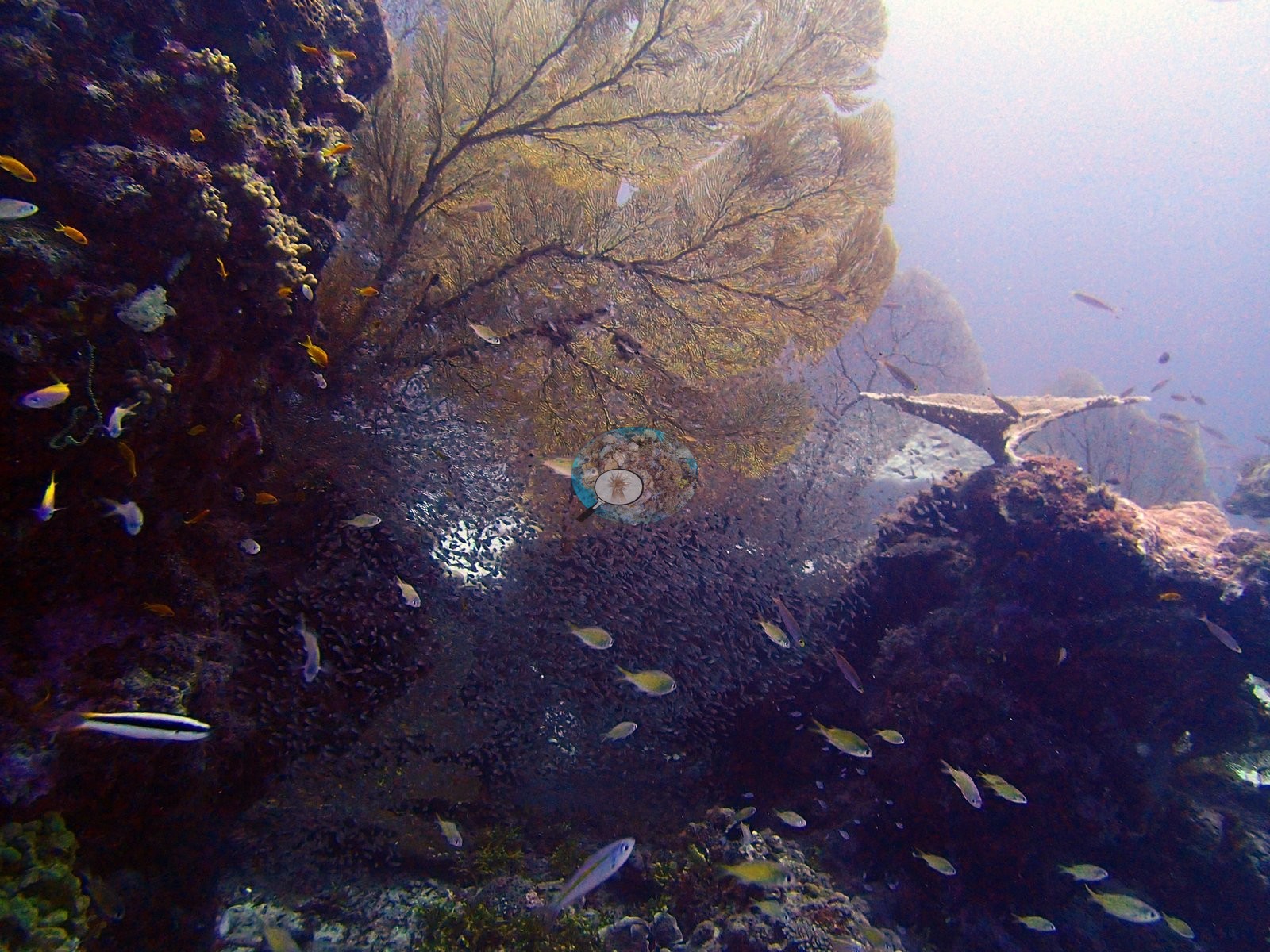
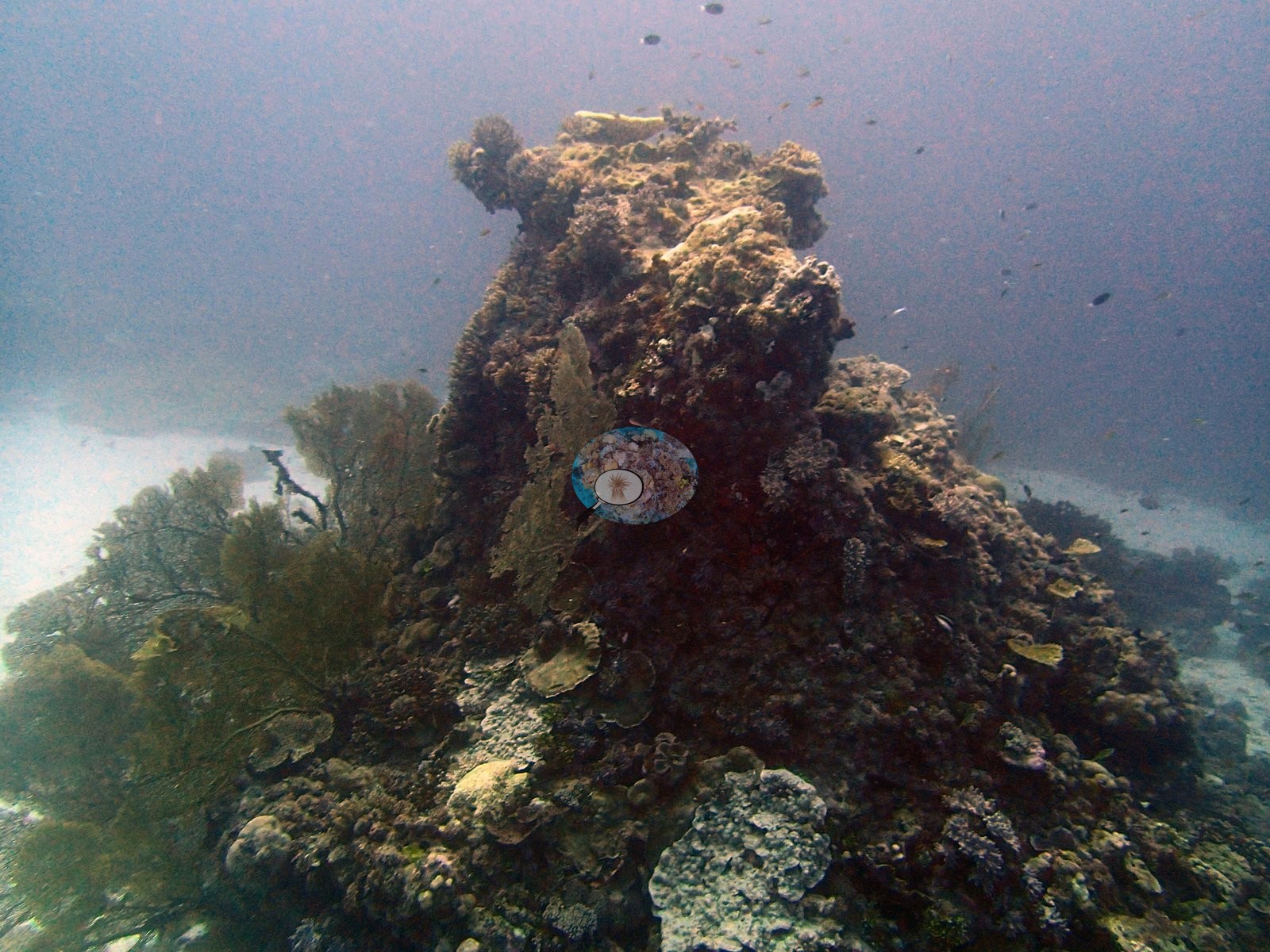
The coral community is overwhelmingly dominated by Acropora, which accounts for about two-thirds of all coral cover, with Porites a distant second and twenty other genera making up a thin remaining tail. Crustose coralline algae and bare substrate are both comparatively prominent here alongside the algae.
Coral cover
Formal transects recorded 41% live coral cover against 31.4% algal cover, with published image-based bleaching at 8.3%. The bleaching percentage is a computer vision figure — CoralNet annotation of the informal survey images, not a diver's field estimate — and human-vs-model agreement is weaker for bleaching (r = 0.40) than for coral cover (r = 0.72). Image-based methods read this reef 12–13 points lower than the transects (CoralNet 28.5%, Coralscapes 29.1%); the three are not interchangeable and should not be averaged (see the full report).
Stressors
Most colonies appear healthy and normally pigmented, but several branching corals in the photographs show clear colony-scale white pallor beside fully pigmented neighbors, and a resting whitetip reef shark and a moray eel were also observed on the reef. No crown-of-thorns starfish (COTS) or other corallivores evident.
Comparisons with other data
No independent survey was made at this exact site; the nearest ones are listed in the table below.
CV model comparison
More info
Those are point counts on the photographs; this is a diver swimming a transect. The models and the reference never saw the same thing. ⚠ SITE-LEVEL ONLY. The 2,500 frames were not associated with any transect taken within 200 m of them, so transect-vs-image comparisons are site means, never frames. The transect value is already in the pin `cover` field (109 of 112 pins, sourced to the paper's suppl. S1) and is read from there, never re-imported. The transect is THE coral-cover value for this site and stands alone. The rows below it are a methods comparison only: no computer-vision value is averaged with it, feeds the headline, or carries over to the site's cover figure (Anderson, 2026-09-22).| Method | Hard-coral cover (%) |
|---|---|
| Transect (published) | 41.4 |
| In-house DINOv3 | 32.3 |
| CoralSCOP edited | 27.5 |
| Claude | 30.3 |
Independent surveys nearby
| Agency / program | Year(s) | Stations / distance | Link |
|---|---|---|---|
| Spalding et al. 2025 (Chagos 2024 bleaching report) | 2024 | 2 stations, 3.46 km | Records ↓ |
| XL Catlin Seaview Survey | 2015 | 1 station, 3.34 km | Records ↓ |
Within 5 km, 3 independent survey stations recorded hard coral cover in 3 records between 2015 and 2024. One survey since 2021 recorded 70%; 1 best-patch value above 70% is left out, as they are not site means. This site's own estimate (41%) sits 28.6 points below the recent value (70%); the methods differ, so the comparison is context, not a like-for-like test.
Collected by other programs using different methods (the XL Catlin Seaview Survey uses photo-transects with automated image annotation), so these are context for the figures above, not a like-for-like comparison. Where a station was surveyed more than once the range is shown. Station names are not dive-site names. Values marked best patch exceed 70%: surveyors usually chose the richest area, so they are not site means.
| Agency | Site / location | Date | Hard coral cover (%) | Distance | Link |
|---|---|---|---|---|---|
| XL Catlin Seaview Survey | transect 36007 | 2015 | 29% | 3.34 km | — |
| Spalding et al. 2025 (Chagos 2024 bleaching report) | Peros Banhos - lagoon Knoll (N, 9-12 m) | 2024 | 80% best patch | 3.46 km | — |
| Spalding et al. 2025 (Chagos 2024 bleaching report) | Peros Banhos - lagoon Knoll (N, 6-9 m) | 2024 | 70% | 3.46 km | — |
Data & links
- Read the full site report ↗
- Download benthic survey data (CSV) ↗
- Download all LOF-GRE data (933 sites) ↗
- CoralNet image repository for this region ↗
- Photo portfolio ↗
- Coral Reef Diagnostics page for this area ↗
All images from Coral Reef Diagnostics. Data are from Coral Reef Diagnostics and the organizations named in the data-sources table above.
 © Coral Reef Diagnostics.
References
- Mayfield AB, Dempsey AC (2026). Using tourist diver images to estimate coral cover and bleaching prevalence in a remote Indian Ocean coral reef system. Oceans 7(1):1. PDF
- Spalding M, Bourasseau M, et al. (2025). Coral bleaching and mortality in the Chagos Archipelago, 2024. British Indian Ocean Territory Administration report (gray literature). PDF