
Part of the regional summaries: Chagos Archipelago - Peros Banhos and Chagos Archipelago
2015-05-03
More info
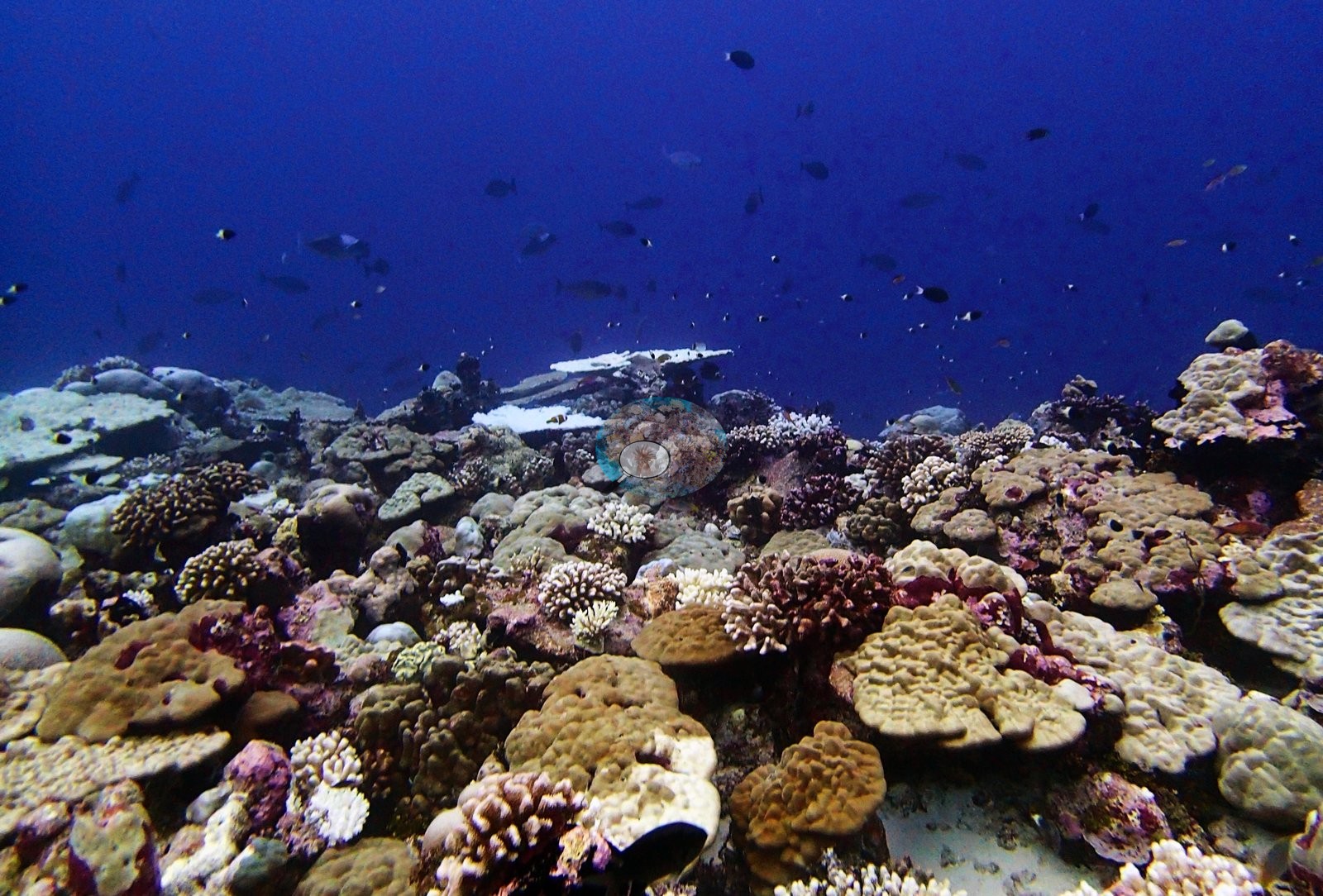
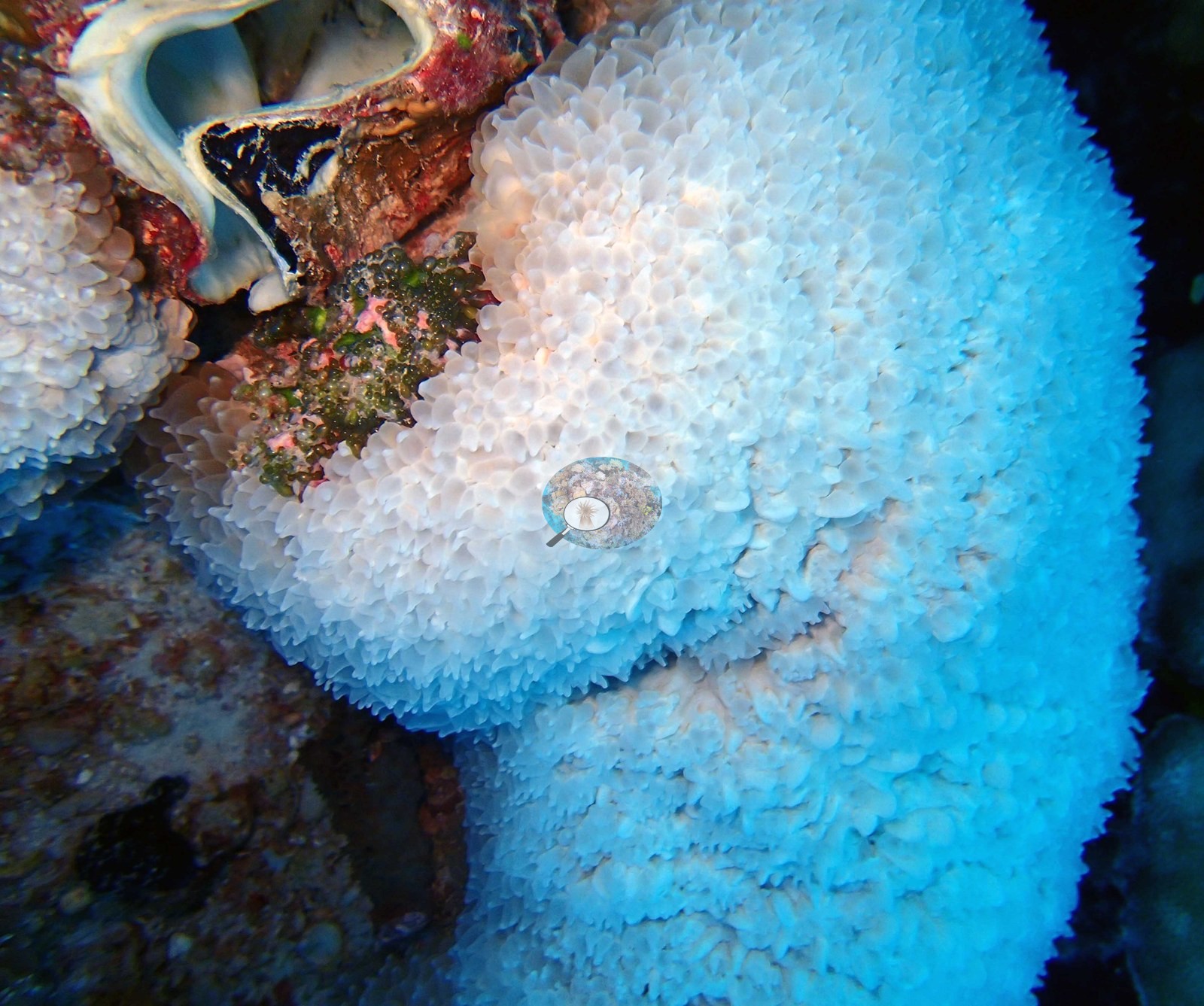
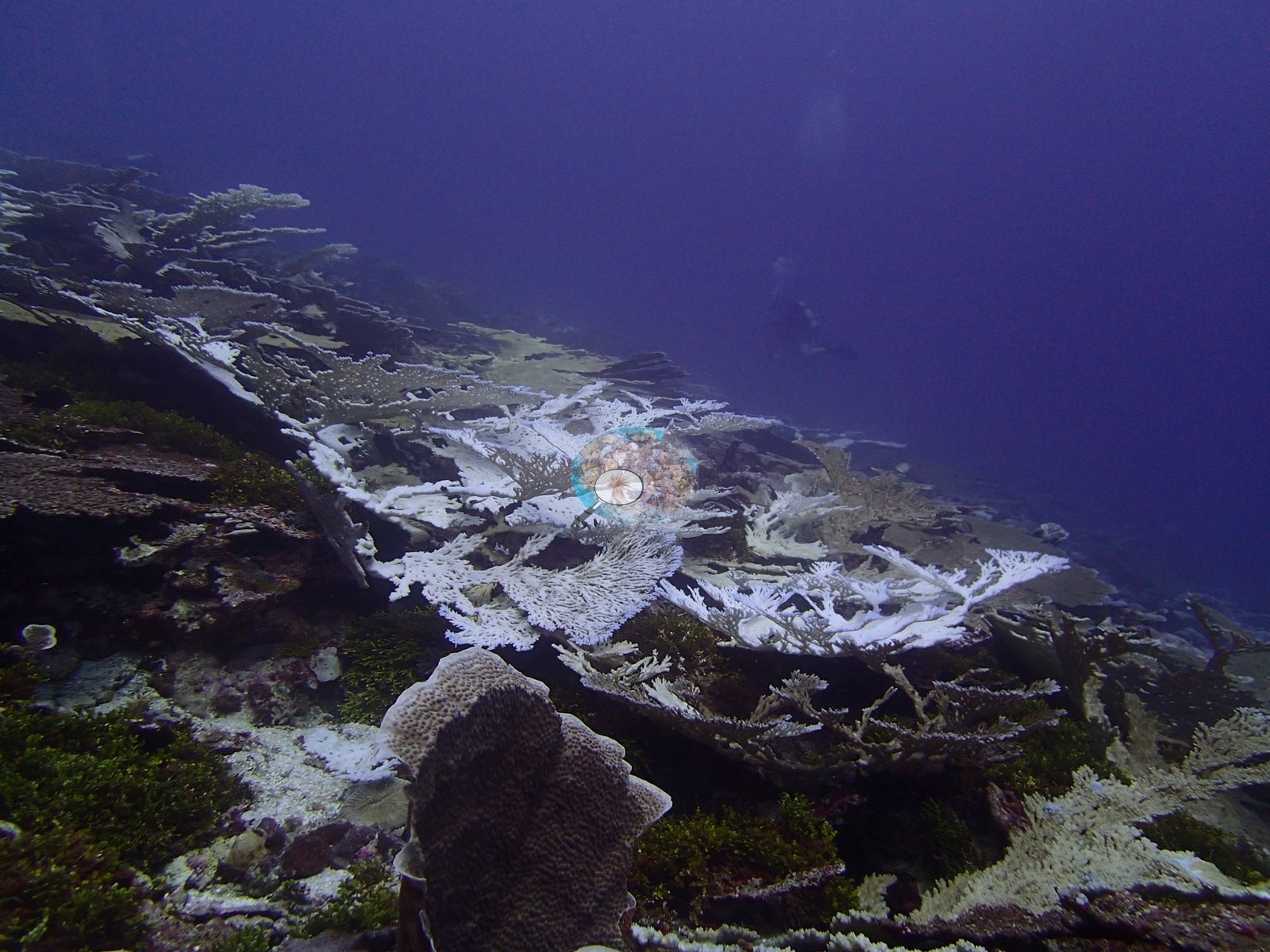
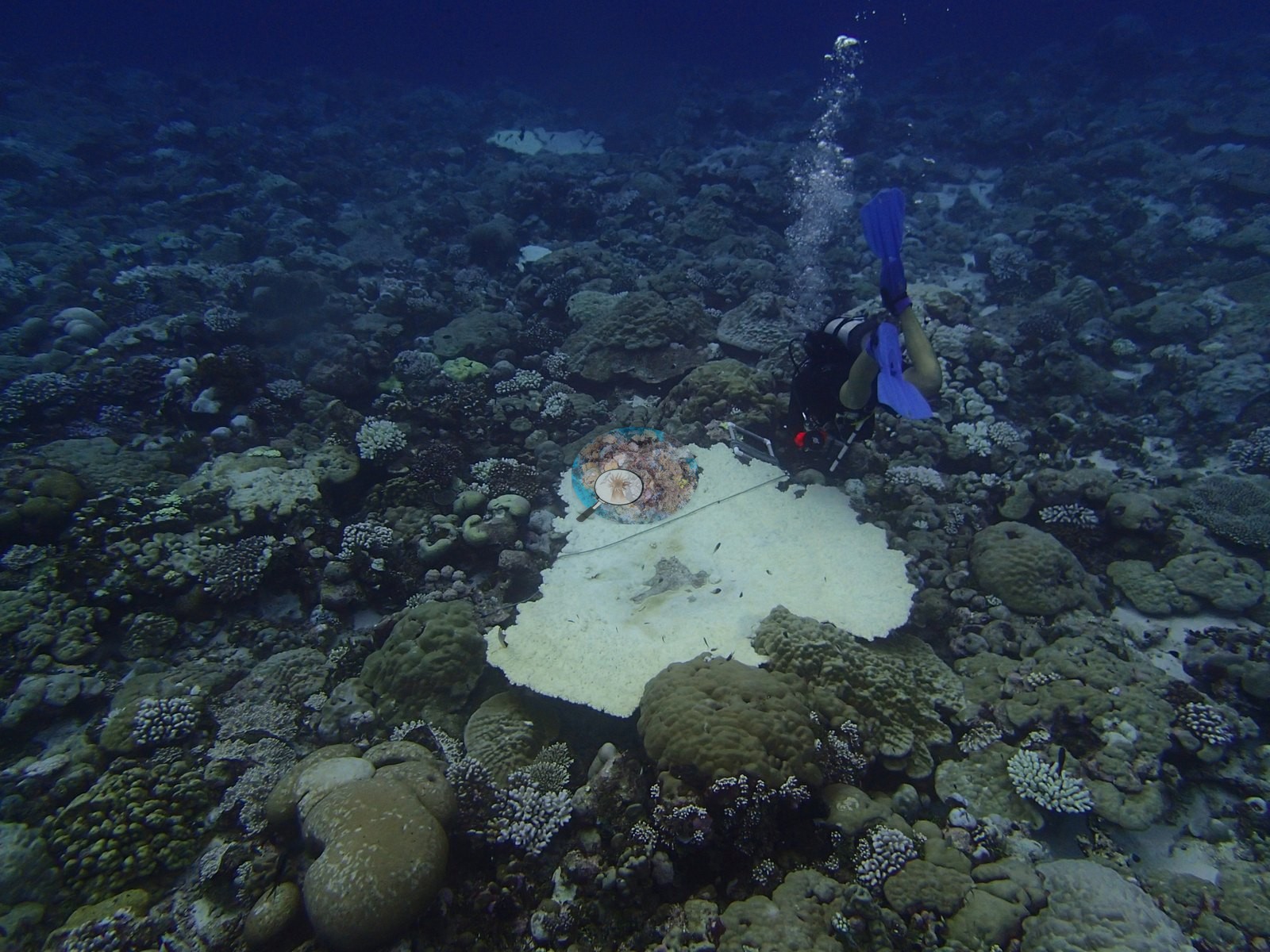
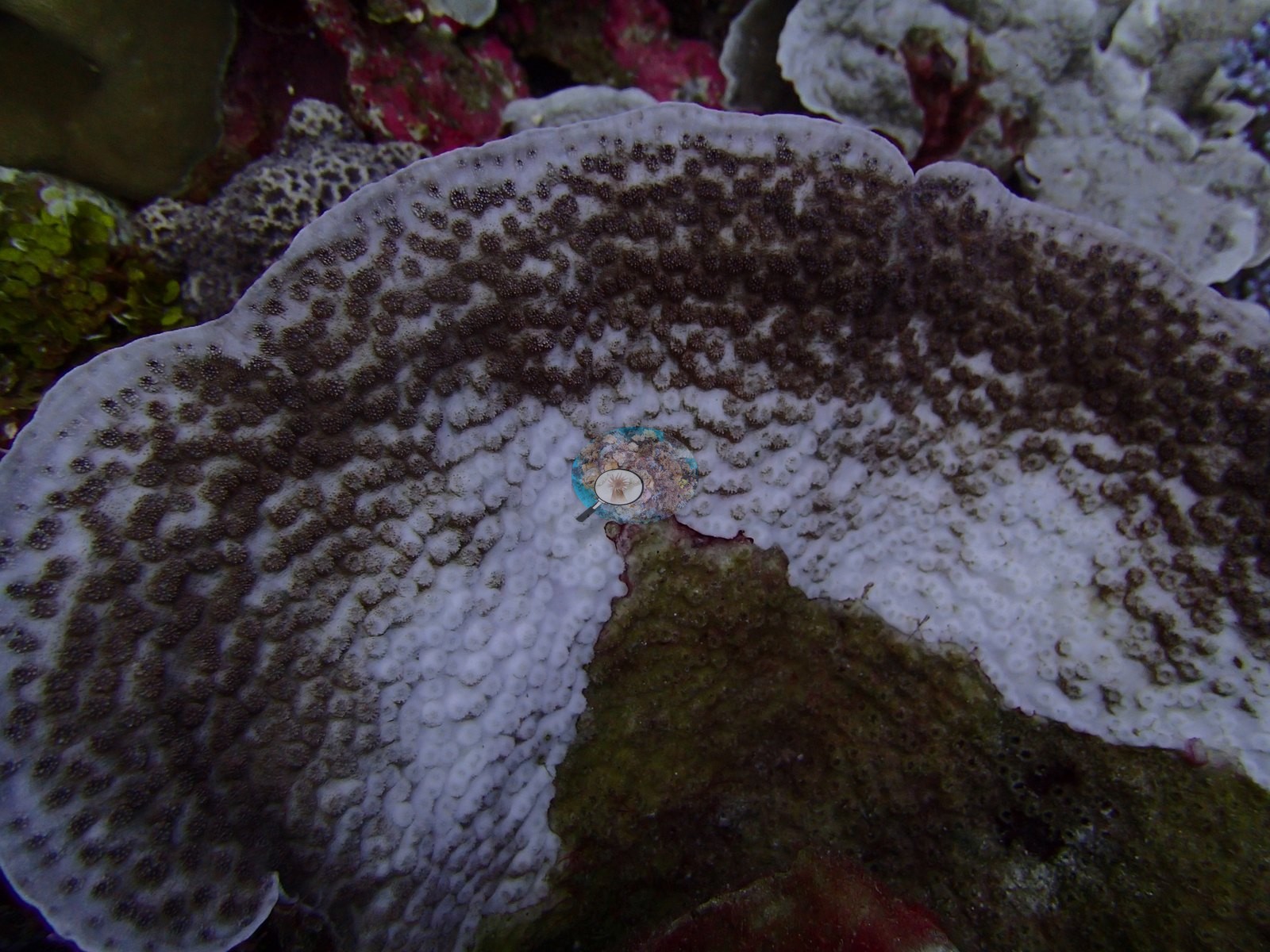
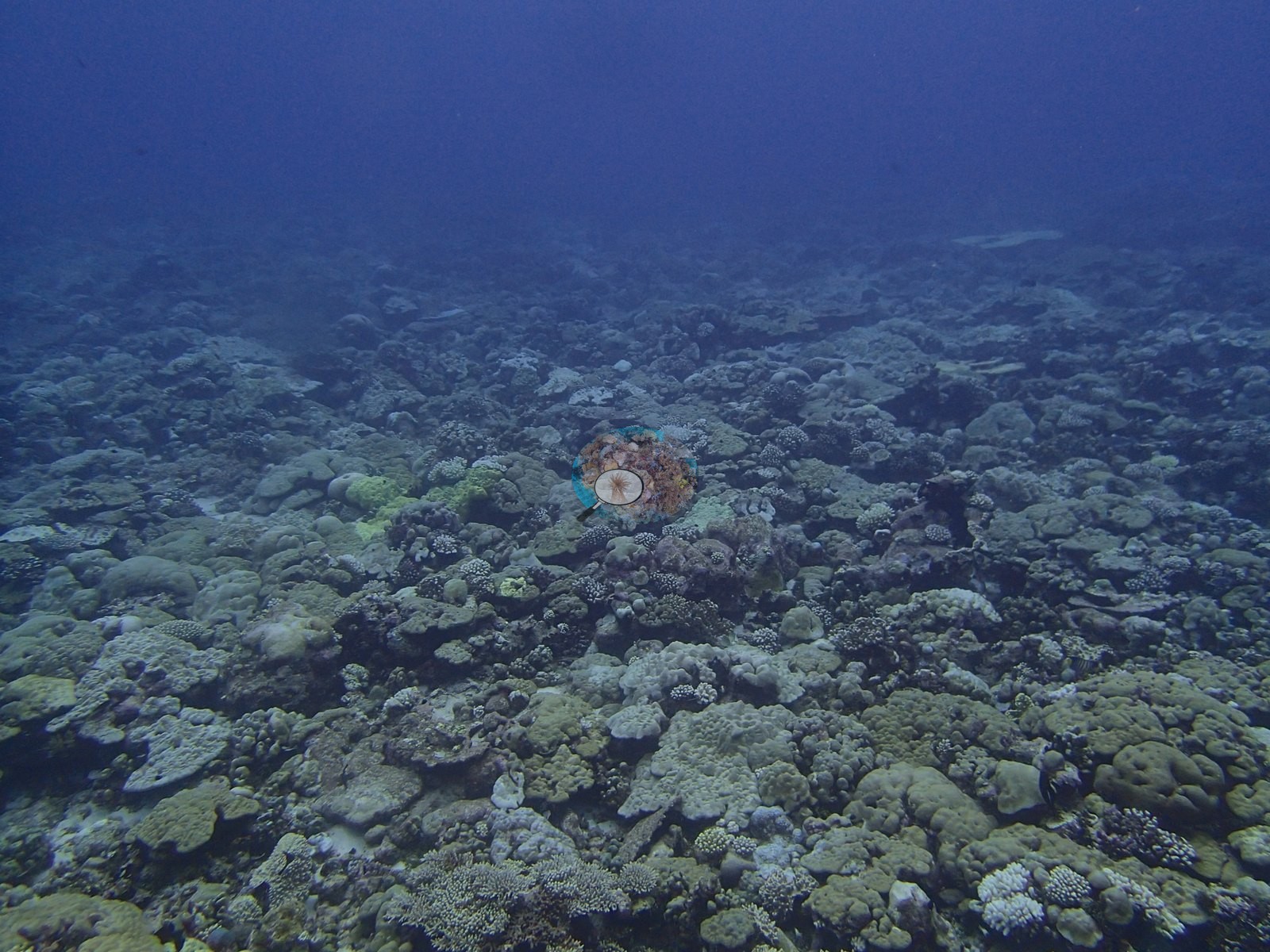
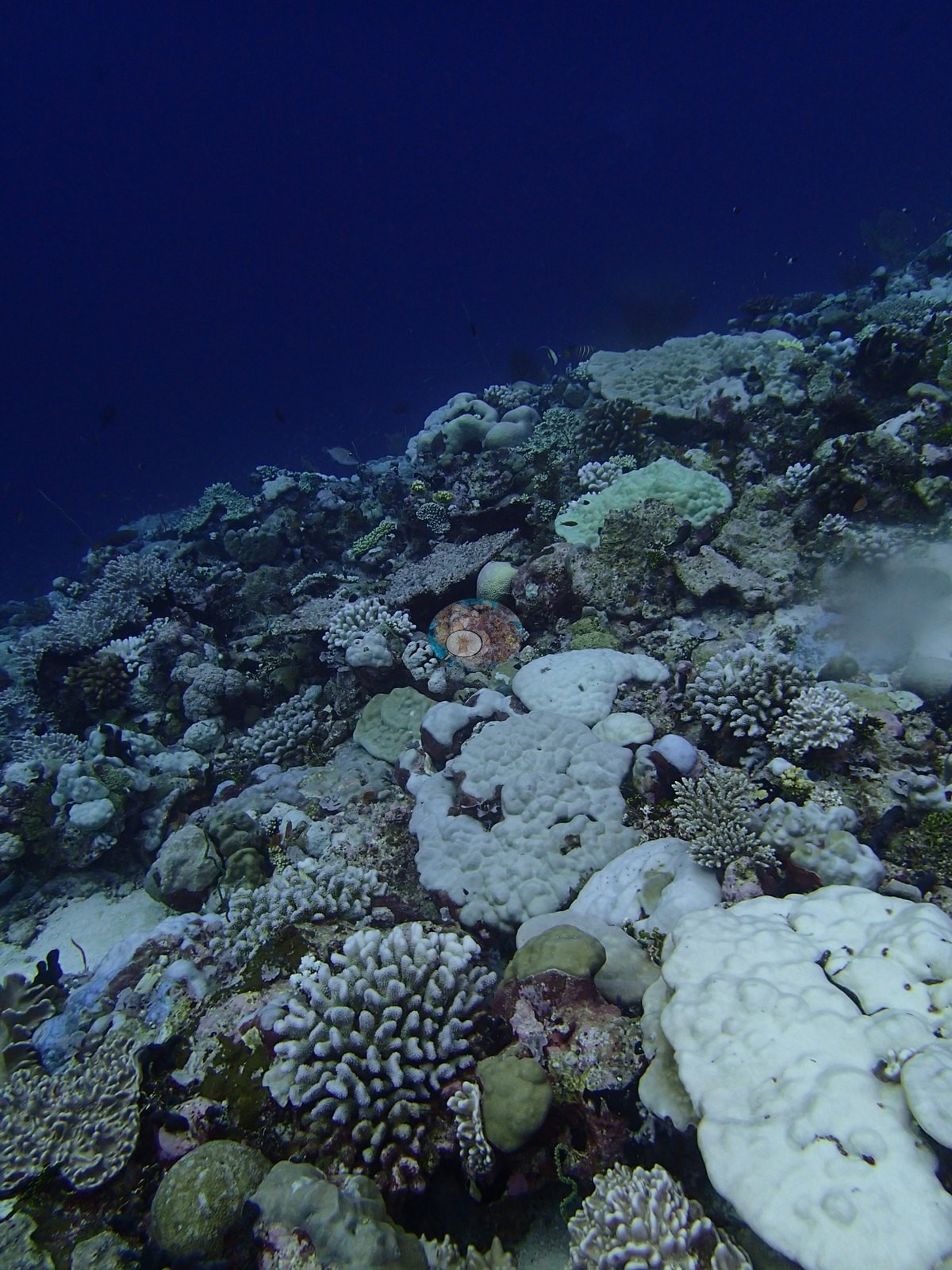
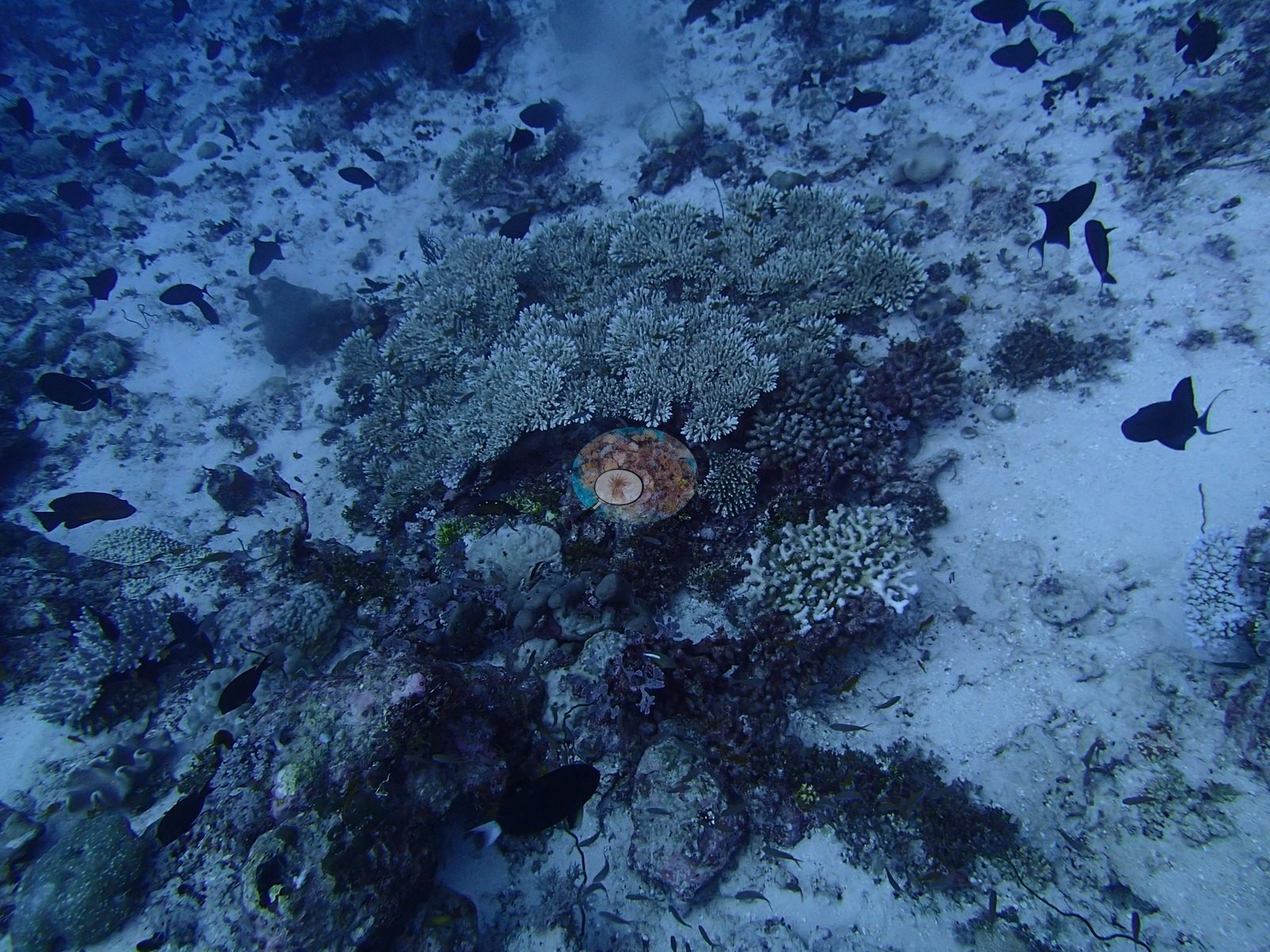
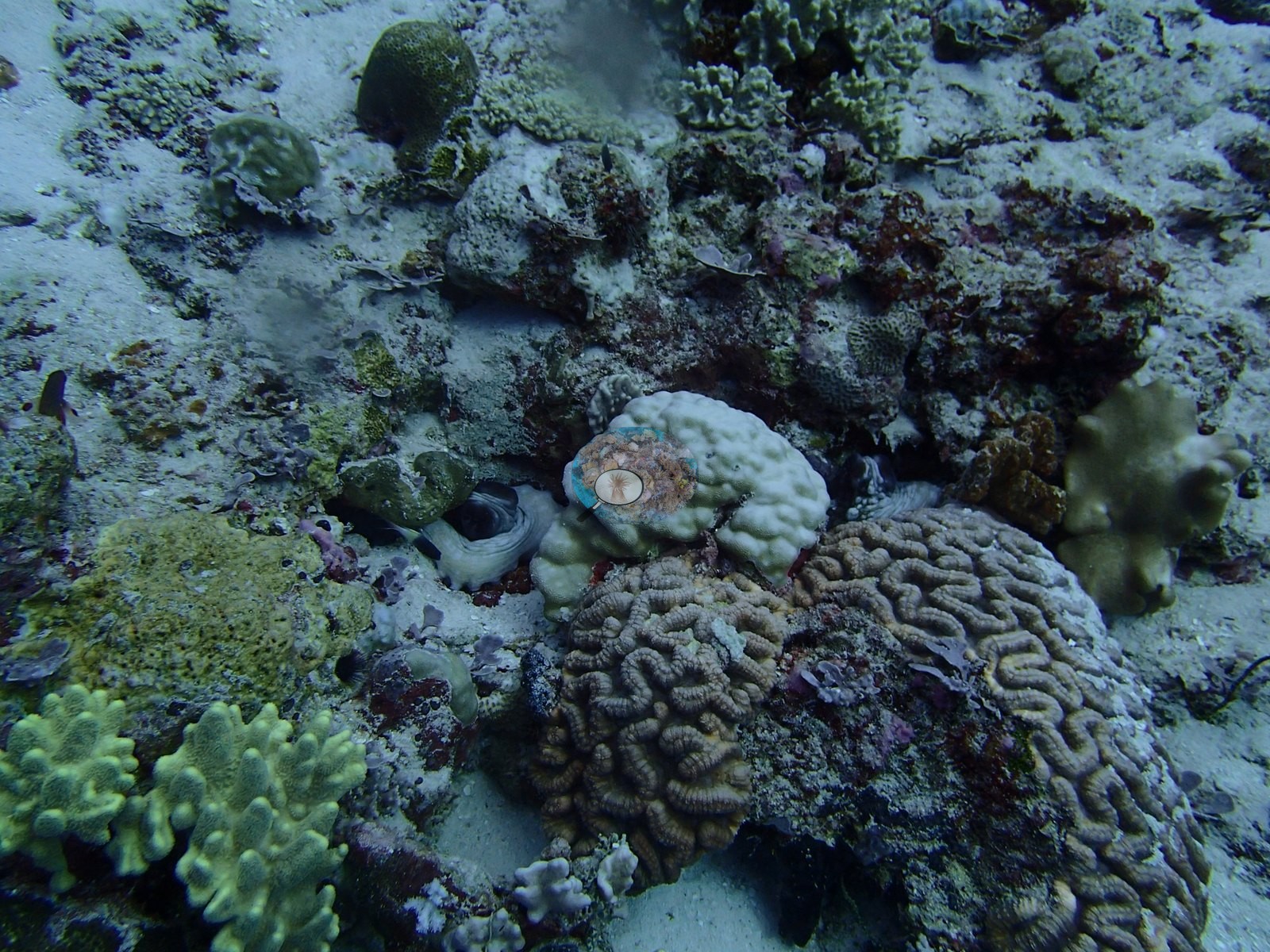
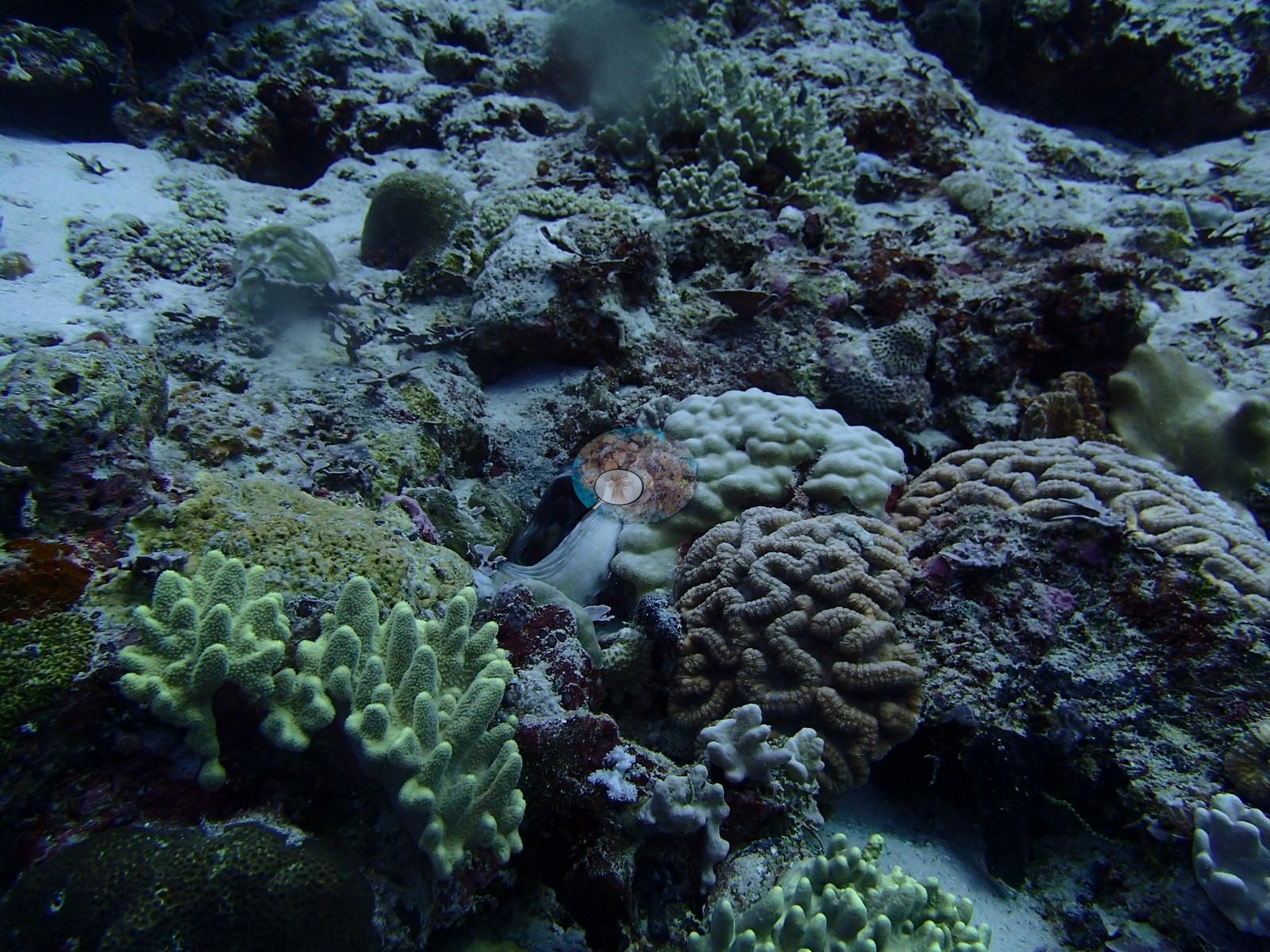
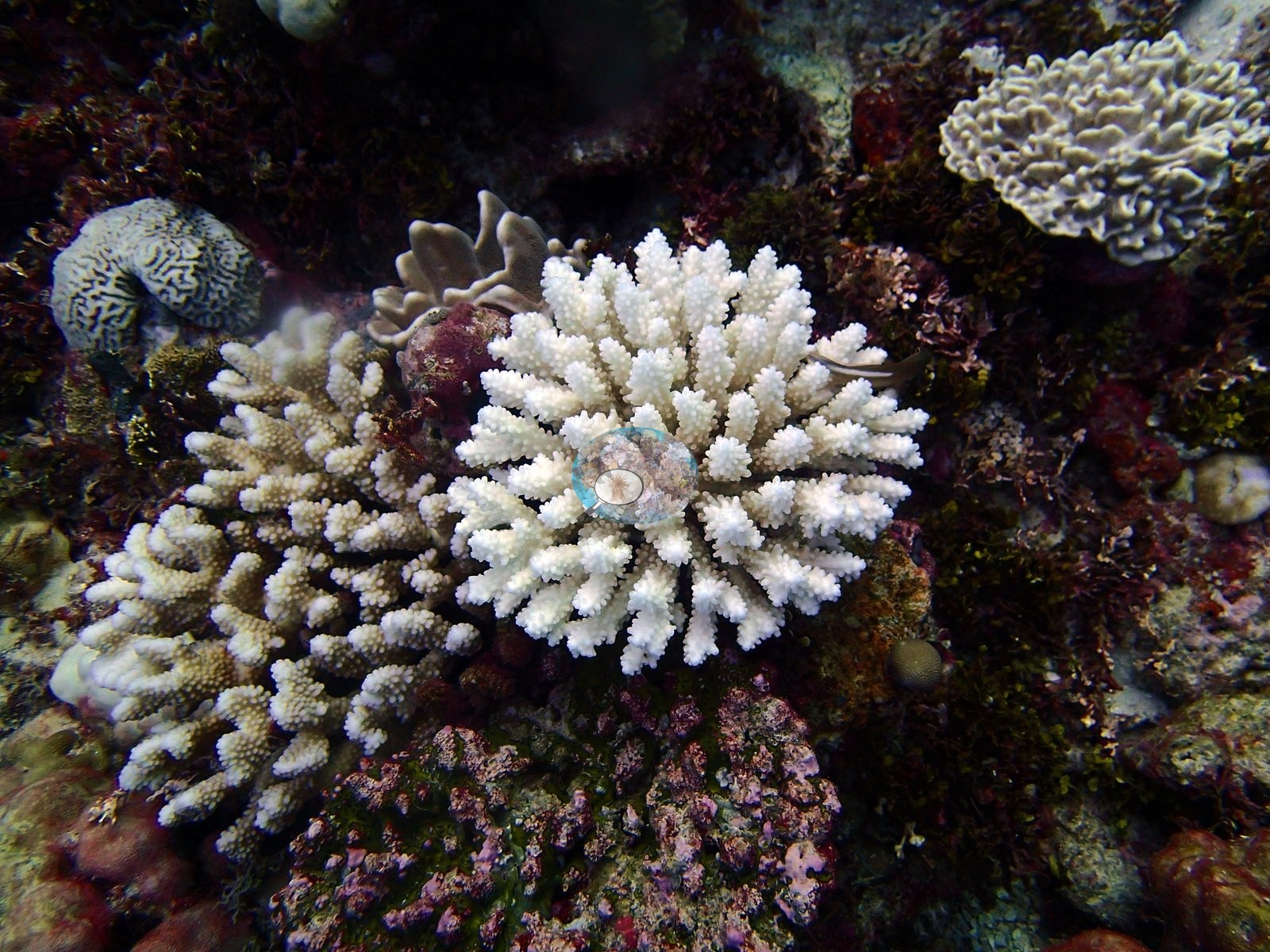
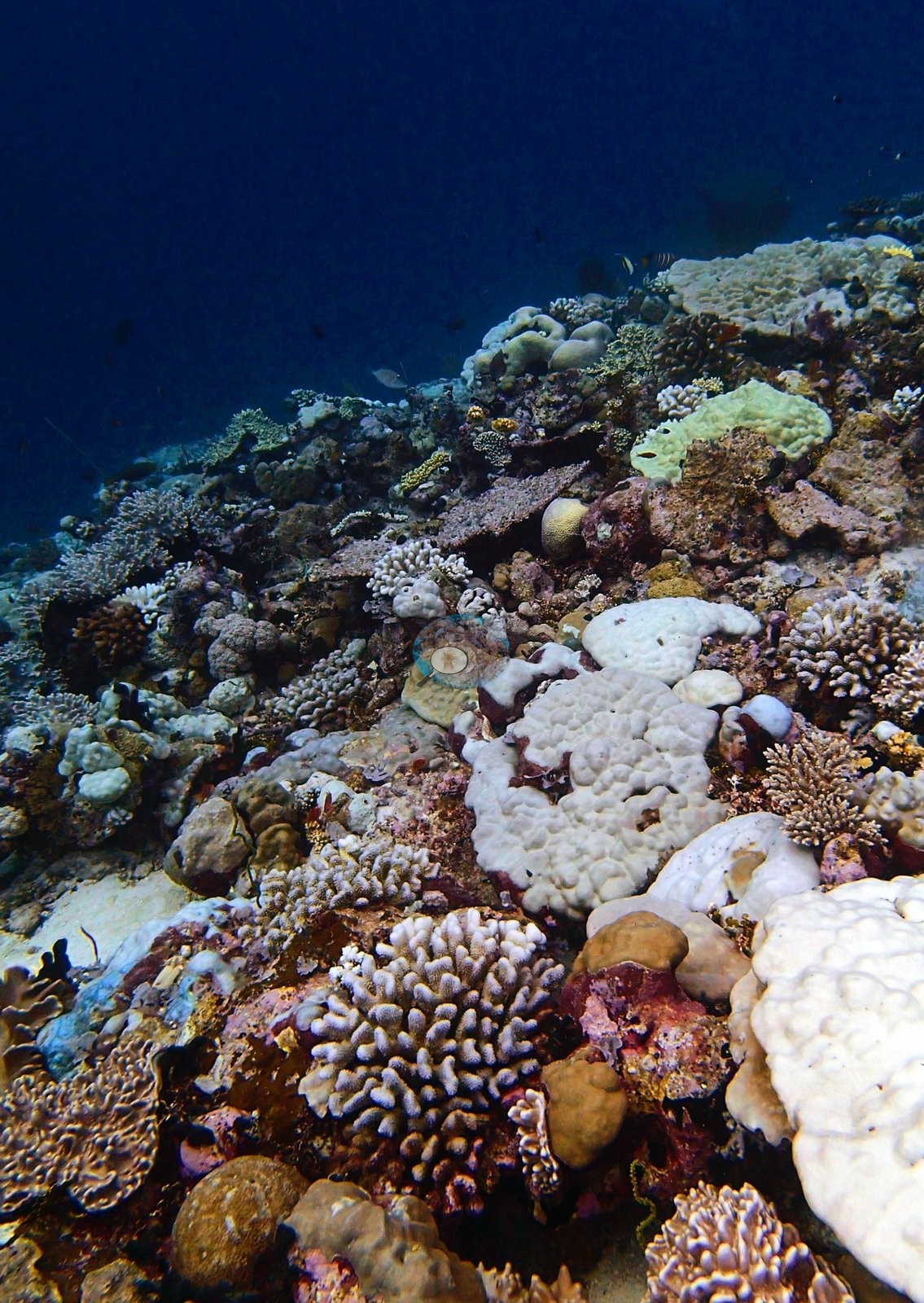
Chagos (NOAA CRW virtual station)A windward Peros Banhos forereef with 31 coral genera that is unusual for Chagos in being dominated by Porites rather than Acropora, at 40% cover. Roughly 23% of coral was bleached on two consecutive dives, with white corymbose and plate colonies scattered throughout and even a bleached host anemone with its anemonefish. Surveyed on the Living Oceans Foundation's Global Reef Expedition.
Two other CRD dive sites within 5 km shown in orange — click a marker to open its page.
🗺 Detailed map of the Global Reef Expedition dive sites, Peros Banhos, Chagos (Khaled bin Sultan Living Oceans Foundation; opens in a new window)
17 of these 54 photographs are shown beside the text that discusses them under "Site description" below.
Site description
Setting
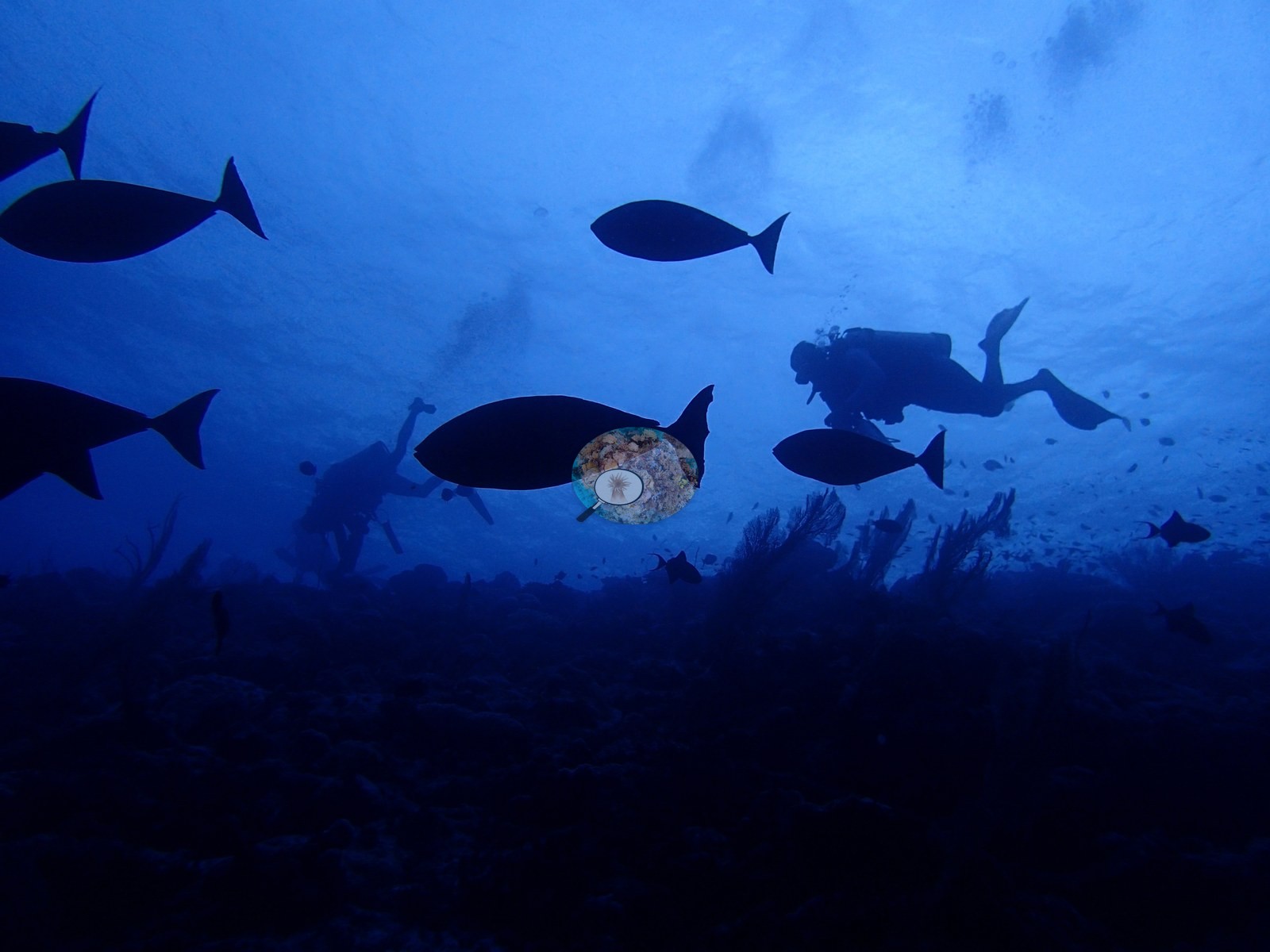
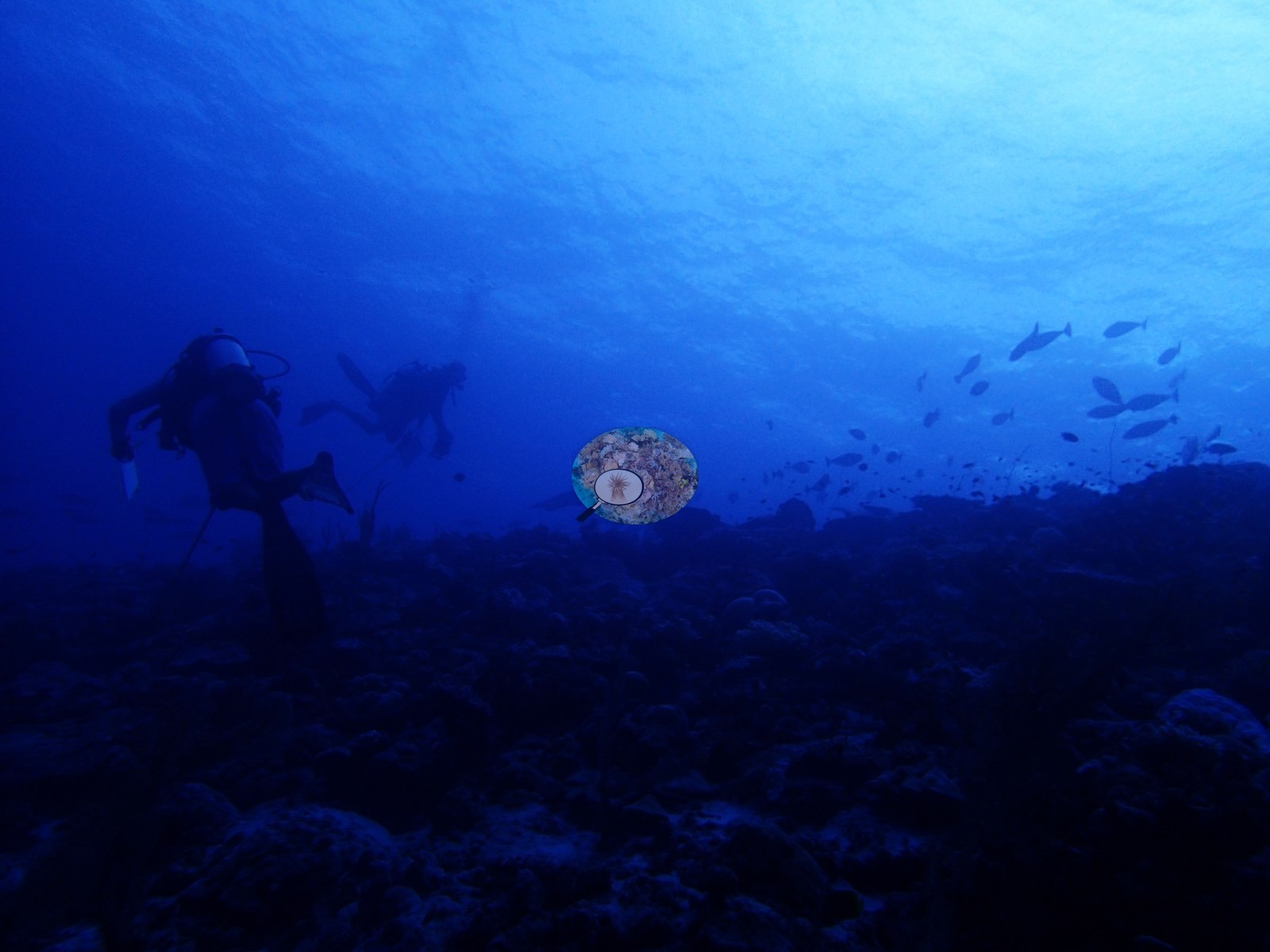
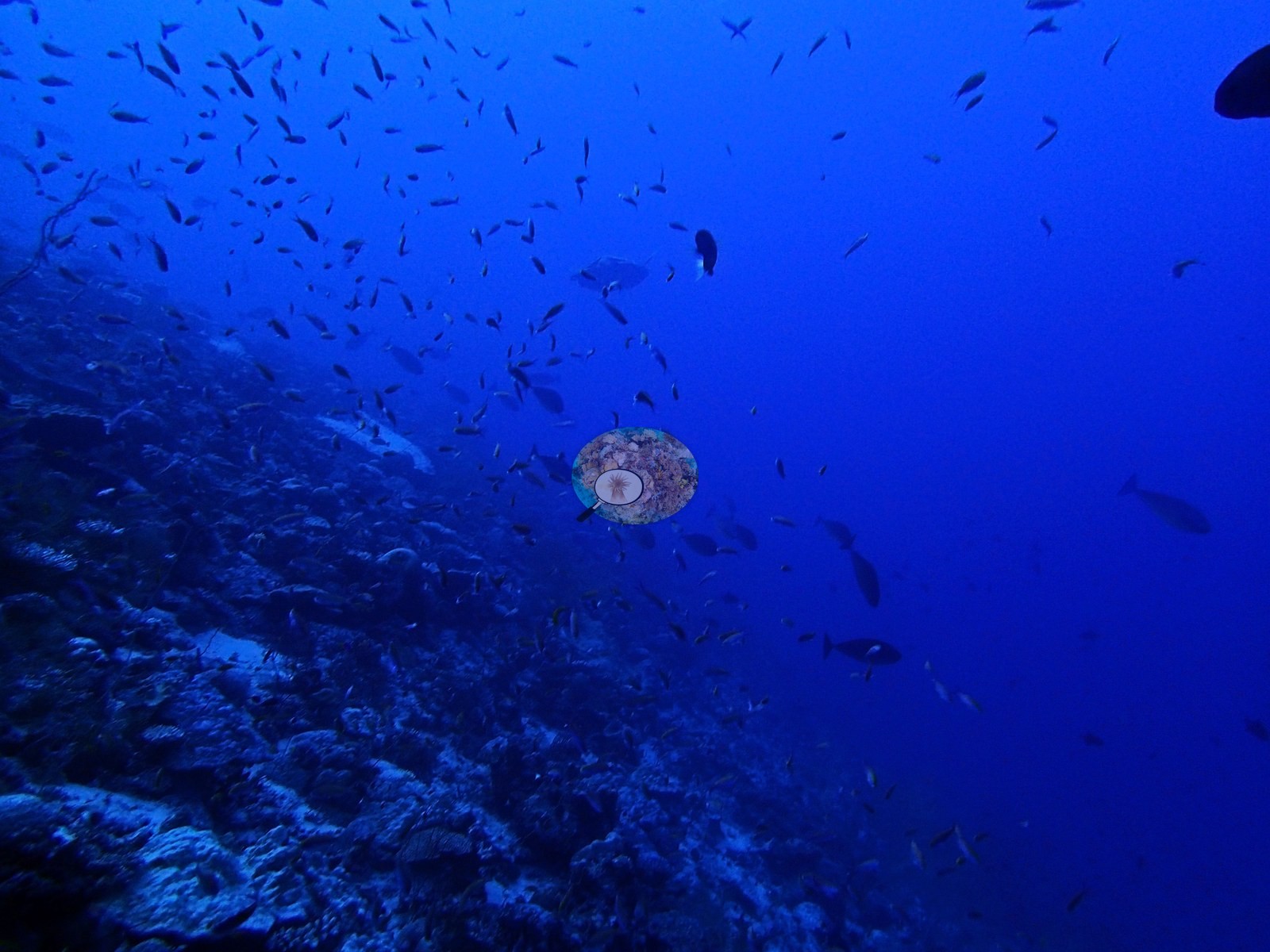
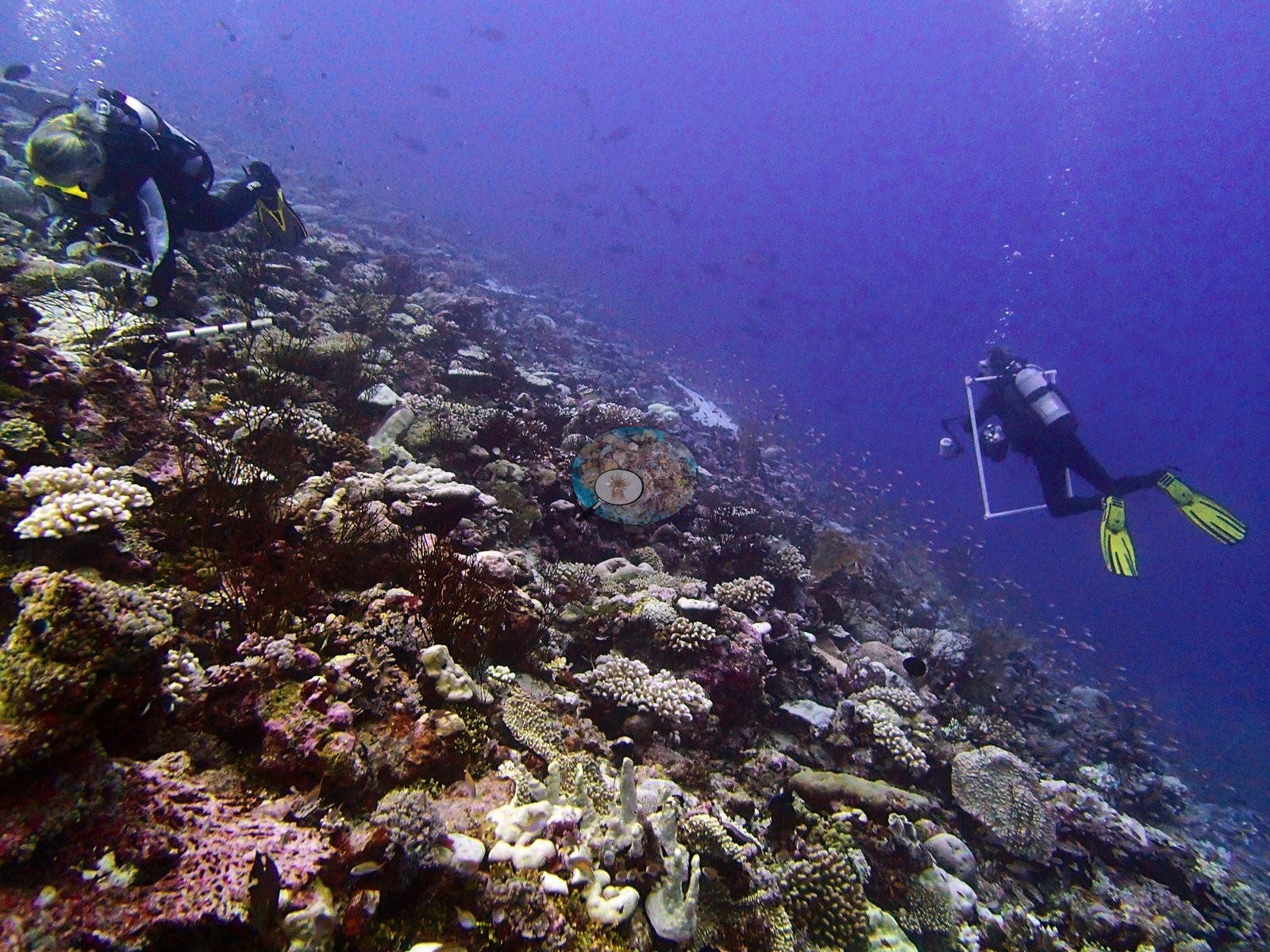
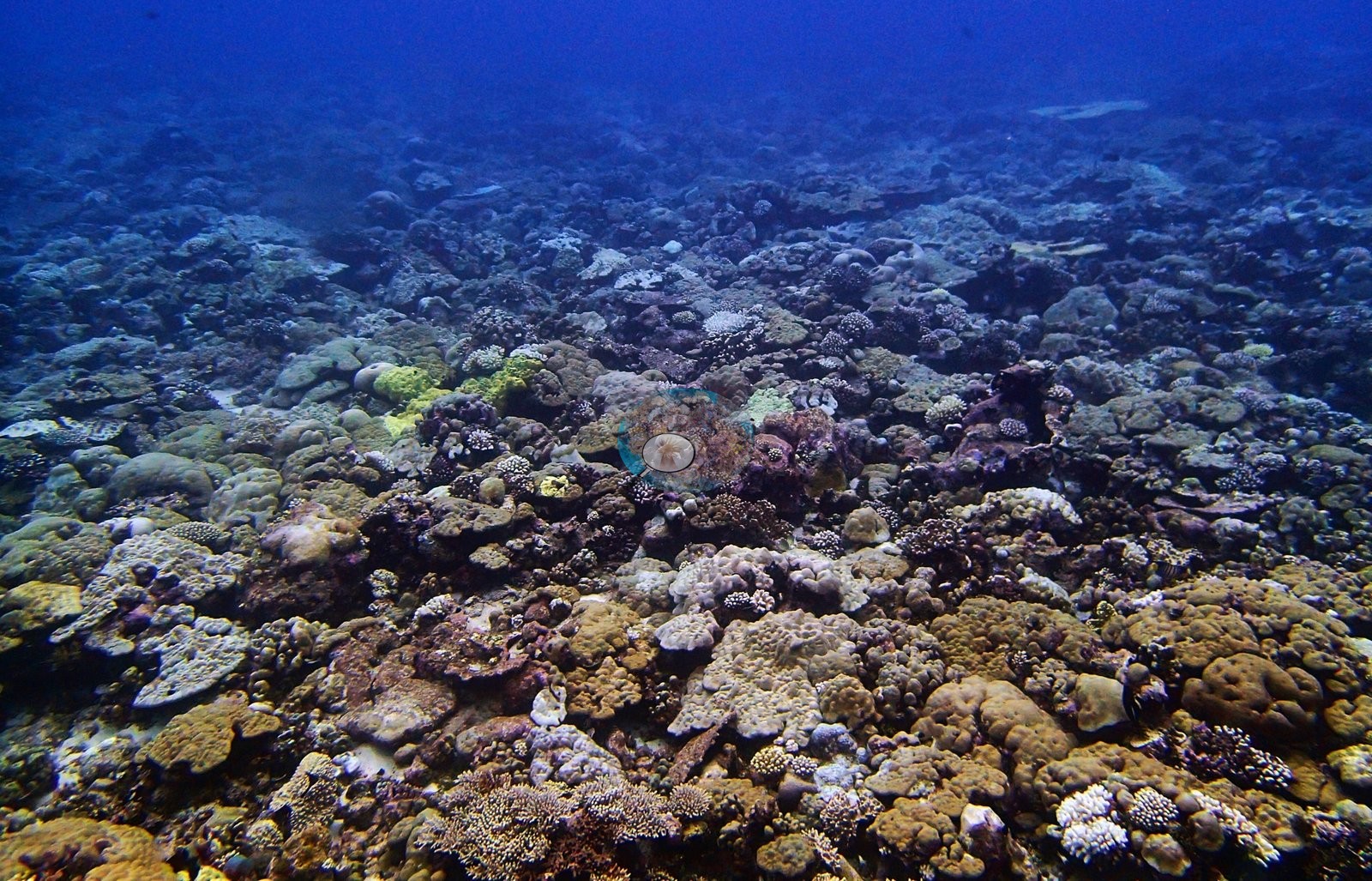
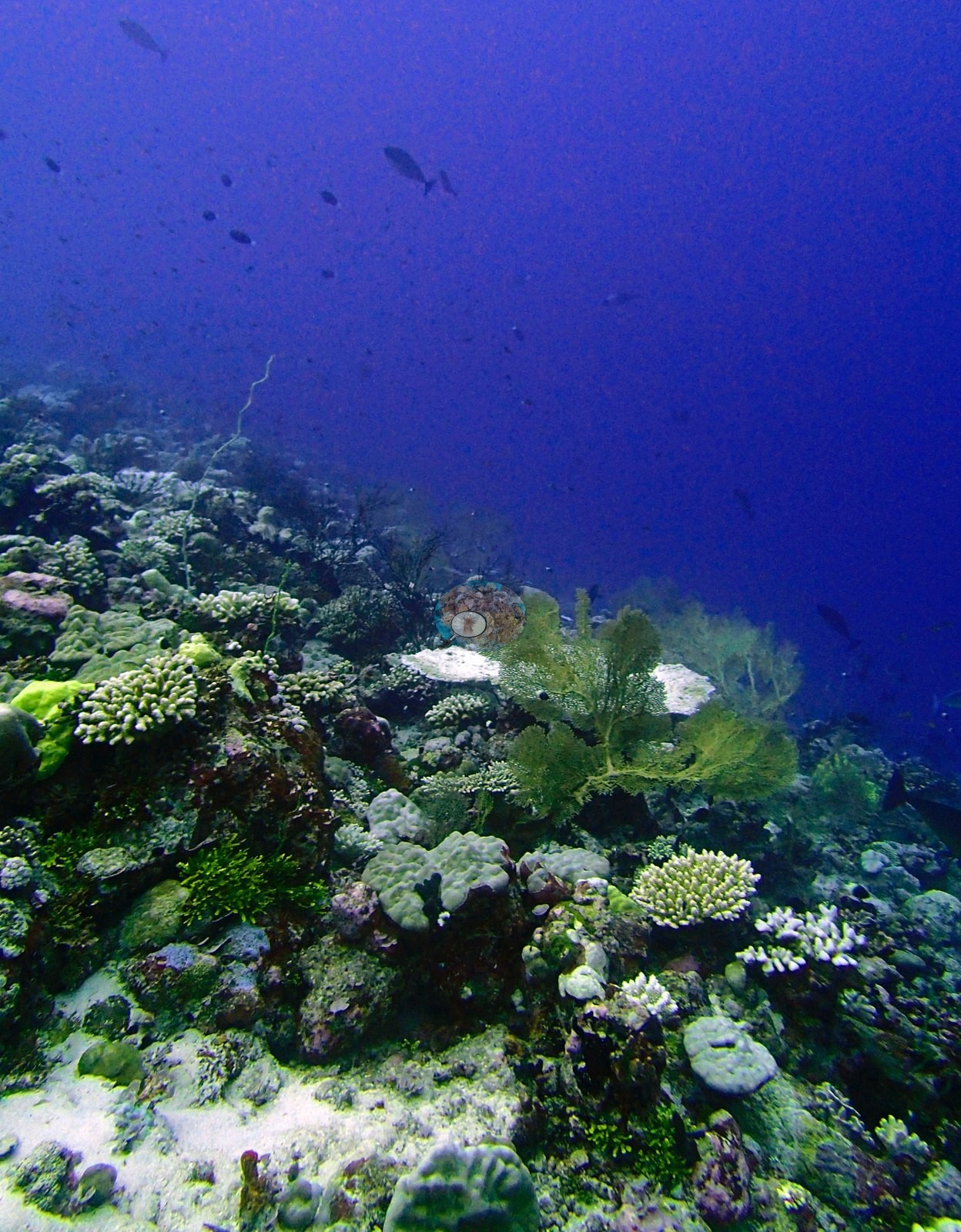
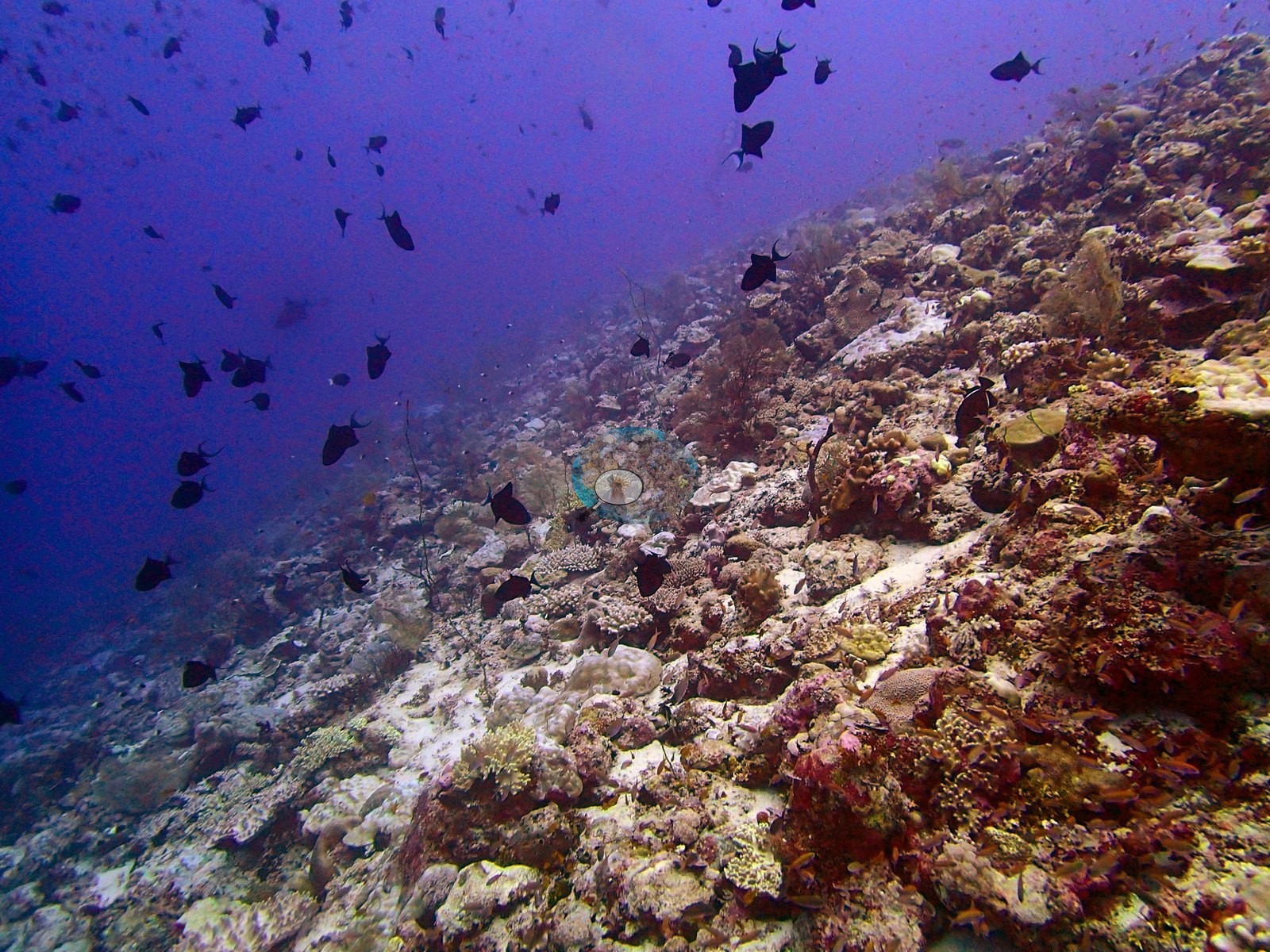
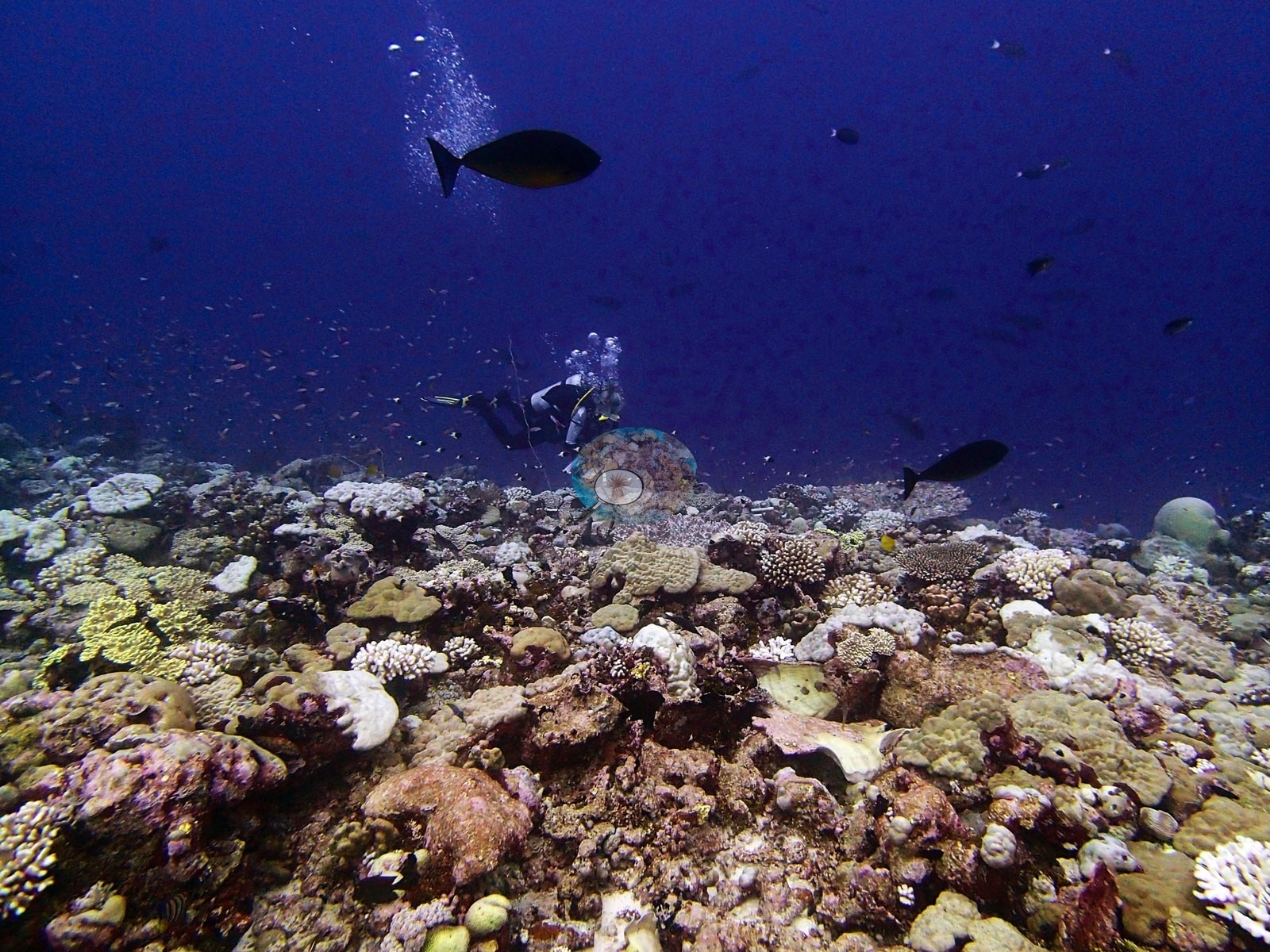
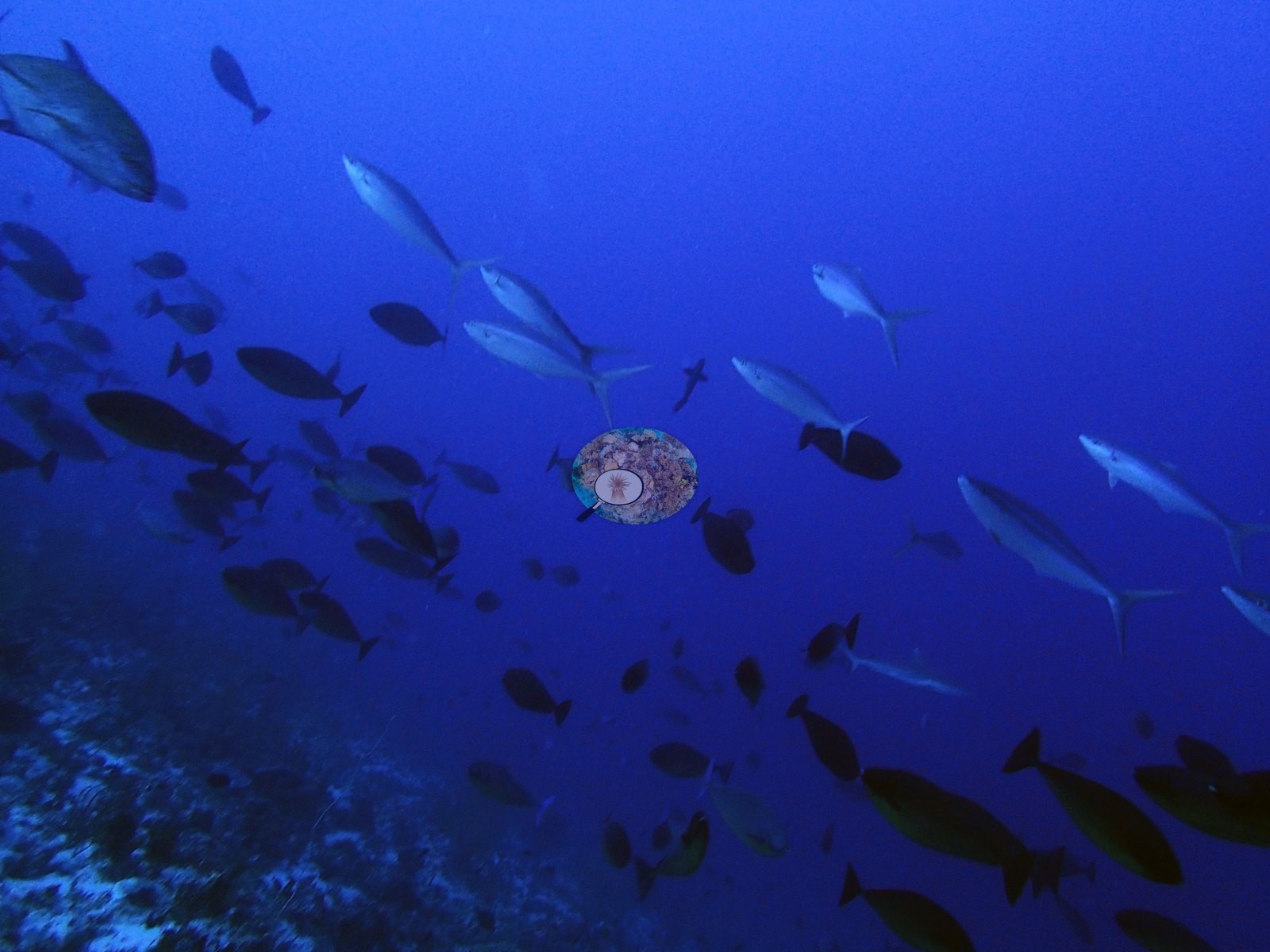
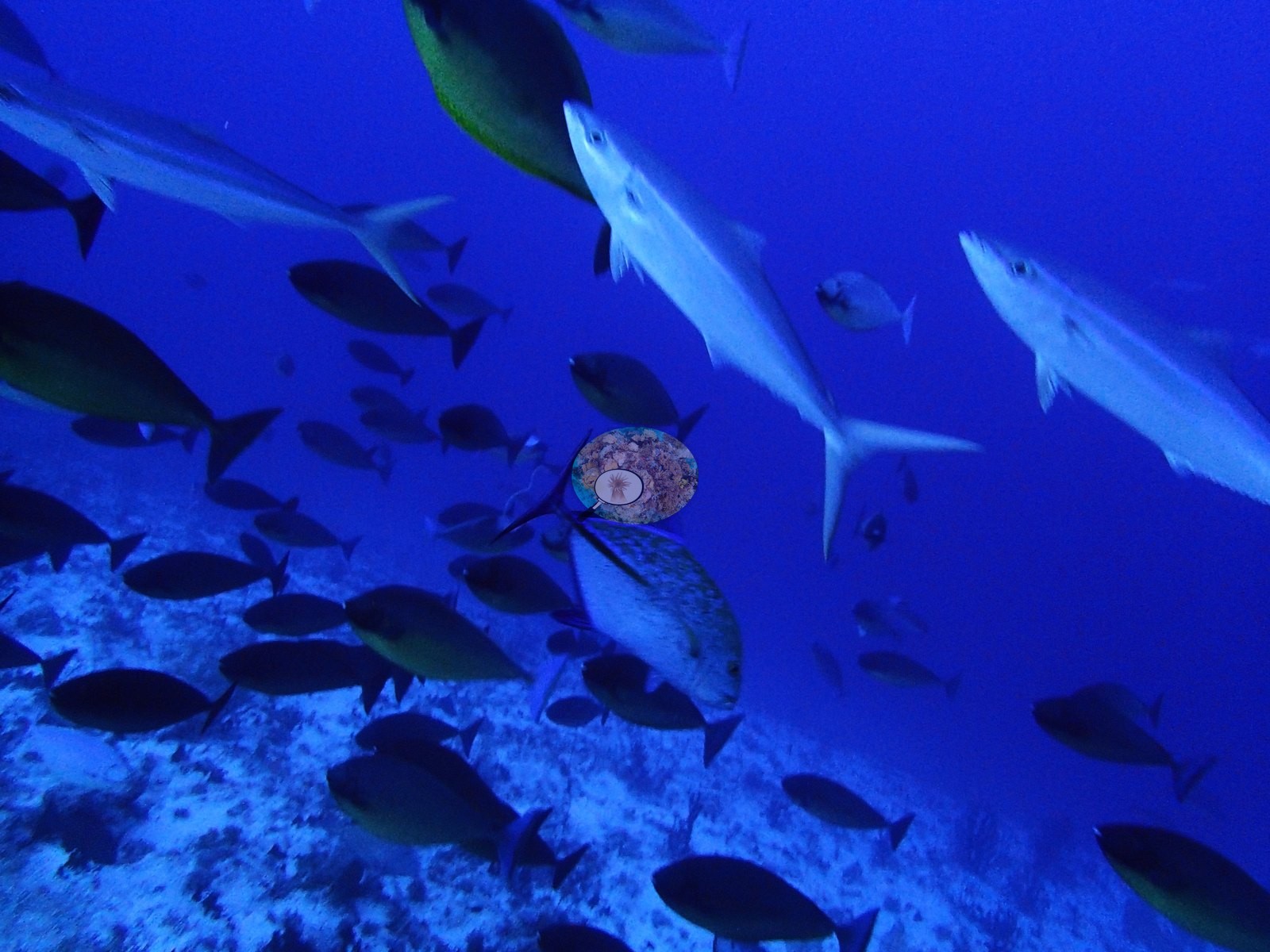
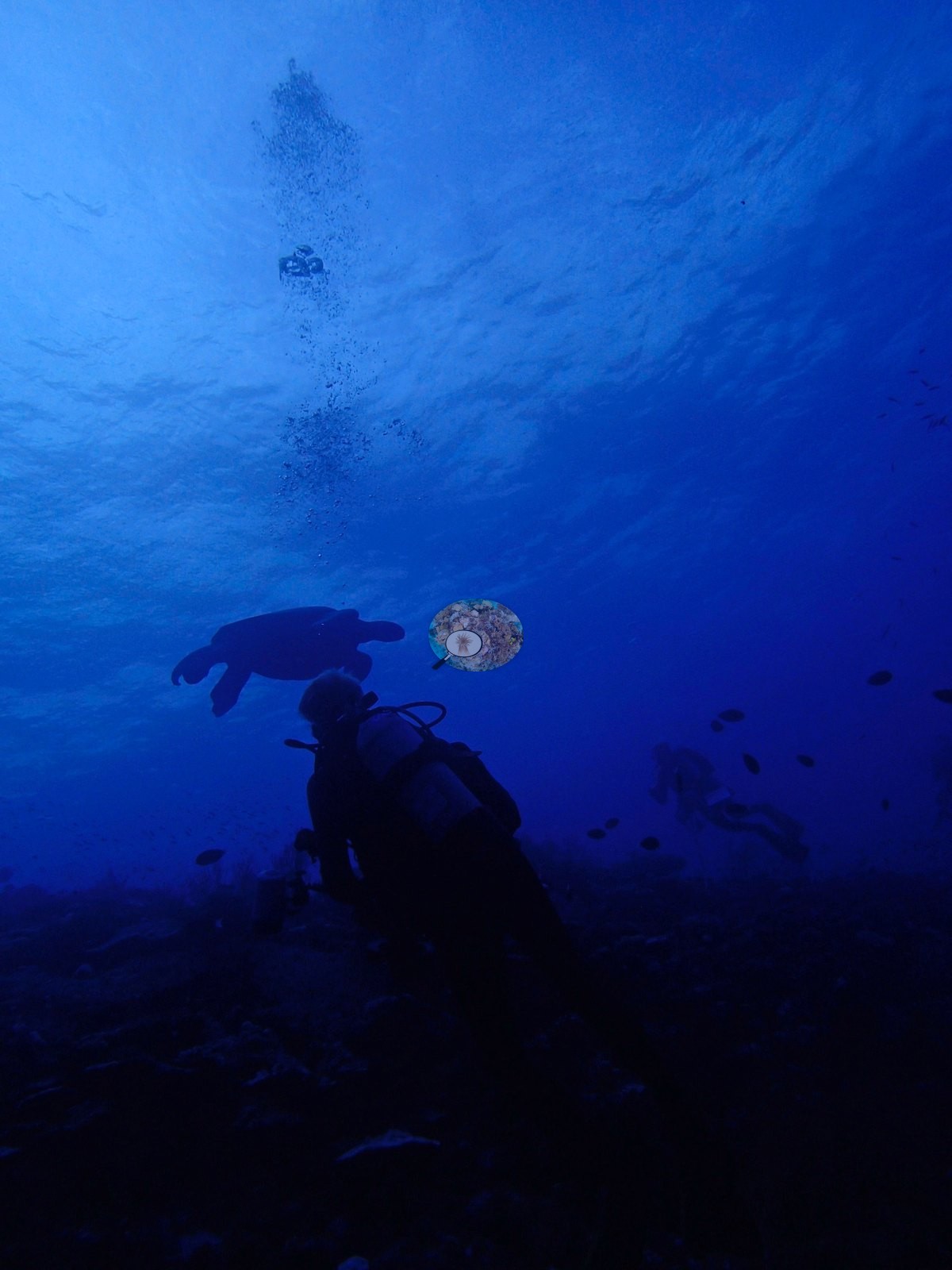
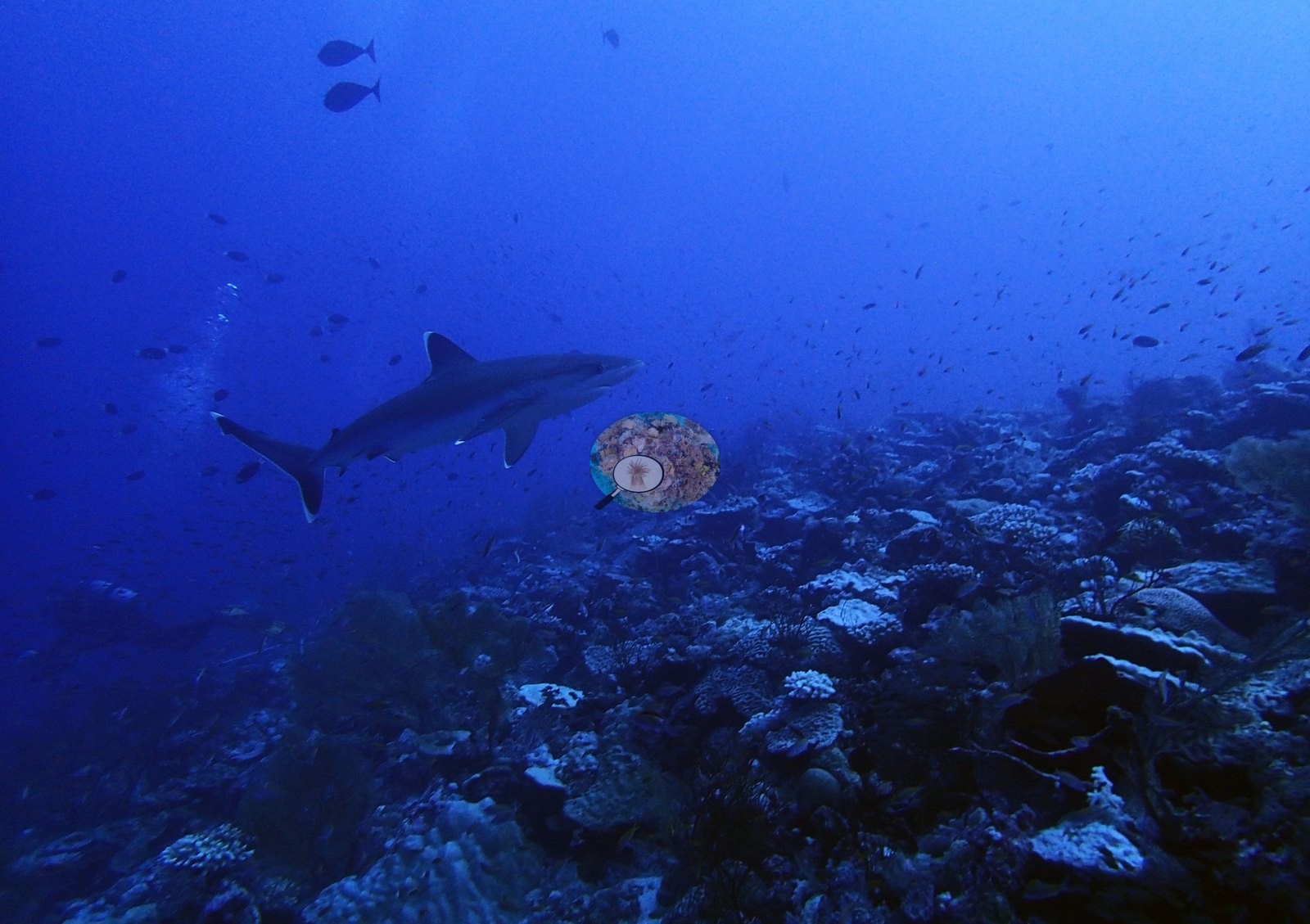
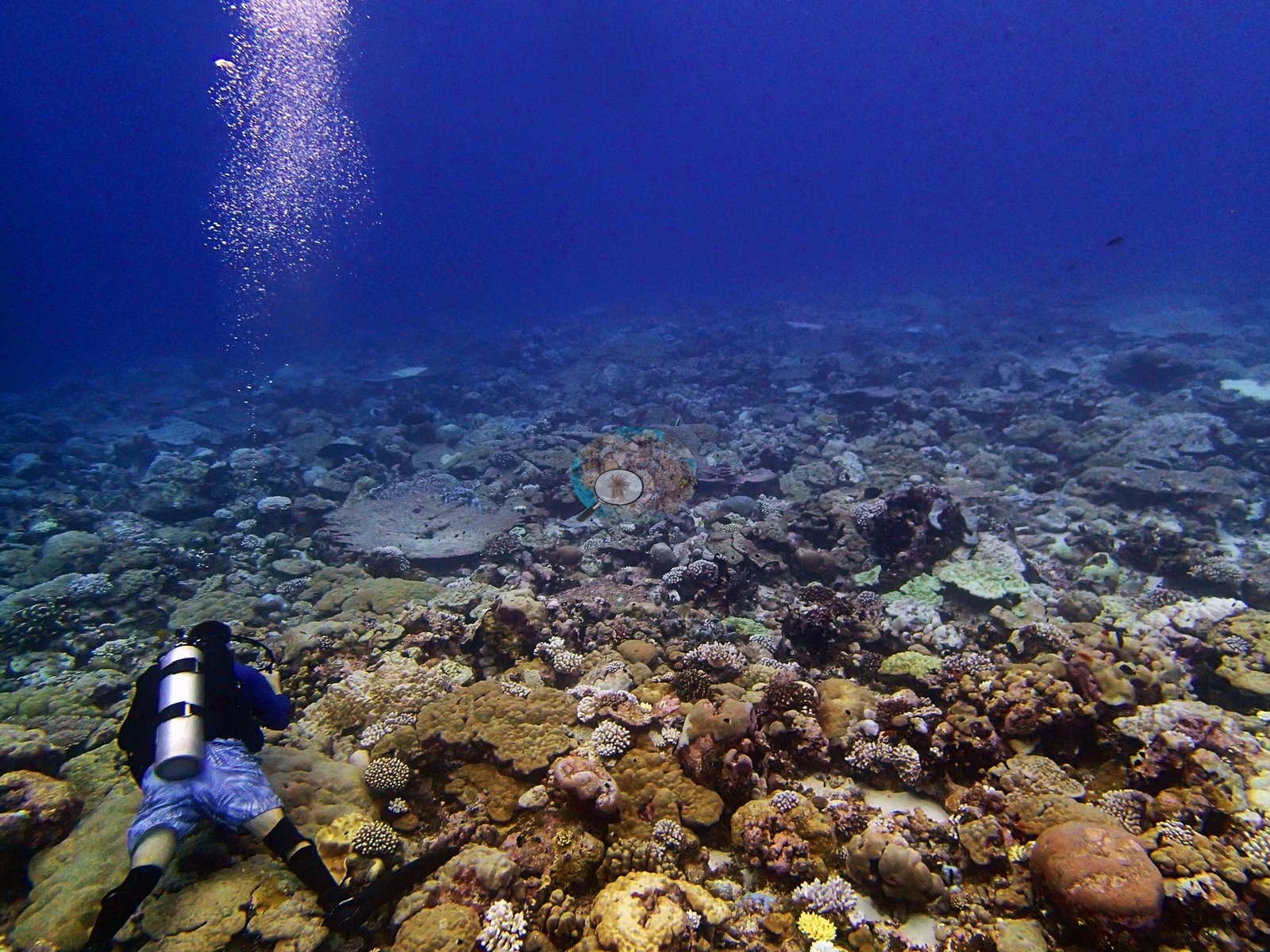
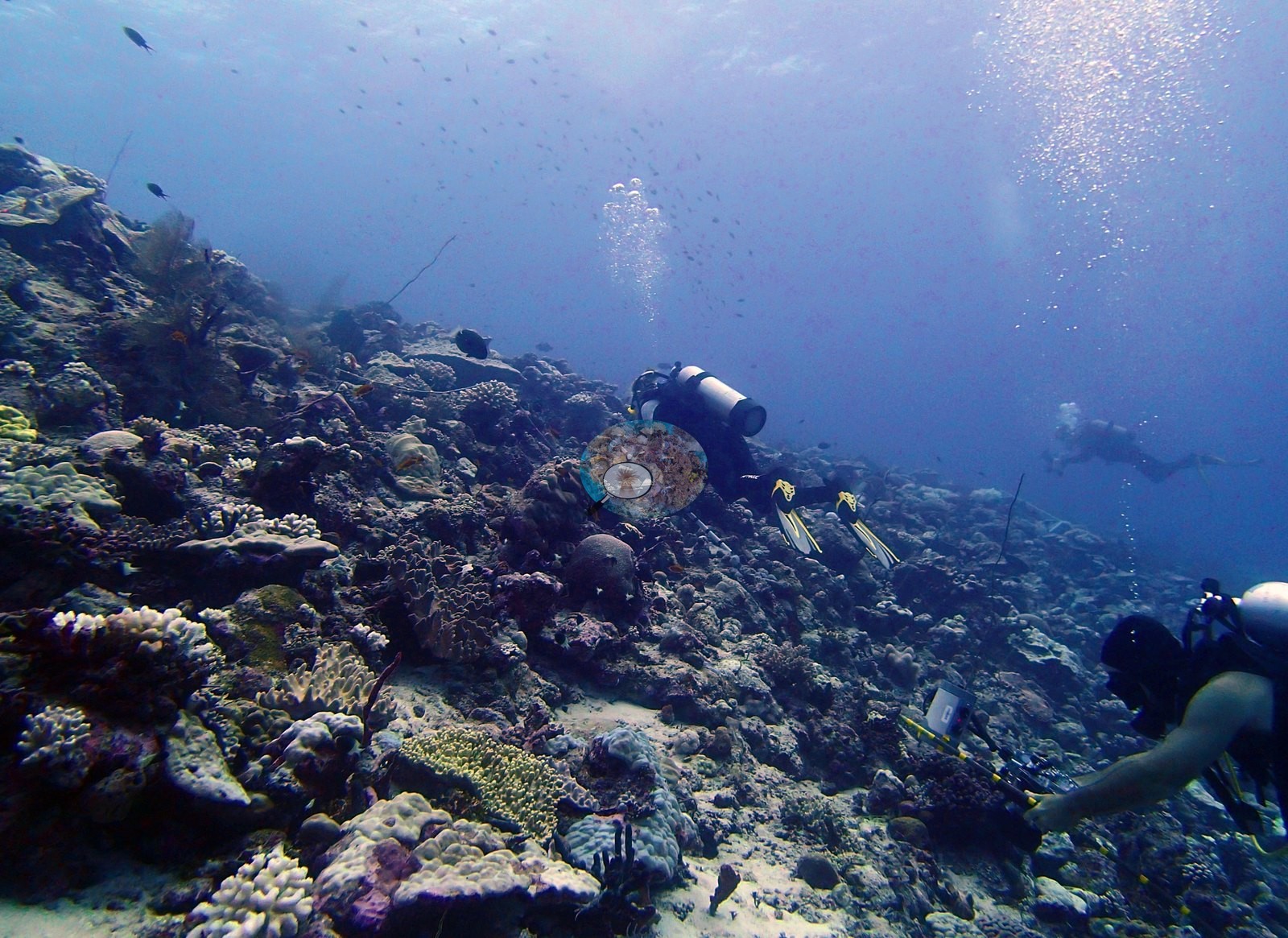
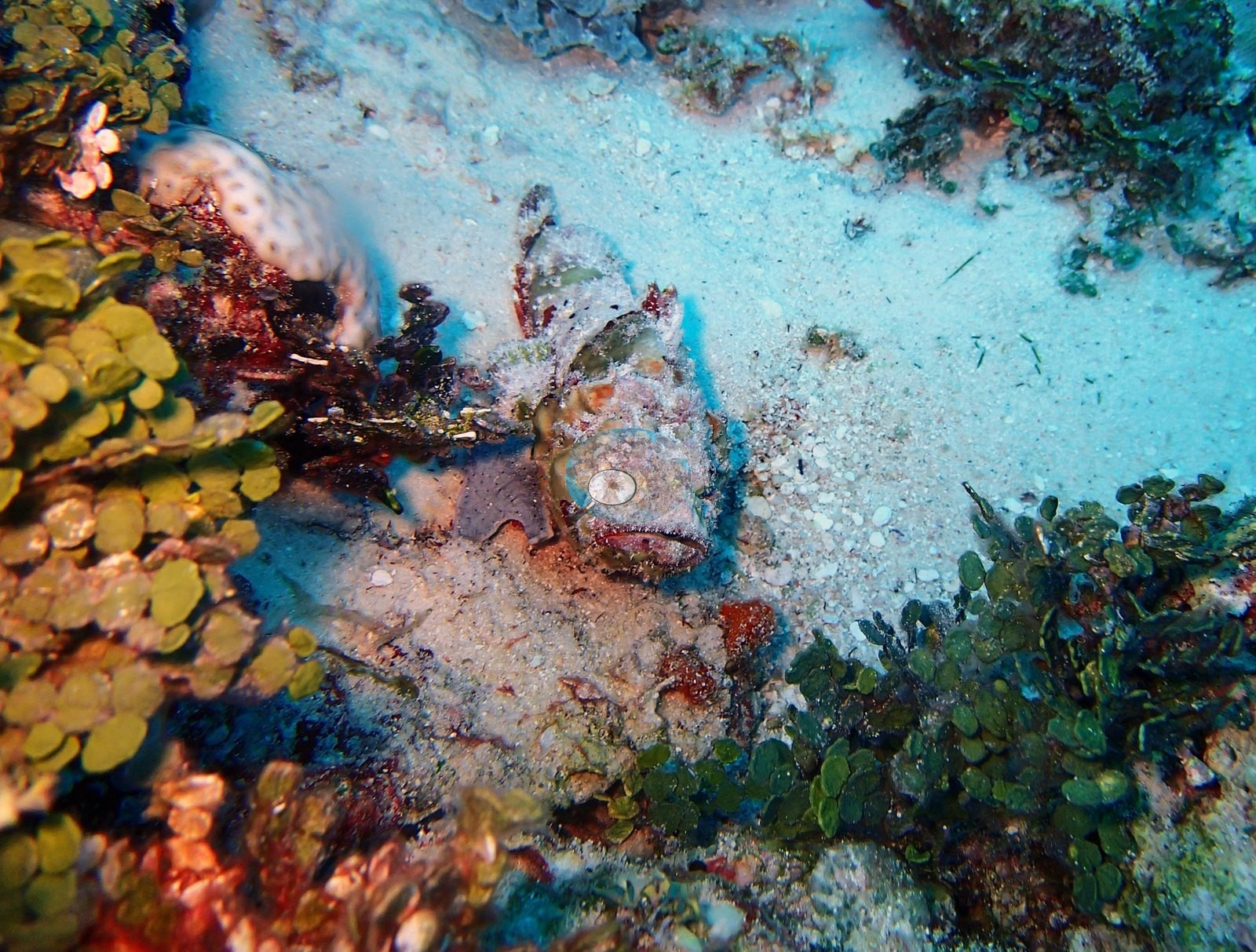
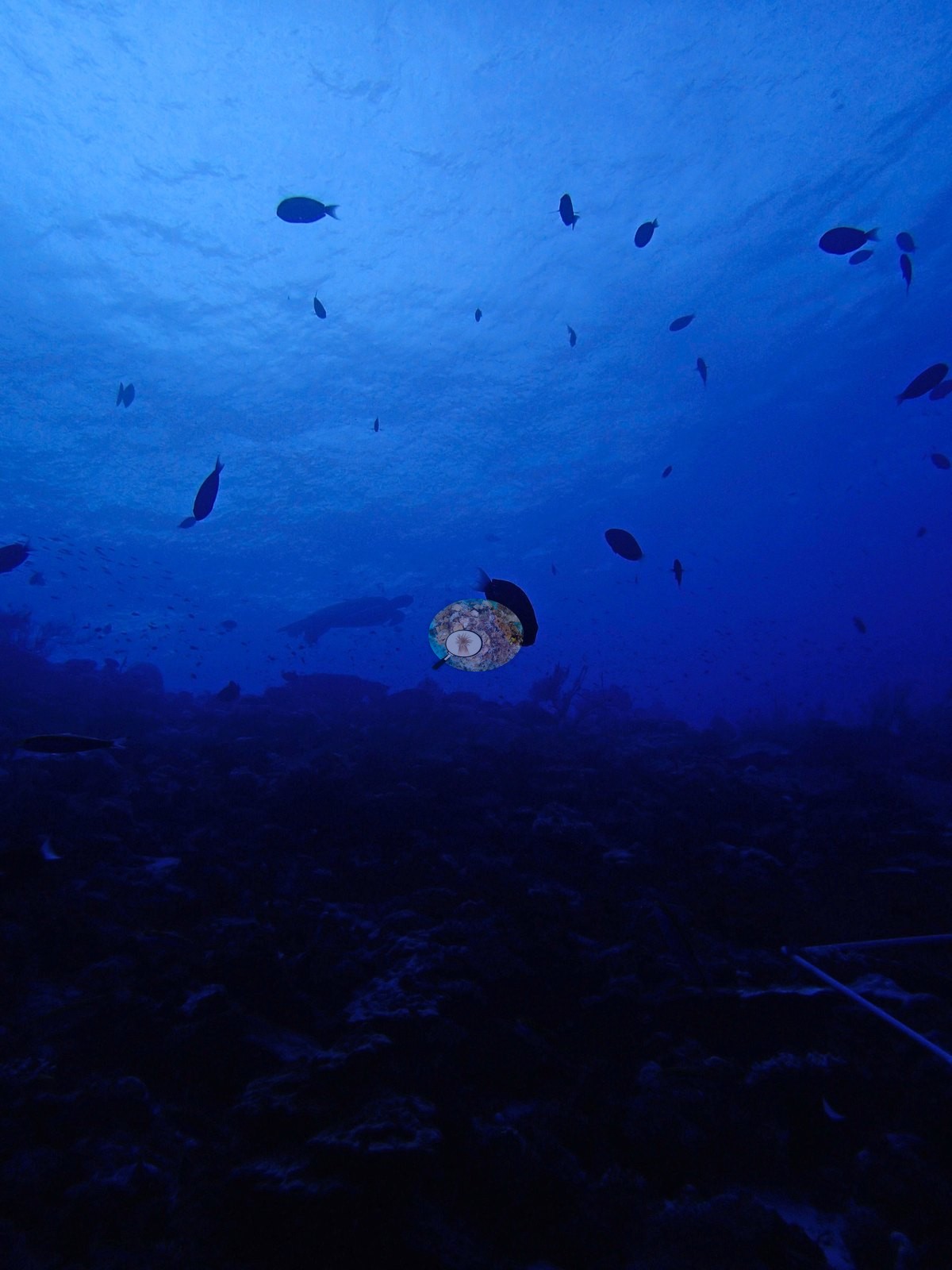
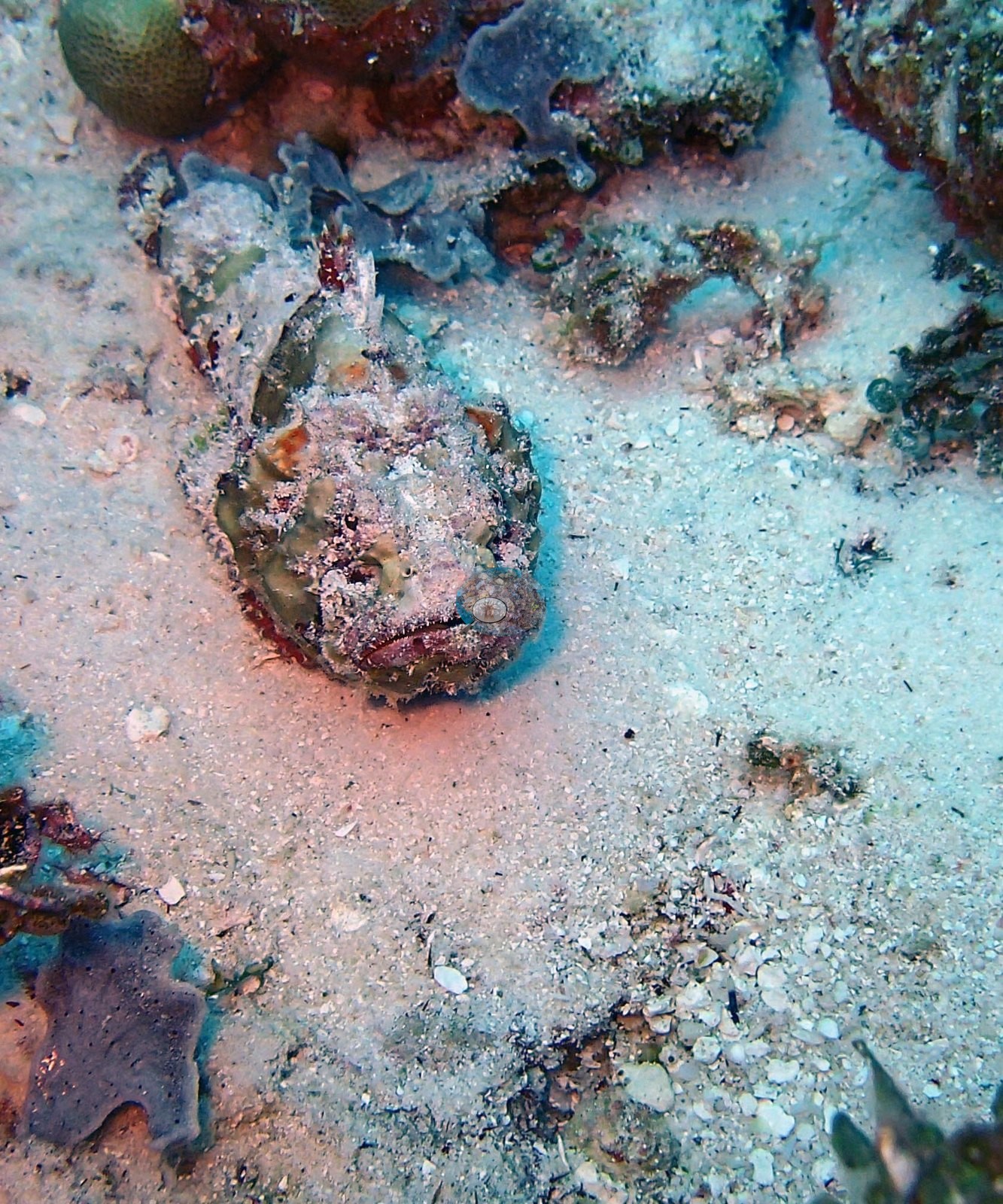
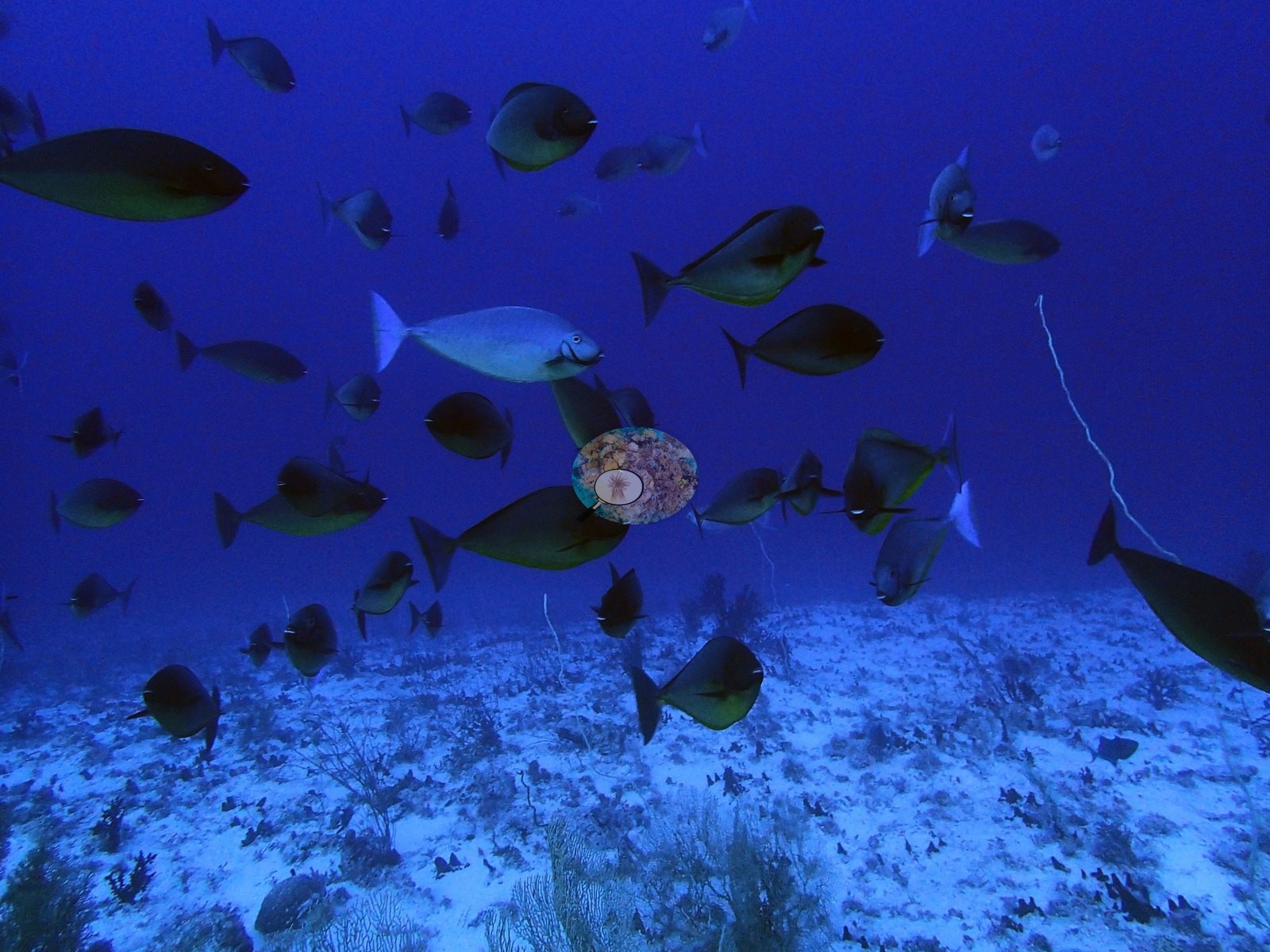
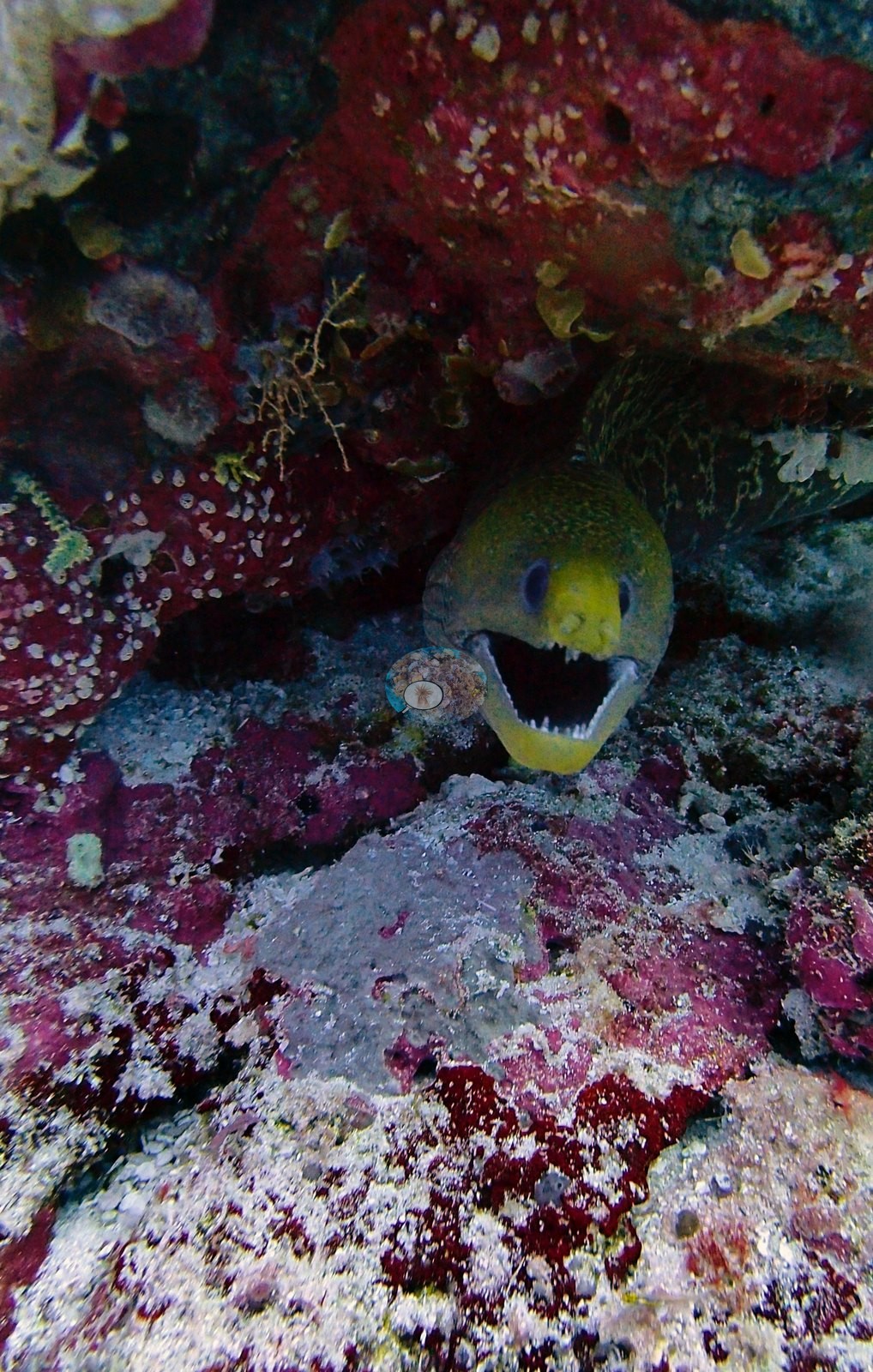
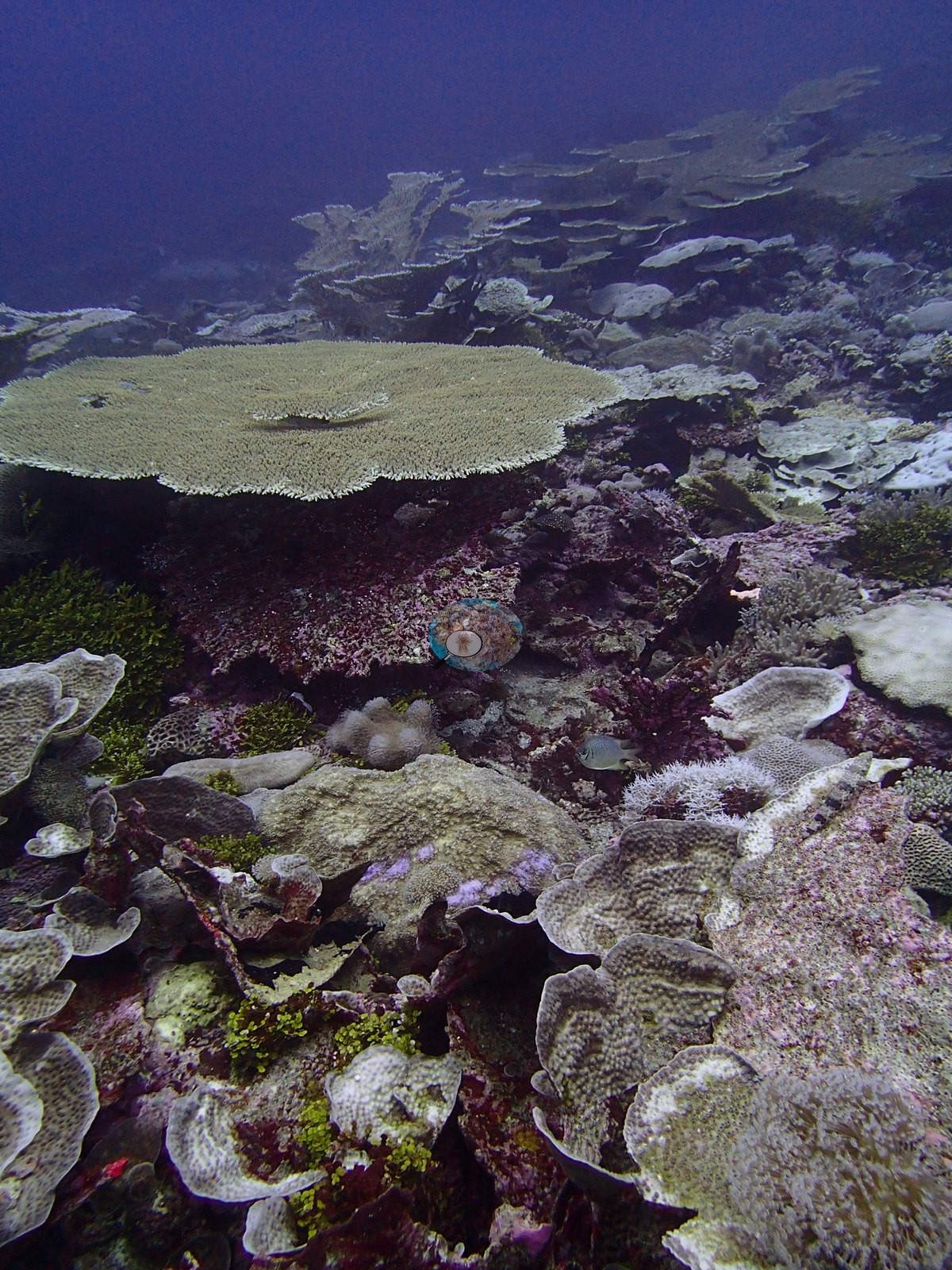
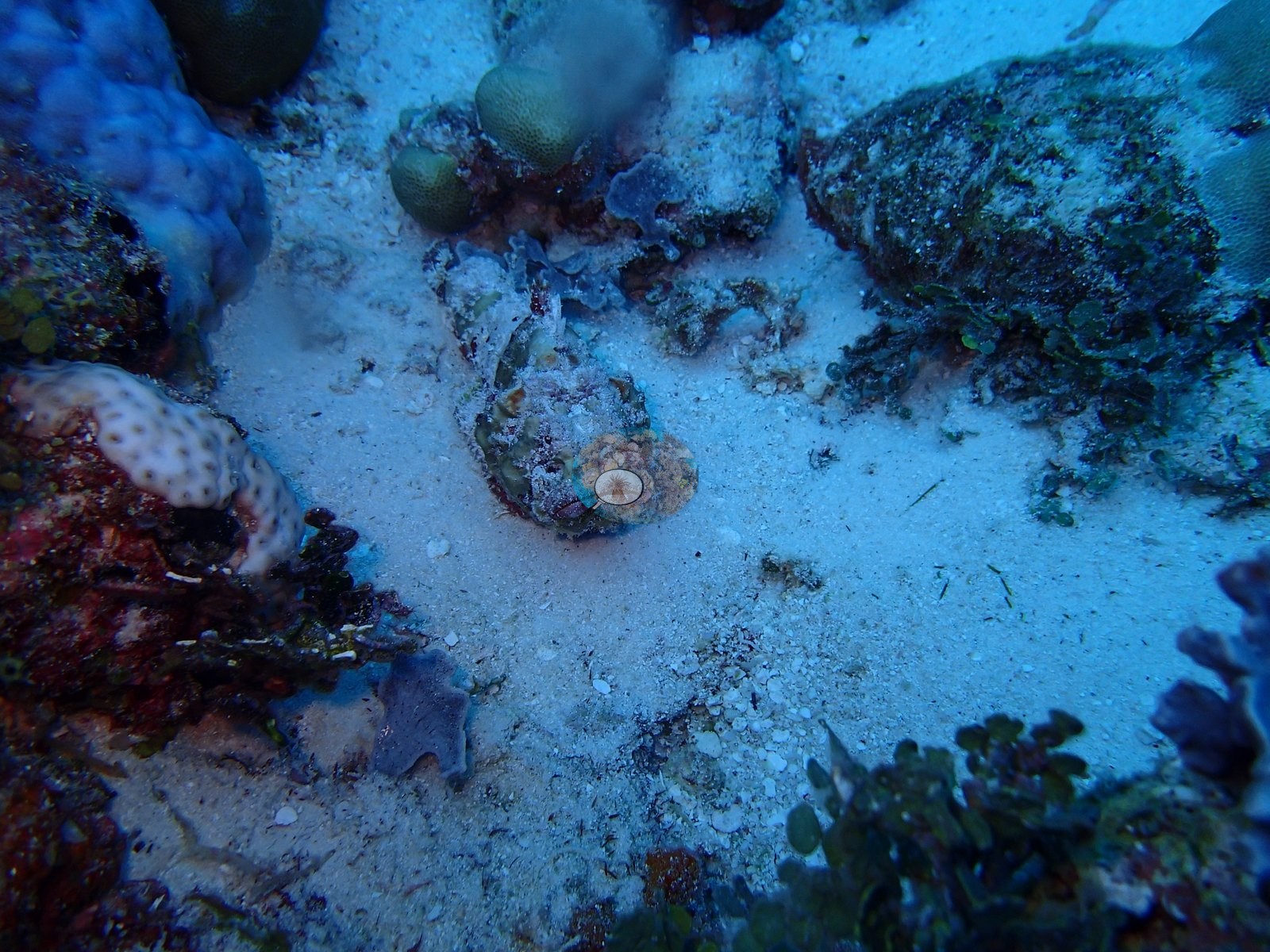
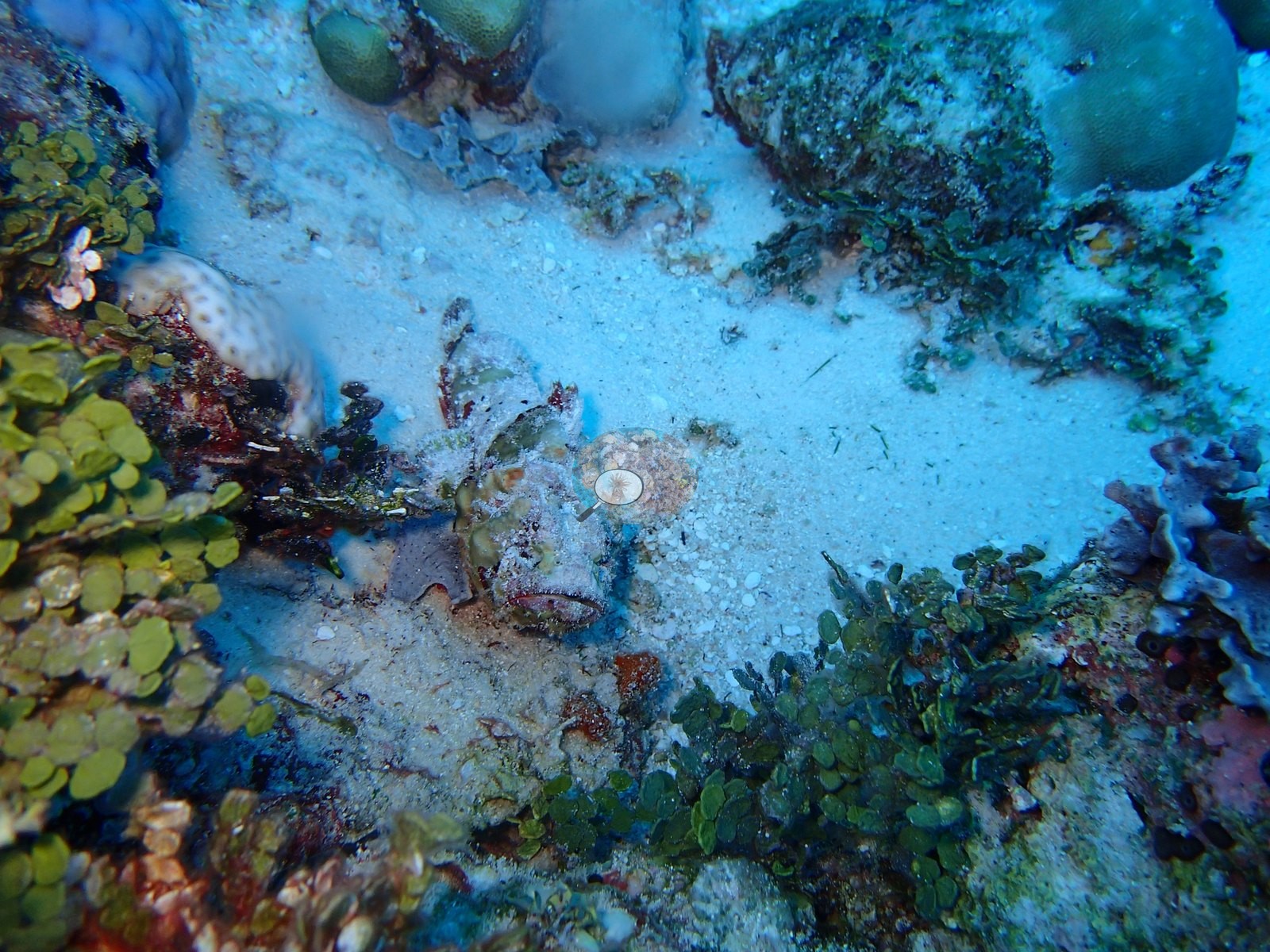
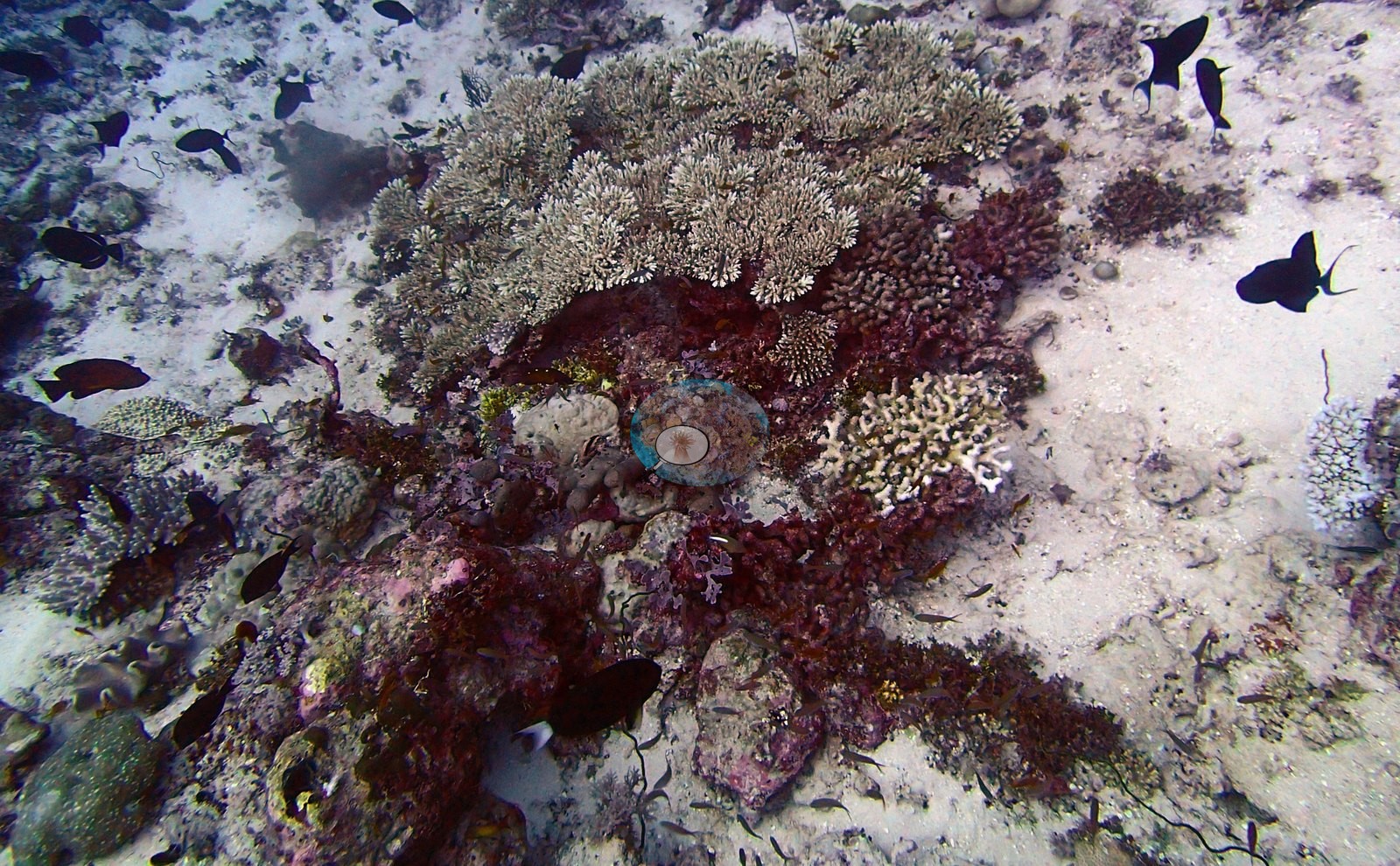
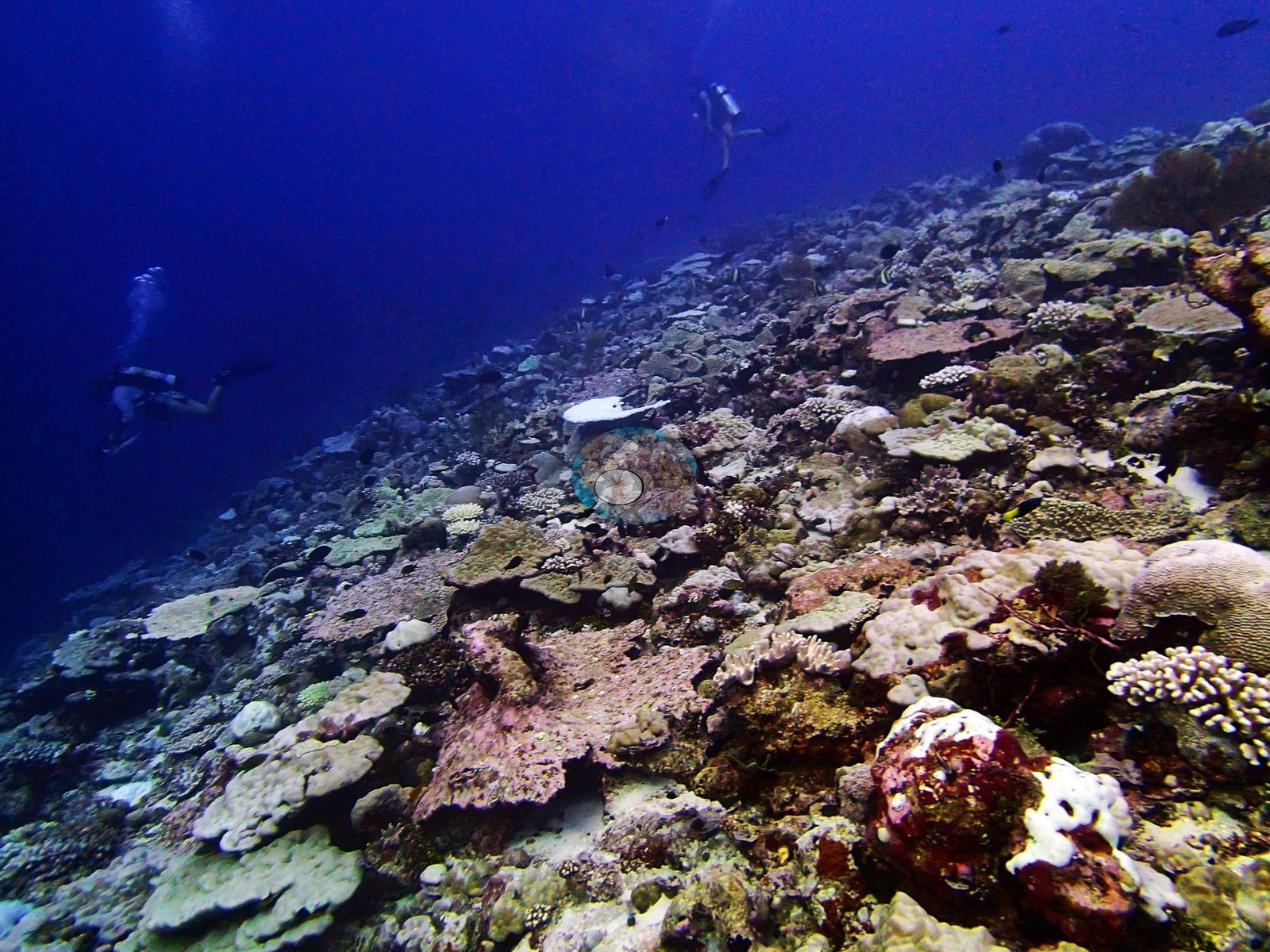
BIPB114 is an exposed, windward emergent fringing forereef outside Peros Banhos; the published survey-depth cell is blank, so the reef carries no depth on record (e.g., Image 16, Image 20, Image 33, Image 45).
General benthic features
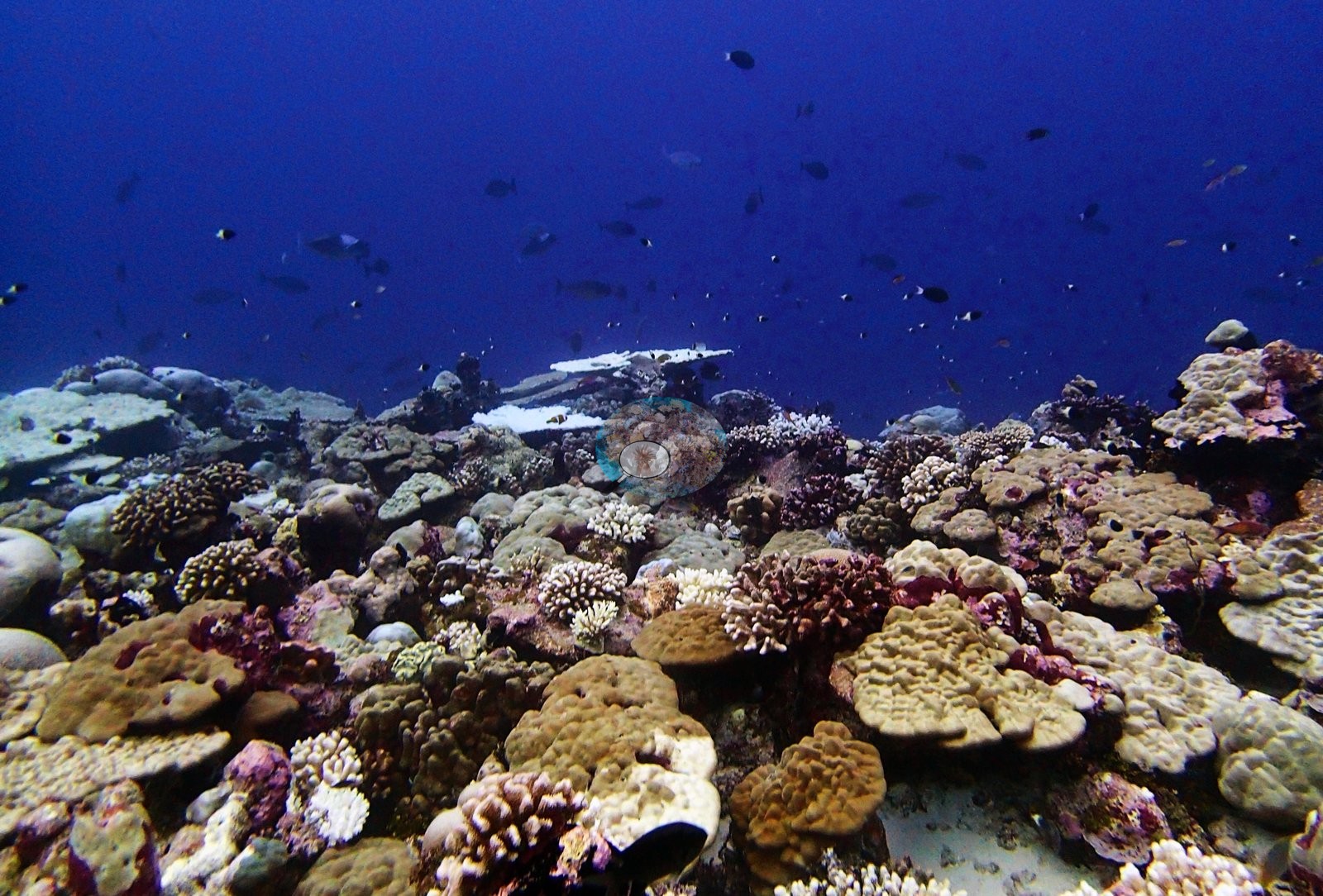
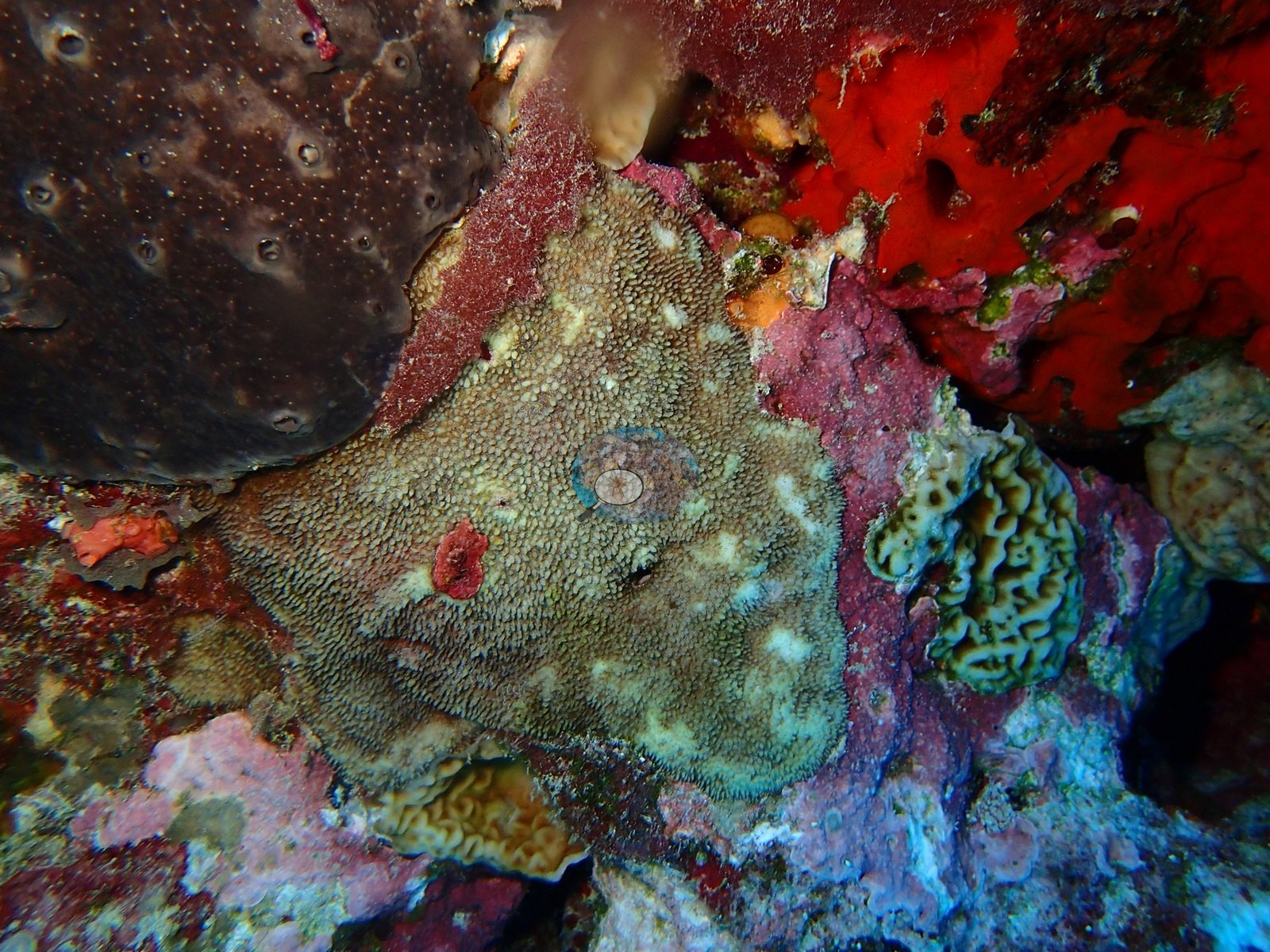
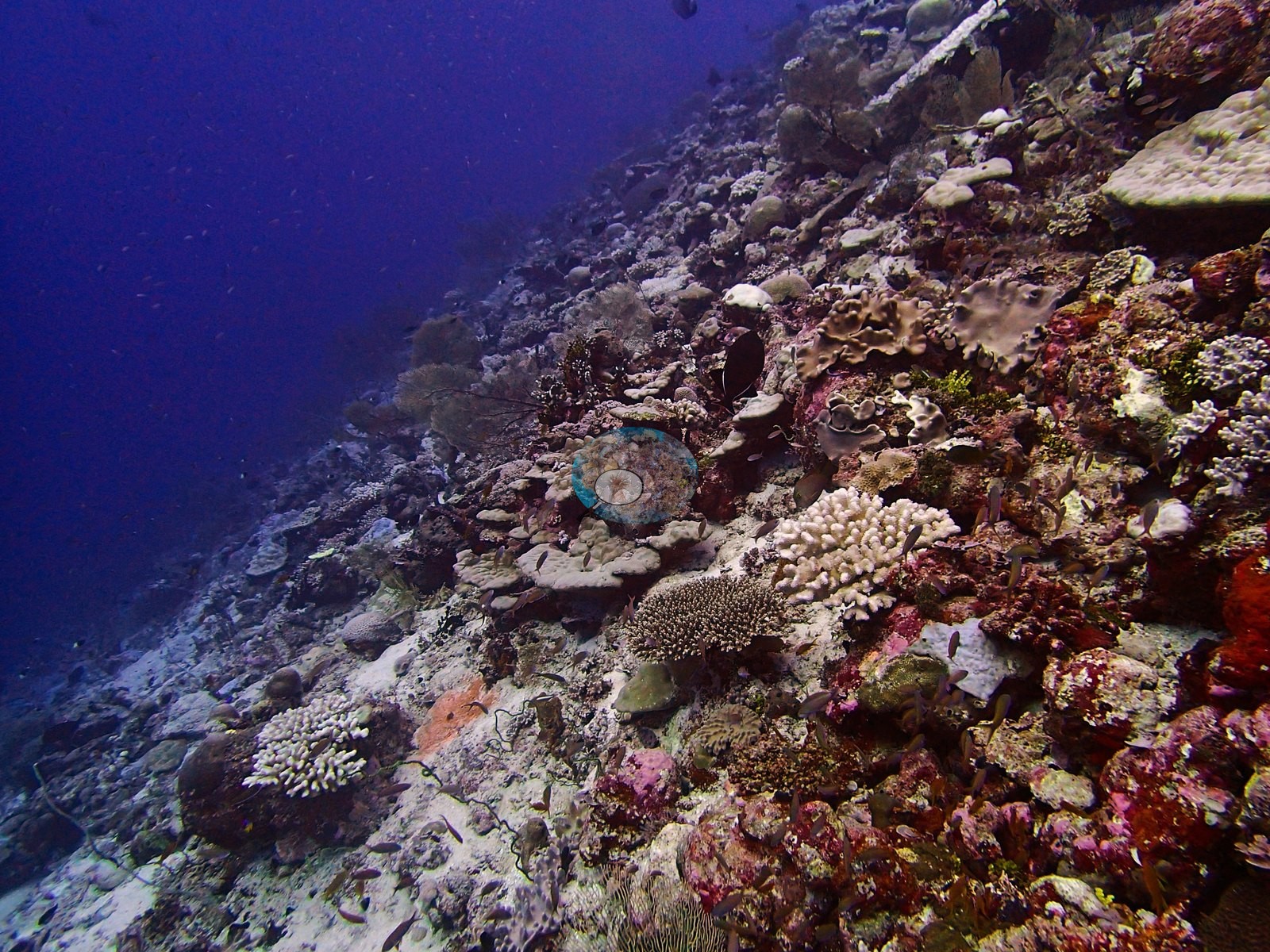
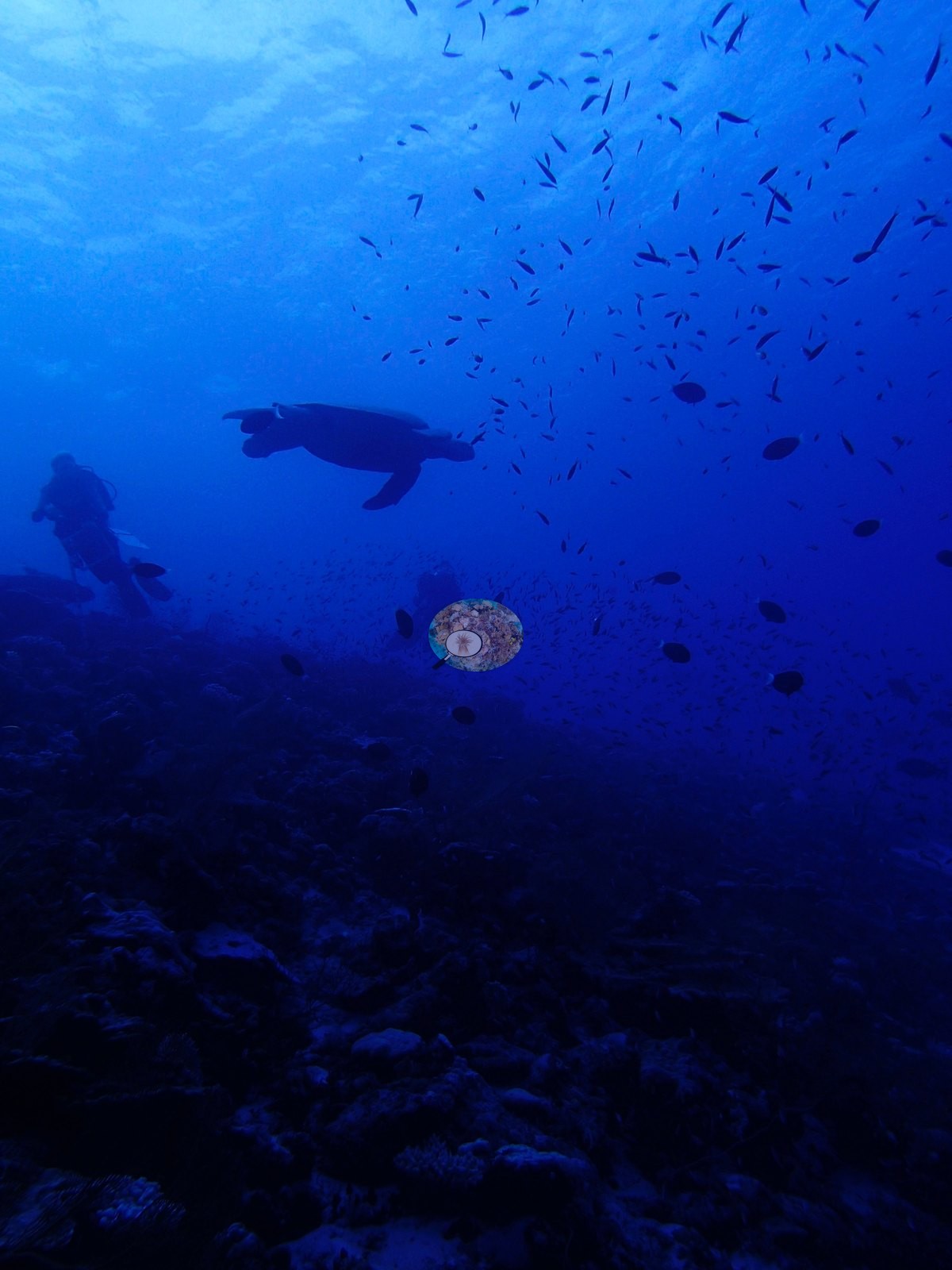
Its defining feature is that Porites holds 61% of all coral while Acropora is only fourth at 5%, unusual for a Chagos forereef (e.g., Image 19, Image 46).
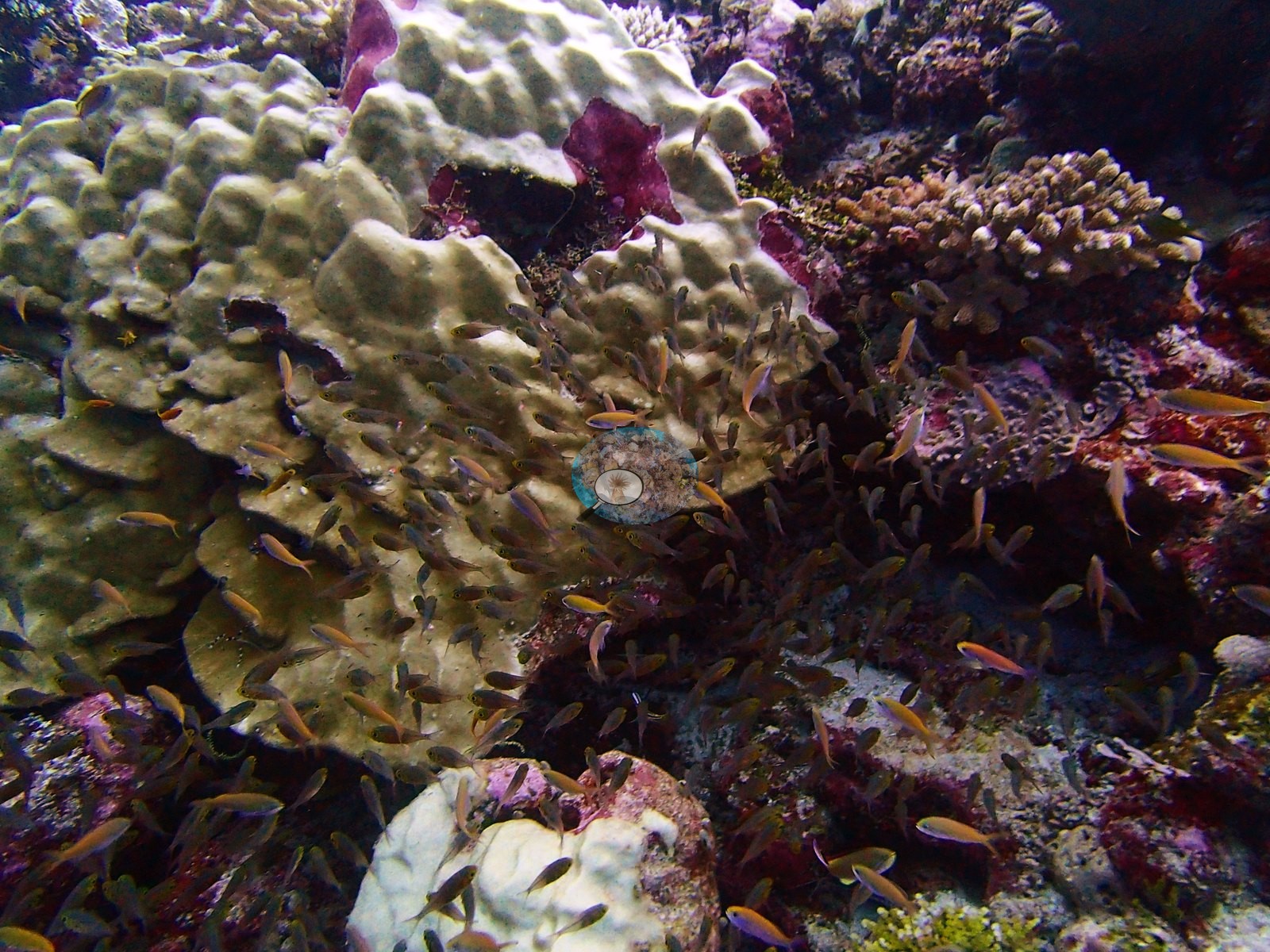
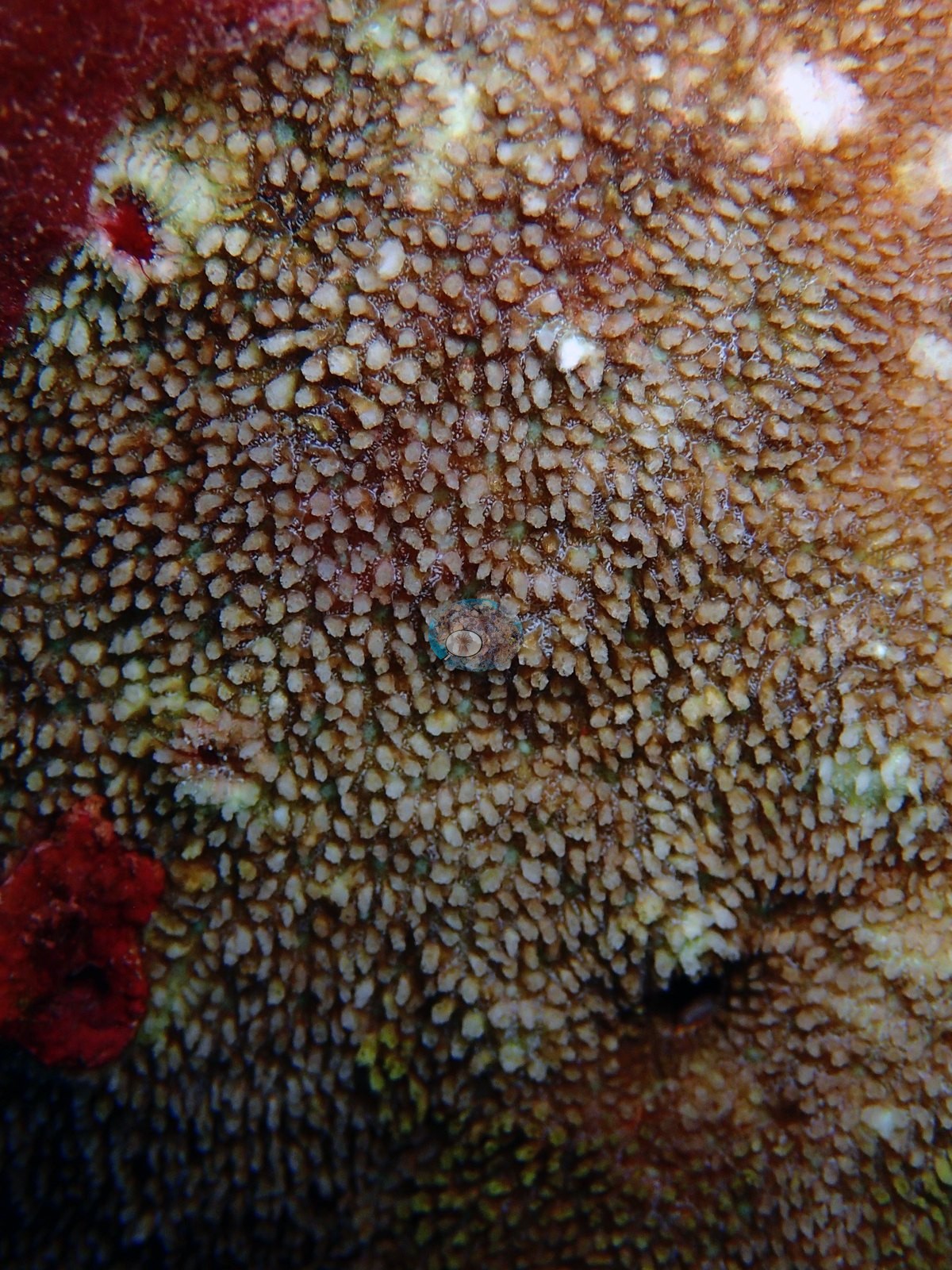
Cover falls monotonically with depth, 56.7% to 38.8% to 23.2%, Porites leading every transect while Acropora thins to 0.72% at the deepest.
Coral cover
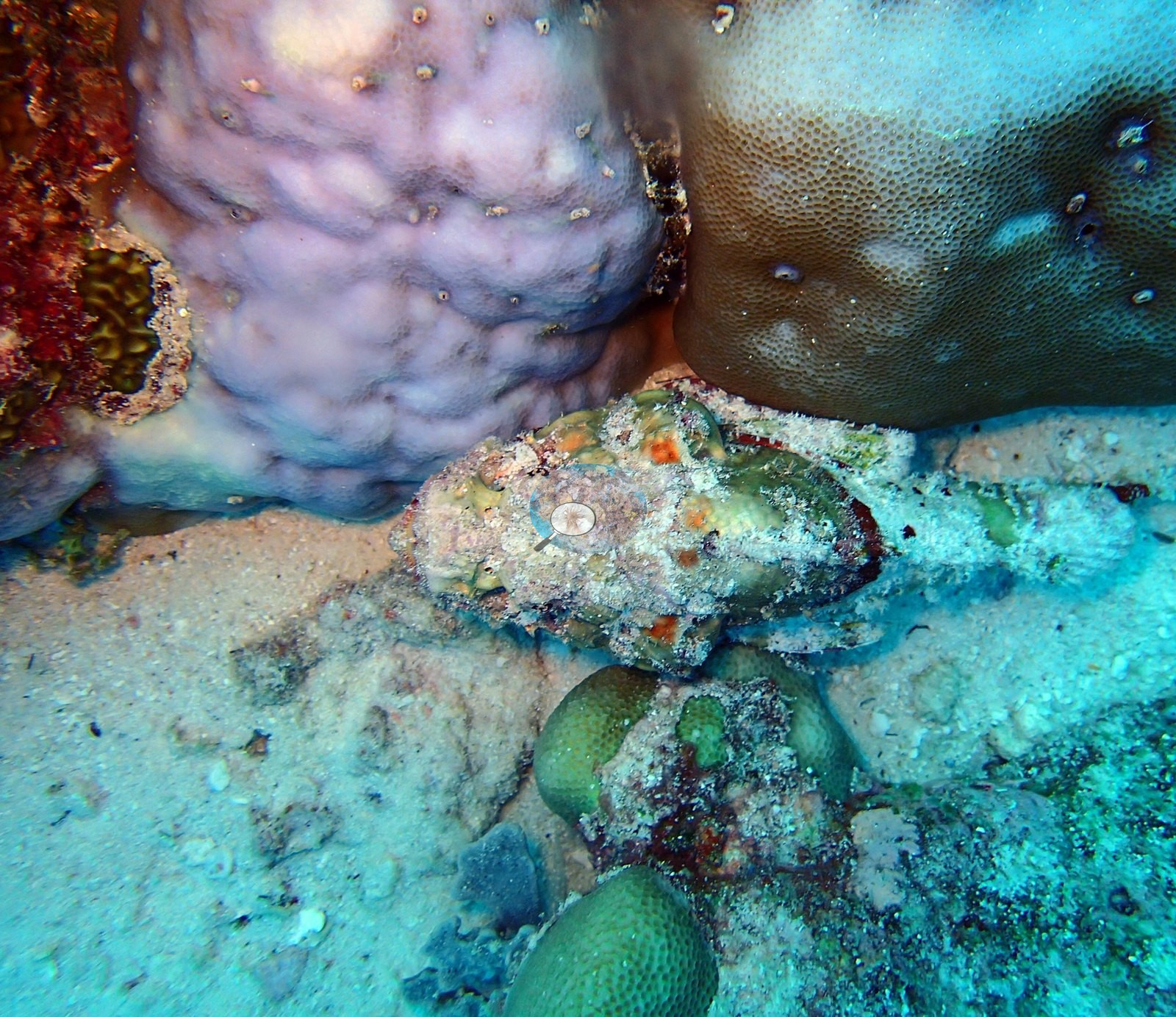
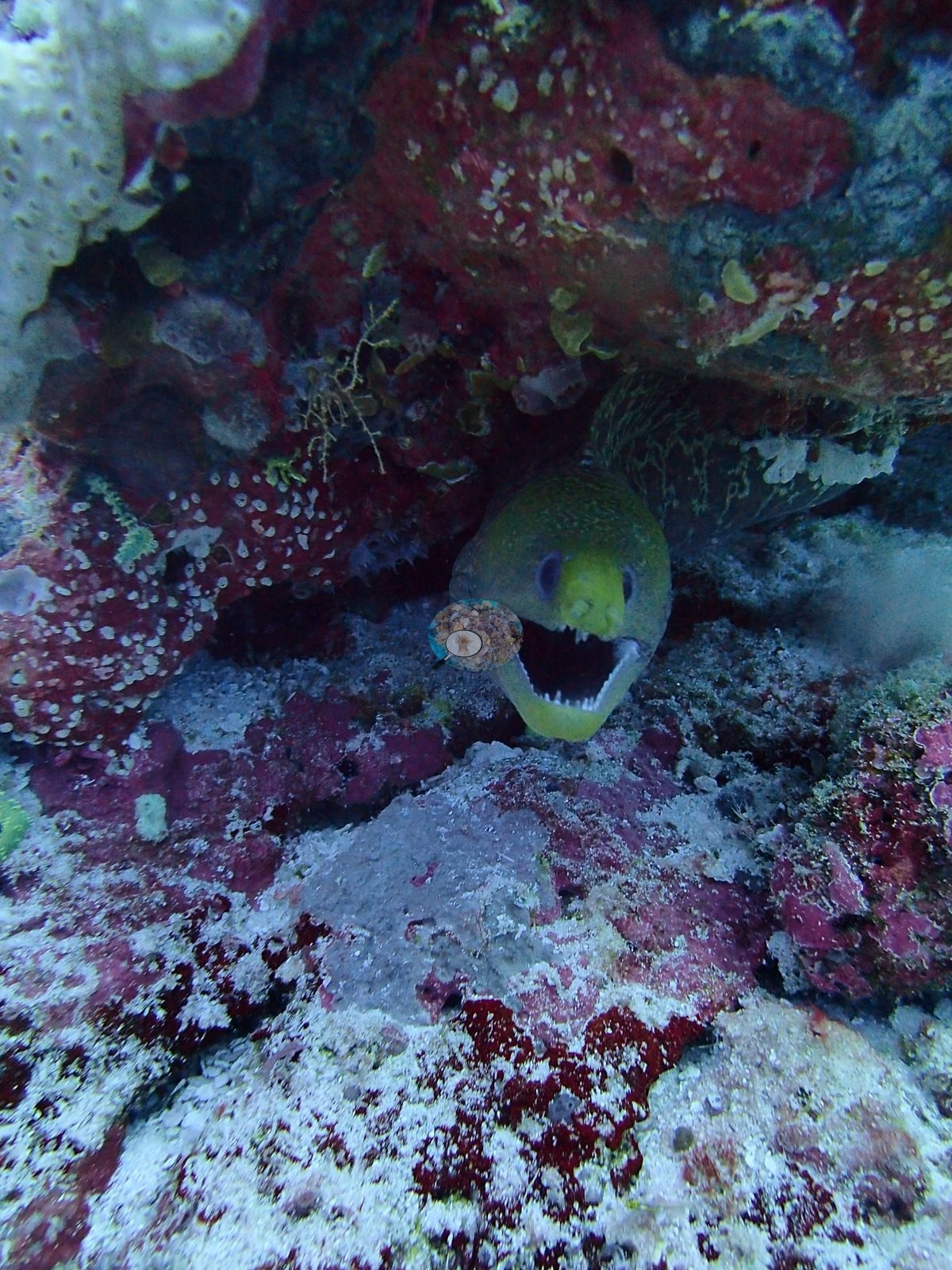
Formal transects recorded 39.6% coral against 33.8% algae — 54th of 109 Chagos sites for cover — across 31 genera, the 14th-highest genus count of the 109, with more than a quarter of the reef neither coral nor algae (12.8% bare substrate, 13.9% invertebrates) (e.g., Image 4, Image 12, Image 24, Image 25, Image 40).
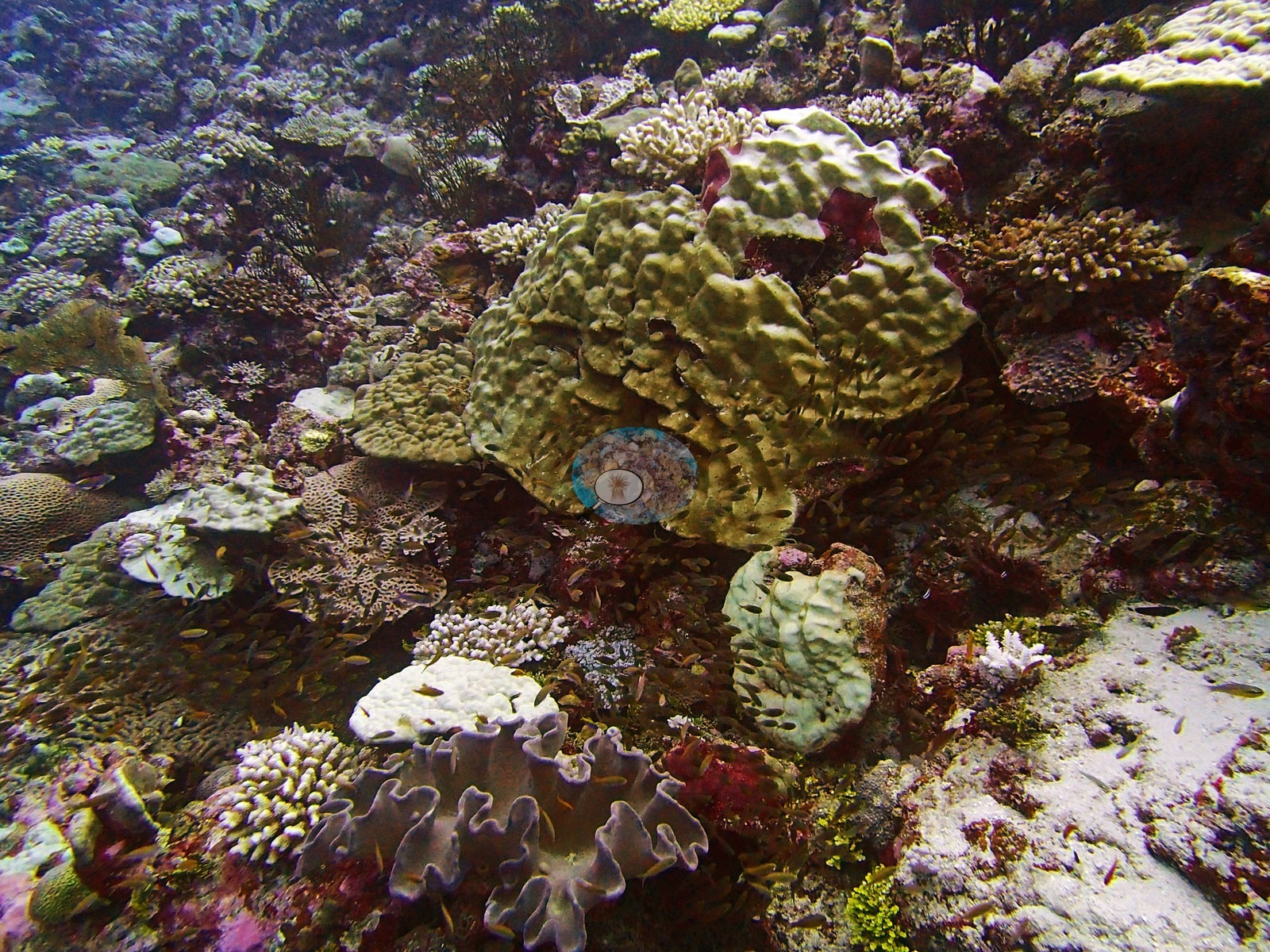
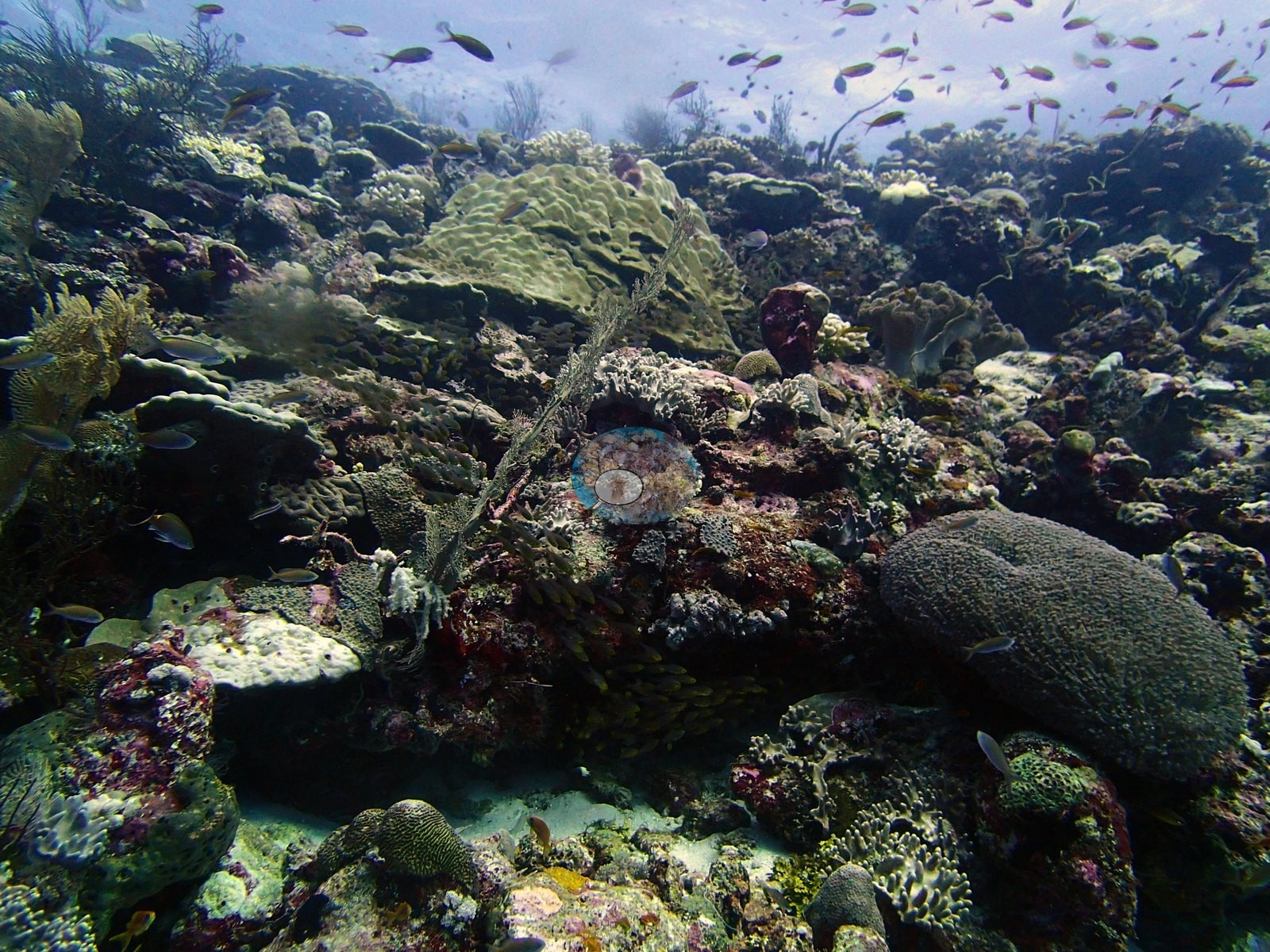
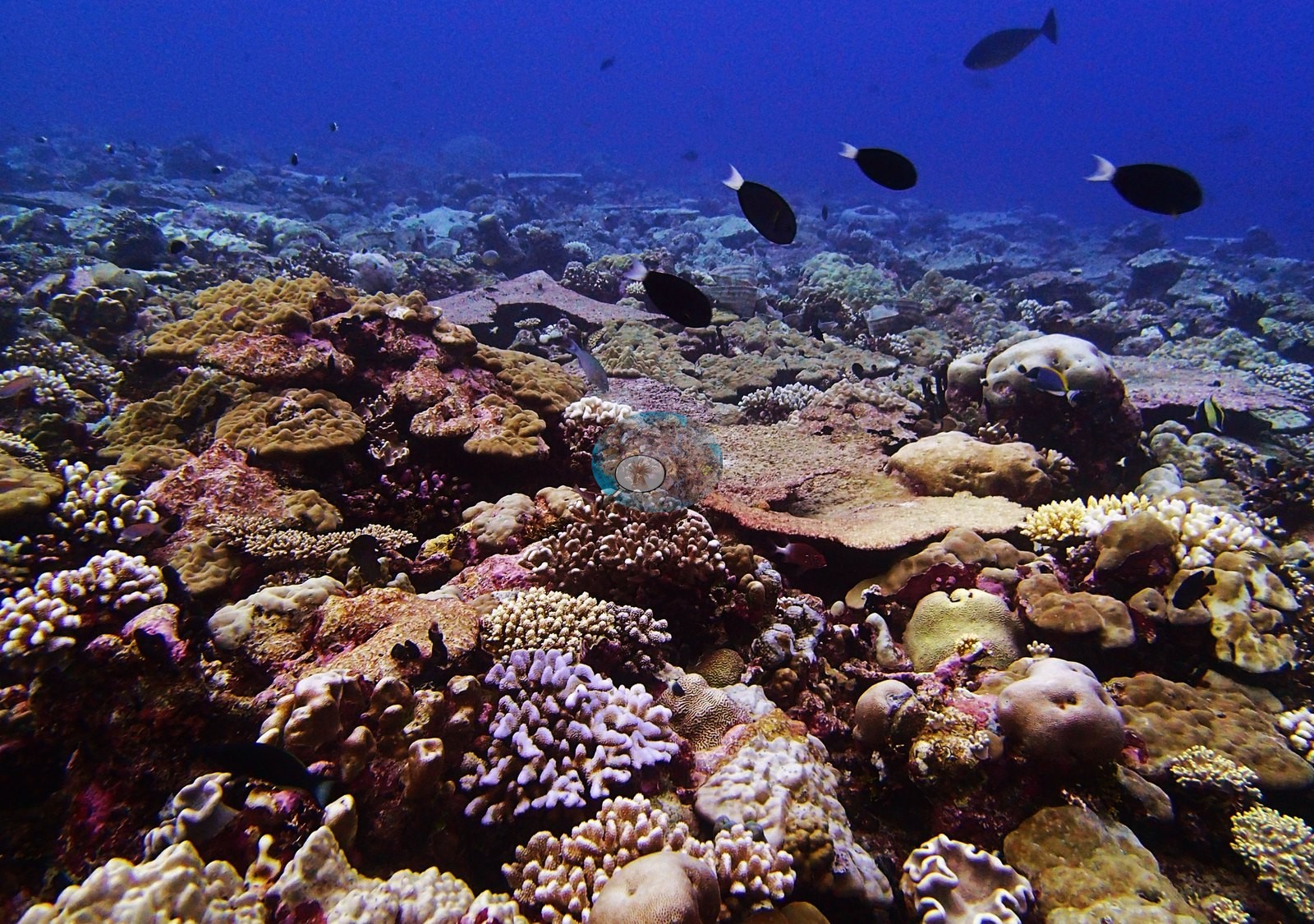
The image cover figures (CoralNet 19.6%, Coralscapes 18.9%) pool both dives. Coral cover: 40%. Live hard coral measured on the in situ benthic transects of the LOF BIOT-1 expedition (Mayfield & Dempsey 2026, Oceans, supplemental S1), against algal cover of 33.8% of the benthos. The transect figure is this site's authoritative cover value; no image-derived product overrides it. Across methods the same reef reads: transects 39.6% · CoralNet points 19.6% · Coralscapes masks 18.9% (41 frames). These products have different sampling footprints and denominators and should not be averaged.
Stressors
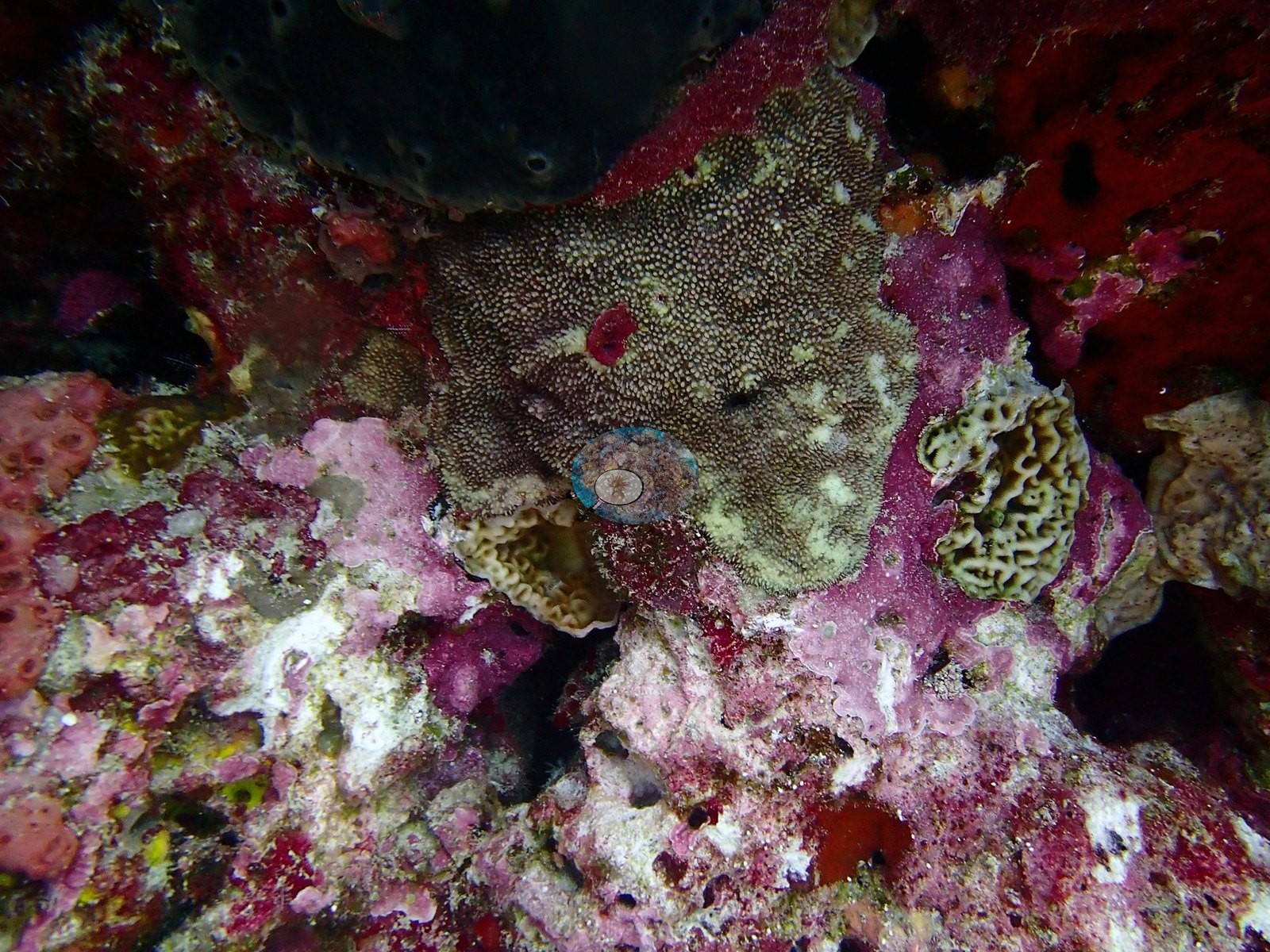
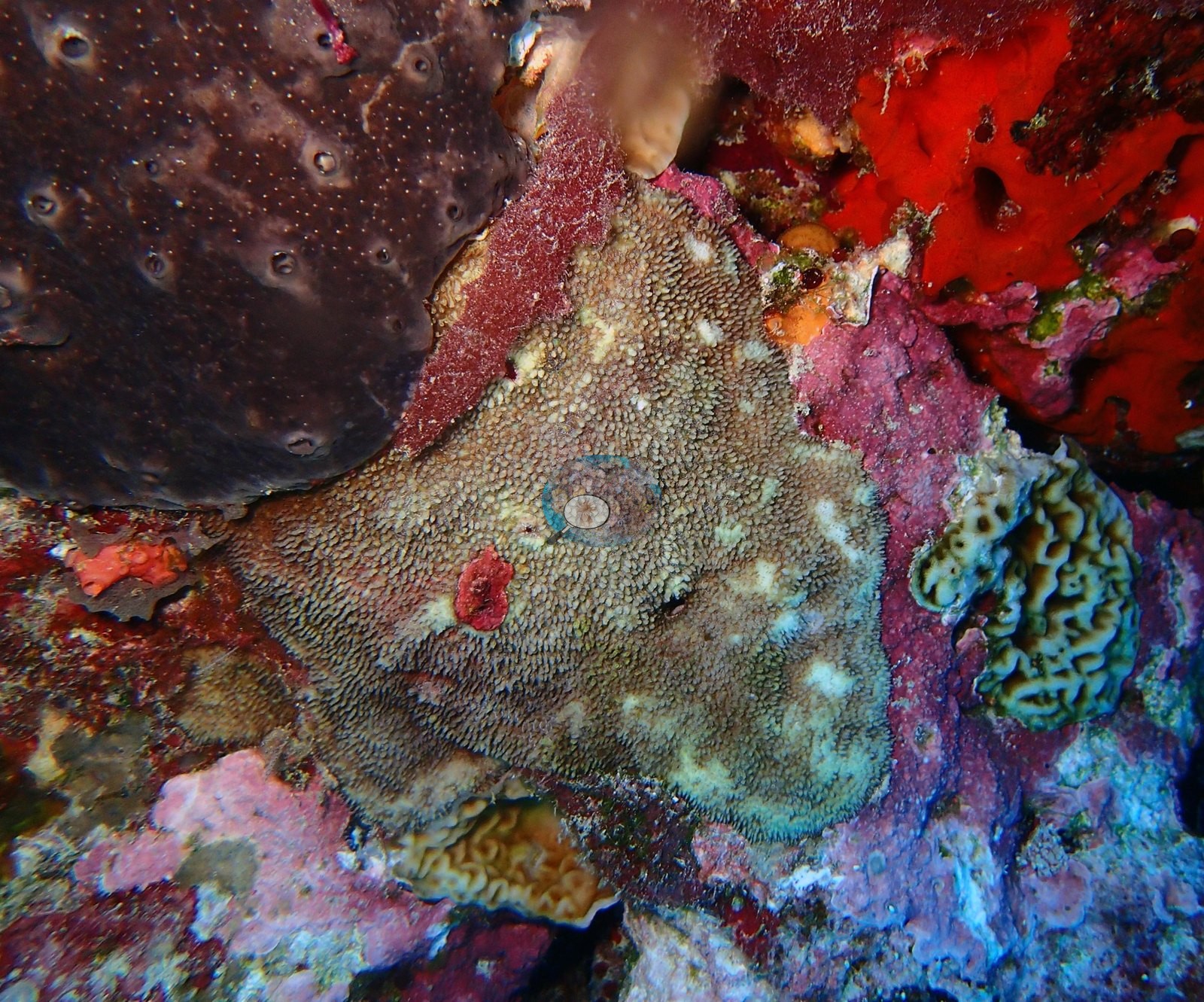
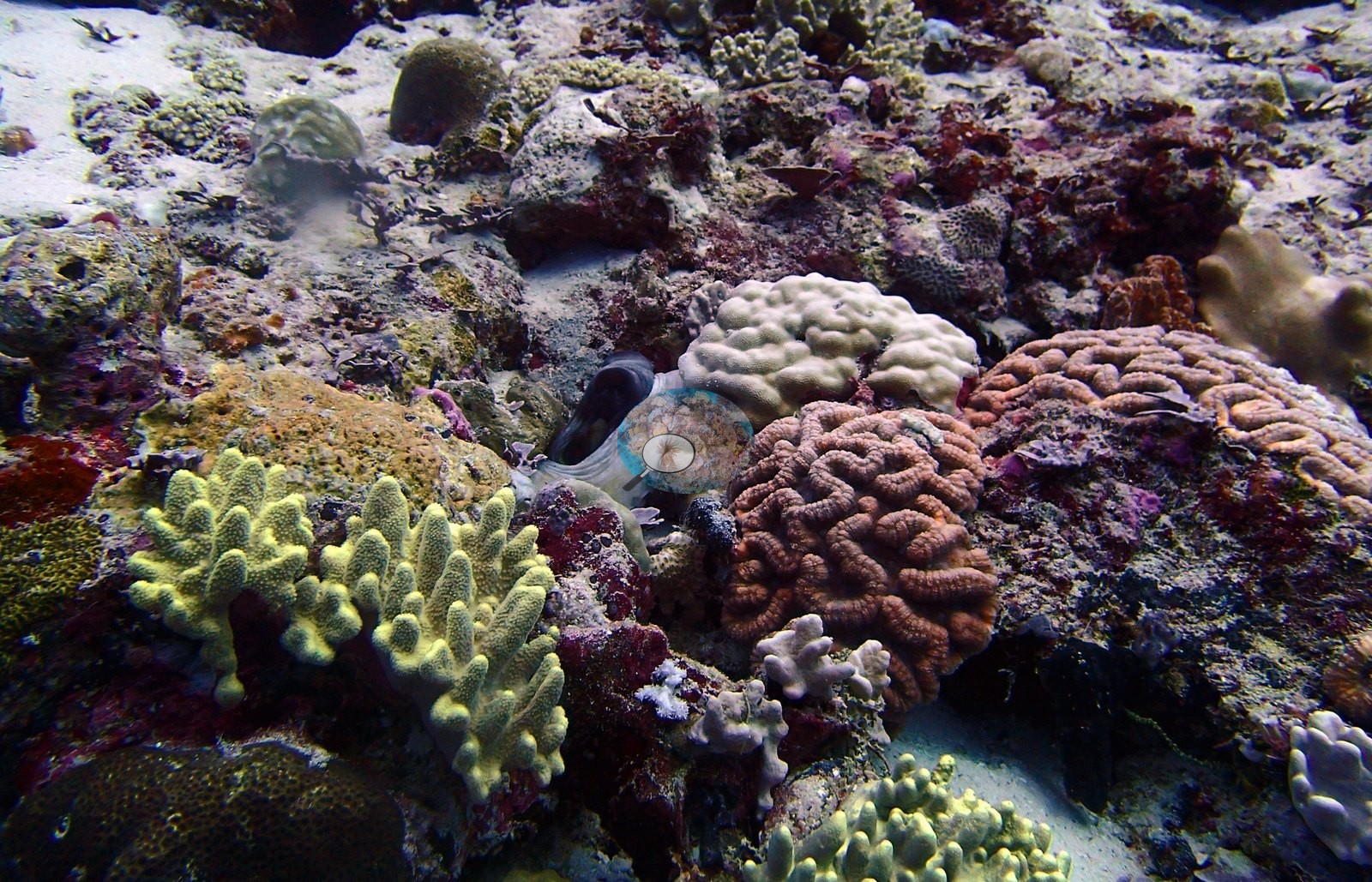
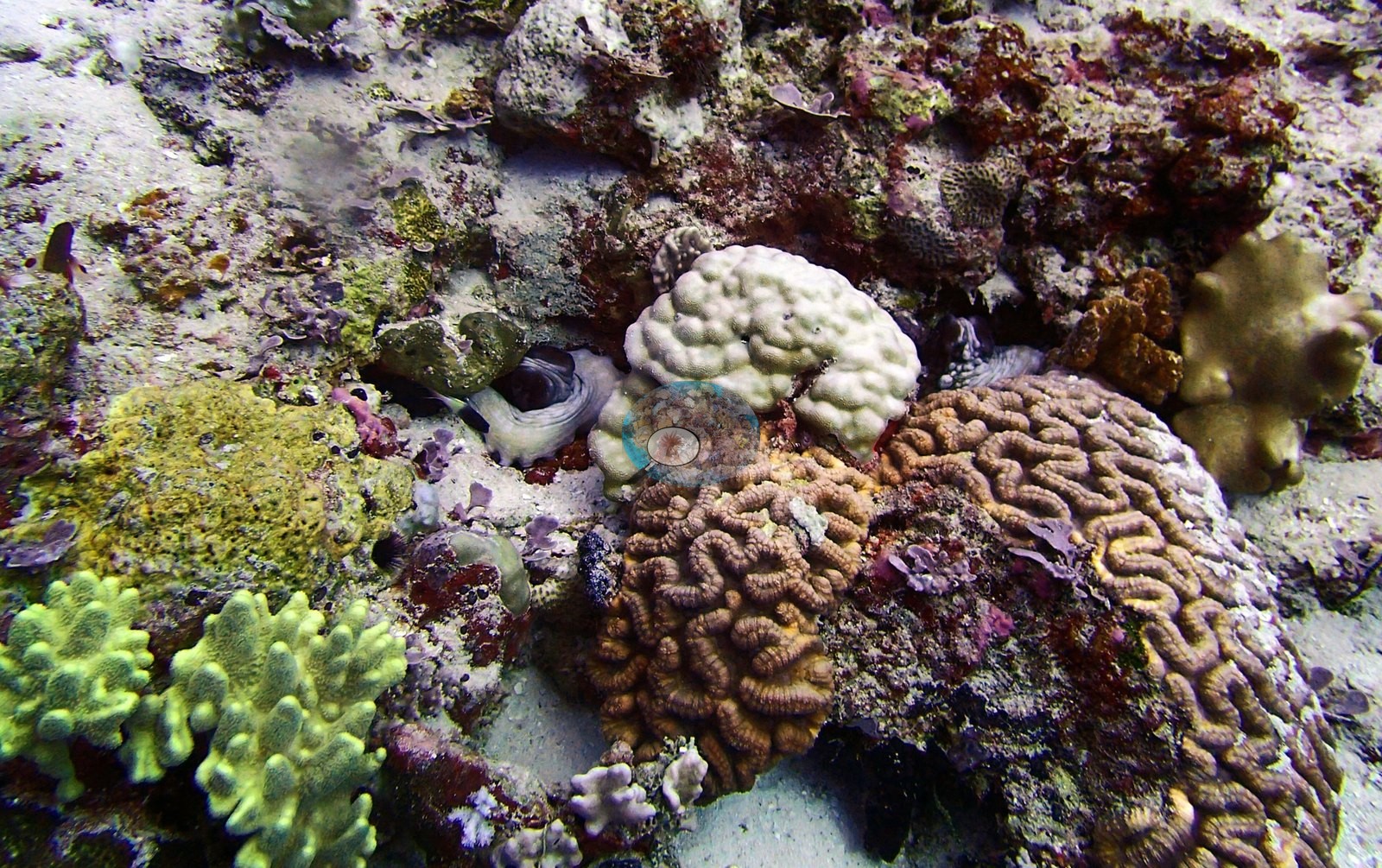
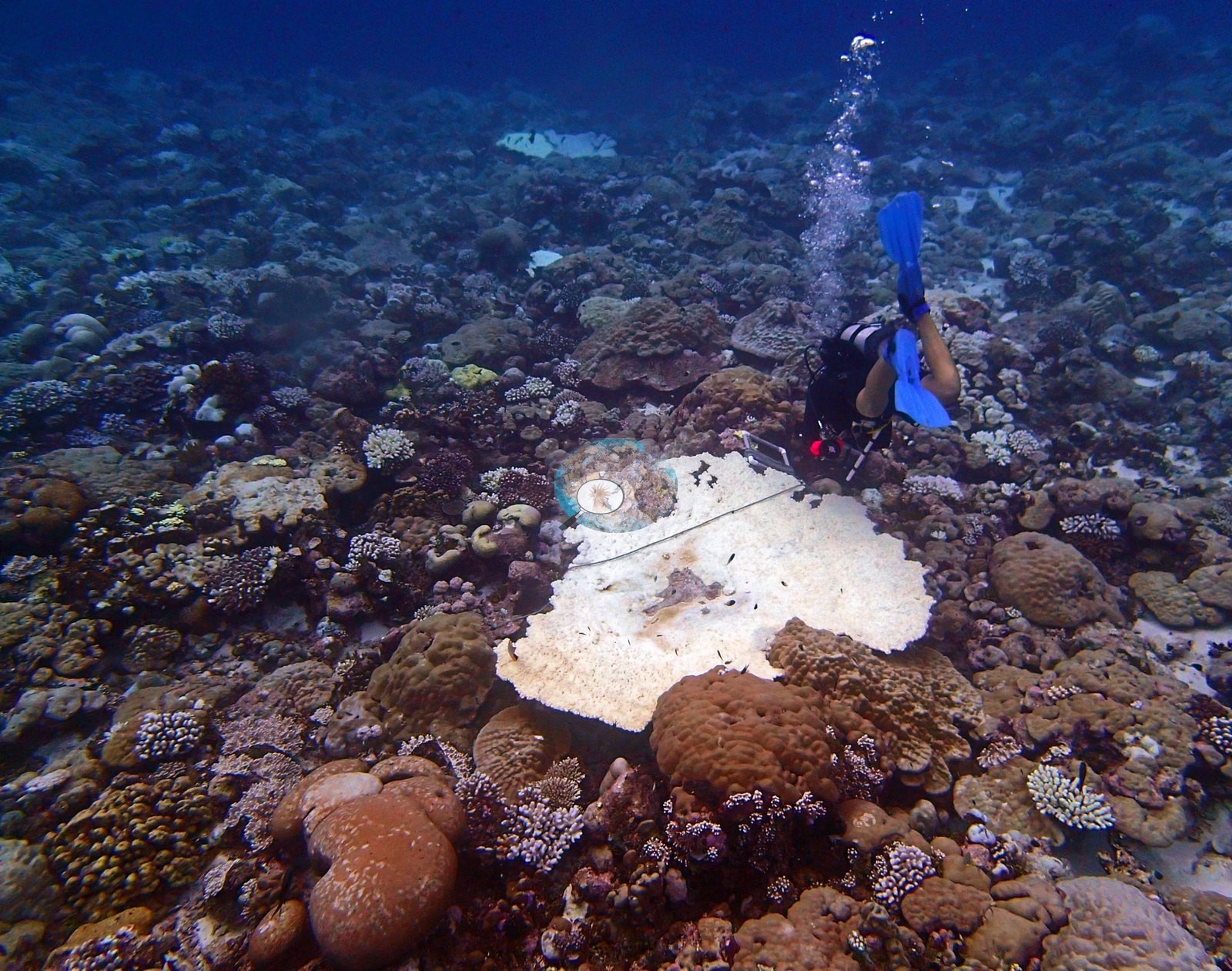
The site was dived twice on consecutive days and both were scored: under the canonical % bleaching (2nd training) column it reads 22.6% on 2 May and 22.7% on 3 May, indistinguishable across 15 hours, as an already-established bleaching state should be. The site table's Mean(%bleaching) gives 2.5% for the same dive, the first training run and not canonical. The photographs support the higher figure: a fully white corymbose colony beside a pigmented brain colony under one strobe, a survey line laid directly across a stark-white plate, white branching colonies scattered through frame after frame — a serious, broadly distributed but minority signal on a reef whose Porites was largely still pigmented (e.g., Image 9, Image 10, Image 41, Image 51).
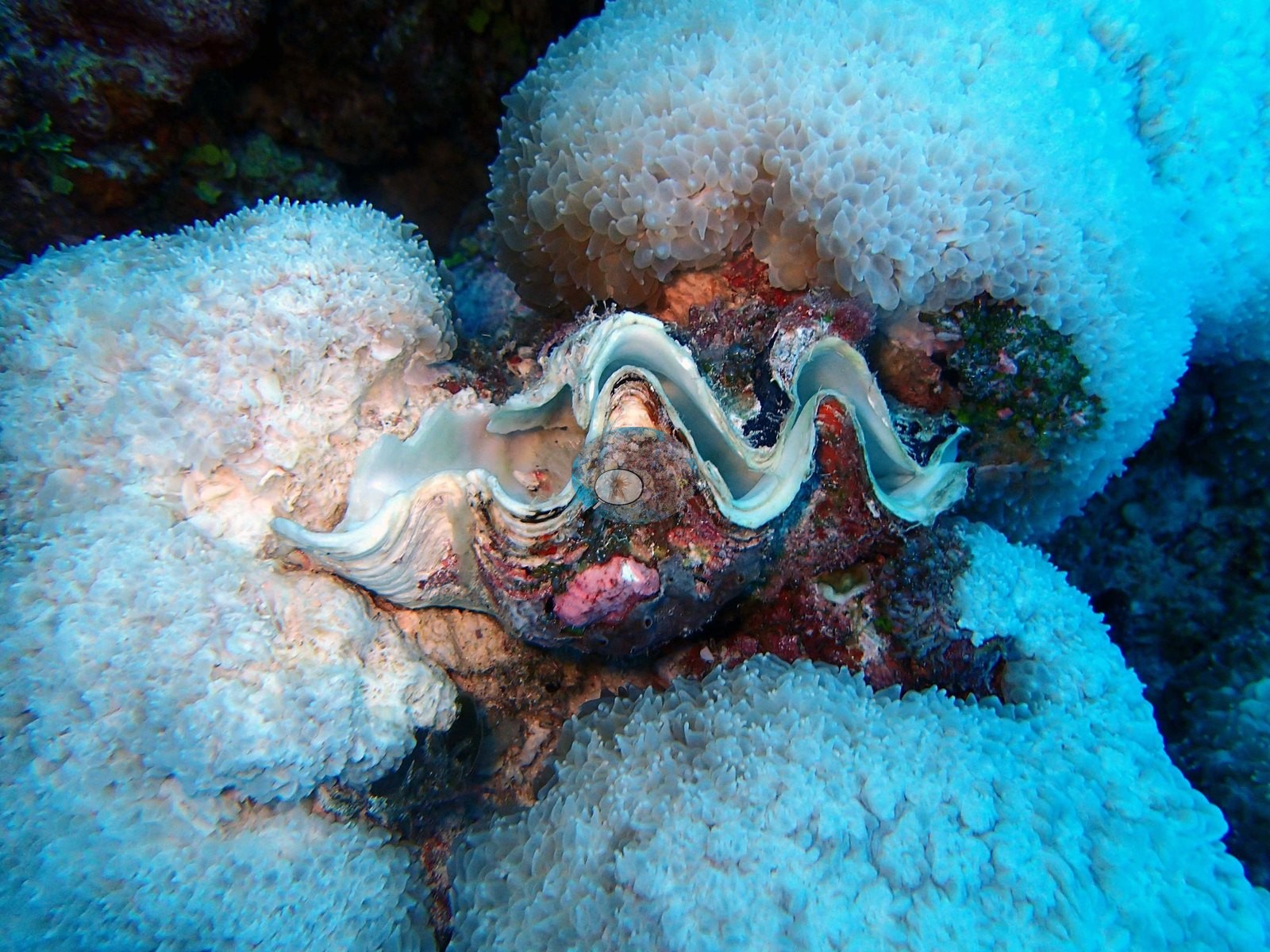
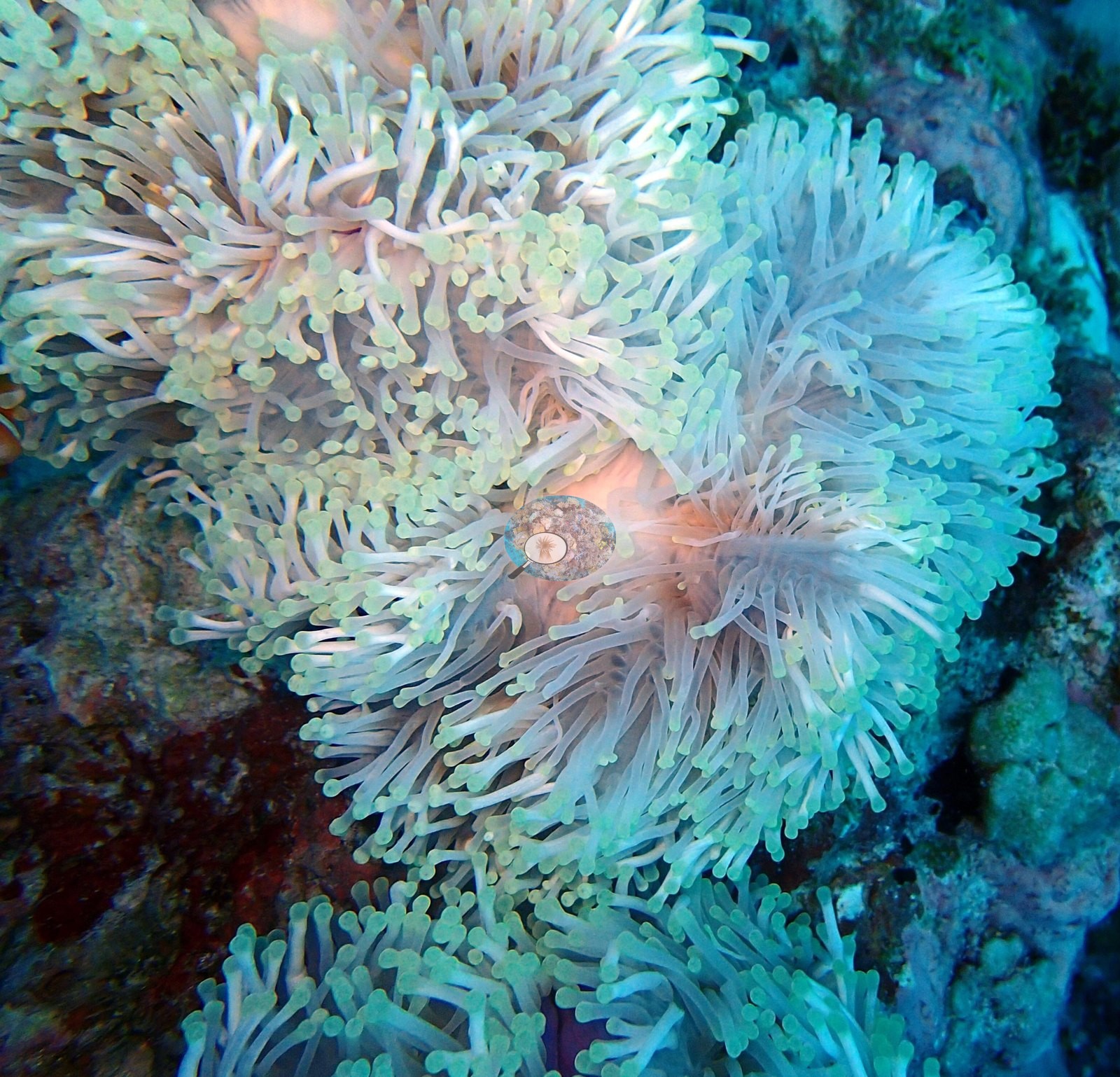
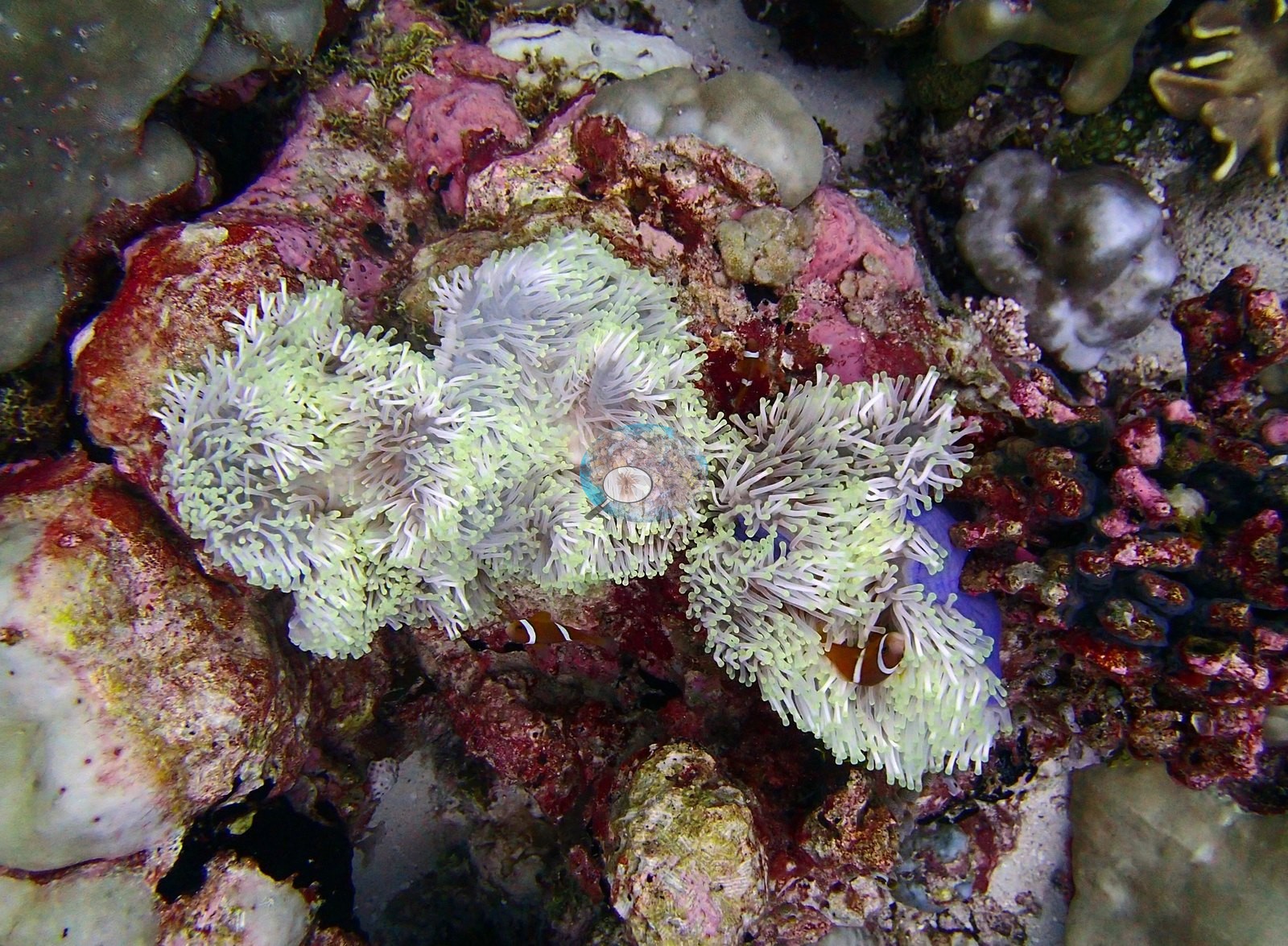
A bleached host anemone with resident anemonefish was also photographed (e.g., Image 31, Image 52).
No crown-of-thorns or disease.
Comparisons with other data
No prior survey data from this site. If you would like to share yours, please email us.
Survey summary
BIPB114 (Peros Banhos): surveyed twice, 2 May 2015 and 3 May 2015, during the onset of the 2015 bleaching event; up to 22.7% of coral bleached (CoralNet analysis of informal survey images; Mayfield & Dempsey 2026, Oceans). Surveyed during the Khaled bin Sultan Living Oceans Foundation Global Reef Expedition.
CV model comparison
More info
Those are point counts on the photographs; this is a diver swimming a transect. The models and the reference never saw the same thing. ⚠ SITE-LEVEL ONLY. The 2,500 frames were not associated with any transect taken within 200 m of them, so transect-vs-image comparisons are site means, never frames. The transect value is already in the pin `cover` field (109 of 112 pins, sourced to the paper's suppl. S1) and is read from there, never re-imported. The transect is THE coral-cover value for this site and stands alone. The rows below it are a methods comparison only: no computer-vision value is averaged with it, feeds the headline, or carries over to the site's cover figure (Anderson, 2026-09-22).| Method | Hard-coral cover (%) |
|---|---|
| Transect (published) | 39.6 |
| CoralNet | 34.4 |
| In-house DINOv3 | 31.7 |
| CoralSCOP edited | 35.2 |
| Claude | 20.0 |
Dive history
Coral bleached: computer-vision (CoralNet) estimate from the survey images, per dive, as published in Mayfield & Dempsey (2026), supplemental file S1.
| Date | Time in | Max depth (m) | Bottom time (min) | Coral bleached (%) |
|---|---|---|---|---|
| 2015-05-02 | 16:48 | — | 48 | 22.6 |
| 2015-05-03 | — | — | — | 22.7 |
Data & links
- Read the full site report ↗
- Download benthic survey data (CSV) ↗
- Download all LOF-GRE data (933 sites) ↗
- CoralNet image repository for this region ↗
- Photo portfolio ↗
- Coral Reef Diagnostics page for this area ↗
All images from Coral Reef Diagnostics. Data are from Coral Reef Diagnostics.
 © Coral Reef Diagnostics.