
Part of the regional summaries: Chagos Archipelago - Great Chagos Bank West / Brothers / Eagle and Chagos Archipelago
More info
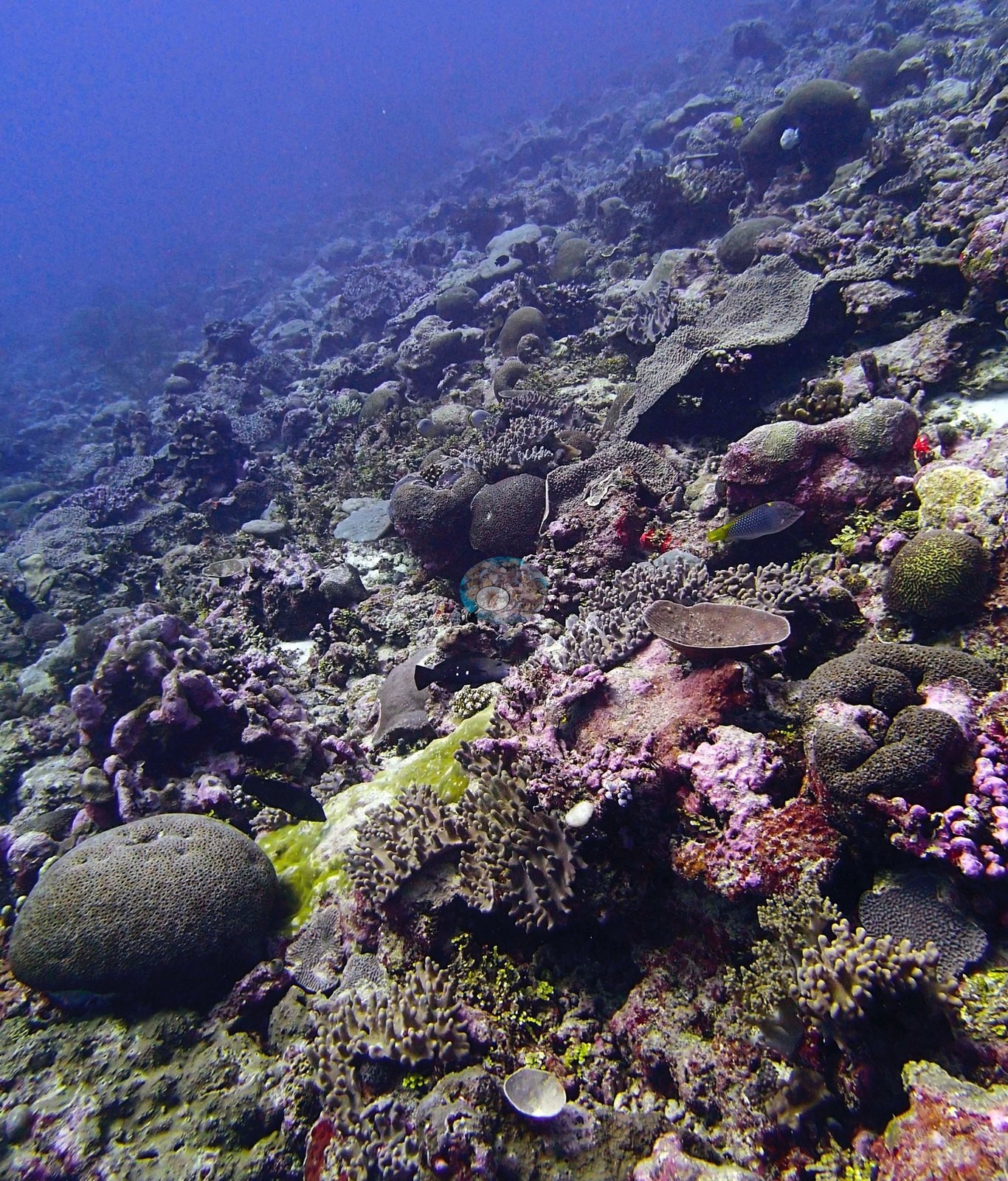
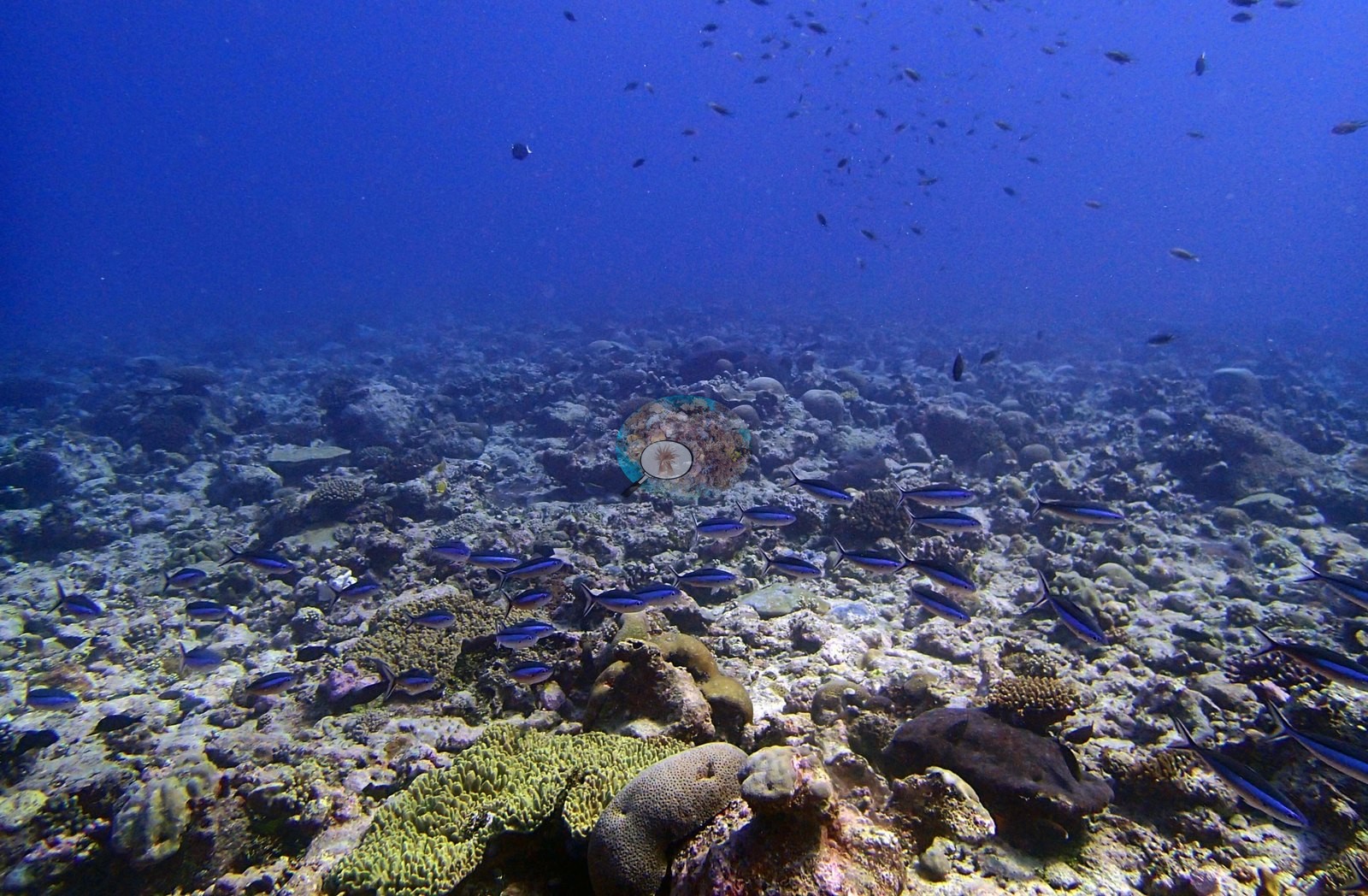
Chagos (NOAA CRW virtual station)A low-relief bank reef packed with small colonies of many different corals over purple-pink coralline pavement, with thinner rubble patches where Moorish idols and fusiliers gather. There was no crown-of-thorns, disease, or fresh damage, only ordinary old dead patches. Surveyed on the Living Oceans Foundation's Global Reef Expedition.
Three other CRD dive sites within 5 km shown in orange — click a marker to open its page.
🗺 Detailed map of the Global Reef Expedition dive sites, Three Brothers, Chagos (Khaled bin Sultan Living Oceans Foundation; opens in a new window)
Site description
Setting
The setting is a submerged, protected lagoonal bank reef inside the lagoon at 29.4°C and 34.4 salinity.
General benthic features
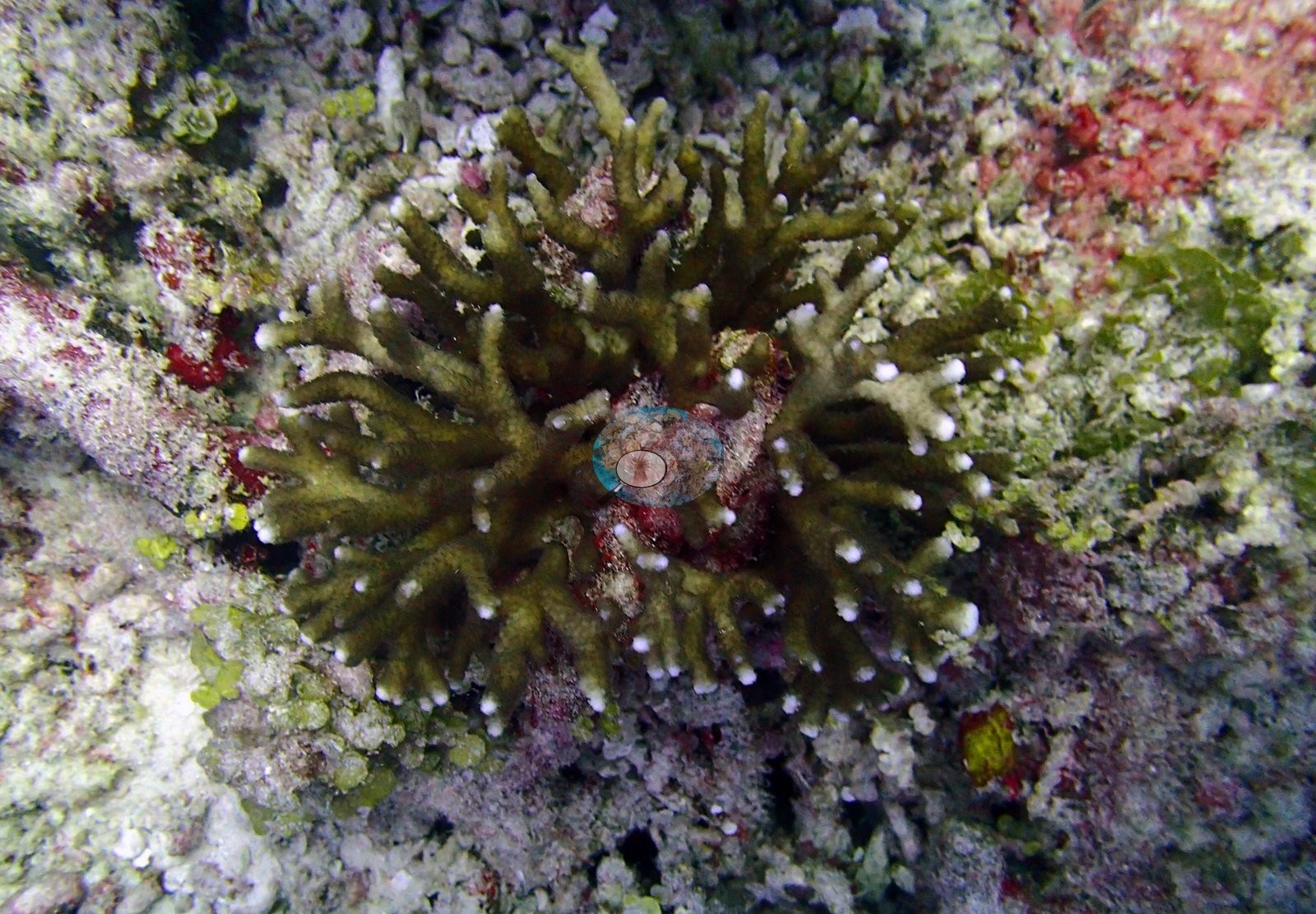
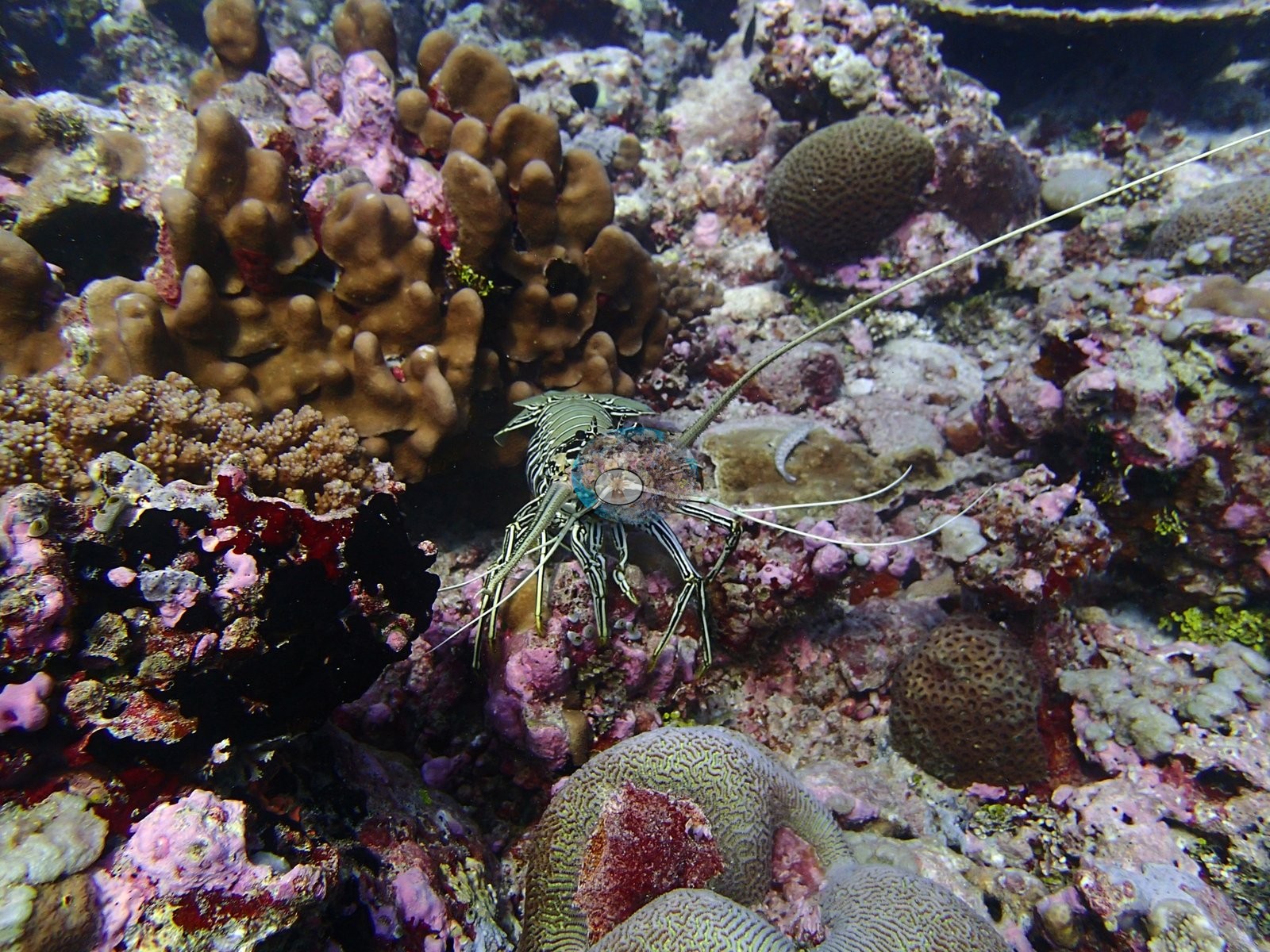
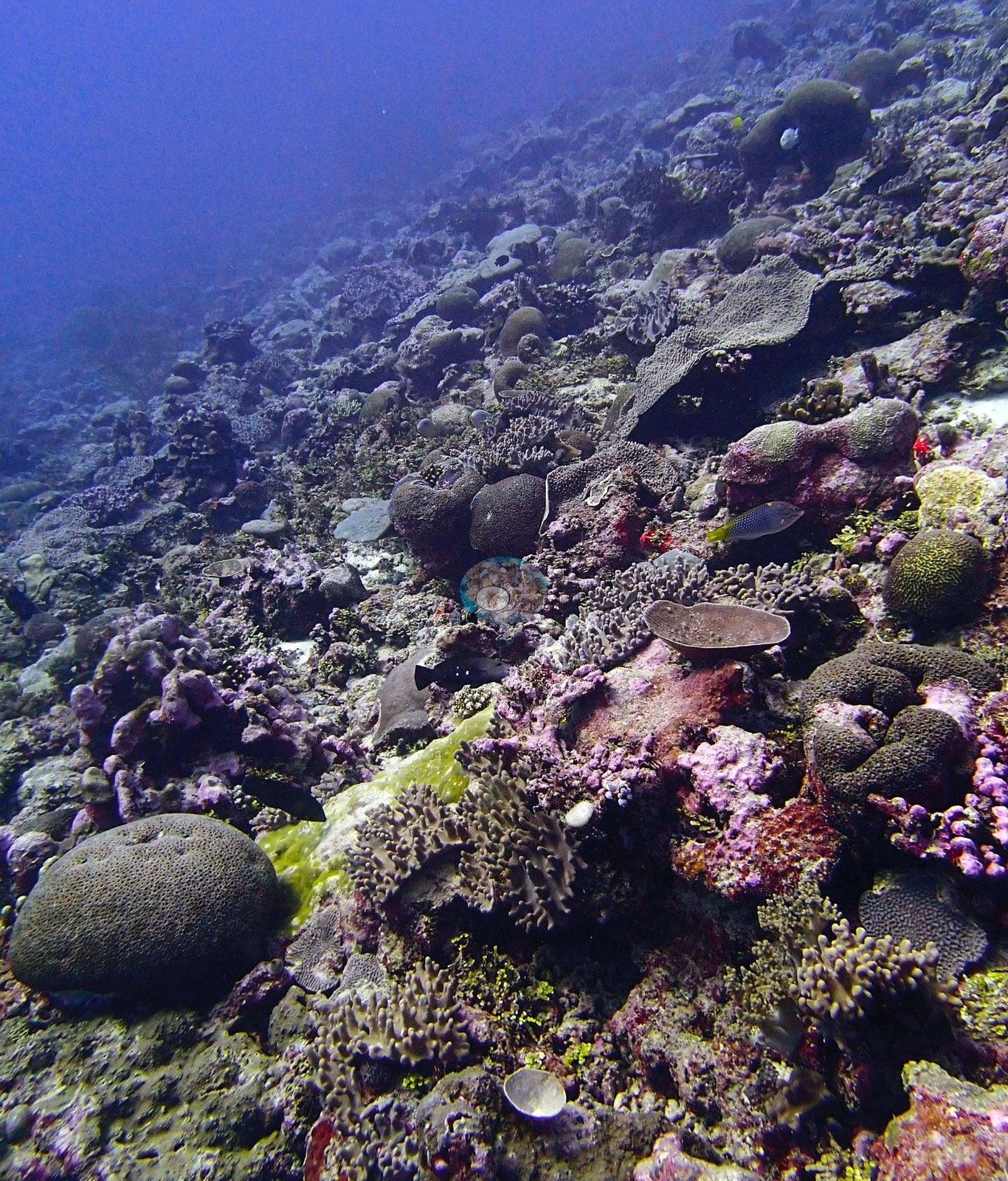
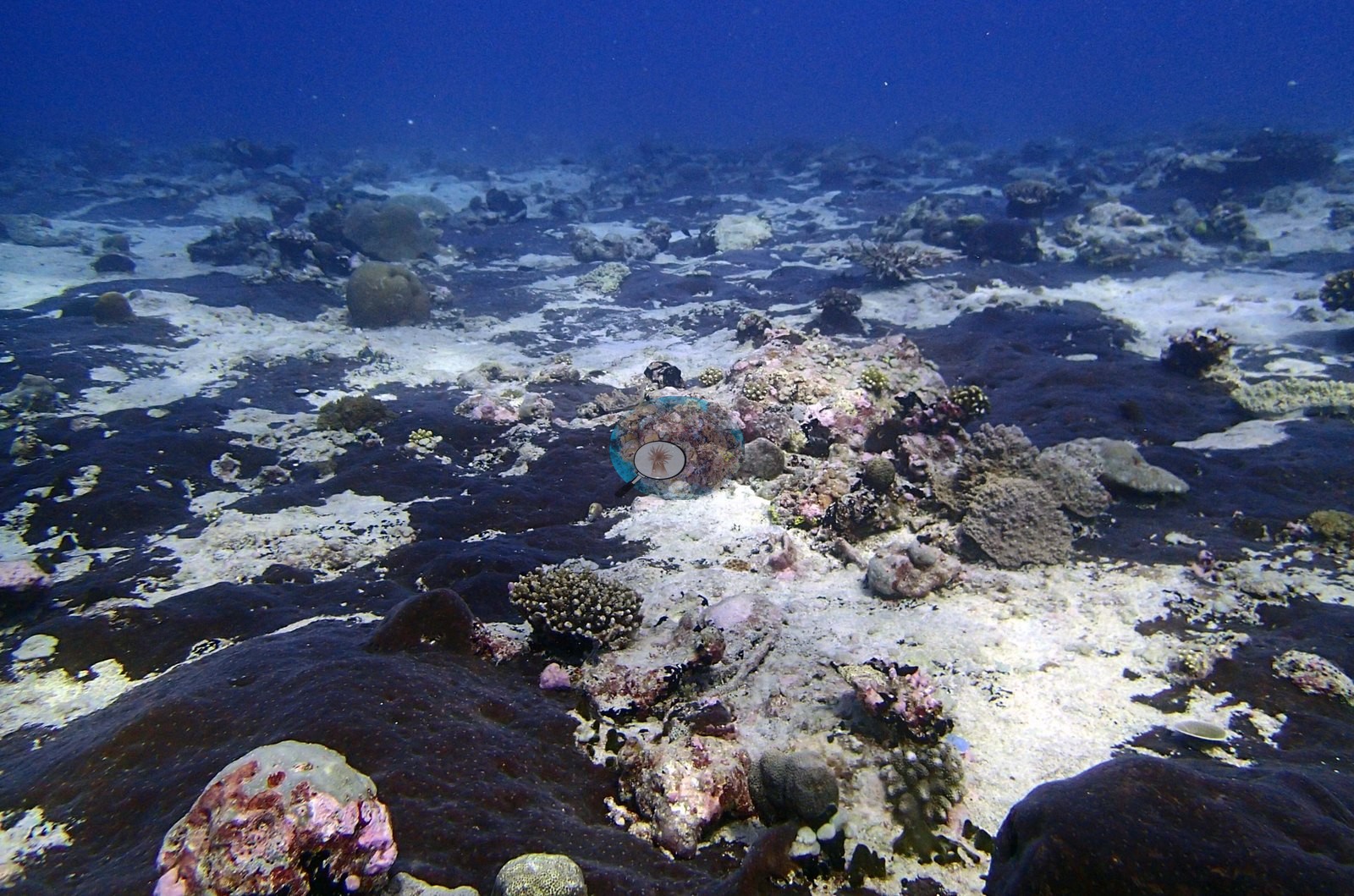
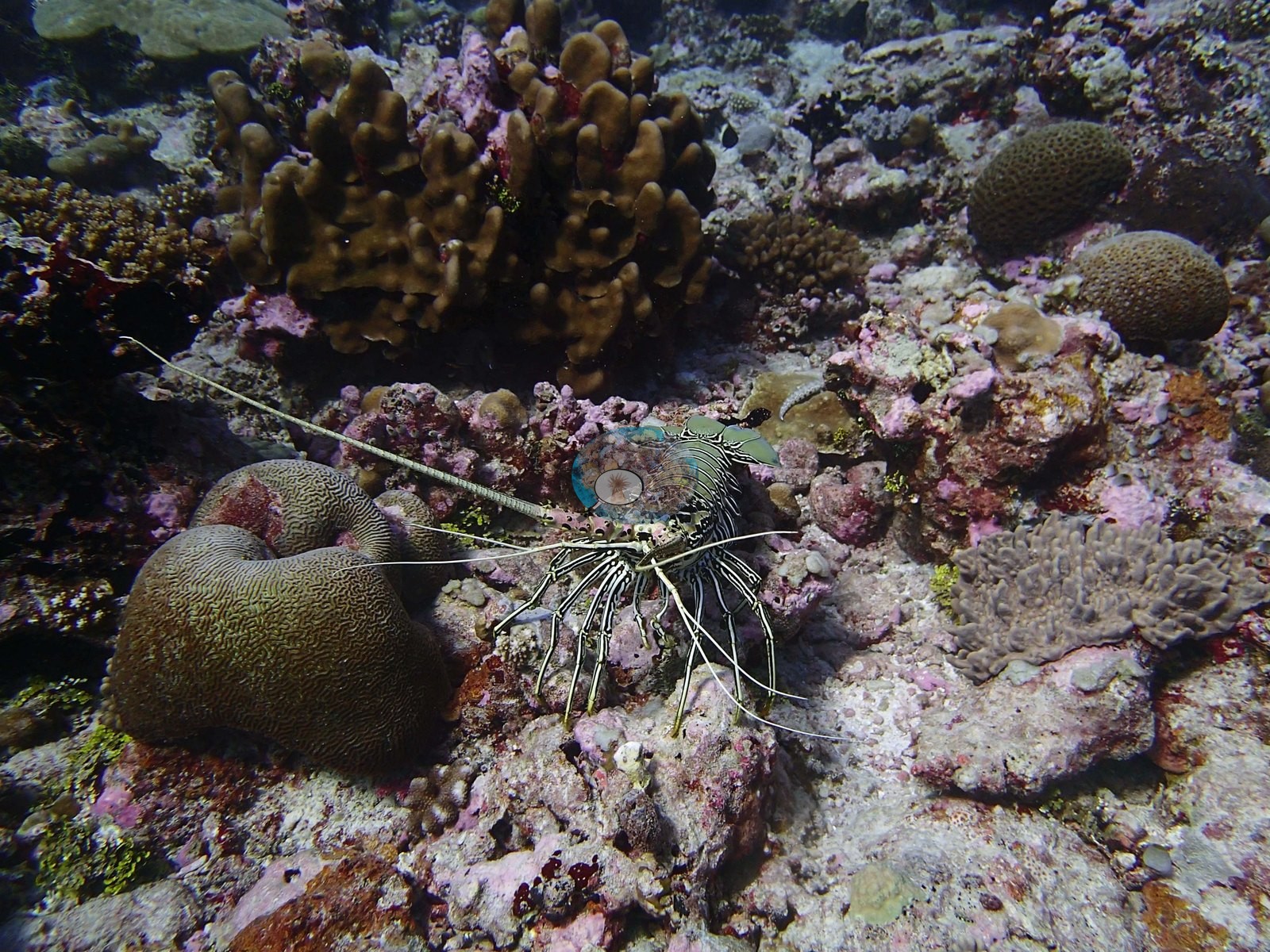
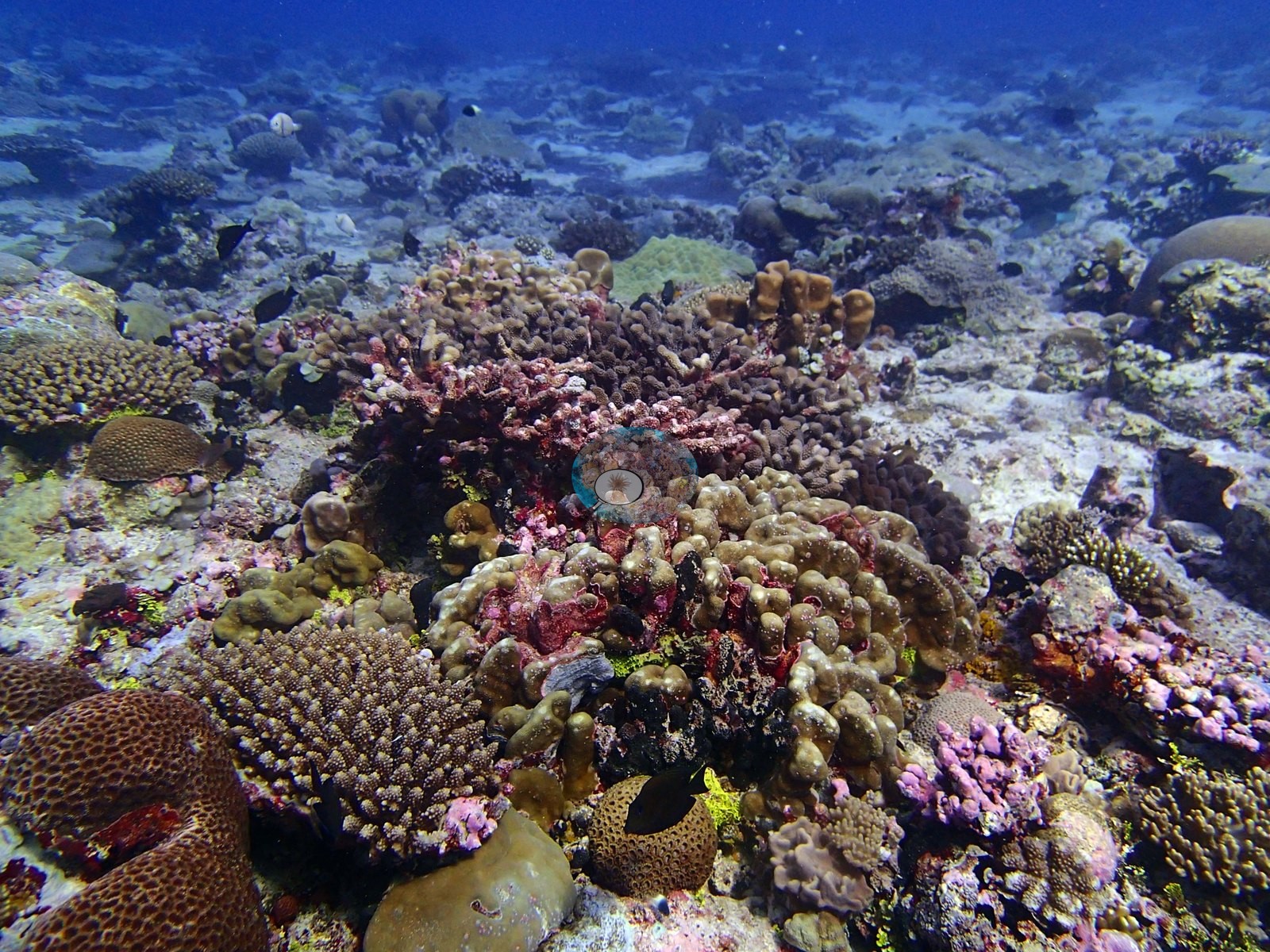
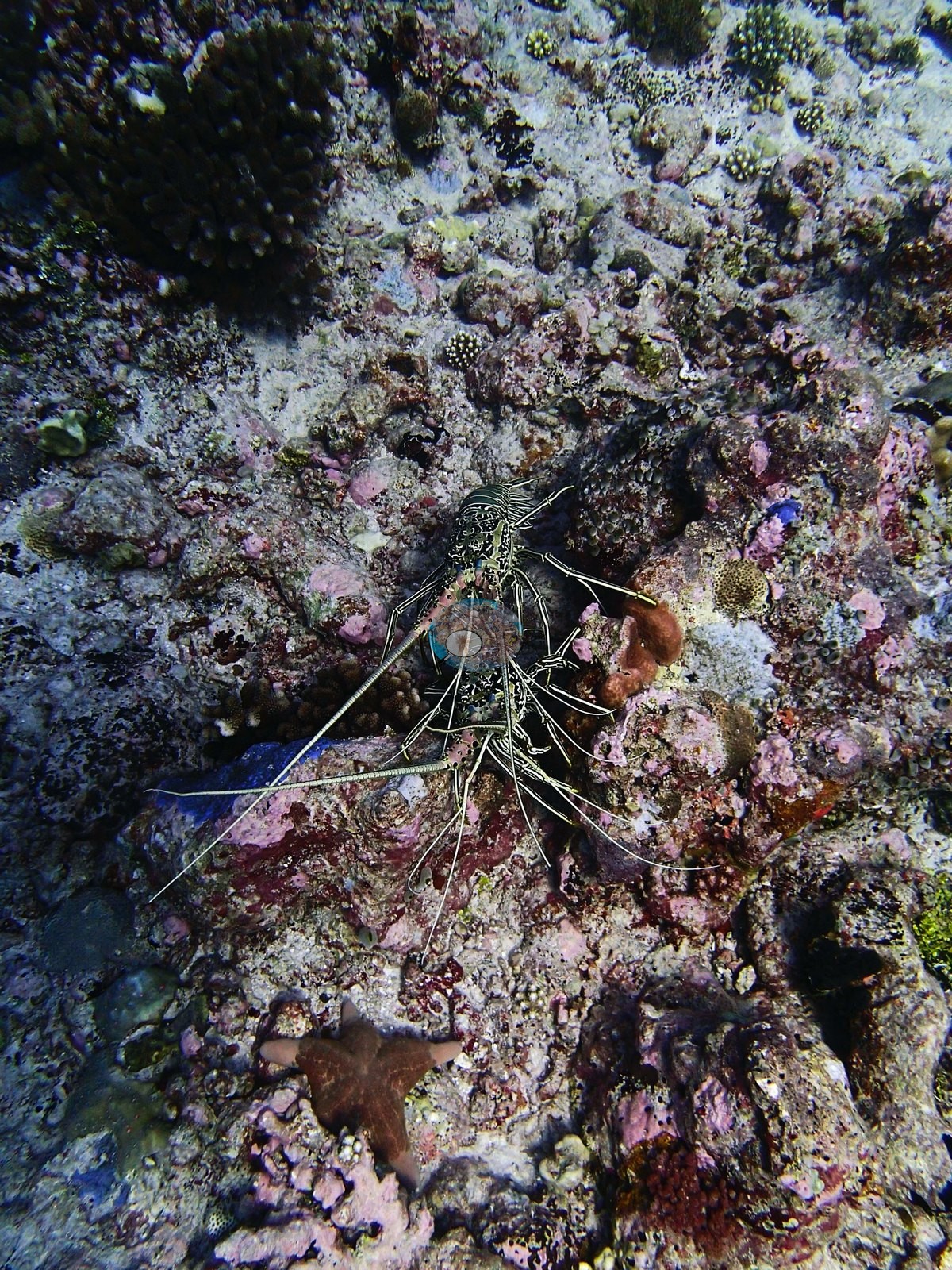
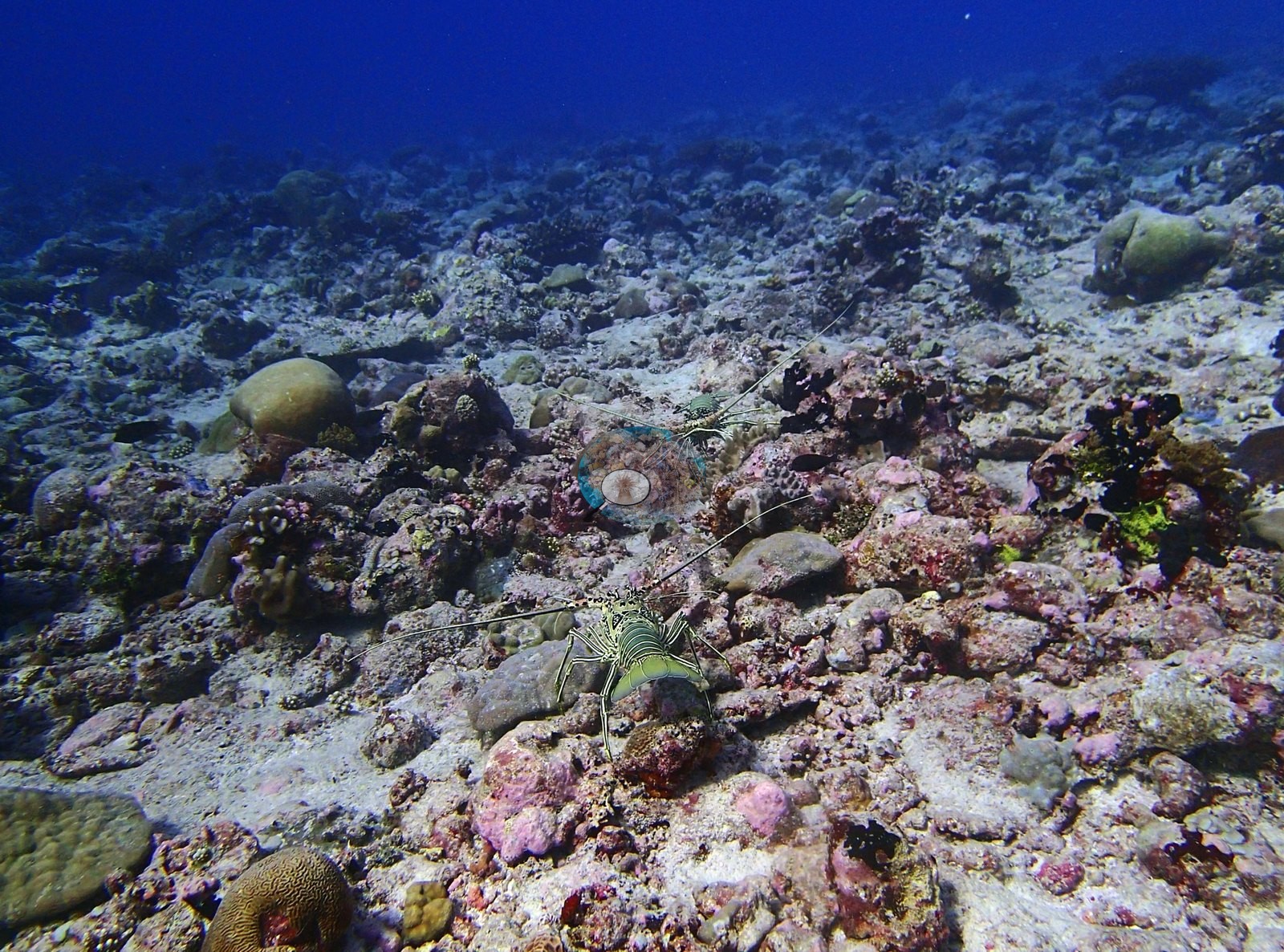
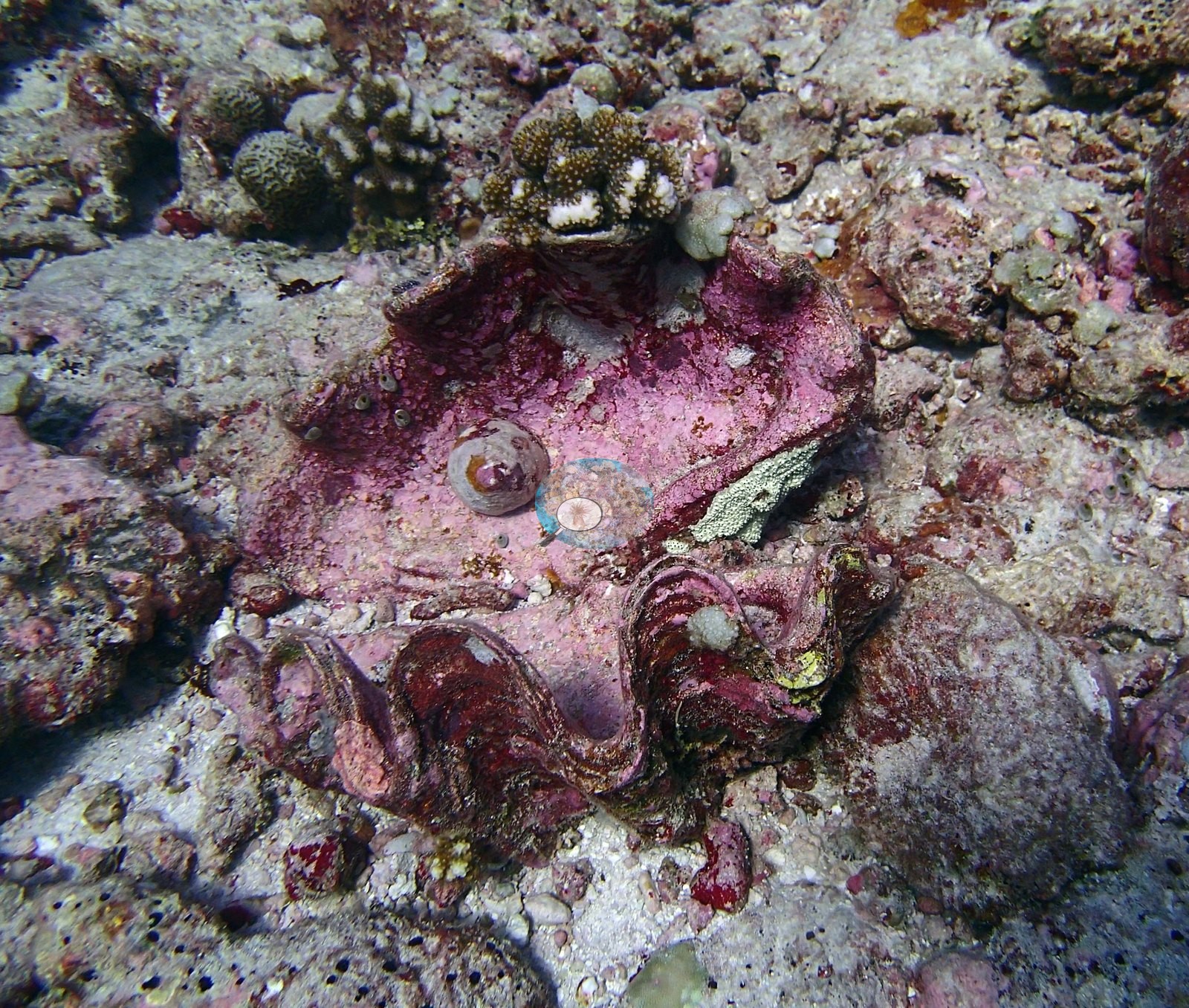
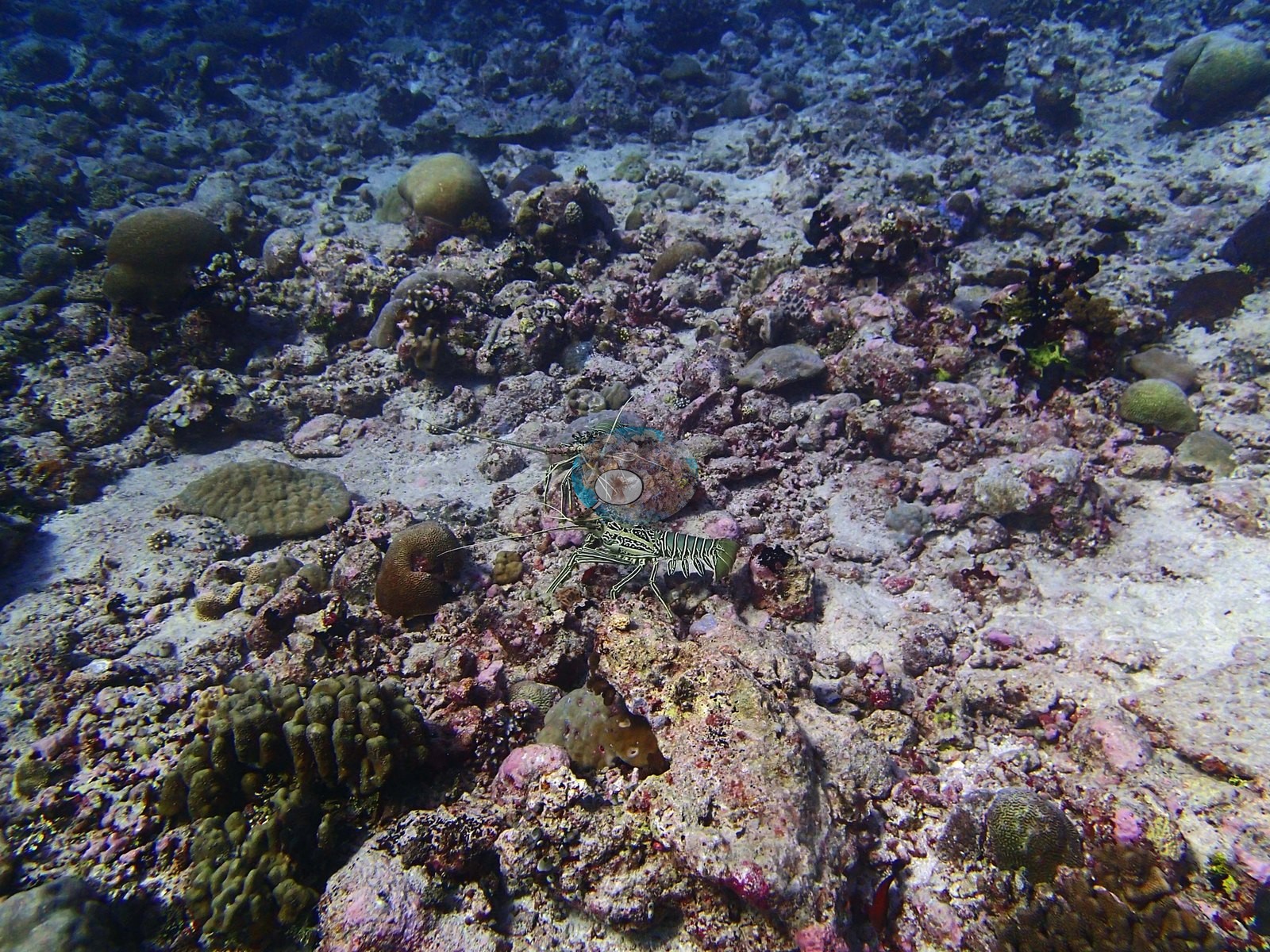
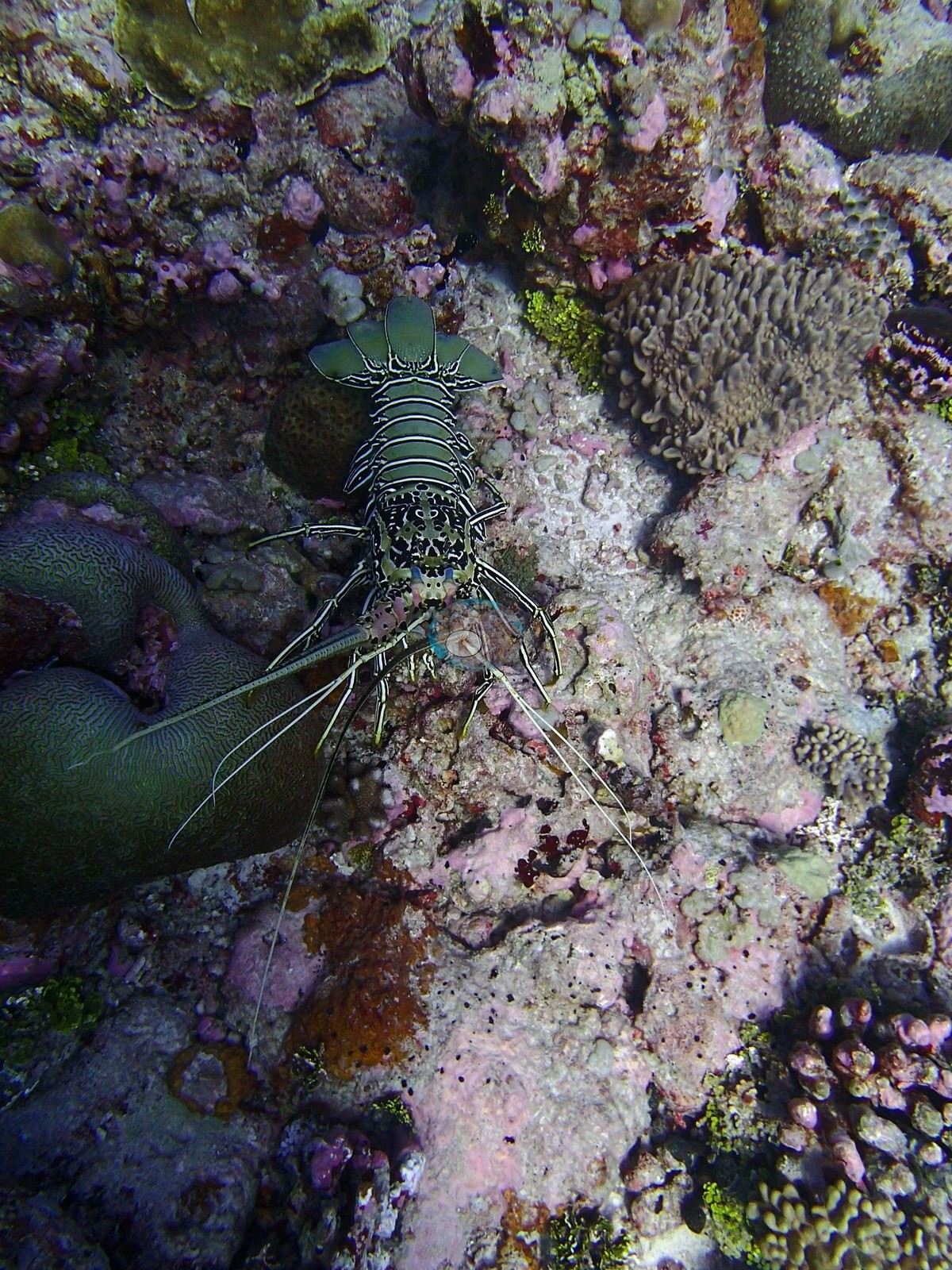
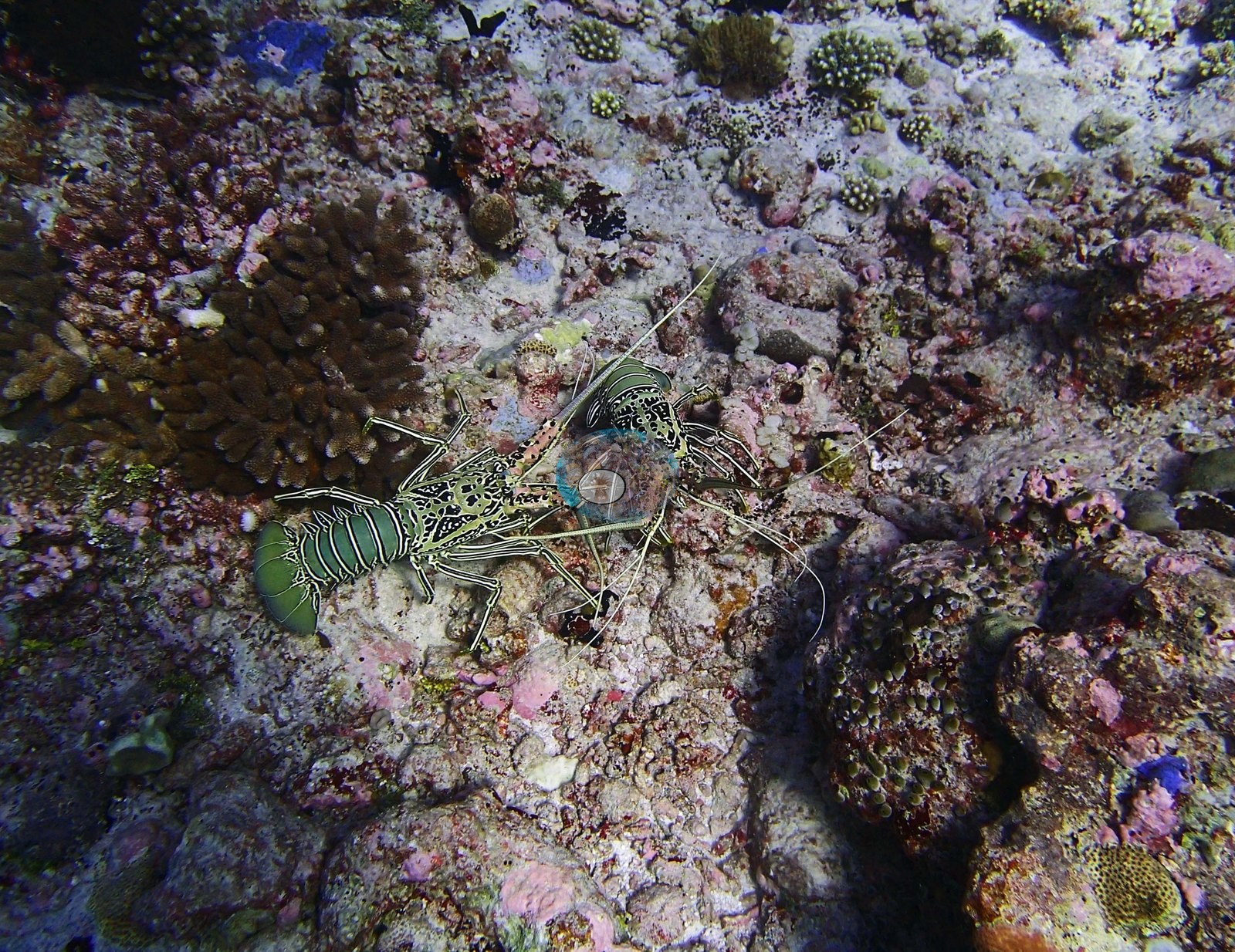
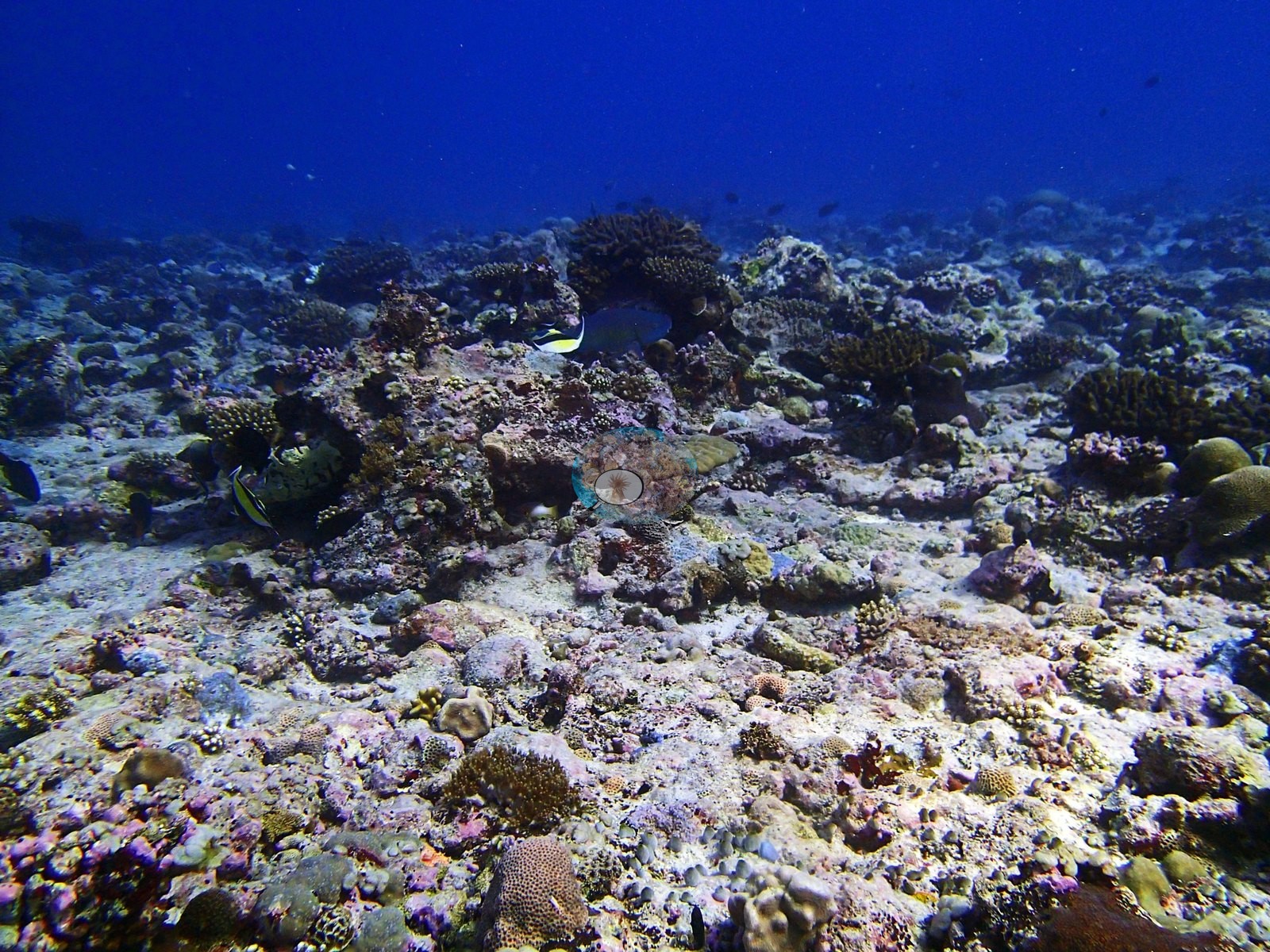
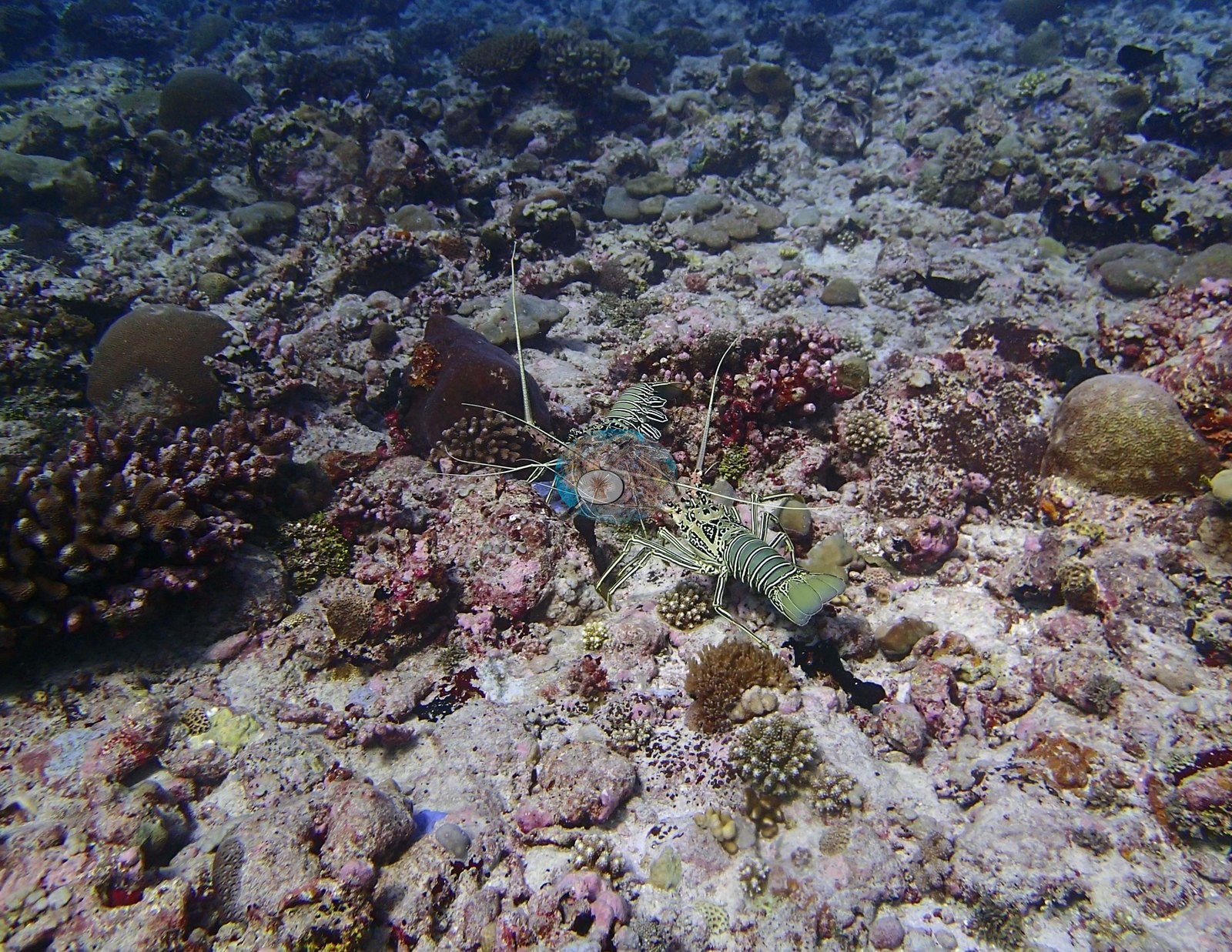
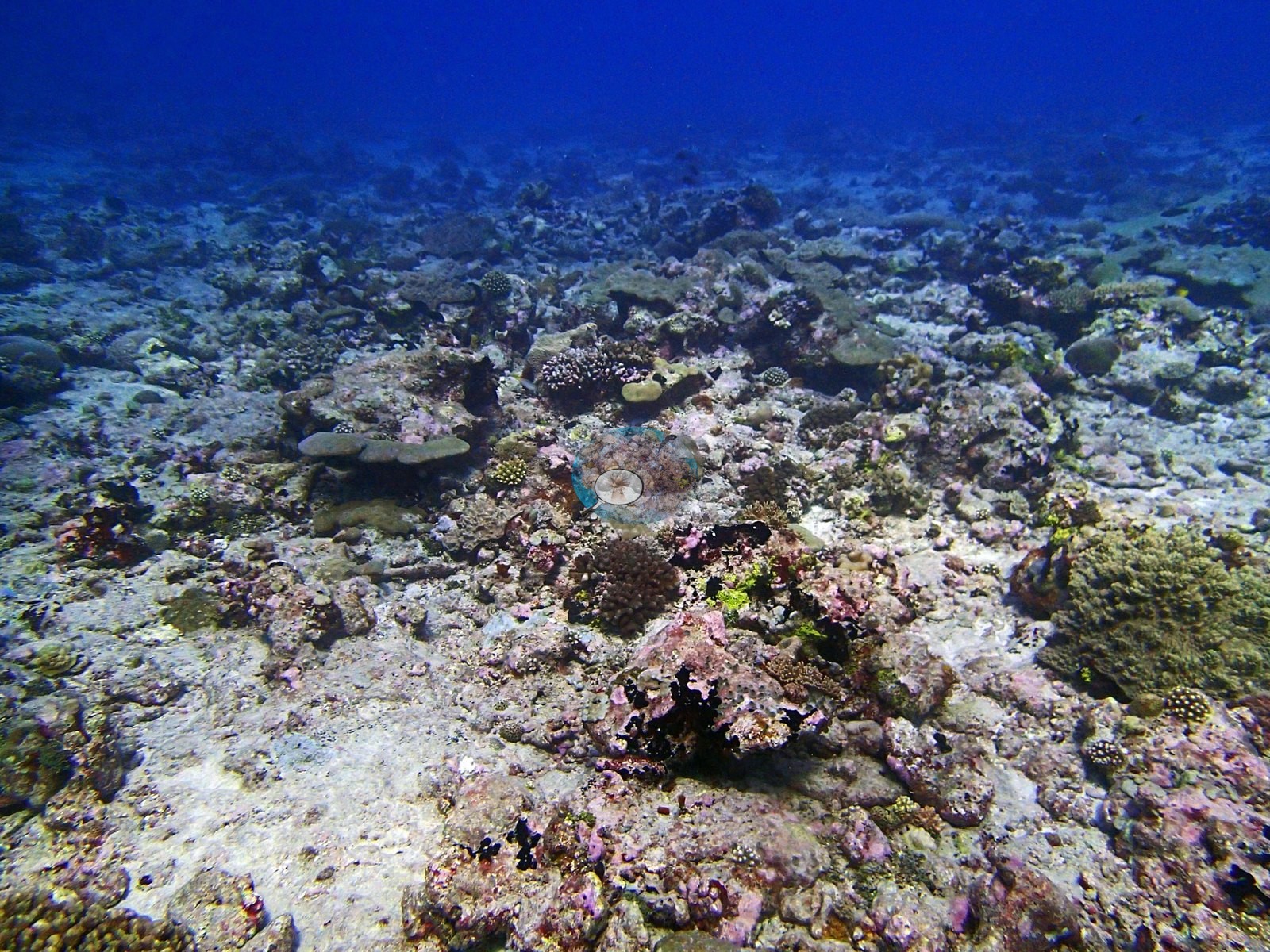
The transect's genus breakdown is the richest thing on this page. Thirty scleractinian genera were recorded — 15th richest of the 109 Chagos sites, against a median of 25 — and this is a faviid/merulinid reef, not an Acropora reef. Porites 4.91%, Pocillopora 4.30%, Favia 4.20%, Platygyra 3.75%, Montipora 2.79%, Echinopora 2.17%, Favites 1.34%, and Acropora only 1.03%, then twenty-two more at or below 0.8% each: Montastrea 0.76%, Acanthastrea 0.57%, Echinophyllia 0.53%, Astreopora 0.46%, Pavona 0.44%, Symphyllia 0.34%, Hydnophora 0.33%, Gardineroseris 0.32%, Stylophora 0.31%, Fungia 0.27%, Goniastrea 0.19%, Galaxea, Cyphastrea, Ctenella, Leptastrea, Psammocora, and Turbinaria at 0.17–0.18%, Leptoseris 0.09%, Coscinaraea 0.08%, and Cantharellus, Mycedium and Pachyseris at 0.01% each. On the non-coral side the transect gives turf 14.83%, crustose coralline algae 12.60%, bare substrate 11.57%, invertebrates 10.26%, turf-plus-sediment 7.57%, erect algae 6.81% and macroalgae 6.12%. The label set is absorbing bare pavement, rubble and sessile invertebrates into TURF, and some coral with them; rescaling a denominator cannot fix that, only relabelling can. Every subset still reads low: excluding the two high-water frames, 14.31/13.87; excluding the three specimen macros, 13.75/12.70; excluding the six close lobster frames, 12.05/10.96 — lower; survey-only eight frames, 14.17/11.69; full substrate renormalisation, 20.38%; mask renormalised over non-background pixels, 18.69%. Non-coral point cover is dominated by turf 32.3% and CCA 17.2%, sponge 0.5%, and sand, rock and dead coral at 0.0% — not one point in 570. And two frames are scored 0.0% live on plainly coral-bearing ground: P3190430 carries faviid domes, Pocillopora-type clumps and encrusting colonies over perhaps 15–20% of frame (mask 6.1%), and P3190439 is worse — sixteen WATER plus twelve Unknown plus two CCA exhausts the whole point budget on a frame whose lower third is a coral-dominated slope. Add the two giant-clam macros and the colony macro and twelve of nineteen frames are composed on an animal or a single colony rather than on the reef. Several of those still show usable pavement and colonies around the animal. That an unfished archipelago yields this density of exposed lobster in daylight, several as pairs, is the standout observation of the site. The reef those frames do show is a low-relief, high-diversity, small-colony bank. P3190401 is the best statement of it — a slope of dark massive domes, gray foliose plates, brown digitate, and encrusting colonies and mauve Pocillopora-type clumps packed shoulder to shoulder over purple-pink coralline pavement, with a checkerboard wrasse (Halichoeres hortulanus-type) and a yellow sponge. P3190417 is the highest-cover frame — tan lobate Porites-type, pink-margined encrusting Montipora-type, corymbose Acropora, coarse-corallite faviids, and Pocillopora, scored 53.3% live. P3190437 and P3190441 are the best genus frames, each carrying a big tan knobby-columnar colony, a fine-valleyed meandroid brain, Astreopora-type domes and a ridged Hydnophora/Merulina-type plate in one view. Against these, P3190416, P3190418, P3190425, and P3190428 are genuinely thin — broad pale consolidated pavement and rubble carrying small, well-spaced colonies, with Moorish idols, and a parrotfish over them in P3190416 and a neon fusilier school streaming over P3190425. The photographs corroborate the growth habits but not the names: fine-valleyed meandroid brains compatible with Platygyra/Leptoria (P3190437, P3190438, P3190441), tan knobby-columnar and massive colonies compatible with Porites (P3190417, P3190437, P3190441), coarse-corallite domes compatible with Favia/Favites/Astreopora throughout, ridged plates compatible with Hydnophora/Merulina (P3190438, P3190441), gray foliose sheets compatible with Echinopora/Pavona (P3190401), encrusting sheets compatible with Montipora, mauve clumps compatible with Pocillopora, and one branching colony compatible with Seriatopora/Stylophora (P3190394); plus Halimeda, sponges, ascidians, and heavy pink coralline crust. The percentages above are transect identifications; the growth-form calls here are reads of photographs. Blue encrusting sponges (Haliclona-type) recur in P3190433, P3190434, P3190435, and P3190441, and a sea star sits in the lower corner of P3190435. No survey apparatus appears in any frame — no tape, quadrat, slate, diver or collecting gear — and P3190394 is the one specimen macro: a small olive-green branching colony with pale tips on coralline-crusted pavement, not resolvable to genus at this resolution and not called here. The CRD site page records that one Pocillopora acuta (ChPa21) and one Seriatopora sp. (ChSe13) were sampled at this site, both target pocilloporid groups.
Coral cover
The LOF benthic transect is this site's measurement. Coral cover at BITB32 (South Brother, 19 March 2015) is 30.3%, from the LOF BIOT-1 in situ transects (Mayfield & Dempsey 2026, Oceans, suppl. S1), against algal cover of 47.9% of the benthos. That diver transect is the authoritative record of cover and community at this site and nothing photographic below qualifies it. Three depth strata were surveyed and they disagree: D2 36.50% coral, D3 26.73%, D4 27.52% — 30.25% is their mean, and the 26.7–36.5% span is the honest range of cover across the bank. Coral cover across methods, and why they differ. Method comparison only. Transect 30.3% · CoralNet points 13.3% · Coralscapes masks 12.8% (19 of 19 frames, complete coverage). Deviation against the transect runs −17.0 to −17.5 pp — the largest shortfall of the Three Brothers series on complete coverage; mean of three 18.8% ± 9.9. The two photo methods land within 0.5 pp of each other while sitting about seventeen points below the transect, and their per-frame correlation (r = 0.831) is the highest of the redo — they agree with each other unusually well and disagree with the transect almost equally. The published paper already knew: the supplement's own informal estimate is 16.65%, a 58.0% formal-versus-informal difference, the 10th largest of 105 sites against a corpus median of 10.9%. The reason is a classification problem, not a denominator problem, and the algae prove it. The "Unknown" pool here is 22.28% of points (127 of 570), and dropping Unknown from the denominator lifts the point set only from 13.33% to 17.16% (18.96% with bleached points added) — a residual of about thirteen points, roughly a fifth of the gap. At BIEA26, BITB27, BITB28, and BITB29 the same correction landed on the transect; BITB32 is the first low-reading site where it fails, so the correction is not general. On the raw denominator the point set's turf-plus-CCA is 50.2% against a 47.92% transect algal cover, nearly exact; restricted to the 373 genuinely benthic points, turf-plus-CCA rises to 76.7% against 47.92%, coral falls to 20.4% against 30.25%, and bare substrate and invertebrates — 11.57% and 10.26% by transect — read 0.0% and 0.8%. Nothing reaches the transect. Blue-water dilution is rejected harder here than anywhere: site mean water is 10.5%, the lowest of any site checked, only two of nineteen frames are 40% water or more (P3190425, P3190439), and dropping both moves the point set from 13.33% to 14.31% and the mask from 12.84% to 13.87%. What the two image products say about the assemblage. Across all 19 analyzed frames the Coralscapes masks put live hard coral at 12.84% of image area, of which massive and meandroid is much the largest component at 48.5%; the rest breaks down as other hard coral 13.6%, Acropora (non-tabular) 11.9%, Pocillopora 9.6% and meandroid 7.4% of live cover — and tabular Acropora 0.0%, the opposite of BITB27, BITB29 and BITB30, and consistent with the fact that there is not a single tabular Acropora in any of the nineteen frames. The independent 30-point annotation of the same frames (570 points) gives live hard coral as 13.3% of all points and apportions it Porites 40.8%, other hard coral 30.3%, Acropora 21.1% and Pocillopora 7.9% of live coral — but the transect puts Acropora at 3.4% of live cover, so the point set over-calls Acropora roughly six-fold. Frame-to-frame live cover runs 0.0% (P3190430, P3190439) to 53.3% (P3190417). P3190428 reads 3.3% live and looks it. That spread across the folder is real, not an artifact of framing, and the depth strata say so independently (D3 26.7% against D2 36.5%) — but even the poorest stratum is more than twice the photo estimate, and the transect is the site's cover record. Nothing photographic here is a measurement of it and no percentage is derived from any frame; the CV bleaching outputs discussed above are model products on a time-skewed, animal-led frame set with demonstrably misplaced points, and they are reported as method behavior, not as a reading of the reef. Live hard coral measured on the in situ benthic transects of the LOF BIOT-1 expedition (Mayfield & Dempsey 2026, Oceans, supplemental S1), against algal cover of 47.9% of the benthos. The transect figure is this site's authoritative cover value; no image-derived product overrides it. Across methods the same reef reads: transects 30.3% · CoralNet points 13.3% · Coralscapes masks 12.8% (19 frames). These products have different sampling footprints and denominators and should not be averaged.
Stressors
One entry is worth reading closely: the transect records Seriatopora at 0.00% even though a Seriatopora colony was collected at this site, which is itself an under-detection note about point-intercept survey at low abundance. Structural loss registers as dead coral 2.79% of image area and rubble 4.92%. Coralscapes reads bleached at 0.03% of image area, a maximum of 0.19% on any frame, and the point set places eight bleached points of 570 (1.4%), as other hard coral 1.05% and Acropora 0.35%; those are CV outputs on an opportunistic, time-skewed frame set, not an estimate of this site's bleached fraction, and the eight points are demonstrably poorly placed — five of the eight fall on frames scored at or below 13.3% live, the only bleached-Acropora pair sits on P3190418, a wide view of dark massive coral and pale sand that is 43.3% Unknown, 20% water and shows no Acropora at all, and another sits on P3190426, the giant-clam macro, where the pale shell margins are the brightest thing in frame. Roughly 76% of the Chagos point annotations are robot predictions, and these are provenance artifacts. P3190394 is the only candidate frame for either sample and cannot be resolved; the point annotation on it calls it Porites and Acropora, neither defensible. Condition. Anderson's published per-site bleached fraction for BITB32 is 7.56% (the canonical "% bleaching (2nd training)" column, Mayfield & Dempsey 2026 supplement), and that published figure is the authority on this site's bleaching. Qualitatively, structural loss is old and unremarkable and there is no acute damage anywhere: the pavement in P3190430, P3190432, P3190435, and P3190441 is maroon-and-pink coralline crust plated over old framework, ordinary turnover, and the only mortality worth a name is a maroon dead patch on the meandroid brain in P3190441. No crown-of-thorns starfish in any of the 19 frames. No disease lesions.
Fish and other fauna
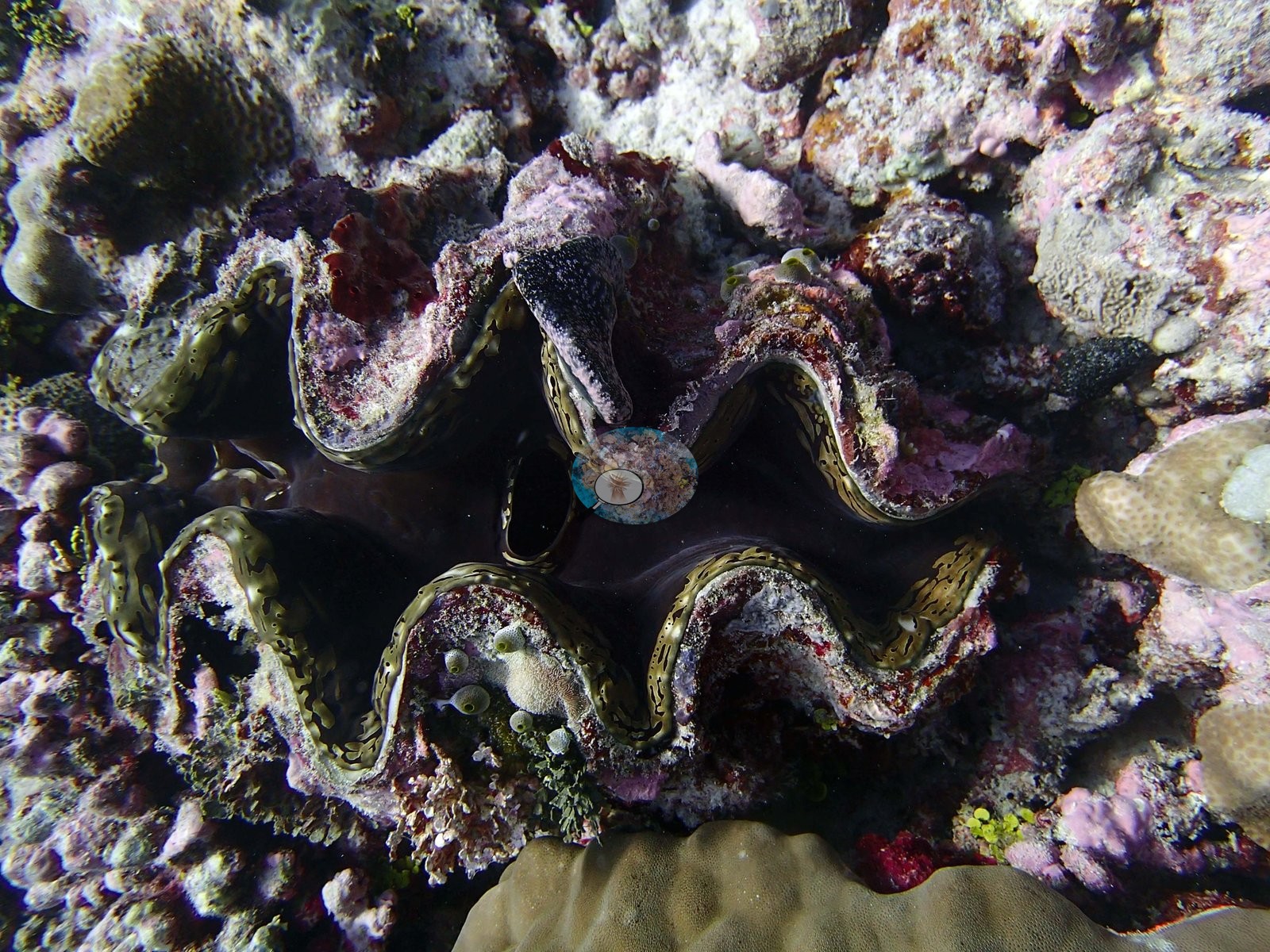
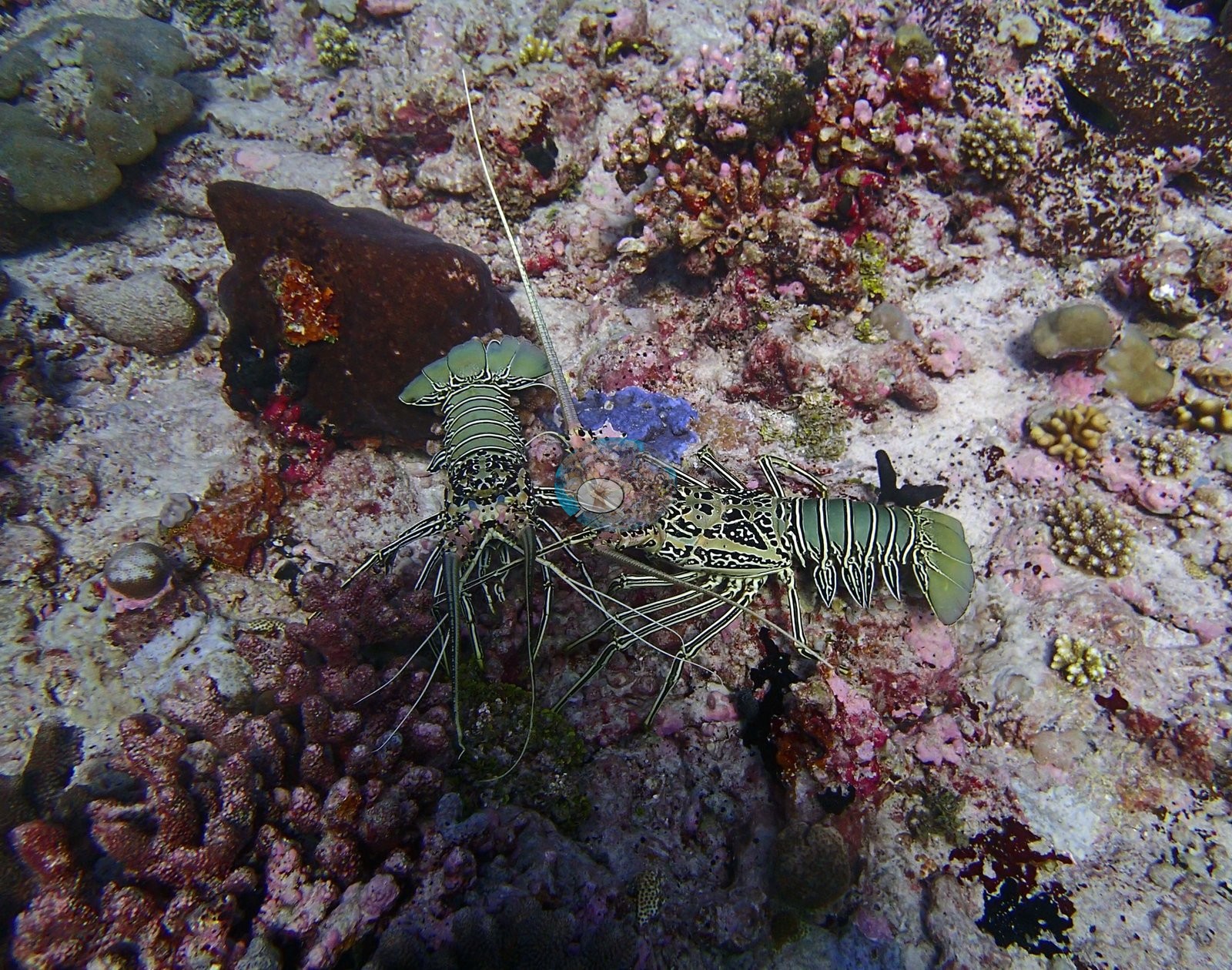
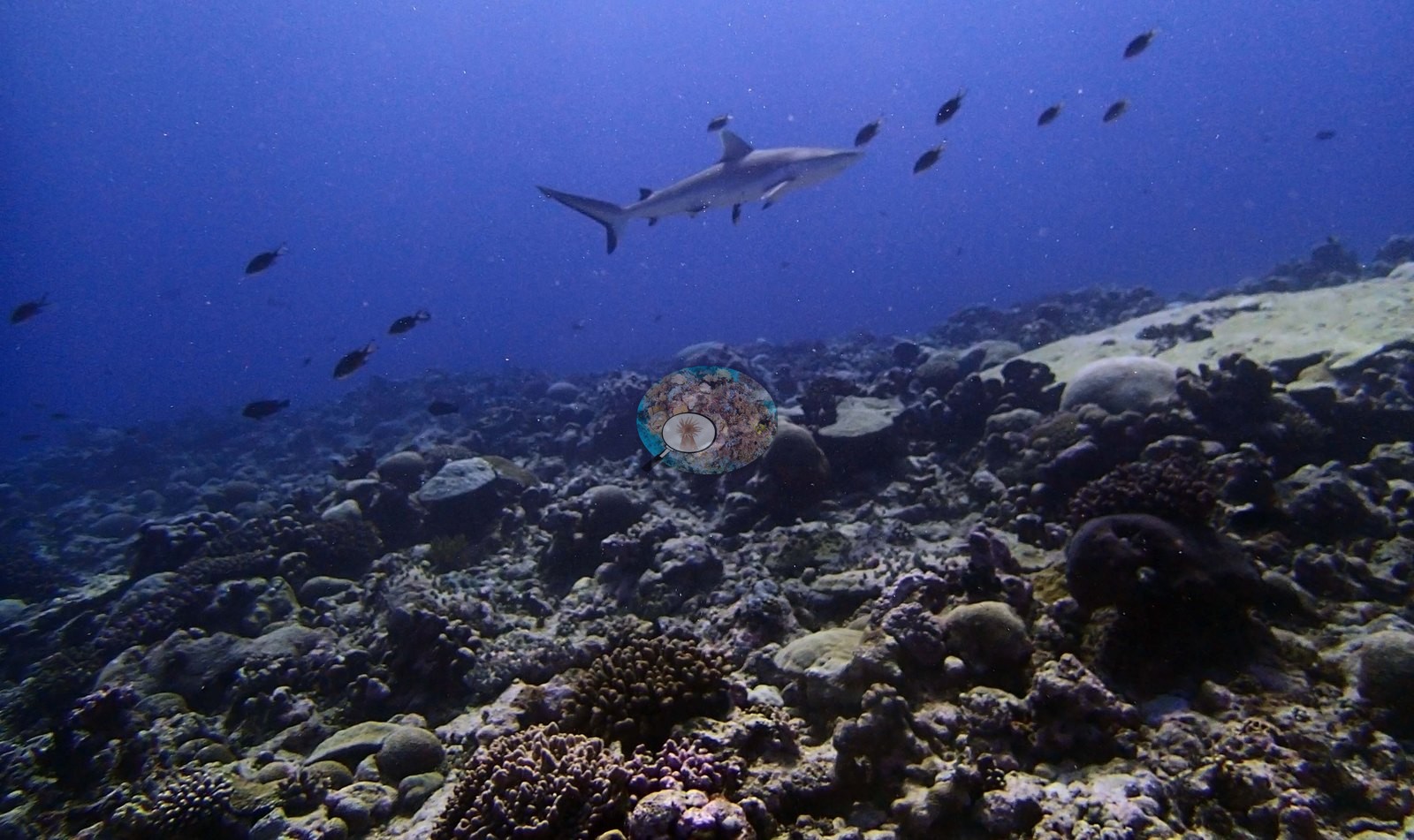
Conspicuous fauna appear as sponges in 17 frames, sea cucumbers in 9, urchins in 6, giant clams in 2 and anemones in 1. Two model failure modes are worth logging. Both methods classify the spiny lobsters as fish — Coralscapes' five highest "fish" frames are P3190433 (7.75%), P3190434 (4.93%), P3190438 (4.10%), P3190432 (2.36%) and P3190441 (2.26%), every one a close lobster frame, and the point set does the same, with three FISH points on P3190426, the clam macro, where no fish is present. The frames are badly skewed in time: five cover the first 41 minutes and fourteen cover the last six and a half. BITB32 is the lobster dive, and that governs the whole photographic record. From 09:02:45 the camera finds two painted spiny lobsters (Panulirus-type — white-reticulated carapace, olive-green abdomen with white transverse banding, black-and-white ringed legs, pink antennular peduncles; compatible with P. versicolor but not callable to species) walking in the open over pavement in broad daylight, and stays with them for the rest of the dive. Nine of the nineteen edited frames are composed on lobsters — P3190429 and P3190430 wide with both animals, P3190432 closer, P3190433 the best of them, P3190434 and P3190435 from above with a mottled brown five-armed sea star below, then P3190437, P3190438, and P3190441 on a single animal. The invertebrate record is exceptional. Beyond the lobsters, P3190426 is a large live Tridacna with its mantle fully open, olive-and-black patterned, wedged into coralline rock — the best clam frame of the redo — and P3190427 appears to be a second, dead and coralline-overgrown clam shell a minute later, its fluted margins still legible under pink crust. P3190439 puts a requiem shark over the reef in open blue water; the dark-margined caudal and plain first dorsal are compatible with gray reef (Carcharhinus amblyrhynchos), but the BIEG04 lesson applies and it is not callable from this frame. Fish are otherwise sparse and small.
Comparisons with other data
No predation scars. Also on record for this site: Coral cover: 30%.
Dive record
EXIF puts the dive at 08:18:17–09:06:06, 47 minutes 49 seconds; the counter runs P3190394 to P3190441, so the edited set keeps 19 stills of about 48 exposures plus two movies.
Other notes
By contrast P3190427 is the zero-Unknown control — the only frame of nineteen with no Unknown and no water points, and it is a flat, evenly lit, full-frame benthic macro, which shows the 22.3% site-wide Unknown pool to be a property of frame geometry and lighting rather than of the reef. Image-by-image. All 19 frames of Anderson's own folder BiTb32-finished were reviewed — complete coverage, all on disk, none evicted, and all 19 carry CV rows. Two movies were shot mid-sequence.
CV model comparison
More info
Those are point counts on the photographs; this is a diver swimming a transect. The models and the reference never saw the same thing. ⚠ SITE-LEVEL ONLY. The 2,500 frames were not associated with any transect taken within 200 m of them, so transect-vs-image comparisons are site means, never frames. The transect value is already in the pin `cover` field (109 of 112 pins, sourced to the paper's suppl. S1) and is read from there, never re-imported. The transect is THE coral-cover value for this site and stands alone. The rows below it are a methods comparison only: no computer-vision value is averaged with it, feeds the headline, or carries over to the site's cover figure (Anderson, 2026-09-22).| Method | Hard-coral cover (%) |
|---|---|
| Transect (published) | 30.3 |
| CoralNet | 16.7 |
| In-house DINOv3 | 11.8 |
| CoralSCOP edited | 19.9 |
| Claude | 11.7 |
Data & links
- Read the full site report ↗
- Download benthic survey data (CSV) ↗
- Download all LOF-GRE data (933 sites) ↗
- CoralNet image repository for this region ↗
- Photo portfolio ↗
- Coral Reef Diagnostics page for this area ↗
All images from Coral Reef Diagnostics. Data are from Coral Reef Diagnostics.
 © Coral Reef Diagnostics.