
Part of the regional summaries: Chagos Archipelago - Great Chagos Bank West / Brothers / Eagle and Chagos Archipelago
More info
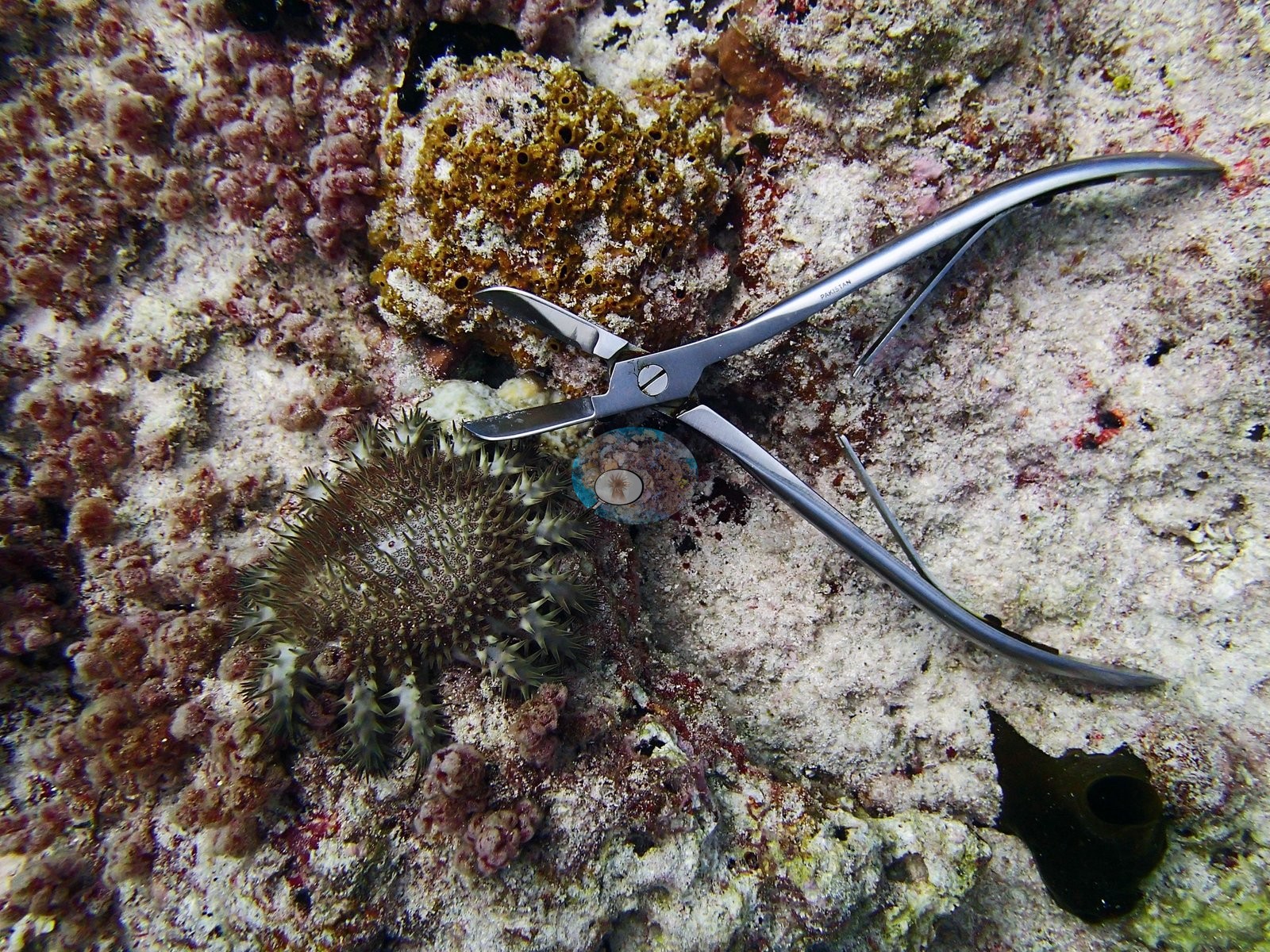
Chagos (NOAA CRW virtual station)BIEA52, despite being filed under Eagle Island, sits close enough to Three Brothers that it likely belongs there instead. It carries a balanced, no-single-taxon-dominant coral assemblage at 34% cover, unusually high non-coral invertebrate cover (28.5%), and a photograph showing a crown-of-thorns starfish beside forceps - evidence of an active, deliberate removal rather than a chance sighting. Surveyed on the Living Oceans Foundation's Global Reef Expedition.
One independent survey station shown with the program’s logo — click one to see how far it is from this site.
🗺 Detailed map of the Global Reef Expedition dive sites, Eagle Island, Chagos (Khaled bin Sultan Living Oceans Foundation; opens in a new window)
4 of these 15 photographs are shown beside the text that discusses them under "Site description" below.
Site description
Setting
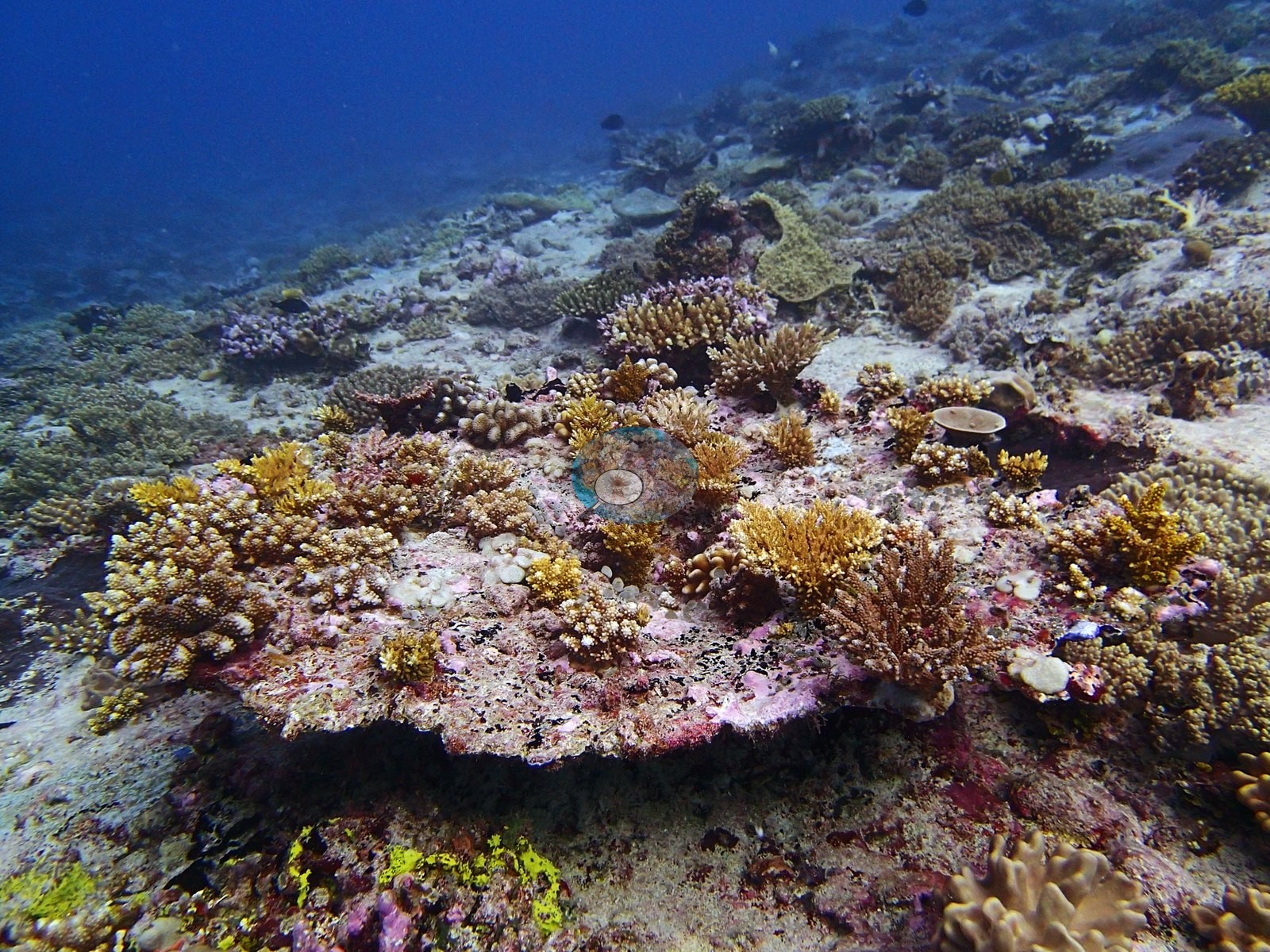
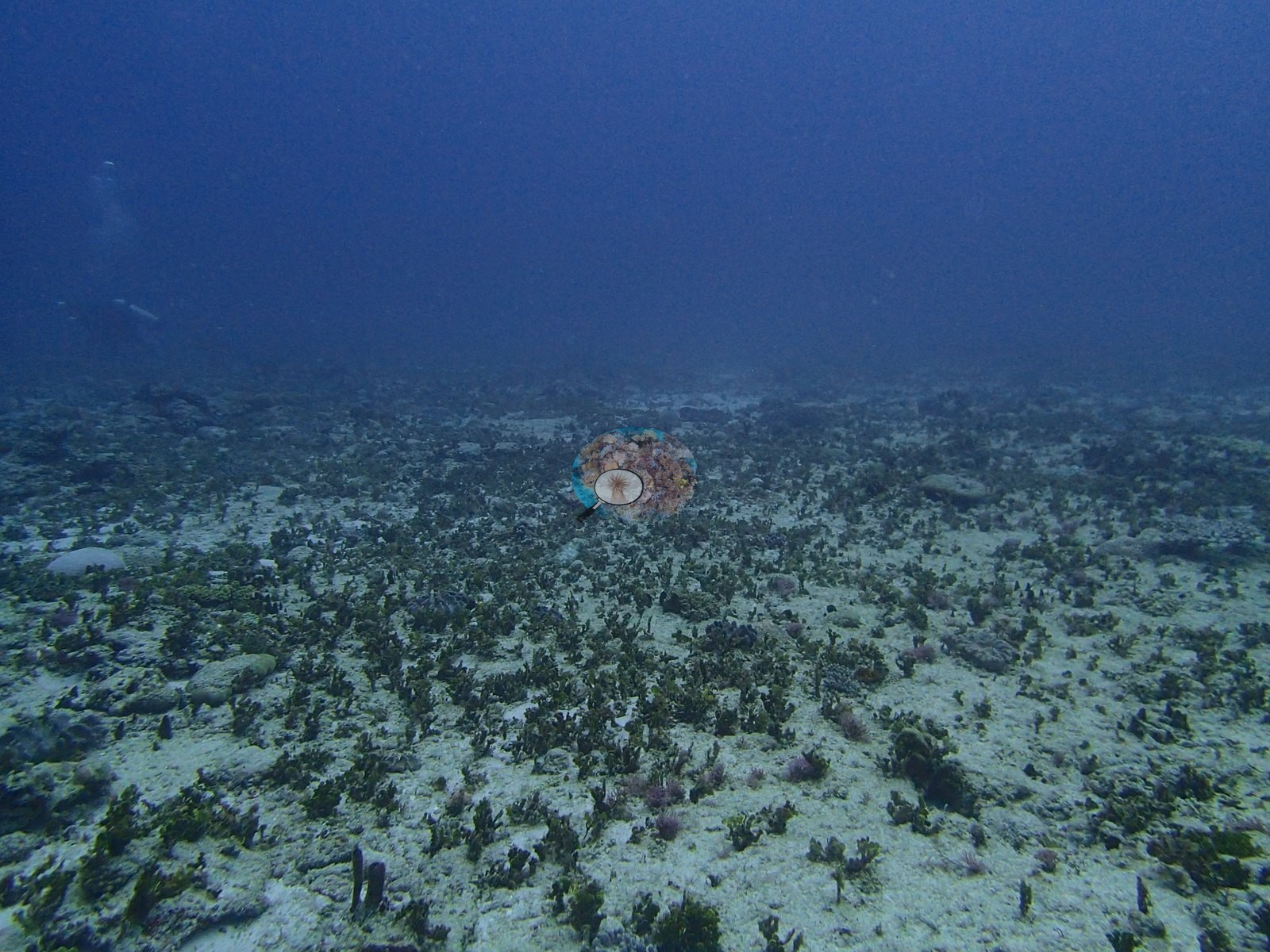
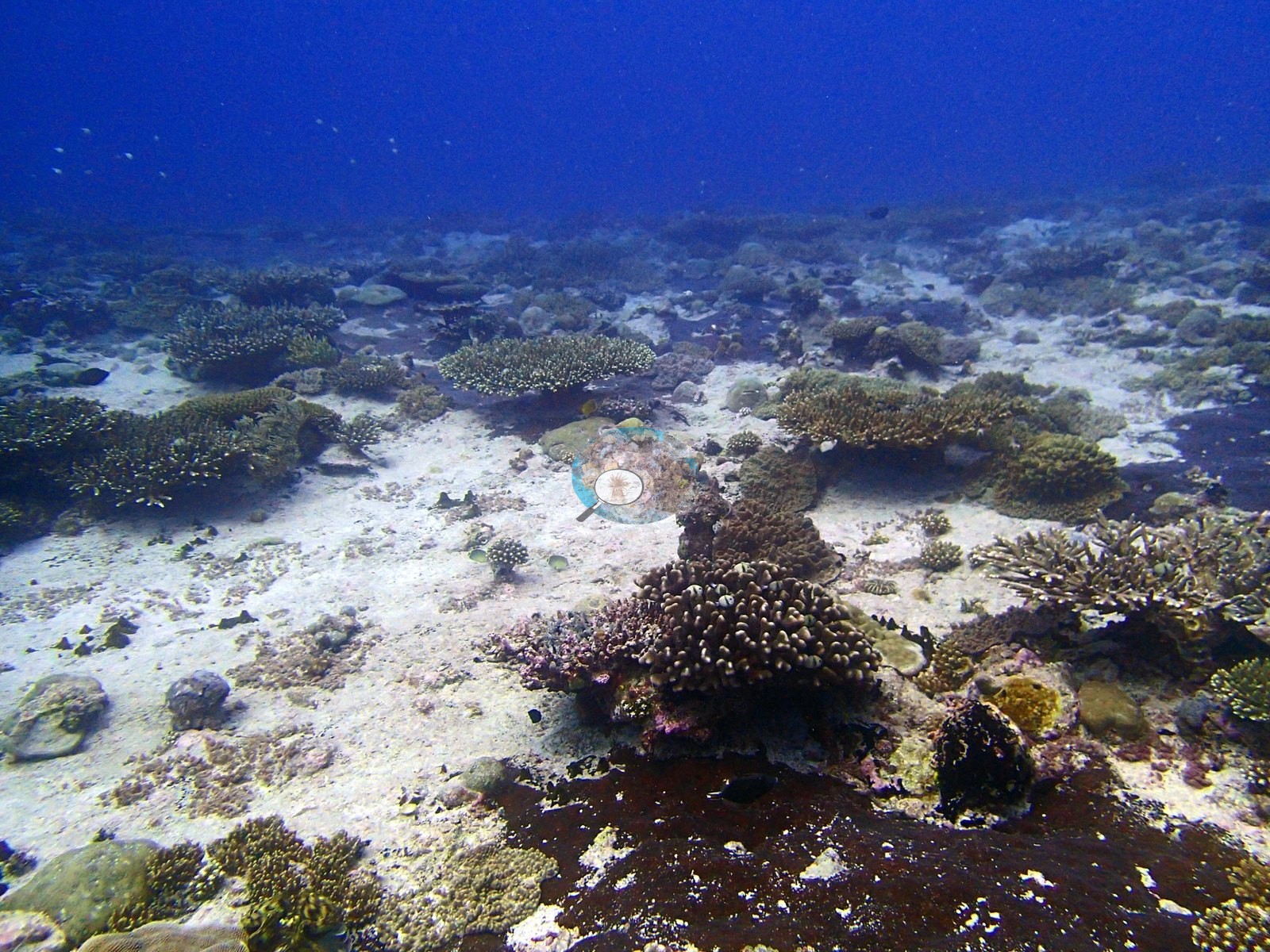
BIEA52 is a protected submerged bank reef inside the lagoon at 20.0 m, surveyed 25 March 2015 and filed to Eagle Island — a label this rebuild disputes, since the site sits east of every Eagle Island station and inside the Three Brothers longitude range, was dived a week after Eagle Island work ended, and maps to the Three Brothers CRD page (e.g., Image 2).
General benthic features
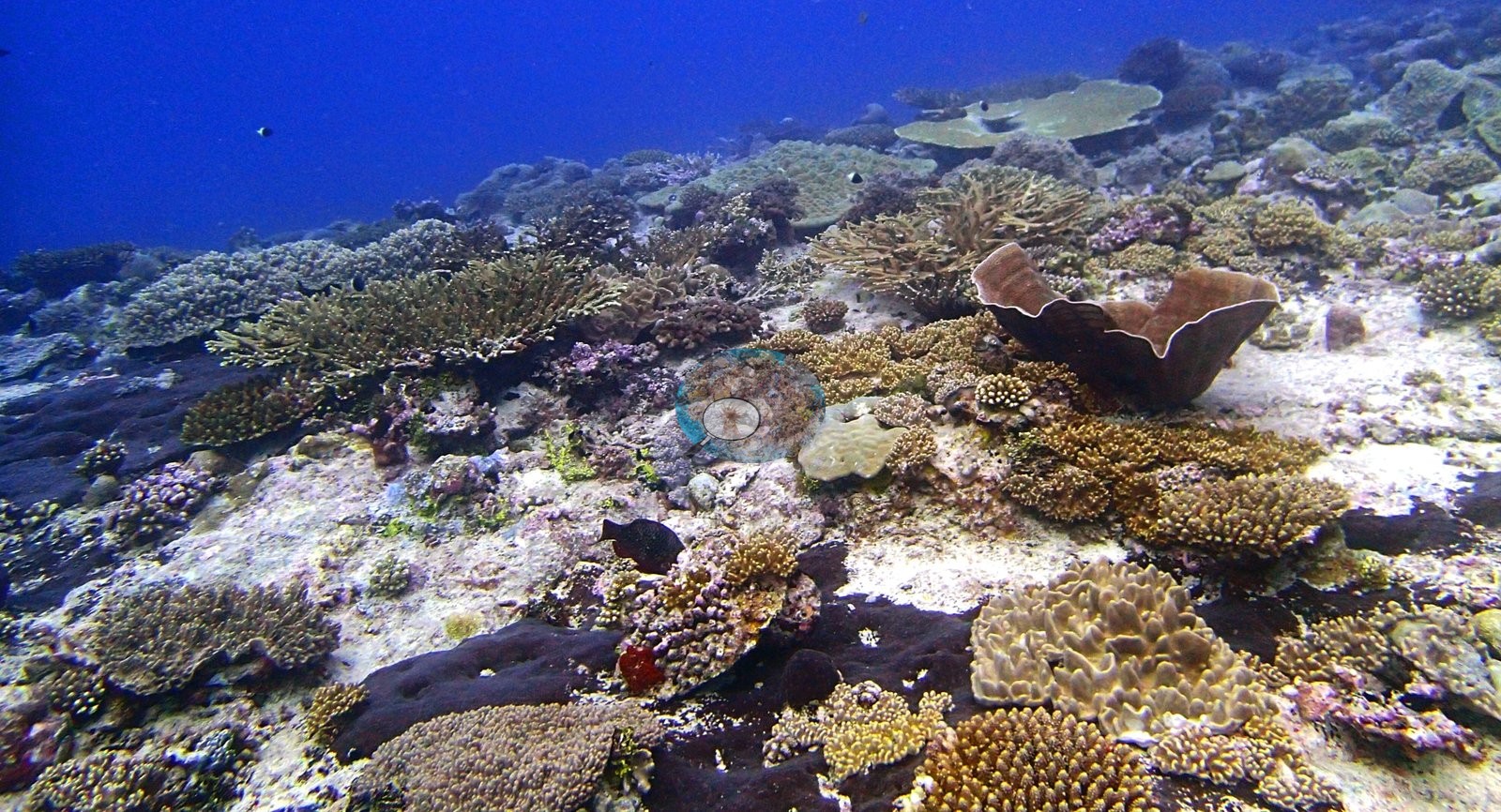
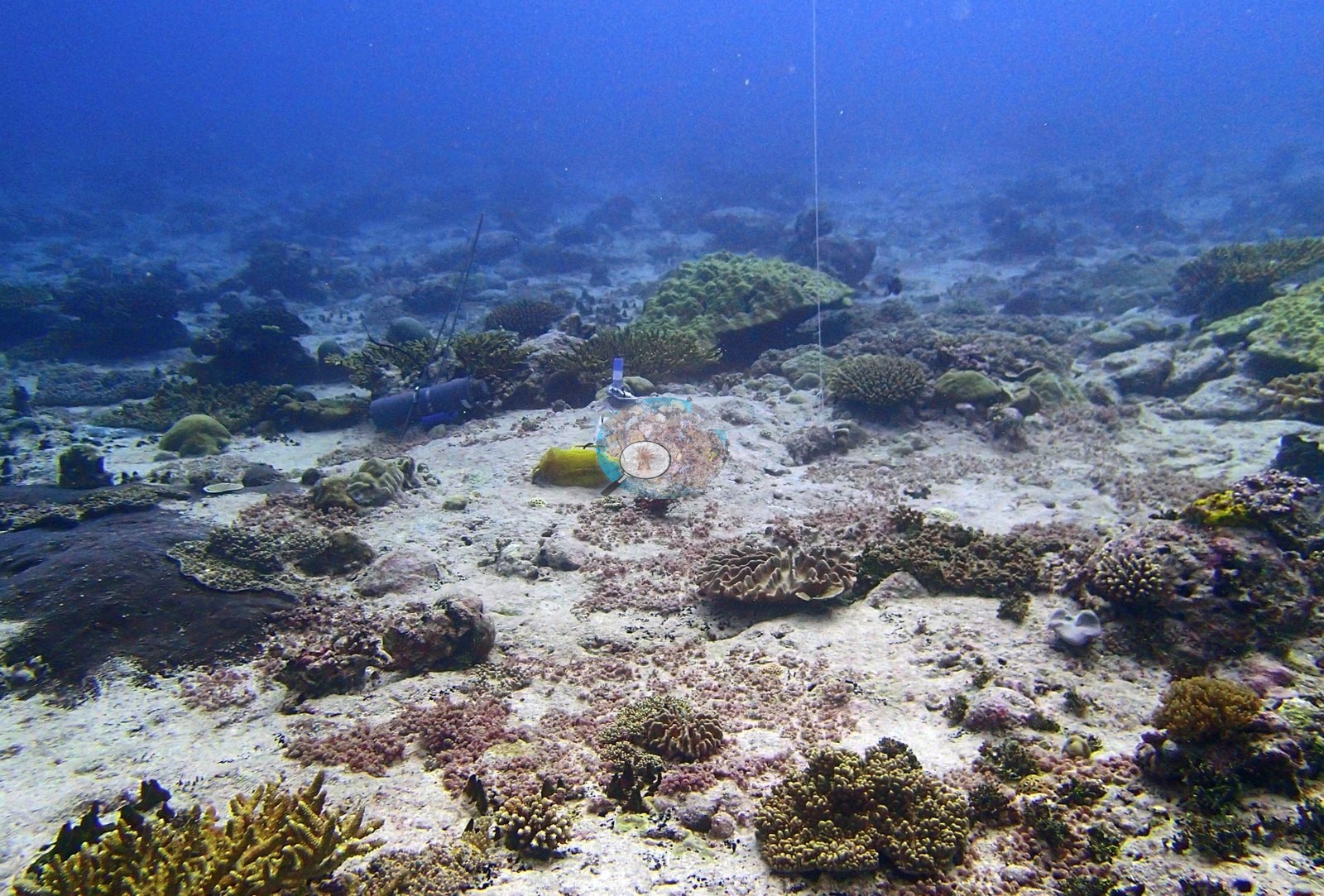
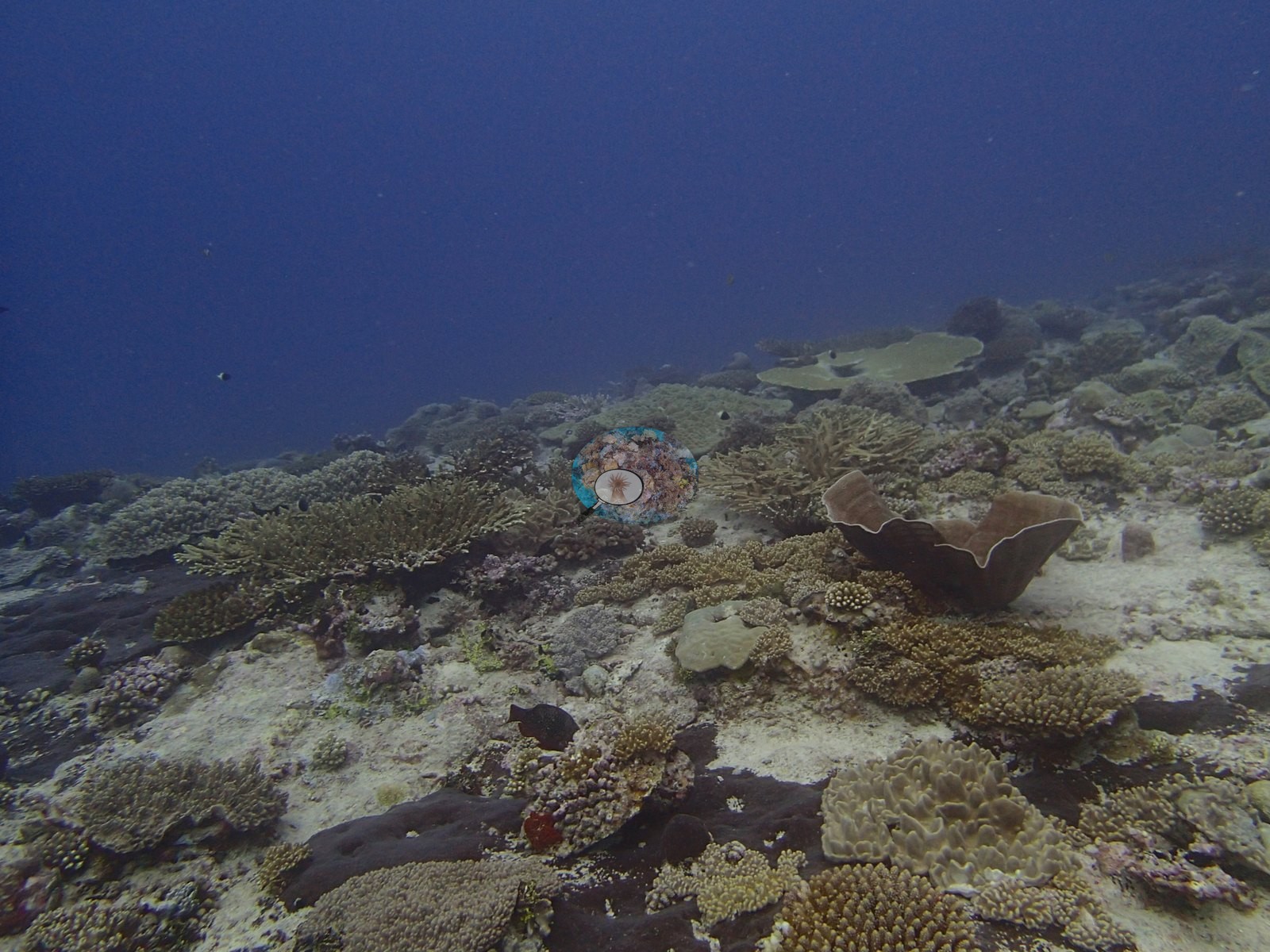
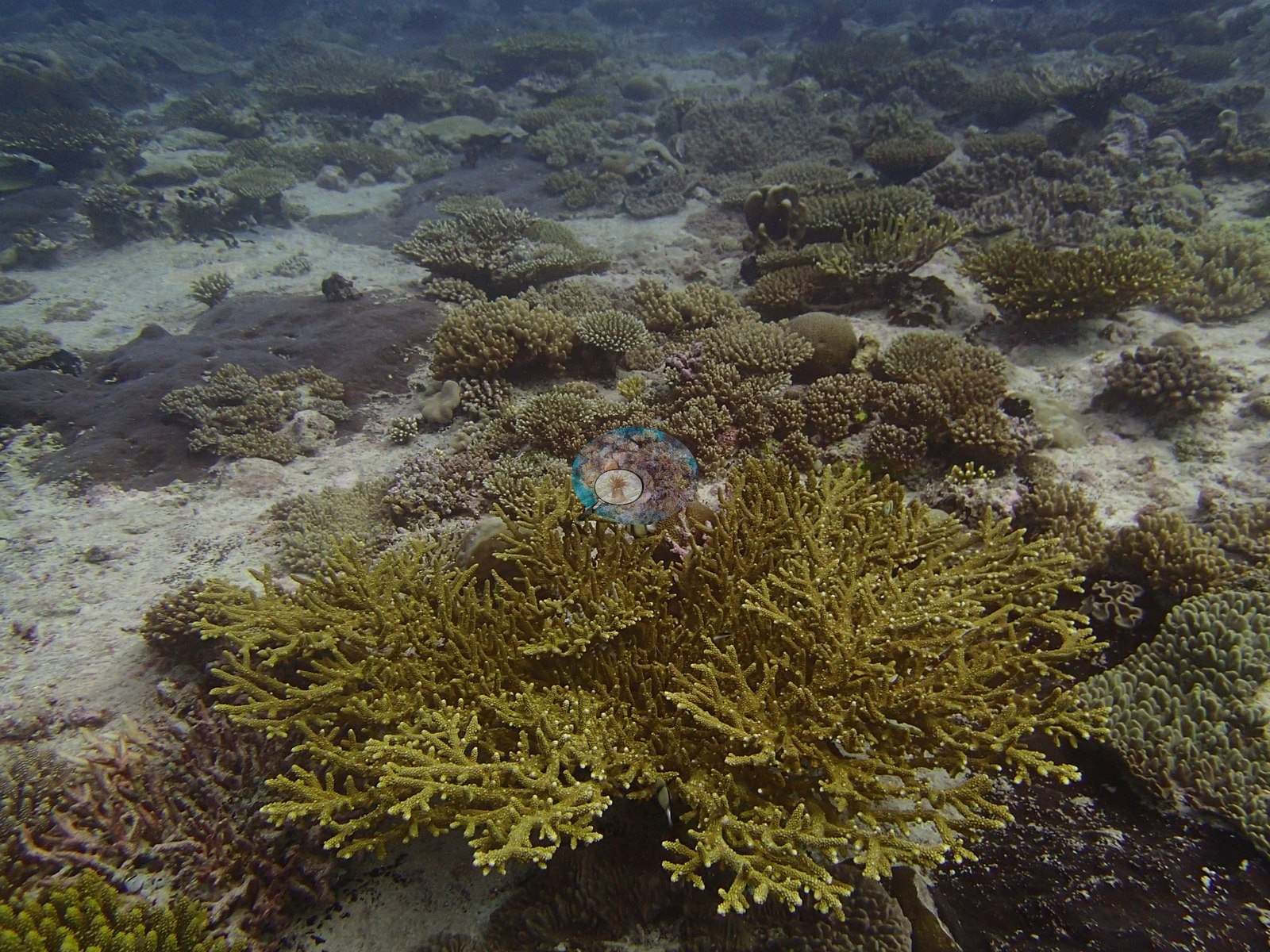
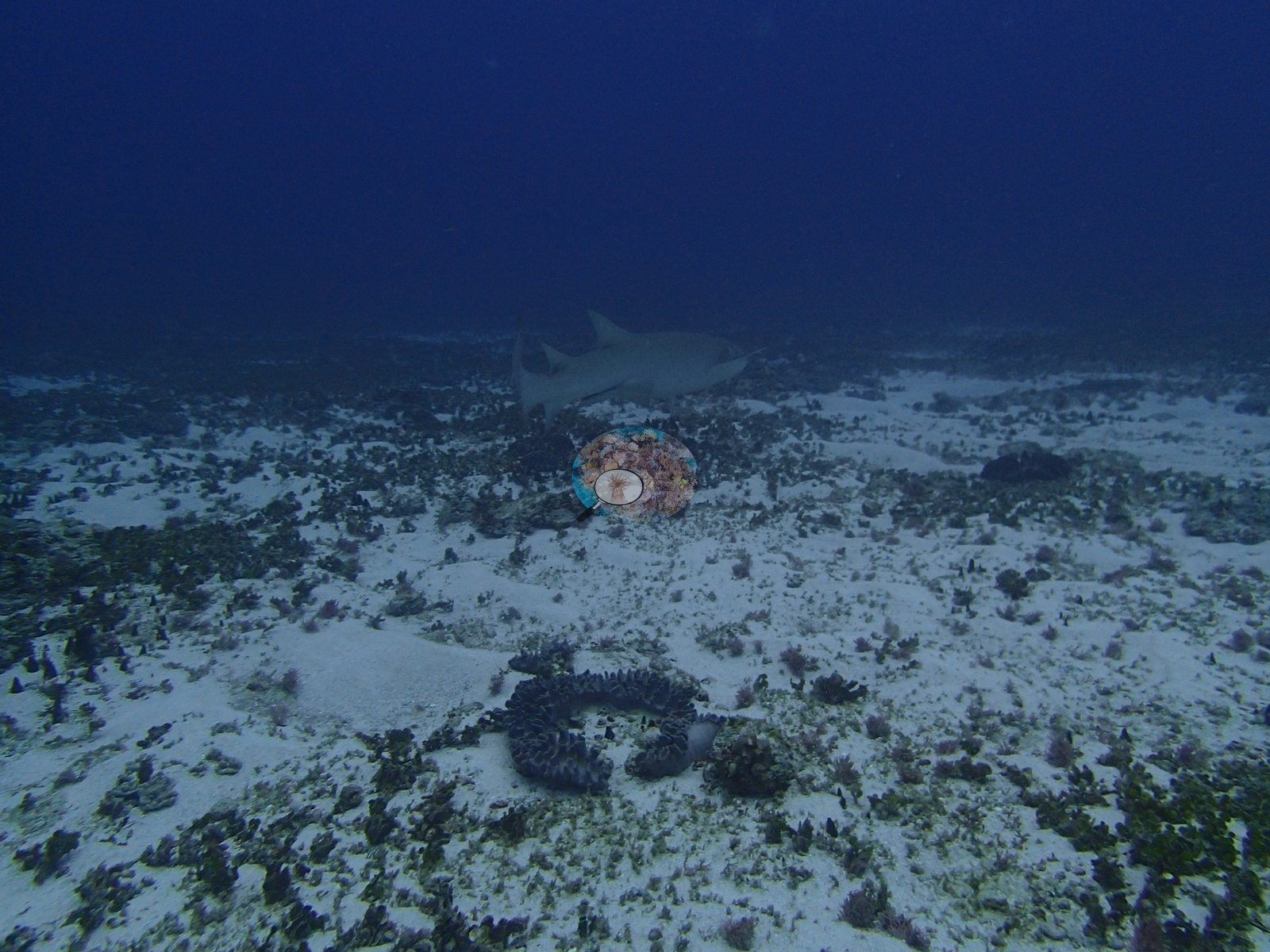
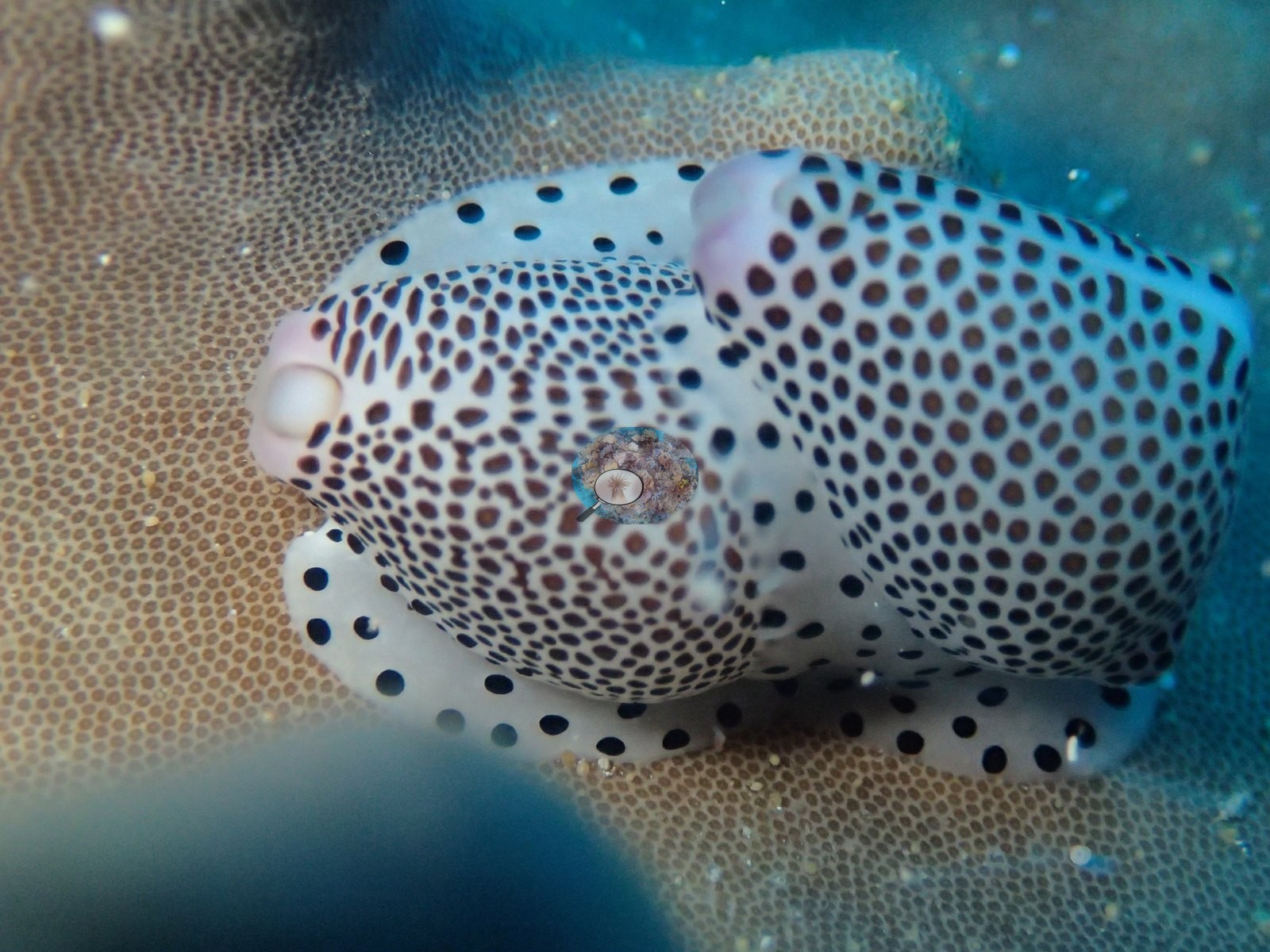
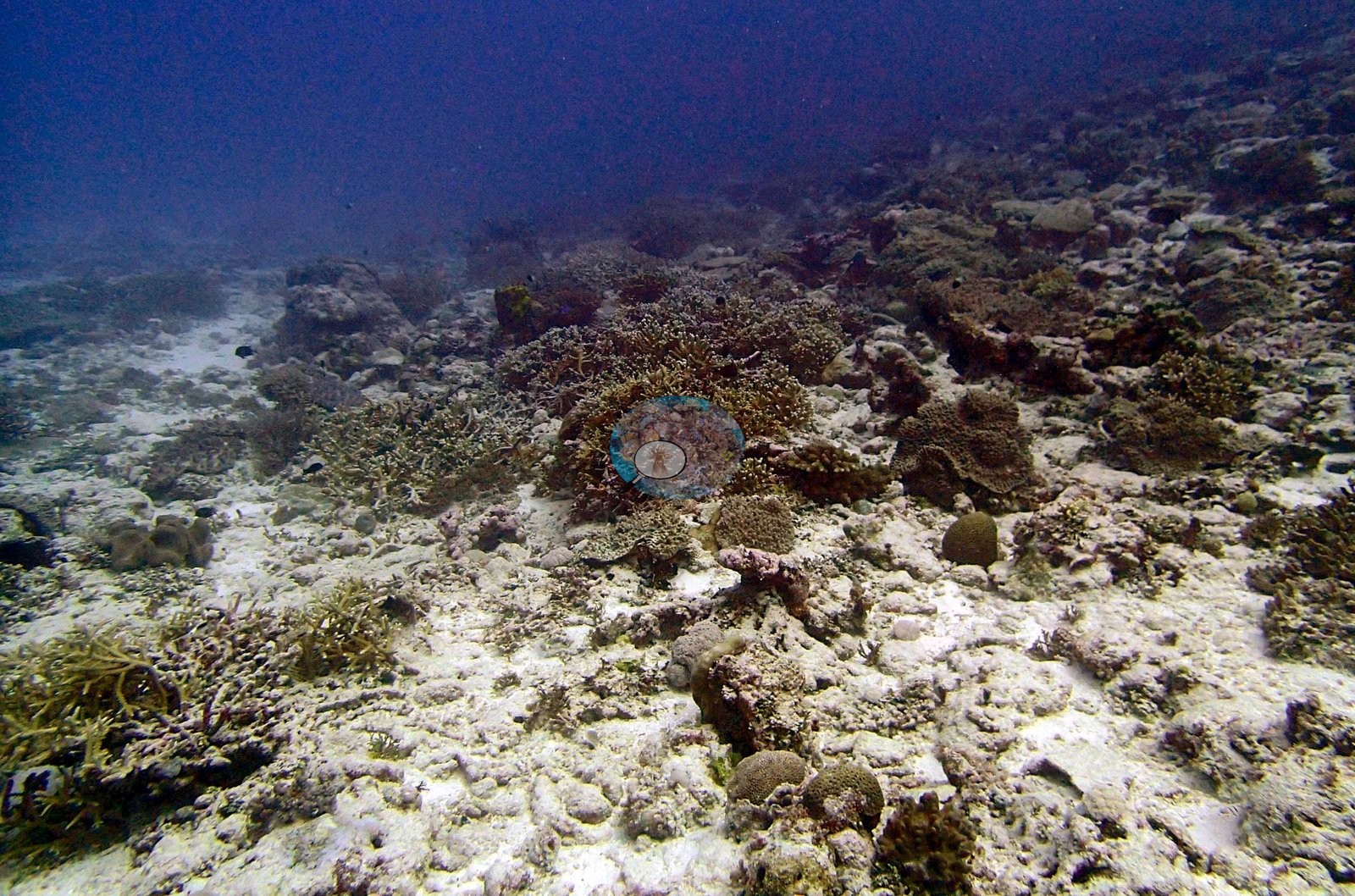
The striking figure is neither: non-coral invertebrates hold 28.5% of the benthos, more than the entire algal budget, unresolved to taxon. Across 25 genera no taxon exceeds 37% of the coral — Porites 12.38% of the benthos, Acropora 5.85%, Pocillopora 3.98% — an unusually balanced mix (e.g., Image 1, Image 4).
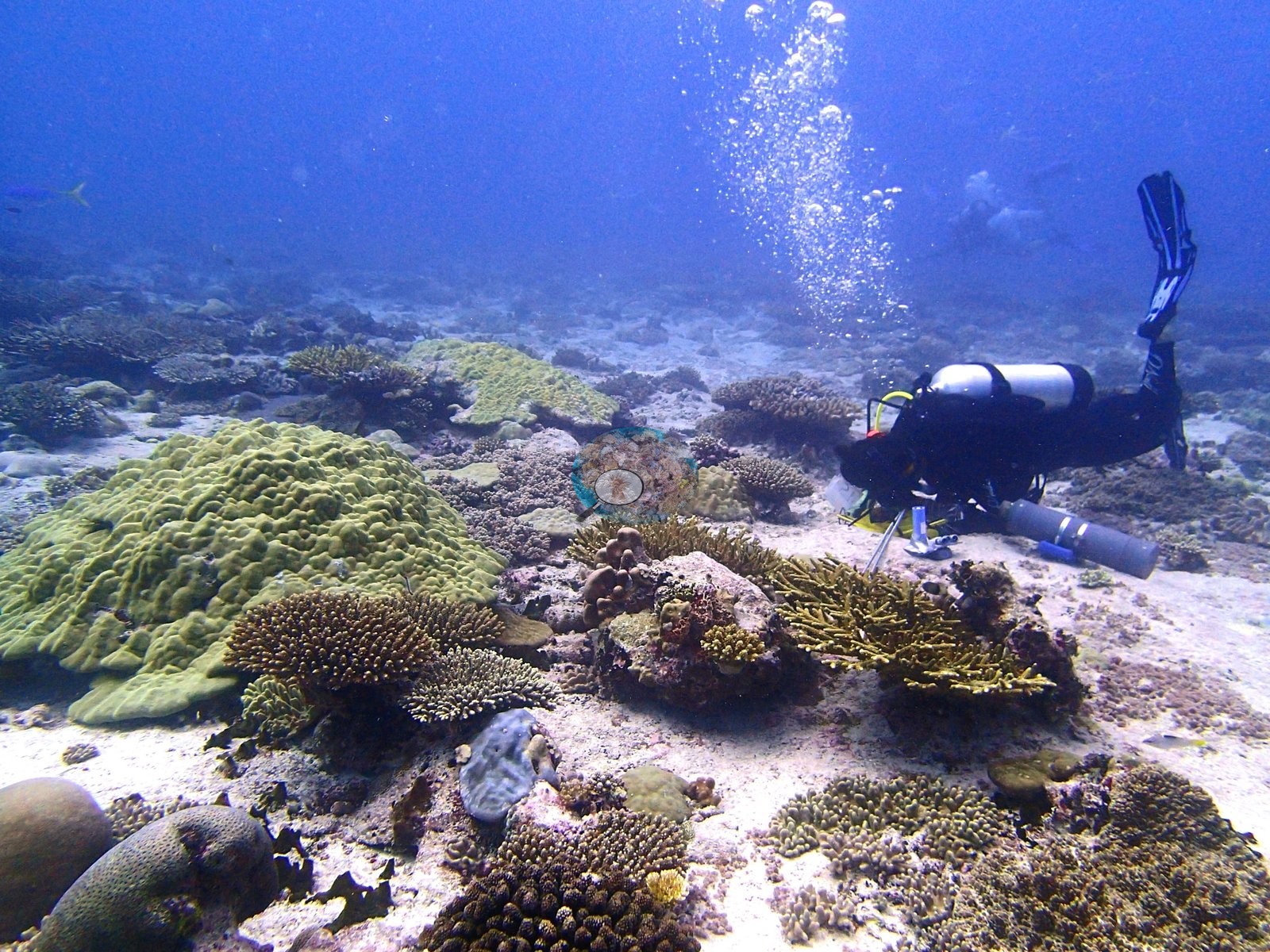
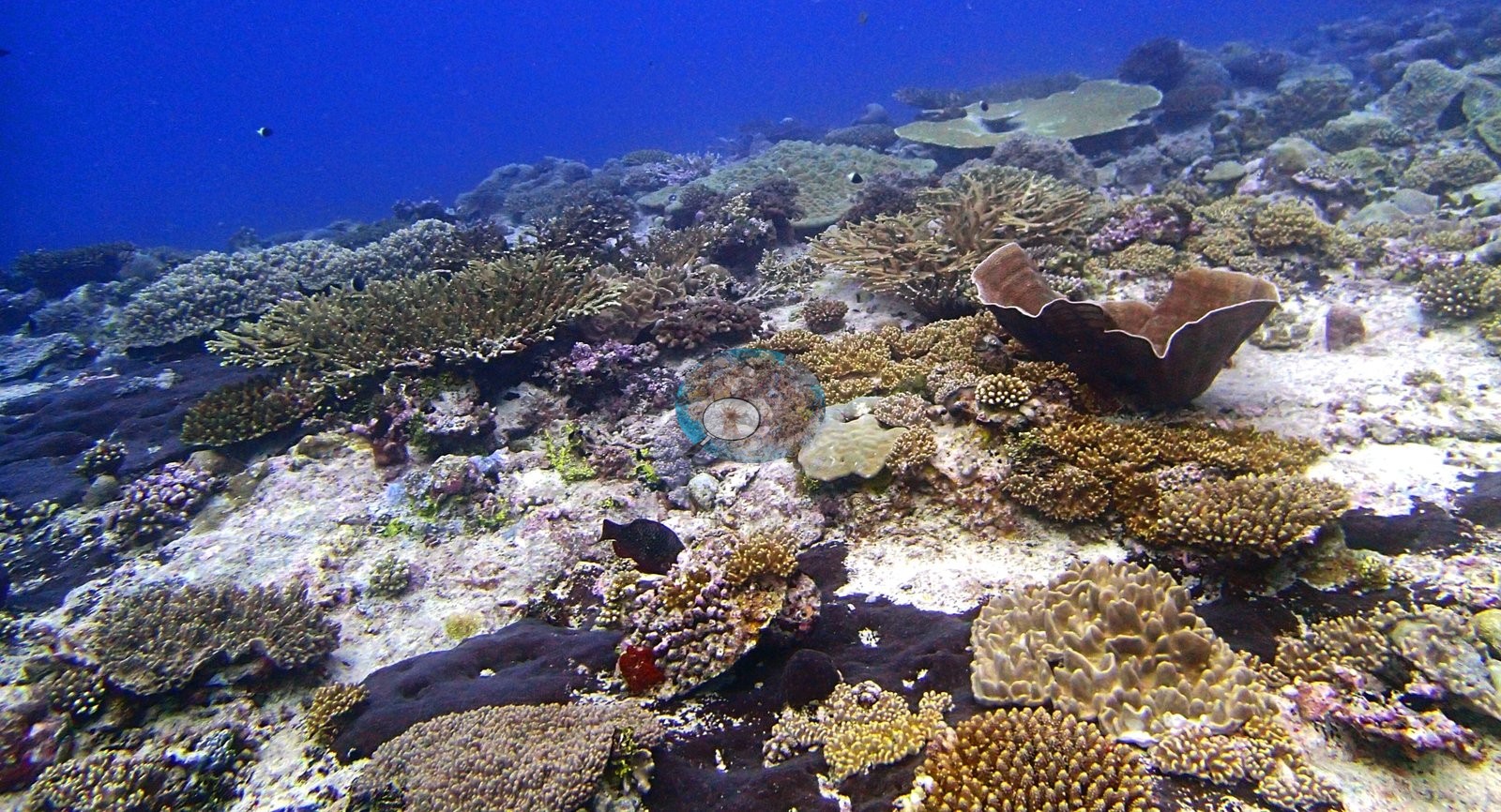
The profile runs from an invertebrate-dominated shallow band at 13.7% coral and 55.3% invertebrates, through two coral-abundant mid-depth bands at 46.2% and 42.7% carrying 17 and 24 genera, to a single deep transect at 34.0% where Acropora drops out and Pachyseris takes 18% of the coral. A third shows a dead table colonized by a dozen live Acropora recruits.
Coral cover
Formal transects recorded 34.1% coral against 24.1% algae, 67th of 109 Chagos sites for cover and 102nd for algae, among the eight least algae-dominated reefs in the archipelago, with fleshy turf at just 3.0%, 105th of 109. The site has no multi-method row, so the transect figure is its only verified cover number. Coral cover: 34%. Live hard coral measured on the in situ benthic transects of the LOF BIOT-1 expedition (Mayfield & Dempsey 2026, Oceans, supplemental S1), against algal cover of 24.1% of the benthos. The transect figure is this site's authoritative cover value; no image-derived product overrides it.
Stressors
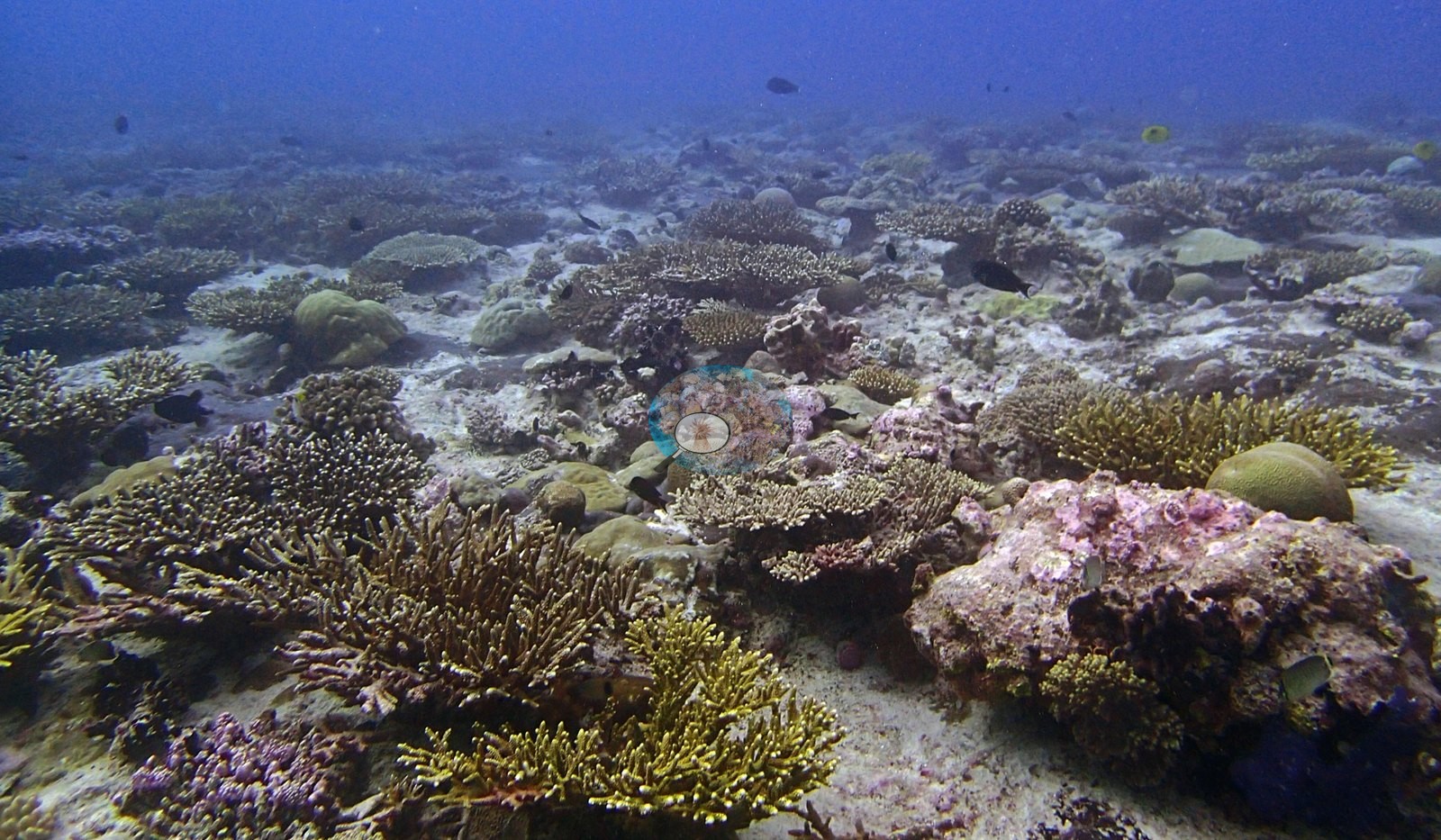
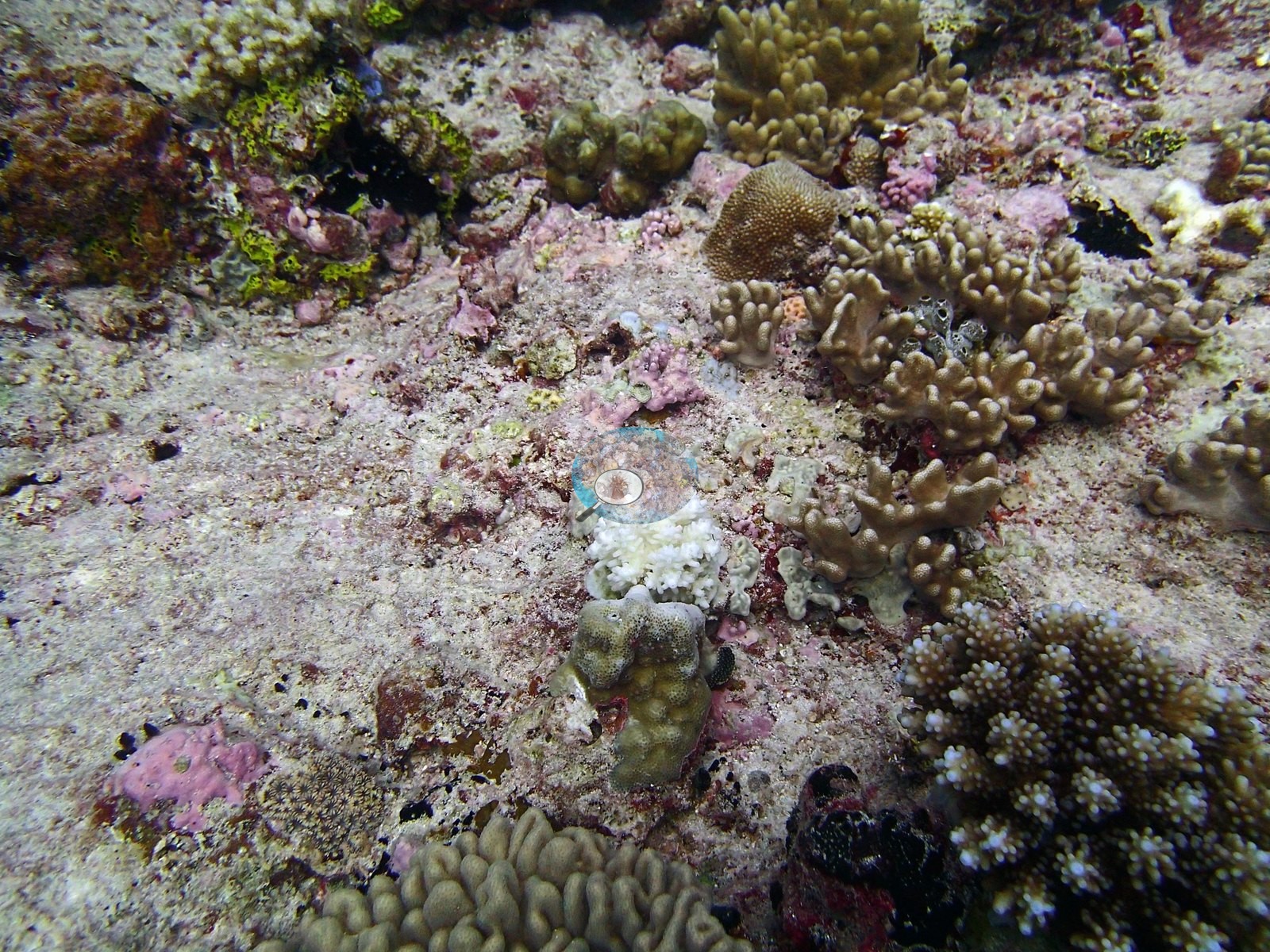
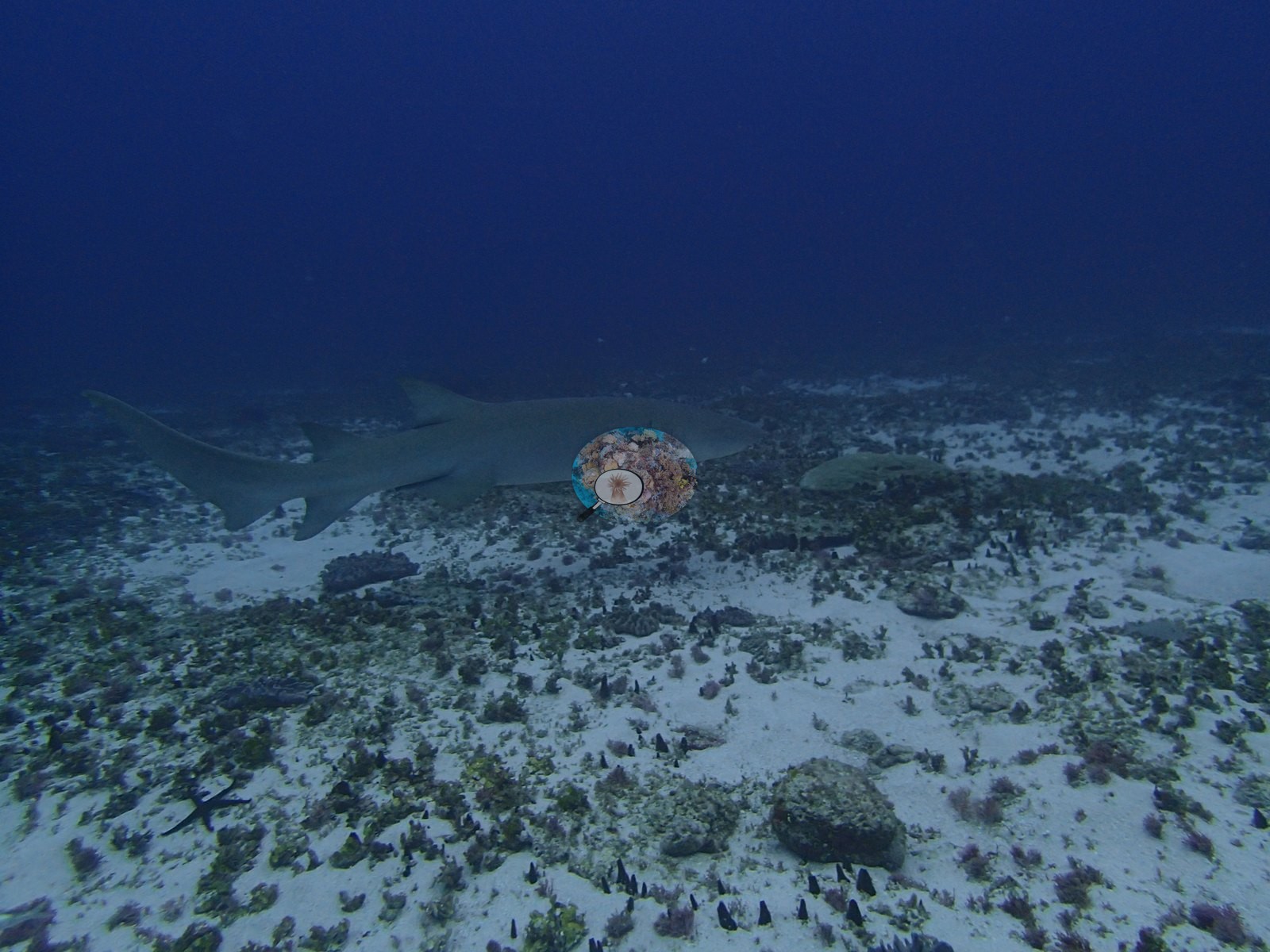
Bleaching on the canonical % bleaching (2nd training) column is 0.00%, 109th of 110 dives and the lowest of any site with a figure, both runs agreeing — yet one of the 26 frames shows a small intact bone-white colony among pigmented neighbors, so the reef should not be called unbleached. Another frame shows a crown-of-thorns starfish beside a stainless-steel bone-cutting forceps laid on the substrate, a deliberate removal rather than a chance encounter; one individual, no aggregation (e.g., Image 3).
Comparisons with other data
No independent survey was made at this exact site; the nearest ones are listed in the table below.
CV model comparison
More info
Those are point counts on the photographs; this is a diver swimming a transect. The models and the reference never saw the same thing. ⚠ SITE-LEVEL ONLY. The 2,500 frames were not associated with any transect taken within 200 m of them, so transect-vs-image comparisons are site means, never frames. The transect value is already in the pin `cover` field (109 of 112 pins, sourced to the paper's suppl. S1) and is read from there, never re-imported. The transect is THE coral-cover value for this site and stands alone. The rows below it are a methods comparison only: no computer-vision value is averaged with it, feeds the headline, or carries over to the site's cover figure (Anderson, 2026-09-22).| Method | Hard-coral cover (%) |
|---|---|
| Transect (published) | 34.1 |
| CoralNet | 38.1 |
| In-house DINOv3 | 21.8 |
| CoralSCOP edited | 39.1 |
| Claude | 34.5 |
Independent surveys nearby
Within 5 km, 1 independent survey station recorded hard coral cover in 2006. The most recent nearby survey is from 2006, so these values predate recent heat stress. This site's own estimate (34%) sits 7.1 points below the range of these surveys (41%); the methods differ, so the comparison is context, not a like-for-like test.
Collected by other programs using different methods, so these are context for the figures above, not a like-for-like comparison. Where a station was surveyed more than once the range is shown. Station names are not dive-site names.
| Agency | Site / location | Date | Hard coral cover (%) | Distance | Link |
|---|---|---|---|---|---|
| Sheppard et al. (2008) | Great Chagos Bank | 2006 | 41% (5 surveys) | 4.70 km | HeatCRD database |
Data & links
- Read the full site report ↗
- Download benthic survey data (CSV) ↗
- Download all LOF-GRE data (933 sites) ↗
- CoralNet image repository for this region ↗
- HeatCRD database ↗
- (reference) ↗
- Photo portfolio ↗
- Coral Reef Diagnostics page for this area ↗
All images from Coral Reef Diagnostics. Data are from Coral Reef Diagnostics and the organizations named in the data-sources table above.
 © Coral Reef Diagnostics.
References
- Mayfield AB, Dempsey AC (2026). Using tourist diver images to estimate coral cover and bleaching prevalence in a remote Indian Ocean coral reef system. Oceans 7(1):1. PDF
- Sheppard C, Harris A, Sheppard A (2008). Archipelago-wide coral recovery patterns since 1998 in the Chagos Archipelago, central Indian Ocean. Marine Ecology Progress Series 362:109-117. PDF