
Part of the regional summaries: Chagos Archipelago - Great Chagos Bank West / Brothers / Eagle and Chagos Archipelago
More info
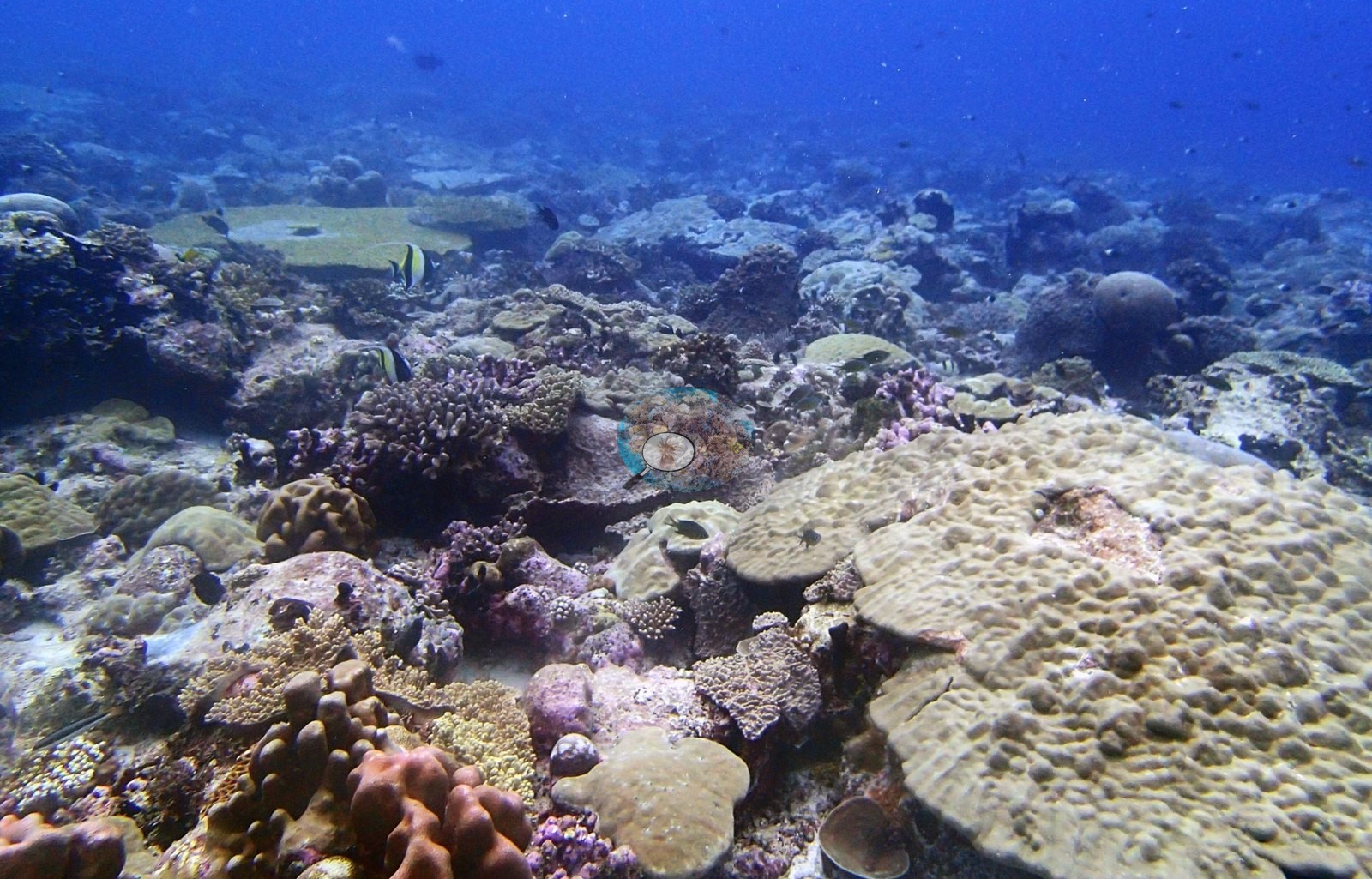
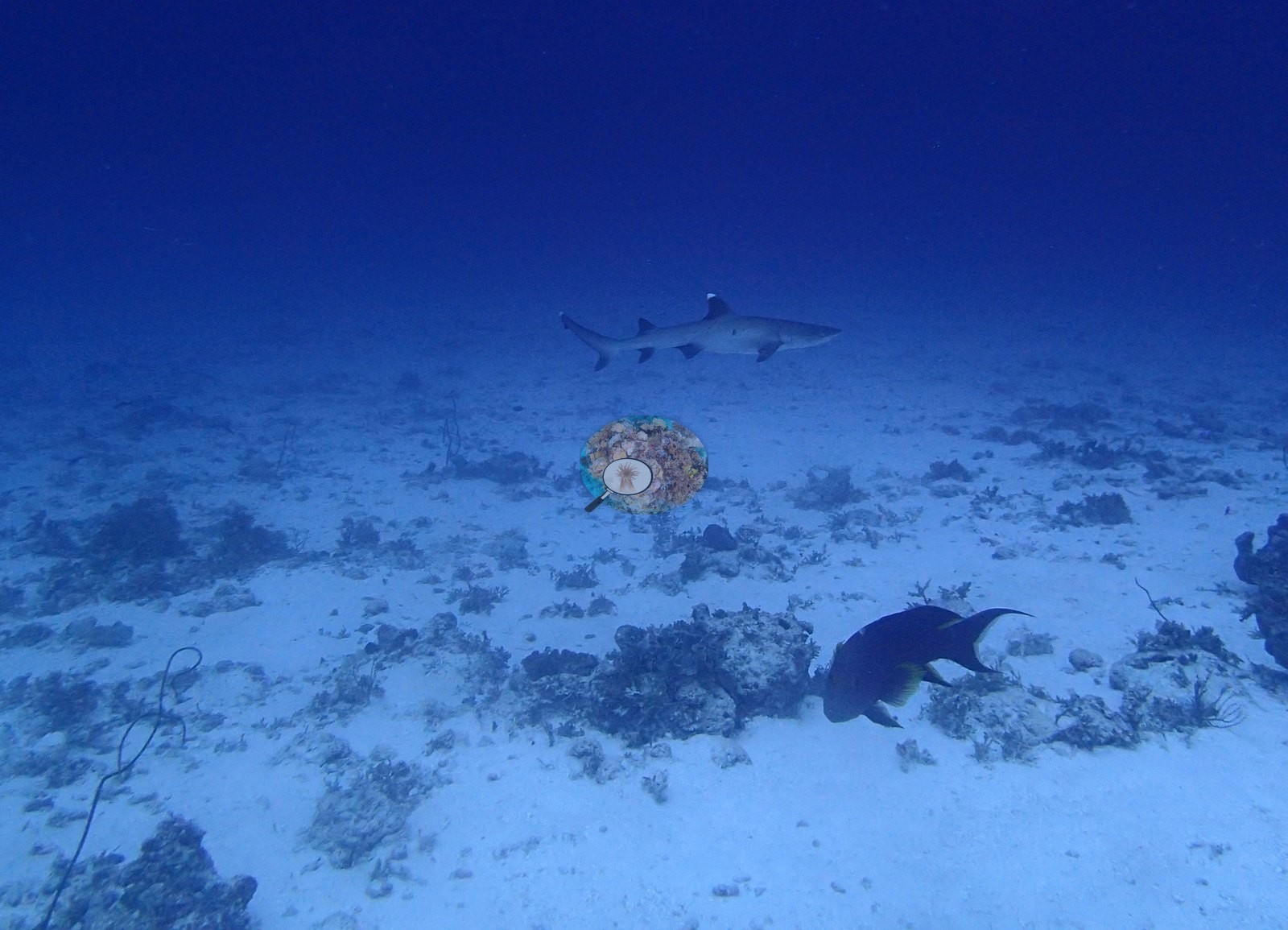
Chagos (NOAA CRW virtual station)BIEA23 is a genuinely good Chagos reef where the camera was actually on it - cream and tan massive Porites domes, purple digitate Acropora, and clean coral tables, with live cover swinging from 0% to 80% between frames. A whitetip reef shark and a giant clam were recorded, and published cover is 25%. Surveyed on the Living Oceans Foundation's Global Reef Expedition.
One independent survey station shown with the program’s logo — click one to see how far it is from this site.
Three other CRD dive sites within 5 km shown in orange — click a marker to open its page.
🗺 Detailed map of the Global Reef Expedition dive sites, Eagle Island, Chagos (Khaled bin Sultan Living Oceans Foundation; opens in a new window)
Site description
Setting
The setting is a fringing reef of intermediate exposure at 29.2°C and 34.3 salinity.
General benthic features
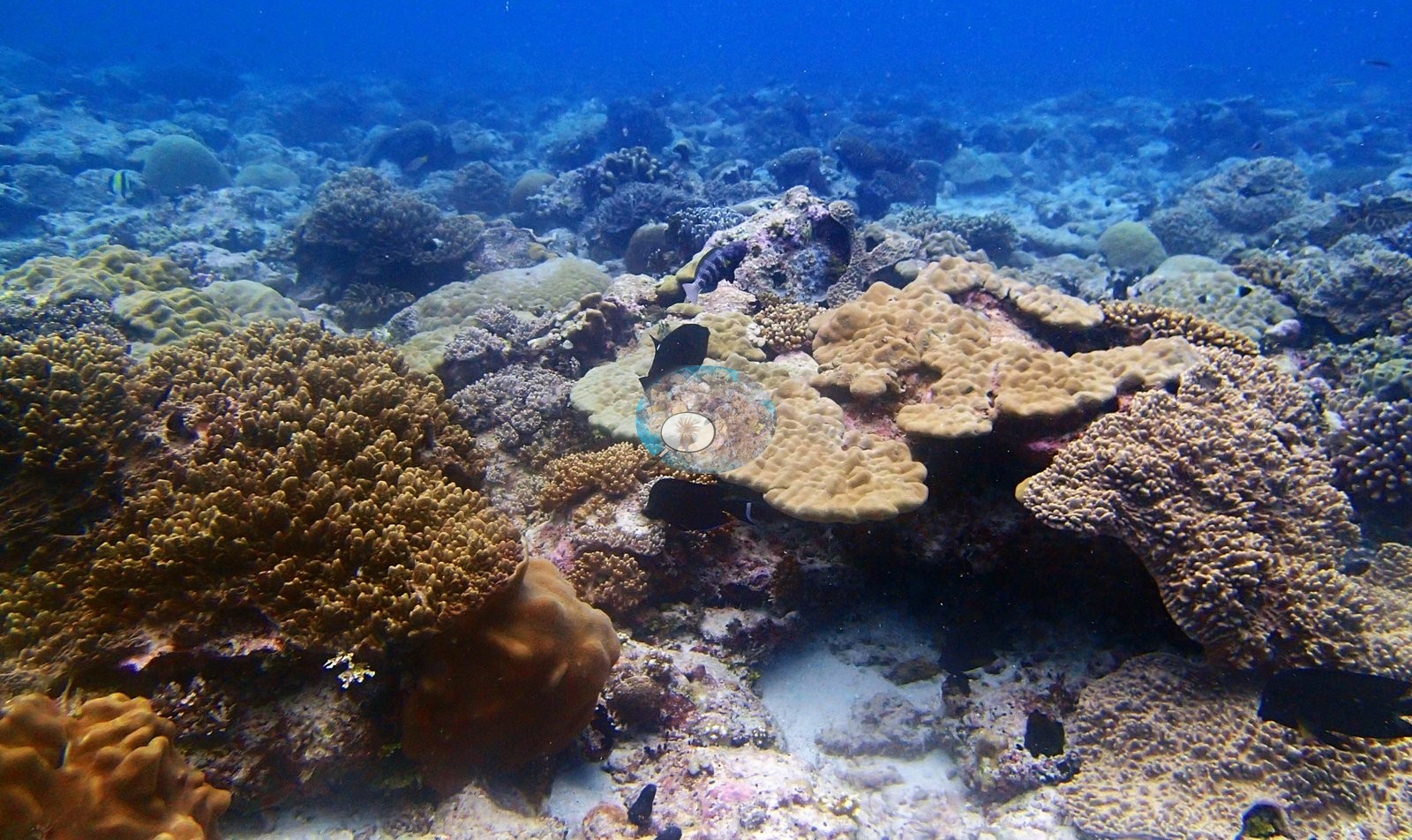
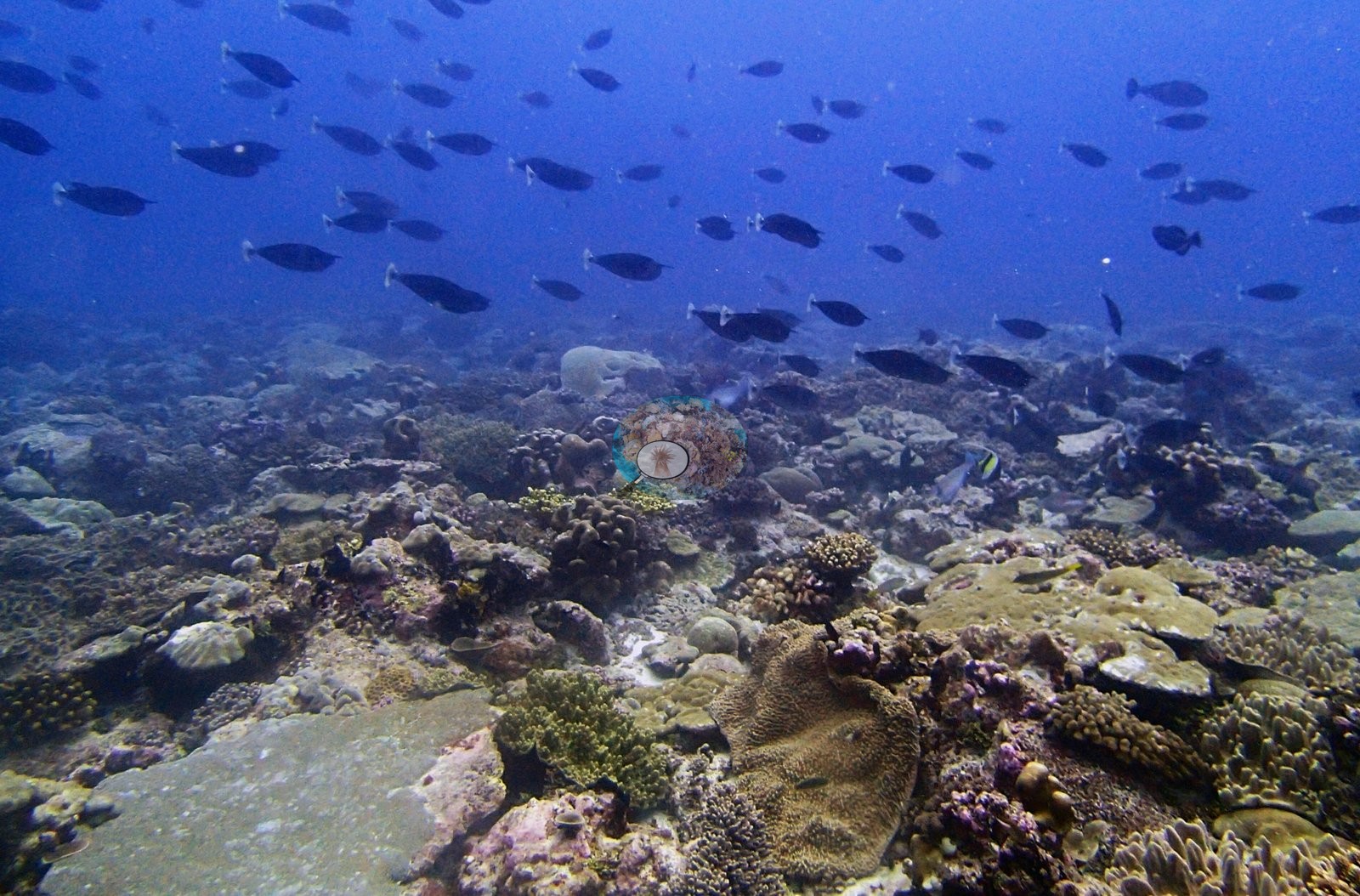
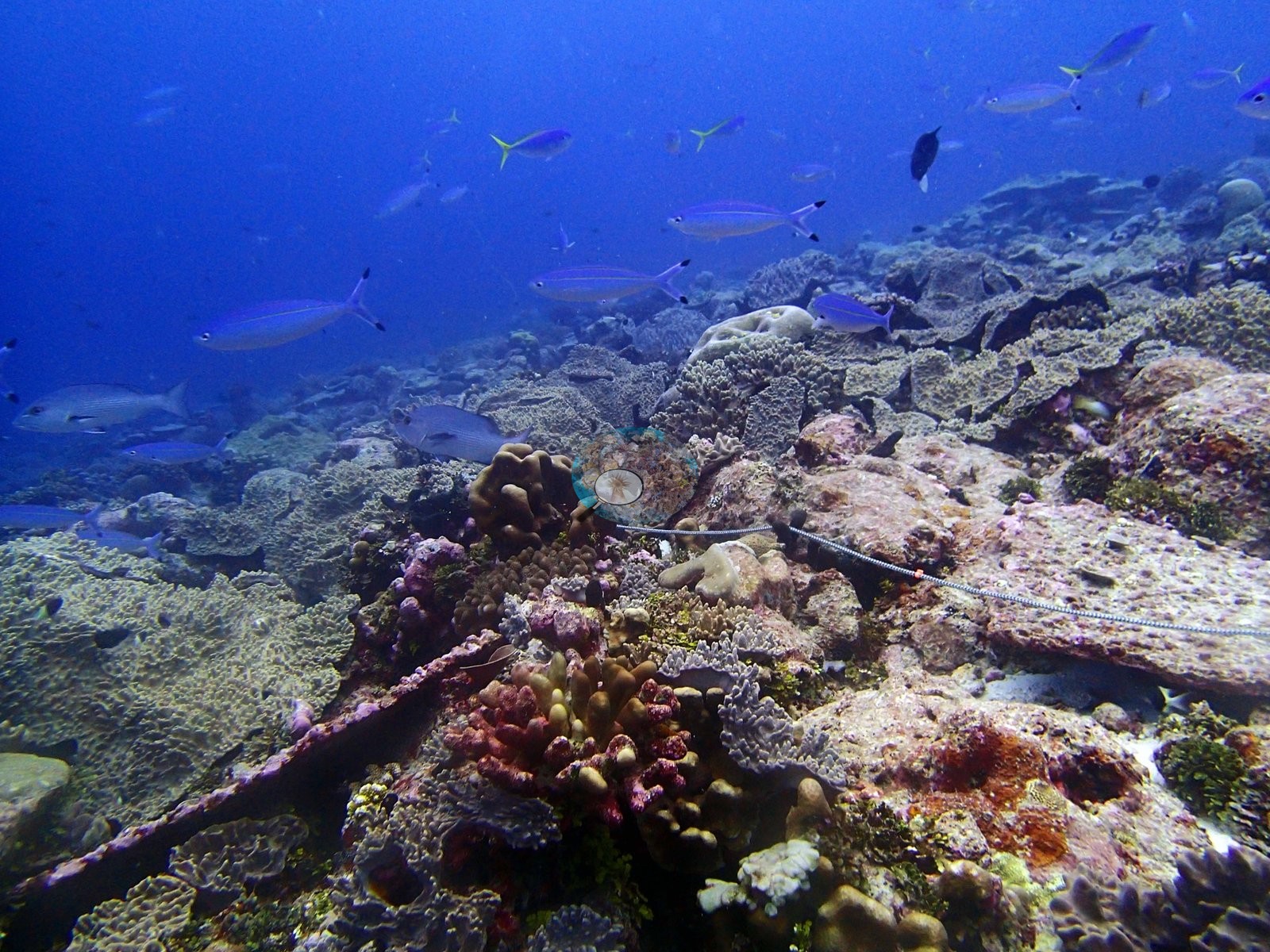
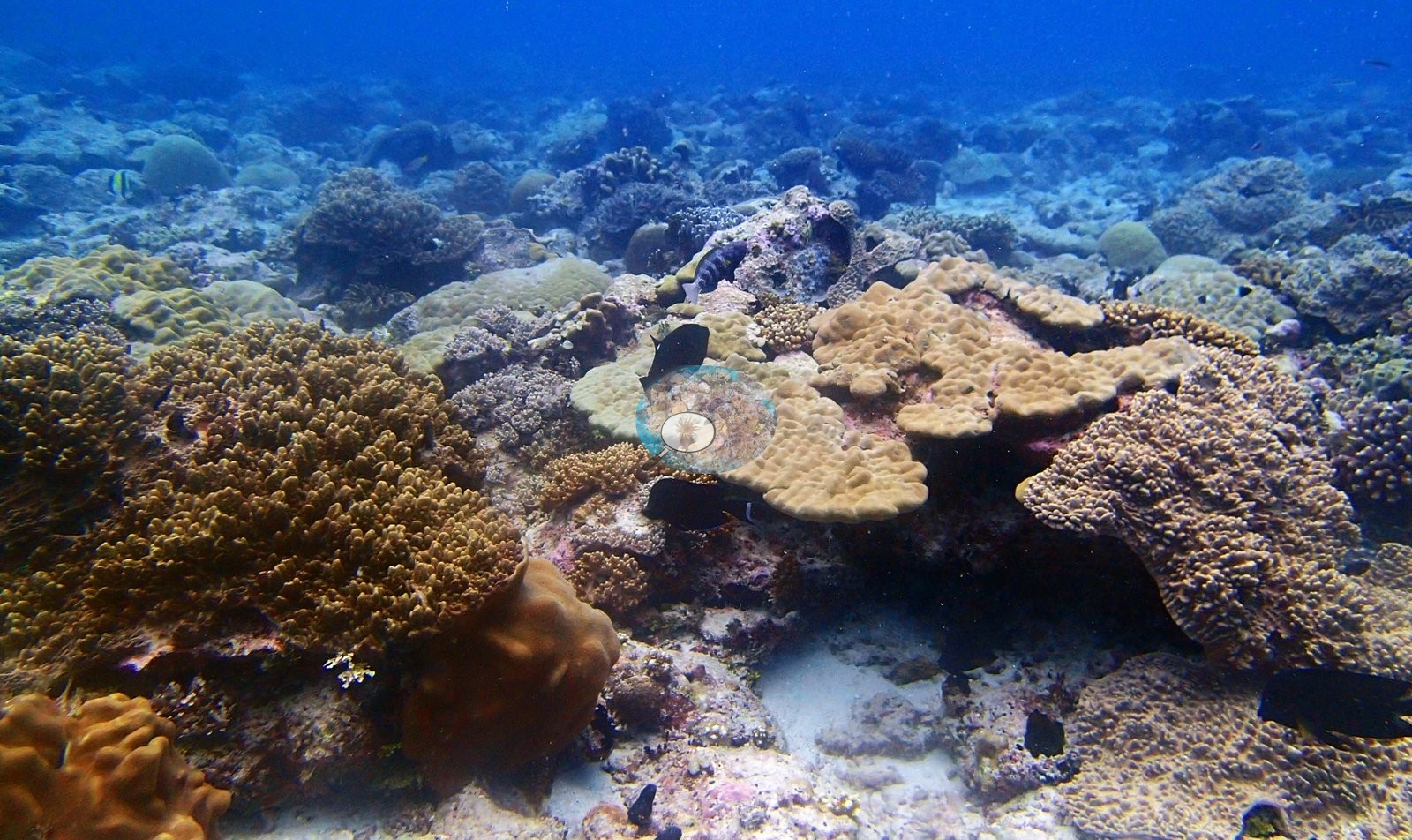
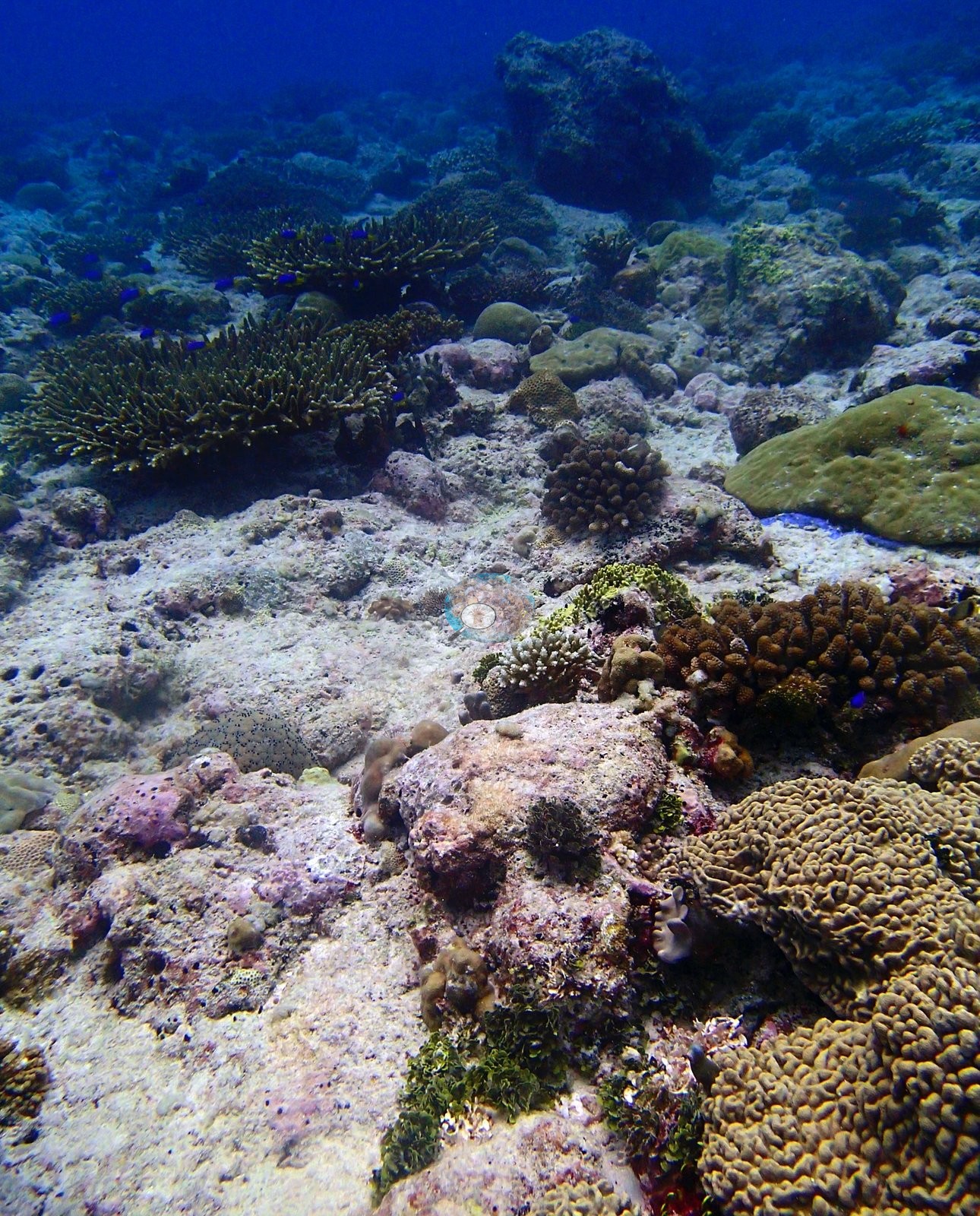
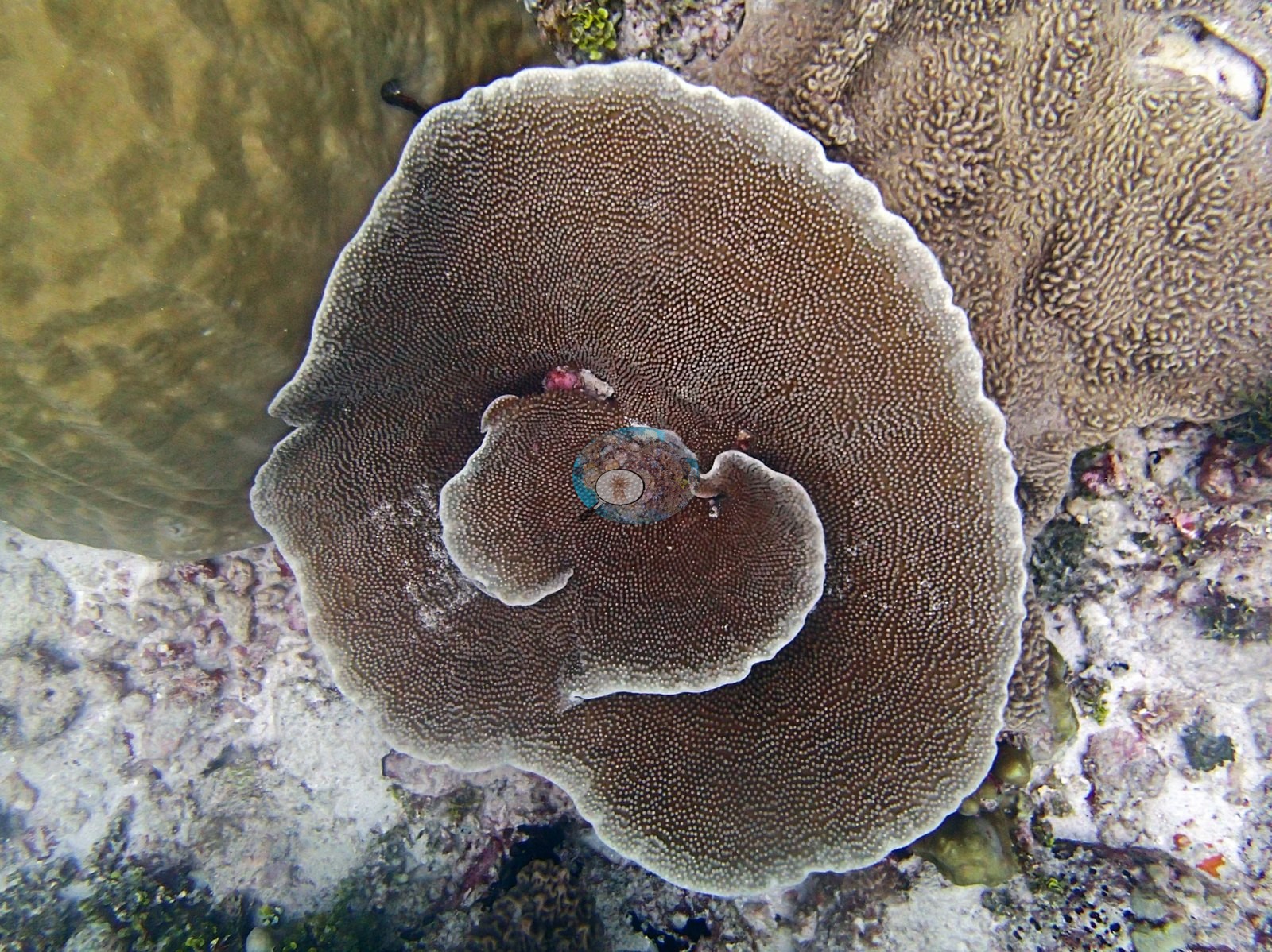
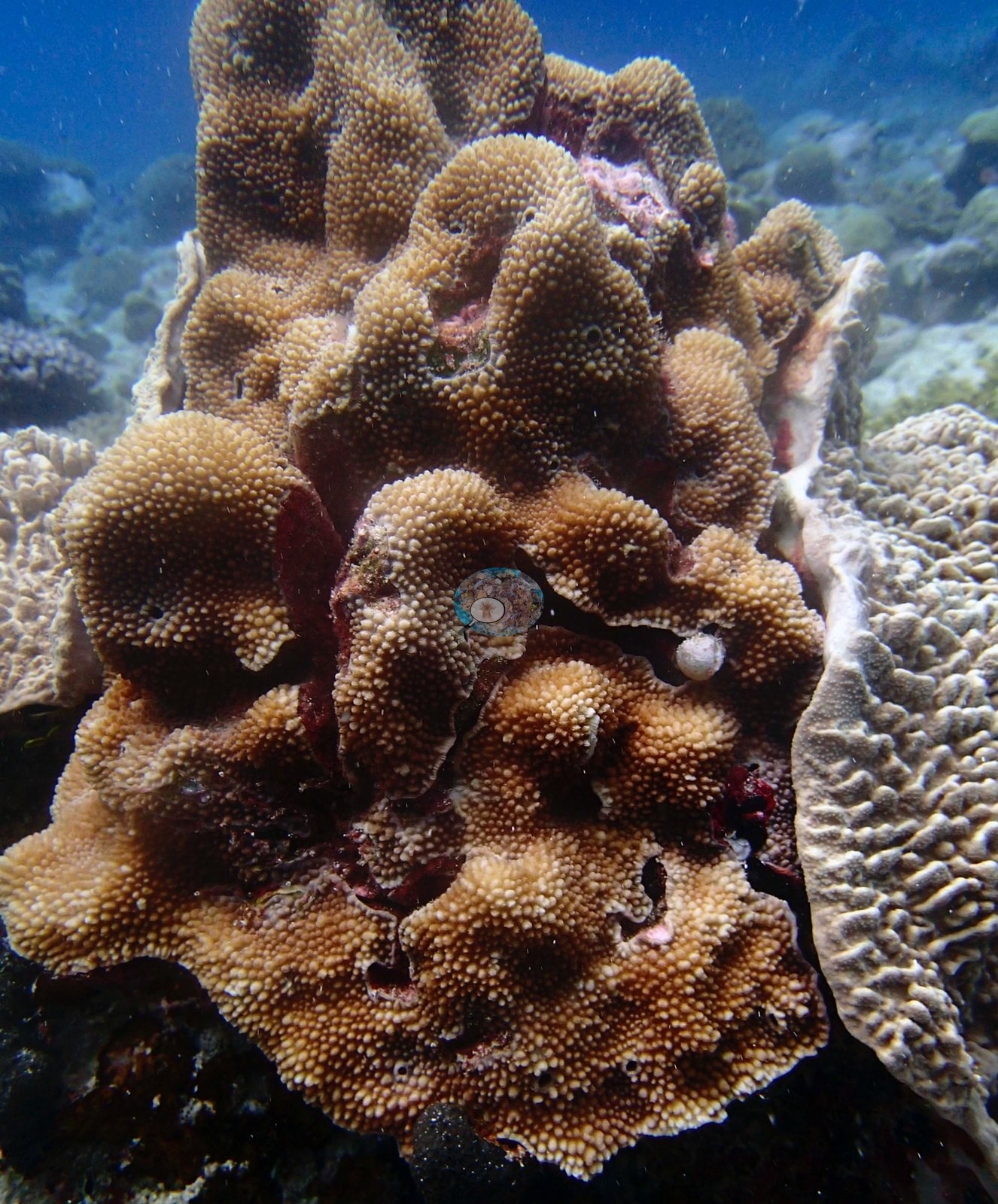
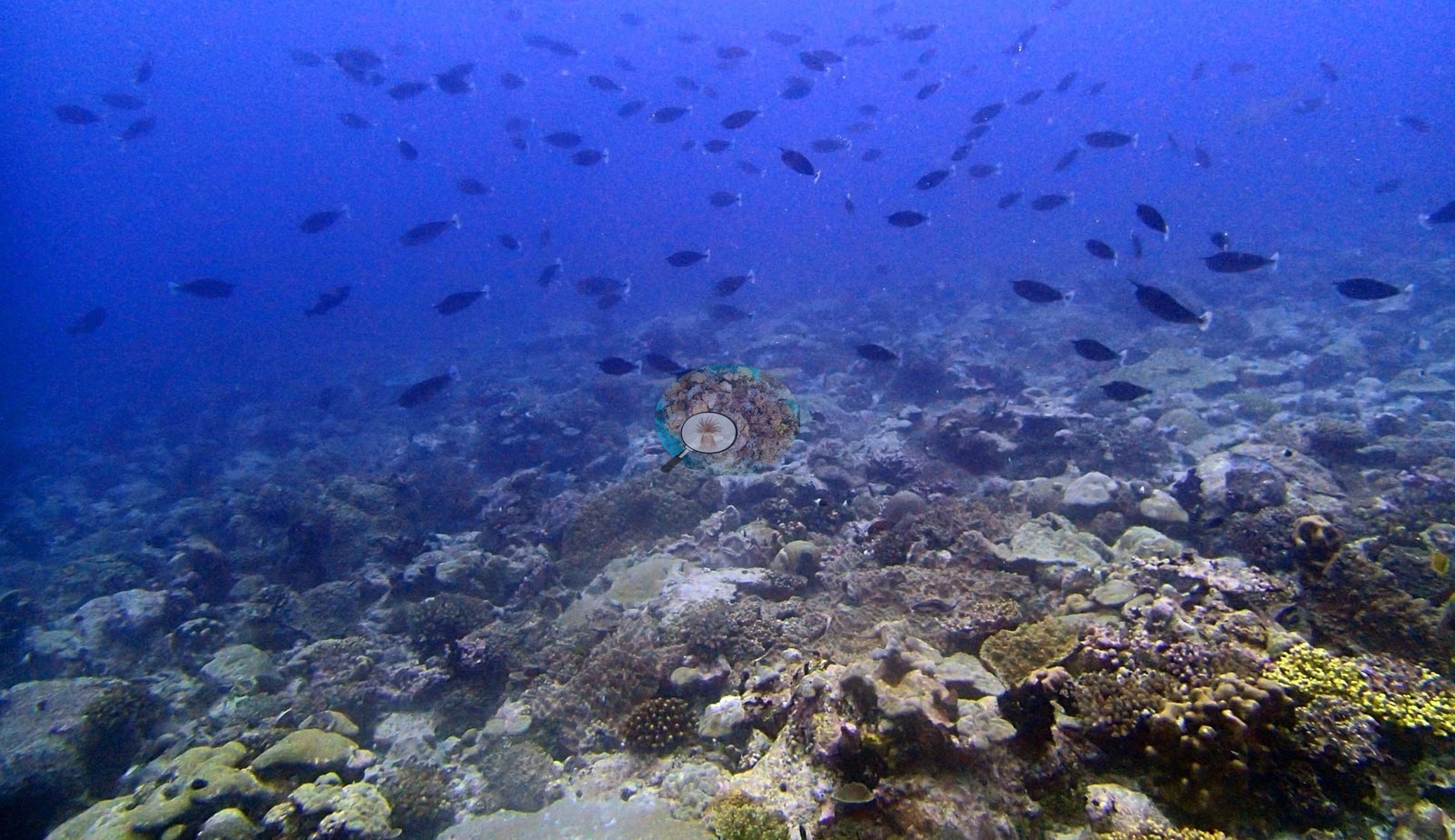
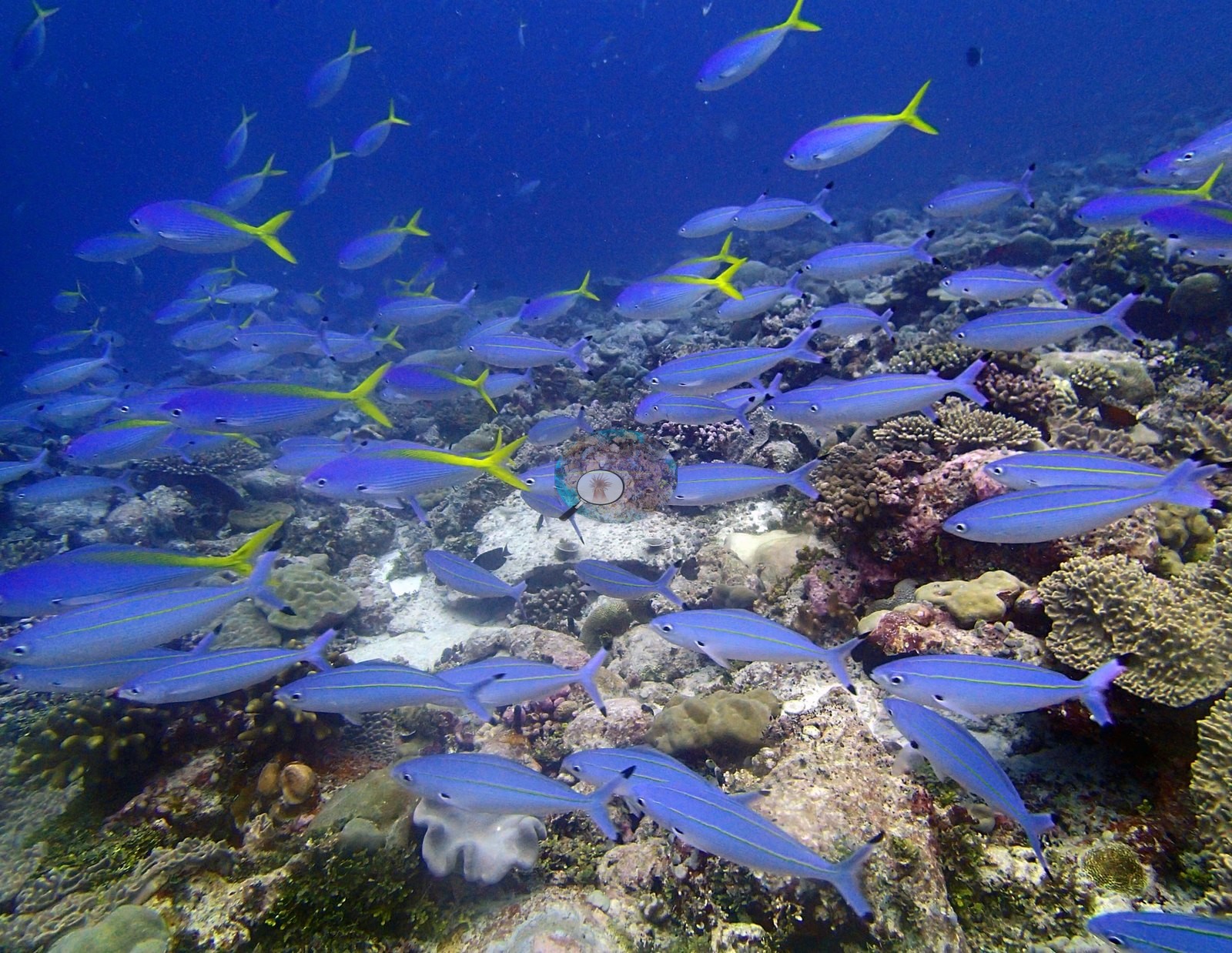
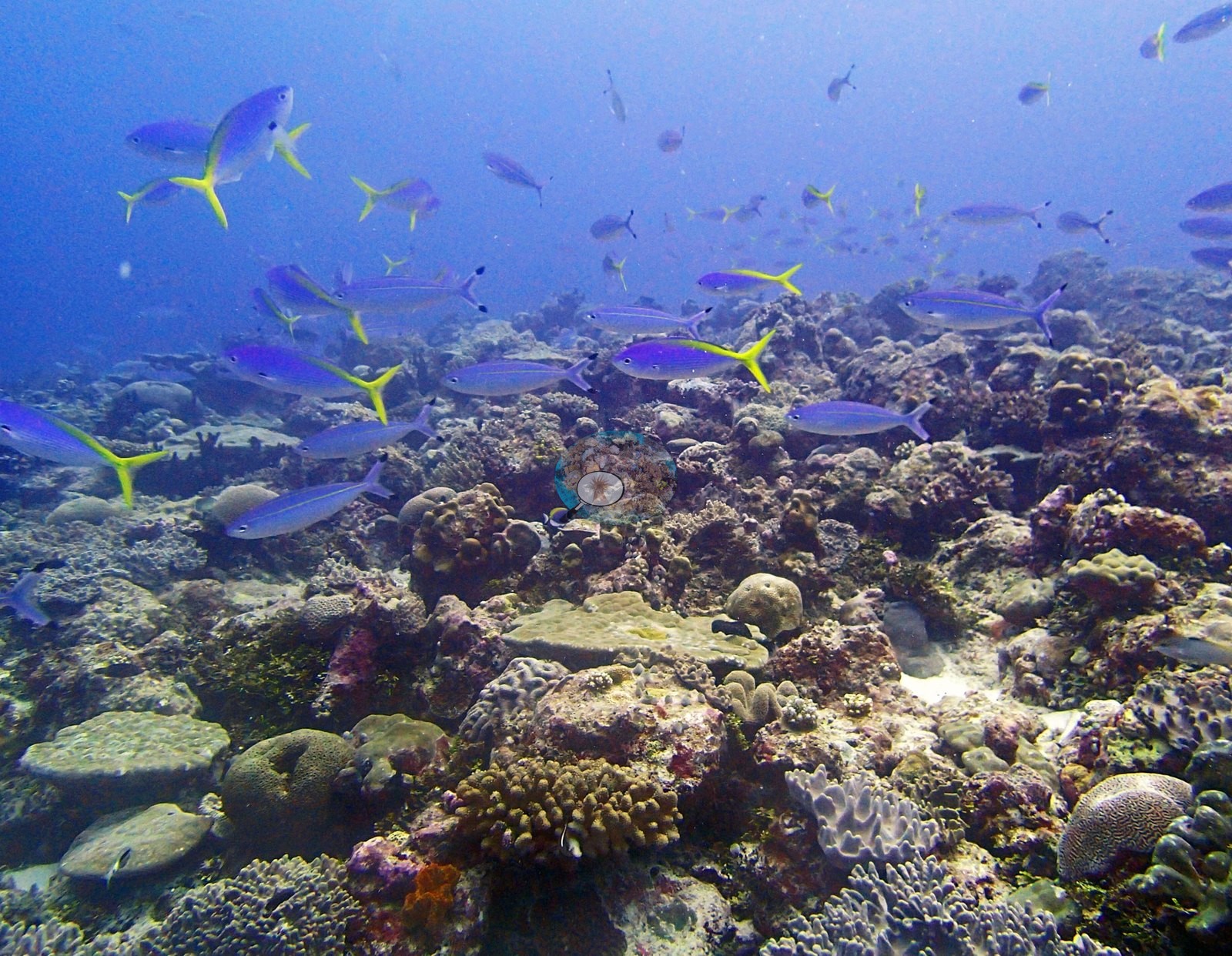
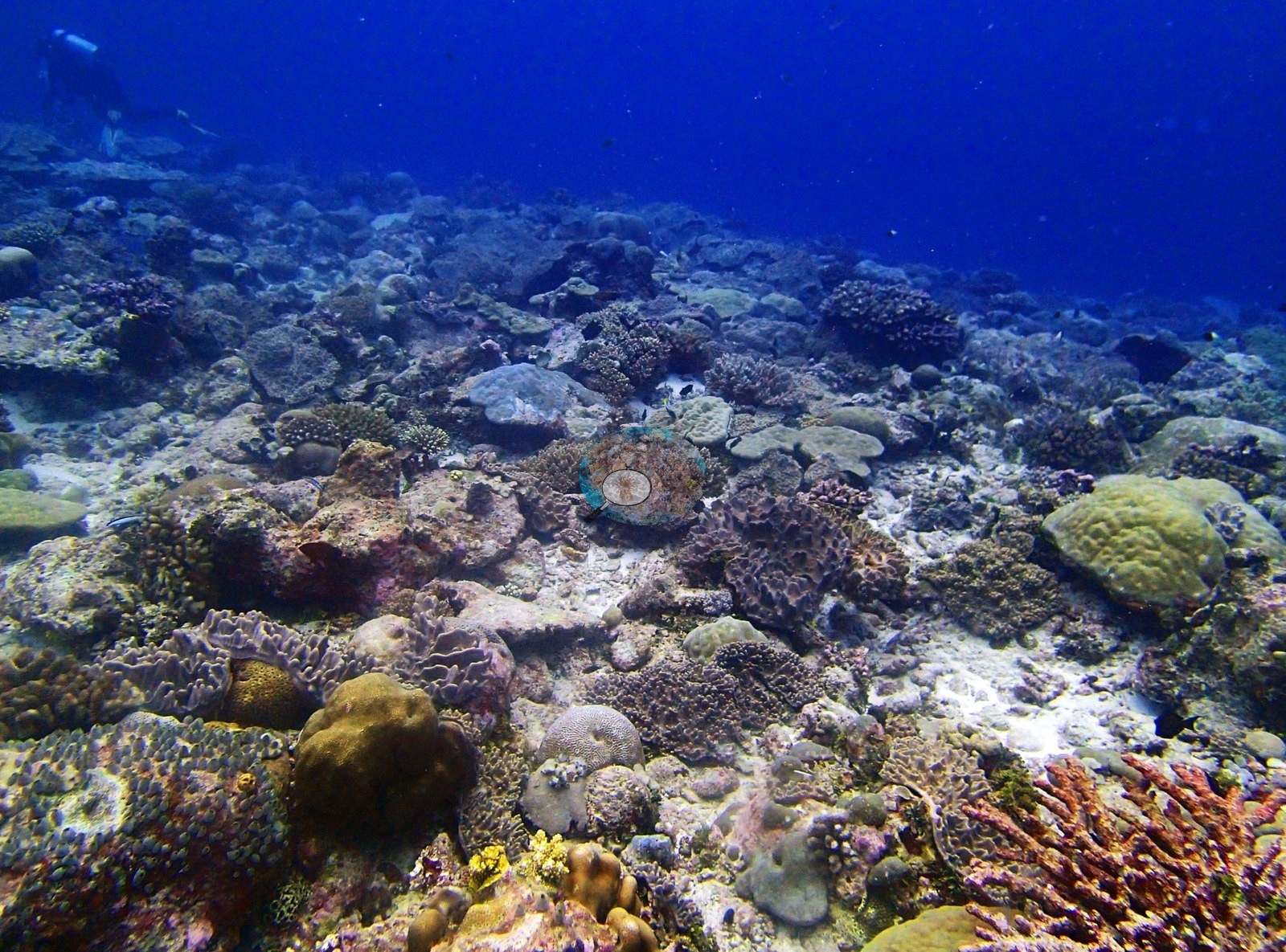
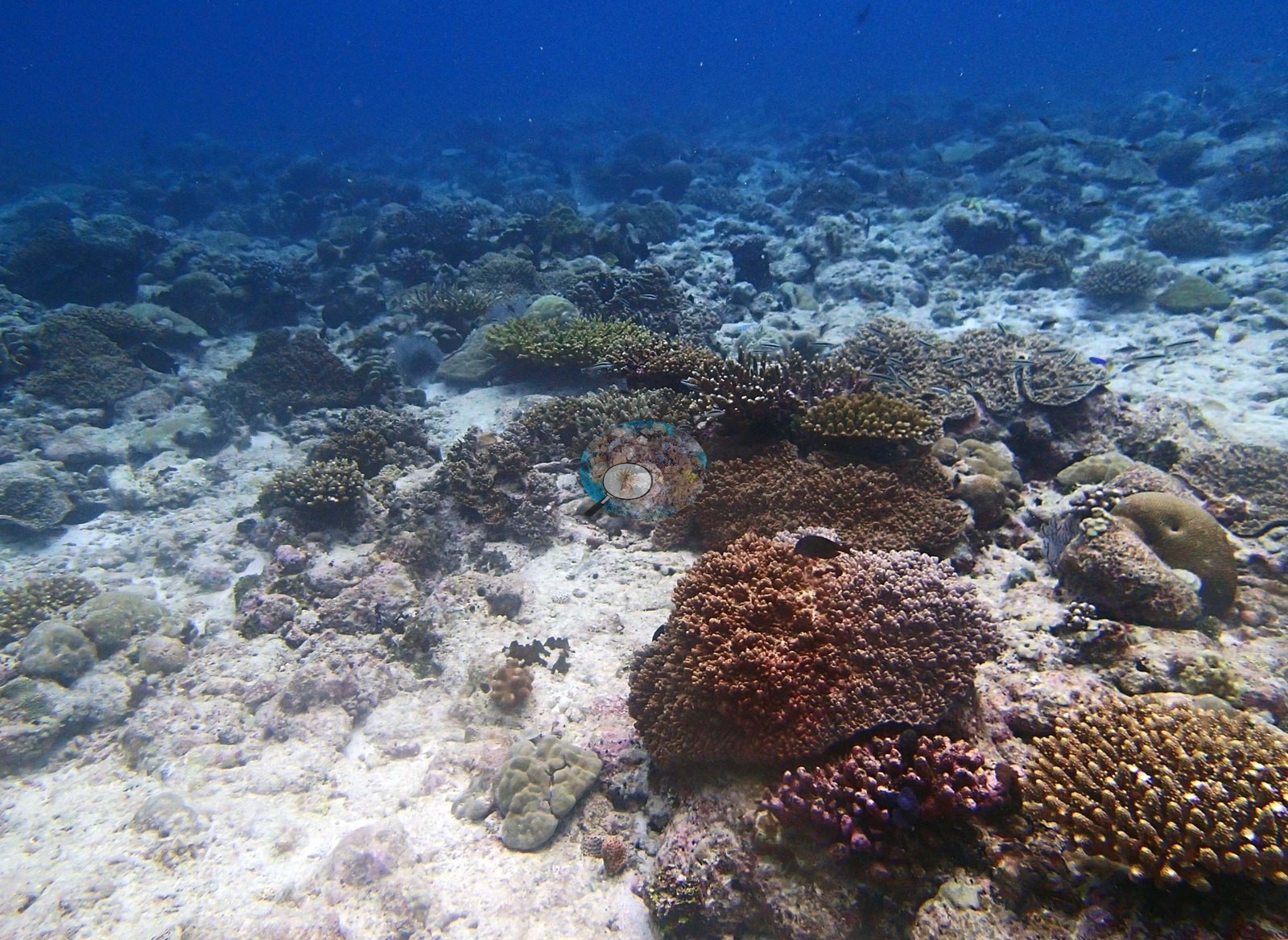
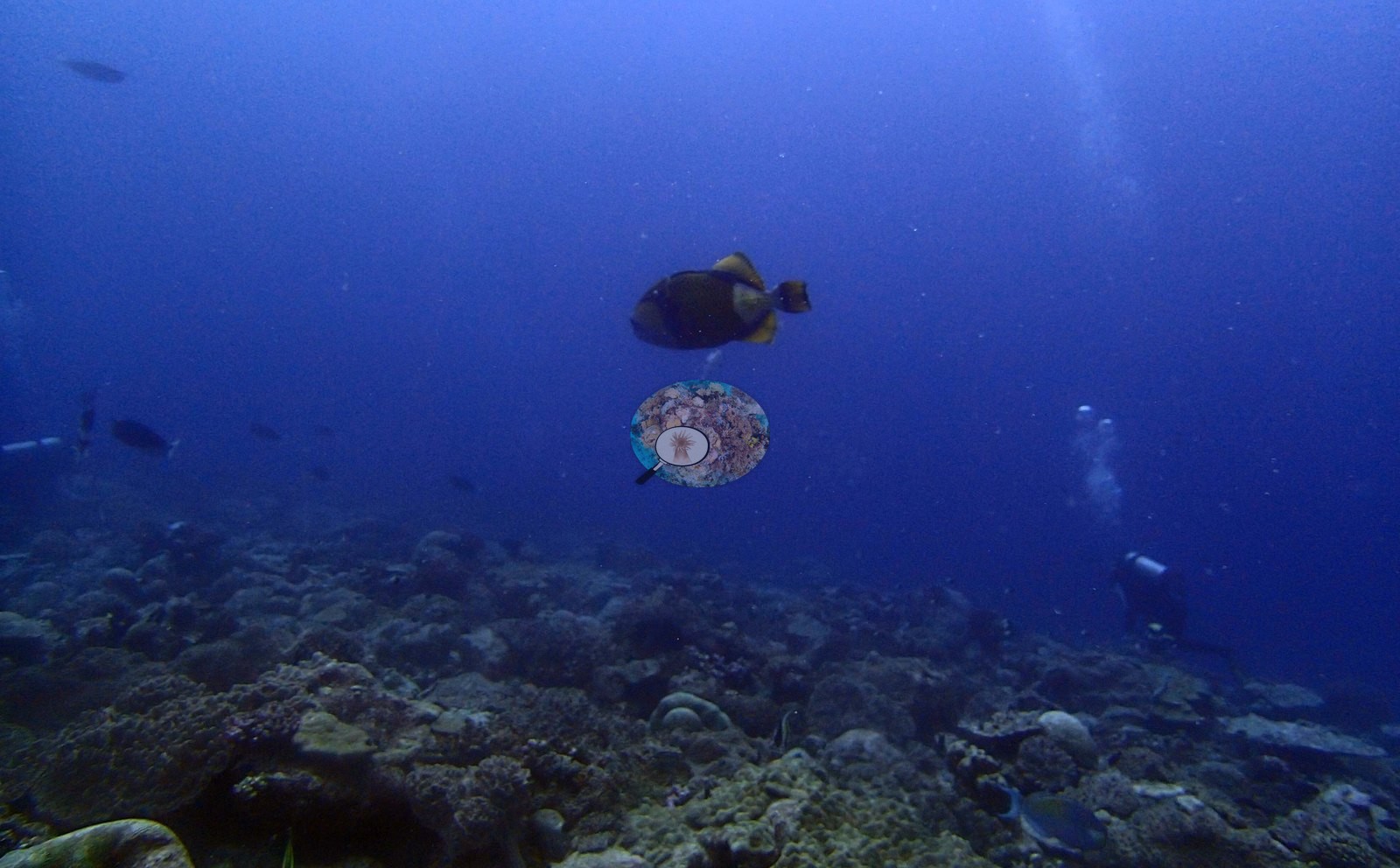
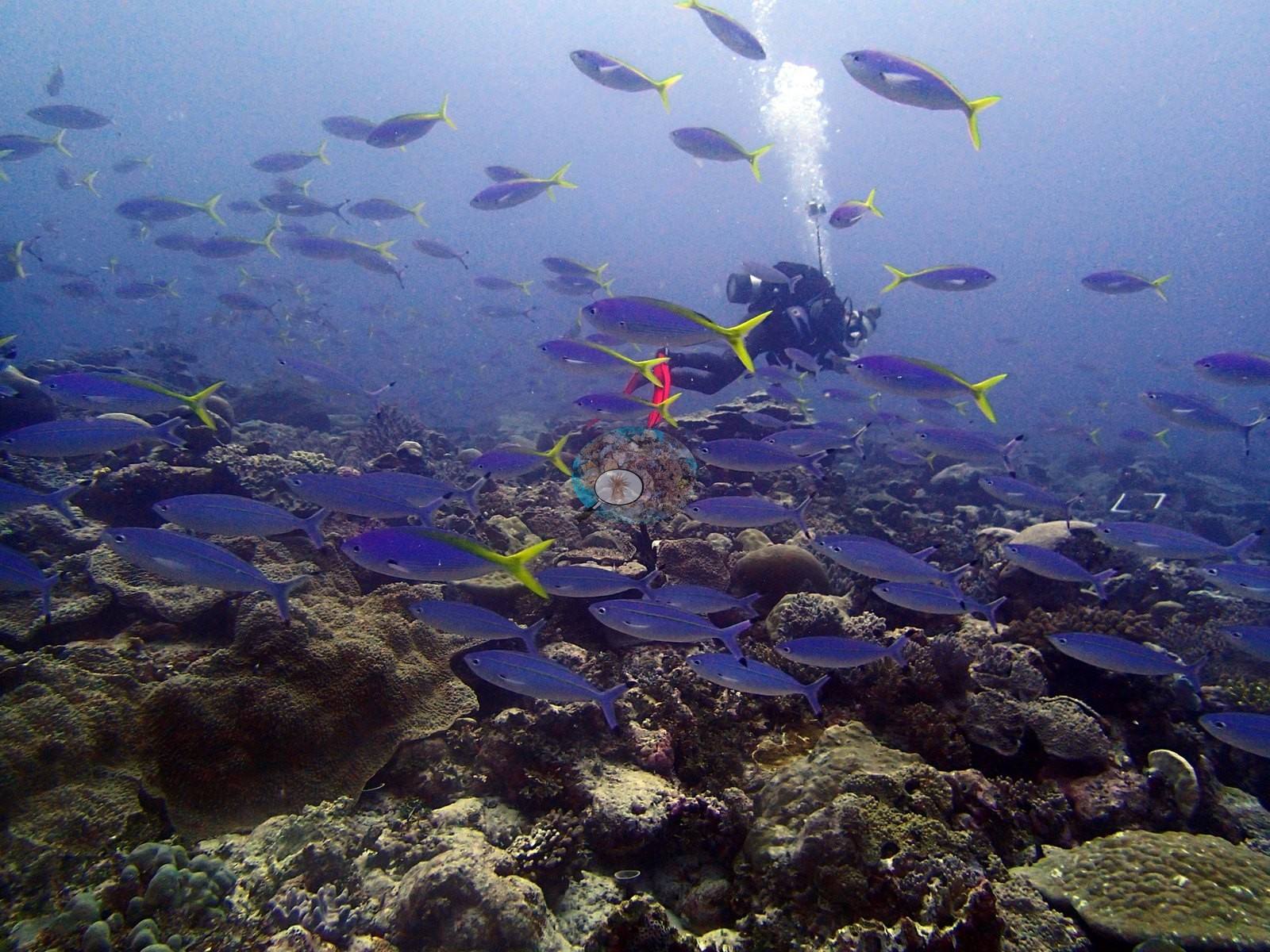
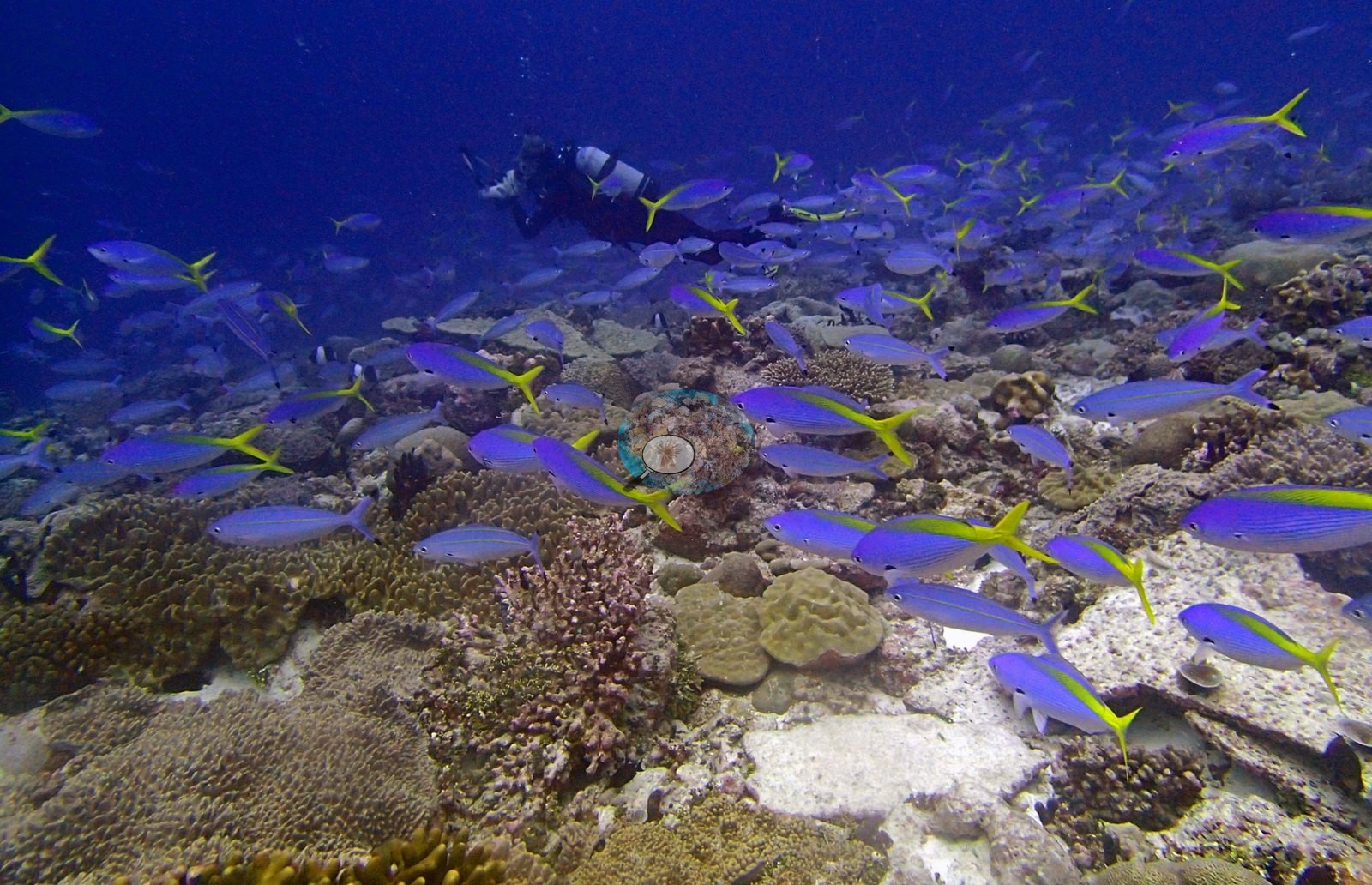
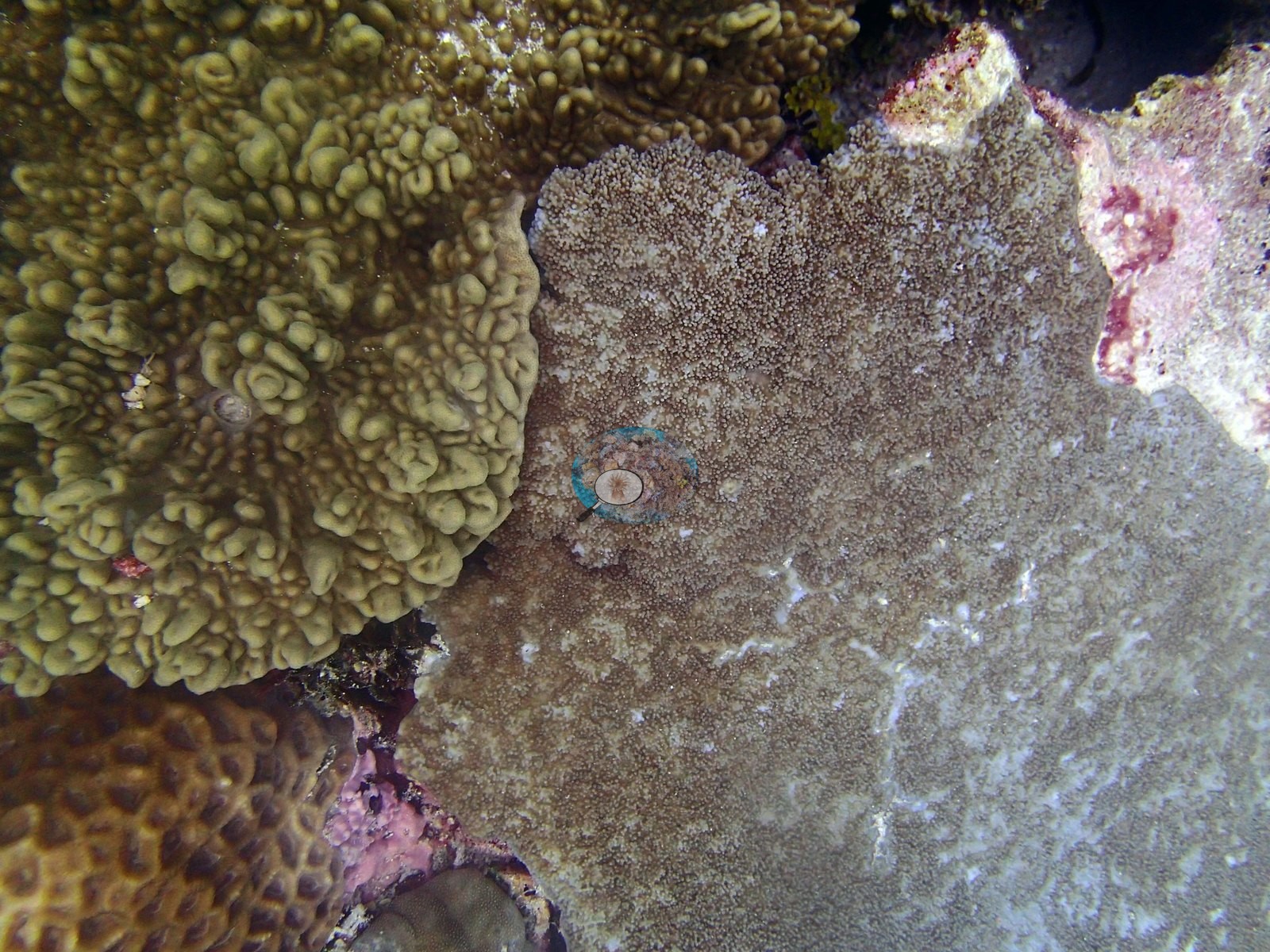
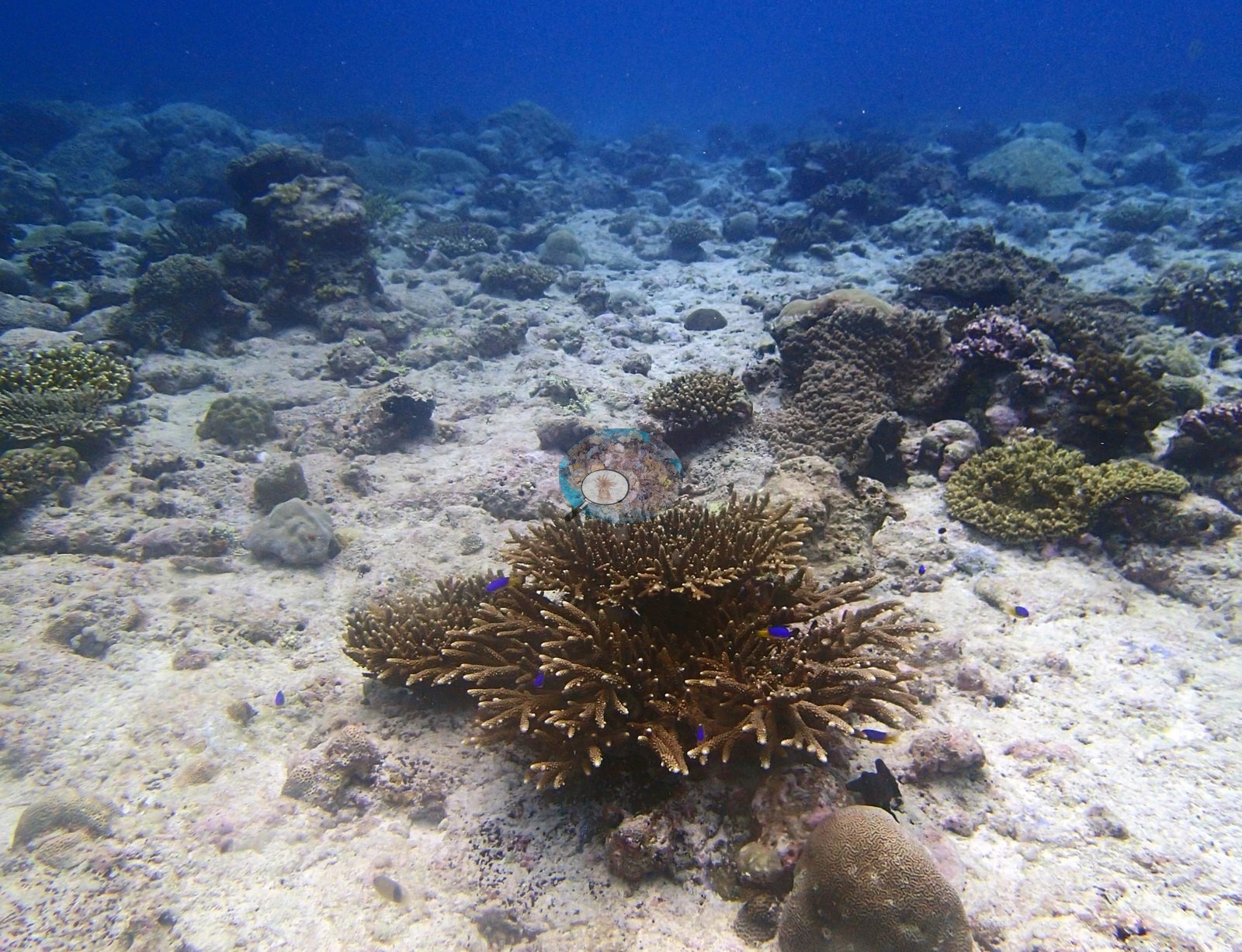
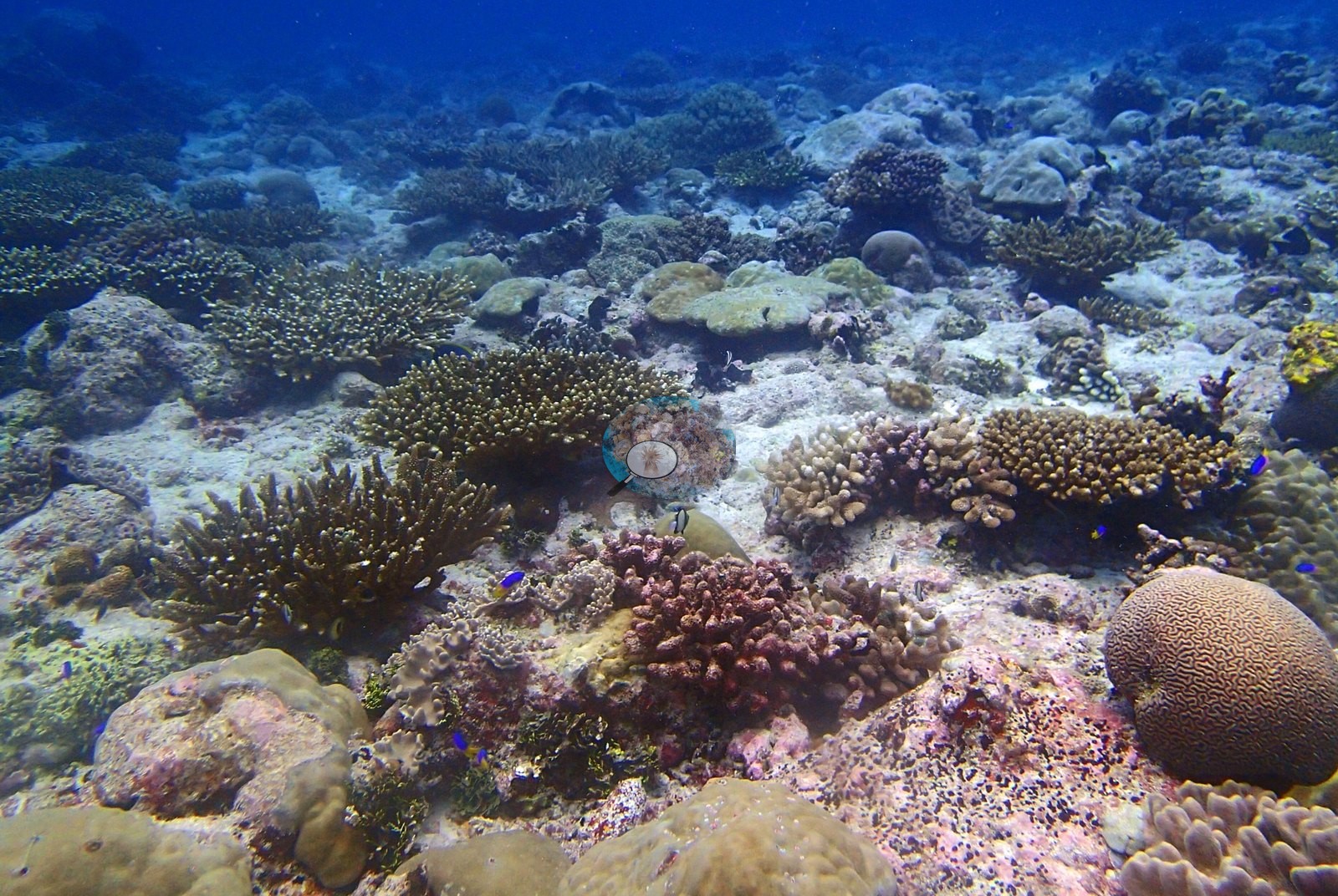
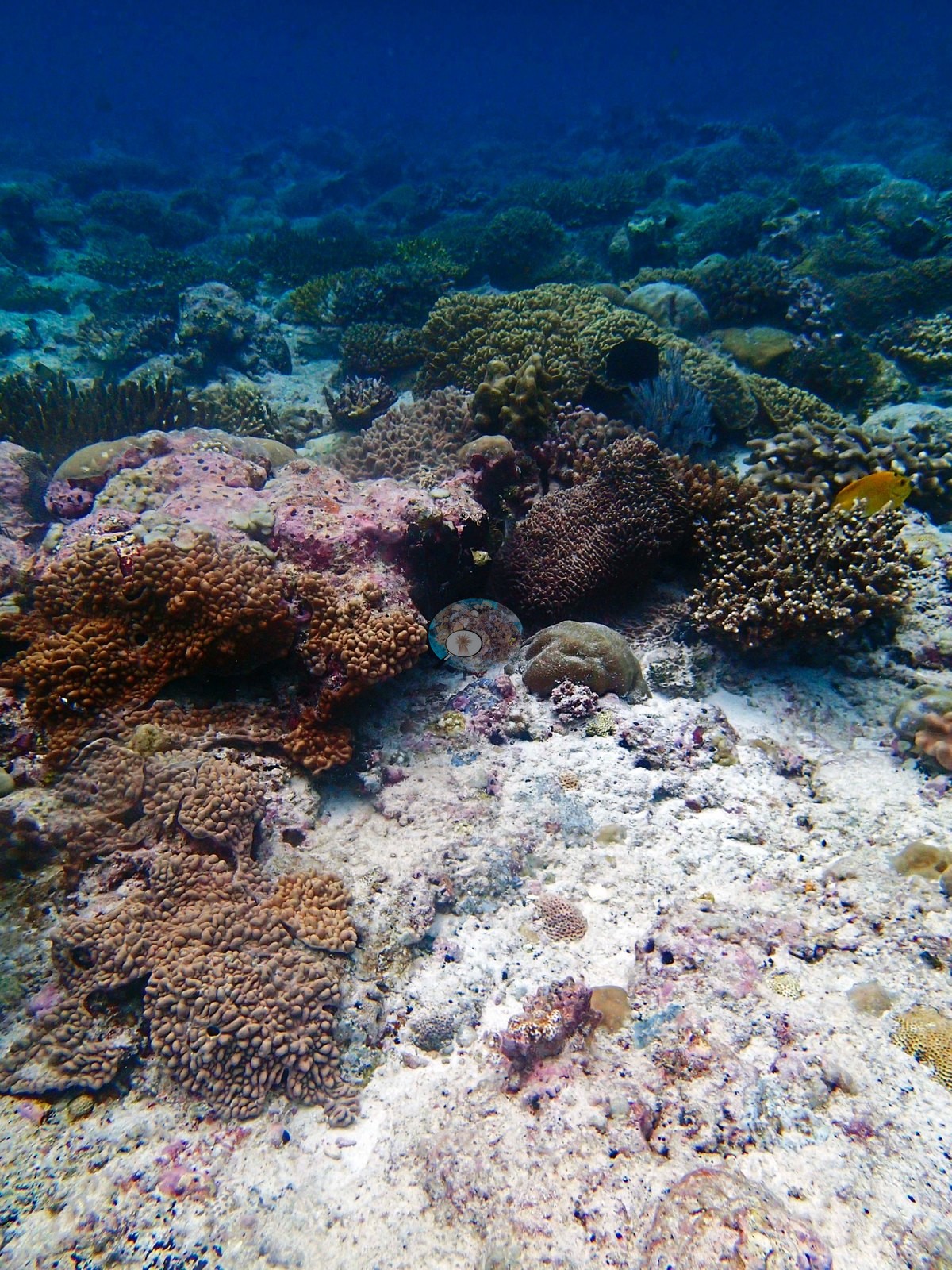
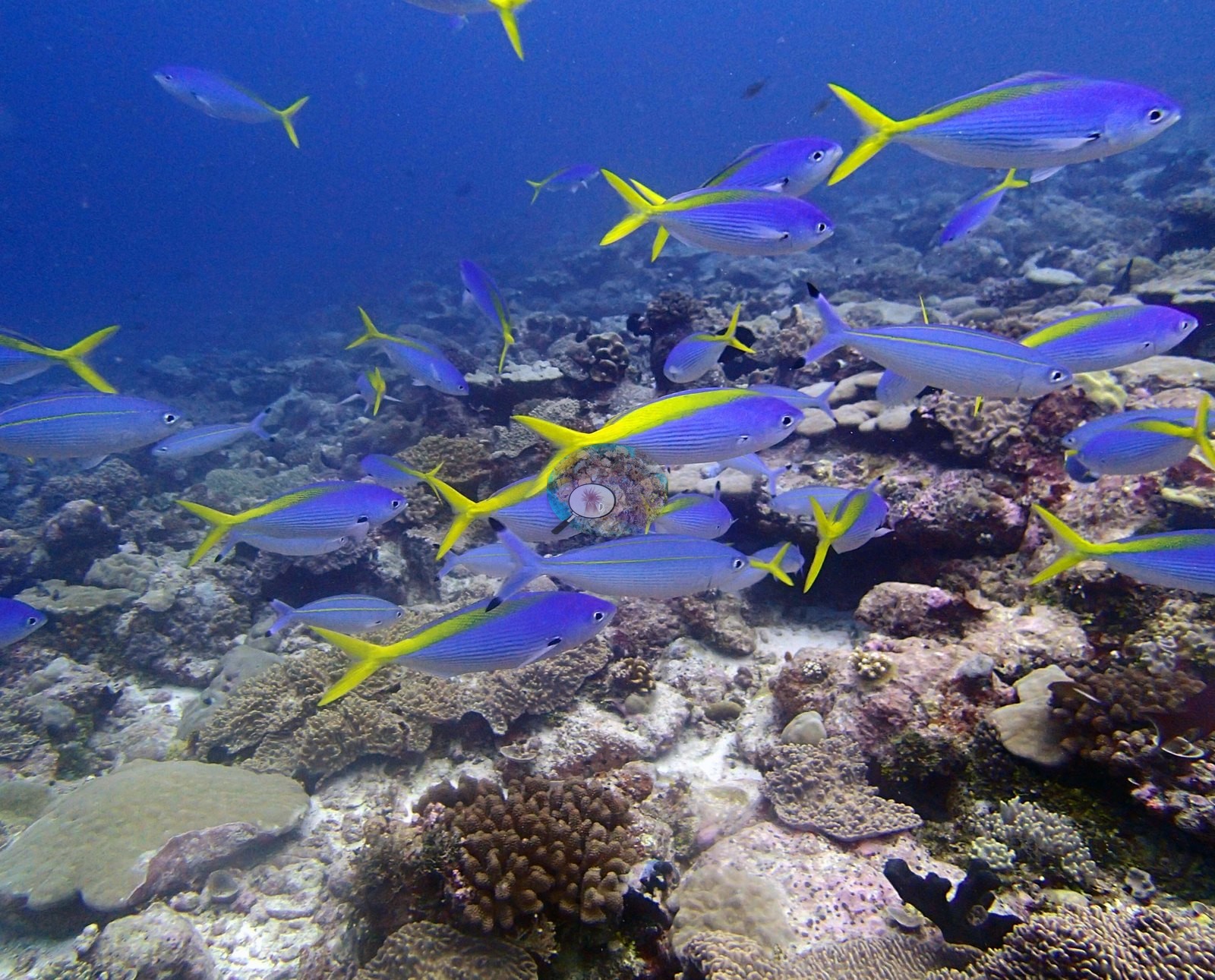
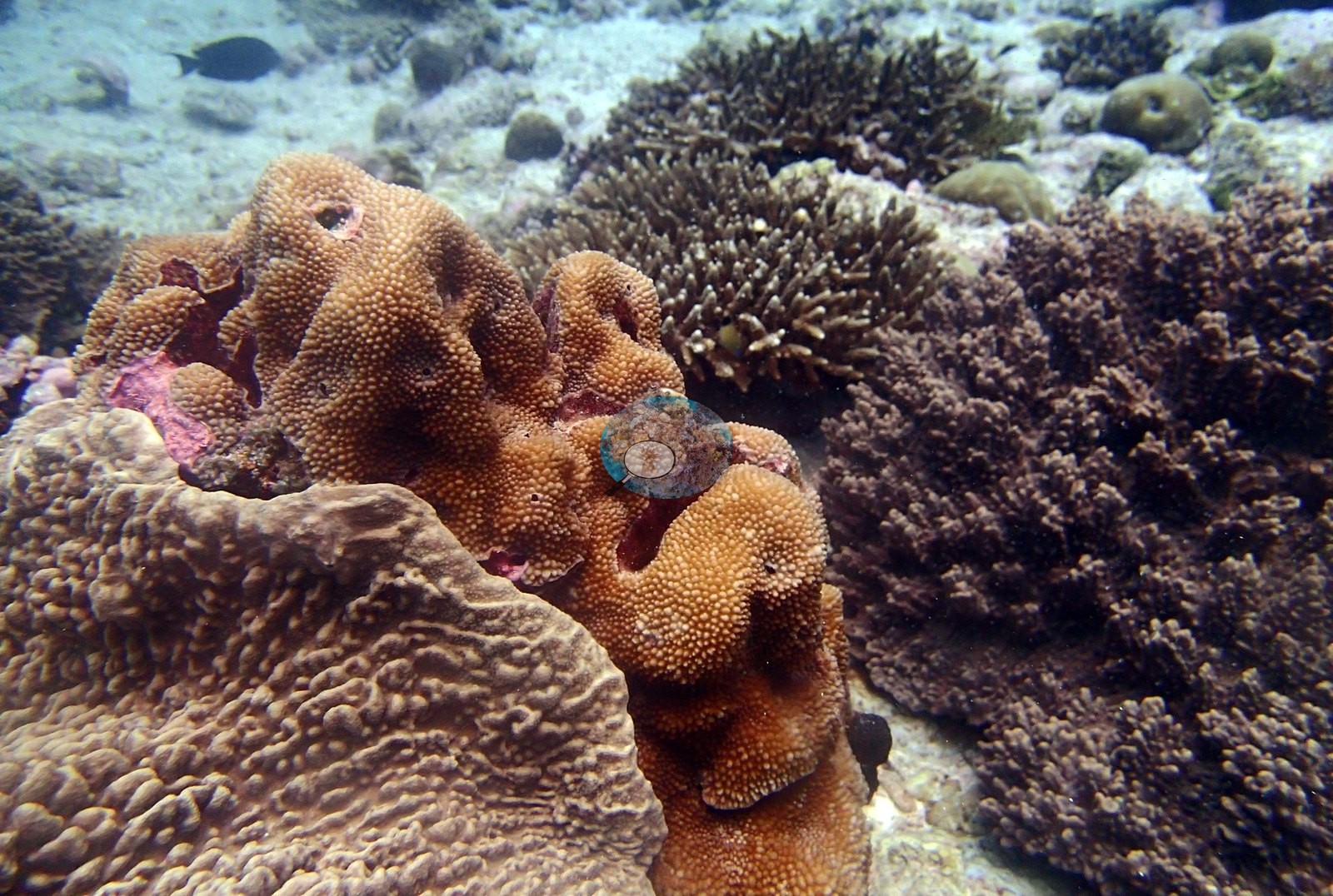
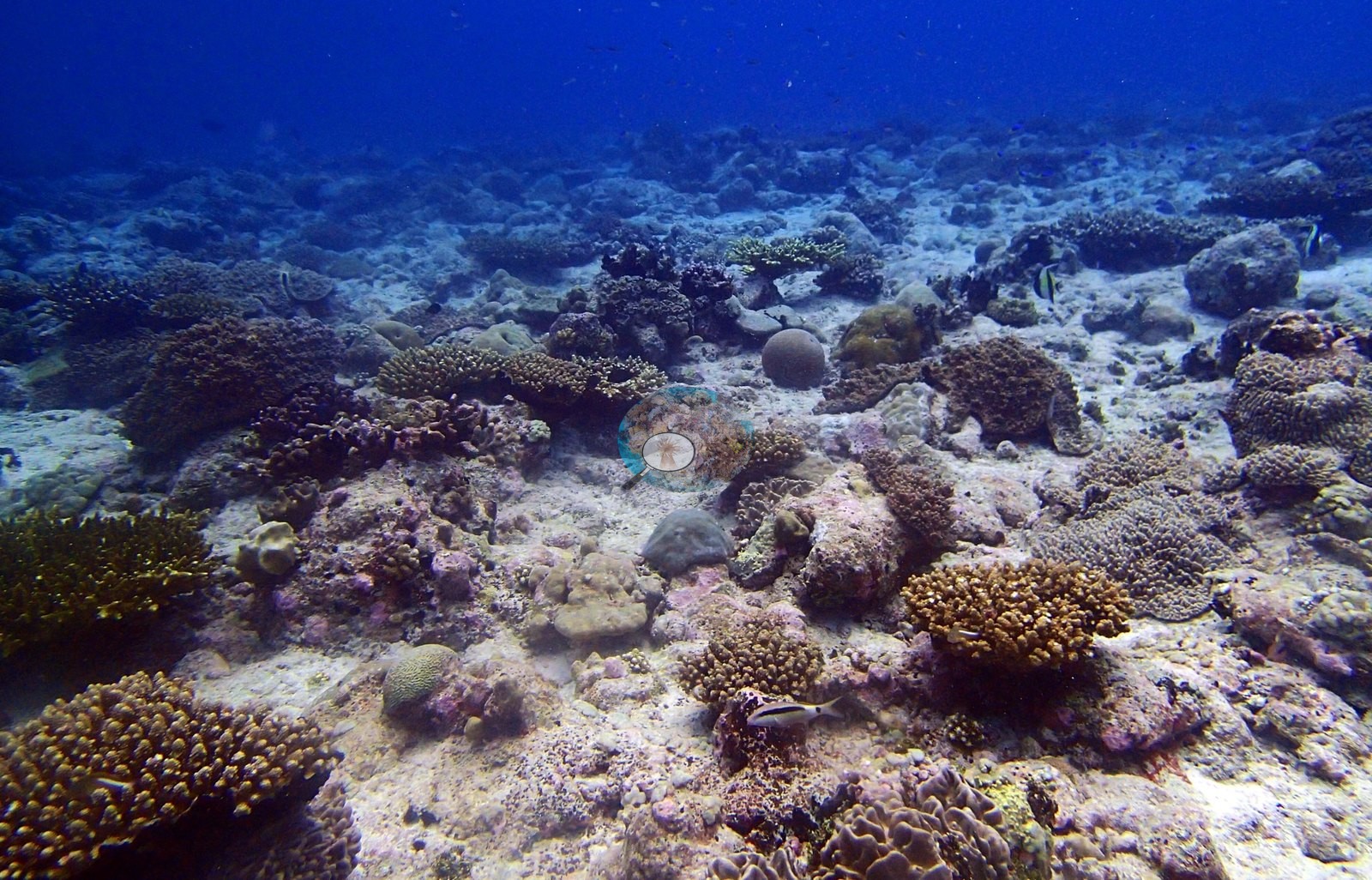
The transect's genus breakdown. Twenty-eight scleractinian genera were recorded, and the reef is Porites-led: Porites holds 10.74% of the benthos — 44% of all the live coral here. Pocillopora follows at 3.19%, Acropora at 2.20%, Favia at 1.99% and Montipora at 1.66%. Below those, Favites 0.58%, Platygyra 0.50%, Stylophora 0.47%, Gardineroseris 0.41%, Pavona 0.38%, Leptastrea 0.35%, Astreopora 0.34%, Goniastrea 0.32%, Montastrea 0.31%, Ctenella 0.24% and Echinopora 0.22%, then a tail of Galaxea and Fungia (0.14% each), Pachyseris and Turbinaria (0.07%), Hydnophora and Psammocora (0.05%), Cyphastrea (0.04%), Cantharellus, Acanthastrea and Leptoseris (0.03%), and Madracis and Symphyllia (0.01%). On the non-coral side the transect gives invertebrates 23.24% — the largest single non-coral category — crustose coralline algae 16.79%, bare substrate 10.97%, erect algae 8.77%, turf 6.92%, turf-plus-sediment 6.12%, macroalgae 2.58% and cyanobacteria 0.05%. Non-coral cover is dominated by crustose coralline algae 4.5% and turf 17.2% of all points. From 14:57 the camera drops onto the substrate and stays there — P3160405, P3160407 and P3160416–P3160424 are all benthic. Where the camera is actually on the reef, this is a genuinely good Chagos site. P3160406 is the highest-cover wide frame: cream and tan massive Porites domes with pitted surfaces, lavender-purple digitate Acropora, laminar plates, and two Moorish idols (Zanclus cornutus) working the tops. P3160416 holds a brown corymbose Acropora thicket against cream Porites plates; P3160421 sets three open Acropora tables and a maroon Pocillopora-type colony against a tan meandroid brain; P3160424 has two clean tables with blue-green damselfish over them. P3160397 is the busiest wide frame, packing olive massive colonies, foliose plates, a bright orange branching colony and dark encrusting sheets together. Point-count live cover in the benthic frames runs 53–80% (P3160405 highest at 80.0%) against 0% in the blue-water frames — a 0–80% range that is itself the argument against averaging an unfiltered frame set. Set against those, P3160377, P3160418, P3160419, P3160420, and P3160424 are dominated by pale carbonate rock and rubble carrying turf film, pink coralline crusts and green algal patches with only scattered small colonies; P3160420 is the extreme, a single open tan Acropora table standing alone on otherwise bare pavement. The macro sequence is the best coral portraiture at Eagle Island. P3160407 is the finest frame — a near-circular plating colony, deep chocolate-brown with dense fine white-tipped corallites and a clean pale growing margin on bare white pavement, with a nodular meandroid colony above it and a large smooth olive dome to the left; the growth form is compatible with Echinopora or Montipora and the frame does not settle which. P3160422 and P3160423 are close studies of tan-and-cream nodular-columnar colonies with dark maroon tissue in the valleys and pink coralline algae running along their margins. P3160387 is a rich benthic frame carrying a long slender cornetfish crossing the field beside a black antipatharian wire coral, with an orange-red encrusting sponge on the pavement below. A gorgonian sea fan stands in P3160377 and antipatharian wire corals run through P3160375–P3160377; olive algal tufts compatible with Halimeda appear in P3160417 and P3160424. Qualitatively, structural loss is present but low-key — there is no single catastrophic frame of the kind BIEA20's P3150281 provided. The pattern is broad pale carbonate pavement between coral patches: P3160417, P3160418, P3160419, and P3160424 are largely bare, turf-filmed rock, and turf is the largest non-coral category in the point set (17.2% of all points, peaking at 46.7% in P3160424). Coralscapes puts dead coral highest in P3160397 (8.81%) and P3160421 (6.59%), both showing bare pavement rather than freshly killed colonies.
Coral cover
The LOF benthic transect is this site's measurement. Coral cover at BIEA23 (Eagle Island, Great Chagos Bank west, 16 March 2015) is 24.6%, from the LOF BIOT-1 in situ transects (Mayfield & Dempsey 2026, Oceans, suppl. S1), against algal cover of 41.2% of the benthos. That diver transect is the authoritative record of cover and community at this site; the photographic and computer-vision material below supplements it and does not qualify it. Coral cover across methods, and why the agreement here is not what it looks like. Method comparison only. Transect 24.6% · CoralNet points 24.7% · Coralscapes masks 24.8% (26 frames). Deviation +0.1 to +0.2 pp; mean of three 24.7% ± 0.1 — on its face the tightest three-method agreement of the whole redo. It does not survive the benthic-frame test. Seven of the 26 frames are 40% water or more, and all seven fall in the first half of the dive. Strip water progressively and both photo methods climb monotonically away from the transect together: <60% water (n = 24) 26.8 / 26.9 · <50% (n = 22) 28.3 / 28.7 · <40% (n = 19) 31.4 / 32.3 · <30% (n = 14) 37.1 / 38.6, against a fixed transect. At every threshold CoralNet and Coralscapes stay within 1.5 pp of each other (per-frame r = 0.952, mean absolute per-frame difference 5.8 pp). So the defensible positive result at BIEA23 is convergence between the two photographic methods, not three-way convergence with the transect; the full-set ±0.1 is blue-water dilution canceling a genuine high bias, the BIEA20/BIEA18 mechanism with a larger sign flip. Do not cite BIEA23 as evidence that photo and transect methods agree. Two further cautions attach to the image products: the two water scores themselves disagree (human WATER points and Coralscapes background_dark correlate only r = 0.73 and differ by 12 pp on average, 29.6% vs 41.9%; P3160373 is 23.3% water by points but 56.7% by model), so any published filter must state which water score it used; and "Unknown" runs 20–37% of points in twelve frames, at or above 30% in seven, diluting live-cover-as-percentage-of-all-points. What the two image products say about the assemblage. Across the 26 analyzed frames the Coralscapes masks put live hard coral at 24.8% of image area, of which other hard coral is the largest component at 50%; the rest breaks down as massive and meandroid 25.4%, tabular Acropora 10.2% and Acropora (non-tabular) 9.3% of live cover. The independent 30-point human annotation of the same frames (780 points) gives live hard coral as 24.7% of all points and apportions it Acropora 46.1%, Porites 31.1%, other hard coral 21.2% and Pocillopora 1.6% of live coral. Frame-to-frame live cover runs 0% to 80.0%. Nothing photographic here is a measurement of it and no percentage is derived from any frame. Live hard coral measured on the in situ benthic transects of the LOF BIOT-1 expedition (Mayfield & Dempsey 2026, Oceans, supplemental S1), against algal cover of 41.2% of the benthos. The transect figure is this site's authoritative cover value; no image-derived product overrides it. Across methods the same reef reads: transects 24.6% · CoralNet points 24.7% · Coralscapes masks 24.8% (26 frames). These products have different sampling footprints and denominators and should not be averaged.
Stressors
Structural loss registers as dead coral 1.9% of image area and rubble 4.9%. Bleached points make up 1.4% of the annotated set — eleven points in total — distributed as other hard coral 0.8%, Acropora 0.4% and Pocillopora 0.3% of points, while Coralscapes reads essentially no bleaching anywhere (a maximum of 0.016% of any frame); these are CV outputs on an opportunistic frame set and are reported as such, not as an estimate of the site's bleached fraction. P3160405 is the frame that needs care and is discussed under condition. Condition. Anderson's published per-site bleached fraction for BIEA23 is 5.8% (CoralNet analysis of the informal survey images; Mayfield & Dempsey 2026), and that published figure is the authority on this site's bleaching. P3160405 is the frame that needs care: an olive knobby colony on the left sits against a large fine-corallite plate whose surface grades from tan through to a broad pale gray-white area. The pallor is real, but at this range and lighting the photograph cannot separate a pale growth margin, a naturally pale morph, strobe overexposure, sediment or algal film, bleached tissue and recently dead surface, and the annotator placed sixteen live Acropora points and only one bleached point on that colony. The frame carrying most of the annotated bleaching signal is instead P3160423, with seven of the site's eleven bleached points. Both should be hedged. Color balance in the shallower wide frames (P3160374, P3160377) is washed out enough that pale-looking tissue is not a reliable condition signal there either. The crown-of-thorns detection reported in P3160419 is almost certainly a false positive — 0.01% of the frame, a few pixels, and the only candidate reads as an urchin rather than Acanthaster; log it as a model artifact, not a sighting.
Fish and other fauna
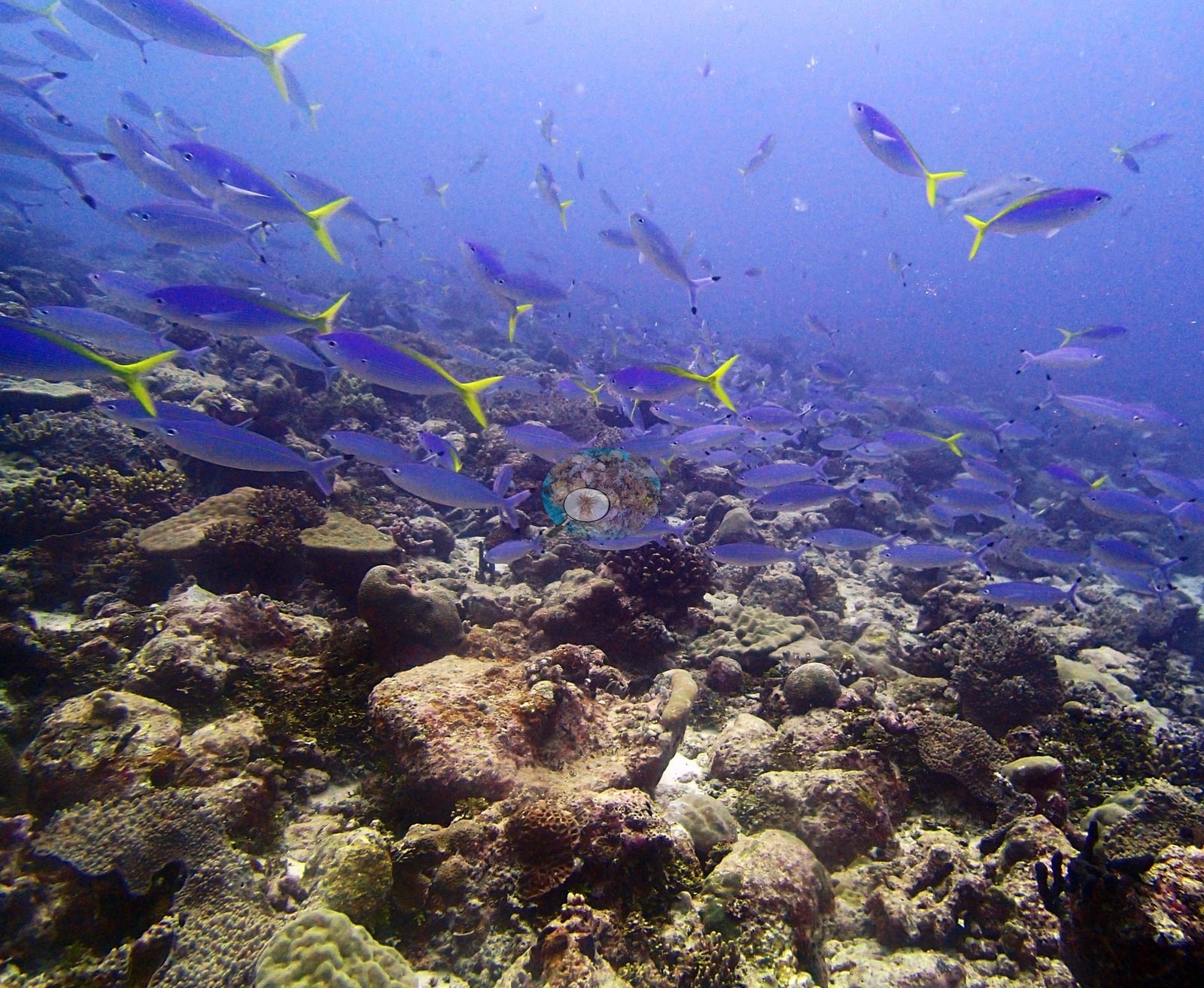
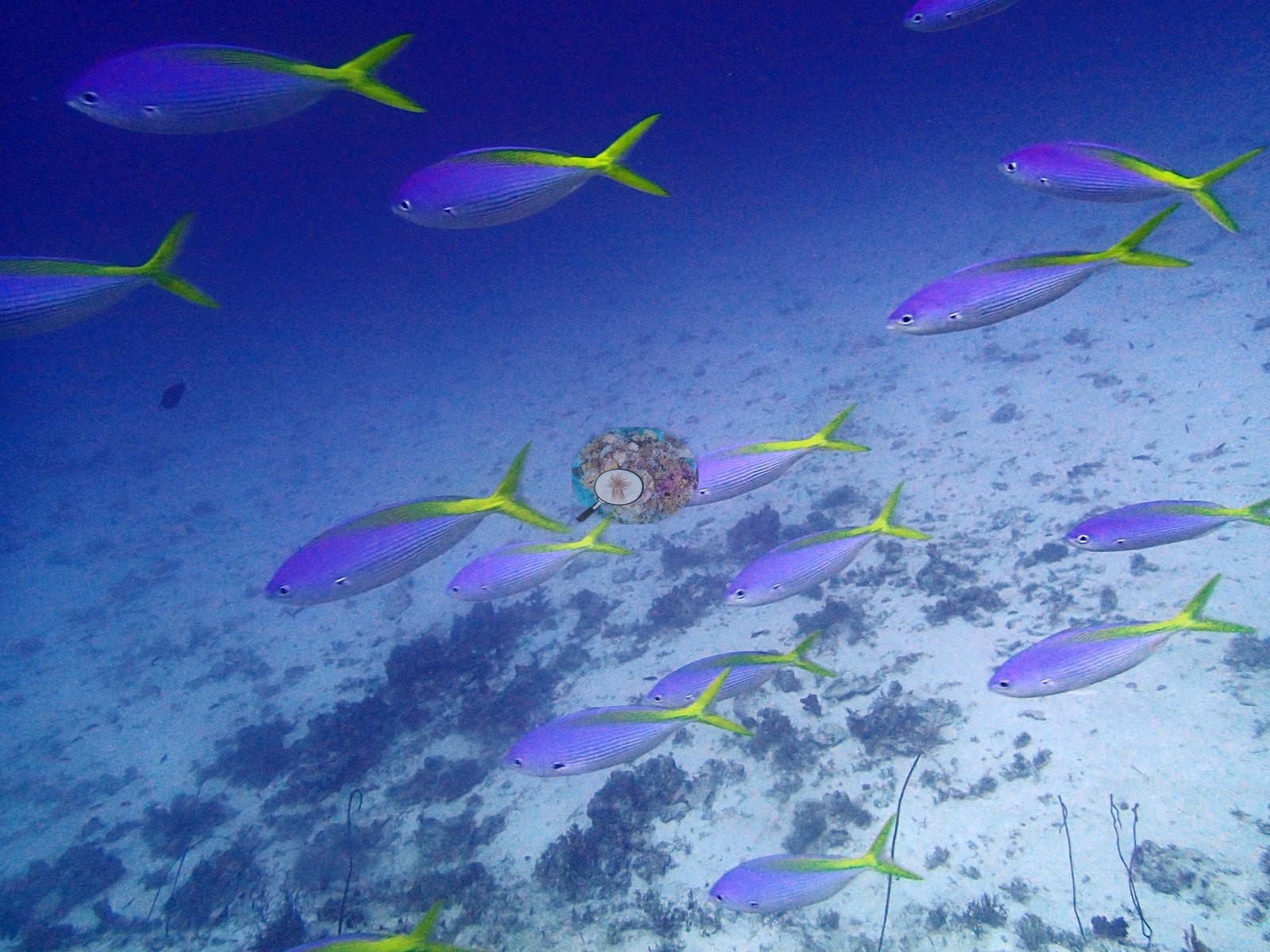
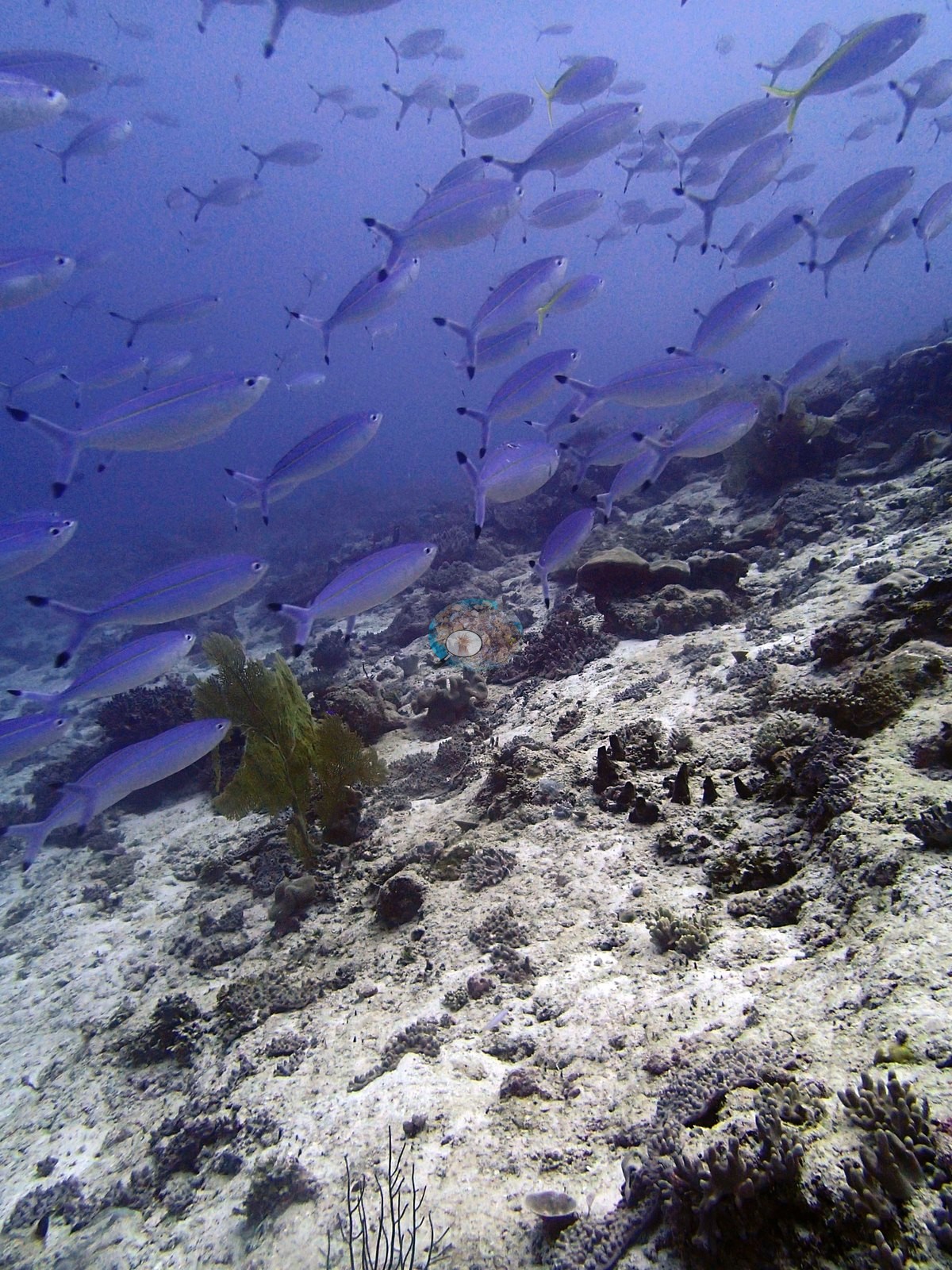
Conspicuous fauna and sessile invertebrates appear as sponges in 13 frames, sea cucumbers in 3, giant clams in 2, anemones in 1, seagrass in 1 and crown-of-thorns in 1 — but the human points record zero sponge in all 26 frames, the "seagrass" is most likely Halimeda, and the crown-of-thorns detection is discussed under condition below. The first fifteen minutes (P3160373–P3160390) are largely water column: schools of dark unicornfish and surgeonfish compatible with Naso banked over the reef in P3160373 and P3160374, then wave after wave of yellowtail and yellow-striped fusiliers compatible with Caesio and Pterocaesio in P3160376, P3160377, P3160384–P3160386 and P3160388–P3160390. Macrofauna is modest but includes one clean record. P3160375 is the shark frame — a whitetip reef shark (Triaenodon obesus) cruising a rubble-strewn sand plain, the white first-dorsal tip plainly visible and the animal unambiguous; a dark parrotfish compatible with Chlorurus or Scarus forages on rubble in the same field. P3160398 holds a large dark triggerfish in mid-blue compatible with Balistoides viridescens, with a diver in the background, and P3160388 a giant clam (Tridacna), fluted mantle open beneath the fusilier school. Beyond those: a yellow tang compatible with Zebrasoma in P3160417, bream- or snapper-type fish in P3160387 and P3160419, blue-green chromis in P3160421 and P3160424, a black-and-white striped reef fish over the domes in P3160406, and Moorish idols in three frames.
Comparisons with other data
Also on record for this site: Coral cover: 25%.
Dive record
EXIF puts the dive in one continuous 48-minute sequence, 14:31–15:19, and it is a dive of two halves.
Other notes
No depth-stratified means (D1–D4) and no per-frame depth data are carried for this site; 24.6% is the site value as published. Antipatharians and a gorgonian are present in the frames and are invisible to a hard-coral point scheme — the BIEA18/BIEA20 blind spot again, and one reason the image products cannot describe this benthos completely. Image-by-image. All 26 habitat frames of Anderson's own folder BiEa23-finished were reviewed; there are no sampled-colony frames. Divers with housings appear in P3160386, P3160389, P3160397, and P3160398.
CV model comparison
More info
Those are point counts on the photographs; this is a diver swimming a transect. The models and the reference never saw the same thing. ⚠ SITE-LEVEL ONLY. The 2,500 frames were not associated with any transect taken within 200 m of them, so transect-vs-image comparisons are site means, never frames. The transect value is already in the pin `cover` field (109 of 112 pins, sourced to the paper's suppl. S1) and is read from there, never re-imported. The transect is THE coral-cover value for this site and stands alone. The rows below it are a methods comparison only: no computer-vision value is averaged with it, feeds the headline, or carries over to the site's cover figure (Anderson, 2026-09-22).| Method | Hard-coral cover (%) |
|---|---|
| Transect (published) | 24.6 |
| CoralNet | 35.7 |
| In-house DINOv3 | 28.8 |
| CoralSCOP edited | 39.5 |
| Claude | 28.5 |
Independent surveys nearby
Within 5 km, 1 independent survey station recorded hard coral cover in 2015. The most recent nearby survey is from 2015, so these values predate recent heat stress. This site's own estimate (25%) sits 11.6 points above the range of these surveys (13%); the methods differ, so the comparison is context, not a like-for-like test.
Collected by other programs using different methods (the XL Catlin Seaview Survey uses photo-transects with automated image annotation), so these are context for the figures above, not a like-for-like comparison. Where a station was surveyed more than once the range is shown. Station names are not dive-site names.
| Agency | Site / location | Date | Hard coral cover (%) | Distance | Link |
|---|---|---|---|---|---|
| XL Catlin Seaview Survey | transect 36003 | 2015 | 13% | 4.16 km | — |
Data & links
- Read the full site report ↗
- Download benthic survey data (CSV) ↗
- Download all LOF-GRE data (933 sites) ↗
- CoralNet image repository for this region ↗
- Photo portfolio ↗
- Coral Reef Diagnostics page for this area ↗
All images from Coral Reef Diagnostics. Data are from Coral Reef Diagnostics and the organizations named in the data-sources table above.
 © Coral Reef Diagnostics.