
Part of the regional summaries: Chagos Archipelago - Great Chagos Bank West / Brothers / Eagle and Chagos Archipelago
More info
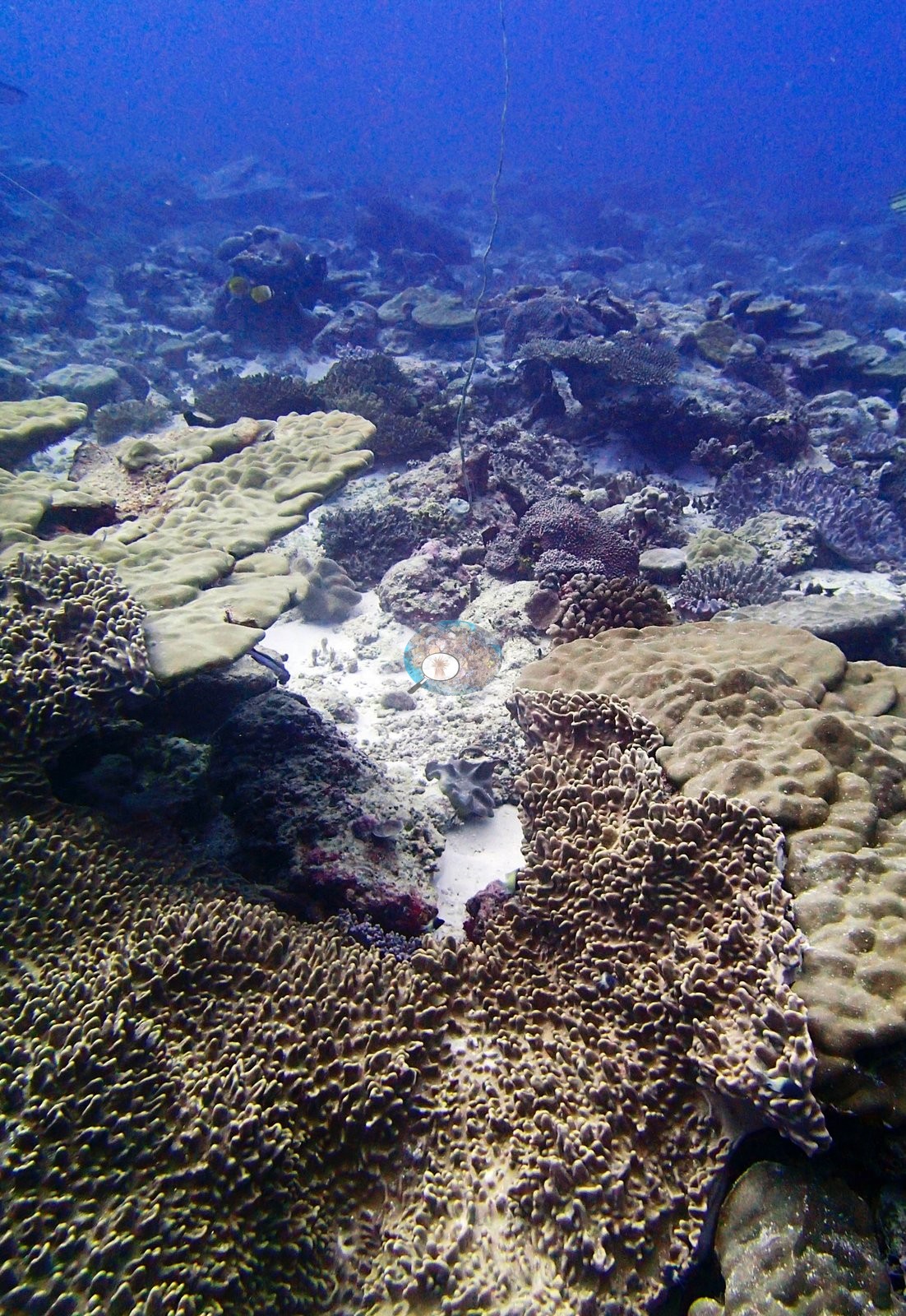
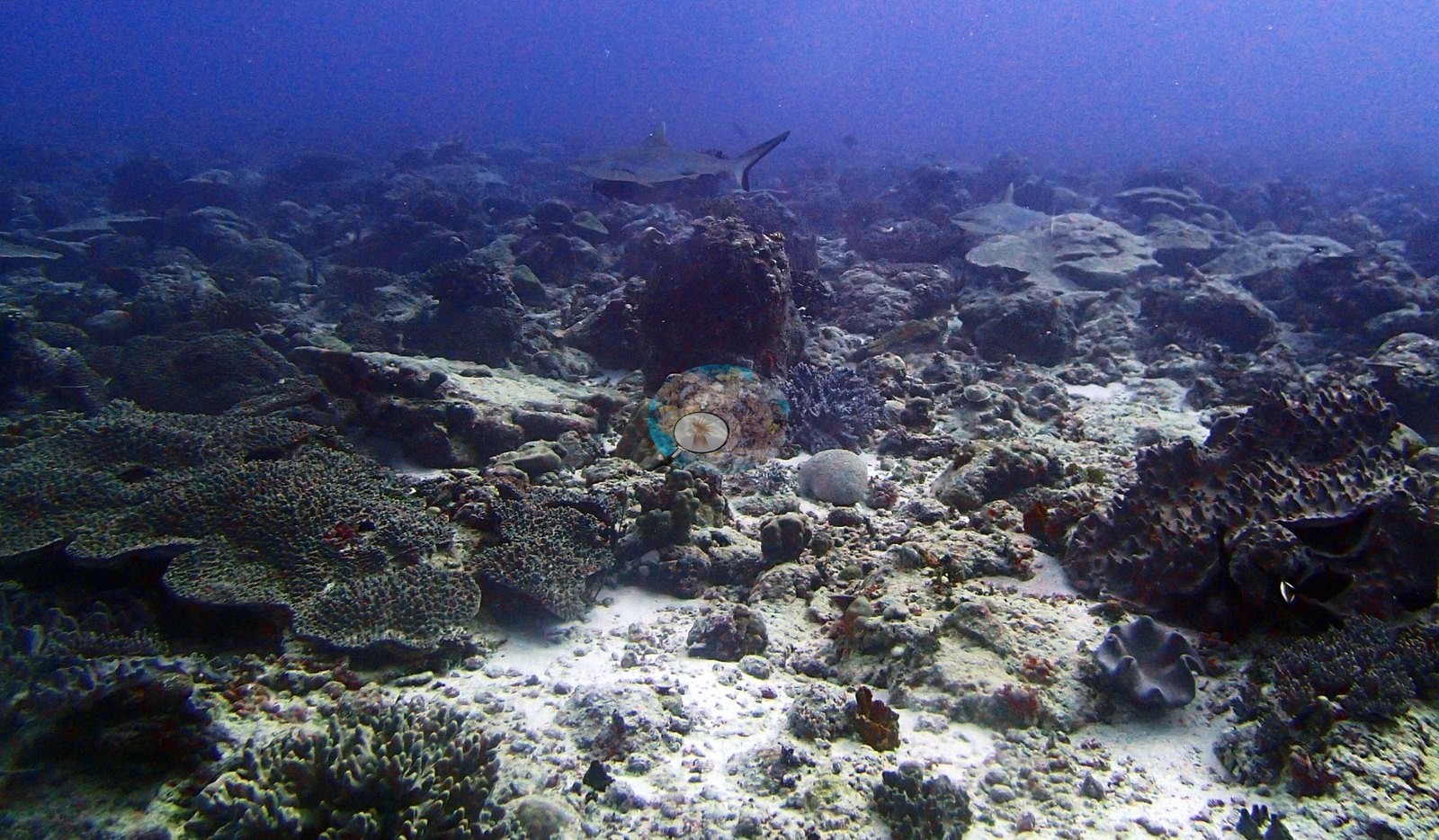
Chagos (NOAA CRW virtual station)BIEA22 is a modest, low-relief reef (22% coral cover) where coral sits as scattered small colonies - laminar Acropora plates, corymbose heads, and pale massive Porites domes - over pavement and rubble. Two or three requiem sharks and a giant clam were seen over the plain, and much of the site's pale coloring turned out to be naturally light-colored Porites and healthy white growth tips rather than actual bleaching. Surveyed on the Living Oceans Foundation's Global Reef Expedition.
One other CRD dive site within 5 km shown in orange — click a marker to open its page.
🗺 Detailed map of the Global Reef Expedition dive sites, Eagle Island, Chagos (Khaled bin Sultan Living Oceans Foundation; opens in a new window)
Site description
Setting
Setting: bank reef, intermediate exposure, Eagle Island, 6.27659°S, 71.27627°E · 29.1°C · salinity 34.5.
General benthic features
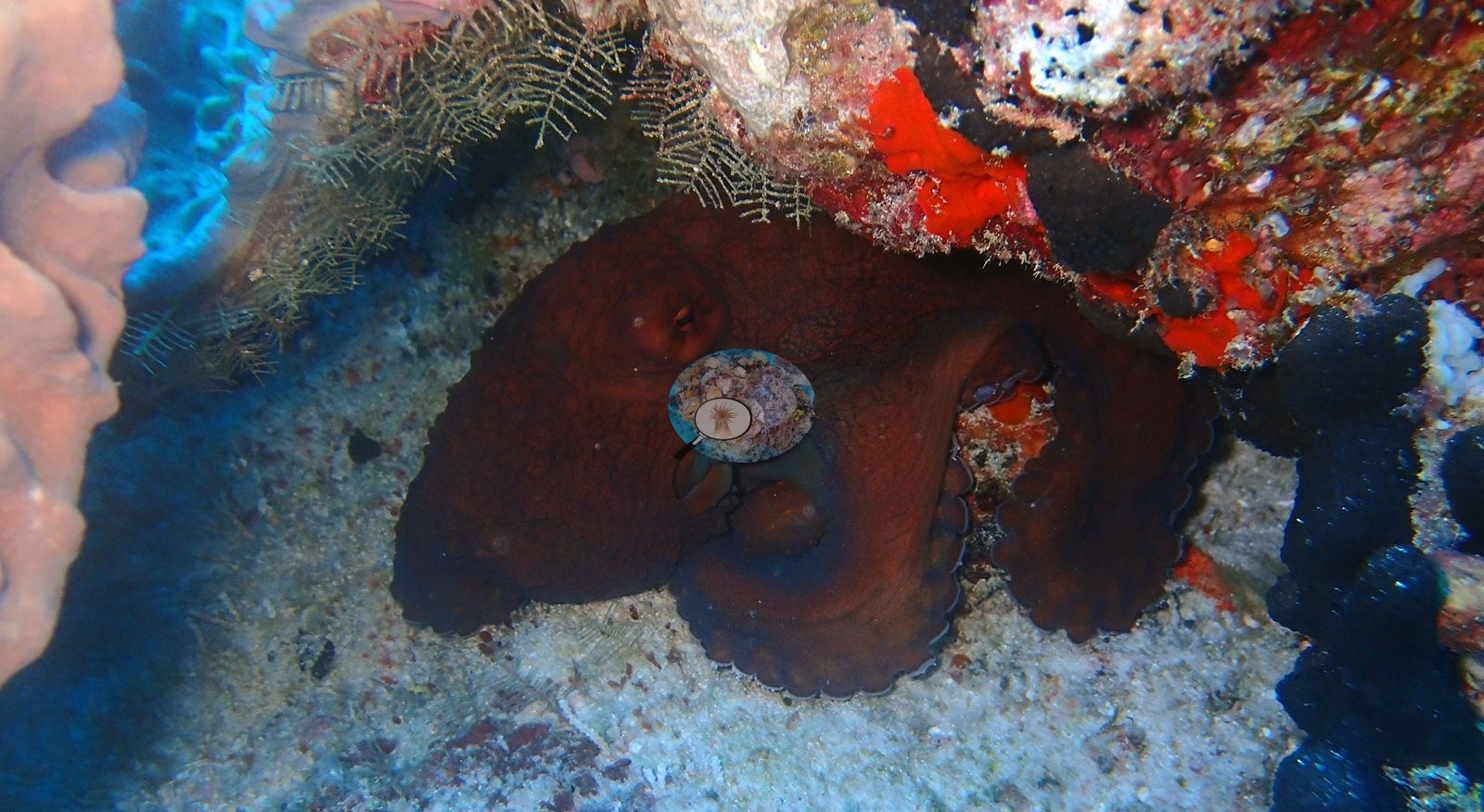
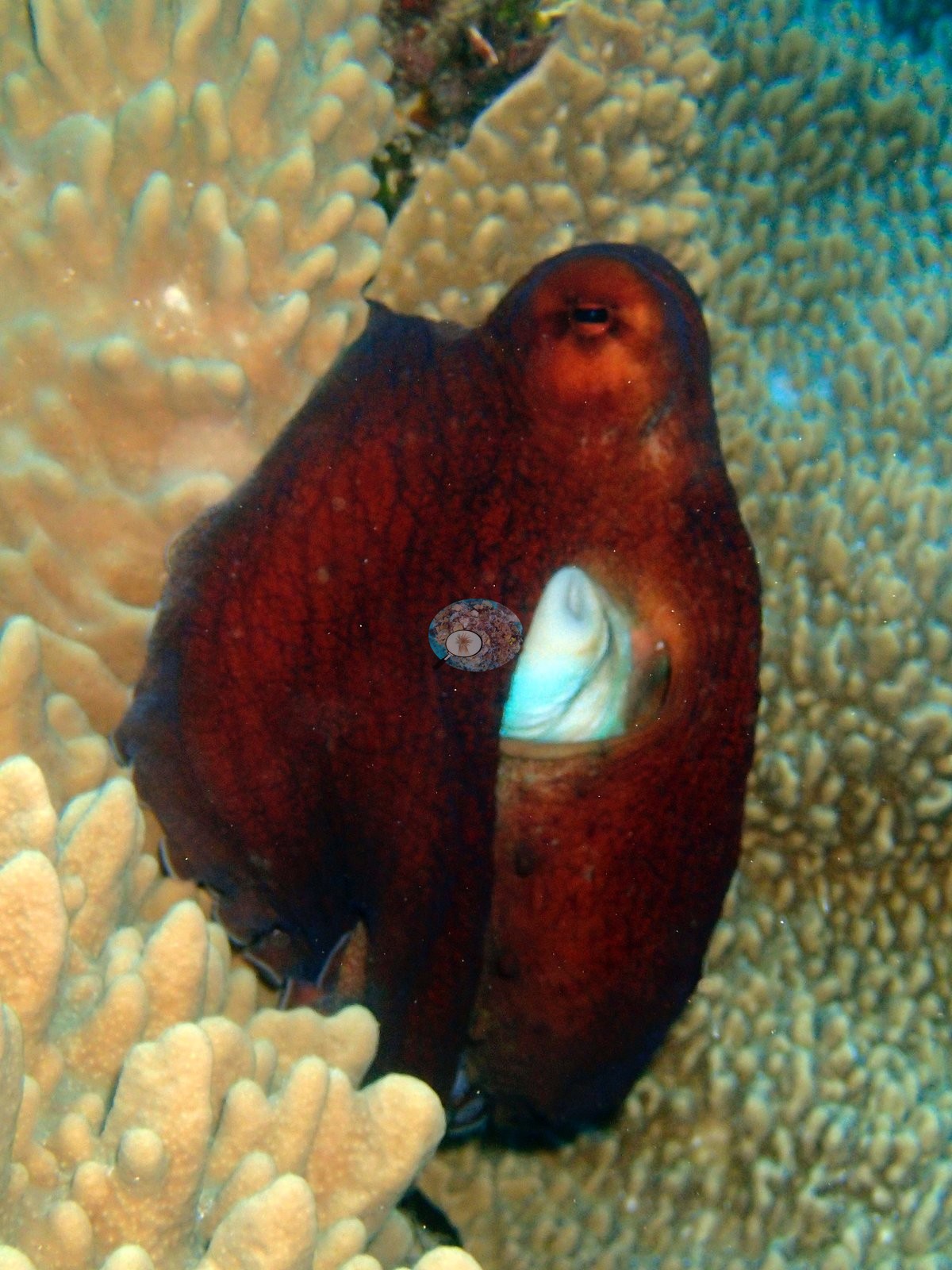
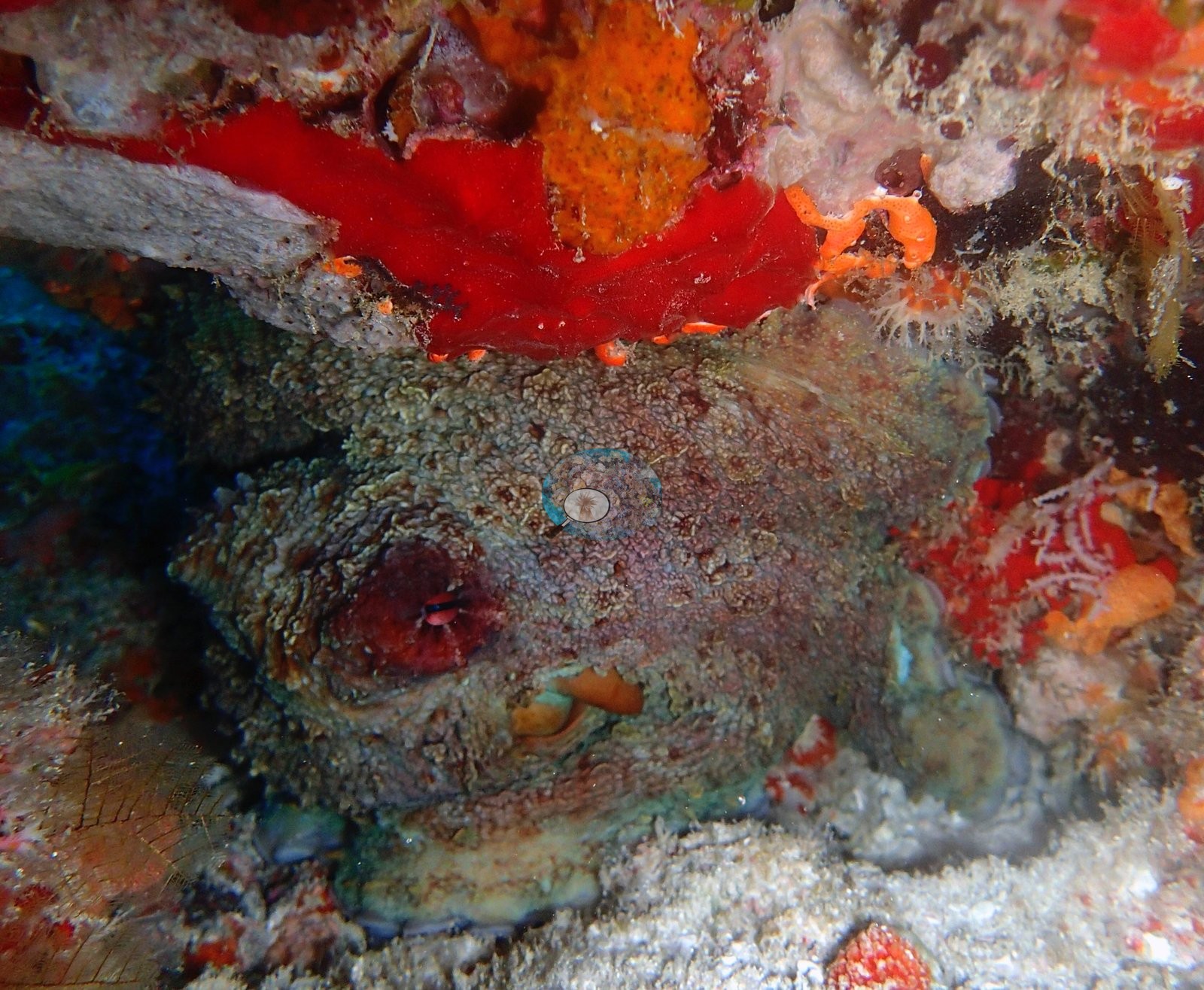
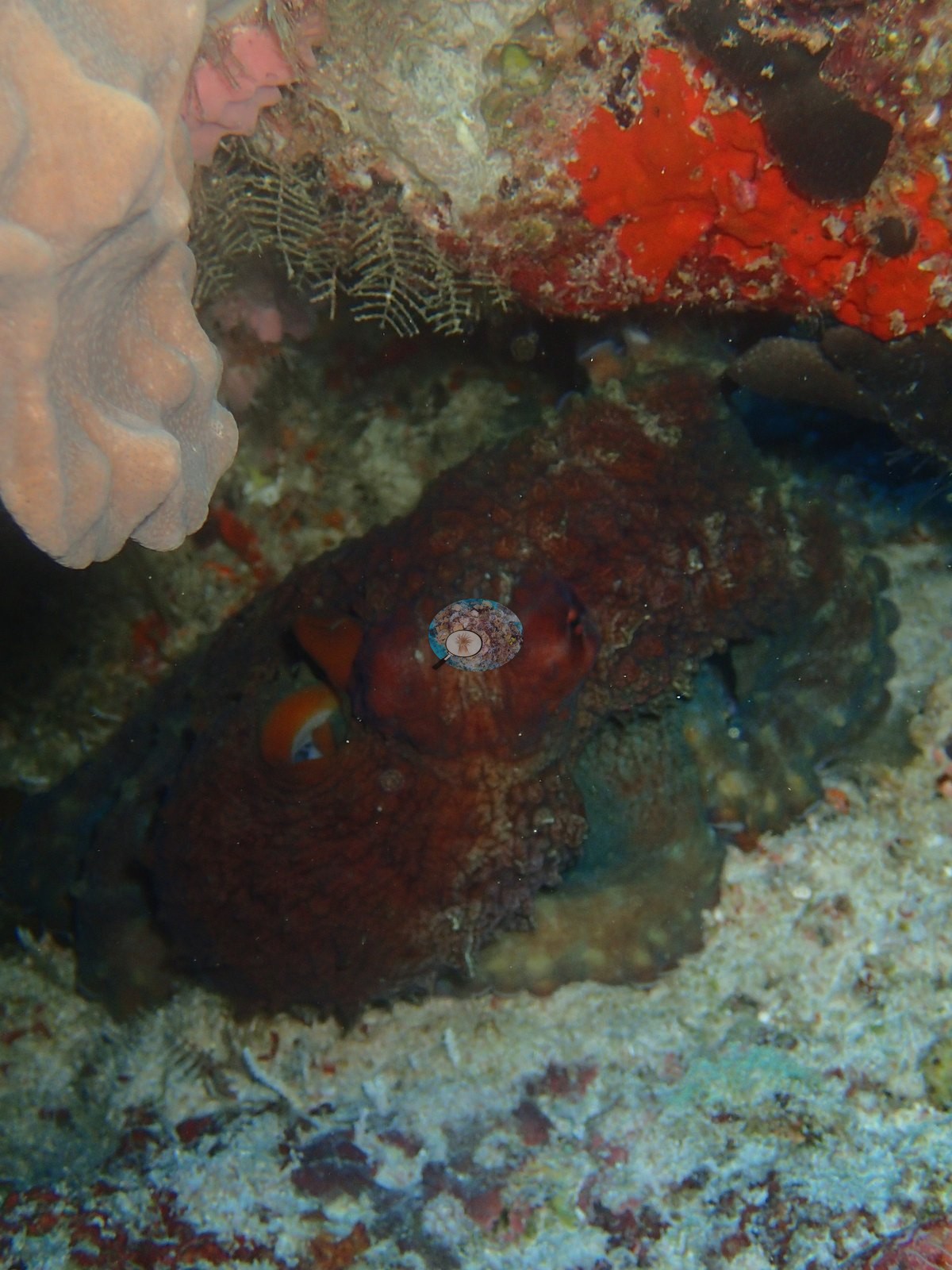
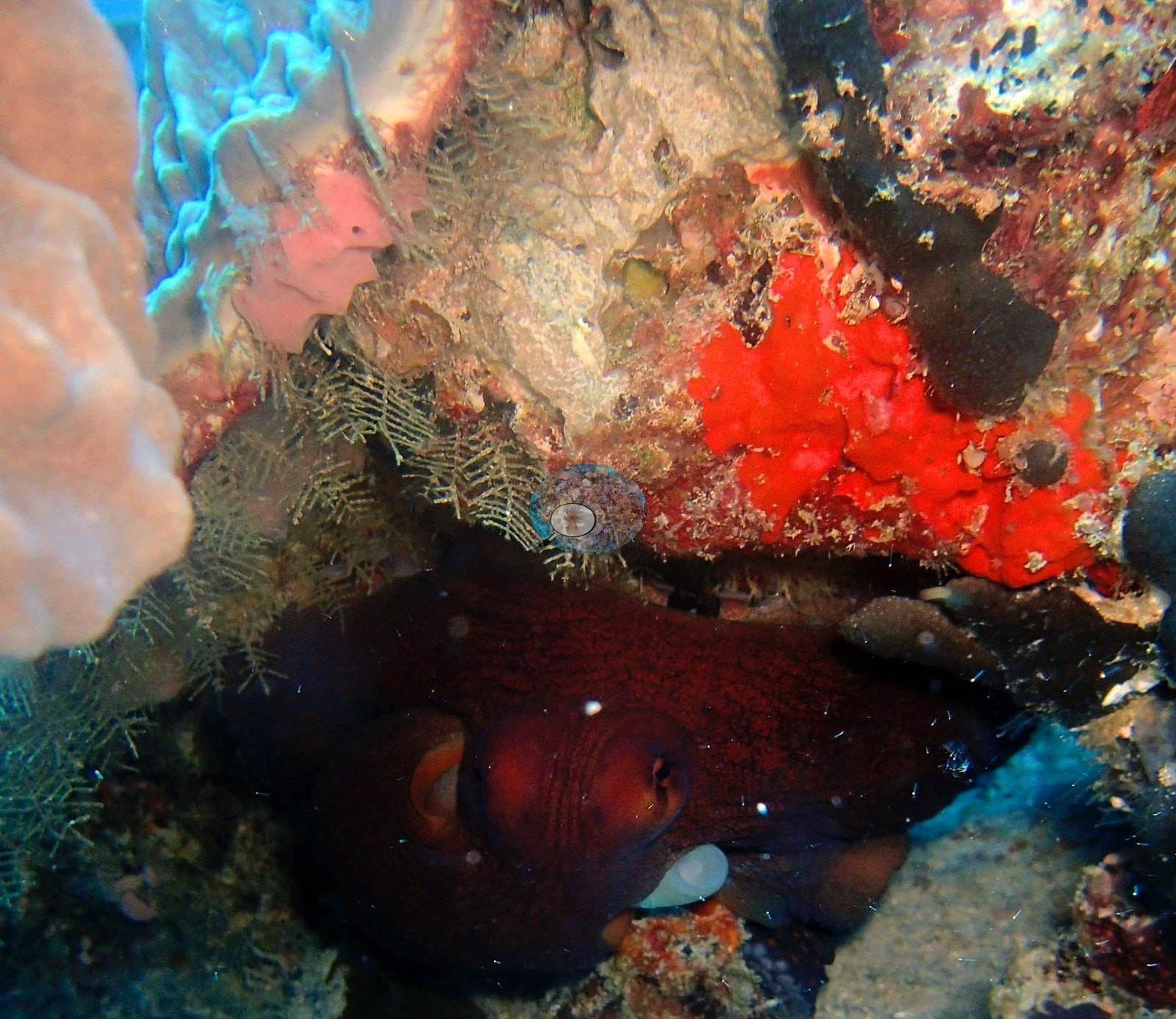
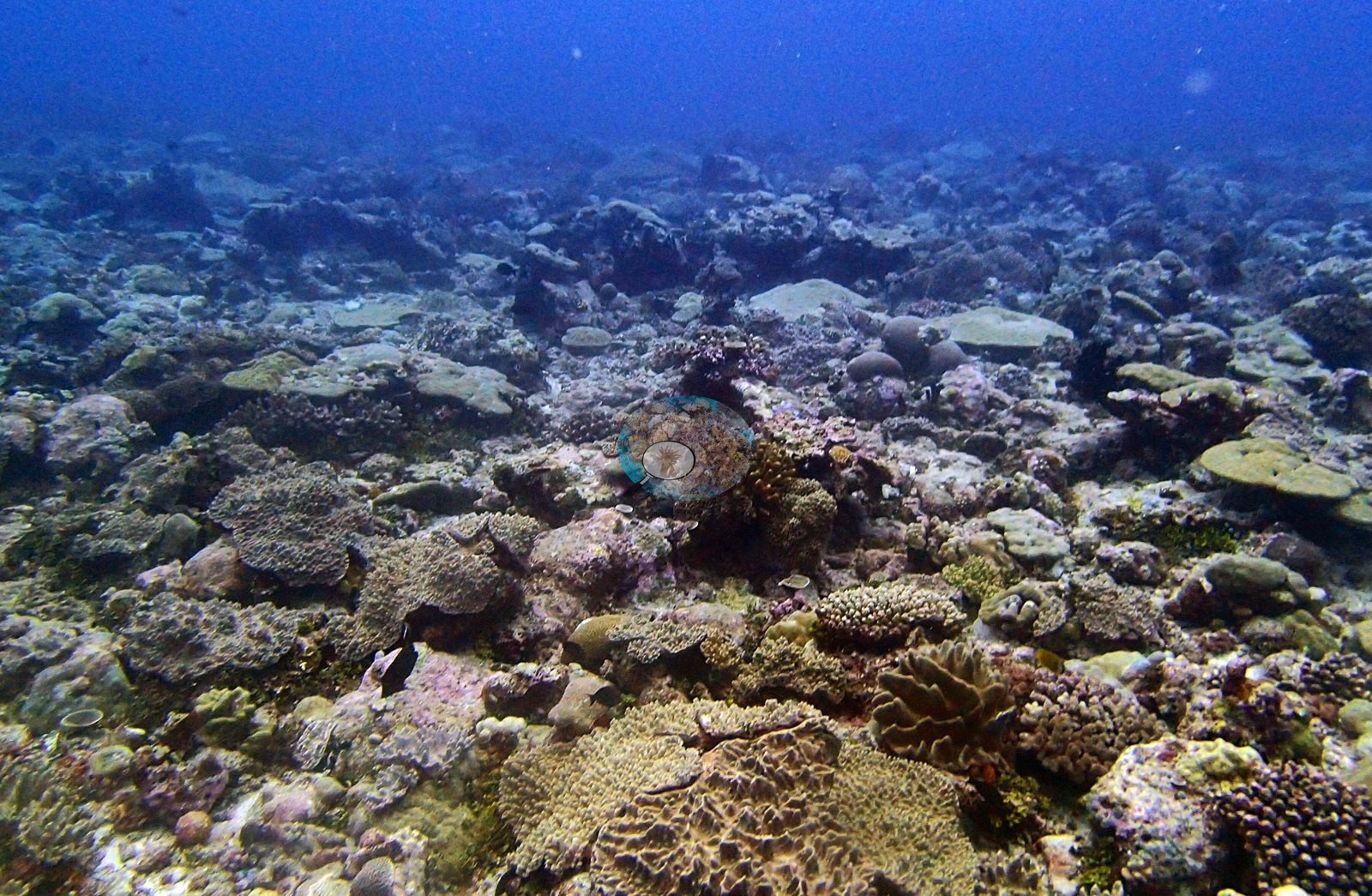
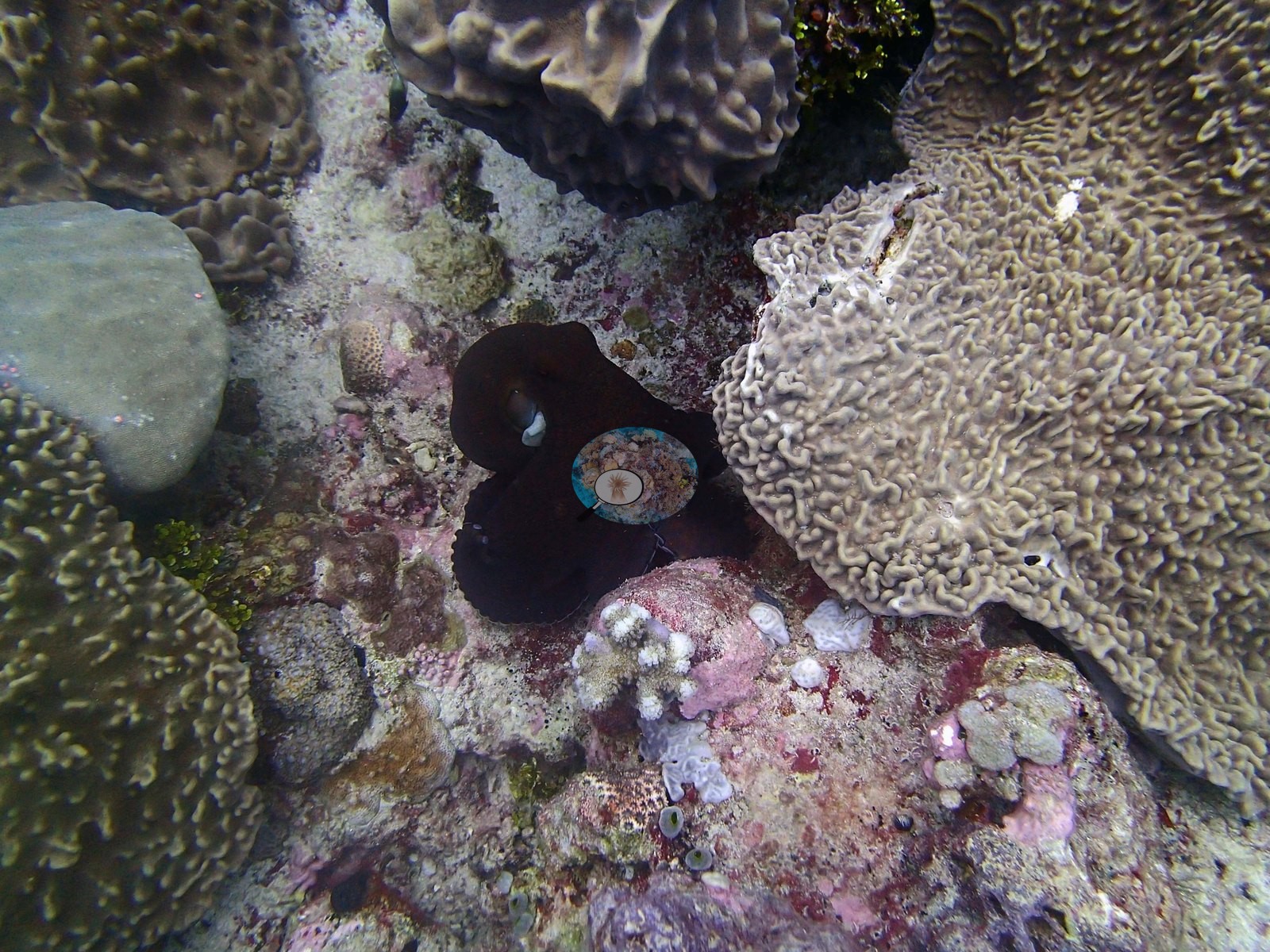
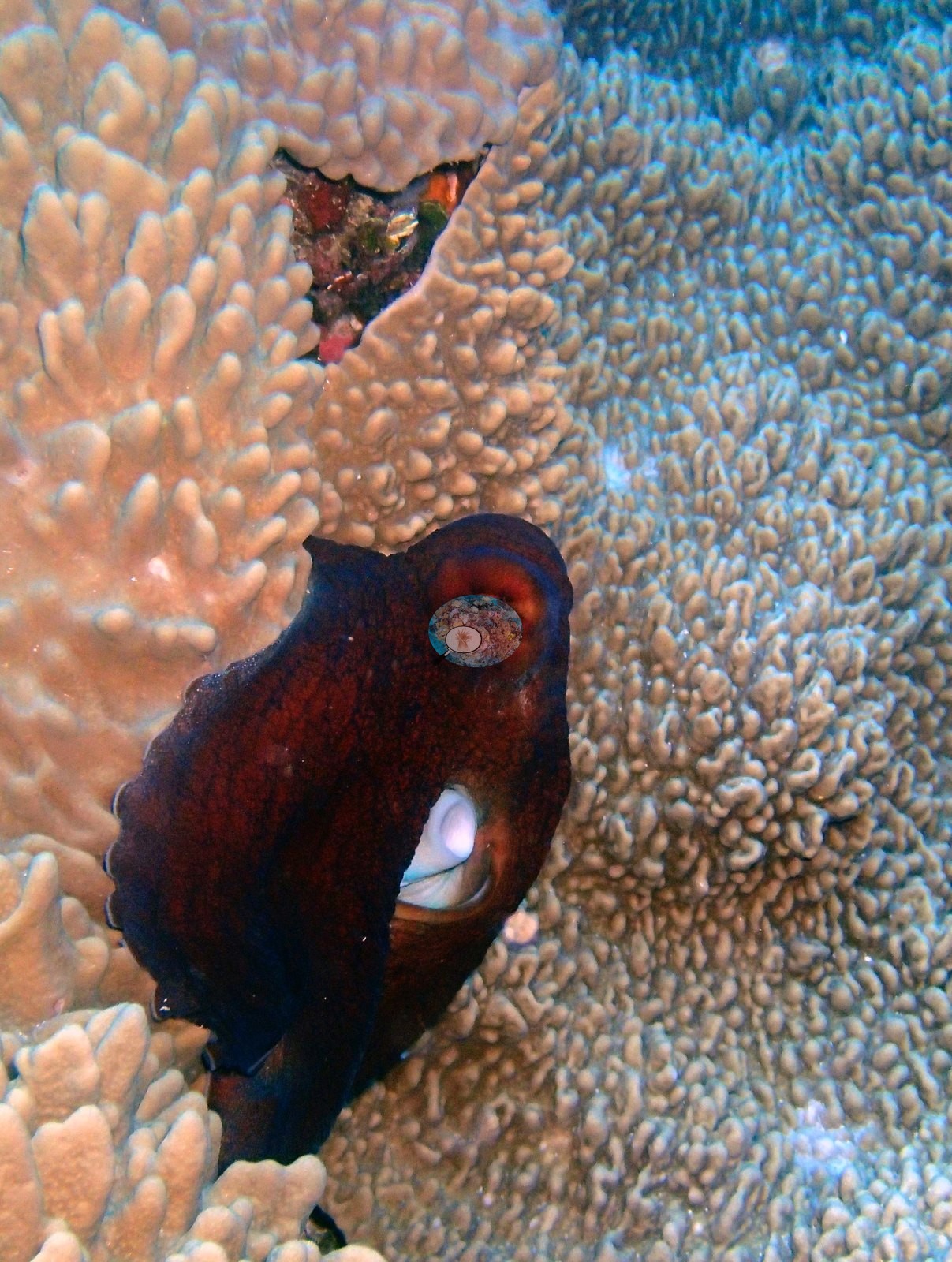
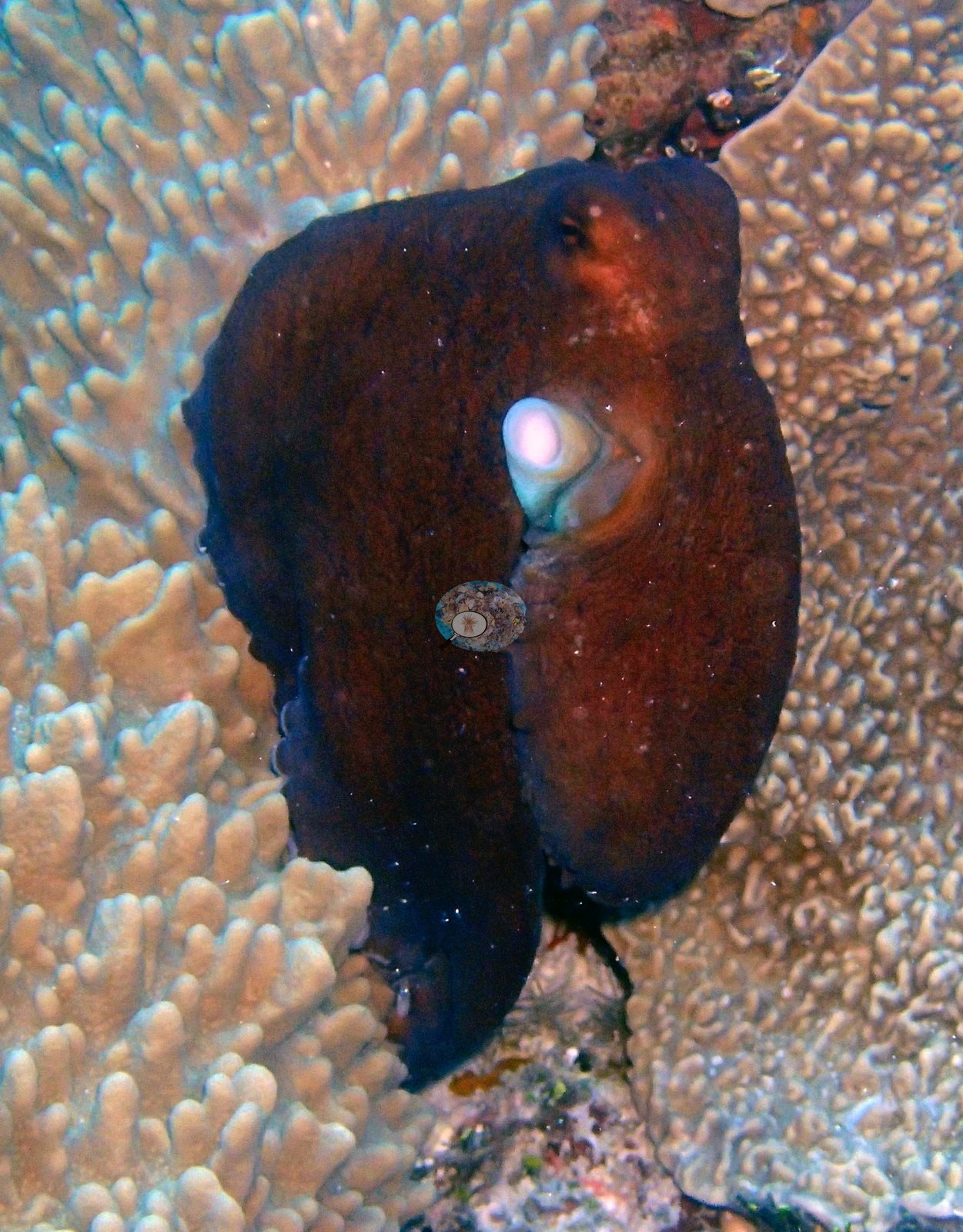
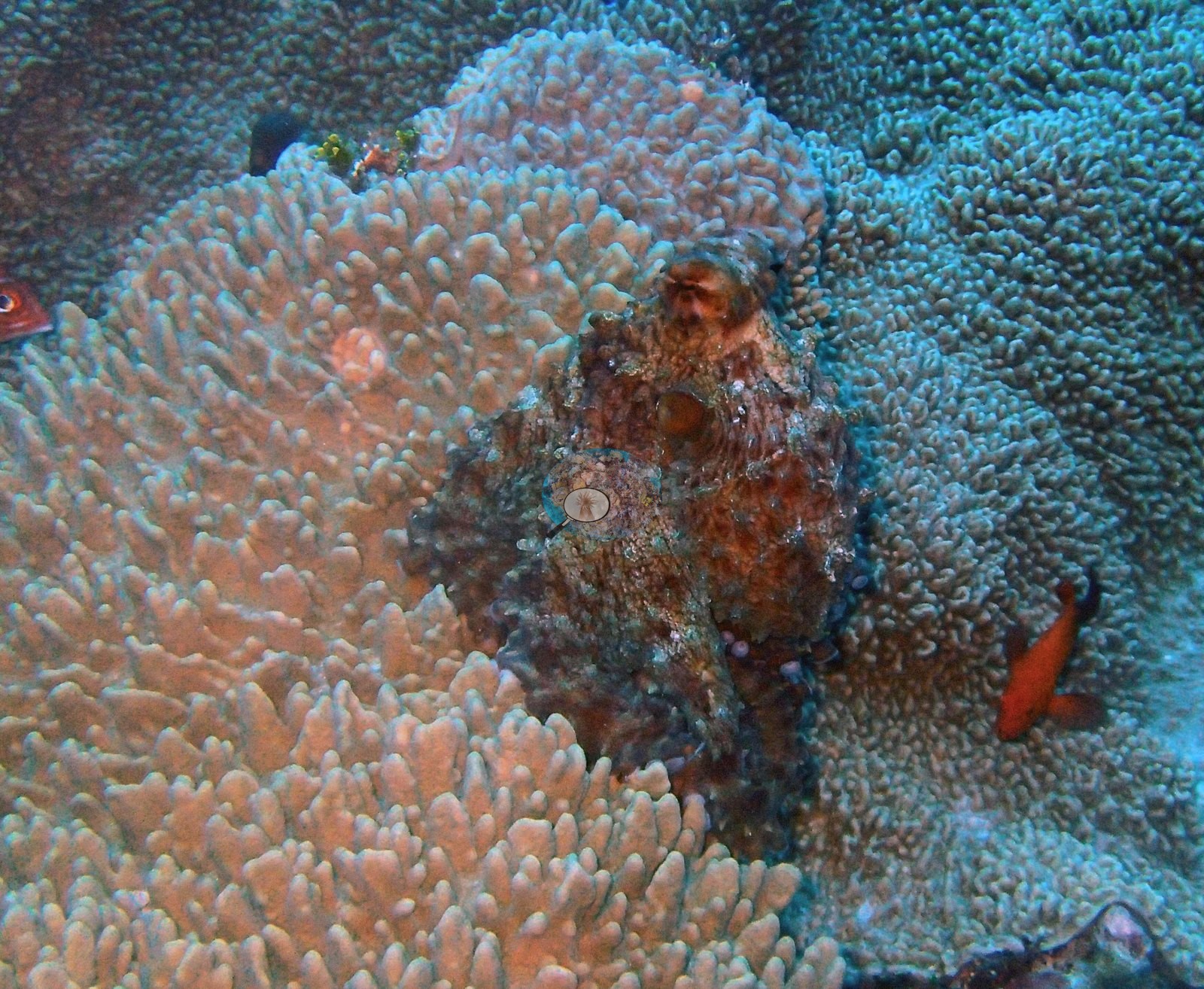
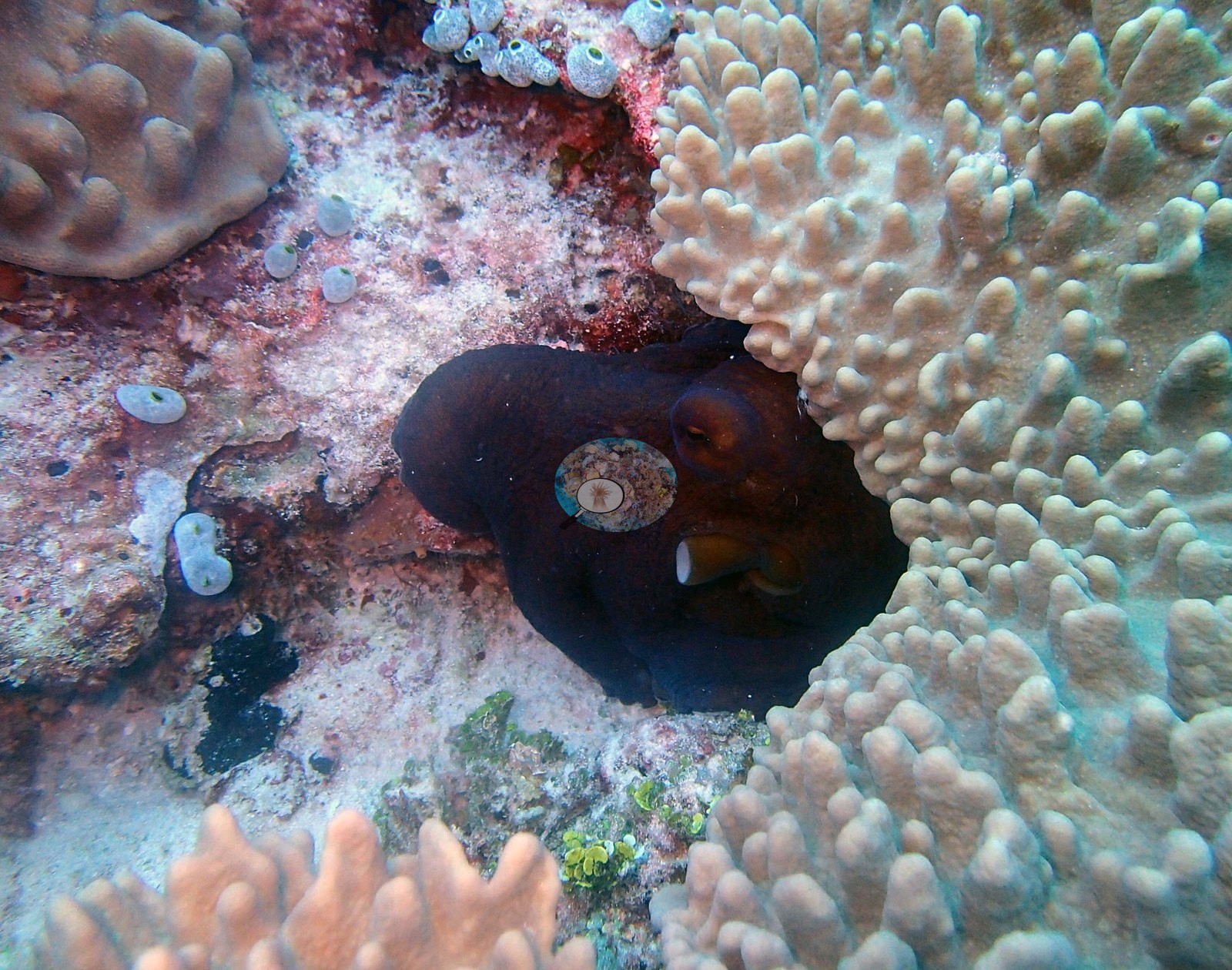
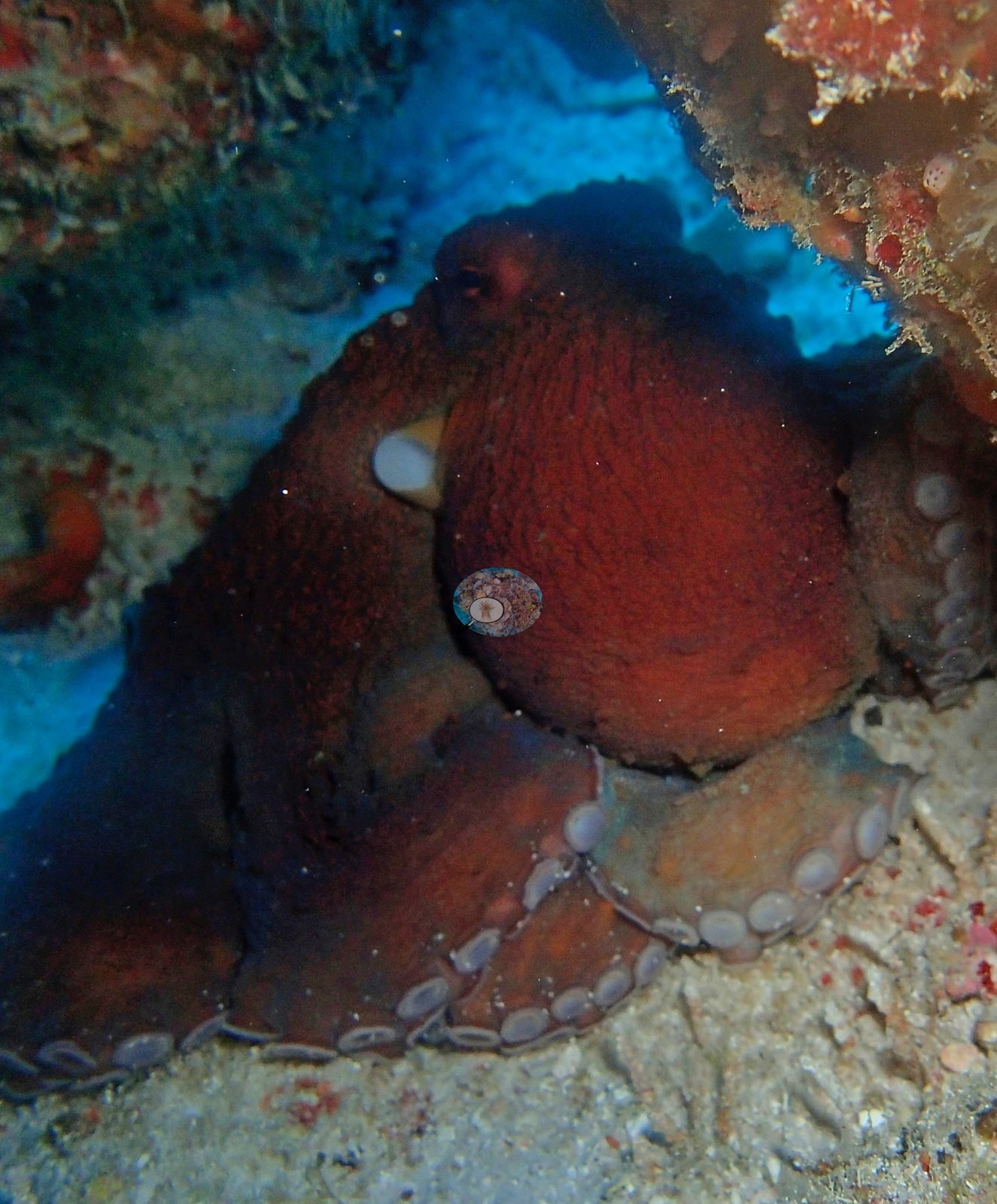
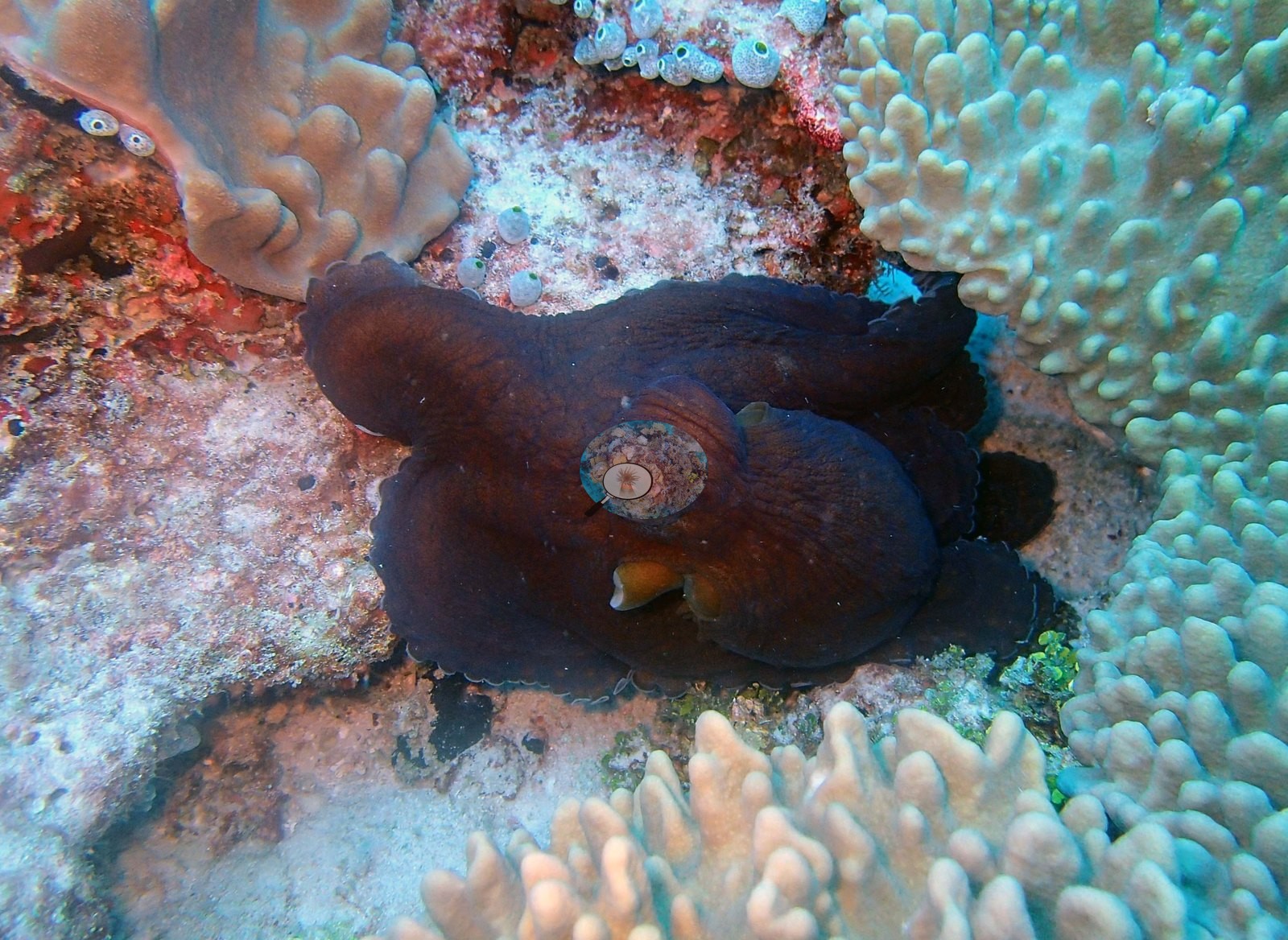
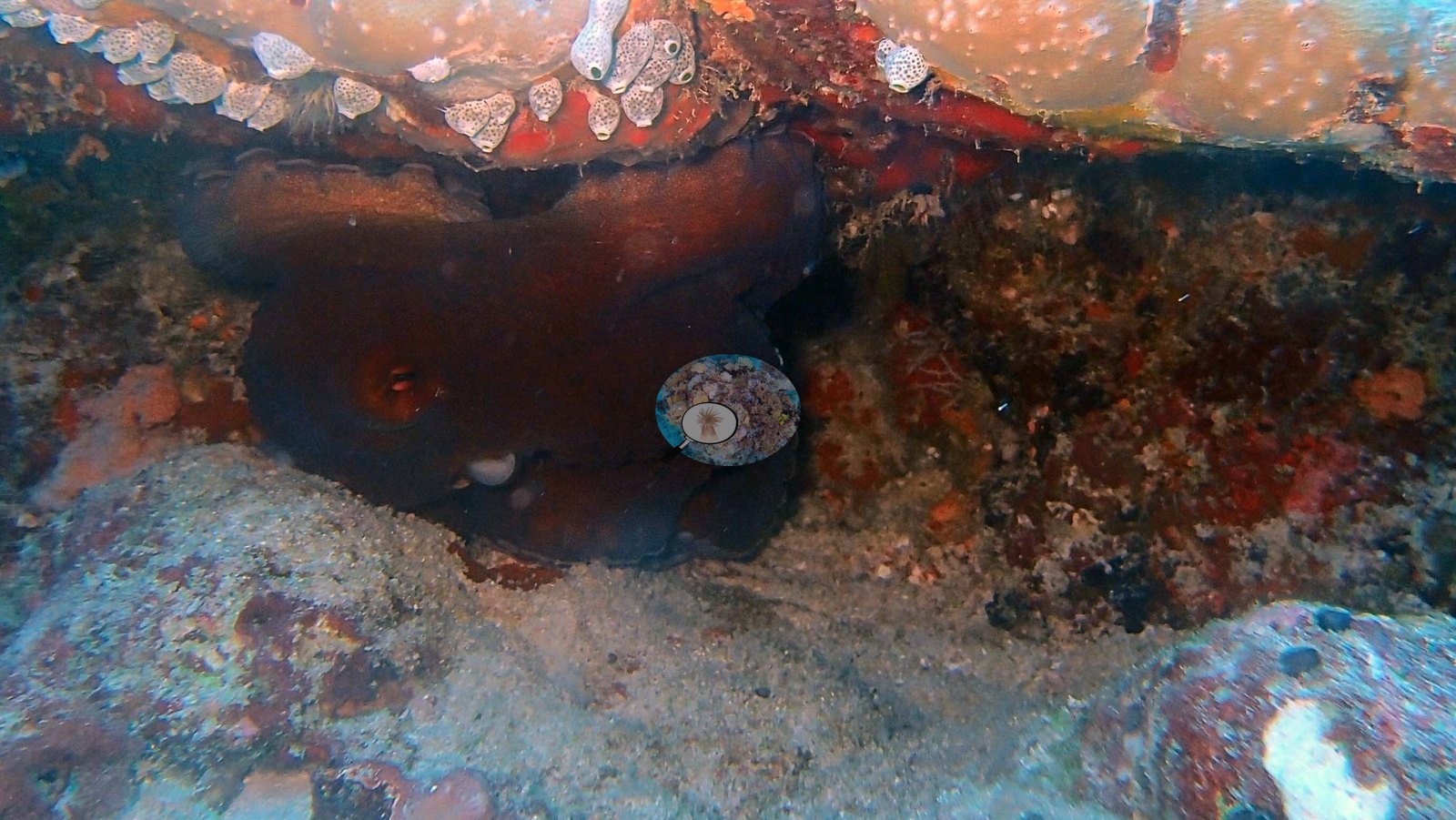
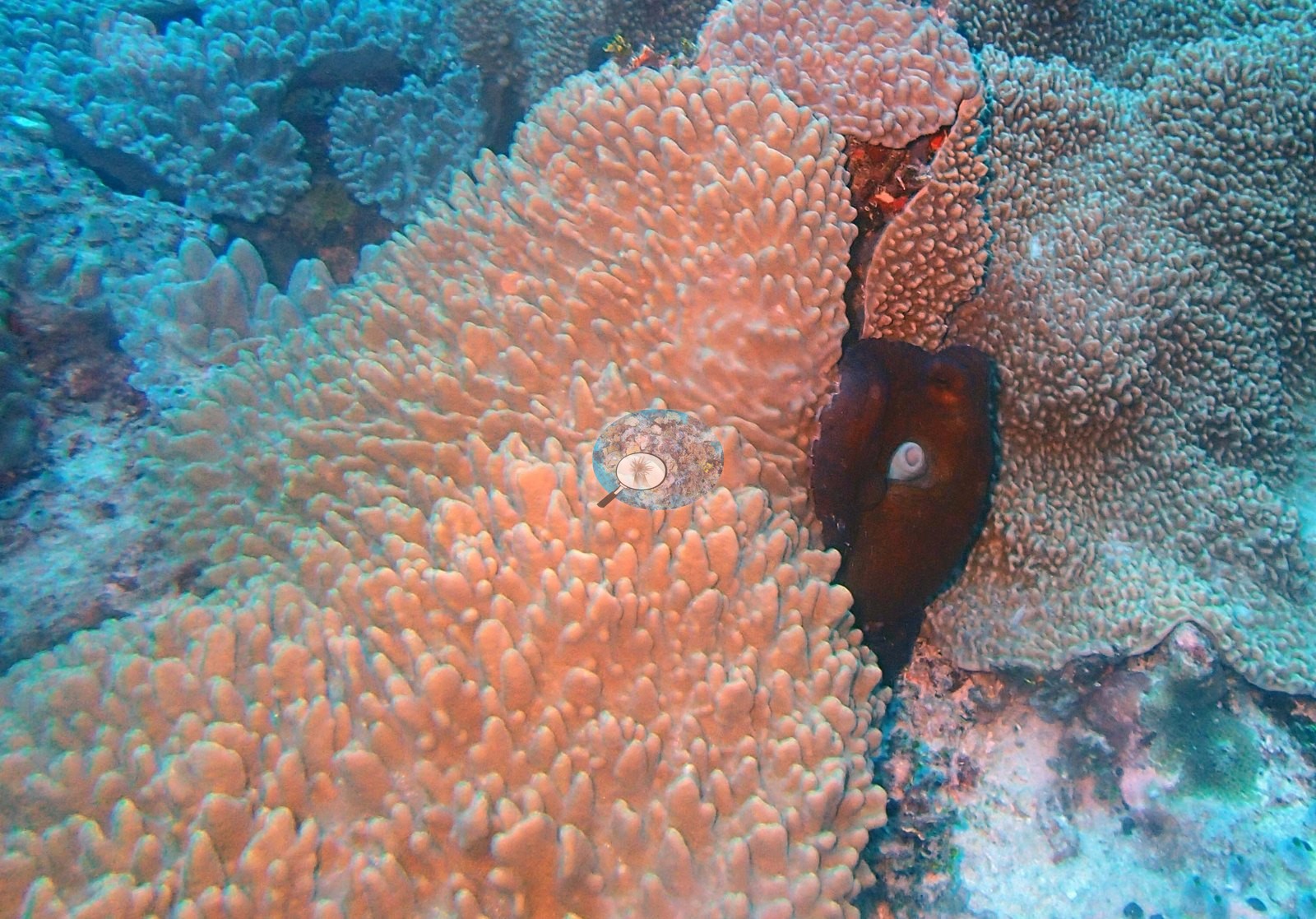
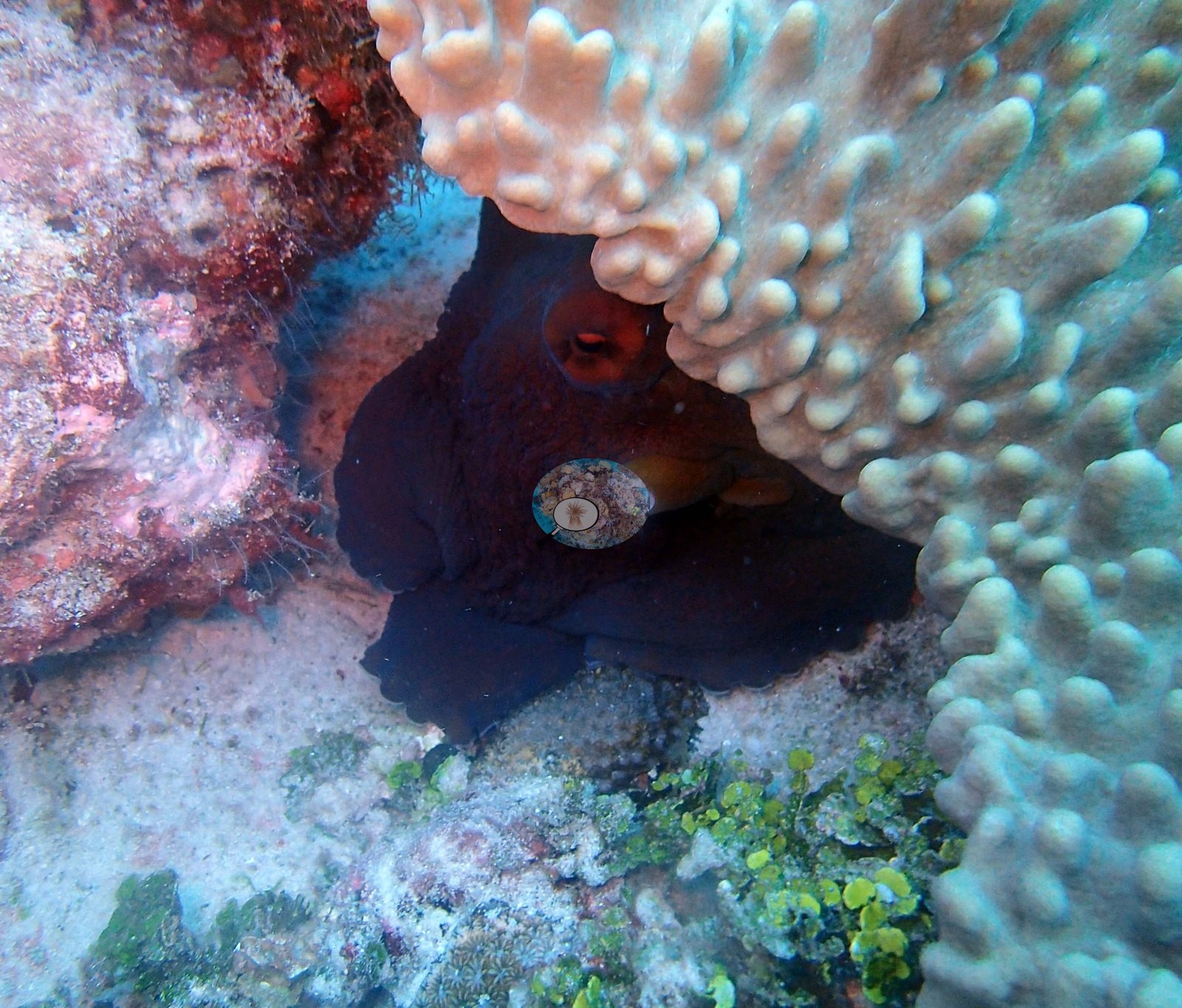
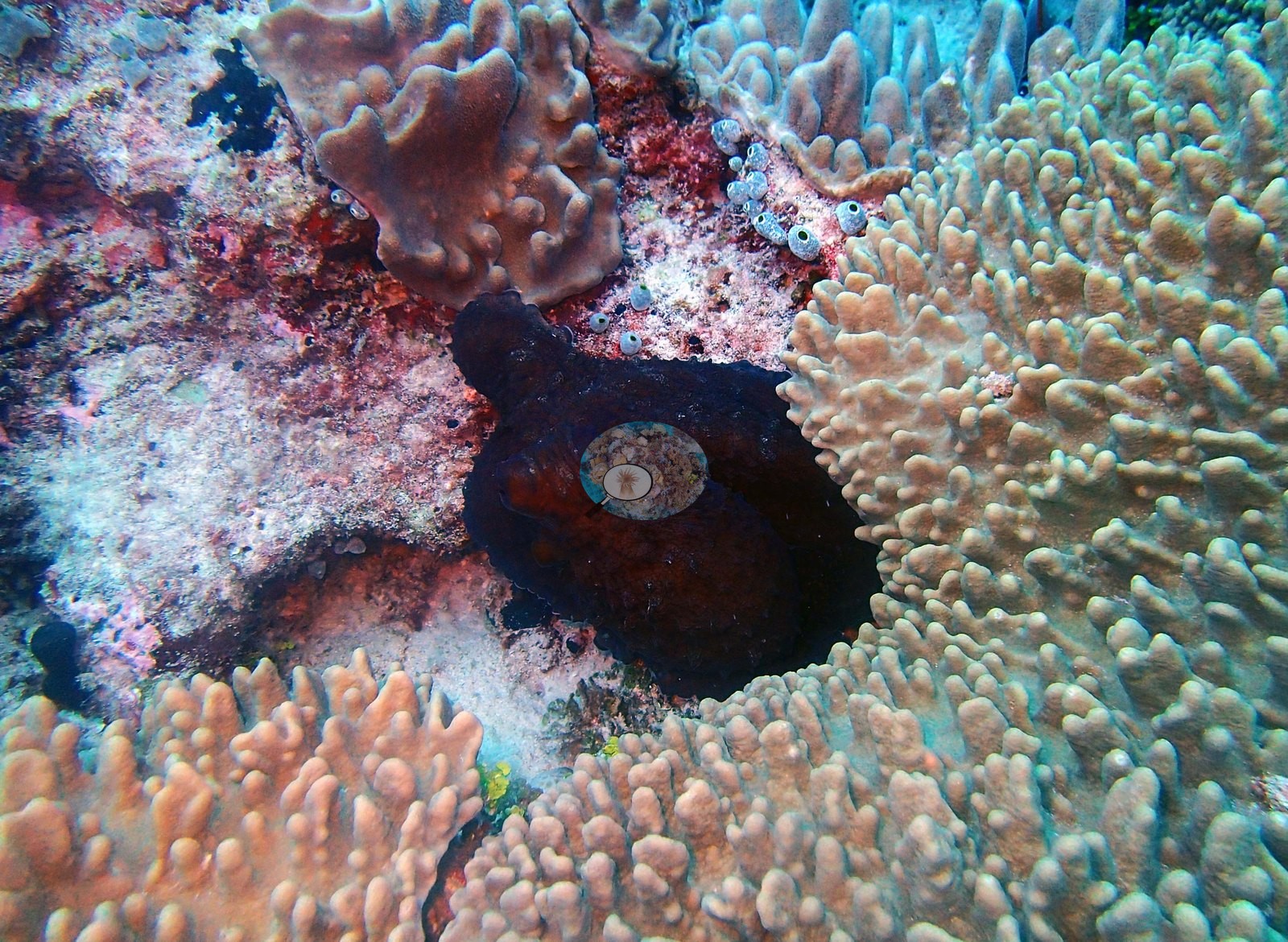
Assemblage composition from transect data — this is a Porites reef with a long thin tail. Twenty-three scleractinian genera are non-zero, and one of them carries almost half the coral: Porites 9.96% of the benthos, far ahead of Pocillopora 2.72%, Pachyseris 2.00%, Montipora 1.96% and Stylophora 1.57%. Acropora is only 0.60% — a striking figure for a Chagos bank reef, and a caution against reading the tabular and laminar plates visible in the wide frames as an Acropora-led assemblage. The remainder runs Astreopora 0.53%, Galaxea 0.50%, Favia 0.46%, Goniastrea 0.36%, Pavona 0.30%, Favites 0.20%, Fungia 0.09%, Cantharellus 0.07%, Acanthastrea, Goniopora and Hydnophora 0.06% each, Symphyllia 0.05%, Leptastrea 0.04%, Cyphastrea and Montastrea 0.02% each, and Caulostrea and Seriatopora at 0.01%. On the substrate side the transects give bare substrate 20.23%, non-coral invertebrates 17.00% — unusually high, and consistent with the sponge, ascidian and hydroid cover the frames show — erect algae 11.80%, sediment-laden turf 11.75%, crustose coralline algae 9.97%, turf 5.02% and macroalgae 2.59%. A modest, open, low-relief bank reef held up by Porites, with conspicuous non-coral invertebrate cover between the colonies. A large day octopus compatible with Octopus cyanea occupies 16 of the 23 frames, P3160344 through P3160372, and the camera stays on it for eleven straight minutes, moving from arm's length to near-macro. The animal cycles through its repertoire: flat near-black over pavement in P3160344 and P3160353; emerging from a shaded crevice under a red-sponge-encrusted overhang, with a pale pink leathery soft coral and a feather star beside it, in P3160346, P3160349 and P3160351; deep maroon with the pale funnel showing in P3160351, P3160357, P3160358, and P3160359; rust-red with a raised ocular papilla in P3160349, P3160361 and P3160369; crossing cream and tan digitate and nodular colonies through the middle of the sequence; wedged into a fissure in a huge salmon-pink Porites head in P3160366; and fully papillate, settled on sponge-crusted rock, in P3160356 and P3160372. P3160359 is the best portrait; P3160356 the best camouflage frame, the octopus almost invisible against a Porites head that fills the whole picture.
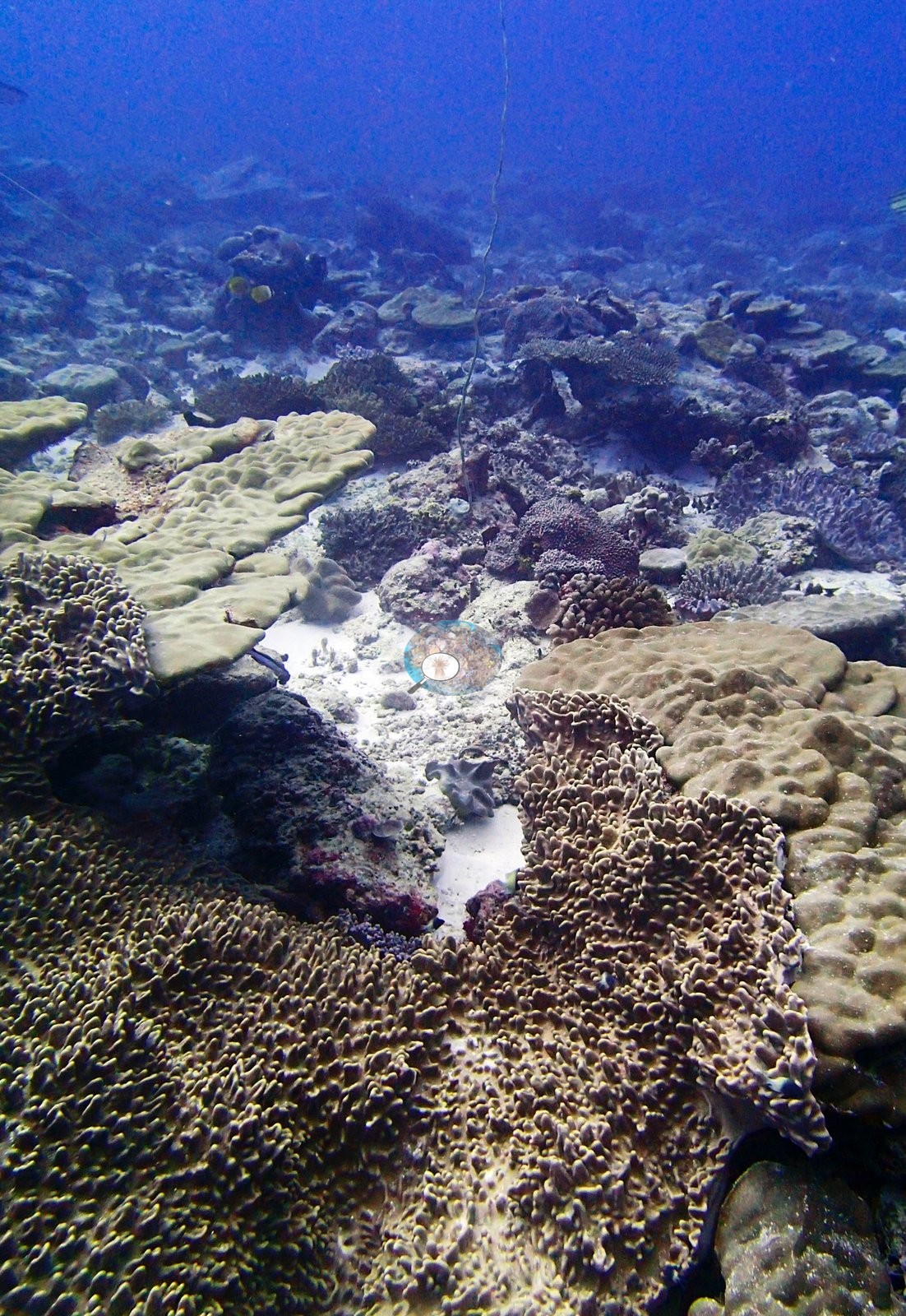
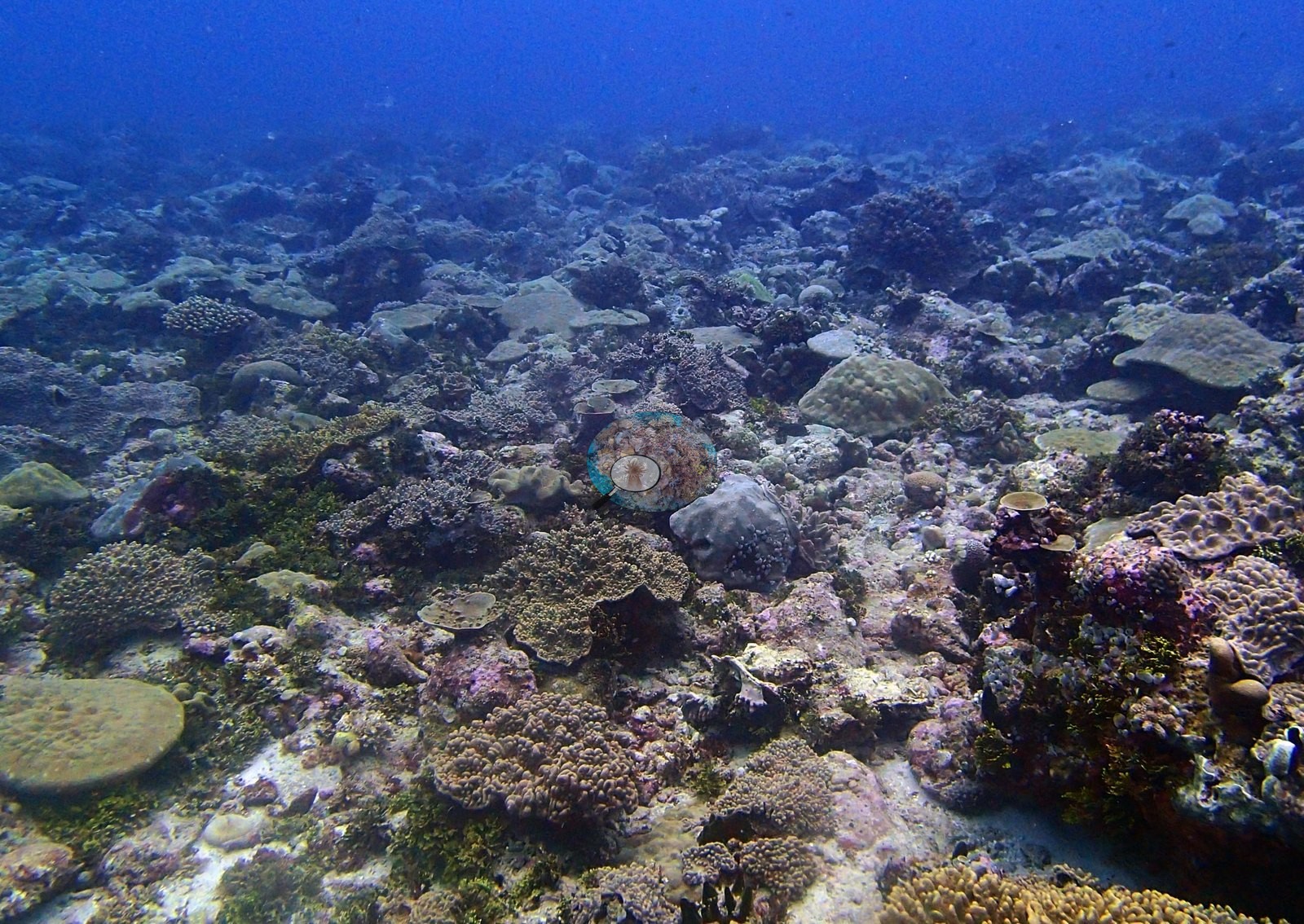
The reef itself is best read from the four wide frames, and it is modest. P3160342 and P3160343 look down over a low-relief pavement-and-rubble plain with coral as scattered small colonies — laminar and tabular plates compatible with Acropora, small corymbose colonies, pale massive Porites domes, mauve encrusting sheets, pink crustose coralline algae, turf and fine green algae between them. P3160323 is the same plain at distance in poor light, coral visibly thin. P3160314 is the highest-relief and highest-cover frame in the set and the only one with real structure: cream Porites plates stepping down a slope, a large tan massive Porites to the right, brown ridged plating coral in the foreground and white sand channels cut through between them. Four frames are not a site, and this part of the account should be read as four windows onto a modest, low-relief reef rather than as a survey of it. The photographic genus inventory runs to seven scleractinian groups — Porites in four growth forms (columnar-nodular heads, massive/domal boulders, encrusting-plating sheets and pale cream digitate colonies), tabular and laminar plates compatible with Acropora, corymbose Acropora-type colonies, bushy verrucose colonies compatible with Pocillopora, a vermiform meandroid brain compatible with Platygyra/Leptoria, smooth brown encrusting plates compatible with Montipora, and ridged foliose plates compatible with Echinopora/Merulina/Pachyseris — all given as “compatible with”. Non-scleractinian cover is unusually conspicuous and matches the transect's 17.00% invertebrate figure: red, orange and pale-pink encrusting sponges, ascidians compatible with Didemnum molle, hydroids compatible with Aglaophenia/Lytocarpia, and Halimeda. Non-coral cover is dominated by crustose coralline algae 4.3%, turf 12.2%, macroalgae 4.2% of all points.
Coral cover
The transect is this site's measurement. Coral cover 22%, from LOF BIOT-1 in situ transects (Mayfield & Dempsey 2026, Oceans, suppl. S1) — diver transects run across the site on 16 March 2015, and the authoritative record of cover and community here. Algal cover is 41.1% of the benthos. Nothing photographic or model-derived below qualifies, softens or disputes this value.
Computer-vision method comparison — the largest method divergence in the redo, and the frames explain it. Across the 23 paired frames the same reef reads transect 21.6% · CoralNet points 42.8% · Coralscapes masks 46.0%: deviation +21.2 to +24.4 pp, both photo methods reading roughly twice the transect, mean of 3 = 36.8% ± 13.3. The Coralscapes masks put massive and meandroid coral first at 42.3% of live cover, other hard coral 39.6% and tabular Acropora 11.3%; the independent 30-point annotation of the same frames (690 points) apportions live coral Porites 46.4%, other hard coral 41.4%, Acropora 10.8%, Pocillopora 1.4%. The point set's Porites-dominated apportionment matches the transect's community structure closely even where its absolute cover does not — the two methods disagree about how much coral there is, not about what it is. Two known limitations of the point scheme show up here: ascidians compatible with Didemnum molle appear in six frames and are scored variously as CCA, “other” or Unknown, because the scheme has no tunicate class (the same gap as BIEA18's octocorals), and Unknown runs at 23.8% of all points site-wide, peaking at 56.7% on P3160346. The single worst frame-level disagreement in the set is P3160372 — human 43.3% live coral against Coralscapes 3.2%; the frame is red and orange encrusting sponge, pavement and the camouflaged octopus, with almost no live scleractinian in it, and the human value is wrong.
Condition and bleaching. Anderson's published per-site figure — 6.9% of coral bleached (CoralNet analysis of informal survey images; Mayfield & Dempsey 2026, Oceans) — is the authoritative statement of condition at BIEA22. Nothing here is converted into a percentage from frames, and the photographic account neither stands in for that figure nor argues with it.
Assemblage composition. Across 23 analyzed frames the Coralscapes masks put live hard coral at 46% of image area, of which massive and meandroid is the largest component at 42.3%; the rest breaks down as other hard coral 39.6%, tabular Acropora 11.3% of live cover. The independent 30-point human annotation of the same frames (690 points) gives live hard coral as 42.8% of all points and apportions it Porites 46.4%, other hard coral 41.4%, Acropora 10.8%, Pocillopora 1.4% of live coral. Frame-to-frame live cover runs 6.7% to 90.0% by point count. Coral cover: 22%. Live hard coral measured on the in situ benthic transects of the LOF BIOT-1 expedition (Mayfield & Dempsey 2026, Oceans, supplemental S1), against algal cover of 41.1% of the benthos. The transect figure is this site's authoritative cover value; no image-derived product overrides it. Across methods the same reef reads: transects 21.6% · CoralNet points 42.8% · Coralscapes masks 46% (23 frames). These products have different sampling footprints and denominators and should not be averaged.
Stressors
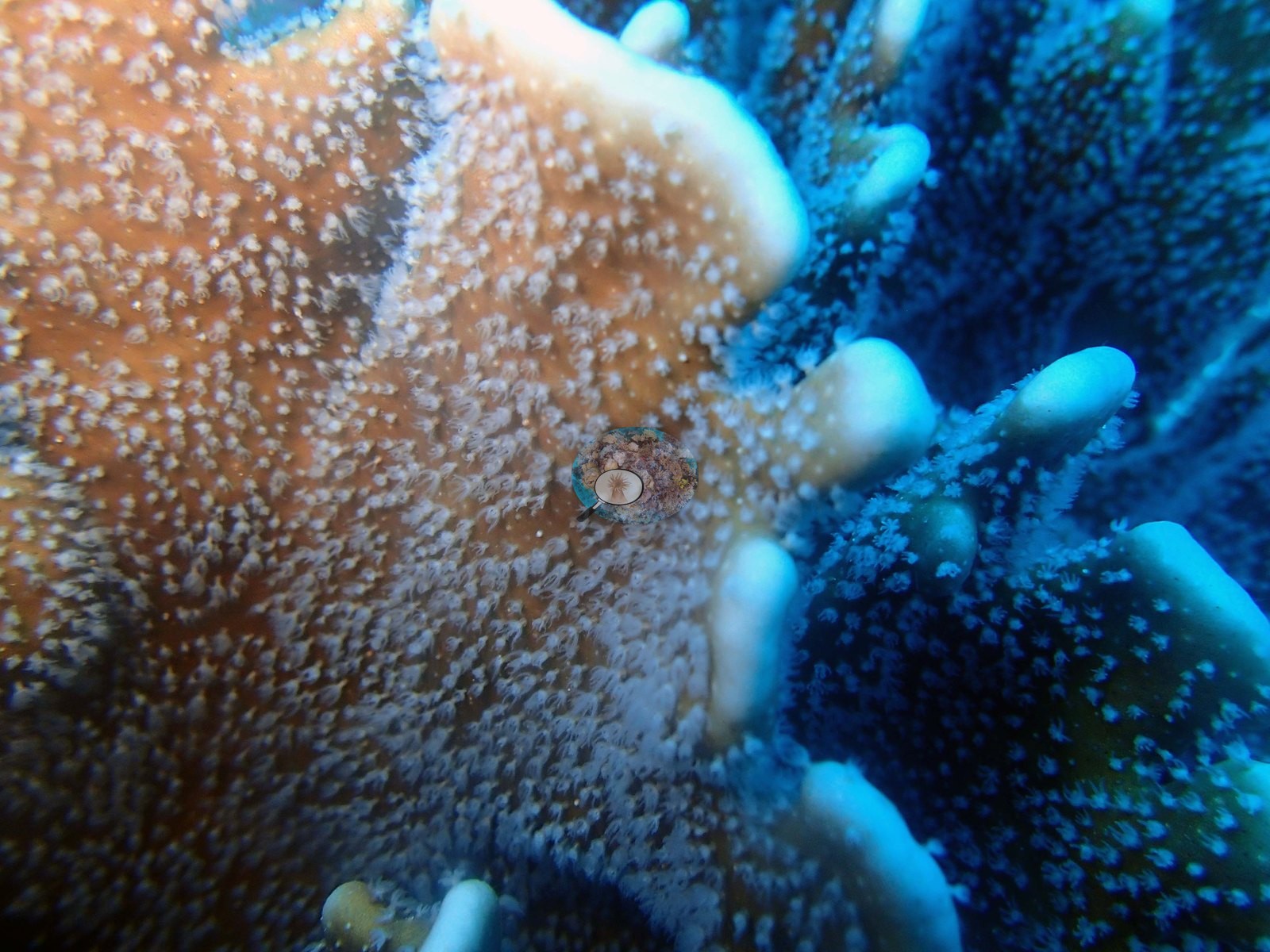
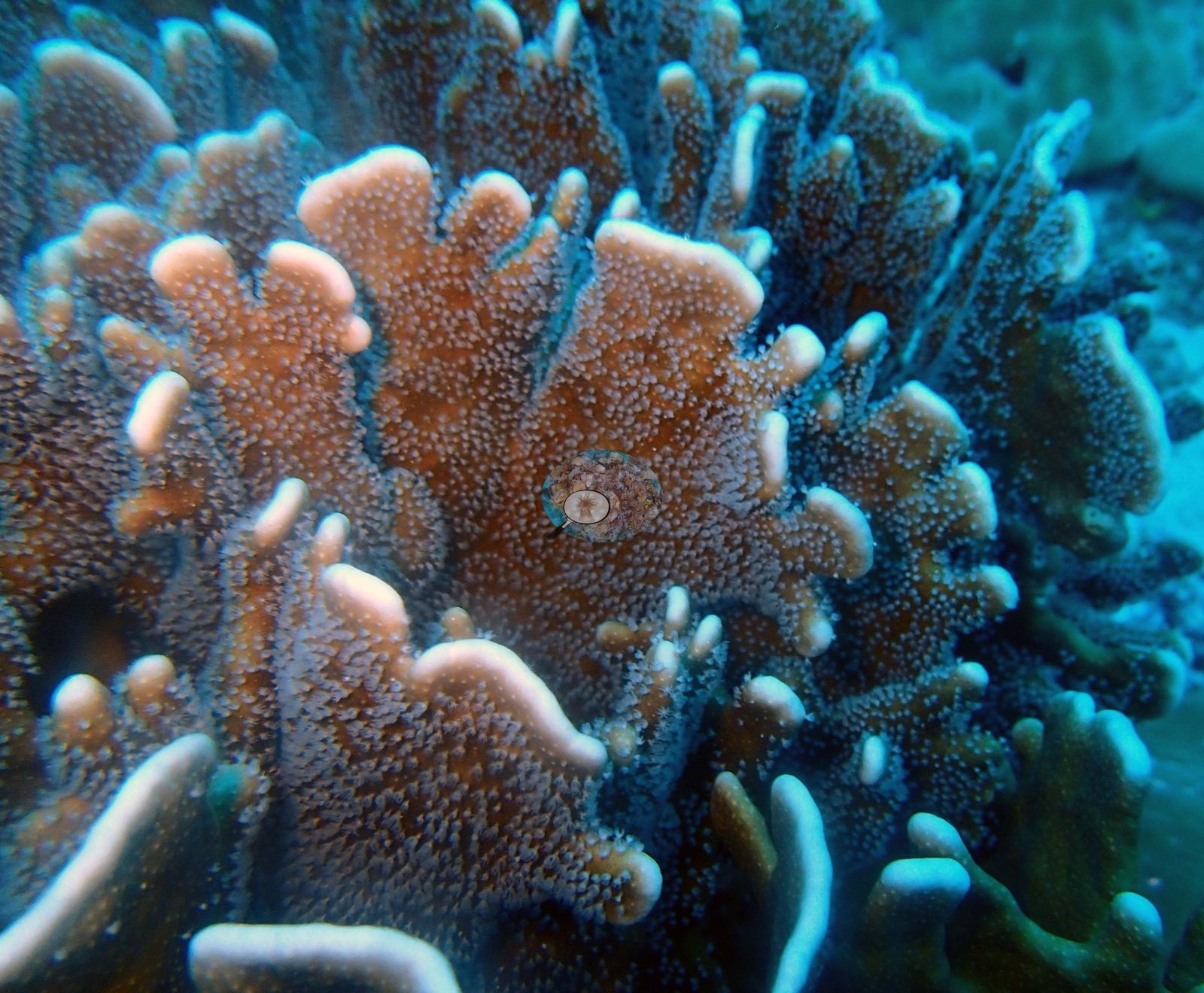
Qualitatively, no frame in this set shows a chalky, tissue-free colony of the kind BIEA20's P3150281 does, and no crown-of-thorns, disease lesion or predation scar resolves anywhere. What the close frames do show is pale-but-pigmented coral: the cream-tan digitate and nodular Porites that dominates the octopus sequence is naturally light-colored, and the two extreme macros P3160367 and P3160368 resolve the pale look as white growth tips and fully expanded white polyps over healthy tan coenosarc, not bleached skeleton. That distinction matters and is easy to get wrong at lower magnification.
As a matter of annotation quality rather than of reef condition, the two image methods handle pale tissue incompatibly at this site and both are working on the same unrepresentative frame set. All 24 of the point set's bleached points sit on eight close-focus frames; not one falls on the four wide reef frames. P3160368 (4 points) and P3160367 (5) score expanded white polyps and white growth tips on a healthy tan branching colony; P3160353 (6), P3160355 (3), P3160352 (2) and P3160354 (2) score naturally pale cream Porites. Coralscapes independently reads bleaching at 0.06% of image area site-wide. Targeted re-annotation of those eight frames is worth doing before these per-frame point values are reused in any photo-based product — a recommendation about the image annotations, not about the published site figure. Structural loss registers as dead coral 1% of image area and rubble 1.5%. Bleaching stands at 3.5% of annotated points — 24 points in total — concentrated in other hard coral 2.9%, Acropora 0.6% of points.
Fish and other fauna
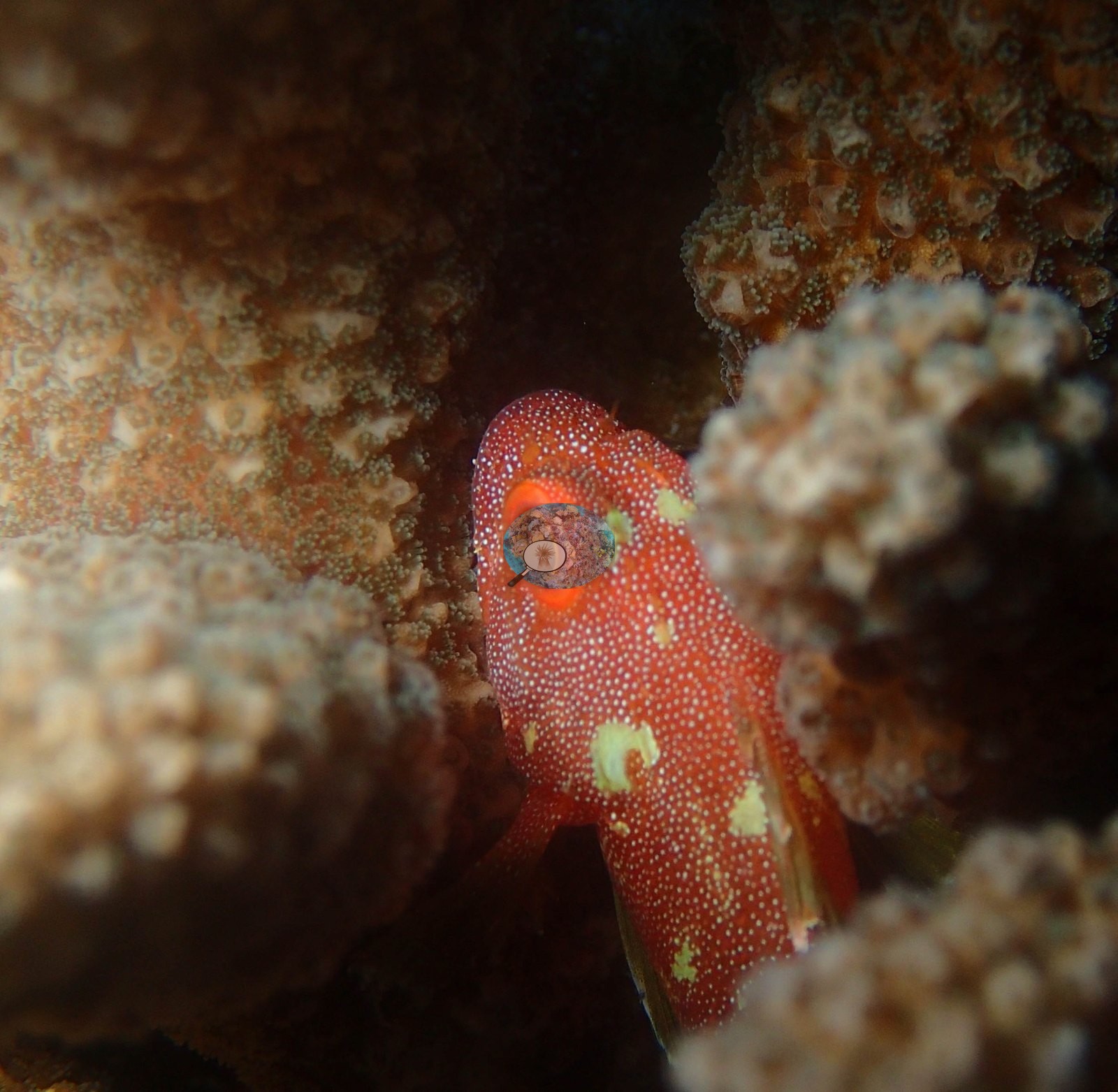
The macrofauna is thin but holds the site's other headline. P3160323 shows at least two, probably three, requiem sharks over the plain in mid-water; outline and caudal shape fit gray reef shark (Carcharhinus amblyrhynchos), but the frame is dim and distant and, following the BIEG04 lesson, the species call should not be made from this image. The same frame carries a giant clam (Tridacna) at lower right, mantle open. P3160365 is the best fish frame: a small bright red serranid, densely white-spotted with pale-yellow blotches and an orange-ringed eye — compatible with a Cephalopholis (coral hind, C. miniata-type) — among bushy Pocillopora-type colonies. Red soldierfish- or squirrelfish-type fish sit in the shadows of P3160356, and yellow butterflyfish are just resolvable behind P3160314. Conspicuous fauna and sessile invertebrates appear as sponges in 15 frames, anemones in 9 frames, giant clams in 2 frames.
Comparisons with other data
No prior survey data from this site. If you would like to share yours, please email us.
Dive record
The dive window is 08:25–09:11 from frame EXIF — the first dive of 16 March, ahead of BIEA23 — and 20 of the 23 frames fall in one 12-minute burst, 08:58–09:11.
Other notes
This is a property of the folder, not of the reef. Only 4 of the 23 frames are reef-scale wide views; the other 19 are close-focus frames built around a single octopus, eleven of them filled edge to edge by one coral head. Split the set and the bias resolves cleanly: on the four wide frames the two photo methods land almost on the transect — 25.0% and 23.2% against 21.6% — while the 19 close frames read 46.5% and 50.7%. The blue-water dilution mechanism flagged at BIEA18 and BIEA20 cannot apply here: not one BIEA22 frame reaches 40% water — the maximum is 33.3% and the site mean 5.7%, so there are no open-blue frames pulling the folder mean down. n is effectively 4, not 23, and any site-level cover statistic from this folder should be treated as non-random. That is the reason to trust the transect over the folder mean, and the four wide frames are the part of the photographic record that agrees with it.
Within the image products, the community apportionment is informative in its own right and is worth setting beside the transect.
Image-by-image analysis — BIEA22 is the octopus site, and that fact governs everything the image products say about it. All 23 frames come from Anderson's folder BiEa22-finished; there are no sampled-colony frames. P3160314 also carries a thin dark line running vertically through the frame from the top edge onto the reef, with a fainter second at upper left; if it is a shot line or transect tape it is the site's only methodology imagery, but it could equally be discarded monofilament and needs a full-resolution check. No quadrat, scale bar or depth stamp appears anywhere in the set.
CV model comparison
More info
Those are point counts on the photographs; this is a diver swimming a transect. The models and the reference never saw the same thing. ⚠ SITE-LEVEL ONLY. The 2,500 frames were not associated with any transect taken within 200 m of them, so transect-vs-image comparisons are site means, never frames. The transect value is already in the pin `cover` field (109 of 112 pins, sourced to the paper's suppl. S1) and is read from there, never re-imported. The transect is THE coral-cover value for this site and stands alone. The rows below it are a methods comparison only: no computer-vision value is averaged with it, feeds the headline, or carries over to the site's cover figure (Anderson, 2026-09-22).| Method | Hard-coral cover (%) |
|---|---|
| Transect (published) | 21.6 |
| CoralNet | 49.2 |
| In-house DINOv3 | 44.8 |
| CoralSCOP edited | 50.0 |
| Claude | 30.8 |
Data & links
- Read the full site report ↗
- Download benthic survey data (CSV) ↗
- Download all LOF-GRE data (933 sites) ↗
- CoralNet image repository for this region ↗
- Photo portfolio ↗
- Coral Reef Diagnostics page for this area ↗
All images from Coral Reef Diagnostics. Data are from Coral Reef Diagnostics.
 © Coral Reef Diagnostics.