
Part of the regional summaries: Chagos Archipelago - Great Chagos Bank West / Brothers / Eagle and Chagos Archipelago
More info
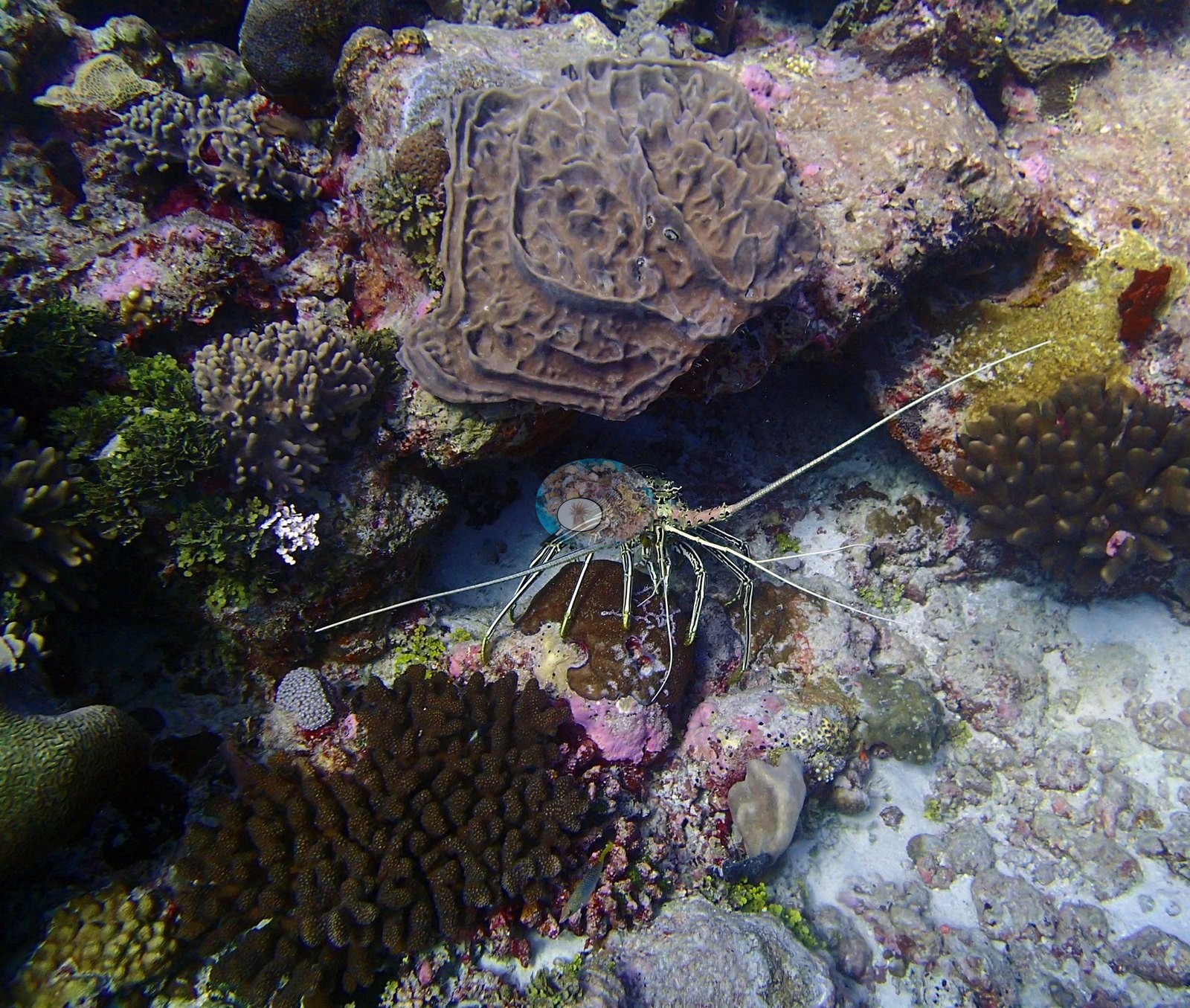
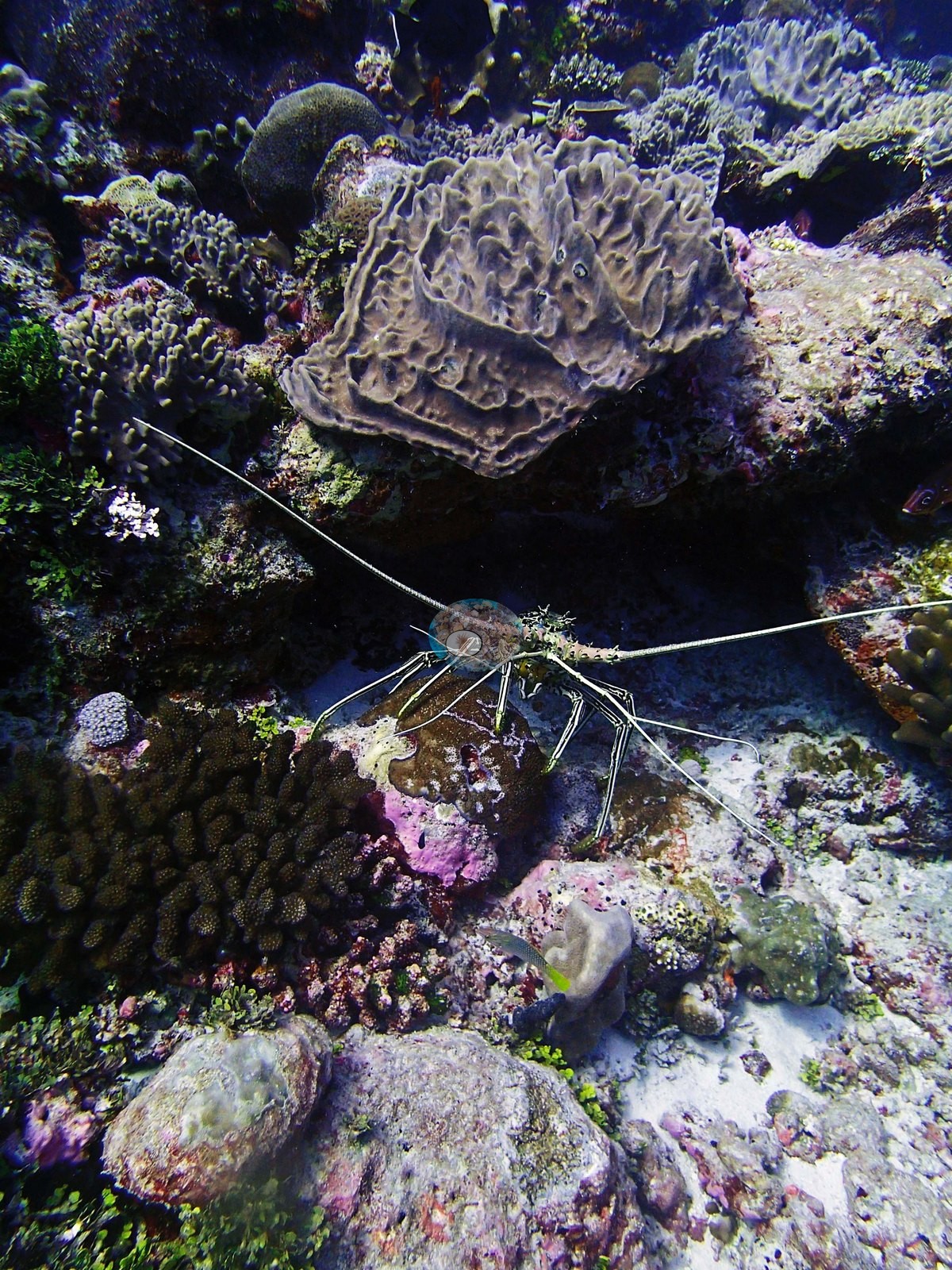
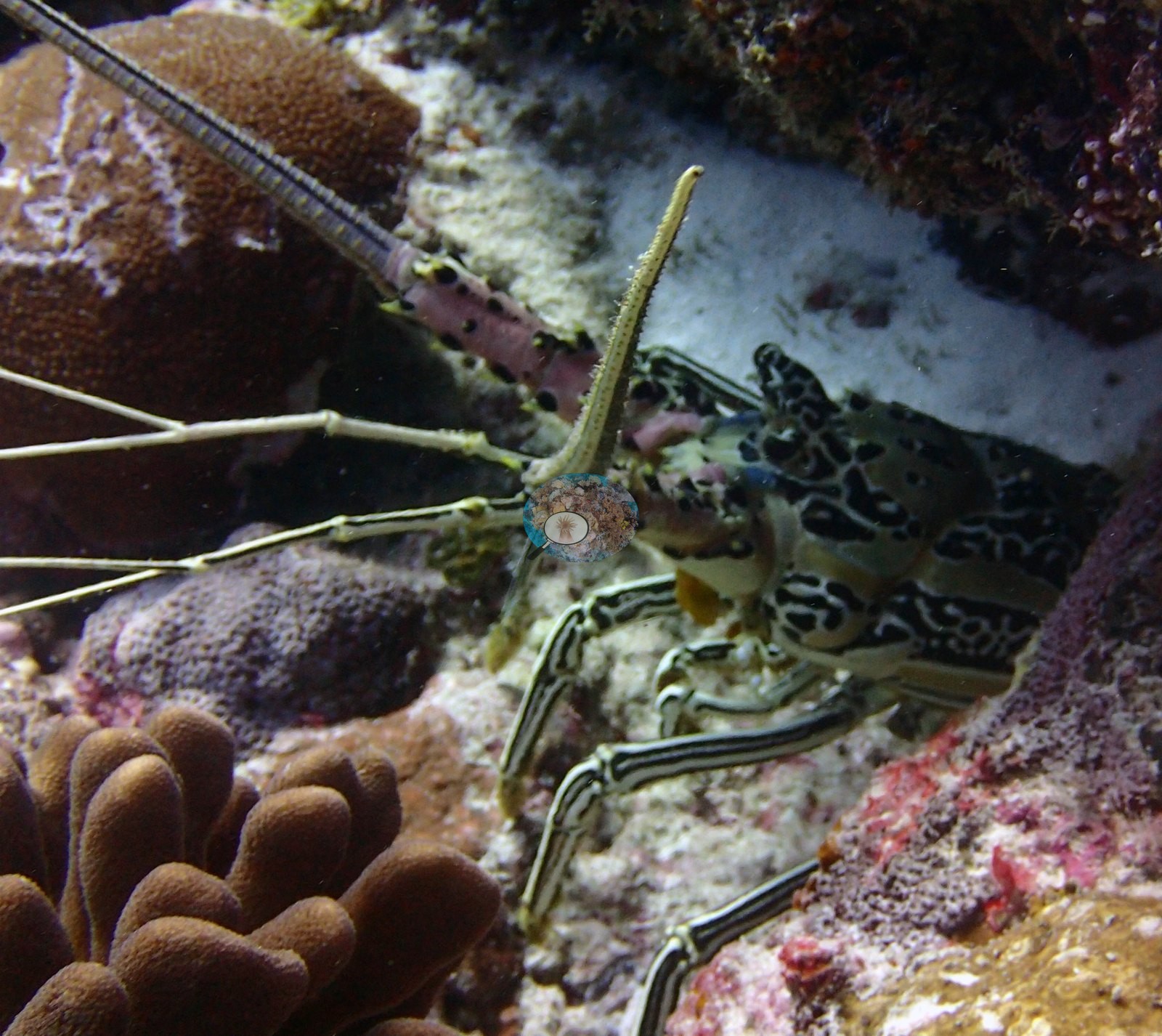
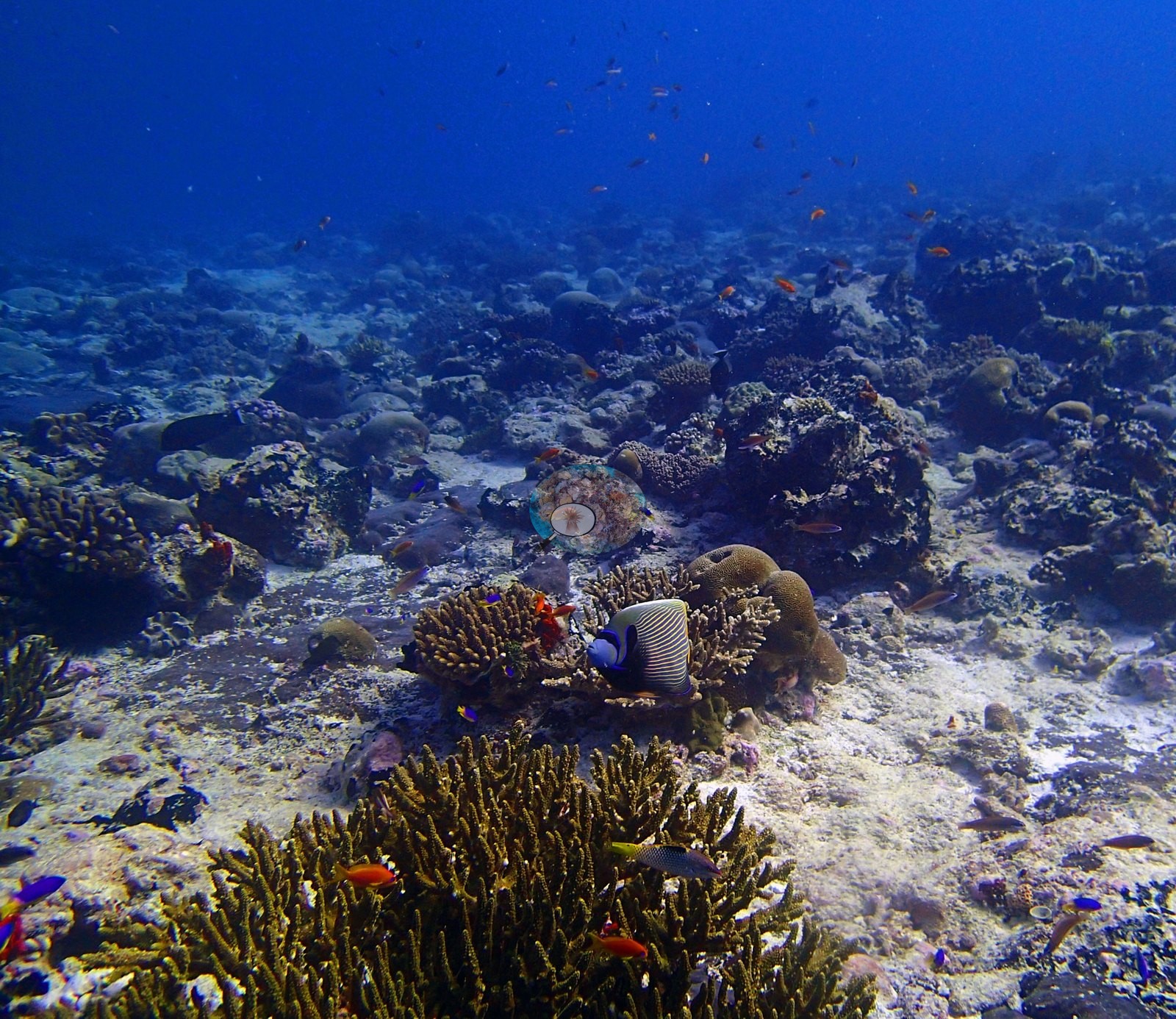
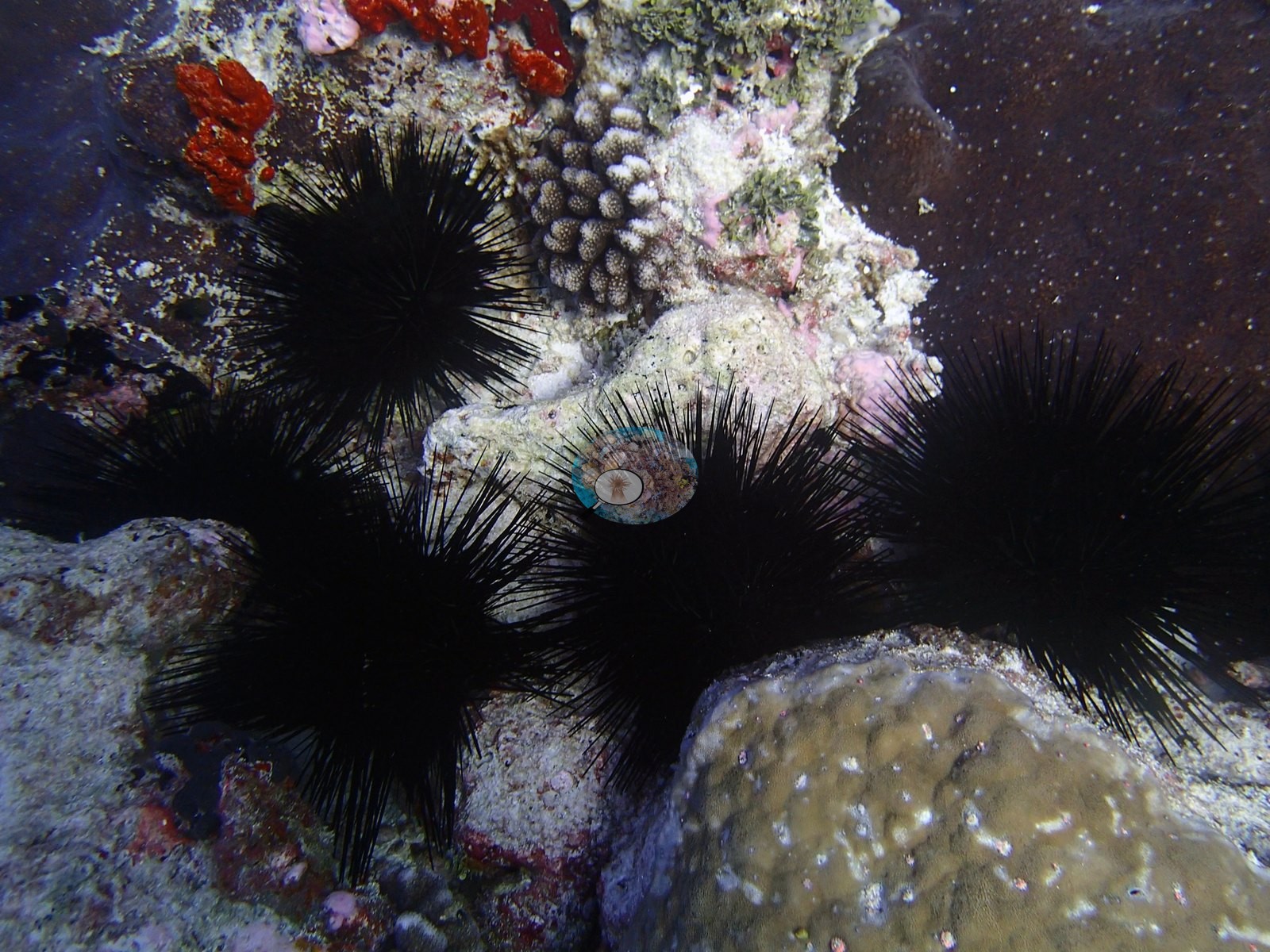
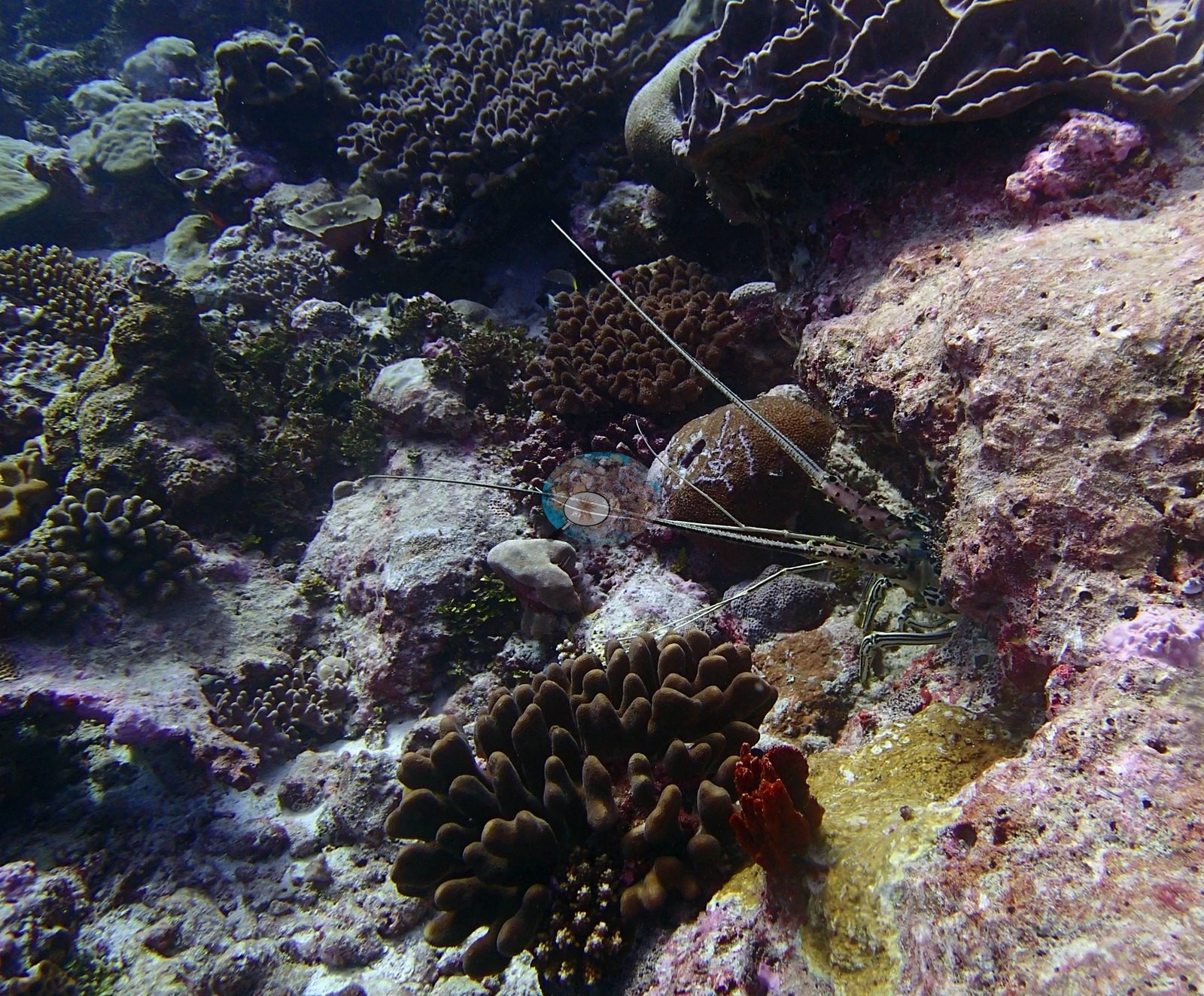
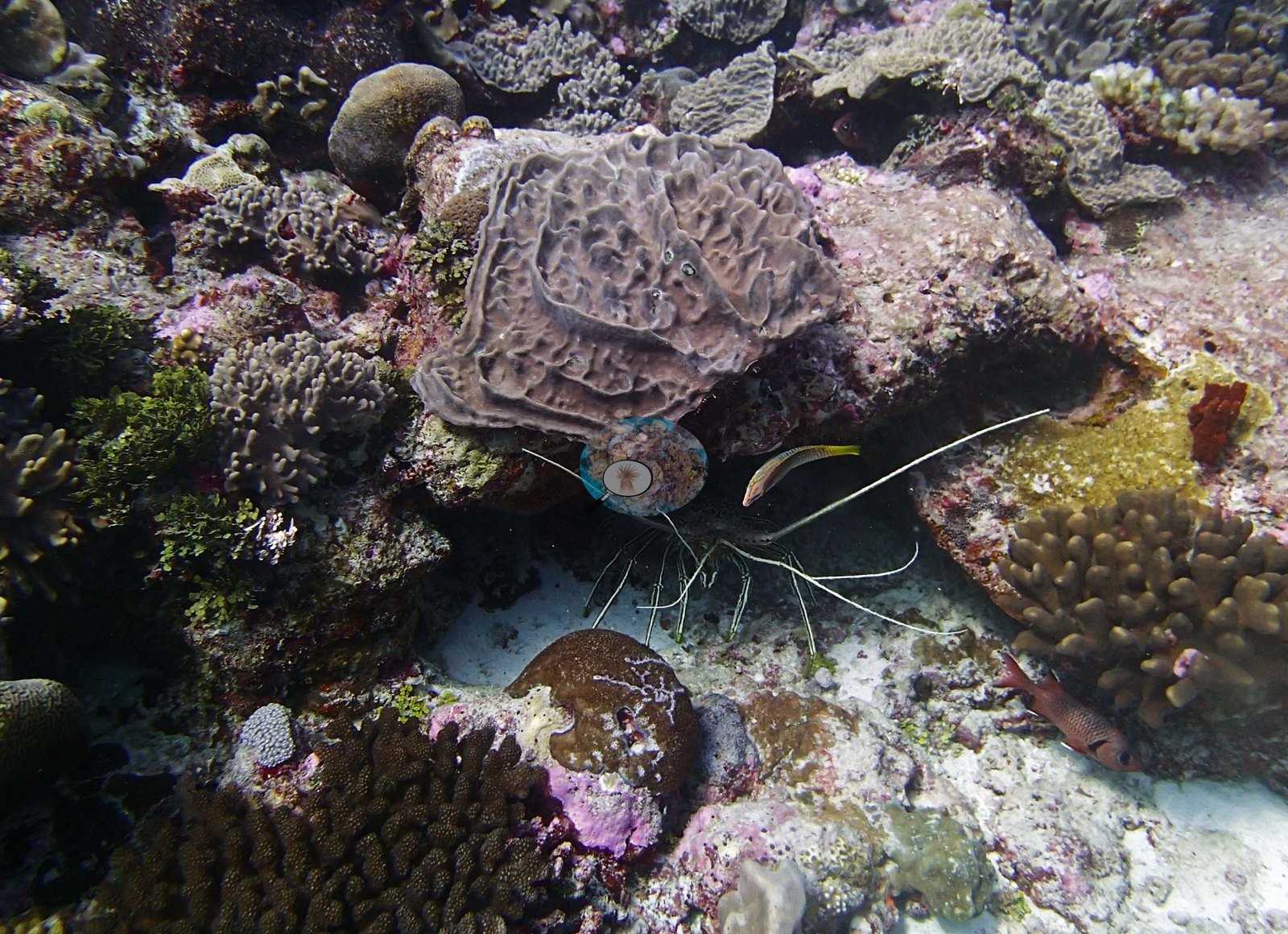
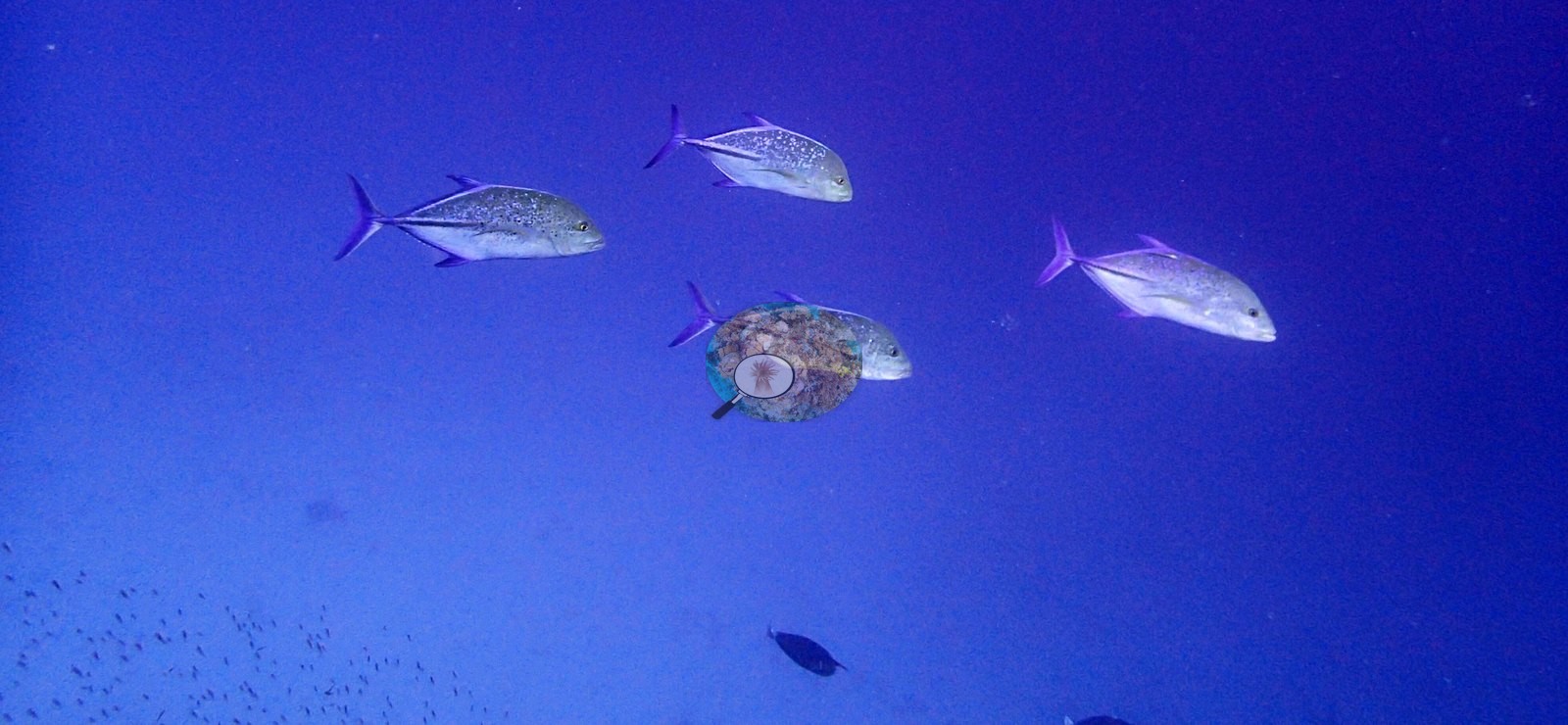
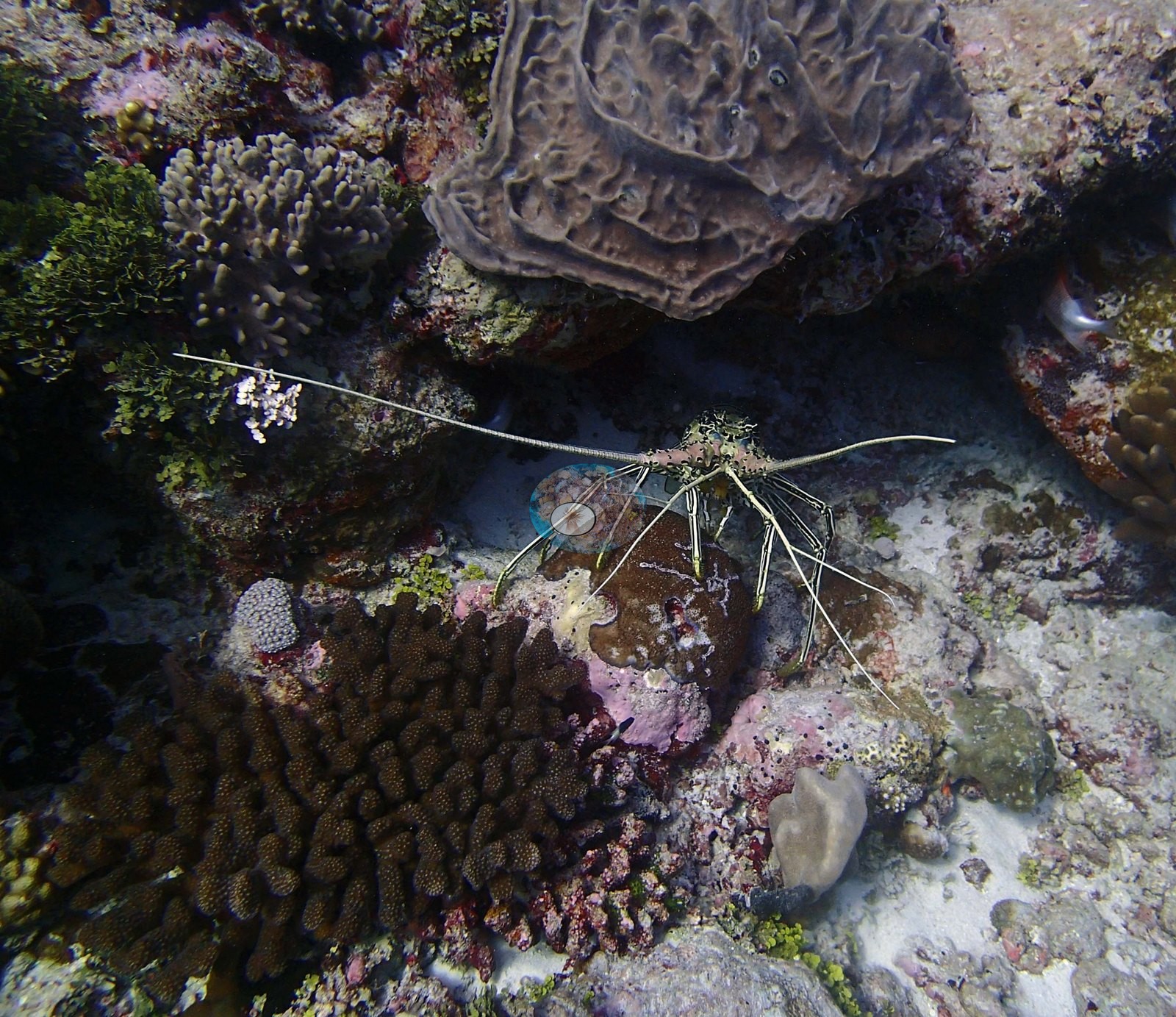
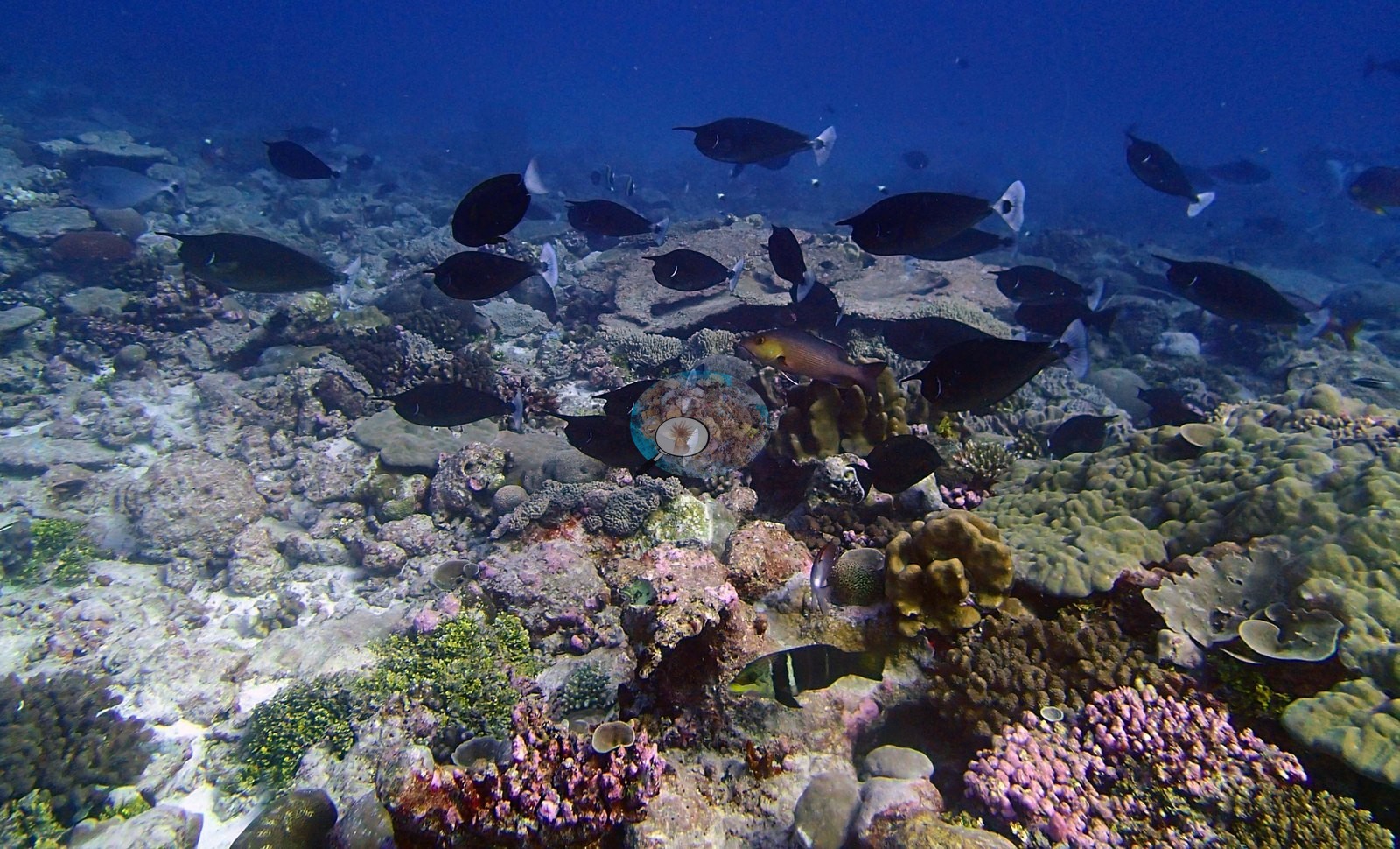
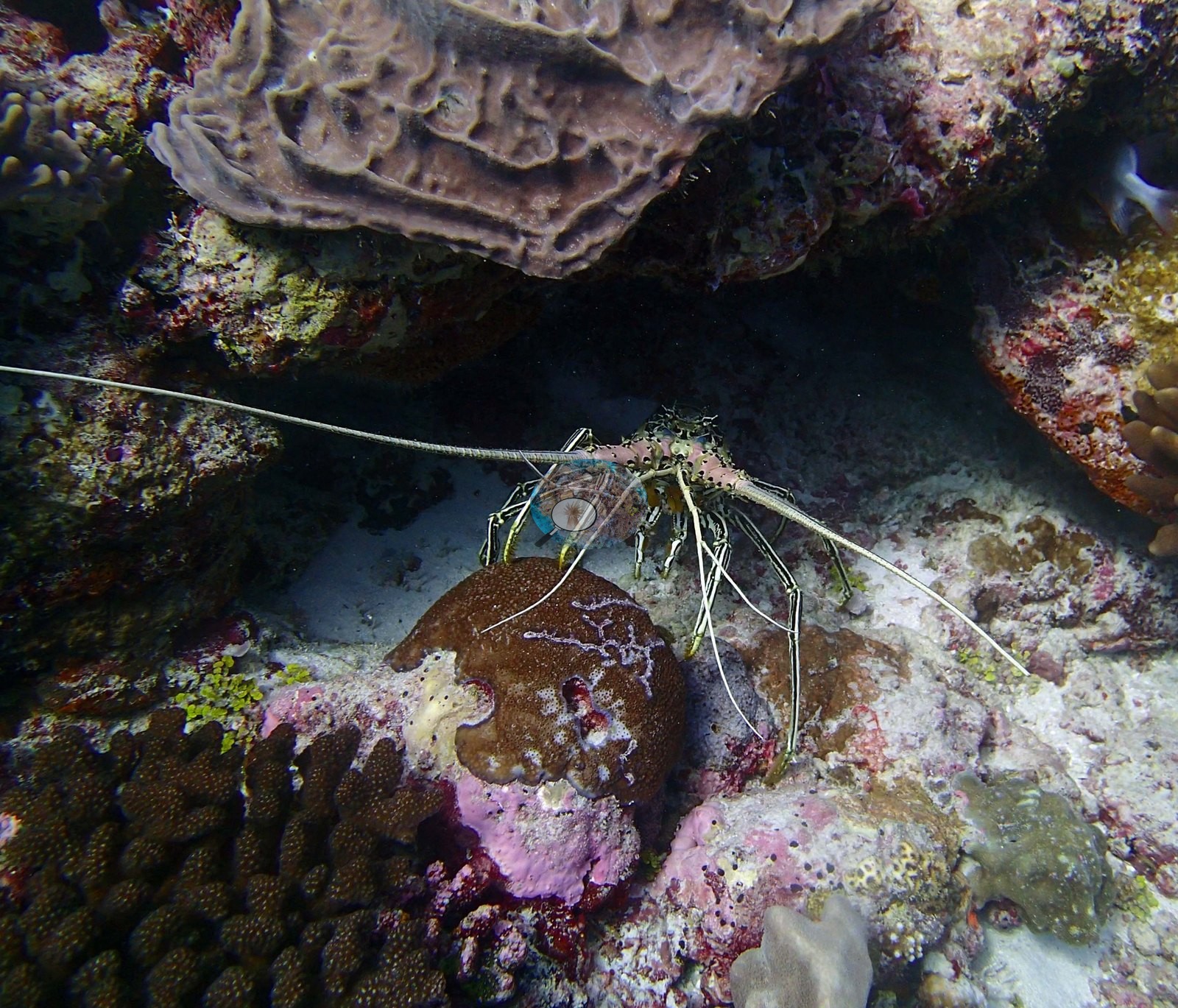
Chagos (NOAA CRW virtual station)BIEA18 has 21% coral cover and hosts a rich fish assemblage - bluefin trevally, an emperor angelfish, a whitetip reef shark - plus a tight aggregation of long-spined Diadema urchins and a painted spiny lobster photographed sheltering under a ledge across seven consecutive frames. A brown massive Porites nearby showed sharply-edged patches of recent partial mortality. Surveyed on the Living Oceans Foundation's Global Reef Expedition.
One other CRD dive site within 5 km shown in orange — click a marker to open its page.
🗺 Detailed map of the Global Reef Expedition dive sites, Eagle Island, Chagos (Khaled bin Sultan Living Oceans Foundation; opens in a new window)
Site description
General benthic features
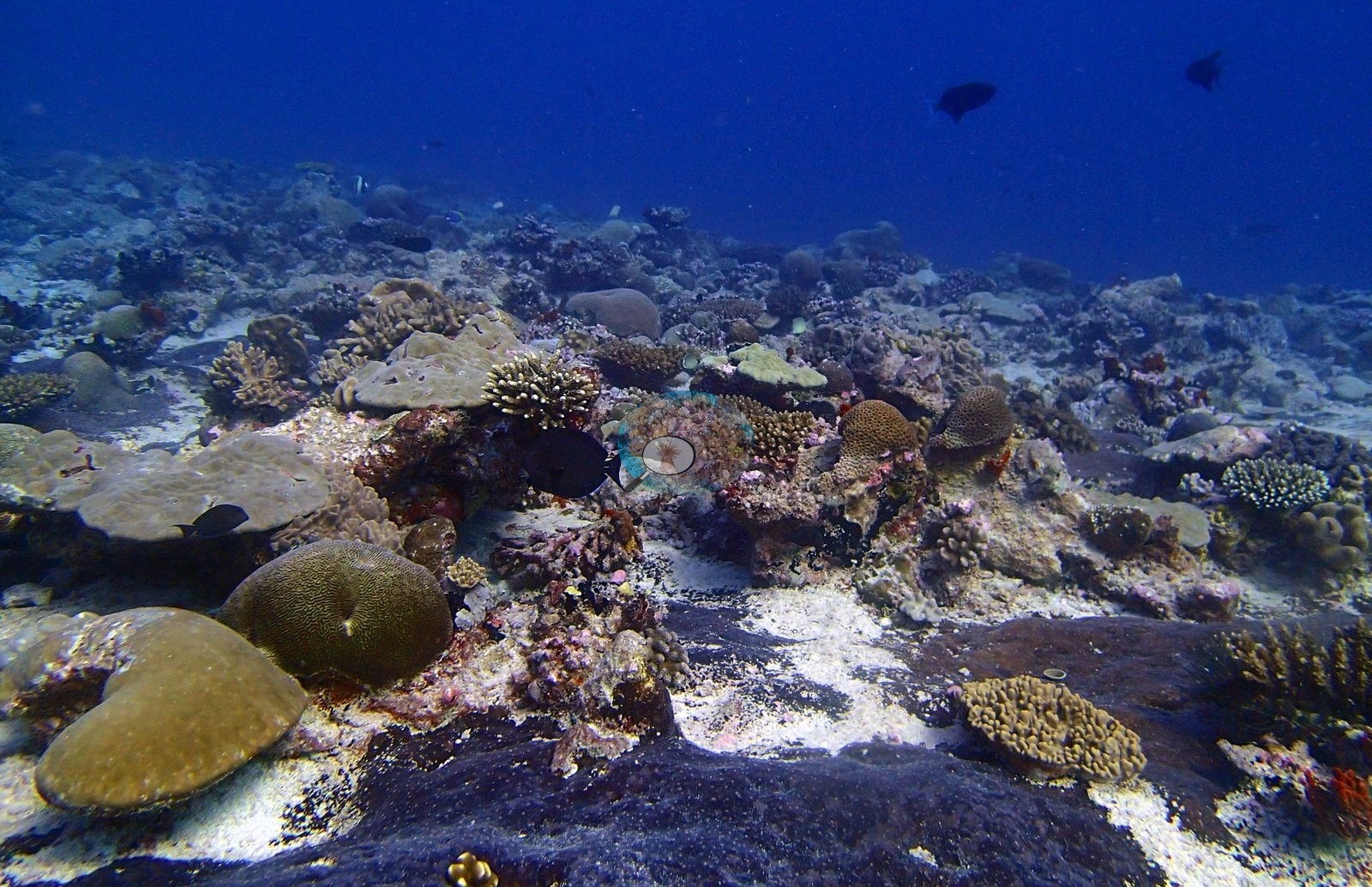
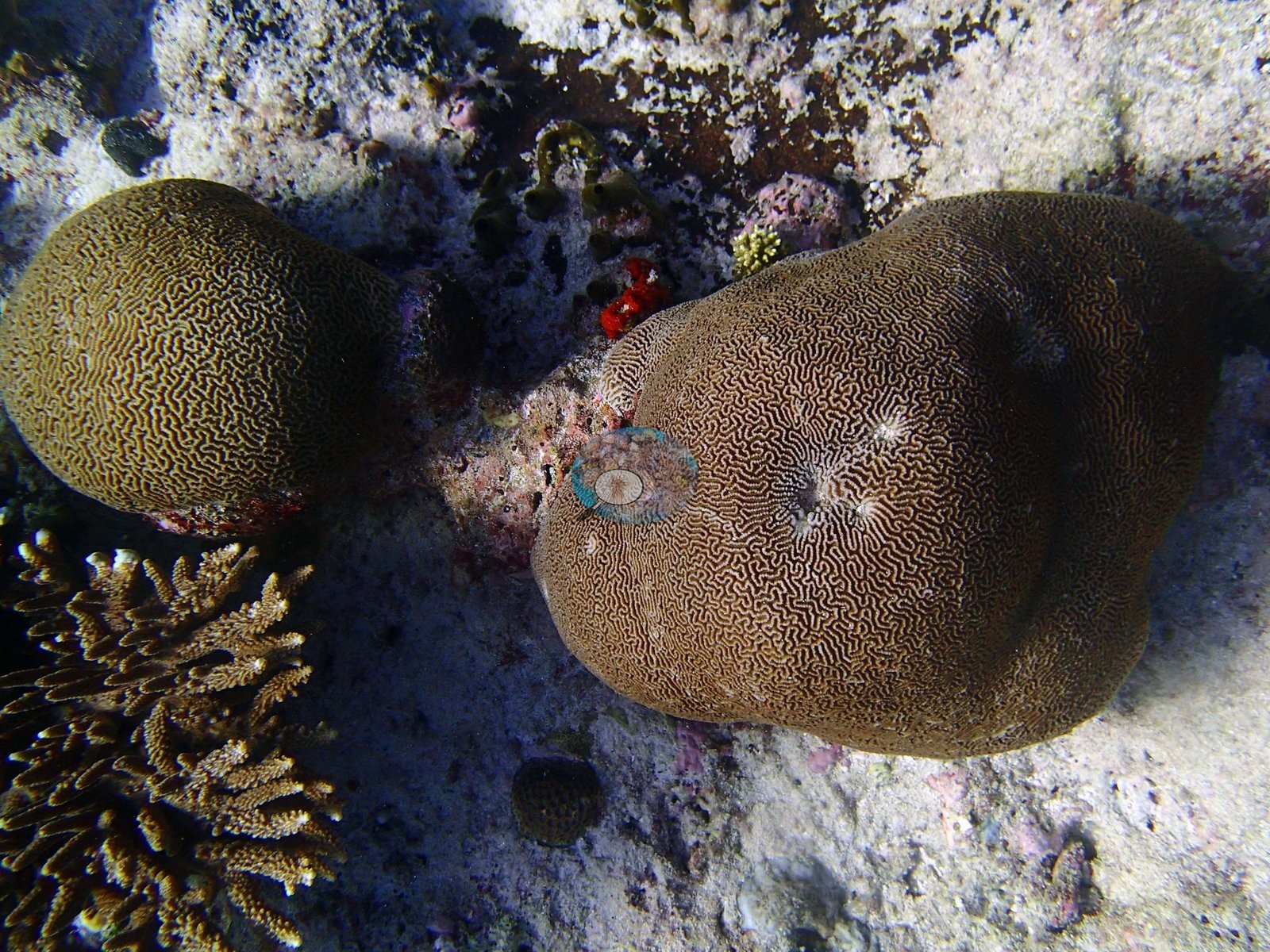
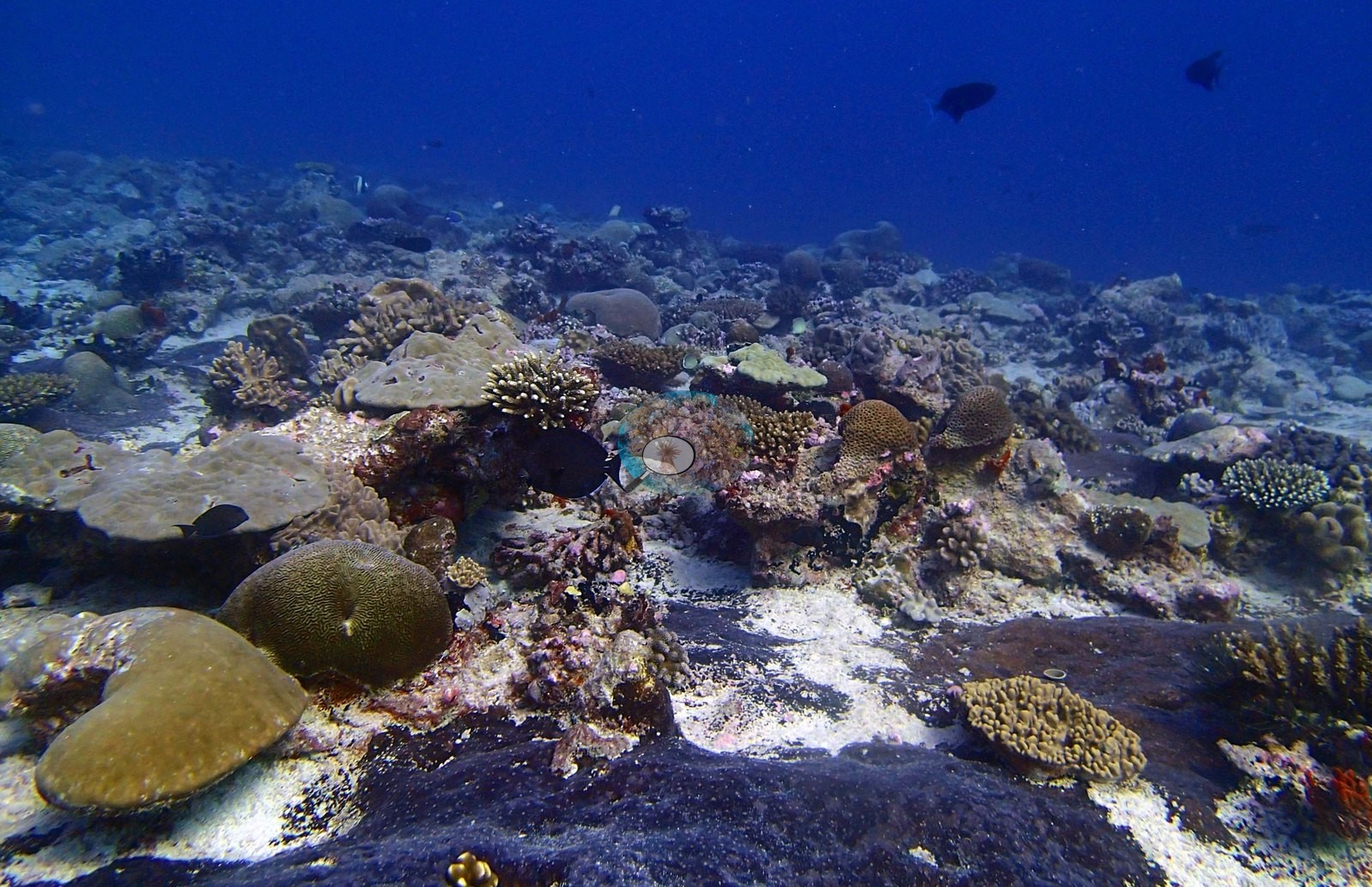
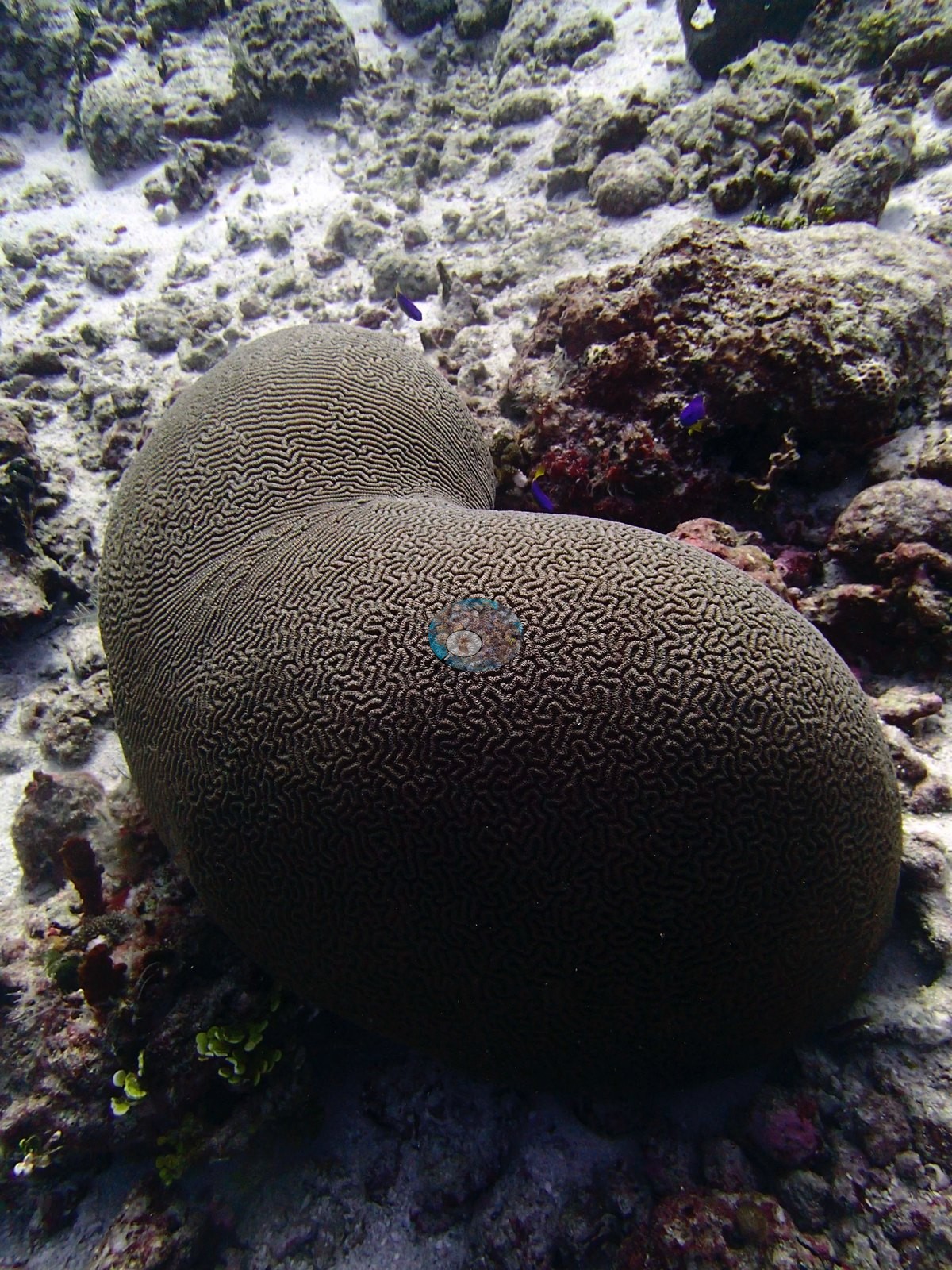
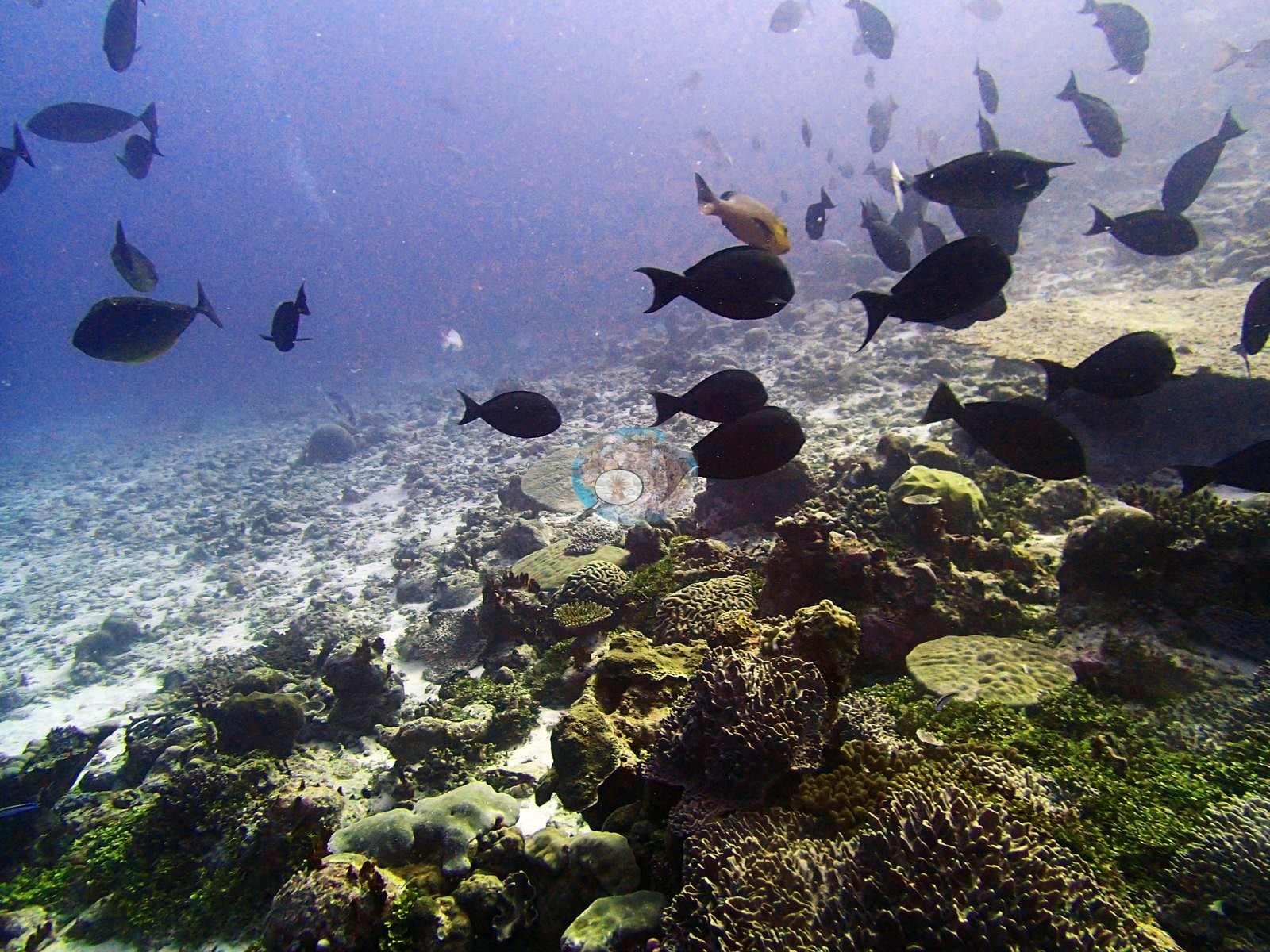
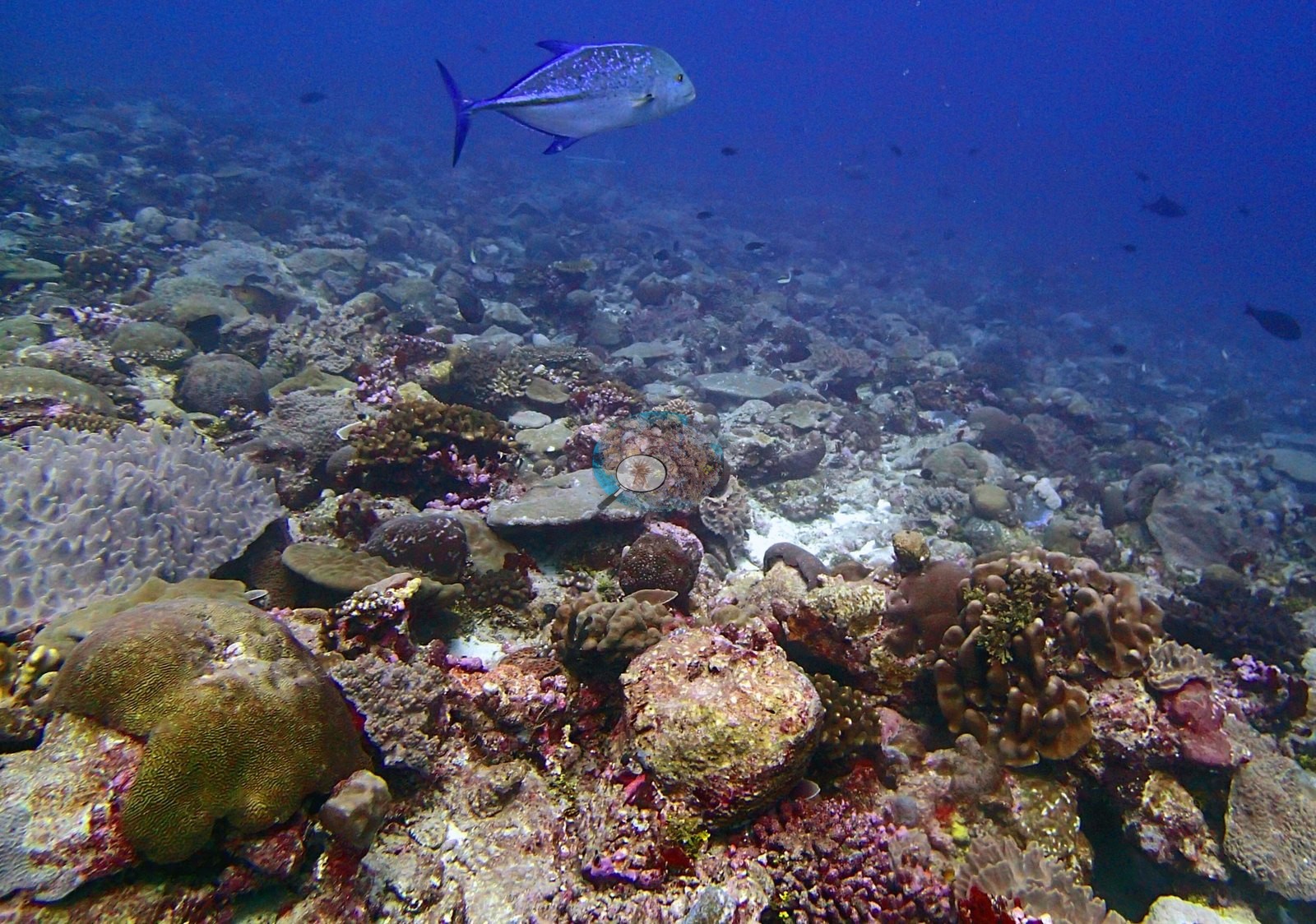
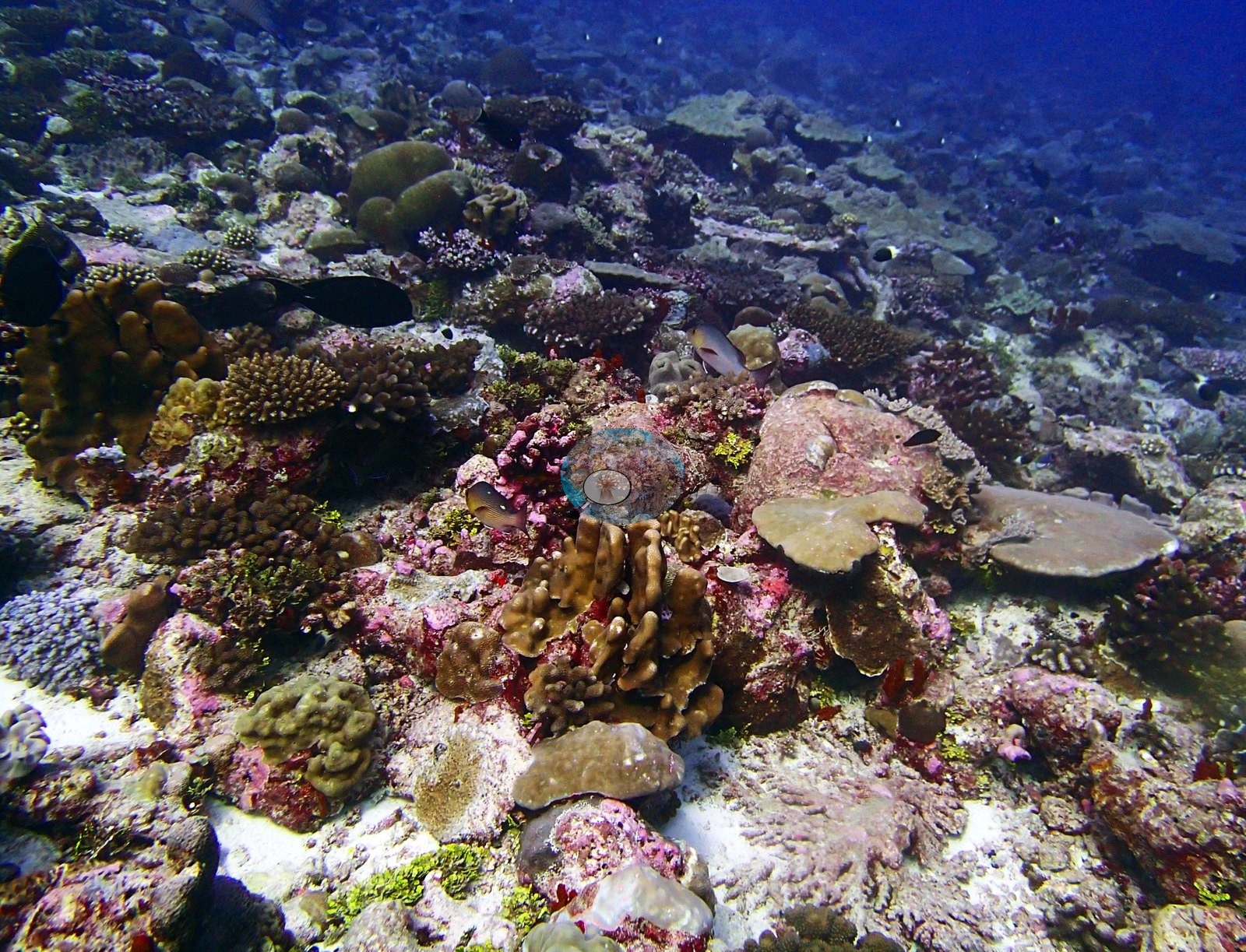
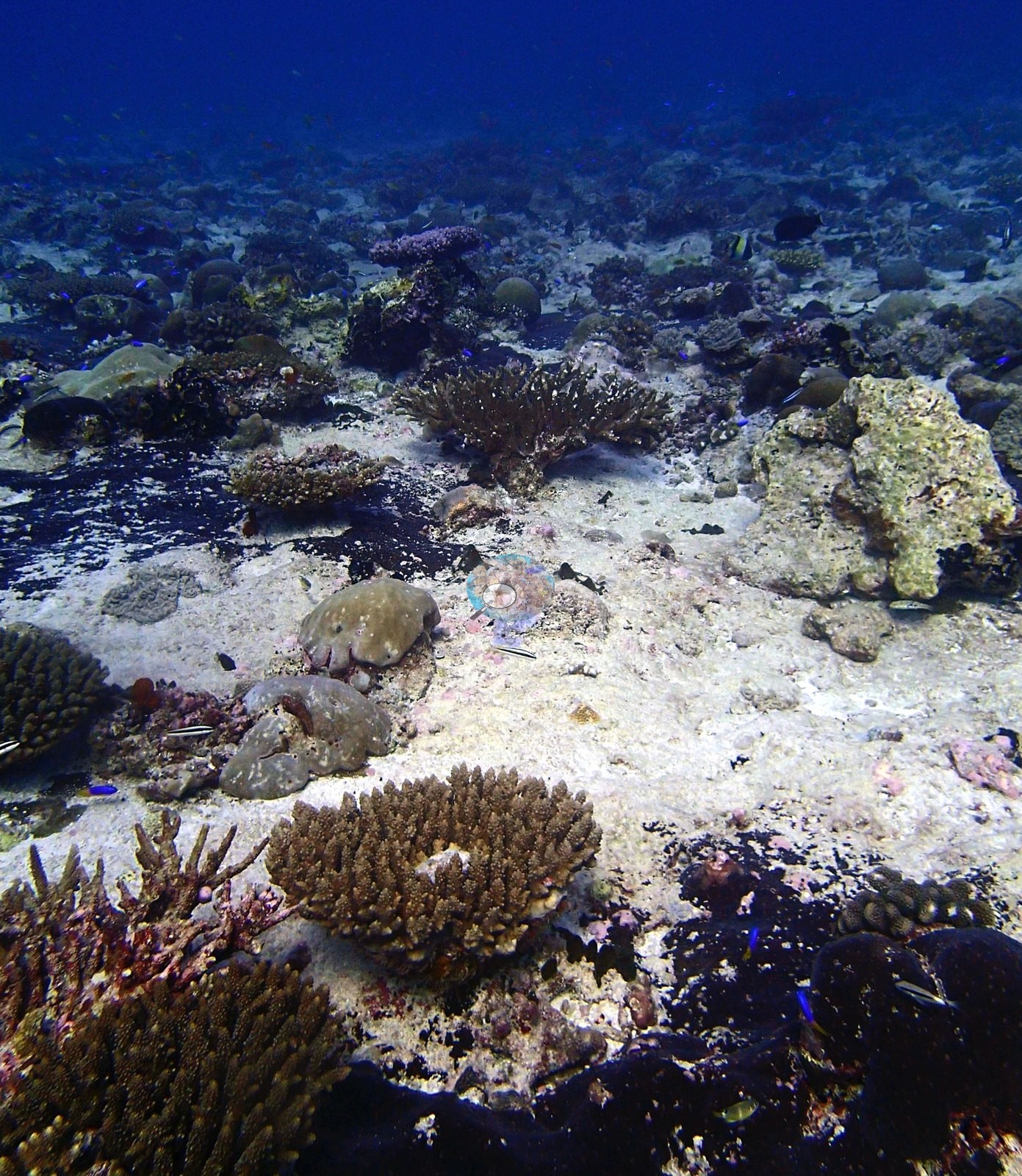
Reef top and pavement. The shallowest frames (P3150279, P3150280, P3150293, P3150347) show a low-relief consolidated pavement with broad pale carbonate and sand between coral patches: two large brown meandroid brain colonies compatible with Platygyra sit on bare pavement in P3150279 and again in P3150293, a golden branching Acropora alongside, red encrusting sponge and pink crustose coralline algae in the cracks. P3150280 and P3150347 are the honest wide views of this ground — small tabular and digitate Acropora, olive massive Porites, knobby pocilloporid heads, and dark encrusting patches scattered across pavement and rubble, with a good deal of open substrate between them.
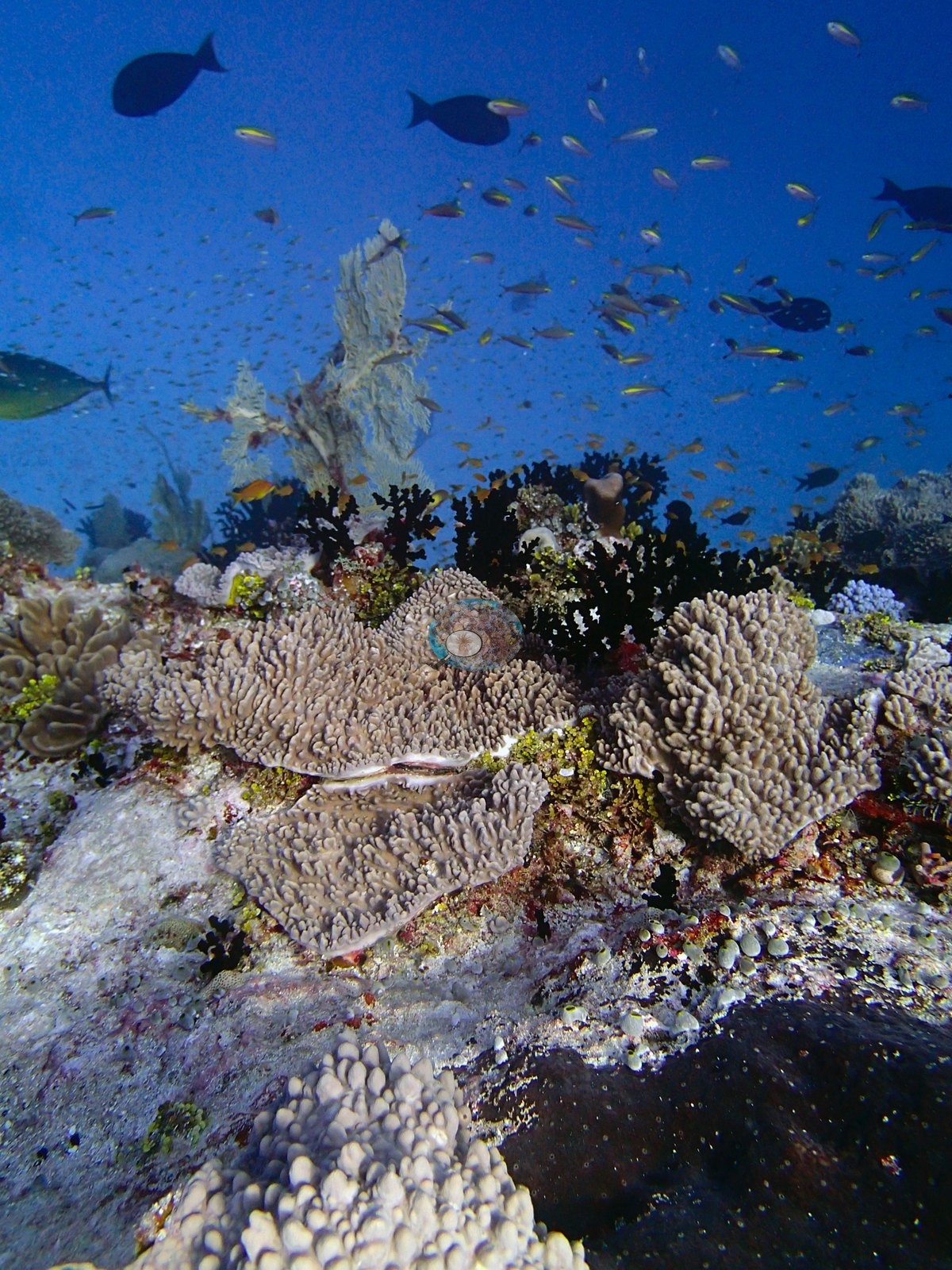
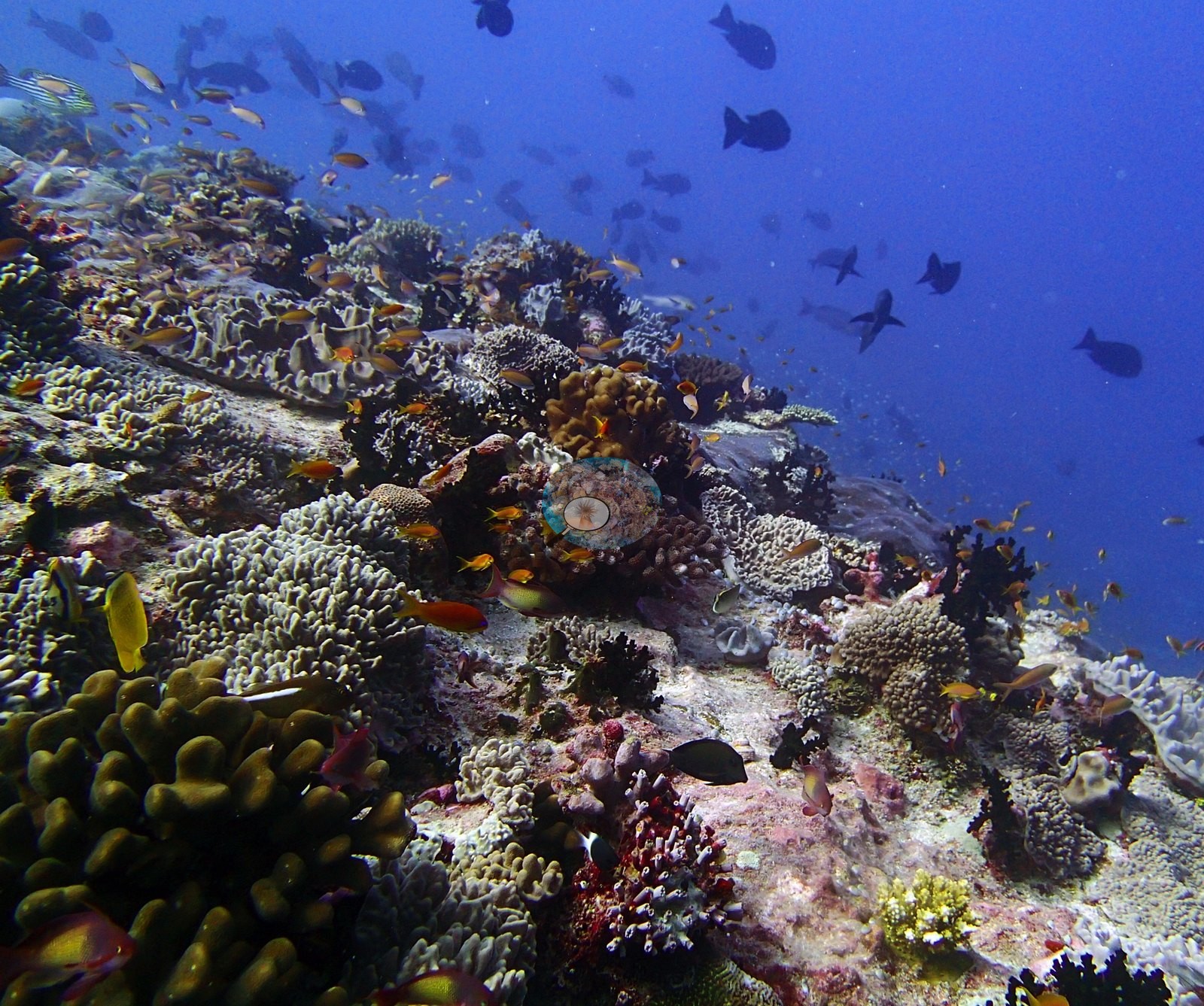
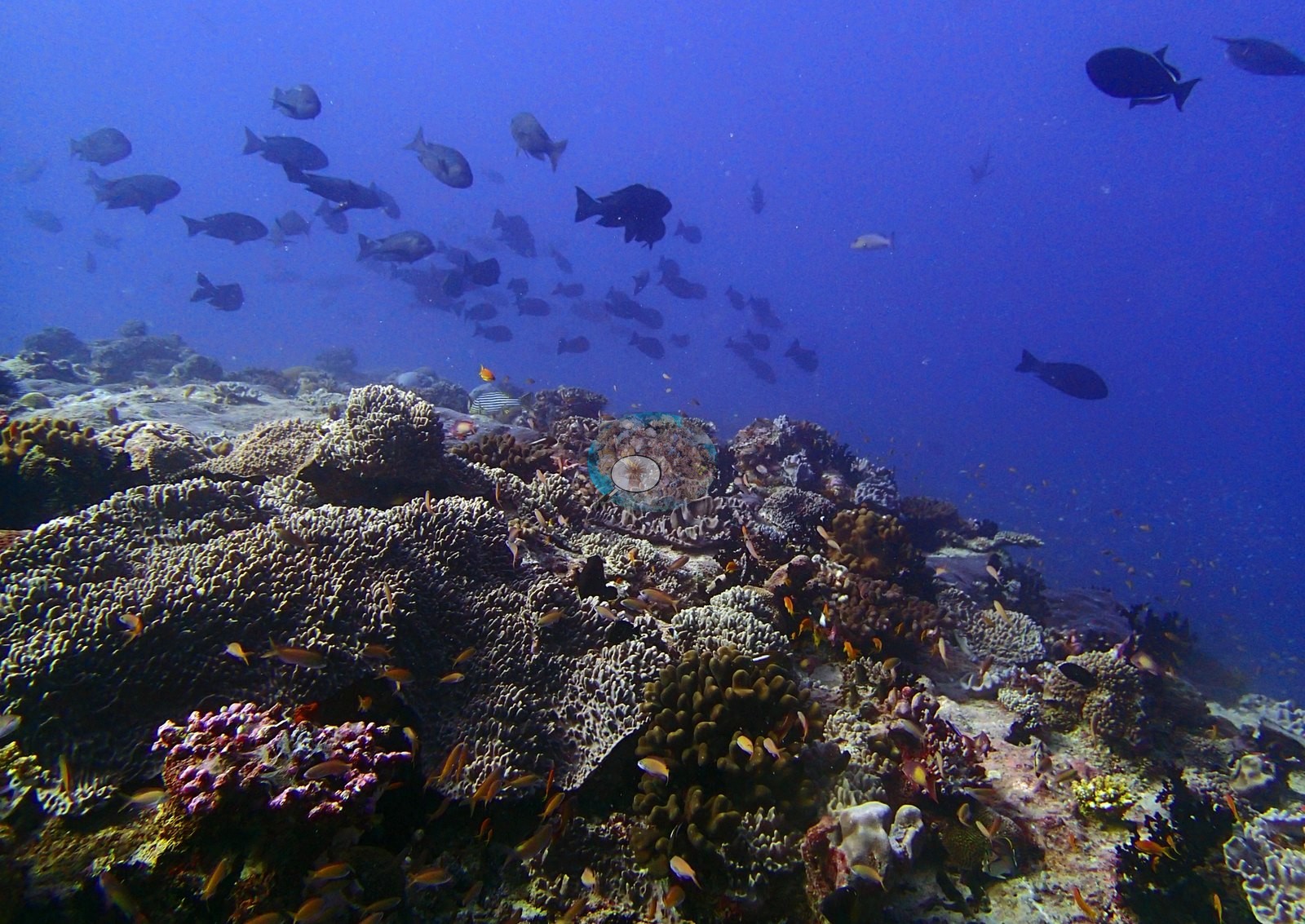
Reef-top thickets and the slope shoulder. P3150316, P3150317, P3150322, P3150327, and P3150328 are the highest-cover wide frames in the set: close-packed olive digitate and lobate Porites, pale cream corymbose and tabular Acropora, brown pocilloporid knobs, pale lilac-gray encrusting, and foliose sheets compatible with Montipora, ridged laminar plates compatible with Pachyseris, and pink coralline crusts binding it all. Orange anthias hang over these patches in most of them. P3150284, P3150285 and P3150286 hold the same community with pink-lilac branching colonies and conspicuous bright-green algal turf between the corals.
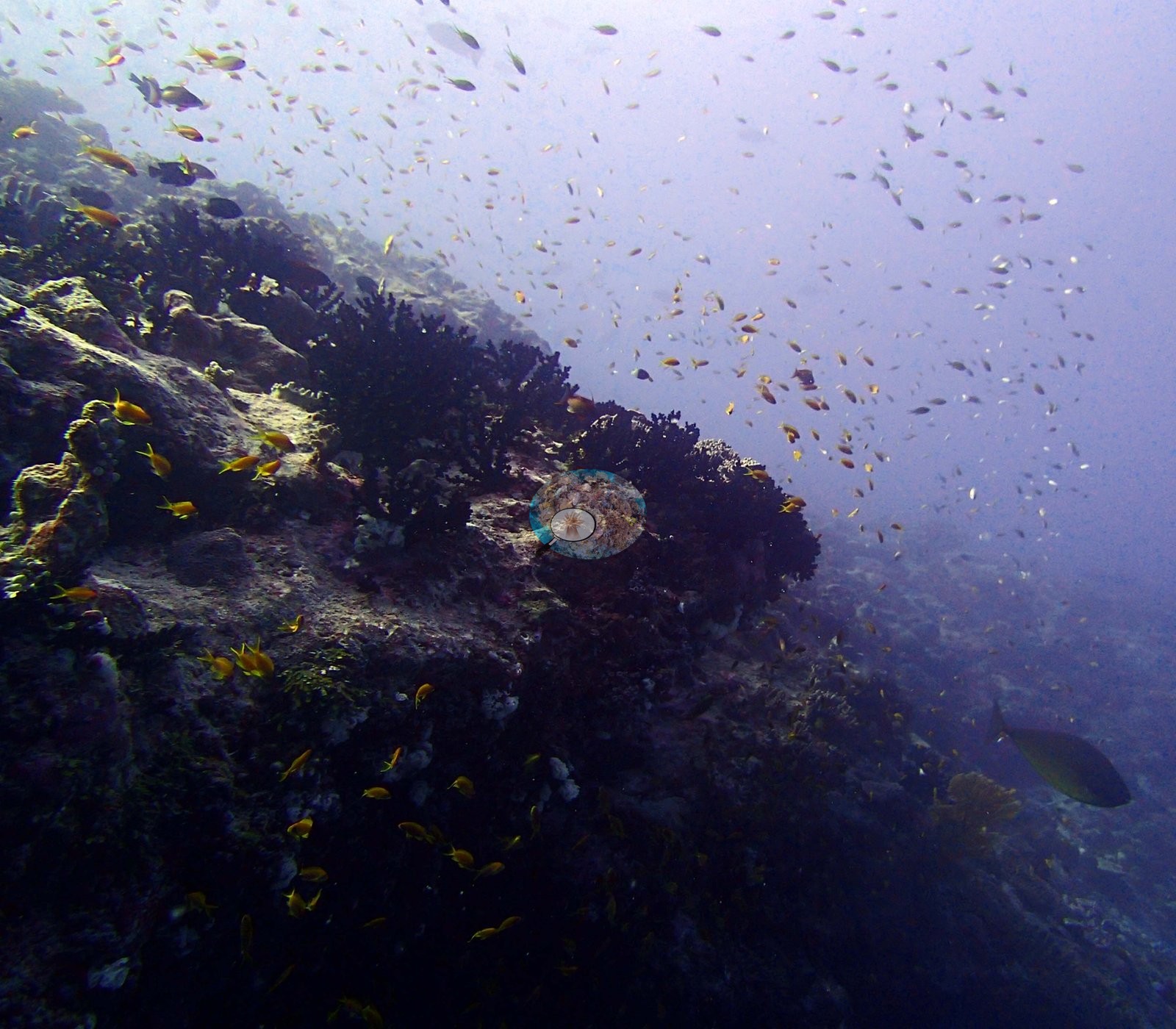
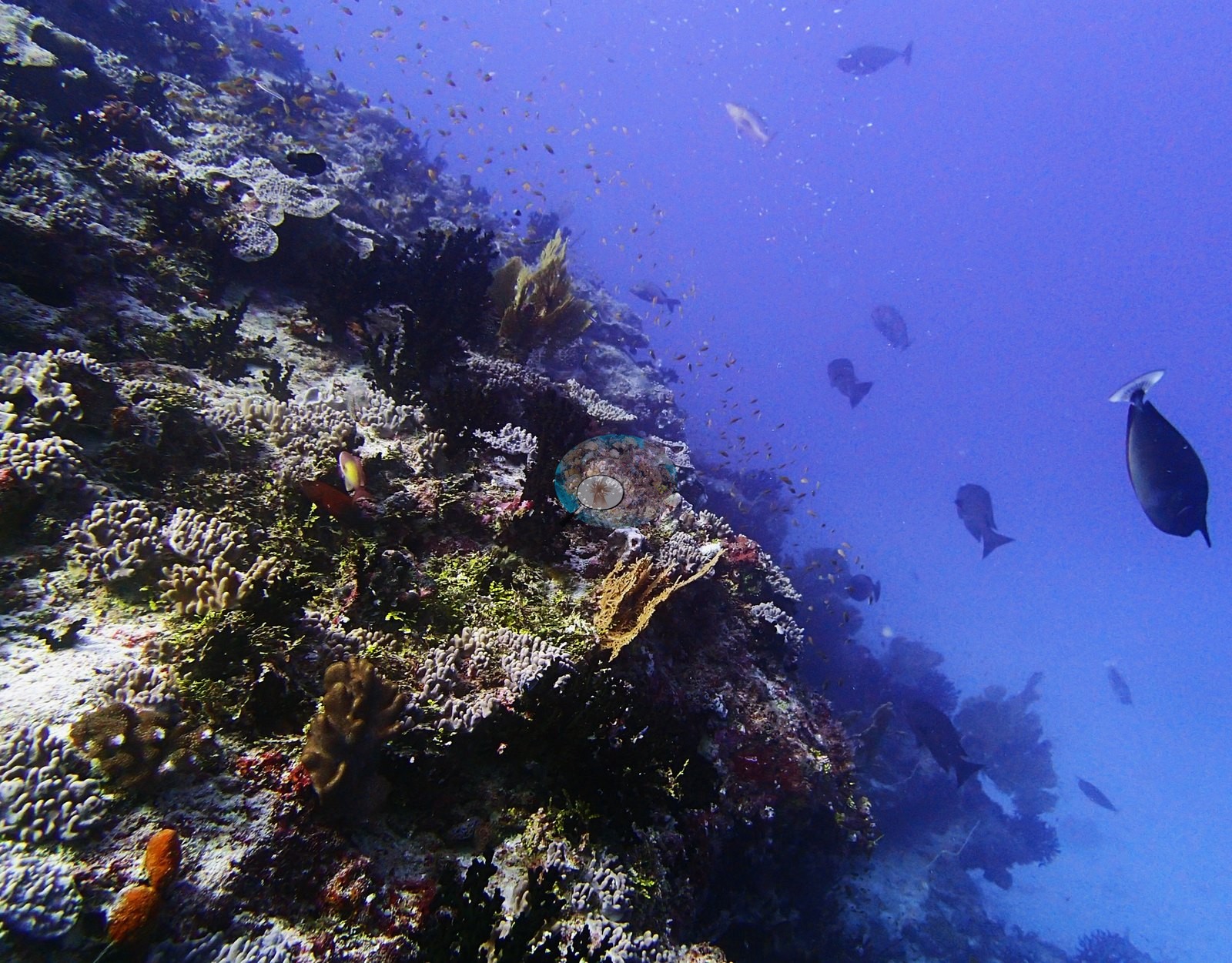
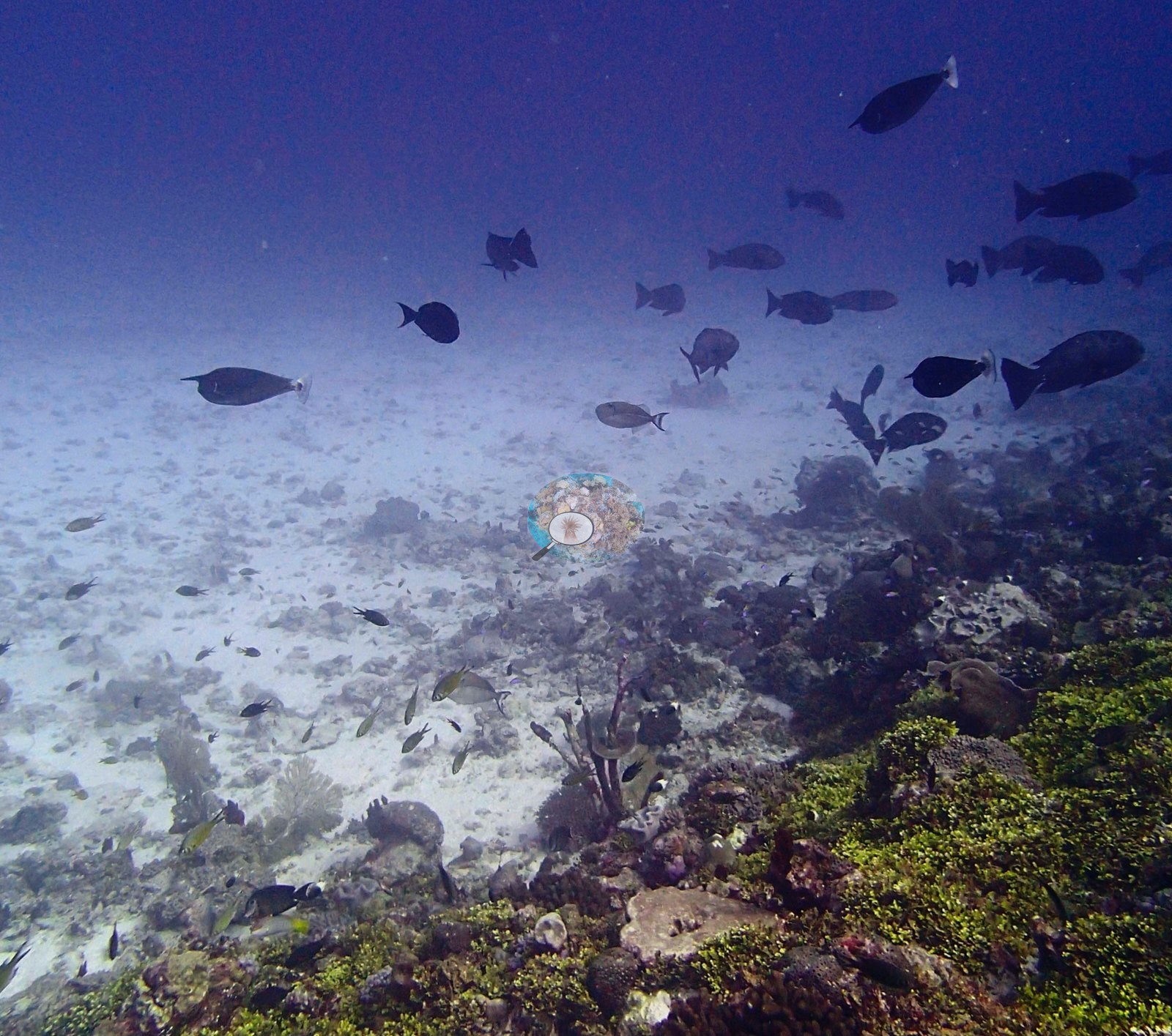
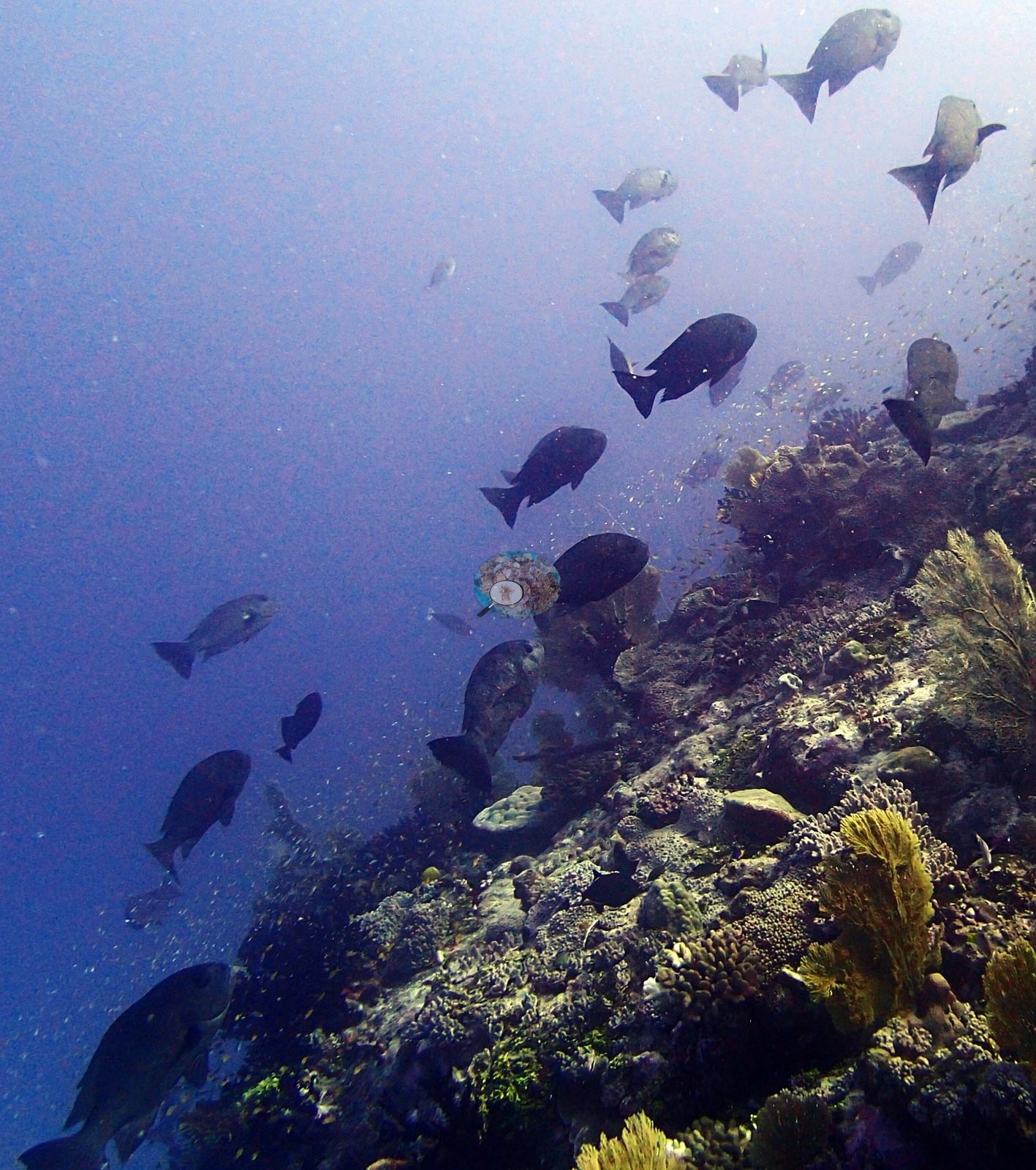
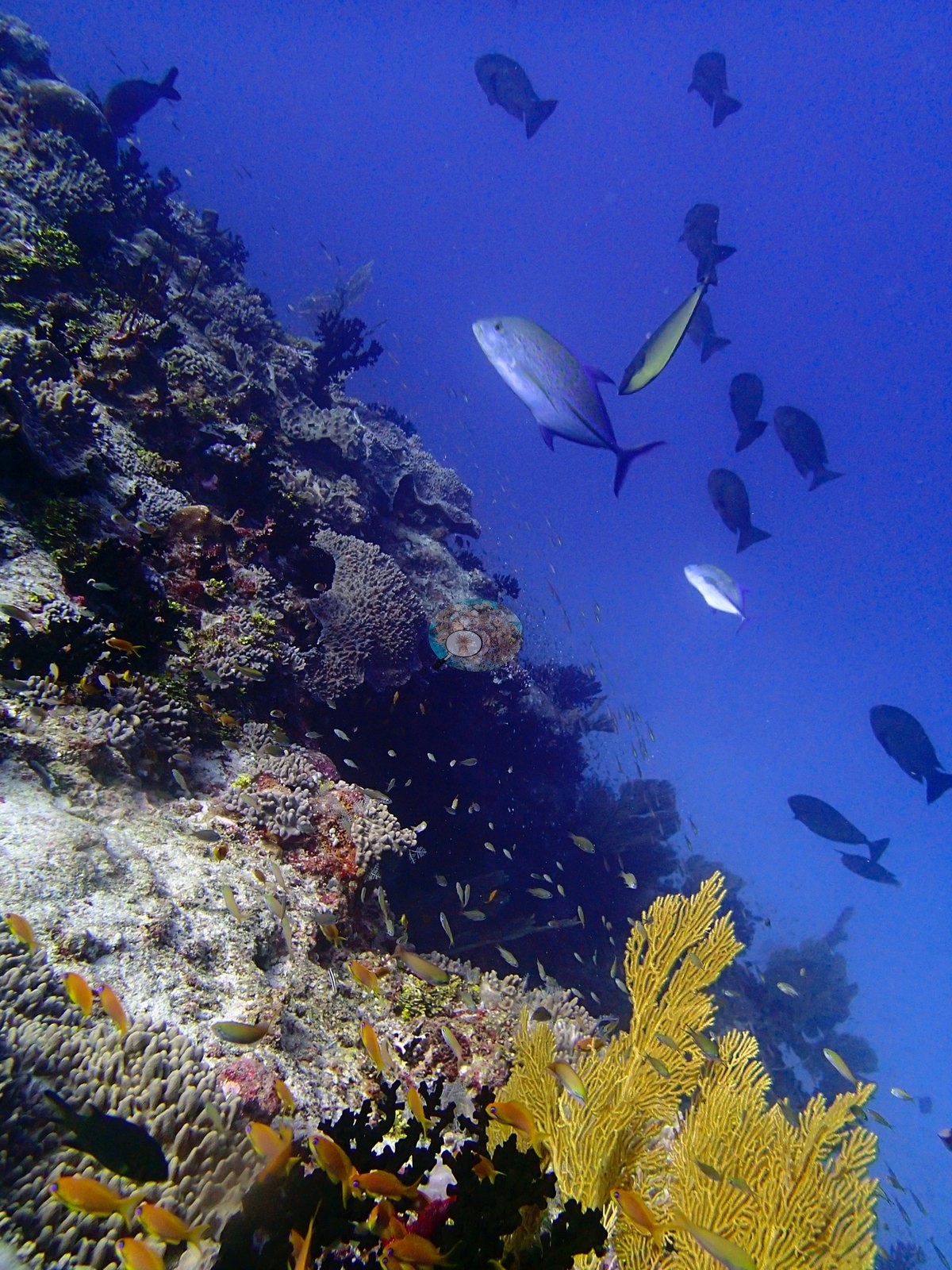
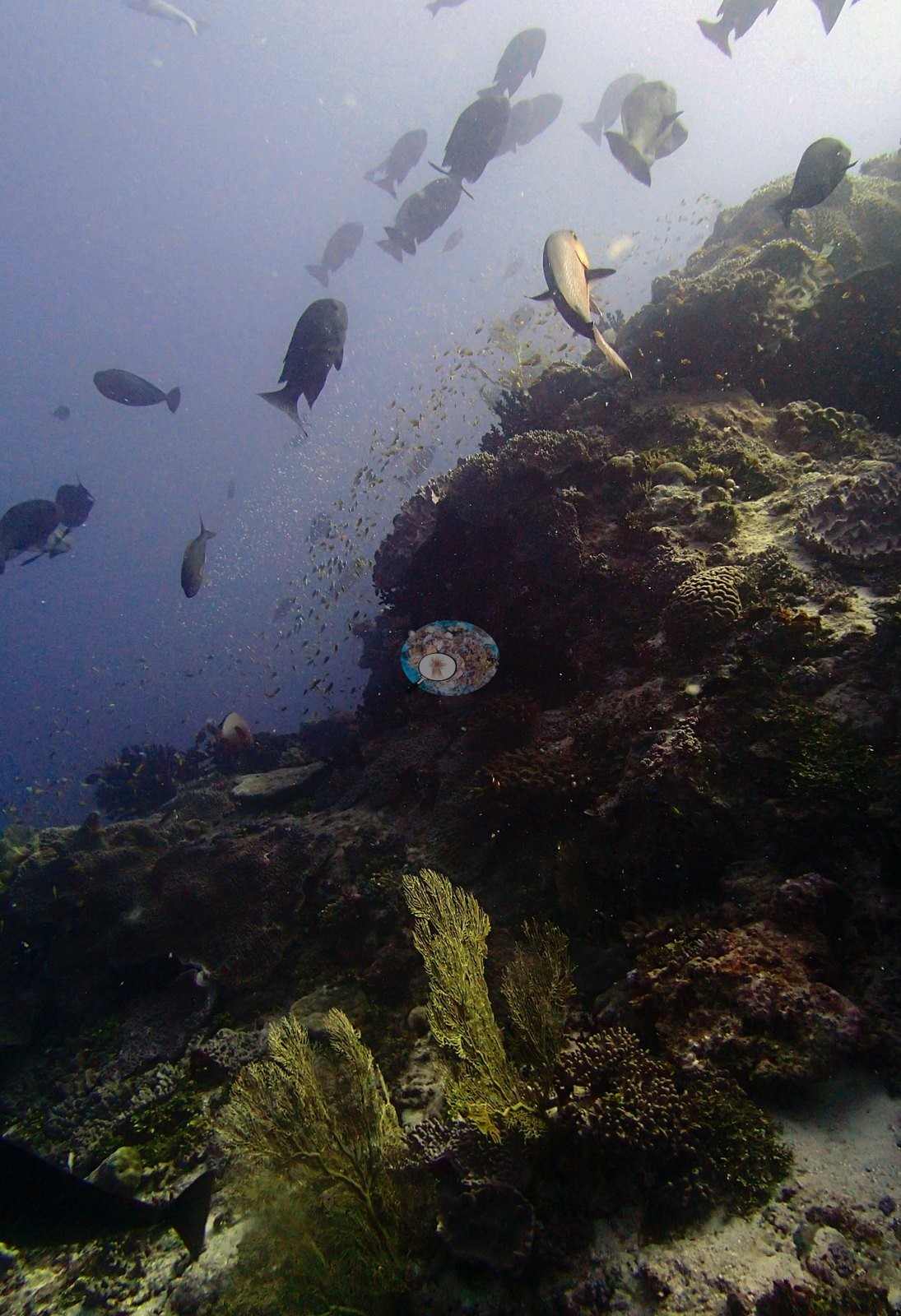
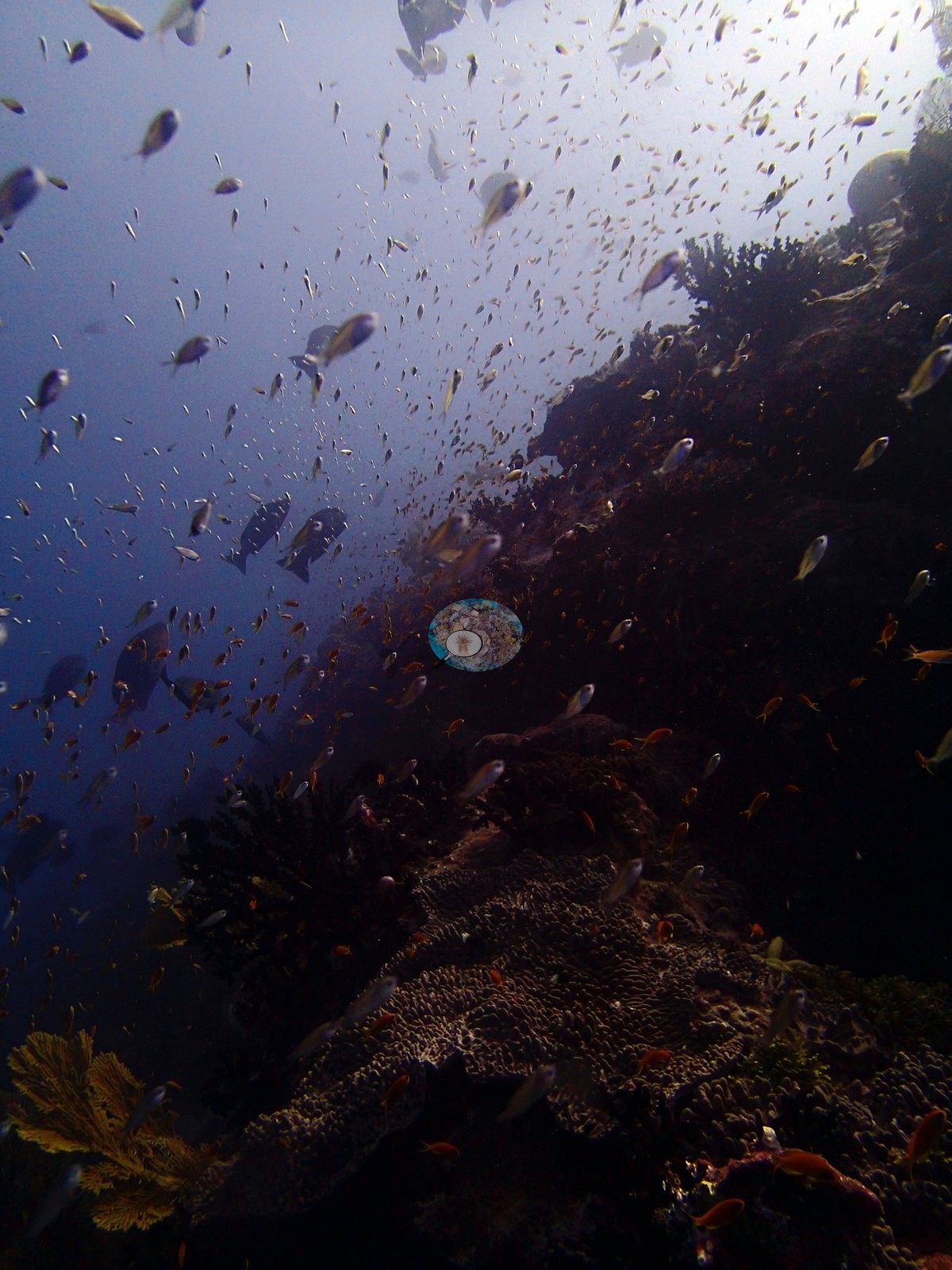
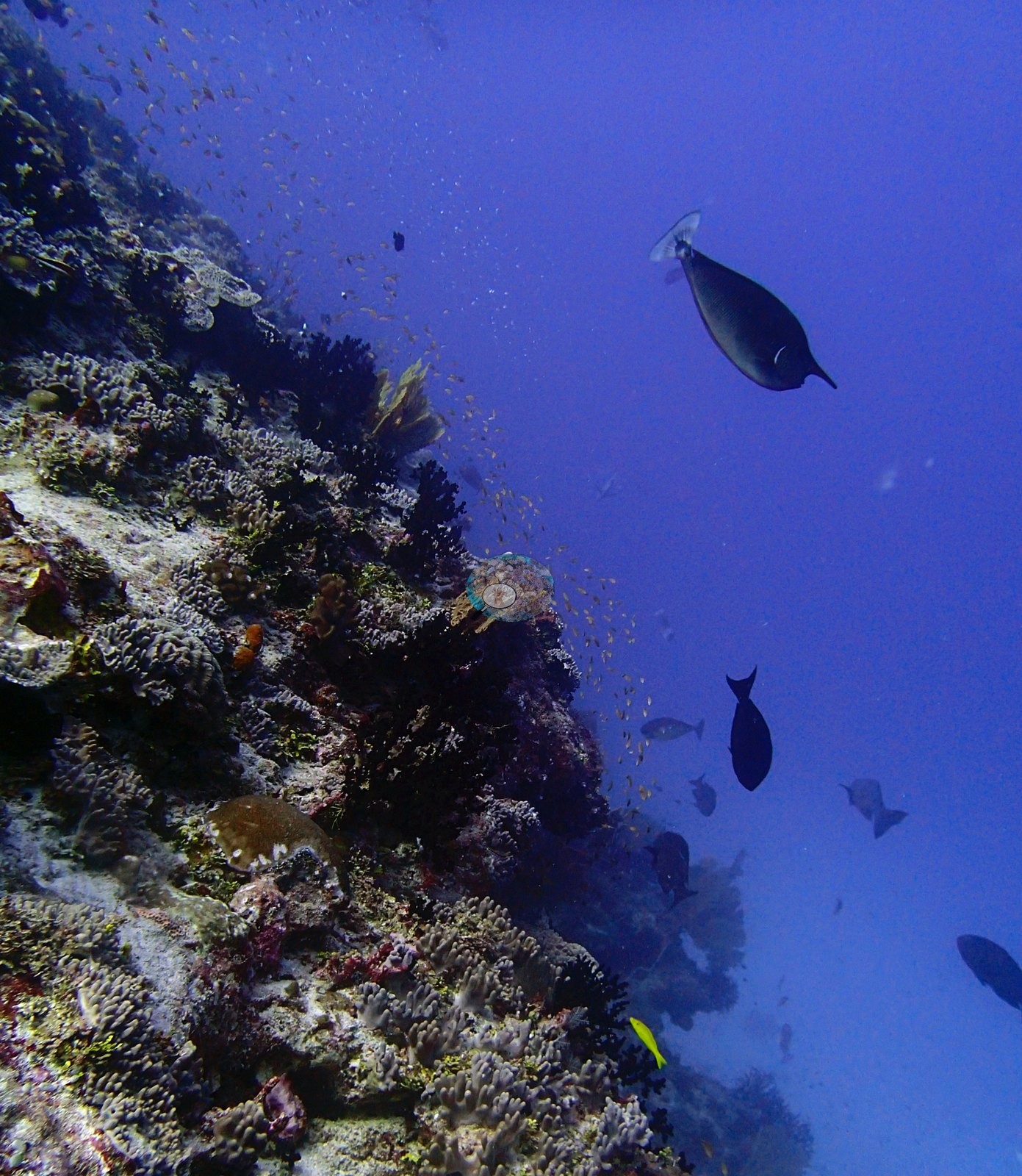
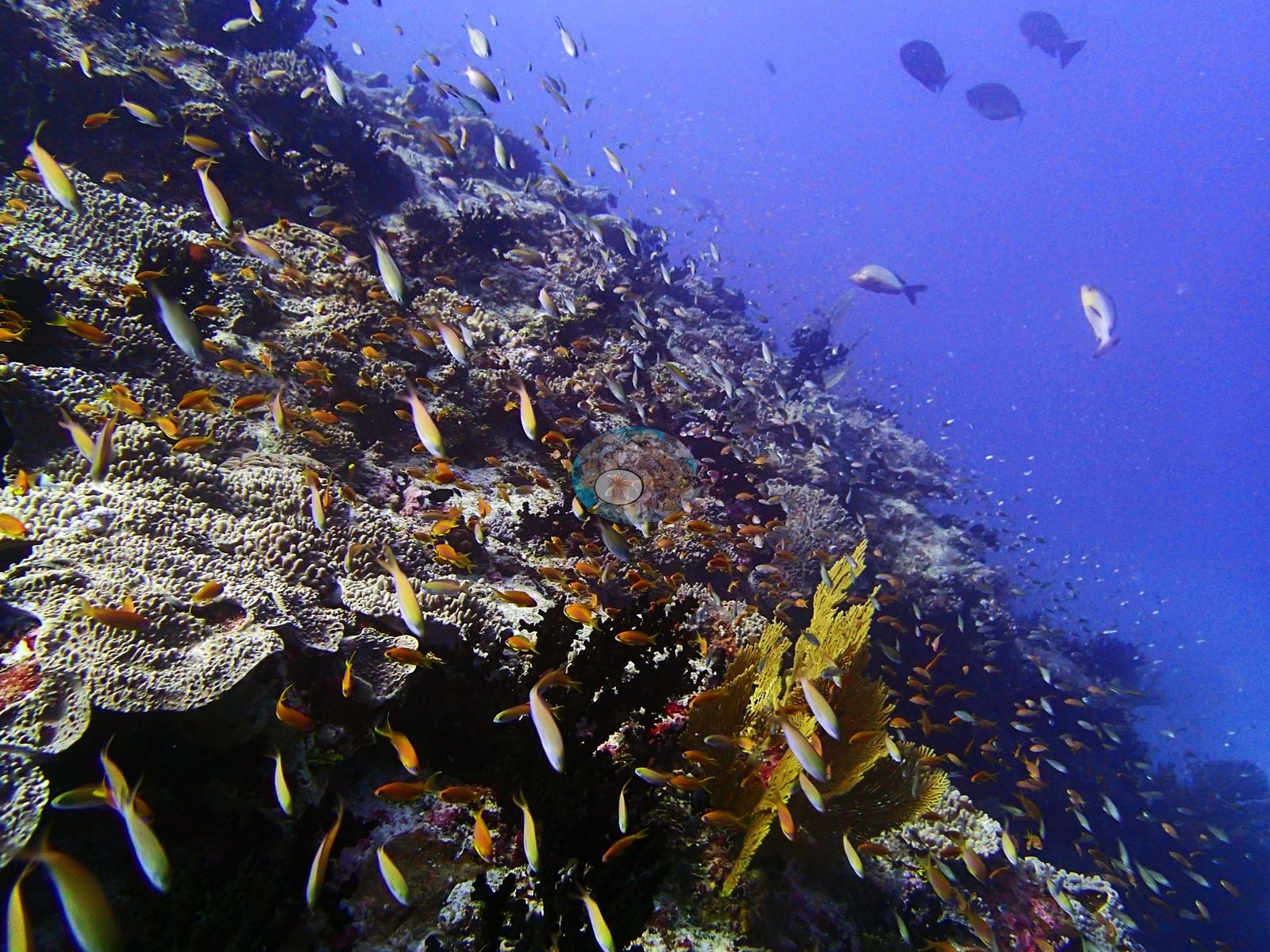
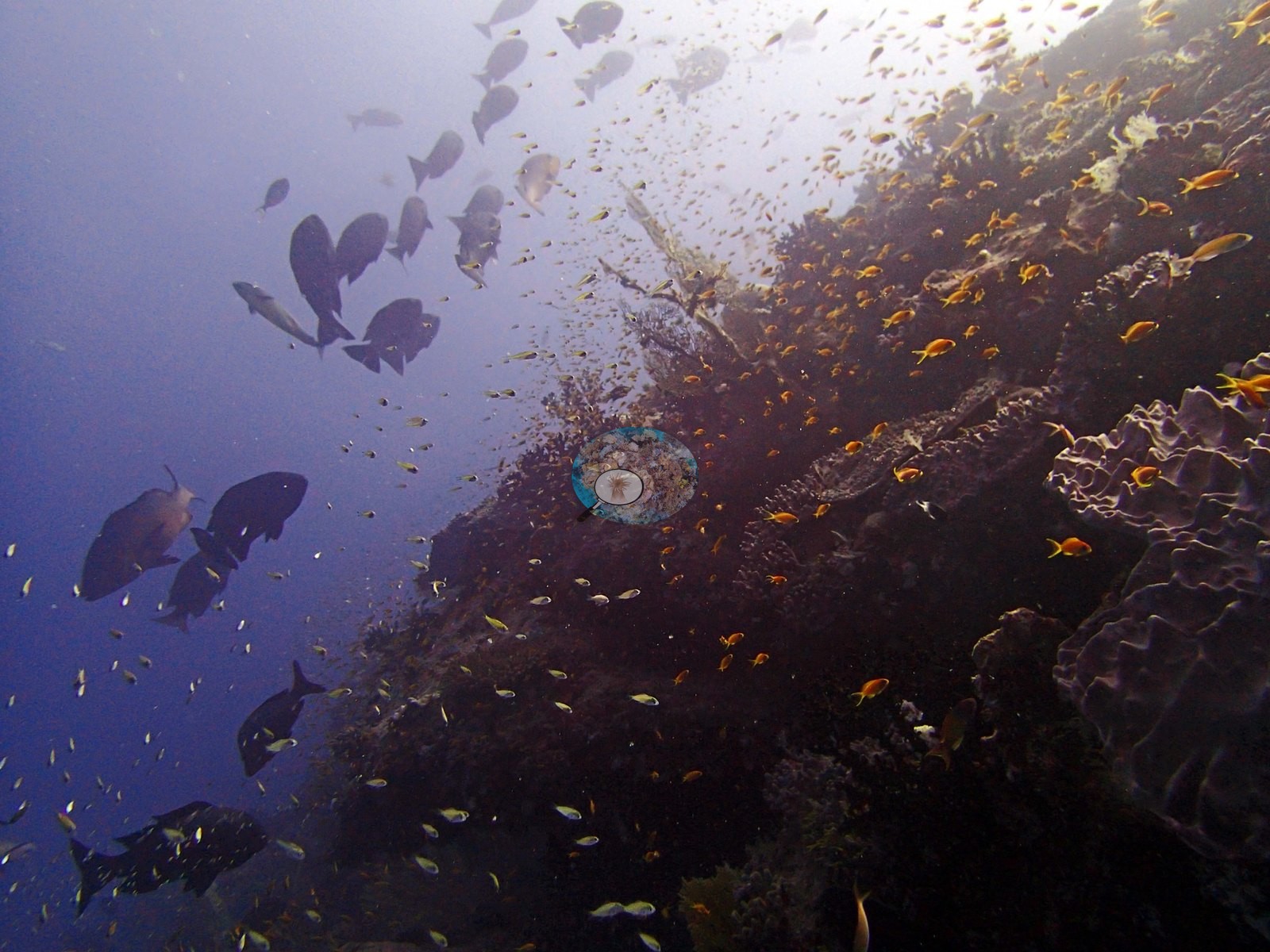
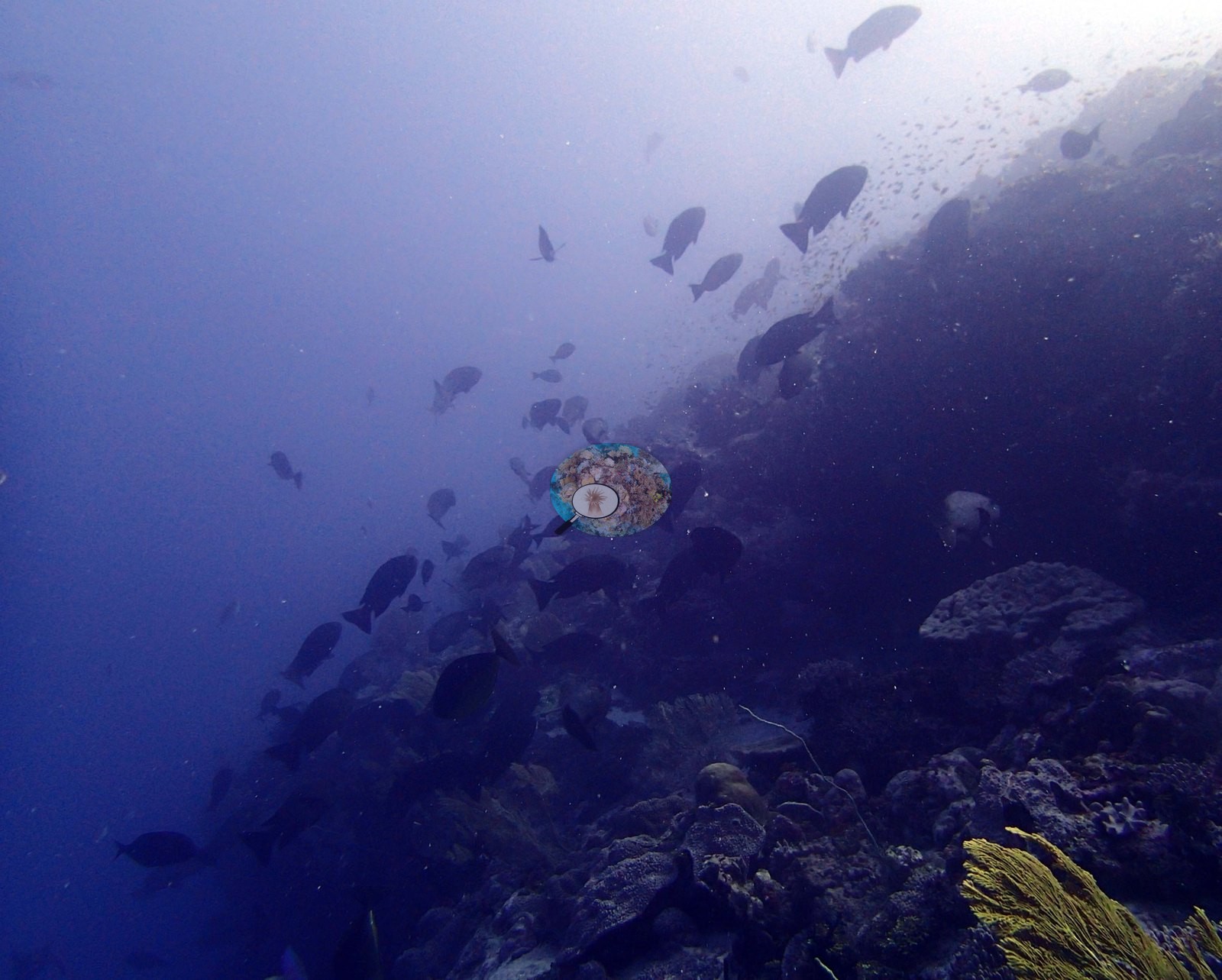
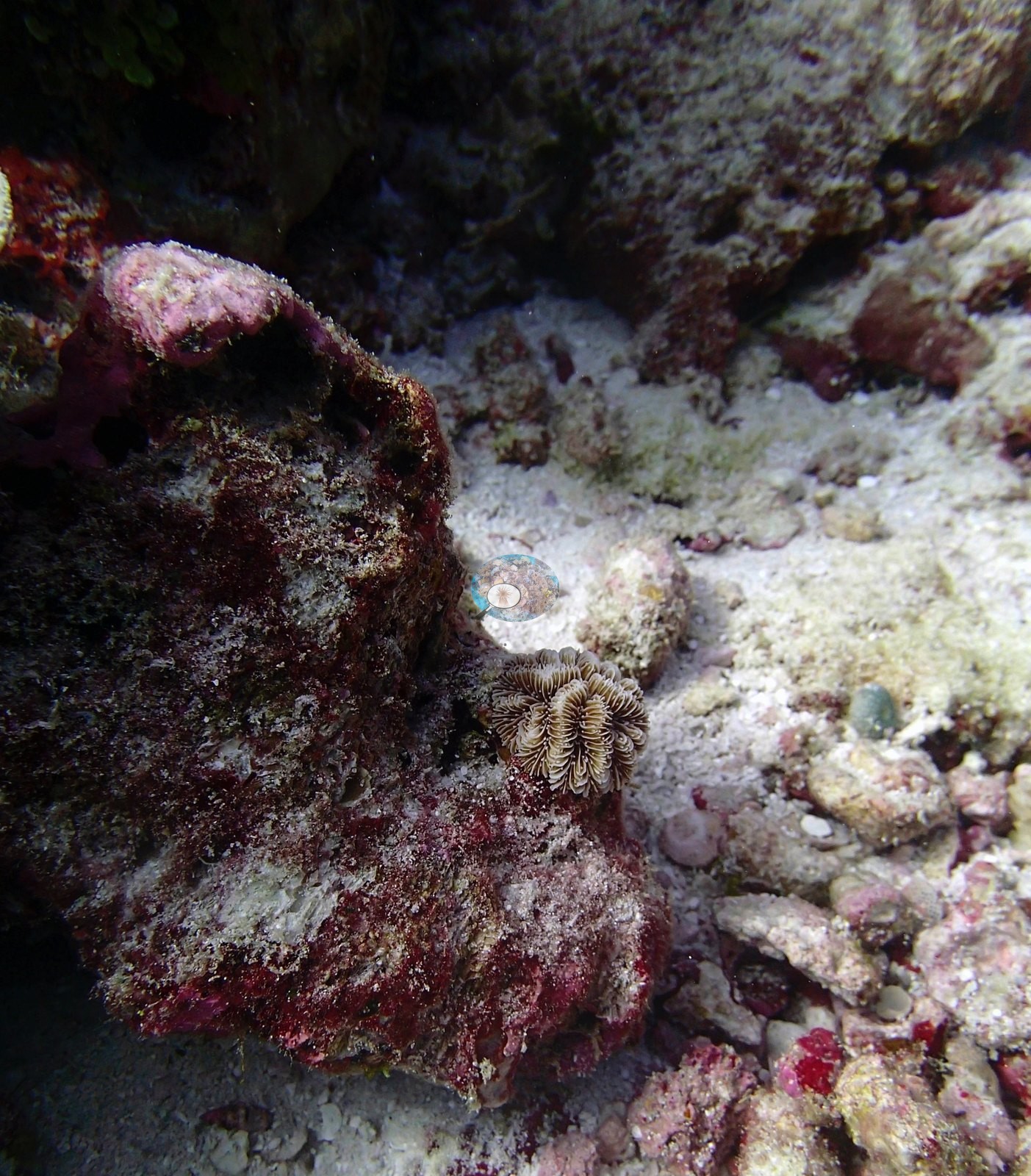
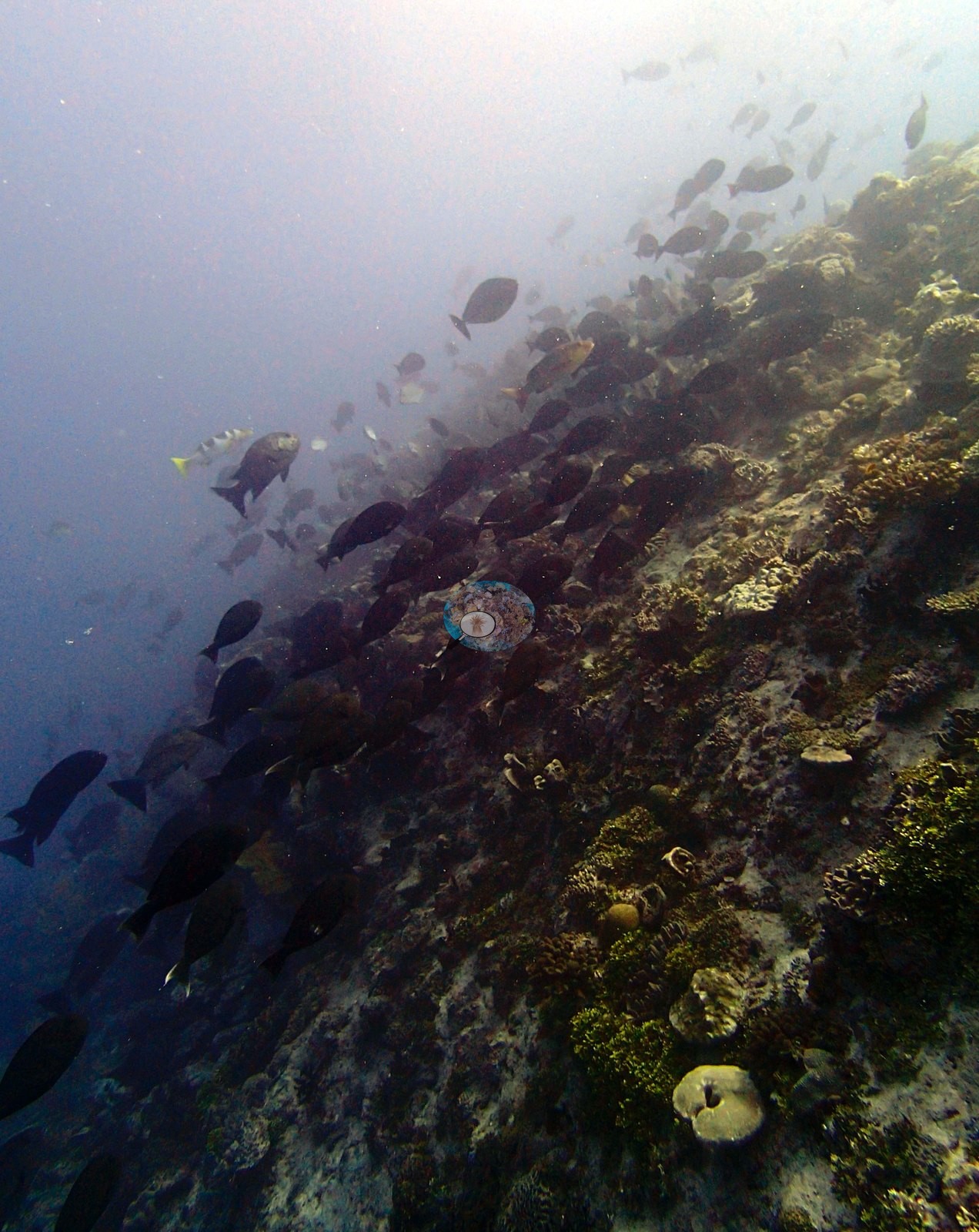
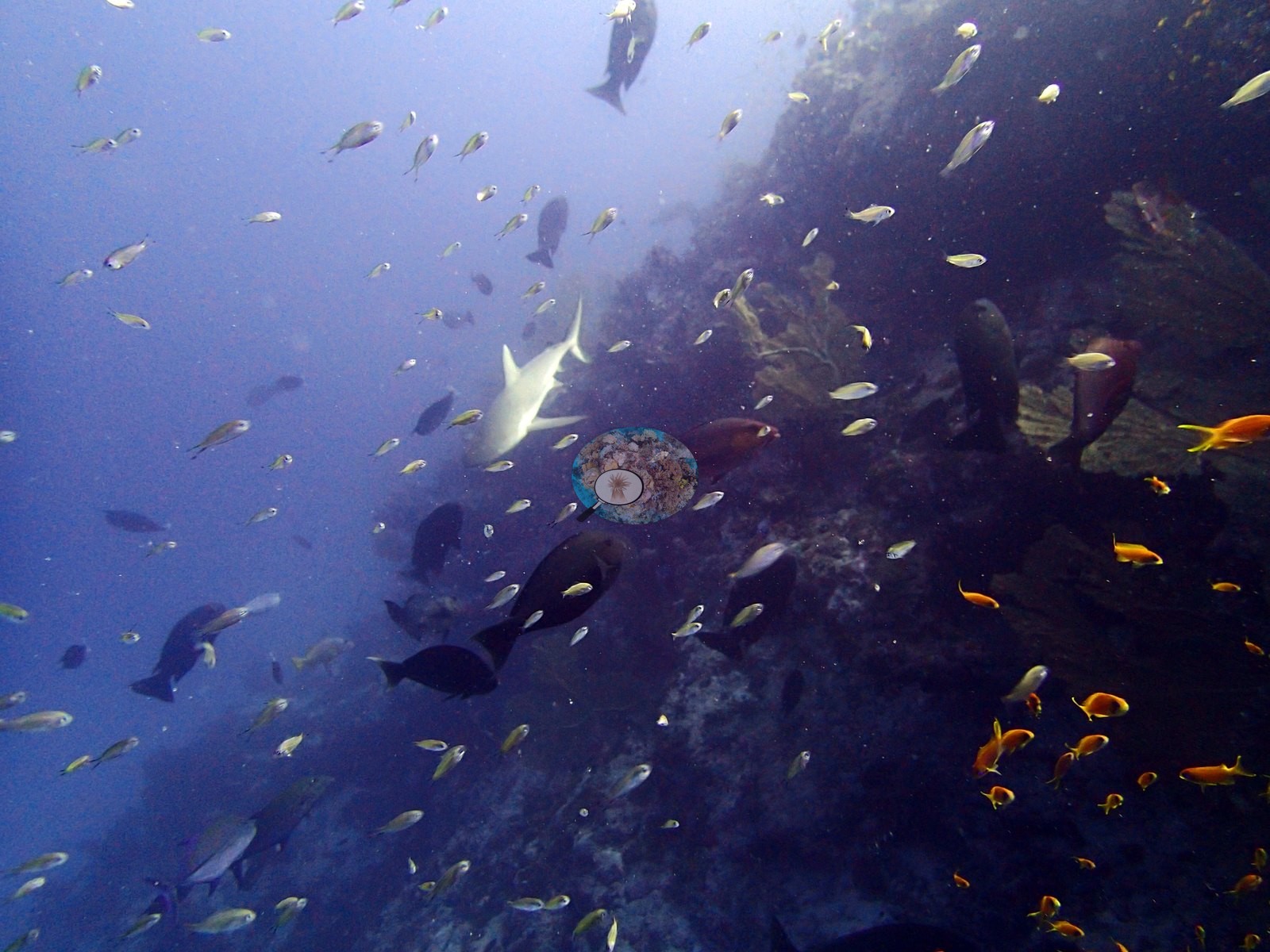
The slope and the wall. From P3150301 onward the camera works a steeply dropping flank — P3150302, P3150305, P3150306, P3150309, P3150311, P3150312, P3150313, and P3150314 show dark encrusting and foliose framework hung with yellow gorgonian sea fans, pale cream tabular plates, crinoids, and clouds of orange anthias and small planktivores. P3150301 records the base: a pale sand plain running up against a reef margin carpeted in dense bright-green algal turf, with whip-like gorgonians standing off it. P3150347 holds a second, more distant elongate silhouette that is not callable from the frame. The benthos around the lobster is the site's highest-cover: a large lavender-gray ridged plate compatible with Pachyseris directly overhead, brown digitate Porites clusters, brown meandroid colonies, bright green calcified alga compatible with Halimeda, red and orange encrusting sponges, and a brown massive Porites (P3150338) carrying pale, sharply-edged patches of recent partial mortality — which is where Coralscapes reads its highest dead-coral values at this site. P3150342 records a single free-living mushroom coral (Fungia-type) on rubble beside a dark red-maroon encrusting mound.
Coral cover
Coral cover: 21%. Live hard coral measured on the in situ benthic transects of the LOF BIOT-1 expedition (Mayfield & Dempsey 2026, Oceans, supplemental S1), against algal cover of 50.7% of the benthos. The transect is this site's measurement — the authoritative record of cover and community at BIEA18 (Eagle Island, Great Chagos Bank west, dived 15 March 2015) — and no image-derived product overrides it. This pin carries no depth-stratified (D1–D4) transect breakdown, so the site mean and the paired algal figure are the whole of the transect record here. Everything below supplements that measurement; no cover value is read off any photograph.
Method comparison — CoralNet points vs Coralscapes masks. Across the 24 analyzed frames the human 30-point annotation (720 points) puts live hard coral at 18.2% of all points. Coralscapes reads live coral at 14.7% of image area, and reads dead coral highest in the lobster frames (P3150335 6.6%, P3150339 6.5%). Frame-to-frame live cover runs the full range, 0% on the open-water frames to 40% on P3150293 and P3150340, and the two halves of the dive differ systematically: the 15 frames with less than 40% water average 24.9% live coral by point count, against an image-set figure of 18.2% that is dragged down by nine water-heavy frames. Across methods the same reef reads: transects 20.7% · CoralNet points 18.2% · Coralscapes masks 14.7% (24 frames). These products have different sampling footprints and denominators and should not be averaged; the transect value is the measurement and the two image products are compared to it, never against it.
Also on record for this site: Coral cover: 21%. Live hard coral measured on the in situ benthic transects of the LOF BIOT-1 expedition (Mayfield & Dempsey 2026, Oceans, supplemental S1), against algal cover of 50.7% of the benthos. The transect figure is this site's authoritative cover value; no image-derived product overrides it. Across methods the same reef reads: transects 20.7% · CoralNet points 18.2% · Coralscapes masks 14.7% (24 frames). These products have different sampling footprints and denominators and should not be averaged.
Stressors
Condition. Pale and white-looking tissue appears in several frames, and the 30-point annotation of the analyzed subset scored a handful of bleached points — too few, and too dependent on where a single point falls, to carry any site-level meaning. At these ranges and under this lighting the photographs cannot reliably separate bleaching from recent mortality or from a naturally pale morph, so bleaching is reported here qualitatively only. Anderson's published per-site % bleached for BIEA18 (11.5%) is the authoritative statement of this site's bleaching status; it derives from the field record and its own image set, and no figure in this account is offered as a reconstruction, corroboration or test of it. The one unambiguous condition record in the frames is the recent partial mortality on the brown massive Porites at P3150338, sharply edged and clearly not old dead surface. The folder name for this site is a plain '-finished', not a bleaching annotation, so no field bleaching label was available to fold in. No crown-of-thorns starfish (COTS) or other corallivores evident.
Fish and other fauna
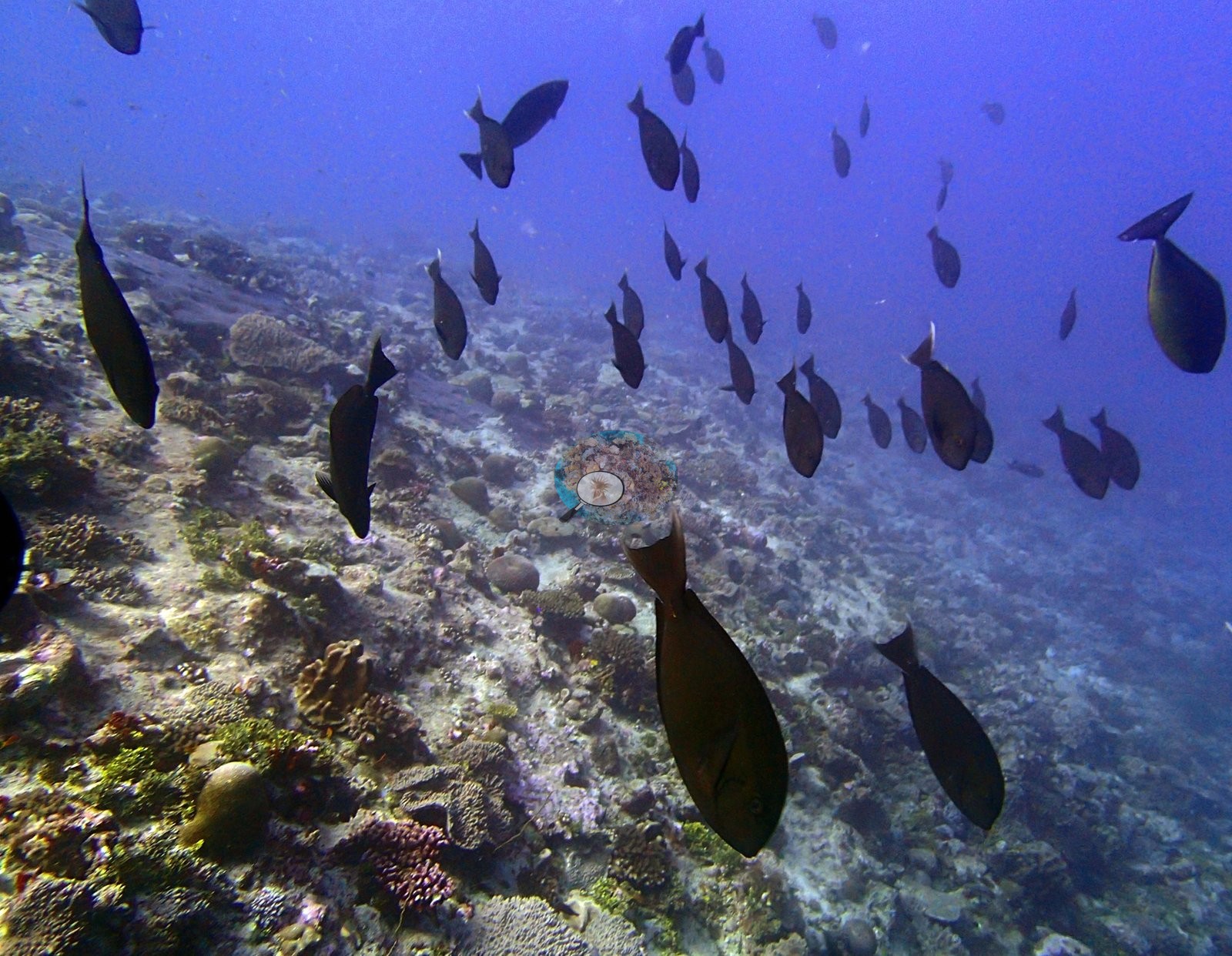
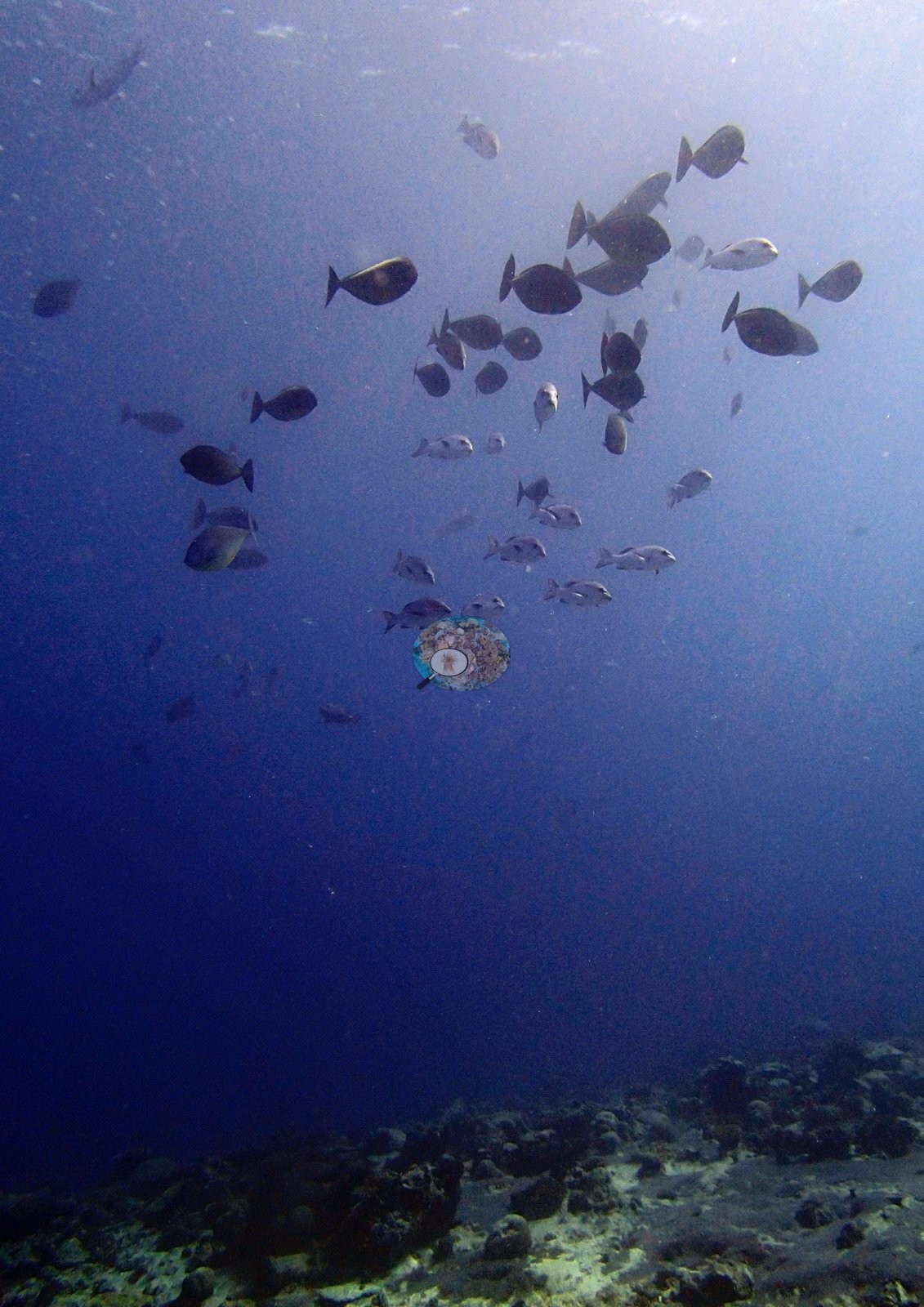
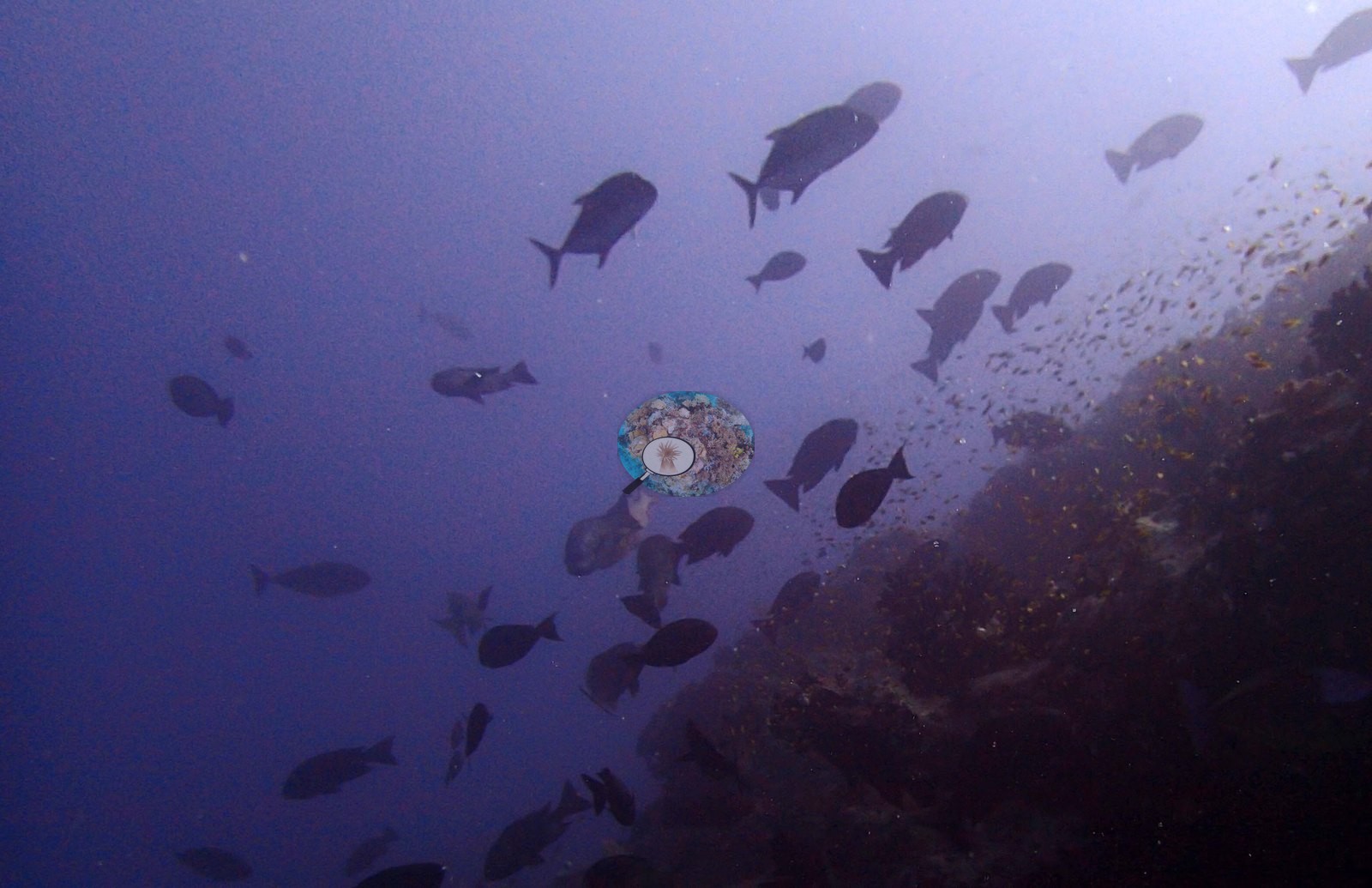
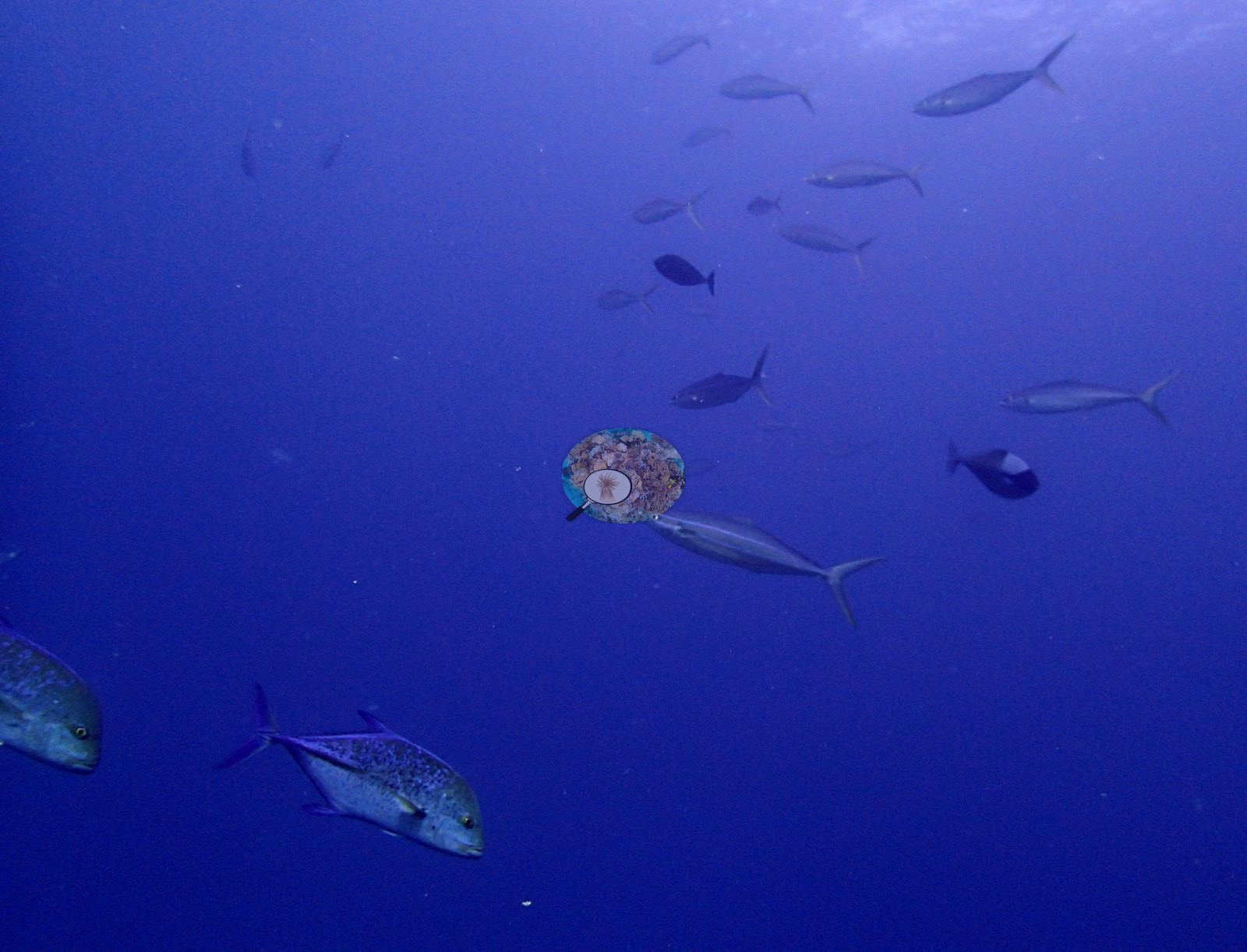
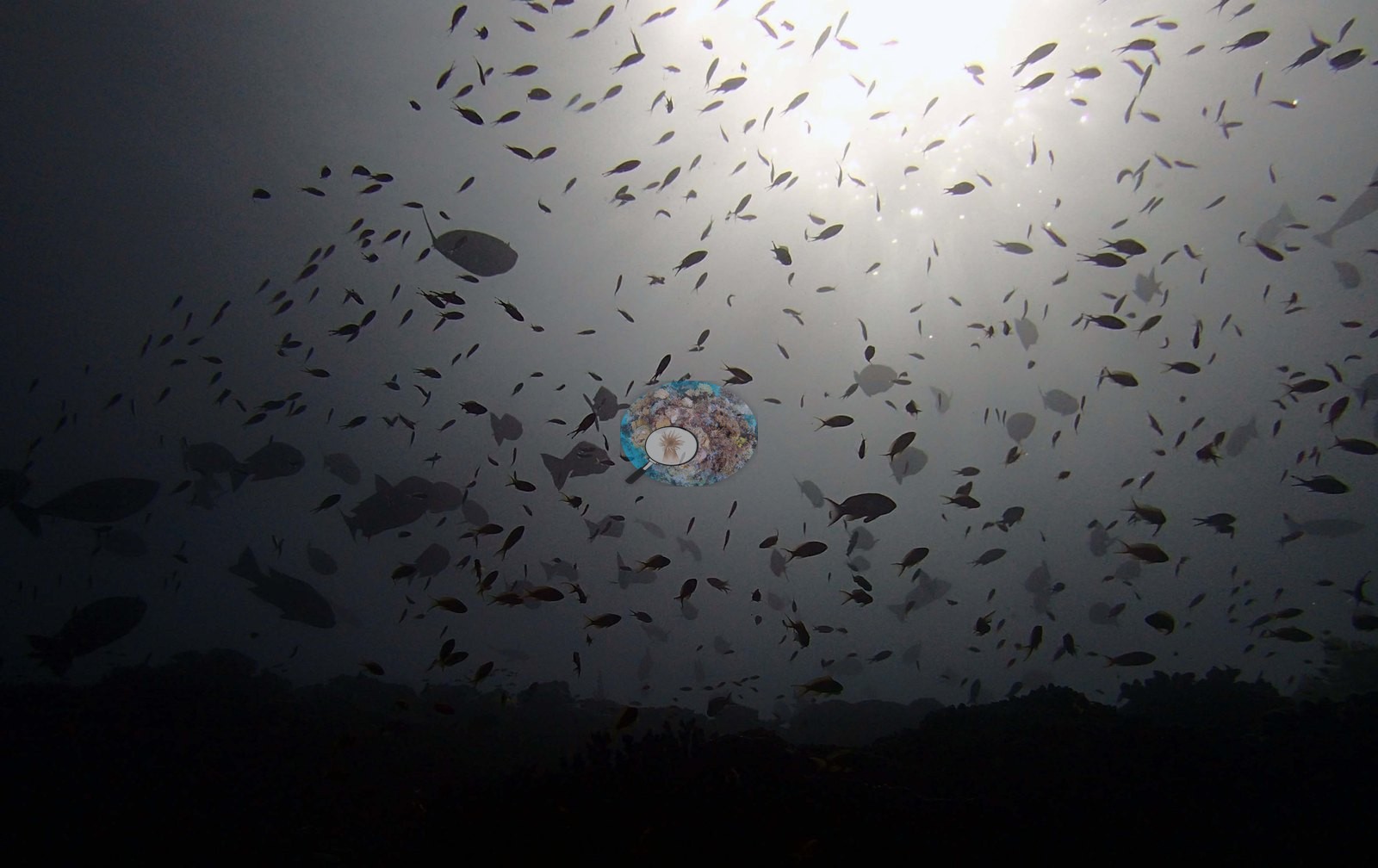
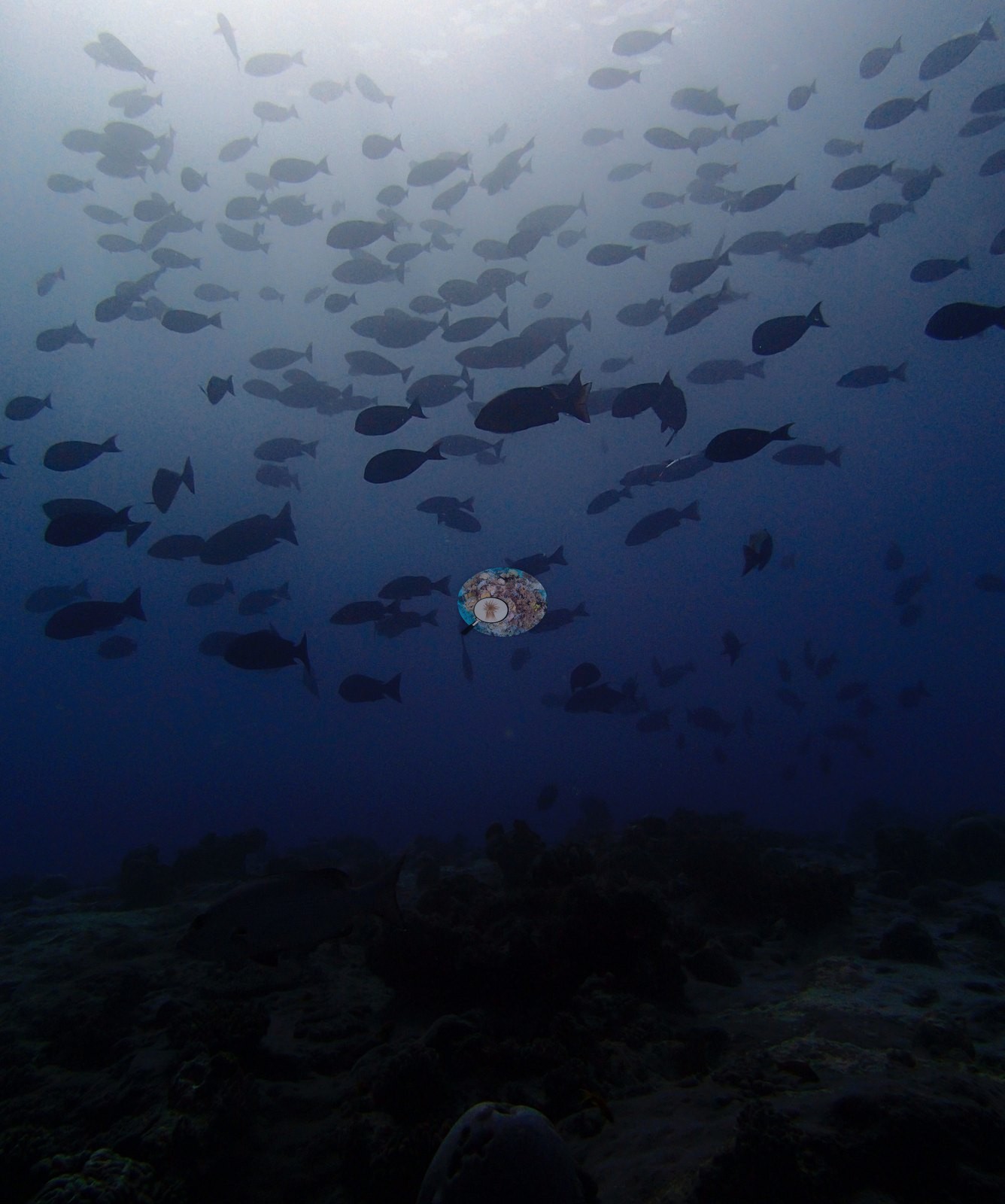
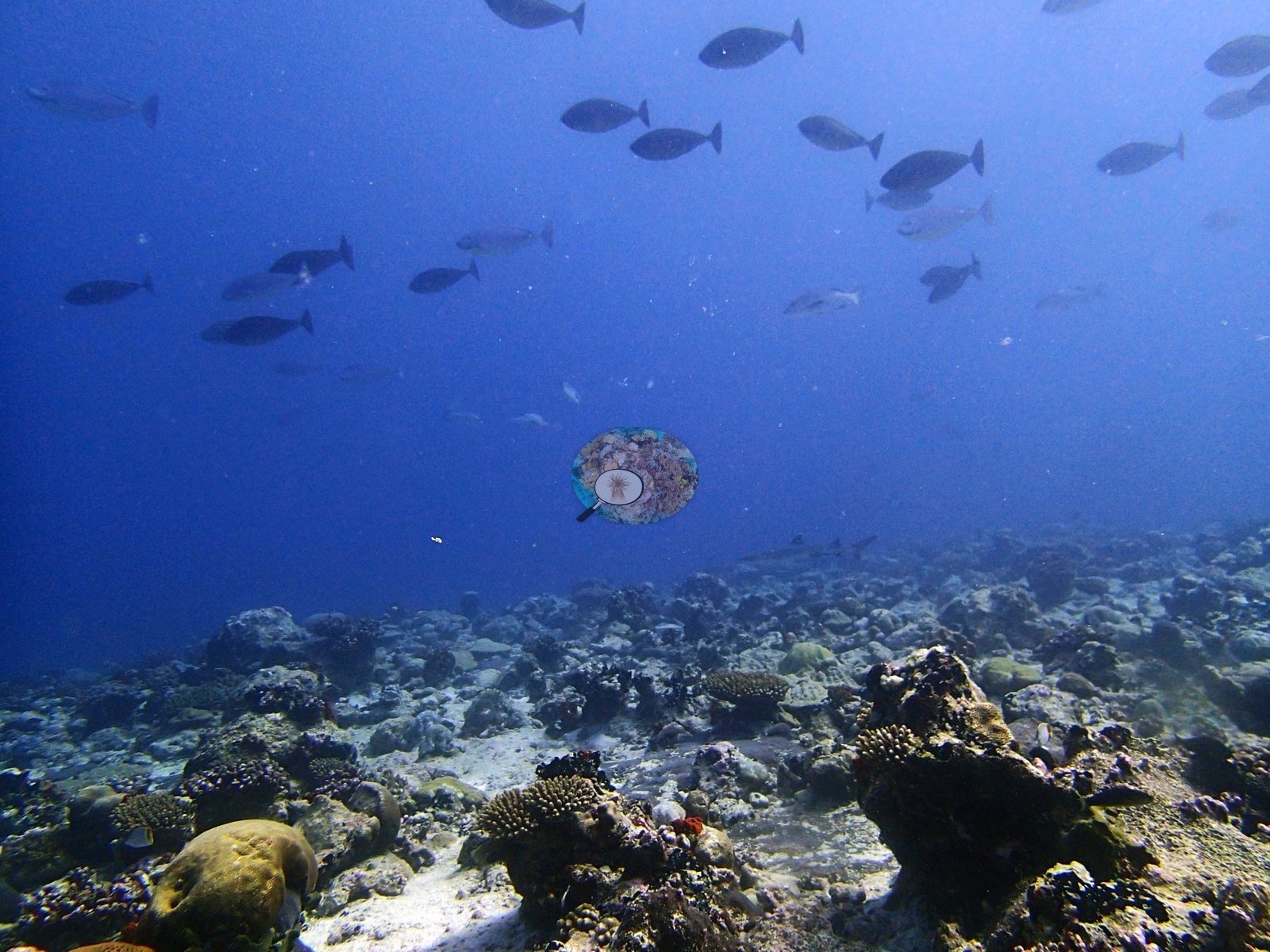
The fish assemblage is the strongest of the redo. Large mixed schools of dark surgeonfish and unicornfish (Naso-type, white-margined tails and visible keels) work the slope in P3150285, P3150286, P3150301–P3150308, P3150324, P3150325, P3150326, and P3150348; orange anthias carpet the wall in P3150307–P3150313; P3150304, P3150307, P3150308, and P3150309 are near-solid clouds of small planktivores; fusiliers cross the blue in P3150314, P3150322 and P3150323. Bluefin trevally (Caranx melampygus, unmistakable in P3150315 and P3150323) patrol the blue in fours and fives, with further jacks in P3150314 and P3150328; and there is an adult emperor angelfish (Pomacanthus imperator) in P3150282, a yellow-tailed sweetlips compatible with Plectorhinchus in P3150326, Moorish idol, butterflyfishes, a large hogfish-type wrasse compatible with Bodianus, cleaner wrasse, damselfishes, and sergeant majors. P3150310 carries a pale, blunt-snouted shark, most consistent with a whitetip reef shark (Triaenodon obesus) — the first shark of the Eagle Island block; the frame is backlit and at range, so it is Anderson's call that stands rather than the pixels.
Two invertebrate finds are worth pulling out. P3150283 is a tight aggregation of five or more long-spined Diadema-type urchins on open pavement, wedged in beside a knobby pocilloporid and a red encrusting sponge — the second such aggregation in the redo after BIDI10 and, given how much dead consolidated framework this site carries, a bioerosion signal worth recording. And P3150334–P3150340 are seven consecutive frames of one painted spiny lobster sheltering under a ledge — ornate black-and-white marbled carapace, banded walking legs, long pale antennae, compatible with Panulirus versicolor. P3150340 is a frame-filling head study and the best invertebrate portrait in the collection.
Comparisons with other data
No prior survey data from this site. If you would like to share yours, please email us.
Other notes
That is a statement about how the photographic sample was framed, not about the reef.
Image-by-image account. Forty-three habitat frames exist for BIEA18, all from Anderson's own folder BiEa18-finished; there are no sampled-colony frames, so the account is entirely a habitat account. Roughly 30 frames carry real benthic information and about 11 (P3150302–P3150305, P3150307, P3150308, P3150324, P3150326, P3150348, and in part P3150315 and P3150323) are water column, backlit silhouette or open-blue fish frames with little or no substrate. Seven frames are a single pseudo-replicated lobster sequence over one ledge and describe that ledge, not the site. No transect line, quadrat or scale object appears anywhere in the set.
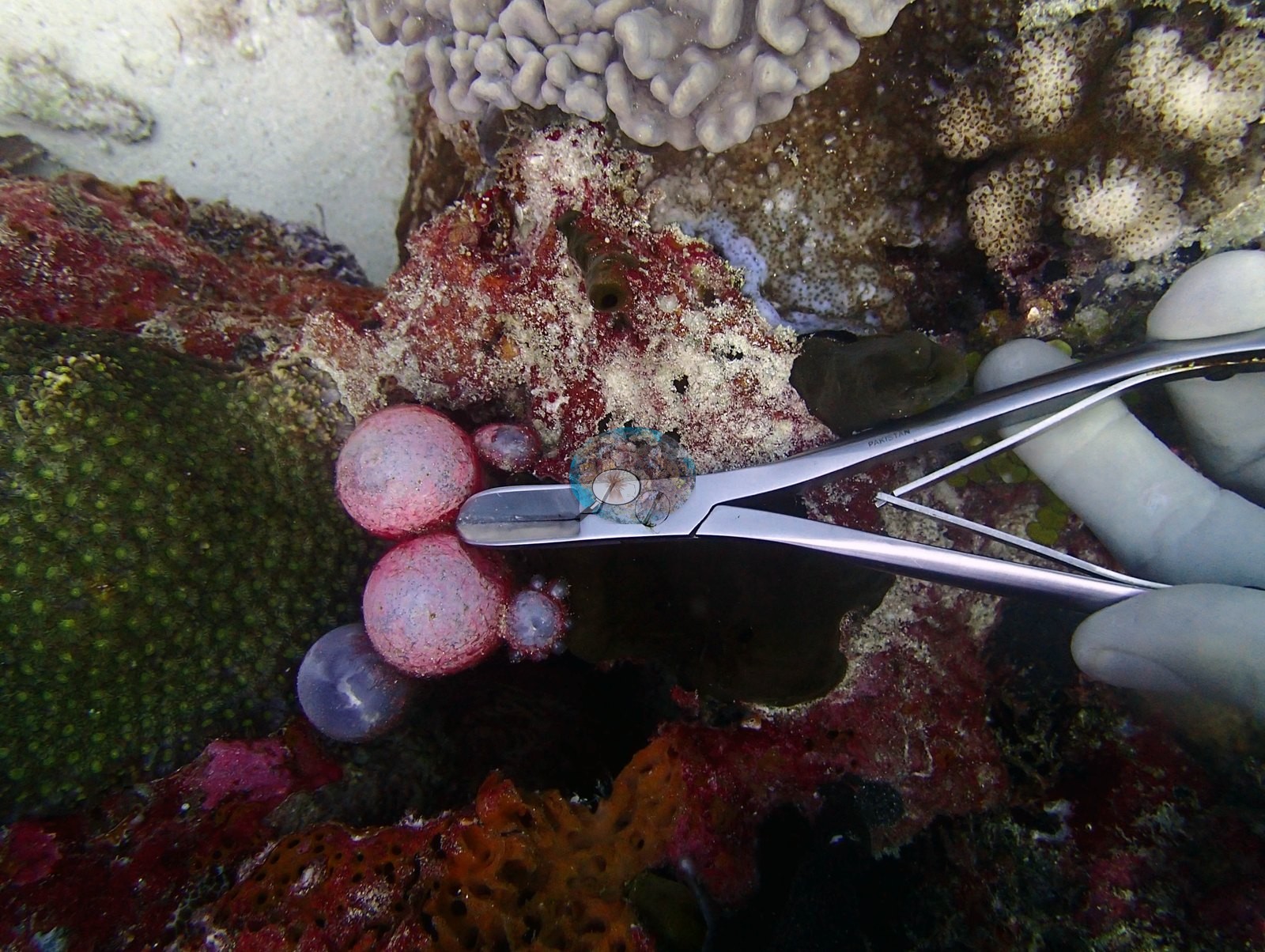
P3150341 is a methodology frame and belongs with BIDI08/P3120298 and BIEG04/P3100401 in the record of how the mission's numbers and samples were made: a gloved hand holding a stainless surgical rongeur at the substrate, beside two or three smooth pink globular masses that the annotator scored as sponge, with a green encrusting colony to the left and a pale meandroid brain above. Cross-check it against the BIOT Pocillopora damicornis and Seriatopora hystrix collection permits.
CV model comparison
More info
Those are point counts on the photographs; this is a diver swimming a transect. The models and the reference never saw the same thing. ⚠ SITE-LEVEL ONLY. The 2,500 frames were not associated with any transect taken within 200 m of them, so transect-vs-image comparisons are site means, never frames. The transect value is already in the pin `cover` field (109 of 112 pins, sourced to the paper's suppl. S1) and is read from there, never re-imported. The transect is THE coral-cover value for this site and stands alone. The rows below it are a methods comparison only: no computer-vision value is averaged with it, feeds the headline, or carries over to the site's cover figure (Anderson, 2026-09-22).| Method | Hard-coral cover (%) |
|---|---|
| Transect (published) | 20.7 |
| CoralNet | 22.3 |
| In-house DINOv3 | 14.6 |
| CoralSCOP edited | 28.1 |
| Claude | 17.7 |
Data & links
- Read the full site report ↗
- Download benthic survey data (CSV) ↗
- Download all LOF-GRE data (933 sites) ↗
- CoralNet image repository for this region ↗
- Photo portfolio ↗
- Coral Reef Diagnostics page for this area ↗
All images from Coral Reef Diagnostics. Data are from Coral Reef Diagnostics.
 © Coral Reef Diagnostics.